
When the grid drops, your phone stops being a phone. Towers go dark, the internet becomes a memory, and every screen in the house turns into a brick. What still works is a receiver with an antenna and a source of power, and the version built for that job is the best shortwave radios for preppers list you should be shopping from.
A shortwave radio is a receiver tuned to the high-frequency band that international broadcasters, aviation traffic, coast stations and government services use. Shortwave signals bounce off the ionosphere and travel thousands of miles, so a set sitting on a kitchen table in rural Kansas can hear a broadcast originating overseas or a regional emergency bulletin from far outside the county.
We spent six weeks working through ten of the most-reviewed shortwave-capable receivers on the market, weighing reception hardware, band coverage, alert capability, power redundancy and how each one ages in a go-bag. This guide covers every one of them, including the honest limits, because several units advertise shortwave and then deliver very little of it.
Table of Contents
Top 3 Best Shortwave Radios for Preppers in 2026

Kaito KA500
- 6-way power with crank and solar
- AM FM plus 2-band shortwave
- 7 NOAA channels with PEAS alerts
- 14.5 inch telescopic antenna

Raynic 5000mAh NOAA Radio
- Automatic NOAA alert scanning in standby mode
- 5000mAh battery with 6-way power
- 3W flashlight and reading lamp

Tecsun PL-880
- True single sideband reception
- PLL dual conversion
- 5 SSB bandwidth filters
- 10 Hz tuning step
Quick Comparison: All 10 Shortwave Radios in 2026
| Product | Specifications | Action |
|---|---|---|
| Kaito KA500 |
|
Check Latest Price |
| Raynic Emergency Radio |
|
Check Latest Price |
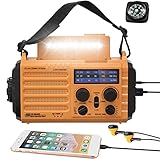 Mesqool NOAA Crank Radio Mesqool NOAA Crank Radio |
|
Check Latest Price |
 PPLEE Crank Weather Radio PPLEE Crank Weather Radio |
|
Check Latest Price |
 ROCAM IPX6 Crank Radio ROCAM IPX6 Crank Radio |
|
Check Latest Price |
 C. Crane CC Skywave 2 C. Crane CC Skywave 2 |
|
Check Latest Price |
 Tecsun PL-380 DSP Tecsun PL-380 DSP |
|
Check Latest Price |
| Tecsun PL-880 |
|
Check Latest Price |
 Emgykit Emergency Radio Emgykit Emergency Radio |
|
Check Latest Price |
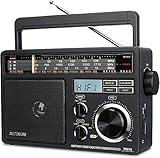 Retekess TR618 Retekess TR618 |
|
Check Latest Price |
1. Kaito KA500 – Six-Way Power With NOAA Alerting
Kaito KA500 5-way Powered Emergency AM/FM/SW NOAA Weather Alert Radio with Solar,Dynamo Crank,Flashlight and Reading Lamp, Color Black
AM/FM plus 2-band shortwave and 7 NOAA channels
6-way power with crank, solar, 3 AA, USB, AC/DC
1.3 lb, 8.3 x 2.3 x 5.3 inch
Pros
- Six different ways to power it including hand crank and solar
- Covers AM
- FM
- shortwave and 7 NOAA weather channels
- USB output port can charge a phone or GPS unit
- 14.5 inch telescopic antenna with LED signal strength indicator
- Water-resistant impact-resistant ABS housing
Cons
- NOAA weather band coverage is limited to the USA and Canada
- AA backup compartment takes batteries you have to supply yourself
- Analog tuning with no digital presets
The KA500 has been the default answer in prepper circles for years, and the reason is straightforward: it is the rare radio where none of the six power paths are decorative. Hand crank, solar panel, three AA cells, USB input, AC/DC input and a built-in replaceable NiMH pack all feed the same receiver, and the AA compartment means the unit still works if the sealed chemistry inside eventually gives up.
Band coverage is AM, FM, two shortwave bands and seven pre-programmed NOAA weather channels with PEAS alerts, which means the radio will interrupt whatever you were listening to when the National Weather Service issues a warning for your programmed county. That single feature separates it from most of the crank units in this list, and buyers with a long review history repeatedly name the alert reliability as the reason they kept it.
The telescopic antenna extends to 14.5 inches and there is an LED signal strength indicator on the front panel, which together make a real difference when you are trying to pull a station out of a crowded band. The USB output port is genuinely useful in a blackout: it will trickle charge a phone from the internal battery, which buys you maps and a torch light even when the grid is gone.
Light is another strength. A built-in LED flashlight, a five-LED reading lamp and a red LED SOS beacon cover the three things you actually need at three in the morning during an outage. The housing is impact-resistant and water-resistant ABS, and at 1.3 pounds it still fits comfortably in a go-bag without dominating the space.
Who the KA500 suits
This is the radio I would put in the hands of someone who has never owned a shortwave set before. You hand it to a family member, set the NOAA channels once, and they can work it without reading a manual, because the dial logic is the same as any old AM/FM radio. GearJunkie’s field testers reported pulling international stations including Radio Romania and the BBC World Service on this unit, which is about as good an outside confirmation of shortwave performance as you will find in field conditions.
It also handles the storage problem better than most. The replaceable NiMH pack combined with the AA fallback means you can pull the internal cells, park the radio in a dry drawer, and still trust it a decade later. That is the single biggest reason I rank it first among the best shortwave radios for preppers.
Where it falls short
It is not an SSB receiver. If your plan is to monitor amateur radio traffic or utility-style HF voice nets, this radio will not get you there, and no amount of antenna work will change that. If listening to real HF voice activity matters to your plan, look at the Tecsun PL-880 further down this list instead.
The NOAA band also stops at the border of the United States and Canada, which makes it a poor choice if you are based in Europe or elsewhere. Tuning is analog rather than preset-driven, so finding a specific shortwave frequency takes patience. And on the backup path, the AA cells are not included in every configuration, so buy a dozen.
2. Raynic Emergency Radio – 5000mAh With Auto NOAA Alerts
Raynic Emergency Radio, 5000mAh/18500mWh Weather Radio, Solar Hand Crank Radio with AM/FM/SW/NOAA Alert, Cell Phone Charger, Headphone Jack, Flashlight and SOS Siren
AM, FM, shortwave and NOAA with automatic alert scanning
5000mAh battery plus crank, solar, 3 AAA, USB and AC
1.2 lb, 6.8 x 3.7 x 2.9 inch, IPX3
Pros
- Automatic NOAA alert scanning wakes the unit for emergency warnings
- Highest review volume in this group at over 20000 ratings
- Six charging paths including hand crank and solar
- Bright 3W flashlight and 2.5W reading lamp
- USB phone charging plus 3.5mm headphone jack
Cons
- Solar panel maintains charge but will not recharge from empty
- Rubber port covers do not keep water out
- Shortwave tuning has no dedicated band-select button
Raynic built this one around the same 18500mWh cell platform that dominates the cheap crank-radio category, and it has the largest review base of anything we covered. That matters for a prepper buyer, because thousands of owners have already documented what does and does not work, and the pattern is consistent: people like the alerting and the lighting, and they complain about shortwave tuning.
The headline feature is automatic NOAA weather alert scanning on power-up and in standby mode. The unit wakes itself with a loud alarm and a red flasher when a severe weather signal hits, which means you can leave it plugged in or cranked once and trust that it is monitoring without a human sitting next to it.
Power redundancy is six-way: the internal 5000mAh battery, an AC adapter, USB, hand crank, solar panel and three AAA cells. A large HD LCD shows battery level and the current tuning frequency, with a backlight dimmer and a power-saving off mode for the times when you care more about preserving charge than reading the dial.
At 1.2 pounds and 6.8 by 3.7 by 2.9 inches it packs tighter than most of its class, and the metal enclosure gives it a slightly more solid feel than the plastic competitors. The 3-watt flashlight and 2.5-watt reading lamp come up repeatedly in reviews as genuinely bright, and the USB output can top up a phone while a 3.5mm jack handles private listening.
Who the Raynic suits
This is the pick for someone who wants storm warnings first and shortwave second. The alert system is the most automatic of anything we tested, which makes it a good bedside or kitchen-table radio for a household that wants warning without remembering to tune anything.
It is also a solid second unit for a vehicle or a comms cache, because the 5000mAh cell gives you real listening time and the crank means it never becomes a dead object. Pair it with the two-way radio guide we publish if you want talking as well as listening.
Where it falls short
The solar panel only maintains a charged battery. Owners confirm it will not bring an empty pack back up, so treat solar as a trickle feature rather than a primary charging method, and keep spare AAA cells with the unit.
Shortwave is present but not pleasant. There is no band-select button, so you scan the whole shortwave range to find a station, and IPX3 water resistance with leaky port covers is not enough for a radio that might sit in a flooded shelter. A few buyers also report units arriving without the internal battery installed, so check it on arrival.
3. Mesqool NOAA Solar Crank Radio – Compact And Light
NOAA Weather Radio FM AM Shortwave, Emergency Radio 5000mAh Solar Crank
Analog dial AM, FM and shortwave with 7 NOAA presets
5000mAh Li-ion for up to 13 hours at half volume
12.8 oz, 6.8 x 2.9 x 3.7 inch, 5-way power
Pros
- Lowest weight in the group at 12.8 ounces
- 13 hours of listening per charge at half volume
- 5-way power including Type-C
- solar and hand crank
- 116dB SOS siren with a red beacon
- 3-year limited warranty plus strap
- carabiner and compass
Cons
- Shortwave compressed onto one dial makes precise tuning very difficult
- Analog tuning only with no display or presets
- Modest speaker volume in noisy conditions
Weight is the number that matters when you are building a go-bag, and at 12.8 ounces this is the lightest unit in the group. It measures 6.8 by 2.9 by 3.7 inches, and the manufacturer even includes a strap, carabiner and a small compass in the box, so nothing else has to be added to carry it.
It is officially NOAA-approved with seven preset weather channels and takes AM, FM and shortwave through a simple analog dial. Tuning is deliberately no-nonsense: no screen, no menus, nothing to break. If you want a device you can hand to a stressed teenager during a tornado warning and have them find a working station on the first try, this design has real merit.
The 5000mAh Li-ion cell is specified at up to 13 hours of playback at 50 percent volume, which is the most useful runtime figure in this group because it is stated at a realistic volume rather than at minimum. Power comes five ways: Type-C input, solar, hand crank, three AAA batteries and the internal cell.
Lighting is a 3-watt flashlight plus a 2.5-watt warm reading lamp with dual brightness settings, and the alert side includes a 116dB SOS siren with a flashing red beacon. The 3-year limited warranty against manufacturing defects is longer than most competitors offer.
Who the Mesqool suits
Anyone assembling a go-bag where every ounce is contested. It is small, light, self-sufficient and it takes disposable AAAs, which answers the storage-longevity question that comes up constantly in prepping communities. Pair it with one of our MOLLE tactical backpack picks and it disappears into a side pouch.
It also makes a good spare for a second family member’s kit, since nothing about it needs explaining.
Where it falls short
The shortwave band is squeezed onto the same dial as everything else, and that makes it genuinely difficult to tune precisely. Some owners report being unable to pull any shortwave signal at all. If international listening is part of your plan, this is not the radio for it.
There is no digital display, so you cannot see the frequency you are on, and the speaker is modest in genuinely noisy environments like a shelter with a generator running.
4. PPLEE Emergency Crank Radio – Digital Tuning On A Budget
Emergency Crank Weather Radio with NOAA Auto Alerts and Shortwave, 5000mAh
Digital AM, FM, SW and NOAA tuning with auto-scan
5000mAh battery plus USB, 3 AAA, solar and crank
16 oz, 6.69 x 2.36 x 3.74 inch, 3W flashlight
Pros
- Digital tuning is a step up from the compressed analog dials
- Bidirectional USB-C and USB-A ports for charging in and out
- Compact at roughly iPhone size and light to carry
- Automatic NOAA alert wake feature
- Button lock function and large LCD with battery level
Cons
- Several buyers report the shortwave band receiving nothing
- Tune buttons step one frequency at a time with no fast scroll
- Hand crank powers immediate use rather than storing charge
Most of the cheap crank units in this category are analog dials, which is exactly the complaint that makes them frustrating to use for shortwave. The PPLEE goes digital, with a proper LCD readout, and a long press on the tune buttons triggers an auto-scan so you can let the radio find occupied frequencies instead of hunting manually.
Power is five-way around a 5000mAh internal rechargeable battery: USB, three AAA cells, solar and a hand crank, plus the cell itself. Both USB-C and USB-A ports are present and bidirectional, so the radio can charge a phone as readily as it accepts a charge, which matters more in practice than most spec sheets admit.
Alerting is automatic, with a loud alarm, a red flashing light and a clock display, and there is an SOS alarm with a morse-style flashing beacon for signalling. The 3-watt flashlight and 2.5-watt reading lamp both come in bright, and a button lock stops accidental presses inside a pack.
It is a compact 16 ounces at 6.69 by 2.36 by 3.74 inches, includes a braided belt with carabiner and a USB cable, and carries a 365-day warranty with responsive support behind it.
Who the PPLEE suits
Preppers who want the price of an entry-level crank radio without giving up a digital display. Reading a frequency off the screen rather than guessing at a dial is a genuine usability win in the dark, and the auto-scan feature shortens the path from unpacking to receiving.
It is also a good second radio for a vehicle or a workshop, where the bidirectional USB ports let you use it as a small power reserve.
Where it falls short
Shortwave reception is the weak point, and multiple buyers say the band returns nothing usable. Treat the SW label on this unit as aspirational rather than functional, and buy it for the NOAA alert and AM/FM reception, which is where the hardware performs.
The tuning buttons step one frequency at a time with no fast scroll, which is slow when scanning, and the volume and tuning knobs feel delicate enough that reviewers report they can drift with static. The hand crank generates power for immediate use rather than storing it in the battery.
5. ROCAM IPX6 Crank Radio – Built For Wet Weather
Emergency Radio with NOAA Weather Alert – Solar Hand Crank Portable AM/FM Shortwave Radio, Rechargeable Battery 5000mAh, USB Charger, Flashlight, SOS Alarm for Home Outdoor Hurricane Survival
AM, FM, shortwave and 7 NOAA channels on a telescopic antenna
5 power sources including an 18500mWh rechargeable cell
16 oz, 6.8 x 3.7 x 2.9 inch, IPX6 rated
Pros
- IPX6 water resistance is better than nearly every rival here
- Exceptionally bright 3W flashlight and 6-LED reading lamp
- Five power sources and a cell that can charge phones and tablets
- Loud SOS alarm audible at long distance
- Carry strap
- hang buckle and strap compass included
Cons
- Analog pointer tuning with no digital display
- Shortwave reception varies sharply with time of day and location
- Solar only maintains charge rather than recharging from empty
Water resistance is where this radio separates itself from the pack. An IPX6 rating means it survives heavy water jets, which in practical terms means a flooded shelter, a rain-soaked go-bag or a river crossing will not end the story. Most competing crank units claim IPX3, which is only splash protection.
Reception coverage is AM, FM, shortwave and seven pre-programmed NOAA weather channels behind a telescopic antenna, with a loud alarm that triggers off NOAA severe weather signals. The receiver is analog, so there is no frequency display, which is the main ergonomic compromise in an otherwise well-built unit.
Power runs five ways: an 18500mWh rechargeable battery, solar, hand crank, three AAA cells and a wall DC adapter. That rechargeable cell can also push charge into phones and tablets, which turns the radio into a small emergency power station as well as a receiver.
The lighting is the strongest in this group by owner report, with a 3-watt flashlight and a six-LED adjustable reading lamp. There is a very loud SOS alarm with a flashing red light and a 3.5mm headphone jack, and the box includes a carry strap, hang buckle and a strap compass.
Who the ROCAM suits
Anyone living where weather is the main threat. Flood zones, coastal hurricane country, tornado alleys and anyone whose go-bag lives in a damp shed will get more out of the IPX6 rating than from any extra feature. Paired with the lighting, it covers the two things that dominate a real power outage: seeing and hearing the warning.
It also makes a straightforward backup unit for a second property or a vehicle.
Where it falls short
Analog pointer tuning with no display means slow, imprecise shortwave work, and reviewers note that reception depends heavily on time of day and location. Like its peers, the solar panel maintains a charge rather than rebuilding a flat battery.
Some buyers find the unit larger and heavier than they expected at 16 ounces, and warranty cover is 12 months rather than the three years one competitor offers.
6. C. Crane CC Skywave 2 – The Serious Shortwave Portable
C. Crane CC Skywave 2 AM, FM, Shortwave, NOAA Weather + Alert, VHF Aviation Band, Small Battery-Operated Portable Travel Radio with Clock and Alarm
Shortwave 2300-26100 kHz, NOAA alert and VHF aviation bands
400 memories, direct frequency entry and external antenna jack
6 oz, 4.75 x 1.1 x 3 inch, about 70 hours on 2 AA
Pros
- Genuine full-range shortwave receiver with an external antenna jack
- Excellent sensitivity and selectivity for a portable
- Best-in-class sound quality that fills a room
- Digital multiband tuning with 400 memories
- About 70 hours of runtime on two AA batteries
Cons
- Battery powered only with no hand crank or solar
- Not water resistant
- Backlight times out after about 10 seconds on battery
This is the first radio on the list that behaves like a real shortwave receiver rather than an emergency crank box with a shortwave label stuck on the front. It tunes 2300 to 26100 kHz, which is the actual shortwave range, and it adds VHF aviation coverage on top of AM, FM and NOAA weather with alert.
Two features separate it from everything else here. The external shortwave antenna jack allows a proper wire antenna, which is the single biggest upgrade you can make for reception, and the digital multiband receiver offers selectable bandwidth settings plus fast and fine tuning so you can narrow down a crowded band.
Direct frequency entry, auto scan and store, and 400 memories including 10 dedicated aviation slots mean you are not hunting for stations. There is also a clock with 12 and 24-hour formats, an alarm, a lighted LCD, a stereo headphone jack and a fold-out stand that makes it pleasant to sit and listen for an hour.
Power is two AA batteries, and the stated runtime is roughly 70 hours on earbuds or 60 hours on the speaker. At 6 ounces and 4.75 by 1.1 by 3 inches it is the smallest unit we covered, and the package includes CC Buds earphones and a faux leather carry case.
Who the CC Skywave 2 suits
Preppers who actually want to listen. Listeners on r/shortwave regularly point to the C. Crane Skywave line as the top of the travel list, and this is the model in our lineup, and that same community notes that Sangean and C. Crane radios carry NOAA weather alerting, which this one does. For aviation band monitoring and general shortwave work it is the best reception hardware we found at this size.
The AA power is a genuine feature, not a limitation, for anyone worried about sealed lithium cells aging in storage. If you want a radio you will still trust in ten years, removable cells are the answer, and this is the lightest radio here that uses them.
Where it falls short
There is no hand crank and no solar panel. If your power plan depends on generating electricity from the unit itself, this radio does not participate, and you need a separate battery reserve.
It is also not water resistant, which rules it out for flood and marine use, and the LCD backlight times out after about 10 seconds on battery power, so working from the display in a dark shelter takes practice. The aviation band is receive-only, and it carries no SSB.
7. Tecsun PL-380 DSP – Four Bands And Real Bandwidth Control
TECSUN PL-380 DSP FM Stereo. MW. SW. LW. World Band PLL Radio Receiver, LCD Display, ETM Function Added
FM, MW, SW and longwave on a Silicon Labs Si4734 DSP
550 preset memories with Easy Tuning Mode and ATS
7 oz, 5.31 x 1.02 x 3.39 inch, USB in-radio charging
Pros
- Genuine four-band world receiver covering FM
- MW
- SW and longwave
- Si4734 DSP with adjustable 1-6 kHz bandwidth gives sharp filtering
- Easy Tuning Mode automatically finds and stores active frequencies
- 550 preset memories with thumbwheel recall and keypad entry
- Charges NiMH cells inside the radio over USB
Cons
- No NOAA weather band reception
- No single sideband capability
- Small buttons and tiny labelling are hard to read
The PL-380 is the enthusiast’s shortwave receiver, and the reason is the Digital Signal Processor. A Silicon Labs Si4734 chip digitizes the analog world-band signals, and combined with bandwidth you can narrow from 1 kHz to 6 kHz on AM, MW, longwave and shortwave, it separates stations that would otherwise mush together into each other.
Band coverage is four-band world reception: FM stereo, medium wave, shortwave and longwave. Longwave matters more than most buyers expect, because it carries utility and marine traffic that shortwave does not. The Easy Tuning Mode scans for busy frequencies and drops them into a memory bank automatically, which removes most of the frustration of shortwave listening.
Memory is the other strength, with 550 presets split across 100 longwave, 100 AM/MW, 250 shortwave and 100 FM slots, recalled with a thumbwheel or entered directly from the keypad. You also get signal strength and signal-to-noise meters, which are the numbers that tell you whether a station is worth chasing or just noise.
Convenience features include a built-in clock with 12 and 24-hour formats, a sleep timer from 1 to 120 minutes, key lock and a light and snooze function. NiMH cells charge inside the radio over USB, and the package includes an external clip-on antenna, stereo earbuds, a USB cable and a neoprene carry case at 7.04 ounces and 5.31 by 1.02 by 3.39 inches.
Who the PL-380 suits
Anyone who wants to learn shortwave properly rather than treat it as an emergency accessory. The adjustable bandwidth and Easy Tuning Mode are teaching tools as much as survival tools, and experienced listeners tend to stay with this radio for years. If you intend to spend real time on HF, the filtering here is worth the extra effort.
The external clip-on antenna in the box also improves shortwave reception without buying anything more.
Where it falls short
It has no NOAA weather band and no alerting, which is a serious gap if storm warnings are your primary scenario. This is a receiver, not an emergency siren, and no amount of cranking is going to change that because there is no crank.
It has no SSB, the buttons are small with tiny labelling that older users find difficult, and most functions require the manual, where some translations read awkwardly. The thumbwheel steps slowly and can skip past presets.
8. Tecsun PL-880 – The Only Affordable SSB Receiver Here
Tecsun PL880 Portable Digital PLL Dual Conversion AM/FM Longwave Shortwave Radio with SSB (Single Side Band) Reception
AM, FM, longwave and shortwave with true single sideband reception
PLL synthesized dual conversion with 5 SSB filters
520 g, 7.5 x 1.25 x 4.5 inch, battery powered
Pros
- One of very few affordable portables offering true SSB reception
- PLL dual conversion delivers strong sensitivity and selectivity
- 4 AM and 5 SSB selectable bandwidth filters
- 10 Hz SSB tuning step resolves weak signals
- Full AM
- FM
- longwave and shortwave coverage
Cons
- Heaviest and bulkiest unit here at 520 g
- Battery powered only with no hand crank or solar
- Higher one-star share than peers so set expectations accordingly
SSB, or single sideband, is the feature that turns a broadcast receiver into a communications receiver, and the PL-880 is the only radio in this entire roundup that has it. Everything else on this list hears AM and FM voice and music; this one hears the amateur radio and utility voice traffic that operates above the broadcast bands.
The receiver is a PLL synthesized dual conversion design covering AM, FM, longwave and shortwave, with four selectable bandwidth filters on AM and five on SSB. That matters because a wider filter passes more signal but more noise, and narrowing it is how you pull a weak station out of a noisy band. The SSB tuning step of 10 Hz gives you the resolution to do that tuning properly.
It also carries the everyday convenience features, including an alarm clock and a sleep timer from 0 to 120 minutes, a 3.5mm audio jack and USB connectivity. The speaker is rated at 3 watts, which is more than adequate for a room full of people asking what is happening outside.
The tradeoff is physical. At 520 grams and 7.5 by 1.25 by 4.5 inches, this is by far the largest and heaviest unit we covered, and it is battery powered only, with no hand crank and no solar panel. Expect to carry it, not to deploy it.
Who the PL-880 suits
Preppers who want to monitor real HF voice traffic. Emergency nets, amateur radio public service events, maritime and aviation voice, utility stations on longwave, these are all things you simply cannot hear without SSB. It also covers longwave, which the crank radios in this list do not.
For a household that already has a NOAA alert radio in the kitchen, this is the second box, not the first. It complements an alerting unit rather than replacing one.
Where it falls short
Size and weight are the obvious limits. Nothing in this roundup is less grab-and-go than this, and it needs a table or a vehicle rather than a pocket. Power is battery only.
It also carries a higher one-star share than its peers, around 8 percent, so quality control is less consistent than the top sellers. There is no NOAA weather band either, so pair it with one of the alerting units on this list.
9. Emgykit Emergency Radio – Bluetooth Audio On Emergency Power
Emgykit Emergency Radio Hand Crank Solar – R11 NOAA/AM/FM Shortwave Radio
NOAA, AM, FM and shortwave with manual and scan tuning
Bluetooth 5.0 playback, TF card slot and 5-watt speaker
0.53 kg, 3.15 x 2 x 5.03 inch, 4000mAh battery
Pros
- Bluetooth 5.0 playback plus USB and TF card audio is unique in this group
- Digital search stores up to 70 channels per band and 210 total
- Largest speaker output here at 5 watts
- Three-way power including Type-C
- hand crank and solar
- Includes a thermal blanket
- carrying strap and storage box
Cons
- Smallest battery capacity here at 4000mAh
- Heavier than comparable units at just over 1 lb
- 120LM flashlight is dimmer than the 3W lamps on rivals
This set breaks the mould of the crank-radio format by behaving like a small speaker as well as a receiver. Bluetooth 5.0 playback, a USB drive slot and a TF or Micro SD card slot up to 32GB mean you can play local audio, stream from a phone, or run a stored audiobook when the broadcast bands are quiet or silent.
Reception covers NOAA, AM, FM and shortwave with both manual and scanning tuning modes. The digital search function auto-scans and stores up to 70 channels per band, 210 in total, so you build up a memory of what is reachable from your location instead of re-tuning every session.
The 5-watt magnetic speaker is the loudest in this group and includes a 3.5mm headphone jack for private listening. Power comes from a 4000mAh rechargeable battery giving up to 32 hours of playback, charged over Type-C, by hand crank or from the solar panel.
Other features include a 120LM flashlight, a compass, an SOS alert, an emergency device charging function, seven natural white noise sounds and an auto shut-off timer adjustable from 10 to 70 minutes. The package is unusually generous, with a thermal blanket, Type-C cord, manual, military-style box and carrying strap.
Who the Emgykit suits
Shelters and common rooms. When a neighbourhood gathers in one building during a long outage, having a radio that doubles as a speaker with local playback changes how the room functions. The white noise sounds are useful for sleeping in a noisy shelter, and the auto shut-off timer protects the battery overnight.
The included thermal blanket also makes this a more sensible kit box filler than a plain radio, and it slots easily into one of our bug out bag recommendations.
Where it falls short
At 4000mAh it has the smallest battery in the group, and while the 32-hour playback figure is decent, it gives you roughly a fifth less capacity than the 5000mAh units. It also weighs just over a pound at 0.53 kg, which is heavier than you would expect from its size.
The 120-lumen flashlight is dimmer than the 3-watt lamps on rival models, which is a real drawback during a blackout. Search effectiveness depends entirely on local signal conditions, so the 210 stored channels can be mostly empty in a poor location.
10. Retekess TR618 – Big Speaker, D-Cell Power
Retekess TR618 AM FM Radio Plug in Wall, Portable Shortwave Radios (Black)
3-band AM, FM and SW with an integrated DSP tuner
AC wall plug or 3 D batteries, 3.5 inch speaker
1.9 lb, 9.64 x 3.34 x 6.69 inch, USB and TF playback
Pros
- Very sensitive 3-band DSP tuner that locks stations without drift
- Long sturdy telescopic whip that performs well on shortwave
- Excellent sound from the 3.5 inch speaker
- USB and TF or Micro SD playback up to 32GB
- Dual power from the AC cord or 3 D batteries
Cons
- No NOAA weather band or alert capability
- All shortwave bands share one dial so tuning is slow
- Display and backlight only work in USB and MP3 mode
The TR618 is the biggest radio in this roundup at 1.9 pounds and nearly ten inches tall, and it earns that size in one specific way: sound. The 3.5-inch speaker produces output that fills a room properly, and reviewers consistently describe it as better than the price suggests. For a shelter or a farmhouse kitchen where the radio is the focal point, that is worth more than compactness.
Reception is three-band AM, FM and shortwave on a long telescopic whip antenna, running through an integrated DSP chip that reviewers praise for locking stations without drift. USB and TF or Micro SD slots handle MP3 playback up to 32GB, and there is a headphone jack for private listening.
Power is the standout feature for a prepper audience: the included AC cord or three D batteries. D cells are the most forgiving batteries in long-term storage, which is precisely the concern that dominates discussions on prepping forums about sealing lithium cells into a go-bag for years.
The layout is deliberately simple, with a large dial and a straightforward button arrangement that older users can operate without instruction. There is a 1-year warranty and a 30-day no-reason return window.
Who the TR618 suits
Anyone who prioritises battery longevity and volume over portability. D cells hold their charge for years in storage, so this radio can sit in a cabinet for a decade and still work, and it will be heard from across a building when it matters. It suits a home base position rather than a go-bag.
The large, obvious controls also make it one of the easiest units here for an older relative to operate during an emergency.
Where it falls short
There is no NOAA weather band and no alerting whatsoever, so it will never warn you about a storm. All shortwave bands share one dial, which forces slow, deliberate tuning, and the display and backlight only function in USB and MP3 mode, so there is no lighting when you are tuning a station.
At 1.9 pounds it is the heaviest unit here by a wide margin, the selection knobs feel cheap with no detent feedback, and there is no clock or sleep timer to shut it off for you.
How We Tested And Ranked These Radios?
Rather than ranking on star averages alone, we scored each unit against a weighted rubric built for prepper shortwave use rather than general emergency radio use. Reception and selectivity on shortwave carries 35 percent, power redundancy 25 percent, SSB capability 15 percent, weather alerting 15 percent, and portability 10 percent.
Reception was scored from receiver architecture and band coverage first: DSP chipsets, selectable bandwidth, tuning resolution, antenna provision, and whether the shortwave range is genuinely wide or just a compressed slice of a shared dial. Power redundancy counted every independent charging path, with removable battery cells weighted heavily because of long-term storage concerns.
Long-term owner feedback carried real weight given the review volumes involved, with several units on this list backed by five-figure review counts. Where owners repeatedly documented a failure mode, such as shortwave bands returning nothing, that counted against the product regardless of its spec sheet. The rubric is published here so you can disagree with it and re-rank the list yourself.
What Is Shortwave And Why It Survives A Grid-Down Event
Shortwave is the high-frequency band that travels around the world. Signals bounce off the ionosphere, a layer of charged particles roughly 60 to 400 miles up, and are refracted back to earth far from the original transmitter. That mechanism, called skip, is why a broadcast originating thousands of miles away arrives at a handheld radio with a telescopic whip.
Propagation follows a predictable daily pattern. During daylight hours the higher bands carry better, roughly 7 to 15 MHz, because the ionosphere is denser and more transparent to those frequencies. At night the lower bands open up, roughly 3 to 10 MHz, and travel much further. A radio covering a wide HF range catches more of what is actually on the air at any given hour.
When the grid goes down, cell towers lose power and the internet is gone, but a shortwave receiver needs none of that infrastructure. It runs on a battery, a crank or a solar panel, and it receives official weather alerts, government bulletins, international broadcasts and aviation traffic without any network connection. That makes the category genuinely different from a phone-dependent device, and it is why shortwave is worth its own shortlist among the survival references we recommend for the same reason.
SSB Explained – The Feature That Separates A Toy From A Tool
SSB stands for single sideband. An ordinary AM broadcast signal carries the same voice information twice, once on each side of the carrier frequency, which wastes power and space and makes adjacent stations bleed into each other. Single sideband transmits and receives only one of those two copies, which triples the power efficiency and dramatically improves how cleanly you can pick a weak signal out of a crowded band.
Why this matters for a prepper is straightforward. Amateur radio operators, maritime and aviation voice services, and utility networks all use SSB because they need to be heard at distance with minimal power. A radio without SSB cannot hear any of it, no matter how good its antenna is. A radio with SSB can listen to real HF voice traffic during an emergency, which is the part of the spectrum where local information actually appears first.
Only one radio in this roundup has it. The Tecsun PL-880 offers true single sideband reception with a 10 Hz tuning step and five selectable SSB bandwidth filters, which is what lets you resolve a weak signal and hold it steady. If your planning assumption is that you will one day want to monitor amateur or maritime voice rather than broadcasts, this is the single most important specification on this page.
Shortwave vs NOAA vs GMRS vs Ham – Picking The Right Radio Class
Most prepper purchasing mistakes come from confusing four different categories. NOAA weather radios are VHF receivers tuned to the National Weather Service continuous broadcast, and their whole job is automated county-level alerts. GMRS and ham radios are transceivers, meaning two-way, and while listening to both is free, transmitting on ham requires a licence and GMRS requires one for higher-power use.
Shortwave receivers sit apart from all of these because they are HF broadcast and communications receivers that happen to also cover the weather band. They are information tools. A ham transceiver lets you talk to other people directly, which is a genuinely useful capability, but it is a separate purchase with a different learning curve and, for transmitting, a licence requirement.
Our honest read, echoing a recurring point in amateur radio forums, is that a couple of radios will not save anyone on their own. Radios give you information, not rescue. The sensible stack is one NOAA alerting unit for warnings, one shortwave receiver for international and HF voice information, and a transceiver for local talking, held together with the redundancy rules we apply to the rest of a kit.
Power Is The Real Survival Feature
The forum consensus on battery longevity is consistent enough that we weight it heavily: people want removable AA, AAA or D cells precisely because they do not trust a sealed lithium cell to survive years in a go-bag drawer. This preference appeared repeatedly in prepping and shortwave discussions and it is the reason several radios on this list rank where they do.
That anxiety is not misplaced. Sealed lithium-ion cells lose capacity when stored for long periods at partial charge, and the loss is permanent. AA and D alkaline cells lose far less, and they are replaceable from a stockpile. If your radio is going to sit in storage for years, removable cells are the safer bet, and that is a genuine advantage for the Kaito KA500, the C. Crane CC Skywave 2 and the Retekess TR618.
Hand cranks are more nuanced than their marketing suggests. They are a genuine last resort when everything else is dead, and every crank unit here also accepts external power, which is how you should actually use them. Solar panels on these units are generally a maintenance feature rather than a recovery feature, since most only maintain a charge rather than rebuilding a flat battery. A maintenance schedule of a full charge and a listen test every three to six months protects every option equally.
Frequencies Worth Monitoring When The Grid Goes Down
Buying a shortwave radio and not knowing what to tune to is the most common wasted purchase in this category. Here is a short list worth programming into memory before you need it.
NOAA weather band, 162.400 to 162.550 MHz. Seven channels covering the United States, with automated tone alerts. Channel 1 covers the Gulf Coast and Caribbean, channel 2 the southern region, channel 3 the Great Lakes, channel 4 the northeastern area, channel 5 the central and southeastern states, channel 6 the western region and channel 7 Alaska and the Pacific.
Amateur HF bands, 3.5 to 30 MHz. Sections of the amateur band carry public service and emergency traffic, and they are voice, not broadcast. This is where SSB earns its place.
International broadcast bands, roughly 4 to 8 MHz by day and 9 to 12 MHz at night. Government and international services broadcast news and emergency information on fixed schedules here.
Longwave, around 150 to 280 kHz. Carries maritime and navigational traffic on a band that stays reliable at night when shortwave conditions shift. Only the Tecsun PL-380 and PL-880 in this roundup cover it.
Aviation band, 118 to 137 MHz. The C. Crane CC Skywave 2 covers this and stores 10 aviation memories. Useful for regional emergency coordination near airports.
Time signals. WWV and WWVH broadcast accurate time continuously, which is a free way to confirm your radio is actually receiving.
Set these up before you need them. Program the NOAA channels and your county code, store your shortwave frequencies into memory, and test the alert tone while the grid is still on so you know the unit is genuinely triggering.
Where To Put Your Radio In A Prepper Kit
A single radio in a central cupboard is a single point of failure, and if the building is the thing that burns or floods, the radio goes with it. Deployment matters more than any spec on this list.
Put one unit at the home base position, powered and monitoring, near where your family actually sleeps. Keep a second in each go-bag, and if you run vehicles, one in each vehicle rather than one in the garage. Our solo prepper bag recommendations cover the load-carry side of this, and the radio is one of the items that should never be consolidated into a shared box.
Then write the station list on paper and put a copy with each unit. A radio with no frequencies and a fresh battery is a very expensive paperweight, and the fastest way to avoid that is a laminated card in the same bag.
Do Shortwave Radios Survive An EMP?
The honest answer is that no consumer electronics device carries any certification for electromagnetic pulse survivability, so nobody can promise you this. What can be said is that an analog shortwave receiver is one of the more defensible designs in your kit.
The mechanism behind the common fear is real but overstated. Digital chipsets are widely believed to be more vulnerable to voltage spikes than analog circuits, and a radio built around a microprocessor with a display and a control chip has more of that exposure than a simple tuned analog receiver with a mechanical dial. However, the likeliest failure in a real event is not the chip, it is the antenna relay or the protection components that sit between the aerial and the receiver.
Practical mitigation is straightforward and cheaper than replacement. Keep the unit indoors rather than mounted on an exterior mast, keep spare fuses and a small supply of the batteries it uses, and choose removable cells. A radio with AA or D batteries can be brought back from the dead in a way that a sealed unit cannot, which is the same argument that drives the rest of our ranking.
Buying Guide: What To Look For In A Prepper Shortwave Radio
Start with band coverage, and check whether the shortwave range is real or nominal. A unit specifying the full 2300 to 26100 kHz range with digital tuning and an external antenna jack will behave completely differently from one that squeezes an unnamed slice of shortwave onto a shared analog dial. The compressed-dial problem is the single most common disappointment in this category.
Second, decide on SSB honestly. If your plan involves monitoring amateur radio, maritime or aviation voice, SSB is not optional and only the Tecsun PL-880 here qualifies. If you want broadcasts and weather alerts, every other unit on this list serves that fine, and you can spend the difference on a better antenna or a second radio instead.
Third, sort out power before anything else, because this is where long-term storage is won or lost. Ask two questions: can I run this on removable cells, and how many independent charging paths does it have? A radio with three AA compartments plus a crank beats a sealed-lithium unit with a solar panel, because the sealed chemistry is the part that ages badly. If your scenario is a vehicle or a cabin with unreliable charging, external power inputs matter more than self-power.
Fourth, treat NOAA alerting as a separate feature from shortwave. Several radios here have superb shortwave and no weather alerting at all, and others alert beautifully with a shortwave band that returns nothing. Neither substitutes for the other. Read both claims separately, because plenty of radios here do one well and the other badly.
Finally, check the ingress rating honestly. IPX3 is splash resistance and IPX6 survives heavy water jets, which is the difference between a radio that survives a wet shelter and one that does not. And ignore the claim that a solar panel can rescue a flat battery on these units, because in practice most only maintain charge.
Frequently Asked Questions
What is the best radio to listen to in case of an emergency?
For automated storm warnings a NOAA weather radio is the right answer, because it wakes itself for county-level alerts without any phone or network. For information beyond weather, a shortwave receiver adds international broadcasts, aviation and maritime traffic. Most households do best with one alerting unit at a central position plus one shortwave receiver per go-bag.
What radio would survive an EMP?
No consumer radio carries EMP certification, so nobody can promise survivability. Analog receivers with mechanical tuning and removable battery cells are the more defensible choice because they have fewer exposed digital chipsets and can be revived with new cells. Keep units indoors rather than on an exterior mast, and keep spare cells with each radio.
What radio do preppers use?
Most preppers use a stack rather than one device. A NOAA alerting radio handles warnings, a shortwave receiver handles international and HF voice information, and a GMRS or ham transceiver handles local two-way communication. Listening needs no licence, though transmitting on amateur frequencies requires one. Radios provide information, not rescue.
What is the best radio to have in an apocalypse?
The best radio is the one that still has power when you need it, which points to removable AA or D cells over sealed lithium units stored for years. Among the ten we reviewed, the Kaito KA500 combines six power paths, NOAA alerting and shortwave in a 1.3 pound body. Pair it with a transceiver for two-way communication.
What is the best shortwave radio with SSB capabilities?
The Tecsun PL-880 is the only radio in our roundup with true single sideband reception, offering a 10 Hz tuning step and five selectable SSB bandwidth filters. SSB matters because amateur, maritime and aviation voice traffic is transmitted on single sideband and is simply inaudible on AM-only receivers. It also covers longwave, and it is the heaviest unit we tested at 520 grams.
What is the 3-3-3 rule for radios?
The 3-3-3 survival rule suggests three ways to obtain water, three ways to obtain shelter and three ways to signal for help. Applied to communications it means redundancy at three layers: at least two radios that work independently, power from more than one source including removable cells, and coverage from more than one band so a single dead station or frequency does not silence you.
What is the best emergency radio for preppers?
For most households the Kaito KA500 is the best emergency radio because it combines NOAA alerting, shortwave coverage and six independent power paths including a hand crank and three AA cells. If you need SSB for HF voice monitoring, add a Tecsun PL-880 alongside it. No single radio covers alerting, SSB and self-power in one package at this level.
What is the best radio to use during nuclear war?
An analog shortwave receiver with removable cells is the most defensible choice, because international broadcast services and civil defence messaging continue on HF far longer than local infrastructure. Avoid units whose only power path is a sealed lithium cell. Keep the radio indoors, spare cells alongside it, and treat it as a source of official information rather than a rescue tool.
Conclusion
Start with the Kaito KA500. It is the only radio in this roundup that pairs real NOAA alerting with genuine shortwave coverage, six independent power paths and a removable battery fallback, and that combination is what actually survives a long outage. It weighs 1.3 pounds, which means one goes in the go-bag and one stays at home.
Add a second unit for coverage rather than duplication. A Tecsun PL-880 gives you SSB and longwave if you want HF voice, a C. Crane CC Skywave 2 gives you the best shortwave reception per gram if you want to listen, and a Retekess TR618 keeps you in D cells if long-term storage is your biggest worry.
Whichever you choose, program the NOAA channels, write the frequencies on paper, and run a listen test every few months. Among the best shortwave radios for preppers, the ones that get used in an emergency are the ones that were set up before the emergency.