
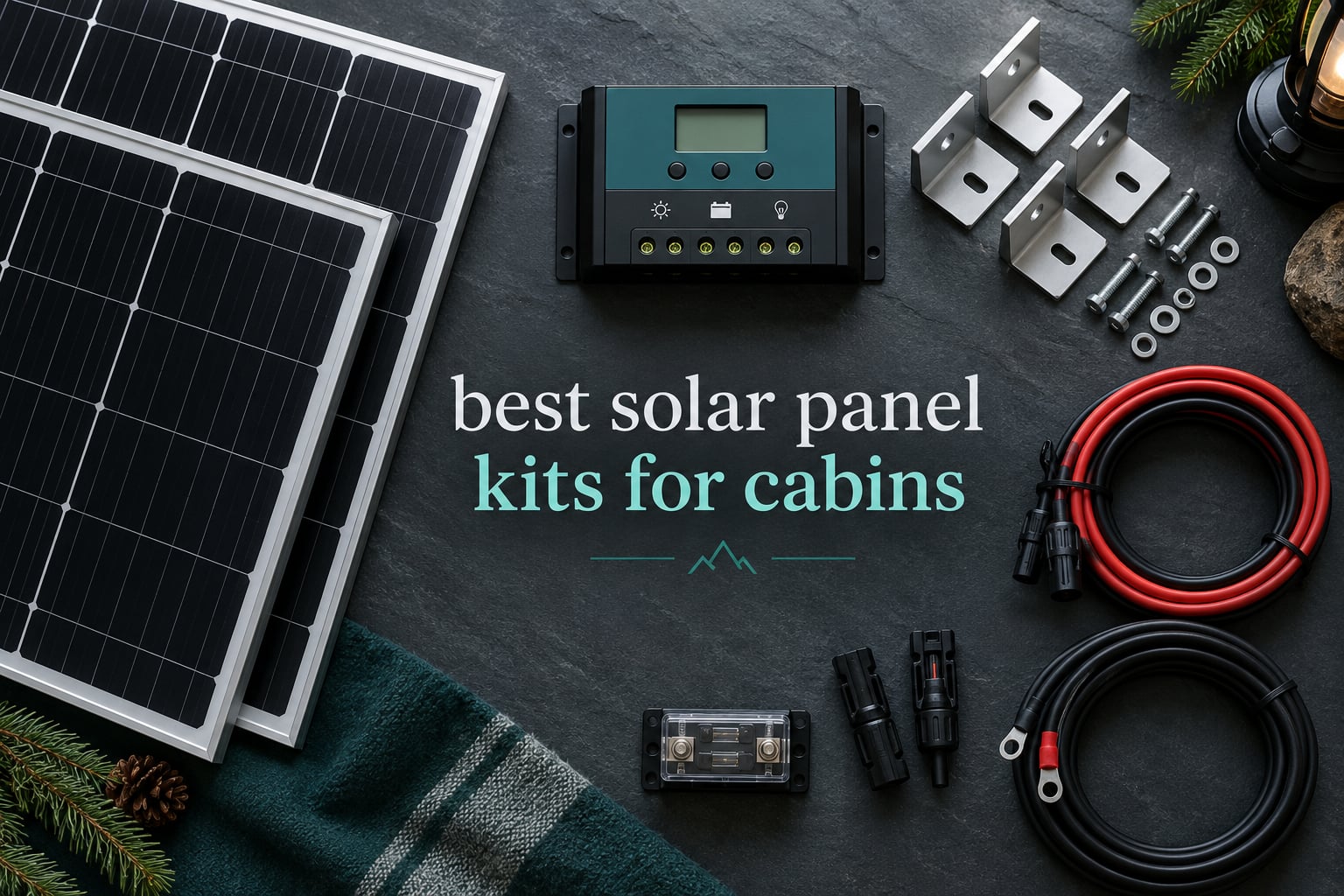
The winter test is the real test for any cabin solar kit. A rig that looks generous in June can leave a cabin dark by January, when the days run short, snow sits on the glass for weeks, and every gallon of water has to be pumped a little further. I have spent the last few months going through the best solar panel kits for cabins that ship today, matching each one to a real load profile rather than a marketing page.
That process turned up something the marketing pages rarely admit: most “complete” kits are not complete. Many of the kits below include panels and a charge controller and nothing else. You still need a battery bank, an inverter, and the balance-of-system wiring to turn sunlight into household electricity. The exceptions are called out as we go, because a kit that arrives with a real battery and a pure sine wave inverter saves you from three separate purchases.
Below, I break down the ten best solar panel kits for cabins in 2026 by what they actually deliver per day, what they leave you to buy, and which cabin they genuinely fit. I also cover the sizing math that decides whether you need 200 watts or 400, why MPPT beats PWM in a snowy climate, and the cold-weather voltage problem that quietly kills cheap controllers.
Table of Contents
Top 3 Best Solar Panel Kits for Cabins in 2026
The Renogy 100W starter kit is the one I recommend to most cabin owners because it is the least expensive way to learn whether solar works for your property, and it scales up over time. The ECO-WORTHY 200W kit doubles the array for less than twice the complexity. The Renogy 400W kit is the best permanent array here, with a 40A MPPT controller that will not be the bottleneck in five years.

Renogy 100W 12V Starter Kit
- 500Wh per day average
- 30A PWM controller
- Expandable to 400W
- 10-year material warranty
ECO-WORTHY 200W 12V Kit
- Up to 800Wh per day
- Two 100W mono panels
- Series or parallel wiring
- 30A PWM controller

Renogy 400W MPPT Premium Kit
- 400W total from four panels
- 40A MPPT Rover controller
- Bluetooth module included
- Z-brackets and cabling in box
Solar Panel Kits for Cabins Side by Side in 2026
This table lists every kit in the roundup with its array size, controller type and the gap you will still need to fill. Note that only two of the ten kits include a battery and an inverter.
| Product | Specifications | Action |
|---|---|---|
| Renogy 100W 12V Solar Panel Starter Kit with 30A PWM Controller |
|
Check Latest Price |
| ECO-WORTHY 200W 12V Solar Panel Kit with 30A PWM Controller |
|
Check Latest Price |
 Jackery Solar Generator 1000 v2 with 200W Solar Panel Jackery Solar Generator 1000 v2 with 200W Solar Panel |
|
Check Latest Price |
| Renogy 400Watt Premium Solar Kit with 40A MPPT Charge Controller |
|
Check Latest Price |
 Renogy 200W 12V N-Type RV Solar Panel Kit with 30A Controller Renogy 200W 12V N-Type RV Solar Panel Kit with 30A Controller |
|
Check Latest Price |
 ECO-WORTHY 200W 12V Complete Solar Panel Starter Kit ECO-WORTHY 200W 12V Complete Solar Panel Starter Kit |
|
Check Latest Price |
 Jackery Explorer 2000 v2 with Two 200W Solar Panels Jackery Explorer 2000 v2 with Two 200W Solar Panels |
|
Check Latest Price |
 ABOK Ark3600 Portable Power Station with 400W Solar Panel ABOK Ark3600 Portable Power Station with 400W Solar Panel |
|
Check Latest Price |
 Jackery HomePower 3600 Plus with Two 200W Solar Panels Jackery HomePower 3600 Plus with Two 200W Solar Panels |
|
Check Latest Price |
 ECO-WORTHY 400W Premium Kit with 40A MPPT Charge Controller ECO-WORTHY 400W Premium Kit with 40A MPPT Charge Controller |
|
Check Latest Price |
1. Renogy 100W 12V Solar Panel Starter Kit with 30A PWM Controller: The Easiest On-Ramp
Renogy 100W 12V Solar Panel Starter Kit with 30A PWM Controller
100W mono panel
30A PWM controller
About 500Wh per day
Expands to 400W
Pros
- 22.5% cell efficiency with 100 percent EL testing
- Panel plus controller plus cables and Z-brackets in one box
- 10-year material warranty and 25-year output warranty
- Bluetooth port for optional remote monitoring
- Expandable up to 400W
Cons
- PWM controller is less efficient than MPPT
- Remote monitoring needs a separate Bluetooth module
This is the kit I hand to anyone who says they want solar at the cabin but has never run a cable. It is a 100W monocrystalline panel, a 30A PWM charge controller and the wiring to connect them, all at 14.1 pounds and about the size of a large suitcase panel.
Rated output is an average of 500Wh per day, which in practice means LED lighting, a router, phone charging and a small 12V fridge for a weekend. It will not run a well pump or a microwave, and no amount of adjustment will change that.
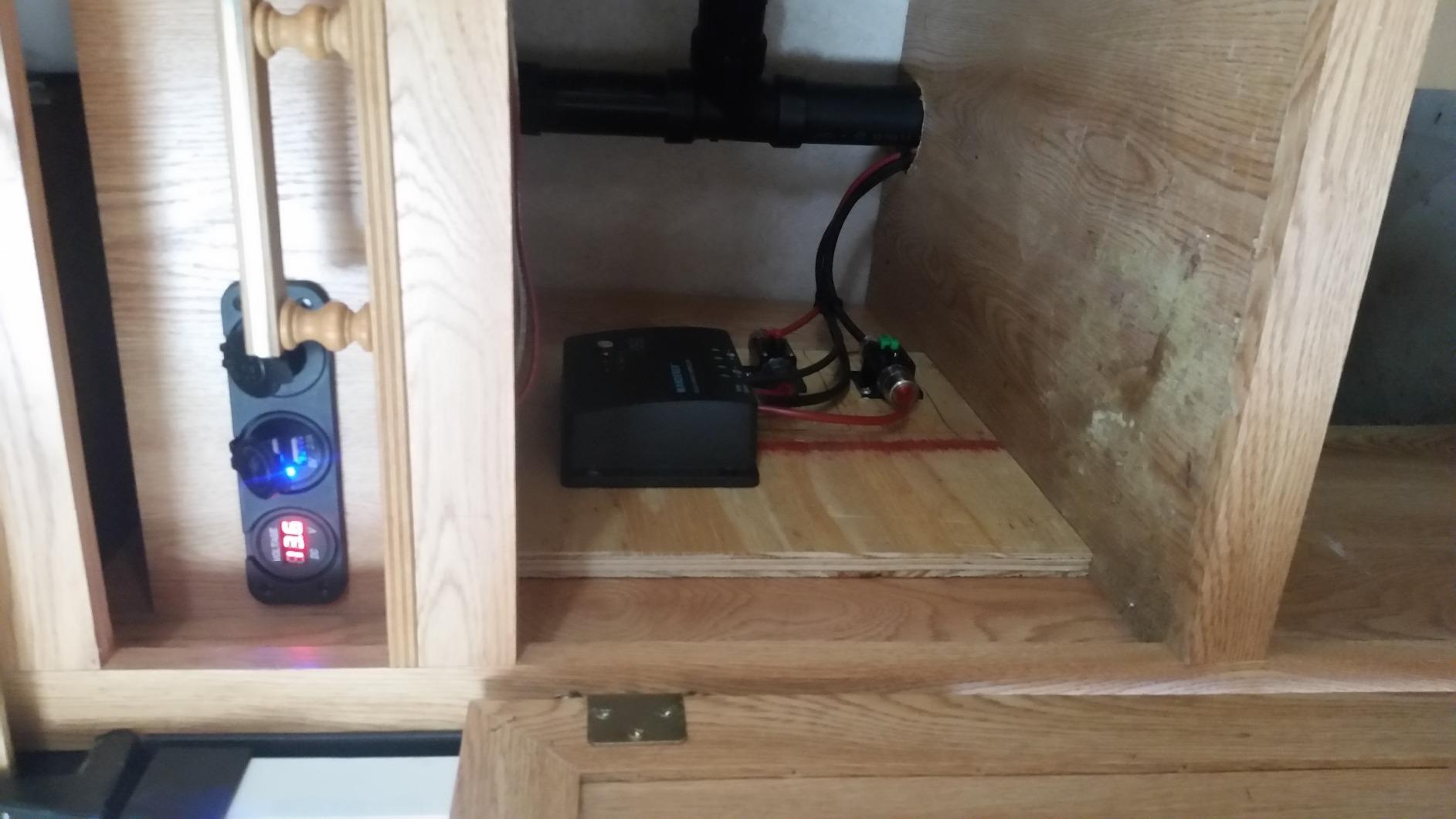
The build details matter more than the wattage here. Every panel goes through electroluminescence testing, the cells are 22.5% efficient, and the frame carries 2400Pa wind and 5400Pa snow load ratings, which is the number that decides whether it survives a Rocky Mountain winter. The junction box is IP65 rated and the connectors are IP67.
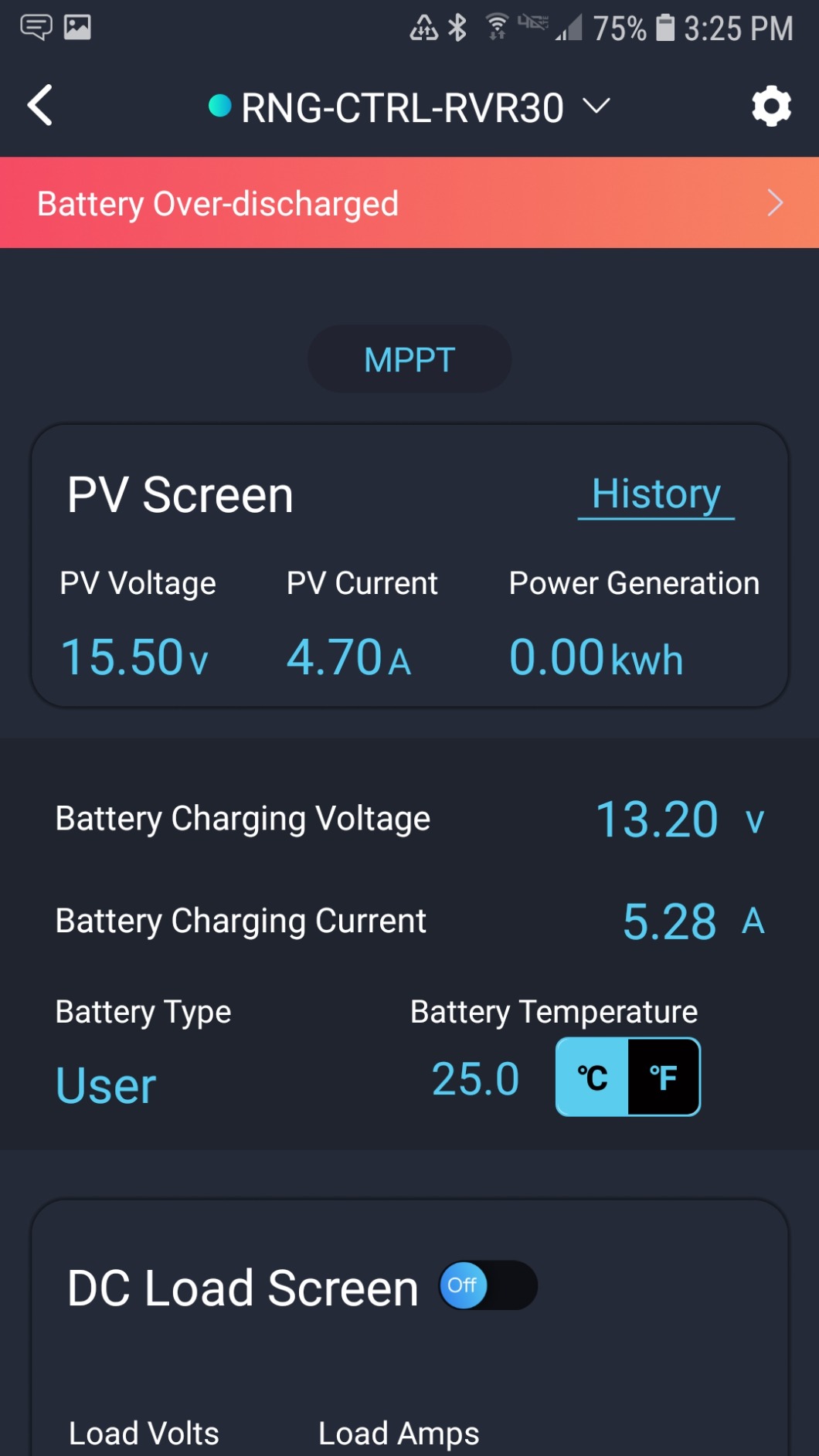
One thing to know before you buy: the RS232 Bluetooth port on the Wanderer controller does nothing on its own. Monitoring through the Renogy DC Home app requires adding the BT-1 module separately, and the controller warranty runs two years against ten years of material coverage on the panel.
Who this kit works for
A weekend cabin where someone wants lights, a router and a charging outlet without hiring an electrician. It is the cheapest honest test of whether solar suits your site, and the wiring is genuinely plug-and-play.
It also works as the first stage of a bigger system, since the controller and panel architecture scale to 400W as your usage grows.
Where the limits show up
PWM charging is the honest weak point. It simply cannot harvest the full voltage a panel produces, and that shortfall grows in the low light and thin conditions of winter. It is a fair trade for a first system and a poor one for a decade of use.
It also arrives without a battery or an inverter, so budget for both before you compare it against a complete kit.
2. ECO-WORTHY 200W 12V Kit with 30A PWM Controller: More Panel, Same Simple Architecture
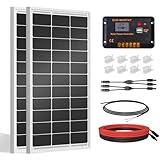
ECO-WORTHY 200 Watts 12 Volt/24 Volt Solar Panel Kit with High Efficiency Monocrystalline Solar Panel and 30A PWM Charge Controller for RV, Camper, Vehicle, Caravan and Other Off Grid Applications
Two 100W mono panels
30A PWM controller
Up to 800Wh per day
12V or 24V wiring
Pros
- Up to 800Wh per day from four hours of full sun
- Two 100W panels plus brackets plus controller plus 16.4ft 10AWG cables
- Series or parallel wiring for 12V or 24V systems
- Aluminum frame rated 2400Pa wind and 5400Pa snow
- 4.6 rating across more than 1100 reviews
Cons
- PWM controller rather than MPPT
- Weighs 31.6 pounds for 200W of output
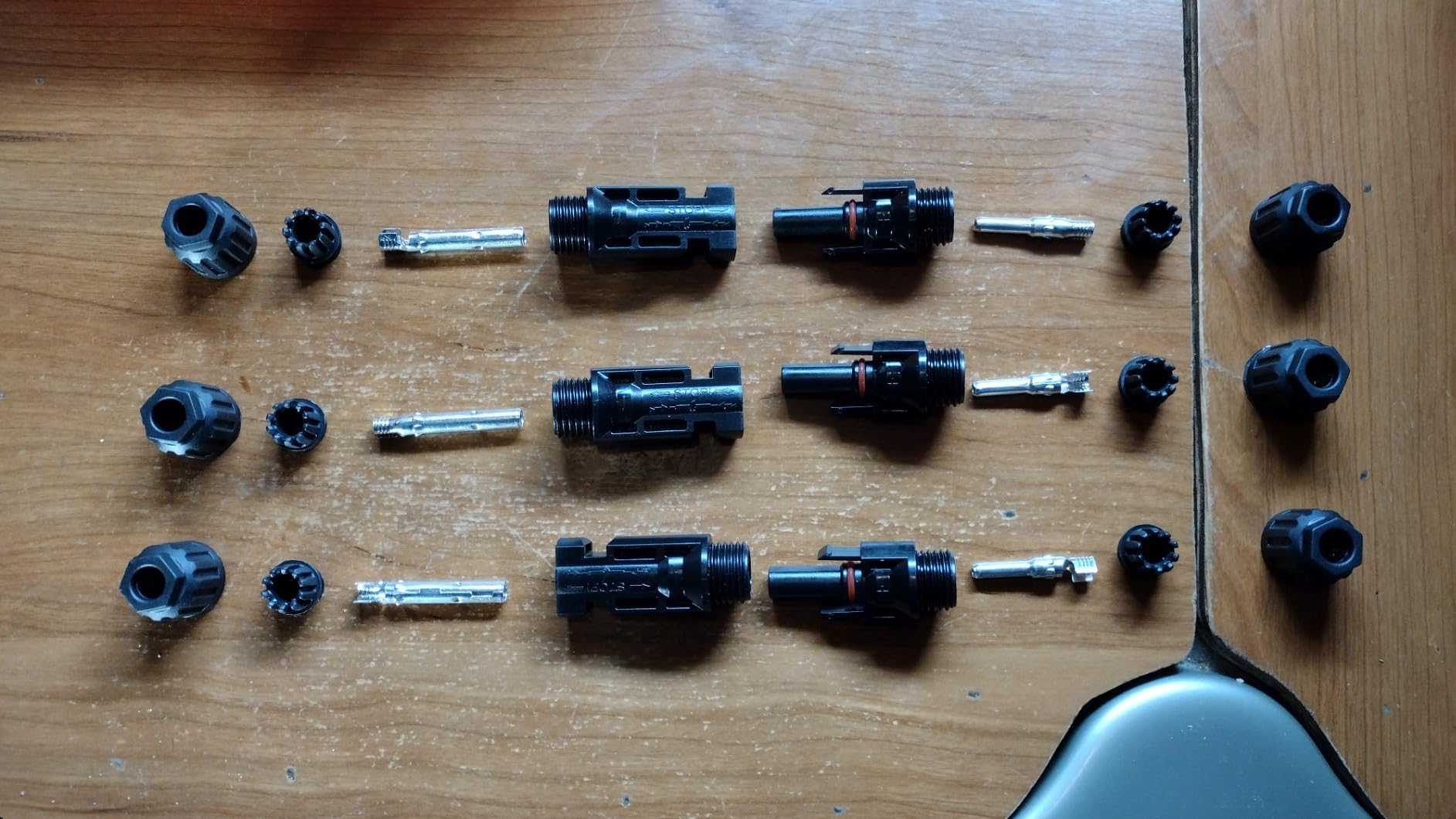
Doubling the array from the previous kit is the single biggest jump in capability you can make for a modest step up in complexity. This one ships two 100W monocrystalline panels at up to 21.5% cell efficiency, a 30A PWM controller, two sets of Z-brackets and a 16.4 foot pair of 10AWG cables with 2-in-1 connectors.
At 800Wh per day under four hours of full sun, this array can carry a 12V fridge, LED lighting, a router and a laptop all week without a generator. That is the difference between a shack and a usable retreat.
What I like most is the flexibility on the wiring. The panels can be configured in series for a 24V system or in parallel for 12V, which means the architecture is not a dead end if your cabin loads grow later. Maximum voltage is listed at 27.4 volts, which matters more than it sounds in a cold climate.
Each panel has an IP65 rated junction box, a corrosion-resistant aluminum alloy frame and pre-drilled plug-and-play cables. The warranty is one year with 24/7 technical support, which is the weakest coverage in this roundup.
Where this kit earns its slot
For a weekend or vacation cabin that needs real refrigeration and decent lighting, this is the sweet spot in the list. The controller is simple enough that a first-time installer will not make a wiring mistake.
It is also a good roof for a small shed or a fishing cabin where the loads are modest but constant.
Where it falls short
At 31.6 pounds this is a two-person carry onto a cabin roof, so plan your mounting help before the box arrives. PWM efficiency also means you lose more energy than you would with MPPT, and the one-year warranty is thin for a permanent install.
Like the starter kit, it ships without a battery or an inverter, so the true cost of a working system is higher than the box suggests.
3. Jackery Solar Generator 1000 v2 with 200W Panel: Plug-In Power Without a Build
Jackery Solar Generator 1000 v2 and 200W Solar Panel,1070Wh,1500W AC
1070Wh LiFePO4
1500W AC with 3000W surge
200W folding panel
23.8 pounds
Pros
- Runs a full-size refrigerator for roughly nine hours in outage testing
- 1070Wh LiFePO4 rated for 4000 plus cycles
- Charge and run appliances at the same time
- App control with one-hour emergency charging and a 30dB quiet mode
- Carries at 23.8 pounds with a folding handle
Cons
- The folding panel sags and needs frequent repositioning
- Included panel cable is short
Nothing in this roundup is closer to a finished cabin system than this one. The Explorer 1000 v2 combines a 1070Wh LiFePO4 battery, a 1500W continuous pure sine wave inverter with 3000W surge, three AC outlets, two USB-C ports, one USB-A and a 12V car port in a 23.8 pound box.
Reviewers report running a full-size refrigerator overnight on roughly nine hours of capacity, which tells you more about real-world usefulness than the wattage figure on the box.
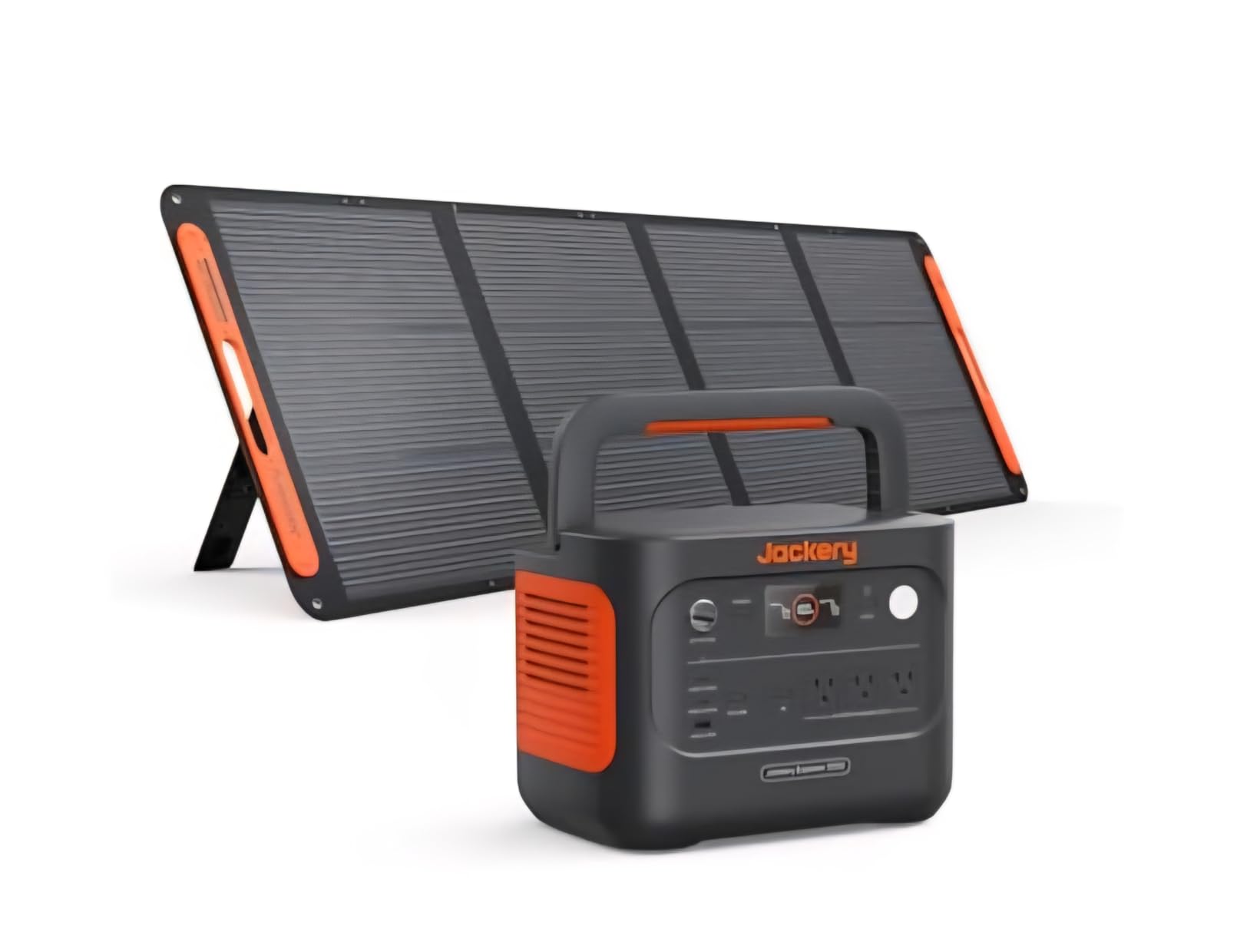
The battery is rated to hold over 70% of capacity after 4000 cycles, and the chemistry is LiFePO4, which handles cold cabins far better than lead-acid and does not need monthly maintenance. The 200W panel charges the unit to 80% in about six hours.
Charging speed is a genuine advantage for cabins with a long drive: the app-activated emergency mode fills the unit in one hour, while the default 1.7 hour profile protects long-term battery health. A 600W alternator charger brings it from empty in three hours, which many owners treat as the primary recharge method.
Who should buy this
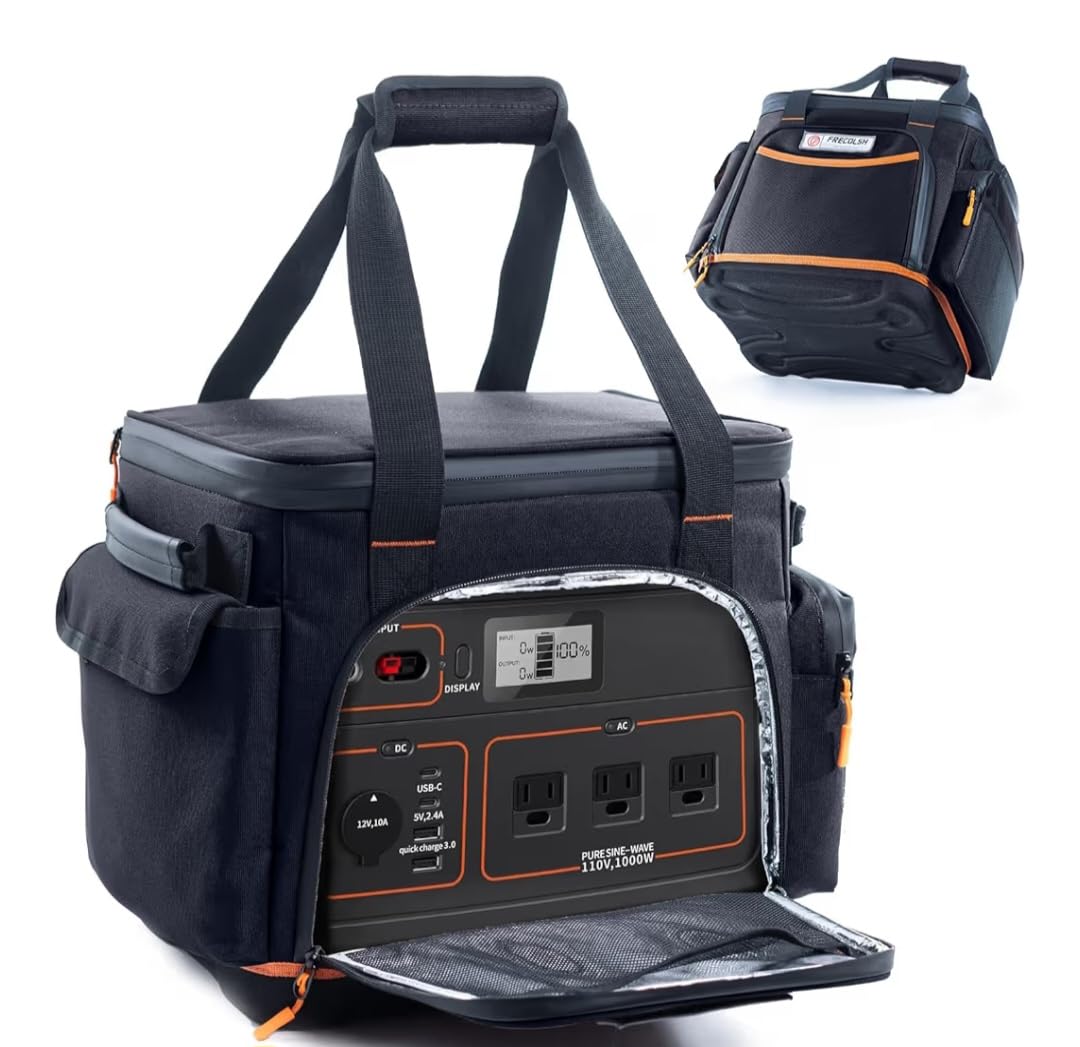
A cabin you drive to rather than live in, where you want power the moment you arrive without a wiring project. Cameras, a router, a portable fridge, lights and a laptop all fall inside its comfort zone.
It also works as a genuine backup for a cabin that already has grid power but sits on a long rural line.
Where it runs out of road
The bundled folding panel is the weak link. Reviewers describe it as unwieldy, prone to sagging in the middle and needing frequent repositioning to stay square to the sun, and the included cable is short enough that the panel must stay close to the unit.
At 1070Wh, sustained loads like a well pump or a mini split will drain it quickly, and it is a sealed consumer unit rather than a permanent installation.
4. Renogy 400W Premium Solar Kit with 40A MPPT Charge Controller: The Best Permanent Array
Renogy 400Watt Premium Solar Kit with 40A MPPT Charge Controller
Four 100W mono panels
40A MPPT Rover controller
32V max battery voltage
Bluetooth module included
Pros
- 400W of monocrystalline generation in one kit
- MPPT controller with 99 percent tracking efficiency
- Bluetooth module with Z-brackets and adaptor kit and tray cable
- Five-year material and workmanship panel warranty
- Designed for off-grid home and RV and marine use
Cons
- Weighs 56.4 pounds so the install needs two people
- Thinner review history than the smaller kits
When I look at the ten kits for a cabin that will see real winter use, this is the one I would build around. Four 100W monocrystalline panels feed a 40A MPPT Rover controller with 99% tracking efficiency, which harvests the extra voltage that a PWM controller throws away.
That efficiency matters most in the conditions a cabin actually lives in: hazy mornings, overcast winter days, and the angled light you get when the sun is low for most of the year. It is the difference between a battery that fills and one that never quite does.
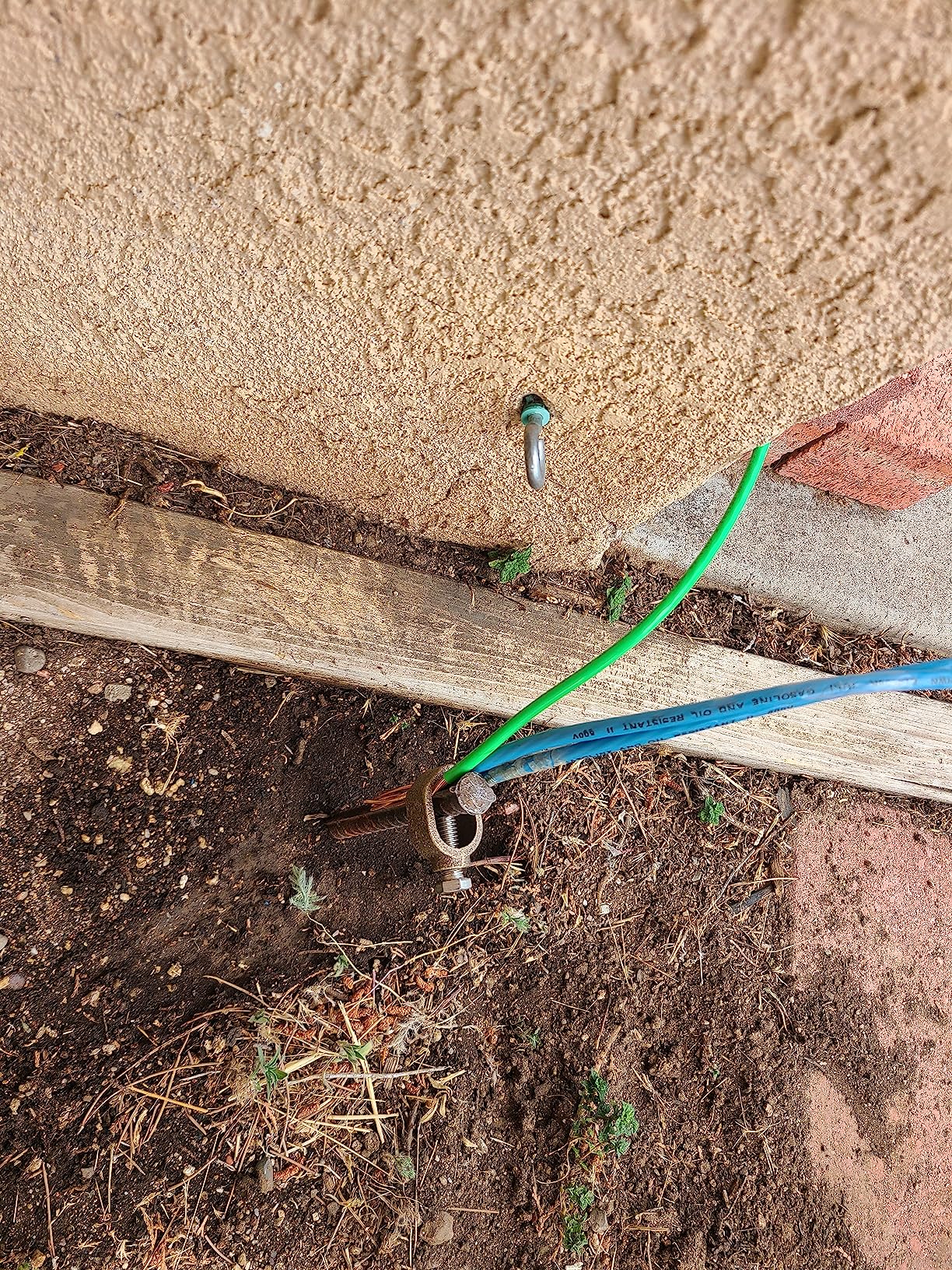
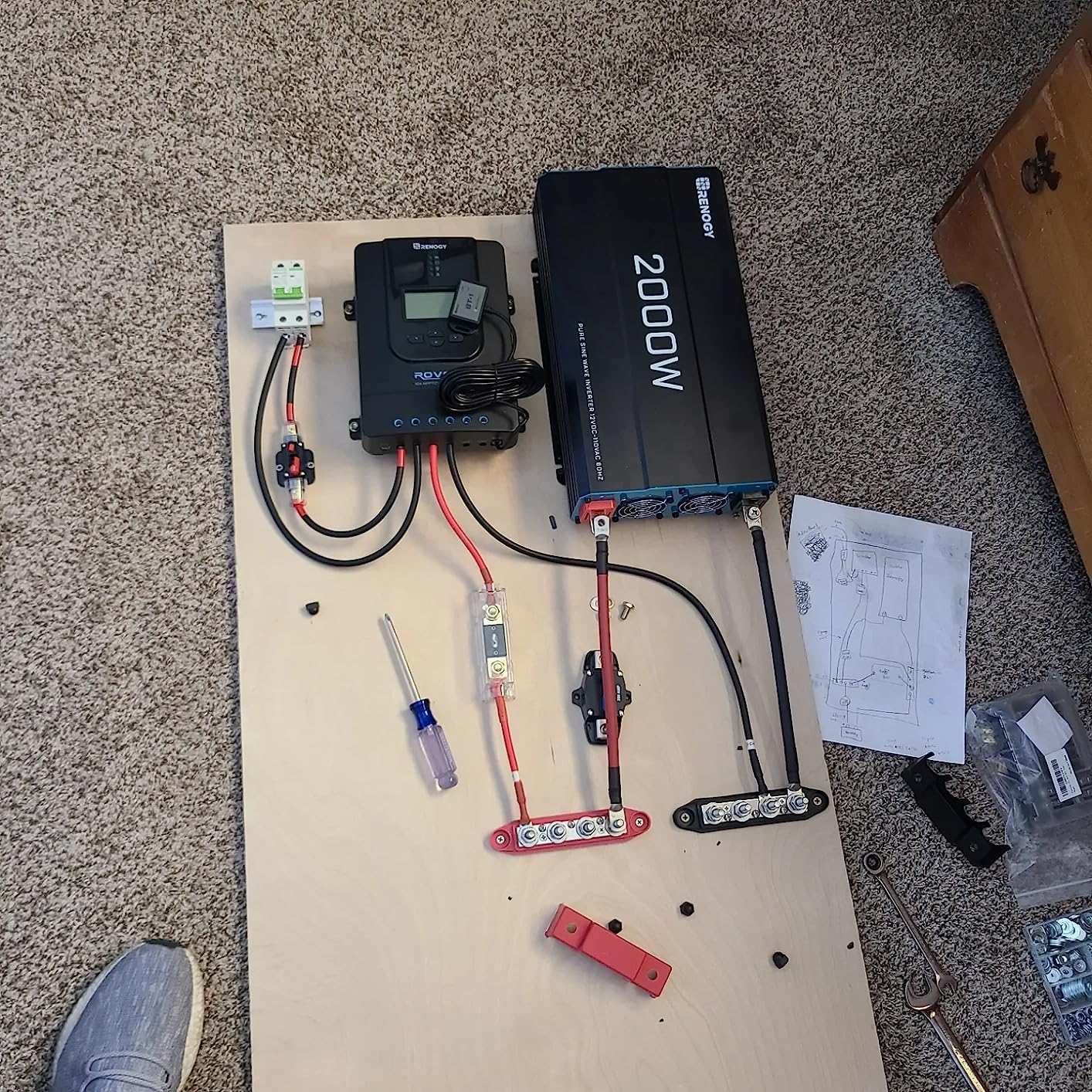
The hardware is complete for an array build: Z-brackets, an adaptor kit, a tray cable and the Bluetooth module, so you are not hunting for connectors on install day. Maximum battery voltage is 32V, which leaves headroom for a series string.
It holds a 4.5 average across 577 reviews with 79% five-star ratings. That is a smaller review base than the 100W kit, but the sentiment is consistent: buyers wanted meaningful capacity without assembling separate components.
Why it ranks as the best permanent array
A 40A MPPT controller on a 400W array at 12V gives you roughly 33 amps of charging headroom, so you can add a fifth panel later without replacing the controller. Forum builders consistently recommend oversizing the controller up front for exactly this reason.
It also leaves room for a well pump or a small inverter on the battery side once you move beyond lighting and refrigeration.
Where the trade-offs sit
At 56.4 pounds the box is a two-person install, and you are mounting four panels rather than two. Plan a roof plan before the panels arrive.
It is an array kit, not a system. You still need a battery bank, an inverter and the wiring between them, and the 32V battery ceiling keeps you in the 12V architecture rather than letting you move to 48V.
5. Renogy 200W 12V N-Type RV Solar Panel Kit with 30A Controller: Clean, Compact and Camper-Proven
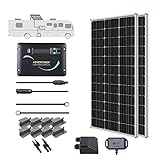
Renogy 200W 12V N-Type RV Solar Panel Kit with Adventurer 30A Controller
Two 100W N-type panels
22 percent cell efficiency
800Wh per day
Flush-mount controller
Pros
- 800Wh daily output from a compact footprint
- Flush-mount controller keeps walls clean
- Full wiring kit with adaptor and tray cable and Y branches and BT-1 module
- Operating range from -40F to +194F
- Pre-drilled holes and plug-and-play cables
Cons
- PWM controller is less efficient at low light
- Cable lengths may be limiting for larger arrays
This is the kit I recommend when the cabin is a converted van, a small cabin on a trailer, or a structure where visible conduit bothers you. The Adventurer-Li controller is a flush-mount unit designed to sit flat against an RV or camper wall rather than on a shelf.
The panels use N-type monocrystalline cells at 22% efficiency and are rated for 800Wh per day based on four hours of sunlight, which is the same daily output as the larger 200W kit in this roundup at a smaller footprint.
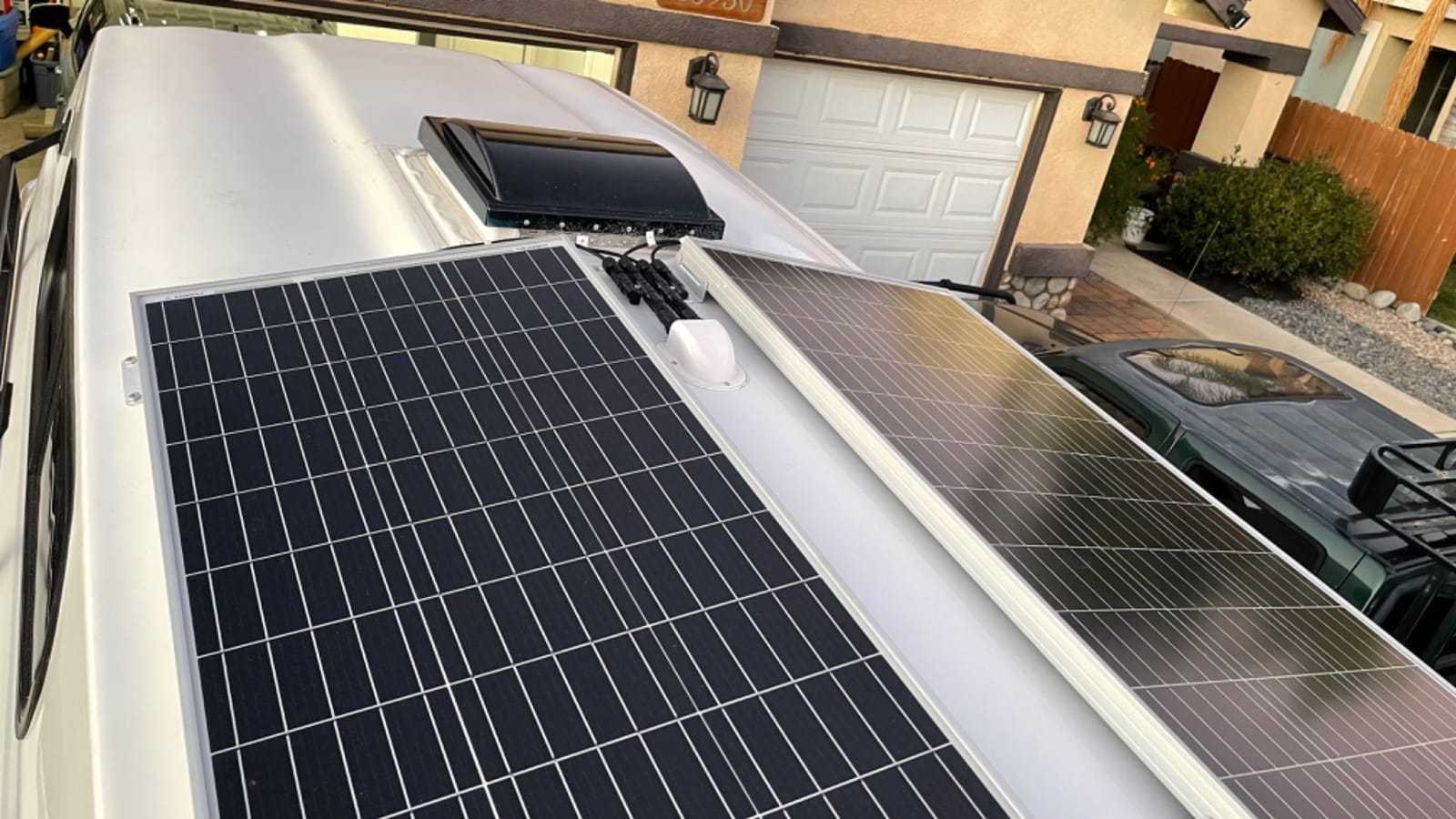
Two details stand out for cold-country use. The operating temperature range is listed from -40F to +194F, and the aluminum frame carries the same 2400Pa wind and 5400Pa snow load ratings as the other Renogy frames here.
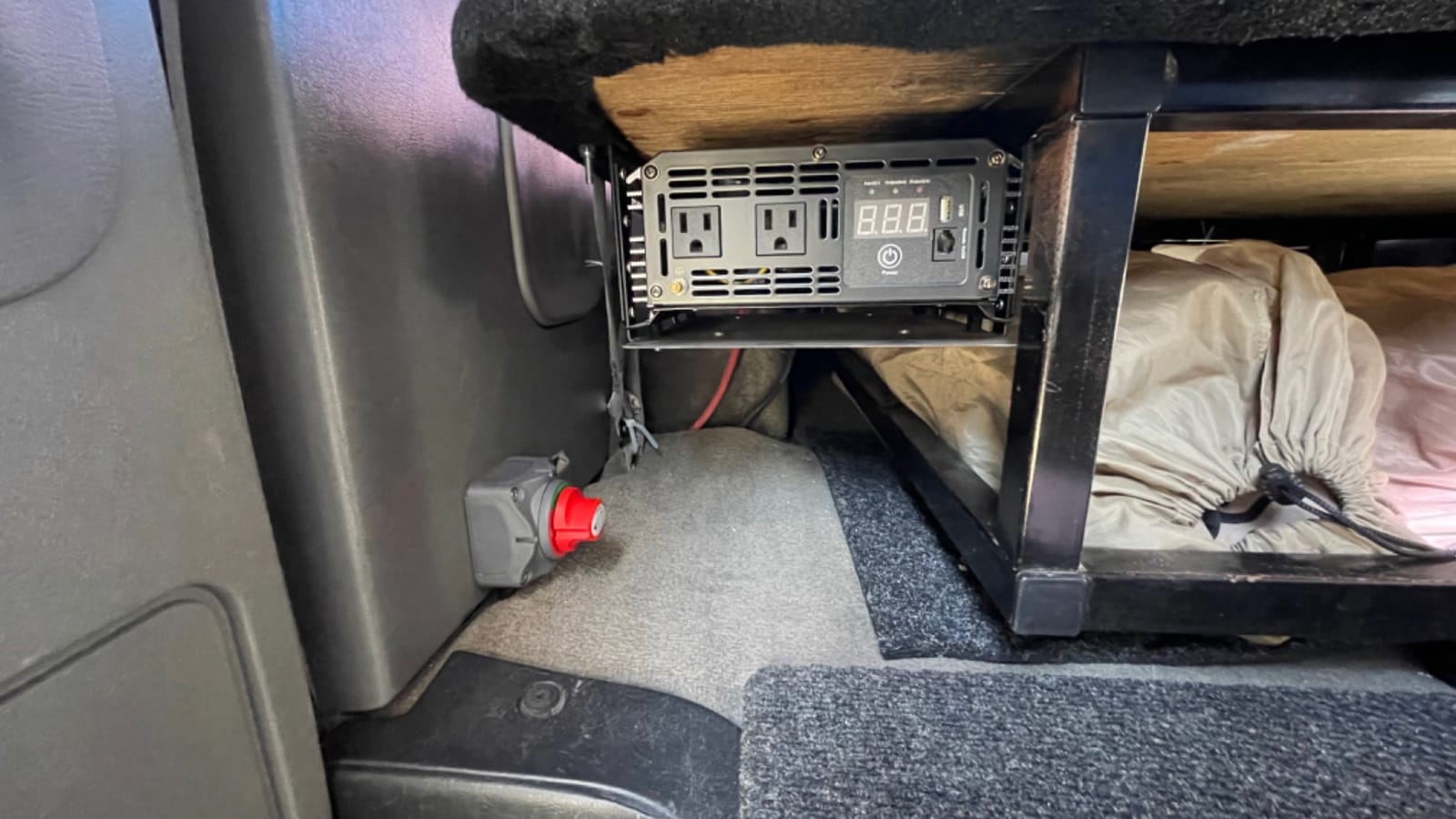
The box is genuinely complete: two panels, the flush-mount controller, a 30 foot 10AWG adaptor kit, a 16 foot tray cable, three pairs of Y branch connectors, a BT-1 Bluetooth module and a cable entry housing. Protection covers overcharging, overload, short circuit and reverse polarity, and the controller supports lithium, lead-acid and gel chemistries.
Where it fits best
A cabin with limited roof space or a van-based setup where a low-profile controller matters more than raw wattage. The N-type cells also perform well in low light compared with older cell technologies.
It carries a 4.6 average across 542 reviews with 79% five-star feedback, and a five-year warranty with 24/7 support.
Where it holds you back
PWM again, which means less harvest in the winter light that defines a cabin year. The included cable lengths and branch connectors also start to feel short if you plan to grow the array well past 200W.
There is no battery and no inverter in the box, so this is the start of a system rather than a system.
6. ECO-WORTHY 200W Complete Starter Kit with 600W Inverter and 50Ah LiFePO4: Everything in One Box
ECO-WORTHY 200 Watt 12V Complete Solar Panel Starter Kit for RV Off Grid
200W N-type array
600W pure sine inverter
12V 50Ah LiFePO4 battery
11.5 pounds
Pros
- Panels plus controller plus inverter plus charger plus LiFePO4 battery in one box
- 600W pure sine wave inverter with 20ms UPS switching
- 12V 50Ah LiFePO4 battery rated for thousands of deep cycles
- N-type panels reach 25 percent efficiency with dual-sided output
- Adjustable 5A to 40A charging via app or button
Cons
- Lowest average rating here at 4.1 with 10 percent one-star reviews
- XT60 battery interface is limited to 30A
- Adds weight and complexity for pure charging needs
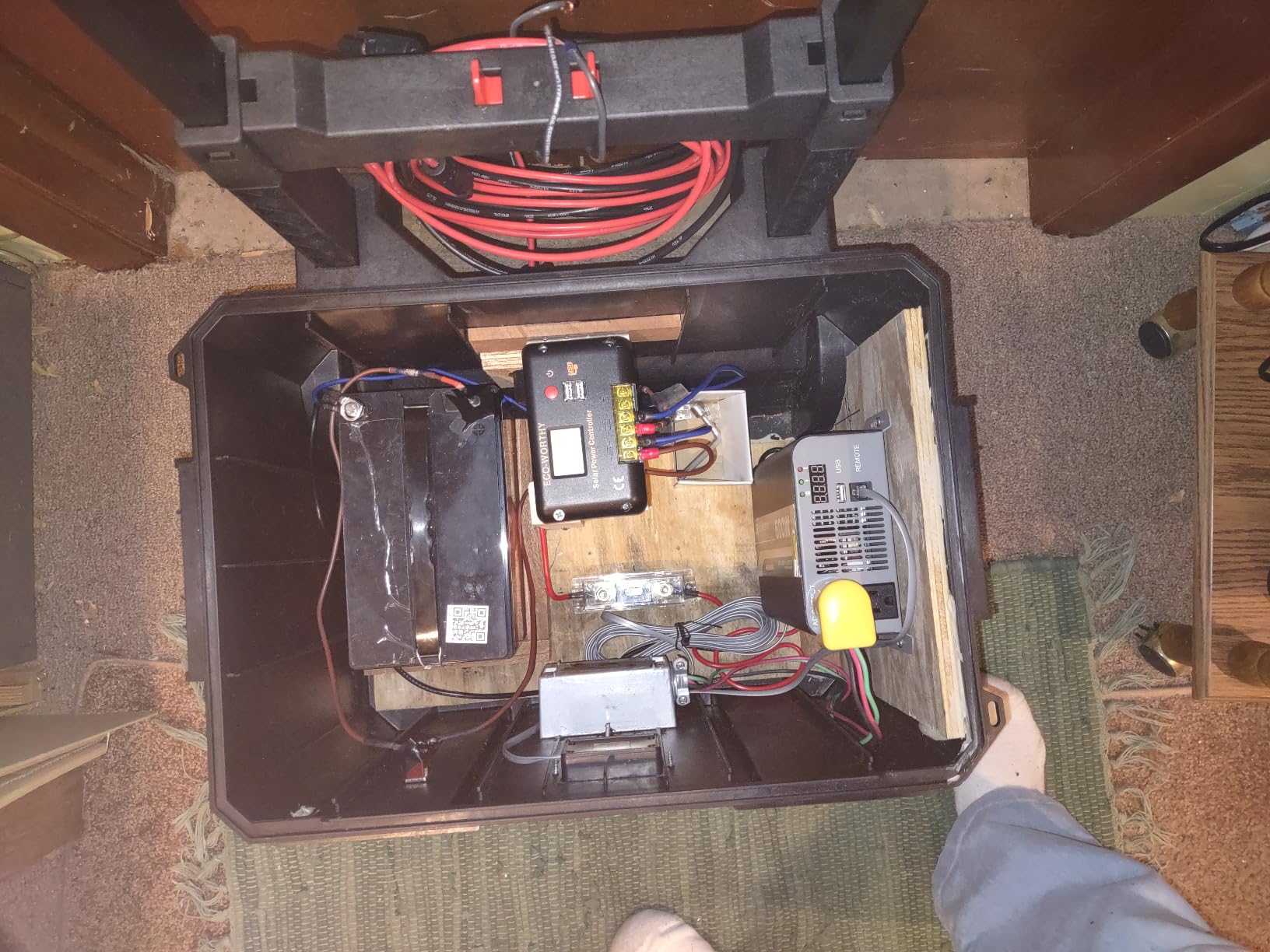
This is the only kit in the roundup that gives you a working system on day one. You get the 200W array, a 600W pure sine wave inverter with a 30A smart LiFePO4 charger, and a 12V 50Ah LiFePO4 battery with an XT60 port, all at 11.5 pounds.
A pure sine wave output matters more than most buyers realise, because modified sine wave power can confuse sensitive electronics. Coupled with 20ms UPS auto-switching, it will keep a router or a desktop alive through a power interruption rather than rebooting it.
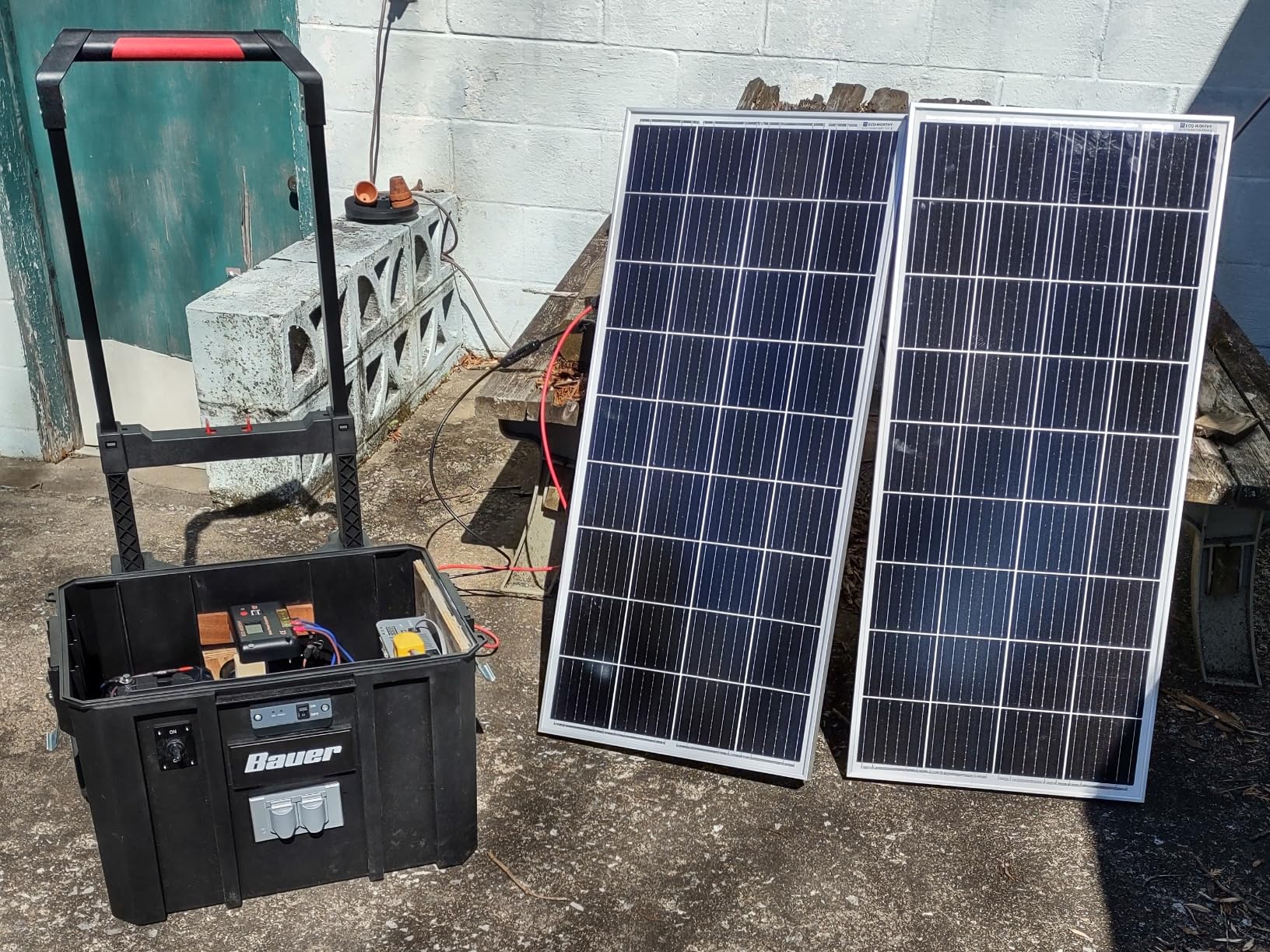
The panel side is the strongest in the small-kit category. The N-type monocrystalline cells reach 25% efficiency, and the dual-sided design captures reflected light for up to 15% extra output, which matters when you mount close to a bright roof or a snow bank.
The battery chemistry is the other headline. LiFePO4 cells are rated here for 4000 to 15000 deep cycles against 300 to 400 for lead-acid, and the charger adjusts from 5A to 40A through the app or a button. Zero-volt activation and three-stage charging round out a controller that is doing real work.
Why this one is worth a look
For a first-time builder, the value is in the elimination of shopping. Anderson plug-and-play connectors and included accessories mean fewer terminations, fewer mistakes and no separate battery purchase.
The 600W inverter also covers more than a weekend fridge load, since it can carry lights, a small television, a router and a coffee maker simultaneously.
Why the rating sits lower
This is the least-loved kit here, holding a 4.1 average with 10% one-star feedback. Reviewers point to installation complexity and value questions when the whole package is compared against assembling parts separately.
The XT60 battery connection is capped at 30A for input and output, which throttles the 50Ah battery, and 600Wh of storage is a light bank for multi-day winter stretches. Read the reviews before you commit.
7. Jackery Explorer 2000 v2 with Two 200W Panels: Best for a Mid-Size Cabin
Jackery Explorer 2000 v2 and 2x200W Solar Panels, 2042Wh, 2200W AC Output
2042Wh LiFePO4
2200W AC output
Two 200W panels
20ms UPS
Pros
- 2042Wh capacity with 2200W AC in a compact body
- 20ms UPS switching protects computers and network gear
- 80 percent charge in 66 minutes on wall power
- 400W of bundled panels recharges the unit in about six hours
- Silent 30dB mode runs a full charge in five hours
Cons
- Sealed consumer unit rather than a permanent installation
- Full bundle weighs 66.8 pounds
Step up one size and this is the smallest package that can carry a normal household load without flinching. The Explorer 2000 v2 holds 2042Wh of LiFePO4 capacity and delivers 2200W of continuous AC across three outlets.
That is enough for a refrigerator, a freezer, lighting, a router and a work laptop simultaneously, which is roughly the load profile of a full-time cabin in shoulder season.
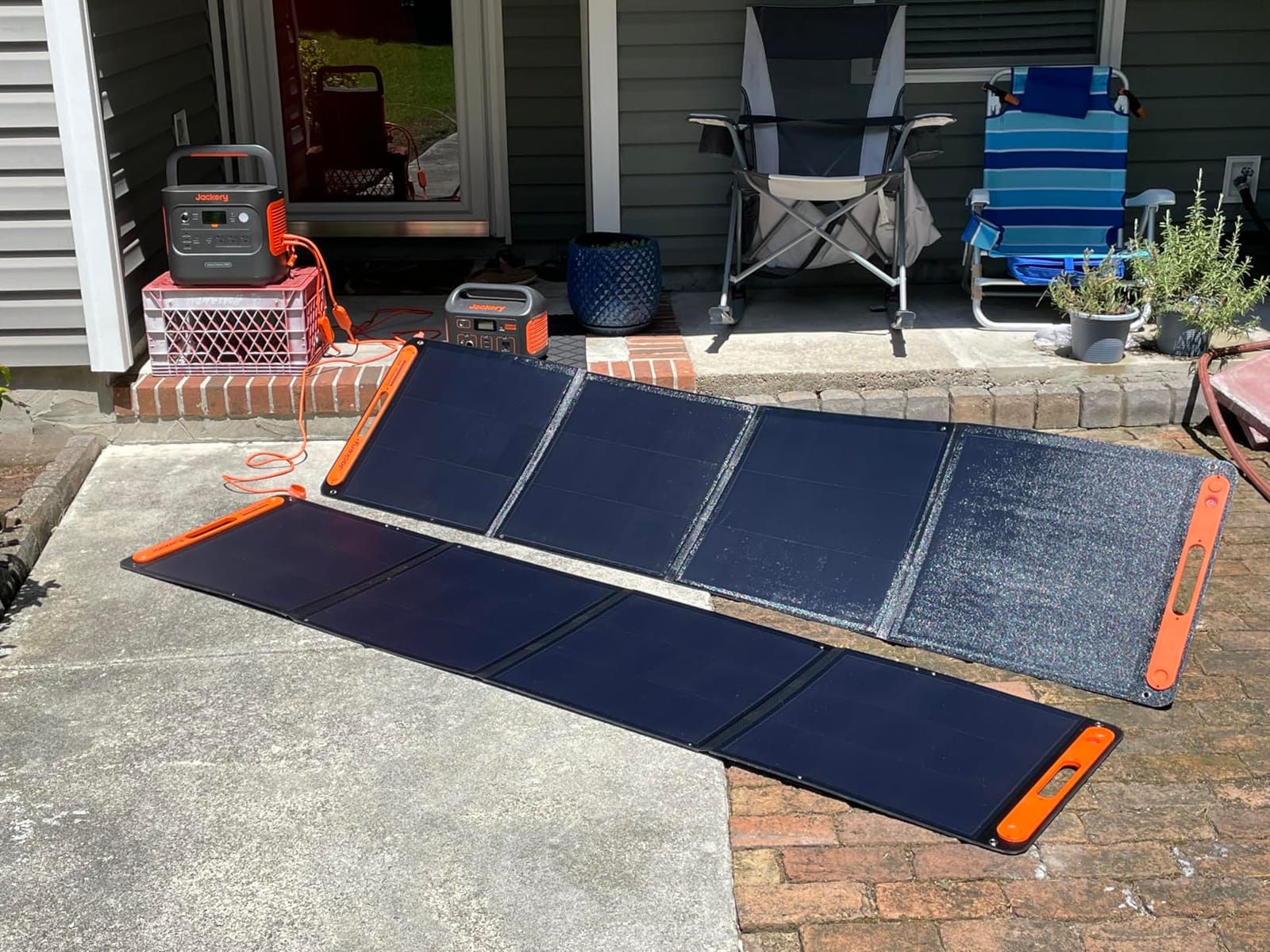
The Cell-to-Body construction makes it 41% lighter and 34% smaller than a conventional 2kWh LiFePO4 station, and the two 24V solar charge inputs accept the bundled pair of 200W panels for a roughly six-hour recharge. UL1778 test certification and 20ms UPS switching mean it behaves like a small UPS for network equipment.
Charging speeds help when you drive to the cabin often: 80% in 66 minutes on AC, or a full charge in 102 minutes with app-activated emergency super charging.
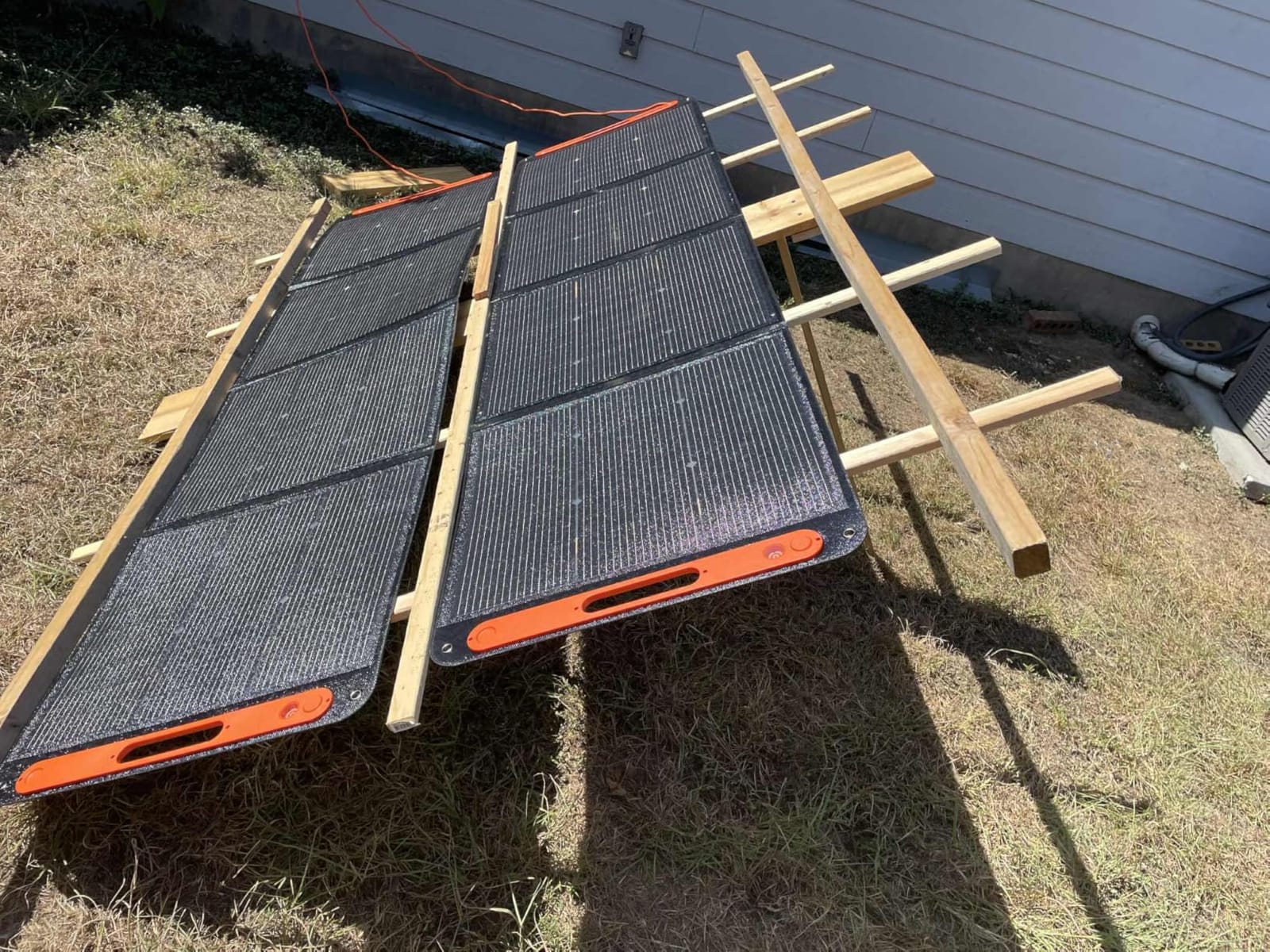
Where this kit earns its place
A mid-size cabin or tiny home where you want household appliances rather than just charging devices. The 30dB silent mode reaches a full charge in five hours, which matters if the unit lives in a bedroom or a workspace.
It also suits a work-from-cabin setup, since the UPS keeps a desktop and monitor from losing work during a switchover.
Where the limits appear
At 66.8 pounds for the bundle, this is no longer a carry-it-into-the-cabin product, and the folding panels share the same handling complaints as smaller folding designs.
A sealed power station is still a temporary home for heavy continuous loads, so a well pump or an electric heater will drain it faster than the solar input can refill it.
8. ABOK Ark3600 with 400W Panel: Best for Expandable Capacity
ABOK Ark3600 Portable Power Station with 400W Solar Panel,2000W Solar Input
3840Wh expandable to 11520Wh
3600W rated, 4500W peak
2000W solar input
15 output ports
Pros
- 3840Wh capacity with expansion to 11520Wh
- 3600W rated output handles high-draw appliances
- 2000W solar input gives real recharging headroom
- 15 ports covering AC and USB-C and USB-A and DC
- Wheels and telescopic handle with EV-grade LiFePO4 cells rated 4000 plus cycles
Cons
- Heaviest unit in the roundup at 92 pounds
- Smaller review base of 142 reviews
- The bundled 400W panel is modest against 2000W of solar input
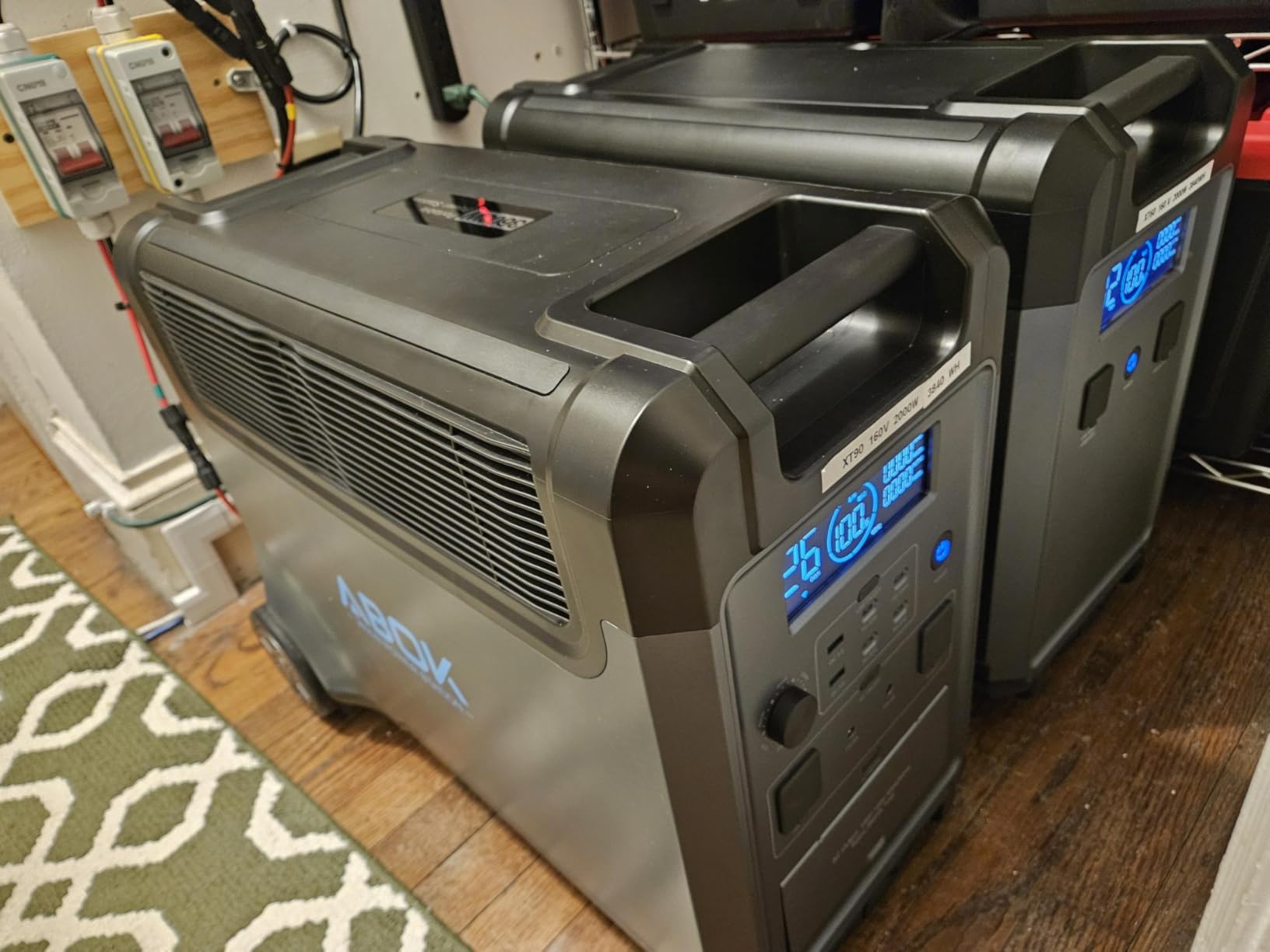
If your cabin might grow, expansion headroom matters more than the spec sheet today. The Ark3600 holds 3840Wh and expands to 11520Wh, with 3600W rated output and a 4500W peak for startup surges.
The 2000W solar input is the number I would actually shop on. Most power stations accept 400W to 600W of panels, so once your array outgrows the bundled panel you can add real panels instead of waiting all weekend for a recharge.
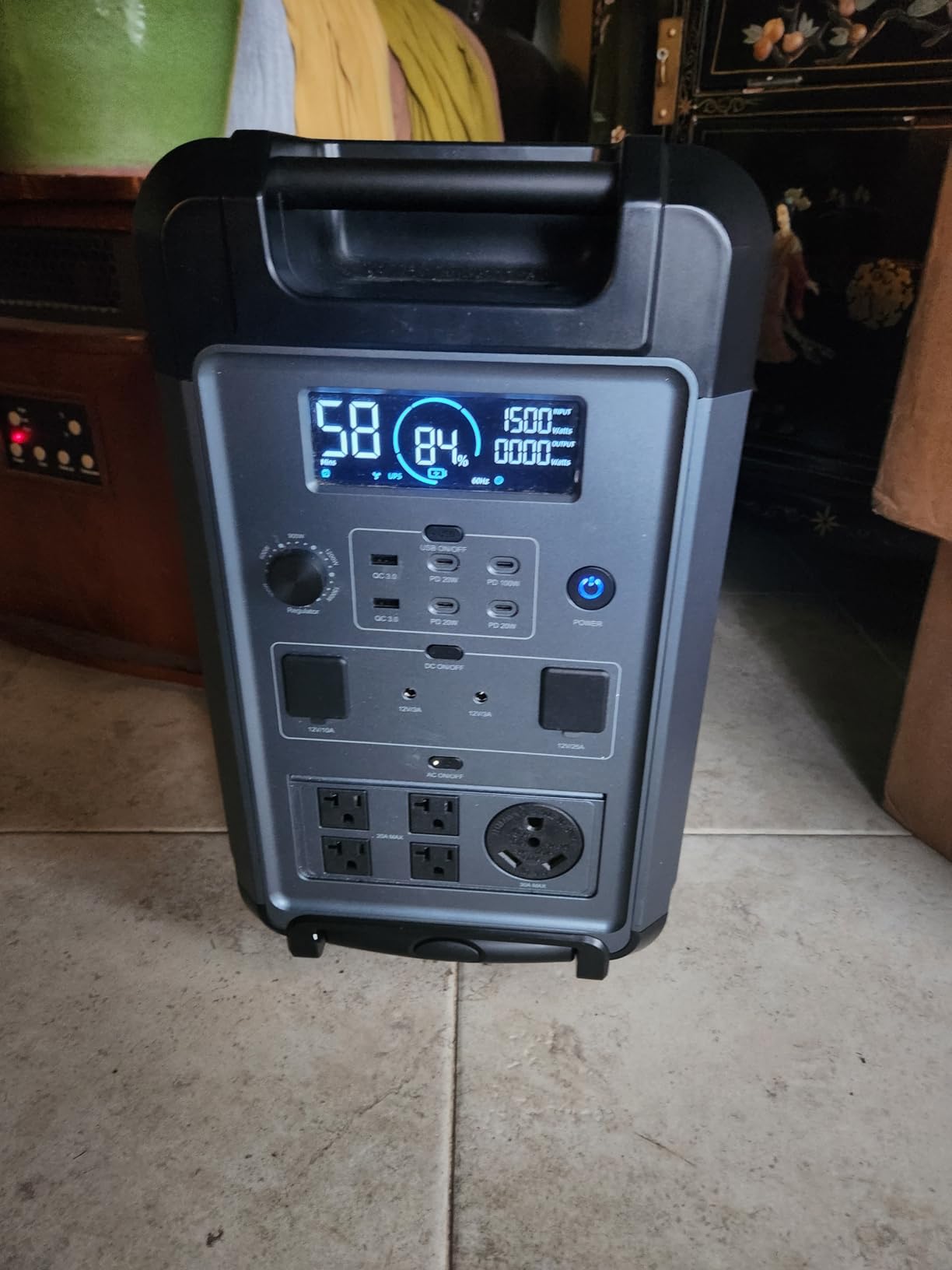
Port count is a genuine differentiator here: 15 outputs including a 30A AC outlet, four 20A AC outlets, USB-C PD at 20W and 100W, USB-A QC3.0, DC5521 and XT60 connections, plus a cigarette lighter socket. A Bluetooth app handles monitoring and control remotely, which matters when the unit sits in a shed a walk away from the cabin.
Charging is flexible as well, with 1500W AC input, 2000W PV and 120W car input, reaching a full charge in about 1.29 hours on AC and PV combined or three hours on AC alone. EV-grade LiFePO4 cells are rated for 4000 plus cycles with a 10-year battery lifespan.
Why buyers pick it
Three-phase loads and high-draw appliances are the reason people land here. A 3600W continuous rating with a 4500W peak will start a pump or a power tool that would trip a smaller unit.
It holds a 4.6 average across 142 reviews with 83% five-star feedback, and the telescoping handle and wheels make a 92 pound unit movable across a flat cabin floor.
Where to be careful
142 reviews is a small base for a decision this large, and 92 pounds is the heaviest bundle in the roundup, which is a real constraint if you have steps or a narrow door.
The bundled 400W panel is modest against a unit that accepts 2000W of solar, so plan on adding panels rather than relying on the included one for off-grid charging.
9. Jackery HomePower 3600 Plus with Two 200W Panels: Best for Full-Time Living
Jackery HomePower 3600 Plus & 2x200W Solar Panels, 3584Wh, 3600W AC Output
3584Wh expandable capacity
3600W AC, 7200W parallel
120V and 240V output
6000 cycle battery
Pros
- Reviewers ran three freezers plus a router plus cameras through a 7 hour outage on 18 percent of capacity
- 6000-cycle battery rated for a 10 year lifespan down to -4F
- 0 to 100 percent in about two hours with hybrid charging
- Dual 120V and 240V output with 7200W in parallel
- Wheels and telescopic handle for a 77 pound unit
Cons
- Bundled panels deliver roughly 100-150W each in low light
- Panels are awkward to place and need extra cable
- No cigarette lighter outlet and few DC options
This is the most capable package for someone actually living off-grid in a cabin, and it is also the one where the honest caveats matter most. The HomePower 3600 Plus holds 3584Wh, delivers 3600W of continuous AC and doubles to 7200W when two units run in parallel.
Because it outputs both 120V and 240V in parallel mode, it can serve a cabin that uses standard household wiring rather than forcing everything through 12V DC appliances.
The battery is the headline for cold-climate owners. Ceramic membrane cells were tested at 302F for thermal runaway resistance, the pack is rated for 6000 cycles and a 10-year lifespan, and it is rated to operate down to -4F.
Reviewers report running three freezers, a WiFi router and security cameras through a seven hour outage while touching only 18% of capacity, and a 30-year-old refrigerator for 24 hours on under half the bank. That is the behaviour you want when the grid is miles away.
Why it fits full-time living
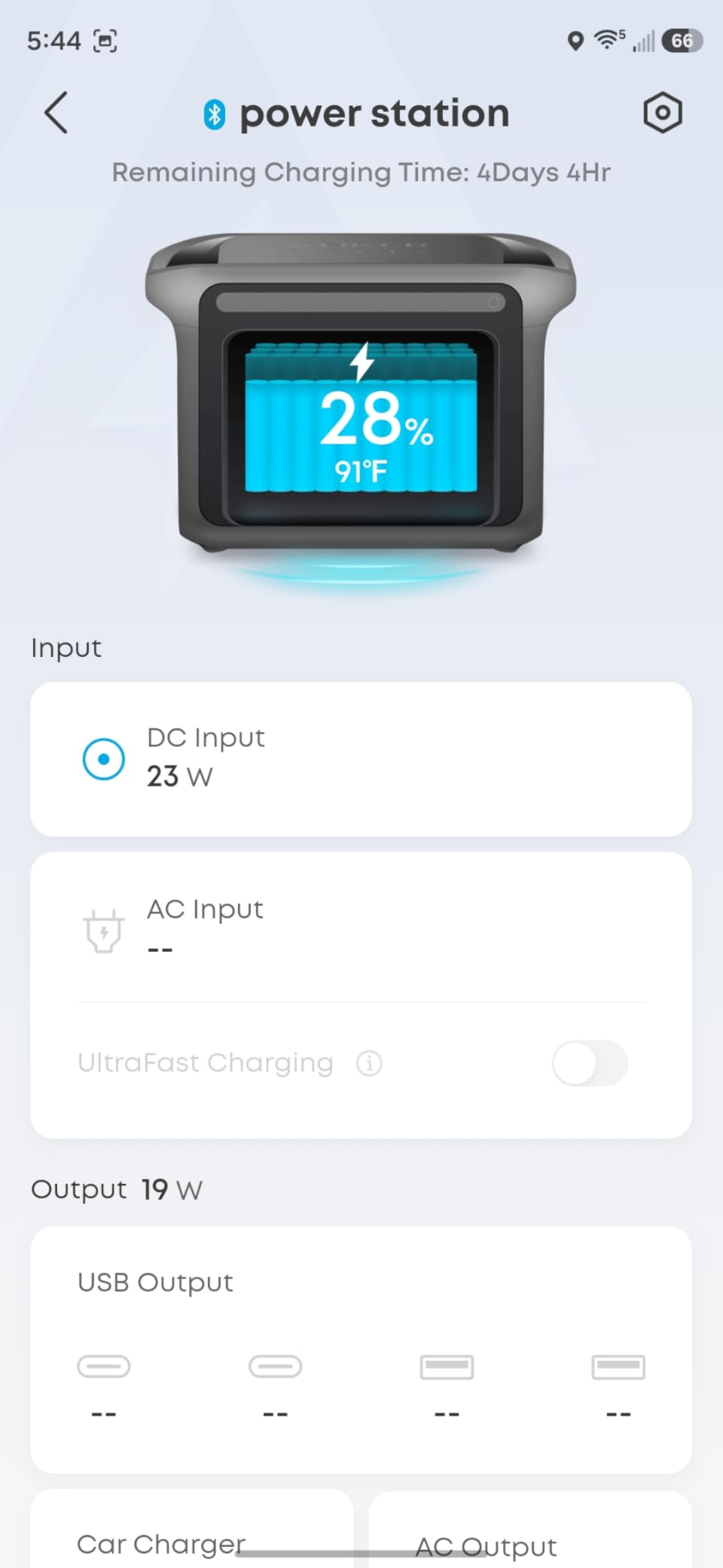
Recharge speed is what makes full-time use realistic. It goes from zero to full in about two hours with hybrid AC and DC charging, 2.5 hours on AC alone, four hours on solar and 2.5 hours from a gas generator.
The plug-and-play MTS design means no electrician for the wiring, which matters for a full-time install in a remote location, and the luggage-style chassis with wheels makes it movable between rooms.
Where the complaints concentrate
Several reviewers report the bundled SolarSaga panels producing roughly 100-150W each in real-world low-light conditions rather than their rated output, and finding placement that works takes extra cable length.
There is no cigarette lighter outlet and limited DC output beyond USB, and the vertical shape is awkward to store. Buy better panels if off-grid solar is the plan.
10. ECO-WORTHY 400W Premium Kit with 40A MPPT Charge Controller: Best for Shade and Snow
ECO-WORTHY 400 Watt 12 Volt Premium Solar Panel Kit :4pcs 100W Solar Panel+ 40A MPPT Charge Controller+ Bluetooth Module+ Mounting Z Brackets, 400W 12V Solar Power Off Grid System for Home, RV, Boat.
Four 100W mono panels
40A MPPT controller
Averages 1.6kWh per day
Bypass diodes
Pros
- Averages 1.6kWh per day from four panels
- 40A MPPT with 99 percent tracking and 98 percent peak conversion
- Bluetooth 5.0 module with up to 82 feet of range
- Pre-installed bypass diodes reduce loss from partial shading
- Three panels of glass in 3.2mm low-iron with 35mm aluminum frames
Cons
- Listed weight of 32.66 kg is heavy for a 400W kit
- MPPT controller and Bluetooth module add cost
- Still needs a battery and inverter to be usable
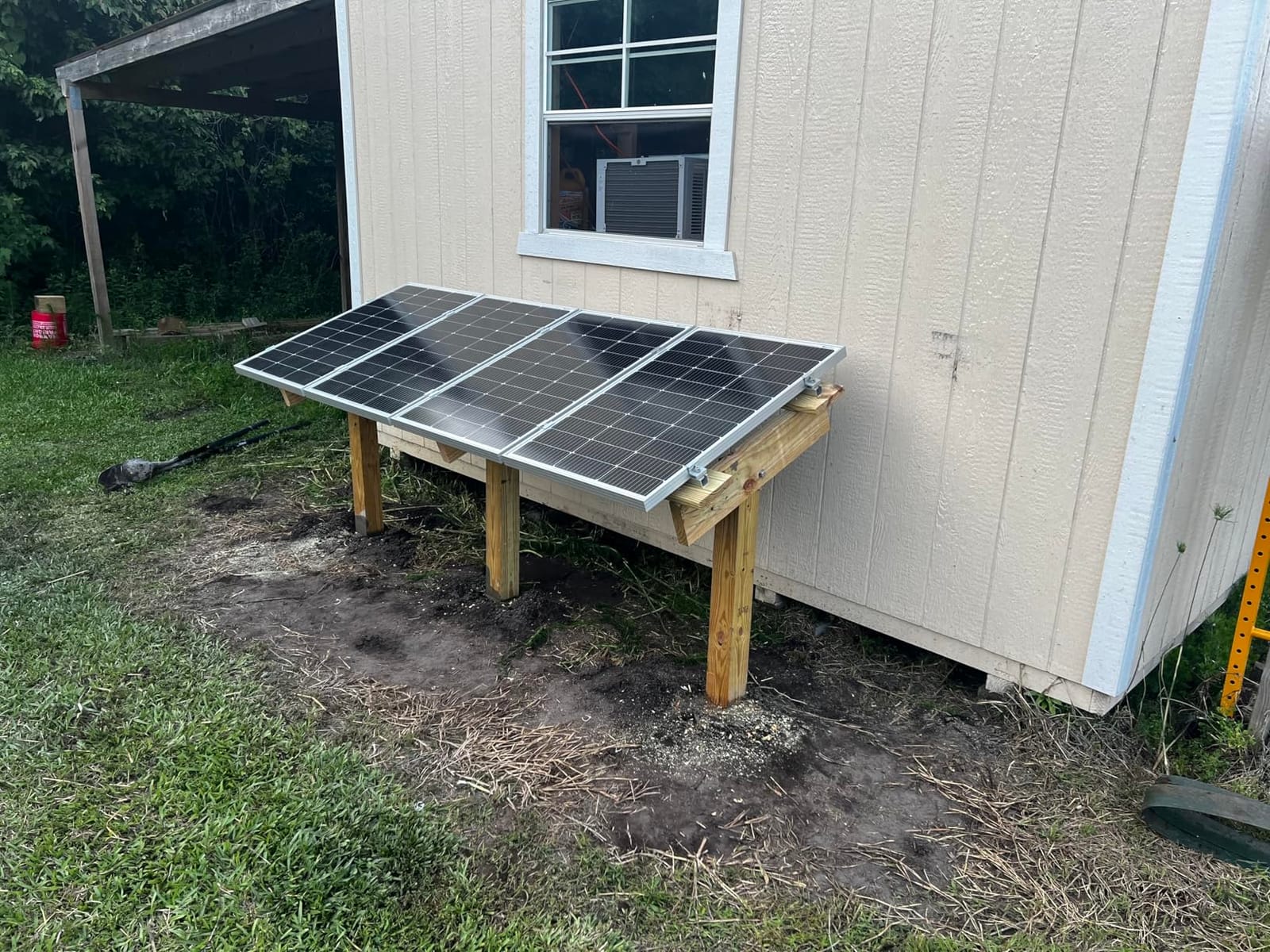
Trees, a neighbouring roof or a chimney that casts a shadow for part of the day is the normal condition at a wooded cabin, and this kit handles it better than the others in the roundup. The four 100W monocrystalline panels use 21% efficient cells with pre-installed bypass diodes in IP65 rated waterproof junction boxes.
Bypass diodes route current around a shaded cell instead of letting it drag on the rest of the string, which is why this array holds closer to its rated output under partial shade.

Average daily production is listed at 1.6kWh depending on sunlight, roughly double what the 200W kits here manage. The 40A MPPT controller runs 99% tracking efficiency and 98% peak conversion, which the manufacturer puts at around 40% better than a PWM controller of the same size.
Physical construction is the other strength for northern sites: 3.2mm low-iron glass over 35mm aluminum alloy frames, rated for 2400Pa wind and 5400Pa snow load. Each panel ships with a pair of 35 inch cables and a 16 foot pre-drilled run with Y branches, and the BT-02 Bluetooth 5.0 module reaches up to 82 feet for monitoring.
Where it beats the alternatives
If your cabin sits under partial shade, the bypass diodes and MPPT tracking recover real production that a simple PWM kit would lose entirely. The Bluetooth range also covers a panel mounted away from the cabin door, which is often the case on a shed or pole mount.
It is an array kit built for a permanent roof, not a weekend toy.
Where to pause before buying
The listed weight of 32.66 kg makes this the heaviest panel kit here by some margin, so budget for a helper and proper mounting hardware rather than a temporary lean-to.
It holds a 4.4 average across 120 reviews, the smallest review base here, and it still arrives without a battery or an inverter. The MPPT controller and Bluetooth module also add cost per watt compared with a basic PWM kit.
How to Size a Solar Panel Kit for Your Cabin?
Size from your load list, not from the panel listing. Add up the watt-hours each appliance uses per day, divide by the peak sun hours your site actually gets, and that number tells you your array size. Everything else in this guide follows from that one calculation.
How many solar panels do you actually need?
Sum the daily watt-hours of every load, then divide by your site peak sun hours. A 400Wh day at four peak sun hours needs about 100W of panels; a 1600Wh day at the same site needs about 400W. Real-world sizing should add roughly 25 to 30% because nameplate ratings assume perfect conditions that never hold for a full winter.
As a rough guide for a weekend cabin running lights, a router and a 12V fridge, a 100W to 200W array covers it. A full-time cabin with a refrigerator, a freezer, a laptop and a well pump needs 400W to 800W of panels. Anything above that, including a mini split, moves you into larger power stations or a generator hybrid.
Our off-grid winter cabin solar guide covers seasonal output loss in more detail if your site gets snow for months at a time.
MPPT versus PWM, and why winter decides it
MPPT charge controllers track the maximum power point of a panel and can harvest 20 to 40% more energy than a PWM controller from the same array. PWM simply reduces the panel voltage to match the battery, dumping the difference as heat. In bright summer conditions the gap is small. In low winter light, with a cold battery needing a higher charge voltage, the gap widens sharply.
Five of the kits here use PWM and four use MPPT. The rule of thumb from experienced off-grid builders on DIY solar forums is consistent: buy MPPT if the array is 200W or more and the cabin sees real winter, and do not upgrade the controller later, because that means rewiring the whole array.
Battery storage and days of autonomy
Convert everything to watt-hours, which removes the voltage confusion that trips up most beginners. Multiply your daily load by your days of autonomy, then divide by your usable depth of discharge to get the capacity you need.
With a 1000Wh daily load and two days of autonomy, you need 2000Wh nominal. Lead-acid gives you about 50% usable depth of discharge, so that becomes roughly 4kWh of bank. LiFePO4 gives you around 80 to 90% usable, so the same target needs about 2.5kWh. That difference is why forum builders consistently push new cabin owners toward lithium.
One more rule worth memorising: a lithium bank charges optimally at roughly 10% of its amp-hour capacity. A 240Ah 12V LiFePO4 bank wants about 24 amps of charging current, which tells you what size charge controller to buy.
What each kit can and cannot power
A cabin solar kit handles lighting, electronics, refrigeration and small pumps well. It cannot handle resistance heat. Electric space heat, a standard electric oven, a clothes dryer and whole-home air conditioning draw more than any of these portable or kit-based systems can sustain, and attempting it is how batteries get cooked in January.
Propane covers what solar should not. A propane refrigerator or a propane heater removes the largest and most heat-sensitive loads from your list, which shrinks the required array and battery dramatically. If you are building a full-time cabin, plan a propane appliance for cooking and heating before you size anything.
For panel and inverter sizing on a build-out, our solar kit picks for camper vans cover the smaller 100W to 200W class in depth.
The cold weather voltage rise problem
Panel voltage rises as temperature falls, and it rises the most on a clear cold morning, which is exactly when open-circuit voltage peaks. A PV input window is not unlimited, and forum builders report controllers damaged when winter Voc exceeds the rated maximum input voltage.
Two habits prevent it. First, size for cold, not for nameplate: check the controller maximum PV input voltage against the string Voc with a cold-temperature margin. Second, keep a cheap backup PWM controller on hand, because when something fails forty miles from the nearest town the second failure is the one that strands you.
Forum consensus also favours parallel wiring for winter performance. Panels in parallel tend to hold up better in low light and partial shade, and adding a third panel in series does not meaningfully improve cloudy-day output.
Installing it yourself or hiring an electrician
Low-voltage DC work between the panel, controller and battery is a reasonable weekend project for a careful first-timer. The AC side of the inverter is a different matter: if your kit feeds a receptacle or a subpanel, most jurisdictions require a licensed electrician and a permit, and the liability sits with you otherwise.
Plan three things before the panels go up: whether the array voltage stays inside the controller input window in winter, what gauge wire runs between the bank and the inverter for the expected current, and where the disconnects and fuses live. Add a battery monitor early, because troubleshooting a remote cabin from the road is far harder when you can see state of charge.
For winter comfort planning alongside your power system, our electric blanket guide for cabins covers the loads you can comfortably add to a small bank.
If you also haul gear up the mountain road, our solar panel camping kits for electric trucks comparison covers lighter portable setups for driving access.
Frequently Asked Questions
What is the best off-grid solar kit for a cabin?
The best off-grid solar kit for a cabin depends on your daily load and how long you stay. The Renogy 100W starter kit is the easiest on-ramp, the ECO-WORTHY 200W kit adds real refrigeration capacity, and the Renogy 400W kit with a 40A MPPT controller is the best permanent array for winter use. Portable systems from Jackery and ABOK work when you want power without an installation.
How many solar panels do I need to run a cabin?
Add up your daily watt-hour load and divide by your site peak sun hours, then add 25 to 30 percent for real conditions. A weekend cabin with lights, a router and a 12V fridge needs roughly 100W to 200W. A full-time cabin with a refrigerator, freezer and well pump generally needs 400W to 800W. Loads above that call for a larger power station or a generator hybrid.
Will a 400W solar panel run a fridge?
Yes, a 400W array can comfortably run a refrigerator. The ECO-WORTHY 400W kit is rated at about 1.6kWh of average daily production, and a typical 12V fridge draws roughly 30 to 50Ah per day. What the array cannot do is cover a second freezer and a well pump at the same time on a short winter day without help from the battery bank.
How much battery storage do I need to go off-grid?
Multiply your daily watt-hour load by your days of autonomy, then divide by usable depth of discharge. Lead-acid is about 50 percent usable, so a 1000Wh daily load with two days of storage needs roughly 4kWh of bank. LiFePO4 is about 80 to 90 percent usable, so the same target needs only about 2.5kWh of lithium storage.
How many solar panels do I need to power a shed?
A shed that runs only LED lights, a router and tool charging needs very little, roughly 100W to 200W of panels and a small deep-cycle bank. The Renogy 100W starter kit or the ECO-WORTHY 200W kit covers that use comfortably. Add a subpanel, a bench power tool charger and a small freezer and you should size toward the 400W kits instead.
Are DIY solar kits worth it for a cabin?
Yes, if you are wiring DC between the panel, controller and battery and you size the system before you buy. The kits in this roundup cut out the most expensive and error-prone step, matching the panel to the controller. Anything that feeds household receptacles through an inverter usually requires a licensed electrician and a permit, and the cost is usually worth it for a full-time cabin.
Conclusion
Start with the Renogy 100W 12V starter kit if you are not sure solar suits your cabin. It is the most-reviewed option here, it installs in an afternoon, and it grows to 400W when your usage does. Move up to the ECO-WORTHY 200W kit when you need a fridge running all weekend, and to the Renogy 400W MPPT kit when you want a permanent roof array that survives winter.
For a cabin you drive to rather than live in, the Jackery bundles skip the installation entirely. Whatever you choose, size from your watt-hour load, budget for a battery and an inverter, and keep propane for anything that produces heat. That is the full set of decisions behind the best solar panel kits for cabins in 2026.