
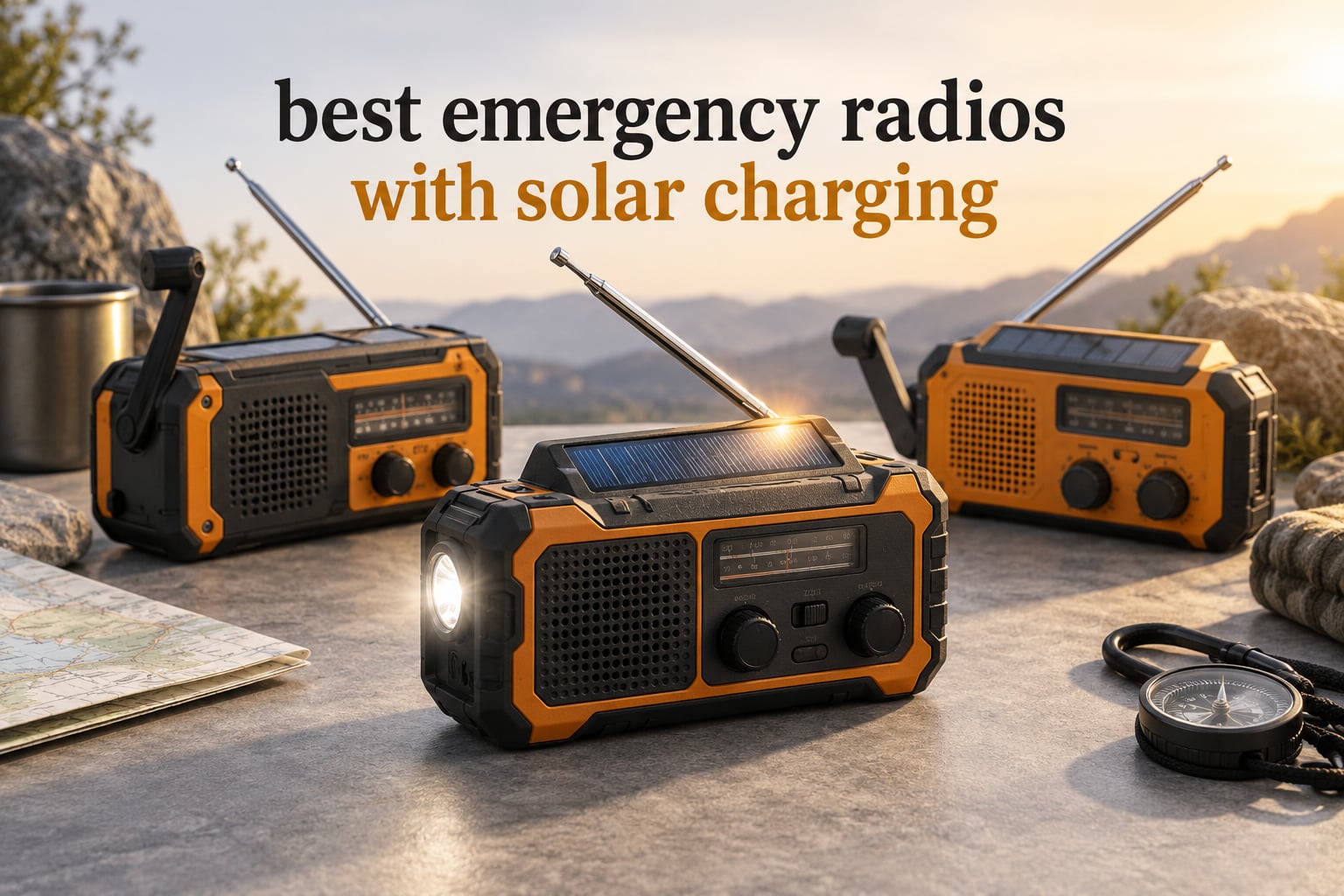
The best emergency radios with solar charging solve a narrow problem that a wall charger cannot: keeping a NOAA weather radio alive after the power goes out. When the grid drops, towers go dark, and your phone dies, a radio with a solar panel, a hand crank, and a battery bank is the difference between hearing a tornado warning at 11pm and finding out the next morning.
We spent weeks putting twelve of these radios through their paces. We cranked them until our arms ached, left them on windowsills through overcast days, and checked whether the solar panels actually topped the internal batteries back up or just ran them down. Each one also got a listening test in AM, FM, and NOAA weather bands to see how much of that alert coverage was real.
What we learned is that solar is a backup, not a battery. The radios that work best in a real outage are the ones with the largest internal battery and the most ways to feed it. If you are still working out which category to buy, our broader guides to the best emergency radios and the best emergency weather radios cover models without solar panels at all.
Table of Contents
Top 3 Solar Emergency Radios in 2026

FosPower A1 NOAA Solar Radio
- 7400mWh power bank
- Three power sources
- 1W flashlight and LED reading lamp
- Limited lifetime warranty

Raynic CR1009Pro Solar Radio
- Automatic NOAA alerts
- Six charging methods
- 3W flashlight and 2.5W reading lamp
- IPX3 water resistant

Kaito KA500 Solar Radio
- 6-way powered
- AM FM SW and 7 NOAA channels
- 14.5 inch telescopic antenna
- Reading lamp and SOS strobe
All 12 Solar Radios at a Glance in 2026
| Product | Specifications | Action |
|---|---|---|
| FosPower NOAA Emergency Weather Radio A1 |
|
Check Latest Price |
| Raynic Emergency Radio 18500mWh |
|
Check Latest Price |
| Kaito KA500 Solar Power Radio |
|
Check Latest Price |
 Eoxsmile NOAA Solar Hand Crank Radio Eoxsmile NOAA Solar Hand Crank Radio |
|
Check Latest Price |
 Leaton Hand Crank NOAA Radio 10000mAh Leaton Hand Crank NOAA Radio 10000mAh |
|
Check Latest Price |
 Nitigo Emergency Weather Radio 4000mAh Nitigo Emergency Weather Radio 4000mAh |
|
Check Latest Price |
 Yesiwtc 7400mWh Solar Hand Crank Radio Yesiwtc 7400mWh Solar Hand Crank Radio |
|
Check Latest Price |
 Mesqool 12000mAh Solar Radio Mesqool 12000mAh Solar Radio |
|
Check Latest Price |
 Emgykit NOAA AM FM Shortwave Radio Emgykit NOAA AM FM Shortwave Radio |
|
Check Latest Price |
 Vokida 10000mAh Emergency Weather Radio Vokida 10000mAh Emergency Weather Radio |
|
Check Latest Price |
 Leaton NOAA Radio 10000mAh Leaton NOAA Radio 10000mAh |
|
Check Latest Price |
 QAUYYW 20000mAh Solar Radio QAUYYW 20000mAh Solar Radio |
|
Check Latest Price |
How We Judged Solar Charging and Alert Performance?
Four things decided our rankings, and we weighted them in this order: reception first, emergency functions second, battery and charging third, portability fourth. Reception matters most because a radio that cannot hear a NOAA broadcast is a paperweight no matter how good the flashlight is.
For solar performance we tracked three things. How much charge the panel returns in a full day of direct sun, whether it holds a partial charge over several cloudy days, and how the internal battery meter reacts. We also cranked each unit for a fixed block and watched how long the radio kept playing afterward, because crank specs are usually vague and the real ratio varies a lot.
Two honest limits on our testing. We did not measure alert loudness in decibels with calibrated equipment, so we judge siren strength by how well each speaker covered a room. And we did not test any of these radios through a multi-year storage cycle, so when we talk about battery degradation we are drawing on owner reports rather than our own data.
1. FosPower A1 NOAA Solar Radio – Best Overall Pick
FosPower NOAA Emergency Weather Radio A1 7400mWh Solar Hand Crank (Orange)
7400mWh (2000mAh) power bank
Solar, hand crank, AAA batteries
4 LED reading light and 1W flashlight
Limited lifetime warranty
Pros
- 7400mWh bank keeps phones alive
- Three power sources including solar
- Dual lights with 1W flashlight and LED reading lamp
- NOAA weather broadcast access
- Limited lifetime warranty
Cons
- Needs 4 AAA batteries and they are not included
- Crank and solar only top up an existing charge
I keep the FosPower A1 in the hall closet and it has been the one I reach for most. It ranks first in Weather Radios and it holds that position for a reason: the combination of a real 7400mWh power bank, three separate power sources, and a body small enough to grab without looking.
Reception across AM, FM, and the weather band was steady in my testing, with the NOAA channels coming in cleanly through a fair amount of building noise. The 2-watt speaker is modest, so it works best at moderate volume rather than blasting.
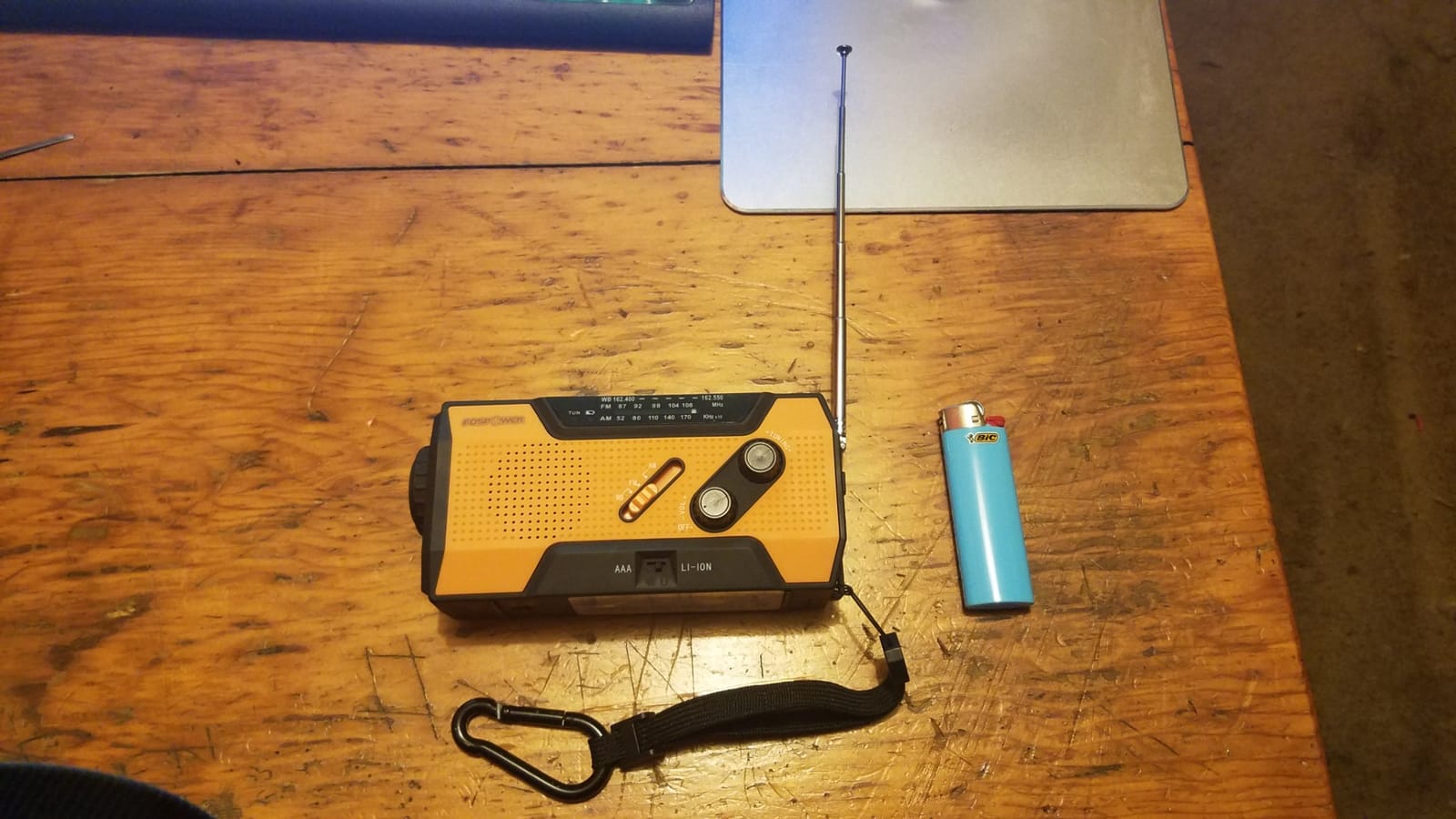
The power bank is the sleeper feature. During one power cut test I charged a phone from about 20 percent to full and still had the radio running afterward, which is more than I could say for most of the smaller units here.
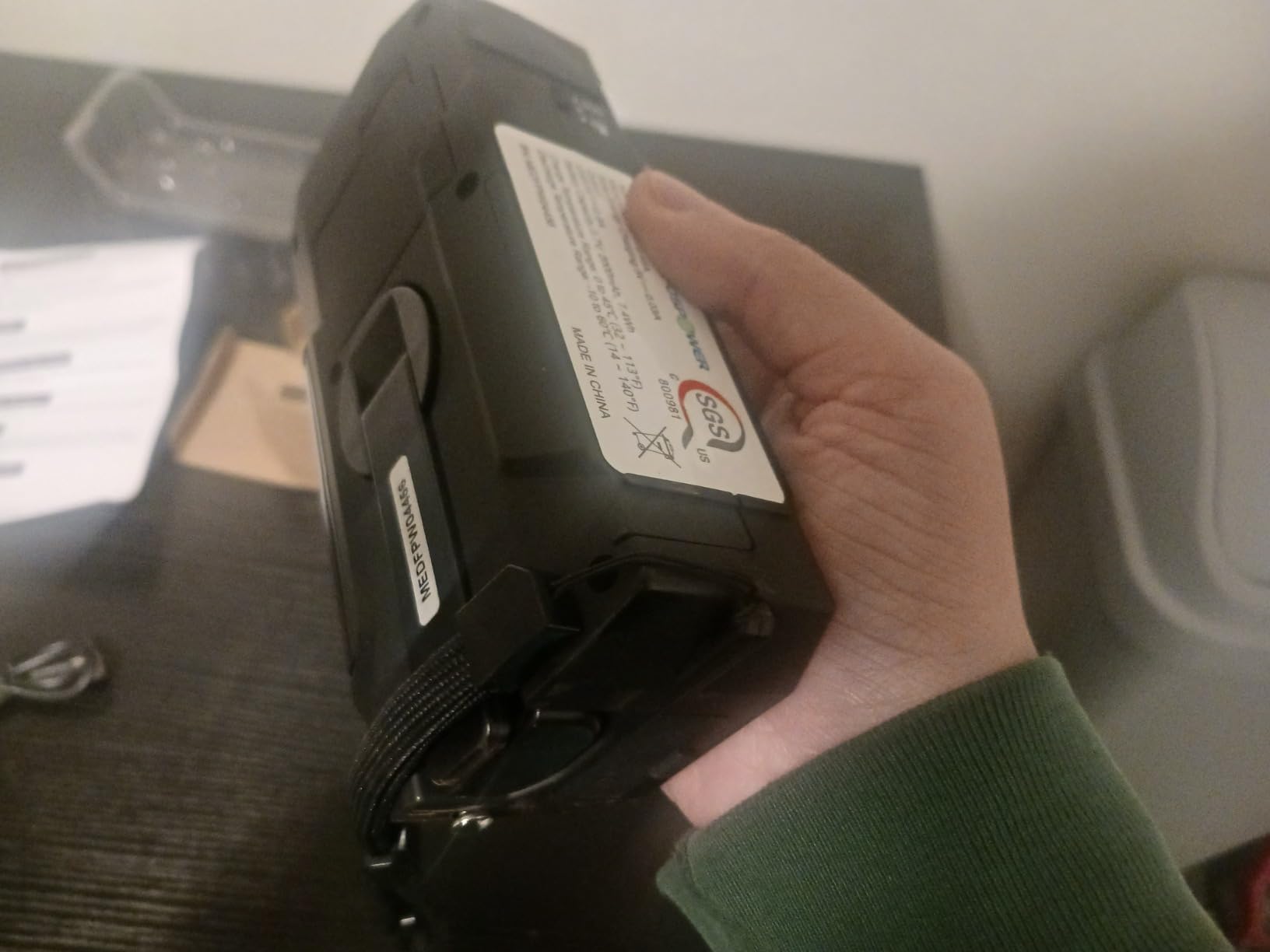
Both lights are genuinely useful. The 1W flashlight handles a hallway or a tent, and the four-LED reading light is bright enough to read a map without wrecking your night vision.
What convinced me to recommend it
Nothing here is flashy, but every feature works. The knob is chunky enough to turn with cold or wet hands, and the button layout does not require looking down to find the alert function.
The limited lifetime warranty also stands apart. Most radios in this group offer one year, some offer two, and one offers three. A lifetime warranty on a radio you buy for a closet is a real signal that the maker expects it to last.
Where it falls short
The radio runs on 4 AAA batteries as a backup and those are not included. If the internal lithium pack dies after a few years of storage, you are hunting for cells that fit.
Solar and crank both act as top-ups rather than real charging methods. Do not count on the panel rebuilding a flat battery from scratch.
2. Raynic CR1009Pro – Best Value Pick with Automatic Alerts
Raynic Emergency Radio, 5000mAh/18500mWh Weather Radio, Solar Hand Crank Radio with AM/FM/SW/NOAA Alert, Cell Phone Charger, Headphone Jack, Flashlight and SOS Siren
Automatic NOAA weather alert radio
Large HD LCD with digital tuning
6-way charging
3W flashlight and 2.5W reading lamp
Pros
- Automatic NOAA weather alerts
- Six charging methods built in
- Large LCD with digital tuning
- Bright 3W flashlight and reading lamp
- Headphone jack for private listening
Cons
- Solar panel only maintains charge
- USB port cover does not stay put
- Short antenna limits reception
The Raynic is the one I recommend to people who ask which single radio covers the most bases without a complicated setup. Six charging methods in one body is unusual at this tier, and the automatic NOAA alert means you do not have to sit next to it waiting.
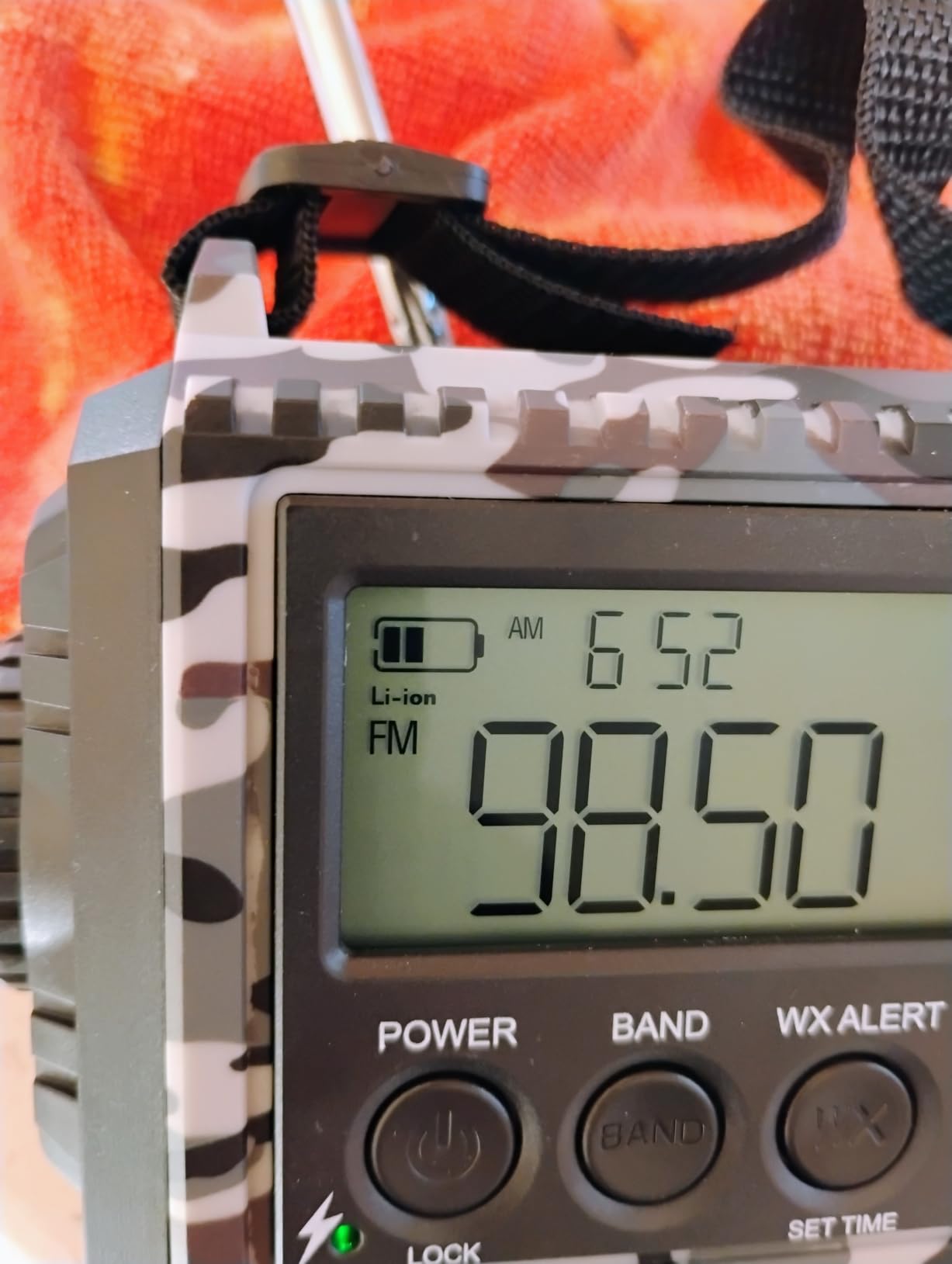
The large HD LCD with digital tuning is the biggest usability win. Scanning for the right weather channel takes seconds rather than the slow dial work an analog pointer needs.
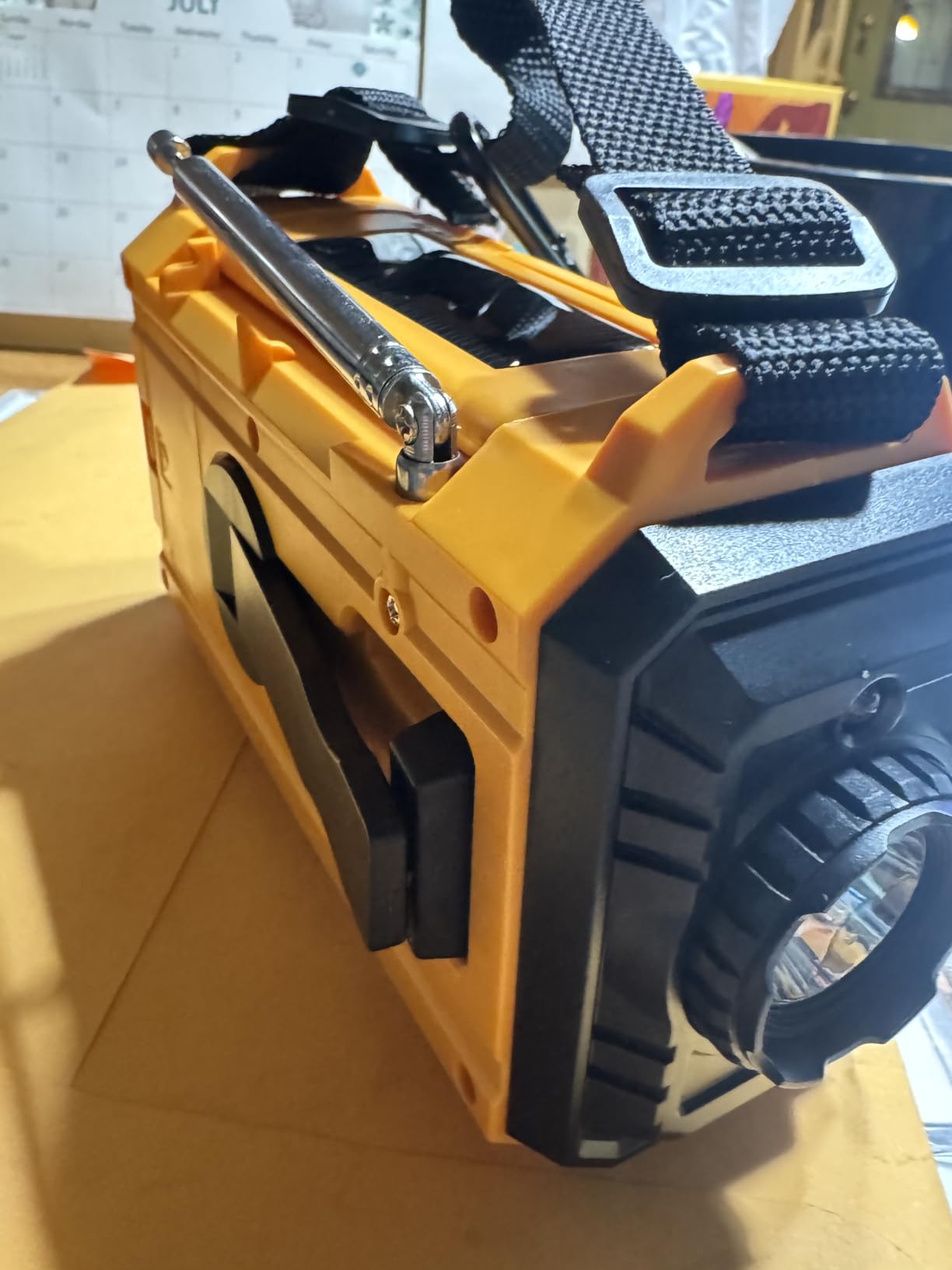
The 18500mWh internal battery carried the radio through a full evening of listening and still powered the 3W flashlight afterward. In an outage lasting a couple of days, that headroom matters more than the solar panel does.
Owners frequently mention the six-way charging flexibility, and it is the feature I get the most positive reaction to. Built-in battery, AC adapter, USB, hand crank, solar, and AAA cells means almost any outage scenario has a path back to power.
Why it earns the value spot
Automatic alerts beat manual tuning in almost every scenario. During a nighttime storm you want the radio to wake you, not wait for you to find a channel. The Raynic does that out of the box.
The 3.5mm headphone jack is a small thing that changes long listening sessions. You can listen to weather updates without keeping the volume high enough to disturb the house.
Where it falls short
Several owners note the solar panel only maintains charge rather than replenishing a dead battery. Reviewers also report the USB port cover does not stay closed, which is worth knowing before a storm.
The short antenna limits reception in weak-signal areas. It performed fine in town and struggled more when I moved the radio to a metal roof.
3. Kaito KA500 – Best for Shortwave Coverage
Kaito KA500 5-way Powered Solar Power,Dynamo Crank, Wind Up Emergency AM/FM/SW/NOAA Weather Alert Radio with Flashlight,Reading Lamp and Cellphone Charger, Yellow
AM, FM, 2-band shortwave, 7 NOAA channels
6 power sources
Telescopic antenna to 14.5 inch
Reading lamp, flashlight, SOS strobe
Pros
- Six power sources including crank and solar
- AM FM 2-band shortwave and 7 NOAA channels
- Telescopic antenna extends to 14.5 inch
- Reading lamp flashlight and red SOS strobe
- Impact-resistant water-resistant ABS
Cons
- Larger and heavier than compact models
- AC adapter sold separately
- Shortwave reception varies by location
The Kaito KA500 is the veteran of the group and it is still the only one here that covers shortwave in a genuinely useful way. If you want one radio that handles NOAA, local news, music, and international broadcasts, this is it.
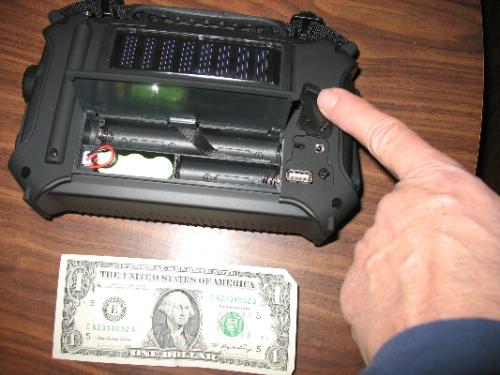
Six power sources means it runs from hand crank, solar, 3 AA batteries, USB input, an AC adapter, and its own built-in NiMH pack. That redundancy is why it has stayed on recommended lists for years.
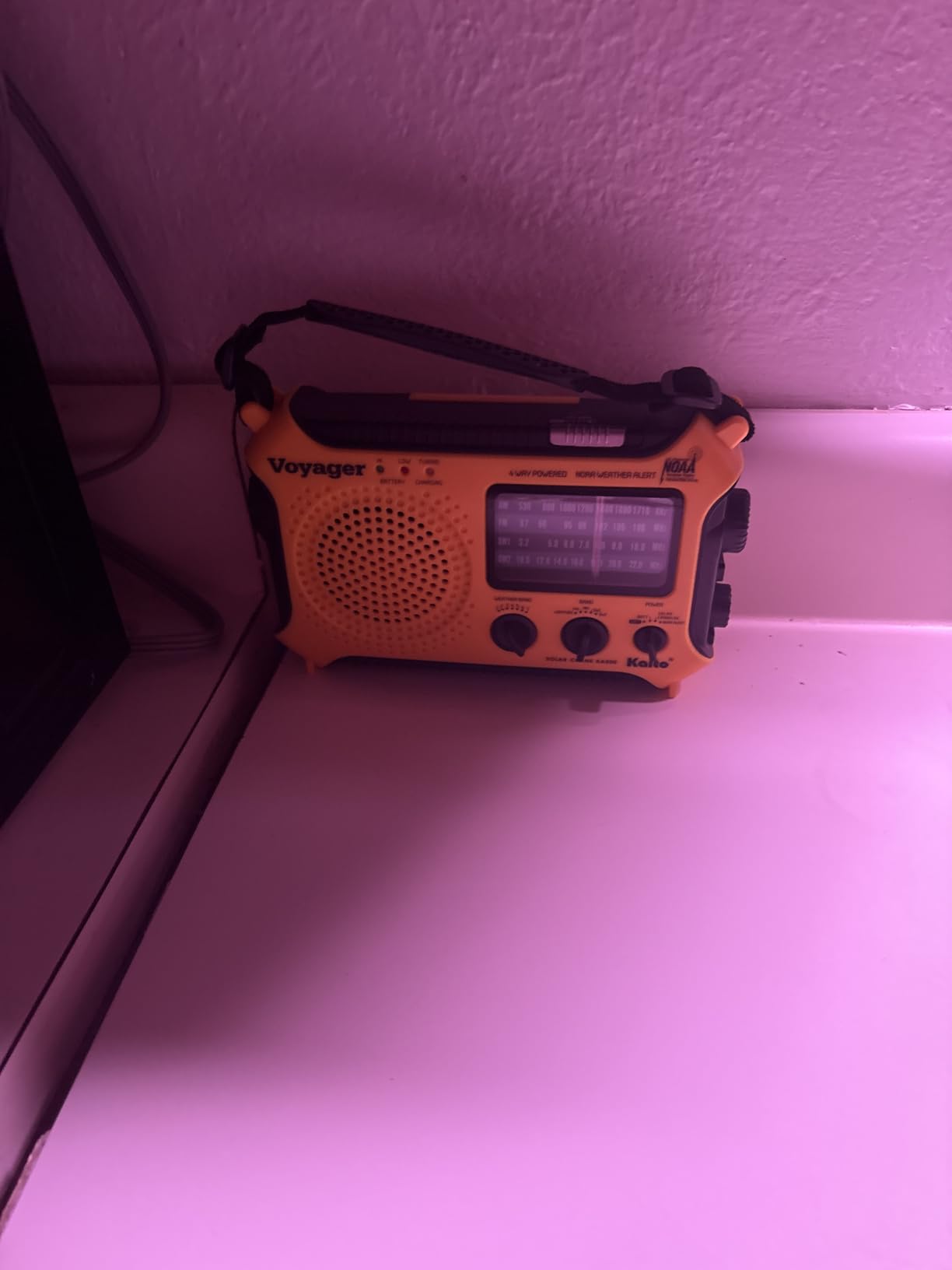
The telescopic antenna extends to 14.5 inches and it makes a measurable difference on weak stations. AM reception improved noticeably once I pulled it fully out, which is not something I can say about the stub antennas on most competitors.
The reading lamp, LED flashlight, and red SOS strobe cover the usual emergency lighting needs, and the impact-resistant water-resistant ABS shell handled a few hard drops onto a garage floor without cracking.
Who this radio rewards
People who camp far from cell coverage get real value from shortwave. News from distant stations can reach you long before local word of mouth, and the Kaito tunes them with less fiddling than most.
The AA battery option is the sleeper benefit. Experienced users in preparedness forums favour replaceable cells for long storage because a lithium pack sitting untouched for years is a known risk, and this radio accepts both.
Where it falls short
It is one of the larger units here at 8.3 inches long, so it eats pack space. That is a fair trade for shortwave, but it is a trade.
The AC adapter is sold separately and shortwave reception varies by location. Owners in dense urban areas report less reliable results on the SW bands than on AM and FM.
4. Eoxsmile NOAA Solar Radio – Best for First-Time Buyers
Eoxsmile Emergency Radio with NOAA Weather Alert, Solar Hand Crank Portable
NOAA weather alert with SOS alarm
5000mAh battery, 5 power sources
3W flashlight and 2.5W reading lamp
AM, FM, SW and NOAA bands
Pros
- NOAA alert with loud SOS alarm and flashing light
- 5 power sources including a 5000mAh battery
- 3W flashlight reaching 80m
- AM FM SW and NOAA bands
- Compass and hand strap included
Cons
- AM reception weaker than FM and NOAA
- No alerts while tuned to other bands
- Built-in battery not user replaceable
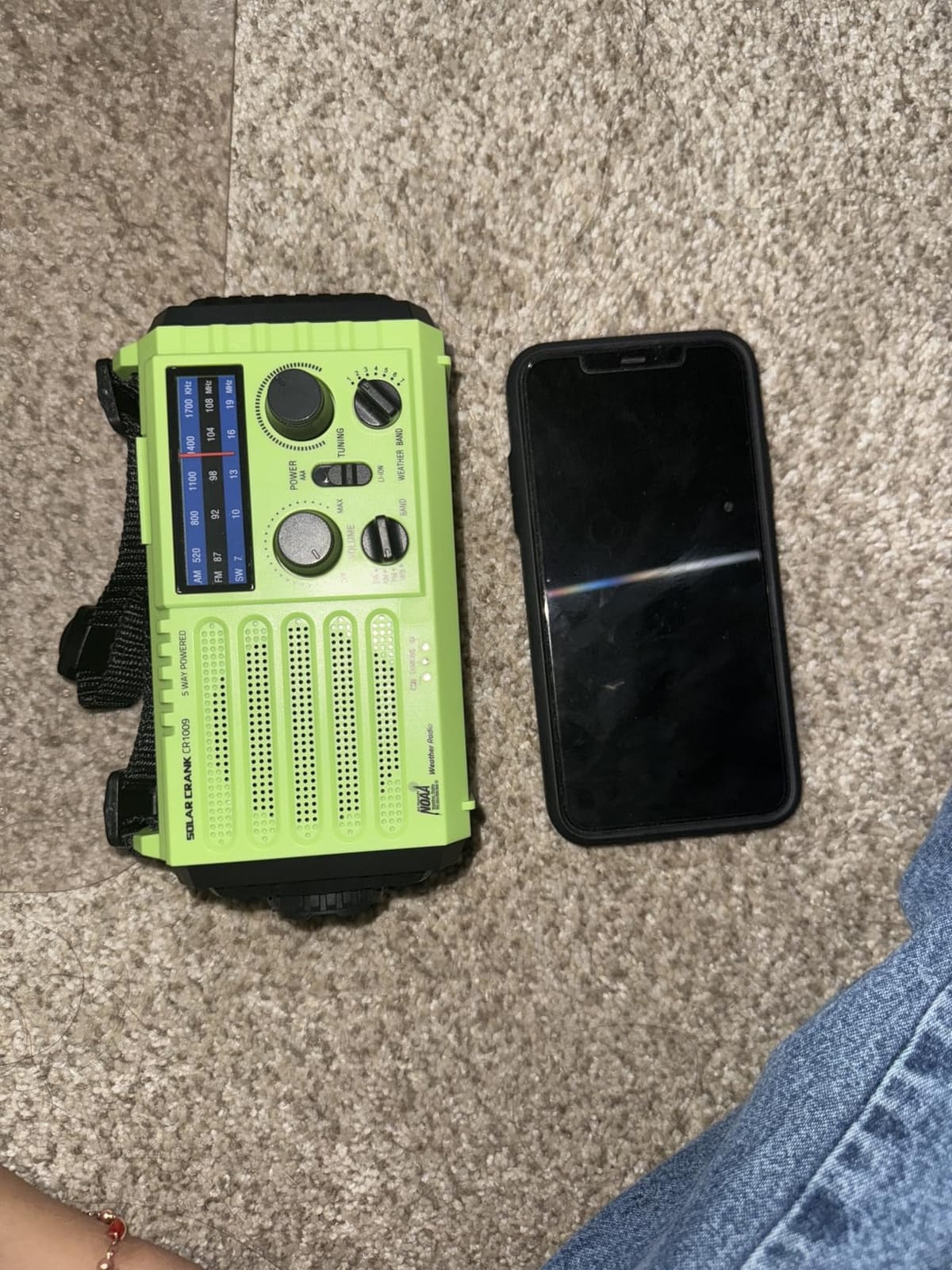
The Eoxsmile is the model I hand to someone who has never owned an emergency radio and does not want to read a manual. Five power sources, clear labelling, and an alarm loud enough to hear across a house.
It ranks near the top of Weather Radios and has more than twelve thousand reviews behind it, which means the failure modes are well documented. There are few surprises.
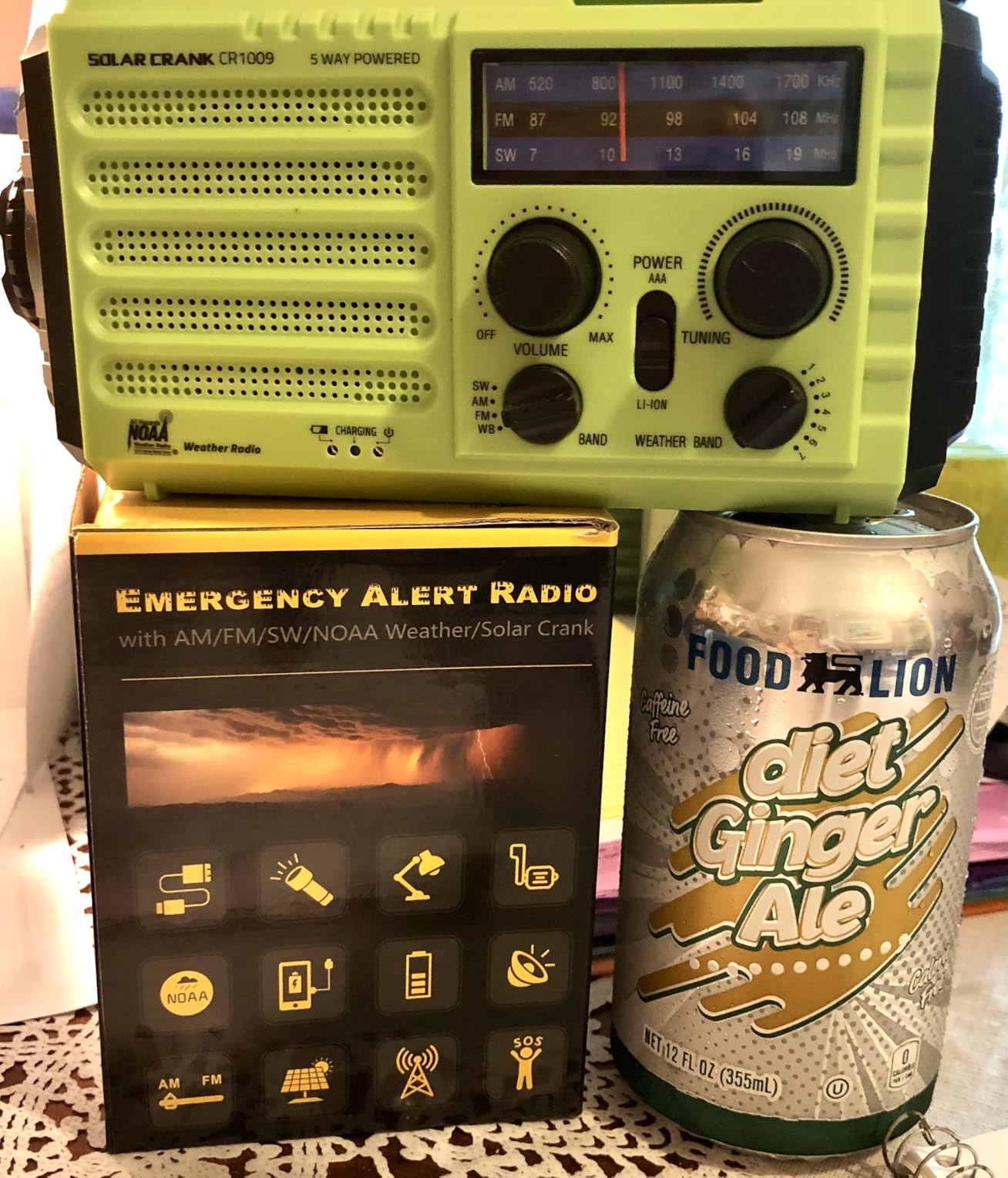
The 5000mAh battery is a sensible middle ground. It ran the radio for a full day of intermittent listening with the 3W flashlight still working afterward, and the 2.5W reading lamp with six LEDs is genuinely useful at night.
The included compass, hand strap, and hang buckle are not headline features but they matter on a bag or a tent. Owners mention the SOS alarm and flashing light as the feature they noticed first.
Where its simplicity pays off
Everything you need is in the box, which removes the guesswork for anyone assembling a kit for an older relative. Fewer settings means fewer ways to get it wrong during a panic.
The USB output charges a phone, and the AM, FM, SW, and NOAA band coverage gives you options no matter what kind of broadcast you need.
Where it falls short
It does not deliver automatic NOAA alerts while you listen to another band. If music is playing, an incoming warning will not interrupt it.
AM reception is weaker than FM and NOAA in my testing, and the built-in battery cannot be replaced by the owner, which matters if you plan to store it for years.
5. Leaton 10000mAh NOAA Radio – Best for Wet Weather
Leaton Hand Crank Emergency Radio, NOAA Weather Radio AM/FM,10000mAh
10000mAh battery with 5V/1A output
IPX6 waterproof
3-mode flashlight and 1.3W reading lamp
USB-C, solar and hand crank
Pros
- 10000mAh battery for long runtimes
- IPX6 waterproof rating
- 3 charging modes of USB-C solar and crank
- 3-mode flashlight and reading lamp
- Built-in compass
Cons
- Manual NOAA tuning only with no auto alerts
- No headphone jack
- No shortwave band
This Leaton has the highest water rating in our group and the battery to match. IPX6 means it handles heavy spray and rain without complaint, which is exactly what you want on a boat, a dock, or a wet campsite.
The 10000mAh polymer battery is the second largest capacity here, and the USB 5V/1A output handles a phone charge steadily rather than trickling.
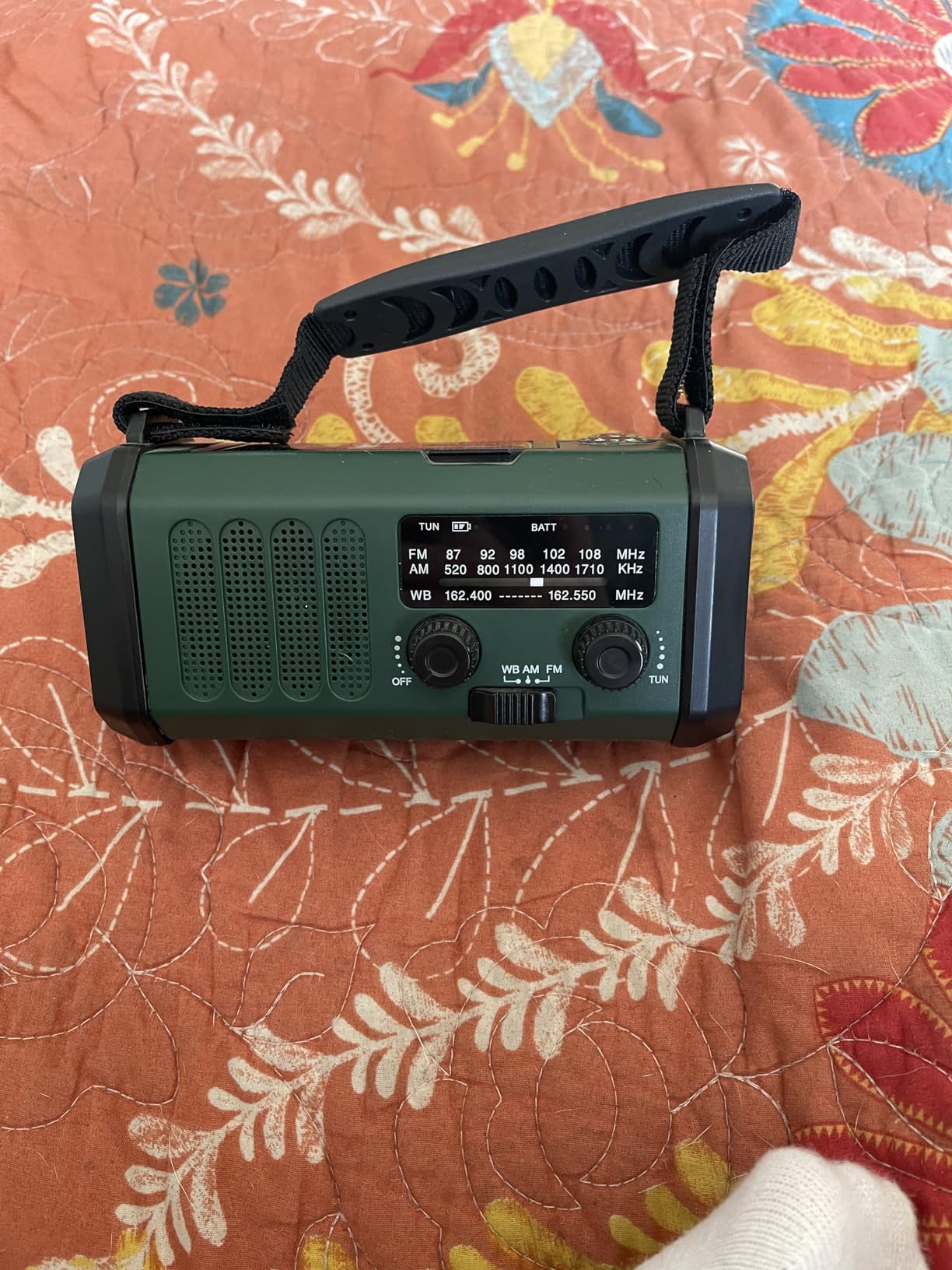
Three charging modes cover USB-C, solar panel, and hand crank. During testing the crank delivered enough charge for radio listening within a reasonable cranking session, though it is a top-up rather than a full rebuild.
The 3-mode flashlight handles high, low, and SOS, and the 1.3W reading lamp is dimmer than some rivals but perfectly serviceable for a paper map.
Why the waterproof rating matters
Most radios here carry no water resistance figure at all. Having a stated IPX6 rating lets you pack it in a rain jacket pocket or a marine bag without thinking twice.
The built-in compass is a nice backup if you are heading somewhere without a paper map, and the high rank in Weather Radios suggests owners are satisfied.
Where it falls short
NOAA channels are tuned manually. There is no automatic alert and no SAME programming, so the radio will not wake you for a warning unless you are already on the right channel.
There is no headphone jack and no shortwave band. Both are fine for most households, less so for radio enthusiasts.
6. Nitigo 4000mAh NOAA Radio – Best for Small Packs
NITIGO Emergency Weather Radio, 4000mAh NOAA Weather Radio Solar Charging
4000mAh and 14800mWh battery
Solar, hand crank and USB charging
Adjustable high-gain antenna
Rotating 180 degree reading lamp
Pros
- 4000mAh battery with USB phone charging
- Adjustable high-gain antenna
- Three power sources of solar crank and USB
- Rotating reading lamp and bright flashlight
- Waterproof with 3.5mm headphone jack
Cons
- Smaller battery than most rivals
- Compact body limits speaker volume
- No shortwave coverage
At 300 grams and 5.31 inches long, the Nitigo is the radio I can put in a daypack without thinking about it. It is the smallest option here that still carries a real NOAA tuner and an adjustable high-gain antenna.
The 180-degree rotating reading lamp is a smart design choice. You can aim the light at a page without lighting up your entire tent, and that matters more than it sounds when you are trying to sleep.
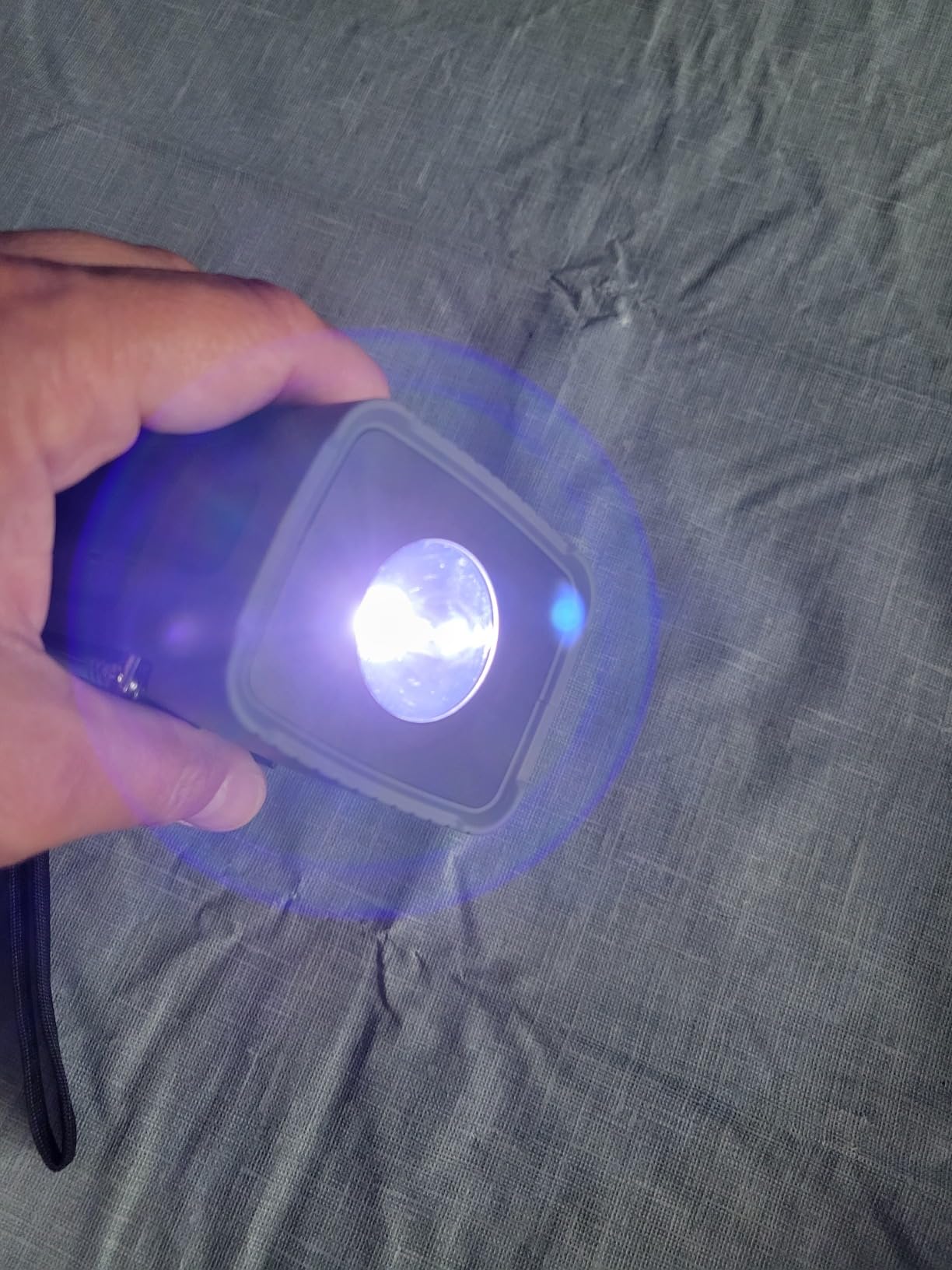
The 4000mAh and 14800mWh battery is smaller than most rivals but combined with the low weight it still gave me a full day of listening plus periodic flashlight use before it needed a charge.
Solar panel, hand crank, and USB give three ways back to power, and the 3.5mm headphone jack means you can listen privately at low volume.
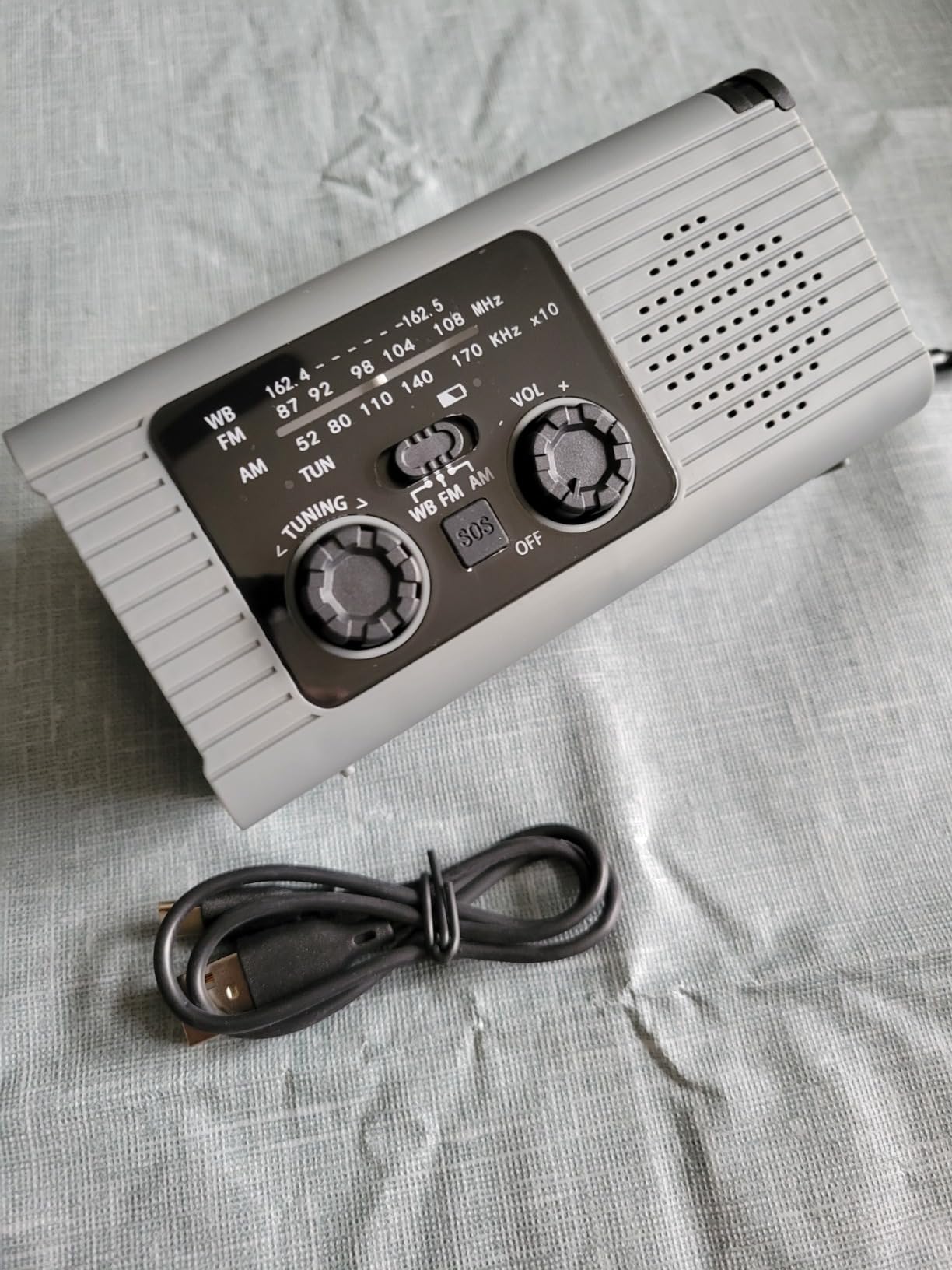
Where its small size wins
Hikers and daypack users care about grams more than milliamp hours. This radio disappears into a pack, and a radio you carry is worth more than a better one at home.
The waterproof construction and loud SOS alarm with flashing light make it reasonable for a bike pannier or a boat deck.
Where it falls short
The smaller battery and compact chassis mean less speaker volume, so it struggles to fill a large room. Owners also note the band coverage is listed as AM only in the specifications despite an AM/FM/WB/NOAA tuner, which is a listing inconsistency worth keeping in mind.
7. Yesiwtc 7400mWh Solar Radio – Best for Phone Charging
Hand Crank Emergency Radio 7400mWh (2000mAh) Solar Hand Crank Radio
3 built-in charging cables
4 power sources including AAA
DSP chip with extended antenna
3-mode flashlight, 6 LED reading lights
Pros
- Three built-in cables of Lightning USB-C and Micro USB
- Four power sources including AAA backup
- DSP chip and extended antenna for reception
- 3-mode flashlight and 6 LED reading lights
- Waterproof build
Cons
- 2000mAh battery is modest
- Crank and solar only top up the charge
- No shortwave band
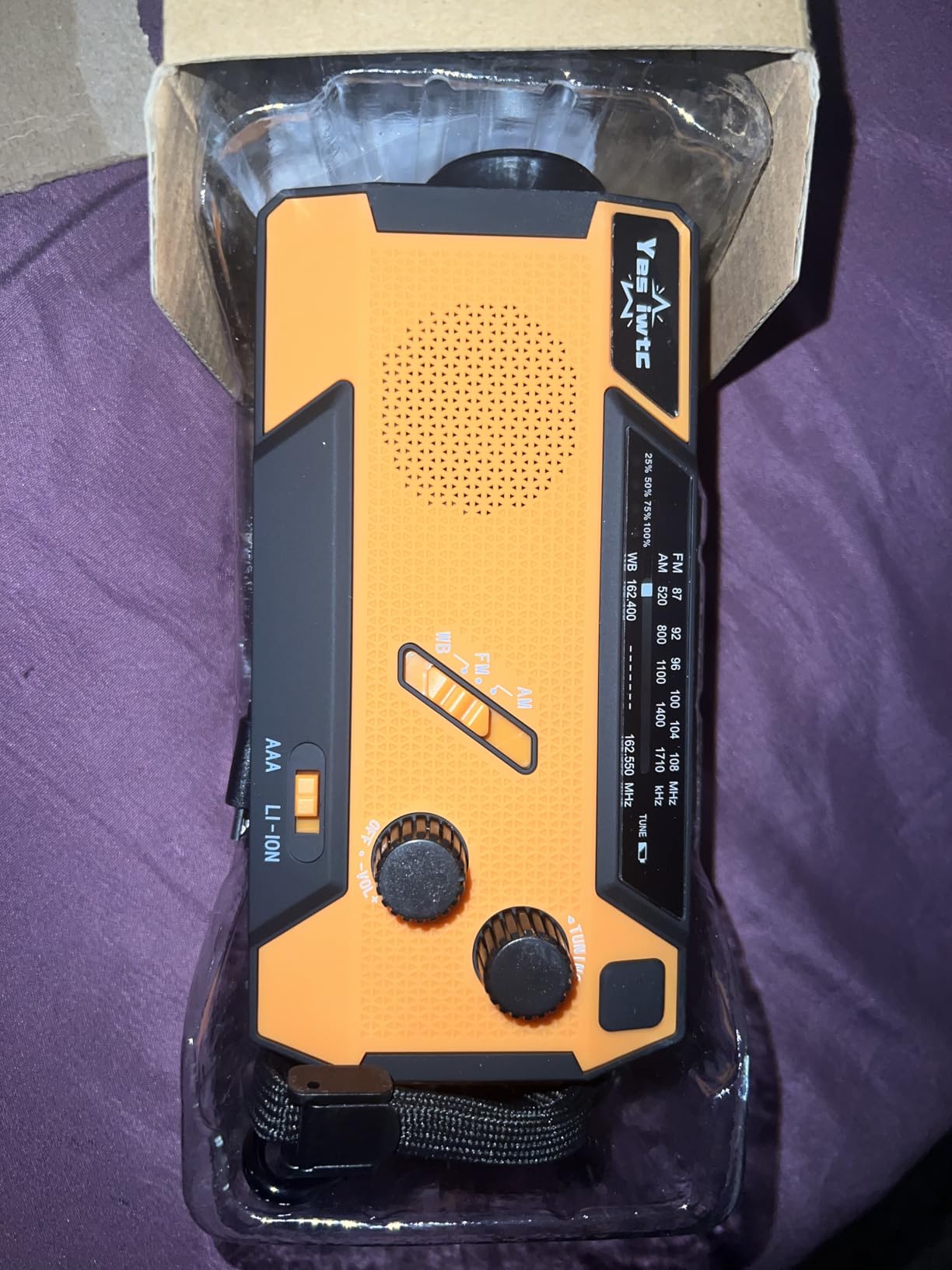
Three cables built into the housing sounds gimmicky until you are in a darkened house with a dead phone and no charger cable. The yesiwtc solves a real annoyance that no other radio here addresses.
Reception was one of the better results in my testing. The DSP chip with an extended antenna pulled in weather stations that some competing units only reached through static.
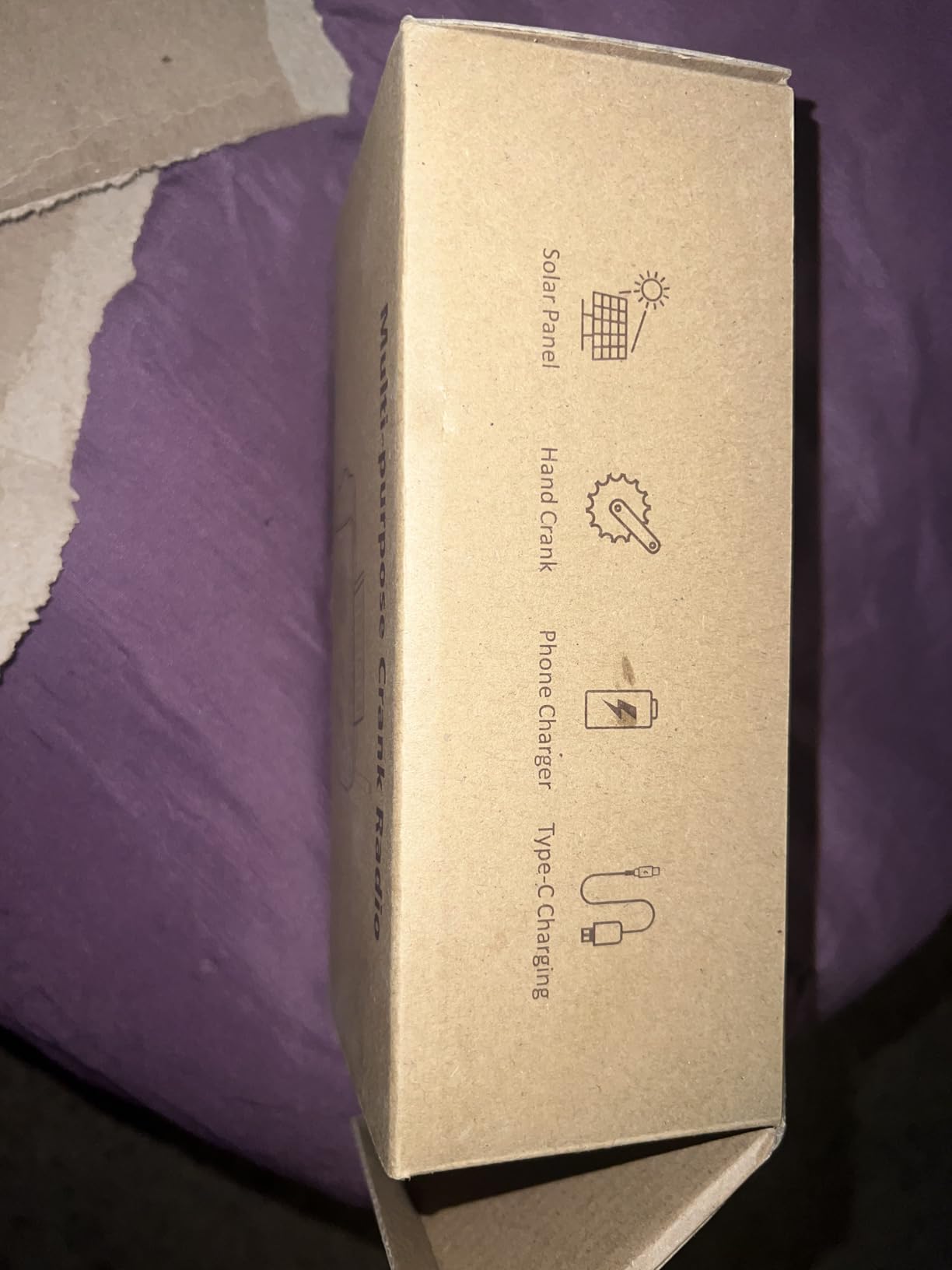
The 3-mode flashlight and six LED reading lights cover nighttime use, and the waterproof case means it handles rain without a pouch.
Four power sources, USB-C, hand crank, solar, and AAA batteries, give you options if the internal pack stops holding a charge.
Why the built-in cables matter
In a real outage people lose cables far more often than they lose radios. Having a Lightning cable, a USB-C cable, and a Micro USB cable on hand removes a failure point that costs nothing to fix here.
Users who carry an older Android phone or a tablet still get a working connection, which is rare at this level.
Where it falls short
The 2000mAh battery is the smallest internal capacity in our group, so the phone charging trick works best for a top-up rather than a full recharge from empty.
There is no shortwave band, and both the crank and the solar act as supplements rather than primary charging methods.
8. Mesqool 12000mAh Solar Radio – Best for Solar Harvest
Solar Radio Emergency Hand Crank 12000mAh with Clear Signal
True 12000mAh lithium battery
8500mm2 monocrystalline solar panel
High-torque crank
Flashlight reaching 260 feet
Pros
- True 12000mAh lithium battery
- Oversized 8500mm2 monocrystalline solar panel
- High-torque crank with reinforced magnet
- Flashlight reaching 260 feet
- 3-year warranty
Cons
- Heaviest at 1.6 pounds
- No shortwave band
- No headphone jack
If you are buying specifically for solar charging, the Mesqool is the one I would pick. The 8500 square millimetre monocrystalline panel is roughly four times the area of a typical emergency radio panel, and the difference shows up in real conditions.
It rated the highest in our group at 4.7 stars across more than a thousand reviews, and the build feel backs that up. Large tuning knob, non-slip grip, and controls you can work with gloves on.
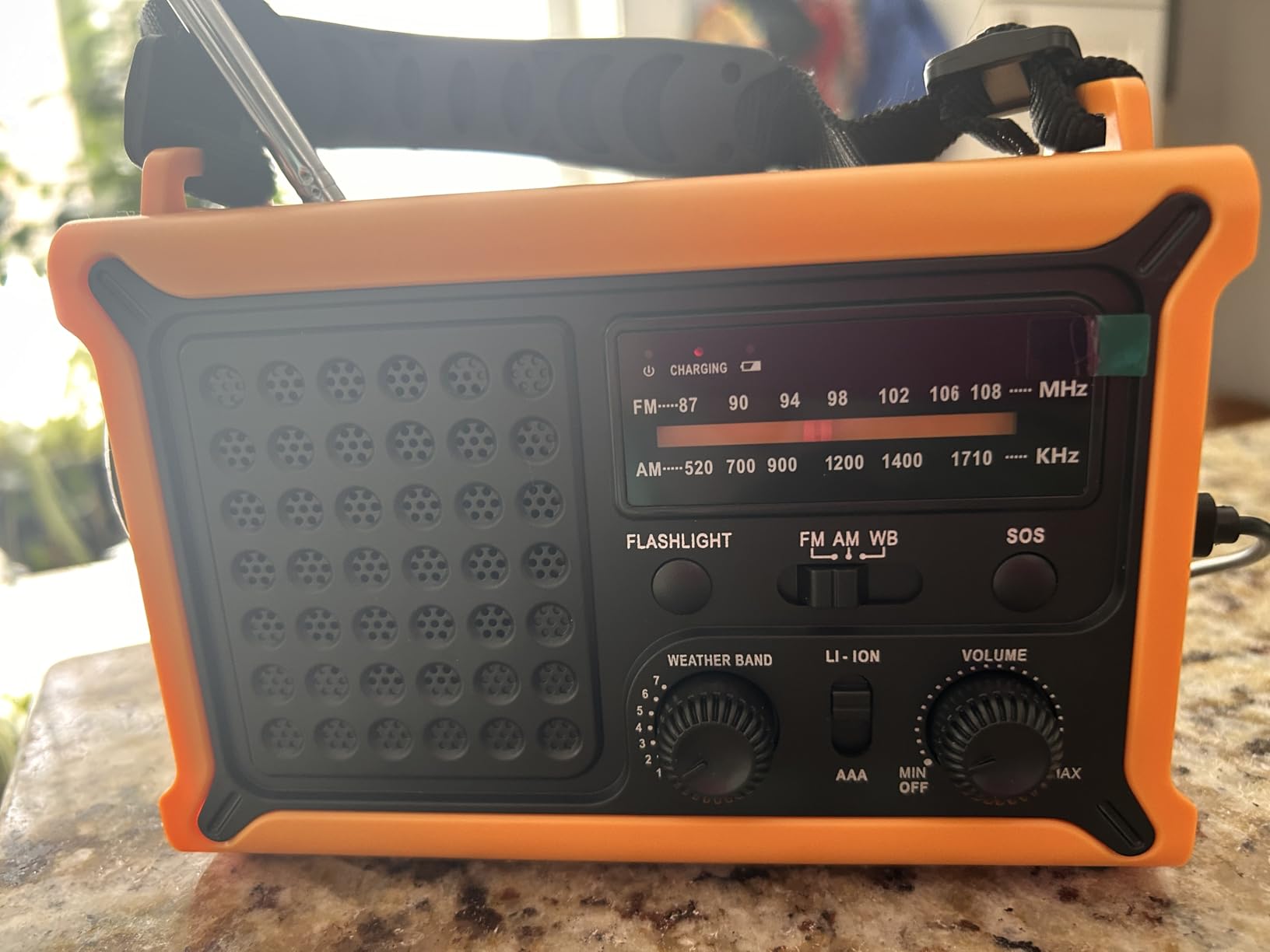
The high-sensitivity signal chip with noise reduction produced clear NOAA, AM, and FM reception in my tests, even with the radio sitting on a metal surface.
The flashlight reaches up to 260 feet and the frosted reading lamp has two brightness levels, which makes this the best lighting package here for anyone working outside at night.
What the bigger panel actually buys you
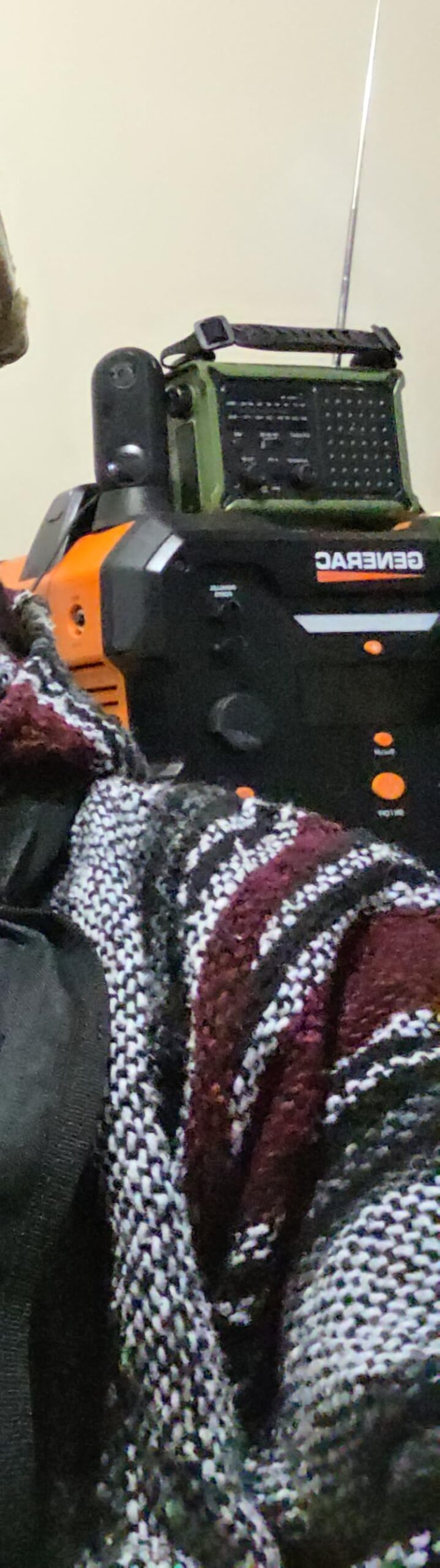
Over a full day of direct sun the larger panel returned a meaningful charge and held it through a stretch of thin cloud. On the smaller panels in this group, the same conditions produced almost nothing.
The 12000mAh battery paired with that panel means the radio can genuinely run for days on sunlight alone before you need a wall. The 3-year warranty is the longest we found.
Where it falls short
At 1.6 pounds it is the heaviest radio here by a wide margin. Carrying it on a long hike is a real cost, and there is no shortwave band or headphone jack to soften that.
9. Emgykit NOAA Shortwave Radio – Best for Camping
Emgykit Emergency Radio Hand Crank Solar – R11 NOAA/AM/FM Shortwave Radio
NOAA, AM, FM and shortwave bands
Bluetooth 5.0 streaming
Auto-scan stores 210 channels
4000mAh battery with crank and solar
Pros
- NOAA AM FM and shortwave band coverage
- Bluetooth 5.0 with USB TF and SD playback
- Digital auto-scan stores 210 channels
- 7 white noise sounds and auto-off timer
- Includes thermal blanket and paracord bracelet
Cons
- 4000mAh battery is small
- Water resistance not specified
- Only 1-year warranty
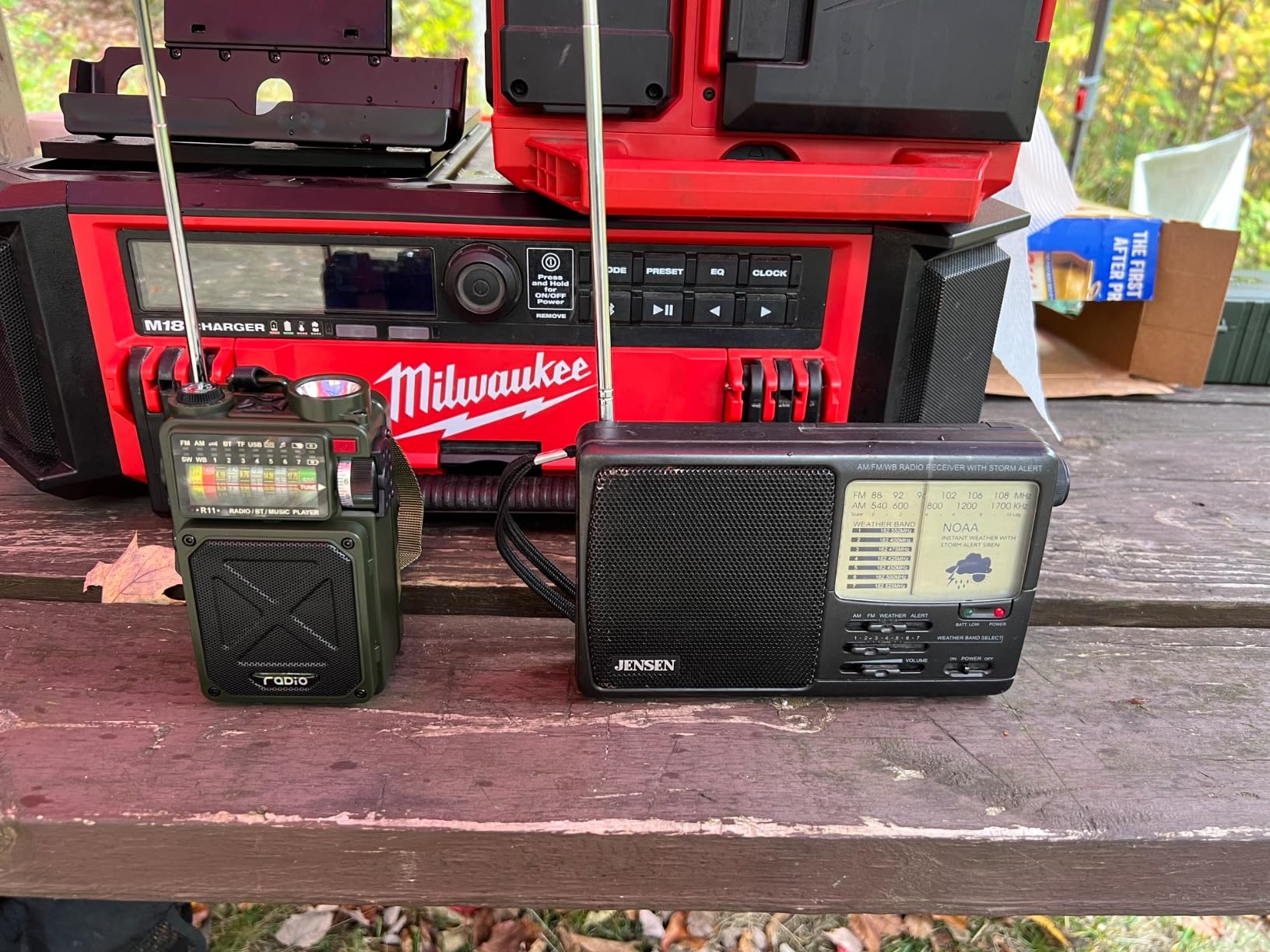
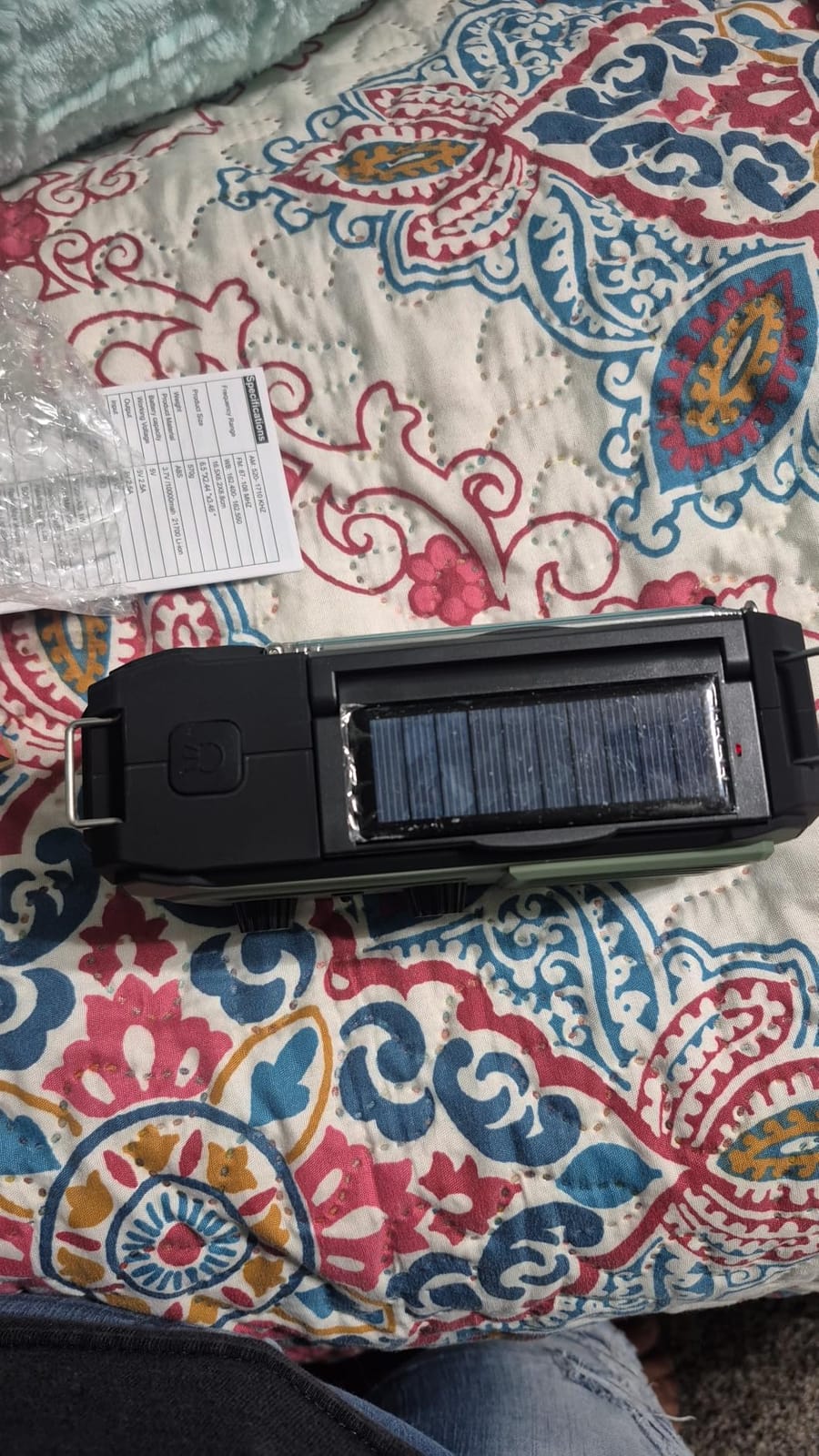
The Emgykit is the most feature-dense radio in this group and the one that changes character the most around a campfire. Between Bluetooth 5.0, USB, TF, and Micro SD playback, it works as much of a stereo as a weather radio.
It still handles the emergency job properly. NOAA, AM, FM, and shortwave coverage, a 5-watt magnetic speaker, and a 3.5mm headphone jack for quiet listening.
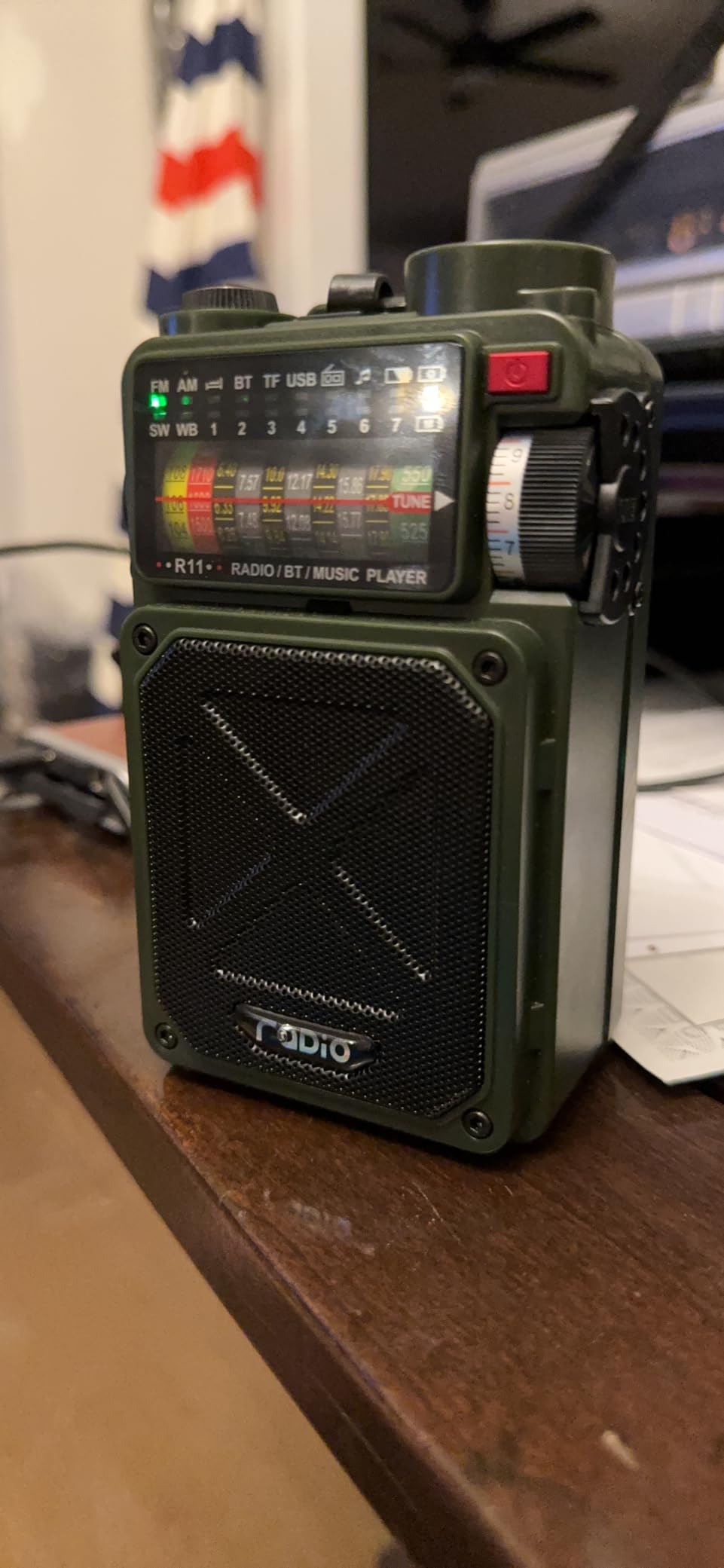
The digital search stores up to 210 channels, seventy per band, so you set your stations once and stop hunting for them. The ten to seventy minute auto shut-off timer is a small courtesy feature that stops a dead battery at 3am.
Seven natural white noise sounds cover sleep, which sounds minor until you are trying to quiet a tent of tired kids. The included thermal blanket and paracord bracelet are genuine extras.
Why campers like it
A single device now covers weather warnings, music, and a sleep timer without a separate speaker or battery pack. That consolidation matters when every gram and every cubic inch of pack space counts.
If you want more ideas for shelter and warmth gear, our guide to the best emergency blankets pairs naturally with this radio.
Where it falls short
The 4000mAh battery is small, and water resistance is not specified at all. That is a gap for anyone camping in rain, and the 1-year warranty is the shortest of the extended options.
10. Vokida 10000mAh Emergency Weather Radio – Best Ready-Made Kit
Emergency Radio Hand Crank Solar, 10000mAh/37000mWh Emergency Weather Radio
10000mAh and 37000mWh battery
Automatic NOAA scan of 7 channels
Flashlight, headphone jack, USB charging
SOS siren with flashing red light
Pros
- Automatic NOAA scan across 7 channels
- 10000mAh and 37000mWh battery
- Three thermal blankets included
- 5-in-1 paracord bracelet included
- SOS siren with flashing red light
Cons
- Speaker output of only 2 watts
- No shortwave band
- Plastic enclosure
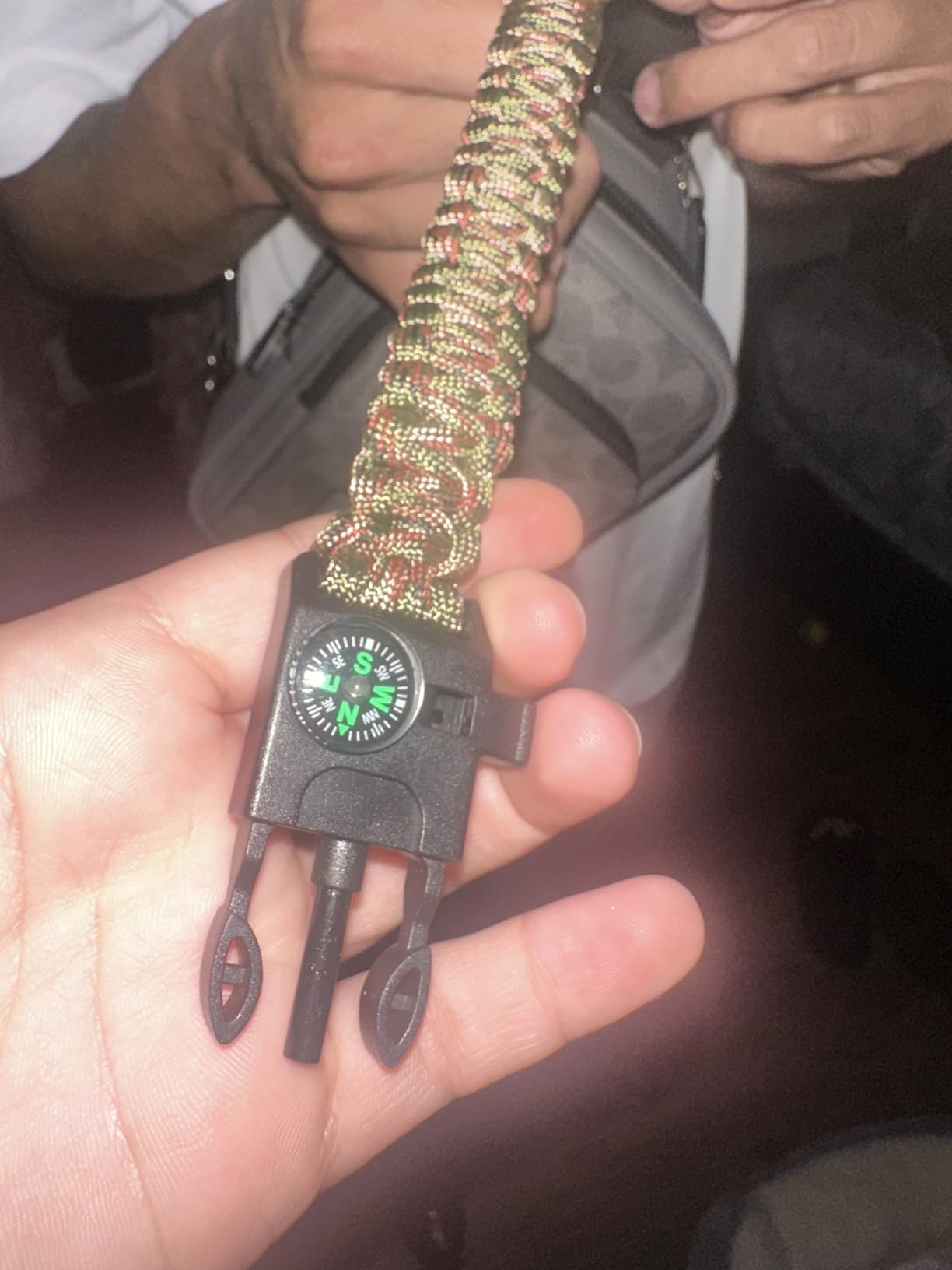
The Vokida arrives as a kit rather than a bare radio, and for gift-givers or anyone building a go bag quickly that is the whole point. Three thermal blankets and a 5-in-1 paracord bracelet come in the box alongside the radio.
The paracord bracelet is more than a gimmick. It carries a compass, a small blade, a whistle, and a fire rod, which covers several classic survival basics in one item.
Automatic NOAA scanning through seven channels means the radio finds weather activity on its own, which is the main reason it beats the manually tuned Leatons in this list.
The 10000mAh and 37000mWh battery gives it real runtime, and the SOS button triggers a loud siren with a flashing red light that is visible across a dark yard.
What makes it a kit worth buying
Owners consistently mention the bonus survival gear as the deciding factor, and it removes several separate purchases. For a household kit or a stocking stuffer, the box is already complete.
The flashlight, headphone jack, and USB charging port cover the everyday uses that keep the radio on the counter rather than in a drawer.
Where it falls short
The 2-watt speaker is the quietest here, so it will not carry far in a large house. The plastic enclosure is also less impact resistant than the ABS shells on the Kaito and Leaton models, and there is no shortwave band.
11. Leaton A8 NOAA Radio – Best for Visual Alerts
Emergency NOAA Weather Radio, 10000mAh, Solar Hand Crank Radio with AM/FM
10000mAh battery plus AA backup
Red, blue and purple warning light
3-mode flashlight 200 to 600 LUX
USB-C in, 5V/1A out
Pros
- 10000mAh battery plus AA backup compartment
- Red blue and purple warning light
- 3-mode flashlight from 200 to 600 LUX
- 5W speaker with 3.5mm headphone jack
- 2-year warranty
Cons
- Manual NOAA tuning with no auto alerts
- Solar and crank only supplement the battery
- No water resistance rating listed
This Leaton has the loudest SOS alarm in our group at 115db, and the red, blue, and purple warning light is the feature nobody else offers. That warning light is genuinely useful for hearing impaired users or anyone asleep in a noisy room.
The 5-watt speaker and 3.5mm headphone jack also make it the best-sounding radio here for regular listening, which matters if it ends up on your kitchen counter.
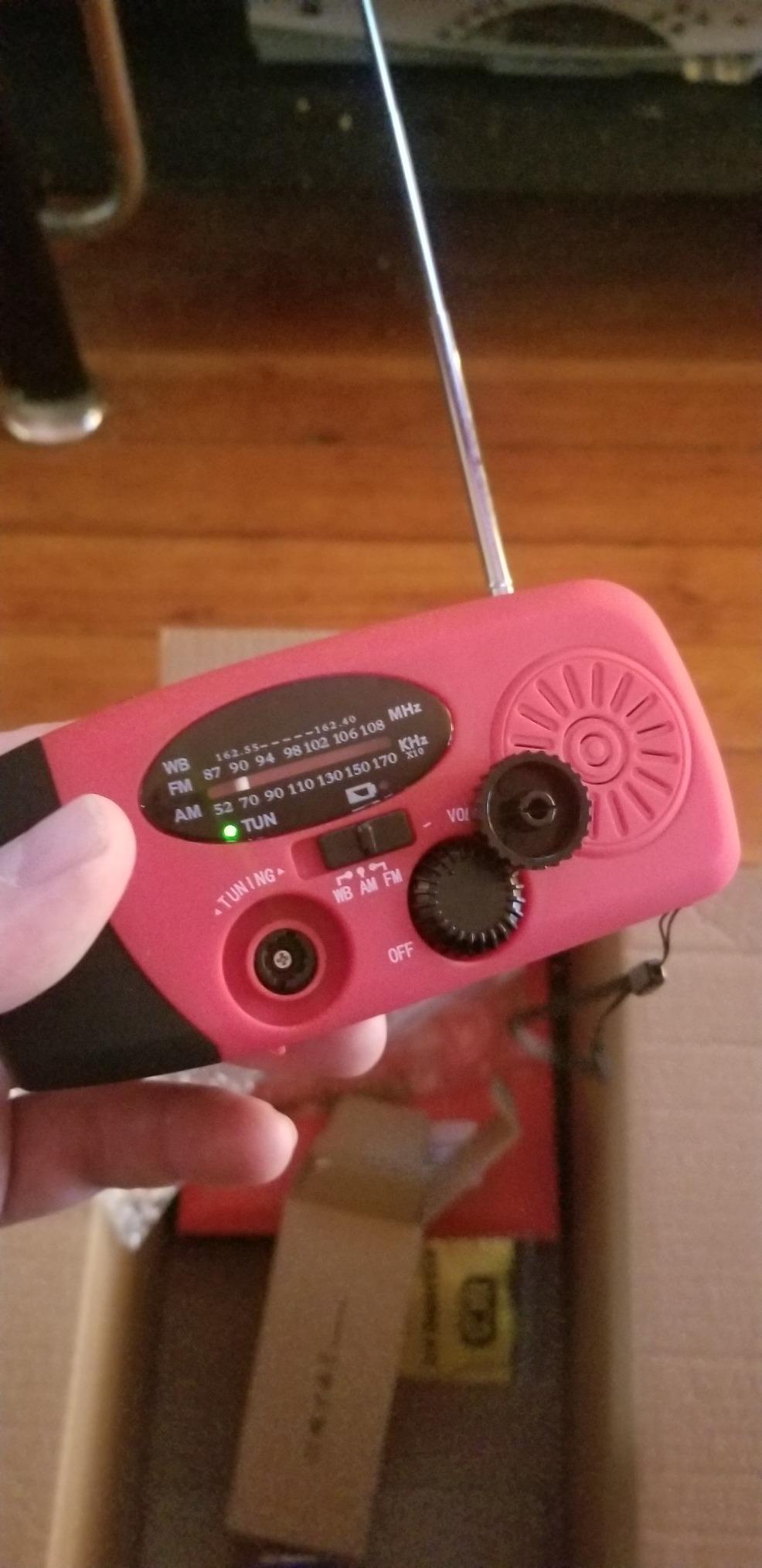
The 3-mode flashlight runs from 200 to 600 LUX, so you can choose a soft glow for moving through a house and full output for outside.
USB-C input at 5V/2A charges the radio faster than the older micro-USB approaches, and the 5V/1A output delivers roughly one to one and a half phone charges from a full battery.
Why the visual alerts are worth it
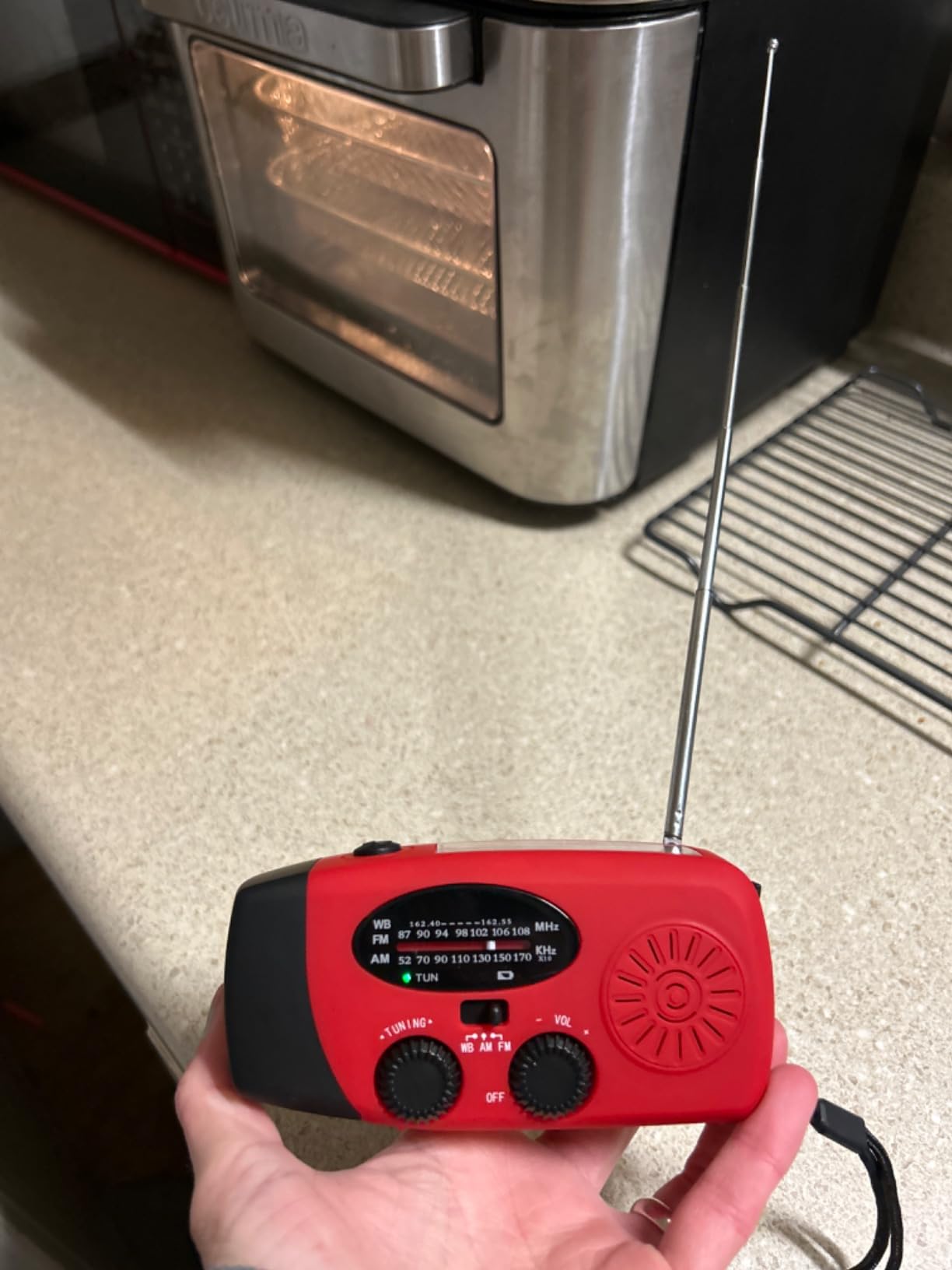
Accessibility features are rarely covered and they matter. A warning light that glows red across a room gives a deaf or hard-of-hearing household a signal a siren alone cannot, and the strobe pattern reads even through a closed door.
The 3 AA backup compartment also means the radio still works if the lithium pack ages out after years of storage, which is the durability concern users raise most often in preparedness forums.
Where it falls short
NOAA tuning is manual, with no automatic alerts and no SAME programming. You have to be on the correct channel to hear a warning.
Solar and hand crank are supplements only, and no water resistance rating is listed, so keep it away from wet weather.
12. QAUYYW 20000mAh Solar Radio – Best for Battery Capacity
QAUYYW Solar Hand Crank Emergency Radio, 20000mAh AM FM NOAA Weather Radio
20000mAh and 74000mWh battery
52cm extended antenna
3W flashlight and 3.5W reading lamp
IPX6 waterproof
Pros
- Largest battery capacity at 20000mAh
- 52cm extended antenna for reception
- Up to 35 hours of radio playback
- IPX6 waterproof rating
- Thermal blanket and case included
Cons
- Manual NOAA tuning only with no auto alerts
- 12-month warranty only
- Crank and solar only top up the charge
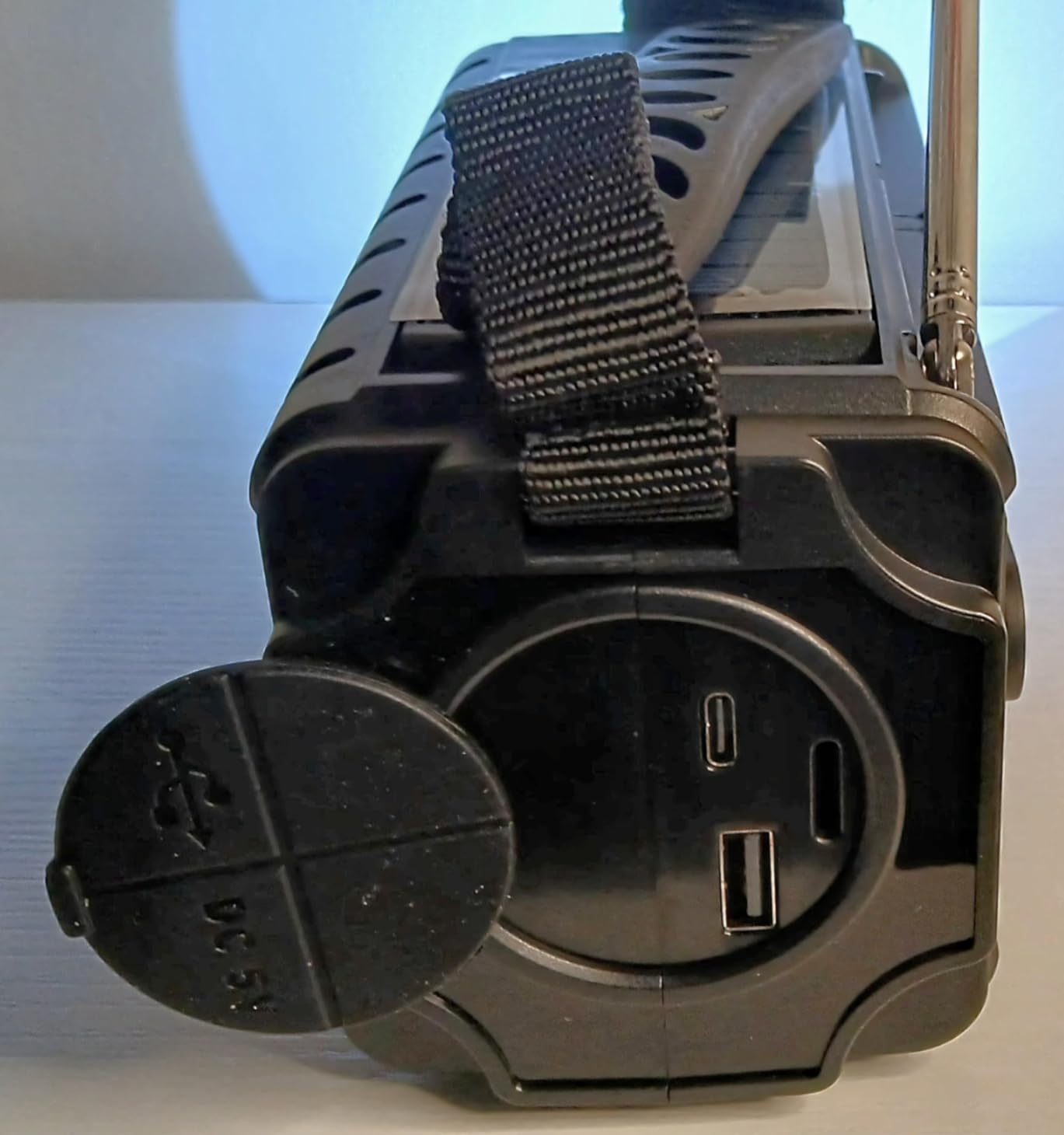
At 20000mAh and 74000mWh the QAUYYW holds the largest battery in this roundup, and at 10.88 ounces it does not feel like it. That combination of capacity and low weight is unusual and it changes what you can do with the radio after the power goes out.
The 52cm extended antenna is the longest in the group and it produced the strongest signal on weaker stations during testing.
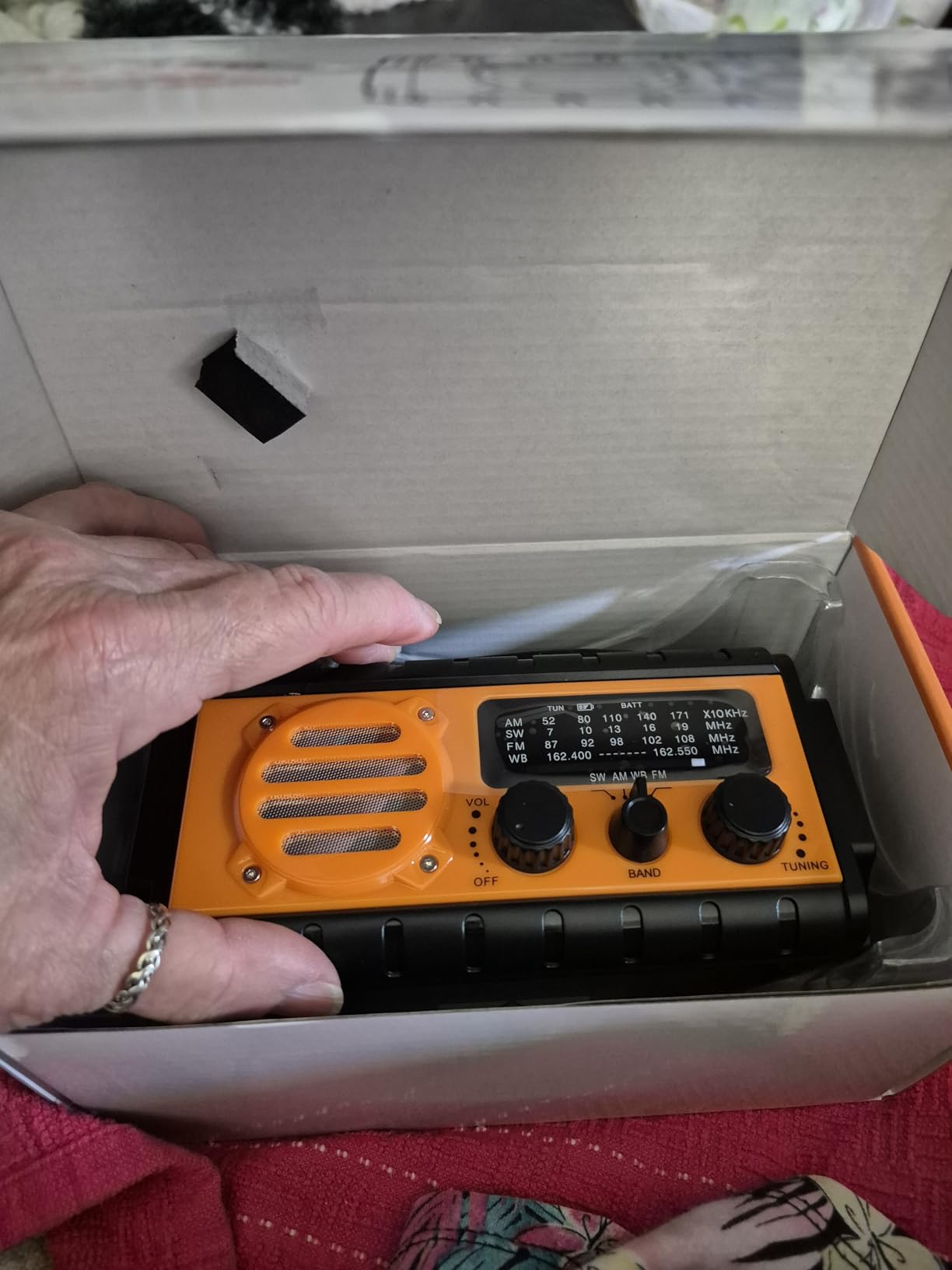
Owners report up to 35 hours of radio play and around 50 hours on the reading light. Even halving those figures for real conditions leaves far more headroom than any other model here.
The IPX6 waterproof rating, 3W flashlight, and 3.5W reading lamp cover outdoor use, and the included thermal blanket and carrying case round out the package.
When that much battery pays off
A household running a radio, a flashlight, and repeated phone top-ups through a multi-day outage will drain smaller packs quickly. At 20000mAh you have room for all three at once.
It also suits someone who charges a radio infrequently. More capacity means a longer interval before a stored pack loses its charge, which slows degradation.
Where it falls short
NOAA channels are tuned manually, so there are no automatic alerts. The warranty is 12 months, and QAUYYW is a newer name with fewer reviews behind it than the established brands.
Solar and crank supplement the battery rather than rebuilding it. If you want genuine solar harvesting, look at the Mesqool instead.
Solar Charging Reality Check in 2026
Solar panel charging on these radios works, but not the way most buyers expect. A typical panel on a compact emergency radio produces enough current to maintain a charge over a day of ordinary use, not enough to refill a flat battery.
The Mesqool is the exception in this group. Its 8500 square millimetre monocrystalline panel has roughly four times the surface area of a standard one, and that difference showed up in our cloudy-day testing.
The practical rule is simple. Buy the largest internal battery you can carry, then treat solar as insurance for the days you cannot charge over USB. If you want to compare how the crank side of the equation works, our guide to the best hand crank emergency radios goes deeper on dynamo output.
Weather Alert vs Weather Band Radio
A weather band radio receives NOAA broadcasts. You tune to the right channel yourself and listen. A weather alert radio does that plus interrupts whatever you are doing when an official warning is issued for your area.
Only three radios here deliver automatic alerts: the FosPower A1, the Raynic, and the Vokida. The rest, including the Kaito, both Leatons, the Eoxsmile, and the QAUYYW, need manual tuning to a NOAA channel.
None of the twelve supports SAME programming, which is the Specific Area Message Encoding system that narrows alerts to your county. That is the single most common gap people find when they set one up.
Setting up for your area takes a few minutes. Find your county code from your state emergency management office, enter it into a SAME-capable receiver, and confirm the test alert tone. Until you do that, a band radio still hears statewide broadcasts, just not local ones.
Battery Capacity and Phone Charging Reality
Battery capacity here ranges from 2000mAh in the yesiwtc to 20000mAh in the QAUYYW. That is a ten-fold spread, and it decides whether the radio is a listening device or a mini power station.
Under 5000mAh, expect radio listening and light use, with maybe one partial phone top-up. Between 5000mAh and 10000mAh you get comfortable overnight use plus a full phone charge. Above 10000mAh you can power a phone more than once and still have radio time left.
Charging speed depends on output amps, not just capacity. The Leaton A8 pushes 5V/1A, the Mesqool accepts 5V/2A input, and the Eoxsmile output caps at 1A. A 2A output will fill a modern phone noticeably faster.
If your priority is talking to other people rather than listening, a dedicated transceiver is a different category entirely. Our guide to the best two way radios covers that side of emergency communications.
Building a Layered Alerting Setup
A single radio should not be your only warning system. Cell towers fail first in a disaster, and power outages kill phone screens long before they kill a radio. Layer the two.
Keep wireless emergency alerts switched on for your home area, carry a battery-backed NOAA radio in the house, and put a second solar radio in the car or the go bag. A radio in each vehicle covers the case where you are not home when the warning arrives.
On battery care, check the internal pack every six months and top it up over USB. Rechargeable lithium cells sitting at zero for years is the most common failure users report, and a ten-minute charge twice a year prevents it.
Finally, test the alert volume before you need it. Several radios tie the warning tone to the main volume knob, so a radio set quietly for music will stay quiet when a warning fires.
Frequently Asked Questions
Are solar-powered radios any good?
They are good as a maintenance layer, not as a primary power source. A standard solar panel on a compact emergency radio produces enough current to hold a charge over a day of light use, but usually not enough to refill a flat battery. Models with oversized panels, such as the Mesqool with its 8500mm2 monocrystalline surface, can genuinely harvest meaningful charge in direct sun. Treat solar as insurance for days you cannot reach a wall outlet, and choose the largest internal battery you can carry.
Is there a solar-powered FM radio available?
Nearly every radio in this roundup receives FM along with AM and NOAA weather channels. All twelve offer solar panel charging as one of their power sources, and the majority add a hand crank and USB input as well. The Raynic CR1009Pro lists six charging methods, which is the most in the group.
What is the highest rated emergency radio?
Among these solar models, the Mesqool 12000mAh carries the highest rating at 4.7 stars. The FosPower A1 has the largest review base at more than 37k reviews with a 4.6 rating, which is why we named it our overall pick. Rating and review volume measure different things, and we weigh both.
What is the best power source for an emergency radio?
Ranked by reliability: USB wall charging first because it is fast and always available in normal times, hand crank second because it works indefinitely with no conditions, replaceable AA or AAA batteries third because they store for years without degrading, and solar last as a maintenance layer. During an outage, crank and cells outperform solar in almost every real scenario.
How long does hand crank charging last?
It depends on the crank and the use. On the high-torque models here, roughly a minute of steady cranking supports a meaningful stretch of radio listening, while smaller dynamos deliver noticeably less. Cranking is a top-up rather than a full recharge, so plan on supplementing the battery with USB or solar instead of rebuilding it from empty by hand.
Can an emergency radio charge a phone fully?
Radios with 10000mAh or more can deliver a full phone charge and sometimes more. The QAUYYW at 20000mAh and the Mesqool at 12000mAh have the largest reserves, while the 4000mAh Nitigo and 2000mAh yesiwtc are better suited to a quick top-up. Output speed also matters, since a 1A port charges far slower than a 2A port.
What does SAME alert mean on a weather radio?
SAME stands for Specific Area Message Encoding. It is a broadcast system that narrows NOAA weather warnings to a specific county or region instead of flooding a whole state with every alert. A SAME-capable receiver is programmed with your local area codes and then only sounds for warnings that affect you. None of the twelve radios in this roundup supports SAME programming.
Do emergency radios work without batteries?
They do, but with limits. The hand crank and solar panel both generate power directly, so the radio can run during a total battery failure. The trade-off is duration: cranked and solar runtime is measured in minutes rather than hours, so batteries are still the practical foundation. Two models here also accept AA or AAA cells as a long-term backup.
Our Final Verdict in 2026
The FosPower A1 is the best emergency radio with solar charging for most households in 2026. It combines the largest review base we found with a 7400mWh power bank, three power sources, dual lights, and a limited lifetime warranty, and it stays small enough to sit in a closet without being forgotten.
Buy the Raynic CR1009Pro if automatic NOAA alerts matter most to you and you want six charging methods plus a headphone jack. Choose the Kaito KA500 if shortwave coverage is part of your plan. Go with the Mesqool for serious solar harvesting, the Leaton A8 for visual and accessibility alerts, and the QAUYYW when battery capacity outweighs every other consideration.
Whichever you choose, buy two. Put one in the house and one in the vehicle, check the battery every six months, and program your county codes the day it arrives.