
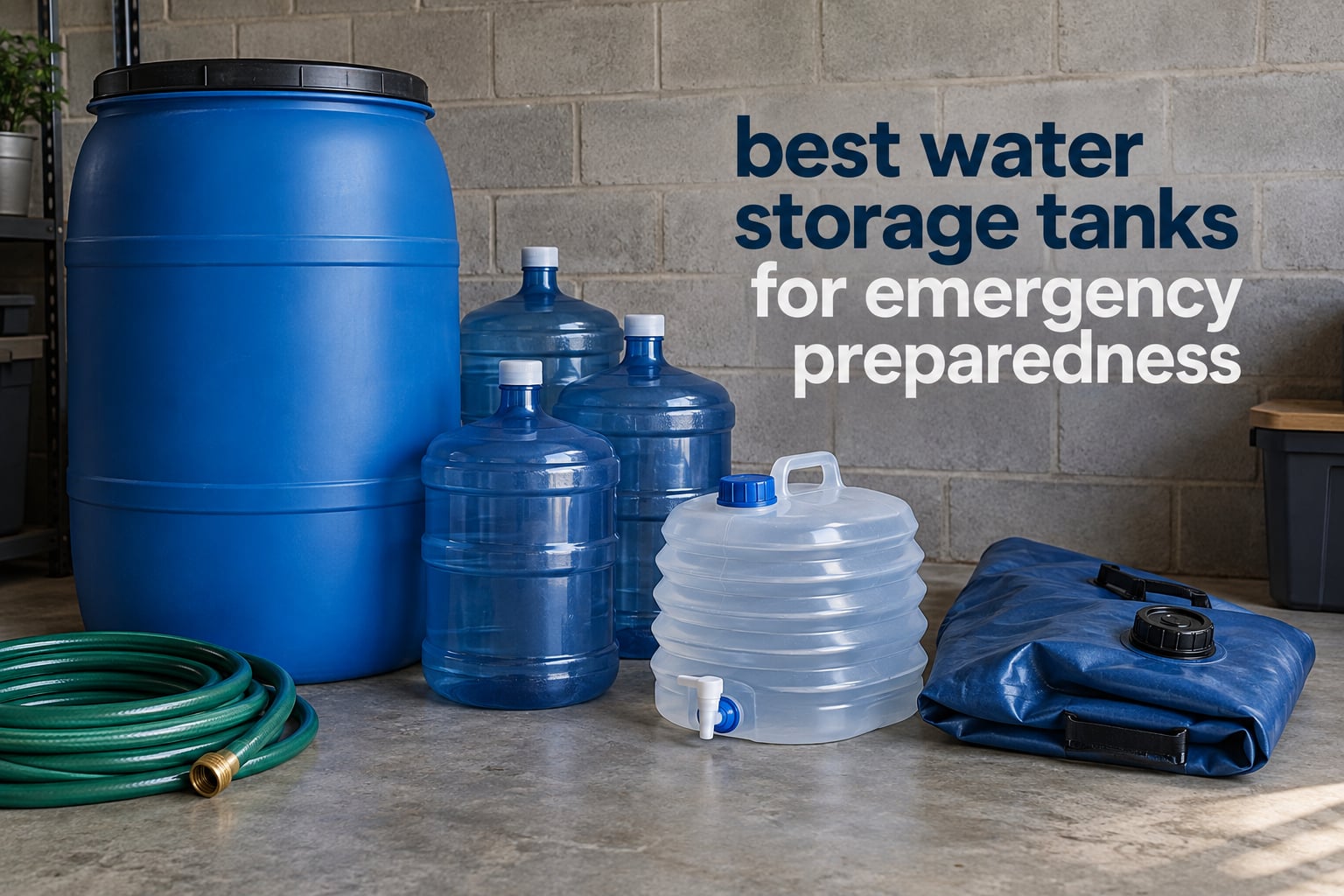
The best water storage tanks for emergency preparedness fall into three groups: rigid stackable tanks for households that want gallons on a shelf, bladders that turn a bathtub into a reservoir, and heavy 55-gallon drums for bulk storage. Our top pick is the waterBOB 100-gallon bathtub bladder, with the WaterStorageCube 5.3-gallon two-pack as the compact backup and the Legacy 20-gallon kit as the premium multi-year set. The sizing rule never changes: one gallon per person per day, multiplied by fourteen days, multiplied by everyone in the house.
That math is where most households go wrong. A family of four planning for two weeks needs 56 gallons before anyone drinks, cooks, brushes teeth or washes hands. Add a buffer week and you are at 84 gallons, which rules out most of the small cans people buy first.
We spent weeks filling, draining, stacking and moving every container in this roundup, and the pattern was clear. What matters is not the sticker capacity but the weight when full: water weighs about 8.34 pounds per gallon, so a 55-gallon drum that feels manageable empty lands near 460 pounds once filled. If you have ever wondered how to handle that, our guide to emergency water storage containers covers the portable-can side in more detail.
The other mistake is treating stored water like a permanent installation. Water in a sealed, opaque, food-grade container holds for years, but only if you rotate it. Our rule is simple: swap the contents every six to twelve months, and never leave a tank sitting half full for a season.
We also want to be clear about what this list is. These are drinking water containers rated for potable use, not flood devices and not rain harvesters. When you pair them with a filter for the water you collect rather than store, our picks for emergency water filters for cold weather cover the other half of the problem.
Table of Contents
Top 3 Picks for Emergency Preparedness (October 2026)

waterBOB 100 Gal Bathtub Bladder
- 100 gallon capacity
- Fits a standard bathtub
- Food grade LLDPE liner
- Hand pump included
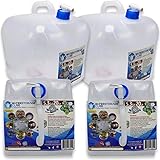
WaterStorageCube 5.3 Gal Two-Pack
- Collapses flat
- Food grade PE
- BPA PVC DEHP free
- Two containers included
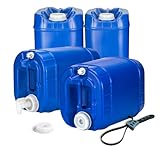
Legacy 20 Gal Stackable Kit
- Four 5 gallon tanks
- Treatment drops included
- Dark blue light blocking
- Stackable ribbed design
The waterBOB wins because it solves the apartment problem better than anything else we tested: 100 gallons of drinking water that occupies no floor space at all and folds to shoe-box size when the storm passes. The WaterStorageCube two-pack takes the opposite approach, disappearing into a closet when empty and weighing about 5 ounces per container.
Quick Overview: 12 Water Storage Tanks Compared (October 2026)
| Product | Specifications | Action |
|---|---|---|
| waterBOB 100 Gallon Bathtub Bladder |
|
Check Latest Price |
| WaterStorageCube 5.3 Gallon Two-Pack |
|
Check Latest Price |
| Legacy Food Storage 20 Gallon Four-Pack |
|
Check Latest Price |
 COOZMENT 3.2 Gallon Container COOZMENT 3.2 Gallon Container |
|
Check Latest Price |
 Saratoga Farms 30 Gallon Six-Pack Saratoga Farms 30 Gallon Six-Pack |
|
Check Latest Price |
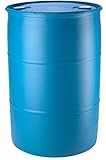 BayTec 55 Gallon HDPE Water Barrel BayTec 55 Gallon HDPE Water Barrel |
|
Check Latest Price |
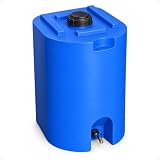 WaterPrepared 55 Gallon Stackable Tank WaterPrepared 55 Gallon Stackable Tank |
|
Check Latest Price |
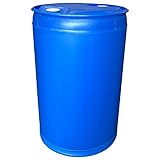 Augason Farms 55 Gallon Water Barrel Augason Farms 55 Gallon Water Barrel |
|
Check Latest Price |
 VEVOR 264 Gallon Water Bladder VEVOR 264 Gallon Water Bladder |
|
Check Latest Price |
 WaterPrepared 35 Gallon Utility Tank WaterPrepared 35 Gallon Utility Tank |
|
Check Latest Price |
 Zipcase 100 Gallon Bathtub Bladder Zipcase 100 Gallon Bathtub Bladder |
|
Check Latest Price |
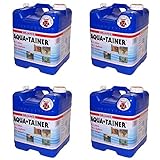 Reliance Aqua Tainer 7 Gallon Four-Pack Reliance Aqua Tainer 7 Gallon Four-Pack |
|
Check Latest Price |
1. waterBOB 100 Gallon Bathtub Bladder – Best Overall Emergency Reservoir
waterBOB Bathtub Emergency Water Storage Bladder Up To 100 Gallon Capacity – Food Grade Liner with Hand Pump for Hurricane and Disaster Preparedness – BPA Free Drinking Water Container
Capacity: 100 gallons
Material: Food grade LLDPE liner
Weight: 1.3 pounds
Setup: fits a standard bathtub
Pros
- Turns an existing bathtub into 100 gallons without using floor space
- Food grade liner isolates water from tub grime and soap film
- Sets up in about 20 minutes with no tools
- Collapses to shoe-box size
- Hand pump keeps air out as water drains
Cons
- Liner is hard to dry fully and is close to single use
- Soft material punctures easily so keep patches handy
- Included hose is short once the level drops low
Our team’s pick for the widest range of households. You drape the liner over a standard bathtub, run a hose from the faucet, and in roughly twenty minutes you have a hundred gallons of protected drinking water sitting on top of your existing plumbing fixtures. Nothing is drilled, nothing is plumbed, and nothing stays behind after the water is used.
The liner is food-grade LLDPE, which means the water never touches the tub enamel, the soap film, or whatever else a bathtub accumulates over a few years. That separation is the entire trick, and it is why this approach beats filling a bare tub with a hose. The whole package weighs 1.3 pounds empty, so one person can carry it to a second bathroom or a rental unit.
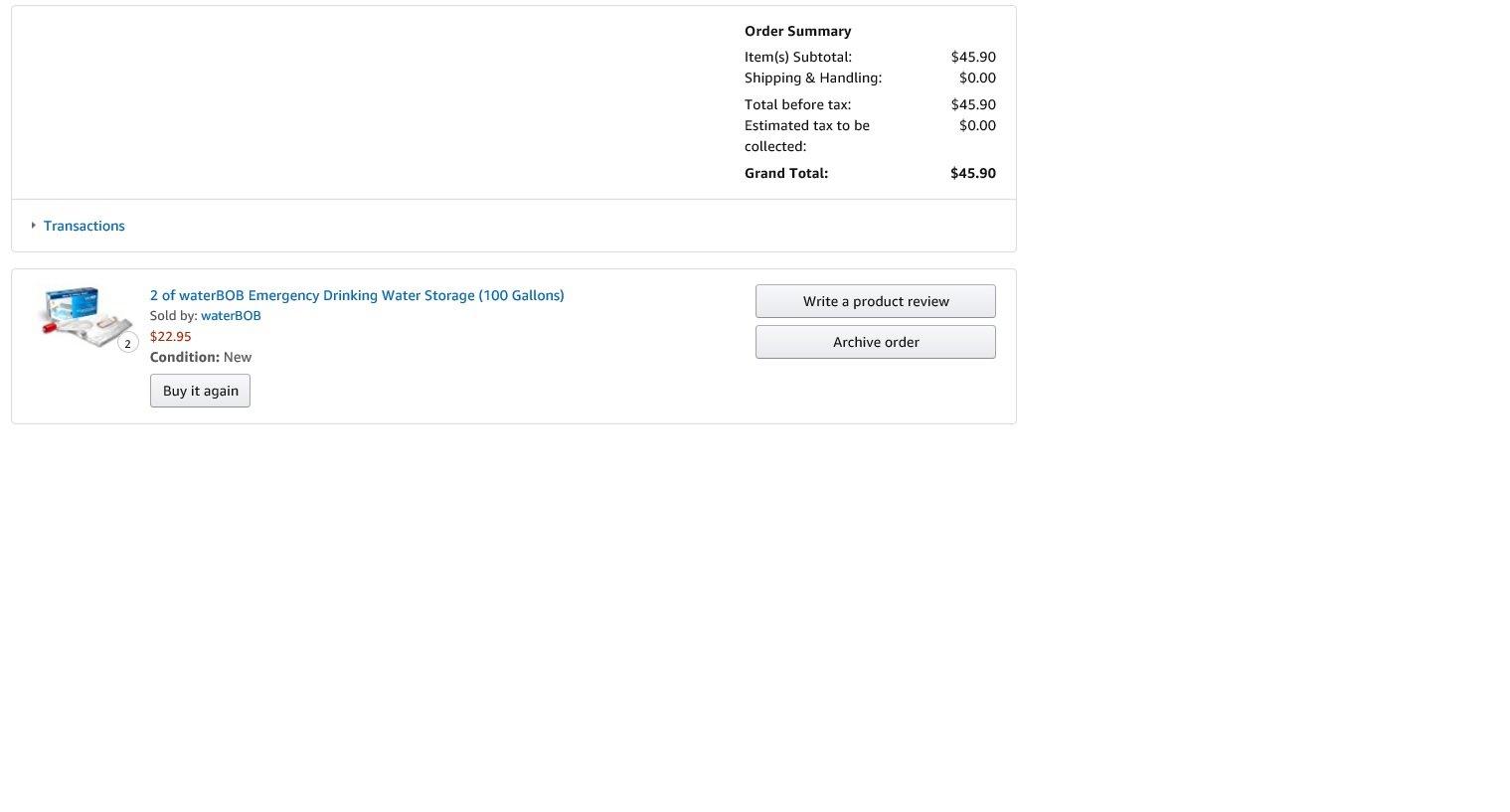
When it is full, the picture changes. A hundred gallons is about 834 pounds, which is why we recommend treating this as a fixed installation and not a portable asset. Owners in hurricane-prone and well-water areas tell us repeatedly that it carries a family through multi-day outages once municipal pumps stop, which matches what we saw filling and draining it several times.
The pump that comes in the box is the part people underestimate. Because it pulls water out while keeping air from entering, the liner stays rigid instead of collapsing on itself, and you can fill jugs and pitchers straight from the tub.
What works well for most households
The footprint is the real advantage. Renters and apartment residents, the group that consistently struggles most with bulk storage, can add 100 gallons without moving a single piece of furniture. If your household runs on two bathrooms, you can run two liners and double the reserve.
Setup is also honest work rather than a project. No tools, no permanent installation, and about twenty minutes from hose to full. We valued that a lot more than expected once we started moving tanks around a garage.
Where it falls short
The liner is effectively a one-event tool. Drying a folded plastic liner completely is difficult, and residual moisture in the folds is exactly where mold starts, so most households end up replacing it after a serious flood. Treat it as emergency insurance rather than a permanent fixture.
The soft material is also more vulnerable to a nail or a pet than rigid HDPE, which is why the included patches are worth keeping in the box. And the siphon hose is short enough that once the level gets below the drain, you are moving water with a jug.
2. WaterStorageCube 5.3 Gallon Two-Pack – Best Value
WaterStorageCube Collapsible Water Container with Spigot (5.3 Gal (2-Pack))
Capacity: 5.3 gallons each, two pack
Material: Low density polyethylene
Weight: 5.2 ounces each
Size: 7.1 by 8.8 inches
Pros
- Largest review base in this roundup
- Collapses flat when empty
- No BPA PVC or DEHP
- Gasketless spigot with nothing to replace
- Soft molded handles when full
Cons
- Spigot handle can crack after a few years
- Discolors and holds odor with repeated long-term use
- Needs air let back in to avoid crushing as it empties
This is the container most people already have in a closet, and after filling and draining both of them repeatedly, the reason is obvious. The body is soft low density polyethylene that stays flexible in cold weather, so a tank left in a cold garage in January is not a rigid brick you cannot lift.
Collapsing flat is the feature that matters most in practice. Ten of these stacked in a closet take up the depth of a single book, which makes them the easiest way for someone in a small apartment to add emergency water without rearranging a room.
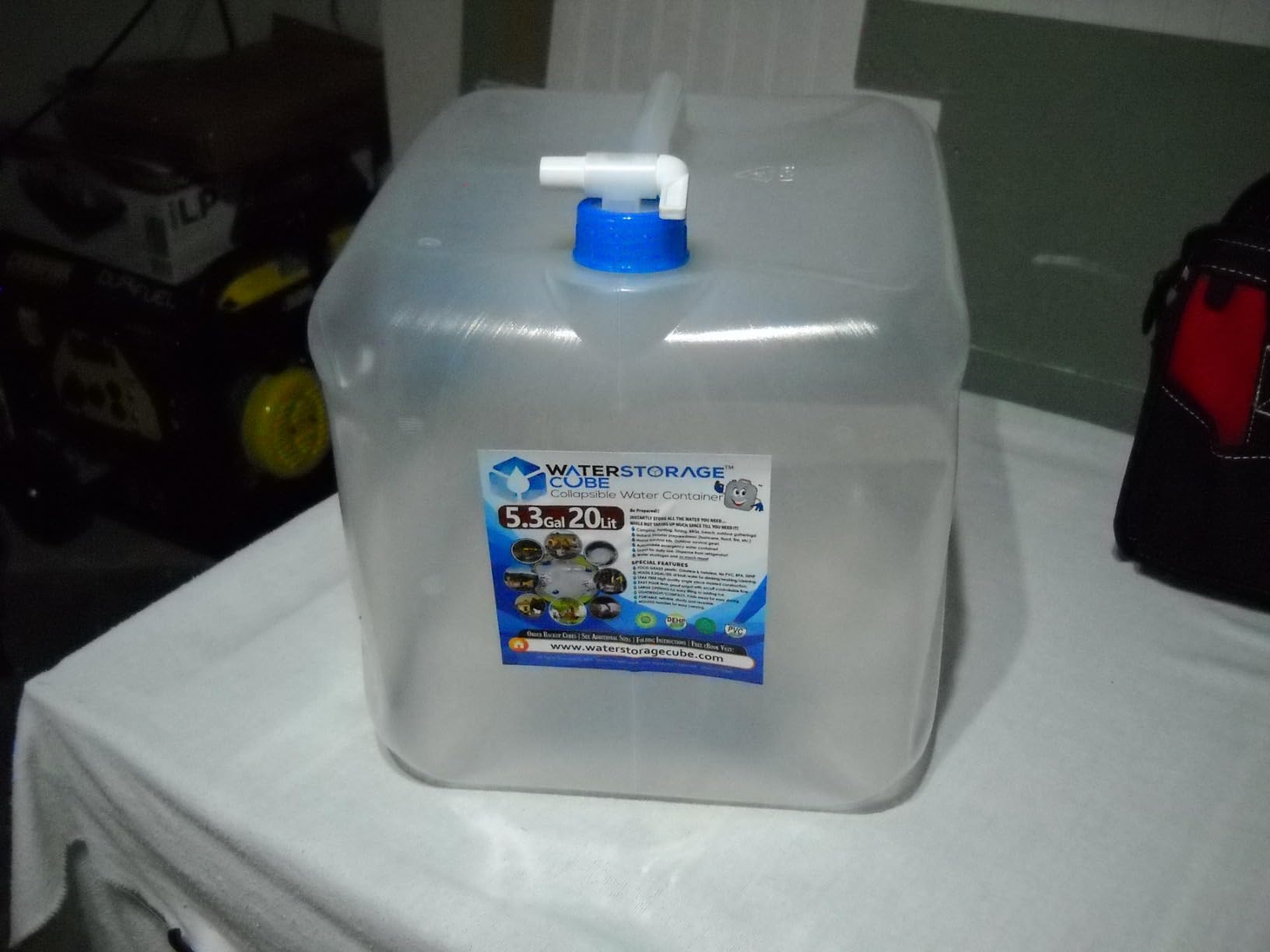
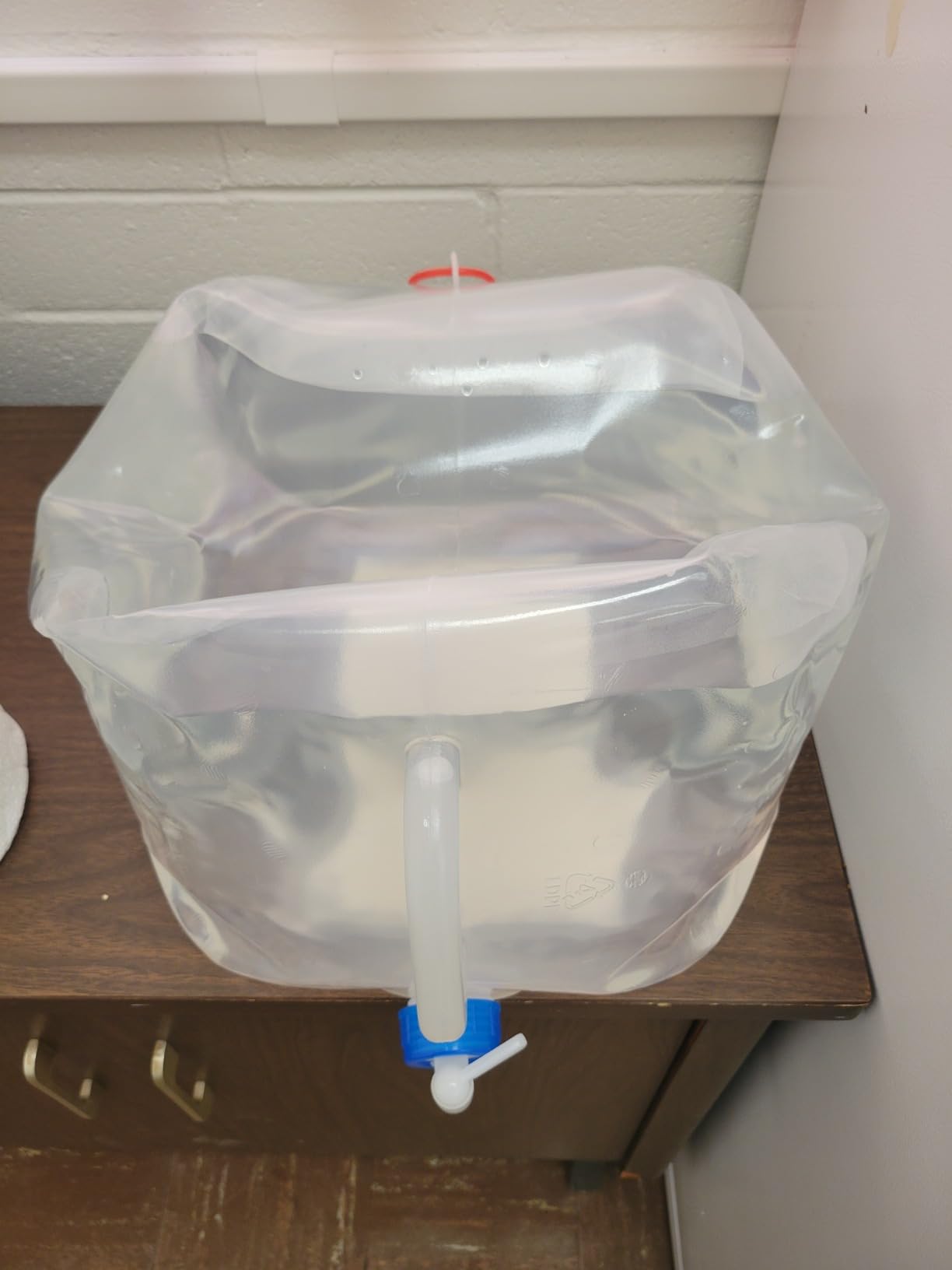
Reviewers praise the leak-free performance and the clean taste of the water, and our own fill-and-tilt test matched that. The wide opening makes filling from a bathtub spigot fast, and the same opening is what you use to scrub the interior during a rotation.
The two-pack format also lets you split the storage. Many households keep one container with the vehicle and one at home, which covers the realistic case where an outage strands someone away from their own supply.
Who this suits best
Apartment residents, dorm occupants, and anyone whose storage space is measured in cubic feet rather than square feet. Ten gallons a trip is slow to build a reserve, so think of these as the top-up layer on top of a bigger system.
They also double as vehicle kit containers, where weight matters and collapsible walls earn their keep. At about 5 ounces empty, filling one at a gas station station-side takes seconds.
What to watch out for
The spigot handle is the weak point. Owners report it cracking after a few years of use, which in a long-term reserve means replacing the container rather than repairing it.
Repeated long-term use brings discoloration and odor, so these are better suited to seasonal trips than to permanent storage. And because the container collapses as it empties, you have to crack the lid to let air back in, otherwise the soft walls crease inward.
3. Legacy Food Storage 20 Gallon Four-Pack – Premium Multi-Year Kit
5-Gallon Stackable Water Storage Containers, 4-Pack
Capacity: 5 gallons each, four tanks
Material: Food grade BPA-free plastic
Weight: 40 pounds full each
Size: 12 by 10 by 15 inches each
Pros
- Stackable ribbed shells lock together
- Dark blue blocks light to slow growth
- Treatment drops included for long storage
- Large 2.25 inch opening
- Strap wrench included for tight lids
Cons
- About 40 pounds full per tank makes stairs awkward
- Four separate tanks to fill and rotate
- Cylindrical shape uses less space per gallon than rectangular tanks
This is the kit we recommend when someone wants a set that stays put for years rather than being dragged out of a closet. Twenty gallons across four cylindrical tanks is the sweet spot for a two-person household, and the ribbed shells lock together so the stack stays upright on a shelf.
The dark blue exterior is a quiet but real advantage. Light is one of the three things that degrade stored water, alongside heat and bacteria, and an opaque colored shell slows all of it compared with a clear container.
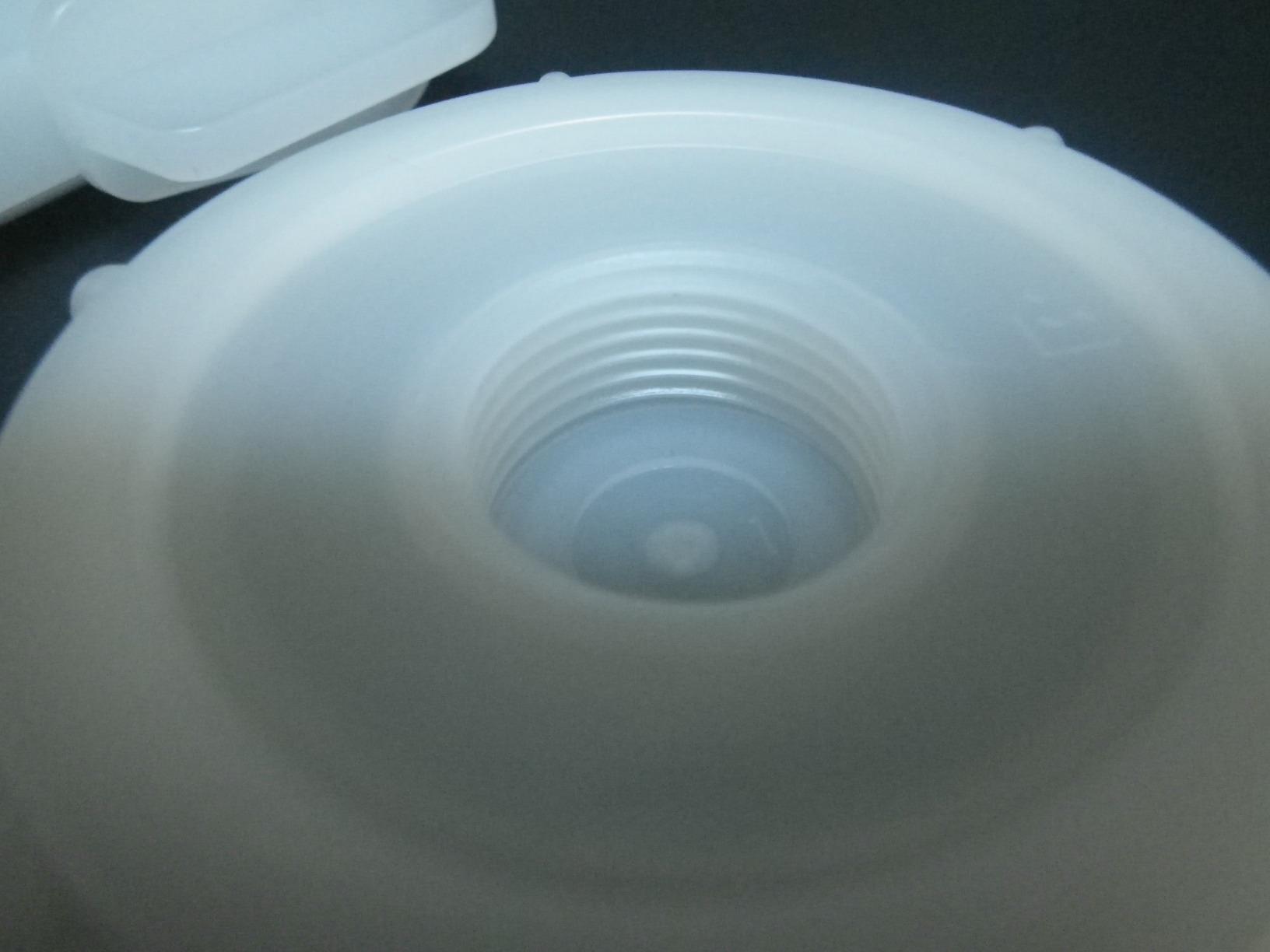
Buyers consistently point to the bundled water treatment drops as the reason this kit works for multi-year storage, and the included strap wrench solves the single most common failure in rigid tanks: lids that were never tight enough to hold pressure.
At 4.7 stars with 85 percent five-star ratings, this is one of the highest rated long-term kits in the roundup, and we did not find a recurring defect pattern in the aggregated reviews. Each tank measures 12 by 10 by 15 inches, so the footprint is easy to plan against a garage shelf.

Reasons to pick this kit
Stackability and shelf footprint. Four tanks stack two high in roughly the space of two ordinary storage bins, which is what makes a 20-gallon reserve realistic in a garage or storm shelter.
The treatment drops remove a decision. You are not researching whether your tap water needs a preservative, because the kit ships with the dosing supplies intended for multi-year storage.
Reasons to look elsewhere
Each tank weighs about 40 pounds full, so filling four of them is four separate trips with a hose, and stairs make that noticeably harder. Budget an afternoon the first time.
The cylindrical shape wastes a little of the square footage compared with a rectangular tank of the same capacity. If your storage spot is a tight closet rather than a shelf, compare dimensions before committing.
4. COOZMENT 3.2 Gallon Container – Best for Vehicle Kits
COOZMENT 3.2 Gallon (12L) Portable Water Containers with Spigot, BPA Free Water Jug, Military Green Water Tank, Multifunction Water Storage Containers for Camping Outdoor Hiking,Emergency Storage
Capacity: 3.2 gallons
Material: Food grade PE, PP lid, silicone seal
Weight: 1.9 pounds
Size: 7.5 by 13.7 inches
Pros
- Wide 4 inch mouth is easy to fill and scrub
- Push to pour spigot gives controlled flow
- Tall narrow body fits a trunk better
- Two integrated carry handles
- Leaves no plastic taste in the water
Cons
- Corners are thinner than the side walls and flex
- Included brush and spigot extender are low quality
- Faint plastic smell on first use
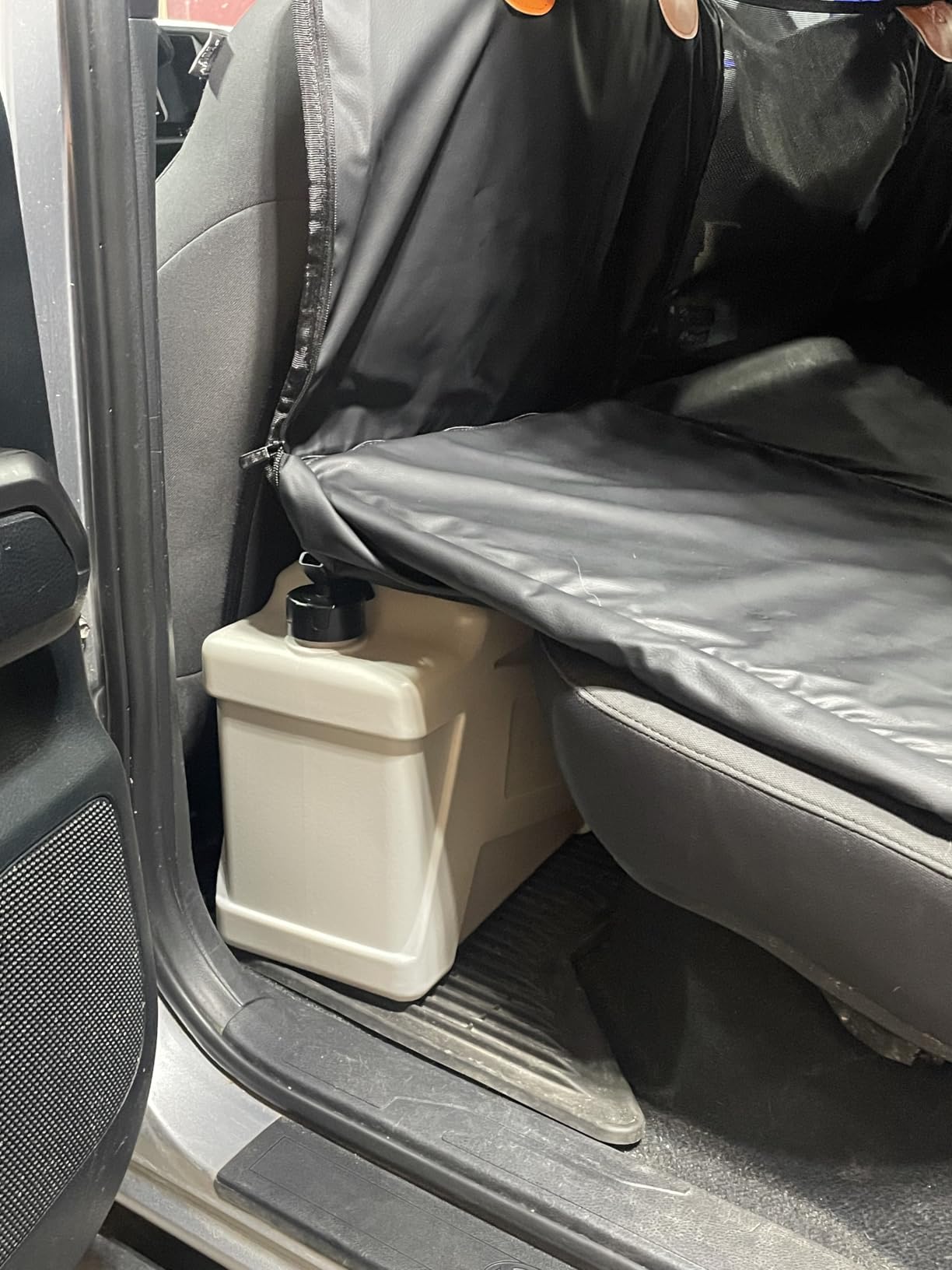
The tall narrow body is the whole idea. At 7.5 by 13.7 inches it slides into the gap between a seat and a door panel in a way that a squat cube-shaped jug never does, which is why we like it as a vehicle container.
The wide four-inch mouth surprised us in a good way. It is the easiest opening in this roundup to get a hand and a brush into, and that matters every time you perform a rotation.
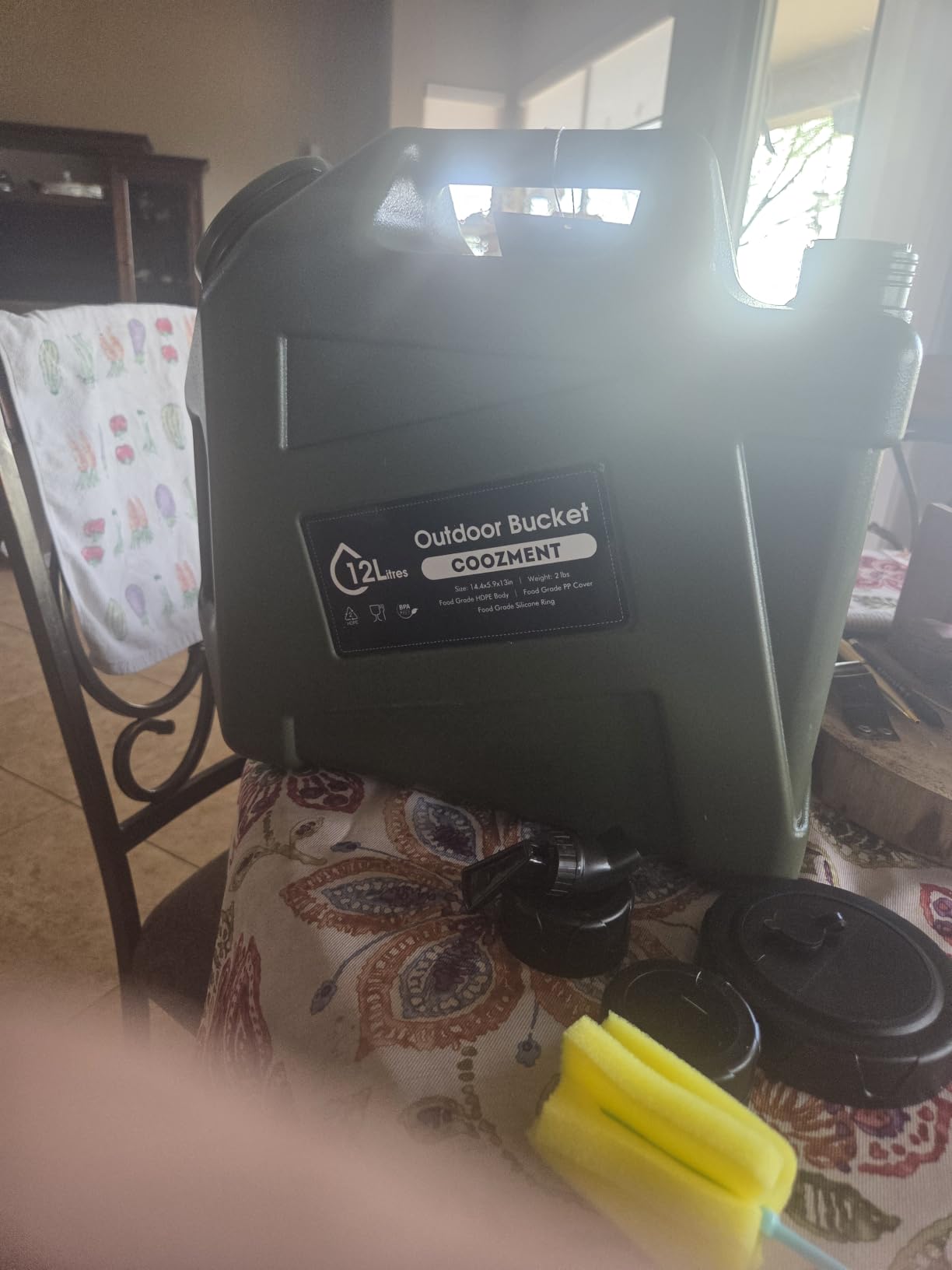
The press-and-lift spigot on the opposite side gives you real control over flow rate, so you can fill a bottle slowly instead of committing to a gush. Owners comparing it against cheaper jugs usually point to the seals as the difference.
This container also comes in 2.6, 3.2, and 5 gallon versions, so if you decide you want more capacity in the same footprint family, the option already exists rather than requiring a different product.
Where it earns its place
Vehicle kits and go-bags. Two of these in a trunk give a driver six-plus gallons without turning the cargo area into a project, and the 3.2 gallon size is a reasonable compromise between capacity and handling.
Camp and job-site water hauling also suits it. The material is food-grade PE with a food-grade PP lid and a silicone seal, and it is free of BPA and PVC.
What to keep in mind
The corners are thinner than the side walls, and users report they can flex under pressure when the container is full. Not a leak in our testing, but it is the spot to watch over years.
The included brush and spigot extender are low quality, and a faint plastic smell on first use needs a wash or a soak before filling. The 1.9-pound empty weight is also high enough that several owners step down a size for portability.
5. Saratoga Farms 30 Gallon Six-Pack – Best for a Stackable Fleet
Saratoga Farms 5-Gallon Stackable Water Storage Containers, Emergency Water Storage for Camping and Disaster Preparedness, 30 Gallons
Capacity: 5 gallons each, six tanks, 30 gallons total
Material: BPA-free HDPE
Weight: about 40 pounds full each
Design: nesting stack
Pros
- Nesting ribs lock upright and stack two high
- Ratchet lid rings with included wrench
- Twist breathing ports for spill-free pouring
- Kits from 20 up to 100 gallons
- HDPE is tougher than soft PE
Cons
- Stacking shoulders trap water above the spout
- Spigot sold separately and the vent needs drilling
- No instructions included
- Strong new plastic odor before first fill
Thirty gallons in six rigid HDPE tanks is the configuration we like most for a family of two with a buffer week, and for anyone who wants individual containers they can carry one at a time rather than wrestling with a single large vessel.
The nesting ribs are the key feature. They let the jugs lock upright and stack two high, so six tanks occupy the floor area of about three, which is what makes 30 gallons realistic in a basement or garage.
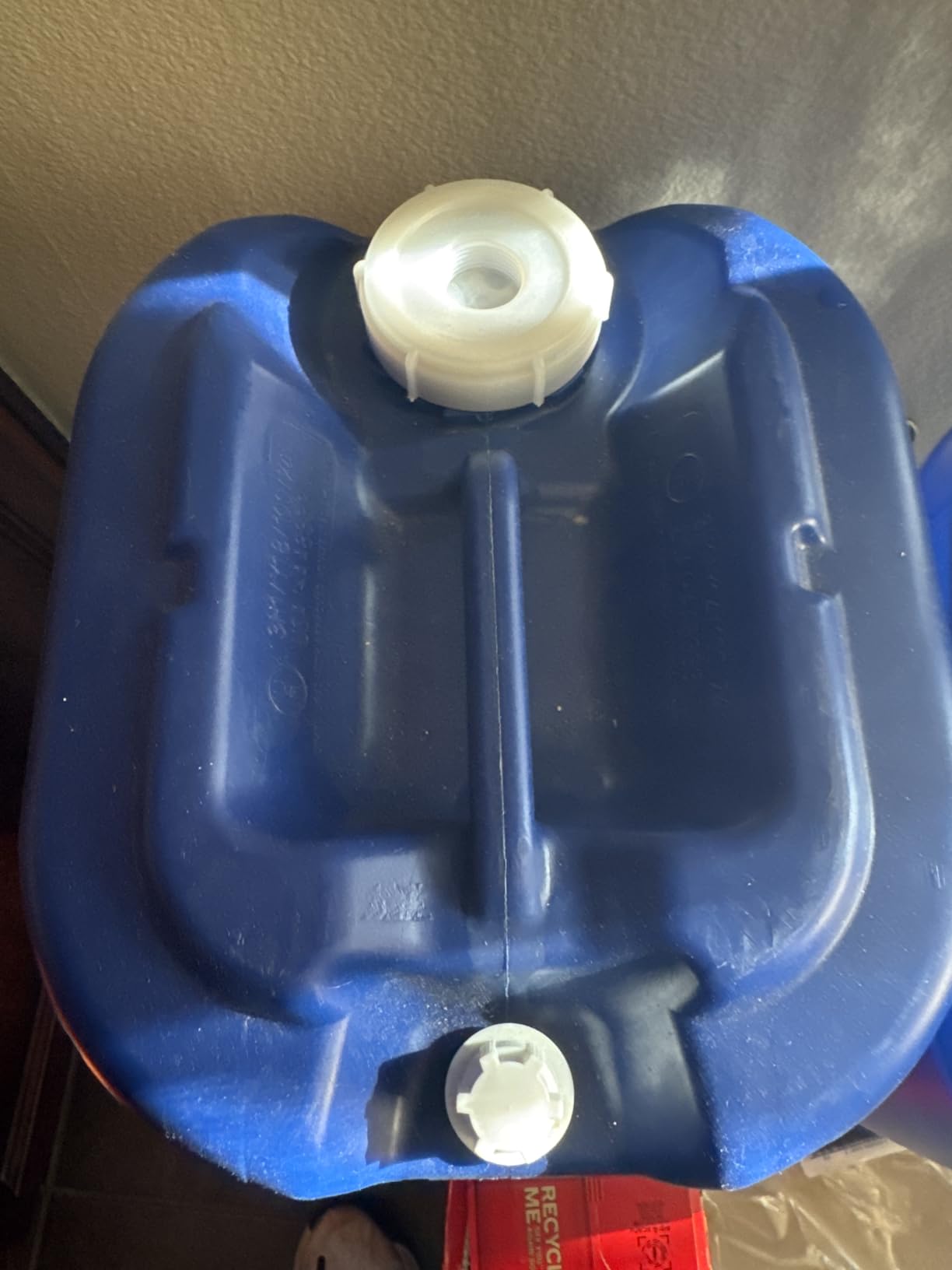
HDPE is stiffer and more puncture resistant than the soft polyethylene used in collapsible containers, and it kept its shape better in our handling. Tamper-evident ratchet rings plus the included lid wrench produce a seal you can trust through a season change.
The kits come in 20, 30, 40, 60, 80, and 100 gallon configurations, so you can match capacity to household size without changing brands. Experienced users in preparedness forums give detailed treatment dosing recipes for these tanks, which tells you how established the platform is.
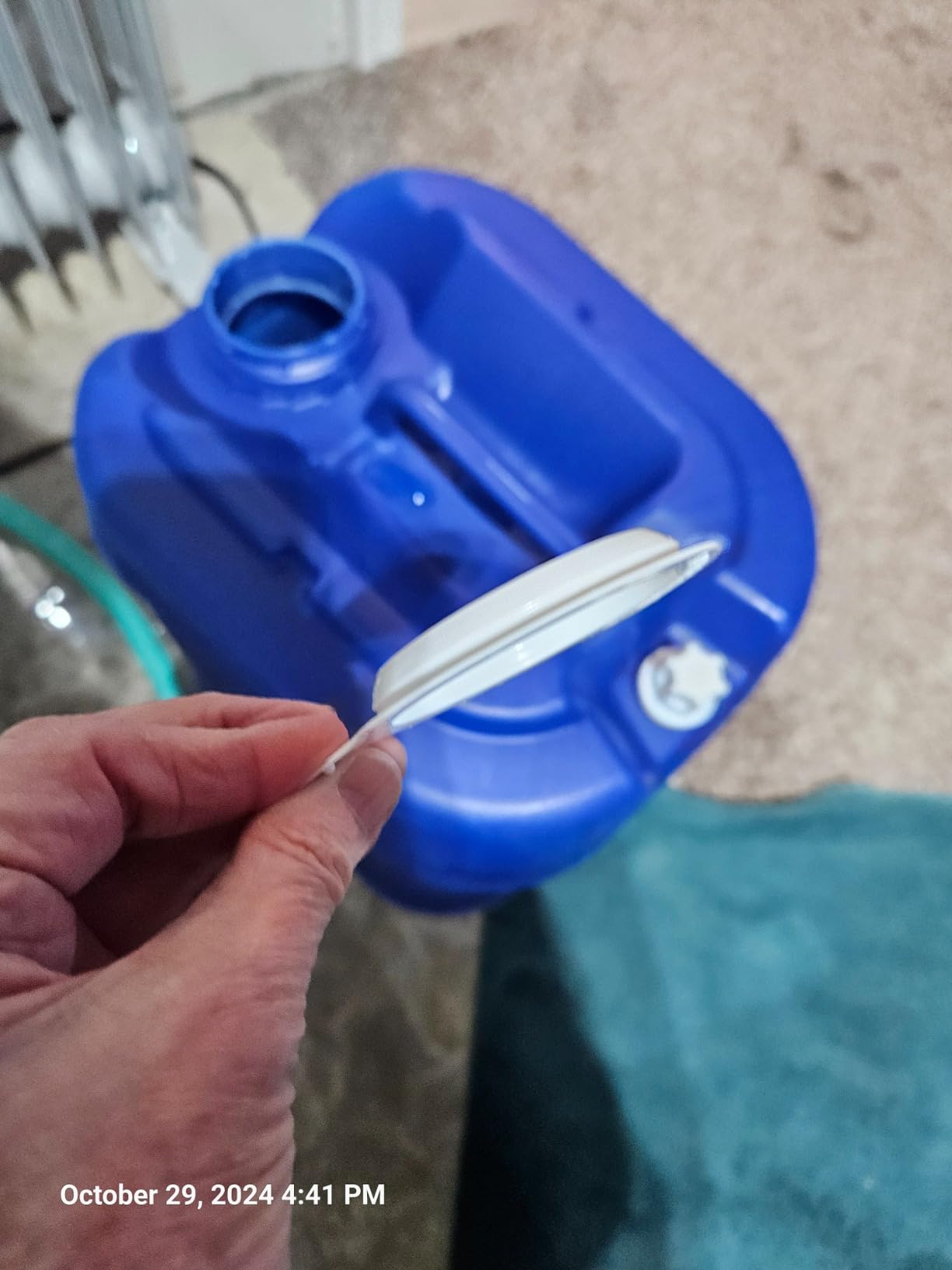
Best case scenario
Anyone with a basement, garage, or storm shelter with shelving. The rigid bodies tolerate being stacked full, and the two-high configuration is stable on a level floor.
Individual carry weight also stays manageable at roughly 40 pounds per container, which is one heavy jug at a time rather than an immovable drum.
Preparation it demands
Setup takes longer than the other stackable kits. The spigot is sold separately and the twist breathing port may need a drilled vent hole through thick plastic, so plan for that before filling.
Water cannot fully drain because the stacking shoulders trap liquid above the spout, and there is no instructions sheet in the box. The new plastic odor also needs a wash or a soak treatment first. Experienced users plan the fill around all of this rather than discovering it halfway through.
6. BayTec 55 Gallon HDPE Water Barrel – Best for Rain Collection and Bulk Storage
55 Gallon Blue Water Barrel | Solid Mold |2 Inch Bung Holes, Good for Long Term Drinking Water Use | BPA Free
Capacity: 55 gallons
Material: High density polyethylene
Weight: 24 pounds empty
Size: 23 by 23 by 35 inches
Pros
- Pressure checked and leak tested before shipping
- Heavy gauge one-piece drum with wide threaded caps
- Light enough to reposition when empty
- Two 2 inch bung holes for filling and cleaning
- Also works for rain collection
Cons
- Arrives without a box so cosmetic marks happen
- Faint manufacturing smell needs a bleach wash
- No spigot included so water comes from the bung holes
Fifty-five gallons is where the category changes character. At 8.34 pounds per gallon, a full barrel weighs roughly 460 pounds, and you should assume it will not move. Fill it where it will live.
This drum is pressure checked and leak tested before it is sent, and multiple owners report zero leaks over long storage. The heavy-gauge one-piece HDPE wall and solid wide-threaded caps are what separate a real storage drum from a repurposed chemical barrel.
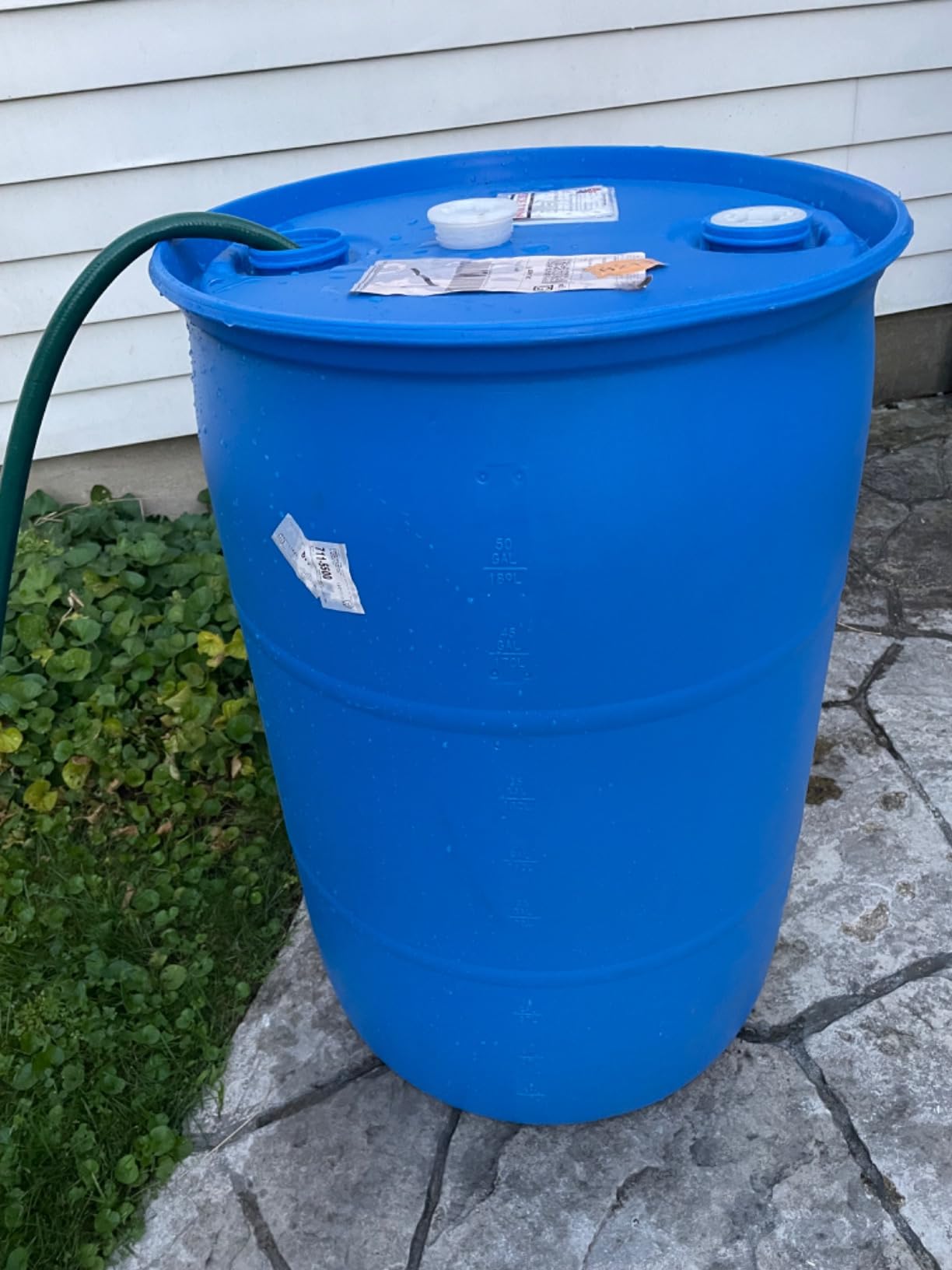
Two two-inch bung holes make filling, cleaning, and checking the level straightforward. At 24 pounds empty, one person can reposition it, which is what makes it easier to place in a basement before filling than after.
Its second life is rain collection, and because it is UN-DOT certified it also handles other liquids. Many households run one as a potable barrel and one alongside the water heater as a redundant supply.
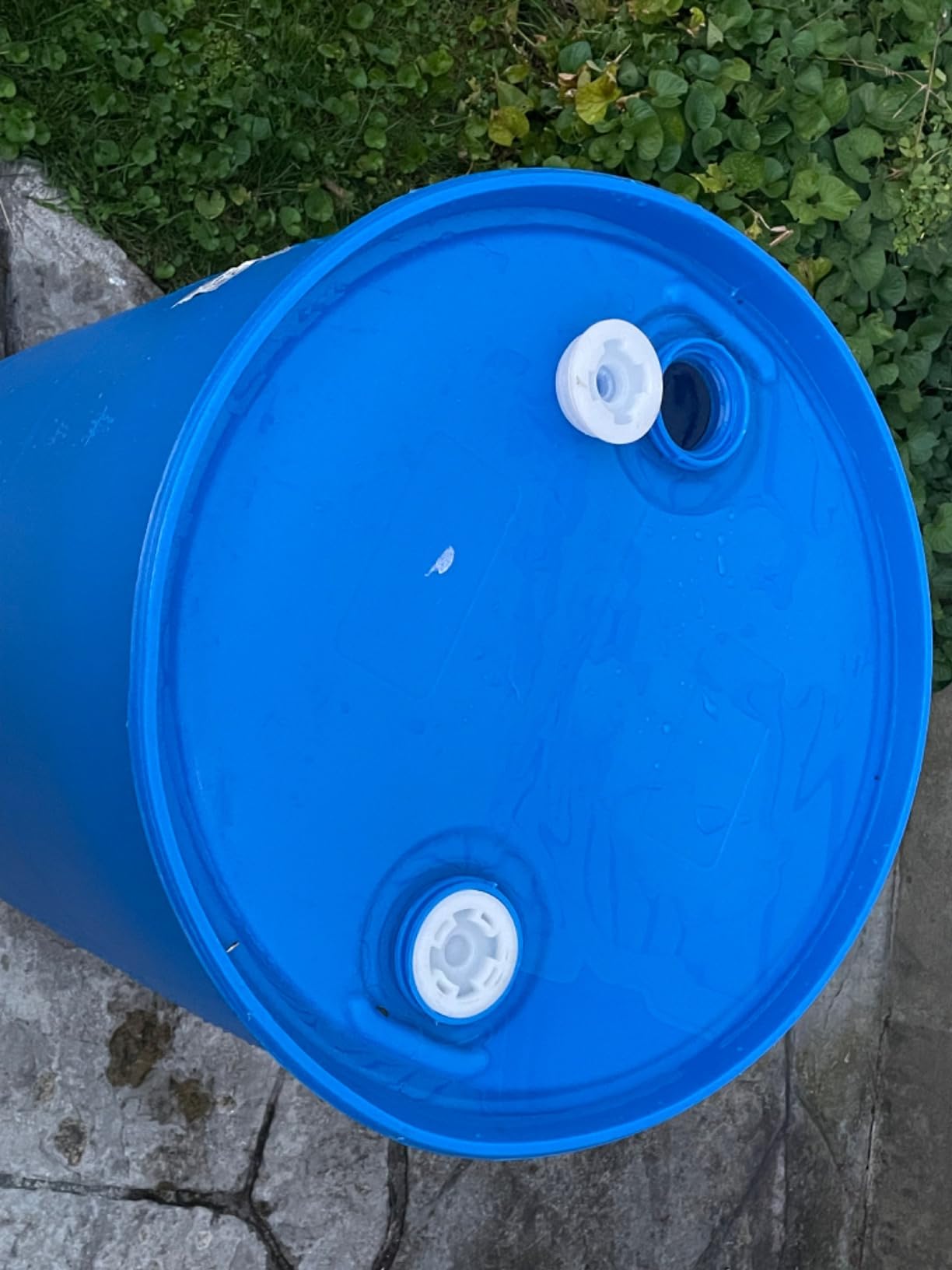
Why it fits a long-term setup
Rigid HDPE is the material of choice for long-horizon storage because it does not flex, does not take a puncture easily, and does not need a support frame. It also resists the UV exposure that degrades cheaper plastics.
The low failure rate is the real story. Owners use it as a standing reserve filled once and left alone, which is exactly the use case most people picture when they search for water storage tanks.
What to plan around
No spigot is included, so water comes out through the bung holes, and that is genuinely awkward for daily use. Plan on adding a bulkhead and a valve, or on filling jugs with a siphon.
Expect a faint manufacturing smell that needs a bleach wash before the first fill. The barrel also arrives without packaging, so cosmetic scratches and dirt should be assumed rather than treated as a defect.
7. WaterPrepared 55 Gallon Stackable Tank – Best for 55-Gallon Bulk
WaterPrepared 55 Gallon Unique Stackable Utility Water Tank, Blue
Capacity: 55 gallons
Material: UV-proof polyethylene blend
Weight: about 460 pounds full
Size: 28 by 22 by 29.5 inches
Pros
- Oval footprint fits more tanks per square foot
- Pre-tested for leaks and reported leak-free
- Brass spigot accepts a standard garden hose
- UV-resistant plastic slows algae
- Fits through a standard doorway
Cons
- Several hundred pounds full so a dolly or stand helps
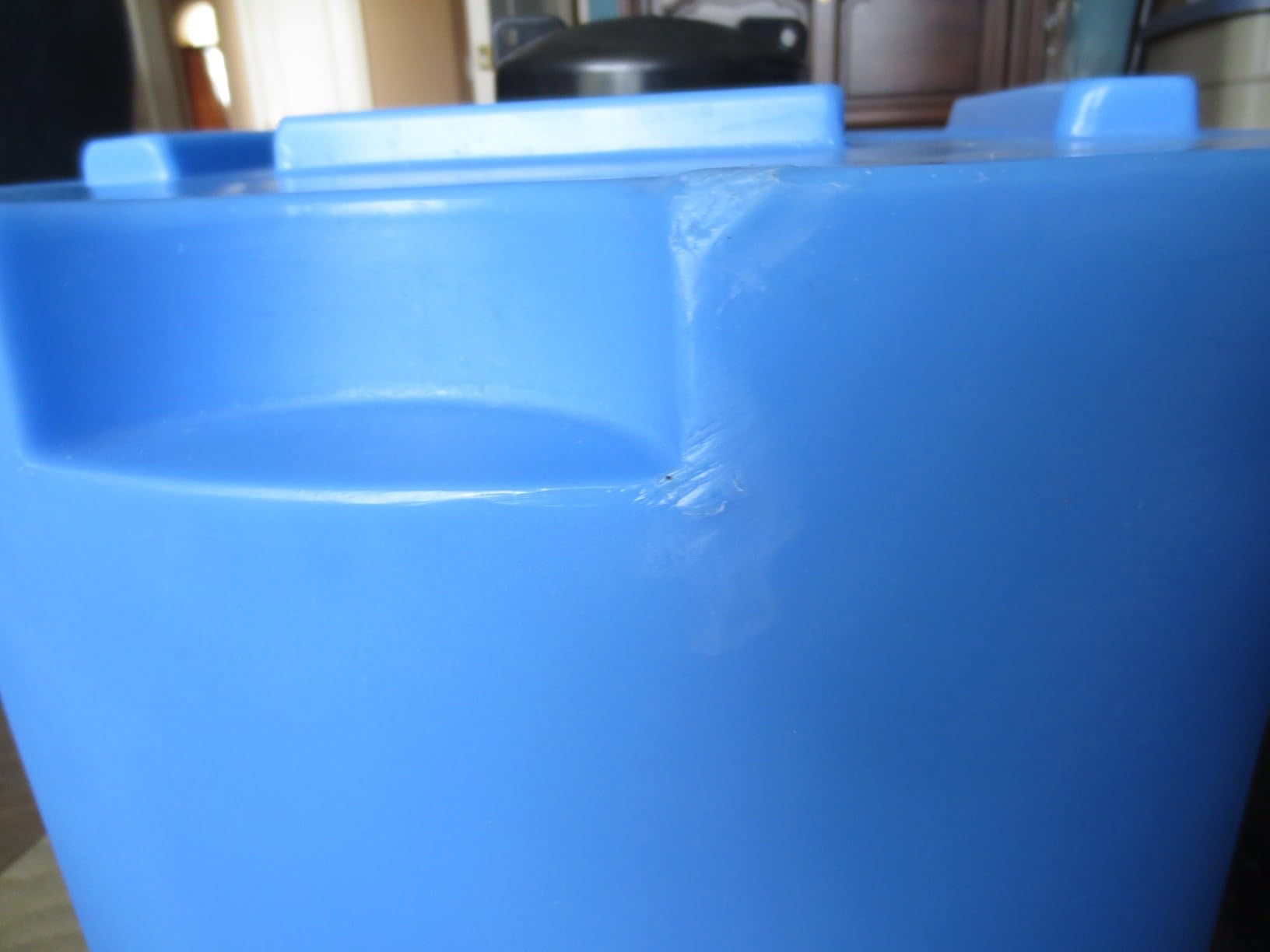
- Some units arrive with plastic shavings inside
- Spigot sits low without a stand
- Treatment chemicals need a 5 minute reaction time
The oval shape is the differentiator. A round 55-gallon drum wastes the corners of its footprint, and this tank’s narrower profile fits more units in the same floor area, which is the constraint in nearly every basement we considered.
Reviewers in well-water households and areas with frequent outages call out the brass spigot as the detail that makes daily dispensing sane, because it accepts a standard garden hose. Drawing water from a 460-pound tank should not require a funnel and an awkward jug.
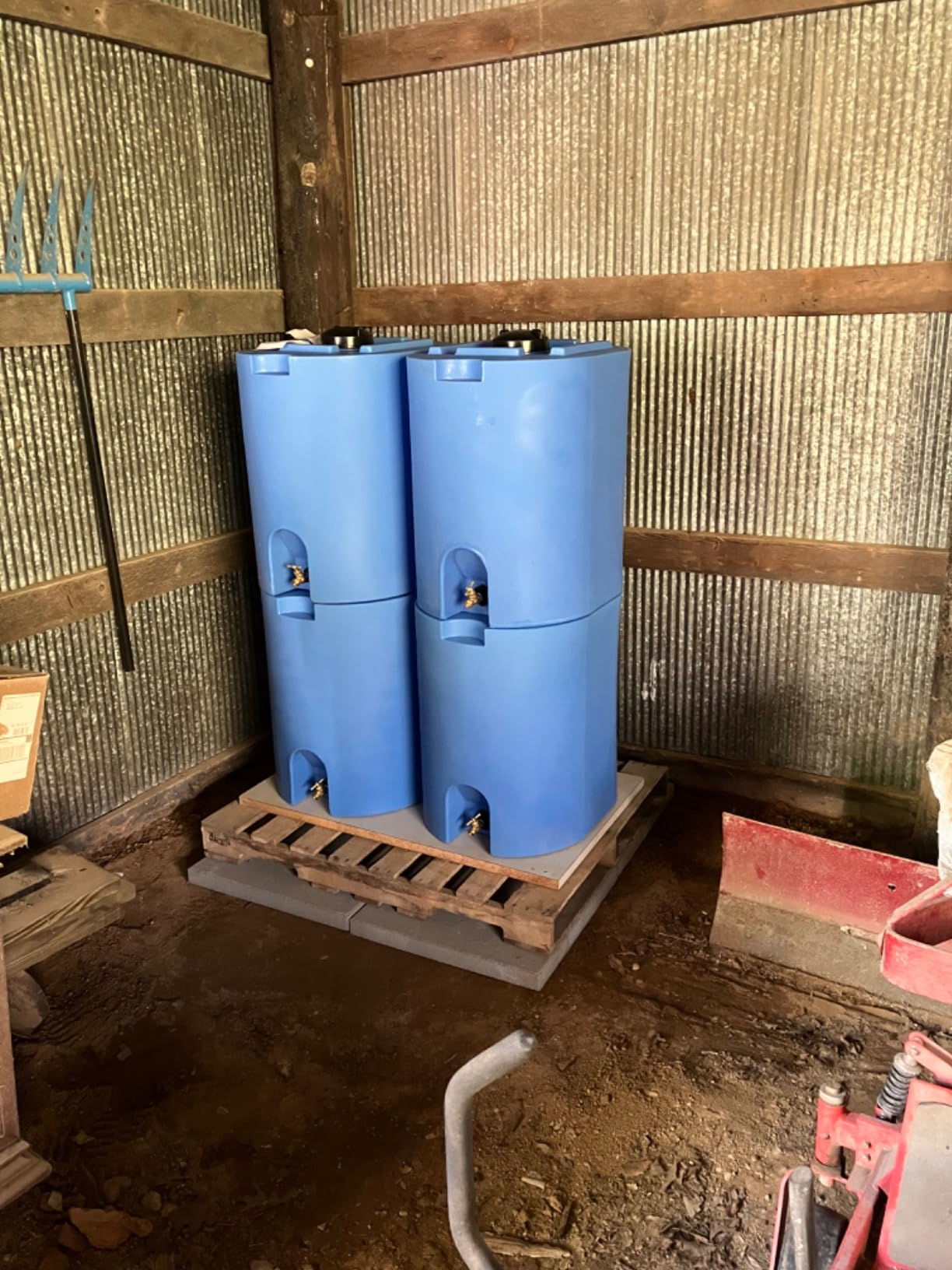
At about 460 pounds full, plan the movement before the fill. A platform, dolly, or simple stand makes a meaningful difference, and the dimensions are doorway friendly so you can bring it inside before it is full.
The UV-proof polyethylene blend is marketed as discouraging algae and bacterial growth, and the tank is pre-tested for leaks. Owners across multiple reviews report leak-free performance even when full, which is the failure mode that ruins floors.
Where the premium is justified
Brass hardware and a stackable oval footprint are the two things you cannot add later. If you are storing more than one tank, the space saving compounds immediately across the row.
It also comes in three-packs, so a household aiming for 165 gallons can standardize on one tank type instead of mixing drums and bladders with different fittings.
What it costs you physically
Full tanks weigh several hundred pounds and cannot be repositioned by one person once filled. Set the location first, and put a stand under the low spigot.
Some units arrive with small plastic shavings inside that need to be vacuumed out before filling, and the bundled treatment chemicals require a five-minute reaction time before water goes in. Skip that step and you get an undosed tank that ages faster than the manufacturer intended.
8. Augason Farms 55 Gallon Water Barrel – Best for Off-Grid Homes
Augason Farms lon Water Storage Barrel – BPA-Free Plastic Barrel 55-Gallon
Capacity: 55 gallons
Material: Food grade BPA-free plastic
Weight: 18 pounds empty
Size: 22.95 by 22.95 by 35.13 inches
Pros
- Lightest empty weight in the barrel class at 18 pounds
- BPA-free food grade plastic with no odor
- Two plug fittings for filling and access
- Established emergency preparedness brand
- Sealed top adds security
Cons
- Internal lip prevents fully emptying or washing
- No spigot or siphon hose included
- Bottom can bulge in very cold weather
- Some arrivals lack plugs or a box
Eighteen pounds empty is the number that makes this barrel different. Every other 55-gallon container here is in the mid-twenties or heavier when new, and in a homestead situation where you may need to reposition storage, that ten-pound difference is felt every time.
It comes from a brand with a long emergency food and water track record, and the sealed top adds a layer of security and tamper resistance that an open-top barrel cannot offer. BPA-free food-grade plastic does not impart a plastic smell to the water, which buyers specifically call out.

Long-horizon preppers favor this drum as a way to reduce reliance on a municipal supply, and the sealed top with two access holes makes it a clean fit beside food storage. Buyers highlight the sturdy build and the lack of odor after filling.
Dimensions of 22.95 by 22.95 by 35.13 inches mean it drops naturally onto a shelving unit or a basement floor without special framing, which matters when you are working around an existing water heater.

Best for rural and off-grid households
If your water comes from a well and your power fails often, empty repositionability is a genuine feature rather than a nicety. A barrel you can walk into position before filling beats a heavier one every time.
It also pairs cleanly with food storage in the same room, which is how most people actually use it: one shelf, water and calories side by side.
Where it is weaker
An internal lip prevents fully emptying or washing the barrel, and that is a real problem during rotation because leftover water is what grows biofilm. Budget extra time for scrubbing.
No spigot or siphon hose is included, so water removal is awkward until you add hardware. The bottom can also bulge in very cold weather and needs bracing in extreme climates, and some buyers receive barrels without plugs or packaging.
9. VEVOR 264 Gallon Water Bladder – Best for Maximum Volume
VEVOR Water Storage Bladder 264.2 Gallon Large Capacity Water Bag, Portable & Collapsible Soft Waters Container, Leakproof & Tear-Resistant PVC Emergency Waters Storage Tank for RV Truck & Outdoor Use
Capacity: 264.2 gallons, 1000 liter
Material: 1000D double layer PVC with mesh core
Weight: 13.5 pounds empty
Size: 78.7 by 39.8 by 20.1 inches
Pros
- Folds flat to almost nothing when empty
- Mesh reinforced walls resist tearing and abrasion
- High temperature welded seams
- 5 to 167 degree operating range
- Strap rings for a truck bed or rooftop
Cons
- Needs a frame or supporting shape to hold form
- Soft PVC is more puncture prone than rigid HDPE
- Filling 264 gallons needs a large water supply and space
Nothing else in this roundup comes close on capacity. A thousand liters of water folds into a package that weighs 13.5 pounds empty and stores against a wall, which is the appeal for anyone who wants a serious reserve without a serious floor plan.
The material is 1000D double-layer PVC with a mesh core, and the seams are high temperature welded rather than glued. Ports are sealed with a dual-layer hot-melt bond, and the box includes PTFE tape, a spare sealing ring, and repair patches.
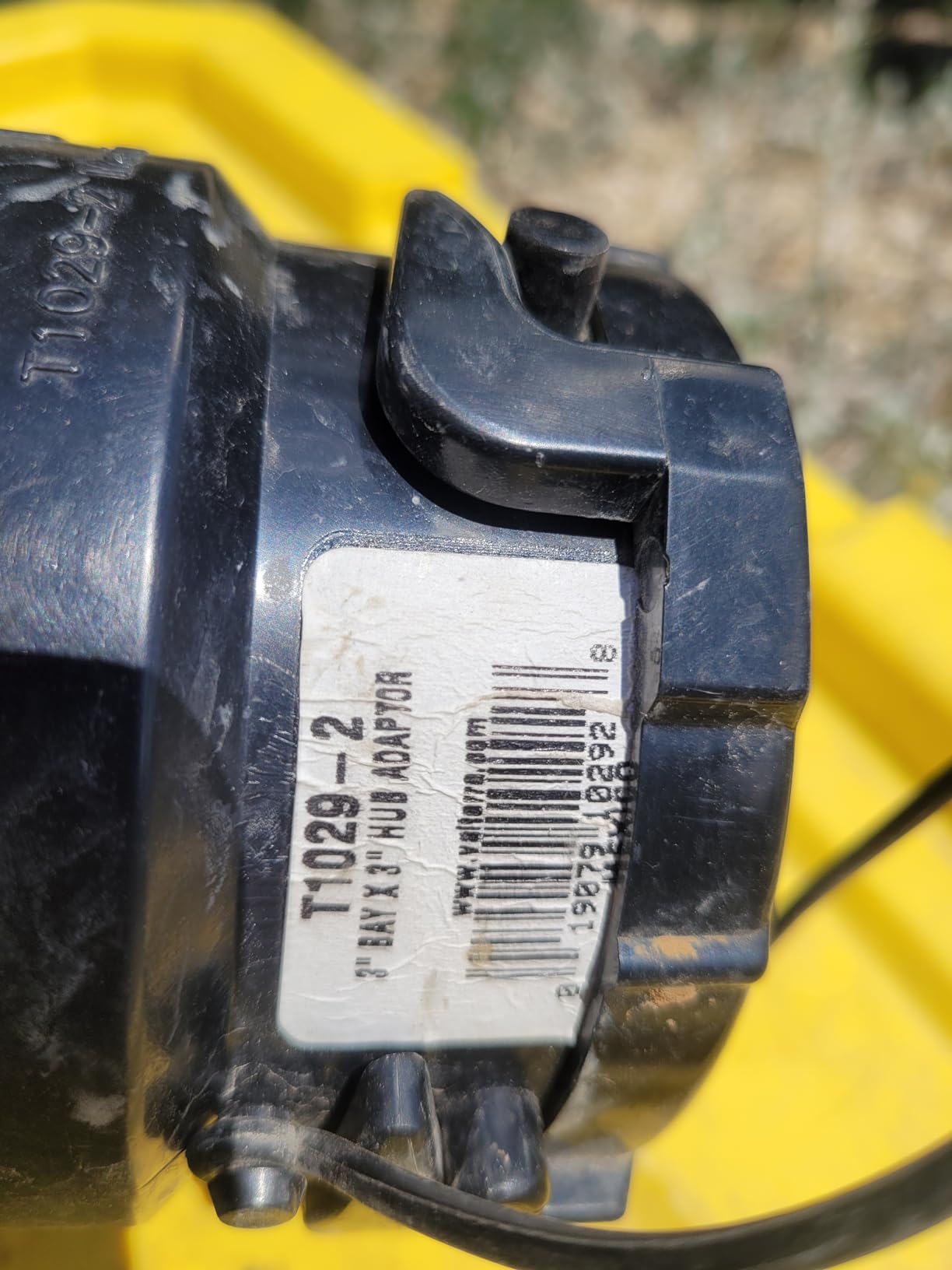
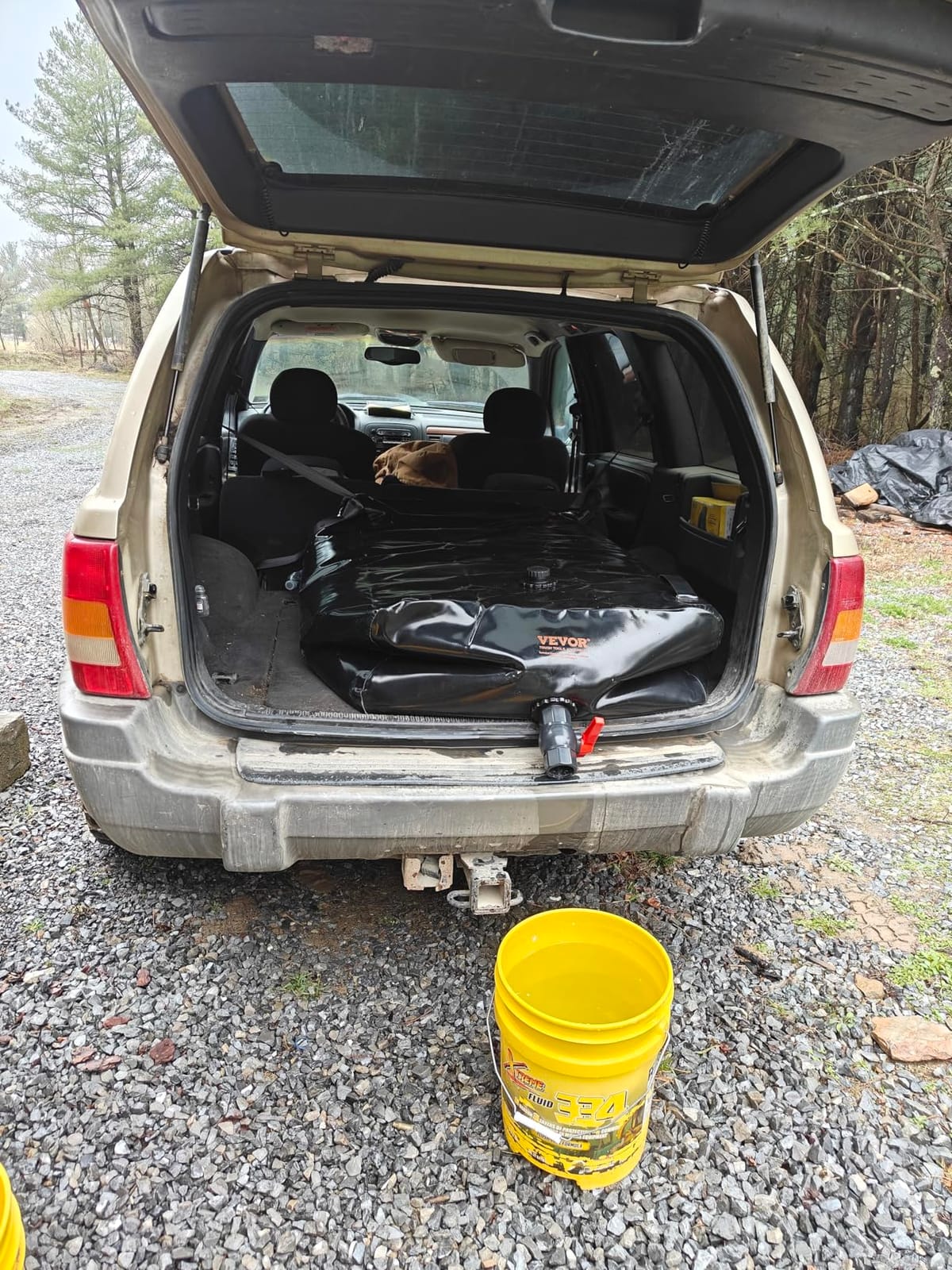
The five to 167 degree operating range is unusually wide for a soft bladder, and it is the specification that matters most if you are considering one of these for anything other than a controlled indoor space. Four pull-rings let you strap it into a truck bed or an SUV.
Pre-installed inlet and outlet connectors mean setup is hose-to-hose rather than a hardware project. Buyers rank it in the top five of its RV freshwater category, largely on capacity per unit of storage space.
When this capacity makes sense
Extended outages, rural properties, and any situation where you want to fill once and stop thinking about it. Two of these would cover a family of four for more than three weeks.
It also folds away completely between events, so the storage cost when it is not needed is close to zero. That is a real advantage for renters compared with a rigid 55-gallon drum.
What to plan around
A soft bag has no shape of its own. It needs a frame, a bathtub-like basin, or a box to hold its form, and that support structure is not included.
PVC is more vulnerable to puncture than rigid HDPE, which is why the repair patches matter. Filling 264 gallons also takes a substantial water supply and a lot of floor area, so this is not a weekend project.
10. WaterPrepared 35 Gallon Utility Tank – Best for Lightweight Handling
WaterPrepared 35 Gallon Portable Utility Water Tank, Blue
Capacity: 35 gallons
Material: HDPE, UV-proof blend
Weight: 16 pounds empty
Size: 30 by 20.25 by 22.5 inches
Pros
- Heavier wall thickness than expected for the size
- 16 pounds empty so one person can reposition it
- Large top opening and easy-off lid
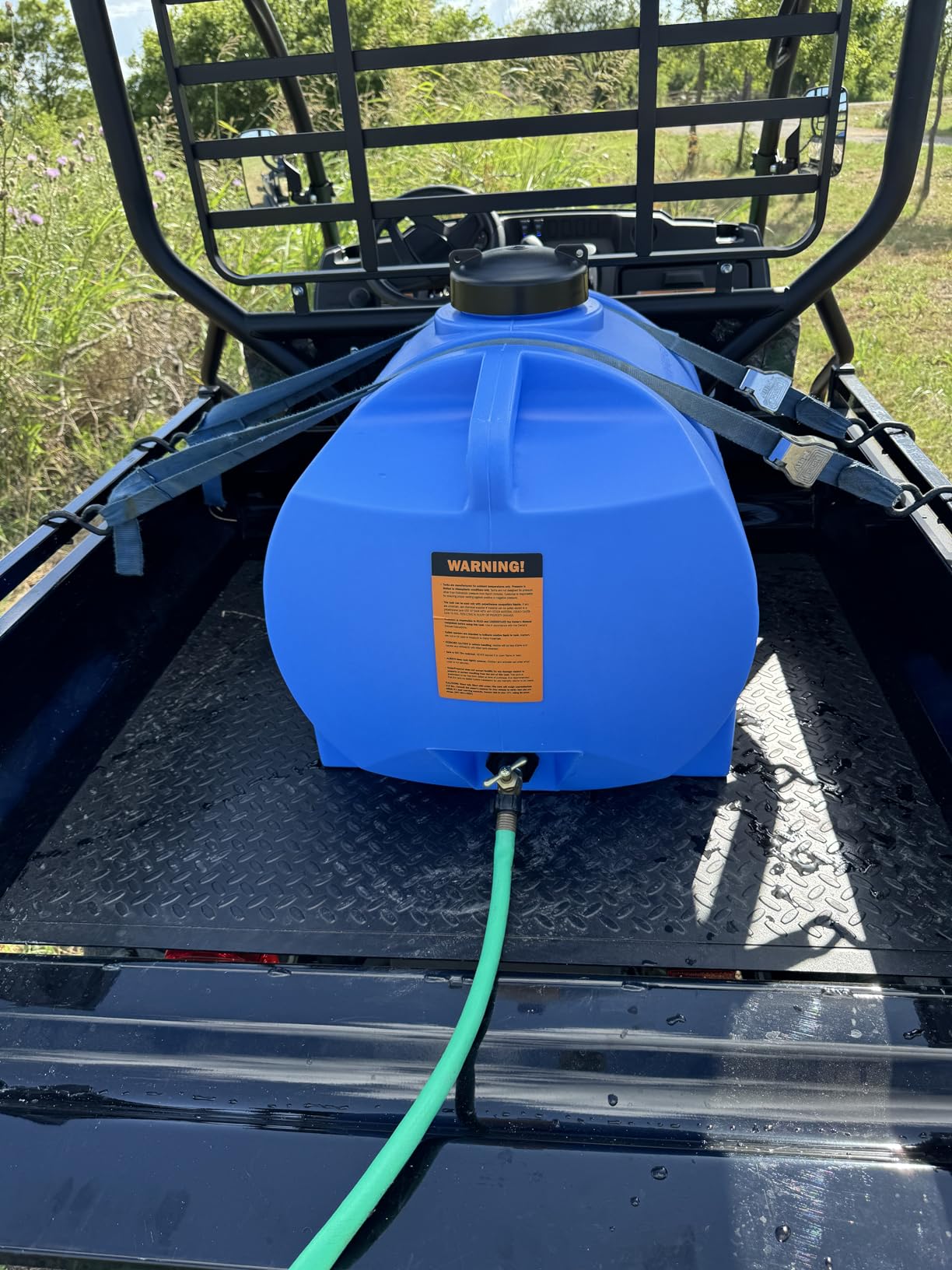
- Built-in spigot accepts a garden hose
- Two strapping points for transport
Cons
- Spigot mount area flexes under hose pressure
- Water level only faintly visible through the walls
- UV stabilization claims are unproven in long sun exposure
Thirty-five gallons sits in the gap that nobody else in this roundup fills: big enough to be worth the space, small enough to actually move. At 16 pounds empty it is the easiest full-scale tank here to reposition when the layout changes.
Owners report wall thickness heavier than the size suggests, and multiple buyers filled theirs overnight with no leaking. For hurricane preparation, garden irrigation, or hauling reverse osmosis water, the volume is genuinely useful.
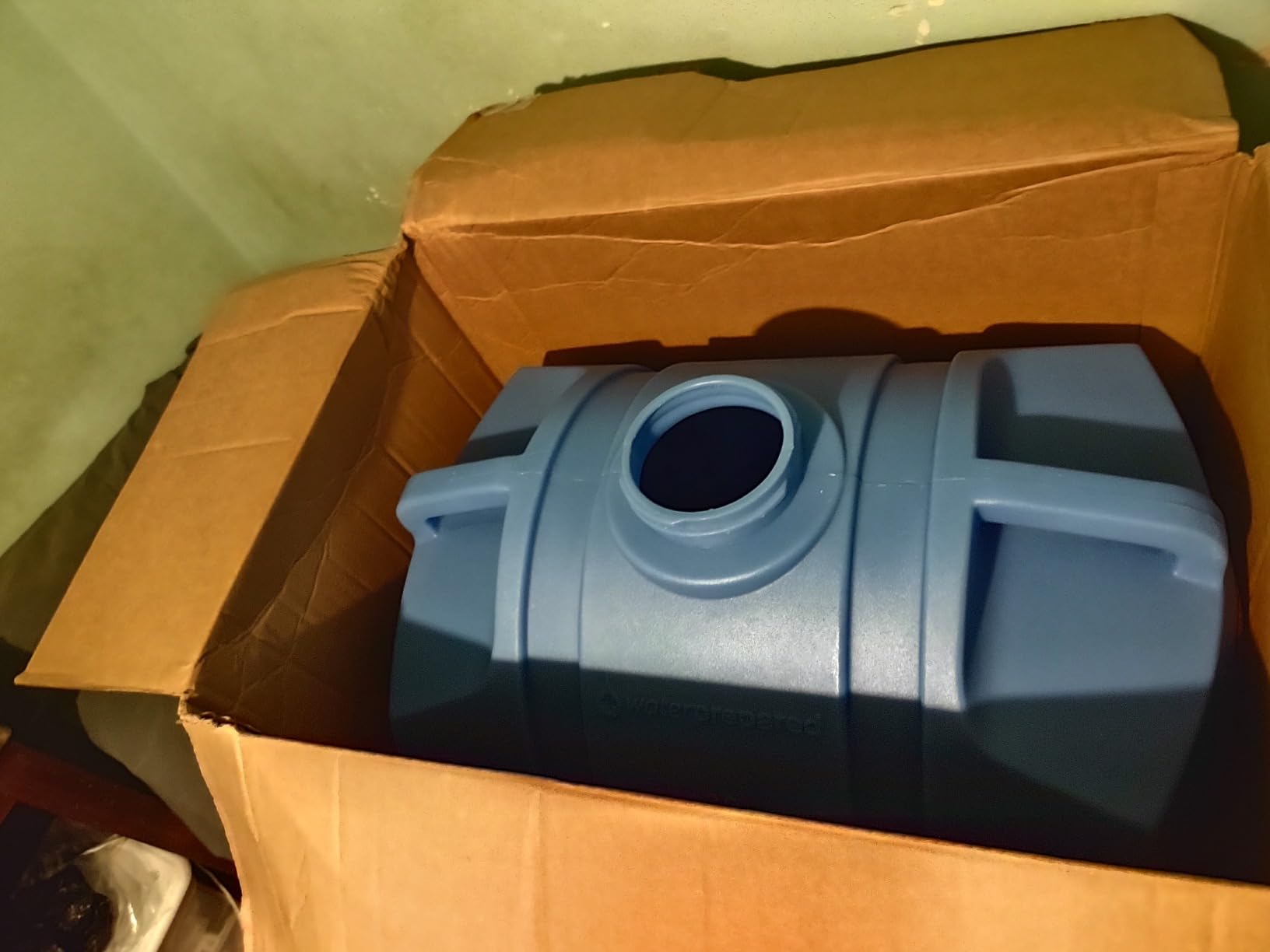
The built-in spigot removes the most common complaint about bare barrels. Because it accepts a standard garden hose, you are not installing a bulkhead or improvising with a siphon every time you need water.
Two built-in strapping points let you secure it on an ATV or a camping trailer bed, and the large top opening with an easy-off lid makes filling fast. Two-year owners report no leaks and easy filling.
Why it earns a spot in a mixed system
It works as the middle tier in a two-tank setup: one 35-gallon tank you can move to where the family is, and one larger barrel that stays put as a standing reserve.
For households with an RV or a property they maintain, the combination of hose-compatible spigot and strapping points makes it the most flexible tank we tested.
What to verify before you buy
The spigot mounting area is thin and the tank flexes slightly when hose pressure is applied, and some reviewers suggest upgrading to a ball valve. That is the one weakness repeated across reviews.
The water level is only faintly visible through the walls, so you cannot easily judge how full it is without opening the lid. Long-term sun exposure may also fade the plastic, so keep it shaded.
11. Zipcase 100 Gallon Bathtub Bladder – Best for a Second Bathroom Backup
Zipcase Water Storage Bladder, 100 Gallon Heavy Duty Food-Grade Plastic Bag, for Emergency Water Bank, Ideal for Bathtub Water Storage, Camping, Gardening and Agricultural Irrigation.
Capacity: 100 gallons
Material: Heavy duty USFDA compliant plastic
Size: fits a standard bathtub
Setup: fills in about 20 minutes
Pros
- USFDA compliant heavy duty plastic
- Fills in about 20 minutes when a storm approaches
- Included siphon pump for dispensing
- Sized for a standard bathtub
- One year guarantee
Cons
- Shapeless when filled and needs a structure to hold form
- A full bladder weighs over 800 pounds
- Included siphon is slow and needs a lower receiving container
- No written instructions included
This is the second-bathroom option. Many buyers purchase two so each bathroom has its own reservoir, and because the bladder fits a standard tub the second one costs nothing in floor space beyond the fixture you already own.
The material is heavy duty food-grade plastic that complies with USFDA food storage guidelines, and it fills in roughly twenty minutes, so it can be deployed quickly once a storm is tracking.
Owners report filled tubs staying full for months, and households with electric well pumps treat it as close to essential. The included siphon pump makes transferring water into jugs and pitchers straightforward enough for daily use.
Treating it as cheap insurance is the common framing, and the stated design target is keeping water fresh for up to eight weeks, which covers the realistic window of a flood or an ice storm.
Because the bladder costs little relative to what it holds, the more interesting question for most households is whether to run one or two. Two liners give each bathroom its own supply and remove the single-point-of-failure problem of relying on one drain.
Where it works best
Second bathrooms and ground-level utility spaces. The value is that one purchase converts a bathtub you already have into a hundred gallons, with no plumbing and no permanent installation.
It is also useful for gardening and irrigation tasks between emergencies, which some households argue justifies keeping it on hand permanently.
What to know before you fill it
The bag is shapeless when filled and needs a bathtub, wall, or box structure to hold its form. A full 100-gallon bladder weighs over 800 pounds, so it must be filled exactly where it will be stored.
The included siphon is slow and requires the receiving container to sit lower than the bag, and there are no written instructions in the box, so pump setup takes some experimentation.
12. Reliance Aqua Tainer 7 Gallon Four-Pack – Best for Warranty Coverage
Reliance Products Aqua Tainer 7 Gallon Drinking Water Storage Container Tank (4 Pack)
Capacity: 7 gallons each, four pack
Material: Polypropylene
Weight: 5 pounds empty each
Design: rigid rectangular
Pros
- Five year warranty against manufacturer defects
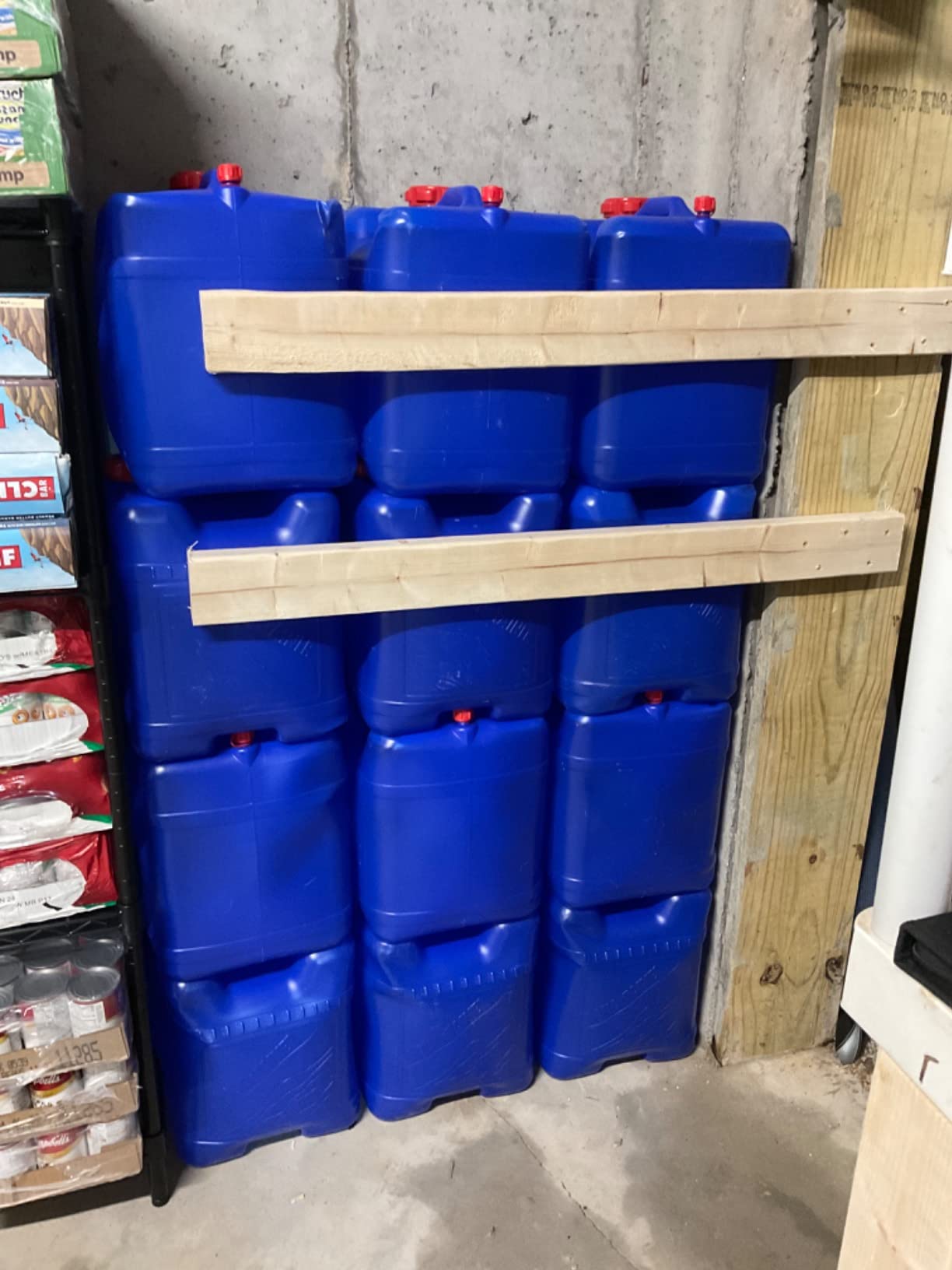
- Rigid rectangular body stacks neatly when empty
- Molded contour grip for carrying
- Improved screw-on vent and hideaway spigot
- Suitable for outdoor and emergency use
Cons
- Polypropylene is less rigid than HDPE
- Rectangular shape loses some corner space
- No water treatment supplies in the pack
The five-year warranty is the reason this four-pack earns a place. Among rigid containers for long-term storage, an explicit manufacturer defect warranty is unusual, and it is the closest thing to a service life guarantee you will find at this capacity.
Twenty-eight gallons across four tanks is a workable reserve for a two-person household, and the rigid rectangular design stacks neatly when empty with no disassembly, so the set goes into a closet between uses.
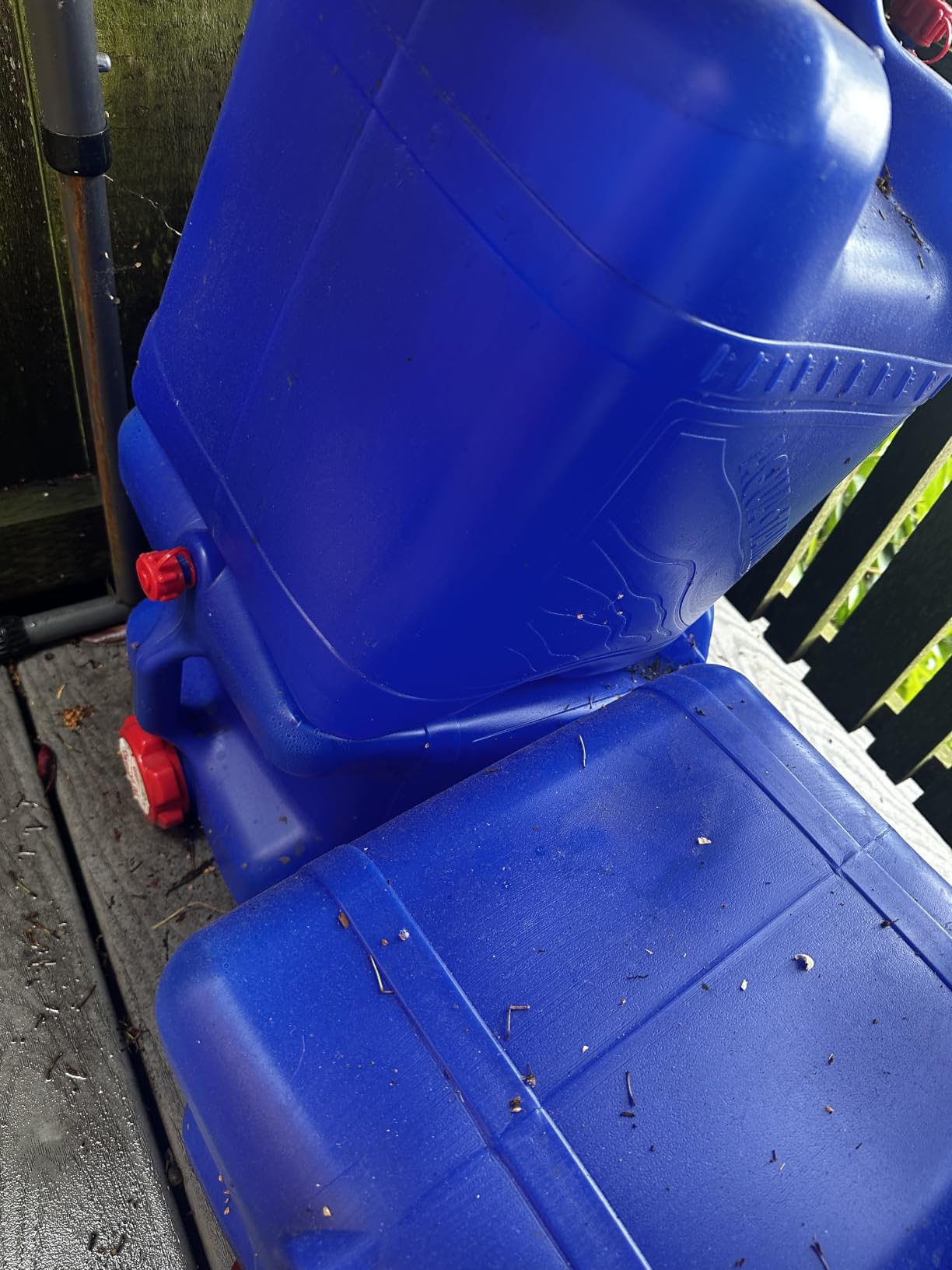
The hideaway spigot and screw-on vent are an upgrade over the older version of this container, and the molded contour grip makes each tank comfortable to carry when full. Buyers tend to cite the footprint and the warranty together as the reason for choosing it.
No repeated product defect pattern shows up in the aggregated reviews, which is worth noting for a container category where spigot and cap failures are the norm.
Who should pick it
Households that want a defined manufacturer warranty covering defects over several years. If you intend to keep a reserve for a decade, that written commitment has real value.
It is also a good middle option between 5-gallon jugs and 55-gallon drums: 7 gallons is heavy enough to stay put and light enough for one person to carry up a flight of stairs.
What to weigh up
The body is polypropylene rather than HDPE, so it is less rigid and less puncture resistant than the heavy-gauge tanks in this roundup. Over many years in a cold garage, that difference compounds.
The rectangular shape also loses some of the corner space that a cylindrical tank of the same capacity would waste, and the pack includes no water treatment supplies, so you are handling that decision separately.
How Much Water Should You Store?
Start with the number every preparedness authority uses: one gallon per person per day. That covers drinking, cooking, hygiene, and a share of sanitation. Most households should not plan on drinking from their tap during a disruption, so treat that gallon as the whole budget rather than a drinking-water allowance.
Multiply by fourteen for the two-week baseline most guidance assumes. The sizing guide below turns that into a shopping plan, including a buffer week for households in hurricane, flood, or wildfire zones.
Household Sizing Guide
For a household of two, fourteen days means 28 gallons, and a buffer week brings it to 42. The Legacy four-pack of 5-gallon tanks covers the baseline exactly at 20 gallons, so two sets reach the buffered target.
For four people, fourteen days is 56 gallons. The Saratoga Farms six-pack of 5-gallon tanks at 30 gallons covers more than half of that, and pairing it with a 55-gallon barrel gets you to the full baseline with room for a buffer.
For six people, fourteen days is 84 gallons and the buffered figure is 126. That is where rigid 55-gallon drums and large bladders stop being optional and become the only practical answer.
A critical warning about weight. Water weighs about 8.34 pounds per gallon, so 55 gallons is roughly 460 pounds, 35 gallons is about 292 pounds, and a 100-gallon bathtub bladder is over 830 pounds. Any tank above about 35 gallons should be filled where it will be stored, and never try to move one full on stairs.
How to Choose a Water Storage Tank?
Material first. Look for high density polyethylene, which carries resin code number 2, or LLDPE for bladders. Plastics 2, 4, and 5 are the codes generally accepted for food and water contact, and anything else is a gamble on a five-year or ten-year horizon.
Next, separate three marketing terms that sellers mix together constantly. Food grade describes the material. Potable means the tank is rated for drinking water contact. BPA-free only addresses one specific chemical and tells you nothing about long-term plastic migration. A tank that says all three is the one you want for a decade-long reserve.
Opacity is worth paying for. Light promotes algae and bacteria, so dark blue or black containers hold water longer than clear ones. Two of the containers here are transparent because flexibility was the design goal, and that is a fair trade for short-term or vehicle use.
Spigot and gasket quality decides whether a tank survives. We prefer screw-lock fittings with a replaceable gasket, and we treat a spigot that does not accept a garden hose as a real limitation, because drawing water from a 460-pound drum should not require a funnel. Check whether the spigot is included before buying, since several barrels in this roundup ship without one.
Stackability matters more than capacity in small spaces. Ribbed shells that lock upright, or an oval footprint, let you store far more gallons per square foot than a row of round drums.
Placement and freeze protection deserve their own paragraph. Store tanks indoors in a dark, cool space where possible, and if freezing is possible where you live, fill rigid tanks to about 85 percent because water expands roughly 10 percent when it freezes. Put a tray or a floor drain under any large tank, and be honest about whether your floor can hold several hundred pounds of static load in one spot.
Finally, treat bladders and rigid tanks as different products. Rigid HDPE is for permanent storage. Bladders are for fast, high-volume deployment into an existing basin, and a soft liner that stays damp is not built for years of use. Our related guides on emergency blankets and emergency radios cover the rest of a kit that people usually underestimate.
What Not to Use for Emergency Water Storage
Milk jugs and disposable soda bottles. They are thin, brittle in cold weather, and made from resin codes that were never designed for long-term water contact. They split, leach, and have no reliable seal.
Clear plastic anything. Light accelerates biological growth, and clear containers also look like a beverage product, which is a problem during a real shortage. Opaque, colored, or dark containers are the better choice for a reserve.
Gas cans and unlined utility cans. Interior coatings can flake, and the shape exists for fuel, not for drinking water. The one legitimate exception is a purpose-made potable barrel in food-grade HDPE.
An unlined bathtub or a bathtub saver. A filled tub picks up soap film, tub cleaner residue, and whatever is on the enamel. If you use a tub at all, use a sealed food-grade liner inside it.
Shelf Life, Rotation, and Cleaning
Treated water in a properly sealed, opaque, food-grade container holds for years. Tap water does not spoil in a way you can smell or see, but chlorine decays over roughly six months, and after that you are relying on the container alone.
Rotate on a six to twelve month cycle. The most commonly repeated maintenance rule in preparedness forums is to swap the water every 6 to 12 months, and we agree with the upper end for anyone whose supply is mission critical.
Clean before you refill, not after. Wash with soap and water, then sanitize using a bleach solution, respect the timed contact, rinse thoroughly, and let the container air dry completely. A container that goes back into service damp will grow biofilm in the seams.
Never leave a tank partially full for a season. Stagnant water sitting against a plastic wall for months is the single most common cause of the mold and algae complaints we read about, and it is entirely avoidable.
Frequently Asked Questions
What is the best container to store water for emergency purposes?
The best container is a food-grade, opaque tank in HDPE or LLDPE that holds at least one gallon per person per day for fourteen days. For most households that means rigid stackable tanks or 55-gallon barrels for bulk storage, plus a collapsible container for vehicles and a bathtub bladder for apartments where floor space is limited. Rotate the water every six to twelve months.
What are the best water storage containers for emergency preparedness?
Our top three are the waterBOB 100-gallon bathtub bladder for maximum capacity with no floor space, the WaterStorageCube 5.3-gallon two-pack for small spaces and vehicles, and the Legacy 20-gallon four-pack for multi-year storage with treatment drops included. Below them sit rigid 55-gallon drums for bulk reserves and bladders for very large volumes.
What are three common types of water storage tanks?
Three common types are rigid stackable tanks, which interlock and store gallons per square foot; 55-gallon drums, the standard bulk format for long-term reserves; and soft bladders, which hold large volumes in a bathtub or frame and collapse flat when empty. Portable cans under ten gallons serve a fourth, separate purpose of portability rather than household supply.
How much water should I store for a two-week emergency?
Plan on one gallon per person per day for fourteen days, so two people need 28 gallons, four people need 56 gallons, and six people need 84 gallons. Households in hurricane, flood, or wildfire zones should add a buffer week, which raises those figures to 42, 84, and 126 gallons. Remember that a full 55-gallon tank weighs about 460 pounds.
How long can water sit in a tank before it goes bad?
Water in a sealed, opaque, food-grade container can hold for years without becoming unsafe, because it cannot be contaminated from outside. The practical limit is the chlorine that dissipates over roughly six months and any biofilm that grows in a partially used tank. Rotate every six to twelve months and sanitize the container before each refill.
What type of water is best to store for emergency use?
Municipal tap water is the best starting point because it is already treated and monitored. Fill containers directly from the tap rather than from a bathtub, and add a water treatment preservative if you intend to store the water beyond a year. Well water and rainwater both require testing or treatment before they go into a storage tank.
Conclusion
The best water storage tanks for emergency preparedness come down to your space and your household size. Start with the waterBOB 100-gallon bathtub bladder if you have a bathroom and no floor space, add rigid stackable tanks for the shelf, and finish with a collapsible container for the vehicle.
Get the sizing right first. One gallon per person per day for fourteen days is the baseline, and a buffer week is worth the extra gallons if you live where outages repeat. Then set a calendar reminder for a six to twelve month rotation, because a reserve you never swap is a reserve you cannot trust.
Start with the number that matters most: one gallon per person per day for fourteen days. Choose a food-grade opaque container, fill it where it will live, and write the rotation date on the lid before you put the lid on.