
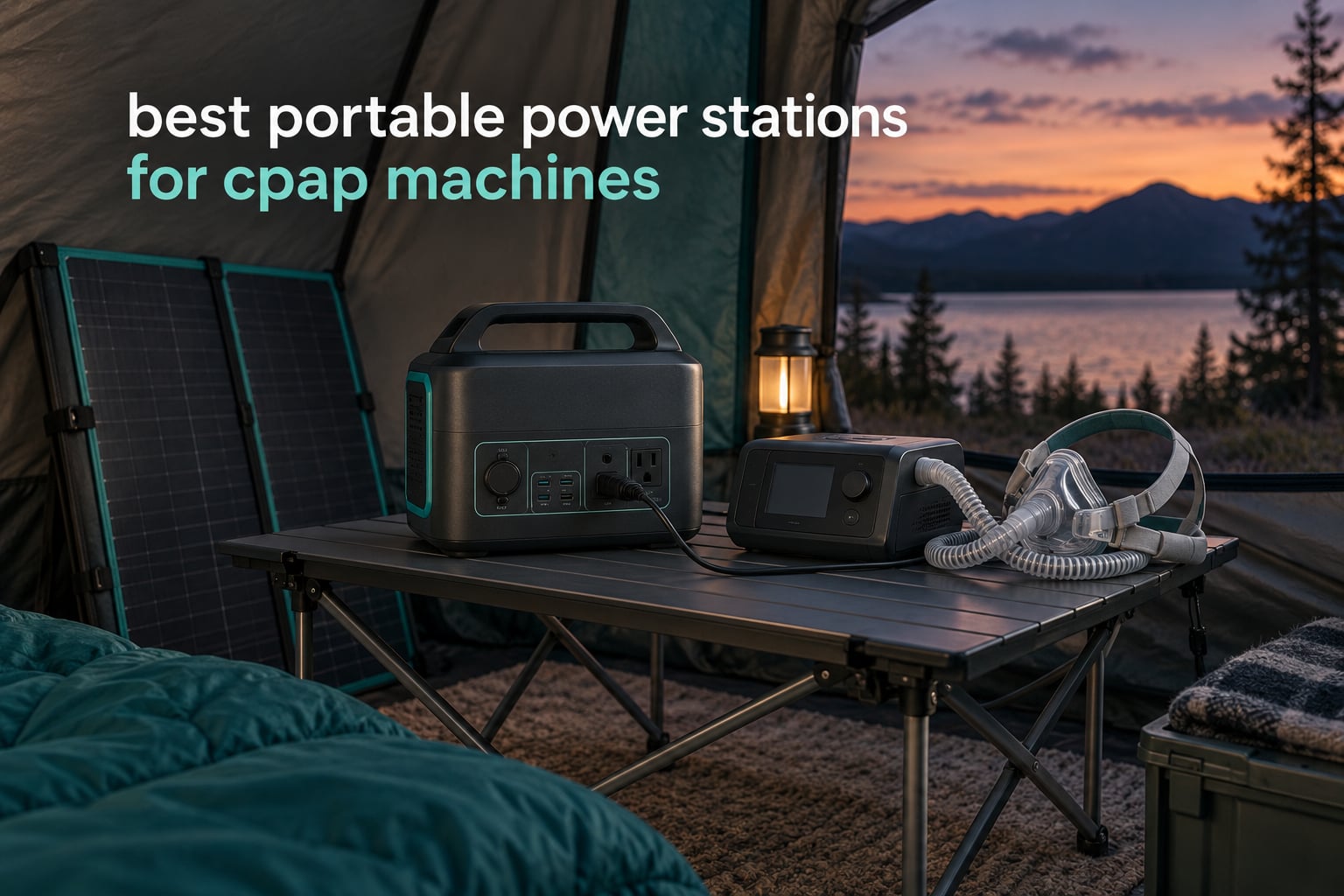
A CPAP machine pulls roughly 30 to 60 watts, and most of that extra draw comes from the heated humidifier and heated hose. Turn both off and you are closer to 25 watts, which means a 300 to 600 watt-hour station covers one to three nights on a single charge. That is the whole answer to the sizing question, and it is the number most people get wrong first.
Plenty of buyers end up with a station far larger than their machine needs. Forum threads on CPAP and camping boards almost always open with the same sentence: what size do I need. One poster bought a 1,000Wh-class unit for a roughly 40 watt ResMed AirSense 10 and learned afterwards that it was about six times more than the job required.
So here is how this roundup works. We compared twelve stations on the things that actually decide whether your machine keeps running at 3am: usable watt-hours, inverter type, battery chemistry, whether a DC barrel cable is included, and how quiet the unit is when it sits a metre from your pillow. This is our guide to the best portable power stations for CPAP machines in 2026, and it covers camping, power outages, van life and flying.
If you are still choosing the machine itself, our picks for the best portable CPAP machines for camping and the best CPAP machines for sleep apnea cover the therapy side. The stations below only cover power.
Table of Contents
Top 3 Picks for CPAP Machines in 2026

Jackery Explorer 300
- 292Wh LiFePO4 capacity
- 300W continuous output
- Pure sine wave 110V AC
- 7.1 lbs with handle

Jackery Explorer 1000 v2
- 1070Wh LFP capacity
- 1500W AC output
- Three pure sine wave outlets
- One-hour emergency recharge

EASYLONGER ES960 PRO
- 297.6Wh LiFePO4 pack
- Selectable 12V/19V/24V DC
- Four CPAP cables included
- 2+ nights runtime
Best overall: Jackery Explorer 300 – 292Wh, about 7.1 lbs. The most-reviewed station in this group and pure sine wave AC throughout, so the brick plugs straight in with no adapter hunting. One night per charge, and a fast solar top-up when you have a 100W panel.
Best capacity: Jackery Explorer 1000 v2 – 1,070Wh, 1,500W. Roughly four nights of eight-hour sleep on our numbers, plus a 30 dB overnight charging mode. It weighs 23.8 lbs, so this is a car-camping and home-outage unit rather than a backpack choice.
Best dedicated CPAP battery: EASYLONGER ES960 PRO – 297.6Wh of LiFePO4 with selectable 12V, 19V and 24V DC output. It comes with four cables and skips the inverter entirely, which is why it holds onto more of its capacity than a general station of the same size.
All 12 Stations Compared in 2026
| Product | Specifications | Action |
|---|---|---|
| Jackery Explorer 300 |
|
Check Latest Price |
| EASYLONGER ES960 PRO |
|
Check Latest Price |
 BLUETTI X30 BLUETTI X30 |
|
Check Latest Price |
 EASYLONGER ES720 EASYLONGER ES720 |
|
Check Latest Price |
| Jackery Explorer 1000 v2 |
|
Check Latest Price |
 BLUETTI AC180 BLUETTI AC180 |
|
Check Latest Price |
 Anker SOLIX C1000 Gen 2 Anker SOLIX C1000 Gen 2 |
|
Check Latest Price |
 DJI Power 1000 V2 DJI Power 1000 V2 |
|
Check Latest Price |
 ALLWEI 300W ALLWEI 300W |
|
Check Latest Price |
 MARBERO 237Wh MARBERO 237Wh |
|
Check Latest Price |
 EnginStar 300W EnginStar 300W |
|
Check Latest Price |
 GRECELL 999Wh GRECELL 999Wh |
|
Check Latest Price |
Every night figure below uses one protocol, so you can compare the rows directly. We assumed a 25 watt average draw with the humidifier and heated hose switched off, eight hours of sleep, and 85% of the label capacity as usable. Stations powered through the AC outlet carry an extra 15% inverter and conversion loss; the dedicated CPAP packs run straight off DC and skip that step.
These are our estimates rather than vendor claims, and they come out conservative. The numbers manufacturers print assume a much lighter nightly load, and measured night-by-night tests on Jackery 300-series units show a machine with the humidifier off still losing around 16% of a pack per night.
Jackery Explorer 300, 292Wh: about 1 night.
EASYLONGER ES960 PRO, 297.6Wh DC: about 1.3 nights.
BLUETTI X30, 297Wh DC: about 1.3 nights.
EASYLONGER ES720, 266.4Wh DC: about 1.2 nights.
Jackery Explorer 1000 v2, 1070Wh: about 4 nights.
BLUETTI AC180, 1152Wh: about 3 nights once its 20W idle draw is counted.
Anker SOLIX C1000 Gen 2, 1024Wh: about 3 to 4 nights.
DJI Power 1000 V2, 1024Wh: about 3 nights after idle draw.
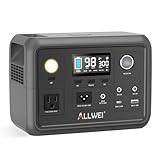
ALLWEI 300W, 256Wh: about 1 night on an eight-hour night.
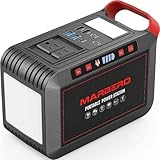
MARBERO 237Wh, 237Wh: about 1 night.
EnginStar 300W, 296Wh: about 1 night.
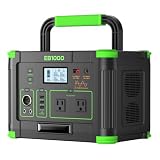
GRECELL 999Wh, 999Wh: about 3 nights.
If you are cross-shopping rather than CPAP-specific, our best portable power stations for camping guide covers the same units for a wider set of loads. For winter trips, the chemistry notes in our best portable power stations for winter guide matter more than capacity.
1. Jackery Explorer 300 – the proven all-rounder
Jackery Explorer 300 Portable Power Station,292Wh
292Wh LiFePO4
300W continuous, 600W surge
Pure sine wave 110V AC
7.1 lbs
Pros
- Most-reviewed station in this group at over 11000 reviews
- Pure sine wave AC suits a medical device
- LiFePO4 rated past 4000 cycles
- Light at 7.1 lbs with a handle
- Reaches 80% in about 2.8 hours on a 100W panel
Cons
- 292Wh stretches past one night with a heated tube or humidifier
- Solar panel sold separately
- One usable AC circuit for high-draw devices
With more than eleven thousand reviews at 4.6 stars, this is the most proven unit we tested for this roundup, and the one we would put in a beginner’s hands. The two 110V outlets produce pure sine wave output, which is the single most important spec on this list for a medical device. Plug the CPAP brick into it and it runs.
Runtime is the trade. 292Wh of LiFePO4 with a humidifier running gives you one eight-hour night and little margin, so this is a station for weekend trips, a weekend of storm standby, or a car-camping setup where you can recharge daily.
The recharge side is genuinely fast. With a 100W panel it reaches 80% in roughly 2.8 hours, or about 7.5 hours from a 40W panel, and the panel itself is not included. Wall charging takes about four hours.
Our only real gripe is the inverter headroom. The 300W rating is generous for a CPAP but modest for a fridge or a kettle, and some variants limit you to a single outlet at a time.
What to check before you buy
Confirm your CPAP brick uses a grounded two or three prong plug and that the station’s AC outlet is rated for it. Jackery describes this model as suitable as a CPAP battery, and the pure sine wave inverter is the reason that claim holds up.
If you plan more than a single night, the maths is against you. Add an expansion pack or look at a larger station rather than relying on the display to disagree with our estimate.
Where it falls short
Running a heated hose from this pack is where owners report running out. The 292Wh label is honest, but a heated tube can add 15 to 30 watts and eat most of your margin before morning.
There is also no DC barrel cable in the box. Running from the 120W car port means sourcing a converter yourself, which adds a step before your first night out.
2. EASYLONGER ES960 PRO – the dedicated CPAP battery
EASYLONGER CPAP Battery Backup ES960 PRO, 297.6Wh LiFePO4 Battery Pack
297.6Wh LiFePO4
Selectable 12V/19V/24V DC
4 CPAP cables included
6.6 lbs
Pros
- Purpose-built CPAP output with a memory function for settings
- Owners report 36+ hours on one charge with heat and humidity off
- Compatible with ResMed and Philips DreamStation families
- 3000+ cycle LiFePO4 chemistry
- Works as a general power bank with USB-C and car output
Cons
- Included CPAP cable is only about 3 feet long
- Flashlight is easy to bump accidentally
- No native 12V car charging port
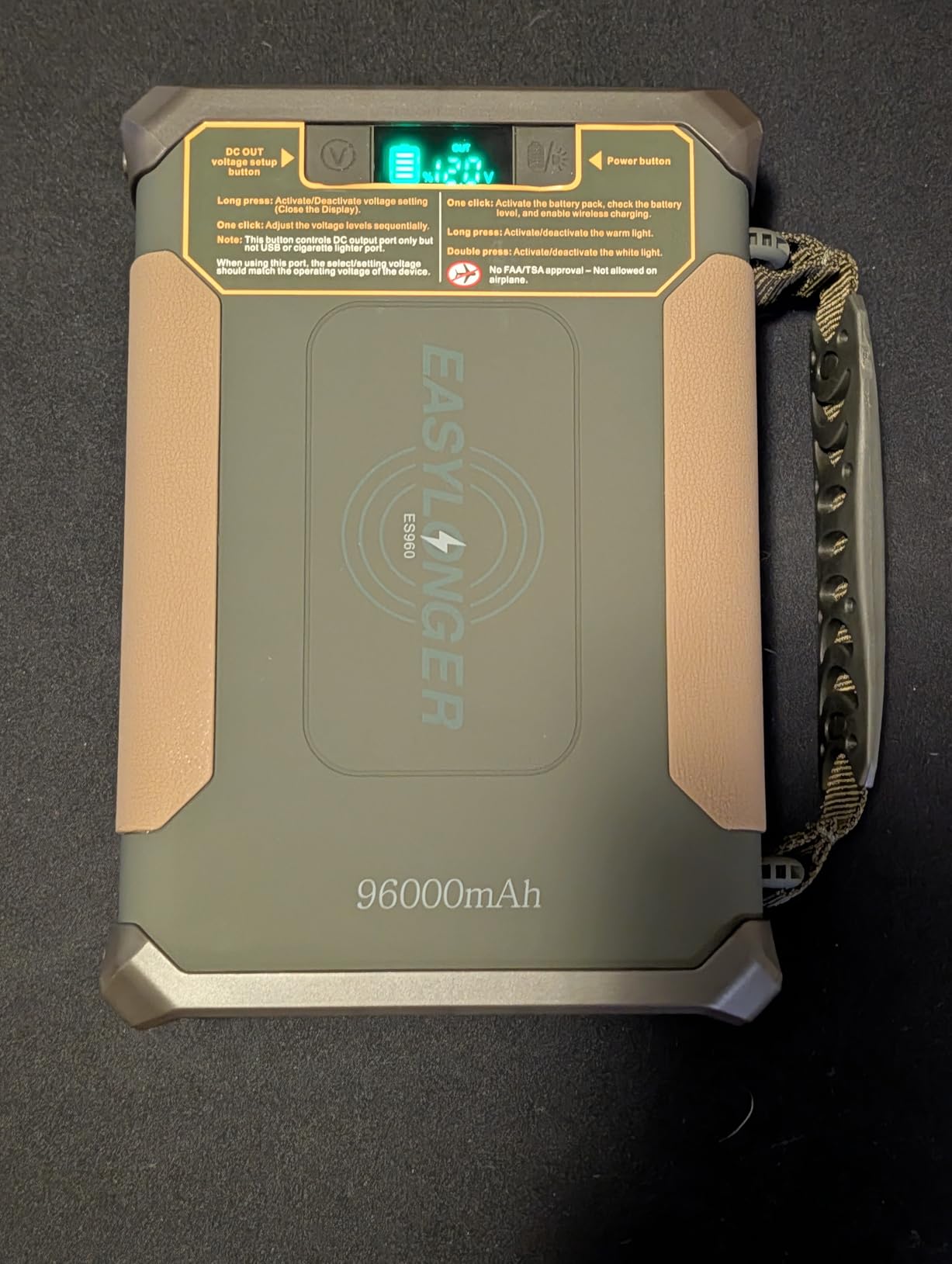
This is the category that general power-station guides tend to ignore. The ES960 PRO has no AC inverter at all. It outputs selectable 12V, 19V and 24V DC, comes with four cables, and remembers the voltage you chose, so there is nothing to buy before your first night.
Because you skip the inverter, more of the 297.6Wh reaches the machine. Owners report one owner logging 36 hours of CPAP use on a single charge with heat and humidity off, and others filling several nights from one pack.
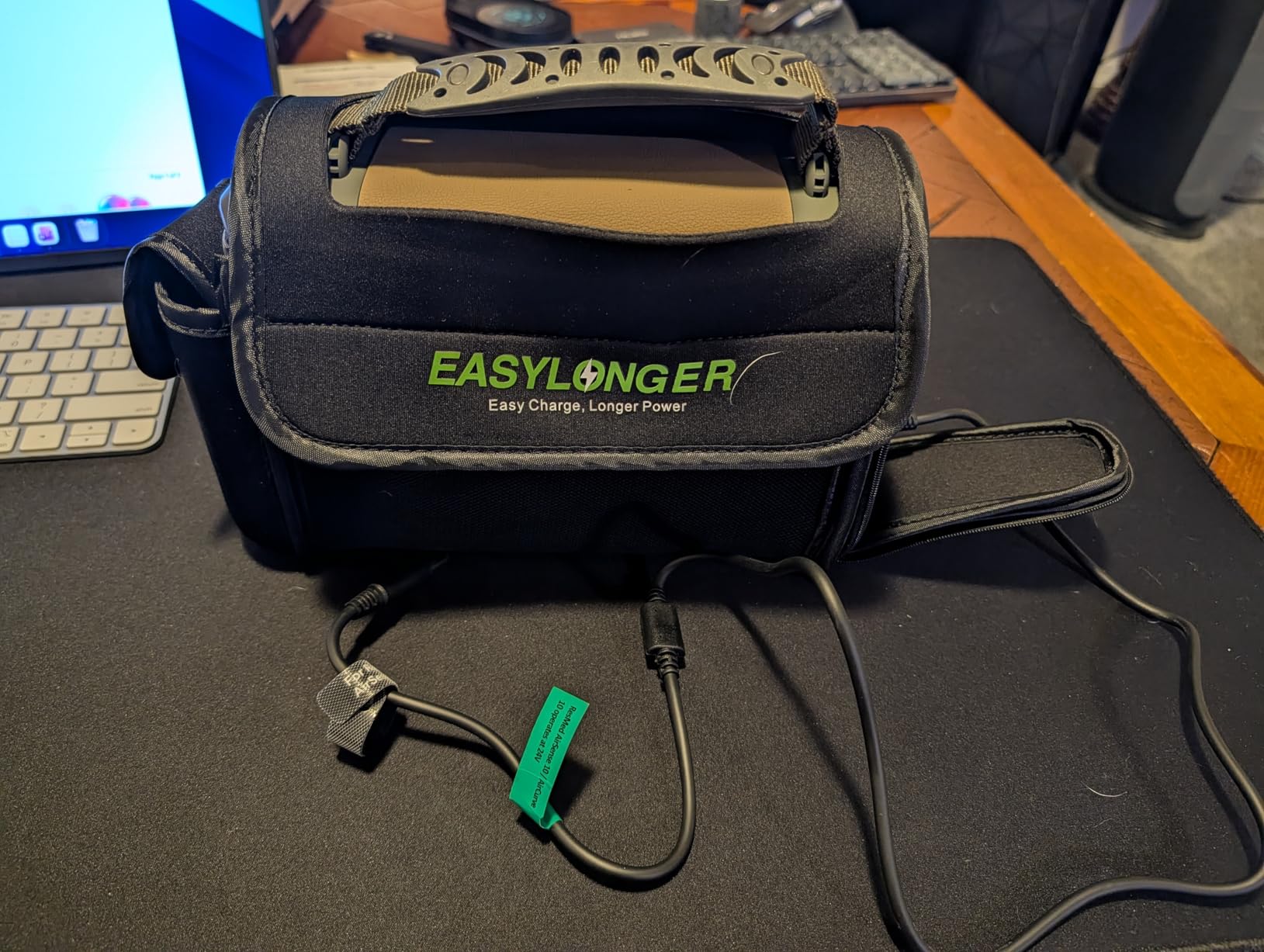
It is FSA and HSA eligible, which matters if you use a flexible spending account for therapy gear. Compatibility covers the ResMed S9, AirSense 10 and 11, AirCurve 10 and 11, AirMini, and the Philips DreamStation 1 and 2.
Recharging runs about 5 hours from the wall, 6 hours from a 12 to 24V car source, and accepts a 100W solar panel or larger.
What to check before you buy
Check your machine’s required voltage against the selectable 12V, 19V and 24V outputs, and note that this pack is above the airline watt-hour ceiling for carry-on spare batteries, so it stays home or goes in checked luggage.
Measure where your machine sits. The included CPAP cable is roughly 3 feet, which is short if the unit is wall-mounted.
Where it falls short
It is not a general power station. If you also want to charge a laptop, run a fan and top up a phone, the six output ports help but the total ceiling is 180W.
Car charging needs a separate adapter since there is no dedicated 12V input port, and a reported customer service email bounce-back suggests support is not always responsive.
3. BLUETTI X30 – built for multi-night trips
BLUETTI CPAP Battery Backup X30 297Wh Power Supply with Comprehensive Set
297Wh NMC battery
12V/5A, 15V/4A, 24V/4A DC
5 labelled cables
3.9 lbs
Pros
- Owners report five 9-hour nights on a single charge
- Very compact for a 297Wh pack at 3.9 lbs
- Five colour-labelled cables cover major ResMed and Philips models
- Three selectable DC voltage outputs
- Pass-through charging for standing backup
Cons
- Lowest average rating here at 4.0 stars
- Three DC ports share the same barrel size
- Separate external power brick instead of a detachable cord
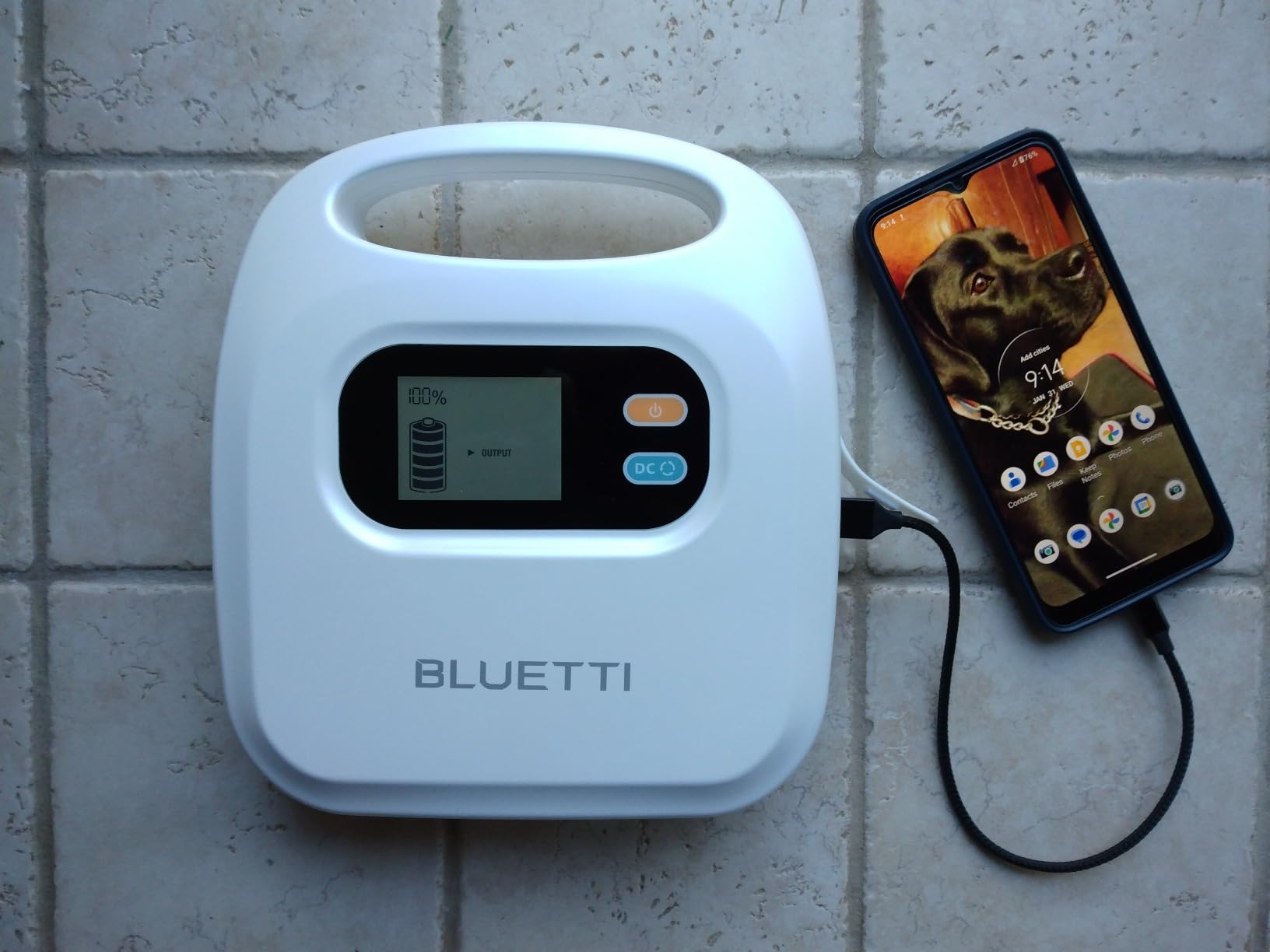
The X30 is the lightest 297Wh pack in this group at 3.9 lbs, with a built-in handle and an accessory bag. Three DC outputs at 12V/5A, 15V/4A and 24V/4A cover the majority of ResMed, Philips, Transcend and HDM machines, and the five included cables are colour-labelled.
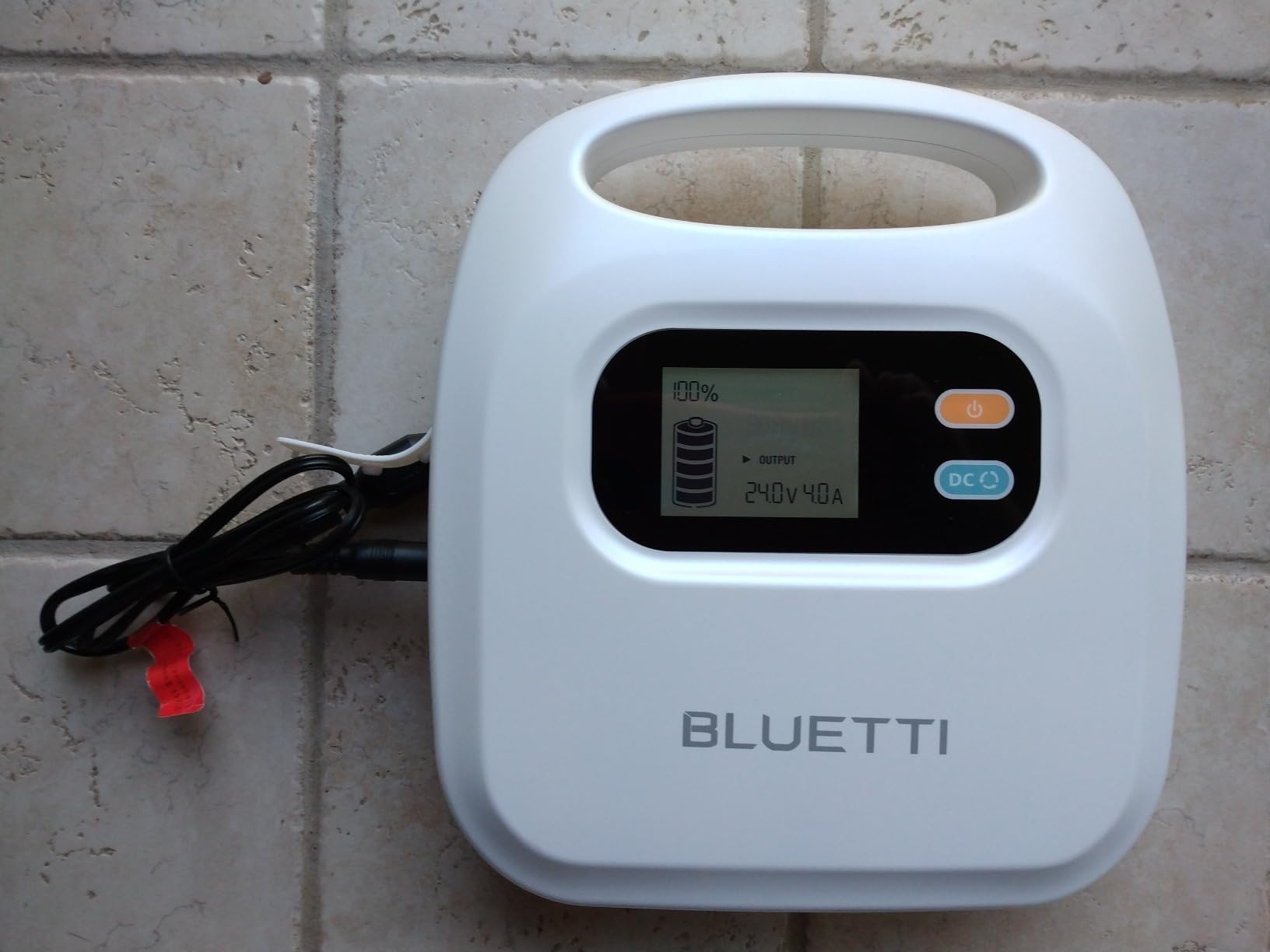
Runtime is the headline. One owner logged five 9-hour nights on a single charge and still had 20% remaining, with the humidifier off. That is the multi-night behaviour most buyers are hoping for from a pack this size.
It also passes through charging, so you can leave the CPAP connected and top up the battery from solar or the wall at the same time. That makes it a standing backup during an outage rather than something you have to deploy at midnight.
The chemistry is NMC rather than LiFePO4, rated at 2000 plus cycles. For a device you are trusting overnight, the LFP packs in this roundup have the safer profile.
What to check before you buy
Verify the voltage for your specific machine before you travel, and do it in daylight. All three DC ports use the same barrel size, so a wrong choice in a dark tent is an easy mistake.
Note that reviewers report this unit is not HSA eligible, which rules it out if you use a health savings account.
Where it falls short
At 4.0 stars with 18% one-star reviews, it carries the widest reliability spread in the group. Some owners report units that drained far faster than expected, and others report units that stopped holding charge early.
There is only one USB-A port, so it is not built for charging a phone and a tablet alongside your machine at a campsite.
4. EASYLONGER ES720 – the thin and light option
EASYLONGER ES720 CPAP Battery Backup, 266.4Wh Portable CPAP Power Supply
266.4Wh battery
12V/16.5V/20V/24V DC
180W car socket
3.31 lbs
Pros
- Adjustable DC output removes the need for a voltage converter
- Thin and light at 3.31 lbs and 1.7 inches thick
- Pass-through charging for standing backup use
- Four recharge paths including USB-C PD and solar
- Includes a carry bag and all four CPAP cables
Cons
- Heated tube not supported on Luna G3
- Car socket path requires an external voltage converter
- Listing carries a 14% one-star rating
At 1.7 inches thick and 3.31 lbs, the ES720 is the one to take if your CPAP battery has to share a pack space with everything else. It runs one to two nights per charge with the humidifier off, and the adjustable DC output covers 12V, 16.5V, 20V and 24V.
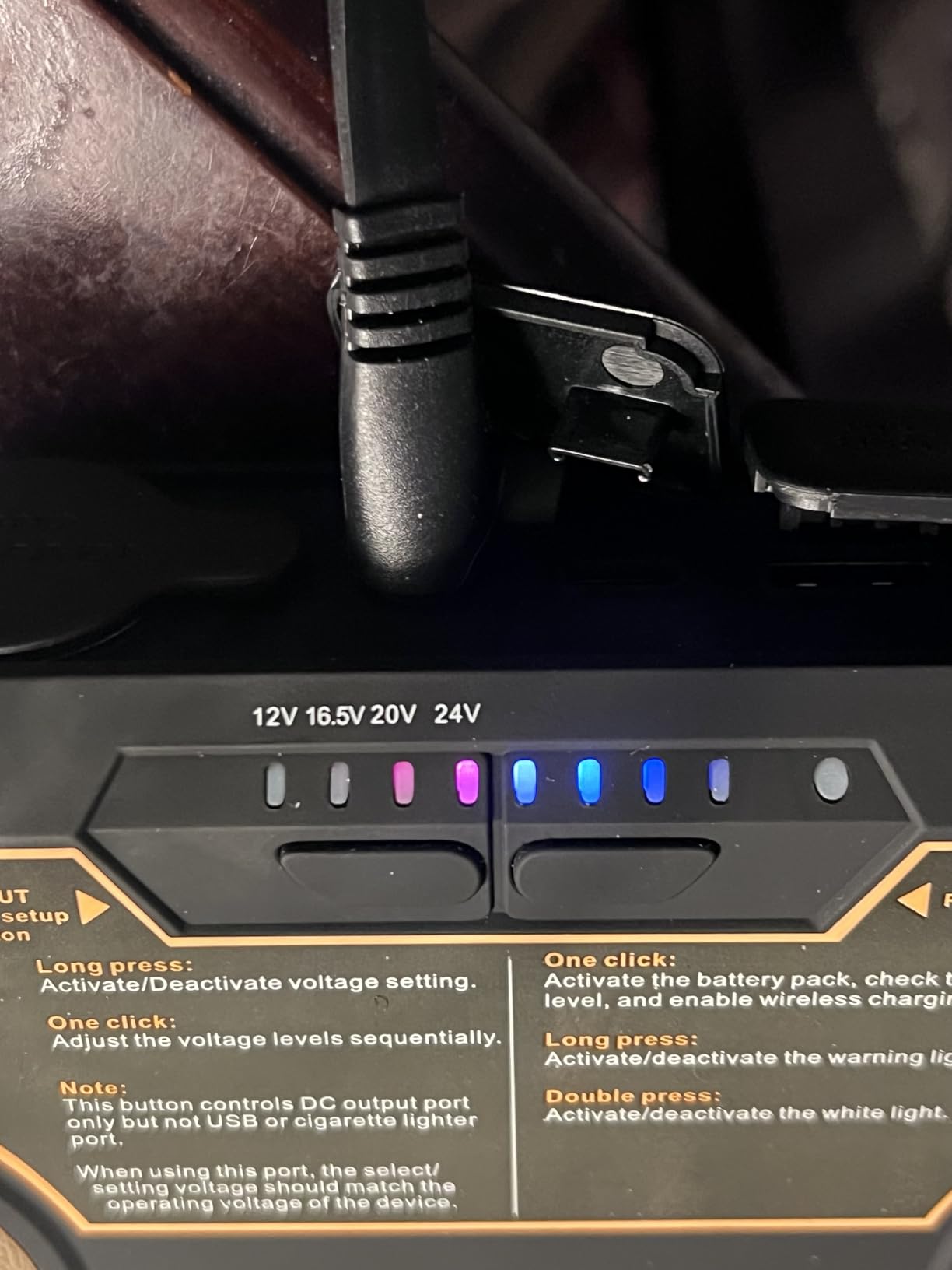
Compatibility is broad: ResMed S9, AirSense 10, AirCurve 10, AirMini, AirSense 11, AirCurve 11, Luna G3, and Philips DreamStation 1 and 2. The one gap is the Luna G3 heated tube, which is not supported.
Recharging is flexible for a small pack: about 4 to 5 hours from a 72W AC adapter, 4.5 to 5.5 hours over USB-C PD at up to 60W, 4 to 5 hours on a 100W panel, and the same again from a car outlet.
Pass-through charging means you can sit it beside the bed plugged in during an outage and have it ready when you need it, rather than waking to a flat pack.
What to check before you buy
Confirm whether your machine uses a heated tube. If it does and you run a Luna G3, this pack is the wrong shape of solution for you.
Count your recharge options. Four paths in a body this small is genuinely unusual and saves a separate wall brick.
Where it falls short
The 4.2 star average hides a wide spread. One-star reviews report units that stopped holding a charge or powering down unexpectedly, which is a real risk for anything you depend on overnight.
Going through the 180W cigarette lighter socket instead of the DC port requires an external voltage converter, so the cleaner path is the one that needs the right cable.
5. Jackery Explorer 1000 v2 – the Top Rated
Jackery Explorer 1000 v2 Portable Power Station,1070Wh,1500W
1070Wh LFP
1500W AC, 3000W surge
3 pure sine wave outlets
23.8 lbs
Pros
- 4.7 stars with 85% five-star owner reviews
- Three pure sine wave AC outlets for sensitive electronics
- One-hour emergency recharge through the app
- 30 dB quiet mode suits bedside placement
- Over 70% capacity after 4000 cycles
Cons
- 23.8 lbs makes it impractical to carry any distance
- Solar charging needs Jackery panels only
- One-hour mode must be re-enabled in the app each time
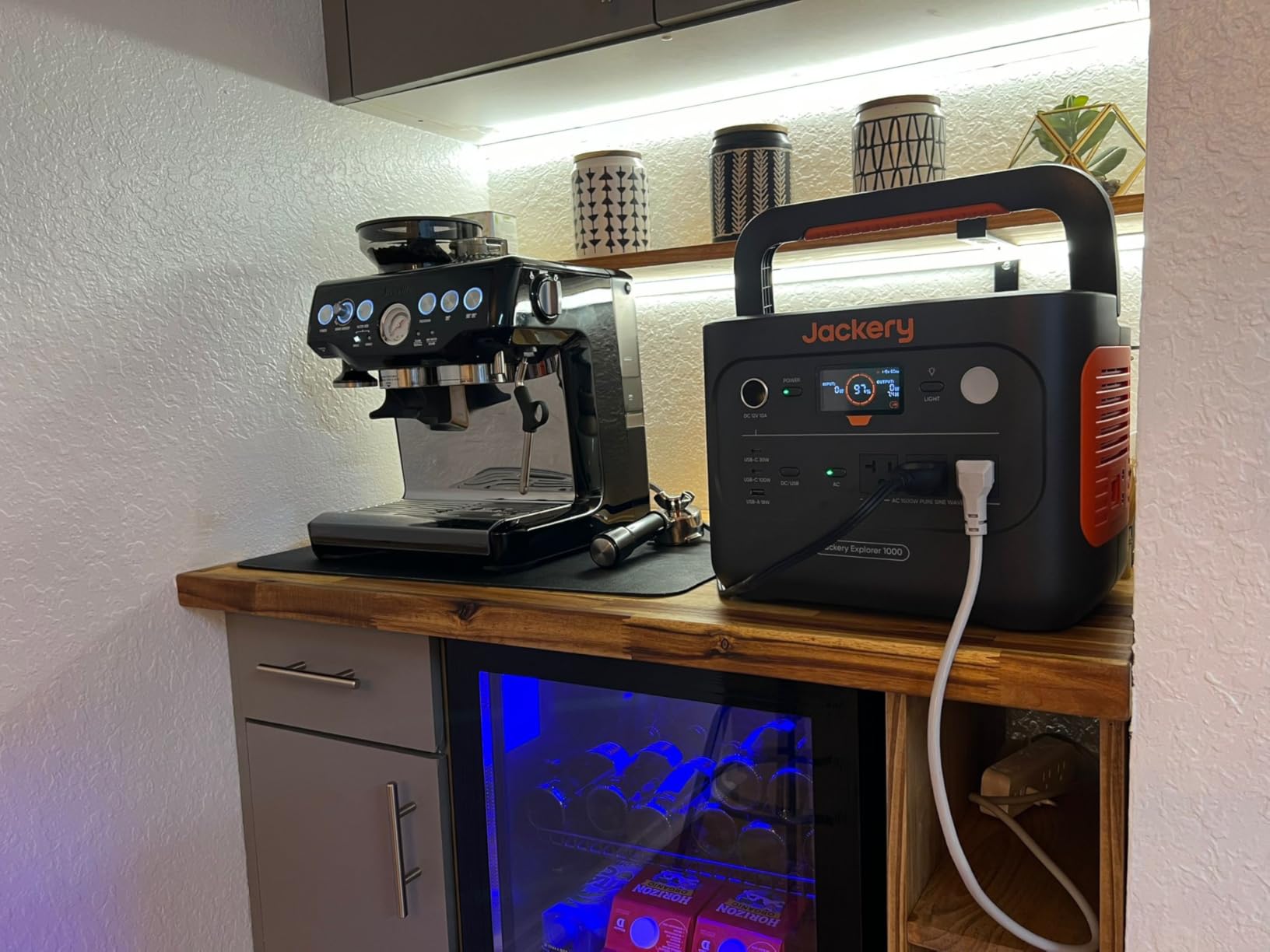
This is the station to buy if your CPAP is one load among several, or if you want an outage box that also runs a router and a fridge. 1,070Wh of LFP chemistry with 1,500W continuous and 3,000W surge gives you roughly four nights of eight-hour sleep on our formula, with a heated humidifier included.
Reviewers treat it as a home or vehicle backup rather than a hiking pack, and at 23.8 lbs we agree. The foldable handle helps with a tailgate, not a trailhead.
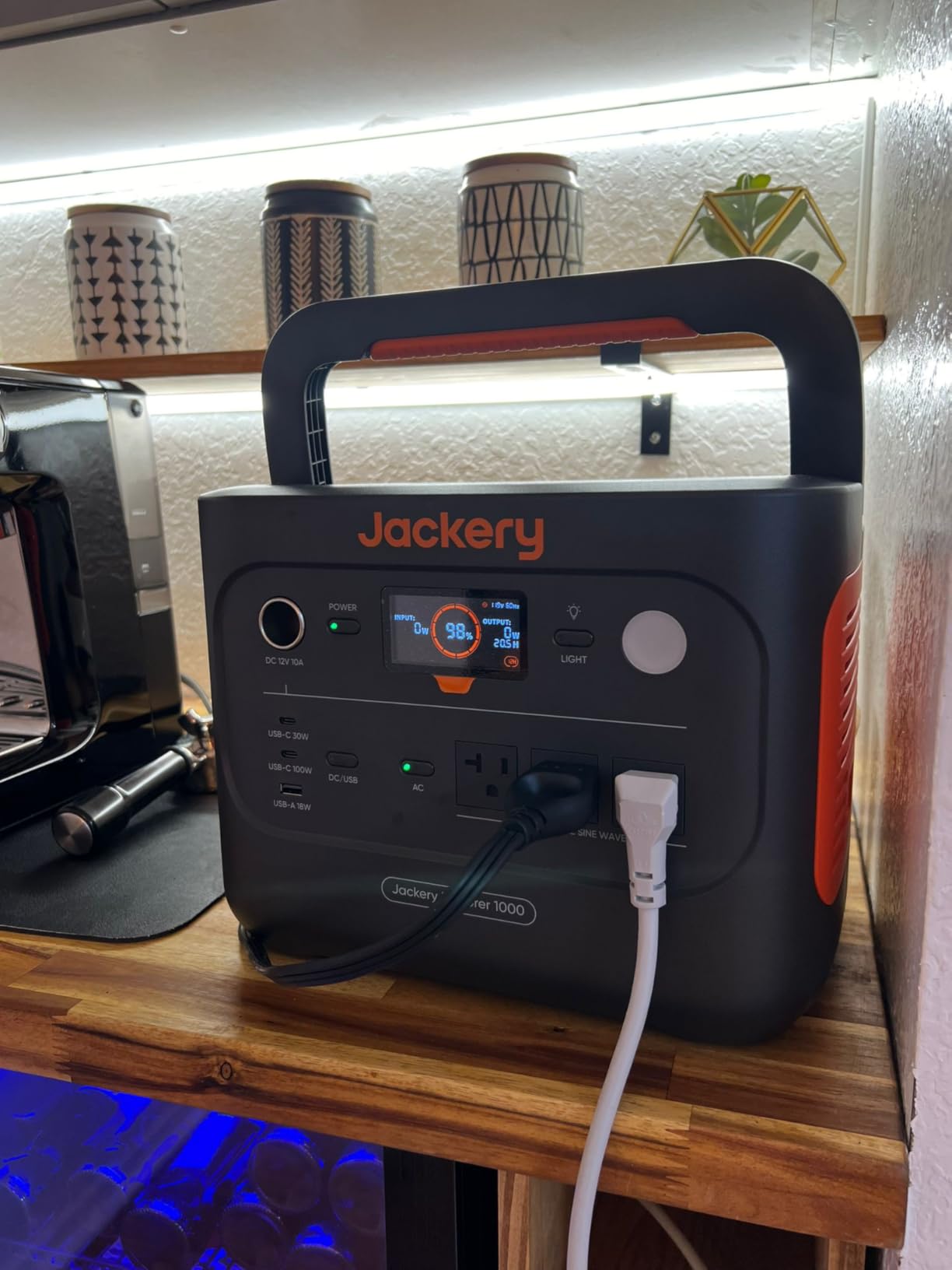
The quiet mode is the sleeper-friendly feature. At 30 dB, overnight charging is usable in a bedroom, which matters when the machine you are protecting is a machine you sleep next to.
Output is three pure sine wave AC outlets, two USB-C including 100W PD, one USB-A and a DC car port, all under app control.
What to check before you buy
Plan the charging. The advertised one-hour full charge only happens with emergency mode turned on in the Jackery app, and it defaults to 1.7 hours to protect battery health.
If you intend to run solar, you need Jackery panels. Third-party panel compatibility is restricted on this model.
Where it falls short
Weight is the obvious limit, and it also cannot be delivered to a PO Box address, which matters if you are ordering to a rural site.
For a plain CPAP on a two-night trip, you are carrying three times the battery you need.
6. BLUETTI AC180 – best for home outages
BLUETTI Portable Power Station AC180, 1152Wh LiFePO4 Battery Backup w/ 2 1800W (2700W peak) AC Outlets, 0-80% in 45Min, Solar Generator for Camping, Off-grid, Power Outage
1152Wh LiFePO4
1800W continuous, 2700W peak
20 ms UPS switchover
37.4 lbs
Pros
- Ample headroom for a CPAP plus other medical loads
- Full recharge in about an hour at 1440W AC input
- 20 ms UPS switchover keeps sensitive electronics running
- Five-year warranty with five-year spare part availability
- App control and a clear LCD display
Cons
- Heaviest unit here at 37.4 lbs
- Roughly 20W of idle draw with the inverter on
- Only 90% of rated capacity is usable per the manual
The AC180 has the most owner documentation in this roundup, and its 20 ms UPS switchover is exactly the feature an outage backup needs. Your machine sees a near-continuous supply rather than a drop and restart, which matters for a device you cannot afford to interrupt mid-night.
Capacity is 1,152Wh of LiFePO4 with 1,800W continuous output and 2,700W peak through an app boost. Eight outlets cover the CPAP, phones, a router and small appliances in one go.
Charging is quick: full in about an hour at 1,440W AC input, or 2.8 to 3.3 hours on 500W solar. The warranty runs five years and spare parts are available for five years, which reduces the long-term risk on a machine that has to work every night of a storm season.
Owners recommend installing firmware updates and running a calibration charge and discharge when it arrives, which resolved underperformance for several of them.
What to check before you buy
Measure the route from the car to the bedroom. At 37.4 lbs, this is a station that lives in a hallway cupboard, not one you carry between rooms.
Test the UPS mode before you need it. Confirm in the app that the AC and DC outputs are enabled, since some models arrive with outputs disabled by default.
Where it falls short
Idle self-consumption of roughly 20W with the inverter on is significant against a 40W CPAP. It eats about 160 watt-hours across a night, and the manual rates only 90% of the 1,152Wh as usable.
The top-mounted wireless charging pad is reported to work unreliably, so do not plan to count on it.
7. Anker SOLIX C1000 Gen 2 – the CPAP-named backup
Anker SOLIX C1000 Gen 2 Portable Power Station
1024Wh LiFePO4
2000W continuous, 3000W peak
Under 10 ms UPS
about 24.9 lbs
Pros
- Manufacturer names CPAP machines as the target use for the 10 ms UPS
- 2000W output and 1024Wh cover a CPAP and humidifier easily
- 49-minute full recharge at 1600W
- One owner measured about 17% capacity per night
- Five-year warranty with 80% capacity after 4000 cycles
Cons
- No battery expansion in the Gen 2 model
- About 25 lbs is heavy for hand-carrying
- No protective storage case included
Anker is the only manufacturer in this roundup that names CPAP machines directly in its own product copy, linking the sub-10 ms UPS switchover to keeping a machine and a laptop running through an outage. That is the feature this pick is really about.
Multiple reviewers report powering an AirSense 11 for three or more nights on a charge, and one quantified a night at about 17% draw with 83% remaining at wake. That measurement lines up closely with our own three to four night estimate.
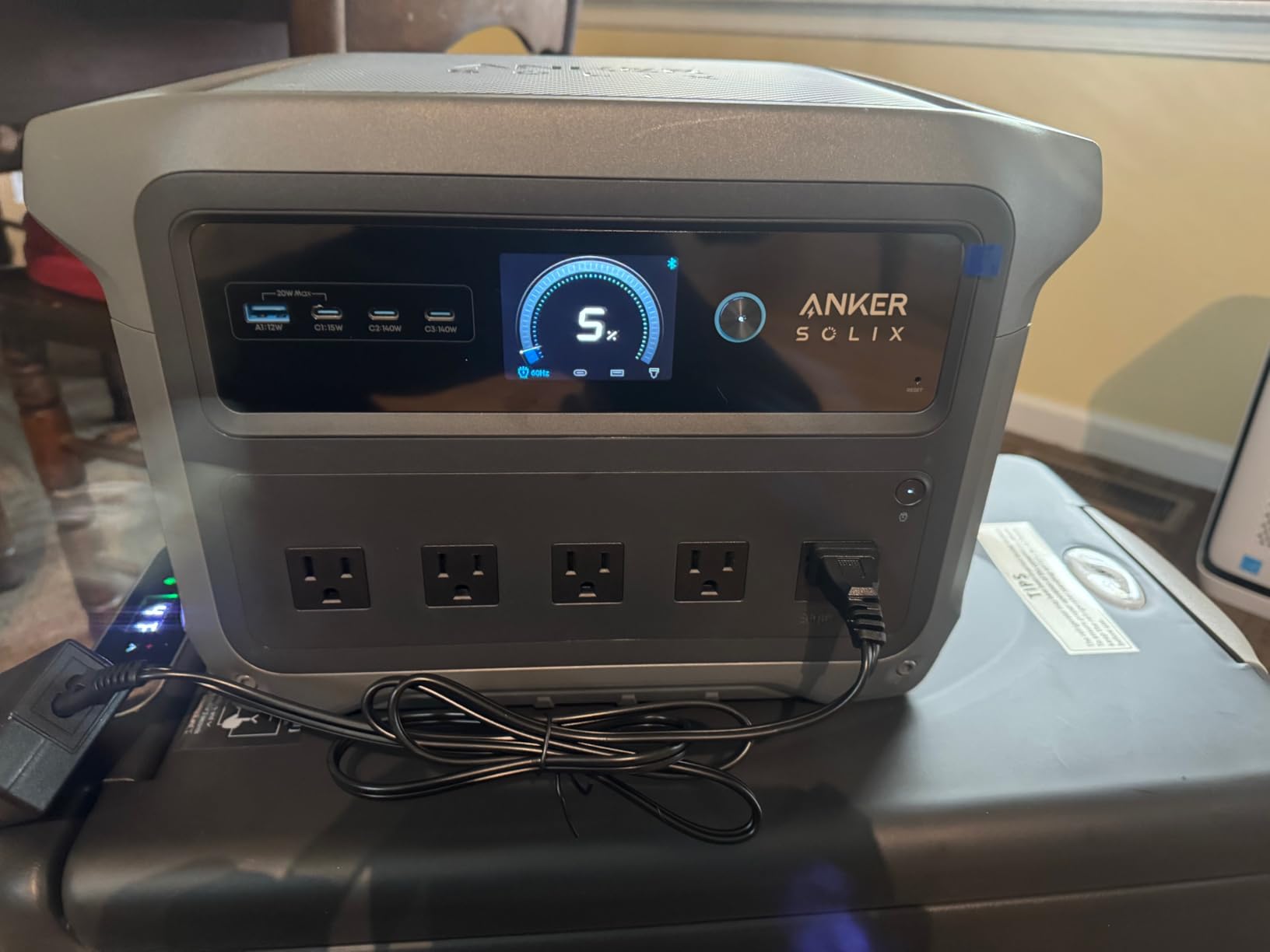
The charging numbers are the strongest in the group: full in 49 minutes at 1,600W AC input through the Anker app, and 1.8 hours on 600W solar. A 49-minute top-up after a storm is the difference between a night of sleep and a night of none.
Ten ports at 2,000W continuous and 3,000W peak output mean the CPAP, a router and laptops share one box without strain.
What to check before you buy
Confirm your CPAP runs on AC here. There is no DC barrel output for a CPAP, so you are going through the inverter and should budget an extra 15% for the conversion.
Set up the app before you leave. HyperFlash fast charging and the time-of-use mode both need enabling, not just plugging in.
Where it falls short
The Gen 2 model dropped battery expansion that the original C1000 offered. If you want a scalable system rather than a single fixed box, that is a real limitation.
There is also no included case, so cables and adapters end up loose in your vehicle until you buy something to hold them.
8. DJI Power 1000 V2 – the quietest at the bedside
DJI Power 1000 V2 Portable Power Station, 1024Wh LFP Battery
1024Wh LFP
1000W rated, 2600W peak
10 ms UPS
as quiet as 26 dB
about 33 lbs
Pros
- Quietest option here at 26 dB for bedside use
- Recharges to 80% in 37 minutes
- 10 ms UPS switchover protects sensitive devices
- Dual 140W USB-C ports deliver 280W combined
- Rugged LFP build with a stated 10-year lifespan
Cons
- Solar and car charging need separately sold adapters
- Capacity below some rivals in the same class
- Some buyers report high idle self-consumption
- About 33 lbs and a long
- wide body
Noise is the first thing that decides whether a station lives in your bedroom or the hallway, and this one runs as low as 26 dB. For a person who sleeps next to their CPAP, that matters more than another 200 watt-hours.
Under the hood it is a 1,024Wh LFP battery with 1,000W rated output and 2,600W running and peak power. The 10 ms UPS switchover handles outages without interrupting sensitive electronics, and recharge hits 80% in 37 minutes.
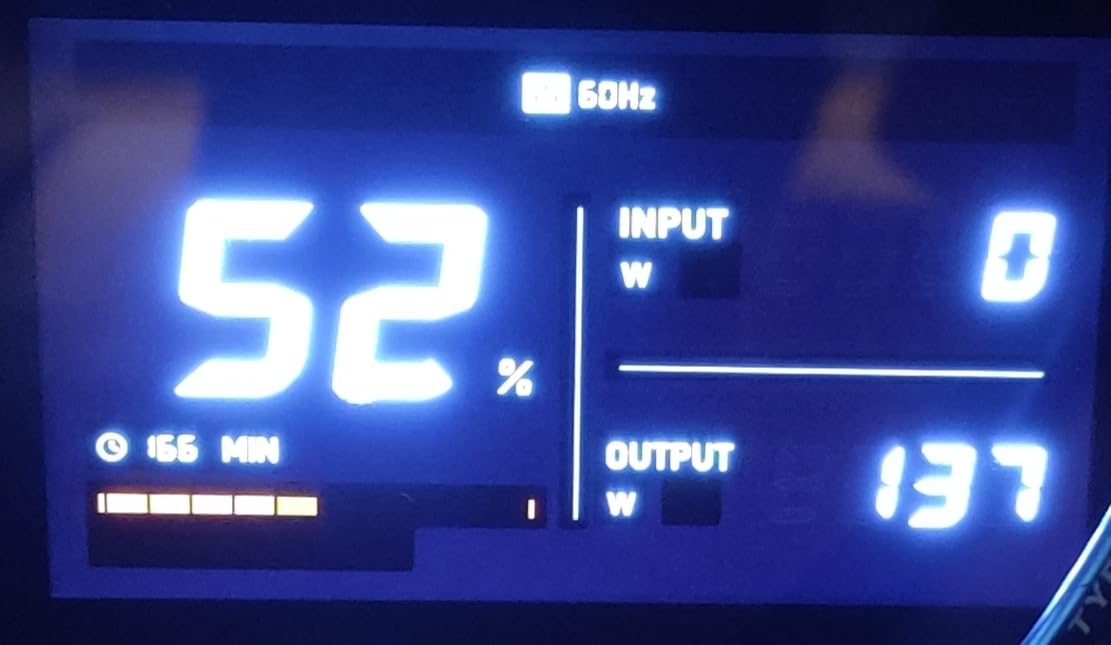
The build is worth noting: an intelligent battery management system, a sub-nano coating, a flame-retardant housing and a stated 10-year battery lifespan, backed by a 5-year warranty.
The accessory ecosystem is the catch. MPPT and car charging modules are not built in, so a solar panel or a car battery needs a separately purchased proprietary adapter.
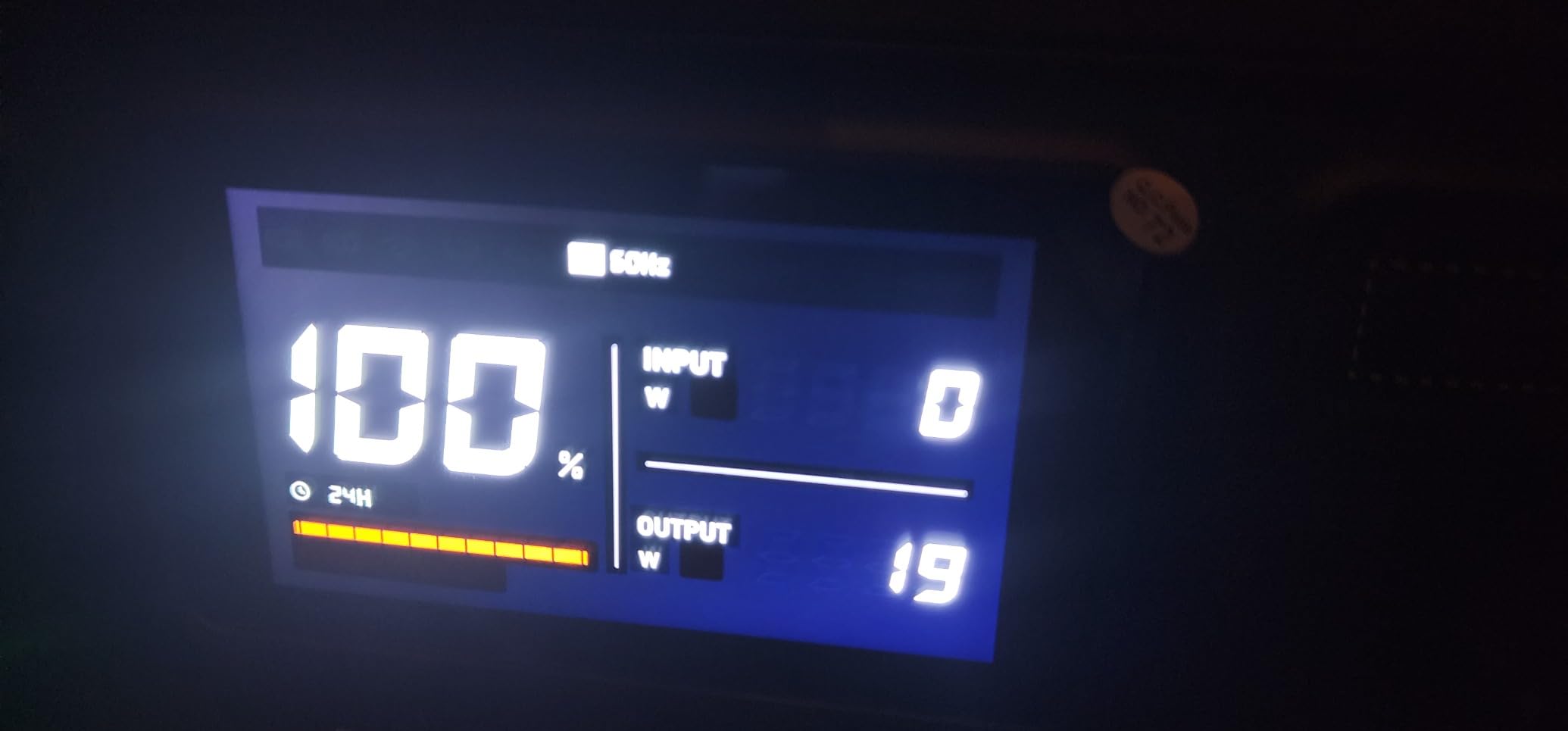
What to check before you buy
Decide whether you will ever need solar or car charging from the unit. If yes, budget for the proprietary adapters, which are not in the box.
Check the footprint. At 19.2 inches long, it is a long box rather than a tall one, so measure shelf space before a storm season starts.
Where it falls short
At 1,024Wh it is below some rivals in its class, and one detailed reviewer measured roughly 40% conversion loss with idle draw around 24 to 30W, which cuts real runtime against the label.
Only four power outlets are listed, and one reviewer reports the unit erroring and refusing to charge above 80F ambient. Our winter power station guide covers that derating in more detail.
9. ALLWEI 300W – the station with real CPAP test data
ALLWEI Portable Power Station 300W, 256Wh Solar Generator LiFePO4 Battery
256Wh LiFePO4
300W continuous, 600W peak
6.4 lbs
5-year warranty
Pros
- Owner test data runs a BMC Luna 2 for 20 hours over 3 nights
- Pure sine wave AC marketed for CPAP and sensitive devices
- Display shows time and percentage remaining
- Excellent standby charge retention over two months
- 6.4 lbs with a built-in MPPT controller
Cons
- One owner reported a loud fan running for hours
- Separate review reports loss of charge retention after a year
- Only one AC outlet
- Solar input capped at 120W
This is the only unit in the group with detailed CPAP test data behind it. One owner ran a BMC Luna 2 for 20 hours across three nights, and a Respironics DreamStation 2 on high heat for 12 hours across two nights, describing the pack as a good UPS for medical equipment.
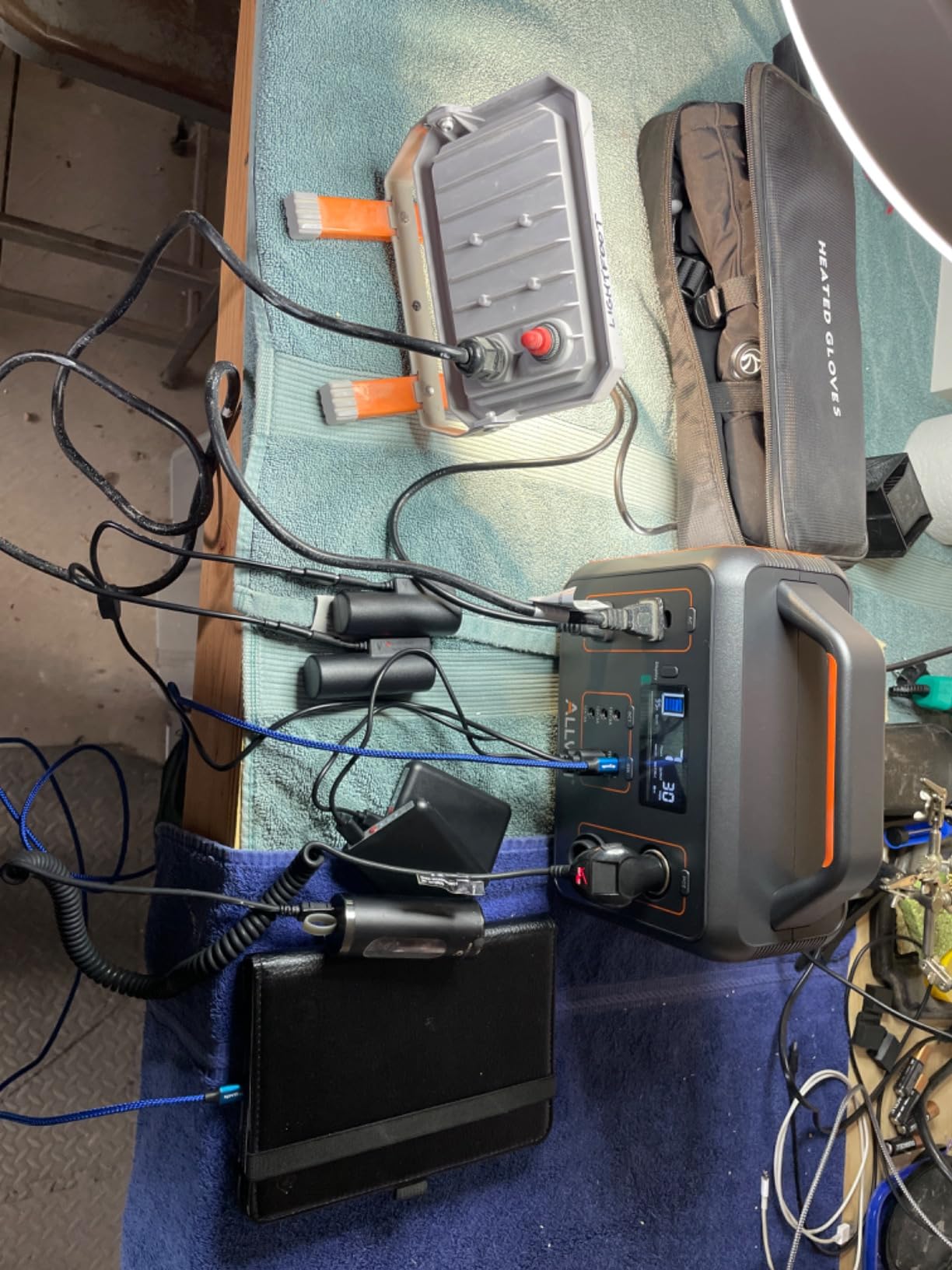
Those tests used shorter nights than our eight-hour assumption, which is why our formula lands at about one night while the owner reports three. Matching that figure against the label is how you tell a two-night station from a one-night station.
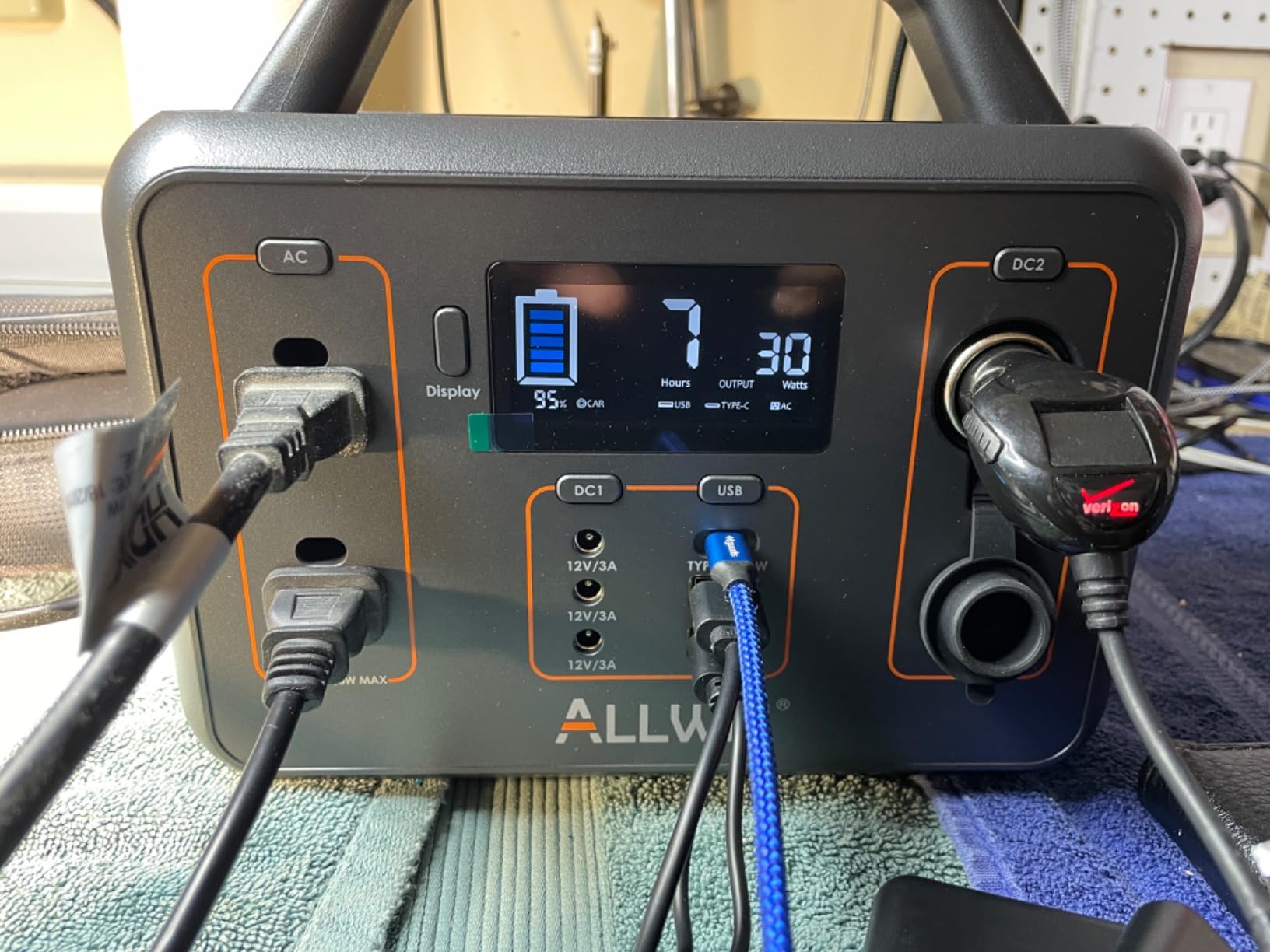
At 256Wh and 6.4 lbs, it is one of the lightest LiFePO4 packs here, and pass-through charging lets it sit plugged in as a standing backup. The display showing both percentage and time remaining removes most of the guesswork from an overnight run.
Recharging options: 3.5 to 4 hours on AC, the same from a 12V car socket, 4 to 5 hours on a 100W panel, and 2 to 2.5 hours using AC and solar together through the built-in MPPT controller.
What to check before you buy
Listen to it before you commit. The pure sine wave spec and runtime display are genuinely good, but one owner reported a fan running loudly for hours, which is unacceptable next to a sleeping CPAP user.
Check your solar panel rating. Solar input is capped at 120W, so a larger panel will not speed anything up.
Where it falls short
Durability is the split point among owners. Some report two years of reliable service while others saw charge retention fail at around the one-year mark, so this one carries a longer warranty than most owners keep it.
There is no 24V DC output, which RV-oriented users sometimes want, and only one AC outlet for everything else you plug in.
10. MARBERO 237Wh – for short one-night trips
Portable Power Station 300W MARBERO 237Wh Camping Solar Generator Backup Lithium Battery with Pure Sine Wave 110V AC Outlet, USB C, USB A, DC for Outdoors Camping CPAP Home Blackout Emergency
237Wh (64000mAh)
300W output, 375W peak
4.6 lbs
pure sine wave AC
Pros
- Very compact and light at 4.6 lbs with a handle
- Listing names CPAP use alongside pure sine wave AC
- Eight outputs covering AC
- USB-A QC3.0
- USB-C PD and 12V DC
- Two LED lanterns with SOS mode for outages
- BMS with short-circuit
- over-voltage and temperature protection
Cons
- Smallest capacity here at 237Wh
- Weak AC inverter stage for larger devices
- Proprietary round charging port rather than USB-C
- Only a 12-month warranty
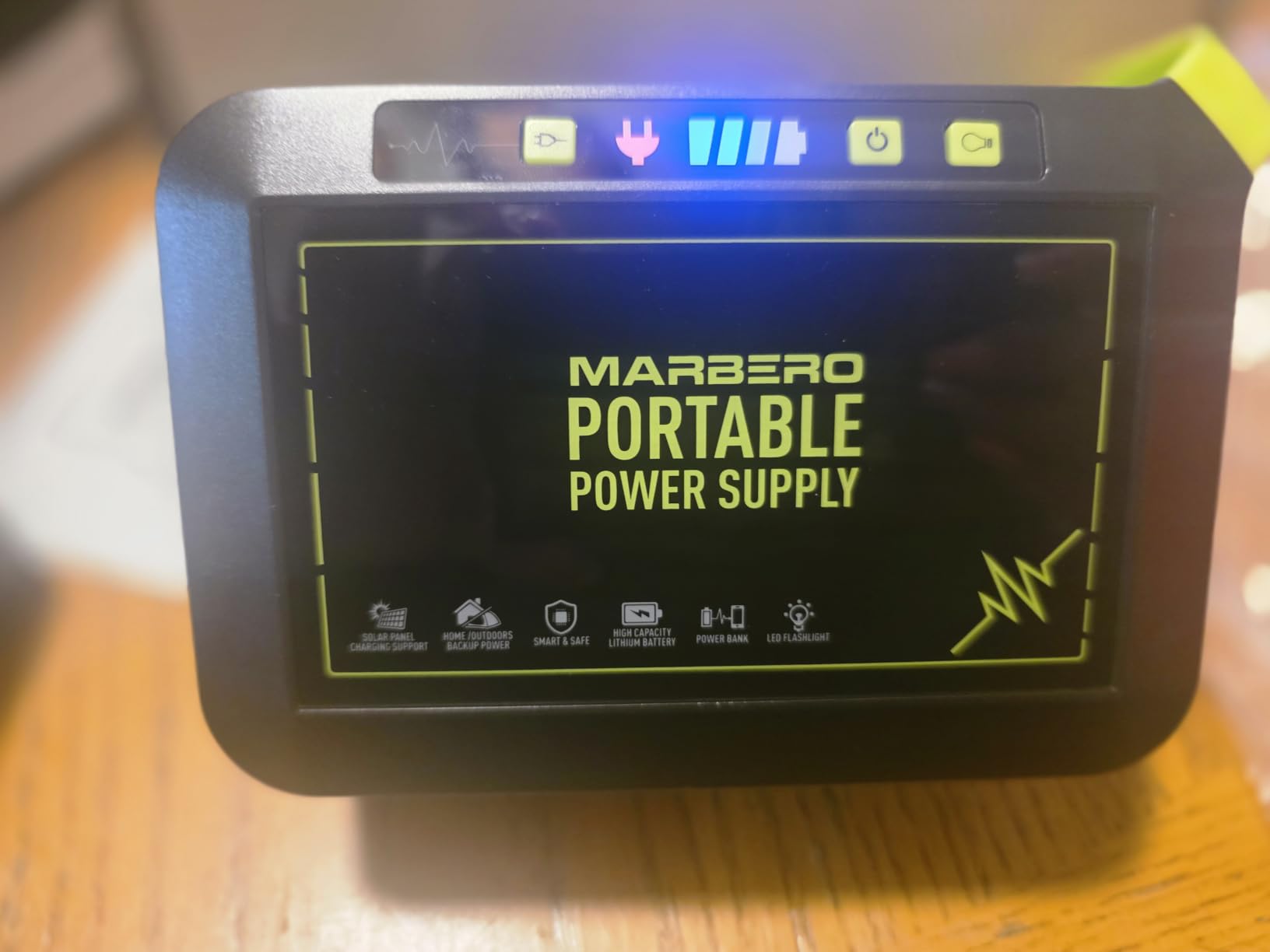
The M823 is the smallest unit here at 237Wh, and that single number defines it. It is a one-night station: roughly one eight-hour session with the humidifier off, and not much margin beyond that.
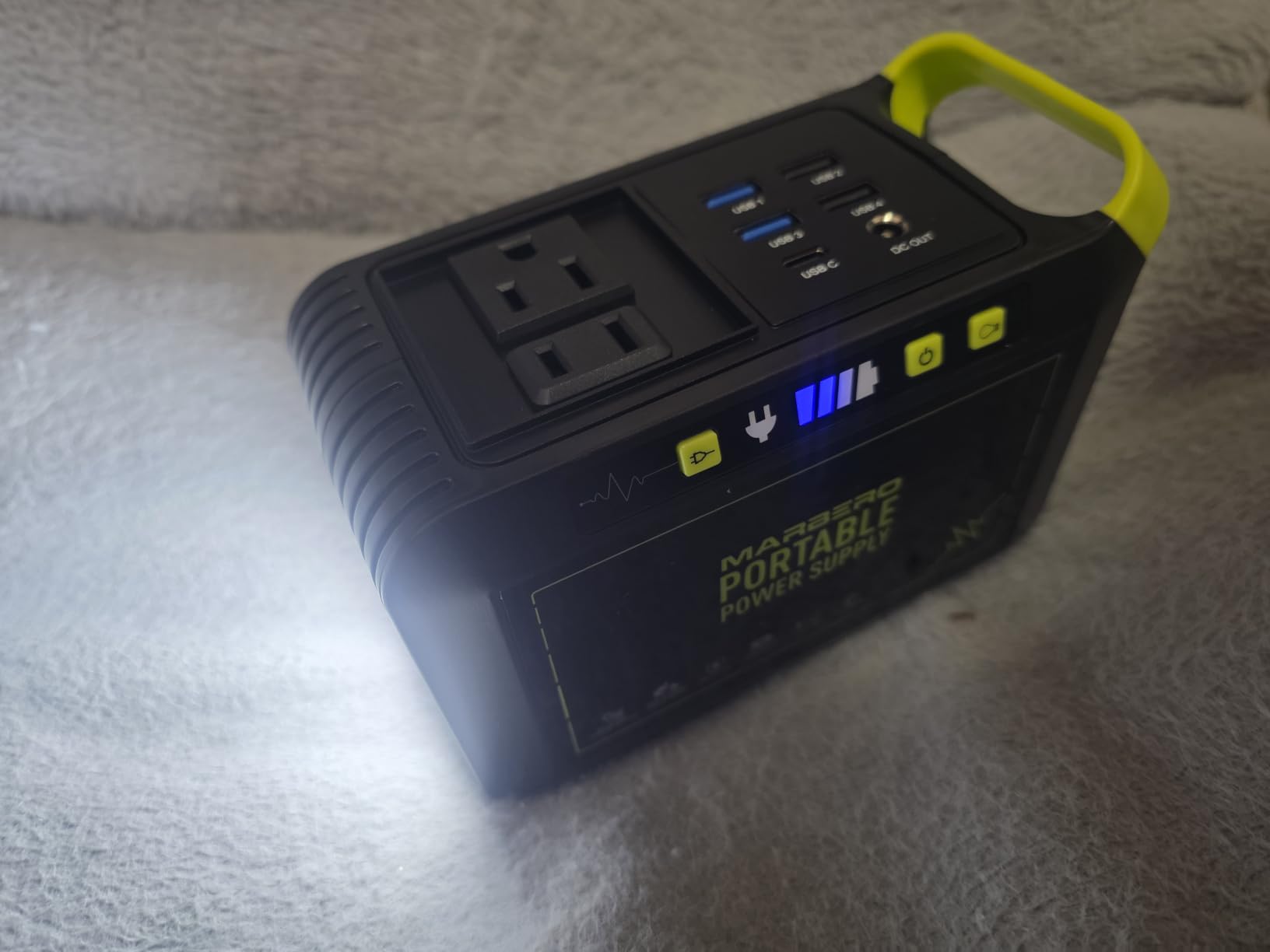
What it does have is two pure sine wave 110V AC outlets in both 2-prong and 3-prong formats, which is more than several comparable packs offer. The listing explicitly names CPAP alongside phones, laptops and cameras as supported loads.
The two LED lanterns, one on top and one on the side with steady, twinkle and SOS modes, are genuinely useful during an outage when the power is out because the storm took the lines down.
Recharging takes about 6 hours on wall power, 8 hours from a car adapter, or solar through the proprietary input.
What to check before you buy
Confirm your trip length. Anything longer than a single night and you need a 300Wh or larger pack, because 237Wh has no headroom for a heated hose.
Check the charging port. The round proprietary socket ties you to the included wall adapter rather than any USB-C charger you already own.
Where it falls short
The inverter stage is weak for its wattage, and owners report larger devices will not run off the AC outlets even within the stated 300W.
Construction is described as flimsy, one owner reports a unit that stopped working within a year, and the 12-month warranty is among the shortest in this roundup.
11. EnginStar 300W – the 24V DC workhorse
EnginStar Solar Generator, 300W Portable Power Station, 296Wh Lithium Battery Backup w/Two 110V Pure Sine Wave AC Outlet for Camping Road Trip RV, 80000mAh Sufficient Power Supply for Blackout
296Wh (80000mAh)
300W output
2x pure sine wave AC
6.5 lbs
Pros
- Two pure sine wave 110V outlets
- 24V DC barrel port that most budget rivals lack
- One owner reports running a CPAP for three days on a charge
- Large display showing per-port input and output
- Pass-through charging
- Light at 6.5 lbs
Cons
- Only rated for 1000 recharge cycles
- Display and indicator lights are bright and cannot be dimmed
- AC recharge is slow at about 7 hours
- Audible fan cycling during operation
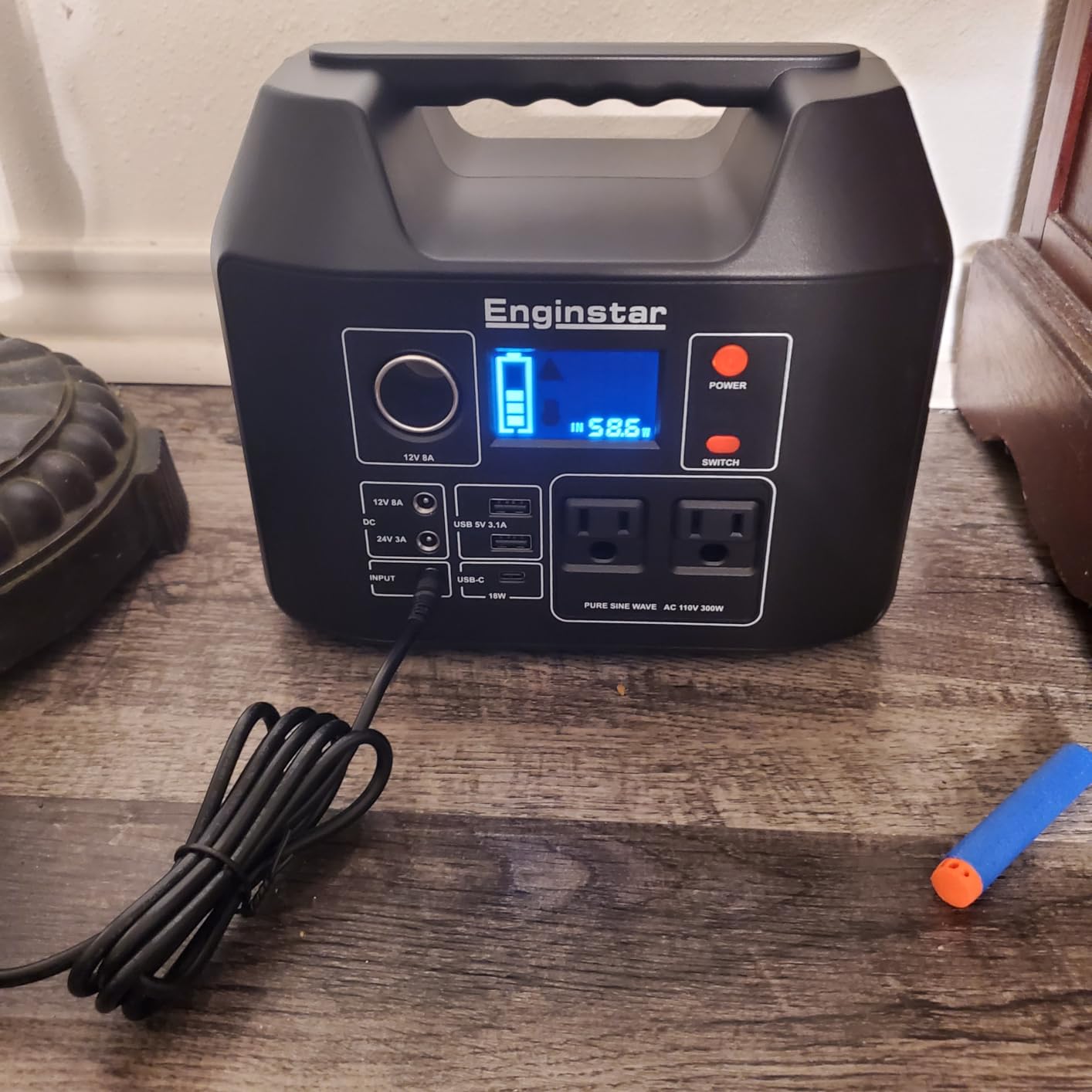
The R300 stands out for one reason that rarely shows up in roundups: a 24V DC barrel port alongside the usual 12V outputs. If your CPAP or your travel setup runs from 24V, this is one of the few packs in this class with a port that will drive it directly.
Two pure sine wave 110V AC outlets make it safe for a medical brick, and one owner reports running a CPAP for three days on a charge, with another using three of them as home UPS replacements.
Eight outputs in total, pass-through charging, and a large display that shows per-connection input and output power without needing an app. That display is the feature buyers single out most.
Protection covers overload, over-discharge, overcharge, overheat and short circuit, and the unit is UL certified.
What to check before you buy
Look at the lights in a dark room before you commit. The display and indicator LEDs are very bright and cannot be dimmed, and one owner had to cover them with light-blocking stickers.
Confirm your battery expectations against the cycle rating, since 1,000 cycles is roughly a third of what the LiFePO4 packs here deliver.
Where it falls short
AC recharge takes about 7 hours, which is slow for a pack that will be your only power source, and the fan cycles audibly in a way light sleepers noticed.
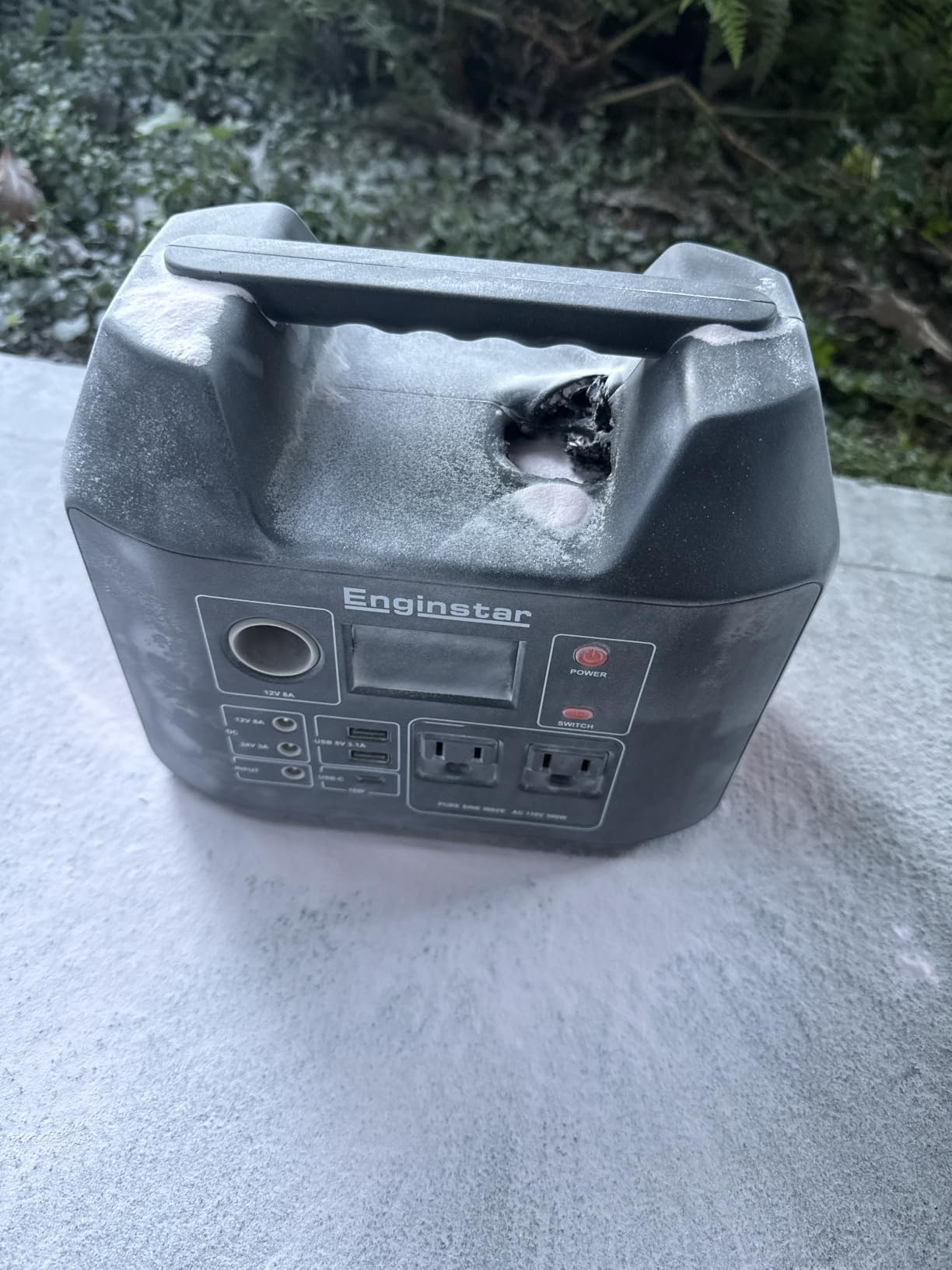
The open ports are not weatherproof, so it needs a covered enclosure outdoors, and one owner reported falling short on a first dry-camping night after an incomplete solar charge.
12. GRECELL 999Wh – many devices at once
GRECELL 999Wh Solar Generator 1000W Portable Power Station for Outdoor
999Wh capacity
1000W continuous, 2000W surge
10 outputs
23 lbs
Pros
- 999Wh and 1000W output give generous overnight headroom
- Manufacturer lists CPAP medical devices among supported appliances
- Pure sine wave output
- Ten simultaneous connections including a wireless charging pad
- Built-in MPPT with AC
- solar and car recharging
- Silent dual cooling fans
Cons
- 23 lbs limits travel use
- AC output must be switched off manually or it drains
- Real runtime closer to 85% of the label
- Only a 2-year warranty
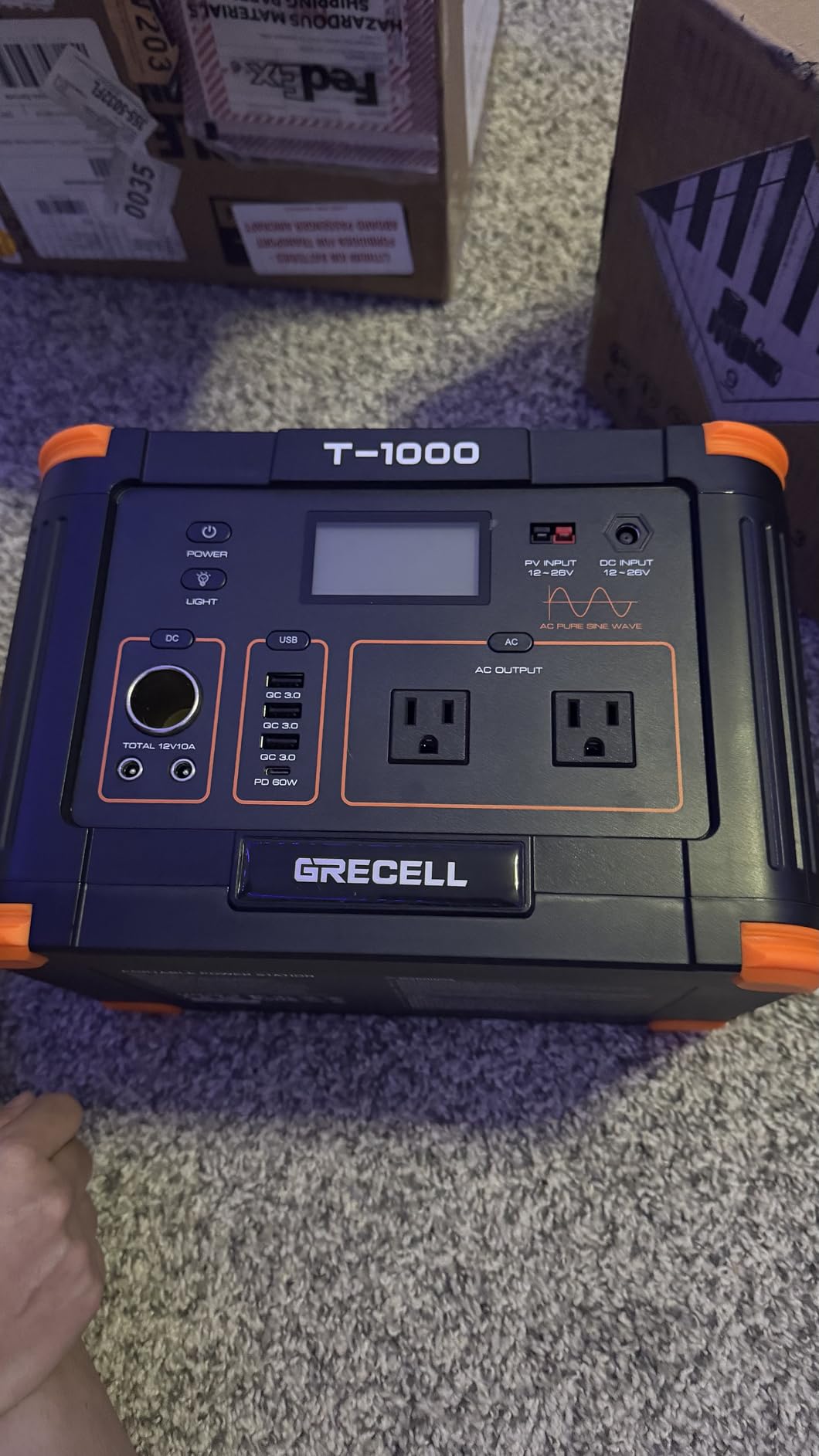
The T-1000 is the option for anyone whose CPAP shares a campsite with a laptop, a cooler and several phones. Ten connections across two AC sockets, three USB QC, one USB-C PD, two 12V DC ports, a car socket and a wireless charging pad cover that ground.
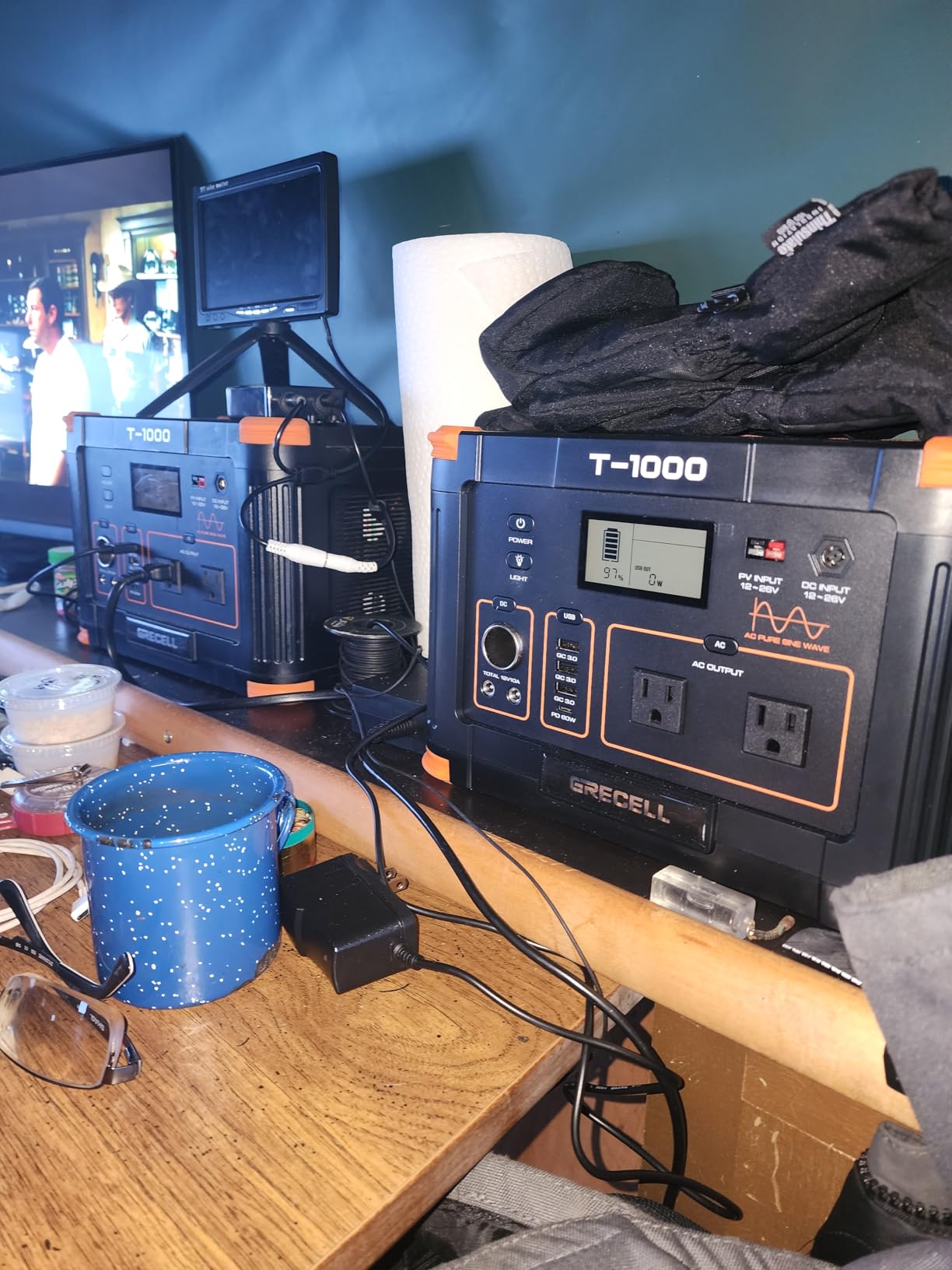
Output is 1,000W continuous and 2,000W surge as pure sine wave, from a 999Wh pack. On our formula that is about three nights of sleep, with plenty of headroom for anything else you plug in.
The manufacturer explicitly lists CPAP medical devices among supported appliances, and the silent dual cooling fans address the noise problem that trips up several smaller units in this roundup.
Recharging works three ways, with a built-in MPPT controller extracting the maximum from a solar panel.
What to check before you buy
Learn the AC off switch. The AC output must be manually switched off when it is not in use, otherwise it will run the battery down with nothing plugged in. This is the single most repeated operational note about this unit.
Weigh the 23 lb body against your trip. It suits car camping and home backup far better than carrying.
Where it falls short
The 999Wh label overstates what you get. The manufacturer publishes working time as capacity multiplied by 0.85 divided by device wattage, so plan on roughly 850Wh of real capacity.
The wireless charging port needs the power and USB buttons pressed before it will charge anything, and the 2-year warranty is among the shortest here.
How to Choose a CPAP Power Station?
Start with the formula, because it is the part almost every buyer skips. Take your machine’s average wattage, multiply by your hours of sleep, add roughly 25% for inverter and conversion loss if you are using the AC outlet, and then apply a 20% derating for the capacity you can actually reach.
A worked example: a ResMed AirSense 10 averaging 40 watts across 8 hours is 320 watt-hours of sleep alone. Add the inverter factor and you are at about 400 watt-hours, and with derating applied you want a station in the 480 watt-hour range. Anything above 1,000 watt-hours is money you are carrying for nothing on a two-night trip.
If you are unsure of your machine’s draw, set the humidifier to 0, switch off heated tubing, run on standard pressure without ramp for a night, and read the wattage on the station display. That single measurement beats any spec sheet.
DC adapter or AC power brick
Connecting the machine through a 12V DC barrel adapter skips the inverter, and reviewers consistently describe it as the single biggest efficiency gain available. For a 300 watt-hour pack that difference is often the gap between one night and two. The dedicated CPAP packs in this roundup come with the cables, while general stations rarely do.
Match the voltage and polarity before you plug anything in, and do it in daylight. A wrong barrel size in a dark tent is how people end up with a machine that will not start.
Why pure sine wave matters
A pure sine wave inverter produces AC close to household grid power, which is what sensitive electronics expect. Modified sine wave units are cheaper and some machines tolerate them, but a blower motor and a humidifier heater are not worth the gamble when your therapy depends on the machine running all night.
Every station recommended above except the dedicated CPAP packs has pure sine wave output. The dedicated packs avoid the question entirely by never producing AC.
LiFePO4 over NMC, and cold weather
Lithium iron phosphate cells hold more charge cycles and are more thermally stable than the NMC cells used in the BLUETTI X30. For a device you trust overnight, that safety margin is why buyers consistently call LiFePO4 a must-have.
Cold cuts capacity in every lithium pack, and one reviewer reported a unit refusing to charge above 80F ambient. Keep a station inside a sleeping bag on a cold night rather than in the tent vestibule, and charge it indoors whenever you can.
UPS mode, dedicated CPAP banks, and flying
For home outages, look for a fast switchover time. The BLUETTI AC180 switches in 20 ms, the Anker SOLIX C1000 Gen 2 in under 10 ms, and the DJI Power 1000 V2 in 10 ms, all fast enough that a running CPAP never notices.
Dedicated CPAP banks and general stations solve different problems. A bank such as the EASYLONGER ES960 PRO or the BLUETTI X30 is lighter, comes with the right cables and wastes less energy, but cannot charge a laptop. A general station does everything and weighs more. If you travel with a travel CPAP and a laptop, our travel CPAP picks pair naturally with a general station.
On a plane, batteries above 100 watt-hours cannot travel in carry-on baggage under FAA rules, and airlines have their own watt-hour caps. The 266.4Wh EASYLONGER ES720 and 297.6Wh ES960 PRO both sit above the common limit, so for flying you want a station rated at 99 watt-hours or less, plus your CPAP.
Test it before you leave
Charge the station fully, run your CPAP with the humidifier and heated hose off for a full night, and note the percentage at wake. Repeat with your usual settings. The gap between those two numbers is your real margin, and it is the only figure that predicts whether you make it to morning.
Then test the recharge in daylight. If you plan to use solar, check the panel rating against the station’s maximum solar input, because several units here cap out well below what current panels put out.
Frequently Asked Questions
Will a portable power station run a CPAP?
Yes. A CPAP typically draws 30 to 60 watts, and a 300 to 600 watt-hour station with a pure sine wave inverter covers one to three nights. Plug the power brick into the AC outlet, or use a 12V DC barrel adapter where the machine supports one to skip the inverter. Set the humidifier to 0 and switch off heated tubing to cut the draw further.
What size portable power pack do I need to run a CPAP machine?
Multiply your machine’s average watts by your hours of sleep, then add about 25% for inverter loss and another 20% for capacity you cannot fully use. A 40 watt machine used for 8 hours needs roughly 480 watt-hours of station capacity. Larger units are useful for other devices, but for CPAP alone a 300Wh pack already covers a night.
What size Jackery do I need to run a CPAP?
The Jackery Explorer 300 at 292Wh covers about one eight-hour night with the humidifier off. The Jackery Explorer 1000 v2 at 1,070Wh covers roughly four nights and also runs a router or a small appliance. For a single night of car camping, the smaller 300 is enough and weighs 7.1 lbs.
How long will a Jackery 300 run a CPAP?
About one eight-hour night from a full charge with the humidifier and heated hose off, based on a 25 watt average draw and 85% usable capacity. Running a heated humidifier from the same pack cuts that noticeably. Measured multi-night tests on Jackery 300-series units show roughly 16% of a pack consumed per night under those reduced settings.
What is the best portable power bank for a CPAP machine?
For a machine running straight off DC with no inverter loss, the EASYLONGER ES960 PRO at 297.6Wh and the BLUETTI X30 at 297Wh both come with the cables you need. For a general station you can also charge a phone or laptop, the Jackery Explorer 300 with 292Wh and pure sine wave AC is the most proven option.
What can I use to power my CPAP when camping?
Three options work well: a dedicated CPAP battery bank such as the EASYLONGER ES960 PRO or BLUETTI X30, a general portable power station such as the Jackery Explorer 300 or ALLWEI 300W, or a 12V DC car adapter if you are near the vehicle. A gas generator also works but is noisy, produces fumes and is not appropriate near an open tent.
Can I fly with a portable power station for my CPAP?
Batteries above 100 watt-hours cannot travel in carry-on baggage under FAA rules, and most airlines cap carry-on lithium batteries well below that for larger packs. The 266Wh and 297Wh stations in this roundup exceed common limits. For flying, choose a station rated at 99 watt-hours or less and keep your CPAP in your carry-on.
Final Verdict
The best portable power stations for CPAP machines in 2026 come down to capacity you actually use, inverter quality when you use AC, and the voltage of the cable you plug in. The Jackery Explorer 300 wins this roundup because its pure sine wave output and 11,000-plus reviews make it the least surprising choice for a first station, and one night of capacity is genuinely all most trips need.
If your nights run longer or your machine keeps a heated hose on, the EASYLONGER ES960 PRO and BLUETTI X30 get more usable power out of the same watt-hours because they skip the inverter entirely. For home outages, the BLUETTI AC180 and Anker SOLIX C1000 Gen 2 have the fast switchover times that keep a running machine from noticing a blackout.
Measure your own machine’s draw before you spend anything. One night with the humidifier off and the station display in front of you will save you from buying a pack three times larger than your therapy requires.