
The Anker SOLIX C1000 paired with its 200W bifacial panel is the best solar generator under 1,000 dollars in 2026. It delivers 1,056Wh of LiFePO4 capacity, 1,800W of rated AC output, a full recharge in about 58 minutes on a wall outlet and one of the strongest warranty and support setups in the sub-1,000 tier. Seven other complete solar generator kits cleared the same ceiling and made the cut.
A solar generator is not a fuel-burning machine. It is a portable power station: a rechargeable LiFePO4 battery, an inverter that turns stored DC into household AC, and a charge controller that accepts energy from folding solar panels. The panels refill the battery during daylight, and you draw from that stored energy at night or on cloudy days.
That distinction matters for anyone shopping on a budget, because the number that decides how long your outage lasts is capacity in watt-hours, not the headline wattage on the box. Two kits can both claim 1,000W and deliver wildly different runtimes because one carries 499Wh and the other carries 1,070Wh.
Every pick in this roundup ships with a solar panel in the box, sits under the 1,000 dollar ceiling when the station and panel are bought together, and uses LiFePO4 cells. We excluded standalone power stations that need a separately purchased panel, because that is the single most common purchase mistake people make at this budget, and it shows up again and again in prepper and off-grid forums.
We spent weeks reading owner reviews, comparing manufacturer spec sheets and cross-checking runtime claims against the wattage each unit actually delivers. What follows covers eight kits, what each one is genuinely good at, and where the compromises hide.
Table of Contents
Top 3 Solar Generator Picks Under $1000 Dollars at a Glance (October 2026)

Anker SOLIX C1000 + 200W Panel
- 1056Wh LiFePO4
- 1800W rated AC
- 43-minute 80% recharge
- 600W solar input

BLUETTI Elite 100 V2 + 200W Panel
- 1024Wh LiFePO4
- 1800W AC
- true pass-through
- 1000W solar input
Best overall and for fast recharging – Anker SOLIX C1000 with 200W Bifacial Panel. Capacity and output: 1,056Wh, 1,800W rated AC and 2,400W surge. Key feature: an 80% recharge in 43 minutes, up to 600W of solar input and an IP68 station rated for five years.
Best value – BLUETTI Elite 100 V2 with 200W Panel. Capacity and output: 1,024Wh, 1,800W AC and 3,600W surge. Key feature: true pass-through charging and a 1,000W solar input ceiling, the highest headroom in the group.
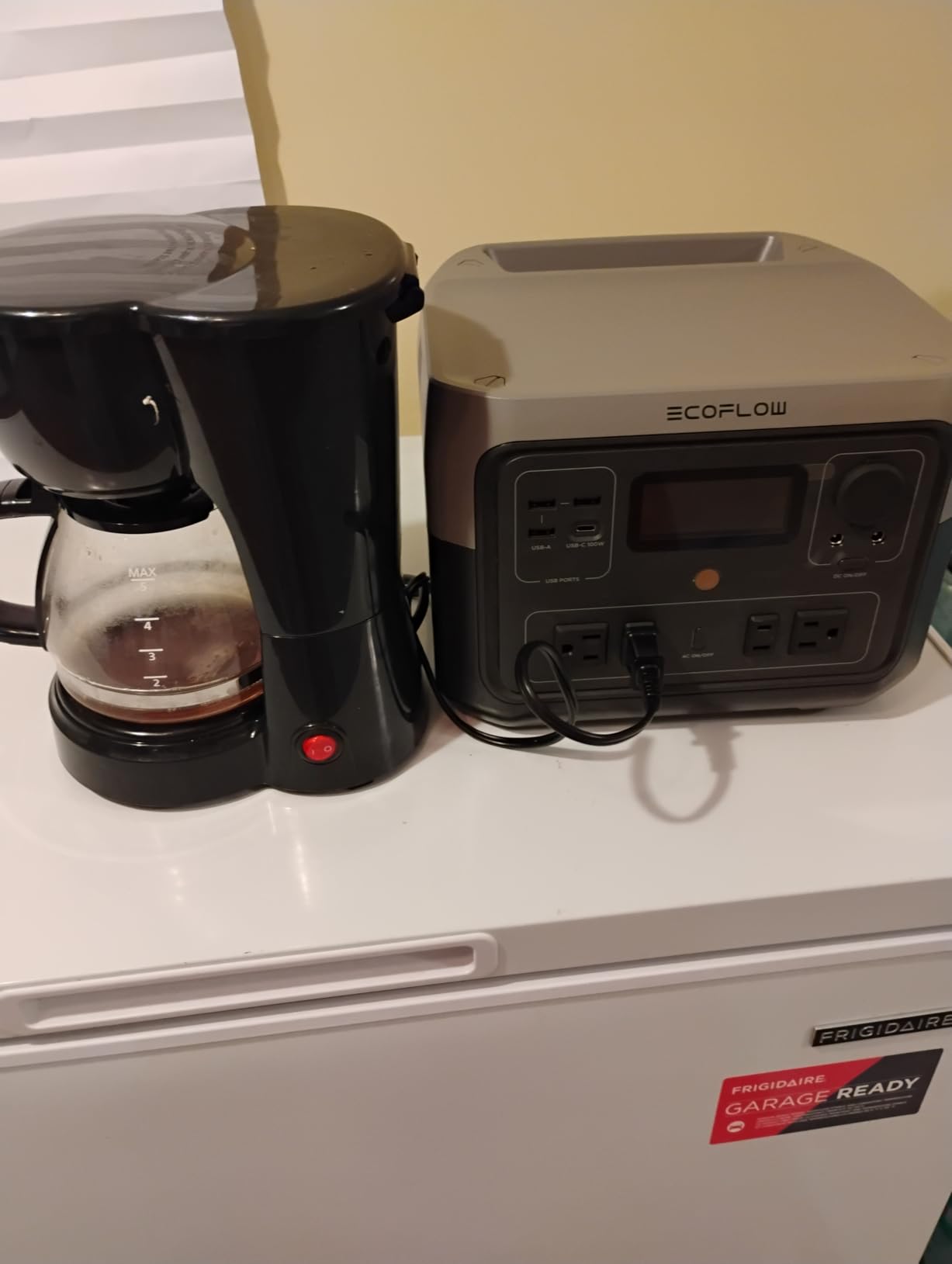
Best budget pick – EcoFlow River 2 Max with 160W Panel. Capacity and output: 499Wh and 1,000W AC across 11 ports. Key feature: a full recharge in 60 minutes at the lowest cost of the eight, with a self-supporting folding panel in the box.
Best for high output – OUPES Mega 1 with 100W Panel. Capacity and output: 1,024Wh expandable to 5,120Wh, 2,000W pure sine wave AC and 4,500W surge. Key feature: 13 ports and a 36-minute 0-80% recharge, the quickest here.
Best for multi-day outage coverage – Jackery Solar Generator 1000 v2 with 200W Panel. Capacity and output: 1,070Wh, 1,500W pure sine wave AC and 3,000W surge. Key feature: the lightest full-size kit at 23.8 lb, with 4,000-plus cycle cells and a reported nine hours on a full-size refrigerator.
Best bundled panel – EcoFlow Delta 3 Classic with 220W Panel. Capacity and output: 1,024Wh, 1,800W continuous and 3,600W surge. Key feature: the largest panel in the roundup at 220W bifacial N-Type, plus sub-10ms UPS switching.
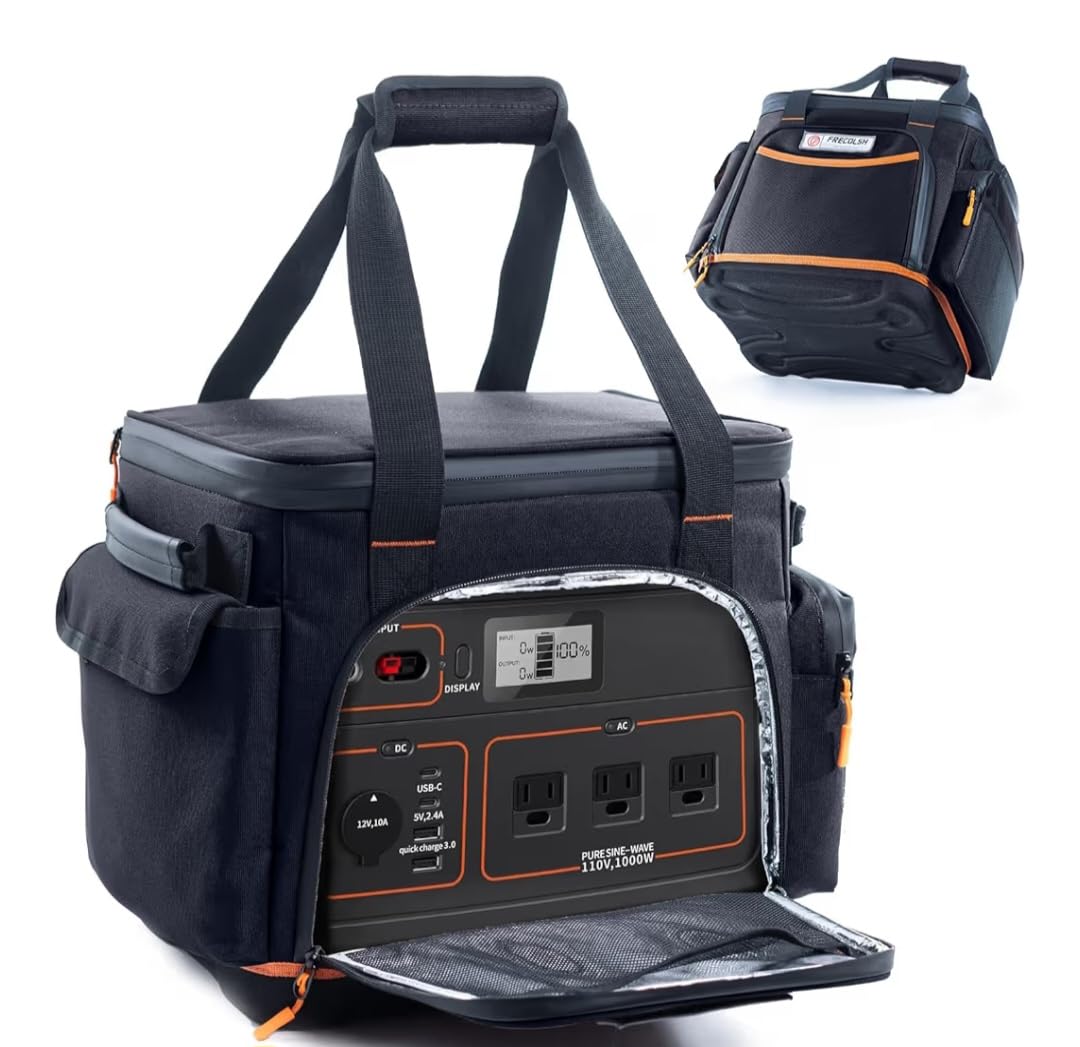
Best feature pack – GRECELL EB1000 with 200W Panel. Capacity and output: 1,000W pure sine wave AC across dual outlets. Key feature: wireless charging, an SOS distress flash that works with the main power off and a series/parallel capable panel.
Best for lightest carry – DaranEner Cubus 600L with 100W Panel. Capacity and output: 576Wh, 600W continuous and 1,200W peak. Key feature: 13.67 lb with a fold-down handle, a 100W MPPT solar input and pass-through charging.
All 8 Solar Generators Compared Side by Side (October 2026)
| Product | Specifications | Action |
|---|---|---|
| Anker SOLIX C1000 + 200W Bifacial Panel |
|
Check Latest Price |
| BLUETTI Elite 100 V2 + 200W Panel |
|
Check Latest Price |
| EcoFlow River 2 Max + 160W Panel |
|
Check Latest Price |
 OUPES Mega 1 + 100W Panel OUPES Mega 1 + 100W Panel |
|
Check Latest Price |
 Jackery Solar Generator 1000 v2 + 200W Panel Jackery Solar Generator 1000 v2 + 200W Panel |
|
Check Latest Price |
 EcoFlow Delta 3 Classic + 220W Panel EcoFlow Delta 3 Classic + 220W Panel |
|
Check Latest Price |
 GRECELL EB1000 + 200W Panel GRECELL EB1000 + 200W Panel |
|
Check Latest Price |
 DaranEner Cubus 600L + 100W Panel DaranEner Cubus 600L + 100W Panel |
|
Check Latest Price |
Capacities here range from 499Wh to 1,070Wh, a spread of more than two hours of extra runtime at typical household loads. Every kit in the table includes a panel and uses LiFePO4 cells.
How We Picked and Ranked These Solar Generators
Five rules shaped this list. First, the station and its bundled panel together had to fall under the 1,000 dollar ceiling, which is how we handled bundles that advertise a low headline figure on the station alone.
Second, we required LiFePO4 chemistry. Forum consensus treats NMC cells as an older standard, and the cycle-life difference is the difference between a unit that stays useful for a decade and one that does not.
Third, we looked at rated continuous AC output rather than peak, surge or power-lifting figures. Marketing numbers of 2,400W, 2,700W and 2,600W describe brief startup windows for resistive loads, not sustained delivery, and we call that out for each kit.
Fourth, we required a panel in the box. A standalone station at this budget often turns out to be useless off-grid until you spend another two or three hundred dollars on a panel, and the total crosses the ceiling.
Fifth, we weighted review volume heavily, since the sub-1,000 tier is flooded with listings that inflate counts and underspecify capacity. One of the eight kits here does not publish its battery size at all, which is a data-quality signal in itself.
We are not lab-testing these units, and we would rather say so than dress up spec sheets as measurements. What we did instead is read large pools of owner reviews, weigh recurring complaints against recurring praise, and check whether reported runtimes match the published wattage arithmetic. For broader context on larger machines, our guides to the best portable solar generators overall and the best portable generators of every fuel type cover what you get when you step past this budget.
1. Anker SOLIX C1000 Review: The Best Solar Generator Under 1000 Dollars
Anker SOLIX C1000 Portable Power Station and 200W Bifacial Panel, 1,056Wh
1056Wh LiFePO4
1800W rated AC, 2400W surge
600W solar input
27.6 lb
5-year warranty
Pros
- 80% recharge in 43 minutes from a wall outlet
- Fast 1.8-hour full solar recharge
- 11 ports including 100W USB-C
- IP68 station rated for five years
- Clear display shows live watts and runtime
Cons
- Heavier than the 23.8 lb Jackery and 25 lb BLUETTI
- No true pass-through charging
- App and firmware connection friction out of the box
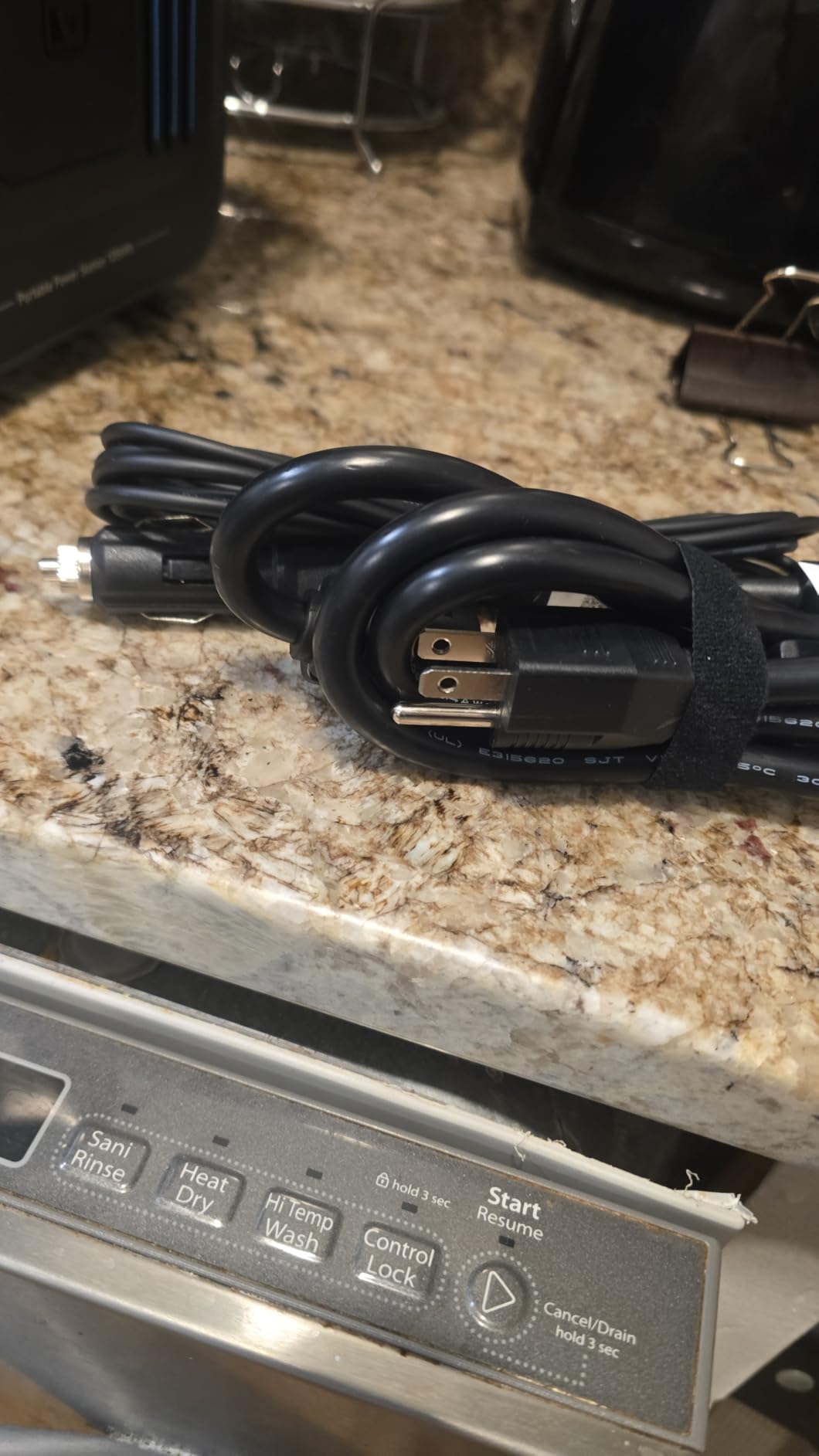
- Short 4-5 ft AC cable included
The Anker SOLIX C1000 is the unit I kept coming back to while working through this list. Owners use it for truck camper backpowering, refrigerator backup lasting 12 to 36 hours, RV travel and quiet overnight backup in place of a gas machine. The pattern across reviews is a near-kilowatt-hour of real storage paired with genuinely fast refill times.
Recharge speed is where it separates itself. With UltraFast mode switched on in the app, it goes from empty to 80 percent in 43 minutes and reaches full in about 58 minutes. That matters more than it sounds, because the scenario where you need backup power most is the scenario where you also have no time to wait.
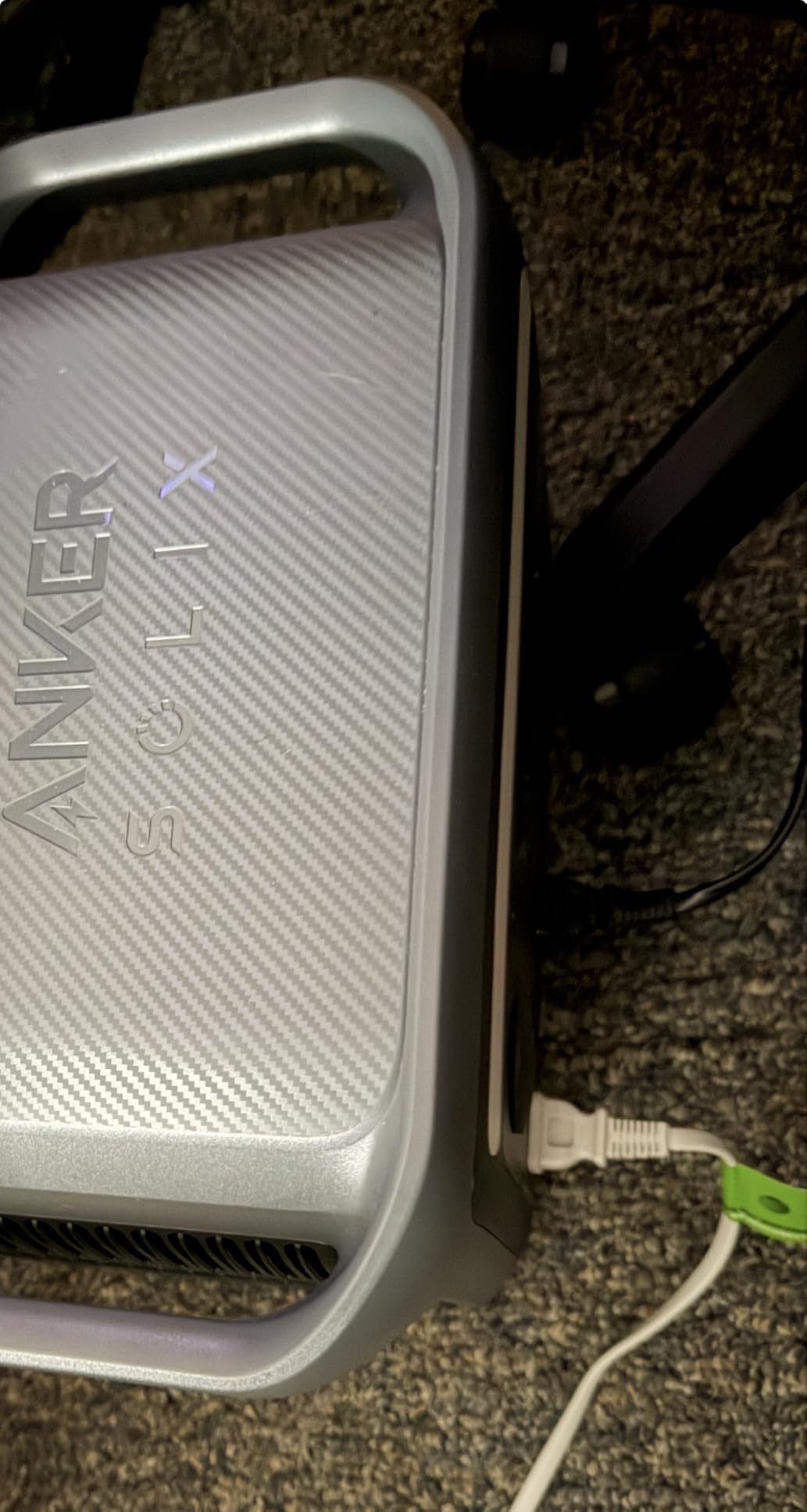
Solar input tops out at 600W, and Anker claims a full recharge in 1.8 hours at that ceiling. In practice that figure assumes ideal conditions. The bundled PS200 panel is bifacial with 23 percent conversion and weighs 11 lb with its stand, which keeps the whole bundle easy to handle on a tailgate or a picnic table.
Output is 1,800W rated with 2,400W of SurgePad headroom for startup spikes. Eleven ports cover everything from a 100W USB-C laptop charge to six AC outlets, and the front display shows percentage, live input and output watts and an estimated runtime, which removes most of the guesswork during an outage.
What you can realistically run on it
A full-size refrigerator running roughly 100 to 300W with startup surges well above that will get through a night easily, and owners report multi-day runs on intermittent cycling. A router, a laptop, LED lighting and a phone charging together draw so little that the capacity reading barely moves.
It also handles larger resistive loads, including most power tools and a coffee maker. Heating and cooling are a different story, and a space heater or portable AC will drain a 1,056Wh bank faster than most people expect.
Where it falls short
The most repeated complaint is weight. At 27.6 lb, several owners say it feels heavier than the listing implies, and getting it up to an attic or a second floor during a storm is a real chore. That is the tradeoff for the 600W solar input ceiling and the fast AC recharge.
There is no true pass-through charging. When you add a load, the unit behaves like an UPS that pauses wall charging and switches to the battery, so a slow top-up becomes no top-up. Bluetooth and Wi-Fi connection issues are common out of the box and are resolved by the required firmware update, which is awkward because the update itself needs that first connection.
2. BLUETTI Elite 100 V2 Review: Best Value Solar Generator Kit
BLUETTI Solar Generator Elite 100 V2 with 200W Solar Panel Included, 1024Wh
1024Wh LiFePO4
1800W AC, 3600W surge
1000W solar input
25 lb
4000+ cycles
Pros
- True pass-through charging on AC input
- Highest solar input ceiling in this group at 1000W
- Full recharge in about 70 minutes with TurboBoost
- 10ms UPS keeps networks and laptops alive
- 30dB silent mode suits overnight indoor use
Cons
- Weight noticeable for a 25 lb unit
- Usable capacity lands closer to 768Wh in DC tests
- Power Lifting mode cuts runtime
- Panel arrives in a separate box
The Elite 100 V2 is the kit I recommend to anyone who wants the most flexible recharge setup at this budget. Owners highlight class-leading wall recharge speed, genuine pass-through operation and a 10ms UPS that keeps routers, laptops and monitors running straight through an outage without a flicker.
Pass-through is the feature worth understanding. On most units, adding a load stops wall charging. Here, the station can run devices directly off AC input while topping up the battery, which turns it into a small uninterruptible supply for a home office or a network closet.
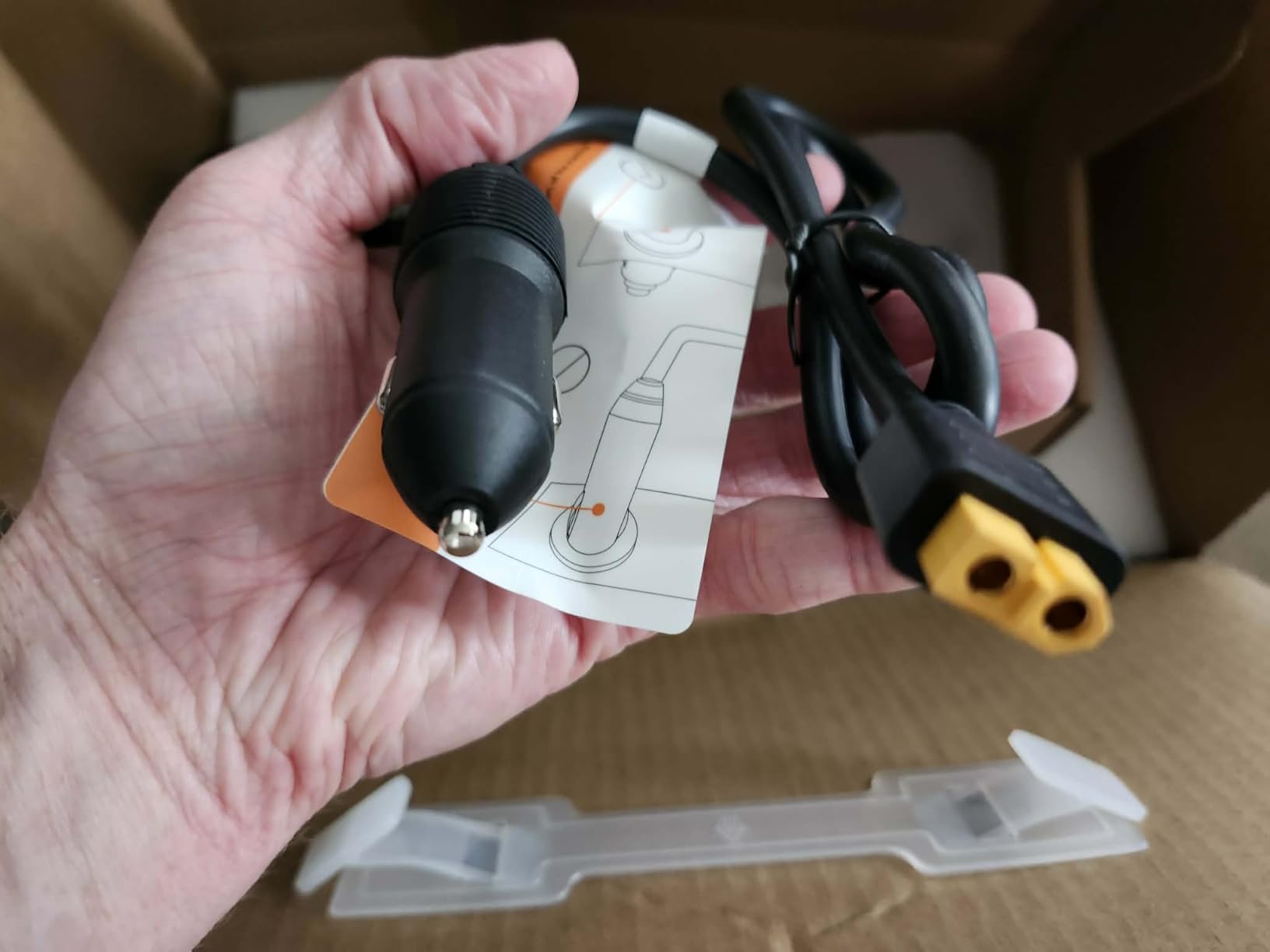
Battery chemistry is LiFePO4 rated at 4,000-plus cycles, and AC charging runs at 1,200W TurboBoost for 0-80 percent in 45 minutes and full in roughly 70. The 1,000W solar input ceiling is the highest in this group, well above the 500W to 600W on the Anker and EcoFlow units, and the XT-60 input plus standard connectors make pairing third-party panels painless.
Output is 1,800W AC with Power Lifting up to 2,700W and 3,600W surge. Eleven ports include 100W USB-C that fully charges a 16-inch MacBook Pro, and silent mode runs at 30dB, quiet enough to sleep beside.
What you can realistically run on it
Reviewers use this unit for 12V coolers, CPAP machines, PA systems, power tools and general home outage backup. The 1,024Wh bank handles a refrigerator overnight with room left for lights, networking and device charging.
The 10ms switchover time makes it the pick here if you rely on powered networking, a home server or a desktop that will not tolerate a reboot. Just test the switchover with your own gear before you need it, because the tolerance of each device differs.
Where it falls short
Capacity is the honest weak point. Owners running DC fridges report closer to 768Wh usable after conversion losses, well below the 1,024Wh headline, which is a good reminder that nameplate watt-hours are not the same as delivered watt-hours.
Power Lifting mode is harder on the cells and shortens runtime, so treat the 2,700W figure as a brief convenience rather than a rating. At 25 lb it is still a two-hand carry, and the solar panel is packaged separately from the station.
3. EcoFlow River 2 Max Review: Best Budget Solar Generator Kit
EF ECOFLOW Portable Power Station River 2 Max 500 2 & 160W Solar Panel
499Wh LiFePO4
1000W AC across 11 ports
60-minute full AC recharge
160W folding panel
5-year warranty
Pros
- Lowest cost of the eight bundles and still includes a panel
- Full recharge in 60 minutes on a wall outlet
- 499Wh LiFePO4 rated for 3000+ cycles
- 11 outputs handle many small devices at once
- Panel is self-supporting so no separate kickstand
Cons
- Smallest battery capacity in this group at 499Wh
- 160W panel is far smaller than rivals
- Bundle weight listed at 13 kg is heavy for a grab-and-go kit
The River 2 Max is the entry point for buyers who want a complete kit without spending most of the budget. Buyers treat it as the value option: fast 60-minute charging, a durable LiFePO4 pack rated for 3,000-plus cycles, and enough ports to run a spread of low-draw camping gear at once.
Eleven outputs is genuinely useful for a 499Wh unit. Phones, tablets, cameras, a fan, LED lights and a 12V cooler can all run at the same time without any single device dominating the budget.
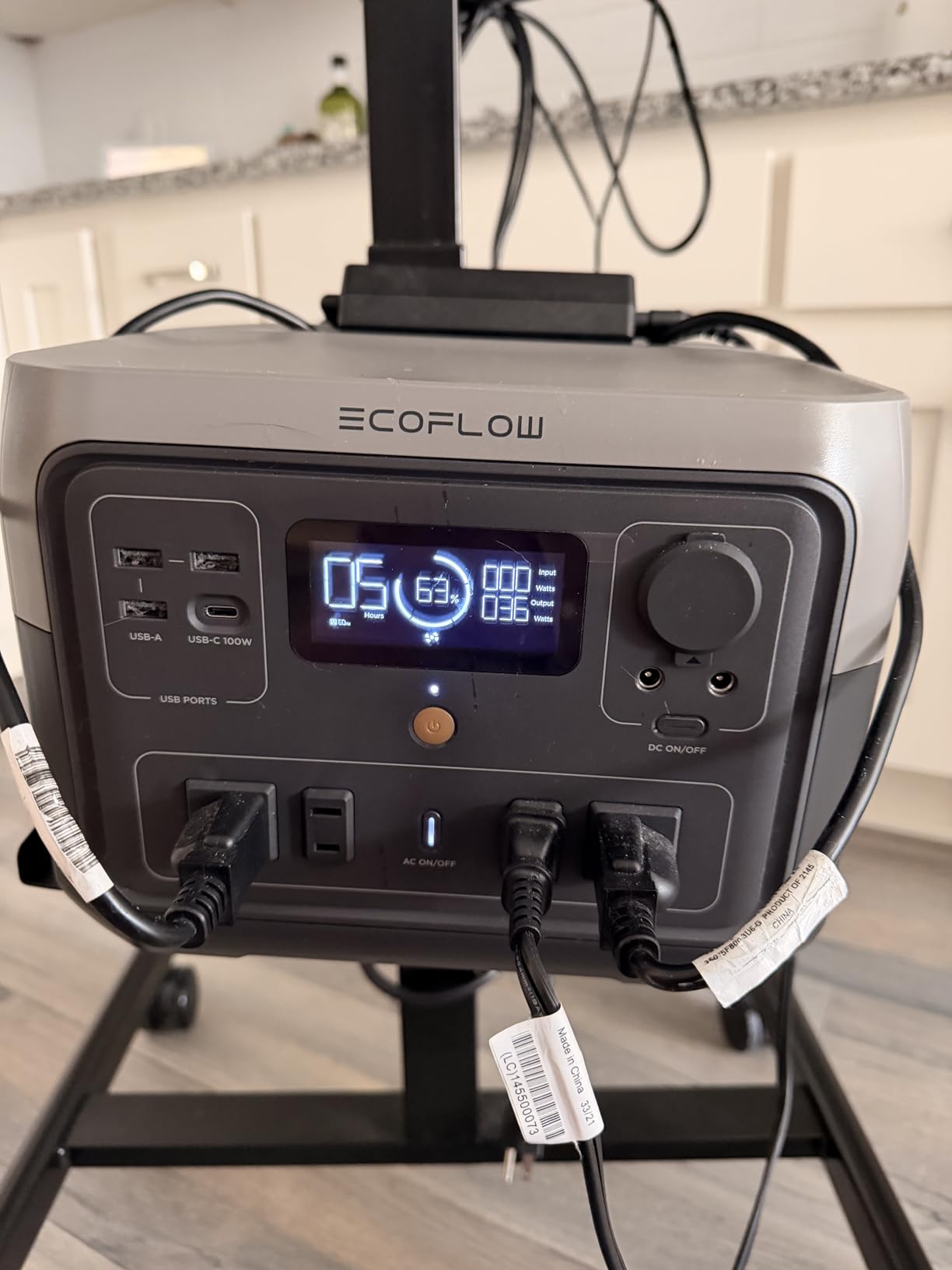
Recharging options are broad for this class: full in about 60 minutes on AC, roughly 4 hours from the included 160W panel, plus top-up from a car outlet or USB-C. The folding panel is self-supporting, so you do not need to find a separate stand, and it carries an IP68 weatherproof rating.
The cube form factor packs neatly into a vehicle, which is the use case it sells best at. If you are camping or working from a van, this is the kit we would grab first.
What you can realistically run on it
Phones, lights, fans, a laptop, a router and small coolers are all comfortable. A 12V cooler or a portable fridge is realistic for a day or two depending on ambient temperature, since compressor duty cycles climb in the heat.
It will not run a coffee maker, a microwave or a space heater for any useful length of time, and starting a compressor that draws close to 1,000W will pull the runtime down sharply.
Where it falls short
Capacity is the limit, and it is a real one. At 499Wh it is less than half the storage of the 1kWh-class kits here, so it covers essentials rather than a household.
The 160W panel is roughly half the size of the 220W panel bundled with the EcoFlow Delta 3 Classic at a similar cost, so off-grid replenishment is slow. Be aware too that listings describe the bundle weight as 13 kg, which is heavy for something marketed as grab-and-go.
4. OUPES Mega 1 Review: Best High-Output Solar Generator
OUPES Mega 1 Solar Generator with 100W Panel Included, 2000W 1024Wh LiFePO4
1024Wh expandable to 5120Wh
2000W pure sine wave AC
4500W surge
27.8 lb
5-year warranty
Pros
- Highest continuous output in this group at 2000W with 4500W surge
- Fastest recharge here at 36 minutes to 80 percent
- 13 ports including two 100W USB-C PD
- Expands to 5.12kWh with two extra batteries
- Under 20ms UPS for computers and medical devices
Cons
- Only 100W panel in the box
- 800W solar input needs three separate 240W panels
- One of the higher one-star shares in the group
The Mega 1 leads this group on output. At 2,000W of continuous pure sine wave AC with 4,500W of surge, it drives more household loads simultaneously than anything else here, and it also recharges faster.
Recharge is the headline number here: 0-80 percent in 36 minutes on AC, and 26 minutes when AC and solar run together. For a household preparing ahead of storm season, that speed is the difference between topping up after a long day and still having reserve by bedtime.
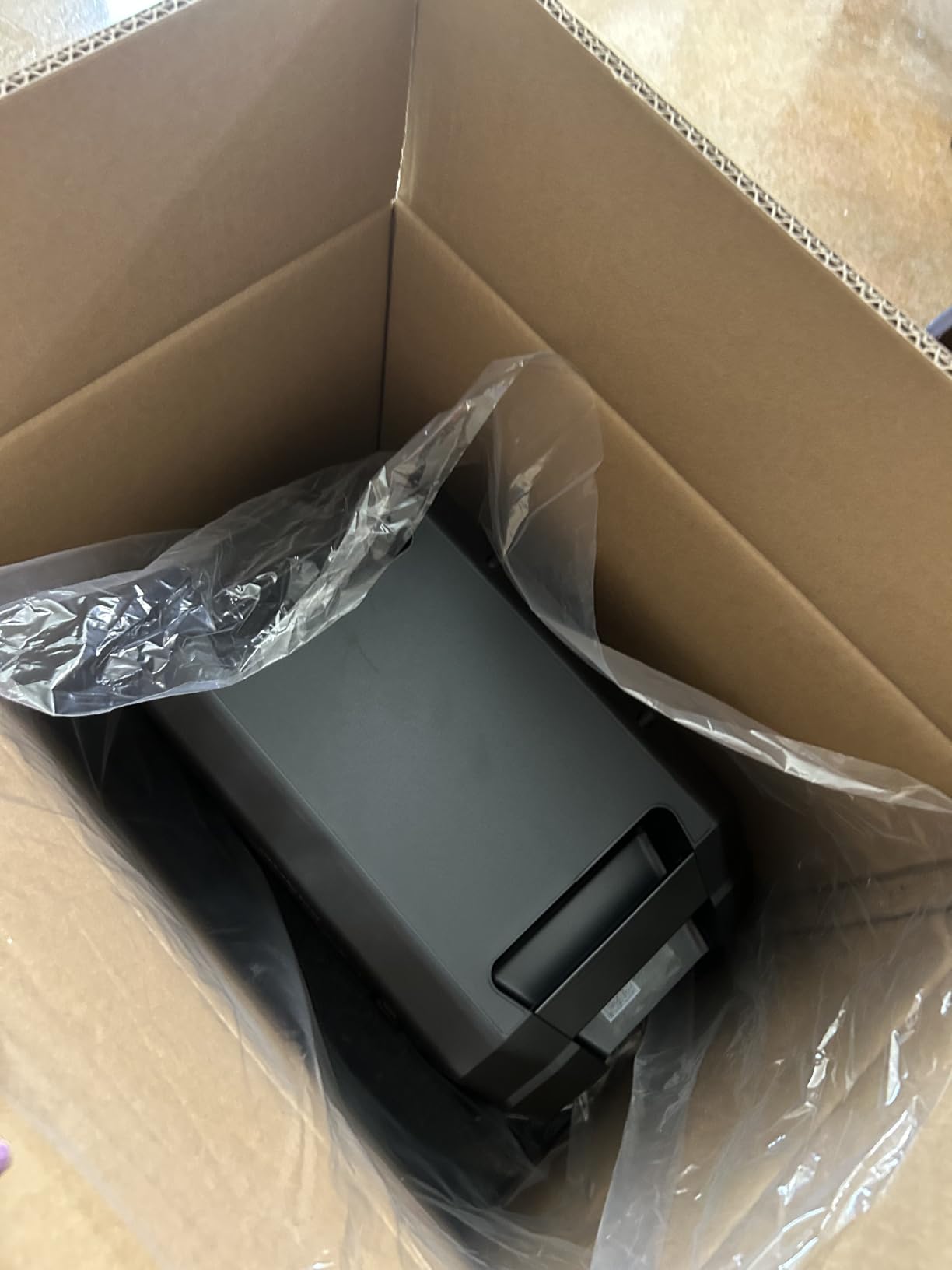
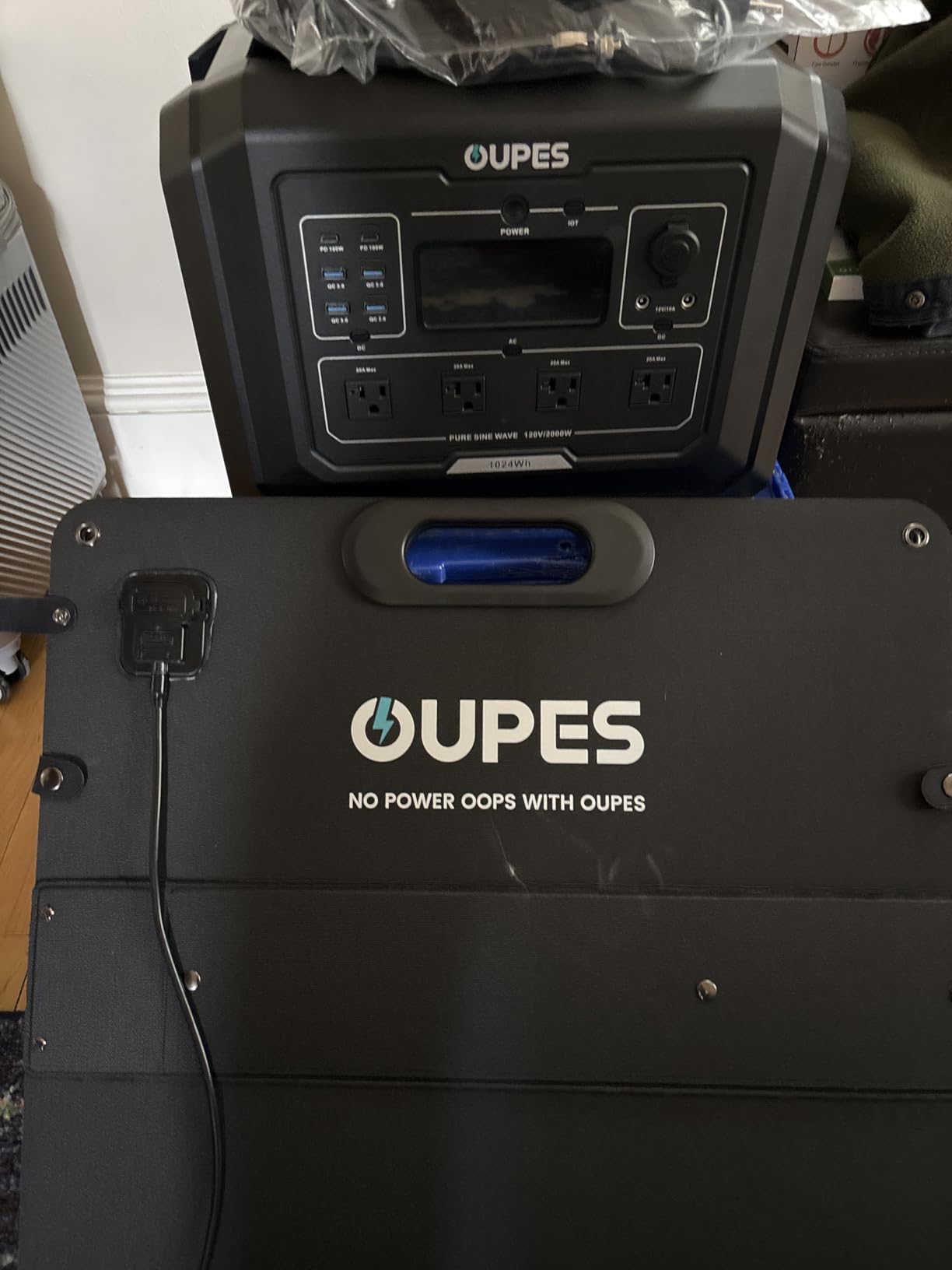
Thirteen ports is the most generous layout in the group: four AC outlets at 120V and 2,000W, two 100W USB-C PD ports, four USB-A QC3.0, two DC5521 12V outputs and a 12V car socket. The battery is LiFePO4 rated for 3,500-plus cycles, and the app shows live input, output and battery level.
Expansion is the sleeper feature. Two B2 Extra Batteries take the capacity from 1,024Wh to 5,120Wh, which makes this the only kit here that can grow into a small off-grid setup.
What you can realistically run on it
With 2,000W continuous you can run a refrigerator, a router, lights, a laptop and a coffee maker at the same time without any of them fighting for headroom. The 4,500W surge covers compressor and motor startups that would trip a smaller inverter.
Under 20ms UPS switchover makes it a candidate for computers and powered medical devices, though you should test your specific equipment first and see the guidance further down.
Where it falls short
The included panel is only 100W, one of the smallest in this roundup, and that gap between panel and station matters. The advertised 800W solar input ceiling requires three separate 240W panels, so off-grid replenishment on day one is slow by design.
Roughly 7 percent of reviews are one star, the higher share in the group alongside the GRECELL, which points to more unit failures than the others and a support experience that is not as settled as the bigger brands.
5. Jackery Solar Generator 1000 v2 Review: Best for Multi-Day Outages
Jackery Solar Generator 1000 v2 and 200W Solar Panel,1070Wh,1500W AC
1070Wh LiFePO4
1500W pure sine wave AC
3000W surge
23.8 lb
5-year warranty
Pros
- Lighter than most full-size 1kWh rivals at 23.8 lb with a foldable handle
- 1070Wh with 4000+ cycle cells rated for a 10-year life
- Reported 9 hours on a full-size side-by-side refrigerator
- Three pure sine wave AC outlets plus 100W USB-C
- Panel has magnetic clasps and a sun-alignment dial
Cons
- Highest cost in the group for the capacity
- 1-hour charge is an app-only emergency mode
- Runs hot on the exhaust side while charging
- Short panel lead cable limits placement
The Jackery Solar Generator 1000 v2 is the most recognizable name here and the one most people will have already considered. What justifies its cost is portability and proven runtime: at 23.8 lb with a foldable handle, it is the lightest full-size kit in the roundup and easy to carry with one hand.
Runtime is the other argument. Owners report about nine hours on a full-size side-by-side refrigerator, which is the sort of real-world figure that matters when a storm knocks out power for two days.
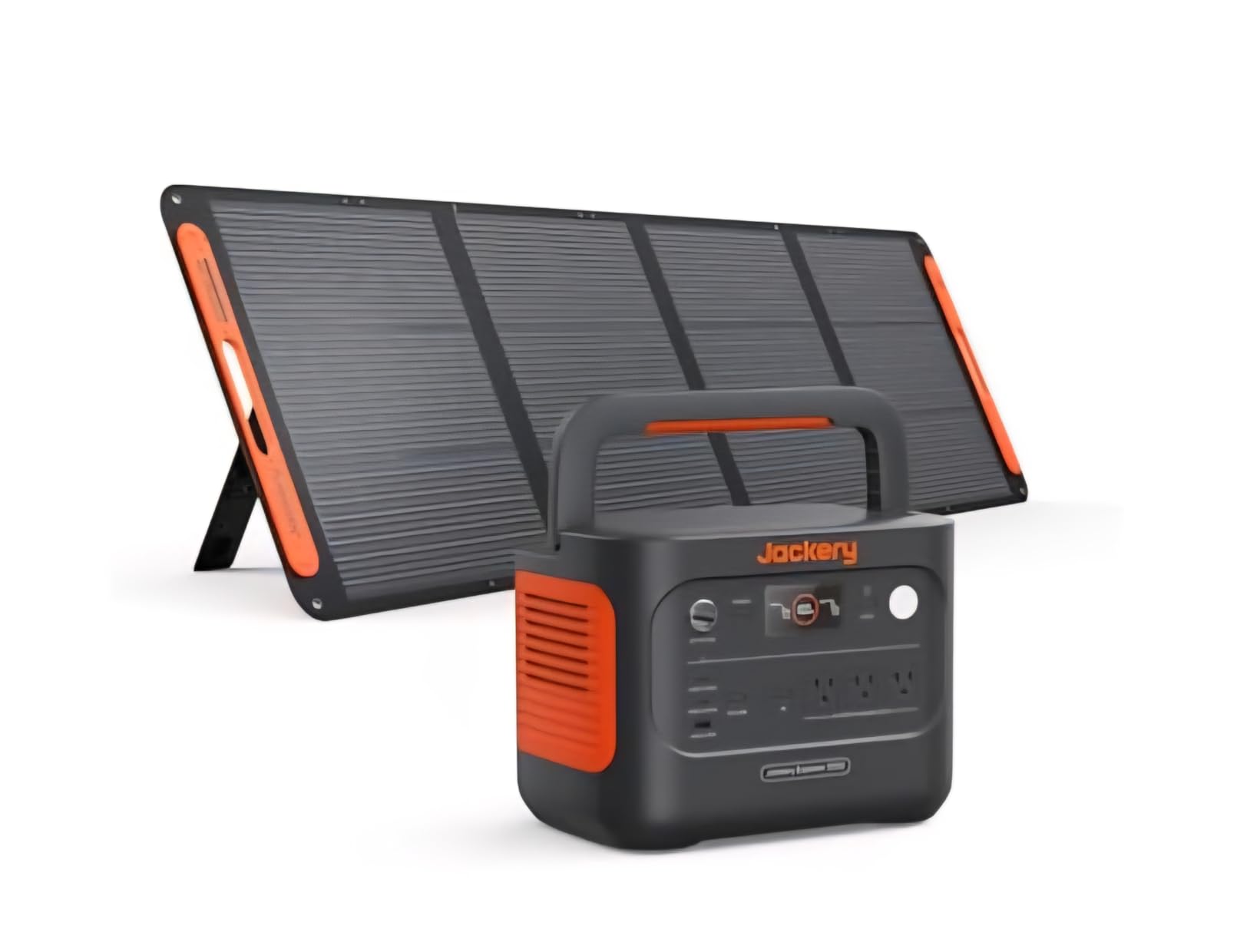
Charging is 0-100 percent in one hour with Emergency Charging enabled in the app, and 1.7 hours by default. That default setting is the one to keep for battery longevity, and it is worth understanding that the headline hour depends on the app being set up correctly.
Ports include two USB-C at 100W PD, one USB-A, a 12V car port, three pure sine wave AC outlets and LED lighting. There is a 30dB quiet overnight charging mode and an energy efficiency mode in the app, plus two 24V solar input channels.
What you can realistically run on it
At 1,070Wh and 1,500W rated output it covers the standard essential-loads list: refrigerator, router, lighting, laptops, phone charging and a television for a few hours. Pure sine wave output is clean enough for sensitive electronics.
The 200W panel has magnetic clasps and a sun-alignment dial, so getting a good angle is fast once you stop for the day. Charging and running devices at the same time works, which matters when the weather is marginal.
Where it falls short
You pay a premium here, and several rivals deliver more capacity for less. If budget is the deciding factor, the BLUETTI or the OUPES cover similar ground at a lower cost.
The one-hour charge claim needs context, the panel is bulky and sags in the middle when propped up, and the short lead between panel and station limits where you can place them relative to each other. Some buyers also report customer service and promotional fulfillment issues.
6. EcoFlow Delta 3 Classic Review: Best Bundled Panel
EF ECOFLOW Solar Generator Delta 3 Classic with 220W Solar Panel, 1024Wh
1024Wh LiFePO4
1800W output, X-Boost to 2600W
500W solar input
220W bifacial panel
5-year warranty
Pros
- Largest bundled panel in this group at 220W bifacial N-Type
- 0-80 percent in 45 minutes on AC
- Under 10ms UPS for desktops
- servers and medical devices
- App controls charge rate
- per-port output and firmware
- X-Boost lifts select resistive loads to 2600W
Cons
- Classic version has no external battery expansion
- 15A solar limit caps low-voltage panel arrays
- Highest-output modes limited to one AC outlet
- Smallest review pool of the eight
The Delta 3 Classic includes the largest panel in this roundup, and that is the reason to buy it. A 220W bifacial N-Type panel at up to 25 percent conversion produces roughly 190W to 200W even in partial sun, which meaningfully shortens off-grid refill time compared with a 100W or 160W bundle.
Owners report using the unit for sump pumps, refrigerators, lights, fans, outdoor movie nights and general camping. Build quality gets consistent praise, described as solid and EV-grade, with a CTC chassis and a full battery management system.

AC charging does 0-80 percent in 45 minutes with X-Stream charging, and the app lets you dial the AC rate down to reduce heat and extend battery life. A full charge from the bundled panel takes about 5.8 hours.
There are three AC outlets, one USB-A at 18W, one USB-C at 30W and one USB-C PD at 100W, alongside sub-10ms UPS switchover for PCs, servers and medical devices.

What you can realistically run on it
Sump and well pumps are the standout use case for owners, because the 3,600W surge headroom handles startup current that would trip a smaller unit. Fridges, fans, lighting and a full weekend of camping loads are all comfortable.
With the app you can see per-port output in real time, which makes it the easiest kit here to diagnose a load problem quickly during an outage.
Where it falls short
The Classic does not expand. The full DELTA 3 supports external batteries, but this version does not, so 1,024Wh is all you get, and that is a real limit if your needs are growing.
Solar input is capped at 500W through XT60 at 15A maximum, which means panel arrays under roughly 33V DC cannot reach that ceiling even if you buy more panels. Higher output modes like X-Boost also work on one AC outlet at a time. The manufacturer does not publish the weight, and the review pool is the smallest of the eight.
7. GRECELL EB1000 Review: Best Feature Pack
1000W Portable Power Station & 200W Foldable Solar Panel Generator Kit
1000W pure sine wave AC
Dual 100-120V outlets
60W PD USB-C
200W ETFE panel
Multi-layer BMS
Pros
- Wireless charging pad is unusual at this budget
- SOS distress flash works with main power off
- Pass-through charging runs devices while recharging
- 200W ETFE panel supports series and parallel linking
- Compact footprint for a 1000W unit
Cons
- Shortest warranty of the eight at 12 months
- Battery capacity not disclosed by the manufacturer
- Only two AC outlets
- Only 60W USB-C PD against 100W on rivals
- Lowest average rating in the roundup
The GRECELL EB1000 has the largest review pool of the eight and the lowest average rating, which tells you something useful about how this tier of product varies in quality. Owners like the wireless charging pad and the SOS light, and reviewers consistently flag the short warranty and undisclosed capacity.
Those extra features are genuinely unusual at this budget. The LED light has a double-click SOS distress flash that functions even when the main power is off, which is a real benefit off-grid or in a roadside emergency.
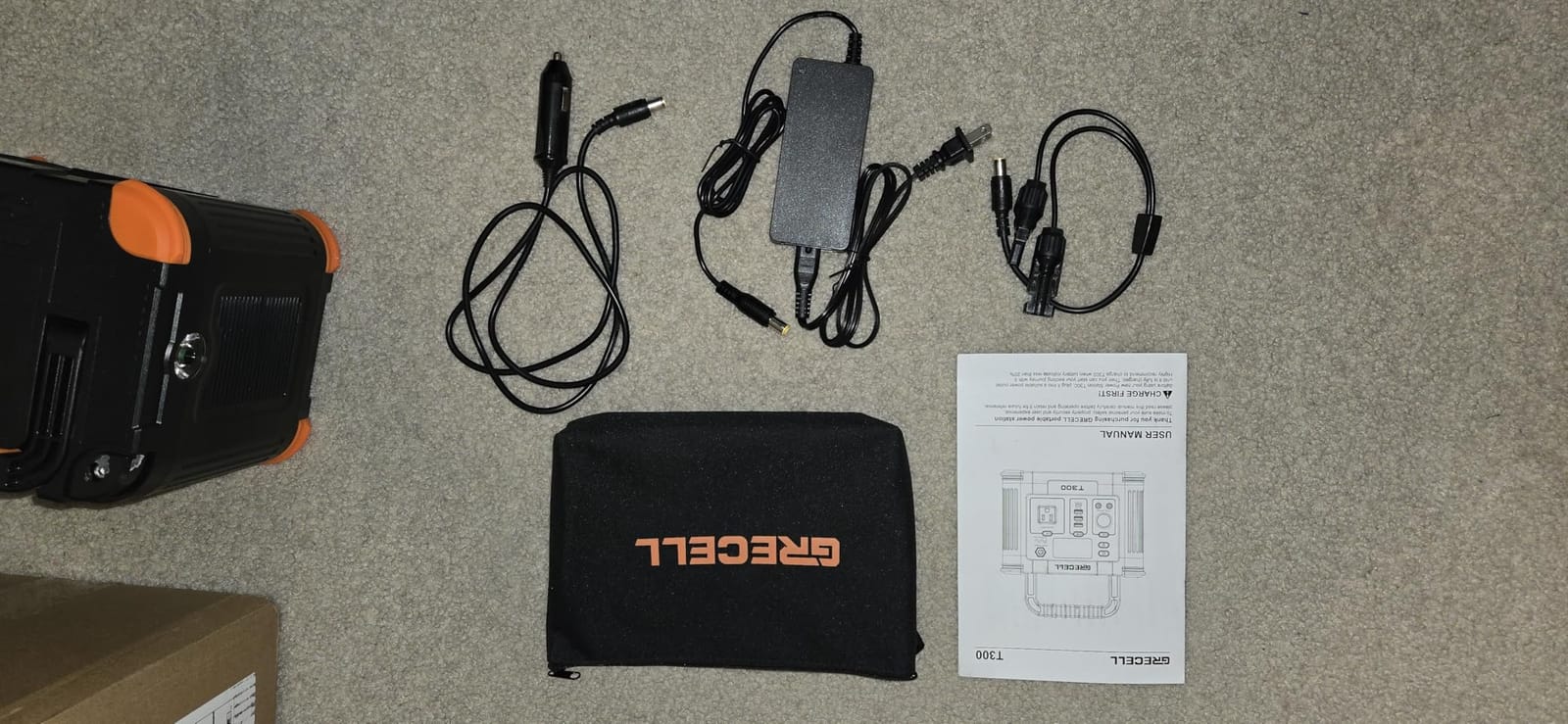
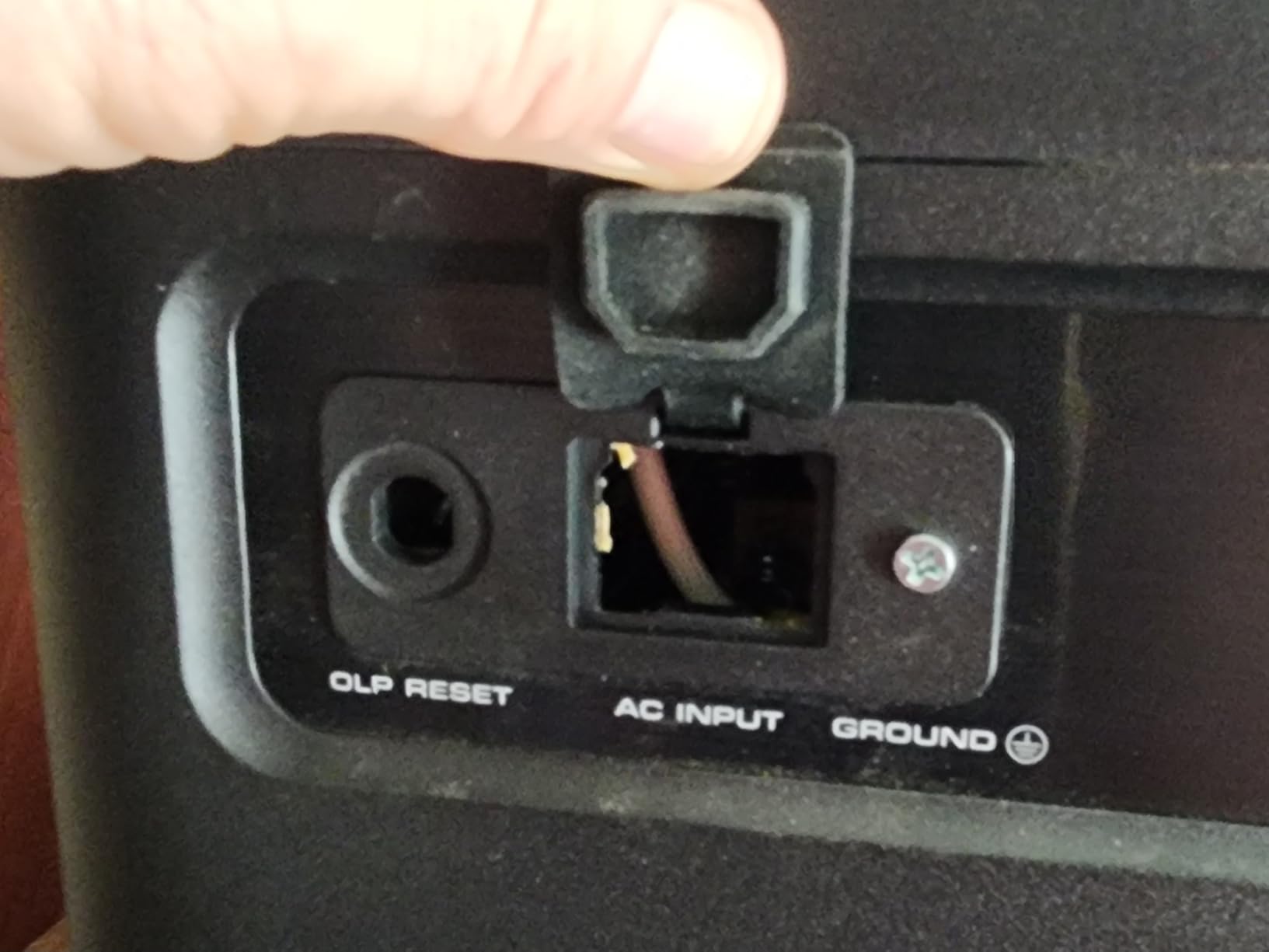
Output is 1,000W of pure sine wave AC across two outlets, with a 60W PD USB-C port, several QC3.0 USB-A ports, a 12V 10A car socket, a wireless charging pad and a DC5525 output. Pass-through charging lets devices stay powered while the station recharges.
The bundled 200W monocrystalline panel uses an ETFE surface at 23 percent conversion with an adjustable kickstand, and it supports series and parallel connection so you can build a faster-charging array later. A multi-layer BMS handles overcharge, over-discharge, overload, short circuit and overheating.
What you can realistically run on it
Toolboxes, laptops, televisions, lighting and phone charging are all within reach of 1,000W of pure sine wave output. The compact 7.9 by 7.9 by 11.6 inch footprint helps in a small vehicle or a tight closet.
If you are buying mostly for the panel and the feature set rather than for a long runtime, the kit delivers a lot for the money.
Where it falls short
The manufacturer does not publish the battery capacity, which makes runtime impossible to compare properly against anything else on this list. That single omission should push cautious buyers toward a competitor that states its watt-hours.
The warranty runs 12 months, the shortest of the eight, against five years on most rivals and three years on the DaranEner. USB-C PD tops out at 60W rather than 100W, there are only two AC outlets, and 10 percent of reviews are one star.
8. DaranEner Cubus 600L Review: Best for Lightest Carry
Solar Generator with Panels Included, Portable Power Station 1200W Peak
576Wh LiFePO4
600W continuous, 1200W peak
100W MPPT solar
13.67 lb
3-year warranty
Pros
- Lightest of the eight at 13.67 lb with a fold-down handle
- 100W MPPT input accepts smaller cheaper panels
- Pass-through charging
- Three AC outlets plus 100W PD USB-C
- Responsive service replaced failed units without returns
Cons
- Only 100W panel bundled
- One of the two smallest battery banks here at 576Wh
- Only 600W continuous despite the 1200W peak headline
- Some units shut off during USB-C PD charging
- Battery gauge does not match remaining capacity
The Cubus 600L is the lightest of the eight complete kits at 13.67 lb, and it is the easiest to move when you need power somewhere other than where it is stored. Buyers use it for routers, televisions, phones, laptops, e-bike battery top-ups and small loads during outages.
Its most interesting technical detail is the 100W MPPT solar input. MPPT is normally a feature of larger charge controllers, and having it here means cheaper, smaller third-party panels can be wired together in parallel to speed off-grid charging.
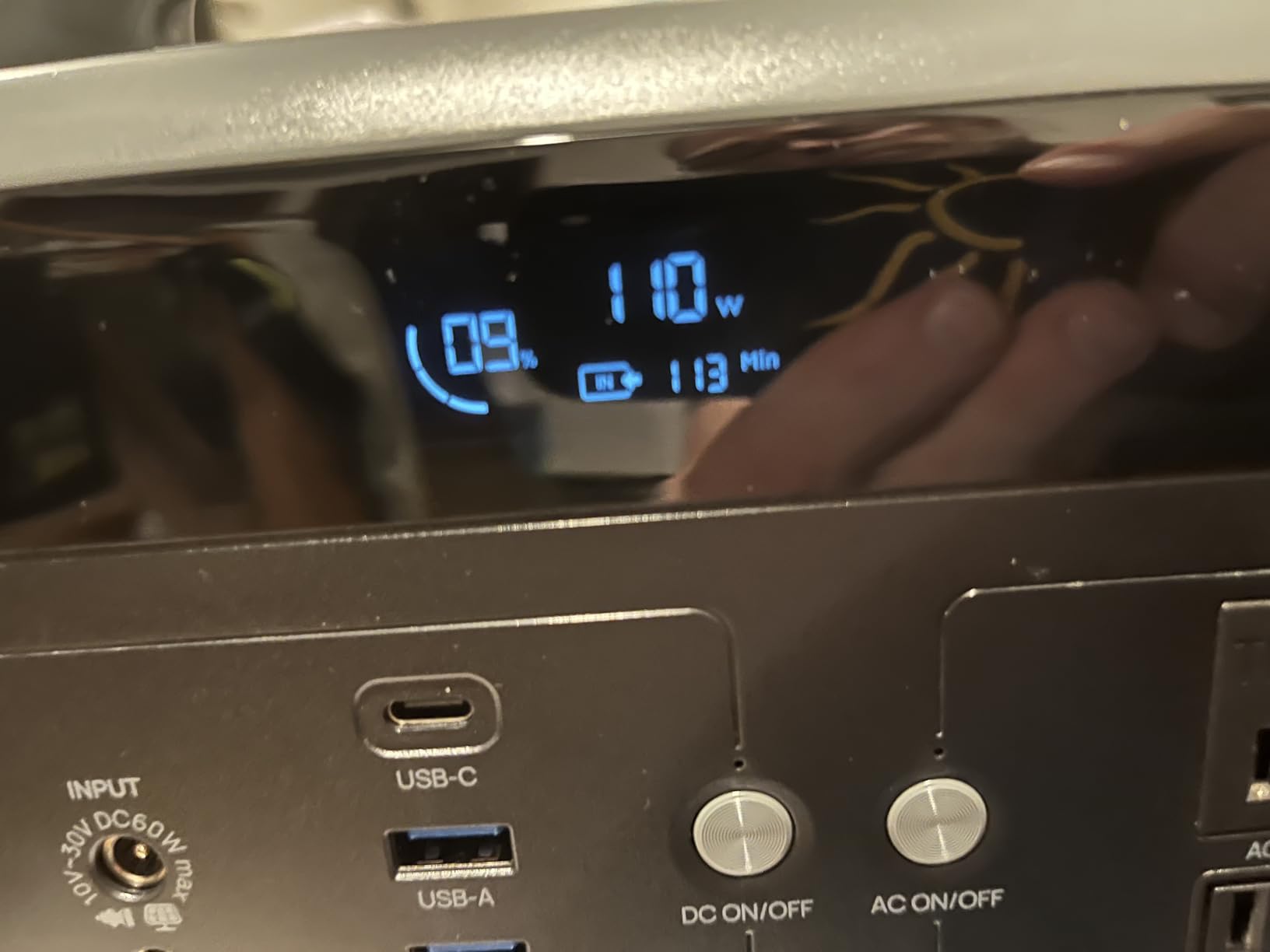
Recharging comes in three forms: 100W MPPT solar, 130W AC wall and 120W car. Pass-through charging lets devices run while the station refills, and the seven-port layout includes three pure sine wave AC outlets, a 100W PD USB-C, two 18W USB-A ports and a 120W car socket.
The battery is LiFePO4 rated at 3,000-plus cycles to 80 percent with a stated 10-year design life, and the warranty is three years with 24/7 support. Owners frequently mention units being replaced without a return, which is the strongest service story we found at this budget.
What you can realistically run on it
Networking, televisions, phone charging, a laptop and lighting all sit comfortably within 576Wh. The 100W USB-C PD port charges a laptop at a reasonable speed, which is more than many competing compact kits offer.
It is a sensible choice for an apartment, a travel vehicle or a home office where the goal is keeping the internet and communications alive rather than running a household.
Where it falls short
Continuous output is 600W, even though the listing headline pushes 1,200W peak. Treat the peak figure as a startup allowance, not a rating, and expect a coffee maker or microwave to be out of reach.
At 576Wh it is one of the two smallest batteries in the roundup. Some owners report units shutting off during USB-C PD charging once the return window closed, the battery gauge does not always match true remaining capacity, and car charging cables are not included. Units can also arrive fully discharged, which is worth conditioning before first use.
Bundle or Standalone: Does the Kit Include a Solar Panel?
Ask this question before anything else. The most repeated complaint across prepper and off-grid forums for this exact query is buying a listing advertised as a solar generator and discovering the panel is a separate purchase, which pushes the real total over the ceiling you set.
Every kit in this roundup includes a panel, but they are not equal. Three bundles here ship 200W or 220W panels, one ships 160W, and two ship only 100W. Panel size is the biggest driver of how quickly the station refills off-grid, and it is not visible in the headline wattage of the power station.
Two details catch people out. Most of these bundles deliver the station and the panel in separate boxes, so plan for that when you are counting on getting power running in a hurry. And the station’s solar input ceiling is a separate number from the panel wattage, which matters if you plan to add panels later.
Our advice is to buy the kit if you are buying for blackout backup where the wall outlet is your primary recharge path. Buy standalone only if you already own panels you like, since a station on its own is often not enough to keep a home running through a long outage.
What a Sub-1000 Power Station Can Actually Run
Runtime comes from one formula: watt-hours divided by watts gives hours. A 1,024Wh station running a 150W load gives roughly 6.8 hours before losses, and a 499Wh station running the same load gives about 3.3 hours. Everything else on this list follows from that arithmetic.
Refrigerators are the case people ask about most. A typical fridge draws 100W to 300W while running with a startup surge well above that, so a 1,000Wh unit gives roughly 3 to 8 hours of continuous compressor time, or one to two days of duty-cycled operation. One owner on the Jackery reports nine hours on a full-size side-by-side.
Networking is the easiest win. A router and a modem together pull 15W to 25W, which means a 500Wh unit runs a network for well over a day, and UPS mode keeps them alive without a visible interruption.
Lighting, phone charging and laptops barely dent any of these banks. A 65W laptop charger running for four hours consumes about 260Wh, so even the smallest kit in this roundup handles several hours of remote work.
Where expectations need adjusting: a space heater at 1,500W, a portable air conditioner, a microwave and a 1,000W coffee maker will each empty a 1kWh station in under an hour of continuous use. Heating and cooling are the loads that push you into a larger, more expensive machine.
Power tools fall in the middle. A circular saw or a heat gun will run for a meaningful session on any of the 1kWh-class kits here, and the 4,500W surge on the OUPES Mega 1 and the 3,600W surge on the EcoFlow Delta 3 Classic cover startup spikes comfortably.
Medical equipment is its own category and worth reading the dedicated section below before you buy anything.
Solar Panel Reality Check: Nameplate vs Real Output
A 400W panel will run a fridge, but slowly. In good conditions a 400W panel realistically delivers 200W to 300W, which is enough to offset a refrigerator’s average draw on a sunny day and nowhere near enough to refill a 1kWh bank quickly.
Expect the numbers to be lower than the label in several ways. Heat cuts output, angle and shading cost more, and a panel that is nominally 200W may deliver 125W to 145W in average measured conditions. Budget for roughly half to three-quarters of nameplate as a working estimate.
That reframes what a panel is for. Included panels at this budget are an emergency top-up and a way to keep a station alive over a multi-day outage, not a replacement for wall charging. The 200W panel in the Anker, BLUETTI, Jackery and GRECELL bundles restores a 1kWh bank in roughly 6 to 7 hours of strong sun.
The EcoFlow Delta 3 Classic is the outlier here. Its 220W bifacial panel produces around 190W to 200W in partial sun and recharges the station in about 5.8 hours, which is why it is the pick if you will genuinely be off-grid.
Before buying a second panel, check the station’s solar input ceiling and its maximum current. The Delta 3 Classic accepts 500W at 15A maximum, so a low-voltage array cannot hit that ceiling, and the BLUETTI’s 1,000W ceiling gives you the most room to add panels later.
How Long a 1000Wh Station Lasts in a Blackout?
A typical household keeping the essentials running draws 200W to 600W in aggregate, which is the number worth planning against. On a 1,024Wh bank that is roughly 1.7 to 5 hours.
The strategy that works is prioritization rather than endurance. Run the refrigerator, one lamp, the router and phone charging continuously, and switch everything else off. Reviewers who report multi-day coverage are almost all doing exactly that.
Cycling matters too. A fridge that draws 150W on average across an hour has a very different profile from a load that pulls 150W continuously, so a duty-cycled appliance extends your window far more than the nameplate suggests.
Be honest about the limit. Two weeks without electricity, which is the scenario forum users most often describe, is beyond what any sub-1,000 station can cover for a household. These units buy you a night or two of normal life with a refrigerator running, not a long-term replacement for grid power.
For longer outages, the right move is to add capacity. The OUPES Mega 1 expands to 5,120Wh with two extra batteries, and our guide to solar generators for winter power outages covers the larger formats built for multi-day events.
Jackery vs EcoFlow vs Anker SOLIX vs BLUETTI
If you want one brand answer, Anker SOLIX and BLUETTI are the two that come out strongest in the sub-1,000 tier. Anker wins on recharge speed and owner volume. BLUETTI wins on solar input headroom and pass-through behavior.
Anker’s strength is speed and polish. A 43-minute 0-80 percent recharge, an IP68 station and a 4.7 rating across more than 2,100 reviews is a mature product, and the app-based recharge control is more granular than most rivals.
BLUETTI’s strength is openness. A 1,000W solar input ceiling, XT-60 connectors and true pass-through charging make it the easiest kit to pair with panels and equipment you already own, and prepper communities name BLUETTI most often as the trusted brand in this class.
EcoFlow wins on app depth and panel options. The Delta 3 Classic pairs the deepest software here with the largest bundled panel, and the River 2 Max is the lowest-cost complete kit in the roundup.
Jackery wins on portability and recognition. The lightest full-size unit at 23.8 lb with the strongest reported refrigerator runtime, though it costs the most of the eight and its charging headline needs context.
For camping and RV use specifically, our guides to the best solar generators for camping and best portable solar generators for RV camping go deeper on weight, port layouts and low-draw setups.
Medical Devices, UPS Mode and Safe Indoor Use
Powered medical equipment is the most upvoted concern in the forums covering this topic, and it deserves a straight answer. Yes, these units can run a CPAP machine or an oxygen concentrator, but only with preparation.
Check three things. Pure sine wave output protects sensitive electronics, and every kit in this roundup except the GRECELL specifies it. UPS switchover time determines whether your device notices the outage, and 10ms or less, which the BLUETTI, EcoFlow Delta 3 Classic and OUPES offer, is inside the tolerance of most CPAP machines and concentrators.
Then test it. Run your actual machine on battery for a full night before you need it, watch for resets or error codes, and keep the unit within reach of the bed rather than in a garage. Forum users who report problems commonly skipped this step.
On noise, there is nothing to worry about. These stations are silent, and the 30dB modes on the BLUETTI and Jackery are quiet enough to sleep beside, which is the opposite of a gas generator running in a hallway.
Ventilation still matters. LiFePO4 chemistry has a low thermal runaway risk compared with older cells, but not zero, so keep the unit in a dry interior space away from direct sun and combustible materials rather than sealed in a hot closet.
Who Should Spend More Than This Budget Tier
Skip this tier if you need to heat or cool a room, run a well pump continuously, or carry power for more than about a week without a wall outlet. Each of those pushes you past 2kWh of storage and 3,000W of continuous output, which is a different category of machine.
Skip it if your whole plan depends on solar only. As covered above, a 100W to 220W panel keeps a 1kWh station alive but does not refill it in a day, and multi-day off-grid living needs substantially more panel wattage than any of these bundles provide.
Consider spending more if you want expansion later. Only the OUPES Mega 1 grows into a larger system, and the EcoFlow Delta 3 Classic is specifically the version that does not expand, so buying it caps your ceiling at 1,024Wh.
Stay at this tier if your goal is a refrigerator, lights, networking, device charging and a coffee maker during outages. That is exactly what a 1kWh-class kit was built for, and all eight of them here do it well.
Battery Storage and Maintenance Advice
Store the unit around 80 percent charge if it will sit unused. Leaving a battery at full for months accelerates degradation, and letting it sit below 20 percent does the same thing from the other direction.
Unplug it once it is full, and expect to top it up every few months rather than leaving it connected indefinitely. Charge it fully before putting it away for winter, and bring it to a moderate temperature before using it in cold conditions, since lithium cells deliver noticeably less capacity when cold.
If you are buying secondhand or several years down the road, check the cycle count in the app and confirm the displayed capacity still matches the nameplate figure. A station that has been cycled heavily will show a lower number, and that number tells you what you are actually buying.
Finally, buy the largest capacity you can afford rather than the smallest. Cycle life is where these products succeed or fail over a decade, and more watt-hours means more usable energy for the same number of cycles.
Frequently Asked Questions
What is the best solar generator under 1,000 dollars?
The Anker SOLIX C1000 paired with its 200W bifacial panel is the best solar generator under 1,000 dollars. It delivers 1,056Wh of LiFePO4 capacity, 1,800W of rated AC output, an 80 percent recharge in 43 minutes on AC and up to 600W of solar input. The BLUETTI Elite 100 V2 is the best value alternative, with true pass-through charging and a 1,000W solar input ceiling.
Which brand of solar generator is the best?
For the sub-1,000 dollar tier, Anker SOLIX leads on recharge speed and owner review volume, while BLUETTI leads on solar input headroom and pass-through charging. EcoFlow wins on app depth and bundled panel wattage, and Jackery wins on portability. All four use LiFePO4 cells and carry multi-year warranties.
How long will a 1000 watt solar generator run a refrigerator?
A typical refrigerator draws 100W to 300W while running, with a startup surge well above that. A 1,024Wh station gives roughly 3 to 8 hours of continuous compressor time, or one to two days of duty-cycled operation. One owner of the Jackery Solar Generator 1000 v2 reports about nine hours on a full-size side-by-side refrigerator.
What can you run with a 1000 watt solar generator?
Comfortably: a refrigerator, a router and modem, LED lighting, laptops, phone charging and televisions for several hours. Briefly: coffee makers, microwave ovens, power tools and heating or cooling equipment, which will each empty a 1kWh station in under an hour of continuous use. Continuous heating and air conditioning are outside what this budget tier can do.
Does a solar generator under 1,000 dollars come with a solar panel?
Not always, and this is the most common purchase mistake at this budget. Many listings advertise a power station only, leaving the panel as a separate purchase that pushes the true total over the ceiling. All eight kits in this roundup include a panel, though sizes range from 100W to 220W, and most deliver the station and panel in separate boxes.
Can a solar generator run a CPAP or oxygen concentrator?
Yes, provided the unit has pure sine wave output and a fast UPS switchover of 10ms or less, which covers most CPAP machines and oxygen concentrators. Test your specific device on battery for a full night before an emergency, keep the station close to where you sleep, and never leave it in a hot unventilated space.
Will a 400W solar panel run a fridge?
Yes, but slowly. A 400W panel realistically delivers 200W to 300W in good conditions, which offsets a refrigerator’s average draw on a sunny day but will not refill a 1kWh battery bank quickly. Expect roughly half to three-quarters of the nameplate wattage as a realistic working figure, and plan on wall charging for fast recovery.
Final Verdict: Which Solar Generator Under 1000 Dollars Wins
The Anker SOLIX C1000 with its 200W bifacial panel wins this roundup. It pairs 1,056Wh of LiFePO4 storage with 1,800W of rated output, a 43-minute recharge to 80 percent and a 600W solar input ceiling, and it carries the largest owner review base of the eight with a rating of 4.7.
Buy the BLUETTI Elite 100 V2 if pass-through charging and the highest solar input ceiling matter most to you. Buy the EcoFlow Delta 3 Classic if you will be off-grid and the 220W panel is the deciding factor, and the OUPES Mega 1 if you need 2,000W of continuous output and room to expand to 5,120Wh later.
For the best solar generators under 1000 dollars, there is no single winner for everyone, but there is a clear pattern: prioritize watt-hours over headline watts, confirm the panel is in the box, and treat surge and power-lifting figures as startup allowances rather than ratings. Check current pricing on the Anker SOLIX C1000 bundle using the button in its review above.