
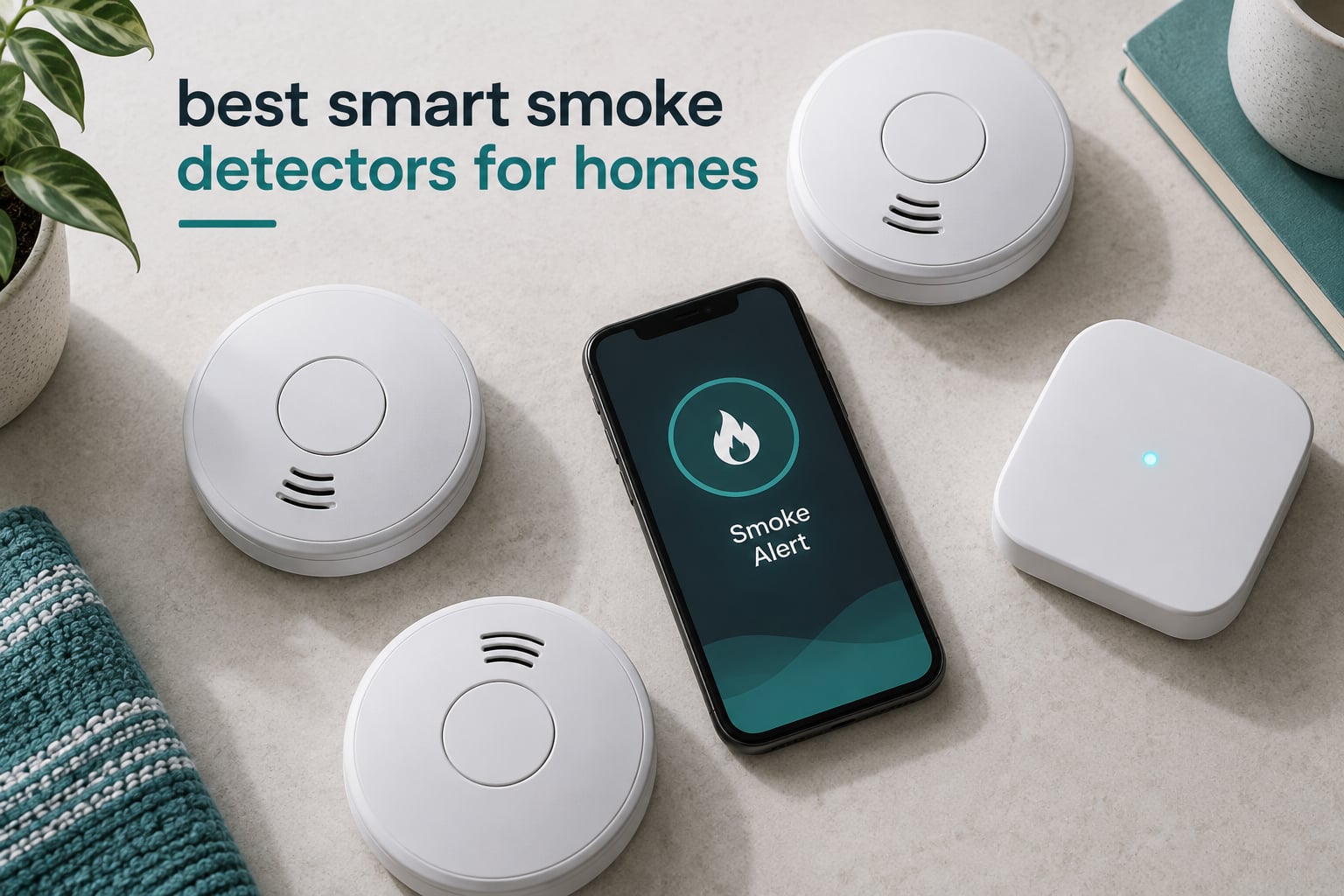
Escape time from a fire in a modern home can be three minutes or less, and a smoke alarm only helps if it is working and someone hears it. The best smart smoke detectors we found for 2026 add phone alerts, low-battery warnings and app-based silencing on top of the 85-decibel siren, so a problem reaches you while you are at work, on a flight or asleep upstairs.
After comparing the connected alarms on the market, our top three are the Kidde Smart Smoke & CO Detector with Ring for the best all-round smart alerting, the X-Sense XP0H-WN three-pack for the strongest coverage per dollar of the group, and the First Alert SC9120B hardwired alarm for whole homes that already have wiring. One finding shaped everything else: nearly every app-connected alarm on the market is photoelectric-only, so the sharpest strategy pairs a smart detector for alerts with conventional dual-sensor alarms for fire coverage.
We narrowed the field to nine products after sifting through the app-connected, Wi-Fi, gateway and audio-listener options available for home use. We excluded carbon-monoxide-only units, listener modules that cannot sound on their own, and anything without visible certification, since a safety device without a listing has no place in a ceiling. If you are still deciding whether you need a separate CO layer, our guide to the best carbon monoxide detectors covers that side of the job.
Everything below reflects the 2026 market as we found it, including the noise problems, app quirks and battery complaints that show up in real reviews rather than on the box. Prices and specifications change, so treat the ratings and certification standards here as the durable part of the decision.
Table of Contents
Top 3 Best Smart Smoke Detectors for Homes in 2026

Kidde Smart Smoke and CO Detector with Ring
- Dual smoke and CO sensing
- Ring app alerts with no subscription
- 2-AA powered
- Alexa compatible

X-Sense XP0H-WN 3-Pack
- Smoke and CO in one unit
- 10-year sealed battery
- Wireless interconnect
- UL 217 and UL 2034 listed

First Alert SC9120B Hardwired Smoke and CO
- Hardwired with 9V backup
- Electrochemical CO plus ionization
- Interconnects house-wide
- 10-year warranty
The Kidde wins our editor’s pick because it is the rare alarm that sends real phone alerts for smoke, carbon monoxide and a low-battery condition without asking you to pay for a monitoring plan, while still sounding locally and linking to other Kidde alarms. The X-Sense three-pack takes the value slot on the strength of 4087 reviews at 4.6 stars, a 10-year sealed battery and true smoke-plus-CO coverage in every detector. The First Alert SC9120B is the hardwired default: the highest rating in the group at 4.7 across more than 20000 reviews, built for homes with 120V alarm wiring already in place.
All 9 Smart Smoke Detectors Compared in 2026
| Product | Specifications | Action |
|---|---|---|
| Kidde Smart Smoke and CO Detector with Ring |
|
Check Latest Price |
 eufy Security Smoke Alarm E10 eufy Security Smoke Alarm E10 |
|
Check Latest Price |
 Heiman S1-R Interconnected Smoke Detector 3-Pack Heiman S1-R Interconnected Smoke Detector 3-Pack |
|
Check Latest Price |
 Heiman S1-R 6-Pack with Smart Gateway Heiman S1-R 6-Pack with Smart Gateway |
|
Check Latest Price |
 First Alert SC5 Battery Smart Smoke and CO Alarm First Alert SC5 Battery Smart Smoke and CO Alarm |
|
Check Latest Price |
| X-Sense XP0H-WN Smoke and CO 3-Pack |
|
Check Latest Price |
| First Alert SC9120B Hardwired Smoke and CO |
|
Check Latest Price |
 Ring Smoke and CO Listener Ring Smoke and CO Listener |
|
Check Latest Price |
 BRK First Alert 9120B Hardwired Smoke Detector BRK First Alert 9120B Hardwired Smoke Detector |
|
Check Latest Price |
How We Picked and Tested These Detectors
Certification came first. Home alarms are not federally regulated, so the mark that separates a real detector from a cheap plastic disc is an NRTL listing to UL 217, the ninth edition of the smoke alarm standard, plus UL 2034 for anything with a carbon monoxide sensor. Anything without a visible listing did not make this list, no matter how good the app looked.
From there we compared what happens after the alarm sounds, because that is where smart detectors differ. We looked at whether phone alerts actually arrive, whether the app can silence a nuisance alarm without you standing under a ladder, whether the detector warns you before the battery dies, and whether low battery notifications remove the late-night chirp instead of creating one. We also read the negative reviews closely, since the disconnect between marketing and field performance shows up there first.
Finally, we checked install reality. Renters and anyone in a finished ceiling cannot pull 120V wire, which rules out the two hardwired alarms here for that group. Everyone else needs to decide whether their state or local fire code expects hardwired interconnected alarms, a 10-year sealed battery, or accepts either. We also tracked the lifetime cost of ownership, since optional professional monitoring subscriptions change the math on a ten-year horizon.
1. Kidde Smart Smoke and CO Detector with Ring, AA Battery, RGCUDR-RW
Kidde Smart Smoke & CO Detector with Ring, AA Battery, RGCUDR-RW
Smoke and CO sensing
Ring app alerts, no subscription
2-AA alkaline batteries
Alexa compatible
Pros
- Real-time smoke
- CO and low-battery alerts in the Ring app with no paid plan
- Dual smoke and carbon monoxide sensing in one unit
- Wire-free installation with whole-home wireless interconnectivity
- Enhanced sensing reduces cooking-related nuisance alarms
- Works with Alexa for spoken notifications
Cons
- Interconnectivity is largely limited to other Kidde alarms
- Advanced monitoring is behind an optional Ring subscription
- Interconnect setup guidance requires reading the user guide
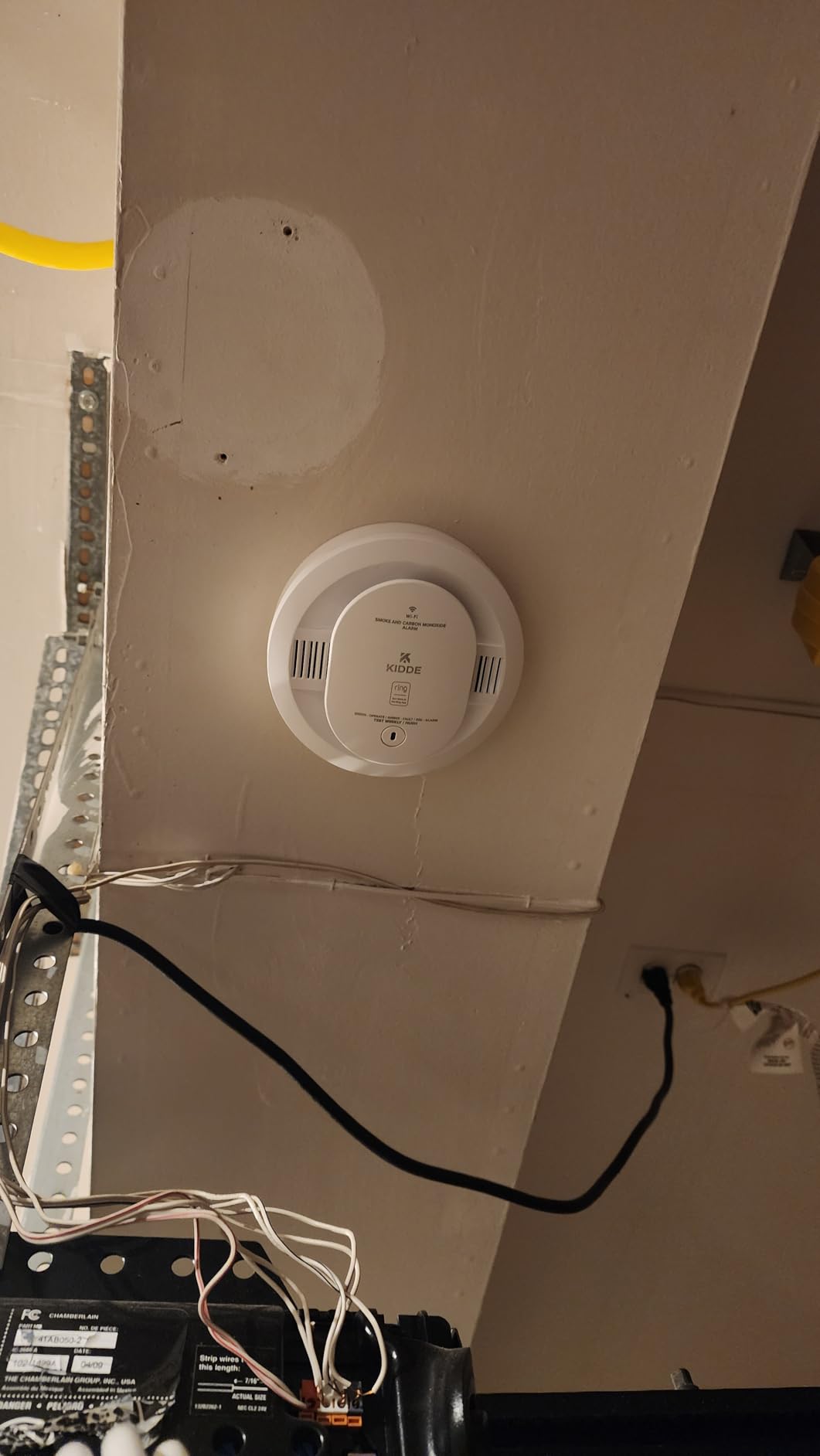
The Kidde Smart Smoke and CO Detector with Ring is the model we recommend most often, and the reason is simple: phone alerts without a subscription. When smoke, carbon monoxide or a low-battery condition occurs, the Ring app pushes a notification to your phone, and the alarm still sounds its normal 85-decibel warning in the room. That combination is rare at this level of the category.
Installation is two AA batteries and a screw or an adhesive pad, which makes it the practical choice for a rental, a finished ceiling or a single bedroom you want alerts from this week rather than after a renovation. The unit also links wirelessly to other Kidde alarms, so a network of these across a house sounds together when one of them trips.
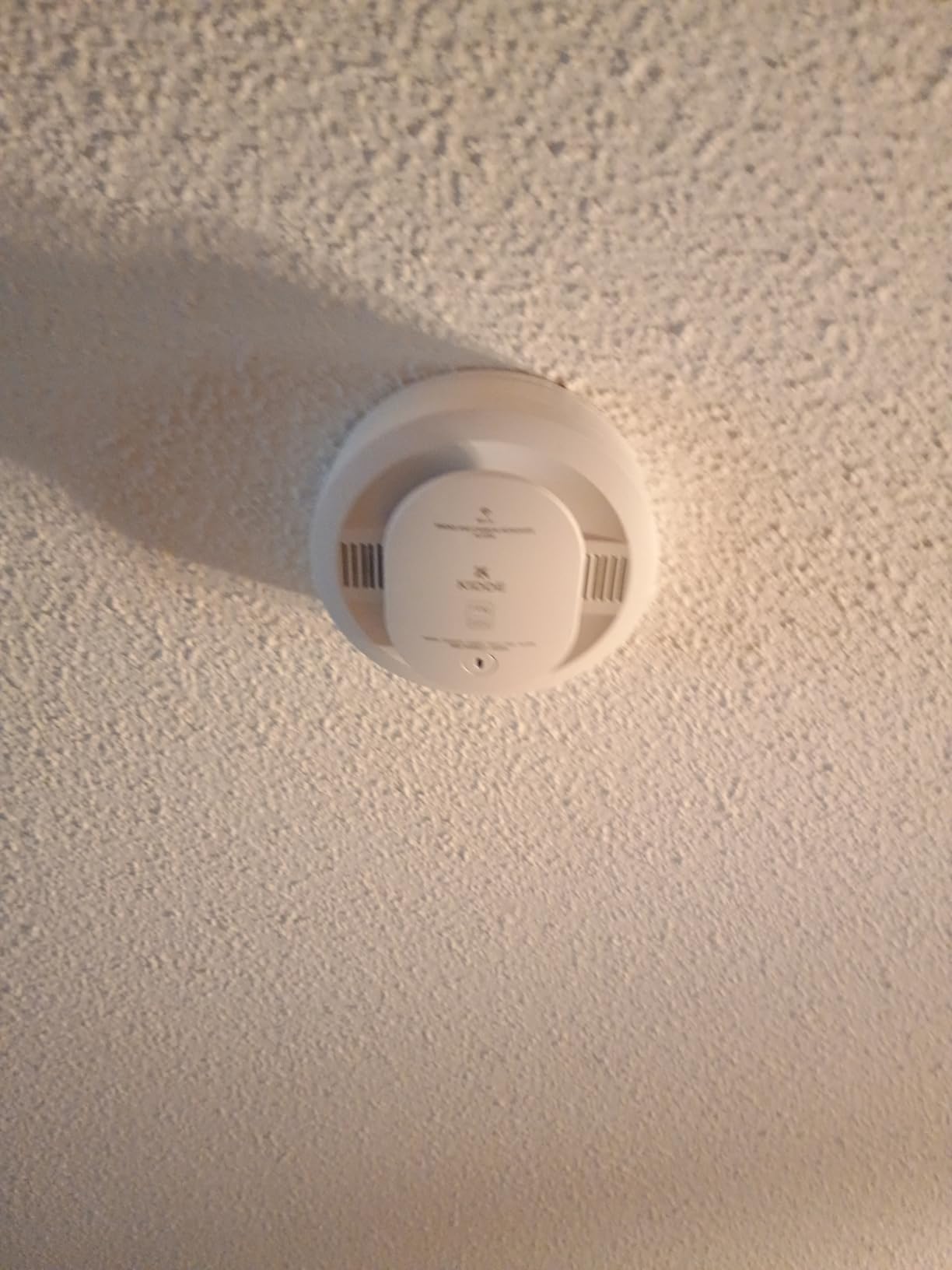
Kidde claims detection runs more than 25 percent faster than earlier generations on internal testing, and reviewers do report fewer cooking-related nuisance alarms than with older Kidde units. The sensor is a dual setup covering smoke and carbon monoxide, and the app sends low-level CO alerts before conditions become dangerous, which is the feature we would keep if we could only keep one.
The trade-offs are real. Wireless pairing is described as specific to Kidde alarms, so mixing brands in an interconnected system is not straightforward. If you also want a monitoring centre to dispatch help while you sleep or travel, that sits behind an optional Ring subscription, which we would factor into any ten-year comparison.
Who the Kidde with Ring suits best
This is the pick for anyone who rents, owns a vacation property or simply spends working hours away from home and wants a phone the moment the alarm sounds. Two AA batteries mean you can cover several rooms in an afternoon without an electrician.
It also works well as the alert layer in a mixed system: smart Kidde units where you want notifications, conventional hardwired alarms in the rooms where you only need coverage.
Where it falls short
Owners wanting one interconnected network across mixed brands will find the wireless link limited to Kidde hardware. And if your household already runs Home Assistant or SmartThings with deep automation, a gateway-based unit gives you more to work with.
2. X-Sense XP0H-WN Wireless Combination Smoke and CO Detector, 3-Pack
X-Sense Wireless Combination Smoke and CO Detector, XP0H-WN, 3-Pack
Smoke and CO in one unit
10-year sealed battery
Wireless interconnect
UL 217 and UL 2034
Pros
- Combines smoke and carbon monoxide detection with a 10-year sealed lithium battery
- Wireless interconnection so every detector sounds together
- ETL listed to UL 217 and UL 2034
- Large 5.7-inch bracket hides marks from previous alarms
- Color-coded LEDs show whether smoke or CO triggered
Cons
- No Wi-Fi or app connectivity for remote monitoring
- CO readout appears only after pressing the test button and the backlight stays dark
- Does not show readings under 30 ppm or the maximum CO level reached
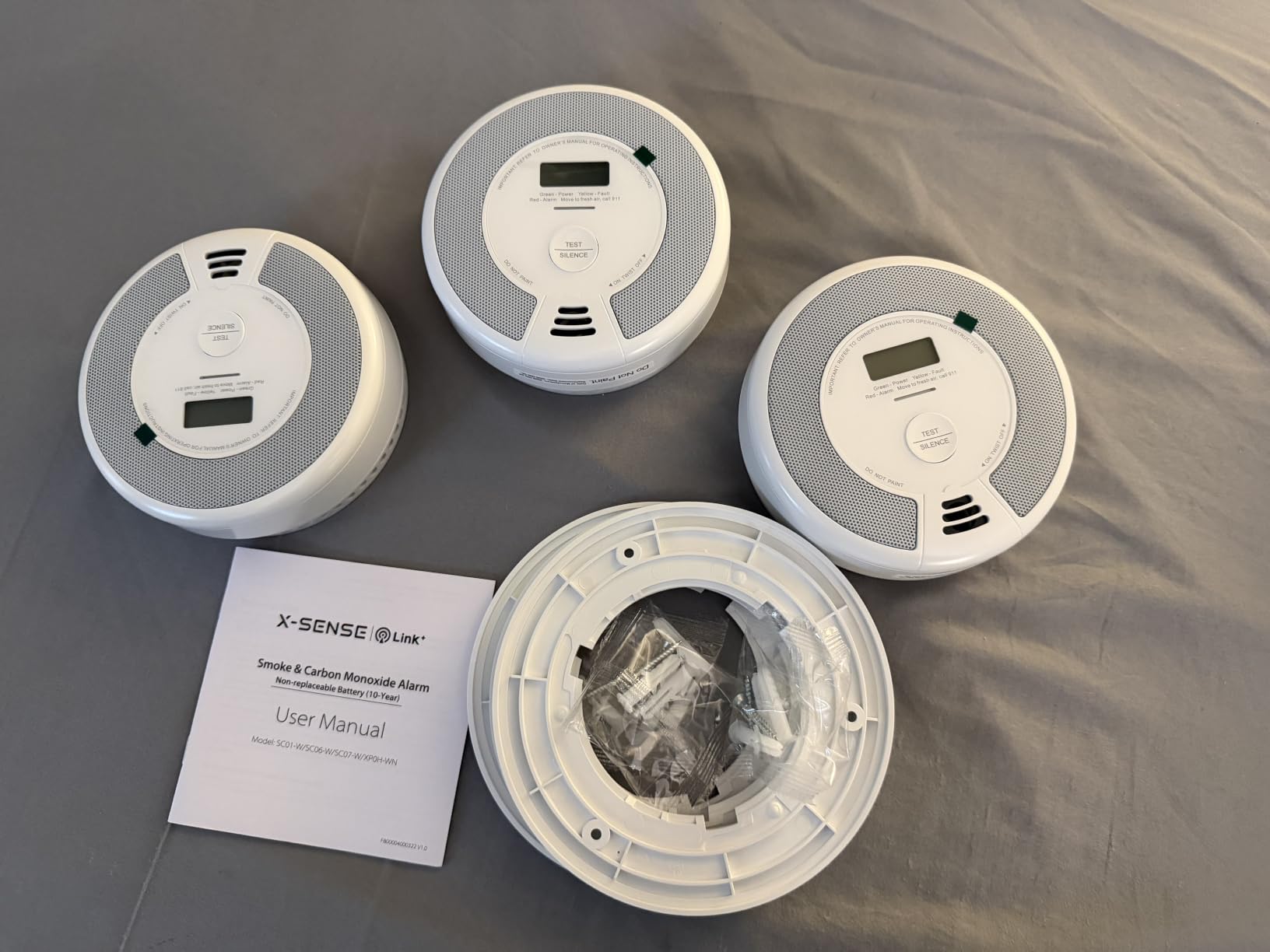
The X-Sense XP0H-WN is the strongest buy in this group, and its 4087 reviews at 4.6 stars give it more field history than any connected alarm we looked at. Each detector carries a photoelectric smoke sensor and an electrochemical CO sensor, so one unit covers both hazards, and the 10-year sealed lithium battery ends the yearly battery ritual.
All three units in the pack interlink wirelessly. When one detects smoke or carbon monoxide, every detector in the house sounds, which matters most when you are asleep on another floor. The supplied 5.7-inch bracket is a small, practical detail: it covers the screw pattern and ceiling marks from the alarm you are replacing.
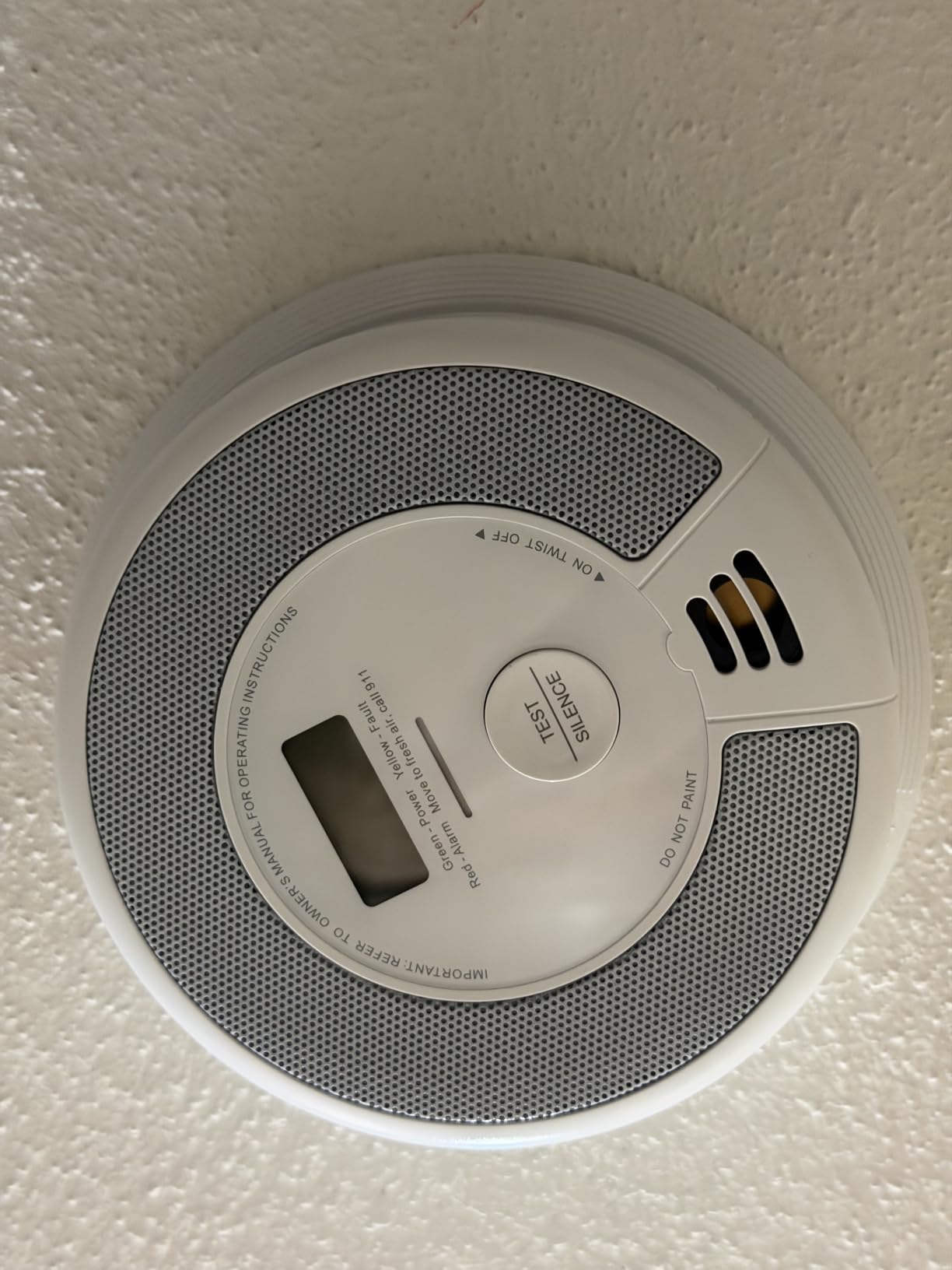
Owner reviews are consistent about installation. Three screws, no plastic packaging to cut through, and an 85-decibel alarm that carries through several doors. The colour-coded LEDs are genuinely useful for telling a CO event from a smoke event when you are groggy at 3am.
The limitation to plan around is the CO display. Readings show only after you press the test button, the backlight does not activate, and anything under 30 ppm is not reported. Treat the display as a diagnostic rather than a live monitor, and know that there is no app or phone alert of any kind here.
Who the X-Sense three-pack suits best
Homeowners covering several bedrooms at once, or anyone who wants smoke and CO coverage per room without replacing batteries every year. The interconnect makes it a strong fit for multi-floor homes where you want every alarm to sound together.
It is also the sensible companion to a connected alarm: use a smart unit where you want phone alerts, and these everywhere coverage matters most.
Where it falls short
If you need to know about an alarm while you are away, this pack cannot do that. There is no Wi-Fi, no hub and no app, and a handful of owners report batteries dying sooner than the advertised decade, which is why we keep a test schedule.
3. First Alert SC9120B Hardwired Smoke and CO Detector with Battery Backup
FIRST ALERT BRK SC9120FF Hardwired Smoke and Carbon Monoxide (CO) Detector with Battery Backup, 1 pack , White
Hardwired 120V with 9V backup
Ionization smoke plus CO
Interconnects house-wide
10-year warranty
Pros
- Dual electrochemical CO and ionization smoke sensing in one hardwired unit
- 9V backup battery keeps the alarm monitoring through a power failure
- Interconnects with other compatible BRK and First Alert detectors
- Tamper-resistant locking and universal mounting brackets
- 10-year limited warranty and a very large installed base
Cons
- Hardwired installation rules it out for rentals and finished ceilings
- No app
- Wi-Fi or smart-home connectivity
- Ionization sensing suits flaming fires more than slow smouldering smoke
The First Alert SC9120B is the highest-rated alarm in this roundup at 4.7 stars across more than 20000 reviews, and that review base matters for a safety device. Field reliability over two decades of installed units is evidence no app screenshot can match, and owners treat this as the default hardwired alarm.
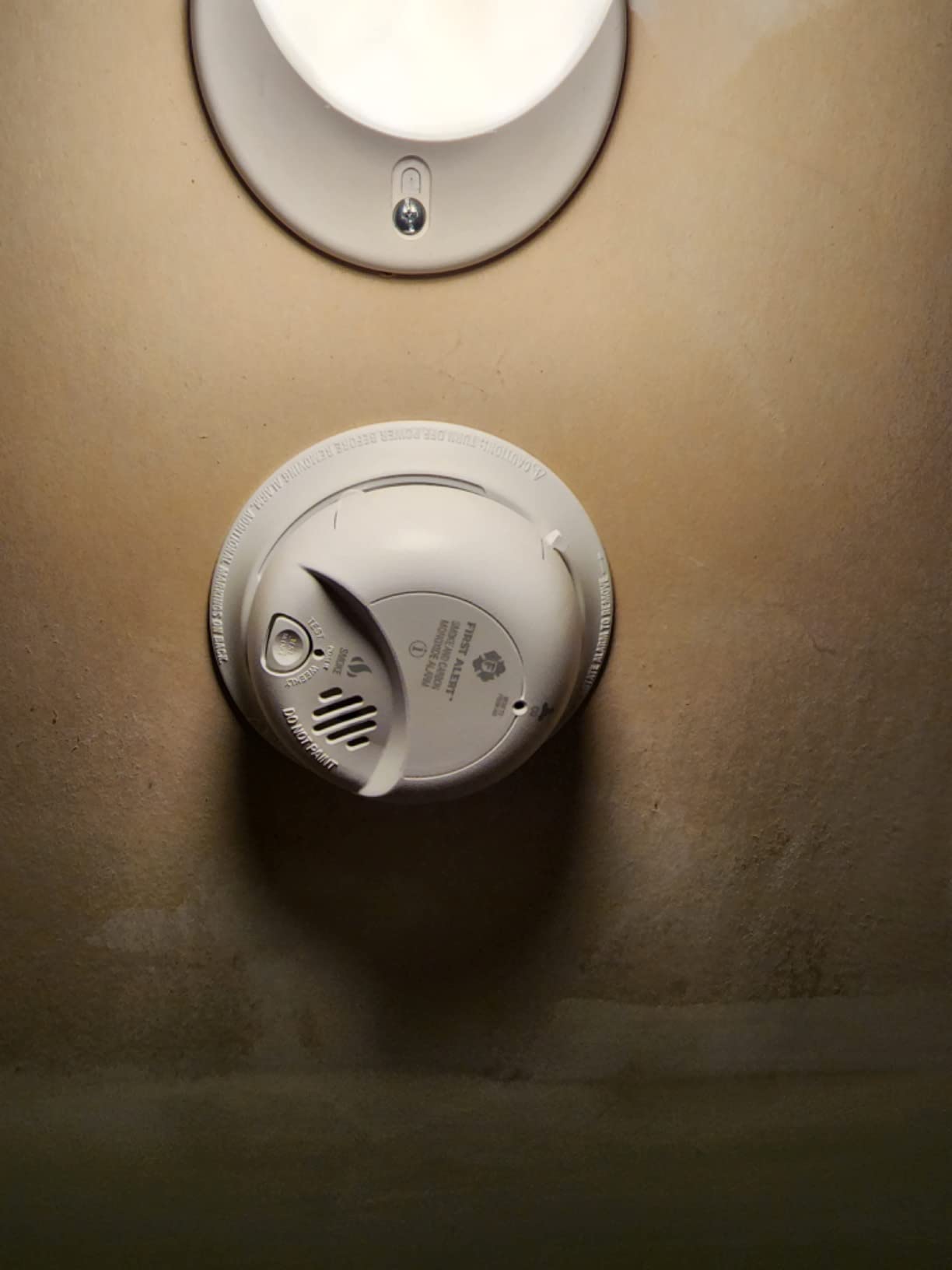
It runs on 120V wiring with a 9-volt backup battery, so a power outage does not silence the house. It uses ionization sensing for smoke alongside an electrochemical CO sensor, and it interlocks with other compatible BRK and First Alert detectors so one alarm triggers the entire network.
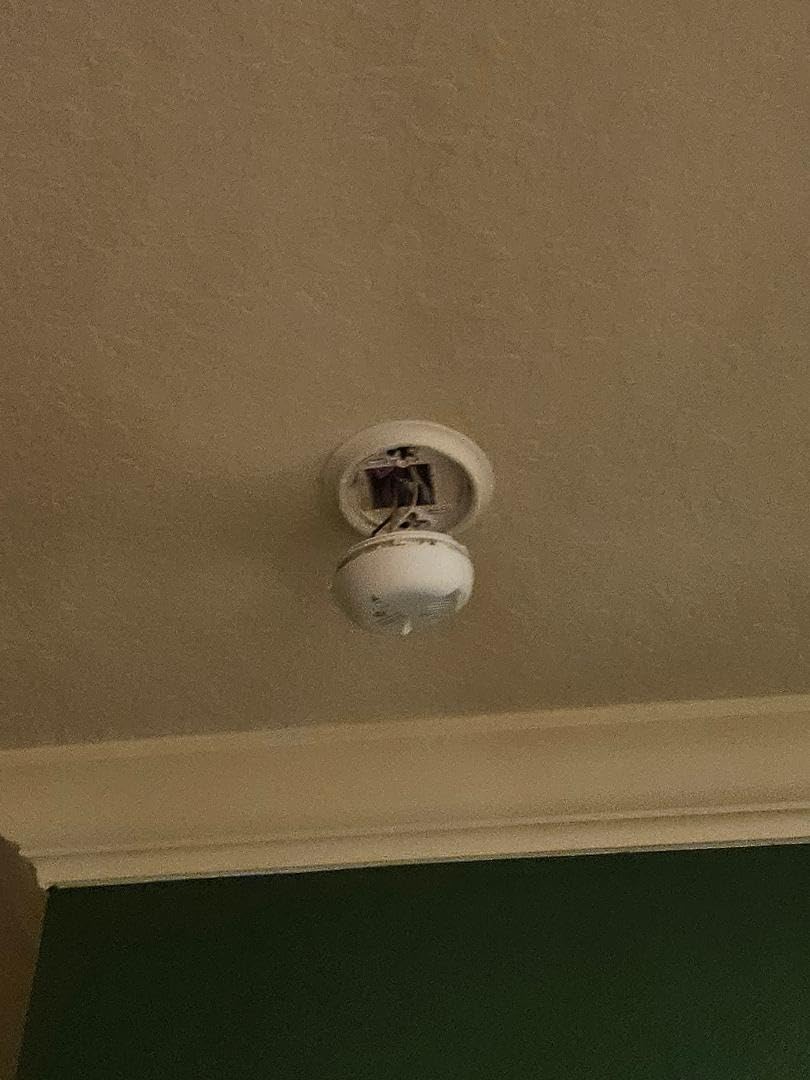
On the bracket, tamper-resistant locking and on-face indicator lights that tell you whether smoke or CO caused the alarm, this is a well-made device rather than a bare-bones one. The single test and silence button silences nuisance alarms from anywhere in the home, which matters more than it sounds when the alarm is behind a closed door.
Ionization sensing is the one technical compromise. It responds fastest to fast flaming fires and is generally less sensitive to slow smouldering smoke than a photoelectric chamber, so it pairs well with photoelectric alarms in adjacent rooms rather than replacing them everywhere.
Who the SC9120B suits best
Homeowners with alarm wiring already in place, especially in homes where local code requires hardwired interconnection. It is the anchor unit around which you add smart alerting for the rooms that matter most to you.
Anyone building a whole-home system on a budget should start here, since the per-unit cost is well below the connected alarms and the interconnect path is proven.
Where it falls short
Renters and anyone without 120V wiring will need an electrician or a different product entirely. There is also no diagnostic display and no phone alert, so the unit cannot tell you about a fault before the battery fails.
4. eufy Security Smoke Alarm E10, Ultra-Compact 70 mm Design
eufy Security Smoke Alarm E10, Smoke Detector, Ultra-Compact 70 mm Design
70 mm compact body
UL 217 10th edition
5-year sealed battery
Up to 656 ft to HomeBase
Pros
- Very compact 70 mm design that blends into rooms better than a standard detector
- UL 217 10th edition certified for detection across smoke types
- Five-year sealed lithium battery removes low-battery chirps
- Stable link to eufy HomeBase at up to 656 ft in open air
- App alerts reach you while you are away from home
Cons
- Requires an eufy HomeBase Mini
- 2
- 3 or Pro to operate
- HomeBase must run specific firmware versions
- Wireless-only interconnect rather than standalone alarm capability
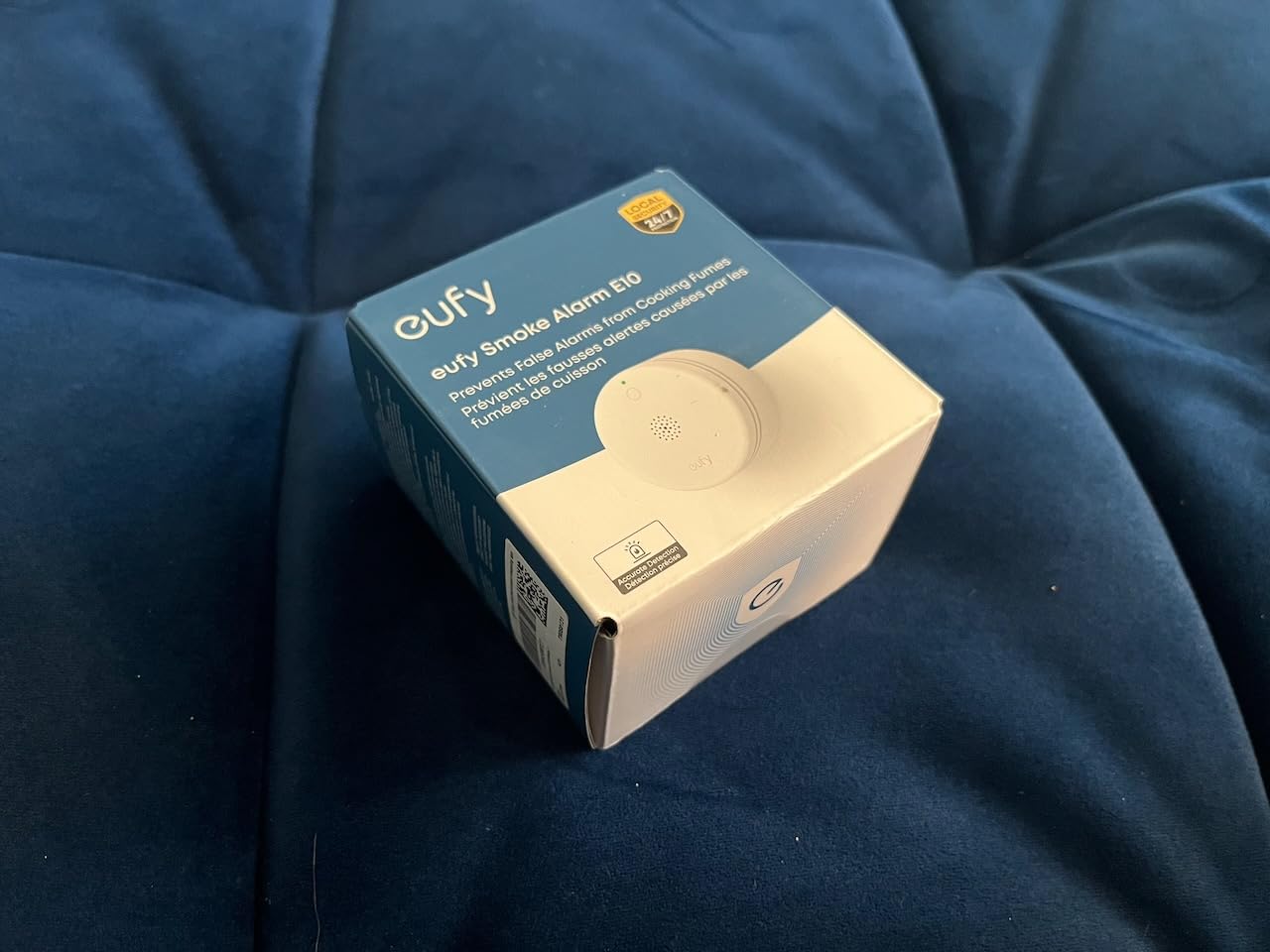
The eufy Smoke Alarm E10 is the smallest unit in this roundup at 70 mm across and 2.75 inches wide, which matters more than it sounds in a hallway or a bedroom where a standard 5.6-inch disc looks industrial. Owners consistently single out the footprint as the reason they bought it, and it is UL 217 10th edition certified.
The five-year sealed lithium battery removes the yearly battery swap, and the app pushes alerts through a eufy HomeBase with a range of up to 656 feet in open air. That is plenty for most houses, and it is the shortest distance of any app-connected option here.
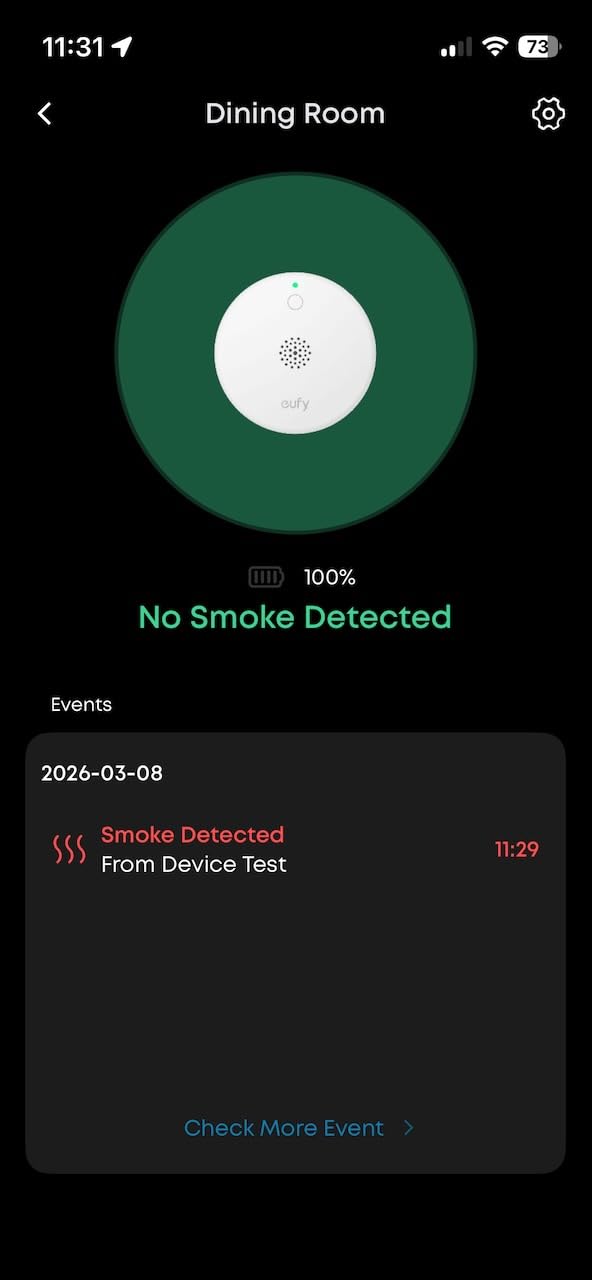
If you already run eufy cameras or a HomeBase 3, the E10 slots into an ecosystem you own, and reviewers report high marks for fewer false alarms and clean app integration. The 3.52-ounce weight also means it is easy to handle on a ladder, which matters during a ceiling install.
The catch is a hard dependency on the hub. The E10 will not operate without a HomeBase Mini, 2, 3 or Pro, and the hub needs current firmware for compatibility. If you are starting from scratch on alarms, you are buying two products to get one working.
Who the eufy E10 suits best
Existing eufy households wanting smoke alerts in the same app as their cameras and doorbells, and anyone who cares about how the detector looks in a visible hallway or bedroom.
It also works for apartments where wiring is not an option and a five-year battery is a meaningful upgrade over coin cells.
Where it falls short
Buyers outside the eufy ecosystem should weigh the total cost of the hub before committing. The interconnect is wireless to the HomeBase rather than between detectors in the traditional sense, so verify how alerts propagate in a multi-floor home.
5. Heiman S1-R Wireless Interconnected Smoke Detector, 3-Pack
Heiman Smoke Detector, Wireless Interconnected Smoke Alarm for Home, 3 Pack
Photoelectric dual-beam sensing
656 ft wireless interconnect
Battery powered
85 dB buzzer
Pros
- Quick tool-free installation with magnetic pads or screws
- Compact 2.75-inch body less obtrusive than older detectors
- Dual-beam photoelectric sensing tuned to slow smoulding smoke
- Effective at rejecting steam and cooking vapour nuisance alarms
- Loud test siren audible through multiple doors
Cons
- No app or Wi-Fi connection so it cannot be monitored from a phone
- Some buyers report batteries failing well before the claimed 10 years
- Occasional reports of responsiveness and build-quality concerns
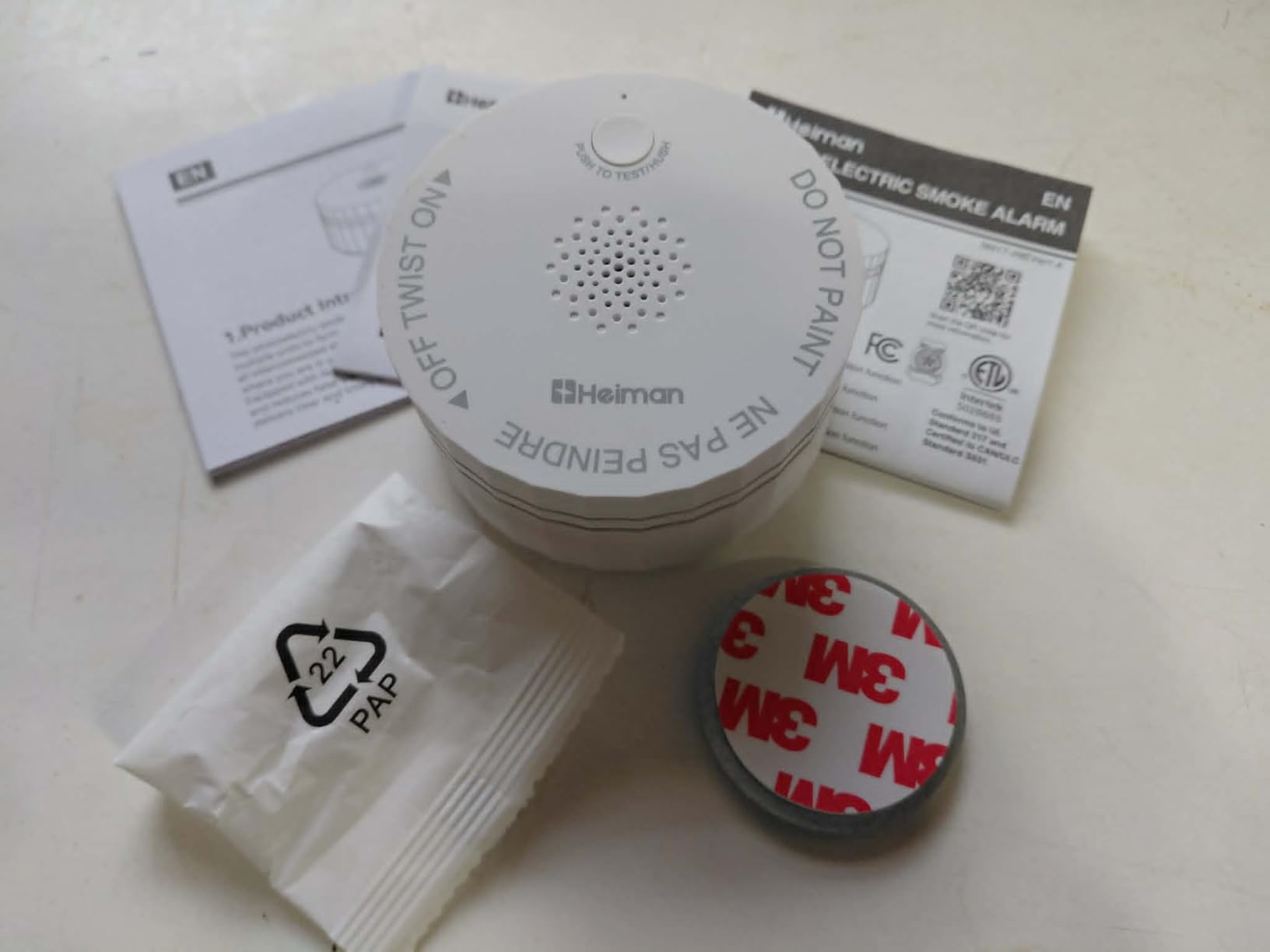
The Heiman S1-R three-pack is the budget route into interconnected coverage. Each detector uses a dual-beam photoelectric sensor, links wirelessly with the others out to 656 feet in open areas, and pairs with a 10-minute hush and an 85-decibel buzzer that owners say carries through multiple doors.
Installation takes minutes using the included magnetic pads or screws, and the 2.75-inch body suits rentals where drilling into a landlord ceiling is not an option. Several buyers confirm that bathroom steam no longer trips the unit, which is the nuisance complaint that drives most false-alarm frustration.
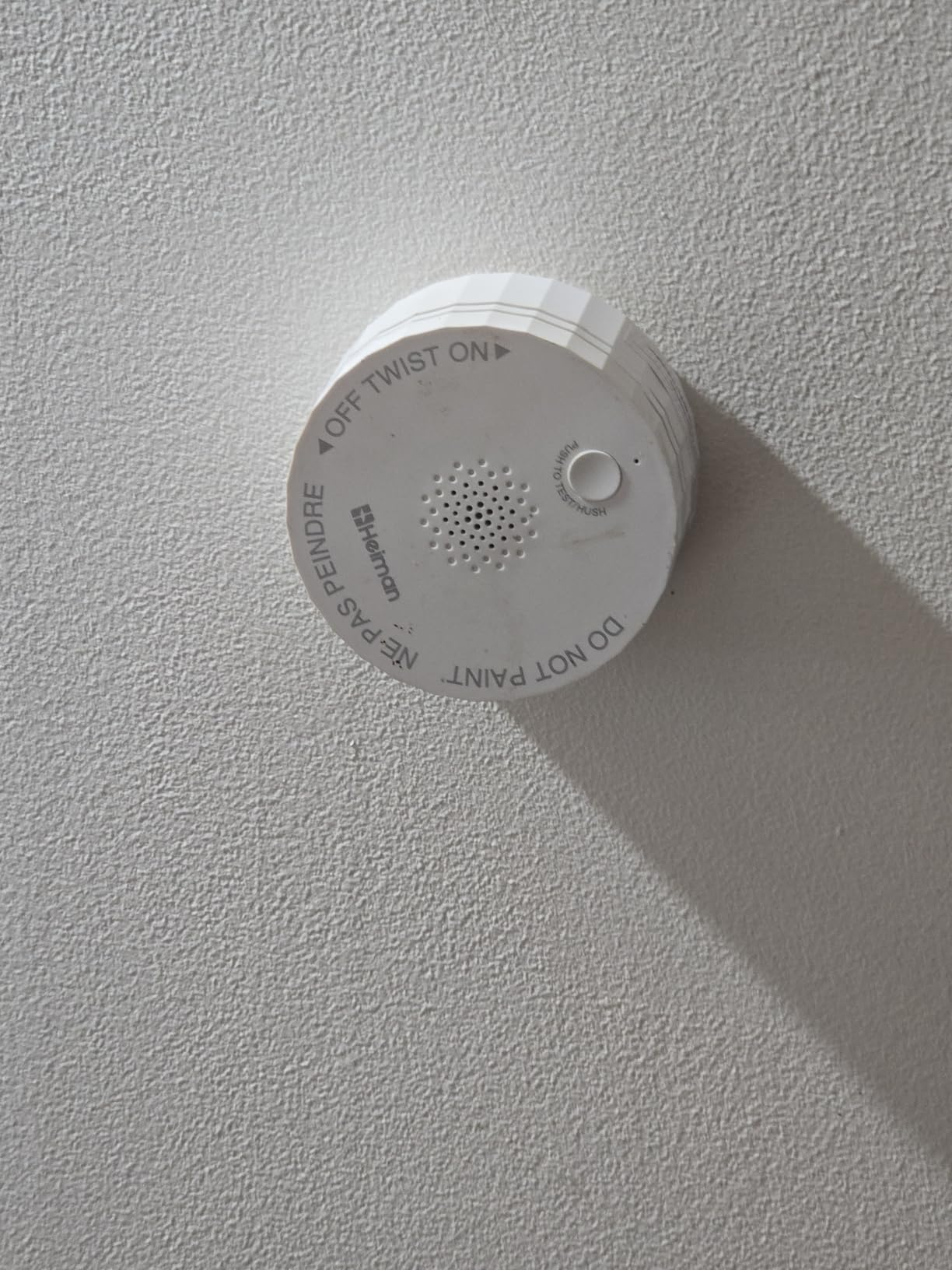
That interconnection is the feature that matters. When one detector senses smoke, the whole group sounds together, so you get whole-home alerting without wiring or a hub. Buyers also like being able to expand the network later one detector at a time.
Be clear about the boundary here. This pack has no app, no Wi-Fi and no phone notification, so it is an interconnected alarm system rather than a smart one. If you need to know about a problem while you are out, pair it with one connected unit from another section of this guide.
Who the Heiman three-pack suits best
Renters and apartment dwellers who want every alarm to sound together on a budget, plus anyone adding a guest room, a basement suite or a garage-level addition where wiring is impractical.
It is also the easiest way to build out an interconnected network gradually, adding detectors as budget allows.
Where it falls short
Anyone who needs remote notifications should look past this pack. Some reviewers also report batteries not reaching the advertised decade and question long-term responsiveness on what is a critical safety device, so plan a monthly test.
6. Heiman S1-R 6-Pack with Smart Gateway
Heiman Smart Wireless Interconnected Smoke Detector, 6-Pack + Gateway, S1-R
6 detectors plus a gateway
2.4GHz Wi-Fi phone and email alerts
Groups up to 24 detectors
10-year CR123A batteries
Pros
- Bundle delivers true app-based monitoring through the included gateway
- Two protection modes so local interconnect works without Wi-Fi
- 10-year CR123A lithium batteries per detector
- Dual-beam photoelectric sensing reduces cooking-vapour alerts
- Integrates with Home Assistant
- IFTTT
- Google Home and SmartThings
Cons
- Gateway joins 2.4GHz networks only
- not 5GHz
- Requires the gateway and a Heiman Home account for phone alerts
- Only a small number of customer reviews so far
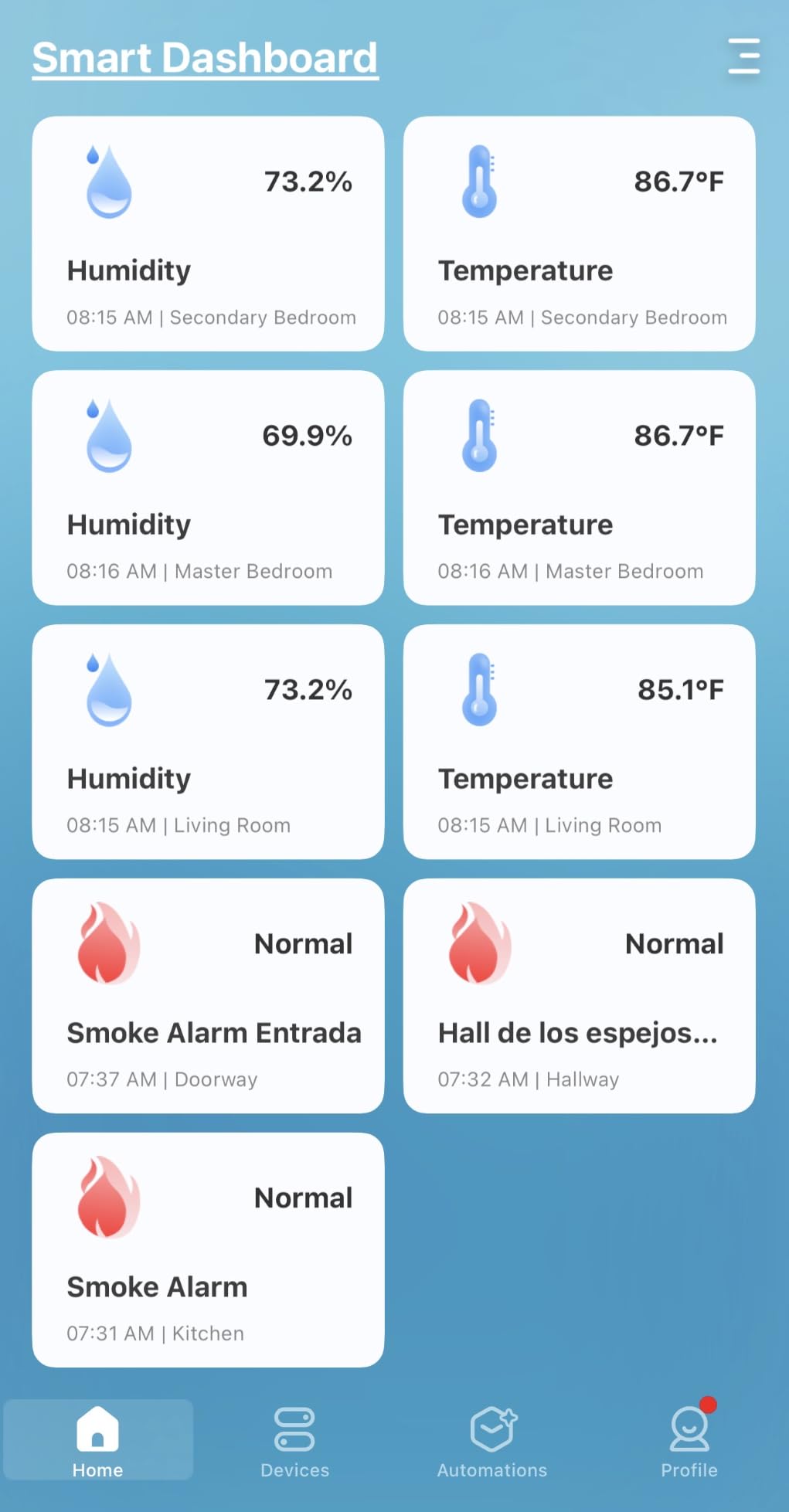
The six-pack version of the Heiman S1-R is the same detector with a gateway in the box, and that gateway is the whole difference. Plug it into a 2.4GHz network, create a Heiman Home account, and the group sends real-time phone and email alerts while every detector still sounds locally and still interlinks without Wi-Fi if the hub goes offline.
That two-mode design is the reason we like it. Protection at the point of danger does not depend on a cloud connection, and the phone alert is a layer on top rather than the whole system. Six detectors cover a large home or a small multi-unit building in one pass.
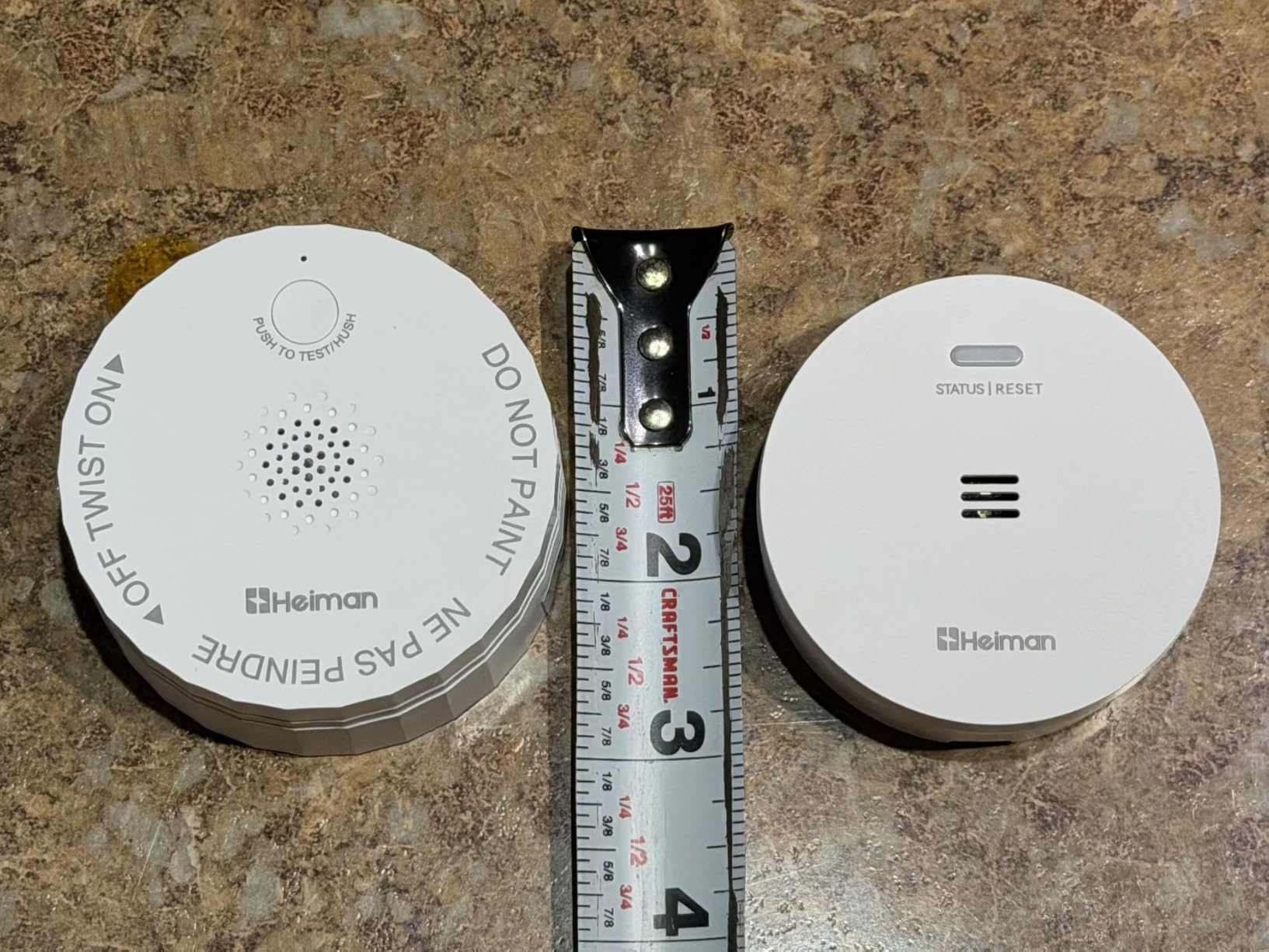
For automation users this is the most flexible option we found. Home Assistant, IFTTT, Google Home and SmartThings support means you can trigger smart lighting, shut down HVAC or unlock doors when the alarm triggers, which is the reason most people go connected in the first place. Groups scale to 24 detectors, so coverage can grow past the six included.
Two limits to plan around. The gateway is 2.4GHz only, so a dual-band router needs that band enabled, and with only 30 reviews on record there is not yet a long history of field behaviour to judge against.
Who the Heiman gateway bundle suits best
Homeowners with a larger floor plan who want phone alerts plus automation, and anyone running Home Assistant who prefers local control over a cloud-only ecosystem.
It is a strong rental option too, since six interconnected detectors with no wiring cover a whole apartment in one purchase.
Where it falls short
Buyers should check their router band before ordering, and be ready for app setup. Six detectors may also overshoot a single-room or small-apartment need, in which case the three-pack is the better entry point.
7. First Alert SC5 Battery Smart Smoke and CO Alarm
First Alert SC5 Battery Smart Smoke & Carbon Monoxide Alarm
Fits Nest Protect brackets
Voice alerts naming danger type and location
First Alert app notifications
Interconnectable
Pros
- The current voice-alarm option for owners replacing discontinued Nest Protect units
- Mounts directly onto existing Nest Protect brackets for a fast swap
- Voice alerts name the type and location of the danger
- Phone notifications and status checks through the First Alert app
- Syncs with Google Home and pairs with the Nest thermostat for HVAC shutoff
Cons
- Does not join the Nest app and needs a separate First Alert account
- A large share of 1-star reviews cite nuisance alarms and dropped Wi-Fi connections
- Bulkier and less refined-looking than the unit it replaces
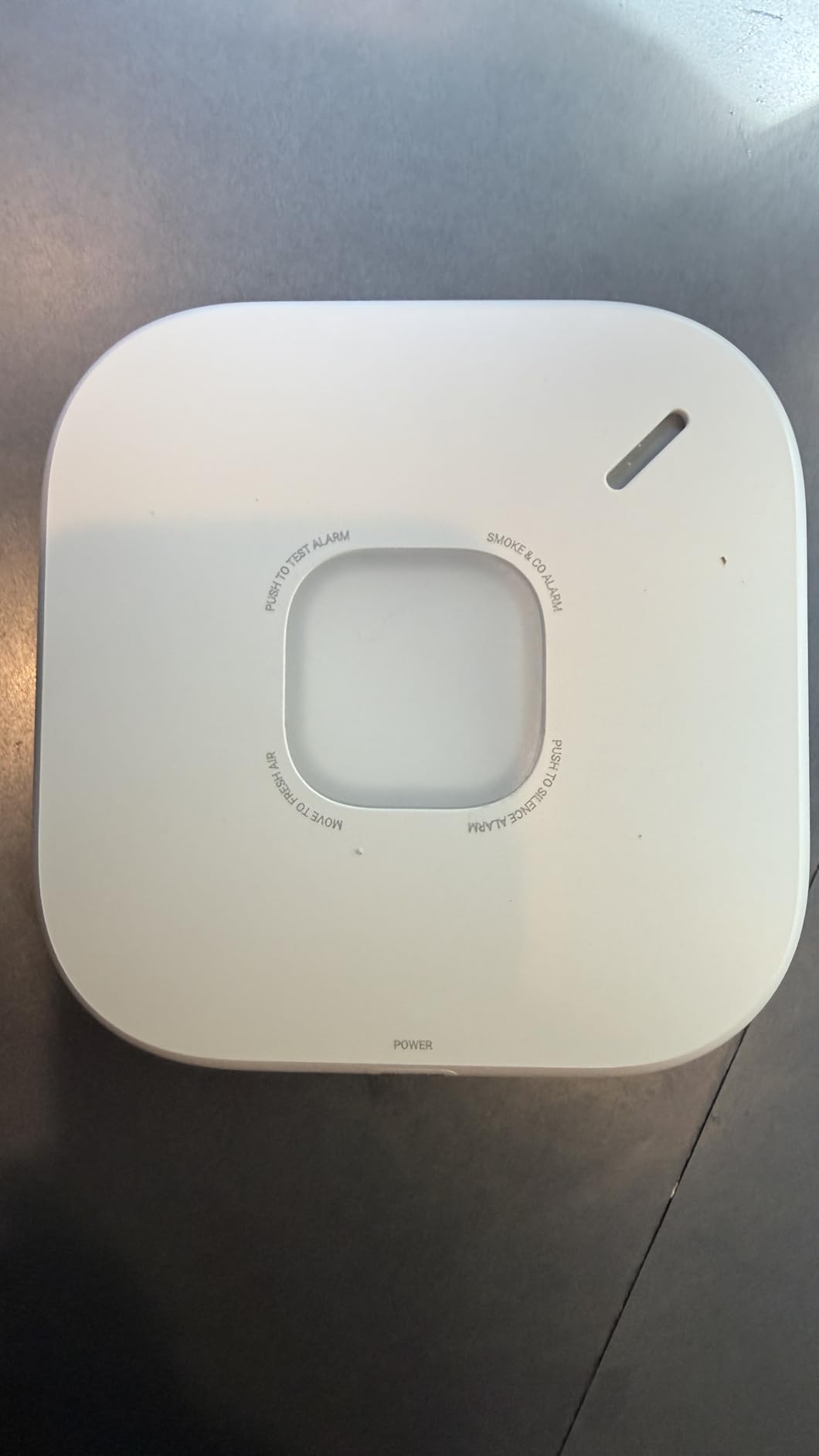
The First Alert SC5 exists for a specific household: people who owned Google Nest Protect units and now need a replacement. It mounts directly onto existing Nest Protect brackets, which means no rewiring and no new mounting holes, and it is currently the only mainstream voice-alarm option in this category.
The Heads-Up voice alert names the type and location of danger instead of just beeping, and the unit syncs with Google Home and can pair with the Nest thermostat to shut off HVAC. Phone notifications and status checks run through the First Alert app, and the alarm interlocks with other compatible units so the house sounds together.
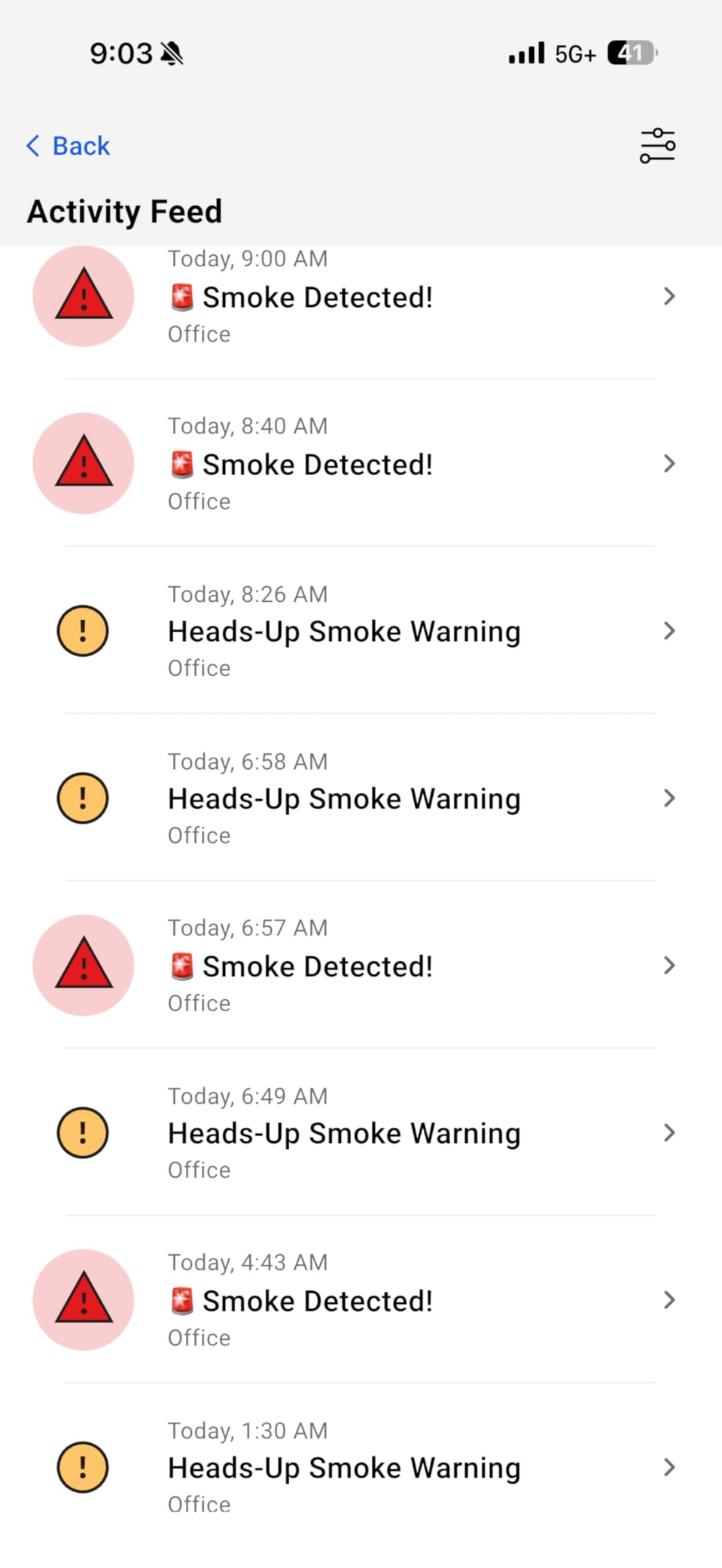
What gives us pause is the review spread. Its 3.2 average sits well below the rest of this list, and roughly a third of reviews are one star, with recurring complaints about nuisance alarms, dropped Wi-Fi connections and units that would not stop alarming from the app or the button. The battery door and centre button also draw criticism for feeling cheap.
It does not join the Nest app, so Nest owners need a separate First Alert account, and there is no night or path light, which Nest Protect users often relied on. The voice audio is also described as less clear than the original.
Who the First Alert SC5 suits best
Nest Protect owners who want to reuse their existing brackets and keep a voice-style warning without rewiring. The bracket fit alone saves hours of work on a swap.
Google Home households who want voice alerts plus thermostat integration without committing to a single-vendor alarm system.
Where it falls short
The polarised reviews are the deciding factor for us. Buyers report nuisance alarms and unreliable Wi-Fi on a device whose entire value is remote notification, so test it early and confirm app hush works before you rely on it. There is no path light for night-time guidance.
8. Ring Smoke and CO Listener
Ring Sensors: Smoke & CO Listener (newest model) – Instant notifications, on Amazon Sidewalk, no base station needed, Pro Monitoring (sold separately)
Listens for existing alarms
Mounts within 6 inches
Sidewalk so no base station needed
Optional Ring monitoring
Pros
- Brings phone notifications to a house full of existing wired alarms without rewiring
- Small form factor and quick mount within 6 inches of an existing alarm
- Setup walks through activation and testing that it can hear your alarm
- App shows device health
- signal strength and battery status
- Works alongside existing Ring professional monitoring
Cons
- Listener only
- it cannot detect smoke or carbon monoxide itself
- Some buyers report alarm pickup working only one in five to seven tries
- Amazon Sidewalk must be available in your area
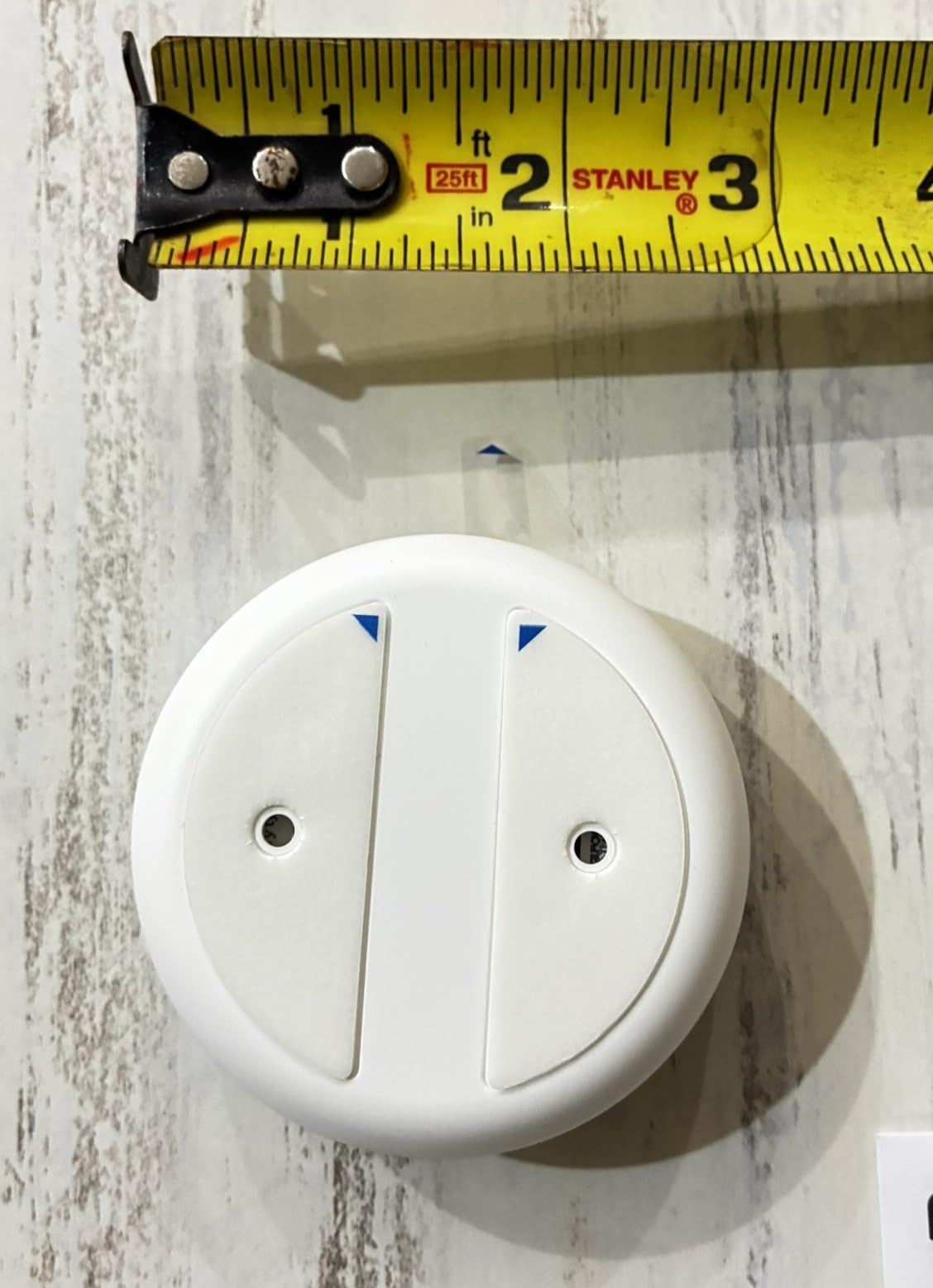
The Ring Smoke and CO Listener is not a detector. It is a small module that mounts within 6 inches of an alarm you already own, listens for the 85-decibel sound, and sends an instant app notification through Amazon Sidewalk with no base station required. For a house full of working hardwired alarms, it is the cheapest path to phone alerts we found.
Setup is guided in the app: open the device, activate it with a QR code, then confirm it can hear your existing alarm during a test. The app also reports device health, signal strength and battery status, and two AA batteries cover the module itself.

The appeal is scale. Rather than replacing working alarms, you add a listener near each one and gain remote awareness across the house. Optional 24/7 professional monitoring through a compatible Ring subscription adds dispatch capability with no multi-year contract, and some buyers report support resolving Sidewalk signal problems with a free bridge.
The reliability complaints are the reason it sits low in our ranking. At a 3.2 average with 36 percent of reviews at one star, owners report alarm pickup succeeding only some of the time, Sidewalk being unavailable in some regions, firmware update loops, and in one case an alert that triggered a fire department dispatch the owner had to decline.
Who the Ring listener suits best
Households with functioning hardwired alarms that want phone alerts without a rewire, and Ring subscribers who already pay for professional monitoring and want fire response added to it.
It also suits anyone whose existing detectors are close to the ten-year replacement point, since they pair best with detectors ten years old or less.
Where it falls short
This cannot replace a detector. It does not sense smoke or CO, and some listeners pick up the CO tone without catching the smoke tone of combination alarms. Check Sidewalk availability in your area, and treat it as a complement rather than the primary alarm.
9. BRK First Alert 9120B Hardwired Smoke Detector with Battery Backup
BRK First Alert 9120BFF/ SMI100-AC Smoke Detector, Hardwired Alarm with Battery Backup, White, 1-Pack
Ionization sensor
120V hardwired with 9V backup
Interconnects with BRK alarms
85 dB alarm
Pros
- Ionization sensor reliably detects fast flaming fires
- 9V backup battery keeps the alarm working through a power outage
- Interconnects with other compatible BRK and First Alert detectors so all alarms sound
- Universal and tamper-resistant mounting brackets simplify installation
- 10-year limited warranty backed by a very large installed base
Cons
- Smoke-only unit with no carbon monoxide protection
- Hardwired 120V installation rules it out for rentals and unfinished wiring
- No app
- Wi-Fi or smart-home connectivity
- Ionization responds less well to slow smouldering smoke
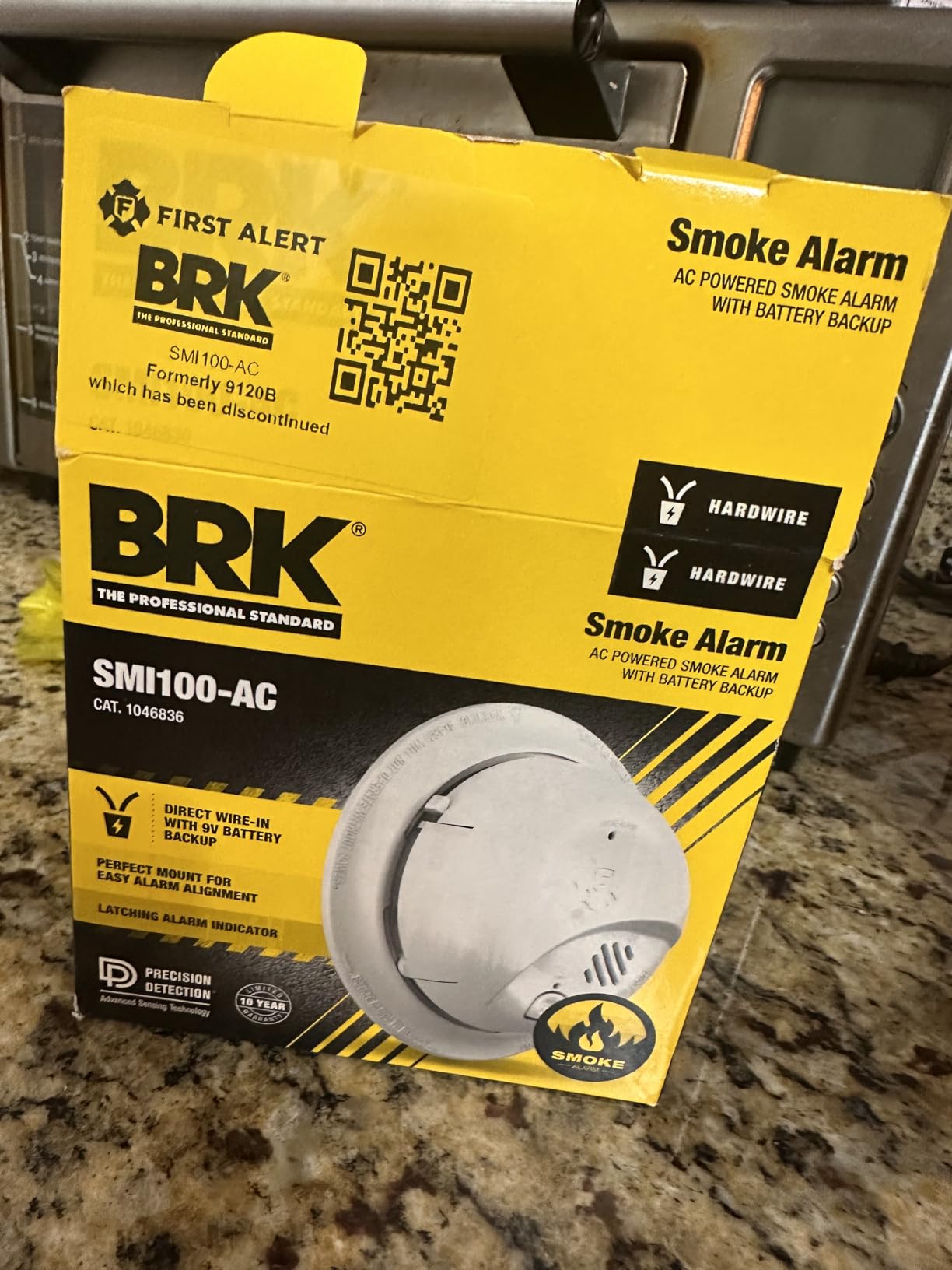
The BRK First Alert 9120B is the coverage unit most smart lists leave out, and that omission is exactly the point. It is a hardwired ionization smoke detector with a 9-volt backup battery, a single test and silence button, and a 4.7 rating across more than 19000 reviews, which makes it the cheapest way to add fast-flaming detection to a wired house.
Ionization sensing responds quickly to fast flaming fires, so it complements a photoelectric unit rather than duplicating it. It interlocks with other compatible BRK and First Alert detectors, and the universal and tamper-resistant mounting brackets make a swap straightforward when you are matching an existing model.
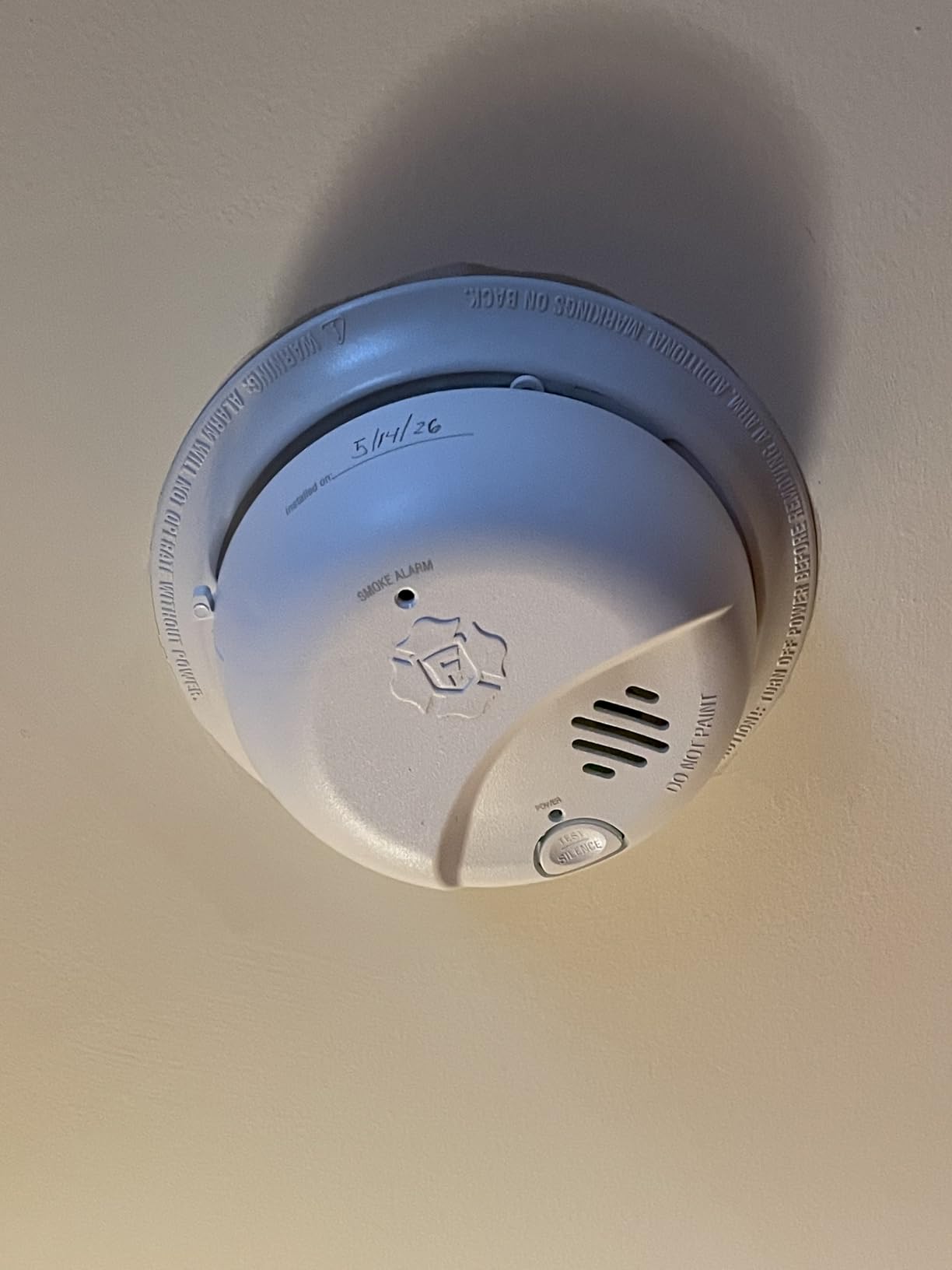
With 120V wiring and a 9V backup, an outage does not silence the network, and the 85-decibel alarm carries through a typical floor plan. Owners consistently describe it as a dependable, no-frills unit that does one job without an app to configure.
Two things to be honest about. It is smoke-only, so it adds nothing on the carbon monoxide side, and ionization responds less well to slow smouldering smoke than a photoelectric chamber. Pair it with a photoelectric alarm or a CO combo in each bedroom area rather than treating it as complete coverage.
Who the BRK 9120B suits best
Homeowners doing a hardwired retrofit who want reliable coverage in every room without app subscriptions or hub hardware. It is the natural companion to a smart unit in a hallway.
It also works for landlords fitting out a rental where code requires hardwired interconnection on a fixed budget.
Where it falls short
Anyone without existing alarm wiring cannot install it, and renters should look at the battery models instead. There is no CO detection, no display and no diagnostic, so a fault will announce itself through chirping rather than an app.
What to Look for in a Smart Smoke Detector?
Start with the certification mark, because it is the one requirement that should eliminate a product. Home smoke alarms are not federally regulated in the United States, so look for an NRTL listing to UL 217, currently in its ninth and tenth editions, and UL 2034 for any unit with a carbon monoxide sensor. The listings we relied on here include UL 217 and FCC certification for the Kidde, UL 217 tenth edition for the eufy and Heiman units, and ETL listing to UL 217 and UL 2034 for the X-Sense.
Next, decide hardwired or battery, and treat your local fire code as the tie-breaker. Hardwired alarms run on 120V wiring with a backup battery, keep working through an outage and interconnect over a physical signal line, which is what most residential codes expect in new construction and large retrofits. Battery units need no wiring, suit rentals and finished ceilings, and many local codes now accept a 10-year sealed battery instead of hardwired alarms. Interconnection is the real differentiator: hardwired models signal over the wire, while battery models need wireless or hub-based linking to sound together across a house.
Sensor choice comes next. Photoelectric sensing uses a light beam that smoke particles scatter, which makes it strong against slow smouldering fires and less prone to cooking vapour nuisance alarms. Ionization sensing reacts faster to fast flaming fires but can be fussier around kitchen steam and dust. Dual-sensor alarms carry both. The honest finding in this category is that nearly every app-connected alarm is photoelectric-only, so a mixed system gives you better coverage than any single smart product. If you want the alarm side covered properly, our carbon monoxide detector guide explains the other half of a dual-sensor setup, and a similar logic applies to water leak detectors in the same panel-and-app format.
Smart-home compatibility depends on what you already run. Ring-based products, including the Kidde with Ring, feed the Ring app and can pair with Ring professional monitoring. Google Home users have the First Alert SC5 for voice alerts and the Heiman gateway bundle for Home Assistant, IFTTT and SmartThings automation. The eufy E10 only works through a HomeBase hub. The X-Sense, the Heiman three-pack and both BRK alarms have no connectivity at all, and the Ring listener uses Amazon Sidewalk, which has to be available where you live. Before buying, check that the brand you choose has a documented integration rather than assuming every smart alarm joins your platform.
Placement and count follow NFPA 72 guidance: alarms on every level, inside each bedroom, outside sleeping areas, and in every level of a finished basement. Keep smoke alarms at least 10 feet from a cooking appliance to reduce nuisance alarms, and at least 4 inches from a wall or ceiling junction where air movement is weakest. Test monthly, replace the whole unit when the end-of-service-life date printed on the back arrives rather than swapping batteries indefinitely, and if you want a second layer of awareness in the home our radon detector picks cover the long-horizon risk.
Finally, look at lifetime cost and privacy before you commit. Optional professional monitoring subscriptions add a recurring line to a ten-year total that reviewers rarely factor in, and in some cases the subscription is the only route to a dispatch call. On privacy, note that alarm apps in this category typically transmit device health, alarm events and household status to a cloud account, and Ring-linked products sit inside Amazon’s ecosystem while First Alert and Heiman run separate services, so decide which account you are willing to have that history in. Whichever you pick, write down the model numbers now, because replacing all of them in ten years is easier than identifying which brand you installed when the day comes.
Frequently Asked Questions
Is it worth getting a smart smoke detector?
It is worth it when you spend time away from home, own a rental or vacation property, or are monitoring an older relative. The benefit is a phone alert when a conventional alarm would only make noise in an empty house, plus low-battery warnings before a unit dies silently. It is less essential in a small home where someone is always awake nearby.
What smoke detectors do firemen recommend?
Fire service organizations generally recommend a dual-sensor alarm with both photoelectric and ionization sensing on every level, inside each bedroom and outside sleeping areas, interconnected so all sound together, with smoke and carbon monoxide coverage near sleeping areas. They also recommend hardwired alarms where local code allows and monthly testing of every unit.
What is replacing Google Nest Protect?
The closest current replacement is the First Alert SC5, which mounts on existing Nest Protect brackets, sends phone alerts through the First Alert app and syncs with Google Home. It does not join the Nest app itself, and Nest Protect units cannot be reactivated through Google. Check the replacement date on your existing unit before ordering.
Why is Kidde a recommended smart smoke detector?
Kidde is recommended because the Smart Smoke and CO Detector with Ring sends real-time smoke, carbon monoxide and low-battery alerts to the Ring app with no subscription required, covers both hazards in one unit, and runs on two AA batteries with wireless interconnectivity to other Kidde alarms. That combination of alerting and installation ease is unusual in the category.
Which is better, hardwired or battery smoke detectors?
Hardwired alarms are better where 120V alarm wiring exists or local code requires interconnection, because they keep working through an outage with a backup battery and signal over a wire. Battery alarms are better for rentals, finished ceilings and remodels, and many codes now accept a 10-year sealed battery. Choose based on your local fire code first, your walls second.
How many smoke alarms does my home need?
NFPA 72 guidance calls for alarms on every level, inside each bedroom, outside each sleeping area and in every finished basement level, with additional units in kitchens, utility rooms and garages. Keep smoke alarms at least 10 feet from a cooking appliance and at least 4 inches from a wall or ceiling junction. Local codes can require more.
The Bottom Line on Smart Smoke Detectors in 2026
The Kidde Smart Smoke and CO Detector with Ring is our pick for the best smart smoke detectors in 2026, because it delivers phone alerts for smoke, CO and low battery without a subscription and installs on two AA batteries. For pure coverage value, the X-Sense XP0H-WN three-pack leads the group on rating and review volume, and for wired homes the First Alert SC9120B remains the dependable hardwired default.
Whichever you choose, pair one connected alarm with conventional coverage in the rest of the house, test everything monthly, and replace units on the date printed on the back. Check current pricing and certification details for each model before you order, then build the plan around your own walls and code rather than around a single brand.