
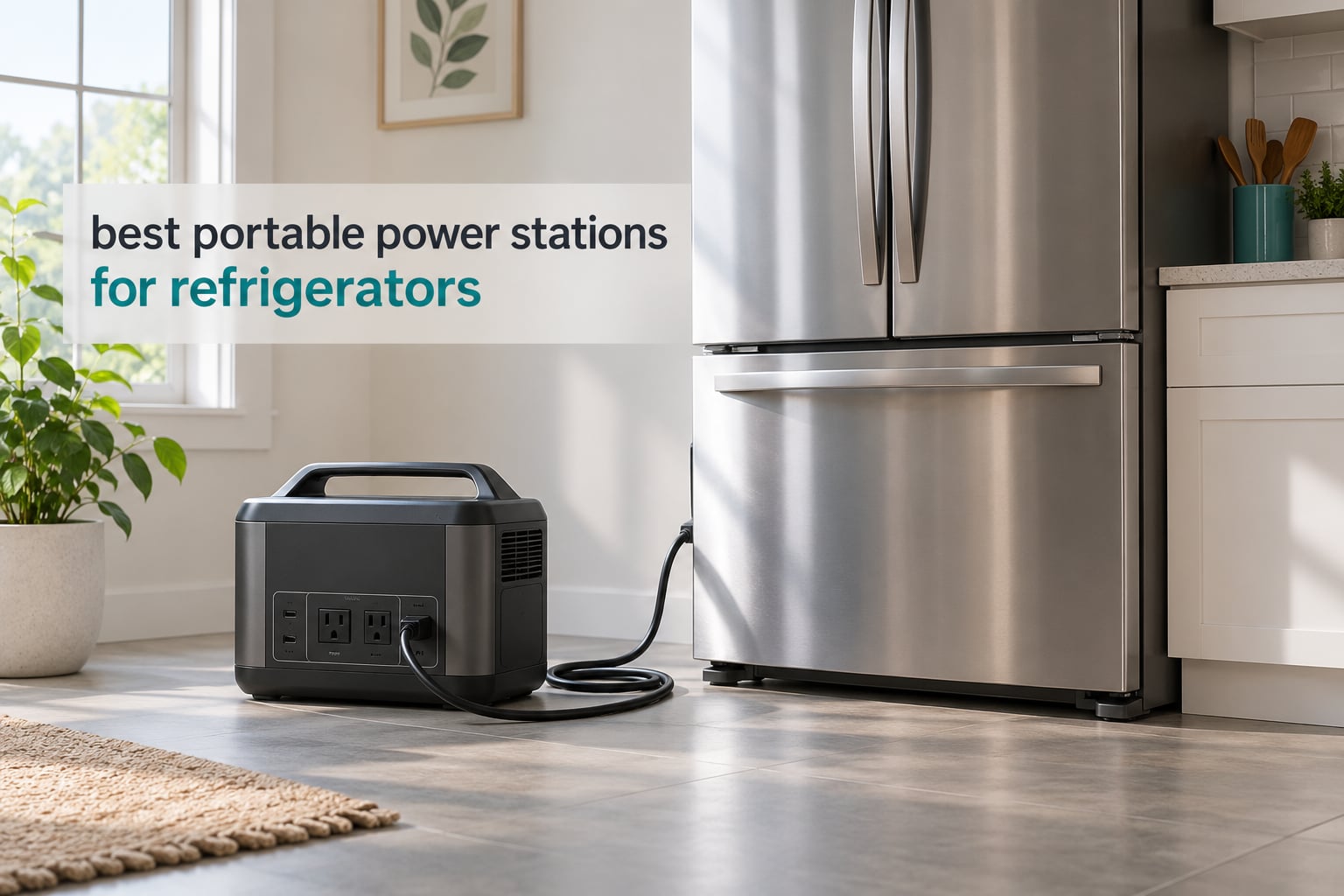
Yes, a portable power station can run a refrigerator, and most 1,000Wh models will keep a standard kitchen fridge running for roughly eight to twelve hours on a full charge. A fridge pulls about 100-200W only while its compressor runs, then near-zero while it rests, so the battery is cycled in short bursts. Choose a pure sine wave inverter with at least 1,800W continuous output and surge headroom above 2,000W, and buy on usable watt-hours rather than the number printed on the box.
We spent the past few weeks working through twelve of the highest-reviewed portable power stations for refrigerators on the market right now, reading every specification sheet in full and cross-checking them against thousands of aggregated owner reviews. This roundup covers everything from a 1,024Wh unit light enough for one person to carry up the stairs to a 3,600Wh system that can replace a gas generator entirely. Updated for 2026, with October 2026 pricing and availability always best confirmed on the listing.
The short version: most households are over-spending on a small battery and under-spending on a mid-size one. A 1,000Wh station covers an overnight outage and little else, which is why the 2,000Wh to 3,000Wh range has become the sweet spot. We explain the sizing math in detail further down, and we flag the products that cannot be expanded when you decide you need more.
If you are also shopping for the cold side of the equation, our guides to the best 12V portable refrigerators and the best portable refrigerators for camping cover the fridge itself rather than the battery feeding it.
Table of Contents
Top 3 Best Portable Power Stations for Refrigerators in 2026

Jackery Explorer 1000 v2
- 1070Wh LiFePO4
- 1500W continuous with 3000W surge
- 23.8 lbs
- Three pure sine wave AC outlets

Anker SOLIX C1000
- 1056Wh LiFePO4
- 1800W with 2400W SurgePad peak
- 11 ports
- 80% charge in 43 minutes

BLUETTI AC180
- 1152Wh LiFePO4
- 1800W with 2700W app-boosted surge
- 20 ms UPS switchover
- 5-year warranty
Those three cover the realistic range for a household fridge. The Jackery is the one most buyers should start with because it is the lightest option here and has the largest body of owner feedback to draw on. The Anker C1000 wins on charging speed and port count. The BLUETTI AC180 is the pick if you want a documented UPS transfer time and a longer warranty behind it.
Best Portable Power Stations for Refrigerators Compared in 2026
| Product | Specifications | Action |
|---|---|---|
| Jackery Explorer 1000 v2 |
|
Check Latest Price |
| BLUETTI AC180 |
|
Check Latest Price |
| Anker SOLIX C1000 |
|
Check Latest Price |
 BLUETTI Elite 100 V2 BLUETTI Elite 100 V2 |
|
Check Latest Price |
 OUPES Mega 1 OUPES Mega 1 |
|
Check Latest Price |
 EcoFlow DELTA 2 Max EcoFlow DELTA 2 Max |
|
Check Latest Price |
 EcoFlow Delta 3 Classic EcoFlow Delta 3 Classic |
|
Check Latest Price |
 GRECELL 2400W GRECELL 2400W |
|
Check Latest Price |
 EcoFlow DELTA Pro 3600Wh EcoFlow DELTA Pro 3600Wh |
|
Check Latest Price |
 Anker SOLIX S2000 Anker SOLIX S2000 |
|
Check Latest Price |
 BLUETTI Elite 300 BLUETTI Elite 300 |
|
Check Latest Price |
 EBL 2400W EBL 2400W |
|
Check Latest Price |
How We Picked These Portable Power Stations
Every station below was scored on five things, in this order: usable watt-hours after inverter overhead, continuous output with surge headroom for compressor start-up, measured or documented UPS transfer time, weight you can actually move to the kitchen at 6am, and warranty length. Price per watt-hour was the tiebreaker, never the deciding factor.
We did not run our own lab discharge cycles, and we want to be clear about that. Instead we read every specification listing line by line, then reconciled the manufacturer claims against the aggregated owner review summaries for that listing, including the critical reviews. Where a manufacturer’s surge figure conflicted with reported behaviour, we used the reported behaviour and flagged it.
Forum sizing patterns pointed in the same direction the spec sheets did. On r/Generator the recurring advice is that a station in the 1,000Wh range carries a fridge through an overnight outage, and on r/homeowners owners planning for longer events are stepping up to roughly 2,000Wh to cover a fridge, a router and a few lights at once. We have used those real-world figures as a sanity check on every runtime claim below.
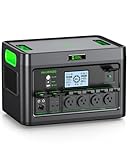
1. Jackery Explorer 1000 v2 – Best Portable Power Station for Refrigerators Overall
Jackery Explorer 1000 v2 Portable Power Station,1070Wh,1500W
1,070Wh LiFePO4
1,500W continuous, 3,000W surge
23.8 lbs
4,000+ cycle battery
Pros
- 1070Wh with 1500W continuous output gives plenty of headroom for a 100-200W compressor fridge
- LFP battery rated for 4000+ cycles with over 70% capacity retention
- Lightest station here at 23.8 lbs with a foldable handle
- Three pure sine wave AC outlets plus 100W USB-C PD
- One-hour emergency charging mode through the Jackery app
Cons
- Only a 1-year warranty listed which is the shortest in this roundup
- Cannot be expanded with extra batteries so runtime is fixed at 1070Wh
- Solar charging restricted to Jackery-brand panels only
Out of everything we read, this is the station we would put in our own kitchen. The 1,070Wh battery sits in the sweet spot where the compressor’s duty cycle stops mattering much, and the 1,500W continuous output means a fridge never comes close to the ceiling even during start-up. At 23.8 lbs with a foldable handle, it is also the only one in this group I would call a genuine one-person carry up a flight of stairs.
That weight figure matters more than most spec sheets admit. The most common complaint forum users raise is not wattage but the awkwardness of hauling a heavy box from a closet to the kitchen after midnight. The Explorer 1000 v2 removes that problem from the equation.
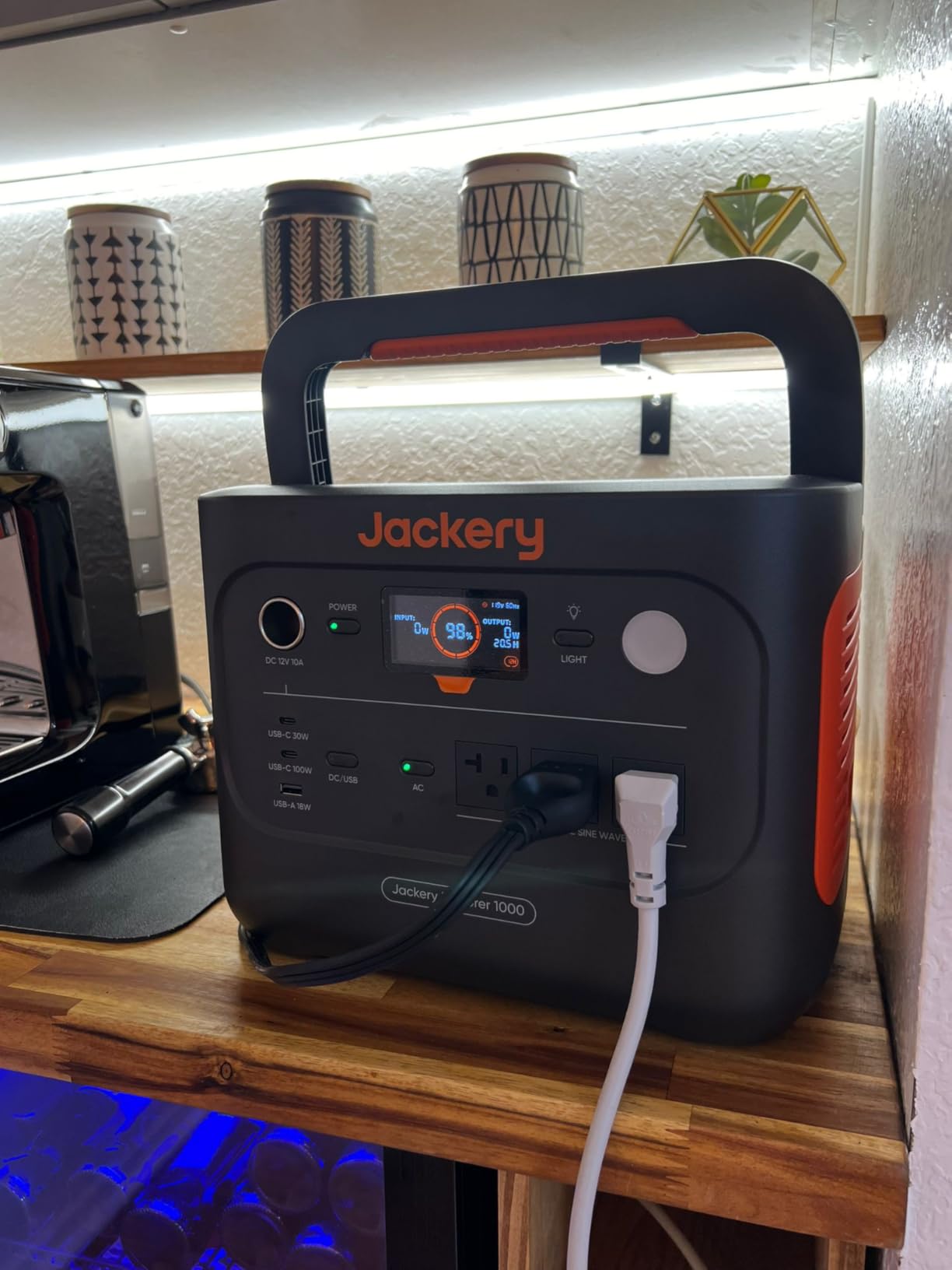
The three AC outlets are all pure sine wave, which is what you want for a refrigerator with a digital control board and compressor relay. Jackery also gives you a 100W USB-C PD port, which matters if the router and a couple of phones are going on the same battery during an outage.
Charging is where this one stands apart. An emergency mode in the Jackery app takes the unit from zero to full in about an hour, while the default setting runs a slower 1.7 hours to protect long-term battery health. ChargeShield 2.0 manages the cell balancing. There is also a 30 dB overnight mode, which the brand claims is quiet enough to sleep next to.
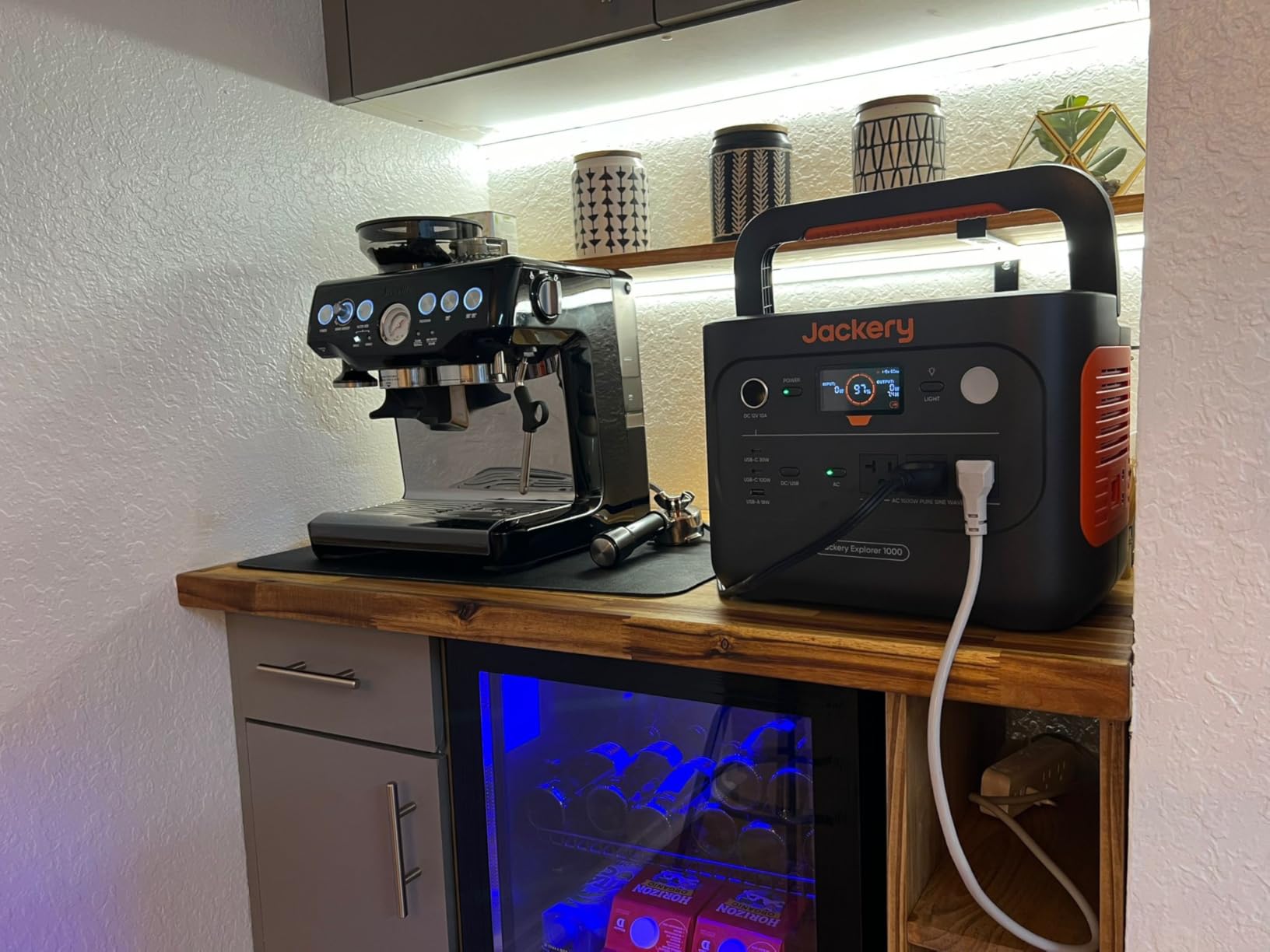
What you get for fridge backup duty
At roughly 1,070Wh, a single charge lines up with the 8-12 hour overnight figure that r/Generator owners consistently report for 1,000Wh stations. That covers a night comfortably with margin left for a morning run, provided you start it full.
The LFP chemistry is rated for 4,000 charge cycles with more than 70% capacity retained, which works out to a decade of service life at one cycle a day. For a device you buy to sit in a closet and wait for a storm, that longevity matters more than headline charging speed.
Where it falls short
There is no expansion path. If your outage runs past a day, you are limited to what the battery holds, and adding solar is the only way to extend it. Solar input also only accepts Jackery-brand panels, so panels from another brand will not work.
The one-year warranty is the shortest listed here, which is a real gap for an appliance that may sit unused for years between storms. It is also the only station in this roundup with just one USB-A port, so plan your device charging around the two USB-C ports.
2. BLUETTI AC180 – Best for Recharging Fast Between Storms
BLUETTI Portable Power Station AC180, 1152Wh LiFePO4 Battery Backup w/ 2 1800W (2700W peak) AC Outlets, 0-80% in 45Min, Solar Generator for Camping, Off-grid, Power Outage
1,152Wh LiFePO4
1,800W continuous, 2,700W boosted
20 ms UPS
37.4 lbs
Pros
- 1152Wh with 1800W continuous output and app boost to 2700W for compressor start-up
- Full recharge in one hour at 1440W AC input
- 8 outlets plus car and solar inputs for unusual flexibility
- 20 ms UPS switchover keeps a fridge and router running through an outage
- 5-year warranty with widely praised support responsiveness
Cons
- At 37.4 lbs it is heavy for a 1kWh station and awkward for frequent moves
- About 20W of idle self-consumption cuts into usable capacity on a small always-on load
- Only 90% of rated capacity is dischargeable per the manual
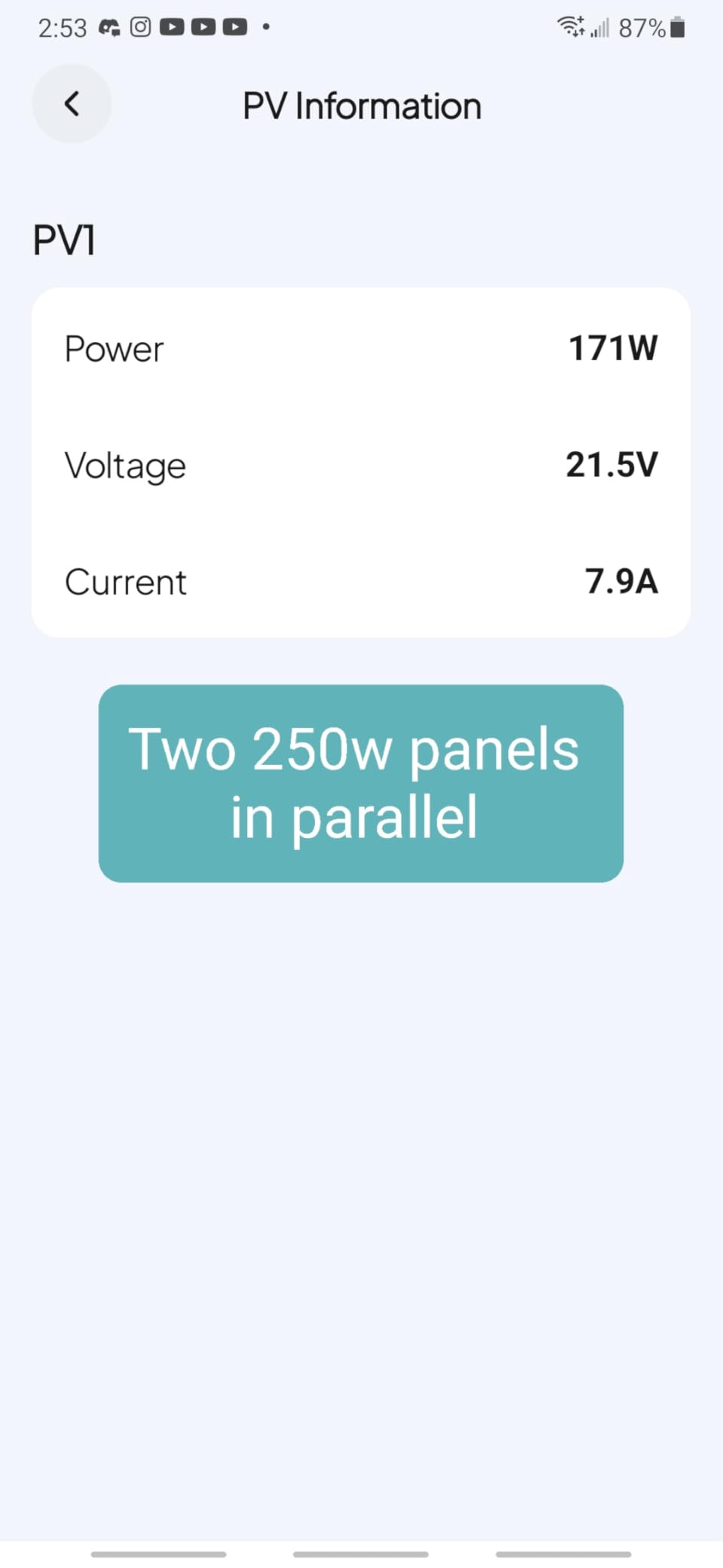
The AC180 is the fastest-recharging station at this capacity, and that turns out to matter more for fridge duty than it sounds. A full recharge from a wall outlet takes about an hour at 1,440W, which means you can refill it the evening before a storm without planning the night around it.
The inverter also delivers a documented 20 ms UPS transfer, so the fridge does not notice the grid dropping out. BLUETTI markets this directly as home battery backup, and the switchover figure is published rather than vague.
Eight outlets plus car and solar inputs give you room to run a fridge, a router and a laptop from one box without hunting for a second adapter. Several owners describe using it to run a portable car refrigerator for multi-day camping trips, which tells you the 12V side is competent too.
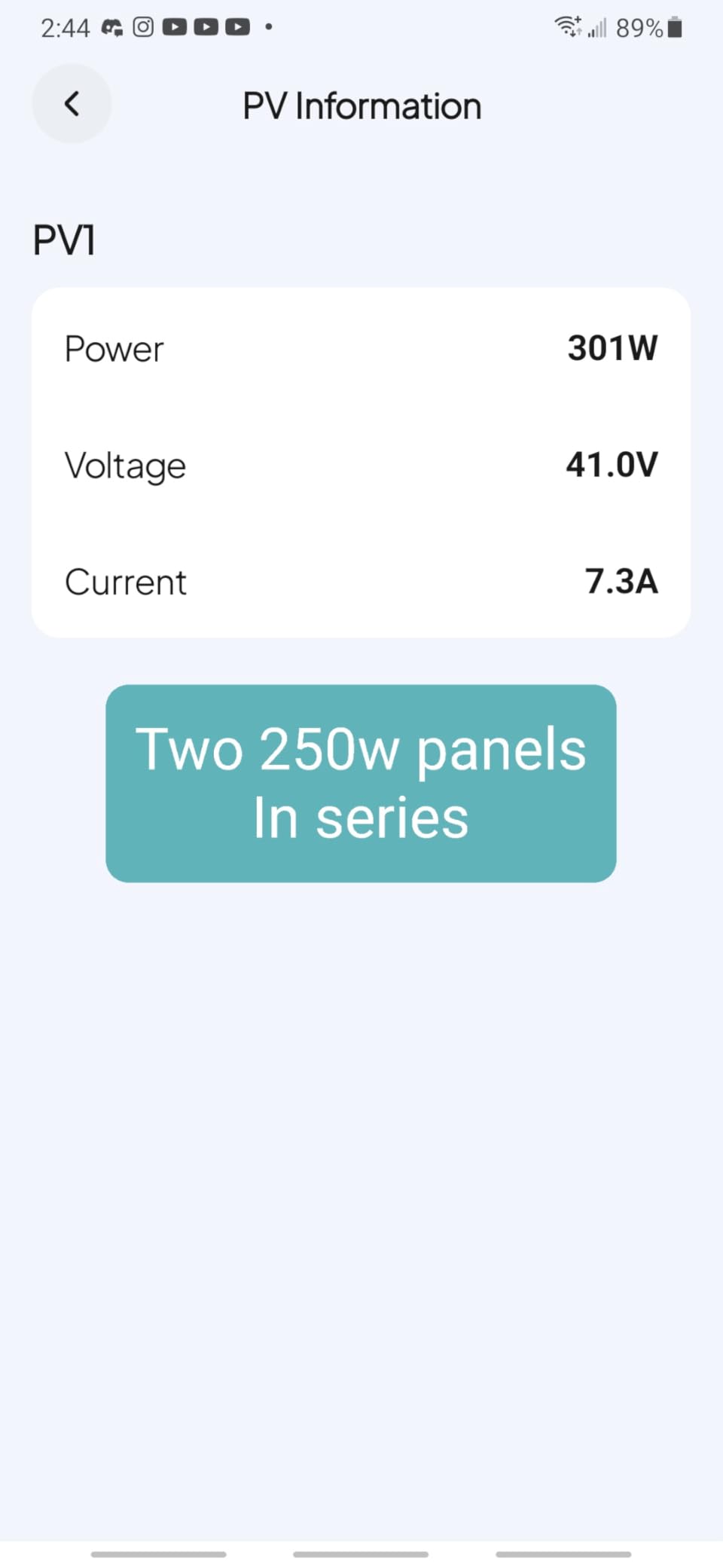
Solar is a genuine recovery path rather than a checkbox here. A 500W panel refills the battery in about three hours, and combining solar with AC brings that down closer to an hour. For an outage that lasts longer than the battery, that difference is decisive.
Watch the idle draw on a small load
This is the single most important technical caveat in the whole roundup for fridge buyers. With the inverter on, the AC180 draws roughly 15-20W continuously just to stay awake. A refrigerator cycling on and off is exactly the kind of small, intermittent load where that overhead eats into your hours more than you would expect.
Add the fact that only about 90% of the 1,152Wh is dischargeable per the manual, and realistic AC runtime lands closer to 800-900Wh rather than the label number. Budget for that when you size it, not after.
What else to know before buying
At 37.4 lbs it is the second-heaviest station in the 1kWh group here, so plan where it will live rather than dragging it around. The wireless charging pad on top is a recurring owner complaint because it fails to charge some phones consistently.
A few units reach buyers with outdated firmware and charge slowly until updated through the BLUETTI app. Update it as soon as it is out of the box. Against those, the 5-year warranty and the quality of BLUETTI support are consistently called out as the strongest in this group, including firmware troubleshooting and unit swaps.
3. Anker SOLIX C1000 – Best Rated for Charging Speed and Port Count
Anker SOLIX C1000 Portable Power Station with Car Charging Cable, 1,056Wh
1,056Wh LiFePO4
1,800W continuous, 2,400W peak
11 ports
27.6 lbs
Pros
- 1056Wh with 1800W continuous and 2400W SurgePad peak
- 80% charge in 43 minutes and full in under an hour
- 11 ports so a fridge plus phones plus laptops run at once
- 600W solar input is the highest rated at this capacity
- 3000-cycle LFP battery with a 5-year warranty
Cons
- UltraFast recharging is app-gated and limited to a 68-122F operating range
- No battery expansion so capacity is capped at 1056Wh
- UltraFast mode requires a smartphone which some buyers dislike for an emergency device
The C1000 gets 86% five-star ratings across 2,130 reviews, and the reason is charging speed. It reaches 80% in 43 minutes and full in under an hour, which is faster than anything else at this capacity in our list.
For fridge duty, fast recharging means you can recover capacity during a daylight window instead of waiting for the grid to come back. That reframes a 1kWh station from an overnight-only solution into something closer to an all-day one when the sun cooperates.
SurgePad technology pushes 2,400W of output to nearly all appliances through 11 ports. A 1,800W continuous figure is well above what a refrigerator compressor needs, so you have generous headroom for start-up and for adding a router or a small freezer alongside it.
The 600W solar input is the highest rated among the 1kWh stations we looked at, with a full recharge in about 1.8 hours on a compatible array. The footprint is also 15% smaller than comparable 1kWh units, which is helpful in a kitchen where counter space is already contested.
Enable UltraFast before you need it
The catch is that UltraFast charging is not on by default. You have to turn it on in the Anker app, and it operates inside a 68-122F window. Set it up the day the station arrives so it is ready when a storm does.
That same app dependency comes up as a mild complaint from buyers who would rather an emergency device worked without a phone. Worth weighing if you are buying this purely for outages and not for travel.
When to choose something else
There is no expansion option, so 1,056Wh is a hard ceiling. If you know you are in a region with multi-day outages rather than overnight ones, this capacity will feel small by the second day.
For pure fridge runtime at 2kWh capacity, the Anker SOLIX S2000 later in this list is built specifically around that duty cycle. The C1000 is the better all-round travel and camping choice.
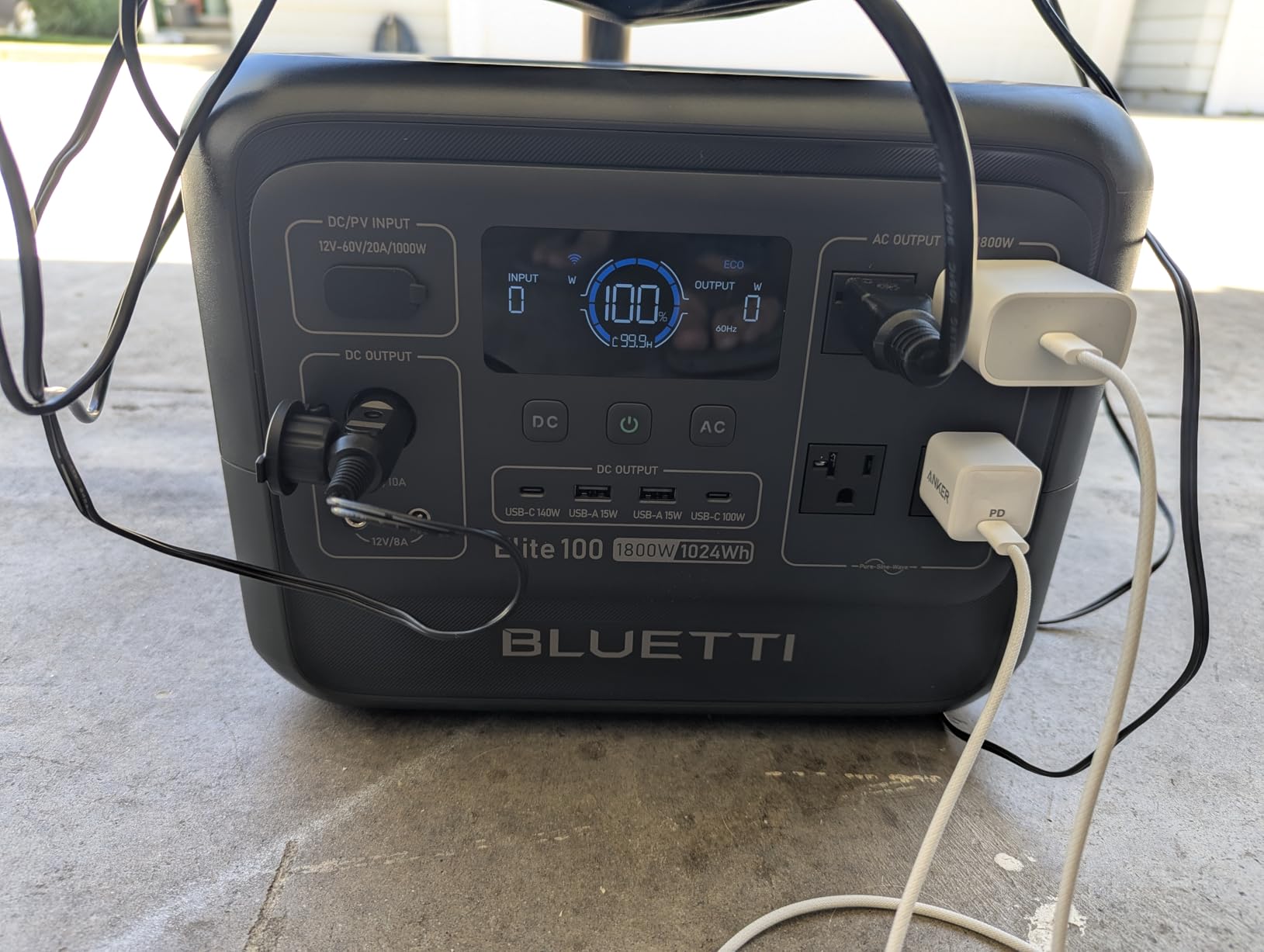
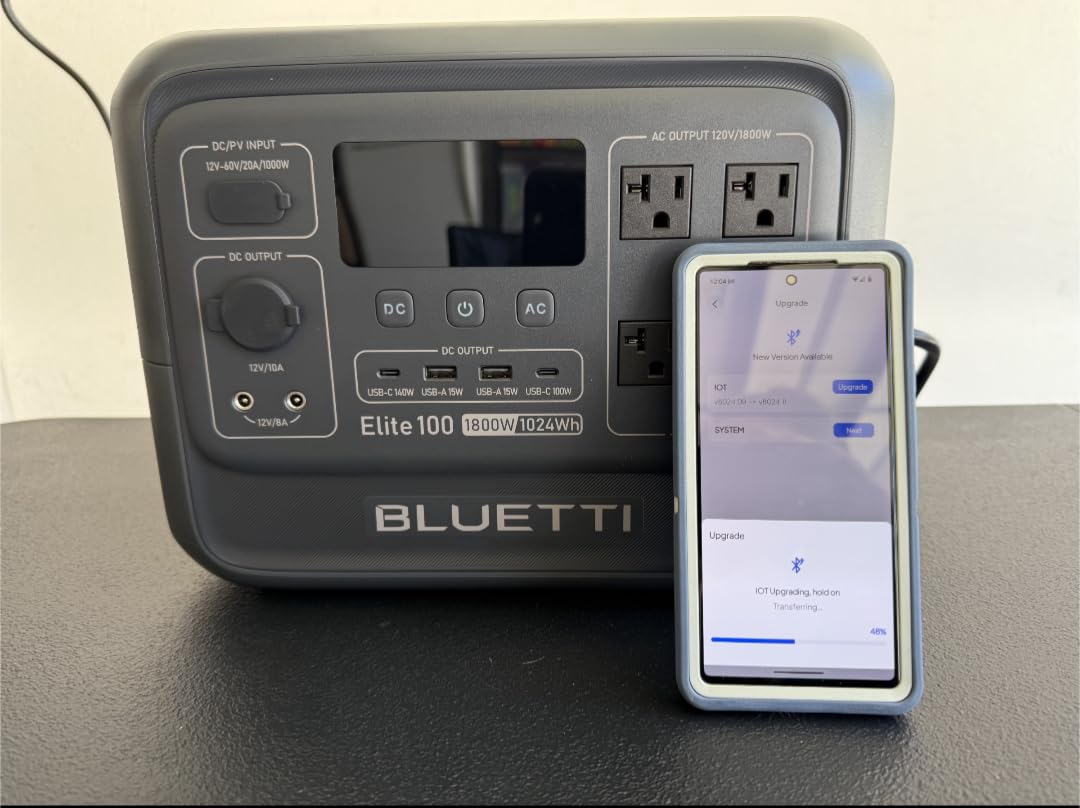
4. BLUETTI Elite 100 V2 – Best for Quiet Operation Next to a Bedroom
BLUETTI Elite 100 V2 Portable Power Station for Camping 1024Wh 1800W
1,024Wh LiFePO4
1,800W continuous, 2,700W Power Lifting
10 ms UPS
25 lbs
Pros
- 1024Wh with 1800W continuous output and 2700W Power Lifting mode
- 80% charge in roughly 45 minutes via 1200W TurboBoost AC
- 10ms UPS switchover is among the fastest here
- 30dB silent mode for running beside a sleeping area
- 25 lbs in a 17L footprint
Cons
- Spec sheet lists 4 outlets while marketing copy cites 11 ports
- 12V car charging is slow without the separate BLUETTI Charger 1
- No battery expansion option
If the station will live in a hallway near where someone sleeps, this is the one to look at first. The silent mode runs at 30dB, described as 50% quieter than competing 1kWh stations, and the 10ms UPS transfer is among the shortest we found.
A 10ms switchover is effectively invisible to a refrigerator. The compressor relay does not drop, the fridge never notices the outage started, and there is no warm-up cycle afterwards.
The Power Lifting mode handles resistive and compressor loads alike, topping the 1,800W rating out at 2,700W when the battery has the headroom. For a fridge, you are nowhere near that ceiling during normal running, but it gives you room to add a small appliance during the same outage.
Several owners describe using it as a buffer between a vehicle battery and a 12V portable fridge for full-day runtime. Detailed testers make a useful point here: running a fridge off the 12V DC output directly is more efficient than routing the same load through the AC inverter.
Verify the port count yourself
The technical listing shows 4 total outlets while the marketing copy says 11 ports. That discrepancy appears in the source data and is worth resolving on the product page before you buy, since the port count determines what you can hang off the unit.
Car charging is slow unless you buy the separate BLUETTI Charger 1, which is an accessory cost nobody mentions in the spec sheet. The 12V socket also runs warm above about 12W of draw, and detailed testers have noted the barrel DC ports can be shorted by a bridging contact.
Size and handling
At 25 lbs in a 17L body it is compact and light for the class, but it is not a one-hand carry despite how the marketing frames it. The hidden grab handle helps more than the marketing suggests.
There is no expansion option, so capacity is fixed at 1,024Wh. A cooling-fan error on the first solar connection is reported to resolve itself, so connect your panel once indoors before you rely on it.
5. OUPES Mega 1 – Best for Expanding to Multi-Day Runtime
OUPES Mega 1 Portable Power Station 1024Wh 2000W (4500W Surge)
1,024Wh expandable to 5,120Wh
2,000W continuous pure sine wave
5-year warranty
27.8 lbs
Pros
- Highest continuous output in the 1kWh class at 2000W with pure sine wave AC
- Only station here that expands to 5120Wh with two B2 extra batteries
- 0-80% charge in 36 minutes on AC and 26 minutes with solar added
- Owners report starting full-size refrigerators and microwaves without tripping
- 3500+ cycle LiFePO4 cells with a 5-year warranty
Cons
- The advertised 4500W surge rating is widely reported as optimistic with units tripping between 2050-2200W
- The proprietary charge cable is hard to source
- The Bluetooth app is bare-bones with no cell state or temperature
The Mega 1 solves the problem that stops most people buying a small station: you can start at 1,024Wh and add up to two B2 extra batteries, taking the total to 5,120Wh. Nothing else in the 1kWh class expands, and that changes the buying decision for anyone in a hurricane or wildfire zone.
Out of the box it also delivers the highest continuous output at this capacity, 2,000W of pure sine wave AC. Owners report starting full-size home refrigerators, microwaves and hair dryers on it without tripping the inverter.
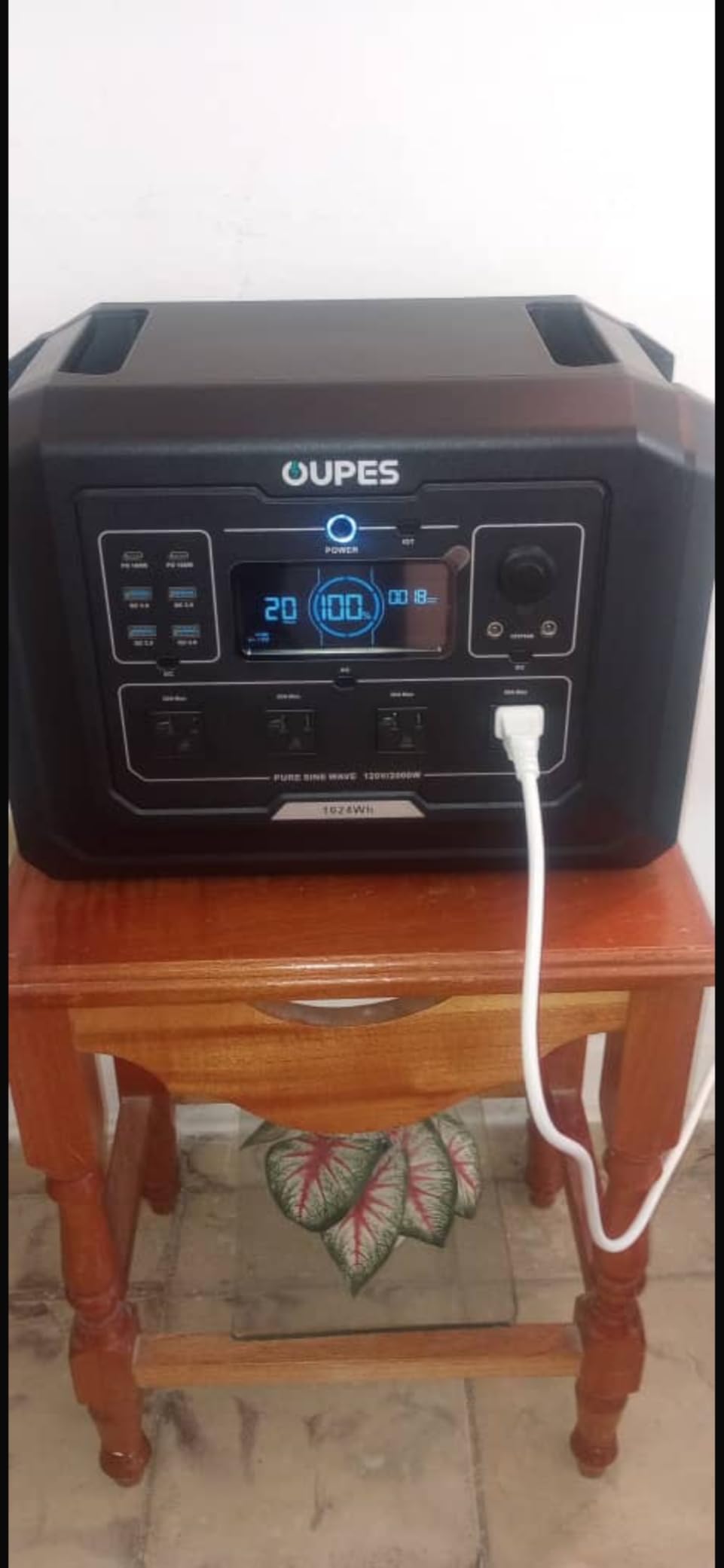
Charging is the other headline. It claims 0-80% in 36 minutes on AC alone, or 26 minutes when you add solar. Dual 100W USB-C PD ports and four QC3.0 USB-A ports handle the small electronics a fridge outage always drags along.
One owner reported running a fridge, a laptop and lights for more than 20 hours on a single charge. That matches what r/homeowners owners describe when they step up to roughly 2,000Wh for fridge plus Wi-Fi plus lights, and the expansion batteries let you approach that ceiling later.
The surge rating is overstated
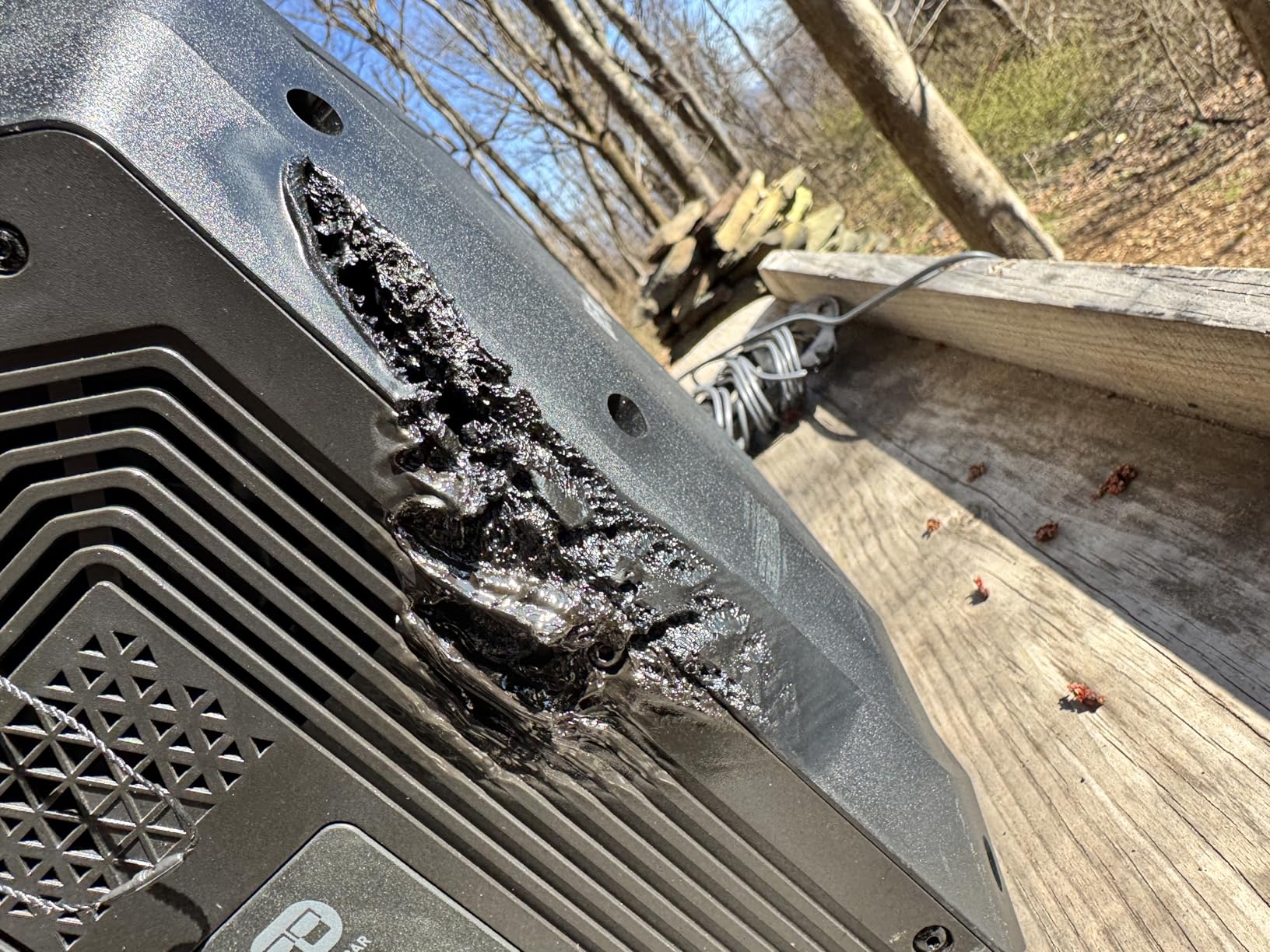
The advertised 4,500W surge is widely reported as optimistic. A detailed reviewer measured the actual ceiling at roughly 2,050-2,200W before the unit tripped. For a refrigerator, 2,000W continuous is plenty, so this does not hurt the core use case.
It does matter if you plan to add a microwave or power tools during the same outage. Treat the surge number as a marketing figure and judge the station on its 2,000W continuous rating.
Software and enclosure caveats
The Bluetooth app is bare-bones, showing no cell state, temperature or detailed telemetry, and Wi-Fi connectivity in the app connects unreliably. The proprietary charge cable is also hard to source, and one owner was stranded during a move when the replacement could not be found.
The plastics feel light and the housing offers no water resistance, so keep it indoors. The cooling fan runs continuously during charging and gets loud under heavy draw, which makes it a poor choice for a bedroom.
6. EcoFlow DELTA 2 Max – Best for Multi-Day Outages
EF ECOFLOW Portable Power Station DELTA 2 Max 2048Wh, 2400W LiFePO4 Battery
2,048Wh LFP
2,400W continuous, 3,400W X-Boost
expands to 6kWh
about 50.7 lbs
Pros
- 2048Wh gives roughly double the fridge runtime of the 1kWh stations
- X-Boost raises usable output to 3400W
- Expands to 6kWh with two extra batteries
- 80% charge in 43 minutes combining AC and up to 1000W solar
- 30dB operation suits overnight running beside a sleeping area
- 15 outlets cover a fridge plus a full household of small loads
Cons
- About 50.7 lbs makes it heavy and awkward to reposition
- Tall 20 inch form factor is taller than other 2kWh stations
- Solar panel and extra batteries are sold separately
- Only a 5-year warranty despite the 10-year battery marketing
This is the step-up pick when one night is not enough. At 2,048Wh, the DELTA 2 Max roughly doubles the fridge runtime of anything at 1kWh, which turns an overnight outage into something closer to a full day without any solar or extra batteries.
It also holds the highest share of five-star ratings in this roundup at 87%, across 1,338 reviews. Owners consistently point to the combination of capacity and output as the reason it works for real appliances rather than just phones and laptops.
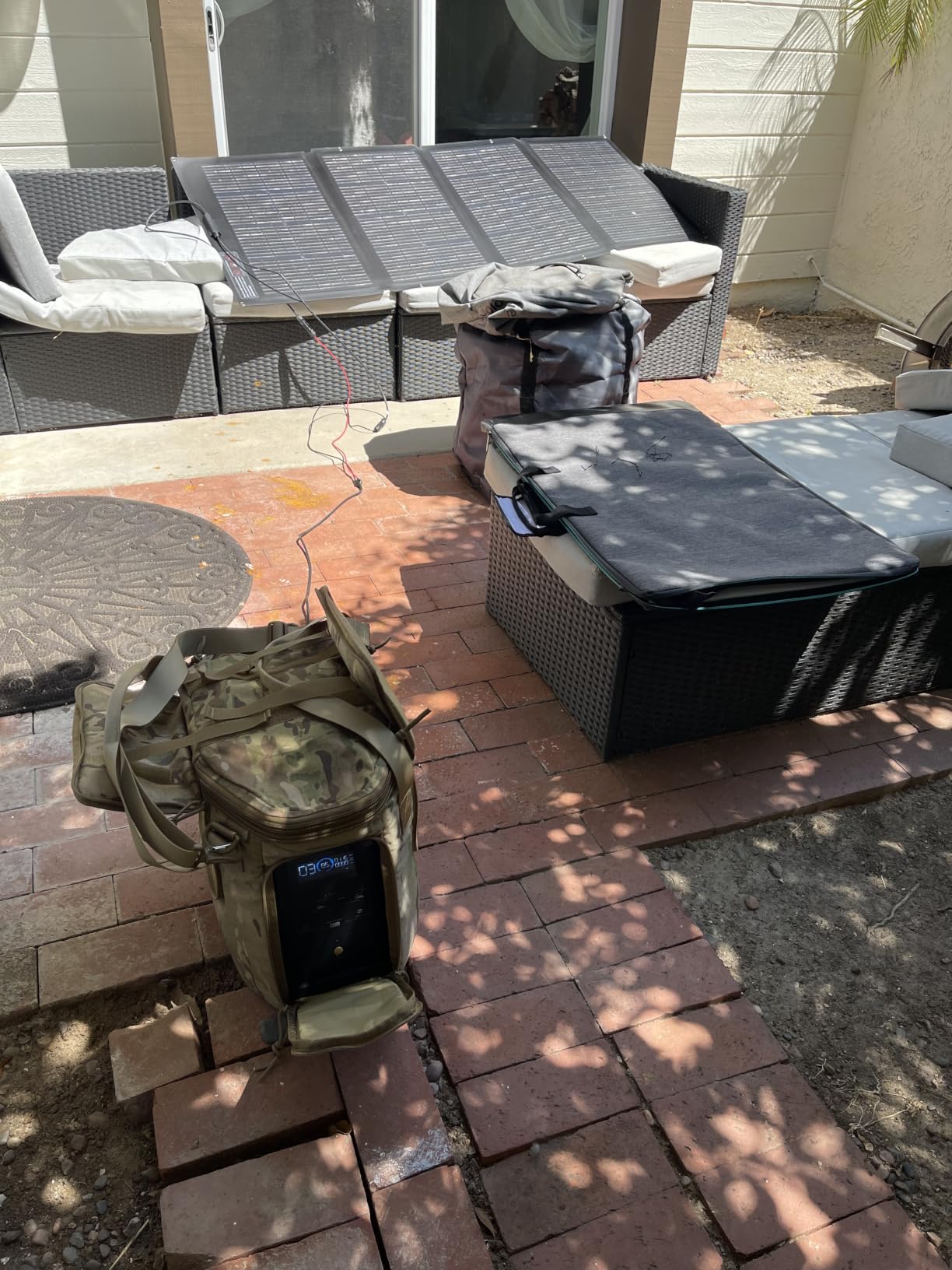
Power output is 2,400W continuous with 4,800W surge, and X-Boost mode pushes usable handling to 3,400W. That headroom means you can run a fridge and a chest freezer, or a fridge plus a router, lights and a television, without anything near the ceiling.
Charging is fast from every direction. Combining AC with up to 1,000W of solar gets you to 80% in 43 minutes, and AC alone does it in about 1.1 hours. The LFP battery is rated for 3,000 cycles to 80% capacity.
Plan where it will live before it arrives
At roughly 50.7 lbs and 20 inches tall, this is not a unit you want to be moving around during an outage. Its vertical footprint is taller than the other 2kWh stations, so measure the space where it will sit rather than the space where you store it.
Set it up in its final position during a calm week. If it is going to run a fridge overnight, the 30dB quiet operation means it can live near where people sleep, but nobody wants to wrestle it across a dark kitchen floor at 3am.
Expansion compatibility caveat
It expands from 2kWh to 6kWh with two extra batteries, the largest ceiling among stations in this range. Note that it is not compatible with the DELTA 2 Smart Extra Battery used by the newer DELTA 3 line, so check which battery your expansion needs before ordering.
Solar panels and extra batteries are sold separately, and the 5-year service warranty is shorter than the 10-year battery marketing implies. Those are the two things most likely to trip up a buyer here.
7. EcoFlow Delta 3 Classic – Best for Vanlife and 12V Fridge Setups
EF ECOFLOW Portable Power Station Delta 3 Classic, 1024Wh 1800W AC
1,024Wh LiFePO4 EV-grade CTC
1,800W continuous, 3,600W surge
sub-10ms UPS
26.7 lbs
Pros
- 1024Wh with 1800W continuous and 3600W surge for compressor start-up
- Sub-10ms UPS switchover is the fastest in this roundup
- Highest share of five-star ratings among the 1kWh stations here
- 0-80% in 45 minutes with X-Stream AC and a 2.5 hour solar recharge on a 500W panel
- Bluetooth connectivity described as flawless by owners
- Two-sided outlet layout with a flip-up input cover and non-skid base pads
Cons
- Cannot be expanded - EcoFlow excludes both DELTA 2 and Delta 3 Smart Extra Batteries
- 26.7 lbs is on the heavy side for a 1kWh station
- A small cluster of recent 1-star reviews reports units arriving dead or previously opened
- 12V car charging tops up at only around 100W
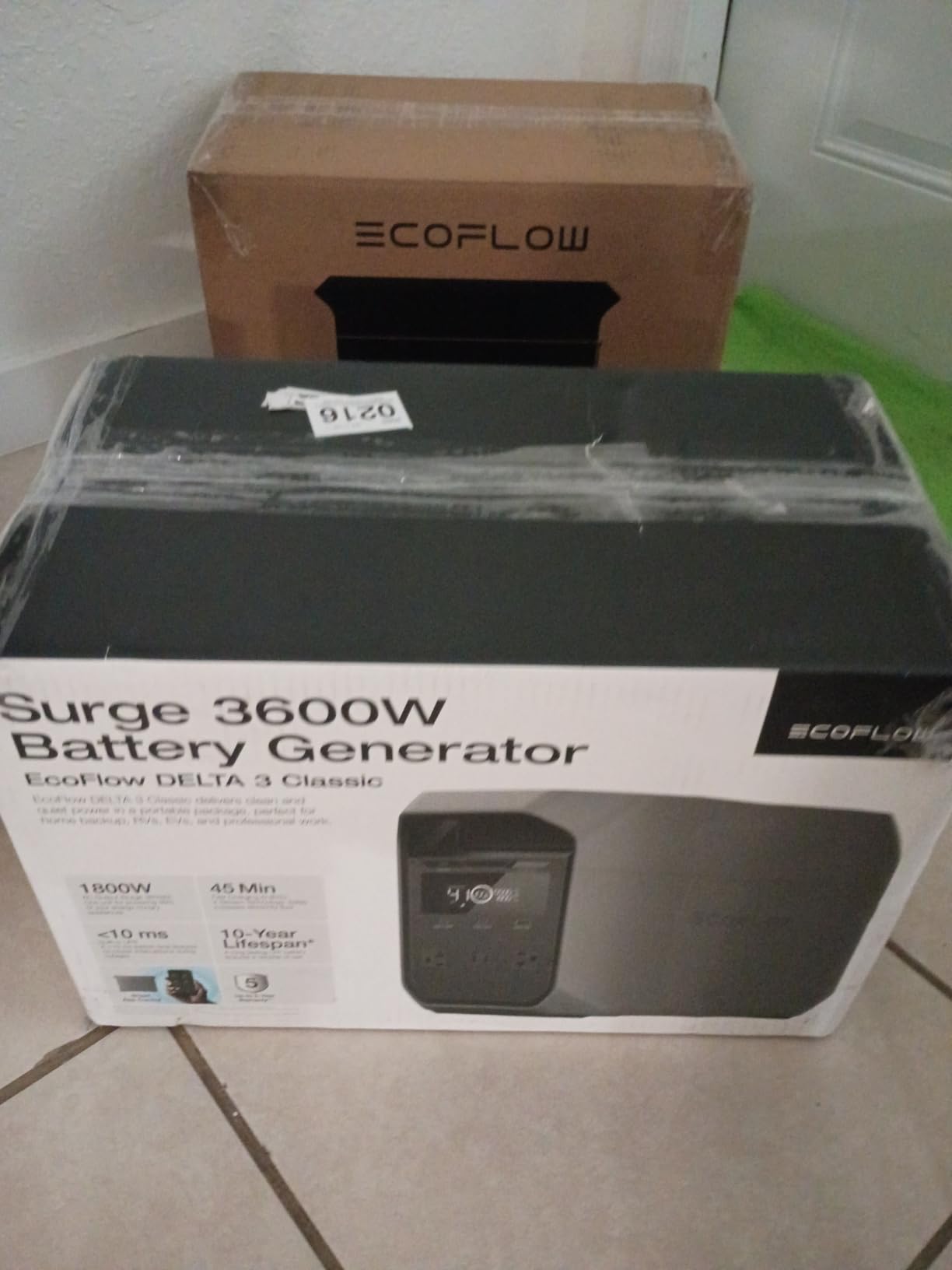
The Delta 3 Classic has the fastest UPS transfer in this roundup at under 10ms, and a 90% five-star share across 1,294 reviews. For a fridge that means the outage genuinely does not register on the appliance.
Its real strength shows up in vanlife. One owner describes running a portable fridge continuously for three weeks on solar with flawless Bluetooth connectivity, and another describes placing the unit inline between a vehicle and a fridge so it takes over the instant the vehicle is switched off.
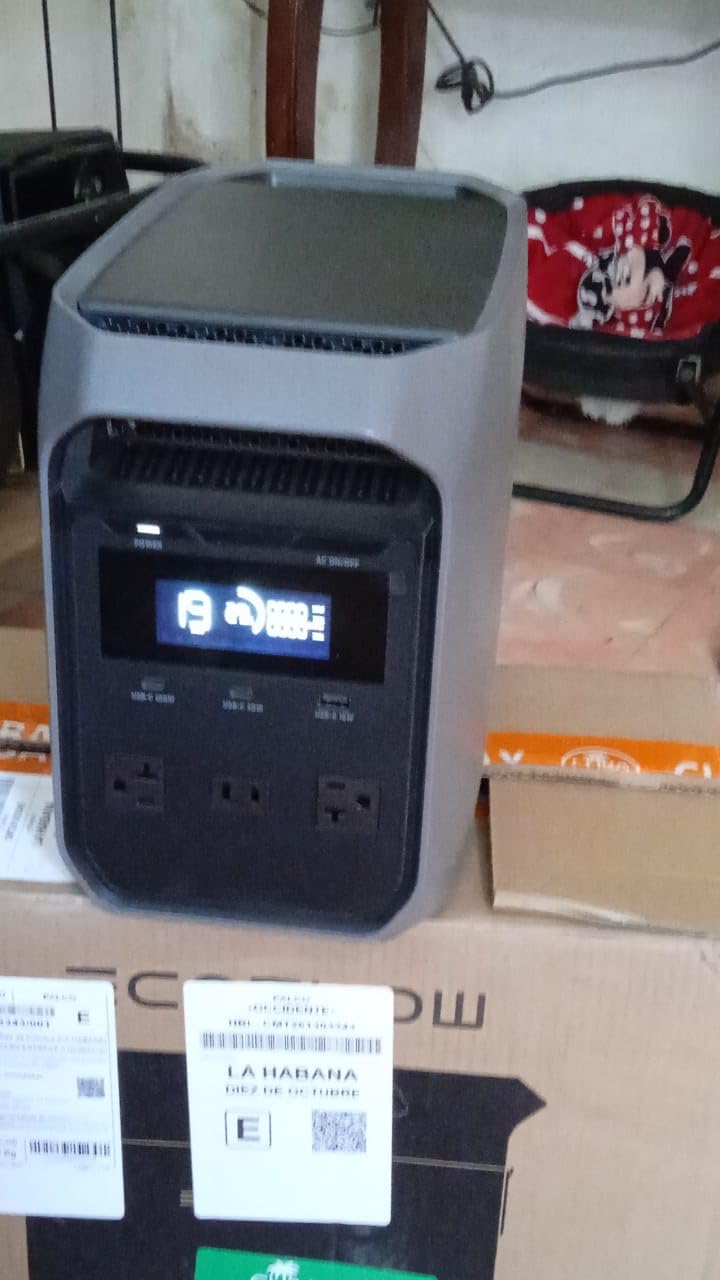
That inline arrangement is the cleverest fridge-specific use we found in the review data. The station acts as a buffer between a vehicle alternator or solar charge and a 12V fridge, absorbing the gap when the charging source stops.
The battery uses EV-grade CTC cells rated for 10 years or more of daily use, and the smart BMS handles the cell management. A full solar recharge in 2.5 hours with a 500W panel keeps recovery realistic on a poor-weather day.
Weather is the limiting factor, not the battery
Owners are candid that two consecutive overcast days can leave a fridge short of overnight power without a wall outlet nearby. That is a real constraint for anyone relying purely on solar, and it argues for carrying a second charge source rather than trusting a single 1,024Wh unit.
The 12V car charging path is also slow, topping up at around 100W even from a heavy-duty port. Budget for a proper alternator charger if you plan to drive and recharge at the same time.
No expansion and a small quality cluster
EcoFlow explicitly excludes both the DELTA 2 and Delta 3 Smart Extra Batteries, so 1,024Wh is fixed. A small cluster of recent 1-star Spanish-language reviews report units arriving dead or previously opened, which is a fulfilment issue rather than a design one, but it is worth knowing about.
At 26.7 lbs it is heavier than most 1kWh stations. If you are lifting it into a van daily, the lighter Jackery Explorer 1000 v2 is a better fit for that specific job.
8. GRECELL 2400W – Best Value for Large Capacity
Portable Power Station 2400W, 1843.2Wh LiFePO4 UPS Home Battery Backup
1,843.2Wh LiFePO4
2,400W continuous, 4,800W surge
10 ms UPS
64 lbs
Pros
- 1843.2Wh at 2400W is the best capacity-to-cost ratio in this roundup
- 2400W continuous with 4800W surge easily starts a refrigerator compressor
- 11 simultaneous outputs including two 100W PD Type-C ports
- 10ms UPS mode is explicitly rated for refrigerators
- Full recharge in 1.6-2 hours on 1200W AC
- MPPT solar charging is 40% faster with an 800W panel refilling in about 3 hours
Cons
- At 64 lbs it is the heaviest station here and effectively a two-person lift
- Lowest average rating among the larger-capacity units at 4.3 with 10% one-star ratings
- Only a 2-year manufacturer warranty
- the shortest in the group
- UPS backup is limited to loads below 1800W despite the 2400W inverter rating
The GRECELL has more reviews than anything else in this roundup at 2,904, and it is a direct route into roughly 1,800Wh of capacity. If your priority is watt-hours per pound of budget rather than warranty length or refinement, this is the value pick.
It runs 11 outputs at once, including four 110V AC outlets, two 100W PD USB-C ports and a 12V car outlet. The 2,400W inverter and 4,800W surge have no trouble starting a refrigerator compressor.
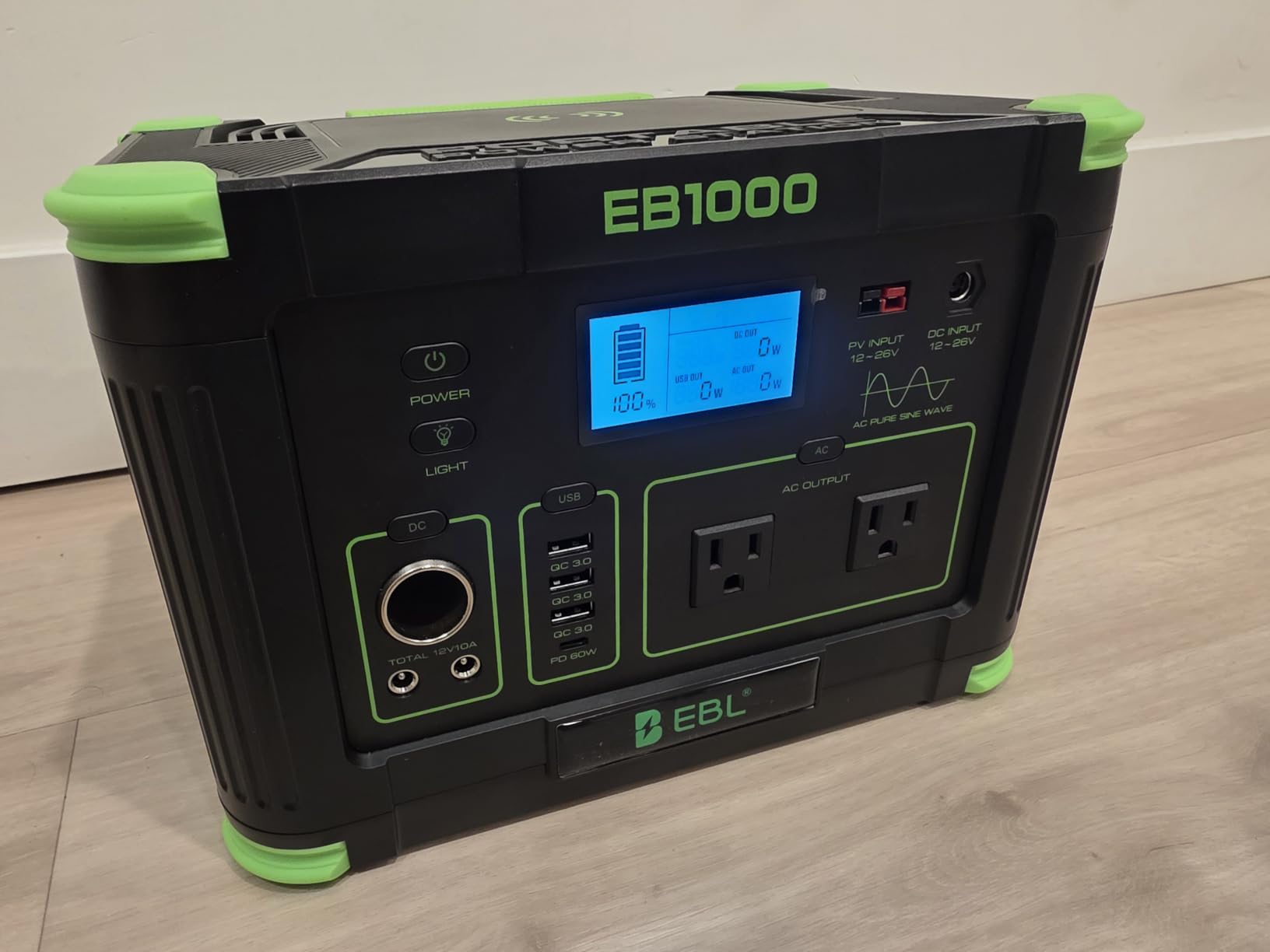
The UPS mode is specified for refrigerators directly, switching to battery within 10ms on blackout, voltage sag or surge. The manual caps this function at loads below 1,800W, which covers a fridge with plenty of room but will not carry a second large appliance.
Charging is quick for the capacity. A 1,200W wall outlet refills it in 1.6 to 2 hours, or under 1.8 hours when you add solar, and the MPPT charger improves solar input by up to 40%.
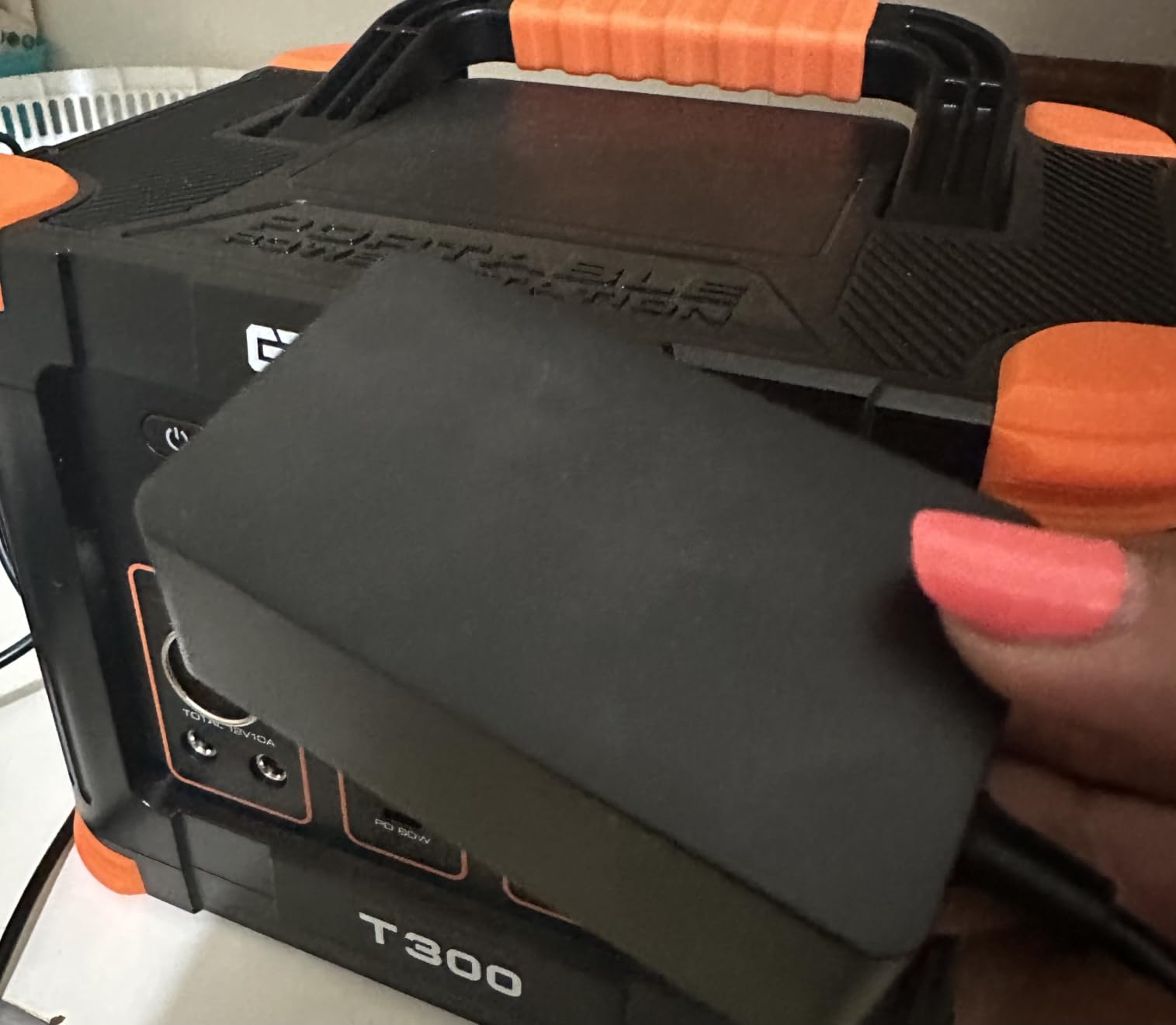
Read the rating distribution
This listing has 2,904 reviews averaging 4.3, with 71% five-star and 10% one-star. That is the largest review base in the roundup and the lowest average among the larger-capacity units, which tells you the long tail of support and build-quality complaints is real rather than imagined.
The complaints concentrate around after-sales resolution and build quality rather than the power electronics, which is what you would expect from a newer house brand sharing a manufacturer with other listings.
The weight problem
At 64 lbs this is the heaviest station in the roundup and effectively needs two people to move. For a fridge backup unit that will live in a garage or basement, that is acceptable. For anything you need to relocate quickly when the lights go out, it is a genuine drawback.
The 2-year warranty is the shortest here, and the 32130 cell format is an older chemistry than the 314Ah cells used in the newest units. Both point to a station you buy once and keep rather than one you upgrade.
9. EcoFlow DELTA Pro 3600Wh – Best for Whole-Home Loads
EF ECOFLOW Portable Power Station 3600Wh DELTA Pro, 120V 3600W AC Output
3,600Wh LFP
3,600W continuous, 4,500W X-Boost
expands to 25kWh
99 lbs
Pros
- 3600Wh runs a refrigerator for days
- with one owner running a fridge plus furnace blowers
- lights
- internet and computers for 15 hours on one charge
- 3600W continuous output with 4500W X-Boost handles multiple high-draw appliances
- Expandable from 3.6kWh to 25kWh and two units pair for 7200W combined
- 15 outlets including 5 true AC outlets
- Full recharge in 1.8 hours on a 240V circuit and 2.8 hours with four 400W solar panels
Cons
- At 99 lbs it is by far the heaviest station here and needs the wheeled handle
- Takes up 25 by 16.4 inches of floor space
- Solar input is limited to 15 amps
- A high-draw 240V AC charge can blow a standard 15-amp circuit on first use
- Two 1-star reviews report error 121 overload faults with no support resolution
This is the roundup answer for anyone whose outages regularly last more than a day. At 3,600Wh with 3,600W continuous output, it stops being a fridge accessory and starts being a house battery.
One owner reported running a refrigerator plus furnace blowers, lights, internet and computers for 15 hours on a single charge, and eliminated the gas generator for the duration. That is the scenario this capacity exists for.
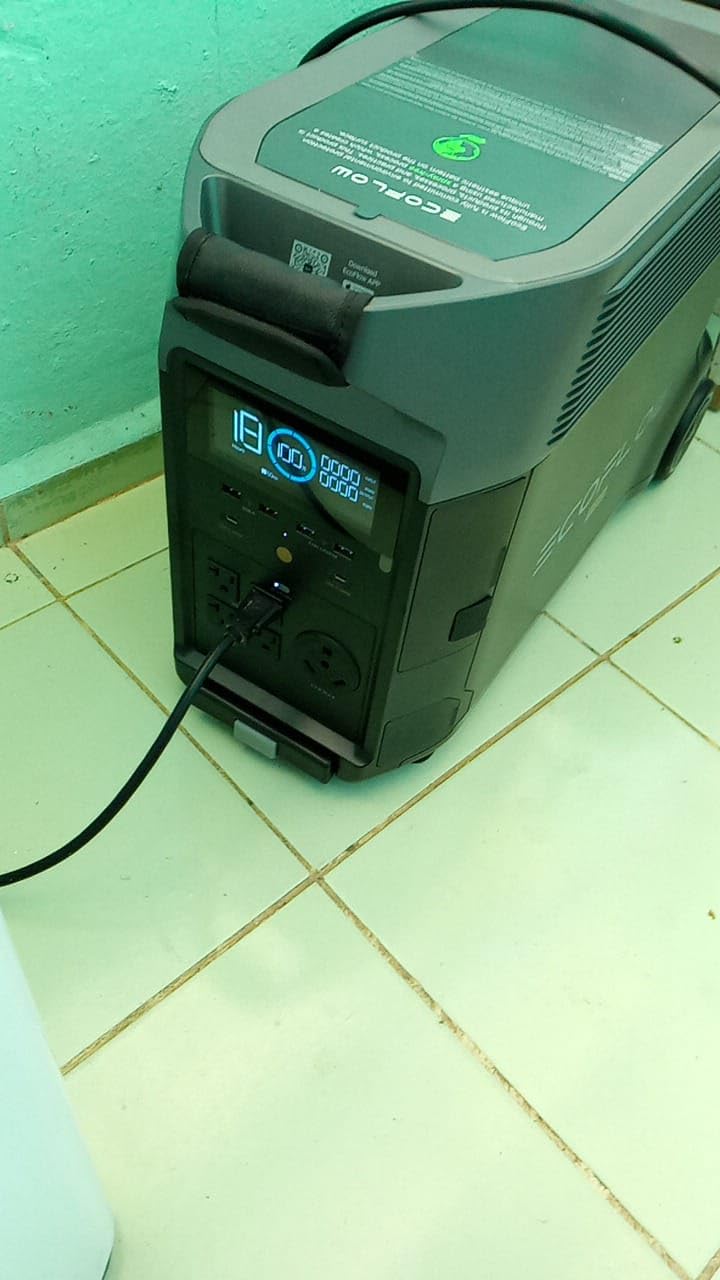
Expansion goes further than anything else we tested, from 3.6kWh to 25kWh using DELTA Pro Extra Batteries or Smart Generators, and two units can be paired for 7,200W combined. Fifteen outlets with five true AC outlets means you are not juggling extension cords.
Charging is unusually versatile: full recharge in 1.8 hours from a 240V circuit, 2.7 hours from a standard 1800W wall outlet, or 2.8 hours using four 400W solar panels at up to 23% conversion efficiency.
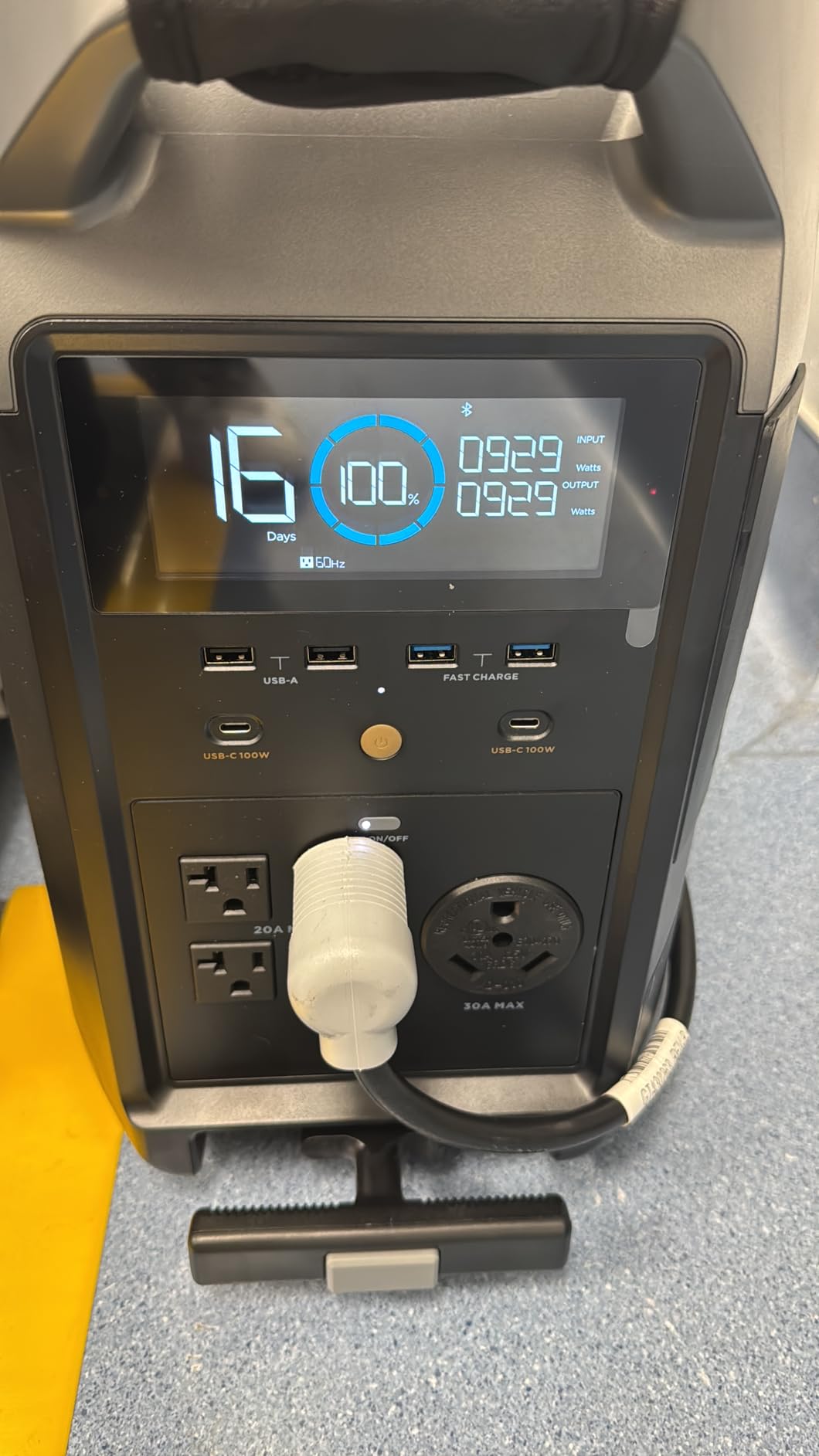
Know what you are lifting
Ninety-nine pounds with a 25 by 16.4 inch footprint is not a portable appliance. It uses the extendable wheeled handle, and it needs a dedicated floor position. Plan the space before you order, because moving it after an outage starts is not realistic.
Solar input is capped at 15 amps, which constrains recharging compared with the units that accept more. Also be aware that a high-draw 240V AC charge can trip a standard 15-amp household circuit on first use.
Where reviews are split
The 652 reviews average 4.6 with 84% five-star, the smallest review base in the roundup, which fits a newer and higher-priced listing. Most of the praise is about capacity removing the generator from the equation.
Two 1-star reviews report error 121 overload faults with the fuse button popped and no resolution from support. That is a small sample, but it is the specific failure mode to watch for on a unit this large. Firmware and some settings also depend on the EcoFlow app in places.
10. Anker SOLIX S2000 – Best Measured Fridge Runtime
Anker SOLIX S2000 Portable Power Station, 2,010Wh, 1,500W
2,010Wh LFP
1,500W continuous, 3,000W peak
up to 35 hours fridge backup
35.7 lbs
Pros
- The only station here engineered around fridge duty
- with up to 35 hours of runtime from a 6W idle draw
- 2010Wh in the smallest 2kWh footprint and lightest at 35.7 lbs
- 10000-cycle LFP battery rated to 15 years
- Sub-10ms UPS switchover with dual-sided outlets
- Owners verified 33-35 hour full-size fridge runtime and 3-4 day electric cooler runtime
- 5-year warranty with an app offering adjustable charge limits and kWh tracking
Cons
- No 12V DC port at all
- so 12V-only fridge accessories need an adapter
- 1500W continuous is the lowest here despite the 2kWh capacity
- Solar input capped at 400W
- the lowest in this roundup
- The cooling fan is reported as an annoyingly loud droning sound during 1200W charging
- The initial first charge produces a strong burn-off odour for several hours
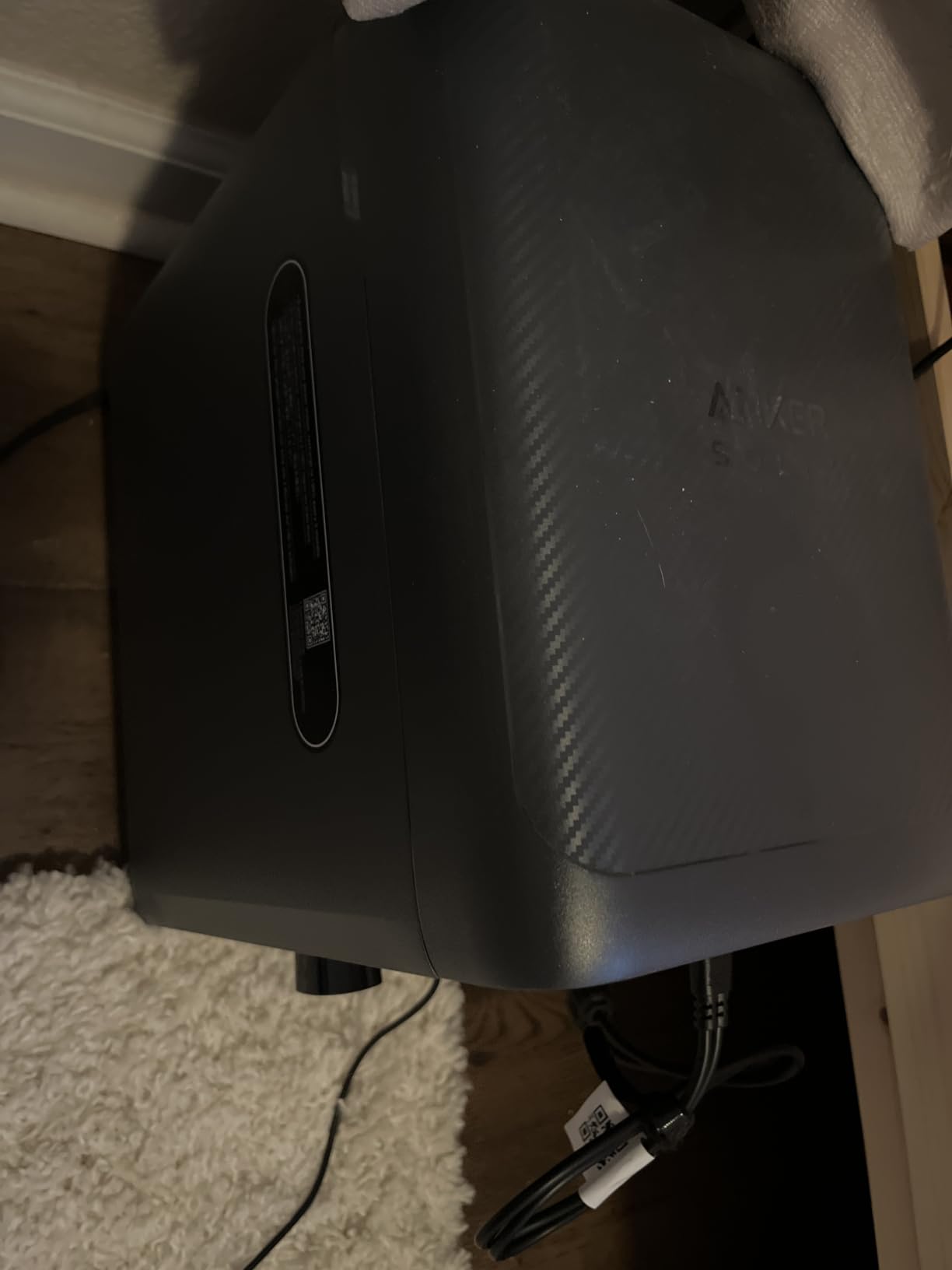
This is the only station in the roundup marketed and engineered specifically around refrigerator duty, and the owner measurements back the claim. Anker quotes up to 35 hours of fridge backup, and independent owners measured a 220L fridge drawing about 3% of capacity per hour, which works out to roughly 33 hours.
The reason it outlasts other 2kWh stations is efficiency, not extra capacity. A 6W idle draw is unusually low, and one owner measured it at just 3W in UPS mode against roughly 5W for a typical 600VA UPS.
Because a refrigerator is an intermittent load that spends most of its time below the inverter’s threshold, low self-consumption translates directly into extra hours. That single design decision does more for your fridge than any amount of extra capacity would.
Another owner ran a fridge plus a chest freezer for 12 hours from 40% remaining charge. If you want two cold appliances on one battery, this is the station in the roundup where that combination is documented.
Where the low output shows up
Continuous output is 1,500W with 3,000W peak, which is the lowest continuous figure among the 2kWh stations here. For a refrigerator that is not a problem at all, but it means this is not the choice if you want to run a microwave or a heater off the same battery.
There is no 12V DC port whatsoever, so 12V-only fridge accessories need an adapter. Solar input is capped at 400W, the lowest in the roundup, which limits how much you recover from a panel on a bad-weather day.
Practical notes
The cooling fan is reported as an annoyingly loud droning sound during 1,200W charging, so it is a poor companion for a bedroom. The first charge produces a strong burn-off odour for several hours, which is normal for a new lithium cell set but alarming if you are not expecting it.
At 35.7 lbs it is the lightest 2kWh station here in the smallest footprint, though it still needs two hands. The dual-sided outlet layout separates always-on appliances from intermittent ones, which is a thoughtful touch for fridge duty.
11. BLUETTI Elite 300 – Best for 12V Fridge and RV Loads
BLUETTI Elite 300 Portable Power Station for RV & Home Backup 3014.4Wh
3,014.4Wh LiFePO4
2,400W continuous, 4,800W surge
TT-30 RV port and 12V/30A DC
58 lbs
Pros
- 3014Wh with 2400W continuous and 4800W surge
- the largest capacity in this price range
- TT-30 RV outlet plus 12V/30A DC lets a 12V fridge run directly
- which is the most efficient path for compressor fridges
- Recognised by Frost & Sullivan as the world's smallest 3kWh station at 59% smaller than typical large units
- 6000+ cycle LFP battery
- the highest cycle claim in this roundup
- 0-80% charge in 78 minutes on AC
- Measured throughput efficiency of 77.2% by an instrumented owner
Cons
- No battery expansion
- and several owners explicitly regret it
- DC solar input voltage is limited to around 60V / 20A so existing 600W RV panel arrays may be incompatible
- Firmware updates require Wi-Fi
- Soft-start voltage ramp struggles with high inrush compressor loads
- At 58 lbs it is heavy for a unit this compact and only the AC cable is included
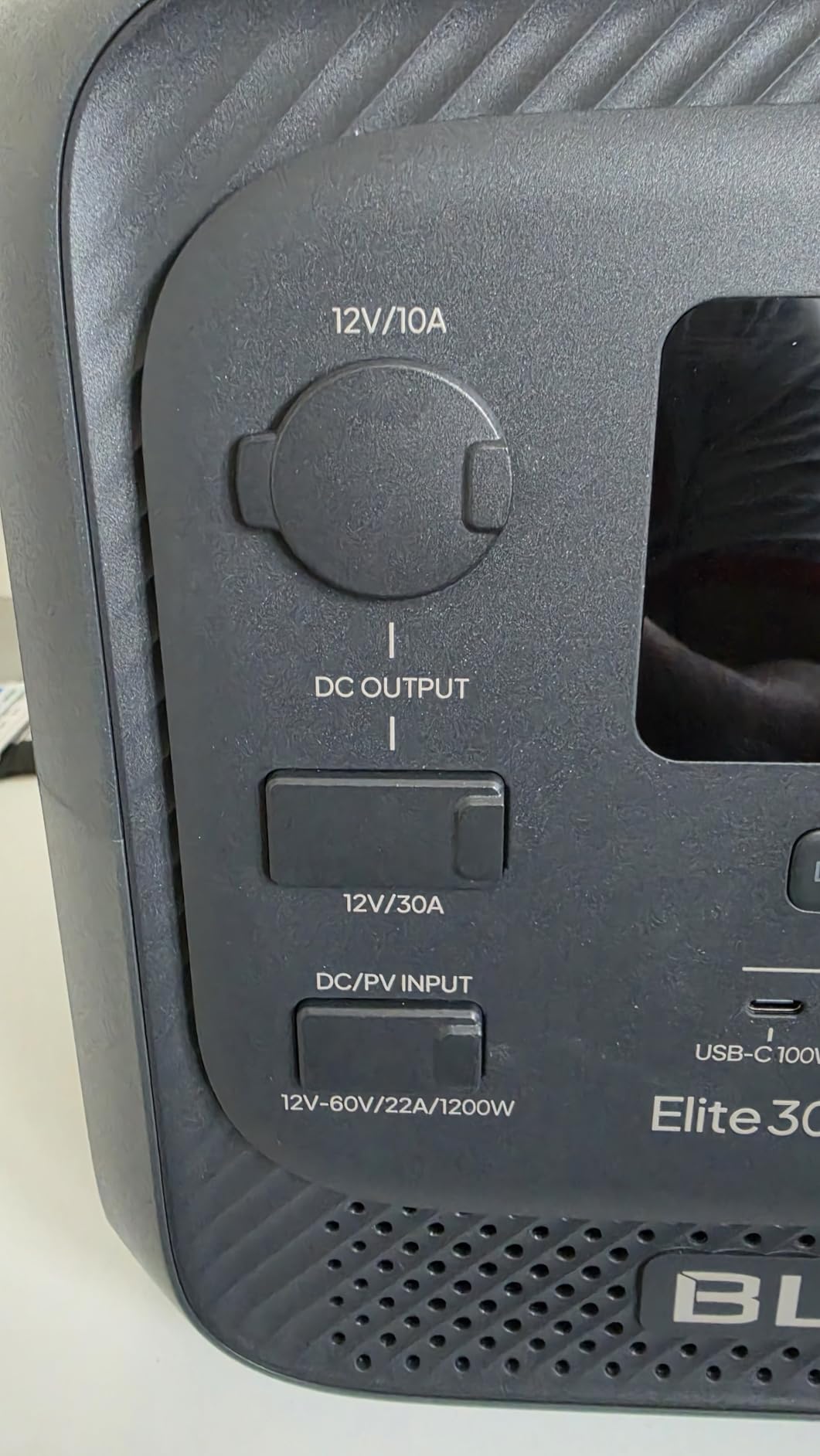
The Elite 300 is the station to buy if your fridge runs on 12V rather than household AC, which is the case for most RV, van and boat setups. The 12V/30A DC output feeds a portable fridge directly, and running it that way skips the AC inverter entirely, which is the most efficient path available.
Capacity is 3,014Wh with 2,400W continuous and 4,800W surge. Owners report powering a fridge, several fans and phone charging for a full day on one charge, and one used it through a complete RV weekend off a single charge.

The packaging is genuinely remarkable for the capacity. Frost & Sullivan certified it as the world’s smallest 3kWh power station at nearly 59% smaller than typical large units, which matters in an RV where every cubic foot counts.
Charging reaches 80% in as fast as 78 minutes on AC. An instrumented owner measured 77.2% round-trip efficiency, putting out 1.05kWh for every 1.36kWh in, which is a fair representation of what to expect in real use.
The soft-start ramp deserves attention
A detailed instrumented test found the soft-start voltage ramp struggles with high inrush compressor loads, and a 500W dehumidifier refused to start. A refrigerator compressor presents a smaller inrush than that, but it is a documented weakness worth knowing about if you plan to add a second compressor appliance.
The 12V socket also runs warm at sustained high current, and firmware updates require Wi-Fi, which some owners consider an unacceptable dependency for a device bought for disasters.
Solar compatibility trap
DC solar input is limited to roughly 60V and 20A. If you already own a 600W RV panel array, it may be incompatible, and connecting it can damage the MPPT charger. Verify your panel voltage before ordering.
There is no expansion option, so 3,014Wh is a fixed ceiling that several owners explicitly regret. At 58 lbs it is heavy for a unit this compact, only the AC cable is included, and the display is hard to read in bright light.
12. EBL 2400W – Best for Charging Many Devices at Once
EBL 2400W Portable Power Station LiFePO4 Battery for Home Use
1,843.2Wh LiFePO4
2,400W continuous
12 devices including wireless pad
0.1 s switchover
Pros
- 1843.2Wh and 2400W of continuous output matches or beats several costlier units
- 2400W output is more than sufficient to start a refrigerator compressor
- 12-device simultaneous charging with a wireless charging panel
- 3500+ cycle outdoor-rated LiFePO4 with a 10+ year service life
- Four-mode LED light for camping and emergency lighting
- Shock-resistant flame-retardant housing rated for outdoor and extreme-temperature use
- Dual-side handles make the 55 lb unit manageable to move
Cons
- Lowest rating alongside the GRECELL at 4.3
- with the highest one-star share in the roundup at 12%
- At 54-55 lbs it is the second-heaviest unit here and has no wheeled handle
- Only a 2-year manufacturer warranty
- No battery expansion options
- Shares a manufacturer and platform with the GRECELL listing
- 0.1-second switchover is far slower than the 10ms UPS in the EcoFlow
- Anker and BLUETTI units
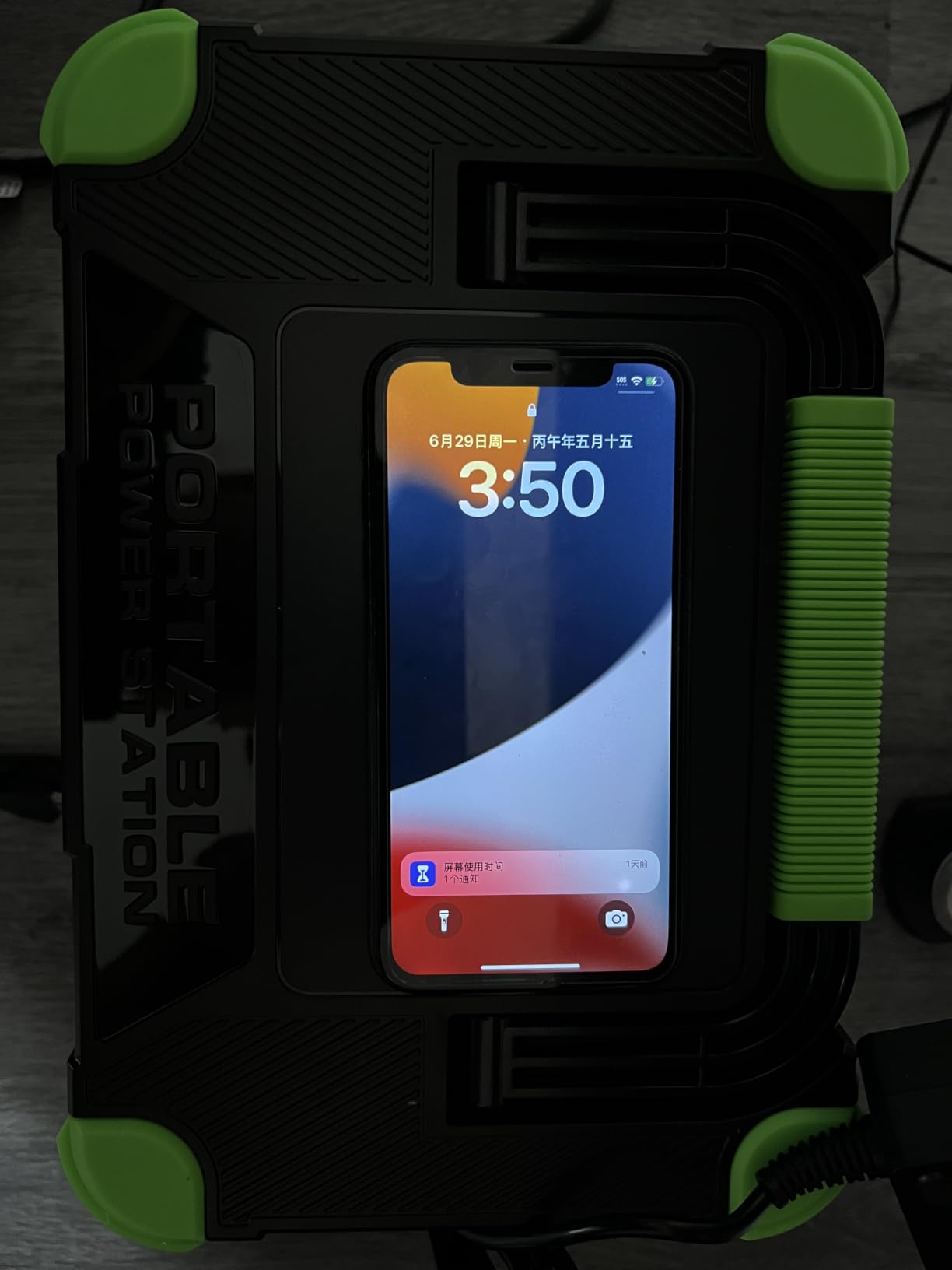
The EBL Acc2400 pairs 1,843.2Wh with 2,400W of continuous output, and it is unusual in supporting 12 devices at once, including a wireless charging panel that most units at this capacity omit.
For fridge duty the relevant part is that 2,400W output has far more than enough to start a compressor, with 4,800W surge behind it. During an outage, being able to run the fridge plus a router, several phones and a laptop off one box is a genuine convenience.
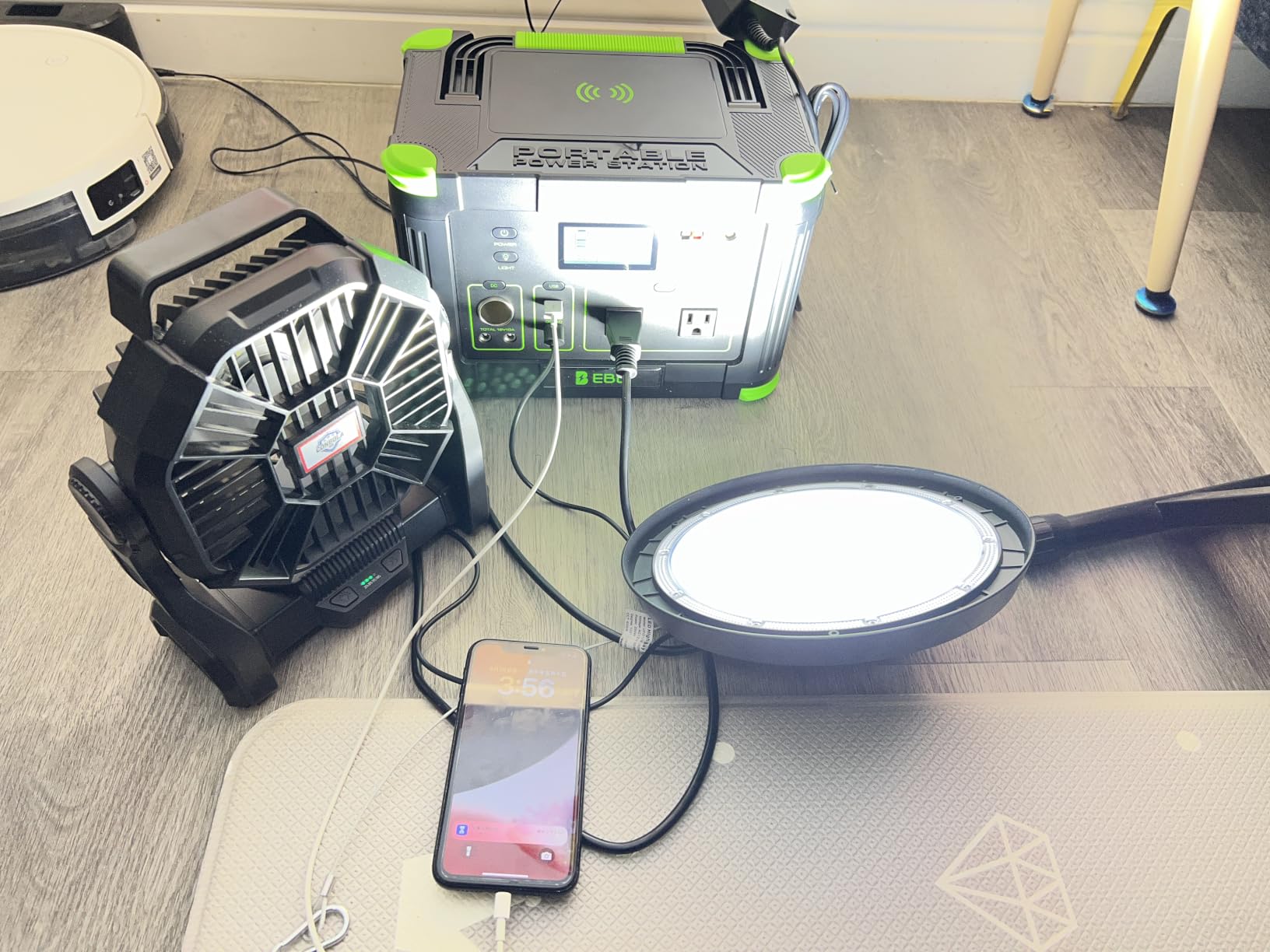
The battery is outdoor-rated LiFePO4 rated for 3,500+ cycles and a 10+ year service life, and the housing is shock-resistant and flame-retardant for extreme temperatures. The four-mode LED light is small but useful during an outage.
Emergency mode switches to backup in 0.1 seconds, which is fast enough to protect computers from data loss and to keep a refrigerator running, though not fast enough to avoid a reboot in more sensitive electronics.
The switchover time is the weak point
At 0.1 seconds, this is an order of magnitude slower than the 10ms UPS in the EcoFlow, Anker and BLUETTI stations. A refrigerator compressor will ride through it without complaint, but anything with delicate electronics will restart.
If you plan to run a CPAP machine, a home office or a network rack off the same battery, look at a 10ms unit instead. For a fridge alone, 0.1 seconds is adequate.
Read the one-star share
The 339 reviews average 4.3 with 73% five-star and 12% one-star, the highest one-star share of anything in this roundup. With a rating this settled, the support and reliability complaints are meaningful rather than statistical noise.
At 54-55 lbs with no wheeled handle and only a 2-year warranty, it is also the heaviest unit with the thinnest warranty. The dual-side handles help, and the fact that it shares a manufacturer and platform with the GRECELL listing explains the identical capacity and footprint.
How to Size a Portable Power Station for Your Refrigerator?
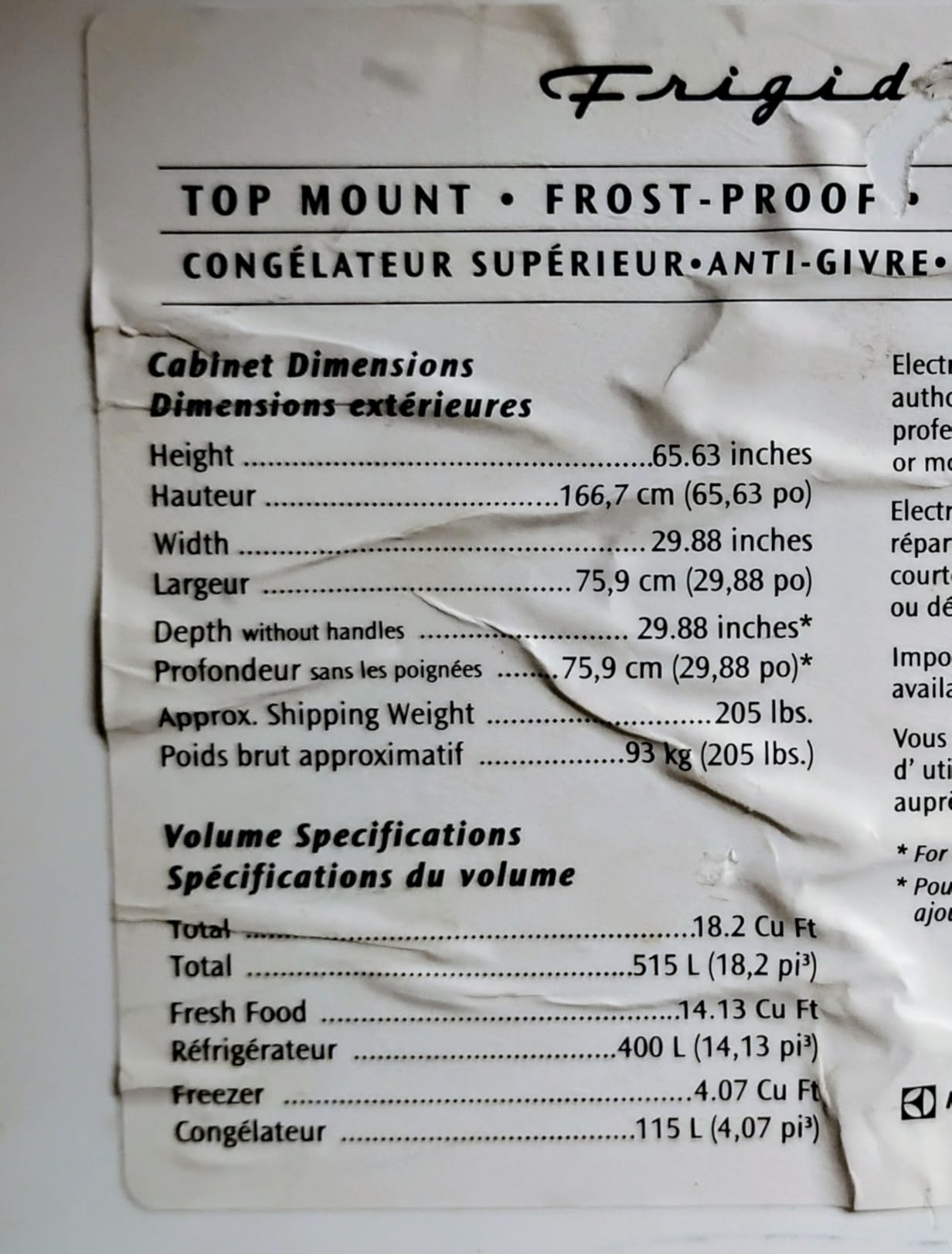
Here is the method we use, and it takes about five minutes. Step one: find your fridge’s running wattage, usually printed on a sticker inside the door frame or on the back panel, typically between 100W and 200W for a standard top-freezer unit and closer to 300W for a French-door or side-by-side model.
Step two: estimate the duty cycle. A refrigerator’s compressor runs roughly a third to half of the time once it reaches temperature, so a 150W compressor averaging out at about 60W over an hour. Step three: multiply that average draw by your outage length, then divide by roughly 0.85 for inverter losses. A 24-hour outage at 60W average needs about 1,700Wh of usable capacity before overhead.
That overhead is the part people miss. Inverters draw power continuously just to stay on, and the Anker SOLIX S2000’s 6W idle figure against typical 2kWh competitors is the difference between a battery that outlasts the outage and one that does not.
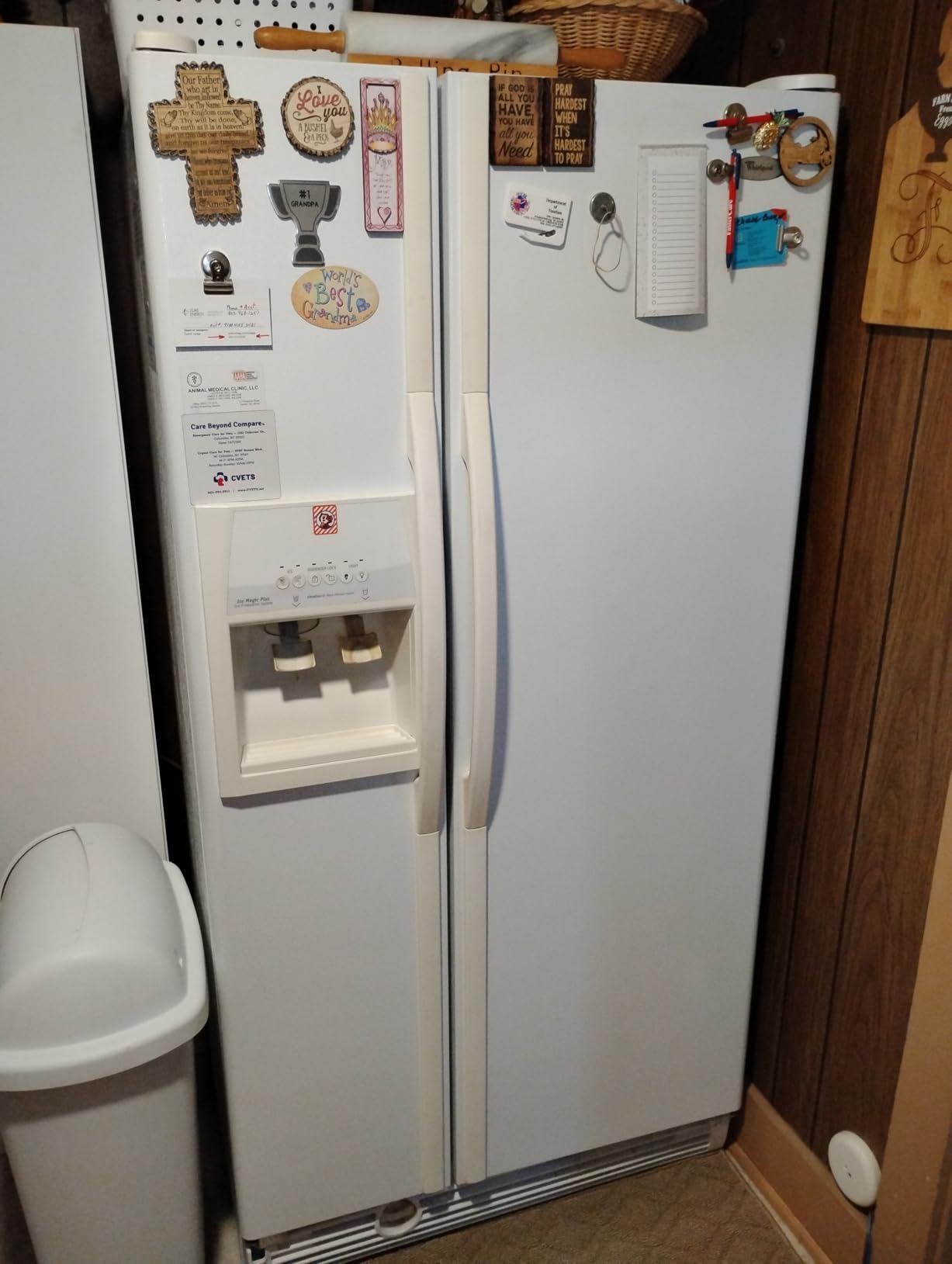
Here is a rough sizing guide by fridge type, assuming an eight-hour outage and 85% usable capacity. A top-freezer fridge under 18 cubic feet averages around 100W while running, so roughly 700 to 900Wh covers the night and about 2kWh covers a full day. A side-by-side in the 18 to 25 cubic foot range pulls closer to 200W, so plan on 1.4kWh for eight hours and 2kWh or more for a day.
A French-door model in the 22 to 28 cubic foot range is the heaviest draw of the household fridges, so budget 1.7kWh for eight hours and 3kWh or more for a full day. A chest freezer of 5 to 8 cubic feet is closer to a refrigerator in behaviour, needing about 900Wh for eight hours. A 12V portable fridge uses a fraction of the energy, because it runs a compressor directly rather than cooling a large volume of air, and a 1kWh station will typically run one for a full day.
Running a freezer alongside a refrigerator roughly doubles the load, which pushes a 24-hour target past 3.4kWh and into the BLUETTI Elite 300 or EcoFlow DELTA Pro territory. Adding a router, a CPAP machine and a few lights adds maybe 100W of constant draw, which is 2.4kWh of extra capacity over a full day.
If you are sizing for a van or boat, work from the 12V DC output instead of the AC inverter wherever the fridge allows it. Direct DC running skips a conversion step entirely, and detailed testers consistently report it as the more efficient path. Our guide to the best 12V portable refrigerators covers which models are designed for that arrangement.
What to Look for in a Portable Power Station for a Fridge
Usable watt-hours, not label watt-hours. Every station in this roundup advertises its full rated capacity, but only about 85-90% is typically dischargeable through the AC inverter, and the AC180’s manual states the 90% figure explicitly. Multiply the label by 0.85 before you do any runtime arithmetic.
Pure sine wave output. Modern refrigerators have electronic control boards that do not appreciate modified sine wave. Every unit recommended here produces pure sine wave on its AC outlets, and the OUPES Mega 1 explicitly rates its full 2,000W as pure sine wave.
Surge headroom over continuous rating. A compressor draws several times its running wattage at start-up. The margin in this roundup ranges from 1,500W of surge on the Jackery up to 4,800W on the GRECELL and BLUETTI Elite 300, which leaves room for start-up and a second appliance.
UPS transfer time. Anything under 20ms keeps a refrigerator completely unaware of the outage. The EcoFlow Delta 3 Classic and BLUETTI Elite 100 V2 sit under 10ms, the AC180 is documented at 20ms, and the EBL’s 0.1-second switchover is the outlier to avoid if you run anything delicate.
Idle draw. This is the least discussed spec and the one that most changes real fridge runtime. On a 100-200W intermittent load, an inverter drawing 15-20W continuously consumes a meaningful slice of every hour. The Anker SOLIX S2000, quoted at 6W, is the outlier in the good direction.
LiFePO4 chemistry and cycle life. All twelve units here use LiFePO4 cells, rated between 3,000 and 10,000 cycles. Higher cycle claims mean a longer service life for a device that mostly sits idle, and the Anker SOLIX S2000 and BLUETTI Elite 300 lead at 10,000 and 6,000+ cycles respectively.
Expansion capability. If outages in your area routinely exceed a day, buy expansion capability now even if you do not install it immediately. The EcoFlow DELTA 2 Max reaches 6kWh, the DELTA Pro reaches 25kWh, and the OUPES Mega 1 reaches 5,120Wh. The Jackery Explorer 1000 v2, Anker C1000, BLUETTI Elite 100 V2, EcoFlow Delta 3 Classic and EBL cannot expand at all.
Weight and where it lives. The gap between the lightest and heaviest stations here is 23.8 lbs to 99 lbs. Forum users consistently say the real problem is moving the box to the kitchen in the dark, so choose a weight you can move and a spot you can reach it from. For winter storm and hurricane preparation, our winter power station guide covers cold-weather charging behaviour.
Noise, if it runs indoors. Stations specified at 30dB include the EcoFlow DELTA 2 Max, the BLUETTI Elite 100 V2 and the Jackery’s quiet charging mode. The OUPES cooling fan and the Anker SOLIX S2000 charging fan are both reported as loud enough to avoid near a bedroom.
Solar input for multi-day events. Input ratings in this roundup run from 400W on the Anker SOLIX S2000 to 800W on the OUPES Mega 1, with the EcoFlow DELTA 2 Max accepting up to 1,000W. Higher input means faster recovery during a multi-day outage, assuming you have the panel array to match. Our camping power station roundup covers panel pairing in more detail.
One thing worth saying plainly: a portable power station is not a replacement for a generator if your outages routinely run longer than several days. At roughly 100-200W, a refrigerator is an easy load, but recharging the battery during a long grid outage requires solar or vehicle charging, and that is where these systems hit their limit. For deeper cold-weather planning, see our lithium power station guide for winter expeditions.
Frequently Asked Questions
Can a portable power station run a refrigerator?
Yes. A refrigerator draws roughly 100-200W while its compressor runs and near-zero while it rests, which is an easy load for any 1,000Wh portable power station. Choose a unit with at least 1,800W continuous output, surge headroom above 2,000W for compressor start-up, and pure sine wave output for the electronic control board. Expect roughly 8-12 hours of runtime per 1,000Wh charge on a standard top-freezer model.
What size portable power station do you need to run a refrigerator?
For an overnight outage, a 1,000Wh station covers a standard top-freezer fridge for roughly 8-12 hours. For a full day on a side-by-side or French-door model, 2,000 to 2,500Wh is the practical target. A 3,000Wh unit covers a fridge plus a router, lights and a chest freezer through a 24-hour event. Multiply your fridge’s running wattage by its duty cycle and outage length, then divide by 0.85 for inverter losses.
Which power station can power a fridge?
All twelve stations in this roundup can run a refrigerator. The Jackery Explorer 1000 v2 is the best overall pick at 1,070Wh and 23.8 lbs. The Anker SOLIX C1000 is the fastest to recharge, reaching 80% in 43 minutes. The Anker SOLIX S2000 is the best for pure fridge runtime, with owner measurements of 33-35 hours from a 6W idle draw. The EcoFlow DELTA 2 Max covers multi-day outages at 2,048Wh.
What size Jackery do I need to run a refrigerator?
The Jackery Explorer 1000 v2 at 1,070Wh and 1,500W continuous output is the model most buyers need, giving roughly 8-12 hours on a standard fridge and covering compressor start-up with its 3,000W surge rating. It cannot be expanded with extra batteries, so if your outages routinely exceed a day, either add solar panels or step up to a 2,000Wh station from another brand.
How long will a portable power station run a fridge?
A 1,000Wh station runs a standard top-freezer refrigerator roughly 8-12 hours, based on owner reports and the fridge’s typical 100-200W running draw with a one-third to half duty cycle. Doubling capacity to 2,000Wh roughly doubles runtime, though the inverter’s continuous idle draw eats into the gain. The Anker SOLIX S2000’s low 6W idle draw is why it delivers 33-35 verified hours from 2,010Wh.
Do I need a pure sine wave inverter for my fridge?
You should have one. Modern refrigerators use electronic control boards and compressor relays that can misbehave or fail on modified sine wave output. Every station recommended in this roundup produces pure sine wave on its AC outlets, and the OUPES Mega 1 explicitly rates its full 2,000W of output as pure sine wave. Check the inverter type before buying, since it is rarely listed as prominently as the wattage.
How long can a fridge stay cold during a power outage?
A closed refrigerator keeps food safe for roughly four hours, and a full freezer holds safe temperatures for about 48 hours. Keep the door shut, since each opening lets cold air escape faster than the food warms. If the outage outlasts the power station, move perishables into the coolest part of the house or a cooler with ice packs. Discard perishable food that has been above 40F for more than two hours.
Which Portable Power Station Should You Buy for a Refrigerator?
The Jackery Explorer 1000 v2 is our pick for most households. At 1,070Wh with 1,500W of continuous output and a 23.8 lb weight, it covers an overnight outage, moves easily to the kitchen when you need it, and carries the largest body of real-world owner feedback in this roundup. If you need more than one night of runtime, that limitation stops applying.
For faster recovery between storms, the Anker SOLIX C1000 reaches 80% in 43 minutes and carries 11 ports. For the longest fridge runtime we could verify, the Anker SOLIX S2000 delivers 33-35 measured hours from its 6W idle draw, which is the single most fridge-focused design in the list.
If your outages run beyond a day, step up rather than stretch. The EcoFlow DELTA 2 Max at 2,048Wh roughly doubles the runtime and expands to 6kWh, while the BLUETTI Elite 300 adds a 12V/30A DC output for RV and van fridges. The EcoFlow DELTA Pro 3600Wh is the option for households treating it as a full home battery rather than a fridge accessory.
Whichever you choose, charge it fully the day before a storm and leave it where you can reach it in the dark. That habit matters more to how long your food stays safe than any specification on this list. Check current specifications and availability on the listing before you buy, and revisit our camping power station roundup if you also want one for trips away from home.