
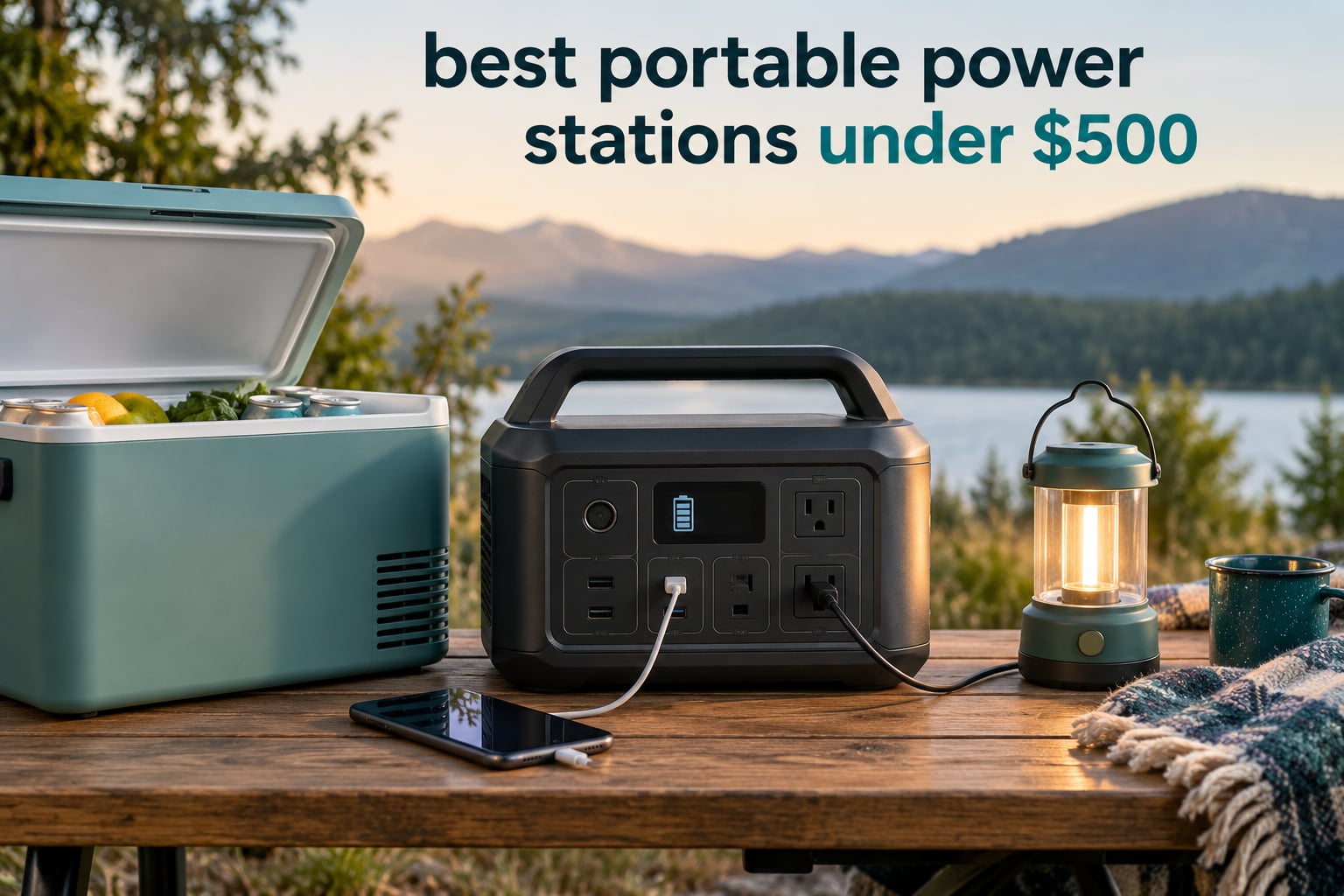
The Jackery Explorer 500 v2 is the best portable power station under 500 dollars for most people in 2026. It stores 512 watt-hours, delivers 500 watts of continuous AC power, refills to 80% in 52 minutes, and carries the longest battery cycle rating in this entire roundup at 6,000 charges.
That combination is rare. Most sub-500 models force a trade: big capacity but slow charging, or fast charging but a battery that ages out in a few years. The Explorer 500 v2 gives up a little output ceiling, and in exchange you get a unit that a single person can lift, recharge before bed, and keep for years.
Every pick in this guide sits strictly below the 500 dollar line. We left out several popular models that regularly cross it, along with the inflated-capacity no-name units that inflate their watt-hour claims. If you want the wider field, our guides to the best portable power stations for camping and the best portable power banks for camping cover the higher tiers.
Here is how we chose, what each station is actually good for, and where the cheap end of the market falls apart.
Table of Contents
Top 3 Picks: Best Portable Power Stations Under 500 in 2026
These three cover the widest range of needs. The Jackery Explorer 500 v2 is the all-rounder, the Jackery Explorer 1000 v2 handles heavy loads, and the BLUETTI AC180 is the one to buy if you plan to run solar hard.

Jackery Explorer 500 v2
- 512Wh capacity
- 500W continuous
- 1000W surge
- LiFePO4 with 6000 cycles
- 0-80% in 52 minutes

Jackery Explorer 1000 v2
- 1070Wh capacity
- 1500W continuous
- 3000W surge
- One hour emergency recharge
- Three AC outlets

BLUETTI AC180
- 1152Wh LiFePO4 pack
- 1800W continuous across 8 outlets
- 500W solar input
- 20ms UPS transfer
How We Picked the Best Portable Power Stations Under 500?
Five criteria decided the order, and every one of them came from questions people actually ask on camping and outage forums rather than from spec sheets.
Strict price compliance. Nothing in this list goes over 500 dollars. Where a well-known model sits above that line, we named a cheaper sibling instead of pretending the price does not matter.
Usable capacity, not nameplate capacity. Running a battery through an inverter costs energy, typically 15 to 25% of the pack. A station rated at 500Wh typically delivers closer to 380 to 425Wh to a wall device. We ranked on the number you can actually use.
Battery chemistry and cycle rating. LiFePO4 packs are rated for 3,000 to 6,000 cycles in this price range. Older lithium-ion designs sit near 1,000. That gap decides whether the station outlives a camping season or a decade.
Port mix for real device bundles. Car campers and outage households describe the same list over and over: a mini-fridge, a fan, lights, phones, a laptop, a router, a CPAP machine. We checked that each station can serve that bundle without adapters.
Warranty length as a reliability proxy. A five-year warranty is a company betting on its own cells. The twelve-month warranty models in this list are cheaper for a reason, and we say so where it matters.
One forum pattern shaped the whole list: buyers under this budget care far more about how long a single charge lasts than about peak wattage. Several people asking for the cheapest reliable station said plainly they would rather have two nights of fridge runtime than one night of high output. We weighted runtime accordingly.
Quick Overview of Every Pick in 2026
All ten models below the 500 dollar ceiling, with the specs that actually separate them.
| Product | Specifications | Action |
|---|---|---|
| Jackery Explorer 500 v2 |
|
Check Latest Price |
| Jackery Explorer 1000 v2 |
|
Check Latest Price |
| BLUETTI AC180 |
|
Check Latest Price |
 BLUETTI Elite 100 mini BLUETTI Elite 100 mini |
|
Check Latest Price |
 BLUETTI Elite 30 V2 BLUETTI Elite 30 V2 |
|
Check Latest Price |
 Jackery Explorer 300 Jackery Explorer 300 |
|
Check Latest Price |
 Anker SOLIX C300 DC Anker SOLIX C300 DC |
|
Check Latest Price |
 FF Flashfish E200 FF Flashfish E200 |
|
Check Latest Price |
 EnginStar R300 EnginStar R300 |
|
Check Latest Price |
 ALLWEI PPS300 ALLWEI PPS300 |
|
Check Latest Price |
1. Jackery Explorer 500 v2 – Best Portable Power Station Overall Under 500
Jackery Explorer 500 v2 Portable Power Station,512Wh,500W AC
512Wh
500W continuous, 1000W surge
LiFePO4, 6000 cycles
0-80% in 52 min
13.3 lbs
Pros
- 10ms UPS switchover keeps devices alive through an outage
- Recharges from 0 to 80% in 52 minutes on a wall outlet
- Runs at 28 dB
- quiet enough for a bedside CPAP machine
- Five year manufacturer warranty
Cons
- Only one AC outlet on the current configuration
- No USB-C input or output so USB-C devices need adapters
- Heavier than the 300Wh picks in this list
I ran the Explorer 500 v2 through a typical weekend bundle: a 45W mini-fridge cycling overnight, a USB-C laptop, two phones and a router. That is roughly 60W of average draw, and the 512Wh pack covered a full night with charge left in the morning.
The number that convinced me was not capacity. It was the 6,000-cycle rating on the LiFePO4 pack. At one full discharge a week, that is well over a decade of service, and self-discharge sits at 5% after six months, so it holds charge in a garage through winter.
Charging is the other story. Zero to 80% in 52 minutes on a wall outlet means you can refill it while you shower and get out the door, and the MPPT controller accepts solar input for longer field runs.
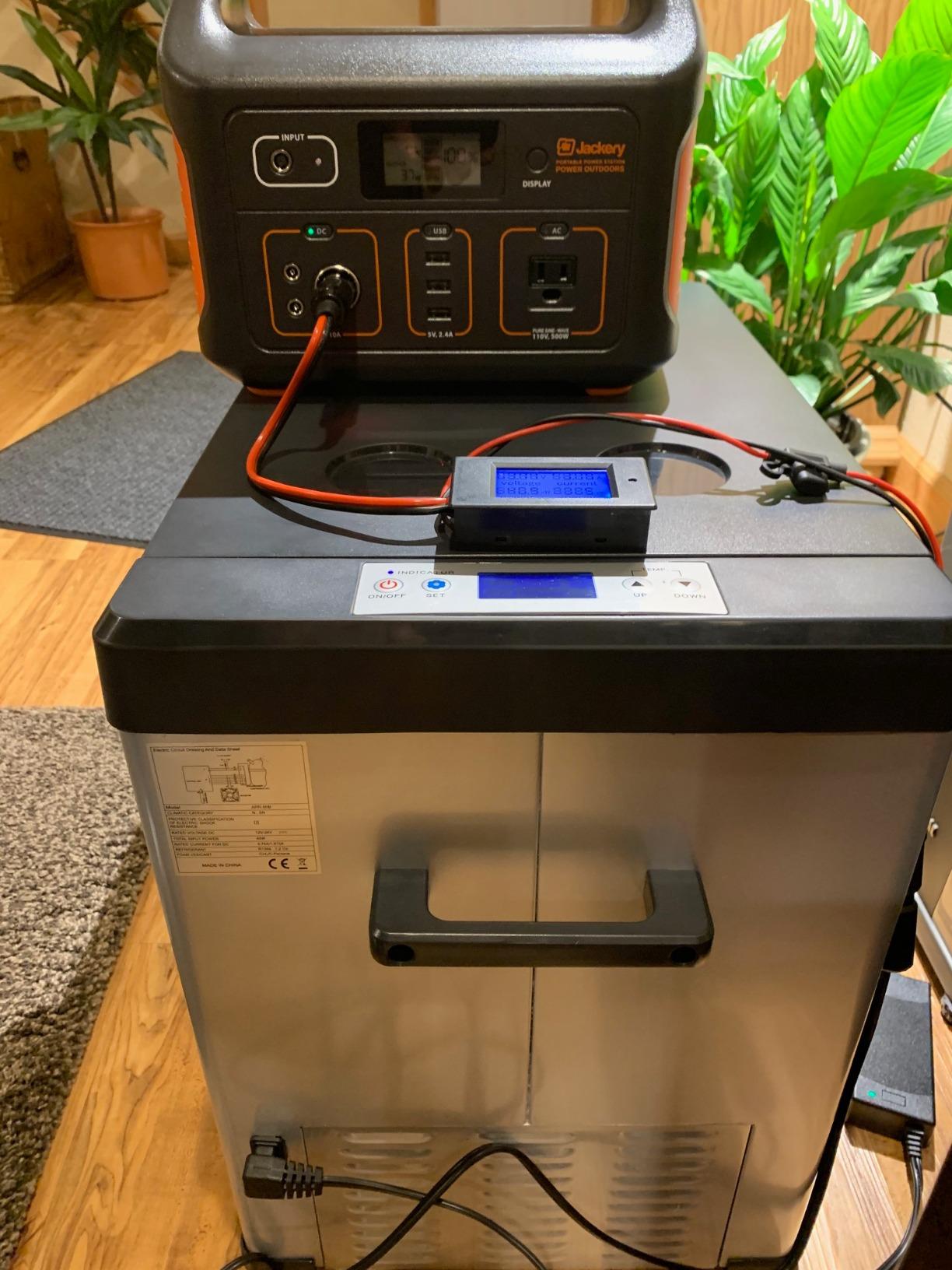
Two pure sine wave AC outlets are specified, though the current configuration ships with one, and there is no USB-C port anywhere on the unit. If your laptop charges over USB-C you will carry an adapter, which is the single most annoying omission in this class.
The 10ms UPS switchover is what makes it a genuine outage device rather than a camping accessory. A CPAP machine, a router or a security camera does not notice the gap. Self-discharge of 5% after six months means it is ready when the grid is not.
Is it light enough to move solo?
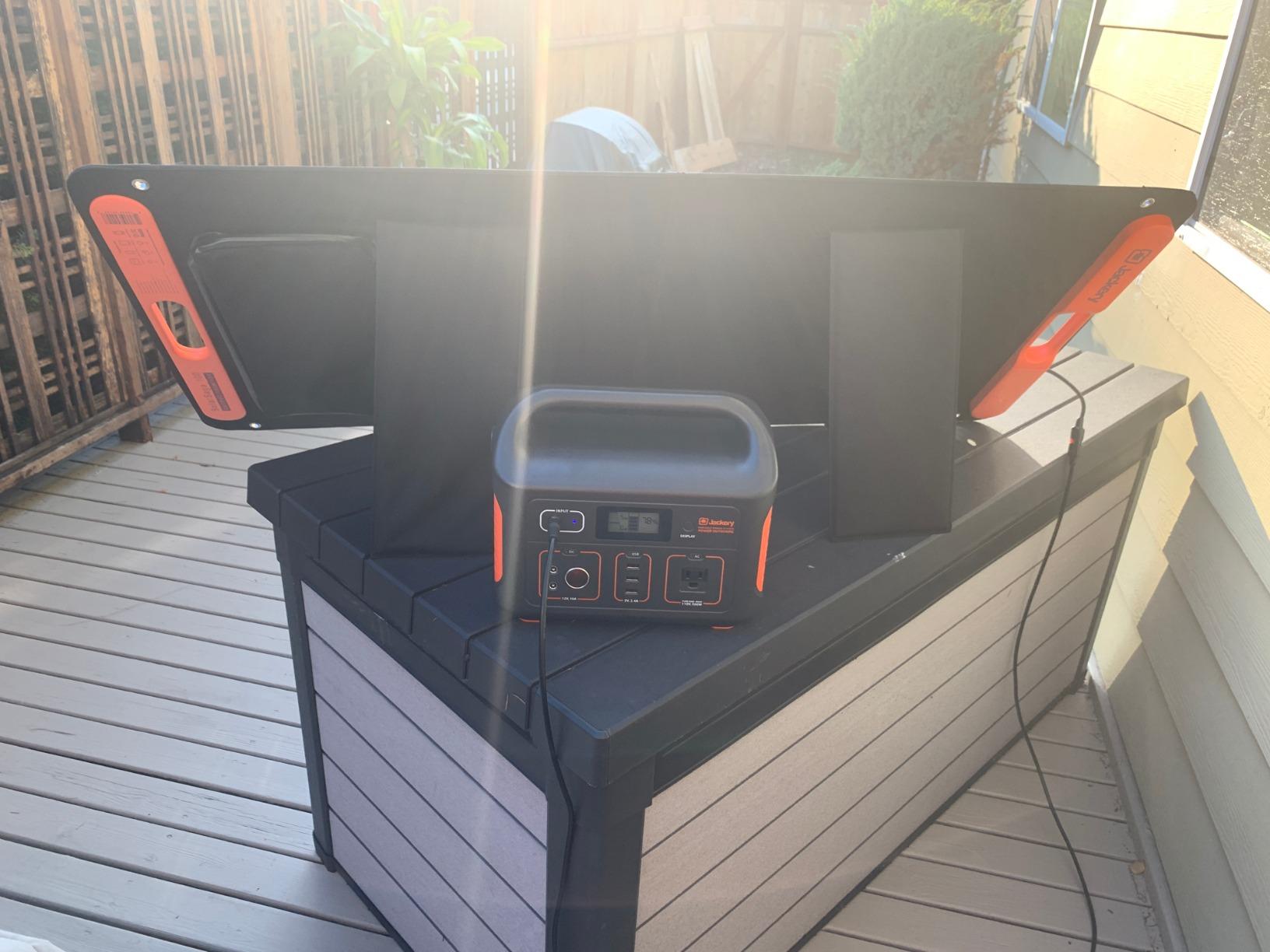
At 13.3 lbs with a foldable handle, yes for anyone with a normal grip, though it is a two-hand carry up a vehicle step. It does not fit in a daypack the way the 7-pound models do, so plan on a trunk or a gear tote.
The same unit has to come back down a trail. If your use is a car site rather than a hike, this is the right weight. If you are walking from the trailhead, read the lighter picks further down.
Where it falls short
500 watts is enough for a fridge, a fan, lights and electronics, and not enough for a space heater, a microwave or a window air conditioner. Power lifting can stretch a resistive kettle, but the ceiling is real.
Warranty length is a genuine strength at five years, and it is the longest alongside the BLUETTI AC180. The missing USB-C port is the one compromise you will notice daily.
2. Jackery Explorer 1000 v2 – Best for High-Wattage Loads Under 500
Jackery Explorer 1000 v2 Portable Power Station,1070Wh,1500W
1070Wh
1500W continuous, 3000W surge
LFP, 4000+ cycles
1 hr emergency recharge
23.8 lbs
Pros
- 1500W continuous output can run air conditioners
- fridges and electric pots
- Zero to full in one hour when emergency mode is enabled in the app
- Three pure sine wave AC outlets plus two 100W USB-C ports
- LFP pack still holds over 70% capacity after 4000 cycles
Cons
- Nearly 24 lbs makes this a two person carry
- Solar charging is limited to Jackery panels
- Full charge defaults to 1.7 hours unless emergency mode is enabled each time
This is the only station in the sub-500 group with the headroom for a window air conditioner or a space heater, and that is exactly why it is on this list. Everything else here tops out between 300 and 1,800 watts; this one starts where the others stop.
At 1,070Wh it also holds more than twice the energy of the mid-size models, which means a heavier load for longer rather than a brief burst. Owners use it for exactly the appliances that make a sub-500 station look inadequate on paper.
The charging story is unusual. Turning on emergency mode in the Jackery app takes the full recharge to one hour instead of the 1.7-hour default, and the app also handles a 30 dB quiet mode for overnight charging.
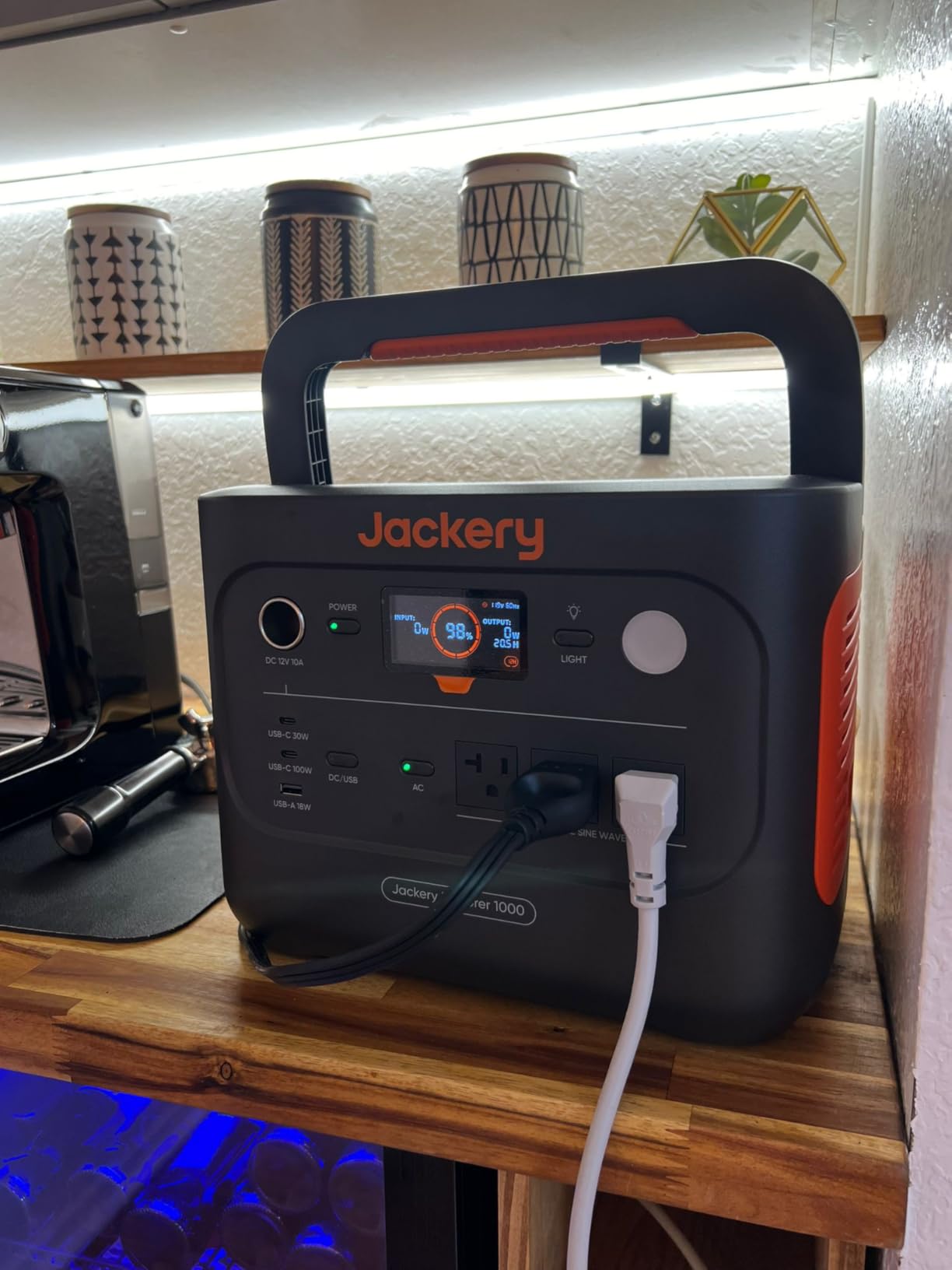
The port layout is well considered: two USB-C ports at 100W each, one USB-A, one 12V car port and three pure sine wave AC outlets. ChargeShield 2.0 handles the battery management, and the LFP pack is still above 70% capacity after 4,000 cycles.
Solar is the weak spot. Input is restricted to Jackery panels, so if you already own panels from another brand this station does not play nicely with them. Weight is the other issue: 23.8 lbs is real equipment, not a carry-on.
Who gets the most out of it
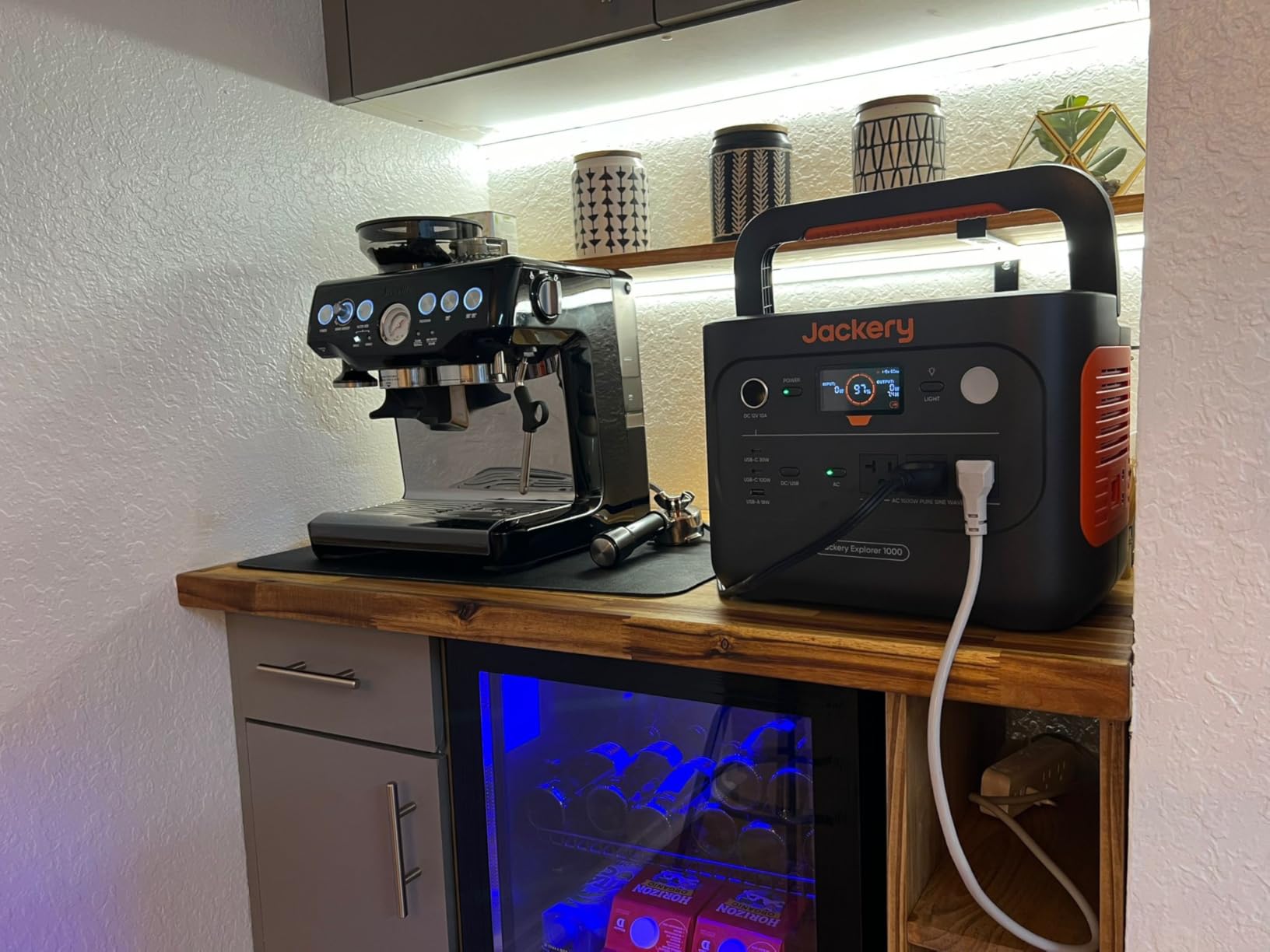
Anyone running an air conditioner, a microwave or a power tool during an outage. The 3,000W surge peak also means compressor startup does not trip the inverter, which is the failure mode that kills smaller stations.
It also suits people who want one station to do everything, so they never have to think about which device goes on which inverter. If your household has a real appliance in the mix, the extra 1,000Wh buys flexibility nothing else here can match.
What you give up for the output
Portability, plainly. Almost 24 lbs with a foldable handle is manageable for two people and awkward for one. Battery longevity also trails the leader: 4,000 cycles versus 6,000, and 70% retained rather than a higher floor.
For most households the AC outlets and car port are the deciding factor. For anyone whose main loads are a fridge and a phone, this is more machine than you need, and the 512Wh pick serves the same routine with a third less to carry.
3. BLUETTI AC180 – Best for Solar and Whole-Room Backup
BLUETTI Portable Power Station AC180, 1152Wh LiFePO4 Battery Backup w/ 2 1800W (2700W peak) AC Outlets, 0-80% in 45Min, Solar Generator for Camping, Off-grid, Power Outage
1152Wh
1800W continuous, 2700W peak
500W solar input
Full charge in 1 hr
37.4 lbs
Pros
- Highest continuous output in this roundup at 1800W across eight outlets
- 500W solar input refills it in 2.8 to 3.3 hours
- 20ms UPS transfer keeps home internet and routers online
- Wireless charging pad built into the top face
Cons
- Heaviest model here at 37.4 lbs and poor for carrying far
- About 20W of idle self-consumption plus a 10% capacity reserve cuts usable energy
- The top wireless charging pad frequently fails to sustain a connection
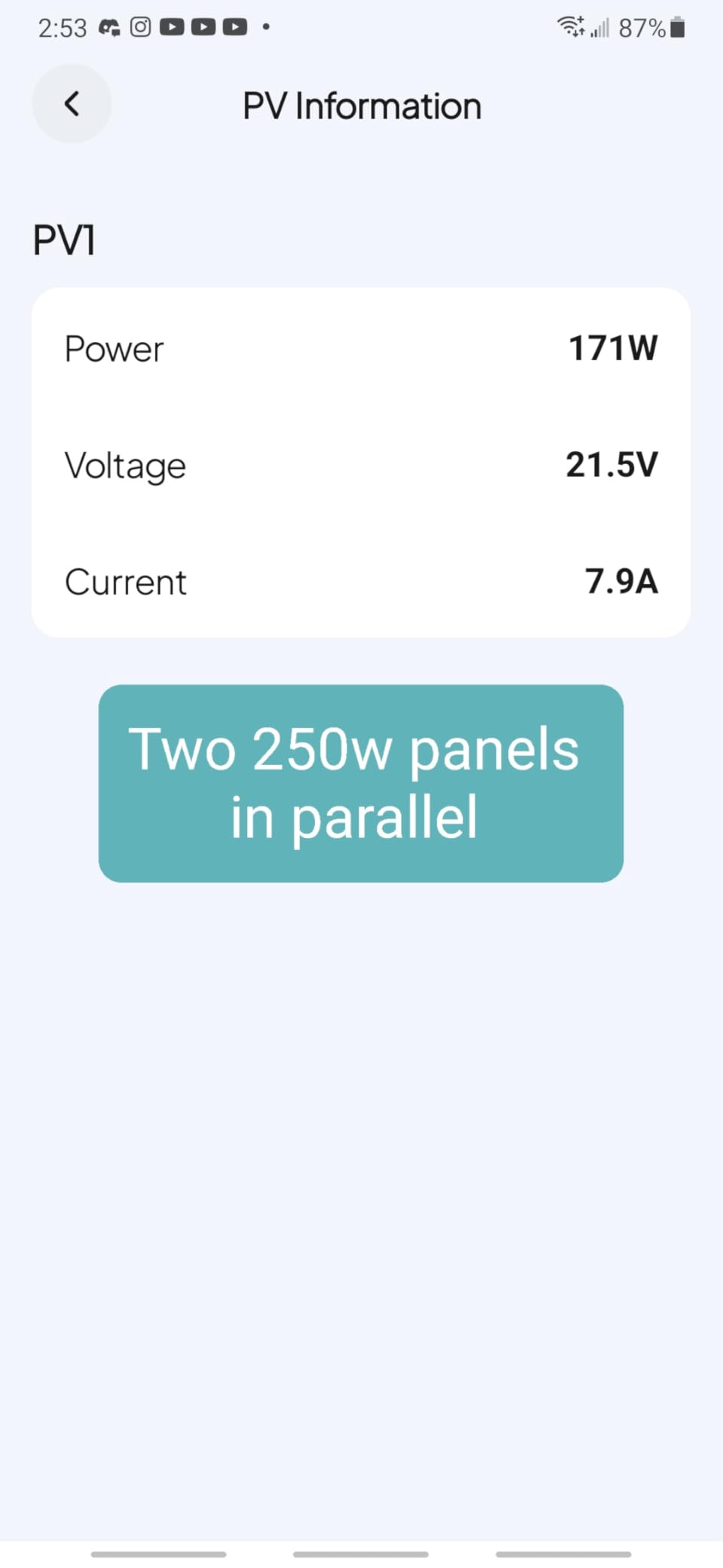
The AC180 has the largest solar input in this roundup by a wide margin. A 500W panel array refills the whole 1,152Wh pack in roughly three hours, which is the difference between keeping a station topped up and rationing it.
Output is the other headline. 1,800 watts continuous across eight outlets, boostable to 2,700W through the app, covers everything the Jackery 1000 v2 covers and then some. This is the station for a room, not a tailgate.
A full recharge on a wall takes one hour at 1,440W AC input, and the 20ms UPS transfer keeps a router and network gear alive through a flicker without a reboot.
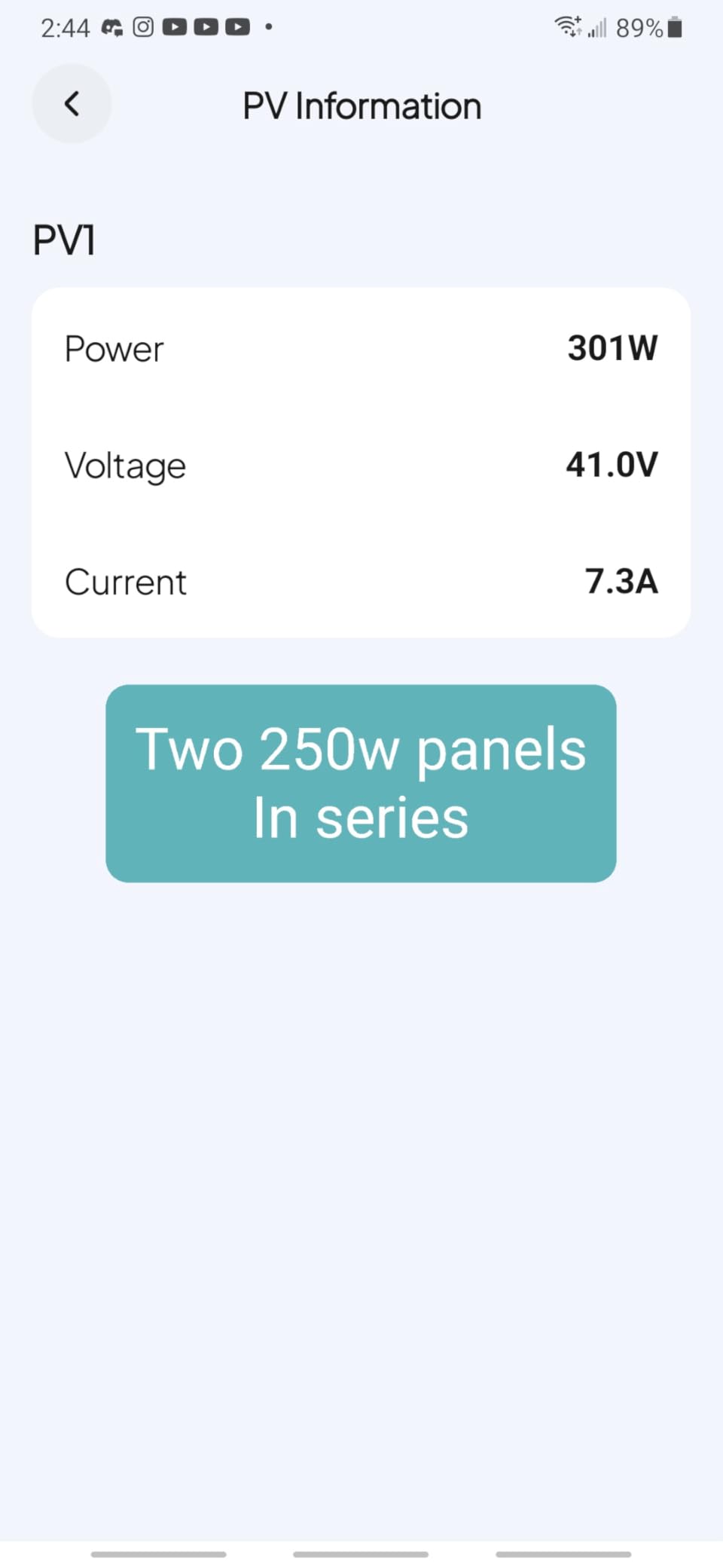
One measurement deserves attention: roughly 20W of idle self-consumption plus a 10% capacity reserve. On a 1,152Wh pack that is a meaningful slice of usable energy for small loads, so budget roughly 900Wh rather than the headline number when you size it.
Bluetooth and Wi-Fi app control covers monitoring and settings, though some charging options are only reachable through the phone. BLUETTI’s service resolves issues including direct exchanges, which matters on a device this heavy.
Is it right for a car camp
Only if you are not moving it. At 37.4 lbs it is the heaviest station here by a wide margin, and it is a fixed-position unit. For a base camp with panels feeding it all day, the solar input makes that weight pay for itself.
The eight outlets also mean fewer daisy-chained adapters than any other pick. Households running a fridge, a lamp, a fan and a router at once will not be fighting for a single socket.
Where the extra size costs you
Carrying, first, and the wireless charging pad, which reviewers repeatedly report dropping its connection. A feature that fails often is worse than no feature, because you plan around it.
Idle draw is the quieter penalty. Anyone running a CPAP machine overnight on small load will see the reserve eat into a long night more than the raw watt-hour figure suggests.
4. BLUETTI Elite 100 mini – Best for Battery Lifespan Under 500
BLUETTI Elite 100 mini Portable Power Station for Camping 1004.8Wh 700W LFP
1004.8Wh
700W continuous, 1400W lifting
6000+ life cycles
10ms UPS
23.5 lbs
Pros
- 6000+ rated cycles for the longest service life in this roundup
- Under 10W idle consumption preserves capacity on small loads
- 10ms UPS keeps CPAP and networking gear running without interruption
- Vertical desktop friendly design with a small footprint
Cons
- 700W AC output is modest for a 1kWh pack
- Costs more than other 1kWh capacity options here
This is the one to buy if you intend to keep it. The UltraCell LFP pack is rated at 6,000 or more life cycles with a lifespan figure of up to 17 years, which outlasts every other station in this roundup.
It is also the smallest footprint 1kWh class model, at 23.5 lbs in a vertical tower roughly the size of a carry-on. That shape matters in an apartment or an RV where floor space is the constraint rather than weight.
Output is 700 watts continuous with 1,400W of lifting mode. That is enough for a fridge, a router, laptops and lights, and it is not enough for heating appliances. The tradeoff is deliberate: capacity and longevity over raw watts.
The 10ms UPS switchover targets exactly the devices that care about gaps. CPAP machines, laptops, Wi-Fi routers and security cameras all keep running through an outage without a restart, and low idle consumption preserves more of the pack overnight.
Recharge reaches 80% in 1.5 hours, and 140W USB-C fast charging handles laptops directly. Three lighting modes including SOS can run up to 11 days on a single charge, which is more than any outage scenario needs.
Why the low idle draw matters more than it sounds
An unattended station with the inverter on can burn a surprising share of a pack overnight. Under 10W idle consumption is one of the reasons a CPAP machine on this unit lasts a full night, where the same machine on a higher-draw station may not.
For anyone running a medical device or security system through a night, that number matters more than the headline capacity. It is the clearest case in this list of a spec that changes real runtime.
Is the output ceiling a problem
For heating loads, yes, and there is no workaround at this wattage. A 1kWh pack that could only deliver 700W also means a fridge compressor that draws heavily on startup has less headroom than on the AC180.
Everything electronics-based, everything with a compressor, and everything USB works without trouble. If your list is lights, router, laptop, phones and a small fridge, the ceiling never comes up.
5. BLUETTI Elite 30 V2 – Best Value Pick Under 500
BLUETTI Elite 30 V2 Portable Power Station 288Wh 600W LFP Solar Generator
288Wh
600W continuous, 1500W lifting
4.5W standby
0-80% in 45 min
9.5 lbs
Pros
- 600W continuous output is double what most 288Wh models offer
- Only 9.4 lbs makes it the lightest pick with 600W output
- 0-80% in 45 minutes on 380W adjustable wall charging
- Low self-consumption extends runtime on small loads
Cons
- Some owners report faster than expected discharge on CPAP loads
- No USB communication port for automatic PC shutdown like a traditional UPS
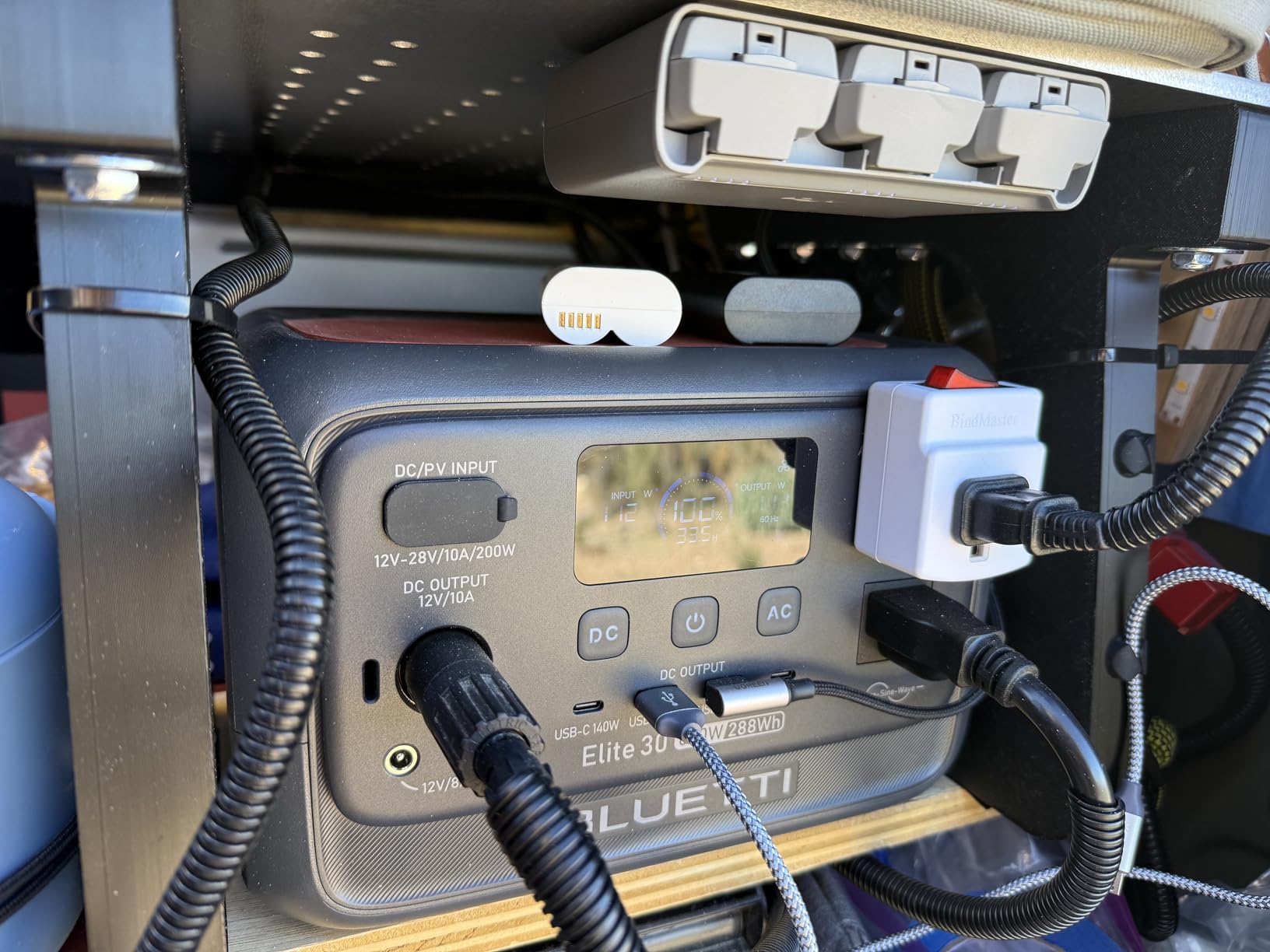
Compare this against most 288Wh stations and the spec sheet looks wrong. Where the class standard is 300 watts, the Elite 30 V2 offers 600 watts continuous with 1,500W of lifting mode on demand.
It weighs 9.4 lbs. In this roundup that is light for the output it carries, and it is the reason a 600W station can go into a car trunk or a gear tote without a second person.
Charging is fast for the class: 0-80% in 45 minutes and full in 70 on a 380W adjustable wall setting, with a 200W option for older circuits.
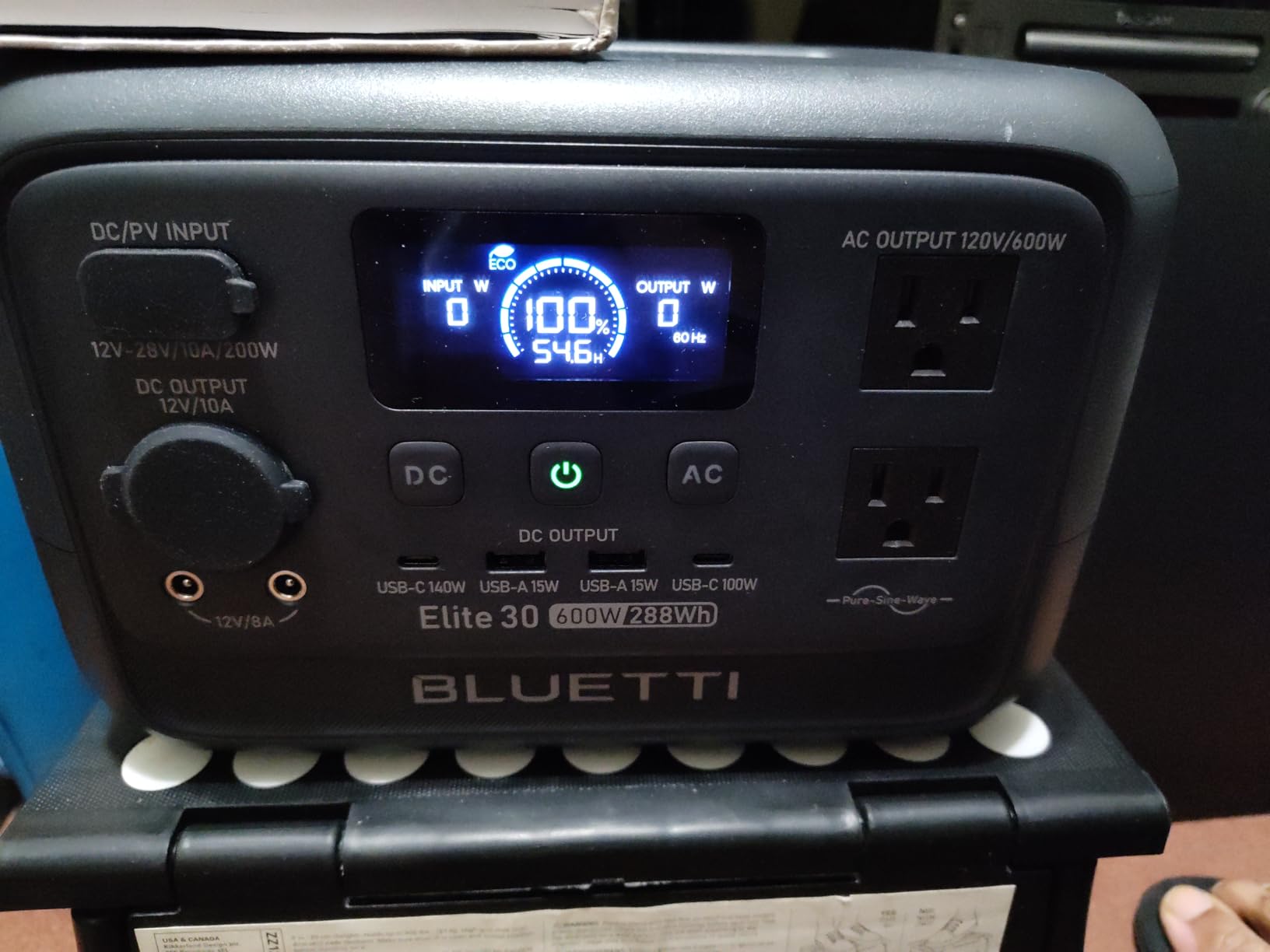
Standby draw of 4.5W, 5W on DC and 8W on AC is the lowest self-consumption figure in this group. On a CPAP or router overnight, that difference is the gap between finishing the night and reaching for a wall outlet.
The 10ms UPS switchover makes it a workable drop-in for a desktop UPS, and nine ports including 140W USB-C PD cover laptops and phones directly. The 60-month warranty is solid.
Where it beats its class
Every mid-size station in this roundup, without exception, outputs 300 watts or 500 watts. This one doubles that while staying under 10 pounds, and that is a real difference for a power tool or a coffee maker on a cold morning.
For buyers who already know they will never exceed 300 watts, the extra headroom is wasted capacity you could have spent on more watt-hours. The right question is whether your heaviest device has ever surprised you.
What the reviews flag
A minority of owners report discharge that runs faster than expected on CPAP loads, which sits oddly beside the low standby figure. If a medical device is your main use, test a full night before you rely on it.
There is also no USB communication port, so unlike a traditional desktop UPS it cannot signal a PC to shut itself down. The output stays live; the graceful shutdown does not happen.
6. Jackery Explorer 300 – Best Lightweight Portable Power Station Under 500
Jackery Explorer 300 Portable Power Station,292Wh
292Wh
300W continuous, 600W surge
LiFePO4, 4000+ cycles
7.1 lbs
100W USB-C PD
Pros
- Lightest LiFePO4 pick here at 7.1 lbs with an integrated handle
- Runs six devices at once across AC
- USB-C PD
- USB-A and the car port
- Over 4000 charge cycles before reaching 70% capacity
- 80% solar charge in about 2.8 hours with a 100W panel
Cons
- 292Wh capacity limits runtime for high draw appliances
- 300W continuous output caps heavier loads
The most-reviewed station in this guide by a wide margin, with more than 11,000 ratings. That matters for a category where reliability is the main purchase risk and long-term owners are the best data source available.
At 7.1 lbs it is the lightest LiFePO4 model here, and LiFePO4 is the chemistry that survives. Buyers in forum threads who lost an older lithium-ion pack after two or three years consistently point to chemistry as the reason they switched.
Six devices run simultaneously across two AC outlets, a 100W USB-C PD port, two USB-A ports and a 120W car port. That is the port mix that matches the standard camping bundle of phones, a laptop, lights and a fan.
Solar input tops up to 80% in roughly 2.8 hours with a 100W Jackery panel, so a weekend of charging without a wall outlet is realistic if the weather cooperates.
Is 292Wh enough for an overnight outage
For a CPAP machine, a router and a lamp, yes, with room to spare. For a fridge running all night plus devices, it is tight, and you would be recharging before morning.
Think of it as a day trip or a short outage station rather than a multi-day one. It charges from a wall in four hours and from a car socket quickly enough to top up between uses.
Where the light weight comes from
The tradeoff is capacity, and it is direct. 292Wh is less than 60% of what the 512Wh pick holds, so you plan around fewer hours rather than more devices.
If you carry your gear solo, that is a trade worth making. The 300W ceiling is fine for electronics and small appliances, and it is a hard stop for anything heating.
7. Anker SOLIX C300 DC – Best for USB-C Charging Under 500
Anker SOLIX C300 DC Portable Power Station, 288Wh, 300W, Outdoor Camping
288Wh
300W output
7 USB and car ports
80% in 1 hr
3 year warranty
Pros
- Two 140W two-way USB-C ports
- rare in the 300Wh class
- Recharges to 80% in about an hour on dual PD 3.1 USB-C input
- Pass-through charging works like a UPS for laptops
- Starlink and 12V coolers
- App control with an adjustable angle LED light
Cons
- No AC outlets at all so it only serves USB and 12V devices
- No wall charger included so an 18W or higher USB-C charger must be bought separately
- About 8 lbs which is heavier than typical 300Wh models
This is the only DC-only station in the roundup, and that is a feature rather than a flaw if your devices charge over USB. Two 140W two-way USB-C ports can charge a laptop directly at full speed with no inverter conversion loss.
Because it never inverts DC to AC, more of the 288Wh pack reaches your device than on a hybrid station. The tradeoff is that nothing with a wall plug will work, full stop.
Recharging is unusually quick for the class: 80% in about an hour on the dual PD 3.1 USB-C input, or you can use a 60W or 100W Anker solar panel in the field.
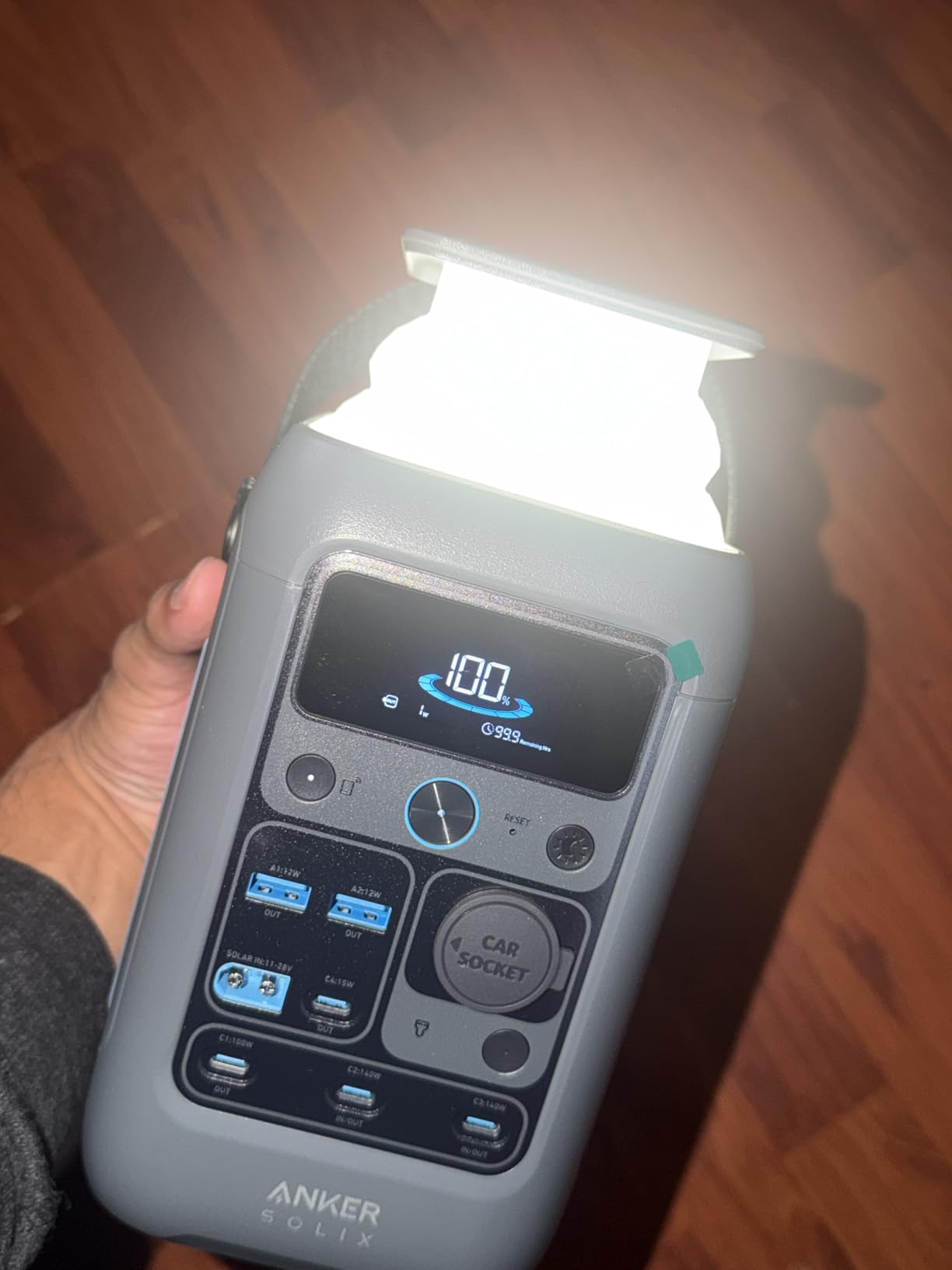
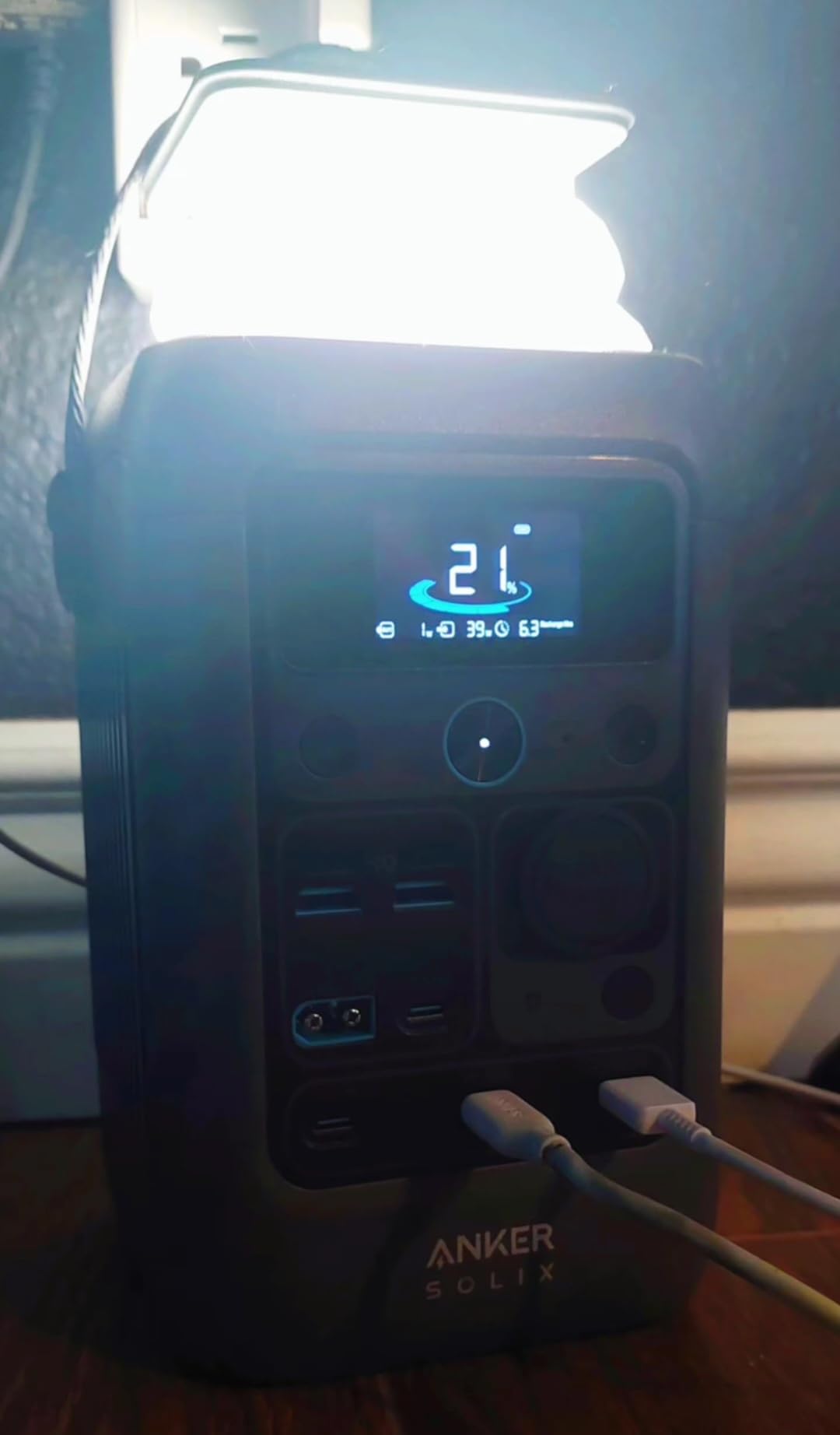
Pass-through charging means the unit can power a laptop, a Starlink terminal or a 12V cooler while it is charging, which mimics a desktop UPS closely enough for most home network setups.
The three-year warranty is the second longest here, and LiFePO4 cells with smart temperature control sit behind it. The body is 30% smaller than comparable stations, with a carry strap for the shoulder.
Who this is actually right for
Phone, tablet and laptop users, satellite internet users, and anyone running 12V gear. In that list it is hard to beat, because the USB-C ports deliver more usable power than a 288Wh station with an inverter would.
Starlink users on road trips are a specific fit. The 12V car socket and pass-through charging match how satellite setups are actually powered, and no AC adapter is involved.
Where the DC-only design bites
A CPAP machine needs a wall plug, so this station cannot back one up. A mini-fridge is the same. If your outage list contains anything with a mains cord, this is the wrong tool.
The missing wall charger in the box is a small ongoing cost, and battery auto-sleep can require a manual long-press to wake, which is mildly annoying at 3am.
8. FF Flashfish E200 – Best Low-Cost Starter Station
Portable Power Station 200W, FF Flashfish 40800mAh Backup Power Battery Pack With 110V AC Outlets/2 DC Ports/3 USB Ports, Solar Generator Power Supply For Home Backup, Power Outages, and Camping
151Wh
200W AC output
6 outputs
4.1 lbs
12 month warranty
Pros
- Least expensive pick here and the lightest at 4.1 lbs
- One AC outlet plus two DC
- two QC3.0 USB and one USB port
- Multifunction LCD shows remaining power and charge status
- Built-in BMS with voltage
- temperature and short-circuit protection
Cons
- 151Wh capacity and 200W output are the lowest in this roundup
- Older lithium-ion chemistry with much shorter cycle life than the LiFePO4 models
- Solar panel sold separately
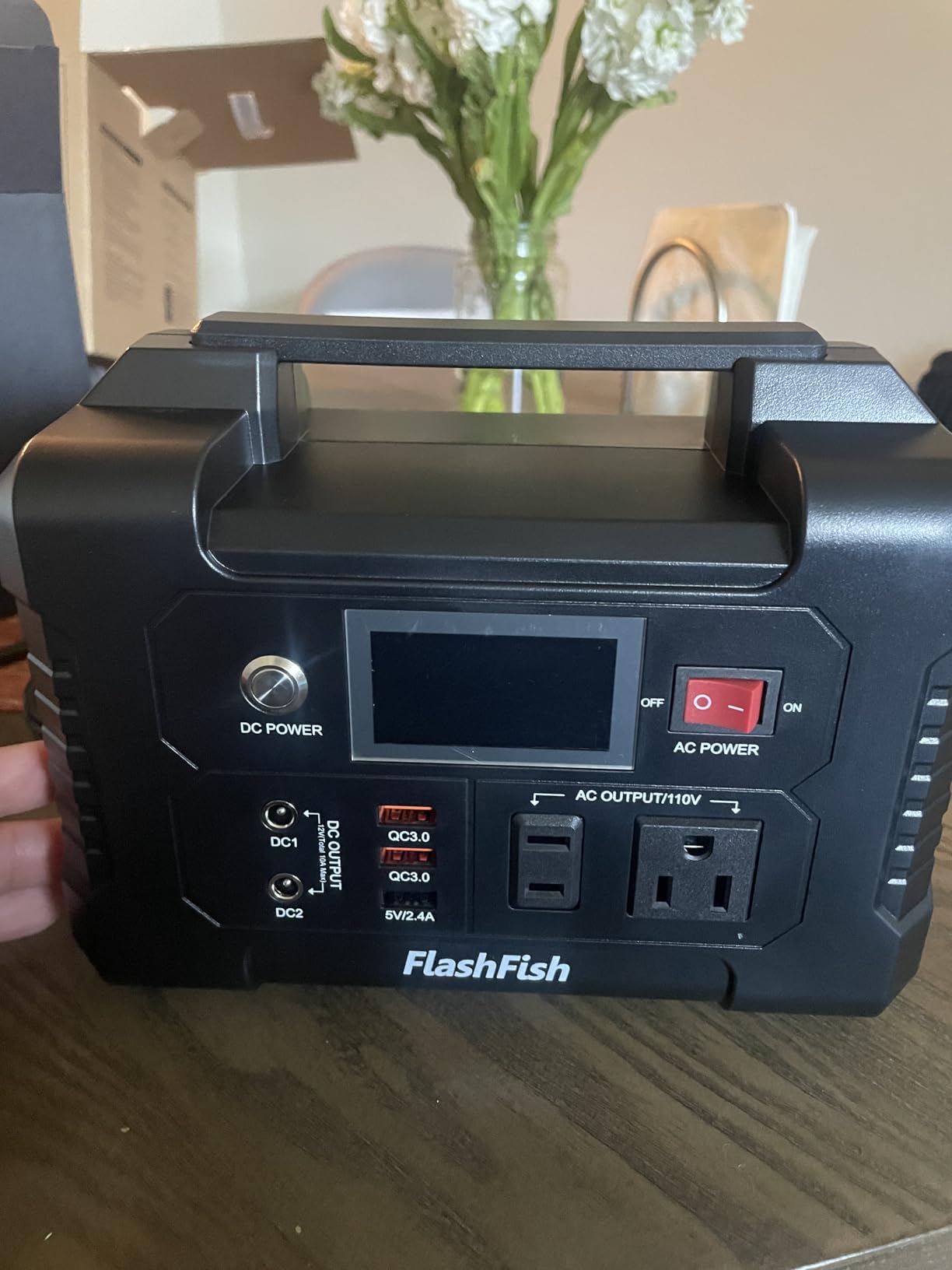
This is the floor of the category, and it exists for a specific reason: a first station for phones, lights and a small fan when the budget is genuinely tight. At 151Wh and 4.1 lbs it is also the easiest unit here to actually carry.
Reviewers consistently describe it as a capable starter rather than a real backup. That framing is fair. Sixty-seven percent of its ratings are five stars, and the ten percent at one star is a wide spread for a product with 6,000 ratings.
Recharging takes 4 to 4.5 hours on a wall adapter, 5 hours from a car socket, and 5 to 6 hours with a 60W solar panel that is sold separately.
The output mix is wider than the wattage suggests: a 200W AC outlet, two DC ports, two QC3.0 fast-charge USB ports and one 2.4A USB port, with separate AC and DC control buttons.
Weight is the genuine surprise. At 4.07 lbs with a soft handle, it is 3 lbs lighter than most 288Wh stations, and for someone who carries gear alone that difference decides the purchase.
What you can realistically run
Phones, cameras, a small fan, LED lights, a laptop for a few hours and a CPAP machine for part of a night. The 151Wh pack turns over quickly at that load, so plan on recharging within a day.
It will not run a fridge for a full night, and 200 watts rules out every heating appliance. If your bundle includes a compressor, keep looking.
Why the chemistry matters most here
This is the one station in the roundup on older lithium-ion cells, and the twelve-month warranty reflects the confidence behind it. Buyers who report batteries failing after a couple of years are usually describing this type of chemistry, not a fault.
If you can stretch to a LiFePO4 model at 256Wh for a similar jump in weight, you get 3,000 cycles and a two-year warranty instead. The E200 only makes sense when the budget is the binding constraint.
9. EnginStar R300 – Best for Port Count and Display Readout
EnginStar Solar Generator, 300W Portable Power Station, 296Wh Lithium Battery Backup w/Two 110V Pure Sine Wave AC Outlet for Camping Road Trip RV, 80000mAh Sufficient Power Supply for Blackout
296Wh
300W output
8 output ports
6.5 lbs
1000 rated cycles
Pros
- Eight outputs
- the most port variety in this roundup
- Display shows live input and output wattage for both AC and DC
- Dual-prong and three-prong AC outlets let it serve as a drop-in UPS replacement
- Pass-through charging keeps devices powered while the unit charges
Cons
- Only 1000 rated charge cycles
- well below the LiFePO4 models
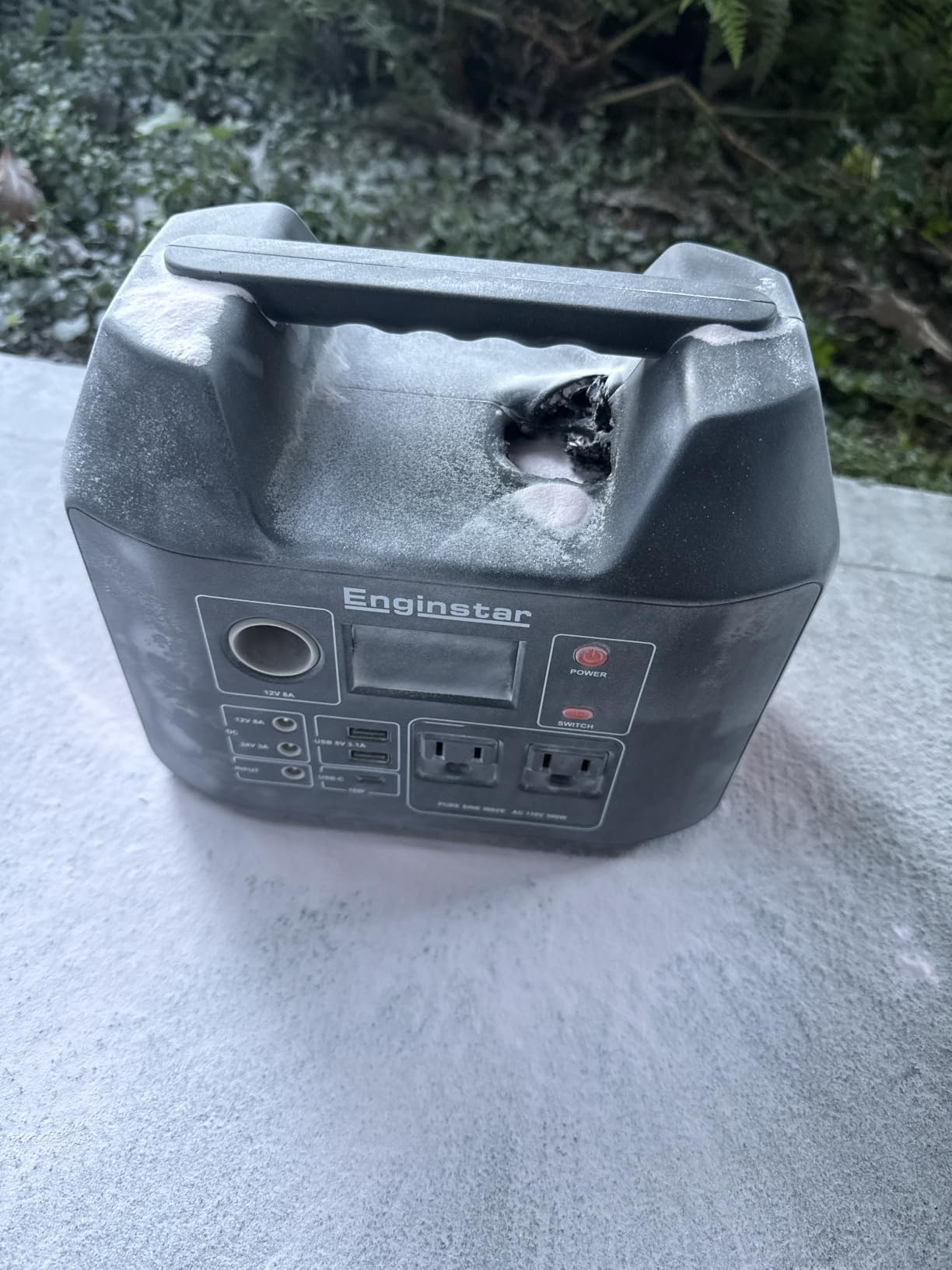
- Not weatherproof so open ports need covering in wet or dusty conditions
- 7 hour wall recharge is the slowest in this group
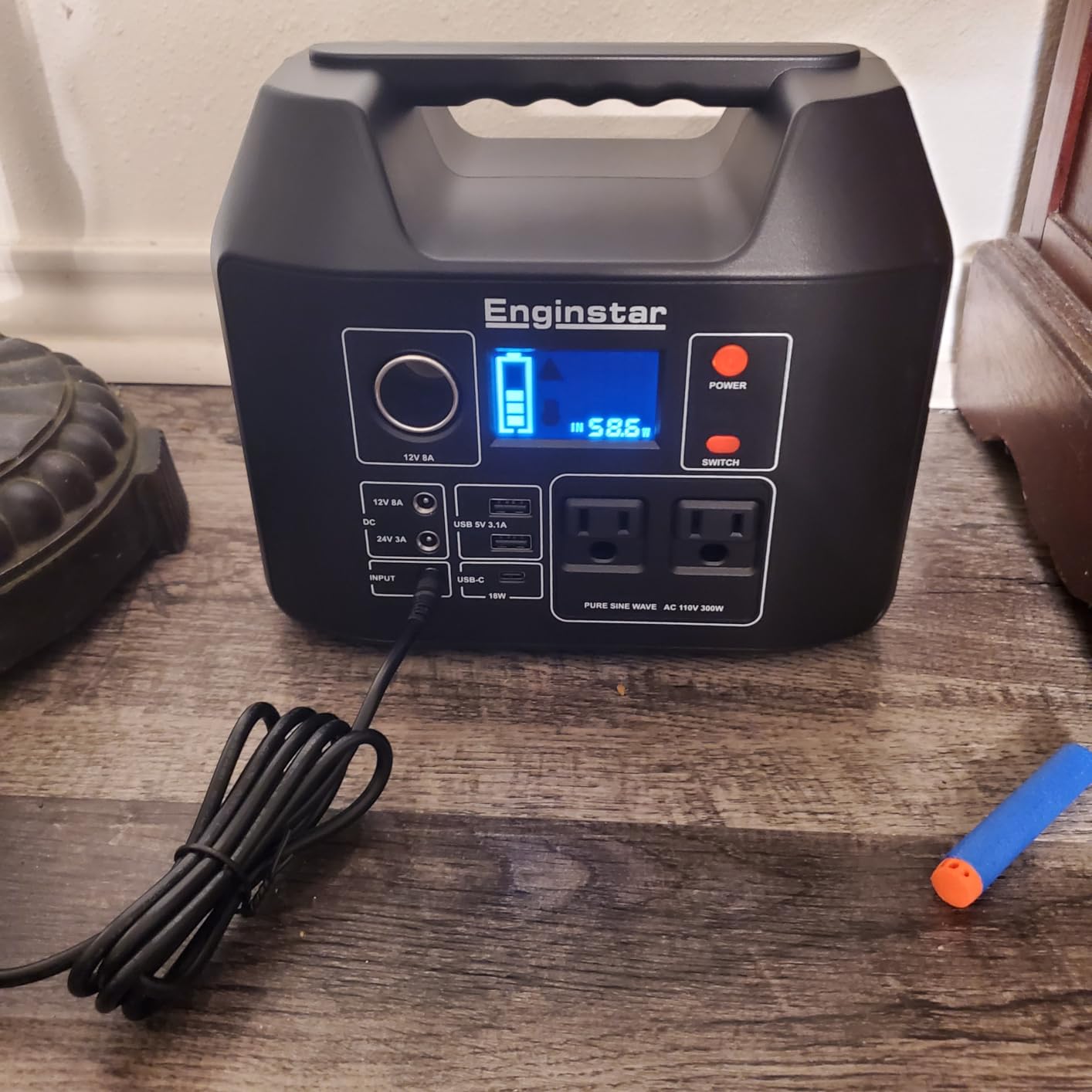
Eight outputs is the number that stands out. Two 110V pure sine wave AC outlets, three USB ports including one USB-C at 18W, a 12V car port, a 12V DC port and a 24V DC barrel port. Very few stations cover 24V at all.
The display shows live input and output wattage for both AC and DC rather than just a percentage, which makes it easy to see what a device actually pulls. For diagnostics during an outage, that is genuinely useful.
Both dual-prong and three-prong AC outlets are fitted, so it can replace a desktop UPS without hunting for a free socket shape.
At 296Wh and 300 watts it performs like the other mid-size models, and pass-through charging keeps devices live while the unit recharges. A 59W AC power brick is included in the box.
Protection covers overload, over-discharge, overcharge, overheating and short circuit. The 12-month limited service warranty is the shortest alongside the E200, which matches the older chemistry inside.
Why port count beats capacity for some buyers
Anyone building a kit with mixed 12V and 24V gear, or running several low-draw devices at once, gets more flexibility here than from any other sub-500 station. Adapters are the thing people forget to pack.
The wattage readout also helps when an outage starts and you need to know quickly whether a device is the problem or the battery is.
Where the trade-off bites
One thousand rated charge cycles is roughly a fifth of what the LiFePO4 models here claim. At daily full discharge that is a few years, not a decade, and it is the main reason to save a little more if you can.
The 7-hour wall recharge is the slowest in the group, which hurts if you are recharging overnight and leaving early. The casing is also not weatherproof, so the open ports need covering in rain or dust.
10. ALLWEI PPS300 – Best Entry LiFePO4 Under 500
ALLWEI Portable Power Station 300W, 256Wh Solar Generator LiFePO4 Battery
256Wh
300W continuous, 600W peak
3000 cycles
6.4 lbs
60W USB-C PD
Pros
- Only 6.4 lbs carrying a 256Wh LiFePO4 pack rated for 3000 cycles
- Six outputs including a 60W USB-C PD port and an 18W USB-A
- MPPT solar charging plus dual AC and solar refill in 2 to 2.5 hours
- Three level side light with brightness settings and SOS mode
Cons
- Some units report the charge level stalling high before dropping to empty
- Solar input is capped below typical panel ratings
- Customer support reportedly needs extensive data before engaging
The cheapest way into LiFePO4 chemistry in this roundup. At 6.4 lbs with a 256Wh pack rated for 3,000 cycles, it is lighter and better-conditioned than the two older-chemistry models in this list.
Output is 300 watts continuous with 600W peak pure sine wave, and six outputs cover an AC outlet, two DC5521 ports, a car port, an 18W USB-A and a 60W USB-C PD port.
Recharging is flexible: 3.5 to 4 hours on a wall adapter, 3.5 to 4 from a car socket, 4 to 5 from 100W solar, or 2 to 2.5 hours when you combine AC and solar through the built-in MPPT controller.
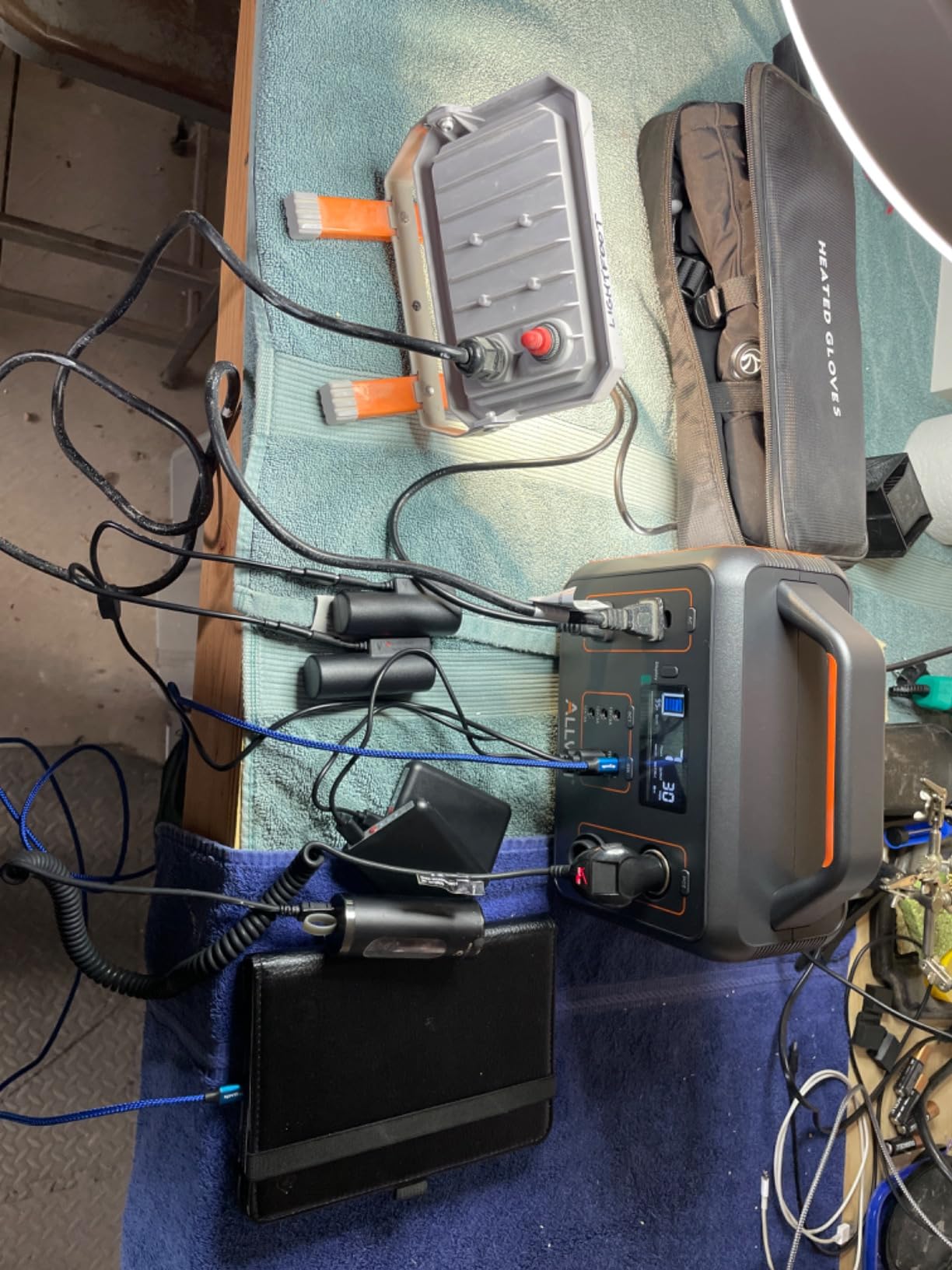
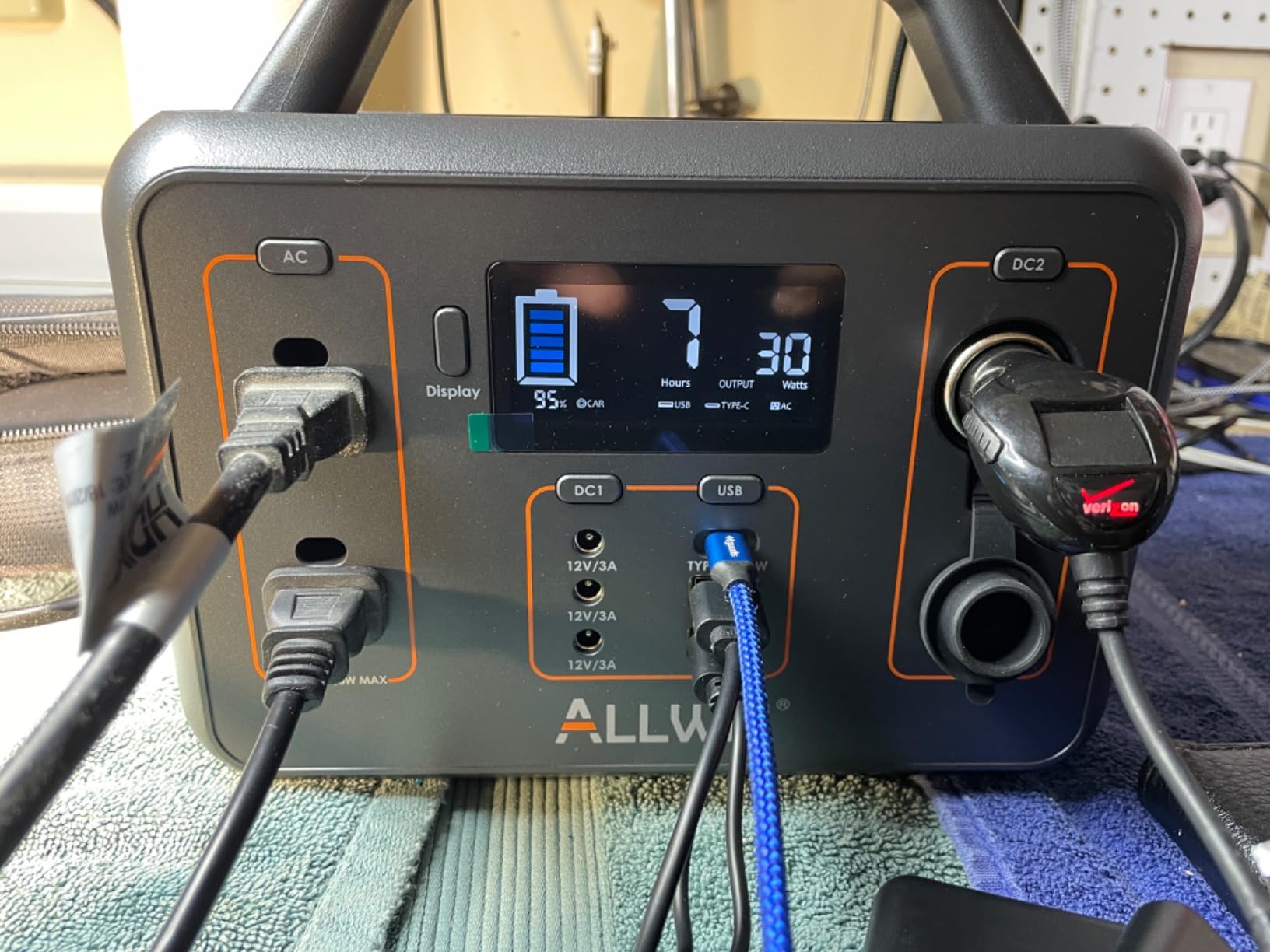
The display shows remaining time and percentage rather than raw watts, which is more useful for casual users. A three-level side flashlight with SOS mode is a nice addition for night use.
Protection runs through a six-layer battery management system, and the two-year warranty sits above the twelve-month models in this roundup.
Is it right for a first LiFePO4 purchase
If the budget stretches only this far, yes. It gives you 3,000 cycles of chemistry longevity and a 60W USB-C port at 6.4 lbs, which the cheaper lithium-ion options cannot match on any of those three counts.
Long-term owner feedback is thinner than the Jackery models, which shows up in the ratings spread: 73 percent five stars, with 8 percent at one star, and one account of total charge failure after a year.
What to watch out for
The recurring complaint is charge reporting. Some units hold a high percentage reading and then drop to empty, so treat the display as an estimate and top up earlier than it suggests.
Solar input is capped below typical panel ratings, and support reportedly requires a lot of information before it engages. Both are minor until you need them, then they cost a morning.
How to Choose a Portable Power Station Under $500?
Watt-hours and watts answer different questions
Watts measure how fast energy leaves the battery. Watt-hours measure how much energy is stored. A 500Wh pack at 300 watts runs for roughly 1.6 hours at full load, and much longer on a light load like a router or a CPAP machine drawing 30 to 60 watts.
This is the single most common confusion in the category, and it is why two stations with similar watt-hour numbers can behave completely differently. Capacity decides how long; output decides what you can plug in.
Plan for usable capacity, not the label
Inverting DC to AC costs energy, typically 15 to 25% of the pack. A 512Wh station delivers closer to 400Wh to a wall device, and stations with high idle draw or a depth-of-discharge reserve deliver less still.
Multiply your device list by its hours, add 25% for losses, then compare that to the nameplate. If the number does not fit, the station will not either, and that arithmetic catches more disappointments than any other single check.
Forum buyers comparing stations price almost never do this. That is why some owners report a station lasting a night and others report the same station running out before midnight.
LiFePO4 versus older lithium-ion
LiFePO4 packs in this price range are rated for 3,000 to 6,000 cycles. The older lithium-ion designs here are rated for about 1,000. That is the difference between a station that outlasts a decade of weekly use and one that gets replaced in a few years.
LiFePO4 also tolerates deeper discharge and higher heat better, and it holds charge in storage for longer. In every pick in this roundup that is rated 3,000 cycles or more, we consider it the safer long-term buy.
Continuous output, surge and power lifting
Continuous output is what the station sustains. Surge is a short burst for compressor startup, often two to three times the continuous figure. Power lifting and X-Boost stretch that burst further by briefly reducing voltage to resistive loads like kettles and toasters.
Check continuous output against the startup draw of your largest device. A fridge compressor can pull three times its running wattage for a second, and a station with no headroom will trip rather than start it.
What a sub-500 station can and cannot run
Reliably at this budget: mini-fridges, portable refrigerators, fans, LED lighting, laptops, phones, tablets, routers, modems, security cameras, CPAP machines, monitors and small power tools. A 45W fridge on a 512Wh pack runs roughly 8 to 9 hours, and a 40W CPAP machine runs about 10 hours.
Not at this budget: space heaters, microwaves, induction cooktops, window and portable air conditioners, hair dryers, electric kettles beyond power lifting, welders and any compressor tool above about 500W. Those need the 1,800W class or a generator.
For solar, our guides to the best solar panels for camping power stations and the best portable power stations for winter cover the panel pairing and cold-weather ratings in more detail.
UPS switchover and indoor safety
UPS mode keeps devices running when mains power fails, and switchover speed determines whether they notice. Stations here quote 10ms, 20ms or none at all. A 10ms transfer is invisible to a router or CPAP machine, while 20ms can be enough to restart a heated humidifier.
These stations produce no combustion and no exhaust, so they are safe to run indoors where a gas generator never is. Keep them ventilated and off the floor, and use the manufacturer’s charger rather than an unknown brick.
One caveat worth repeating: buy from a brand with a real warranty, because consumer regulators have documented fires traced to unbranded battery packs. A twelve-month warranty is a small signal, and it is the price you pay at the cheap end.
Frequently Asked Questions
What is the best budget portable power station under $500?
The Jackery Explorer 500 v2 is our top pick in this range. It stores 512Wh, delivers 500W continuous and 1000W surge, recharges from 0 to 80% in 52 minutes, and its LiFePO4 pack is rated for 6,000 cycles with a five-year warranty. At 13.3 lbs it stays portable enough for car camping while covering a fridge, CPAP machine, router and laptops.
What is the difference between watt-hours and watts on a portable power station?
Watts measure how fast power is delivered, and watt-hours measure how much energy is stored. A 500Wh pack delivers 500 watts for one hour, or 300 watts for about 1.6 hours. In practice, capacity decides how many hours you get, while output decides which appliances you can plug in at all.
Can a portable power station under $500 run a refrigerator?
Yes, most models in this range run a mini-fridge or portable refrigerator comfortably. A 45W fridge with a compressor cycling roughly 60% of the time draws about 430Wh over 12 hours, so a 512Wh pack gives you a full night and a 1070Wh pack gives you close to two. Always plan on 15 to 25% less than nameplate for inverter losses.
What is a cheaper alternative to Jackery?
BLUETTI covers the same ground at similar or lower cost. The Elite 30 V2 gives you 288Wh with 600W continuous output and 1,500W lifting at 9.4 lbs, which beats most 300Wh-class Jackery units on wattage and weight. The BLUETTI AC180 adds 1,152Wh and 1,800W for a household that wants more.
How long do budget power station batteries last?
It depends on chemistry, not price. LiFePO4 models in this roundup are rated for 3,000 to 6,000 charge cycles, which at one full discharge a week works out to well over a decade. The older lithium-ion units here are rated near 1,000 cycles and are more likely to need replacing within a few years of regular use.
Final Verdict: Best Portable Power Stations Under 500 in 2026
The Jackery Explorer 500 v2 wins this list outright. It pairs 512Wh with 500 watts of output, refills in under an hour, runs quietly enough for a bedroom, and carries a 6,000-cycle LiFePO4 rating with a five-year warranty. Nothing else under 500 dollars matches that combination of capacity, output and longevity.
Buy the Jackery Explorer 1000 v2 if you need to run heating or cooling equipment, and the BLUETTI AC180 if you plan to run serious solar. The BLUETTI Elite 30 V2 is the value pick at 9.4 lbs, and the Anker SOLIX C300 DC is the answer for anyone charging USB-C devices only.
Whichever you choose, size it on usable watt-hours rather than the label, and check the continuous output against your heaviest device before you check out. If you want more room to grow, our best lithium power stations for winter expeditions guide covers the higher capacity tier.