
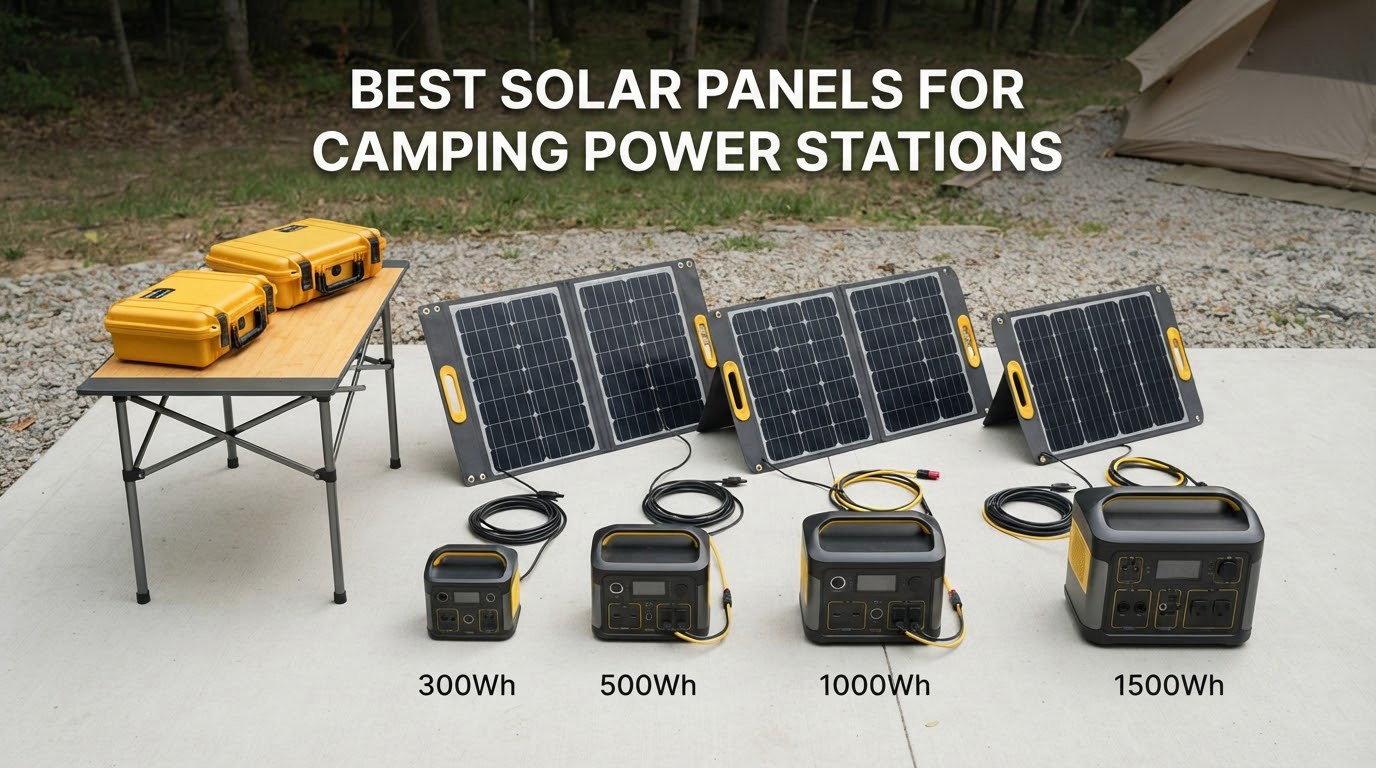
Most campers buy a solar panel the way they buy a mug of coffee: pick a wattage, tap the button, move on. That is also how people end up three days into a trip with a power station at 18% and a panel that never once delivered the number on its label.
The truth is that a panel is only half the decision. Your power station dictates the answer first, because it sets the input wattage cap, the acceptable voltage window and the connector it will accept. A 200W panel plugged into a station with a 100W solar input limit runs perfectly happily and quietly gives you half of what you paid for.
So we built this guide around compatibility. Eleven panels, ranked on rated wattage, cell efficiency, packed weight, water resistance and connector coverage, with real-world output numbers pulled from owner reports rather than spec sheets. If you want the short version, the [best camping solar chargers](https://www.pwice.com/best-camping-solar-chargers/) and the [solar generators for camping](https://www.pwice.com/best-solar-generators-for-camping/) roundups cover the wider ecosystem. Everything below is the panel side of that pairing.
Table of Contents
Top 3 Picks for Camping Power Stations in 2026
Renogy 100W N-Type Kit
- 25% N-type cells
- Pre-installed 20A PWM controller
- 25% efficiency at 6.02A

BLUETTI 200W Foldable
- 23.4% monocrystalline
- Native BLUETTI solar connector
- Parallel cell wiring

The Renogy 100W kit takes the top slot because it is the one panel here that arrives complete. The charge controller is already bolted inside the case, the efficiency figure is honest, and 1695 ratings at 4.6 stars is the deepest combination of rating and review volume in this list.
The BLUETTI 200W is the pick if your power station is a BLUETTI. It plugs straight into the native solar input with no adapter, and the parallel cell wiring means a bit of campsite shade costs you far less than it would on a series-wired panel.
The DOKIO 200W wins on weight and cost per watt. At 9.7 lb it is more than half the weight of most 200W suitcases, and with 4040 ratings it is by far the best-documented panel we looked at, which cuts both ways: you get a lot of honest owner data, including about output decay.
Best Solar Panels for Camping Power Stations (October 2026)
| Product | Specifications | Action |
|---|---|---|
| Renogy 100W N-Type Kit |
|
Check Latest Price |
 Renogy 200W Suitcase Renogy 200W Suitcase |
|
Check Latest Price |
| BLUETTI 200W Foldable |
|
Check Latest Price |
 BLUETTI 100W Foldable BLUETTI 100W Foldable |
|
Check Latest Price |
 Renogy 200W E.FLEX Renogy 200W E.FLEX |
|
Check Latest Price |
 ZOUPW 100W Foldable ZOUPW 100W Foldable |
|
Check Latest Price |
 TWELSEAVAN 120W Foldable TWELSEAVAN 120W Foldable |
|
Check Latest Price |
 SOKIOVOLA 200W N-Type SOKIOVOLA 200W N-Type |
|
Check Latest Price |
| DOKIO 200W Foldable |
|
Check Latest Price |
 ALLPOWERS SE200 200W ALLPOWERS SE200 200W |
|
Check Latest Price |
 MHPOWOS 110W Foldable MHPOWOS 110W Foldable |
|
Check Latest Price |
You Can Use Any Solar Panel for a Power Station as Long as Three Things Match
Short answer: no, you cannot use any solar panel with any power station. A panel works when three things line up: the voltage it produces sits inside the station’s solar input window, the connector physically matches or you have the right adapter, and the panel’s wattage is at or below the station’s maximum solar input. Miss the voltage window and charging stops. Miss the wattage cap and the station throttles you silently. Get the connector wrong and nothing happens at all, which is the most common complaint in camper forums.
MC4 is the industry standard and the safest default. Anderson SB50, XT60, DC8020, DC7909 and DC5521 are proprietary brand connectors, and the panels here that ship with those adapters work with the widest range of stations out of the box. Panels that charge a phone over USB-C are not interchangeable with panels that feed a station.
One more rule worth knowing. Panels with a controller built in, like the two Renogy suitcases, and panels that feed raw voltage into a station, like the BLUETTI and ZOUPW units, do different jobs. Plug a raw panel into a station and the station’s MPPT controller regulates it. Plug one straight into a 12V lead-acid battery and you are running a heater element, not a charger. Always go through a charge controller of some kind.
1. Renogy 100W N-Type Kit: The Self-Contained Starter Panel
Renogy 100W Portable Solar Panel, 25% High Efficiency Solar Panel Kit with 20A Charger Controller for 12V Battery&Power Station, N-Type Foldable Solar Panels w/Tempered Glass for RV, Camping Off-Grid
100W rated
25% N-type efficiency
17.4 lb
21.47V max
6.02A current
Pros
- Charge controller pre-installed inside the case
- Real-world output around 5.5-7 amps
- Strong aluminum frame and padded carry case
- Adjustable kickstand and two-panel fold
- 4-stage charging for 12V and lithium banks
Cons
- Expect 40-60W into a 12V battery not 100W
- Alligator clip cables lack strain relief
- Heavier than some 100W alternatives at 17.4 lb
Everything needed to charge a battery arrives in one case, with the 20A PWM controller mounted inside the panel frame. No separate box to mount and no loose wiring to route.
Owners report 5.5 to 7 amps delivered, which is where the marketing gets honest. Wired for 12V nominal output, the 6 amp ceiling turns a 100 watt label into 40 to 60 watts of real energy into a power station.

Build quality beats the price point. Reinforced corners, an anti-corrosion aluminum frame, low-iron tempered glass and a padded case all survive months of abuse, and the controller display stays legible in direct sun.
The weak points are unglamorous. The alligator clip leads have no strain relief where wire meets connector, so that joint frays eventually, and the latches and support arms are the first parts owners flag.

Is the built-in controller a plus or a minus?
For a first setup it is a plus. The waterproof controller is pre-wired for 4-stage charging across 12V power stations and gel, AGM, flooded and lithium banks.
The downside is permanence. Swapping in a 30A MPPT unit later means cutting wires, so treat it as a fixed system.
Who should buy it and who should not?
Buy it for weekend trips with a 500 to 1000Wh station, if you would rather not think about charge controllers. Pass if you need maximum watts from a 200W-class station or every gram in your pack matters.
2. Renogy 200W Suitcase: Heavy but Built to Last
Renogy 200W 12V Portable Solar Panels Suitcase with Waterproof 20A Charge Controller, Foldable 200 Watt Solar Panel W/Adjustable Kickstand, Solar Charger for Power Station, RV, Camping, SUV, Off Grid
200W rated
25% N-type efficiency
28.5 lb
21.47V max
11.89A current
Pros
- Real output around 11.5-13 amps
- MC4 output feeds a station MPPT directly
- Survives wind and rain over multiple seasons
- Heavy-duty copper cable with automotive clips
- Sized for RV banks and water pumps
Cons
- 28.5 lb is awkward to lift onto a roof
- Supplied cable has a 10A inline fuse under a 20A controller
- MC4 wiring has no strain relief and frays
The most thoroughly reviewed panel in the group, with several multi-year owner reports. At 11.5 to 13 amps delivered it is one of the strongest portable suitcases for driving current into a big station.
The MC4 output matters most here. Unplug the integrated controller and feed the station’s MPPT solar input directly, a cleaner path than routing current through a separate PWM box.

Where it disappoints is the small hardware. The included cable carries a 10 amp inline fuse under a 20 amp controller, so in full sun that fuse gives up first. Several owners replace it, a five-minute fix once you know.
There is also no strain relief where the wiring exits the MC4 connectors, and a few owners have swapped the whole controller for a 30A MPPT unit, which improves output but voids the warranty. At 28.5 lb, plan on two hands and a fixed location.

Does the fuse and wiring weakness matter in normal use?
For weekend trips at moderate latitudes, rarely. The panel delivers useful current for hours well inside the fuse limit, and the wiring flex point stays put if you route the cable once and leave it.
It matters if you camp in high summer heat, deploy at a beach, or coil and uncoil the lead daily. That pattern produced most of the fraying complaints.
How does it compare to the 100W kit?
Roughly double the current for about 11 extra pounds. With a 1000Wh station running a 12V fridge plus lighting and a water pump, take the 200W. Topping up a smaller station, the 100W kit does the same job at half the carry weight.
3. BLUETTI 200W Foldable: The Native Fit for BLUETTI Stations
BLUETTI 200W Solar Panel for Solar Generator EB3A AC2A AC50B AC70 AC180 AC200L Elite 200 V2 AC300 AC500 B300K, Foldable Solar Charger with Adjustable Kickstands for RV, Camping, Blackout
200W rated
Up to 23.4% efficiency
16.1 lb
Folds to 22.5 x 23.6 x 2.9 in
26.1V max
Pros
- Plug directly into BLUETTI solar inputs
- Real output around 100-150W with peaks near 165W
- Parallel wiring limits shade losses
- One-person setup
- Three kickstands keep it stable in breeze
Cons
- Integrated cable is about 10 feet
- Water-resistant rather than fully waterproof
- Fabric exterior traps dirt in the creases
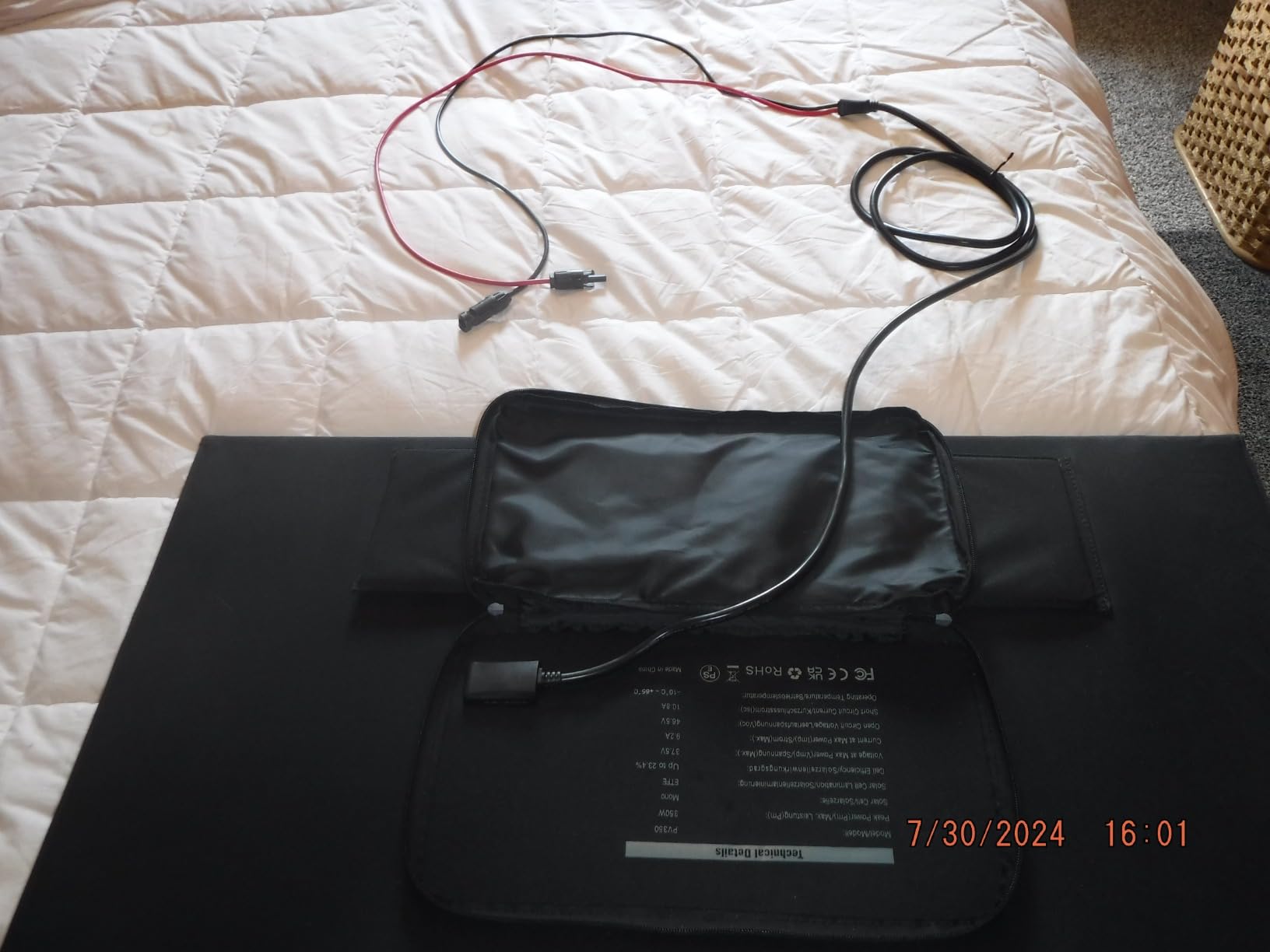
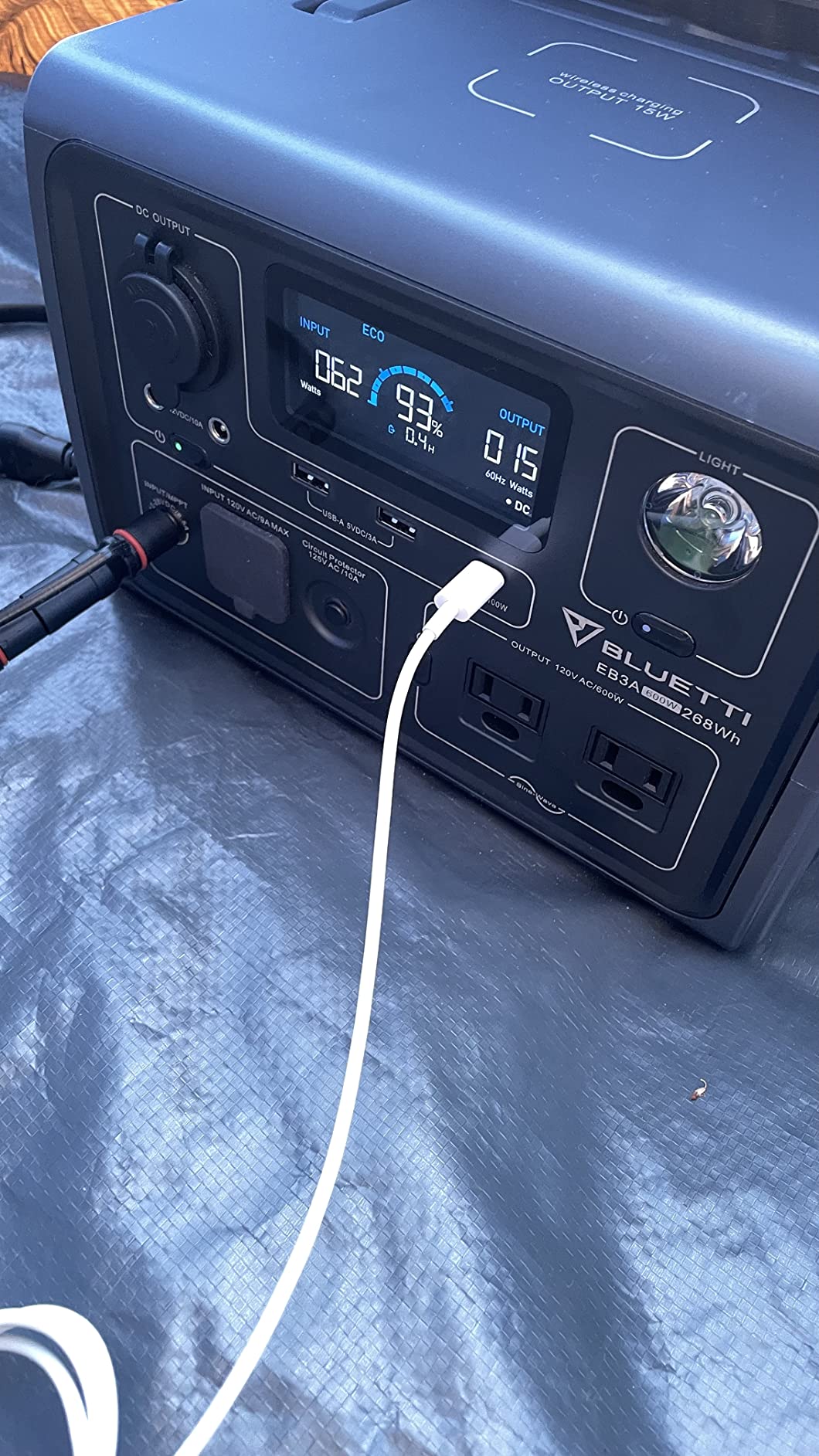
If your power station is a BLUETTI, this is the panel with the fewest headaches. The built-in solar connector and 10 foot integrated cable plug straight into the solar input on EB3A, AC2A, AC50B, AC70, AC180, AC200L, AC300 and related models, with no adapter to lose.
Owner measurements cluster between 100 and 150 watts, with some reporting peaks near 165W in clean midday sun. That tracks with what other 200W foldables here deliver in the same conditions.
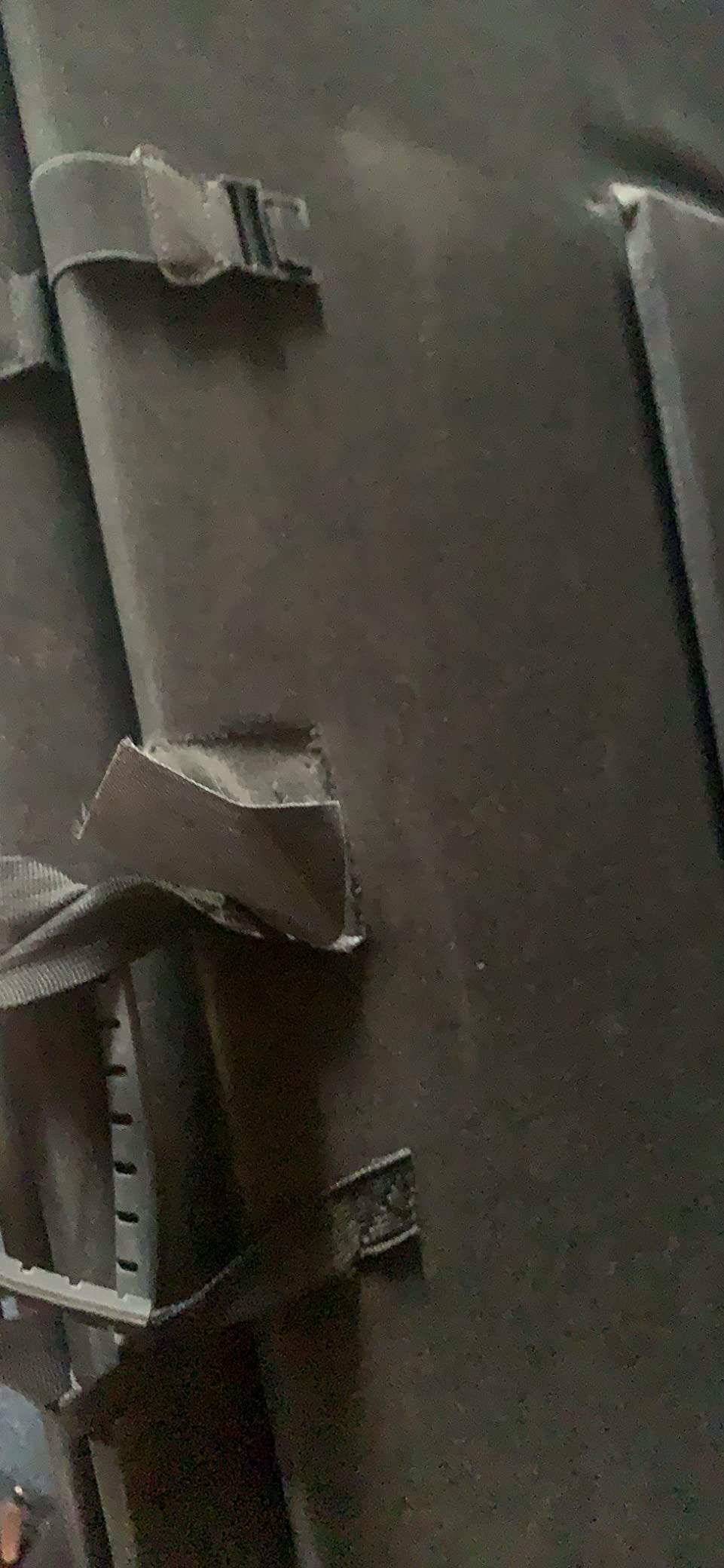
The detail we value most is the parallel cell wiring. On a series-wired panel, shade across one section drags down everything. Because these cells run in parallel, a shadow across a corner costs a much smaller share.
The complaints are practical. The 10 foot lead is short if your station sits in shade, so budget for an extension. The panel is water-resistant, not waterproof, and the fabric exterior gathers grit in the fold creases.
What happens if your station is not a BLUETTI?
You need an MC4 to proprietary adapter cable, which is cheap but easy to forget. At a 26.1V maximum this also sits above the window some smaller stations expect, and those will refuse to charge.
Check the station’s solar input voltage range first. If it accepts high-voltage input, an adapter is all you need. If not, pick a 12V-class panel instead.
Is 16.1 lb reasonable to carry?
For car camping and van life, yes, since it rides in the vehicle rather than on your back. At 200 watts it is one of the better weight-to-output ratios here, and the three-kickstand base stops it tipping where lighter panels walk across the site.
4. BLUETTI 100W Foldable: The Most Compact 100W Option
BLUETTI 100W Portable Solar Panel 23.4% High Efficiency IP67 Waterproof
Up to 100W rated
23.4% efficiency
IPX67
12.6 lb
Folds to 21 x 18.5 x 1 in
Pros
- IPX67 waterproofing handles cloud and rain
- Stable well-placed kickstand
- Real output around 90-105W
- Compact 21 x 18.5 in footprint
- Parallel wiring helps in partial shade
Cons
- Blue plastic carry handle is a known weak point
- Connection cable not included on every revision
- Some variants expose only MC4 output
This is the panel we would put on a roof rack where rain is a daily event. The IPX67 rating is a step above the water-resistant panels here, and the 21 by 18.5 inch fold is one of the tighter footprints among 100W foldables.
Real output lands around 90 to 105 watts, close to the nameplate and better than most 100W panels manage into a 12V station. Parallel cell wiring means a partly shaded panel still puts out meaningful current.
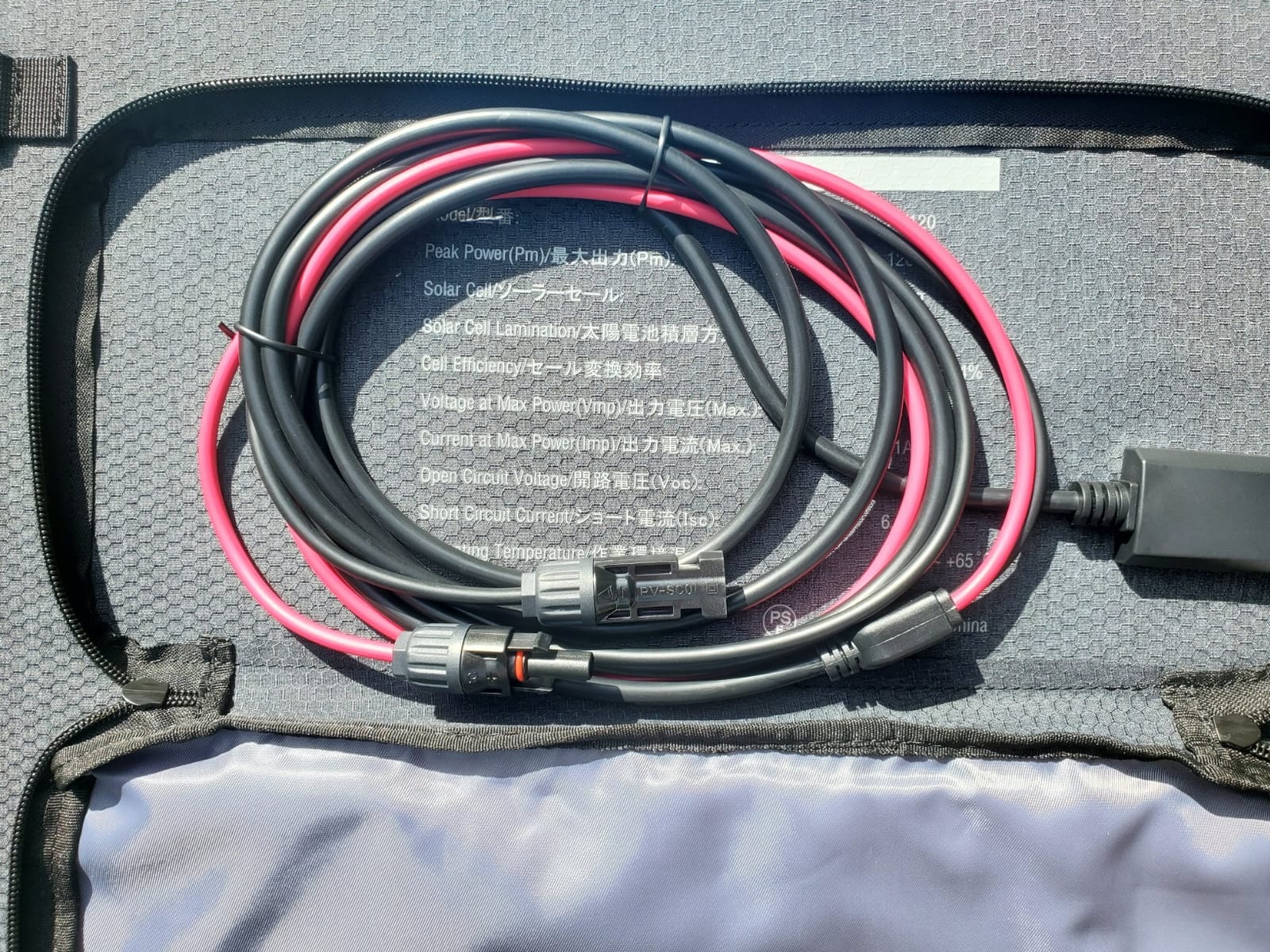
The recurring negative is the handle. The blue plastic carry grip is described as weak enough that some people avoid lifting by it or reinforce it with tape. The closure straps get similar mention.
One more caveat to catch before you buy. Depending on the listing revision, the cable to the station’s solar input is not always in the box, and some variants expose only MC4 output. Both are easy to solve with a short adapter, but not something you want to discover at the trailhead.
Is 12.6 lb too heavy for a hiking panel?
For a car-side or van setup, no. Carried on foot, it adds up, and there are lighter options here. What it buys you is a 100W panel that keeps working when the weather turns.
Does the kickstand actually hold up?
Better than most in this category, and reviewers single it out as the panel that stays put among competing setups. Wind on an open site is still wind on a 21 inch sail, so guy it if the forecast is gusty.
5. Renogy 200W E.FLEX: The Lightest Full-Size 200W Setup
Renogy 200W Portable Solar Panel for Power Stations, 25% Efficiency
200W rated
25% efficiency
13.9 lb
21.6V max
USB-C PD 45W
Pros
- Only 13.9 lb for a 200W foldable
- Magnetic closure is fast and quiet
- 25% N-type efficiency from 16BB cells
- USB-C and USB-A outputs for direct device charging
- UL 61730 plus multi-angle kickstands
Cons
- MC4 output needs an adapter for many stations
- Quad-fold footprint is wider than two-panel cases
- Two-year warranty is short
The panel that made us reconsider the category. A genuine 200W output with 25 percent N-type cells at 13.9 pounds, roughly half the weight of the Renogy suitcase, holding a 4.5 rating across 939 reviews.
The magnetic closure is the second thing you notice. No snaps, no Velcro flaps fighting each other, and a built-in pouch keeps cables with the panel. Four kickstands adjust across 40, 50 and 60 degrees, with ground studs and reinforced grommets for a tent wall or awning.

It also charges three things with no battery attached: one USB-C PD port at up to 45 watts and two USB-A at 18 and 15 watts. Not a replacement for feeding a station, but useful when your phone is at 8 percent and the station is not what you need.
The trade-offs are predictable. MC4-only output means an adapter for many Jackery, EcoFlow and Anker stations. The quad-fold is wider than a two-panel suitcase and needs more ground space when open, and the warranty is two years.

Is 13.9 lb realistic for a 200W panel?
It is, and the 16BB N-type cells are why. Thinner cells with more busbars carry more current through the same area, giving the wattage without extra glass and frame weight.
The catch is the open footprint. Four panels unfold into a wide rectangle, so a tight site between two vehicles will be cramped.
Does it work with a Jackery or EcoFlow station?
Yes, with an adapter. The MC4 output is the standard, and every major station accepts MC4 either natively or through a short cable. The complaint is purely about remembering to bring it.
Its UL 61730 certification and multi-angle kickstands make it the one we would feel most comfortable strapping to an RV or overlanding setup.
6. ZOUPW 100W Foldable: The Best Value Per Watt
ZOUPW 100W Portable Solar Panel for Power Station,23.5% Efficiency Mono Foldable Solar Charger for Jackery 300/Ecoflow River/Anker/Bluetti,IP67 Waterproof for Camping RV Off-Grid Emergency Power
100W rated
23.5% efficiency
IP67
9.5 lb
Folds to 24.13 x 21.06 x 1.77 in
Pros
- Lowest cost per watt in this roundup
- 5-in-1 cable fits most power stations without an adapter
- 9.5 lb with a magnetic carry handle
- USB-C and USB-A hub for emergency top-ups
- IP67 with a zippered controller pocket
Cons
- Expect 60-70W into a 12V station
- Shortest warranty here at 12 months
- Low input caps on a station limit it further
The 5-in-1 cable is why this panel stands out. It terminates in DC8020, XT60, Anderson, DC7909 and DC5521, covering Jackery, EcoFlow, BLUETTI and Anker models without you buying a single adapter. Adapter cables are the most common thing campers forget.
It also carries a 4.6 rating across 711 reviews at the lowest cost per watt in the group, a rare combination here. Build feels solid, the IP67 ETFE lamination is properly sealed, and a zippered pocket keeps the internal controller and cabling dry.

What you give up is output. A 100W panel wired for 12V delivers closer to 60 to 70 watts into a typical station, because voltage sags under load. A station with a 60W input cap will limit it further.
The USB hub is for small devices. A 15 watt USB-C PD port and one QC3.0 USB-A will rescue a phone or a GPS, not a laptop. The 12-month warranty is the shortest here, so treat it as a weekend tool.

Does the universal cable really replace brand adapters?
For the major brands, largely yes. Check the specific connector your station uses, because the naming overlaps and DC8020 and Anderson are easy to mix up visually. Confirm the fit at home rather than at a campsite.
Is it right for a small station?
That is exactly where it fits. A 300 to 600Wh station paired with this panel is a light, well-matched setup for two or three nights of lights, phones and camera batteries, and the two 45 degree kickstands let you retune the angle through the day.
7. TWELSEAVAN 120W Foldable: The Lightest Panel We Tested
120W Portable Solar Panel for Power Station, 24% High Efficiency ETFE Foldable Solar Panel Charger, QC3.0, Type-C 60W, MC4 Output, IP65 Waterproof, for Outdoor Camping, RV, Emergency Power Supply
120W rated
25.8% HPBC efficiency
7.1 lb
Folds to 16.6 x 15.7 in
19.2V max
Pros
- Lightest panel in the roundup at 7.1 lb
- Briefcase-size fold with a magnetic handle
- 60W USB-C PD charges laptops and tablets directly
- Highest cell efficiency quoted here at 25.8%
- 36-month warranty is the longest offered
Cons
- Needs the right included DC adapter for your station
- HPBC cells are less shade tolerant
- IP65 is splash protection only
At 7.1 pounds and a 16.6 by 15.7 inch folded size, this is the panel that disappears into a daypack. The magnetic handle opens or closes it in about 30 seconds, and a built-in angle guide helps when you are guessing at midday aiming.
The cell technology is the standout. HPBC cells at up to 25.8 percent conversion efficiency are the highest quoted figure here, backed by an ETFE layer at 95 percent light transmittance plus a fiberglass layer the maker credits with doubling panel lifespan. The 36-month warranty is also the longest here.
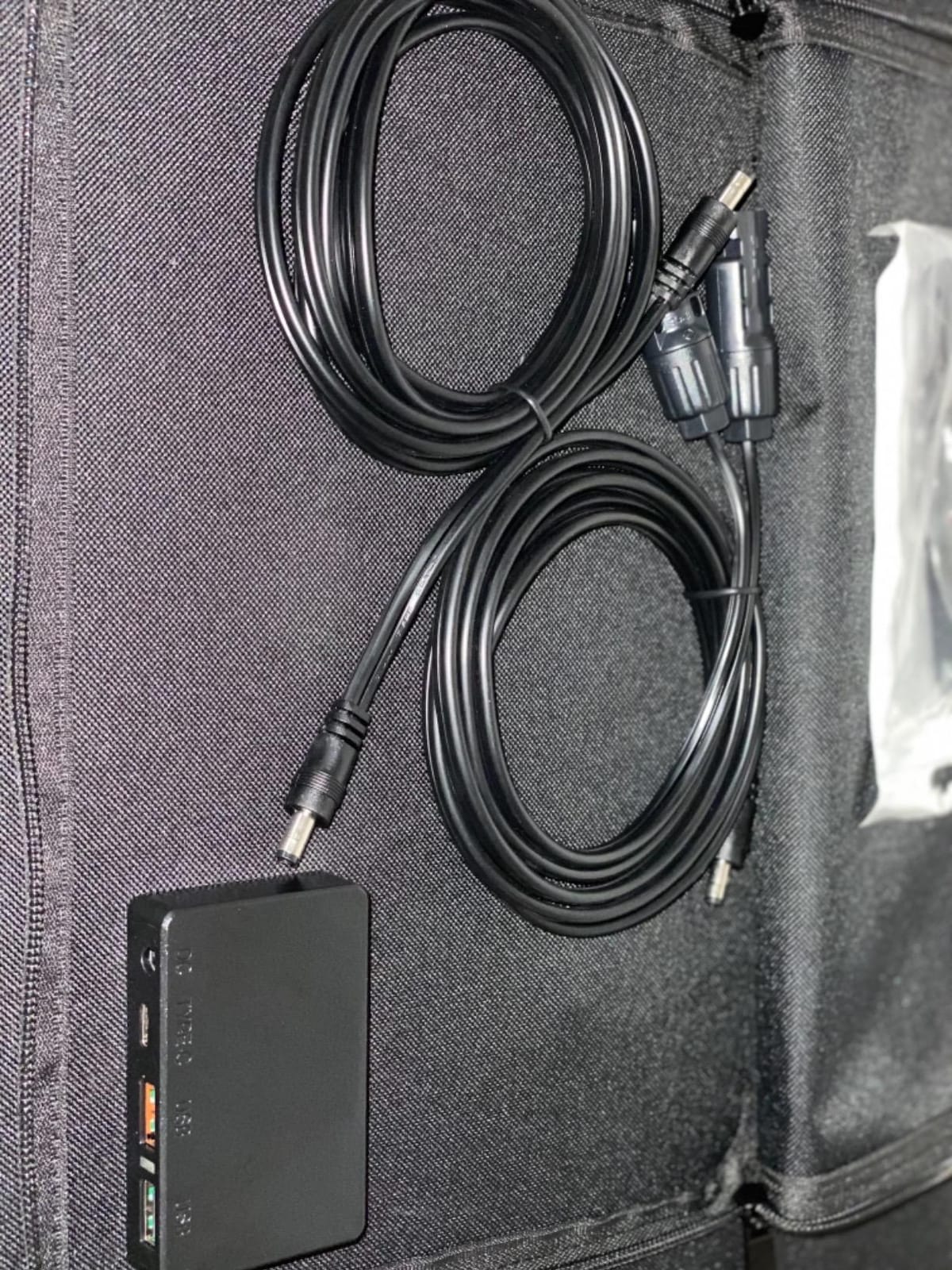
The 60 watt USB-C PD port is the sleeper feature. It charges a laptop or tablet directly with no power station in the loop, which is the situation at lunch on a trail when all you need is to top up a work machine.
The trade-offs are real. HPBC cells are less tolerant of partial shade than the parallel-wired designs elsewhere here. IP65 covers splashes, not sustained rain. The polyester canvas wears first at the fold creases. And the 5-in-1 MC4 cable still needs the correct included DC adapter.
Is the 60W USB-C port useful without a power station?
Very. Reviewers treat it as the reason to own this panel even when they also carry a station. Direct charging needs sun and no battery, and for a weekend running only cameras, a phone and a laptop, that can replace a power station entirely.
How does the weight compare to the rest of the field?
It is the lightest panel in the roundup by a clear margin, and the next lightest 100W-class unit sits near 8.5 to 9.5 pounds. That gap matters when the panel is on your back rather than in a vehicle.
The constraint is real output. A 120W panel into a 12V station typically yields 70 to 85 watts, so pair it with a smaller station rather than expecting it to refill a 2000Wh unit overnight.
8. SOKIOVOLA 200W N-Type: The Stiffest 200W Panel with IP68
SOKIOVOLA N-Type 16BB 200W Portable Solar Panel for EF/Jackery/Bluetti/Anker Power Station Foldable Solar Panel 25% High Efficiency IP68 Waterproof for Outdoor Trip RV Camping Blackout Off Grid
200W rated
25% N-Type 16BB efficiency
IP68
16.3 lb
Folds to 21 x 23 in
Pros
- Owners measure 165-180W in full sun
- Panel feels firm and sturdy when opened
- 5-in-1 connector set included in the box
- IP68 is the highest water and dust rating here
- Roomy storage bag keeps cables organized
Cons
- MC4 pigtails are only about 4 inches long
- One owner reports output falling from 190W to about 100W in six months
- Small rear rivets can fail with repeated folding
The headline number is real output. Several owners measure 165 to 180 watts in full sun, roughly 85 to 90 percent of the nameplate and among the best figures reported for any 200W portable panel here.
It also feels better in the hand than most foldables. The panel is noticeably rigid when opened, with sturdier legs than competing designs, and it carries an IP68 rating. The 5-in-1 MC4 set covers Jackery, EcoFlow, BLUETTI, FlashFish, Goal Zero and Anker stations, with a 10.5 foot extension cable in the box.
The most repeated complaint is the 4 inch MC4 pigtail. Too short to reach anything, so in practice you are buying a longer extension cable regardless. Add that to the packing list and the issue disappears.
It is also one of the lower-rated panels here at 4.3. One owner tracked output dropping from around 190 watts to roughly 100 watts over six months of daily use, small rear rivets are reported failing under repeated folding, and low light and rain cut output sharply. The warranty is 12 months.
Is the short pigtail a dealbreaker?
No, as long as you plan for it. The included 10.5 foot extension cable solves placement, and most buyers add a second so the station can sit in shade. What you cannot do is connect this with nothing but what is included.
How does it compare to the other 200W panels?
Against the Renogy E.FLEX it is heavier but stiffer and better sealed. Against the BLUETTI it pushes more peak current but has a shorter warranty and a smaller review base at 552 ratings. Against the DOKIO it is far heavier for similar class output.
9. DOKIO 200W Foldable: The Most Reviewed and the Lightest
DOKIO 200W Portable Foldable Solar Panel Kit for 12V Battery Charging
200W rated
9.7 lb
Folds to 20 x 27 x 1.1 in
18V max
9.84 ft cable
Pros
- Best reviewed panel in the roundup at over 4000 ratings
- Only 9.7 lb and 1.1 in thick folded
- Parallel wiring for good partial shade behaviour
- Controller is standalone and user-replaceable
- 3m cable gives real placement freedom
Cons
- Real output often runs about half the nameplate
- SAE and XT60 connectors cannot be series wired
- SAE plugs soften and pull apart in high heat
- Controller lacks lithium chemistry selection
- Only a 1-year warranty
With over 4000 ratings this is the best-documented panel here, and the volume of long-term owner data is its most valuable feature. Buyers praise the weight, the thin 1.1 inch folded profile and the placement freedom from the 3 meter cable, and many report 100 to 150 watts in good sun.
Two design choices stand out. The panel is wired in parallel, so shade on one section costs far less than on a series-wired design. And the PWM controller is a separate box you can swap, upgrade or replace, which is what several owners have done to recover output.
The connectors are the problem. SAE and XT60 are not the solar standard, so you cannot series-wire this panel with MC4 equipment the way you can with most others. Reviewers also report SAE plugs softening in high heat and pulling apart unnoticed.
There is documented output decay. One long-term user tracked a drop from 175 watts to about 50 watts after nine months of daily use, and the controller does not offer lithium chemistry selection. At a 4.2 rating, this panel rewards careful storage and realistic expectations.
Is the non-standard connector a dealbreaker?
For a single panel, no. The included leads fit many stations directly. For chaining, paralleling or mixing with other panels, yes, because you will need dedicated adapter cables and cannot wire this into a series string.
What about the output decay reports?
Hard to pin down from reviews alone, but the pattern appears in enough long-term reports to take seriously. The controller is replaceable, so a degrading panel is not necessarily a dead one. Store it folded and dry, and check output with a USB meter early in the season.
10. ALLPOWERS SE200 200W: The Highest Working Voltage
ALLPOWERS SE200 200W Portable Solar Panel, Solar Charger for Power Station
200W rated
22% cell efficiency
41.6V working voltage
4.8A
15.8 lb
Pros
- Parallel wiring so a shaded section costs about a quarter of output
- 41.6V working voltage reduces cable run losses
- Accessory bundle includes adapters
- a cable pouch and a folding kickstand
- Thin folded profile for a 200W panel
- Customer service replaced a defective unit
Cons
- Real output typically 75-125W rather than 200W
- Alligator clips are unsafe without a control unit
- Anderson to XT60 adapter not included
- Creases frayed within a month for one owner
- 24V-optimised stations can cut out if panel voltage drops
The SE200 runs at a 41.6V standard working voltage, higher than any other panel here and the reason it loses less power over a long cable run. That matters if your power station sits a fair distance from your sunniest pitch.
It is also parallel-wired, so a shaded section costs roughly a quarter of the output rather than half. The kickstand adjusts across 0 to 180 degrees, the folded profile is thin at 1.18 inches, and the accessory bundle is unusually complete.
Real output is the weak point, with owners reporting 75 to 125 watts against a 200 watt nameplate, and it drops sharply under partial shade. The supplied alligator clips are widely considered unsafe without a control unit.
There is also a voltage window trap. Some power stations optimise for 24V and stop charging if panel voltage falls below 20V, which happens early and late in the day, and several owners add a boost converter. Note the shared listing covers ALLPOWERS panels from 60W to 400W, so some reviews describe other hardware.
Why does 41.6V help in a real campsite?
Panel output is current multiplied by voltage, and cable resistance eats a fixed voltage drop. At the same power, a higher voltage runs at a lower current, so less is lost along the run. Over a 10 foot lead the difference is small, but it grows with distance.
The catch is that fewer stations accept high-voltage solar input than 12V-class panels, so check the input window first.
Is the 18-month warranty a concern?
It is mid-pack here. What matters more is that the parallel wiring and accessory bundle are genuinely good, and that ALLPOWERS support replaced a defective unit for one reviewer rather than arguing about it.
11. MHPOWOS 110W Foldable: The Smallest Useful Top-Up Panel
110W Portable Solar Panel for Power Station IP67 Waterproof Solar Charger
110W rated
23.5% efficiency
IP67
8.5 lb
Folds to 23.46 x 21.25 x 1.57 in
Pros
- Low cost for a 110W foldable
- Owners measure 60-82W in good sun
- Compact and quick to set up
- IP67 rated with a cable pouch on the back
- 4-in-1 connector cable fits most power stations
Cons
- No charge controller and no USB ports on the panel
- Output falls hard in overcast conditions and shade
- German-only paperwork in some packages
- One Anderson connector needed reshaping
- Smallest review base here at 196 ratings
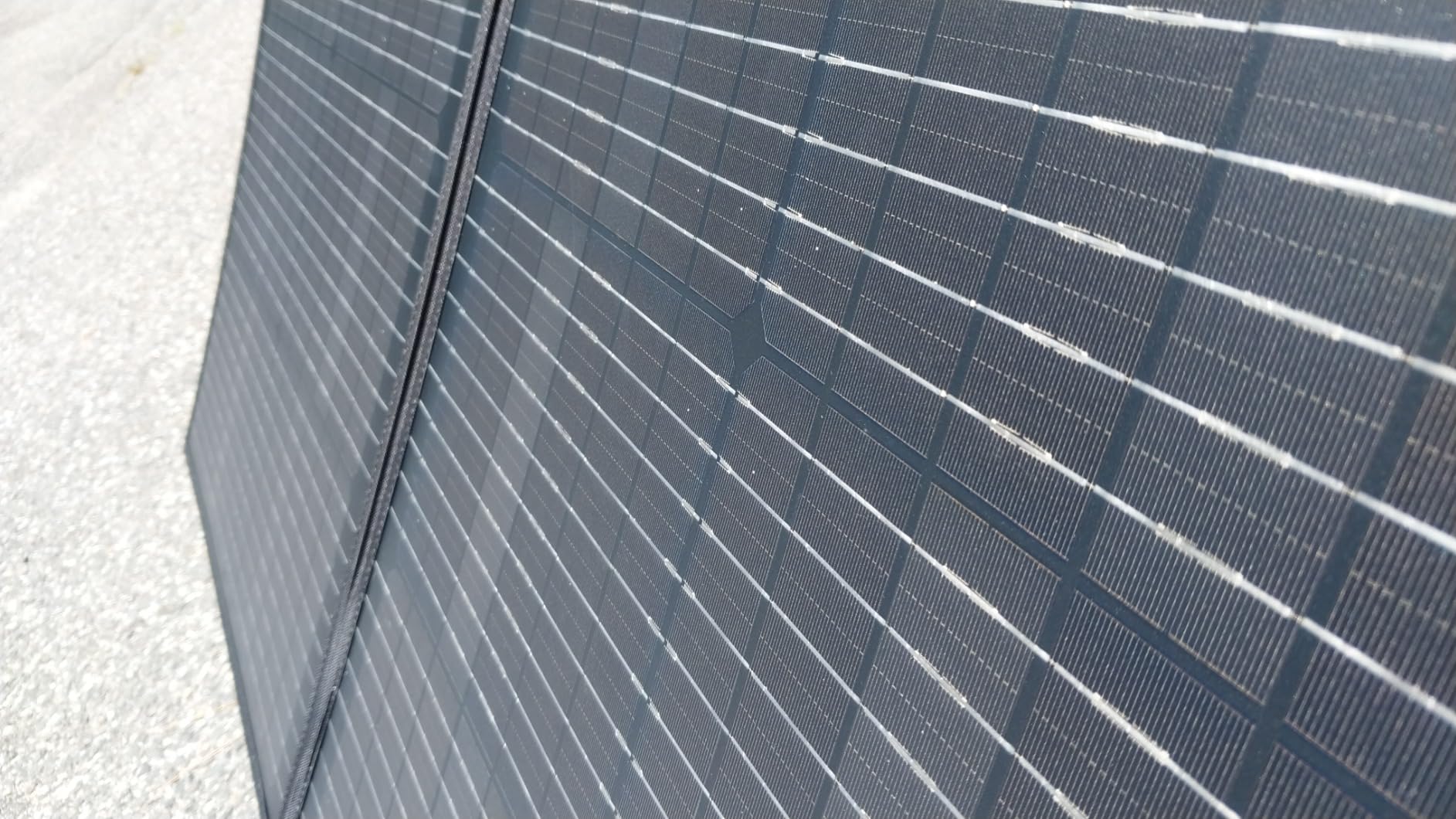
This is the panel for a specific job: keeping a small station alive rather than refilling a big one. At 8.5 pounds with a 23.46 by 21.25 inch footprint, it is compact, quick to deploy and rated IP67.
Owners consistently measure 60 to 82 watts in good sun, enough to meaningfully top up a 500 to 600Wh station over a day. The 4-in-1 cable covers Anderson, XT60, DC7909 and DC5521, and a cable pouch on the back keeps the lead tidy.
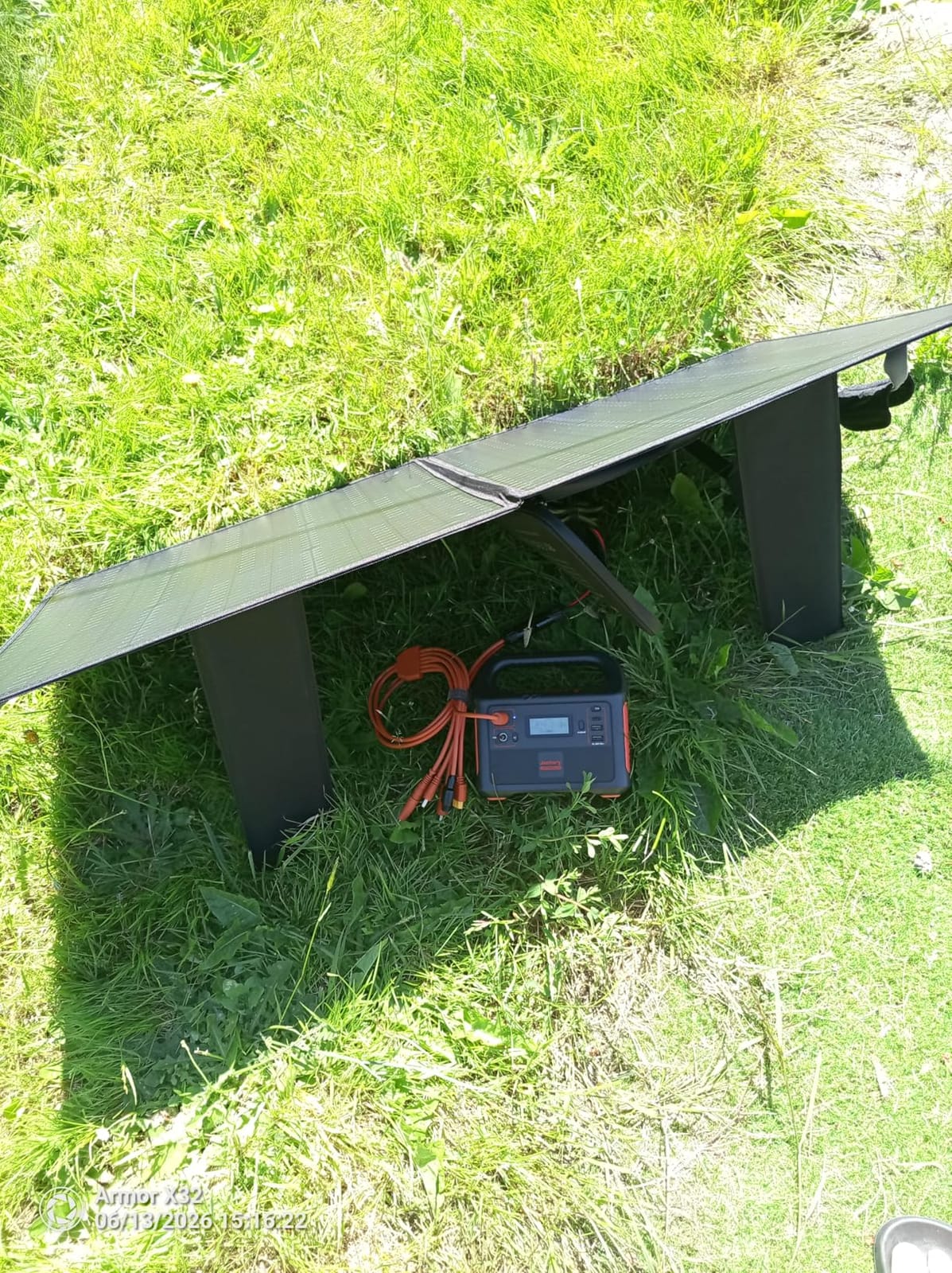
There is no charge controller and no USB output on the panel itself, so it relies entirely on the paired station doing the regulating. Fine for a modern station with an MPPT input, and a hard stop for a raw 12V battery.
Low light is where it struggles. Output drops off a cliff under overcast skies and in shade, and in one test it reached under 50 watts of the 110 watt rating. Some packages arrive with German-only documentation, and at 196 ratings this is the smallest review base here.
Is 60-82W enough for a weekend trip?
For lights, phones, a camera battery and a power bank, yes. That is a comfortable match for a 300 to 600Wh station over two or three days with normal sun. For a 12V fridge running overnight, no, and no 110W panel will change that.
What is the 18-month warranty worth?
It covers the realistic service life of a weekend panel. Given the small review base, check output with a USB meter in your first season to establish a baseline you can compare against later.
How Much Solar Wattage Do You Actually Need?
Work backwards from the load, not the panel. A phone charging at 15 watts needs almost nothing. A 12V fridge pulling 45 to 50 watts while running needs a panel that can average at least that across the day, which means a 100W to 200W unit. A CPAP machine, a laptop and lights sit somewhere in between.
The other half of the calculation is your station’s solar input cap. A station that accepts 100 watts will never take more than 100 watts no matter what you connect, so a 200W panel onto a 100W-cap station wastes half its potential.
Forum consensus across camper and prepper communities lands on 600Wh or smaller as the sweet spot for weekend trips, with r/SolarDIY builders fitting a 50W panel, a 300W inverter and a 17Ah battery into a single backpack. That is a useful reality check against buying a large station and a large panel for two nights.
On charge times, use roughly five peak sun hours as a good day. A 200W panel putting 160 watts into a 1000Wh station returns about 800 watt-hours, so moving from 20 to 80 percent takes close to one full sunny day with nothing else drawing. Halve the panel and you double the days. For short winter daylight, budget for half that.
Weight tiers follow the same logic. Under 10 lb means 100W to 120W and a 300 to 700Wh station. Between 12 and 18 lb means 200W and a 1000Wh station. Above 25 lb means a fixed RV or trailer setup rather than something you reposition as the sun moves.
Buying Guide: Seven Specs That Matter More Than the Wattage Label
Real-world output versus rated wattage. Every number on a panel label is measured under standard test conditions: full sun, 25C, a specific irradiance. In a campsite you get 40 to 90 percent of that depending on heat, angle and cloud. A panel putting out 165 watts from a 200 watt label is performing normally, not badly.
Cell efficiency and architecture. N-type cells with more busbars, like the 25 percent panels here, produce more current from the same area than standard 9BB PERC cells. As for physical design, rigid panels output the most per pound and suit vehicle-mounted setups, rollable panels are the most durable and least efficient, flexible ETFE panels are light and splash-resistant, and foldable panels are the portable compromise the rest of this roundup is made of.
Water resistance ratings, read literally. IP65 means dust-tight and protected against water jets, covering most rain but not a soaking. IP67 means temporary submersion, so you can leave it out in weather. IP68 is the highest here. None of them mean the connector end is sealed, so keep the plug dry regardless.
Connector type decides compatibility more than anything else. MC4 is the safe default and the only option that lets you series-wire panels. Anything proprietary, from Anderson SB50 to XT60, needs the matching adapter, and buying one after a trip has started is the most common field mistake campers report.
Kickstand quality is a daily output lever, not a comfort feature. A panel lying flat loses a large share of its production against one angled toward the sun, and a stand that will not hold its position means re-aiming hourly. Panels heavy enough to stay put are the reason heavier designs exist.
Warranty length and cell wiring round out the list. Two to three years of cover is normal, and one year is a signal about expected service life. Parallel wiring, found on the BLUETTI, DOKIO and ALLPOWERS panels here, means a shaded corner costs a fraction of the output instead of a large share.
One safety note that does not change. Never connect a raw panel straight to a 12V battery without a charge controller in between. Without regulation, panel voltage on a hot day can exceed the battery’s absorption voltage and cook the cells. Every modern power station handles this internally through MPPT, so charging through the station is always the safe path.
For maintenance, wipe the glass before packing it away, dry the panel fully before folding it closed, and store the case somewhere dry rather than in a damp trailer. Grit that stays in a fold crease becomes an abrasive that scratches the cell coating.
Field Mistakes That Kill Panel Output Before Lunch
Laying the panel flat is the number one self-inflicted wound. A flat panel at midday can lose a third of its output against one angled toward the sun. Set the kickstand, check the angle guide or your phone compass, and move it when the sun moves far enough to matter.
Partial shade is worse than most people expect on a series-wired panel and better than they expect on a parallel-wired one. A branch across one corner of a series-wired panel can halve the output, and a picnic table casting shade at noon does the same. Pick a site that gets full sun from mid-morning onward, and check every few hours because the shadow moves.
Panels too heavy to reposition get abandoned in a fixed spot, which is why weight and output are the same decision. If you cannot lift it at 8am, you will not move it at 2pm, and your second half of your day will be weak.
Connector mismatches mean no charging at all, not slow charging. If nothing is happening, check the physical connection before you blame the panel. A missing adapter cable is the most common cause and the cheapest to fix, so carry the ones your station needs even if you expect not to use them.
Expecting the nameplate number all day is the mental mistake. Rated wattage is a momentary peak under laboratory conditions. Judge a panel on what it delivered between 10am and 4pm in your typical trip weather, not on the sticker.
Finally, check your station’s input cap before you buy anything. A 60W or 100W limit silently truncates a larger panel, and that mismatch is the most common reason campers conclude a perfectly good panel is faulty.
Frequently Asked Questions
Can you use any solar panel for a power station?
Only if three things match. The panel’s voltage has to fall inside the station’s solar input window, the connector has to physically fit or you need the right adapter, and the panel’s wattage should be at or below the station’s maximum solar input. Miss the voltage window and charging stops entirely. Exceed the wattage cap and the station throttles you without telling you. MC4 is the safe default connector because it is the solar standard and the only one that lets you chain panels.
How much wattage of solar panel do I need for a camping power station?
Match the panel to the station’s solar input cap first, then to your largest load. A 100W to 120W panel suits a 300 to 700Wh station running lights and phones. A 200W panel suits a 1000Wh station that also runs a 12V fridge, water pump or CPAP machine. Never buy a panel well above the station’s input limit, because the extra watts are discarded. Forum consensus puts the sweet spot for weekend trips at 600Wh or smaller.
What is the 33% rule in solar panels?
The 33% rule is the practical ceiling on how efficiently any solar cell converts sunlight into electricity. Around 33% is the theoretical maximum for a single-junction silicon cell under perfect laboratory conditions, which no portable panel will ever reach. The best portable panels in this roundup quote 23 to 26 percent at the cell level, and after packaging, wiring, temperature losses and the angle of the sun, real output lands well below the rated wattage on the label.
How long does a 200W solar panel take to charge a power station?
On roughly five peak sun hours a day, a 200W panel delivering about 160 watts puts around 800 watt-hours into a 1000Wh station. Moving from 20% to 80% therefore takes close to one full sunny day if nothing else is drawing from the battery. A 100W panel roughly doubles that, and winter short daylight stretches both considerably. Check the station’s solar input cap, because a 100W cap halves the time regardless of panel size.
Can you connect two solar panels to one power station?
Usually, but only within limits. Series wiring adds voltage and parallel wiring adds current, and both are only possible with the same connector standard across both panels, which is why MC4 panels are the ones that chain well. The combined wattage must stay under the station’s maximum solar input, and the series voltage must stay inside the station’s input window. Mixed proprietary connectors such as SAE, Anderson or XT60 cannot be joined into a string without dedicated cables.
Are 200W solar panels worth it for camping?
For car campers and van dwellers running a fridge, lighting or a water pump, yes, provided the power station accepts at least 200W of solar input. For a weekend of phone charging and lights, a 100W panel is plenty and weighs 8 to 13 lb less. 200W panels in this roundup range from 9.7 lb to 28.5 lb, so weight should influence the decision as much as output when you are carrying rather than driving.
Which Solar Panel Should You Buy in 2026?
The Renogy 100W N-Type kit is the pick for most people starting out, because the controller is already inside the case and 25 percent efficiency is real. The Renogy 200W E.FLEX is the pick if you need 200 watts and have to carry it, at 13.9 lb. The BLUETTI 200W is the pick if your station is a BLUETTI, and the TWELSEAVAN 120W is the pick if weight matters most.
Whatever you choose, check the station’s solar input cap and voltage window before the panel, then buy the wattage that matches. If you are still choosing the station itself, start with our [portable power stations for winter](https://www.pwice.com/best-portable-power-stations-for-winter/) and [lithium power stations for winter expeditions](https://www.pwice.com/best-lithium-power-stations-for-winter-expeditions/) guides to settle on a solar input range.
Those are the best solar panels for camping power stations we could justify with real measurements and owner reports in 2026. Buy the one that matches your station’s input, your heaviest device and your pack weight, then give it the best sun your campsite has to offer.