
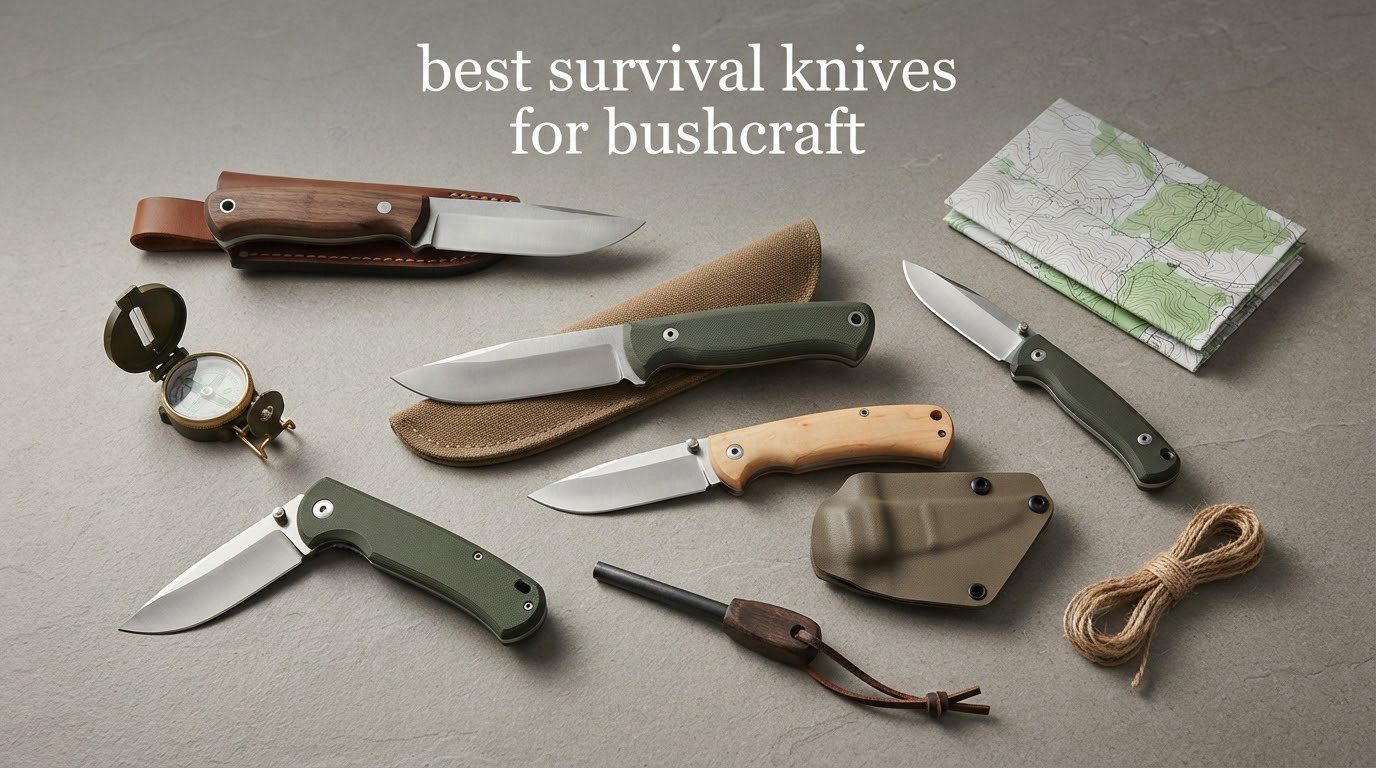
Most people asking for the best survival knives for bushcraft actually want two different tools. One is the emergency blade you clip to a bag and forget about until the day you need it. The other is the woods knife you carry every weekend to split kindling, shave feather sticks and cut a tent stake. They get marketed on the same Amazon page, they are built completely differently, and picking the wrong one is how people end up with a heavy tactical folder that cannot carve a single curl.
So we sorted the category the hard way. We lined up 10 fixed blade knives, checked the steel and grind on every one of them, and weighted the list toward the things that decide whether a blade is useful in the backcountry: whether it is full tang, whether the grind matches the task, whether the handle stays put when your hands are wet and bloody, and whether the included sheath actually holds the knife. Where a knife is a partial tang design, we say so plainly rather than dressing it up.
If you want the wider category rather than this list, we have a separate guide to the best bushcraft knives and a roundup of the best survival knives for prepper and bug-out framing. This page is the overlap between the two, judged on wood, fire and steel.
Table of Contents
Top 3 Survival Knives for Bushcraft Right Now in 2026

Morakniv Companion
- Sandvik 12C27 stainless blade
- Only 3.9 oz with sheath
- Scandi-style V-grind
- Sharp factory edge

Gerber StrongArm
- Full tang 420HC steel
- Cerakote coating
- Multi-mount sheath
- 90-degree spine for ferro rods

Mossy Oak 15-Inch Survival Knife
- 10 inch stainless blade
- 5/32 inch thick spine
- Nylon sheath with belt hang
- Bundled fire starter
Those three cover the widest range of use on this list. The Companion is the generalist that handles almost every camp job, the StrongArm is the one you beat on when the wood is stubborn, and the 15-inch Mossy Oak is for people whose idea of a good day ends with a split pile of firewood. Every pick below is honest about what it cannot do.
Best Survival Knives for Bushcraft (October 2026)
Here is the whole lineup in one place. Steel and blade length drive most of the character differences, and the last column is the honest reason to own each knife rather than the next one.
| Product | Specifications | Action |
|---|---|---|
| Morakniv Companion |
|
Check Latest Price |
| Mossy Oak 15-Inch Survival Knife |
|
Check Latest Price |
| Gerber Gear StrongArm |
|
Check Latest Price |
 Mossy Oak 2-Piece Hunting Knife Set Mossy Oak 2-Piece Hunting Knife Set |
|
Check Latest Price |
 Gerber Ultimate Survival Knife Gerber Ultimate Survival Knife |
|
Check Latest Price |
 BPSKNIVES Adventurer BPSKNIVES Adventurer |
|
Check Latest Price |
 Morakniv Kansbol Morakniv Kansbol |
|
Check Latest Price |
 SOG Field Knife SOG Field Knife |
|
Check Latest Price |
 Bloodline 1095 Survival Knife Bloodline 1095 Survival Knife |
|
Check Latest Price |
 Morakniv Garberg Morakniv Garberg |
|
Check Latest Price |
Two patterns jump out. The stainless models here are all about low maintenance, and every carbon steel model in the count is full tang, which is the trade you make: a better edge and tougher steel in exchange for wiping the blade down. That one maintenance habit shapes the rest of your kit choices.
1. Morakniv Companion: The Benchmark Bushcraft Blade
Morakniv Companion Fixed Blade Outdoor Knife with Stainless Steel Blade, 4.1-Inch, Military Green
3.88 in Sandvik 12C27 stainless
0.12 kg with sheath
Scandi-style V-grind
3/4 tang
Pros
- Factory edge arrives razor sharp and re-sharpens easily
- Sandvik 12C27 stainless resists rust and holds a well
- Comfortable polymer handle with finger guard
- Only 3.9 oz including the sheath
- Molded 3/4 tang resists de-handling
Cons
- Not a full tang so it is not a hard batoning tool
- Plastic sheath is basic next to leather or multi-mount options
- Occasional factory edge blemishes near the tip
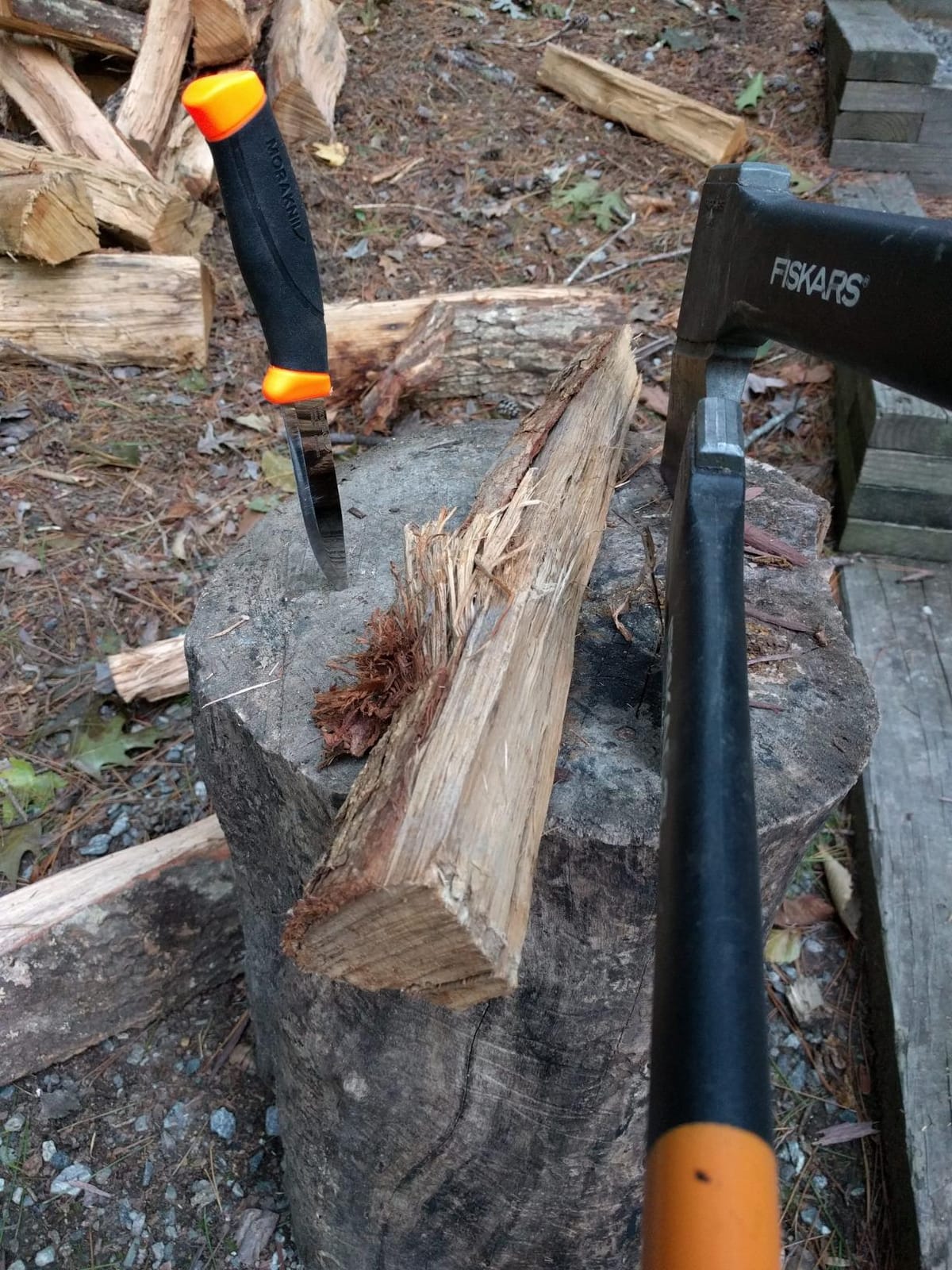
This is the knife I hand to people who ask what to buy first, and after six weeks of swapping it between a neck lanyard, a belt loop and a pack lid it never became the wrong choice. At 3.9 oz with the sheath you forget it is there, and a 3.88 inch blade is short enough to do detail work and long enough to split kindling without a mallet.
The factory edge is the quiet headline. Owners repeatedly describe it as sharp out of the box, and Sandvik 12C27 stainless is one of the easier steels to bring back with a handheld stone when it dulls. That combination of light carry weight and an easy-to-reset edge is why it stays in my hands more than any other knife in this roundup.
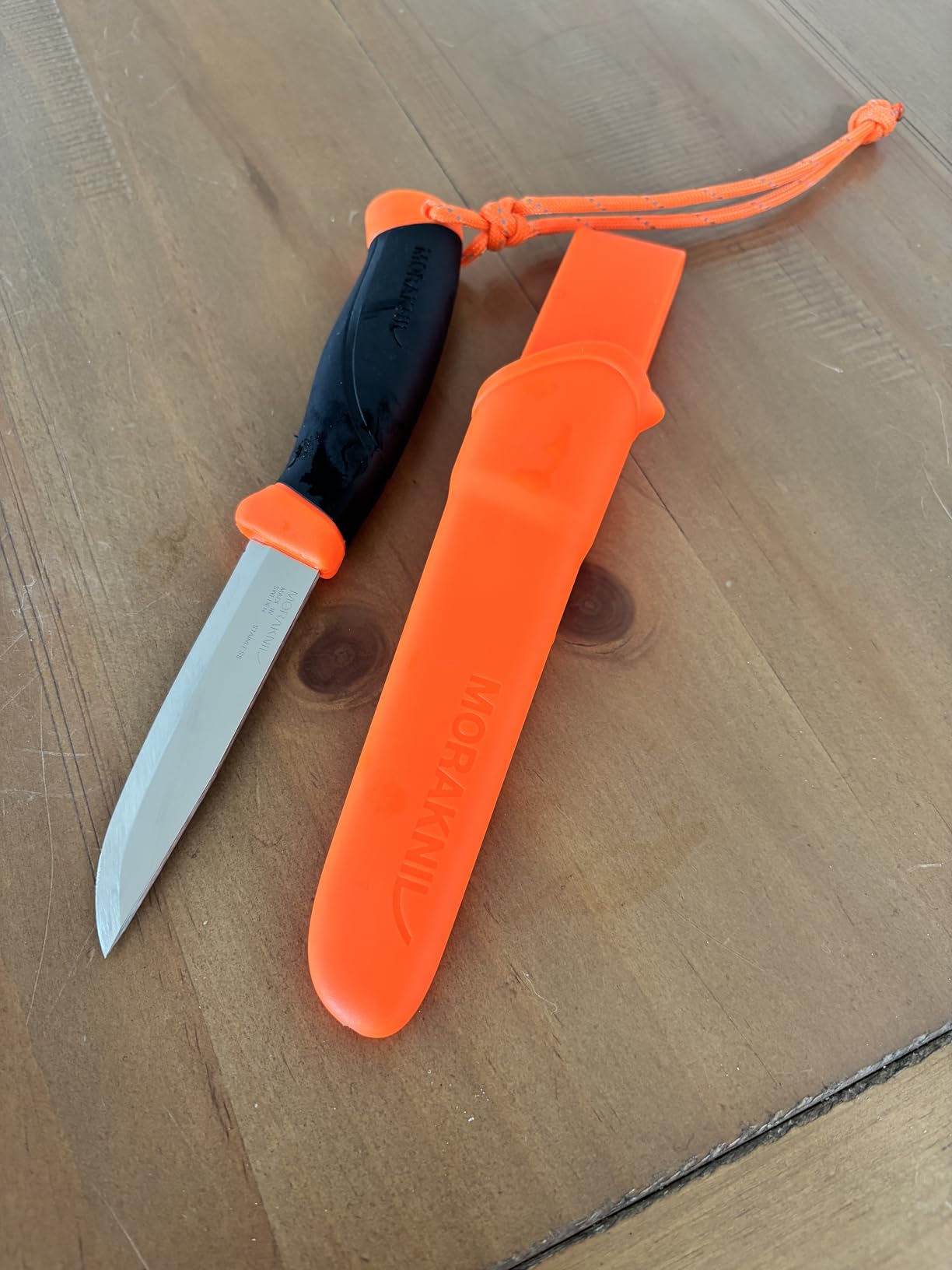
The handle is a soft friction polymer with a finger guard at the front, and it stays predictable in rain, in snow, and with wet hands on a fish. The blade is listed with a V-grind on a clip point profile, which gives a strong primary bevel that slices wood fibers better than the thick saber grinds on the tactical designs, even though it is not a full-length scandi.
Blade thickness is 0.08 inch, or 2.0 mm, and overall length is 8.5 inches. The handle is molded around a three-quarter tang rather than a full tang, which is the one specification that separates this knife from the full tang picks further down this list.
Who the Companion fits
It fits beginners, weekenders and anyone who carries one knife for everything from lunch to lanyard cutting. The light weight means it can live on a neck strap for walking without becoming uncomfortable, and the corrosion-resistant stainless means you do not have to think about it after a wet day.
It is also the right knife for a bug-out bag if your realistic use case is shelter building, cord cutting and food prep rather than abusive batoning. It is one of the most common first knives recommended on the r/Bushcraft beginner threads precisely because it is forgiving and inexpensive to replace.
Where the Companion falls short
It will not baton hard wood for an afternoon, and anyone who needs that should look at the full tang options. The included plastic sheath is functional with a belt clip, but reviewers repeatedly note it is plain compared with leather or multi-mount systems, and a few buyers report small blemishes near the tip on arrival.
If your work is mostly carving fine feather sticks, a true scandi grind like the BPSKNIVES Adventurer below will keep a cleaner line. The Companion is a capable slicer, but it was not designed as a carving specialist.
2. Mossy Oak 15-Inch Survival Knife: The Big Chopper
Mossy Oak 15-inch Survival Knife with Sharpener and Fire Starter
10 in stainless clip point blade
5/32 in thick spine
16.8 oz total
Nylon sheath included
Pros
- Very large blade gives real splitting authority
- Ships oiled and coated against corrosion
- Nylon sheath with snap latch and belt loop
- Rubber handle with high friction grip
- Owners report the edge holds once sharpened
Cons
- At 15 inches it is awkward to carry and clumsy for fine work
- Saw back serrations are dull by design and cut nothing
- Bundled fire starter and sharpener are weak
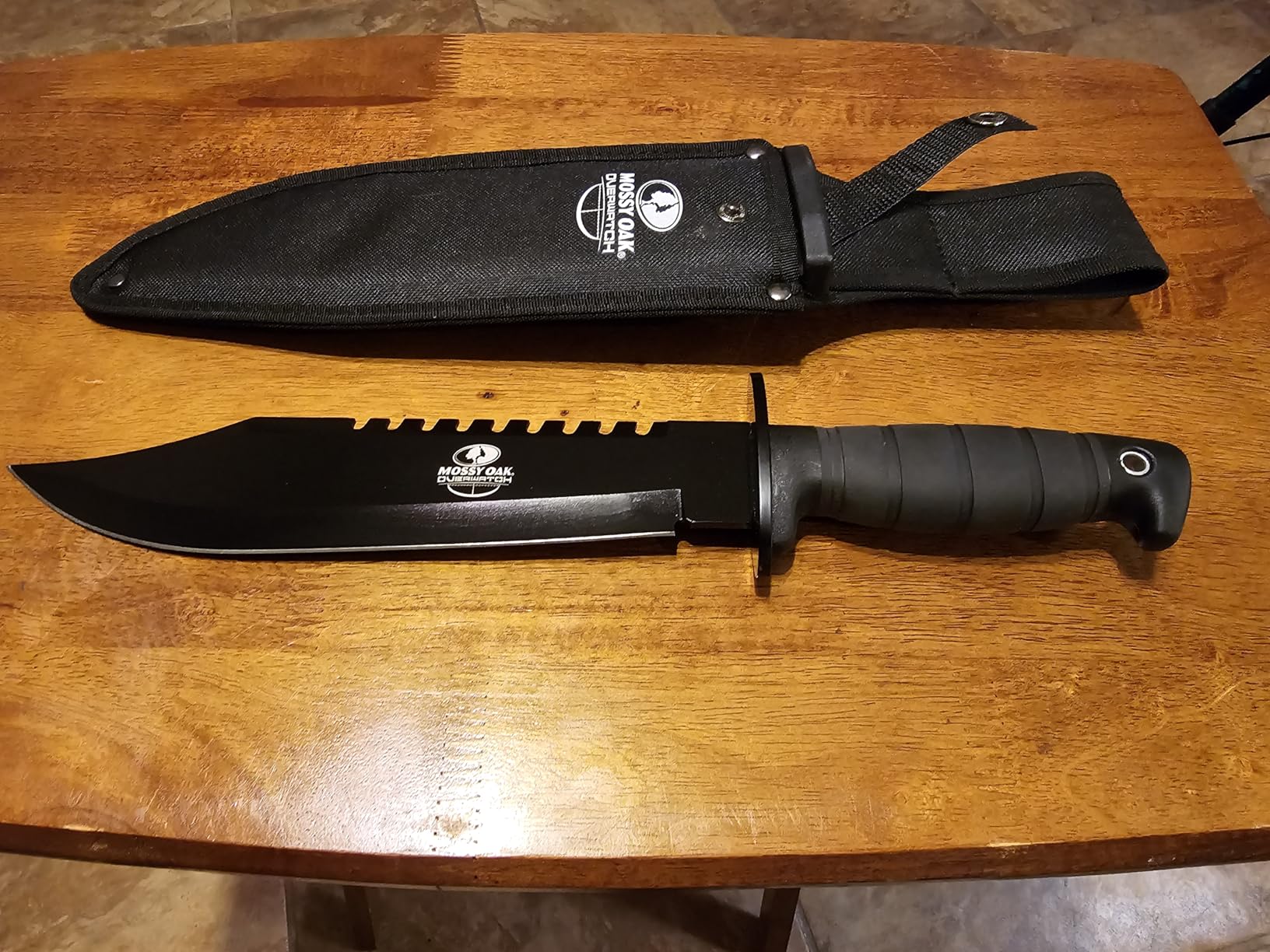
This is the knife for the person who processes a lot of firewood. A 10 inch stainless blade at 5/32 inch thick is a real lever, and reviewers describe the weight of it, 16.8 oz in total, as the reason it feels substantial when it hits a round of wood instead of flexing and skipping.
At 15 inches overall it is not a knife you forget on a belt. It lives in a pack or on a chest sling, and I would not recommend it as a solo everyday carry blade. For a base camp, a truck bed or a firewood-splitting job, though, the extra length earns its place.
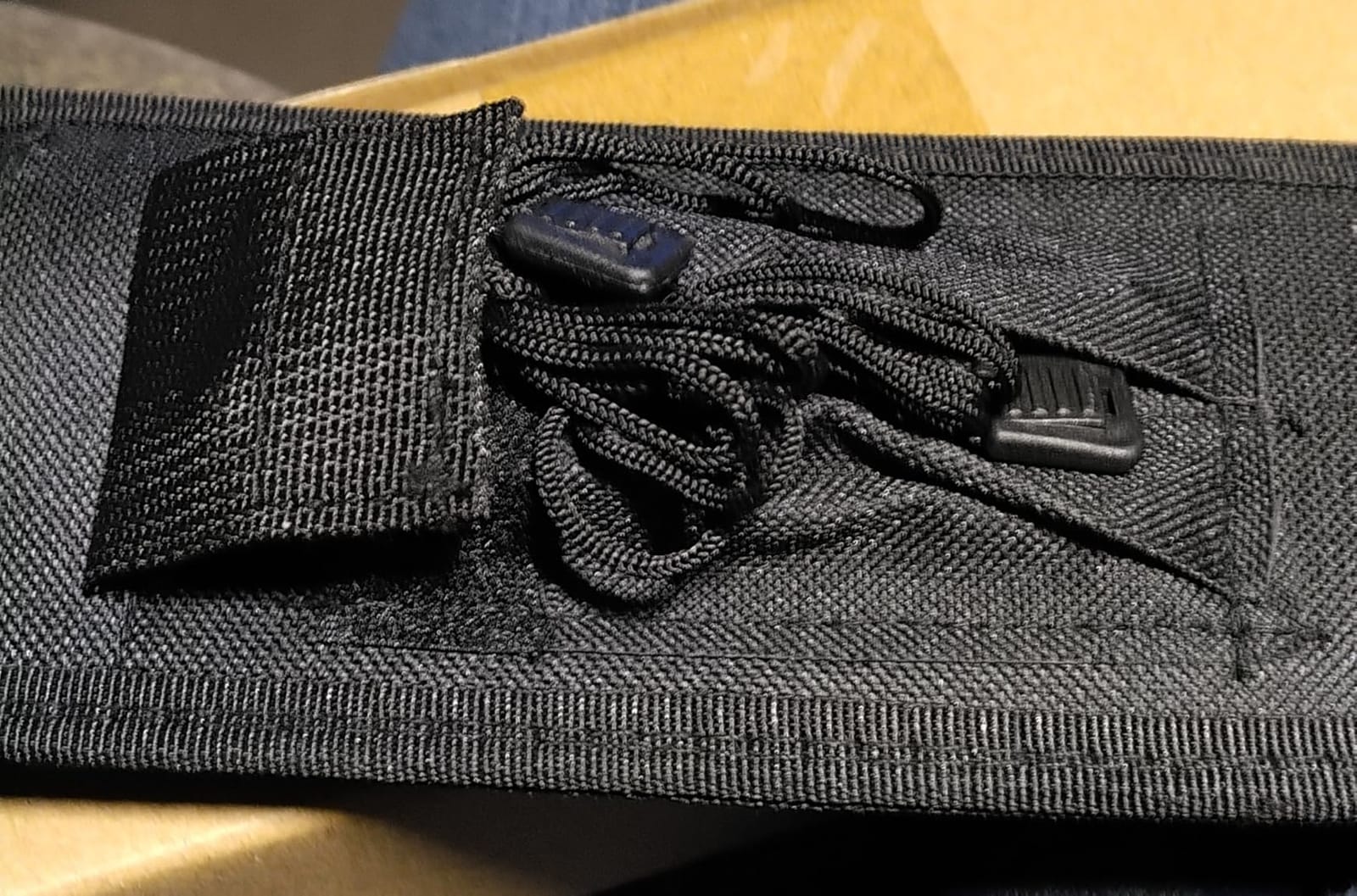
The clip point blade comes with a saw back spine and a black anodized finish, and it arrives oiled so moisture stays off the steel between uses. The handle is classic rubber with a non-slip grip, and the heavy duty nylon sheath uses a quick-open fastening with a belt hang system that does hold the knife securely when you are walking.
Owners who sharpened it report the edge holds well once it is properly honed. That is a normal progression for these thick stainless blades: the factory edge is not the final word, but the steel is more than capable once you put a bevel on it.
Who the Mossy Oak 15-Inch fits
It fits firewood processors, winter campers and anyone splitting more than a few armloads a week. Users tend to buy it because it is inexpensive enough that beating on it does not feel like a mistake, which is a genuinely reasonable way to approach a chopping tool.
Pair it with a smaller carving knife. A large chopping blade and a small detail blade covers a full camp workload far better than one blade trying to do both jobs, and that two-knife framing is how most experienced users build their kits.
Where the Mossy Oak 15-Inch falls short
The saw back is decorative rather than functional, and several owners are blunt about that: it does not cut. The bundled fire starter and sharpener draw the most criticism, with multiple reviews recommending you replace both with real gear, and a few report the sheath insert loosening over time.
Fine detail work is where it struggles. At 10 inches of blade you lose the control needed for feather sticks, notching or delicate food prep, so it should never be your only knife.
3. Gerber Gear StrongArm: The Batoning and Prying Machine
Gerber Gear Strongarm – Fixed Blade Tactical Knife for Survival Gear – Coyote Brown, Plain Edge
Full tang 420HC stainless
4.8 in drop point blade
0.4 kg
Made in USA Oregon
Pros
- Full tang build that survives heavy abuse
- Diamond-textured rubber grip stays secure when wet or gloved
- Multi-mount sheath with strong snap retention
- 420HC is easy to sharpen and corrosion resistant
- Cerakote coating resists wear and corrosion
Cons
- 420HC loses its edge faster than carbon steel
- Thick saber grind makes fine carving harder
- Unsharpened swedge reduces tip and batoning efficiency
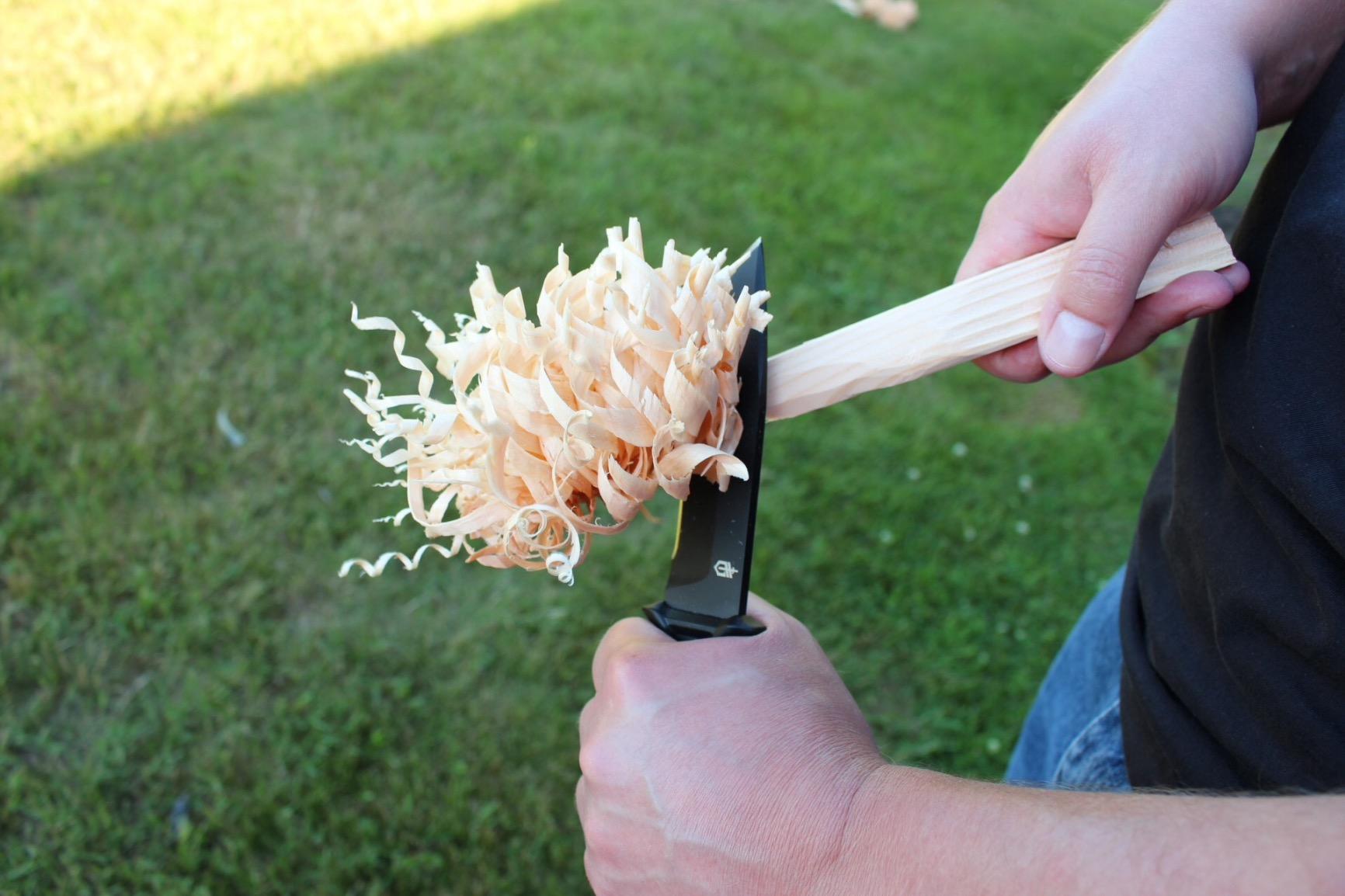
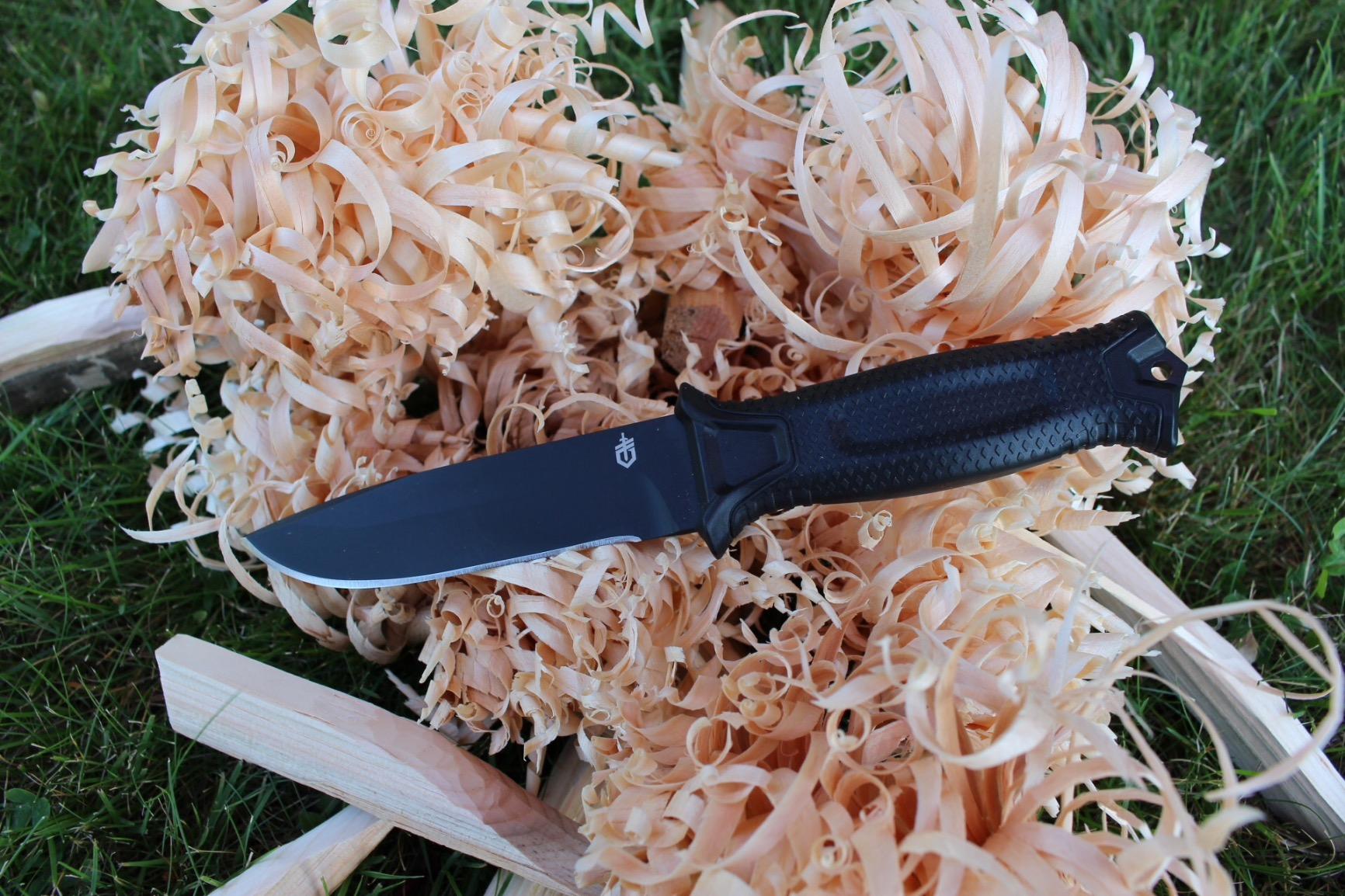
Owners with large knife collections consistently place the StrongArm among the most dependable production fixed blades they own, and after putting it through batoning and prying tests it is easy to see why. A full tang 420HC stainless blade with a Cerakote coating does not care what you do to it, which is exactly the appeal in a survival context.
The handle is the other reason people keep coming back. A diamond-textured rubber overmold stays secure when it is wet, greasy or gloved, and the balance is comfortable enough for extended work without the hand fatigue you get with thinner-handled knives.
The sheath is the part reviewers single out most. It is a multi-mount system supporting horizontal, vertical, MOLLE, inverted MOLLE, drop-leg and scout carry, with strong snap retention and ambidextrous insertion. On a pack-building list, that flexibility is worth more than a lighter knife.
There is a glass breaker pommel at the butt and a 90-degree spine that throws sparks off a ferrocerium rod. Overall length is 9.8 inches with a 4.8 inch drop point blade, and it is made in Oregon.
Who the StrongArm fits
It fits the person whose camp work is heavy. Batoning thick splits, prying, cutting rope and webbing, and general utility are all jobs it handles better than anything lighter on this list, and the full tang construction is the baseline for hard use.
It is also the tactical-leaning choice for anyone who wants a knife that looks right on a duty belt and works when stripped for parts. The multi-mount sheath is the reason it is also the easiest to integrate into an existing kit.
Where the StrongArm falls short
420HC stainless gives up its edge sooner than carbon steel, so if you are doing a lot of batoning you will be touching it up more often. The thick saber grind makes fine slicing and carving noticeably harder than a scandi or flat grind, and a few owners report a rounded spine on their unit that limits spark throw.
Several reviewers also note the current cost of 420HC is high relative to earlier pricing, which is the single most common reservation among people who already own the knife. It is a premium price for a very durable package, not a bargain.
4. Mossy Oak 2-Piece Hunting Knife Set: Skinning and Camp Cutting
Mossy Oak Fixed Blade Hunting Knife Set – 2 Piece, Sheath Included
Two full tang stainless blades
5.13 in straight edge
1.1 lb set
Nylon dual sheath
Pros
- Two full tang stainless knives in one set
- Straight edge plus gut hook cover skinning and camp cutting
- Camo handles have non-slip grooves and a lanyard hole
- Nylon dual carry sheath with button snap
Cons
- A few buyers report small nicks or blemishes on arrival
- Gut hook blade adds little for general bushcraft tasks
- Grip is functional rather than refined
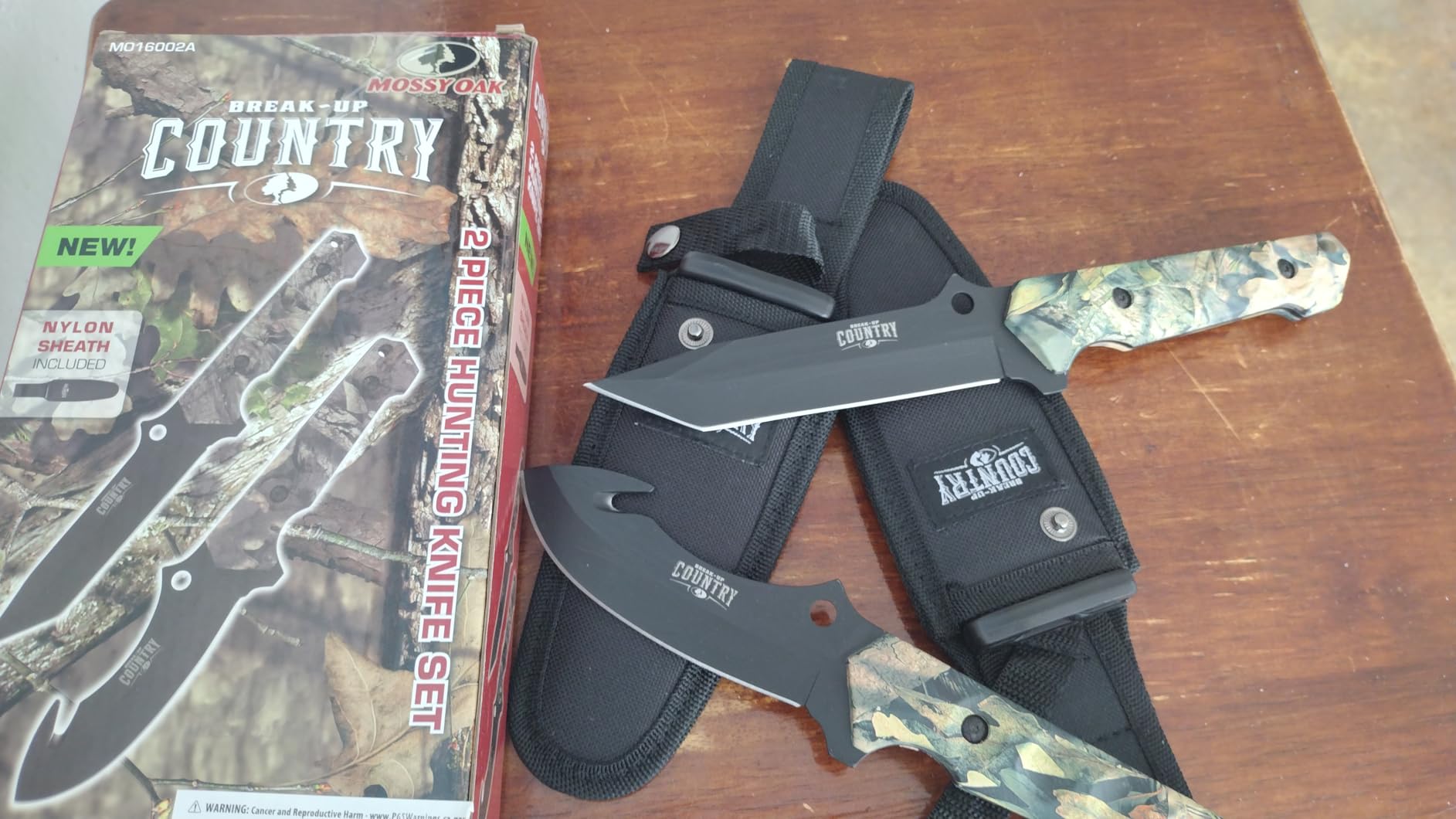
Two full tang stainless knives, a working sheath and no additional purchases is a hard package to argue with. The straight edge knife is 5.1 inch blade at 10-3/8 inch overall, and the second piece is a 4-1/4 inch gut hook at 9-3/8 inch overall.
For hunters who field dress, this set covers the two jobs that matter: a straight edge for the general cut and a gut hook for opening the animal cleanly. For pure bushcraft, the gut hook is mostly dead weight, which is the honest limit of this set.
Both handles are full tang camo with an ergonomic non-slip groove and a lanyard hole, and the black heavy duty nylon dual carry sheath uses a button snap and belt loop. Reviewers generally find the blades solid, well weighted and comfortable for skinning work.
The stainless steel is listed with improved edge retention and corrosion resistance over basic budget steel, and the compound bevel gives a serviceable primary edge. The set weighs 1.1 lb in total, which is a reminder of how much hardware you are carrying.
Who the Mossy Oak set fits
It fits new hunters and anyone who wants a spare fixed blade without buying two knives separately. Keeping a second full tang blade in a vehicle or a hunting pack is cheap insurance when the primary knife gets lost or stuck in a tree.
It also makes sense as a gift pair. Reviewers frequently mention the camo pattern and the fact that the sheath actually retains both blades, which is more than a few bundled sets manage.
Where the Mossy Oak set falls short
The gut hook is the weak half. It is a specialist shape that does nothing for splitting kindling, carving stakes or general camp utility, so you are carrying weight outside of hunting season.
Finish quality is the other recurring note, with a few buyers reporting small nicks or blemishes on arrival. At this level that is expected, but check the edge before you rely on it.
5. Gerber Ultimate Survival Knife: Fire and Sharpening in the Sheath
Gerber Ultimate Fixed Blade Knife w/Sheath, Knife Sharpener, Ferro Rod
4.8 in half-serrated blade
11.02 oz full tang
Sheath holds stone and ferro rod
10 in overall
Pros
- Sheath integrates a sharpening stone and ferrocerium rod
- Textured rubber grip stays secure when wet or gloved
- Full tang drop point blade sized well for carving and food prep
- Limited lifetime warranty included
Cons
- Half-serrated edge needs a tapered diamond rod to sharpen
- Heavier at 11 oz than Scandinavian-style knives
- Some buyers prefer a plain edge for bushcraft
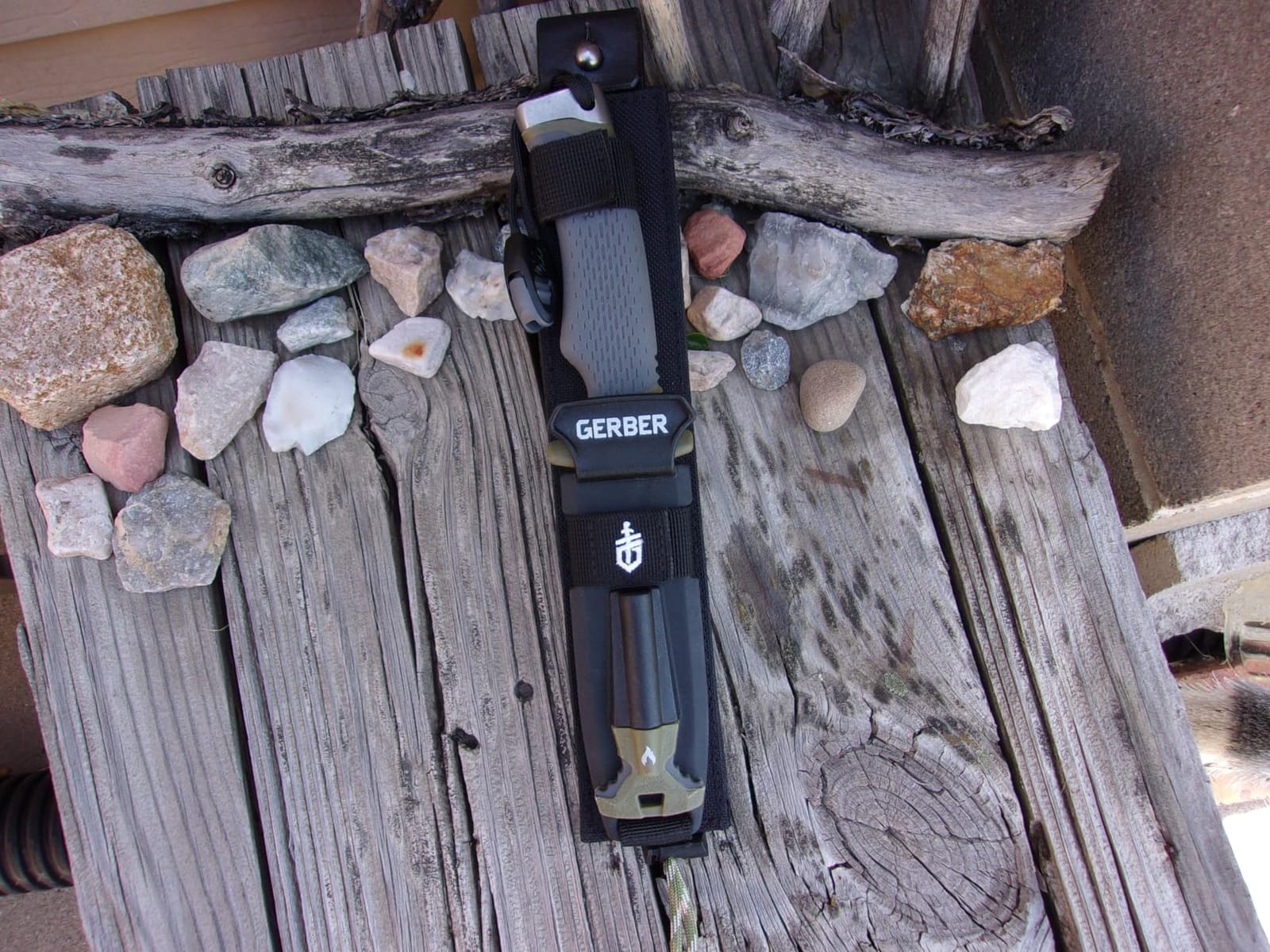
The reason people pick this knife is the sheath, and reviews are consistent about it. The sheath houses an integrated sharpening stone and a ferrocerium rod, so the fire-starting and edge-fixing gear travels with the knife instead of living in a separate pouch you forget to pack.
The blade is a 4.8 inch half-serrated stainless drop point on a full tang, 10 inch overall and 11.02 oz. It is a balanced generalist shape, and owners describe it as well suited to carving, food prep and ordinary camp chores.
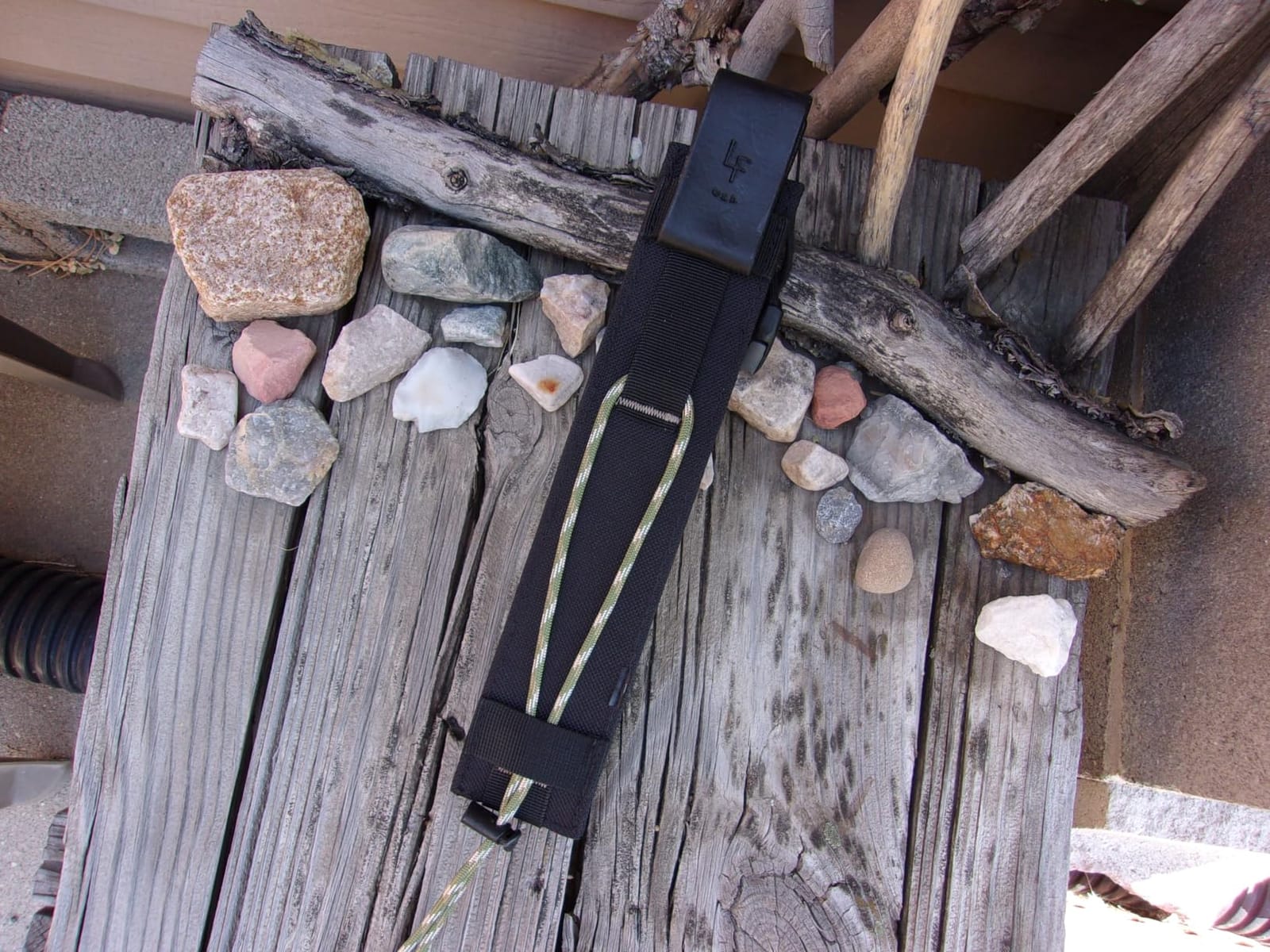
The handle is textured rubber with a hammer pommel at the butt and an integrated emergency whistle. Both are small details that matter more in a survival context than in a gear review, and neither adds weight worth worrying about.
It ships with a limited lifetime warranty from the manufacturer. That is worth noting in a category where blade steel and sheath hardware are the two things most likely to disappoint you.
Who the Gerber Ultimate fits
It fits people building a first kit who want fire capability and sharpening capability in one purchase. Everything needed to start a fire and fix a dull edge comes in the sheath, which removes the most common beginner failure of leaving the striker at home.
It also suits anyone who wants a single carry item to hand to a family member. Whistle, striker and sharpener in one sheath is a genuinely complete package for a casual user.
Where the Gerber Ultimate falls short
The half-serrated edge is the main limitation. You cannot restore it in the field with a normal stone, which means a sharpening system that works on plain edges does not apply here.
At 11 oz it is noticeably heavier than the Scandinavian-style knives on this list, and that weight is dead load if you are walking all day. Review volume is also thinner than the mainstream picks, so there is less long-term feedback on record.
6. BPSKNIVES Adventurer: The Carver with the Leather Sheath
BPSKNIVES Adventurer – Bushcraft Knife – Fixed-Blade Carbon Steel Knife with Leather Sheath and Firestarter – Outdoor Full Tang Knives – Camping Knives – Survival Tactical Camp Knives
1066 carbon steel at 56-57 HRC
True scandi grind
Walnut handle
Leather sheath with ferro rod
Pros
- 1066 carbon steel with a true scandi grind takes and holds a strong edge
- Walnut handle is smooth and moisture resistant
- Leather sheath is thick with tight stitching and holds firmly
- Ferro rod locks into the sheath and throws sparks
- Full tang construction feels solid and balanced
Cons
- Carbon steel discolors and needs regular oiling
- Quality control varies on handle scales and tip finish
- Included ferro rod is basic compared with the knife
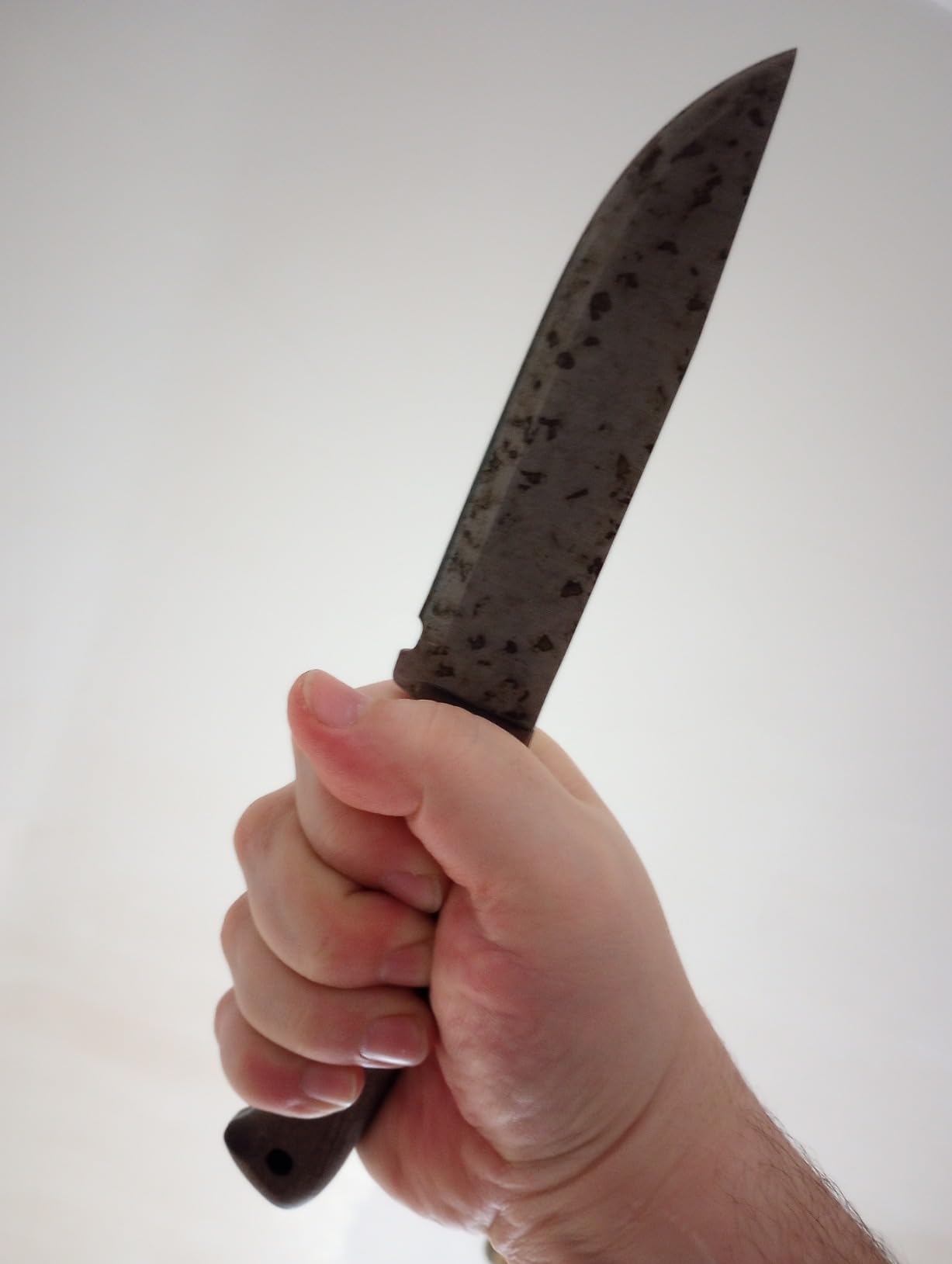
This is the pick for the person who came for carving. High 1066 carbon steel hardened to 56-57 HRC with a true scandi grind is the textbook bushcraft combination: a long single bevel that slices wood fibers cleanly and a steel that can be restored quickly on a river stone.
At 5.3 inches of blade and 0.1 inch of thickness, it does everything the Companion does and adds carving control. The blade arrives coated in gun oil, and it is made in Ukraine.
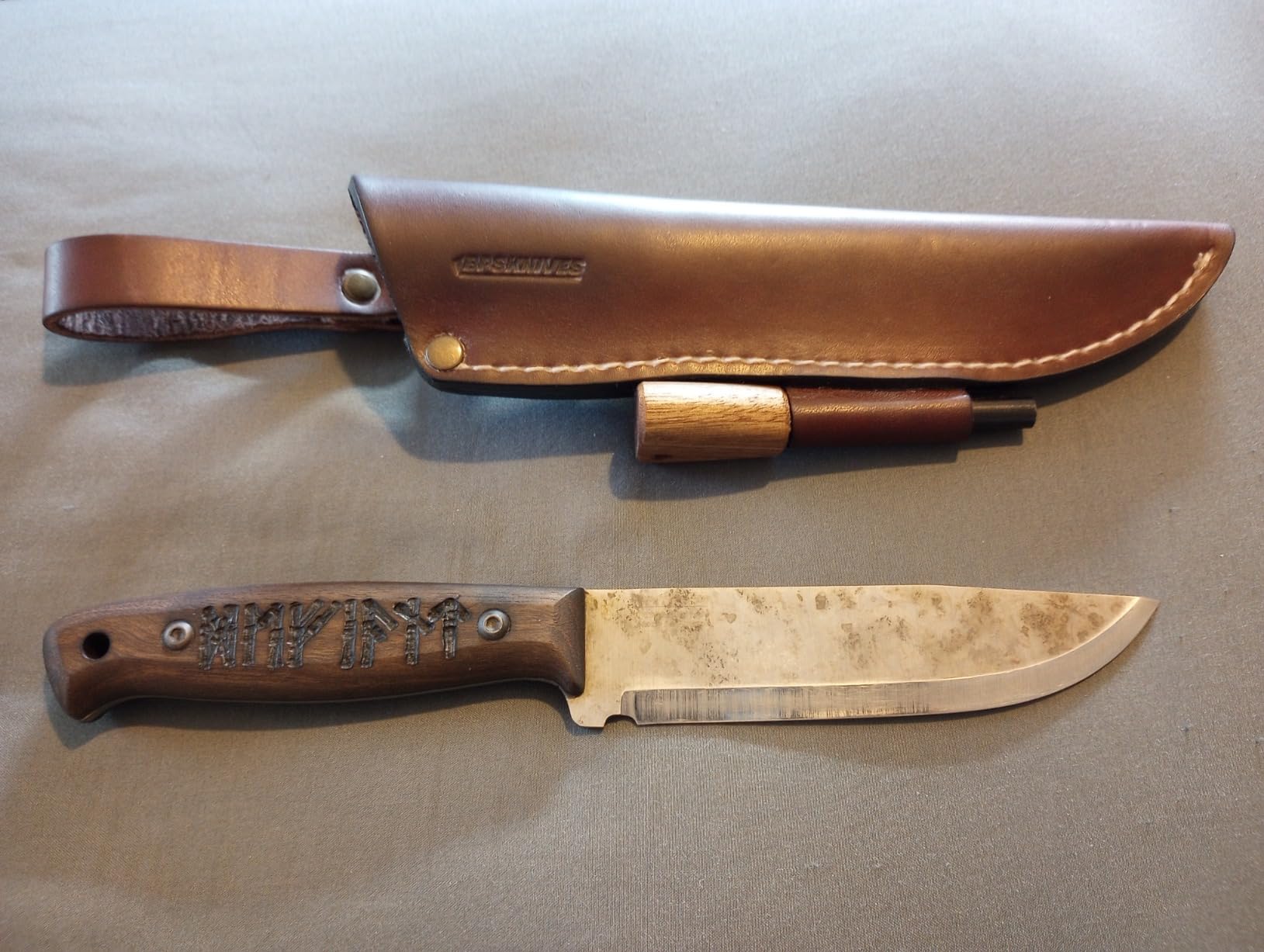
The walnut handle is coated with Danish oil and fixed with removable screw pins, which means you can disassemble it rather than fight glued scales. Total length is 10 inches, with a 4-2/3 inch handle and a 1.2 inch wide blade.
The leather sheath is the feature reviewers mention most, often saying it alone justifies the cost. It is thick, tightly stitched, and it comes with a ferro rod and a belt dangler. Weight is 5.7 oz without the sheath and 10.2 oz with the sheath and rod.
Who the BPSKNIVES Adventurer fits
It fits carvers, spoon makers and anyone practicing feather stick work seriously. The scandi grind is the single most important reason to choose it over a tactical-styled fixed blade for pure woodworking.
It also suits people who already like maintaining their gear. Carbon steel rewards a few minutes of wiping and oiling with an edge that stays keen longer than most stainless, and the screw-pinned handle means nothing here is a permanent repair waiting to happen.
Where the BPSKNIVES Adventurer falls short
Carbon steel is the cost. It will discolor, it needs to be dried before you sleep with it, and if you leave it wet in a pack you will find rust. That maintenance is the reason most beginners over-index on stainless, and it is a real cost in time.
Quality control is the other honest caveat. Some knives arrive with uneven handle scales that need tightening, some with a dull or unevenly ground tip that needs hand finishing, and the handle can feel small for very large hands. Inspect it on arrival.
7. Morakniv Kansbol: Two Grinds in One Blade
Morakniv Kansbol Stainless Steel Fixed-Blade Survival Knife With Sheath, Military Green, 4.3 Inch
4.3 in dual scandi and flat blade
134 g net
8.9 in overall
Lifetime warranty
Pros
- Dual grind handles carving and fine slicing in one blade
- Very light at 134 g while still feeling tough
- Sharp out of the box with strong edge retention
- Ergonomic handle fits large hands
- Sheath click lock stops the knife falling out
Cons
- Two-stage grind is harder to maintain than a simple scandi
- Not a full tang so it is not a hard batoning tool
- Tapers thin near the tip
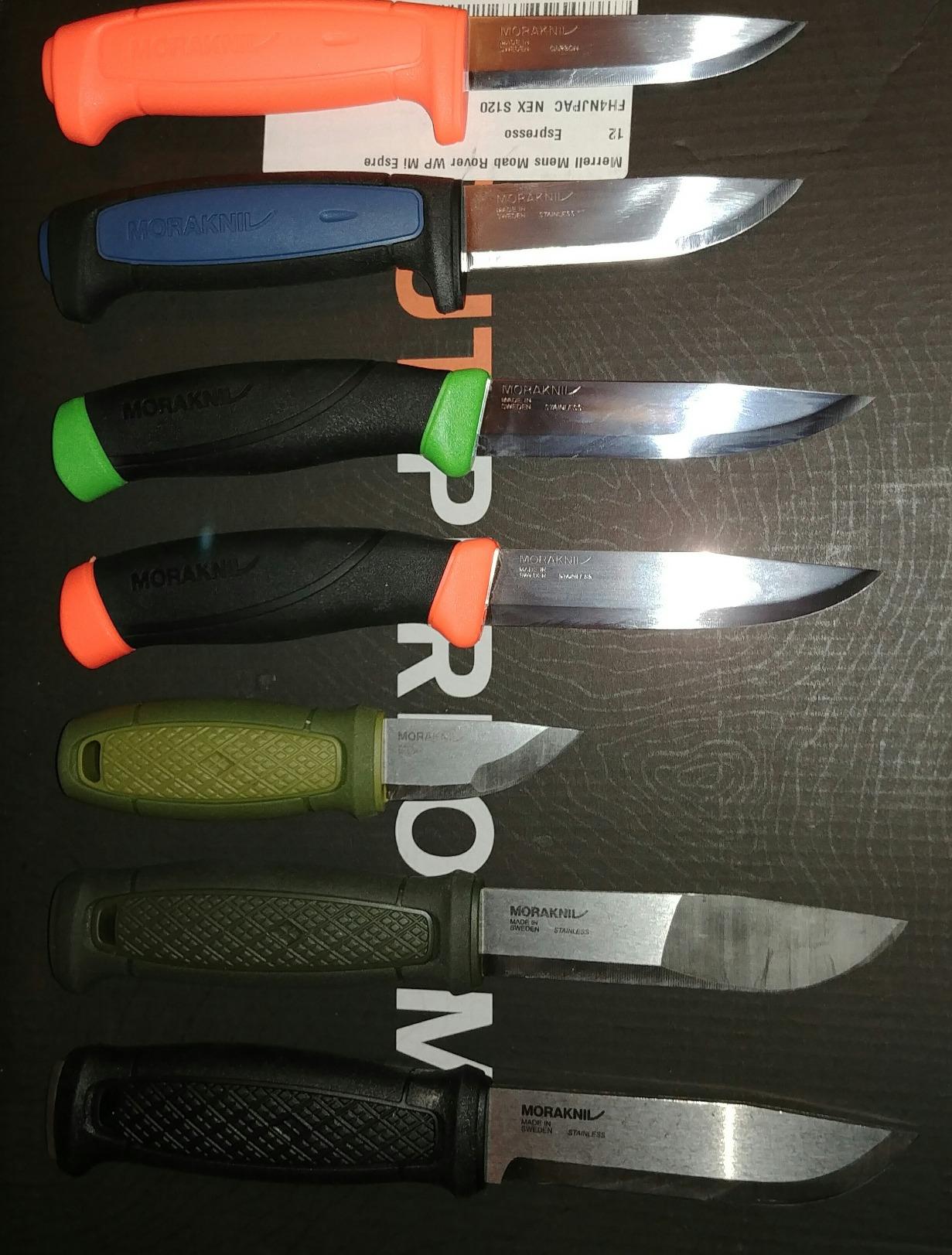
The Kansbol answers the argument that has no clean winner. It has a dual grind: a scandi section near the handle for carving and a finer flat section toward the tip for food prep and slicing, so one blade covers both halves of a bushcraft workload.
Experienced users name it as the knife they reach for most often, often over more expensive customs. At 134 g net weight with a 4.3 inch blade, it is one of the few knives here that is genuinely light enough to carry all day.
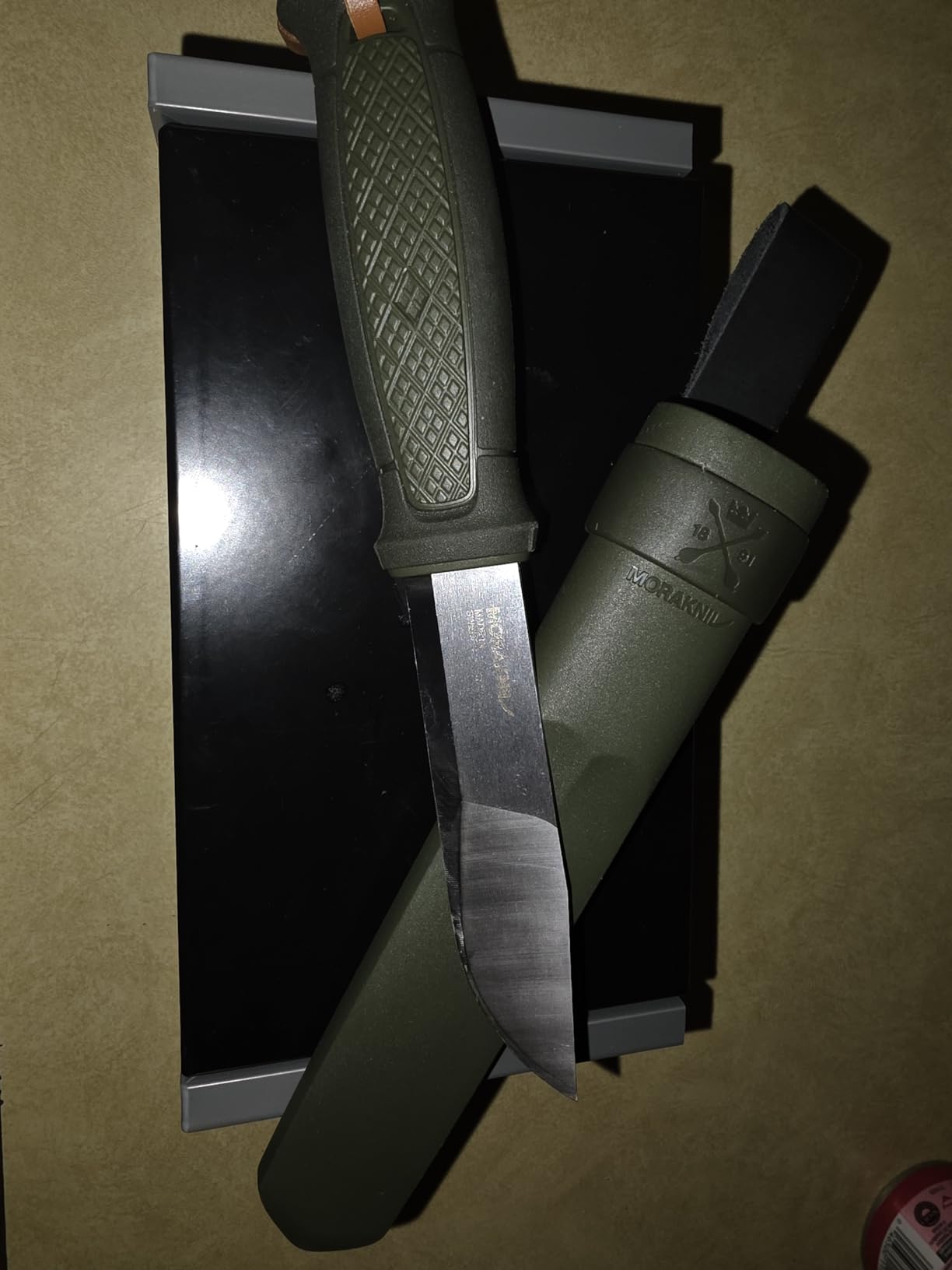
Blade thickness is 0.1 inch, or 2.5 mm, and overall length is 8.9 inches. The spine is 90 degrees and fire-starter compatible, with sharp edges left on it for scraping tinder, which is a small design choice that pays off every time you need a fire.
The polymer sheath has a built-in click lock between sheath and handle so the knife cannot fall out, it drains water, and the whole knife and sheath are symmetrical for either-hand use. It carries a lifetime manufacturer warranty.
Who the Kansbol fits
It fits the person who wants one blade to cover carving and game processing without owning two knives. The scandi section handles the tent stakes and feather sticks, and the fine flat section handles the fillet and the food prep.
It is also a strong first knife for anyone who has been warned that tactical blades do not carve. It is light, ambidextrous in practice, and simple enough to maintain.
Where the Kansbol falls short
The dual grind is the honest trade-off. A two-stage edge is more demanding to restore than a single scandi, so if you are learning to sharpen from scratch, a single-bevel blade is a kinder teacher.
It is a partial tang design, so it is not a batoning knife, and the blade tapers thin near the tip, which some owners find less confidence-inspiring. Some also find the rubberized handle sticky in the stock belt loop, which needs two hands to draw quickly.
8. SOG Field Knife: The Lightweight Carry Blade
SOG Survival Knife with Sheath – Field Knife Fixed Blade Knives 4 Inch Tactical Knife and Bushcraft Knife w/Full Tang Hunting Knife Blade (FK1001-CP)
4 in full tang stainless
3.84 oz
8.5 in overall
Notched sheath
Pros
- Full tang stainless construction at an accessible price
- Light at 3.84 oz for easy belt carry
- TPR grip gives strong traction with no maintenance
- Notched sheath cuts cord and line without drawing
- Stainless resists rust for general camp use
Cons
- Plain 4 inch clip point with no scandi grind for carving
- Less refined than dedicated bushcraft knives in the same weight class
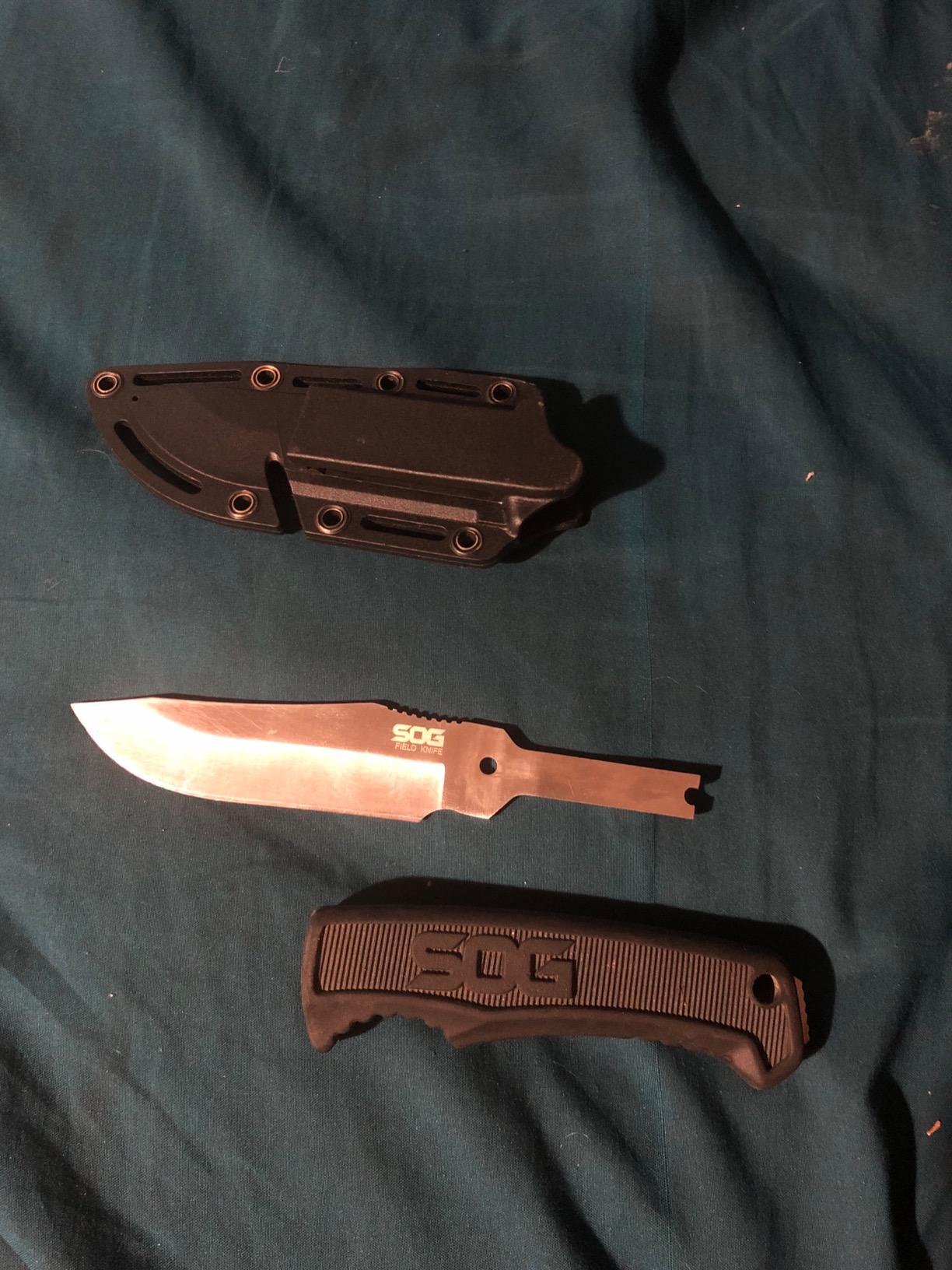
This is the smallest and lightest full tang knife in the roundup at 3.84 oz, and it is the one most at home on a belt rather than in a pack. A 4 inch stainless clip point at 8.5 inch overall is a sensible, unfussy everyday carry blade.
The feature we did not expect to care about is the sheath. The notched GRN sheath lets you cut cord or fishing line without drawing the knife, which is a small convenience you notice constantly on a camping trip.
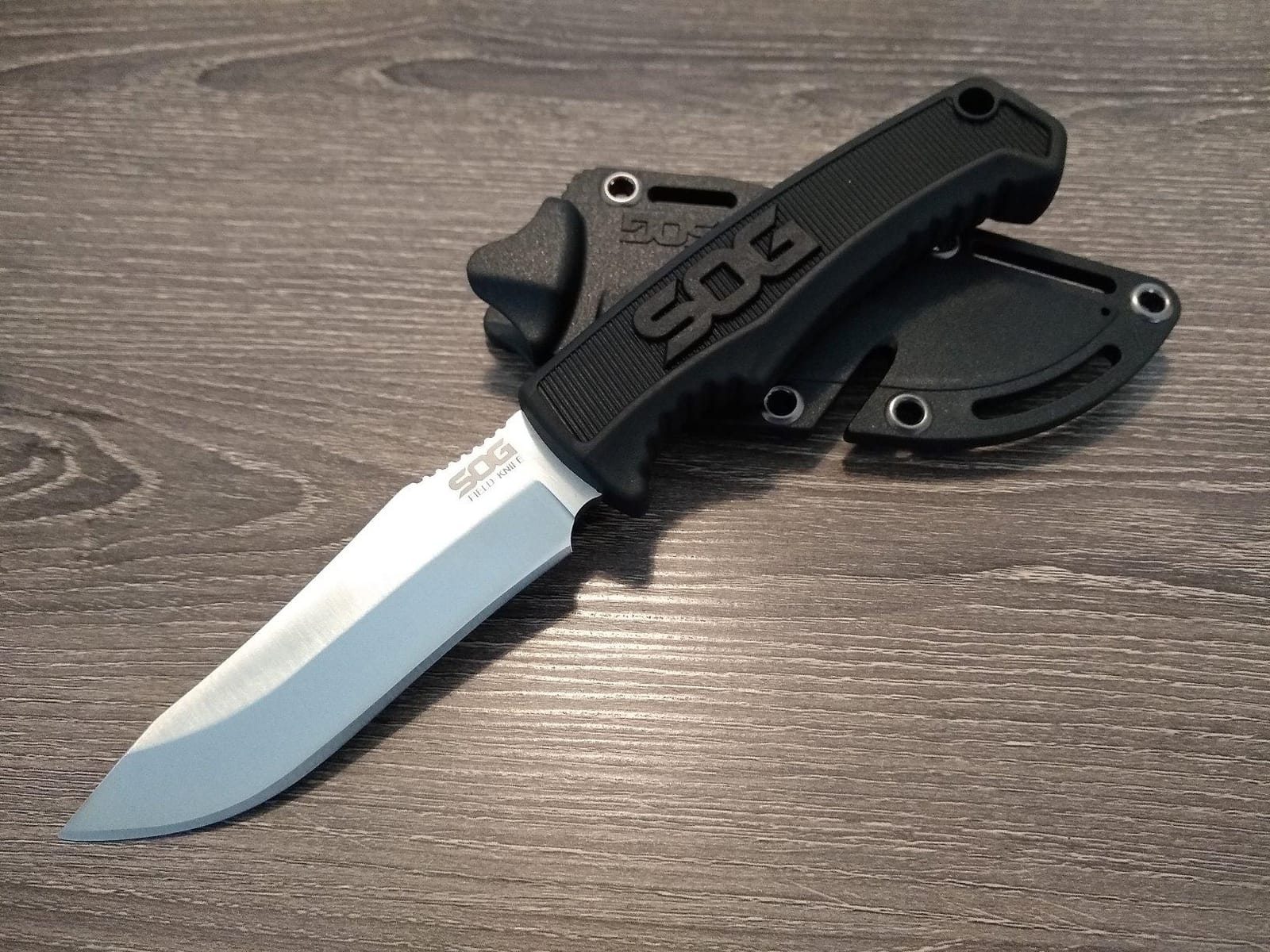
The handle is thermoplastic rubber, which means no maintenance and no swelling or cracking when it gets wet. The blade is full tang stainless with a compound bevel, and the whole knife is ambidextrous.
SOG also runs a repair and replacement program, which matters for a knife you are actually going to carry. Reviewers treat it as a dependable lightweight carry option praised for camp and hunting tasks rather than heavy bushcraft work.
Who the SOG Field Knife fits
It fits the everyday carry crowd, especially anyone who wants a full tang fixed blade that is lighter than their water bottle. Camp cooking, cutting line, light food prep and general utility are all well within its abilities.
It is a sensible gift for someone moving from folders to fixed blades, because the weight penalty is small enough that they will actually carry it.
Where the SOG Field Knife falls short
There is no scandi grind, so it is not a woodcutting tool. Feather sticks, tent stakes and fine carving are outside what this blade shape and grind are built for, and reviewers are more measured about it than about the bushcraft-specific picks.
A 4 inch blade also limits how much kindling you can split in one stroke. If wood work is your main activity, spend the extra weight on a 5 inch plus blade.
9. Bloodline 1095 Survival Knife: The Complete Carbon Steel Package
Bloodline Fixed Blade Survival Knife – Full Tang 1095 High Carbon Steel Bushcraft & Hunting Knife with G10 Handle, Kydex Sheath & Ferro Rod – Holtzman’s Gorilla Survival
4 in full tang 1095 carbon blade
8.6 in overall
Textured G10 handle
Kydex sheath
Pros
- Full tang 1095 high carbon steel is a genuinely tough bushcraft steel
- Textured G10 handle gives secure control when wet
- Package includes Kydex sheath ferro rod scraper and paracord
- Balanced size for wood prep feather sticks and fire starting
- Kydex sheath has secure retention and multiple mounts
Cons
- Costs more than entry level knives for similar capability
- High carbon steel needs wiping and oiling to prevent rust
- 4 inch blade is small for heavy batoning
The Bloodline is the only 1095 high carbon steel full tang in this roundup, and that matters for anyone who wants a genuinely tough bushcraft steel. Buyers who reviewed it focus on completeness: a serious blade plus a Kydex sheath, ferro rod, scraper and paracord that work together without extra purchases.
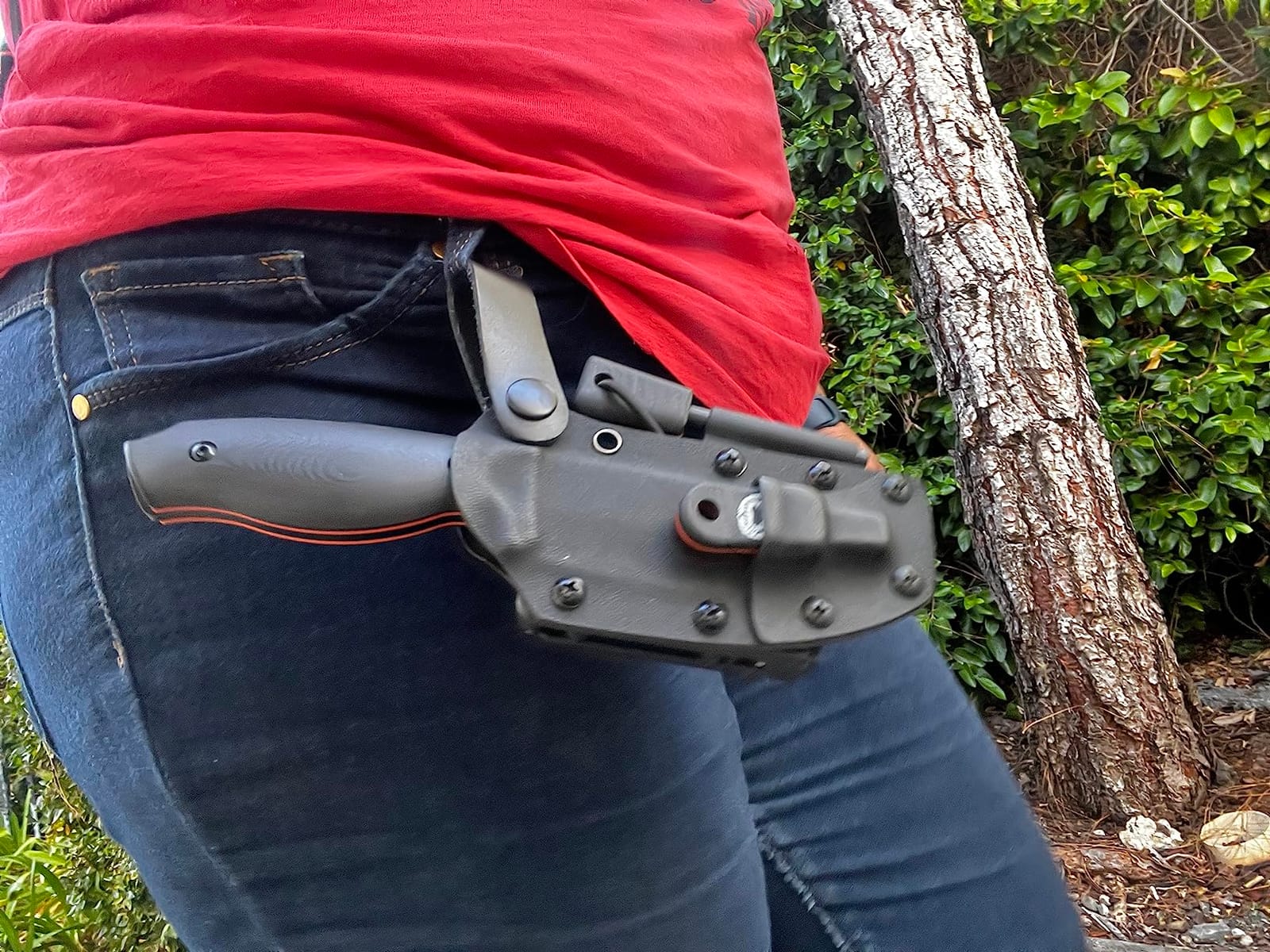
The G10 handle is textured for grip in wet, dry or rough conditions, and reviewers single out the Kydex sheath for retention and mounting options. Overall length is 8.6 inches with a 4 inch straight back blade.
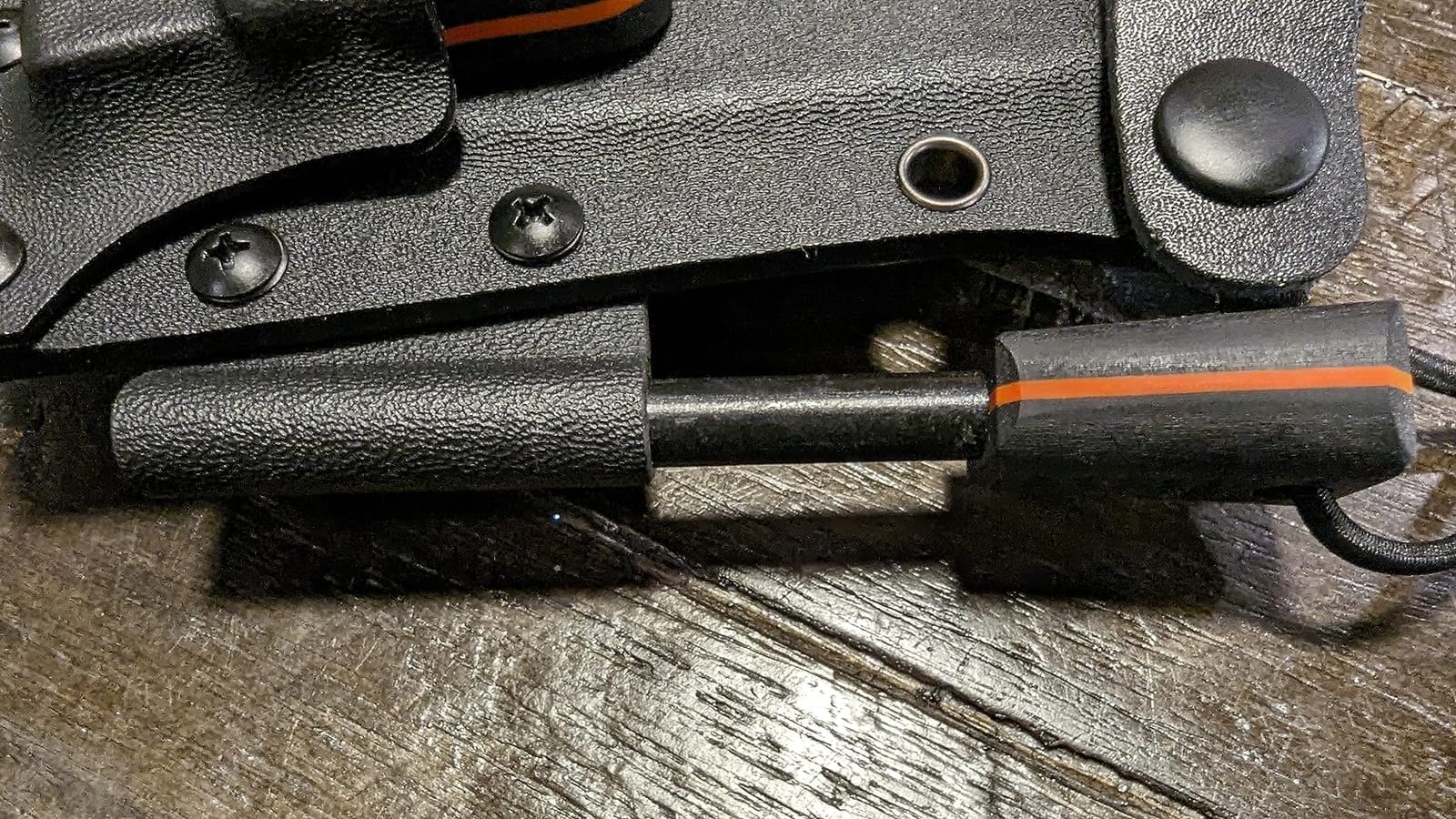
The ferro rod, scraper and paracord in the package cover the standard fire-starting kit, which means the blade and the ignition gear were designed to be used together. The compound bevel gives a plain working edge that is straightforward to maintain.
The review base here is much smaller than the mainstream picks, so treat the feedback as thinner evidence. Buyers who did review it consistently note the trade-off is cost against broadly similar capability, and the routine care carbon steel demands.
Who the Bloodline fits
It fits the buyer who wants carbon steel toughness and a complete fire kit in one box. If you have been put off by kits that sell you a knife and leave the fire gear to a separate purchase, this is the version of that idea done properly.
It also suits people who prefer a Kydex sheath with multiple mounting options over a leather dangler, particularly for pack-based carry setups.
Where the Bloodline falls short
Four inches of blade is short for hard batoning, and while the tang is full, that short edge still limits how much wood you can drive through in a session. It is a utility blade more than a chopping tool.
Carbon steel means rust maintenance, and the cost sits well above entry-level knives that handle similar camp tasks. If your priority is value rather than steel, the Kansbol or SOG do more for less.
10. Morakniv Garberg: The Full Tang Step Up
Morakniv Garberg Carbon Steel Full-Tang Fixed-Blade Survival Knife With Poly Sheath, Black, 4.3 Inch
4.3 in full tang carbon steel
Scandi grind
209 g blade
9 in overall
Pros
- True full tang with heavy carbon steel stock for hard use and batoning
- Scandi grind is easy to maintain in the field with a strop
- 90-degree spine throws strong sparks and works with flint
- Excellent heat treat and precise grinding
- Backed by a limited lifetime warranty
Cons
- Carbon steel needs regular oiling and can rust if left wet
- Basic plastic sheath with weak retention on some units
- Handle is contoured for a hammer grip rather than slicing
The Garberg is the full tang version of the knife most people start with. Blade thickness is 0.13 inch, or 3.2 mm, on a 4.3 inch blackened high carbon steel blade, and experienced buyers describe it as the definitive full tang Morakniv and often the last woods knife they expect to buy.
Praise centers on the thick stock, the grind quality and the 90-degree spine, which throws strong sparks off a ferrocerium rod and works for flint as well. Overall length is 9 inches, blade weight 209 g, and 9.6 oz with the sheath.
Because the steel runs the full length of the handle here, unlike the partial tang Companion, this is the model to choose if you plan on batoning. The symmetrical polymer sheath works for either hand, and the black DLC coating protects against rust and reduces reflections. It carries a manufacturer’s limited lifetime warranty.
Who the Garberg fits
It fits people who have owned a partial tang bushcraft knife and are ready for a blade that can take abuse. The full tang and thick stock change what is possible, and buyers compare it favorably against other full tang options in the same bracket.
It also fits anyone who wants one carbon steel knife and nothing else for a season of wood work. The heat treat and grind quality show in how long the edge survives between stone sessions.
Where the Garberg falls short
Carbon steel rust is the standing caveat. It needs regular oiling, and left wet overnight it will tell you about it in the morning.
The included polymer sheath is the dominant complaint, with several owners replacing it with a leather or MOLLE version because retention is weak and the knife can fall out of an inverted sheath. The handle is also contoured for a hammer grip, which some find less comfortable for long slicing sessions, and a small number of units report an edge that stops short of the handle.
Survival Knife vs Bushcraft Knife: What Is Actually Different?
A survival knife is built to be a backup tool: stout, pocketable, and reliable when the primary plan fails. A bushcraft knife is built to shape wood, with a single long bevel that slices fibers and a handle that gives fine control. A survival knife is thick and general-purpose; a bushcraft knife is thin at the edge and specialized. Most people need one of them, and the honest answer to the question is that the best survival knife and the best bushcraft knife are rarely the same tool.
This is the single most repeated source of confusion on the r/Bushcraft and BladeForums threads, and it explains why so many people end up unhappy. They buy a thick tactical-style blade advertised for survival, then discover that overbuilt steel does not carve. As one regular put it, those knives are crazy overbuilt and awesome for wood, but they do not slice well. If your week involves feather sticks, the grind matters more than the survival marketing.
How to Choose a Survival Knife for Bushcraft
Start with tang construction, because it is the one spec that cannot be upgraded later. Full tang means the steel runs the entire length of the handle, and it is the baseline for batoning, prying and any kind of hard lateral force. The Companion and the Kansbol are partial tang designs, which is fine for general camp work but limits them to light and medium duty tasks.
Next, match the grind to the job. A scandi grind, with its long primary bevel, is the best slicer for wood and the easiest edge to restore in the field with a stone. A full flat grind is a strong, versatile compromise for utility and food prep. A thick saber or hollow grind is strong but slow, which is why the StrongArm is excellent at batoning and mediocre at fine carving. There is no single best grind, only the wrong grind for your week.
Steel comes next, and the real-world tiers matter more than the metallurgy. 1095 and 1066 carbon steel give the best edge retention and the easiest sharpening, at the cost of rust maintenance. Stainless options like Sandvik 12C27, 420HC and 440C trade some edge retention for corrosion resistance, which is the right call in wet northern climates. Coating matters too: the Garberg and the Bloodline carry protective finishes that reduce but do not remove the carbon steel care requirement.
Handles and weight decide whether you keep carrying the knife. Textured rubber, G10 and oiled wood all stay secure in wet hands, but they fail differently: rubber gets slick when cold, G10 stays grippy, and walnut absorbs blood and water if it is not re-oiled. Weight is a personal budget, and 3.84 oz to 9.6 oz is the realistic span here. Carry system is the last decision, and it is worth thinking about before you buy, because a multi-mount sheath like the StrongArm’s can be reconfigured later while a fixed leather dangler cannot.
For anyone building a kit from scratch, we have covered the woods side separately in our guide to the best bushcraft knives for woodsmen, and the fixed blade format in more depth in our best fixed blade survival knives roundup.
Field Sharpening and Edge Maintenance for Bushcraft Knives
The number one maintenance worry on every forum is the same: how do you fix an edge when you are a day from a town. The answer is a small stone and a habit, not a full sharpening system. A single bevel scandi edge can be restored on a 1000 grit stone in a few minutes per side, and a strop afterward refines the result.
Carry a small stone in the sheath or the pack, and treat it as part of the knife. Before you use a blade, run your thumb along the edge and note where it feels dull. A short touch-up session at camp in the evening beats a full corrective grind at home, and it takes less time than people expect.
For carbon steel, maintenance is simple and non-negotiable: wipe the blade dry after use, apply a light coat of oil, and never store it damp in a sheath or pack. The Adventurer ships coated in gun oil for exactly this reason, and both carbon steel picks will reward the habit with an edge that stays keen longer than any stainless option here.
Two habits cover almost everything else. Clean the handle with water after raw meat or fish and dry it properly, because blood and salt destroy grip and corrosion together. And strop rather than sharpen whenever you can, because a strop removes less steel and extends the life of the edge you already have.
Budget Tiers: What Each Price Band Buys You
Entry tier buys you stainless steel and a molded handle. The SOG Field Knife and the two Mossy Oak picks live here, and they cover camp utility, hunting tasks and light splitting. This is the right place to start if you lose knives or hand them to other people.
Mid tier is where bushcraft-specific geometry becomes available. The Morakniv Companion and Kansbol, the Gerber Ultimate and the BPSKNIVES Adventurer all add proper grinds, better retention and sheaths worth relying on, and the Adventurer adds a leather sheath that reviewers consistently single out.
Premium tier buys full tang construction and premium fittings. The Gerber StrongArm, the Morakniv Garberg and the Bloodline sit here, with better steel, better sheaths and in most cases a manufacturer warranty. The premium step is justified when you baton, pry or carry the knife daily and the failure of a cheap blade would be genuinely expensive.
Our separate guides cover the higher bands in more detail, including the premium survival knives we left out of this bushcraft-focused list.
Knife Carry Rules and Responsible Use
Fixed blade carry is regulated differently in different places, and the rules vary by blade length, folding status and whether you have a reason to be carrying it. Check your local and state law before a fixed blade goes on your belt, especially in schools, courthouses, airports and workplaces with screening policies.
Practical habits matter as much as law. Carry a sheath that retains the blade, use a blade guard when moving through crowded spaces, and never handle a fixed blade while distracted near other people. Our best survival knives guide covers the emergency framing, but the legality of carry is worth verifying yourself rather than taking from a roundup.
Frequently Asked Questions
What is considered the best bushcraft knife?
Most experienced users point to a full tang fixed blade with a scandi or flat grind, 4 to 5.5 inches of blade, and a handle that stays secure when wet. In our testing the Morakniv Companion is the best general choice, the BPSKNIVES Adventurer is the best dedicated carver, and the Morakniv Garberg is the best full tang carbon steel option. What counts as best depends on whether you prioritise slicing wood, batoning, or light carry.
What is the difference between a survival knife and a bushcraft knife?
A survival knife is a stout general-purpose backup tool built to baton, pry and cut cord when a trip goes wrong. A bushcraft knife is built to shape wood, with a long single bevel for carving and finer control. The survival knife is thick and tough, the bushcraft knife is thin at the edge and specialised, so the best survival knife and the best bushcraft knife are rarely the same tool.
What is the world’s best survival knife?
There is no defensible single answer, but for the best survival knife for bushcraft in this roundup we would take the Morakniv Companion: light enough to carry every day, sharp from the factory, and easy to restore on a stone. If your week is mostly batoning and prying, the Gerber StrongArm is the tougher full tang alternative.
Can you bushcraft with a folding knife?
Yes, but consensus on the r/Bushcraft forums is that a fixed blade is safer. Folding knives are legitimate bushcraft tools and a folder is better than no knife at all, but the lock and pivot are additional failure points and the blade is usually shorter and thicker. Many experienced users carry a folder for general camp tasks and a fixed blade for batoning and carving.
What blade steel is best for bushcraft?
For most people, 1095 or 1066 high carbon steel is the best balance of edge retention and easy sharpening, and it needs wiping and oiling to avoid rust. Stainless options such as Sandvik 12C27, 420HC and 440C trade some edge retention for corrosion resistance, which suits wet climates. Exotic steels are not worth the premium for field work, because the ability to restore an edge in the backcountry matters more than how long it stays sharp.
What knife do Navy Seals carry?
There is no publicly confirmed single unit standard. Knives with documented military service history include the KA-BAR Becker and ESEE, and Swedish units have long used Mora-style puukko patterns. Unit-specific endorsement claims attached to a particular product are usually marketing, so judge a knife on its tang, steel, grind and sheath rather than on who is said to carry it.
Final Verdict: The Best Survival Knives for Bushcraft in 2026
The Morakniv Companion is the best survival knife for bushcraft in 2026 for the simple reason that it works, weighs almost nothing and is easy to re-sharpen. The Gerber StrongArm takes the heavy work, the BPSKNIVES Adventurer takes the carving, and the Morakniv Garberg is the full tang upgrade for when you outgrow a partial tang blade.
Start with one knife, carry it until you understand its limits, and only then build the second. Work through the list above and pick the one that matches the week you actually spend outside.