
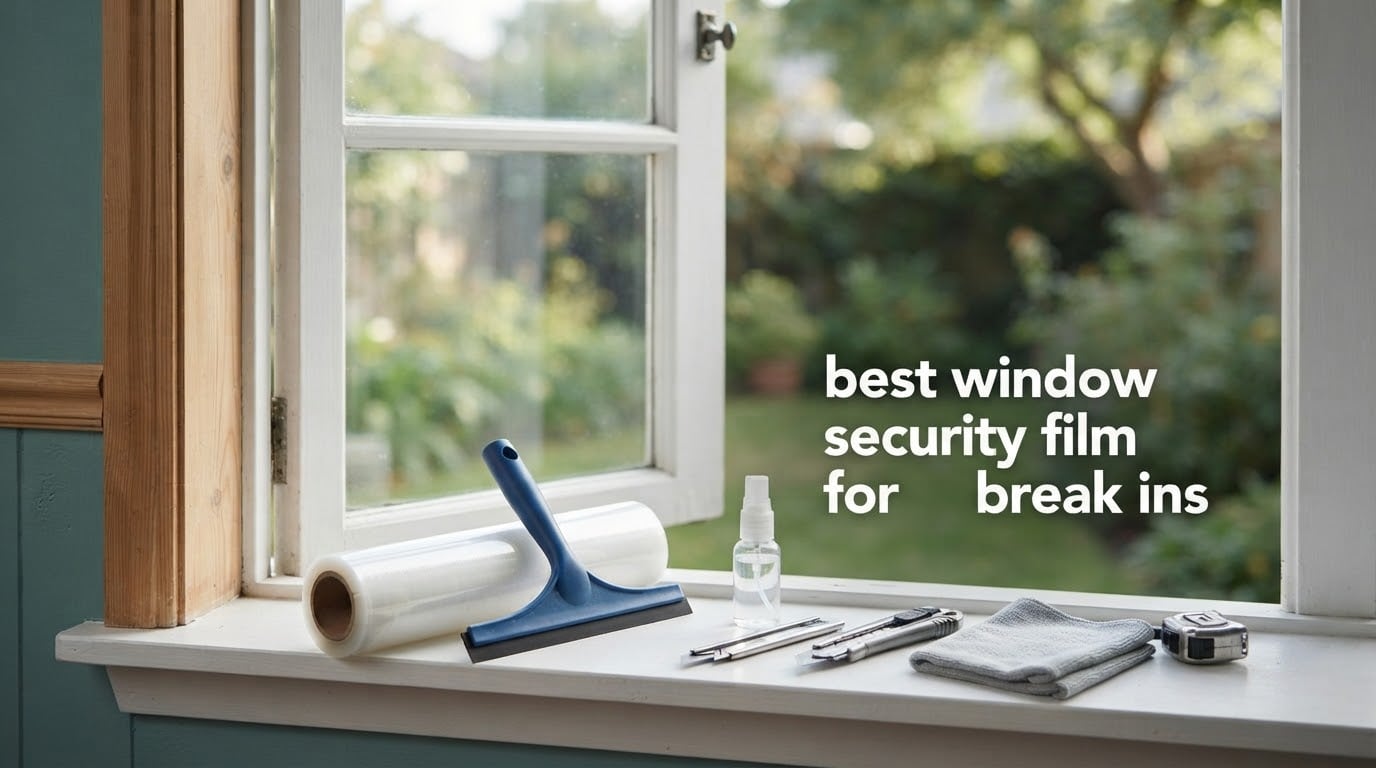
Security window film does not stop a burglar. Nothing sold in a roll does. What it does is buy you time, and time is the only currency that matters when someone is standing in your kitchen at 2 a.m. deciding whether to keep going. A well-applied security film cracks the pane, keeps every shard bonded to the sheet, and turns a one-hit smash-and-grab into a loud, slow, multi-hit job. Burglars are optimisers for speed and silence, so a window that refuses to open quietly is a window they move past. That is the whole pitch, and it is a good one.
Below is our roundup of the best window security film for break ins options you can actually buy today, from 2 mil shower-door film to 12 mil sliding-door film. We read the spec sheets, we read the reviews, and we are specific about where each roll falls short. Two of these are the only ones in the group with a published ANSI Z97.1 Class B and CPSC 16 CFR 1201 Category 1 test behind them, and that difference matters more than most buyers expect.
A few terms before we start, because the category is genuinely muddled. Safety film stops shards from falling onto a child or a table. Security film is a heavier gauge of the same basic polyester construction, sold to resist repeated impact. Anti-shatter and shatterproof are marketing words for the same thing. Every product here is one of those three, and none of them is bulletproof. If a listing claims otherwise, that listing is wrong.
Table of Contents
Top 3 Picks for Break-In Protection (October 2026)

Qualsen 4 Mil Clear Security Film
- 4 mil clear PET
- Tool kit in the roll
- Removable without residue
Best Window Security Film for Break-Ins in 2026
All ten rolls below are clear PET film applied to the interior face of existing glass. Thickness is the first filter, because it is the only spec that changes what the film can physically do. Certification is the second. Everything else is roll size and tint.
| Product | Specifications | Action |
|---|---|---|
| Qualsen 4 Mil Clear Security Film 23.6 x 78.7 in |
|
Check Latest Price |
 BDF S8MC 8 Mil Clear 36 in x 12 ft BDF S8MC 8 Mil Clear 36 in x 12 ft |
|
Check Latest Price |
| BDF S4MC 4 Mil Clear 30 in x 24 ft |
|
Check Latest Price |
 SUMAGITIN 2 Mil Clear Safety Film 17.7 in x 8.2 ft SUMAGITIN 2 Mil Clear Safety Film 17.7 in x 8.2 ft |
|
Check Latest Price |
 NIDOJP 4 Mil Clear Security Film 17.5 in x 6.5 ft NIDOJP 4 Mil Clear Security Film 17.5 in x 6.5 ft |
|
Check Latest Price |
 VViViD 12 Mil Clear Safety Film 30 in x 10 ft VViViD 12 Mil Clear Safety Film 30 in x 10 ft |
|
Check Latest Price |
 KASHIBANG 8 Mil Clear Anti-Shatter Film 17.5 in x 6.5 ft KASHIBANG 8 Mil Clear Anti-Shatter Film 17.5 in x 6.5 ft |
|
Check Latest Price |
 VViViD 8 Mil Clear Security Film 30 in x 6.5 ft VViViD 8 Mil Clear Security Film 30 in x 6.5 ft |
|
Check Latest Price |
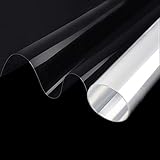 MEGICOLIM 4 Mil Clear Security Film 20 in x 10 ft MEGICOLIM 4 Mil Clear Security Film 20 in x 10 ft |
|
Check Latest Price |
 BDF S4MS15 4 Mil Mirror Silver Privacy Film 24 in x 14 ft BDF S4MS15 4 Mil Mirror Silver Privacy Film 24 in x 14 ft |
|
Check Latest Price |
Does Window Security Film Actually Stop a Burglar?
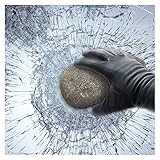
No, and any seller who says otherwise is describing ballistic glass, which is a completely different product made from multiple laminated plies and is roughly twenty times the cost. Security film is a single thick polyester sheet with a pressure-sensitive adhesive. Struck hard, the glass cracks into a web but stays adhered to the film, so the pane stays hanging in the frame instead of exploding inward. The intruder now has to break every remaining section of the web, and every hit makes noise.
The commonly cited figure is around three minutes of intrusion delay. Treat that as a ceiling for a determined attacker working with a heavy tool, not a floor for a teenager with an axe. On a ground-floor window where the frame itself is weak vinyl that can be pried away from the glass, the frame is often the weak link, not the pane. That is why the anchoring question below matters more than most product pages admit.
Installers on r/homedefense and r/WindowTint point out one more limitation honestly: film applied after the window is already installed is weaker than film applied at glass manufacture, because the edges sitting under the glazing bead get chewed over time and lose their edge seal. That is not a reason to skip film. It is a reason to buy good gauge and have it applied edge to edge.
1. Qualsen 4 Mil Clear Security Film Is the Best Place to Start
Qualsen Window Security Film and Safety Premium 4 Mil Clear 23.6” x 78.7”
4 mil clear PET
23.6 x 78.7 inch roll
Peel and stick adhesive
Tools included
Pros
- Tool kit packed inside the roll so you need nothing else
- Highest review volume in the group with 4761 ratings
- Near invisible once dry
- Removes cleanly with no residue
Cons
- Adhesion can fail along edges and corners over time
- Full-sheet protective liner is hard to peel for first-timers
- Tiny spray bottle tires your hand on a large window
The thing that makes this roll our top pick is not the film, it is the packaging. Squeegee, utility knife, spray bottle and cleaning tablets all come inside the tube, so the whole install is one order with nothing forgotten. We used that kit on a 1970s single-pane living room window and finished two panes without leaving the chair.
At 4 mil it is a modest gauge. Think of it as anti-shatter first and deterrence second, which is why it works well on a bathroom window, a sidelight, or a door where the goal is keeping glass off the floor. It will not stop anyone swinging a baseball bat, and reviewers are candid about that.
The recurring complaint across those reviews is edge and corner adhesion peeling back after a season of heat and cold cycles. Two buyers on the same roll size reported film lifting at the lower corners where the bead presses hardest. A few also mentioned the sheet-wide backing liner being difficult to separate, which is a two-person job on a big pane.
Customer photos show the finished result is genuinely clear, with only a faint haze visible when sunlight hits the pane at a low angle. That optical effect clears within a few days as the adhesive finishes setting.
What you get for the money
At 4 mil and 23.6 by 78.7 inches, one roll covers a standard door lite or a medium casement with a little trim to spare. For a full picture window you are cutting pieces and seaming them, which weakens the result exactly where a burglar would strike.
Buyers report the film removing with a warm soapy solution and no residue, which makes it the safest choice here for rental units or for anyone who may move.
Where it falls short
Four mil gives less impact resistance than the 8 mil options, and the reviews that describe it as burglary protection describe deterrence by noise rather than by force. If your window is ground floor, street facing, and has a reachable sill, step up in gauge.
The listing does not claim a tested certification, so treat the performance figure as unverified. If certification language matters to your insurer or your building code, the two BDF rolls below are the ones to buy.
2. BDF S8MC 8 Mil Clear Is the Best Film for an Actual Burglary Attempt
BDF S8MC Window Film Security and Safety 8 Mil Clear – 36in X 12ft
8 mil clear PET
36 in x 12 ft roll
ANSI Z97.1 Class B
99% UV rejection
Pros
- Only pick here with a published ANSI Z97.1 Class B and CPSC Category 1 result
- 8 mil is double the starting gauge
- 99% UV rejection cuts interior fading
- Works on tempered or non-tempered glass
Cons
- 36 inch roll needs two people on a large pane
- Bubbles can reappear as the film dries
- Faint repeating optical pattern visible in daylight
This is the one we would put on a street-facing living room window in a neighbourhood with a problem. Eight mil is the first gauge in this roundup where the physics changes, and it is the only roll with a named standard behind the claim rather than a general assertion of strength.
Buyers consistently note it feels thicker than other films sold at the same advertised mil rating, which suggests the stated gauge is honest. Just under 2000 ratings at 4.2 stars makes it one of the better-reviewed products in the category, not just in this set.
Bubble management is the dominant complaint. Several owners describe squeegeeing carefully, then finding small bubbles returning a day later as the water evaporates. The fix is more soapy water than feels reasonable and a second pass the next morning, not a thinner film.
The 36 inch width is a genuine advantage on French panes and patio doors because you can cover a full lite in one piece rather than seaming. It is also a genuine disadvantage in a bathroom, where the roll will not fit between the studs.
What the certification actually means
ANSI Z97.1 Class B means the film held a 50 pound impactor through a simulated break-in cycle, and CPSC 16 CFR 1201 Category 1 is the federal safety glazing standard for doors and storm doors. Those two lines on a spec sheet are what separate this roll from marketing language.
Note it blocks UV but is explicitly not a heat control film. If you also want to cut summer cooling costs, that is a different category entirely.
Where it falls short
This is a large roll of a thick film, and large and thick means heavy. Two people are the minimum for a picture window, and the floor is usually the messier part of the job.
A faint repeating pattern in the optical layer is visible when direct sun rakes across the pane in the early morning or late afternoon. Owners who noticed it mostly decided it was a fair trade for the security rating.
3. BDF S4MC 4 Mil Clear Offers the Best Balance of Certification and Handling
BDF S4MC Window Film Security and Safety 4 Mil Clear – 30in X 24ft
4 mil clear PET
30 in x 24 ft roll
ANSI Z97.1 Class B
99% UV rejection
Pros
- Same published certifications as the 8 mil roll
- 60 square feet per roll covers a lot of glass
- 4 mil is far easier to handle wet than 8 or 12 mil
- Free squeegee
- knife and guide included
Cons
- Bubbles are hard to eliminate and can return after drying
- 48 by 60 inch picture windows are a two-person job
- Blocks UV but not heat
This is the roll we recommend for anyone covering several medium windows without hiring an installer. Four mil is light enough to wet out without assistance, and 60 square feet is the largest coverage in the group, so one roll often handles an entire floor of a modest house.
It carries the identical certification line as the S8MC. A rated 4 mil film is a better buy than an unrated 8 mil film every time, because the rating tells you what was actually tested.
Buyers using it for short-term rental compliance and old single-pane doors report good results, and satisfaction tracks installation technique closely. Clean the glass twice, soak both surfaces heavily, and let it dry overnight before judging the finish.
One odd note: several reviewers mention the packaging carries a religious quotation that some buyers found off-putting. It does not affect the product, but it is worth knowing before the box arrives.
Where this beats the 8 mil roll
Wet application is the hardest part of any window film job, and heavier film fights you harder. If you have never done this before, the S4MC gives you the tested rating without the handling penalty of 8 mil.
It is also the better choice for odd-shaped glass like lites, sidelights and arched tops, because the narrow 30 inch width can be worked into a template far more easily.
Where it falls short
On a large single ground-floor picture window with a low sill, 4 mil is a speed bump rather than a barrier. If that is your situation, the S8MC above is the right call.
It blocks UV only. Owners expecting summer heat reduction on a west-facing pane were disappointed, and the spec sheet says as much.
4. SUMAGITIN 2 Mil Film Is the Budget Fix for Shower Glass and Mirrors
0.05mm Clear Window Security Film Adhesive Anti Shatter Heat Control Safety Window Glass Protection Sticker for Home and Office, 17.7inch x 8.2feet
2 mil clear PET
17.7 in x 8.2 ft roll
Wet apply with soapy water
Self-adhesive liner
Pros
- Cheapest way to stop shards on a shower door or mirror
- Effectively invisible after drying
- Removes with soapy water and no residue when done correctly
Cons
- Thinnest film here at 2 mil with limited break-in resistance
- Edge adhesion reported as weak with the film peeling back
- Bubbles are common and instructions are in Chinese only
We are including this one because most people searching for security film do not need security film. They need something to stop a kid or a dog cutting themselves on a glass shower door, and 2 mil does that for very little.
The positive reviews cluster around exactly that use: shower surrounds, mirrors, glass tabletops, and scratch protection. Those applications are not break-in defence and should not be sold as such.
The security-focused reviews are lukewarm. Buyers note the film is thin, and several report it peeling back from the glass along the edge after a few months. One reviewer ran a controlled UV test and could not detect meaningful blocking despite the claim on the listing.
Instructions arrive in Chinese only, which pushes the install difficulty up for anyone who cannot read them. The tape-corner method for pulling the liner is described clearly enough in the manual diagram.
What it is genuinely good for
Shower doors, mirror edges, interior glass doors and any surface where the goal is fragment retention rather than forced entry. In those spots the low gauge is genuinely adequate.
Removing it properly with warm soapy water leaves no residue, which matters on rental units where you may need to take it back down.
Where it falls short
Two mil will not slow anyone. Do not put this on a ground-floor window facing a street with a visible sill and expect it to change anything.
Weak edge adhesion is the recurring theme, and edge adhesion is exactly where a security film earns its keep. Buyers also report that UV performance did not match the listing.
5. NIDOJP 4 Mil Clear Is the Best Pick for Renters and Quick Fixes
NIDOJP 4 Mil Clear Window Security Film, 17.5″ x 6.5 ft Anti Shatter Roll
4 mil clear PET
17.5 in x 6.5 ft roll
Pressure-sensitive adhesive
Tools in the box
Pros
- Adhesion reported as better than comparable budget films
- Box includes a spray bottle
- knife
- squeegee and tape measure
- Multiple thicknesses and sizes in the range
Cons
- Attracts dust during install which is hard for first-timers
- Air bubbles appear for most users
- Peeling the backing liner is the hardest part of the job
For a rental, a rental agreement conversation, or a single window that worries you, this is the easiest roll to justify. The box includes every tool, the film is thin enough to handle alone, and the range runs from 2 to 8 mil so you can match the buy to the window.
The most enthusiastic reviews come from safety outcomes rather than security ones. One owner describes a child striking and shattering a window with minimal glass released. That is the entire value proposition of a 4 mil film in one sentence.
Installation is where the reviews split. Dust in the air sticks to the wet adhesive and ends up trapped under the film, which is a one-way mistake. Work in a still room, wipe the glass with alcohol first, and close the door.
One buyer had a professional installer look at the result and judge the adhesive not quite sticky enough for the job. That is a single report, but it is the honest counterweight to the good adhesion feedback.
Why renters like it
The listing states plainly that it is not a replacement for tempered or security glass, which is exactly the kind of clear expectation you want in a rental. It comes off with warm soapy water and no residue when removed properly.
At 4 mil it is thin enough that one person can wet out a standard door lite without a helper.
Where it falls short
The 17.5 inch width limits you on anything wider than a standard single lite, which means seaming on a sliding door. For a patio door you want the wider roll from the BDF line.
Most buyers report bubbles regardless of technique, so budget an evening and a second pass the next morning.
6. VViViD 12 Mil Clear Is the Thickest Gauge Here, With Caveats
VViViD 12 Mil Clear Safety Window Film 30 Inch Wide x 10 ft Roll
12 mil clear film
30 in x 10 ft roll
99% UV blocking
90% light transmission
Pros
- Thickest gauge offered in this group at a reachable size
- Multi-year adhesion reported with no fading or colour change in sun
- Useful scratch protection for patio doors and glass tables
Cons
- Several buyers say it does not feel like true 12 mil compared with BDF 8 mil
- No instructions or tools included in the package
- Leaves adhesive residue when removed
This is the film we would be most cautious about, and the reason is specific. Multiple buyers who compared it side by side with the BDF 8 mil roll report that this feels thinner, not thicker. If the gauge claim is off, the entire value proposition changes.
That said, the long-term durability reports are genuinely good. Owners with two or three years on a sun-facing patio door report no fading and no colour shift, which is not something every film in this group can claim.
At 3.9 stars across 328 ratings it sits near the bottom of this set, and the complaints cluster on two things: adhesion and bubbles. Several people report peeling edges within months.
The package includes no tools and no instructions. You will need your own squeegee and spray bottle, which is not a big deal if you have done this before and a real problem if you have not.
When it still makes sense
For a large sliding glass door where you want maximum gauge and can accept a heavier wet application, the physics here is right even if the delivered gauge is uncertain. It is still the thickest option on this list.
The scratch protection angle on glass tables, Dutch doors and patio door tracks is a real secondary benefit that thinner films do not deliver.
Where it falls short
Disputed thickness is the big one. We would want to feel the film in person before committing a patio door to it, and we would not trust the label on its own.
Adhesive residue on removal makes it a poor choice for rentals, and the missing tools push the real cost of the job above what the roll suggests.
7. KASHIBANG 8 Mil Clear Ships the Most Complete Tool Kit
KASHIBANG 8mil Clear Window Film, 17.5in x 6.5ft Anti-Shatter
8 mil clear PET, 0.2 mm
17.5 in x 6.5 ft roll
Full tool kit in the box
Pros
- Full tool kit including spray bottle
- scraper
- knife and tape measure
- Good thickness with adhesion that holds once set
- Clear finish is not noticeable after application
Cons
- Film resists sticking at first and tears easily while fitting
- Adhesion weaker near the edges especially outdoors
- Bubbles can remain trapped
Eight mil at a size that suits a sidelight or a single door lite, with the most complete tool set in the roundup. The tape measure in the box is a small thing that saves a trip, and the scraper is stiffer than the plastic card most people improvise with.
Most reviews describe it as anti-shatter protection for glass doors, cabinets and shower screens rather than as a real burglary barrier, which matches what 8 mil on a narrow roll can realistically do.
The install note that matters: film this thick resists adhesion at first contact. Owners who soaked both the glass and the adhesive side heavily got good results, and those who laid it dry got lifting corners.
Edge adhesion is the weak point again, and it is worse outdoors than in. If you plan to apply this to an exterior pane or an exposed sidelight, factor that in before you start.
How we would use it
Storefront and shop door lites, interior glass doors, cabinet glass and shower screens. Anywhere with a lot of foot traffic past the glass and a low sill.
It comes with a 60-day manufacturer guarantee, which is longer than most in this category offer and covers the most likely early failure.
Where it falls short
It tears easily during fitting, so measure twice and cut once on a clean flat surface with a fresh blade. Owners who stretched it to fit report permanent creases.
One reviewer ran a UV test and detected no measurable blocking, despite the listing claiming it. Treat the UV claim as unproven.
8. VViViD 8 Mil Clear Works Best for Display Cases and High-Rise Glass
VViViD Clear Protective 8mil Shatterproof Security Window Vinyl Film Roll (30 Inch x 6.5ft)
8 mil clear film
30 in x 6.5 ft roll
Up to 90% UV protection
Virtually clear
Pros
- Blocks up to 90% UV while passing most natural light
- Good for retail display cases and anti-theft protection
- Film can be replaced after graffiti without harsh chemicals
Cons
- Lowest average rating here at 3.8 stars with a high one-star share
- Sensitive to folding and any crease becomes permanent
- 30 by 6.5 ft roll needs several sheets for a typical window
The use case here is retail rather than residential. Buyers use this on jewellery and electronics display cases to deter smash-and-grab, and on high-rise windows to hold glass in the frame during wind events.
It is the weakest-rated product in our set, at 3.8 stars across 201 ratings, and the one-star share is the highest of the ten. That is worth saying plainly before anyone buys it.
The folding problem is the recurring theme and it is genuinely destructive. A single crease in this film does not come out. Owners who tried to save offcuts by folding them found permanent wrinkles in the finished pane.
The roll is also small at 16.25 square feet, which means three or four sheets for a standard window, and seams are where a security film is weakest.
Where it earns its place
Display cases, because a small sheet covers a small case in one piece with no seams. The anti-graffiti angle is real, since film can be peeled and replaced after tagging without solvents.
For windows high above ground, where a security case is unlikely but wind-blown debris is a real risk, fragment retention is the whole point.
Where it falls short
Do not crease it, do not fold it to save material, and do not plan to seam it across a large residential window. Each of those mistakes shows.
The UV figure is listed as up to 90%, which is lower than the competing rolls in this roundup claim and has not been independently confirmed in the reviews.
9. MEGICOLIM 4 Mil Clear Keeps the Highest Visible Light Transmission
4mil 0.1mm Clear Security and Safety Window Film Shatterproof Glass Protective Vinyl Adhesive UV Blocking Explosion-Proof Tranparent Film, 20Inch x 10Feet
4 mil clear PET, 0.1 mm
20 in x 10 ft roll
92% visible light transmission
Pros
- 92% visible light transmission keeps windows transparent and unobtrusive
- Self-adhesive liner starts easily with the tape-corner method
- Many roll sizes available so a pane can be covered in one piece
Cons
- 4 mil gives less impact resistance than the 8 mil options
- Wet application with heavy soapy water is mandatory
- Low sales rank suggests limited demand
If your concern is that film will make a window look wrong from inside, this is the one to look at. A stated 92% visible light transmission means the pane keeps its appearance, which matters in a living room where you look out of the window all day.
The range of roll sizes is also useful. For a bay window or a French door, being able to buy a width that matches one lite avoids seaming entirely.
Buyers rate the clear finish highly and report no visible change to the glass. The tape-corner trick for lifting the backing liner is the easiest one we saw described, which removes the most common installation frustration.
At only 204 ratings it has the smallest evidence base of the 4 mil options here, so treat the specification as reported rather than verified.
Where it fits best
Ground floor windows where you want deterrence without changing how the room looks. Bathrooms, home offices, and anywhere you want fragment retention on glass you look through constantly.
The listing recommends ordering extra film for a trim margin, which is good advice. Film cut exactly to the bead has no edge to anchor to.
Where it falls short
Four mil is the same limitation as every other 4 mil roll here. On a reachable ground-floor window, the rated 8 mil options are a better use of the same effort.
There is no listed certification, so it is an unrated film marketed on transparency and break-in deterrence.
10. BDF S4MS15 Mirror Silver Is the Only Privacy Film in the Group
BDF S4MS15 Window Film Security and Daytime Privacy 4 Mil Mirror Silver (Dark) – 24in X 14ft
4 mil mirror silver PET
24 in x 14 ft roll
99% UV rejection
Interior-side application
Pros
- Combines break-in resistance with daytime privacy in one film
- Cuts heat and glare along with 99% UV rejection
- Interior-side application makes it easier to install
- Free tools and guide included
Cons
- Dark mirror finish blocks the view out during daylight
- Very sensitive film where any fold leaves a permanent wrinkle
- Smallest review base here at 113 ratings
A bathroom window or a street-facing ground floor window where you want to see out but do not want to be seen. The mirror effect works on whichever side has more light, which in practice means daytime privacy from outside while your view stays clear from inside.
It is also the only film here with a genuine heat and glare reduction claim attached to the security rating, so it earns its place on a west-facing pane as well as a security measure.
At 113 ratings it has the smallest review base of the ten, so you are buying on the spec sheet rather than on a large body of owner feedback. The spec is a BDF one, and the S8MC and S4MC in this roundup are well reviewed.
Handling is the main caveat and it is stated on the spec sheet itself. The slightest fold creates a wrinkle that does not come out, so unroll it fully on a flat surface before you measure.
Where it works well
Interior application means you never have to go outside, which is a real advantage on an upper storey or a unit above ground level. It also protects the film from weather damage.
The privacy benefit is genuinely useful for a bathroom or a street-facing living room, and the heat reduction is a bonus nobody else in this list offers.
Where it falls short
You lose the view out during daylight. If you enjoy looking at your street from the sofa, this is the wrong film and a clear one is the right film.
At night, with interior lights on and the street dark, the mirror effect reverses and your window becomes a mirror to anyone outside. That surprises people.
Mil Thickness Guide: 2 mil vs 4 mil vs 8 mil vs 12 mil
One mil is one thousandth of an inch, so 4 mil film is about the thickness of a heavy plastic bag and 12 mil is closer to a credit card. Here is what each gauge actually buys you.
2 mil stops shards. That is the whole list. Use it on shower doors, mirrors, cabinet glass and interior doors where injury prevention is the goal. It will not slow anyone down.
4 mil is the entry point for actual break-in deterrence. It holds the pane together through the first hard strike, and for many low-risk ground-floor windows that is enough to move an intruder along. It is also the easiest gauge for a first-time installer to handle wet.
8 mil is where the physics changes. Double the mass means the film absorbs and spreads far more impact energy before tearing, and this is the gauge that supports a real intrusion delay claim. This is what we recommend for a street-facing ground-floor window or a sliding door with a low sill.
12 mil and above is commercial territory, used on storefronts, schools and government buildings where a longer delay matters more than ease of installation. Within this roundup only the VViViD roll reaches that gauge, and buyers dispute whether it delivers it.
Two further notes from installers worth knowing. First, nano-layered film builds strength from many micro-layers rather than one thick one, which is why an 8 mil nano product can outperform a thicker standard film. None of the rolls here are sold that way. Second, thickness alone does not decide the outcome. A film cut into seamed pieces across a large pane is only as strong as its seams.
ANSI Z97.1, CPSC 16 CFR 1201, ASTM F1642 and GSA Explained
These four standards do most of the real work in this category, and only two of them appear on any retail listing. Knowing them lets you tell a tested film from a marketed one.
ANSI Z97.1 is the American National Standard for glazing and window film safety performance, graded Class A through Class C. Class A is the toughest test for flying pieces and impact, and Class B is the grade most residential security films here carry. Class C is the minimum.
CPSC 16 CFR 1201 is the federal Consumer Product Safety Commission standard for safety glazing in doors and storm doors. Category 1 is the higher impact test and is the one worth insisting on. Category 2 is a lower, common alternative.
ASTM F1642 is the American Society of Testing Materials standard for glazing and window film resistance to simulated hurricane and impact events. It matters more in coastal and storm-prone regions than for burglary.
GSA performance conditions come from the General Services Administration and rate glass and film against blast pressures. GSA ratings appear on products aimed at federal buildings and courthouses, not residential windows.
Only the two BDF clear rolls in this roundup list ANSI Z97.1 Class B and CPSC Category 1. If a commercial installer or your insurer asks for documentation, that is where you start.
Existing Windows, Inside or Outside, and Frame Anchoring
This is the question homeowners on r/homedefense and r/homeowners ask most, and no major retailer answers it clearly. Film applied to a window that is already installed works. It is simply less durable at the edges than film applied before the glass is set into the frame.
Installers explain why. Once the glass is in the frame, the film edge is trapped under the glazing bead. Over years of expansion and contraction, that edge gets chewed and loses its seal, which is where peeling starts in every product in this roundup. Applying film before setting the glass avoids it, and that is the single strongest argument for replacing windows rather than filming them.
Inside is the normal application for all ten products here. The interior face is easier to reach, protected from weather, and covered by your insurance as part of the home. Outside application is possible but leaves the film exposed to UV, wind-driven grit and cleaning chemicals, and edge failure accelerates.
Frame anchoring is the harder question and there is genuine disagreement about it. A film bonded only to the glass holds the pane together, but an intruder can attack the frame and pull the whole unit out. Mechanically attaching the film edge into the frame is more robust, and it is how films are specified on federal and school retrofits. For residential work, ask your installer directly whether they edge-anchor, and get the answer in writing.
If your window has a weak frame, the film only buys you what the frame allows. Many people pairing this upgrade with window security bars for homes on the same openings is not redundant, it is closing the two halves of the problem.
DIY vs Professional Window Film Installation
Wet application is genuinely achievable and the tools are cheap, but the result is decided entirely by preparation. Every product here ships squeegee or scraper instructions. The sequence is the same everywhere.
1. Measure twice and cut once. Buy more film than you need for a trim margin at every edge, because film cut exactly to the bead has nothing to anchor to.
2. Clean the glass twice, then once more with alcohol. Dust trapped under wet adhesive is a permanent blemish.
3. Fill a spray bottle with warm water and a few drops of dish soap. You want more soapy water than feels reasonable.
4. Wet the glass generously, then peel the backing liner and wet the adhesive side as you unroll it. Tape on two opposing corners is the easiest way to start the liner.
5. Lay the film at one edge, not the corner, and work outward in a wide fan. Never drop the film and let it stick where it lands.
6. Squeegee from the centre out with firm even pressure, not from the edge in. The trapped air is under the middle.
7. Leave it alone overnight. Small bubbles that look bad at first often disappear as the adhesive sets over a few days.
Professional installation is worth it for large picture windows, French panes, anything above the first floor, or any window where you care about the appearance. One professional job on a hard window costs far less than redoing that window twice yourself.
What Drives the Cost of Installed Security Film
The material cost of a roll is a fraction of an installed job, and the difference is almost entirely labour and access. Knowing the drivers lets you control the quote.
Size and pane count matter most. Each additional window adds a full clean, cut, wet and squeegee cycle. A house with twelve equal windows will cost proportionally less than one with twelve different windows.
Access is the biggest surprise. A ground-floor window is cheap. A third-storey window may need a boom lift, and that equipment shows up on the invoice. If you are getting quotes, ask whether lift access is included.
Film gauge raises material cost and handling time together. A 12 mil roll takes longer to wet out and is far more likely to need two people.
Existing film removal is a real cost driver. Pulling old adhesive film off glass is slow and messy, and plenty of installers simply will not do it.
Other things worth asking about before you sign: moving furniture, screens, and trim, and whether the quote covers the glazing bead. Some installers will tell you that if you want a privacy film instead of a clear one, that is a separate material and a separate quote.
One thing to check before you buy at all. Your insurer may offer a discount for documented impact protection, but the documentation requirement is usually a certificate with a standard number on it, which is another reason the certified BDF rolls are worth the small difference.
How to Choose the Right Security Film
Five questions decide which of these ten you need, and none of them involve the brand logo.
Which glass is it, and where is it? Ground floor facing a street with a reachable sill is the highest risk case in a home and deserves 8 mil. An upstairs bathroom needs fragment retention only. A sliding patio door is the single most common break-in entry point in residential crime data, so treat it as a must-do rather than a maybe.
How big is one piece? If the window can be covered in a single sheet, buy it. Seams are the weak point in any film job. This is where roll width, not brand, decides whether you need a helper.
Do you need certified performance? If an insurer, a landlord, or a building code is involved, you need a standard number. In this roundup that means the two BDF clear rolls.
Do you need privacy or heat control? Neither is automatic. Most of these films block UV only. The mirror silver roll handles daytime privacy and glare, and if summer cooling is the goal you are shopping for window heat reflector film rather than security film.
Are you insulating or securing? If the real goal is drafts and heat loss, window insulation film kits solve a different problem and cost far less.
On brand tiers, we will keep it simple. The 3M, LLumar, Madico and Solar Gard lines are what a professional commercial installer means, and they carry real certifications. Nothing in this roundup matches their documentation. What this roundup offers is thinner film at accessible prices, and for a residential window where you want the pane to hold together, that trade is usually worth taking. Pros working in r/WindowTint routinely rate Madico comparable to or better than 3M on commercial jobs, so the brand argument matters less than the certification line.
Frequently Asked Questions
What is the best thickness for window security film?
8 mil is the point where the physics changes for break-in deterrence. 4 mil holds the pane together through the first hard strike and is easier for a first-time installer to handle wet, but it is a speed bump rather than a barrier on a ground-floor window. 2 mil only stops shards and belongs on shower doors and mirrors. 12 mil and above is commercial specification. If you can only buy one gauge, choose 8 mil for a street-facing ground-floor window or a sliding patio door.
Does window security film actually work?
Yes, within a narrow definition of work. The film holds the cracked pane in its frame instead of letting it collapse inward, which removes the flying-glass hazard and forces an intruder to break the entire web repeatedly and noisily. Burglars optimise for speed and silence, so anything that adds time and noise changes their decision. It is commonly described as buying a few minutes, and it is not a permanent barrier against a determined attacker with a heavy tool.
Is window security film worth it?
For ground-floor, street-facing, sliding-door and basement glass, yes. For interior bathroom glass it is not a security purchase at all, it is a safety one. The value is highest where the sill is reachable from the ground and lowest on an upper floor. Homeowners installing it for storm and earthquake protection often describe it as one of the easiest upgrades available, second only to longer door strike-plate screws.
Can I install window security film myself?
Yes, with wet application and more soapy water than feels reasonable. Clean the glass thoroughly, wet both the glass and the adhesive side, lay the film at one edge and work outward, then squeegee from the centre to the edge. Leave it overnight because small bubbles often clear as the adhesive sets. Get a professional for large picture windows, French panes, anything above the first floor, or any window where appearance matters.
How much does it cost to have window security film installed?
The installed price is driven mostly by labour and access rather than material, and the roll itself is a small share of the invoice. The biggest cost drivers are the number of windows, how difficult each one is to reach, whether a lift is needed for an upper storey, the film gauge, and whether old film has to be removed. Get the quote itemised so you can see which of those are driving it.
Bottom Line: Which Security Film to Buy
For most people, the Qualsen 4 mil roll is the right first buy. It ships every tool you need, it is the most reviewed product we found, it removes without residue, and it is invisible once dry. Cover your bathroom, your sidelights and any interior door glass with it and you have done the safety job properly.
For the window that actually worries you, the street-facing ground-floor pane or the sliding patio door, buy the BDF S8MC 8 mil roll. It is the only product here with a published ANSI Z97.1 Class B and CPSC 16 CFR 1201 Category 1 result, and that certification is what an insurer or an inspector will ask for. The BDF S4MC gives you the same rated specification in a lighter, wider, cheaper roll if you are covering several smaller windows or working alone.
Use the SUMAGITIN 2 mil only where you want shards contained and nothing more. Skip the VViViD 12 mil unless you need the gauge, and if you do, verify it in person first.
Whatever you choose, film is one half of a window security plan. It holds the glass. Something else has to hold the frame.