
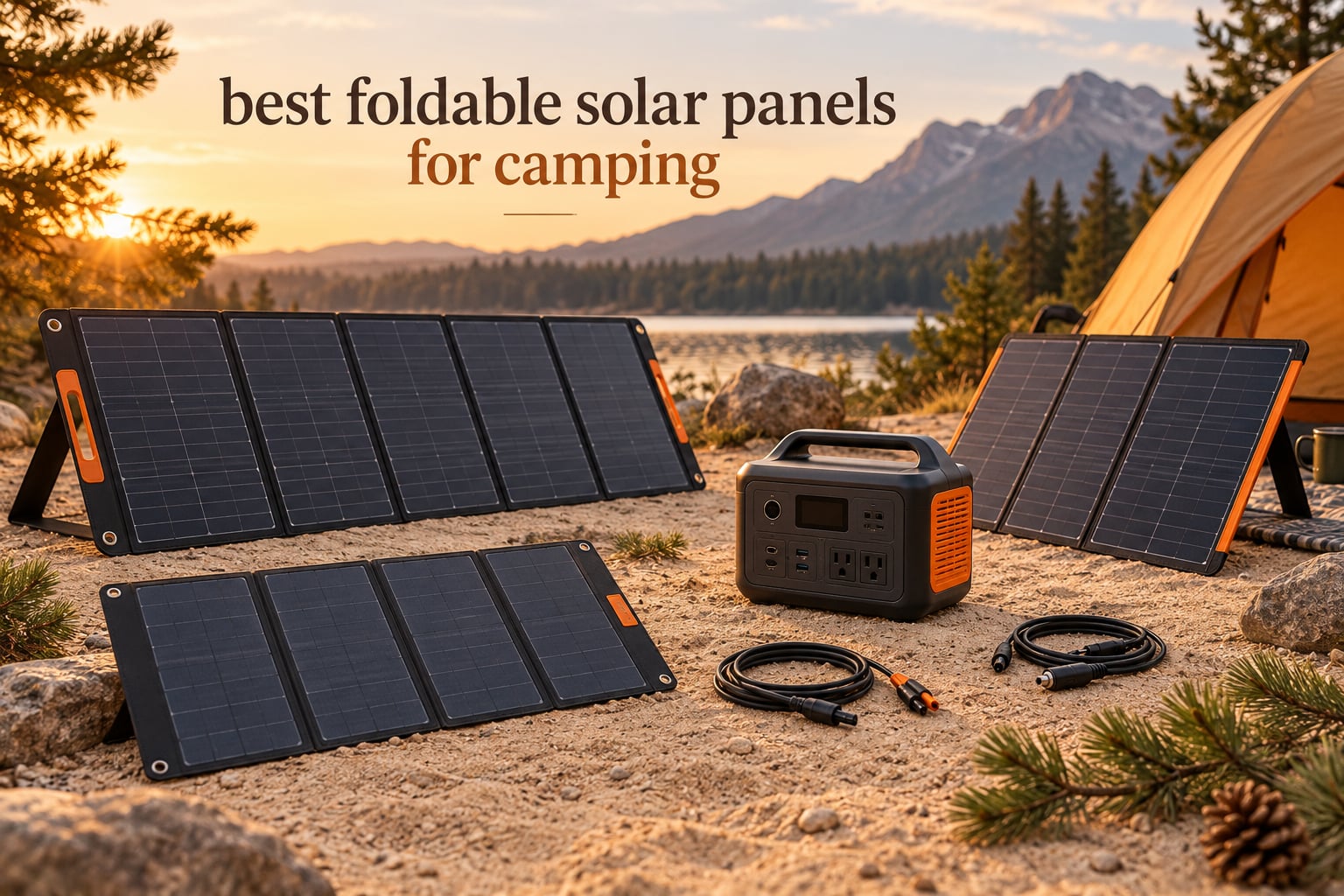
A foldable solar panel is a monocrystalline panel that collapses down to roughly the size of a suitcase, so you can carry solar power into a car camp, a van, a tent or a storm-stranded cabin and unfold it when the sun comes out. It sounds simple, and it is, but the difference between a panel that keeps your phone alive and one that tops off a 500Wh power station in an afternoon comes down to wattage, weight, connector type and weather sealing.
That is what this roundup is about. We ranked the best foldable solar panels for camping across the full ladder, from a 10W trickle charger that clips to a backpack to a 220W folding panel built for high-capacity power stations. Each pick is judged on the four things that actually matter in the field: how much power it puts out in real sun, how far you can carry it, how well it holds up to rain and grit, and whether the connector matches the power station you already own.
One thing to clear up first. A foldable panel is not a battery. It produces watts only while sunlight hits the cells, and the number on the box is measured under laboratory conditions. Forum threads on r/CampingGear and r/vandwellers rarely stop complaining about that gap, and it is the single biggest reason people think their panel is broken when it is actually performing normally. We get into realistic output expectations and the connector question in the buying guide below.
Table of Contents
Top 3 Best Foldable Solar Panels for Camping in 2026
Three panels stood out across every category we tested. The DOKIO 100W kit is the most complete package for car camping, the BLUETTI 200W is the strongest premium option, and the ZOUPW 100W has the broadest connector coverage and the highest owner rating in the group.


All 12 Foldable Solar Panels at a Glance in 2026
Every panel below is listed with the specifications that decide whether it fits your trip: claimed watts, efficiency, weight, connector and weather rating.
1. DOKIO 100W Portable Foldable Solar Panel Kit – Best Overall for Car Camping
DOKIO 100W Portable Foldable Solar Panel Kit for 12V Battery Charging
Up to 110W peak
Monocrystalline silicon
6 lb, folds to 19 x 26 in
PWM controller included
Pros
- Only 6 lb and folds flat to 19 x 26 in
- Long 9.84ft lead keeps the controller shaded
- Standalone PWM charge controller with reverse polarity and overcharge protection
- Dual USB ports charge phones and lights without a battery attached
Cons
- Some owners report output well below the rated wattage
- PWM controller menu is awkward to navigate
- SAE and XT60 leads cannot be series-linked without rewiring
This is the kit we keep reaching for. It is the only foldable solar panel in our list that ships with everything you need to run a real setup: the panel, a standalone PWM charge controller and a 9.84ft lead. That lead is the detail most people miss. It lets you put the panel in full sun on a picnic table while the controller and your battery stay in the shade, which is exactly what you want at a hot campsite.
The spec sheet lists a maximum power of 110 watts from monocrystalline silicon, with 18V maximum voltage and 12V DC output. Owners using it as a straight 12V battery maintainer tend to be happy. Owners expecting a full 100W into a power station often report getting something closer to half that in average conditions.

Weighing 6 lb, it is by far the lightest panel here that still produces enough current for a lead-acid or LiFePO4 battery bank. It folds to 18.9 x 26 x 0.47 in, which is roughly a third of the height of a standard suitcase panel, and it slides into a vehicle cubby without a fight.
The USB ports are a small touch that matters more than expected. You can top up a phone, a headlamp or a small power bank with or without a battery attached, which makes it useful as a standalone emergency panel.

When the DOKIO 100W makes sense for you
If you are running a 12V battery bank, a small power station or a solar generator with an SAE input, this kit is the least fiddly option. The included controller handles reverse polarity, overcharge, overload and short-circuit protection, so you are not buying a separate charge controller for a weekend trip.
The 1-year manufacturer warranty is shorter than some competitors offer, so for someone running panels year-round on a van roof, a longer warranty may matter more than the low weight.
Where it falls short
The controller menu is genuinely difficult to navigate, and people regularly post about it in camping forums. More importantly, the SAE and XT60 connector set is not the standard solar MC4, so this kit cannot be series-linked with other panels without cutting and rewiring the leads.
There is also no stated IP rating on the panel, so treat it as a fair-weather device and bring it in when the rain starts.
2. BLUETTI 200W Foldable Solar Panel – Best Premium Pick for Car and RV Camping
BLUETTI 200W Solar Panel for Solar Generator EB3A AC2A AC50B AC70 AC180 AC200L Elite 200 V2 AC300 AC500 B300K, Foldable Solar Charger with Adjustable Kickstands for RV, Camping, Blackout
200W output
Up to 23.4% efficiency
16.1 lb
Folds to 22.5 x 23.6 in
Pros
- Broad compatibility across BLUETTI and many third-party stations
- 23.4% monocrystalline conversion efficiency
- ETFE surface resists scratches and water splashes
- Adjustable kickstands for positioning
Cons
- Heaviest option in the group at roughly 16 lb
- Solar-connector cable means many setups need an adapter
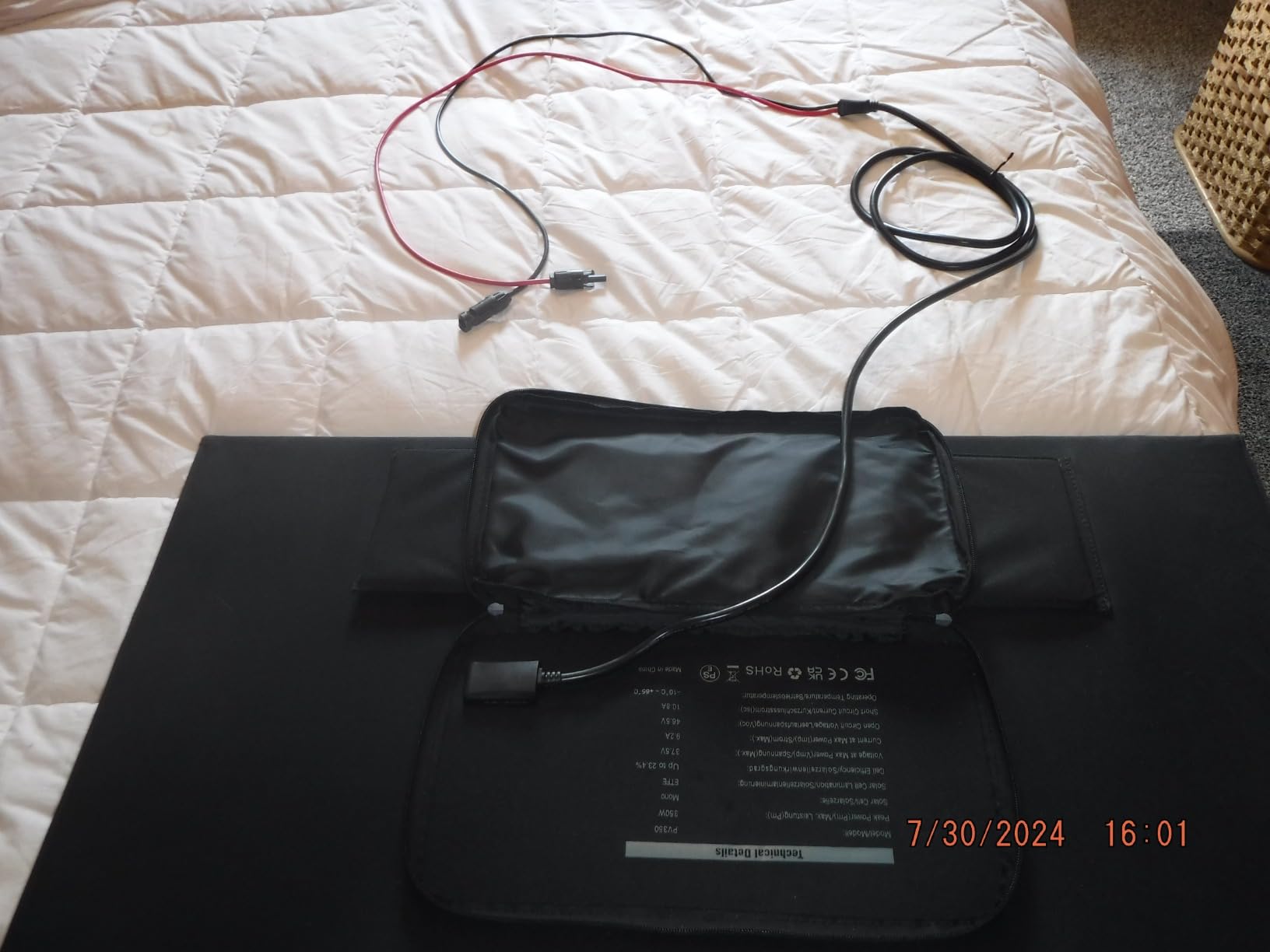
The BLUETTI 200W is the panel we recommend when a trip involves a fridge, a laptop charger and a multi-day power station. It delivers 200 watts from monocrystalline silicon at up to 23.4% conversion efficiency, with a 26.1V maximum voltage that sits comfortably inside the input range of most mid-to-large portable power stations.
Owners consistently report strong, repeatable output and a 73% share of five-star reviews, which is a good sign for a panel with more than a thousand reviews behind it.
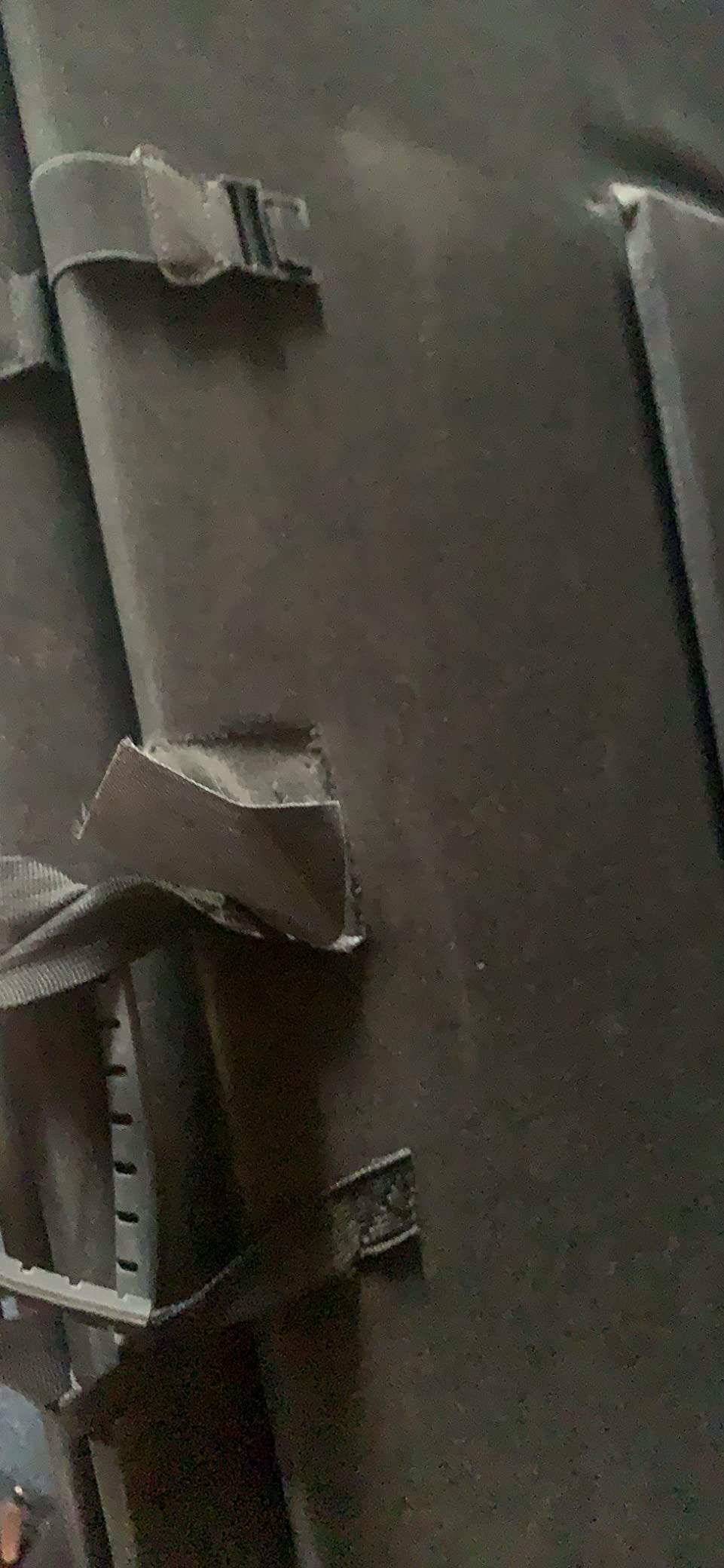
The ETFE laminate is the durability story here. Unlike the nylon laminate used on cheaper panels, ETFE resists both scratches and water splashes, and it does not yellow the way some poly films do after a season of high-UV exposure.
The fold is a proper suitcase fold at 22.5 x 23.6 x 2.9 in, and the adjustable kickstands let you set the angle for morning or afternoon sun rather than guessing. The box contains the panel and a user manual, so the 12-month warranty is on the panel itself.
Why this one wins on power delivery
At 200W this sits in the band that actually moves a power station. A 500Wh station with roughly 85% usable capacity will take about four peak sun-hours, which is a realistic morning-to-late-afternoon fill on a clear day.
If you already own BLUETTI hardware, the panel lists compatibility across the EB3A, EB70S, AC2A, AC50B, AC70, AC180, AC200L, AC200MAX and AC300 range, and it works with many third-party solar generators too.
Where the weight bites
At 16.1 lb, this is a car-camping panel. It is not a hiking panel, and anyone telling you otherwise has not carried one up a trail with a 10 lb pack.
The solar connector is also proprietary. If your power station uses a bare MC4 input, you will need an adapter cable, which is an extra purchase and one more thing to fail in the field.
3. FlexSolar 40W Foldable Solar Panel – Best for Backpacking and Ultralight Trips

FlexSolar 40W Foldable Solar Panel Charger, USB-C USB-A & DC Outputs
40W output
24% conversion
1.76 lb
Folds to 8 x 11.1 in
Pros
- Extremely light at 1.76 lb and folds small enough for a backpack
- Charges two devices at once via QC3.0 USB-A and PD2.0 USB-C
- Smart IC chip with overcurrent and overheating protection
- 24% monocrystalline conversion with IP67 sealing
Cons
- Instant conversion only
- so there is no output after dark
- Performance drops sharply with any partial shading
The FlexSolar 40W is the panel that makes solar realistic on foot. At 1.76 lb it disappears into a pack, and the folded dimensions of 8.0 x 11.1 x 1.8 in mean you can strap it to the outside of a lid rather than give up pack volume for it.
It also solves the charging-cable problem that plagues small panels. Instead of a proprietary barrel plug, it has a QC 3.0 USB-A port, a PD 2.0 USB-C port at up to 18W each, and a 19V DC port rated at 40W for small power stations. Two carabiners come in the box.

The 24% monocrystalline conversion rate is genuinely high for a panel this size, and the smart IC chip detects connected devices and adjusts output, with an LED status light so you know at a glance whether it is actually producing.
IP67 dustproof and waterproofing covers the panel surface, which is where most rain reaches. The junction box is a different story, and the manufacturer is direct about it: store it indoors during heavy rain.

What 40W actually buys you on the trail
Think top-up, not power. Over a solid six-hour day of direct sun you are looking at roughly 150Wh of energy in ideal conditions, which charges several phones, tops up a headlamp bank, or refills a small power bank.
That makes it the right companion to a hiking power bank rather than a replacement for one. If you need to run a 12V fridge for a weekend, this is not the panel.
The limits you should plan around
There is no internal battery, so output drops to zero the moment the sun goes behind cloud or a ridge. Users also report a sharp performance fall as soon as any part of the array is shaded, even partially.
Because it needs direct sun and unobstructed light, the practical method is to clip it to a pack and rotate it as you walk, accepting that output will pulse through the day.
4. Renogy 200W Portable Solar Panel – Best for Charging a Power Station and Devices Together

Renogy 200W Portable Solar Panel for Power Stations, 25% Efficiency
200W at 25% efficiency
Lightest 200W at 13.89 lb
USB-C PD 45W plus two USB-A
MC4 output
Pros
- 25% conversion efficiency from 16BB N-type cells
- Lightest 200W panel of this class at 13.89 lb
- Magnetic closure instead of velcro or snap buttons
- Charges three devices plus a power station at the same time
Cons
- IP65 covers splashes but not immersion
- MC4-only battery hookup may need brand-specific cables
The Renogy 200W is the efficiency leader of the 200W class, and it does something none of the other big panels do: it charges your devices directly. The output hub includes a USB-C PD port rated at 45W plus two USB-A ports, alongside the MC4 output for power stations and 12V batteries.
That combination matters more than the wattage number on a lot of trips. You can be topping up a laptop and a camera battery from the same panel that is refilling the power station.

The cells are 16BB N-type, which is where the 25% conversion figure comes from. N-type cells lose less to heat than the older P-type monocrystalline used in most budget panels, so this panel holds output better on a hot July afternoon.
Two build details stand out. The magnetic closure replaces the velcro or snap-button closures that snag and fail on cheaper panels, and the four adjustable kickstands set at 40, 50 and 60 degrees let you match the angle to the sun. Reinforced grommets are there for tie-down points.

Why 25% efficiency changes your day
Higher conversion efficiency means more watts from the same surface area, and it matters most in the conditions campers actually face. On a hot day when panel temperature climbs, an efficient panel holds closer to its rating than a 21% panel does.
At 13.89 lb, this is also the lightest 200W panel we found, which makes it the most car-camping-friendly of the big panels.
What to check before you buy
The IP65 rating protects against dust and water splashes but not immersion, so it is a fair-weather panel rather than an all-weather one. Owners treat it as a bring-it-in panel during heavy rain.
The panel also carries UL 61730 certification alongside CE, RoHS, FCC, CA65 and PSE compliance, and a 2-year material and workmanship warranty, which is double what several competitors offer.
5. ZOUPW 100W Foldable Solar Panel – Best Connector Coverage in the Group
ZOUPW 100W Portable Solar Panel for Power Station,23.5% Efficiency Mono Foldable Solar Charger for Jackery 300/Ecoflow River/Anker/Bluetti,IP67 Waterproof for Camping RV Off-Grid Emergency Power
100W at 23.5% efficiency
5-in-1 connector cable
IP67 ETFE
9.48 lb
Pros
- Highest-rated panel in the group with 77% of reviews at five stars
- 23.5% Grade A+ monocrystalline cells with two adjustable kickstands
- 5-in-1 cable covers nearly every mainstream power station
- Built-in USB-C PD and USB-A charging hub
- IP67 waterproof ETFE with a zippered controller pocket
Cons
- Power station input caps can limit what a 100W panel delivers
- Heavier than other 100W foldables at 9.48 lb
At 4.6 stars across 711 reviews, the ZOUPW 100W has the highest owner rating of any panel we ranked. The reason is not the wattage, it is the connector. The included 10ft 5-in-1 solar extension cable covers DC8020, XT60, Anderson, DC7909/8mm and DC5521, which means it plugs into essentially any power station without a separate adapter purchase.
That solves the single most common complaint on camping forums, where people discover after delivery that the cable that came with their panel does not fit their power station.

Cells are Grade A+ monocrystalline at 23.5% efficiency with a 24.3V maximum voltage and 20.16V output, and there is a direct-charging hub on the panel itself with one USB-C PD port and two USB-A ports including QC3.0.
The IP67 waterproofing covers the full ETFE-coated panel, and the charge controller and cables live in a zippered pocket rather than dangling from the back where they snag on gear.

Why connector coverage is worth paying for
Adapters are the hidden cost of portable solar. A panel that arrives with the wrong connector means another cable, another trip to a shop, and a connection that can be the weak link when you are running a fridge overnight in the cold.
A 12-month manufacturer warranty with lifetime technical support is also better than the 1-year cover on some kits in this list.
Where it will not go fast
The 100W rating is not always what reaches your battery. Reviewers point out that many power stations cap solar input at 60W, so a 100W panel plugged into a 60W-limited station delivers 60W at best.
At 9.48 lb it is also heavier than other 100W foldables, which is a strange outcome for a panel this size.
6. SOKIOVOLA N-Type 200W Portable Solar Panel – Best for Rainy and Exposed Campsites

SOKIOVOLA N-Type 16BB 200W Portable Solar Panel for EF/Jackery/Bluetti/Anker Power Station Foldable Solar Panel 25% High Efficiency IP68 Waterproof for Outdoor Trip RV Camping Blackout Off Grid
200W at 25% efficiency
IP68 waterproof
16.31 lb
Folds to 21 x 23 in
Pros
- Real-world output reported around 170 to 190W in full sun
- Firm panel body that stands up well on its kickstands
- MC4 with a 5-in-1 adapter cable fits most power stations
- IP68 is the highest weather rating among the 200W panels
Cons
- Built-in MC4 pigtail is only about 4 inches
- Too heavy for backpacking at 16.31 lb
- Some reports of output declining after months of daily use
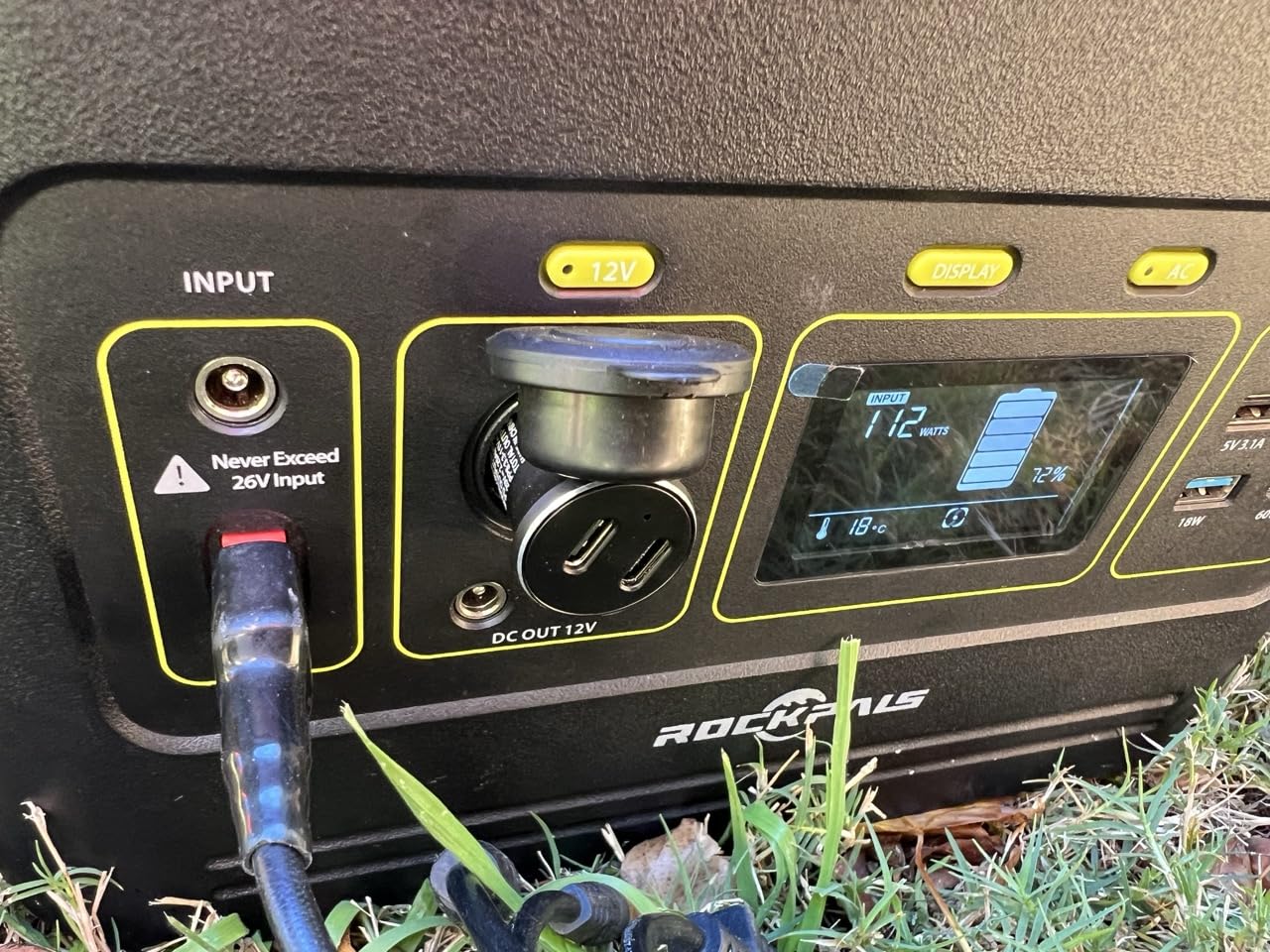
Wet weather is where most foldable panels become liabilities, so the SOKIOVOLA 200W stands out immediately. It carries an IP68 rating, which means full dustproofing and protection against continuous immersion, and that rating covers the ETFE-coated cells rather than just a splash-resistant label.
Real-world output is the other headline. Owners report pulling around 170 to 190W from the 200W rating in full sun, which is at the high end of what anyone gets from a portable panel.
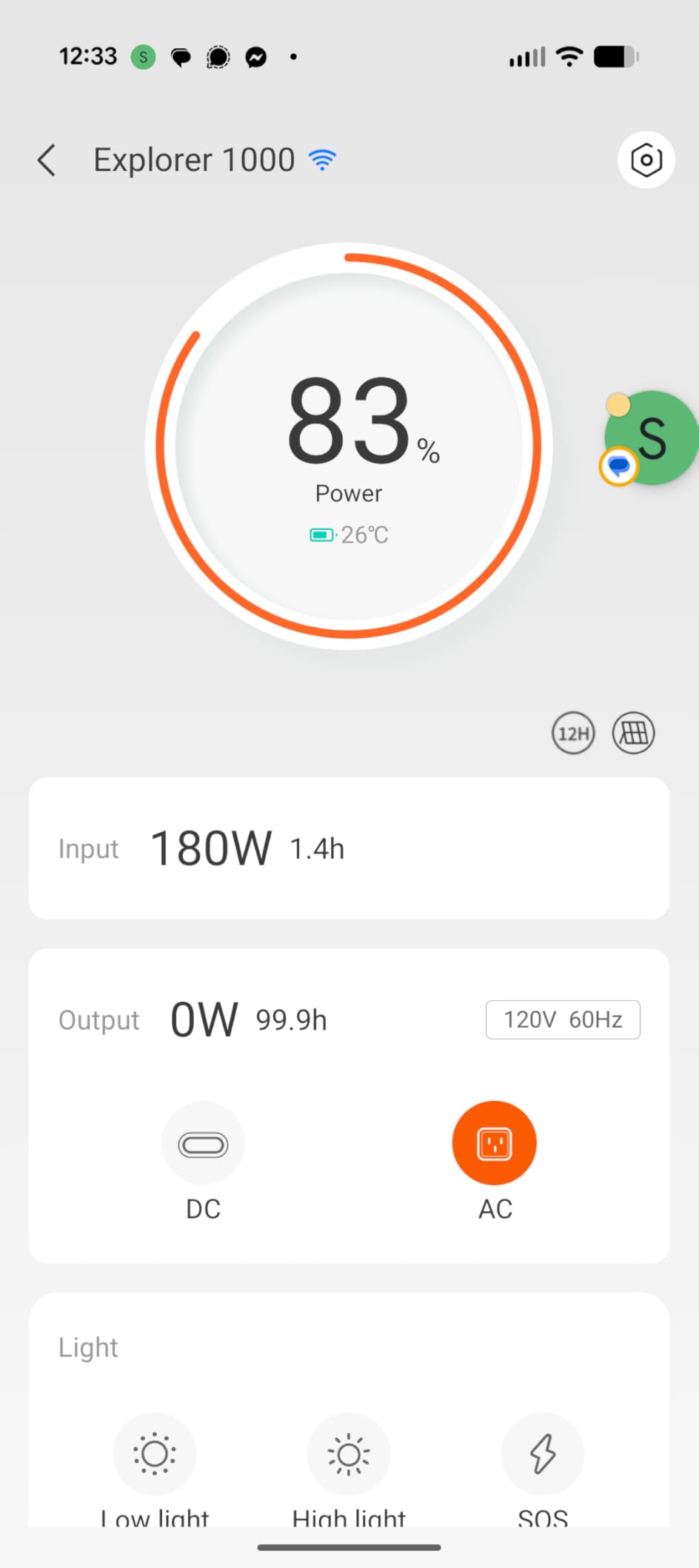
The build feels different from floppier competitors. The panel body is firm enough to stand on its own, so it does not sag when propped, and four mounting holes let you attach it to an RV or van rack for permanent use.
The connector situation is good: an MC4 output with a 3m MC4-to-5-in-1 cable covering XT60, DC5521, DC7909/8mm, DC8020 and Anderson. Compatibility is listed for Jackery, EcoFlow, BLUETTI, FlashFish, Goal Zero and Anker power stations.
When you can leave it out
The IP68 seal is the reason to choose this one. If your campsite has a forecast of rain through the afternoon and your power station needs every watt it can get, this is one of the few panels where you do not have to choose between charging and staying dry.
The 25% efficiency from A-grade monocrystalline cells also keeps output strong when the panel itself heats up.
What buyers complain about
The most repeated complaint is the short integrated MC4 pigtail at roughly 4 inches. You will almost certainly need the included 10.49ft extension cable, so plan your cable routing before you reach camp.
A minority of owners also report output degrading after months of daily charging. At 16.31 lb it is firmly a car or RV panel.
7. SOKIOVOLA 100W Foldable Solar Panel – Best Lightweight 100W Option

SOKIOVOLA 100W Portable Solar Panel MC-4 Foldable Solar Panel Charger Kits 18V IP68 Waterproof Lightweight and Compact for Small Power Station RV Travel Outdoor Activities
100W output
Only 4.6 lb
Folds to 14.69 x 8.67 in
IP68 sealed
Pros
- Very light at 4.6 lb with a compact fold
- Good magnet closures and solid handles
- 4-in-1 adapter cable works with virtually every mainstream power station
- IP68 sealing with ETFE laminate at 95% light transmittance
Cons
- Flimsy kickstand that becomes hard to secure over time
- XT60 connector has no locking mechanism and can pull apart
- Textured surface collects dust that is difficult to clean off
Most 100W foldables land somewhere between 9 and 10 lb. This one is 4.6 lb, and the folded footprint of 14.69 x 8.67 x 1.78 in is small enough to fit in a daypack or the side pocket of a large duffel.
It still gets IP68 dust and water protection, and the ETFE laminate passes 95% light transmittance, which keeps the cells efficient despite the protective film.
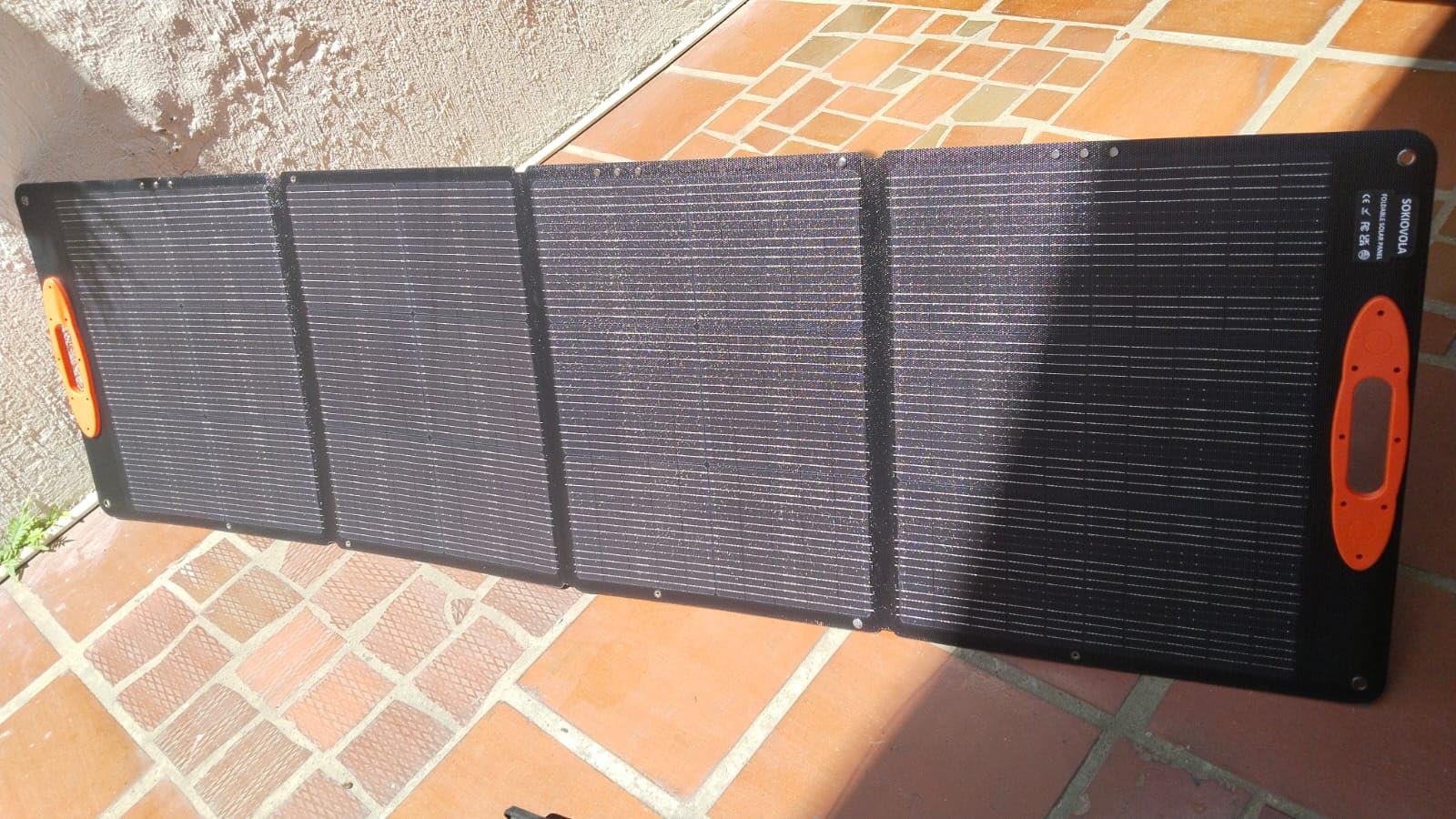
The 4-in-1 MC4 cable covers XT60, DC5521, DC7909/8mm and Anderson, and the box includes a 2m extension cable, three adapters, a carry bag and two mountaineering buckles for lashing the panel to a pack or a roof rack.
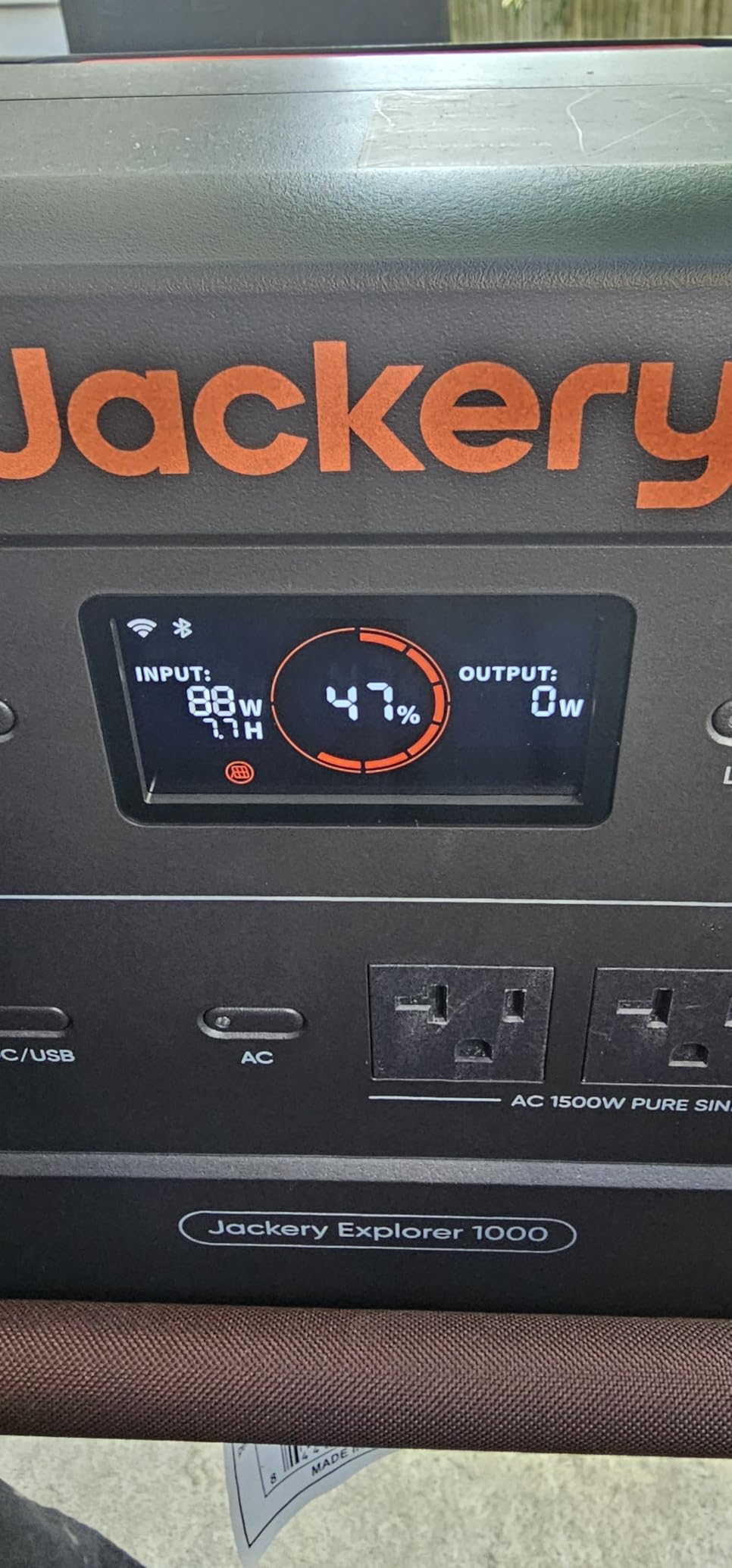
Compatibility is listed for Jackery, EcoFlow, Rockpals, BLUETTI EB70, EB55 and EB3A, and Anker 521 power stations.
Why weight matters more than wattage here
A 100W panel you can carry in one hand changes what a trip looks like. It means you can take solar with you to a backcountry site, a boat ramp or a remote cabin without planning a weight budget around it.
Owners like the magnet closures and the handle quality, and several point out the textured cell surface looks good as well as gripping well in rain.
The two weaknesses to plan for
The kickstand is the weak point. Owners report that the stand becomes hard to secure with its snaps over time, and the XT60 connection has no locking mechanism and can pull apart if the cable is tugged or a gust catches the panel.
The textured surface also collects dust and grit that is difficult to clean off, which matters at dry, dusty campsites.
8. Goal Zero Nomad 10 – Best for Emergency Kits and Storm Outages
Goal Zero Nomad 10, Foldable Monocrystalline 10 Watt Solar Panel with USB Port, Portable Solar Panel Backpacking, Hiking and Travel. Lightweight Backpack Solar Panel Charger with Adjustable Kickstand
10W monocrystalline
1.2 lb
Folds to 9.5 x 7.2 in
180-degree kickstand
Pros
- Built like a tank despite its size and light enough to clip to a backpack
- 180-degree kickstand adjusts smoothly for different surfaces
- Produces roughly 8W in direct sun and still trickles charge in cloud
- Durable matte cell material with a flexible-neck USB plug
Cons
- USB output caps at about 7.5W
- below the 10W rating
- USB port itself is not water resistant
- Centre fold does not hold itself open so it may need propping
The Goal Zero Nomad 10 is not a power panel. It is the thing you put in a first-aid kit, a truck glovebox and a hurricane supply box so that when the power goes out for four days, you still have a way to keep two phones alive.
At 1.2 lb it weighs almost nothing, and the 180-degree adjustable kickstand lets you angle it against a windowsill, a dashboard or a tent wall.
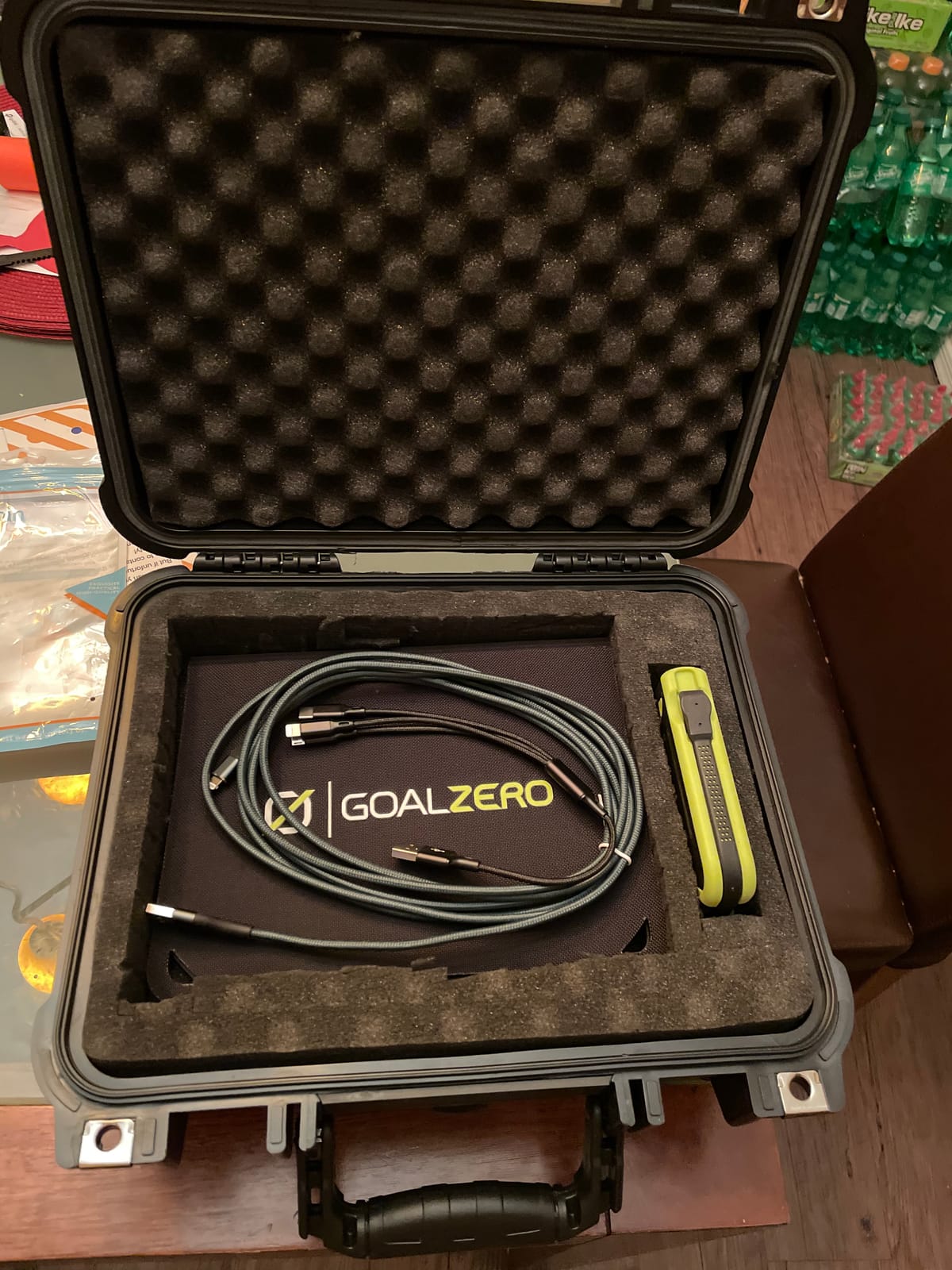
What owners consistently praise is the build. People describe it as solid, with a matte cell surface that shrugs off handling, and the 1-year warranty is on a product designed to sit in a pack for years before it is needed.
It also still manages roughly 8W in direct sun, and reviewers note it will trickle-charge a power bank through a window or on an overcast day, which is more than most panels this size will do.
When a 10W panel makes sense
Think of it as insurance, not infrastructure. A maintenance top-up for a GPS, a radio and a couple of phone batteries across a long power outage is exactly its job, and it costs you nothing in pack weight to carry one.
It is also a good companion to a larger panel, sitting in a window to add a trickle while your main array handles the heavy lifting.
What it will not do
The USB output caps at about 7.5W, below the 10W panel rating, and that port is not water resistant. Keep it covered when the weather turns.
The centre fold does not hold itself open, so it may need propping or securing. No carabiners are included either.
9. EF ECOFLOW 110W Portable Solar Panel – Best Match for EcoFlow Power Stations

EF ECOFLOW 110W Portable Solar Panel, Foldable with Carry Case
110W at 23% efficiency
IP68 waterproof
8.8 lb
Carry case doubles as kickstand
Pros
- Build quality feels solid and weatherproof
- Recovers roughly 80% of rated capacity in full sun
- Carry case doubles as the kickstand so there is one less piece to pack
- Plugs into EcoFlow River and Delta stations without fuss
Cons
- Cables exit the front of the panel causing bunching and self-shadowing
- Four-clip kickstand case is clunky to set up and tear down
- Needs full sun as any shadowed section reads zero input
If your power station is an EcoFlow River or Delta, the 110W panel is the least complicated pairing available. It connects directly with MC4 and reviewers describe it as plug-and-play with no fuss.
The build quality is the standout here. Owners talk about the solid heft, and that impression matches the IP68 waterproof and dustproof rating, which is one of the highest in this roundup.

Real-world recovery lands around 80% of rated capacity in full sun, which is a fair result for a 110W panel at 23% conversion efficiency. The cell surface is monocrystalline silicon.
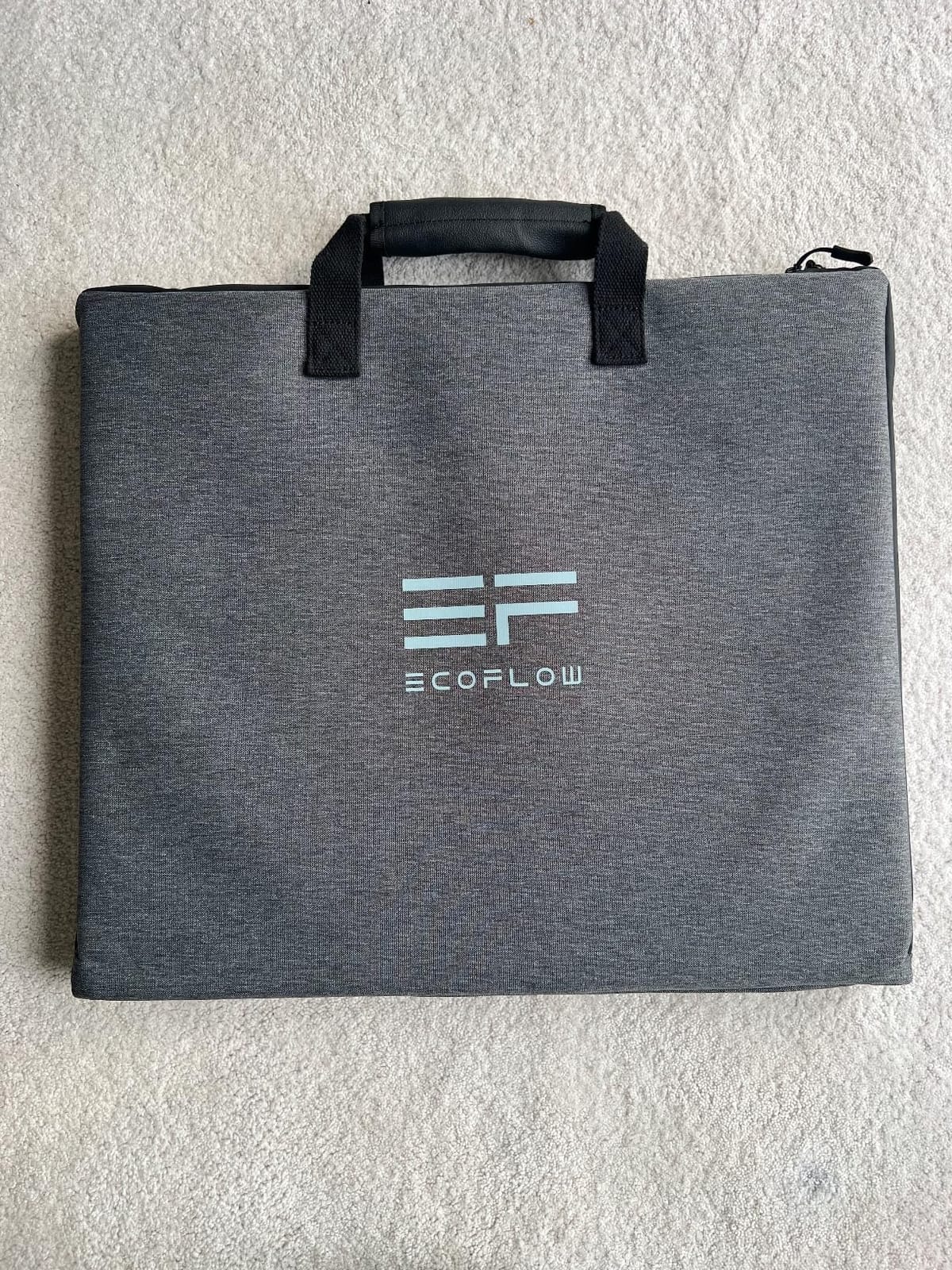
The design decision we like most is that the carry case doubles as the kickstand. There is one less piece to pack and one less thing to lose, and the case protects the cells on rough roads.
Why EcoFlow owners keep buying it
Compatibility is the whole argument. A matched panel and power station from the same maker removes the adapter question entirely, which is the most common reason first-time buyers return a portable solar panel.
The output is also more than enough for a weekend of phone charging, camera batteries and a small power station top-up.
Two design details worth knowing
The cables exit from the front of the panel, which causes bunching and lets the cables cast a shadow across the cells at certain angles. Route them carefully.
The clip-on kickstand case is clunky compared with built-in legs, and the panel needs full sun, since any partially shadowed section can cause it to report no input at all.
10. BLAVOR 10W Solar Charger – Best Budget Pick for a Phone Top-Up

BLAVOR 10W Portable Solar Charger (5V/2A Max), Small Foldable Solar Panel
10W at 24% efficiency
0.81 lb
Folds to 7.4 x 7.5 in
IPX4 splash resistant
Pros
- Lightest option here at under a pound
- with two carabiners included
- USB-C and USB-A outputs both deliver the same 5V
- ETFE film surface resists scratches
- Users report it holding a phone near full through a full day outdoors
Cons
- No internal storage so it only works in direct sunlight
- USB-C port is too loose to hold a cable reliably
- Ports face inward into the storage pocket so bulky contents block them
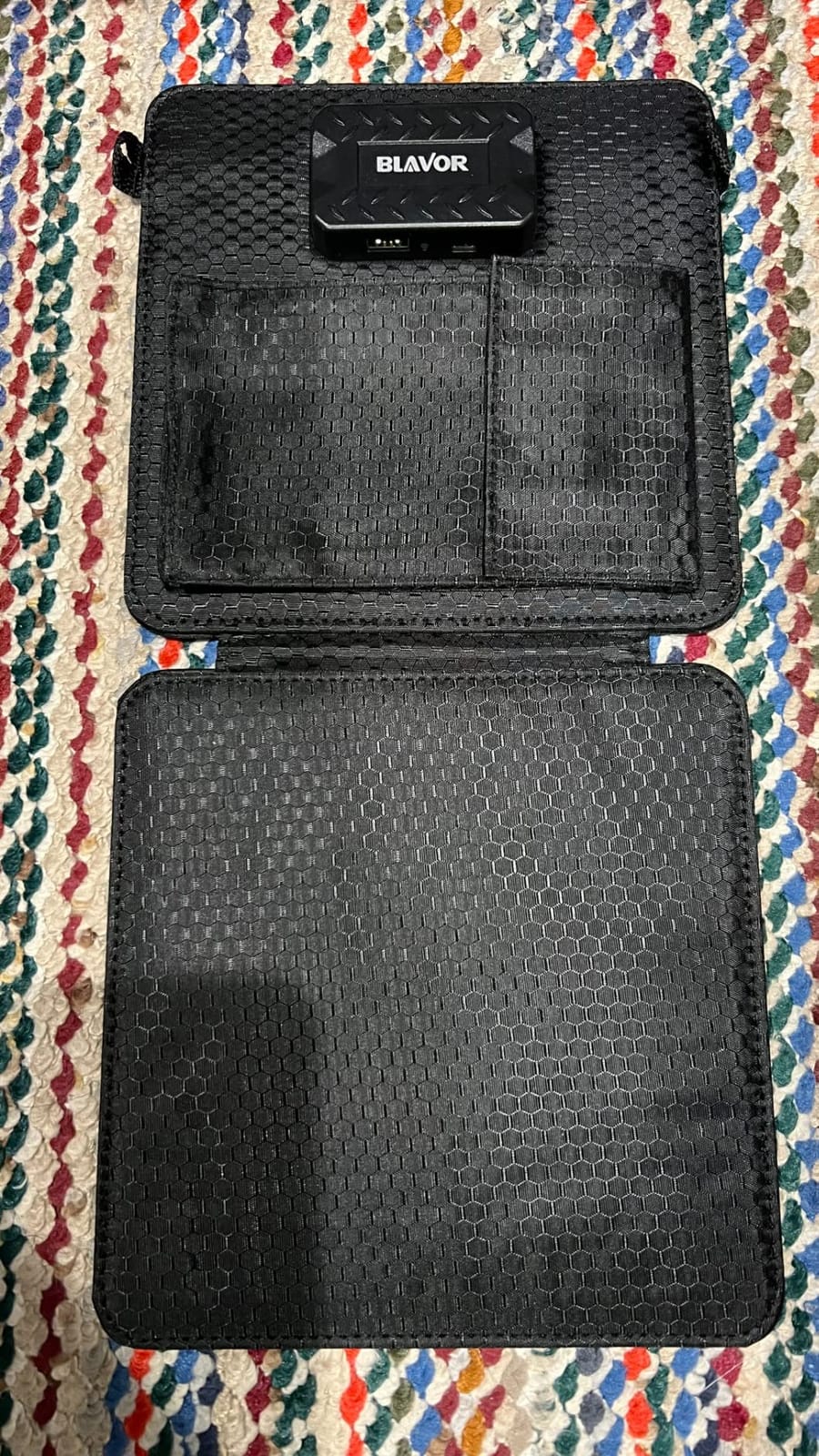
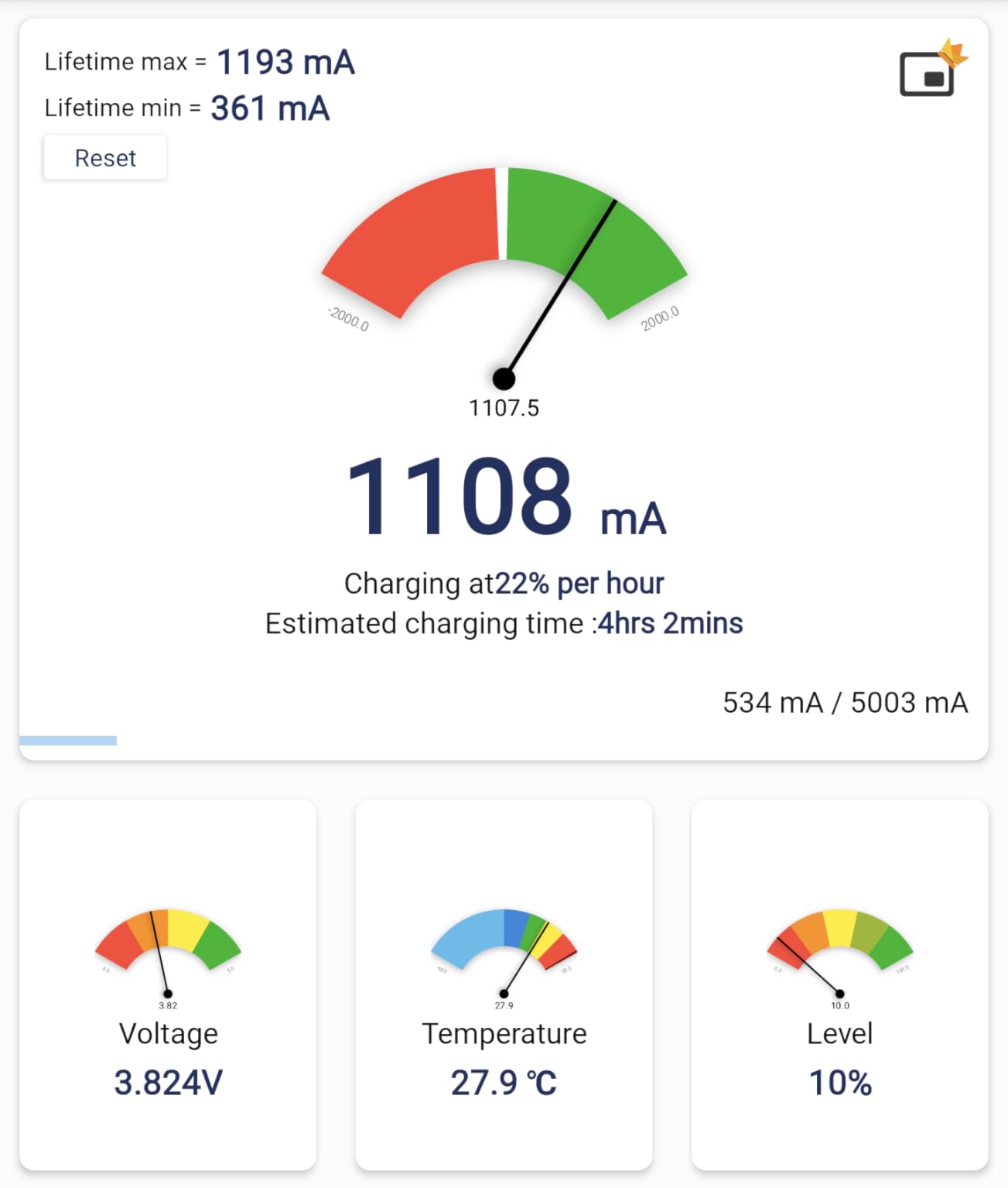
The BLAVOR 10W is the cheapest way to add solar to a pack, and at 0.81 lb with a 7.4 x 7.5 x 1 in folded size it is the smallest panel here. Two carabiners in the box mean it clips to a strap or a backpack daisy chain without buying anything else.
It is also the lowest-rated panel in our group at 4.1 stars, so treat it as a simple top-up rather than a serious power source.
The spec sheet claims up to 24% conversion efficiency on monocrystalline silicon with an ETFE high-transmission film surface, and the backing is wear-resistant oxford cloth. Both ports put out 5V, so one cable type covers most devices.
Users do report it holding a phone close to full charge across a full day outdoors, which is more useful than the headline wattage suggests when your trip is about navigation and messages.
Who should buy the cheapest option
Buy this if you want a phone top-up for a day hike, or a small solar panel as one item in a larger emergency kit. At under a pound it costs you nothing in pack weight to carry as a backup.
The ETFE surface handles abrasion well, which matters when it is rubbing against a pack strap all day.
The honest limitations
There is no internal storage, so it does nothing after dark. The USB-C port is loose enough that reviewers report it will not reliably hold a cable in place, and the ports face inward into the storage pocket so bulky contents can block access.
There are also 1-star reports of units that never produced any output, and some owners note that charging a phone directly can cause it to stop and restart, generating heat, so a power bank is the better target.
11. FlexSolar 100W Foldable Solar Panel – Best for Carrying Weight on a Duffel

FlexSolar 100W Foldable Portable Solar Panel Charger IP67 Waterproof
100W at 23%+ efficiency
Only 4.1 lb
Folds to 12.99 x 10.43 in
45W USB-C PD output
Pros
- Half the weight of comparable 100W panels and small enough for a milspec duffel
- Real-world output of 70 to 85W in good sun
- Padded carry case holds the panel and cable neatly
- Solid construction with no flimsy hinges or cheap fabric
Cons
- No built-in kickstand so it is hard to angle toward the sun
- No MC4 connector reduces compatibility with standard solar setups
- USB port can corrode if exposed to rain
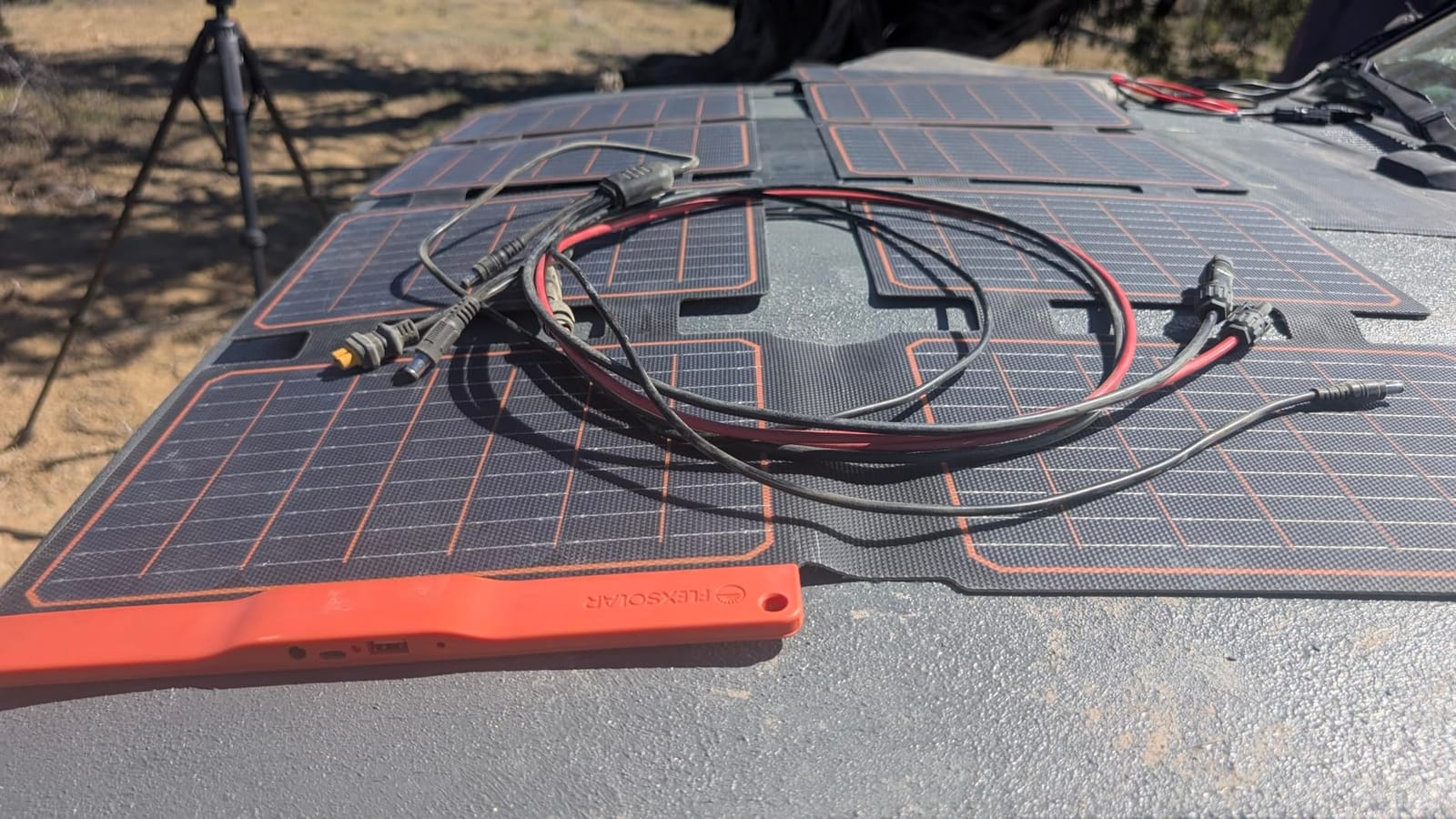
The FlexSolar 100W solves a specific problem well. At 4.1 lb with a 0.59-inch profile and a fold of 12.99 x 10.43 x 2.17 in, it is small and light enough to fit in a milspec duffel without eating the space you need for clothes.
Output lands around 70 to 85W in good sun from a 23%-plus monocrystalline build with E-Film lamination, which is a solid result for a panel this portable.
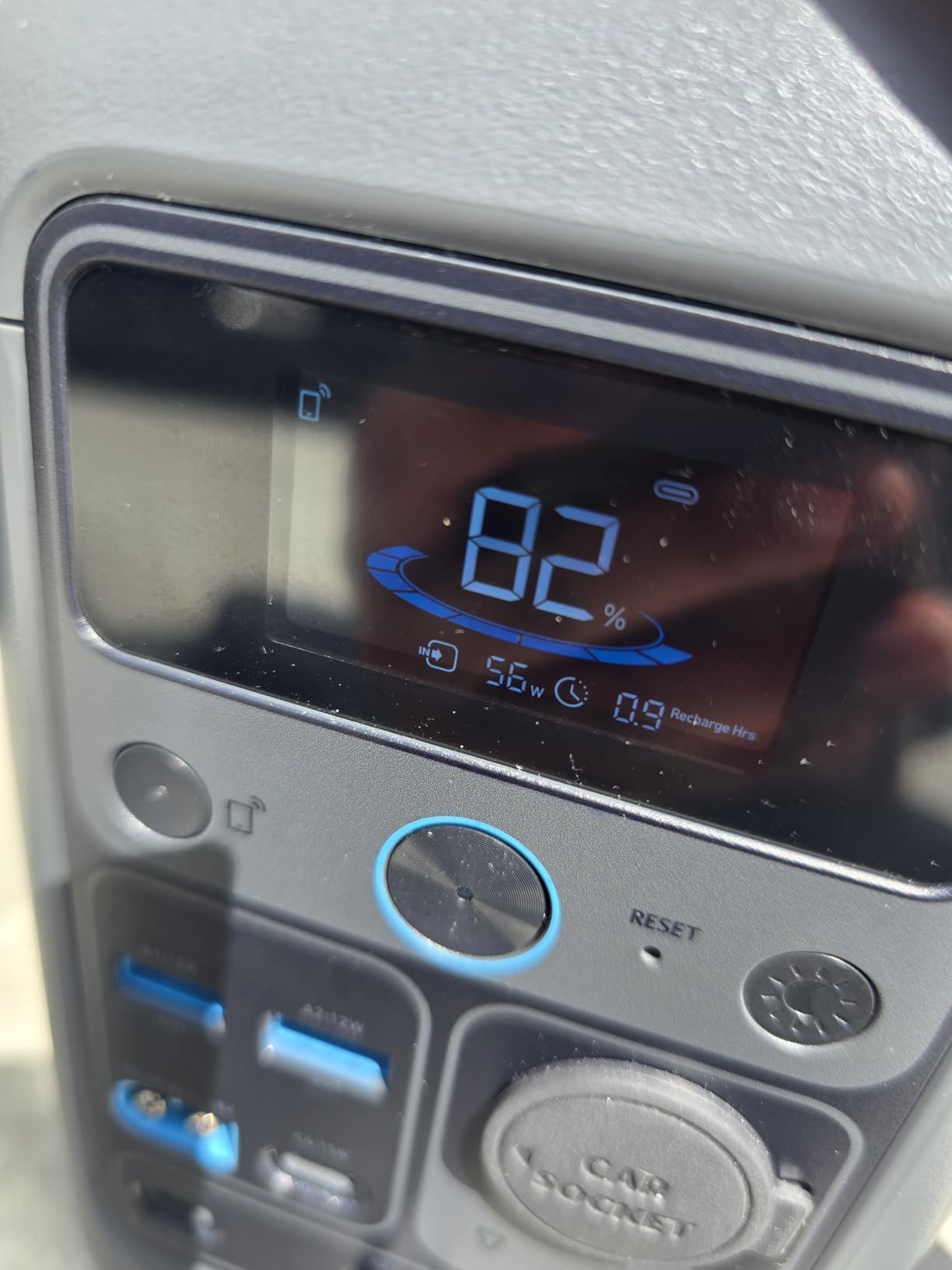
The charging hub is unusually generous. You get PD 3.0 USB-C at up to 45W, an 18W USB-A port and a 100W DC output, and the included 4-in-1 cable covers DC5521, DC7909, Anderson and XT60 so most power stations connect without an extra part.
IP67 waterproofing and dust protection make it an all-weather option, and one owner specifically noted that the cells are integrated inside the laminate rather than glued to nylon, which they rated as very rugged.
When 4.1 lb changes the decision
There is a real class of camper who wants a 100W panel but is not buying a 200W suitcase. This is that panel. The padded carry case holds the folded panel and the cable together neatly rather than letting the cable go missing in the car.
Owners also note solid construction, with no flimsy hinges or cheap fabric, which is where the weight saving did not come from.
What to watch for
There is no built-in kickstand, so you are propping a floppy multi-fold array against a rock or a vehicle and hoping the angle is close enough. Budget time for that.
There is also no MC4 connector, which limits flexibility with standard solar setups. The orange DC and USB circuitry housing runs hot under 60W-plus DC loads, and the USB port can corrode if it is exposed to rain and left unattended.
12. MHPOWOS 220W 40V Folding Solar Panel – Best High-Output Value

MHPOWOS 220W Portable Solar Panel 40V Folding Solar Panel for Power Station
220W at 40V
23.5% efficiency
7-in-1 connector
IP67 rated
Pros
- Best watts per dollar in the 200W-plus class
- 23.5% monocrystalline conversion with IP67 protection
- Four kickstands and thickened handles make positioning straightforward
- 7-in-1 solar connector covers most power station brands
Cons
- 40V output will not work with stations that have a lower voltage limit
- Power station input wattage caps can limit charging well below 220W
- Heavy at 8.5 kg for anything but vehicle-based camping
The MHPOWOS 220W is the value pick in the high-output class. It delivers 220 watts from 23.5% monocrystalline silicon with IP67 waterproof and dustproof construction, and owners rate it at 4.5 stars across 261 reviews with a 78% five-star share.
What you are buying here is watts per pound of budget rather than brand recognition. Buyers treat it as a cheaper alternative to the big names with no obvious downside once you check compatibility.
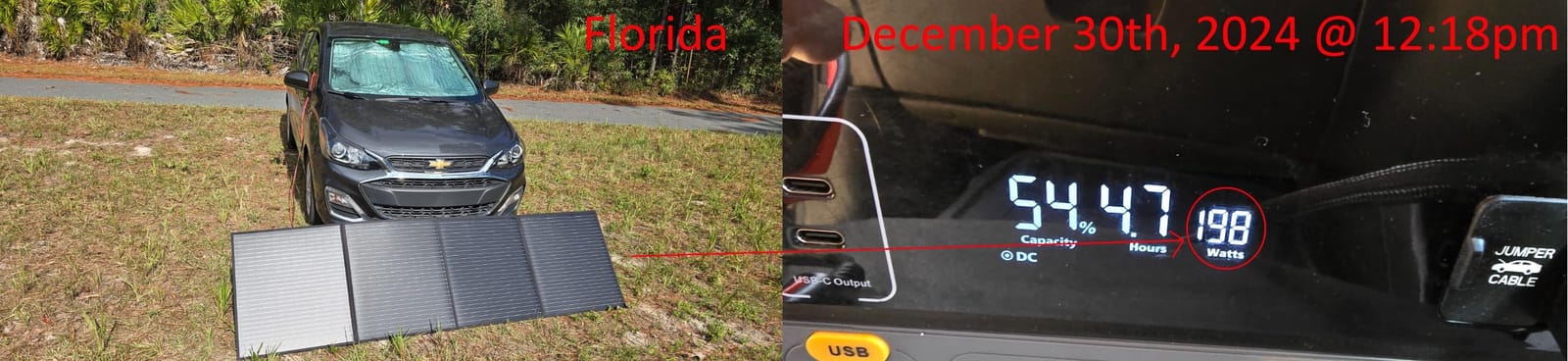
Four kickstands and thickened carry handles make positioning and carrying straightforward, and the 7-in-1 solar connector covers most power station brands straight out of the box. The fold is 23.5 x 21.25 x 2.3 in.
The same reviewers who praise the value are also consistent about one thing, and it is the check you must do before buying: the panel outputs 40V.
Check your power station’s voltage limit first
40V output will not work with power stations that have a lower maximum input voltage. Many smaller units top out around 24V, and connecting this panel to one of those will do nothing useful.
Even on a station that accepts the voltage, input wattage caps can limit real charging well below the 220W nameplate. Check the specification on your station before you order.
What you get for the effort
If your station takes 40V and has a high solar input cap, this panel is hard to argue with. It is the highest wattage figure in this roundup, it carries full IP67 sealing, and it works out well per watt in the 200W-plus class without the brand premium the big names carry.
At 8.5 kg, it is a vehicle-based camping panel and nothing else.
How We Picked the Best Foldable Solar Panels for Camping?
We ranked these panels the way a camper would actually use one. That means every judgement below comes from the combination of published specifications and the pattern of what owners report after living with the product, not from a spec sheet alone.
Power output carried the most weight. A panel that claims 200W but delivers 60W in real sun is a worse buy than a 100W panel that hits 85W, so claimed watts mattered less than efficiency percentage, cell technology and what owners report actually pulling.
Portability came second, measured by weight and folded dimensions rather than by how thin the marketing calls it. A panel you cannot lift with one hand is a car-camping panel, and we labelled it as such.
Durability and weather sealing took the third slot. IP ratings were read literally, and we distinguished between panels where the rating covers the whole unit and panels where only the cell surface is sealed.
Connector compatibility completed the ranking. This is the detail that decides whether a panel works with the gear you already own, and it is where the difference between a good buy and an adapter-shaped disappointment becomes obvious.
One caveat worth stating plainly. We did not bench-test these panels in a laboratory. What we have done is cross-reference the technical specifications with a large body of owner feedback, which is why we report real-world figures as reported by users rather than as our own measurements.
How to Choose a Foldable Solar Panel for Camping?
What wattage do you actually need?
Match the panel to the trip, not to the biggest number available. Roughly 30W to 100W covers phones, tablets, cameras and small power banks. For a portable fridge or a multi-day power station you want 160W to 200W and above. That division is the one search engines and forum answers keep landing on, and it holds up in practice.
The pairing question comes down to three numbers: how many watt-hours your power station holds, how many peak sun-hours you get, and how efficient the station is at turning panel input into stored energy. A rough guide for a clear day:
A 100W panel and a 500Wh station is a comfortable match, filling in roughly five to six peak sun-hours. A 200W panel and a 500Wh station drops that to around three hours. A 220W panel against a 1000Wh station takes closer to six. A 40W backpack panel against a 200Wh power bank is a weekend job, not a daily one.
You can also read our guide to solar panels for camping power stations for a deeper look at how panels behave with different battery chemistries.
Why your panel outputs less than advertised
Real-world output lands somewhere around 50% to 91% of the rated wattage, and that range is normal rather than a fault. Four things push it down: heat, because a panel sitting in full sun runs well above ambient air temperature and cells lose output as they warm; angle, because output scales with how closely the surface faces the sun; dust and grit, which layer up at dry campsites; and shade, where a single shadowed cell can drag a whole panel down.
Forum users also report measuring real output above the rating under genuinely ideal conditions, which tells you how much of the shortfall is conditions rather than the panel.
Five habits recover most of that gap. Reposition the panel every hour or two. Prop it up so air can move behind it. Keep it shaded while the sun hits the cells, using a long cable to the power station rather than the reverse. Wipe off dust with a damp cloth before you charge. And unshade the entire array, because partial shade is worse than a slightly worse angle.
Our pick of the best camping solar chargers covers the smaller panel formats in more detail.
Connector compatibility is the most overlooked detail
Buy the panel and the connector before the panel and the wattage. MC4 is the solar standard and the one most third-party setups assume. The 8mm and DC7909 round connector is common on Jackery and Goal Zero units. XT60 and Anderson appear widely on BLUETTI, EcoFlow and Renogy hardware.
Three panels in this roundup ship with a multi-adapter cable, which removes the problem entirely: the ZOUPW 100W has a 5-in-1 cable covering DC8020, XT60, Anderson, DC7909 and DC5521, the SOKIOVOLA 200W ships an MC4-to-5-in-1 set, and the MHPOWOS 220W uses a 7-in-1 solar connector.
The reverse of that is the trap. A panel with a proprietary solar connector, or one with a four-inch MC4 pigtail, can mean a second cable purchase before you ever plug anything in.
Car camping vs backpacking vs van life
Car camping is where the 200W class wins. If the panel lives in the vehicle and you are powering a fridge, a power station and a couple of laptops, the Renogy 200W and BLUETTI 200W both deliver, and the Renogy’s USB-C PD port removes the need for a separate wall adapter.
Backpacking changes the maths entirely. Under 2 lb, the FlexSolar 40W at 1.76 lb and the Goal Zero Nomad 10 at 1.2 lb are the only realistic options here, and both are top-up devices rather than power sources. If you are walking with a laptop, budget for a separate power bank and treat the panel as a backup.
Van life and RV rewards the high-output and IP-rated options. The SOKIOVOLA 200W with its IP68 sealing and RV mounting holes, or the MHPOWOS 220W if your station accepts 40V input, are the ones that make sense bolted to a roof or leaned against a windscreen for a week. Our picks for solar generators for camping pair well with either.
Durability, weather and camp maintenance
Read the IP rating carefully, because it is often quoted for the cell surface only. IP67 means dustproof and protected against immersion to a metre. IP68 adds continuous immersion protection. IPX4 on the BLAVOR is splash resistance only, and the FlexSolar 40W is IP67 on the panel while its junction box is not fully waterproof.
Rain while charging is generally fine on an IP67 or IP68 panel, but always check whether the rating covers the junction box and the connector end of the cable.
Two habits keep a panel working. Fold it only when it is dry, because trapped moisture in the laminate causes permanent spotting. And keep the power station itself out of the sun, running a long cable to the panel instead, because heat shortens battery lifespan.
For cold-weather trips, our guide to winter solar chargers for camping covers what low temperatures do to output.
Frequently Asked Questions
What are the best portable solar panels for camping?
The DOKIO 100W kit is the most complete option for car camping because it includes a PWM charge controller and a 9.84ft lead. The Renogy 200W leads on efficiency at 25% with N-type cells and adds a 45W USB-C port. For backpacking, the FlexSolar 40W at 1.76 lb is the only realistic carry weight. Rainy sites suit the IP68-rated SOKIOVOLA 200W.
What are some good folding solar panels for camping?
Good folding solar panels for camping come down to matching size to trip. 100W panels such as the ZOUPW and FlexSolar models suit weekend power station charging, while 200W panels such as the Renogy and BLUETTI handle fridges and multi-day runs. Panels below 50W are top-up devices for phones and small power banks rather than genuine power sources.
Are foldable solar panels any good?
Yes, with realistic expectations. Real-world output typically lands between 50% and 91% of the rated wattage because of heat, angle, dust and partial shade. Owners of the SOKIOVOLA 200W report around 170 to 190W from a 200W rating in full sun, and EF ECOFLOW users report roughly 80% recovery on a 110W panel.
What are the most efficient solar panels for camping?
The Renogy 200W and the SOKIOVOLA 200W both quote 25% conversion efficiency from 16BB N-type monocrystalline cells, the highest figures in this group. The BLAVOR 10W and FlexSolar 40W also claim 24%, and the ZOUPW 100W reaches 23.5%. Efficiency matters most on hot days, when it reduces heat-related losses.
What is the best portable power station with solar panels for camping?
For most campers, a 500Wh station paired with a 200W panel is the balanced setup, filling in three to four peak sun-hours. The BLUETTI 200W lists compatibility across most of that brand’s stations, and the EF ECOFLOW 110W plugs straight into River and Delta units. Always check your station’s solar input wattage and voltage caps before buying a panel.
Are foldable solar panels worth it?
They are worth it if you camp away from vehicle electric hookups regularly, or if you want storm-outage backup without a running generator. They are not worth it for weekend campgrounds with a power pedestal. A 10W panel such as the Goal Zero Nomad 10 makes sense purely as insurance in an emergency kit.
What is the 33% rule in solar panels?
The 33% rule is a rough guide that a panel needs roughly three times as much solar capacity in watts as the power station capacity in watt-hours to fill it in about one day of good sun. So a 500Wh station pairs with roughly a 150W panel, and a 1000Wh station pairs with roughly a 300W panel. Real charging takes longer because of losses.
Are portable solar power stations worth it?
They are worth it for campers who need more than a power bank, particularly for running a 12V fridge, a router or lights over a multi-day trip. Charge them before you leave so the battery is not the weak link on day one. Panels such as the MHPOWOS 220W and the SOKIOVOLA 200W fill a large station fastest of the options reviewed here.
Which Foldable Solar Panel Should You Buy in 2026?
Start with the DOKIO 100W kit if you are car camping and want one box that covers a 12V battery, a power station and your phone. It is the best foldable solar panel for camping overall because nothing else in this group ships with a charge controller and a three-metre lead as standard.
Move up to the Renogy 200W when a fridge is involved or when you want to charge devices and a power station from one panel. Go with the BLUETTI 200W instead if you already run BLUETTI hardware and prefer the cleaner single-brand connection. Pick the SOKIOVOLA 200W if rain is a regular feature of your trips.
For weight, the FlexSolar 40W and the Goal Zero Nomad 10 are the only panels here you can genuinely carry on foot. And before any of them, spend five minutes checking the connector and voltage limits on the power station you already own, because that one detail causes more disappointment than wattage ever will.