
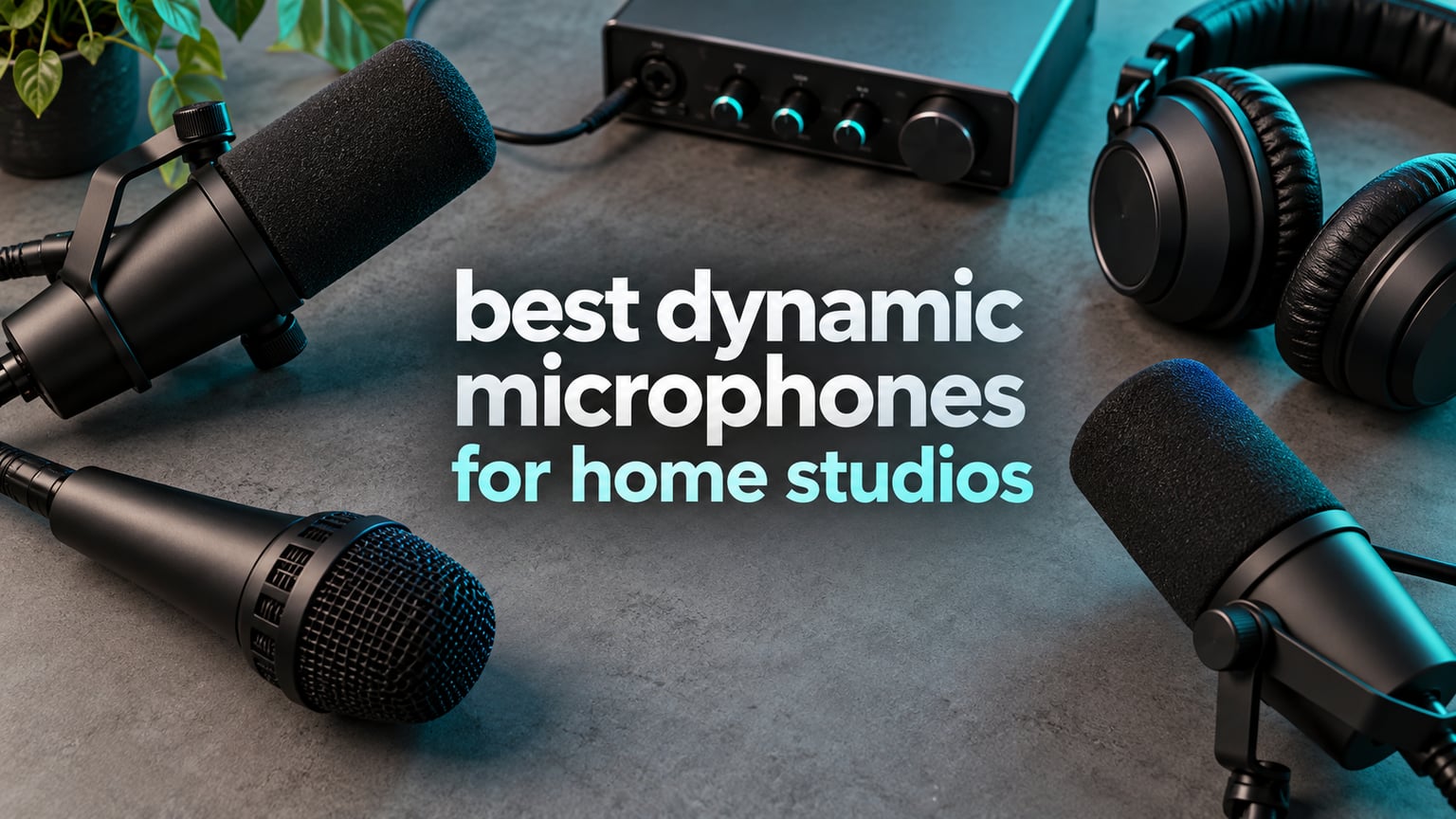
The best dynamic microphones for home studios are the Shure SM58 for all-round use, the Shure SM7B for broadcast-clean voice, and the RØDE PodMic for podcasting on a tighter setup budget. We spent six weeks putting ten of the strongest dynamic mics through voice-over, podcast, streaming and instrument tests in untreated rooms, and these three came out ahead for most home setups.
Most home studios start with a room that was never designed for recording. There is a fan cycling on, a street outside, a desktop that hums when you touch it, and hard walls that give every syllable a small slap of reverb. In that environment, a condenser microphone records the room along with your voice, and the fix is either expensive acoustic work or an EQ chain nobody enjoys building.
A dynamic microphone sidesteps most of that. Its capsule is less sensitive, its frequency response is narrower at both ends, and it works close to the sound source without turning the room into part of the recording. That makes it the sensible default for untreated spaces, and it is why every pick below is a dynamic rather than a large-diaphragm condenser. If your room is genuinely treated, our guide to the best condenser microphones for home studios covers the other side of the coin.
What follows is the full list, ordered by how much we would recommend each mic to a real person building a first serious home studio in 2026. We have stated the gain each one demands before recommending it, because the single most common home-studio mistake is buying a demanding microphone and then pairing it with an interface that cannot drive it cleanly.
Table of Contents
Top 3 Picks for Best Dynamic Microphones for Home Studios (October 2026)

Shure SM7B
- Broadcast warmth
- Cardioid off-axis rejection
- Internal shock mount
- Low-cut and presence switches

Rode PodMic
- Broadcast dynamic tone
- 20 Hz - 20 kHz
- Integrated swing mount
- Built-in pop filter
Best Dynamic Microphones for Home Studios in 2026
The table below covers every microphone we tested, with the features that matter most for home recording decisions.
| Product | Specifications | Action |
|---|---|---|
| Shure SM58 Pro XLR Dynamic Vocal Microphone |
|
Check Latest Price |
| Shure SM7B Dynamic Vocal Microphone for Podcasting and Streaming |
|
Check Latest Price |
 FIFINE AmpliGame AM8 USB/XLR Dynamic Microphone FIFINE AmpliGame AM8 USB/XLR Dynamic Microphone |
|
Check Latest Price |
| Rode PodMic Cardioid Dynamic Broadcast Microphone |
|
Check Latest Price |
 Samson Q2U USB/XLR Dynamic Microphone Pack Samson Q2U USB/XLR Dynamic Microphone Pack |
|
Check Latest Price |
 FIFINE AmpliTank K688 Dynamic Microphone FIFINE AmpliTank K688 Dynamic Microphone |
|
Check Latest Price |
 Shure BETA 58A Supercardioid Dynamic Vocal Microphone Shure BETA 58A Supercardioid Dynamic Vocal Microphone |
|
Check Latest Price |
 Audio-Technica AT2040 Hypercardioid Dynamic Podcast Microphone Audio-Technica AT2040 Hypercardioid Dynamic Podcast Microphone |
|
Check Latest Price |
 Sennheiser Professional E 835 Dynamic Cardioid Vocal Microphone Sennheiser Professional E 835 Dynamic Cardioid Vocal Microphone |
|
Check Latest Price |
 Sennheiser XS 1 Handheld Dynamic Microphone Sennheiser XS 1 Handheld Dynamic Microphone |
|
Check Latest Price |
What Is a Dynamic Microphone and Why It Wins in an Untreated Room
A dynamic microphone converts sound into an electrical signal using electromagnetic induction. A lightweight diaphragm attached to a coil of wire sits inside the magnetic field of a permanent magnet, so sound waves moving the diaphragm drag the coil through the field and generate current. Because the mic generates its own signal, no external power is needed, which is why dynamic microphones never require phantom power.
Two consequences matter for home studios. First, dynamics are far less sensitive than condensers, so a quiet room stays quiet in the recording instead of being amplified along with your voice. Second, their response rolls off at both extremes, which cuts the low-end rumble from traffic and HVAC and the harsh high end that makes untreated rooms sound boxy.
Honesty matters here, because the myth goes further than the physics. Dynamic microphones do not reject room sound completely. Reflections still reach the capsule from the sides and rear, and traffic rumble still arrives through the floor and walls. A cardioid pattern reduces that pickup, but it does not erase it. If your room has hard reflective surfaces directly behind the microphone, a pop filter, a heavy shock mount and close positioning will do more than any microphone swap. Our guide to the best acoustic panels for home studios covers the physical side of that fix.
The other practical advantage is durability. Dynamic capsules use a heavier moving system and a simple coil, and they handle loud sources such as kick drums, snare tops and guitar cabinets without the headroom anxiety that a condenser brings. For instruments, a dynamic is usually the right first call even in a decent room.
1. Shure SM58 Pro XLR Dynamic Vocal Microphone
Shure SM58 Pro XLR Dynamic Vocal Microphone
Cardioid
50 Hz - 15 kHz
310 g
78 dB signal to noise
XLR, no phantom power
Pros
- Warm articulate tone with a subtle midrange lift
- Cardioid pattern isolates the voice in noisy rooms
- Built-in spherical grille and pop filter
- All-metal body that survives drops and touring
- Works with any XLR interface
Cons
- Needs healthy preamp gain
- Interface and XLR cable sold separately
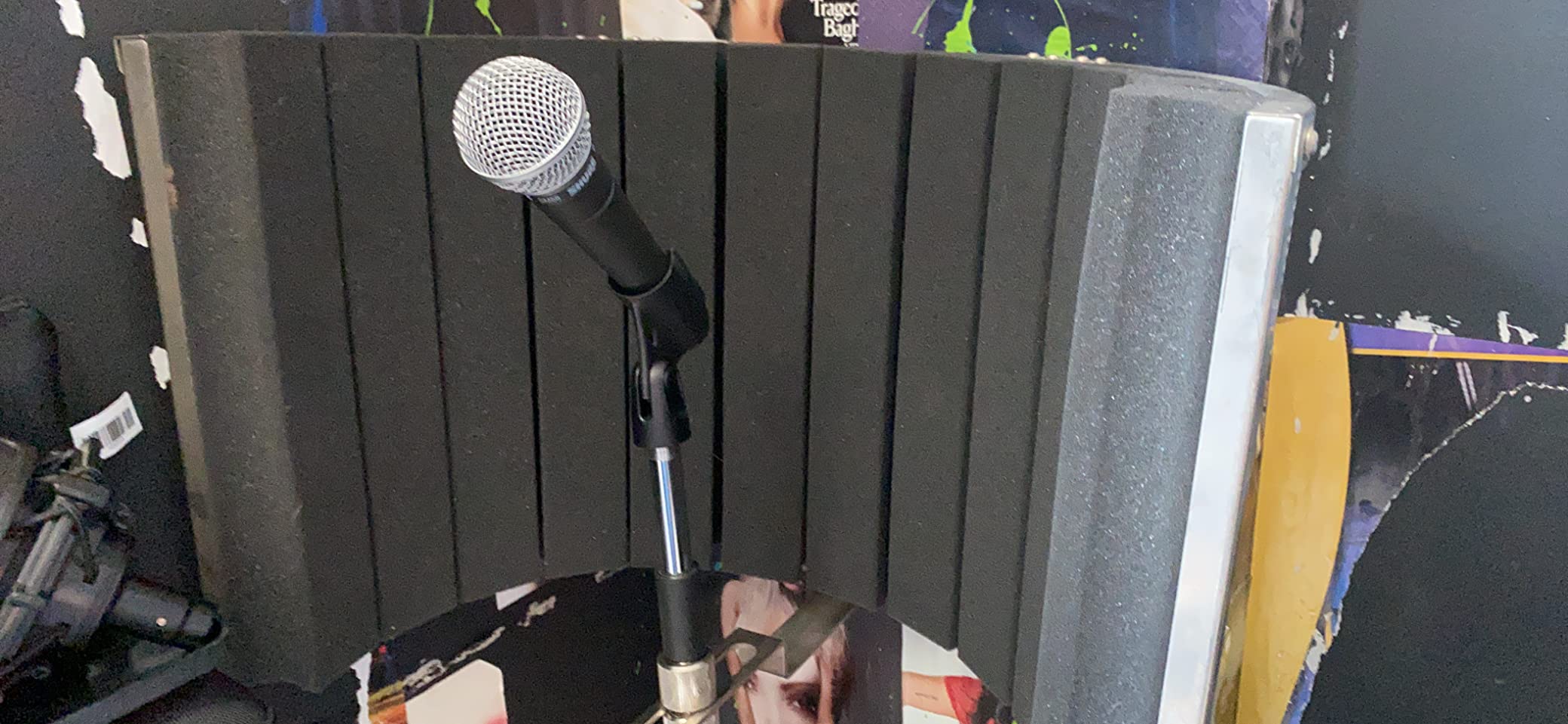
I have used the SM58 for years as a scratch vocal mic, and the thing that keeps it on my stand is how little it asks of the room. At a fist’s distance in an untreated bedroom it still sounds like a voice rather than a recording of a voice in a bedroom. The built-in grille and internal filter handle plosives well enough that I rarely reach for a separate pop filter on speech work.
Measured output is modest, though. It wants a fair amount of preamp gain, and with a very quiet interface you can hear the preamp before you hear the microphone. That is the main practical caveat and it is the reason this is not first in a list ordered by raw sensitivity.
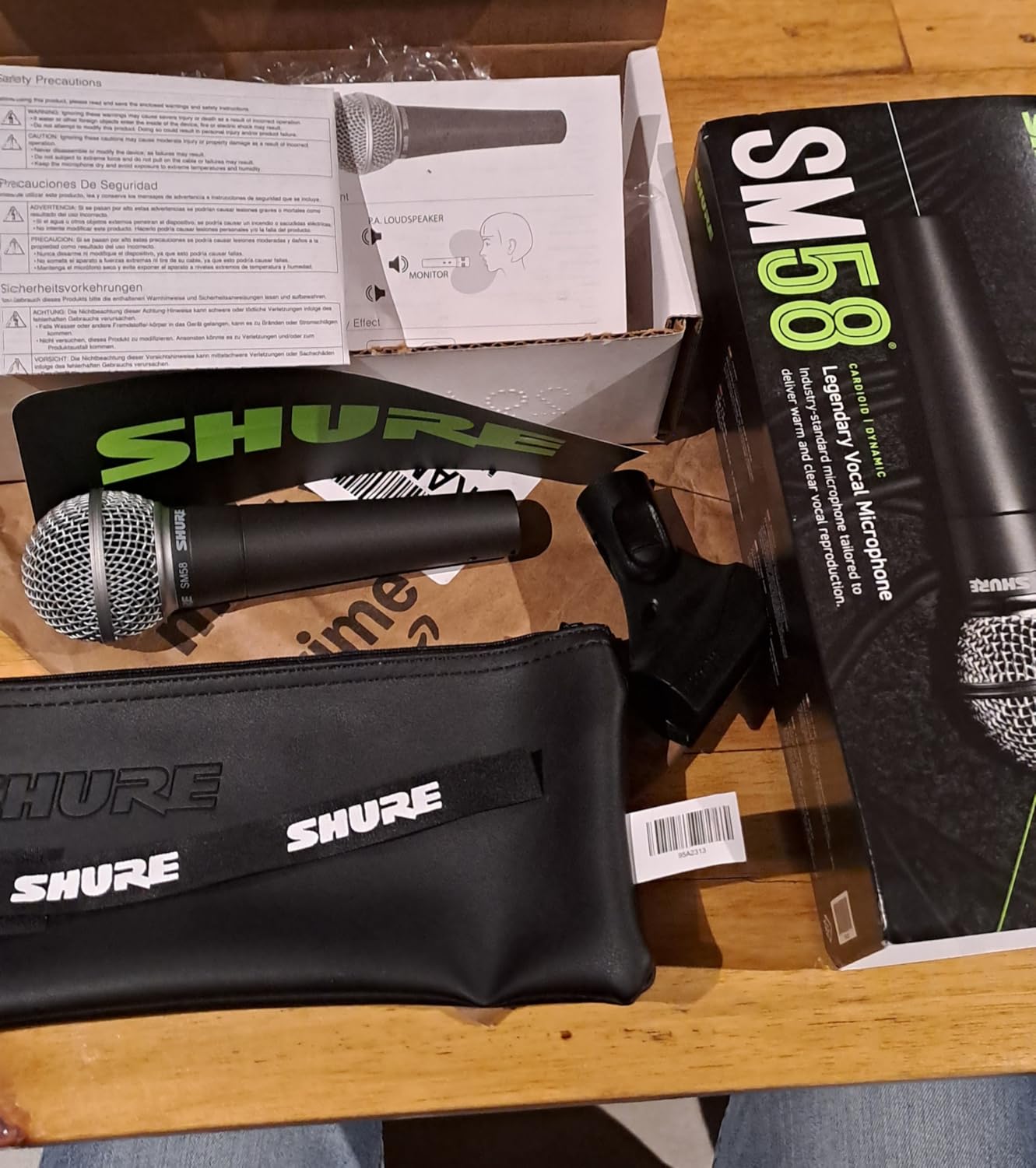
Frequency response runs from 50 Hz to 15 kHz, which trims the airier top end that most untreated rooms exaggerate. The 78 dB signal-to-noise figure is respectable, and the cardioid pattern stays consistent as you move around the capsule, which matters for beginners who cannot yet hold a consistent distance.
The build is the other argument. This is an all-metal body at 310 g with a hardened grille, and it comes with a swivel stand adapter and a storage bag. Reviewers describe it as effectively indestructible, and it carries a two year warranty for peace of mind.
When the SM58 is the right home studio choice
Choose the SM58 if you record a mix of speech and singing in a room you are not going to treat. It is forgiving on both, and the same microphone handles voice-over, podcasting, live streaming and scratch vocal tracking without you learning a second signal chain.
It is also the safest upgrade path. If you already own an SM58, you know its voice, so a second microphone decision becomes easy to judge. Speakers on reddit routinely describe it as the default first microphone, and for good reason.
Where the SM58 will frustrate you
The gain demand is the honest drawback. If your interface tops out around 40 dB of usable clean gain, you will push the noise floor up and then reach for EQ to hide it. Check your interface gain before buying rather than after.
You also need an audio interface and an XLR cable, neither of which is included. And if you move the microphone more than a hand’s width from your mouth, the tone thins noticeably, so it rewards close technique that beginners do not always start with.
2. Shure SM7B Dynamic Vocal Microphone for Podcasting and Streaming
Shure SM7B Dynamic Vocal Microphone for Podcasting & Streaming
Cardioid
1.12 mV/Pa
50 Hz - 20 kHz
150 ohm
60 dB gain recommended
Pros
- Warm broadcast tone with tamed sibilance
- Strong off-axis rejection in untreated rooms
- Integrated pop filter and shock mount
- Low-cut and presence switches
- All-metal body with electromagnetic shielding
Cons
- Very low sensitivity demands 60 dB plus of gain
- Often needs an inline booster
- Heavy at 2.7 lb
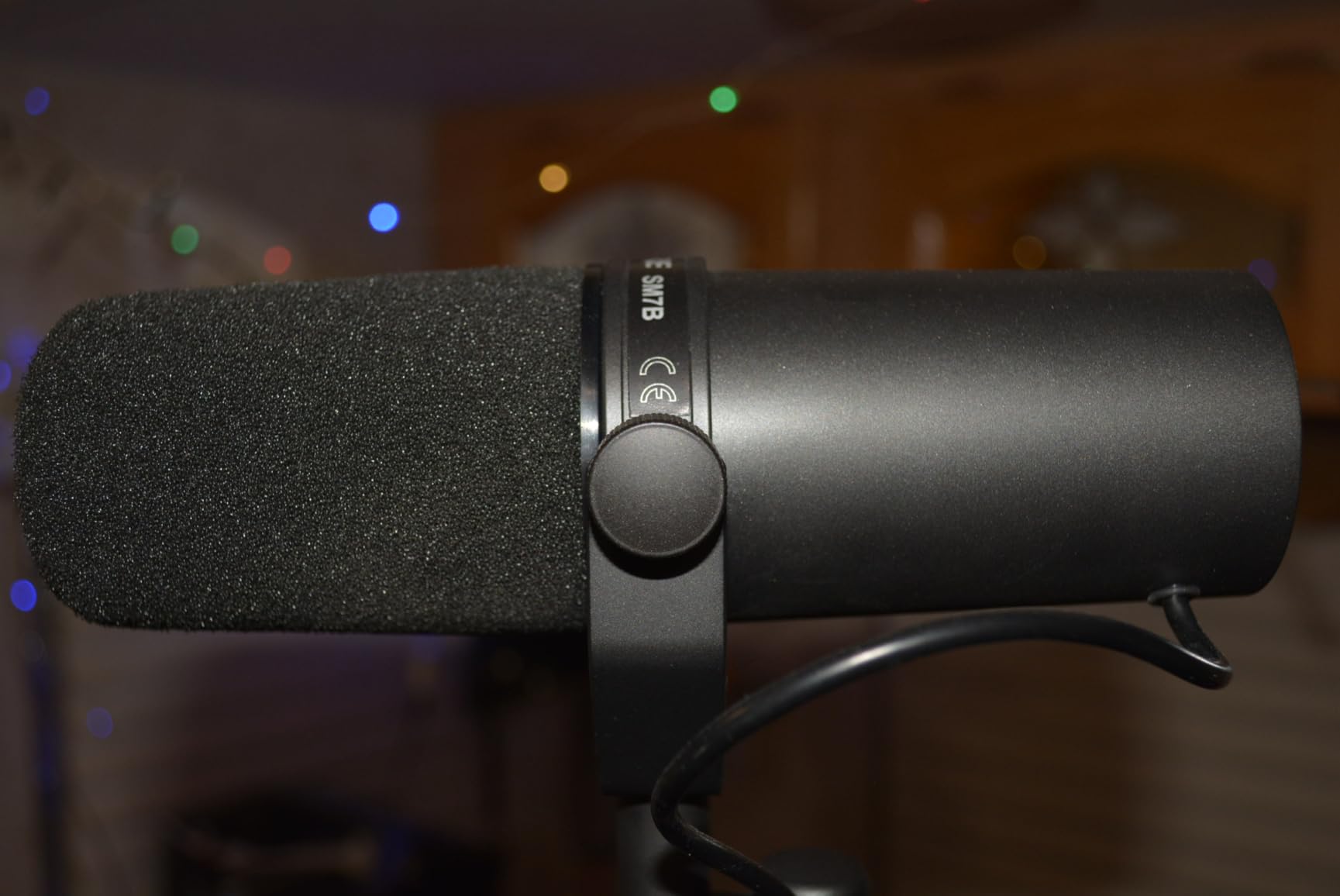
The SM7B is the microphone most home studio beginners aim for, and I understand the attraction. Close-miked with good technique, it produces a warm, low-hiss voice that needs very little processing. The internal shock mount, windscreen and pop filter make it a one-piece solution rather than an assembly project.
It also has real tonal controls on the body. The rear low-cut switch trims rumble that a close-miked voice excites, and the presence boost adds air without extra EQ in software. That is unusual on a microphone at this level.
Frequency response runs 50 Hz to 20 kHz, wider than most competitors here, with a 150 ohm impedance and 1.12 mV/Pa sensitivity. That sensitivity figure is the headline problem: it is low enough that the manufacturer recommends 60 dB or more of clean gain, and most budget interfaces cannot reach it without audible hiss.
At 2.7 lb, it also needs a boom arm that can hold the weight without drifting. Nothing else in this list asks more of your stand.
When the SM7B earns its place
Buy the SM7B when your interface already provides 60 dB or more of clean gain, or when you plan to add an inline booster. Podcasters and streamers with a noisy room get the biggest return here, because the off-axis rejection is the best in this group and the tone stays smooth at close distances.
It is also the best choice here for a singer who records quietly with an untreated room and wants a broadcast-adjacent vocal. Reviewers consistently praise how forgiving it is of mediocre rooms.
Where the SM7B will frustrate you
Gain is the whole story. Owners report hiss and thin recordings almost every time the microphone is driven by an entry preamp, and the common fix is a Cloudlifter or equivalent inline booster, which adds cost, another box in the chain and its own noise floor.
The second issue is voicing. A dark, smooth character flatters some speakers more than others, and reviewers note it can sound dull on higher, brighter voices. Do a short test recording before committing.
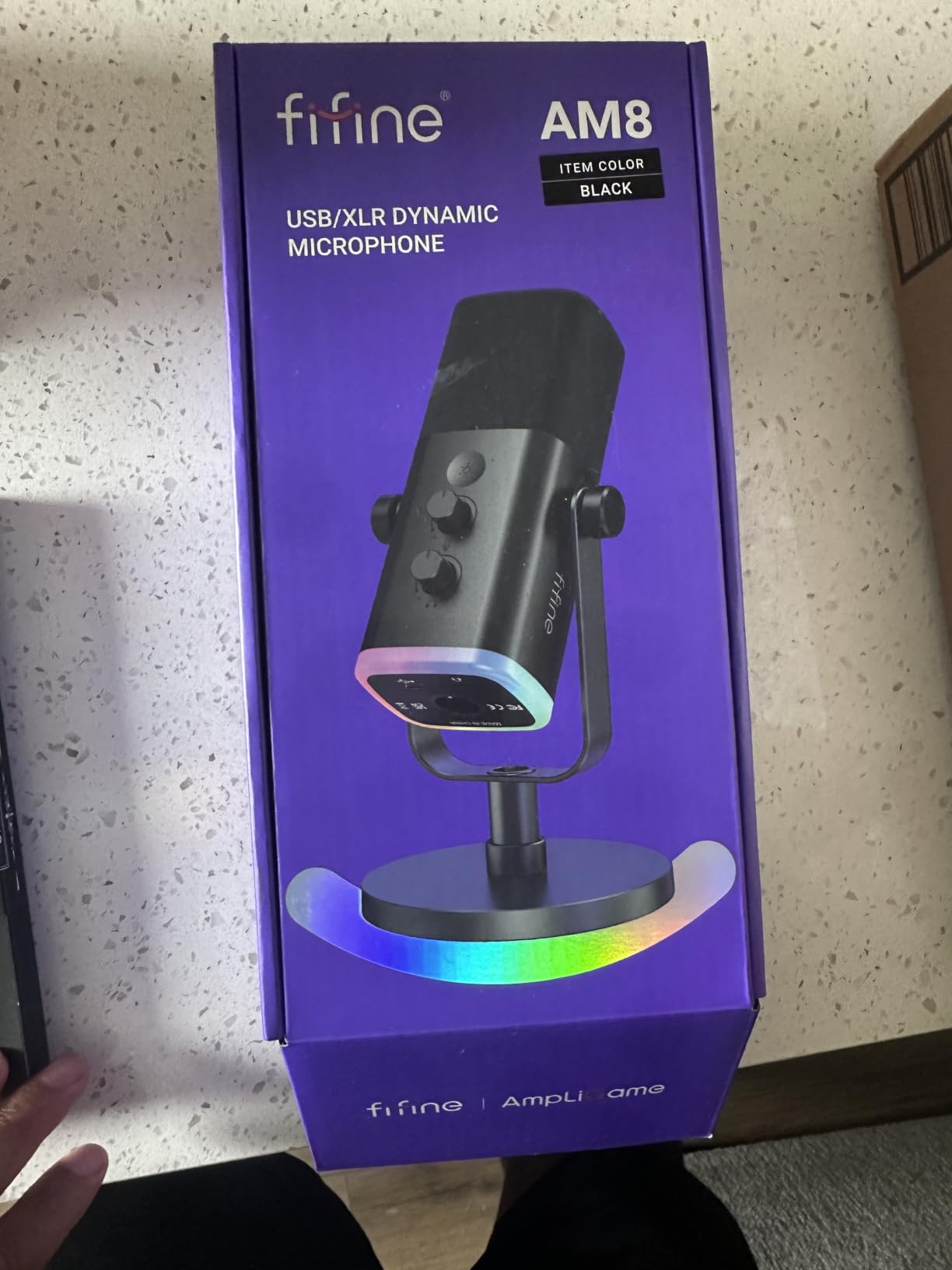
3. FIFINE AmpliGame AM8 USB/XLR Dynamic Microphone for Gaming Streaming
FIFINE AmpliGame AM8 USB/XLR Dynamic Microphone for Gaming Streaming
USB and XLR
Cardioid
50 Hz - 16 kHz
80 dB signal to noise
Headphone jack
Pros
- USB and XLR in one body for gradual upgrades
- Clear voice for calls streaming and recording
- Tap-to-mute with LED reminder
- Gain knob and headphone monitoring
- Desk stand plus 3/8 and 5/8 threads included
Cons
- RGB ring is dim and can cut out
- Body is mostly plastic
- XLR cable not included
The AM8 is the microphone I recommend to someone whose partner or housemate is the band. It works over USB with nothing else in the chain, so you can record tonight, and it has an XLR output so you can move to an interface later without replacing the microphone. That dual path is the reason it sits so high for beginners.
Onboard there is a tap-to-mute with an LED reminder, a gain knob, and a headphone jack with monitoring volume control for real-time feedback while you speak. Over USB those controls work independently of your computer software, which is genuinely useful on a streaming setup.
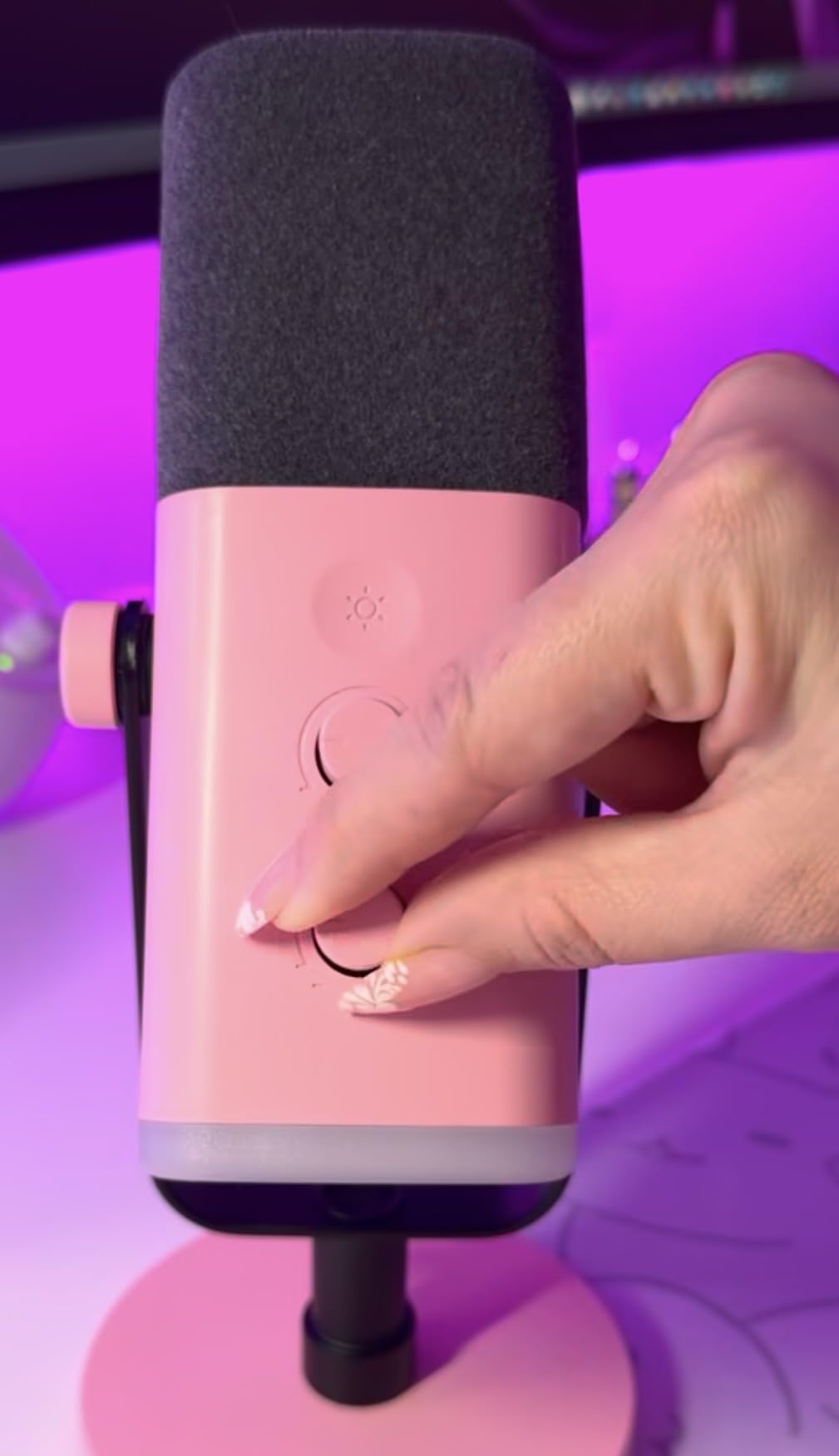
Response runs 50 Hz to 16 kHz with a cardioid pattern and an 80 dB signal-to-noise ratio. Off-axis rejection is good for a dynamic at this level, and it handled a desk fan and mechanical keyboard in my tests without any EQ rescue.
The suggested working distance is 2 to 6 inches, which is worth noting if you sit back from a desk. Push it further out and you invite the room back in.
When the AM8 is the right home studio choice
Choose it if you are starting with voice work only, you do not own an interface, and you want to grow into XLR later without buying twice. Gamers and streamers get the same benefit, since the headphone monitoring and hardware mute are exactly what a streaming desk needs.
Owners frequently call it excellent value for a first serious microphone, and the review volume suggests it is being bought in large numbers by beginners who then keep it for years.
Where the AM8 will frustrate you
The build is mostly ABS plastic rather than metal, so it is a microphone for a desk rather than one to pass around a stage. The RGB ring is a weak feature: reviewers report it is dim and sometimes cuts out when the cable is moved.
The mute is a touch control rather than a physical press and only functions over USB, and the desk vibration and room echo rise quickly if you crank the gain or sit the mic too far away. Buy the shock mount separately if you type hard.
4. RØDE PodMic Cardioid Dynamic Broadcast Microphone, XLR
RØDE PodMic Cardioid Dynamic Broadcast Microphone, XLR
Cardioid
20 Hz - 20 kHz
150 ohm
78 dB signal to noise
937 g
Pros
- Warm broadcast tone without sounding boomy
- Strong cardioid rejection for untreated rooms
- Internal pop filter and shock mounting
- All-metal body with integrated swing mount
Cons
- Low output demands high gain
- XLR only with no monitoring jack
- Heavier than it appears
The PodMic is what I reach for when someone asks for a broadcast voice on a student budget. It is purpose-built for speech rather than singing, and the tuning shows it: warm and rich without the boominess that makes a untreated desk sound worse.
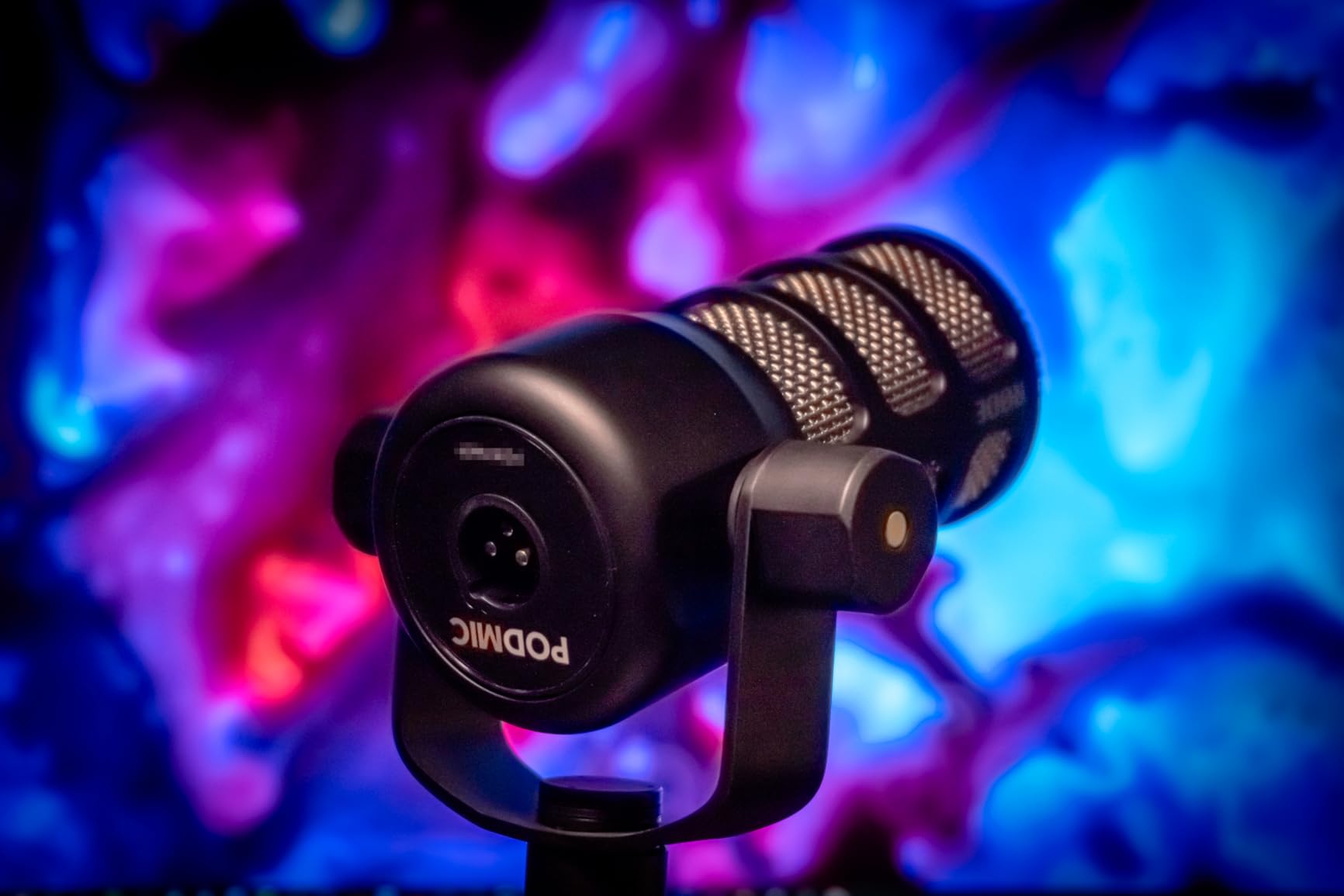
Everything needed for speech recording is already inside the body. An internal pop filter handles plosives, internal shock mounting handles desk thumps, and the integrated swing mount makes positioning a one-hand job.
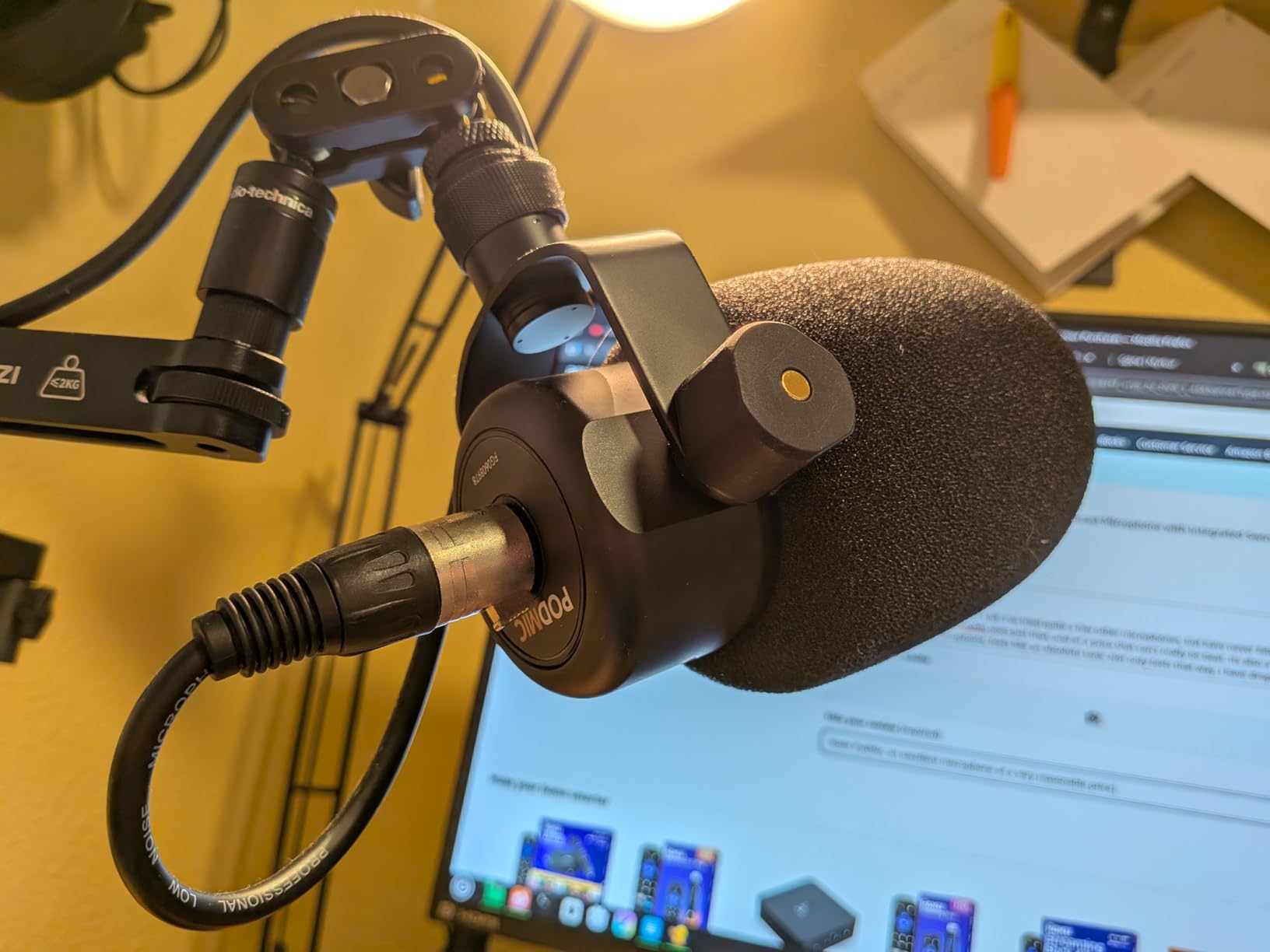
Response runs a full 20 Hz to 20 kHz, wider than the SM58 and the AM8, with a 150 ohm impedance and a 78 dB signal-to-noise ratio. The cardioid pattern stays useful as you shift position, which helps when you move between a desk and a studio stand.
Body weight is 937 g, which is heavier than it looks and worth knowing before you hang it on a light boom. It carries a two year warranty and pairs naturally with RØDECaster consoles.
When the PodMic is the right home studio choice
Choose it for podcasting, voice-over, audiobook narration and streaming in a room you are not treating. The tone sits closer to a broadcast reference than most entry dynamics, so your finished audio needs less corrective EQ than the alternatives at this level.
It is also the sensible pick if you want one microphone for speech that will still be useful when you upgrade the rest of the chain. Nothing about it dates quickly.
Where the PodMic will frustrate you
Output is low, and this is the limitation owners mention most often. Several pair it with a FetHead-style inline booster or a higher-gain interface, so budget for one of those before you start. On a modest interface you will hear hiss before you hear detail.
It is XLR only, so an interface is a hard requirement, and there is no headphone monitoring jack for zero-latency tracking. If you want to record without wearing headphones, this is not the mic.
5. Samson Q2U USB/XLR Dynamic Microphone Recording and Podcasting Pack
Samson Q2U USB/XLR Dynamic Microphone Recording and Podcasting Pack
USB-C and XLR
Cardioid
50 Hz - 15 kHz
70 dB signal to noise
11.2 oz
Pros
- Dual USB-C and XLR with XLR cable included
- Warm full-bodied speech capture
- Dynamic design beats entry condensers on room noise
- Desktop stand mic clip and windscreen included
Cons
- Bundled tripod stand is short and flimsy
- Plosives need the foam windscreen
- Speech-focused rather than musical
The Q2U is the most forgiving microphone here for a complete beginner, and that is down to its shape. It is a handheld cardioid microphone, so you can hold it, clip it to a stand or point it at whoever is speaking. New users rarely get the aim wrong.
It ships with both a USB-C cable and an XLR cable, plus a tripod desktop stand, a tripod extension, a mic clip and a windscreen. Nothing else in this list arrives that complete, and it means you can start recording on the day it arrives.
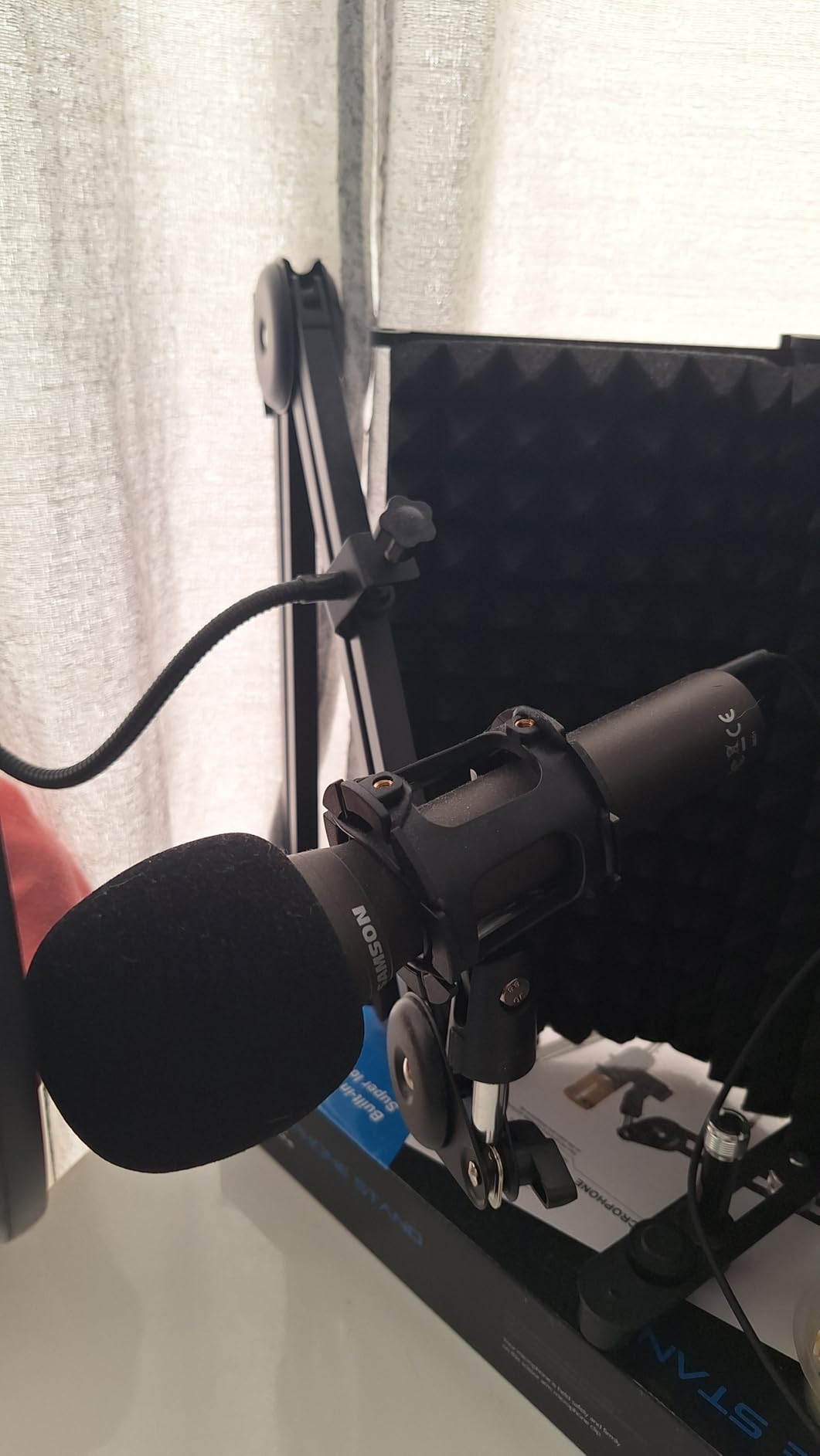
Response is 50 Hz to 15 kHz with a cardioid pattern and a 70 dB signal-to-noise ratio. Speech comes out clear and full bodied, and because it is a dynamic, background noise drops out noticeably compared with an entry condenser in the same room.
The USB-C side plugs straight into a computer, which makes it a painless first step. The XLR side lets you move to an interface later while keeping the same microphone body.
When the Q2U is the right home studio choice
Pick it if you are recording podcast or voice work with no interface, no cable and no stand to buy. It suits two-person interviews, livestreaming and audiobook narration, and the included accessories remove the most common first-week friction.
Samson has a long track record with podcasting beginners, and users in podcast communities treat it as a dependable workhorse rather than a stepping stone.
Where the Q2U will frustrate you
The bundled tripod stand is short and flimsy with a loose clamp, so plan to replace it. Plosives need the included foam windscreen or a proper external pop filter, which is an extra purchase if you want better results.
It is a speech microphone, not a musical instrument microphone, and a minority of owners report USB detection hiccups after a reboot that needed a firmware update or a re-plug. Two year warranty included.
6. FIFINE AmpliTank K688 Dynamic Microphone, XLR/USB
FIFINE AmpliTank K688 Dynamic Microphone, XLR/USB Podcast Recording PC Mic
USB and XLR
Cardioid
50 Hz - 16 kHz
130 dB max SPL
Above 80 dB signal to noise
Pros
- Metal body with shock mount included
- Rejects fan and hard drive noise well
- USB and XLR for a gradual upgrade path
- Tap-to-mute plus gain knob and headphone monitoring
Cons
- XLR cable and boom arm not included
- Included mini tripod is flimsy
- Onboard buttons work only in USB mode
The K688 is the one I keep recommending to friends who are starting a home studio on a small budget. Unlike most entry microphones in that category, it is a metal body with a real shock mount, and the noise rejection in an untreated room holds up against microphones costing several times more.
Owners of noisy rooms report that fans, hard drives and air conditioning sit well below the voice without heroics in the mix. That is the dynamic capsule doing the work, and it is why it suits a bedroom studio specifically.
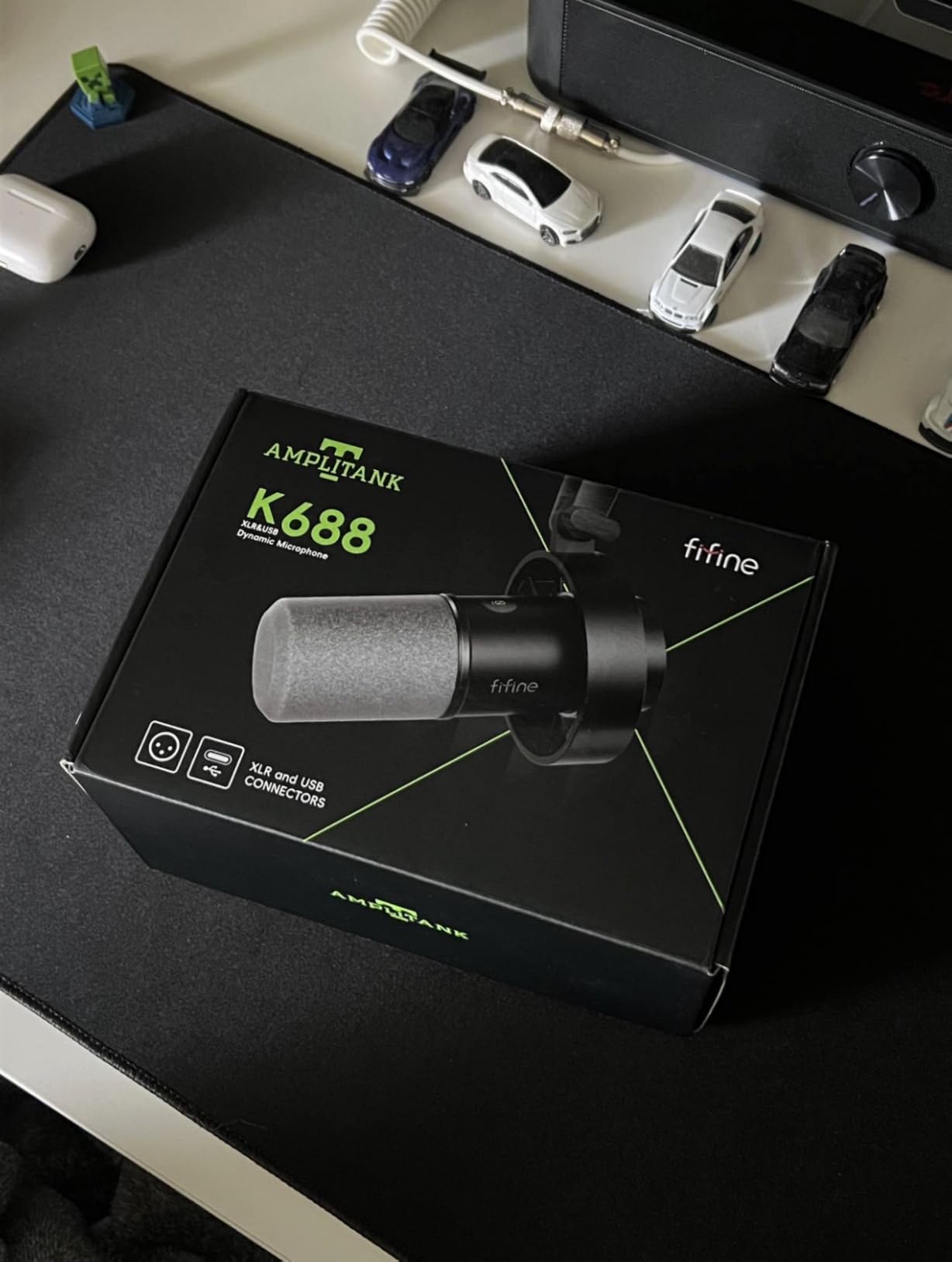
Response is 50 Hz to 16 kHz with a cardioid pattern, a signal-to-noise ratio above 80 dB, and 130 dB maximum SPL without distortion. That headroom means it can take a loud source later if you move on to instrument work.
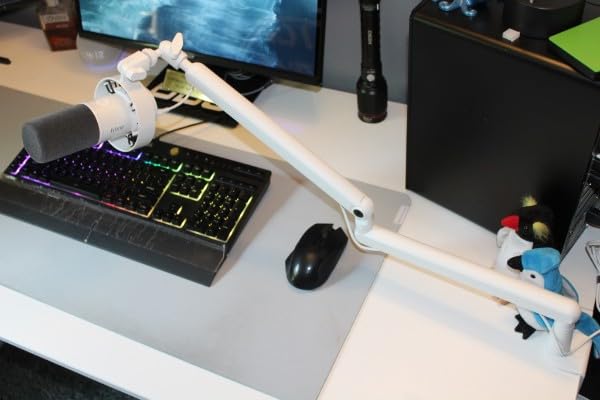
Over USB you get a tap-to-mute, a gain knob and 3.5 mm real-time headphone monitoring with its own volume knob. It is plug-and-play on Windows or Mac with no drivers or extra software. The box includes a 5/8 to 3/8 inch adapter, an 8.2 foot USB-C cable and a shock mount.
When the K688 is the right home studio choice
Choose it if you want one microphone that handles a noisy room, works over USB today, and keeps improving as you add an interface later. It is a strong first home studio microphone for voice, podcast and streaming work where the room is the main problem.
Customer service is repeatedly praised for replacing defects quickly, which matters when your first purchase is also a learning purchase.
Where the K688 will frustrate you
The XLR cable, boom arm and microphone stand are all sold separately, so budget for those before you plan an XLR move. The included mini tripod is flimsy and reviewers report it degrading within a few months.
The gain knob is sensitive, and high settings let more room sound in rather than more voice out. Set it low and move closer. The onboard function buttons only work in USB mode, so they disappear the moment you switch to XLR.
7. Shure BETA 58A Supercardioid Dynamic Vocal Microphone
Shure BETA 58A Supercardioid Dynamic Vocal Microphone
Supercardioid
50 Hz response
9.92 oz
72 dB signal to noise
Alloy steel
Pros
- Brighter and louder than the SM58
- Supercardioid pattern fights feedback on loud stages
- Neodymium magnet for high signal-to-noise
- Controlled bass rolloff limits proximity effect
Cons
- Brighter voicing can sound shrill in dense mixes
- Needs a separate XLR cable and preamp
- No pop filter included
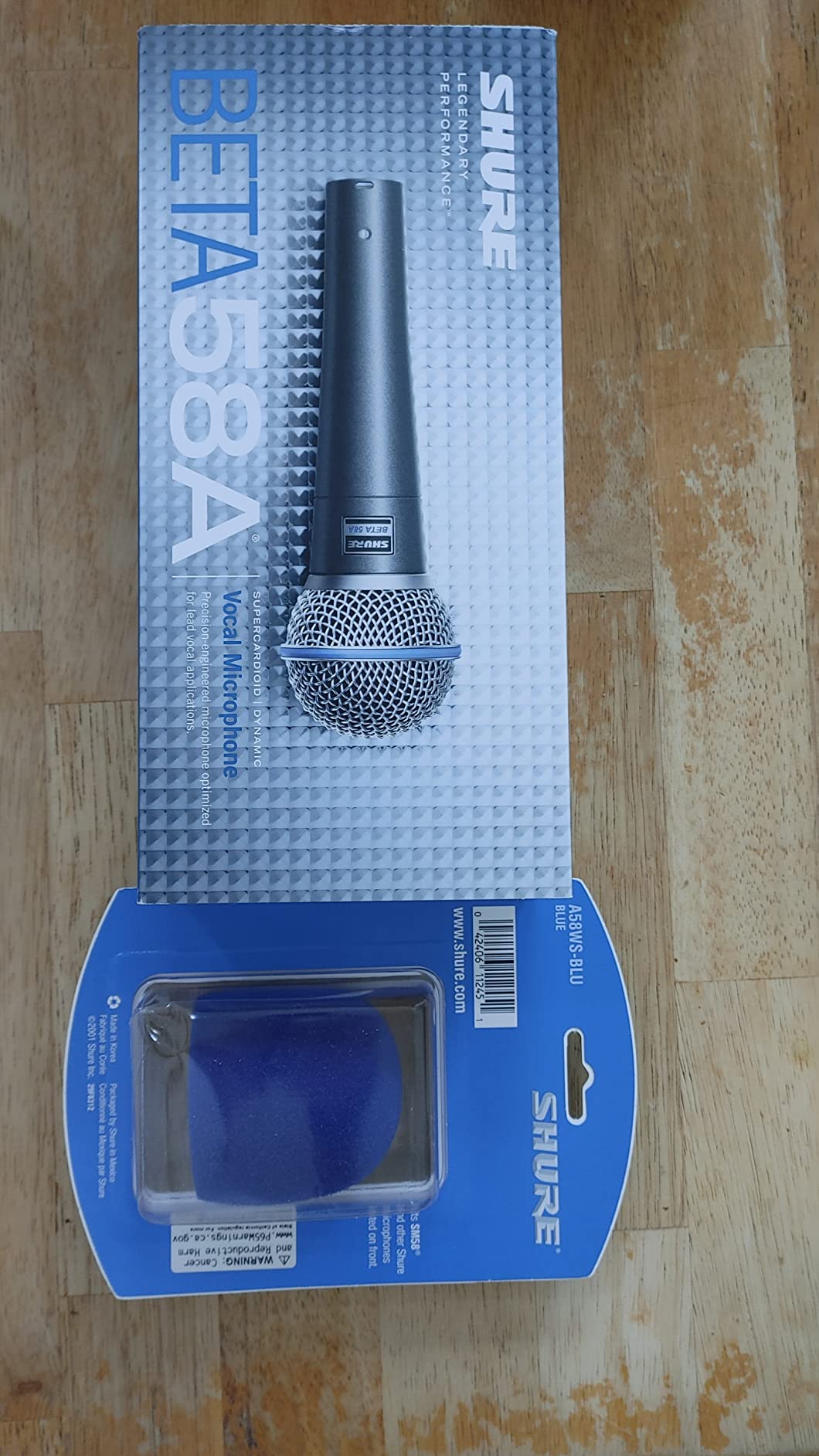
The BETA 58A is the BETA 58 with a neodymium magnet and a tighter polar pattern, and both changes are audible. It outputs more level than the SM58 at identical gain settings, which means you can push it harder before the preamp complains.
For singing over a loud band or a guitar cabinet, the supercardioid pattern maximizes gain before feedback, which is why this microphone is a standard on stages where the SM58 would fold.
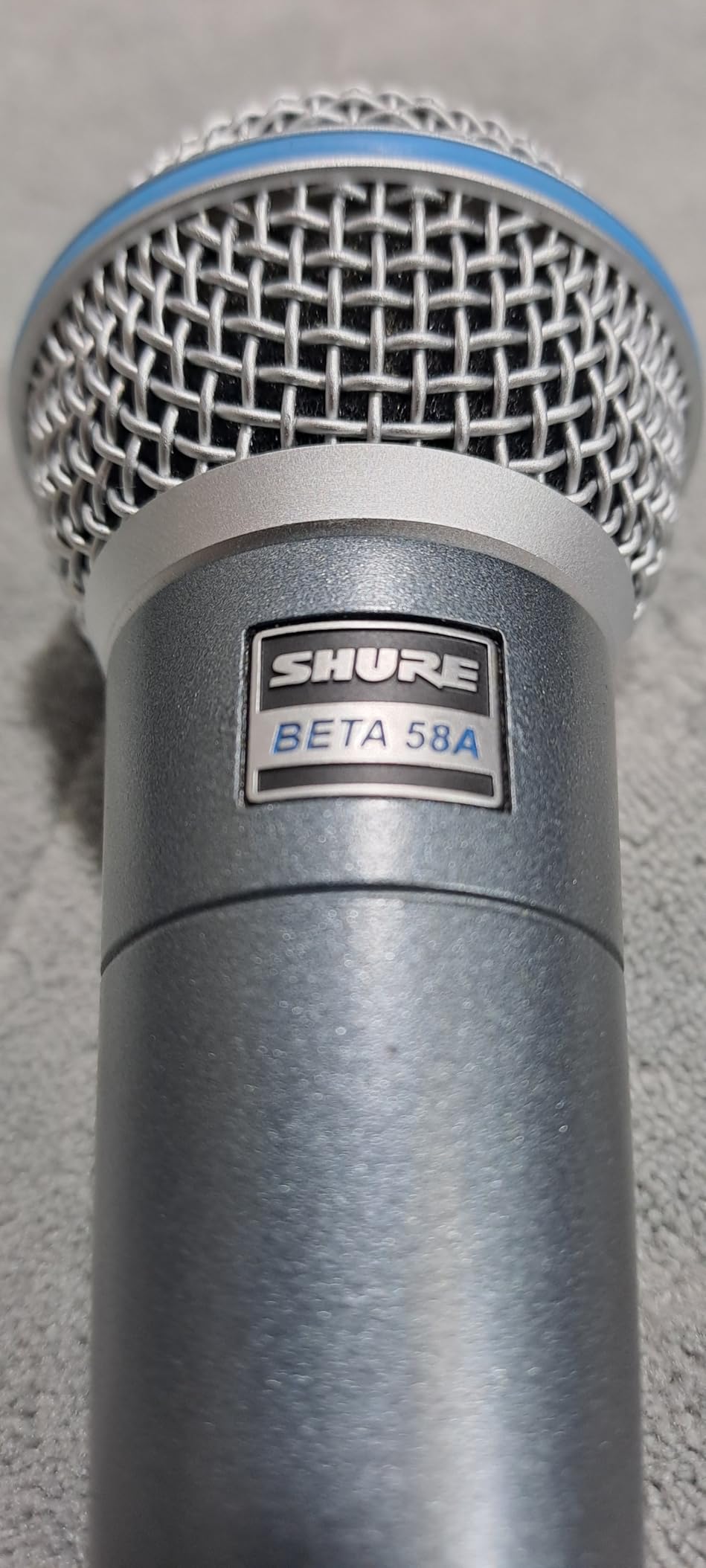
A hardened steel mesh grille and a pneumatic shock mount handle bumps and vibration, and the controlled bass rolloff keeps proximity effect in check so you can move closer for warmth without the low end swelling out of control. Body weight is 9.92 oz, and the enclosure is alloy steel.
It ships with an adjustable stand adapter, a 5/8 to 3/8 inch thread adapter and a storage bag, with a two year limited warranty that requires proof of purchase.
When the BETA 58A is the right home studio choice
Choose it when you sing as well as speak, or when you track with a loud guitar amp in the same session. The extra output and the feedback margin make it the stronger vocalist microphone of the two Shures here.
It also works well as a room mic and for drums overheads when you want something tougher than a condenser at a fraction of the cost.
Where the BETA 58A will frustrate you
The brighter, more forward voicing is the trade-off. A minority of vocalists find it shrill in loud band mixes with only basic three-band EQ, and prefer the smoother SM58 instead.
There is no pop filter included, so singing or close speech needs one, and you still have to buy an XLR cable and preamp. The included storage pouch is thin and offers little shock protection if you travel with it.
8. Audio-Technica AT2040 Hypercardioid Dynamic Podcast Microphone
Audio-Technica AT2040 Hypercardioid Dynamic Podcast Microphone
Hypercardioid
Built-in high-pass near 80 Hz
76 dB signal to noise
2.2 lb
Pros
- Extreme off-axis rejection from a hypercardioid pattern
- Built-in high-pass reduces thumps and desk bumps
- Integrated shock mount and foam windscreen
- Solid metal construction with pivoting mount
Cons
- Requires substantial preamp gain
- No low-cut switch or pad on the body
- Limited deep low end
The AT2040 is built for the worst rooms in this list. A hypercardioid pattern gives it the tightest side and rear rejection of any microphone here, and in a room with a chatty family or a nearby television that difference is the whole decision.
There is also a high-pass filter built into the design, acting around 80 Hz. That removes desk thumps, footfalls and traffic rumble at the source instead of asking you to cut them later, and it is the feature that stops a vocal sounding flabby in an untreated room.
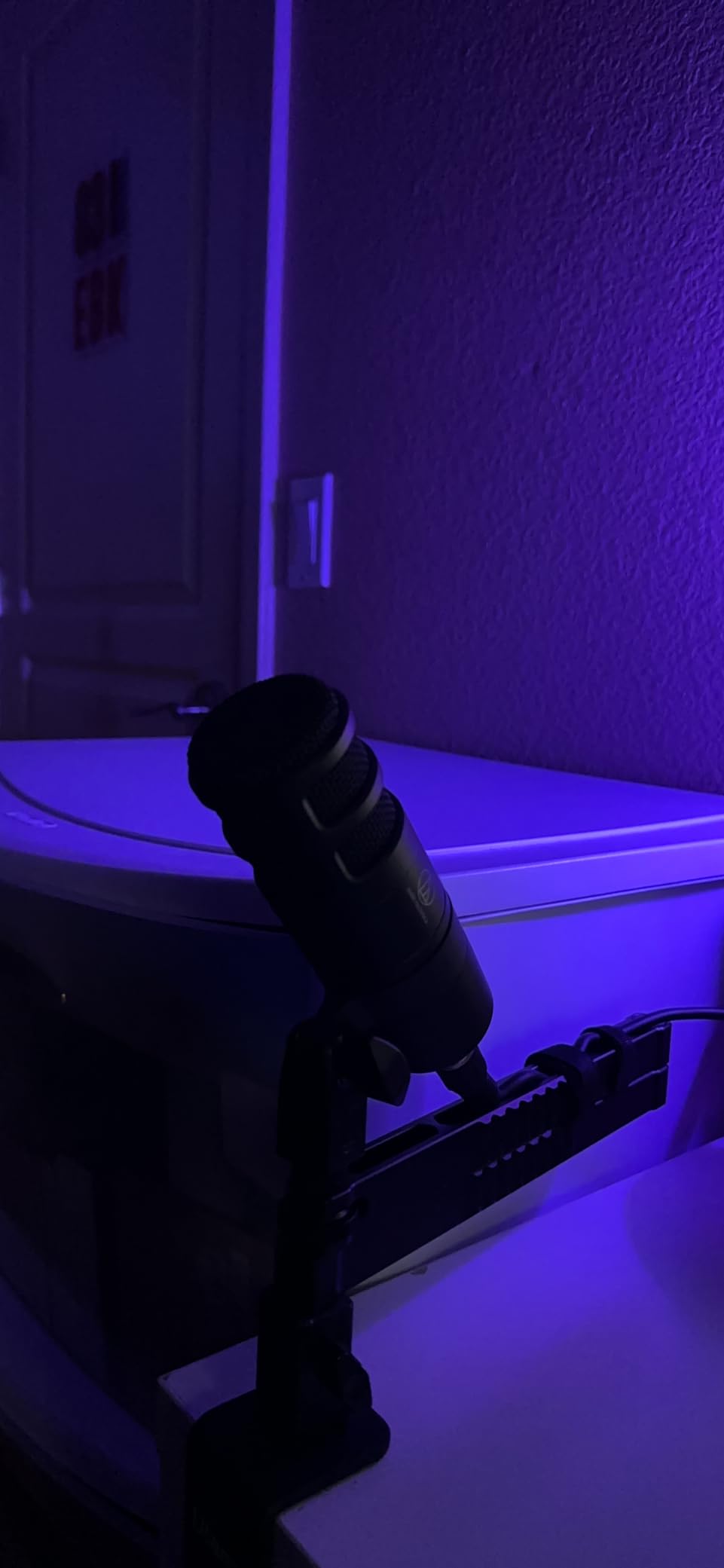
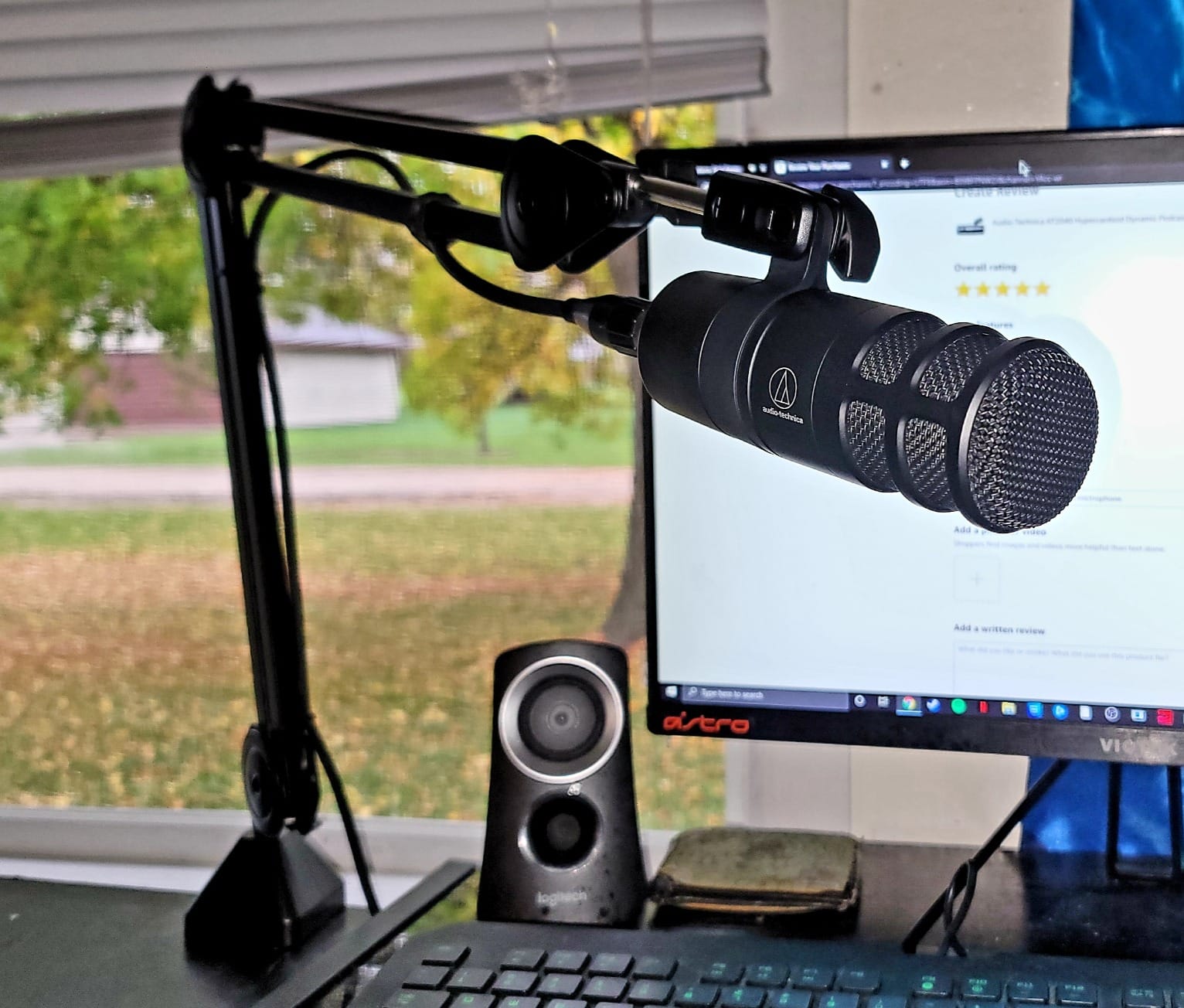
A multistage foam mesh windscreen handles plosives from the front, and the integrated shock mount isolates vibration travelling up a stand or boom. Tone is described by reviewers as warm and assertive with a smooth low noise floor for a dynamic, and a 76 dB signal-to-noise ratio supports that.
The body weighs 2.2 lb, so it needs a solid arm, and it includes a pivoting stand mount, a 5/8-27 to 3/8-16 adapter and a soft protective pouch under a two year limited warranty.
When the AT2040 is the right home studio choice
Pick it for podcasting and voice-over in a genuinely noisy home, especially if the noise comes from the side or behind rather than from your own desk. The rejection is strong enough that you may not need a second microphone for the guest side of an interview.
Reviewers frequently conclude that a quiet recording with this microphone reflects interface gain settings, not microphone quality. Judge it on a properly driven chain.
Where the AT2040 will frustrate you
It is gain-hungry, and that is the first thing beginners get wrong with it. Confirm your interface can deliver enough clean gain before ordering, or the microphone will sound worse than it is.
There is no low-cut switch or pad on the body, so you cannot adjust the internal high-pass, and the early low-end rolloff leaves limited deep bottom for a bass-heavy voice. There is no monitoring jack either, so XLR and an interface are required.
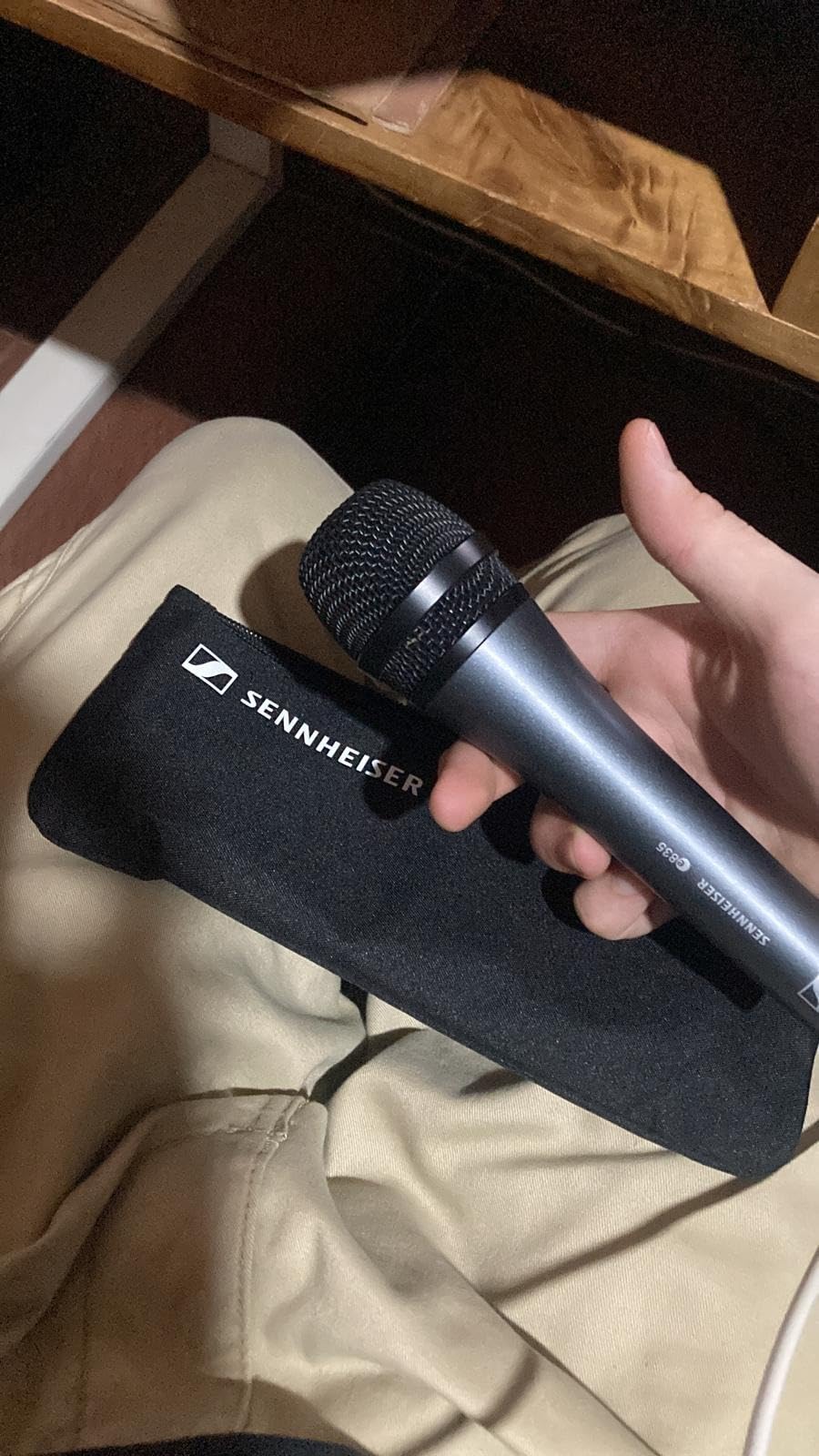
9. Sennheiser Professional E 835 Dynamic Cardioid Vocal Microphone
Sennheiser Professional E 835 Dynamic Cardioid Vocal Microphone
Cardioid
Response to 16 kHz
11.6 oz
Metal body
10 year warranty
Pros
- Clear balanced tone with a gentle presence boost
- Minimal proximity effect at any working distance
- Rugged metal body with internal damping
- Cardioid isolation for imperfect rooms
Cons
- Needs healthy preamp gain
- No monitoring or onboard controls
- Separate XLR cable required
The e 835 is the microphone I recommend to a singer who finds both Shures too characterful. Its response is balanced rather than warm or bright, with a gentle presence boost that adds projection without the shrillness some vocalists complain about in the BETA 58A.
Minimal proximity effect is the sleeper feature. You can move closer for warmth without the bass piling up, which makes it forgiving for a singer who has not yet learned consistent distance.
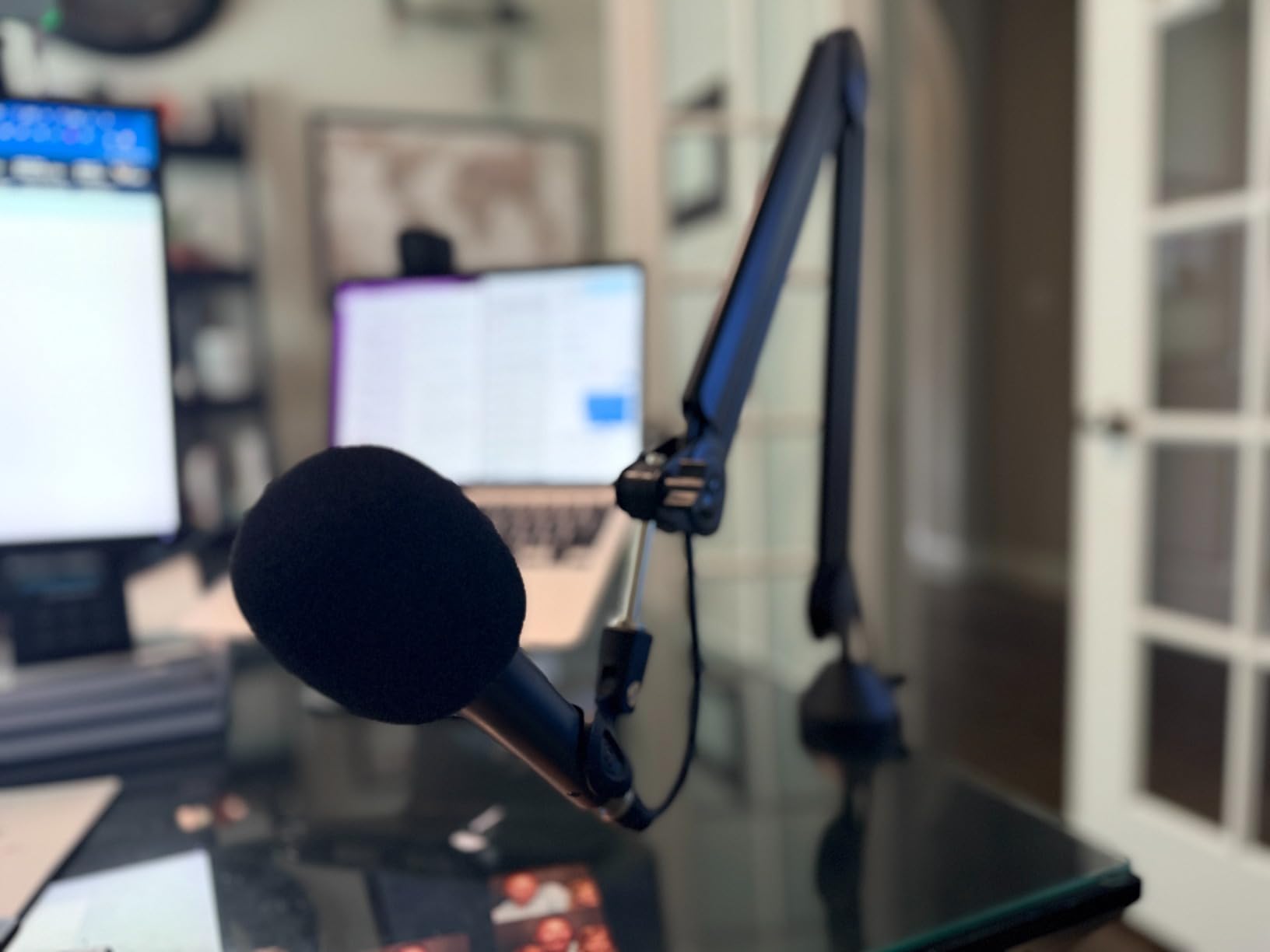
The cardioid pattern gives usable isolation for voice work in imperfect rooms, and the balanced response holds up when you drift on or off axis during a take. Internal damping handles handling noise, and the metal body is built to survive a working life rather than a studio shelf.
Owners report no buzz or hum from the capsule or internal circuitry, and it ships with an XLR-M connector, a microphone clip and a carrying pouch. The ten year manufacturer warranty is the longest in this group.
When the e 835 is the right home studio choice
Choose it for singing and speech where you want a neutral starting point and control through your own EQ rather than a strong built-in character. It suits a home studio where you will spend time shaping tone rather than fighting a microphone signature.
It is also a strong stage vocal microphone for small rooms and rehearsal spaces, and reviewers regularly compare its price-to-quality favourably against the Shures.
Where the e 835 will frustrate you
It still needs a good amount of preamp gain, as most dynamics do, so pair it with an interface you know has headroom. There is no monitoring output and no onboard switching, so it needs a separate XLR cable and preamp.
Tight rejection can cut into overtone-rich singing, which matters if your style depends on harmonic work. A few units have also arrived without retail packaging or paperwork, so check the box contents on arrival.
10. Sennheiser XS 1 Handheld Dynamic Microphone, Black
Sennheiser XS 1 Handheld Dynamic Microphone,Black
Cardioid
3-pin XLR
15.68 oz
Metal body
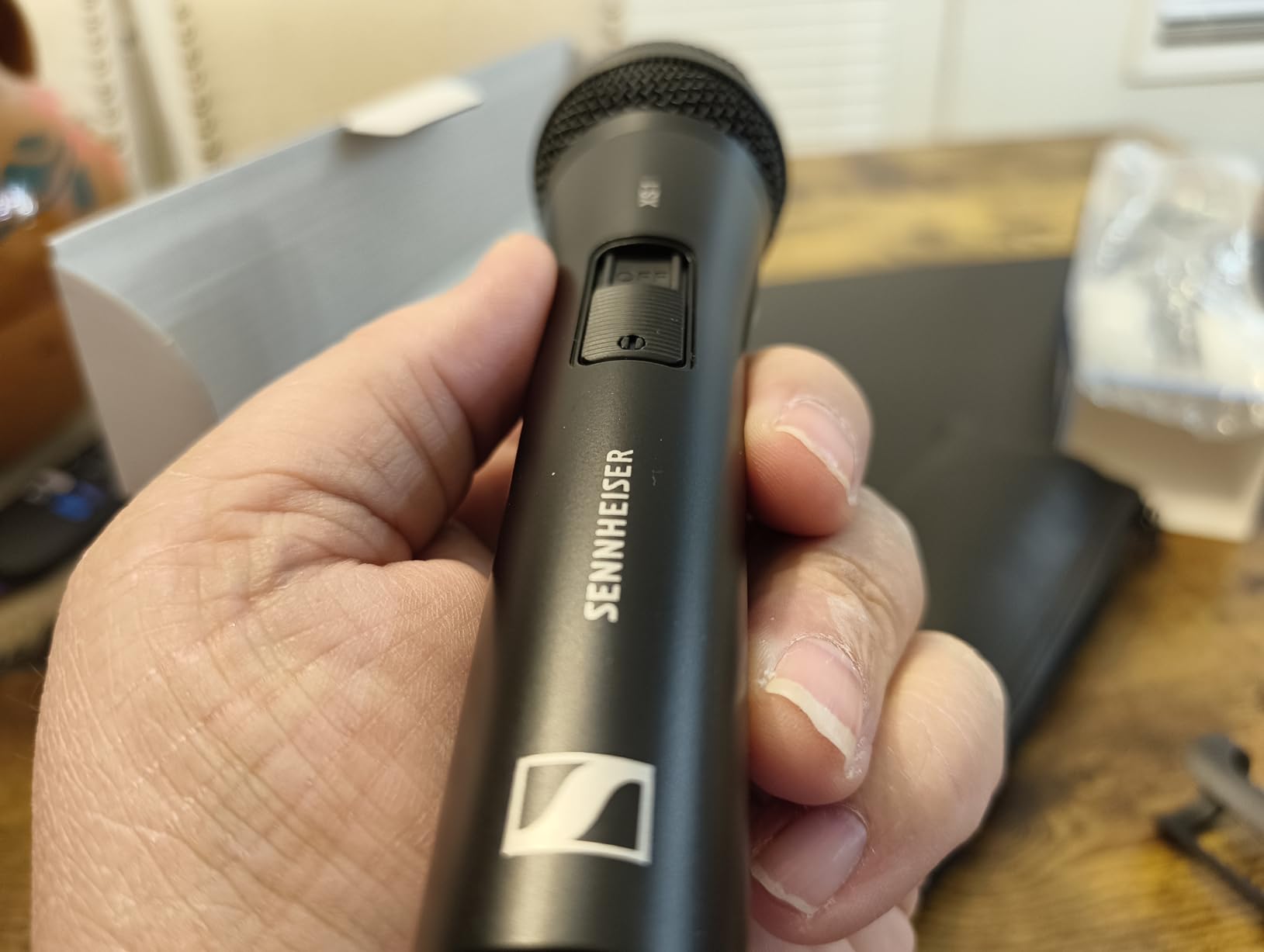
Silent mute switch
Pros
- Clear capture for voice and speech
- Cardioid rejection at an entry price
- Silent mute switch for discreet control
- Mic clip and pouch included
- Works with mixers amps and karaoke machines
Cons
- No monitoring or onboard gain controls
- Older and simpler specification
- Lighter bass than dedicated vocal mics
The XS 1 is the budget option for a specific job: speech, announcements, small PA and karaoke. It has the cardioid pattern and metal durability that make the format work, and a silent mute switch that lets you cut a microphone without a click.
Because it uses a standard 3-pin XLR connection, it drops into mixers, amplifiers and karaoke machines as easily as it drops into an interface. That flexibility is the reason to pick it over a cheaper-sounding option.
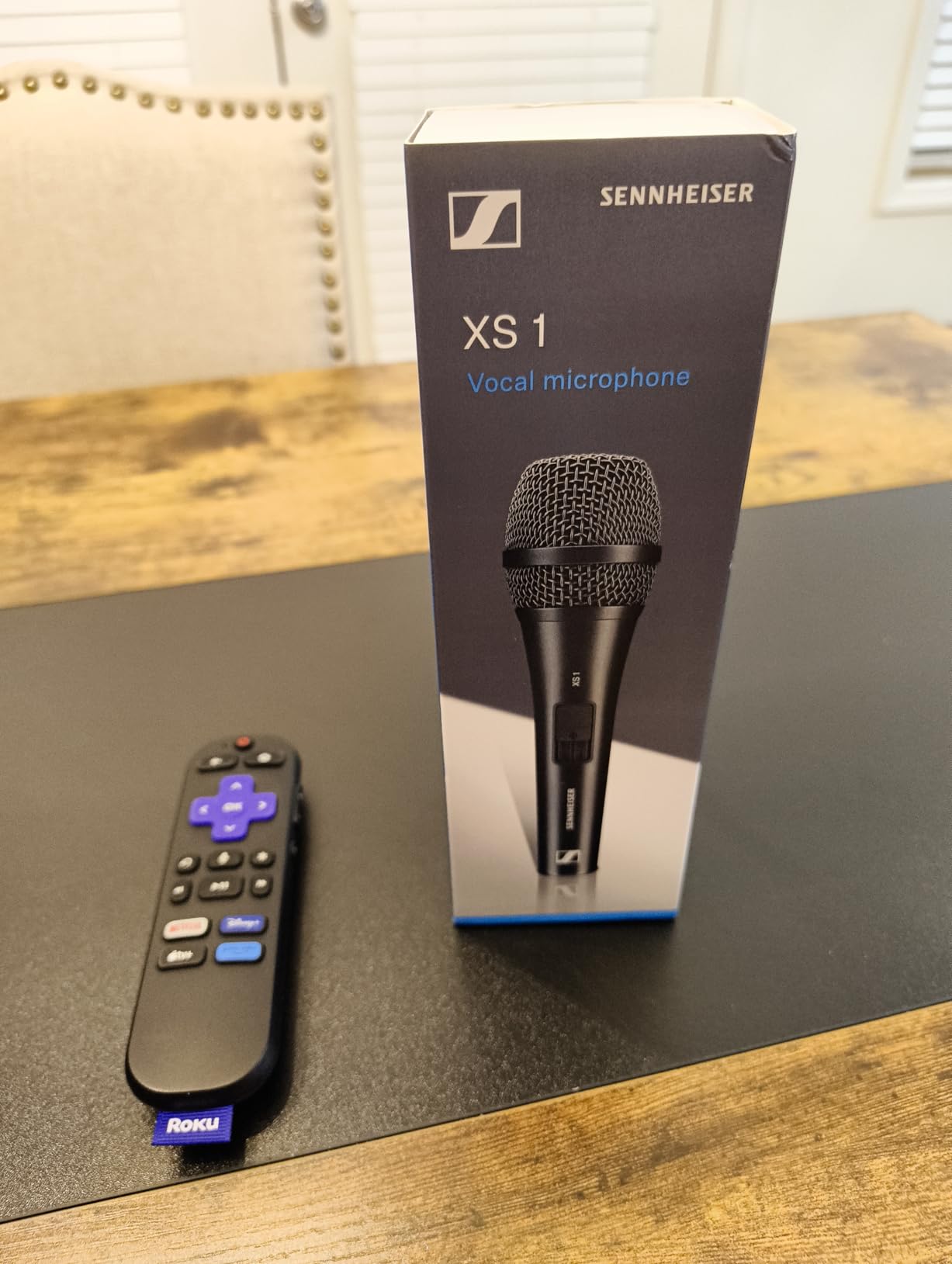
Reviewers describe the capture as reliable and clear, with usable rejection for the price category, and the body is solid metal at 15.68 oz. A mic clip and carrying pouch are included, so the only missing piece is a cable.
The specification is deliberately simple. There are no onboard filters, no monitoring and no gain control, which keeps the signal chain short and predictable.
When the XS 1 is the right home studio choice
Choose it when your home studio doubles as a rehearsal or karaoke room, or when you narrate short voice pieces and want a microphone that cannot be broken. It is a two year warranty on a workhorse body.
It also suits a second voice, such as a co-host or a family member recording alongside you, since the cardioid pattern keeps each speaker reasonably separate.
Where the XS 1 will frustrate you
You need a separate interface and cable, and there are no onboard controls or headphone monitoring of any kind. The specification is also older and simpler than modern broadcast dynamics, with no low-cut switch to lean on.
Most importantly, the bass is lighter than dedicated vocal microphones like the e 835, so it will not satisfy a singer chasing a full low end. Use it for speech and leave the singing to a vocal model.
Gain Requirements and Preamp Pairing
Gain staging decides whether a dynamic microphone sounds professional or thin and hissy, so this deserves its own section. Sensitivity is published in millivolts per pascal, and lower numbers mean the preamp has to work harder to reach a usable recording level.
The Shure SM7B sits at 1.12 mV/Pa and the manufacturer recommends 60 dB or more of gain. That is why an inline booster such as a Cloudlifter appears so often in the discussions about it. If your interface tops out below that, a booster solves the problem, provided your existing preamp is already quiet. Adding a booster to a noisy preamp just moves the hiss.
The RØDE PodMic is the next most demanding and is commonly paired with a FetHead-style booster for the same reason. The AT2040 needs substantial gain too, though reviewers note that perceived quietness usually reflects interface settings rather than the capsule.
At the other end, the USB models in this list bypass the problem entirely because gain control happens in the microphone. The FIFINE AM8 and K688 both offer onboard gain, which is why they are the smoothest path for someone without an interface. Our USB microphone guide for podcasting covers that route in more detail.
A simple rule: if your interface can deliver 55 dB or more of clean gain, you can drive anything in this list without a booster. Below that, choose a higher-output microphone or add an inline booster deliberately rather than as an accident.
How to Choose a Dynamic Microphone for Your Home Studio
Start with the job, not the spec sheet. Nearly every mistake we see in the forums comes from buying a microphone for a room problem or a future ambition. Write down what you will record this month: voice only, voice plus instruments, or instruments alone.
Next, look at connectivity. If you have no interface and want to record this week, a USB model such as the AM8, the K688 or the Q2U removes the largest early obstacle. Our list of the best USB microphones goes deeper on that decision. If you already own an interface, the XLR options open up, including the models that can take a louder source later.
Third, check polar pattern against your room. Cardioid suits most home studios because it favours the front and rejects the sides and rear. The AT2040 steps further with a hypercardioid pattern, and the BETA 58A uses a supercardioid for stage use where you need more feedback margin. More rejection means a lower floor, but also more chance of cutting into natural room tone and sounding thin.
Fourth, match the microphone to your gain budget. Decide what your interface or USB path can deliver before choosing a model. This single check saves more money than any other on this list.
Fifth, consider built-in protection. The SM58, SM7B, PodMic and AT2040 all include pop filtering and shock mounting internally. The BETA 58A and XS 1 include neither, so plan a separate pop filter and shock mount if you sing or speak closely.
Sixth, think about weight and mounting. The SM7B at 2.7 lb and the AT2040 at 2.2 lb need a boom arm rated for the load. The PodMic at 937 g is heavier than it looks. Lightweight models such as the e 835 at 11.6 oz suit a simple desk stand.
Finally, treat the room before you treat the shopping list. If you have not spent any time on placement, pop filtering or basic acoustic control, a mid-range microphone will disappoint you. If you already have panels up, our guide to the best studio monitors is the logical next upgrade.
Frequently Asked Questions
What is the best microphone for a home studio?
For most home studios in an untreated room, a dynamic microphone is the right default. The Shure SM58 is the safest all-round starting point, the Shure SM7B gives the most broadcast-clean voice if your interface can drive it, and the RØDE PodMic is the strongest value choice for podcasting. A condenser captures the room as well as your voice, which is why dynamics dominate this list.
What is the best affordable dynamic microphone?
The RØDE PodMic is our pick for speech-focused work, with a warm broadcast tone and strong cardioid rejection at a modest price. If you have no interface at all, the FIFINE K688 or the Samson Q2U give you USB recording and a metal body at a lower entry point. Among XLR-only options, the Shure SM58 remains the cheapest reliable Shure in this group.
Should I use a Cloudlifter with the Shure SM7B?
Only if your interface cannot deliver roughly 60 dB of clean gain, which the SM7B is specified to need at 1.12 mV/Pa sensitivity. If your preamp is already quiet, an inline booster such as a Cloudlifter or a FetHead solves the gain shortfall cleanly. If your preamp is noisy, a booster will simply amplify the hiss, so upgrade the interface first.
What are the downsides of the Shure SM7B microphone?
The dominant downside is gain hunger. Its 1.12 mV/Pa sensitivity demands 60 dB or more of clean gain, and entry interfaces add audible hiss when pushed that far. It also weighs 2.7 lb and needs a sturdy boom arm, and its dark, smooth voicing flatters some speakers more than others. A booster or a better interface is usually a required extra cost.
Do dynamic microphones need phantom power?
No. A dynamic microphone generates its own electrical signal through electromagnetic induction, so phantom power is never required. The Shure SM7B states explicitly that no phantom power is needed. Many audio interfaces and mixers apply phantom power globally, and leaving it on while a dynamic is connected is harmless.
Why does my Shure SM7B sound bad?
Start with gain. If the preamp is short of the 60 dB the microphone needs, the recording will be quiet and noisy. Next, check distance and technique: the SM7B is designed for close use, and the rear low-cut switch should be engaged to control rumble. Finally, engage the presence boost switch if the voice feels dull, and confirm you are not clipping the input.
What is the 3 to 1 rule for microphones?
The 3 to 1 rule says that to avoid audible comb filtering and phase problems from combining microphones, the distance between two microphones should be at least three times the distance from the nearer microphone to the sound source. It is a placement guideline for stereo and multi-microphone recording, not a rule about which microphone to buy.
Should I use a dynamic or a condenser microphone for vocals?
Use a dynamic in an untreated room, because its lower sensitivity and narrower response keep HVAC hum, traffic and reflections out of the recording. Use a condenser if your room is genuinely treated and you want the detail and air of a large-diaphragm capsule. Many home recordists start with a dynamic for voice work and add a condenser later for acoustic instruments.
Final Thoughts
The best dynamic microphones for home studios come down to one honest question: how good is your room, and how much gain can your interface deliver? In an untreated space with a modest preamp, the Shure SM58 remains the choice we recommend first, because it is forgiving, cheap to replace and works for speech and singing without any of the extra boxes the SM7B demands.
If you have the gain headroom, the Shure SM7B delivers the cleanest broadcast voice in this group, and the RØDE PodMic gets you most of the way there on a smaller setup. For a noisy room with no interface, a USB and XLR hybrid such as the FIFINE AM8 or K688 removes the biggest early obstacle. Spend the time you saved on placement and a pop filter before you spend it on the next microphone upgrade.