
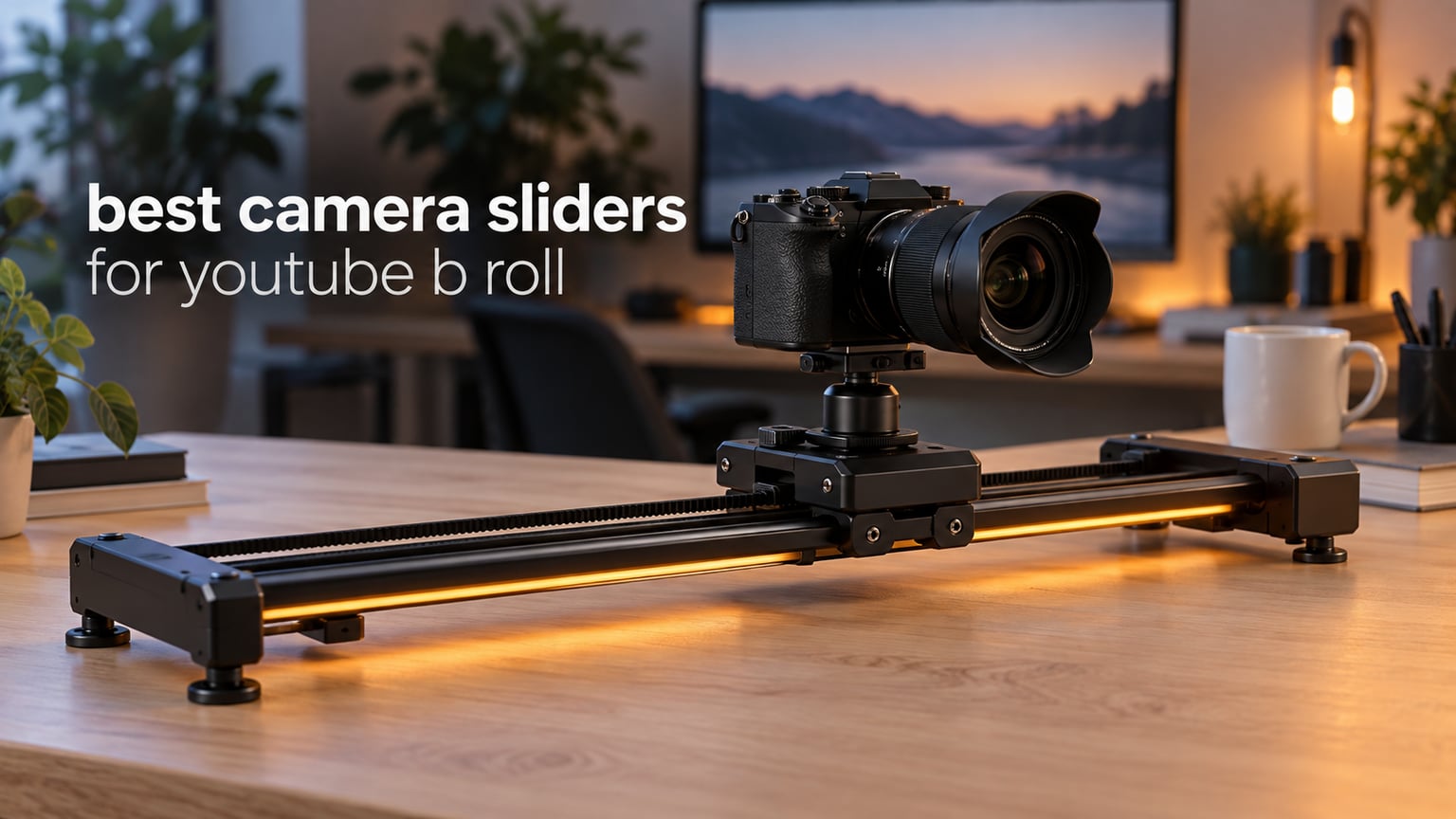
Most talking-head videos look fine until you cut in the B-roll. Something about a locked-off insert of a coffee cup or a keyboard says phone footage, even when the talking head itself looks sharp. A camera slider is the cheapest fix, because it turns that static insert into a slow push-in that reads as deliberate.
We compared eleven sliders built for exactly this job: tabletop dollies, travel-weight carbon fiber rails, and motorized tracks for solo creators who need a repeatable move. Our shortlist covers the best camera sliders for YouTube B-roll across three payload classes and both manual and powered movement. For the camera side of the kit, our compact travel cameras and sliders guide covers bodies that pair well with a rail.
Everything below reflects published specifications and owner feedback, not lab measurements from a sound meter. Where owners report a real weakness, we name it, because a slider that sticks mid-rail or needs an app login on location will cost you more takes than it saves.
Table of Contents
Top 3 Camera Slider Picks for YouTube B-Roll in 2026


VidPro SK-22 Skater Dolly
- Low-angle rolling dolly
- 25 lb capacity
- 7 mount points
- 27 inch handle
Best Camera Sliders for YouTube B Roll (October 2026)
| Product | Specifications | Action |
|---|---|---|
| NEEWER DL100 Motorized Dolly |
|
Check Latest Price |
| Zecti 16 inch Carbon Slider |
|
Check Latest Price |
| VidPro SK-22 Skater Dolly |
|
Check Latest Price |
 GVM 48 inch Motorized Slider GVM 48 inch Motorized Slider |
|
Check Latest Price |
 GVM 27 inch Motorized Slider GVM 27 inch Motorized Slider |
|
Check Latest Price |
 GVM 31 inch Carbon Slider GVM 31 inch Carbon Slider |
|
Check Latest Price |
 KONOVA K2 100cm Slider KONOVA K2 100cm Slider |
|
Check Latest Price |
 NEEWER ER1 120cm Motorized Slider NEEWER ER1 120cm Motorized Slider |
|
Check Latest Price |
 NEEWER DL400 Upgraded Dolly NEEWER DL400 Upgraded Dolly |
|
Check Latest Price |
 iFootage Shark Nano II 660 iFootage Shark Nano II 660 |
|
Check Latest Price |
 KONOVA P1 with S2 Motor KONOVA P1 with S2 Motor |
|
Check Latest Price |
1. NEEWER DL100 Motorized Dolly: The Best All-Round Pick
NEEWER 3 Wheels Wireless Video Camera Dolly, 3 Speed Motorized Slider
Payload: 6.6 lb
Weight: 1.1 lb
3 speeds: 1.4 to 3.0 cm/s
1800mAh battery, 6 h
6 m remote
Pros
- Repeatable motorized moves with three speeds
- Compact enough for a small camera bag
- Convertible 1/4 and 3/8 mount for phones and action cams
- Wireless remote with pause
- 1800mAh battery gives about 6 hours
Cons
- Audible motor whine on recorded dialogue
- Stalls on inclines and uneven ground
- Speed setting resets after power cycling
The DL100 is a three-wheel dolly that drives itself, and for B-roll inserts on a flat desk or floor it does the job a 40 inch rail does without the bag space. I put it on a keyboard top-down and a phone laid flat, and both moves came out even enough to cut straight into a talking head.
The wheel frame swivels through 180 degrees, so it runs straight lines, gentle arcs or full circles from the same body. That circle mode is what separates it from simple table dollies, which only track in a line.
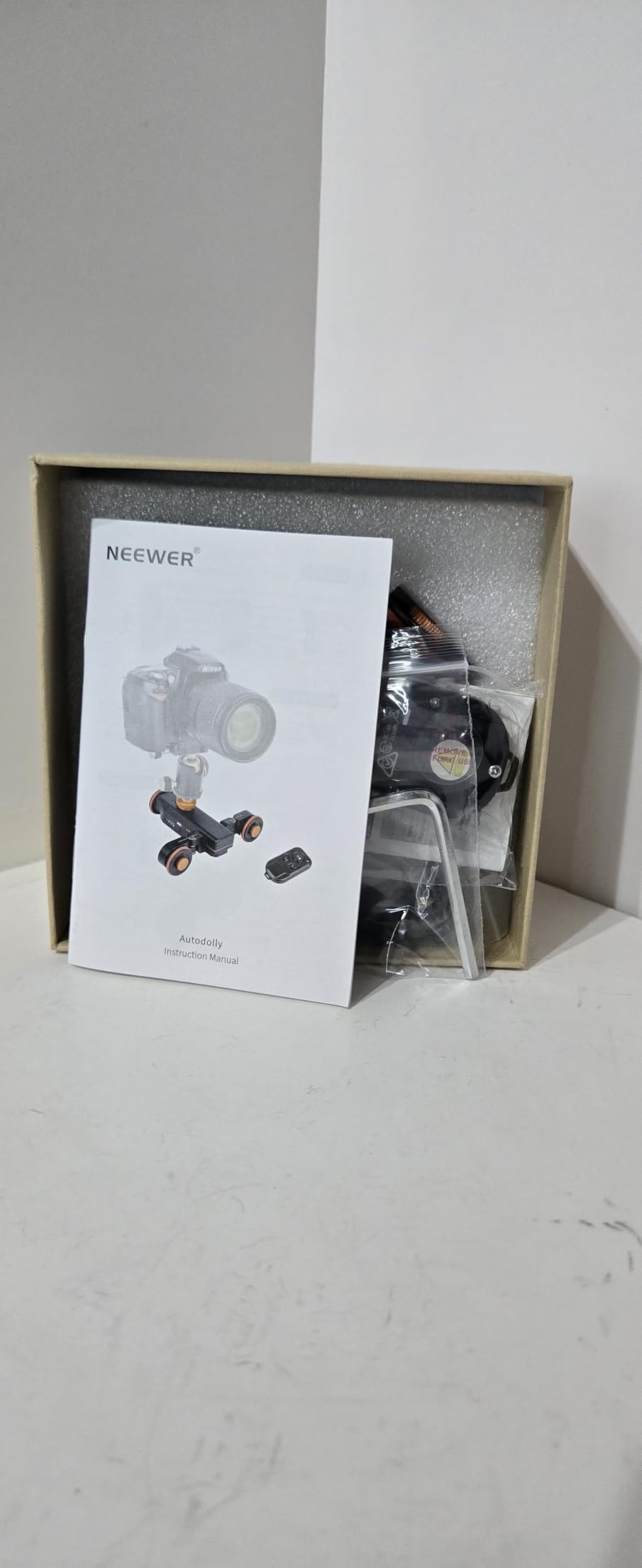
Owners consistently treat it as a cheap stand-in for a real rail, and the five-star reports cluster around smooth, stable movement on flat surfaces. That phrasing matters: every one of those reports is about a flat surface.
Two limits shape what you should shoot with it. The motor whines enough to register on a shotgun mic during recorded dialogue, and it lacks the torque to climb a step or push a heavy lens combo, so you will end moves as soon as it bogs.
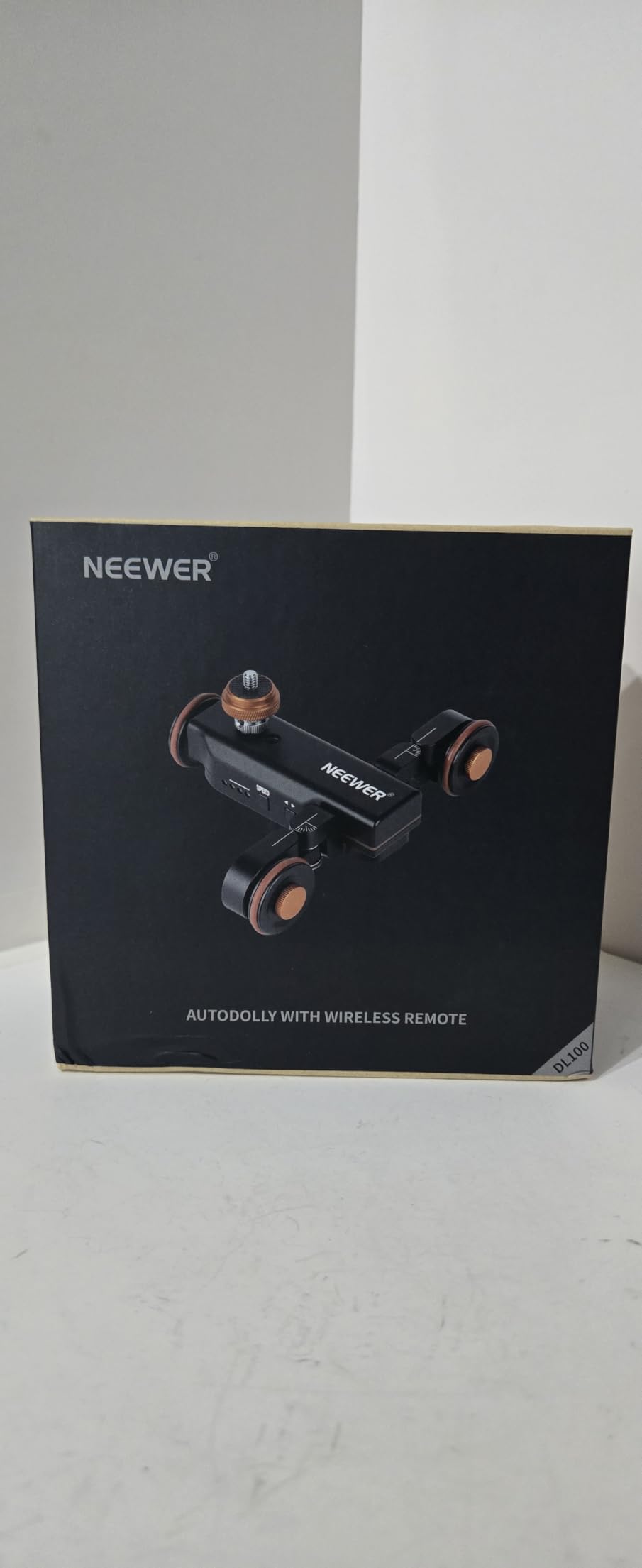
Why the DL100 works for daily uploads
You can set it up fast and it fits in the side pocket of a camera bag, which means you will actually bring it. Owner reviews run past a thousand, so the failure modes are well documented rather than a surprise.
Three speeds at 1.4, 2.4 and 3.0 cm per second cover slow cinematic creep through to a visible move on a talking-head push.
Where it will disappoint you
Because it is wheel-driven, any ridge or seam in the surface prints straight into the shot. On carpet or outdoor gravel it does not read as smooth.
There is also no way to power it on or off remotely, so you press the button on the unit before backing away and then start recording.
2. Zecti 16 Inch Carbon Slider: Best Value Manual Rail
Zecti Camera Slider 16″/40 cm Adjustable Carbon Fiber Camera Dolly Track
Payload: 4.4 lb
Weight: 1.3 lb
16 inch / 40 cm travel
4 bearings
Bubble level
Pros
- Four precision bearings on a double interior carbon rail
- Removable legs and a bubble level for angled placement
- 1/4 and 3/8 inch holes along the top and underside
- Includes a carrying bag at roughly 600g
Cons
- No quick release plate
- so the camera is screwed on and off
- 16 inch of travel suits close-up work only
- A number of owners report roller slop needing shimming
The Zecti is the rail I would hand a creator who shoots product B-roll in a home studio. Sixteen inches of travel is short by rail standards, and that is exactly the length a keyboard sweep or a slow reveal across a small product needs.
It weighs roughly 600 grams with the legs removed, and owners call it one of the lightest rails in this category. The included bag matters more than it sounds, because a rail that lives in your bag gets used on every shoot.
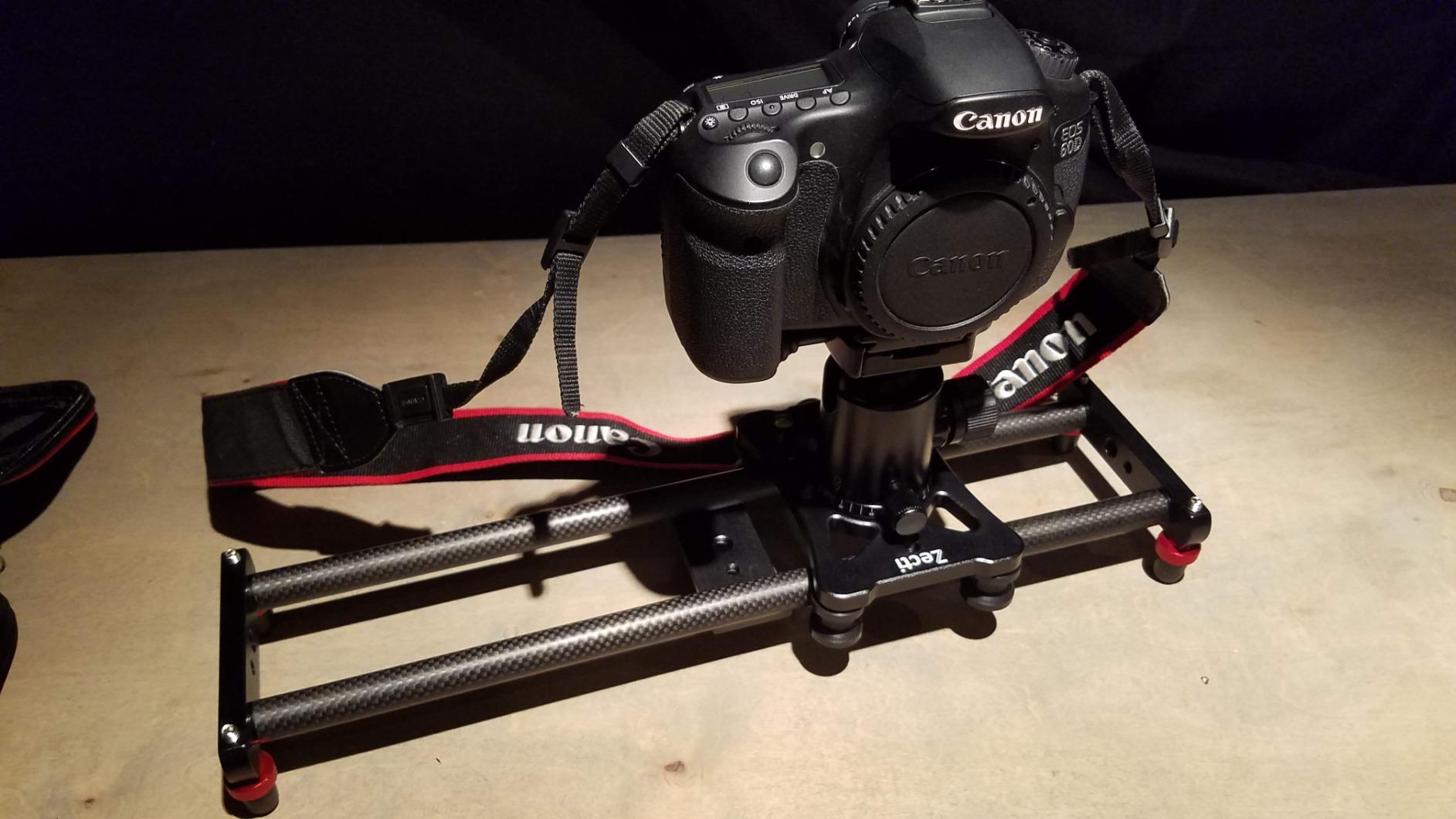
The recurring owner tip is to pair it with a fluid or ball head and to loosen the mounting screws if the slide feels sticky. Over-tightening the carriage plate is the single most common cause of the rattling movement people report.
Long-term owners also make a point of accepting the travel length as a feature rather than a compromise. It suits close-up and product-style shots, and it does not suit a full-body walkthrough.
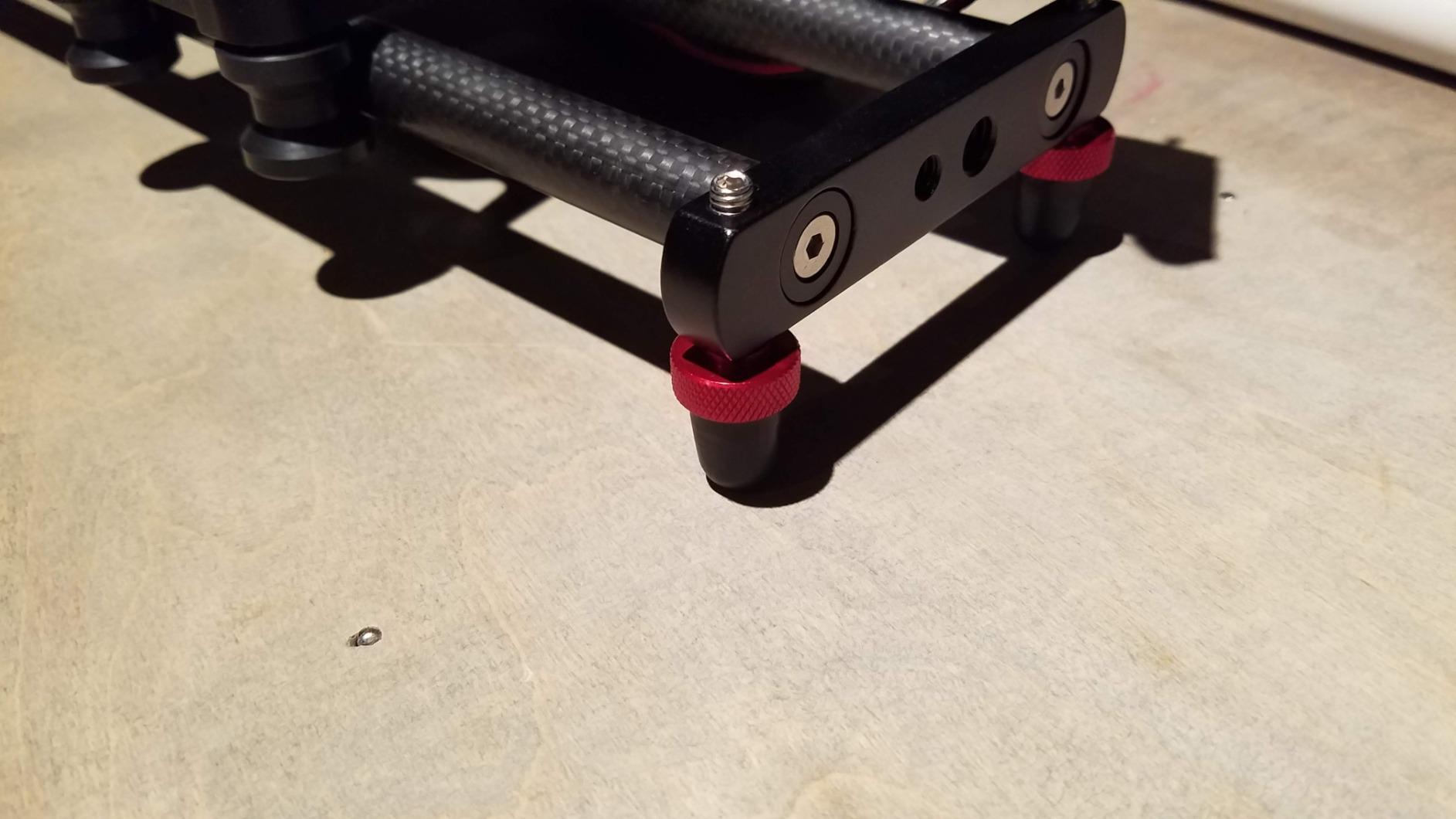
Why this is the value pick
It gives you genuine carbon rods and CNC-machined aluminium at a weight that suits a one-bag kit. With 16 inches of usable travel in a body this small, it is built for close work.
The bubble level and removable legs mean you can set it on a table, a slope or a light stand without a separate kit.
Where it will disappoint you
There is no quick release plate, so every camera change means an Allen key or fingers on two screws. On a fast multi-setup day that friction adds up.
A few owners report a sticking point at one end of the rail or roller slop that needs shimming before the move is clean.
3. VidPro SK-22 Skater Dolly: Best for Low-Angle B-Roll
Vidpro SK-22 Professional Skater Dolly – Rolling Slider for DLSR Cameras & Camcorders Ideal for Low-Level Shooting & Panning 25 Lbs Capacity Smooth Rubber Wheels 7 Mounting Points & Extendable Handle
Capacity: 25 lb
Weight: 2 lb
Folded: 12 x 3 x 8 inch
7 x 1/4-20 mounts
27 inch handle
Pros
- Reaches ground-skimming angles a tripod cannot
- CNC aluminium chassis with ball-bearing rubber wheels
- Axle angle markers for repeatable curves and 360 circles
- Seven threaded mounting points plus a 27 inch handle
Cons
- Manual push only
- with no repeatable programmed move
- Constant push speed is on you
- Small wheel base limits heavy rigs
The SK-22 does something the rails here do not: it gets the lens a couple of centimetres off the floor. That is the difference between a normal insert and a shot that looks like it came from a bigger production.
It is a rolling dolly with rubber wheels on stainless steel ball bearings and a CNC aluminium chassis rated to 25 pounds. The axle has position markers, which means you can set the same curve twice and get the same circle every time.
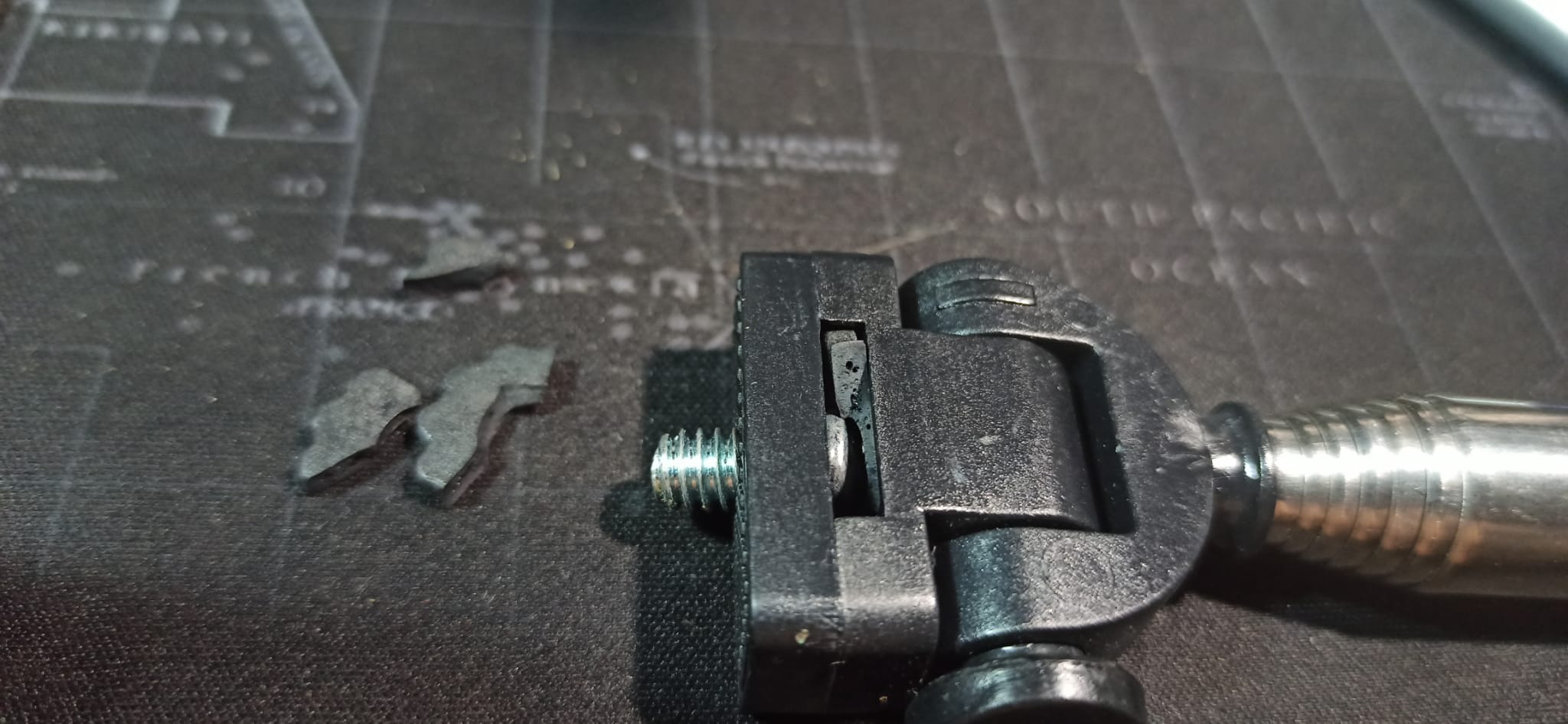
Buyers consistently describe it as a low-cost trick for low-level and circular moves, and the feedback is blunt about the surface mattering enormously. On a smooth floor reviewers call the movement glassy. On anything textured it is not.
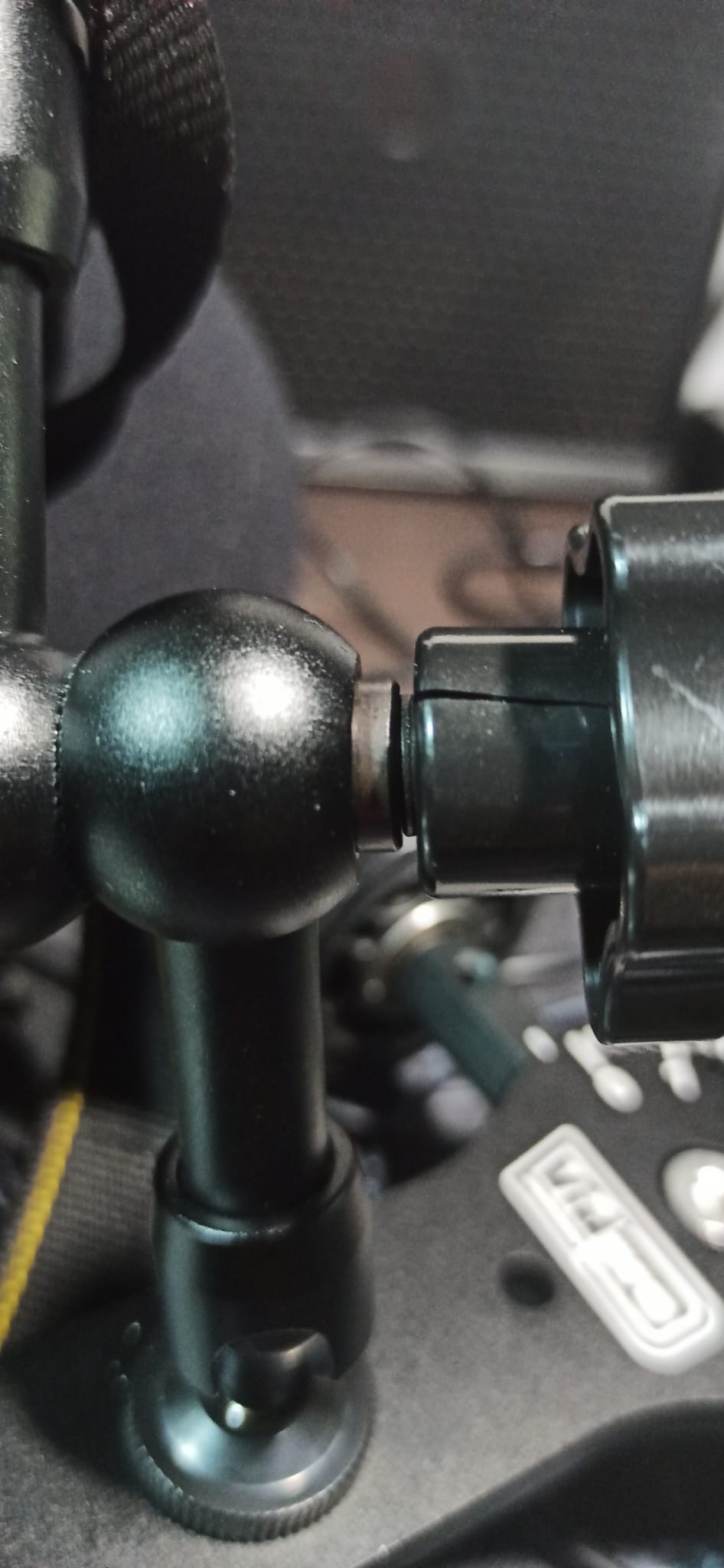
The 27 inch extendable handle and the articulated magic arm both help you push from a standing position instead of crouching, which is the difference between a steady move and a shaky one.
Why it belongs on the list
Low-angle shots come up constantly in creator feedback about what B-roll is missing, and this is the simplest way to get one. Seven mounting points mean it accepts a ball head or a fluid head without an adapter.
It folds to 12 by 3 by 8 inches, so it lives in a backpack rather than a hard case.
Where it will disappoint you
There is no motor, so a repeatable move means repeating your hand speed. Inconsistent push speed is the most common complaint from people new to manual dollies.
A small swivel and wheel base limits how heavy a rig it carries smoothly, and some users find the low position awkward with longer telephoto lenses.
4. GVM 48 Inch Motorized Slider: Best Long Motorized Rail
GVM 48″/120cm Motorized Camera Slider, APP Professional Carbon Fiber Dolly Rail Camera Slider, Motorized Time Lapse and Video Shot Follow Focus Shot and 120 Degree Panoramic Shooting
Payload: 20 lb
Weight: 4 kg
120 cm rail
6 shooting modes
2 hour battery
Pros
- Very quiet motor stays out of recorded dialogue
- Programmable start and end points with looping
- Carbon fiber frame with adjustable levelling legs
- App control removes the clunky hardware remote
- Ramp in and out remove hard stops
Cons
- App needs an internet-connected account login
- Start and end points reset every power cycle
- Light frame wobbles when raised on light stands
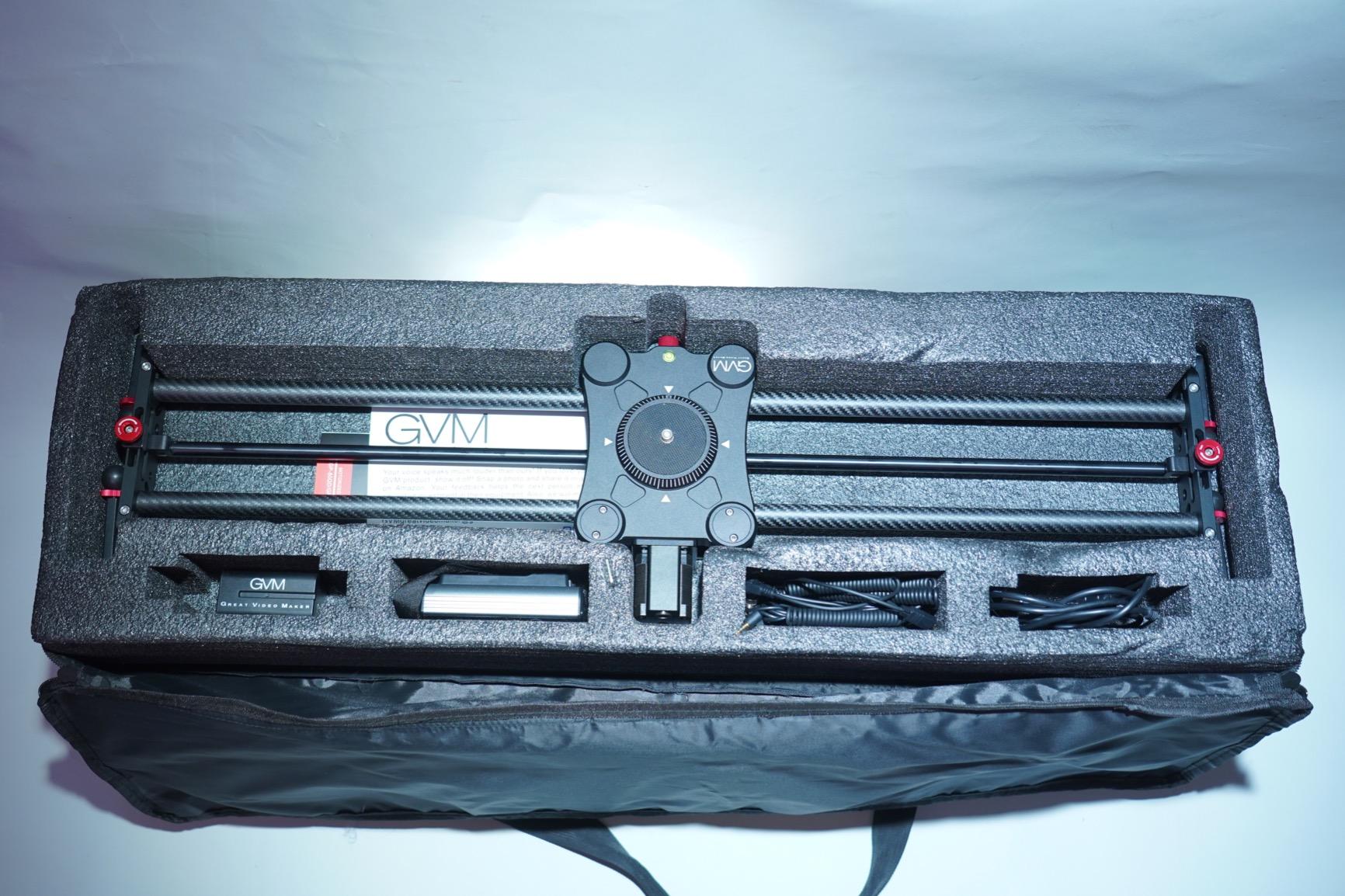
Forty-eight inches of travel is the length where a slider starts doing the work of a small studio rig. This GVM handles tracking, panoramic, time-lapse and video capture in one body, with free start and end points and auto loop for hands-free repeated takes.
Speed runs from 1 to 100 percent, intervals from 0.1 to 999.9 seconds, and it captures up to 1000 photos on a time-lapse run. Six shutter release cables and an extension cable are in the bag, so most camera brands work out of the box.
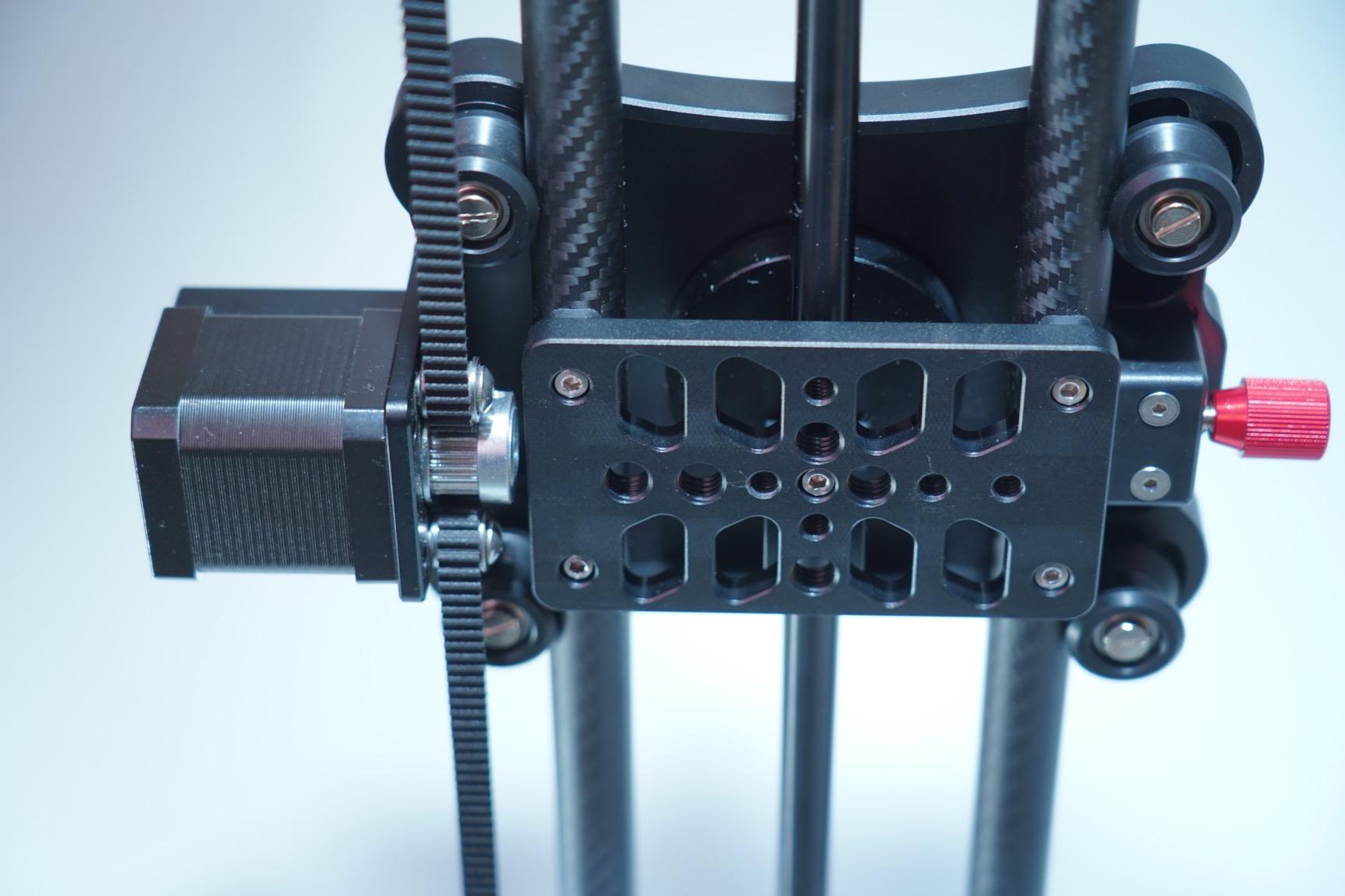
Reviewers treat it as a strong entry point into motorized sliding for interviews and B-roll. The single most repeated operational lesson is that a solid tripod head plus two supports, not one tripod, is the prerequisite for a clean move.
App control works well when you have signal and breaks down when you do not, because the app requires an account login. That is worth knowing before a location shoot with no bars.
Why the travel length matters for B-roll
At 120 cm you can walk the length of a desk or a workbench and still have room for a parallax move where foreground and background separate.
Free start and end points let you frame a push-in that does not use the full rail, which is how you keep a room-scale move from feeling slow.
Where it will disappoint you
The light carbon frame wobbles when raised on a single light stand, and support arms or added weight are needed before it looks rigid.
Belt or track resonance can introduce visible micro-jitter with heavier camera and lens combinations, and tracking loses the subject at the far end of a long move.
5. GVM 27 Inch Motorized Slider: Best for Interview Setups
GVM Camera Slider, 27” Aluminum Alloy Motorized Slider with Time-Lapse, Video Shooting and Round Trip Shooting, Track Dolly Rail for Most DSLR Cameras for Interview Photography
Payload: 2.5 kg
Weight: 2.36 kg
26.8 inch rail
Time-lapse, video, round trip
Power bank power
Pros
- Entry-level motorized movement with auto round trip
- Aluminum alloy rail stays rigid and non-flexing
- Adjustable feet and a bubble level speed up levelling
- 27 inches of travel covers most interview framings
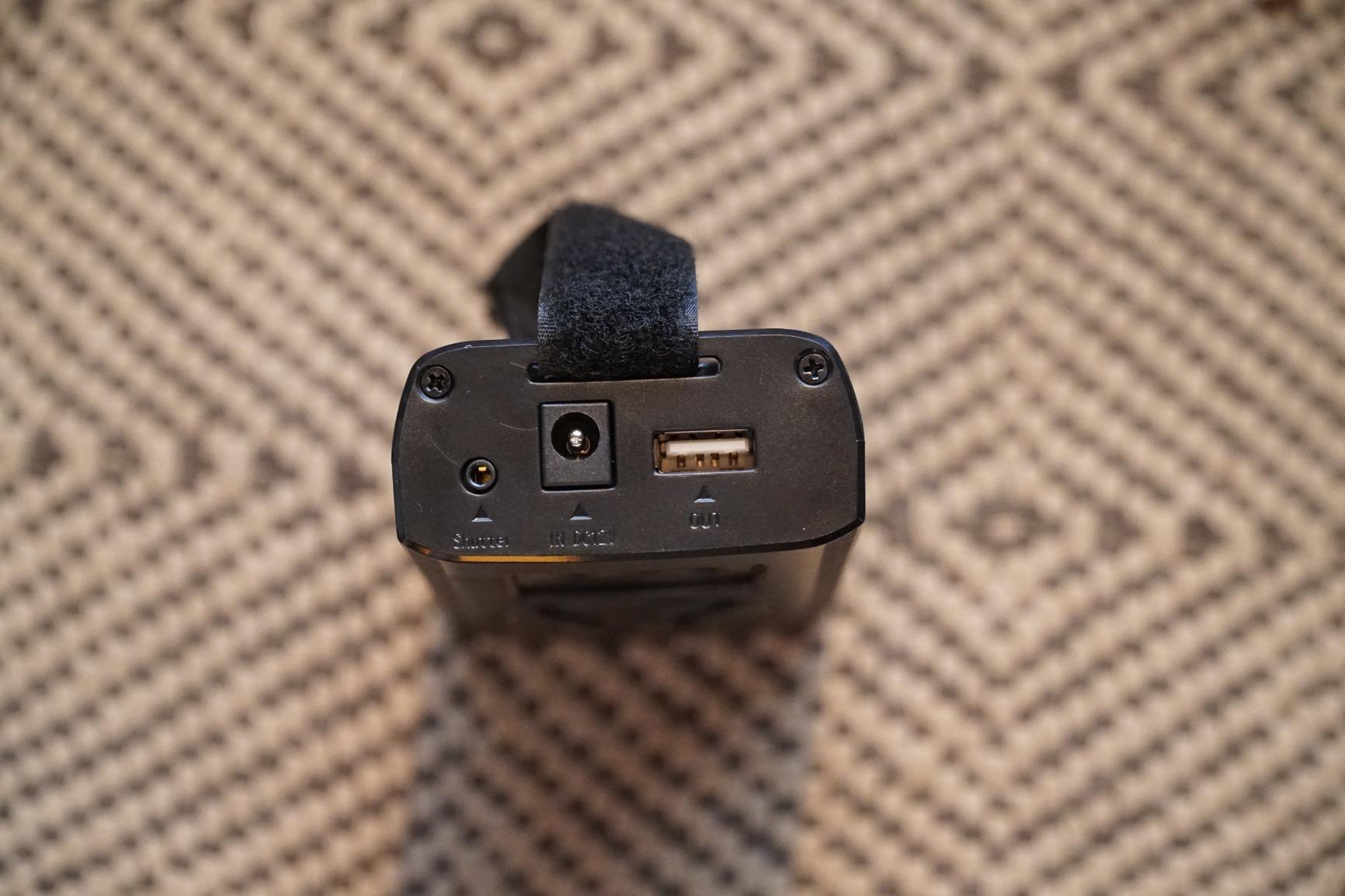
- Runs from a common power bank
Cons
- Tethered wire controller limits motor placement
- 2.5 kg payload excludes big telephoto and cinema bodies
- Included power bank adapter and cables are the weak point
Pick this one if your B-roll is mostly interviews and product inserts filmed on a tabletop. The aluminum rail is heavy enough to stay rigid with a DSLR and light enough to carry between rooms without thinking about it.
Three modes cover the work: time-lapse, uniform-speed video and auto round trip. Round trip is the practical one for a creator, because the carriage runs out and back without you reversing anything by hand.
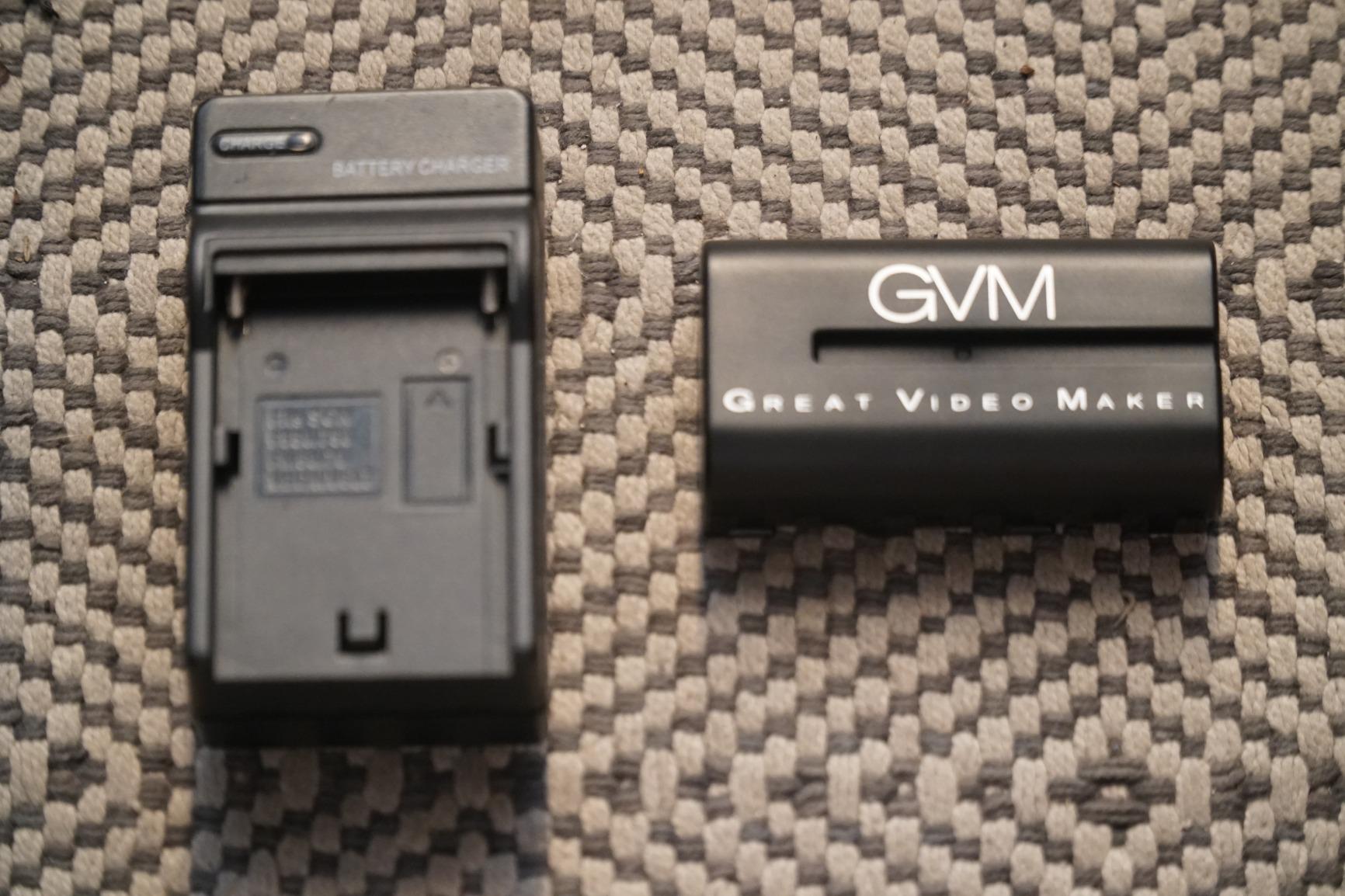
Owners find it dependable for interview and small-runway work, with the round-trip mode handling repeated back-and-forth takes. Running it from a power bank rather than a proprietary battery is a quiet benefit you only notice when the battery runs flat.
Adjustable non-slip feet and a bubble level make levelling on an unfamiliar location quick, which is where most sliders lose time.
Why interviews suit this slider
Vertical, horizontal and 45 degree mounting plus a 70 degree slope on a tripod covers the three angles an interview edit actually uses.
The 27 inch travel is enough for a genuine push toward a seated speaker without the rail overrunning your room.
Where it will disappoint you
The wire controller is tethered to the motor, so it fixes how far the motor can sit from your camera position.
A 2.5 kg ceiling is a DSLR-class limit, and it rules out larger cinema bodies and long telephoto glass entirely.
6. GVM 31 Inch Carbon Slider: Best for Tracking and Pans
GVM Motorized Camera Slider, 31″ Carbon Fiber Dolly Rail Camera Slider with Time-Lapse Photography, Tracking Shooting and 120 Degree Panoramic Shooting for Most Cameras, with Remote Controller
Payload: 20 lb
Weight: 10 lb
31 inch / 80 cm rail
Silent stepper motor
NP battery included
Pros
- Carbon fiber rail is light and rigid outdoors
- Silent stepper motor suits recorded interviews
- Gives horizontal
- tracking and 120 degree pan from one unit
- Complete kit with ball head and battery plus six shutter cables
- Time-lapse up to 1000 frames with step distance control
Cons
- Kit is heavy at 10 lb to carry
- Tracking pan accuracy is approximate over long travel
- Remote menu and setup need a learning curve
Rotating the rod changes what this slider does. Horizontal for a lateral track, angled for a follow move, and upright for a 120 degree panoramic sweep, all from one 31 inch carbon rail driven by a silent stepper motor.
The box is unusually complete for this category: ball head, NP battery, charger, remote, data cable, extension cable and six shutter release cables are all included. That matters more than it sounds when you are budgeting the whole B-roll kit at once.
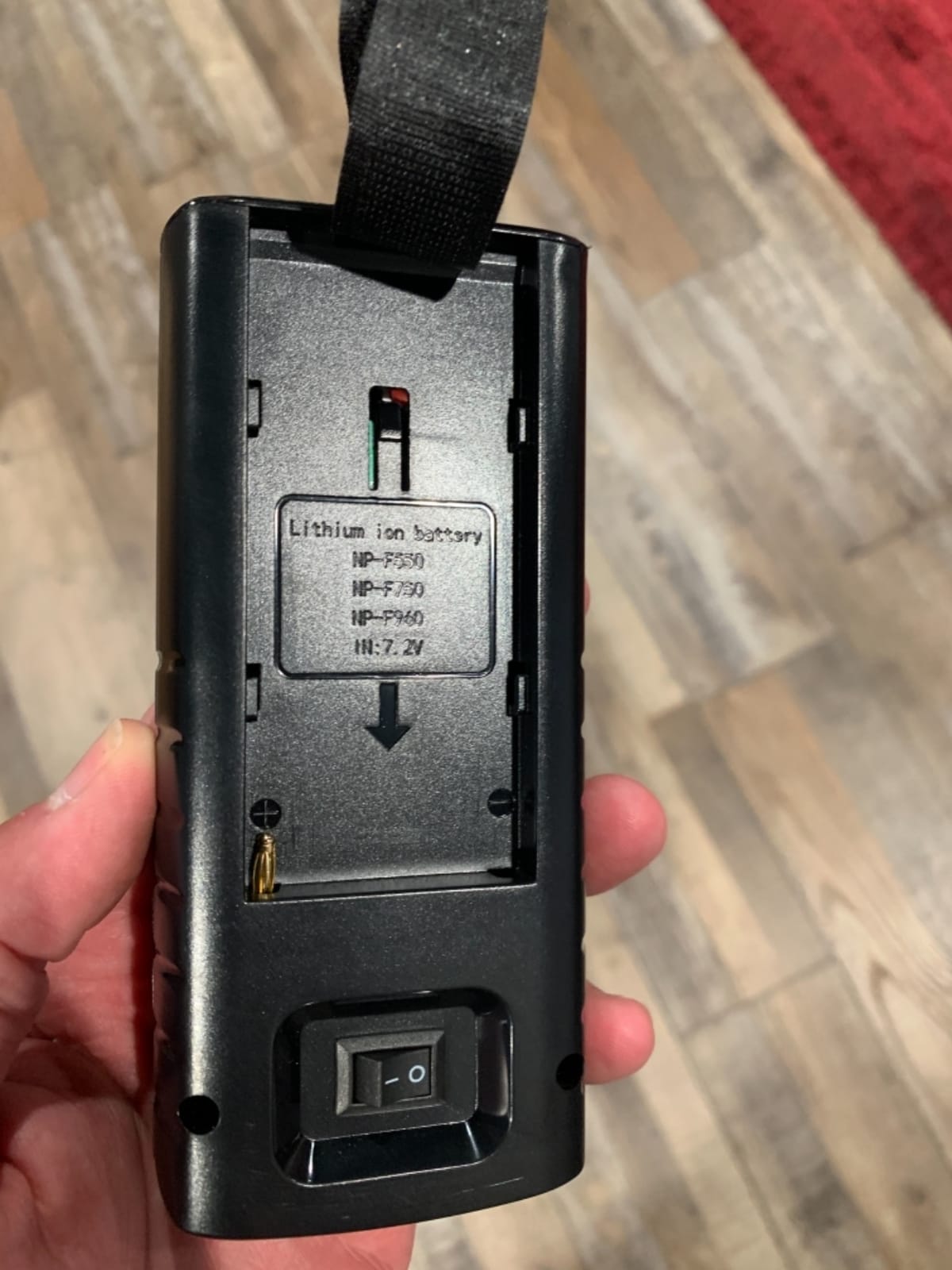
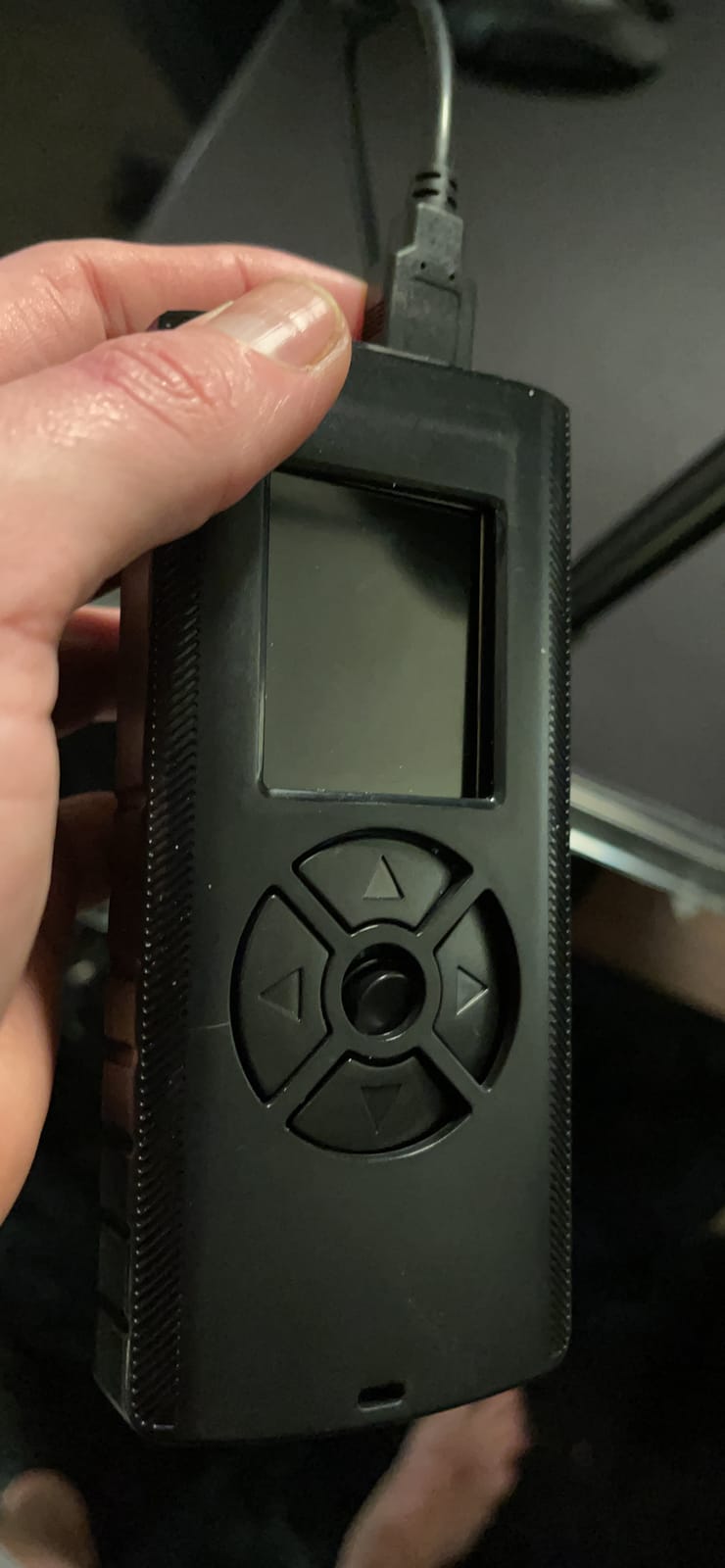
Feedback centres on the completeness of the box and on how quietly the motor runs. Four roller bearings add balance and anti-shake stability, which is where the 20 pound rating comes from in practice.
The recurring caveat is worth repeating: the tracking pan is a creative effect, not a subject-locking follow. If you need the camera to keep a person framed, choose the multi-axis model further down.
Why it suits outdoor and daylight B-roll
Carbon fiber keeps the frame rigid without the bulk of aluminium, so it stays stable on uneven outdoor ground where a heavier rail would fight you.
The silent stepper motor means you can record a talking head while the carriage moves, which rules out one of the most common audio problems.
Where it will disappoint you
At 10 pounds with the battery and controller, it is one of the heaviest kits in this roundup, and that shows up on a location day.
Pan accuracy over a long travel is only approximate, so a repeat of the same move will not land pixel-identical.
7. KONOVA K2 100cm Slider: Best for Heavy Camera Builds
Konova Camera Slider Dolly K2 100cm (39.4 Inch) Track Aluminum Light Weight for Camera,Mobile Phone, DSLR, Payloads up to 40lbs (18kg) with Bag
Payload: 40 lb
Track: 100 cm
Folded: 13 x 4 x 4 inch
2 shafts, 3 bearings
Pros
- Heavy well-damped metal build that resists flex
- Exceptionally smooth bearings once friction is dialled in
- 40 lb payload suits cine bodies and long lenses
- Removable foldable legs plus a padded bag and leg sleeves
- Modular design accepts flywheel and motor accessories
Cons
- 100 cm rail is unwieldy indoors and needs two supports
- Centering on one tripod can tip at the end of travel
- Sparse documentation and limited support
When the camera and lens are the problem rather than the movement, this is the rail to look at. The 40 pound rating and the aluminium construction mean it stays flat with a heavy rig instead of flexing mid-move.
Two chrome-coated shafts running through three roller bearings give a heavily damped glide once you set the carriage friction. Owners praise that glide directly, and the same owners recommend oiling the shafts sparingly with a suitable lubricant.
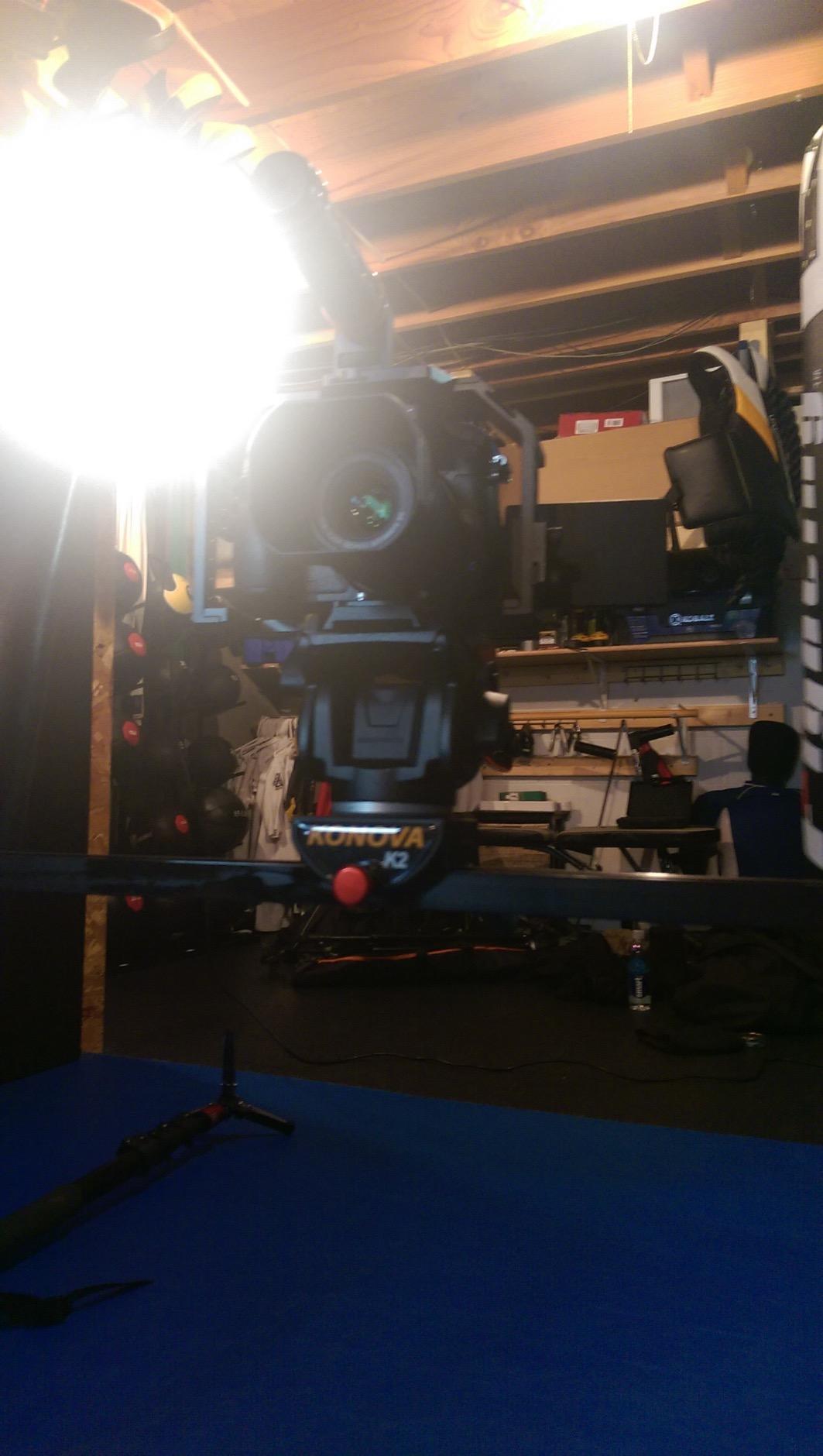
The consistent advice from reviewers is to use two tripods or slider support arms rather than a single head, and to lock the carriage before you leave it. Centering a 100 cm rail on one tripod makes it tip as the carriage reaches the end of travel.
The modular design is a quiet plus. It accepts parallax, motorized and flywheel accessories, so a manual rail like this can become a powered one later without buying a new body.
Why payload headroom matters
A rating of 40 lb means a mirrorless body with a zoom stays comfortably inside the limit, even at an angle. Higher-rated rails also damp better under weight, which is why the glide feels this smooth.
If you already own large glass or a cine body, a lower-rated slider will flex under the load and you will see it in the footage.
Where it will disappoint you
The 100 cm length is genuinely awkward in a small room, and this is not a pack-and-go rail. Budget two supports rather than one.
Documentation is sparse and support is limited, so a failing bearing is a more hands-on problem than with a mainstream brand.
8. NEEWER ER1 120cm Motorized Slider: A Long Rail With App Control
NEEWER 47.2″/120cm Motorized Camera Slider, DSLR Carbon Fiber Dolly Rail Slider with App Control, 4400mAh F750 Battery for Time Lapse Photography, Supports Video Mode, NOT Include Charger, ER1
Payload: 11 lb horizontal, 5.5 lb tilted
Weight: 2.5 kg
120 cm rail
4400mAh battery
Charger not included
Pros
- Highest average rating among the products here
- Very smooth low-noise stepper motor
- App control makes speed and exposure easy to repeat
- 120 cm travel gives room for real push-in and parallax moves
- Lightweight carbon build that folds down
Cons
- Battery charger is not included
- Payload drops from 11 lb to 5.5 lb at a 45 degree tilt
- App-only control suits people who prefer a physical remote less
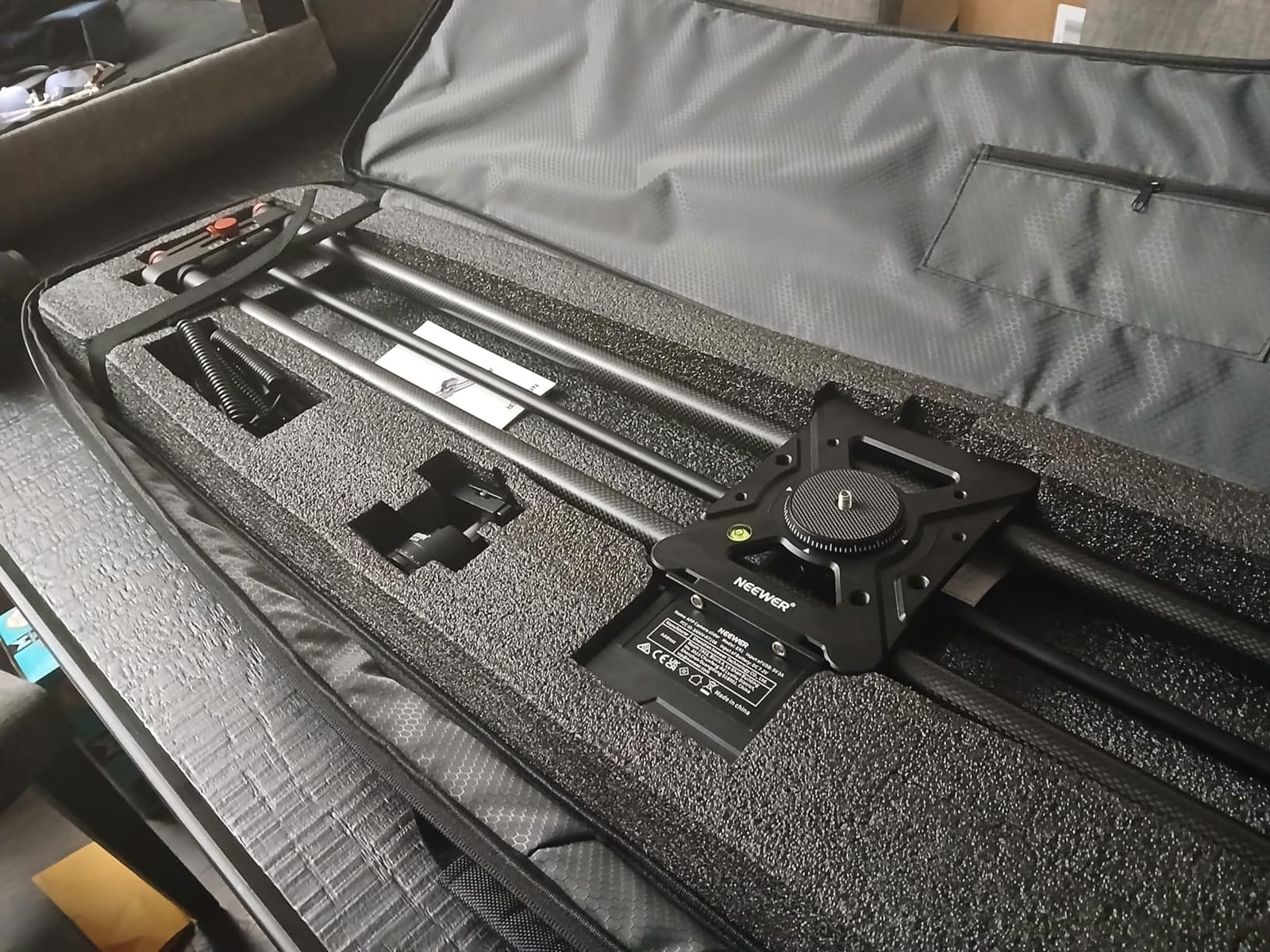
This listing is recent and carries a 4.7 average rating, the highest figure among the products we compared. The 120 cm carbon rail is driven by a silent stepper motor on four roller bearings, and control comes from an app with an optional 2.4G remote.
Manual, video and time-lapse modes cover the three things you actually shoot. The included 4400mAh NP-F750 battery powers it, and the rod angles give tracking, 120 degree panoramic and horizontal moves.
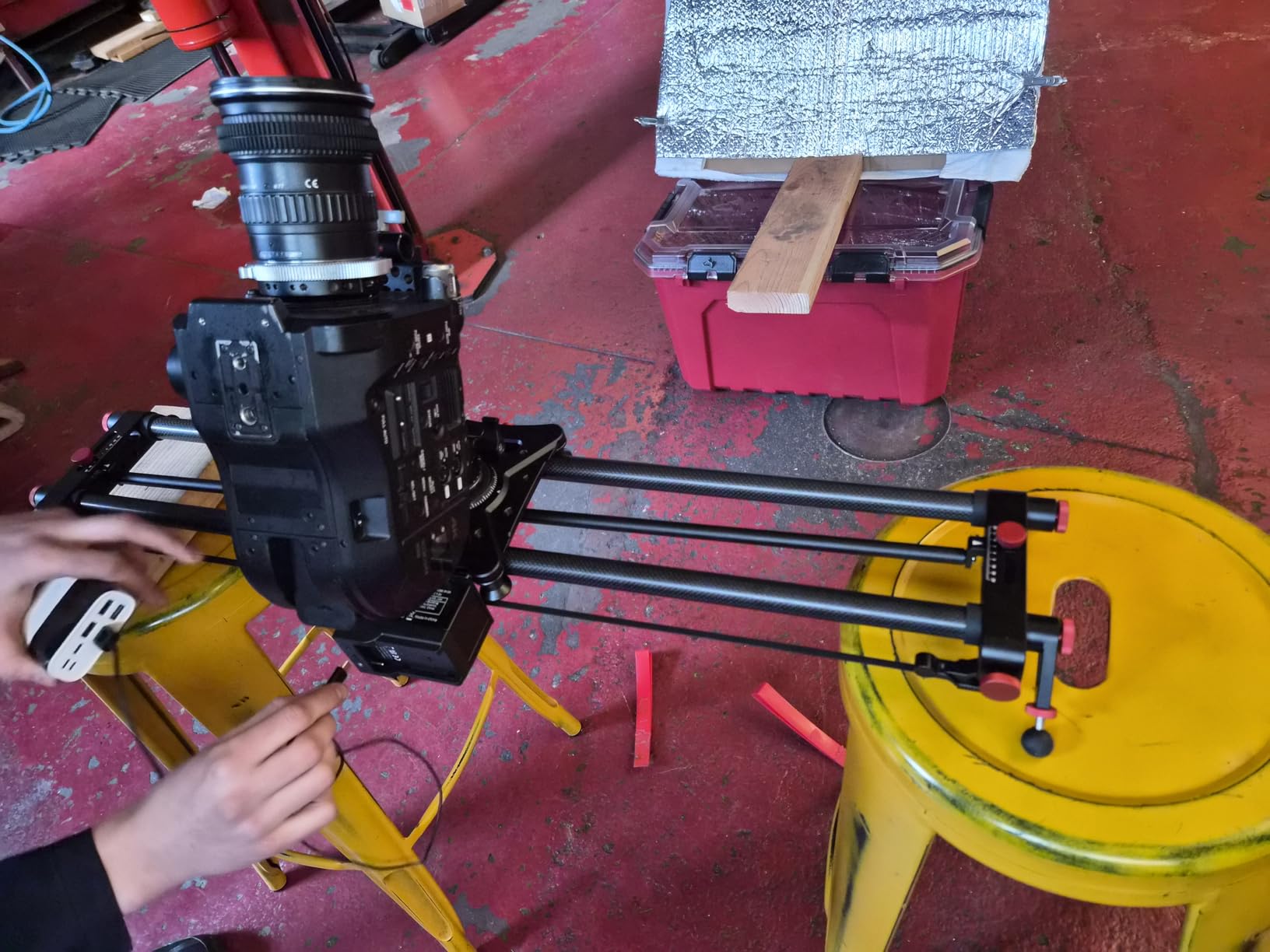
Available feedback follows a simple pattern: users get smooth repeatable motion and comfortable app-driven setup. It is a newer product with fewer detailed critical reviews, so weigh that when you read the rating.
The honest catch list is short but specific. The charger is not in the box, payload halves once you tilt the carriage up, and the app is the primary interface rather than an addition to it.
Why the app matters for solo shooting
Setting speed, interval and exposure through a phone, then repeating the same setting, is how a solo creator gets several usable takes from one setup instead of one.
Folding to 12 by 4 by 4 inches keeps the carbon build practical for travel, which is where many sliders lose to a tripod.
Where it will disappoint you
Tilt is where this slider is honest about its limits: 11 lb horizontal drops to 5.5 lb at 45 degrees. Long lenses and big bodies need the flat rating, not the headline number.
Macro work can show mild shake, and anyone who prefers a physical remote will want to add the optional controller.
9. NEEWER DL400 Upgraded Motorized Dolly: Best for Phones and Action Cams
NEEWER DL400 Upgraded Motorized Camera Slider Dolly with App Control
Payload: 6.6 lb
Weight: 3.75 lb
Motor below 30 dB
5 h runtime
5 speed settings
Pros
- Exceptionally quiet dual motor drive under 30 dB
- Programmable start
- stop and return moves remove hand shake
- Included ball head with 360 degree rotation and 90 degree tilt
- Compact enough for a small gear bag
- Phone and action camera adapters included
Cons
- Wheel-based dolly
- so surface bumps and ridges show in footage
- Struggles on steep inclines and needs smooth level ground
- No suspension to absorb rough surfaces
The DL400 is a recent wheel dolly, and it addresses motor noise, the most common complaint about cheaper ones. A dual motor drive below 30 dB is quiet enough that owner reviews repeatedly mention using it with recorded dialogue and audio-sensitive content.
Programmable start, stop and return moves take the shake out of every take, and five speed settings from 15 to 60 seconds per metre cover everything from a slow creep to a visible move. The NP-F750 battery runs about five hours and charges over USB-C, with app control across manual, live video and time-lapse modes.
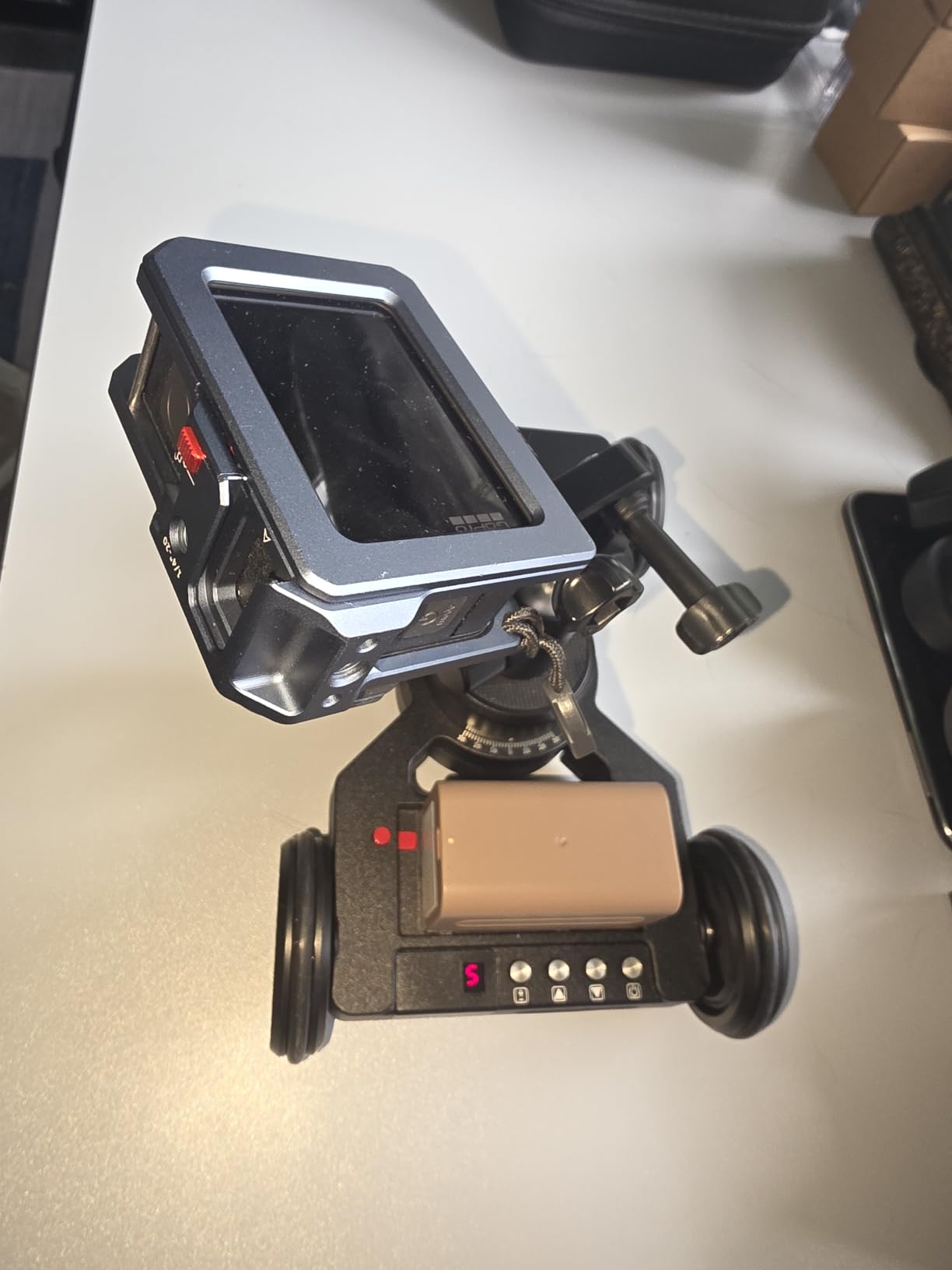
Reviewers position it as a compact, travel-friendly way to add cinematic movement to product, food and social content without carrying a full rail. The near-universal guidance is to use it on a smooth, level tabletop, because it is a wheeled dolly rather than a rail.
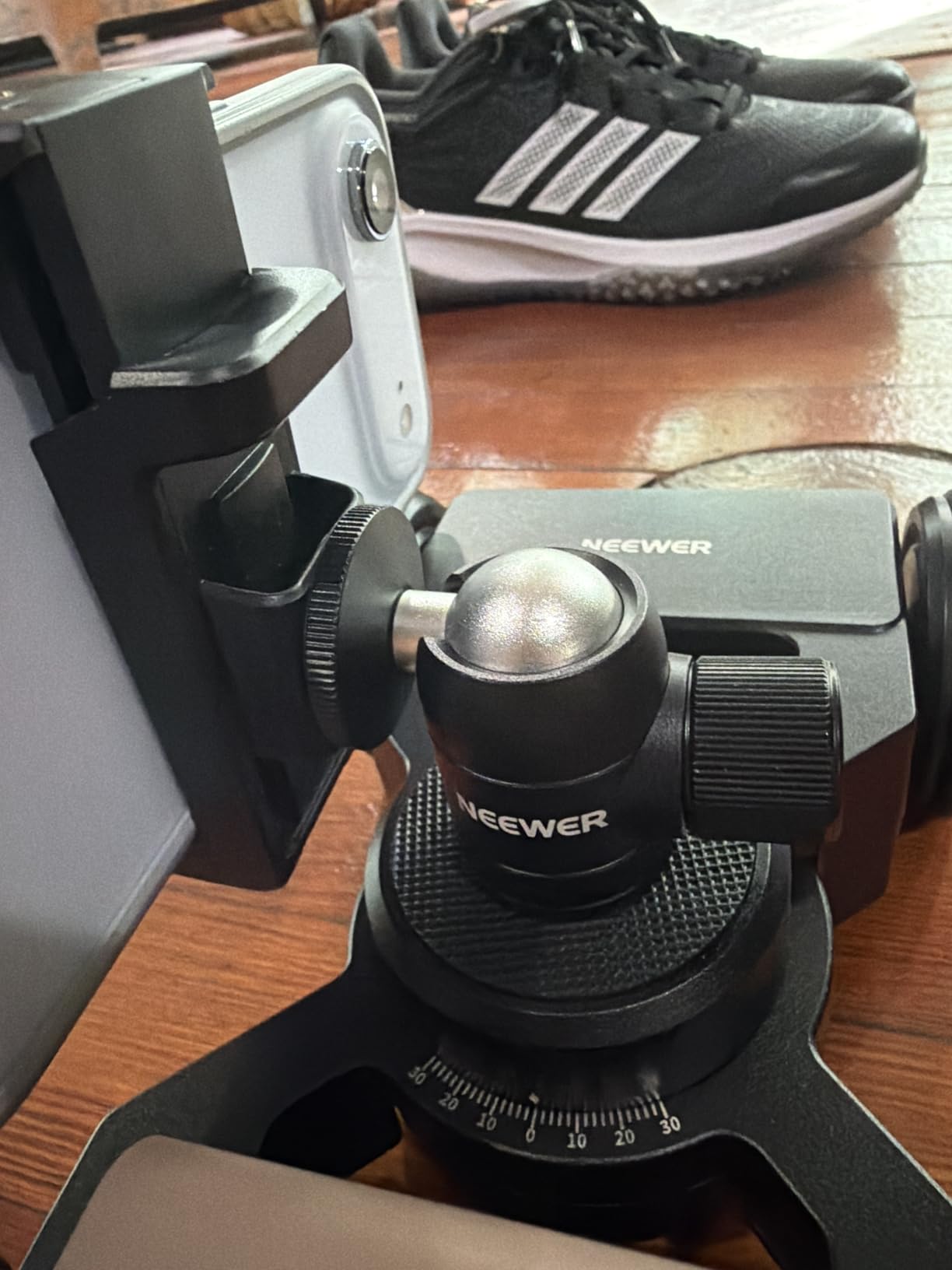
The included ball head rotates 360 degrees and tilts 90 degrees, and manual plus or minus 30 degree steering lets you angle a track by hand. Phone and action camera adapters are in the box.
Why it suits phone and action camera work
With a 6.6 pound ceiling and included adapters, it covers phones, action cams and mirrorless bodies without a separate plate or clamp.
Five hours of runtime means it survives a full shooting day and charges from the same battery family used by many camera kits.
Where it will disappoint you
Ridges, carpet and outdoor gravel all transmit into the shot because there is no rail and no suspension. On rough surfaces you depend entirely on in-camera stabilisation.
Time-lapse mode needs a shutter release cable bought separately, and a few buyers report wobble at the slowest speed setting.
10. iFootage Shark Nano II 660: Best for Gimbal Integration
IFOOTAGE Shark Nano II 660 Motorized Camera Slider 26″ for Phone Camera
Payload: 7 kg horizontal
Travel: 17 inch
Weight: 6.8 lb
Motor under 20 dB
Pros
- Very smooth movement with virtually no micro-jitter
- Brushless motor under 20 dB for ASMR and dialogue
- On-device programming so the app is optional
- Multi-axis pairing with DJI RS-series gimbals
- Settings retained after power cycle
Cons
- No storage spot for the included Allen wrench
- Switching between horizontal and vertical rigs takes time
- At 6.8 lb it needs sturdy support at both ends
This is the only multi-axis slider in the roundup, and that is the whole argument for it. It gives unlimited 360 degree pan plus dual-axis motorized control, so a single unit produces slide, arc and reveal moves that a straight rail cannot.
It also pairs with DJI RS2, RS3 Pro, RS4, RS4 Pro and RS5 gimbals through the included adapter, adding a gimbal on top of the rail. Aviation-grade aluminium and carbon fiber sit underneath, with 1 micron movement precision and an intelligent stabilization algorithm.
Control happens on the IPS touchscreen or the app, with eight waypoints and speed from 0.1 to 180 degrees per second. AI face and object auto-follow tracking plus a four-target mode handle moving subjects.
Experienced filmmakers comparing it to established systems rate the build quality, travel precision and gimbal integration very highly, particularly for product cinematography. The most-praised operational feature is waypoint programming on the device itself, so the app is a bonus rather than a requirement.
At under 20 dB the brushless motor suits ASMR and recorded dialogue, and reviewers report virtually no micro-jitter even on a sensitive lens. Power comes from USB-C PD 60W single-cable charging, so slider, gimbal and camera can share one supply.
Why gimbal pairing is the deciding feature
Sliding and panning at the same time is the move most creators cannot get from a straight rail, and the RS adapter is what makes it repeatable rather than a manual two-person operation.
Self-cleaning carbon fiber rails and an auto-save of settings are small details that matter when you shoot many setups in a day.
Where it will disappoint you
At 6.8 pounds it needs a sturdy tripod or support at both ends, and re-rigging between horizontal and vertical shooting takes time on location.
There is no dedicated storage spot for the Allen wrench, which is used constantly during setup. Keep the hex key in your bag, because losing it on location stops the shoot.
11. KONOVA P1 with S2 Motor: Best for Overnight Timelapse
KONOVA Motorized Slider P1 Series Carbon Slider Dolly with S2 for Parallax Panorama Shot Live Motion and Timelapse Supports Camera, Mobile Phone, DSLR, Mirrorless with Bag (60cm (23.6 inch))
Payload: 5 kg horizontal
Weight: 3 kg
Rail: 60 cm
Speed: 0.7 to 42.8 mm/s
Pros
- Carbon fiber rail keeps the frame light while sliding smoothly
- Reliable time-lapse for long overnight sequences including start delay
- Inward panning for parallax and outward for panoramas from one rail
- Shutter cable matched to your camera model on request
Cons
- No NP battery or charger included
- Basic tethered controller with a tiny screen
- Micro-jitter with heavier mirrorless bodies
The P1 is a 60 cm carbon rail paired with the S2 motorized system, and its strength is long unattended runs. Buyers single out night and dusk time-lapse as the use case where the quiet running and the start delay option genuinely pay off.
Speed covers 0.7 to 42.8 mm per second, and the panning can face inward for parallax or outward for panoramas. Payload is 5 kg horizontal and 1.5 kg on the diagonal, so this is a light or medium rig slider.
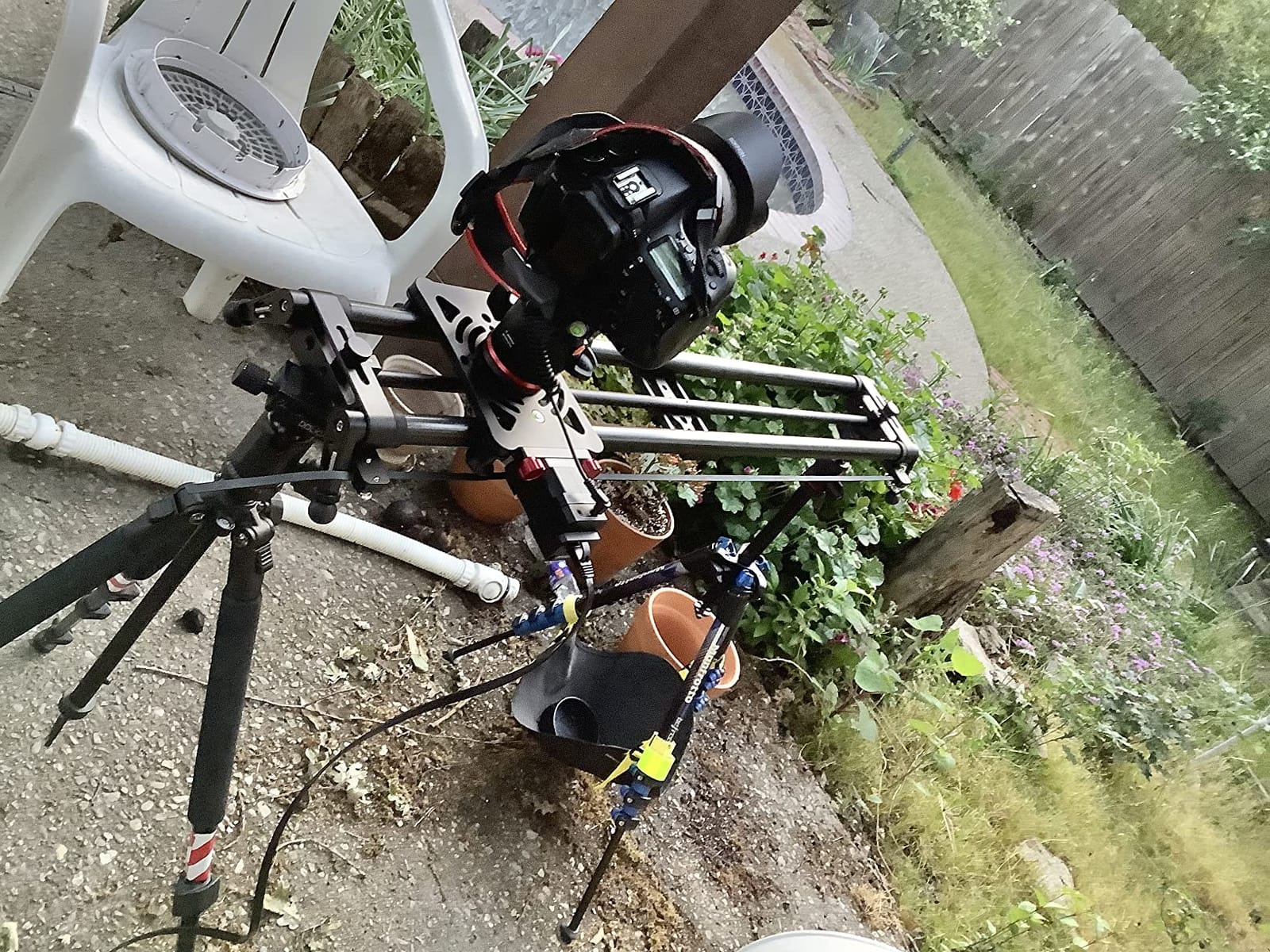
Reviewers treat it as a capable entry-level motorized slider for time-lapse specifically. The most repeated practical points are that batteries are not supplied and must be sourced separately, and that the motor pitch changes audibly on ramp up and down. A front-heavy rig also needs a lightweight head, which the rail alone cannot fix.
Why it earns the overnight timelapse pick
An overnight cloud or city sequence needs a motor that holds a set speed for hours without your hand on it, and the start delay option means you can set the frame and walk away.
Inward and outward panning from one rail covers both parallax and panoramic timelapse framing.
Where it will disappoint you
No battery or charger is included, so it will not run out of the box. The motor brackets also block the centre mounting holes, which makes a light stand setup awkward.
Micro-jitter appears with heavier mirrorless bodies and some focal lengths, and the motor pitch change is audible in a quiet room.
How to Choose a Camera Slider for YouTube B-Roll
Work through these criteria in order and the choice narrows quickly. If you can name the shot first, most of the decision is already made.
Manual vs Motorized: Which One Do You Actually Need?
Manual wins for inserts, top-downs and push-ins, because one or two takes are all you need and a rail is lighter and simpler to run. Motorized wins when you shoot alone, when the move repeats across cuts, or when you need a consistent speed over a long take such as a timelapse.
Repeatability is what justifies the jump up to a motorized model. If you re-frame the same move three times for three different cuts, you are paying for the ability to run it again with your hands elsewhere.
Motor noise matters more than most spec sheets admit. A slider whose motor pitch is audible will contaminate any recorded line, so check whether your shots are dialogue or silent inserts.
Rail Length and Travel Matched to Shot Type
Fifteen to 24 inches covers close-up product work, keyboard sweeps and talking-head push-ins. Thirty-one to 38 inches covers a desk, a workbench or a single-subject reveal. Forty-eight inches and above covers walkthroughs and room-scale parallax.
Rail length you cannot carry is length you will not use. Many owners in forum threads report that packed size, not rail length, decided which slider became their regular one, and that lesson came up again and again in r/videography threads about B-roll kits.
Our sliders and grippers comparison covers a different surface, but the same physics apply: a smoother, flatter path gives a more predictable result.
Payload and Why Tilt Cuts It in Half
Add your body, lens, plate, head and cables, then leave 20 to 30 percent headroom. A rail at its exact limit flexes, and flex reads as noise and vibration in the footage.
Tilt is where ratings mislead. The NEEWER ER1 is rated 11 lb horizontal and 5.5 lb tilted at 45 degrees, and the KONOVA P1 is 5 kg horizontal against 1.5 kg diagonal. Plan the angle before you plan the body.
If you use a long telephoto lens, buy against the tilted number, not the headline figure.
Carbon Fiber or Aluminum, and What Extras Cost Extra
Carbon fiber wins on weight per unit of rigidity and is the right call for travel. Aluminum wins on damping under heavy loads, and its extra mass is often an advantage with a big rig on a smooth floor.
Budget the accessories, because this is where the real total cost hides. Batteries, chargers, remotes, shutter release cables and carrying cases are listed separately on several models in this roundup.
Check the mounting standard before you commit: 1/4 inch and 3/8 inch holes are universal, but a quick release plate is not, and its absence slows every camera change.
When You Do Not Need a Camera Slider
For a lot of YouTube work, a tripod is the better tool. Locked-off talking heads, straight cuts to screen capture and any shot where the camera does not move need no rail at all, and a tripod is faster to set up every time.
A gimbal wins whenever the subject moves. Walking shots, follow-throughs and anything handheld belong there, and no amount of rail travel fixes a subject leaving frame.
There is a hybrid worth knowing: mount a fluid head on a slider carriage and you get lateral movement plus tilt and pan from one body. That combination covers interior walkthroughs and product reveals that a bare rail cannot, and the GVM models in this roundup all support it.
Our slider versus slider comparison runs the same kind of head-to-head spec breakdown on a different surface, if you want to see how a table changes the numbers.
Forum discussion on this is consistent. Many creators argue a tripod plus careful framing is enough for B-roll, and the ones who get the most use out of a slider are the ones already shooting in places where moving the camera through space is the only way to show the subject.
Frequently Asked Questions
What is the best camera slider?
The NEEWER DL100 is the best all-round camera slider for YouTube B-roll because it is motorized, weighs 1.1 pounds, carries up to 6.6 pounds and runs about six hours on a built-in battery. For close-up product work on a budget, the Zecti 16 inch manual rail is the value pick.
What is the best motorized camera slider?
For most creators the GVM 48 inch motorized slider is the best motorized option, with programmable start and end points, looping, six shooting modes and 20 pound payload. It needs two supports rather than one tripod, and its app control requires an account login.
Do I need a motorized slider for YouTube?
Not for most B-roll. A manual rail is enough for inserts, top-downs and single push-ins. Choose motorized when you shoot alone and want to repeat the same move across several cuts, or when you need a constant speed for long timelapse runs.
How long should my camera slider rail be for B-roll?
Match the rail to the shot. 15 to 24 inches covers close-up product work and talking-head push-ins. 31 to 38 inches covers a desk or a single-subject reveal. 48 inches and above covers room-scale walkthroughs and parallax moves.
Why are camera sliders so expensive?
Price tracks three things: rigidity of the rail and carriage, the quality of the bearings, and the control electronics. Motors, app control, tracking, bundled batteries and multi-axis gimbals add cost. A simple manual rail at the entry tier uses the same bearing technology with none of the electronics.
Final Verdict: Which Camera Slider Should You Buy?
Start with the NEEWER DL100 if you shoot flat-surface inserts and want repeatable motorized movement without a large bag. Pick the Zecti 16 inch if your B-roll is close-up product work and you want the lightest rail you can carry.
Move up to a motorized carbon rail when you need length, a silent motor and programmed moves, and to the multi-axis iFootage model when your shots need sliding and panning at once. Whichever you choose, buy the surface and support you need on the same trip, because a rail without a level surface does not move smoothly.