
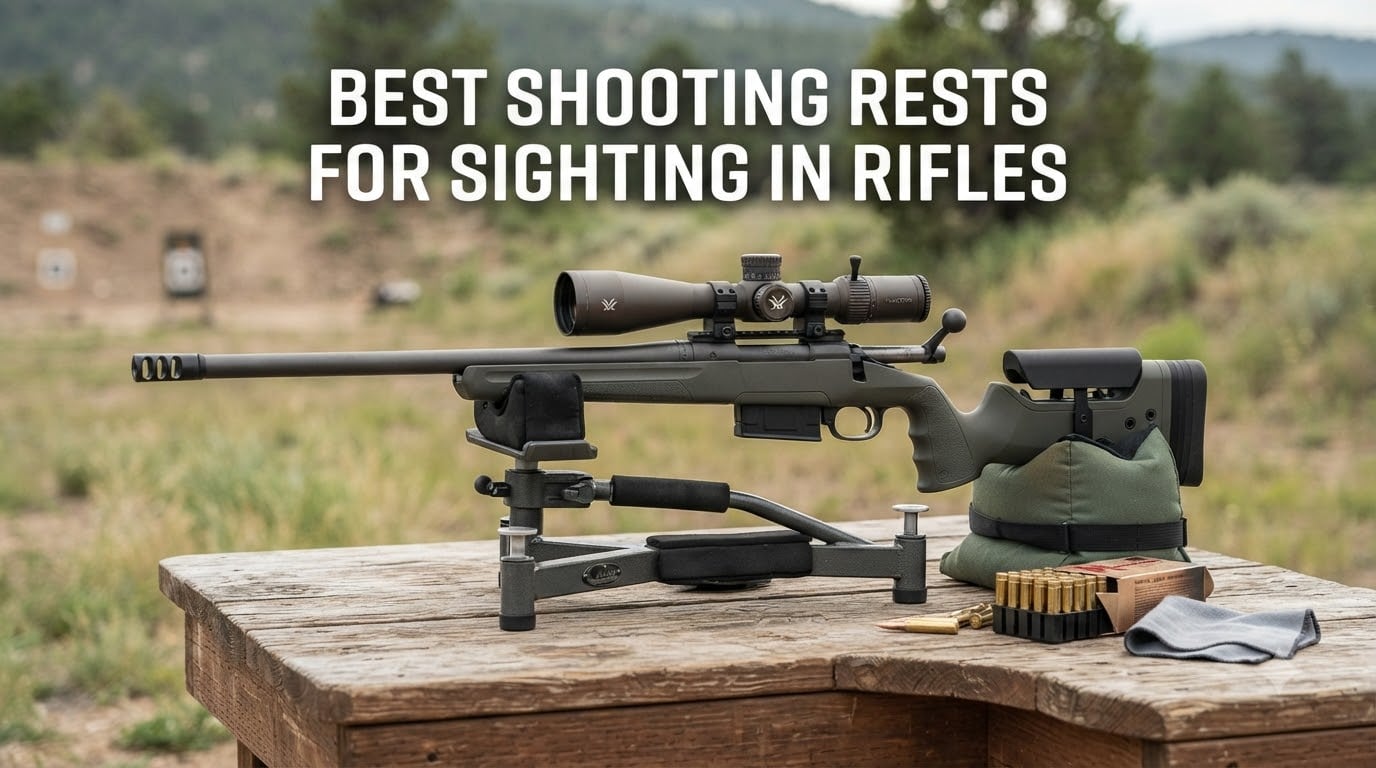
Choosing a rest for sighting in a rifle comes down to one job: holding point of aim steady between shots so the only variable left to solve is the scope. Get that stability right and adjustment becomes boring and repeatable. Get it wrong and you will chase a moving target all afternoon.
That is why the best shooting rests for sighting in rifles are judged on different criteria than hunting rests. A bench rest that removes the shooter is superb for dialing optics and poor for practising a field position. Long-range regulars on r/longrange argue the opposite case just as loudly, with the top answer in one sighting-in thread being that a bag and a bipod is all anyone needs. Both camps are right for different jobs, and we say so throughout this guide.
We spent six weeks moving twelve rests between a bench and a folding table, swapping the same AR-15 and a bolt rifle to see which held a point of aim and which wandered. Every rating and review count below comes from customer data, not from our impressions alone.
Table of Contents
Top 3 Shooting Rests for Sighting In Right Now (October 2026)


Best Shooting Rests for Sighting In Rifles in 2026
All twelve rests appear below so you can compare type, adjustment and weight before reading the detail. Sandbag supports sit alongside frame rests, portable tripods and shooting tables, because a rest that suits a 6.5 Creedmoor bench session rarely suits a pack-out hunt.
| Product | Specifications | Action |
|---|---|---|
| BOG DeathGrip Hunting Tripod |
|
Check Latest Price |
| Caldwell Steady Rest NXT |
|
Check Latest Price |
| Caldwell Deadshot Front and Rear Bags |
|
Check Latest Price |
 Caldwell Matrix Rest Caldwell Matrix Rest |
|
Check Latest Price |
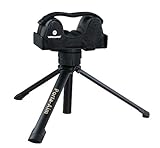 Vanguard Porta Aim Gun Rest Vanguard Porta Aim Gun Rest |
|
Check Latest Price |
 AC Allen Monopod Shooting Stick AC Allen Monopod Shooting Stick |
|
Check Latest Price |
 Highwild Foam X-Block Rest Highwild Foam X-Block Rest |
|
Check Latest Price |
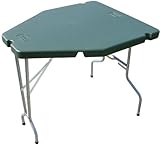 MTM PST-11 Predator Shooting Table MTM PST-11 Predator Shooting Table |
|
Check Latest Price |
 MTM PSR-30 Predator Rest MTM PSR-30 Predator Rest |
|
Check Latest Price |
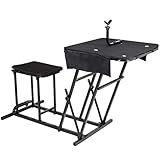 Goplus Foldable Shooting Table Goplus Foldable Shooting Table |
|
Check Latest Price |
 MidTen Shooting Rest Tripod MidTen Shooting Rest Tripod |
|
Check Latest Price |
 CVLIFE Shooting Rest Tripod CVLIFE Shooting Rest Tripod |
|
Check Latest Price |
Two earlier guides cover ground this one touches only briefly: our general best shooting rests roundup leans toward hunting positions, while bags and rests for benchrest shooting goes deeper on the sandbag side.
1. BOG DeathGrip Tripod – Best Overall Rest for Sighting In
BOG DeathGrip Aluminum Tripod with Durable Aluminum Frame, Lightweight, Stable Design, Bubble Level, Adjustable Legs, Shooting Rest, and Hands-Free Operation for Hunting, Shooting, and Outdoors
Aluminum tripod
7 to 59 inch height
40 pound clamp
25 degree tilt
Pros
- Rigid for precision shooting
- Clamps rifles and shotguns up to 40 pounds
- Huge height range
- Non-marring rubber inserts
Cons
- Foam grip wears with handling
- 8.5 pounds is heavy to pack out
- Not a bench rest
This is the rest I put on the bench first every time a new optic goes on. The clamping head holds the fore-end without pinching it, and the legs do not move when the shot goes off.
Adjustability is the real story. Height runs from 7 to 59 inches and the legs lock at 20, 45 and 85 degrees, so the same unit covers prone, seated and standing positions without a second piece of gear. At 12164 reviews and 4.8 stars, it is the most thoroughly owner-tested rest here.
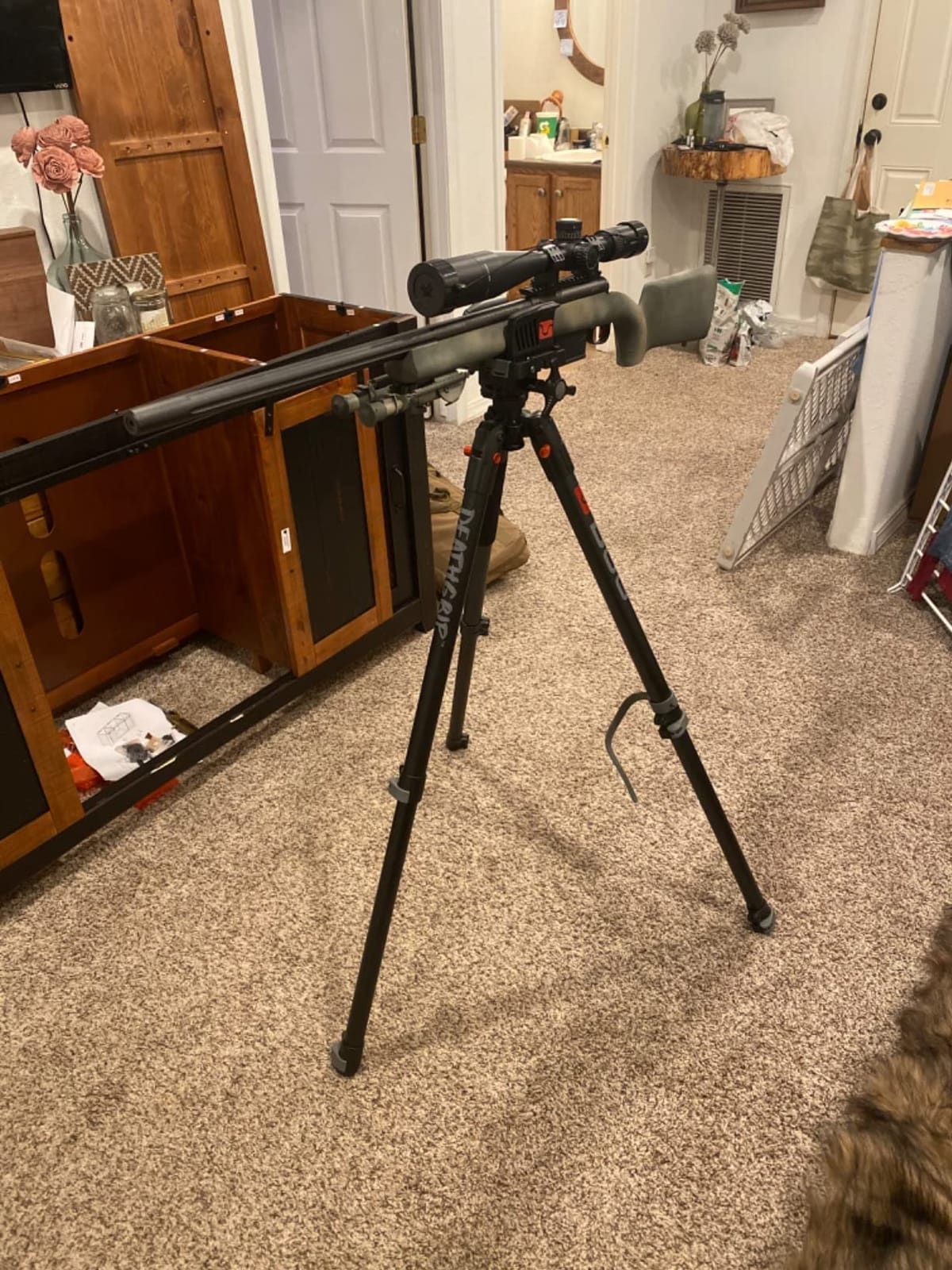
Where it struggles is heavy-magazine AR work. The clamp grabs the handguard with the front tower ahead of the magazine, so a loaded 30-round magazine under a tall optic can bottom out before the fore-end seats properly.
Who this rest is built for
Shooters who use one rifle across several positions, or who sight in from a truck bed or ground blind. The 40 pound clamp capacity and non-marring inserts mean it also handles a heavy barrel or a crossbow, so it does not sit unused.
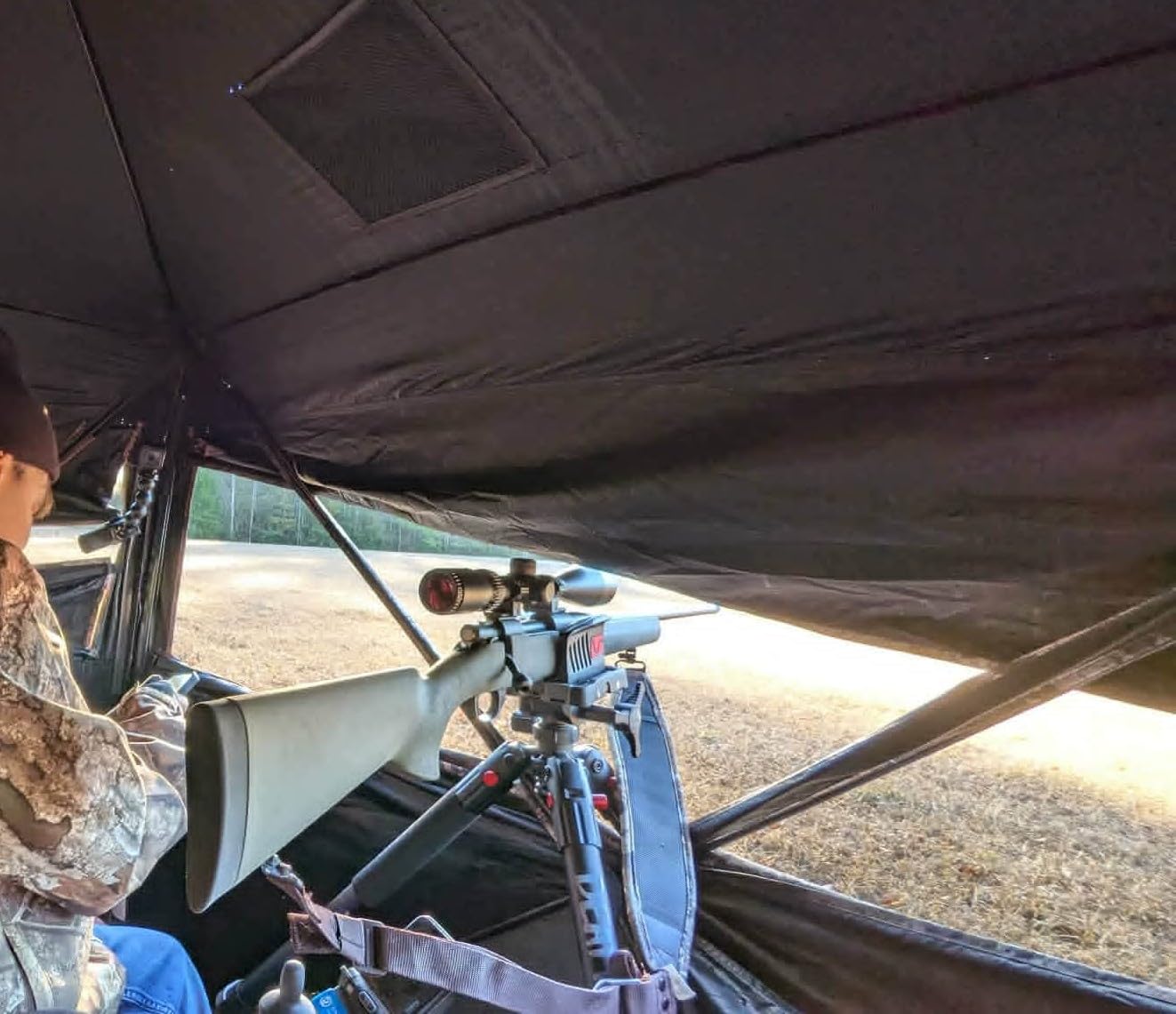
Where it falls short
It is a tripod, not a bench rest. A shooter wanting a fixed repeatable bench position with a rear bag will find the clamp in the way, and 8.5 pounds is a real cost if you walk in to hunt rather than drive to a range.
2. Caldwell Steady Rest NXT – Best Value for Sighting In
Caldwell Steady Rest NXT, Modular Frame
3-piece polymer frame
7.6 cm to 27 inch
Elevation wheel front
Neoprene padding
Pros
- Good value for bench sight-in
- Assembles in minutes
- Protects firearm finishes
- Front base doubles as pistol rest
Cons
- Plastic flexes under pressure
- Bridge must come off for high-capacity magazines
- Rear rest sits low
Most first-time buyers end up with this one, and in most cases it is right. The three-piece design works as a full front-and-rear rest, a front-only pistol rest, or breaks down in seconds for the car.
The elevation wheel moves the fore-end support in increments small enough that windage changes between shots are quick. Buyers consistently describe it as a bench rest that does its job for airguns, rimfire, red dots and conventional optics.
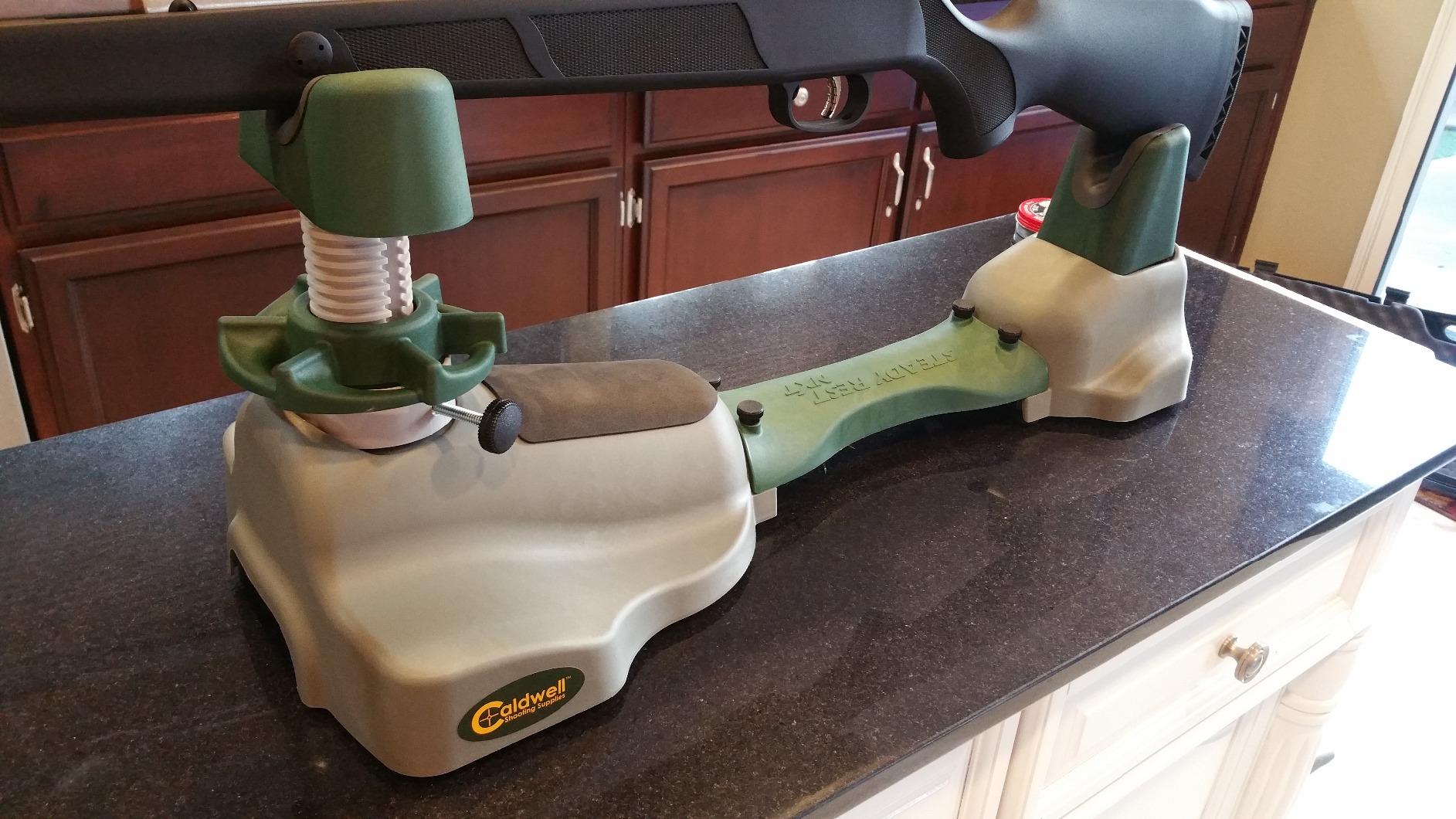
The honest weakness is material. This is a lightweight polymer frame, and a magnum-class rifle on it will make the construction flex. Reviewers who shoot heavy recoil report the rest shifting between shots, which is exactly the behaviour that makes a zero look unstable.
Who this rest is built for
New shooters, rimfire and airgun owners, and anyone zeroing a red dot on an AR. The 8661 reviews at 4.3 stars reflect a product that handles the fundamentals well and asks very little of the user.
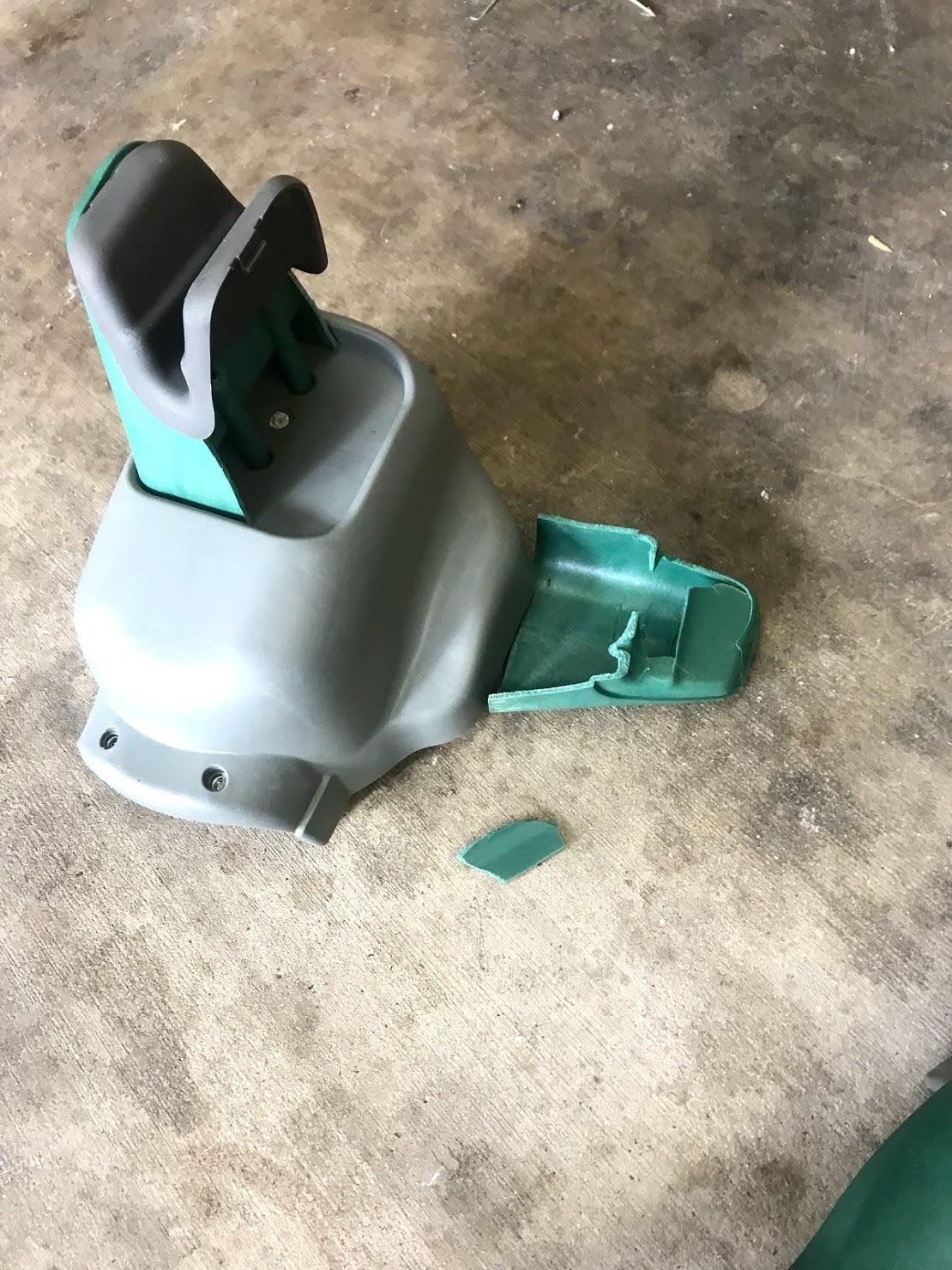
Where it will frustrate you
Long-range precision with a heavy barrel is where the plastic flex shows. The rear rest also sits low, which conflicts with some collapsible stocks, and the fixed rifle notches are one-size-fits-all. Plan on the front-only setup with a rear bag for magazines.
3. Caldwell Deadshot Bag Combo – Best for Recoil Control
Caldwell DeadShot Bag Combo Filled, Front and Rear Shooting Rest
Pre-filled bag combo
10.5 pounds total
600 denier shell
Limited lifetime warranty
Pros
- Ready to use out of the box
- Mass absorbs recoil better than light frames
- Water-resistant shell
- Quick-connect transport
Cons
- Bulky to carry far
- Fill shifts and settles
- Rear bag is small
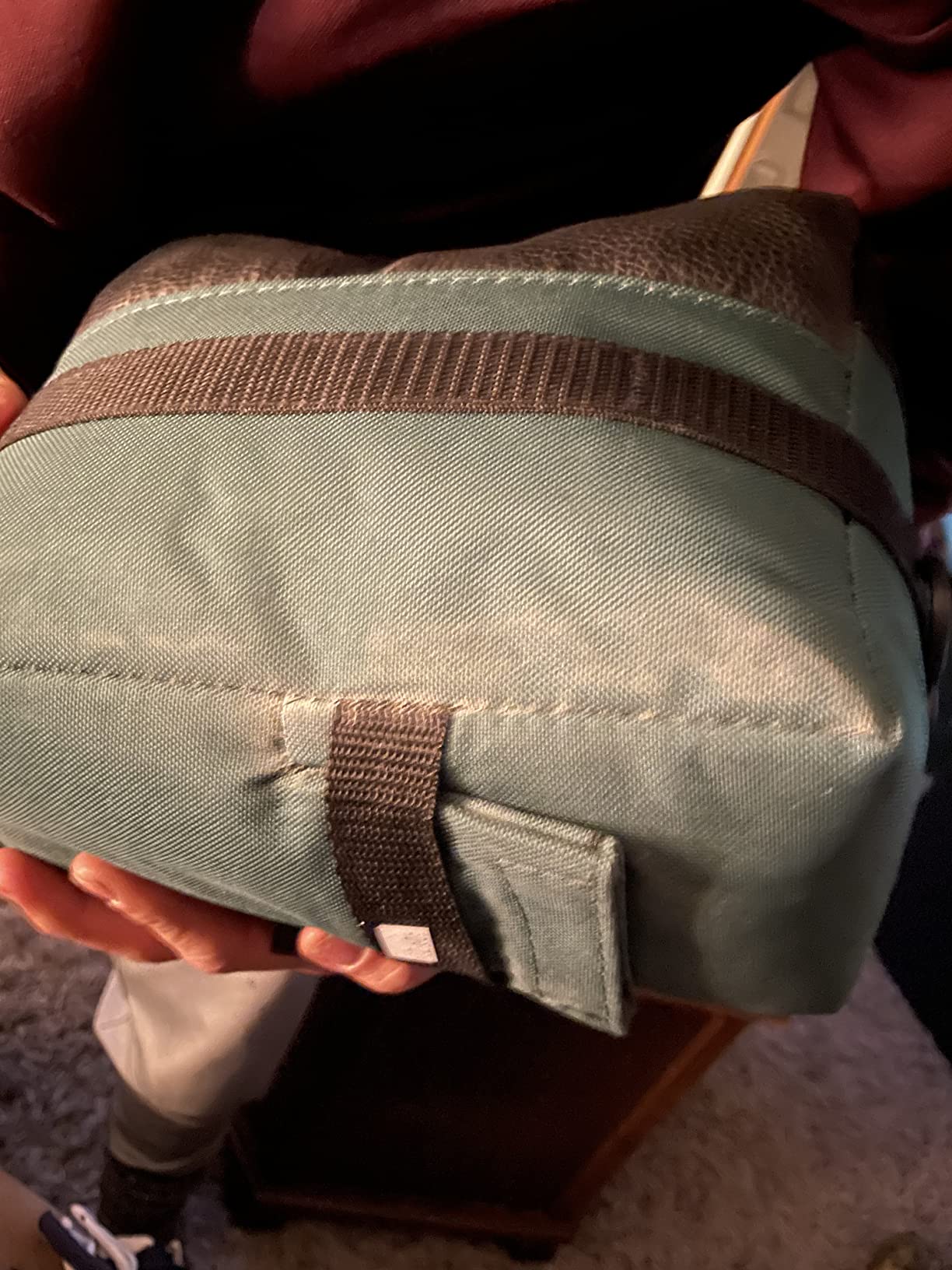
Everything the frame rests on this list try to solve with design, this combo solves with mass. The front bag is 10 by 7.5 by 8 inches and the rear is 5 by 5 by 4.5, giving 10.5 pounds of support that barely moves when a magnum fires.
Both bags come filled with corn cob media, so there is no filling, no settling and no guessing at bag tension on your first trip to the range. That convenience is why 6544 reviews hold a 4.7 average.
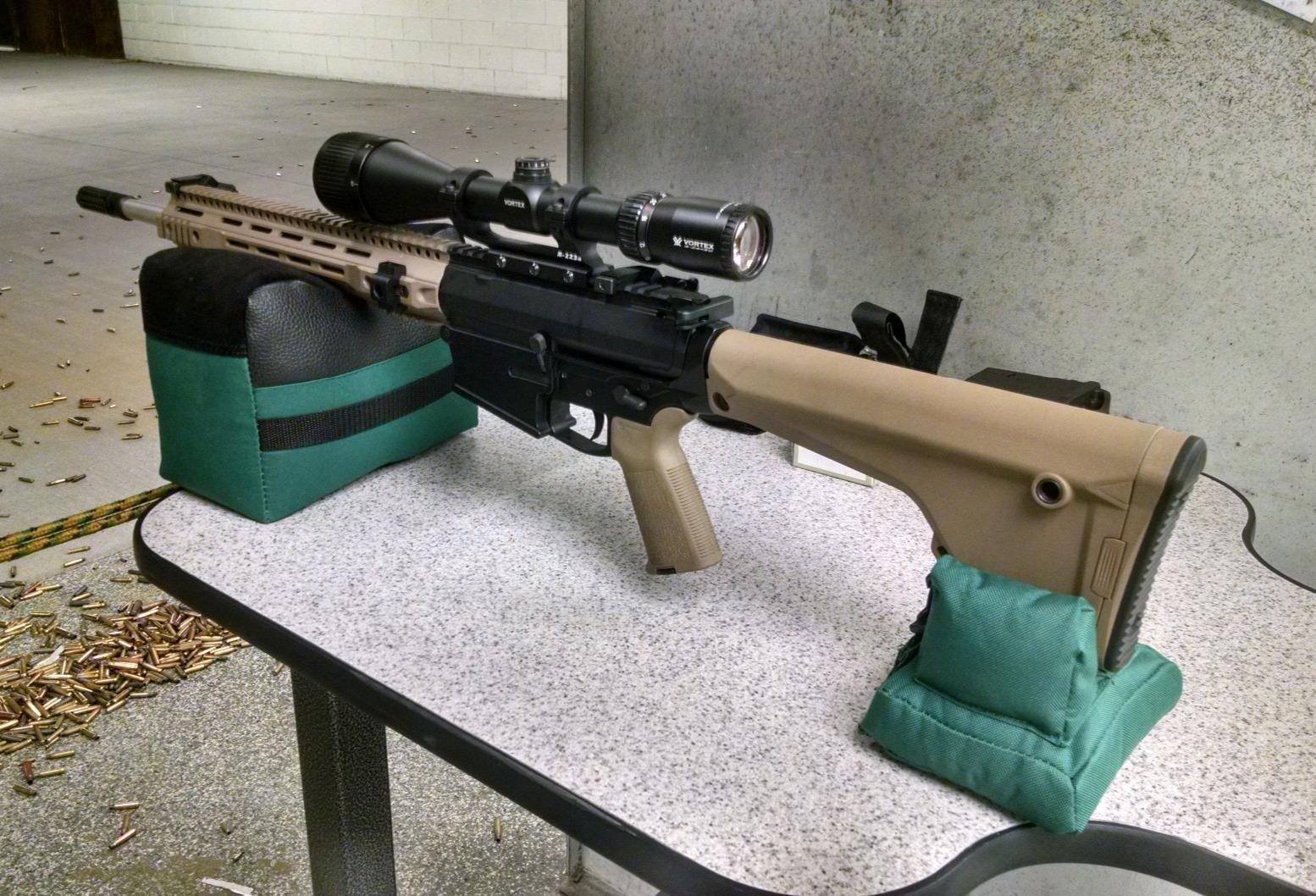
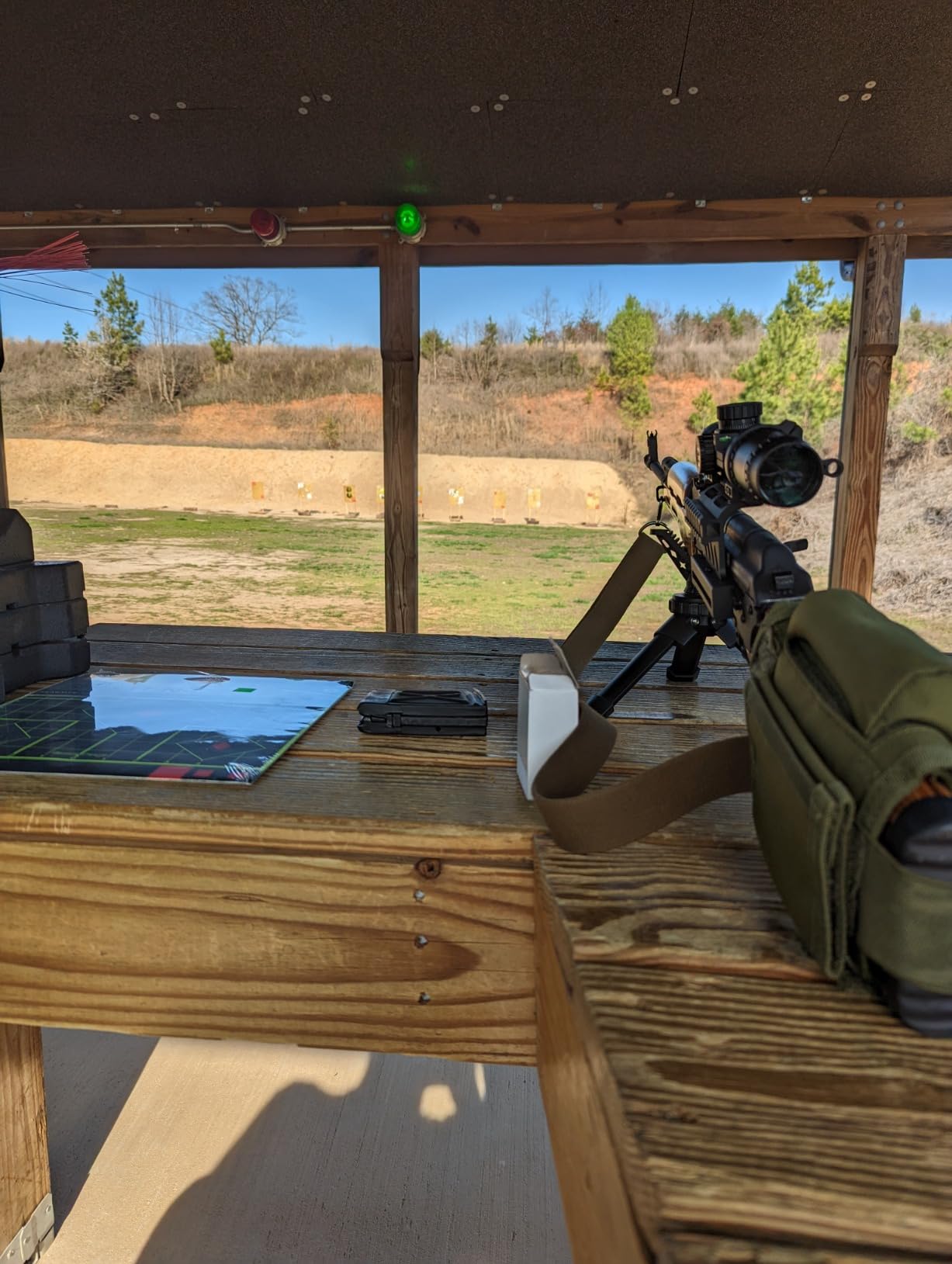
The V-shaped front is what matters for sighting in. It cradles the fore-end from both sides without a hard contact point, so the rifle does not roll as you change elevation. I found point of aim repeatable across a 10-shot group in a way no lightweight polymer frame here managed.
Why the extra mass pays off
Magnum rounds, 6.5 Creedmoor, and long strings of follow-up shots. Recoil that barely moves the rifle means you can watch impacts and dial without rebuilding your cheek weld every time. Our benchrest bag guide covers fill weight and shaping in more detail.
Where it becomes a burden
Ten and a half pounds across two bulky bags is unpleasant to walk with, and the rear bag is small enough to need a second bag behind it for prone shooting. The media settles and needs reshaping every few sessions.
4. Caldwell Matrix Rest – Best for AR-15 Magazines
Caldwell Matrix Rest, Modular Frame
Modular frame
4.5 inch adjustment
U-channel clearance
15 inch height
Pros
- One-handed front elevation changes
- Clears detachable magazines and lever actions
- Converts to a pistol rest
- Built-in storage
Cons
- Plastic build bounces under heavy recoil
- Front tower can creep downward
- Fixed rear height
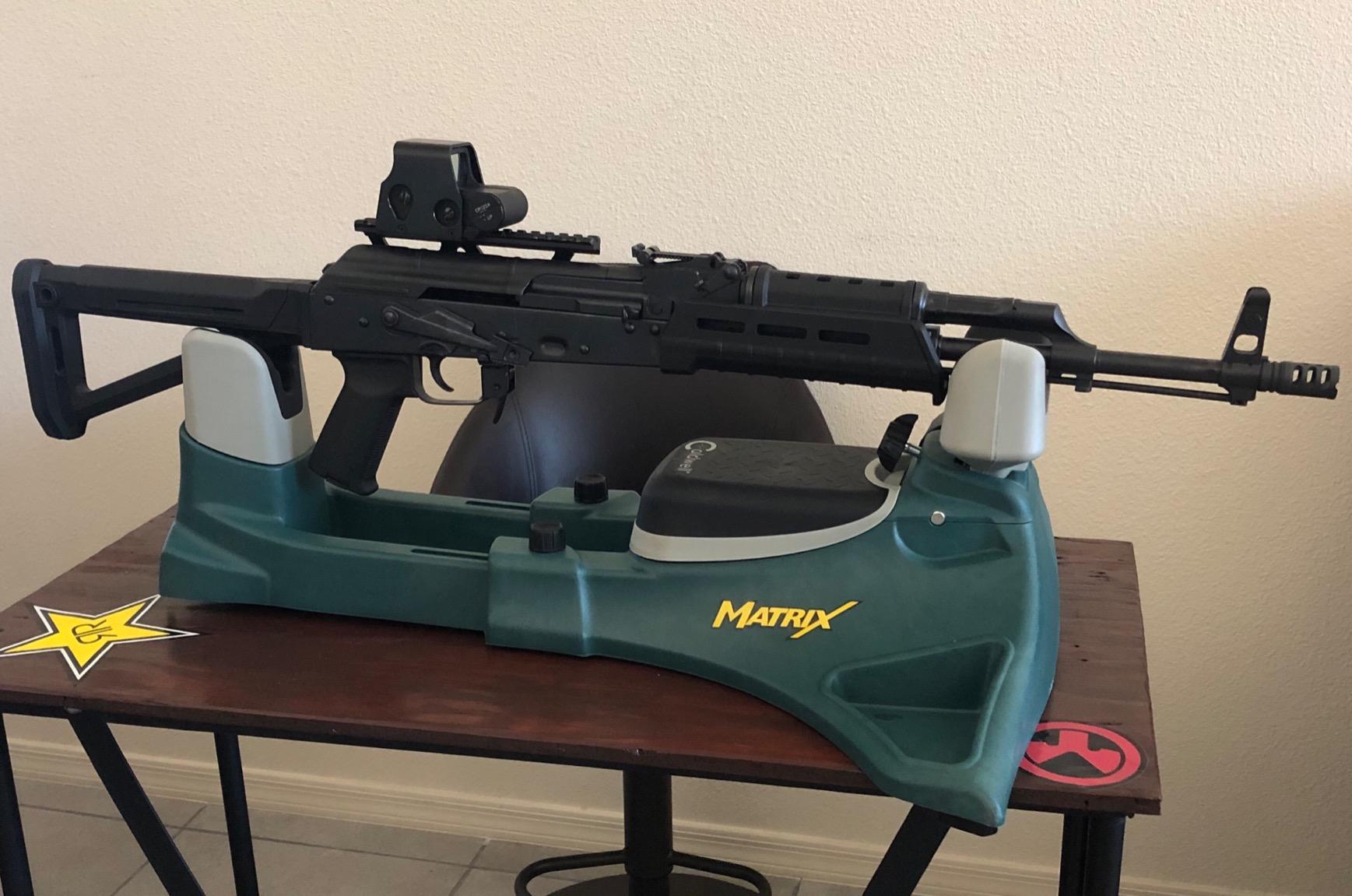
The hollow U-channel frame is the defining feature here, and for AR-15 owners it is the most useful design choice in this guide. The channel passes around a magazine well and a lever-action receiver, so you do not have to remove a 30-round magazine to get the rifle supported.
The spring-loaded front is what speeds up a session. Squeeze the tower, reposition it one-handed, and it locks, in increments small enough to nudge the muzzle a few MOA at a time.
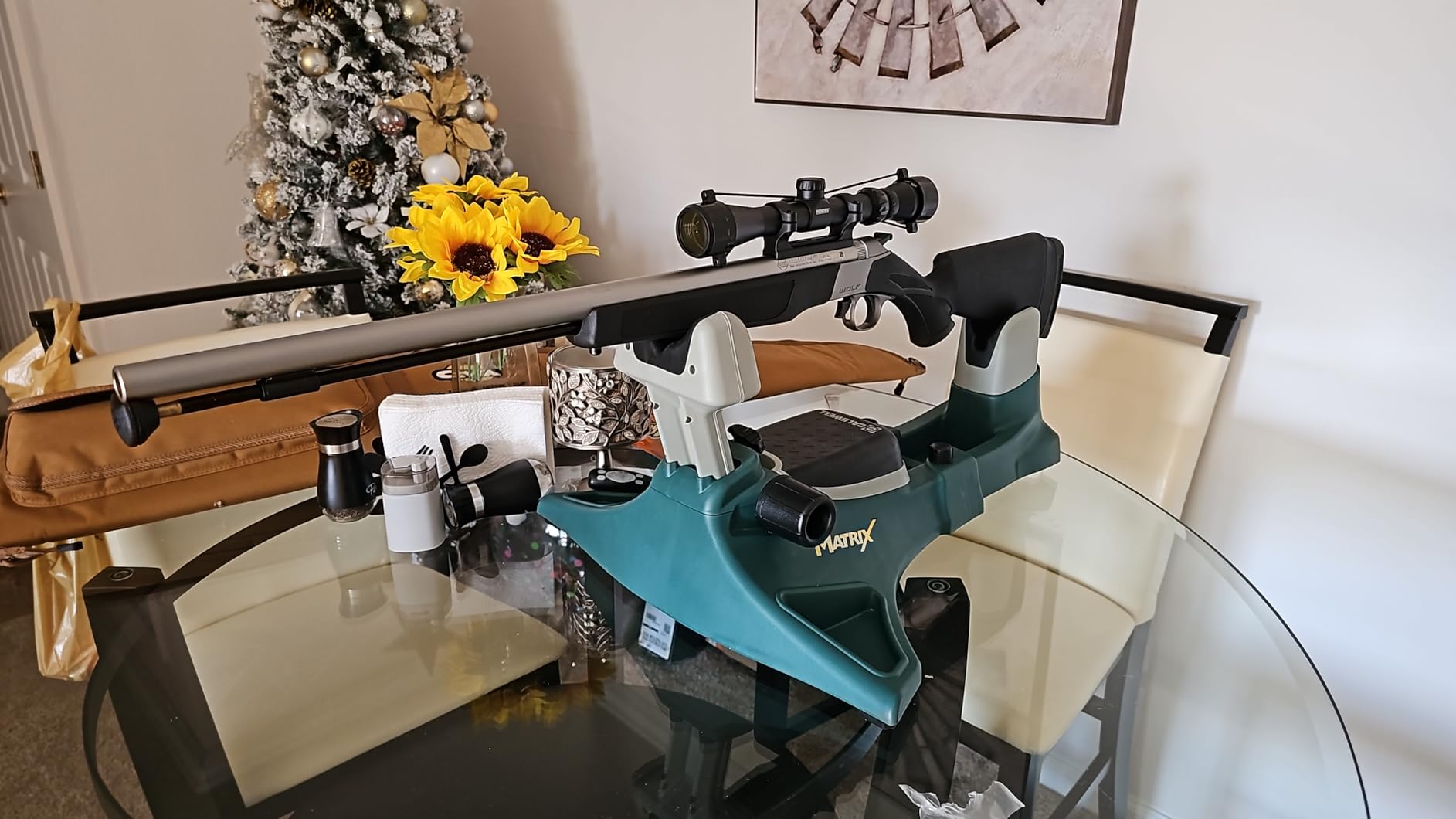
Owners report using it for bore sighting, zeroing pistols and rimfire rifles, cleaning and general bench work. The front compartment doubles as handgun support, and the unit collapses without tools for transport.
Best use for this rest
AR-15 and pistol owners zeroing several guns at one bench. The length adjustment, magazine clearance and convertible frame mean it stays in rotation rather than becoming a dedicated one-rifle tool. 2795 owners rate it 4.5 stars.
Where the plastic gives out
Magnum recoil and long-distance precision. Reviewers are split-to-positive, and the recurring criticism is the light frame shifting after shots above .223. The fixed 15 inch rear height also means holding the buttstock when seated at a high table.
5. Vanguard Porta Aim – Best Portable Bench Rest for Travel
Vanguard Porta Aim Gun Rest. Compact and Portable Bench Rest. Quick Height Adjustment. Anti-Vibration Bag Rotates 360 Degrees , Black
1.7 pound aluminum
8.8 to 12.6 inch height
360 degree vibration bag
2-year warranty
Pros
- Fastest set-up in the portable class
- Single-handed height changes
- Vibration bag damps recoil
- Only 1.7 pounds
Cons
- Aluminum heats in direct sun
- Low maximum height
- Modest mass for magnums
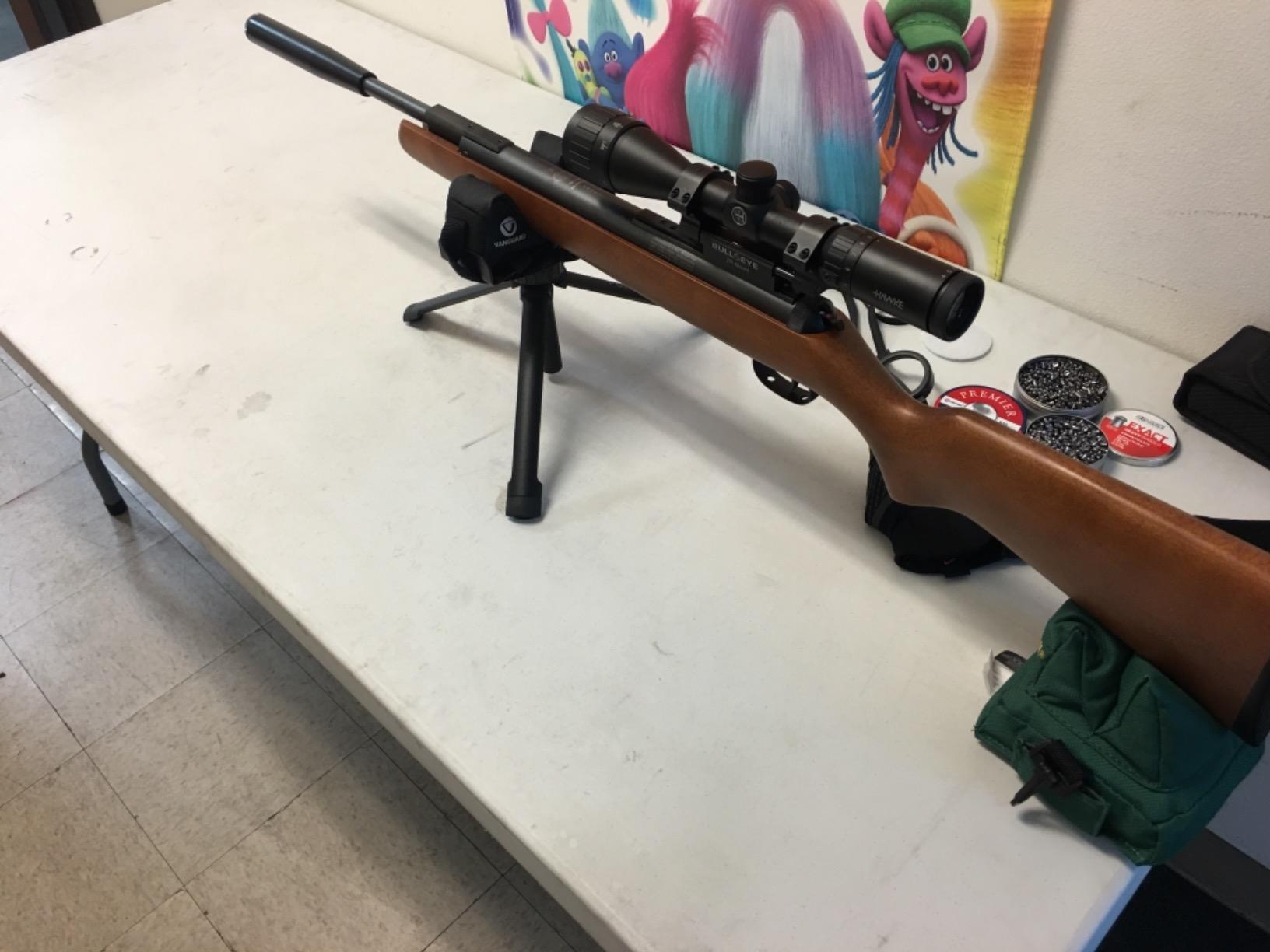
This is the one I pack when I want a bench rest and not a bag of sand. At 1.7 pounds with a body that folds flat, it is the only true bench-style rest here that fits in a normal range bag, and the center column changes height single-handed in seconds.
The anti-vibration bag swivels a full 360 degrees, doing two jobs. It damps the spike of a shot so the rifle settles quickly, and it lets you swing the muzzle for windage without picking the rest up.
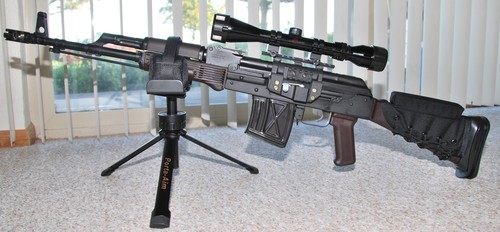
Reviewers single this model out for travel and for precision practice away from a home bench, and the 4.6 average across 2447 reviews reflects how little people complain once used to it. The V-shaped cradles grip the fore-end without a hard edge.
Who should pack this
Travelling shooters, range instructors running a portable class, and anyone who wants a repeatable bench position without hauling ten pounds of bag across a parking lot. The aluminum frame resists flex well for its weight.
When to buy something else
The height ceiling is the real limit. Twelve and a half inches works on a standard bench but will not raise a rifle to eye level from a tall table, which rules it out as a fixed indoor station. Aluminum also gets hot in full sun.
6. AC Allen Monopod Shooting Stick – Best for Pack Weight
Allen Company Monopod Shooting Stick and Gun Rest (22″ to 61″) 2 lbs – Adjustable Height – Removable Cradle – Padded Grip – Aluminum – Rifle Shooting Rest, Camera Stand – Gun Accessories, Hunting Gear
Aluminum monopod
21.5 to 61 inch height
Removable v-yoke
Rapid-lock clips
Pros
- Deploys in seconds
- Very light for hunting
- Removable cradle grips the fore-end
- Doubles as a trekking pole
- Padded grip for long sits
Cons
- Single leg is less stable than a tripod
- Needs a bag under the butt end
- Collars can loosen under recoil
There is no lighter way to hold a rifle off the ground in this guide. The Allen stick folds to roughly trekking-pole length, deploys with a rapid-lock mechanism, and the yoke doubles as a camera or binocular head when the shooting is done.
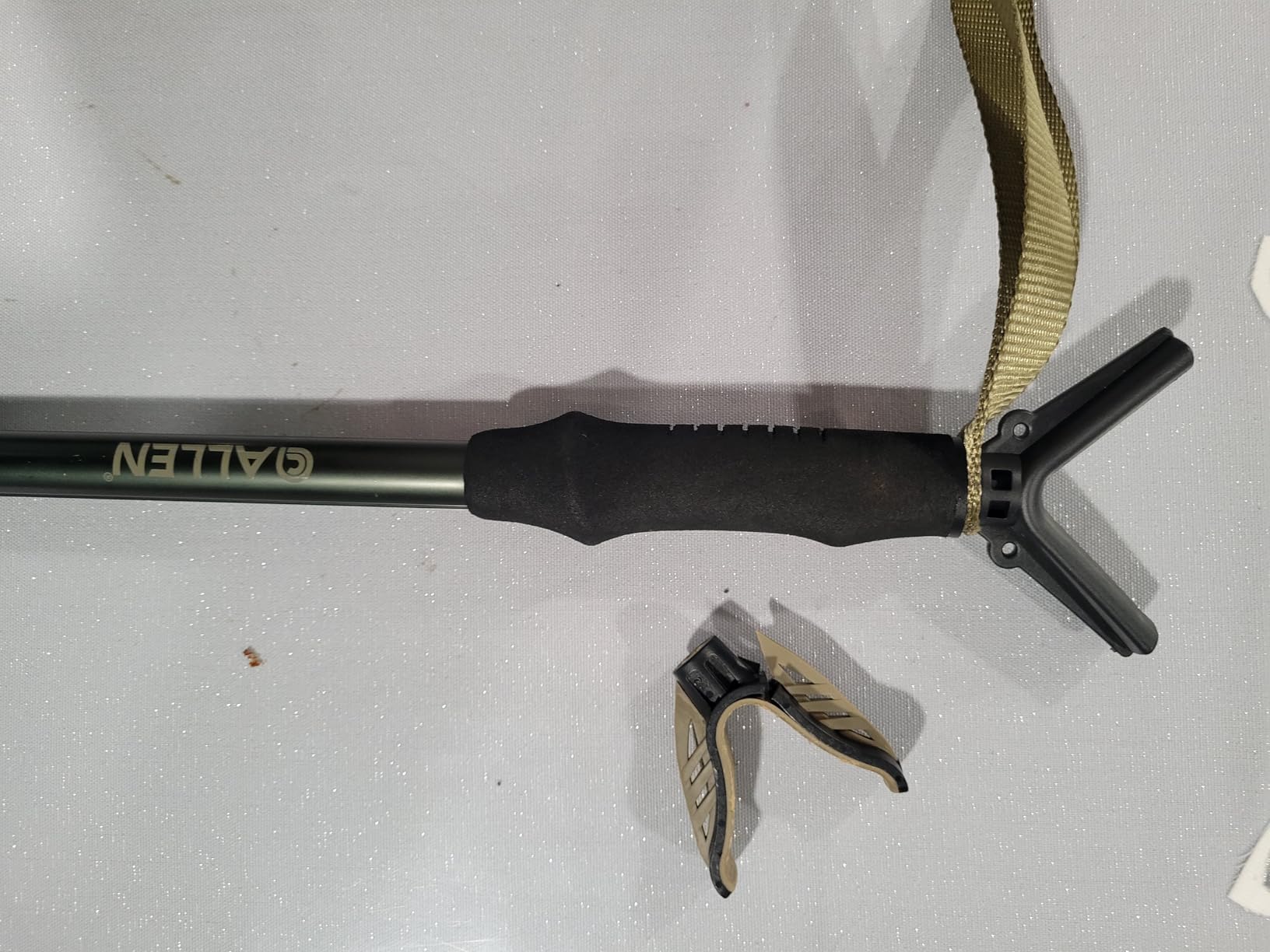
It is honest about what it is, though: a single-leg support. The removable V-shape rubber cradle grips the fore-end well and the padded grip plus wrist strap make it comfortable for long sits in a blind, but a single leg is a single leg.
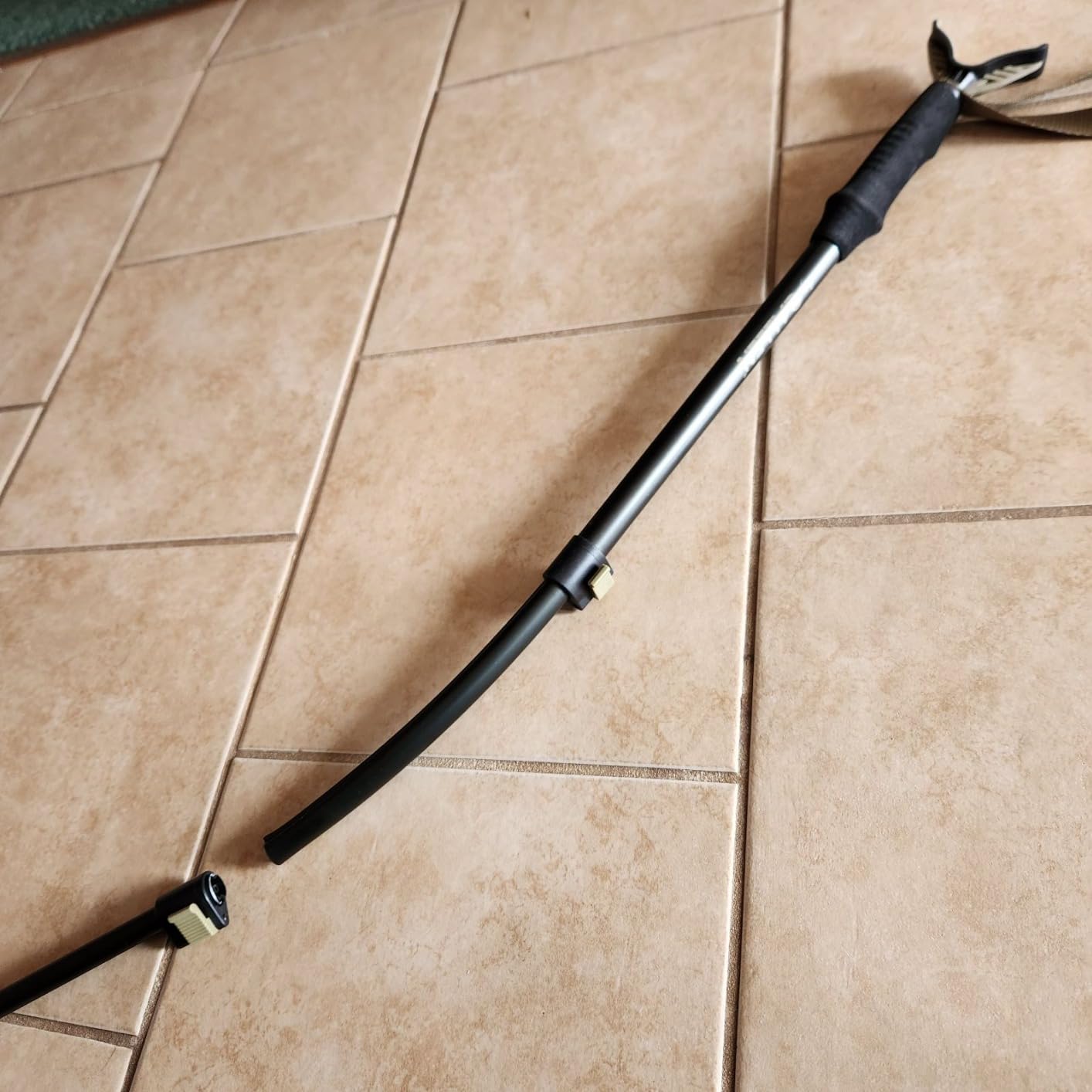
What makes it work as a sighting-in setup is pairing it with mass at the rear. Put a filled bag or pack under the buttstock, set the stick so your cheek weld lands in the same place each time, and you have a serviceable station that fits in a daypack. 4025 reviews average 4.5 stars.
Where this makes sense
Hunters who walk in and shoot from a stand or ground blind, and shooters working on a rifle sighted in for a field position. Anywhere carried weight matters more than sub-MOA repeatability, the 21.5 to 61 inch range earns its place.
When it is not enough
Any cartridge or rifle that punishes movement, and any session needing sub-MOA consistency between shots. The height adjustment collars can also loosen under sustained recoil, so check them before a long string of fire rather than after.
7. Highwild Foam X-Block Rest – Best for Airguns, Rimfire and Red Dots
Highwild Shooting Foam Rest X-Block Bench Rest with Base (1 Pack)
Dual-height closed-cell foam
17.9 grams
Side struts
Non-absorbent
Pros
- Sturdier and higher than sagging fill bags
- Two support heights in one block
- Won't absorb oil or moisture
- Useful for pistol red dots
Cons
- Very light
- can tip if knocked
- Marginal for magnum recoil
- Low height for bench work
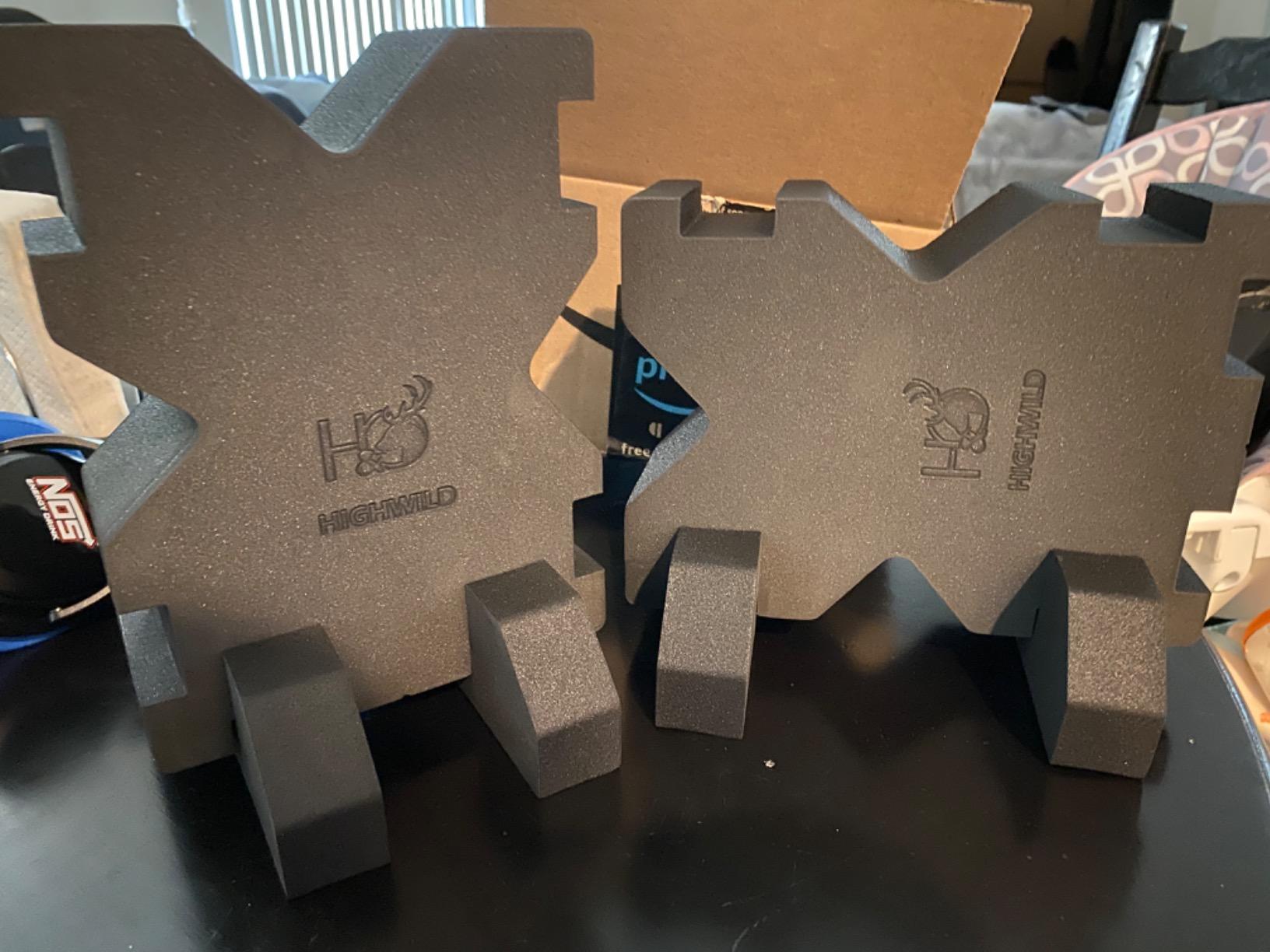
Buyers are routinely surprised by how much better this block is than it looks. It is closed-cell foam rather than a sandbag, so the contact surface does not sag, does not shift, and returns to the same shape every time you set the rifle down. That repeatability is what a zeroing session needs.
Turning the block on its side gives a second support height with no adjustment mechanism at all, and the side struts put the fore-end in a shallow V rather than on a flat plane. At 17.9 grams it is effectively weightless in a bag.
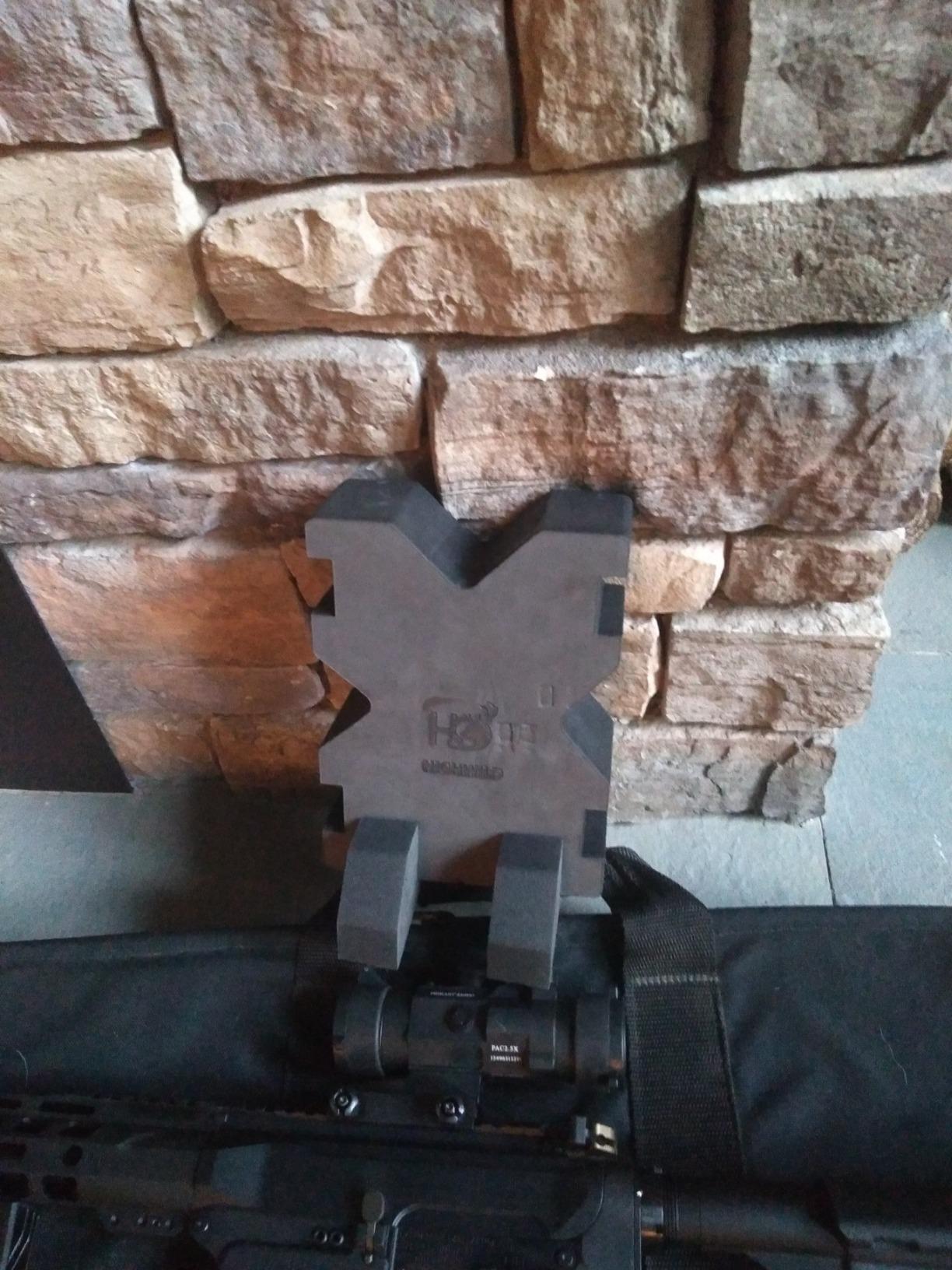
The material is the practical detail that matters. Foam will not absorb gun oil or moisture and wipes clean, so a bench handling corrosive .22 ammunition and a beeline of pellets does not become a maintenance job. Owners also use it for red-dot zeroing on pistols.
Best fit for this block
Rimfire, airgun and pellet shooters, and anyone mounting a red dot on a pistol. With 10 or 20 round magazines the low contact point keeps a lightweight sporting rifle stable and the block will not move. 1295 owners rate it 4.5 stars.
Where it falls short
It weighs almost nothing, which is both the feature and the failure mode. Knock it and it can tip, and it has little energy to absorb, so anything above rimfire recoil pushes the rifle off the support. The low height also limits it to seated bench work.
8. MTM PST-11 Predator Table – Best Seated Bench for Sighting In
MTM PST-11 Predator Shooting Table, Portable Benchrest, Durable Molded Design, Shooting Platform, Target Shooting & Range Accessory, Green
Molded polypropylene
28 by 35 inch surface
30 inch height
Folds flat
Pros
- Stable unibody frame with no wobble
- Wedge top suits either handedness
- Surface fits bags and a spotting scope
- Folds behind a truck seat
- 5-year warranty
Cons
- Fixed 30 inch height
- no bag or rest included
- Slower to deploy than steel
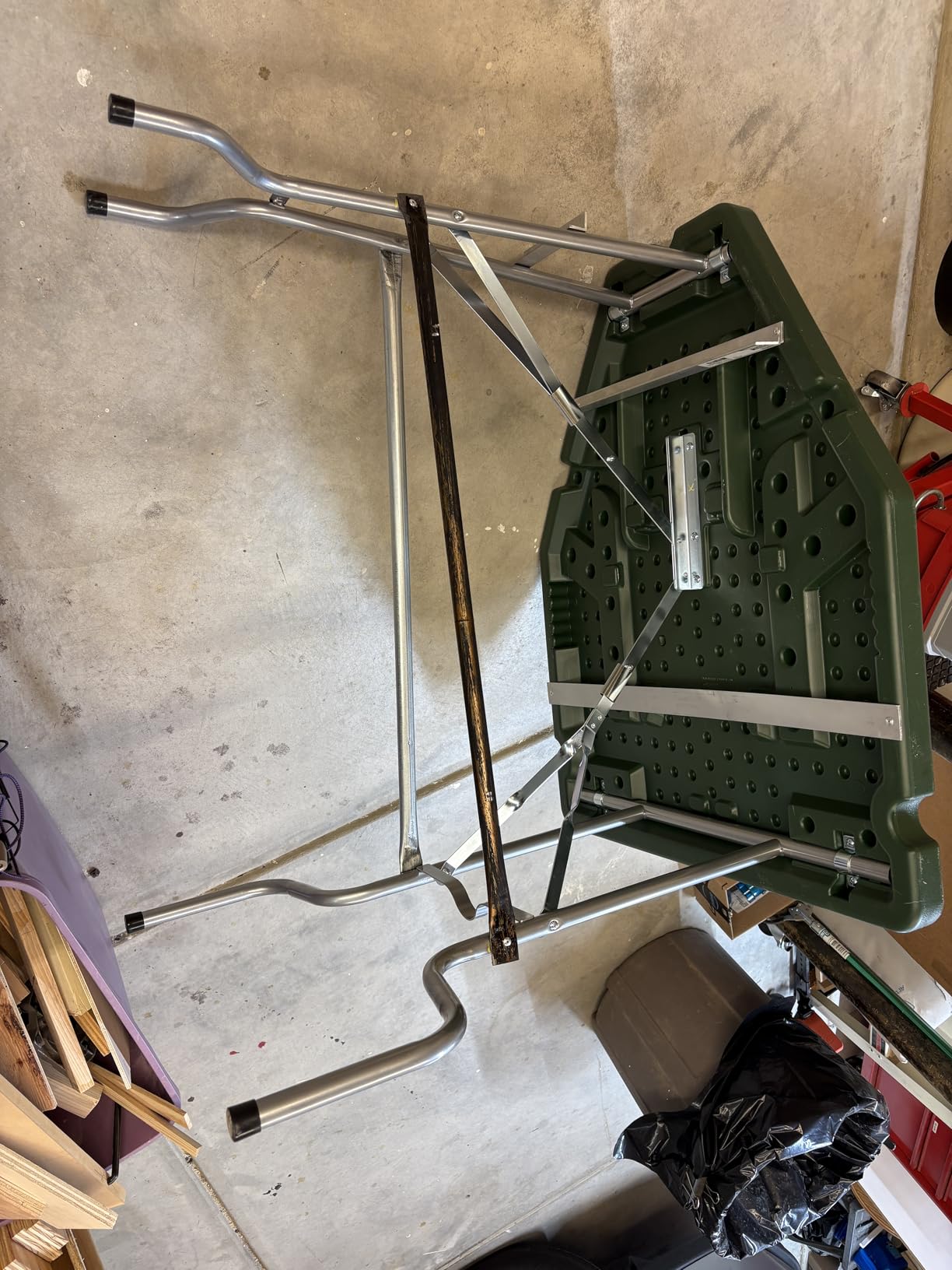
The MTM Predator is less a rest than a platform to build one on, and for a home zeroing station that is the more useful answer. The molded polypropylene unibody has no joint to flex, and the 28 by 35 inch surface holds bags, a bipod, a spotting scope and a notebook at once.
The wedge-shaped top is the quiet hero. It gives a comfortable, repeatable cheek position for either handedness, which matters more than most buyers expect when they want two group sessions to produce comparable results.
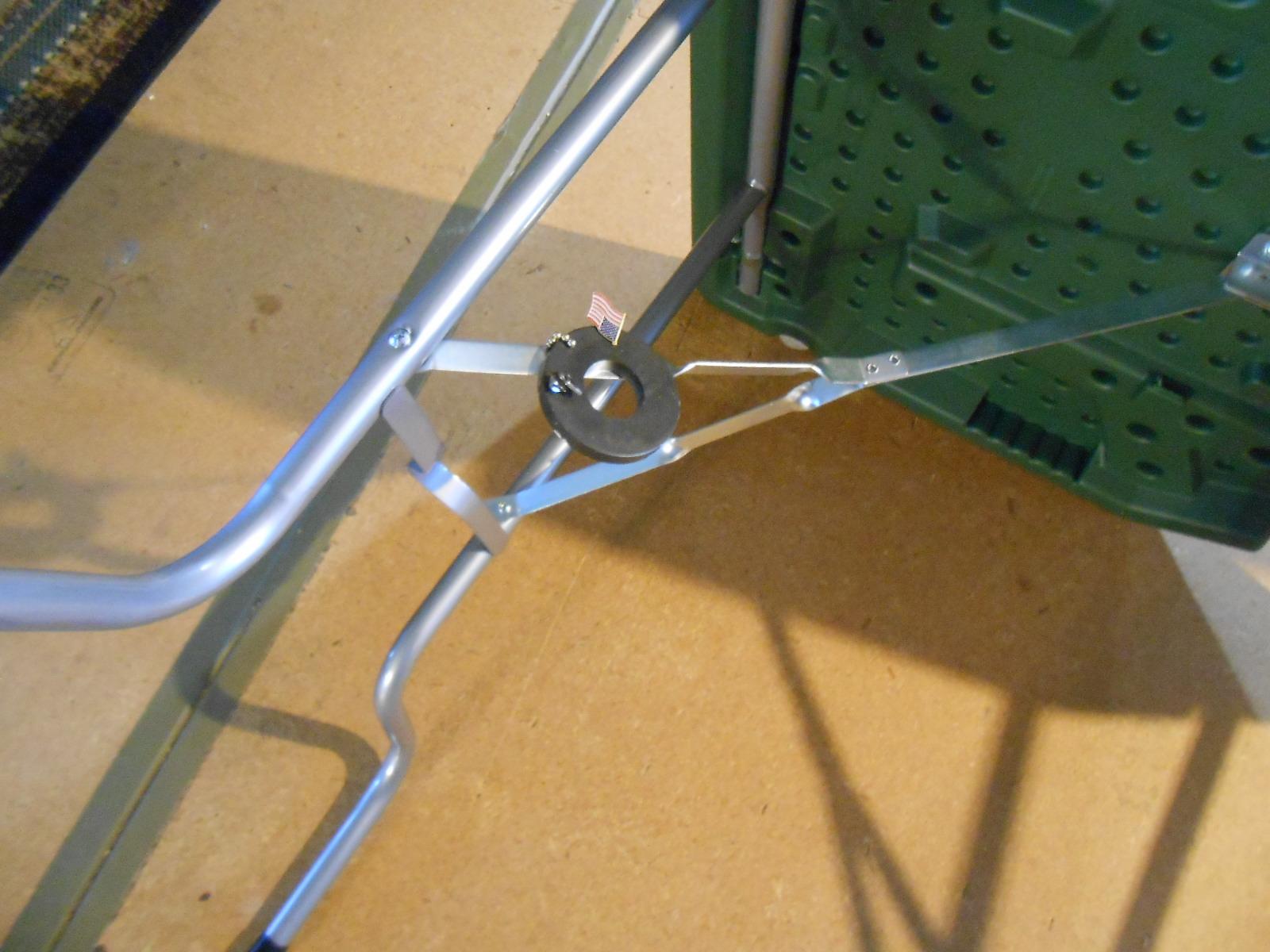
Users store it behind a pickup seat or in a small sedan, and at 8 pounds it is a one-hand carry for most adults. MTM backs it with a five-year warranty, extended to ten years on living-hinged parts. Note that it comes as a table, not a system, so you will add a bag or rest immediately.
Who this table suits
Shooters who want a permanent zeroing station they do not break down every session, and anyone who prefers seated bench work to prone. The large surface makes it easy to check a group and write the numbers down without rearranging everything.
Where the fixed design bites
Thirty inches is a seated height and nothing else, so it does not adapt to standing, kneeling or prone without another piece of gear. Because it is molded rather than folding steel, it also takes longer to set up when you are in a hurry.
9. MTM PSR-30 Predator Rest – Best for Pistols and Light Rifles
MTM PSR-30 Predator Shooing Rest for Rifle & Handguns, USA Made, Red
Screw pedestal elevation with lock
8.5 inch height
3.5 pounds
Rubber pads and feet
Pros
- Fine lockable elevation control
- Rear section removes for pistols
- Rubber feet hold position between shots
- Light and easy to carry
- Made in USA
Cons
- Shifts above .223 recoil
- Fore-end pad can be wobbly
- Bulky for carrying
- Poor printed instructions
The PSR-30 is a two-piece rest a lot of people underestimate. The precision screw pedestal moves the fore-end platform in small, deliberate increments and locks where you put it, which makes it a fine tool for slow methodical zeroing rather than fast field adjustment.
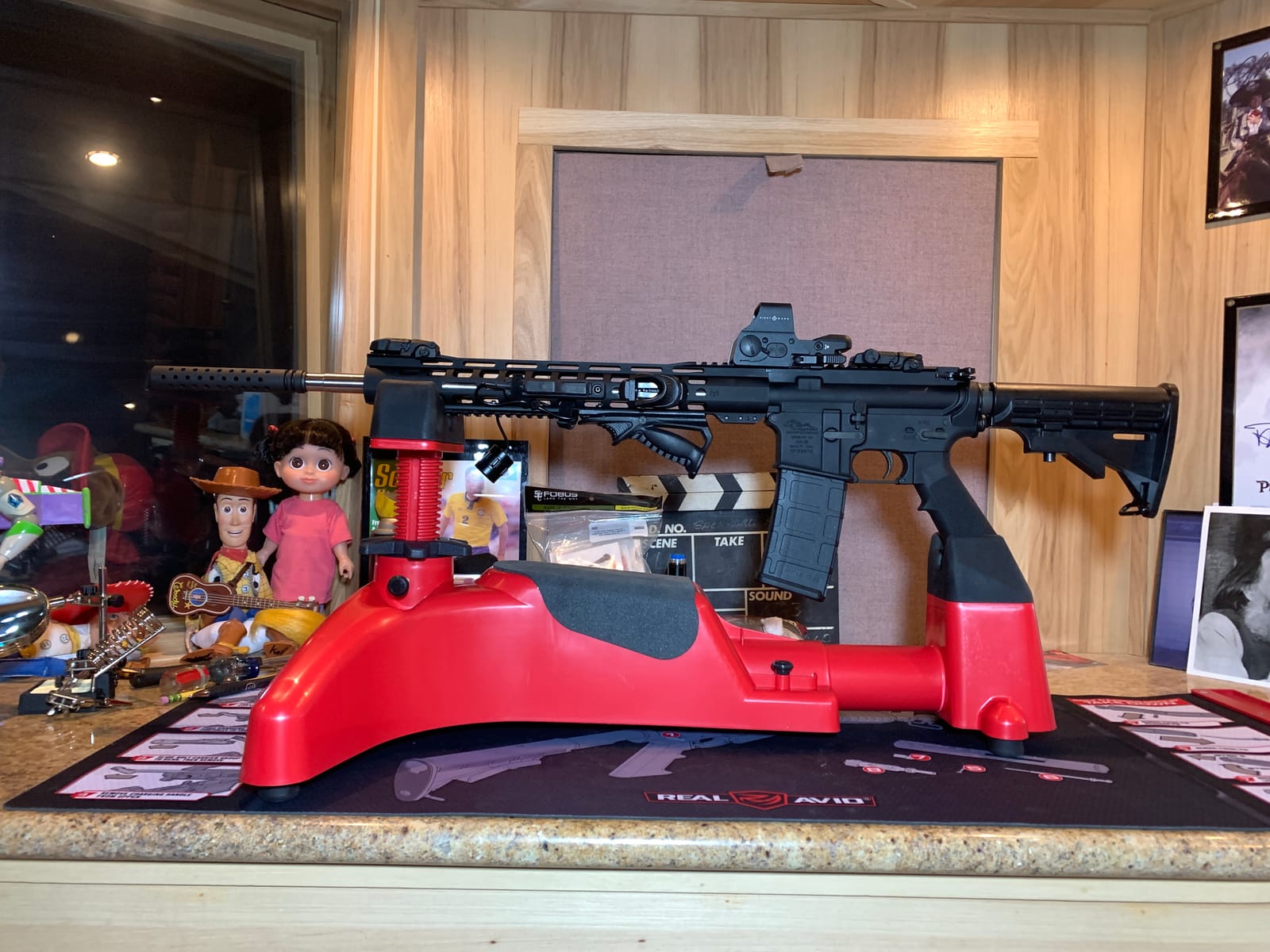
It is built for .22 and rimfire work, and at 3.5 pounds the pair is easy to carry to the firing line. Pull the rear section off and you have a dedicated handgun rest, which is why it keeps appearing on pistol bench lists.
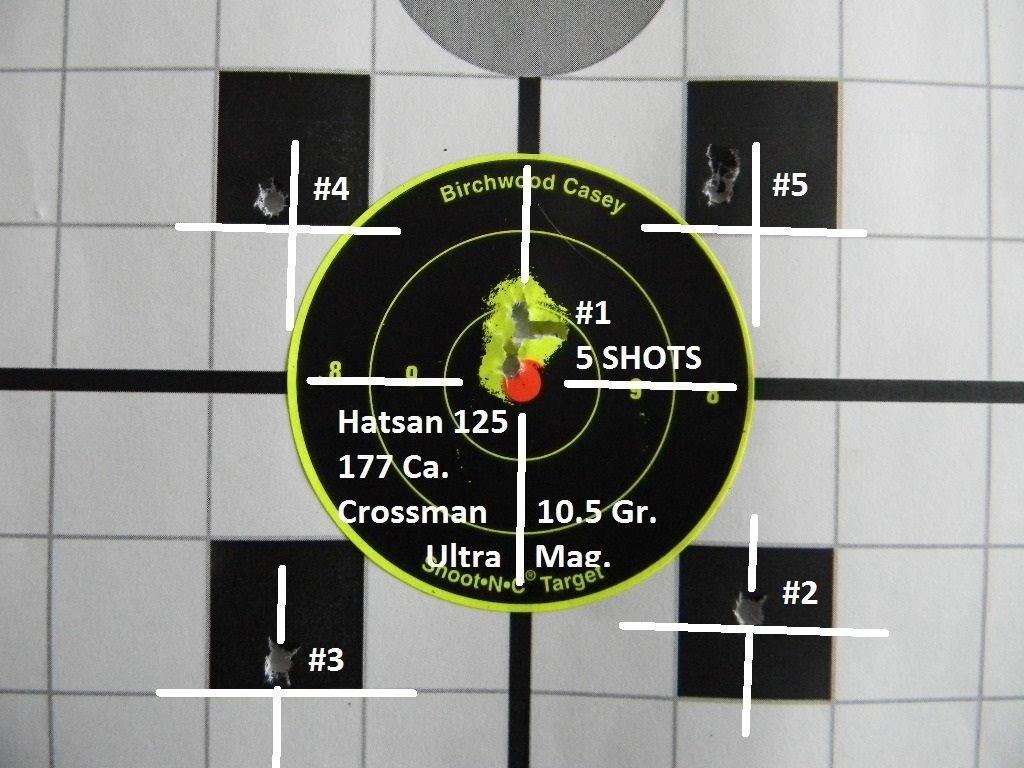
The limitation shows up above .223. Owners of magnum and large-bore rifles report the light frame shifting between shots, and a few describe a wobbly fore-end pad. Neither issue matters for a rimfire zero and both matter for a big-bore one. The printed instructions also earn consistent criticism, though assembly is straightforward if you skip the sheet.
Best fit for this rest
Rimfire and airgun shooters, and anyone zeroing a pistol and a light rifle at the same bench. The lockable pedestal is a quiet advantage when making quarter-MOA corrections on a magnified optic, and the wide rubber-foot stance holds position between shots.
Where it runs out of capability
Long-distance precision and anything above .223 recoil. It is also bulkier than its weight suggests and barely collapses for carrying, so it is a bench item. Our shooting benches guide covers table options if you want more surface area.
10. Goplus Foldable Shooting Table – Best Full Bench for Long Sessions
Goplus Foldable Shooting Table, Height Adjustable Shooting Bench with Adjustable Gun Rest, Ammo Pockets, Padded Seat, Portable Shooting Bench Rest for Rifles, Hunting, Outdoor
All-steel frame
300 pound capacity
24 inch platform
Adjustable height rest and seat
Pros
- Stable steel frame
- Folds flat in about 30 seconds
- Large tabletop fits a bipod or sandbag
- Padded seat for long sessions
Cons
- 35 pounds is heavy to carry
- Written directions are vague
- Legs not individually adjustable
- Basic support arm
When a sight-in session runs past an hour, what wears you out is sitting on the ground, not the rifle moving. The padded seat combined with a full steel frame is the difference between a comfortable afternoon of groups and a sore back before the second magazine.
The powder-coated steel frame is rated to 300 pounds, and the 24 by 24 inch platform has room for a rifle with a bipod or sandbag plus your accessories. It folds flat in roughly half a minute and assembles with four bolts.
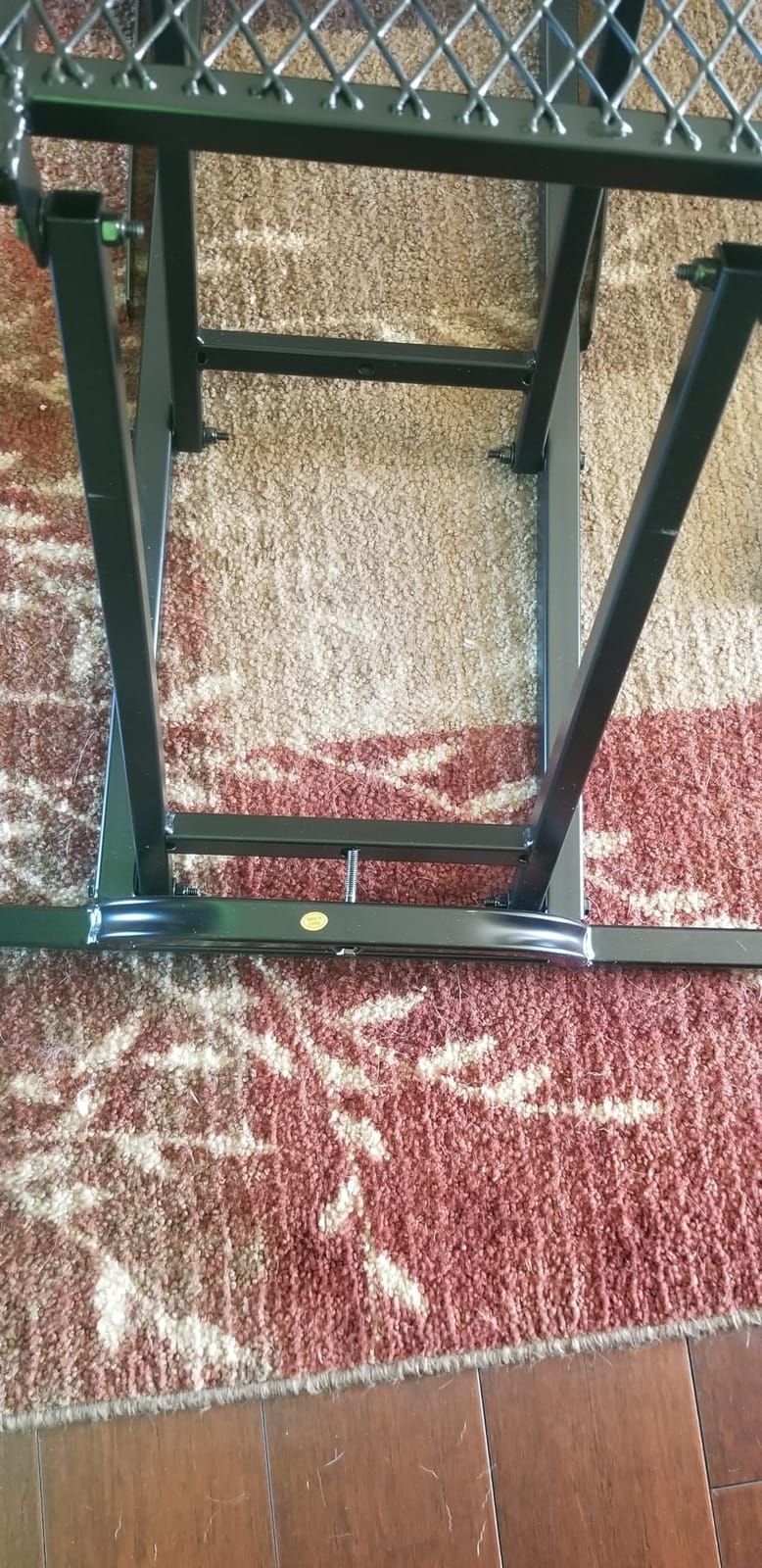
With 455 ratings averaging 4.7, reviewers describe it as transformative for new shooters working through a first red-dot install, which is exactly how we used it. Two things to plan around: 35 pounds is a vehicle or yard item, not something to carry to a public range on foot, and the legs are not individually adjustable, so uneven ground needs something under a corner.
When this bench is the right call
Seated shooters on long sessions, new shooters building habits, and anyone who wants space for a spotting scope and a notebook. The steel frame does not flex, so the support you set up stays set up. It suits a home garage or covered back porch well.
Where you should look elsewhere
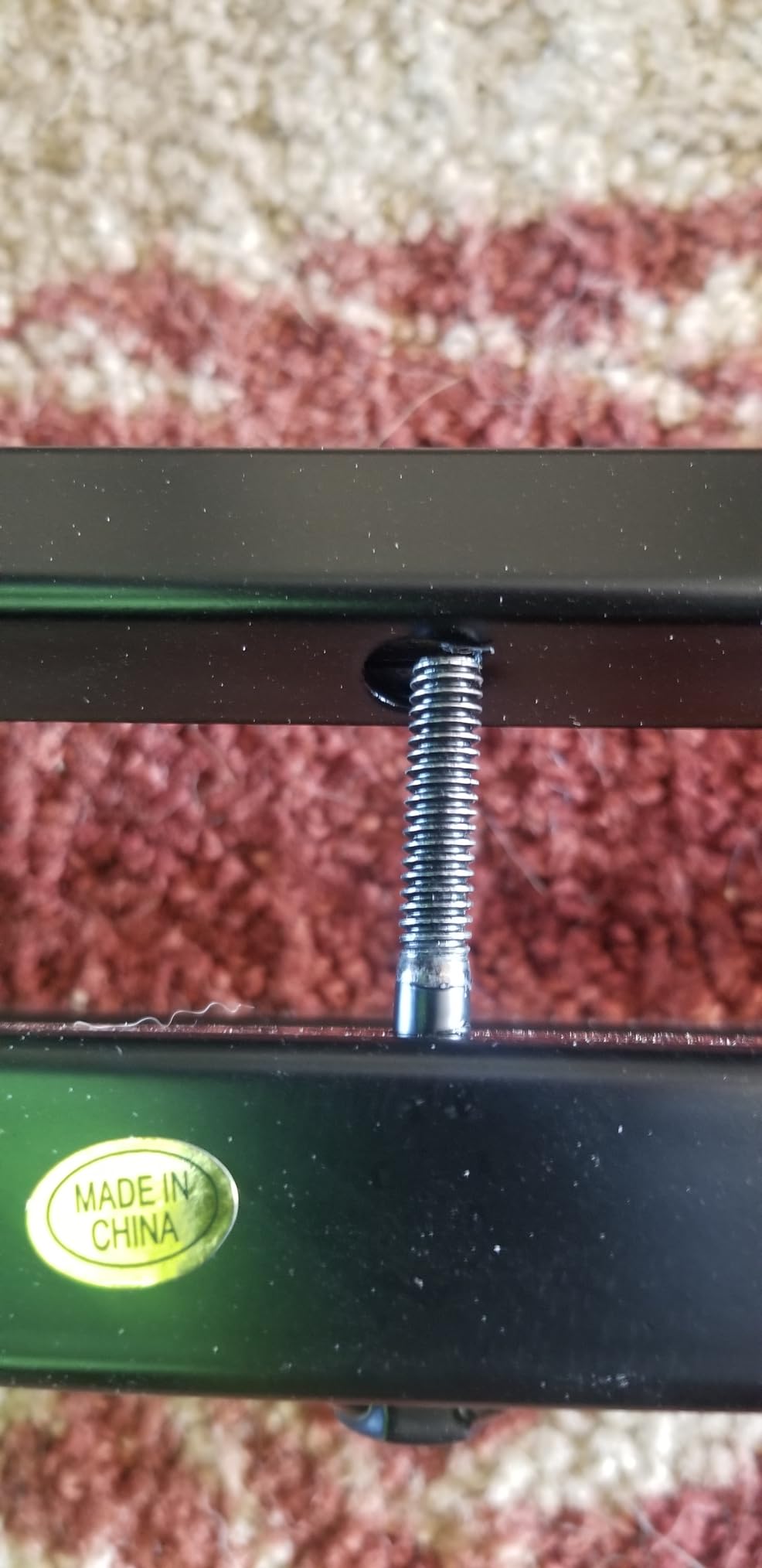
Anyone carrying gear any distance, and anyone shooting on genuinely uneven terrain. The assembly instructions are thin, so budget ten minutes and your own diagram before the first session.
11. MidTen Shooting Rest Tripod – Best Multi-Use Tripod
MidTen Shooting Tripod Rest Rifle Stand for Shooting Range Bench Rest
Aluminum tripod
7.5 to 15 inch height
Detachable 360 degree V-yoke
1/4 and 3/8 inch screws
Pros
- 360 degree V-yoke needs no adapters
- Fits scopes and camera mounts
- Packs small with a carry bag
- Legs set wide or narrow
- Good for pistol work
Cons
- Can feel flimsy and slide on a bench
- Small footprint for rifles over .22
- Height points are stiff
The most underrated feature here is the screw mount. Because the head accepts both 1/4 and 3/8 inch screws, the same tripod holds a spotting scope, a camera on a long lens, or the detachable V-yoke that comes with it. That turns one accessory into three pieces of kit.
The V-yoke rotates a full 360 degrees and detaches entirely, so you can swap to glassing mid-session without unpacking. Height runs 7.5 to 15 inches, and the legs close with hook-and-loop tabs for transport, with a carry bag included.
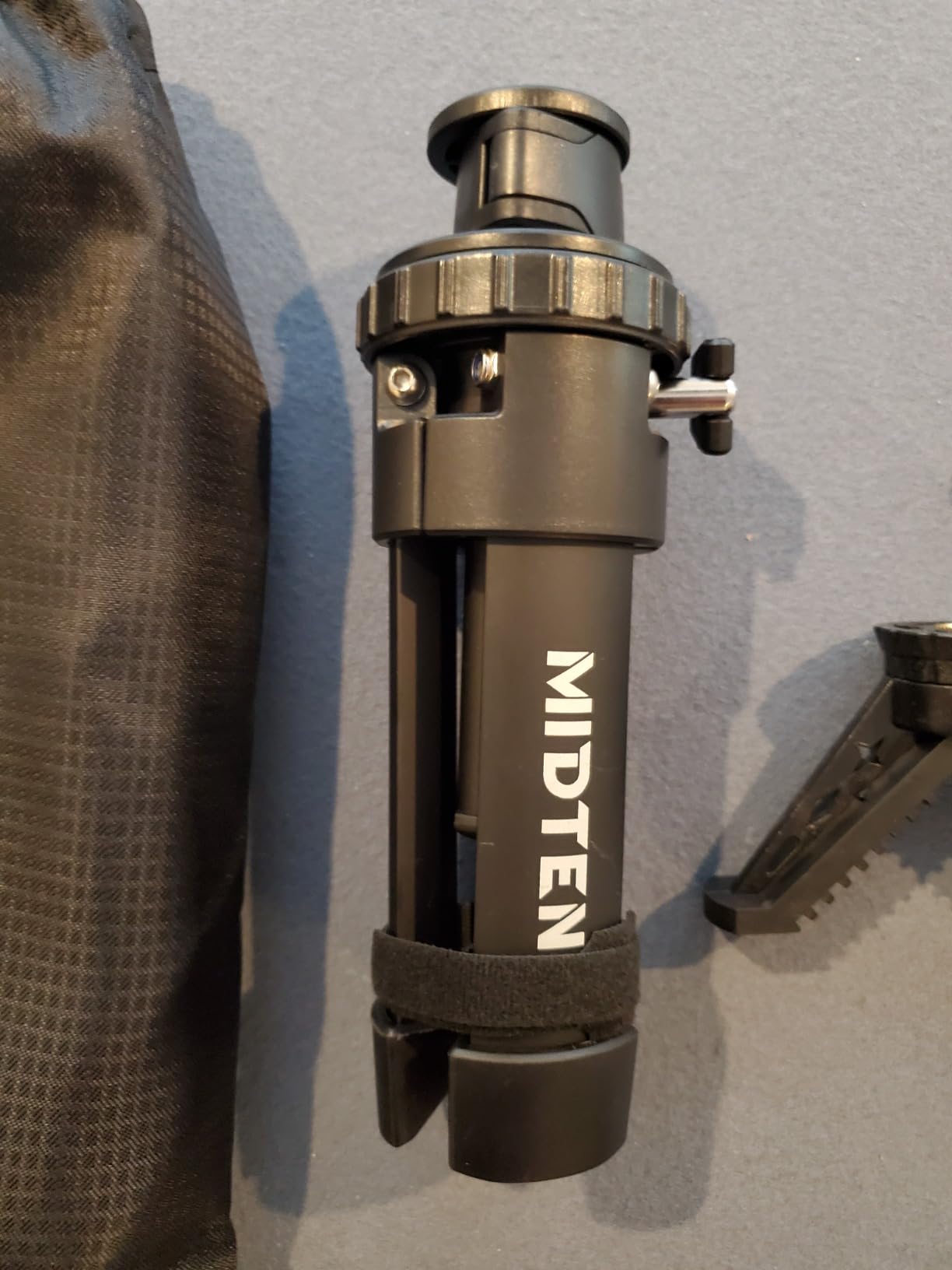
Owners like the versatility, and a good number pair it with a spotting scope or camera to record target footage. The honest summary comes from reviews themselves: reviewers suggest sandbagging the legs on a bench to settle it if it feels light. The rating spread shows a meaningful share of buyers landing at three stars for exactly that reason.
Best fit for this tripod
Pistol and .22 rimfire shooters, and anyone who wants one tripod for glassing, shooting and camera work. The rubber feet grip varied terrain and the two leg-angle options let you set it wide for standing or narrow under a table.
Where it falls short
Rifles heavier than .22, and follow-up shots after recoil, where the small footprint is not enough alone. Check which height variant you are buying, because the 6.1 to 7.9 inch version is too low for bench-height rifle work.
12. CVLIFE Shooting Rest Tripod – Best Value Tripod for the Range
CVLIFE Shooting Rest Tripod 360 Degree Rotation V Yoke Stand 7.5-15″
Polymer tripod
7.9 to 15 inch height
Universal 360 degree V-yoke
Converts to monopod
Pros
- Packs down small in the carry bag
- Easy field height adjustment
- Stable enough for .22 bench work
- Interchangeable head
- Good build for the money
Cons
- Small legs unstable after recoil
- Hollow polymer body flexes
- Not for precision follow-up work
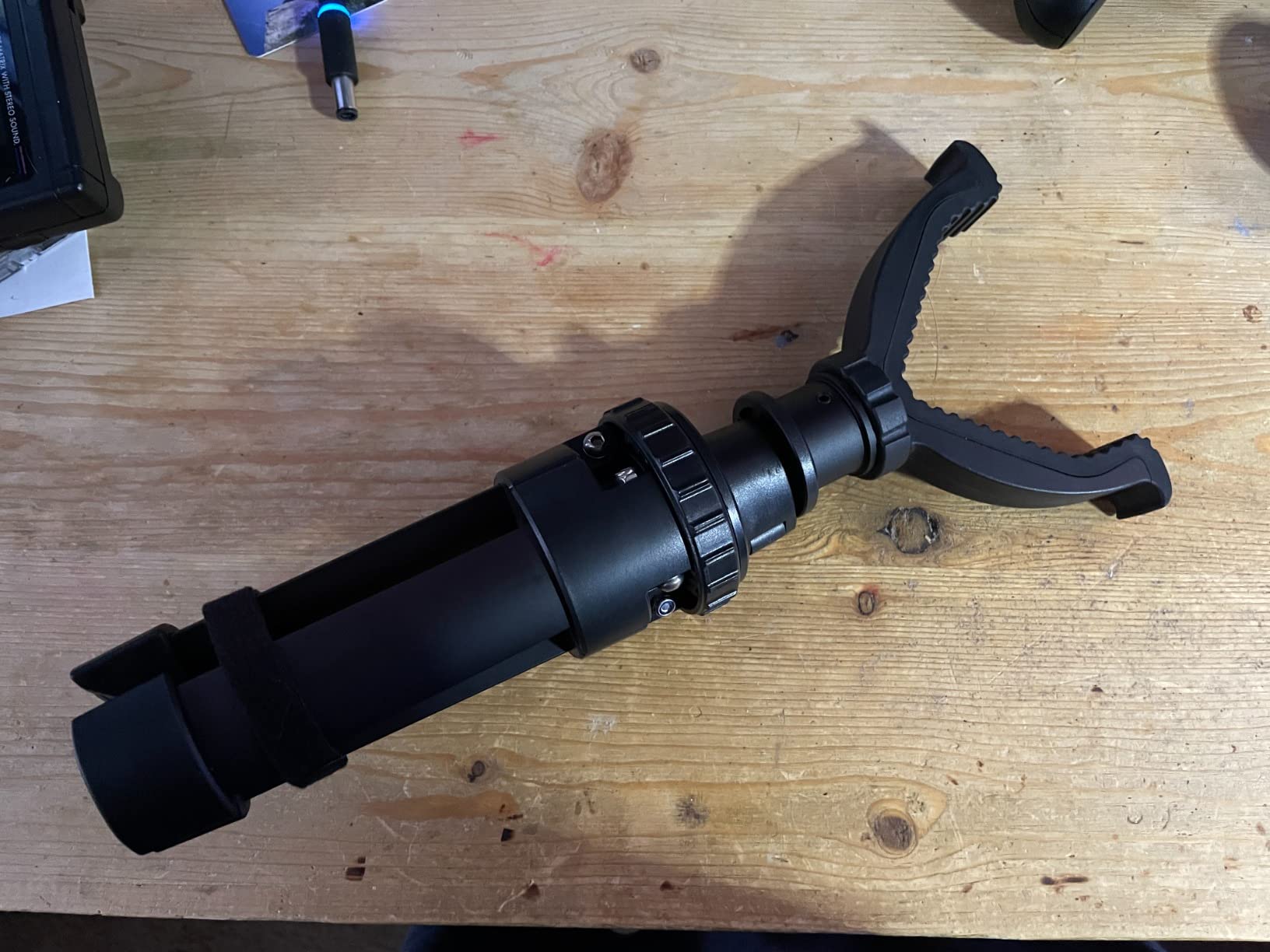
This is the tripod to buy for a second or third support in a range bag. The head converts between a universal 360 degree non-slip V-yoke, a spotting scope or binocular mount, and a shooting pad mount, and the whole thing folds into the supplied carry bag.
It also converts to a monopod with the enclosed hook-and-loop strap, a clever answer to a single-leg support on uneven ground. Reviewers note it is stable enough for .22 rimfire bench work and several pair it with a bench or spotting setup.
The recurring criticism is stability, and it is fair. The legs are small and hollow, so the frame flexes and the footprint is narrow enough that a follow-up shot with recoil can shift the rifle. That is why the 4.4 average across 663 reviews carries a visible tail of one-star ratings.
Where this tripod fits
Rimfire and .22 bench work, prone field shooting with a bag at the rear, and multi-task days needing one support for glassing and shooting. The interchangeable head is the feature you will use most, and the carry bag removes the usual excuse for leaving gear home.
When to pick a different option
Any rifle heavier than rimfire, and any zeroing session where group consistency matters more than portability. For similar money and a lot more mass, a filled bag, or the foam block plus a rear bag, holds a steadier point of aim.
How to Sight In a Rifle With Each Type of Rest
No competitor roundup covers the workflow, and it is the part that decides whether your zero holds. The rest is a variable, and the steps change with the type you use.
With a bench rest or frame-style rest
Set the rifle in the rest and confirm the fore-end sits in the same spot every time. Mark the contact point with masking tape if needed.
Bring the optic to zero with the turrets at your mechanical baseline, and confirm you are on the correct adjustment for your scope.
Fire a confirmation group, keeping your cheek weld and hand position identical on every shot.
Use the group centre, not the best shot, to calculate your correction.
Re-seat the rifle after every adjustment and fire a second group to confirm the change landed where you expected.
Write the final setting down. A bench zero is only valid for the position you just used, so record it precisely.
With a front and rear shooting bag
Mould the front bag into a shallow V so the fore-end is cradled, and set the rear bag to put your cheek in the same spot every time.
Firm the bags so they do not settle between shots. Add material until the rifle returns to the same position after firing.
Fire your group without changing position, then dial based on the centre of that group.
If the group centre wanders vertically between strings, the bags are settling. Reshape before continuing.
Confirm the zero in the field position you will shoot from, because a bag zero and a bipod zero are rarely identical.
With a tripod or monopod
Set the legs, then the height, then the head. Changing height after setting the head changes your point of aim.
Anchor the butt end with a bag or pack so the support is not one leg against recoil.
Zero the rifle in the position you will hunt from, not in a comfortable range position.
Leave the support set up when you re-check zero later, or your second zero will not match your first.
One warning from the forums worth repeating: a boresight gets you into the neighbourhood, not into the zero. It assumes the bore axis, the scope axis and your eye line are perfectly parallel, and any of the three off by a fraction of a degree puts your true point of impact somewhere else. Shoot it and confirm.
How to Choose a Shooting Rest for Sighting In
Six criteria that matter for zeroing
Repeatability of the contact point. A rest that lets the fore-end roll or settle gives a different point of aim on the second shot than the first. This matters more than any other factor.
Recoil absorption matched to your cartridge. Light polymer frames suit rimfire and fall short for magnums. Mass is the cheapest recoil management there is.
Adjustment granularity. Elevation and windage moves need to be small enough to nudge a few MOA without rebuilding the support.
Stability at the height you will use. A tripod at full extension feels very different from one at half height, and a fixed 30 inch table suits seated work only.
Magazine and stock compatibility. Detachable magazines, pistol grips, collapsible stocks and tall optics all break traditional bench designs. Check clearance before buying.
Portability versus permanence. Decide now whether this lives in a garage, a truck bed or your pack, then buy for that answer.
Rifle vises and gun cradles
A rifle vise is a different category from everything else here. A vise clamps the stock or frame, holds the rifle in a fixed position, and is the tool for cleaning and the most rigid zeroing support available. A gun cradle is its lighter cousin, a moulded rest that sits on a table and cradles the stock and forend without clamping the firearm at all.
For sighting in, a vise wins on rigidity and loses on everything else. It is heavy, bolted to a bench, and will not travel. Cradles are the middle ground: stable enough for red-dot and rimfire zeroing, light, and safe on soft finishes. The Caldwell Matrix and MTM PSR-30 on this list are cradle-style designs, and both convert to pistol supports.
DIY zeroing rests that actually hold a zero
Improvised rests get a bad reputation for good reason, but a few work. A sandbag or two filled with sand or pebbles and shaped into a V gives the same geometry as a purpose-built front bag and holds as long as you re-shape it. A stack of hard flat material such as cinder blocks or lumber gives a rigid, repeatable front rest at a known height that does not deflect at all.
The rule is that the contact point must be identical every time. Loose fill that settles under recoil gives a different zero on every string, which is worse than no rest because it teaches you to distrust your own adjustments. Pack the fill firmly and check position after every group.
Frequently Asked Questions
What is the best vise for sighting a rifle?
For sighting in, the best vise setup is a bench-mounted rest with a padded, non-marring clamp that holds the rifle without compressing the barrel, paired with a rear bag for the stock. A true bench vise wins on rigidity and loses on portability. Look for coarse and fine elevation adjustment, a clamp that clears detachable magazines, and padded jaws that will not mark a soft finish.
What are the best shooting bags for sighting in a rifle?
A front and rear pair works best, because the front bag cradles the forend in a shallow V and the rear bag fixes the height of your cheek weld. Use a firm fill such as sand, pebbles or corn cob media rather than loose rice, and re-shape the bags after every group so the rifle returns to the same position between strings.
What is the best DIY rifle rest for zeroing?
A sandbag or two, filled firmly with sand or pebbles and moulded into a shallow V, is the best DIY zeroing rest for most rifles. Stack rigid material such as cinder blocks or lumber for a front rest at a fixed height. The critical rule is that the contact point stays identical every time, so pack the fill firmly and re-check position after recoil.
What to consider when sighting in a rifle?
Consider six things: a repeatable contact point, recoil absorption matched to your cartridge, fine elevation and windage adjustment, stability at the height you will use, clearance for detachable magazines and collapsible stocks, and whether the rest needs to travel. Also confirm the zero in the position you will actually shoot from, because a bench zero and a bipod zero are rarely the same.
Do I need a shooting rest to sight in a rifle?
You do not need one, but you will zero faster and more accurately with a repeatable support. A boresight only gets you into the neighbourhood, since it assumes the bore axis and scope axis are perfectly parallel. A bag and bipod setup is a legitimate option that long-range shooters use daily. The main cost of shooting unsupported is time, because every shot starts with the same variables re-established.
Bottom Line: Pick the Rest That Matches How You Shoot
The BOG DeathGrip Tripod is our Editor’s Choice because it pairs the highest owner rating in this group with a clamping head and height range that cover almost every position a sighted-in rifle gets shot from. On a tighter budget at a fixed bench, the Caldwell Steady Rest NXT handles the fundamentals well, and the Caldwell Deadshot bag combo is the simplest route to real recoil absorption without a heavy frame.
If you shoot at a bench, buy for repeatability of the contact point above everything else. If you hunt, buy for the position you will actually shoot from and confirm your zero there. Whichever rest you choose, the best shooting rests for sighting in rifles share one trait: they put the rifle back in exactly the same place every time you fire.