
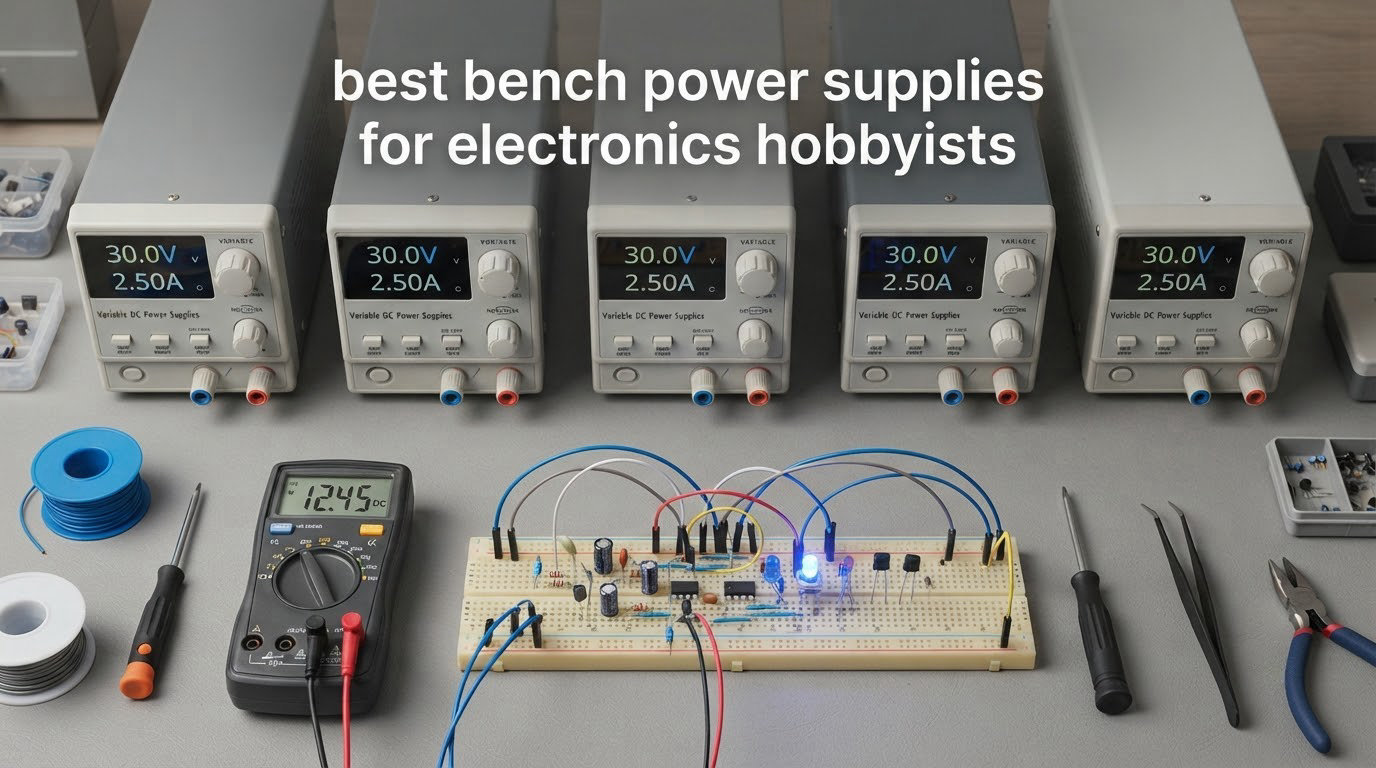
The fastest way to understand why a bench power supply is the first tool we recommend to a new electronics hobbyist is to watch what happens without one. Plug a bare Arduino Nano into a cheap USB wall adapter and the board usually survives. Plug a bare Nano into the same adapter while it is powering a servo, a string of addressable LEDs and a 5V rail full of half-built logic, and the adapter’s unregulated output drifts upward on the light load, spikes well past 5V, and the board’s onboard regulator gives up. We have seen that pattern repeated on r/AskElectronics and r/diyelectronics threads more than any other beginner electronics failure, and the fix is the same every time: a regulated, current-limited bench power supply.
A bench power supply gives you a known voltage, a ceiling on how much current the circuit can draw, and a way to watch both numbers while the circuit is running. Set 5.00V and 0.5A, enable the output, and if your wiring is wrong the supply drops into constant-current mode and the display tells you immediately. No smoke, no mystery, no guessing which component died. That is the whole argument, and it is why the best bench power supplies for electronics hobbyists are the purchases we get the most questions about from readers building their first bench.
We spent this round comparing ten adjustable benchtop DC supplies across the range hobbyists actually buy, from a 1.54 lb travel unit to a 17.6 lb triple-output instrument. The criteria were a traceable manufacturer rather than a nameless marketplace listing, a declared protection circuit set, an honest output ceiling, and enough owner reviews to read the failure modes. Below you will find the ten picks, the method behind them, a buying guide that maps specifications to real projects, and a clear answer on who should skip each model. Prices change daily, so use the check buttons rather than the numbers you may have seen elsewhere.
One more note before the picks. If your bench is still bare, the supply is only half the station. Our guides to the best soldering irons for hobbyists and the best soldering stations for electronics cover the other half, and the two decisions are usually made together.
Table of Contents
Top 3 Picks for the Best Bench Power Supplies in 2026

Kungber SPS3010B 30V 10A
- 30V 10A 300W switching output
- Intelligent charging mode with Ah readout
- OCP alarm button
- 18W USB interface
- Precision encoder knob

Jesverty SPS-3010 30V 10A
- 4-digit LED at 0.01V and 0.001A
- Auto CV and CC crossover
- Coarse and fine adjustment
- 5V 2A USB port

NICE-POWER SPS-C3010 30V 10A
- Front OUTPUT enable switch
- Bright 4-digit display with watt readout
- Coarse and fine knobs
- Eight-layer protection
Best Bench Power Supplies at a Glance in 2026
Every model below is a variable, regulated benchtop DC supply. The table lists the full lineup so you can scan the output ranges, wattage ceilings and control styles before reading the individual verdicts.
| Product | Specifications | Action |
|---|---|---|
| Kungber SPS3010B 30V 10A |
|
Check Latest Price |
| Jesverty SPS-3010 30V 10A |
|
Check Latest Price |
 Tekpower TP3005T 30V 5A Tekpower TP3005T 30V 5A |
|
Check Latest Price |
| NICE-POWER SPS-C3010 30V 10A |
|
Check Latest Price |
 HANMATEK HM310 30V 10A HANMATEK HM310 30V 10A |
|
Check Latest Price |
 NICE-POWER SPS-E305 30V 5A NICE-POWER SPS-E305 30V 5A |
|
Check Latest Price |
 FNIRSI DPS-150 30V 5A FNIRSI DPS-150 30V 5A |
|
Check Latest Price |
 Siglent SPD3303X-E Triple Output Siglent SPD3303X-E Triple Output |
|
Check Latest Price |
 Tekpower TP1803D 18V 3A Tekpower TP1803D 18V 3A |
|
Check Latest Price |
 HYELEC HY50-06A 50V 6A HYELEC HY50-06A 50V 6A |
|
Check Latest Price |
1. Kungber SPS3010B 30V 10A Bench Power Supply – The All-Rounder
DC Power Supply Variable, 30V 10A Adjustable Switching Regulated DC Bench Power Supply with Intelligent Charging Mode, 18W USB Interface, Precision Encoder Knob (Black)
30V / 10A / 300W switching output
18W USB interface
Encoder knob with OCP alarm
2.3 lb
Pros
- Intelligent charging mode shows real-time Ah and stops when full
- Overcurrent detection button alarms and cuts output on shorts
- Compact and light at under 2.3 lb
- 18W USB output for charging devices
- Grounding leakage thermal voltage and power overload plus short-circuit protection
Cons
- Switching ripple is higher than linear supplies for very low-noise work
- Fan noise becomes noticeable under sustained heavy load
- Plastic enclosure runs warm at high continuous current
This is the model we keep coming back to after working through the whole class. The SPS3010B covers 0 to 30V and 0 to 10A with a 300W ceiling, which is the range that handles Arduino prototypes, Raspberry Pi work, LED strip driving, small motors and the 13.8V rail experiments hobbyists keep attempting. It weighs under 2.3 pounds and measures 7.59 by 3.35 by 6.1 inches, so it does not dominate a small bench the way a metal-chassis linear supply does.
Two features set it apart from its close competitors. The intelligent charging mode displays real-time charging power in Ah and stops output when the battery is full, which is genuinely useful for lead-acid and multi-cell packs even though we would still pair it with a proper BMS for lithium work. The second is the overcurrent detection button: press it, and the supply alarms and cuts the output the moment a short appears, rather than waiting for you to notice a sag on the display.
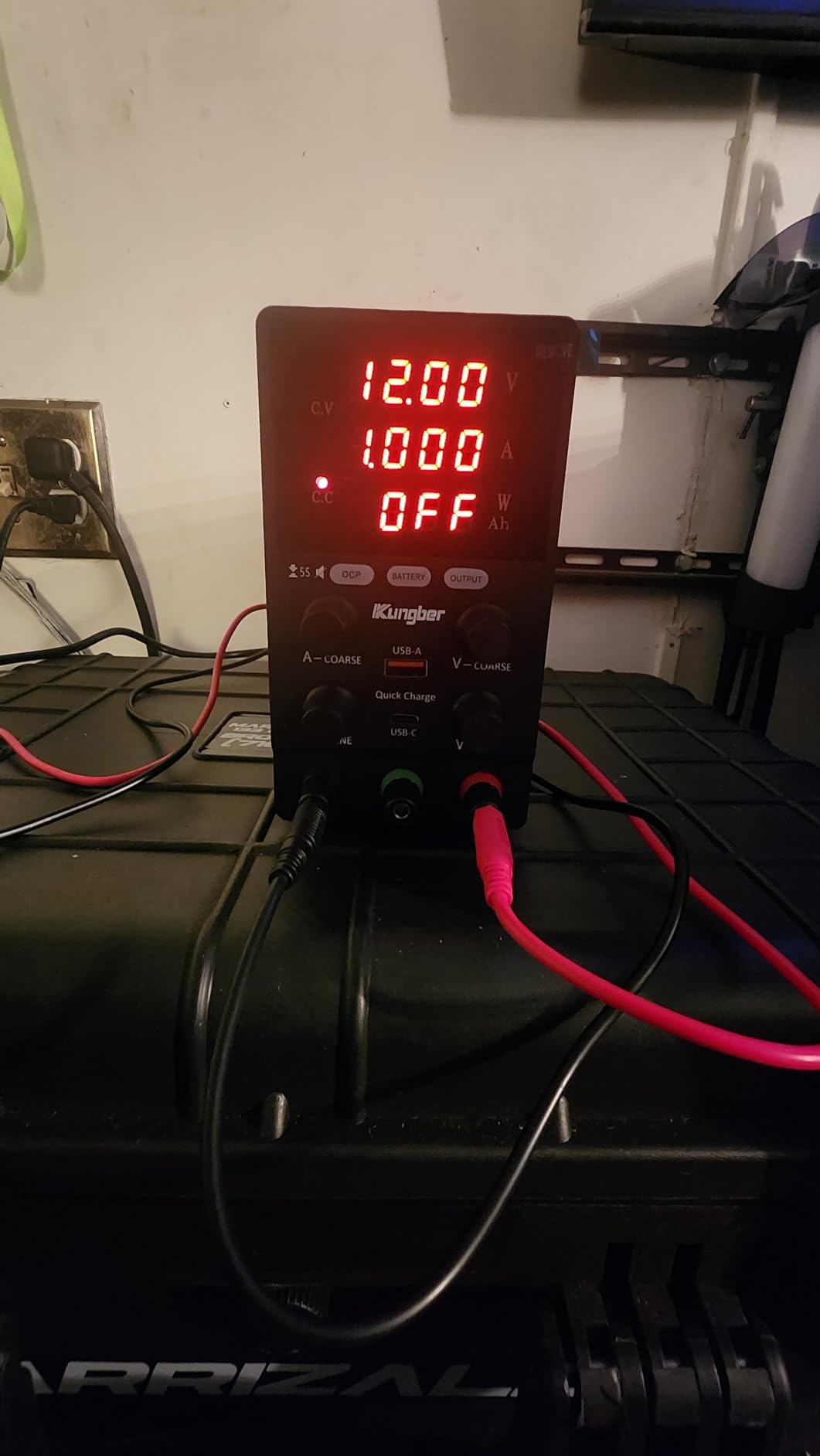
With 2775 owner reviews averaging 4.5 stars, this is the most heavily reviewed supply in the roundup by a wide margin, and that volume is why the failure pattern is so well documented. Seventy-four percent of owners give it five stars and sixteen percent give four. The complaints cluster tightly: fan noise under heavy load, and ripple that shows up on precision analog work. Neither complaint matters if you are powering digital logic, and both matter a great deal if you are running an INA219 current sensor or an I2S microphone.
The honest limitation is the 300W ceiling. Ten amps is only available below 30V, and if you plan to run a 24V rail at full current you are near the wattage limit and should look at the higher-voltage options further down. Otherwise, treat the encoder knob and the charging mode as the two things a cheaper 30V box will not give you.
What the charging mode actually does for your projects
The charging display is more than a gimmick for anyone building a 12V lead-acid pack or a series of 18650 cells in a holder. Watching the Ah figure climb tells you whether a pack is accepting charge at the rate you set, and the automatic stop removes the guesswork from a long overnight charge. On forum threads we read across eevblog and community.sparkfun, the recurring battery-charging question is exactly this: can the supply be trusted to stop, and the answer here is that it will, at the point you define as full.
That said, a charging mode is not a battery management system. Lithium cells still need a proper BMS for cell balancing and over-discharge protection, and lead-acid still needs an absorption stage handled properly. Use this feature for bench packs and prototypes, not for your only battery.
Where the switching topology will disappoint you
Every switching supply trades noise floor for size, weight and efficiency, and this model does not hide that. If your work involves measuring a low-level signal, powering an audio preamp, or running a sensor whose readings you trust to three decimal places, the ripple here will show up in the data. For digital projects, motor tests, LED work and general breadboard bring-up, the noise is irrelevant and you get a smaller, lighter, cooler-running box than any linear alternative on this list.
2. Jesverty SPS-3010 30V 10A Bench Power Supply – The Best Value Pick
Jesverty DC Power Supply Variable, 0-30V 0-10A Adjustable Switching DC Regulated Bench Power Supply with High Precision 4-Digit LED Display, 5V/2A USB Port, Coarse and Fine Adjustment SPS-3010
30V / 10A / 300W switching output
4-digit LED at 0.01V / 0.001A
5V 2A USB port
2.4 lb
Pros
- Large bright 4-digit display with 0.01V and 0.001A resolution and live power calculation
- Automatic constant-voltage and constant-current mode switching
- Compact and light at about 2.4 lb
- Short-circuit overload grounding and temperature-regulated fan protections
- 5V 2A USB port for phone and module charging
Cons
- Included test leads are basic and may not carry sustained high current
- Switching architecture produces more ripple than a linear bench supply
- Fan noise is the most common low-rating complaint
The SPS-3010 is the most complete entry-level bench supply we found, and it sits in the top three of the Lab Power Supplies category, which tells you how many buyers have landed on the same chassis. Output runs 0 to 30V and 0 to 10A at a 300W maximum, matching the top pick’s capability while costing less and skipping a few conveniences.
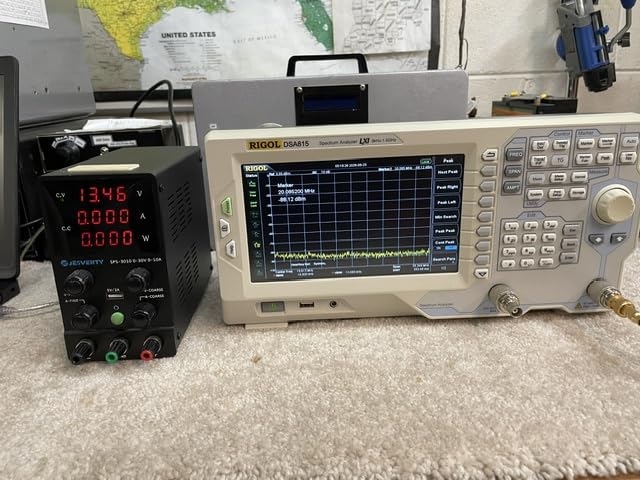
What you get that cheaper boxes leave out is resolution. The four-digit LED reads to 0.01V, 0.001A and 0.1W with live power calculation, which means you can watch a 3.3V rail settle rather than guessing from a coarse analog needle. Mode crossover between constant voltage and constant current happens automatically, and the display tells you which mode you are in. That single indicator is what makes a supply safe to leave connected while you work.
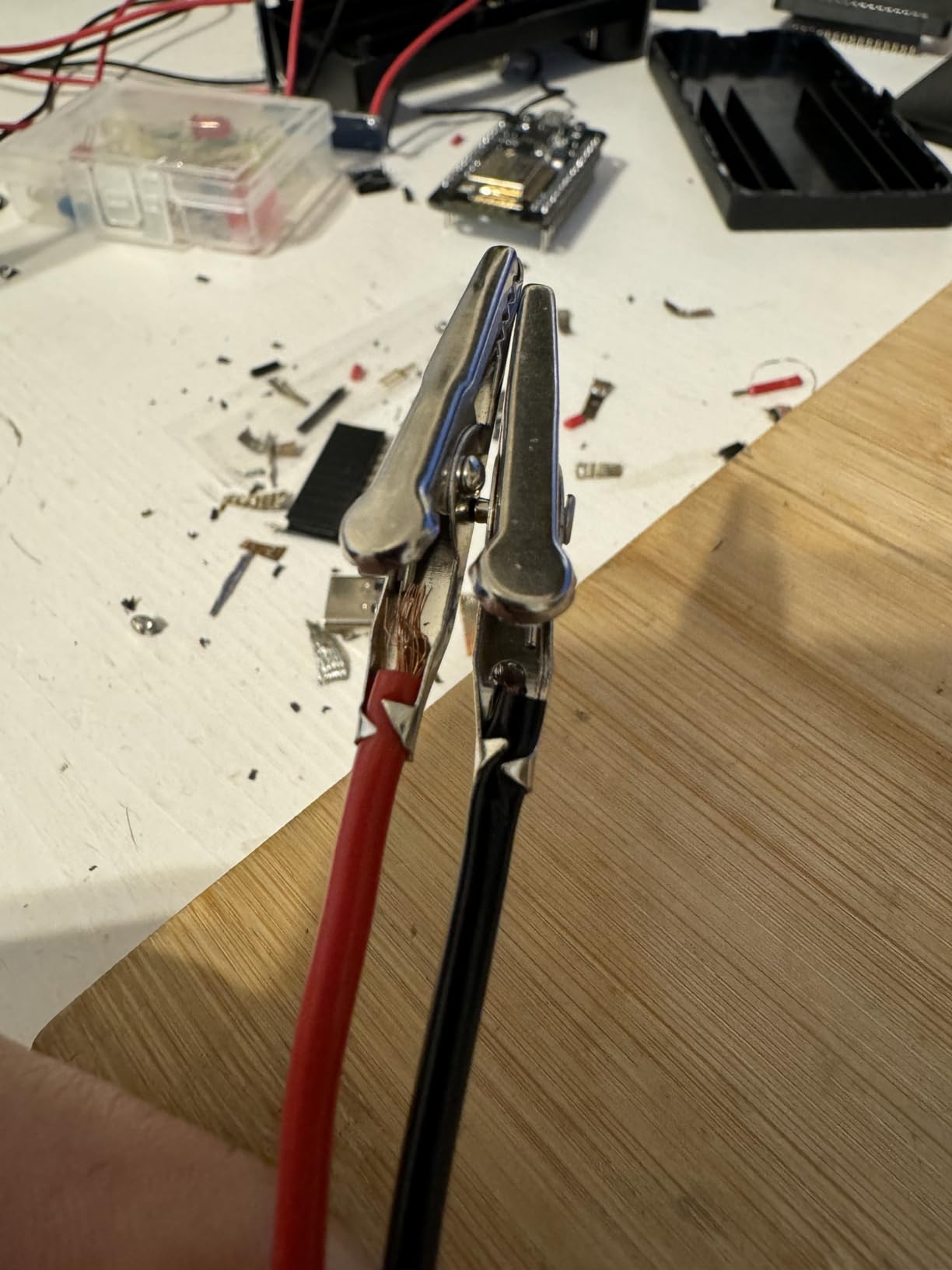
The review profile is strong: 1664 owners averaging 4.5 stars, with 75 percent at five stars and 13 percent at four. Buyers consistently single out the readable display and the automatic mode crossover. The gripes are practical rather than fundamental. The supplied test leads are the weakest part, and a surprising number of owners replace them before doing serious current work, which is the first thing we would do with this box.
Fan noise under sustained load is the other recurring note, and it is worth knowing if your bench sits in a shared room. None of that changes the recommendation for someone building a first bench on a sensible budget: this is the supply that covers almost every beginner and intermediate project without leaving you short.
Why display resolution matters more than wattage
A higher wattage rating only helps if you are actually drawing that much current, and most hobbyist projects draw well under 2A. Display resolution, by contrast, affects every single measurement you make. With 0.01V resolution you can see a rail sag, confirm a 3.3V logic level is really 3.3V, and measure the difference between a set voltage and the voltage at your board, which is a real effect once lead resistance adds up at higher current.
For a Raspberry Pi 5 or any modern single-board computer, that resolution is the difference between knowing your supply is healthy and assuming it is. We would pick this model over a higher-wattage unit with a coarse display every time.
When to spend up instead of saving here
Skip this pick if you are working above 30V, if you need a second independent rail, or if your project depends on low ripple for analog measurement. It also ages less gracefully than the metal-chassis linear units, because the plastic body dissipates heat less efficiently. If your plans include sustained high-current work for hours at a time, the linear options further down hold up better.
3. Tekpower TP3005T 30V 5A Linear Supply – Best for Quiet Analog Work
Tekpower TP3005T Variable Linear DC Power Supply, 0-30V @ 0-5A with Alligator Test Leads
0-30V at 0-5A linear regulated output
Back-lit LED at 0.1V / 0.01A
Thermo-sensor cooling fan
12 lb metal chassis
Pros
- Linear topology gives low-noise stable output for sensitive analog work
- Dual constant-voltage and constant-current modes
- Back-lit LED display with 0.1V and 0.01A resolution
- Cooling fan activates automatically via a built-in thermo-sensor
- Includes alligator test leads
Cons
- Heavy 12 lb metal chassis takes up real bench space
- Older analog-style controls are less precise than modern digital units
- Small share of owners report failures after extended heavy use
When ripple is the problem, the answer is a linear supply, and the TP3005T is the most approachable one here. The linear topology means the output is filtered by a regulator rather than a switching converter, so the noise floor sits low enough for precision analog work, audio circuits and low-level sensor measurement. Output is 0 to 30V at 0 to 5A, with a stated 300W output wattage ceiling that again means 5A is only available below 30V.
The controls are deliberately old-fashioned. Two modes, constant voltage and constant current, are selected directly, and the back-lit LED display reads to 0.1V and 0.01A. That is coarser than the digital units on this list, and if you are setting 3.3V logic levels all day you will miss the finer resolution. What you gain in return is a chassis that feels like lab equipment: metal body, front terminals that take a real banana plug, and a cooling fan that only runs when the thermo-sensor says it needs to.
667 owners rate it 4.4 stars, with 74 percent at five and 14 percent at four. Owners working on analog and audio circuits rate it highest, and the automatic thermal fan and clear back-lit display come up repeatedly as the features that matter in daily use. The trade-off named most often is bulk and weight at 12 pounds and 11.7 by 9.7 by 7.9 inches, which is a real commitment on a small desk.
What a linear topology actually buys you
The difference shows up when you look at a noisy signal on a scope or when a sensor reading refuses to settle. Switching supplies push energy through a converter at high frequency, and what leaks through becomes ripple on the rail. A linear supply burns that energy as heat instead, which is why the metal chassis and the fan exist. The trade is physical size and heat for a measurably quieter output.
For logic-level debugging, LED testing or motor work, that advantage is invisible and the bulk is not. For audio preamps, strain-gauge amplifiers, reference-voltage circuits or anything where you would measure noise as part of the result, the reverse is true, and this is the supply to buy.
Where the older controls cost you
There is no memory storage, no preset enable button and no output switch, which are the three features modern hobbyists have started treating as standard. You also lose the 0.01V display resolution that makes measuring lead voltage drop practical. If your workflow involves jumping between multiple setpoints all day, the digital units will save you more time than the quiet output saves you signal.
4. NICE-POWER SPS-C3010 30V 10A Supply – Best for Battery Pack Work
NICE-POWER DC Power Supply Variable 30V 10A, Adjustable Switching Regulated DC Bench Power Supply with Output Switch High Precision 4-Digit LED Display, Benchtop Lab Power Supplies with 5V/2A USB Port
30V / 10A / 300W vertical output
Front OUTPUT enable switch
8-layer protection set
2.6 lb
Pros
- Front OUTPUT key sets voltage and current without energizing the load
- Bright back-lit 4-digit display with 0.01V and 0.001A resolution and live watt readout
- Coarse and fine knobs make values easy to dial in
- Automatic CV and CC conversion with a visible mode indicator
- Light 2.6 lb vertical body with shock-absorbing rubber feet
Cons
- A minority of models have failed within weeks of continuous 4-6A use
- Two-decimal readout makes lead voltage drop noticeable at higher current
- 110V input only with no 220V version
The SPS-C3010 earns its place on one feature more than any other: the front OUTPUT key. You set your voltage and current first, with the load disconnected and the output still disabled, and only then energize the circuit. That one button is the cheapest form of insurance in this entire roundup, because it stops the most common beginner mistake, which is connecting a circuit and then adjusting voltage upward into an unknown board.
Everything else is competitive at this class. Output is 0 to 30V and 0 to 10A with a 300W ceiling, the four-digit back-lit display reads to 0.01V, 0.001A and shows live wattage, and coarse plus fine knobs let you land on a specific value without hunting through a full sweep. A temperature-controlled fan and a heat sink handle sustained current, and the vertical 2.6 lb body measures 3.3 by 8.4 by 5.5 inches, which fits beside a breadboard rather than on top of it.
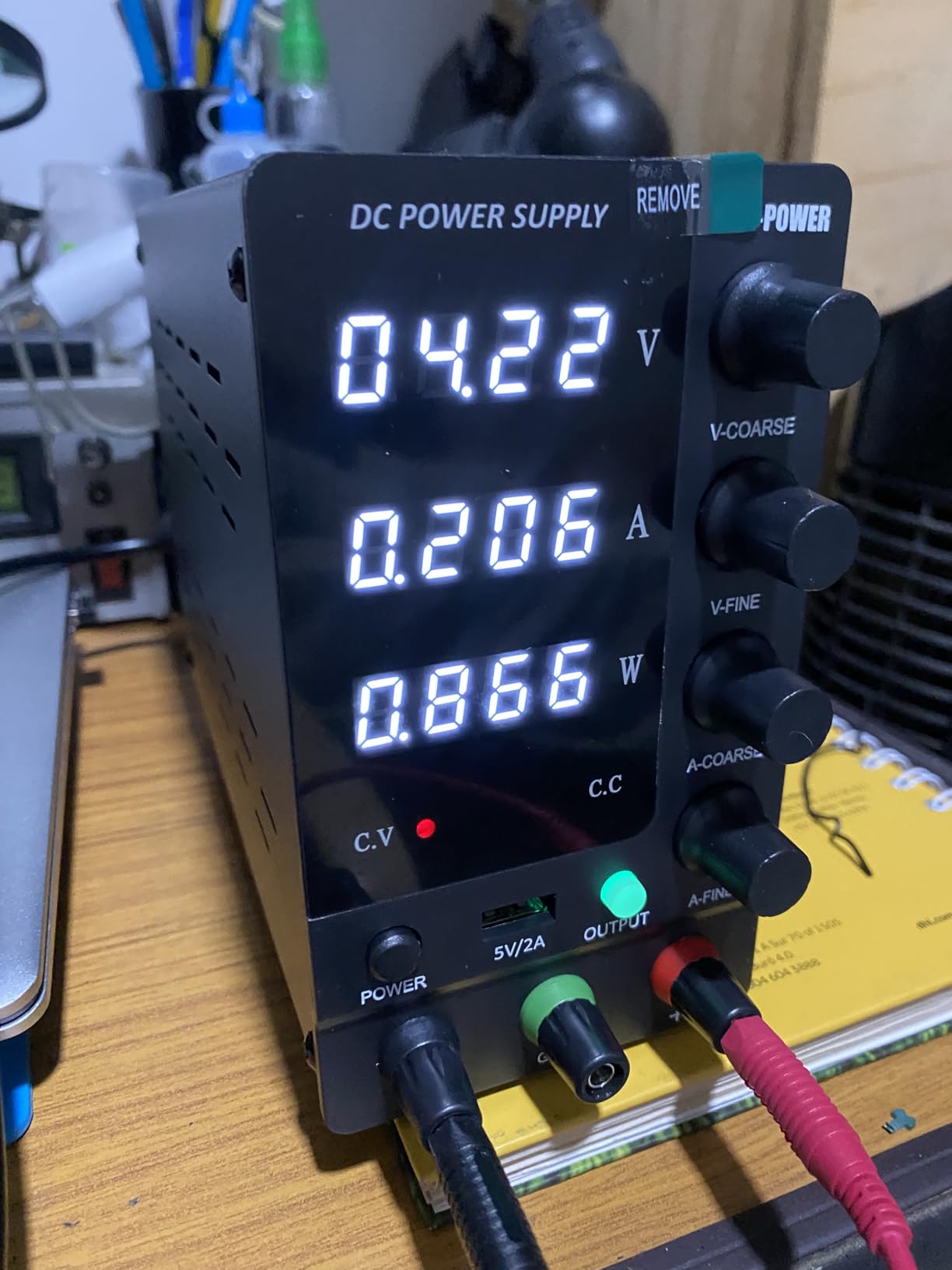
604 owners rate it 4.5 stars with 77 percent at five and 14 percent at four. The standout use case in the reviews is battery pack work, including owners using it to balance EV-style battery modules, and that is where the OUTPUT key earns its keep. Protection is the deepest list on this page: leakage, grounding, over-voltage, over-current, over-power, over-load, over-temperature and short-circuit handling are all declared.
Two caveats deserve a full read. A minority of owners report models failing within weeks of continuous 4 to 6A use, so if you plan to run it flat out for long sessions, buy from a seller with straightforward returns. And the two-decimal display means that at higher current, the voltage shown will not exactly match the voltage at your board once lead resistance is accounted for. Measure at the load for anything critical.
Why the OUTPUT key changes your safety habits
Set your values in advance and the supply becomes a predictable, bounded source. A wiring mistake now produces a mode change on the display rather than an uncontrolled voltage at the board. It is the same principle as pre-setting a current limit, just enforced by hardware instead of discipline, and for anyone who has fried a board by accident it is the feature that matters most.
The second-order benefit is speed. Because the load never sees an undefined voltage, you can swap between test points without re-dialing the supply each time, which is where a lot of bench time actually goes.
Where the 110V-only input will bite you
This model is specified for 115V mains only, and there is no 220V variant in the range. If you are on a 230V system, the universal-input model later in this list is the one to look at, and it is a real constraint rather than a technicality. Buying the wrong input version means the supply is unusable, not merely underperforming.
5. HANMATEK HM310 30V 10A Mini Supply – Best for Battery Charging
Adjustable DC Power Supply (0-30 V 0-10 A) with Output Enable/Disable Button HANMATEK HM310 Mini Variable Switching Digital Bench Power Supply with USB Charging
0-30V / 0-10A / 300W switching output
Output enable and disable button
Keypad lock
5V 2A USB
Pros
- Auto power calculation with a 4-digit LED display for voltage current and watts
- Output enable and disable key lets you preset values without powering the load
- Keypad lock prevents accidental misoperation during a long session
- Low arc noise and low ripple with a built-in cooling fan
- Over-voltage over-current over-power over-temperature and short-circuit protection
Cons
- Compact mini body means lower thermal headroom than full-size models
- Fewer adjustment controls than a unit with an encoder knob
- Weighs about 1 kg which is heavier than the pocket-sized options
The HM310 is the pick we recommend to people whose main interest is charging rather than general prototyping. It runs 0 to 30V and 0 to 10A at 300W, calculates power automatically on the four-digit display, and pairs an output enable and disable key with a keypad lock. That combination is exactly the safety profile for long unattended charge sessions, because the keypad lock stops a stray press from changing your setpoint hours into a run.
Protection covers over-voltage, over-current, over-power, over-temperature and short-circuit, and the manufacturer backs it with a 12-month warranty. A 5V 2A USB charging interface on the front is convenient for topping up a phone or a module while the main output is occupied, and the built-in fan keeps the compact body cool.
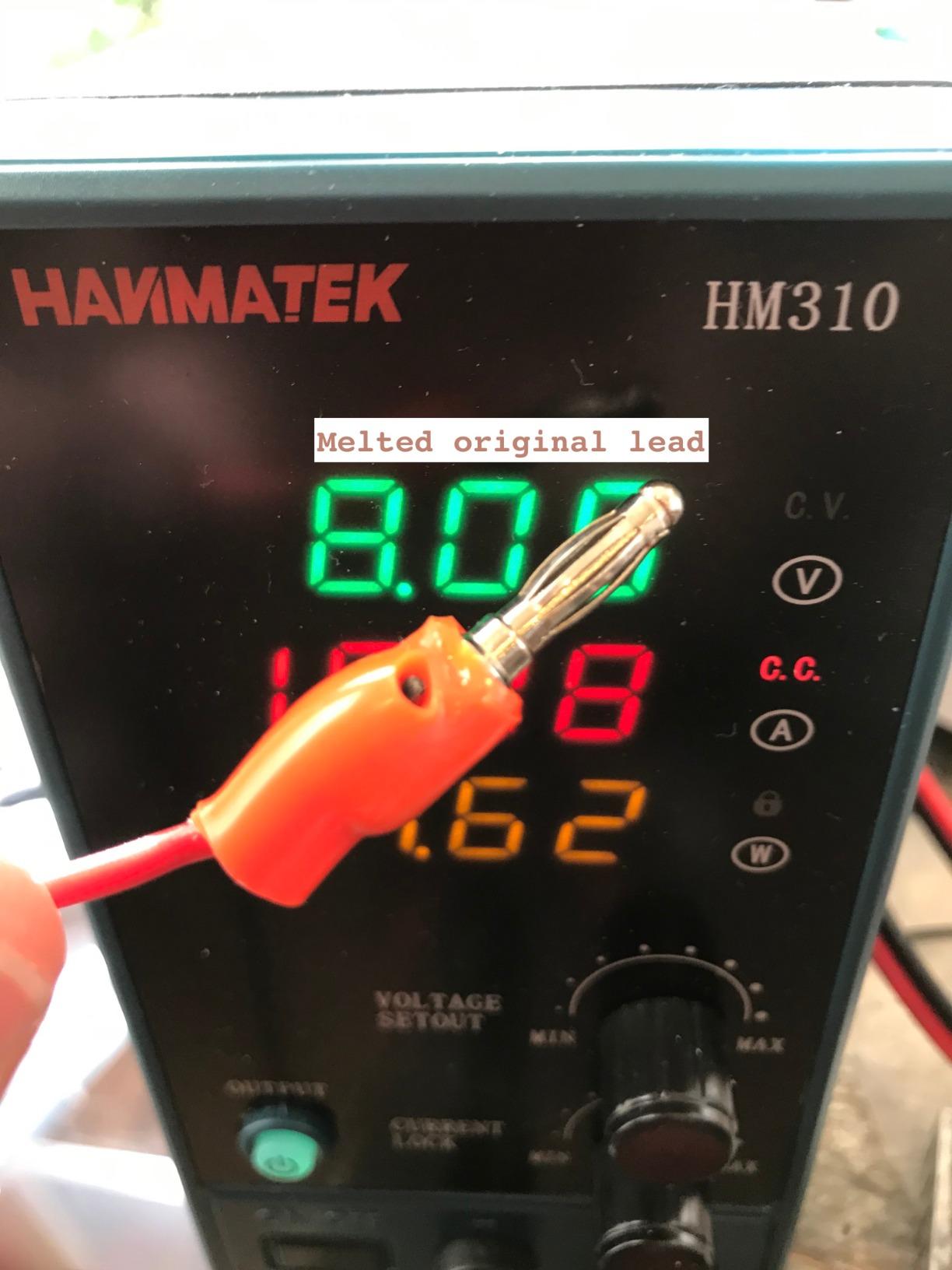
533 owners give it 4.5 stars, with 76 percent at five and 14 percent at four. Reviews are notably positive for a compact model, with the auto voltage, current and watt calculation, the lockable keypad and the OUTPUT safety key cited most often. The criticism is light and consistent: the small footprint limits total power headroom compared with a full-size model, and there is no rotary encoder for fast dialing, so you set values with the keypad instead.
We would still pair this with a proper battery management system for lithium packs. The constant-voltage and constant-current crossover makes it suitable for charging, but cell balancing and over-discharge protection are the BMS’s job, not the supply’s.
What the keypad lock is actually for
Think about a charge that starts at bedtime and finishes overnight. Without a lock, a thumb against the panel while you reach across the bench can change a setpoint without any obvious sign. The lock is a two-second fix that removes an entire category of overnight risk, and it is one of those features that sounds trivial until you have used one.
It also helps when a project runs for hours on a breadboard in the middle of a larger build. The supply stays where you set it while you work on something else.
When the mini footprint becomes the wrong trade
Compact bodies dissipate less heat, and this model shows it in sustained high-current work where a full-size chassis would simply run cooler and quieter. If your largest planned load is a motor, a heating element or a stack of power LEDs drawing several amps continuously, buy the full-size 300W chassis instead. For charging packs and running development boards, the mini format is the better fit for almost any bench.
6. NICE-POWER SPS-E305 30V 5A Encoder Supply – Best for Travel and 230V Mains
NICE-POWER DC Power Supply Variable, 30V 5A Adjustable Switching Regulated Power Supply with Encoder, Upgraded 3-Digits LED Display, Electroplating DIY LED Test Mini Regulated DC Bench Power Supply
0-30V / 0-5A / 150W output
Encoder knob setting
100-240V universal input
1.54 lb
Pros
- Encoder knob sets voltage and current digit by digit instead of hunting a potentiometer
- Extremely light at 1.54 lb and small enough for a crowded bench
- Works on 100-240V input so it handles both 110V and 230V regions
- FCC and CE certified with over-voltage over-current over-power over-temperature and short-circuit protection
- Popular for electroplating LED test and LiPo charging work
Cons
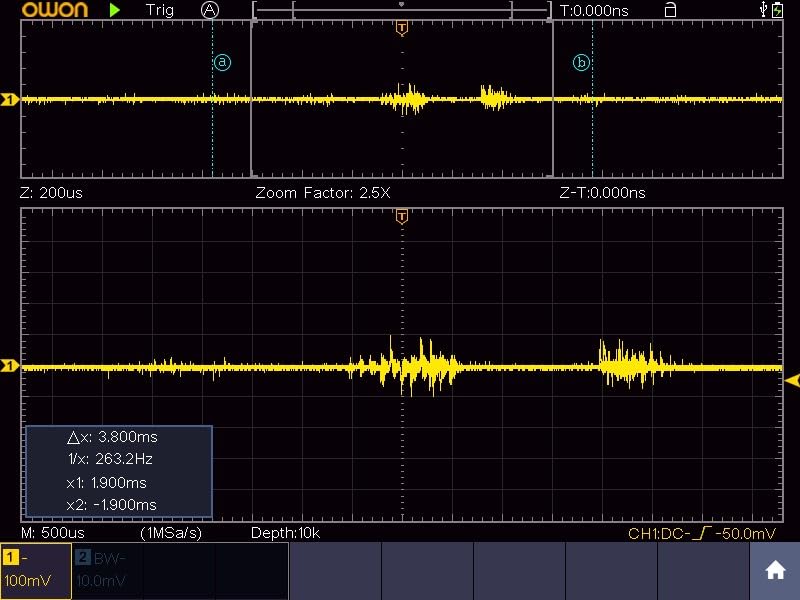
- Output is unstable below roughly 0.7-0.9V so sub-volt work is not possible
- Slight couple hundred millivolt of noise on the output
- Cooling fan runs continuously and is noticeable under load
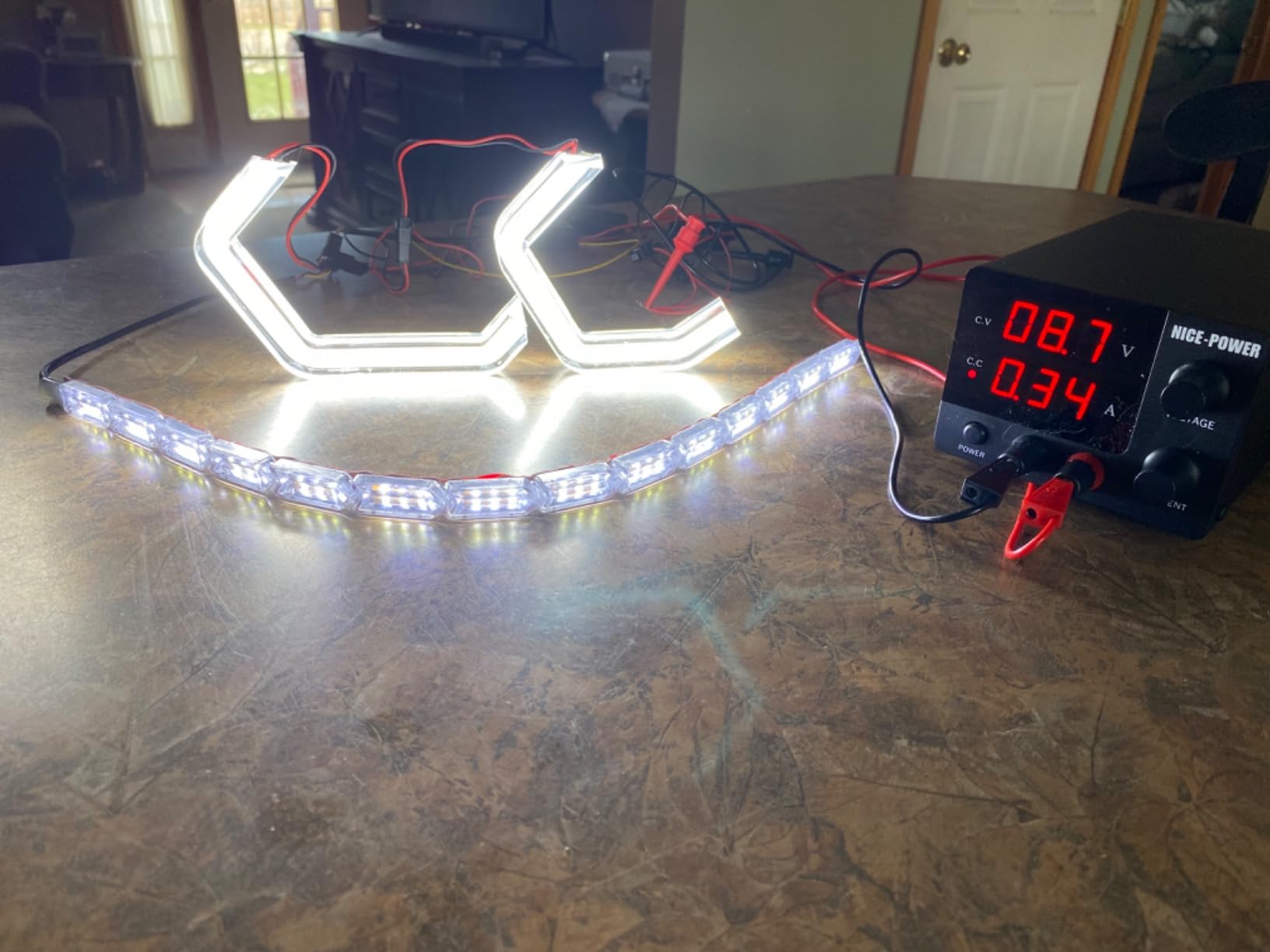
This is the one to pack. At 1.54 pounds and 6.5 by 4 by 3.2 inches, the SPS-E305 is small enough to live in a tool bag, and its 100-240V universal input means the same unit works on 110V and 230V mains without a step-up transformer. That input flexibility is genuinely rare in this class and removes the single most common reason a portable supply is useless in a different country.
Output is 0 to 30V and 0 to 5A with a 150W ceiling, which is enough for logic-level work, sensor circuits, Arduino and ESP32 projects, small motors and electroplating. The encoder knob is the control method to get used to: you rotate it and step through digits, setting 3.30V directly rather than approximating with a potentiometer and a meter.
343 owners rate it 4.6 stars, the joint-highest average in this roundup, with 81 percent at five and 9 percent at four. Reviewers consistently praise the encoder-based setting, the compact body and accurate readings at 3.3V and above, and several use it for car-audio lithium banks and electroplating. The box includes the power cord, an output load cord, a manual and a warranty card, with a 12-month repair policy behind it.
Read the low-voltage caveat carefully. Output is unstable below roughly 0.7 to 0.9V, so this is not the supply for 1.8V core rails or low-threshold sensor work. Reviewers also note a couple hundred millivolt of output noise and a cooling fan that runs continuously and is noticeable under load.
When universal input saves you real money
Most of the 30V supplies in this class are 110V-only, which means a 230V buyer either needs a step-up transformer or a different model. A step-up transformer adds weight, cost, hum and a second failure point, so a supply that simply accepts 100 to 240V is worth more than its spec sheet suggests if you travel, move, or live outside North America.
The encoder knob is the second reason. Setting values digit by digit is slower than a coarse and fine knob at first and considerably faster once you are repeating a value for the fifth time in an afternoon.
Where the noise and low-voltage limits show
A couple hundred millivolt of noise is a problem for a reference voltage feeding a precision ADC and irrelevant for a GPIO pin. The sub-1V instability is the harder limit, because it rules out the supply for any 1.8V or 0.9V rail work outright. If your projects involve modern low-voltage cores, choose a full-size unit that is stable at low setpoints instead.
7. FNIRSI DPS-150 30V 5A Portable Supply – Best for Portable Work
FNIRSI DPS-150 DC Power Supply Variable 30V 5A, 4-Digit IPS Flip Display
30V / 5A / 150W output
4mm banana and U-shaped terminals
2.8-inch IPS flip screen
6.2 oz
Pros
- Pocket-sized at 4 by 3 by 1.2 inches and 6.2 oz so it frees up bench space
- Runs from PD QC and DC sources including ordinary USB-C chargers
- 2.8-inch IPS colour screen with 90-degree flip plus numeric and curve display
- Under 20 mV ripple at 30V and 5A
- PC-programmable output with 6 preset parameter groups
Cons
- Maximum voltage and wattage are capped by the power source so a typical USB-C brick limits you to about 20V
- Non-standard banana plug spacing means common multimeter adapters do not fit
- User interface takes some time to learn
The DPS-150 solves a different problem from every other model here: it is powered by the supply you already have. It runs from PD, QC and DC sources, which in practice means an ordinary USB-C laptop charger. Output is 0 to 30V and 0 to 5A at 150W, and at 4.06 by 3.07 by 1.18 inches and 6.2 ounces it is small enough to sit in a pocket.
The display is the standout. A 2.8-inch IPS colour screen flips 90 degrees, so you can read it whether the unit is flat on the bench or propped up, and it shows numbers plus a curve trace of output behaviour over time. That trace is genuinely useful for watching a rail respond to a switching load, and combined with PC programmability and 6 preset parameter groups it makes the supply scriptable for repeated test sequences.
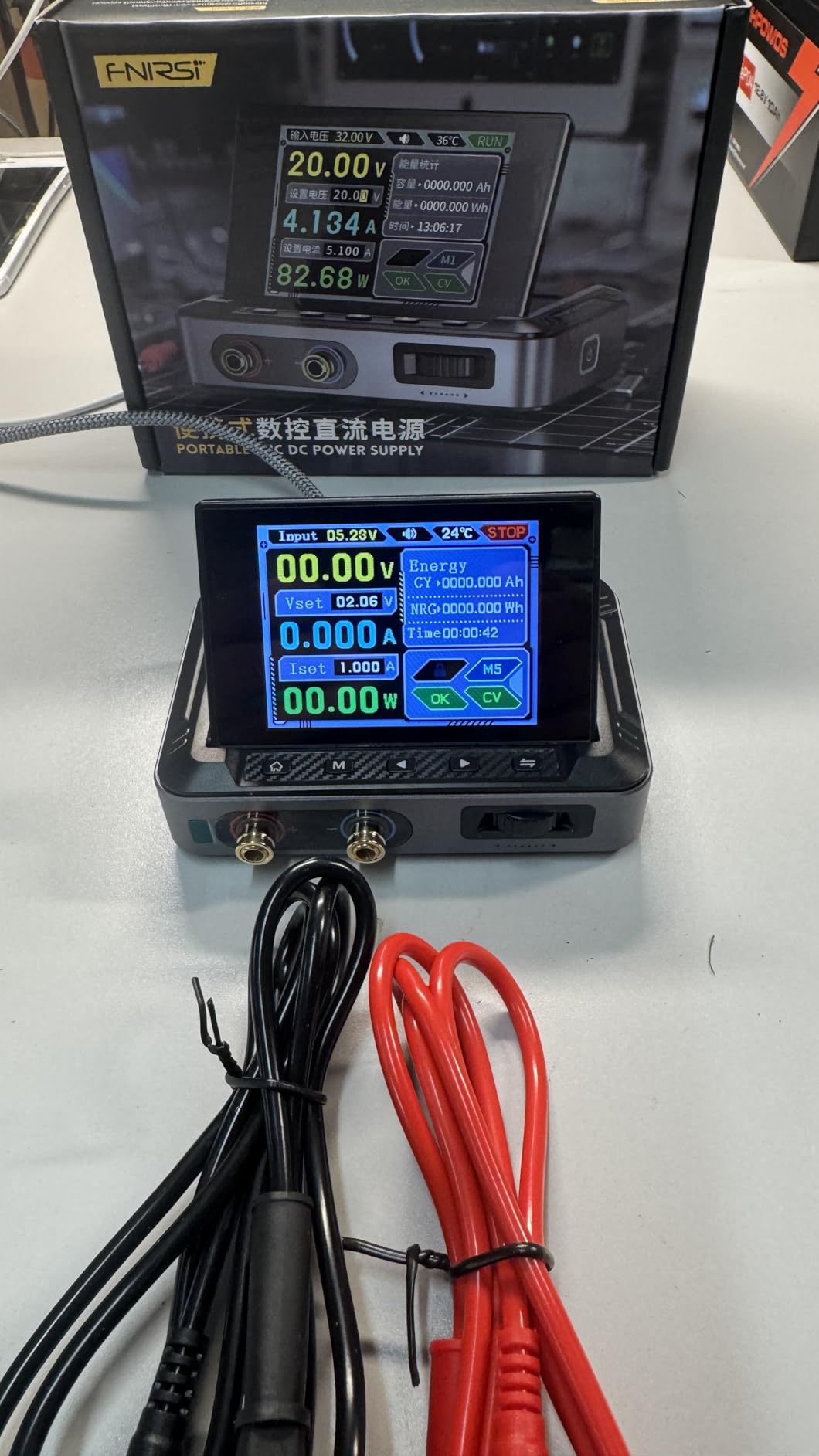
331 owners rate it 4.4 stars with 76 percent at five and 11 percent at four, and it is a top-ten seller in the category. The most common way owners use it is as a portable companion to a bench supply, powering it from a USB-C PD brick and accepting that most testing stays at 12V and below. Ripple is specified under 20 mV at 30V and 5A, and eight safety protections are built in.
Two limitations decide whether this is right for you. The reachable voltage is capped by the input power, and a typical laptop USB-C charger limits you to about 20V, so the 30V headline is conditional. The banana jacks use a non-standard spacing, which means the multimeter adapters most hobbyists already own will not fit. The package includes the unit, two alligator clip wires, a USB data cable, a manual and a box, but no power adapter.
What PC programmability actually unlocks
Six preset parameter groups plus PC control means you can script a voltage ramp, hold a rail at a fixed point while cycling a load, and log the result without touching the unit. For anyone running repetitive bring-up sequences on a board that needs multiple rails in a defined order, that removes an enormous amount of manual fiddling, and it is the reason this model appeals to people building test fixtures rather than single projects.
The flip screen and curve display serve the same purpose from the manual side, letting you set a value and watch it respond without repeatedly glancing at a small numeric readout.
Why this is a companion, not a replacement
The input cap is the deciding factor. If your power source can only deliver 20V, the 30V rating is unreachable, and 150W is shared with whatever the charger can supply. For field work and travel it is unbeatable, and most 12V-and-under testing is covered comfortably, but it is not the supply to build a permanent bench around or to trust with a 24V motor test.
8. Siglent SPD3303X-E Triple Output Supply – Best for Multi-Rail Builds
Siglent Technologies SPD3303X-E Triple Output Power Supply
Three isolated outputs
32V 3.2A x2 plus 2.5/3.3/5V 3.2A
220W total
Linear regulation
Pros
- Three independently controlled and isolated outputs for 3.3V 5V and a variable rail at once
- Linear regulation for clean low-noise output
- 220W of combined output power
- Series and parallel modes plus a timing output function
- Trending graphs for monitoring supply behaviour over time
- Three-year warranty
Cons
- Much bulkier and heavier than hobby-class bench supplies at 17.6 lb
- Large 16 by 14 by 11 inch footprint takes up significant bench space
- Cost sits well above entry-level switching supplies
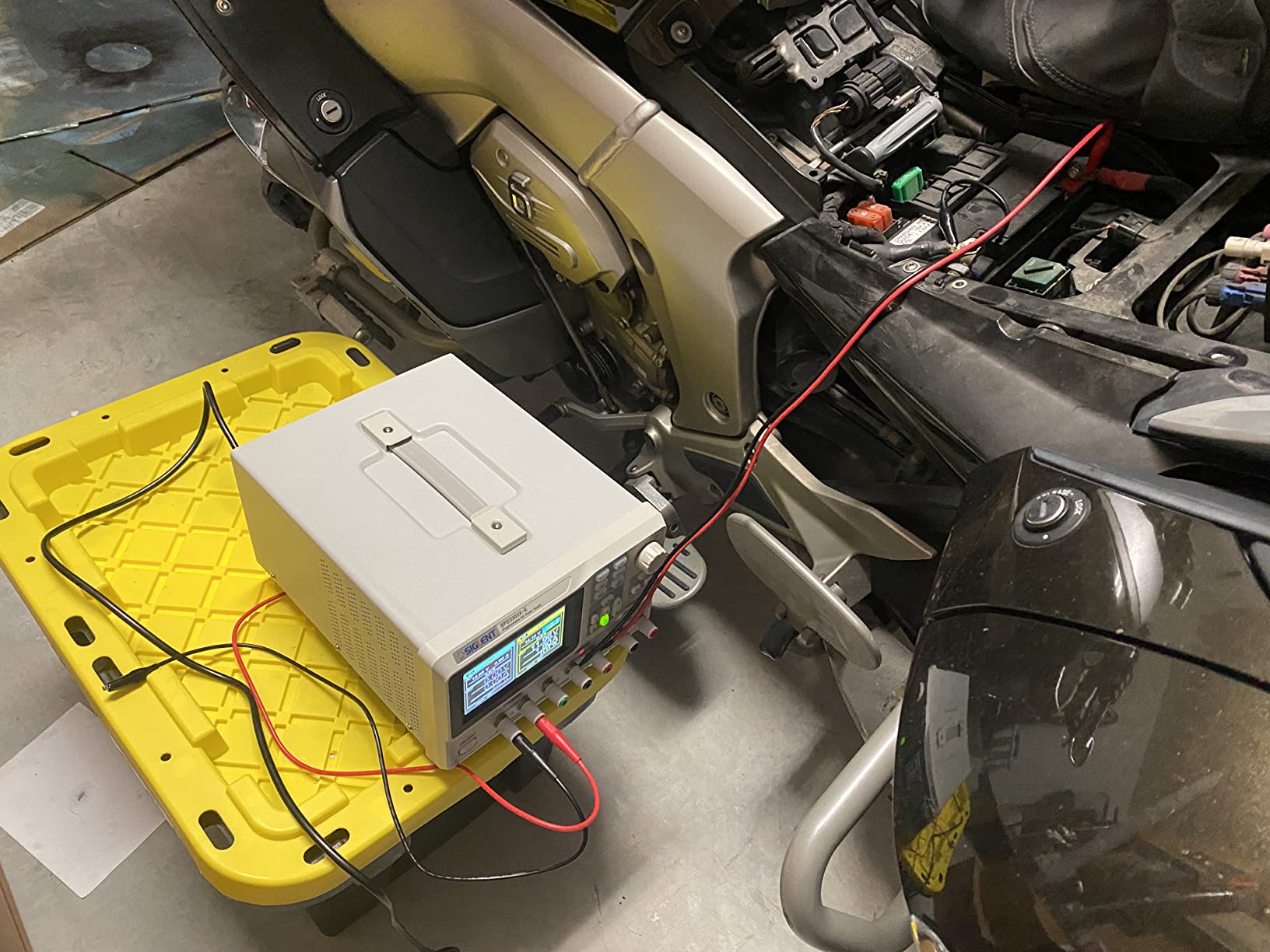
Every other model in this roundup gives you one adjustable rail. The SPD3303X-E gives you three, and they are isolated from each other, which is the feature that changes what you can build. The fixed third output covers 2.5V, 3.3V and 5V at up to 3.2A, so a 3.3V logic rail and a 5V rail can run at the same time as a variable channel. The two variable channels each go to 32V at 3.2A, for 220W of combined output power.
Because the outputs are isolated and can be combined, the supply also runs in independent, series and parallel modes. Series takes two channels to roughly 64V for work that needs more than a single channel provides. Parallel increases current on one rail. A timing output function ramps channels in a defined order, and trending graphs let you watch how a rail behaves over time rather than at a single instant.
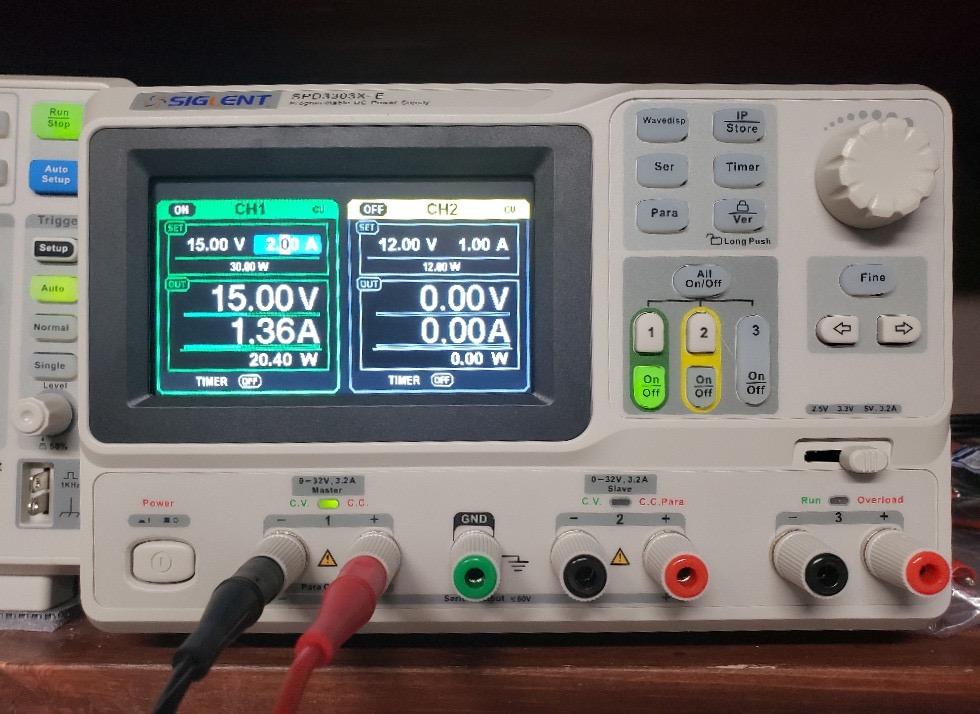
381 owners rate it 4.6 stars with 80 percent at five and 11 percent at four, which is the joint-highest average in this list and comes with a three-year warranty. The linear regulation keeps the output clean for analog work as well as digital, and the 100-230V input range works on both 110V and 230V mains.
The objections are physical and financial. At 17.6 pounds and 16 by 14 by 11 inches it needs a dedicated spot, and it costs well beyond an entry-level switching supply. If you only ever need one rail, that is a poor trade. If you regularly power a board that needs 3.3V and 5V plus something adjustable, replacing two separate supplies with this one is where it earns its keep.
Why isolated triple output changes a project
Isolation means the three rails do not share a common return in the way a multi-tap transformer supply does, so you can bring up a 3.3V logic domain and a 5V domain independently and keep their returns apart. That matters for mixed-signal boards and for anything involving audio or measurement, where a shared return path is a common source of noise and ground-loop problems.
Series and parallel modes extend the same idea. Two channels in series give you a higher voltage rail without a second supply, and in parallel you get more current on one output. Both features mean one box covers projects that would otherwise need a dedicated high-voltage unit.
Who should look past this pick
If your work is single-rail prototyping, breadboarding and repair, this model is overkill and the space it occupies is a real cost on a small bench. We would also flag the weight before you commit: 17.6 pounds is a deliberate lift, not an incidental detail. Save it for the projects that genuinely need more than one clean rail.
9. Tekpower TP1803D 18V 3A Linear Supply – Best for Electroplating
Tekpower TP1803D Lab Grade Variable Linear DC Power Supply, 0-18V @ 0-3A PC, with Alligator Cable and Power Cord,for Labs
0-18V at 0-3A linear output
Back-lit dual meter display
Alligator cable included
6.6 lb
Pros
- Linear topology delivers low ripple and a very stable output
- Runs for hours continuously at a set point without hiccups
- Lightweight for its 0-18V 3A class at 6.6 lb
- Includes alligator cable power cord and solid front binding posts
- Widely used for electroplating electroforming and model train work
Cons
- Panel voltage meter reads about 0.15V high so verify with a separate meter
- No output enable switch so power-on transients can spike above setpoint
- Several reviews report models failing after weeks to months with output collapsing near 0.25A
Electroplating and electroforming need a supply that holds a set point for hours without drifting, and that is where the TP1803D has a long record. The linear topology gives low ripple and stable output, and long-time owners in plating and model-rail circles describe it as the unit they keep coming back to. Output is 0 to 18V at 0 to 3A, which covers plating solutions, small electroforming cells and the 12V-scale work most hobbyists do.
The back-lit dual meter display shows voltage and current at a glance, the front binding posts accept real banana plugs, and an alligator cable and power cord are included. At 6.6 pounds and 9.45 by 3.74 by 5.91 inches it is the lightest linear supply in this roundup by a wide margin.

293 owners rate it 4.4 stars with 77 percent at five and 9 percent at four, and the 90-day warranty is the shortest here. Two calibration quirks are worth knowing before you rely on the panel. The voltage meter reads roughly 0.15V high, so verify with a separate meter when accuracy matters. The dials are extremely sensitive, with slightly under a full rotation covering the entire 0 to 18V range, which is easy to overshoot.
There is no output enable switch, so power-on and power-off transitions can spike the output above your setpoint. Start at zero output and bring the load up carefully. Several reviewers also report models failing after weeks to months with output collapsing to around 0.25A, so if you depend on this for production work, check the return terms carefully.

Why constant point matters for plating
Plating quality depends on current density staying steady through a bath, and a supply that drifts as it warms changes the result from part to part. A linear supply with a stable set point is the reason this model has stuck around in plating circles, and the constant-current mode is what keeps a cell from drawing more than the solution can handle.
The same stability is what makes it useful for model railway power, where a steady rail prevents brightness changes as locomotives start and stop.
Where the calibration quirks will catch you out
A meter that reads 0.15V high means every setting you dial in is slightly above your target, which matters on precision work and is irrelevant on a plating tank. The sensitive dials and the missing output switch are the two habits to build around: verify with a meter, and start every session at zero. New models also carry a noticeable chemical smell that takes about a week to dissipate.
10. HYELEC HY50-06A 50V 6A Supply – Best for Higher Voltage Work
HYELEC Variable DC Power Supply,0-50V 0-6A max150W Switching Regulated Bench Power Supply with Memory, 4-Digit LED Display, 5V2A USB Interface, Output Switch, Coarse and Fine Adjustments
0-50V at 0-6A switching output
150W total ceiling
Encoder coarse and fine
110V input
Pros
- Higher 50V ceiling than the typical 30V bench supply in the same class
- Single encoder knob switches between coarse and fine adjustment
- 4-digit LED display at 0.01V and 0.001A with a steady non-jumping readout
- Three memory presets M1 M2 and M3 for recalling setups
- Automatic CV and CC switching with adjustable over-voltage and over-current thresholds
Cons
- 110V input only so it will not run on 220V mains
- Switching topology has more ripple than a linear supply
- 150W ceiling means 50V and 6A are not available simultaneously at full rating
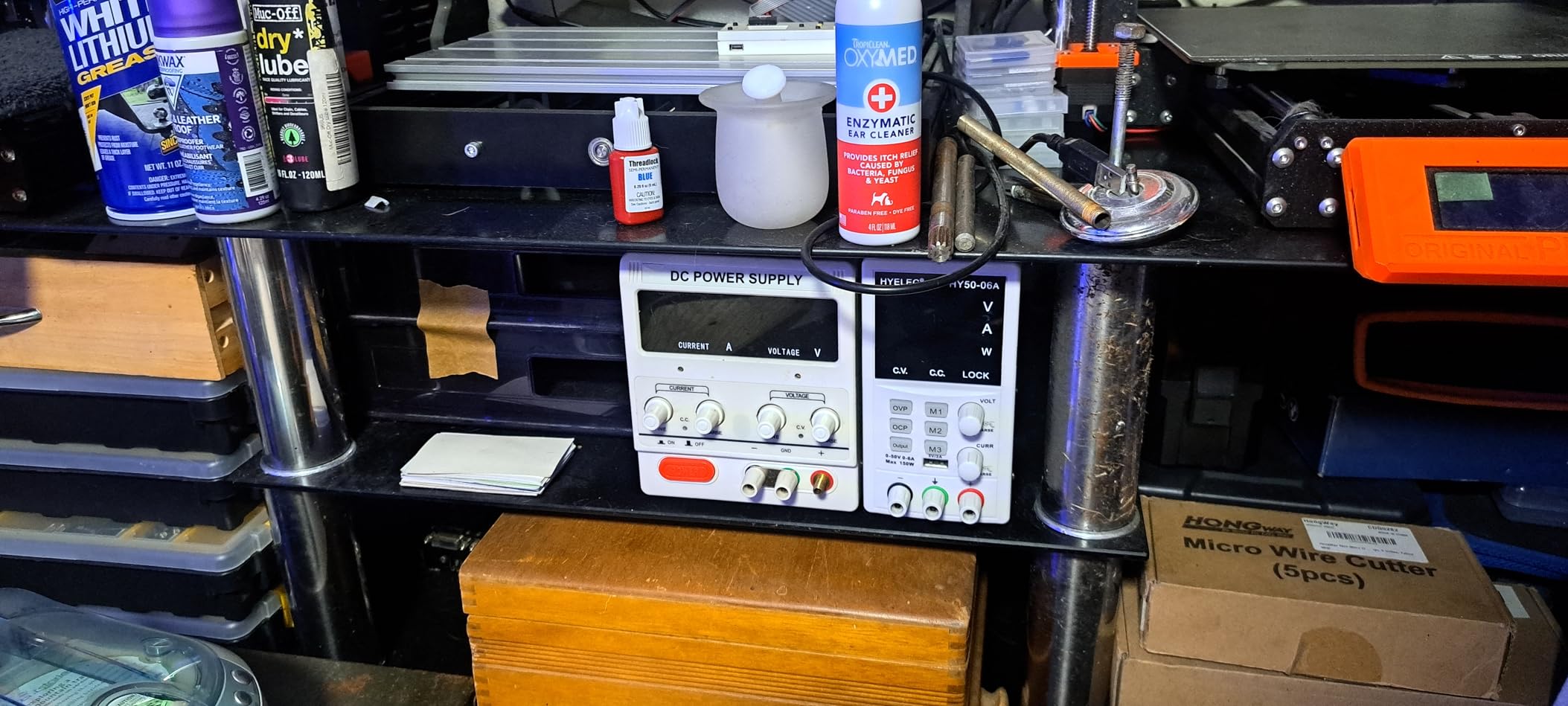
The HY50-06A exists because 30V is not always enough. It runs 0 to 50V and 0 to 6A with a 150W total ceiling, which is what you need for higher-voltage DC motor work, series cell packs, and electroplating at voltages a 30V unit cannot reach. The single encoder knob handles both coarse and fine adjustment, and the four-digit display reads to 0.01V and 0.001A with a readout owners describe as steady rather than jumping.
The M1, M2 and M3 memory presets are the feature that changes daily workflow. Once you have dialled in a setpoint for a specific board, you store it and recall it later instead of re-tuning. Automatic constant-voltage and constant-current switching comes with adjustable over-voltage and over-current thresholds, and a surge-protection output switch gives you the pre-set-before-enabling habit the other picks offer.
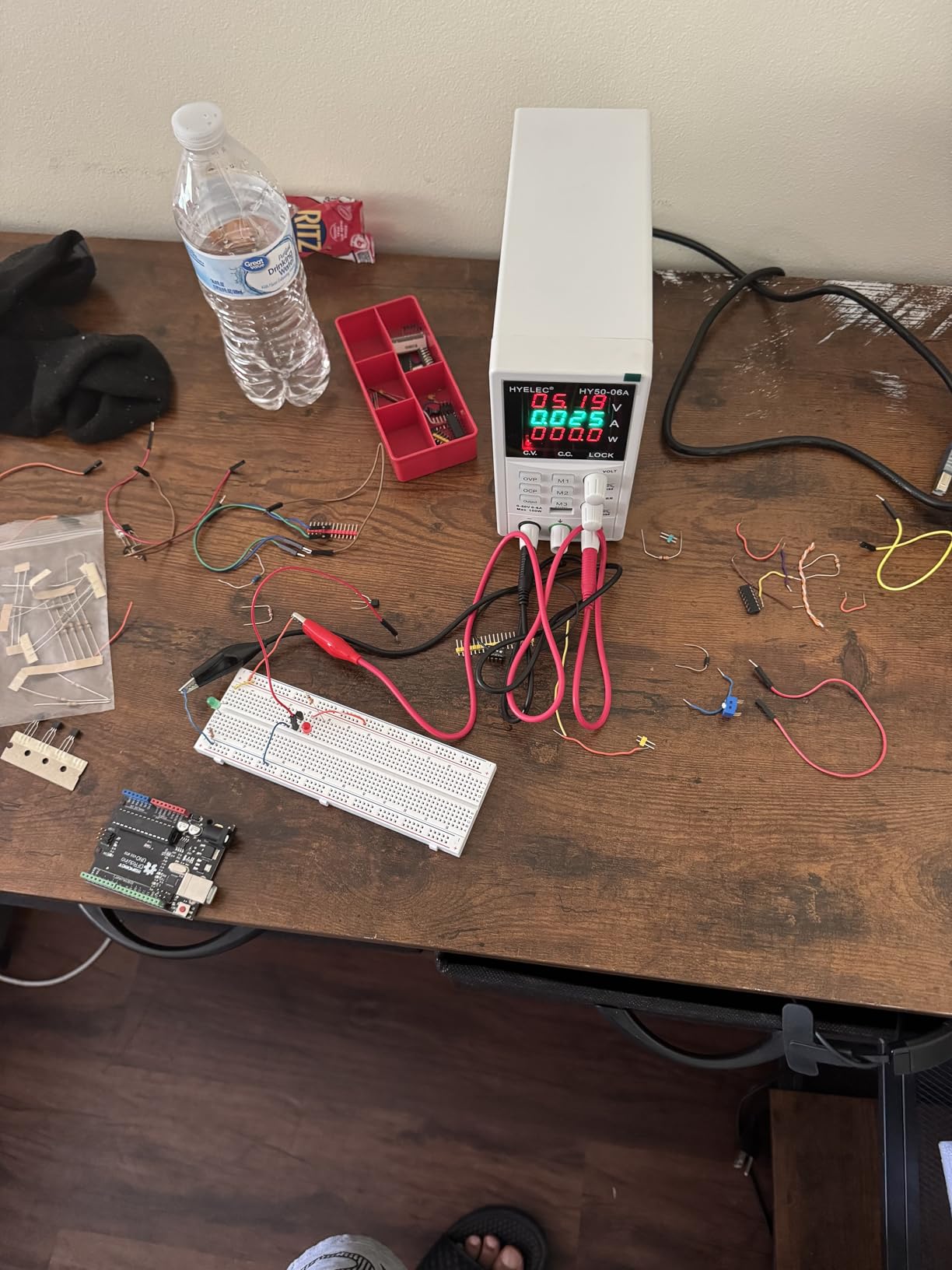
270 owners rate it 4.6 stars with 76 percent at five and 16 percent at four. Buyers single out the 50V range, the encoder coarse and fine control, the steady readout and the memory presets, plus the output enable switch as a safety plus. There is a 72-hour full-load test record in the product documentation, which is a good sign for a switching supply that will run hot.
Understand the wattage ceiling before you plan around it. At 150W total, 6A is only available below 25V, so the full 50V ceiling is available at a much lower current. If your project needs both high voltage and high current, you need a larger supply. This model is also 110V input only, and the switching topology carries the usual ripple caveat for precision analog work.
When you actually need more than 30V
Higher-voltage DC work has three common shapes: motors that run at 36V or 48V, series-connected battery packs that top out above the 30V mark, and electroplating setups that want a higher cell voltage. In each case the extra headroom means you are not running a supply constantly at its ceiling, which is the condition that ages a supply fastest and is where drift shows up first.
If your work stays at or below 30V, this model is simply larger and more expensive than you need, and a 30V unit with more current capability is the better purchase.
What memory presets save you
Think of the three presets as three bench configurations rather than three favourites. Store a 5V 1A setting for board bring-up, a 12V 3A setting for motor and solenoid tests, and a 3.3V 0.5A setting for logic work. Switching between them becomes a single button press instead of a dial-twiddling exercise, and a surge-protected output switch means the rail only comes up once you confirm the setting is right.
How to Choose a Bench Power Supply (8 Steps)
Work through these eight steps in order and the right model falls out of the process. The most common purchasing mistakes we see come from starting at step three, choosing a wattage figure, and working backwards.
1. Set your maximum voltage first
Decide the highest voltage your work will ever need, not the voltage of one project. A Raspberry Pi, an Arduino and a 12V motor sit comfortably inside 0 to 30V. Higher-voltage DC motors, series battery packs and electroplating cells push past that, and only then does a 50V supply make sense. Buy for the ceiling you will actually reach.
2. Set your maximum current
Add up the current for everything that could run at once, not just one board. A single-board computer with storage and a camera can pull considerably more than the headline figure suggests, motor and solenoid tests spike well above steady-state draw, and LED strips draw whatever you tell them to. Size for the sum, then see step three.
3. Add 20 to 25 percent headroom
Once you know your working maximum of voltage and current, size the supply so that voltage and current are each roughly 20 to 25 percent above it. Running a supply constantly pinned at its ceiling is what causes heat, fan wear and drift, and it leaves no room for the inrush spike when a motor starts. Headroom is cheap insurance against the two failure modes we see most.
For almost every hobbyist, the answer that falls out of this arithmetic is a 0 to 30V supply at 3 to 5A, or 0 to 30V at 10A once you add motors, bigger LED runs or battery charging. That single sentence covers the majority of benches being built today.
4. Confirm constant-voltage and constant-current modes
Every quality bench supply runs in two modes. In constant voltage, it holds your set voltage and supplies whatever the load demands, up to the ceiling. In constant current, it holds the current at the ceiling and drops voltage to achieve it. The crossover happens automatically when a load draws more than you allowed, and the display tells you which mode you are in. That indicator is what lets you diagnose a short, an over-driven LED string or a stalling motor instantly instead of guessing.
5. Check the protection circuits, not the marketing
Look for declared over-current, over-voltage, over-temperature and short-circuit handling, and for a mode indicator that shows when limiting engages. An output enable switch or button is a meaningful upgrade over a unit where the output comes up the instant you power it on, because it lets you set values before the circuit sees any voltage. A keypad lock extends that protection to long unattended sessions.
6. Check input voltage and noise before you buy
Confirm the mains input matches your region. Many supplies in this class are 110V only, and a 230V buyer needs either a universal-input model or a step-up transformer. Then decide how much noise you can tolerate: a switching supply is compact, efficient and cool-running but carries measurable ripple, while a linear supply trades size and heat for a much lower noise floor. Analog measurement, audio and low-level sensors push you toward linear; digital logic, motors and LEDs do not care.
7. Check physical size, weight and controls
A 1.5 lb travel supply and a 17.6 lb triple-output instrument both have a place, but only one of them fits on your desk. Metal-chassis linear units dissipate heat better and last longer under sustained load; compact plastic bodies are lighter and cooler to touch but give up thermal headroom. On controls, an encoder knob and memory presets speed up repetitive work, and a 0.01V display makes lead voltage drop measurable.
8. Confirm the brand is traceable
Finally, check that you can find the manufacturer, the model number and a warranty. This is the filter that removes most of the bad purchases in this category, and it is the one buyers most often skip. The listings that rank highest for this query are full of unbranded 0-30V boxes with a model number and no company, and the recurring forum question on r/AskElectronics and eevblog is precisely whether those are worth buying. A named brand with a stated warranty is the simplest answer.
Which brands are worth trusting
Brands in this category fall into three rough groups, and the gap between them matters more than any single spec. Instrument makers such as Rigol, Siglent, Korad, ATTEN, GW Instek and B&K Precision build to instrument standards with published specifications, calibration and support. Value brands such as HANMATEK, Kiprim and ISDT sit between the instrument tier and the bottom of the market, and for most hobbyist work they deliver the features that matter at a fraction of the instrument cost. At the bottom sit unbranded marketplace listings, which we would avoid for any load you care about, and this is the tier where counterfeits and unspecified protection circuits cluster.
If a seller cannot name a company, a model number and a warranty, that tells you enough.
Using the current limit as a fuse
The most useful habit in this entire category costs nothing. Set your target voltage, set a current limit modestly above what the circuit should draw, and only then enable the output. For a microcontroller board, a limit around half an amp is generous. If the circuit is wired correctly, the supply sits in constant-voltage mode and the current reading tells you what the board actually consumes. If it is wired wrong, the supply clamps the current, the display shows constant-current mode, and the damage stops there.
Start at zero volts, raise the voltage to the target, then set the current limit before enabling the output. Hobbyists who adopt that sequence report going from losing a board a month to losing none, and it costs nothing to build into your routine.
Grounding, isolation and mains safety
Domestic bench supplies have an earthed chassis and a grounded output, which is what you want for almost all electronics work. An isolation transformer breaks that ground link and stops a supply or a soldering iron from injecting mains into your circuit, which matters if you work on mains-adjacent or floating circuits. It is not needed for ordinary breadboard work, and it is worth researching before buying one, because the grounds in your circuits need reworking to suit.
Isolating yourself from mains is a different matter. Keep liquids off the bench, never open a supply, and treat any exposed mains wiring as well beyond the scope of a hobbyist bench.
Bench accessories that actually matter
A supply is only as good as what plugs into it. The test leads included with most models in this roundup are the most common complaint in the reviews, and the fix is a set of proper banana-to-banana leads with thicker wire for higher currents. Add a set of insulated alligator clips for temporary connections, and a small breadboard tie-down or mat so circuits do not creep when you touch a probe to them. A 22AWG or heavier lead keeps voltage drop low enough that your display reading matches what reaches your board.
Frequently Asked Questions
What is a high-quality bench power supply?
A high-quality bench power supply is a regulated, adjustable DC source that holds a set voltage under changing load in constant-voltage mode, automatically switches to constant-current limiting at your current ceiling, adds over-voltage over-current over-temperature and short-circuit protection, and reads voltage and current to 0.01V and 0.001A. The quality comes from a traceable manufacturer, a stated protection set and a declared ripple figure, not from the number of digits on the display.
What is the most reliable power supply brand?
The most reliable brands are the established instrument makers: Rigol, Siglent, Korad, ATTEN, GW Instek and Bu0026amp;K Precision, all of which publish specifications, calibration and warranty terms. Below them sit value brands such as HANMATEK, Kiprim and ISDT, which cover most hobbyist needs with the important features present. Unbranded marketplace listings are the tier to avoid for any load you care about, because the manufacturer, the warranty and often the protection circuitry cannot be verified.
How to choose a bench power supply?
Choose in this order: set the maximum voltage your work will reach, set the maximum current everything could draw at once, add 20 to 25 percent headroom to both, confirm constant-voltage and constant-current modes with a mode indicator, check the protection circuits and an output enable switch, confirm the mains input matches your region and the noise level suits your load, check size and controls, and finally confirm the brand is traceable. Most hobbyists land on a 0-30V supply at 3 to 5A, or 10A once motors or battery charging are involved.
Why are bench power supplies so expensive?
Cost comes from a heavy toroidal or laminated transformer, linear post-regulation hardware, factory calibration against a known reference, published ripple and load regulation figures, safety certification, and a warranty that a real company honours. Switching designs cut size and heat but not the transformer or the certification. For most hobbyist work a mid-range unit covers every feature that actually protects a circuit, so paying for a full instrument specification is rarely necessary.
What is the best affordable bench power supply for hobbyists?
The JESVERTY SPS-3010 is the strongest affordable pick: 0 to 30V and 0 to 10A at a 300W ceiling, a four-digit display reading to 0.01V and 0.001A with live wattage, automatic constant-voltage and constant-current crossover, and short-circuit, overload, grounding and thermal protection. It covers Arduino, Raspberry Pi, LED and small motor work, and only falls short above 30V or for very low-noise analog measurement.
What is the best variable power supply for hobbyists?
The Kungber SPS3010B is the best all-round variable bench power supply, covering 0 to 30V and 0 to 10A with an intelligent charging mode that displays real-time Ah and stops at full, an overcurrent detection button that alarms and cuts output on a short, an 18W USB interface and a precision encoder knob. A variable 0-30V, 0-10A range is the hobbyist sweet spot because it covers logic rails, 12V motors, battery work and 3.3V logic in one box.
What is a good brand of bench power supply?
For instrument-grade reliability, buy Siglent, Rigol, ATTEN, Korad, GW Instek or Bu0026amp;K Precision, all of which publish specifications and support their products. For value with the features that matter, HANMATEK, Kiprim and ISDT cover the 0-30V hobbyist class well. The common thread is that you can name a company and a warranty. Listings that describe only a 0-30V 10A supply with no brand attached are the ones to skip.
What is the best 12v power supply for bench testing?
A variable 0-30V bench supply set to 12V is the right answer for bench testing, because you can drop to 9V or 6V to test under-voltage behaviour and raise it to observe a device’s tolerance. Fixed 12V and 13.8V mobile-radio supplies from brands such as Pyle and Pyramid serve a genuine purpose for CB and ham radio rigs, but they cannot vary, so they will not help you bring up a 3.3V or 5V rail or debug under-voltage faults.
The Verdict on the Best Bench Power Supplies in 2026
For most people building a bench in 2026, the Kungber SPS3010B is the buy. It covers 0 to 30V and 0 to 10A, weighs under 2.3 pounds, and its charging mode and overcurrent detection button are the two features you will use on the first day and every day after. The JESVERTY SPS-3010 is the near-identical alternative with a better display and a slightly cheaper entry point, and either one will end the cycle of fried development boards that pushes people toward a bench supply in the first place.
Go linear with the Tekpower TP3005T if you measure analog signals, go triple-output with the Siglent SPD3303X-E if you need 3.3V, 5V and an adjustable rail at once, and go above 30V with the HYELEC HY50-06A only when your work genuinely needs it. Whichever you choose, set the current limit before you enable the output, verify the voltage at the load rather than at the panel, and replace the supplied test leads before you run real current through them.