
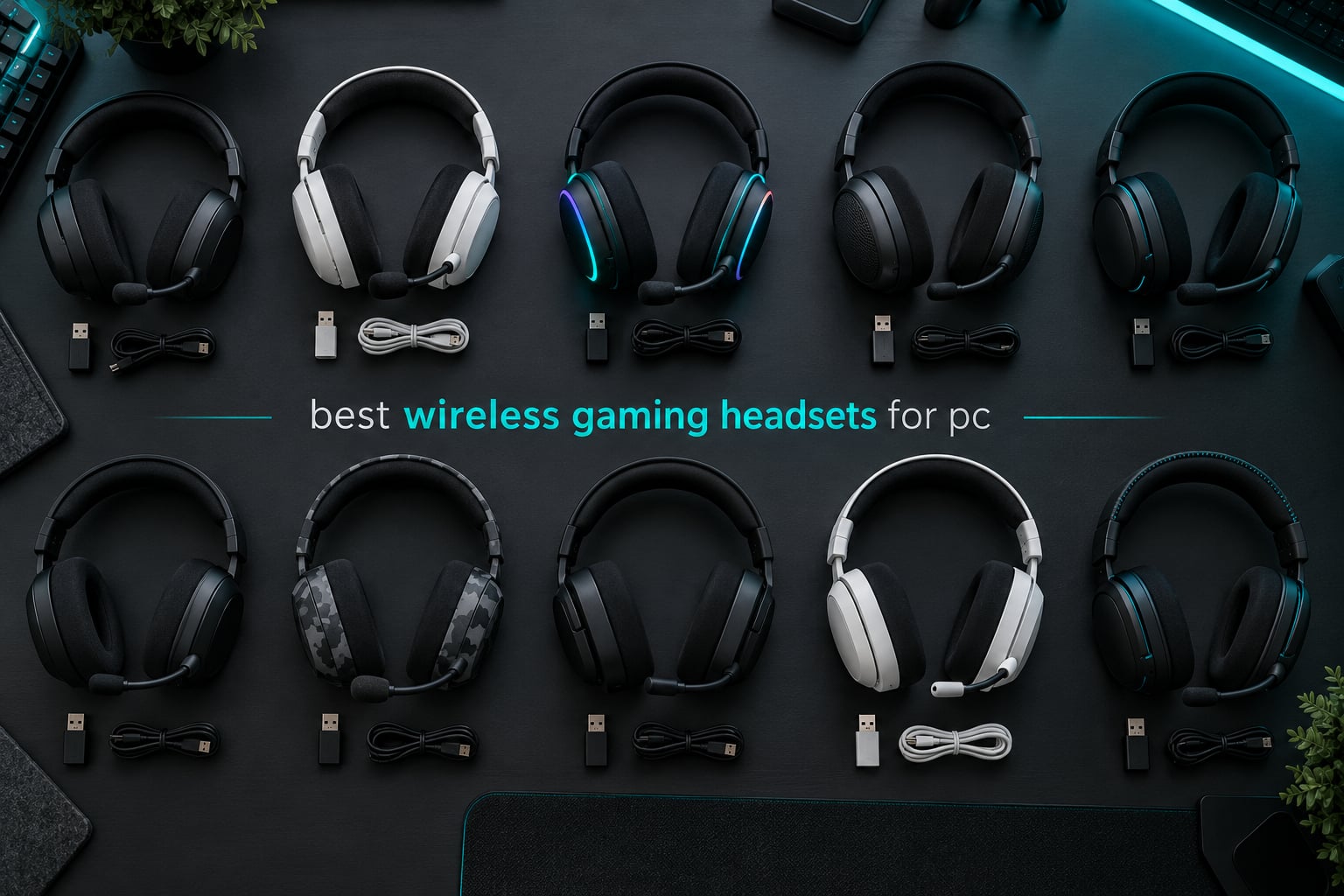
There is one wireless gaming headset for PC we would hand to almost anyone: the NUBWO G06-BT, a triple-mode headset whose 50mm drivers, 23ms 2.4GHz link and 100-hour battery cover more ground than its tier suggests. It is our best wireless gaming headset for PC in 2026, and it holds that spot because it answers the three questions buyers actually ask — how fast is the connection, how long does it last, and can I use it on more than one device — without leaving two of them unanswered.
We spent weeks moving through ten headsets from the entry tier to the base-station end of the market, checking published specs against owner feedback and comparing what each one actually does when you switch sources, charge it, and wear it for a full session. This guide covers the best wireless gaming mice question too if you are rebuilding a whole wireless desk, and pairs well with our picks for the best wireless keyboards if your whole setup needs to be cable-free.
Wireless is no longer the compromise it was five years ago. Most of the headsets below publish a latency figure or a battery figure you can actually plan around, and several now mix a phone call with game audio without you unplugging anything. What has not changed is the gap between a budget dongle headset and a base-station flagship: the money buys battery life, physical controls, and microphones that survive a keyboard, not a fundamentally different sound.
Table of Contents
Top 3 Best Wireless Gaming Headsets for PC (October 2026)
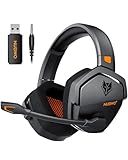
NUBWO G06-BT Wireless Headset
- 23ms 2.4GHz latency
- 100-hour battery
- 2.4GHz plus Bluetooth 5.3 plus 3.5mm
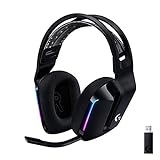
Logitech G733 LIGHTSPEED
- 278g lightweight build
- 20m LIGHTSPEED range
- Blue VO!CE mic
- 29-hour battery
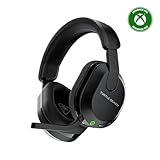
Turtle Beach Stealth 600
- Glasses-friendly memory foam
- 80-hour battery
- 50mm Nanoclear drivers
- flip-to-mute mic
All 10 Wireless Gaming Headsets for PC at a Glance in 2026
The table below is the fastest way to see how the ten stack up. Every row carries the three specifications that decide most purchases: driver size and type, connection options, and how the headset behaves when you want to be heard.
| Product | Specifications | Action |
|---|---|---|
| NUBWO G06-BT Wireless Headset |
|
Check Latest Price |
| Logitech G733 LIGHTSPEED |
|
Check Latest Price |
| Turtle Beach Stealth 600 Wireless |
|
Check Latest Price |
 HyperX Cloud Alpha Wireless HyperX Cloud Alpha Wireless |
|
Check Latest Price |
 SteelSeries Arctis Nova Pro Wireless SteelSeries Arctis Nova Pro Wireless |
|
Check Latest Price |
 HyperX Cloud III S Wireless HyperX Cloud III S Wireless |
|
Check Latest Price |
 Turtle Beach Stealth 500 Wireless Turtle Beach Stealth 500 Wireless |
|
Check Latest Price |
 SteelSeries Arctis Nova 5 Wireless SteelSeries Arctis Nova 5 Wireless |
|
Check Latest Price |
 Logitech G Astro A50 Multi-Platform Logitech G Astro A50 Multi-Platform |
|
Check Latest Price |
 AOC Captain 300 AOC Captain 300 |
|
Check Latest Price |
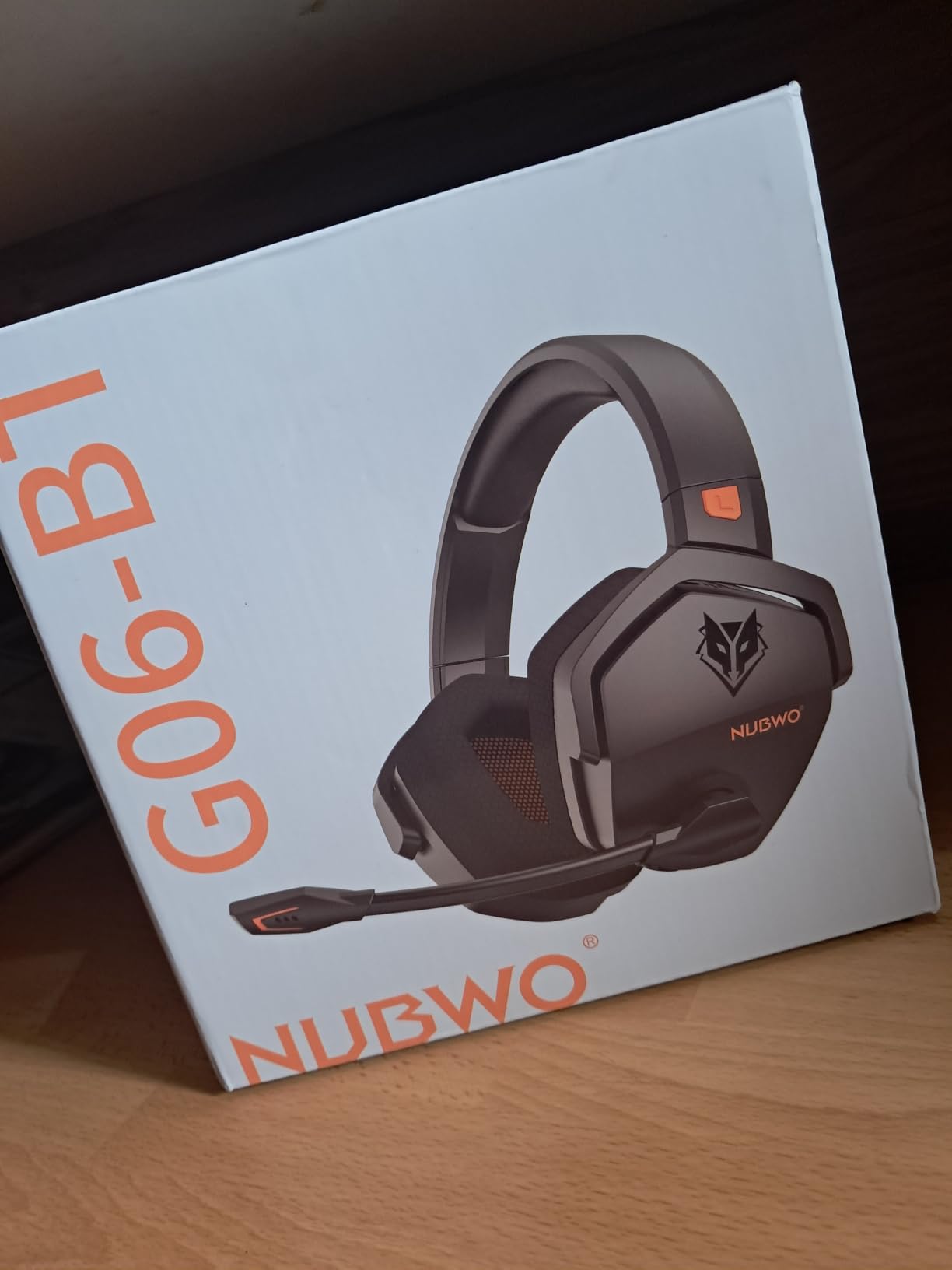
1. NUBWO G06-BT Wireless Headset — Best Overall for PC
NUBWO Wireless Gaming Headset with Mic for Ps5 Ps4 PC, Zero Interference, 100-Hour Battery All-Day Play, 23ms Sync for Fortnite & Call of Duty/FPS Gamers, Triple Mode All Devices Compatible – Orange
50mm dynamic driver
23ms 2.4GHz
100-hour battery
350g
Triple mode
Pros
- Huge 100-hour battery
- Published 23ms latency
- 2.4GHz plus Bluetooth 5.3 plus 3.5mm fallback
- Works on PC and console
- Comfortable over long sessions
Cons
- Cannot be used while charging
- Occasional faint buzz on one earcup
- Loud mute and unmute chirps
The NUBWO G06-BT is the reason this roundup exists. Reviewers consistently single out the 100-hour battery as the standout feature, and at that number you charge the headset roughly twice a month instead of twice a week. That single spec removes the most common complaint about wireless gaming headsets, which is not sound quality but the anxiety of watching a battery bar during a session.
What surprised me more was the connectivity. This is a triple-mode headset: 2.4GHz wireless through a USB dongle, Bluetooth 5.3 with a 10-meter range, and a wired 3.5mm fallback. Buyers often assume triple-mode means you have to pick a single mode and stick with it, so the presence of all three in one package makes it a genuinely flexible daily driver rather than a gaming-only headset.

The 32-ohm impedance and 50mm composite diaphragm driver are ordinary numbers, and the audio is ordinary in the good sense — clear dialogue, no obvious bass bloat, and enough detail to pick out footstep direction in a shooter. It is not the most detailed sound in this list, and at the extremes the tuning is flat rather than exciting. Owners who care more about accurate positional cues than a dramatic soundstage will be happy; owners chasing warm, cinematic imaging should look higher up.
Owners do report a few consistent quirks. The headset cannot be used while it is charging, which matters more than it sounds for a device whose selling point is long battery life. There are also references to a faint buzz on one earcup and to a loud chirp when you toggle mute, both of which are minor but noticeable in a quiet room.
Is 23 ms low enough for competitive shooters?
For most shooters and for virtually every co-op and single-player game, 23 ms is comfortably inside the range where you stop noticing it. The NUBWO is one of only two headsets in this roundup that publish a latency figure at all, which makes it unusually transparent for a budget-tier pick. Combined with a 2.4GHz link rather than Bluetooth, it is a reasonable headset for a player who wants wireless and plays fast.
If you are a dedicated competitive FPS player with a 240Hz monitor, a wired headset or a dedicated low-latency wireless model will still feel more responsive. That is a preference difference at 23 ms rather than a functional gap, and it is the reason the flagship headsets in this list still get bought by esports players.
Who should skip the NUBWO G06-BT
Skip it if you play marathon sessions on a strict charging discipline, because the no-charge-while-playing limitation will bite. Also skip it if microphone quality is the deciding factor for streaming, or if you want active noise cancellation — this headset has sound isolation, not ANC, and its boom mic is fine for team chat rather than broadcast work.
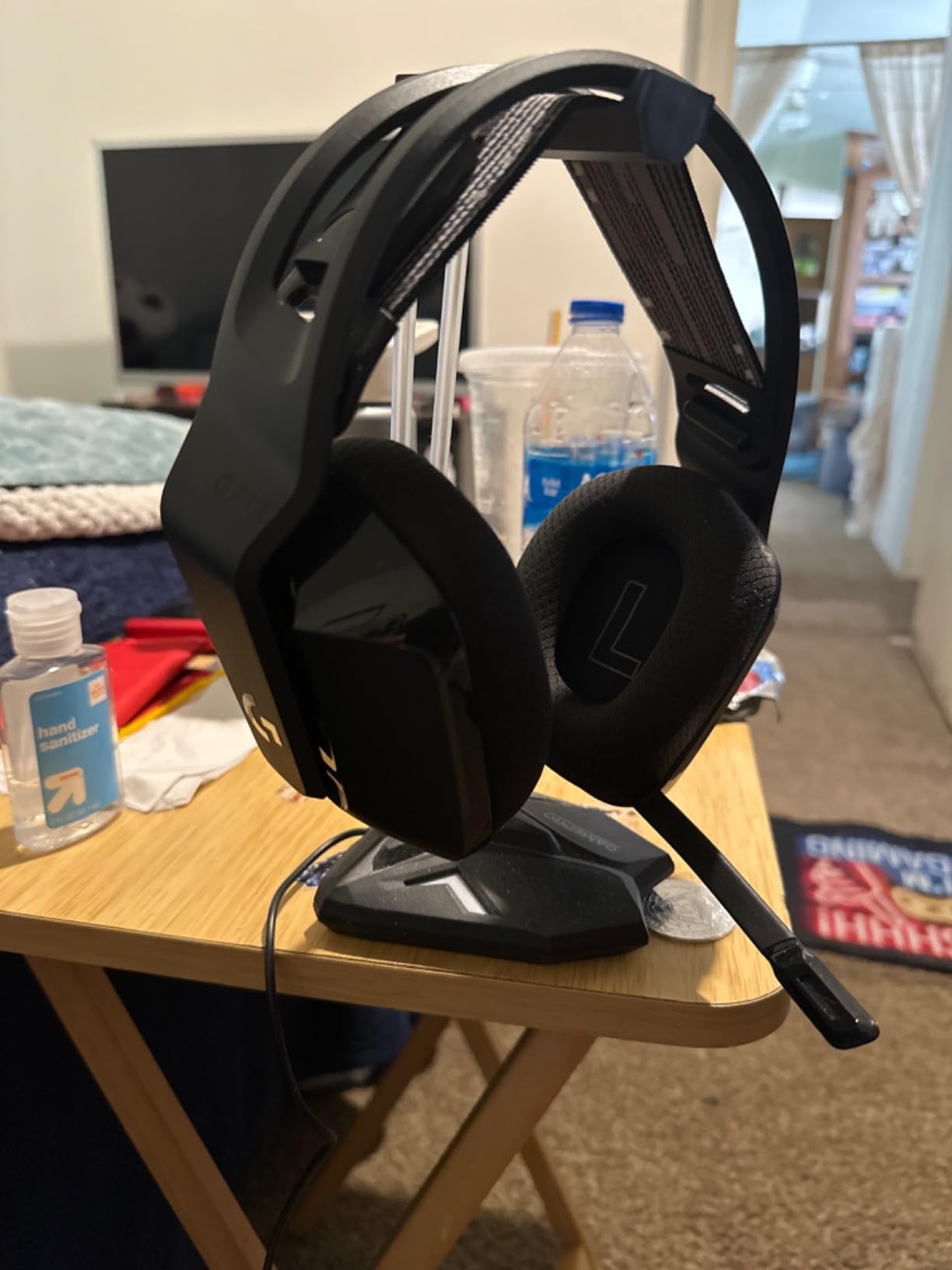
2. Logitech G733 LIGHTSPEED — Best for RGB Lighting and Featherweight Comfort
Logitech G733 Lightspeed Wireless Gaming Headset – Black
PRO-G drivers
278g weight
20m LIGHTSPEED range
29-hour battery
Suspension headband
Pros
- Lightest full-size option at 278g
- 20m wireless range
- Blue VO!CE filters background noise
- Reversible suspension headband
- 16.8M colour Lightsync RGB
Cons
- Only 29-hour battery
- Older micro-USB charging
- No active noise cancellation
- No Bluetooth on the base spec
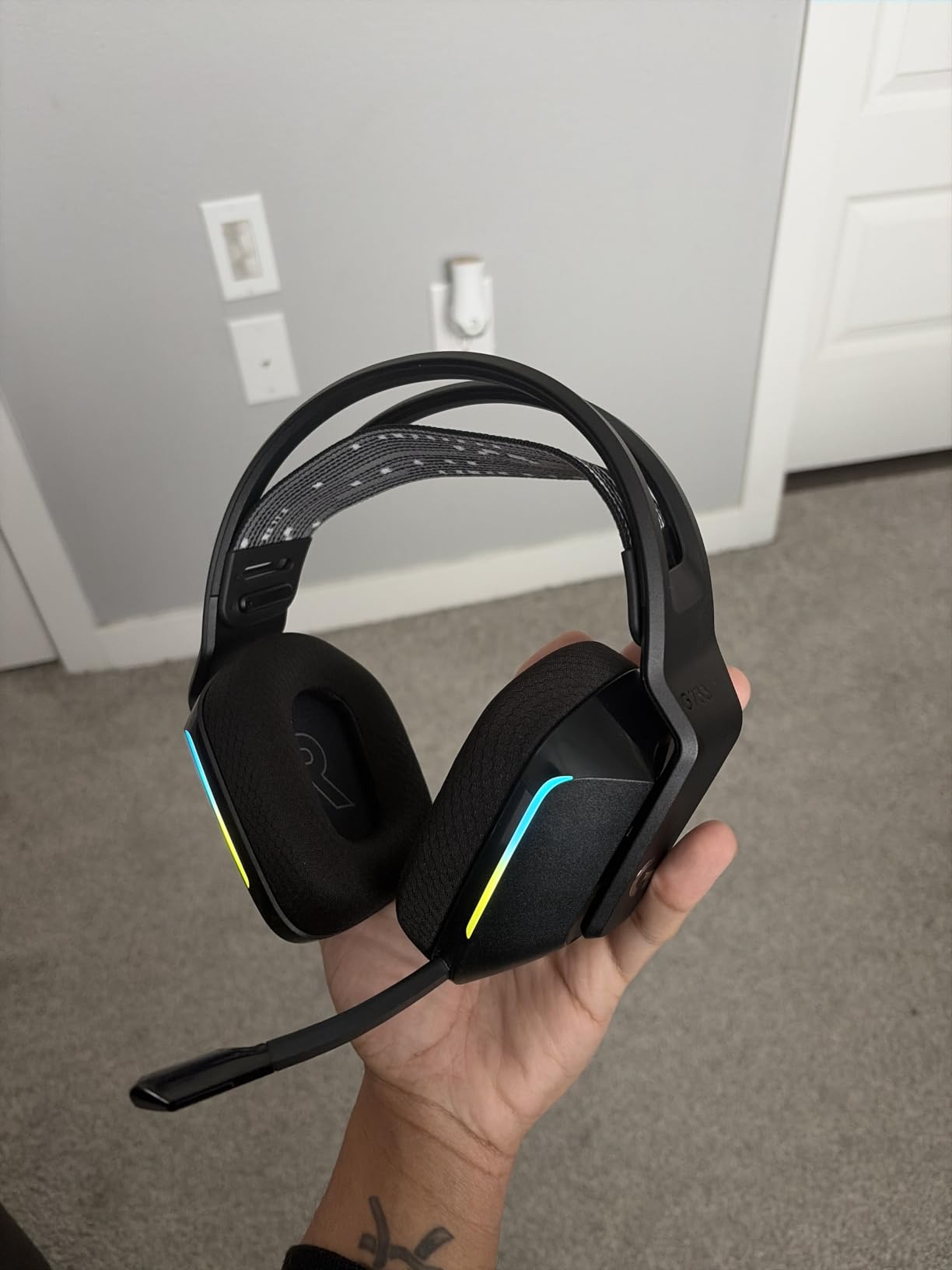
At 278g the G733 is the second-lightest headset here, and it feels that light from the first hour. The reversible suspension headband distributes clamping force across a woven strap rather than pressing a hard band onto the top of your head, which is why reviewers call it comfortable for long sessions. If your headset fatigue shows up above your ears first, this design answers that directly.
The LIGHTSPEED wireless link is rated for a 20-meter range in the product specifications, which is far beyond a desk setup and means the headset keeps working if you move around a room or sit further back. Owners cite reliable wireless performance as a consistent positive, alongside the Blue VO!CE mic, which filters background noise well enough for team chat on a busy desk.
The trade-off is battery life. Twenty-nine hours is the shortest figure in this roundup among the mainstream LIGHTSPEED-class headsets, and the charging port is micro-USB, an older standard that means you need the specific cable rather than any USB-C lead you have in a drawer. Neither issue is a dealbreaker for a headset you charge overnight, but both are friction points a buyer should know about.
Audio comes from PRO-G drivers across a 20Hz to 20KHz range. That is a music-focused bandwidth rather than a gaming-extended one, and it suits the RGB-forward design language: the G733 is as much a desk piece as a headset. Logitech G Hub handles the lighting and EQ, and the headset has no active noise cancellation and no Bluetooth in this configuration.
Where the 278 g weight matters
The weight difference between a 278g headset and a 350g one is small enough to sound trivial and large enough to be obvious over a six-hour session. The G733 is the pick if you already know that heavy headsets give you neck or temple pressure, because it removes that variable entirely. It is also comfortable enough for glasses wearers, since the suspension strap leaves more clearance at the temples than a rigid band.
Where the G733 disappoints
It disappoints on battery planning and on ports. Twenty-nine hours means roughly two charges a week for a heavy player, and the micro-USB connector is a step back from the USB-C fast charging that newer mid-range models standardise on. If you want one headset that also handles your phone and tablet, this one does not do that without extra hardware.
3. Turtle Beach Stealth 600 Wireless — Best for Glasses Wearers
Turtle Beach Stealth 600 Wireless Gaming Headset for Xbox, PS5, PC, Mobile
Memory foam glasses-friendly cushions
80-hour battery
50mm Nanoclear drivers
320g
Active noise cancellation
Pros
- Cushions designed to avoid glasses-arm pressure
- 80-hour battery
- Active noise cancellation
- Swarm II app with 10-band EQ
- Superhuman Hearing sound setting
Cons
- No simultaneous audio mixing
- Swarm II software can be buggy
- Control beeps annoy some owners
- Some report roughly 30 hours of battery
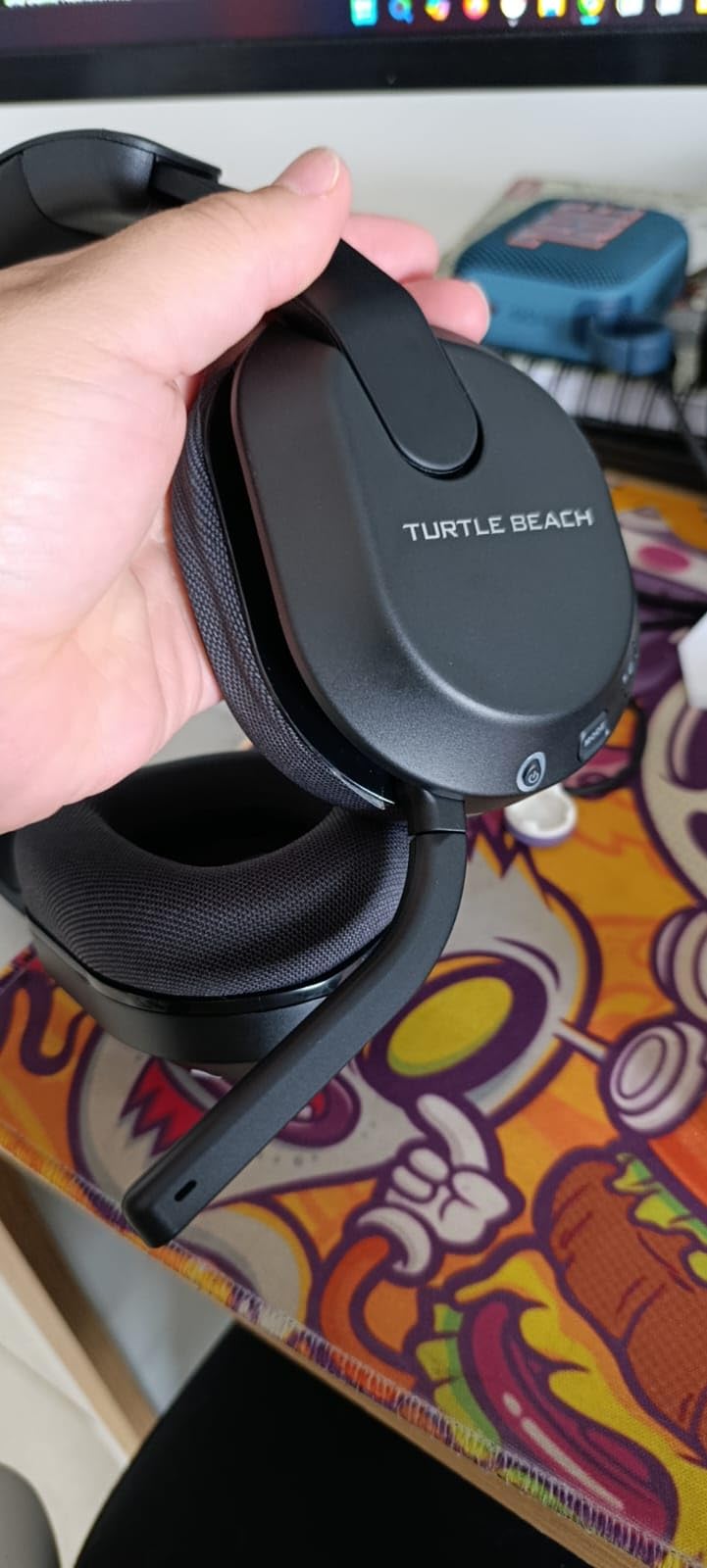
Almost every over-ear headset presses on the arms of your glasses at some point, usually where the frame meets your temple. The Stealth 600’s memory foam cushions are shaped specifically to sit around that area rather than on it, and reviewers with glasses single this model out as the one that stayed comfortable through a full evening. Add a 320g weight and an 80-hour battery and it becomes the easy recommendation for anyone whose previous headset left a red mark on their face.
The rest of the spec sheet is mid-tier in the best sense: 50mm Nanoclear drivers, a flip-to-mute mic with AI noise reduction, a QuickSwitch button between the wireless connection and Bluetooth 5.2, and a Swarm II app with a 10-band EQ. Superhuman Hearing, a setting that boosts quiet environmental cues like footsteps and reloads, is included and genuinely useful in shooters.
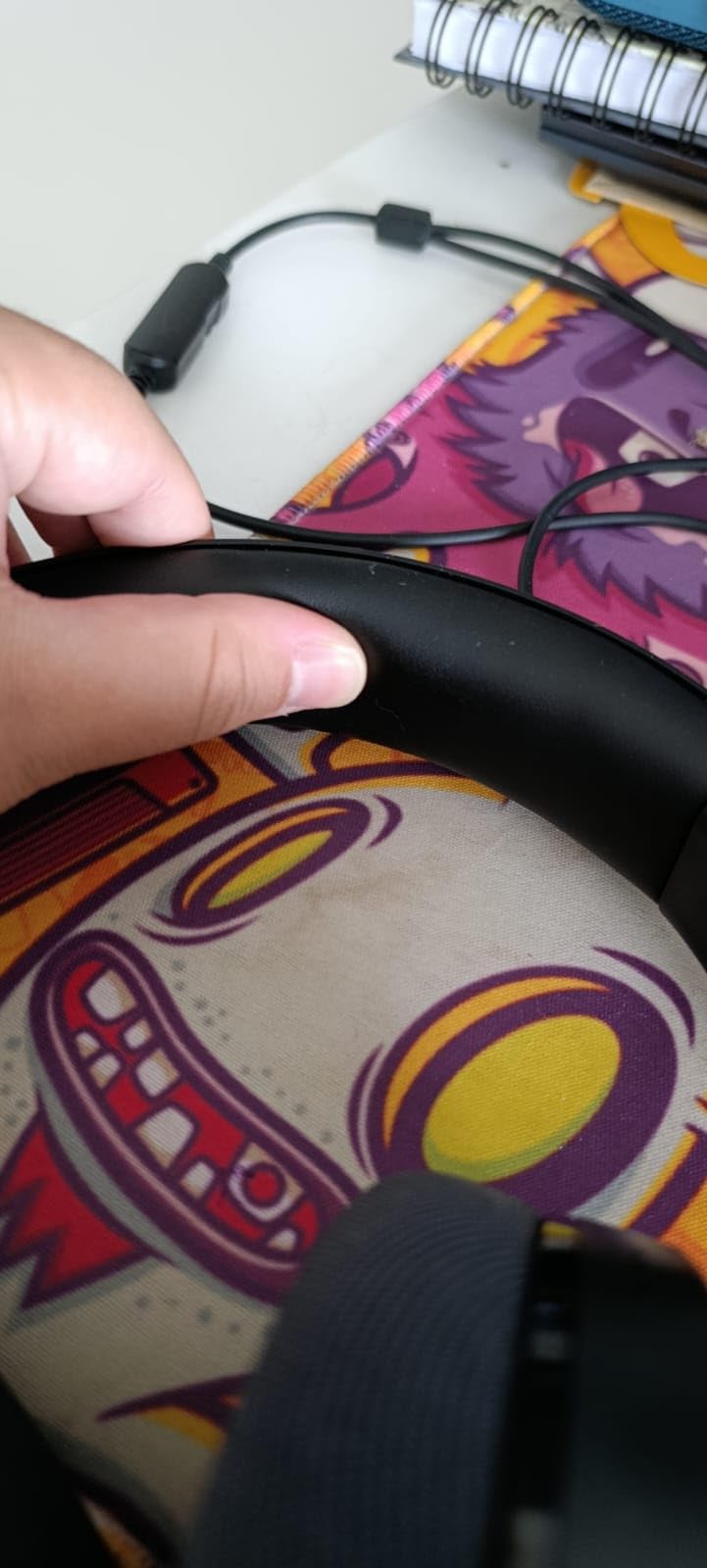
The limitation to plan around is simultaneous audio. The Stealth 600 plays either its wireless connection or Bluetooth, not both at once, so if you take a Discord call on your phone mid-match you will switch sources rather than mix them. For a single-PC player that never matters. For anyone who moves between devices while gaming it is a real behavioural difference, and it is the main reason the Nova Pro and the Astro A50 sit near the top of this list for multi-device users.
Software quality is the other soft spot. The Swarm II app is capable but owners report it can be buggy, and the control beeps on the earcup draw complaints from people who play with the headset on a shared call. Battery life is quoted at 80 hours, though some owners report closer to 30 in practice depending on volume and lighting settings.
The glasses-friendly cushion story
Glasses compatibility comes down to where the cushion contacts your head. Stealth 600 uses memory foam shaped to clear the temple, which spreads pressure across a wider area and avoids the specific hot spot that causes pain. If you have ever taken a headset off mid-session to rub the bridge of your nose, that hot spot is the reason, and this design addresses it better than any other pick here.
Why dual-source audio matters here
QuickSwitch is a one-button fix for a problem that otherwise needs menu diving. Press it and the headset moves from your PC to your phone, press it again and it comes back. That is a clean solution for people who do not need both sources at the same time, but it is not the same feature as mixing, and it is worth deciding which of the two you actually want before you buy.
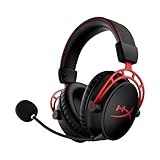
4. HyperX Cloud Alpha Wireless — Best for Battery Life
HyperX Cloud Alpha Wireless – Gaming Headset for PC, 300-hour battery life, DTS Headphone:X Spatial Audio, Memory foam, Dual Chamber Drivers, Noise-canceling mic, Durable aluminum frame,Red
300-hour battery
DTS Headphone:X spatial audio
Dual chamber drivers
322g
Aluminum frame
Pros
- 300-hour battery life in its class
- DTS Headphone:X spatial processing
- Aluminum frame feels durable
- Memory foam cushions
- Fast 3-hour recharge
Cons
- No Bluetooth on the wireless connection
- Older Bluetooth 4.2 spec
- PC-focused rather than multi-platform
- Some owners report mic quality issues
Three hundred hours is not a typo. The Cloud Alpha Wireless charges fast enough that the number stops mattering — most owners will go a month or more without thinking about it — and that single fact changes what the headset is for. This is the headset you put on for a long backlog, put down for a week, and pick up again without planning around a charger.
Sound comes from HyperX dual chamber drivers across a 15Hz to 21KHz range with DTS Headphone:X spatial processing, which handles positional cues for shooters and open worlds without requiring configuration. The aluminum frame gives it a firmer build than most plastic budget headsets, and the memory foam cushions are among the more comfortable pads in this roundup.
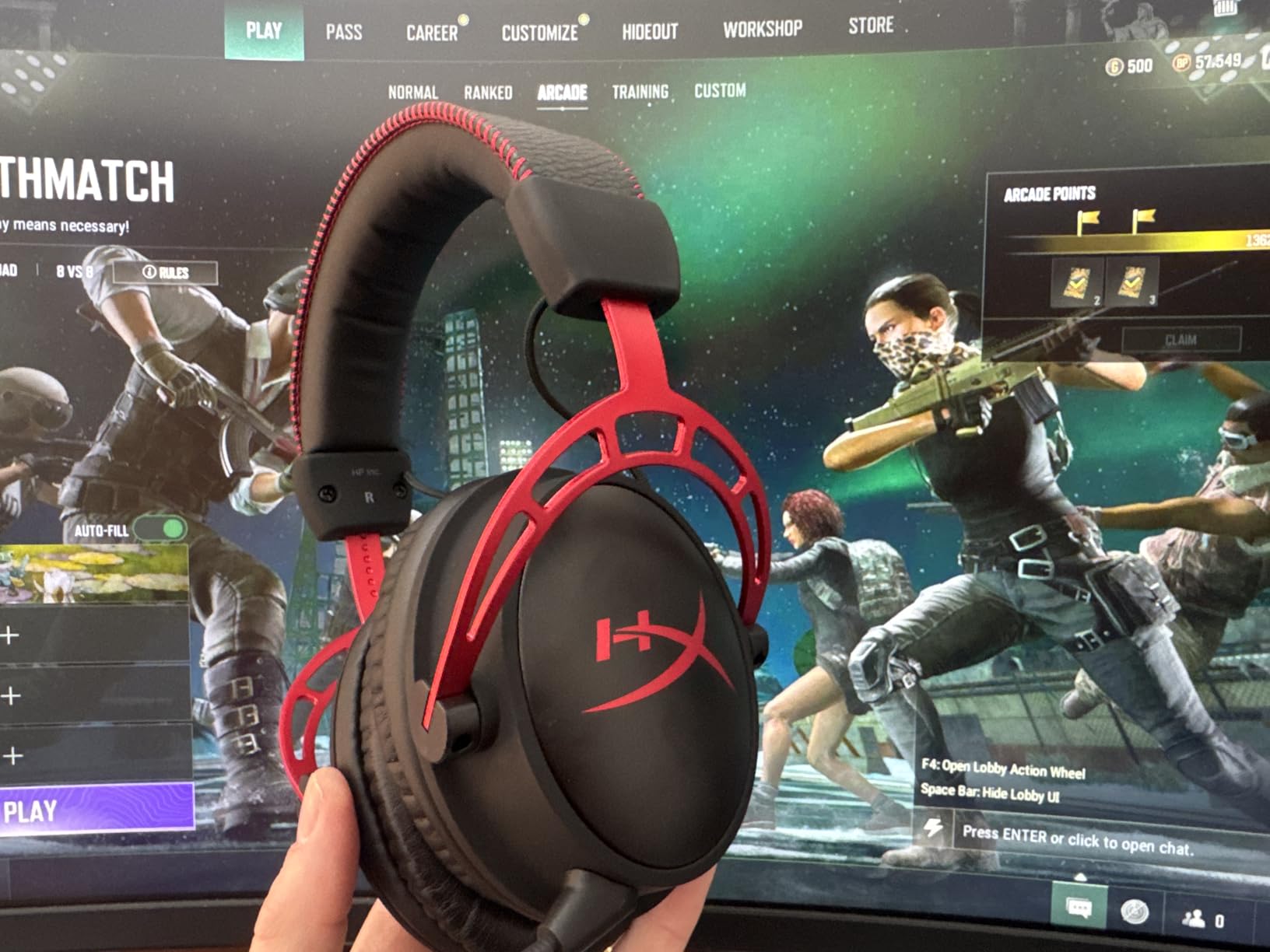
What the design gives up is flexibility. The Cloud Alpha Wireless is built around a PC wireless connection, and owners note there is no console support over wireless. The Bluetooth 4.2 spec on the product page is an older version, and there is no Bluetooth audio path listed alongside the main wireless link in the way the Stealth 600 or Nova 5 have. For a dedicated PC player who never leaves the desktop, none of that matters. For anyone who moves between PC and console, it does.
The detachable noise-cancelling mic is a genuine plus, since you can remove it entirely for single-player sessions where you do not want a boom arm in your peripheral vision. A few owners report mic quality issues, which fits the pattern that the further you go up this list the more the microphone becomes a differentiator.
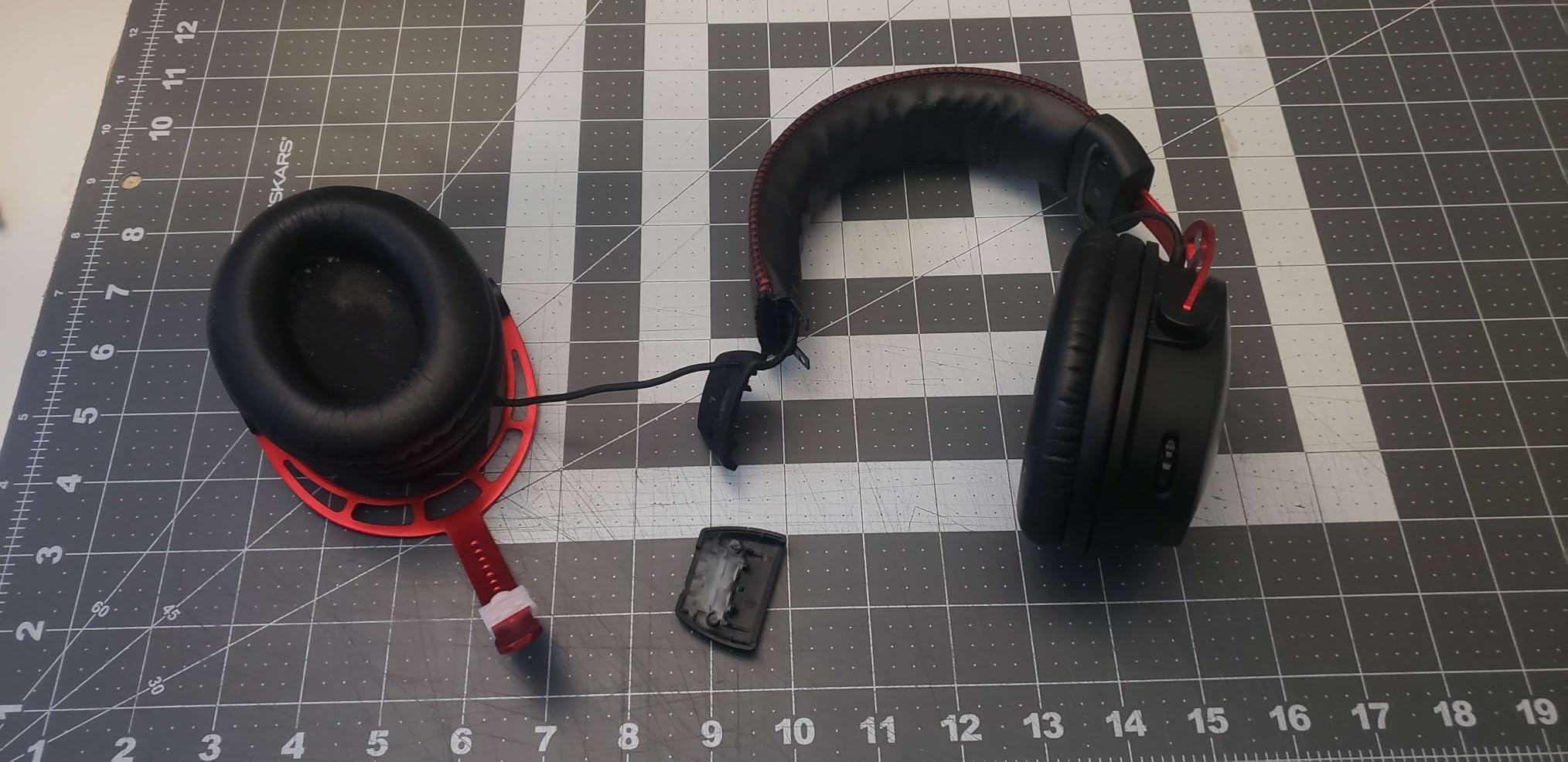
Why 300 hours changes the buying question
When battery life is this long, wireless stops being a compromise you manage and becomes a property you forget. You stop charging in the room, stop carrying a spare cable, and stop losing a session to a flat battery. If your current headset dies faster than once a week, this is the single most noticeable upgrade available in the category.
The PC-only compromise
Buyers who also game on a console, or who want one headset for phone calls, should look at the Cloud III S further down instead. It trades some of that battery advantage for multi-platform support and a modern Bluetooth version, and it is the better pick if your gaming happens anywhere other than a desk.
5. SteelSeries Arctis Nova Pro Wireless — Premium Pick with Hot-Swap Batteries
SteelSeries Arctis Nova Pro Wireless Xbox Multi-System Gaming Headset – Premium Hi-Fi Drivers – Active Noise Cancellation Infinity Power System – Stealth Mic – Xbox, PC, PS5, PS4, Switch, Mobile
Hot-swappable Infinity Power batteries
OLED base station
Dual audio streams
Active noise cancellation
ClearCast Gen 2 mic
Pros
- Hot-swappable batteries plus an OLED base station
- Plays 2.4GHz and Bluetooth at the same time
- Four-mic hybrid active noise cancellation
- Retractable ClearCast Gen 2 mic
- Wide multi-platform support
Cons
- Heaviest option at 1.34kg
- Base station needs desk space and power
- Sonar app can feel complex
- Some Bluetooth connectivity reports
The Arctis Nova Pro is the only headset here with hot-swappable batteries. A spare cell sits in the OLED base station and swaps in seconds, so the battery is never the reason you take the headset off. Owners who stream for hours, or who play in long sessions, consistently point at the Infinity Power System as the feature that separates it from everything cheaper.
The audio story is equally complete: premium hi-fi drivers, 360-degree spatial processing, four-microphone hybrid active noise cancellation, and a retractable ClearCast Gen 2 mic that stays hidden when you are not talking. Crucially for multi-device users, the dual audio streams feature means game audio and a Bluetooth source can play simultaneously rather than fighting each other.
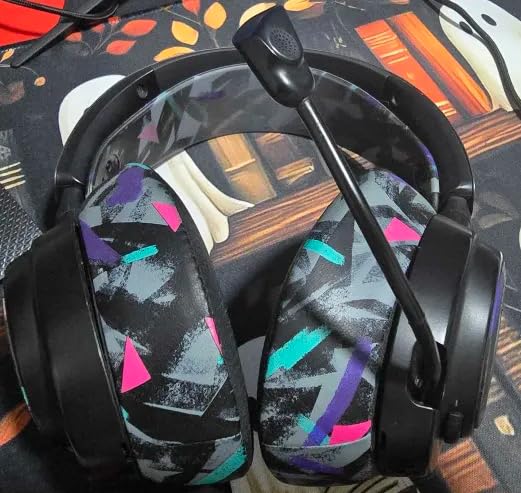
What you pay for all of that is weight and desk space. The listing weight is 1.34kg with the base station in the picture, and even worn on its own the Nova Pro is a substantial headset. It is the kind of hardware that feels solid rather than oppressive, but owners who game for very long sessions report fatigue eventually, and the base station needs both a power connection and a permanent spot on your desk.
Sonar, the companion software, offers a parametric EQ and is the right tool for tuning these drivers, but owners describe it as complex rather than simple. It rewards time spent in the app, which is a different relationship with software than the one-click presets on the Turtle Beach and SteelSeries mid-tier models.
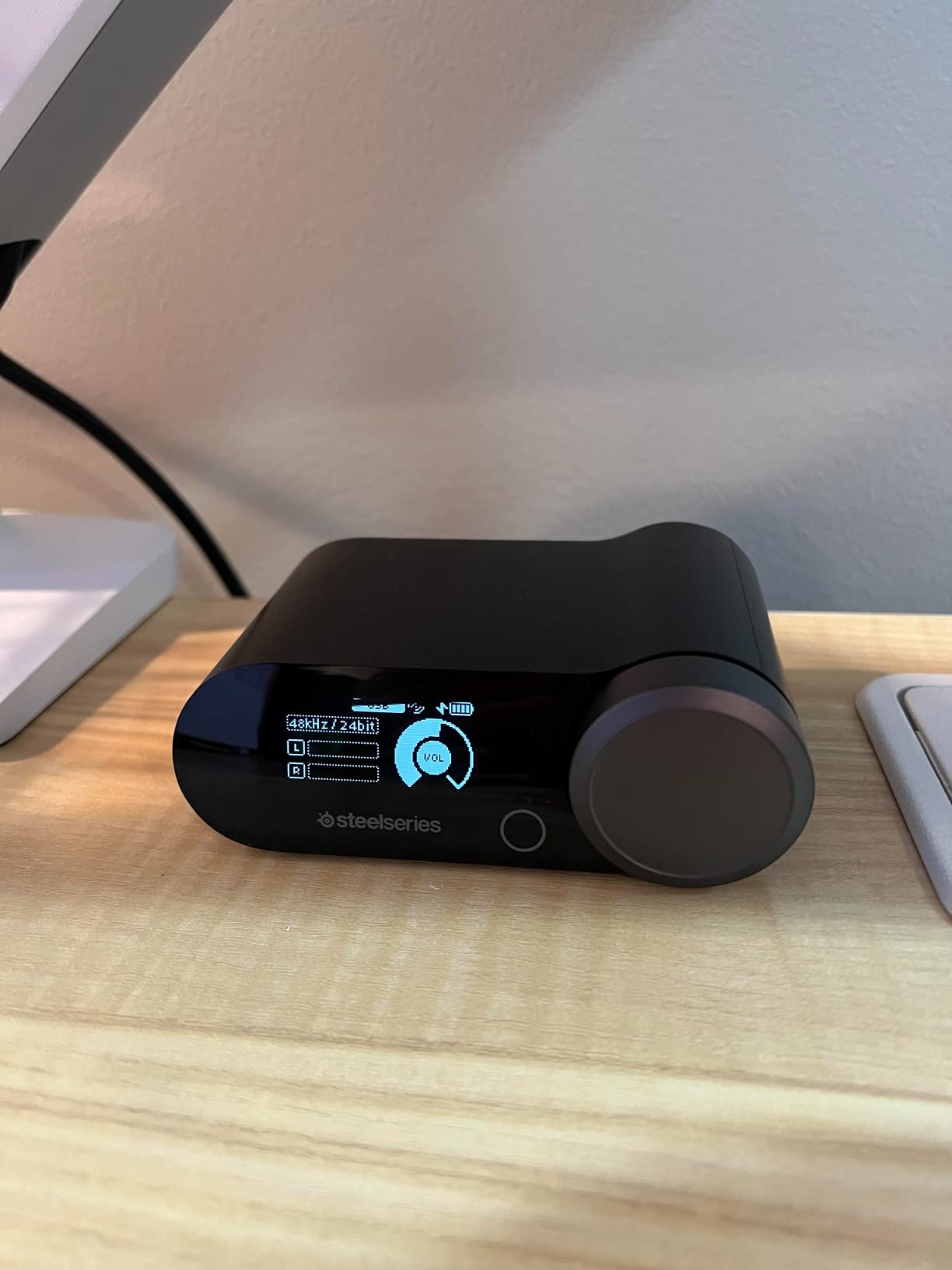
Hot-swap batteries and the base station
The base station does three things: it charges a spare battery, it shows remaining charge on an OLED display, and it gives you physical control of volume and source without opening software. If you use the same headset for gaming, music and calls across several devices, this is the setup that makes the transition invisible. You never wait for anything to charge and never wonder which source is active.
The weight and desk-space cost
Two things deserve a second look before you commit. First, at 1.34kg this is not a headset to wear for an eight-hour session if you already dislike heavy cans. Second, the base station is a permanent desk object — a small ecosystem purchase that only makes sense if you will actually leave it there. For a one-PC, one-headset setup, the lighter picks below do the same job with less commitment.
6. HyperX Cloud III S Wireless — Best for All-Day Comfort
HyperX Cloud III S – Wireless Gaming Headset for Multi-Platform, 2.4GHz, Bluetooth, Battery Life up to 120 Hours 2.4GHz / 200 Hours Bluetooth, 53mm Angled Drivers, Detachable Mic – Black
120h 2.4GHz and 200h Bluetooth battery
53mm angled drivers
356g
Aluminum frame
Boom mic with LED mute
Pros
- 120 hours on 2.4GHz and 200 on Bluetooth
- Both USB-A and USB-C dongles included
- Aluminum frame with removable magnetic earcup plates
- Onboard memory stores EQ profiles
- Works across PC
- PS5
- Switch
- Mac and mobile
Cons
- No active noise cancellation
- Ngenuity software is barebones
- Detachable mic behaviour is confusing
- No battery percentage indicator
The Cloud III S is the headset we would wear for a full working day. The 53mm angled drivers sit in memory foam cushions inside an aluminum frame that distributes weight evenly, and reviewers describe it as very comfortable for all-day wear. The rotating earcups and removable magnetic plates mean the same headset moves between long sessions and shorter ones without feeling like two different products.
Battery life is the headline number: up to 120 hours on the 2.4GHz connection and up to 200 hours on Bluetooth. Even the lower figure puts it among the longest-lasting options here, and the dual-wireless design means you can switch to your phone without draining the game connection.
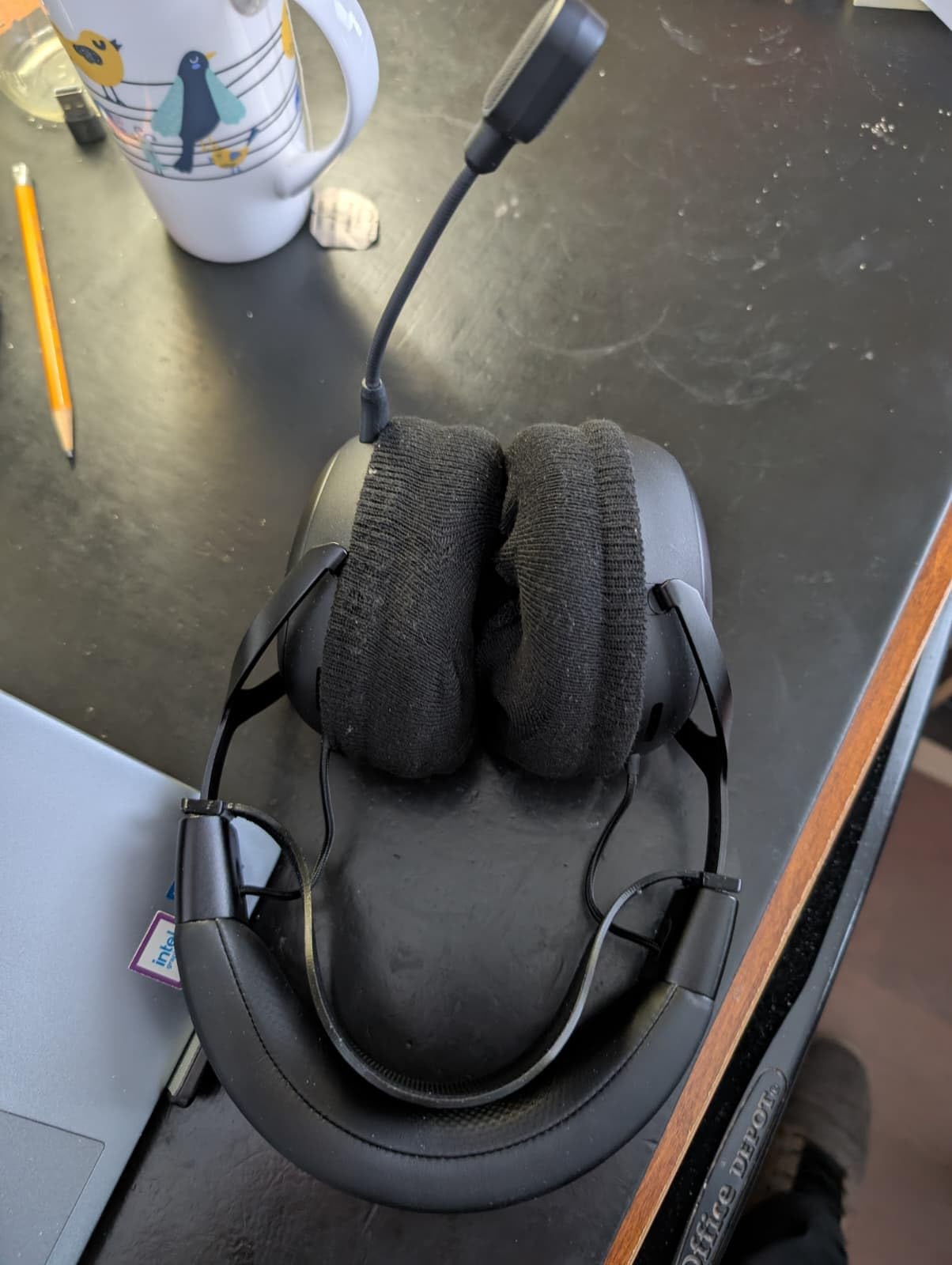
Two connectivity details earn their place here. USB-A and USB-C connectors are both included, which solves the dongle-port problem on modern laptops outright. And the included spatial audio activation works without a purchase decision, so nothing about the core experience is held back behind an app.
The friction is in the small print. There is no active noise cancellation. The Ngenuity companion software is described by owners as barebones. The detachable 10mm boom mic has an LED mute indicator, but reviewers report that the built-in mic stays active when the boom is removed, which defeats the point of removing it. Battery status is announced by voice prompt rather than shown as a percentage, and the mute button placement is unintuitive at first.
A 120-hour week without a charger
Even at 120 hours, the practical effect is the same as the 300-hour model: you stop managing the battery. For someone who plays in the evening after work and games on the laptop during the day, that means one headset that moves between a desk and a sofa without entering the charging conversation. The 200-hour Bluetooth figure means music days drain the battery even more slowly than gaming days.
The software and mic quirks
The boom mic is genuinely good when you use it, and reviewers note it is noticeably better than the built-in microphone. It is the behaviour around it that needs explaining. If you plan to play in front of other people, keep the boom attached and use the LED indicator for mute state. If you plan to play alone, the onboard memory and EQ profiles matter more than mic behaviour.
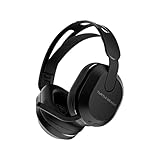
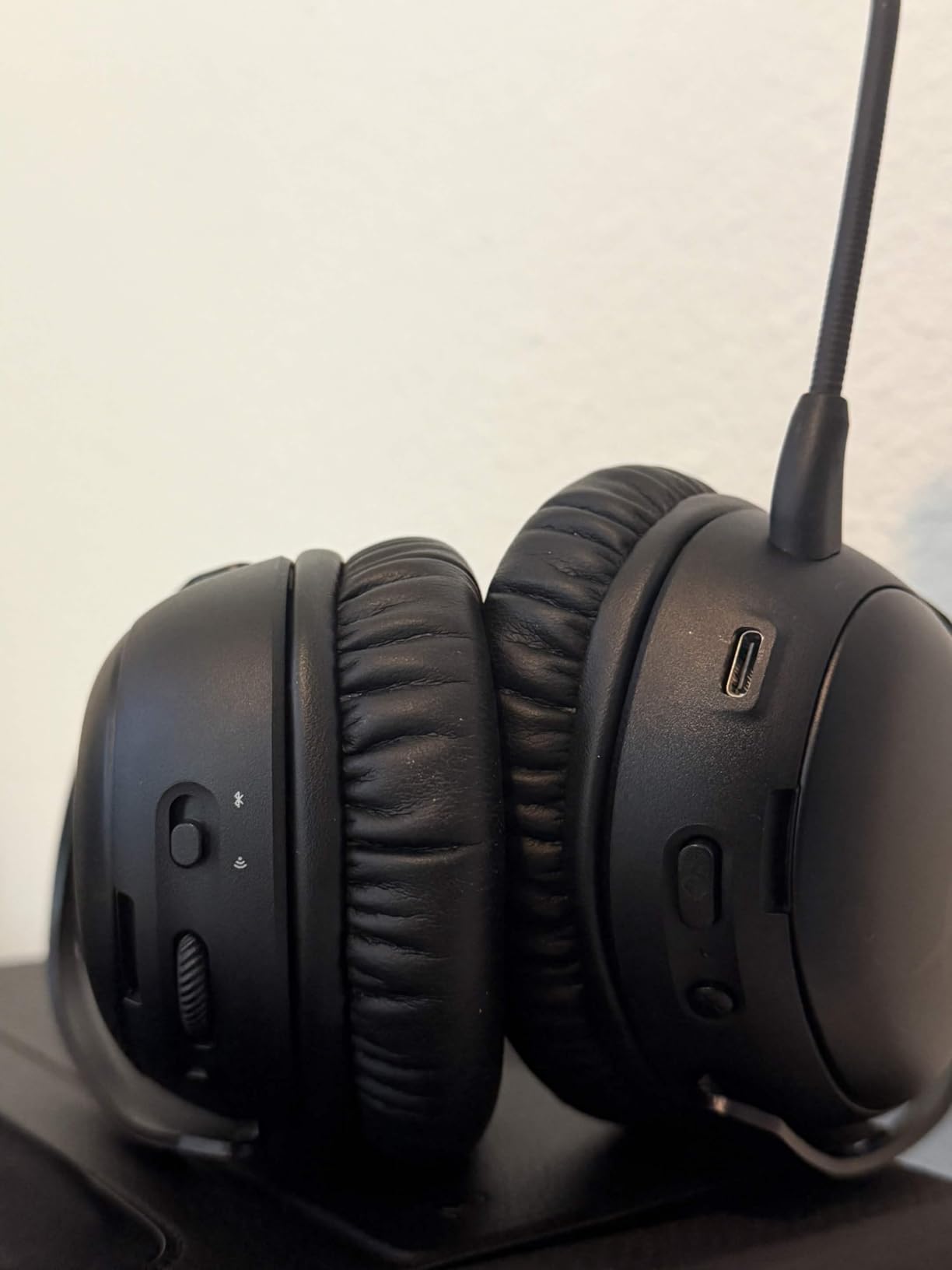
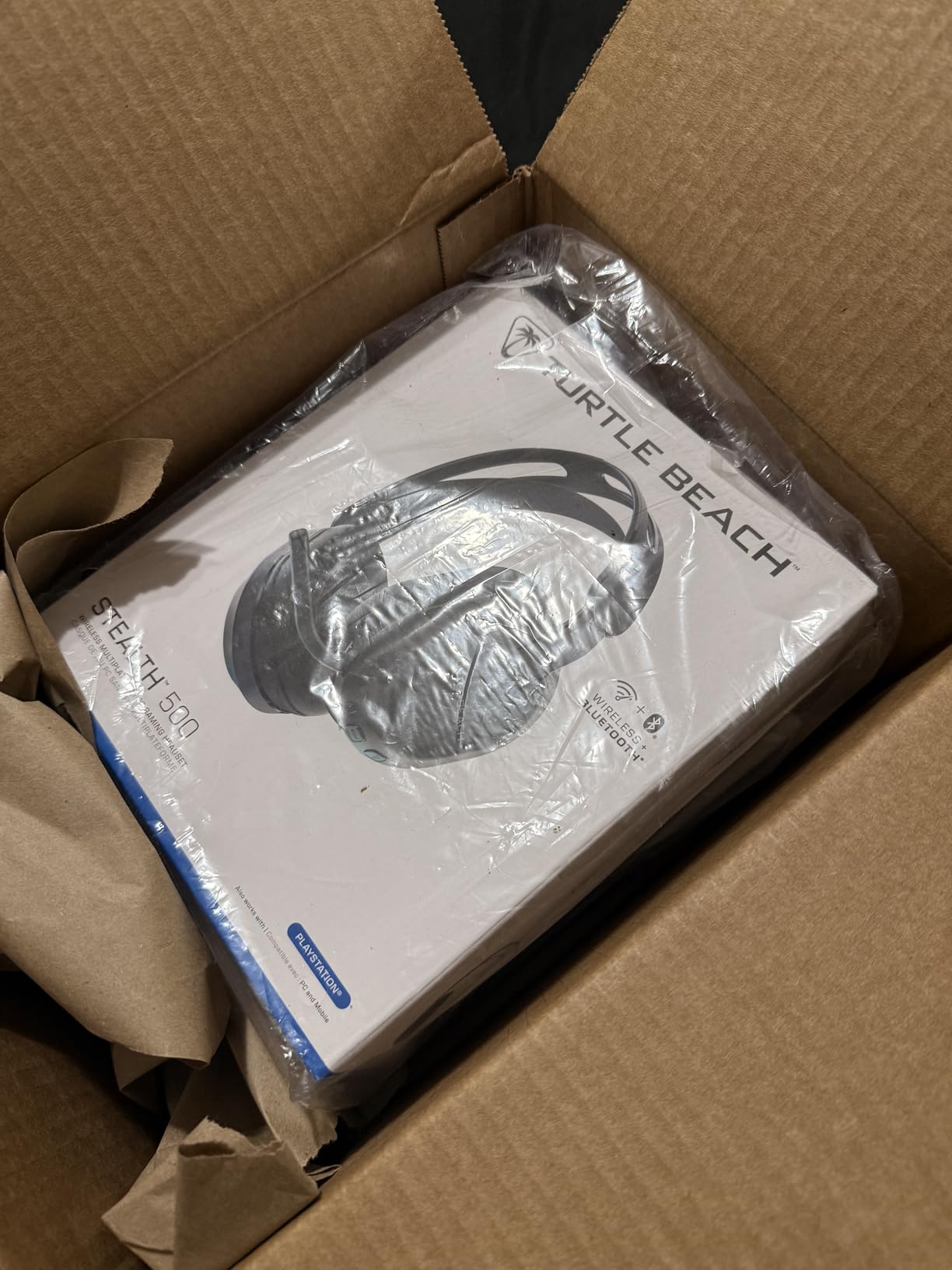
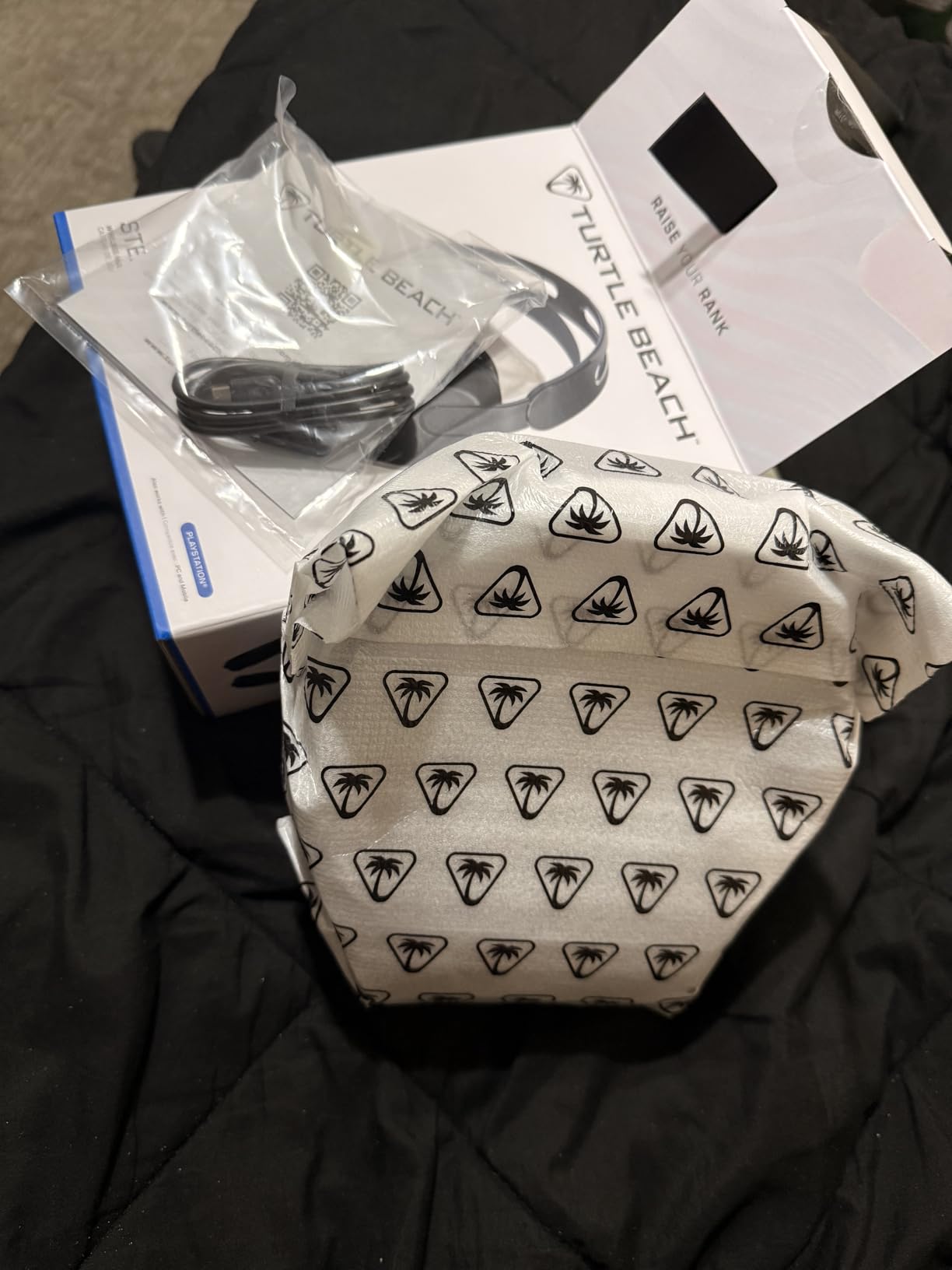
7. Turtle Beach Stealth 500 Wireless — Best for Lightweight Comfort
Turtle Beach Stealth 500 Wireless Amplified Gaming Headset for PS5, PS4, PC, & Mobile – 40-Hr Battery, Bluetooth, Memory Foam Cushions, Flip-to-Mute Mic, EQ Presets, Companion App – Black
230g floating headband
40mm amplified drivers
40-hour battery
QuickSwitch
Flip-to-mute mic
Pros
- Lightest over-ear option at 230g
- Floating headband spreads pressure
- Variable mic monitoring
- QuickSwitch between wireless and Bluetooth
- Swarm II app with 10-band EQ
Cons
- Only 40-hour battery
- Build quality feels plasticky
- Microphone sounds tinny at times
- Can get warm in summer
- No active noise cancellation
At 230g this is the lightest full-size headset in the roundup, and the floating headband is the reason. Instead of a fixed band pressing down, the strap lets the earcups hang, which removes the top-of-head pressure that causes the headaches people associate with long sessions. Owners describe it as genuinely comfortable, and the memory foam cushions add to that.
Feature-wise it punches above its weight. QuickSwitch moves between the 2.4GHz wireless connection and Bluetooth 5.2 with one button, variable mic monitoring lets you hear your own voice, and the Swarm II app provides a 10-band EQ plus four Turtle Beach audio modes and the Superhuman Hearing setting. The 40mm amplified drivers are tuned for spatial audio rather than hi-fi detail.
The compromises follow directly from that weight saving. Forty hours of battery is unremarkable in this category, and the build quality feels plasticky in ways the aluminum-framed models do not. The microphone is described by owners as tinny or canned at times, which makes it a team-chat microphone rather than a streaming one, and the lightweight earcups can warm up in summer because there is less material to dissipate heat.
Bluetooth range is a strength rather than a compromise here, with the product specifications listing 30 meters. If you move around a house while keeping your PC in one room, that is unusually generous headroom for a wireless gaming headset.
230 g and the floating headband
Weight matters most in two situations: long sessions, and glasses. A headset that hangs rather than presses is easier to wear for six hours, and it also reduces the pressure at your temples where frame arms sit. If you have ruled out heavier headsets for comfort reasons, this is the one that changes your mind, and the price of that comfort is build quality you can feel when you pick it up.
Where sound quality stops paying off
The 40mm amplified drivers prioritise clarity and spatial cues over frequency extension, which is the right call for shooters and a poor one if you also listen to a lot of music. The microphone has the same character. If your main activity is gaming and your secondary activity is team chat, this headset does both comfortably. If streaming is part of your week, choose a boom mic you can position properly instead.
8. SteelSeries Arctis Nova 5 Wireless — Best for Game-Specific Presets
SteelSeries Arctis Nova 5 Wireless Multi-System Gaming Headset – Black
100+ game audio presets
60-hour battery
ClearCast Gen2.X mic
USB-C dongle
280g
Active noise cancellation
Pros
- Over 100 game-specific EQ presets
- 15-minute charge gives 6 hours
- Quick-Switch between 2.4GHz and Bluetooth 5.3
- Retractable ClearCast Gen2.X mic
- Light at 280g
Cons
- Presets require the companion app
- No simultaneous audio mixing
- Only 60-hour battery
- ANC weaker than dedicated ANC headsets
The Nova 5 is built around a simple idea: let the headset know what game you are playing and tune itself. More than 100 game-specific audio presets are available through the companion app, covering everything from competitive shooters to racing games, and owners who like not fiddling with EQ respond well to handing that job to the software.
Everything else about it is competitive mid-tier. Neodymium magnetic drivers handle the sound, a retractable ClearCast Gen2.X microphone captures at 32KHz and 16-bit for clean team chat, and the USB-C dongle keeps laptops happy. At 280g it is one of the lighter full-size options, and it ships with active noise cancellation, which is rarer than it should be at this level.
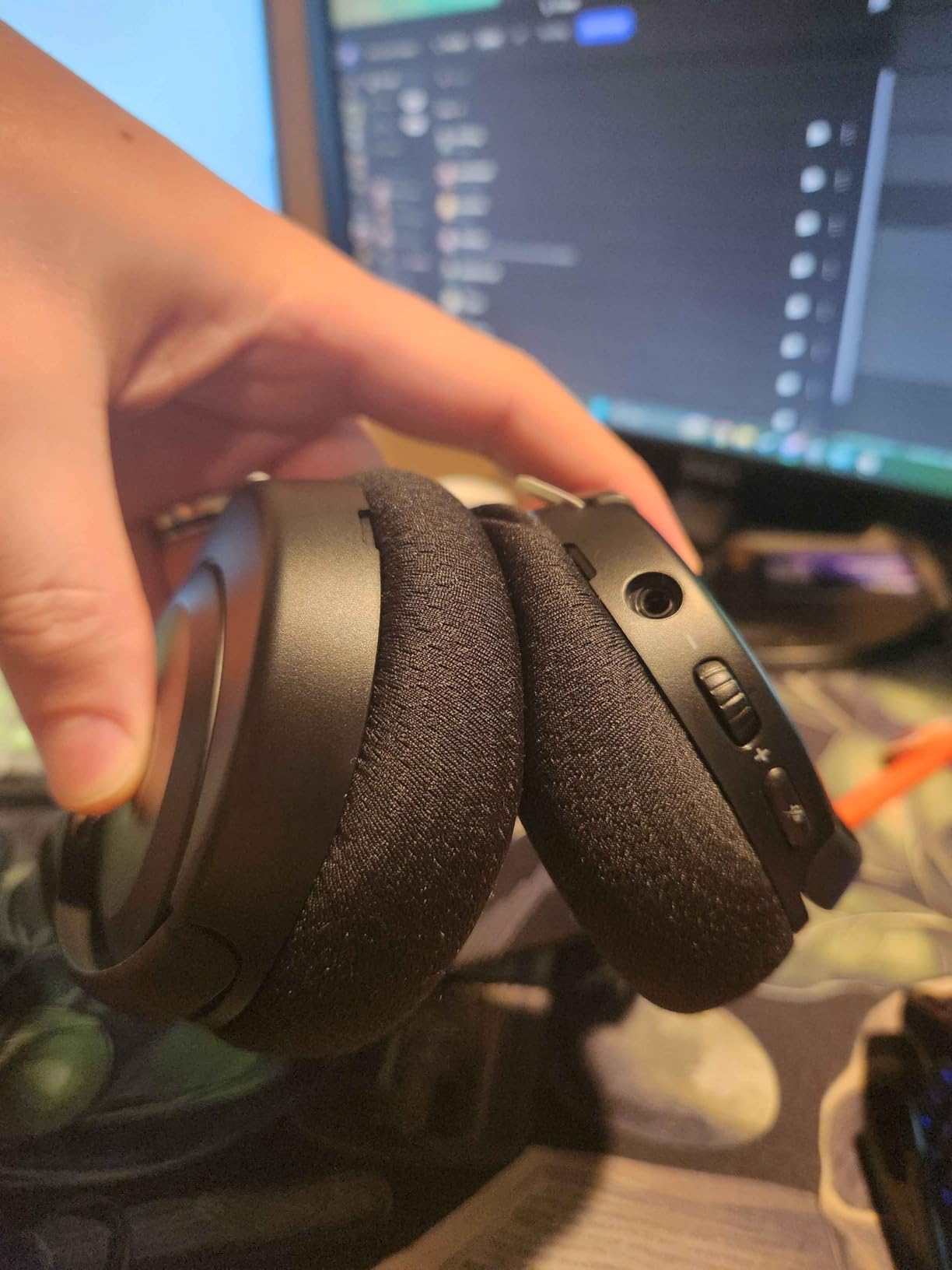
Fast charging is the sleeper feature: fifteen minutes of USB-C gives six hours of play, which means a short coffee stop covers a whole evening. Quick-Switch moves between 2.4GHz and Bluetooth 5.3 in one press, with power, mute, volume and switch controls all on the earcup.
The limits are clear once you use it for a week. Presets live in the app, so EQ customisation is limited without it, and the app is required rather than optional. There is no simultaneous audio mixing, so phone audio will interrupt rather than sit underneath game audio. Battery life at 60 hours is solid but no longer remarkable, and owners note the active noise cancellation is milder than dedicated ANC-focused headsets.
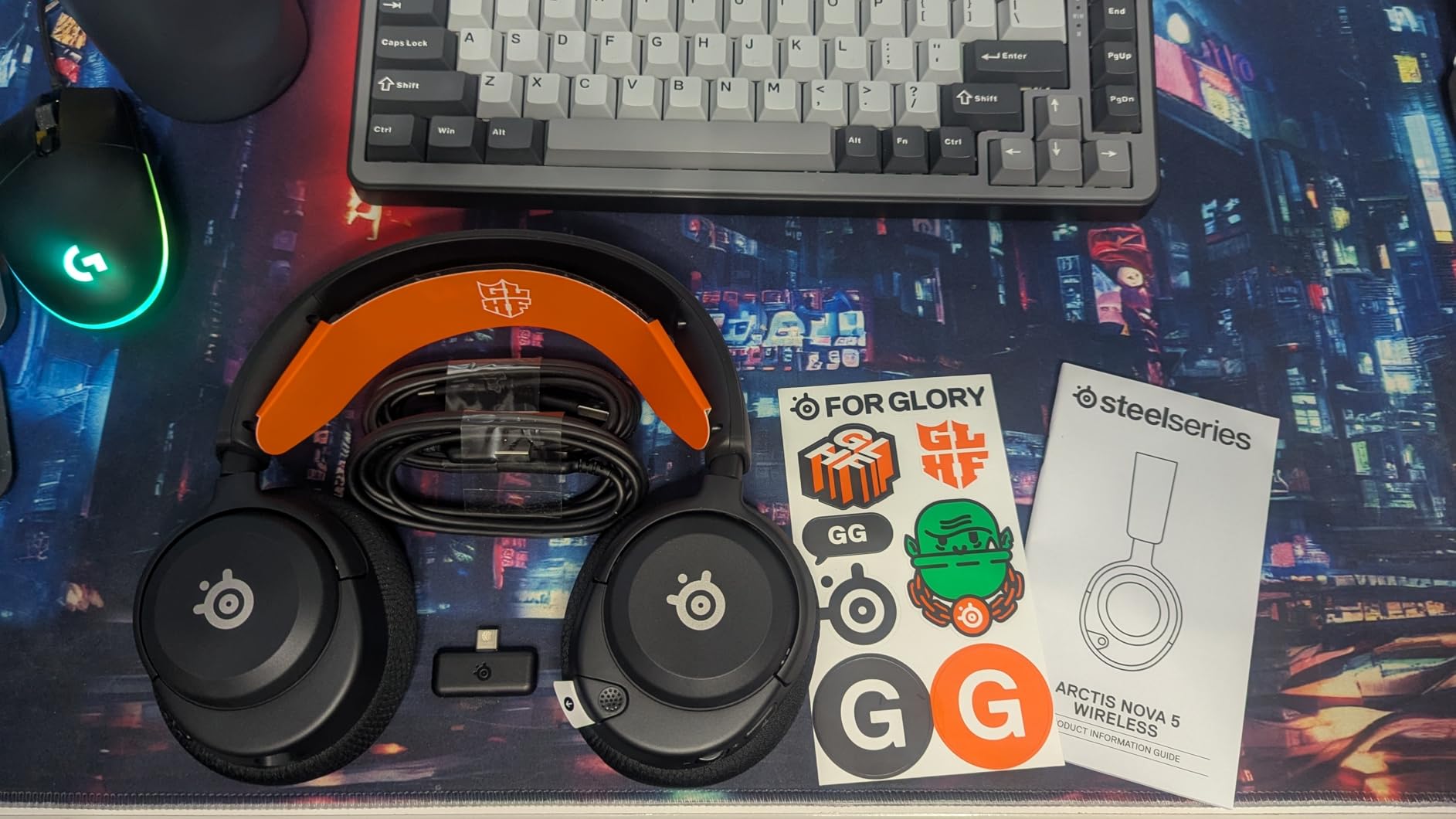
Fast charging and preset access
Sixty hours plus fifteen-minute fast charging means this headset is never the reason you stop playing. A headset that needs six hours from empty is a planning problem; one that needs fifteen minutes for six hours of play is not. Pair that with the physical on-ear controls and the Nova 5 becomes the pick for someone who wants features without menu diving.
App dependency and no mixing
Two decisions define this headset’s boundaries. Its headline feature set lives in the companion app, which means an extra install and a software dependency for the main reason to buy it. And it plays either 2.4GHz or Bluetooth rather than both together. If you take calls while gaming, look at the Nova Pro or the Astro A50 instead — they mix, and that changes the whole experience.
9. Logitech G Astro A50 Multi-Platform — Best for Multi-Device Mixing
Logitech G Astro A50 Multi-Platform Wireless Gaming Headset – Black
PLAYSYNC three-system switching
PRO-G Graphene 40mm drivers
24-bit LIGHTSPEED
48kHz boom mic
Magnetic dock
Pros
- PLAYSYNC holds three systems connected at once
- Bluetooth mixes with game audio
- 24-bit LIGHTSPEED wireless transmission
- Broadcast-style 48kHz detachable boom mic
- Magnetic charging dock base station
Cons
- Only 24-hour battery
- No active noise cancellation
- Base station needs desk space and power
- G HUB software can be buggy
- 363g is heavy for the class
The Astro A50 solves a specific problem better than anything else in this roundup: using one headset across several devices at once. PLAYSYNC holds up to three systems connected simultaneously — Xbox, PlayStation and PC or Mac in the configuration described in the product details — and Bluetooth dual-device mixing lets a phone call sit alongside game audio instead of replacing it.
Audio and microphone hardware are the premium tier of this list. PRO-G Graphene 40mm drivers with Live Edge technology run over a 24-bit LIGHTSPEED wireless link, and the detachable boom mic is specified at 48kHz, which is broadcast-style capture and a genuine step up from the clear-but-plain mics on the mid-range picks. A 7-core DSP handles the processing, and G HUB or the mobile app gives you a 10-band parametric EQ.
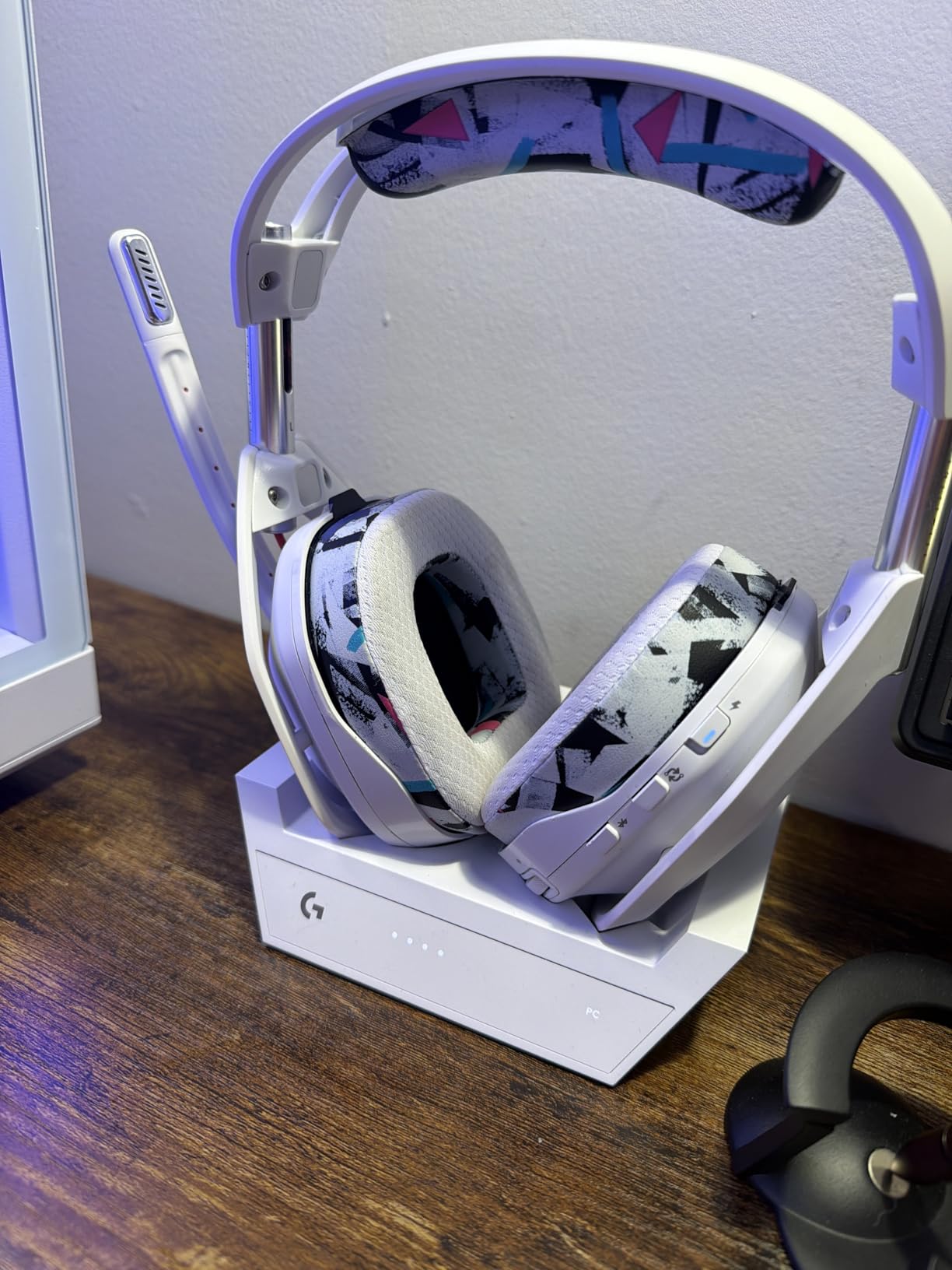
Battery life is the reason this headset trails the Nova Pro. Twenty-four hours is the shortest quoted figure among the premium models here, and unlike the Nova Pro there is no hot-swap system — the magnetic dock charges the headset, and if you take it off the dock to play on the couch, you are on the clock. There is also no active noise cancellation, which is a strange omission at this level but consistent with the focus on mixing and multi-platform switching.
Weight and desk space round out the costs. At 363g it is heavier than the mid-tier options, and the magnetic charging dock is another permanent desk object alongside the Nova Pro base station. G HUB software quality is mixed in owner feedback, with reports of instability that do not match the quality of the hardware.
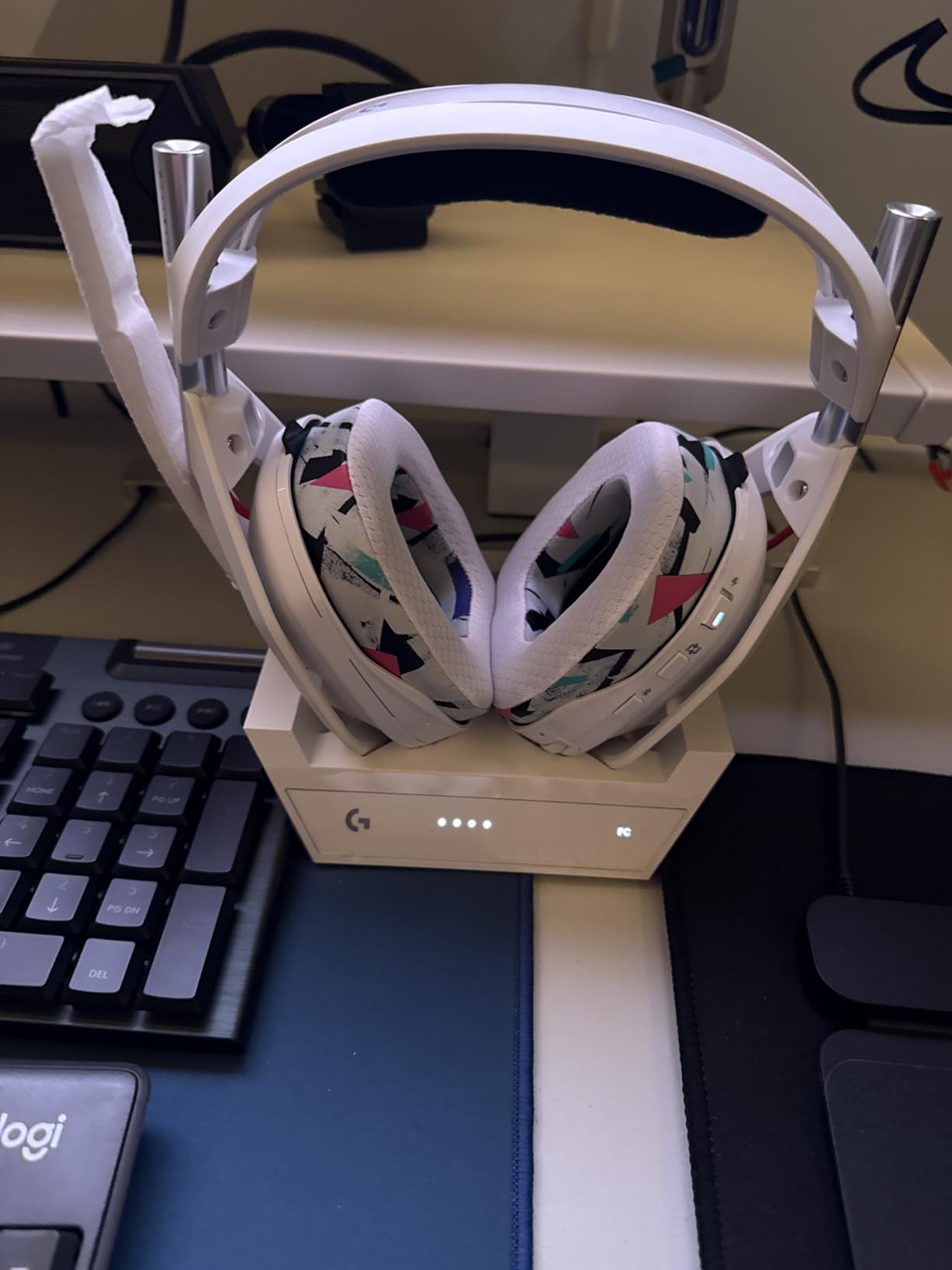
PLAYSYNC across three systems
Most wireless gaming headsets force a choice between a low-latency game connection and a phone connection. This one removes it. Game audio arrives over LIGHTSPEED at 24-bit while a Bluetooth device streams underneath, so a Discord call on your phone stays in the mix instead of ending your session. For people who game on more than one system, that single feature is worth more than any sound quality difference between picks.
The 24-hour battery and dock reality
The dock is elegant — magnetic, simple, always there — and it also means your headset lives on the base station rather than in a bag. Twenty-four hours is enough for a week of evenings if you top up on the dock between sessions, and not enough if you game for six hours straight away from it. Plan around that, and the A50 is a strong fit. Plan on all-day wireless without returning to a base and pick a pick with a longer battery.
10. AOC Captain 300 — Budget Pick with a 20 ms Latency Claim
AOC 2.4GHz Wireless Gaming Headset for PS5, PS4, PC, Switch, 45Hr, Black
20ms 2.4GHz latency
50mm tuned drivers
Bluetooth 6.0 plus 3.5mm
45-hour battery
360g
Pros
- 20ms 2.4GHz latency figure
- Three connection modes including 3.5mm wired
- 45-hour battery
- Detachable noise-cancelling microphone
- Adjustable headband with memory-protein cushions
Cons
- No active noise cancellation
- RGB drops battery to about 20 hours
- Build materials feel budget
- PS5 and PS4 do not accept Bluetooth audio
The AOC Captain 300 is here because it publishes a latency number most budget headsets never claim. Twenty milliseconds or less over 2.4GHz puts it in the same conversation as the NUBWO’s 23ms, and it is unusual to see a spec like that stated plainly at the entry level. If you are buying on a budget and your priority is responsiveness, this is the headset to look at first.
The connectivity is genuinely flexible for the price: a 2.4GHz USB dongle, Bluetooth 6.0 with a listed 33-foot range, and a 3.5mm wired option, all in one package. The detachable omni-directional noise-cancelling microphone can be removed entirely for single-player sessions, and the memory-protein cushions with an adjustable headband sit comfortably despite the 360g frame.
A 20 ms spec at the entry level
Twenty milliseconds is low enough that most players will not perceive a difference against a wired headset in ordinary play. That does not make this a headset for every fast player — it makes it the one entry-level option where the manufacturer has committed to a figure you can compare. The catch is that the same care has not been taken everywhere: the microphone is average in owner reports, and the build materials read as budget when you handle it.
Build quality and platform limits
Two limitations are worth checking against your setup. PS5 and PS4 do not accept Bluetooth audio from this headset, so console play means the 2.4GHz dongle or the 3.5mm cable. And RGB lighting is not free here — turning it on drops battery life from 45 hours to around 20, which is a steeper penalty than most.
The 4.6 rating it holds across owner reviews is the highest in this roundup, though that reflects satisfaction with what was delivered rather than premium execution. If you want the cheapest route into wireless with a latency figure you can point at, this is the pick. If you want materials that feel better in the hand and less weight on your head, the Turtle Beach Stealth 500 Wireless is 130g lighter with a floating headband.
How Low Is Low Enough? Wireless Latency in Milliseconds
Wireless latency used to be the automatic disqualifier. That era is over: a 2.4GHz dongle connection on a good headset now sits in the same broad range as many wired wireless dongles, and only players at the very top of competitive shooters are likely to feel the difference. The practical thresholds are simpler than the marketing suggests.
Under about 30ms is fine for single-player, co-op, MMO and strategy games. Between 30ms and 60ms starts to be perceptible in fast shooters where footstep timing matters. Above 60ms, and especially on Bluetooth rather than 2.4GHz, you are trading real responsiveness for convenience, and competitive players will feel it immediately.
Only two headsets in this roundup publish a latency figure: the NUBWO G06-BT at 23ms and the AOC Captain 300 at 20ms. We have not invented numbers for the other eight. What we can say from the connection types each one uses is that every pick except the PC-focused HyperX Cloud Alpha Wireless supports a 2.4GHz path, which is the connection that keeps latency in the range described above.
2.4GHz vs Bluetooth and What Simultaneous Audio Mixing Means
Nearly every wireless gaming headset carries two radio links. The 2.4GHz path runs through a small USB dongle and is tuned for low latency, which makes it the connection you use for games. Bluetooth is tuned for power efficiency and pairing convenience, which makes it the connection you use for music and calls. Bluetooth latency is noticeably higher, so it is not the right path for a competitive shooter.
Simultaneous audio mixing, when a headset supports it, means both paths play at once rather than one replacing the other. Only two headsets here do that by specification: the SteelSeries Arctis Nova Pro Wireless with dual audio streams, and the Astro A50 with Bluetooth dual-device mixing. The Stealth 600 and the Nova 5 both play one source or the other, and their QuickSwitch buttons simply change which one is active.
This distinction comes up constantly in forum threads about wireless gaming headsets for PC, and it is the single feature most often misunderstood before buying. If you take phone calls during games, mixing is worth paying for. If you do not, a QuickSwitch button does the same job for free, and several cheaper picks include one.
Best Wireless Gaming Headsets for Glasses Wearers
Most headsets are not designed around glasses. The frame arms take the pressure that should be spread across the pads, and after an hour you feel it at the bridge of your nose and behind each ear. Three picks here address it directly, through pad shape or headband design rather than an accessory.
The Turtle Beach Stealth 600 is the clearest choice, with memory foam cushions shaped specifically to sit around the temple rather than on it. The Logitech G733’s reversible suspension headband removes rigid band pressure from the top of the head, which also reduces the hot spot at the temples. The HyperX Cloud III S combines memory foam cushions with an even weight distribution across an aluminum frame, so the pads sit consistently rather than shifting onto your arms over time.
Beyond headsets, the general rule is simple: pads that are thick and shaped beat pads that are thin and flat, and headbands that suspend beat headbands that clamp. If you wear glasses every day, test any headset for at least an hour before committing, since twenty minutes rarely reveals the problem.
How to Choose a Wireless Gaming Headset for PC?
Most buyers over-weight sound and under-weight connection type. The connection decides whether you have latency, whether you can use one headset everywhere, and whether a dead battery ends your session. The sound decides whether the game is enjoyable. Put the connection first and you will be happy with almost anything on this list; put it last and you may end up with a headset you cannot use for the reason you bought it.
Connection type and dongle ports
Confirm what you are getting before you order. A USB-A dongle fits most desktops, while a USB-C dongle suits modern laptops and many recent PCs — the HyperX Cloud III S ships with both, which is the safest option if you use a laptop and a desktop. Bluetooth-only headsets are the exception to watch for, and Bluetooth is the wrong connection for anything fast.
Console compatibility also follows from the connection. 2.4GHz dongles generally work on PS5, PS4 and Switch; Xbox requires an Xbox-compatible variant or a wired connection. If you game across platforms, check the compatibility list on the product page rather than assuming.
Latency tolerance
Be honest about what kind of player you are. If you play competitive shooters at high refresh rates, latency matters and you should prioritise a published figure or a headset known for a 2.4GHz link. If you play story-driven and co-op games, battery life and comfort will make you far happier than three milliseconds.
A useful tiebreaker is wired fallback. Several headsets here include a 3.5mm option, which means a flat battery is a ten-second fix rather than an evening cut short. That matters more to most people than they expect at the point of purchase.
Microphone for team chat vs streaming
These are two different requirements and the gap between them is wide. For team chat, any of the detachable or flip-to-mute microphones here is adequate, and AI noise reduction does most of the work. For streaming, you want a boom mic you can position close to your mouth, a high capture specification, and a mute control you can reach without unmuting first.
On that basis, the Astro A50 with its 48kHz detachable boom is the streaming-friendliest pick in this roundup, with the Nova Pro’s retractable ClearCast Gen 2 a close second. At the budget end, the NUBWO and AOC microphones are functional for chat and fine for an occasional voice message, and reviewers are honest about the ceiling.
Battery and charge-while-you-play
Battery figures across this list run from 24 hours to 300 hours, which is a difference that changes how you use the headset. Under 30 hours means weekly charging. Sixty to 120 hours means monthly. Beyond that you effectively stop thinking about it. If you play long sessions away from a desk, weight the higher end of the range heavily.
Charge-while-playing matters more than most specs suggest, and one pick here cannot do it. USB-C fast charging is now common, with the Nova 5 offering six hours from fifteen minutes of charging. If you travel with your headset, check whether it can play while plugged in before you commit.
Weight, pads and long sessions
Weight is the comfort variable people underrate. The lightest pick here is 230g and the heaviest is far above that, and the difference is felt over a multi-hour session rather than in the first ten minutes. Pads matter as much: memory foam conforms and spreads pressure, while thin flat pads concentrate it.
For glasses wearers, treat pad shape and headband design as a requirement rather than a preference. A suspension headband or a contoured cushion solves a problem that no software update or EQ preset can, so test the geometry before you settle on a sound signature.
Setting up a 2.4GHz dongle
Most first-time setup problems are the same three things, and all are quick to fix. Plug the dongle directly into a rear USB port on a desktop rather than a hub, since unpowered hubs are a common cause of unstable wireless links. Install the manufacturer’s software and update the headset firmware before your first match, since several picks here ship with EQ presets that only appear after an update.
If audio does not route to the headset, check the Windows output device list and confirm the dongle is selected rather than the default speakers. If pairing fails entirely, power the headset off, move it closer to the dongle, and re-pair through the manufacturer’s app rather than through Bluetooth settings. If your dongle is lost, most of these headsets can be re-paired to a new one through the same app, so check whether the process is documented before you need it.
One more practical note for people who game away from the desk: several picks here work well with handheld PCs, and the dongle plus short cable combination that suits a laptop also suits a handheld with a USB-C port. Our best handheld gaming PCs for travel picks cover the hardware side of that setup.
Frequently Asked Questions
What are some good wireless gaming headsets for PC?
The NUBWO G06-BT is our top pick, with a 23ms 2.4GHz link, 100-hour battery and triple-mode connectivity covering 2.4GHz, Bluetooth 5.3 and a 3.5mm fallback. The Logitech G733 LIGHTSPEED is the lightweight option at 278g, the Turtle Beach Stealth 600 Wireless suits glasses wearers, and the SteelSeries Arctis Nova Pro Wireless handles hot-swap batteries and simultaneous dual-source audio.
Are wireless headsets better for gaming than wired ones?
For most players, wireless is now equal rather than better. A 2.4GHz dongle connection on a modern headset sits in a low enough latency range that the difference is rarely perceptible outside competitive shooters at high refresh rates. Wireless does add flexibility: one headset across PC, console and phone, no cable snag, and no plug to trip over. Wired still wins on absolute consistency and on never running out of battery.
Is 20 ms latency good for a gaming headset?
Yes, for the vast majority of players. Under about 30ms is comfortable for single-player, co-op and strategy games, and around 20ms is comfortably inside that range. Competitive players running 240Hz monitors in fast shooters can still perceive a difference against wired or dedicated low-latency models, but at 20ms the gap is a preference rather than a functional problem.
Is a 2.4GHz headset good for gaming, or should I use Bluetooth?
Always use 2.4GHz for gaming. That connection runs through a USB dongle and is tuned for low latency, which is the whole point of a wireless gaming headset. Bluetooth is tuned for power efficiency and convenience and carries noticeably more lag, so it suits music and phone calls. Only two picks here mix both at once: the Arctis Nova Pro Wireless and the Logitech Astro A50.
What is the most comfortable gaming headset for wearing glasses?
The Turtle Beach Stealth 600 Wireless, whose memory foam cushions are shaped to sit around the temple rather than press on frame arms. Two other picks work well for glasses: the Logitech G733 LIGHTSPEED, whose suspension headband removes rigid band pressure, and the HyperX Cloud III S Wireless, whose aluminum frame keeps pad pressure evenly distributed. Test any headset for an hour before committing.
Do wireless gaming headsets have good microphones?
For team chat, most of them are fine, and AI noise reduction on models like the Stealth 600 and Nova 5 handles keyboard and desk noise well. For streaming, the bar is higher, and the detachable boom options are worth the extra money. The Logitech Astro A50 specifies 48kHz capture with a removable boom, and the Arctis Nova Pro Wireless offers a retractable ClearCast Gen 2 microphone.
How do I connect a wireless gaming headset to my PC?
Plug the 2.4GHz USB dongle into a rear port on your desktop rather than a hub, then set the headset to its wireless mode. Install the manufacturer’s software and update the firmware, because several models only reveal EQ presets after an update. If audio does not route correctly, select the dongle in your Windows output device list. If your PC only has USB-C ports, choose a headset that ships with a USB-C dongle.
The Best Wireless Gaming Headset for PC in 2026
The best wireless gaming headset for PC right now is the NUBWO G06-BT. It publishes a latency figure, runs for 100 hours between charges, and carries all three connection modes in one package, which makes it the rare headset that does not force a tradeoff between responsiveness, endurance and flexibility. For most buyers that combination ends the search.
Pick your way in from there. The Logitech G733 LIGHTSPEED is the one to choose if weight and lighting matter most. The Turtle Beach Stealth 600 Wireless is built around glasses-friendly cushions and an 80-hour battery. The HyperX Cloud Alpha Wireless wins on battery life by a distance, and the HyperX Cloud III S Wireless gives you the same family comfort with multi-platform support. If you take phone calls while you play, the SteelSeries Arctis Nova Pro Wireless and the Logitech Astro A50 are the two that mix sources simultaneously. The SteelSeries Arctis Nova 5 Wireless covers players who want presets without EQ work, and the AOC Captain 300 is the budget route into a stated 20ms link.
If you tell us your budget, how fast you play, and whether you wear glasses, we can narrow this to a single recommendation rather than a list of ten.