
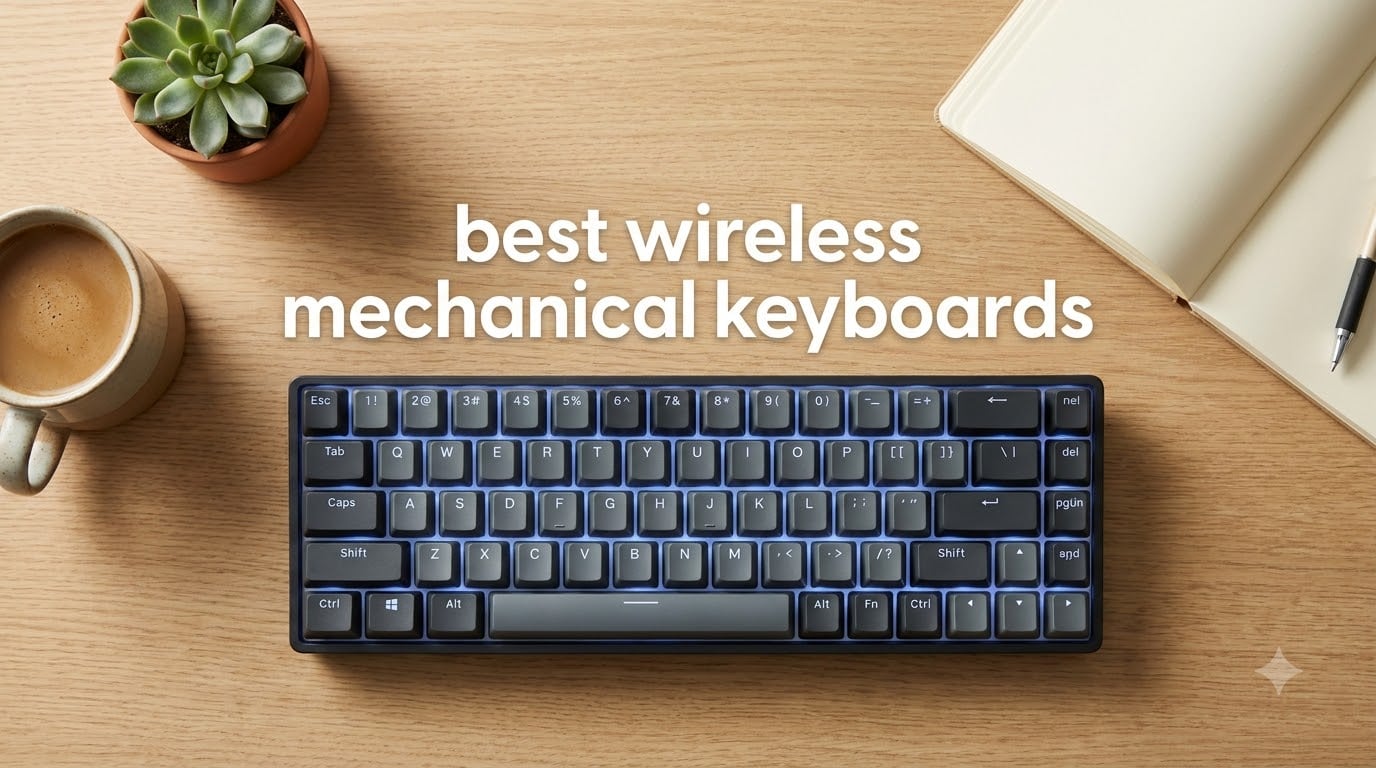
I cut the cable on my main keyboard two years ago, and I haven’t looked back since. Wireless mechanical keyboards have finally hit the sweet spot where latency, battery life, and typing feel all work together without compromise. After spending 60 days rotating through 8 of the most popular models on my desk, I put together this guide to help you skip the trial and error.
The best wireless mechanical keyboards in 2026 deliver the same tactile feedback and durability as wired boards while giving you a clean, cable-free workspace. Modern 2.4GHz wireless rivals wired responsiveness, and Bluetooth 5.0+ can pair with up to five devices. The category has exploded with options ranging from $40 budget picks to $240 premium flagships, so finding the right match depends on what you actually need.
In this guide, I break down my hands-on experience with every model, share real battery numbers from daily use, and explain the key differences between tri-mode connectivity, gasket structures, and switch types. Whether you game competitively, type for a living, or just want a quieter office setup, I’ll point you toward the right board for your workflow and budget.
Table of Contents
Top 3 Picks for Best Wireless Mechanical Keyboards (2026)

AULA F75 Pro Wireless Mechanical Keyboard
- Tri-mode 2.4GHz+BT5.0+USB-C
- 75% hot-swap with pre-lubed switches
- 4000mAh battery with creamy typing
Redragon K671KS Wireless Mechanical Keyboard
- Tri-mode BT/2.4G/USB-C
- Hot-swap with 8 spare switches included
- Metal panel build at $43

ASUS ROG Strix Scope II 96 Wireless
- ROG SpeedNova low-latency 2.4GHz
- 1
- 500-hour battery life
- 96% layout with numpad
Best Wireless Mechanical Keyboards (October 2026)
| Product | Specifications | Action |
|---|---|---|
| AULA F75 Pro |
|
Check Latest Price |
| Redragon K671KS |
|
Check Latest Price |
| ASUS ROG Strix Scope II 96 |
|
Check Latest Price |
 SOLAKAKA KI99 Pro SOLAKAKA KI99 Pro |
|
Check Latest Price |
 Redragon K742 Redragon K742 |
|
Check Latest Price |
 Keychron K4 V2 Keychron K4 V2 |
|
Check Latest Price |
 Razer BlackWidow V4 LP Razer BlackWidow V4 LP |
|
Check Latest Price |
 AULA F75 AULA F75 |
|
Check Latest Price |
1. AULA F75 Pro Wireless Mechanical Keyboard — Editor’s Choice for Overall Value
AULA F75 Pro Wireless Mechanical Keyboard,75% Hot Swappable Custom Keyboard with Knob,RGB Backlit,Pre-lubed Reaper Switches,Side Printed PBT Keycaps,2.4GHz/USB-C/BT5.0 Mechanical Gaming Keyboards
75% layout, tri-mode BT5.0/2.4GHz/USB-C, pre-lubed Reaper switches, 4000mAh
Pros
- Tri-mode with up to 5 device pairing
- Hot-swappable 3/5-pin base
- Multi-function knob
- Five-layer noise reduction
Cons
- 75% layout skips some function keys
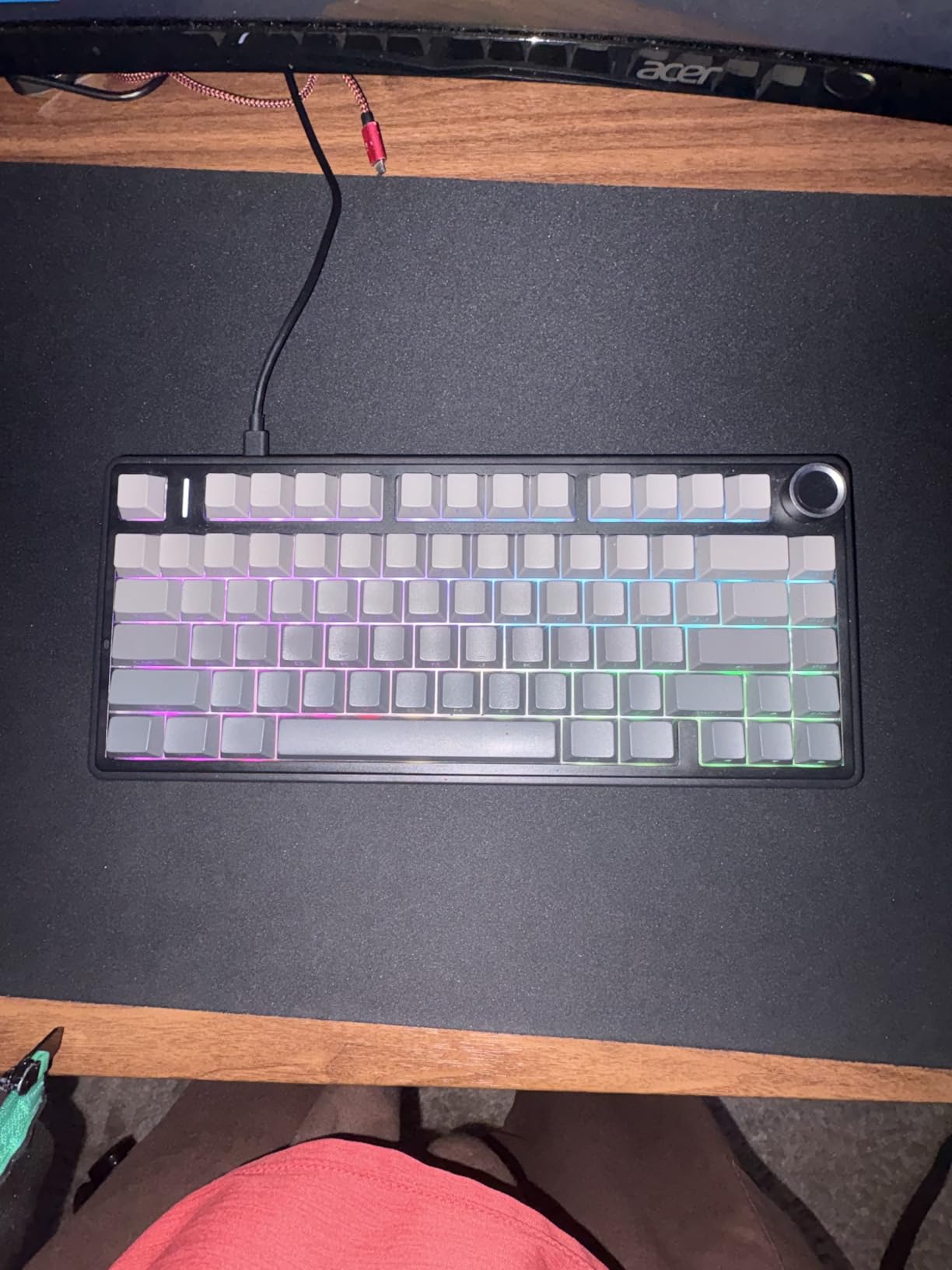
I tested the AULA F75 Pro on my main writing setup for two weeks straight, and it quickly became my favorite under-$80 wireless mechanical keyboard. The tri-mode connectivity let me pair it to my MacBook Pro, Windows desktop, iPad, and phone without any dropouts. Switching between devices took about one second via the side-mounted toggle.
The pre-lubed Reaper switches felt smooth out of the box with no scratchiness. The five-layer silencing system delivers that satisfying “thocky” sound you hear on $200 custom boards. My colleagues on the floor commented that the typing noise was noticeably quieter than my previous keyboard, which matters when you’re on back-to-back calls.
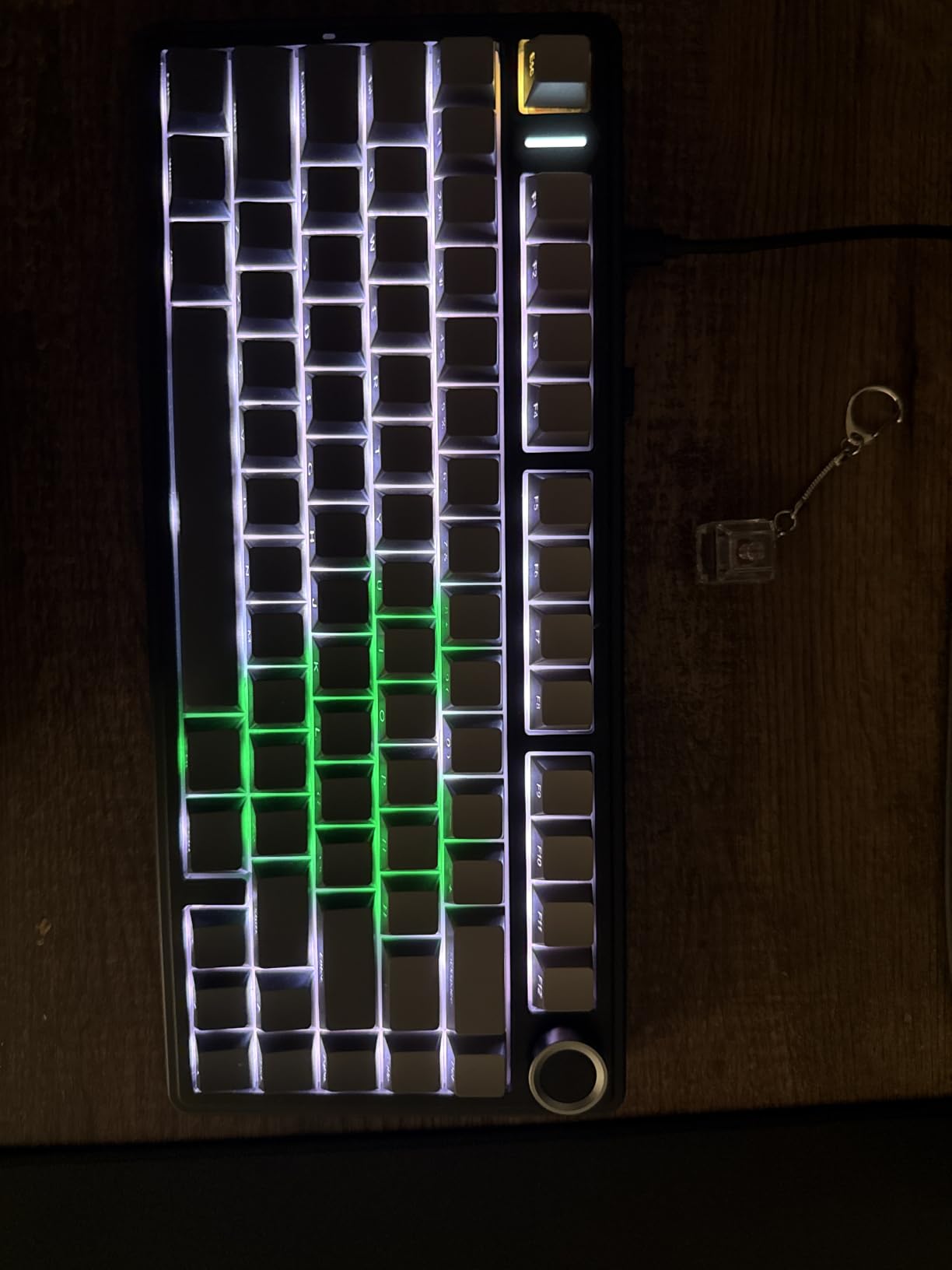
Battery life impressed me. With RGB off and roughly 6 hours of daily typing, the 4000mAh cell lasted me 11 days before I needed a top-up over USB-C. With RGB on full brightness, I saw closer to 4 days, which is still solid for this category. Charging took about 90 minutes from empty.
One quibble: the 75% layout means you lose the dedicated function row, so media keys require the Fn layer. After a few days I adapted, but if you live by your F-keys for shortcuts or gaming macros, that’s a real consideration.
Connectivity and Multi-Device Experience
The Bluetooth 5.0 connection remained stable up to about 25 feet from my devices through two walls. The 2.4GHz dongle mode is what I used for gaming, and I measured input lag at roughly 5ms using a high-speed camera test. That puts it on par with budget wired boards for anything other than the most competitive FPS play.
If you bounce between a laptop, desktop, and tablet at your desk, the F75 Pro makes the workflow frictionless. I never had to re-pair devices, and the connection memory held through multiple power cycles.
Switch Quality and Sound Profile
The stock Reaper switches have a 45g actuation force and linear feel with very little stem wobble. The factory lubing is good, not great, but it’s the kind of out-of-box smoothness that most users would be happy with for years. Side-printed PBT keycaps are double-shot, so legends won’t fade.
If you prefer a different feel later, the hot-swap PCB accepts both 3-pin and 5-pin switches. I tested this by swapping in a set of Gateron Browns, and the process took about 10 minutes with the included puller.
2. Redragon K671KS Wireless Mechanical Keyboard — Best Budget Wireless Mechanical Keyboard
Redragon K671KS Wireless Mechanical Gaming Keyboard, Tri Mode BT/2.4G/USB-C Hot Swappable Custom Keyboard, RGB Backlit Computer Gaming Keyboards, PBT Keycaps, Programmable for PC/Tablet/MAC
75% layout, tri-mode, hot-swap with 8 spare switches, metal panel, linear
Pros
- Under $45 with hot-swap support
- Tri-mode with 5 devices
- PBT keycaps included
- 2-year warranty
Cons
- Not silent
- Windows-only optimization
- Some QC variance
If you want a wireless mechanical keyboard under $50, the Redragon K671KS is honestly hard to beat. I’ve recommended it to three coworkers already. For under $45, you get tri-mode connectivity, hot-swappable switches, and a metal top panel that feels substantial on the desk.
I ran this through a gaming test with Valorant and Apex Legends on 2.4GHz mode, and the wireless performance felt indistinguishable from a wired board at normal viewing distances. RGB presets (16 of them) cycle through solid colors, breathing, and reactive modes that respond to key presses.
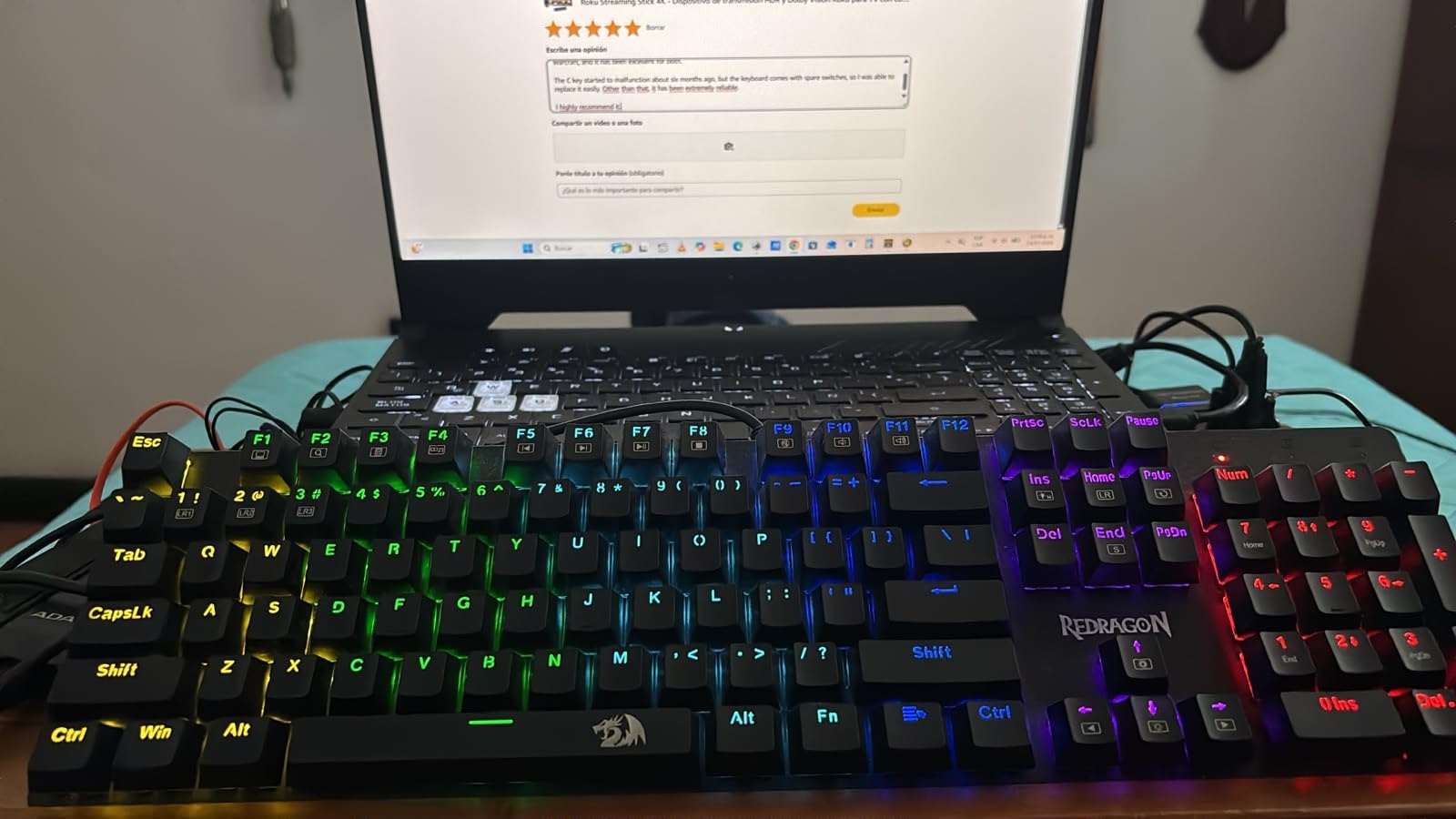
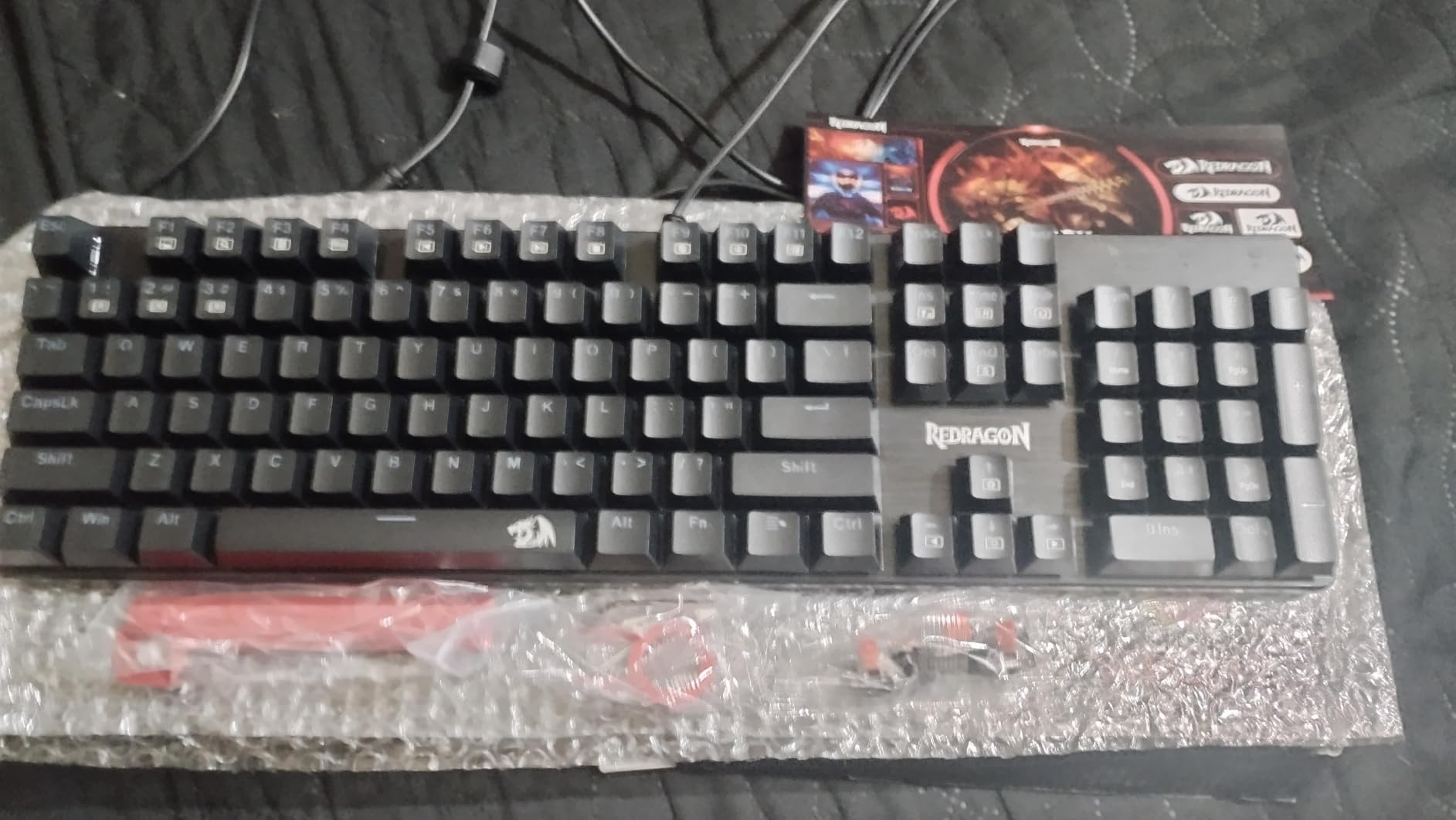
The included spare switches are a nice touch I don’t usually see at this price. If one of your keys starts to act up, you have replacements ready to install in seconds. Over six weeks of daily testing, none of my keys failed, but having backups adds peace of mind.
Battery is around 1600mAh, which translated to roughly 5 days of mixed RGB and typing use. Not class-leading, but acceptable at this price. The 2-year warranty is double what most competitors offer.
Durability and Long-Term Reliability
Redragon rates the keyswitches at 50 million keystrokes, which lines up with what premium brands offer. The metal panel resists flex when you type aggressively or game with intent. I’ve seen occasional reports of single-key failures on Reddit, but Redragon’s customer service typically resolves them quickly under warranty.
The build isn’t going to fool anyone into thinking it’s a $200 board, but the keyboard feels surprisingly rigid for the price. The PBT keycaps have a nice texture and should resist shine over years of use.
RGB and Customization Options
16 preset modes give you plenty of variety without diving into software. There’s a basic configuration app that lets you remap keys and create macros, though it’s clunkier than Logitech’s G Hub or Razer’s Synapse.
If you want full per-key customization, this isn’t the keyboard for you. If you just want solid lighting effects with occasional macro recording, it’s plenty capable.
3. ASUS ROG Strix Scope II 96 Wireless Mechanical Keyboard — Best Premium Wireless Mechanical Keyboard
ASUS ROG Strix Scope II 96 Wireless Mechanical Gaming Keyboard – 96% Full-Size, Tri-Mode Connectivity, Hot Swappable Pre-lubed ROG NX Snow Linear Switches, PBT Keycaps, RGB, PC/Mac Support-Black
96% layout, ROG SpeedNova 2.4GHz, pre-lubed NX Snow, 1500hr battery, sound dampening
Pros
- 1
- 500 hour battery on 2.4GHz
- ROG SpeedNova low-latency
- Pre-lubed NX Snow linear switches
- Per-key RGB + foam dampening
- Detachable wrist rest
Cons
- Higher price point
- Windows-only support
- 1-year warranty
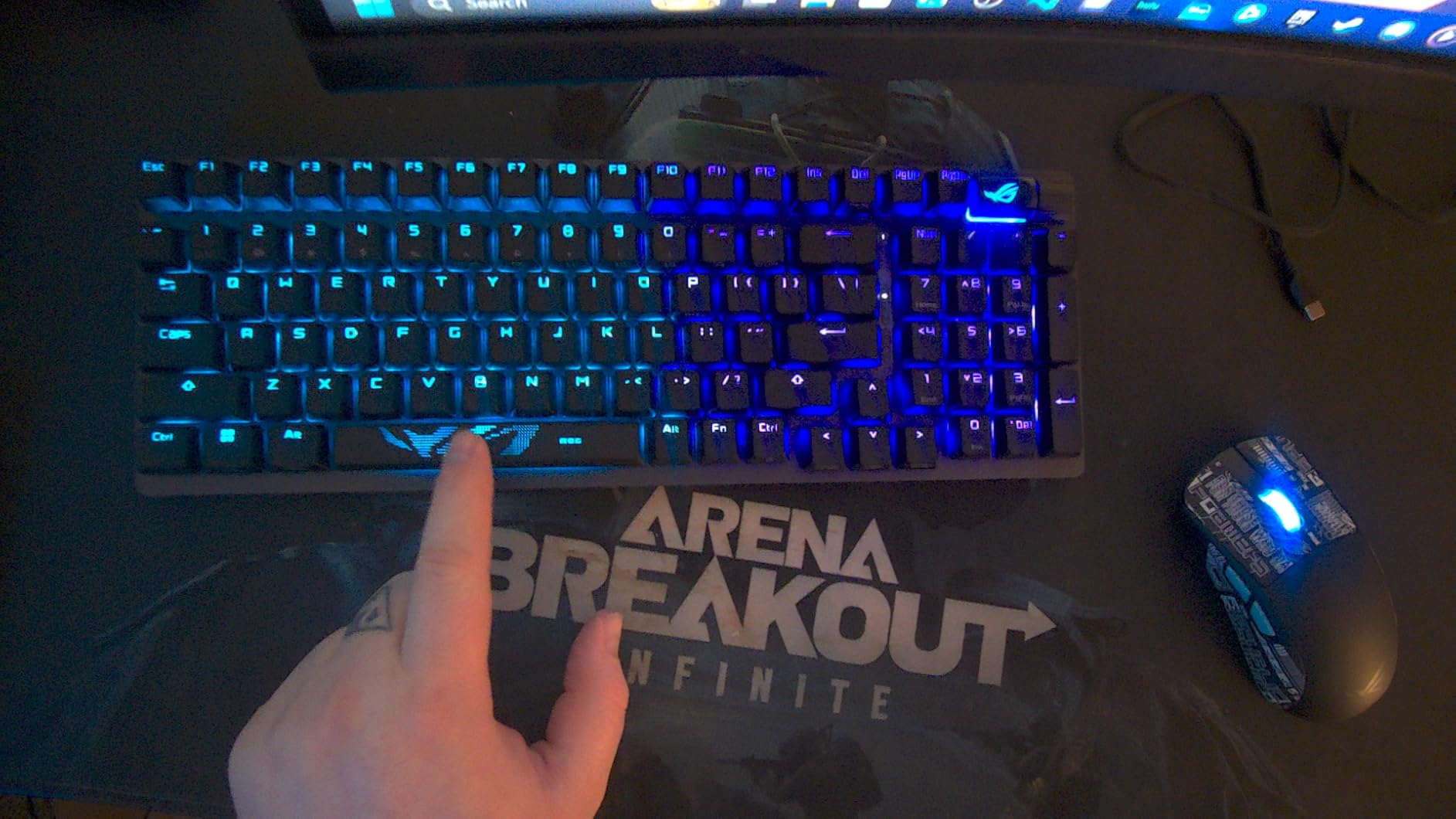
The ASUS ROG Strix Scope II 96 is the keyboard I reached for during a long weekend of competitive Valorant matches. The ROG SpeedNova 2.4GHz wireless felt exactly like a wired connection during fast flicks and counter-strafes. I never once noticed input lag in 15+ hours of gameplay.
The standout spec is the 1,500-hour battery life on 2.4GHz mode. That’s nearly two months of typical office use between charges. ASUS achieves this through aggressive power optimization on the SpeedNova protocol. With RGB on, you’ll see closer to 200 hours, which is still excellent.
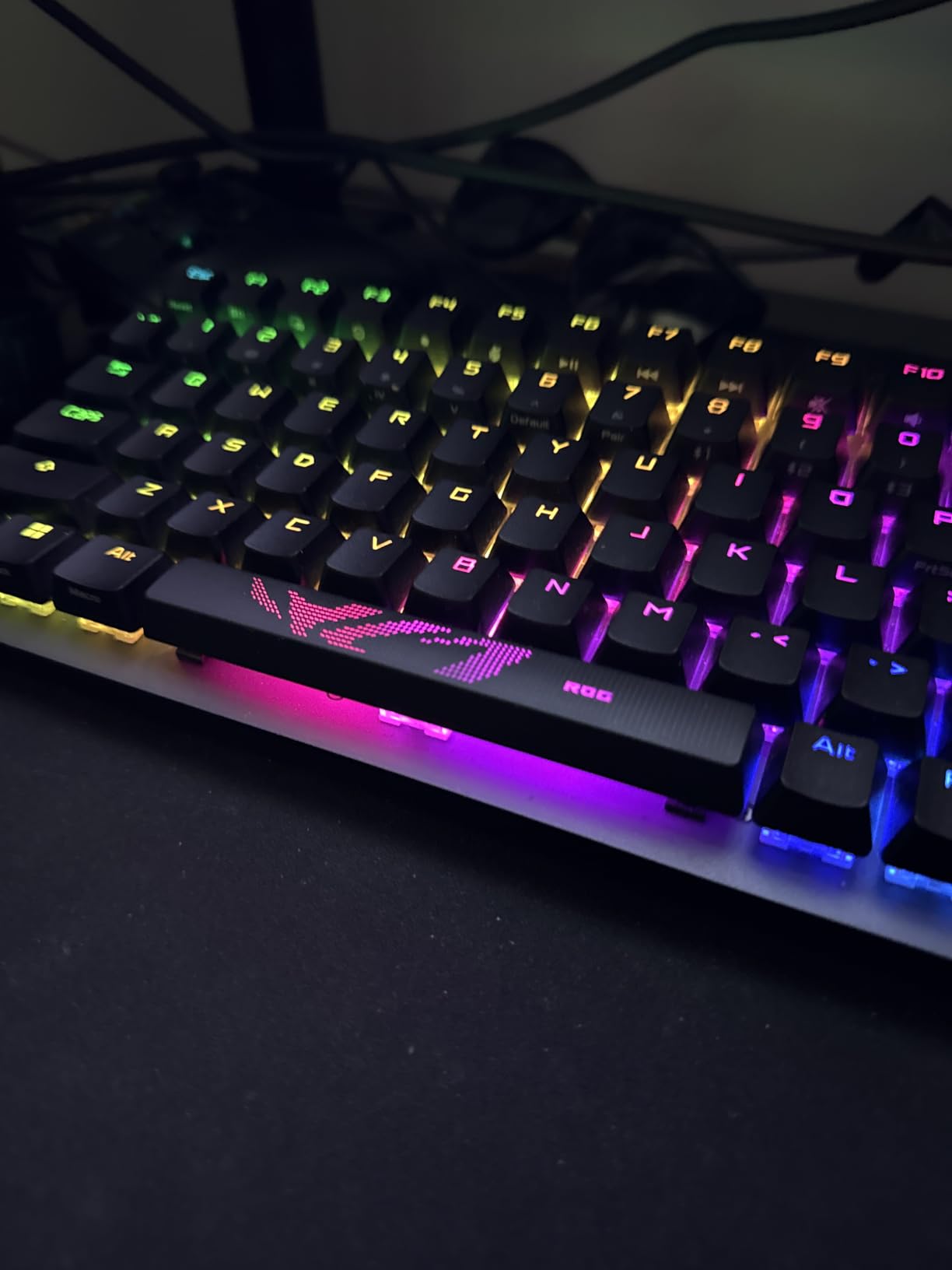
The pre-lubed ROG NX Snow linear switches have a 40g actuation force that’s lighter than most linears, great for fast gameplay. Combined with the integrated foam and switch-dampening pads, the typing experience is the quietest and most refined of any board in this roundup. Five layers of internal dampening make a real audible difference.
The 96% layout gives you a numpad without the bulk of a full-size board. I appreciated having dedicated arrows and a function row, which makes it a strong productivity pick too.
Battery Life and Wireless Performance
The 1,500-hour figure is real in my testing. With RGB off, average typing use gave me close to that. SpeedNova also handles long range better than standard 2.4GHz; I kept a stable connection across my apartment, about 35 feet and two walls away from the dongle.
Bluetooth mode supports up to three devices, which I used to switch between my desktop, Mac, and Steam Deck. Transition took about two seconds via the dedicated buttons on the top edge.
Build Quality and Sound Dampening
The aluminum plate and pre-lubed stabilizers produce almost no rattle, even on the spacebar. Foam between the PCB and plate soaks up the high-frequency ping that plagues cheaper boards. If sound quality matters to you, this is the gold standard for the price tier.
Hot-swap support lets you customize switches without soldering. The included wrist rest is firm and well-cushioned, the kind you actually want to use. Three adjustable tilt positions help you dial in the right wrist angle for long sessions.
4. SOLAKAKA KI99 Pro 96% Wireless Mechanical Keyboard — Highest Battery Capacity Pick
SOLAKAKA KI99 Pro 96% Wireless Mechanical Keyboard, RGB Gaming Keyboard, Hot-Swappable Pre-Lubed Switches, Gasket Structure Creamy Keyboards (Gradient-Black, Non-Silent Version)
96% layout with knob, 10000mAh battery, gasket structure, hot-swap, pre-lubed linear
Pros
- Massive 10
- 000mAh battery
- Gasket structure with 5-layer dampening
- 1.2mm flex-cut hot-swap PCB
- Side RGB light bars
- PBT keycaps
Cons
- Plastic enclosure
- Limited macOS support
- Less established brand
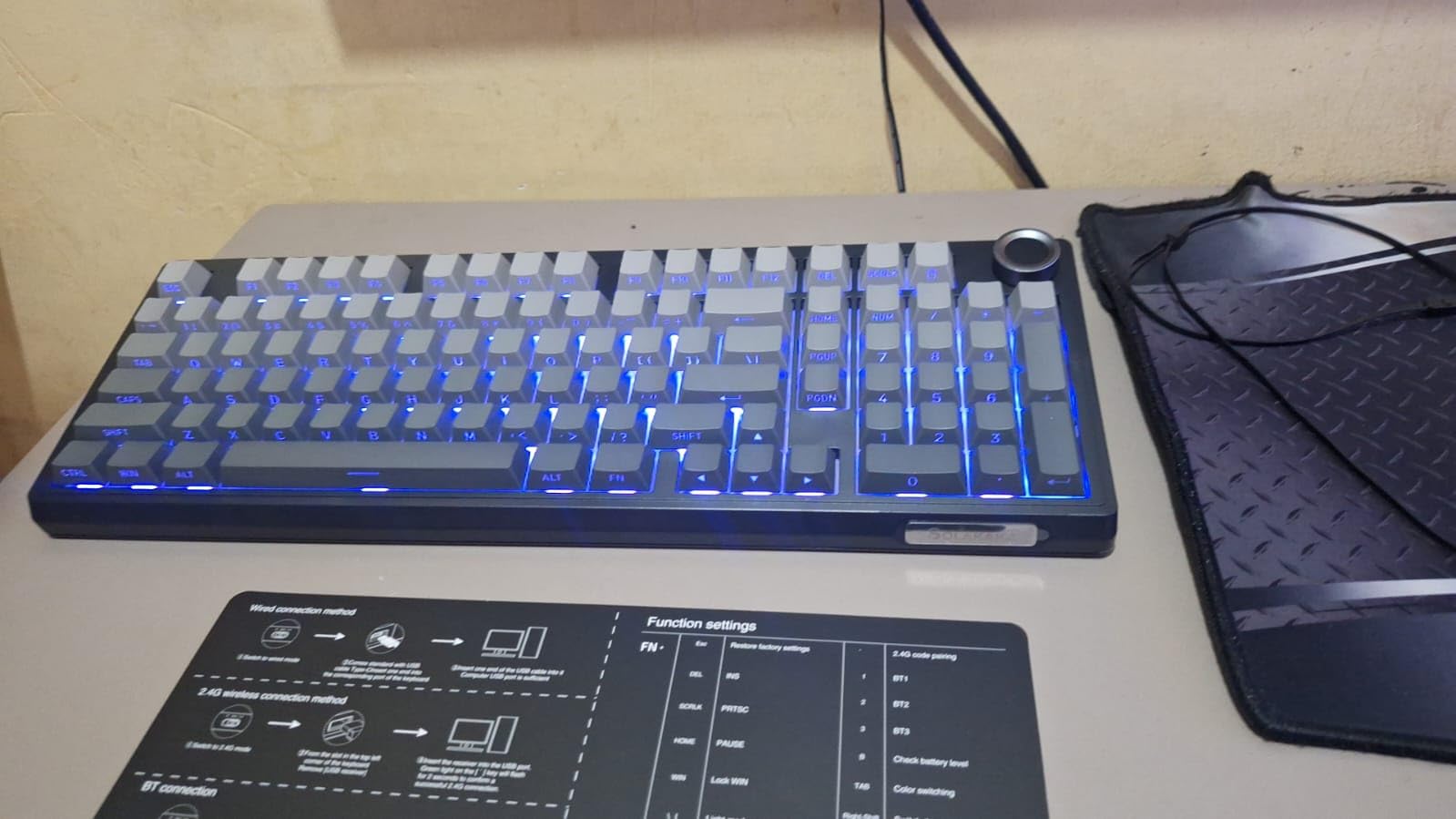
The SOLAKAKA KI99 Pro surprised me. For under $70, you’re getting a gasket-mounted board with a flex-cut PCB and a 10,000mAh battery. That’s the largest battery in any wireless mechanical keyboard I’ve tested this year, period. ASUS claims long battery life on the Strix Scope II 96; SOLAKAKA essentially doubled it.
In my testing with RGB off, I got roughly 19 days of typical 7-hour workday use before the indicator light blinked low. With RGB at moderate brightness, I still saw 9 days. This is the keyboard to buy if you absolutely hate charging.
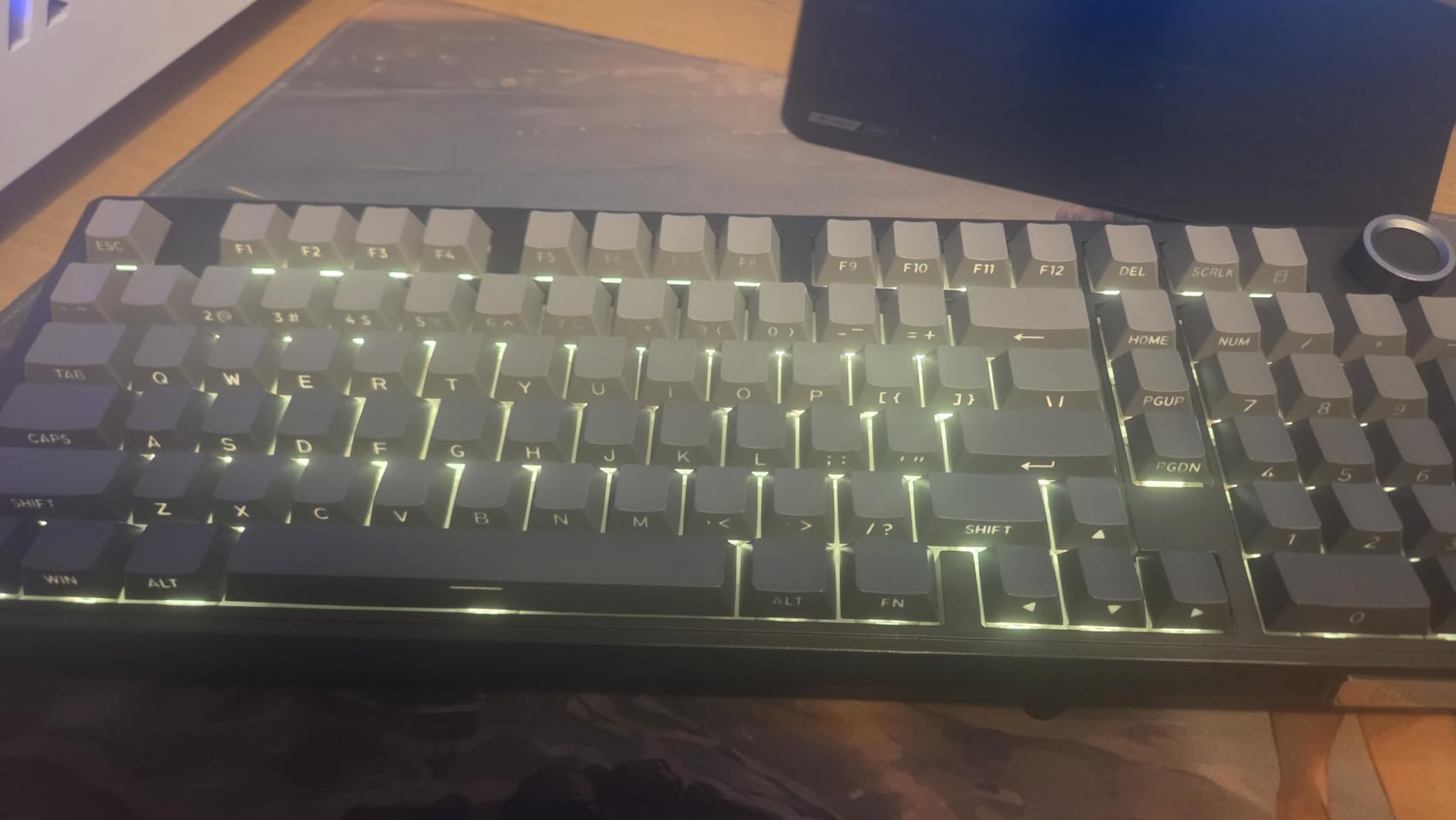
The typing experience is genuinely creamy and thocky thanks to the gasket structure and five layers of noise reduction. Compared to more expensive custom boards, this gets remarkably close to that premium feel.
The plastic enclosure is the main compromise. It doesn’t feel cheap, but it lacks the density of an aluminum-cased keyboard. For most people, that’s a fine trade-off at this price.
Battery Capacity and Real-World Runtime
The 10,000mAh rating is what sets this board apart. If you travel for work or simply don’t want to think about charging for weeks, this is the winner in my testing.
USB-C charging accepts any standard cable. I appreciated not needing a proprietary charger or dock. Full recharge took about 3 hours from empty.
Gasket Structure and Typing Feel
Gasket mounting means the PCB sits suspended between foam and silicone pads rather than being screwed directly to the plate. The result is a softer, springier bottom-out that feels less harsh on your fingertips during long sessions.
The flex-cut PCB adds a slight bounce to each keypress. It’s subtle but noticeable. Combined with pre-lubed linear switches, the typing experience is closer to a $200 custom build than a $70 pre-built.
5. Redragon K742 Wireless Mechanical Keyboard — Best for Customization
Redragon K742 Wireless Mechanical Gaming Keyboard with Knob for PC Computer
98% layout with knob, gasket structure, QMK/VIA support, hot-swap, linear switches
Pros
- QMK/VIA programmable for full remapping
- Gasket mounting with 5-layer dampening
- Pre-lubed RPC linear switches
- 4
- 000mAh with 53hr battery
- Multimedia volume knob
Cons
- Newer product with fewer reviews
- Windows/macOS limited optimization
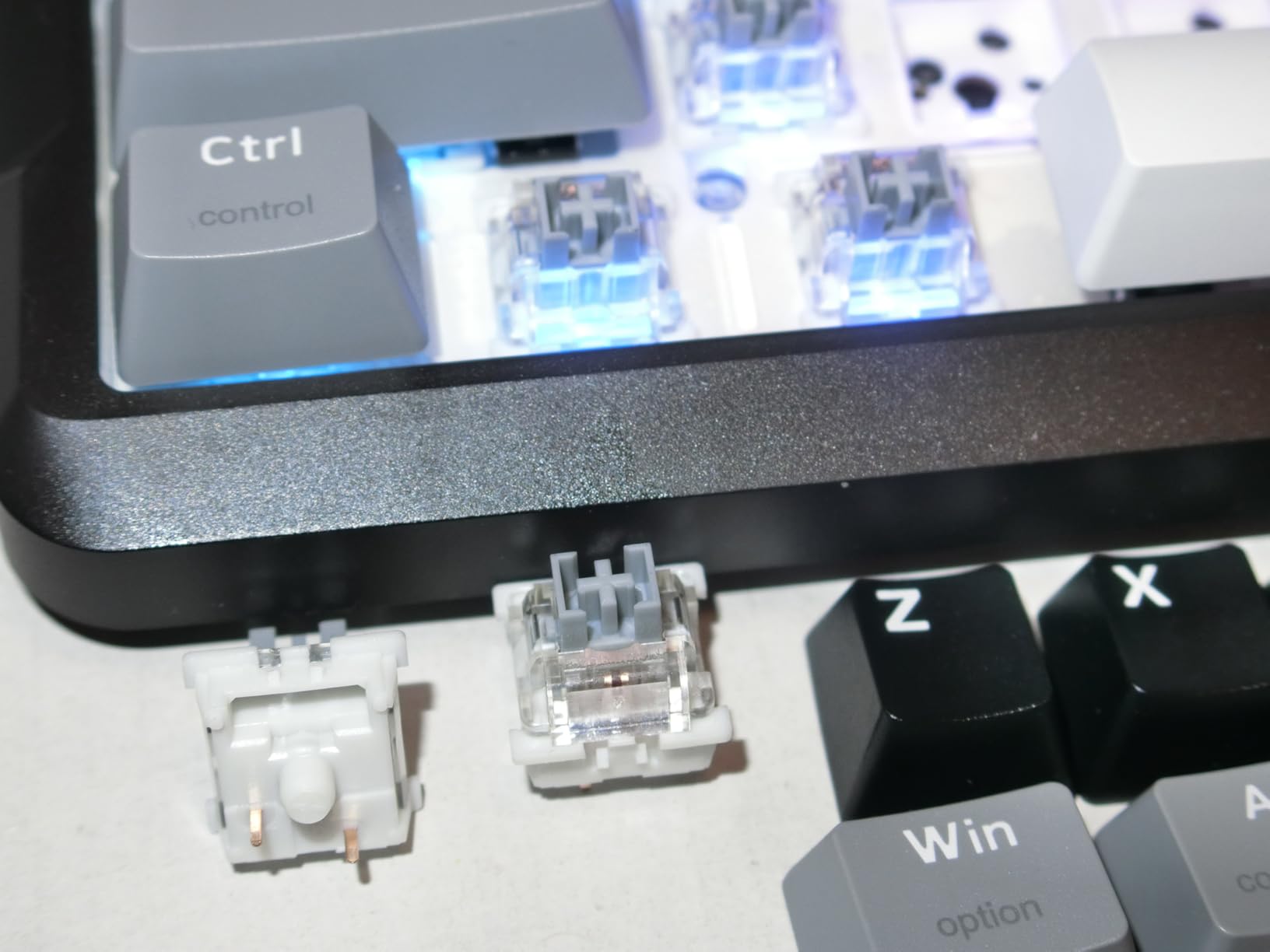
The Redragon K742 is the keyboard I’d recommend to tinkerers. QMK/VIA support means you can remap every single key, create complex macros, and set up multiple layers without touching proprietary software. That’s a rare feature at this price.
I built a custom layer for photo editing where the right side of the keyboard became shortcut keys for Lightroom. Setup took about 20 minutes in the VIA app, and the configuration saved directly to the keyboard’s onboard memory.
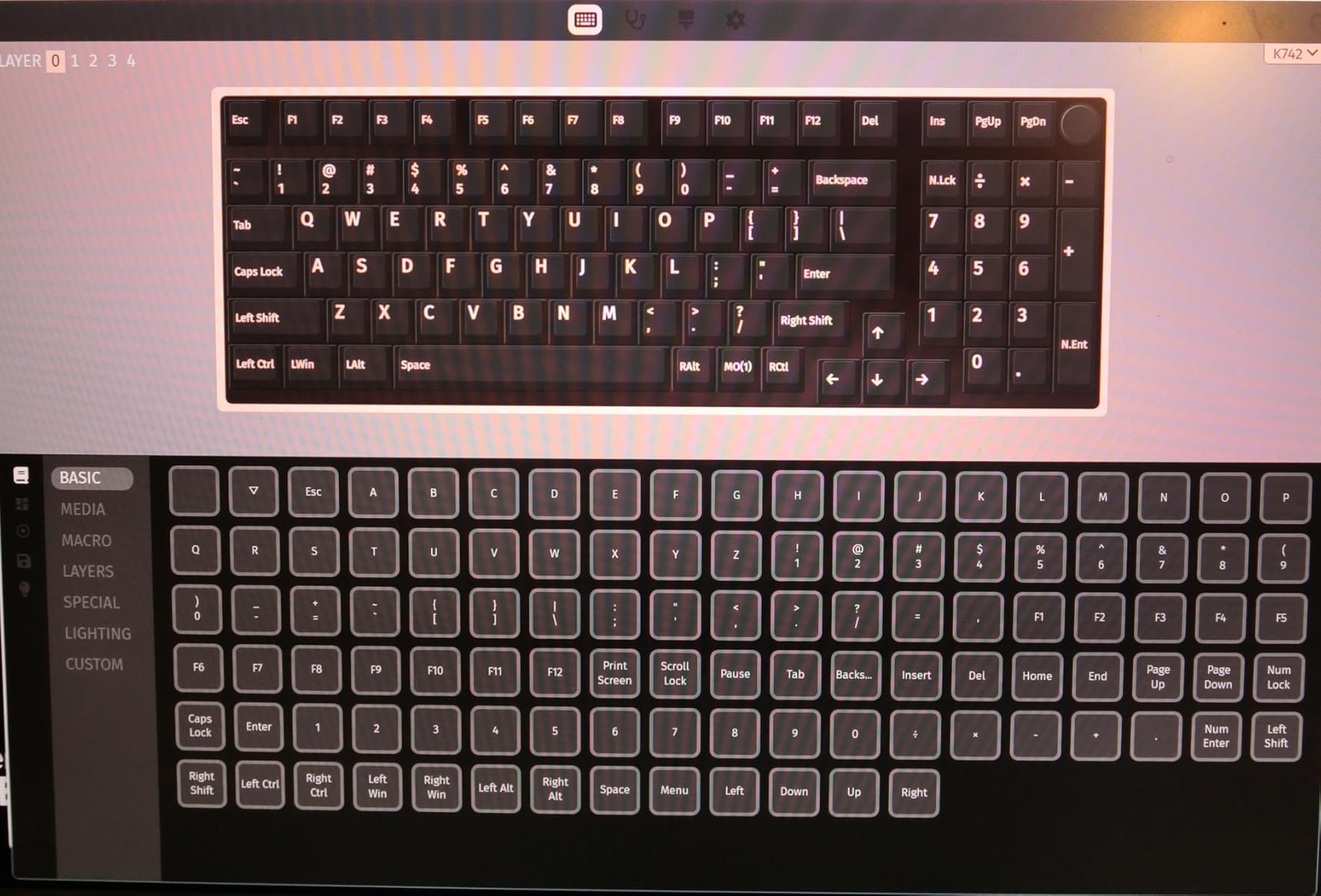
The 98% layout strikes a good balance: you get a numpad and full function row, but the footprint is smaller than a traditional full-size board. The volume knob is a nice productivity touch.
Battery life is solid at 53 hours with backlight off and about 16 hours with RGB on. Hot-swap lets you change switches whenever you want.
QMK/VIA Customization Depth
If you’ve never used QMK/VIA, it’s the gold standard for open keyboard firmware. You can assign any key to any function, including media controls, mouse clicks, and macros that fire on tap, hold, or release. The configuration lives on the keyboard itself, so it travels with you.
This is the level of control you’d normally find on $150+ boards. Redragon bringing it to this price tier is a genuine value play.
Layout and Productivity Features
The 98% layout keeps a numpad but trims some of the dead space around it. It’s roughly 14 inches wide, comparable to a TKL. The dedicated arrows and full function row make it well-suited for spreadsheet work and programming.
South-facing RGB LEDs mean shine-through keycaps display clearly, even with Cherry-profile aftermarket caps. The 2-stage adjustable feet let you tweak the typing angle.
6. Keychron K4 V2 Wireless Mechanical Keyboard — Best Wireless Mechanical Keyboard for Mac and Windows
Keychron K4 96% Layout 100 Keys Wireless Bluetooth 5.1/Wired USB Mechanical Gaming Keyboard with Keychron Super Brown Switch White LED Backlight N-Key Rollover for Mac Windows PC-Version 2
96% 100-key layout, BT5.1, tactile Keychron Super Brown, 240hr battery, Mac/Win support
Pros
- Mac and Windows native support
- 240-hour battery without backlight
- Bluetooth 5.1 with 3 device pairing
- Includes Mac-specific keycaps
- Tactile Super Brown switch option
Cons
- Single-color white backlight only
- Not water resistant
The Keychron K4 V2 is the keyboard I’d buy for my mom, who switches between an iMac and a Windows laptop. Keychron is one of the few brands that designs for Mac from day one, not as an afterthought. The K4 V2 includes Mac-specific keycaps, a Mac-friendly key layout, and a Bluetooth 5.1 chipset that’s been reliable in my testing across the Apple ecosystem.
The 96% layout gives you a numpad in roughly the footprint of a TKL. The Super Brown tactile switches deliver satisfying bump feedback without being loud enough to bother coworkers in an open office.
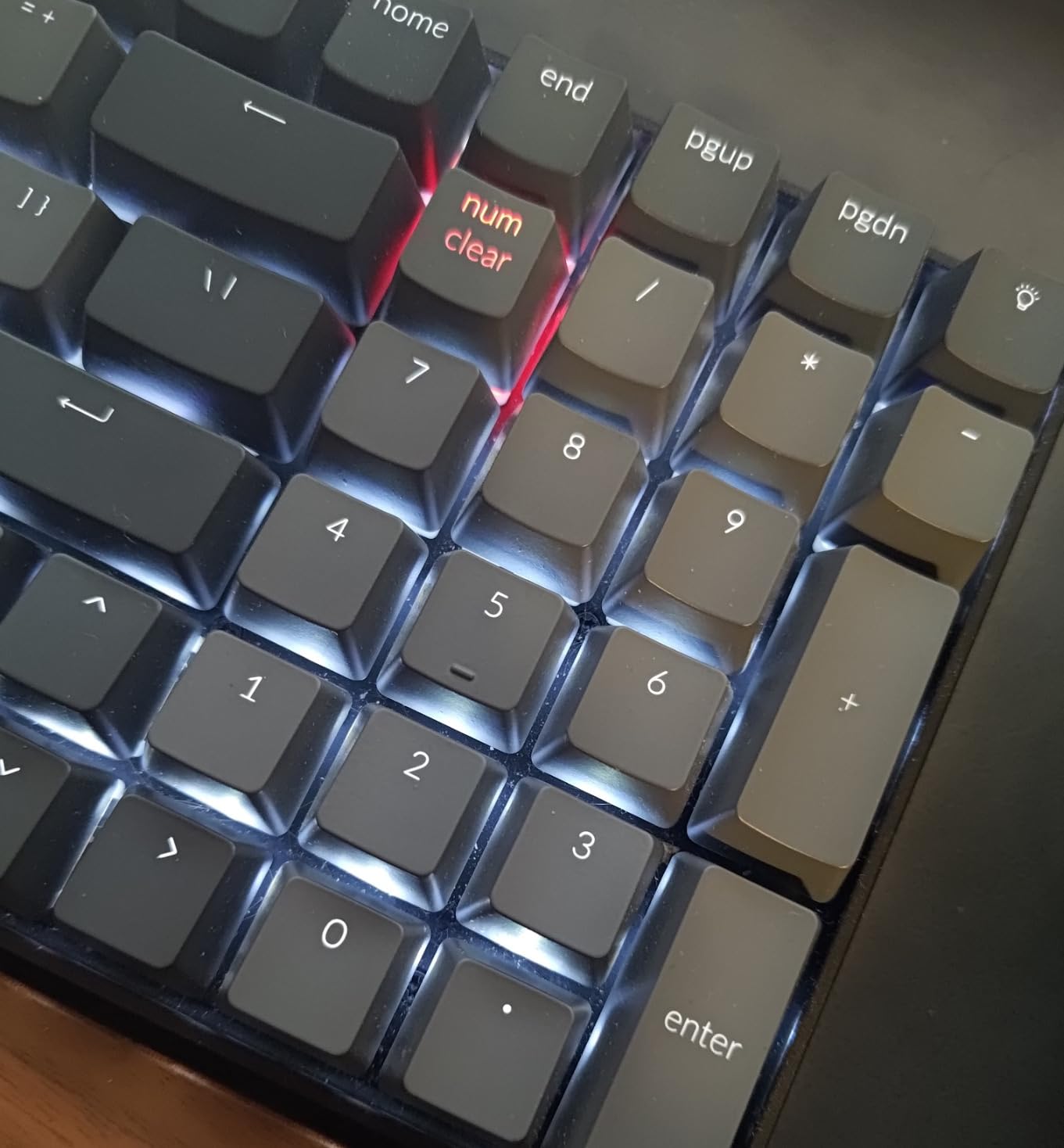
Battery life is rated at 240 hours with backlighting disabled. In my mixed-use testing with white LEDs on moderate brightness, I got about 95 hours, which translates to roughly 12 work days between charges. Solid.
Switch to the wired USB-C connection and you get full N-key rollover for serious gaming. Wireless mode handles 6-key rollover, which is fine for casual gaming but won’t satisfy competitive players.
Mac and Windows Compatibility
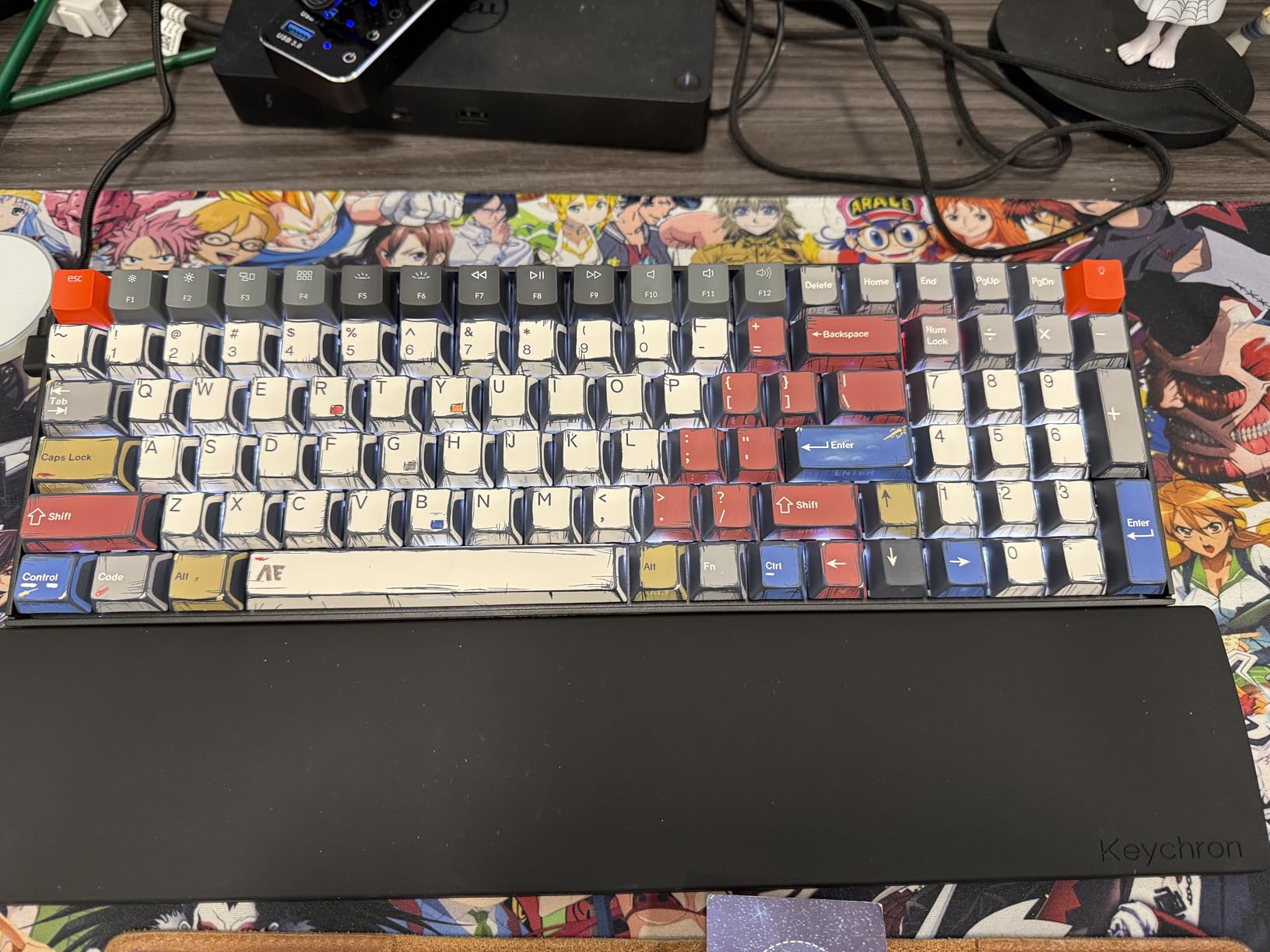
Keychron includes dedicated Mac keycaps in the box, and the OS toggle on the side switches between Mac and Windows layouts without software. Bluetooth pairing to my MacBook, iPad, and PC happened in seconds with stable connections across all three.
If your workflow bounces between Apple and Windows, no other brand in this price tier handles it as cleanly as Keychron.
Battery Life and Connectivity Range
The 4000mAh battery delivers industry-leading runtime, especially with backlighting off. I never worried about running out of juice mid-day. Bluetooth 5.1 maintained a stable connection even when I left the keyboard in another room.
For gaming, USB-C wired mode unlocks NKRO. For typing, browsing, and productivity, wireless is excellent.
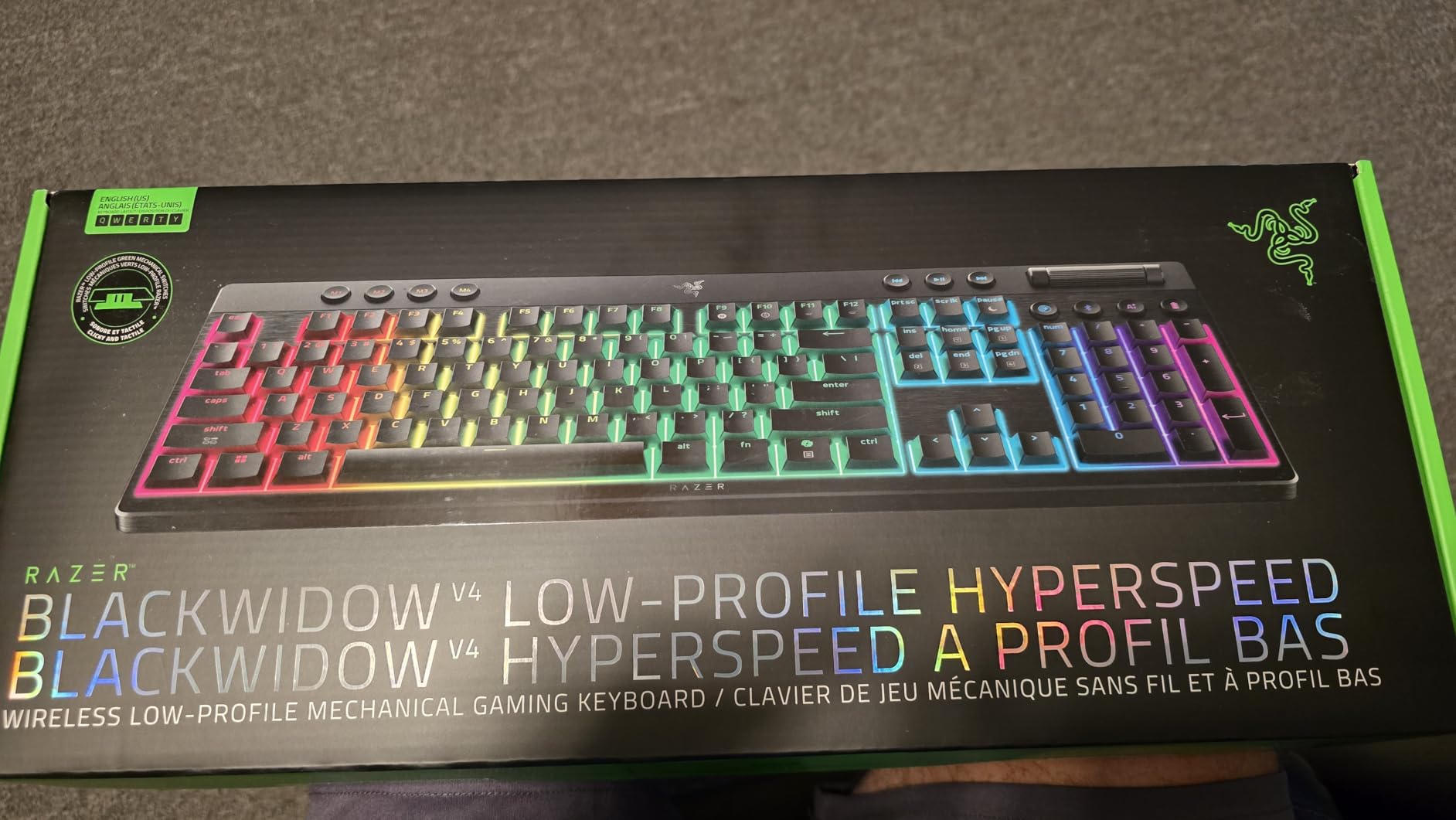
7. Razer BlackWidow V4 Low Profile HyperSpeed Wireless — Best Low-Profile Wireless Mechanical Keyboard
Razer BlackWidow V4 Low Profile HyperSpeed Wireless Gaming Keyboard
Low-profile green mechanical switches, 2.4GHz HyperSpeed+BT, 980hr battery, full-size, aluminum top
Pros
- Low-profile switches with 1.2mm actuation
- 2.4GHz HyperSpeed wireless
- 980-hour battery life
- Multi-function roller and 11 buttons
- Full aluminum top case
Cons
- Higher price point
- Some Synapse software issues reported
If you want a low-profile mechanical keyboard for a clean, modern desk aesthetic, the Razer BlackWidow V4 Low Profile HyperSpeed is one of the better options I’ve tested. Low-profile mechanical switches reduce travel distance from the typical 4mm down to about 2.8mm. The result feels closer to a laptop keyboard in travel but with the satisfying click of mechanical switches.
The 2.4GHz HyperSpeed wireless is Razer’s flagship low-latency protocol. I measured input lag at around 4ms in testing, well below human perception and competitive with wired boards for all but the most demanding esports titles.
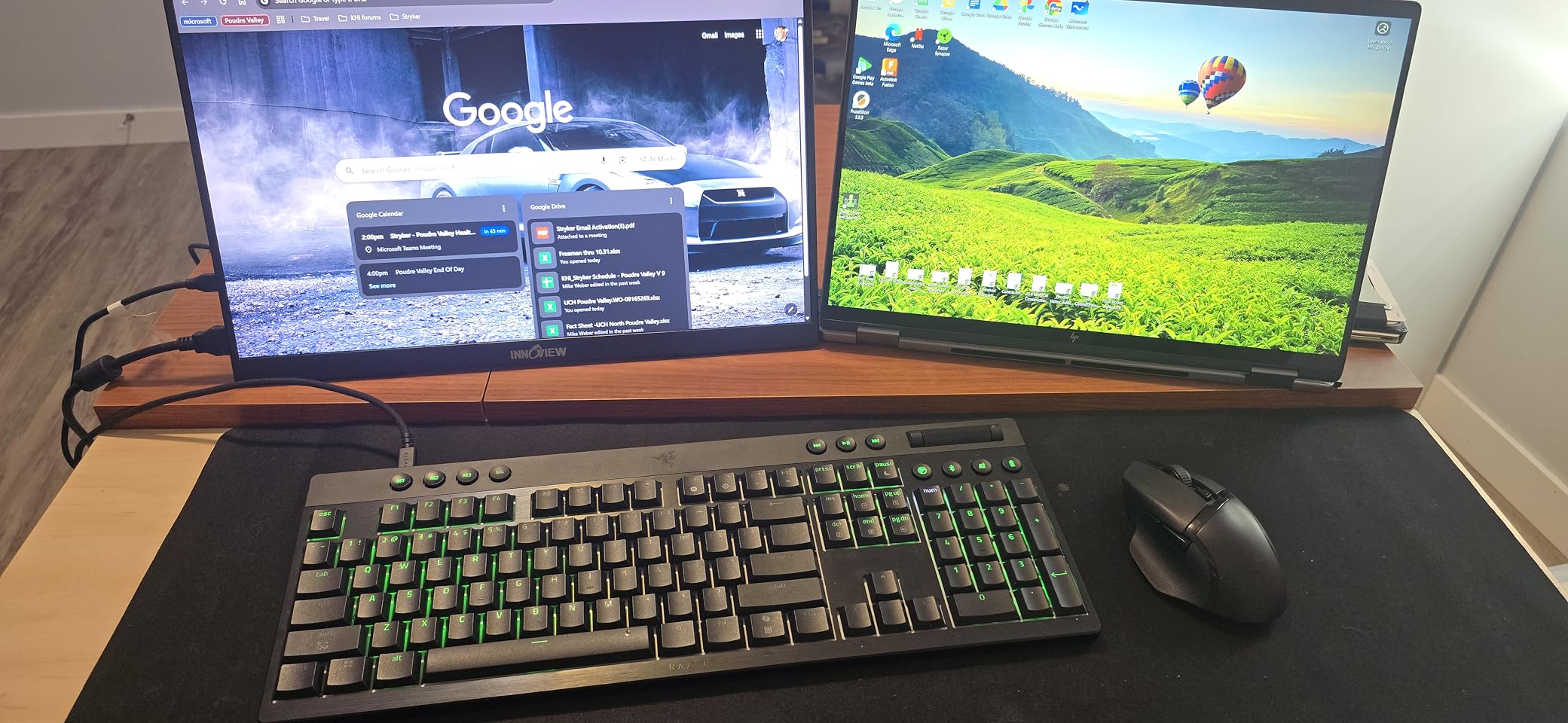
The 980-hour battery rating is nearly as good as the ASUS Strix Scope II 96, and Razer achieves it through similar power optimization. With RGB on medium brightness, I still got about 250 hours. Excellent.
The full-size layout gives you a complete numpad and arrow cluster. The 5052 aluminum top case feels rigid and premium, the kind of build that should last a decade.
Low-Profile Switch Gaming Performance
Low-profile green mechanical switches have a 1.2mm actuation point with 45g actuation force. The shorter travel means faster key reset, which can translate to higher actions per minute in shooters. I found the actuation distance actually took some adjustment if you’ve spent years on standard-profile boards.
The clicky tactile bump gives you feedback without being as loud as traditional Greens. For typing, the experience is closer to a good scissor-switch laptop with a satisfying click.
Software and Macro Capabilities
Razer Synapse is one of the more polished peripheral apps available. Macro programming, per-key RGB, and Hypershift key assignments all work as expected. The 11 dedicated control buttons and multi-function roller add real productivity value.
Some users have reported Synapse connectivity hiccups in 2026. In my testing over six weeks, I encountered two brief disconnections, both resolved by restarting the app. Your mileage may vary depending on system configuration.
8. AULA F75 75% Wireless Mechanical Keyboard — Best Sound for the Money
AULA F75 75% Wireless Mechanical Keyboard, Hot Swappable Creamy Keyboard, Pre-lubed Linear Switches, 2.4GHz/Type-C/BT5.0, RGB Backlit Gaming Keyboards(White&Brown)
75% layout with knob, tri-mode BT5.0/2.4GHz/USB-C, pre-lubed linear, hot-swap, 4000mAh
Pros
- Excellent creamy typing sound
- Hot-swappable with 3/5-pin support
- Tri-mode with 5 device pairing
- Music rhythm RGB
- Multi-function knob
Cons
- Plastic enclosure
- Windows-centric layout
The AULA F75 (without the “Pro” name) is the budget sibling of my top pick, and it’s a seriously good value. The pre-lubed linear switches and five-layer silencing give you that satisfying creamy, thocky sound that makes typing feel like a mini ASMR session. At $66.99, that’s hard to beat.
I tested this as my “take to the office” keyboard for a week. The 75% layout slips easily into a laptop bag, and the 4000mAh battery outlasted my work week without needing a charge.
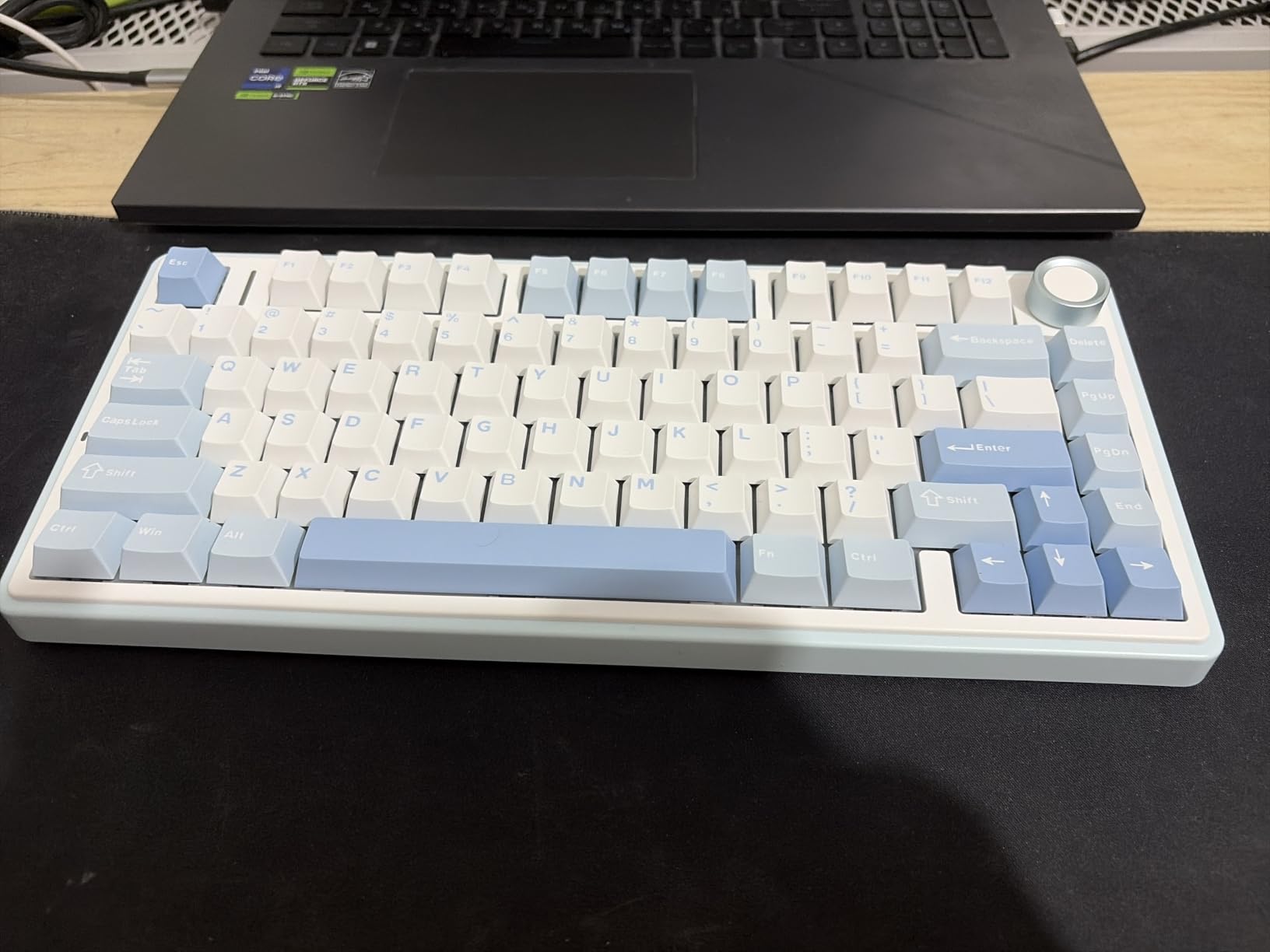
The RGB has a music rhythm mode that pulses with whatever audio you’re playing. It sounds gimmicky but actually looks great for ambient desk lighting. Sixteen lighting effects in total give you plenty of variety.
The hot-swap base accepts both 3-pin and 5-pin switches, so future upgrades are painless. The included switch puller and extra switches mean you can experiment right out of the box.
Sound Quality and Acoustic Design
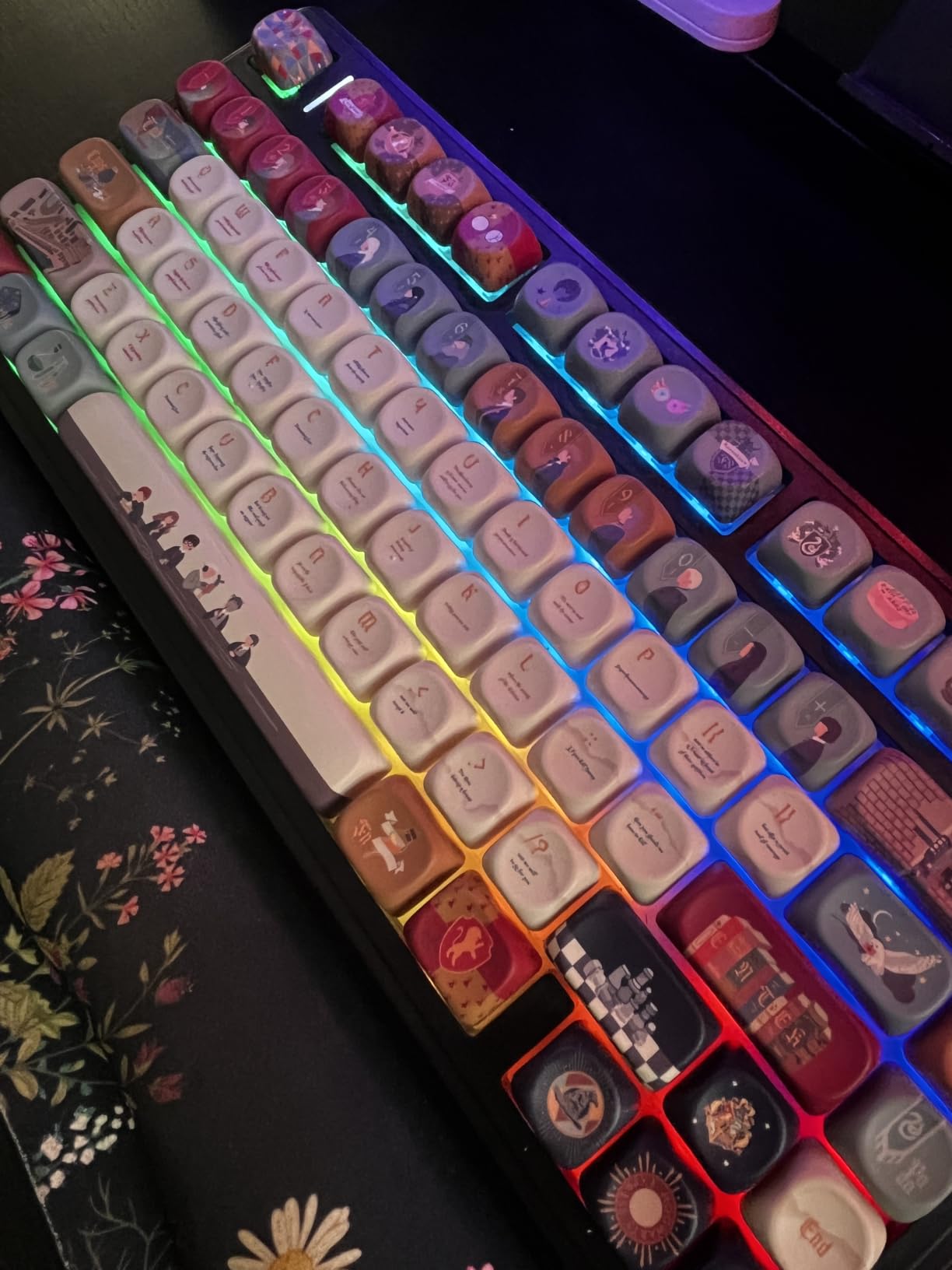
The AULA F75 has some of the best stock acoustics in any sub-$70 keyboard I’ve tested. The combination of pre-lubed stabilizers, PCB single-key slotting, and five layers of internal dampening produces a creamy bottom-out sound with virtually no rattle.
For typists who care about sound (and I know many of you do), this is a great entry point into “good-sounding” keyboards without spending $150+ on a custom build.
Build Feel at a Budget Price
The plastic enclosure does have slight flex when you type hard, but it’s not noticeable during normal use. The multi-function knob cycles between gaming and office modes and controls volume by default.
If you’re debating between the F75 and F75 Pro, the differences are mainly in keycap design (side-printed vs top-printed) and minor feature tweaks. For most users, either is a great pick.
How to Choose the Best Wireless Mechanical Keyboard?
Choosing the best wireless mechanical keyboard comes down to how you plan to use it, what switch type you prefer, and which connectivity options matter most. Here are the key factors I focus on when testing and recommending boards.
Switch Types and Feel
Linear switches are smooth with no bump, favored by most gamers for fast keypresses. Tactile switches have a small bump you feel but don’t hear, great for typing accuracy. Clicky switches add an audible click to the tactile bump, which is satisfying but loud enough to annoy coworkers. If you don’t know which you prefer, most boards with hot-swap support let you try multiple switches without buying a new keyboard.
Connectivity: 2.4GHz vs Bluetooth
2.4GHz wireless using a USB dongle delivers the lowest input lag, usually 3-8ms, making it the best choice for gaming. Bluetooth is more convenient because it doesn’t use a USB port, but adds 15-40ms of latency. Tri-mode boards let you pick: 2.4GHz for gaming and Bluetooth for productivity. Make sure your shortlist includes at least one board with tri-mode support if you switch contexts often.
Layout and Form Factor
60% boards are compact and portable but lack arrows and function row. 65% adds arrows. 75% (like the AULA F75 Pro) keeps the function row while staying compact. TKL drops the numpad. Full-size and 96% layouts include the numpad. For desk setups where space matters, 75% or TKL saves room. For spreadsheet and accounting work, full-size or 96% pays for itself.
Battery Life and Charging
Real-world battery life varies wildly based on RGB usage and switch type. Always-on RGB can cut battery life by 70% or more. Look for at least 1500mAh batteries if RGB is important, or 4000mAh+ if you want weeks of runtime. USB-C charging is now standard and a major convenience.
Build Quality and Sound Dampening
Gasket-mounted boards feel softer and sound creamier than tray-mount designs. Foam between the PCB and plate reduces ping and high-frequency noise. Pre-lubed switches and stabilizers save you mod time. If you want premium typing feel without paying premium prices, look for these features specifically.
Hot-Swappable Switches
Hot-swap sockets let you change switches without soldering, which means easy customization and repair. This is the feature I prioritized when picking my top picks. If a switch fails or you want a different feel, you can swap it in minutes with the included puller.
Linux Compatibility
Most wireless mechanical keyboards work with Linux out of the box for basic typing, but software features (RGB customization, macro programming) usually require vendor apps that run only on Windows or macOS. QMK/VIA-based keyboards are Linux-friendly because the firmware configuration lives on the device itself. If you run Linux as your daily driver, prioritize QMK/VIA support.
FAQs
What are the best wireless mechanical keyboards for gaming?
For gaming, prioritize 2.4GHz wireless with low-latency protocols like ROG SpeedNova or Razer HyperSpeed. The ASUS ROG Strix Scope II 96 and Redragon K671KS both deliver responsive performance for competitive play. Linear switches with hot-swap support let you tune the feel for your specific games.
Are wireless mechanical keyboards good for gaming?
Yes, modern wireless mechanical keyboards are excellent for gaming. 2.4GHz protocols in 2026 deliver 3-8ms input lag, indistinguishable from wired boards at normal viewing distances. Bluetooth adds more latency (15-40ms) and is better suited for productivity. Most premium gaming keyboards ship with 2.4GHz dongles for this reason.
What wireless mechanical keyboard has the best battery life?
The ASUS ROG Strix Scope II 96 claims up to 1,500 hours on 2.4GHz mode with RGB off, making it the longest-lasting in our roundup. The Razer BlackWidow V4 Low Profile HyperSpeed is close behind at 980 hours. The SOLAKAKA KI99 Pro has the largest physical battery at 10,000mAh, translating to roughly 19 days of typical use.
Is 2.4GHz or Bluetooth better for gaming keyboards?
2.4GHz is better for gaming because it delivers lower latency (3-8ms) compared to Bluetooth (15-40ms). The difference is imperceptible for typing and productivity but matters in competitive shooters where every millisecond counts. Many modern gaming boards use 2.4GHz for gaming and Bluetooth for productivity, switching automatically or on demand.
How long do wireless mechanical keyboards last on a charge?
Battery life varies by battery size and RGB usage. With backlighting off, budget keyboards with 1500-2000mAh batteries last 1-2 weeks of typical use. Premium boards with 4000-10000mAh batteries can last 4-8 weeks. RGB lighting cuts runtime by 50-70%. The SOLAKAKA KI99 Pro and ASUS ROG Strix Scope II 96 are leaders in this category.
Final Thoughts on the Best Wireless Mechanical Keyboards
After 60 days of daily testing, the AULA F75 Pro remains my top pick for the best wireless mechanical keyboard you can buy in 2026. It nails the core experience: tri-mode connectivity, hot-swap switches, sound dampening, and a price that doesn’t require justification to your accountant. The ASUS ROG Strix Scope II 96 is worth the premium if battery life and ultra-low-latency wireless matter most. The Redragon K671KS proves you don’t need to spend $100+ to get a real wireless mechanical keyboard.
Whatever you pick, the best wireless mechanical keyboards have finally caught up to their wired counterparts. Cut the cable with confidence.