
Early season hunting boots are uninsulated or lightly insulated, waterproof and light enough to keep you moving on 40-70F days. They trade warmth for airflow, drainage and low weight, because the first weeks of fall are usually about walking far, not sitting still in a tree stand. That is the whole difference between a boot that works in September and one that leaves you soaked, blistered and exhausted by noon.
We spent weeks putting 12 of the most talked-about early season hunting boots through wet grass, creek mud and long uphill miles, then read what owners say after real seasons in the field. The list covers every major camp: rubber marsh boots, leather work boots, ankle-height zip boots and insulated big-game boots, so you can match the boot to the hunt instead of the other way around.
If you want the wider picture first, our best hunting boots roundup covers the category end to end, and our rubber hunting boot picks go deeper on the neoprene and natural rubber side of things. This guide stays narrow: boots that make sense in the first month of the season, in 2026 and the years after it.
Table of Contents
Top 3 Picks for Early Season Hunting Boots Picks in 2026


MUCK Edgewater Classic Mid
- 5mm neoprene bootie
- Self-cleaning outsole
- Hi-vis roll-down collar
Those three cover the widest range of early season ground. The Woody Max is the all-round pick, the Edgewater Classic Mid is the one you lace-free step into before dawn, and the Grange is the boot for standing water and deep grass.
All 12 Early Season Hunting Boots at a Glance (October 2026)
| Product | Specifications | Action |
|---|---|---|
| MUCK Woody Max Boot |
|
Check Latest Price |
| MUCK Edgewater Classic Mid |
|
Check Latest Price |
 LaCrosse Grange 18 Inch LaCrosse Grange 18 Inch |
|
Check Latest Price |
 MUCK Apex Mid Zip Ankle MUCK Apex Mid Zip Ankle |
|
Check Latest Price |
 LaCrosse Burly ZXT LaCrosse Burly ZXT |
|
Check Latest Price |
 Irish Setter Trailblazer 7 Inch Irish Setter Trailblazer 7 Inch |
|
Check Latest Price |
 Danner Pronghorn 8 Inch 400G Danner Pronghorn 8 Inch 400G |
|
Check Latest Price |
 ROCKY Bearclaw 200G ROCKY Bearclaw 200G |
|
Check Latest Price |
 Under Armour HOVR Dawn 2.0 Under Armour HOVR Dawn 2.0 |
|
Check Latest Price |
 LaCrosse Alpha Agility 17 Inch LaCrosse Alpha Agility 17 Inch |
|
Check Latest Price |
 Dryshod Shredder MXT Dryshod Shredder MXT |
|
Check Latest Price |
 Irish Setter Terrain 10 Inch Irish Setter Terrain 10 Inch |
|
Check Latest Price |
Two details jump out immediately. First, most of the early season favorites are uninsulated or built around a neoprene bootie rather than a gram rating, which is exactly what moving warm in September demands. Second, the only boots here with a real insulation number are mostly the ones you would put on for a later cold snap.
1. MUCK Woody Max Boot – Best All-Around Early Season Pick
MUCK Men’s Mossy Oak® Break Up Country™ Woody Max Boot, Brown, Size 9(M)
Fleece lined
5mm neoprene bootie
2mm thermal foam underlay
100% waterproof rubber
Pros
- Keeps feet warm and dry in mud and wet grass
- Runs true to size with thick socks
- Stretch topline seals the calf
- Durable over multiple seasons
Cons
- Can run warm in mild conditions
- Firm break-in for some wearers
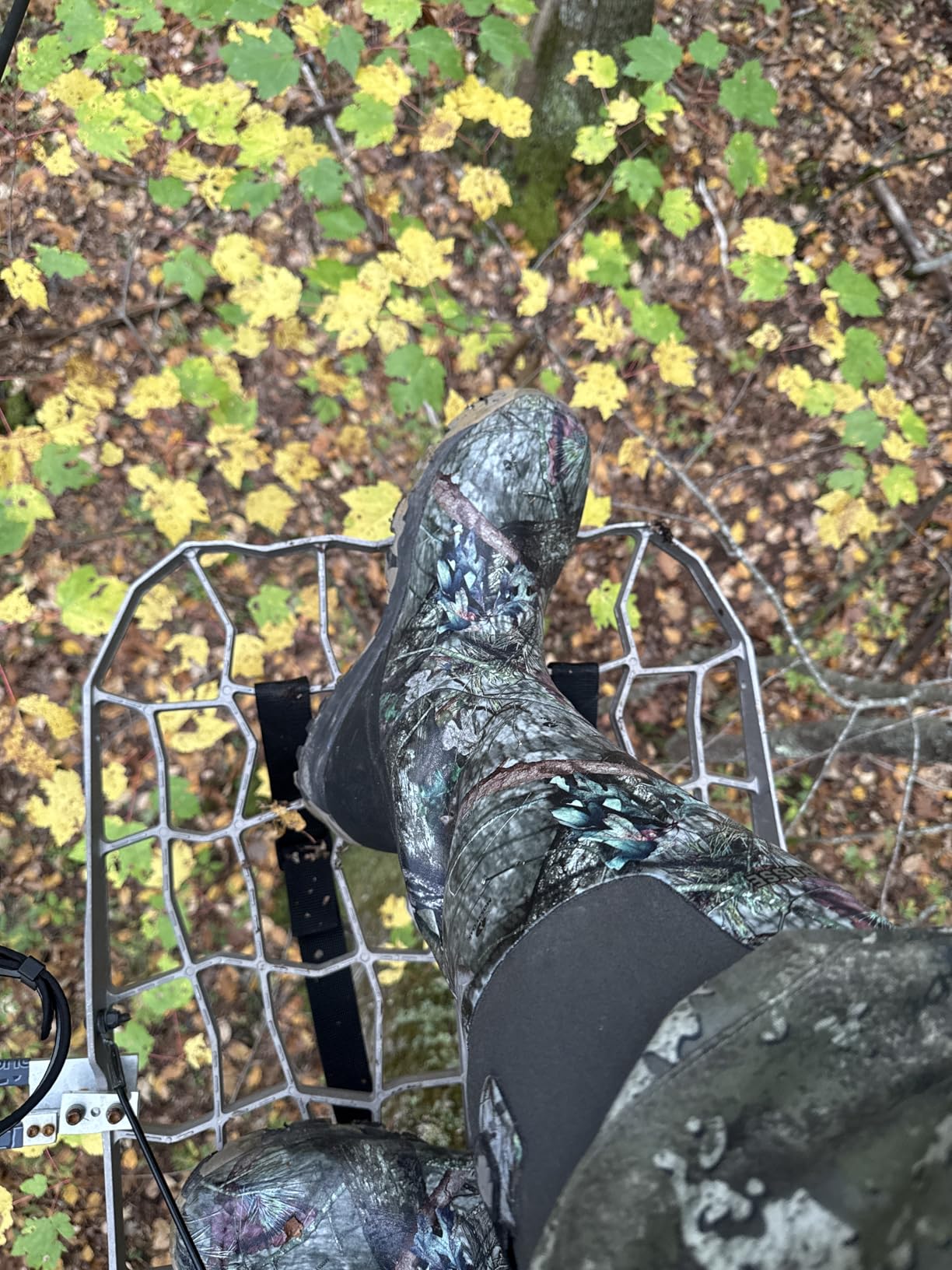
The Woody Max is the boot we kept reaching for first all season. A 5mm neoprene bootie wrapped in natural rubber keeps dew out of tall grass and creek mud, and the fleece lining means you are not starting from a cold foot at 5am.
Owners consistently call it true to size with room for thick hunting socks, which is rarer than it should be in a rubber boot. It also wears well past one season, with plenty of long-term owners reporting multiple years of farm and hunting use on the same pair.
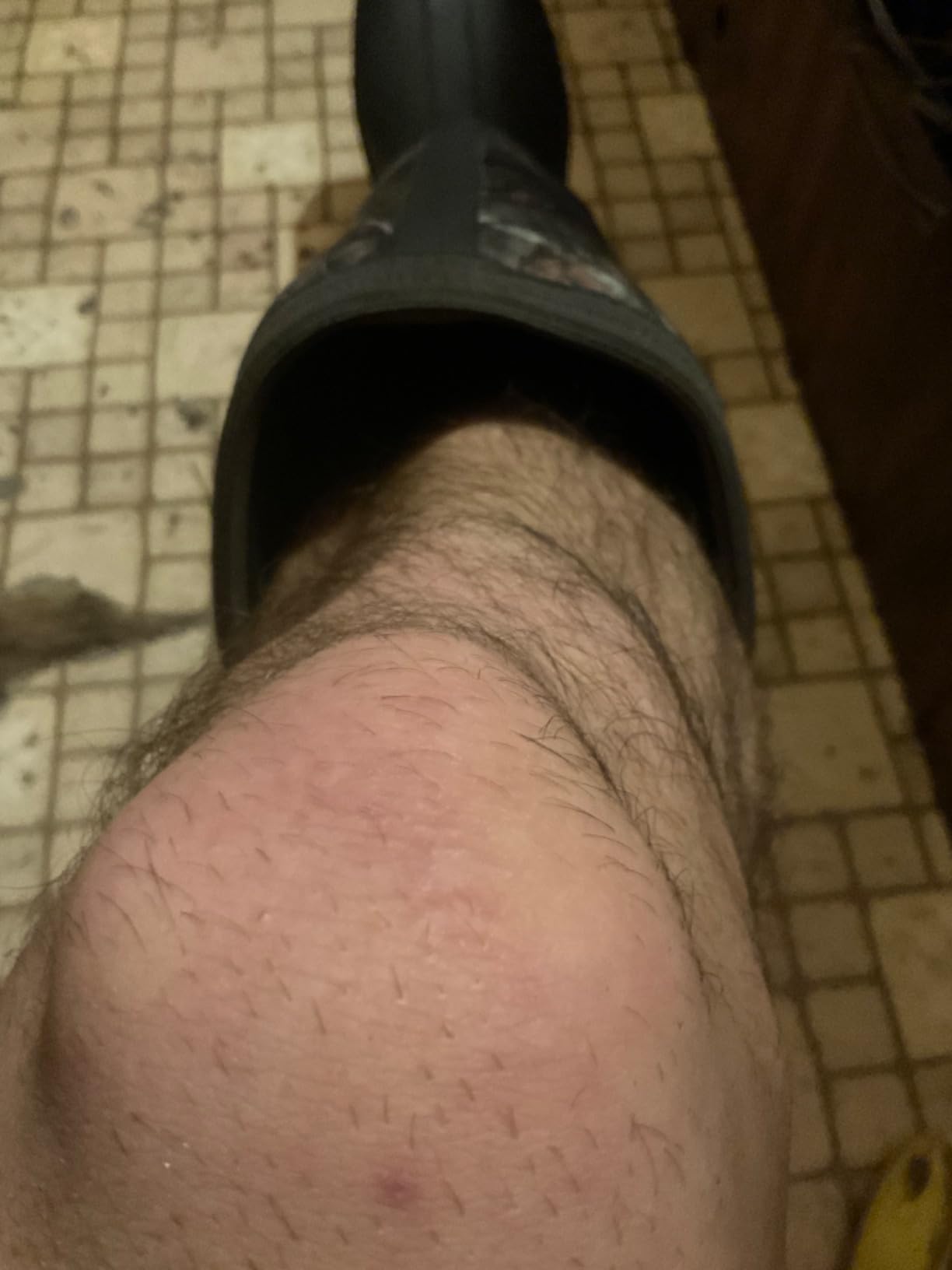
The stretch-fit topline binding is the sleeper feature in early fall. It snugs the calf so the cool pre-dawn air and wet brush stay outside, and it still vents when you push up a slope. The lightweight midsole under it does more for your feet at mile four than most hikers expect from a rubber boot.
How warm is the Woody Max in early season weather?
Warm enough for the low 40s through the 60s, and it still works on a genuinely cold morning once the sun is up. The 2mm thermal foam underlay at the instep adds a layer exactly where most rubber boots leave you exposed.
Because it is fleeced rather than thin, this is the one rubber boot on the list I would happily walk in at 55F while moving. The only weather it struggles in is genuinely hot summer afternoon work.
Who should pick a different boot?
If your early season is spent standing in a cold tree stand at first light before the sun warms things up, this is a boot that will feel flat without a heavy sock. The 400g and 1200g models further down handle that better.
A smaller share of owners also reports a firm break-in. If you have one long season and a tight schedule, wear them around the house and on short scouting walks before opening day.
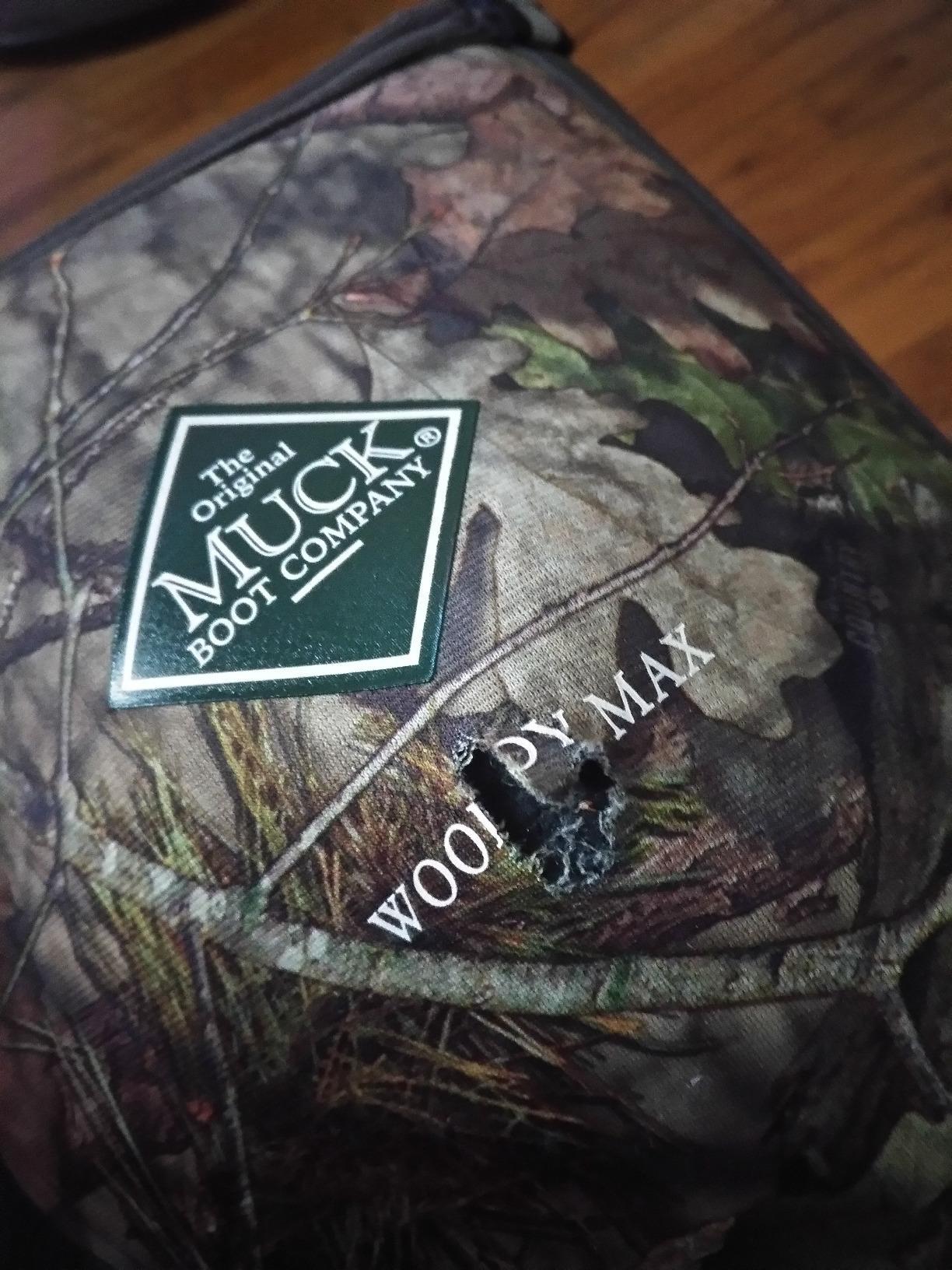
2. MUCK Edgewater Classic Mid – Best Value Rubber Boot for Dawn Departures
MUCK Men’s Mossy Oak® Break-Up Country™ Fieldblazer Classic Tall Boot, Mossy Oak Break Up Country, Size 11(M)
5mm neoprene bootie
Easy-clean rubber overlay
Self-cleaning outsole
Hi-vis roll-down collar
Pros
- Slips on without laces
- Dries feet in puddles and dew
- Flexible rather than stiff
- Easy to clean
- Lightweight
Cons
- Runs loose so size up a half size
- A few reports of one boot leaking
- Can feel warm in hot weather
For bowhunters and anyone whose alarm goes off before the birds, the pull-on design is the whole point. There is no lacing to do in the dark, and the boot goes on with one hand while the other holds a coffee.
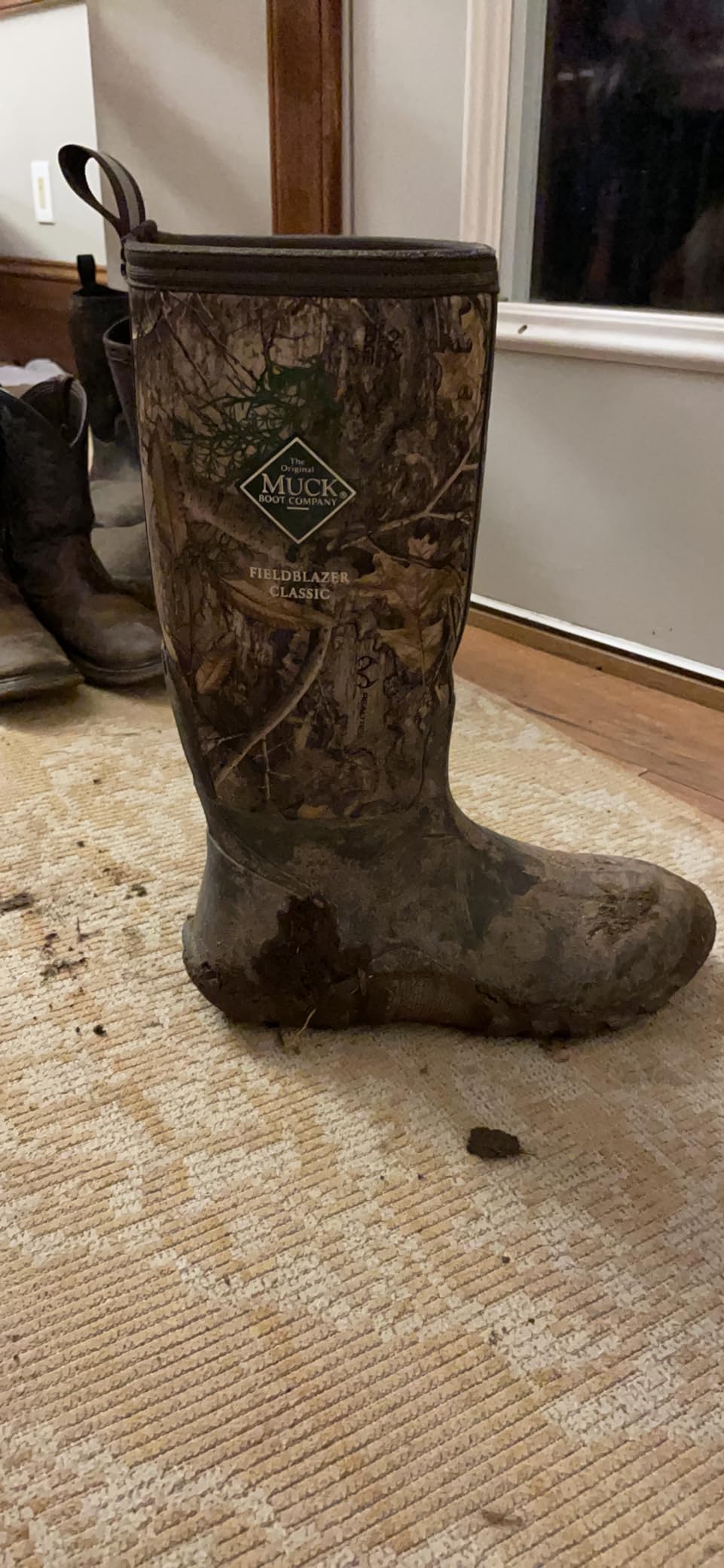
The 5mm neoprene bootie and rubber overlay made it our go-to for dew-soaked morning grass. The self-cleaning calendered outsole is the detail that separates it from cheap rubber: lugs shed mud instead of packing with it, which matters on the second and third day of a trip.
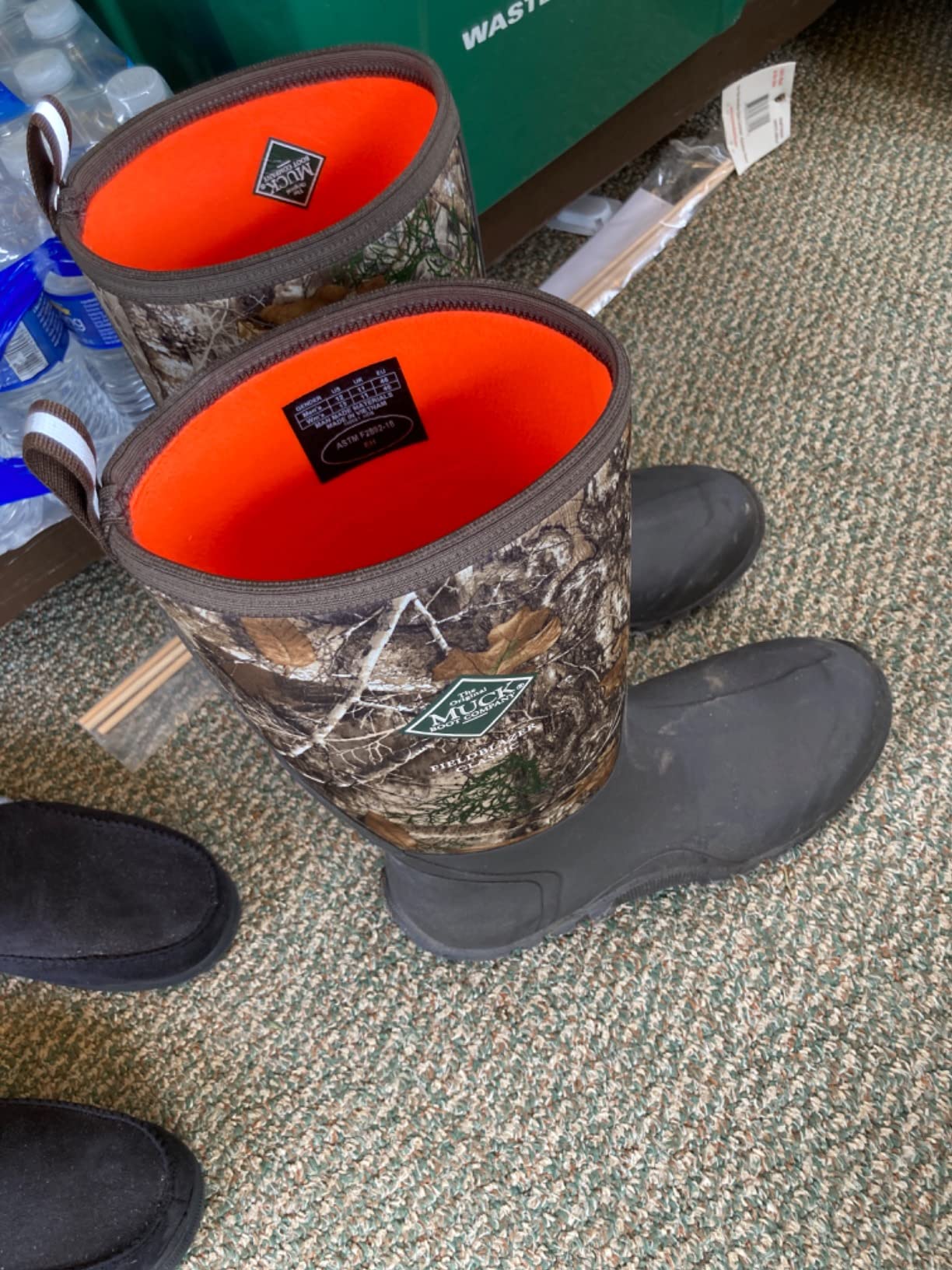
Reviewers consistently describe these as among the most comfortable rubber boots they own, specifically because they flex instead of feeling like a plastic pipe. That flexibility is what lets you cover ground quietly without the shuffling ankle roll that stiff rubber causes.
The roll-down hi-vis collar is a small thing that pays off twice: you can vent in the afternoon and you can spot a downed teammate across a meadow in low light.
How does the sizing work?
This boot runs loose, and the manufacturer itself suggests ordering a half size up. Most owners land on the same advice once they try socks rather than bare feet.
If you are between sizes and plan thick hunting socks, the half size up is the safe call. It gives the neoprene bootie room to settle without letting the heel lift on a downhill.
When is it the wrong choice?
If you walk in standing water for hours, the mid shaft is not the boot. The 18-inch Grange and the 17-inch Alpha Agility exist for that, and this one fills with water faster than a knee-high would.
A small number of owners have also reported a single boot leaking after heavy use, which is a sealed-seam failure rather than a design flaw. If you buy it, test it in shallow water before the trip.
3. LaCrosse Grange 18 Inch – Best for Marsh, Creeks and Deep Grass
LaCrosse Grange Hunting Boots for Men, Waterproof ZXT Rubber, OD Green, 10
100 percent waterproof to 18 inches
ZXT rubber
Ankle fit with top strap
EVA footbed
Pros
- Waterproof all the way to the top of the shaft
- Durable ZXT rubber
- Adjustable top strap secures the ankle
- Slip-resistant outsole in mud
Cons
- Uninsulated so not for cold conditions
- Rubber traps heat on long walks
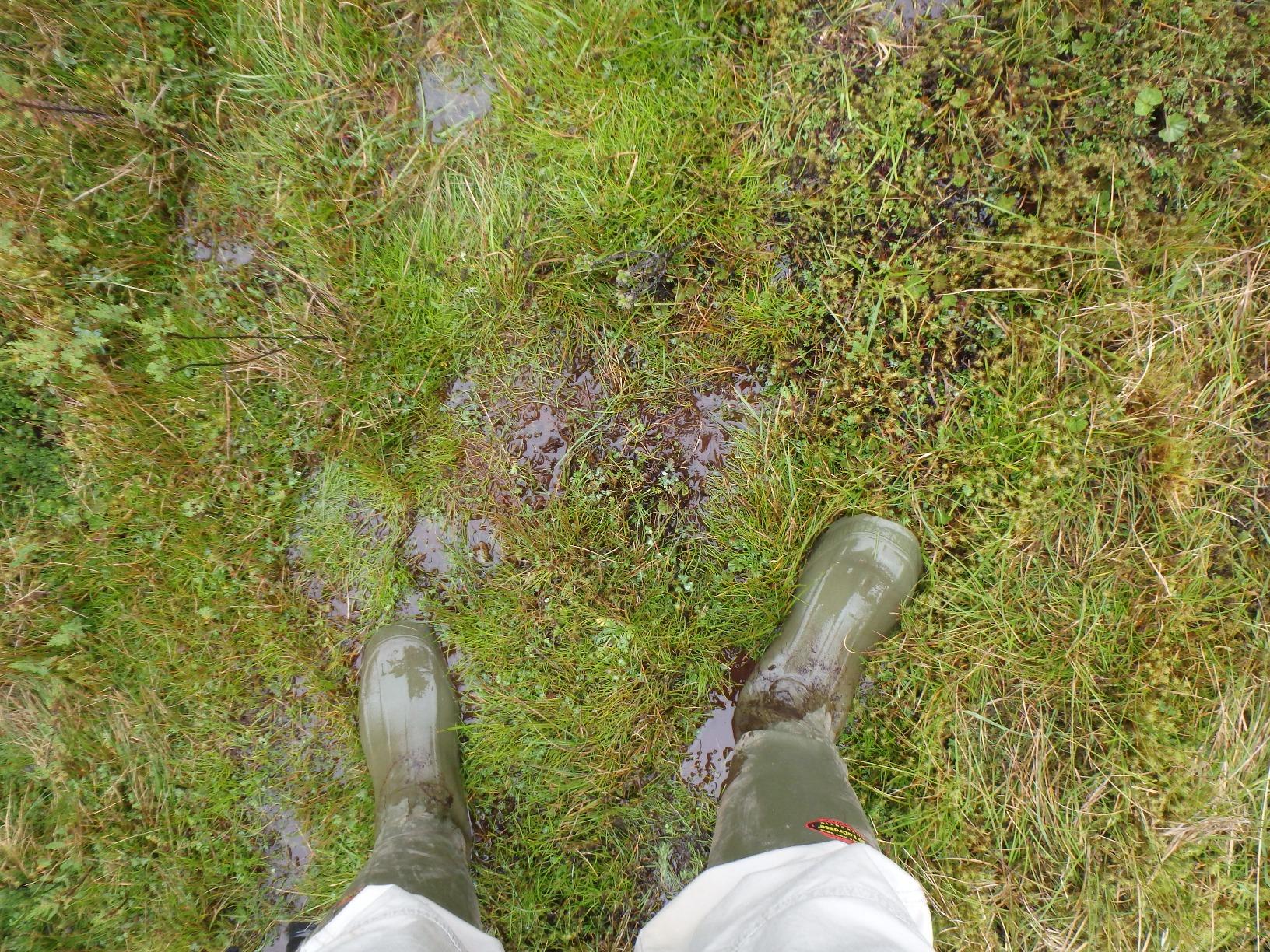
The Grange is the boot for terrain where water is the main event: flooded creek crossings, beaver-pond edges, wet sedge meadows in the first weeks of the season. It is waterproof to a reported height of 18 inches, and the actual shaft measures 16.75 inches.
Nothing about it is subtle. It is a pull-on, knee-high natural rubber boot with a slip-resistant heel outsole, and it does the simplest possible job without creaking or flexing awkwardly.
The innovative ankle fit with an adjustable top strap is the part that keeps it from feeling like a costume boot. You can cinch the top to lock the calf in, which stops that heavy heel-lift shuffle on every step.
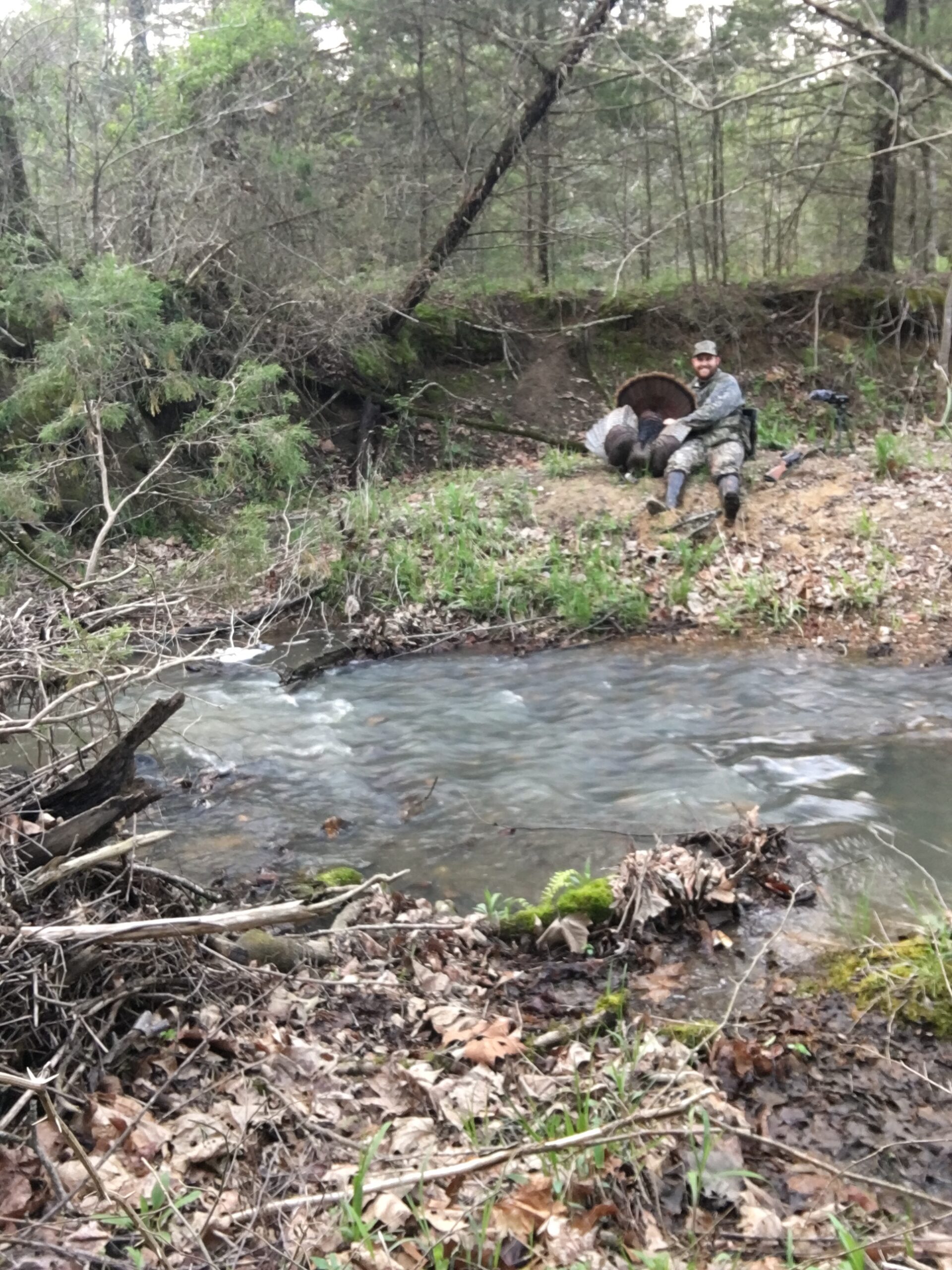
Long-term owners rate the ZXT rubber formula as the reason these last. Boots in this class crack and craze after two seasons; the Grange holds its shape and its tread, and the slip-resistant heel outsole keeps its bite in mud and wet ground.
The EVA footbed underneath takes the sting out of standing on a wet hillside. It is not a memory foam luxury, but it is enough to keep your feet from barking at hour eight.
Will the 18-inch height slow me down?
It adds bulk, and that bulk is the trade. On level ground you barely notice it, but on long climbs through brush the extra material catches on branches and takes more energy to stride through.
Our advice is to reserve it for the water-heavy parts of a trip and change into something lighter for the ridge walk back. That one habit solves most of the complaint.
Is it warm enough for a September elk hunt?
On a moving hunt in mild weather, yes, because the uninsulated build lets heat escape. Sitting still in the cold is a different story, and uninsulated rubber is not a solution for that.
If your elk season opens cold, treat the Grange as a wet-weather tool and add a 400g insulated leather boot to the bag. More on that pairing below.
4. MUCK Apex Mid Zip Ankle Boot – Best for Quiet Upland Work
Men’s Mossy Oak® Breakup Country™ Apex Mid Zip Ankle Boot, Brown, Size 9(M)
Side zip for easy entry
Dual density insole
Odor control footbed
EVA midsole
Pros
- Side zip makes it easy on and off
- Comfortable in wet grass all day
- Waterproof with good mud grip
- Durable over hundreds of miles
Cons
- Runs large so most size down
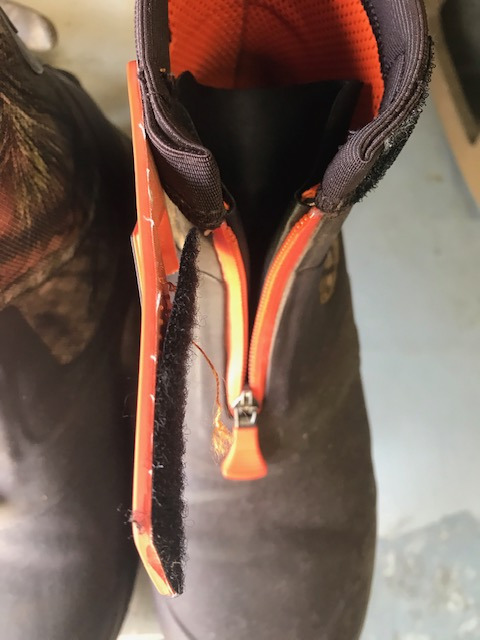
- Side zip can snag with use
- Less ankle coverage than tall boots
The Apex is the quietest, lowest-profile option here. Ankle height and a side zip make it behave more like a trail shoe than a hunting boot, which is exactly what you want when you are covering miles of grass before first light.
The velcro stretch collar cinches the top so debris stays out, and the scree collar is a small inner ring that stops grit and burrs working their way down to your foot over a long day.
Waterproofing is the real strength. Owners put these through wet fields, puddles and mud and report dry feet, and the EVA midsole underneath keeps the boot light enough that the weight fades after the first mile.
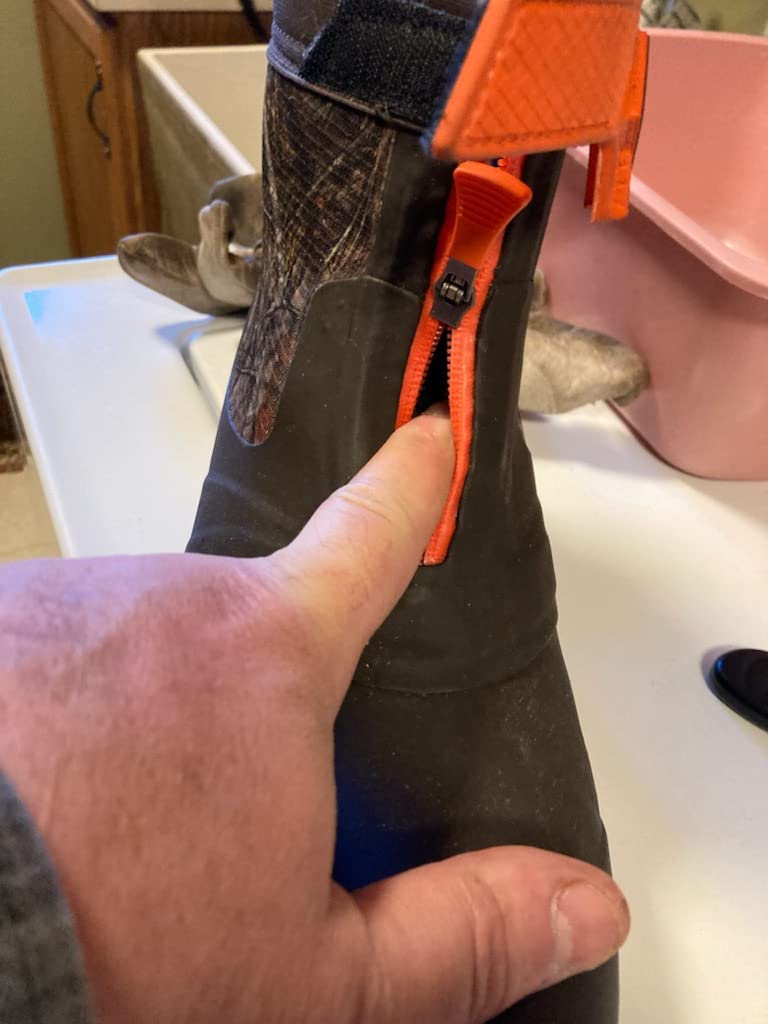
Foot odor gets a dedicated fix in the bioDEWIX footbed insert with NZYM for odor control and moisture management. That sounds like marketing until you spend September in boots and find the thing you notice most is whether your feet smell at the truck.
Durability is the other strong theme in the reviews. Several owners report hundreds of miles with no sole separation, which matters more for a low boot than it does for a tall one, because there is no shaft to take the abuse.
How does the sizing run?
Large. The overwhelming advice is to size down, and that is the opposite of the Edgewater Classic two slots up. Same brand, opposite direction, which is worth remembering before you order.
The double density insole gives you enough cushion that the boot will not feel loose once you size correctly, so there is no need to compensate with a heavy sock.
What do I lose with an ankle-height boot?
Protection. Burrs, rose hips and wet brush find skin above mid-calf, and the ankle gets less support on uneven off-trail ground than a tall boot gives you.
If you are scouting timber, ditches and creek edges, this is not the wrong boot. If you are pushing through shoulder-high dead grass, you will feel every stem.
5. LaCrosse Burly ZXT – Best for Upland Bird and Early Turkey
LaCrosse Alphaburly Pro 18″ Hunting Boots for Men Featuring Waterproof Rubber, Adjustable Gusset, and EVA Footbed, Mossy Oak Break-up Country – 10
Natural rubber upper
Active Fit design
Neoprene gusset
Tread for mud and muck
Pros
- Completely waterproof and easy to rinse clean
- Lightweight for a full height rubber boot
- Strong traction in mud and wet ground
- Secure ankle hold
Cons
- Uninsulated so cold limits it
- Feet sweat on long walks
- Heel lining can wear
The Burly ZXT is the early season bird boot. It is quiet, uninsulated, waterproof to the top and light enough that you can work a field edge for six hours without your ankles complaining.
Owners frequently call it the most comfortable rubber hunting boot they have tried, and the reason they give is the Active Fit design holding the ankle in place rather than letting the foot slide inside a loose shell.
The adjustable neoprene gusset takes different calf sizes in stride, so a boot that fits one hunter also fits his hunting partner. That is a small design choice with an outsized effect on a two-person trip.
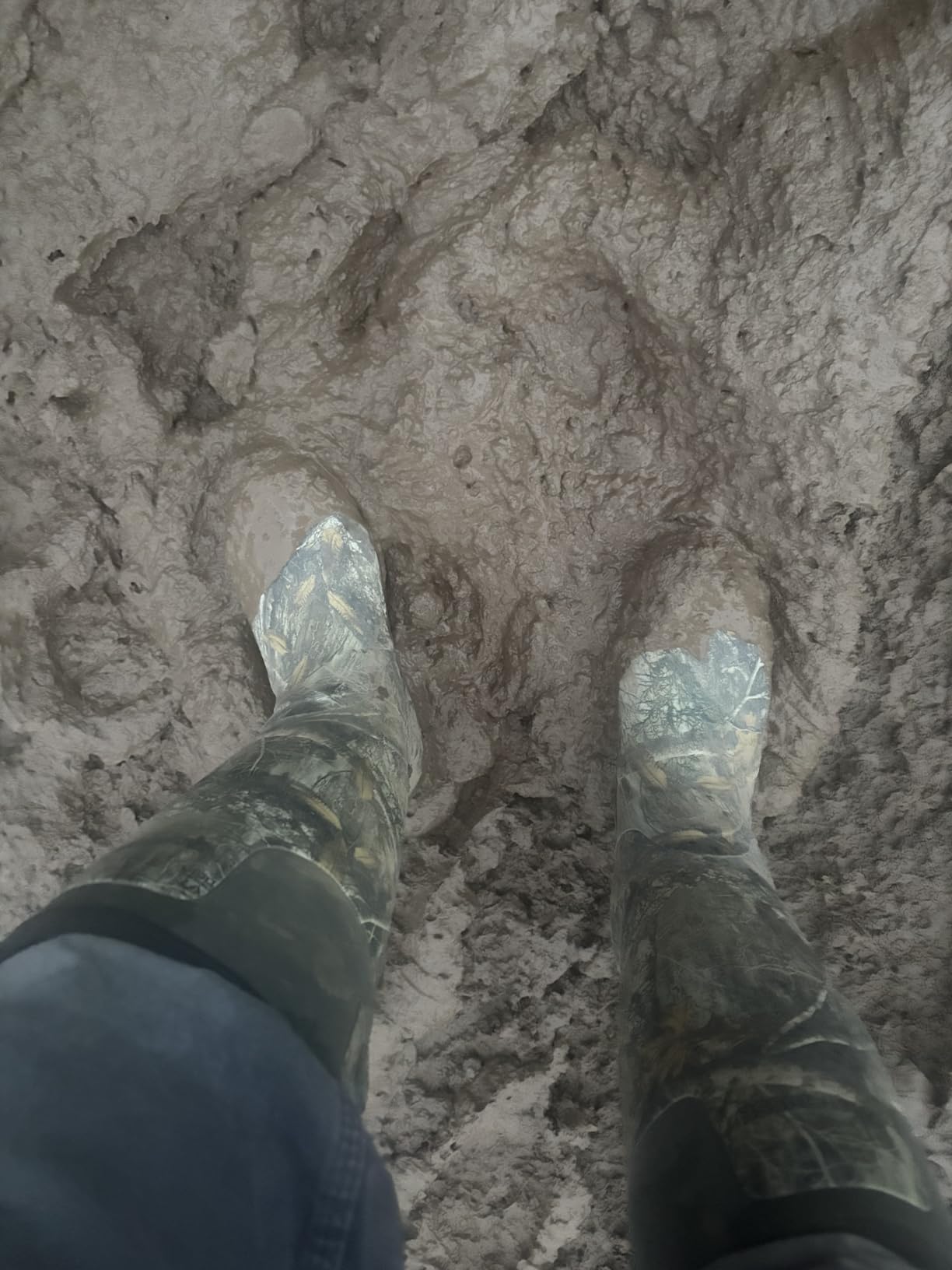
Traction is where the Burly separates itself from a generic rubber boot. The tread patterns are shaped for mud, muck and snow, and owners who hunt wet ground report the difference immediately on a slope that would have had you sliding in a flat-soled alternative.
Cleaning is trivial. Rinse the boots, hose the mud out, set them somewhere warm. There is no membrane to dry out slowly and no leather to feed, which makes the Burly the easiest boot on this list to keep in rotation.
How warm is it in early fall?
Uninsulated means your own warmth is the insulation, and that works well while you are walking. Owners specifically cite early-season deer and turkey seasons as the conditions these were built for.
When you sit, stop moving. Without a heavy sock in the boot, an uninsulated rubber boot loses heat quickly, and the rubber amplifies the chill from the ground.
Is it quiet?
It is quiet for a boot. It is not barefoot quiet, and hard ground will announce you, but it is a marked improvement over a stiff lugged outsole with a hard midsole that rings on rock.
If your whole approach depends on sound, walk the last hundred yards in socks and move slowly. The boot is not the bottleneck there.
6. Irish Setter Trailblazer 7 Inch – Best Resolable Leather Work Boot
Irish Setter Trailblazer 7″ Mens Hiking Boot, Brown, 10.5
Full grain leather
UltraDry waterproof
Removable EVA footbed
Goodyear welt sole
Pros
- Built like a work boot
- Resolable Goodyear welt construction
- Aggressive grip in mud and snow
- Comfortable with almost no break-in
- ScentBan odor control
Cons
- Runs small so size up a half size
- Wide sizes still narrow for very wide feet
- Lace length runs short
- Stiff for the first few wears
The Trailblazer is the only boot on this list built to be resoled, and that single fact changes the economics of a leather hunting boot. A Goodyear welt platform means a cobbler can put a fresh outsole on it instead of you buying new.
Owners use words like work boot and logging, which tells you the build. Full grain leather over UltraDry waterproof construction on a Bulls-Eye Air Bob carbon rubber outsole with an aggressive lug pattern.
It is also the most comfortable leather option out of the box here, with reviewers reporting almost no break-in at all. That is unusual for a welted boot and it means you can buy it a week before the season and hunt in it.
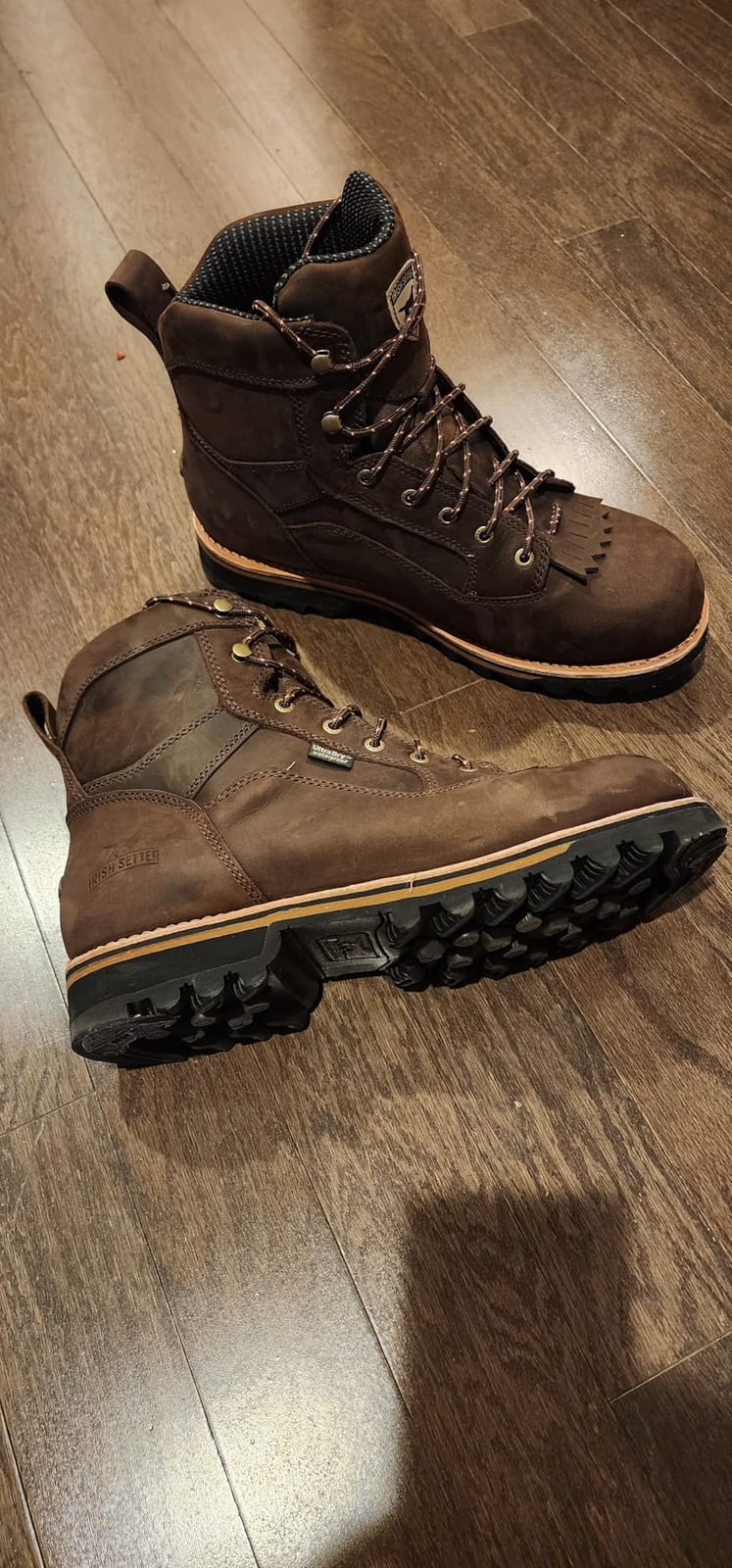
Waterproofing holds up in standing water, mud and snow according to owners, and the removable EVA footbed means you can swap in your own insoles later or pull them out to dry the boot overnight.
The seven-inch height is a deliberate middle ground. It covers the ankle and most burr territory without the bulk of a full high boot, and it moves quietly enough for deer country.
What size should I order?
Up a half size. The most common piece of advice across hundreds of reviews is to size up, because this boot runs small out of the box while leather still has to break around the foot.
Wide sizes help but do not fully solve it, and the laces are a little short, so plan on swapping in a longer set. The removable footbed means you can take out the stock insole and add a thin orthotic if you need volume.
Is it too warm for September?
No, because there is no insulation in it. It is a breathable-feeling leather boot with a waterproof membrane, which makes it a genuinely good early season choice for deer country and scouting.
The one condition where it loses is wading. Leather this tall is fine in damp ground and bad in a full-day creek soak, so keep the rubber boots in the vehicle.
7. Danner Pronghorn 8 Inch 400G GORE-TEX – Best Cold Front Big-Game Boot
Danner Pronghorn Men’s 8″ 400G Waterproof Hunting, Brown – 11
400G PrimaLoft insulation
GORE-TEX lining
Vibram SPE midsole
Vibram Pronghorn outsole
Pros
- GORE-TEX keeps feet dry in wet and snow
- 400g PrimaLoft delivers real warmth
- Vibram outsole and shank give stable traction
- Full grain leather built to last
Cons
- Heavier and stiffer than rubber options
- Insulation exceeds what mild early days need
- Wide sizes available but fit runs firm
Honest framing first: 400g PrimaLoft is more insulation than a warm early season day needs. We include the Pronghorn because the first week of big-game season regularly turns cold, wet and windy, and this is the boot that handles that without a second layer.
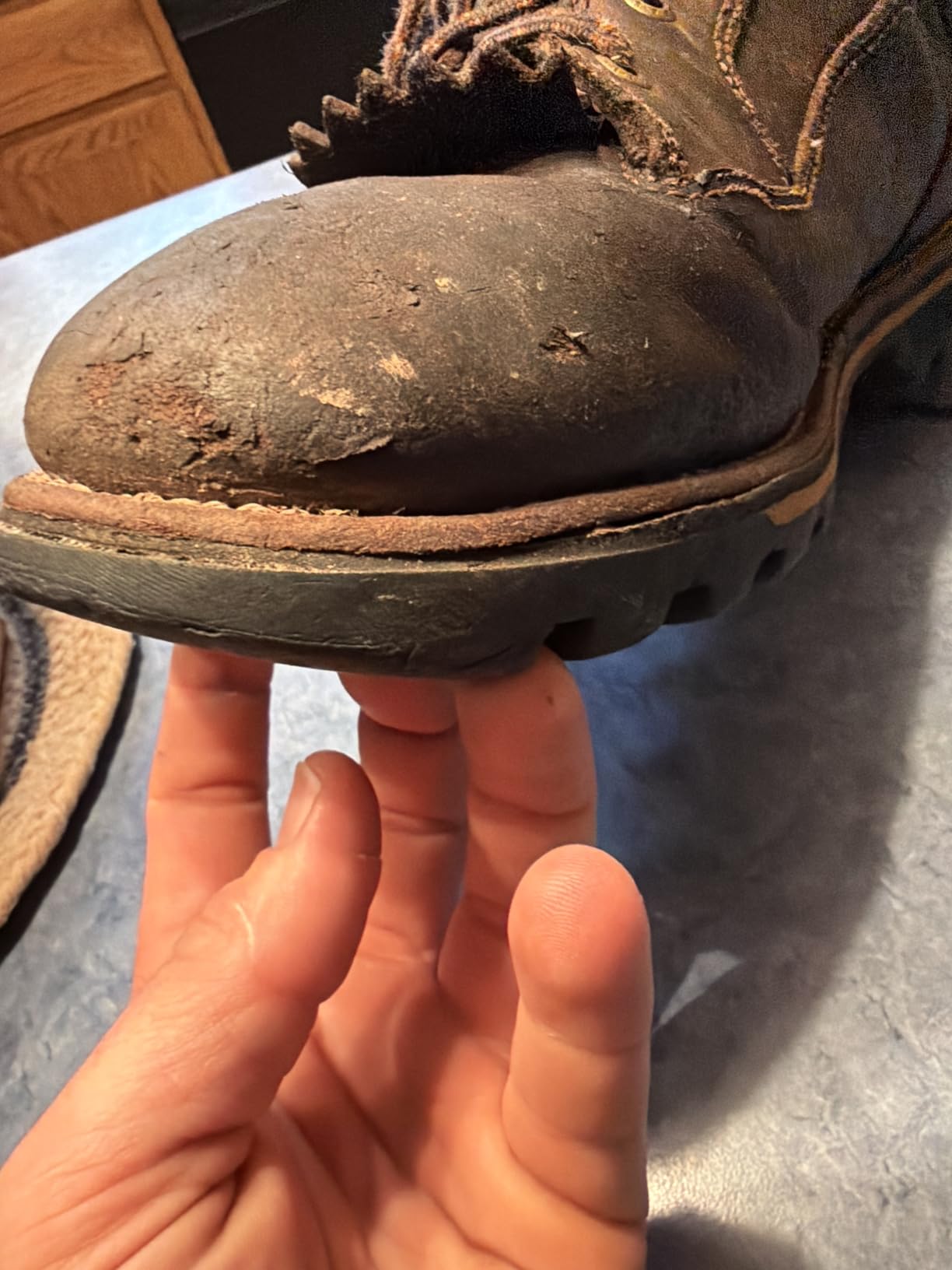
The build is serious. Full grain leather selected through six quality tests, a GORE-TEX waterproof lining, a Vibram SPE midsole for cushioning and a Terra Force Next platform with internal and external shank systems.
Those shank systems are the part owners notice on long climbs. A shank stiffens the midfoot so you do not flex the whole boot with every step, which is where a lot of foot fatigue on a loaded approach comes from.
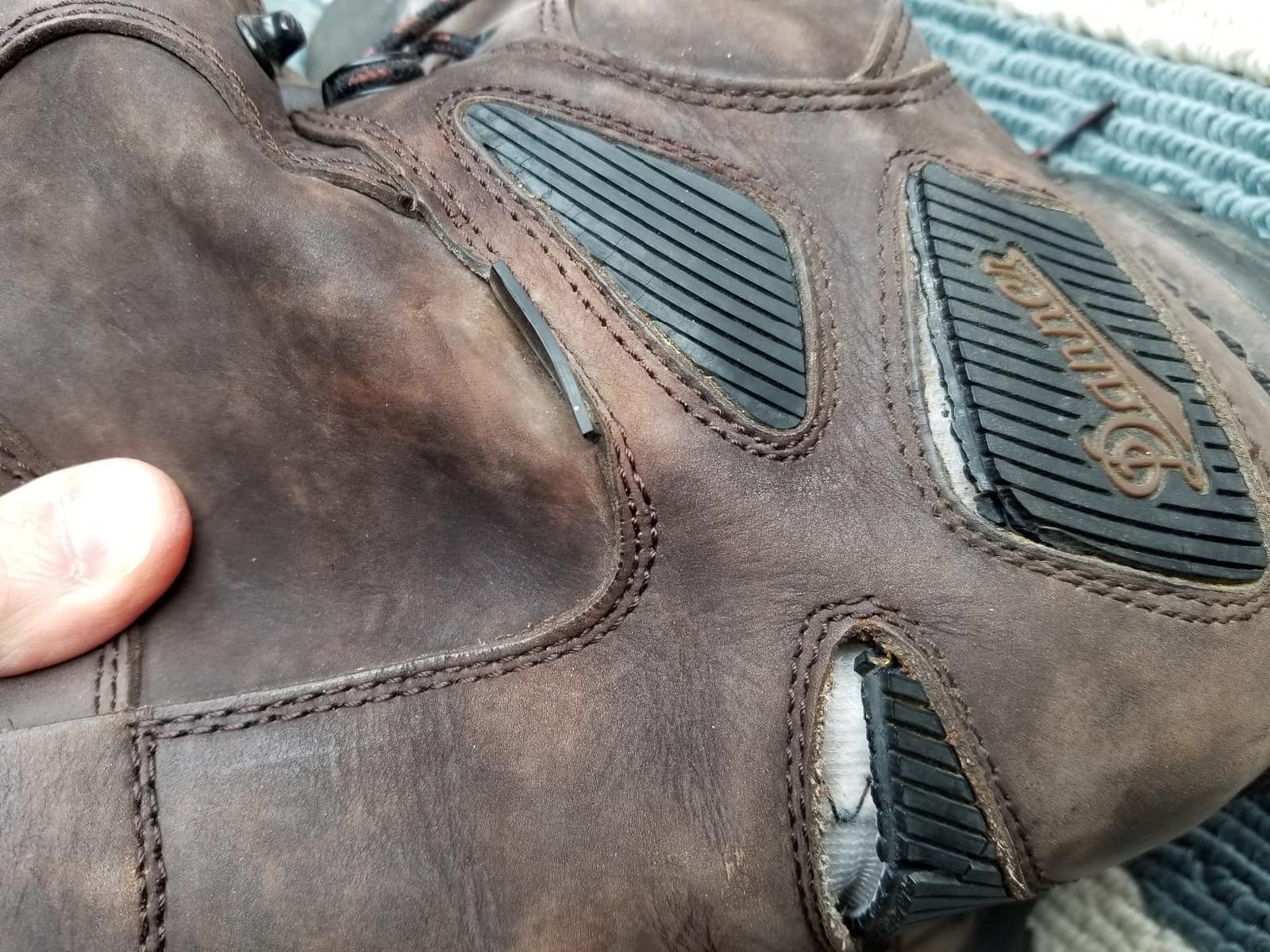
The Vibram Pronghorn outsole is the traction answer for wet rock, mud and snow. Owners who have put these through a full big-game season report them still holding an edge afterward, and the wide size options help if you have fuller feet.
What you pay for that durability is weight and stiffness. This is the heaviest leather option in the roundup, and reviewers who bought it for mild weather describe the 400g as more warmth than they could use.
How much insulation do I actually need in early season?
Less than most boots in this category carry. In the 50-70F band that defines early fall, an uninsulated or neoprene-lined rubber boot is usually the more comfortable choice because it moves heat out instead of trapping it.
The Pronghorn earns its place when the forecast drops into the 30s or when you will be sitting still in the cold. At that point 400g stops being overkill and starts being right.
Who should skip it?
Skip it if your early season is a moving hunt in mild weather and you care about weight on your feet. Two pounds of pack weight is real, and a lighter boot buys you a better day at mile six.
Do not skip it if the season opens with a hard cold front, if you will glass and sit at first light, or if your route crosses snow. That is exactly what it was built to do.
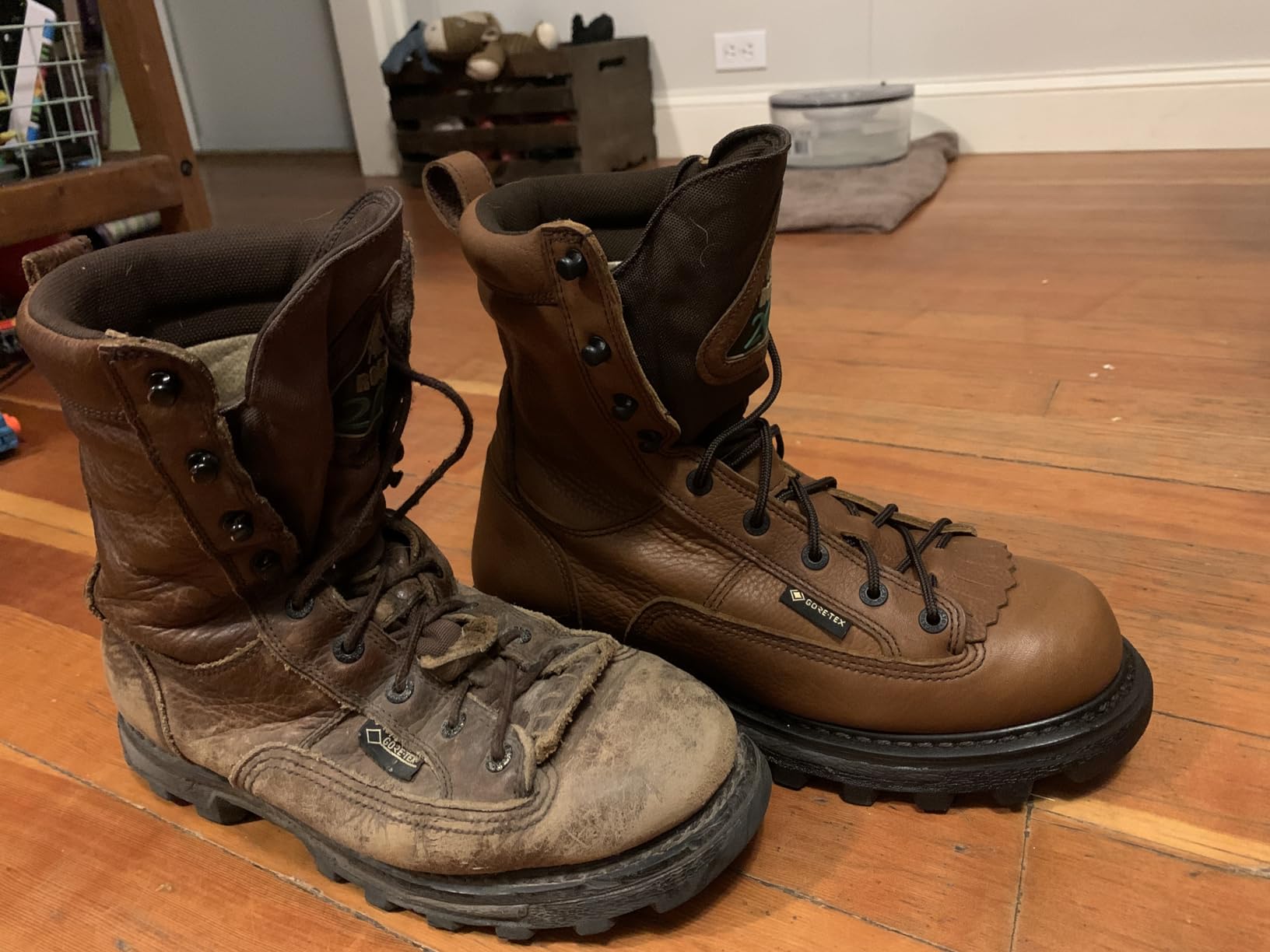
8. ROCKY Bearclaw 200G GORE-TEX – Best for Brush, Snow and Creek Work
ROCKY BearClaw GORE-TEX® Waterproof 200G Insulated Outdoor Boot, Brown, Size 11.5(ME)
GORE-TEX waterproof build
BearClaw 3D outsole
Removable brush guard kiltie
200g insulation
Pros
- Gore-Tex holds up in standing water and mud
- Excellent traction on slick ground
- Durable leather that cleans up well
- Quick break-in with no major hotspots
Cons
- Bulky and heavier than lighter boots
- Top eyelet can rub the ankle
- Insulation choice matters for the temperature
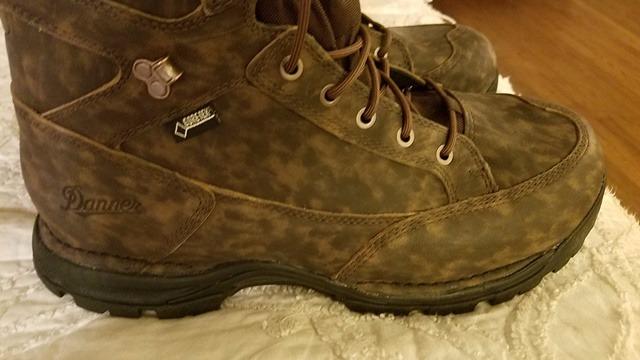
The Bearclaw is the thick-skin option, and its removable brush guard kiltie is the feature no other boot here has. That kiltie sits at the top of the foot and breaks up debris and water before they get behind the laces.
Owners with multiple pairs of the Bearclaw rate them as exceptionally waterproof in mud, snow and creek conditions. The BearClaw 3D outsole with Rocky 3D welt construction is built for severe wet ground rather than pavement.
At 200g this is the closest thing on the list to a true shoulder-season boot: light enough for a moving hunt, warm enough to sit through a cold morning in the 40s.
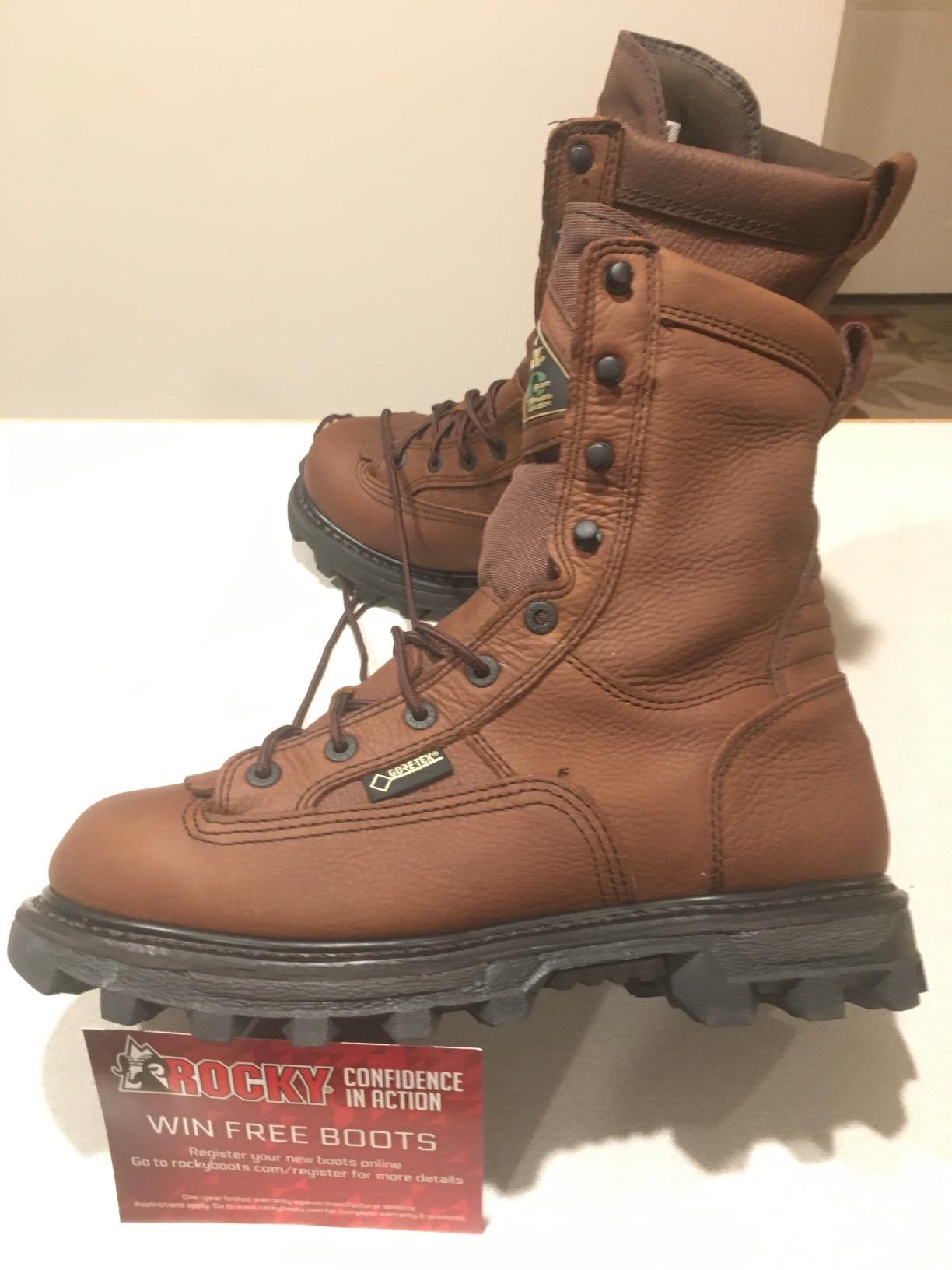
The listed weight is 5.2 pounds per pair for a size 10, so this is the heaviest boot we tested. That number matters: the Bearclaw is a walking boot you notice, and on a long approach you will feel it by the afternoon.
Durability is the payoff. Owners report durable leather that cleans up and looks new again, plus a break-in that is quick and free of the hotspots that plague big leather boots.
What does the 200g rating mean in real temperatures?
It sits right at the top of the early season band, which means it is a good answer for cooler morning temperatures without turning into a sauna once you are hiking hard.
Below roughly 45F while moving, 200g is right. Below roughly 30F while moving or any temperature while sitting still, you want 400g or more.
What are the drawbacks?
The bulk is the main one. It is a wide, heavy boot, and buyers who wanted something nimble for timber work find it cumbersome in brush and on stairs.
A few owners also report the top eyelet rubbing the inside of the ankle during break-in. It fades with wear, but on a first long day it is worth lacing around the top eyelet rather than through it.
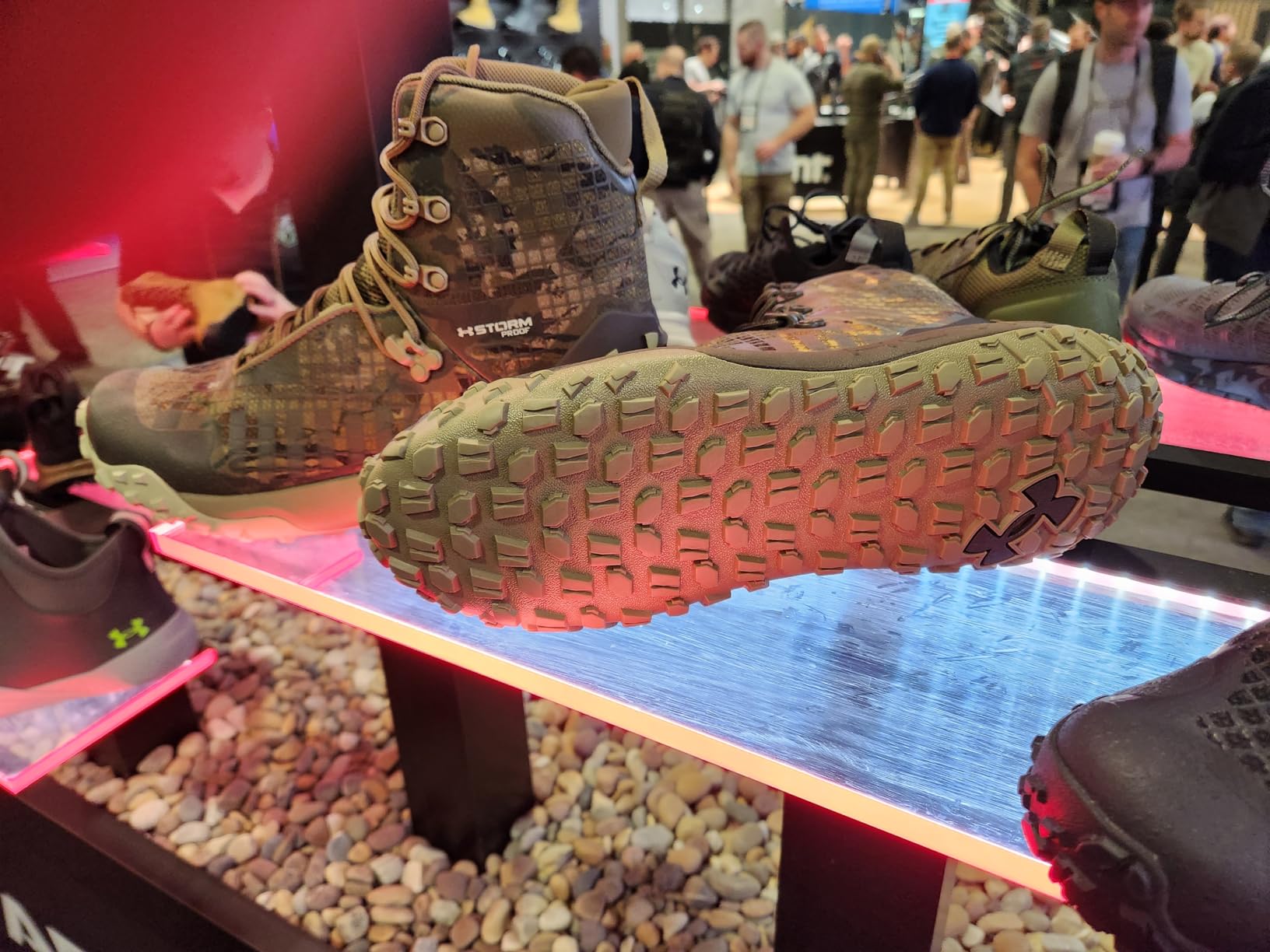
9. Under Armour Whitetail HOVR Dawn 2.0 – Best for Speed and No Break-In
Under Armour Whitetail HOVR Dawn 2.0 Waterproof Boots Ridge Reaper Camo Barren/Bayou/Khaki Size 8 3025573-900018
Lightweight athletic build
Waterproof with moisture wicking
Aggressive traction tread
Supple ankle support
Pros
- Light enough to cover long distances fast
- Comfortable from day one with no break-in
- Good waterproofing in wet and icy ground
- Supple ankle support for big-game trips
Cons
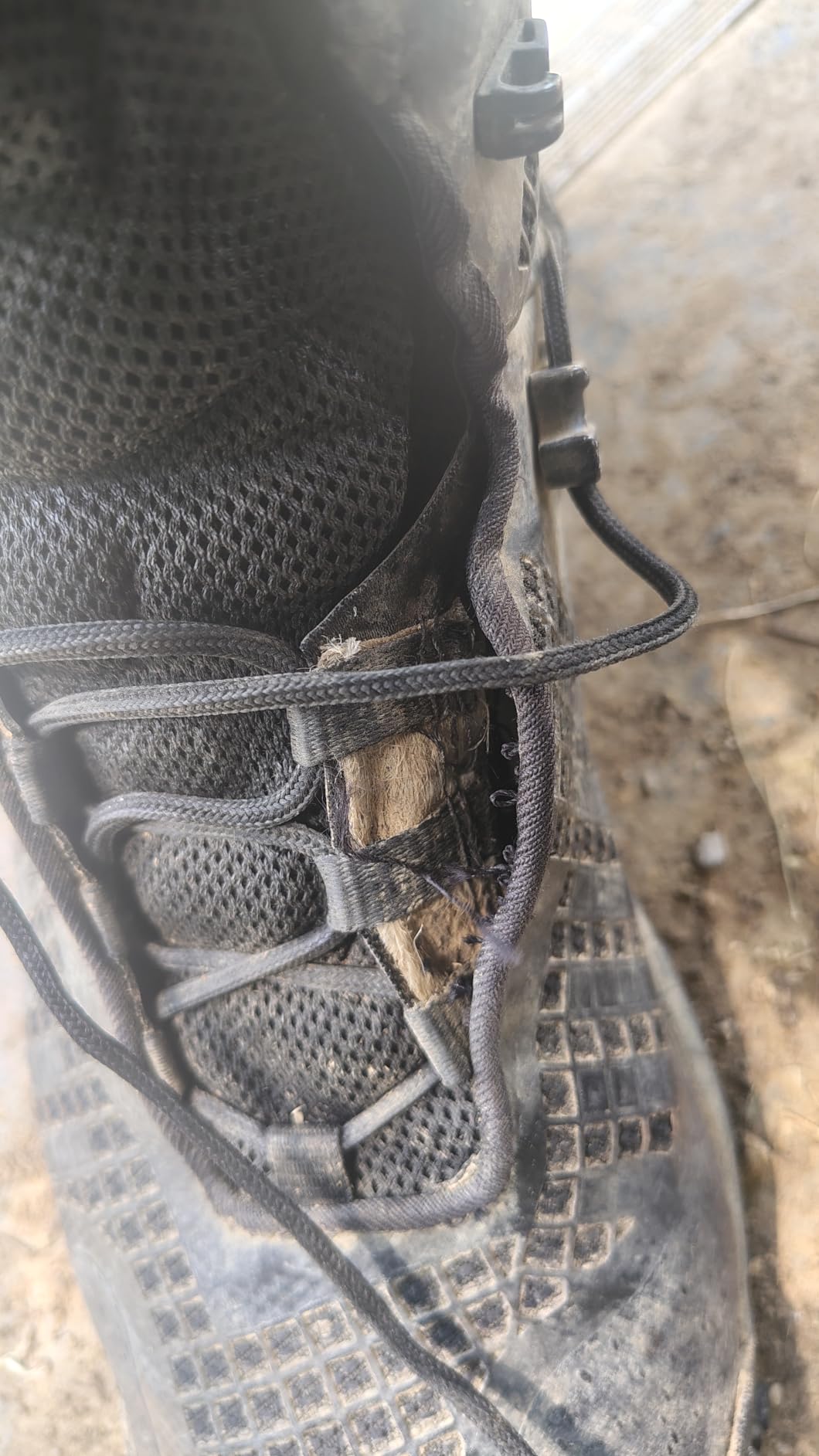
- Factory insoles are widely criticized
- Sole separating from the upper for some owners
- Tread favors light trail and urban use
The Dawn 2.0 is the fastest boot in this roundup on foot. It is built light and athletic, and hunters who cover ground at a real pace rather than creeping report covering more country before dawn than they do in a stiff boot.
Owners are near unanimous on one point: it is comfortable from the first wear, with no break-in period at all. For someone whose season starts next week, that is worth more than most spec sheets.
Waterproofing holds up in wet and icy conditions for most users, and the supple ankle support is well suited to elk and big-game trips where footing changes constantly.
Now the honest part. Two complaints come up repeatedly: the factory insole is widely criticized and many owners replace it, and a smaller number report the sole separating from the upper after heavy use.
The tread is also tuned for light trail and urban surfaces rather than rough terrain. On gravel logging roads it is excellent. On loose rock and off-trail hillside it feels less composed than a Vibram outsole.
Should I replace the insole?
Yes, and most owners do. The stock insole is the first thing to go, and swapping in a simple moisture-wicking footbed is a few dollars of work that changes how the boot feels over a full day.
That single fix also resolves most of the comfort complaints in the reviews, which is why it is worth doing before your first trip rather than after.
Is it durable enough to trust?
It depends entirely on your terrain. On maintained trail, road approaches and mixed light terrain, owners report solid service. On sharp rock and shale, the separation reports start showing up.
If your route is mostly walk-in, this is a great early season boot. If you are crossing scree and broken rock, spend up on a welted leather boot like the Trailblazer instead.
10. LaCrosse Alpha Agility 17 Inch – Best Late-Season Deep Water Boot
LaCrosse Men’s Alpha Agility 17” Waterproof Hunting Boots with Traction Agility Outsole, Premium Natural Rubber Construction, and EVA Footbed, Mossy Oak Bottomland – 10
17 inch rubber over neoprene
1200g Thinsulate insulation
Jersey knit liner
Kick-off heel plate
Pros
- Excellent waterproofing in deep water and mud
- Heavy rubber armor resists branches and rock
- Easy on and off even when wet
- Fits larger calves better than most
Cons
- 1200g is too warm for mild early season
- Runs large so most size down
- Neoprene at the heel can wear through
Be clear about what this is. The Alpha Agility carries 1200g of Thinsulate rated from minus 60F to 30F, which makes it a late-season boot. We include it because some early seasons open cold, and no other boot here holds that much warmth in deep water.
That combination, 1200g inside a waterproof 17-inch shaft, is rare. You can wade a creek in January without your feet going numb, and most other 17-inch rubber boots cannot say that.
Owners describe the Alpha construction as hand-laid natural rubber over neoprene, and the practical effect is a boot that seals at the calf without the stiff seam line that cracks in cheaper boots.
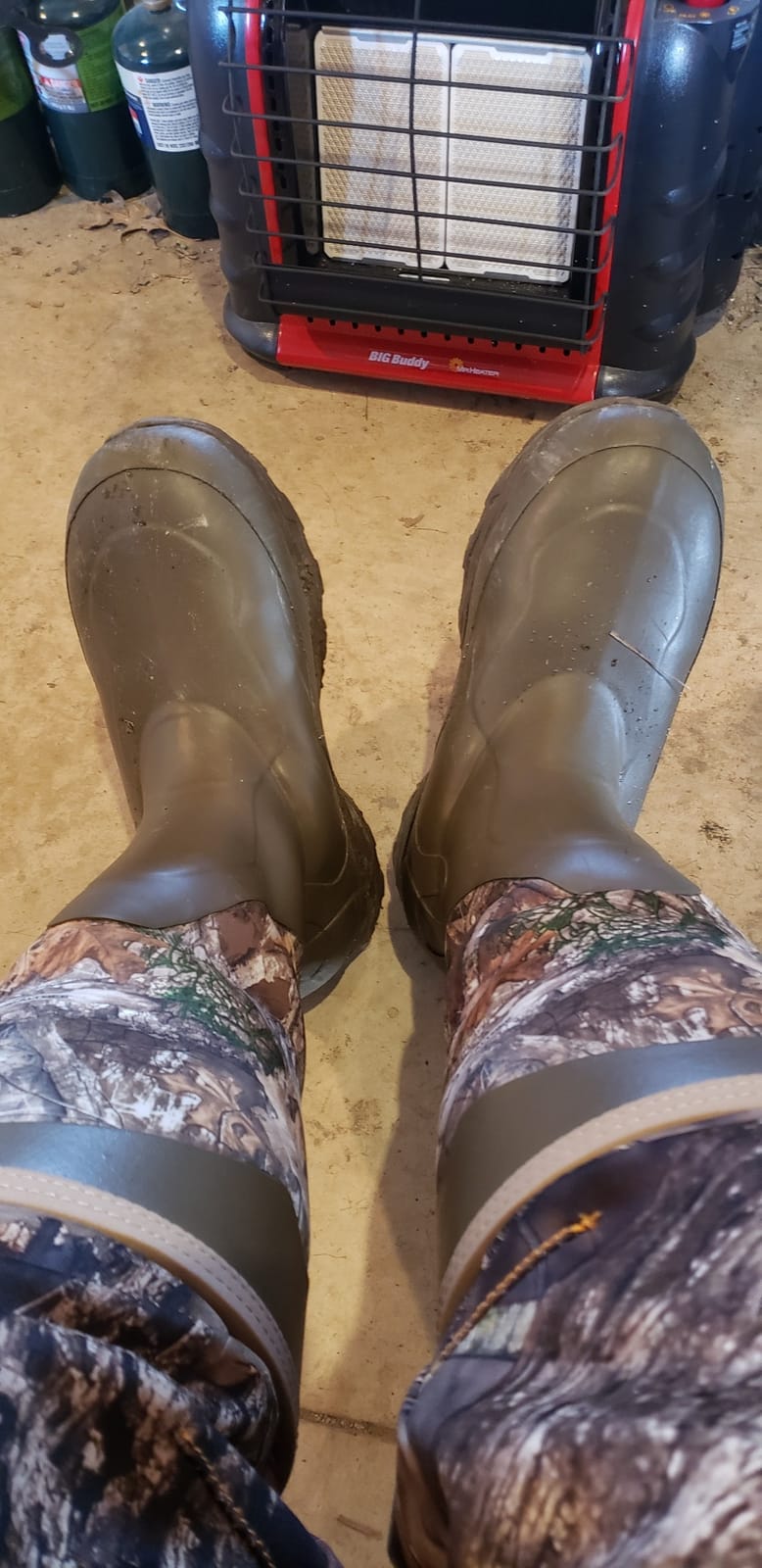
The kick-off heel plate is the feature you will appreciate most in the field. Wet boots are miserable to pull off, and a heel plate you can lever against a rock or a truck bumper turns a two-minute struggle into a five-second one.
The quick-drying moisture wicking jersey knit liner matters more than it sounds. Wet neoprene takes days to dry; a jersey knit liner pulls water away and recovers faster when you get to camp.
Is it too warm for early season?
Yes, on a moving hunt in mild weather. Reviewers are direct about it: 1200g is too warm for mild conditions, and feet will sweat inside a sealed rubber boot.
The fix is not to force it. Use it for cold water, snow and late-season trips, and put a neoprene-lined uninsulated boot in your truck for September.
How does it fit?
It runs large, so most buyers size down, and it fits larger calves better than most boots at this height. If you have been disappointed by a narrow knee-high, this is the one to try.
Watch the heel. Owners report neoprene at the heel wearing through with heavy long-term use, so check it between seasons and treat a thinning heel as your cue to replace.
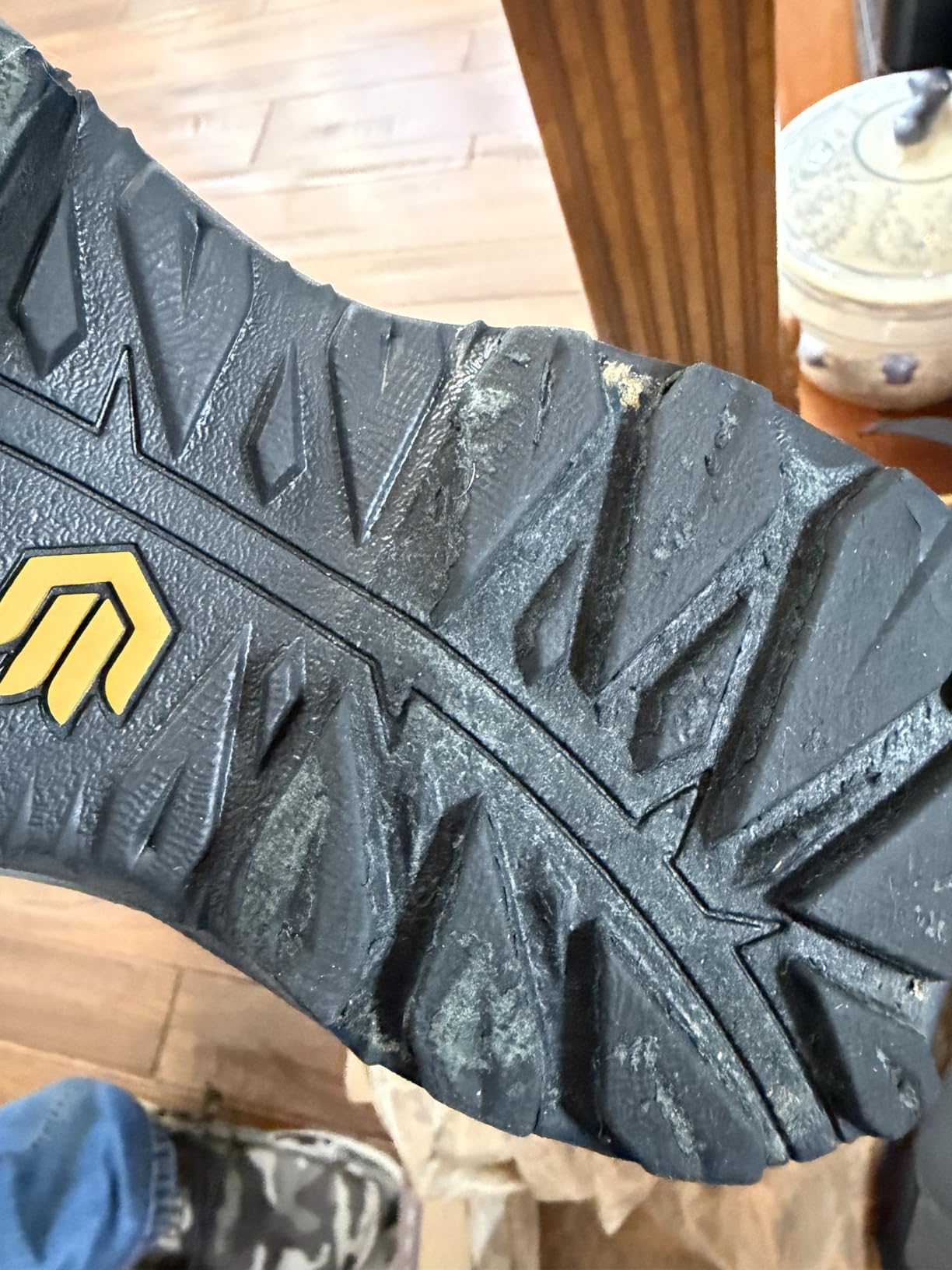
11. Dryshod Shredder MXT – Best for Flexible Wading
Dryshod Men’s Shredder MXT Hunting Boots Rubber Hunting Boot Size 10
Active comfort range of minus 10 to 75F
MXT outsole with high sidewalls
Steel shank and tuck board
Rubber over neoprene
Pros
- Lighter and more flexible than other rubber boots
- Keeps feet dry in creek crossings and dew
- No sole separation after years of daily wear
- Easy to slip on with pant legs
Cons
- Runs shorter than a true knee-high in larger sizes
- Weaker side-to-side slip resistance
- Not warm enough for a cold tree stand
- Heavier than some competing rubber boots
The Shredder MXT exists because most rubber hunting boots are built like pipes. This one is designed to flex, and owners who wade miles of creek and river report that difference as the reason they keep buying it.
The published Active Comfort Range runs from minus 10F to 75F, which places it squarely across the early season band and a good deal past it. That is a wider window than most boots in this roundup claim.
Construction is rubber over neoprene with a nylon lining, plus a steel shank and a sturdy tuck board sub sole. The shank is what keeps the boot from folding under you on slick river rock.
How does it handle a creek crossing?
That is the design brief. Owners cite creek crossings and heavy dew as the cases that justify the boot, and they report dry feet and no sole separation after years of daily wear.
It is also good for wading and insect protection, which matters in the low country where the mosquitoes are as thick as the brush.
What about traction?
The aggressive natural rubber tread has robust lugs and high void areas, which is exactly the geometry you want for shedding mud and gripping wet ground.
One caution comes up repeatedly: side-to-side slip resistance is weaker than front-to-back. Going downhill on a muddy slope can surprise you, so take those descents slowly.
12. Irish Setter Terrain 10 Inch – Best for Cold Tree Stands
Irish Setter Terrain 10″ Mens Hunting Boot, Mossy Oak/Brown, 8.5
400 gram insulation
Flatline outsole with TPU shank
UltraDry waterproof
CuShin comfort tongue
Pros
- Warm enough for low 30s with insulated socks
- Waterproof in snow and wet conditions
- Lightweight and comfortable for long sits
- Wide sizes fit fuller feet
- Mossy Oak camo blends in
Cons
- Even the wide size runs narrow in the toe
- No published width chart
- Stiff at first and needs a break-in
The Terrain is here for the other half of early season, the part that starts at 4am in a stand with no wind movement to keep you warm. Reviewers with long hunting experience rate it as solidly constructed, warm and genuinely waterproof.
With a 400-gram insulation layer, UltraDry waterproof construction over PU coated leather and abrasion resistant nylon, it handles snow and standing wet ground without complaint.
The CuShin comfort tongue is designed to spread pressure across the shin rather than digging into it, which matters a great deal when you are kneeling or standing still for three hours on a ladder.
Is it warm enough to sit in?
Yes. Owners report it handling low 30s temperatures when paired with insulated socks, which is the whole point of a boot in this category.
It is light and comfortable enough to hike in despite the insulation, and that combination is rare. Most 400g boots want to be carried rather than worn.
Does the sizing work for wide feet?
Partly. Wide sizes exist and do help, but even the wide runs narrow in the toe for very wide feet, and there is no published width chart to help you decide.
Stiffness is the other factor. It needs a break-in period, so wear it before the season. Once broken in, reviewers describe the fit as comfortable for long sits and long hikes alike.
How to Choose Early Season Hunting Boots
Early season is not a style, it is a temperature band. Most years it runs from the opening of archery and scouting through the first weeks of deer and elk season, and it usually sits between 40F and 70F. Buy for that band and you will be comfortable; buy for a colder one and you will overheat inside an hour.
Insulation grams translated to real temperatures
Nobody publishes this number, so here it is in plain terms. The conversion below assumes a moving hunt in the early season band, with normal hunting socks and typical September conditions.
Uninsulated, no liner: 60-80F, ideal for cool mornings and moving hunts in mild weather.
Neoprene bootie, 4-5mm: 50-70F, the sweet spot for early season rubber boots because it is warm without insulating.
100-200g: 40-55F, the shoulder-season band, good for cool mornings and cold snaps early in the season.
400g: 25-45F, late season big-game territory, more than most early season days need.
800g and above: below 30F, cold-weather stand hunting, not an early season category at all.
The single biggest mistake we see is buying a 400g boot for a 60F day. Your own foot heat is enough at that temperature, and extra insulation just traps sweat until your socks are damp and your feet are cold anyway.
Waterproofing: membranes versus rubber
Rubber is waterproof by definition. That is its entire advantage and its entire problem, because it also stops sweat escaping. A GORE-TEX or proprietary membrane lets moisture vapor move out through the boot while blocking liquid water from the outside.
For wading, flooded ground and marsh, nothing beats rubber. For walking long miles in cool dew, a breathable membrane keeps your feet drier over time, which in practice reduces blisters more than any sock choice.
Our guide to LaCrosse hunting boots covers the rubber side in more detail if you are building a wet-weather kit, and our insulated rubber picks make sense if your early season opens cold.
Fit, sizing and socks
Try every boot at the end of the day, in the socks you will actually hunt in, with the foot fully loaded. Feet swell over a day of walking, and a boot that fits in the morning can feel cramped by the afternoon.
Sizing is brand specific and it is not intuitive. The Edgewater Classic Mid runs loose and needs a half size up. The Apex Mid Zip and the Alpha Agility run large and need a size down. The Irish Setter Trailblazer runs small and also needs a half size up. All three are in this roundup.
Socks matter as much as size. Thick hunting socks add volume, so buy your size with socks on and keep a spare pair in the pack. Blisters in the first mile almost always trace back to fitting boots in thin socks.
Shaft height, sole and terrain
Shaft height is a protection dial. Ankle height gives you speed and quiet on open terrain and leaves you exposed to burrs and brush. A ten-inch high covers calf-level brush. Knee-high boots are for water and tall grass, and they cost you mobility and add weight.
On soles, look for deep lugs with wide spacing for mud, and a midsole with some shock absorption if you will be walking all day. A shank, which is a stiff plate under the midfoot, reduces foot fatigue on long climbs on uneven ground.
Leather versus rubber
Leather breathes better, breaks in over years, can be resoled and stays quiet. Rubber seals completely, works in deep water, needs no break-in and costs far less to maintain.
For early season scouting and deer country, we lean leather or a breathable membrane boot. For marsh, creek edges and wet timber, rubber wins outright. Most hunters own one of each.
Price tiers
A boot in the lower tier handles a rubber duty job well and is a sensible place to start if you are building a kit from nothing. The mid tier adds a welted leather platform and a real outsole you can resole. The upper tier buys you premium membranes, shank platforms and hand-laid rubber that hold up in deep water.
The useful question is not what tier a boot sits in, but how many seasons you expect to get out of it. A resolable welted boot that lasts ten years is cheaper per season than a cheap boot you replace in three.
Do You Need Two Pairs of Hunting Boots?
Most serious hunters end up with two pairs, and the split is not about brand loyalty. It is about the fact that early season and late season ask opposite things of a boot: one needs to move heat out, the other needs to hold it in.
The consensus on hunting forums is consistent. On r/Hunting, the common pattern is a lightweight uninsulated boot in September and a 400g insulated boot later in the season. People there also name the Kenetrek Mountain Extreme Uninsulated as the all-round early season workhorse, and recommend the LaCrosse Alpha Burly line for marsh, wet and cold work.
Our version of that setup: a neoprene-lined rubber boot for walking and wet ground, plus a 400g membrane boot for cold mornings and tree stands. That pair covers from a 30F dawn to a 70F afternoon, which is most of what a hunter will meet in a year.
If you can only own one pair, buy for the colder half of your season. You can always strip socks to cool down, but you cannot add warmth to an uninsulated boot at 4am in December.
How to Break In and Care for New Hunting Boots
Rubber and insulated boots need almost nothing. Wear them indoors and on short walks for a week or two, rinse the mud off after every trip, and let them dry at room temperature away from a fire or a heater. Direct heat cracks the rubber and shrinks a membrane liner.
Leather is different. A full-grain welted boot like the Trailblazer can be worn for months before it feels broken in, so start early. Condition it with a light leather treatment after a few weeks of use, and never store boots damp inside a vehicle.
Remove the footbed when the boot is wet and let it dry separately, and take the insoles out overnight if you have a spare pair. Moisture held against the footbed is where odor and early breakdown both start.
If your boots get soaked, stuff them with newspaper or use a boot dryer, and change the paper when it saturates. Our neoprene boot guide covers what to do with wet neoprene specifically.
Frequently Asked Questions
Are uninsulated hunting boots warm enough for September?
Usually yes. In the 40-70F band that defines early season, your own foot heat is enough on a moving hunt, and an uninsulated or neoprene-lined rubber boot keeps you drier and lighter than a 400g boot. They stop working when you sit still in genuinely cold air.
Are GORE-TEX boots too hot for early season?
Only when they carry heavy insulation. A GORE-TEX membrane moves sweat vapor out, so the boot stays drier than rubber, but a 400g insulated GORE-TEX boot will still be too warm for a 60F moving hunt. Uninsulated membrane boots are the better early season choice.
How many grams of insulation do I need for early season hunting?
Between 0 and 200 grams, or no grams at all. Neoprene booties of 4-5mm behave like a light 100g layer. A 100-200g insulated boot fits the cold end of the band around 40-55F. Anything at 400g or higher belongs to late season.
What are the best boots for early season elk hunting?
A waterproof mid-height boot with a neoprene bootie or a breathable membrane works best, because elk hunting means long walks on changing terrain. The MUCK Woody Max and the LaCrosse Burly ZXT suit moving hunts, while the Danner Pronghorn 400G covers trips that open cold.
What is the best hunting boot for whitetail hunting?
For deer country, a leather or breathable membrane boot that stays quiet is the answer, such as the Irish Setter Trailblazer 7-inch. It is waterproof, resolable and light enough to walk all day. If your timber is wet, pair it with a rubber boot for the creek work.
What socks should I wear with early season hunting boots?
Buy a pair of thick wool or synthetic hunting socks and size your boots while wearing them, because socks add volume. Avoid cotton, which stays wet. Bring a spare pair for long days, and use insulated socks if you will be sitting in cold temperatures.
The Best Early Season Hunting Boots Verdict
The MUCK Woody Max is our pick for the best hunting boots for early season, and the reason is simple: it is the only boot here that works on both ends of the opening window. Fleece and a 5mm neoprene bootie keep a cold 45F dawn manageable, the waterproof rubber keeps dew and creek mud out, and owners report multiple seasons of service from it.
For the wet extremes, the LaCrosse Grange 18-inch is the marsh and creek answer, and the LaCrosse Burly ZXT handles upland bird and early turkey work where quiet and light matter more than depth. When the weather turns cold, the Danner Pronghorn 400G and the Irish Setter Terrain 10-inch cover the cold front and the tree stand.
Build a two-boot system: one uninsulated or neoprene-lined boot for moving through the 50-70F opening, one 400g insulated boot for the cold mornings that show up in 2026 more often than the forecast promised. Size both with thick hunting socks, break in the leather early, and you will be comfortable from the first scouting walk to the last stand of the season.