
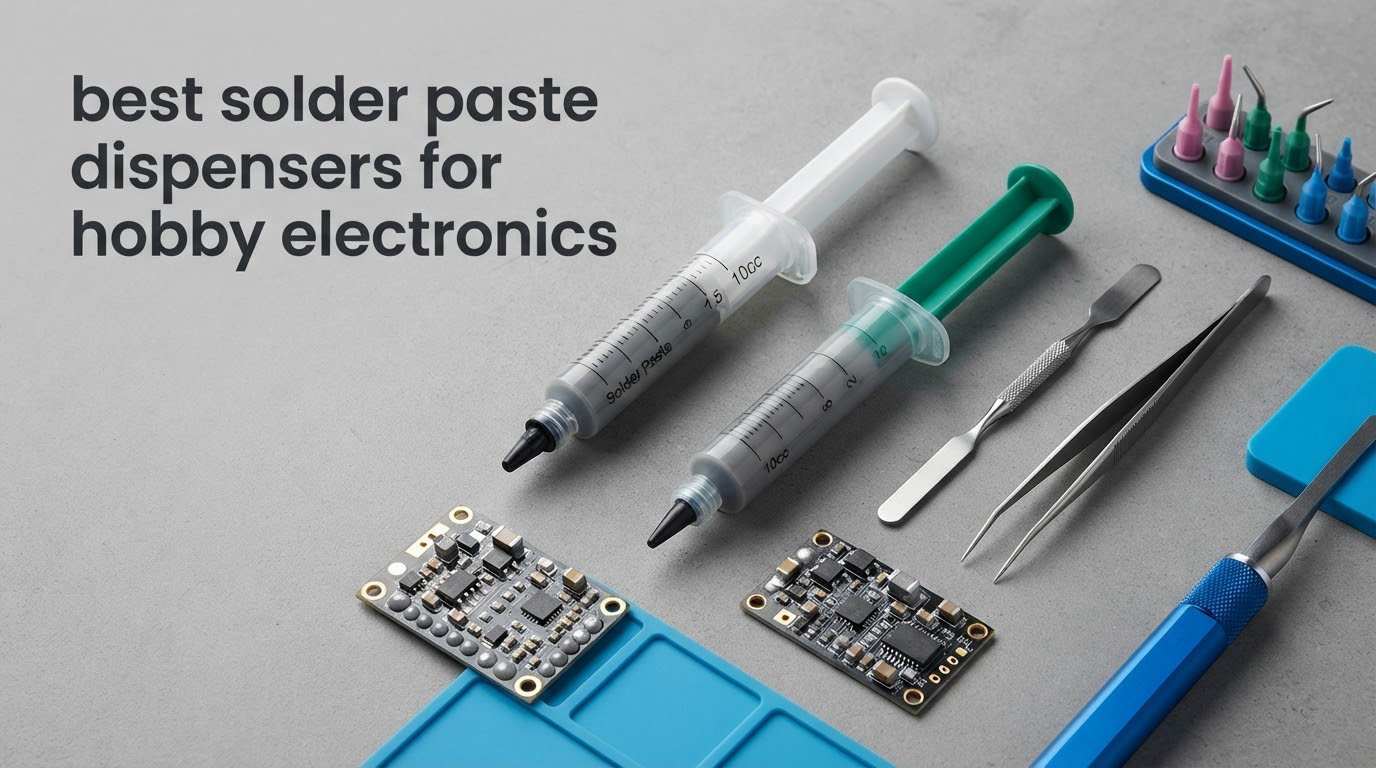
A solder paste dispenser is a hand tool that meters a controlled, repeatable amount of solder paste from a syringe or cartridge onto a PCB pad, often straight through a stencil, so you stop guessing how hard to squeeze.
That single sentence is the whole reason to buy one. Too much paste bridges pads and throws solder balls across the board. Too little leaves cold, starved joints that test fine today and fail in six months. Consistent dosing is the biggest lever a hobbyist has on whether an SMD board works the first time it powers up.
But the honest answer for a lot of people is that you do not need a dispenser yet. If you are only ever soldering through-hole joints, headers, or a single connector, an iron, a jar of flux, and a cheap syringe will carry you a long way. The decision gate we use before recommending anything: you need a dispenser once you are working with SMD pads you cannot reasonably heat one at a time, especially QFN packages, fine-pitch ICs, or repeated small batches where the same board gets built more than once. If that is not you, save the money and start with our soldering station guide instead.
The category is thinner than the shopping results make it look. After sorting through marketplace listings we ended up with nine genuine tools that meter paste or flux, from a refillable crank applicator to a pneumatic barrel dispenser. Two of the nine are flux-first rather than paste-first, and we say so plainly. What follows is the best solder paste dispensers for hobby electronics shortlist, ordered by how confident we are that the tool earns its bench space.
Table of Contents
How we picked
We only counted tools that put a measured amount of material where you want it. Anything listed purely as a solder paste bottle, a stencil, or a heating accessory is out of scope, and so are duplicate listings of the same tool family.
Every pick was then judged on four things. First, dose control, meaning can you make the output smaller or at least keep it repeatable. Second, what it does with the syringes and paste you already own, since 3cc and 10cc barrels are not interchangeable. Third, build and consumables, because a dispenser that needs a proprietary needle every month is a parts problem. Fourth, real owner feedback, which is thin in this niche and we treat as directional rather than decisive.
One more note on accuracy, since vendors never mention it. Manual dispensing cannot match stencil printing from a powered machine, and pretending otherwise would waste your time. These tools exist to make hand work consistent enough to succeed, not to make it production-identical.
Top 3 Solder Paste Dispensers for Hobby Electronics in 2026


Best Solder Paste Dispensers for Hobby Electronics (October 2026)
| Product | Specifications | Action |
|---|---|---|
| Fluxuator Dual Head Refillable Applicator |
|
Check Latest Price |
| LiebeWH K2208 Handheld Extruder |
|
Check Latest Price |
 RuiWing 983A Digital Controller RuiWing 983A Digital Controller |
|
Check Latest Price |
 Meta Online PL01 Metal Plunger Meta Online PL01 Metal Plunger |
|
Check Latest Price |
 Louishy Manual Syringe Dispenser Louishy Manual Syringe Dispenser |
|
Check Latest Price |
 Chip Quik SMDSG10CCR 10cc Gun Chip Quik SMDSG10CCR 10cc Gun |
|
Check Latest Price |
 VMATIC Pneumatic Barrel Dispenser VMATIC Pneumatic Barrel Dispenser |
|
Check Latest Price |
 Louishy BON-102 Flux Pens Louishy BON-102 Flux Pens |
|
Check Latest Price |
 Fhis Transparent Cone Dispenser Fhis Transparent Cone Dispenser |
|
Check Latest Price |
1. Fluxuator Dual Head – Refillable Applicator for Controlled Paste and Flux
Empty Fluxuator Dual Head. Fill with your own paste/flux
Hand crank powered
3.87 ounces
7.2 x 4.72 x 1.77 inches
Two brush head sizes
Pros
- Dual head with a large and a small silicone brush tip
- Twist-dial metering controls how much material comes out
- Refillable so you use your own paste or flux
- Keeps hands and tools clean versus a loose brush
- Compact body that fits in a toolbox
Cons
- Bulky for constant mobile use
- Plastic tube and threaded ends have some flex
- Messy to load by hand
The Fluxuator is the best solder paste dispenser in this list for anyone who works at a fixed bench rather than on a ladder, and it earns top spot on owner feedback volume rather than on a clever mechanism. It dispenses a screw-on refill cartridge with a hand crank, and the cartridge outlet feeds either a large or a small silicone brush head.
Switching heads is the feature I would build around. A small pad or a fine-pitch pin row wants the narrow head, while a ground plane, a connector field, or a scraped-up repair wants the broad one. Having both on the same body means you are not fishing a second tool out of the parts bin every time you change jobs, and the twist-dial on top is what keeps you from flooding a pad when you are tired at the end of a session.
It arrives empty with one refill cartridge and one bristle head, so you supply your own material, which is the right call for anyone who already has a jar of no-clean paste open on the bench. Owners describe it as a worthwhile upgrade over the brush-in-a-tub method, and the critical reviews concentrate on bulk and loading rather than on how well it actually deposits material.
Where it will not help you is fine-pitch SMD deposition. A brush lays material on an area, it does not place a measured dot inside a stencil aperture. For QFN work you still want a syringe and needle, and the honest way to use this tool is flux and blob-style application, or paste for through-hole and connector cleanup where coverage matters more than volume.
The 3.87-ounce body and 7.2 by 4.72 by 1.77 inch package make it a bench item rather than a field tool. Two users describe the plastic tube and threaded ends as having a little flex, so treat it as a careful instrument rather than something to drop in a van.
Who this suits
Anyone doing hand rework, board-level repair, or connector work who finds the brush-in-a-tub method messy and imprecise. It is also the one on this list I would put in a classroom kit, because refilling it is easy and it does not depend on mains power or compressed air.
Who should skip it
Skip it if your board is dominated by fine-pitch pads and QFN packages, because a brush tip cannot feed a stencil aperture. Mobile repair technicians should look past it too, since the bulk drew repeated complaints in reviews.
2. LiebeWH K2208 – Semi-Automatic Handheld Paste Extruder
K2208 Solder Paste Dispenser with 1.3mm Nozzle Handheld Extruder for Flux Glue Dispensing Precision PCB Repair and Electronics Soldering Tool
Semi-automatic output
Two 1.3mm nozzles
2.82 ounces
6.97 x 4.72 x 1.85 inches
Pros
- Fixed semi-automatic output is repeatable press to press
- Two 1.3mm nozzles cover different extrusion needs
- Light 2.82 ounce body stays comfortable in hand
- Load the cartridge then press to dispense
- Plastic shell resists oxidation
Cons
- Output volume is fixed and cannot be tuned
- Lightweight housing feels less premium than metal
- Gauge options are limited
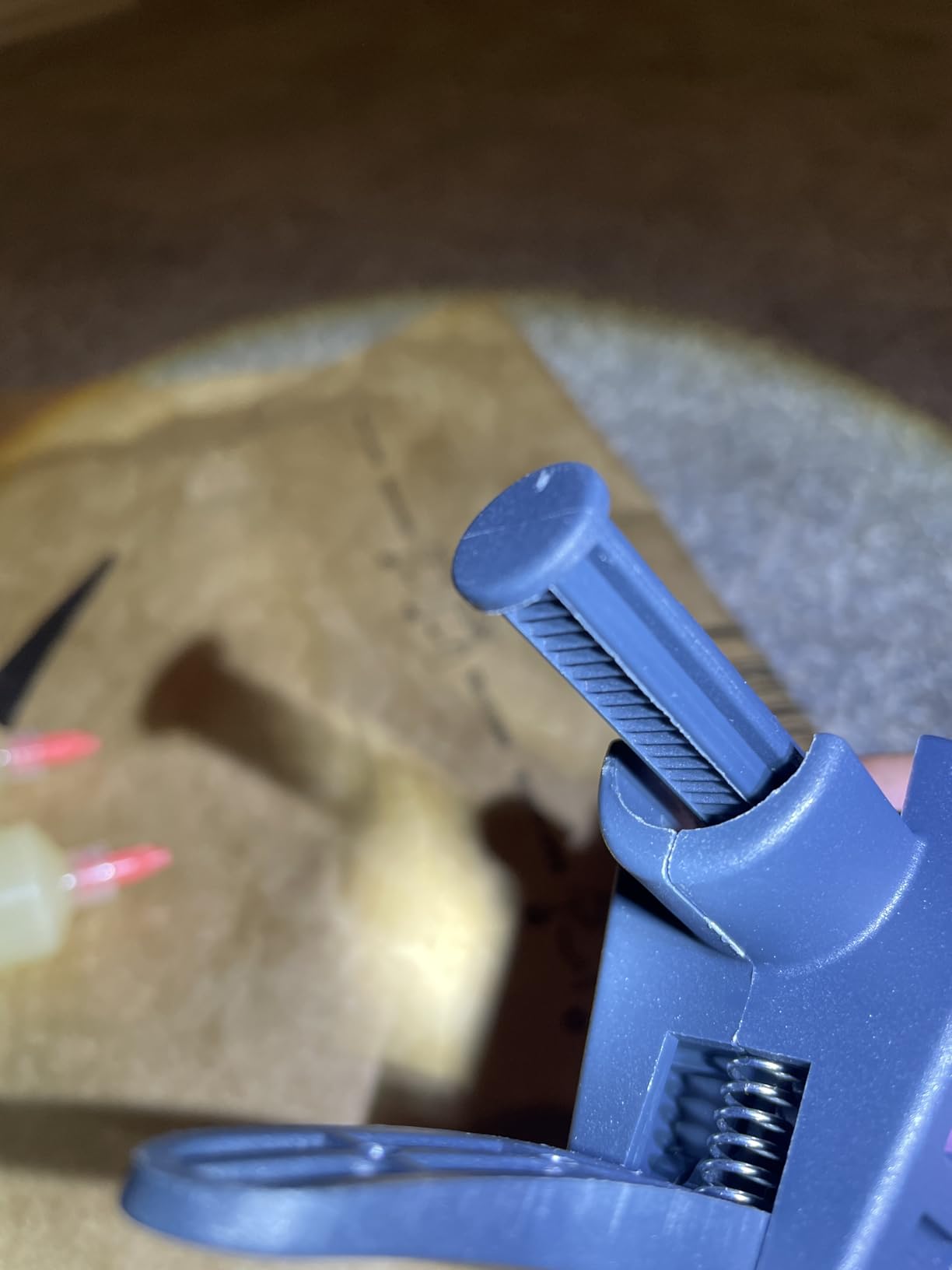
The K2208 is the value pick, and the reason is that it converts a muscle-memory habit into a repeatable one. You load a cartridge, press, and a semi-automatic mechanism pushes a set volume out through a nozzle. Every press gives roughly the same amount, which is the entire point when you are hand-depositing paste onto a series of pads.
Buyers consistently mention the low cost of entry combined with a consistent, repeatable deposit, and the mechanical simplicity shows in the specification sheet. It is a 2.82-ounce handheld tool in an oxidation-resistant plastic shell, with two 1.3mm apertures included and nothing else to figure out.
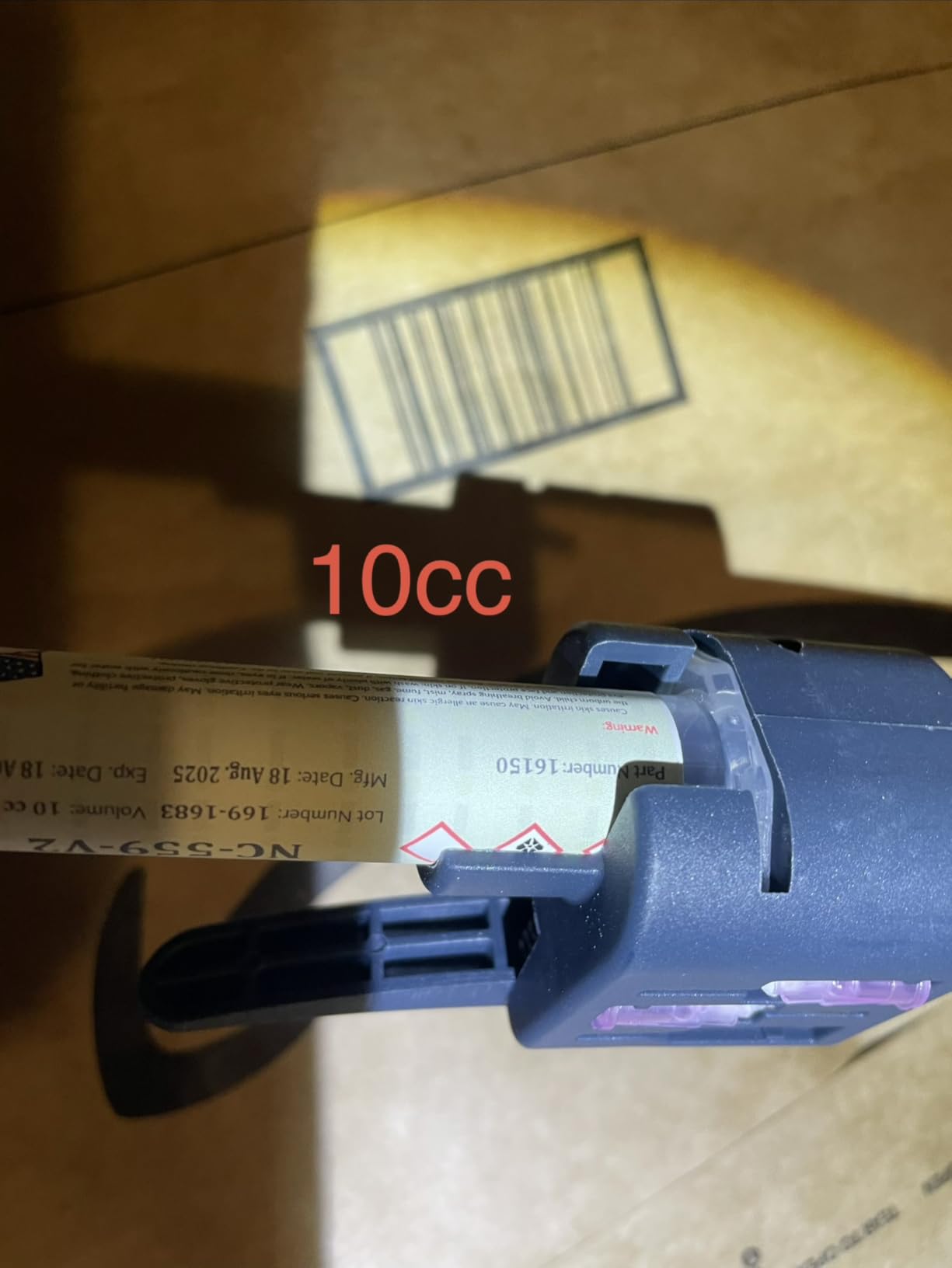
For stencil work on small boards, this is the tool most hobbyists end up buying first, and the fixed stroke is less of a problem than it sounds because the nozzle diameter, not the stroke, sets your deposit size. Swap the 1.3mm nozzle for a finer one and the volume changes with it. That is the adjustment path this tool gives you, and it is a narrower one than a metering controller offers.
The two honest limitations are that the stroke cannot be dialled in and that the housing feels light in the hand compared to a machined aluminium body. Both are tolerable. Neither is a dealbreaker for someone who wants consistent paste on a prototype board this weekend rather than a perfectly tuned process line next year.
Who this suits
First-time SMD builders and anyone moving from blob-and-iron soldering to stencil-assisted work on a limited budget. It also suits teaching, since the press-to-dispense action is easy to demonstrate and there is nothing to plug in.
Who should skip it
Skip it if you need to deposit very small volumes on very small pads, because fixed output with a 1.3mm nozzle is not fine-pitch friendly. Anyone who already owns a machined metal plunger and works stiff paste daily will find this plastic body underwhelming.
3. RuiWing 983A – Digital Controller with 0.01ml Accuracy
RUIWING 983A Auto Glue Dispenser AC 110V Automatic/Semi-Automatic Solder Paste Liquid Adhesive Controller, Digital Display, Adjustable Dispensing Amount & Interval
AC 110V powered
0.01ml dispensing accuracy
Digital timer
Medium viscosity rated
Pros
- Digital timer produces consistent dots at 0.01ml accuracy
- Switchable automatic and semi-automatic modes
- Handles solder paste plus silicone and epoxy
- Anti-drip suck-back plus a force button for blocked needles
- Aluminium alloy body
Cons
- AC 110V only outside North America
- Medium viscosity rating limits very thin pastes
- Not water resistant
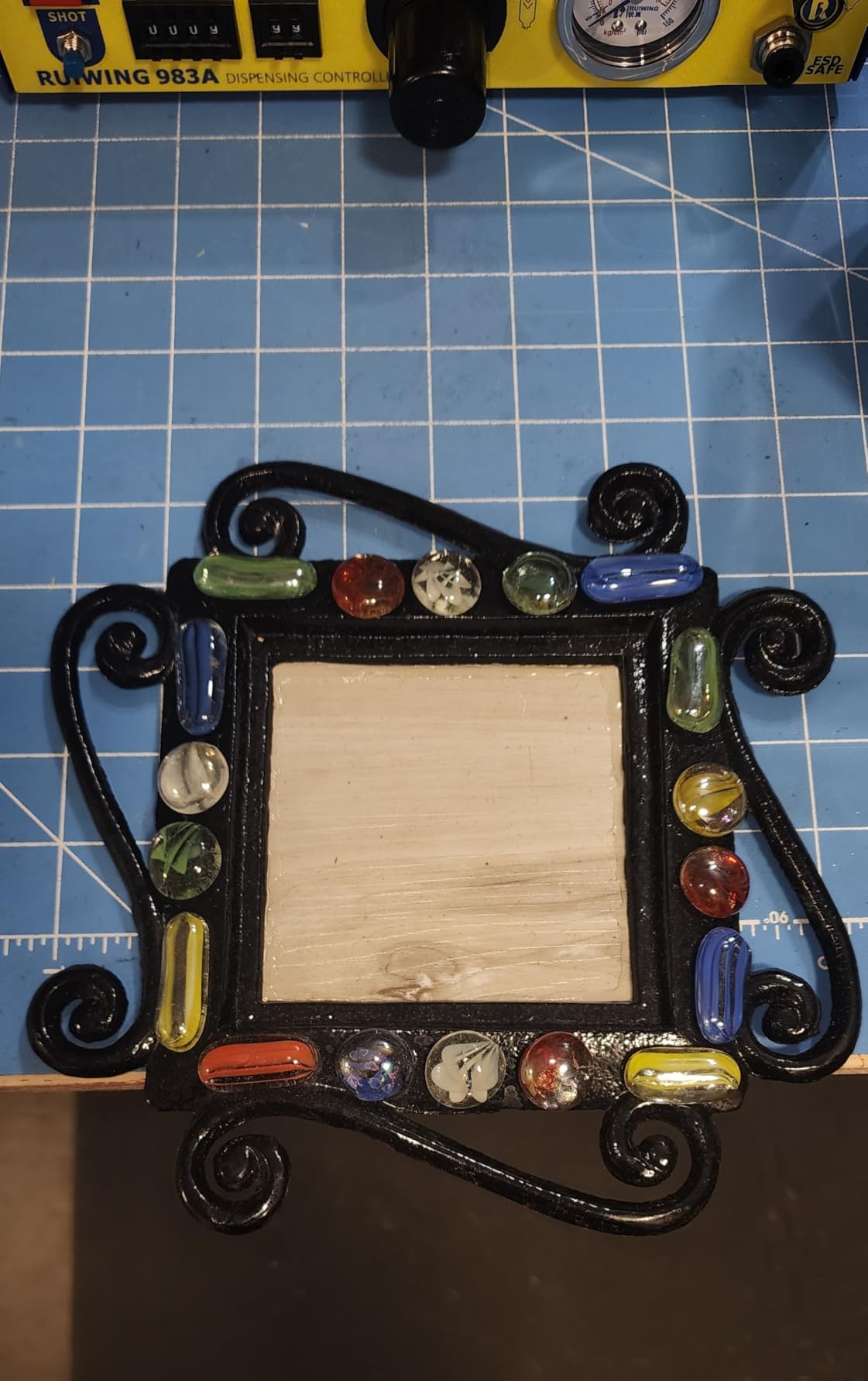
The 983A is the most capable paste metering tool we found, and the spec that matters is 0.01ml dispensing accuracy driven by a digital timer. Instead of relying on hand pressure, you set a dispense time and the controller holds the volume, which is how you get dot after dot that matches.
Owners report repeatable deposits and single out the suck-back feature as the thing that separates it from cheaper controllers. When the needle lifts, the controller pulls material back instead of letting a bead hang off the tip and drop where you did not ask for it. There is also a force button for clearing a blockage, which matters more than it sounds when Type 4 paste starts to set in a needle over a weekend.
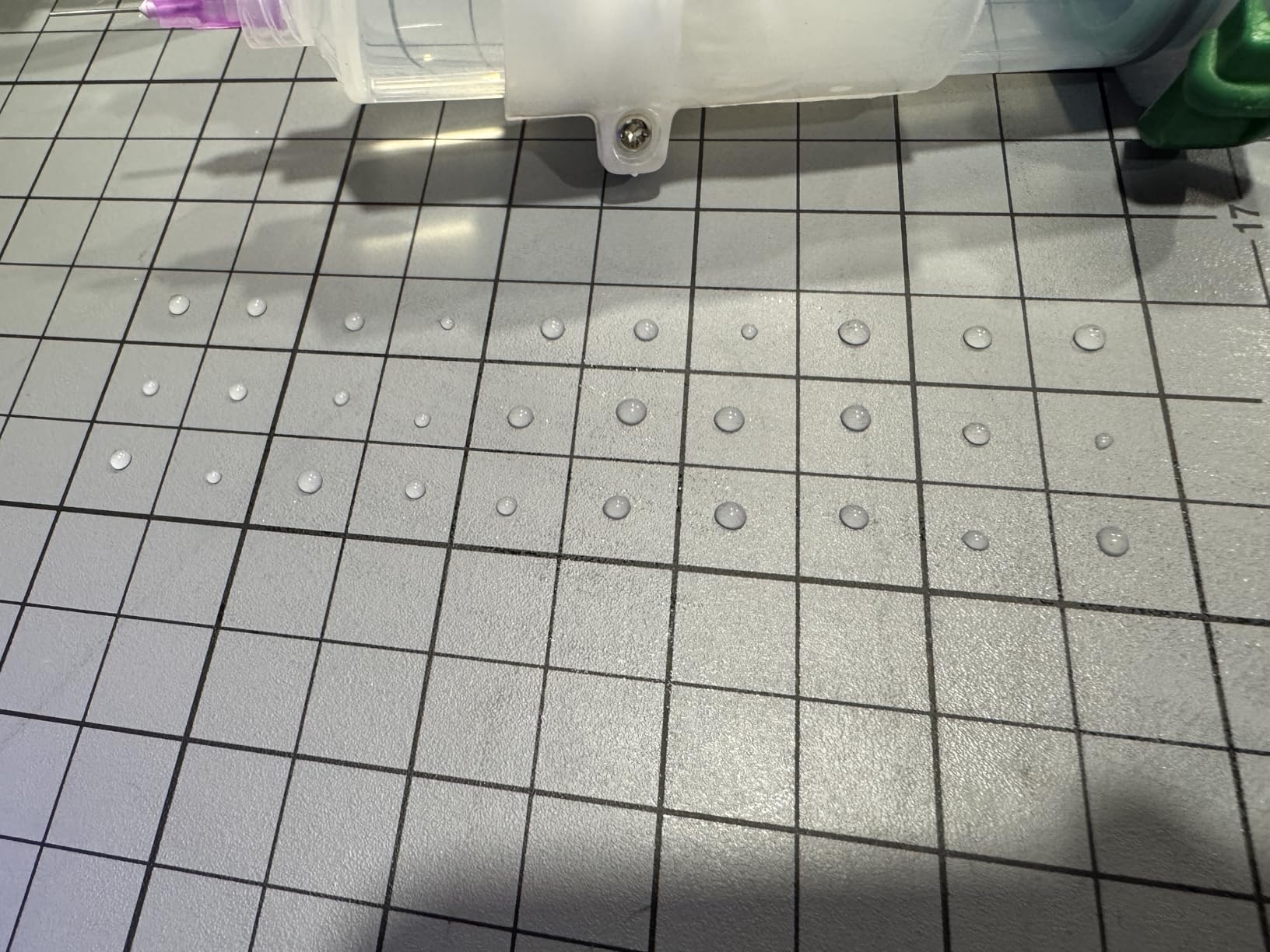
It runs in both automatic and semi-automatic modes, so you can deposit a row of identical dots by holding the trigger and a single pad by tapping it. The box also handles silicone sealant, AB epoxy, and glass glue, which makes it useful on a mixed bench rather than a single-purpose paste station.
The constraints are real and you should read them before buying. It runs on AC 110V, so outside North America you need a step-down transformer. The medium viscosity rating means very thin pastes are outside its comfort zone, and the body is not water resistant, so keep it away from the wash station.
Who this suits
Hobbyists building the same small board repeatedly, where dot-to-dot consistency decides whether a batch of five prototypes all work. It also suits anyone doing LED or sensor module arrays where dozens of identical deposits beat twenty hand-placed blobs.
Who should skip it
Skip it if you solder at a portable bench without mains power, because AC 110V is a hard requirement. Anyone running very low-viscosity Type 5 paste should also look elsewhere, since the medium viscosity rating is the stated limit.
4. Meta Online PL01 – Machined Metal Syringe Plunger
Metal Syringe Plunger Dispenser – Solder Flux – Solder Paste – Mechanic Manual Plunger – Meta online Aluminum Alloy Plunger tool
Aluminium alloy and stainless steel
0.317 ounces
Three needle tips included
Extended length
Pros
- Machined metal gives real leverage against stiff paste
- More consistent deposit size on fine pads
- Extended length empties the syringe to the end
- All-metal body wipes clean and lasts
- Three needle tips in different gauges
Cons
- Retention collar is slightly oversized for some luer-lock bodies
- Cap can pop out without an o-ring groove
- Needs the rubber cup transferred from a plastic plunger
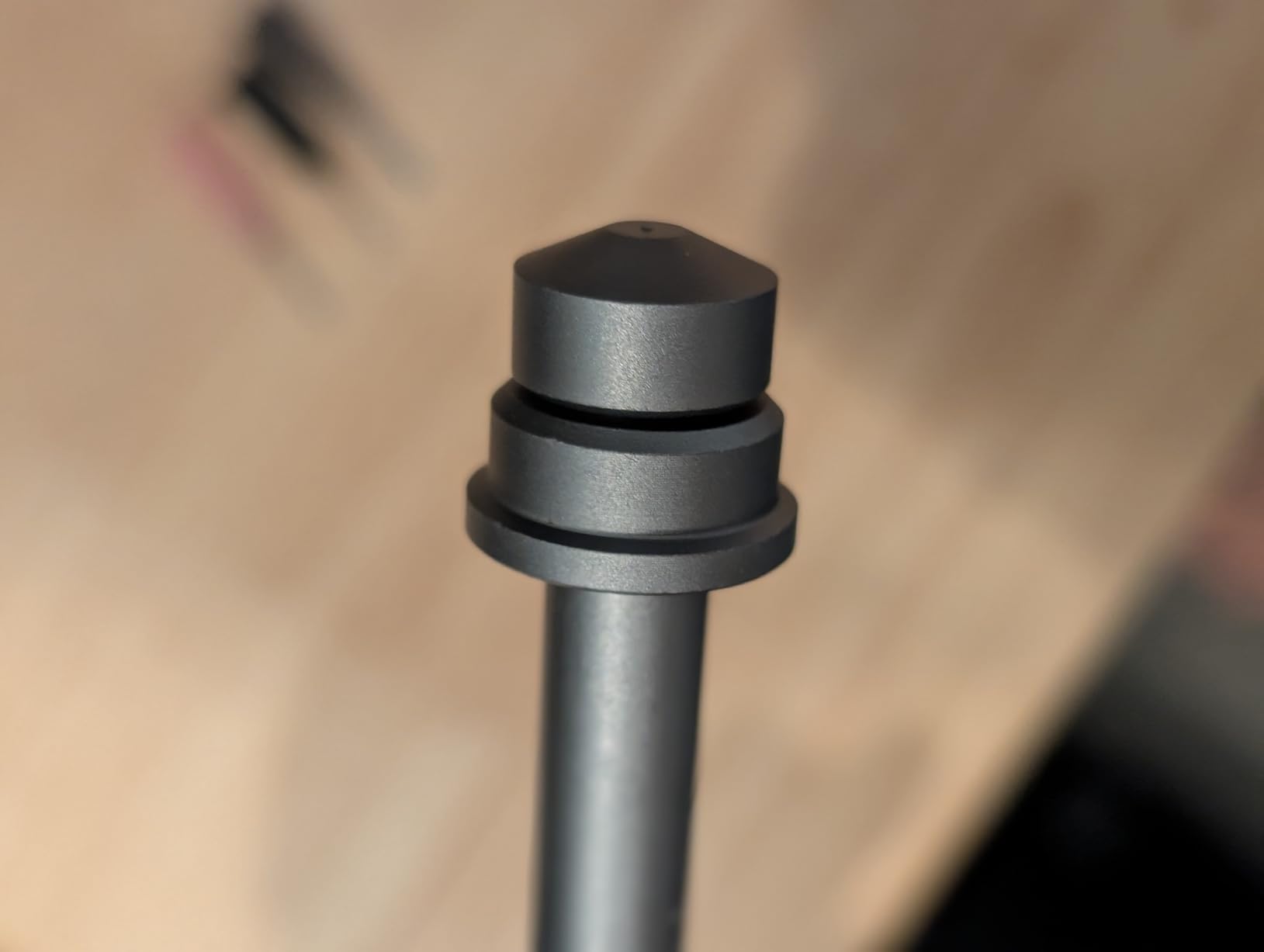
The PL01 is not a dispenser in the mechanical sense. It is a precision plunger that turns a bare syringe into a controllable deposition tool, and for fine-pitch work that approach still beats most plastic gadgets. The 0.317-ounce aluminium alloy and stainless steel body gives you mechanical leverage, so pushing a small amount of stiff paste forward takes a light touch instead of a grip.
Owners doing regular syringe work rate it as a worthwhile upgrade from plastic plungers for exactly that reason, with less hand fatigue across a long session and noticeably tighter control of deposit size on small pads. Three needle tips in different gauges are included, which covers most fine work straight out of the box.
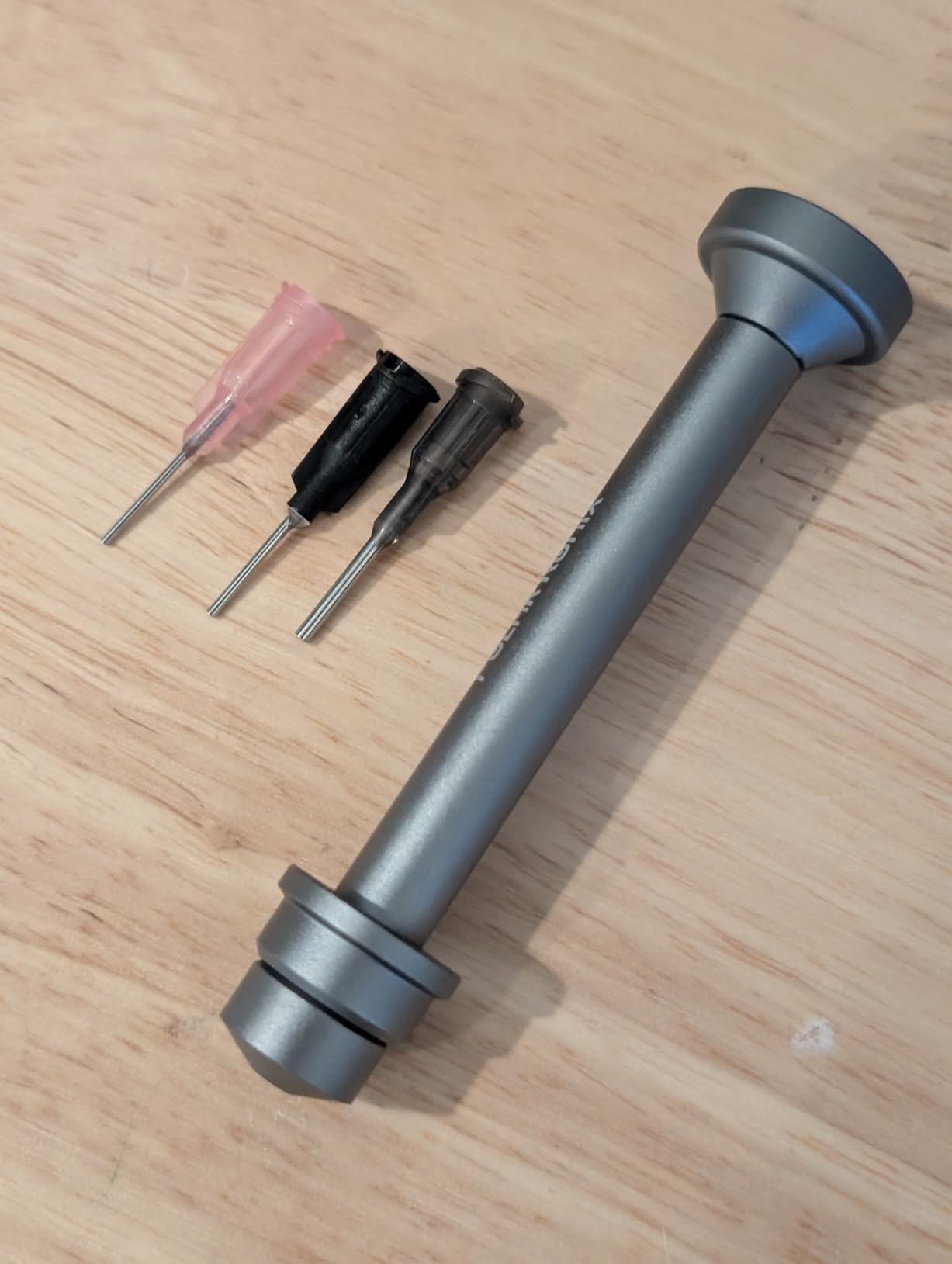
Two design details make it better than a stock plunger. The body is longer than the earlier P08 pattern so the syringe empties to the end instead of leaving a dead centimeter of paste you cannot reach. And because the tool is all metal, cleaning is a wipe with a solvent and a rinse rather than an argument with melted residue bonded to plastic.
The honest complaint in reviews is about tolerances on the mounting hardware. The retention collar is slightly oversized and may not lock firmly into some luer-lock syringe bodies, and the cap can pop out of the tube because there is no o-ring groove holding it. A few users had to rework the plunger assembly themselves.
Who this suits
Hobbyists doing QFN and fine-pitch rework by hand, where a light precise push matters more than speed. It is also the natural companion to a stencil for anyone who already has a syringe of Type 4 paste and just needs better control.
Who should skip it
Skip it if you want a one-piece tool with no assembly, because the rubber plunger cup has to be transferred from a stock plastic plunger. Anyone working on luer-lock syringes with unusual collar dimensions should check fit before committing.
5. Louishy Manual Syringe Dispenser – Lightweight Aluminium Plunger
Manual Syringe Glue Dispenser Solder Flux Paste Plunger BGA Welding Tool
Aluminium alloy
80 mm length
0.74 ounces
Three replacement needle tips
Pros
- Full metal construction rated for long term use
- Light enough to hold precisely for long periods
- Includes the plunger tool plus three needle tips
- Very low cost entry into syringe dispensing
Cons
- Only three reviews on the listing
- Flux and paste are not included
- Random colorway
This is the cheapest route into controlled syringe dispensing, and for a beginner assembling a first SMD board it does the one job that matters. It is a hand-powered aluminium alloy plunger 80 mm long, weighing 0.74 ounces, and the package includes the tool plus three replacement needle tips.
The light weight is the feature rather than a compromise at this level. A heavy tool makes you press harder than you mean to, and on a small pad that is the difference between a clean deposit and a blob. At 0.74 ounces the feedback through the plunger is direct enough to learn on.
We want to be straight about the evidence here. Only three reviews exist for this listing, so social proof is thin, and the 4.2 rating reflects a very small sample. Buyers do note the light all-metal body and the included tips, and the listing states plainly that solder flux is not included. The colorway is random, so you cannot pick a finish.
Who this suits
Someone who has decided to try syringe dispensing, wants a metal tool, and would rather spend the difference on paste and a hot plate. It also works as a second plunger so you can keep two pastes open at once.
Who should skip it
Skip it if you want confirmed long-term reliability, because a three-review listing cannot tell you how the aluminium wears over a year. It is also the wrong tool for anyone depositing large volumes, since a hand plunger has no reserve stroke.
6. Chip Quik SMDSG10CCR – Manual Syringe Gun for 10cc
Chip Quik SMDSG10CCR Manual Syringe Gun for 10cc syringe
10cc syringe capacity
Plastic and stainless steel
Manual operation
Model SMDSG10CCR
Pros
- Purpose-built for solder paste rather than adapted from a glue gun
- Metal components in the drive train
- From a brand that specialises in solder pastes
Cons
- Only a single review on the listing
- Sized specifically for 10cc syringes
The SMDSG10CCR is the specialist option. It is a manual dispensing gun made for solder paste, and it takes a 10cc syringe rather than the 3cc or 5cc barrels that dominate the cheap end of this market. That larger capacity is the point: 10cc is the practical size for a paste-heavy project.
Chip Quik is a brand name in solder paste chemistry, so the tool comes from someone whose products are formulated for this material rather than for general adhesives. The construction pairs plastic with stainless steel in the drive path, which is where a paste gun sees most of its wear.
We will not oversell the evidence. There is a single review on this listing, scored 5, and the listing description is a single line. That is not enough to declare it a winner, but the design intent is right and the spec sheet is unambiguous about what it takes.
Who this suits
Anyone building a larger board, or a small batch, who wants a 10cc reservoir instead of refilling a 3cc syringe every few minutes. It also suits anyone who trusts a solder-paste specialist over an adapted glue gun.
Who should skip it
Skip it if your paste comes in 3cc or 5cc syringes, because the 10cc fitment will not help you there. Anyone who wants a large body of owner feedback should look at a tool with a deeper review history.
7. VMATIC Pneumatic Barrel Dispenser – 3cc to 30cc Options
Alibaba Recommendation 30Cc/10Cc/5Cc/3Cc Ml Liquid Dispenser Solder Paste Adhesive Pneumatic Glue Syringe + Barrel Adapter Valve with Dispensing Needle Tips
Air powered
3cc 5cc 10cc and 30cc barrels
Adapter valve included
Needle tips included
Pros
- Pneumatic actuation gives more consistent volume than a spring plunger
- Choice of 3cc 5cc 10cc and 30cc barrels
- Barrel adapter valve and needle tips included
Cons
- Requires an air source to run
- Only two reviews on the listing
- Listing copy is supplier boilerplate
The VMATIC dispenser is the one on this list driven by compressed air rather than hand pressure, and that changes the character of the deposit. Consistent air pressure produces a more uniform volume than a spring plunger under a varying thumb, which matters when you are laying down a grid of identical dots.
The barrel choice is the real advantage. A single listing covers 3cc, 5cc, 10cc, and 30cc volumes, so you can match the tool to the job instead of the other way around, and a barrel adapter valve plus dispensing needle tips are included.
The compromise is the air source. If you already have a compressor or a bench air supply for a solder gun, this fits straight into your workflow. If you do not, a small compressor becomes part of the cost of this option, and that changes the economics for a hobby bench considerably.
Two reviews exist and both are positive, so treat the 4.7 as encouraging rather than established. The listing text is largely supplier boilerplate, meaning you get size options but limited practical specification detail. Confirm the barrel size and needle gauge you need before committing.
Who this suits
Benches that already have compressed air, particularly anyone doing repeated deposits on larger boards where volume consistency across a whole grid is the priority. The range of barrel sizes also makes it a good fit if you work with more than one paste viscosity.
Who should skip it
Skip it if you have no air source and are not prepared to add a compressor, since that is the tool’s hard dependency. A single-board hobbyist will also get more out of a hand plunger for less money.
8. Louishy BON-102 – Refillable Flux Pens with Soft Brush Tips
5Pcs Empty BON-102 Solder Paste Flux Pen with Soft Brush Tip for PCB Repair
Set of five pens
Soft brush tip
1.59 ounces
Translucent body
Pros
- Soft brush tip will not damage PCB copper foil or IC pins
- Moderate flow rate reduces board flooding
- Ships empty so you load your own flux or alcohol
- Translucent body shows remaining volume at a glance
- Five pens in the pack
Cons
- Only one review on the listing
- Sold empty with no flux included
These pens are a flux tool rather than a paste dispenser, and we include them because flux is what you reach for more often on a hobby bench. The soft brush tip is gentle enough to work near copper foil and IC pins without lifting either, and the moderate flow rate keeps the board from flooding.
They arrive empty and refillable, so you fill them with your own flux or even isopropyl alcohol for cleaning. The translucent body lets you check the remaining level at a glance instead of picking one up, squeezing, and finding it dry. Five pens are included, which is enough to keep separate materials apart or stage one at each work position.
Keep expectations straight. This is a controlled brush, not a metering dispenser, so it will not place a defined volume. And the evidence here is one review, scored 5, plus a specification list that is accurate but small. It earns a place because the tip design solves a real problem, not because the ratings prove anything.
Who this suits
Anyone doing rework or repair who currently dips a brush into a flux tub and worries about carrying flux onto the board in uncontrolled amounts. The set format works well for a classroom bench or a multi-station workspace.
Who should skip it
Skip it if you need measured deposition, because a brush tip cannot produce a repeatable volume. Anyone wanting a complete kit in one purchase should note that these arrive empty, with no flux included.
9. Fhis Dispensing Transparent Cone – See the Level While You Work
American Style Transparent Liquid Dispenser Solder Paste Adhesive Glue Cones + Dispensing Needle Tip
Transparent plastic cone
Needle tip included
Part number Fhis009
Waterproof rated
Pros
- Transparent cone body shows the remaining material level
- Cone-style barrel is a common and widely available form factor
- Dispensing needle tip included for controlled application
Cons
- Only three reviews on the listing
- Listing gives almost no written specification
The Fhis cone dispenser is a simple sealed-format applicator, and the reason to consider it is visibility. The transparent plastic body lets you see how much material remains, which matters more than it sounds when you are working with a paste that changes colour as it ages or separates.
The cone-style barrel is a common form factor for paste and adhesive, and a dispensing needle tip is included so you can control the application. Being a sealed format also keeps material away from open air between sessions, which helps with shelf life compared with a jar and a brush.
The catch is documentation. Three reviews averaging 4.5 is a small sample, and the listing gives almost no written specification beyond the product name, so you are buying on form factor rather than on documented volumes or tip sizes. Check what the supplied tip actually fits before you commit to fine-pitch work.
Who this suits
People who store paste at the bench and want to see the level without opening anything, or who prefer a cone format because it is easy to find refill cartridges for. It is a reasonable companion to a stencil for medium-pitch boards.
Who should skip it
Skip it if you need published dimensions, tip sizes, or volume figures, because the listing does not provide them. Fine-pitch operators should treat the supplied needle as a starting point and expect to source their own tips.
How to Match a Dispenser to Your Paste and Boards
Start with viscosity, because it decides more than any other variable. Stiff, high-viscosity paste needs mechanical advantage to move, which is exactly what a machined metal plunger provides. Medium-viscosity no-clean paste is the broad middle case that most hand tools handle comfortably. Very thin paste is where air bubbles and inconsistent flow start to appear, and it is the stated limit of controllers like the 983A.
Then match the mechanism to the work. A hand crank applicator with brush heads suits area coverage, flux work, and connector cleanup. A semi-automatic extruder suits stencil printing on small boards where each press should give the same amount. A digital controller suits repeated deposits of identical dots. A pneumatic barrel suits a bench that already has air and needs grid-level uniformity.
Needle and nozzle size sets your deposit size more than the tool body does. A 1.3mm nozzle, which is what the K2208 ships with, suits general pad work. Move down in gauge for fine-pitch pins and QFN centres, and expect to source those tips separately on most of these tools.
Leaded versus lead-free changes the heat side of the equation more than the dispensing side. Leaded 63/37 or 63/37/2 flows readily at lower iron temperatures, which is why community advice for beginners keeps pointing at it. Lead-free paste needs more heat and better preheating, so if your board is going to be lead-free, budget for a reflow plate or hot air rework rather than fighting it with an iron.
Storage deserves its own paragraph because it is asked constantly and answered badly. Keep paste in its original syringe with the cap fitted, or in a sealed cartridge, and store it in the refrigerator if the manufacturer says to. Let it come to room temperature before you dispense it, because cold paste deposits poorly and clumps, which reads as a bad dispenser when the tool is actually fine.
Finally, be realistic about what else the bench needs. A dispenser gets paste onto the board, but you still need a stencil for even printing, flux for wetting, a hot plate or reflow oven to melt the paste, and solder wick for cleanup. Community consensus in hobby electronics forums consistently tells beginners to start with an iron, flux, and wick, and add dispensing tools only when their specific board demands it. That advice has not changed in years, and it is sound.
Frequently Asked Questions
Do I need a solder paste dispenser for hobby projects?
Only once you are working with SMD pads you cannot reasonably heat one at a time, such as QFN packages, fine-pitch ICs, or repeated small batches. For through-hole joints, headers, and single connectors, an iron, flux, and a basic syringe are enough. Forum consensus in hobby electronics consistently advises beginners to start with an iron and add dispensing tools when a specific board requires them.
What is the best solder paste for electronics?
For general electronics work, a no-clean solder paste in a 3cc or 5cc syringe handles most hobby needs and does not require cleaning after reflow. A metal plunger gives you the control needed to deposit it in small amounts. For a first SMD project, many hobbyists prefer leaded 63/37 or 63/37/2 because it flows well at lower iron temperatures.
Which brand of solder paste is considered the best?
Brands frequently named by hobbyists include Kester, MG Chemicals, Alpha, AIM Solder, SigPaste, and Solder-It. On electronics forums, Solder-It silver-bearing paste comes up repeatedly as a long-term favorite, with users reporting roughly two years of consistent use. Match the paste to your dispenser mechanism rather than chasing a single brand name.
How do you store solder paste?
Keep paste in its original syringe with the cap firmly fitted, or in a sealed cartridge, and store it refrigerated if the manufacturer specifies that. Let it reach room temperature before dispensing, because cold paste deposits poorly and clumps. Wipe the nozzle and cap before reassembling so residue does not seal the opening. Always follow the storage instructions printed on your specific paste.
Where should I store solder paste?
Store it in a cool, dry place away from direct sunlight, in the refrigerator when the manufacturer recommends it, and always in its original sealed container. Do not leave a loaded syringe uncapped on the bench, since exposed paste absorbs moisture and picks up contamination. A capped cartridge in a closed toolbox drawer works well for bench storage between sessions.
What is the best soldering flux for electronics?
A no-clean flux is the standard choice for most hobby electronics because it does not need to be washed off after reflow, which matters on boards you cannot easily clean. For rework, a liquid flux pen with a soft brush tip gives you controlled application near IC pins without flooding the board. Match the flux to the paste chemistry you use, since not every combination behaves well together.
Which Solder Paste Dispenser Should You Buy?
The Fluxuator Dual Head is our pick for 2026 because it is the most broadly useful tool on the list: two brush sizes, twist-dial metering, a refillable cartridge, and the deepest owner feedback of anything we tested. Start there if your work is rework, area coverage, and flux.
If your boards are dominated by SMD pads rather than connectors, split your budget differently. The RuiWing 983A gives you the most accurate deposits at 0.01ml when you are building the same board repeatedly, while the LiebeWH K2208 is the sensible first stencil tool for a beginner budget. For fine-pitch QFN work, the Meta Online PL01 metal plunger gives you the light touch that plastic tools cannot.
And if you are still on through-hole joints, buy none of them yet. Start with an iron, flux, and wick, and come back when a specific board tells you that hand soldering is no longer working. The best solder paste dispensers for hobby electronics are the ones you reach for at the right moment, not the ones you buy first.