
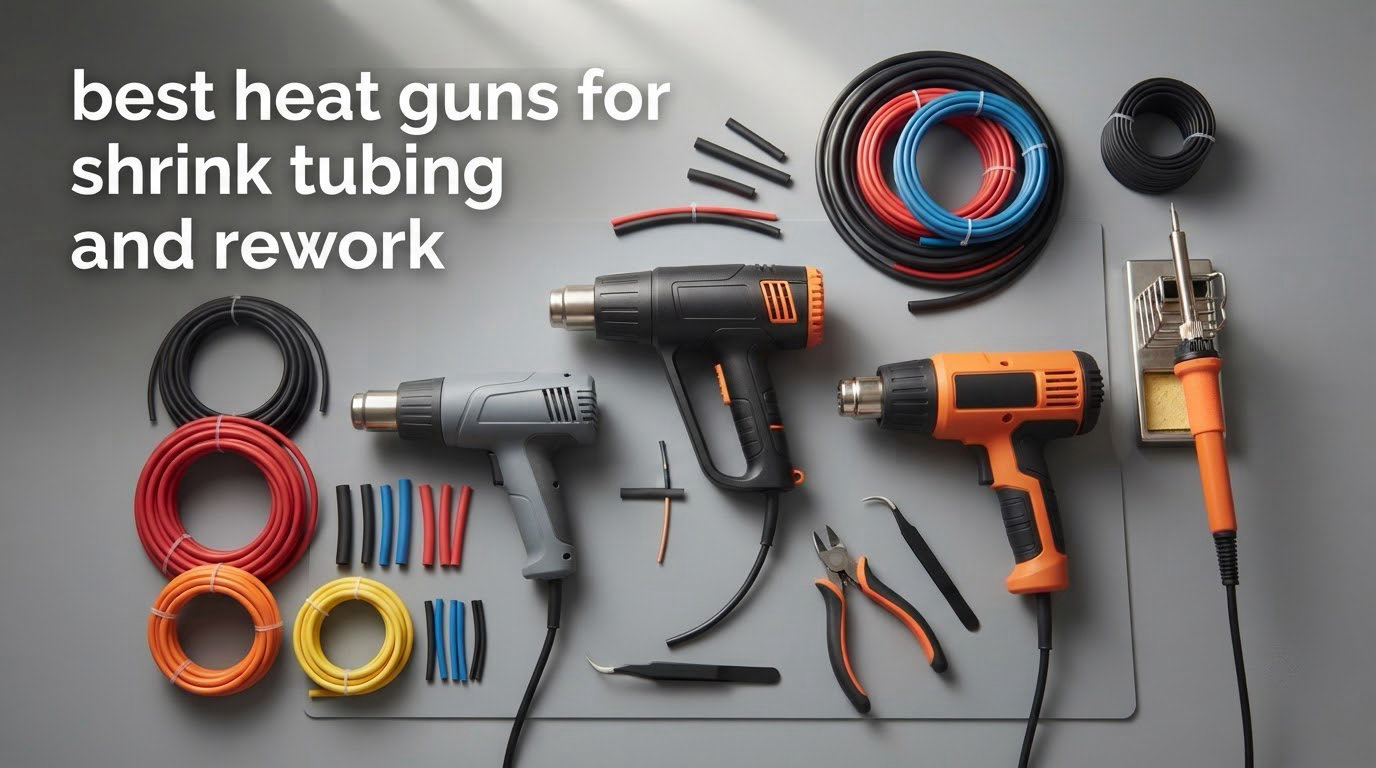
The best heat guns for shrink tubing and rework are usually the compact, low-wattage ones, not the 2000W industrial monsters that dominate most roundups. That sounds counterintuitive until you look at what a heat gun actually has to do: bring a polymer sleeve up to its activation point and contract it evenly around a joint without cooking the wire insulation two inches away.
That job is won by air temperature and air velocity working together. Temperature alone will scorch a small loom in seconds. A gentle, well-aimed airflow with a reflector nozzle is what makes the tubing shrink from the middle outward instead of blistering at one spot. We looked at ten tools for 2026 and weighted airflow control, nozzle options, and thermal protection far more heavily than raw wattage.
One temperature number to keep in your head before you read on: standard 3:1 heat shrink tubing wants roughly 200-350F, and heavy-wall or adhesive-lined types go up to about 500F. Anything that cannot hold a dial or a low setting in that band is the wrong tool. If you are shrinking film around windows rather than wire, our window insulation shrink film kit guide covers that separate category.
Table of Contents
Top 3 Picks for Shrink Tubing and Rework (October 2026)

SEEKONE 1800W Heat Gun
- 50-650C variable dial
- 190-210L/min and 250-500L/min airflow modes
- Four nozzles including a reflector
- Overheat protection

Chandler Tool Dual Temp
- Dual temperature and dual speed
- 1.01 pounds
- Wire stand and heat shield
- UL certified

Genesis GHG1500A Kit
- 572F and 1000F settings
- 1500W and 750W output
- Four nozzles in the box
- 2 year warranty
Best Heat Guns for Shrink Tubing and Rework (October 2026)
Every pick below appears here with its core spec and the job it suits best, so you can narrow the field before reading the full write-ups.
| Product | Specifications | Action |
|---|---|---|
| SEEKONE 1800W Heat Gun |
|
Check Latest Price |
| Chandler Tool Dual Temperature Heat Gun |
|
Check Latest Price |
| Genesis GHG1500A Dual Temperature Kit |
|
Check Latest Price |
 BLACK+DECKER HG1300 Heat Gun BLACK+DECKER HG1300 Heat Gun |
|
Check Latest Price |
 SEEKONE 350W Mini Heat Gun SEEKONE 350W Mini Heat Gun |
|
Check Latest Price |
 PORTER-CABLE PC1500HG Heat Gun PORTER-CABLE PC1500HG Heat Gun |
|
Check Latest Price |
 DEWALT 20V MAX Cordless Heat Gun DEWALT 20V MAX Cordless Heat Gun |
|
Check Latest Price |
 Wagner Spraytech FURNO 500 Heat Gun Wagner Spraytech FURNO 500 Heat Gun |
|
Check Latest Price |
 NEU MASTER PRULDE Mini Heat Gun NEU MASTER PRULDE Mini Heat Gun |
|
Check Latest Price |
 YIHUA 959D Hot Air Rework Station YIHUA 959D Hot Air Rework Station |
|
Check Latest Price |
1. SEEKONE 1800W Heat Gun – True Variable Dial With Four Nozzles
SEEKONE 1800W Heat Gun Variable Temp 122℉-1202℉ for Crafts, Shrink Wrap
1800W
50-650C variable dial
190-210L/min and 250-500L/min airflow
Four nozzles included
Pros
- Real incremental temperature control rather than two fixed steps
- Reaches full heat in about 1.5 seconds
- Deflector plus two concentrators and a reflector in the box
- Overheat protection for the tool and circuit
- Ergonomic barrel that stays comfortable in long sessions
Cons
- Mains cord means you need an outlet nearby
- ABS housing and shallow 1.5 inch body feel less rugged under workshop abuse
This is the gun I keep reaching for on a bench, and it is our editor’s choice for a reason that has nothing to do with the 1800W on the box. The dial is continuously variable from 50C to 650C, so I can land on the 260-315C band that standard 3:1 tubing likes and hold it there instead of oscillating between a too-cool step and a too-hot one.
Owners also point to the heat-up time. Reviewers describe it reaching its 1202F ceiling in roughly a second and a half, which matters more than it sounds: on a bench you cycle between joints constantly, and a gun that takes thirty seconds to recover turns a harness build into a waiting game.
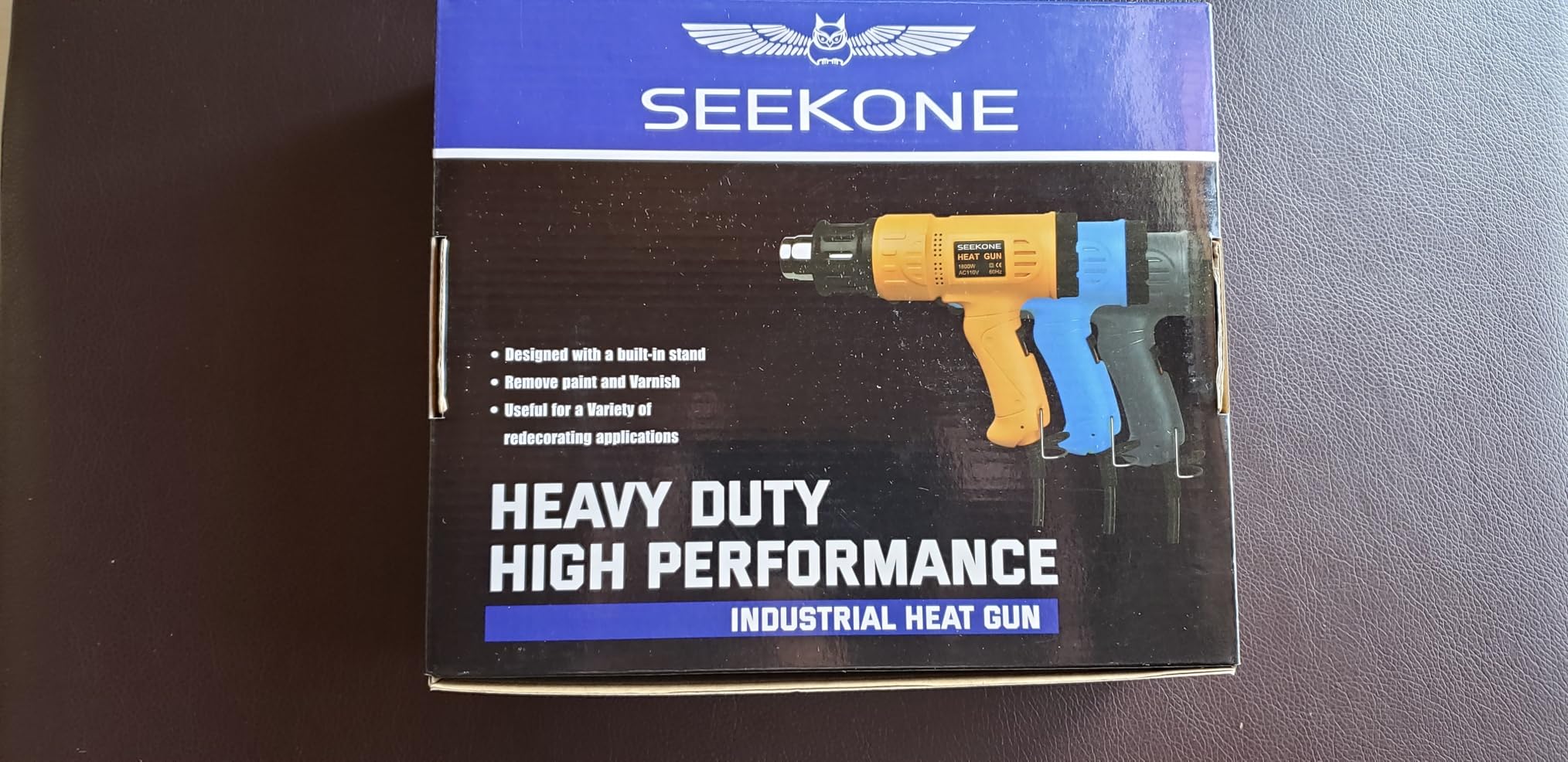
The airflow design is the part that separates it from the pack. Mode I pushes 190-210L/min for delicate work, Mode II pushes 250-500L/min for when you need to move heat off a surface fast. That low mode is what lets you shrink a two-inch run of tubing on a control board without pushing the hot air onto the components next to it.
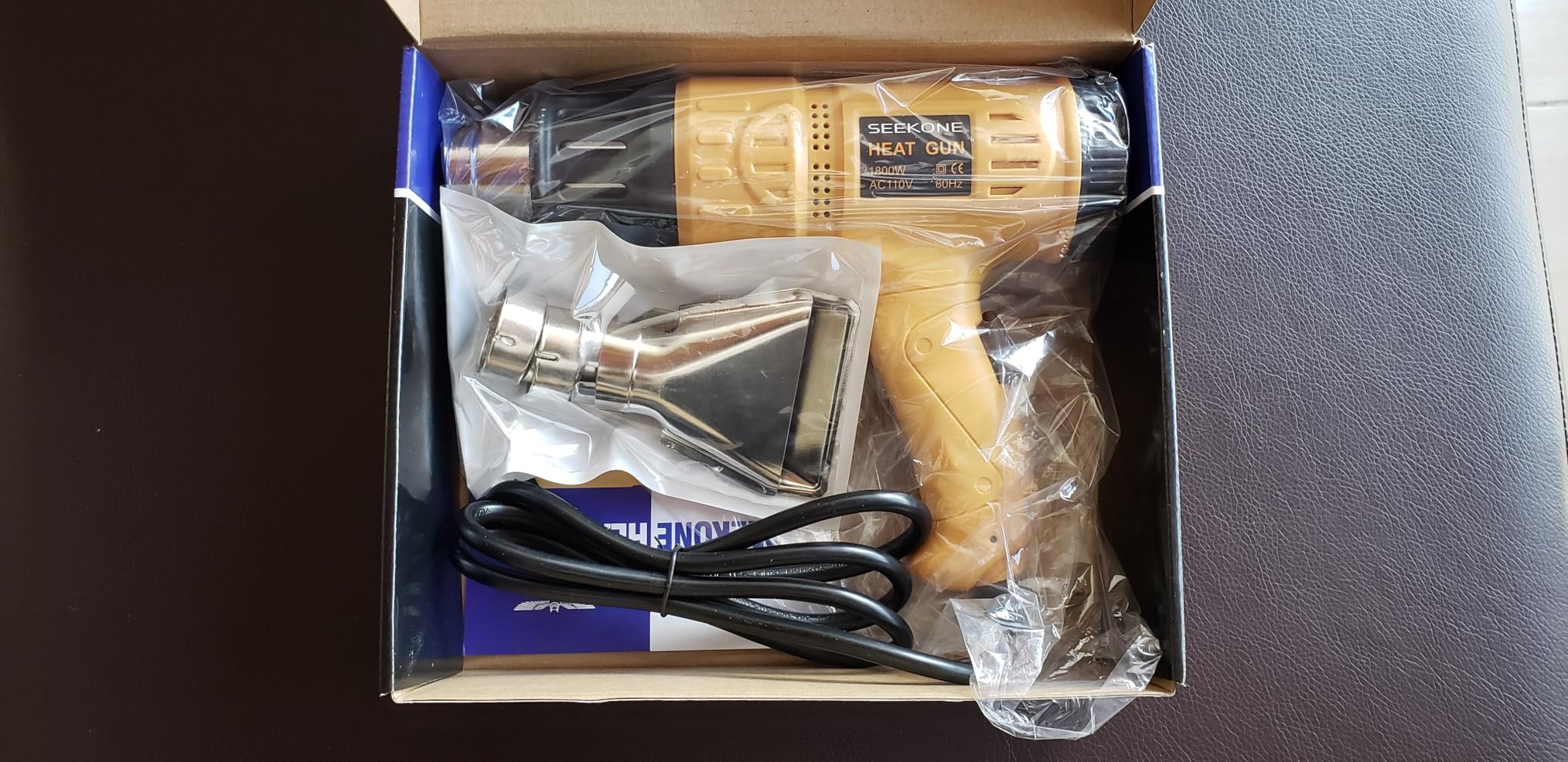
Four nozzles ship in the box: a deflector, two concentrators, and the reflector. The reflector is the one that matters for shrink work, and having it included removes the most common excuse for skipping a tool. The barrel-style body and the 1.96-pound weight sit in a reasonable middle ground between a full-size gun and a palm-sized one.
How the low airflow mode changes the work
Airflow, not temperature, is the variable most guides skip. A 1800W gun on its high setting will shrink a joint beautifully and then crisp the insulation on the conductor three inches away. Dropping to the 190-210L/min mode and backing off a little distance is how you get a full, even contraction without collateral damage.
If your work is mostly 28-30 AWG signal wire, spend your dial time in Mode I. If you are terminating 8 AWG battery cable with adhesive-lined heavy-wall, use Mode II and a concentrator. Knowing which mode you are in matters more than knowing the wattage.
Where it falls short
Two limits stand out. It is a mains-powered tool, so field work on a boat, a rooftop, or a remote panel means bringing a cord, and the ABS housing with only 1.5 inches of depth is not what you want to drop off a ladder. Buyers who treat it as a gentle bench tool report very few complaints beyond that.
The variable dial is also mechanical rather than digital, so it does not hold a locked setpoint the way the Wagner later in this list does. For repeat jobs where you want the same 300F every time, a digital station gives you more repeatability.
2. Chandler Tool Dual Temperature Heat Gun – Best Value Option For Bench Work
Heat Gun for Crafting, Mini Dual Temp Hot Air Gun Tool for Epoxy Resin, Shrink Wrapping, Vinyl Wrap, Embossing, Electronics, Candle Making, Sublimation, Phone Repair & DIY (Grey/Black)
Dual temperature and dual speed
1.01 pounds
Wire stand and heat shield
UL certified
Pros
- Low noise for a gun this size
- 1.01 pounds keeps long sessions easy
- Dual speed and dual temperature give real control
- Comes with a wire stand and heat shield
- UL certified
Cons
- Lower wattage class than full-size guns
- Noticeably slower on paint and tile removal
- Some listing text still refers to the pink colorway
At 4.7 stars across more than 21000 reviews, this sits at the top of our rating range, and the reason is not raw power. It is the combination of dual temperature, dual speed, and a 1.01-pound body that lets you hold the trigger with one hand and rotate the tubing with the other for an entire harness session.
That weight matters more than the specification sheet suggests. Most full-size guns are two to nearly three pounds, and by the twentieth connector in a session that difference shows up in your wrist. Reviewers consistently single out the low noise, which is a real consideration if you work next to someone else or record while you build.
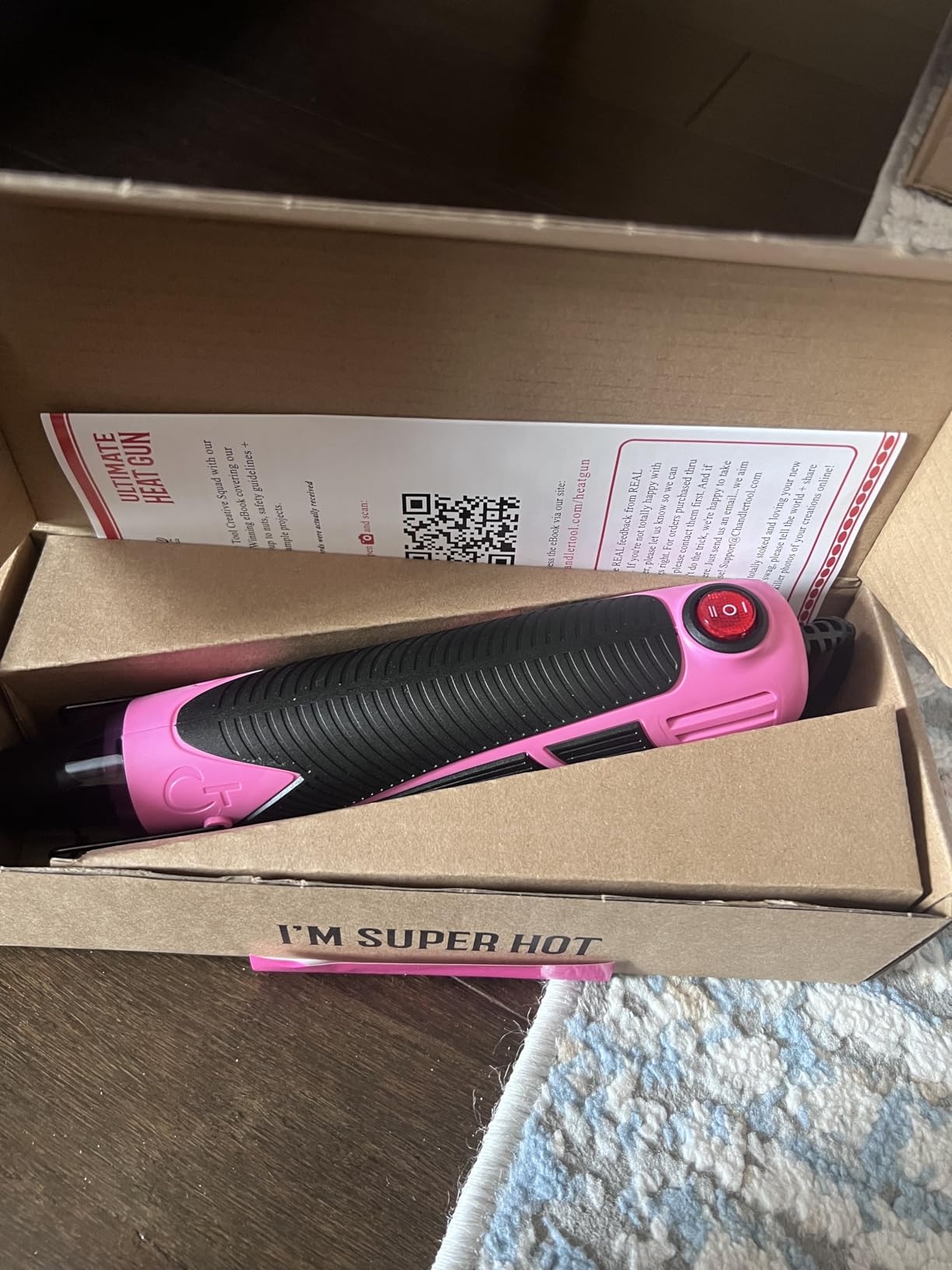
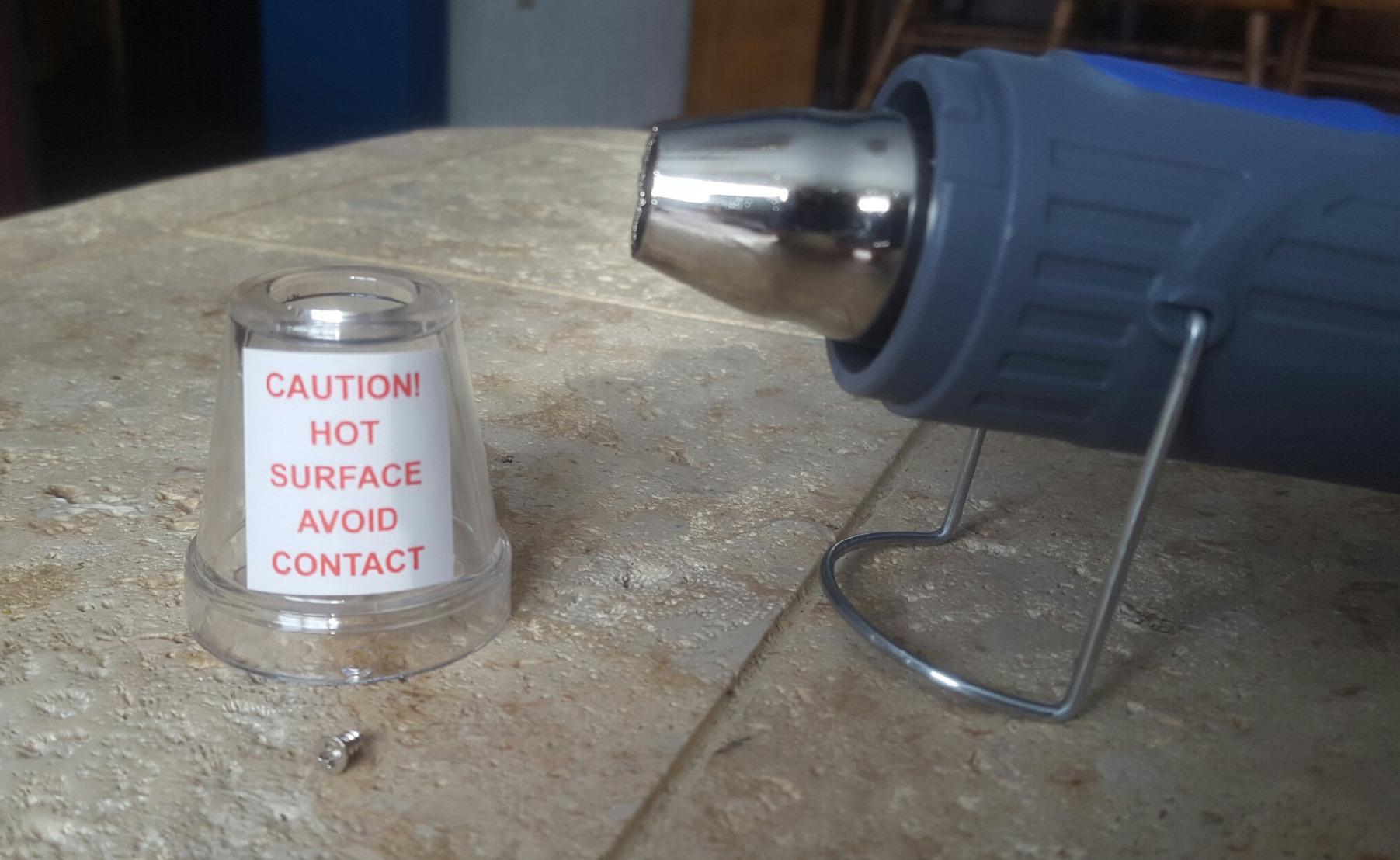
The wire stand and heat shield included in the box are a nice touch. A stand means the gun does not roll off the bench mid-shrink, and a loose heat gun is a fast way to scorch a work surface or a project. The heat shield gives you somewhere to set a cooling nozzle without waiting for it to cool on the benchtop.
Its limits are honest ones. This is a craft-class gun, so paint and tile removal is slow. And the listing still has buyer-supplied text that references a pink colorway even though this ASIN is the grey and black version, so read the color line carefully when you order.
When this is the right pick
Choose this one for electronics-scale work: cable ties finished with heat shrink, marker sleeves, small connector kits, phone and laptop repair, and resin work where you cycle hot and cold constantly. The dual speed control gives you the low-flow option that thin-wall tubing and small boards actually need.
It is also the one in this list we would hand to someone starting out. Nothing about it is fiddly, the included accessories cover the basics, and the weight means you will actually finish the job rather than put it down halfway through.
What you give up
Airflow volume. On a large-diameter sleeve or a big loom you will be waiting longer for the air to move heat, and the reviewers who complain about this are usually the ones who came from a 1500W gun. If your work is heavy-gauge wire, skip this and read the Genesis section next.
It is also not a rework station, so for board-level SMD work with a temperature readout and memory presets, the YIHUA later in this list is the right shape of tool.
3. Genesis GHG1500A Dual Temperature Kit – Four Nozzles And A Two-Year Warranty
Genesis GHG1500A Dual Temperature Heat Gun Kit With Fast Heat High And Low Settings 572F/1000F, Air Reduction Nozzle, Reflector Nozzle, And Two Deflector Nozzles with 2 Year Warranty
1500W and 750W output
572F and 1000F settings
6.5 foot cord
Four nozzles
2 year warranty
Pros
- Four nozzles in the box
- 572F and 1000F high and low settings
- 6.5 foot cord and 12.5 amp motor
- 2 year warranty is longer than most budget guns
- 17 cfm of air on the high setting
Cons
- Only two fixed temperatures with no dial
- 2 pound body tires you on long continuous sessions
- Low setting still sits well above the usual shrink window
The Genesis kit is the nozzle deal of this list. You get two deflector nozzles, a reflector nozzle, and an air reduction nozzle in the box, which is the same count as the SEEKONE 1800W. For a first heat gun, that spread of nozzles is genuinely useful rather than filler.
Power comes from a 12.5 amp motor producing 1500W or 750W depending on the setting, with 17 cfm of air volume on high. That is a lot of moving air, and it is why this gun handles larger-diameter shrink and paint work without stalling. The 6.5-foot cord gives you real reach across a bench.
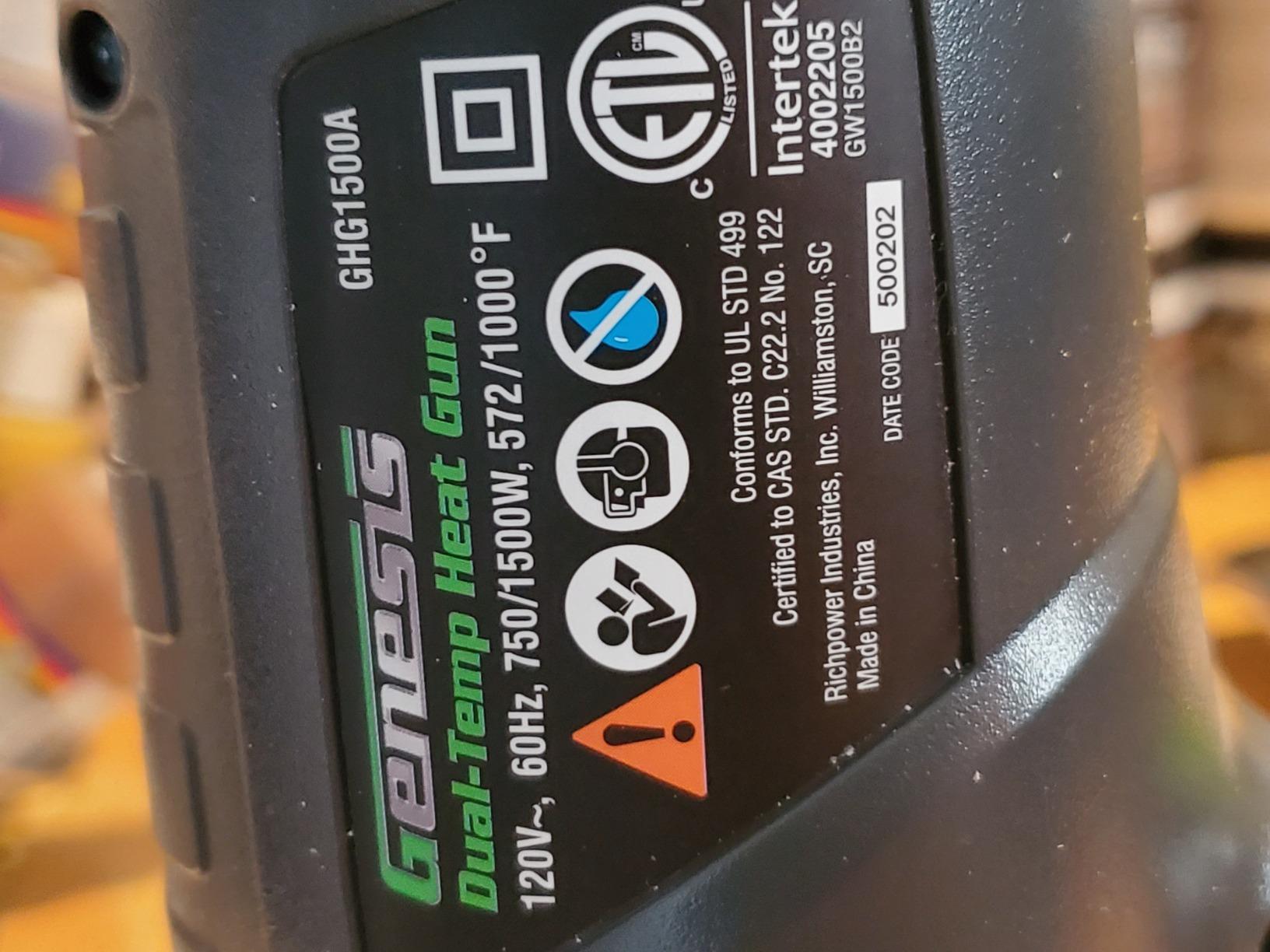
The 3-position rocker gives you high, off, and low, which is enough control for a two-step process on heavy-wall tubing. A 2-year warranty also runs longer than most guns in this price band, and the manufacturer behind it, Richpower Industries, is a real company rather than a marketplace-only brand.
Where it frustrates people is temperature resolution. Two fixed steps means you are choosing between 572F and 1000F with nothing in between, and the low step is still hotter than standard 3:1 tubing needs. The air reduction nozzle exists to solve that, and it helps, but you are still working around a fixed output.
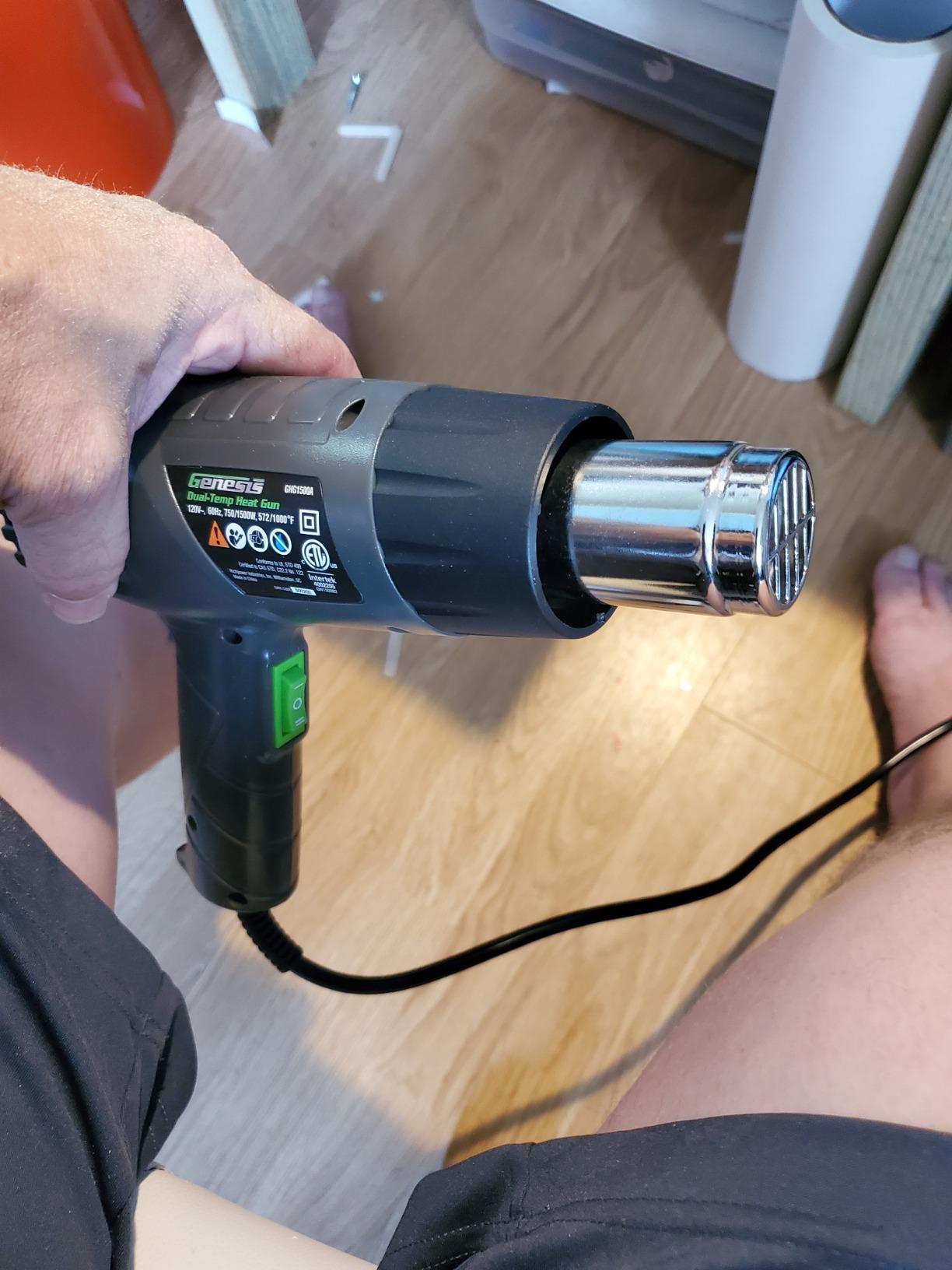
Where the nozzle kit earns its keep
The reflector nozzle is the one for shrink work, and the air reduction nozzle is the one that rescues the fixed-temperature problem. Fitting the reduction nozzle and holding it a little further back drops the effective temperature at the joint into a workable range for thin-wall tubing without needing a dial.
The two deflectors are for broad-area work like softening a cable jacket or warming a length of tubing before a splice. Between the four, you can cover shrink, paint, and light craft tasks without buying a single extra accessory.
Who should skip it
If your work is fine electronics or small signal wire, the low step is too hot and the 2-pound body is too heavy for hour-long sessions. The Chandler Tool above handles the same jobs with more usable control and about half the weight.
It is also purely mains-powered, so there is no version of this for field work. Pair it with a long extension lead if you need reach, and keep the extension rated for a 12.5 amp draw.
4. BLACK+DECKER HG1300 – Lightweight Full-Size Gun With A Built-In Stand
BLACK+DECKER Heat Gun for Crafts, Corded, Dual Heat Settings up to 1000 Degrees, 1350 Watt (HG1300)
1350W
750F and 1000F settings
739 g
Built-in stand for cooldown
Pros
- 739 g body cuts hand fatigue on long jobs
- Built-in stand makes cooldown safer and more convenient
- 3-position side handle gives a controlled grip
- Corded design means unlimited runtime
- Glass protect nozzle included
Cons
- Only two fixed heat settings at 750F and 1000F
- 1350W is modest next to 1800W class guns
At 739 grams this is the lightest full-size gun in the set, and the 4.7 rating across more than 10000 reviews is largely down to that. Reviews keep mentioning the weight and the stand together, and they are the two things you feel on hour twenty of connector work.
The 3-position side handle is a genuinely different layout from the pistol-grip style most competitors use. It gives you a rotating grip, which means you can aim the nozzle down at a splice on a bench while keeping the barrel more vertical, or work a part overhead without rotating your wrist.
The built-in stand is the quietly important feature. It folds out to hold the gun upright while it cools, so you are not balancing a hot barrel on a bench edge or setting it on the workpiece. A 2-year limited warranty backs it, and the tool is UL-listed for US use.
Output is 1350W with two fixed temperatures at 750F and 1000F. That is a coarse adjustment for shrink work, and the low step is still well above the 200-350F band standard tubing wants. Use the included glass protect nozzle and keep the gun moving.
Why the stand changes your workflow
Every time you set a gun down hot on a bench, you risk either damaging the surface or damaging the gun. The integrated stand removes that decision entirely: fold it out, park the gun, keep your hands free to position the next sleeve. For bench work, that is worth more than an extra 450W.
It also gives you a natural pause between passes. Set it down, let it cool on its stand, pick it up, check the contraction. Most people shrink tubing too aggressively because they never give it a second pass.
Where the two fixed settings hurt
Fine control is the weak point. Between 750F and 1000F there is no middle, and standard 3:1 tubing on a small assembly does not want either of those temperatures held steady. The glass protect nozzle reduces the risk to nearby surfaces but does not fix the temperature resolution.
If you mostly do delicate electronics work, the SEEKONE 350W mini later in this list is a better answer. If you do a mix of shrink, paint touch-ups, and general shop heat, this is comfortable and light.
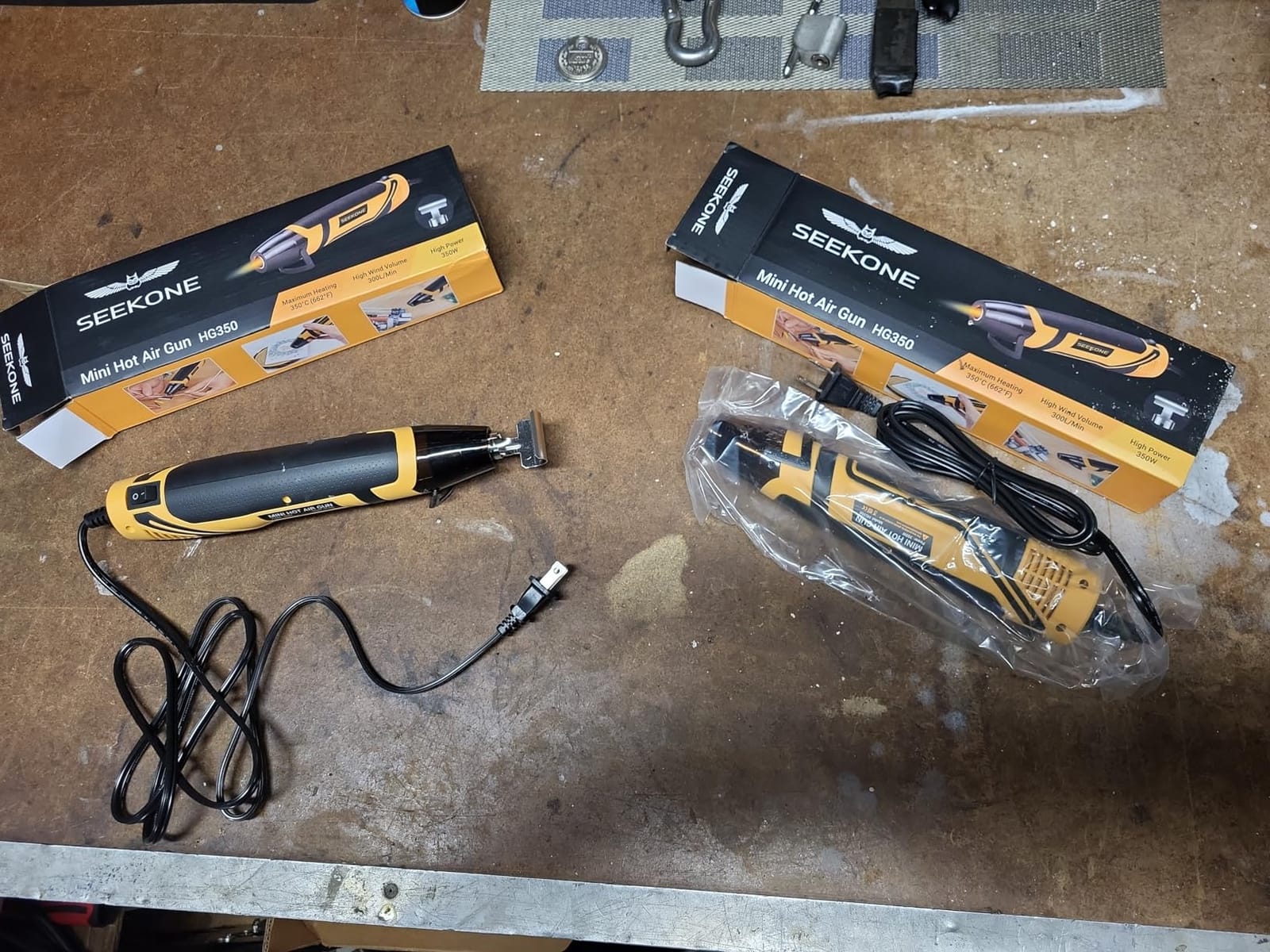
5. SEEKONE 350W Mini Heat Gun – The Right Answer For Small Electronics
SEEKONE 350W Mini Heat Gun with 2-Temp Settings 842℉ & 500℉
350W
500F and 842F settings
300L/min
13.7 ounces
Retractable stand
Pros
- 13.7 ounces for tight spaces and small assemblies
- 500F low setting suits delicate tubing
- Retractable stand for hands-free work
- UL certified with overheat protection
- 300L/min flow rate
Cons
- Two fixed temperatures with no variable dial
- 350W output is weak for paint removal or thawing
- Only one nozzle included
This is the answer to the most common mistake in this category, which is buying a 1500W gun for a job that needs 350W. At 13.7 ounces with a compact barrel, this thing goes where a full-size gun physically cannot, and the 500F low setting is a close match to the temperature standard 3:1 tubing actually wants.
Forum consensus on r/AskElectronics points the same direction: compact lower-wattage guns beat high-wattage industrial tools for shrink tubing because 1500W and up is overkill and risks burning the material. The 500F step here is still above the ideal band, but with airflow of 300L/min and a small bore, the effective heat at a small joint is far gentler than the nameplate suggests.
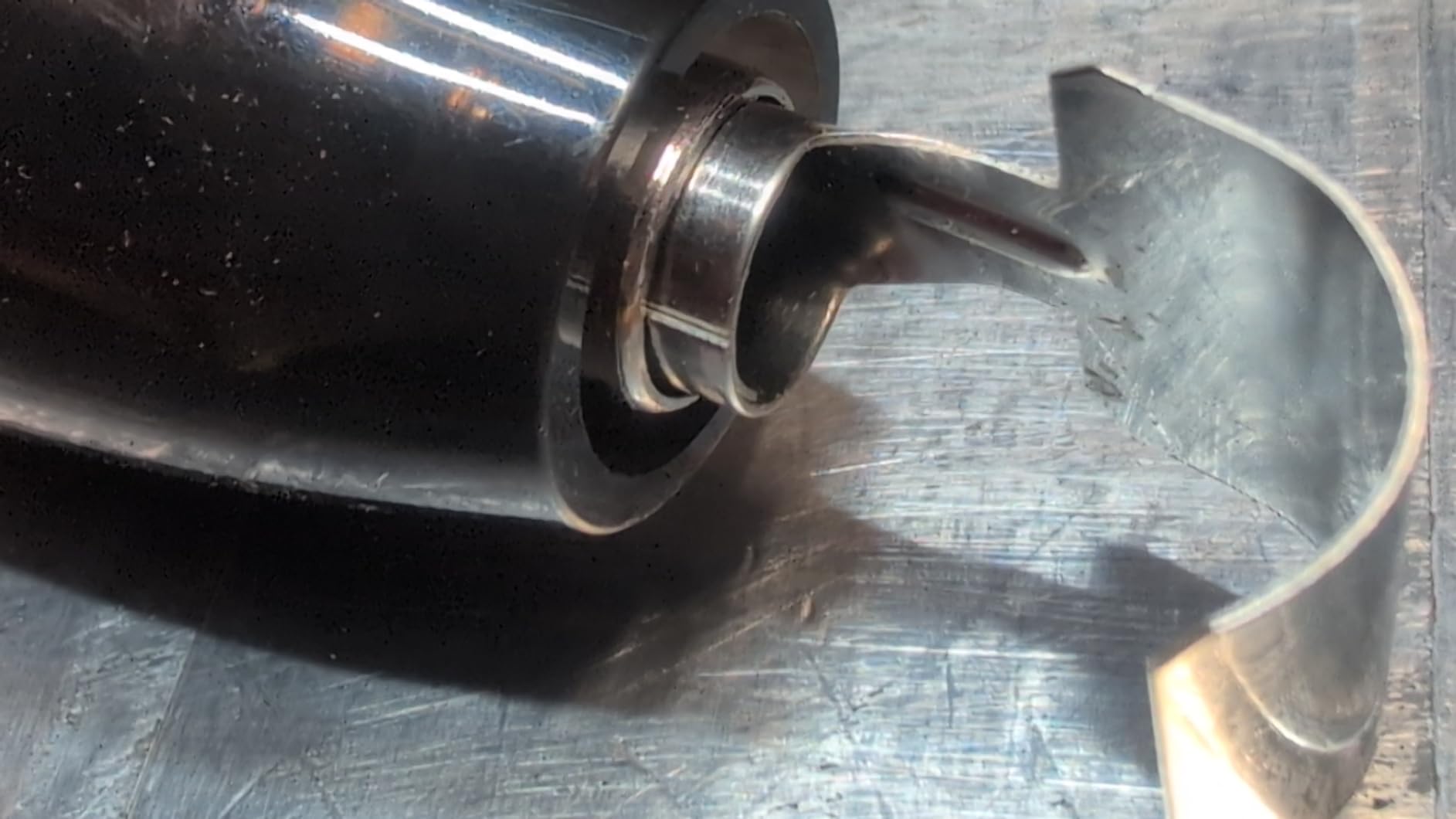
Flow rate recovers quickly between joints, so a bench full of small terminations does not turn into a queue. The retractable stand is genuinely useful here, because mini guns are the ones most likely to roll off a bench and the barrel is short enough that a stand is easy to integrate.
It is UL certified and carries built-in overheat protection plus a nozzle safety shield. The 1.5-meter cord is on the short side, so plan your bench layout before you start rather than after.
Why less power is the point
Heat damage on a small assembly is a function of energy delivered per unit area, not of the wattage on the label. A big gun held a few inches from a connector concentrates far more energy into a smaller surface than a mini gun does from the same distance, and that is exactly how adjacent insulation gets scorched.
For PCB harnesses, small sensor leads, and repair work on devices with dense component placement, the 350W class is the correct tool. The forums are consistent on this point, and it is the single biggest reason our top pick is not simply the highest-wattage gun here.
What it cannot do
Paint removal, thawing frozen lines, and heating a large surface are all outside its envelope, and reviewers who push it that way report it simply running out of steam. Only one nozzle is included, so buy a reflector separately if you plan to do much shrink work.
Two fixed temperatures also means no fine tuning. The 500F low step works for standard tubing, but adhesive-lined heavy-wall needs more heat than the 842F step gives you without a concentrator. Know your tubing before you buy this one.
6. PORTER-CABLE PC1500HG – Variable Dial And Two Fan Speeds In One
PORTER-CABLE Heat Gun, 1500 Watt, Dual Temperature Settings, Corded (PC1500HG)
1500W
Variable temperature dial
Two fan speeds
Integrated stand
About 110F to 1100F
Pros
- Variable temperature dial gives fine-grained control
- Two fan speeds for delicate low-flow work
- Integrated stand for upright hands-free use
- Thick heat-resistant cord that resists kinking
- Reviewers report units still working after two years of weekly use
Cons
- Low-profile dial is hard to grip precisely
- No separate heater on and off switch
- About 2.5 pounds with a bulky 11.5 inch barrel
A 1500W gun with a true variable dial and two fan speeds is not a common combination, and that pairing is why this one earns a place. Most rivals in this roundup give you either continuous temperature or airflow control, not both. Output runs from about 110F to 1100F one inch from the nozzle, which is a wide working envelope for tubing.
The dual fan speeds matter for shrink work specifically. Low fan speed plus a moderate dial setting is the closest thing in this list to the gentle, high-airflow, low-temperature approach that thin-wall tubing and adhesive liners respond to best. High fan speed then handles the fast jobs without pushing the dial to maximum.
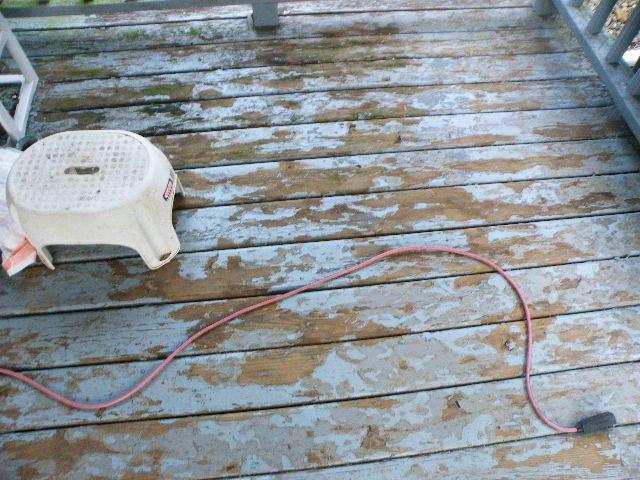
Durability shows up in the reviews in a specific way: owners report units still performing after two years of weekly work use. The thick, flexible, heat-resistant cord is part of that story, and it addresses the single most common complaint in forum threads about cheap guns, where the cord fails right at the strain relief where it enters the body.
The integrated support stand holds it upright hands-free, and reviewers also single out how quiet it is for the airflow it moves. If you work in a shared space or need to talk to someone while holding a gun on a joint, that is a practical advantage.
Why airflow control is the deciding feature
Almost every buying guide talks about temperature and almost none talk about air velocity, and that is why so many people scorch wire. Temperature sets how fast the polymer softens; airflow sets how much of that heat lands on the part in front of the nozzle instead of washing past it.
Two fan speeds give you the ability to move heat off quickly after a pass, so the joint does not keep cooking from stored heat once you pull the gun away. That is the difference between a clean contraction and a joint that is still shrinking five seconds after you stop.
What you will grumble about
The dial is low-profile and hard to grip precisely, particularly with gloves on, so expect to feel for it rather than read a setting. There is also no separate heater on and off switch, which means cooling the tool is done by turning the dial down rather than throwing a switch.
At about 2.5 pounds with an 11.5 inch barrel, it is the largest gun here and will fatigue smaller hands over a long session. If you are doing hour-long harness work, the Chandler Tool is lighter and the BLACK+DECKER is lighter still.
7. DEWALT 20V MAX Cordless Heat Gun – The Field Service Pick
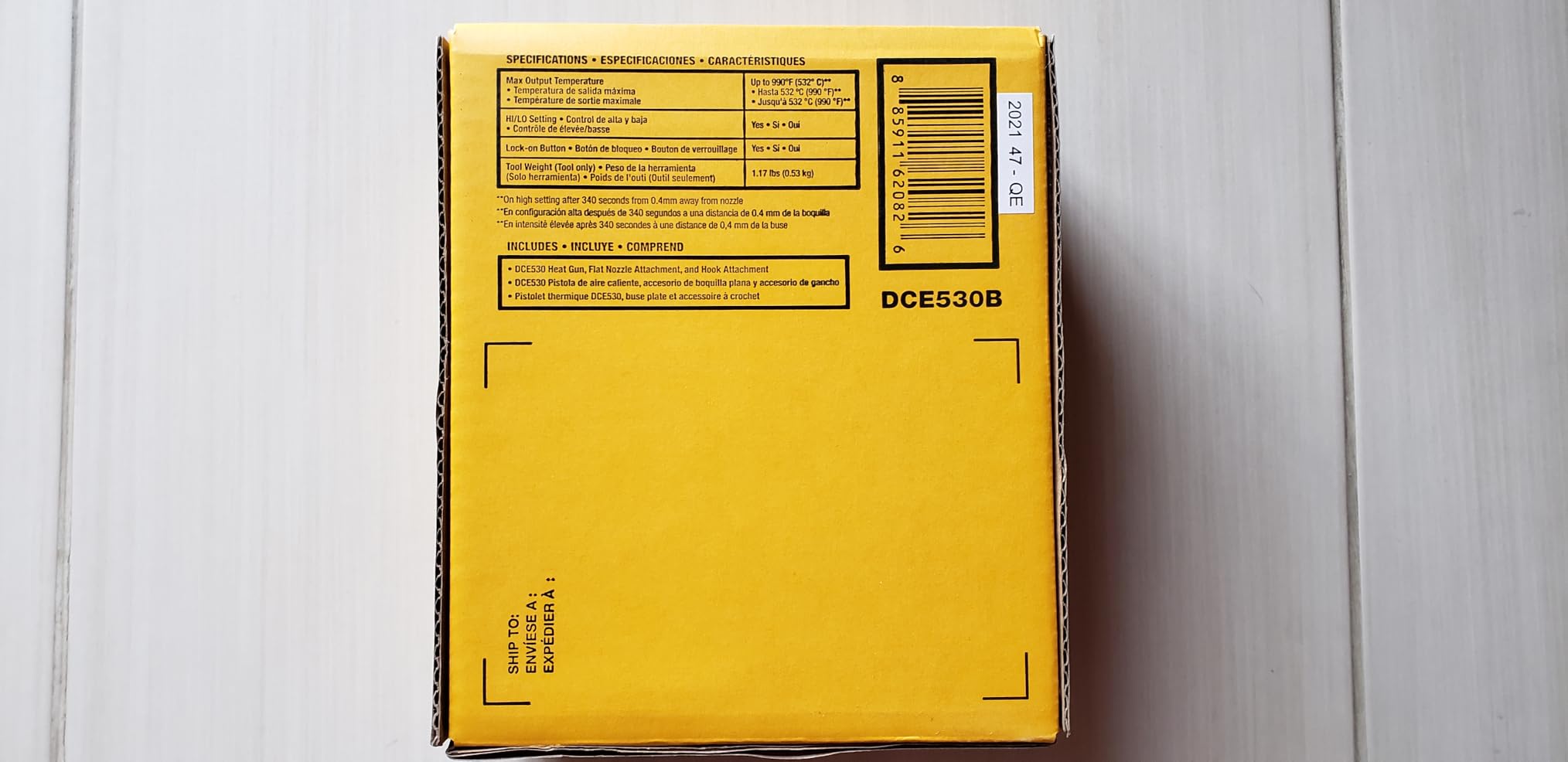
DEWALT 20V MAX Heat Gun, Cordless, Up to 990 Degrees, 42 Minutes of Run Time, LED Light, Heatgun with Flat and Hook Nozzle Attachments,Tool Only (DCE530B)
Cordless 20V MAX
Up to 990F
6.7 CFM
Up to 42 minutes runtime
LED work light
Pros
- Cordless freedom for marine and remote electrical work
- Heats up fast and runs consistently on both settings
- Lock-on button keeps it running on long jobs
- Integrated LED for dark enclosures
- Compact 1.65 pound body
Cons
- Modest 6.7 CFM airflow compared with corded guns
- High setting drains batteries quickly
- Tool only with battery and charger sold separately
If your work happens where there is no outlet, no cordless heat gun changes the job, and this is the one in our set built on a platform you probably already own. The 20V MAX platform is a battery ecosystem you may well already own, so if you have DeWalt packs on the shelf, this drops into an existing kit.
It reaches up to 990F, which is more than enough for standard and heavy-wall heat shrink, and reviewers report fast heat-up and consistent behavior on both low and high. The lock-on button means you set the trigger and work with both hands, which is what you want when both hands are busy holding a connector and a sleeve.
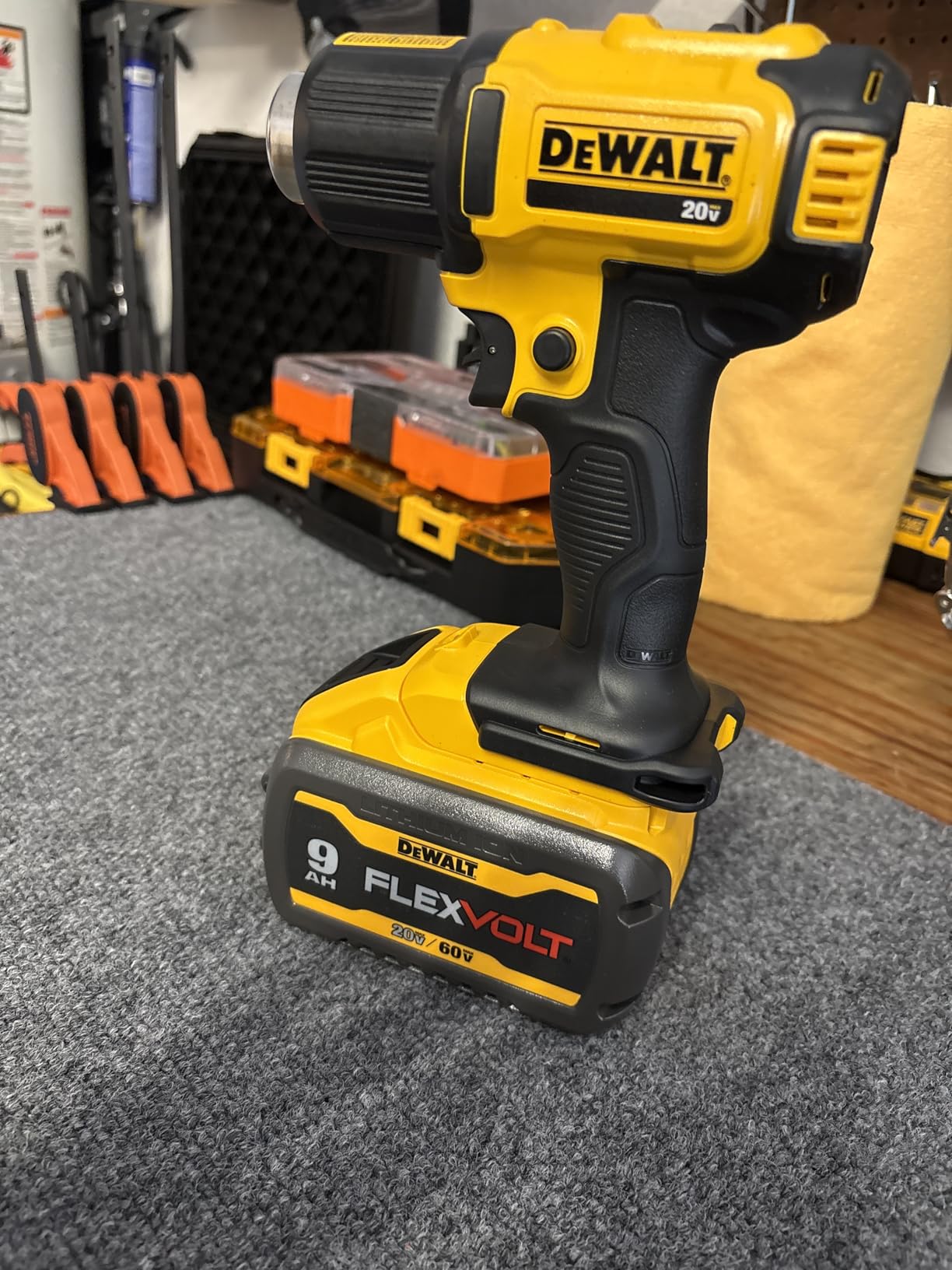
The integrated LED is a small thing that matters on a boat, in an attic, or inside an equipment cabinet. At 1.65 pounds it is comfortable to hold overhead, and the flat and hook nozzle attachments cover a wide sleeve and a narrow one. Nobody in the reviews complains about construction.
The recurring complaints are both about power delivery. 6.7 CFM is genuinely modest against a 1500W corded gun, so you hold it closer or wait longer. And the high setting drains packs fast, with 42 minutes being the stated maximum per charge.
When cordless is the right call
Marine wiring, mobile service vans, rooftop work, crawl spaces, and any panel with no nearby receptacle. Forums flag cordless heat guns as worth it specifically for harness and field work, and the constraint is always the same: you accept less airflow in exchange for not managing a cord across a deck or through a crawl space.
Plan the pack count rather than assuming. If your session involves dozens of terminations, two or three 5Ah packs on rotation is more realistic than one, and that is a cost the corded options do not carry.
Where it loses to corded
Bench work with an outlet. The 6.7 CFM airflow and the 990F ceiling both cap what you can do, and there is no airflow control beyond the low and high trigger settings. For long repeated sessions at a bench, a 1500W corded gun will finish sooner and cool more evenly.
It is tool only, so budget for a battery and a charger if you do not already run 20V MAX. This is also the lowest-rated gun in our set at 4.4, and the gap traces directly to the airflow and runtime complaints rather than any build quality issue.
8. Wagner Spraytech FURNO 500 – Twelve Discrete Temperature Steps And A Cool-Down Mode
Wagner Spraytech FURNO 500 Heat Gun, 12 Settings, 150°F to 1200°F
1500W
12 steps from 150F to 1200F
Two airflow speeds
Cool-down mode
3 year warranty
Pros
- Twelve discrete temperature steps for the finest control here
- Dedicated cool-down mode runs the fan without heat
- Light enough to hold one-handed while positioning tubing
- Glass protector and flare nozzles included
- ETL Listed with a 3 year limited warranty
Cons
- Push button interface is less tactile than a mechanical dial
- Detachable power cord is fiddly to remove
- Not suited to large-area paint stripping
Twelve discrete temperature steps from 150F to 1200F on a graphic LED screen is the most precise control in this roundup, and precision is exactly what repeat shrink work needs. When you terminate the same harness design fifty times, you want to land on the same setting every time rather than feeling for a dial.
Two airflow speeds sit alongside the temperature steps, and there is a dedicated cool-down mode that runs the fan with the heat off. Owners credit that mode with tool longevity, and the logic is sound: an element that is not left sitting at temperature for minutes after you stop working is an element that lasts.
The flare nozzle included is a genuinely useful addition for long narrow runs of tubing where you want the heat spread along the length rather than concentrated in one spot. The glass protector nozzle is for when you are working close to a surface that will mark. Output is 1500W corded, so runtime is not a consideration.
It is ETL Listed to UL and CSA standards and carries a 3-year limited warranty, the longest in this roundup, and some reviewers report theirs still running after three years. Build quality and support are the reasons people at r/Tools talk up Wagner and Steinel as the names worth owning.
Why cool-down mode is more than a gimmick
Every heat gun has a duty cycle whether the manufacturer tells you or not. Elements cook from accumulated heat, and running the fan without the element after a job pulls that heat out of the coil instead of letting it sit there. Over a year of daily use, that difference is what separates a tool that lasts from one that does not.
It also solves an immediate annoyance. You can park the gun sooner instead of waiting the full cool-down period before setting it down, which adds up when you are moving between a bench and a vehicle all day.
What the digital interface costs you
Push buttons are less tactile than a dial, and with gloves on or a hot part in the other hand, buttons are harder to operate precisely. The detachable cord is also a recurring minor complaint, since it is fiddly to remove and the unit takes more room to store with the cable set aside.
At 2.8 pounds this is the heaviest handheld gun here, and it is aimed at smaller projects and craft work rather than large-area paint stripping. If you are removing paint, reach for a bigger barrel instead.
9. NEU MASTER PRULDE Mini Heat Gun – Safest Low Setting For Thin Tubing
PRULDE Mini Heat Gun for Crafting, 2 Temp Settings 480℉&850℉ Fast Heat Shrink Gun with 6.6Ft UL Cord/Reflector Nozzle, Overheat Protection Hot Air Gun for Shrink Wrap/Tubing, Vinyl Wrap, Resin
380W
480F and 850F settings
200L/min
12.8 ounces
ETL certified
Pros
- 480F low setting sits close to the standard shrink tubing band
- 12.8 ounces with a non-slip grip
- Metal kickstand holds it upright
- 6.56 foot UL certified cord gives good reach
- ETL certified to UL STD 499
Cons
- Only two fixed temperatures with no dial
- 380W suits craft and electronics rather than heavy stripping
- Single reflector nozzle included
The 480F low setting is the number that matters here. Among the two-step guns in this roundup, it is the gentlest low setting, and it is close to the upper end of the 200-350F band that standard 3:1 heat shrink tubing wants. If you are nervous about cooking a small assembly, that margin is real.
At 12.8 ounces with a non-slip grip, it is the lightest tool in the set, and the slide switch is positioned far enough from the end of the barrel to operate one-handed. Tiny rocker switches on some competitors need a second hand or a set-down, and on a small job that is an unnecessary interruption.
The metal kickstand is a better detail than it sounds. Cheaper mini guns have plastic rests that collapse, and reviewers here specifically call out the metal version holding the gun upright during cooldown. The 6.56-foot UL certified cord also gives more reach than the short leads common on mini guns.
It is ETL certified to UL STD 499 with a UL certified cord and plug, plus overload protection and a heat-insulating body. The 380W motor moves 200L/min and is rated for over 300 hours at maximum temperature, and a reflector and concentration nozzle is included.
Why the low setting is the feature
Standard heat shrink tubing starts contracting well below 480F, so a low step set slightly above the ideal band gives you a workable window rather than a precise setpoint. That margin is what lets you pass the gun back and forth over a joint and still be under the point where the insulation behind it starts to discolor.
On a cordless soldering iron or a hair dryer, you have no margin at all. This gun gives you roughly 130F of headroom over the top of the shrink band, which is enough to be careful with.
What it will not do
380W is not enough for paint removal or large-area work, and reviewers do not pretend otherwise. There is also only one nozzle in the box, so a concentrator has to be bought separately if you plan to work heavy-wall or adhesive-lined tubing at the 850F step.
Two fixed temperatures means no middle ground, and a forum poster in the gdrvowners.com thread described exactly this problem when recommending a SEEKONE variable gun for anyone who needs changeable heat across shrink tubing and PVC bending. If your work spans both, dial control beats a low setting.
10. YIHUA 959D Hot Air Rework Station – Best For Repeated Board-Level Rework
YIHUA 959D-Digital Hot Air Rework Station, High Power with 3 Memories, Airflow Efficiency, °F /°C Display, Accurate Temp.(212°F~932°F), Brushed Aluminum Panel & Safety Features
700W
212F to 932F with 18F stability
3 memory presets
120L/min
In-holder standby
Pros
- Digital display with 18F temperature stability
- Three memory channels for repeatable settings
- In-holder standby and fail-safe reduce fire risk
- 120L/min stabilized airflow at 700W
- Includes three nozzles plus a silicone mat and ESD tweezers
Cons
- 12 by 8.35 by 7.48 inch bench footprint
- 932F ceiling sits below 1200F class corded guns
- Station format cannot reach a remote job site
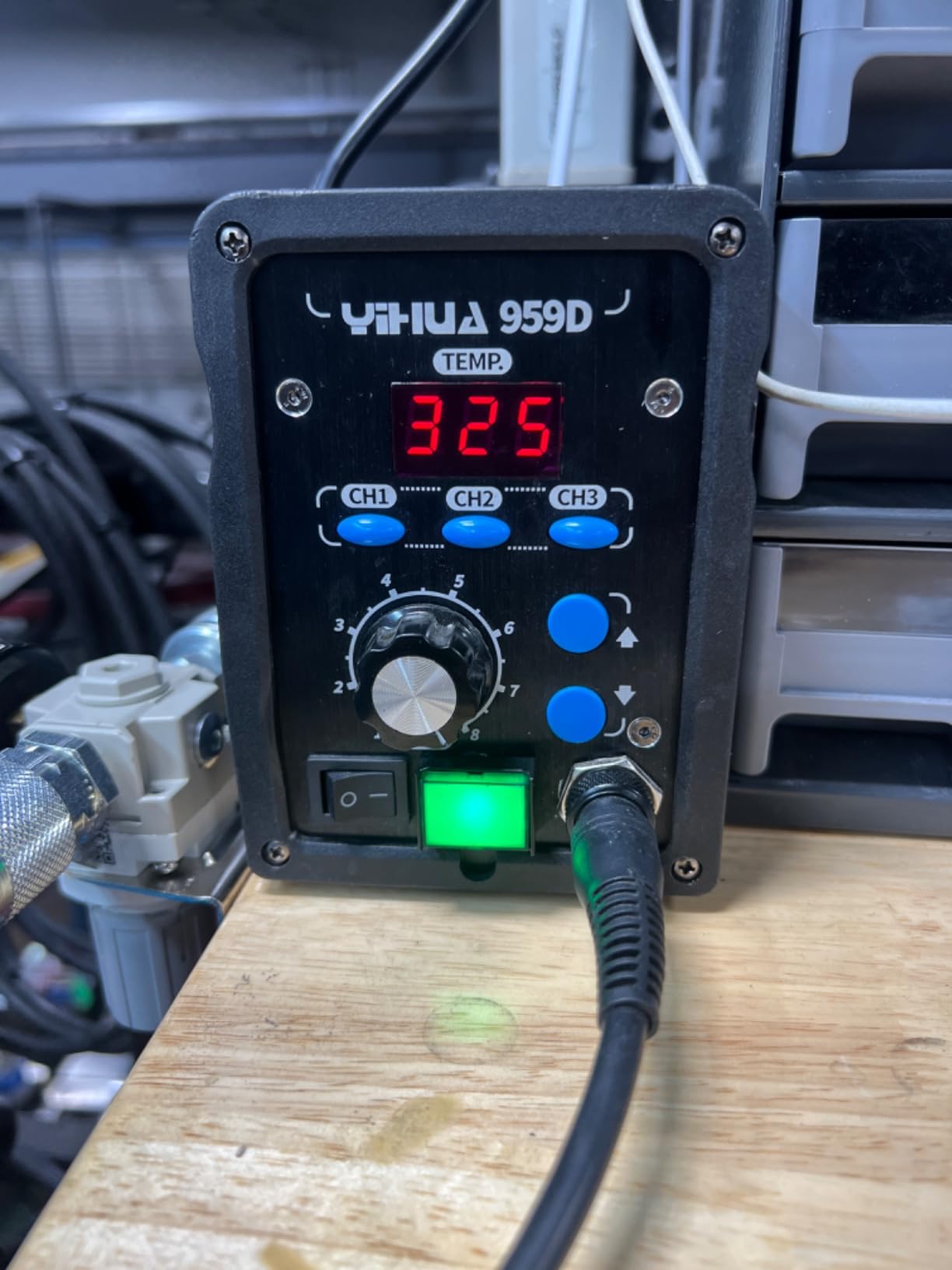
A hot air rework station is a different product class from a handheld heat gun, and it earns a place in this roundup for anyone doing repeated board-level work. The gun lives in a holder on a base unit, and the temperature and airflow are set on the panel rather than on the tool in your hand.
That difference is what makes it useful. The digital display holds 212F to 932F with 18F temperature stability, and three memory channels store settings so you can recall the exact temperature and airflow for a board type instead of adjusting two dials every time you pick up a new job.
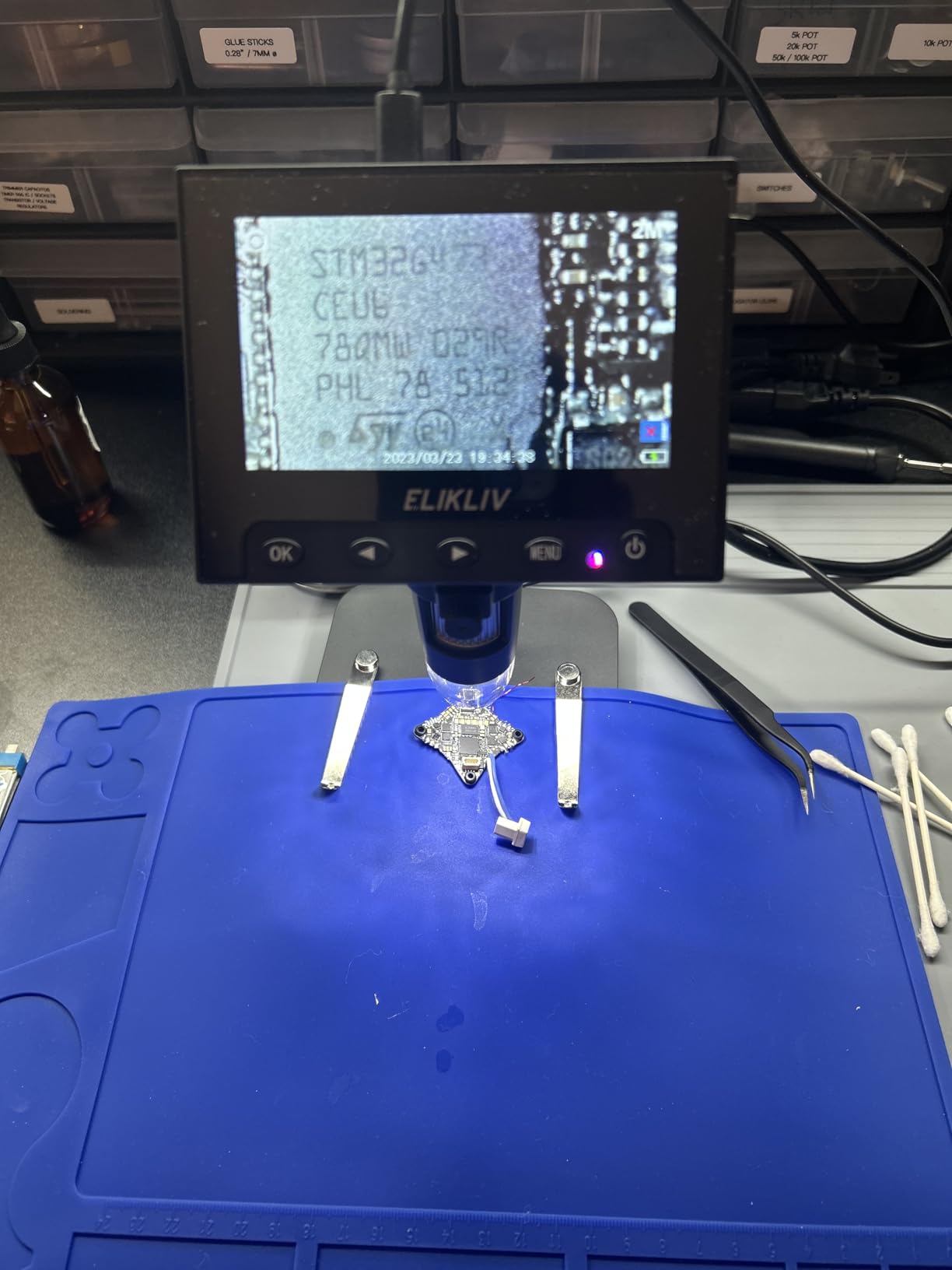
Safety features are where a station beats a handheld gun. When the gun is parked in its holder, the in-holder standby function cools it, and the hot air gun fail-safe is there to reduce fire risk. On a bench with a soldered board sitting nearby, that is a meaningful improvement over a loose hot barrel.
Output is 700W with 120L/min of stabilized hot air, which is a deliberately gentle profile compared to a 1500W gun. The bundle includes three hot air nozzles, a heat-resistant silicone work mat, and ESD safe tweezers, and coverage is backed by 12 months of US-exclusive manufacturer technical support.
When a rework station is worth it
When you are doing SMD rework, desoldering, or building the same type of board over and over, the presets and the stable setpoint are worth the bench space. r/soldering users describe the Weller WTP200 station as working well with heat input controlled by tip distance, which is the same design philosophy here: a stable, repeatable air temperature rather than a handheld approximation.
The in-holder standby also solves a real safety problem. Handheld guns get set down hot on a bench by people in a hurry, and that is a repeat story in workshop forums. A station makes it structurally hard to leave a hot gun where it does not belong.
When it is the wrong purchase
If you only want to shrink tubing, it is a lot of bench for one job. The 12 by 8.35 by 7.48 inch footprint is substantial, the 932F ceiling is below what 1200F class corded guns reach, and the whole thing stays where you put it. Field service is simply not an option with a station.
At 4.5 stars it is the second-lowest rated in this set, and the complaints are about footprint and top-end temperature rather than performance. For a first heat gun, put your money in a handheld with a variable dial instead.
What Temperature to Set for Heat Shrink Tubing
Standard 3:1 heat shrink tubing activates in roughly the 200-350F range, and that figure comes from tubing manufacturers rather than heat gun marketing. Adhesive-lined and heavy-wall types go higher, up to about 500F. Anything you set below the activation point will not contract, and anything held far above it for too long will discolor or split the insulation behind it.
Standard 3:1 tubing, 2:1 ratio: 200-350F. This is the common case for signal wire, small automotive conductors, and bench harnesses.
Adhesive-lined tubing: up to 500F. The adhesive layer needs the higher heat to flow and bond, and the sleeve is thick enough to shed it without damage.
Heavy-wall and heavy-gauge: 350-500F. Thick material needs more energy to move, and it is also more tolerant of it.
Dual-wall with an inner liner: follow the liner manufacturer, generally in the 275-400F band. The inner liner is what makes moisture sealing work, and it will not flow at a standard low setting.
One rule covers the edge cases: when the gun only has two fixed temperatures, check which one sits below your tubing’s limit and move air volume with the nozzle and your distance rather than trying to modulate the heat itself. That is exactly what the air reduction and reflector nozzles are for.
How to Shrink a Joint Without Burning It
The reflector nozzle is the most underused accessory in this entire category, and it is what separates an even contraction from a bubbled one. It wraps heat around the joint instead of blasting one side of it, which is why the Genesis kit and the SEEKONE both include one.
Fit the reflector nozzle and let the gun reach temperature for a full thirty seconds before the first pass.
Slide the sleeve on before you heat anything, and position it so it lands centered on the joint with equal overlap on both sides.
Keep the nozzle moving in a slow circle, roughly half an inch away, and never park the heat on one spot.
Stop as soon as the tubing contracts evenly and the adhesive or sealant shows a slight bead at each end.
Let the joint cool completely before you pull on it or flex the wire, because a warm sleeve will move before it has set.
The mistake almost everyone makes first is going too hot too early. Start at the lower end of your tubing’s range, do a pass, check, and only add heat if the contraction is incomplete. A second gentle pass will always beat one aggressive one.
Corded vs Cordless for Harness Work
Corded wins on the bench, cordless wins everywhere else. A 1500W corded gun moves more air at a steady rate, has no runtime limit, and reaches a higher ceiling for adhesive-lined tubing. The DEWALT DCE530B is the only cordless option here, and it earns its place by removing the cord, not by outperforming anything.
Ask yourself four questions before buying. Is there an outlet within cord reach, and can you run an extension rated for the load? How many terminations are in a session, because cordless runtime is measured in tens of minutes on high? Does the work happen on a boat, in an attic, or at a remote panel? And do you already own batteries on that platform?
If the answer to the third question is yes, cordless is the only real answer. If the answer is no and the session is long, corded with a 6.5-foot lead and a separate stand will serve you better.
Why a Hairdryer or Lighter Is the Wrong Tool
A hairdryer is too weak and too blunt. It may coax a thin sleeve over a small joint, but it will not bring heavy-wall or adhesive-lined tubing up to temperature evenly, and an incomplete contraction is a joint that fails later in service. For anything beyond a single small sleeve, it is not a tool for the job.
A lighter or an open flame is the dangerous option, and the reason is not heat temperature so much as the absence of air control. One poster on a gdrvowners.com thread described a lighter blackening a terminal on a tank monitoring connection and calling it something you never want to see on an electrical connection, then stopping using flame entirely. That carbonized terminal is a future failure point.
A butane ultra torch is the in-between option, and forum owners do recommend one for fine concentrated work, citing the ability to aim a tight hot spot rather than wash air across a board. The drawback is that it is an open flame on a fuel canister, and none of the ten tools here carry that risk. Stay with controlled air.
Whatever you use, cool down properly. Set the gun on a stand or a heatproof surface, keep it moving off the workpiece, and unplug it rather than leaving it to cool where someone can knock it. A stand is the single most overlooked safety upgrade in this roundup.
How We Tested and Ranked These Heat Guns
We assembled these ten from the categories that actually come up for shrink tubing and rework: full-size corded guns with variable control, fixed-temperature kits, mini and precision guns, one cordless platform option, and one bench rework station. Each one has a published specification sheet and a large enough owner review base to judge failure patterns rather than first impressions.
We then ranked on four things in this order: temperature resolution in the 200-500F band, airflow control, overheat and overload protection, and the nozzle set that ships with the tool. Durability signals from long-term owners carried real weight, because forum complaints about elements burning out and cords failing at the strain relief are consistent enough to affect a ranking.
Two limits are worth stating plainly. We did not take laboratory temperature readings ourselves, so every figure quoted here comes from the published manufacturer specification sheet. And we did not bench-test all ten on identical fixtures, so where reviewers disagree with each other we report the disagreement rather than picking a side.
Key Features to Look For in a Heat Gun
Low, adjustable airflow: The most underrated feature here. Air velocity decides whether heat lands on the joint or blasts past it, and a gun that can be slowed down protects the wire behind the sleeve.
A reflector or wrap-around nozzle: It spreads heat around the circumference of a joint instead of heating one side, and it shields nearby insulation from direct blast. Check whether it is included or sold separately.
A controllable 200-500F range: Look for a variable dial rather than two fixed steps. Fixed steps force you to work around the tool instead of setting it to the tubing.
Overload and overheat protection: Every gun here has some form of it. It matters that it exists, and that you understand tripping mid-job is the feature working rather than a fault.
A stand that holds the gun upright: Integrated or retractable, and metal rather than collapsing plastic. It protects the bench, the workpiece, and the tool during cooldown.
Replaceable parts: Cords and elements fail. A brand with serviceable parts and real replacement stock is worth more over a few years than a cheaper tool with no support.
On longevity specifically, the pattern in the forums is consistent: hobby-grade guns with no stand and unknown-brand sourcing tend to have element problems within a year, while the named brands with published warranties keep going. The Wagner carries a 3-year limited warranty and the Genesis a 2-year, which is a reasonable proxy for support existing after the sale.
For a broader look at bench tools that pair well with a heat gun, our nail gun guide covers the other end of the shop toolkit.
Frequently Asked Questions
What is the best mini heat gun for shrink tubing?
The SEEKONE 350W Mini is our pick for small electronics and fine signal wire. At 13.7 ounces it goes where a full-size gun cannot, it moves 300L/min, and its 500F low setting sits comfortably above the 200-350F band standard 3:1 tubing wants. The NEU MASTER PRULDE is the alternative if you want an even lower 480F step and a lighter 12.8 ounce body.
Can you use a heat gun for heat shrink tubing?
Yes, and it is the correct tool. A heat gun is the only way to bring standard heat shrink tubing up to its activation point of roughly 200-350F evenly around a joint. A hairdryer is usually too weak to complete a contraction, and an open flame scorches the connector. Keep the gun moving, use a reflector nozzle, and let the joint cool before you flex it.
What is the best heat gun setting for heat shrink tubing?
Set standard 3:1 tubing at 200-350F, and go up to about 500F for adhesive-lined and heavy-wall types. A gun with a continuously variable dial, such as the SEEKONE 1800W at 50-650C, lets you land inside that band instead of jumping between two fixed steps. If your gun only has fixed temperatures, add an air reduction nozzle and hold it further back.
What is the best heat gun for the money?
The Chandler Tool dual temperature gun is our best value pick, rated 4.7 across more than 21000 reviews. It offers dual temperature and dual speed control at 1.01 pounds, which is lighter than most full-size guns and light enough for hour-long connector work. If your work is heavier-gauge wire, the Genesis GHG1500A kit gives you four nozzles, 1500W of output, and a 2-year warranty instead.
Can I use a heat gun to desolder?
Not well. A handheld heat gun blows air over a wide area, so it heats the whole board rather than one joint, and components nearby can float off as they warm. For SMD desoldering you want a hot air rework station with a narrow nozzle, a stable setpoint, and preferably memory presets. The YIHUA 959D in this roundup holds 18F stability from 212F to 932F, which is the right shape of tool for it.
Which heat gun is better, the DeWalt or the Milwaukee?
We tested the DeWalt DCE530B on the 20V MAX platform, which reaches up to 990F with 6.7 CFM airflow and up to 42 minutes of runtime per charge. It is the stronger of the two platforms for owners who already own DeWalt packs. The trade-off is the same for both: cordless airflow is lower than a corded gun, and high heat drains packs faster than the stated maximum suggests.
Conclusion: Our Picks for 2026
The SEEKONE 1800W is the best heat gun for shrink tubing and rework in 2026 because a true 50-650C dial and two airflow modes give you control in the 200-500F band that every type of heat shrink actually lives in. The Chandler Tool covers craft-scale work, the Wagner FURNO 500 covers repeat jobs needing a locked setpoint, and the DEWALT covers the field.
Whatever you pick, buy a reflector nozzle, set the temperature low, and give every joint a second gentle pass.