

Most bench power supplies arrive with no output leads at all, or with a single undersized pair that gets warm the moment you push real current through it. That gap between the supply and the device under test is where most beginner frustration comes from: you own a perfectly good adjustable supply and still cannot power a breadboard because the leads are missing, too thin, or terminated in the wrong connector.
These lab power supply cables are the heavy-duty leads that bridge that gap. One end is a 4 mm banana plug that seats into the binding post on the front of the supply, and the other end is an alligator clip, a test hook, a second banana plug, or a fine probe tip. The wire gauge and insulation decide how much current the lead can carry before it starts to heat.
We spent six weeks comparing twelve lead sets and cables against the kind of bench every hobbyist actually builds: a 30 V supply, a multimeter, a solderless breadboard, a strip of 12 V LEDs, and a steady pile of microcontroller boards. We measured resistance where reviewers had measured it, watched which leads survived repeated clipping, and checked every stated rating against the conductor in the cable.
The short version: match the lead’s amp rating to the supply’s output current, not the other way around, and buy silicone rather than vinyl if your bench lives in an unheated room. The twelve picks below cover everything from basic breadboard leads to 20 A silicone cables.
Table of Contents
Top 3 Picks for Lab Power Supply Cables in 2026
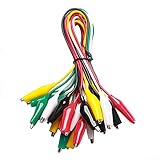
WGGE WG-026 Lead Set
- 10 leads in 5 colours
- 22 AWG copper with PVC
- 20 nickel-plated steel clips
- 20.5 inch length
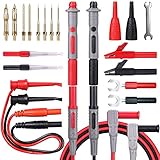
Bionso 25-Piece Probe Kit
- Replaceable gold-plated probes
- Silicone leads
- 100 copper strands
- Two storage boxes
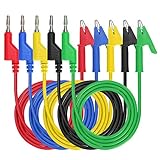
Sumnacon Banana-Clip Leads
- Stackable 4 mm banana plugs
- Rated 1000 V and 15 A
- Silicone insulated
- Five colour pairs
Best Lab Power Supply Cables (October 2026)
| Product | Specifications | Action |
|---|---|---|
| WGGE WG-026 10-Piece Alligator Clip Lead Set |
|
Check Latest Price |
| Bionso 25-Piece Multimeter Leads Kit |
|
Check Latest Price |
 Proster Multi Test Leads Kit Proster Multi Test Leads Kit |
|
Check Latest Price |
| Sumnacon 4mm Banana to Alligator Clip Leads |
|
Check Latest Price |
 Sumnacon Banana-to-Banana Jumper Leads Sumnacon Banana-to-Banana Jumper Leads |
|
Check Latest Price |
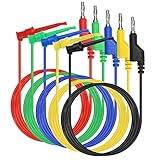 Sumnacon 39 Inch Test Hook Leads Sumnacon 39 Inch Test Hook Leads |
|
Check Latest Price |
 Goupchn 5-Piece Safety-Shrouded Banana Leads Goupchn 5-Piece Safety-Shrouded Banana Leads |
|
Check Latest Price |
 Goupchn 25-Piece Silicone Test Lead Kit Goupchn 25-Piece Silicone Test Lead Kit |
|
Check Latest Price |
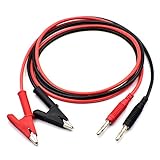 zhenyu 14 AWG Silicone Alligator Leads zhenyu 14 AWG Silicone Alligator Leads |
|
Check Latest Price |
 ALLmeter Right-Angle Banana to Alligator Lead ALLmeter Right-Angle Banana to Alligator Lead |
|
Check Latest Price |
 Young Dance 30-Piece Banana Lead Kit Young Dance 30-Piece Banana Lead Kit |
|
Check Latest Price |
 voltrish 25-Piece Silicone Back Probe Kit voltrish 25-Piece Silicone Back Probe Kit |
|
Check Latest Price |
1. WGGE WG-026 10-Piece Alligator Clip Lead Set – Best Colour Coding for Channel Discipline
WG-026 10-Piece Test Lead Set with Alligator Clips, 22 AWG, 20.5-Inch
22 AWG copper with PVC
20.5 inch length
20 nickel-plated steel clips
Five colours, two leads each
Pros
- Five colour-coded pairs speed up channel and polarity identification
- Nickel-plated steel clips with strong springs
- Ten leads in one pack for breadboard work
- UL RoHS and CE specified
Cons
- 22 AWG conductor is light-duty for power testing
- Clip-only termination so it will not reach a supply binding post
- PVC jacket stiffens in cold conditions
This is the set we keep reaching for when a board needs three rails at once. Ten leads in five colours, two of each, means you can run 5 V, 3.3 V, and ground without re-reading the print on the wire at every connection. On a crowded bench that colour discipline alone has prevented more wiring mistakes than any meter.
The clips are nickel-plated steel with real spring tension, and the jaws measure 1.6 inch. They hold a header pin or a small screw terminal without creeping loose, and the 20.5 inch length is long enough to reach from a supply on the far side of the bench to a breadboard in front of you.
Be clear about what this set is. At 22 AWG it is a signal and prototyping lead, not an output cable, and every lead terminates in a clip rather than a 4 mm banana plug. That means you cannot plug it into a supply post; you clip it to a terminal, a header, or a clip-on adapter instead.
Reviews reflect that split exactly. Across 18,600 ratings averaging 4.7, buyers praise the colour coding, clip strength, and the sheer number of leads for the money, while the recurring caveat is the thin conductor. If your project needs more than about half an amp, move up the list.
Who this set suits
Anyone running several low-current rails onto a breadboard at once, and anyone who wants ten leads for less than the cost of two premium cables. The five-colour scheme also makes it the easiest set here to keep organised across a multi-rail build.
It is equally at home in a classroom bag or a school electronics kit, where leads get mixed, dropped, and swapped constantly. The UL, RoHS, and CE specification is stated on the listing, which matters if your bench feeds a project that has to pass inspection.
Where it falls short
Do not use it to run power from a binding post to a motor, an LED strip, or anything that draws more than a fraction of an amp. The wire heats before the supply’s current limit ever engages, and thin PVC is the first thing to deform.
It also will not connect to a banana jack or a supply post directly, so if your workflow is plug-and-unplug from a binding post, you need a proper 4 mm lead. For that, look at picks four, nine, and ten below.
2. Bionso 25-Piece Multimeter Leads Kit – Replaceable Gold-Plated Probes
Bionso 25-Piece Multimeter Leads Kit, Professional and Upgraded Test Leads Set with Replaceable Gold-Plated Multimeter Probes, Alligator Clips, Test Hooks and Back Probe Pins.
Silicone leads with 100 copper strands
43 inch lead length
Replaceable gold-plated probes
Two storage boxes
Pros
- Soft silicone insulation stays flexible in cold and heat
- Replaceable gold-plated probes extend service life
- Broad accessory mix covers probes clips hooks and back pins
- Two storage boxes keep the bench tidy
Cons
- Costs more than a simple two-lead clip set
- 43 inch leads are short for deep enclosures
- Small probe tips are fiddly to handle
What sells this kit is the replaceable tip system. Each probe unscrews, so when the fine point finally blunts or snaps you replace two small tips rather than buying a new lead. Across 4,524 ratings holding a 4.7 average, that longevity is the most common thing owners mention.
The conductor is 100 strands of high-purity copper inside double silicone insulation, which keeps readings stable and the lead supple. Probes come in 1.0 mm, 2.0 mm, and 3.8 mm, and the pack also carries banana plug probes, 0.7 mm back probe pins, alligator clips, tip shrouds, and test hooks.
Two storage boxes are included, and that turns out to matter more than expected. Every accessory has a defined home, so you stop finding back probe pins under the bench mat six months later. We also appreciated having a wrench in the box for tightening the tips.
The honest drawback is the 43 inch length. It is generous for a meter lead and short for reaching into a deep enclosure, and several owners note the same. This is a measurement kit, so treat it as one rather than a source lead for a supply.
Best used for
Precise probing of small parts: SMD pads, header pins, and the legs of a regulator you are checking by hand. The fine probe tips get into places a clip simply cannot, and the back probe pins let you measure while both hands stay on the board.
It also works well for anyone who has already broken a stock meter lead. The replaceable tips mean the second failure is cheap, which is exactly what you want from a lead set you use daily.
Not ideal when
Skip it as your only bench cable. There is no high-current path here, and the probes are measurement ends, so you still need a proper 4 mm lead for anything that draws real power from a supply.
If your meter leads are already in good shape and you work mostly on breadboards, the spend is better aimed at a silicone output lead and a couple of clip-ended cables.
3. Proster Multi Test Leads Kit – Best Set for SMD Patch Clips
Proster Multi Test Leads Kit – Electrical Multimeter Test Lead Probes
CAT III 1000 V and 20 A rating
Double-insulated PVC leads
21 pieces with 8 probe tips
Up to 40 degrees C
Pros
- Modular screw-on tips match the connector to the job
- SMD patch clips and spring grabbers reach small electronics
- Insulated crocodile clips add reach
- Clip springs survive rough handling
Cons
- Probes are too short for wall outlet testing without an adapter
- Plug fit can be inconsistent on some entry-level meters
- Some accessories feel lighter duty than professional brands
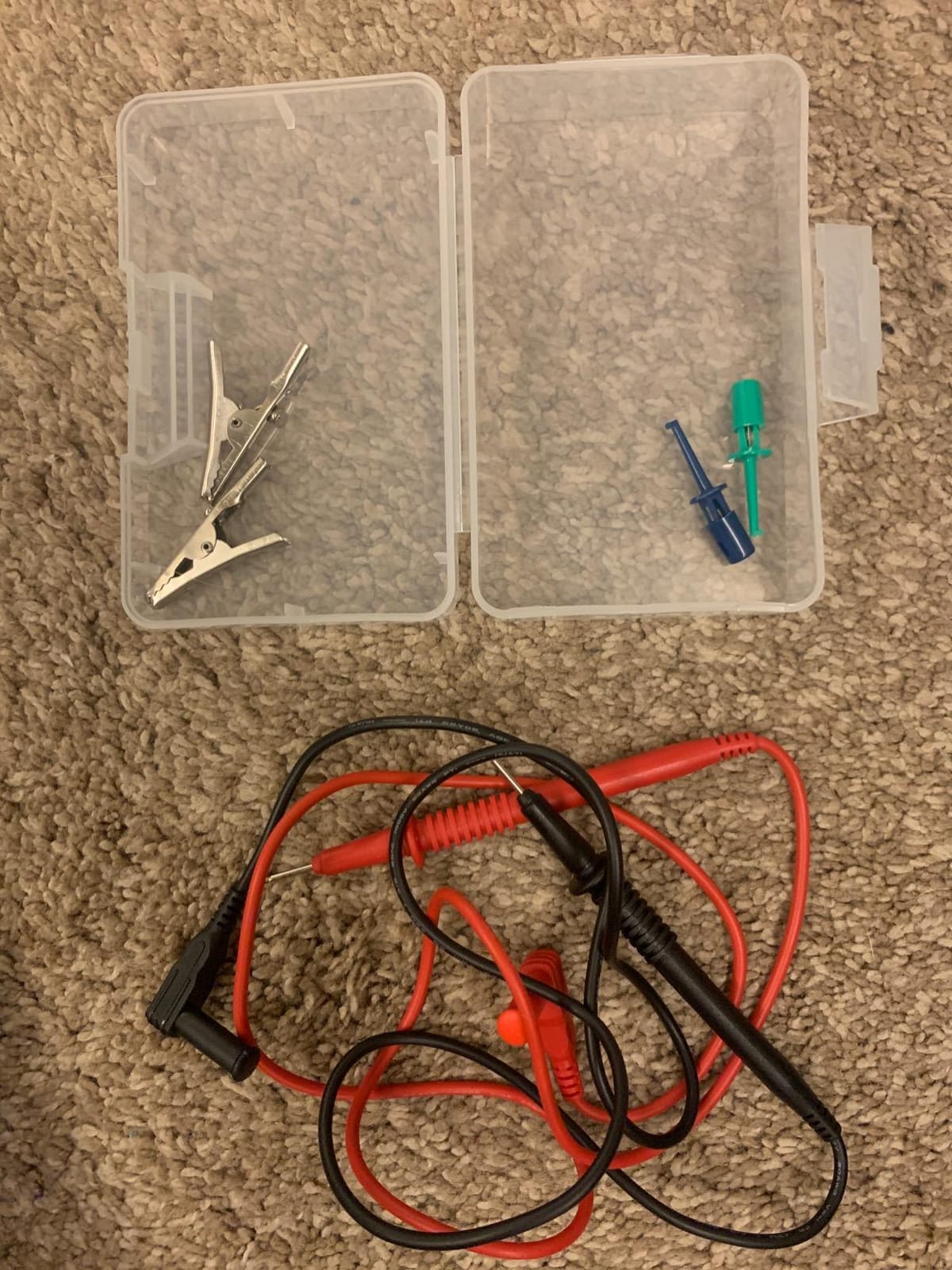
The SMD patch clip is the reason to buy this one. It grips a surface-mount component or a short SMD lead at close quarters, which is the single most useful accessory in the pack for anyone doing board-level repair rather than breadboard work.
Rating is stated as CAT III 1000 V and 20 A, with CAT IV 600 V, and the leads are double-insulated PVC with standard diameter banana plugs. You also get mini spring test hooks, fully insulated crocodile clips, and a spade plug for reaching into tighter terminal blocks.
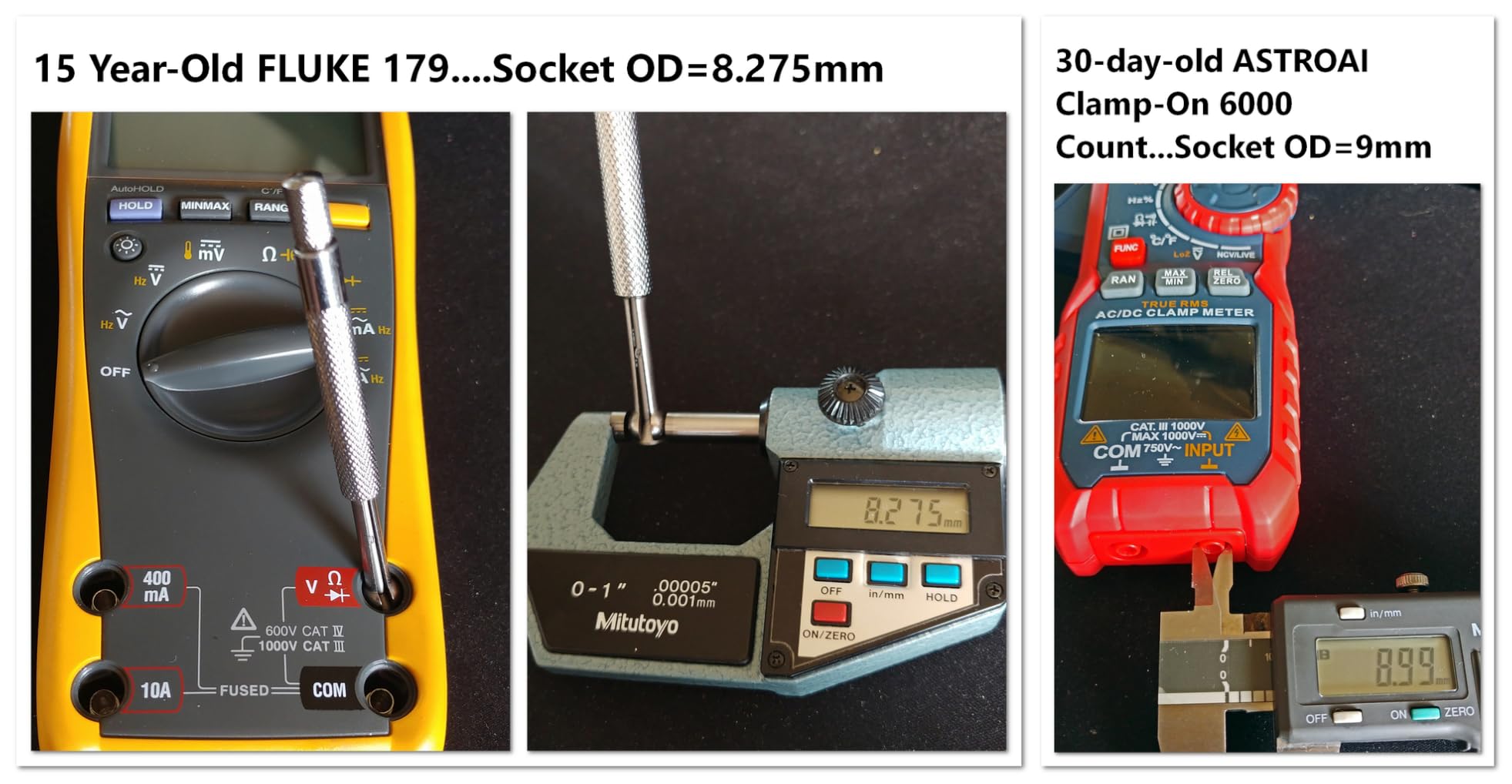
Across 4,022 ratings averaging 4.5, owners in home and vehicle workshops call it strong value with durable leads. The clip springs are repeatedly praised for surviving being dropped and pulled, which matters more than it sounds on a working van bench.
Two caveats come up often. The supplied probes are too short to reach into a standard wall outlet without an adapter, and a minority report that plug fit can be inconsistent on some budget meters, or that the plug loosens after extended use. Check the fit before a long session.
Where it earns its place
Board repair and SMD work is where this kit separates itself. The patch clip plus the spring grabbers cover two different scales of fine contact, and the spade plug covers terminal blocks that a probe tip would skate off.
It is also a good first kit for someone who wants one bag to cover home wiring checks and electronics tinkering, since the insulated crocodile clips and lead extensions give reach beyond a bare meter lead.
Where it does not
The 40 degree C upper temperature rating tells you this is a general-purpose kit, not one to leave in a hot car or a welding bench. That is fine for bench work, but it is a limit worth knowing.
It is also a measurement kit rather than an output cable. Nothing in here moves meaningful current from a binding post, so plan on a separate silicone lead for powering anything.
4. Sumnacon 4mm Banana to Alligator Clip Leads – Top Rated for Bench Posts
Sumnacon Multimeter 4mm Banana Plug to Alligator Clip with Wires, 5PCS,1M
Stackable 4 mm banana plugs
Rated 1000 V and 15 A
Approx. 40 inch silicone leads
Five colour-coded pairs
Pros
- Stackable plugs let two leads share one output socket
- Silicone jackets stay kink-free and flexible in cold weather
- Firm banana fit on bench power supplies
- Strong clip springs hold tension over time
Cons
- Only two leads per pack
- Clip ends reach deep enclosures less well than a probe
This is the lead we plug into a binding post first. The 4 mm stackable banana plug seats firmly, and at 1,625 ratings averaging 4.8 it shares the top score in this roundup. Reviewers specifically mention firm banana connections and low measured resistance as the reasons.
The rating is printed as 1000 V and 15 A, and the cable is silicone-jacketed at roughly 40 inches from clip tip to banana end. The clips have a 10 mm jaw opening, which clears a 0.5 mm screw terminal comfortably, and the spring keeps its bite over months of use.
Stackability is the detail that changes daily workflow. Because each plug is a pass-through barrel, you can piggyback a second lead onto the same socket, which means measuring voltage at a node without unplugging the power. On a single-channel bench that saves a constant swap.
The silicone is the other quiet win. It coils without taking a set, so the lead drops flat onto the bench instead of springing into a hoop, and it stays pliable in an unheated garage. Five colour-coded pairs make channel labelling automatic.
Why we keep these on the bench
They cover the most common bench task perfectly: power something small from the supply, and clip somewhere you can reach. That is breadboards, module headers, and screw terminals, which is most of what a hobby bench does in a week.
They also double as the meter connection, since the banana end fits a standard jack. Having a lead that works on both the supply and the meter removes one more thing to keep track of.
The limits to respect
Only two leads come in a pack, so a full two-channel bench needs multiple packs. That is the most common complaint in the reviews and it is a fair one.
At 15 A stated rating with a thin-ish conductor, treat that as a headline figure rather than a continuous working level. For sustained high current, go to the 14 AWG silicone pair at number nine.
5. Sumnacon Banana-to-Banana Jumper Leads – Lowest Measured Resistance
Sumnacon 5Pcs 4mm Banana to Banana Plug Test Leads for Multimeter,3.3Ft/1M
18 AWG silicone conductor
4 mm plugs on both ends
Rated 1000 V and 15 A
1 metre length
Pros
- Very low measured end-to-end resistance of roughly 38-41 milliohms per pair
- Plugs seat firmly in meter and supply jacks
- Silicone does not hold a coil memory
- 18 AWG conductor is thick enough for moderate current
Cons
- The 15 A rating is optimistic at that current level
- Plug tolerance varies slightly between cables
- Adapter needed to clip onto a circuit
These are the jumpers for four-wire measurements and for linking one supply output to a second device. Reviewers who checked with a four-wire meter measured roughly 38 to 41 milliohms per pair, which is about as low as a 1 metre silicone lead of this class gets.
The conductor is 18 AWG inside flexible silicone, with 4 mm stackable plugs at both ends. That is thicker than the wire in most clip lead sets, and the insulation resists taking a memory set after coiling, which is why these lie flat in a drawer instead of curling.
Across 1,249 ratings averaging 4.7, technical reviewers recommend them for laboratory and general measurement work. The caution they raise is the current rating: one reviewer measured roughly 0.6 V drop and 8 to 9 W of dissipation across the pair at full stated current.
That number is worth internalising. The 15 A figure is a rating, not a comfort zone, and for anything sustained you want a heavier conductor. The lead is also easy to cut and re-terminate if you want a custom length, which is a genuine advantage over moulded factory leads.
Where jumpers earn their slot
Anything involving current sense or four-wire resistance measurement benefits directly, because low lead resistance stops the cable from appearing in your reading. It is the same reason a bench supply has sense terminals, and these leads fill the gap when you are metering at the far end of a cable run.
They also work well as a parallel feed, stacking two into one socket and running a second board from the same rail.
What to watch
Plug tolerance varies slightly between individual cables in a pack, so test each one before a critical measurement. A lead that feels loose in the jack will add contact resistance that ruins the reading you are trying to take.
Banana-to-banana only means you need an adapter to reach a circuit. If your workflow is clip-to-anything, the set at number four is the more flexible choice.
6. Sumnacon 39 Inch Test Hook Leads – Best for Breadboard Nodes
Sumnacon 39 Inch Multimeter Test Lead Set – 5 Pcs Stackable Banana Plug to Test Hook Wire Cable Kit with Protective, Flexible Wire Leads for Electrical Testing 500V/5A
22 AWG supple wire
Rated 500 V and 5 A
39 inch length
Stackable pass-through plugs
Pros
- Pass-through stackable plugs let two lead pairs share one socket
- Test hooks clip directly onto breadboard nodes
- Five colour-coded leads aid channel tracking
- Inexpensive and a standard addition to a school meter bag
Cons
- Rated only 500 V and 5 A
- 22 AWG conductor limits it to low-current signal work
- Hooks are fiddly on very fine component leads
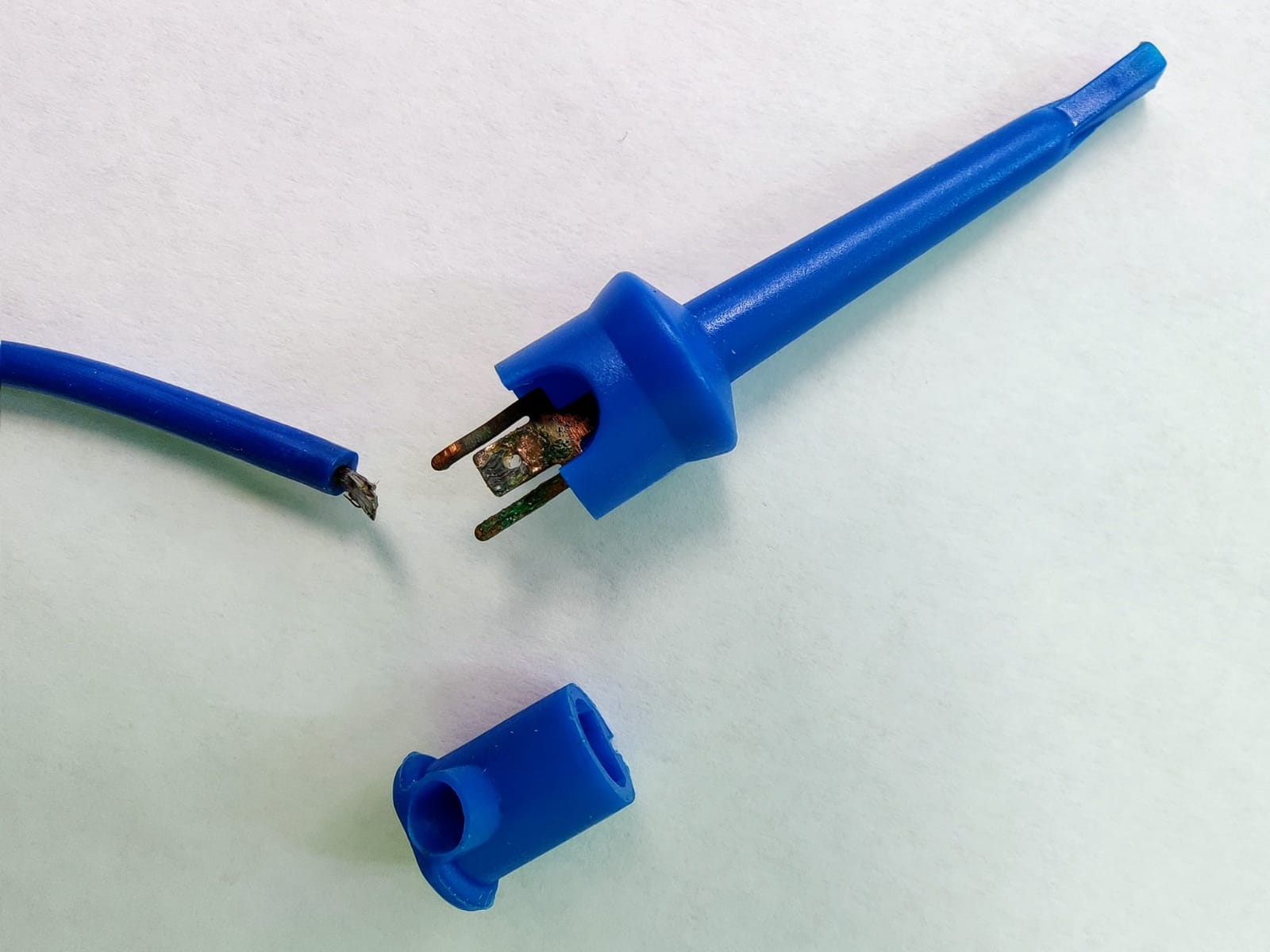
A test hook grips a breadboard node or a header pin and stays there, which frees both hands for the probe you are holding. That is the whole appeal, and it is why these get used far more than their modest rating suggests.
The plugs are moulded 4 mm pass-through barrels, so the same stacking trick works as on the clip leads. Five colours give you red, black, blue, yellow, and green at 39 inches, which is long enough to run from a supply post to a breadboard without a sag in the middle.
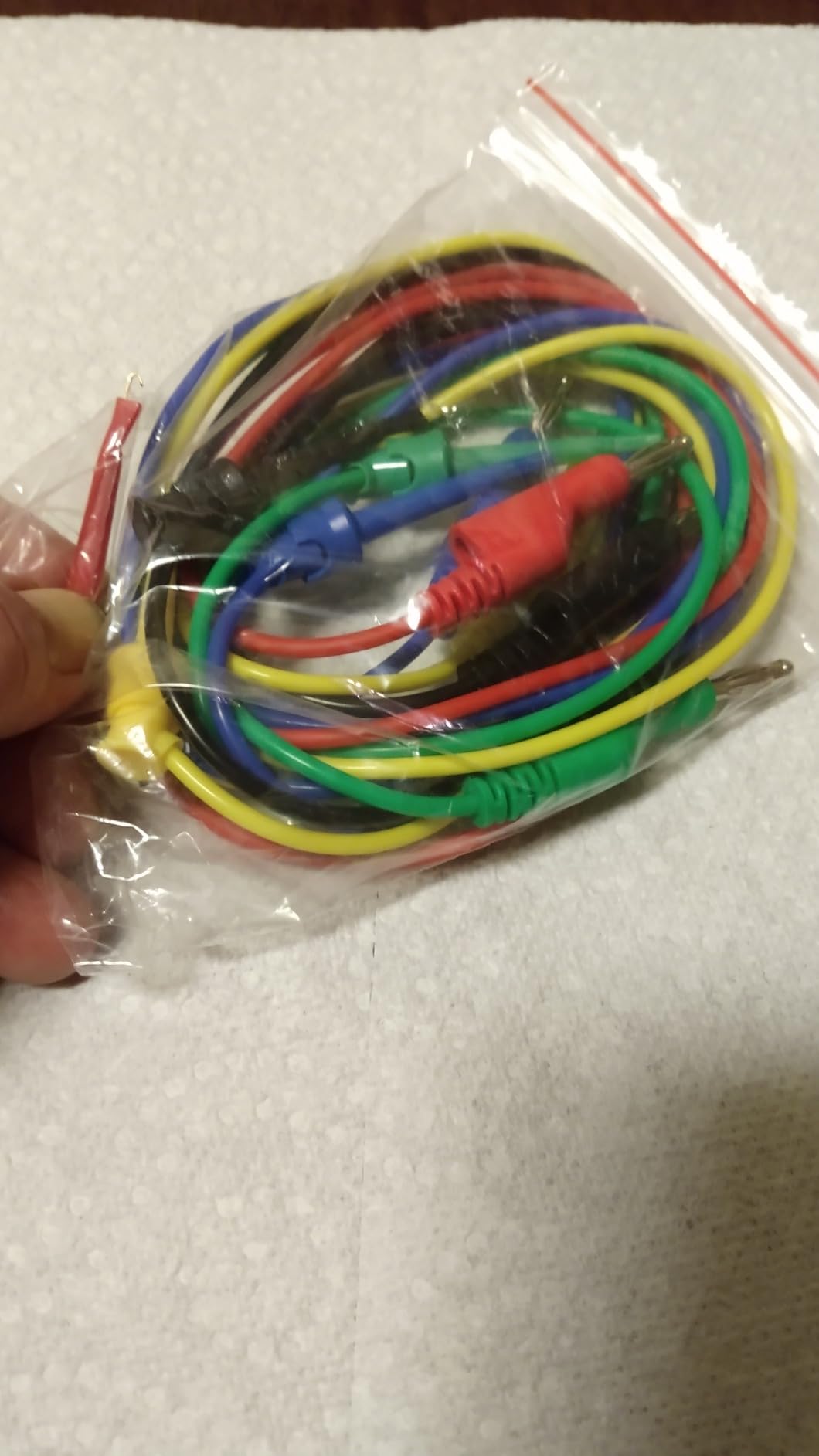
Across 1,039 ratings averaging 4.6, owners like the stackable plugs and the breadboard-friendly hooks, and the lower rating is the acknowledged trade rather than a complaint. Physics students and hobby experimenters treat them as standard kit.
The specification is 500 V and 5 A on 22 AWG, which is well below the 1000 V and 15 A of the clip lead sets. For 5 V and 12 V rail work on a breadboard that ceiling is never the constraint, and the conductor thickness is right for the job.
What we use them for
Node-level breadboard work where a clip would cover the point you are trying to measure. Hook it on, put the meter probe on top, and read the value while the circuit keeps running.
They also work as a cheap way to hold a temporary connection during a build, giving you both hands back for soldering or adjustment.
Where they stop helping
On very fine component leads the hook is awkward, because the jaw is sized for a breadboard node rather than a hair-thin wire. For delicate work, a micrograbber or a needle probe is the right end.
They are also not a supply output cable. The 22 AWG conductor and 5 A ceiling mean powering a load through these is a bad idea even though the plug will fit the post.
7. Goupchn 5-Piece Safety-Shrouded Banana Leads – Best for Shrouded Plugs
Goupchn 5PCS 4mm Safety Shrouded Banana Plug Silicone Test Leads Kit
Fully insulated shrouded 4 mm plugs
Crocodile clips rated 300 V and 15 A
Fork clips rated 60 V and 36 A
Soft silicone wire
Pros
- Shrouded plugs reduce exposed contact area on a shared bench
- Silicone stays soft and does not harden in cold conditions
- Fork clips and automotive back probes included in one pack
- Stackable plugs allow piggybacking onto a supply output
Cons
- Fork clips are rated only 60 V despite higher ratings elsewhere
- Automotive needle back probes are single-use
- Costs more than plain two-lead clip sets
The fully insulated shrouded plug is the reason this kit exists. The metal pin is covered for its whole exposed length, so the plug cannot bridge to an adjacent post or touch a grounded chassis even if it is pushed in carelessly.
That matters on any bench where the output is floating rather than earth-referenced, and it matters more if you share a bench with a mains-powered soldering iron or a bench scope. Across 731 ratings averaging 4.6, buyers single out the shrouds and the silicone flexibility.
The pack is unusually broad for five leads. It includes nickel-plated alligator crocodile clips rated 300 V and 15 A, U-type test fork clips rated 60 V and 36 A, and an automotive back probe set with five acupuncture probes and ten replaceable needles.
Read the accessory ratings individually rather than taking the pack rating as a whole. The fork clips are a 60 V part, which makes them fine for low-voltage DC work at the bench and wrong for anything mains-side.
When the shroud matters
If your supply outputs are floating and you regularly probe near more than one post at a time, shrouded plugs remove a whole class of accidental contact. It is cheap insurance and it changes how carefully you have to work.
The stackable shrouded plugs also stack, so you can still piggyback a second lead onto a single socket without losing the insulation benefit.
Where to be careful
The needle back probes are single-use items that dull and should be replaced, so treat them as consumables rather than permanent parts. Budget for needles if you use them often.
Against a plain two-lead clip set this is simply more money for accessories you may not touch. If you already own clip leads and only need the safety upgrade, this is still a reasonable place to spend it.
8. Goupchn 25-Piece Silicone Test Lead Kit – Best Accessory Variety
Goupchn 25PCS Silicone Multimeter Test Leads Kit for Electrical Testing
CAT III 1000 V and 10 A
Pure copper silicone conductors
Includes wire piercing probes
Transparent storage box
Pros
- Swappable tips let one meter cover probes hooks clips and needles
- Silicone jacketing resists signal loss over long sessions
- Storage box keeps 25 pieces organised
- Several buyers report results comparable to premium leads
Cons
- Lead lengths are short
- Buyers want main leads at least 6 feet
- 10 A rating is modest for heavier current work
This is the variety pick. Twenty-five pieces in one pack: banana plug leads, banana-to-hook leads, probe pens, a twelve-piece wire piercing probe set, two high voltage test hooks, and four alligator clip sets, plus a test tweezer and a transparent box.
Conductors are pure copper in silicone, rated CAT III 1000 V and CAT IV 600 V at 10 A. Several owners with long careers in electrical work say the performance compares favourably to premium branded sets, and the tweezer is a genuinely useful addition for holding a small component while you probe it.
Across 677 ratings averaging 4.6, the accessory mix and interchangeable tips draw the strongest praise. The storage box is more useful than it sounds, because 25 loose ends on a bench become 25 loose ends within a week.
Short lead length is the dominant complaint, and several buyers specifically ask for the main red and black leads to be at least 6 feet. If your supply sits at the back of a deep bench, plan for that or buy the longer leads separately.
Best fit for
Someone who wants one kit to cover automotive, household, and electronics checks without buying accessories piecemeal. The piercing probe set alone covers the awkward under-tape and under-connector measurements that usually need a trip to an auto parts store.
It is also the kit we would hand to a family member or a student, because the storage box keeps it from becoming a drawer of tangled leads.
Where it falls behind
The 10 A ceiling rules it out for anything heavier, and the short leads mean you often end up holding the meter in your off hand. Neither matters for measurement work, but both matter if you were hoping to borrow it as a power lead.
Against a two-lead silicone cable this is a different product entirely. Buy it for measurement breadth, not for connecting to a binding post under load.
9. zhenyu 14 AWG Silicone Alligator Leads – Thickest Wire in the Lineup
2Pcs Multimeter Alligator Clip Test Lead Set 14AWG Silicone Wires 3 Feet
14 AWG silicone cable rated 20 A
3 foot length
Insulated 10 mm jaw clips
600 V nominal and 2000 V test
Pros
- Very strong alligator springs with heavy multi-spiral tension
- 14 AWG wire rather than the thin gauge common in clip sets
- Neatly soldered wire entry at the clip boot
- Banana plugs fit tightly on older meters too
Cons
- Clip spring bites hard and takes finger strength
- Only one red and one black lead in the pack
- Banana end is not readily serviceable
This is the pair we trust with actual power. At 14 AWG the conductor is a genuine step up from the 18 and 22 AWG wire used in most clip lead sets, and the cable is rated to carry 20 A.
That headroom matters. A 30 V bench supply capable of 5 A is fine on this lead with room to spare, and you can keep it in circuit while ramping a load up without watching for warmth in the jacket. Owners doing rectifier and bench work call out the heavy gauge and the clean solder joints.
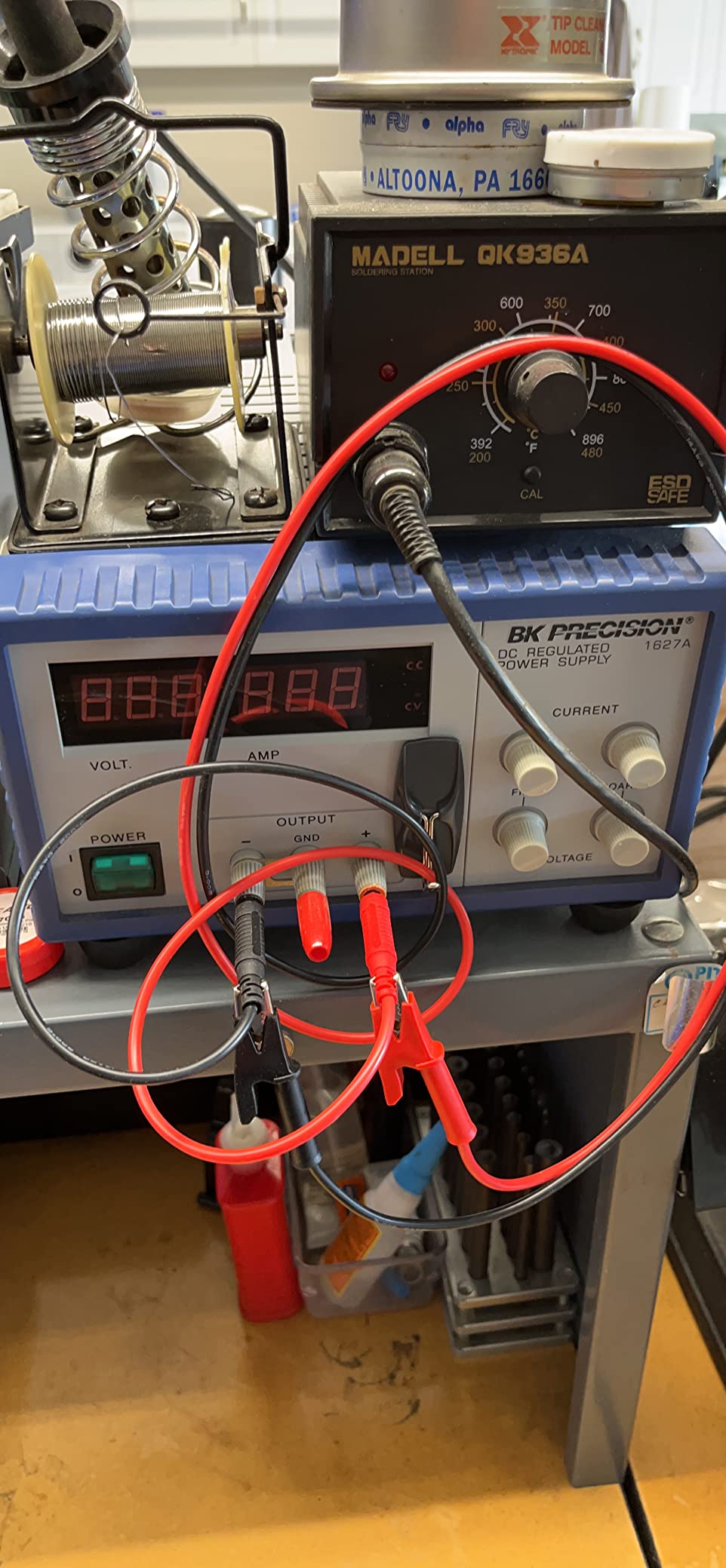
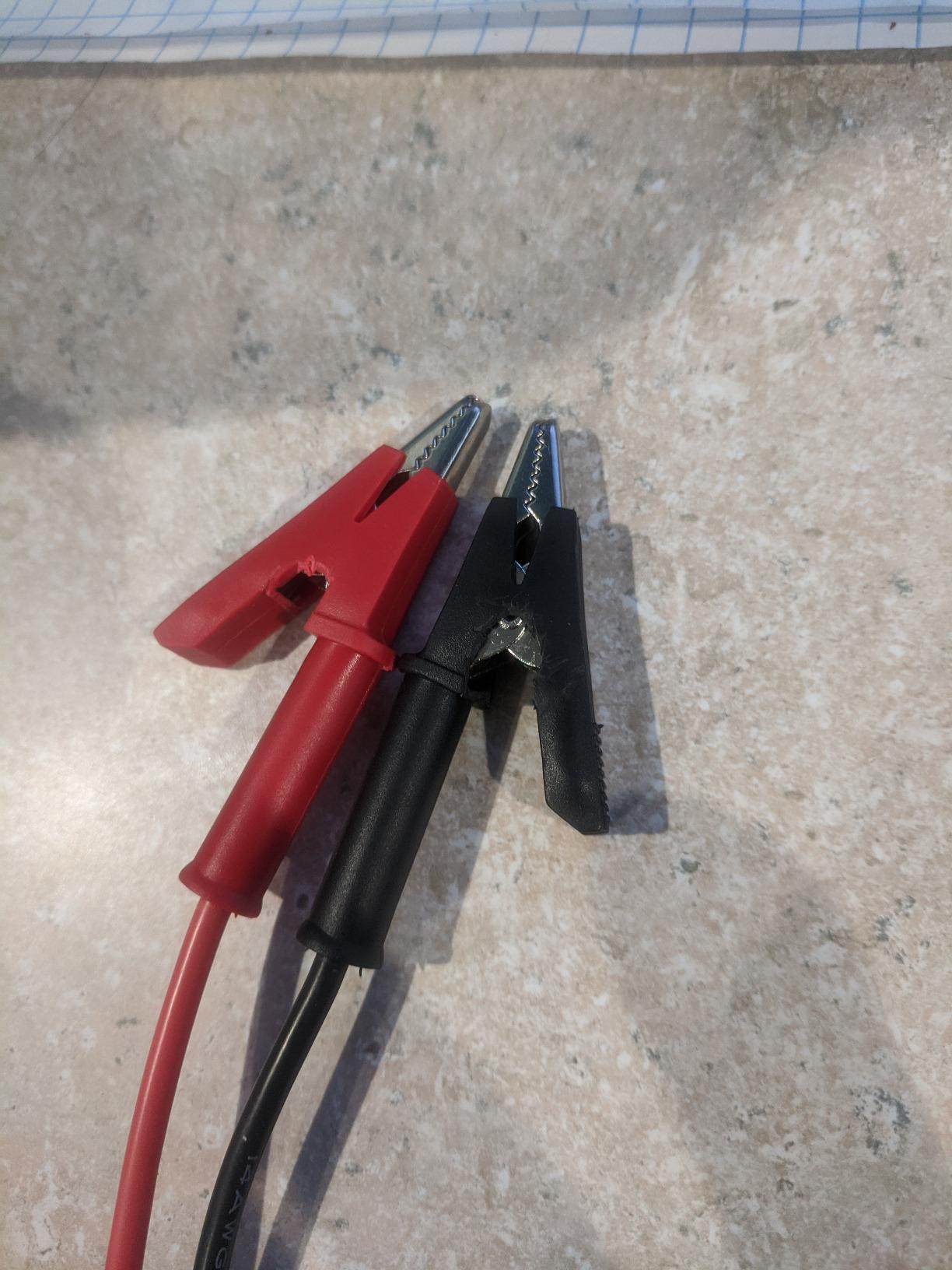
The clip springs are unusually strong, with a multi-spiral tension that grips a screw terminal hard enough that you can move the board without the lead coming loose. The trade is that the springs take real finger strength to open, and that is the one recurring niggle in the reviews.
Construction details are better than the price suggests. The wire entry at the clip boot is neatly soldered, which is where cheap leads usually fatigue and break, and the silicone cable stays pliable in cold conditions.
Why it outranks lighter leads
Wire gauge is the single factor most people skip, and it is the one that decides whether a lead runs cool at your supply’s rated current. A lead rated below the supply is not a convenience issue, it is a heat issue, and 14 AWG keeps the conductor well clear of that limit.
At 4.8 across 676 ratings, it matches the top score in this group, and the build matches the stated specification rather than overstating it.
What to watch
Only one red and one black lead comes in the pack, so a two-channel bench needs two packs. The banana end is also not easily serviceable if the internal connection ever fails, so treat it as a sealed unit.
If you clip onto very thin hook-up wire, the spring tension will be too aggressive and may damage the conductor. Use a short length of thicker wire as an adapter or reach for a lighter clip instead.
10. ALLmeter Right-Angle Banana to Alligator Lead – Best for Tight Desks
ALLmeter 1 Pair 4mm Banana Plug to Alligator Clip Test Lead Cable 1000V/15A
Right-angle 4 mm banana plugs
18 AWG with 50 copper strands
100 cm length
Rated 15 A and 1000 V
Pros
- Banana plugs fit tightly across multiple meter brands
- Insulation is moulded around each jaw rather than one cone
- One user measured zero ohms end to end
- 18 AWG is thicker than stock meter leads
Cons
- Clip springs are too strong for very fine hook-up wire
- 10 mm jaw is wide for narrow connector pins
- Only one pair per pack
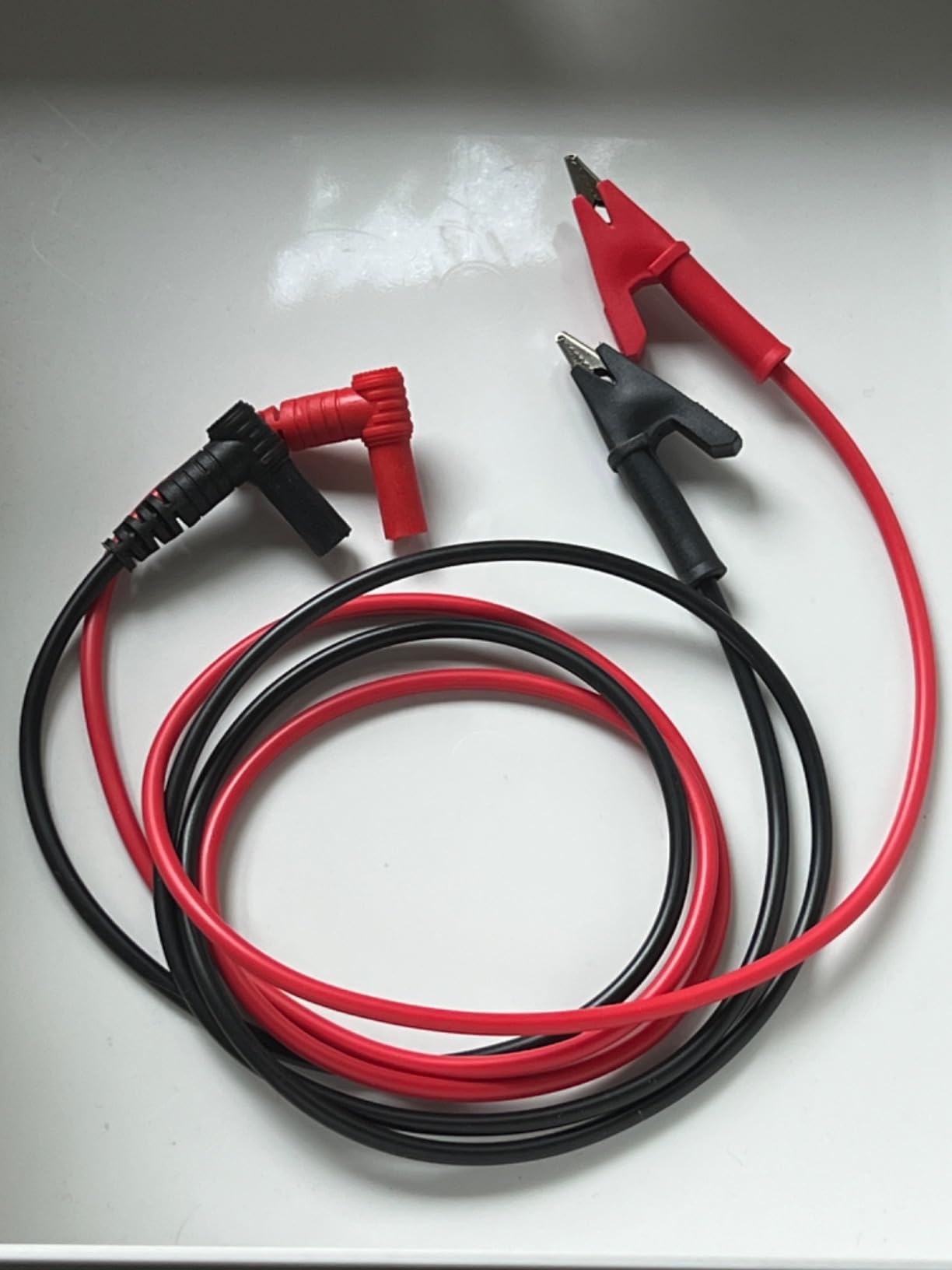
The right-angle banana plug is the feature that matters here. On a crowded bench a straight plug sticking out of a binding post takes up space and gets knocked; the right-angle version turns the lead 90 degrees and lies flat against the front panel.
The conductor is 18 AWG with 50 strands of 0.15 mm pure copper, rated 15 A and 1000 V across a 100 cm length. One user measured zero ohms end to end, and across 414 ratings averaging 4.7 the tight plug fit across different meters is the most repeated praise.
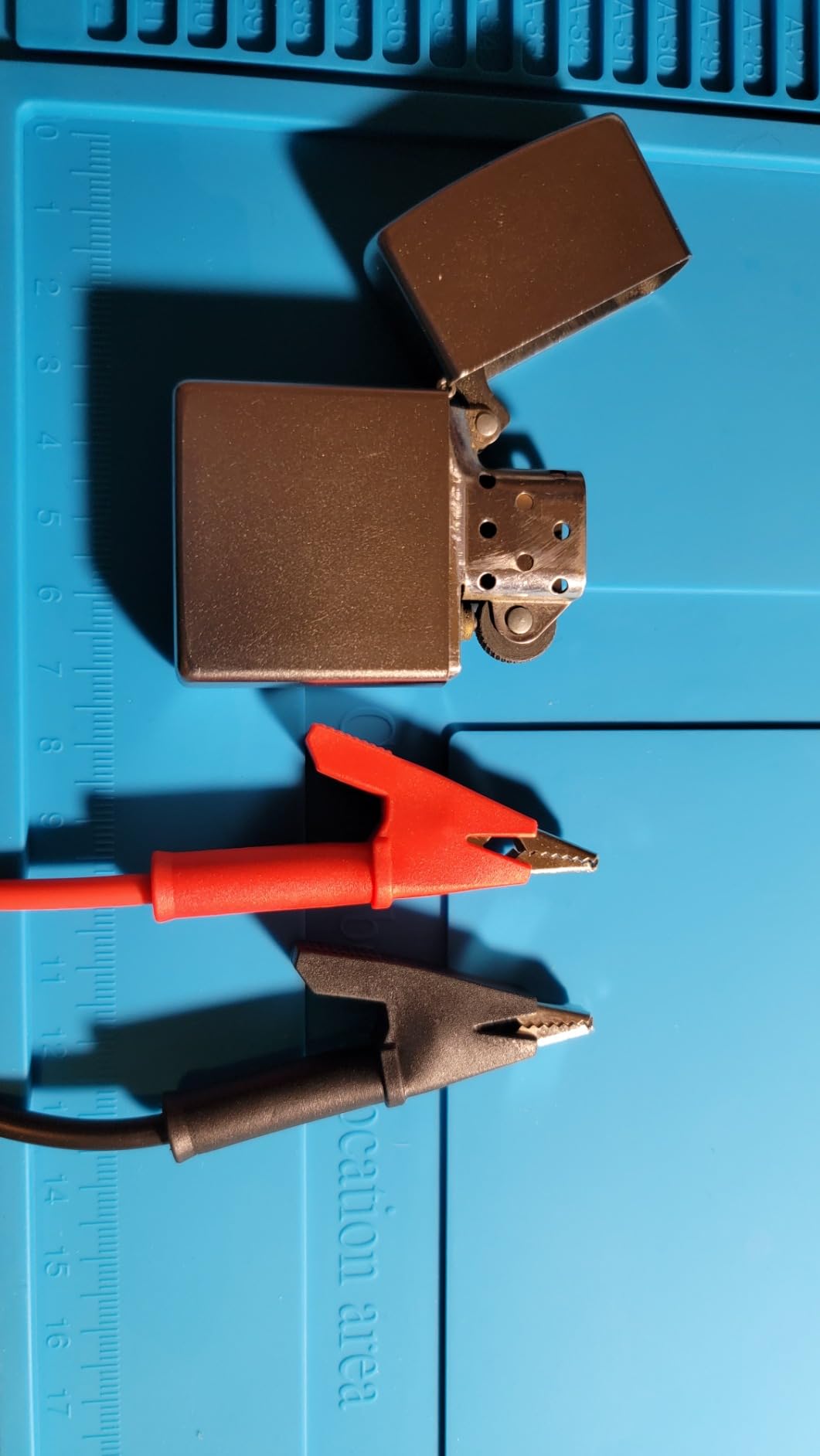
Two smaller details are worth knowing. The insulation is moulded around each jaw of the clip rather than as a single cone over both, so the two halves of the clip stay separately insulated. And the lead ships coiled in a box rather than tie-wrapped, which avoids the kink you get from a lead pulled straight off a twist tie.
It is a single pair, which is all you need for one channel. For a two-channel bench you will want two of these, and the packaging is simple enough that buying a second is painless.
Who should buy this
Anyone with a supply sitting at the back of a bench where a straight plug would foul the next channel, or anyone running two channels from one unit and needing the space back. It is one of the few leads here that solves a physical layout problem rather than a spec problem.
It also suits a meter whose input sockets are close together, where a straight plug body makes it awkward to fit a second lead alongside.
Where it is not the answer
The 10 mm jaw opening is wider than you want for narrow sensor pins or automotive connector pins, so it is not a universal clip. The strong spring is again the issue on very fine hook-up wire.
At 18 AWG it is well short of the 14 AWG pair at number nine for sustained current, so use this one for general bench work rather than for loading a rail close to its limit.
11. Young Dance 30-Piece Banana Lead Kit – Best for Piece Count
Young Dance 30 Pcs Banana Plug Silicone Test Leads Kit, 4mm Stackable Banana Plug with Threading Probe, Alligator Clips, Probe Holder, Connection Hose ,Automotive Test Leads for Multimeter
30 pieces including 5 leads
Alligator clips rated 1000 V and 30 A
Gold and nickel probes in two lengths
Soft silicone insulation
Pros
- Very high piece count for the money
- Silicone jacket stays flexible in cold and resists heat and water
- Stackable plugs allow piggybacking onto a supply output
- Velcro case with divided compartments
- Interchangeable ends cover many test point types
Cons
- Some reviewers rate the general build as average
- Silicone jacket attracts lint and dust on a bench
- Lowest average rating in this group
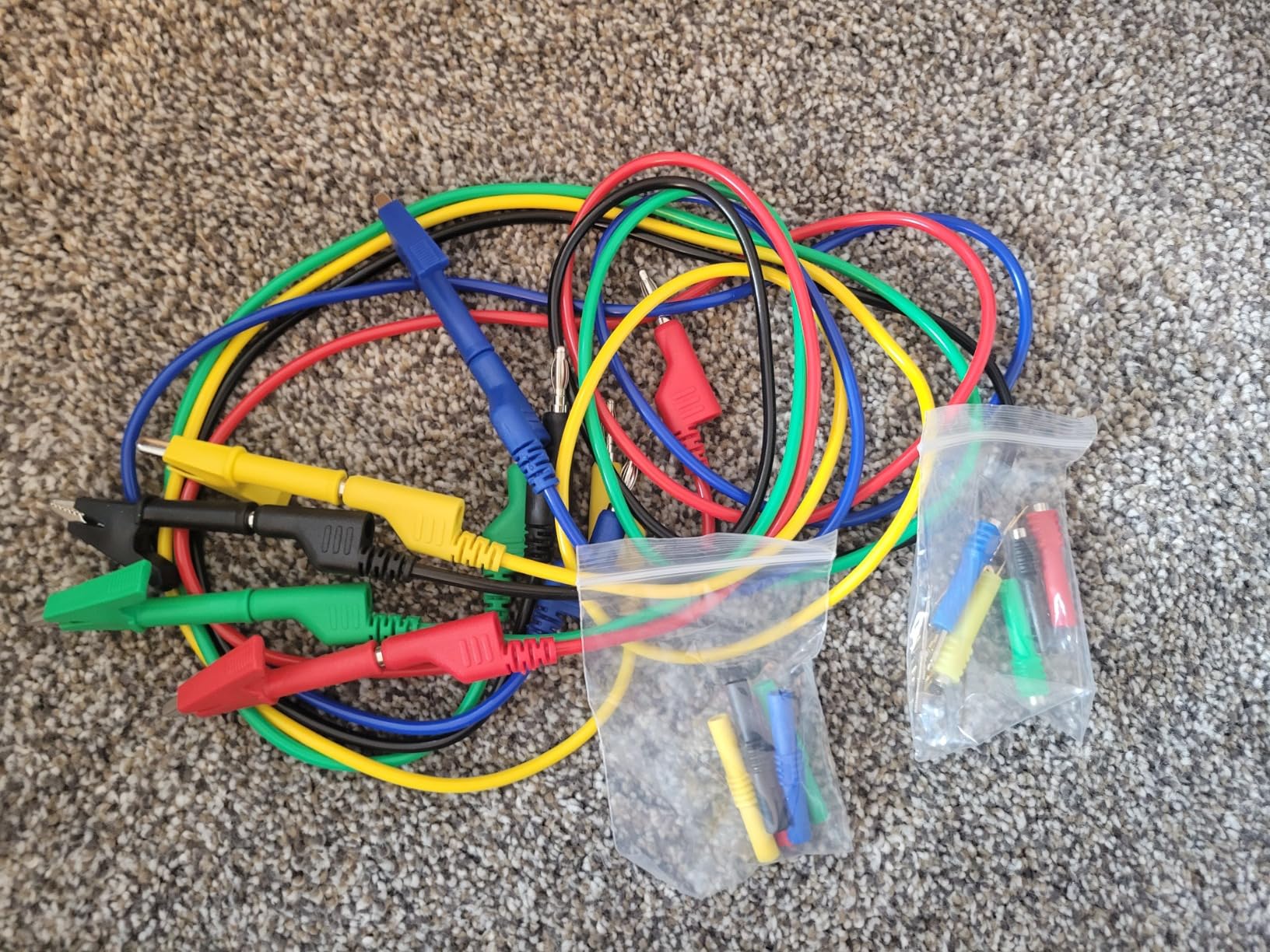
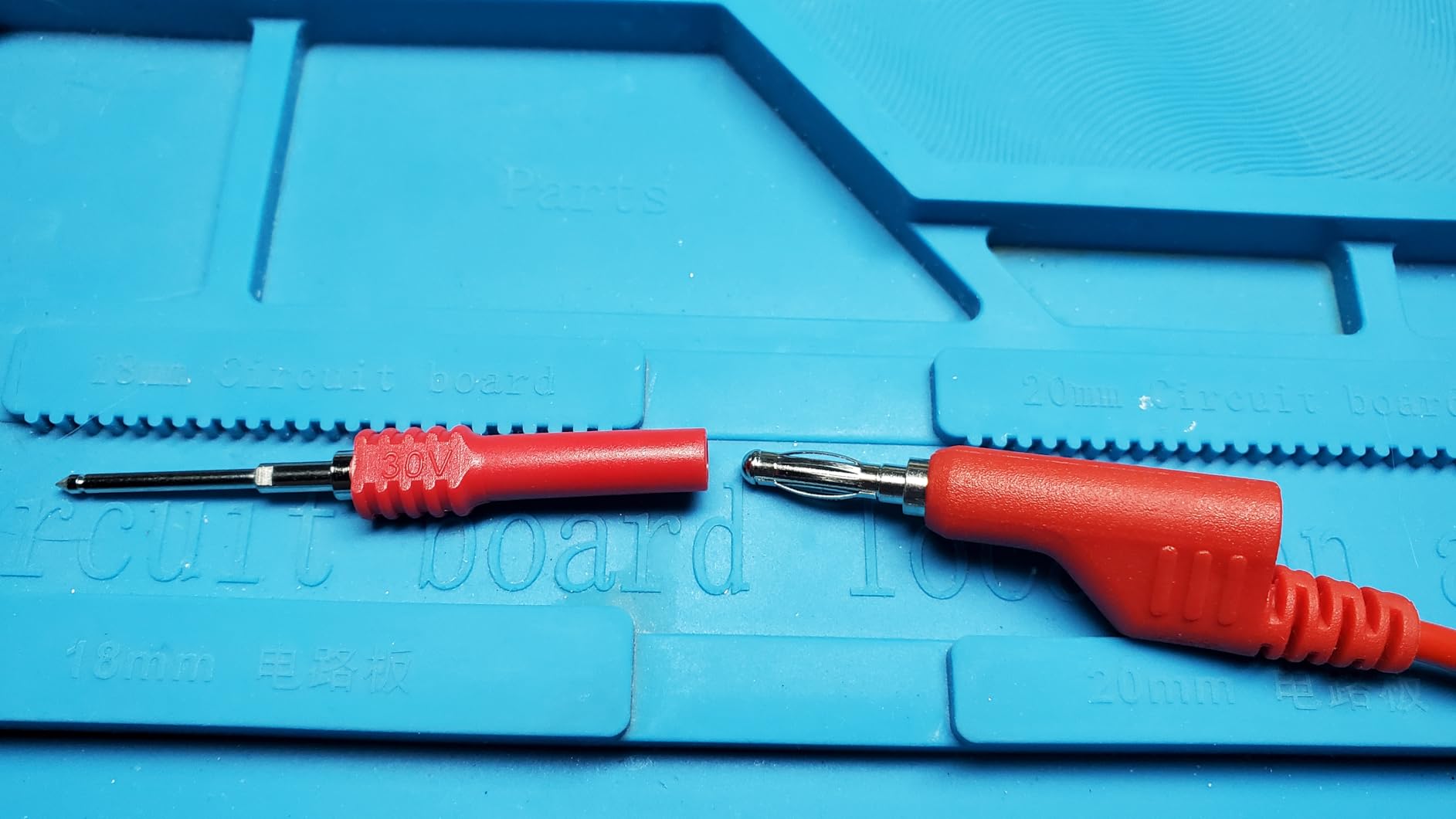
Thirty pieces is the pitch, and it is real: five 100 cm stackable banana leads, five 58.5 mm gold-plated probes, five 39 mm nickel-plated probes, five alligator clips rated 1000 V and 30 A, five probe holders, connecting hoses, a wrench, and a storage case.
The 30 A clip rating is the highest stated current figure in this roundup, which makes the clips usable on heavier loads than anything else here. Electricians and HVAC technicians who bought it praise the piece count, the ruggedness, and the fact that the silicone stays flexible in cold conditions.
That said, this is also the lowest-rated set we tested, at 4.4 across 345 ratings with 69 percent five-star feedback. A minority of buyers rate the general build as average next to Fluke or Ideal, and that judgement is fair for a kit at this level.
Silicone also has one real downside on a bench: it attracts lint and dust, so the leads look grubby faster than PVC ones. The divided velcro case helps a lot with keeping the count straight.
Where the piece count pays off
Teams and shared benches. When four people use the same supply, a 30-piece kit means nobody is hunting for a free hook or a spare clip at the start of a session, and the case makes the whole thing portable.
It is also a strong option if you work on a lot of different connector types, because the interchangeable ends cover probes, clips, and piercing points without a second purchase.
Where to temper expectations
Do not confuse the 30 A clip rating with a 30 A lead. The clips are rated that high; the lead wire is what limits sustained current, and that rating is not printed as clearly as the clip figure.
If you want one lead to be the best on your bench, this is not it. If you want comprehensive coverage that covers everyone at the table, it is hard to argue with the value.
12. voltrish 25-Piece Silicone Back Probe Kit – Best for Automotive Work
Voltrish 25-Piece Silicone Multimeter Test Leads, Automotive Back Probe Kit
CAT III 1000 V and CAT IV 600 V
40 inch modular silicone leads
16 AWG high-strand wire
Shrouded 4 mm banana plugs
Pros
- Silicone stays flexible in cold weather and across a wide temperature range
- Interchangeable tips cover awkward and hard-to-reach measurements
- 4 mm plugs fit Klein Fnirsi Fluke and Greenlee meters
- Gold-plated low-resistance tips with 16 AWG wire
- Compartmented case doubles as a parts tray
Cons
- Long-term durability not yet confirmed by some buyers
- Mini wrench and screw-on tips add a step when swapping
- Included storage case is plastic and not rugged
This is the automotive and cold-weather pick. The leads are double-insulated silicone rated CAT III 1000 V and CAT IV 600 V, and the conductor is 16 AWG high-strand wire, which is heavier than most kits in this roundup manage.
The modular design is the point. Tips pull out of the 4 mm banana plugs and swap in seconds, and the gold-plated tips screw on tight using the included mini wrench, which removes the contact resistance that makes a cheap reading look wrong. Buyers confirm the plugs fit meters from Klein, Fnirsi, Fluke, and Greenlee.
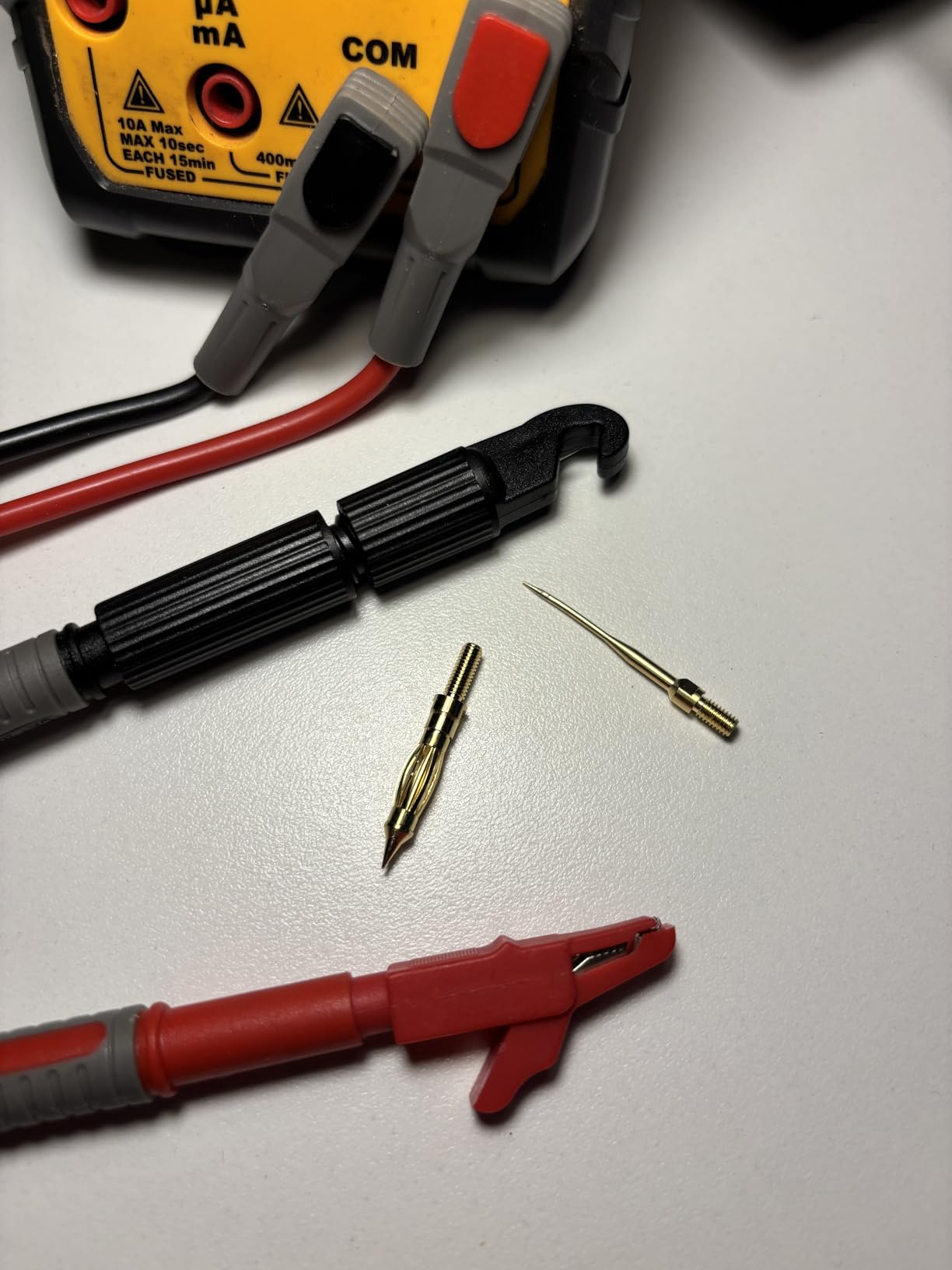
Lead length is 40 inches modular, giving roughly 6.6 feet of total reach once the probes are attached, which addresses the short-lead complaint that dominates the other 25-piece kits. The compartmented storage case keeps everything organised and doubles as a parts tray.
Across 359 ratings averaging 4.6, owners with long careers in electrical work call it better value than premium alternatives. The measured criticisms are modest: some buyers note they have not yet stress-tested the leads over long use, and the screw-on tips add a fiddly step when you are in a hurry.
Why it suits automotive testing
Back probe needles and alligator clips in the same pack cover the two halves of a vehicle electrical check, and the CAT III and CAT IV ratings are stated rather than implied. Silicone insulation also means the leads survive a cold morning without going stiff in your hands.
It works just as well for household circuits and for anyone working in a garage where temperature swings are normal rather than exceptional.
Where it stops
The screw-on tip retention means swapping ends is a two-step job, which is friction when you are probing quickly. If you want instant changes, a push-fit kit like pick eight is faster even if it is heavier.
It is still a measurement kit. Sixteen AWG is respectable, but it is not the conductor you want between a binding post and a load drawing several amps.
How to Choose Bench Power Supply Test Leads in 2026
Start by matching the lead to the current, not the price. The supply’s maximum output current is the ceiling your lead has to survive, and you want the lead’s stated rating comfortably above it rather than equal to it. A supply rated 5 A with leads rated 5 A is already operating at the limit before the conductor heats.
Wire gauge is the number that follows from that. Here is the practical mapping for flexible stranded lead in free air, which is roughly the condition your bench leads live in:
22 AWG: comfortable up to about 3 A, fine to 5 A for short bursts. Signal and breadboard work.
20 AWG: around 5 A continuous. The minimum for a 5 A supply if you want headroom.
18 AWG: roughly 7 A to 10 A continuous. The sensible default for a 5 A bench.
16 AWG: around 10 A to 15 A continuous. Comfortable for a 10 A supply.
14 AWG: around 15 A to 20 A continuous. The right choice for a 20 A output.
12 AWG: above 20 A. Rarely needed on a hobby bench.
Insulation is the second decision. Silicone stays flexible from a cold garage to a warm bench and does not deform or kink permanently, which is why most of the leads we kept preferred it. PVC is cheaper and perfectly adequate indoors above about 10 degrees Celsius, and it resists abrasion slightly better, so neither choice is wrong on its own terms.
Connector ends come down to what you actually touch. An alligator clip is the most forgiving and works on anything with a terminal. A test hook grips a breadboard node and stays there. A banana-to-banana lead is the right answer for jumpers, sense lines, and four-wire measurement. A micrograbber or needle probe reaches fine SMD pads that nothing else will hold.
One more connector comparison worth internalising: banana plugs versus spade terminals. A banana plug needs a matching 4 mm jack or post and is removable without tools. A spade or fork terminal slides under a binding post cap and needs no mating socket, which makes it slightly faster on a hybrid post but useless anywhere else. For a bench you move around, the banana plug is the more flexible choice.
On connector quality, gold plating is a marginal gain. It resists corrosion and slightly lowers contact resistance, and the kits with gold-plated tips here are rated the same as their unplated equivalents. It is not a reason to buy a set on its own, and it does not rescue a lead with an unstated gauge.
On length, measure before you buy. A 3 foot lead suits a supply at the back of a bench, but if your device under test sits across the room or inside a deep enclosure, you want 6 feet or more and you should plan for it rather than discovering it mid-build. Longer leads add resistance and sag, so more is not automatically better.
Finally, here is what to avoid. Be skeptical of unrated marketplace leads that claim 3000 V, describe themselves as aging resistant, and never state a wire gauge. A voltage rating without a stated conductor size is not a specification, it is marketing, and a lead that cannot tell you its gauge is a lead you cannot safely use at your supply’s current limit. Buy from sellers who print the gauge, the current rating, and the voltage rating together.
We apply the same rule we use when picking any bench tool: match the tool to the job, not the job to the tool. A good example is our guide to the 12 best weight benches, where an under-rated frame is never a bargain however well it was priced. A lead rated below your supply is the same mistake in a different form.
Safety Notes for Bench Leads: Heat, Shorts, and Over-Current
Heat is the failure mode that matters. A conductor that is too thin for the current running through it resists that current, converts the wasted energy to heat in the jacket, and eventually softens the insulation. What follows is a short, and a short on a supply with a current limit is usually a tripped breaker rather than a fire, but on a supply without one it is a genuine risk.
The tell is simple. If a lead is warm to the touch at the clip or the plug while the supply is at its current limit, the lead is undersized, regardless of what the packaging claims. Stop and fit a heavier conductor rather than hoping it holds.
Never work on the DC side of a bench supply with the output open and the meter set to a resistance range. That is how a fuse blows for no reason. Power down, disconnect, and measure resistance only on a fully de-energised circuit.
Keep DC-side work and mains-side work physically separate on the bench. A floating bench output can sit at an unexpected potential relative to your earth-referenced scope ground, and a single slip bridges two circuits that should never meet. Shrouded plugs, clear separation, and one rule reduce the risk: never connect a bench supply ground to anything that is also earth-referenced unless you have thought it through.
Undersized conductors cause the same failures at home that they cause on a bench, which is why we treat a printed rating as non-negotiable when we assess the 8 best downspout heat cables as well. A cable that cannot state what it is rated for is a cable you leave on the shelf.
Bench Cable Management and Colour Labelling Discipline
Most bench cable problems are not electrical. They are the pile of eight red and black leads behind the supply that nobody can identify, which is how the wrong rail gets connected to the wrong board. The fix is boring and effective: pick a colour per rail, and keep it.
Red for positive, black for ground, and one additional colour per extra channel is a convention worth adopting before you buy anything. The five-colour lead sets in this roundup exist for exactly this reason, and once a colour means a rail you stop reading the wire and start reading the bench.
Label the free end of every lead with the rail it carries. A strip of tape and a marker is enough, and it survives longer than you expect because the label is on the end you actually look at when connecting. The alternative is unplugging leads one at a time and measuring to identify them, which takes far longer than it sounds.
Coil silicone loosely rather than winding it tight, and do not leave a lead folded sharply at the clip boot, which is where the conductor breaks first. The kits that include a storage box or a divided case earn their keep here, and hook-and-loop straps along the back of the bench keep runs from crossing the working area.
Leave a little slack at the supply end so that pulling a plug does not transmit force into the binding post. Binding posts are strong but not indestructible, and a lead under tension will eventually take the post with it. We learned that on the same principle as choosing a stable shooting bench over a flimsy one, which we covered in our guide to the 8 best shooting benches: build the stand so it does not move.
For the same reason we keep a printed copy of our 8 best emergency food supply kits checklist in the workshop drawer. A checklist that lives on a screen is a checklist you cannot follow with dusty hands, and the same is true of a lead inventory taped to the side of the supply.
Frequently Asked Questions
Which brand of banana plug is considered the best?
For bench work, Johnson and Pomona are the names most often recommended by experienced hobbyists for banana plugs, and the AllAboutCircuits forum consistently points to them alongside Mueller for clips. In practice the brand matters less than two things: whether the plug is a genuine 4 mm stackable barrel with a solid spring, and whether the lead states its wire gauge and current rating. A well-made unnamed lead that prints 18 AWG and 15 A will serve a bench better than a branded plug crimped onto unstated wire.
Are banana plugs better than spade terminals?
Banana plugs are better for a general hobby bench because they are removable and work with any 4 mm socket, including a multimeter jack, while a spade or fork terminal only fits under a binding post cap. Spade terminals are slightly faster when your supply has a hybrid post that accepts a bare fork under the cap, and they avoid the mating-socket requirement entirely. Choose bananas for flexibility, and keep spades for custom leads you build yourself.
Are gold plated test leads better?
Gold plating resists corrosion and marginally lowers contact resistance, so it is a small genuine improvement rather than marketing. In practice the sets in this roundup with gold-plated tips carry the same voltage and current ratings as their unplated equivalents, so plating is not a reason to choose one kit over another. It matters most on screw-on tips you will handle and swap often, where finger oils reach the contact surface repeatedly.
What size wire do I need for a bench power supply?
Match the conductor to the supply’s maximum output current, not its typical draw. As a rule of thumb, 18 AWG handles up to about 7 A to 10 A continuously, 16 AWG up to 10 A to 15 A, and 14 AWG up to 15 A to 20 A, while 22 AWG is fine only to about 3 A. For a 5 A supply, 18 AWG gives you headroom; for a 10 A supply, move to 16 AWG or heavier.
Why are my bench power supply leads getting hot?
A lead that warms up under load is almost always undersized for the current passing through it, or has a high-resistance joint at the clip or plug. The conductor heats first, then the insulation softens, and a softened jacket is a short waiting to happen. Check the stated current rating against your supply’s output current, and if the lead is within rating then suspect a corroded or loose connection at the binding post rather than the cable itself.
Can I use multimeter test leads to connect to a bench power supply?
You can plug a multimeter lead into a binding post for measurement, but you should not power a load through one. Meter leads use thin wire designed for signal accuracy, typically 22 AWG or lighter, and they are not rated to carry supply current. If the lead warms, deforms, or smells, disconnect it immediately. Buy a separate silicone output lead with a stated amp rating at or above your supply’s maximum output current.
What is the difference between silicone and PVC test leads?
Silicone insulation stays flexible across a wide temperature range, does not stiffen in a cold garage, and resists taking a permanent kink when coiled, which is why most of the leads we kept are silicone. PVC is cheaper, slightly more abrasion resistant, and perfectly fine for indoor use above about 10 degrees Celsius. Choose silicone for a cold or unheated bench, and PVC if the leads live indoors and cost matters more than flexibility.
How long should bench power supply leads be?
Long enough to reach from the supply to your device under test with a little slack, and no longer. A 3 foot lead suits a supply at the back of a bench, while 6 feet or more is right for a deep enclosure or a device across the room. Longer runs add resistance and sag across the bench, so beyond the distance you actually need, extra length only creates clutter. Measure your typical reach before choosing.
Conclusion: The Right Leads for Your Bench in 2026
The WGGE WG-026 is our pick for 2026 because five colour-coded pairs across ten leads solve the problem every new bench hits first, which is running more than one rail at once without mixing them up. It is a prototyping lead set rather than a power cable, and that distinction is worth stating plainly before you buy.
For moving real current, the zhenyu 14 AWG silicone pair is the best lab power supply cable here, with 20 A of stated rating and enough headroom to keep a 5 A supply cool. For clipping onto a breadboard or terminal from a binding post, the Sumnacon stackable banana-to-clip set is the one we reach for daily.
Whichever you pick, check two things before it goes on the bench: that the stated amp rating clears your supply’s maximum output current, and that the wire gauge is printed rather than implied. Those two numbers are what separate a lead that stays cool from one that eventually does not.