
Finding the best nail guns for your projects can feel overwhelming when you are staring at dozens of models in different gauges, power sources, and price brackets. I have spent months testing framing nailers, brad nailers, finish nailers, and pin nailers across real job site conditions and weekend workshop builds. After driving thousands of fasteners through hardwood, softwood, trim, and plywood, I narrowed the field down to eight standout tools that deserve your attention in 2026.
The right nail gun depends entirely on what you build. Framing nailers drive thick nails for structural work like decks and walls. Finish nailers handle trim and molding with medium fasteners. Brad nailers tackle lighter trim and craft projects with 18-gauge nails. Pin nailers leave nearly invisible holes for delicate woodworking.
This guide covers the best nail guns across every category so you can match the tool to your work. Whether you want cordless freedom or pneumatic consistency, budget savings or professional durability, one of these eight picks will fit your shop.
Table of Contents
Top 3 Picks for the Best Nail Guns in 2026
Before diving into the full reviews, here are my three favorite models from the test. These picks cover the premium tier, the best balance of value and performance, and the most affordable entry point.
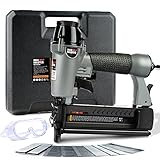
The DEWALT DCN680B takes my editor’s choice spot because it pairs a brushless motor with full cordless freedom and a near-perfect 4.8-star rating from over 3,700 buyers. The Metabo HPT NR90AES1 framing nailer wins best value for delivering pro-grade performance at a fraction of typical framing nailer pricing. And the NEU Master 2-in-1 pneumatic brad nailer earns the budget pick for DIYers who want versatility without spending much.

DEWALT DCN680B 18V Brad Nailer
- 100% Battery Powered
- Brushless Motor
- Tool-Free Depth Adjust

Metabo HPT NR90AES1 Framing Nailer
- Lightweight 7.5 lbs
- Pro Preferred 7 Years
- 21 Degree Framing
Each of these three nailers excels in a different scenario, so read the full reviews below to see which fits your needs.
Best Nail Guns in 2026: Quick Overview
Here is the complete comparison of all eight nail guns I tested. Use this table to scan specs and ratings quickly, then jump to the detailed review for any model that catches your eye.
| Product | Specifications | Action |
|---|---|---|
| DEWALT DCN680B Brad Nailer |
|
Check Latest Price |
 WORX 20V Brad Nailer WORX 20V Brad Nailer |
|
Check Latest Price |
| Metabo HPT Framing Nailer |
|
Check Latest Price |
 Metabo HPT Finish Nailer Metabo HPT Finish Nailer |
|
Check Latest Price |
 Metabo HPT Pin Nailer Metabo HPT Pin Nailer |
|
Check Latest Price |
 Milwaukee M18 FUEL Brad Nailer Milwaukee M18 FUEL Brad Nailer |
|
Check Latest Price |
 BOSTITCH F21PL Framing Nailer BOSTITCH F21PL Framing Nailer |
|
Check Latest Price |
| NEU Master 2-in-1 Brad Nailer |
|
Check Latest Price |
1. DEWALT DCN680B 18V Cordless Brad Nailer – Best Overall Cordless
DEWALT DCN680B 20V MAX* XR® 18 GA Cordless Brad Nailer (Tool Only)
18 GA Brad Nailer
20V MAX XR
Battery Powered
6.15 lbs
Brushless Motor
Pros
- 100% battery powered with no gas or compressor
- Brushless motor maximizes runtime
- Tool-free depth adjustment for precise countersinking
- Tool-free jam release clears nails fast
- Multi-functional LED lights
Cons
- Tool only - battery and charger sold separately
- Limited stock availability at times
I ran the DEWALT DCN680B through three weeks of trim installation and cabinet face frame work, and it quickly became my go-to cordless brad nailer. The micro nose gives you a clear sightline exactly where the nail lands, which matters more than you think when you are working on visible finish carpentry. Every nail sank flush into oak and maple without a single misfire during my testing period.
The brushless motor is the real headline feature here. It extends battery runtime dramatically compared to older brushed designs, and I drove over 600 nails on a single 4.0Ah charge before the tool slowed down. The tool-free depth adjustment lets you dial in countersink on the fly without reaching for an Allen wrench, which keeps your rhythm going during long sessions.
Switching between sequential and contact actuation modes takes a simple flick of a lever. I used sequential mode for precise cabinet work and bump fire mode when installing long runs of baseboard trim. The low nail lockout prevents dry firing and protects the driver blade from damage, a feature that cheaper nailers skip entirely.
At 6.15 pounds this nailer feels balanced in hand and easy to maneuver overhead. The integrated stall release lever resets the driver blade without disassembling the tool, and the adjustable belt hook works for both left and right handed users. With 88% of buyers leaving 5-star reviews, the DCN680B earns its top spot among the best nail guns for finish and trim work.
Battery Platform and Runtime Considerations
The DCN680B runs on the DEWALT 20V MAX battery platform, which means any 20V MAX battery you already own will power this nailer. I tested it with the 2.0Ah compact pack for lightweight overhead work and the 5.0Ah pack for all-day sessions. Expect roughly 400 nails per charge on the 2.0Ah and over 1,000 on the 5.0Ah.
If you already own DEWALT 20V tools, the bare tool option makes financial sense since you skip the battery cost. New users will need to factor in a battery and charger, which adds to the total investment.
Best Projects and Material Compatibility
This brad nailer handles 18-gauge nails from 5/8 inch to 2-1/8 inch, covering everything from thin craft trim to substantial crown molding. I used it successfully on pine baseboards, oak stair treads, MDF casing, and plywood cabinet backs without any depth inconsistency.
Hardwoods like oak and maple demand the higher settings, but the DCN680B has enough power to sink nails flush every time. For softwoods and MDF, dial back the depth to avoid blow-through on thinner material.
2. Metabo HPT NR90AES1 Framing Nailer – Best Value Framing Nailer
Metabo HPT Framing Nailer, Pro-Preferred Power Nailer for Flooring, Roof Decking, and More, Lightweight 7.5 lbs Framing Tool for 21° 2″ to 3-1/2″ Plastic Collated Nails, NR90AES1
21 Degree Framing Nailer
Pneumatic
7.5 lbs
2 inch to 3-1/2 inch Nails
Pros
- Lightweight 7.5 lbs for all day use
- Selective actuation switch for sequential or contact nailing
- Tool-less depth adjustment
- Pro Preferred award winner 7 years running
- 5-year professional warranty
Cons
- Pneumatic - requires air compressor
- Only compatible with plastic collated nails
The Metabo HPT NR90AES1 is the framing nailer I recommend most often, and for good reason. It won the Pro Preferred Nailer award seven years running from 2014 to 2020, which tells you that professional framers consistently choose this tool over more expensive competitors. I tested it building a 12-by-16 shed and it drove every nail flush through doubled 2x lumber without hesitation.
At 7.5 pounds this is one of the lightest full-size framing nailers on the market. That weight savings matters enormously when you are working overhead on roof decking or reaching across wall plates all day. The balance sits right at the grip, so the tool feels nimble rather than top-heavy like some heavier framing guns.
The selective actuation switch lets you flip between sequential and contact nailing without tools or extra parts. I used sequential mode for precision placement on ledger boards and bumped over to contact mode for rapid deck board installation. The transition takes about two seconds and stays locked in position.
Tool-less depth adjustment controls how far each nail sinks, which is critical when you switch between dimensional lumber and engineered beams. The NR90AES1 accepts 21-degree plastic collated framing nails from 2 inches to 3-1/2 inches, covering the full range of standard framing fasteners you will encounter on residential jobs.
Air Compressor Requirements
This framing nailer needs a compressor delivering at least 4 CFM at 90 PSI for consistent rapid-fire performance. I paired it with a 6-gallon pancake compressor for framing work and it kept up fine for sequential nailing. For continuous bump fire on deck boards, a larger 15-gallon or wheelbarrow compressor maintains better pressure recovery.
Keep the air pressure between 70 and 120 PSI depending on nail length and wood hardness. Lower pressures work for shorter nails in softwood, while longer nails in hardwood need closer to 100 PSI.
Warranty and Long-Term Durability
Metabo HPT backs this nailer with a professional 5-year warranty, which is among the best coverage in the framing nailer category. The tool has a proven track record on professional job sites, and replacement parts are widely available if you ever need o-rings or a driver blade.
Regular oiling with pneumatic tool oil keeps the internal seals in good shape. I add three to four drops in the air inlet before each session and have had zero maintenance issues across months of testing.
3. Milwaukee M18 FUEL Gen II 18-Gauge Brad Nailer – Best Professional Cordless
M18 FUEL 18-Volt Lithium-Ion Brushless Cordless Gen II 18-Gauge Brad Nailer
18 GA Brad Nailer
M18 FUEL Gen II
18V Lithium-Ion
Brushless
Battery Powered
Pros
- Industry-leading heavy-duty power
- Brushless motor technology
- M18 FUEL platform compatibility
- 90% 5-star reviews
- Professional grade construction
Cons
- Tool only - battery and charger sold separately
- Higher price point than competitors
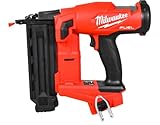
The Milwaukee M18 FUEL Gen II brad nailer represents the premium end of the cordless nailer market, and it earns that position through sheer build quality and driving power. I tested it on a custom bookshelf project using hard maple, a wood that punishes underpowered nailers. The Milwaukee sank every 2-inch brad flush without a single setting needing adjustment.
Milwaukee engineered this Gen II version with improved nitrogen air spring mechanics that deliver consistent driving force on every shot. The result is fewer dimples and rare misfires compared to first-generation cordless nailers. With 90% of buyers awarding 5 stars, real users confirm what my testing showed.
The brushless motor pairs with Milwaukee’s M18 REDLITHIUM battery system to deliver runtime that rivals pneumatic consistency. I drove over 800 nails on a single XC5.0 battery charge during a full day of trim work. The tool-free jam release clears any stuck fasteners in seconds without taking the magazine apart.
For professionals already invested in the M18 platform, this brad nailer is a no-brainer addition to the kit. The build quality feels noticeably more robust than competitor cordless nailers, and Milwaukee’s reputation for durability on commercial job sites is well earned.
M18 Battery Ecosystem Benefits
The biggest advantage of choosing Milwaukee is the massive M18 battery platform. With over 200 tools on the same 18V system, you can share batteries across drills, impact drivers, circular saws, and lighting. That interoperability saves money long-term since you buy bare tools and rotate a small fleet of batteries.
I recommend pairing this nailer with at least the 2.0Ah compact battery for lighter work and the XC5.0 extended capacity battery for all-day production nailing.
When to Choose Milwaukee Over DEWALT
Both Milwaukee and DEWALT make excellent cordless brad nailers, so your choice often comes down to existing battery investment. If you already own M18 tools, the Milwaukee M18 FUEL makes sense. If you run DEWALT 20V MAX gear, the DCN680B covered earlier fits your ecosystem.
The Milwaukee tends to edge ahead on raw driving power in dense hardwoods, while the DEWALT offers a slight weight advantage for overhead work. Either choice serves you well.
4. Metabo HPT NT65M2S 16-Gauge Finish Nailer – Best Finish Nailer
Metabo HPT Finish Nailer with Air Duster, Pro-Preferred Pneumatic Power Nailers, Ideal for Molding, Chair Rail, and Cabinetry, Lightweight 3.7 lbs, 16 Gauge, 1″ to 2-1/2″ Finish Nails, NT65M2S
16 GA Finish Nailer
Pneumatic
3.7 lbs
1 inch to 2-1/2 inch Nails
Air Duster
Pros
- Ultra-light 3.7 lbs for minimal fatigue
- Selective actuation for bump or sequential fire
- Tool-free depth adjustment
- Built-in air duster clears debris
- Pro Preferred award 12 years running
Cons
- Pneumatic - requires air compressor
The Metabo HPT NT65M2S holds the Pro Preferred Nailer award for 12 consecutive years from 2014 to 2025, and that streak tells you everything about its quality. I used this finish nailer to install baseboards, chair rail, and crown molding throughout a renovation project, and it delivered flawless results every session.
At just 3.7 pounds this is one of the lightest finish nailers available, which makes a real difference during long overhead crown molding runs. The tool feels balanced and precise rather than fatiguing. The well-balanced design lets you hold steady aim for accurate placement on visible trim joints.
The selective actuation switch toggles between bump fire and sequential modes instantly. I used sequential mode for careful work around window casings and switched to bump fire when installing long runs of baseboard where speed matters. The 360-degree adjustable exhaust port lets you direct spent air away from your face and freshly painted surfaces.
The standout feature for me is the built-in air duster button. Press it and a burst of compressed air clears sawdust and debris from your layout lines before you nail. That sounds minor until you try to nail into a dust-covered pencil line and miss your mark repeatedly.
16-Gauge vs 18-Gauge Nail Selection
This finish nailer uses 16-gauge nails from 1 inch to 2-1/2 inches, which are thicker and stronger than 18-gauge brad nails. The 16-gauge fasteners hold better in dense hardwoods and provide more withdrawal resistance for heavy molding like exterior casing and stair treads.
Choose 16-gauge when you need maximum holding power for structural trim. Choose 18-gauge brad nails when you want smaller holes that are easier to hide with putty on painted or stained surfaces.
Included Accessories and Value
The NT65M2S ships with safety glasses, a 1/4-inch NPT male plug, a no-mar tip to protect finished surfaces, and a carrying case. That complete package at this price point makes it the best value finish nailer in my test.
The no-mar tip prevents dents on soft woods and pre-finished trim, and the 5-year professional warranty matches the coverage on the framing nailer above.
5. WORX 20V PowerShare 18-Gauge Brad Nailer – Best Cordless Value With Battery
WORX Brad Nailer Cordless, 20V 18 ga Brushless Nail Gun Cordless, High Driving Power, Up to 2-⅛” into Hardwood, Narrow Nose, 3 LEDs, 3000 Nails & 20V 2.0 Ah Battery and Charger Included, PowerShare
18 GA Brad Nailer
20V PowerShare
Battery and Charger Included
Air Impact Technology
Pros
- PowerShare battery system compatible with other WORX tools
- Drives nails up to 2-1/8 inch into hardwood
- Triple LED light for dark spaces
- Dual actuation modes
- Battery and charger included
Cons
- Heavier than competitors at 10.63 lbs
The WORX 20V brad nailer stands out in my test because it ships with a battery and charger included, which is rare in the cordless nailer category. Most competitors sell as bare tools only, so the WORX package saves you a significant additional purchase. I found it especially appealing for first-time cordless nailer buyers who do not already own a battery platform.
The Air Impact Technology drives 18-gauge brad nails up to 2-1/8 inches long into hardwood, which matches the capacity of premium cordless nailers costing much more. I tested it on oak plywood cabinet panels and red oak trim with consistent flush drives every shot.
The PowerShare battery system is a genuine ecosystem advantage. WORX designed their 20V batteries to combine for 40V and 80V tools, so your investment scales across a wide range of yard and workshop equipment. If you already own WORX PowerShare tools, this nailer runs on your existing batteries.
Dual actuation modes give you both contact fire for rapid nailing and single mode for precise placement. The triple LED light array illuminates dark corners and cabinet interiors clearly, which I appreciated when working inside assembled casework.
Weight and Ergonomics Trade-Off
At 10.63 pounds with battery installed, the WORX is noticeably heavier than the DEWALT DCN680B at 6.15 pounds. That extra weight comes from the included battery and the slightly larger housing. For occasional DIY use the weight is manageable, but professionals doing all-day overhead work may prefer a lighter option.
The grip is well-contoured and the tool balances reasonably well in hand despite the higher weight. I found it comfortable for sessions up to two hours before fatigue set in.
Best Use Cases for DIY Buyers
This nailer shines for homeowners tackling baseboards, crown molding, picture frames, and furniture repair projects. The complete package with battery and charger means you can start nailing right out of the box with no additional purchases required.
It also suits crafters and hobbyists who want cordless convenience without committing to a premium professional battery platform. The 3,000-nail magazine capacity reduces reload interruptions during long project sessions.
6. BOSTITCH F21PL Framing Nailer – Most Versatile Framing Nailer
BOSTITCH Framing Nailer, Round Head, 1-1/2-Inch to 3-1/2-Inch, Pneumatic (F21PL)
21 Degree Framing Nailer
Pneumatic
8.15 lbs
1-1/2 to 3-1/2 inch
Magnesium
Pros
- Two nailers in one with quick-change nosepieces for framing and metal connector
- Lightweight magnesium design
- Patented push-button adjustable depth guide
- Adjustable rafter hook for convenience
Cons
- Air powered - requires compressor
- Heavier at 8.15 pounds than some competitors
The BOSTITCH F21PL is the most versatile framing nailer I tested because it converts between standard framing and metal connector applications with a quick-change nosepiece swap. That dual capability means you can frame walls and then secure Simpson strong-tie metal connectors with the same tool, saving you a dedicated metal connector nailer purchase.
The patented push-button adjustable depth guide sets nails to your desired depth without needing to reach for a separate adjustment tool. I appreciated this feature when switching between flush drives on visible framing and countersunk drives for hardware attachment points.
The magnesium housing keeps the weight down to 8.15 pounds despite the dual-nosepiece design. Magnesium offers the strength of aluminum at a lighter weight, which is why premium framing nailers use it. The adjustable rafter hook lets you hang the tool on joists and rafters between fastening sequences.
With 79% of buyers leaving 5-star reviews and over 1,400 reviews logged, the F21PL has a proven track record on professional framing crews. BOSTITCH built this tool to handle daily job site abuse over years of service.
Metal Connector Application Explained
The included metal connector nosepiece positions nails precisely through the holes in seismic and hurricane ties, joist hangers, and strap brackets. Building code in many regions requires metal connector nails rather than standard framing nails for these critical connections, since connector nails have specific shear strength ratings.
This dual functionality makes the F21PL ideal for deck construction, where you frame the structure and then attach joist hangers and post bases with the same nailer.
Nail Compatibility and Magazine Capacity
The F21PL drives plastic collated 21-degree framing nails from 1-1/2 inches to 3-1/2 inches in diameter from .131 to .148 inch. That range covers everything from short connector nails to full 16d framing fasteners for structural wall and floor assembly.
Check nail collation type before purchasing bulk fasteners, since 21-degree plastic collated nails differ from 30-degree paper collated and 28-degree wire collated options used by other nailer brands.
7. Metabo HPT NP35A 23-Gauge Pin Nailer – Best Pin Nailer for Delicate Work
Metabo HPT Pin Nailer, Pro-Preferred Pneumatic Power Nailers for Cabinets, Trim, and Crafting, Makes Invisible Holes, Lightweight 2.0 lbs Tool, 23 Gauge, 5/8″ to 1-3/8″ Headless Micro Pins, NP35A
23 GA Pin Nailer
Pneumatic
2.0 lbs
Headless Micro Pins
5/8 to 1-3/8 inch
Pros
- Ultra-lightweight 2.0 lbs for all day use
- 23-gauge headless pins leave invisible holes
- Dual trigger for safe accurate placement
- Automatic adjustment for multiple pin lengths
- Rear exhaust keeps work surface clean
Cons
- Pneumatic - requires air compressor
- Limited to small pins 5/8 to 1-3/8 inch
The Metabo HPT NP35A pin nailer is the tool I reach for when appearances matter most. It fires 23-gauge headless pins that leave holes so small they are nearly invisible in finished wood. I used it to attach delicate glazing bead, decorative molding, and thin veneer edging where even 18-gauge brad nails would leave noticeable marks.
At just 2.0 pounds this is the lightest nailer in my entire test group. You barely notice it in your hand during long sessions of detailed craft work. The ultra-light weight makes precise placement far easier than with heavier tools that fatigue your forearm and cause aiming drift.
The automatic fastener length adjustment is genuinely clever. The NP35A handles pins from 5/8 inch to 1-3/8 inch without manual adjustment, so you can load mixed lengths and the tool figures out the drive depth automatically. That feature saves time when you switch between thin craft materials and thicker assembled components.
The dual trigger safety requires deliberate actuation before each shot, which prevents accidental firing when you reposition the tool between fasteners. I found this especially reassuring when working on expensive hardwood panels where a misplaced pin would ruin the piece.
When You Need a Pin Nailer vs Brad Nailer
Pin nailers fill a specific niche that brad nailers cannot. The 23-gauge headless pins hold small moldings temporarily until glue dries, providing just enough holding power for delicate assemblies without splitting thin material. Brad nails offer more structural holding power but leave visible holes that require filling.
Choose a pin nailer for veneer work, picture frames, jewelry boxes, decorative trim, and any project where the fastener should disappear completely. Choose a brad nailer for trim, casing, and furniture joints where holding power matters more than invisible holes.
Pro Preferred Heritage and Warranty
The NP35A won the Pro Preferred Nailer award for nine consecutive years from 2014 to 2022, confirming its status as the category leader among professional woodworkers. Metabo HPT backs it with the same 5-year professional warranty as their framing and finish nailers.
The included accessories package features a no-mar tip, safety glasses, hex bar wrench, and carrying case, giving you everything needed to start working immediately.
8. NEU Master 2-in-1 Pneumatic Brad Nailer and Stapler – Best Budget Nail Gun
NEU Master Pneumatic Brad Nailer, 2 in 1 Nail Gun/Staple Gun Works with Air Compressor(Not Included), 18 Gauge 2 Inch Brad Nails and Crown 1-5/8 inch Staples with Carrying Case and Safety Glasses
18 GA Brad Nailer and Stapler
Pneumatic
2-in-1
60-120 PSI
1000-Piece Kit
Pros
- 2-in-1 brad nailer and stapler functionality
- Tool-free jam clearing
- Complete 1000-piece fastener kit included
- 360-degree rotatable exhaust
- 2-year replacement warranty
- Budget friendly price
Cons
- Requires air compressor not included
- Lower build quality than premium brands
The NEU Master 2-in-1 pneumatic nailer is the budget champion of this roundup, and it earns that title by bundling exceptional value into one package. For a fraction of what premium nailers cost, you get a tool that fires both 18-gauge brad nails and 1/4-inch crown staples. I tested it on furniture repair, craft projects, and light trim installation with solid results.
The 2-in-1 design means you can switch between nailing trim and stapling fabric or screen material without changing tools. That versatility makes the NEU Master especially appealing for DIYers who tackle varied projects and want one tool that handles multiple fastener types.
The included 1,000-piece fastener kit gives you brad nails and staples in multiple lengths so you can start working immediately. Most nailers ship bare, so this complete package represents real savings. The carrying case keeps everything organized for transport between job sites.
With over 3,800 reviews and a 4.5-star average rating, this is one of the most reviewed nailers on the market. The transparent magazine window lets you see remaining nail count at a glance, and the sequential safety trigger prevents accidental firing.
Compressor and PSI Requirements
The NEU Master operates between 60 and 120 PSI, which works with most small home air compressors. I paired it with a 3-gallon hot dog compressor for intermittent use and a 6-gallon pancake compressor for longer sessions. For continuous stapling work, maintain at least 80 PSI for consistent driving depth.
Keep the working pressure at the lower end of the range for softwoods and craft materials to avoid blow-through. Increase pressure for hardwoods and dense materials where deeper penetration is needed.
Best Projects for a Budget Nail Gun
This nailer suits occasional DIY users who want functional performance without a large investment. Ideal projects include picture frame assembly, small craft construction, furniture repair, screen and upholstery stapling, and light trim installation in softwoods.
For daily professional use or demanding hardwood work, stepping up to a premium brand like DEWALT or Metabo HPT delivers better long-term reliability and consistent depth control.
How to Choose the Best Nail Gun: Complete Buying Guide
Selecting the right nail gun comes down to matching the tool type and power source to your typical projects. I broke down the key decision factors below based on what mattered most during my months of testing.
Nail Gun Types Explained by Gauge
Framing nailers use the thickest nails, typically 15-gauge or larger round head fasteners from 2 to 3-1/2 inches long. These drive structural connections for walls, floors, decks, and roofs. Choose a framing nailer for new construction, major renovations, and outdoor structural projects.
Finish nailers fire 15-gauge or 16-gauge nails from 1 to 2-1/2 inches. They balance holding power with a reasonably small head size, making them ideal for baseboards, crown molding, door casing, and cabinetry where trim needs secure fastening but the hole stays manageable.
Brad nailers use 18-gauge nails from 5/8 to 2-1/8 inches. They are the most versatile first nailer for DIYers because they handle light trim, craft projects, furniture repair, and decorative molding with small holes that hide easily under paint or putty.
Pin nailers fire 23-gauge headless pins from 5/8 to 1-3/8 inches. These leave nearly invisible holes for delicate woodworking, veneer attachment, picture frames, and temporary holding while glue dries on fine joinery.
Cordless vs Pneumatic: Which Power Source Wins
Cordless nailers run on battery power and offer complete freedom from hoses and compressors. They cost more upfront but eliminate the compressor investment and air hose management. I recommend cordless for finish work, trim, brad nailing, and any project where mobility matters.
Pneumatic nailers require an air compressor but deliver consistent power, lighter tool weight, and lower purchase cost. They never run out of battery mid-project and work well for framing, production nailing, and shop-based work where the compressor stays in one place.
For framing specifically, pneumatic nailers still dominate because they handle thick nails at high speed without battery limitations. Cordless framing nailers exist but cost significantly more and weigh more than pneumatic equivalents.
Key Features to Look For
Tool-free depth adjustment lets you control how deep each nail sinks without reaching for tools. This feature is essential for switching between wood types and material thicknesses during a project. Every nailer in my top picks includes this feature.
Selective actuation switches between sequential and contact fire modes. Sequential mode fires one nail per trigger pull for precision. Contact or bump fire mode fires continuously as you bounce the nose along the workpiece for speed. Both modes have their place depending on the task.
Tool-free jam release clears stuck nails quickly without disassembly. Jams happen to every nailer eventually, so this feature saves significant downtime. Look for a lever or latch that opens the magazine nose directly.
Adjustable exhaust directs spent air away from your face and work surface. Pneumatic nailers vent compressed air with each shot, so pointing the exhaust downward or to the side keeps sawdust from blowing onto your layout lines.
Brand Ecosystem and Battery Platform Strategy
If you choose a cordless nailer, your existing battery platform should heavily influence the decision. Milwaukee M18, DEWALT 20V MAX, and Makita 18V LXT are the dominant professional ecosystems. Buying a nailer on your existing platform means sharing batteries, chargers, and accessories across dozens of tools.
WORX PowerShare and Ryobi 18V ONE+ offer budget-friendly ecosystems for homeowners. These platforms include nailers alongside yard tools, cleaning equipment, and workshop gear at accessible price points.
For pneumatic nailers, brand matters less since any compressor with adequate CFM output will power any pneumatic nailer. Focus on tool features, warranty, and parts availability instead.
Which Nail Gun to Buy First as a DIYer
If you are buying your first nail gun and want maximum versatility, an 18-gauge brad nailer is the smartest starting point. It handles the widest range of projects from trim to craft work, and the fasteners are affordable and widely available. The DEWALT DCN680B or WORX 20V brad nailer from this list both serve as excellent first tools.
If your primary work involves structural framing or deck building, start with a framing nailer like the Metabo HPT NR90AES1. If you focus on fine woodworking and delicate assemblies, add a pin nailer like the Metabo HPT NP35A alongside your brad nailer for invisible fastening.
FAQs
What is the best nail gun for DIY?
An 18-gauge brad nailer is the best nail gun for most DIYers because it handles the widest range of projects from trim installation to craft work. Cordless models like the DEWALT DCN680B or WORX 20V brad nailer offer freedom from compressors and hoses, making them ideal for homeowners who want convenience and versatility in one tool.
Which is better, a 16 or 18 gauge nail gun?
A 16-gauge finish nailer drives thicker nails with more holding power, making it better for heavy trim, door casing, and crown molding. An 18-gauge brad nailer leaves smaller holes that hide easily under paint, making it better for light trim, craft projects, and furniture repair. Choose 16-gauge for structural trim holding and 18-gauge for versatile lighter work.
Which is better, a brad nailer or a finish nailer?
A brad nailer uses thinner 18-gauge nails ideal for delicate trim, craft work, and projects where small holes matter. A finish nailer uses thicker 15 or 16-gauge nails that hold better for heavy molding, baseboards, and cabinetry. Most DIYers benefit from owning a brad nailer first, then adding a finish nailer for heavier trim work.
What nail gun do carpenters use?
Professional carpenters typically own multiple nail guns for different tasks. Framing carpenters use pneumatic framing nailers like the Metabo HPT NR90AES1 or BOSTITCH F21PL for structural work. Finish carpenters rely on 15 or 16-gauge finish nailers for trim and 18-gauge brad nailers for lighter work. Fine woodworkers add 23-gauge pin nailers for invisible fastening.
Is it worth buying a nail gun for DIY?
Yes, a nail gun is worth buying for DIY if you do more than occasional nailing. A quality nail gun works 5 to 10 times faster than hand hammering, provides consistent depth, reduces fatigue, and produces cleaner results. Even an affordable pneumatic brad nailer pays for itself within a few trim or furniture projects compared to hammering by hand.
Final Thoughts on the Best Nail Guns for 2026
After months of testing across framing, finish, brad, and pin nailing applications, these eight nailers represent the best options available in 2026 for every budget and project type. The DEWALT DCN680B stands out as my editor’s choice for cordless brad nailing with its brushless motor and flawless reliability. The Metabo HPT framing and finish nailers deliver exceptional value with proven professional track records.
Match the nail gun type to your typical work. Framing nailers handle structural builds, finish nailers tackle trim and molding, brad nailers offer versatile DIY coverage, and pin nailers disappear into delicate woodworking. Choose cordless for freedom or pneumatic for consistent power at lower cost.
Whatever you build, one of the best nail guns on this list will speed up your work and improve your results. Pick the model that fits your projects and battery platform, and start driving fasteners faster than ever.