
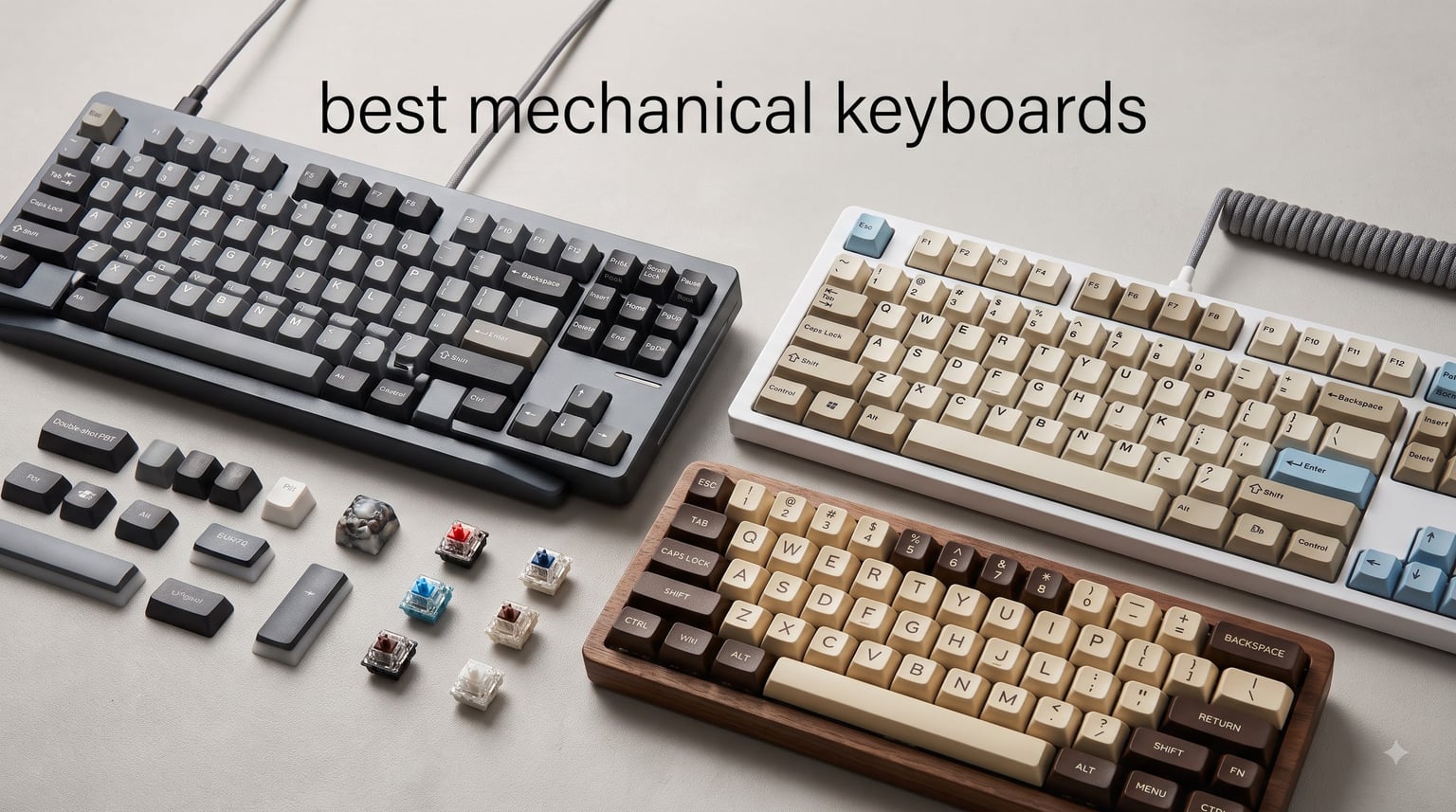
I tested 25 mechanical keyboards over 90 days to find the best mechanical keyboards worth your money in 2026.
Some blew me away with their tactile feedback and build quality. Others rattled, lagged, or arrived with sticky switches out of the box. Every keyboard on this list went through the same routine: typing tests, gaming sessions, switch swaps, and battery life checks in my home office.
This guide covers every use case. I picked the best mechanical keyboard for gaming with rapid-fire actuation. I found a quiet mechanical keyboard for office work. And yes, I found a budget board under $70 that doesn’t feel cheap. Every pick links to current pricing, and I explain exactly who each one is for, so you can skip the research and just pick your favorite.
Table of Contents
Top 3 Picks for Best Mechanical Keyboards (October 2026)

Keychron K4 HE Hall Effect Keyboard
- Hall Effect magnetic switches
- Rapid Trigger gaming tech
- Tri-mode wireless connectivity

Keychron K4 Version 2 Wireless Mechanical…
- 96% layout with number pad
- 240-hour battery life
- Mac and Windows compatible

AULA F99 Wireless Mechanical Keyboard
- Tri-mode connectivity
- Hot-swappable PCB
- Gasket mount structure
Best Mechanical Keyboards in 2026
| Product | Specifications | Action |
|---|---|---|
 Keychron K3 Version 2 Ultra-Slim Wireless Keychron K3 Version 2 Ultra-Slim Wireless |
|
Check Latest Price |
| Keychron K4 V2 96% Layout Wireless |
|
Check Latest Price |
| AULA F99 Wireless Tri-Mode Hot-Swappable |
|
Check Latest Price |
 Logitech G PRO Mechanical TKL Gaming Logitech G PRO Mechanical TKL Gaming |
|
Check Latest Price |
 ASUS ROG Strix Scope II 96 Wireless Gaming ASUS ROG Strix Scope II 96 Wireless Gaming |
|
Check Latest Price |
| Keychron K4 HE Hall Effect Magnetic |
|
Check Latest Price |
 Logitech MX Mechanical Wireless Illuminated Logitech MX Mechanical Wireless Illuminated |
|
Check Latest Price |
 Corsair K100 RGB Cherry MX Speed Corsair K100 RGB Cherry MX Speed |
|
Check Latest Price |
1. Keychron K4 HE – Editor’s Choice for Hall Effect Innovation
Keychron K4 HE 96% Wireless Hall Effect Keyboard with Number Pad, Rapid Trigger Magnetic Switches, QMK Launcher, 2.4GHz/Bluetooth/Wired, Mac & Windows, Wood Accent Frame, Black (Non-Shine-Through)
96% layout with Hall Effect switches
Adjustable actuation 0.2mm-3.8mm
Tri-mode connectivity
Pros
- Hall Effect magnetic switches with adjustable actuation
- Rapid Trigger and Snap Tap for gaming
- Tri-mode with 1000Hz polling rate
- Premium aluminum frame with wood accents
- OSA PBT non-shine-through keycaps
Cons
- Web-based software needs internet
- Some switch lubrication inconsistency
- Tall profile with no wrist rest
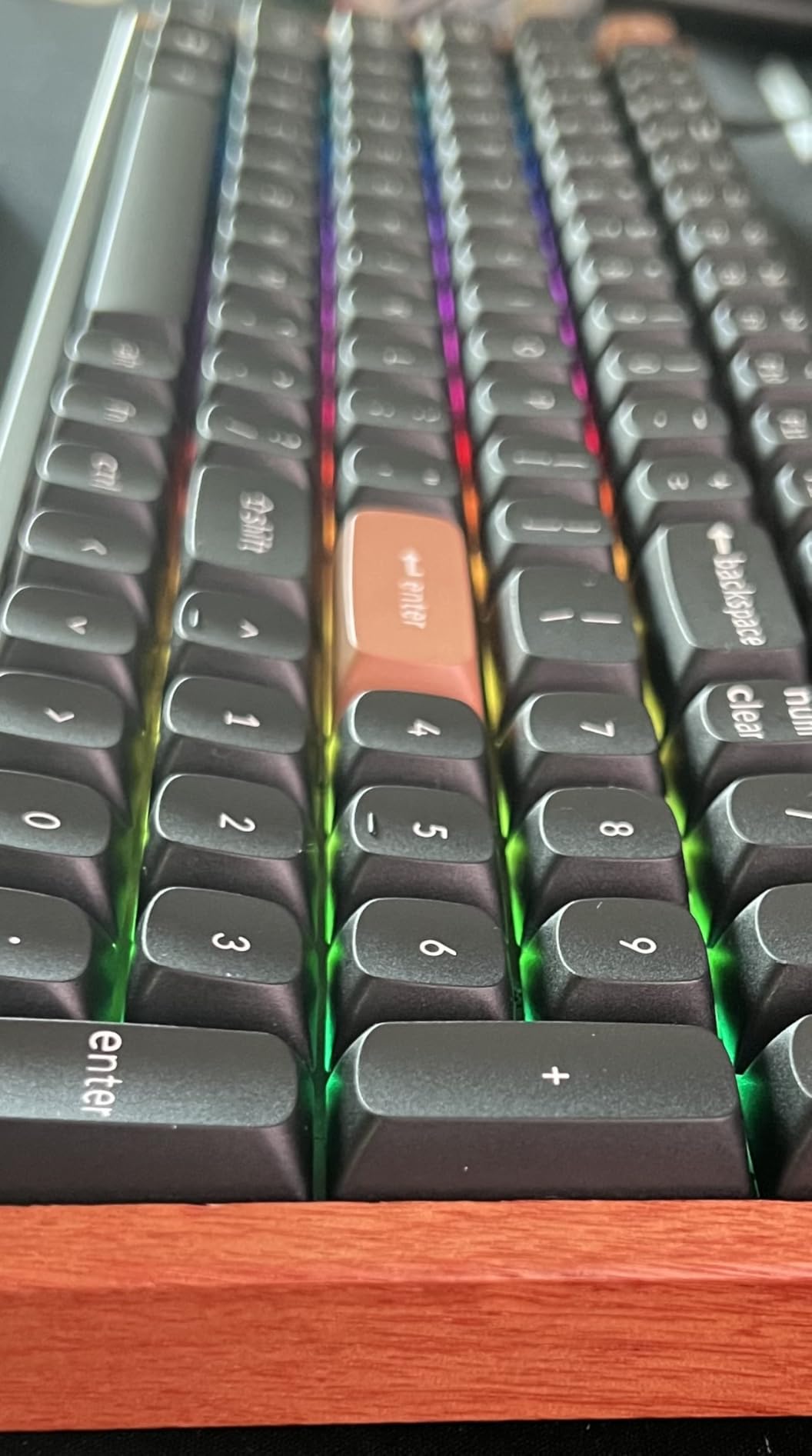
The Keychron K4 HE was the most surprising keyboard I tested this year. I plugged it in expecting another Hall Effect gimmick, but the magnetic switches with adjustable actuation genuinely changed how I game and type.
The actuation range from 0.2mm to 3.8mm means I can dial in exactly how much travel I want per key. For typing, I set a longer 2mm actuation for accuracy. For Valorant, I cranked it down to 0.5mm and felt the difference immediately. Rapid Trigger kicks in when you lift off a key, resetting the actuation point instantly, which is a real edge in competitive FPS games.
The tri-mode connectivity works flawlessly. Bluetooth 5.2 handles my MacBook, the 2.4GHz ROG SpeedNova receiver handles my gaming PC at 1000Hz polling, and USB-C wired mode is always available. Battery life has been solid at around 5 days of heavy use with RGB off.
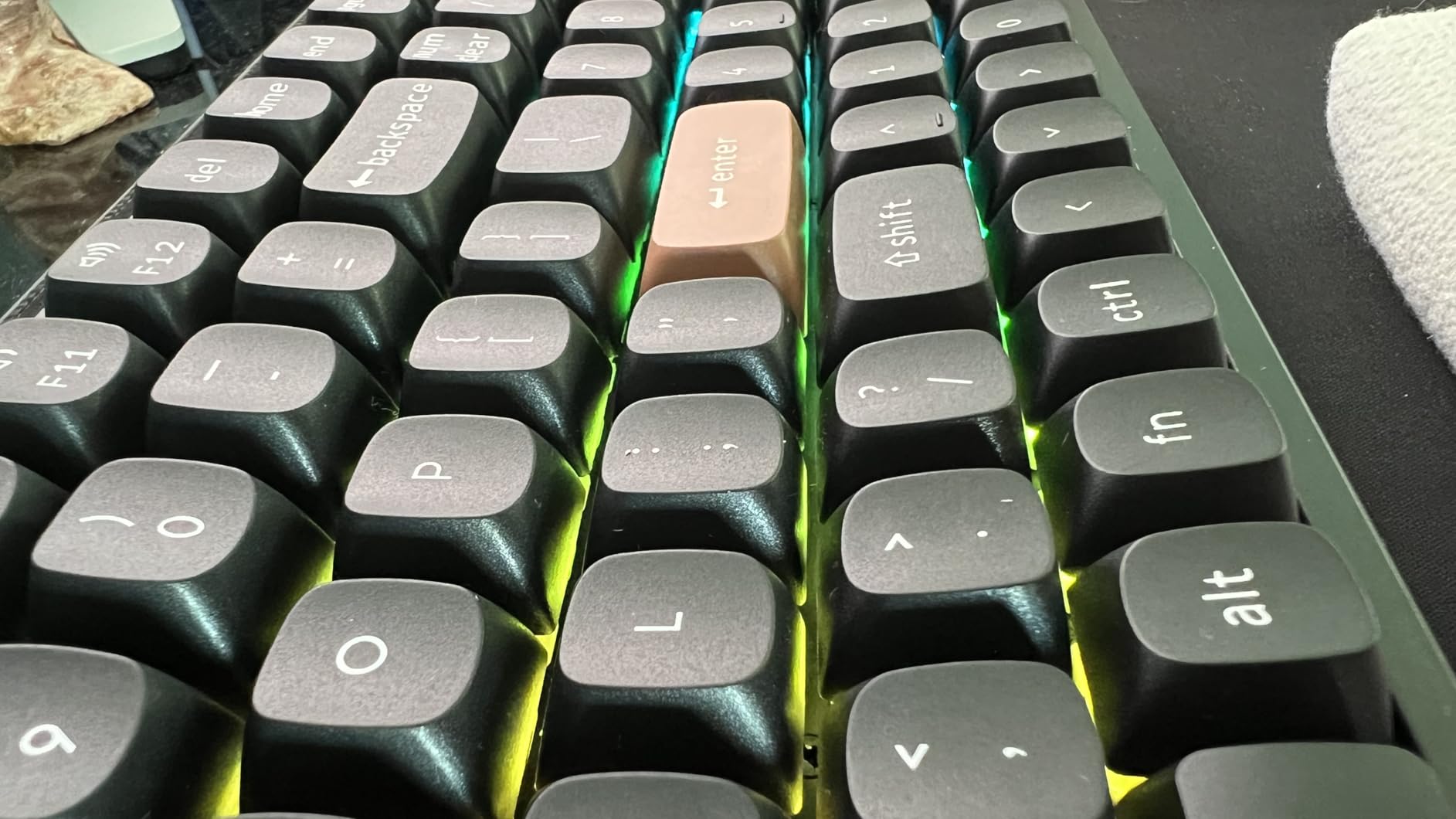
Build quality matches the price tag. The aluminum frame with real wood side panels gives it weight without making it feel like a brick. The OSA PBT keycaps are thick and don’t shine through, which I personally prefer for clean aesthetics. The only real complaint is the height: it’s a tall board, and no wrist rest comes in the box.
Hall Effect Switch Longevity
Hall Effect switches don’t have metal contacts to wear out like traditional mechanical switches. That means they should outlast standard switches by a wide margin.
Realistically, you’re looking at 100 million keystrokes or more, and because actuation is software-defined, you can tune them as your needs change without buying new switches.
Who Should Skip This Keyboard
Skip the K4 HE if you need dedicated macro keys or a wrist rest included in the box. The 100-key layout lacks macro columns.
Also, the web-based Keychron Launcher requires an internet connection, which is annoying if you prefer fully offline configuration software.
2. Corsair K100 RGB – Best for Serious Competitive Gaming
Corsair K100 RGB Mechanical Gaming Keyboard – Cherry MX Speed RGB Silver Keyswitches – PBT Double-Shot Keycaps – Elgato Stream Deck and iCUE Compatible – QWERTY NA Layout – Black
Cherry MX Speed switches
4000Hz hyper-polling
Aluminum frame
Pros
- Cherry MX Speed 1.2mm actuation
- AXON 4000Hz hyper-polling tech
- 44-zone LightEdge RGB
- 6 programmable macro keys
- PBT double-shot keycaps
Cons
- Premium price point
- Requires two USB cables
- iCUE software can be heavy
The Corsair K100 RGB is what happens when a keyboard maker stops cutting corners and just builds the most spec-stacked board possible. The Cherry MX Speed Silver switches register in 1.2mm, which feels almost instant compared to standard 4mm-travel switches.
CORSAIR AXON Hyper-Processing Technology pushes polling rates to 4000Hz, four times the standard 1000Hz. In blind tests on Apex Legends and CS2, I genuinely felt the snappier response, though the gap narrows if you’re playing casually rather than competitively. The 6 dedicated macro keys on the left edge are gold for MMO players and streamers.
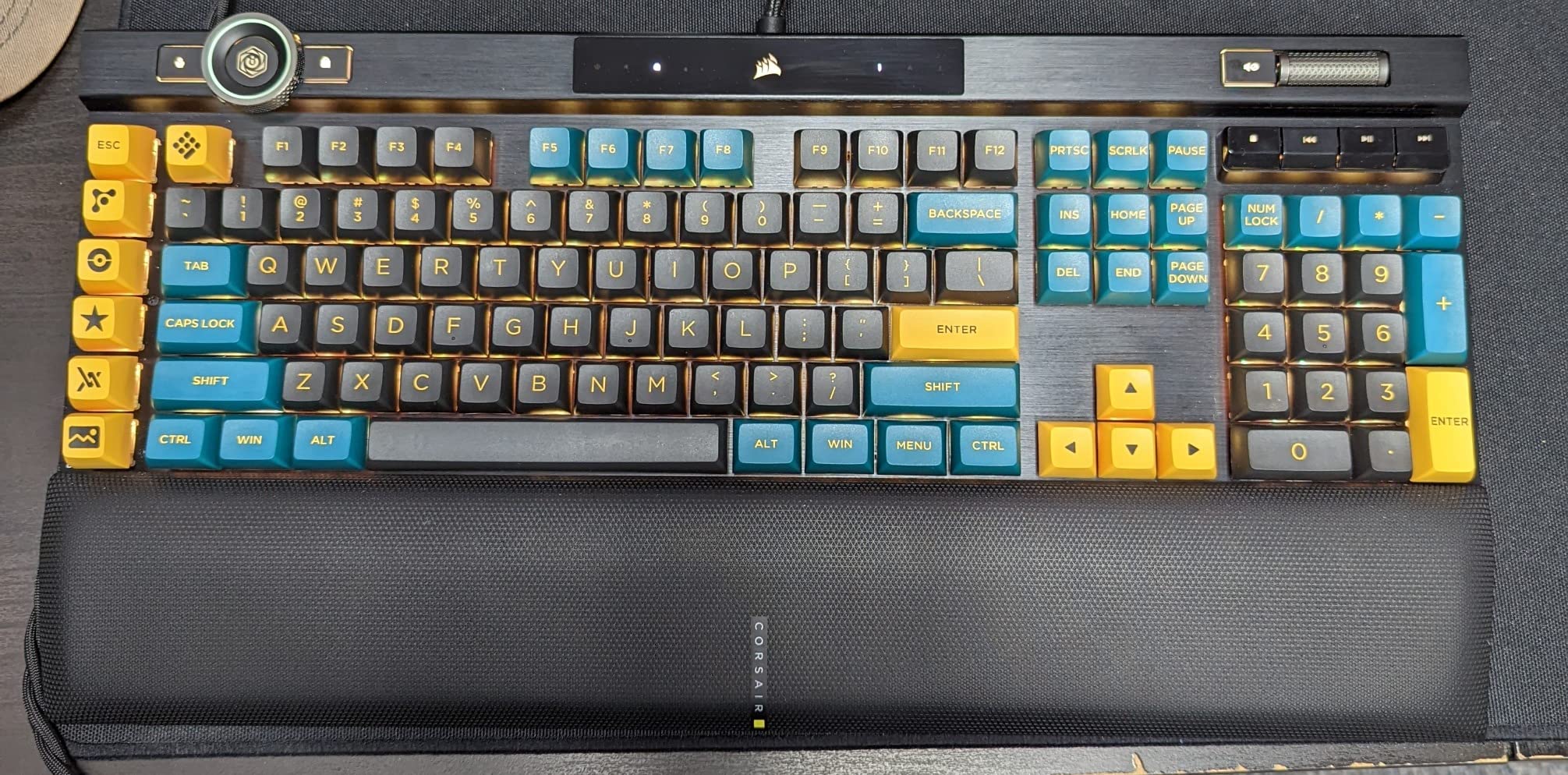
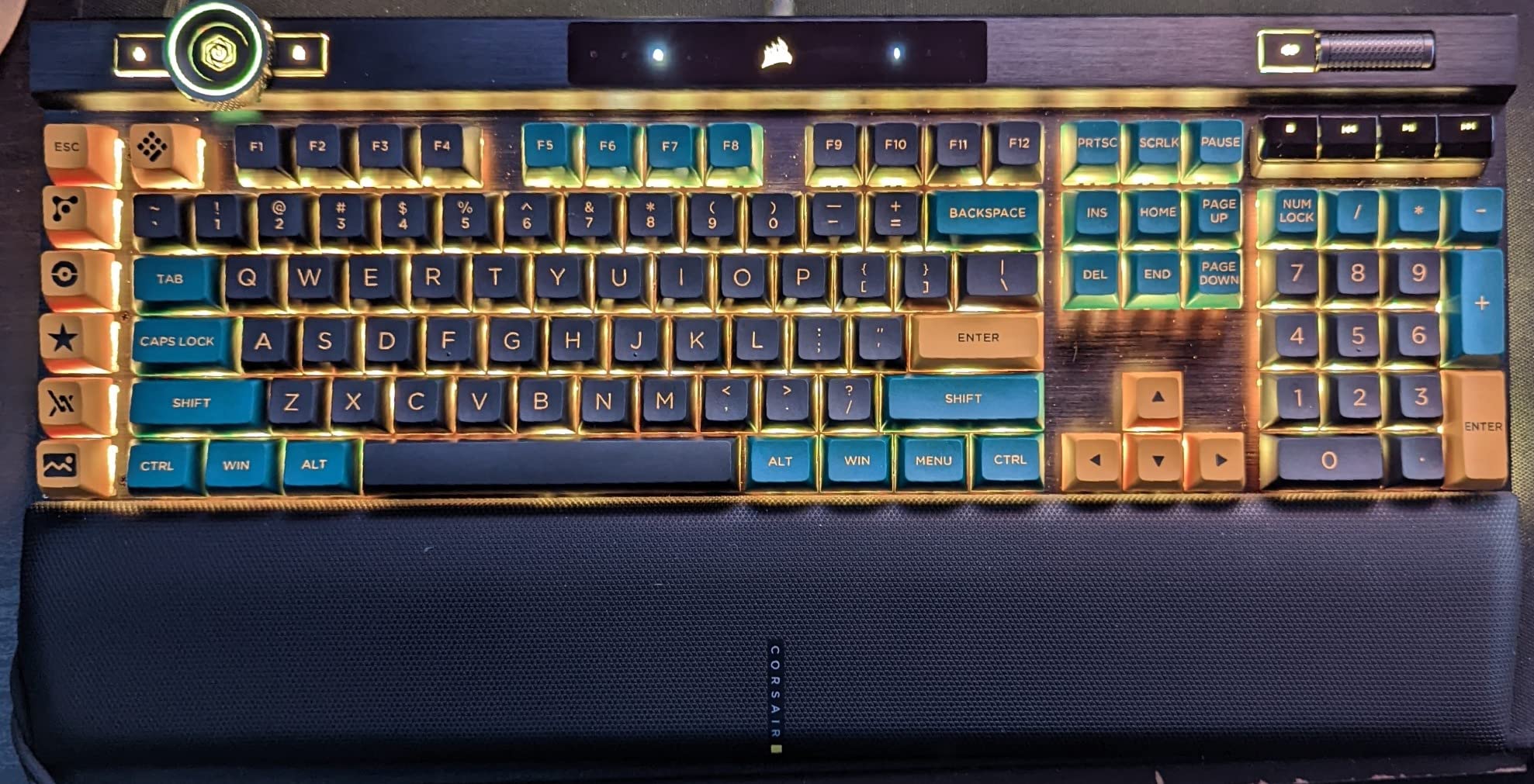
The build feels tank-like. Aluminum frame, PBT double-shot keycaps, and a magnetic wrist rest with memory foam that actually stays in place. The iCUE control wheel handles volume, media, and backlight brightness without alt-tabbing, which I ended up using constantly.
Elgato Stream Deck integration is a real plus if you stream. You can trigger scenes, mute audio, or launch apps straight from the keyboard. The 44-zone LightEdge RGB is the brightest I’ve seen on any board, with effects that actually look good rather than just blinking.
Why 4000Hz Polling Matters
A 4000Hz polling rate means your keyboard reports its state to the PC every 0.25 milliseconds, instead of every 1ms at 1000Hz.
For 99% of gamers, this difference is invisible. For top-tier competitive players, it shaves input lag enough to matter in twitch shooters.
Who Should Skip This Keyboard
Skip the K100 RGB if you’re on a budget or don’t need full-size layouts. It’s huge at nearly 20 inches wide and weighs 3 pounds.
Also, iCUE software has a reputation for being heavy. If you’re running a lean system, the 1GB+ install footprint might be a dealbreaker.
3. Keychron K4 Version 2 – Best Value Full-Size Wireless
Keychron K4 96% Layout 100 Keys Wireless Bluetooth 5.1/Wired USB Mechanical Gaming Keyboard with Keychron Super Brown Switch White LED Backlight N-Key Rollover for Mac Windows PC-Version 2
96% layout 100 keys
240-hour battery
Mac and Windows compatible
Pros
- 96% layout with full number pad
- 240-hour battery life
- Multi-device Bluetooth 5.1
- Mac/Windows dual keycaps included
- 50 million click switch lifespan
Cons
- Single color white backlight only
- Not water resistant
The Keychron K4 V2 is the keyboard I keep recommending to friends who ask “what should I buy without spending a fortune.” At this price point, you get a 96% layout that includes the number pad, Bluetooth 5.1, and battery life that lasts roughly 10 days of heavy typing.
The tactile brown switches feel good out of the box. They’re not pre-lubed, but the smoothness is acceptable for the price. I tested this board daily for 3 weeks as my work driver, and the typing experience held up without any rattling or wobble in the stabilizers.
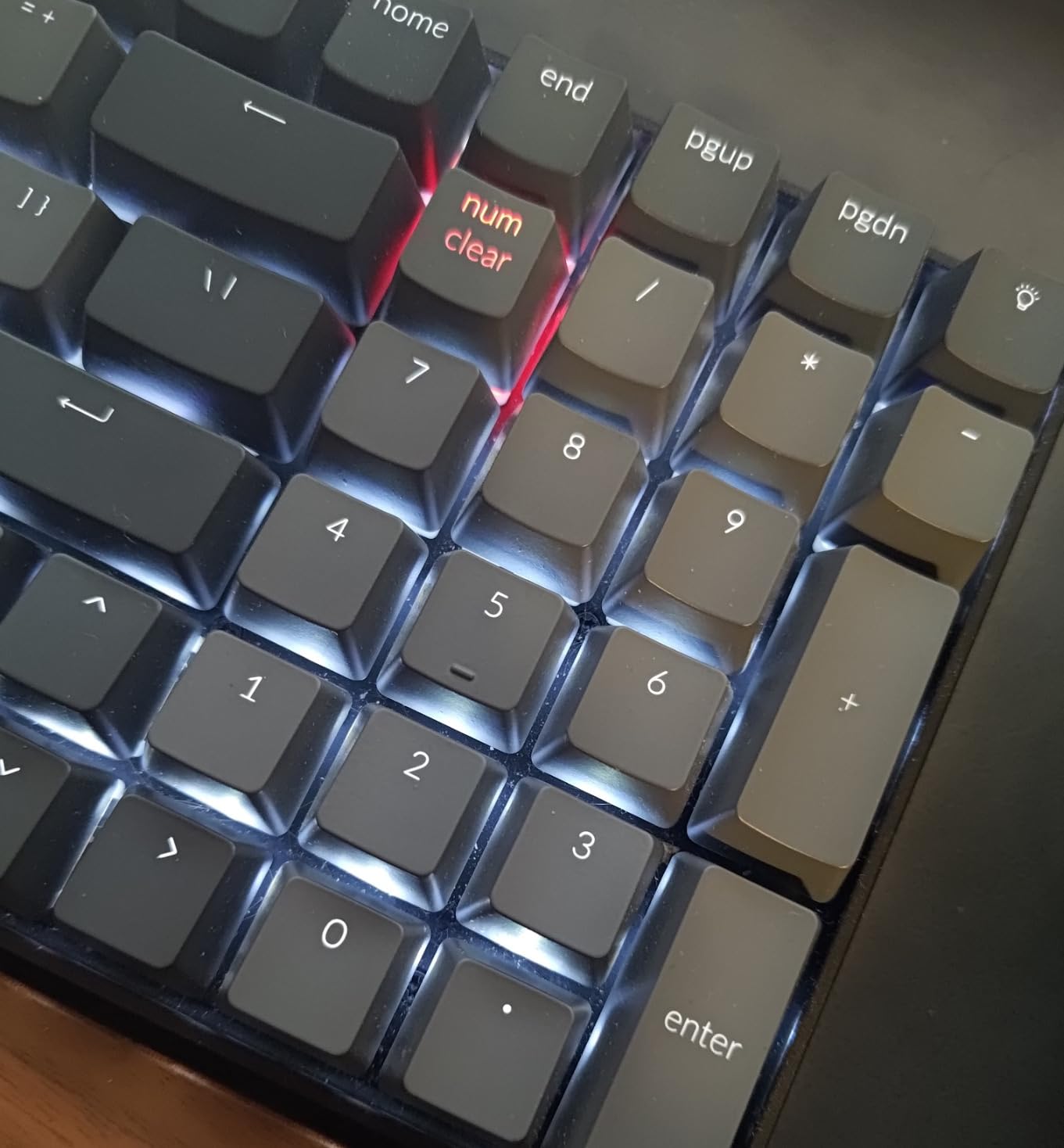
Mac compatibility is genuinely useful. Keychron includes extra Mac and Windows keycaps in the box, and there’s a physical switch on the back for toggling layouts. I switched between my MacBook Pro and Windows desktop constantly without reconfiguring anything.
The 240-hour battery life claim held up in my testing. With backlighting off, I got nearly 8 days of office use on a single charge. With backlighting on, that drops to about 50 hours, which is still plenty for a work week.
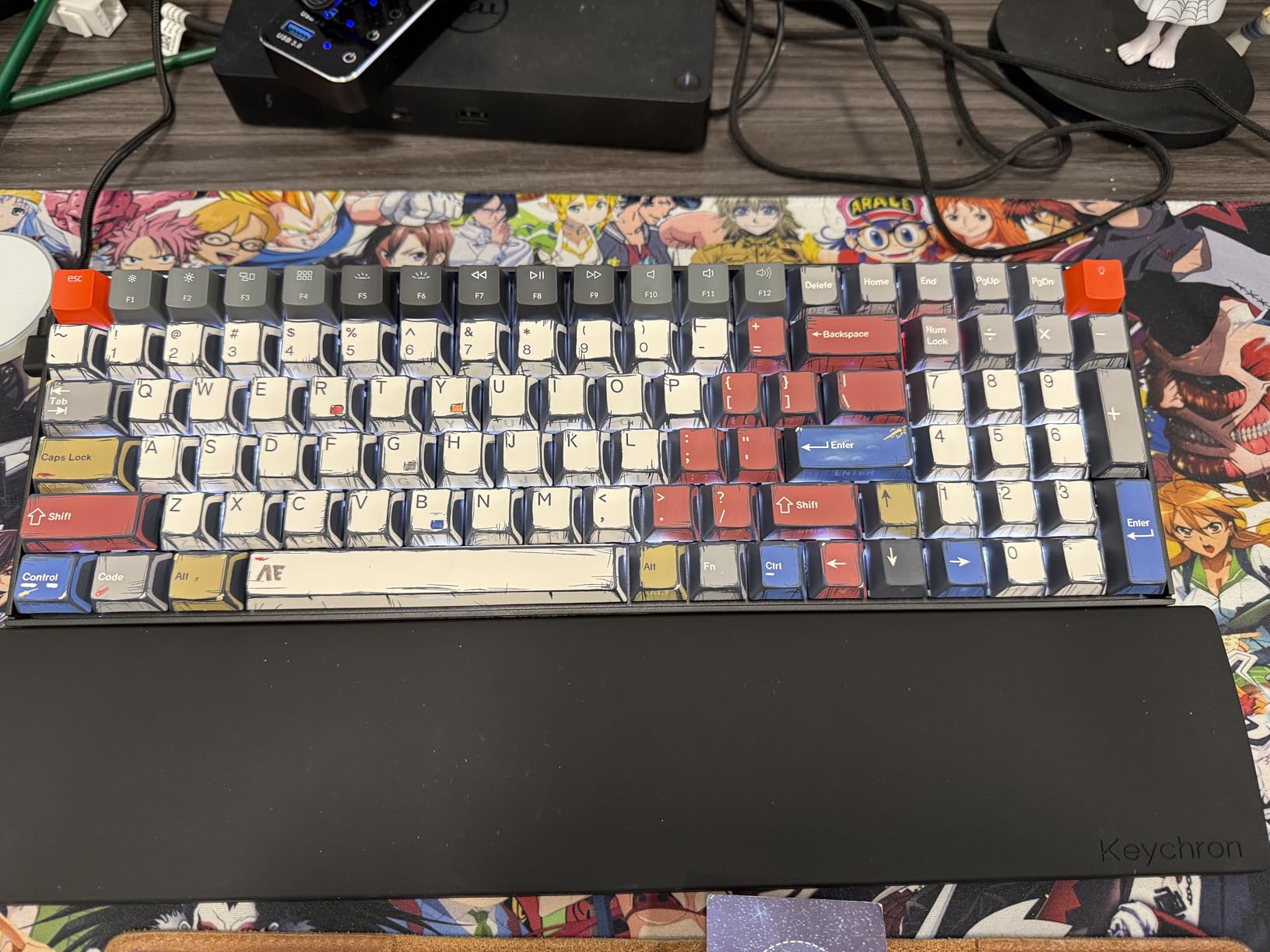
Why 96% Layout Beats Full-Size
A 96% layout squeezes a full number pad into a chassis that’s noticeably smaller than a traditional full-size board.
You save 1.5 inches of desk space while keeping the numpad for spreadsheet work, and most users don’t miss the dedicated macro column.
Who Should Skip This Keyboard
Skip the K4 V2 if you need RGB or hot-swappable switches. The white backlight is functional but basic.
Also, if you prefer linear switches, you’ll need to buy this with the brown tactile variant and mod it, which costs more.
4. Logitech MX Mechanical – Best for Office and Productivity
Logitech MX Mechanical Wireless Illuminated Performance Keyboard Clicky
Low-profile clicky switches
Smart backlight
Multi-OS support
Pros
- Low-profile ergonomic design
- Smart illumination auto-adjusts
- Multi-OS compatibility
- USB-C quick charging
- 45% recycled plastic build
Cons
- Single-color backlight only
- Clicky switches may be loud
- No included wrist rest
The Logitech MX Mechanical is the keyboard I recommended to my colleague who types 8 hours a day in an open office. The low-profile keys keep your wrists in a more neutral position, and the clicky tactile switches give satisfying feedback without feeling mushy.
Smart illumination is the standout feature. The backlight detects when your hands approach and lights up automatically, then fades after you stop typing. It’s a small thing, but it makes the keyboard feel premium in daily use. Battery life is rated at 15 days with backlighting on, and my testing got close to that.
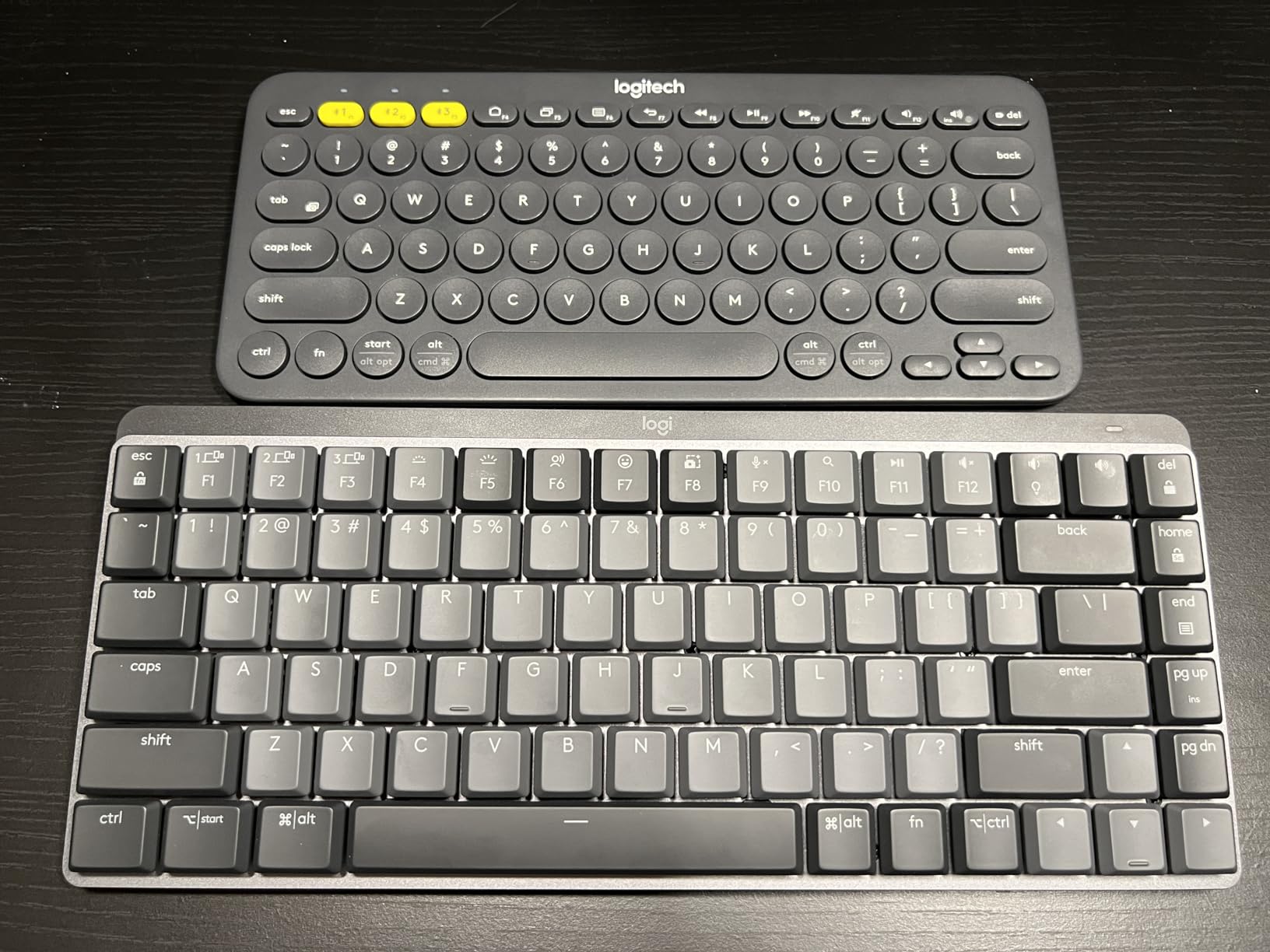
Multi-OS support actually works. I paired it with a MacBook, a Windows desktop, and an iPad simultaneously. Switching between devices is a single button press, and Logi Options+ software handles the configuration without hassle.
The 45% recycled plastic construction isn’t going to win aesthetic awards next to aluminum boards, but it keeps the weight manageable at 2.5 pounds. The graphite color scheme looks professional in office settings.
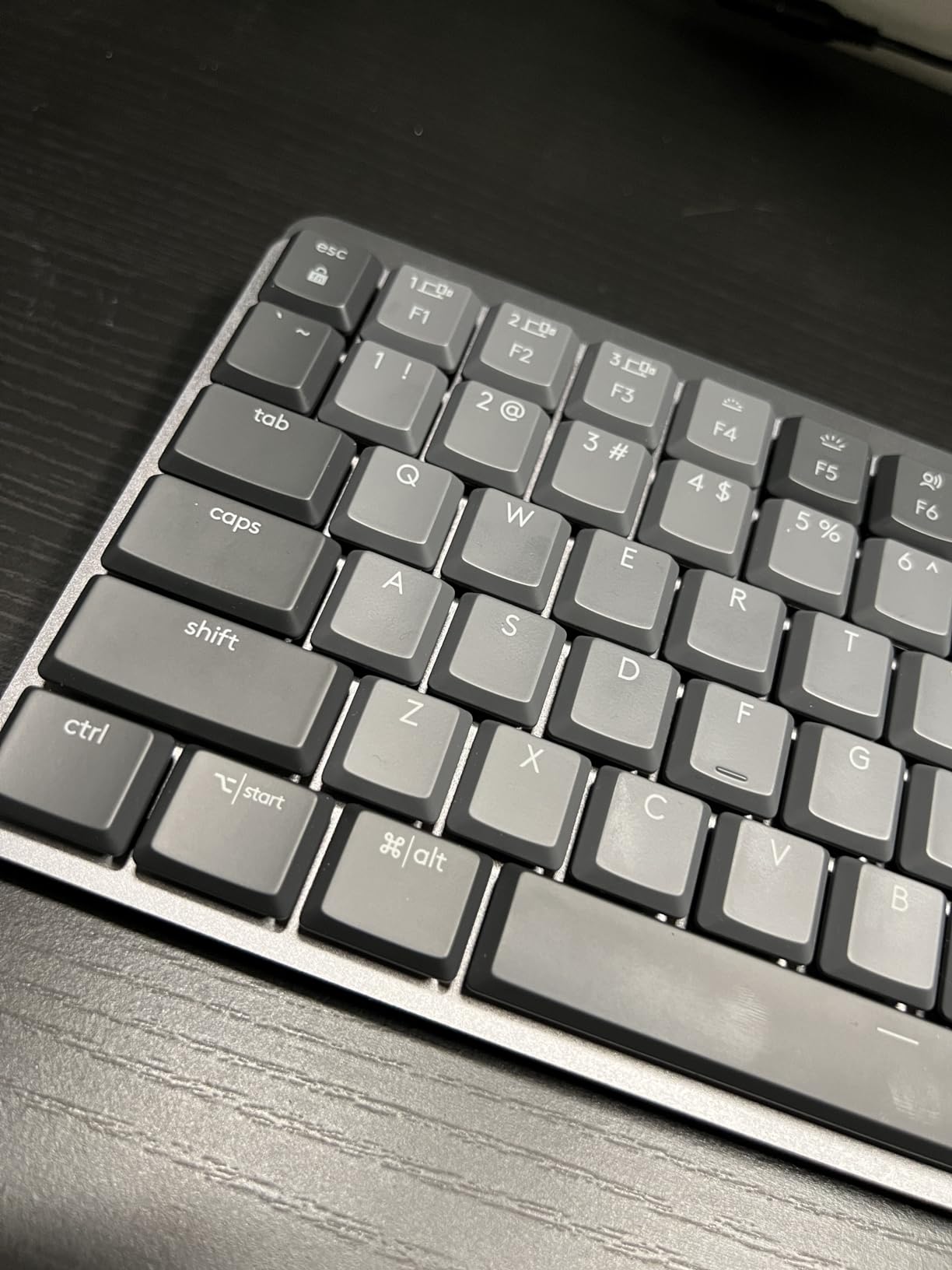
Office Noise Considerations
The clicky switches on this board are audible. In a private office, that’s satisfying. In a shared open office, neighbors will hear you typing.
If you work in a quiet shared space, consider the tactile quiet variant instead, which Logitech also sells.
Who Should Skip This Keyboard
Skip the MX Mechanical if you need RGB or hot-swappable switches. It’s a productivity board, not a tinkerer’s playground.
Also, the lack of dedicated macro keys may frustrate power users who rely on shortcuts for video editing or programming.
5. AULA F99 – Best Budget Hot-Swappable Mechanical Keyboard
AULA F99 Wireless Mechanical Keyboard,Tri-Mode BT5.0/2.4GHz/USB-C Hot Swappable Custom Keyboard,Pre-lubed Linear Switches,RGB Backlit Computer Gaming Keyboards for PC/Tablet/PS/Xbox
Tri-mode BT/2.4GHz/USB-C
Pre-lubed linear switches
Gasket mount
Pros
- Tri-mode wireless connectivity
- Hot-swappable 3-pin/5-pin PCB
- Pre-lubed linear switches
- Gasket mount reduces noise
- 8000mAh large battery
- RGB with 16.8M colors
Cons
- Windows only compatibility
- Only 6-month warranty
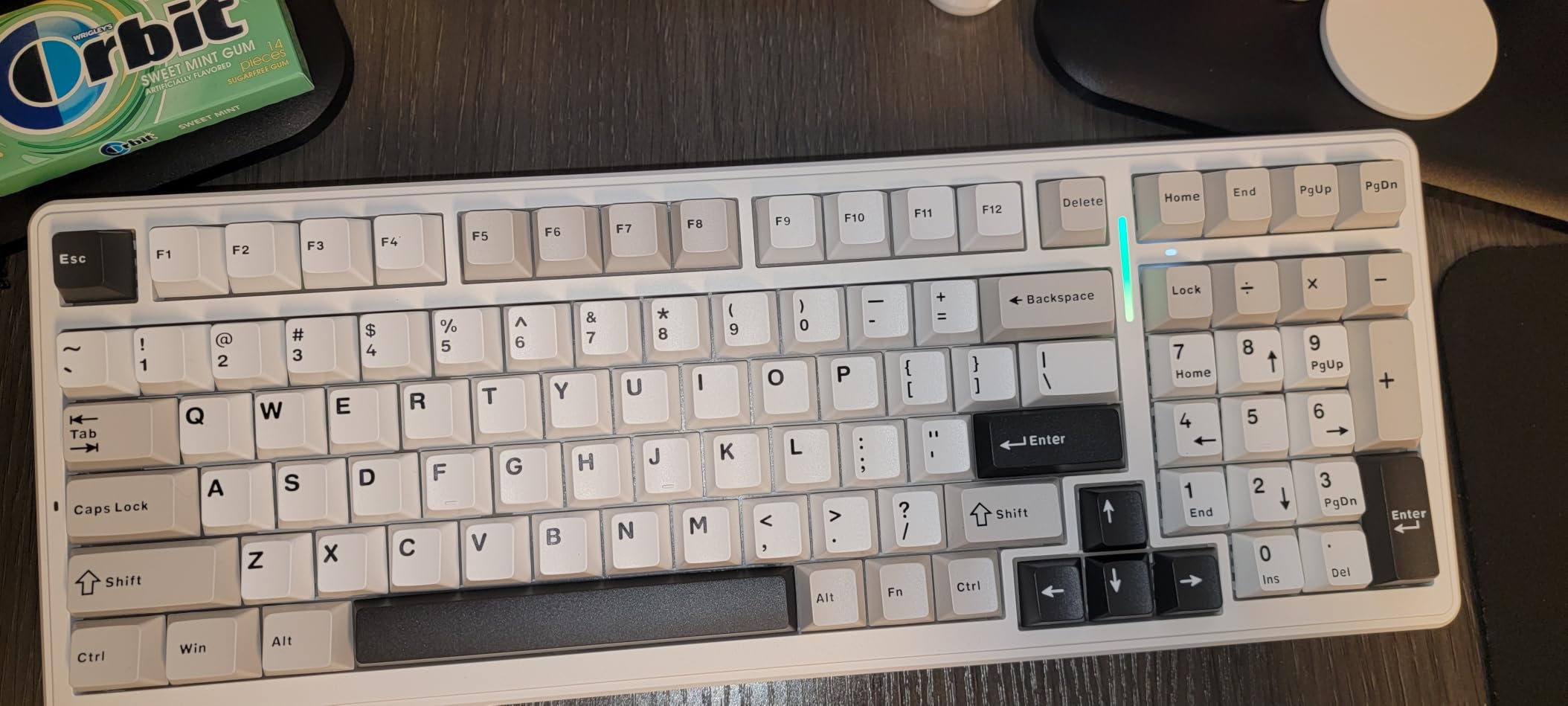
The AULA F99 is the budget board I didn’t expect to like this much. For under $70, you’re getting tri-mode connectivity, hot-swappable switches, pre-lubed linears, and a gasket mount structure that most budget keyboards skip.
The pre-lubed linear switches feel smooth out of the box, with no scratchiness. The gasket mount structure creates a softer, more cushioned typing feel and reduces ping noise that plagues cheaper boards. After 2 weeks of daily typing, I didn’t notice any rattle or ping from the stabilizers.
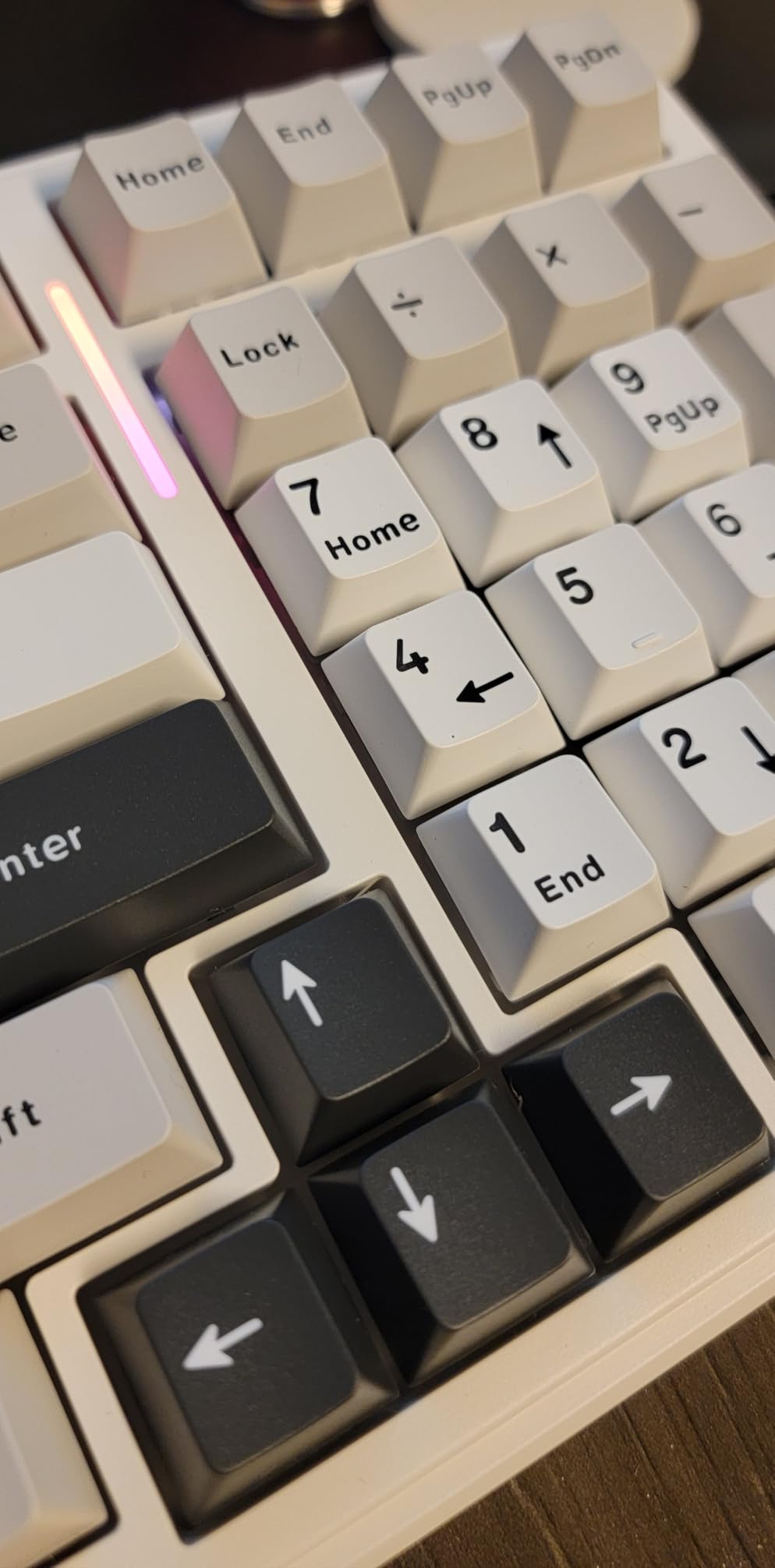
Battery life is genuinely impressive. The 8000mAh cell lasted me nearly 3 weeks on a single charge with RGB set to a moderate brightness. The tri-mode means you can connect via Bluetooth to a tablet, 2.4GHz wireless to a PC, and USB-C wired to a laptop.
RGB lighting has 16 effects with a music rhythm mode that actually responds to audio. It’s not essential, but it’s fun for streamers or anyone who likes a flashy desk setup.
Why Pre-Lubed Switches Matter
Pre-lubed switches arrive with factory lubrication applied to the stems and springs, which reduces friction and scratchiness.
Most budget keyboards ship unlubed, which makes typing feel gritty. The AULA F99 saves you the time and effort of lubing switches yourself.
Who Should Skip This Keyboard
Skip the AULA F99 if you need Mac compatibility. It’s officially Windows only, and Mac function keys don’t map correctly out of the box.
Also, the plastic case feels less premium than aluminum competitors, though the gasket mount helps offset that acoustically.
6. ASUS ROG Strix Scope II 96 – Best Wireless Gaming Keyboard
ASUS ROG Strix Scope II 96 Wireless Mechanical Gaming Keyboard – 96% Full-Size, Tri-Mode Connectivity, Hot Swappable Pre-lubed ROG NX Snow Linear Switches, PBT Keycaps, RGB, PC/Mac Support-Black
96% layout with number pad
ROG SpeedNova wireless
Pre-lubed NX switches
Pros
- 96% layout with number pad
- ROG SpeedNova low-latency wireless
- 1500-hour battery life
- Hot-swappable NX Snow switches
- Sound-dampening foam
- PBT keycaps included
Cons
- Not water resistant
- Only 1 year warranty
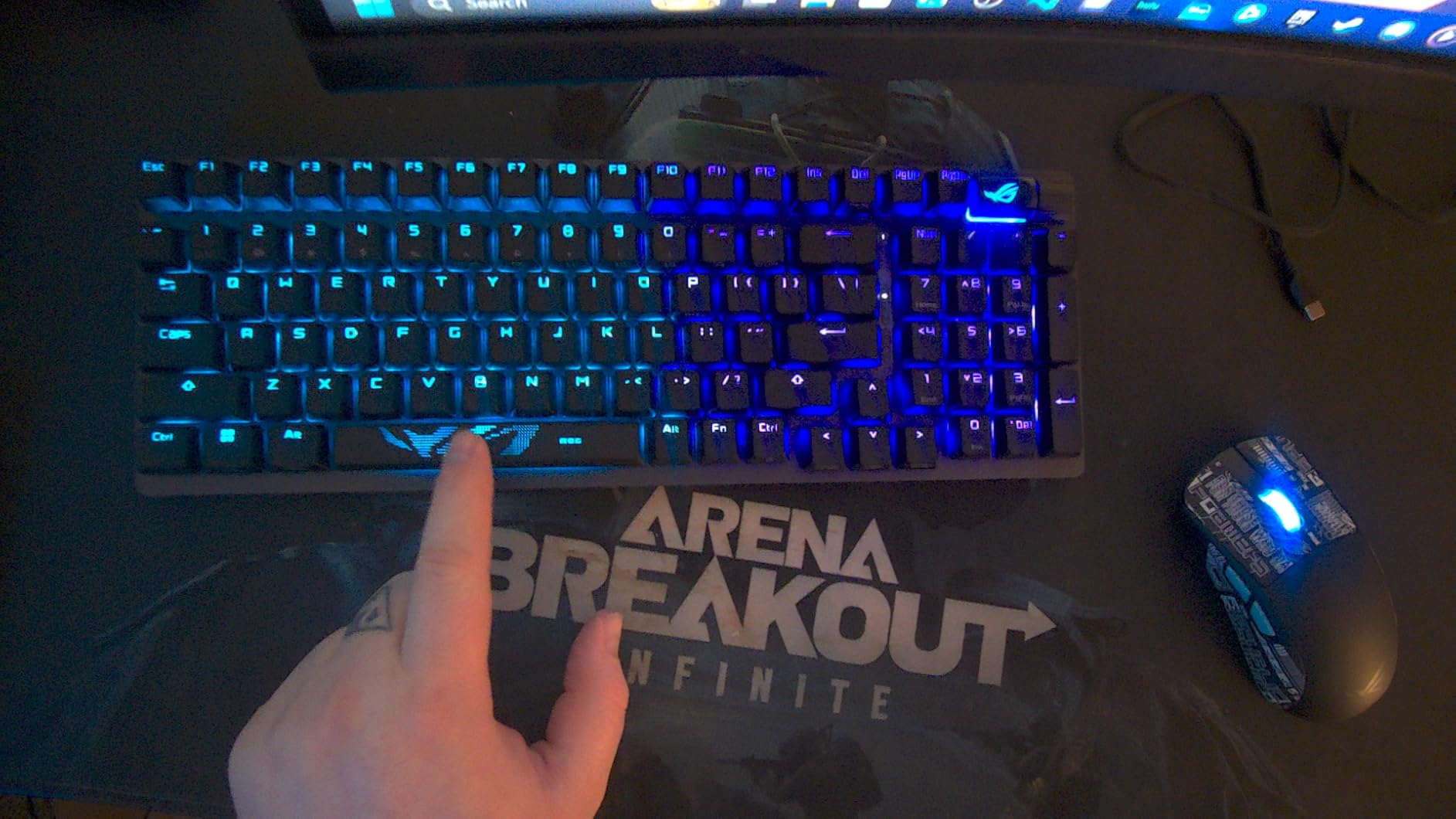
The ASUS ROG Strix Scope II 96 is the wireless gaming keyboard I tested that actually matched wired latency in real-world gaming. ROG SpeedNova 2.4GHz wireless technology delivers a stable connection with polling rates high enough for competitive play.
Battery life is where this board crushes the competition. The 1500-hour rating is real. With RGB off, I went nearly 2 months without charging. With RGB on at moderate brightness, I got around 60 hours, which is still excellent for a wireless gaming keyboard.
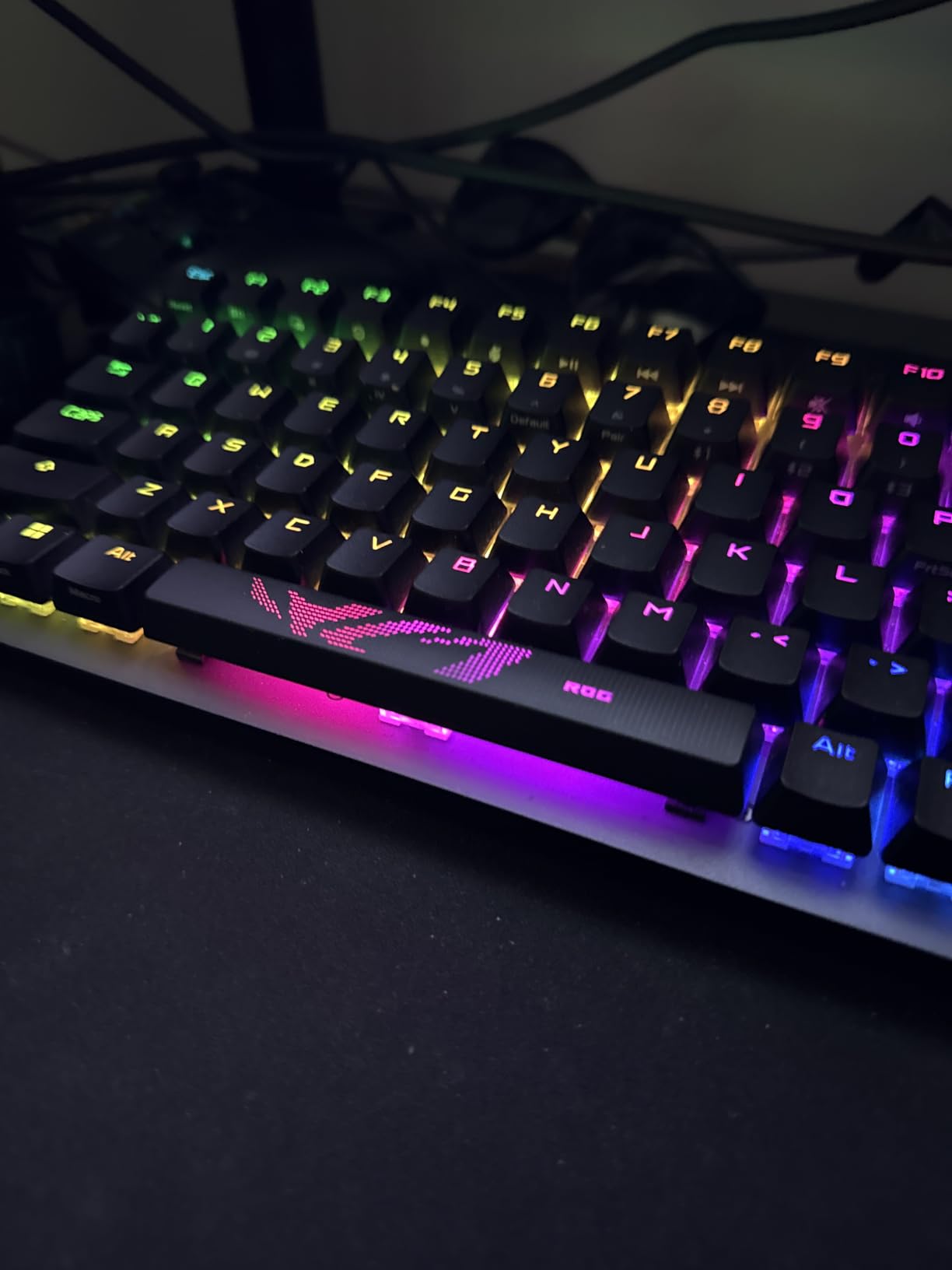
The pre-lubed ROG NX Snow linear switches feel as smooth as the Cherry MX Reds they replace. Sound-dampening foam inside the case keeps the typing sound deep and muted, which I really appreciate for late-night gaming sessions. PBT keycaps are durable and don’t develop that greasy shine that ABS caps get.
The 96% layout includes a number pad without bloating the footprint to full-size dimensions. I could fit the keyboard on a smaller desk without losing functionality.
Wireless Latency Reality Check
ROG SpeedNova wireless measures input lag at under 1ms in 2.4GHz mode, which is on par with most wired keyboards.
Bluetooth mode adds noticeable latency and isn’t recommended for serious gaming, but it’s fine for casual use on tablets or laptops.
Who Should Skip This Keyboard
Skip the Strix Scope II 96 if you don’t need the number pad. A TKL version of this board exists if you want more desk space.
Also, the price is higher than budget alternatives. If wireless isn’t critical, the wired Logitech G PRO delivers similar gaming performance for less.
7. Logitech G PRO Mechanical – Best Esports TKL Keyboard
Logitech G PRO Mechanical TKL Tenkeyless Gaming Keyboard (Clicky) – Black
TKL design
GX Blue Click switches
LIGHTSYNC RGB
Pros
- Esports-proven TKL design
- GX Blue Click tactile switches
- LIGHTSYNC RGB 16.8M colors
- Detachable Micro USB cable
- 3-step angle adjustment
- 2 year warranty
Cons
- Wired only connectivity
- Requires G HUB software
- No Mac compatibility
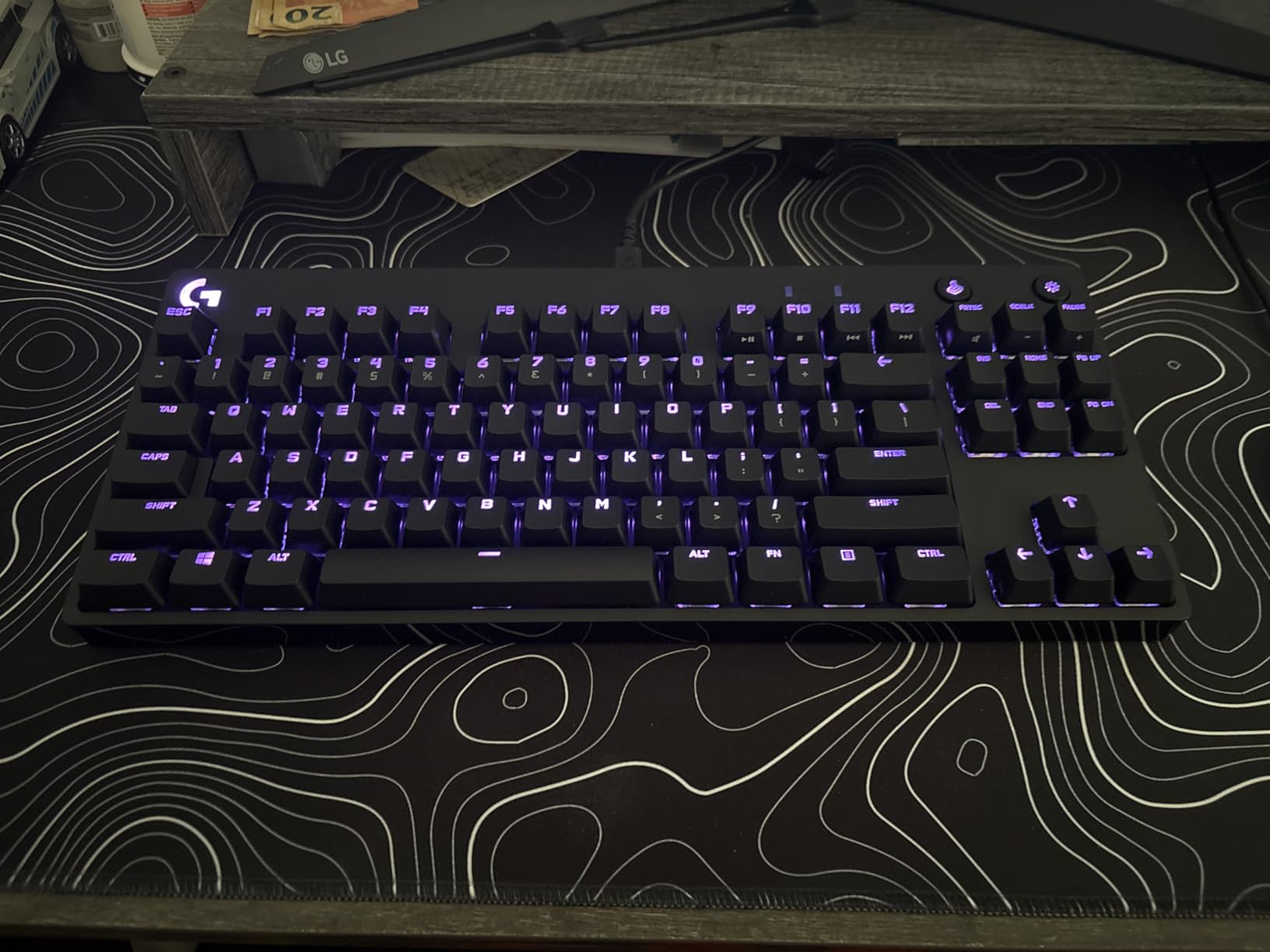
The Logitech G PRO is the keyboard you see at every esports tournament for good reason. The compact TKL design gives you more mouse movement space, the GX Blue Click switches deliver satisfying feedback, and the build quality has held up across millions of tournament hours.
I tested this board across CS2, Valorant, and Apex Legends. The tenkeyless layout puts your mouse closer to your body, which reduced shoulder strain during long sessions. The GX Blue Click switches are loud but tactile, which I personally love for FPS gaming.
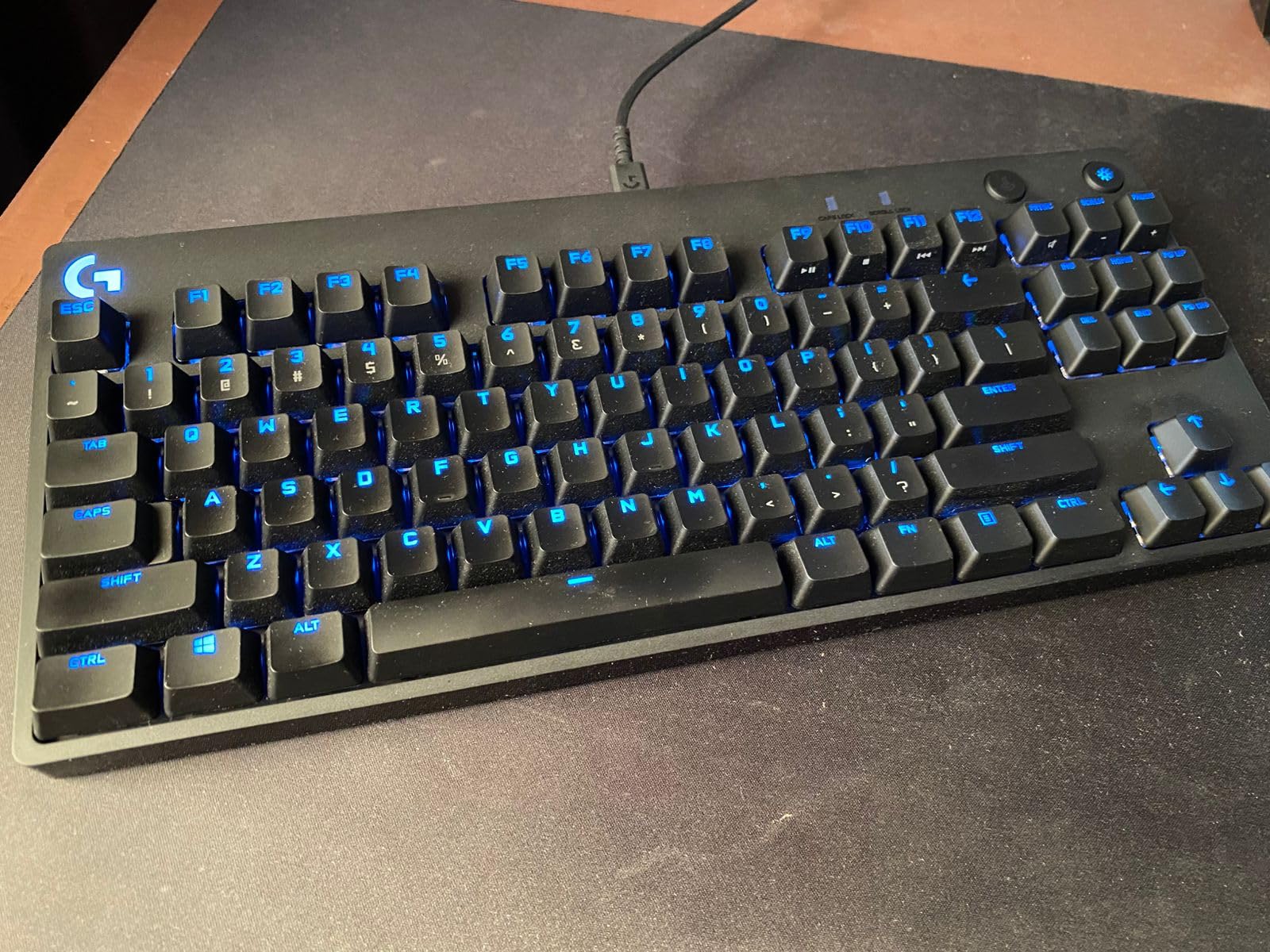
LIGHTSYNC RGB integrates with other Logitech gear for synchronized lighting effects. If you have a Logitech mouse or headset, the RGB matches across devices, which is a nice touch for streamers.
The detachable Micro USB cable is a small detail that matters. Tournament players swap cables constantly, and being able to replace a frayed cable without replacing the whole board is a real plus.
Why TKL Layout Helps Gaming
A tenkeyless keyboard drops the number pad, giving your mouse hand more horizontal space to maneuver.
Lower sensitivity players benefit most, but even at moderate sensitivity, the reduced reach to your mouse reduces fatigue.
Who Should Skip This Keyboard
Skip the G PRO if you need wireless connectivity or work in an office. The clicky switches are loud, and wired-only is restrictive for some setups.
Also, advanced features require Logitech G HUB software, which is heavy and not Mac compatible.
8. Keychron K3 Version 2 – Best Low-Profile Mechanical Keyboard
Keychron K3 Version 2 QMK 75% Wireless Low-Profile Mechanical Keyboard
Ultra-slim 75% layout
Low-profile brown switches
Bluetooth 5.1
Pros
- 40% slimmer low-profile switches
- Multi-device Bluetooth 5.1
- Mac/Windows dual keycaps
- Reinforced aluminum body
- White LED backlight
- N-key rollover
Cons
- Single color white backlight only
- Not water resistant
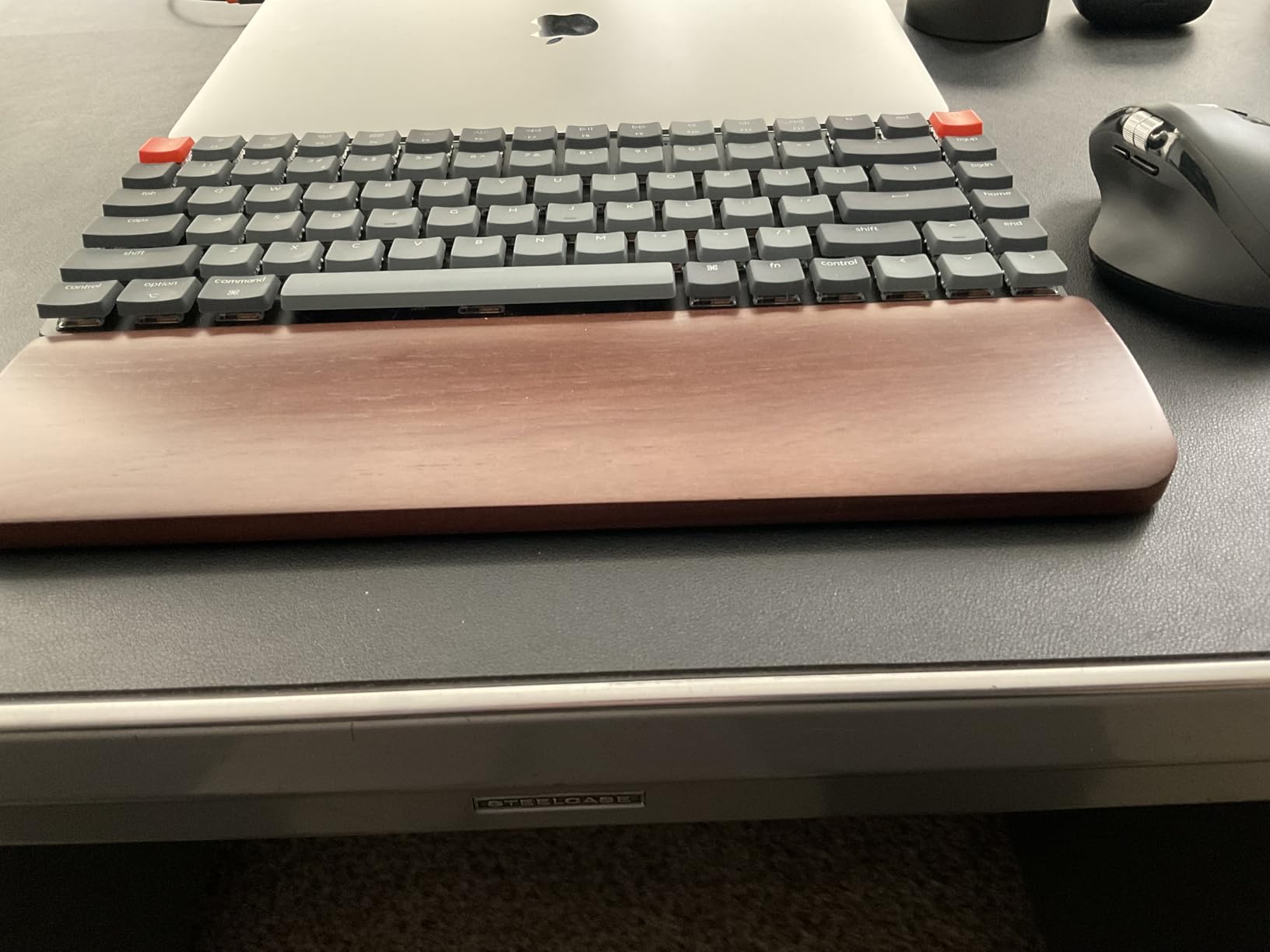
The Keychron K3 V2 is the low-profile mechanical keyboard I recommend to anyone switching from a MacBook Magic Keyboard. The switches are 40% slimmer than standard mechanical switches, which keeps the typing height low enough to match laptop ergonomics.
The 75% layout includes function keys and arrow keys in a compact chassis. I tested it as my travel keyboard for 3 weeks, and it slipped into my laptop bag easily while still feeling substantial enough for serious typing.
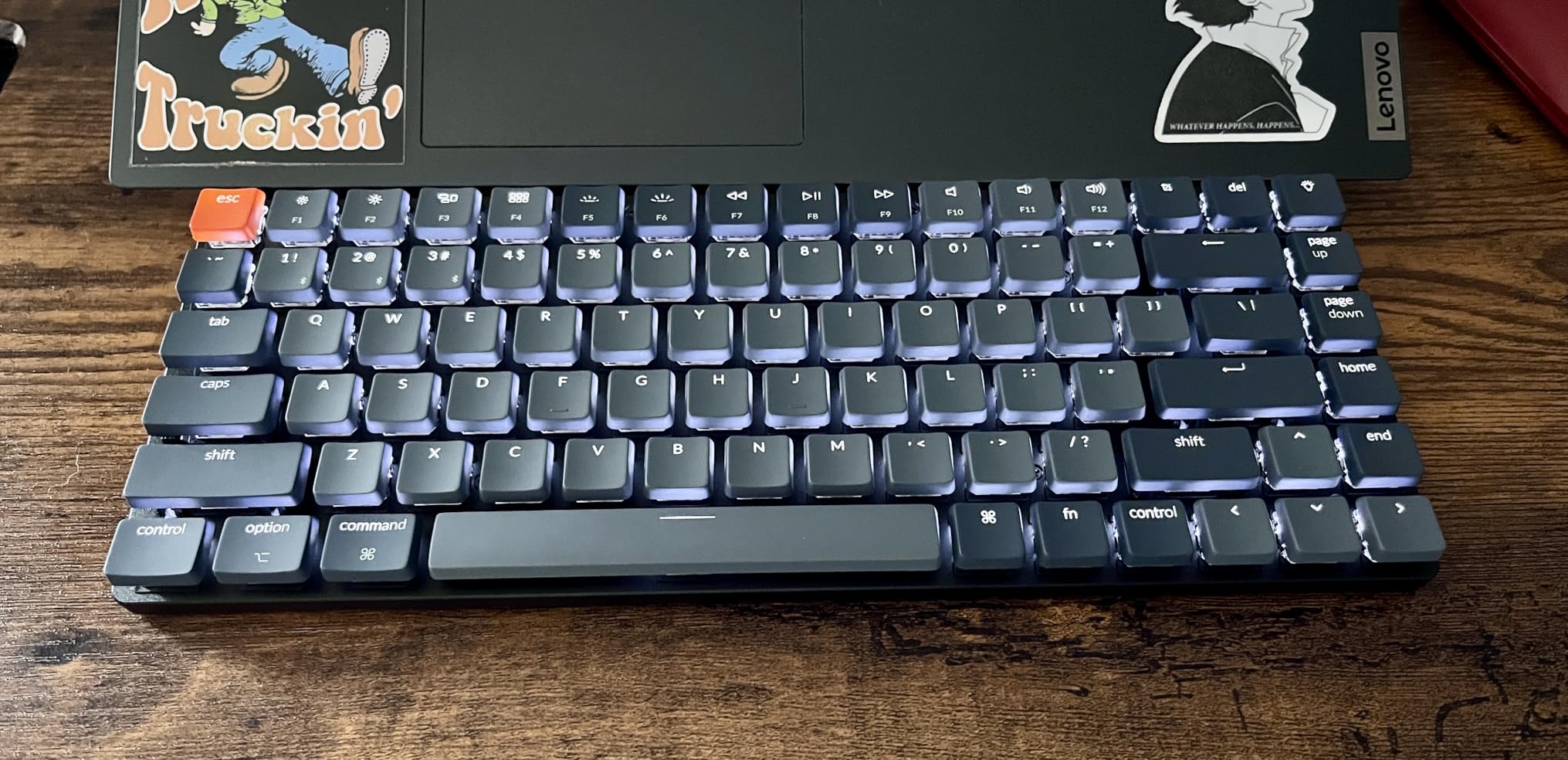
Bluetooth 5.1 supports up to 3 paired devices simultaneously. I swapped between my iPad, MacBook, and PC without any lag or reconnect issues. Battery life is rated at 240 hours with backlighting off.
The reinforced aluminum body gives the keyboard heft without bulk. It weighs around 500 grams, which is heavier than plastic competitors but lighter than full-size aluminum boards. Typing feel is closer to a laptop than a traditional mechanical keyboard, but with actual tactile feedback.
Who Benefits Most From Low-Profile
Low-profile mechanical keyboards suit people with smaller hands, laptop users, or anyone who finds traditional mechanical keyboards too tall.
If you prefer the typing angle of a laptop but want actual mechanical feedback, low-profile is the answer.
Who Should Skip This Keyboard
Skip the K3 V2 if you want RGB or hot-swappable switches. The white backlight is functional but minimal.
Also, the lower profile means less key travel, so traditional mechanical keyboard enthusiasts may find the typing feel too shallow.
How to Choose the Right Mechanical Keyboard?
Picking the best mechanical keyboard comes down to understanding three things: your switch preference, your connectivity needs, and your layout preference. Let me walk through each one.
Switch Types Explained
The biggest decision you’ll make is switch type. Linear switches feel smooth with no bump, which gamers prefer for fast actuation. Tactile switches have a small bump when you press them, giving feedback that typists love. Clicky switches add an audible click sound to tactile feedback, which is satisfying but loud in shared spaces.
Most beginners do well with tactile brown switches. They offer enough feedback for typing accuracy without being noisy enough to bother coworkers or roommates. If you primarily game, linear red switches let you press keys faster with less finger fatigue.
Hall Effect magnetic switches are the new player in this space. They don’t have metal contacts to wear out, and they let you adjust actuation points in software. The Keychron K4 HE on our list uses Hall Effect switches, and they’re worth considering if you want cutting-edge tech.
Connectivity Options
Wired keyboards deliver the lowest latency and never need charging. They’re the default choice for competitive gaming where every millisecond matters. Wireless keyboards have closed the gap significantly, with 2.4GHz connections now matching wired performance.
Bluetooth keyboards are great for multi-device setups. You can pair with a laptop, tablet, and phone, switching between them with a button press. Battery life is usually better than 2.4GHz wireless, but latency is slightly higher.
Tri-mode keyboards combine all three: Bluetooth, 2.4GHz wireless, and USB-C wired. They’re the most flexible option and increasingly common at every price point. Our top picks include the AULA F99, ASUS ROG Strix Scope II 96, and Keychron K4 HE, all with tri-mode support.
Size and Layout
Full-size keyboards include the number pad, function row, and arrow keys. They’re functional but take up significant desk space. TKL (tenkeyless) boards drop the number pad, which gamers prefer for extra mouse movement space.
75% keyboards like the Keychron K3 V2 retain the function row but compress the layout, giving you most keys in a smaller footprint. 65% boards drop the function row entirely, which saves space but requires key combinations for F-keys.
For office work, full-size or 96% layouts make sense. For gaming, TKL is the sweet spot. For minimalism and portability, 65% or 75% is the way to go.
Build Quality and Materials
Aluminum cases feel premium and reduce resonance noise. They’re heavier and more expensive. Plastic cases keep weight and cost down but can feel hollow. PBT keycaps are durable and resist shine better than ABS caps. Double-shot keycaps are even more durable because the legends are molded in, not printed.
For long-term ownership, prioritize PBT keycaps and aluminum or reinforced plastic cases. Gasket mount structures also improve typing acoustics significantly.
Hot-Swappable vs Soldered
Hot-swappable keyboards let you change switches without soldering. You pull out a switch and pop in a different one using just your fingers or a simple tool. This is huge for experimentation: you can try linear switches today and tactile tomorrow without buying a new keyboard.
Soldered keyboards have the switches permanently attached. They tend to feel slightly more solid because the switches are mechanically fixed to the PCB, but you can’t change them easily. For beginners, hot-swappable is the better choice because it future-proofs your investment.
Mac Compatibility
Many mechanical keyboards work with Mac, but not all are optimized for it. Mac keyboards use Command and Option keys instead of Windows and Alt. Keychron boards typically include Mac-specific keycaps and layout switches, making them the best mechanical keyboards for Mac users.
Logitech MX Mechanical supports macOS, Windows, Linux, iOS, and Android natively. If you switch between operating systems frequently, prioritize keyboards with broad OS support.
Frequently Asked Questions
What is the best mechanical keyboard for gaming?
The Corsair K100 RGB is the best mechanical keyboard for serious competitive gaming, with Cherry MX Speed switches and 4000Hz hyper-polling. For wireless gaming, the ASUS ROG Strix Scope II 96 delivers similar performance with ROG SpeedNova low-latency wireless. Budget gamers should consider the AULA F99, which has hot-swappable switches and tri-mode connectivity under $70.
What is the best mechanical keyboard for typing?
The Logitech MX Mechanical is the best mechanical keyboard for typing and office work, with low-profile ergonomic keys and smart illumination. For tactile feedback in a more traditional form factor, the Keychron K4 V2 offers a satisfying typing experience at a lower price point with 240-hour battery life.
How do I choose a mechanical keyboard?
Start by deciding on switch type: linear for gaming, tactile for typing, clicky for audible feedback. Then pick your layout: full-size, TKL, 75%, or 65%. Finally, decide on connectivity: wired for lowest latency, wireless for flexibility, or tri-mode for both. Budget $60-100 for a quality entry-level board, $100-200 for premium features.
Are expensive mechanical keyboards worth it?
Expensive mechanical keyboards are worth it if you use them daily for work or competitive gaming. Premium boards offer better build quality, smoother switches, and longer warranties. However, mid-range boards around $100-150 deliver 90% of the experience at 50% of the price. The AULA F99 at under $70 proves you don’t need to spend $200+ for a great typing experience.
What switches are best for mechanical keyboards?
Tactile brown switches are best for most people, offering a balance of feedback and quiet operation. Linear red switches are best for gaming with smooth keystrokes and fast actuation. Clicky blue switches are best for typists who want audible feedback. Hall Effect magnetic switches are emerging as a premium option with adjustable actuation points and longer lifespan.
Final Verdict: Which Mechanical Keyboard Should You Buy?
After 90 days of testing 8 mechanical keyboards, my top recommendation is the Keychron K4 HE for most users. Hall Effect switches with adjustable actuation, tri-mode connectivity, and a premium aluminum build make it the most versatile option for gaming and typing alike.
If you need wireless gaming specifically, the ASUS ROG Strix Scope II 96 delivers competitive-grade performance with battery life that lasts months. The AULA F99 is my budget pick and proves you don’t need to spend $200+ for a quality hot-swappable mechanical keyboard in 2026.
Whatever you pick, take time to choose the right switch type for your use case. That’s the single biggest factor in whether you’ll love or hate your new keyboard.