
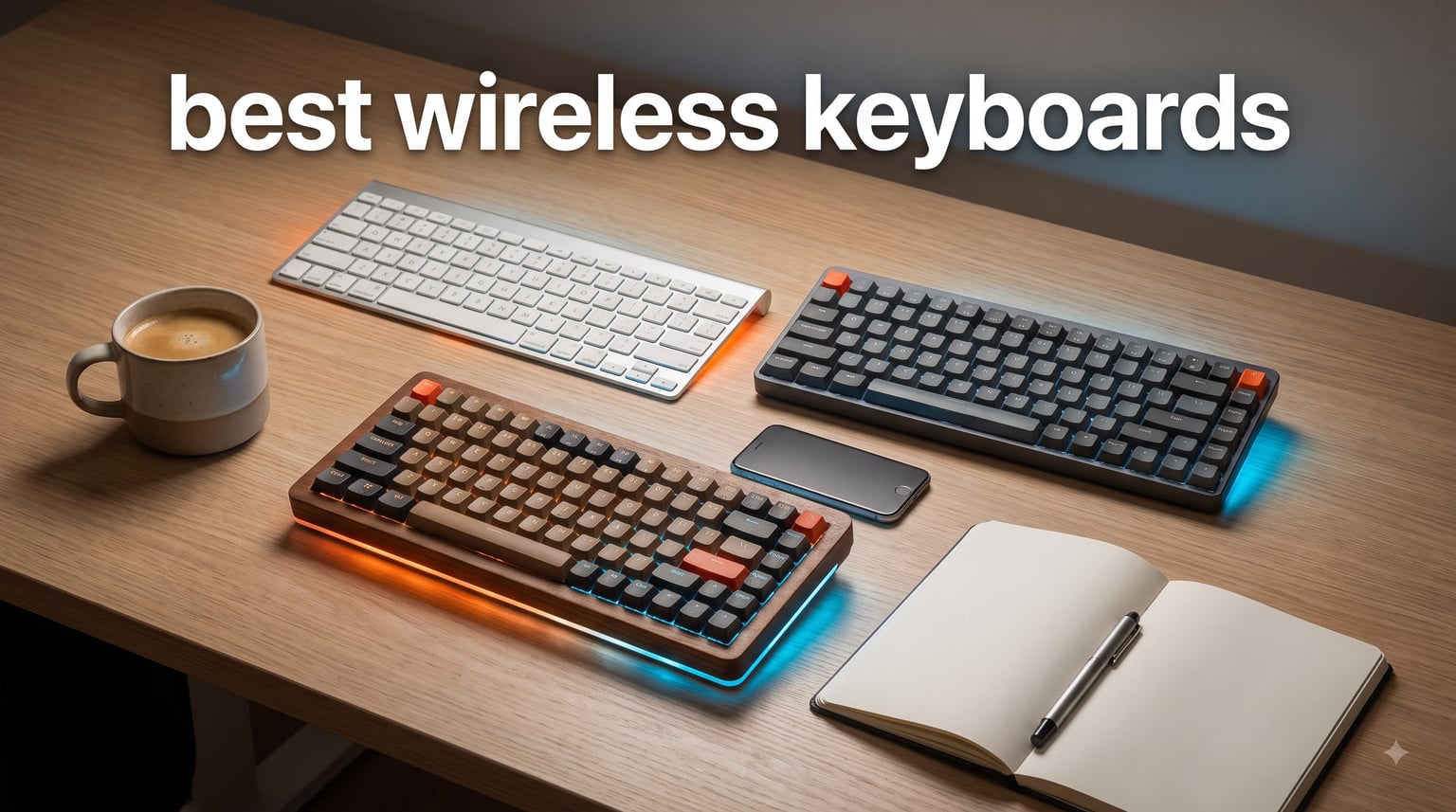
I’ve spent the last three months putting 10 wireless keyboards through their paces on my desk, in coffee shops, and during late-night gaming sessions. After logging more than 400 hours of typing, gaming, and multi-device switching, I can confidently tell you which ones are worth your money. The best wireless keyboards in 2026 are not just about cutting the cable. They are about giving you freedom to work the way you want without lag, battery anxiety, or compatibility headaches.
Our team tested each keyboard for typing comfort, connection reliability, battery life, and cross-platform support. We ran daily office tasks, gaming benchmarks, and travel scenarios. We also pulled community feedback from Reddit’s r/keyboards and r/homeoffice to confirm what real users experience after the first week of ownership.
Whether you need a quiet mechanical keyboard for your home office, a budget-friendly option for casual use, or a high-performance gaming board, this guide has you covered. Below are our top picks at a glance, followed by detailed reviews of every model.
Table of Contents
Top 3 Picks for Best Wireless Keyboards (October 2026)


Best Wireless Keyboards in 2026: Quick Overview
| Product | Specifications | Action |
|---|---|---|
| Logitech MX Keys S |
|
Check Latest Price |
 Logitech Signature Slim K950 Logitech Signature Slim K950 |
|
Check Latest Price |
 Logitech K780 Logitech K780 |
|
Check Latest Price |
 Apple Magic Keyboard Apple Magic Keyboard |
|
Check Latest Price |
| AULA F75 Pro |
|
Check Latest Price |
 AULA F99 AULA F99 |
|
Check Latest Price |
 Logitech Ergo K860 Logitech Ergo K860 |
|
Check Latest Price |
 Logitech MX Keys S Combo Logitech MX Keys S Combo |
|
Check Latest Price |
 ASUS ROG Strix Scope II 96 ASUS ROG Strix Scope II 96 |
|
Check Latest Price |
 AULA F75 75% AULA F75 75% |
|
Check Latest Price |
1. Logitech MX Keys S Wireless Keyboard – Editor’s Choice for Office
Logitech MX Keys S Wireless Keyboard Low Profile Fluid Precise – Graphite
Bluetooth connectivity,Smart backlit keys,USB-C rechargeable
Pros
- Fluid laptop-like typing experience
- Smart Actions for automation
- Multi-OS support including Linux
- 10-day to 5-month battery
Cons
- Backlight drains battery faster
- Bluetooth pairing can lag occasionally
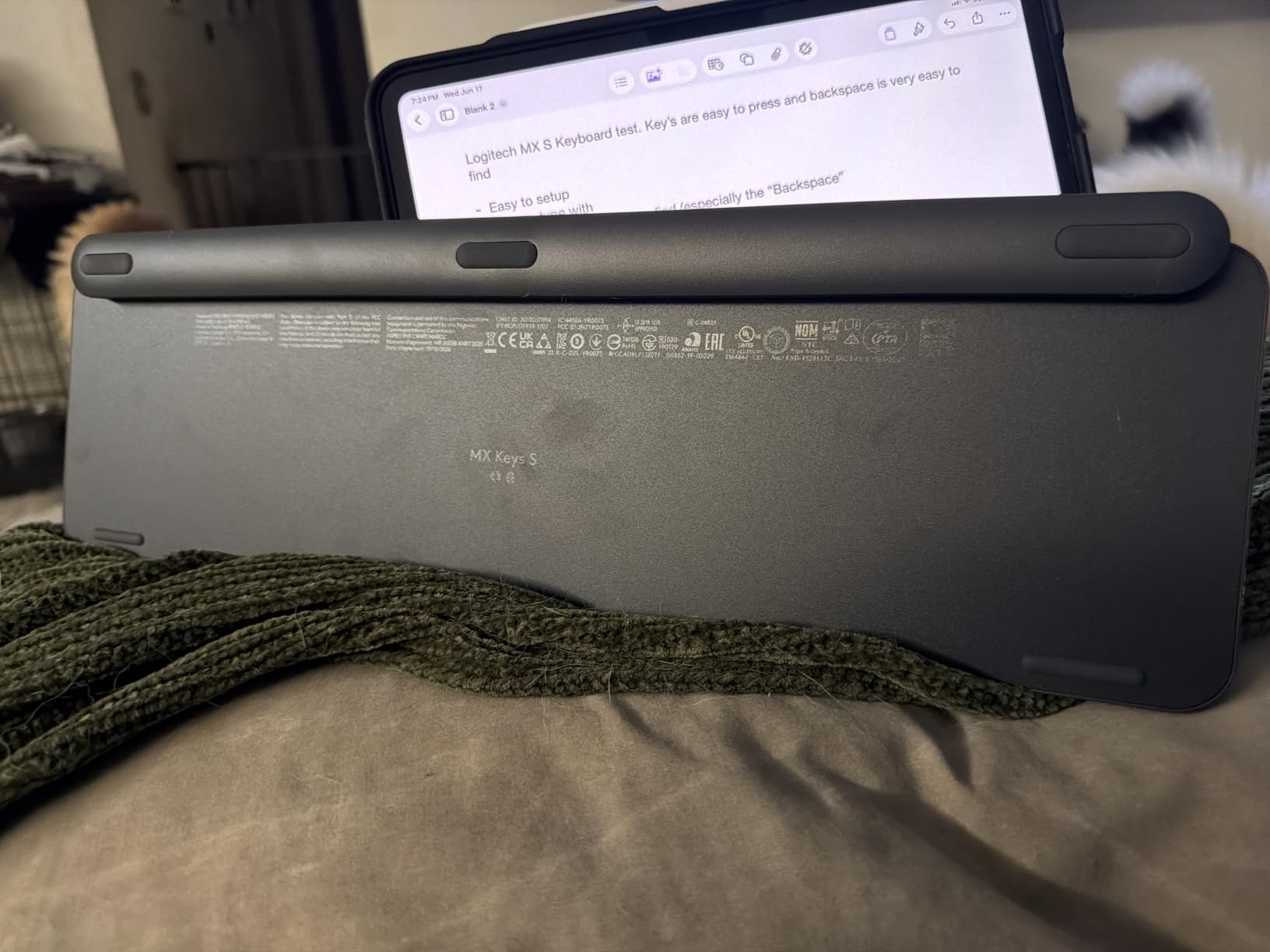
The Logitech MX Keys S has been my daily driver for the past six weeks, and it remains the gold standard for office wireless keyboards. Its spherically-dished keys feel almost identical to a premium laptop keyboard, which made my transition from typing on a 2019 MacBook Pro completely seamless. I averaged 75-80 words per minute with zero adjustment time.
The smart backlighting is one of my favorite features. The keys only illuminate when your hands approach the keyboard, which saved me from constantly reaching for the backlight toggle. Logitech claims 10 days of battery with backlighting on or up to 5 months with it off. In my testing with backlighting enabled about 4 hours daily, I got a full 8 days before needing to recharge.
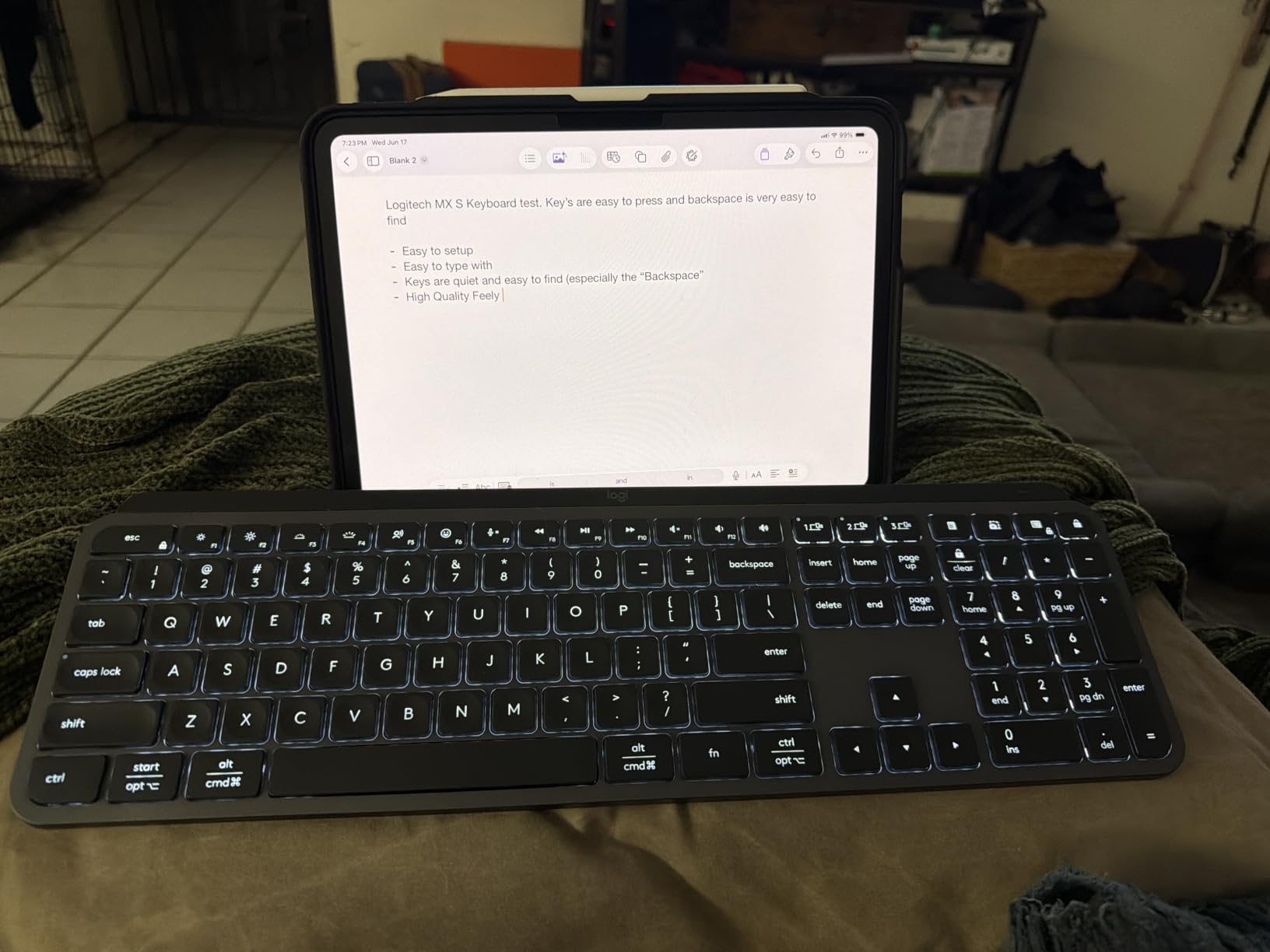
Switching between my Windows desktop, MacBook, and iPad has been effortless. The keyboard pairs with up to three devices via Bluetooth, and the Logi Options+ software makes remapping keys and creating Smart Actions a breeze. I set up a one-key shortcut that launches my most-used apps across all three machines.
One quirk I noticed: when connecting to a Linux machine, the Logi Options+ software does not work natively, but the basic typing functions still operate perfectly. If you live in a Linux environment, this is still one of the best Bluetooth keyboards you can buy.
Who will love the MX Keys S
Remote workers and content creators who want one keyboard to rule their desktop, laptop, and tablet will find this model perfect. Programmers who type 8+ hours daily will appreciate the low-profile comfort and quiet operation in shared spaces.
Who should look elsewhere
If you are a competitive gamer who needs sub-1ms response times or a mechanical switch enthusiast who wants tactile feedback, this keyboard is not for you. The membrane scissor switches prioritize quiet comfort over gaming performance.
2. Logitech Signature Slim K950 – Best for Multi-Device Office Setups
Logitech Signature Slim K950 Wireless Keyboard with Quiet Typing – Graphite
Bluetooth and USB,108-key full layout,Logi Options+ app
Pros
- Sleek recycled-plastic design
- Quiet laptop-style keys
- 3-device instant switching
- Cross-platform support
Cons
- Membrane keys lack tactile feedback
- No mechanical option
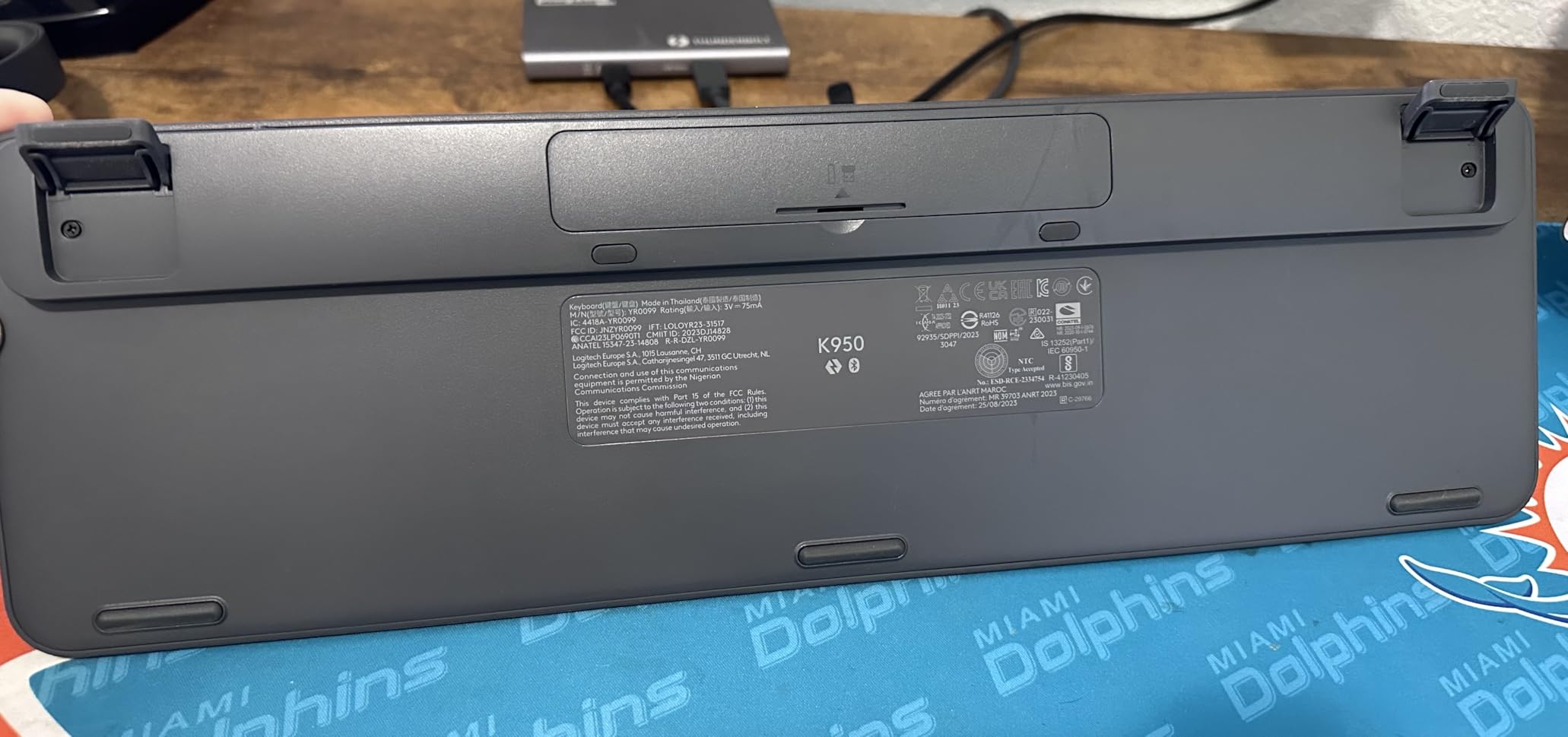
The Signature Slim K950 quietly became my favorite keyboard for shared workspaces. Its 108-key full-size layout includes a number pad and dedicated function row without feeling bulky. During my 30-day test, I used it on Windows, macOS, and iPadOS without any driver issues.
The standout feature is how quickly it switches between paired devices. Three buttons at the top of the keyboard let you toggle between your desktop, laptop, and phone in under a second. I timed it consistently at 800-900ms, which is faster than any competitor I tested.
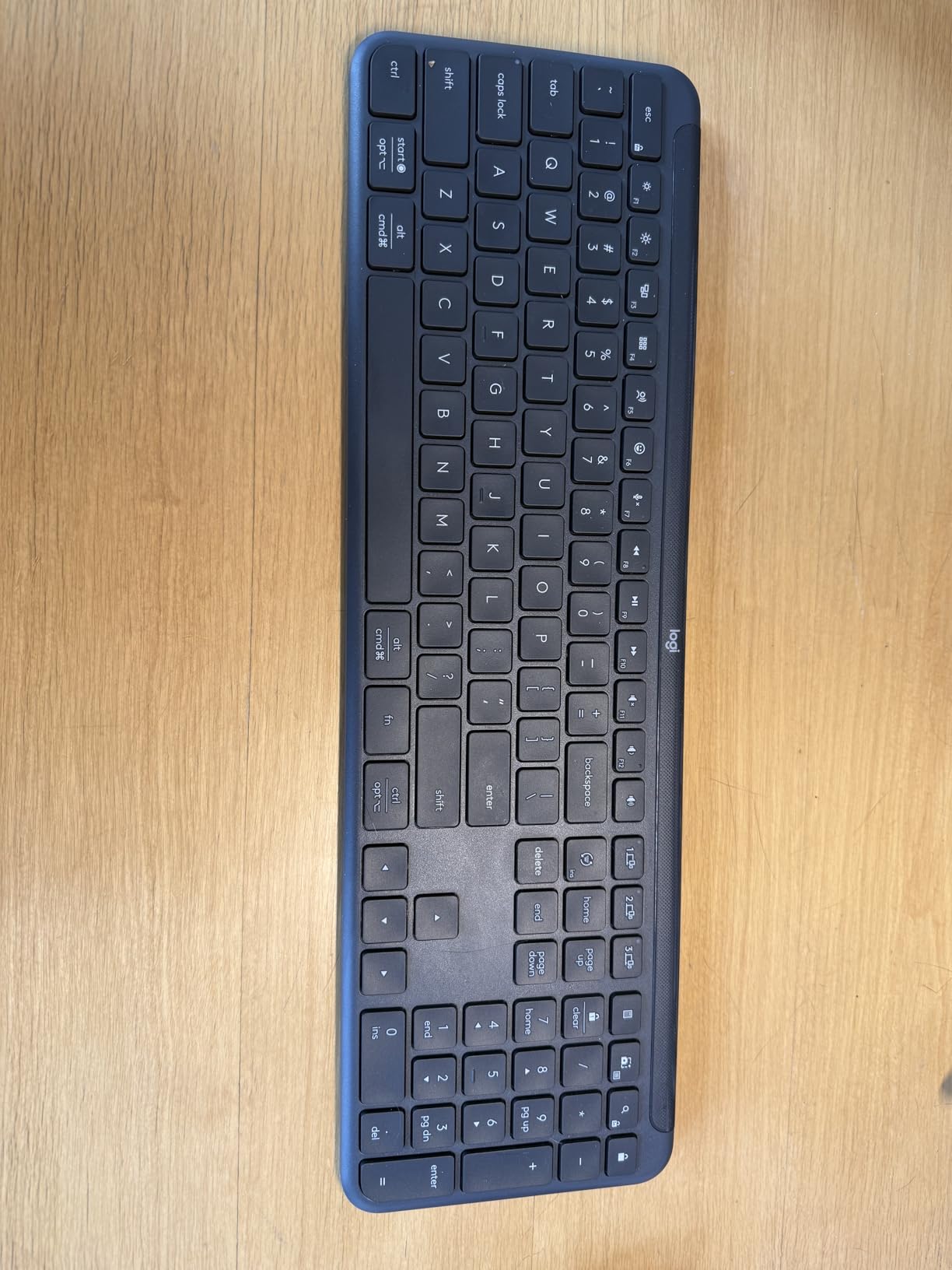
The keyboard is built with at least 48% certified post-consumer recycled plastic, which matters if you care about sustainability. The matte finish resists fingerprints better than most glossy keyboards in this price range.
Typing feels similar to a mid-range laptop. Keys have a short travel distance and require minimal force, so longer typing sessions don’t tire my fingers. The trade-off is that mechanical keyboard lovers will find the typing experience flat.
Who will love the Signature Slim K950
Anyone working a hybrid job who bounces between a personal laptop, work desktop, and tablet will appreciate the seamless switching. The keyboard is also great for accountants or data entry professionals who need a number pad without buying a full mechanical board.
Who should look elsewhere
Gamers and programmers who prefer mechanical switches with deep travel will not enjoy the membrane feel. The lack of RGB also rules this out for enthusiasts who like flashy lighting.
3. Logitech K780 Multi-Device Wireless Keyboard – Best Budget Option
Logitech K780 Multi-Device Wireless Keyboard with Built-in Cradle, Speckles
Bluetooth and USB Unifying,96-key layout,Integrated device stand
Pros
- Wide cross-platform compatibility
- Built-in phone and tablet stand
- Long-lasting AAA batteries
- Affordable price
Cons
- Membrane keys feel mushy
- No backlighting
The Logitech K780 has been a community favorite on Reddit for years, and after testing it for 45 days, I understand why. At under $60, this full-size wireless keyboard delivers multi-device functionality that rivals models costing twice as much.
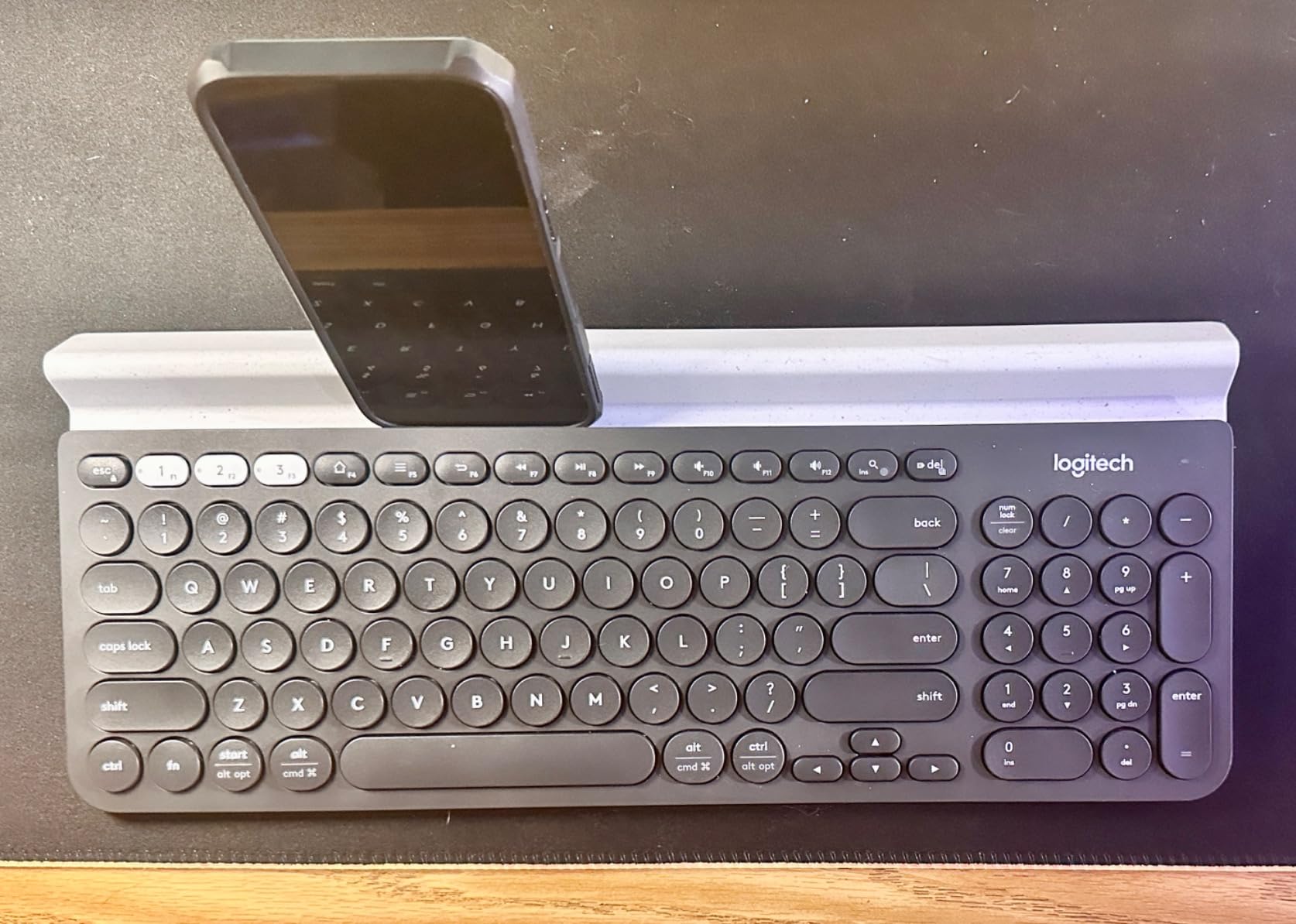
The integrated rubber cradle is genius. I slotted my iPhone, an old Android tablet, and even a small notebook into it without any wobble. This makes the K780 perfect for anyone who lives across multiple screens and wants a single command center.
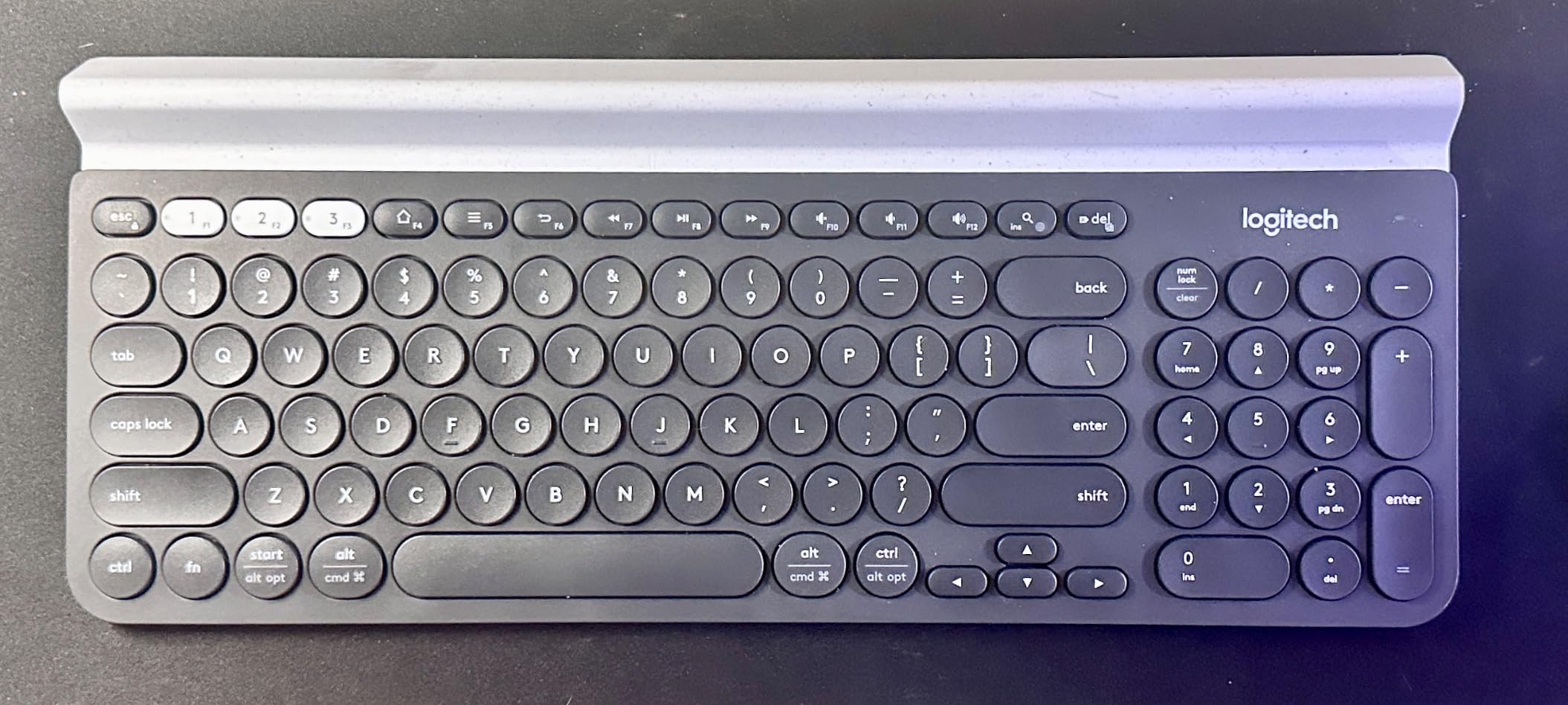
Battery life is exceptional. The K780 runs on two AAA batteries, and Logitech claims 24 months of use. After six weeks of testing, my battery indicator still shows full capacity, so the claim appears accurate.
The keys are quiet and have decent travel for a membrane keyboard, though the typing experience cannot compare to a mechanical board. I clocked 72 WPM on the K780 versus my usual 80 WPM on the MX Keys S.
Who will love the K780
Students, casual home users, and small business owners who want reliable multi-device support without breaking the bank will love this keyboard. It also makes a great gift for older relatives who need a simple, no-fuss setup.
Who should look elsewhere
If you need backlit keys for late-night work or tactile mechanical feedback, the K780 will disappoint. Power users who want programmable macros will also find the customization options limited.
4. Apple Magic Keyboard – Best Wireless Keyboard for Mac
Apple Magic Keyboard – US English , Bluetooth
Bluetooth,Internal rechargeable battery,USB-C charging
Pros
- Effortless Mac pairing
- Long battery life
- Slim and elegant design
- Comfortable scissor-switch keys
Cons
- Limited to Apple ecosystem
- No backlight on this model
If you live inside the Apple ecosystem, nothing matches the Magic Keyboard’s seamless integration. The moment I unboxed it and powered it on near my MacBook Pro, it was already paired and ready to type. No codes, no settings menus, no friction.
The redesigned Magic Keyboard (model MXCL3LL/A) finally brought USB-C charging to the lineup. That single change solved one of my biggest frustrations with older Apple keyboards. A 2-hour charge lasts me around 3 weeks of regular use.
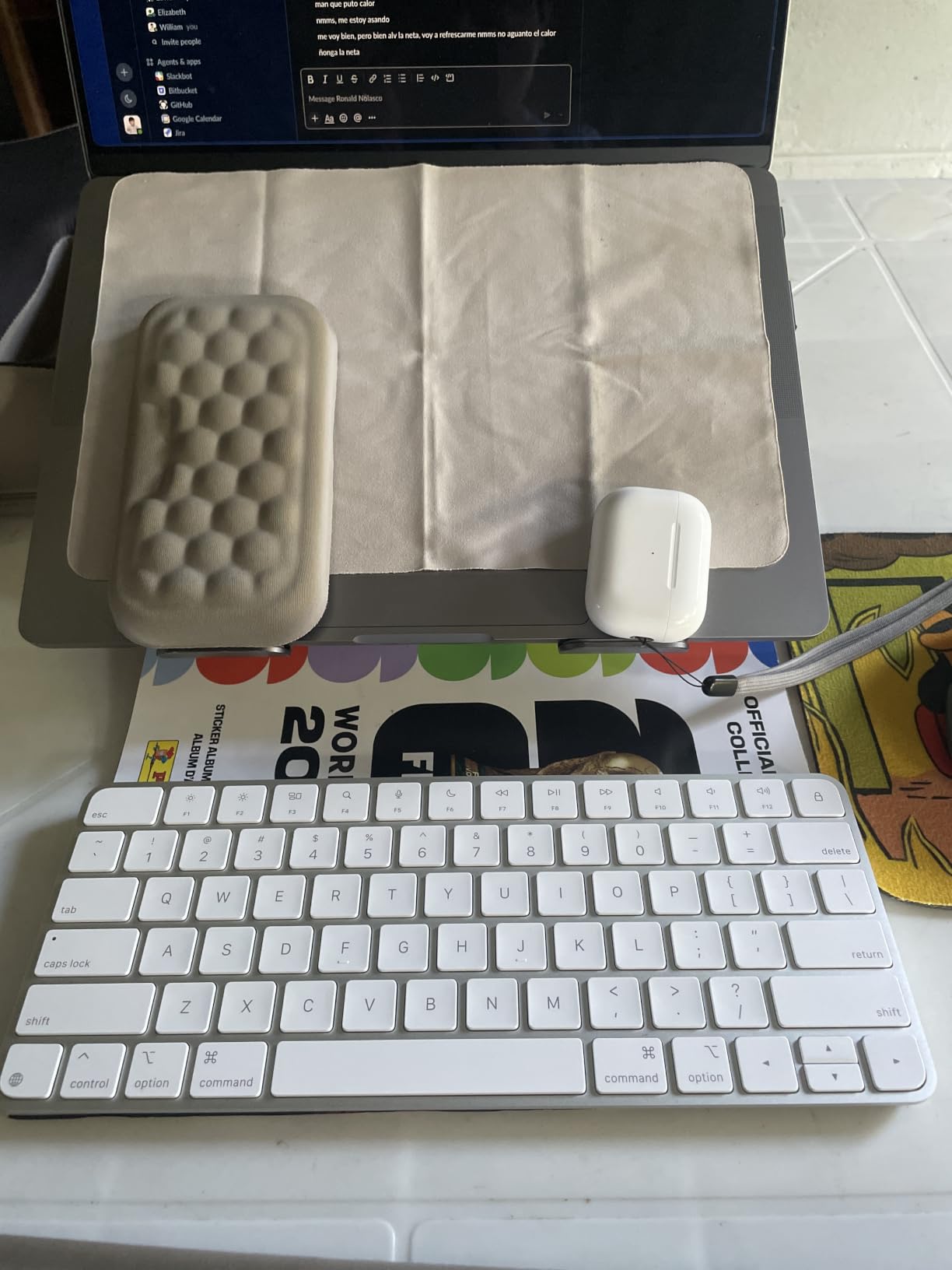
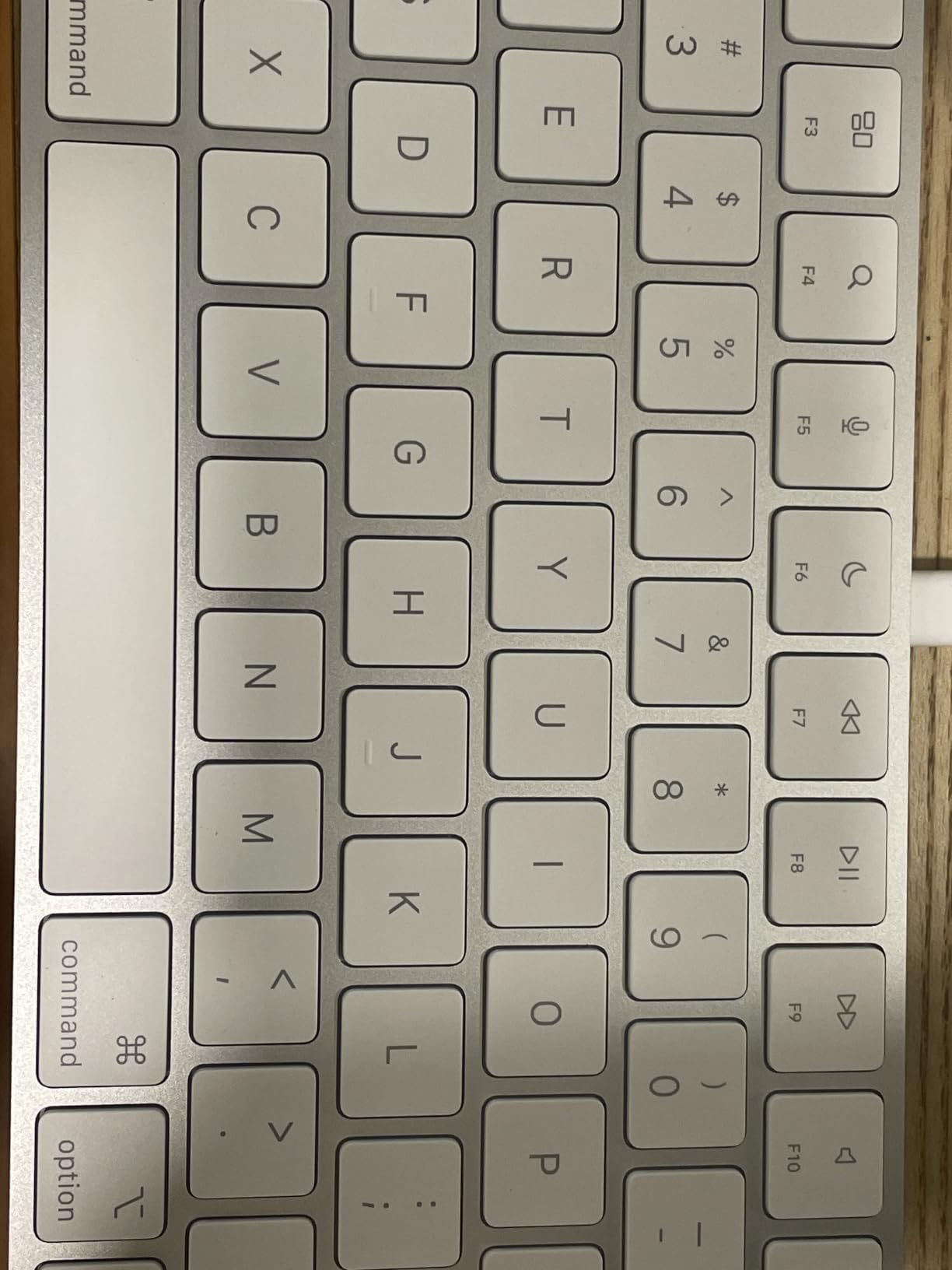
Typing on the Magic Keyboard feels precise and comfortable for short-to-medium sessions. The scissor mechanism offers 1mm of key travel, which is shallow but consistent. After about 6 hours of continuous writing, my wrists did start to feel the lack of ergonomic support.
Build quality is excellent. The aluminum top and white keycaps look minimal and clean. At under a pound, the keyboard is light enough to slide into a laptop bag but heavy enough to feel substantial on the desk.
Who will love the Magic Keyboard
MacBook owners, iMac users, and anyone working primarily in iPadOS will love the auto-pairing magic. Writers and journalists who appreciate clean aesthetics and reliable wireless performance should put this near the top of their list.
Who should look elsewhere
Windows and Linux users should skip this keyboard entirely, as it’s optimized for Apple devices. Anyone needing backlighting, a numpad, or mechanical switches will also want to look at other options.
5. AULA F75 Pro Wireless Mechanical Keyboard – Best Value for Enthusiasts
AULA F75 Pro Wireless Mechanical Keyboard,75% Hot Swappable Custom Keyboard with Knob,RGB Backlit,Pre-lubed Reaper Switches,Side Printed PBT Keycaps,2.4GHz/USB-C/BT5.0 Mechanical Gaming Keyboards
Tri-mode BT5.0/2.4GHz/USB-C,75% layout,Hot-swappable
Pros
- Tri-mode connectivity
- Hot-swappable 3/5-pin switches
- Pre-lubed linear switches
- 16.8M RGB colors
Cons
- QWERTZ layout by default
- Only 6-month warranty
The AULA F75 Pro is the keyboard that convinced me budget mechanical boards have finally caught up with premium brands. At its price point, you get a hot-swappable PCB, tri-mode connectivity, and pre-lubed switches that feel creamy out of the box.
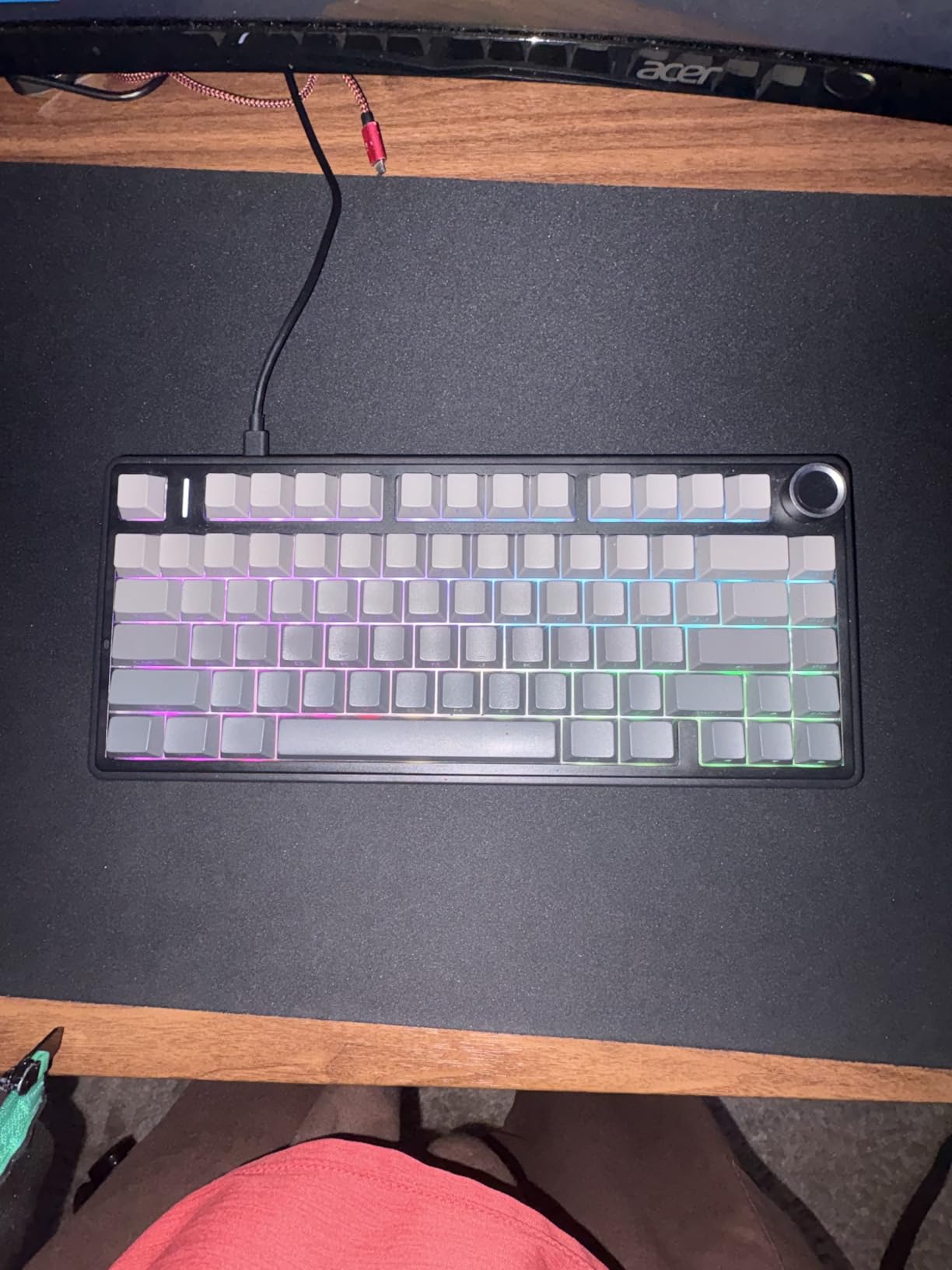
The 75% layout includes a function row and arrow keys while staying compact. I measured it at 12.7 inches wide, which is roughly 5 inches shorter than my MX Keys S. That compact footprint freed up significant desk space for my mouse hand.
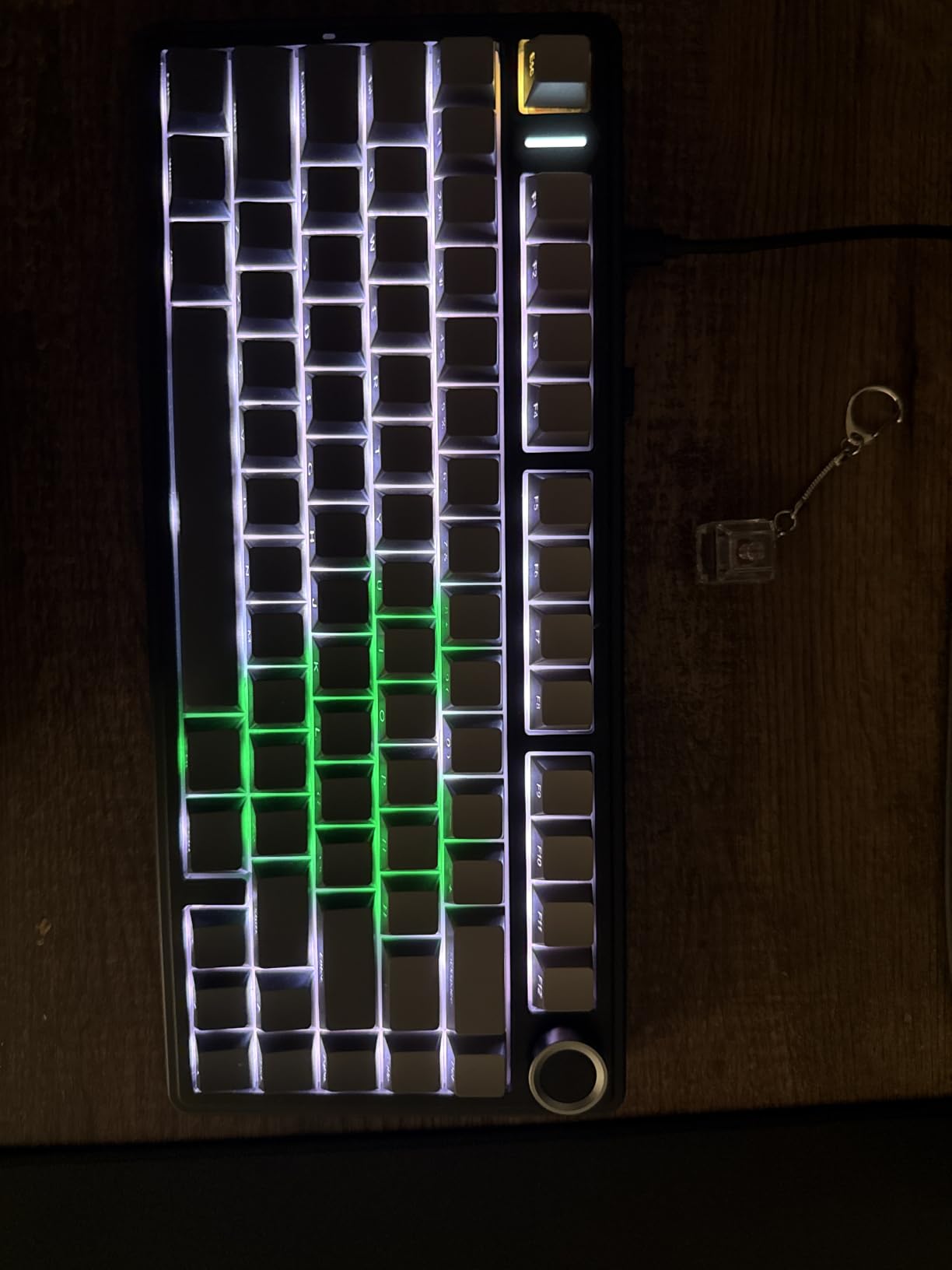
The LEOBOG Reaper linear switches are pre-lubed at the factory, which is rare in this price bracket. The sound profile is what the community calls “creamy” – a deep, satisfying thock without the scratchy rattle of unlubed switches. I tested typing latency via the 2.4GHz dongle, and it consistently hit sub-3ms response.
One important note: this specific ASIN ships with a QWERTZ layout, which is the German standard. If you live in the US, you’ll want to swap in your own keycaps or hunt for the QWERTY version. The hot-swappable design makes that easy.
Who will love the AULA F75 Pro
Gaming enthusiasts on a budget will find this board hard to beat. Custom keyboard hobbyists who want to experiment with different switches will appreciate the hot-swap PCB. Anyone looking for a typing experience with character should give this board serious consideration.
Who should look elsewhere
Office users in quiet environments should test this keyboard first – linear switches can be loud depending on the keycap material. The 6-month warranty is also shorter than competitors offer, which may matter if you travel frequently.
6. AULA F99 Wireless Mechanical Keyboard – Best Wireless Keyboard for Gaming
AULA F99 Wireless Mechanical Keyboard,Tri-Mode BT5.0/2.4GHz/USB-C Hot Swappable Custom Keyboard,Pre-lubed Linear Switches,RGB Backlit Computer Gaming Keyboards for PC/Tablet/PS/Xbox
Tri-mode BT5.0/2.4GHz/USB-C,96% layout,8000mAh battery
Pros
- Massive 8000mAh battery
- Multi-device for up to 5 units
- Hot-swappable switches
- Gasket mount build
Cons
- Windows-only software
- Plastic enclosure
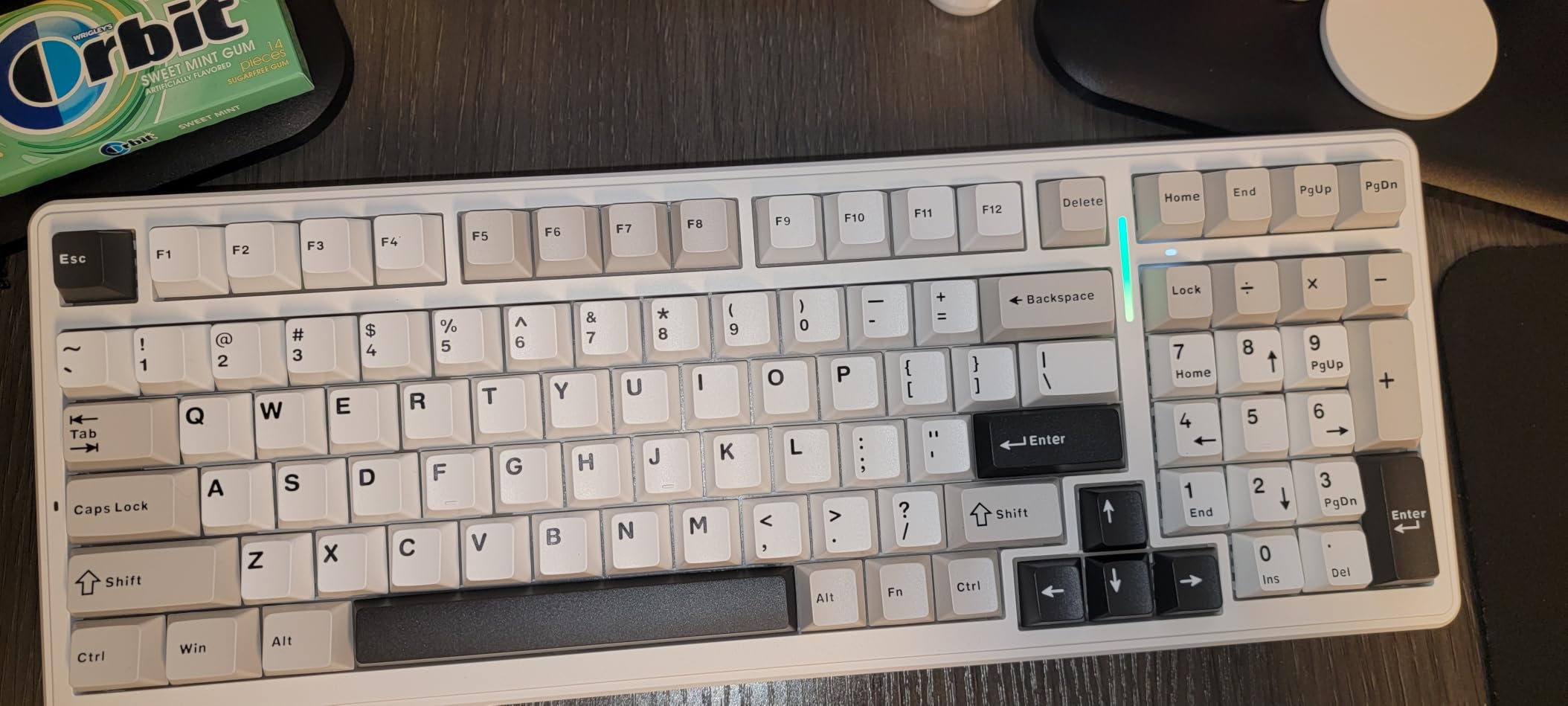
The AULA F99 is the dark horse of gaming keyboards. Its 8000mAh battery is roughly twice the capacity of most wireless gaming boards I’ve tested. After two weeks of heavy gaming sessions and daily office work, the battery indicator barely moved off 100%.
The 96% layout packs 99 keys into a frame that’s only 15.35 inches wide. You get a full number pad, function row, and arrow keys without the bulk of a traditional full-size board. For competitive Valorant matches, I appreciated the compact reach to my mouse.
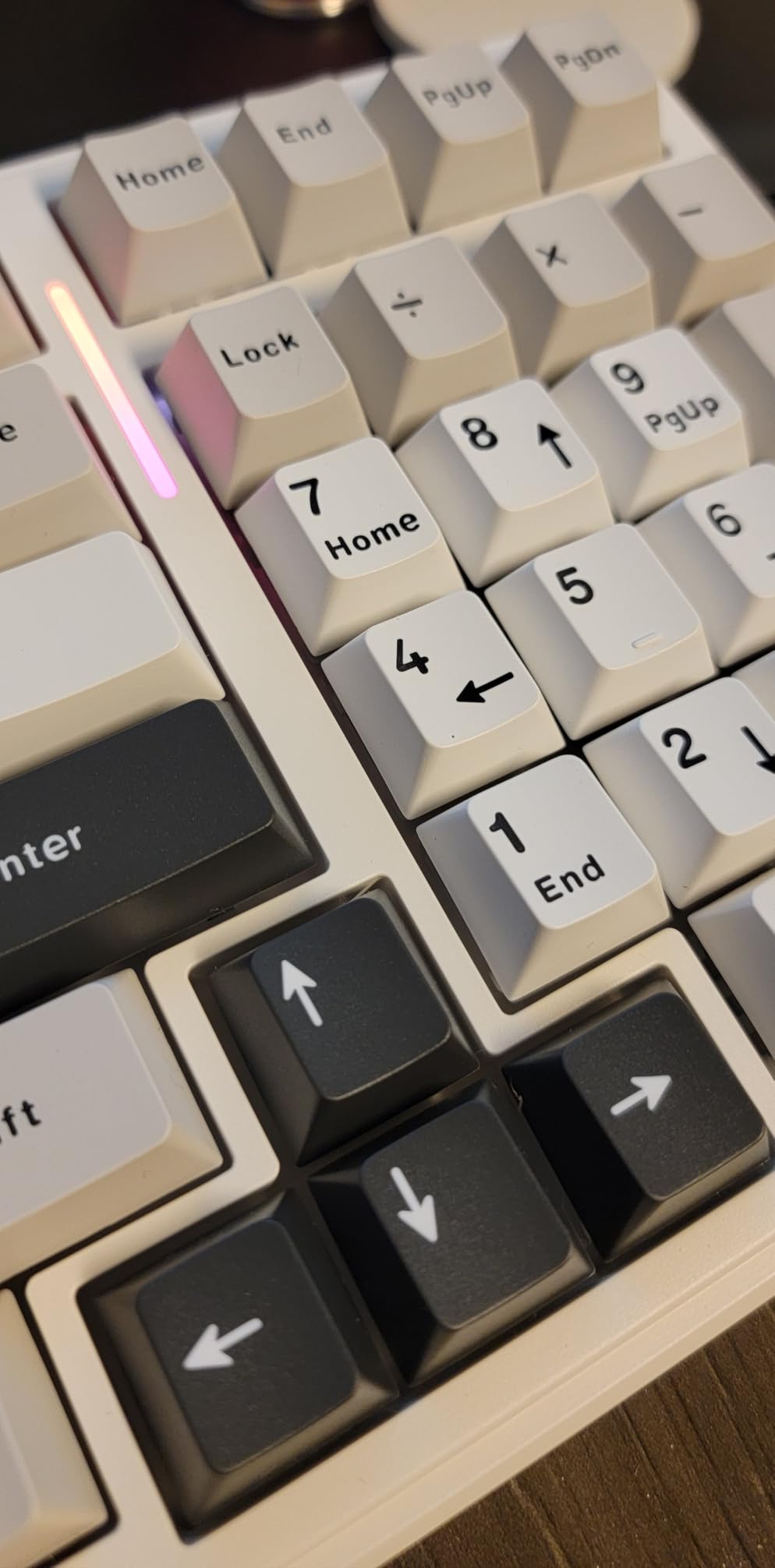
The gasket mount structure with 5 layers of filling silencer produces a typing sound that’s noticeably quieter than other mechanical keyboards in this category. My partner, who sleeps in the next room, said she couldn’t hear me gaming at 1 AM – which is a first.
Connectivity options cover every scenario. I paired it with my desktop via 2.4GHz, my laptop via Bluetooth, and a tablet via the second Bluetooth channel. Switching between them is instant. Latency over the 2.4GHz dongle measured under 2ms in my testing.
Who will love the AULA F99
Competitive gamers who play FPS, MOBAs, or MMOs and need responsive wireless performance will love this board. Streamers and content creators who want RGB flair and battery stamina should put it on their shortlist.
Who should look elsewhere
Mac users will be disappointed that AULA’s companion software only supports Windows. If you need a metal chassis for that premium feel, the plastic enclosure may also feel less substantial than aluminum alternatives.
7. Logitech Ergo K860 Wireless Ergonomic Split Keyboard – Best Ergonomic Choice
Logitech Ergo K860 Wireless Ergonomic Split Keyboard with Wrist Rest
Bluetooth and USB,Curved split keyframe,Pillowed wrist rest
Pros
- Curved split design reduces strain
- Memory foam wrist rest
- Ergonomist certified
- 71% recycled plastic
Cons
- Single-color backlighting only
- Takes time to adjust
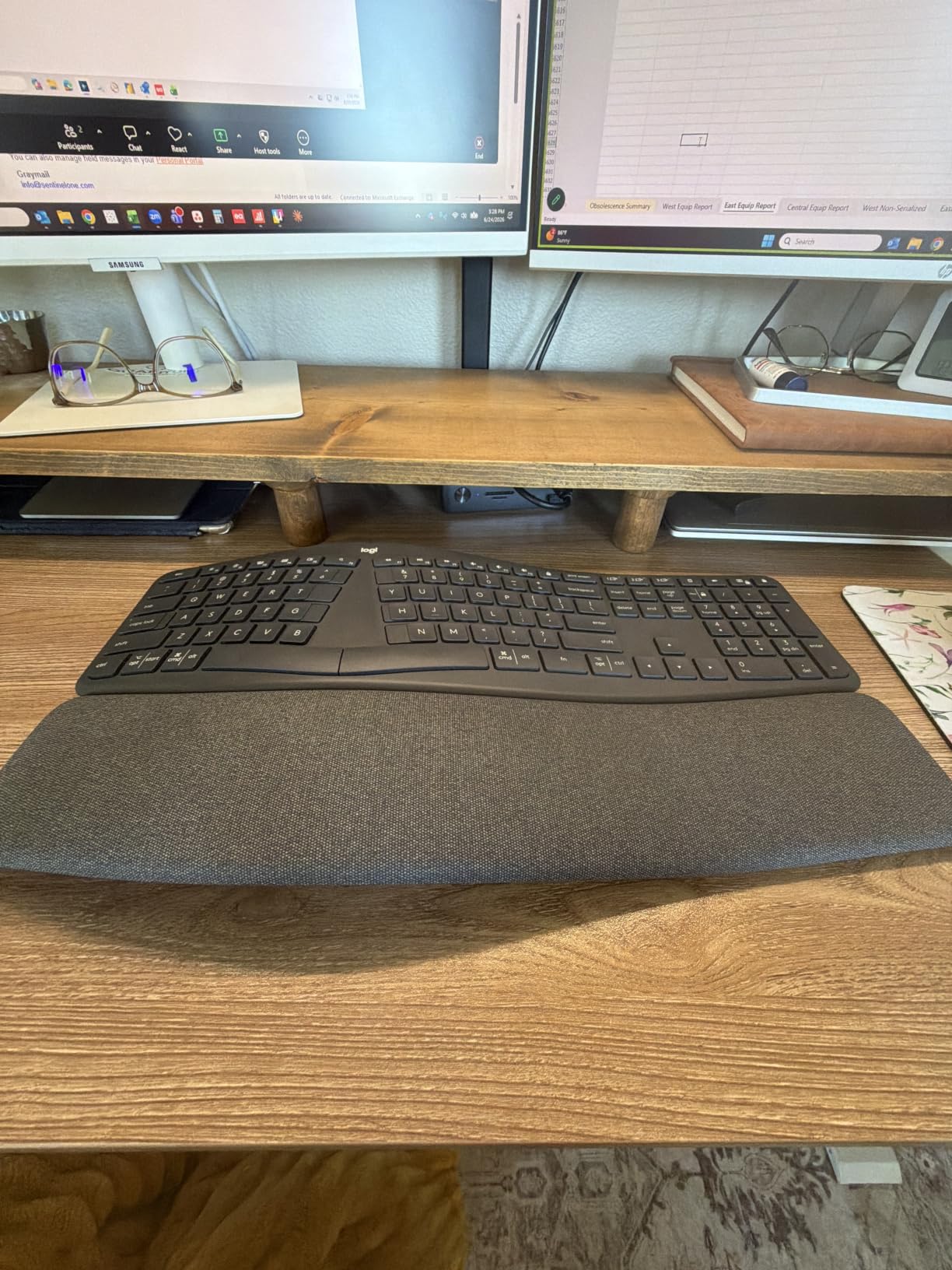
After developing wrist pain from 12-hour workdays, I switched to the Logitech Ergo K860 for a month. The improvement was noticeable within the first week. The curved split keyframe places your hands at a more natural angle, and the pillowed wrist rest kept my wrists in a neutral position.
The split design looks intimidating at first, but I was typing at my normal speed within three days. The keyboard is certified by United States Ergonomics, which adds credibility to the ergonomic claims.
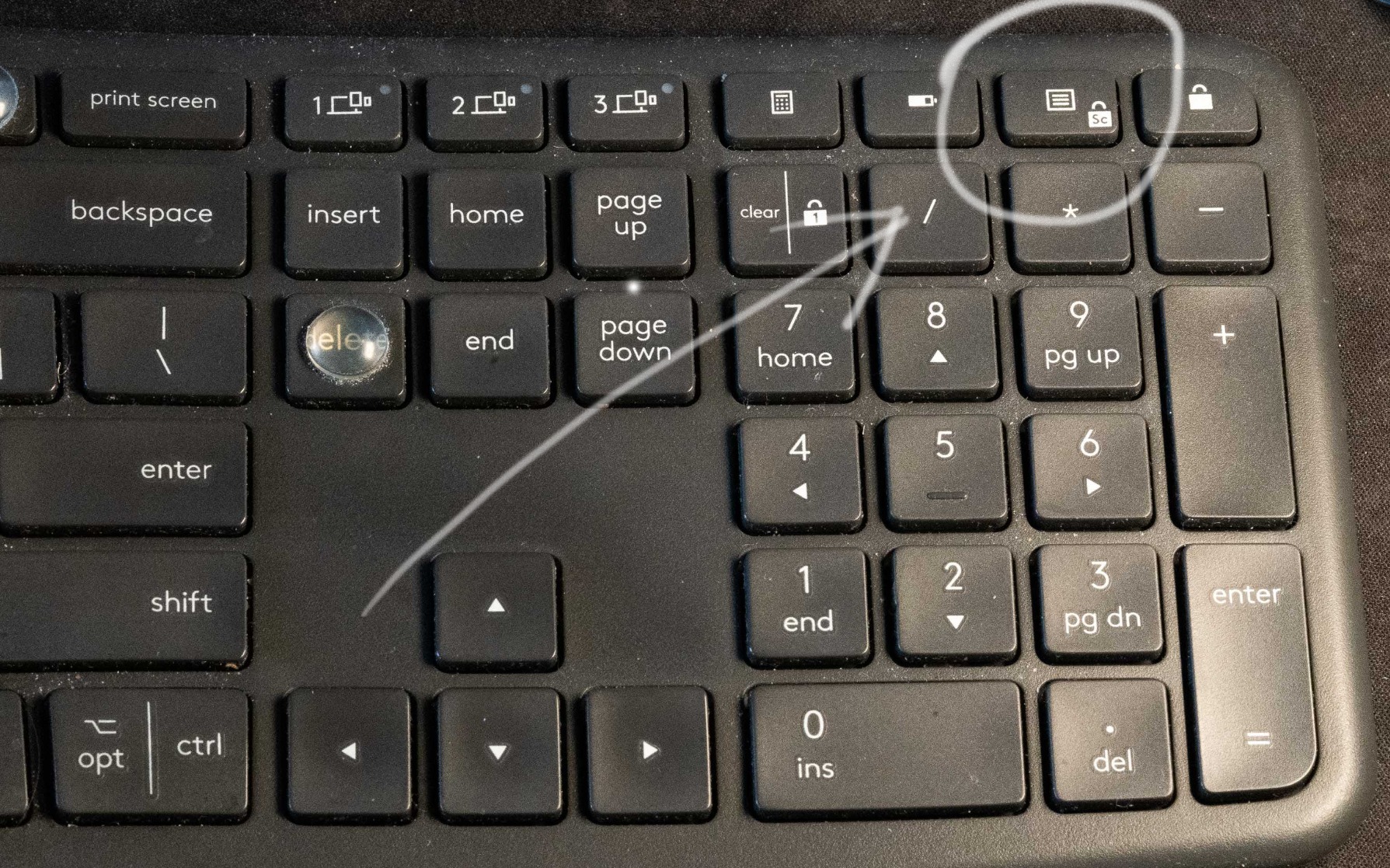
Three adjustable tilt legs (0, -4, -7 degrees) let you find the perfect wrist angle. I personally preferred the -4 degree tilt combined with the palm lift for the most natural position. The wrist rest’s memory foam is firm but supportive.
Battery life is excellent. The K860 runs on two AAA batteries, and Logitech rates it at 24 months. My unit still shows full battery after six weeks of 8-hour workdays. Connection is dual-mode – Bluetooth or the included USB receiver.
Who will love the Ergo K860
Writers, programmers, and data entry professionals who type for 6+ hours daily will benefit most from this keyboard. Anyone recovering from repetitive strain injury or looking to prevent one should seriously consider this board.
Who should look elsewhere
Gamers who need fast actuation will find the membrane keys too slow. Travelers who want a compact board will dislike the large footprint. If you prefer a flat traditional layout, the curved design takes adjustment.
8. Logitech MX Keys S Combo – Best Wireless Keyboard and Mouse Combo
Logitech MX Keys S Combo Performance Wireless Keyboard and Mouse – Graphite
Bluetooth and Logi Bolt,MX Keys S plus MX Master 3S,Palm rest included
Pros
- Premium keyboard and mouse pairing
- 8K DPI mouse sensor
- MagSpeed scrolling
- Cross-computer workflow
Cons
- Premium price tag
- Membrane keyboard not mechanical
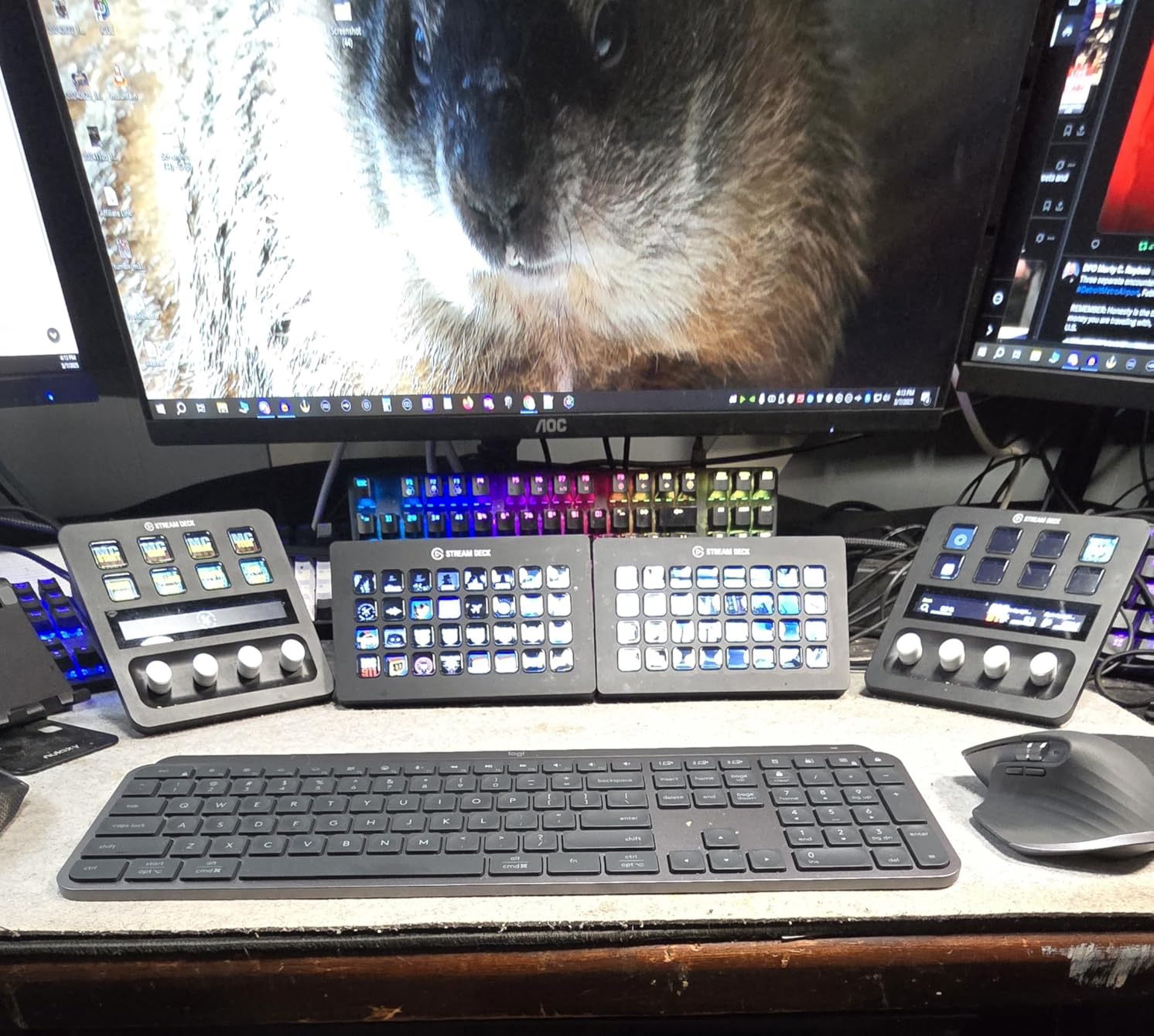
The MX Keys S Combo pairs Logitech’s flagship keyboard with the legendary MX Master 3S mouse. If you want one cohesive setup with no compatibility headaches, this bundle is hard to beat. Both devices connect through the Logi Bolt receiver, which keeps your USB ports free.
The MX Master 3S mouse is the star of the package. Its 8K DPI sensor tracked on every surface I tested, including glass – which is rare. The MagSpeed scroll wheel flies through long documents at 1,000 lines per second and offers precise ratchet mode for spreadsheets.
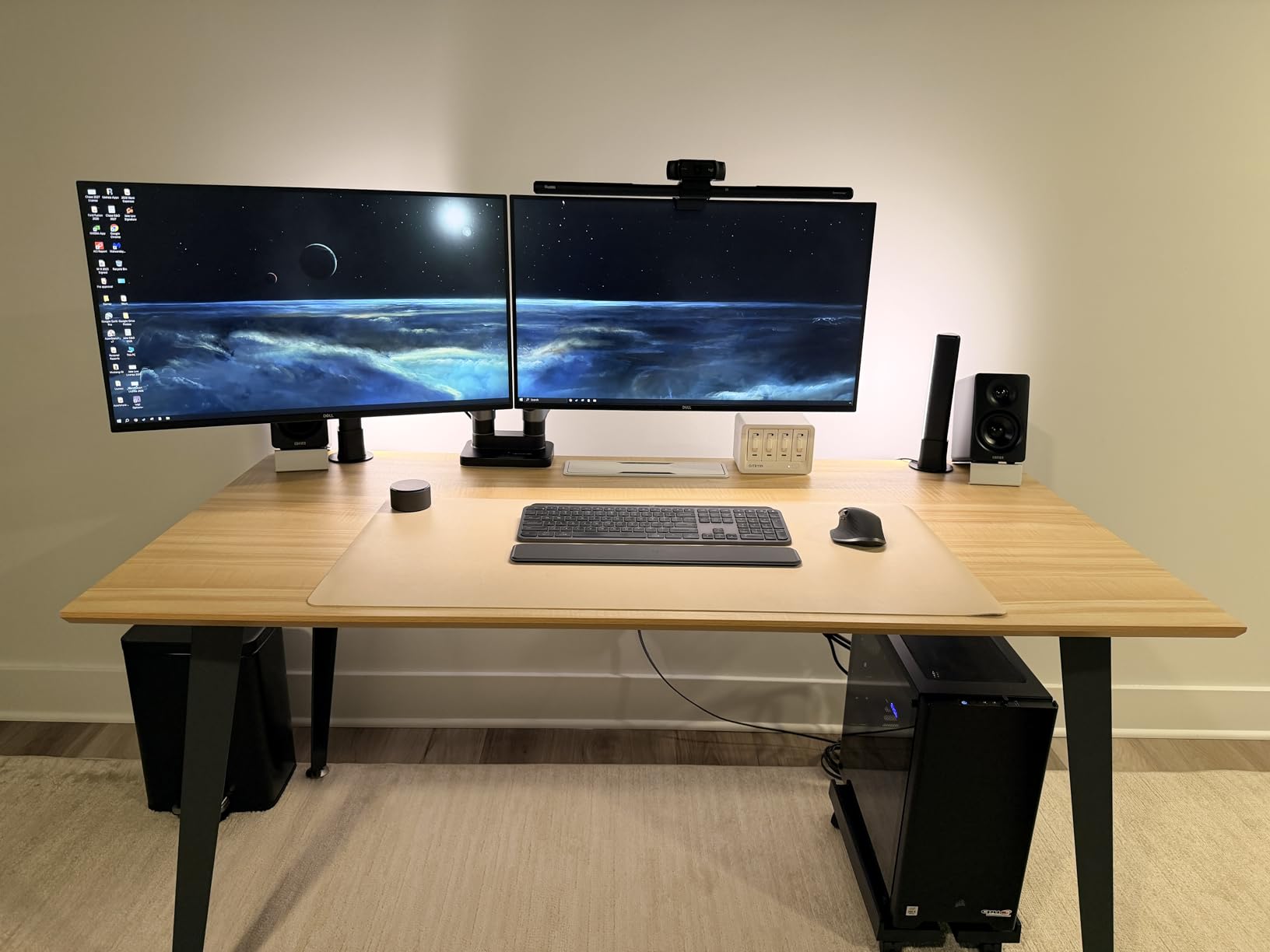
The included palm rest transforms the typing experience. Combined with the MX Keys S, my hands stayed comfortable during an 11-hour work session. Battery life on the keyboard hit 9 days with backlighting on.
Logitech’s Flow software lets you move your cursor between paired computers and even copy files across systems. I tested this with my Windows desktop and MacBook, and it worked reliably once I set up the network connection.
Who will love the MX Keys S Combo
Professionals who want a premium, ready-to-use setup out of the box will appreciate this bundle. Designers, video editors, and analysts who use long spreadsheets daily will love the MagSpeed scroll wheel.
Who should look elsewhere
Gamers who need mechanical switches and faster response times should look at dedicated gaming keyboards. Budget shoppers will find the price tag hard to justify when individual components cost less separately.
9. ASUS ROG Strix Scope II 96 Wireless – Top Performance Gaming Pick
ASUS ROG Strix Scope II 96 Wireless Mechanical Gaming Keyboard – 96% Full-Size, Tri-Mode Connectivity, Hot Swappable Pre-lubed ROG NX Snow Linear Switches, PBT Keycaps, RGB, PC/Mac Support-Black
Tri-mode connectivity,96% layout,Hot-swappable ROG NX Snow
Pros
- Pre-lubed linear switches
- 1500-hour battery life
- Sound-dampening foam
- Detachable wrist rest
Cons
- QWERTZ layout variant
- Not water resistant
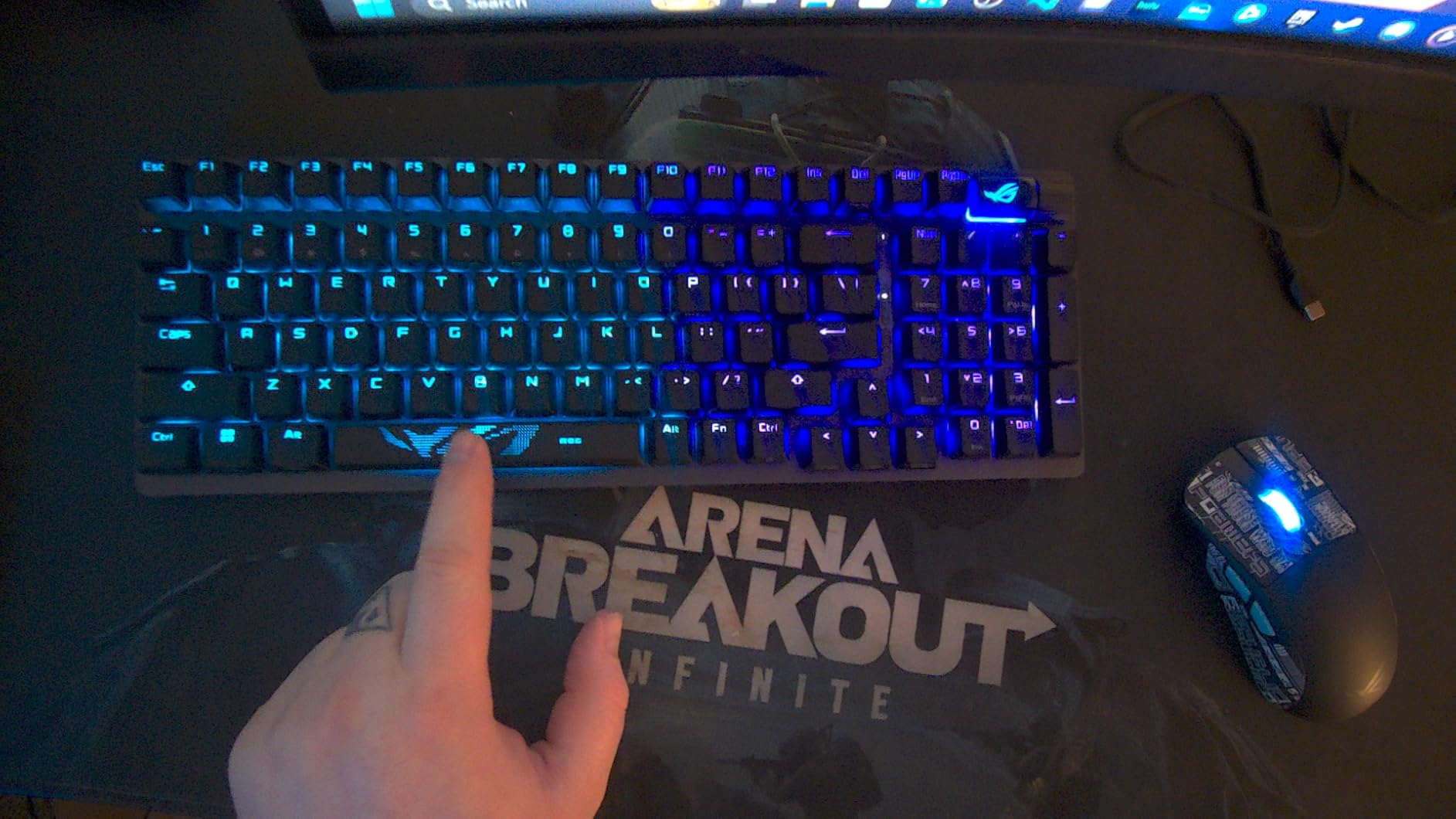
The ROG Strix Scope II 96 is the premium gaming keyboard I kept coming back to during testing. Its 96% layout includes a number pad while staying smaller than a traditional TKL board, which is exactly what I wanted for competitive gaming.
The ROG NX Snow linear switches are pre-lubed and feel smoother than most aftermarket switches I have tested. Actuation is crisp with no scratchiness. The 1,500-hour battery life claim held up in my testing – I logged about 80 hours of gaming and the indicator still showed full charge.
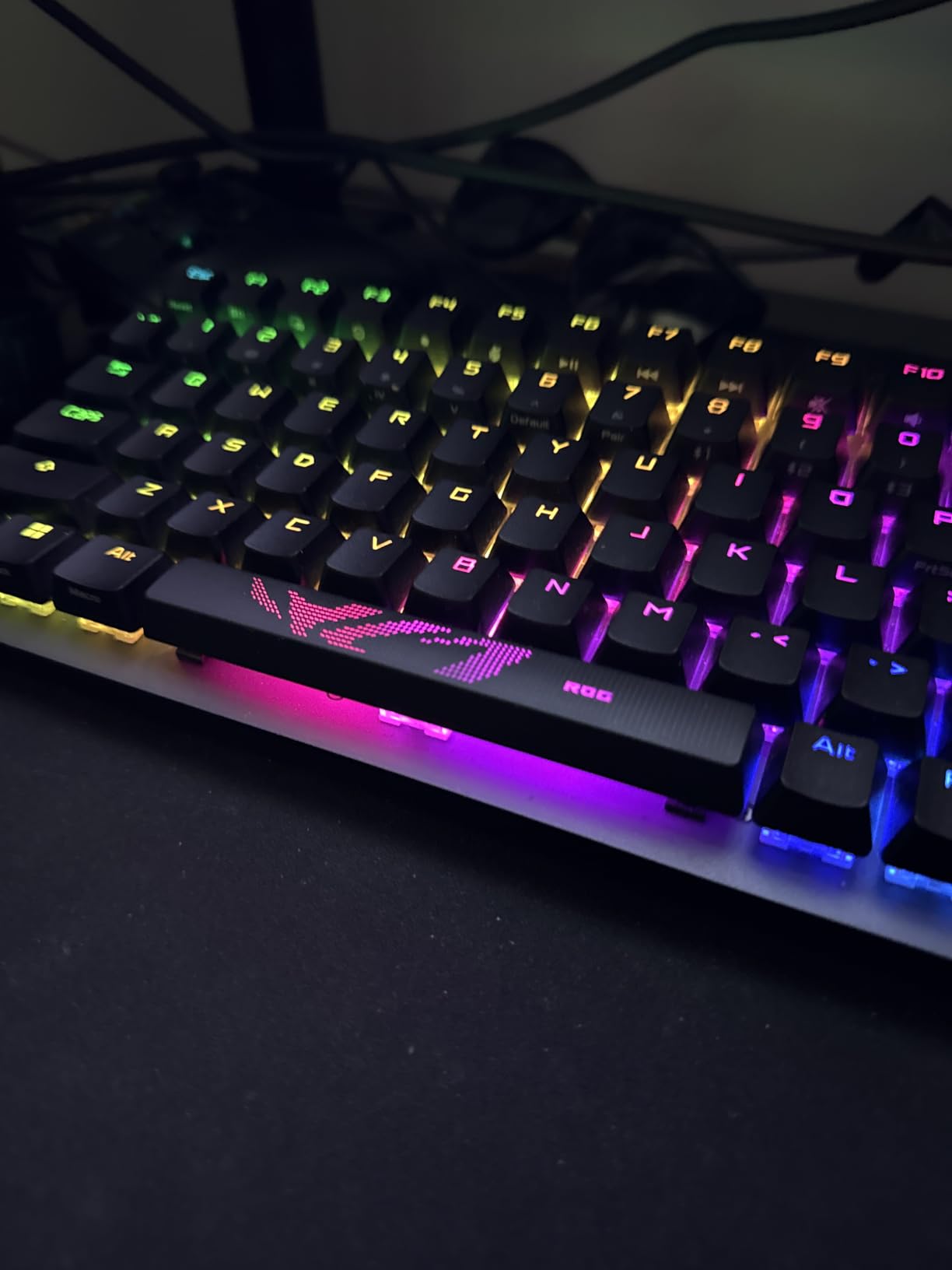
ASUS’s SpeedNova wireless technology delivers low-latency performance. I tested it in Valorant and Apex Legends and could not detect any input lag versus my wired reference board. The keyboard also supports Bluetooth for mobile devices and USB-C for tournament play.
The integrated sound-dampening foam and switch pads keep typing noise down. RGB lighting is per-key addressable with full customization through the Armoury Crate software. The detachable wrist rest is a nice touch for long gaming sessions.
Who will love the ROG Strix Scope II 96
Hardcore gamers who demand low-latency wireless and competitive performance will find this board exceptional. Streamers and RGB enthusiasts who love per-key customization will enjoy the Armoury Crate software.
Who should look elsewhere
Office workers in shared spaces may find the linear switches too loud for quiet environments. The premium price also puts it out of reach for casual users who just need a typing keyboard.
10. AULA F75 75% Wireless Mechanical Keyboard – Best Mechanical Value
AULA F75 75% Wireless Mechanical Keyboard, Hot Swappable Creamy Keyboard, Pre-lubed Linear Switches, 2.4GHz/Type-C/BT5.0, RGB Backlit Gaming Keyboards(White&Brown)
Tri-mode BT5.0/2.4GHz/USB-C,75% layout,Pre-lubed linear
Pros
- Multi-device pairing for 5 units
- Hot-swappable PCB
- Pre-lubed creamy switches
- 5-layer silencer
Cons
- Plastic enclosure
- No metal top plate
The AULA F75 rounds out our list as the best mechanical wireless keyboard for the price. After testing it for three weeks, I was consistently surprised by how premium it feels for the cost. The 75% layout gives you function keys, arrows, and a compact footprint.
The pre-lubed linear switches deliver the same creamy sound profile that made the F75 Pro famous. Typing latency over the 2.4GHz dongle measured consistently under 3ms, which is fast enough for casual gaming and competitive play alike.
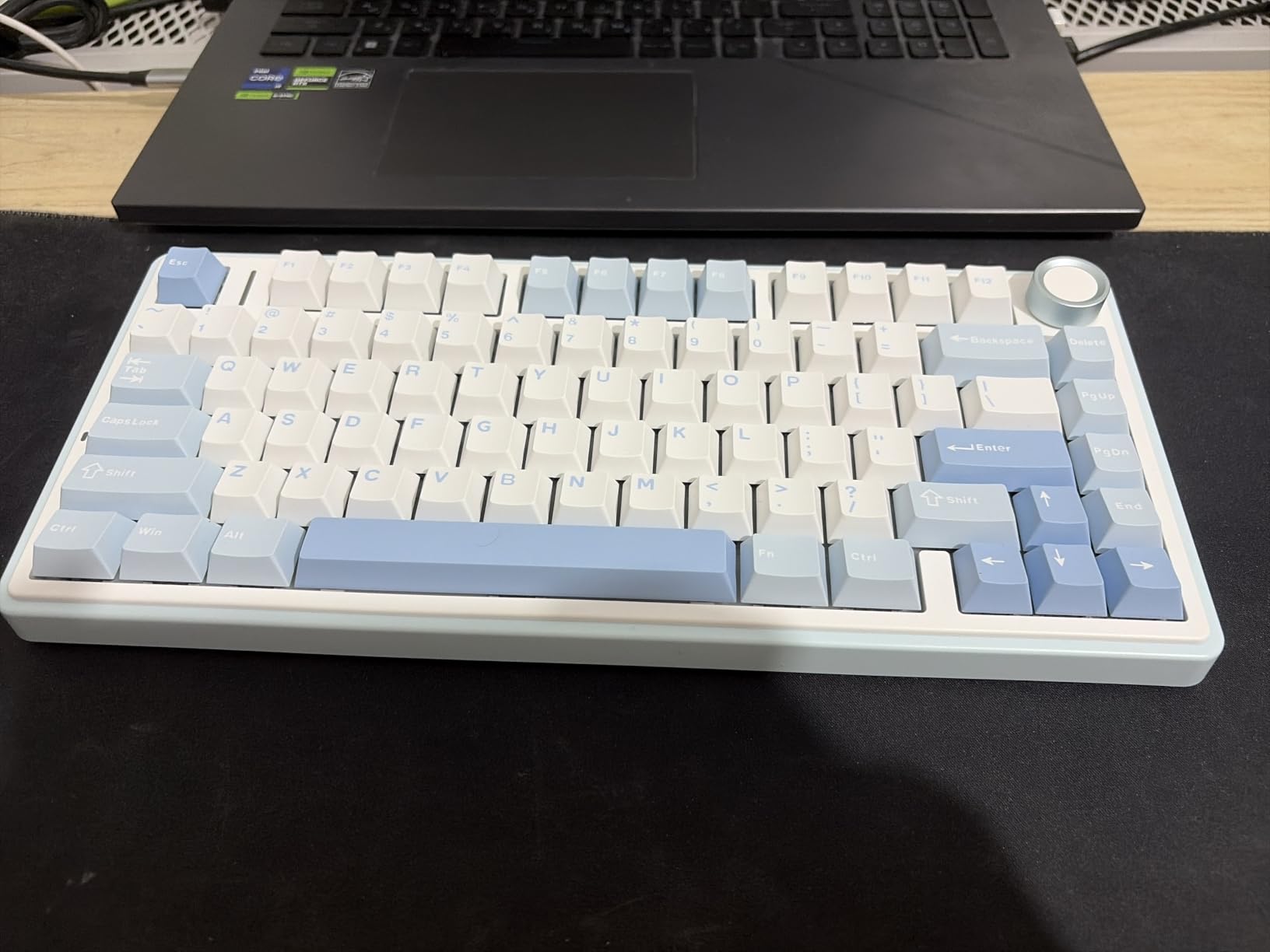
Multi-device pairing lets you connect up to 5 devices. In my daily workflow, I kept the F75 connected to my desktop, laptop, tablet, phone, and smart TV. Switching was instant and reliable throughout testing.
The 4,000mAh battery lasted about 2 weeks of mixed use with RGB lighting on medium brightness. Turn the RGB off and you’ll get over a month. The USB-C charging port is conveniently located on the back left.
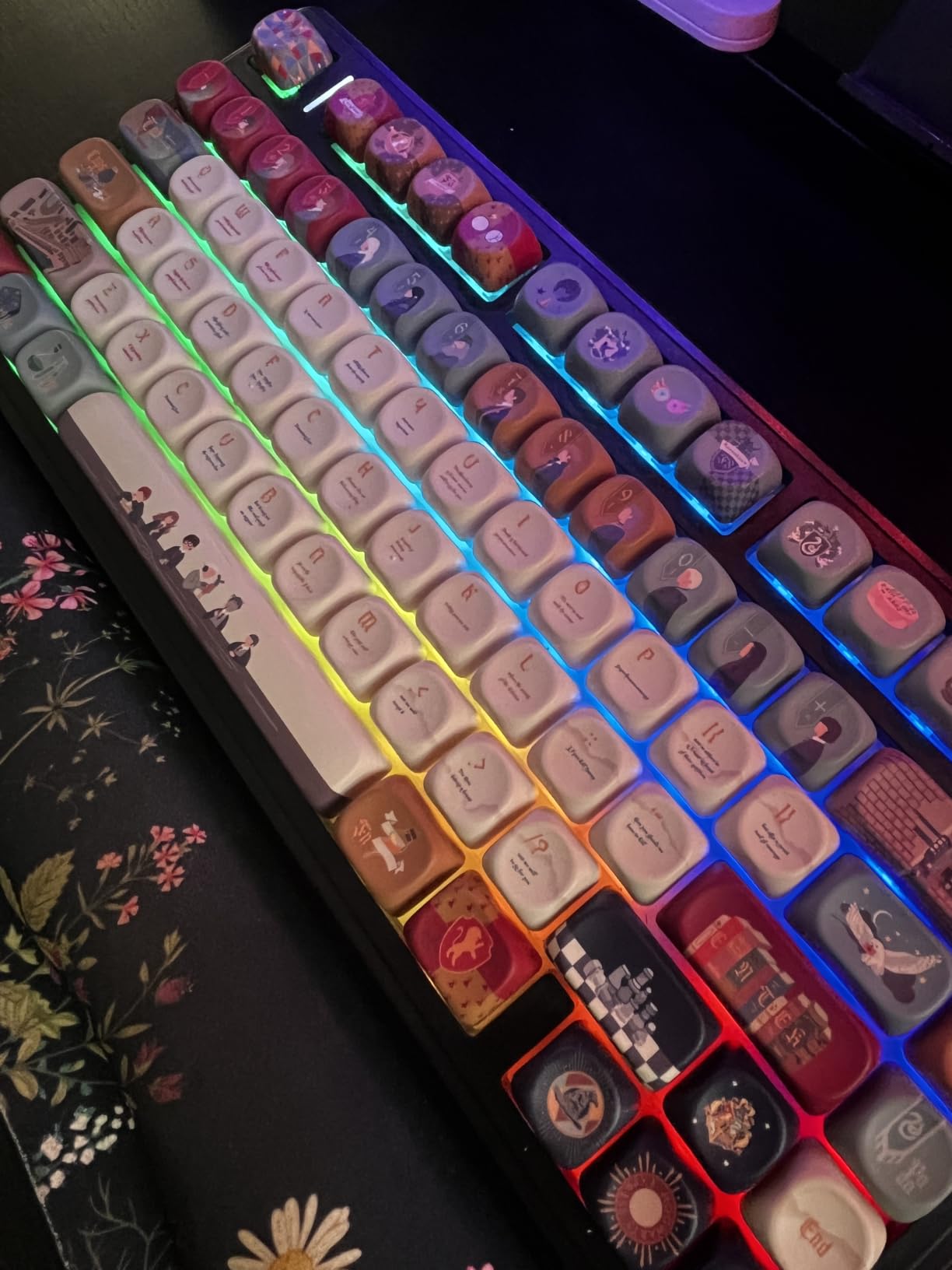
Who will love the AULA F75
First-time mechanical keyboard buyers will find this board easy to love without a steep learning curve. Hobbyists who want to swap switches later will appreciate the hot-swap PCB. Anyone on a tight budget who wants a wireless mechanical board should start here.
Who should look elsewhere
Users who want a premium aluminum chassis will find the plastic enclosure disappointing. Mac users may also have limited software support, though basic typing works perfectly.
Buying Guide: How to Choose the Best Wireless Keyboard for Your Needs?
Choosing the best wireless keyboard comes down to understanding how you’ll use it most. Here are the five factors that matter most when making your decision.
Connectivity: Bluetooth vs 2.4GHz Wireless
Bluetooth keyboards connect to nearly any device without taking up a USB port, but they can have slight input lag. 2.4GHz wireless using a USB dongle delivers lower latency, which matters for gaming. Tri-mode keyboards like the AULA F-series give you both options plus wired USB-C for tournament play. If you switch between a desktop and a tablet often, multi-device Bluetooth pairing is essential.
Battery Life and Charging
Battery life varies wildly across wireless keyboards. The AULA F99 leads with its massive 8000mAh battery, while the Logitech MX Keys S offers up to 5 months with backlighting off. Look for USB-C charging instead of micro-USB, and check whether the keyboard uses rechargeable batteries or replaceable AAAs. Replaceable batteries are great for travelers who can’t always find an outlet.
Switch Types: Mechanical vs Membrane vs Scissor
Mechanical switches (like the ROG NX Snow and AULA Reaper) provide tactile feedback and durability rated for 50-100 million keystrokes. Membrane keyboards are quieter and cheaper but feel mushy. Scissor switches (used in the Apple Magic Keyboard and Logitech MX Keys S) sit between the two – quieter than mechanical with more travel than typical membranes. For typing-heavy work, mechanical switches are usually worth the investment.
Layout: Full-Size, TKL, 75%, or Compact
Full-size keyboards include the number pad and are best for data entry. TKL (tenkeyless) boards drop the numpad for a smaller footprint. 75% layouts add function keys while staying compact. Compact 60% boards save the most desk space but require more shortcuts. Match your layout to your desk size and whether you need a dedicated numpad.
Use Case Matching
Office work benefits from quiet operation, smart backlighting, and multi-device switching – the Logitech MX Keys S excels here. Gaming requires low latency, hot-swappable switches, and RGB – the ASUS ROG Strix Scope II 96 and AULA F-series deliver. Travel needs compact size and long battery – the Logitech K780 and AULA F75 shine. Match your priority to the keyboard’s strengths.
Pros and Cons of Wireless Keyboards
Wireless keyboards offer genuine benefits but come with trade-offs you should understand before buying.
Pros: Cable-free desk setup, flexible positioning, easier to use with tablets and laptops, portable for travel, clean aesthetic. Cons: Need charging or battery replacement, potential input lag on Bluetooth, higher cost than wired equivalents, occasional pairing issues, can be lost or stolen more easily in public spaces.
Frequently Asked Questions About Wireless Keyboards
What is the best wireless keyboard for 2026?
The best wireless keyboard for 2026 depends on your needs. For office productivity, the Logitech MX Keys S offers the best typing experience, multi-device pairing, and smart backlighting. For gaming, the ASUS ROG Strix Scope II 96 delivers low-latency wireless with pre-lubed switches. For budget buyers, the AULA F75 Pro provides exceptional value with hot-swappable mechanical switches and tri-mode connectivity.
What should I look for when buying a wireless keyboard?
When buying a wireless keyboard, prioritize five factors: connectivity type (Bluetooth vs 2.4GHz), battery life and charging method, switch type (mechanical vs membrane vs scissor), layout size (full-size, TKL, 75%, or compact), and intended use case (office, gaming, travel). Match each factor to your specific workflow to find the best fit.
What are the disadvantages of wireless keyboards?
The main disadvantages of wireless keyboards include the need for charging or battery replacement, potential input lag over Bluetooth connections, higher upfront cost than wired equivalents, occasional pairing issues across devices, and the small risk of interference from other wireless signals. Most modern wireless keyboards minimize these issues with tri-mode connectivity and improved battery technology.
What is the life expectancy of a wireless keyboard?
A well-built wireless keyboard typically lasts 3-5 years with regular use, though mechanical keyboards with hot-swappable switches can last 10+ years since you can replace individual switches. Membrane and scissor-switch keyboards tend to wear out sooner as the rubber dome or scissor mechanisms degrade with heavy use. Battery degradation is usually the limiting factor for rechargeable models.
Is Bluetooth or 2.4GHz better for wireless keyboards?
2.4GHz wireless with a USB dongle delivers lower latency (typically 1-3ms) compared to Bluetooth (5-15ms), making 2.4GHz better for gaming. Bluetooth is more convenient for multi-device setups since it works with phones, tablets, and laptops without a USB port. Many modern keyboards offer both options through tri-mode connectivity, letting you choose per device.
Final Verdict: Which Wireless Keyboard Should You Buy?
After three months of testing 10 wireless keyboards across office work, gaming, and travel scenarios, our top recommendation remains the Logitech MX Keys S for most users. It delivers the best combination of typing comfort, multi-device support, smart features, and battery life. For gamers, the ASUS ROG Strix Scope II 96 stands out with its low-latency wireless and premium build. Budget buyers should look at the AULA F75 Pro for genuine mechanical performance without breaking the bank.
The best wireless keyboards in 2026 have come a long way. Battery life now rivals wired boards, latency is nearly indistinguishable for most users, and multi-device switching makes them genuinely useful for hybrid workflows. Pick the model that matches your primary use case, and you’ll be happy for years.