
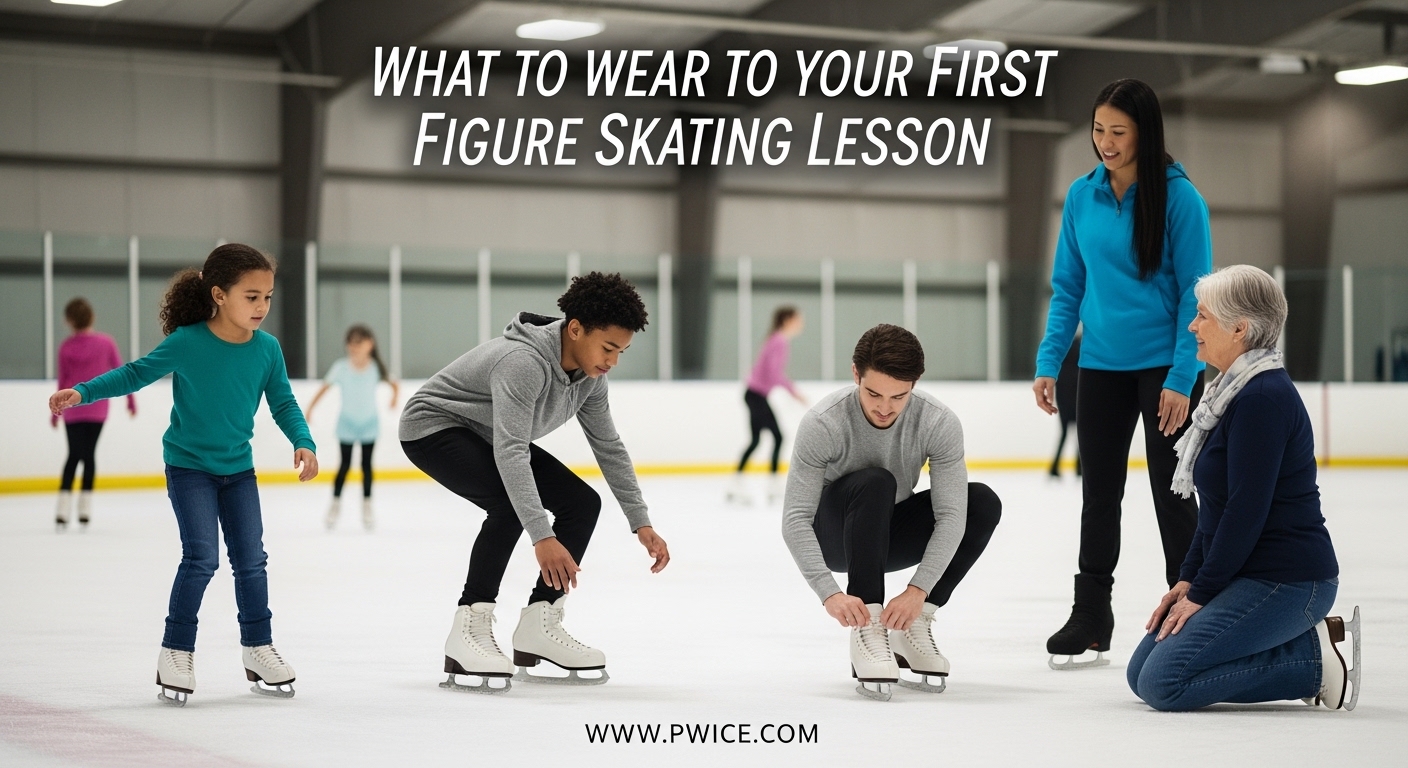
Walking into an ice rink for your first figure skating lesson can feel intimidating. You are already nervous about balancing on thin blades, and now you have to worry about what to wear to your first figure skating lesson.
I remember my first lesson five years ago. I showed up in bulky sweatpants and a heavy cotton hoodie, thinking the ice would freeze me solid. Within fifteen minutes, I was overheating, my pants were absorbing every drop of sweat, and I could barely move freely.
The good news is that you do not need to buy specialized figure skating gear before your first lesson. Regular athletic wear works perfectly fine for beginners. This guide will walk you through exactly what to wear, what to avoid, and how to stay comfortable from the moment you lace up until you step off the ice.
Table of Contents
TL;DR: What to Wear to Your First Figure Skating Lesson
Here is your quick answer for what to wear to your first figure skating lesson:
- Wear fitted athletic leggings or joggers that allow full movement
- Choose a moisture-wicking long-sleeve top or athletic shirt
- Add a light zip-up jacket or hoodie you can remove as you warm up
- Wear thin socks (not thick wool ones) to prevent blisters
- Bring fitted gloves to protect your hands when you fall
- Consider a helmet for your first few lessons as a beginner
Avoid jeans, baggy clothes, cotton fabrics, scarves, and any jewelry. Dress in layers because you will get warmer than you expect once you start moving.
Quick Outfit Comparison: Budget vs Premium Options
You can dress appropriately for your first lesson without spending much money. Here is how budget and premium options compare:
| Clothing Item | Budget Option ($) | Premium Option ($$$) |
|---|---|---|
| Bottoms | Regular yoga pants or athletic leggings you already own | Skating-specific pants with thermal lining and water-resistant coating |
| Top | Long-sleeve athletic shirt or moisture-wicking tee | Figure skating practice top with four-way stretch and sweat-wicking technology |
| Layers | Zip-up fleece or hoodie from your closet | Lightweight wind-repellent skating jacket |
| Socks | Thin athletic socks (any brand) | Skating-specific thin socks with seamless toes |
| Gloves | Winter gloves or knit gloves you own | Fitted skating gloves with grip padding |
| Helmet | Bike helmet or multi-sport helmet you already have | CSA-certified skating helmet |
For your first lesson, budget options work perfectly. Wait until you know you enjoy skating before investing in premium gear. Our team recommends starting with what you have and upgrading pieces gradually as you progress.
Bottom Layer: Choosing the Right Pants or Leggings
Your bottom layer is the foundation of your skating outfit. You need pants that let you bend, stretch, and move without restriction.
Leggings or yoga pants are the best choice for most beginners. Look for options with four-way stretch so you can lift your leg and bend your knees freely. High-waisted styles stay in place better when you are moving, which means less adjusting and more focus on your lesson.
Moisture-wicking fabric is essential here. When you skate, you generate heat and sweat even in a cold rink. Synthetic fabrics like polyester or nylon blends pull sweat away from your skin and dry quickly. Cotton absorbs moisture and stays wet, making you cold and uncomfortable.
If you prefer looser bottoms, choose fitted joggers or athletic pants that taper at the ankle. Avoid anything with wide legs or flared bottoms that could drag on the ice or get caught on your skate blades.
Some beginners ask if they need skating-specific tights. The answer is no for your first lesson. Regular athletic leggings work perfectly. As you advance, you might want skating tights with higher denier counts for durability, but that is a future consideration.
Top Layer: Shirts and Long Sleeves That Work Best
Your top layer needs to balance warmth with breathability. Long sleeves are recommended because they protect your arms during falls and keep you warmer on the ice.
Choose a fitted athletic shirt made from moisture-wicking material. Like your bottoms, you want fabric that moves sweat away from your body rather than trapping it. Look for terms like “dry-fit,” “sweat-wicking,” or “performance fabric” when shopping your closet or stores.
The fit matters for safety and function. Form-fitting tops let your coach see your body position and form, which helps them give better feedback. Loose shirts can ride up, twist around, or even get caught if you fall near the boards or another skater.
Avoid heavy cotton sweatshirts as your primary layer. They absorb sweat like a sponge and become heavy and cold. If you love your cotton hoodie, wear it as an outer layer you can remove, not as your base layer.
Short sleeves are acceptable if you run hot or are skating in summer, but most beginners appreciate the coverage and slight warmth that long sleeves provide. Your arms will contact the ice when you fall, and long sleeves add a thin barrier of protection.
The Layering Strategy: Stay Comfortable From Start to Finish
Indoor ice rinks are cold, typically kept between 50 and 60 degrees Fahrenheit. That sounds chilly, but here is what surprises most first-time skaters: you will warm up fast once you start moving.
Our team has talked to dozens of beginners who showed up overdressed. They bundled in heavy layers, then found themselves sweating and uncomfortable ten minutes into the lesson. The solution is smart layering.
Start with your base layer of fitted leggings and a long-sleeve athletic top. Add one light layer on top, like a zip-up fleece or lightweight jacket. The key is choosing something you can easily remove and tie around your waist.
After five to ten minutes of skating, you will likely want to shed that outer layer. Bring a small bag to the rink where you can stash it, or simply tie it around your waist. Many rinks have cubbies or benches where you can store layers.
If you tend to run cold, consider a vest as your outer layer. It keeps your core warm while leaving your arms free for movement. Some skaters prefer this over full jackets even in winter months.
The layering principle also applies if you are traveling to the rink in cold weather. Wear your heavy winter coat for the car ride, but leave it in a locker or with a parent before stepping onto the ice.
What NOT to Wear: Safety Warnings for Beginners
Knowing what to avoid is just as important as knowing what to wear. Some clothing choices can actually be dangerous on the ice.
Never wear jeans to a skating lesson. Denim restricts your movement, gets heavy if it gets wet, and offers zero flexibility. You cannot bend, stretch, or execute basic positions in jeans. Leave them in your locker.
Avoid baggy or oversized clothing. Loose pants can drag on the ice, get caught on your blade toe picks, or trip you. Oversized jackets create the same hazard. Ice skate blades are sharp, and getting fabric caught on them can cause serious falls.
Skip the cotton sweatpants for your base layer. We have heard from countless forum users who made this mistake. Cotton absorbs every drop of sweat and stays wet and cold. Once damp, cotton makes you miserable and can even contribute to muscle cramps.
Leave all jewelry at home. Necklaces, long earrings, and dangling bracelets are safety hazards. They can catch on clothing, equipment, or the ice itself. I learned this the hard way when my long necklace flew up and hit me in the face during a spin attempt.
Scarves, long ties, and anything with loose strings should also stay off the ice. If you need to keep long hair back, use secure hair ties without metal clasps.
Essential Accessories: Gloves, Socks, and Helmet Safety
Beyond your main clothing layers, a few key accessories will make your first lesson safer and more comfortable.
Gloves Are Non-Negotiable
You will fall on your first lesson. Everyone does. When you fall, your instinct is to put your hands out to catch yourself. Ice is hard and cold, and bare hands on ice hurt.
Wear fitted gloves that let you move your fingers freely. They do not need to be thick winter mittens, which can limit dexterity. Thin knit gloves, fitted fleece gloves, or athletic gloves all work. Just make sure they fit snugly and will not fall off.
I wish I had worn gloves my first lesson. I fell twice and had cold, slightly bruised hands for the rest of the day. It is a simple addition that makes a huge difference.
Socks Matter More Than You Think
This surprises most beginners: thinner socks are better than thick ones. Thick socks create extra bulk inside your skate, causing your foot to move around. That movement leads to blisters.
Choose thin, moisture-wicking athletic socks. They should come up slightly higher than your skate boot to prevent the top of the boot from rubbing your skin. Avoid cotton socks for the same reasons you avoid cotton clothing.
Some rinks provide rental skates that are already broken in and fitted with thicker padding. Even then, thin socks give you better control and feel of the blade.
Helmet Safety for Beginners
The featured snippet winner for this topic mentions helmets, and we agree it is worth discussing. While not all adult beginners wear helmets, they are strongly recommended for kids and anyone nervous about falling.
If you have a bike helmet or multi-sport helmet at home, bring it for your first few lessons. Some rinks require helmets for beginner group classes, especially for children. CSA-certified skating helmets offer the best protection, but any well-fitting helmet is better than none.
As you gain confidence and basic skills, you can transition away from the helmet if you choose. Many adult skaters stop wearing them once they can consistently stand, glide, and stop without falling.
Kids vs Adults: Different Needs for Different Ages
Clothing needs vary slightly depending on whether you are dressing yourself, a child, or a teen.
For Kids
Children get cold faster than adults because they have a higher surface-area-to-body-mass ratio. Dress kids in slightly warmer layers than you would wear yourself. However, follow the same no-cotton rule.
Helmets are essential for kids under ten or any beginner child. Most skating schools require them. Make sure the helmet fits snugly and the chin strap is secure.
Kids also tend to fall more frequently as they learn. Reinforced knees on pants or double-layer fabric in high-wear areas helps clothing last longer. Some parents buy cheap leggings specifically for skating since they will get wet and potentially torn.
For Adults
Adult beginners often overthink their first lesson outfit. Remember that everyone else in a beginner class is also new. No one is judging your clothing.
Adults tend to run warmer than kids during exercise. Stick to lighter layers and plan to shed your outer layer quickly. Many adult skaters we talked to were surprised by how warm they got.
Adult skaters also have more body shape variety, so finding fitted but comfortable bottoms matters. High-waisted leggings prevent the waistband from rolling or sliding during movements.
For Teens
Teen skaters fall somewhere between kids and adults in their needs. They generally run warm like adults but may want more style-conscious options.
The good news is that athletic wear trends align perfectly with skating needs. Fitted athletic sets, popular brands for yoga and running, all work well on the ice.
Summer vs Winter Rinks: Seasonal Adjustments
Indoor ice rinks maintain relatively consistent temperatures year-round, but there are slight seasonal variations to consider.
In summer, rinks sometimes run slightly warmer because the building’s air conditioning works harder against outdoor heat. You might be comfortable in just your base layer without an outer jacket. However, bring a layer for when you first step onto the ice while your body adjusts.
In winter, rinks might feel colder, especially if you are coming in from cold outdoor temperatures. Dress warmer for travel to the rink, then shed layers before skating. Cold muscles are stiff muscles, so make sure you warm up properly.
The real seasonal difference is your commute. In winter, you need heavy outerwear for the car or walk to the rink that you will completely remove before skating. In summer, you might arrive in shorts and a tank top and need to change completely into long layers.
Frequently Asked Questions
What to wear to your first ice skating lesson?
Wear fitted athletic clothing that allows free movement. Choose leggings or fitted joggers with four-way stretch, a moisture-wicking long-sleeve top, and a light layer you can remove. Bring thin athletic socks, fitted gloves for fall protection, and consider a helmet for safety.
What do you need for your first ice skating lesson?
You need appropriate clothing, rental skates (usually available at the rink), thin socks, fitted gloves, and a helmet if you are a child or nervous beginner. You do not need to buy specialized figure skating gear. Regular athletic wear works perfectly for your first lesson.
What is the dress code for figure skating?
Figure skating requires fitted, form-fitting clothing that allows coaches to see body lines and position. Avoid baggy clothes, jeans, cotton fabrics, and anything with loose strings or accessories. For practice, athletic wear is acceptable. Competition dress codes are more specific and vary by level.
What do ice skaters wear while training?
Skaters in training wear specialized practice wear including skating tights or pants, fitted tops, layering pieces like vests or light jackets, and fitted gloves. Training attire prioritizes freedom of movement, moisture management, and visibility of body position for technique feedback from coaches.
Final Thoughts: You Have Got This
Walking onto the ice for your first figure skating lesson is an exciting milestone. Do not let clothing anxiety hold you back.
Remember the essentials: fitted athletic wear, moisture-wicking fabrics, layers you can adjust, thin socks, gloves, and an optional helmet. Avoid jeans, baggy clothes, cotton, and jewelry.
Most importantly, focus on the experience, not your outfit. Everyone in a beginner class started exactly where you are now. Wear what lets you move freely and feel confident. Your skating journey starts with that first step onto the ice. Enjoy every moment of it.