
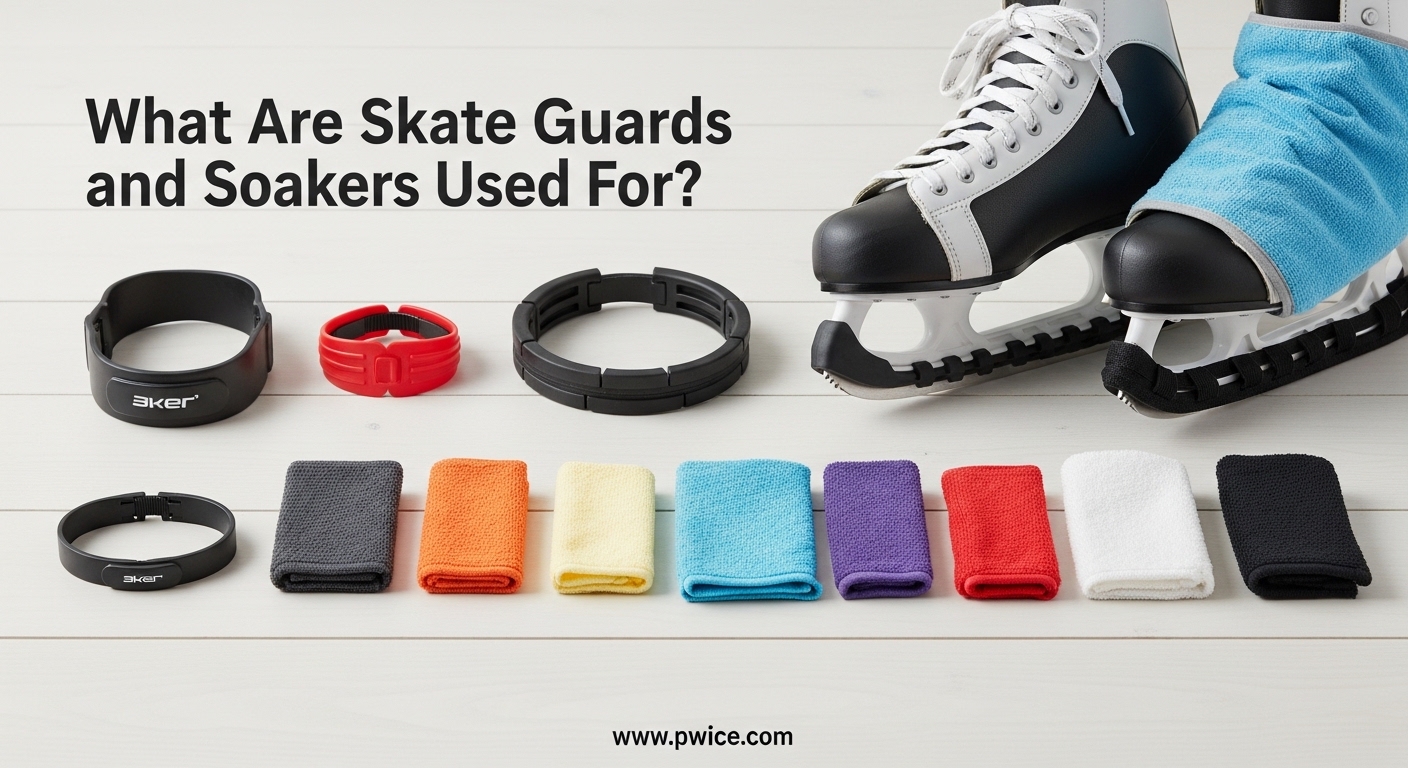
You need both skate guards and soakers to protect your ice skate blades. Skate guards are hard plastic covers that protect your blade edges when walking on hard surfaces like concrete or tile. Soakers are soft, absorbent cloth covers that wick away moisture from blades after skating to prevent rust.
I learned this lesson the hard way after ruining a $200 pair of figure skate blades in my first season. I walked across the parking lot without guards and stored my skates wet without soakers. Within two weeks, my blades had rust spots that required expensive professional cleaning.
If you are wondering what are skate guards and soakers used for, this guide breaks down everything you need to know. We will cover how each item works, when to use them, and why both are essential for blade protection and rust prevention.
Table of Contents
What Are Skate Guards?
Skate guards are hard plastic covers that slide over your ice skate blades. They create a protective barrier between the sharp blade edge and hard surfaces like concrete, tile, wood, and asphalt.
Most skate guards use a spring-loaded or clip mechanism to grip the blade securely. The bottom of the guard is flat plastic that touches the ground, while the sides wrap around the blade to hold it in place. Some models use adjustable screws to fit different blade sizes.
Materials and Construction
The best skate guards are made from durable hard plastic that resists cracking. Common materials include PVC, ABS plastic, and reinforced polymers. These materials can withstand the pressure of walking while remaining lightweight.
Spring-loaded guards use metal springs to create tension against the blade sides. Screw-fit guards allow you to tighten or loosen the fit for different blade widths. Most guards have ventilation holes to allow air circulation and prevent condensation buildup.
When to Use Skate Guards
Put on your skate guards immediately after stepping off the ice. Wear them when walking through the rink lobby, across parking lots, or anywhere with hard surfaces. Never walk on concrete or rough surfaces without guards.
Always remove your guards before stepping back onto the ice. Skating with guards on is dangerous and can damage both the guards and the ice surface. Most rinks prohibit skating with guards for safety reasons.
Guards also protect your blades inside your equipment bag. The hard plastic prevents the sharp edges from cutting through bag fabric or damaging other gear. They also protect against accidental impacts from other skates or equipment.
What Are Soakers Used For?
Soakers are soft, absorbent blade covers made from terry cloth, fleece, or microfiber. They slide over your blades after skating to wick away moisture and prevent rust formation.
Unlike guards, soakers do not provide hard protection for walking. Their sole purpose is moisture absorption and rust prevention during storage. The soft fabric gently cradles the blade while drawing out any remaining water.
How Soakers Work
Ice skate blades accumulate condensation during skating. When warm, moist air contacts the cold steel blade, water droplets form on the surface. If left unchecked, this moisture causes oxidation and rust.
Soakers act like a towel for your blades. The absorbent fabric draws moisture away from the metal surface. Terry cloth soakers can hold significant amounts of water while allowing air circulation for drying.
Quality soakers have a moisture barrier layer that prevents water from seeping through to the outside. This protects your equipment bag from dampness while keeping the blades dry.
Materials Used in Soakers
Terry cloth soakers use cotton loops that create massive surface area for absorption. These are highly effective but take longer to dry between uses. Many skaters own multiple pairs to rotate while one set dries.
Fleece soakers offer excellent absorption with faster drying times. The synthetic fibers wick moisture efficiently and resist mildew better than cotton. They are also softer and less bulky in your bag.
Microfiber soakers represent the latest technology. They absorb up to seven times their weight in water and dry extremely quickly. Some high-end soakers combine multiple materials for optimal performance.
When to Put On Soakers
Always dry your blades thoroughly with a towel before putting on soakers. Wipe the entire blade surface, including the sides and bottom edge. Pay special attention to the area near the mounting plate where water collects.
Put on soakers immediately after towel drying and keep them on during storage. Never store skates with hard guards on, as trapped moisture causes rapid rust. Soakers should remain on your blades whenever the skates are not being worn.
Remove soakers only when you are ready to put on your skates for the next session. Inspect the soakers periodically and replace them when they lose absorbency or develop odors.
Skate Guards vs Soakers: What’s the Difference?
The difference between skate guards and soakers comes down to protection versus absorption. Guards are hard shells for walking protection. Soakers are soft fabrics for moisture control.
| Feature | Skate Guards | Soakers |
|---|---|---|
| Primary Purpose | Protect blades when walking | Absorb moisture during storage |
| Material | Hard plastic (PVC, ABS) | Soft fabric (terry cloth, fleece, microfiber) |
| When to Use | Walking on hard surfaces | After drying blades, during storage |
| Rust Prevention | Minimal (vents allow some air) | Primary function – wicks moisture |
| Walking Protection | Excellent – designed for this | None – fabric offers no protection |
| Storage Safety | Unsafe – traps moisture | Safe – allows breathing |
| Typical Price | $8-15 | $10-20 |
Both items serve critical but different functions in blade care. Guards prevent physical damage to edges from contact with hard surfaces. Soakers prevent chemical damage from moisture and oxidation.
Using only guards leaves your blades vulnerable to rust during storage. Using only soakers means you cannot safely walk anywhere off the ice. You genuinely need both for complete blade protection.
How to Use Skate Guards and Soakers Properly
Developing a consistent post-skate routine takes practice but saves money on blade maintenance. Follow these steps every time you skate.
Step-by-Step Post-Skate Routine
Step 1: As you leave the ice, put on your skate guards immediately. Walk carefully to a bench or designated drying area.
Step 2: Loosen your laces and remove your skates. Set them blade-up on a towel or skate mat.
Step 3: Using a clean, dry towel, wipe each blade thoroughly. Dry the bottom edge, both sides, and around the mounting area.
Step 4: Slide soakers over each blade. Ensure they cover the entire blade from toe to heel.
Step 5: Store your skates in a ventilated bag. Never store them in an airtight container where moisture cannot escape.
Common Mistakes Beginners Make
Walking on concrete without guards damages blade edges within seconds. Concrete is harder than blade steel and chips the precision-hollow ground edge. Once damaged, blades require professional sharpening to restore performance.
Storing skates with hard guards on traps moisture against the blade. The plastic creates a humid microenvironment that accelerates rust formation. Always switch from guards to soakers before storage.
Putting soakers on wet blades without towel drying first saturates the fabric. Overloaded soakers cannot absorb additional moisture and may actually trap water against the blade. Always towel dry first.
Leaving soakers on indefinitely without washing leads to bacteria and mildew growth. Wash your soakers weekly following manufacturer instructions. Have at least two pairs to rotate while one dries completely.
Blade Care and Maintenance Tips
Rust is the enemy of ice skate blades. Even surface rust degrades edge quality and requires removal. Deep rust pits the blade surface and permanently damages performance.
Inspect your blades regularly for early rust spots. A rust eraser or fine steel wool removes light surface oxidation. For heavier rust, consult a professional skate technician.
Allow soakers to dry completely between uses. Hang them in a well-ventilated area or rotate multiple pairs. Never put damp soakers in a sealed equipment bag.
Consider the climate where you skate. High-humidity environments require extra vigilance. Some skaters use blade oil or silicone treatments for additional rust protection, though this is more common for long-term storage.
Frequently Asked Questions
Do I need skate guards and soakers?
Yes, you need both skate guards and soakers for complete blade protection. Skate guards protect your blade edges when walking on hard surfaces. Soakers absorb moisture and prevent rust during storage. Using only one leaves your blades vulnerable to either physical damage or corrosion.
What are skate soakers used for?
Skate soakers are soft, absorbent blade covers that wick away moisture from ice skate blades after skating. They prevent rust by drawing water away from the blade surface during storage. Soakers are typically made from terry cloth, fleece, or microfiber materials.
Can you walk on concrete with skate guards?
Yes, walking on concrete is the primary purpose of skate guards. They are specifically designed to protect your blade edges when walking on hard surfaces like concrete, tile, asphalt, and wood. Never walk on these surfaces without guards, as concrete will damage your blade edges immediately.
What is the forbidden move in ice skating?
The backflip is banned in figure skating competitions by the International Skating Union (ISU). Terry Kubicka performed the last legal backflip at the 1976 Olympics. While not illegal to practice, backflips are prohibited in competition for safety reasons and will result in disqualification.
Conclusion
Understanding what are skate guards and soakers used for is essential for every ice skater. These simple accessories protect your investment and improve your skating experience. Guards shield your blade edges from physical damage when walking. Soakers prevent rust by absorbing moisture during storage.
The small cost of quality guards and soakers pays for itself many times over. Proper blade protection eliminates unnecessary sharpening, extends blade life, and maintains consistent on-ice performance. Make the post-skate routine described here a habit, and your blades will thank you.
Start with a reliable pair of hard plastic skate guards for walking protection. Add absorbent terry cloth or microfiber soakers for moisture control. Together, they provide complete blade protection for 2026 and beyond.