
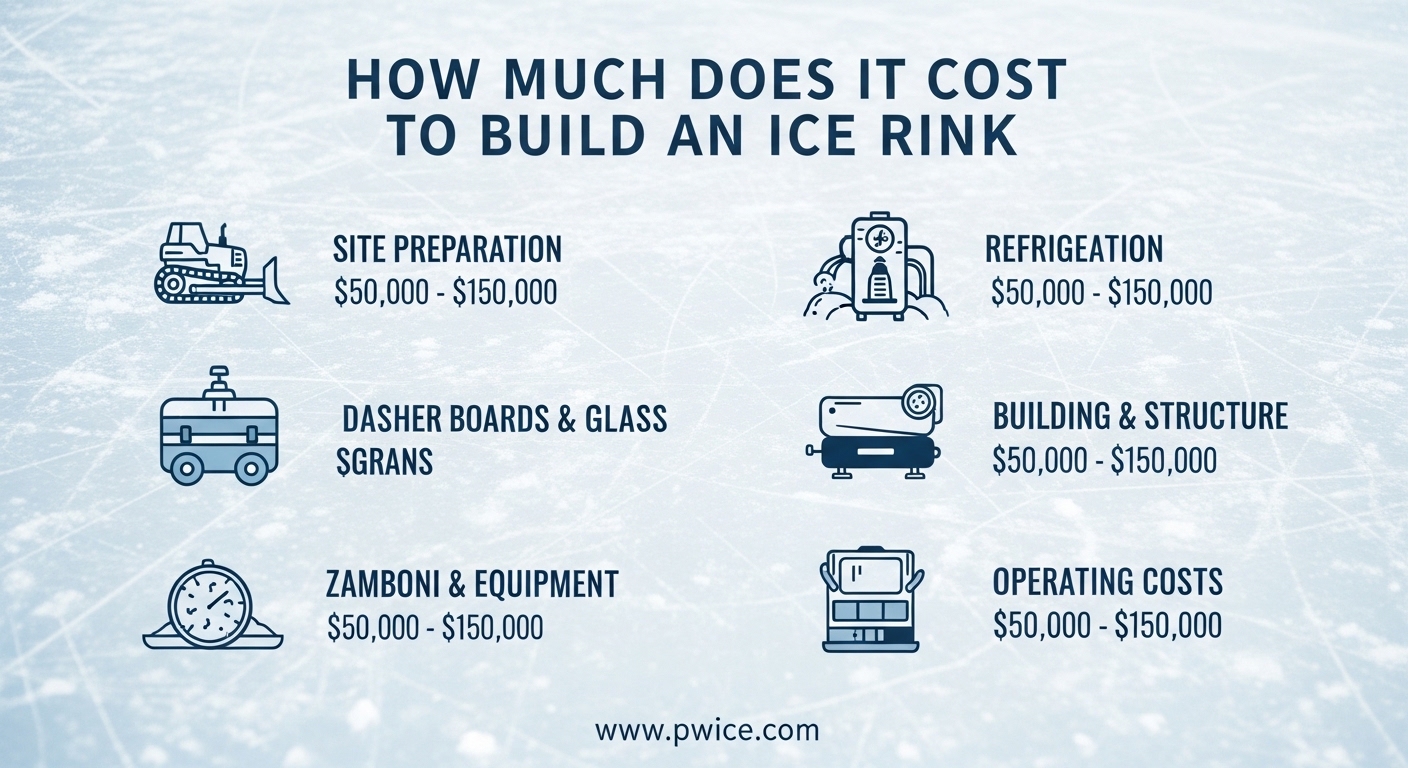
Building an ice rink is a significant investment that varies dramatically based on size, location, and purpose. Whether you are dreaming of a backyard skating surface for winter family fun or planning a multi-sheet commercial facility, understanding how much it costs to build an ice rink is essential before breaking ground.
The total cost to build an ice rink ranges from as little as $300 for a basic DIY backyard setup to over $46 million for a professional two-sheet commercial complex. Most homeowners spend between $2,000 and $10,000 for pre-assembled backyard kits, while community single-sheet facilities typically require $2 million to $15 million. Commercial venues with multiple sheets and full amenities can easily exceed $20 million.
This guide breaks down every cost category you need to consider, from simple outdoor rinks to Olympic-size facilities. We will explore equipment requirements, operating expenses, financing options, and the hidden costs that can catch first-time builders off guard.
Table of Contents
How Much Does It Cost to Build an Ice Rink: Quick Breakdown
Before diving into specific categories, here is a comprehensive overview of ice rink construction costs across different project types:
| Rink Type | Cost Range | Best For |
|---|---|---|
| Basic DIY Backyard | $300 – $1,500 | Home use, seasonal |
| Pre-Assembled Backyard Kit | $2,000 – $10,000 | Home use, easier setup |
| Custom Backyard/Outdoor | $15,000 – $50,000 | Serious home hockey training |
| Single-Sheet Outdoor (Real Ice) | $150,000 – $950,000 | Community seasonal use |
| Synthetic Ice (Any Size) | $14,000 – $395,000 | Year-round, low maintenance |
| Single-Sheet Indoor (Basic) | $2M – $4M | Small community facility |
| Single-Sheet Indoor (Modern) | $8M – $15M | Full-service community rink |
| Two-Sheet Commercial Complex | $37.6M – $46M | Sports tourism, events |
The choice between real ice and synthetic ice significantly impacts both upfront costs and long-term maintenance. Synthetic ice rinks cost approximately $16 to $28 per square foot depending on quality, thickness, and connection system. Real ice requires expensive refrigeration systems but delivers the authentic skating experience that competitive athletes need.
Backyard and DIY Ice Rink Costs
Building a backyard ice rink is the most accessible entry point for ice skating enthusiasts. The cost depends entirely on how elaborate you want your setup to become.
Basic DIY Backyard Rink ($300 – $1,500)
The simplest backyard rinks use a heavy-duty tarp, wooden boards, and Mother Nature’s freezing temperatures. You will need lumber for the frame, brackets to hold the boards together, a large tarp to hold water, and a reliable cold snap.
Many families build these for under $500 using materials from local hardware stores. The frame typically uses 2×10 or 2×12 boards with PVC or metal brackets at the corners. A good quality liner tarp costs $100 to $300 depending on your desired rink size.
Keep in mind that wood prices have increased significantly in recent years. What once cost $10,000 to $15,000 for a full-size outdoor setup now runs higher. Planning your material purchases during off-season sales can reduce costs substantially.
Pre-Assembled Backyard Kits ($2,000 – $10,000)
Pre-assembled backyard rink kits take the guesswork out of construction. These systems include precision-cut boards, professional-grade liners, and all necessary brackets and hardware.
Basic kits without side boards start around $1,000 to $2,000. Mid-range kits with proper dasher-style boards and taller walls range from $3,000 to $6,000. Premium systems with built-in bench seating, lighting, and professional-level boards can reach $10,000.
The advantages are clear: these kits install in hours rather than days, use materials engineered specifically for ice rinks, and typically include better liners that resist punctures and tears.
Elaborate Custom Backyard Rinks ($15,000 – $50,000)
Serious hockey families and training facilities sometimes invest in permanent or semi-permanent backyard installations. These setups include refrigerated surfaces for extended seasons, proper dasher boards with tempered glass, lighting systems, and even small warming huts.
At this investment level, you are essentially building a small commercial-grade facility on residential property. The higher costs come from concrete pads, electrical work for refrigeration, and professional installation of boards and glass.
Community and Single-Sheet Ice Rink Costs
Community ice rinks serve as gathering places for youth hockey leagues, figure skating clubs, and public skating sessions. These facilities represent a major step up in complexity and cost from backyard setups.
Basic Single-Sheet Indoor Facility ($2M – $4M)
A basic single-sheet indoor ice rink includes the essentials: a regulation-size ice surface, minimal seating, basic locker rooms, and essential refrigeration equipment. These facilities often serve smaller communities or function as training centers.
Construction costs break down into several major categories. The building shell and site preparation typically consume 40% of the budget. The refrigeration plant and ice-making equipment account for another 25% to 30%. Interior finishes, locker rooms, and basic amenities take the remaining portion.
Modern Single-Sheet Community Facility ($8M – $15M)
Modern community rinks include full amenities that make the facility a true community hub. Expect comfortable spectator seating for 200 to 500 people, multiple locker rooms with showers, a pro shop, concession area, meeting rooms, and professional-grade lighting and sound systems.
The “rink in a box” concept has emerged as a way to build quality facilities for under $12 million. These designs focus resources on the ice surface and spectator experience while keeping support spaces efficient and functional.
Energy efficiency features like LED lighting and high-efficiency refrigeration systems add upfront cost but deliver significant operational savings over the facility’s lifetime.
Outdoor Community Rinks ($150,000 – $950,000)
Outdoor community rinks eliminate the expensive building shell but require robust refrigeration systems and weather protection for equipment. These seasonal facilities work well in northern climates where winter temperatures reliably stay below freezing.
Costs vary based on whether the rink uses natural refrigeration (ambient cold) or mechanical systems. A simple outdoor rink with boards and a chiller system starts around $150,000. Elaborate seasonal facilities with warming shelters, lighting, and professional boards approach $1 million.
Commercial and Multi-Sheet Ice Rink Costs
Commercial ice rinks operate as businesses, hosting tournaments, offering training programs, and serving as sports tourism destinations. The investment level reflects the revenue potential and complexity of operations.
Two-Sheet Commercial Complex ($37.6M – $46M)
Construction cost estimates for a two full-size sheet ice facility range from $37.6 million to $46 million according to industry data. These facilities target sports tourism markets and can host simultaneous events, tournaments, and multiple user groups.
The higher costs reflect not just additional ice surface but expanded amenities including larger parking areas, extensive spectator seating, multiple locker room configurations, pro shops, full-service concessions, and potentially hotel partnerships.
Location significantly impacts the final figure. Building in areas with high labor costs, difficult soil conditions, or expensive real estate pushes costs toward the upper end of the range.
Professional and Sports Tourism Venues ($20M – $30M)
Single-sheet professional facilities designed for sports tourism and major events represent a specialized category. These rinks feature NHL-quality ice systems, broadcast-ready lighting, extensive seating, and amenities that support high-level competition.
Many communities view these facilities as economic drivers that attract visitors, generate hotel room nights, and create jobs. The business model depends on hosting tournaments, showcases, and special events rather than just local programming.
Essential Ice Rink Equipment Costs
Beyond the building itself, specific equipment represents major cost categories that every rink builder must consider.
Refrigeration System ($500,000 – $2,000,000)
The refrigeration plant is the heart of any real ice rink. These systems circulate cooled brine solution through pipes beneath the ice surface, maintaining a temperature of approximately 16 to 24 degrees Fahrenheit.
Costs depend on the size of the ice sheet, efficiency rating, and climate conditions. A single-sheet community rink typically needs a system in the $500,000 to $800,000 range. Larger facilities or those in warm climates require more powerful systems approaching $2 million.
Modern systems use ammonia or CO2 as refrigerants, with CO2 systems commanding premium prices but offering superior energy efficiency and environmental benefits.
Ice Resurfacer ($10,000 – $150,000)
Every real ice rink needs a resurfacing machine to maintain smooth, safe ice conditions. The iconic Zamboni brand represents the premium end of the market, with new machines costing $100,000 to $150,000.
Alternative brands and used equipment offer savings. Budget-conscious facilities can find functional used resurfacers for $10,000 to $30,000, though maintenance costs will be higher. Smaller backyard and community rinks sometimes use tractor-mounted systems or even manual flood systems for under $5,000.
Dasher Boards and Glass ($50,000 – $500,000)
Dasher boards surround the ice surface, containing pucks and protecting skaters. Basic systems with padded boards and no glass start around $50,000 for a single sheet. Professional systems with tempered glass, padded caps, and integrated advertising displays reach $500,000.
The choice between acrylic and tempered glass affects both cost and safety. Tempered glass costs more but resists impacts better and provides clearer sightlines for spectators.
Concrete Slab and Piping ($200,000 – $600,000)
The ice surface itself sits on a concrete slab with embedded piping that carries the refrigerated brine. This represents one of the largest single construction expenses for real ice facilities.
Proper construction requires excavating the site, installing drainage, laying sand base, placing insulation, installing the piping grid, and pouring the concrete. Costs vary based on local labor rates, soil conditions, and the complexity of the piping system.
Rental Skate Inventory ($40,000 – $67,500)
Public skating sessions require rental skates. Quality rental skates cost approximately $135 per pair, and facilities typically need 300 to 500 pairs to serve customers effectively.
This represents a significant but often overlooked startup cost. Budget $40,000 to $67,500 for a complete rental inventory, plus ongoing replacement costs as skates wear out or sizes need adjustment.
Factors That Affect Ice Rink Construction Costs
Several variables can push your ice rink project toward the high or low end of cost estimates. Understanding these factors helps with budgeting and planning.
Geographic Location and Climate
Building costs vary dramatically by region. Labor rates in metropolitan areas run significantly higher than in rural locations. Climate affects refrigeration system sizing: warm-climate facilities need more powerful (and expensive) cooling systems.
Ground conditions also matter. Rocky soil, high water tables, or unstable terrain require additional site preparation and foundation work that adds cost.
Size and Dimensions
Standard ice rink dimensions include NHL size (200 feet by 85 feet), Olympic size (200 feet by 100 feet), and various custom dimensions. Larger surfaces require more materials, larger refrigeration systems, and bigger buildings.
Every extra foot of width or length multiplies costs across concrete, refrigeration, boards, and roofing. Carefully consider whether your community needs full-size dimensions or can function with slightly smaller surfaces.
Amenities and Features
The difference between a basic rink and a full-service facility often comes down to amenities. Locker rooms with showers, comfortable seating, concession areas, pro shops, meeting rooms, and party spaces all add cost but also revenue potential.
Each amenity requires space, construction, equipment, and ongoing staffing. Prioritize based on your community’s needs and the facility’s business model.
Materials: Real Ice vs Synthetic
Synthetic ice eliminates refrigeration costs entirely but requires different maintenance and delivers a different skating experience. High-quality synthetic panels cost $16 to $28 per square foot installed.
For a standard NHL-size surface, synthetic ice runs $270,000 to $475,000 for materials alone. Real ice has higher upfront costs but offers the authentic experience competitive athletes require.
Permits and Regulatory Costs
Depending on your location, permits, environmental reviews, and regulatory compliance can add substantial costs. Some jurisdictions require extensive environmental impact studies, traffic analyses, and public hearings before approving recreational facilities.
These soft costs often surprise first-time builders. Budget 5% to 10% of construction costs for permits, fees, and professional services required for regulatory compliance.
Operating and Maintenance Costs
Construction costs are just the beginning. Operating an ice rink requires ongoing investment in utilities, staff, maintenance, and unexpected repairs.
Monthly Utility Costs ($5,000 – $25,000)
Refrigeration systems consume massive amounts of electricity. A single-sheet community rink typically spends $5,000 to $15,000 monthly on electricity during operating season. Larger facilities or those in warm climates can exceed $25,000.
Water costs for resurfacing and maintaining ice thickness add another $500 to $2,000 monthly depending on local rates and climate conditions.
Energy efficiency investments like LED lighting, high-efficiency compressors, and building insulation pay dividends in reduced utility bills.
Staffing Requirements
Even a basic community rink requires staff for ice maintenance, skate rental, customer service, and management. A typical single-sheet facility employs 10 to 20 part-time and full-time staff depending on hours of operation.
Annual labor costs range from $200,000 to $500,000 for community facilities. Commercial operations with extended hours and multiple revenue centers require larger staff budgets.
Annual Maintenance Budget
Ice resurfacers need regular maintenance and eventual replacement. Refrigeration systems require professional servicing. Building systems including HVAC, plumbing, and electrical need ongoing attention.
Budget 3% to 5% of construction costs annually for maintenance and capital replacement reserves. A $10 million facility should set aside $300,000 to $500,000 yearly for long-term maintenance needs.
Insurance Considerations
Ice rinks face unique liability risks from slips, falls, and sports injuries. General liability insurance for a community rink typically costs $50,000 to $150,000 annually depending on coverage limits and claims history.
Property insurance, workers compensation, and specialized coverage for refrigeration equipment add to the total. Work with insurance professionals who understand sports and recreation facilities.
Financing Options and Grants
Few individuals or organizations can write a check for a multi-million dollar ice rink. Understanding financing options opens possibilities for bringing your project to life.
Government Grants and Programs
Many federal, state, and local programs support recreational facility construction. The USDA Community Facilities program offers loans and grants for rural recreation projects. State sports commissions sometimes provide funding for facilities that serve youth athletics.
Parks and recreation departments may partner with private operators, providing land and infrastructure while private investors fund the building. These public-private partnerships reduce upfront capital requirements.
Private Investors and Partnerships
Experienced rink operators sometimes partner with investors to build new facilities. The operator brings expertise and management capability while investors provide capital. Revenue sharing arrangements align interests between operators and investors.
Bank Loans and Financing
Traditional commercial construction financing works for ice rinks with solid business plans and experienced management. Lenders want to see realistic revenue projections, market analysis, and evidence that the facility can service debt.
Expect to contribute 20% to 30% equity toward construction costs. Interest rates and terms vary based on creditworthiness and project specifics.
Crowdfunding and Community Support
Community rinks sometimes raise significant funds through local campaigns. Naming rights for locker rooms, benches, or the ice surface itself offer recognition opportunities for donors. Community foundations and local businesses may contribute to capital campaigns.
How Much Does It Cost to Build an Ice Rink
Understanding the full picture of ice rink construction requires looking at specific project types and their associated costs in detail. This section provides deeper insight into making the right choice for your situation.
Planning Your Budget
Start by defining your goals clearly. A backyard rink for family fun requires a completely different budget and approach than a commercial facility serving thousands of skaters annually. Be realistic about your construction budget, operating budget, and revenue potential.
Get multiple quotes from contractors experienced with ice rinks. General construction companies without ice rink experience often underestimate the specialized requirements of refrigeration systems, concrete slabs with embedded piping, and dasher board installation.
Phased Construction Approach
Some communities build facilities in phases to spread costs over time. Phase one might include a single sheet with basic amenities. Phase two adds a second sheet or expanded amenities once the first phase proves successful.
This approach requires careful planning to ensure infrastructure can support future expansion. Installing foundations, electrical service, and plumbing for eventual expansion during initial construction is cheaper than retrofitting later.
Cost-Saving Strategies
Several strategies can reduce costs without compromising functionality. Building in areas with lower labor costs saves substantially on construction. Using pre-engineered metal buildings rather than custom designs reduces both design costs and construction time.
Consider synthetic ice for specific applications like training areas or seasonal installations. While the skating experience differs from real ice, synthetic surfaces eliminate refrigeration costs entirely.
Community partnerships can share costs between multiple user groups. Hockey associations, figure skating clubs, and public recreation departments pooling resources can justify larger, better-equipped facilities than any single group could afford alone.
Frequently Asked Questions
Is owning a skating rink profitable?
Ice rink profitability depends on location, management quality, and revenue diversification. Well-run community rinks can break even or generate modest profits, while commercial facilities with multiple revenue streams (tournaments, training, concessions, pro shop) often achieve 10-15% profit margins. Success requires strong programming, efficient operations, and consistent marketing.
Can I build my own ice rink?
Yes, you can build your own ice rink. Backyard DIY rinks using tarps and boards cost $300-$1,500 and require basic carpentry skills. Pre-assembled kits ($2,000-$10,000) simplify the process further. Indoor or refrigerated facilities require professional contractors due to complex refrigeration, electrical, and concrete work that must meet building codes and safety standards.
Can an ice rink be profitable?
Yes, ice rinks can be profitable with proper business planning. Successful rinks generate revenue from multiple sources: ice rentals ($150-$300/hour), public skating admissions, learn-to-skate programs, hockey leagues, figure skating lessons, concessions, and pro shop sales. Facilities with two or more sheets and tournament hosting capabilities have the highest profit potential due to economies of scale.
How much does it cost to build and run an ice rink?
Building costs range from $300 (DIY backyard) to $46 million (commercial complex). Annual operating costs for a single-sheet community rink typically run $300,000-$600,000 including utilities ($60,000-$180,000), staffing ($200,000-$500,000), maintenance ($30,000-$100,000), and insurance ($50,000-$150,000). Energy-efficient designs and LED lighting can reduce utility costs significantly.
How much does it cost to build a full-size ice rink?
A full-size NHL rink (200’x85′) costs $2M-$15M for indoor community facilities, $150K-$950K for outdoor seasonal rinks, and $20M-$46M for multi-sheet commercial complexes. The wide range reflects differences in building quality, amenities (locker rooms, seating, concessions), refrigeration system efficiency, and geographic location. Synthetic ice alternatives cost $270K-$475K for materials alone.
How profitable are ice rinks?
Ice rink profitability varies significantly. Industry data shows single-sheet community rinks often break even or operate at small margins (2-5%), while well-managed two-sheet facilities can achieve 10-15% profit margins. Success factors include diversified programming, efficient energy management, strong community partnerships, and multiple revenue streams beyond basic ice rentals.
How much does a home made ice rink cost?
A homemade backyard ice rink costs $300-$1,500 for a basic DIY setup using lumber, tarps, and brackets. Pre-assembled kits range from $2,000-$10,000 depending on size and features. Elaborate custom backyard installations with refrigeration, professional boards, and lighting can reach $15,000-$50,000. Annual operating costs for backyard rinks are minimal unless using refrigeration.
Conclusion
How much does it cost to build an ice rink? The answer ranges from a few hundred dollars for a backyard DIY project to nearly $50 million for a premier commercial facility. Most families find happiness with pre-assembled backyard kits in the $2,000 to $10,000 range, while communities typically invest $2 million to $15 million for indoor facilities that serve as year-round recreation hubs.
The key to success lies in matching your budget to realistic expectations. Backyard rinks deliver family fun without breaking the bank. Community facilities require careful business planning but can become beloved local institutions. Commercial venues demand substantial capital but offer the greatest revenue potential.
Before starting your project, thoroughly research local construction costs, explore financing options, and connect with experienced rink operators who can share real-world insights. Whether you are flooding a backyard tarp or building a multi-sheet complex, the joy of creating a space where people skate, play, and connect makes the investment worthwhile.