
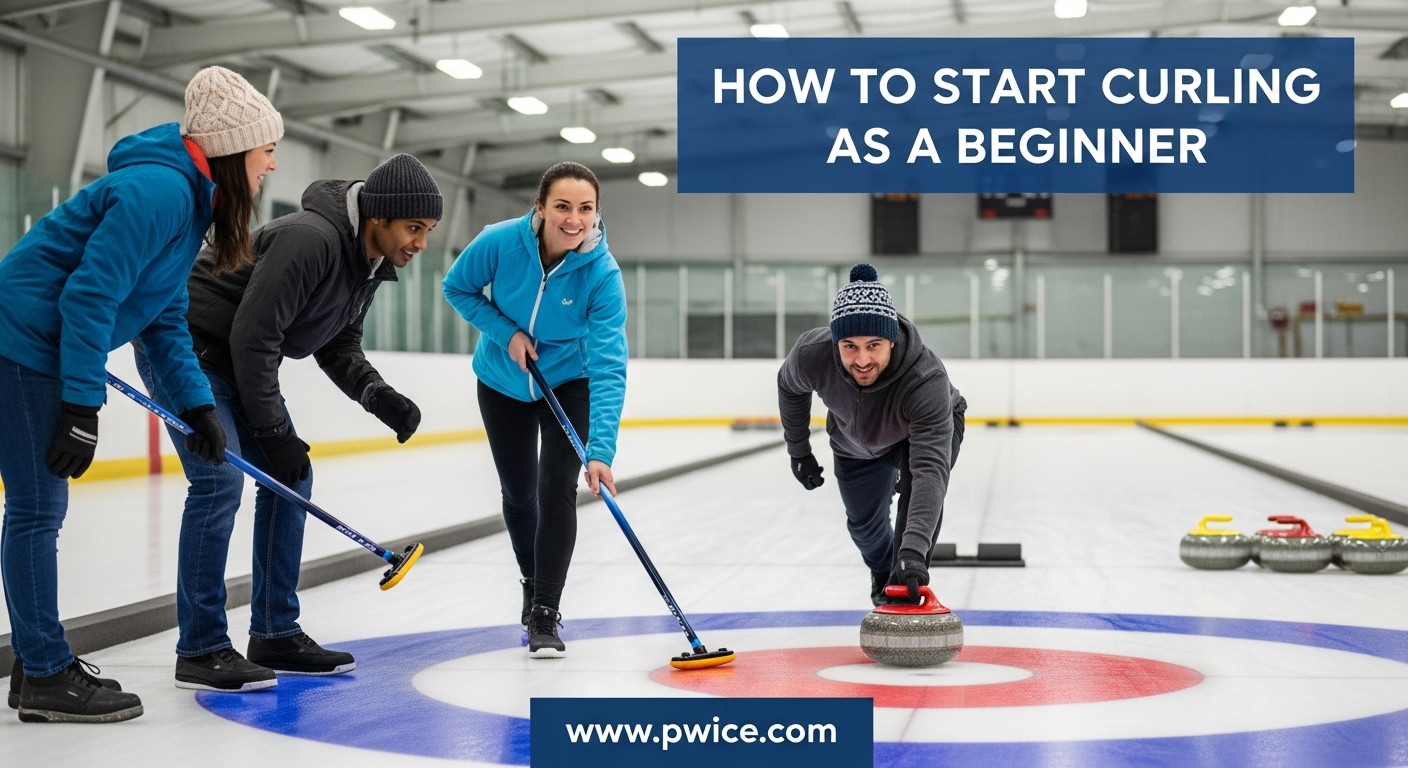
You have probably watched curling during the Winter Olympics and thought, “That looks fun, but I could never do that.” I felt the same way until I walked into my local curling club five years ago. The good news is that curling is one of the most welcoming sports for beginners.
You do not need skating skills, elite athleticism, or any prior experience to start curling. This guide on how to start curling as a beginner will walk you through everything you need to know to take your first steps onto the ice.
In this article, you will learn what curling is, how the game works, and what equipment you need. We will also cover safety tips, basic terminology, and where to find a club near you.
Table of Contents
What Is Curling?
Curling is a winter sport played on a sheet of ice where two teams of four players each slide 42-pound granite stones toward a circular target called the “house.” The sport originated in Scotland in the 16th century and has been an Olympic event since 1998.
Often called “chess on ice,” curling combines physical skill with strategic thinking in a way that appeals to people of all ages and fitness levels. The ice sheet is roughly 150 feet long and 15 feet wide.
What makes curling unique is that players can use brooms to sweep the ice in front of the stone. This sweeping changes its speed and direction as it travels down the sheet.
You will find curlers ranging from 8 to 80 years old on the same ice. Many clubs offer dedicated programs for beginners, seniors, and even wheelchair users. The sport has a strong tradition of sportsmanship.
How to Play Curling: Basic Rules for Beginners
Understanding how to start curling as a beginner means first grasping the basic gameplay. Each curling match consists of eight to ten ends, similar to innings in baseball.
In each end, both teams deliver eight stones, alternating between players. The team that scores in an end goes second in the next end, which is an important strategic consideration.
During your turn, you will slide from the hack, which is a metal foothold at the end of the sheet. You then release the stone toward the house. You can put rotation on the stone, which causes it to curl as it travels.
Sweeping is a crucial part of the game. When your teammates sweep in front of a moving stone, they reduce friction and allow the stone to travel farther and straighter.
Strategic sweeping can make the difference between a perfect shot and one that misses the house entirely. As a beginner, you will spend as much time sweeping as you will delivering stones.
How Scoring Works in Curling
Scoring in curling is straightforward once you understand the house. The house is the circular target area with rings, and the button is the exact center.
Only one team can score per end. The scoring team receives one point for each of their stones that is closer to the button than the opponent’s closest stone.
For example, if Team A has three stones inside the house with the closest being 2 feet from the button, and Team B has two stones with the closest being 3 feet away, Team A scores three points.
The “hammer” refers to the last stone of an end. The team that scores in an end gives up the hammer to their opponents for the next end. Teams often use the hammer strategically.
This strategic element is why curling is often compared to chess. Teams try to score multiple points or blank an end to retain hammer advantage for a later end.
Curling Team Positions and Roles
Every curling team has four players, each with specific responsibilities. The delivery order is Lead, Second, Vice, and Skip, and this order stays the same throughout the game.
Each player delivers two stones per end. So eight stones are thrown by each team in every end.
The Lead goes first and typically sets up guards and opening shots. This position requires good weight control and the ability to place stones precisely.
The Second supports the Lead by maintaining momentum and setting up scoring opportunities. The Vice, also called the Mate, is often the most experienced player after the Skip.
The Skip is the team captain and strategist. Standing at the far end of the sheet, the Skip reads the ice and calls the game, directing where teammates should aim and whether to sweep.
The Skip also delivers the last two stones of each end, which are often the most important shots of the end. As a beginner, you will likely start by playing Lead or Second.
Equipment You Need to Start Curling
One of the great things about learning how to start curling as a beginner is that you do not need much equipment. Most curling clubs provide stones, brooms, and rental shoes for beginners.
You will primarily need to bring comfortable, warm clothing and clean shoes with non-marking soles.
Curling shoes are unique because one foot has a slider and the other has a gripper. The slider allows you to slide smoothly during delivery, while the gripper provides traction for your plant foot.
Beginners can rent these shoes from clubs, and many choose to purchase their own after deciding they enjoy the sport. Entry-level curling shoes typically cost between $80 and $150.
Your curling broom or brush is used for sweeping and balance during delivery. Clubs provide brooms for use, but many curlers eventually purchase their own.
Broom choices range from traditional corn brooms to modern synthetic brushes. As a beginner, you can use club equipment and decide later what type of broom suits your style.
For clothing, wear layers that allow easy movement. The ice is kept at about 22 degrees Fahrenheit, but you will warm up while sweeping. A light base layer, comfortable pants, and a zip-front jacket works well.
How to Start Curling: Step-by-Step Guide
Starting your curling journey is easier than you might think. The first step is to find a local curling club. In the United States, you can use the club finder on the USA Curling website.
Most clubs offer learn-to-curl programs specifically designed for people with zero experience. These programs typically consist of two to four sessions where you learn the basics.
Expect your first session to focus on safe sliding technique, proper stone delivery, and basic sweeping. Instructors understand that beginners feel nervous.
You will not be expected to make perfect shots. The goal is to learn the fundamental movements and have fun while doing so.
After completing a learn-to-curl program, you can join beginner leagues. These provide regular ice time and continued coaching. Many clubs also offer open ice sessions where beginners can practice alongside experienced curlers.
As you improve, you might consider participating in a bonspiel, which is a curling tournament. Bonspiels range from highly competitive events to fun, social tournaments that welcome all skill levels.
Safety Tips for Your First Time on the Ice
Safety is paramount in curling. Understanding proper techniques will keep you and others safe on the ice.
The most important rule is to always sweep in front of moving stones to control their path. Never stand in the path of a moving stone.
When learning to slide, start slowly and focus on balance rather than speed. Many beginners worry about falling, but sliding on ice is actually quite safe when done correctly.
Keep your sliding knee bent and your body low, which provides stability. If you do fall, try to fall forward or backward rather than sideways to avoid injury to your knees or hips.
Clean shoes are mandatory before stepping onto the ice. Even small amounts of dirt or debris can affect sliding and create unsafe conditions.
Always check that your slider is clean and properly attached before delivering a stone. Also, be mindful of the hack area and avoid standing directly behind someone who is about to deliver.
Ice awareness means knowing where all players and stones are at all times. Never distract a player who is in the process of delivering a stone.
Essential Curling Terms Every Beginner Should Know
Learning curling terminology helps you understand the game faster and communicate better with teammates. Here are the essential terms every new curler should know.
The house is the circular target area at each end of the sheet, consisting of four concentric circles. The button is the exact center of the house.
Hitting the button with your stone is the ultimate goal of every delivery. The hack is the foothold from which players slide during delivery.
The hog line is a line near each end that stones must pass to remain in play. Stones that do not cross the far hog line are removed from play.
The tee line runs through the center of the house, perpendicular to the hog lines. A guard is a stone placed outside the house to protect scoring stones.
A draw is any stone intended to stop in the house. A takeout is a stone aimed to remove an opponent’s stone from play.
The hammer is the last stone of an end. The team with hammer advantage can set up favorable positions.
A blank end occurs when no team scores, and hammer stays with the same team. Burning a rock means touching a moving stone with your broom or body.
Pebble refers to the droplets of water sprayed on the ice before games. This creates the textured surface that allows stones to curl.
How Much Does It Cost to Start Curling?
Curling is surprisingly affordable compared to many other sports. Learn-to-curl programs typically cost between $25 and $75, which includes instruction and equipment rental.
Many clubs offer this as a multi-week program that provides a solid foundation for new curlers. This initial investment gives you everything you need to start playing under supervision.
Beginner league fees vary by club but generally range from $15 to $30 per week. League fees typically include ice time, coaching, and access to club facilities.
Most clubs also require annual membership dues, ranging from $100 to $500 depending on the club and membership type. Junior and senior discounts are often available.
If you decide to purchase your own equipment, expect to spend $150 to $300 for essential items like shoes, a broom, and appropriate clothing.
However, buying equipment is entirely optional when starting out. Many curlers use club equipment for years before investing in their own gear.
Frequently Asked Questions
How do I get started curling?
To get started in curling, find your local curling club and sign up for a learn-to-curl program. These beginner-friendly programs typically run for 2-4 sessions and teach you the basics of sliding, sweeping, and game rules. Most clubs provide all equipment, so you only need to bring clean shoes and comfortable, warm clothing.
What are the basic rules of curling for beginners?
Curling is played by two teams of four players each, sliding 42-pound stones toward a circular target called the house. Each player delivers two stones per end, and teams take turns throwing and sweeping. The team with the stone closest to the button scores points for all their stones that are closer than the opponent’s best stone. Games consist of 8-10 ends and last about 2 hours.
What equipment do I need to start curling?
To start curling, you primarily need clean shoes with non-marking soles and comfortable, warm clothing. Most curling clubs provide stones, brooms, and rental shoes for beginners. If you continue curling, you may eventually want to purchase your own curling shoes with a slider and gripper, a personal broom, and curling-specific pants. Entry-level shoes cost $80-150, but club rental shoes are available at no extra cost for beginners.
Is curling easy to learn for beginners?
Yes, curling is considered one of the easier winter sports to learn. The basic mechanics of sliding and releasing a stone can be mastered in just a few sessions. Strategic understanding develops over months of play. Most beginners feel comfortable on the ice after completing a learn-to-curl program, and the welcoming curling community supports new players at every level.
Do I need skating skills to curl?
No, you absolutely do not need any skating skills to curl. Unlike hockey or speed skating, curling involves controlled sliding from a stationary position rather than skating. Your plant foot stays on the ice while you slide, and the slider on your other foot allows smooth movement. This makes curling accessible to people of all ages and physical abilities.
What should I wear to my first curling session?
Wear layers of comfortable, warm clothing that allow easy movement. A light base layer, comfortable pants that allow sliding on your knees, and a zip-front jacket or sweater work well. Bring clean indoor shoes with non-marking soles for the ice. Many curlers eventually wear specialized curling pants with reinforced knees, but regular athletic pants are fine for beginners.
How long does a curling game take?
A standard curling game consists of 8 ends and typically takes about 2 hours to complete. Competitive games with 10 ends can last 2.5 hours or longer. The pace of play depends on the skill level of the teams and the number of strategic discussions that occur. Beginners may find games take slightly longer as players learn the game.
Can kids learn to curl?
Yes, children can learn to curl, and many clubs offer youth programs. Kids as young as 8 can typically participate in learn-to-curl programs. Curling helps children develop balance, coordination, and strategic thinking while being part of a team sport. Youth leagues and junior bonspiels provide opportunities for young curlers to develop their skills and compete with peers.
Final Thoughts on Starting Your Curling Journey
Learning how to start curling as a beginner is one of the most rewarding decisions you can make. The sport offers a unique combination of physical activity, mental challenge, and social connection.
Whether you are looking for a new winter hobby, a way to stay active, or simply something different to try, curling has something to offer everyone.
The curling community is known for its welcoming nature. When you walk into a curling club for the first time, you will find experienced players who are eager to help you learn.
Many clubs have mentorship programs that pair new curlers with experienced players. Olympic athletes frequently play at local clubs, and you might find yourself sharing ice with world champions.
Do not let fear of the unknown hold you back. Your first session may feel awkward, and you might not make a single perfect shot. That is completely normal.
Every curler who has ever played competitively started exactly where you are now. The important thing is to take that first step and sign up for a learn-to-curl program.
You might just discover a lifelong passion for this fascinating sport. So grab a clean pair of shoes, find your nearest curling club, and get ready to experience the joy of curling.
The ice is waiting, and your first stone is ready to slide.