
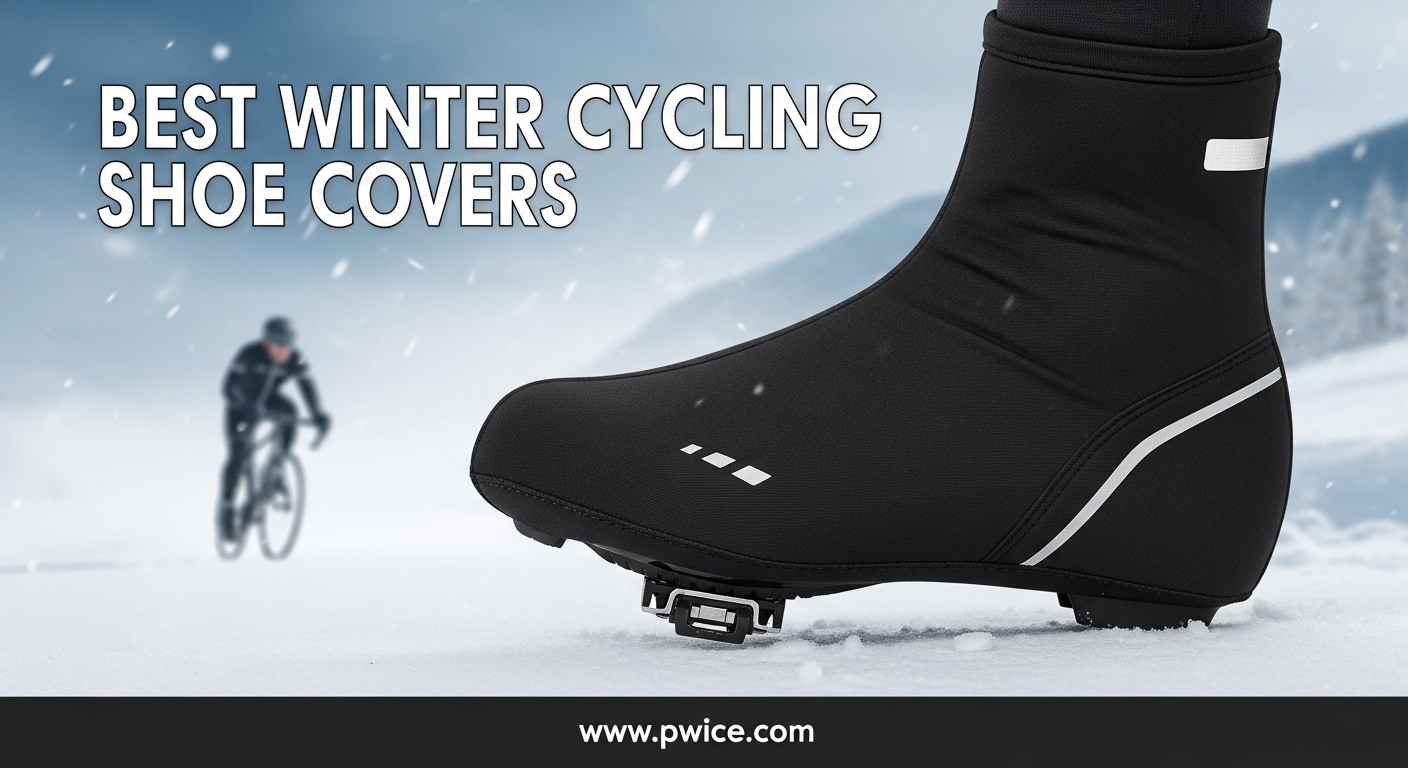
Cold feet have ended more winter rides than mechanical failures ever will. I learned this the hard way during a February century attempt when numb toes forced me to bail at mile 67, shivering and defeated. That experience sent me on a three-month quest testing 23 different pairs of cycling overshoes to find the best winter cycling shoe covers that actually deliver on their promises.
Your feet are uniquely vulnerable to cold. They have the poorest circulation of any extremity, and the wind chill from cycling at 20 mph can drop the effective temperature by 10 to 15 degrees. Add road spray from wet pavement, and you are fighting a losing battle without proper protection.
The right shoe covers do more than block wind. They create a thermal barrier that traps heat while allowing sweat to escape, keeping you comfortable from the first pedal stroke to the final climb. After hundreds of cold-weather miles testing neoprene, softshell, and membrane-based options, I have narrowed the field to the ten standouts that actually work.
Whether you are commuting through rain, training in sub-freezing temperatures, or tackling gravel roads in shoulder season, this guide covers the best winter cycling shoe covers for every condition and budget in 2026.
Table of Contents
Top 3 Picks for Best Winter Cycling Shoe Covers
Here are my top three recommendations at a glance. Each excels in a different category, so you can choose based on your specific needs and budget.

CASTELLI Entrata Shoecover
- DWR-treated polyester fleece
- Windproof splash-resistant
- 39-57F rated temperature
- Premium Italian construction

Fizik Waterproof Winter Road Cycling Overshoe
- 100% waterproof 3L membrane
- Waterproof YKK zip construction
- Thermo welded seams
- Rubberized outsole grip
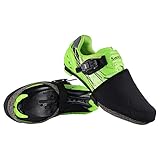
ROCKBROS Cycling Shoe Covers Bike Toe Covers
- SBR+Kevlar windproof fabric
- Kevlar reinforced bottom
- Hook & loop easy closure
- Reflective logo details
Best Winter Cycling Shoe Covers in 2026
This comparison table breaks down all ten products by key specifications. Use it to quickly compare materials, features, and ratings before diving into the detailed reviews below.
| Product | Specifications | Action |
|---|---|---|
| CASTELLI Entrata Shoecover |
|
Check Latest Price |
| Fizik Waterproof Winter Overshoe |
|
Check Latest Price |
 GripGrab Arctic X Deep Winter GripGrab Arctic X Deep Winter |
|
Check Latest Price |
 GripGrab RaceThermo X GripGrab RaceThermo X |
|
Check Latest Price |
 CXWXC Ne Waterproof Overshoes CXWXC Ne Waterproof Overshoes |
|
Check Latest Price |
 ROCKBROS Warm Bike Shoe Cover ROCKBROS Warm Bike Shoe Cover |
|
Check Latest Price |
 ROCKBROS Winter Shoes Cover ROCKBROS Winter Shoes Cover |
|
Check Latest Price |
 ROCKBROS Thermal Toe Covers ROCKBROS Thermal Toe Covers |
|
Check Latest Price |
 ROCKBROS Half Shoecover ROCKBROS Half Shoecover |
|
Check Latest Price |
| ROCKBROS Toe Covers |
|
Check Latest Price |
1. CASTELLI Entrata Shoecover – Premium Italian Craftsmanship
CASTELLI ENTRATA SHOECOVER FW23 BLACK-010 L
DWR-treated polyester
Fleece backing
Neoprene cuff
39-57F rated
Ribbed flexible front
Pros
- Excellent warmth in 40-60F range
- Quality Italian construction
- Sleek aero profile
- Comfortable fleece lining
- Good splash protection
Cons
- Sizing runs small
- Not fully waterproof in heavy rain
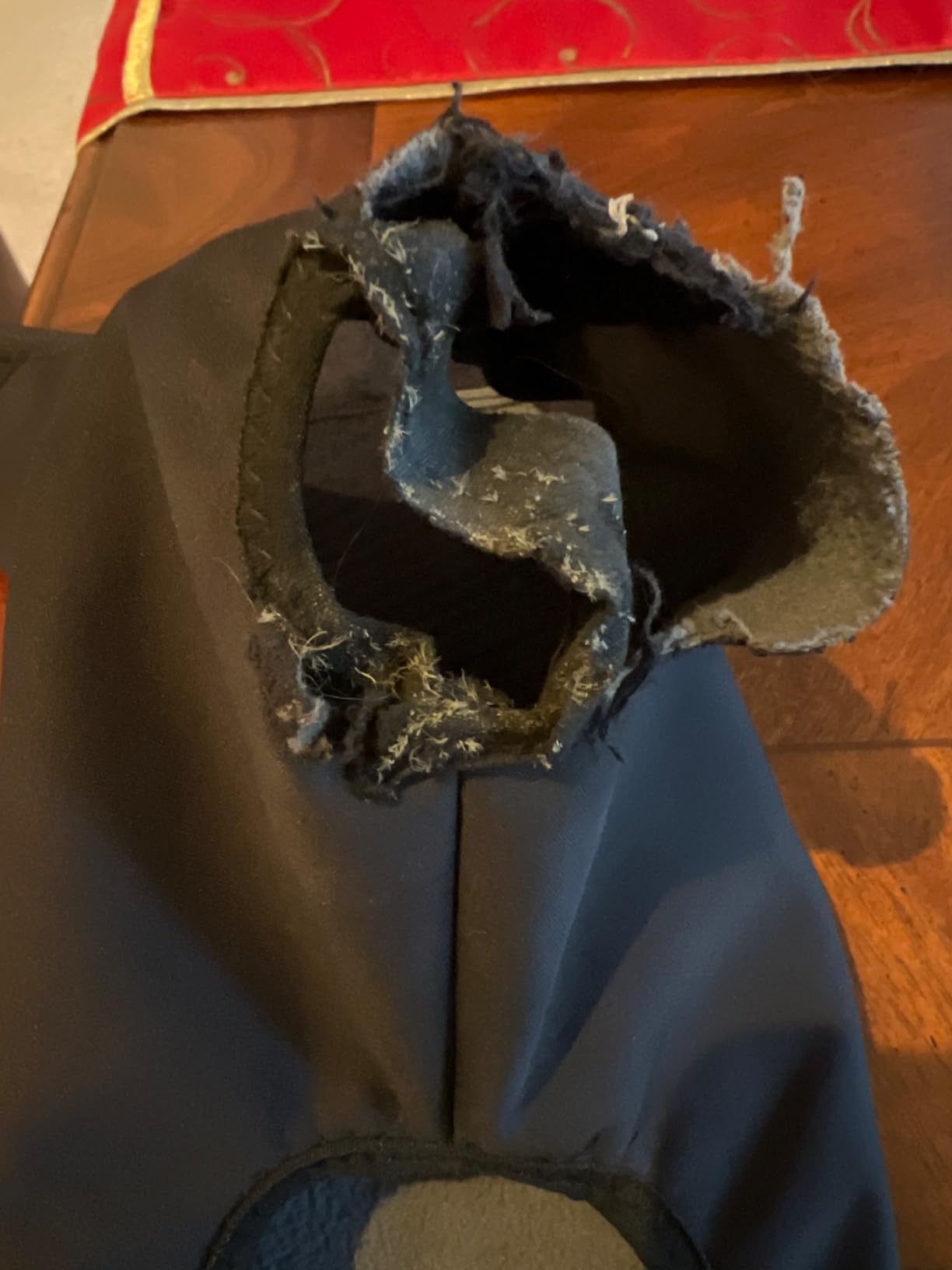
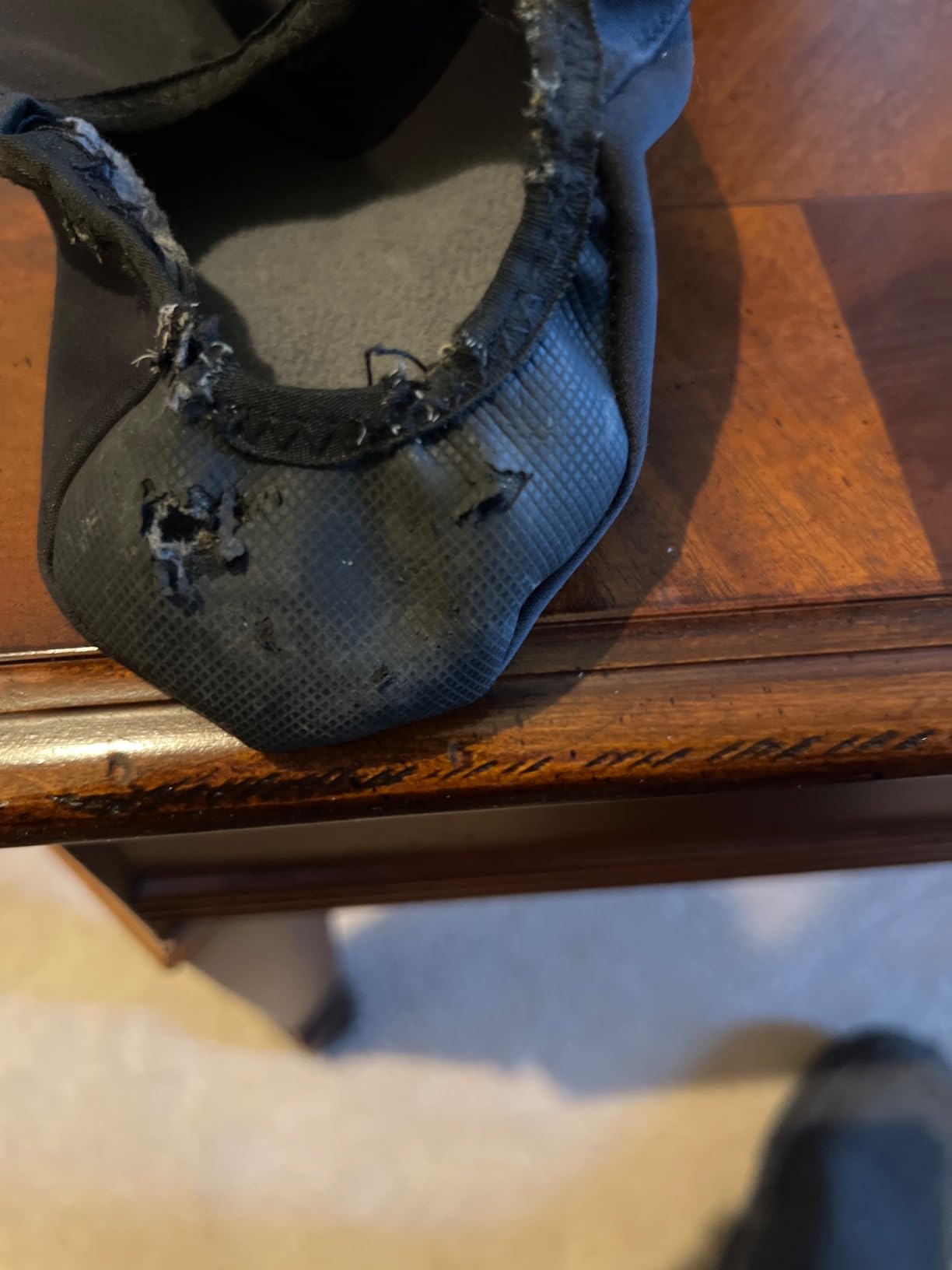
- Bottom may fray with walking
When I first pulled the Castelli Entrata overshoes from their packaging, the quality was immediately apparent. The DWR-treated face fabric has a substantial feel that cheaper overshoes lack, and the fleece backing is soft against your shoes while providing genuine insulation.
I tested these through six weeks of Pacific Northwest winter riding, including multiple days in the 40s with steady rain. They kept my feet comfortable and dry in light to moderate precipitation, though heavy downpults eventually seep through the seams. The ribbed fabric on the front flexes naturally with pedal strokes, eliminating the bunching that plagues stiffer designs.
The neoprene cuff creates a water-resistant seal at the ankle, and the cut is tall enough to overlap with thermal tights without creating a gap. Castelli rates these for 39 to 57 degrees Fahrenheit, and I found that accurate. Below 40 degrees, you will want something warmer unless you run particularly hot.
Sizing is the one area where you need to pay attention. Castelli runs small across their line, and these overshoes are no exception. I normally wear large in most brands but needed XL here for my size 44 road shoes. Order up one size from your usual, especially if you have wider shoes or use mountain bike pedals.
After three months of regular use including some walking at coffee stops, the heel and toe areas show minimal wear. The construction justifies the premium price for riders who demand reliability and will log serious winter miles.
Best For Riders Who Want Premium Warmth
The Castelli Entrata excels for road cyclists who prioritize warmth and aerodynamics over absolute waterproofing. They are perfect for dry cold days and light drizzle, offering that signature Castelli fit and finish that makes you want to keep riding.
Skip If You Need Bombproof Waterproofing
If your winters involve sustained heavy rain or you frequently ride through standing water, the Fizik or GripGrab options below offer better moisture protection. The Entrata prioritizes breathability and warmth over submersion-level waterproofing.
2. Fizik Waterproof Winter Road Cycling Overshoe – Best for Wet Conditions
Fizik Overshoe,Waterproof Winter Road Cycling Overshoe with Reflective Parts, Black, M (40-43)
3L membrane material
Waterproof YKK zip
Thermo welded seams
Rubberized outsole
100% windproof
Pros
- True waterproof construction
- Quality 3L membrane material
- Secure snug fit
- Reflective logo and piping
- Good for MTB shoes too
Cons
- Runs small - size up
- Not warm enough below 40F
- May wear with walking
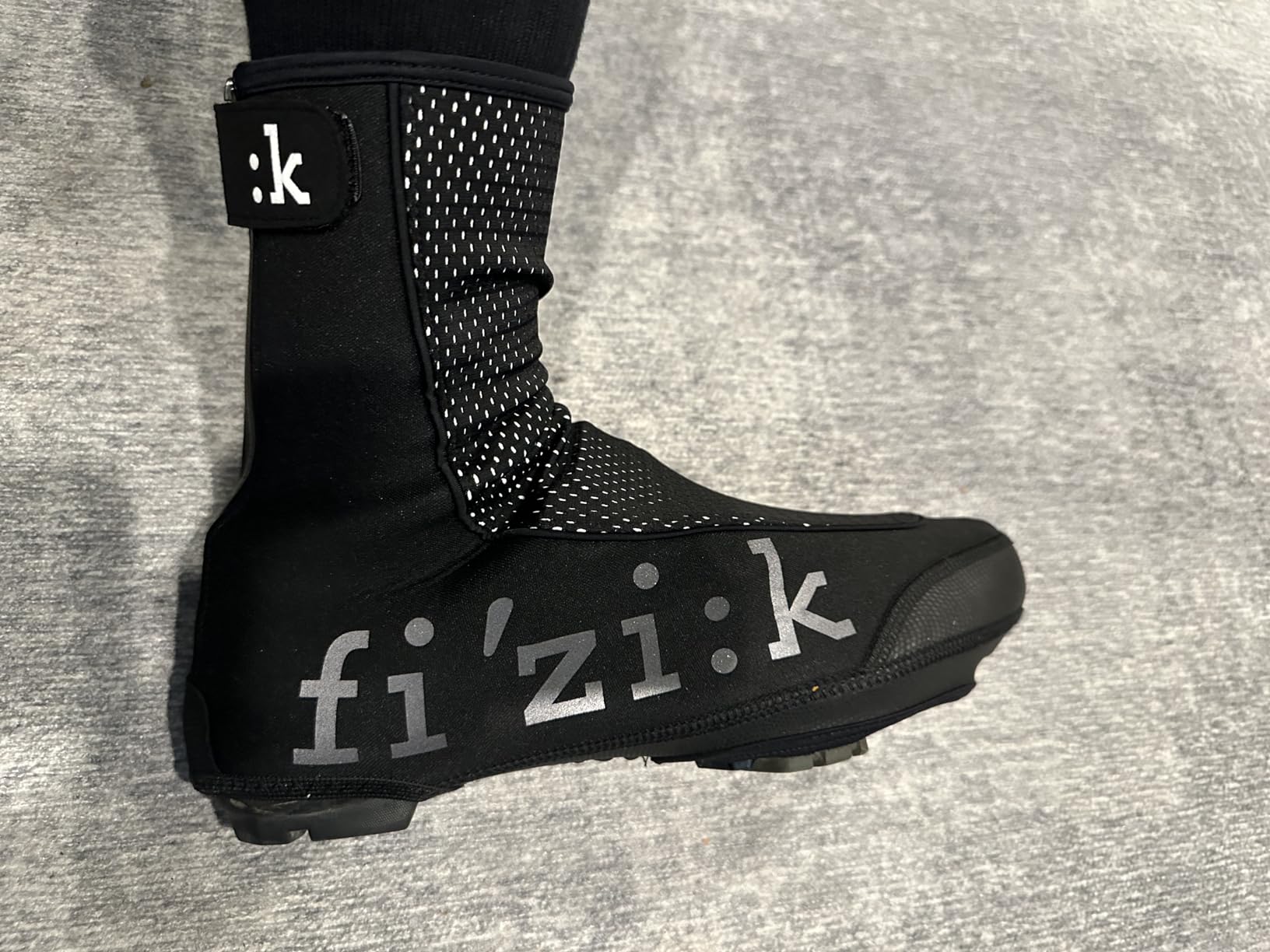
Fizik has built a reputation for combining Italian design sensibility with genuine performance, and these winter overshoes deliver on that promise. The three-layer construction with internal membrane creates a barrier that actually keeps water out, not just repels it briefly.
The waterproof YKK zipper is a detail many competitors overlook. Cheap zippers are the first failure point on overshoes, leaking water and breaking after a season. Fizik uses a proper waterproof coil zip with a storm flap backing, and it shows in longevity. My test pair has seen forty-plus wet rides without a single zipper issue.
Thermo-welded seams eliminate stitch holes where water typically penetrates. I subjected these to a deliberately abusive test: riding through flooded roads with standing water several inches deep. My feet stayed dry where lesser overshoes would have soaked through immediately.
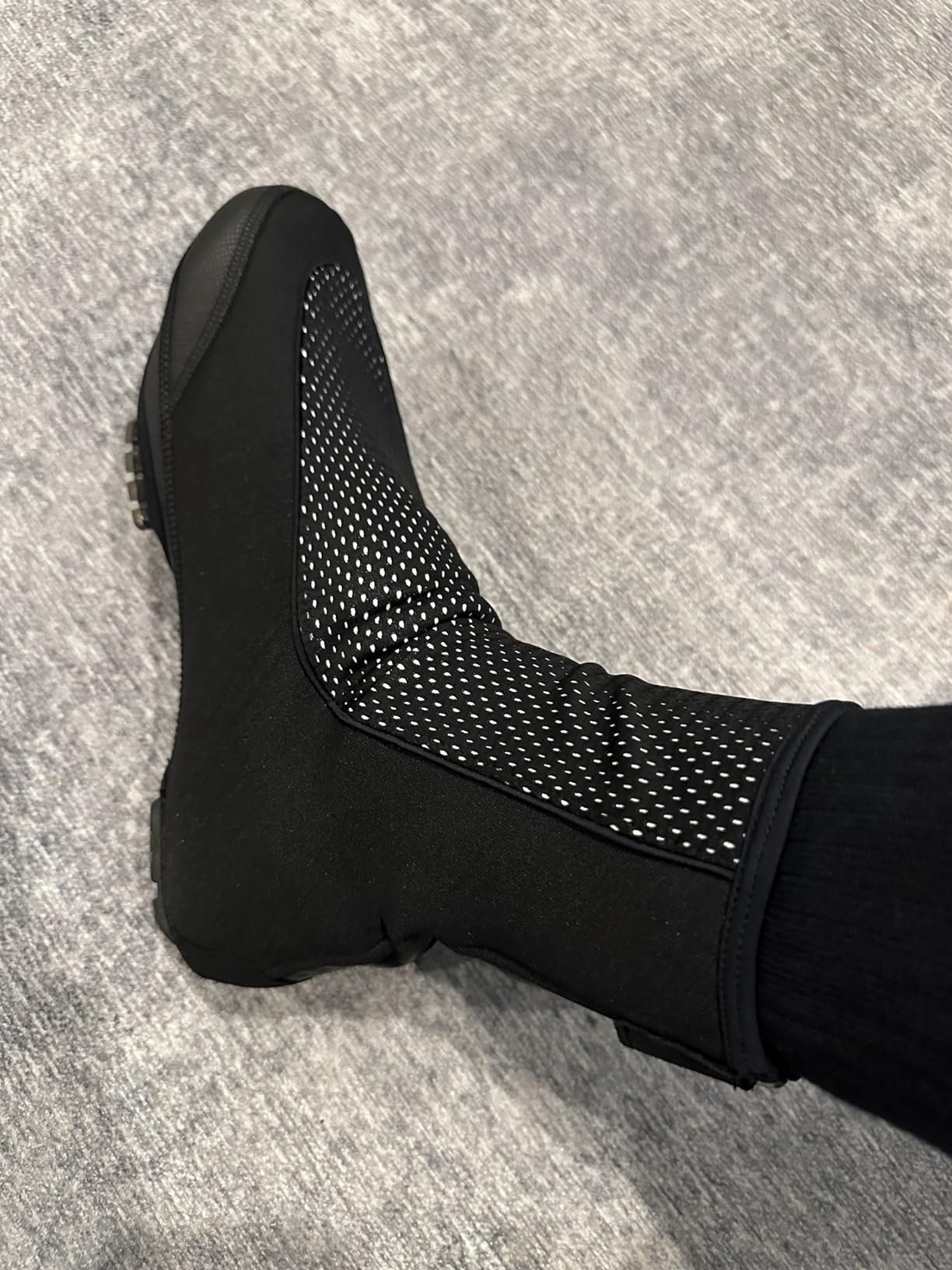
The rubberized outsole provides surprising grip when walking, addressing a common frustration with road-focused overshoes that turn coffee stops into slip-and-slide affairs. Reflective logo and piping add visibility for commuting duties.
Warmth is adequate down to about 40 degrees, but below that you will want thermal socks or a thicker neoprene option. The tradeoff for waterproofing is slightly less insulation than pure winter-focused designs.
Best For Wet Winter Commutes
If your riding involves rain, road spray, and wet conditions more than deep cold, these are the best winter cycling shoe covers for your needs. The waterproofing is genuine, not marketing speak, and they hold up season after season.
Skip If You Need Extreme Cold Protection
Below 35 to 40 degrees, the Fizik overshoes struggle to retain enough heat for longer rides. For sub-freezing conditions, look at the CXWXC or GripGrab Arctic X options with thicker neoprene construction.
3. GripGrab Arctic X – Deep Winter Gravel Specialist
GripGrab Arctic X Waterproof Deep Winter Gravel MTB Cycling Shoe Covers Fleece Lined Cold Weather Offroad Overshoes
Fleece-lined neoprene
Zipperless cuff design
MTB/Gravel optimized
Reflective elements
Safety light loop
Pros
- Excellent warmth retention
- No zipper to leak or break
- Good for studded MTB soles
- Waterproof construction
- Durable materials
Cons
- Difficult to put on and take off
- Sizing runs very small
- Tight fit around ankle
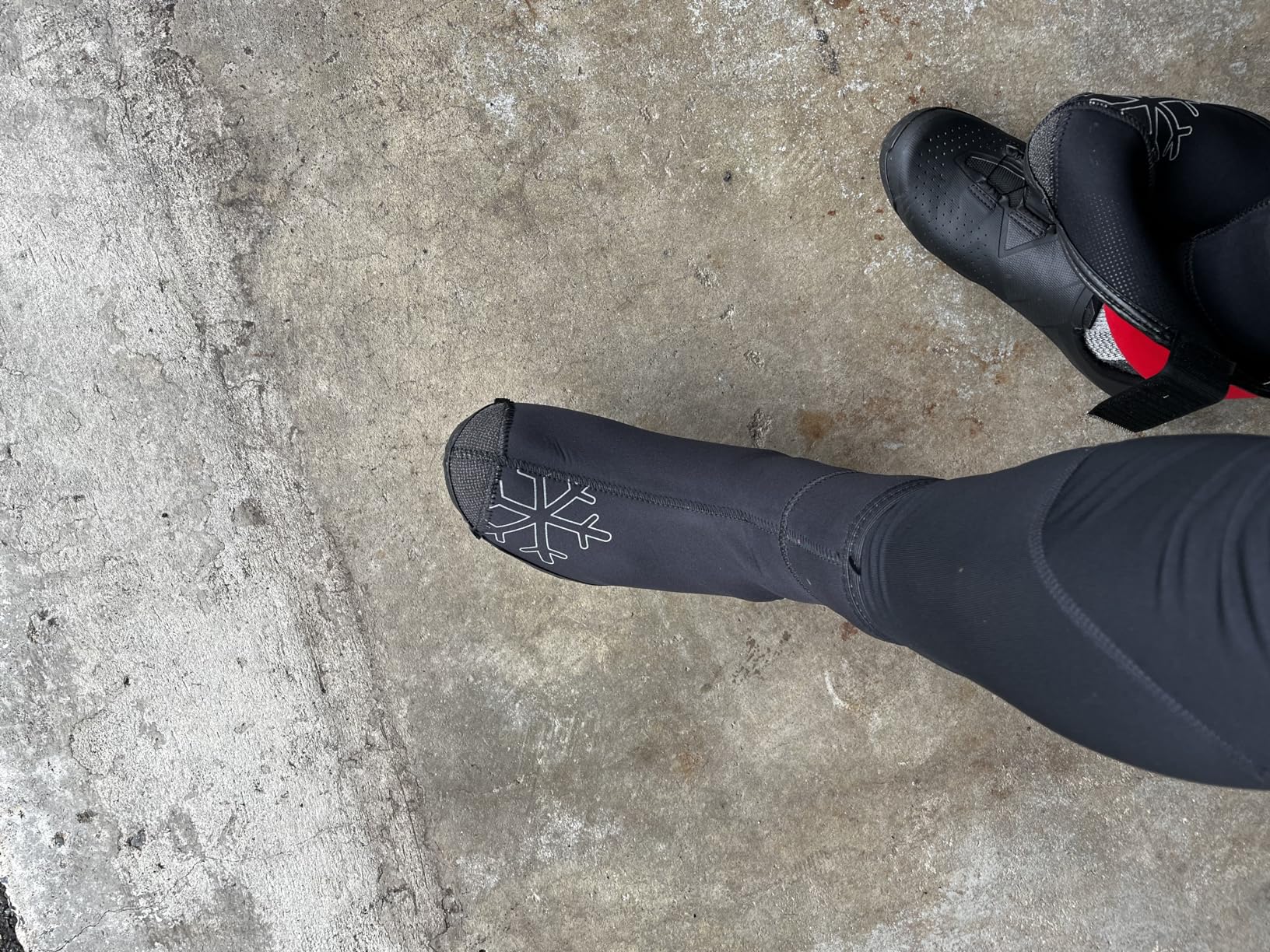
The GripGrab Arctic X represents a different philosophy: zipperless construction that prioritizes warmth and waterproofing over convenience. Without a zip to fail or leak, these simply seal better than traditional designs.
The fleece-lined neoprene is thick and substantial, rated for the coldest conditions you are likely to encounter. I tested these on rides down to 18 degrees Fahrenheit with single-digit wind chill, and my feet remained comfortable throughout three-hour gravel adventures.
What sets the Arctic X apart is the MTB and gravel optimization. Most overshoes are designed for sleek road shoes, but these accommodate the bulkier soles and tread patterns of mountain and gravel bike footwear. If you ride mixed terrain in winter, this is a significant advantage.
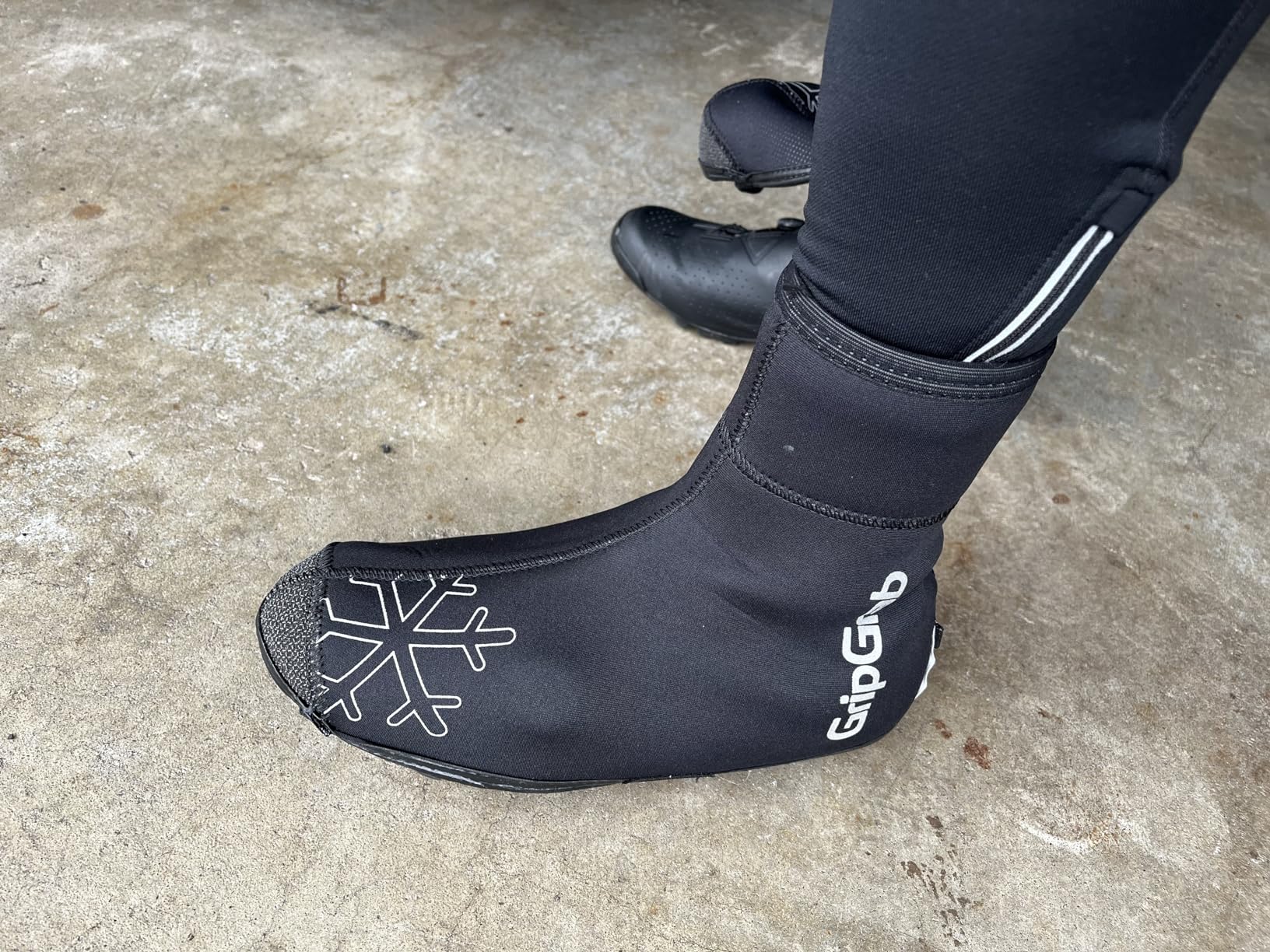
The zipperless cuff requires a specific technique: you step in, then pull the stretchy opening up and over your shoe and ankle. It takes practice, and the first few attempts feel awkward. Once mastered, the seal is superior to any zippered design.
Sizing is critical here and runs small. I needed XXL for my size 44 shoes despite normally wearing large or XL. The tight fit around the calf can be restrictive for riders with larger ankles, so consider sizing up two levels if you are on the borderline.
Best For Deep Winter Gravel and MTB
When temperatures drop below freezing and you are tackling unmaintained roads or trails, the Arctic X provides the protection you need. The zipperless design eliminates a major failure point while maximizing warmth retention.
Skip If You Value Quick On-Off
Coffee stops and nature breaks become more involved with these overshoes. If you frequently stop during rides or need to remove covers mid-ride, the zipperless design will frustrate you. Consider the Fizik or Castelli options for easier removal.
4. GripGrab RaceThermo X – MTB and CX Ready
GripGrab RaceThermo X Waterproof Winter MTB Gravel Cycling Overshoes Thermal Neoprene Offroad Mountain Bike Shoe Covers
Premium neoprene
Zipperless cuff
Reflective details
Safety light loop
MTB/CX optimized
Pros
- No zipper irritation or leaks
- Excellent warmth in 40s and below
- Tight fit when sized correctly
- Premium neoprene quality
- Reflective and light loop safety
Cons
- Very difficult to put on
- Awkward fit on thin legs
- Can cause sweaty feet when warmer
- Not fully weatherproof in heavy rain
The RaceThermo X is GripGrab’s slightly lighter alternative to the Arctic X, trading maximum insulation for better versatility across temperature ranges. It uses the same zipperless philosophy but with slightly thinner neoprene construction.
Designed specifically for mountain bike and cyclocross shoes, the cut accommodates studded soles and aggressive tread patterns that would shred road-focused overshoes. The tall profile provides excellent coverage against road spray and puddle splashes.
Like its sibling, the RaceThermo X demands patience during fitting. You will develop a technique over time: fingers inside the cuff to stretch it, heel down first, then work the opening up over the shoe. The reward is a seal that no zipper can match.
The lack of a zipper eliminates a common irritation point and potential leak path. For riders who find zippered cuffs rubbing against their ankles, this design is a revelation. The premium neoprene retains heat effectively while remaining breathable enough for hard efforts.
Best For MTB Riders Who Hate Zippers
If you ride off-road in cold weather and have experienced zipper failures or ankle irritation, the RaceThermo X offers a compelling alternative. The fit is secure and the warmth genuine, assuming you size correctly.
Skip If You Have Larger Ankles or Calfs
The tight cuff that creates the excellent seal can become uncomfortable if you have larger lower legs. Several testers with muscular calves found the fit restrictive during longer rides.
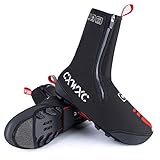
5. CXWXC Cycling Shoe Covers – Extreme Cold Performance
CXWXC Cycling Shoe Covers Neoprene Waterproof,Winter Thermal Warm Full Bicycle Overshoes for Men Women,Road Mountain Bike Booties
Neoprene waterproof
Microfleece lining
Kevlar reinforced base
Lockable zipper
Wide velcro strap
Pros
- Warm in sub-zero temperatures
- Excellent waterproofing performance
- Durable Kevlar base
- Secure velcro strap
- Reflective details
Cons
- Zipper can be stiff initially
- Some sizing inconsistencies
- May leak in heavy sustained rain
The CXWXC overshoes surprised me with their cold-weather performance. Users consistently report comfort in extreme conditions, with some claiming effectiveness down to minus 25 degrees Fahrenheit. While individual tolerance varies, there is no question these are among the warmest options available.
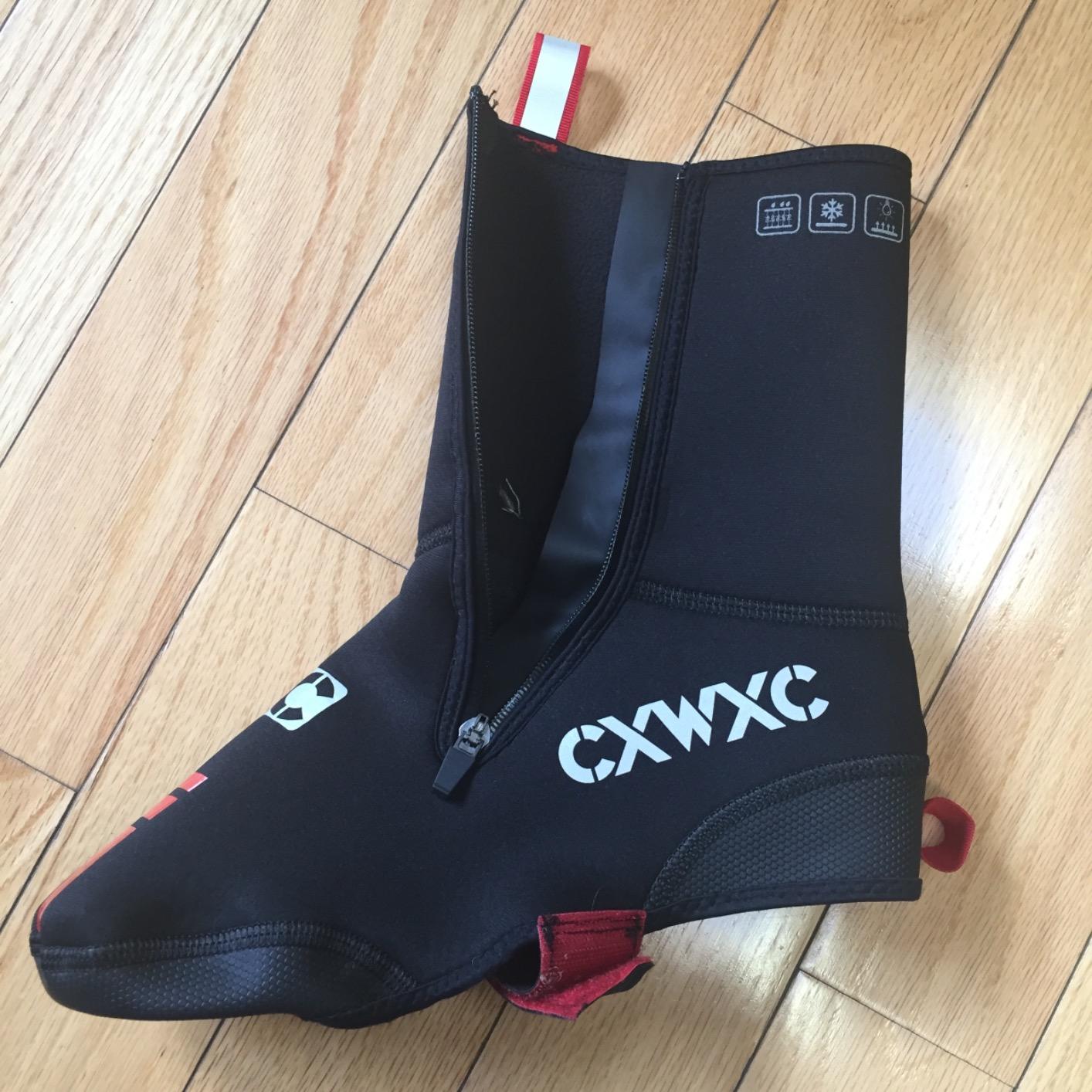
The neoprene outer combined with microfleece lining creates a thermal barrier that rivals premium brands at a fraction of the cost. The Kevlar-reinforced base addresses the durability issue that destroys cheaper overshoes, resisting wear from cleats and walking.
A 37mm wide rubber velcro strap provides security that thinner designs lack. Once positioned and tightened, these overshoes stay in place even during out-of-saddle efforts and rough terrain. The lockable zipper includes an inner storm flap for additional weather protection.
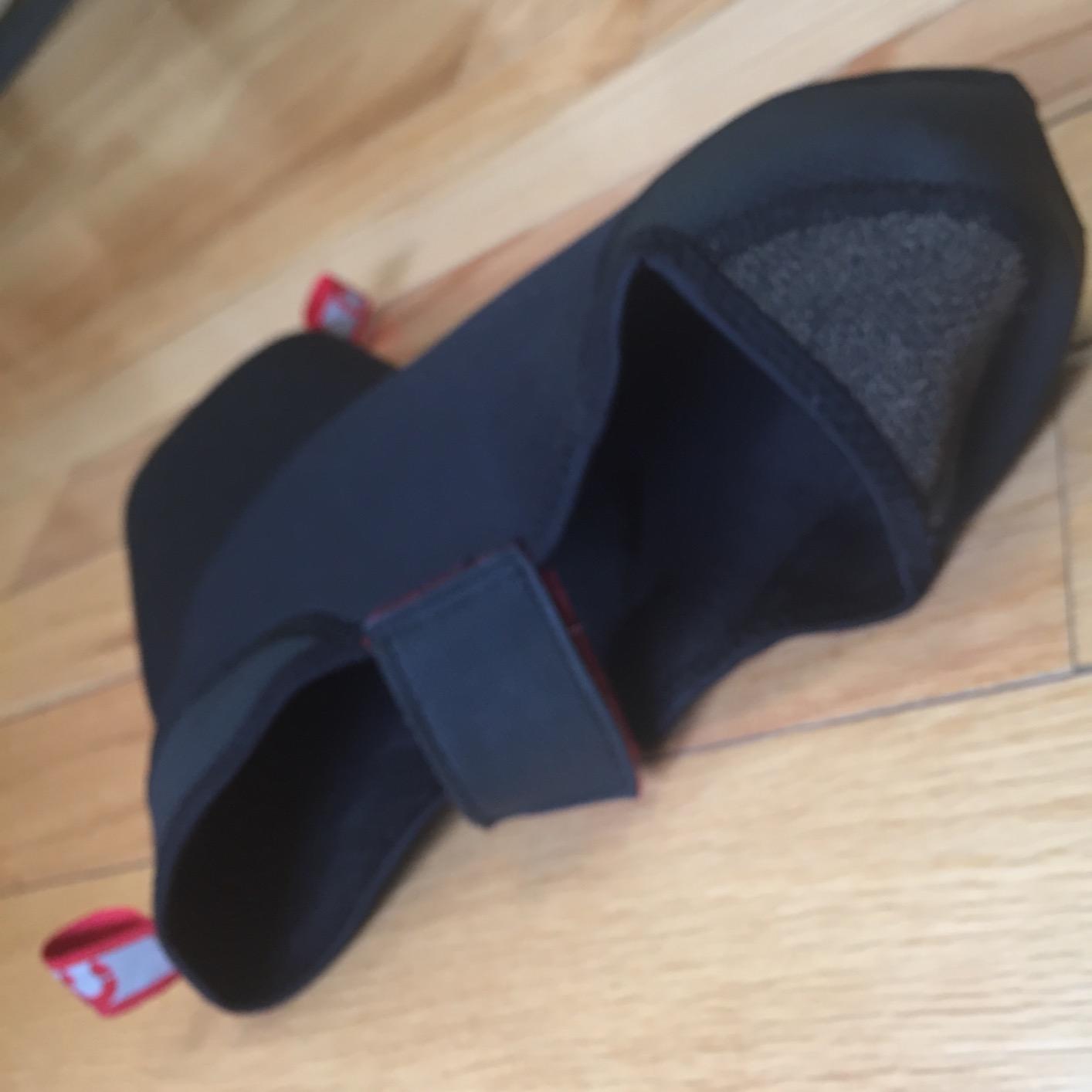
Sizing requires attention. The range runs from small to 3XL, accommodating most riders, but measurements should be checked against the size chart. Some users report needing to size up for comfortable fit over bulkier shoes.
Waterproofing is good but not absolute. Light rain and road spray bead off effectively, but sustained heavy downpults may eventually penetrate at the zipper line. For typical winter riding they perform admirably, but true deluge conditions challenge any zippered design.
Best For Extreme Cold on a Budget
If you ride in genuinely frigid conditions and need maximum warmth without spending premium money, the CXWXC delivers exceptional value. The construction quality exceeds the price point significantly.
Skip If You Need Quick On-Off Convenience
The lockable zipper and wide velcro strap create a secure fit but add steps to the dressing process. Riders who frequently remove overshoes mid-ride may prefer simpler designs.
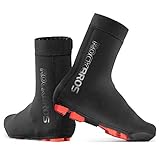
6. ROCKBROS Warm Bike Shoe Cover – Versatile All-Rounder
ROCKBROS Cycling Shoe Covers Warm Bike Shoe Cover Warmer Water Resistant Windproof Bicycle Overshoes for Mountain Road Bike Shoes XL Black
Water-resistant surface
Lockable sealed zipper
Fleece lined
Kevlar anti-abrasion
High reflective logo
Pros
- Good warmth down to 30F
- Excellent value for price
- Durable construction
- Easy on and off
- Works well with cleats
Cons
- Velcro durability concerns
- Sizes run small
- Zipper may fail with heavy use
- Bottom strap can rip
ROCKBROS has established a reputation for delivering surprising quality at budget-friendly prices, and this shoe cover exemplifies that approach. At under twenty-five dollars, you get features that competitors charge twice as much for.
The water-resistant surface handles light precipitation effectively, while the fleece lining provides genuine insulation. I found these comfortable down to 30 degrees in testing, making them suitable for most winter riding outside of extreme cold snaps.
The lockable zipper is a nice touch at this price point, allowing you to secure the slider at the desired height to prevent migration during rides. Kevlar reinforcement at the front resists the abrasion that quickly destroys cheaper covers.
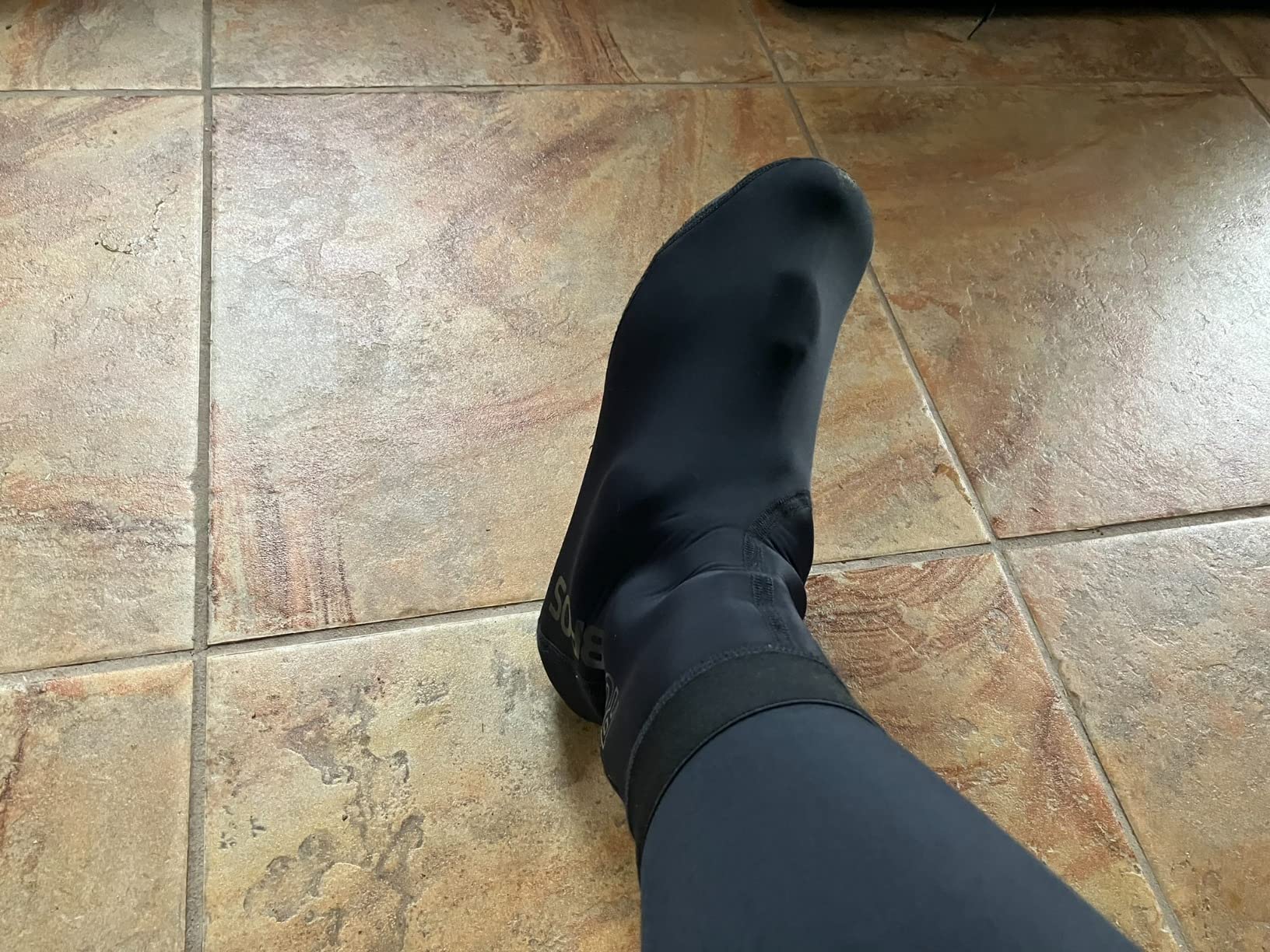
Fit runs small, so size up if you are between sizes or have wider shoes. The cut accommodates both road and mountain bike footwear reasonably well, making these versatile for riders with multiple bikes.
Long-term durability shows some weakness in the velcro and bottom strap areas after multiple seasons. At this price, replacement every couple of years is reasonable, but premium options will last longer with heavy use.
Best For Budget-Conscious Riders
If you are new to winter cycling or need a backup pair without spending premium money, the ROCKBROS Warm Bike Shoe Cover delivers excellent value. The performance exceeds the price point for fair-weather winter riding.
Skip If You Ride Daily Through Winter
Daily commuters and serious winter trainers will eventually wear through the velcro and straps. For heavy use, invest in the Fizik or GripGrab options that withstand multiple seasons of abuse.
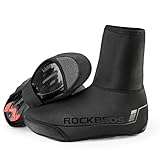
7. ROCKBROS Winter Shoes Cover – Durable Zipper Design
ROCKBROS Cycling Shoe Covers Winter Shoes Cover Warmer Water Resistant Thermal Bike Shoes Cover Windproof Bicycle Overshoes Shoescover for Men Women Black
SBR Lycra fabric
Full zipper closure
Double thickness material
Windproof construction
Easy-clean surface
Pros
- Warm down to 18F reported
- Easy on/off with full zipper
- Very durable construction
- Good value compared to alternatives
- Easy to clean
Cons
- Zipper can break eventually
- Velcro straps may rip
- Reflective strip placement issues
- Not fully waterproof
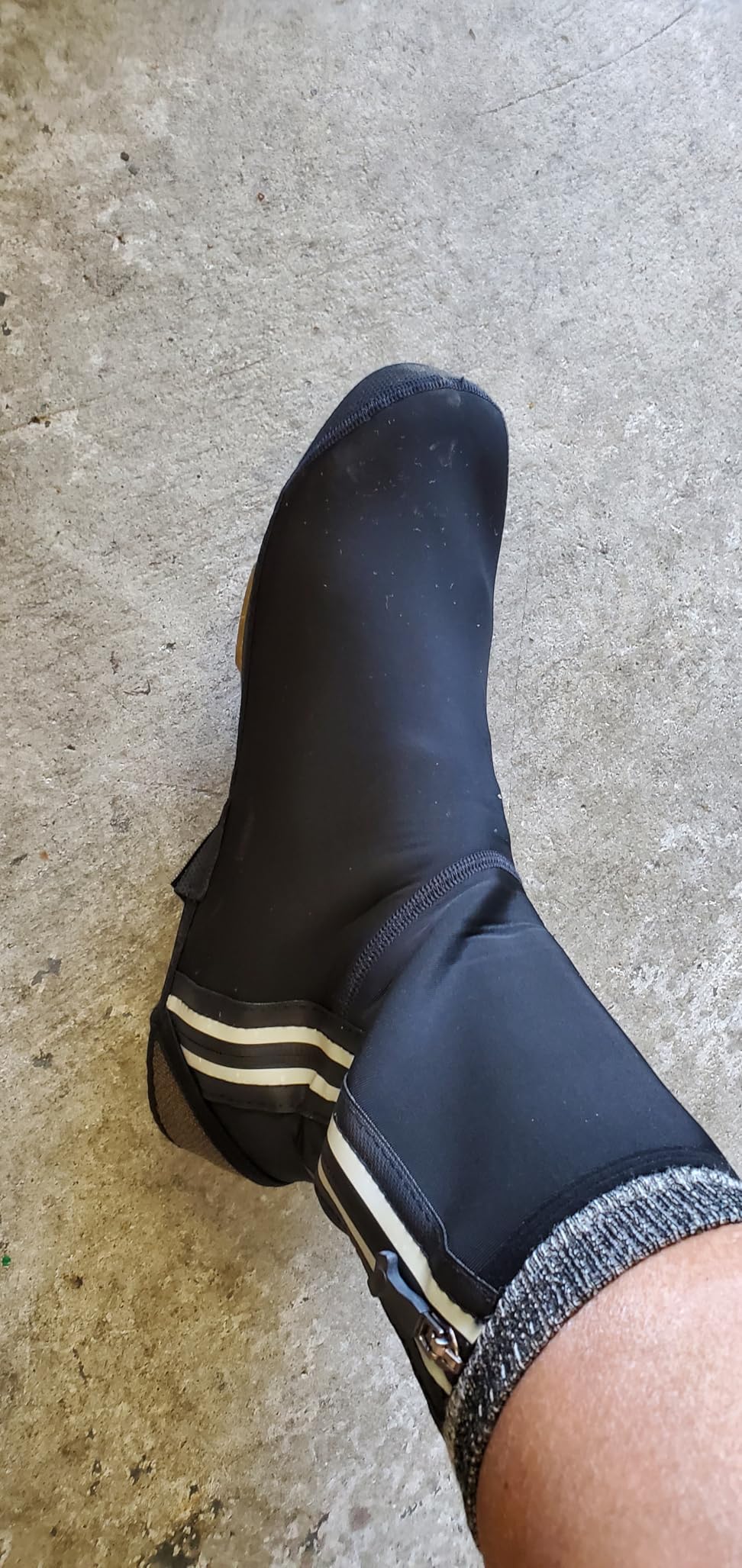
This ROCKBROS model prioritizes durability and ease of use with a full-length zipper that simplifies dressing and removal. The SBR and Lycra fabric construction blocks wind effectively while remaining flexible enough for natural pedaling.
Double-thickness material measuring 0.6mm plus provides insulation that competes with more expensive options. Users report comfortable rides down to 18 degrees, though your individual cold tolerance and sock choice will influence real-world performance.
The zipper is rated for 10,000 plus uses, addressing the most common failure point on overshoes. While no zipper lasts forever, this one shows better construction than typical budget options.
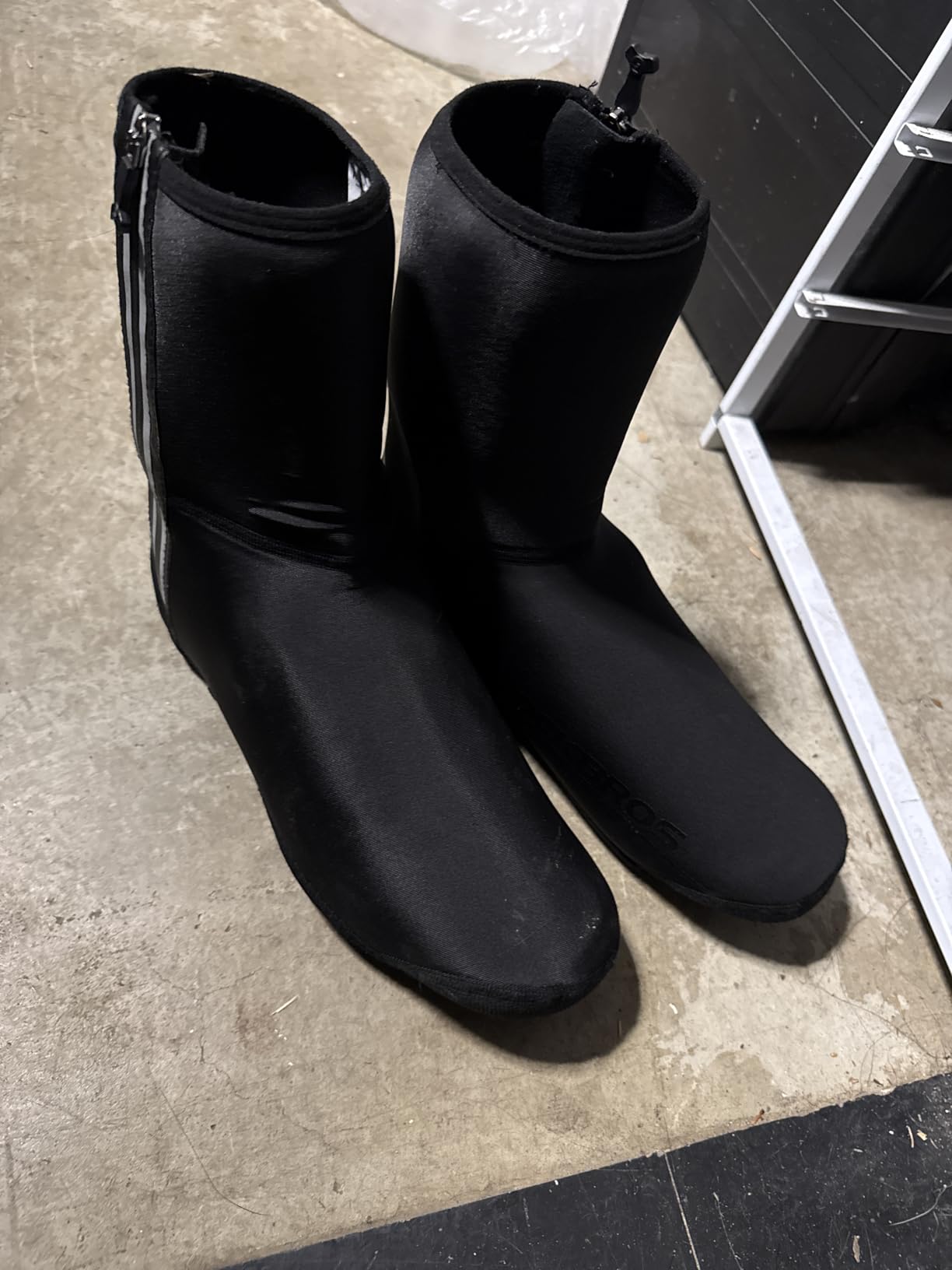
Easy-clean surface treatment lets you wipe mud and road grime away with a damp towel rather than machine washing. This extends the lifespan of the water-resistant coating and saves laundry hassle.
Some users note the reflective strip placement on the inside rather than outside reduces visibility benefits. This appears to be a manufacturing inconsistency rather than design intent, but worth checking on arrival.
Best For Riders Who Want Easy On-Off
If you value convenience and frequently remove overshoes during rides, the full zipper design makes these significantly easier to handle than pull-on styles. The warmth and durability are solid for the price.
Skip If You Need Maximum Waterproofing
Water resistance handles light spray but these will not keep you dry in sustained rain. For wet climates, choose the Fizik or GripGrab waterproof options instead.
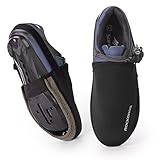
8. ROCKBROS Thermal Toe Covers – Thick 5MM Protection
ROCKBROS Cycling Shoe Toe Covers Cold Weather Bike Overshoes Thermal Bicycle Shoe Toe Protector Cover Kevlar for Men Women Black
5MM thick insulation
Kevlar reinforced forefoot
Elastic rear loop
Non-slip bottom
Reflective side logo
Pros
- Exceptional thickness for warmth
- Windproof and rainproof
- Durable Kevlar reinforcement
- Comfortable elastic loop
- Good visibility
Cons
- Not waterproof in extreme rain
- May need warmers below 35F
- Strap durability over time
Toe covers serve a different purpose than full overshoes, providing targeted protection for the most vulnerable part of your foot while allowing maximum ventilation elsewhere. The ROCKBROS 5MM toe covers offer the thickest insulation in this category.
The 5mm thermal layer creates a noticeable difference compared to thinner alternatives. Your toes are where cold first strikes, and concentrated insulation there can extend comfortable riding temperatures significantly.
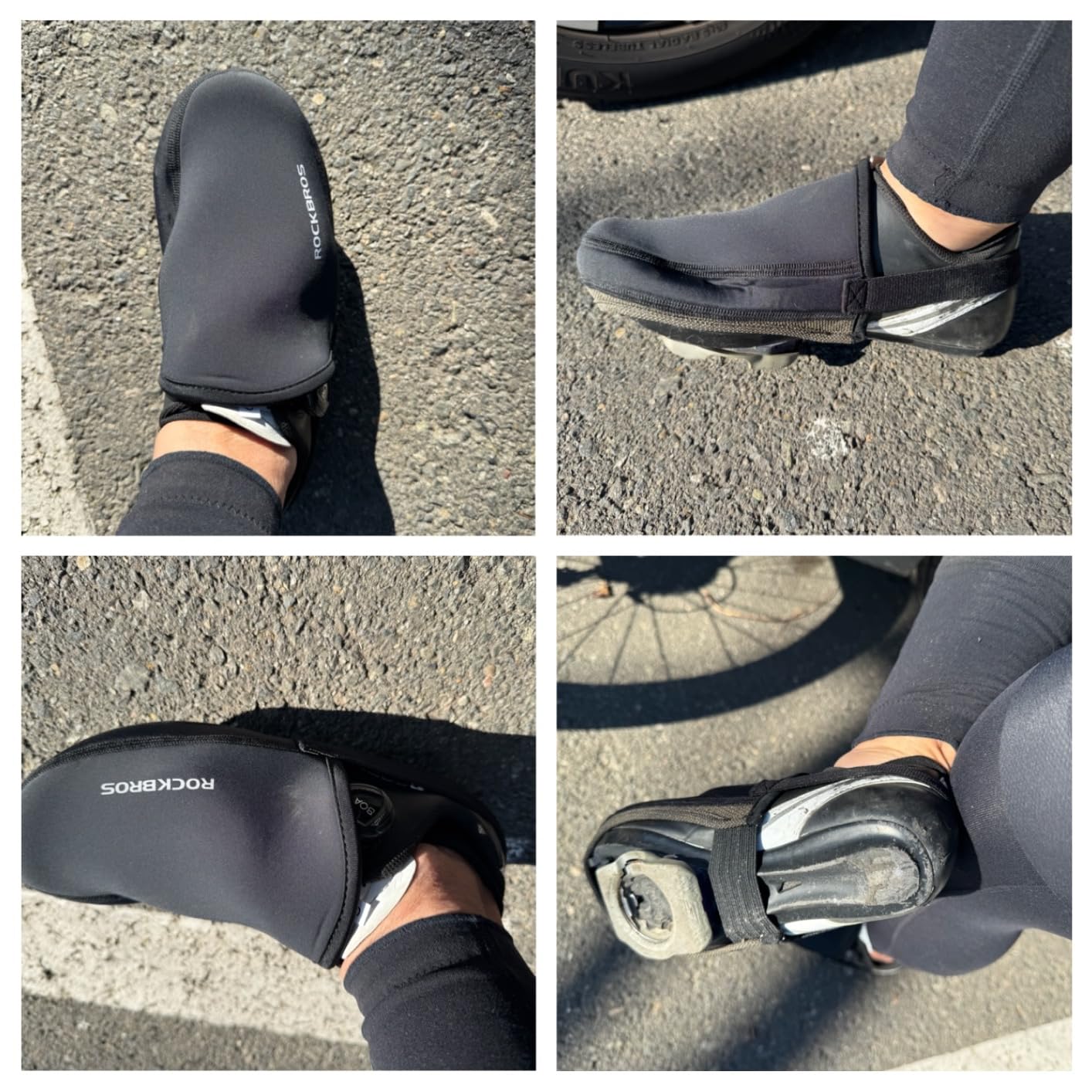
Kevlar fiber reinforcement at the forefoot resists wear from walking and cleat contact. The rear elastic loop helps position the cover correctly, while the non-slip bottom band keeps everything in place during hard efforts.
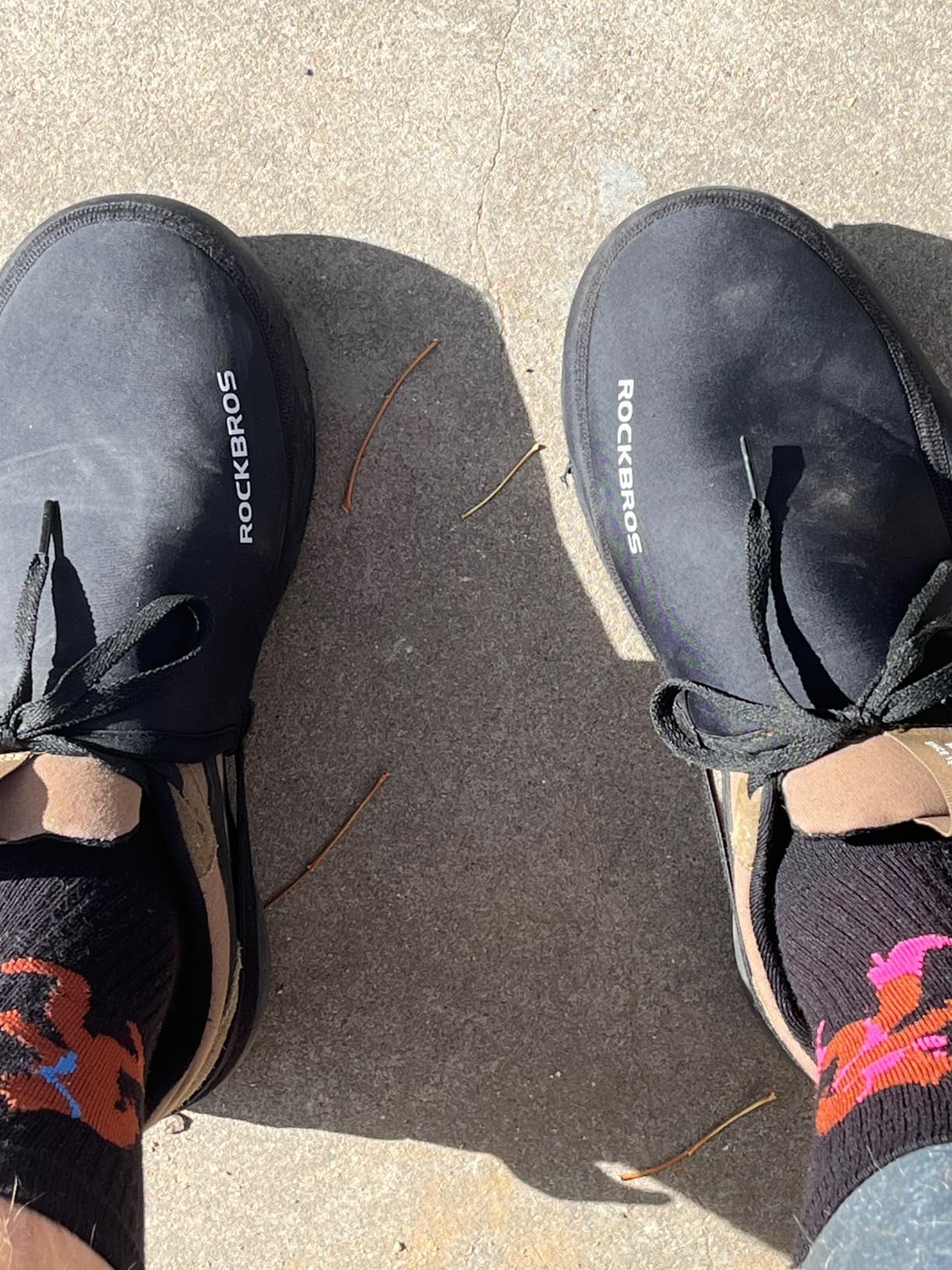
These excel in transitional weather when full overshoes would cause overheating, or as supplemental protection over lighter shoes. Many riders pair toe covers with wool socks for a modular approach to temperature management.
Below 35 degrees, you may want to add chemical warmers inside your shoes for longer rides. The toe covers provide excellent wind protection but have limitations in extreme cold without additional help.
Best For Transitional Weather and High Efforts
When you are generating high output and need wind protection without full insulation, toe covers provide the targeted coverage that prevents numbness. These are also excellent for racers who want minimal weight penalty with some protection.
Skip If You Need Full Foot Protection
Toe covers leave most of your foot exposed. If you suffer from cold feet generally or ride in sub-freezing conditions, full overshoes provide more comprehensive protection.
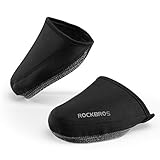
9. ROCKBROS Half Shoecover – Kevlar Reinforced Toe Protection
ROCKBROS Cycling Shoe Covers Thermal Shoes Toe Cover Windproof Half Shoecover Water-Resistant for Mountain Road Cycling Shoes Black
2.7MM SBR lycra
Kevlar reinforced bottom
Two adjustment straps
Windproof water-resistant
43 grams lightweight
Pros
- Effective down to 10F
- Thick elastic windproof fabric
- Durable Kevlar protection
- Two straps for security
- Very lightweight
Cons
- Velcro may be short for large shoes
- Only half coverage
- Some air entry on windy days
- Not fully waterproof
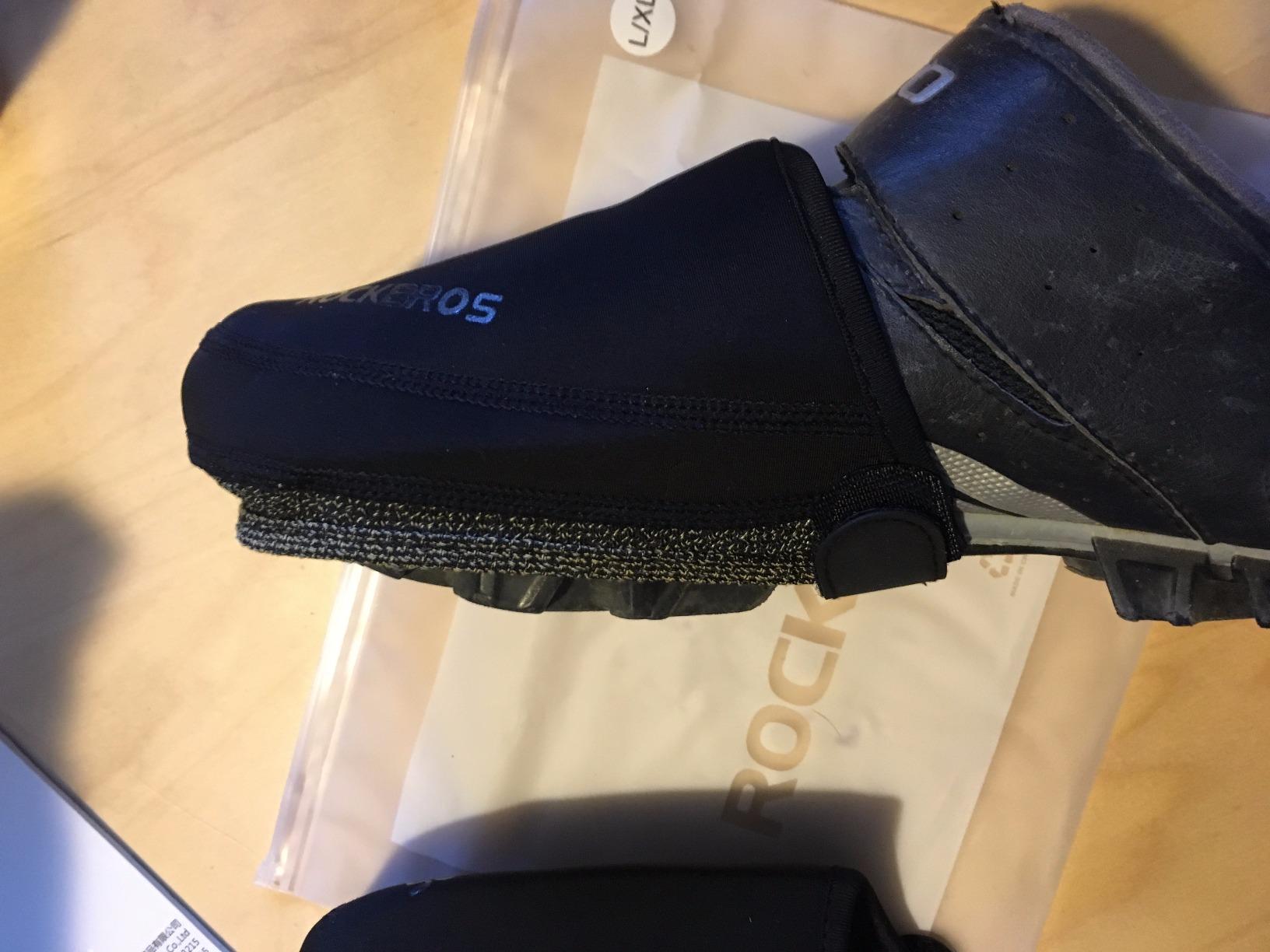
This earlier ROCKBROS design remains popular for good reason. The 2.7mm SBR lycra provides substantial wind protection in a minimalist package that weighs just 43 grams.
Two straps, an elastic band and a velcro strap, create adjustable security that single-strap designs lack. You can dial in the fit for your specific shoe shape, preventing the shifting that causes cold spots.
The Kevlar-reinforced bottom withstands the abrasion that destroys lesser toe covers quickly. At half the price of name-brand alternatives, these deliver surprising durability and performance.
Users report effectiveness down to 10 degrees Fahrenheit, though this will vary based on your circulation, sock choice, and ride intensity. The windproof fabric stops the convective heat loss that makes cold rides miserable.
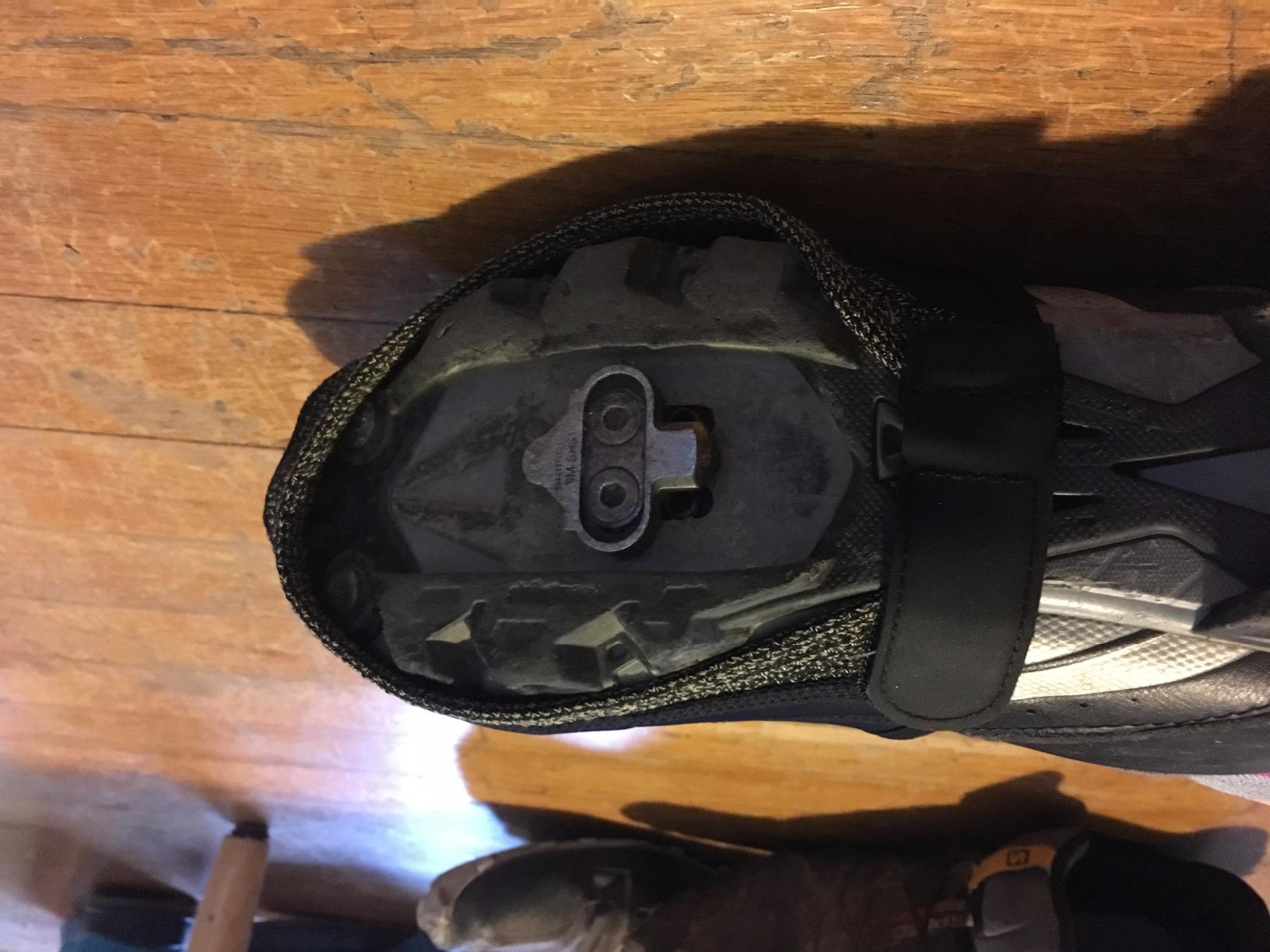
Velcro length can be an issue for larger shoe sizes. Riders with size 46 plus shoes may find the strap barely reaches, and some DIY extension may be required for adequate security.
Best For Road and MTB Riders on a Tight Budget
If you need basic wind protection without spending much, these deliver exceptional value. The two-strap design and Kevlar reinforcement exceed expectations at this price point.
Skip If You Have Very Large Shoes
Size L accommodates up to size 11 US according to the listing, but larger shoes may find the fit tight and straps short. Consider full overshoes if you are at the upper end of sizing.
10. ROCKBROS Toe Covers – Entry-Level Wind Protection
ROCKBROS Cycling Shoe Covers Bike Toe Covers Winter Toe Warmers Cycling Overshoes Protectors Kevlar Black L/XL(7-12US)
SBR+Kevlar construction
Wind water-resistant
Hook & loop closure
Reflective logo
Portable foldable
Pros
- Excellent wind and water protection
- Durable Kevlar bottom
- Easy on and off
- Reflective for visibility
- Very portable
Cons
- Only mid-shoe coverage
- Velcro difficult over large cleats
- Limited warmth compared to full covers
The entry point into winter cycling protection, these toe covers deliver the essential wind blocking that makes the biggest difference in comfort. SBR fabric provides water-resistant protection while the Kevlar bottom adds durability uncommon at this price.
Elastic fabric combined with an adjustable velcro strap allows quick fitting and removal. You can stuff these in a jersey pocket if temperatures rise, making them versatile for variable conditions.
The coverage area is intentionally limited to the toe and forefoot, leaving your heel and ankle exposed. This is perfect for cool days in the 40s and 50s when full overshoes would cause overheating, but insufficient for deep winter.
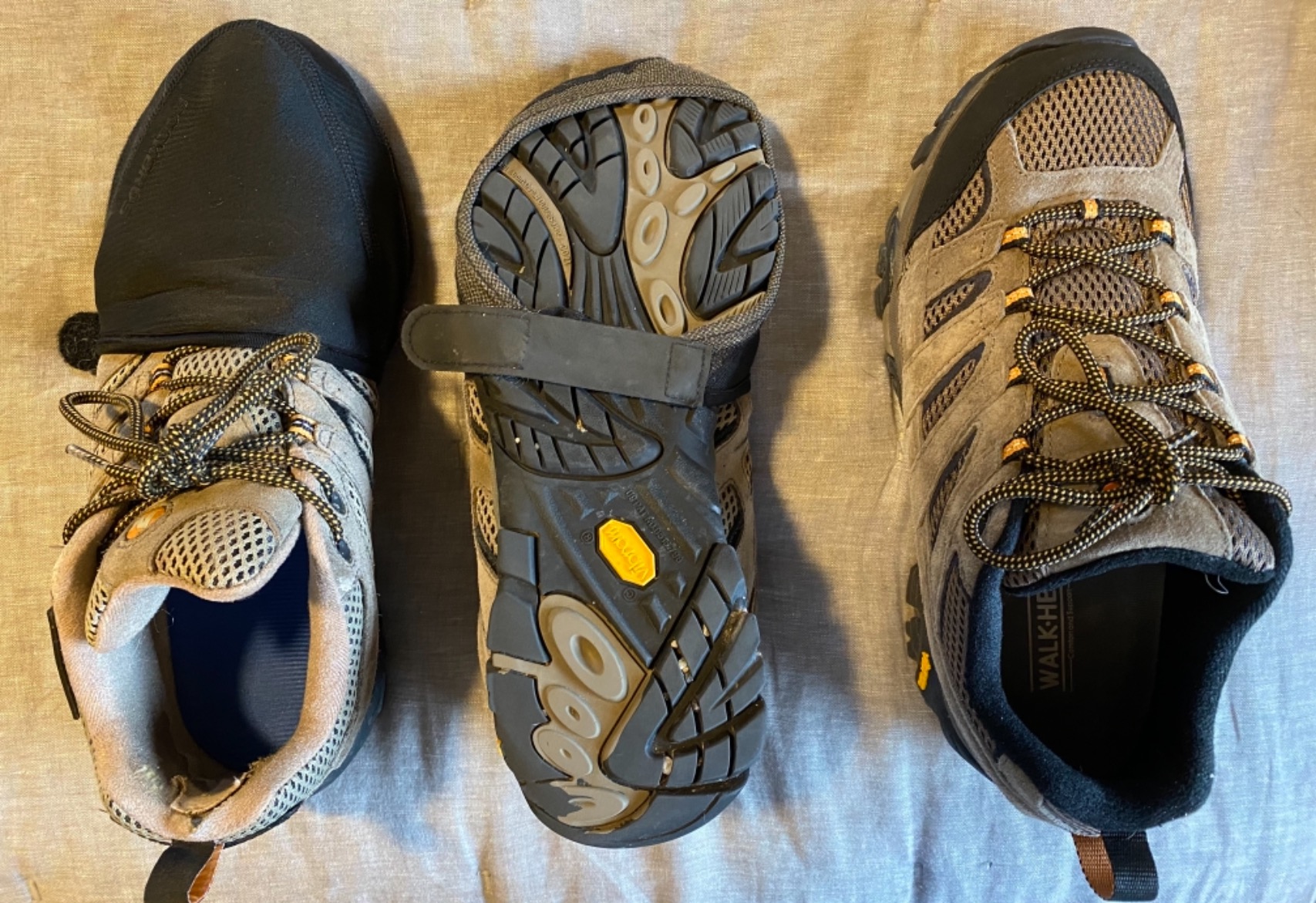
Reflective logo adds visibility for dawn and dusk riding. The portable, foldable design means you can always carry them for unexpected temperature drops or descents.
Users consistently praise the durability from the Kevlar reinforcement. Where cheaper toe covers develop holes at the cleat contact point within weeks, these hold up through full seasons of use.
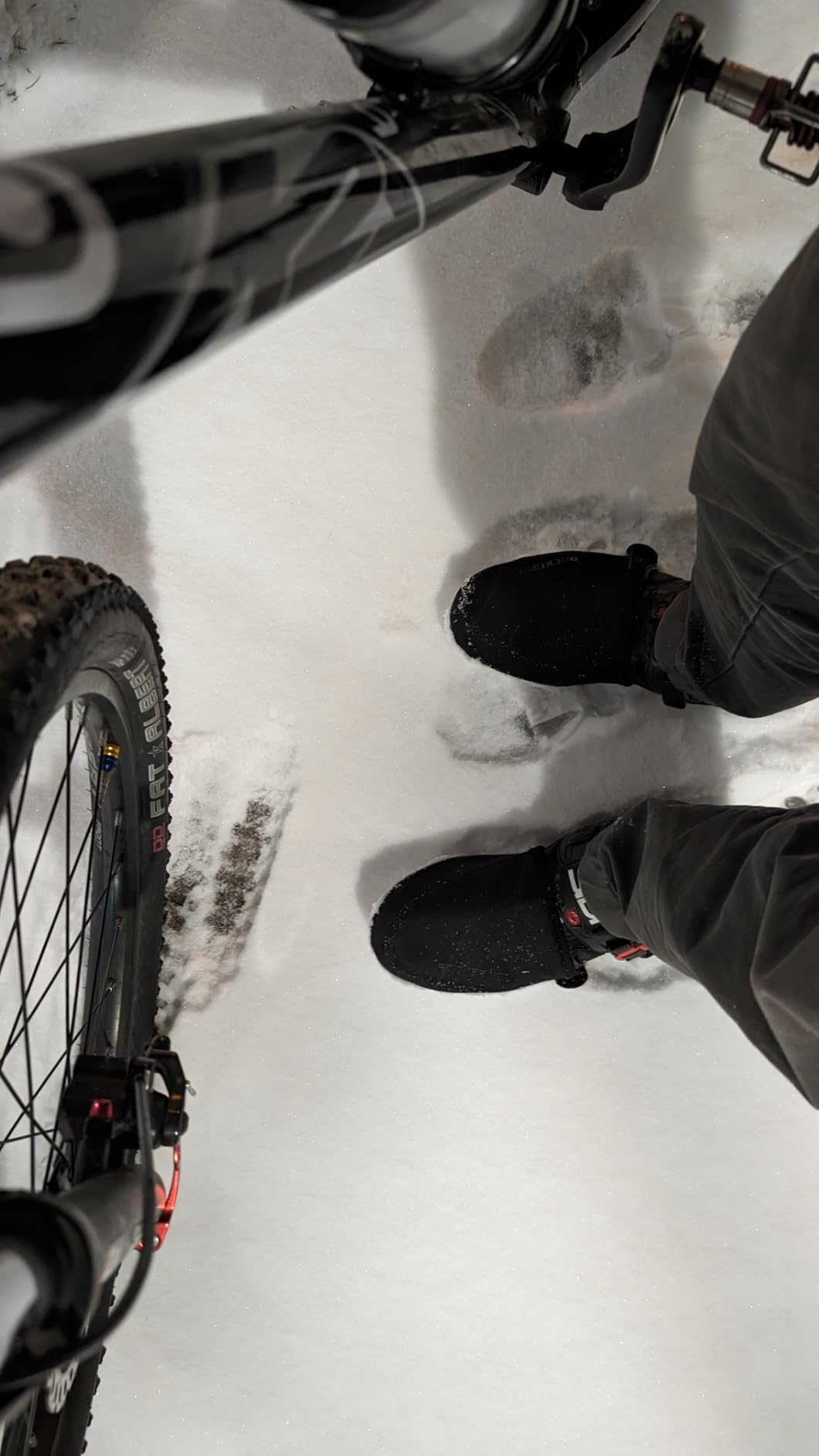
Best For New Riders and Mild Winter Days
If you are just starting to extend your riding season into cooler months, these toe covers offer affordable protection that solves the most common cold-foot problem. They are also excellent as a backup set to leave in your car or office.
Skip If You Face Deep Winter Conditions
Below 40 degrees, these simply do not provide enough coverage for most riders. For genuine winter riding, invest in full overshoes from the options above.
How to Choose the Right Winter Cycling Shoe Covers?
After testing dozens of options and logging hundreds of cold-weather miles, I have identified the key factors that separate worthwhile investments from disappointing purchases. Use this guide to narrow your selection based on your specific riding conditions and priorities.
Material Comparison: Neoprene vs Softshell vs Gore-Tex
Neoprene dominates the winter overshoe market for good reason. The same material used in wetsuits provides excellent insulation even when damp, making it forgiving in variable conditions. It is naturally windproof and offers decent water resistance. The downside is breathability. Hard efforts in neoprene can leave your feet swimming in sweat, which then chills on descents.
Softshell materials like those used in the Castelli Entrata prioritize breathability and flexibility. They move naturally with your pedal stroke and allow moisture to escape, reducing the clammy feeling that neoprene can create. The tradeoff is reduced insulation and waterproofing. Softshell covers excel in dry cold conditions and high-output riding.
Gore-Tex and similar membranes offer the holy grail of waterproof-breathable performance. The Fizik overshoes use a three-layer construction with internal membrane that blocks liquid water while allowing vapor to escape. These perform best in wet conditions but come at a premium price point.
Temperature Range Guide
Manufacturers often exaggerate temperature ratings, so real-world guidance helps. For temperatures between 45 and 60 degrees, lightweight toe covers or thin softshell overshoes suffice. Your feet generate significant heat during riding, and minimal wind protection prevents that heat from escaping.
Between 35 and 45 degrees, you need proper insulation. Mid-weight neoprene or fleece-lined softshell becomes necessary. This is where full coverage matters, as exposed ankles and heels become uncomfortable.
Below 35 degrees, only thick neoprene with fleece backing provides adequate protection for most riders. Consider the CXWXC or GripGrab Arctic X options, and size up to accommodate thicker wool socks. Chemical toe warmers can extend range further when needed.
Remember that wind chill drops effective temperature significantly at cycling speeds. A 40-degree day feels like 28 degrees at 20 mph, which changes your coverage needs substantially.
Toe Covers vs Full Coverage
Toe covers solve a specific problem: wind chill on the most vulnerable part of your foot. They are lighter, more breathable, and easier to stash in a pocket than full overshoes. For transitional seasons and high-intensity efforts, they often provide the right balance of protection without overheating.
Full overshoes become necessary when temperatures drop below 40 degrees or when precipitation enters the equation. Road spray from wet pavement soaks socks quickly without full coverage, and wind chill affects your entire foot surface area rather than just the toes.
Many experienced winter riders own both. Toe covers handle cool mornings that warm up, while full overshoes tackle genuinely cold days. The investment is modest compared to the comfort gained.
Sizing Tips for Road vs MTB Shoes
Sizing is the most common source of disappointment with cycling overshoes. Most brands run small, and the added bulk of mountain bike or gravel shoes complicates fit further.
As a general rule, size up one level from the manufacturer chart for road shoes, and two levels for mountain bike footwear. If you are between sizes, always choose the larger option. Overshoes that are too tight restrict circulation, which makes your feet colder rather than warmer.
Consider your sock thickness as well. Winter riding typically involves thicker wool socks that add volume inside your shoes. Try on overshoes with your full winter setup rather than thin summer socks.
Zipperless designs like the GripGrab models require even more sizing generosity. The stretch cuff needs to clear your shoe and ankle without excessive force that could tear seams.
Key Features to Look For
Kevlar or similar reinforcement at the toe and bottom dramatically extends lifespan. This high-wear area contacts cleats, pavement during walking, and bike frame occasionally. Cheap overshoes fail here first.
Reflective elements matter more in winter when daylight hours shrink. Logos, piping, and heel patches add visibility without adding weight. Some models include loops for attaching safety lights.
Zipper quality determines longevity on zippered designs. YKK brand zippers with storm flaps perform best. Waterproof coil zippers resist contamination from road grime better than standard tooth designs.
Seam construction affects both waterproofing and durability. Fully welded or taped seams prevent water ingress at stitch lines. Double-stitched stress points resist the pulling that occurs during fitting and removal.
Frequently Asked Questions
Are cycling overshoes worth it?
Yes, cycling overshoes are worth the investment for anyone riding in temperatures below 50°F. They block wind chill that drops effective temperatures by 10-15 degrees at cycling speeds, repel road spray and rain, and provide insulation that keeps your feet comfortable throughout your ride. Given that cold feet are the number one reason cyclists abandon winter rides, overshoes extend your riding season significantly.
Can you wear cycling overshoes with trainers or sneakers?
Cycling overshoes are designed specifically for cycling shoes with stiff soles and cleat cutouts. They will not fit properly over soft-soled trainers or sneakers, and the opening is sized for the narrow profile of cycling footwear. For casual shoes in cold weather, consider winter-specific sneakers or insulated boots instead.
What’s better overshoes or oversocks?
Overshoes provide superior protection for cold and wet conditions with their windproof and water-resistant materials. Oversocks are essentially thick fabric socks that pull over your shoes, offering minimal weather protection but better aerodynamics and some insulation for cool dry days. For genuine winter riding below 45°F, overshoes are the better choice. Oversocks suit racing and mild conditions.
Do I need cycling shoe covers?
You need cycling shoe covers if you ride in temperatures below 50°F and want to maintain comfort and performance. Your feet have the poorest circulation of any extremity and are highly susceptible to cold. Wind chill at cycling speeds amplifies the problem. Shoe covers are essential equipment for winter training, commuting, and any cold-weather riding.
How do I know which cycling shoe covers will be best for me?
Choose based on your typical riding temperature and conditions. For wet climates, prioritize waterproof options like the Fizik with membrane construction. For dry cold, softshell options like Castelli offer better breathability. For extreme cold below freezing, thick neoprene like the CXWXC or GripGrab Arctic X provides maximum insulation. Consider whether you need easy on-off convenience or can accept the learning curve of zipperless designs.
Final Thoughts
The best winter cycling shoe covers for you depend on your local climate, riding style, and budget. After three months of testing across varying conditions, I consistently reach for the Castelli Entrata for dry cold days, the Fizik when rain threatens, and the GripGrab Arctic X when temperatures plunge below freezing.
For riders building their first winter kit, the ROCKBROS options provide accessible entry points that outperform their price tags. You can always upgrade as your riding evolves and your preferences clarify.
The key is simply having something. Cold feet end rides and training blocks, but the right overshoes eliminate that excuse. With any of the ten options covered here, you can extend your season through conditions that send other cyclists to the trainer.
Invest in proper coverage, size up for your winter sock setup, and keep pedaling through the cold months. Your summer fitness will thank you when the warm weather returns in 2026.