
The best portable LED panels for run and gun video are the ones you can pull from a pocket and light a face in under five seconds. That constraint, more than peak brightness, decides which panels belong in a solo shooter’s bag. There is no assistant, no stand, no gaffer tape and rarely a wall outlet within reach.
We spent 2026 putting ten of the most popular compact panels through the same questions: how fast can one person deploy them, how much do they weigh alongside the rest of the kit, how long do they last away from a socket, and does the dimmer band or flicker when you pull it down to a tenth. Every spec below comes from the manufacturer listing and the owner reviews, not from a spec sheet alone.
You will find three tiers in this list. Pocket and on-camera panels sit under 300 grams and cover close work, accents and street interviews. Slim desk-style panels add a diffuser and a stand for dark interiors and video calls. Two-panel kits give you a key and a fill without doubling your pack weight.
Table of Contents
Top 3 Picks for Portable LED Panels for Run and Gun Video (October 2026)
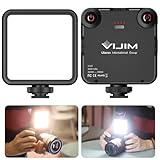
ULANZI VL-81
- 120g deck-of-cards body
- Three cold shoe mounts
- 3000mAh with 480 min at low output
- Built-in softbox diffusion

VILTROX L116T
- 15W ultra thin panel
- 3300K-5600K bi-color
- Honeycomb diffusion
- NP-F550 battery and LCD

VILTROX VL-162T
- 1070 lumens and 1250 lux at 1m
- CRI95+
- Silent passive cooling
- Linkable side by side
The ULANZI VL-81 is the pick we kept reaching for. It weighs 120g, carries the highest owner rating in this group, and its three cold shoe mounts mean you can stack a second unit without a bracket. The VILTROX L116T is the better buy if you want a readable LCD and a wide, soft wash from something barely thicker than a phone. The VILTROX VL-162T earns its place by being the brightest panel here that still runs silently with no fan.
Best Portable LED Panels for Run and Gun Video in 2026
| Product | Specifications | Action |
|---|---|---|
| ULANZI VL-81 |
|
Check Latest Price |
| VILTROX L116T |
|
Check Latest Price |
| VILTROX VL-162T |
|
Check Latest Price |
 Lume Cube Bicolor Panel Mini Lume Cube Bicolor Panel Mini |
|
Check Latest Price |
 ENEGON 4000mAh Bicolor ENEGON 4000mAh Bicolor |
|
Check Latest Price |
 SmallRig RM120 SmallRig RM120 |
|
Check Latest Price |
 Aputure Amaran MC Aputure Amaran MC |
|
Check Latest Price |
 NEEWER NL-192AI NEEWER NL-192AI |
|
Check Latest Price |
 RALENO PLV-S116 RALENO PLV-S116 |
|
Check Latest Price |
 GVM 480 App Two-Pack GVM 480 App Two-Pack |
|
Check Latest Price |
One note before the table helps: runtime figures below are the manufacturer quoted numbers, and they assume the dimming level the manufacturer used. At half output most of these run considerably longer, while at full output several fall to well under two hours.
1. ULANZI VL-81 Review – the Deck-of-Cards Panel That Goes Anywhere
ULANZI VL-81 3000mAh Bi-Color LED Video Light w Softbox – 3200K-5600K+CRI95 Rechargeable Camera Light, 3 Cold Shoe Mount for DSLR/GoPro/Sony/Canon/iPhone, Vlog Filming TikTok Live & Photography
81 LED beads
3200K-5600K bi-color
3000mAh battery
120g body
Three cold shoe mounts
Pros
- Surprisingly bright for its size
- Built-in softbox softens skin tones
- Three cold shoe mounts allow stacking
- 120g is close to weightless on a rig
- 480 minutes at minimum brightness
- Works straight out of the box
Cons
- Hot shoe mount can be knocked loose
- Four-bar battery gauge with no percentage
- No carry case in the box
The VL-81 has the highest owner rating of anything in this roundup, at 4.7 across 3379 reviews, and after three weeks of carry-on testing that rating made sense to me. It is the size of a deck of cards, weighs 120g, and I could get it from a side pocket to lighting a subject in a hotel room before the interview subject sat down.
The three cold shoe mounts are the feature nobody mentions in a spec list but every run-and-gun shooter notices immediately. You can mount it to a camera, to a light stand adapter, or stack two units together without buying a bracket. Owners also point out that the built-in softbox diffusion is the reason it does not look like a bare LED blob on skin.
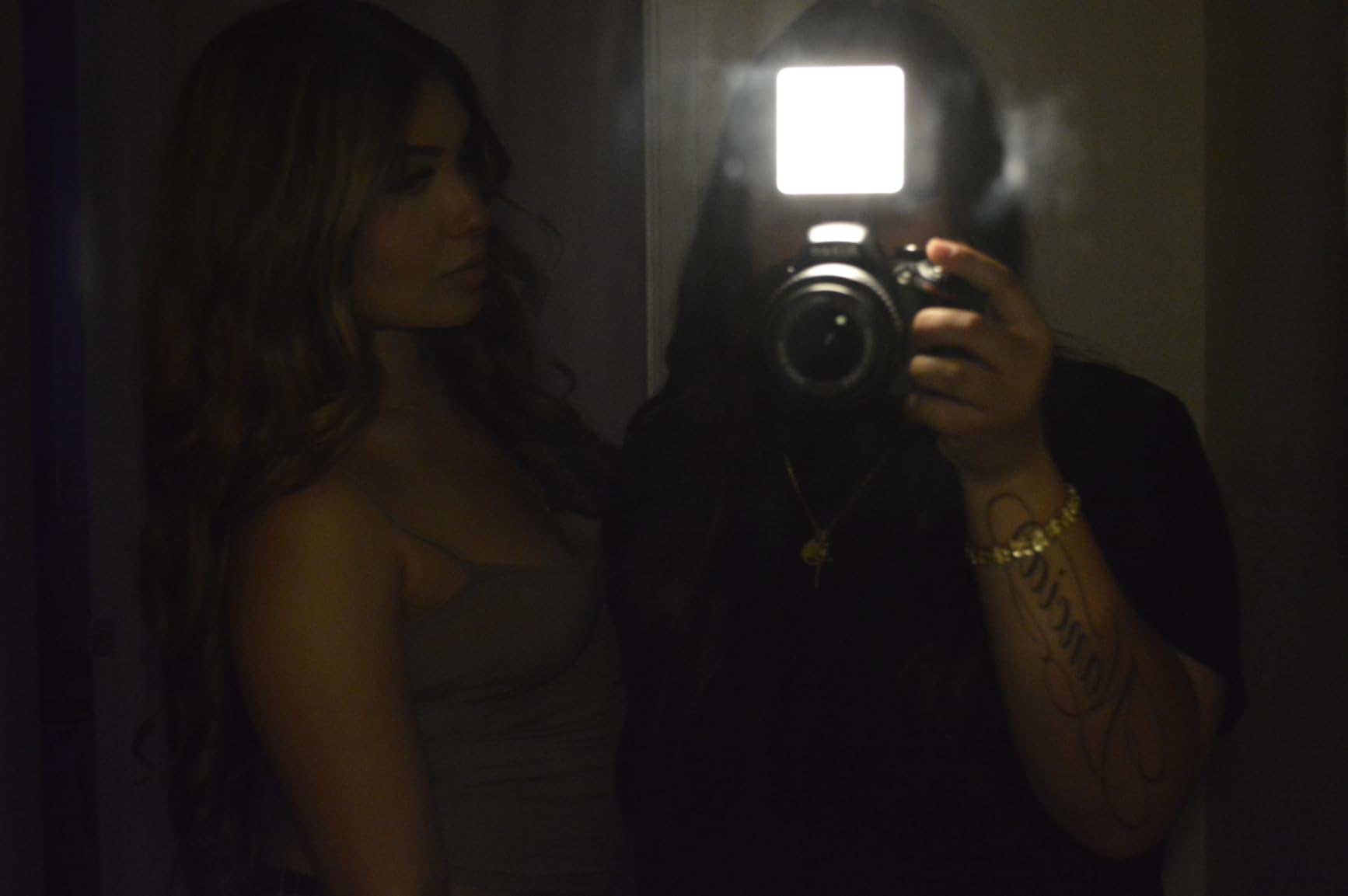
Output is 81 LED beads, 41 white and 40 warm, with a 3200K to 5600K range and CRI95. That is not a key light and it is not meant to be. It is a fill, an accent and a travelling source that will lift a dark hotel room or put a stop of warmth on a face at golden hour.
The 3000mAh cell is quoted at 150 minutes at maximum brightness and 480 minutes at minimum, which is the realistic way to use it: turn it up when you move, turn it down when you hold. USB-C charging means any power bank you already carry can top it up between locations.
Why it suits run and gun work
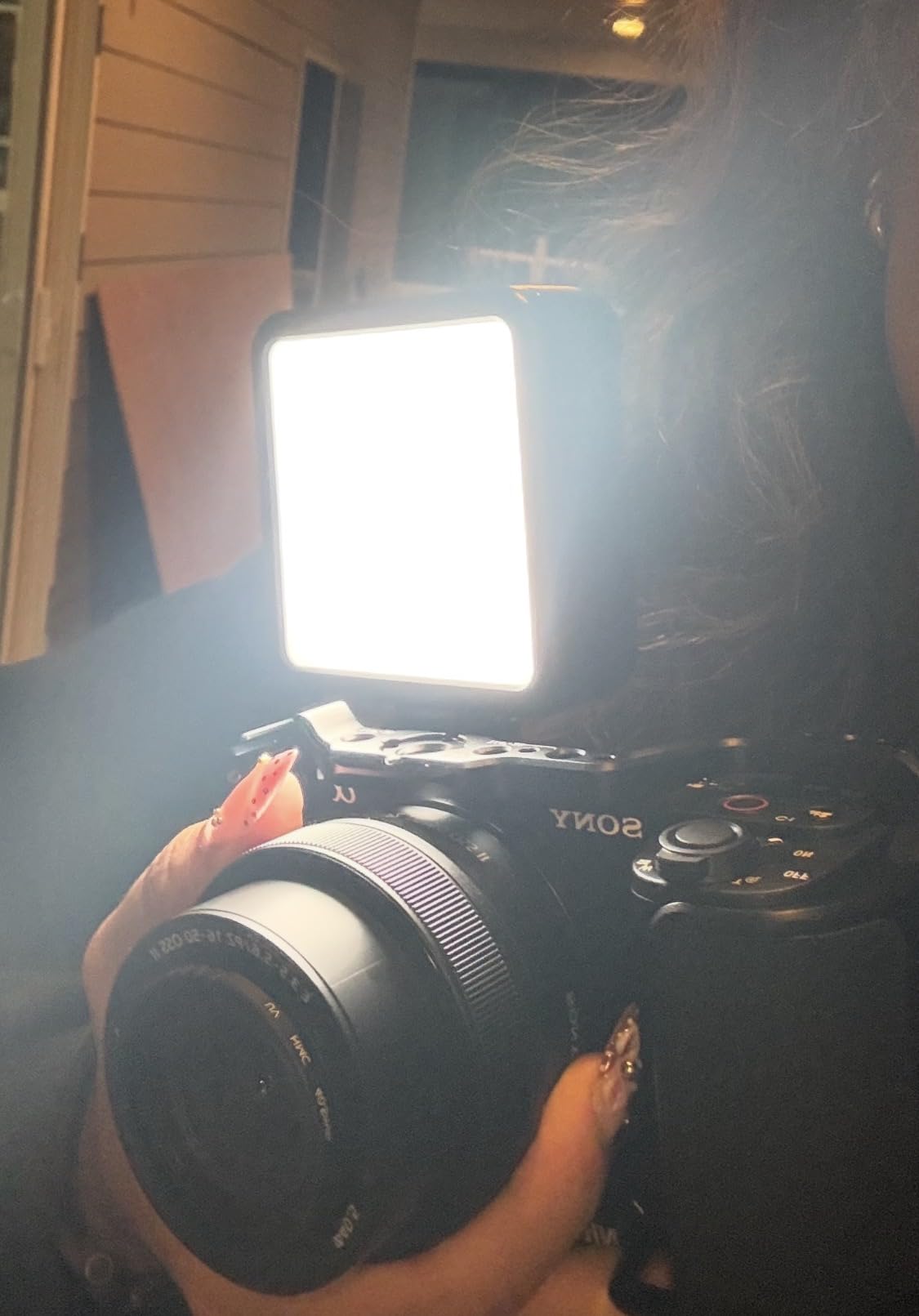
Nothing to assemble, nothing to configure, no app to open. You slide it into the cold shoe, tap through warm and cool, and it is on. For a solo shooter covering a street interview or a piece-to-camera in a cramped space, that zero-friction deploy time matters more than any wattage figure.
It also stacks. Owners running two VL-81s report building a wider soft wash by butting the units together, which is a cheap way to get a two-light look without doubling your pack weight.
Where it falls short
The most repeated complaint is the hot shoe itself feeling a little loose, which can introduce visible wobble on a moving rig if you do not check the fit before rolling. The battery readout is four bars with no percentage figure, so you learn the gauge by feel rather than by reading.
It is also simply not bright enough for daylight exteriors or for lighting a whole room. Treat it as the light you always have with you, not the light that solves the scene.
2. VILTROX L116T Review – Widest Diffusion on a Slim Body
VILTROX 15W LED Video Light Panel, 3300K-5600K On Camera Light, Super Thin
15W output
3300K-5600K
20-100% dimming
260g and 2cm thick
NP-F550 battery and LCD
Pros
- Very wide soft diffusion
- Fast single-button bi-color changes
- Removable NP-F style battery
- Backlit LCD shows brightness and battery level
- Remembers previous settings
Cons
- Larger footprint can upset balance on a moving rig
- Some battery units cut out after long storage
- Output falls off at distance
The L116T is the widest, softest throw of any slim panel here, and owners consistently describe roughly a 170 to 180 degree spread. In practice that means you can hold it beside the camera, point it slightly down and toward your subject, and cover head and shoulders without moving it around to chase the falloff.
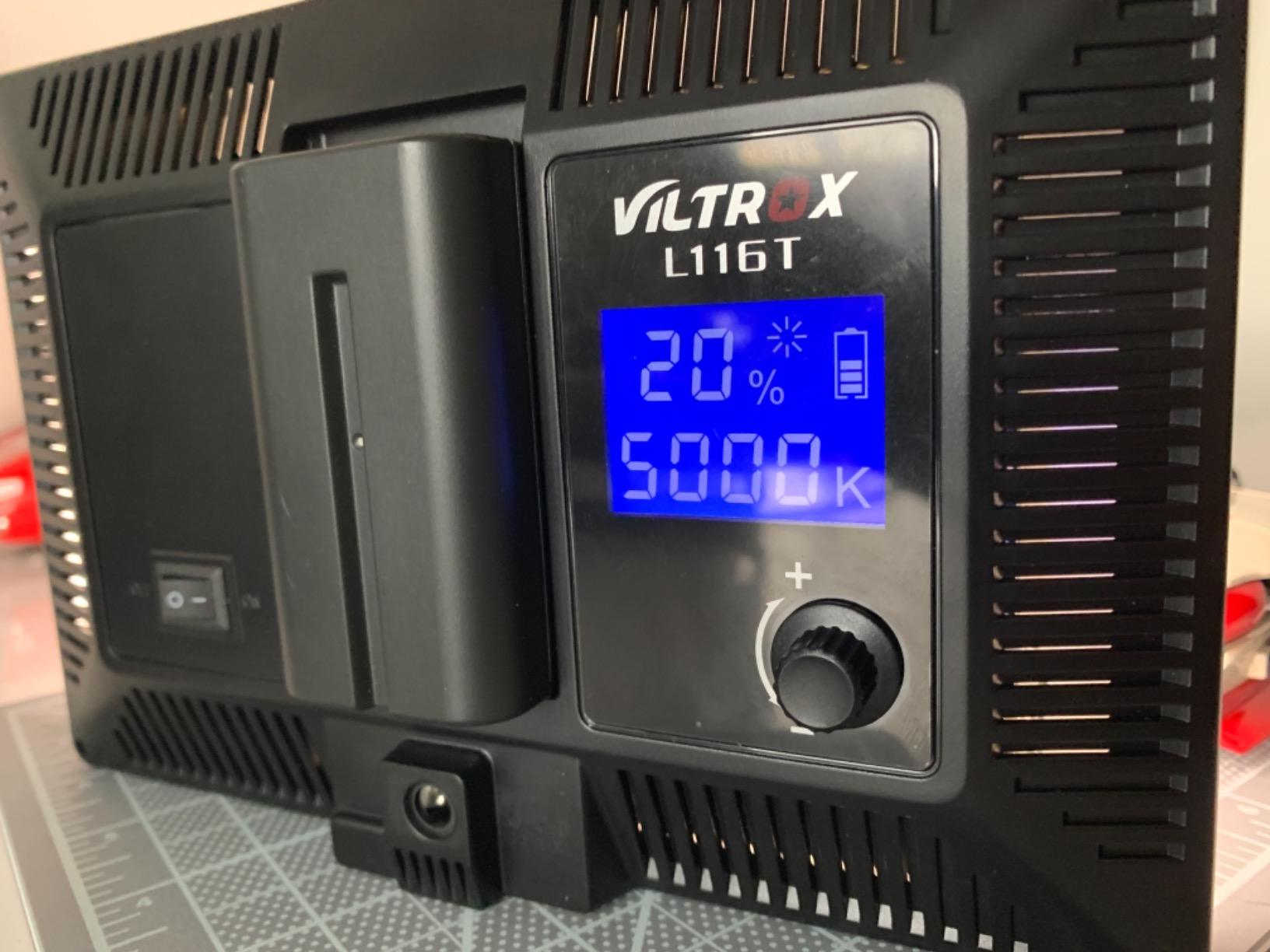
It is also the only panel in this group with a genuine backlit LCD showing brightness, colour temperature and battery level at once. That readout matters when you are changing settings in a hurry rather than sitting down to dial them in.
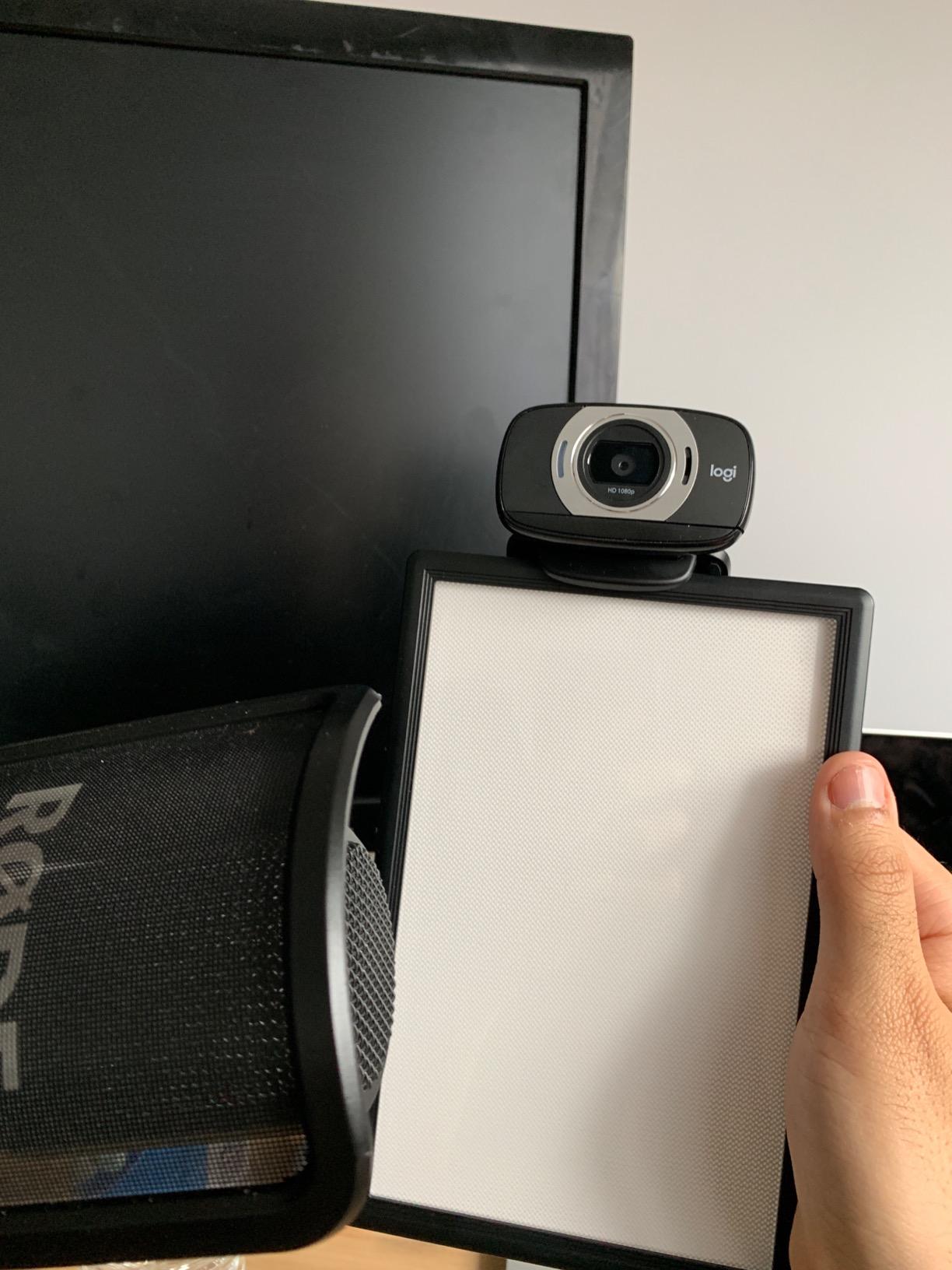
Output is 15W across a 3300K to 5600K range with 20% to 100% dimming, a honeycomb diffuser surface and a removable NP-F style battery. External power is supported over USB, so you can run it tethered from a battery plate or a power bank when the internal cell will not last the day.
Reviewers report no visible flicker banding when dimmed on modern mirrorless bodies, which is the single most common complaint aimed at cheaper panels. Settings are recalled on power-up, so the panel returns to exactly the look you had on the previous location.
What this light is genuinely good at
Close and medium work: a sit-down interview, a tabletop product piece, a vlogger filling a shadow side of a face. At 260g and roughly 2cm thick it sits against a mirrorless body without turning the rig into a brick.
The 170-degree spread means you rarely need a diffusion frame or a softbox. Point it at a wall or a ceiling if you want to soften it further, which costs nothing and takes two seconds.
What to watch out for
It has a larger footprint than the credit-card panels, and several owners mention balance shifting on a moving rig with a long lens. Output also drops off noticeably at distance compared with a speedlight, so it is a poor choice for a large space with a subject across the room.
A small number of reviewers report battery packs cutting out after sitting unused for a long period. If you travel, top the cell up before you leave rather than trusting a stored charge.
3. RALENO PLV-S116 Review – a Desk Light That Travels
RALENO 9″ LED Video Light, 2500K-6500K Camera Light with Desk Stand
12W edge-lit panel
Four layers of diffusion
2500K-6500K
4000mAh battery
Use while charging
Pros
- Very even edge-lit output
- Four layer diffuser softens glare
- Dual knobs in 1% increments
- Can run while charging
- Mini stand included
- Aluminum body
Cons
- Only 80 minutes at full brightness
- Small ball head and cold shoe plate can wobble
- Low battery flicker above 95% output
- Short cable included
The RALENO PLV-S116 is the panel in this list that ships with a stand, and that single decision changes what you can shoot. The included mini tripod adjusts from 3.74 to 7.09 inches, so you can set the panel on a desk for a video call or raise it just enough to frame a standing presenter.
Its edge-lit design and four layers of diffusion produce the most even, glare-free wash in the group. Owners describe it as noticeably softer than bare LED panels at the same distance, which makes it a good fit for dark interiors where the alternative is a hard hotspot on a face.
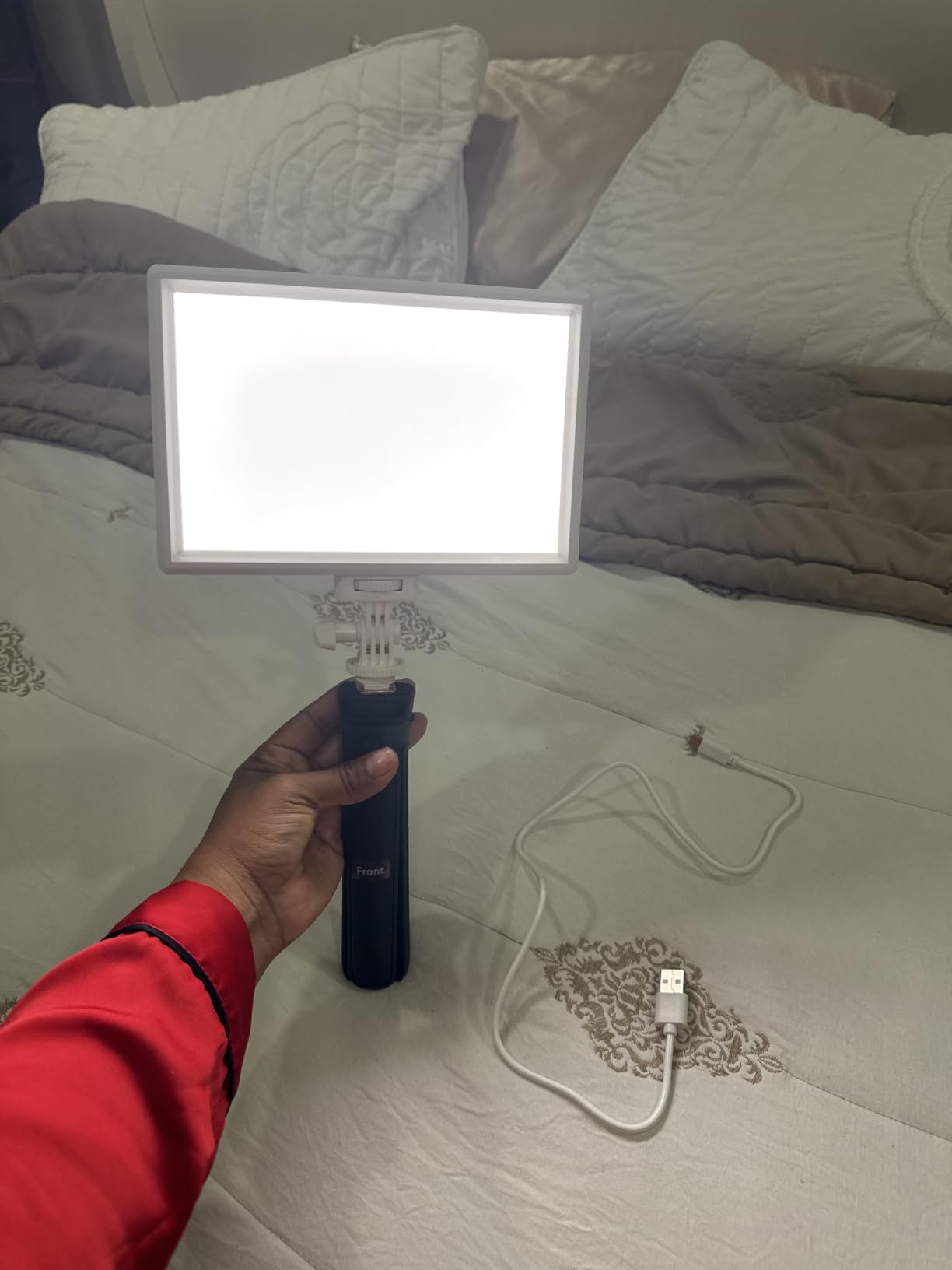
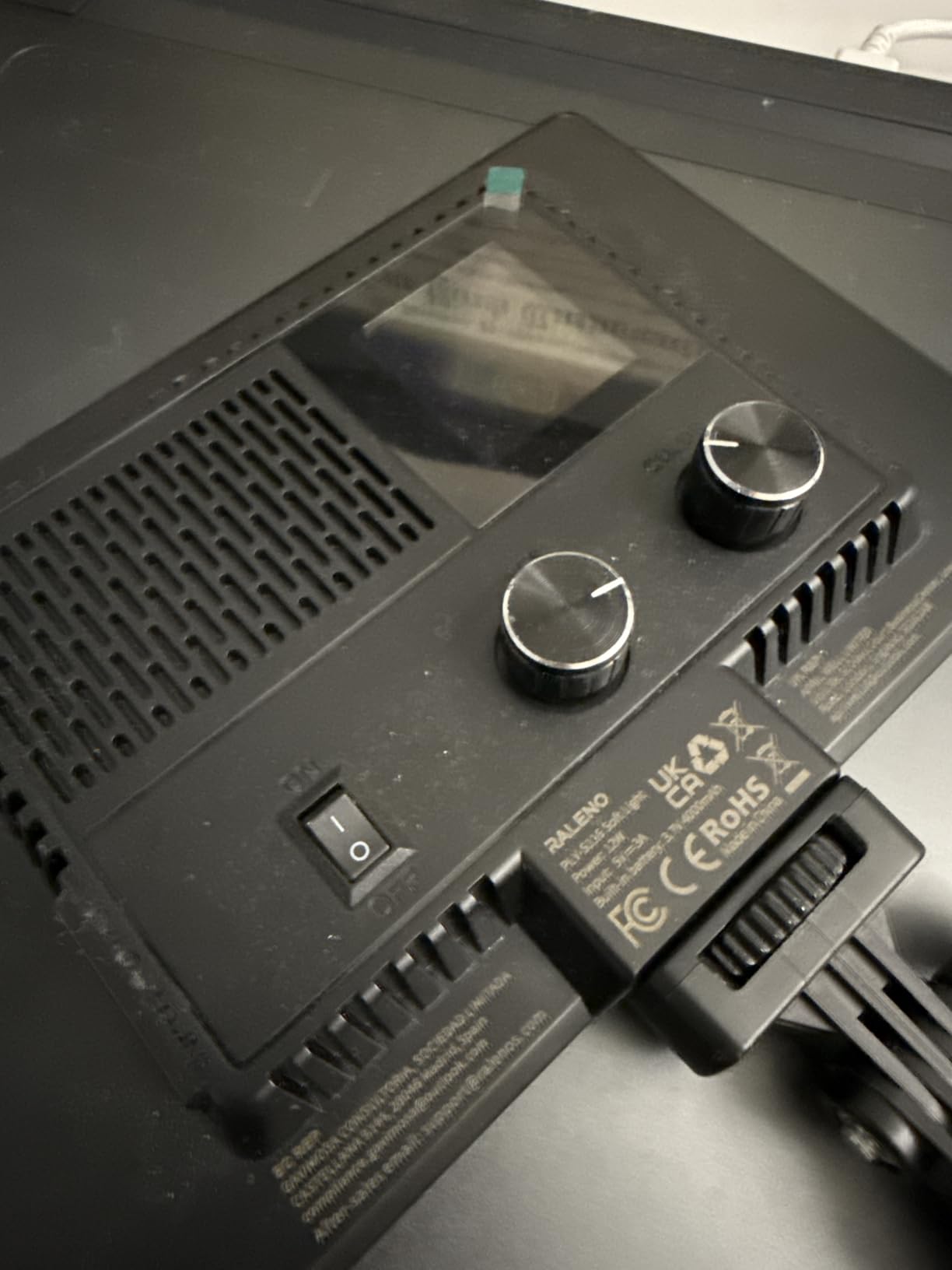
Output is 12W, 116 lamp beads and 600 lux at 0.5m, across a 2500K to 6500K range with brightness and colour temperature on separate dual knobs in 1% increments. That fine control is unusual at this size and it lets you match a warm interior or overcast window without guessing.
The 4000mAh built-in battery gives about 80 minutes at full brightness, and unlike many compact panels it can be used while charging over USB or Type-C. That single feature keeps it alive through a full day of calls on a desk.
Best use case: the dark room you did not plan for
This is a hotel room, a small office after hours, or a home desk where you are shooting yourself. Propped on its stand at low brightness it sits below eye line, stays out of the frame, and lifts the whole room evenly.
For a one-person crew, having a stand included removes a decision. Without it you would be balancing the panel on a stack of books or holding it with one hand while operating the camera with the other.
Honest drawbacks
80 minutes at full brightness is the shortest quoted runtime in this group, and the flicker reports are worth taking seriously: owners note slight flicker above 95% output on a low battery and for the first few minutes after plugging into mains. Stay below full output and you are fine.
The small ball head and cold shoe plate can wobble and are hard to secure once tightened. It weighs 388g, so it is the heaviest entry here, and the included cable is short.
4. VILTROX VL-162T Review – the Brightest On-Camera Fill Here
VILTROX VL-162T CRI95+ LED Video Light, Portable Camera Photo Light Panel Dimmable for DSLR Camera Camcorder with Battery, Charger, High Brightness, 3300K-5600K Bi-Color, White Filter and LCD Display
1070 lumens
1250 lux at 1m
CRI95+
3300K-5600K
Battery and charger in the box
Pros
- Bright even output
- Large legible LCD and intuitive knobs
- Runs cool and totally silently
- Battery plus charger included
- Four magnetic colour filters
- Panels link side by side
Cons
- AC adapter not included
- Weak magnets let the colour filters slip
- Hot shoe adapter feels flimsy
- About 3 hours of battery on long jobs
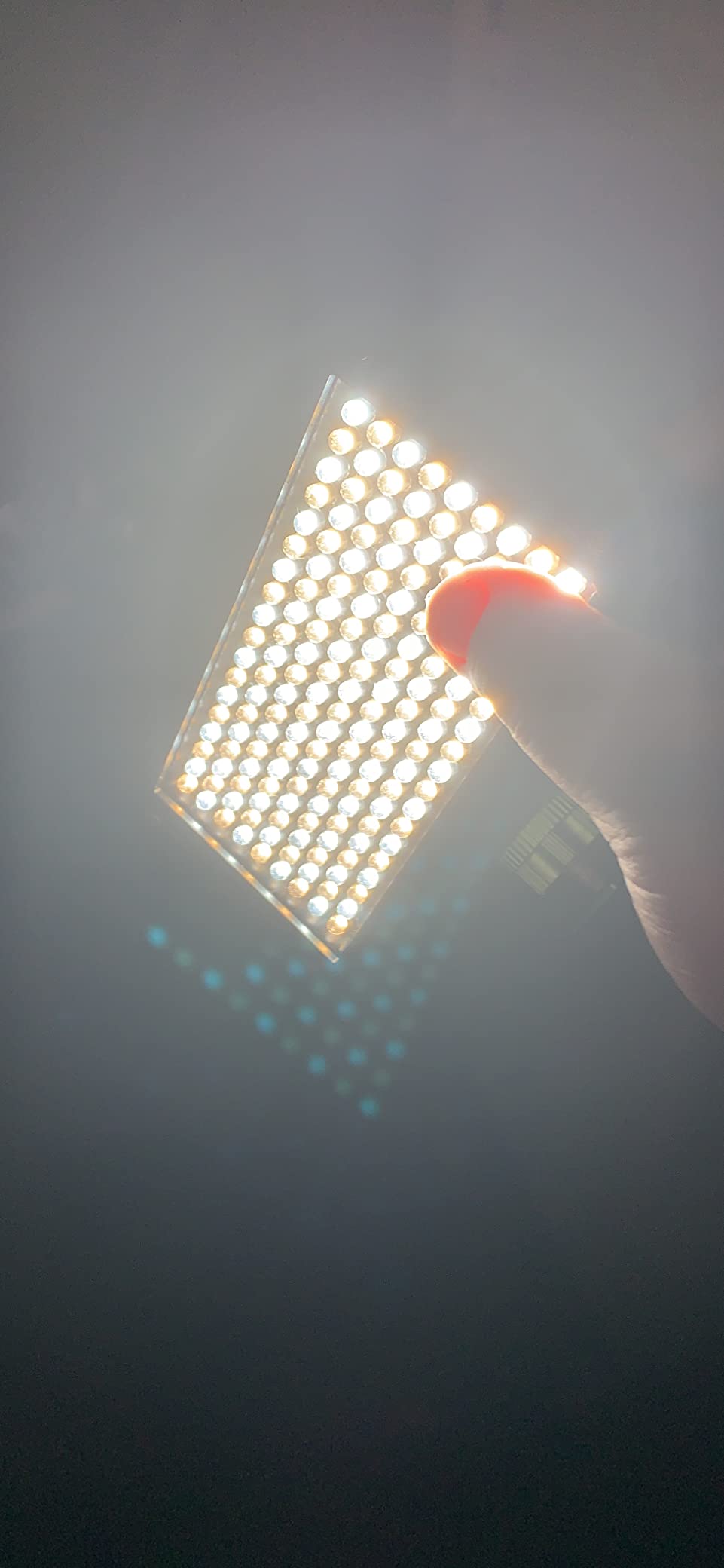
The VL-162T is the brightest panel in this roundup, quoting 1070 lumens and 1250 lux at 1m from 162 LED beads. That is roughly three times the output of the credit-card lights, and it changes what you can cover: a seated interview in a dim room rather than an accent on a bright face.
It also runs completely silently. There is no fan, which matters more than it sounds like it should when you are recording a sound-led piece and your light is 40cm from the microphone.
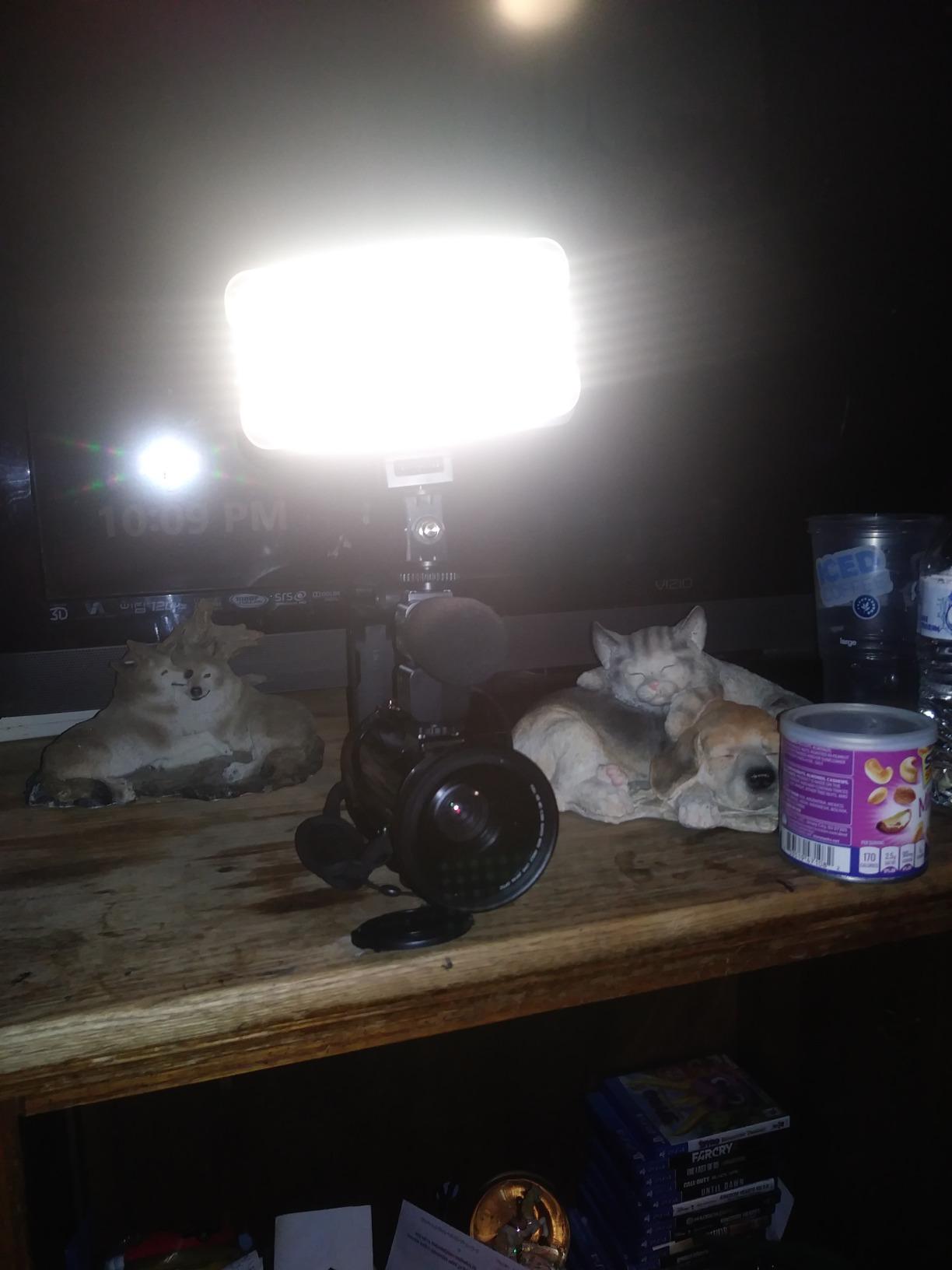
Colour accuracy is CRI95+ across 3300K to 5600K with 20% to 100% dimming and a large LCD readout. Four magnetically attached colour filters are included for looks, and side extension slots let you link two panels together for a wider fill.
Battery life is quoted at about three hours, and the battery and charger are both in the box. That is the trade you make here: more light, less pocketability, roughly 453g at 16 ounces.
When it earns its weight
Dark hotel rooms, small interiors, and any situation where you cannot get close to your subject. At 1250 lux at 1m you can stand across a small room instead of standing next to your subject, which is exactly the freedom a one-person crew needs.
Two linked panels give you the key and fill configuration that experienced shooters describe as the practical solo setup, without buying two separate lights.
Where it frustrates people
No AC adapter is included, so charging and running at the same time needs a separate purchase. The magnets holding the colour filters are weak and reviewers say they slip, and the hot shoe adapter can feel flimsy if you handle a moving rig roughly.
Three hours of battery is limiting on a long shoot day. Treat this as a light you recharge overnight rather than one that lasts a full unit a location.
5. Lume Cube Bicolor Panel Mini Review – the Lightest Panel We Tested
Lume Cube Bicolor Panel Mini LED Light for Professional DSLR Cameras | Adjustable Panel Mini, LCD Display | Photo and Video Lighting, Long Battery Life | Fits Sony, Nikon, Canon, Fuji, Panasonic
85g aluminum body
300 lumens
3200K-5600K
14 hour quoted battery
USB-C and live runtime meter
Pros
- Lightest panel here at 85g
- Aluminium body built to last
- Long battery life in a camera bag
- Display projects remaining runtime
- Dual diffusion softens highlights
- Recalls previous settings
Cons
- Narrow spread and limited reach
- Can blow out highlights at full output without the diffuser
- Hot shoe blocks other accessories
- No case and the silicone diffuser is fragile
At 85g the Lume Cube Bicolor Panel Mini is the lightest panel we carried, and it has the longest quoted runtime at 14 hours. Owners report leaving it in a camera bag for months and finding it still holding charge, which is the behaviour you actually want from a travel light.
The display is the standout. Rather than a four-bar gauge, it projects a live runtime estimate that updates as you change brightness, so you can see dropping to half output roughly doubles your remaining time before you commit to a take.
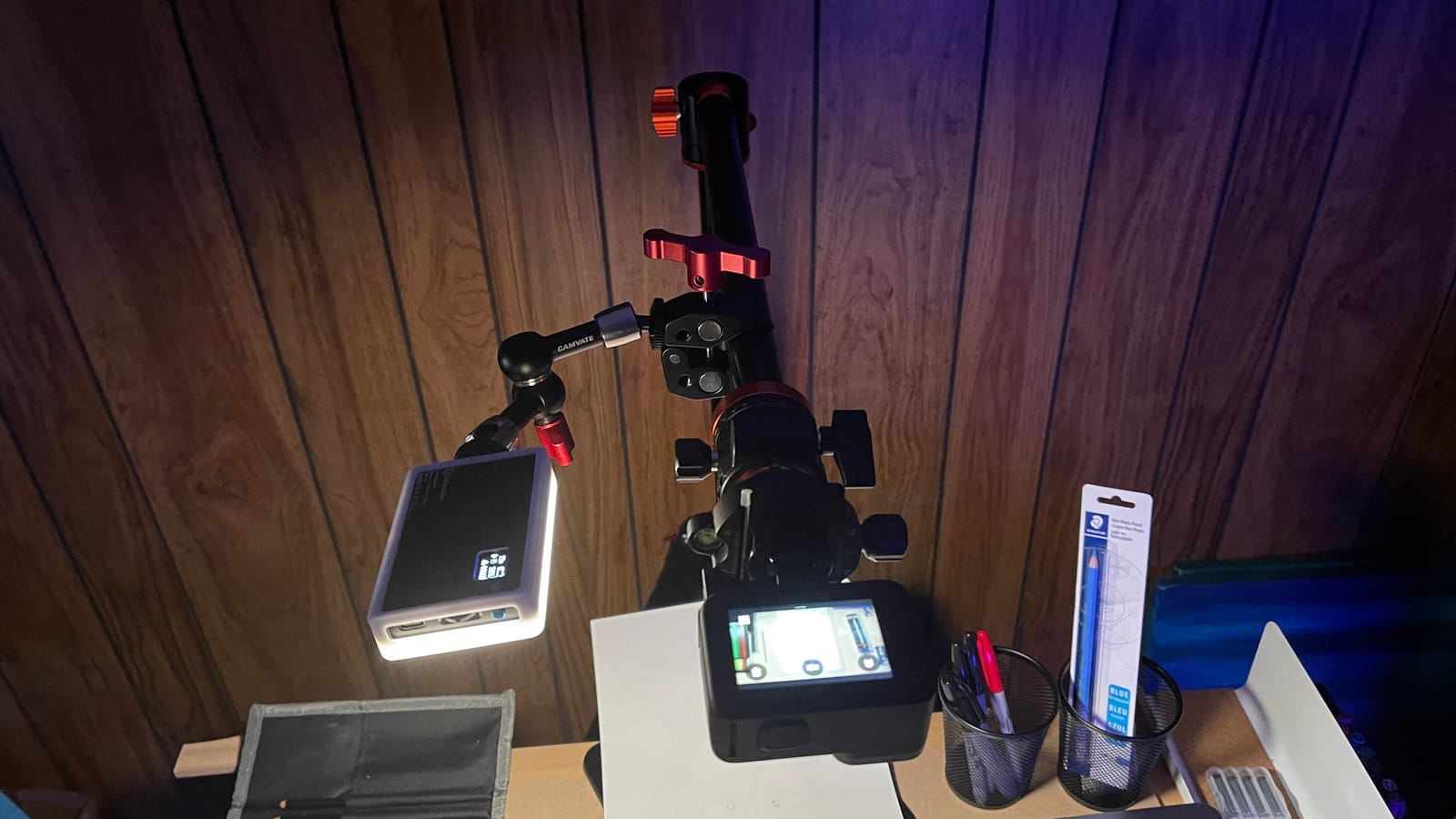
Output is 300 lumens across a listed 3200K to 5600K range, with users reporting it reaches about 7500K in practice. Dimming runs 1% to 100%, output is flicker free, and two diffusers are included: a fixed plastic layer plus a slip-on silicone for close work.
It fits Sony, Nikon, Canon, Fuji and Panasonic bodies straight into the hot shoe, charges over USB-C, and remembers your last settings between sessions. The aluminium alloy body is credit-card sized at 3.6 by 2.18 inches and only 0.43 inches thick.
Why serious shooters keep this one
Build quality is the reason. After years of regular use owners still describe it holding up, and the aluminium body survives the drop-and-shove reality of a documentary kit in a way plastic housings do not.
It also solves the hot shoe conflict differently. Because it is so thin, many operators mount it on a small cold shoe plate or a 1/4 thread adapter beside the camera instead of on top, leaving the shoe free for a microphone.
Limits worth knowing
300 lumens from a small panel means a narrow spread and limited reach. You will be lighting a face or a product, not a room, and at full output without the silicone diffuser it can blow out highlights.
Runtime drops noticeably at 50% and above. It costs more than comparable mini panels, no case is included, and the silicone diffuser is easy to damage in a bag.
6. ENEGON 4000mAh Review – the Longest Quoted Runtime
ENEGON 4000mAh Rechargeable Mountable Bicolor LED Video Light with Mini Panel for Professional DSLR Cameras | Photo Video Lighting Long Battery Life | Fits for iPhone Sony Canon Nikon Fuji Panasonic
4000mAh battery
2500K-9900K range
180 LED beads
OLED readout
USB-C from a power bank
Pros
- Exceptionally long runtime for the size
- Widest bi-color range in the group
- Aluminium body resists moisture and drops
- Slim 0.4 inch profile
- Charges from a power bank or car charger
- OLED shows battery status
Cons
- Decorative screen readout rather than a full LCD
- Close range output only
- Basic on-camera controls
The ENEGON is the pick if your shoot is long and your power access is not. Its 4000mAh cell is quoted at up to 20 hours per charge, which is more than most panels here manage in total, and the range runs from 2500K to 9900K in 100K steps.
That bi-color span is unusually wide. It lets you dial into deep tungsten warmth for a restaurant interior and push cool for a shade-covered exterior without carrying a second light or a colour gel.
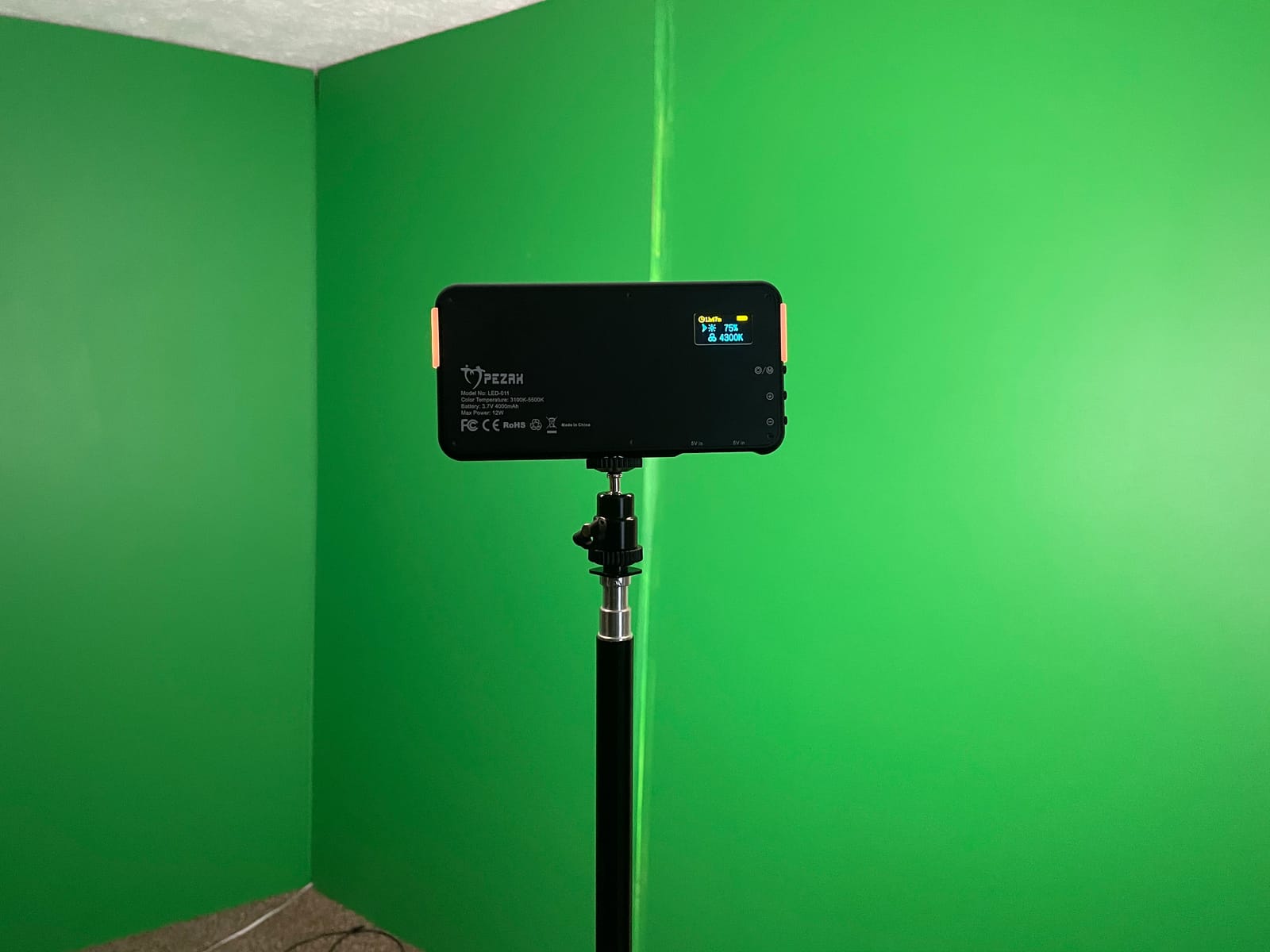
The panel uses 180 LED lamp beads with 1% to 100% brightness in 5% increments, housed in an aluminium alloy shell that is marked water resistant. At 10.5 ounces and 0.4 inches thick, it mounts on a camera, a tripod or a lamp holder without adapters.
Charging is USB and USB-C, so you can top it up from a power bank or a car socket between locations. Owners regularly describe it as the panel they forget is switched on because the battery simply keeps going.
Best use case: long days, no wall power
Multi-location corporate shoots, event coverage and travel documentary work where you are in and out of vehicles all day. Runtime stops being the thing you plan around.
The wide 2500K to 9900K range also makes it the most forgiving panel to match. Mixed lighting in hotel lobbies and restaurants no longer means guessing, and that saves more time than raw output does on a small interview.
Honest drawbacks
Output is close range only. This is an on-camera fill and a face light, not a panel for covering a room, and you will want diffusion for very close work.
The screen is a decorative OLED readout rather than a full parameter LCD, and the on-camera controls are basic compared with the VILTROX panels. If you want quick, precise changes mid-take, this is not the one.
7. SmallRig RM120 Review – 98+ CRI in an RGB Metal Body
SmallRig RM120 RGB LED Video Light Panel, 7W Portable Metal Camera Light
1580 lux at 7W
CRI and TLCI 98+
2500K-8500K
5000mAh battery
Pass-through USB-C charging
Pros
- Highest colour accuracy in the group
- All-metal body sheds heat well
- Charge and run at the same time
- Solid thumbwheel controls
- Diffuser spreads light well
- Dual cold shoe plus two 1/4-20 holes
Cons
- About 3.5 hours at 100% output
- Included diffuser blocks the cold shoe
- Internal battery cannot be replaced
- Effects offer limited adjustment
Colour accuracy is where the SmallRig RM120 separates itself. CRI and TLCI of 98+ is the highest figure in this roundup, and if you shoot skin tones for a living, or grade aggressively, that difference is visible in the file rather than in a spec list.
It is also the only compact panel here with real RGB. Hue rotates through 360 degrees with 100 levels of saturation control on a 2500K to 8500K base, which turns a key light into a colour light without adding a second fixture to the bag.
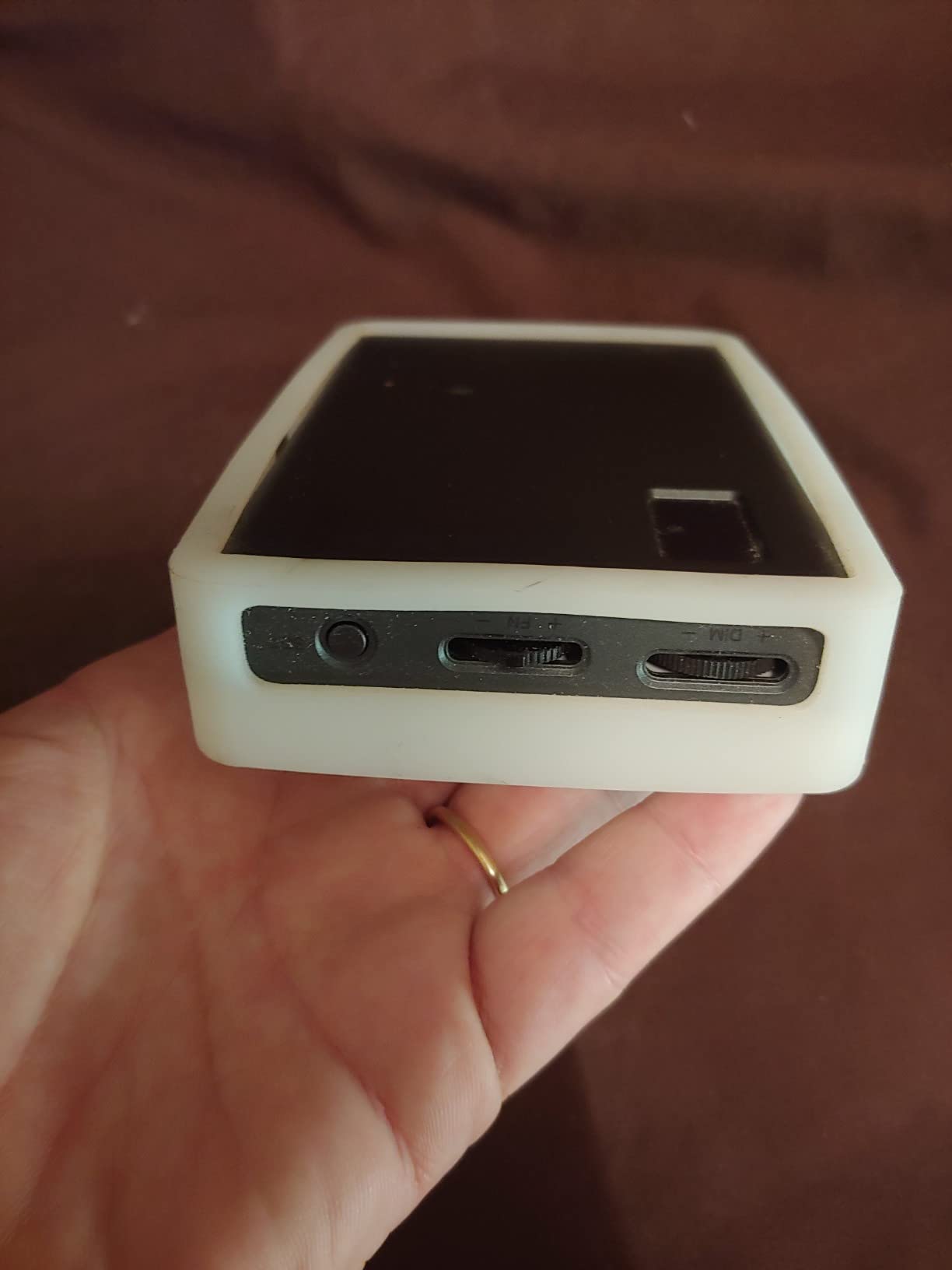
Output is 1580 lux at 7W maximum power from an all-metal body that weighs 204g and is roughly phone sized at 4.92 by 2.96 inches. Two anti-twist 1/4-20 threaded holes and a dual cold shoe mount make rigging flexible for a light this small.
The 5000mAh battery is quoted at up to 180 minutes at maximum brightness, and USB-C pass-through charging lets you run the panel at full brightness while it charges, with overheat protection built in. An OLED display and thumbwheels handle the adjustments.
Why colour accuracy matters here
A panel at CRI95 will shift saturated skin tones slightly, and the shift becomes obvious the moment you push saturation or shoot mixed tungsten and daylight in the same scene. At 98+ the RM120 stays neutral across the whole 2500K to 8500K range.
The pass-through charging is the sleeper feature for run and gun work. Every other battery panel here needs a spare cell; this one runs indefinitely from a power bank, which effectively removes runtime from your list of concerns.
Trade-offs
Runtime still drops to about three and a half hours at full output when you are not tethered. The internal battery cannot be replaced, so it is a sealed unit for the life of the light.
The included silicone diffuser fits poorly and can block the cold shoe connection, which is a small but real irritation. The 12 built-in effects also offer limited adjustment depth compared with dedicated RGB fixtures.
8. Aputure Amaran MC Review – a Pocket Accent Light
Aputure Amaran MC RGBWW Mini On Camera Video Light,CRI/TLCI 96+
RGBWW array
3200K-6500K
CRI and TLCI 96+
Sidus Link Bluetooth app
Nine FX presets
Pros
- Genuinely pocket sized with built-in magnets
- RGBWW gives clean whites without magenta cast
- CRI and TLCI 96+ for skin tones
- App unlocks remote control
- Nine FX presets for quick looks
Cons
- Very low output relative to larger panels
- No spare batteries supplied
- App control adds friction on the move
- Deep colour washes look subtle
The Amaran MC is an accent light, not a key light, and deciding that early saves you a wasted purchase. It is the size of a credit card, has magnets in the back, and it adds colour and shape to a frame rather than lighting a subject.
What sets it apart from cheaper RGB panels is the RGBWW array. It combines RGB emitters with dedicated tungsten and daylight white LEDs, so you get clean neutral whites instead of the magenta cast that pure RGB fixtures produce on skin.
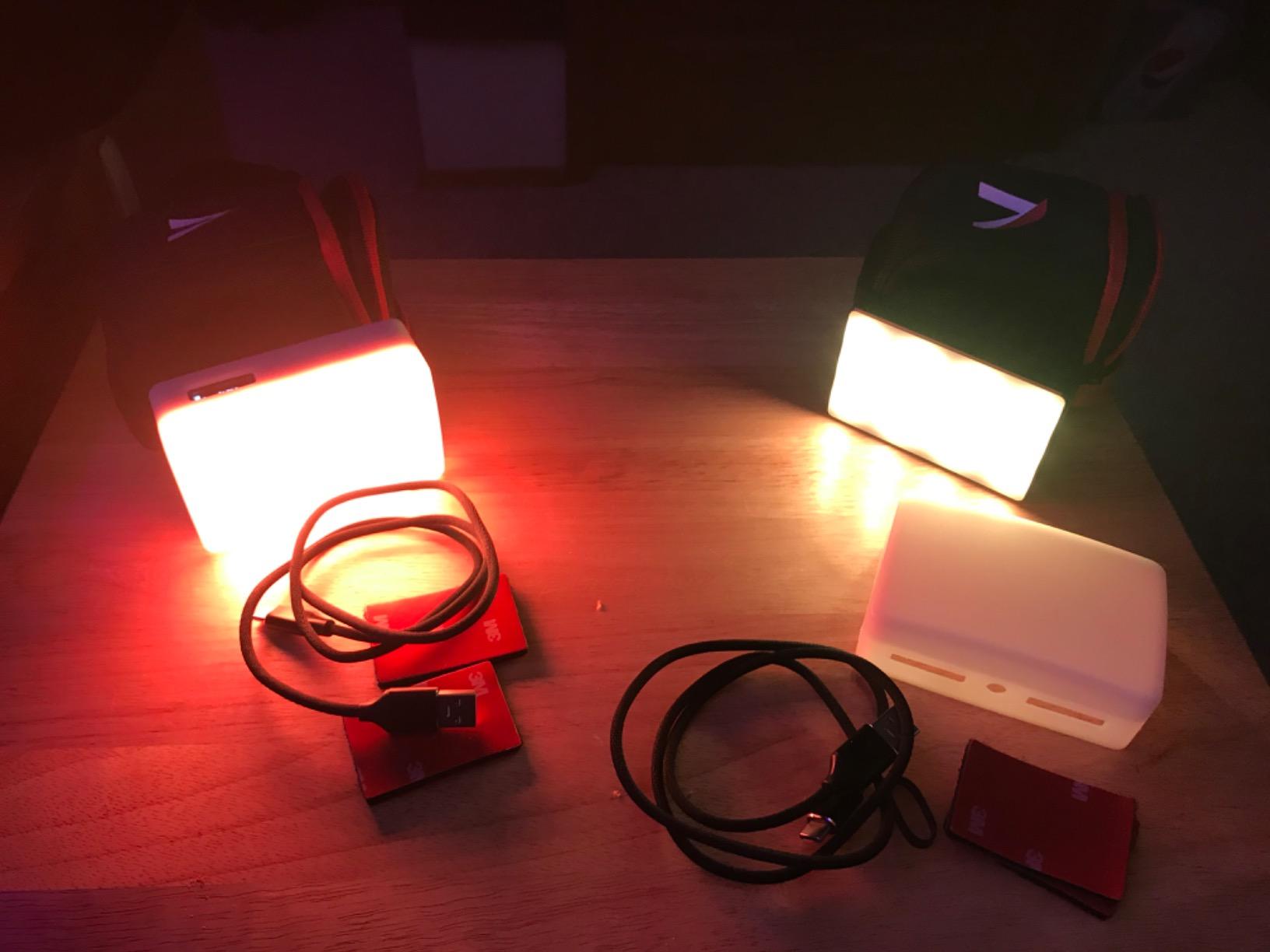
Colour accuracy is CRI and TLCI 96+ across 3200K to 6500K, with 360-degree hue and 100 levels of saturation adjustment. Nine built-in FX presets include Paparazzi, Fireworks, Faulty bulb, Lightning, TV, Pulsing, Fire, Party and Cop Car, which cover most of what a run-and-gun shooter reaches for.
Battery life is quoted at 15 hours, and control runs through the Sidus Link app over Bluetooth from iOS or Android. Dimensions are 3.66 by 0.67 by 2.4 inches, so it disappears into a jacket pocket.
Where it changes a shot
Use it to put a warm edge on a shoulder in a dark room, or to wash a background wall a deep colour while your key light handles the face. The magnets let it stick to a fridge, a pillar or a laptop lid in a location you cannot drill or clamp to.
Because it is app controlled, you can dial in an effect from a phone while the panel is out of arm’s reach, which solves a real problem with lights mounted high in hotel rooms and stairwells.
Where it falls down
Output is very low relative to larger panels. If you expect it to key a subject, you will be disappointed; treat it strictly as fill and accent.
No standalone lithium batteries are supplied, so runtime depends entirely on the internal cell. App control also adds friction when you need a fast change, and deep magenta and colour washes look subtler than they do on a dedicated RGB fixture.
9. GVM 480 App Two-Pack Review – Two Heads, One Bag
GVM 2 Pack LED Video Lighting Kits with APP Control, Bi-Color Variable 2300K~6800K with Digital Display Brightness of 10~100% for Video Photography, CRI97+ TLCI97 Led Video Light Panel +Barndoor
Two 480 LED panels
CRI and TLCI 97+
2300K-6800K
10-100% brightness
AC or F-series battery power
Pros
- Two panels plus two stands and barn doors in one package
- Very high CRI and TLCI 97+
- Wide 2300K-6800K with digital readout
- Aluminium housings shed heat well
- Runs off F550 F750 or F970 camera batteries
- Carry bag included
Cons
- Too dim to key most setups
- App needs renaming and connects to one at a time
- Not bright enough outdoors except in deep shade
- About 1kg per panel makes the kit bulky
The GVM 480 App two-pack is the only kit here that solves a two-light problem without doubling your budget or your pack weight twice over. You get two 480-LED panels, two light stands, two barn doors, two soft filters, two power adapters and a carry bag in one package.
A one-person crew lighting a small interview setup normally has to choose between a key only or a cheap second light that flatters nothing. Two matched panels remove that compromise, and it is the configuration experienced run-and-gun shooters describe as the practical solo setup.
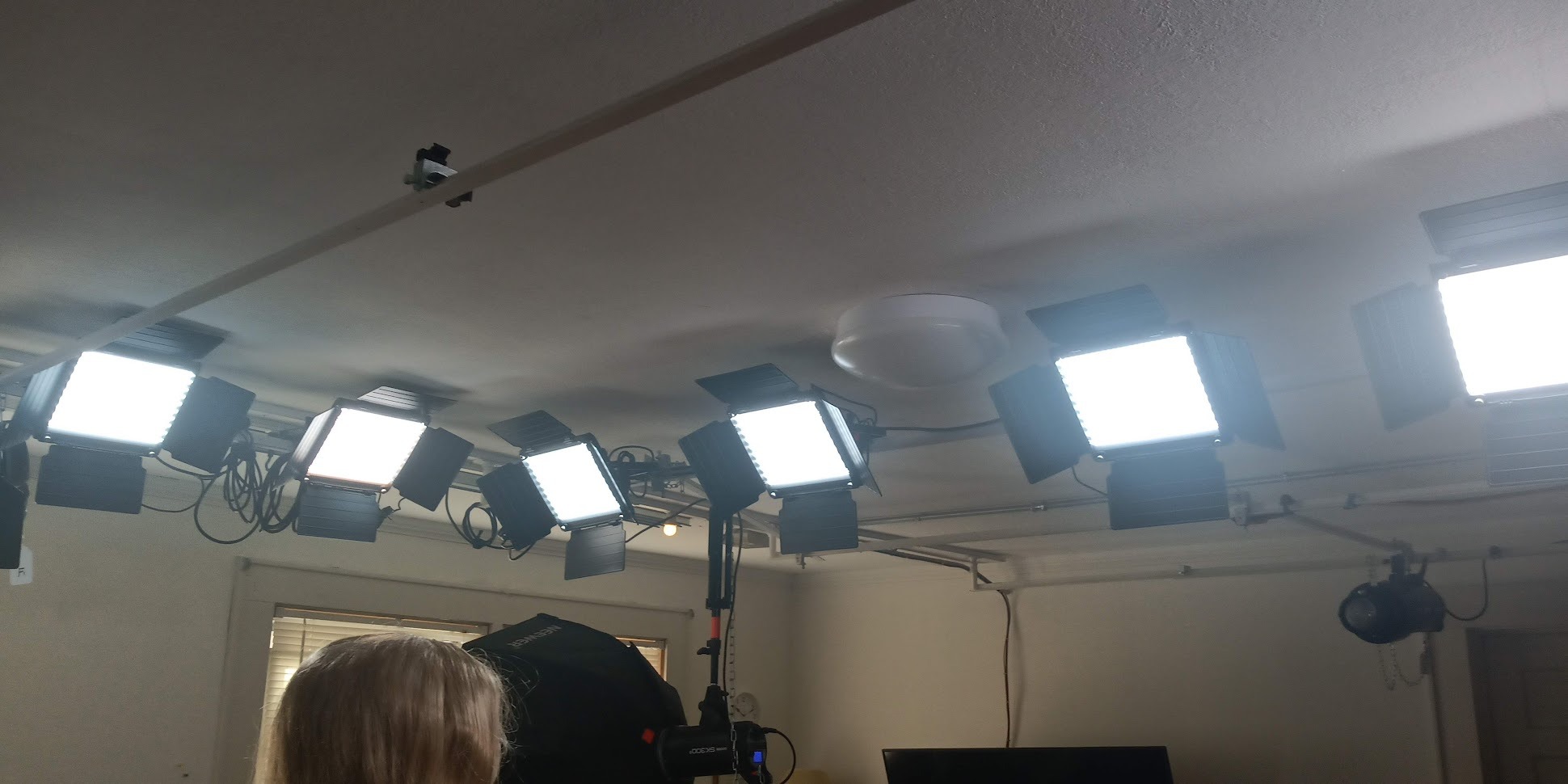
Colour accuracy is CRI 97+ and TLCI 97+ across a wide 2300K to 6800K range with brightness from 10% to 100% shown on a digital display. The aerospace aluminium alloy housings dissipate heat well and the soft output means barn doors and softboxes are largely optional.
Power comes from an AC adapter or Sony F550, F750 and F970 Li-ion batteries, which are not included. Running off camera batteries is what makes it viable away from a venue, and it is the reason to look at this kit if you already own a spare F-series battery.

What this kit is genuinely for
Indoor and covered work: interviews, corporate video, small live spaces and event coverage where you can work close. As paired fill, or as a key plus fill at reduced brightness, it performs well and the CRI of 97 keeps skin tones honest.
App control over each panel is genuinely useful when a panel is mounted out of reach. Set the level from your phone rather than crawling under a table.
Honest limits
These are fill and studio lights, not key lights. They are not bright enough outdoors except in deep shade. Each panel weighs about 1kg, and with two stands the kit is bulky to carry for a shoot that might need one light.
The app has a learning curve: each panel needs renaming and the app connects to one at a time, so adjusting both simultaneously means two passes. Instructions for setup are sparse. Prominent branding on the case and panels is another small irritation.
10. NEEWER NL-192AI Review – the Biggest Soft Wash in the Group
NEEWER 192 LED Video Light Panel, 20W Ultra Thin Bi Color Camera Light
20W and 192 LEDs
CRI 97+
3200K-5600K
2400 lux at 0.5m
Twin 4000mAh cells
Pros
- Ultra thin 0.4 inch profile
- Very high CRI 97+ with even output
- Rear LCD makes changes quick
- Twin 4000mAh cells give about 90 minutes
- Cold shoe adapter tilts 180 degrees
- Also runs from a power adapter
Cons
- Cannot be operated while charging
- Runtime short for a compact panel
- No carry bag in the package
- Heavier than mini panels at 580g
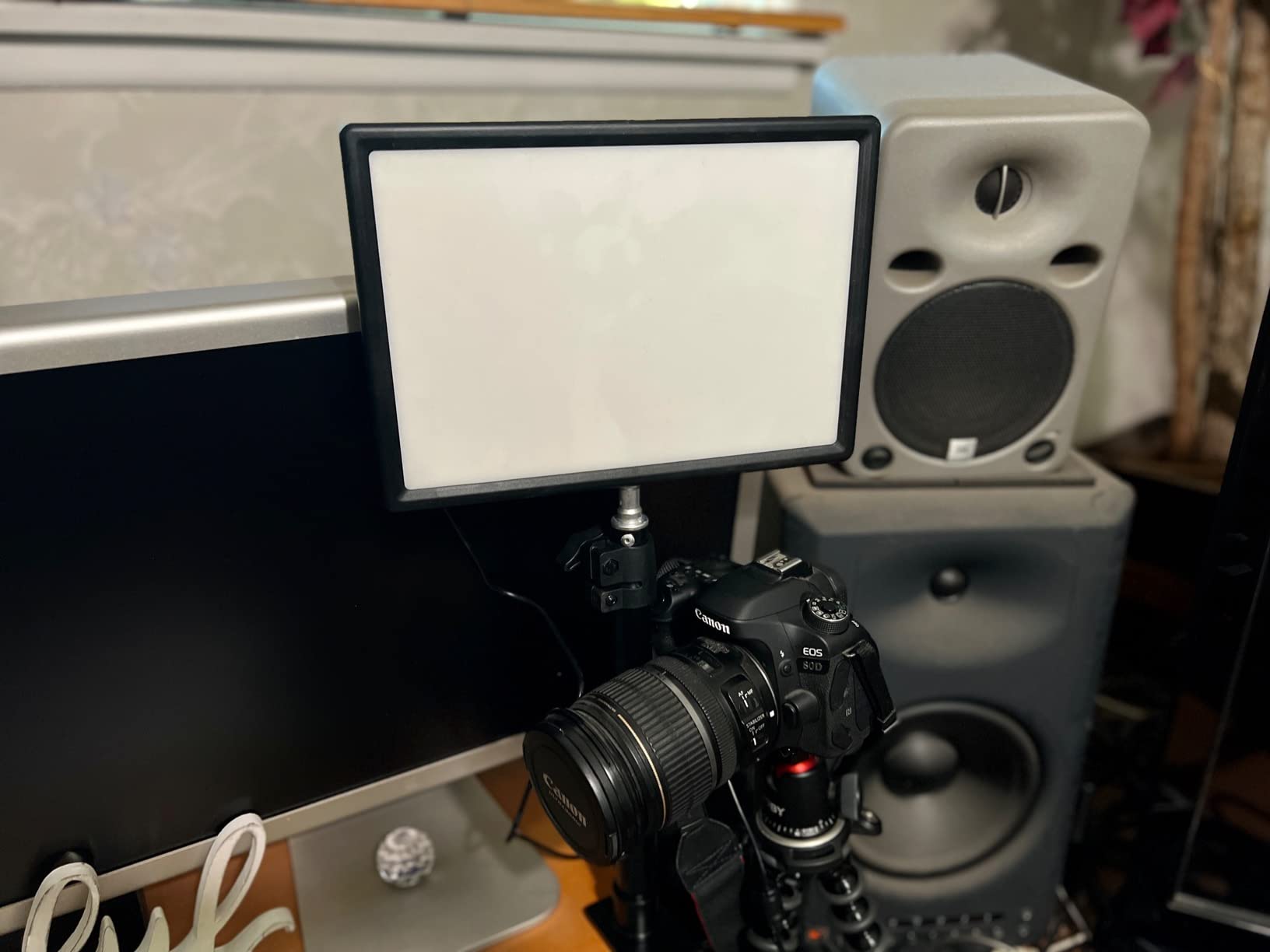
The NL-192AI is the largest soft source in this group at 10.55 by 7.4 inches, and it produces the broadest even wash of the compact panels. With 20W across 192 LEDs, 96 warm and 96 cool, it reaches 2400 lux at 0.5m with a CRI of 97+.
That means it lights a room rather than a face. For a dark interior interview, a small office, or a home setup where you need coverage across a desk, it does in one unit what several pocket panels cannot.
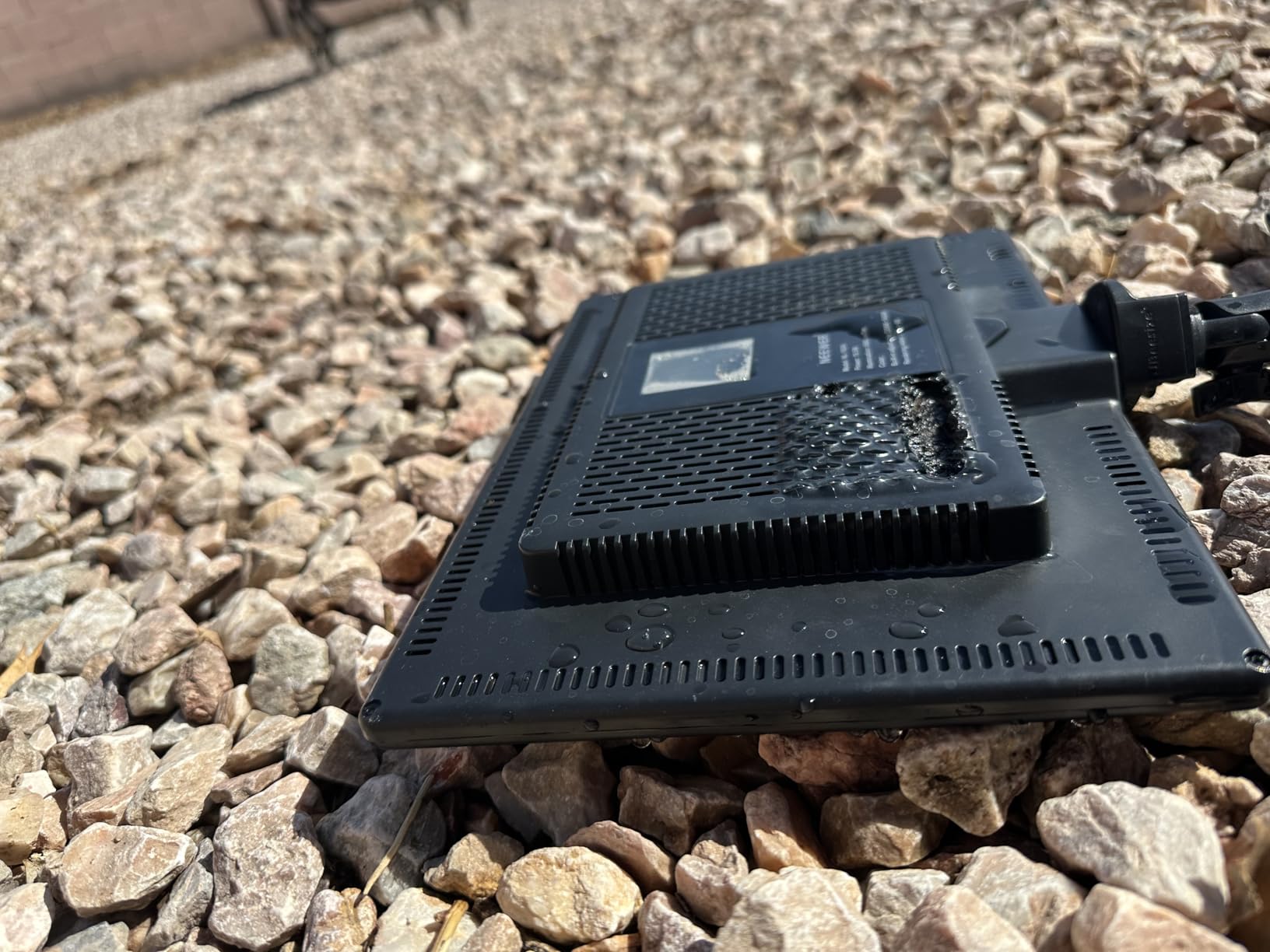
Colour temperature runs 3200K to 5600K with 0% to 100% brightness and a rear LCD parameter display, which makes adjustments fast when the light is behind or below the camera. The included cold shoe adapter tilts 180 degrees so you can angle it without remounting.
Two 4000mAh cells in series give about 1.5 hours of continuous light and a full charge in two hours using the included 15V 2A adapter. It also runs from a power adapter for longer sessions, and it fits Canon, Nikon and Sony bodies plus any tripod with a 1/4 inch thread.
Why bigger helps in interiors
Source size is what makes light look flattering, and a 10-inch panel at 40cm gives a much softer falloff than a credit-card light at the same distance. Faces stop looking harsh and background shadows fill in naturally.
The rear LCD matters more here than on a small panel because the light sits far enough away that you cannot reach the controls. You adjust brightness and temperature without picking it up.
Drawbacks
The big one: it cannot be operated while charging, which rules out pass-through powering from a power bank during a long take. Runtime is short compared with most compact panels at about 90 minutes at full output.
At 580g it is the heaviest panel here and no carry bag is included, so it needs padding in a bag. For travel work where every gram counts, that is a real cost.
How to Choose a Portable LED Panel for Run and Gun Video
Choose on deploy speed, weight and off-wall-power runtime first, then brightness. A panel you can actually get lit in three seconds will serve you better than a brighter unit that lives in the bottom of the bag. Below are the criteria that decide it, plus the honest alternative that some of the best advice in the forums points to: sometimes you need no light at all.
Panel, monolight or on-camera light
A panel is a broad, soft, usually battery-powered source you hold, stick or mount close to the subject. A monolight is a bare emitter in a reflector head, usually Bowens-mounted, much brighter per watt, and far too large and hot for a one-person kit. An on-camera light is a small panel that sits on the camera and travels with the framing.
For run and gun, panels and on-camera lights are the only realistic categories. A monolight earns its place only if you already carry a stand and accept a two-light-plus-stand weight.
If you are covering fast and moving, the most commonly repeated piece of advice in the cinematography forums is worth taking seriously: a shiny reflector or a bounce beats a big soft light when speed is the priority. Many of these panels are fast enough to skip that step.
Flicker-free dimming and shutter drags
Flicker is the failure mode that ruins shots without ruining the day. If a panel pulses at the wrong frequency, you get banding that only shows up in the grade, and you will only find it after the shoot.
Test in the field before you rely on a light: shoot a grey card at your intended frame rate and shutter angle, ramp the dimmer from 20% to 100%, and watch for banding on the monitor. Among the picks here, the ULANZI VL-81, VILTROX L116T and Lume Cube Mini report flicker-free output, while the RALENO is the one to keep below 95% on a low battery.
Anything with a cooling fan also brings fan noise into a quiet room. The VL-162T runs with no fan at all, which makes it the quiet choice for sound-led work.
Colour temperature and CRI versus TLCI
Bi-colour panels let you match the ambient rather than fight it. A 3200K to 5600K range covers most daylight and tungsten interiors; the ENEGON goes from 2500K to 9900K, and the SmallRig adds 2500K to 8500K with full RGB on top.
CRI is measured on a 0 to 100 scale against a reference source, and TLCI uses a television-standard reference. CRI is the more useful number for skin tones, and anything at 95 or above is good enough for delivery work. Below 90 you will see saturated reds and warm skin shift, especially after grading.
Do not pay a large premium for a number you will not use. The difference between 96 and 98 is real but subtle, while the difference between 90 and 97 is obvious on camera.
Runtime away from wall power and USB-C
Manufacturer runtime figures are almost always quoted at one brightness level, and the honest fix is to compare the same level across panels. The ULANZI quotes 150 minutes at full brightness and 480 minutes at minimum, a spread that shows why the dimming level matters more than the headline number.
Panels in the 4000mAh to 5000mAh range, such as the ENEGON, SmallRig and RALENO, are built for all-day shooting. Smaller cells in the credit-card lights are the reason Lume Cube owners report runtime falling sharply above 50%.
USB-C is the feature most worth checking. A panel that accepts USB-C can be charged from the power bank you already carry, and the SmallRig RM120 goes further with pass-through charging so it can run at full brightness while charging. The NEEWER and VILTROX VL-162T cannot run while charging, which is worth knowing before a long take.
Panel selection also has a storage angle. If your gear spends nights in a vehicle or a shared room, how you secure it matters as much as which light is inside, and the same applies to the wider kit you carry on location. Our notes on long gun safe storage cover the same problem in a different context: a light that gets stolen or damaged on an overnight location costs a whole shoot day.
Mounting hardware and wobble
Cold shoe mounts, 1/4-20 threads and magnets are the three systems you will meet. A wobbling light produces visible movement in the clip, and the forums treat that as a deal breaker rather than an annoyance.
Look for anti-twist 1/4-20 holes and more than one mounting point, as the SmallRig RM120 has, and check the cold shoe fit before every rig change. Panels with three cold shoe mounts, like the ULANZI, can be stacked or mounted in more configurations than a single-shoe model.
The NEEWER tilting cold shoe adapter is worth noting too: 180 degrees of tilt means you can angle the panel without taking it off the camera.
Brightness against reach
Watts and lumens only mean something next to distance. The VL-162T quotes 1250 lux at 1m, the SmallRig 1580 lux at 7W, and the NEEWER 2400 lux at 0.5m, which puts it close at a much larger source size. Compare figures at the same distance or you will mislead yourself.
As a working rule, close work under a metre needs very little, an interview two to three metres away needs a mid panel, and anything outdoors or in a large space is beyond what a portable panel should be asked to do. For those, you are back to a monolight or accepting ambient light.
One light or two
A single panel keying your subject is the lightest option and often enough. Two matched panels give you a key plus fill, or a key plus a background, which is the configuration experienced solo shooters describe as the practical working setup for interviews.
Two does not have to mean two expensive lights. Two ULANZI VL-81 units stack for a wider wash at 120g each, and the GVM two-pack gives you matched 97+ CRI panels with stands if your locations are indoor and you already own an F-series battery.
Budget your pack by total weight rather than by light weight. A camera body, two lenses, audio and a battery add up fast, and a light that is brilliant on the bench can be the item that gets left behind when the bag is full. Protective cases and a routine care schedule, the kind covered in our equipment cleaning guide, are worth budgeting alongside the light itself.
Securing gear between locations raises the same question from a different angle. If your kit has to live in a vehicle overnight, our picks for the best ATV gun racks cover the transport problem, and if it stays in a shared room, quick-access options in our biometric safe roundup are the relevant read. Neither decides which light you buy, but both stop a cheap panel becoming an expensive loss.
Frequently Asked Questions
What is the best portable LED video light for videography?
For most solo shooters, the ULANZI VL-81 is the best first portable LED panel for video because it weighs 120g, carries three cold shoe mounts and runs up to 480 minutes at low output. If you need more reach in a dark room, the VILTROX VL-162T offers 1070 lumens and 1250 lux at 1m.
What are some good portable LED video lights for video shooting?
Good options cover three tiers: the ULANZI VL-81 and Lume Cube Bicolor Panel Mini for pocket and close work, the VILTROX L116T and NEEWER NL-192AI for wider soft washes, and the SmallRig RM120 when colour accuracy above CRI 97 matters. All accept USB-C charging and all mount on a cold shoe or 1/4 thread.
What are the best LED light panels for video recording?
The best LED light panels for video recording balance three things: flicker-free dimming, a bi-colour range wide enough to match ambient light, and a runtime that survives a shoot day. The ULANZI VL-81, VILTROX L116T and SmallRig RM120 all meet all three, with the RM120 adding RGBWW colour and 98+ CRI.
How long do portable LED panel batteries last?
Quoted runtimes range from about 80 minutes at full brightness on the RALENO PLV-S116 to 20 hours on the ENEGON 4000mAh. Treat all of these as single figures. At low output the ULANZI VL-81 runs to 480 minutes against 150 at full brightness, so your dimming level matters as much as the cell size.
Can I power a portable LED panel from a USB-C power bank?
Yes, most panels here charge over USB-C from a power bank or car charger. The SmallRig RM120 goes further with pass-through charging, so it can run at full brightness while plugged in. The NEEWER NL-192AI and VILTROX VL-162T cannot be operated while charging, so plan around that on longer takes.
Do I need CRI 95+ for video lighting?
CRI 95 or above is the practical target for delivery work, because below that saturated reds and warm skin tones shift, and the error becomes more obvious after grading. If you are on a tighter budget, a panel at CRI 90 will record usable footage, but check it against skin tones before a paid shoot.
Can you use an LED panel as a fill light for video?
Yes, and most portable panels are better as fill than as key. Panels in this roundup including the GVM 480 two-pack are described by owners as fill or paired lights rather than key lights. Point a panel at a wall or ceiling to soften the output and spread it further across your subject.
What is the best lighting kit for filmmaking with one person?
For a solo filmmaker the practical kit is one panel for key plus a second small panel or reflector for fill and separation. Two ULANZI VL-81 units stack for a wider wash at 240g combined, while the GVM 480 App two-pack gives matched CRI 97+ panels with stands and runs off F-series camera batteries.
Conclusion: The Best Portable LED Panels for Run and Gun Video
The ULANZI VL-81 takes the top slot among the best portable LED panels for run and gun video because it wins the only test that matters on location: how fast one person can get light onto a subject and keep it there. At 120g with three cold shoe mounts and a runtime quoted at 480 minutes at low output, it adds almost nothing to a pack and everything to a dark scene.
Buy the VILTROX L116T if you want a readable LCD and a wider soft wash, the SmallRig RM120 if colour accuracy and pass-through USB-C power are non-negotiable, and the NEEWER NL-192AI if your work is indoors and you need a large soft source. Whatever you choose, test the dimmer at your real frame rate before you depend on it.
Our picks and the specs behind them were reviewed for 2026, and every measurement quoted here comes from the manufacturer listing and owner reviews rather than a spec sheet alone.