
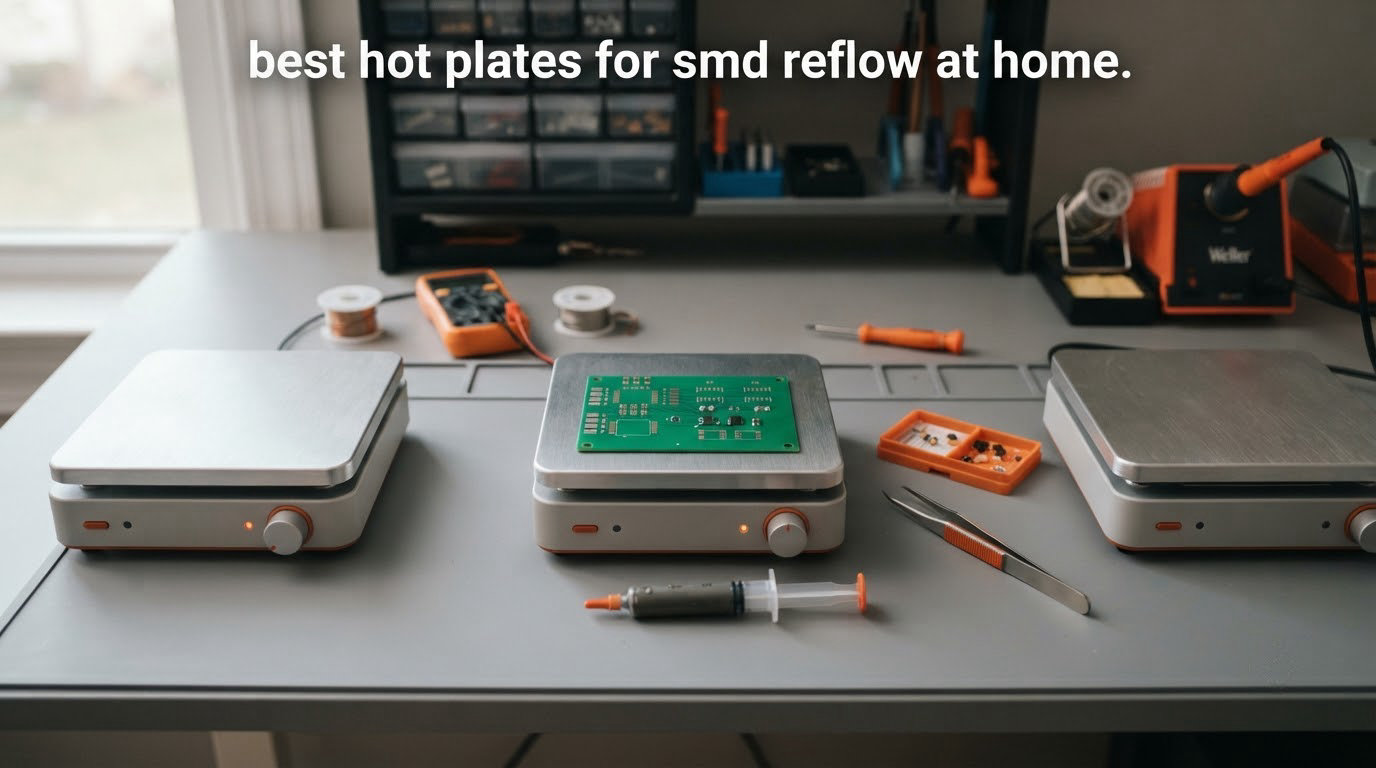
If you have ever dragged a fine-tip iron across a pad while a 0402 resistor skittered off the board, you already know why a heating plate exists. A reflow hot plate puts the whole board on a flat, controlled surface and melts every joint at once, which is the only realistic way to solder QFN and BGA parts at home without a convection oven.
After months of reading owner feedback, thermocouple notes, and build logs, the best hot plates for SMD reflow at home come down to three things: enough watts for the size of your board, control that holds a setpoint instead of swinging around it, and a plate your board can sit on without the heat disappearing into it. This guide covers all ten plates we looked at, what each one is genuinely good for, and who should skip it.
There is no single winner here. A 100x100mm bench plate handles most hobby boards and cycles fast, which matters more than raw size once you are doing one board at a time. A 200x200mm platform is what you want when you are reworking phone logic boards or pushing heat through a heavy ground plane. I have listed both, plus the budget, portable, and included-tools options, so you can match one to your bench rather than to a spec sheet.
If you are still setting up the rest of your bench, the best vibration plates for home workouts guide covers a different kind of at-home gear, and our stickhandling practice guide is worth a look if you want a deliberate practice loop for a new skill. Otherwise, back to the bench.
Table of Contents
Top 3 Hot Plates for SMD Reflow at Home in 2026

Soiiw 850W 200x200mm Hot Plate
- 850W multi-tube heating
- 200x200mm aluminum plate
- 30-400C range with digital control
- Tunable REX-C100 style PID controller

Soiiw 350W 100x100mm Preheater
- 350W heating element
- 100x100mm aluminum plate
- 30-400C microcomputer control
- Fast warm-up and cool-down

Vevitts 850W 200x200mm Lab Plate
- 850W multi-tube heating
- 200x200mm aluminum alloy plate
- Stated plus or minus 1.5C stability
- Fanless silent operation
Best Hot Plates for SMD Reflow at Home (October 2026)
Sort the list by plate size first, then wattage. Every plate here reaches at least 250C, so lead-free peak profiles are covered across the board, and the meaningful differences are surface area, wattage, and how the controller holds a setpoint. Check the voltage marking on the unit before you plug it in, because almost everything in this group is listed at 110V and the one portable unit runs on 25V USB-C power delivery instead.
| Product | Specifications | Action |
|---|---|---|
| Soiiw 850W 200x200mm Soldering Hot Plate |
|
Check Latest Price |
| Soiiw 350W 100x100mm Preheater |
|
Check Latest Price |
| Vevitts 850W 200x200mm Hot Plate |
|
Check Latest Price |
 WEP 946D IV 210W 100x50mm Hot Plate WEP 946D IV 210W 100x50mm Hot Plate |
|
Check Latest Price |
 QWORK 360W 100x100mm Soldering Hot Plate QWORK 360W 100x100mm Soldering Hot Plate |
|
Check Latest Price |
 Kosmeiner 350W 100x100mm Preheat Station Kosmeiner 350W 100x100mm Preheat Station |
|
Check Latest Price |
 KeenWise 360W 100x100mm Hot Plate KeenWise 360W 100x100mm Hot Plate |
|
Check Latest Price |
 VQP 853A 450W Infrared Preheat Plate VQP 853A 450W Infrared Preheat Plate |
|
Check Latest Price |
 TLBZK 350W 100x100mm Hot Plate TLBZK 350W 100x100mm Hot Plate |
|
Check Latest Price |
 SEQURE T55 95W USB-C PD Hot Plate SEQURE T55 95W USB-C PD Hot Plate |
|
Check Latest Price |
1. Soiiw 850W 200x200mm Hot Plate – Best Overall for SMD Reflow
850W Soldering Hot Plate 200x200mm LED Electric Preheat Rework Station
850W
200x200mm aluminum plate
30-400C
110V AC
7.08 lbs
Pros
- 200x200mm machined surface takes nearly any PCB
- Adjustable PID controller you can tune and calibrate
- Heats quickly and then holds setpoint steadily
- Solid build for the money
Cons
- Minimal documentation on PID tuning and sensor correction
- Display can read above true surface temperature out of the box
- Slow warm-up and cool-down due to plate mass
This is the plate I keep coming back to. The 200x200mm machined aluminum surface takes nearly any hobby board, phone assembly, or panel-shaped PCB I have thrown at it, and the 850W element has the headroom to soak a heavy ground plane instead of just warming it.
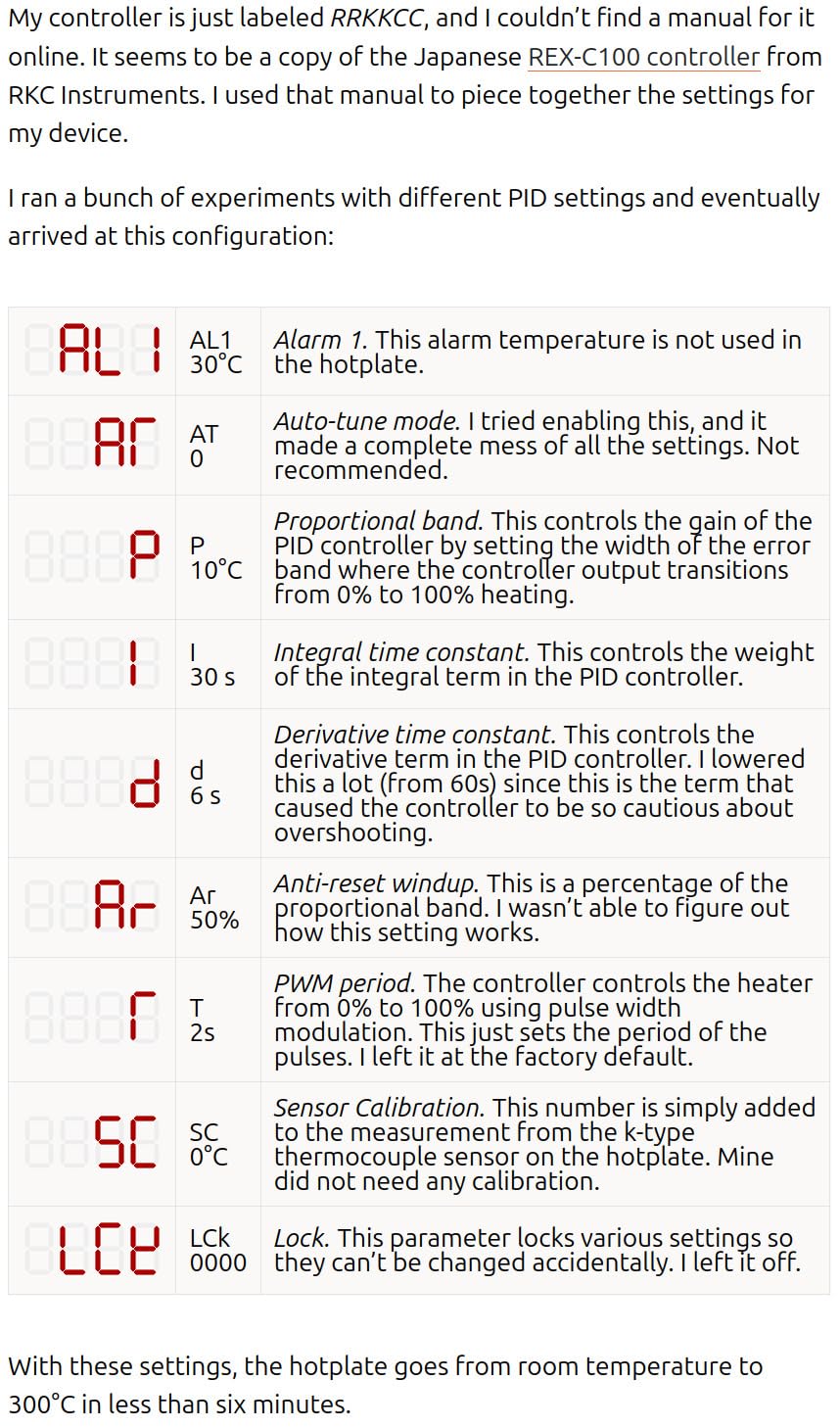
Its temperature control is the REX-C100 style the owners tune, which matters more than it sounds. You can tune the PID values and apply sensor correction once a real probe tells you the truth, then every profile after that is repeatable. Owners who did that work describe a night-and-day difference, and the difference is a plate that no longer overshoots on the way up.
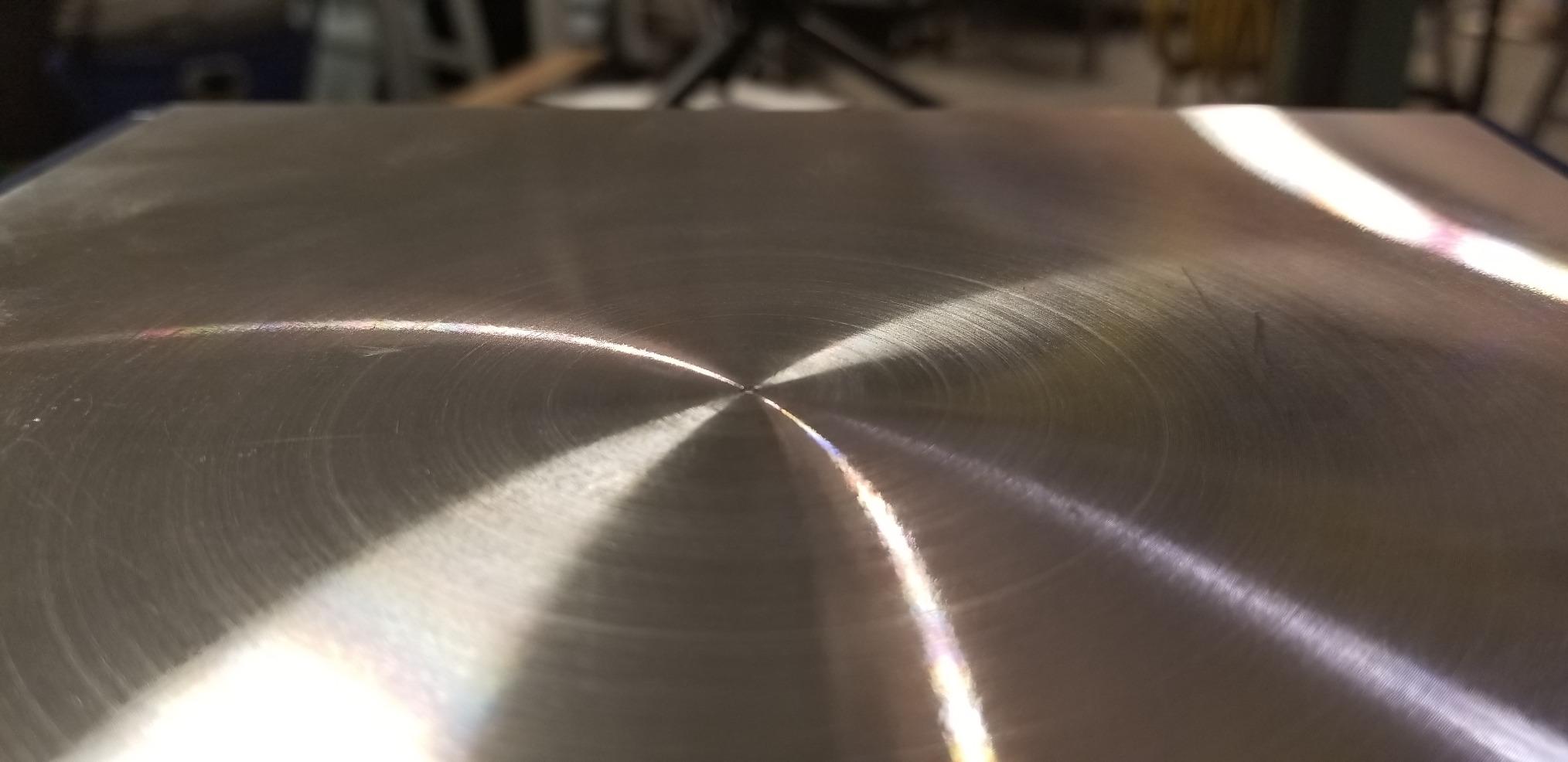
Buyers use it for SMD reflow, desoldering, and component reclaim, and the common theme is that the flat even surface does the job well. The disappointment is almost always the same: out of the box, the tuning and the display reading are not what the numbers suggest, so owners who treat it as a black box rate it lower than they should.
Physically it is a chunky unit at 7.08 pounds and 10.24 x 9.84 x 7.48 inches. That mass is the trade for even heating. If you want something you can carry to a friend’s bench, this is the wrong shape.
What temperature should I set for lead-free paste on this plate?
Set the plate to 180C and soak. SAC305 hits liquidus at 217C, so the paste stays put while the flux does its work, then flows cleanly. A K-type probe under the board tells you when the components themselves have arrived, and 30 to 60 seconds of full melt is the target.
Is a 200x200mm plate overkill for a single small board?
It is more plate than a small breakout board needs, but the thermal mass works in your favour on anything with a copper pour. The cost is warm-up and cool-down time. If your work is one small board at a time and you value a fast cycle, a 100x100mm plate is the better shape.
2. Soiiw 350W 100x100mm Preheater – Best Value for Most Hobbyists
350W Soldering Hot Plate,100×100mm LED Microcomputer Preheat Rework Heater
350W
100x100mm aluminum plate
30-400C
110V AC
LCD display
Pros
- Fast warm-up and cool-down in a compact body
- Even heat distribution that self-aligns small SMD parts
- Stable control across the full 30-400C range
- Great value for one-sided reflow and rework
Cons
- No programmed reflow profiles so you manage temperature by hand
- Fixed plate with nowhere to mount a shield or foil
- Bare metal surface is a genuine burn risk
This plate is the one I would put on most benches. A 100x100mm aluminum plate at 350W is a good match for the majority of hobby boards, and because the plate is small it reaches temperature and drops back fast, which is what makes a repeatable manual profile practical.
Reviewers consistently use it for SMD placement, removal, and BGA-scale work on small boards, and the surface tension behaviour they describe is the real selling point. Parts find their own position during soak. You are not nudging 0201 resistors with a tweezer while the joint cools.
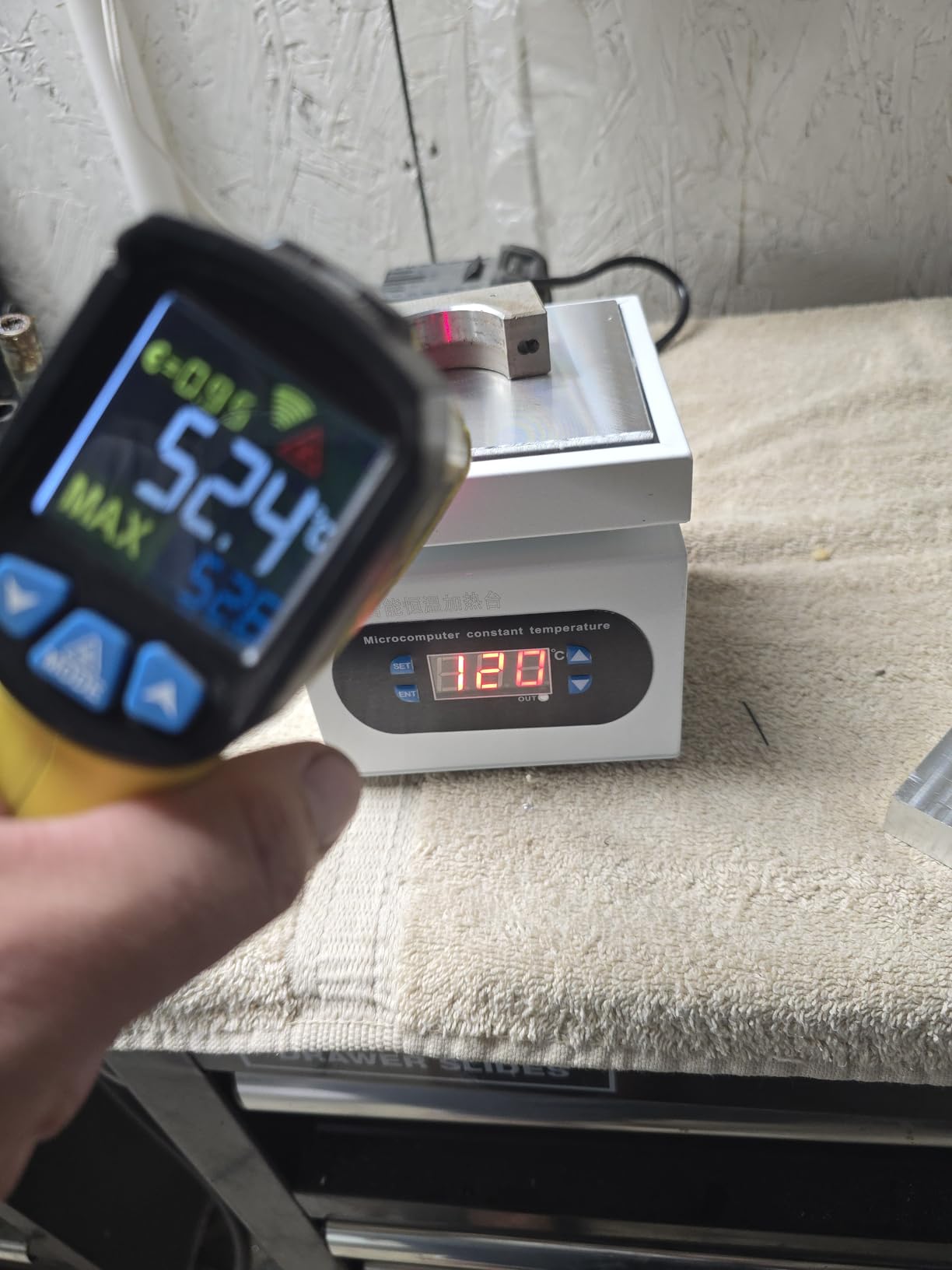
The CPU microcomputer control holds the setpoint across a 30-400C range, which is wide enough for lead-free peak work and for the lower end where a ceramic substrate or an epoxy needs gentle warming. A minority of buyers report quality issues such as a cable fault on arrival, so inspect before first power-up.
There is no programmed profile function. You run the profile by hand, which sounds like a drawback until you realise the plate reaches temperature quickly enough that a manual cycle takes about the same time as a menu-driven one.
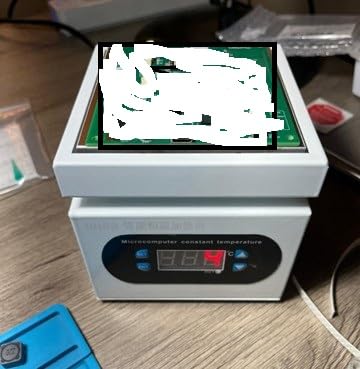
How long does a full reflow cycle take on a 100x100mm plate?
Owners describe heat-up to 180C as a matter of a couple of minutes on a plate this size, where users of the thicker large-surface plates report a noticeably slower ramp. Soak runs 30 to 60 seconds. That cycle time is the main reason manual control is not a real penalty at this size.
Can it handle a board with a large ground plane?
It will, if the copper is not the whole board. A heavy pour under a fine-pitch device can still pull heat away faster than 350W can replace it at temperature. Support the board on standoffs so air circulates underneath, and give it a longer soak rather than more plate temperature.
3. Vevitts 850W 200x200mm Lab Plate – Best Premium Large-Surface Plate
Vevitts 110V 850W LED Digital Electric Hot Plate, 30-400°C Soldering Preheating Station for PCB SMD LED Rework Lab
850W
200x200mm aluminum alloy plate
30-400C
Plus or minus 1.5C stated
Fanless
Pros
- Thick machined aluminum with high thermal mass and stable temperature
- 200x200mm surface accepts kapton tape well
- Runs silently with no fan
- Controller is replaceable for rebuilders
Cons
- Some arrive with undersized terminals and paint over the ground point
- Heavy machining-oil smoke on first heat-up
- Enclosure height leaves little room to rest your hands
Where the first plate focuses on raw capability, this one focuses on refinement. The multi-tube heating and the insulation wrap around the plate body are the same idea you see in a good lab instrument, and the manufacturer states stability of plus or minus 1.5C. Only two plates in this group publish a stability figure at all, so treat it as useful context rather than a measured result.
Technically inclined owners treat it as a platform rather than a finished product. They open the enclosure, re-terminate the wiring, improve grounding, and fit their own controller. That is a genuine endorsement if you enjoy that kind of work and a poor fit if you want something to unbox and switch on.
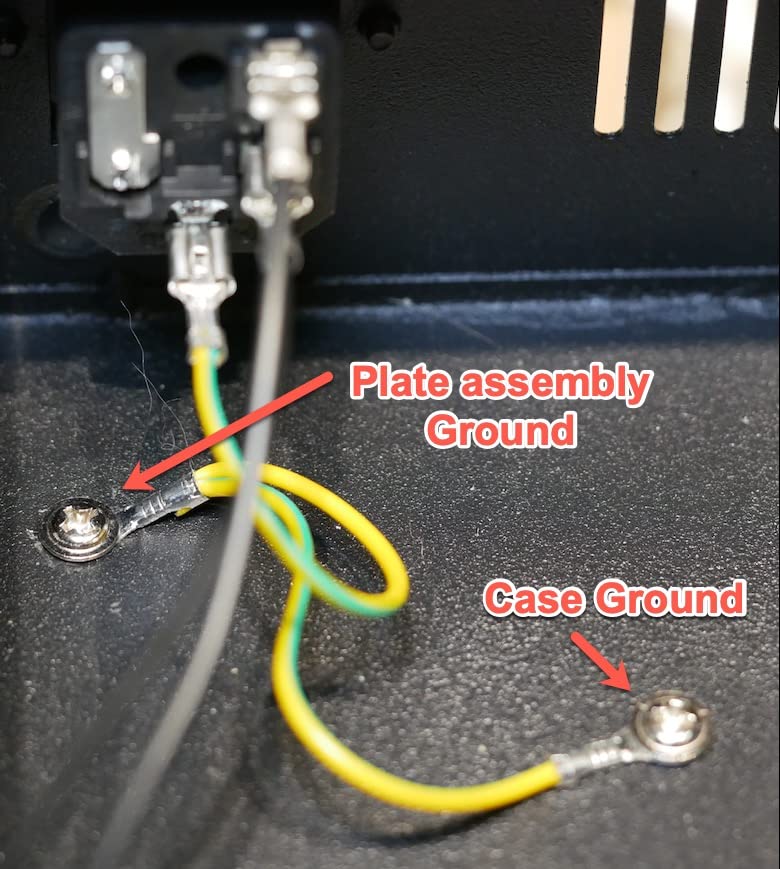
The three-dimensional cooling hole design means there is no fan, and owners notice the silence. The powder-coated finish inside and out matters more than it sounds, because bare aluminum near solder and flux eventually stains.
There is a first-use ritual worth knowing about. Machining oil residue burns off with visible smoke on the first heat-up, so do that one outdoors or with extraction running before you set your board on it.
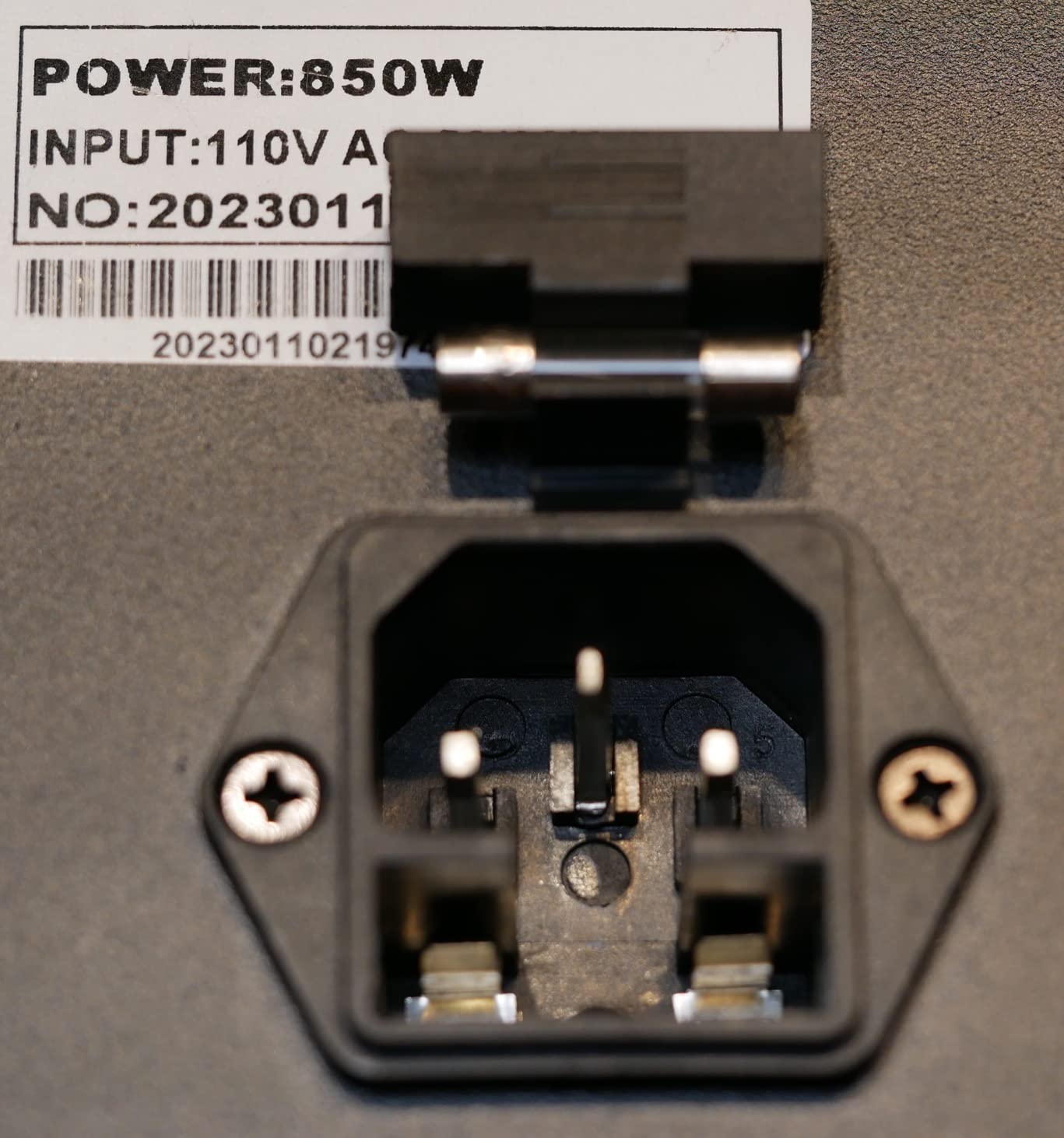
Is the stated plus or minus 1.5C stability accurate in practice?
Treat it as a specification rather than a measurement. On any of these plates the number you trust comes from a probe you attach to the board, not from the display. The stated figure tells you the control loop is well built. Calibrate once with a probe and the whole set of plates improves.
Would I buy this over the Soiiw 850W?
If I wanted a fanless, insulated, serviceable lab-grade unit and intended to tune it, yes. If I just wanted a large flat surface that reflows boards, the first plate does the same job with a much larger body of user feedback behind it.
4. WEP 946D IV 210W Hot Plate – Best for Lead-Free Paste and Small Precision Work
WEP 946D IV 100x50mm Small LED Soldering Hot Plate for SMD BGA Smartphone Microcomputer Rework Reflow, 210W Preheater Station with ℃/℉ Digital Temperature Control
210W
100x50mm aluminum area
50-400C
PID with program timing
110V
Pros
- Reflows lead-free paste reliably around 240-260C
- Fast heat-up and accurate temperature response
- Simple controls with C/F conversion
- Includes straight and curved ESD-safe tweezers
Cons
- 100x50mm area suits small boards only
- Metal edge guards run extremely hot
- Plate holds heat long after shutdown
Reviewers who already owned several plates were openly skeptical of the price, then found it performs close to premium units for prototyping. At 210W with a 100x50mm aluminum area, it is a precision instrument rather than a board-level heater.
Two things stand out. The built-in PID supports program and cycle timing, which is unusual in this size class, and it reliably reflows lead-free paste in the 240 to 260C window, where a 210W element has the least headroom. For 0603 and 0805 work on a phone-sized board, that is the whole job.
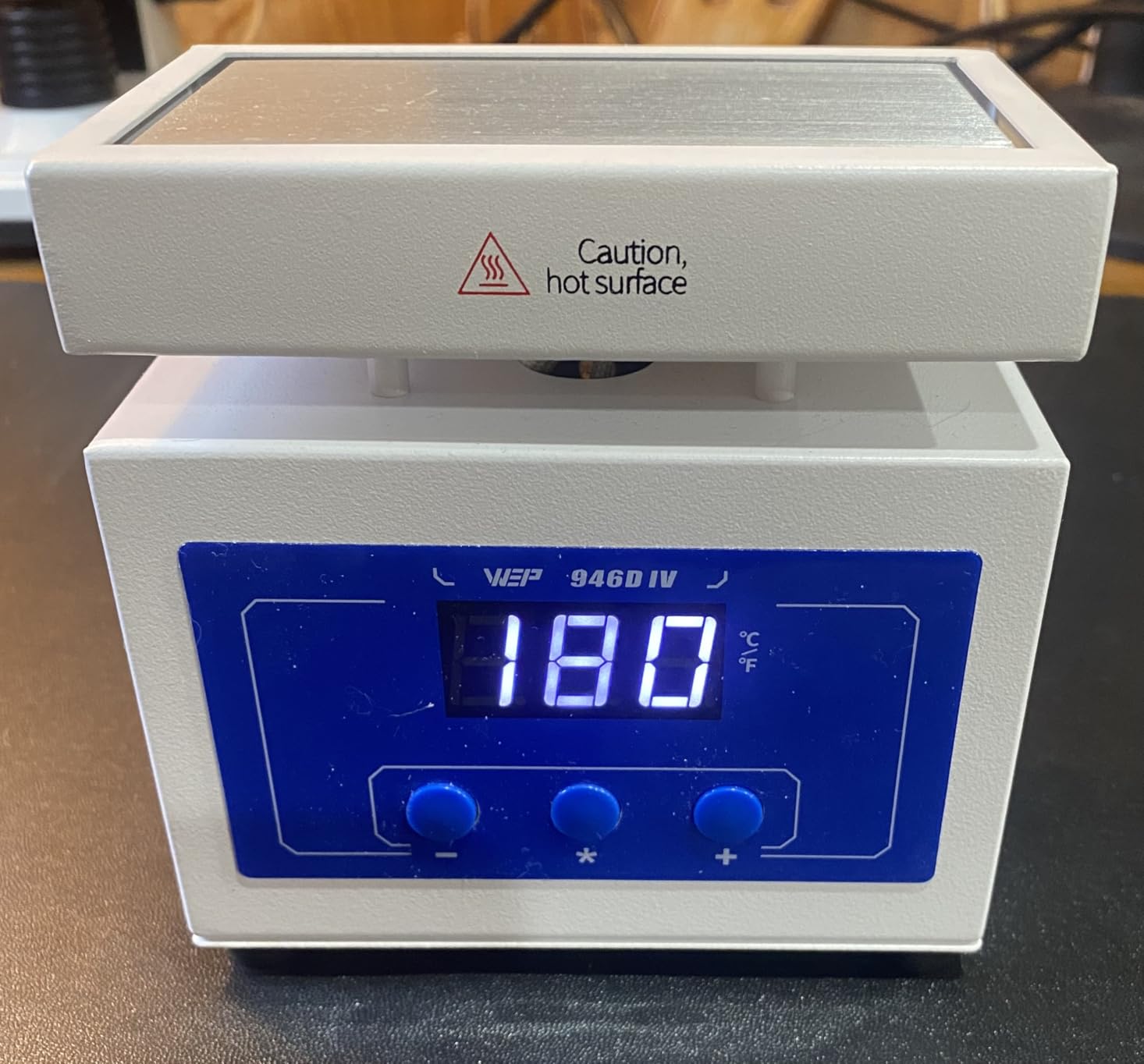
The straight and curved ESD-safe tweezers in the box are not filler. Placement of 0201 and 0402 parts is the slowest part of any small-board build, and having a matched pair removes a purchase. There is also a one-year US technical support commitment behind it.
The 100x50mm area is the real limit. If your board has more than a couple of components on it, you will be moving it around the plate, and moving a board mid-profile is how you get cold joints.
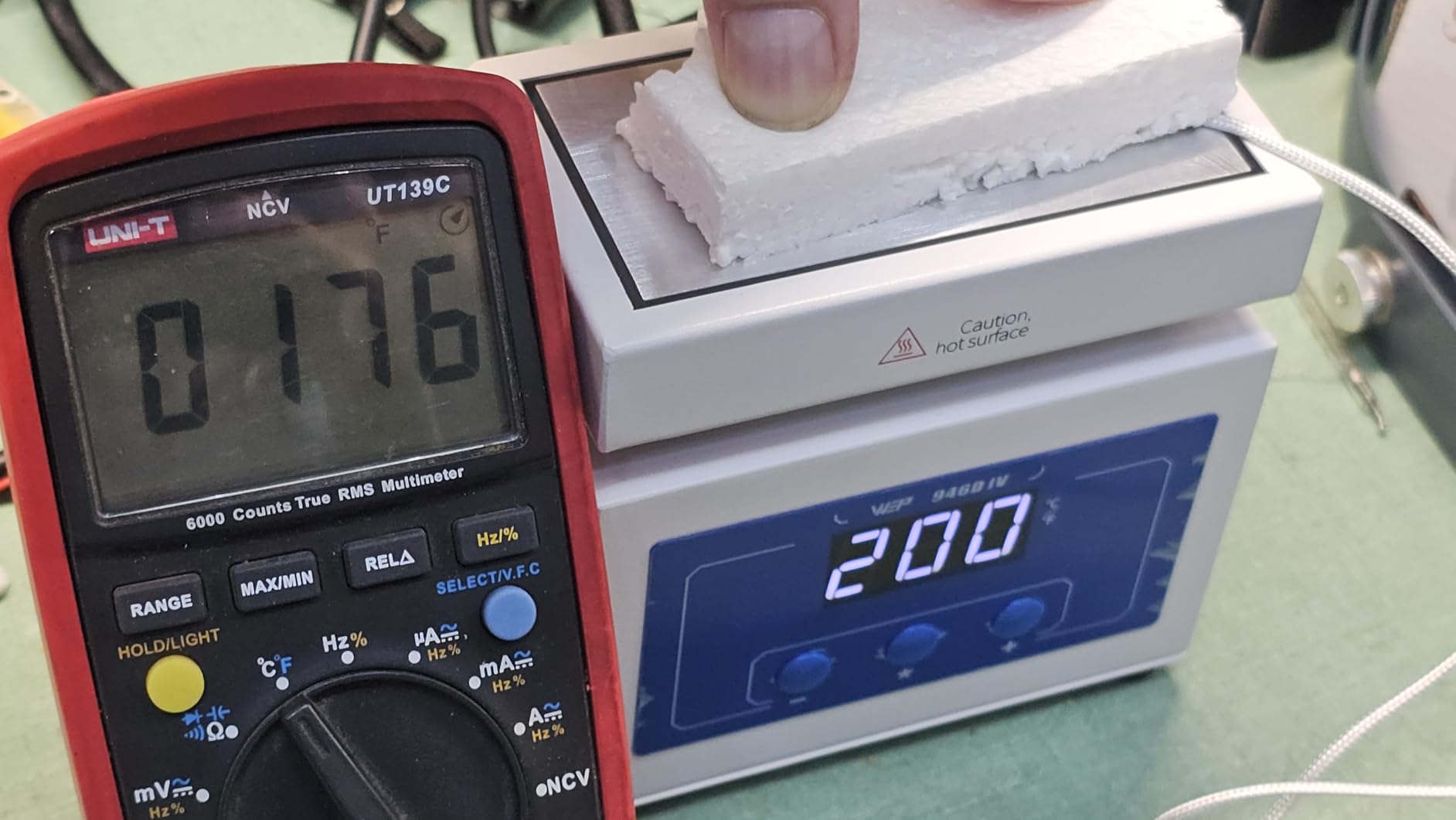
Can a 210W plate reach a proper lead-free peak?
Yes, for a small board. The wattage matters in proportion to the mass you need to heat. A phone-sized board with light copper reaches 250C on this plate. A 100mm board with a full ground pour will not, and no 210W plate will.
What is the program and cycle timing used for?
It lets you store a setpoint and a dwell time so the plate holds a chosen temperature for a chosen period rather than ramping continuously. On a plate this small that is genuinely useful, because the whole cycle is short enough that a repeatable sequence matters.
5. QWORK 360W 100x100mm Hot Plate – Best Compact Bench Plate
QWORK Soldering Hot Plate, 110V 360W Soldering Station with Digital Display –Electric Preheat Rework Heater Lab for Precision Heating (30°C to 400°C)
360W
100x100mm plate
30-400C
Aviation aluminum
Fanless with vents
Pros
- Precise digital control across 30-400C
- Aviation aluminum plate heats rapidly and uniformly
- Compact plate saves real bench space
- Edge protection and a safety fuse tube
Cons
- Thin written feedback means long-term durability is less established
- Fanless cooling depends on adjustable side vents
The rating here is high, and the reason is the plate material and the control response rather than any headline feature. Aviation aluminum is specified for higher conductivity than a standard cast plate, so the surface evens out faster and holds its shape at temperature.
At 100x100mm it takes a meaningful bite out of your bench depth. That sounds trivial until you are trying to fit a plate, an iron, a hot air gun, and a scope into the space you have.
One caveat worth being direct about. The written customer feedback on this listing is thin, so the 4.7 average across 29 reviews reflects broadly positive sentiment with less detail on specific drawbacks than the bigger entries in this roundup. Buy it for the compact footprint and the control, not because the rating is a guarantee of long service.
Is a 360W 100x100mm plate enough for QFN rework?
For a small QFN on a lightly populated board, yes. The plate covers the part and its surrounding ground pad, so the whole pad comes to temperature together rather than one corner leading. Add hot air from above and you have the standard top-and-bottom setup.
What does the fuse tube actually protect?
It is listed as fuse-tube protection, and a fuse on a 400C-capable element is a sensible addition to a design with edge protection and no fan. Ask the manufacturer where the fuse sits if you plan to modify the unit.
6. Kosmeiner 350W 100x100mm Preheat Station – Best for Multi-Pad Rework
Soldering Hot Plate, PCB Preheater Rework Station with Digital Temperature Control, 100×100mm Heating Area for Multi-Point Heating, Electronics Repair, SMD Soldering, PCB Rework DIY110V 350W
350W
100x100mm area
30-400C
Aluminum alloy plate
1 kg
Pros
- Heats fast and holds set temperature precisely
- Case stays cool everywhere except the plate
- Compact and larger than expected for the footprint
- Multi-point heating cuts repeated reheat cycles
Cons
- Needs a first burn-off cycle to clear manufacturing residue
- Heat-up slows noticeably near the top of the range
The multi-point even heating is what separates this one. When several pads under one component need to come to temperature together, a plate that spreads heat across its whole area does it in one pass rather than the three or four partial reheat cycles you would otherwise perform.
Owners call it a capable compact bench plate for SMD work and phone repair, and they single out how cool the case stays away from the plate. That gap is the dual-side ventilation and multi-angle cooling structure doing its job, and it is a safety point rather than a comfort one.
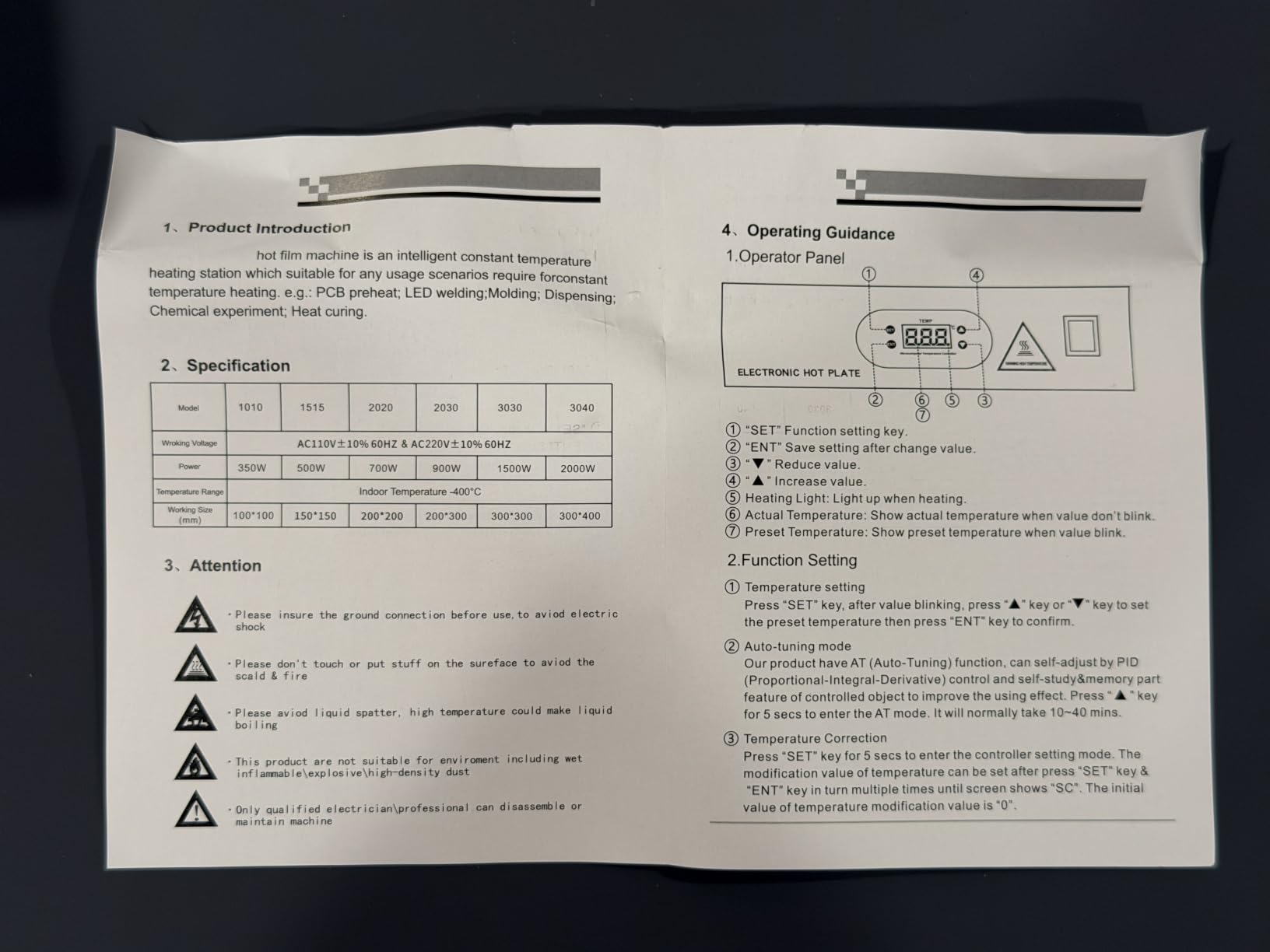
Run a burn-off cycle before any project work to clear manufacturing residue, and expect warm-up to take longer as you approach 400C. Neither is a fault; both are the plate telling you its limits clearly.
With 26 reviews, this is a lightly reviewed listing. That is worth weighing against the 4.8 average, the highest in the group, because a high score on a small sample can move a lot with a single review.
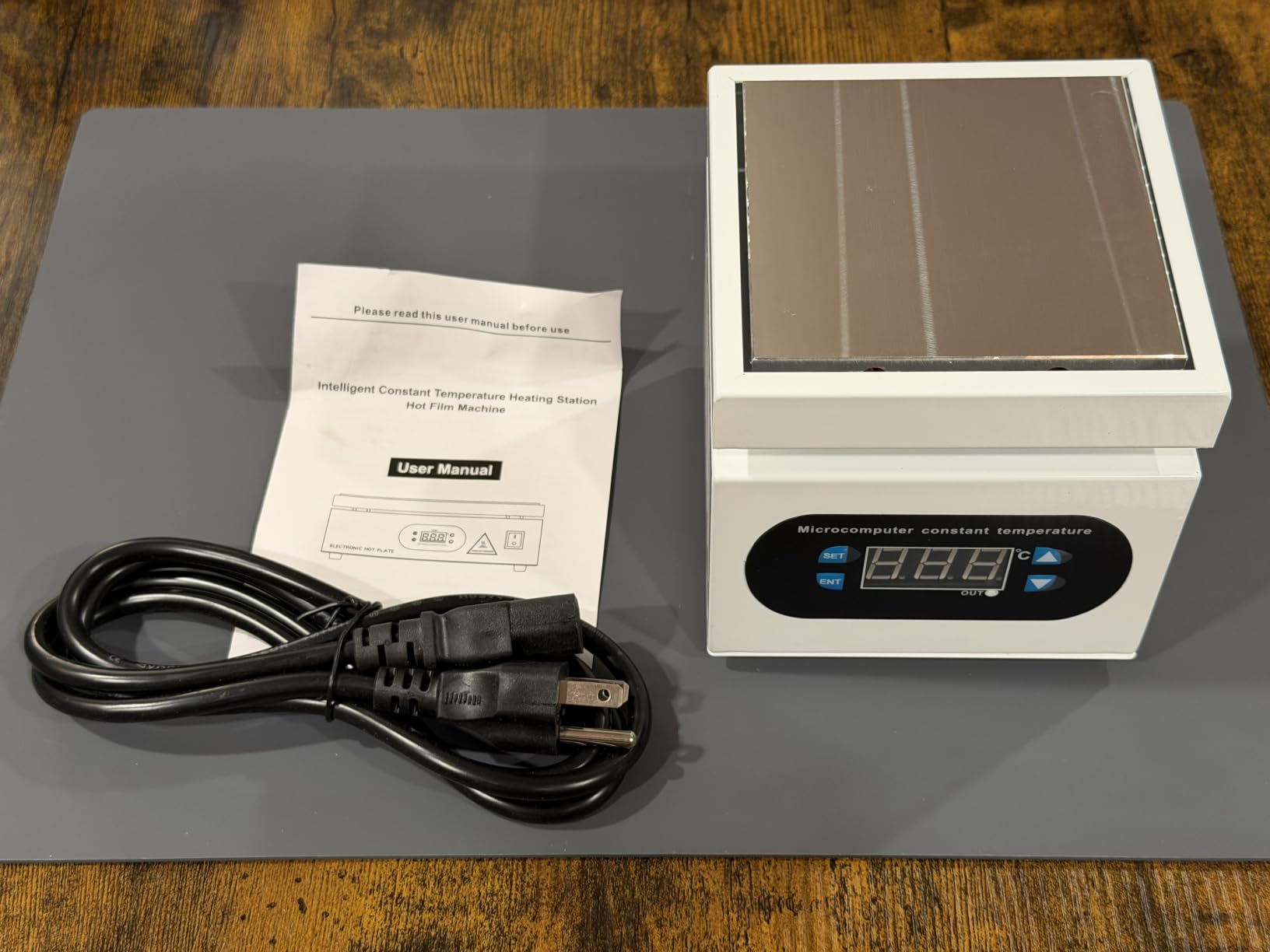
How hot can I run it before it becomes a problem?
The range goes to 400C, and for lead-free peak work you will use 240 to 260C. Reserve the top of the range for heating a part for removal, where you want a fast melt and no dwell. The heat-resistant edge design keeps the surrounding body cooler to handle.
Does a larger 200x200mm variant exist?
A blue 200x200mm version is offered alongside the white 100x100mm one. If your future work includes bigger panels, that variant is the one to look at, though the section here covers the 100x100mm plate on the basis of owner feedback we could see.
7. KeenWise 360W 100x100mm Hot Plate – Best with Tools Included
KeenWise 110V 360W Soldering Hot Plate, Electric Hot Plate, LED Microcomputer Electric Preheat Soldering Station Welder Hot Plate Rework Heater Lab 100X100mm (3.94 * 3.94in) Plate
360W
100x100mm plate
30-400C
2.3 lbs
LCD display
Pros
- Even panel temperature from the control chip
- Aviation aluminum resists deformation at high heat
- Edge protection and fuse tube add safety
- Stainless steel tweezers and power cord in the box
Cons
- Only 17 reviews so field reliability is not well established
- 100x100mm plate limits you to compact boards
This one is worth a short section because of what is in the box. The stainless steel tweezers are the correct tool for placement and removal, and getting them with the plate removes a small, annoying step when you are building a first kit.
The specification set is solid: 360W of aviation aluminum, 30 to 400C digital control, edge protection, side convection vents, and a fuse tube. Owners describe steady even heat from the control chip and a plate that resists warping at high temperature.
Be clear-eyed about the evidence here. With 17 reviews, written customer feedback is sparse and 14 percent of ratings are one-star, so the picture comes mostly from the specification set rather than from long owner experience. Judge it on what it claims, not on how it feels reviewed.
Is it a good first plate for a beginner?
It is a reasonable first plate. The 100x100mm area is right for learning, the control range covers lead-free, and the included tweezers cover placement. Nothing here is exotic enough to break, which matters more than any spec when you are learning the process.
What are the side air vents for?
They are convection cooling for the element on a fanless design, which extends element life compared with sealing the housing. On a plate running 30 to 400C, keeping the element able to shed heat is what keeps the temperature stable over a long session.
8. VQP 853A 450W Infrared Plate – Best for BGA Removal on Large Flat ICs
853A Soldering Hot Plate, 110V 450W Heating Plate for SMD BGA Rework Station, 50-400°C Infrared Preheating Oven Hot Plate for IR PCB Circuit Board Welding Soldering Repair
450W infrared
4.72 inch stainless plate
50-400C
Closed-loop PID
Plus or minus 2C
Pros
- Infrared ceramic elements heat rapidly and evenly
- Stainless anti-static plate resists corrosion
- Four-thumbscrew holder positions large workpieces
- 50-400C digital readout in real time
Cons
- Plate surface is smaller than the 200x200mm options
- Only 15 reviews so limited long-term feedback
Two design choices make this the specialist in the group. The heating is infrared ceramic rather than a resistance element under the metal, and the surface is stainless steel rather than aluminum. Infrared responds fast, which is what you want when you are heating uniformly under a large package.
The adjustable four-thumbscrew holding assembly is the feature that earns its keep. Large flat integrated circuits sit centred and level on it, which is exactly the situation where a board placed by hand rocks and the corners reflow before the middle does.
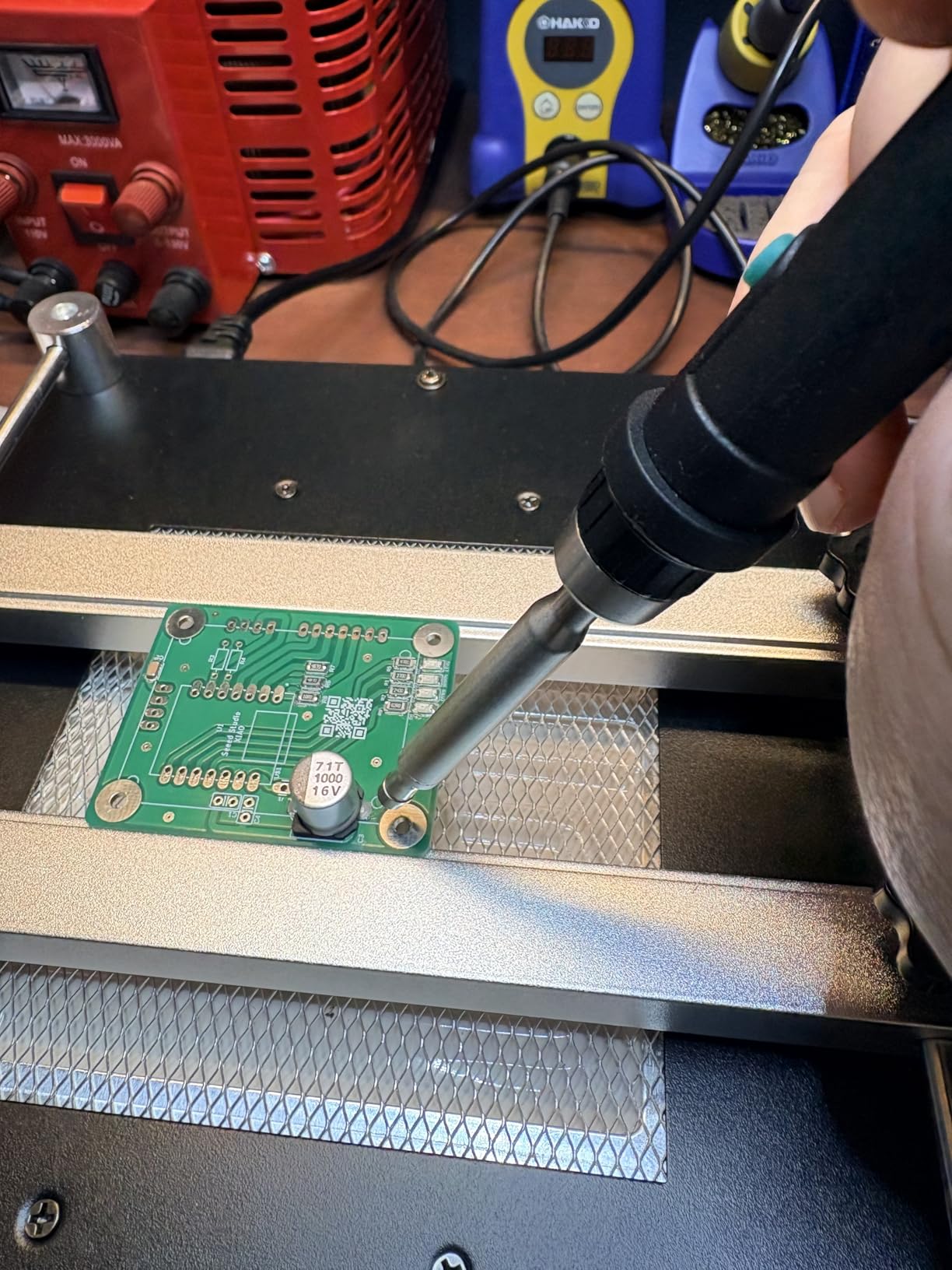
Buyers who choose it typically want the stainless plate and the part holder for large flat ICs and double-sided boards. Closed-loop PID control with a stated stability of plus or minus 2C keeps the ramp predictable across the 50 to 400C adjustment range.
It sits at the upper end of what we covered, and with 15 reviews there is not a large body of long-term owner feedback behind it. Buy it for the infrared heating and the part holder, which nothing else in this group offers.
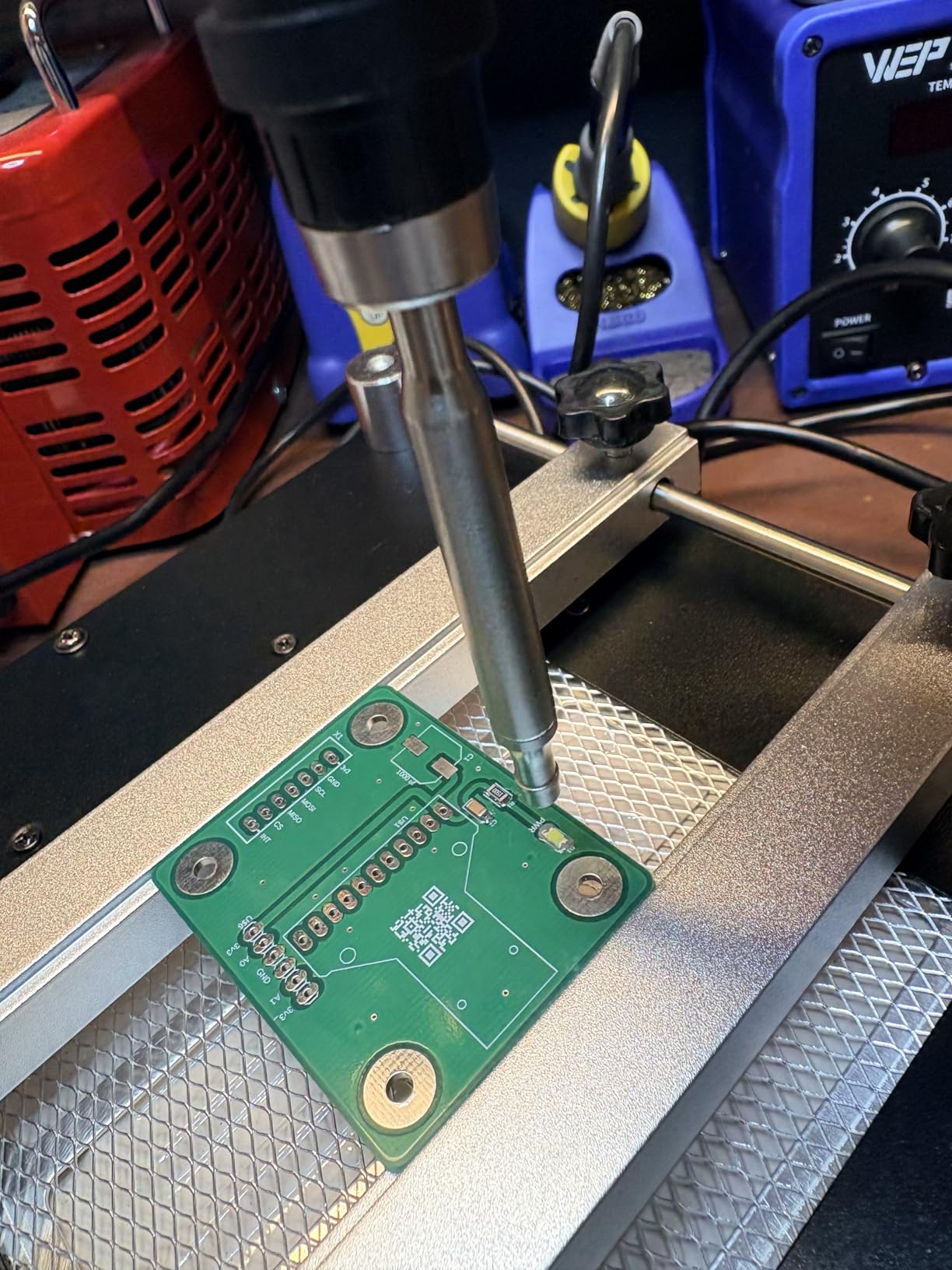
Is infrared heating better than an aluminum plate for BGA work?
It heats faster and the surface does not lose energy into the metal the way a thick aluminum plate does, which is a real advantage under a large package. You still need air above with a hot air station for a full removal, since the top of the board has to reach liquidus too.
What is the plate surface like for soldering directly on?
Stainless steel is more durable and more corrosion resistant than aluminum and it tolerates the heat of resin work without degrading. It is not the best surface for refining solder joints by hand, so keep an iron nearby even with a good plate.
9. TLBZK 350W 100x100mm Hot Plate – Best for First-Time Builders
TLBZK 350W 110V Soldering Station Hot Plate, LED Microcomputer Electric Preheat Rework Heater Lab (100X100mm)
350W
100x100mm plate
0-400C
LED display
Edge guard
Pros
- Parts self-align around 195-210C for clean reflow
- Temperature verified accurate by thermal camera and probe
- Properly grounded confirmed by users who opened it
- Thick plate holds temperature over long sessions
Cons
- Thick drilled-slot aluminum plate is slow to heat and slow to cool
- Displayed temperature can read noticeably higher than actual surface temperature
- Unit is tall so the controls need a second hand and the plate edge is easy to burn against
This listing carries 85 reviews, and they split sharply along experience lines. Beginners report clean, repeatable results and parts that centre themselves around 195 to 210C. Experienced users criticise the thick-plate heating design for slow warm-up and an uncalibrated display.
Both sides of that split come down to what you are expecting. If you are learning, the forgiving paste behaviour is a genuine advantage. If you want a plate that follows a profile precisely, the thick drilled-slot aluminum works against you.
Users who verified temperature with a thermal camera and probe found the readings accurate on multiple plates, and users who opened the case confirmed proper grounding. For a beginner buying a first mains-powered tool, both of those checks matter.
The tall chassis at 4.65 x 4.65 x 4.96 inches is the practical annoyance. Reaching the controls takes a second hand, and the plate edge is easy to burn against despite the edge guard.
Why do parts self-align around 195 to 210C on this plate?
That is the surface tension window, where the solder is fully molten and still fluid enough to pull the part into the centre of its pads. Below it, nothing moves. Above it, you get solder balls and floating parts. The thick plate holds this window steady for long enough to use it.
What does the display-versus-actual temperature gap mean in practice?
It means the setpoint is not a measurement of your board. Attach a K-type probe to the board and read from that instead. Once you calibrate, the display offset stops mattering entirely, because you are working from the probe.
10. SEQURE T55 95W USB-C PD Hot Plate – Best for Portable and Field Work
SEQURE T55 Mini Soldering Hot Plate 25V 95W Preheating Station
95W USB-C PD
55x55mm aluminum plate
30-280C
OLED
0.32 kg
Pros
- Reaches 280C in about 87 seconds
- Compact and light at 0.32 kg for field repair kits
- One-handed rear-button operation on a non-slip base
- Programmable presets and power-level adjustment
Cons
- Setup and firmware menus are fiddly with weak instructions
- 55x55mm plate covers only a small area
- Indicated temperature can read about 60C high
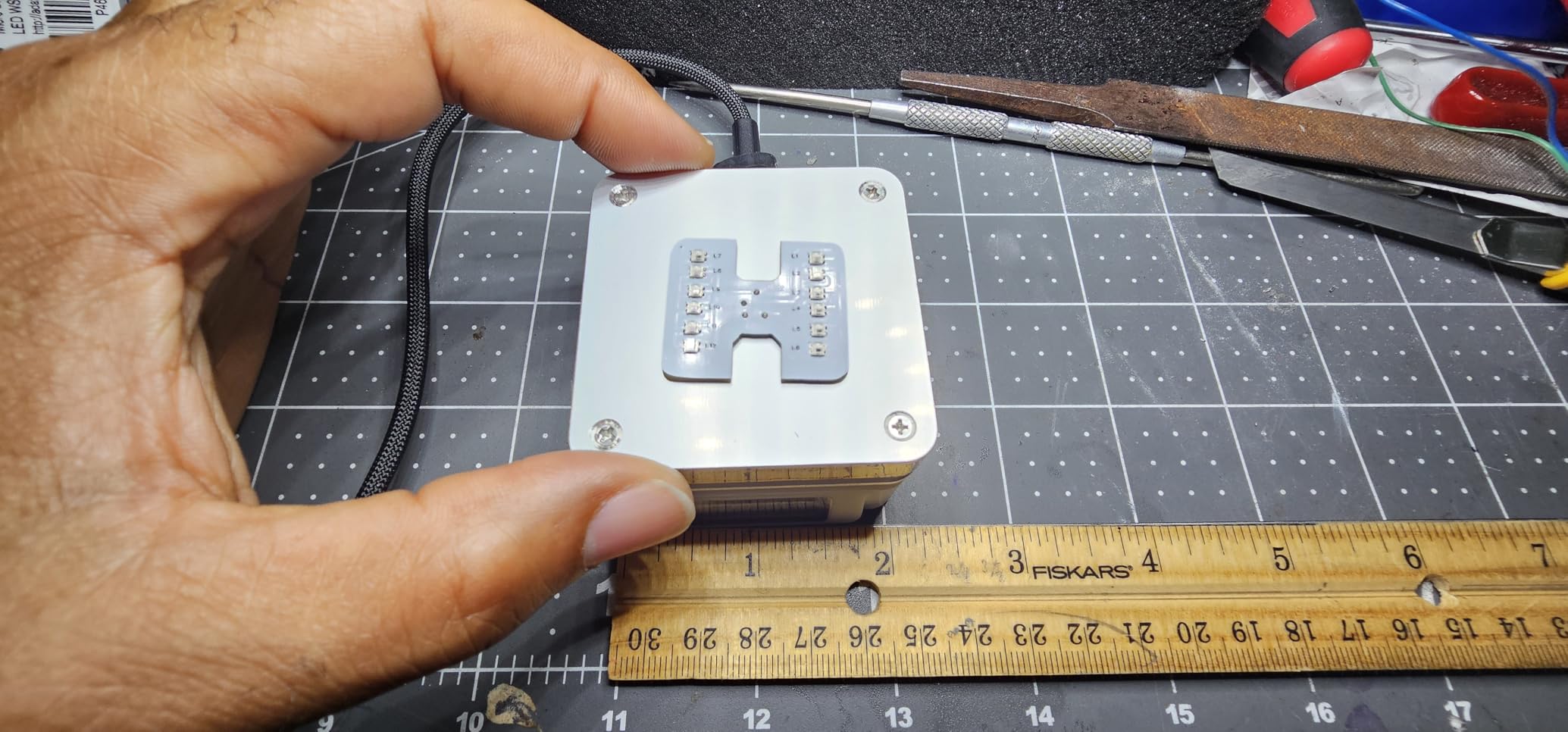
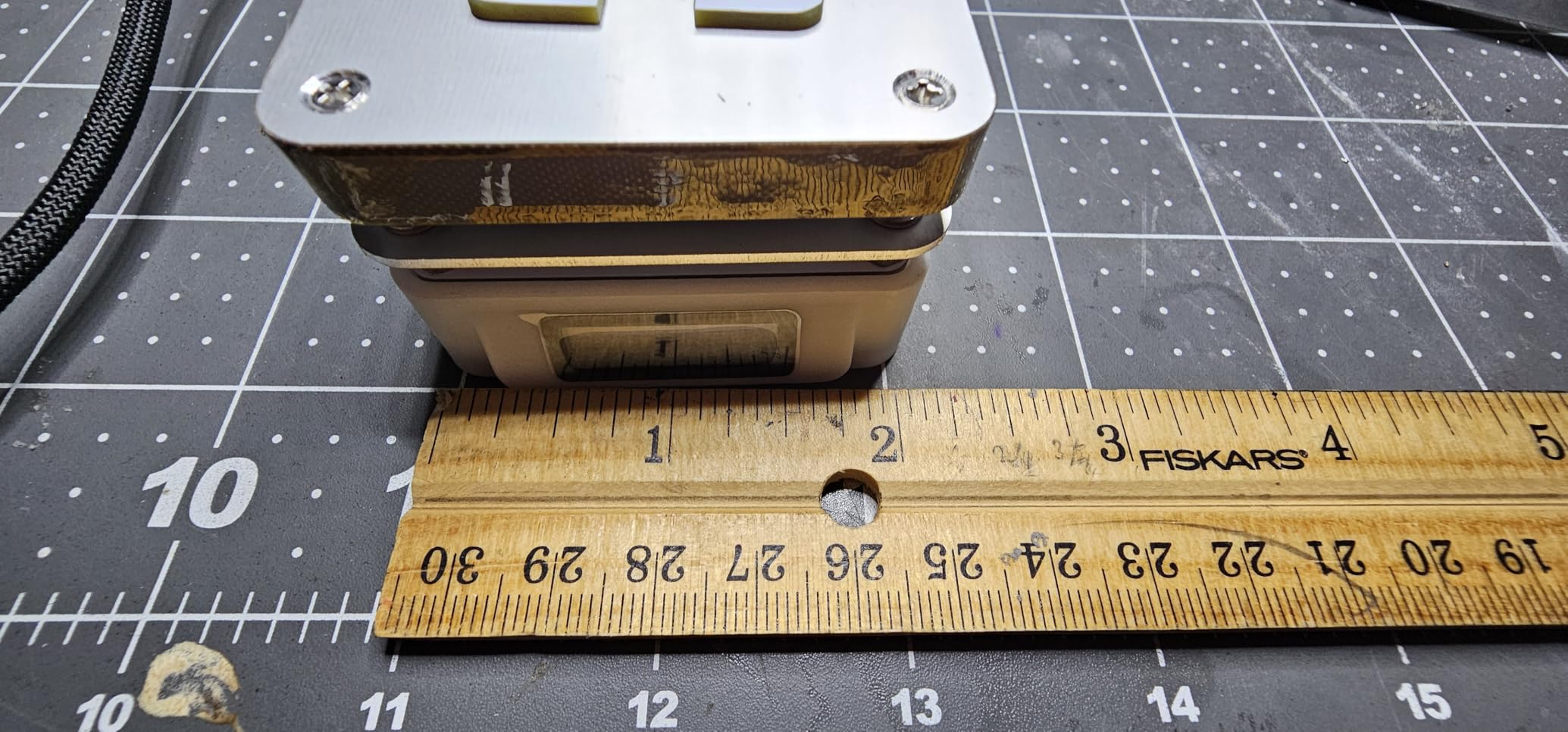
This is the only portable unit in the group, and it is the only one whose maker publishes a heat-up time: 280C in about 87 seconds from cold. At 0.32 kg and 2.4 x 2.1 x 1.5 inches, it fits in a tool bag and is ready while you are still unpacking the board.
The OLED display carries temperature presets, timed heating, auto sleep, and temperature compensation, and the two rear buttons let you adjust it one-handed while the unit sits on its non-slip silicone base. The included 100W PD charger doubles as a phone charger.
Here is the honest part, because it carries the lowest rating in the roundup. Reviewers like the speed and portability, but first-time setup and the firmware menus are fiddly, the written instructions are weak, and the indicated temperature can read roughly 60C high against a thermocouple.
One owner also reported the heating element sparking, which is a fire hazard and the reason this does not carry a stronger recommendation. If a portable unit is essential, buy it, read the calibration section carefully, and keep a mains plate for anything large.
How much PD power do I need for this plate?
It comes with a 100W 5A cable and charger, and the plate runs at 95W over 25.2V. Use the supplied supply. A lesser charger will throttle the plate, and the readout will still show a setpoint while the element delivers less heat than you asked for.
Can 95W soak a lead-free board?
For a small board with light copper, yes, given a long enough soak. For anything with a large ground pour, no power figure in the low hundreds will do it quickly. Use this plate for placement and removal on small assemblies, and step up to a 350W or 850W plate for full board reflow.
Hot Plate vs Reflow Oven vs Hot Air Gun
A hot plate wins for hand assembly, one board at a time, and it wins on cost per board. You control the profile by eye, the plate is even, and the whole thing sits on a bench you already own.
A reflow oven wins on repeatability and volume. It holds a programmed profile through soak, ramp, peak, and cool automatically, so the twentieth board comes out exactly like the first. If you are building the same board repeatedly, or you have panels, the oven pays for itself in saved rework.
A hot air gun is a rework tool, not a reflow tool. It heats the top of a component and leaves the solder underneath sitting on cold paste, which is why joints need iron touch-up afterwards. It is excellent for removing a QFN or lifting a shield can, and poor for a full board.
The trap in this category is trusting a cheap marketplace oven to hit a real profile. A documented hobby build using a toaster oven and a K-type probe found readings differing by around 30C between the board ground plane and a component on it. Until you have a probe on your board, you do not know your peak.
A sensible order of buying is: plate first for learning and one-offs, then an oven if you find yourself repeating boards, and a hot air gun at some point regardless because rework is unavoidable.
What Temperature Do You Need? Leaded vs Lead-Free
Liquidus is the temperature at which solder becomes fully liquid. Below it you have solid joints, above it you have a full melt, and the distance between those two states is the entire margin you have to work with.
Sn63Pb37, the classic leaded alloy, has a liquidus around 183C. Soak at 150C, let the board come to temperature over 60 to 90 seconds, and let the joints reach roughly 200C. It is forgiving, fast, and the reason most hobby projects succeed on the first try.
SAC305, the common lead-free alloy, has a liquidus around 217C and needs a peak near 250C. That is a much smaller margin, and it is where board thermal mass bites hardest. Soak at 180 to 190C for a full minute, then check the component temperature with a probe before you go higher.
Published profiles are usually written against IPC/JEDEC J-STD-020E component classification limits, which cap the time components spend above liquidus. Exceeding those limits is what cracks solder joints and damages packages, so if you are running lead-free, measure rather than assume.
One package rule of thumb helps more than exact numbers. Bigger packages need more soak and a gentler ramp, because the internal die has more thermal mass and a faster ramp cooks the outside before the inside catches up.
How to Choose a Hot Plate for SMD Soldering
Match plate size to board size, and go one step larger. A board that overhangs the plate heats unevenly because part of it is over moving air. For boards under 50mm across, a 50 to 55mm plate works. For a 100mm board, you need a 100x100mm plate. For phone logic boards and panels, go to 200x200mm. The oversizing matters more than it feels like it should.
Use wattage as a size proxy, not a boast. Roughly, a 95W USB-C PD plate handles a single small assembly, 210W handles a phone-sized board, 350 to 400W handles a 100mm hobby board, and 850W handles a heavy ground plane. The reason is simple: a large copper pour is a heat sink pointed the wrong way, and you need enough power to keep feeding it while it soaks.
Prefer real PID control over a thermostat. PID control modulates the duty cycle continuously to hold a setpoint, which is what makes a soak hold steady and a peak repeatable. An on/off thermostat cycles the element and produces temperature swings that can shift parts mid-profile. Where documentation is thin, ask whether the controller is described as PID, a microcomputer, or closed-loop, since sellers use those words inconsistently.
Check the top of the range, not just the number. Every plate here reaches 250C or more, so lead-free peak work is covered. What differs is whether the plate gets there quickly and stays there. Reports of slow warm-up near the top of the range are common on thicker plates, and that is a thermal mass symptom.
Decide between mains and USB-C PD by where you work. A mains plate gives you 210W to 850W and a stable supply. A USB-C PD plate gives you portability and a fast heat-up, but the wattage is capped by the charger and a small plate cannot soak a large board. There is no middle ground here, so pick based on board size first.
Budget for a probe. A K-type thermocouple with Kapton tape, or a clip probe on the board, is what turns a setpoint into a measurement. Attach it to the board rather than the plate. A probe on the plate tells you about the metal, not about your components, and that gap is where failed profiles come from.
Support the board instead of laying it flat. A thick aluminum plate and a copper ground plane both conduct heat away from the components. Corner standoffs, small ceramic feet, or a Kapton-wrapped cradle keep air circulating underneath. A widely documented bench build found around a 30C difference between a board ground plane and a component sitting on it.
Plan for ventilation and handling before you buy. These are benchtop heating appliances that run well past 300C with a bare metal surface. Keep them off flammable surfaces, leave room for the case to cool, and run fume extraction. Burn risk comes from reaching across a plate you just used.
Expect a calibration step. Out-of-box displays in this category can read from slightly high to dramatically high, and one portable unit here is reported about 60C above a thermocouple reading. Spend an afternoon with a probe and your setpoints become trustworthy. Skipping that step is the most common reason a first reflow profile goes wrong.
For a wider angle on deliberate practice at home, the skate fitting guide for stay-at-home defensemen takes the same measured approach to a completely different bench. If you are also upgrading home equipment in other rooms, our at-home hydrafacial machine guide covers another category entirely.
Reflow Problems and How to Fix Them
Solder balls everywhere. Almost always excess paste or too much heat too fast. Widen the stencil apertures so there is less paste per pad, use a lower soak so the paste does not spatter, and make sure the paste is at working viscosity. Balls also appear when the board is moved during soak, so leave it alone.
Parts do not move or centre. The board did not reach liquidus at the pads. Add soak time before adding plate temperature, and check whether a heavy ground pour is stealing heat. Support the board on standoffs and measure the component with a probe.
Tombstoning, where one end of a chip stands up. Uneven heating across the part, usually from moving the board during profile or from a plate that is too small and has a cold edge under one side. Oversize the plate and keep the board still through cooling.
Cold joints that look melted. The solder flowed but did not wet. This is a flux problem as often as a temperature problem. More flux, less heat, and a full melt held for 30 to 60 seconds rather than a quick flash.
Nothing melts and the display reads high. Uncalibrated sensor, and a recurring complaint in the owner feedback for several plates here. Attach a probe to the board. If the board reads well below the display, you now know exactly how far to offset your setpoint.
Overheating, or components damaged after a reflow. You have gone past the package limit, usually by trusting a setpoint instead of a measurement. Bring the peak down, lengthen the cool-down, and check the profile against J-STD-020E limits for your package.
Frequently Asked Questions
Can you reflow SMD using a hot plate at home?
Yes. A reflow hot plate is a normal way to solder surface-mount boards at home. Apply solder paste through a stencil, set the plate to just below the paste liquidus, soak until the paste melts and parts self-align, then lift the board off and let it cool flat and untouched. Leaded Sn63Pb37 liquidus is about 183C and lead-free SAC305 is about 217C with a peak near 250C.
What is a good heat plate for soldering PCBs?
A good heat plate for soldering PCBs has an even flat metal surface, enough wattage for your board size, and real PID control rather than an on/off thermostat. For most hobby boards a 100x100mm plate at 350W is the sweet spot. Phone-sized boards need about 210W, and heavy ground planes need 850W. Budget for a K-type thermocouple so you can measure the board rather than trust the display.
Can I reflow solder using a heat gun?
You can, but it is a rework technique rather than a reflow technique. A heat gun heats the top of a component and leaves the solder underneath sitting on cold paste, so joints need iron touch-up afterwards. Heating the whole board from below on a plate is what produces a complete melt on every pad in one pass.
What temperature do you set a hot plate to for reflow?
For leaded Sn63Pb37, soak at about 150C so the 183C liquidus is reached gently and joints reach roughly 200C. For lead-free SAC305, soak at 180 to 190C and allow a peak near 250C, since the 217C liquidus leaves a much smaller margin. Measure the component with a probe rather than trusting the setpoint, and keep time above liquidus within the limits published for your package.
What size hot plate do I need for SMD rework?
Match the plate to the board and go one size larger. Boards under 40mm square need about a 50mm plate, a 100mm board needs 100x100mm, and phone logic boards or panels need 200x200mm. A board that overhangs the plate heats unevenly, and a plate that is too large just makes you wait longer for warm-up.
Is a hot plate better than a reflow oven?
A hot plate is better for hand assembly and one-off boards because it costs less and gives you direct control. A reflow oven is better when you build the same board repeatedly or work on panels, because it runs a repeatable profile without supervision. Many hobbyists start with a plate and add an oven once they notice themselves repeating the same build.
Final Verdict: Which Hot Plate Should You Buy?
Our pick for the best hot plates for SMD reflow at home is the Soiiw 850W 200x200mm plate. It pairs a 200x200mm surface with far more user feedback than anything else here, and its controller is one you can actually calibrate, which makes every profile after the first repeatable.
If you are working on normal hobby boards, the Soiiw 350W 100x100mm preheater is the smarter buy and the one we would put on most benches. Add a WEP 946D IV if lead-free paste and 0603 work is your regular task, or the VQP 853A if you remove large flat ICs. Reserve the SEQURE T55 for travel, and calibrate it properly before you trust it.
Whichever you pick, buy a K-type thermocouple with it. Measuring the board rather than the display is the difference between reflowing repeatedly and guessing repeatedly.