
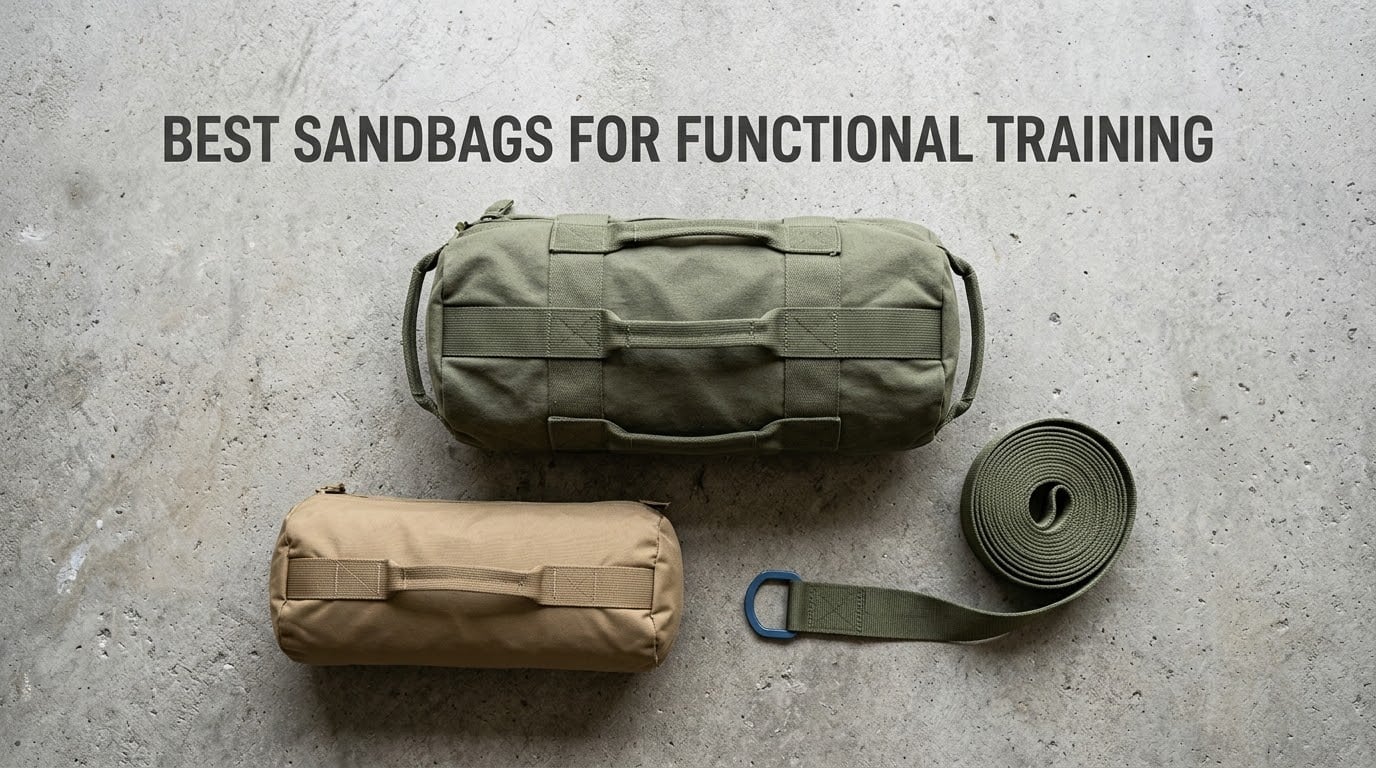
A sandbag for functional training is a fabric or neoprene bag filled with sand or fine gravel whose contents shift with every rep, turning each lift into an unstable-load problem your trunk and grip have to solve. That shifting is the whole point. A barbell tells you where the weight is going to be; a sandbag makes you brace, adjust, and keep the load close, which is why coaches reach for one when they want grip endurance, anti-rotation core strength, and the ability to move an awkward external load.
I have used sandbags for functional training for the better part of three years, mostly in garages and rink-side rooms, and I have gone through enough of them to know where they fail. Handles tear at the attachment points first. Zipper closures leak dust in week three. A bag that looks fine in a listing turns floppy the moment you underfill it. This guide covers the best sandbags for functional training in 2026, with eight bags I would actually put in a program, plus the fill method nobody else on the internet bothers to explain.
The list spans the formats that matter: unfilled Cordura duffels you fill yourself and adjust as you progress, sealed neoprene SandBells that arrive loaded, and long Bulgarian-style bags built for throws and carries. If you are starting from scratch, I would also read our broader workout sandbag roundup first, since it covers general fitness use rather than the functional-training angle we are focused on here.
Table of Contents
Top 3 Picks for Functional Training Sandbags in 2026

Yes4All Adjustable Sandbag
- Adjustable 5-200 lbs
- 1000D Cordura nylon
- 7 rubber handles
- 80% fill for stability

HYPERWEAR SandBell
- Pre-filled with USA sand
- Sealed neoprene shell
- 2-50 lbs color-coded
- Soft enough to slam anywhere

RDX Power Sandbag
- 1200D Cordura with coated lining
- 8 reinforced handles
- Four sizes 5-200 lbs
- Water-resistant inner bags
Best Sandbags for Functional Training in 2026 at a Glance
All eight bags below earn their place for a different reason, and the format matters as much as the fabric. Pre-filled neoprene bags remove the sand problem entirely. Unfilled Cordura bags give you a 5 to 200 pound range in one shell. Long cylindrical bags suit throws and clean-and-press cycles that a squat-shaped duffel handles awkwardly.
| Product | Specifications | Action |
|---|---|---|
| Yes4All Adjustable Sandbag |
|
Check Latest Price |
| HYPERWEAR SandBell |
|
Check Latest Price |
| RDX Power Sandbag |
|
Check Latest Price |
 Elite Sports Bulgarian Bag Elite Sports Bulgarian Bag |
|
Check Latest Price |
 Elite Sports Workout Sandbag Elite Sports Workout Sandbag |
|
Check Latest Price |
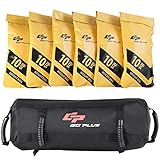 Goplus Workout Sandbag Goplus Workout Sandbag |
|
Check Latest Price |
 Polyfit Classic Sandbag Polyfit Classic Sandbag |
|
Check Latest Price |
 Shogun Sports Sandbag Shogun Sports Sandbag |
|
Check Latest Price |
1. Yes4All Adjustable Sandbag – the widest weight range for daily programming
Yes4All Sandbags for Working Out, Unfilled Adjustable Sand Bags for Weight Training with Handles, Multiple Colors & Sizes 5-200lbs
1000D Cordura nylon
7 rubber handles
5-200 lb adjustable
Unfilled, 2 inner bags
Pros
- Adjustable from 5 to 200 lbs using included inner liner bags
- Durable 1000D Cordura shell with box stitching
- Seven handles hold steady during dynamic lifting
- Suits deadlifts
- squats lunges and cleans
- Customer service replaced worn liner bags
Cons
- Sold unfilled so sand must be sourced separately
- Inner liner stitching can degrade over time
- Fine dust can escape the outer shell
- Long handles drag for shorter users
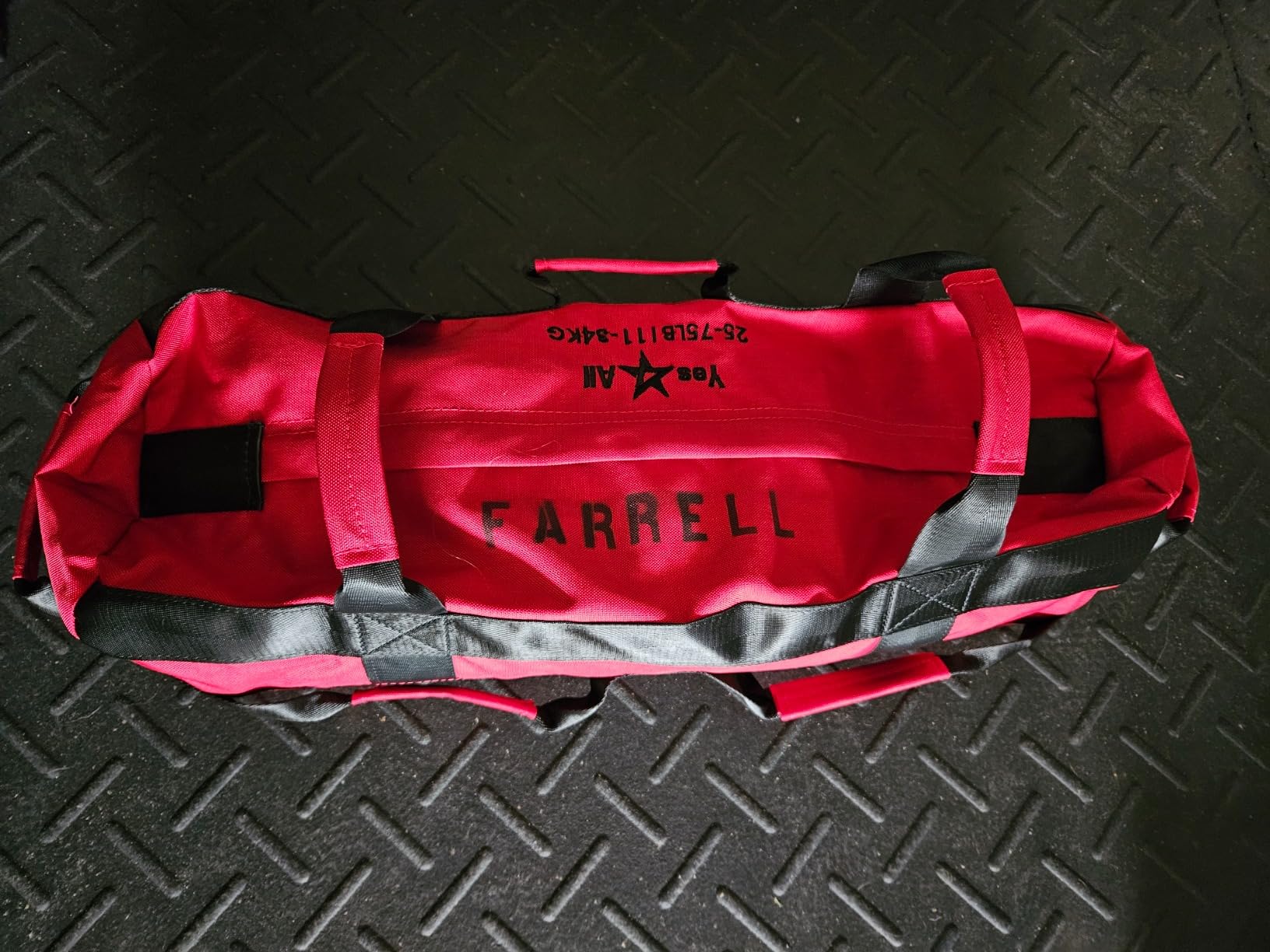
I have a Yes4All in the garage that has been through two years of farmer carries, Turkish get-ups and more ground-to-shoulder sets than I care to count, and the shell is still intact. The mid-size version I use is the 25 to 75 pound configuration, which covers the majority of my programming on its own.
What makes this the one I keep coming back to is adjustability inside a single bag. You pour sand into the two included inner liner bags, cinch them closed, and the outer shell takes the load. Add a bag for heavier work, pull one out for technique days. Across the range that spans 5 to 200 pounds, so the same shell grows with you instead of being replaced.
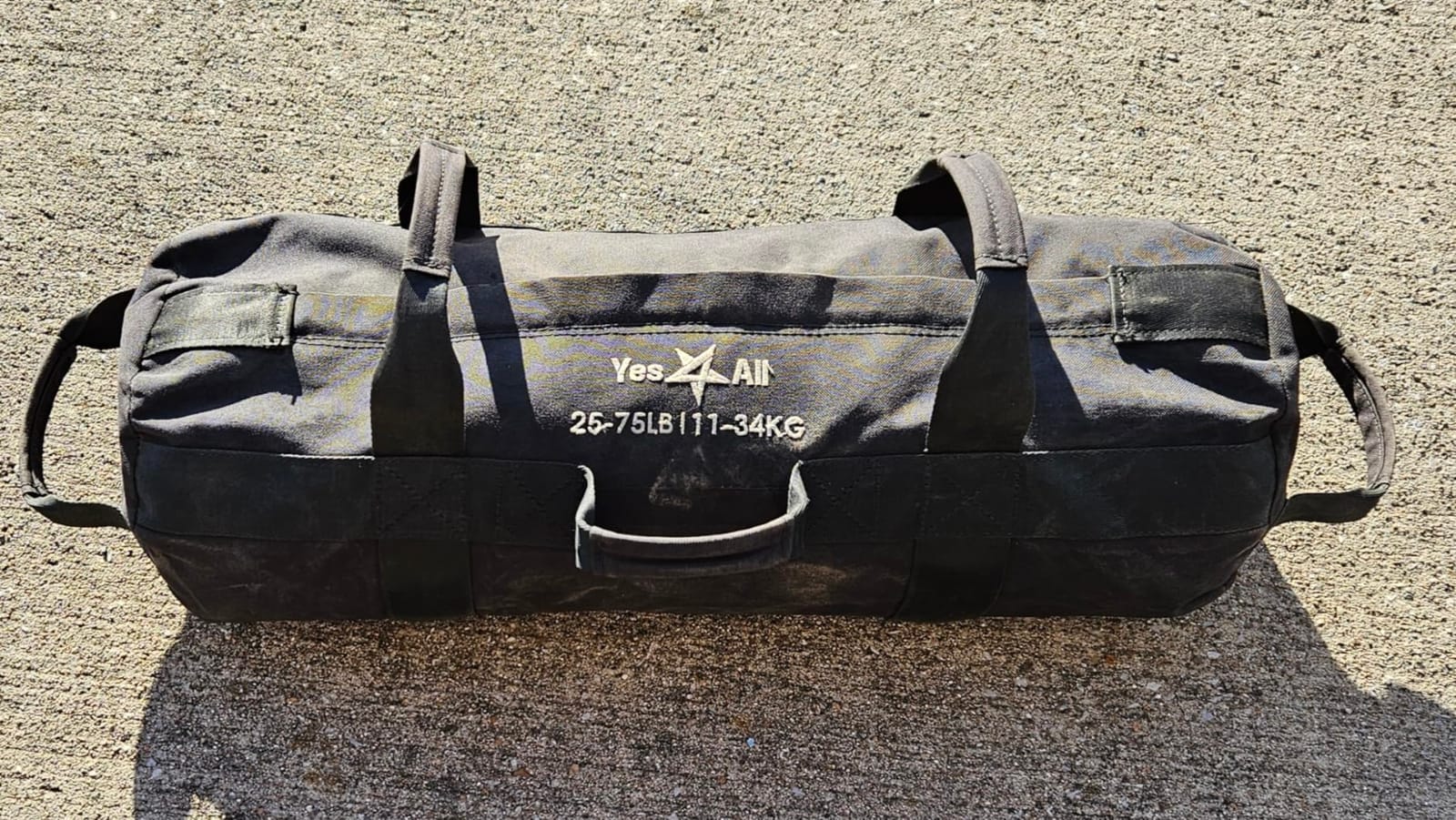
Construction is 1000D coated Cordura nylon with reinforced seams and box stitching, plus a double-enclosure hook-and-loop fastener and double-fold edges to keep the sand in. Seven rubber handles sit at mixed positions around the bag, so a clean, a bear hug carry and a hip hinge all find a grip without you hunting for one.
The brand is explicit that you fill to 80 percent of capacity for the best stability, and that matters more than it sounds. Underfilled, the bag slumps and rolls; packed solid, the sand cannot shift and you lose the unstable-load benefit that makes functional training worth doing. That 80 percent line is the single most useful instruction anywhere in this category.
The recurring complaints from owners are all about the inner liners rather than the outer bag. Liner stitching is the part that eventually gives, particularly when the hook-and-loop closure gets yanked open hard, and fine dust can find its way through the inner bags. Some buyers switch to pea gravel or drop a plastic liner inside to reduce it. Longer sizes also have handles that trail on the ground if you are under about five foot ten, which is a real problem for shoulder carries.
Is it worth buying sand and filling it yourself
For most home athletes, yes. Sourcing sand takes one trip to a garden supply store and about twenty minutes of filling, and it buys you a weight range that a pre-filled bag cannot touch. The hidden cost is re-filling when you outgrow a size, and the disposal of an old bag you cannot return to full.
Experienced lifters on r/crossfit name REP Fitness as the value pick over and over, and the thread consensus is that brand comparison is less important than denier, handle reinforcement, and whether the inner liner is double-stitched. The Yes4All checks the first two comfortably. On liner stitching, expect to inspect it once a year if you train hard.
Which movements suit this bag best
This is a clean-and-press and ground-to-shoulder bag. Seven handles cover clean positions, front rack and shoulder, bear hug, and suitcase carry, which covers most of a functional fitness session. It also works as a substitute for a barbell in high-repetition deadlift and squat ladders when you want the load to move.
I would pair it with the daily training structure we break down for skaters, where a long session mixes carries with unilateral work. The adjustable range lets you load heavy for a sprint block and strip it back for a hinge-focused day without changing equipment.
2. HYPERWEAR SandBell – pre-filled, sealed and safe to slam indoors
Hyperwear SandBell Sandbag for Working Out, Pre-Filled USA Sand, 2 lb
Sealed neoprene shell
Pre-filled with USA sand
12 weights 2-50 lbs
Slam-safe soft shell
Pros
- Arrives loaded so there is no sand sourcing
- Sealed shell removes zipper and hook-and-loop failure points
- Soft and safe to slam on hardwood
- tile or concrete Shifting sand trains core grip and stabilizers
- 12 color-coded weights make progression easy
Cons
- Weight is fixed once filled with no in-bag adjustment
- No integrated carry handle
- Less handle variety than traditional sandbags
The SandBell solves the problem every other bag on this list shares: you have to own sand. Mine arrived filled with clean USA sand, sealed, and ready to train, and I put it straight to work on a hardwood floor in a house where a nylon bag would have left a visible mark every time.
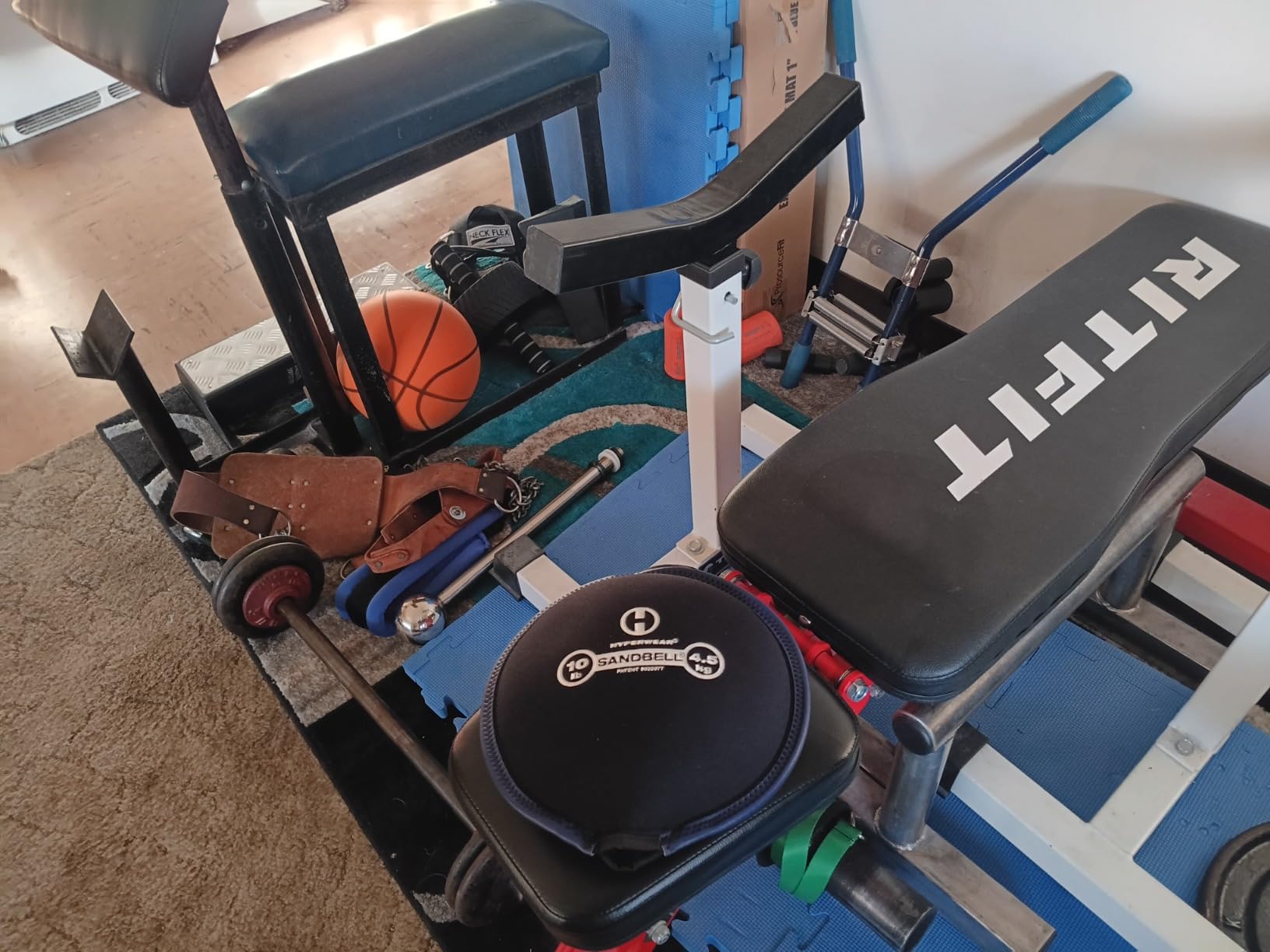
The engineering decision that makes it different is the absence of zippers and hook-and-loop. There is a patented sealed neoprene shell with no closures at all, so the two things that break most sandbags simply do not exist here. For a sealed design, the fill quality matters even more than usual, and the clean, dust-free sand means it stays out of your air handler.
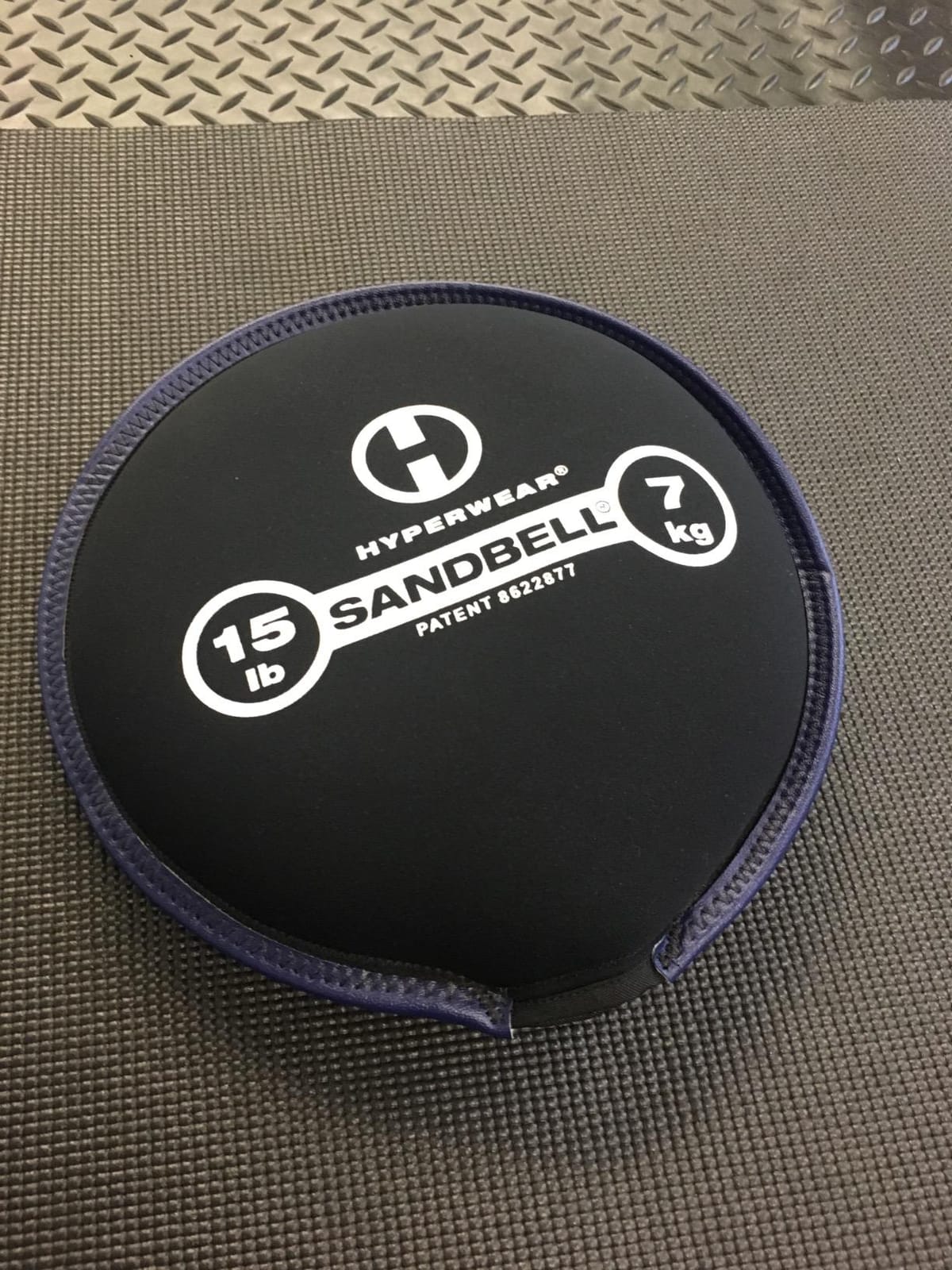
Functionally, it is four tools. Owners use it as a kettlebell for swings and cleans, as a dumbbell for goblet work, and as a slam ball or medicine ball for throws. The soft impact-absorbing neoprene means you can slam it onto hardwood, tile, concrete or grass without worrying about the surface or your toes. In an apartment or a shared garage space that flexibility is worth a lot.
The tradeoff is honest and simple: the weight is fixed. Twelve color-coded options run from 2 to 50 pounds, so you cover a huge functional-training range across a set, but within a single bag you cannot add or remove load. Many buyers simply own two or three and rotate them, which also works well for complex sessions where you need 30 pounds for carries and 15 for accessories in the same hour.
The most common wish from owners is a built-in carry handle, and the second is more handle placement variety. Neither stops you from shouldering, but both make suitcase and bear hug work slightly less precise than on a Cordura duffel with eight webbing handles.
Is it safe in a shared or indoor training space
Yes, and that is its main argument. The neoprene shell absorbs impact rather than transmitting it, so slamming, med-ball throws and drop drills are viable on a finished floor. If you train in a basement, a rented studio or a room with downstairs neighbors, this is the bag that will not get you complained about.
There is a real ceiling, though. Fifty pounds is the top of the range, so if your program is built around heavy sandbag cleans or rucking with a loaded pack, this is a conditioning tool rather than your primary strength implement. Treat it as the aerobic and technical layer of a session and pair it with something heavier for the big lifts.
Which movements suit this bag best
Kettlebell-style swings, cleans, snatches and goblet squats, then straight into slams and med-ball throws for conditioning. Because it replaces a dumbbell too, it slots into accessory work where a shifting load is useful but the weight needs to stay under 50 pounds.
For anyone building an at-home functional fitness setup, this is the bag to buy first. You get the unstable-load benefit with zero setup friction, and the color-coded system means you can build a full ladder of loads in a corner of a room the size of a suitcase.
3. RDX Power Sandbag – 1200D Cordura built for year-round outdoor work
RDX Sandbag for Fitness Weights Training, Unfilled Power Bags with Handles, 5-200 LBs Adjustable Weighted Slam Bag for Strength Powerlifting Running Heavy Workout Home Gym Exercise, Sold AS UNFILLED
1200D Cordura with coated lining
8 reinforced handles
4 sizes 5-200 lbs
2 year manufacturer warranty
Pros
- Very tough 1200D Cordura with seatbelt-style handles
- Water-resistant interior lining for year-round outdoor use
- Eight handles allow holds
- pushes and pulls from any direction Handles squats presses lunges and deadlifts
- Two year manufacturer warranty
Cons
- Sold unfilled so sand must be sourced separately
- Inner liner stitching reported failing within months
- Side zipper loading is fiddlier to fill
- Small size is hard to return to full capacity
I started using the RDX after a winter of outdoor work exposed the weak point in my setup: bags that were not built to be rained on. The 1200D Cordura shell with a nylon-coated interior lining is the heaviest fabric spec in this roundup, and the water resistance is not marketing copy, it is the reason I still train outside in November.
Handle count is the standout at eight, each set with reinforced cross-stitching, which is what makes this a genuine all-direction tool rather than a bag with two grab points. You can hold it in front for a goblet position, push it for walking lunges, or pull it for rows and pullovers without regripping.
The four size variants cover the practical range in sensible increments: Small for 5 to 25 pounds with one inner bag, Medium for 25 to 75 with two, Large for 50 to 125 with three, and Extra-Large for 125 to 200 with four. That means you can match the bag to a real training block rather than guessing, and the medium is the version most functional athletes end up with.
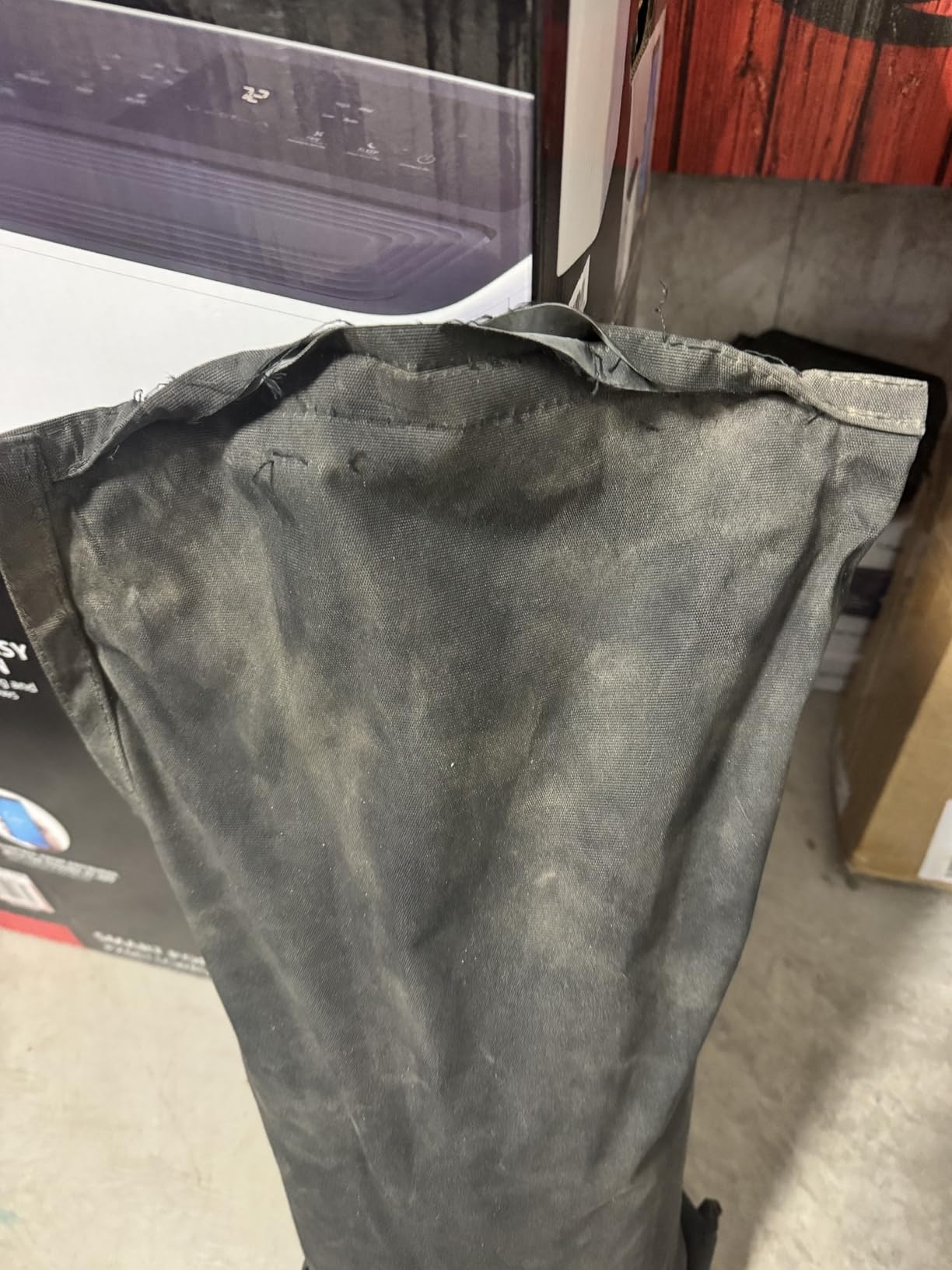
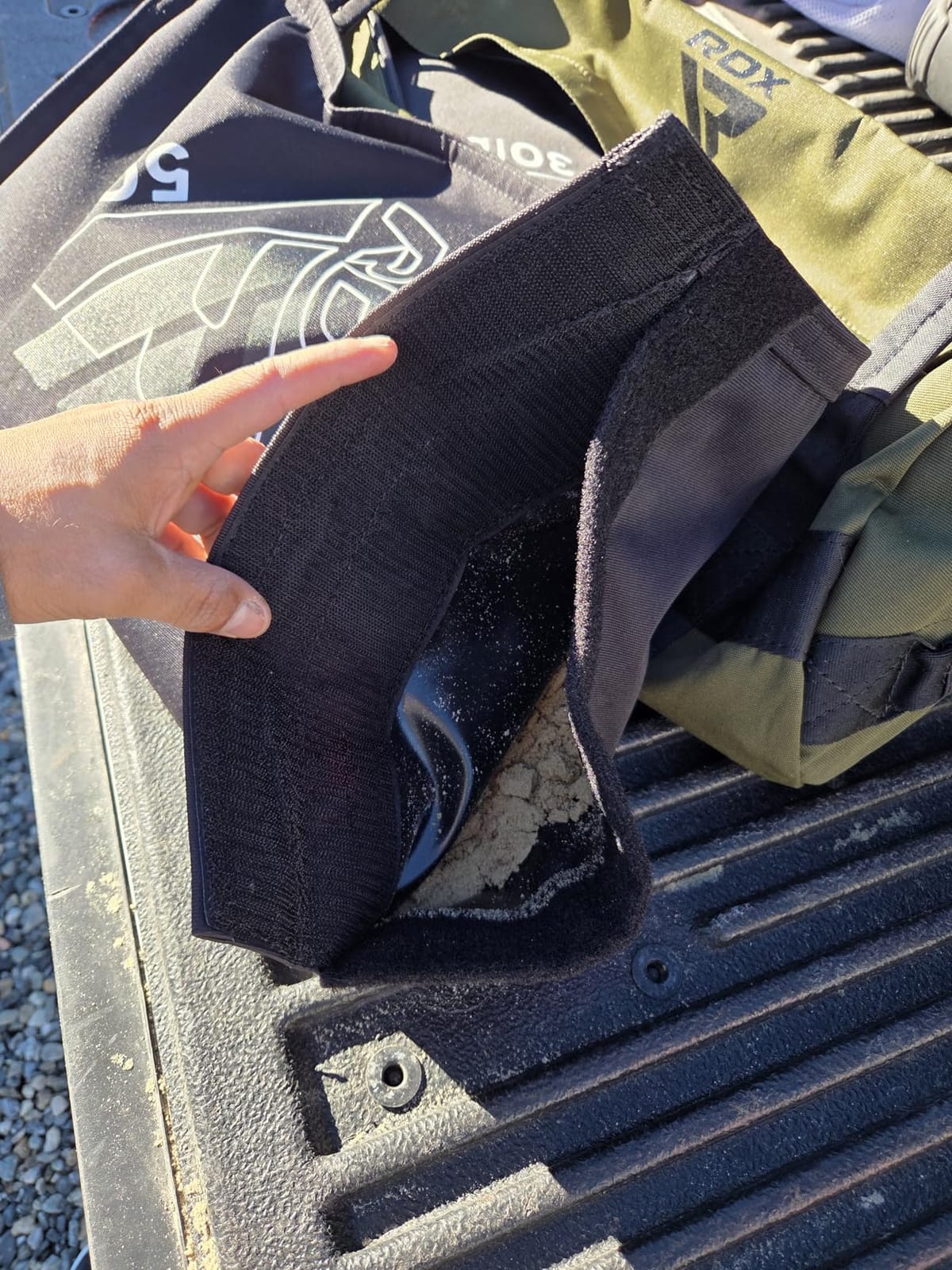
The honest weakness is the inner liner. A meaningful share of owners report the liner stitching degrading within several months, which produces dust leakage even when the outer shell is fine. Side zipper loading also makes filling more fiddly than an end-loaded design, and the small size is difficult to return to full capacity once it is packed. Customer service has been responsive when stitching has failed, and the warranty runs two years, which is longer than most in this category.
Playground sand or pea gravel are the recommended fillings, and the brand is direct that rocky gravel is a bad idea. That guidance is worth following, since sharp rock edges are the fastest way to chew through a liner and turn a bag into a dust emitter.
Can it handle rain, grass and mud
The coated interior lining is the reason to choose this over a lighter fabric bag for outdoor programming. Rain, sweat and wet grass are handled by the shell rather than the closure, which is the difference between a bag you keep training with all year and one that goes in the garage in October.
Grass is where the fabric spec earns its keep. Repeated dragging, dropping and setting the bag down on soil will chew through a lighter shell in a season. At 1200D you are buying abrasion margin, and the eight handles mean you can carry more of the load in your hands and less on the ground, which slows all of that wear down.
Which movements suit this bag best
Walking lunges, front squats, overhead presses, deadlifts, pullovers and calisthenics-style work where you push or pull the load. The eight-handle layout is ideal for rotational patterns and for holding the bag at a distance during a push-pull complex.
For a hockey or field-sport off-season block, this is the bag I would put in a vehicle. It survives the drive, the wet field and the storage shed, and the 50 to 125 pound large size is the right range for building toward ground-to-shoulder volume in the pre-season. Our hockey training equipment guide covers the rest of the off-season setup.
4. Elite Sports Bulgarian Bag – long shape for cleans, throws and carries
Elite Sports Bulgarian Canvas Bag Fitness MMA Gym Cross Training Sandbag for Adults (Black, 33 LBS), UNFILLED
Cordura canvas with triple stitching
33 inch long shape
4 sizes 17-45 lbs
Zipper and inner liner
Pros
- Classic long Bulgarian shape built for carries and throws
- Cordura shell with triple secure stitching
- Heavy-duty zipper and inner liner contain the sand
- Four sizes let you match the bag to your level
- Includes beginner
- intermediate and expert programs
Cons
- Sold empty with no sand included
- Carries no manufacturer warranty
- Long shape is less stable for high-intensity slams
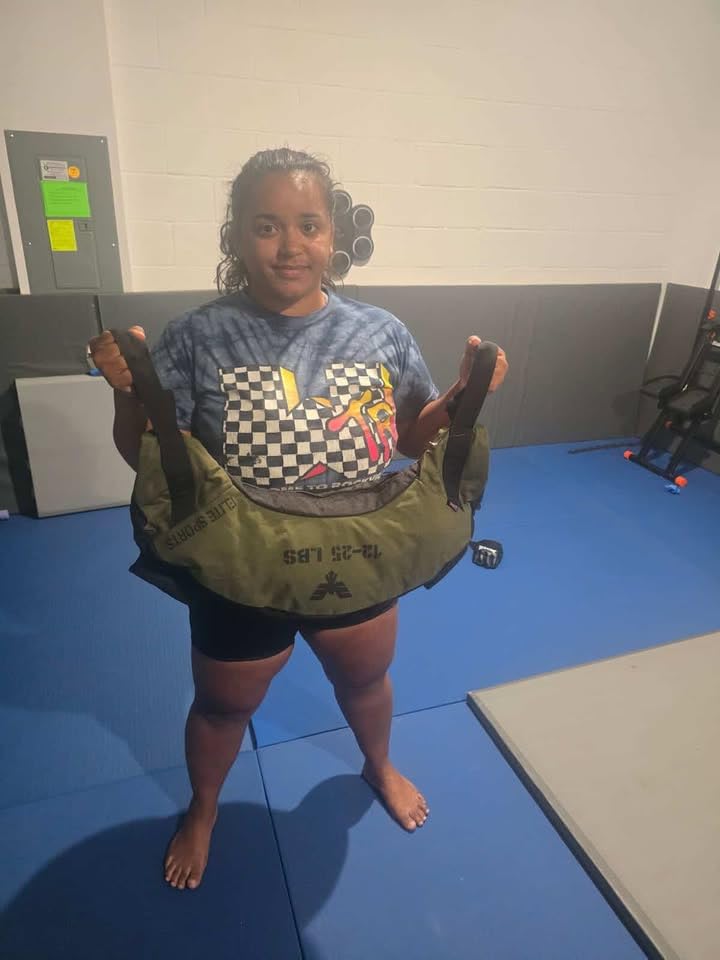
This is the odd one out on the list and it earns its spot anyway. The Elite Sports Bulgarian bag is a long cylindrical bag, 33 inches in this size, built for a movement pattern no squat-shaped duffel handles well: loading it to the shoulder in a clean and cycling it repeatedly.
Geometry is the whole story here. A long bag loads onto the forearm and shoulder rather than sitting in front of your chest, which changes the mechanics of a clean-and-press cycle completely. If your programming leans on ground-to-shoulder for time, this shape gives you a shorter, more stable bar path than a duffel-style bag can.
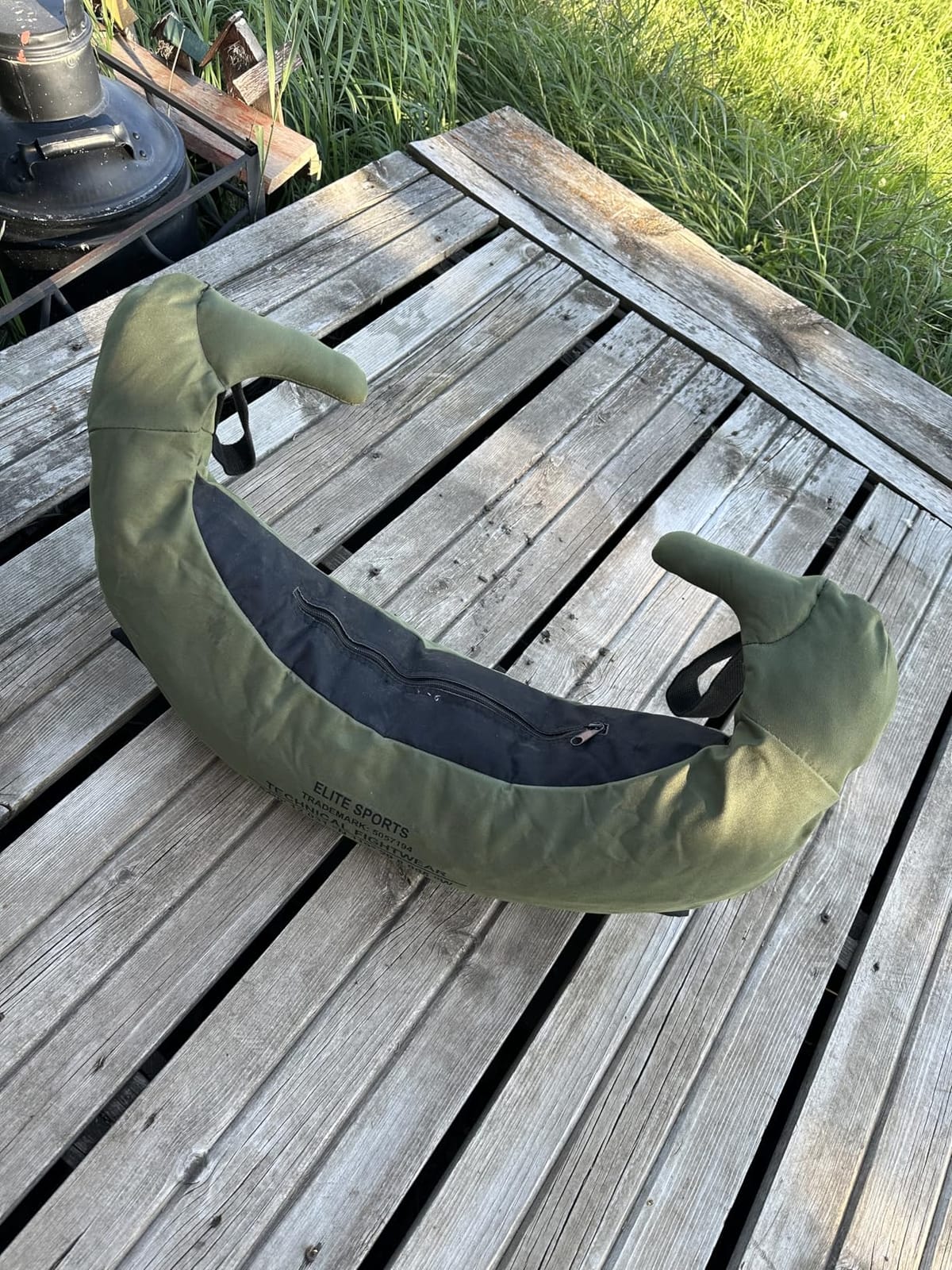
Construction is Cordura canvas with triple secure stitching, a heavy-duty zipper, and an inner liner to contain the sand. Four sizes at 17, 25, 33 and 45 pounds give you a reasonable spread for technical Bulgarian bag work without the adjustable range of a 200-pound duffel, and the 45-pound version is a legitimate load for intermediate athletes.
One detail that surprised me: the box includes printed workout programs for beginner, intermediate and expert levels. For an implement with a technique barrier, that matters. Bulgarian bags look simple and get performed badly, and having a written progression sitting next to the bag removes most of the guesswork. Owners describe it as a multi-year workhorse for MMA, wrestling and strongman carries.
The trade-offs are a lack of warranty, the unfilled format, and shape. That long cylinder is less stable when you slam it, so this is a lifting and throwing bag rather than a conditioning slam bag. If your program is a lot of ground work, look at one of the shorter duffels instead.
Is a long shape better than a duffel for cleans
For repeated clean-and-press cycles, yes. The long shape lets you lap the sand to the shoulder the way coaches cue it, then keep cycling without the bag rolling out in front of you. A duffel-style bag is more stable overall but loads awkwardly into that position.
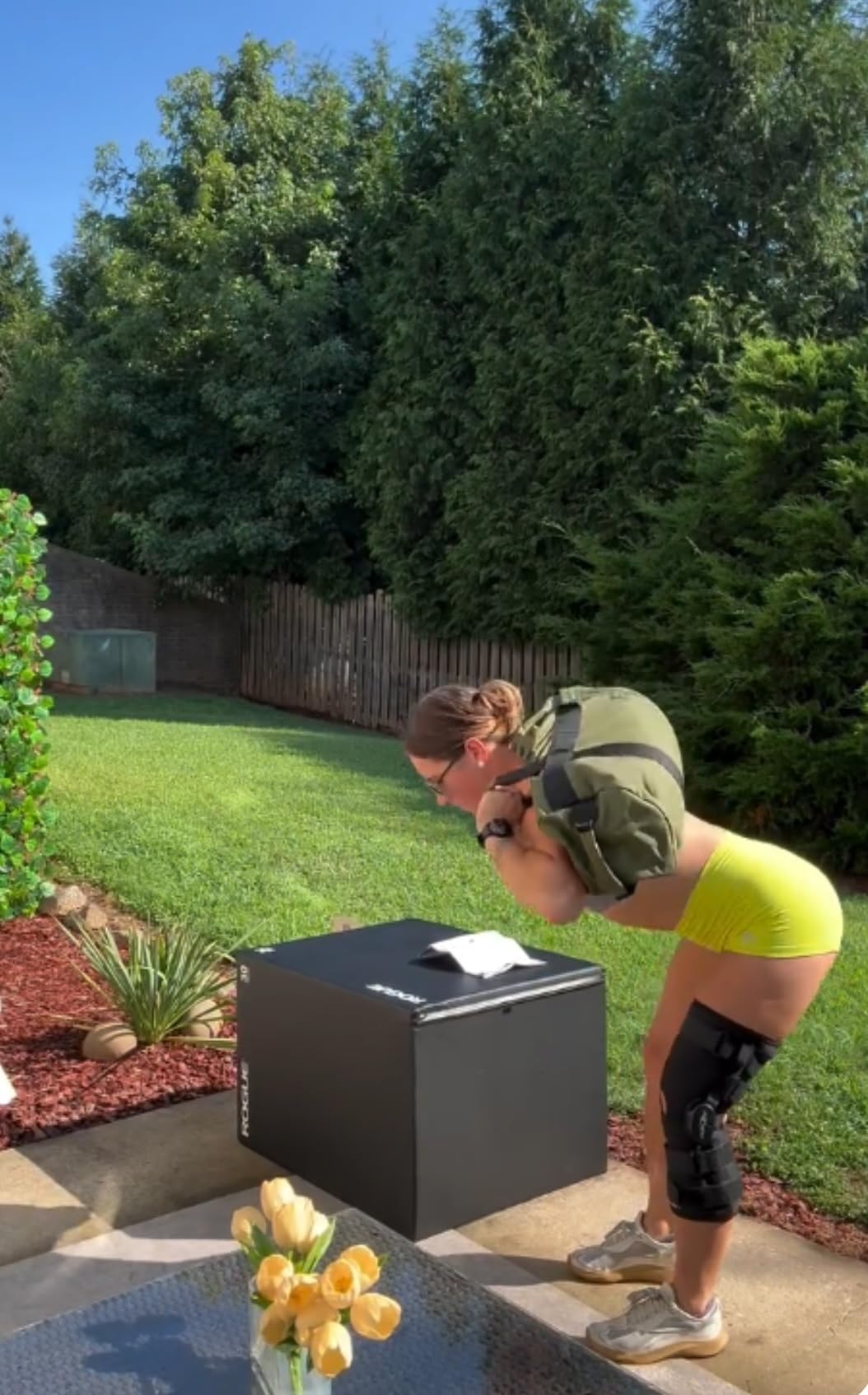
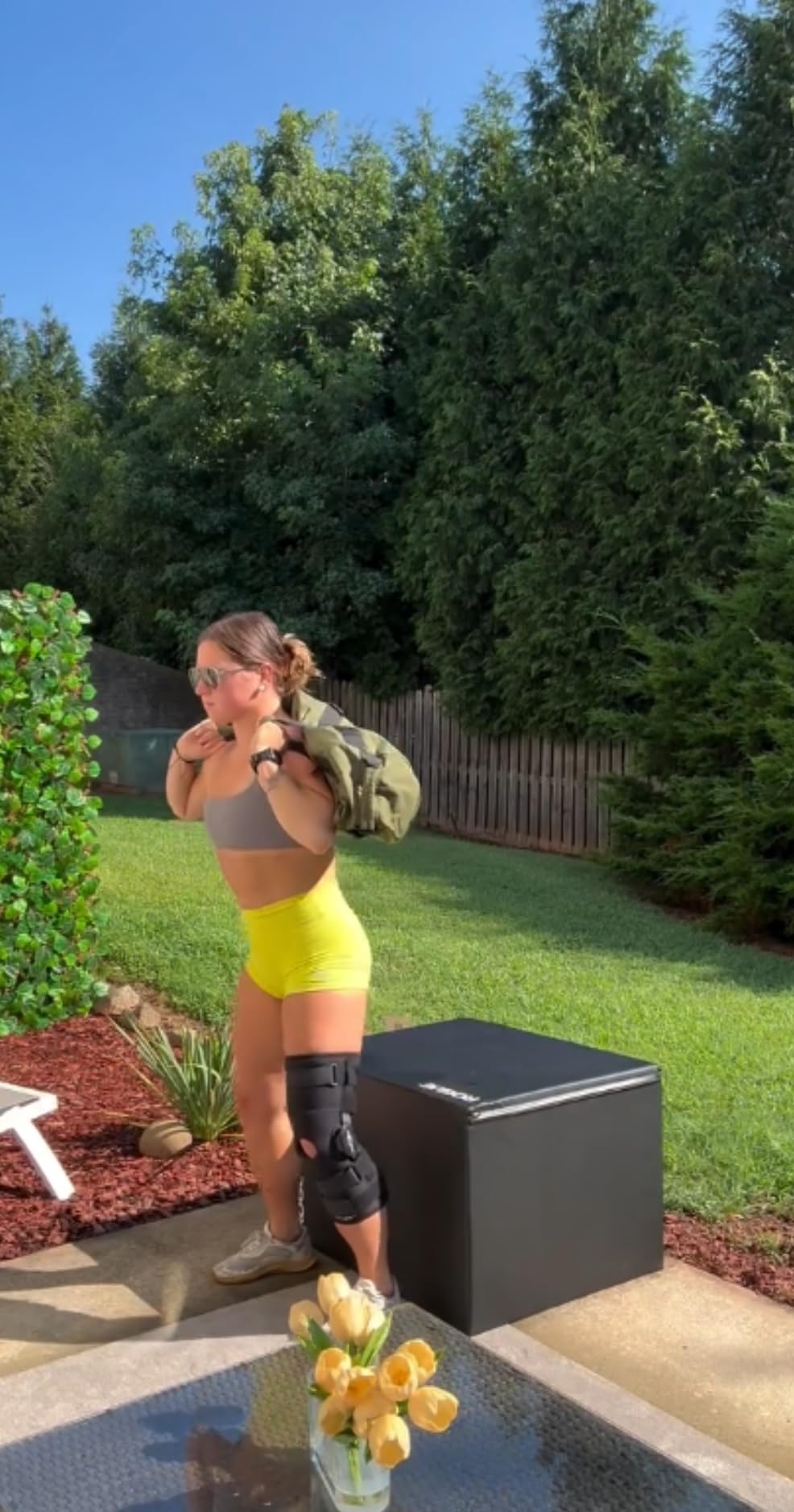
Coaching threads on r/crossfit and r/sandbagtraining converge on the same cue: lean to lap the bag, stand up with it, then shoulder it. This bag is the easiest of the eight to practice that pattern on because of how it sits against the body during the lap. Serious athletes in the same communities train sandbags as time-domain work rather than sets and reps, and this geometry suits that well.
Which movements suit this bag best
Ground-to-shoulder, cleans, high pulls, front squats and bear hug carries, plus lap-and-throw repetitions for conditioning. It is not the bag for overhead press-and-toss circuits or for slams, where a compact shape wins.
Pair it with an adjustable duffel if you want both. The Bulgarian bag for the clean-and-press volume and technical work, and something like the Yes4All or RDX for presses, lunges and adjustable loading. Between them you cover a full functional training session with two bags instead of six.
5. Elite Sports Workout Sandbag – waterproof shell for small spaces and wet floors
Elite Sports Workout Sandbag for Versatile, Intensive Core Muscles Fitness, Strength Training with Strategic Handle Placement (Unfilled)
Ballistic nylon shell
Waterproof and tear resistant
Zipper with double-sealed edges
10 x 9 x 5.5 inches
Pros
- Strategic handle placement supports cleans
- snatches and presses
- Ballistic nylon with cross-stitching survives drops and dragging
- Waterproof shell protects the fill in wet conditions
- Collapses flat for storage when empty
- Costs less than most comparable capacity bags
Cons
- Sold unfilled with sand added separately
- Included filler bags are not clearly explained
- Single-bag listings can confuse buyers expecting a set
Same brand as the Bulgarian bag, completely different tool. The Elite Sports Workout sandbag is a compact ballistic nylon duffel measuring roughly 10 by 9 by 5.5 inches, and the waterproof shell is the headline feature. Sweat, rain and wet mops do not get in.
At 10 by 9 by 5.5 inches, this is the smallest bag in the roundup, and that is a feature in a small space. It collapses flat when empty, so it lives in a closet between sessions instead of occupying a corner of a garage. For an apartment gym or a shared training room, footprint is a real decision factor that never appears on a product listing.
The construction detail worth noting is tear-resistant ballistic nylon interwoven with heavy-duty cross-stitched threads, plus flexible walls that expand around the sand without splitting at the seams. The closure is the most thorough on this list for a duffel: a tight zipper, reinforced stitching, a double-sealed shell and a folded opening, all working together to keep sand in.
Handle placement is designed around specific patterns, positioned for cleans, snatches, squats, lunges and overhead presses. Athletes from MMA, wrestling and functional fitness backgrounds single this out, and it is available as single bags or three-count sets spanning 5 to 75 pounds, which is the natural way to build a small ladder.
Two documentation issues come up repeatedly. The included filler bags are not clearly explained, so a first-time buyer may overfill or underfill without realizing it. And single-bag listings can be confused with the three-piece sets, which is an easy way to be disappointed on arrival.
Does a waterproof shell actually matter in a gym
More than expected. Gym bags get set down on wet floors after a swim session, dragged through a car park in rain, and dropped on grass. A waterproof shell with a double-sealed closure keeps the fill dry in all three cases, and dry sand flows properly instead of clumping into a lumpy, unpredictable bag.
That last point is the one owners notice in training. A wet or clumped bag behaves unpredictably, sits badly in a clean, and shifts weight as you move it. Keeping the fill dry is a performance decision as much as a durability one.
Which movements suit this bag best
Snatches, cleans, squats, lunges and overhead presses, plus any rotational work where the shifting load trains your trunk. At the small end of the range it works well for accessory-strength and technique work rather than heavy conditioning.
This is the bag I recommend to anyone training in a small space who does not want to drag sand in from outside. Between the waterproof shell, the flat-collapsing profile and the light capacity range, it is built for indoor functional training in a room that is not a warehouse.
6. Goplus Sandbag – washable, light-capacity bag for travel and rucking
Goplus Workout Fitness Sandbag w/Filler Bag, 10 to 40 LBS/ 10 to 60LBS Adjustable Heavy Military Tactical Training Weight Bags for Home Gym Exeicise Crossfit (60 LBS)
Machine-washable shell
6 rubber grip handles
Removable filler bags
Listed 10 lb sand capacity
Pros
- Machine-washable which makes cleanup after outdoor use simple
- Six rubber handles support a range of grips
- Adjustable by adding or removing inner filler bags
- Waterproof fabric suits outdoor and army-style training
Cons
- Lowest average rating in the roundup with a share of 1-star reviews
- Listed 10 lb sand capacity is well below comparable bags
- Vinyl/PVC shell is less rugged than Cordura or ballistic nylon
The Goplus is the one bag here I would describe as a travel tool rather than a primary training implement. It is machine-washable, which no other bag on this list manages, and that single feature changes where you can use it.
Sand gets everywhere. Rucking, beach work and outdoor carries all end with sand in the seams of your kit, and a bag you can drop in a washing machine removes an entire category of friction. If you train outside regularly and have nowhere to hose a bag down, that matters more than most spec sheets suggest.
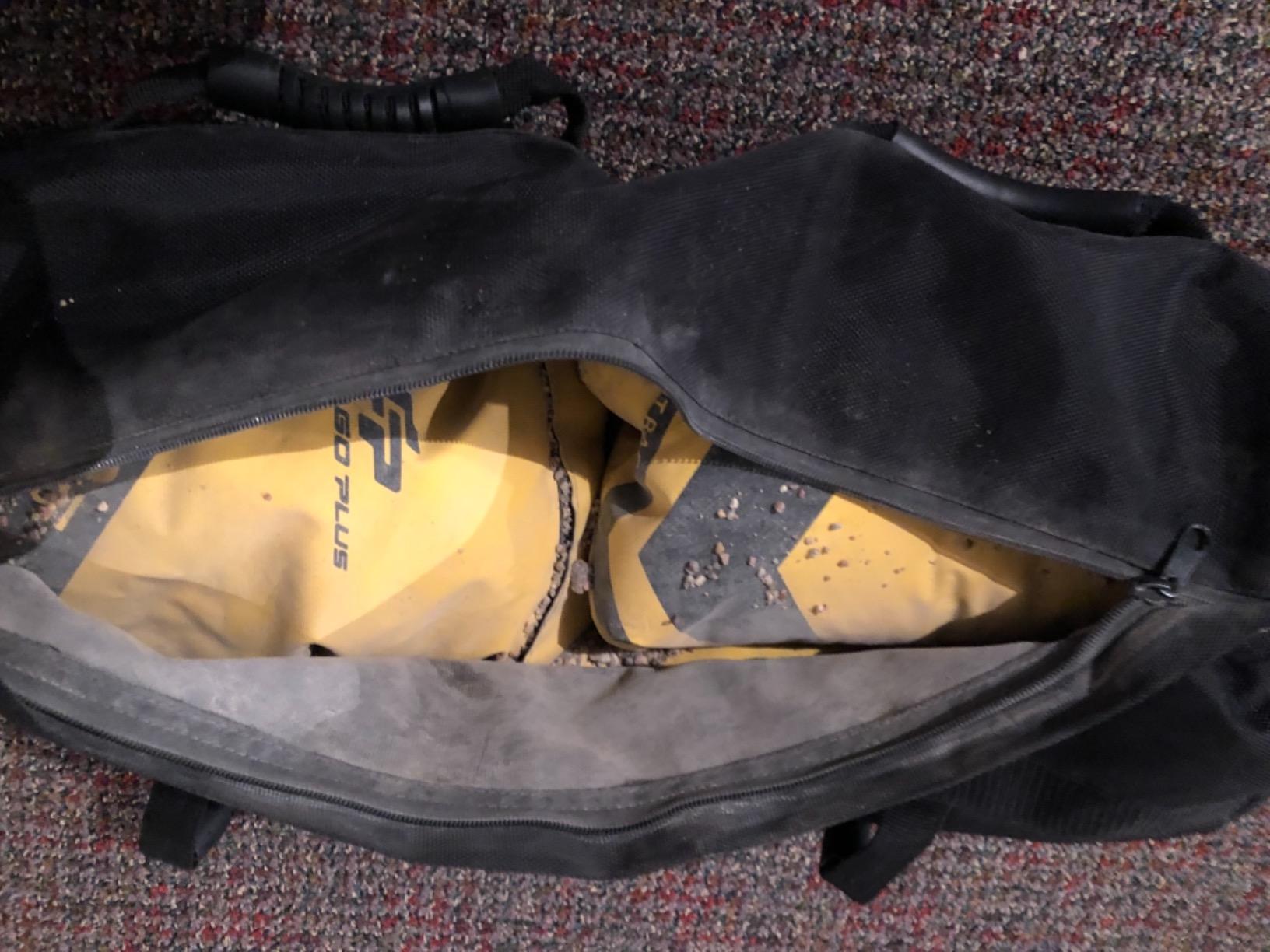
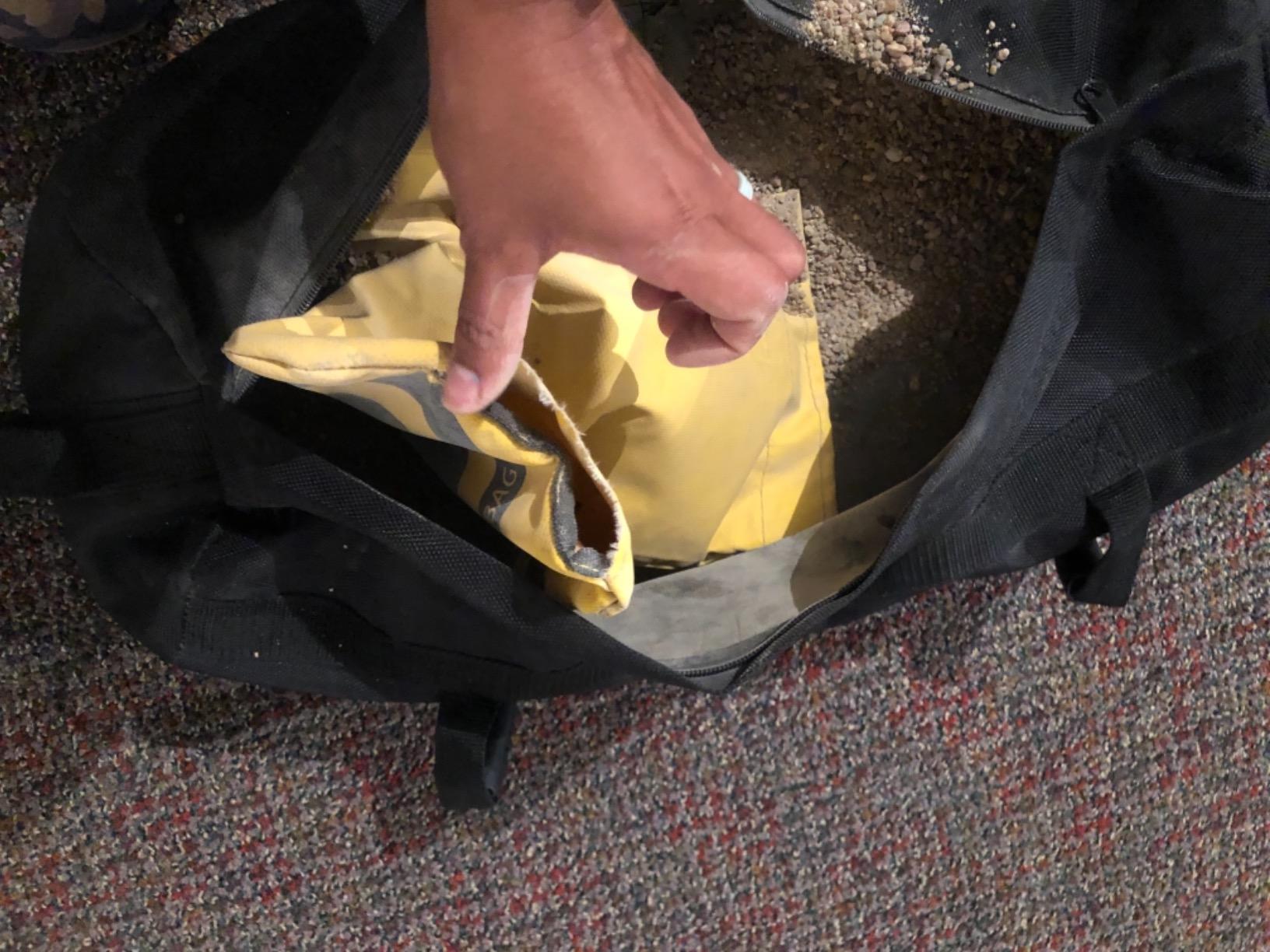
Adjustment works by adding or removing the inner filling bags, with a double hook-and-loop fastener holding the closure shut. Six rubber gripping handles cover the common lifting and carrying positions, and the waterproof fabric handles outdoor use and army-style conditioning. Listed sand capacity is 10 pounds, which is the number to understand before buying.
Ten pounds is light for adult functional training. It makes sense as a travel or rehab implement, as a lighter companion for high-rep walks or lunges, or as a teaching tool, but it is not a bag you will be doing heavy cleans with. The 4.1 average is the lowest in this roundup, and a meaningful share of one-star reviews tracks back to build consistency rather than the design.
The shell material is polyvinyl chloride rather than Cordura or ballistic nylon, and it shows. It is more easily scuffed and abraded than the fabric options here, which is a real limitation for anyone who intends to drag the bag across concrete or gravel. Weigh the washability against the fabric spec honestly for your own use.
Is machine-washable construction worth giving up fabric durability
If you train outdoors, often, and without access to a hose, absolutely. Washing a bag takes ten minutes and it comes out clean and dry. There is no equivalent recovery for a torn shell.
If you train indoors on mats or a platform, the trade is less clear. You will rarely need to wash a bag that never gets dirty, and a Cordura or ballistic nylon shell will outlast a PVC one in almost every abrasion scenario. My own approach would be to keep a washable light bag for outdoor sessions and a tougher bag for gym work.
Which movements suit this bag best
High-repetition lunges, bent-over rows, front squats, running with the bag loaded, and travel or hotel-room workouts where packing light matters. The handle layout also supports bear hug carries, though at 10 pounds the load is light enough to be more of a trunk exercise than a loaded carry.
For military conditioning, obstacle course prep or a first-responder training program where equipment gets hauled around in a vehicle, portability and washability are legitimate reasons to choose it. Just know what you are getting: a light, clean, convenient bag rather than a heavy-duty one.
7. Polyfit Classic Sandbag – foam-cored handles for long grip sessions
Heavy Duty Workout Sandbags for Fitness – Black Camo – Medium
PU-coated nylon Cordura
8 foam-cored webbing handles
3 sizes 10-125 lbs
Leak-proof hook-and-loop fillers
Pros
- Foam-filled webbing handles stay comfortable through long sessions
- PU-coated Cordura resists rips during lifting
- tossing and slams
- Double-stitched leak-proof filler bags hold the sand
- Wide handle spread supports many grip positions
- Includes a laminated guide from beginner to advanced
Cons
- Sand must be purchased separately
- Highest price point among the unfilled bags here
- Bulkier profile makes carries awkward for shorter users
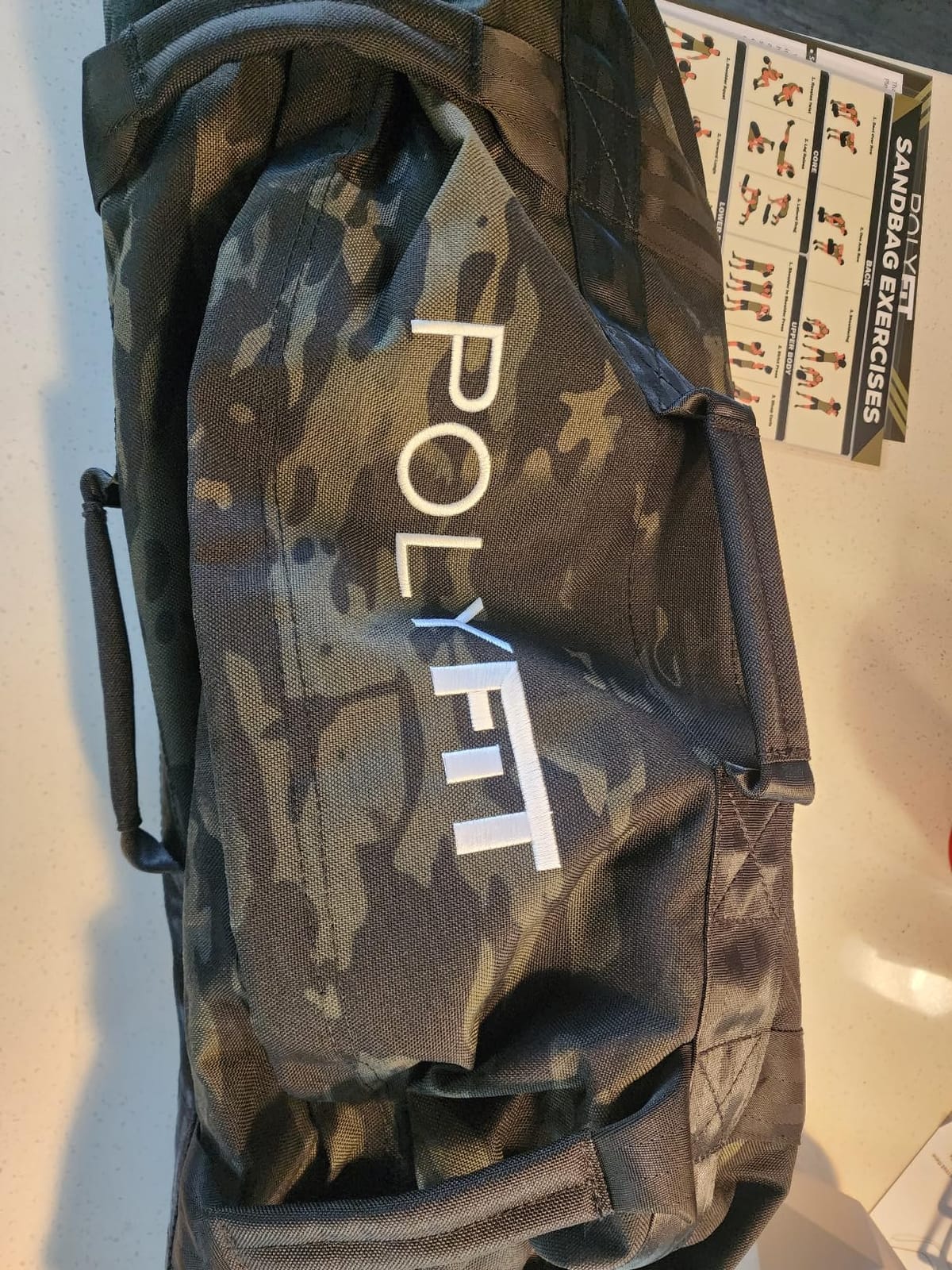
Grip is the first thing to fail in sandbag training, and it is a handles problem before it is a strength problem. Chafed palms end a session early. The Polyfit addresses this more directly than anything else on the list with eight webbing handles that have foam inserts running through the core.
Foam-cored webbing genuinely changes long sessions. In a 20-minute time-domain effort with repeated ground-to-shoulder cycles, the difference between a hard webbing strap and a padded one is the difference between finishing the last third and quitting in the first half. Buyers consistently single out handle comfort as the reason they kept this bag.
The fabric is nylon Cordura with a PU coating on both the outer shell and the filler bags, and owners report it resisting rips and shreds through lifting, tossing and slamming. Filler bags are leak-proof with a hook-and-loop closure and double stitching, so the two things that typically leak are both addressed in the construction.
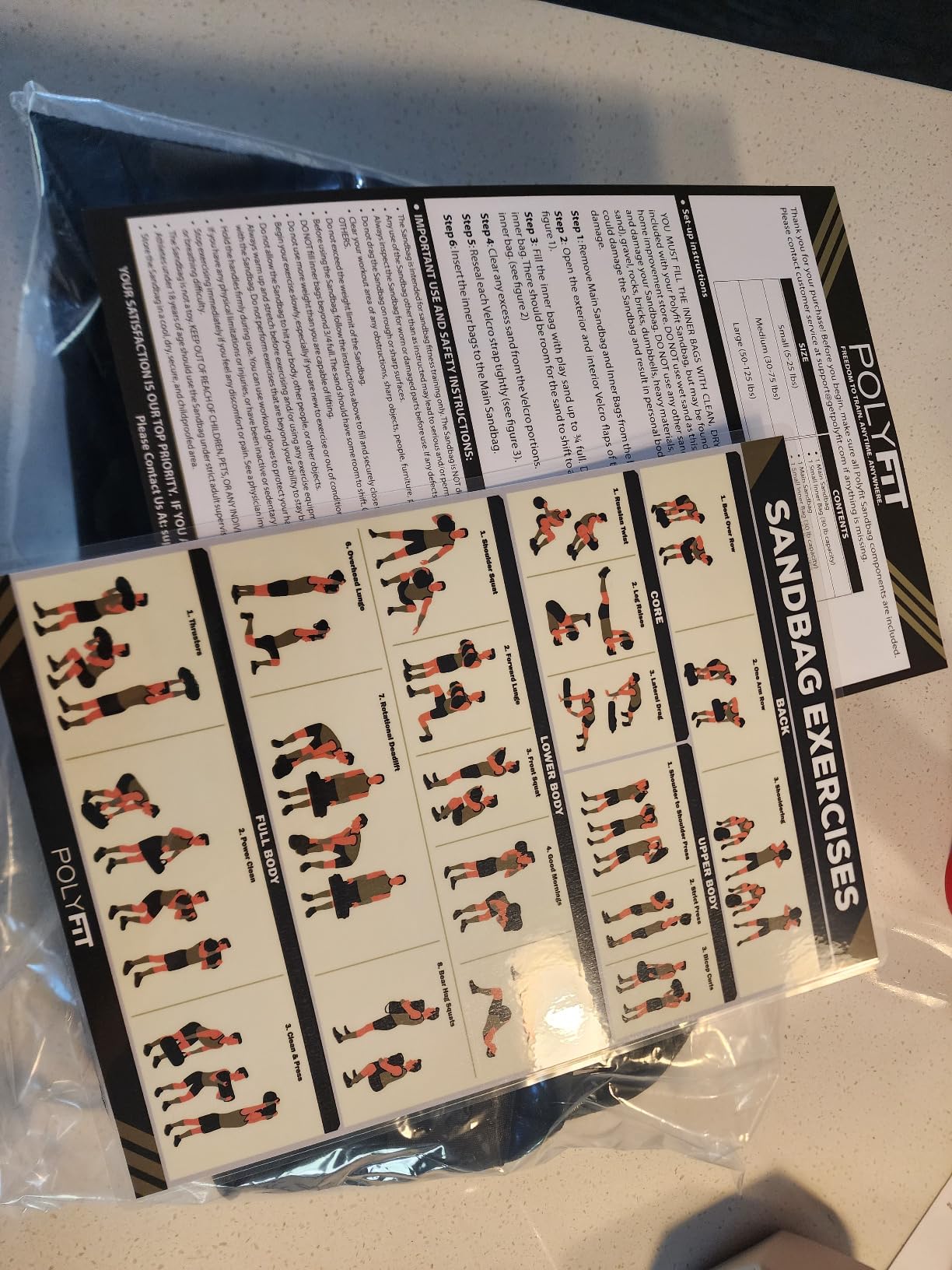
Three sizes cover the useful functional range: Small at 10 to 50 pounds, Medium at 30 to 75 and Large at 50 to 125. The Medium is the one most athletes choose, and the laminated exercise guide that ships in the box covers beginner through advanced programming, which is unusual at this level of build.
Two trade-offs stand out. It is the most expensive unfilled bag in this roundup, and the profile is bulkier than slimmer alternatives, which makes a shoulder carry awkward if you are under about five foot eight. Handle comfort and bulk are the same feature seen from two angles: the padding that feels great under load also adds profile.
Do foam-cored handles outlast standard webbing
In our experience, yes, mainly because they distribute pressure rather than concentrating it on a narrow line across the palm. Webbing handles dig in at a specific point; a foam core spreads that force. Over a 20-minute carry-and-cycle effort, the difference compounds fast.
What will still eventually fail is the handle attachment, not the handle itself, and this is true across the entire category. r/sandbagtraining threads consistently name handle attachment points as the first failure point on any sandbag, which is why rivet reinforcement and cross-stitching at the attachment are worth paying for on any bag you plan to keep for years.
Which movements suit this bag best
Long high-repetition efforts: ground-to-shoulder for time, bear hug and suitcase carries, cleans, squats and presses. The eight-handle spread across the bag lets you change grip position without setting the load down, which is exactly what you want in a circuit format.
This is the one to buy if your training is grip-heavy or if you already have experience and know you will be handling 50 pounds or more for 20-minute blocks. Combine it with the pre-filled SandBell if you also want a slam-safe tool for indoor conditioning, and you have covered both ends of functional training with two bags.
8. Shogun Sports Sandbag – MIL Spec fabric, YKK zippers and a dual-seal filler
Shogun Sandbags for Working Out – Heavy Duty Workout Sandbag for Weight Training, Cross Training, Strongman, Fitness & Military Use – Adjustable Exercise Sand Bags for Full Body Training
1000D MIL Spec fabric
YKK zippers
Triple-stitched seams
Dual-seal filler bag
Pros
- MIL spec 1000D fabric and triple stitching hold up under slamming
- Dual-seal filler design prevents leakage during high-intensity sets
- Trusted for military
- strongman and athletic training
- Adjustable weight lets you scale intensity in one bag
- Compact and portable for circuits
- HIIT and outdoor drills
Cons
- Most expensive bag in this roundup
- Sold unfilled so sand must be sourced separately
- Fixed weight tiers rather than fine-grained increments
The Shogun is the strongest-built bag here, and the 4.7 rating with 432 reviews reflects an unusually high share of five-star feedback. The 1000D MIL Spec fabric with triple-stitched seams is specified for military use, and that is not a stretch of the word, it is the same fabric standard tactical gear is held to.
Its real engineering feature is the dual-seal closure system on the built-in filler bag: an inner zipper plus an outer hook-and-loop layer. Two independent barriers between the sand and the outside world. When you are doing high-intensity sets with slams, ground-to-shoulder cycles and repeated drops, that redundancy is what keeps your floor and your lungs clear.
YKK zippers matter more than they sound. A generic zipper on a bag you are yanking open and closed under load, in the dark, in a garage, is a coin flip. YKK is the standard the rest of the bag is built to, and owners consistently report the closure holding where cheaper alternatives let go.
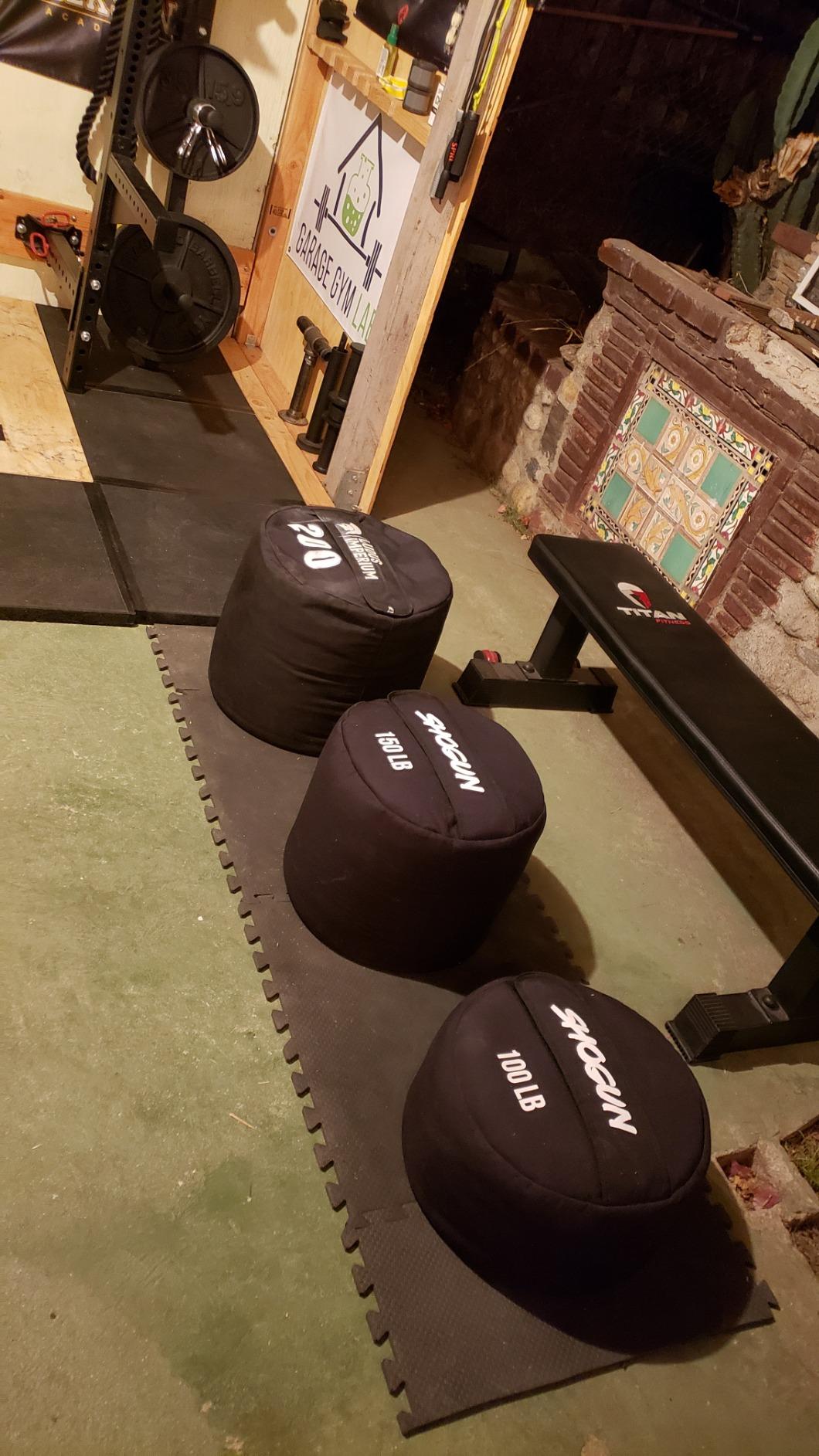
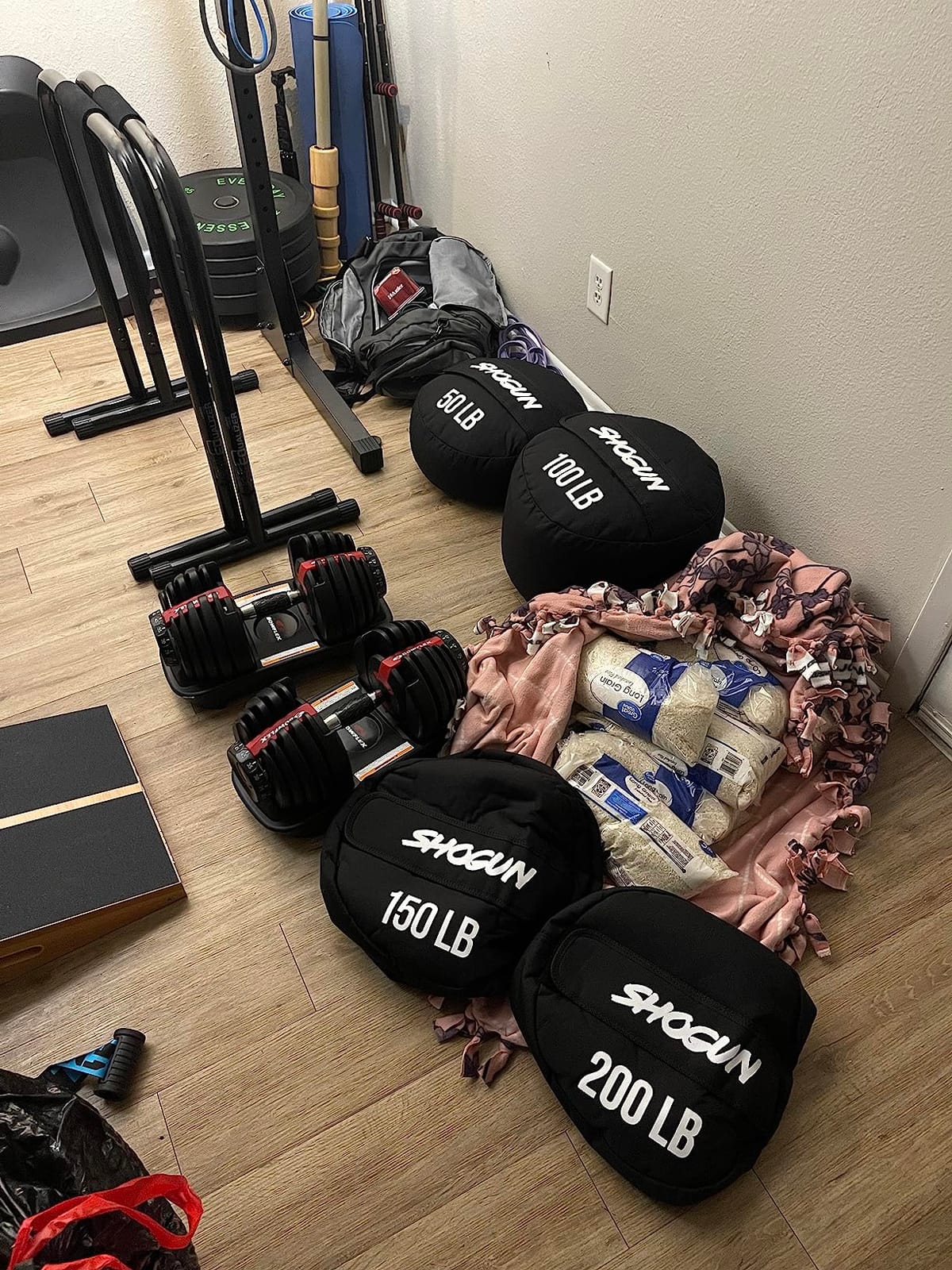
This variant fills to 50 pounds, with other sizes running from 50 up to 200. Rated for slamming, carrying and lifting indoors and out, it is compact at under 12 by 9 by 4 inches and travels well for circuits, HIIT and outdoor drills. On r/sandbagtraining, owners moving up from a 100-pound to a 150-pound Shogun like the build and question the mid-bag strap design, which is a fair piece of feedback to factor in if you plan to use a single central strap.
The cost is real: this is the most expensive unfilled bag in the roundup, and you still need to source sand. Buyers frame it as a durability investment over a multi-year horizon, which is the right way to think about it if you will train with it for more than a couple of seasons.
Is MIL Spec fabric overkill for a home gym
Only if your plan is light. At 50 pounds and below, most of the fabric spec is headroom you will not use. If your programming includes heavy slams, high-volume ground-to-shoulder, or you train in a shared or outdoor environment where the bag gets dropped and dragged, the extra margin pays for itself quickly.
The value calculation flips for technique work. If you are learning cleans and carries in an apartment, the Yes4All or Elite Sports duffel gives you everything you need for less money, and the money you saved buys a second bag that covers a different pattern. Build the toolkit around your actual loading first, not the fabric rating.
Which movements suit this bag best
Slams, ground-to-shoulder, heavy cleans, lunges, deadlifts and throws, plus circuit and HIIT work where the bag needs to survive being dropped repeatedly. The dual-seal is the reason it works for slams in a way that a single-closure bag struggles with.
For strongman-style programming and a Hyrox competitor building toward race sandbags, this is the pick. I would pair it with a lighter adjustable bag for accessories, since 50 pounds of Shogun is not a bag you want to do high-repetition presses with. We covered the broader category in our best workout sandbags guide if you want the shorter-list view.
What Sand to Use and How to Fill Your Sandbag
Playground sand or pea gravel, filled to about 80 percent of capacity, is the answer most training communities land on. Fine sand gives a more unstable, shifting load and better for technical work; pea gravel flows less, resists clumping when damp, and is far kinder to zipper closures and inner liners over time. Rocky gravel is the one to avoid, because sharp edges chew through stitching from the inside.
The 80 percent rule is not folklore. A bag packed to the brim cannot shift its contents, which removes the unstable-load benefit entirely and makes the bag rigid and unpleasant to move. Underfilled, it goes floppy, rolls off your shoulder, and behaves unpredictably in a clean. Leave a hand’s width of give at the top and the sand still has room to move.
If leakage is your main worry, pea gravel is the direct fix. A minority of Yes4All and RDX owners specifically report switching to pea gravel or adding a plastic liner inside after fine dust started escaping from worn inner bags. Wet sand is also the enemy of consistent bag behavior, so store filled bags somewhere dry and let any moisture out before you seal it.
To fill, work over a tarp or in the bathtub, and follow these steps:
Set the outer bag open and position the inner filler bags inside, one per weight increment you want to control.
Fill each inner bag roughly three-quarters full with playground sand or pea gravel, then close the hook-and-loop or zipper seal flat.
Place the filled liners into the outer shell and check the total by standing in front of a scale or using a luggage weight.
Add or remove sand a scoop at a time until the shell reads about 80 percent full when you press the top down.
Close the outer closure, shake the bag to distribute the sand evenly, and check the zipper and seams for leaks before you put it away.
Re-check the fill every few months, because sand compacts and the bag settles over time.
Budget twenty minutes of filling and one trip to a garden supply store the first time, and a couple of minutes per adjustment after that. Re-filling is a normal part of owning an unfilled bag, not a defect, and treating it that way makes the adjustable format a feature rather than an inconvenience. We also compared gear that needs similar regular maintenance if you want the same treatment applied elsewhere.
Sandbag vs Kettlebell vs SandBell vs Dumbbells
A sandbag trains something the others cannot. The contents shift, so your stabilizers and grip work on every rep instead of standing still while you move a fixed weight. Kettlebells and dumbbells let you lift heavier for a given joint-friendly shape; a sandbag lets you carry heavier, hold longer and control an unstable load. If your programming is about moving awkward weight well, a sandbag wins. If it is about maximal strength in a clean range, it does not.
SandBell is a specific product, not a category. A SandBell is a pre-filled, sealed neoprene shell, so you get the shifting-load benefit with none of the filling work, at the cost of a fixed weight and a 50-pound ceiling. A traditional sandbag is lighter to buy, scales to 200 pounds, and takes a bit of setup. For an apartment or a beginner, the SandBell. For a garage and a long-term program, an unfilled duffel.
Kettlebells remain the better tool for specific movements. Swing, snatch, Turkish get-up and goblet squat all reward a rigid handle and a defined center of mass, and you cannot throw a kettlebell safely. A sandbag rewards the carry patterns instead: bear hug, suitcase, front rack, clean-and-press, and the time-domain ground-to-shoulder efforts that experienced lifters on r/crossfit and r/sandbagtraining treat as the real test.
For most functional athletes the answer is not either-or. A kettlebell or dumbbell for the swinging and pressing work, and a sandbag for the carrying and bracing work, is a more complete toolset than doubling down on one. Our off-season equipment guide works through the same logic for conditioning hardware.
How to Choose a Sandbag for Functional Training
Denier is the durability baseline and the first thing to check. The denier rating measures thread thickness per 1000 meters, so a higher number means a heavier, more abrasion-resistant fabric. 1000D Cordura or MIL Spec nylon is the quality floor for a bag that will be dragged across concrete, and 1200D is the more rugged option. Below that, expect to inspect the seams regularly.
Handle count and reinforcement decide what movements the bag can do. Four handles limits you to a clean and a carry. Six opens up presses and lunges. Eight gives you holds, pushes and pulls from any direction, which is what makes a bag genuinely versatile rather than just heavy. Pay attention to attachment points specifically, since r/sandbagtraining threads and our own testing agree that handles are the first failure point on any sandbag, no matter the brand.
Weight range should match your program, not your ambition. Beginners and anyone returning to training should start where a bag is comfortably liftable and technique-focused, roughly 20 to 40 pounds, and progress by adding sand. Intermediate athletes usually work in the 50 to 100 pound range for carries and cleans. Advanced lifters and strongman programs run 100 to 200 pounds. A bag that is too heavy is a conditioning tool you cannot technique on, and that is the most common first mistake I see.
Closure and filler design determine whether you fight leaks. Dual-seal systems with an inner zipper plus an outer hook-and-loop are the most reliable, followed by a single zipper with reinforced stitching, then hook-and-loop alone. A sealed neoprene shell with no closure at all eliminates the problem entirely, which is the SandBell’s structural advantage.
Shape is a movement decision. Duffel and box shapes are stable, hold sand evenly, and suit squats, presses, lunges and slams. Long cylindrical Bulgarian-style bags are better for clean-and-press cycles, throws and shoulder carries. Compact bags collapse flat for storage. Pick the shape that matches your programming, not the shape that looks best.
Finally, decide indoor versus outdoor. A waterproof or sealed shell and coated lining are worth paying for if you will train outside, in rain, on grass or on wet gym floors. A machine-washable shell is worth paying for if your sessions leave you hauling sand around. A neoprene soft shell is worth paying for if slamming indoors is the priority. If you train in a shared space or have neighbors below, the noise and floor impact of a nylon bag is a genuine factor, and our guide to protecting floors and hands covers the wider equipment question.
Frequently Asked Questions
What are the best sandbags for workouts?
The best sandbags for workouts split into two groups. Pre-filled sealed neoprene bags like the HYPERWEAR SandBell are ready to train, safe to slam indoors and available from 2 to 50 pounds. Unfilled Cordura duffels like the Yes4All and RDX bags adjust from 5 to 200 pounds and suit heavier carries, cleans and presses. Long Bulgarian-style bags are best for ground-to-shoulder and throwing work.
What type of sand is best for a sandbag workout?
Playground sand gives the most unstable, shifting load and is ideal for technical work. Pea gravel flows less, resists clumping when damp and is gentler on inner liners and zipper closures over time. Fill to roughly 80 percent of capacity so the sand can still shift. Avoid rocky gravel, whose sharp edges wear through stitching from the inside.
How do I fill a sandbag?
Place the inner filler bags inside the outer shell, fill each about three-quarters full with playground sand or pea gravel, and close the seal flat. Check the total weight on a scale, add or remove sand until the shell sits at roughly 80 percent capacity, then close the outer closure. Work over a tarp, shake the bag to distribute the sand evenly and test for leaks before storing it.
Which is better for weightlifting, sandbags or kettlebells?
Kettlebells are better for swings, snatches, goblet squats and Turkish get-ups, where a rigid handle and fixed center of mass matter and you need to throw the weight safely. Sandbags are better for carries and bracing: bear hug, suitcase, front rack and clean-and-press, plus time-domain ground-to-shoulder efforts. Most functional athletes use both.
What can I use instead of sandbags for exercise?
The main alternatives are kettlebells, adjustable dumbbells, sandbells, slam balls and weighted vests. Kettlebells and dumbbells cover lifting patterns with a fixed weight. Sandbells and slam balls cover throwing and impact work. Weighted vests add load to walks, lunges and calisthenics. If your goal is the shifting-load effect specifically, only a sandbag or sandbell reproduces it.
How heavy should my sandbag be for beginners?
Start between 20 and 40 pounds for most adults. That range lets you practice cleans, carries and lunges with a load you can control through a full range of motion, which is what builds technique. Progress by adding sand rather than jumping to a heavier bag, and only move past 50 pounds once ground-to-shoulder and carry patterns look solid.
Conclusion: The Best Sandbags for Functional Training
The Yes4All adjustable sandbag is the pick for the best sandbags for functional training because it combines the widest weight range in the category with a 1000D Cordura shell and seven handles, and it is the bag most likely to still be in your garage in three years. If you would rather not handle sand at all, the HYPERWEAR SandBell is the strongest-rated option here and the only one you can slam on a finished floor.
For outdoor work go with the RDX, for clean-and-press volume pick the Elite Sports Bulgarian bag, for small indoor spaces the Elite Sports duffel, and for heavy slams the Shogun Sports sandbag. Fill to 80 percent, use pea gravel if leakage bothers you, and check your handles every few months.
Whichever you choose, give it eight weeks before you judge it. Sandbag training rewards consistency over novelty, and the bag that is still working when the novelty wears off is the right one.