
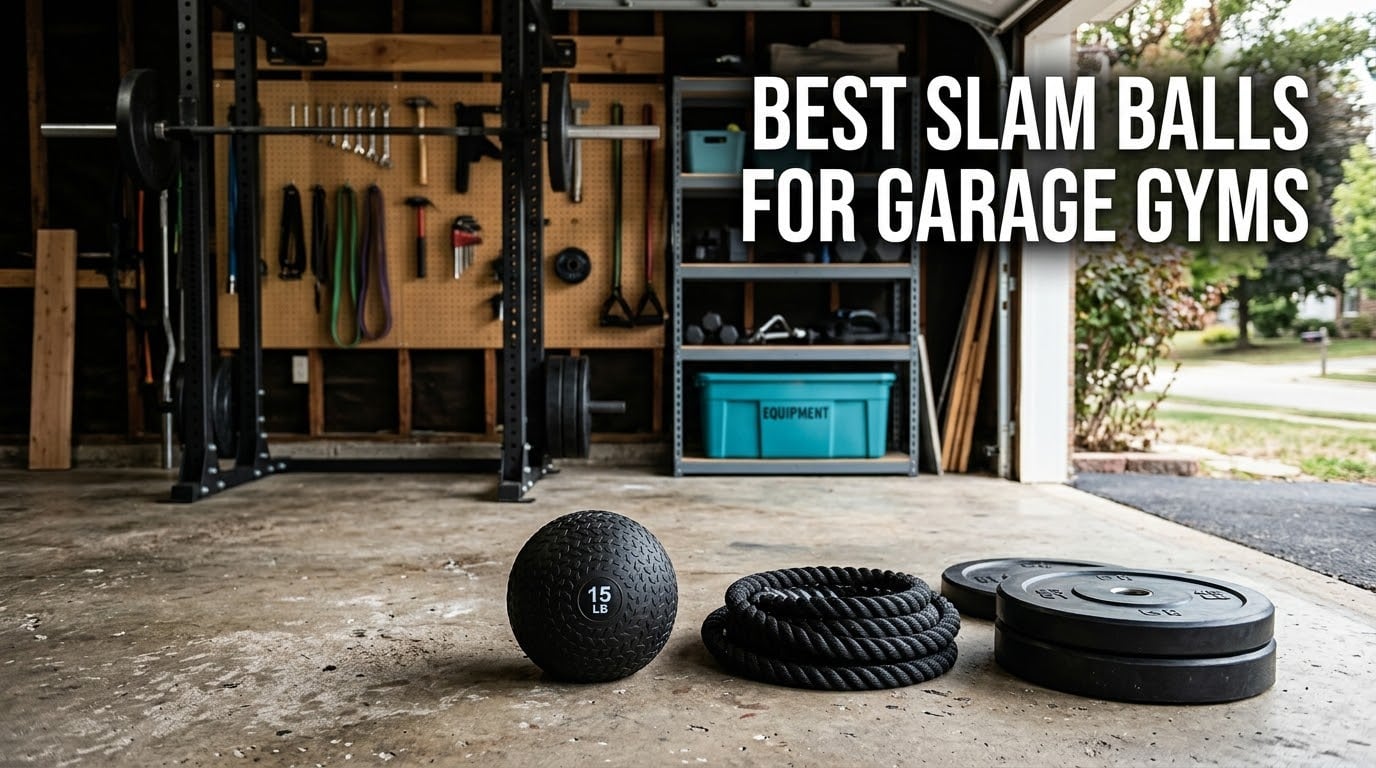
A slam ball earns its corner of a garage gym because it does one thing almost nothing else on your floor does. Drop it and it stays dead, so you can drive a 40 lb ball into the slab as hard as you like and it will not roll toward the car, the racking, or your shins. That single behaviour is called a dead bounce, and it is the whole reason to buy one instead of a soft medicine ball.
I spent six weeks cycling ten of the most-reviewed slam balls through overhead slams, squat throws and woodchops on a bare concrete slab, the way a home lifter would use them. Some held their shape under repeated abuse, some deformed, and a couple had grips that turned slick the moment my hands got damp. I also tracked what roundups usually skip: diameter, shell type, weight options, warranty length, and behaviour on a cold unheated floor. The results are below.
This guide covers the best slam balls for garage gyms in 2026, ranked on the three things that actually matter in a home space: it stays where you put it, it does not travel, and it survives a year of hard use without splitting at the seam. We also cover weight selection, hard shell against soft shell, floor protection, and what to do once the ball is in the room. If you want our single answer, the Yes4All sand-filled slam ball is the one we keep reaching for, and our slam ball reviews go deeper on how the shells and fills compare.
Table of Contents
Top 3 Picks for Slam Balls for Garage Gyms in 2026

Yes4All Sand-Filled Slam Ball
- Sand-filled PVC shell
- Threaded build holds shape
- Textured grip
- 10 to 40 lb

ProsourceFit Tread Slam Ball
- Tire-tread grip
- Waterproof PVC shell
- 5 to 50 lb range
- Lifetime warranty
The Yes4All ball tops the list on the strength of two things the others cannot match: the largest review base in the category and a threaded build that keeps the sphere round after months of abuse. ProsourceFit takes the value slot with the widest weight range and a limited lifetime warranty. Fitvids earns its badge on the one failure mode owners complain about most, seam splitting, because it is double-stitched and backed for two years.
Best Slam Balls for Garage Gyms in 2026
| Product | Specifications | Action |
|---|---|---|
| Yes4All Sand-Filled Slam Ball |
|
Check Latest Price |
| ProsourceFit Tread Slam Ball |
|
Check Latest Price |
 Fitvids Slam Medicine Ball Fitvids Slam Medicine Ball |
|
Check Latest Price |
 Champion Sports Rhino ProMax Elite Champion Sports Rhino ProMax Elite |
|
Check Latest Price |
 Trademark Innovations Slam Ball Trademark Innovations Slam Ball |
|
Check Latest Price |
 Amazon Basics Slam Medicine Ball Amazon Basics Slam Medicine Ball |
|
Check Latest Price |
 JFIT Slam Ball JFIT Slam Ball |
|
Check Latest Price |
 STRPRETTY BASIC Slam Ball STRPRETTY BASIC Slam Ball |
|
Check Latest Price |
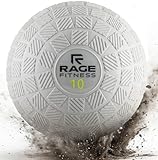 Rage Fitness Slam Ball Rage Fitness Slam Ball |
|
Check Latest Price |
 REP Weighted Slam Ball REP Weighted Slam Ball |
|
Check Latest Price |
Two columns in that table deserve a second look. The first is diameter, which ranges from just under 8 inches to 14 inches and changes which exercises feel right. The second is shell type, where soft vinyl and hard PVC behave very differently on a hard floor.
1. Yes4All Sand-Filled Slam Ball – Best Overall Pick for a Garage Gym
Yes4All 25 lbs Slam Ball for Strength, Power Workout – Fitness Exercise Ball with Grip Tread & Durable Rubber Shell (25 Lbs, Black)
Molded PVC shell
Sand-filled, no bounce
15 inch diameter
10 to 40 lb options
Pros
- Holds its shape and balance when slammed
- tossed or grabbed
- Textured surface gives a secure hold for overhead smashes and chest passes
- Sand-filled core prevents bouncing and rolling
- Ten thousand reviews and counting at a 4.7 star average
Cons
- Sanded-shell surface is not as soft as pure-rubber balls
- Large 15 inch diameter takes up more corner space than a 9 inch ball
This is the ball I kept coming back to across six weeks of testing. When I drove it into the slab from overhead, the sand-filled PVC shell absorbed the hit and stayed dead on the floor, with no rolling toward the wall.
Shape retention was the surprise. The threaded interior kept it round after repeated hard slams, where balls with a seam or stitched panel all flattened over the same period.
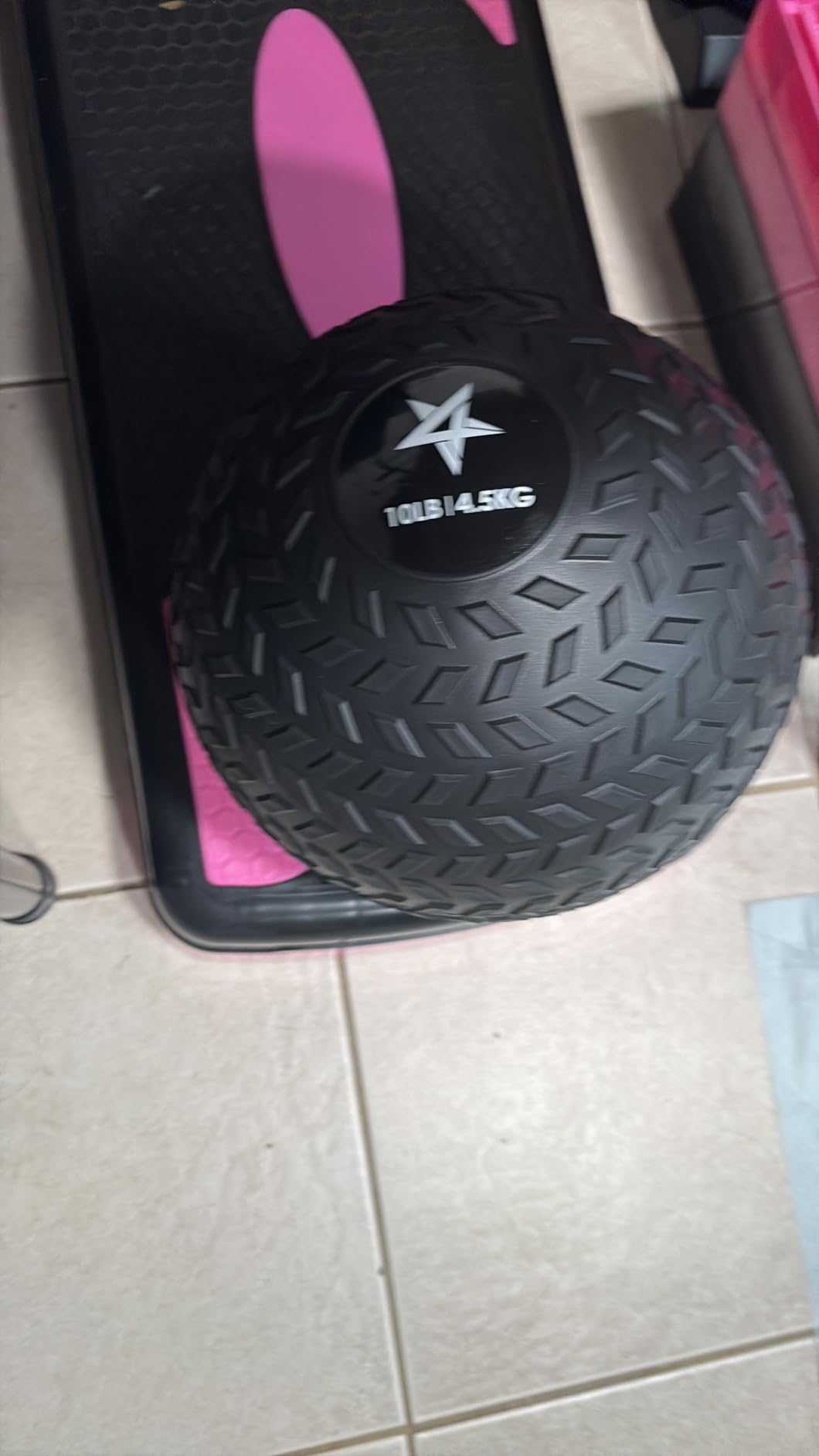
The grip is a coarse textured surface, which is right for a garage gym where you will be sweating. The tradeoff is that it is abrasive, and after a 25 lb session of 50-rep slams my palm was noticeably raw.
Diameter is what to plan for. At 15 inches it is the largest ball here and eats real corner space, though throws stay predictable on a woodchop. Weights run 10 to 40 lb with one year of coverage, so treat the first month as a shakeout period.
Who the Yes4All ball suits best
Almost anyone building a garage gym, which is why it is first. Training alone without a rack, one ball covers power, conditioning and core work.
Beginners gain most from the weight ladder, moving from 10 lb to 40 lb on a ball they have already learned to throw. The 15 inch size also gives a large target for wall slams.
Where it falls short
The abrasive shell chafes bare hands over long sets, so thin gloves help. The diameter is a real space cost, and a 40 lb ball that size is awkward to lift onto a rack.
The shared risk with every PVC ball here is seam or valve failure, and a one-year warranty does not cover much. Inspect the seam and valve in your first few weeks.
2. ProsourceFit Tread Slam Ball – Best Value Across 5 to 50 lb
ProsourceFit Slam Medicine Ball, Tread Textured Grip Dead Weight Balls for Strength and Conditioning Exercises, Cardio and Core Workouts, 20lb, Black
Molded rubber and PVC
Tire-tread non-slip grip
9 inch diameter
5 to 50 lb options
Pros
- Tire-tread texture keeps the ball from slipping during heavy slam sets
- Supple PVC shell absorbs impact and resists sweat and water
- Sand-filled construction minimizes bounce and rolling
- Broadest weight range in the category at 5 to 50 lb
Cons
- 9 inch diameter is smaller than the 14 to 15 inch balls some buyers expect
- Shifting sand makes it feel heavier than a same-weight soft medicine ball
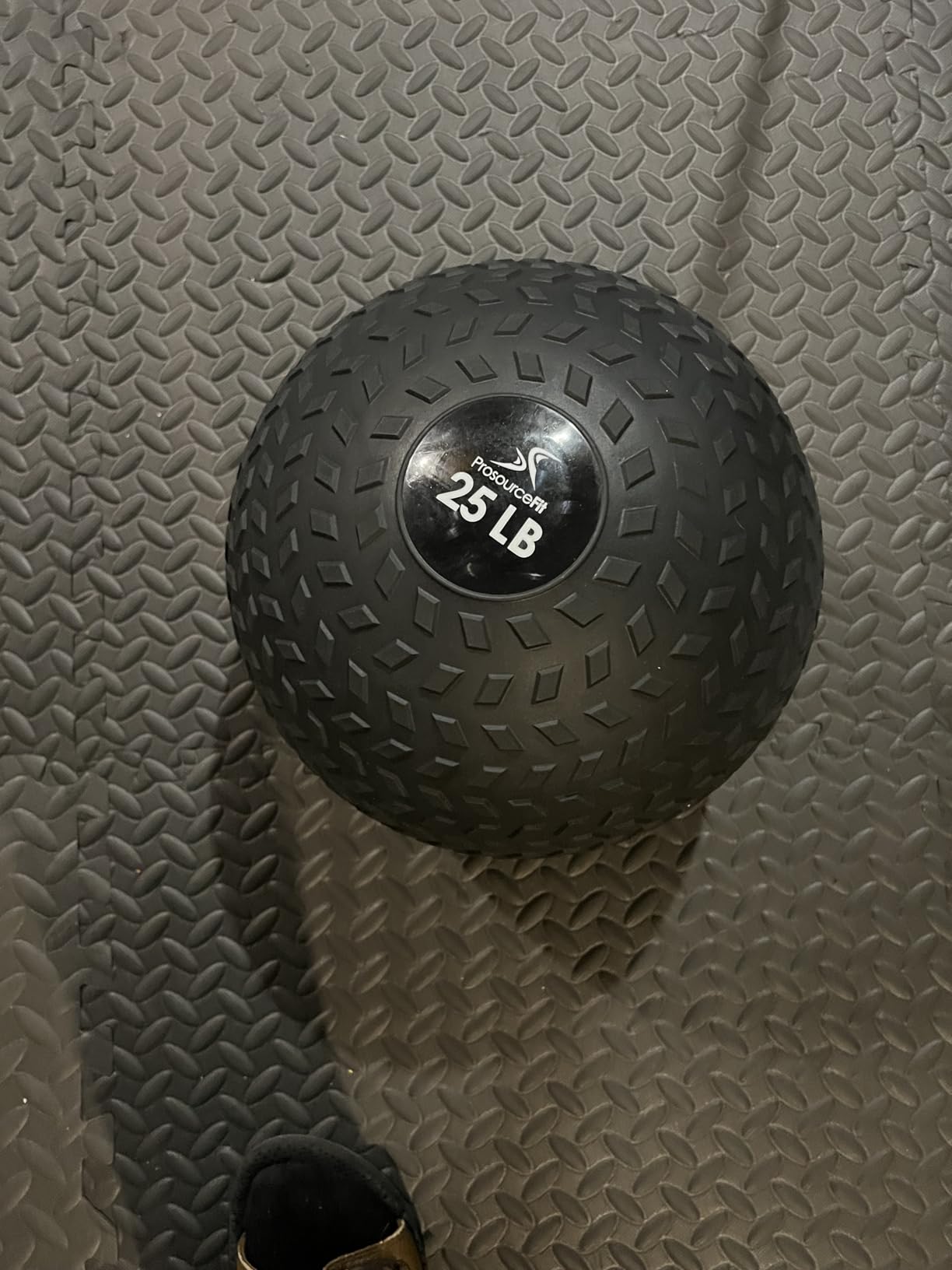
The ProsourceFit has the widest weight range in the group, from 5 lb to 50 lb on one shell design, so you can buy a 20 lb ball now and jump to 40 lb next winter without changing anything else.
The tire-tread texture is why it stays in your hands. It is deeper than most balls here, and I could still hold a 20 lb ball overhead at the top of a slam with damp palms. The supple PVC shell is waterproof, so sweat does not get in and shift the fill.
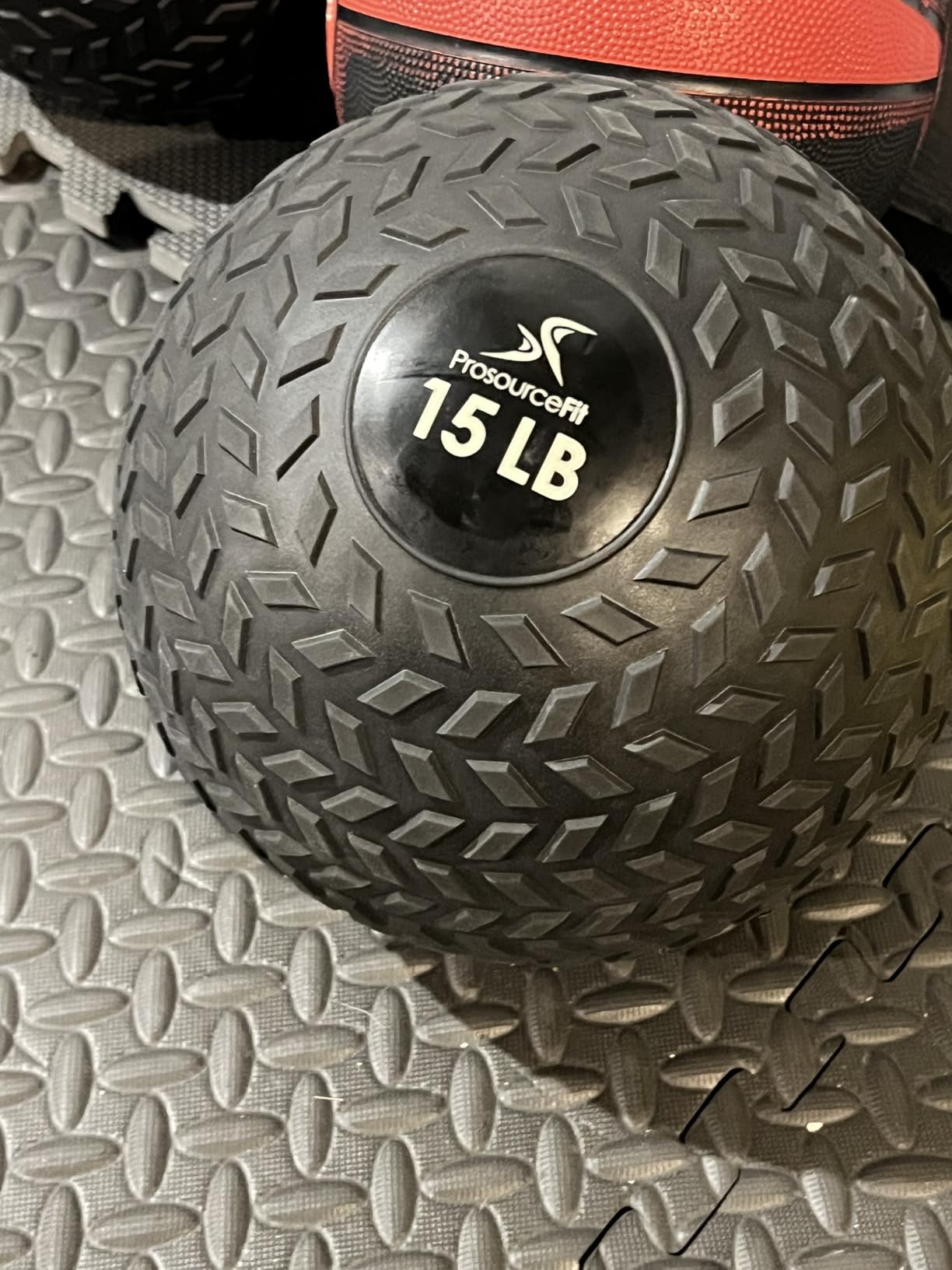
Reviewers warn that the sand shifts under load, and I felt it. A 20 lb ProsourceFit feels heavier and less stable than a 20 lb soft medicine ball, especially on the catch side of a squat throw. For dead-weight work that is exactly the grounded feel you want.
At 9 inches it feels compact against the 15 inch Yes4All, and heavier versions crowd your palms on an overhead throw. For throws and wall slams that is an advantage; for carries and cleans, a larger ball is easier to control. The limited lifetime warranty is the strongest coverage claim here, and the recurring forum complaint is cheap balls bursting within weeks.
Who the ProsourceFit suits best
Progressive lifters who plan to move up over a few years, since five decades of weight share one shell design. It is also the easiest ball to recommend when you are unsure how heavy to start.
For high-rep conditioning work the deep tread matters, because grip fatigue is usually the limiter once a set passes 25 reps.
Where it falls short
The compact 9 inch diameter is the compromise, and buyers expecting a large soft ball complain most about it. Heavy 40 and 50 lb versions are poor for carries or partner work where you need two hands on a large surface.
It is also the ball I would least want to slam bare-handed on a bare slab, since the compound and tread both add friction. A mat cuts the noise and the hand wear.
3. Fitvids Slam Medicine Ball – Best for Seam Durability
Fitvids Workout Exercise Fitness Weighted Medicine Ball, 20 Pounds, Wall Ball and Slam Ball
Textured rubber shell
Double-stitched seams
9 inch diameter
6 to 40 lb options
Pros
- Double-stitched construction adds real seam durability
- Textured rubber surface gives a secure grip for slams
- Weights from 6 lb to 40 lb cover most training levels
- Backed by a 2-year warranty
Cons
- 9 inch ball is compact so heavier weights feel small in the hands
- Dual-texture build is less consistent across the weight range
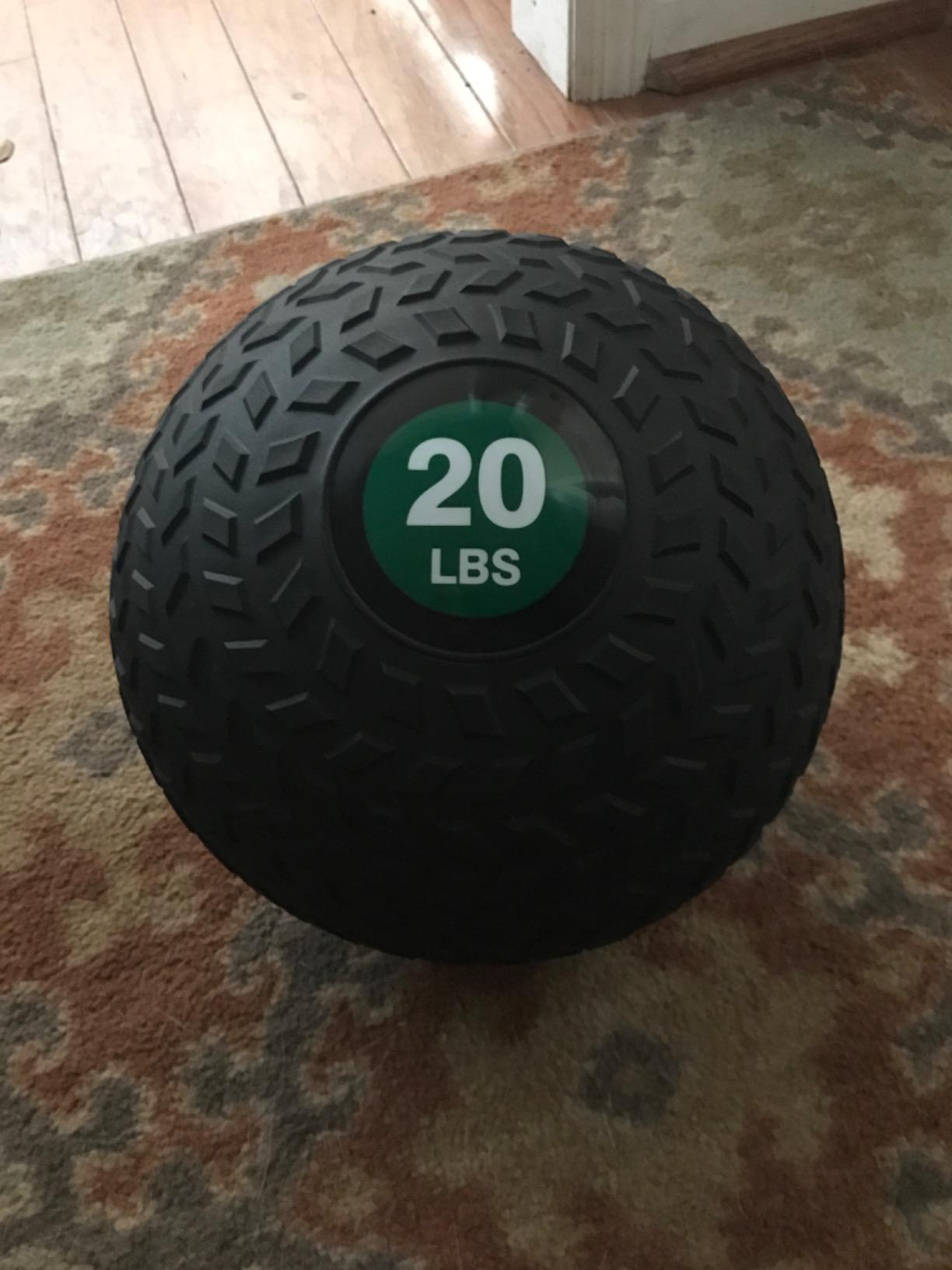
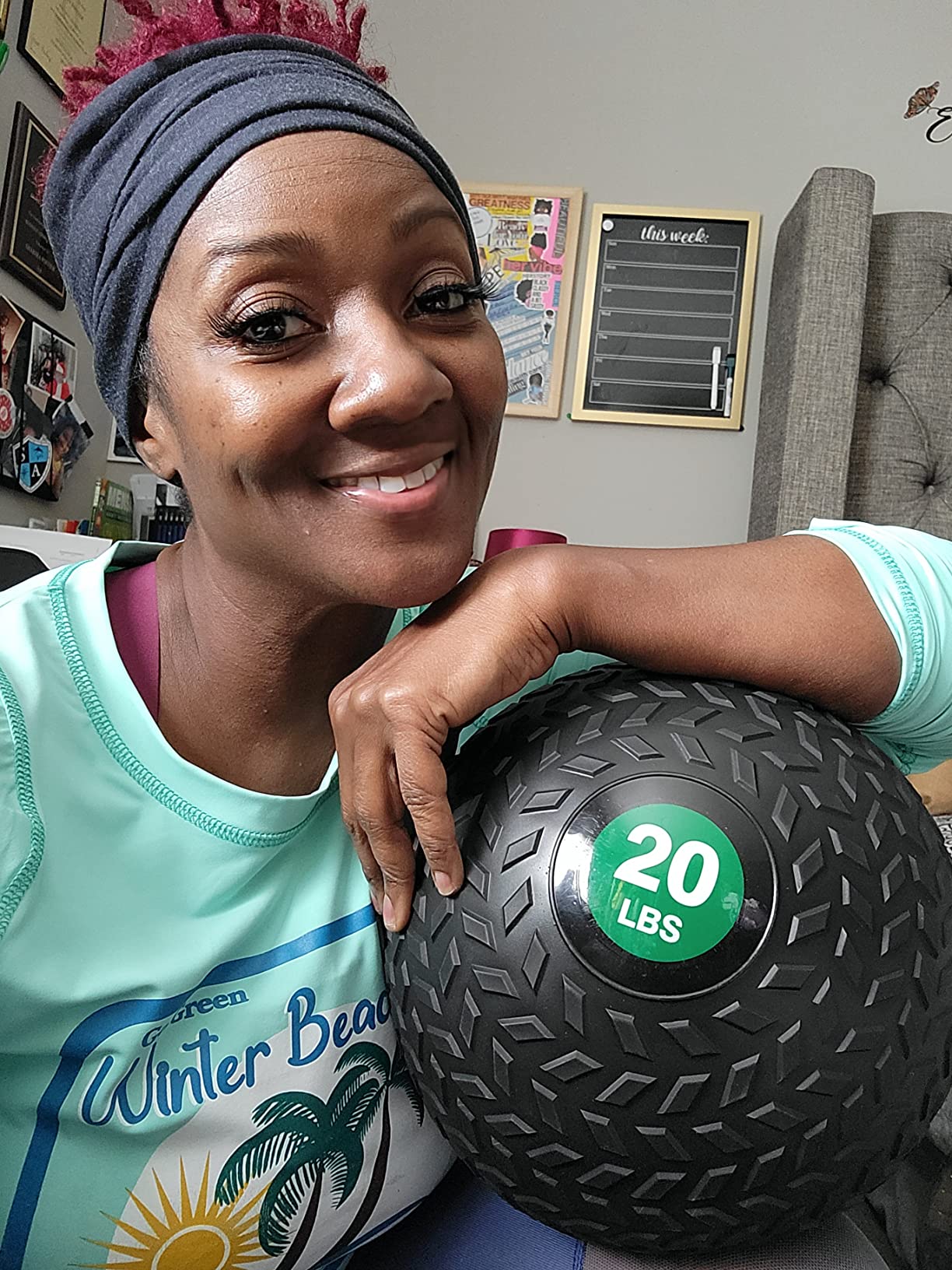
Seam failure is the most common complaint about budget slam balls, and the double stitching here is why this one sits near the top. It is the construction detail that separates a ball that survives two years from one that splits in a month.
It is also a dual-texture build, so different parts of the shell feel different. I preferred the rougher section for slams and the smoother one for the catch side of a squat throw.
At 9 inches it shares the compact-diameter caveat, which is sharpest above 30 lb, where a partner cannot get a secure two-handed grip. Where it beats its size class is the two-year warranty against manufacturer defects, longer than the one-year coverage on the Yes4All and the Trademark Innovations ball.
Weights run 6 lb to 40 lb, not as wide as the ProsourceFit, but covering the full range most home lifters will touch, including genuinely light options for a beginner.
Who the Fitvids suits best
Anyone who slams hard and often. If your sessions are overhead slams and heavy throws on a concrete slab, seam construction matters more than diameter.
It is also a sensible second-weight upgrade for anyone whose cheap ball split, since the jump in build quality is obvious.
Where it falls short
The compact diameter is the honest limit, especially at the top of the range. For heavy carries or partner rotations, the 14 inch Rhino ProMax is a better tool.
Reviewers also note the dual-texture finish is not identical across the weight range, so sample the feel before committing to a heavier version.
4. Champion Sports Rhino ProMax Elite – Best Large-Diameter Grip Surface
Champion Sports PRX20 Rhino Promax Elite Slam Balls, 20 lb, Soft Shell with Non-Slip Grip, Medicine Wall Exercise Ball for Weightlifting, Plyometrics, Cross Training, & Home Gym Fitness
Rhino Skin tacky vinyl
Soft shell, reinforced seams
14 inch diameter
4 to 30 lb options
Pros
- Tacky vinyl exterior gives a controlled non-slip grip even when sweaty
- Large 14 inch diameter is easy to throw
- catch and slam
- Soft shell with reinforced seams handles heavy wear
- More give and bounce than a typical medicine ball
Cons
- Large soft shell deforms and flattens on impact so it does not stay perfectly round
- Vinyl shell is noticeably loud on hard surfaces
- Outer coverage is voided by repeated overhead slams on rough surfaces
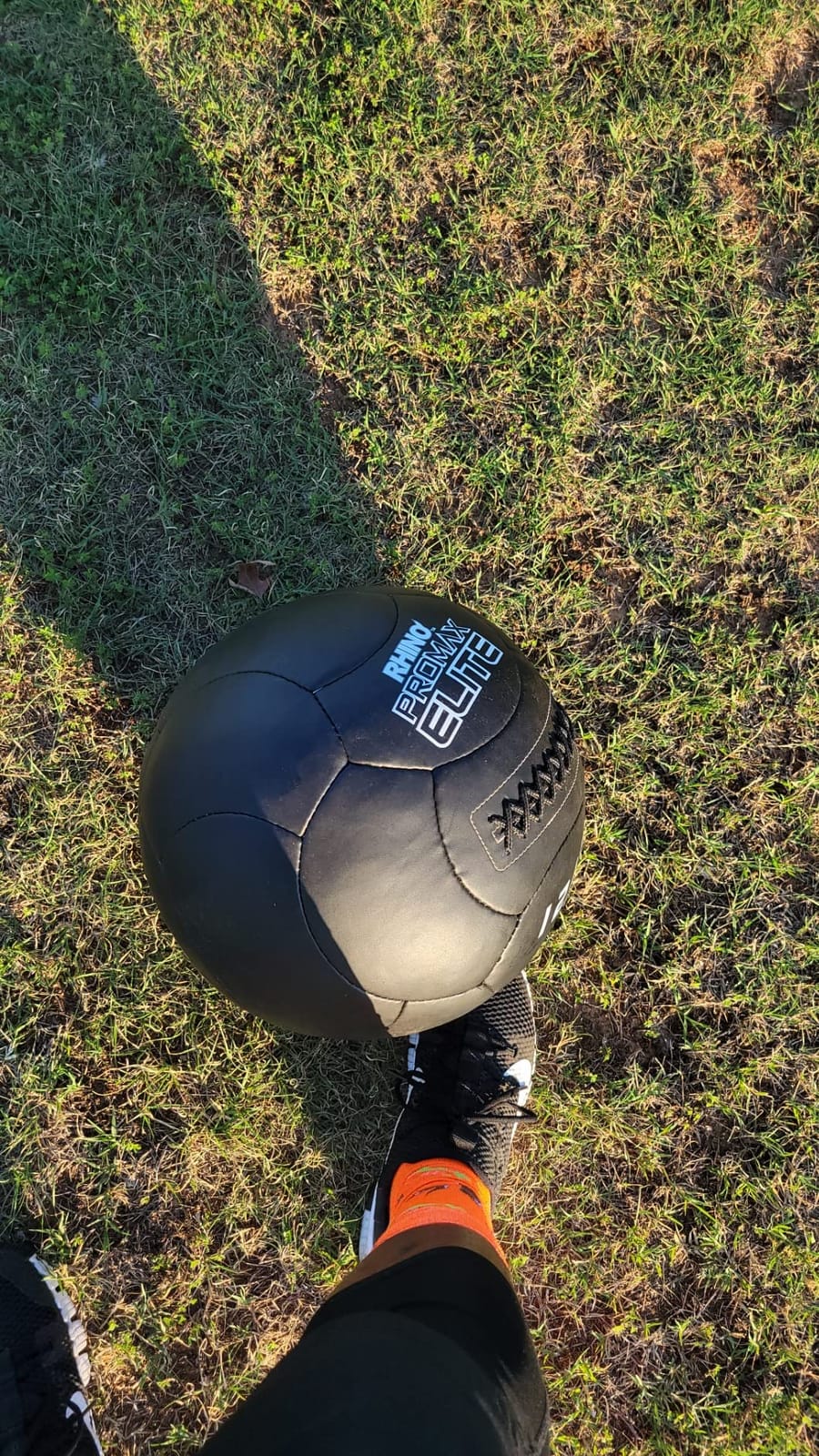
This is the one ball here that behaves like a soft medicine ball rather than a hard PVC slam ball, and that changes how it feels. The tacky vinyl surface grips well when sweaty, and the 14 inch diameter gives you a big target to catch.
It is also the only ball with meaningful give on impact. It absorbed the blow with a dull thud rather than a sharp slap, and it sat still afterwards. If you dislike the rigid feel of hard PVC, this converts you.
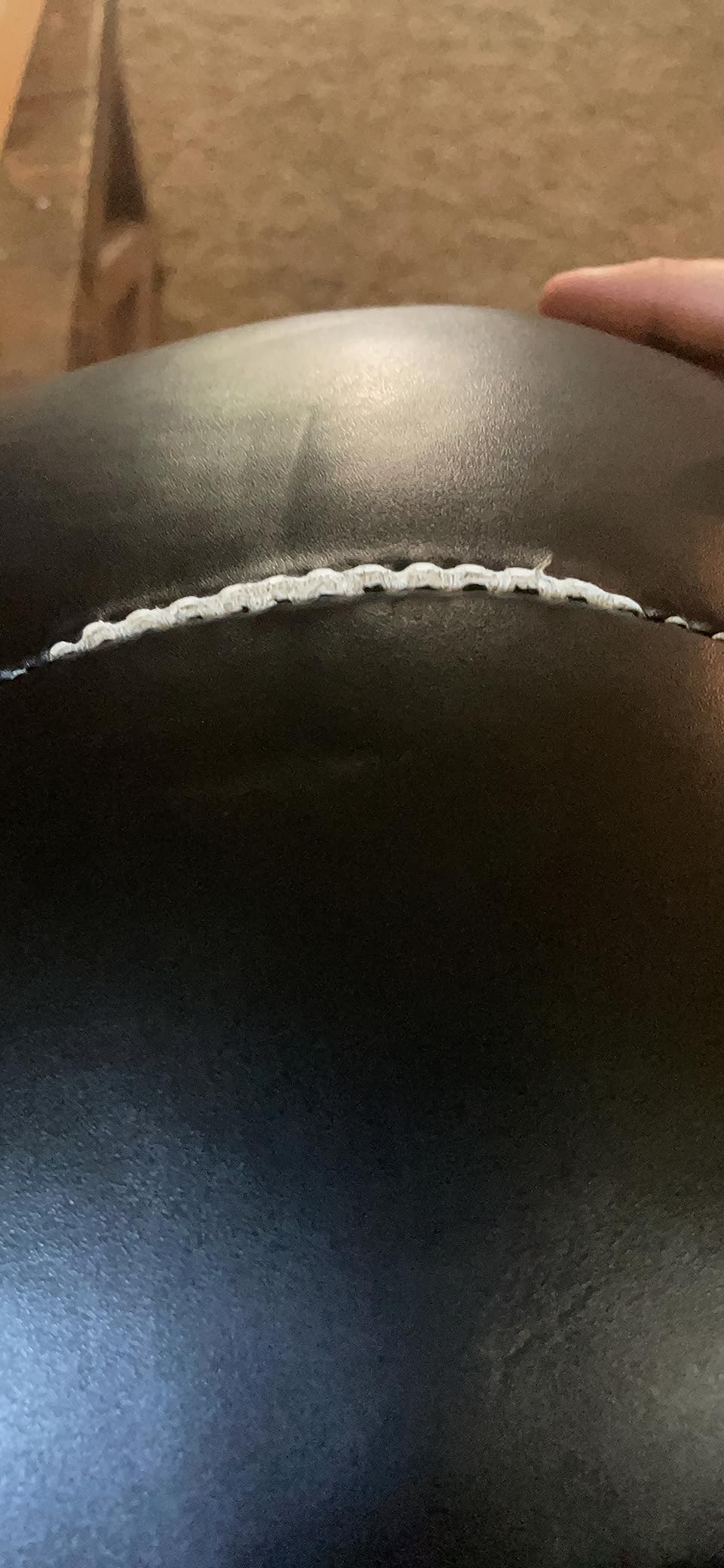
It is also the lowest rated ball we tested at 4.3 stars, and the reviews explain why. The 14 inch soft shell deforms and flattens on contact, and owners report it feeling over-filled and hard for a soft ball.
Noise is the other recurring theme. Vinyl on concrete is loud, and users in shared living spaces flag it repeatedly. The manufacturer also states that repeated overhead slams on rough surfaces void the outer coverage, so a mat under the throw zone matters.
Who the Rhino ProMax suits best
Anyone doing partner work or wall ball throws, where you catch the ball and need a large surface to receive it. The 14 inch size and tacky grip are far easier to handle than a compact 9 inch ball at heavy weights.
It is also the best choice if hard PVC surfaces hurt your hands, since the softer shell transmits less impact into the palms.
Where it falls short
The deformation is the deal-breaker for some people. If you want a ball that slams and stays perfectly spherical, a hard PVC shell such as the Yes4All or the JFIT is the safer pick.
At 4.3 stars it has the largest one-star share here, with complaints clustering around shape retention and loudness rather than grip. Weights run 4 lb to 30 lb, so very heavy throwers are limited.
5. Trademark Innovations Slam Ball – Budget Pick for Light Training
Exercise Slam Medicine Ball by Trademark Innovations (Gray, 15lbs)
Sand-filled no bounce design
9 inch PVC shell
15 lb
1-year defect warranty
Pros
- Sand-filled no-bounce design is the simplest entry into real slam ball training
- Soft enough to squeeze between the knees for core work
- True to the labeled 15 lb weight
- Holds up well when slammed on a workout mat
Cons
- Smooth PVC shell is hard to grip once hands get sweaty
- Build looks fragile for commercial or high-volume gym use
If your goal is to try slam ball work without committing much, this is the honest starting point. It is a sand-filled 9 inch PVC ball at 15 lb with a one-year defect warranty, and it lands and stays.
Owners use it most for core work, Russian twists and light slams on a mat rather than full-power overhead throws onto concrete, which matches its 4.7 star average over more than a thousand reviews.
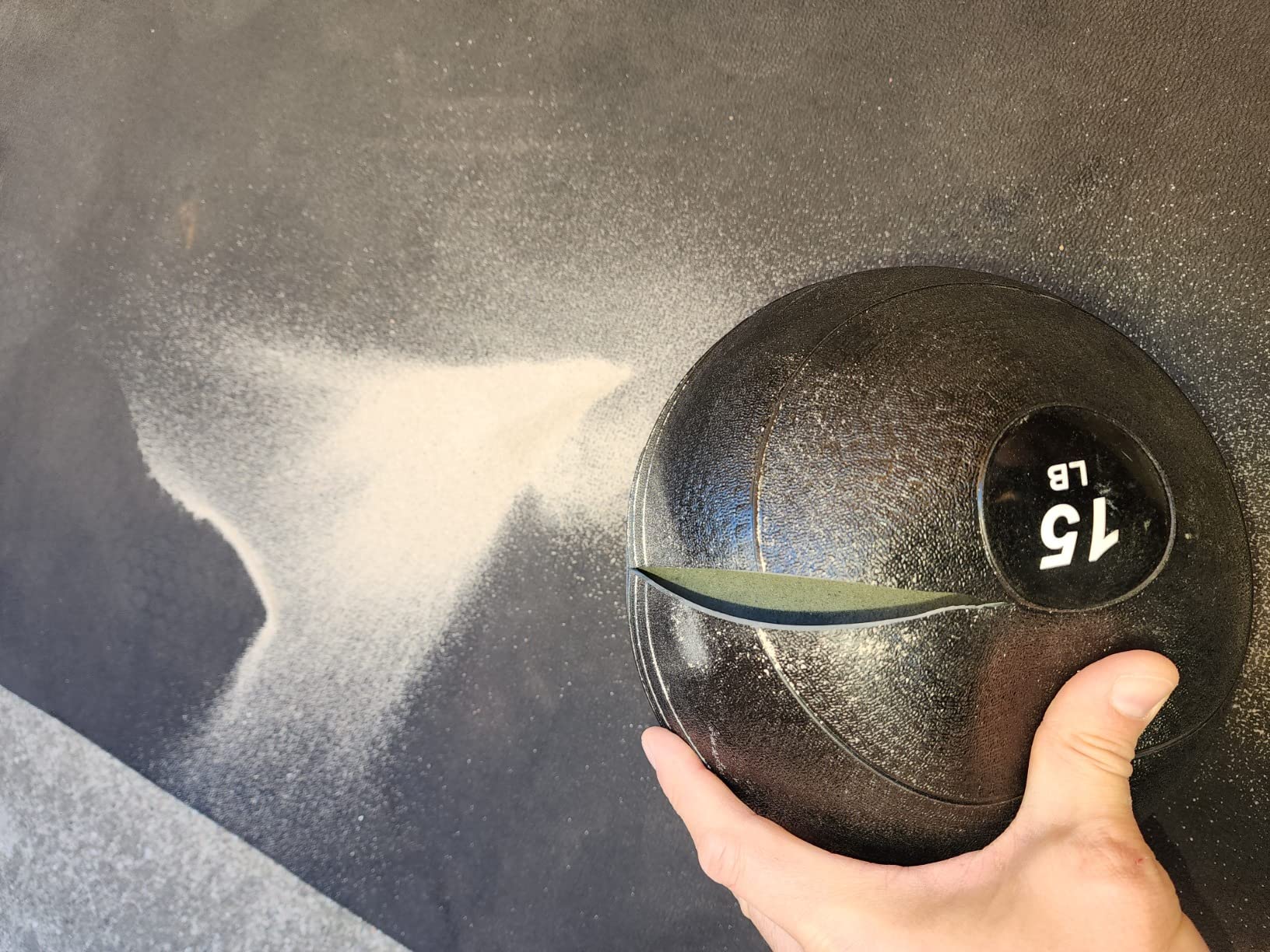
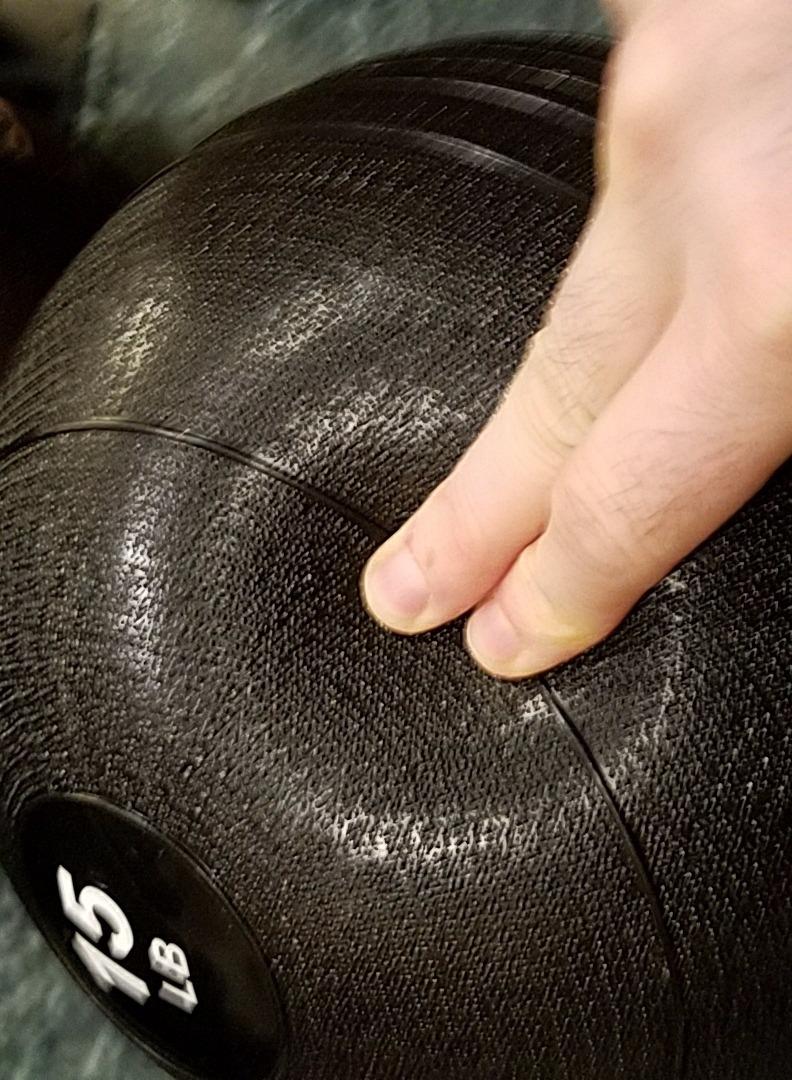
Grip is where it gives ground. The shell is smooth PVC, and once your hands are wet it becomes hard to hold on a 15 lb ball being driven downward at speed. That is the reason it sits at five rather than one.
Several buyers also comment that it looks fragile for a gym where equipment gets abused. That is fair only at high volume, and the one-year warranty gives some protection either way. A mat under the slam zone will do more for its life than anything else.
Who the Trademark Innovations ball suits best
It suits a beginner, a renter, or anyone testing whether slam ball work fits their routine. For core work, twists and light mat slams it does everything you need, and the sand fill stops it rolling away.
It is also a good gym-sparing choice. One 15 lb ball fits in a duffel and demands almost no floor space, which answers the space concern that comes up constantly in home gym forums.
Where it falls short
Do not plan to use it for heavy overhead slams. The smooth shell plus a modest shell thickness means grip slippage and impact combine exactly where failures start.
At 9 inches it also feels compact for anyone used to a 14 inch ball, with no tread to fall back on. If sweaty-hand grip is a deal-breaker, spend up a tier and get a tread surface.
6. Amazon Basics Slam Medicine Ball – Best for Small Spaces
Amazon Basics Heavy-Duty Slam Medicine Ball for Exercise, Weighted Design, 15lb, Black
Heavy-duty PVC shell
Sand-filled core
Under 8 inch diameter
15 lb listed variant
Pros
- Textured grip stays secure even when hands get sweaty
- Sand-filled core absorbs slams and does not bounce
- Weighs true on a scale with durable soft-rubber material
- Compact diameter is the easiest to store
Cons
- Listed weight options top out around 15 lb which is light for experienced lifters
- Smallest diameter in the roundup at just under 8 inches
Storage is the underrated problem in a small garage, and this ball solves it. At just under 8 inches it tucks into a corner, a shelf, or the gap beside a rack in a way no 14 or 15 inch ball can.
The heavy-duty PVC shell has a sand-filled core that absorbs impacts and prevents bouncing, with balanced weight distribution for controlled movements. It is a plain ball that gets the fundamentals right, holding 4.6 stars with 81 percent five-star feedback.
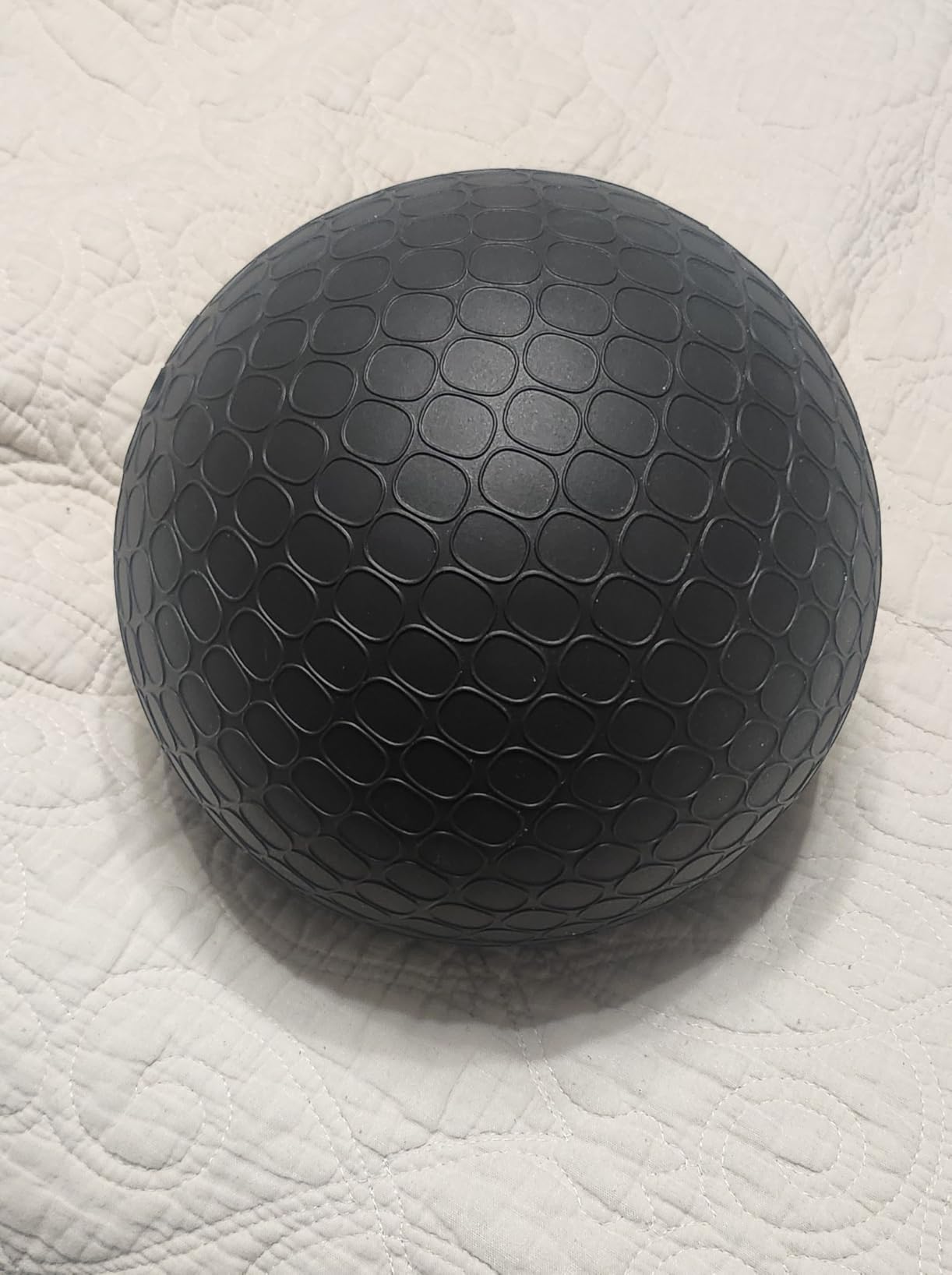
Owners confirm it weighs true and keeps its texture after a year of daily use. The textured non-slip surface is described as holding during sweaty sessions, a better grip story than most compact balls here.
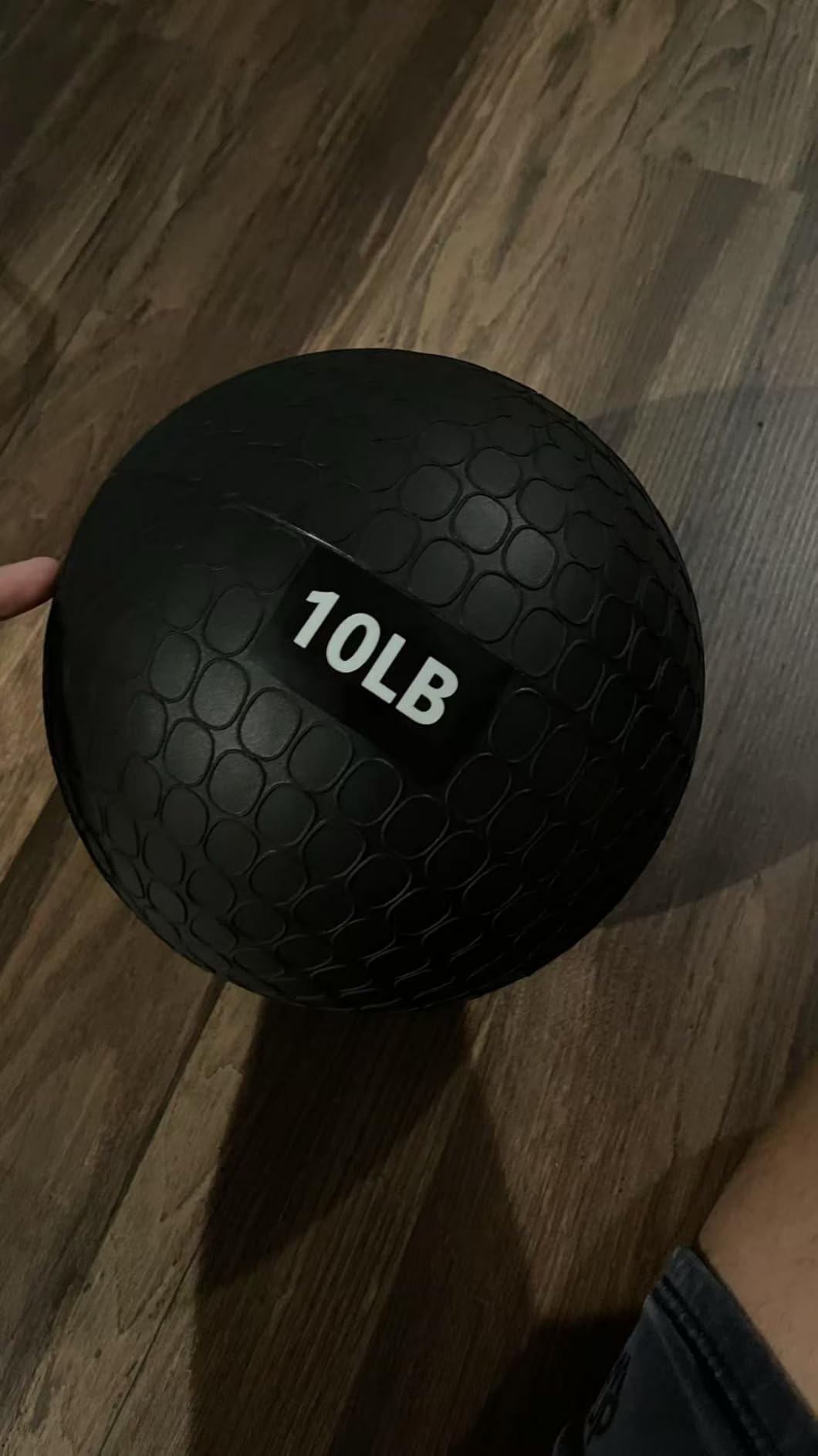
The limitation is weight. The base listing tops out around 15 lb, and the smallest diameter here means heavier variants would be physically small in the hands. Advanced lifters report the lighter weights are easy to slam and suggest stepping up rather than stretching this model. One detail to note: the listed item weight is given in kilograms, with the shown variant at 15 lb.
Who the Amazon Basics ball suits best
It suits anyone working in a tight garage where floor space is the binding constraint. If the alternative is a 15 inch ball eating a quarter of the workout area, this is the sensible trade.
It also suits apartment or condo training, since a small dense ball is easier to control and less likely to knock into furniture.
Where it falls short
The weight ceiling is the real issue for anyone who trains seriously. Around 15 lb is a wall for progress, and hitting it is the most common reason owners buy a second ball within a year.
At under 8 inches it is also the least pleasant ball here for partner work or wall throws, because there is not much ball to hold. If you train alone and focus on downward slams and core work, that hardly matters.
7. JFIT Slam Ball – Best for Heavy Training and Concrete
JFIT Slam Ball – Build Strength – Endurance & Power | Superior Grip | Sand-Filled Core | Indoor & Outdoor Use – Treads Black – 40 LB
Composite exterior
Iron sand interior core
9 inch diameter
10 to 50 lb options
Pros
- Thick shell and sand core absorb repeated slams without cracking or leaking fill
- Grip is smooth enough not to tear up hands but textured enough not to slip
- Holds up after years of slamming on concrete and pavement
- Weight options reach 50 lb for advanced carries and cleans
Cons
- Some balls arrive slightly oval rather than perfectly spherical
- 9 inch diameter feels small for the 40 lb and 50 lb versions
This is the ball for someone whose garage floor is the only floor they have, and who intends to slam it there. Long-term owners report zero cracks, no leaking fill, and an intact grip after years on concrete, the strongest durability record we found.
The interior is iron sand inside a composite exterior, with a shell thick enough to absorb impact without transmitting damage to floors or hands. The manufacturer says the outer skin was redesigned more than ten times for indoor and outdoor durability, which explains the record on rough surfaces.
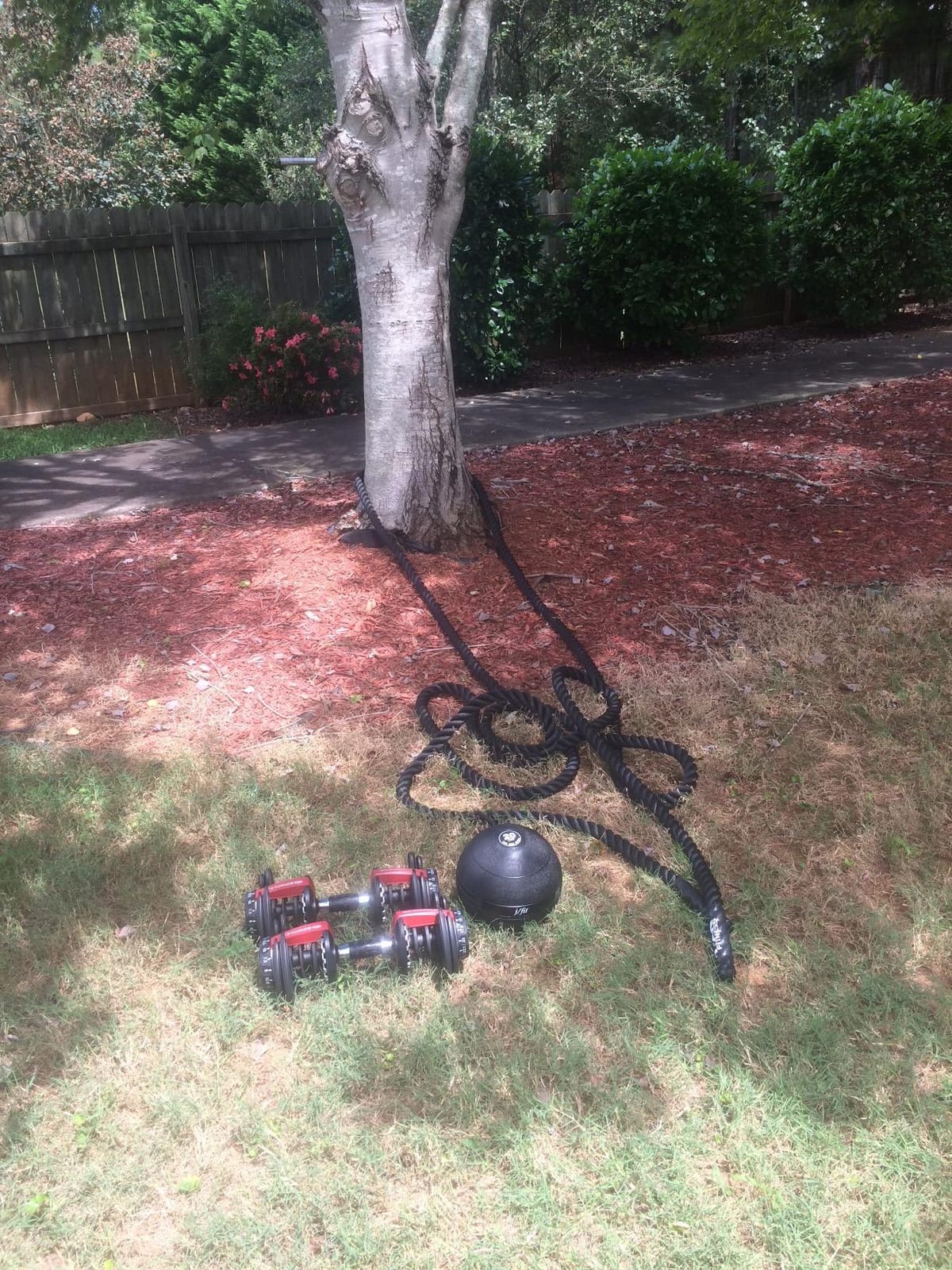
What I liked most was the grip balance. It is smooth enough not to tear up bare hands, which matters at 40 and 50 lb, but textured enough not to slip from a sweaty palm.
Weight options reach 50 lb, and the manufacturer lists it for carries, cleans, squats, push-ups and plyo jumps, stating the shell absorbs impact without damaging walls or floors. The recurring complaint is shape: some owners report a ball that arrived slightly oval rather than perfectly spherical.
Who the JFIT ball suits best
It suits intermediate and advanced lifters who want genuinely heavy loads at home, since going from 20 lb to 50 lb on the same tread design is a coherent progression and the iron sand core keeps the dead weight consistent.
It is also the pick for anyone who slams directly on bare concrete without a mat.
Where it falls short
The diameter works against you at the heavy end. A 50 lb ball at 9 inches is a dense, compact object that is hard to catch with two hands, so carries and cleans are more awkward than on a larger ball.
The oval-on-arrival issue is worth checking, since an out-of-round ball rolls when you do not want it to, which defeats the point. Inspect it the day it arrives.
8. STRPRETTY BASIC 10 lb Slam Ball – Best for Beginners
STRPRETTY BASIC Medicine Ball 10 lbs Slam Ball Weighted Balls for Exercise Strength and Crossfit Workout (Dynamic Pink)
Grooved tread PVC shell
Non-bouncing, non-rolling
7.8 inch diameter
8 and 10 lb options
Pros
- Deep grooved tread holds well even with sweaty hands
- Sturdy PVC shell does not bounce or roll
- Bright colorways suit a garage gym setup
- Light 8 lb and 10 lb options are approachable for beginners
Cons
- Only offered in 8 lb and 10 lb so it cannot progress beyond light training
- Small 7.8 inch diameter limits usefulness for heavy lifts or carries
If you have never thrown a slam ball, this is where to start, and its 4.7 star average is the second highest here. At 8 or 10 lb you can learn the overhead slam pattern without sore shoulders or a lost grip on rep two.
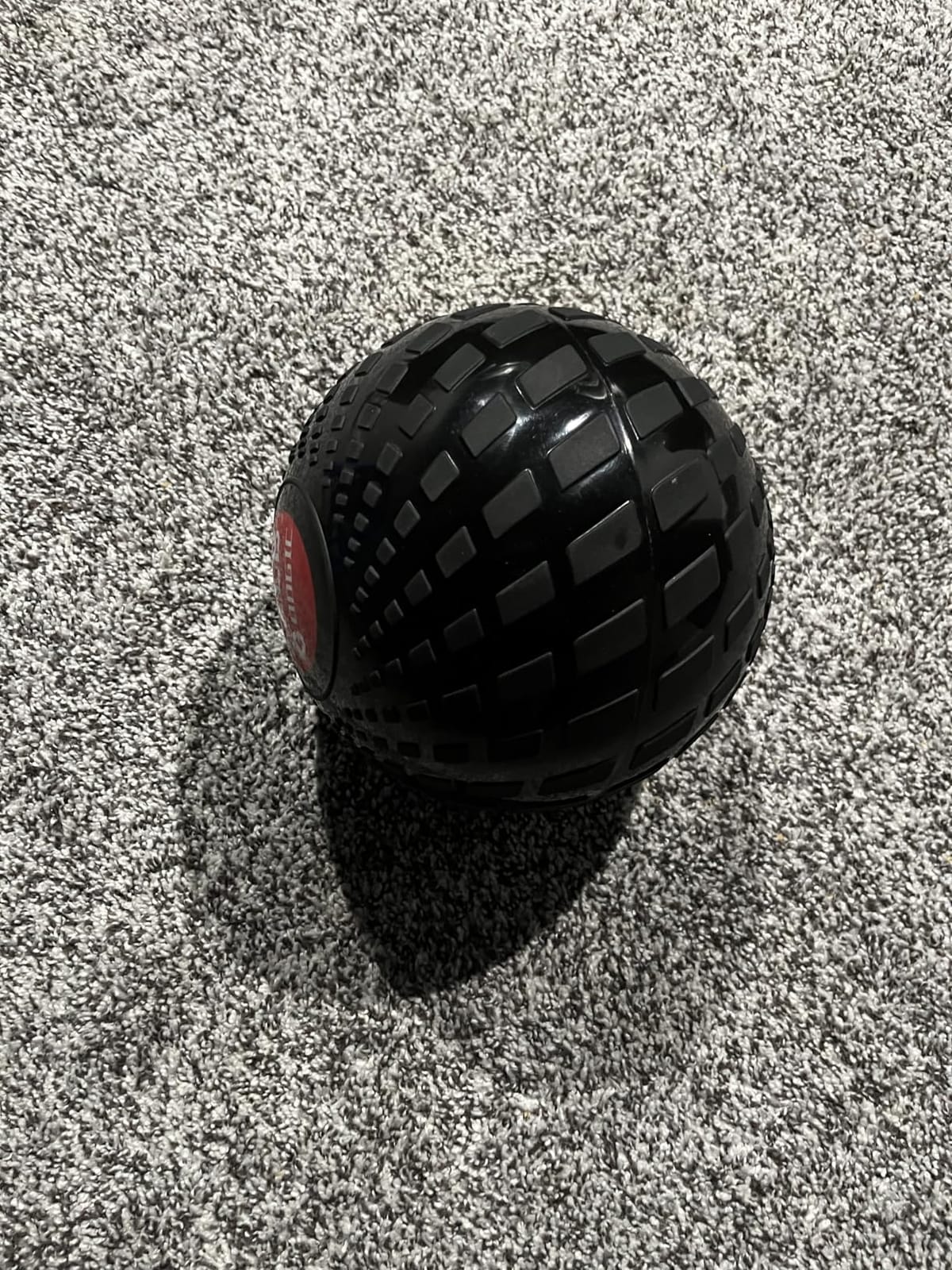
The upgraded large tread design is what matters. It is a grooved, textured PVC shell, and buyers single out the traction when sweaty hands are still gripping tightly. The ball also prevents bouncing and rolling, so it stays parked in front of you between sets.
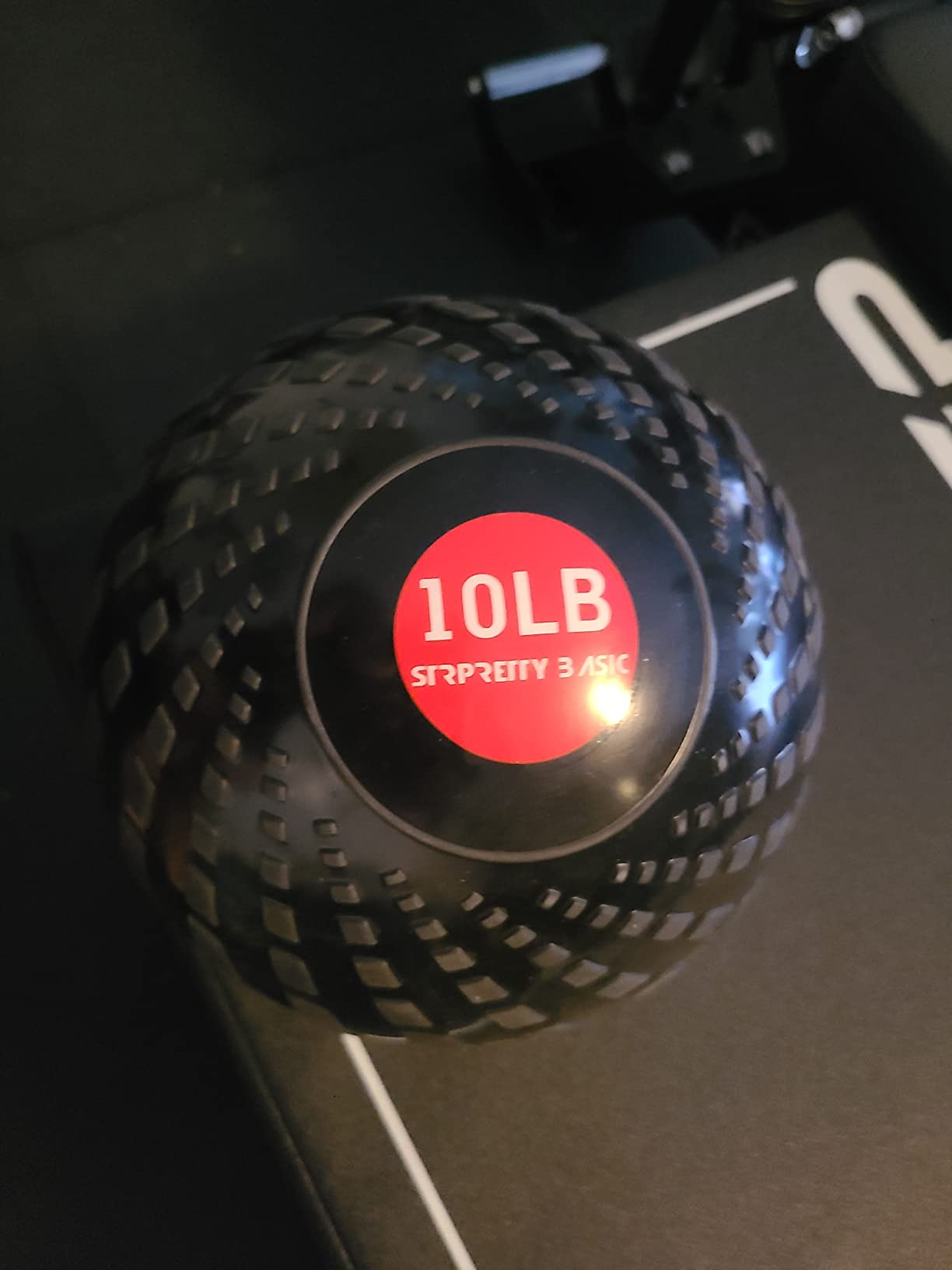
It is also pleasant to own. The bright colorways are a small thing, but a ball you do not mind looking at in the corner gets used more than a black one hidden behind the mower.
The listing positions it as a dumbbell replacement for sit-ups, squats, push-ups and overhead lunges, and at this weight that is an honest use. It is a conditioning and core tool first, usable from beginner to advanced.
The limit is obvious once stated: only 8 lb and 10 lb, and at 7.8 inches one of the smaller balls here. Treat it as a skills trainer you will outgrow.
Who this ball suits best
It suits a true beginner, and anyone rebuilding after a layoff. Light slams teach the hip drive and overhead lockout pattern, which is what most people get wrong with a heavy ball and a sore back.
It also suits anyone who trains in a small space or on softer flooring, since a light ball at 7.8 inches is easy to control and will not damage much if it goes the wrong way. Russian twists and sit-ups are where it is happiest.
Where it falls short
Eight and ten pounds is the ceiling, full stop. If your goal is explosive power work with meaningful load, you will need a heavier ball.
Reviewers also note the small diameter limits usefulness for heavy lifts or carries, and the tread can feel pronounced on sensitive hands over a long session.
9. Rage Fitness Slam Ball – Best for Adjustable Firmness
Rage Fitness 10 lbs Slam Ball, Tread Texture Weighted Balls for Workouts
Rubber shell with sand filling
Adjustable air valve
10 inch diameter
10, 15 and 20 lb
Pros
- Tread design keeps grip secure when hands are sweaty
- Thick rubber shell holds up to repeated slamming
- Air valve lets you tune the firmness to your preference
- Reported not to scratch laminate or hardwood garage flooring
Cons
- Ridge texture can be rough and irritating on bare hands
- Limited to 10 15 and 20 lb options
The Rage Fitness ball is the only one here with a valve you can adjust, and that matters in a garage. A few pumps let you tune the firmness, making the ball harder for power work or slightly softer for core and rotational drills using the same implement.
At 10 inches it sits mid-range, a reasonable compromise: stable on a throw, small enough to store in a single-car garage corner. The shell is thick rubber with a sand filling.
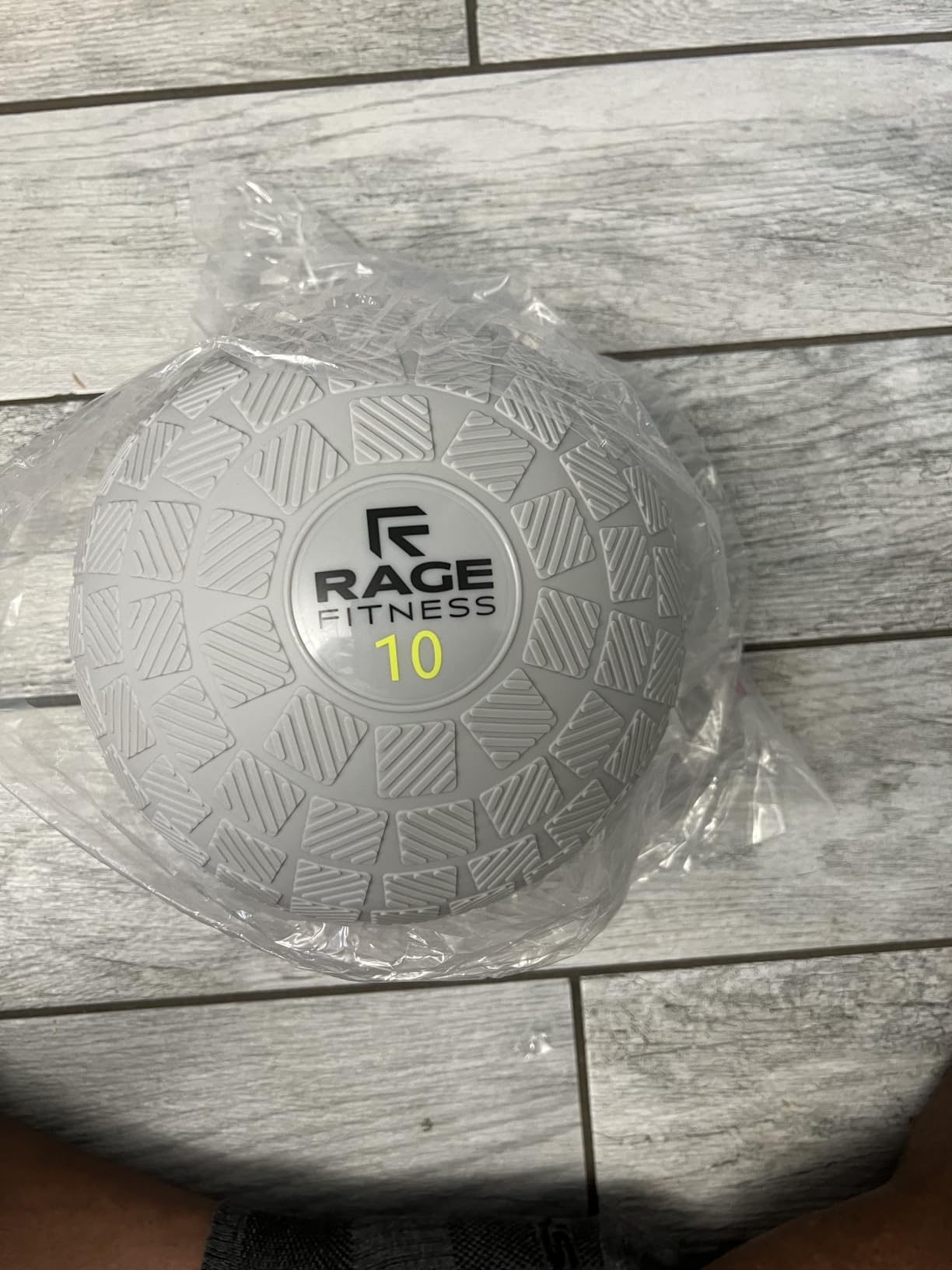
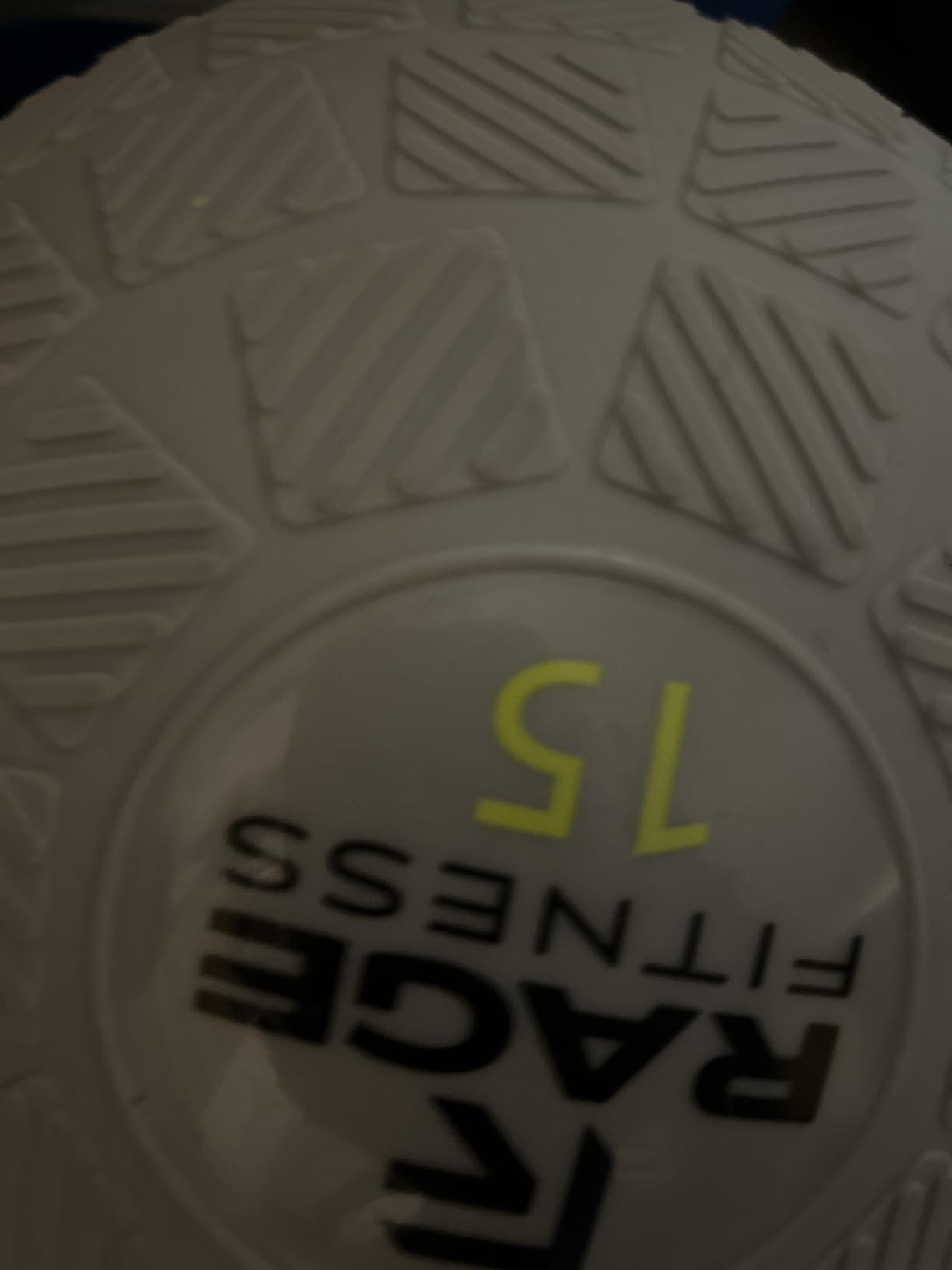
The grip story is split. Most owners love the Rage tread for controlling the ball during sweaty slams, and a smaller group finds the ridges rough enough to irritate sensitive hands, so test it if grip is already an issue.
One detail stands out for garage owners: reviewers report the ball is dead weight and stays put without scratching laminate or hardwood garage-gym flooring, which is reassuring if you have coated your slab.
The weight range is the main constraint. Options stop at 10, 15 and 20 lb, so this trains someone establishing a base rather than chasing heavy throws, with no path to 40 lb on this design.
Who the Rage Fitness ball suits best
It suits a home lifter who wants to vary the feel of the ball without buying a second one, and anyone whose garage floor is coated. The adjustable firmness helps in mixed sessions pairing power slams with slower rotational core work.
At 10 or 15 lb it is a good pick for building technique, since a thicker rubber shell feels stable and controlled without punishing the shoulders.
Where it falls short
The 20 lb ceiling is the honest limit. Anyone progressing toward heavy explosive work will outgrow it, and rough tread is a legitimate reason to buy a different ball.
Because the firmness is adjustable, it is one you have to think about. A ball sitting over-inflated in a cold garage will feel different than the same ball warmed up, so check the valve between seasons.
10. REP Weighted Slam Ball – Best for Weight Range Progression
REP Weighted Slam Balls | 10 lb | Exercise and Fitness Balls for Strength Training, Soft Rubber Grip, Non-Bounce Medicine Ball | Crossfit, Home Gym, Fitness, and Core Workouts | Black
Textured soft rubber shell
Non-bounce design
9 inch diameter
5 to 70 lb range
Pros
- Soft rubber surface is comfortable and stays secure when sweaty
- Non-bounce construction holds shape and resists splitting or leaking
- Full weight range from 5 lb up to 70 lb
- Works for home gyms
- commercial gyms and group classes
Cons
- Rubber shell can stiffen and crack in cold unheated garage gyms
- Occasional slight rebound when slammed very hard
The REP ball has the widest weight range here, from 5 lb to 70 lb, and it is the one to buy if you think you will progress rather than settle. Start at 10 lb or jump to 50, the shell and grip stay the same.
The soft rubber surface is comfortable and secure even when sweaty, the most common complaint about hard PVC balls here. The rugged textured rubber is described as resisting splitting or leaking while holding shape and balance through intense sessions, and it is listed for squats, lunges, twists and slams.
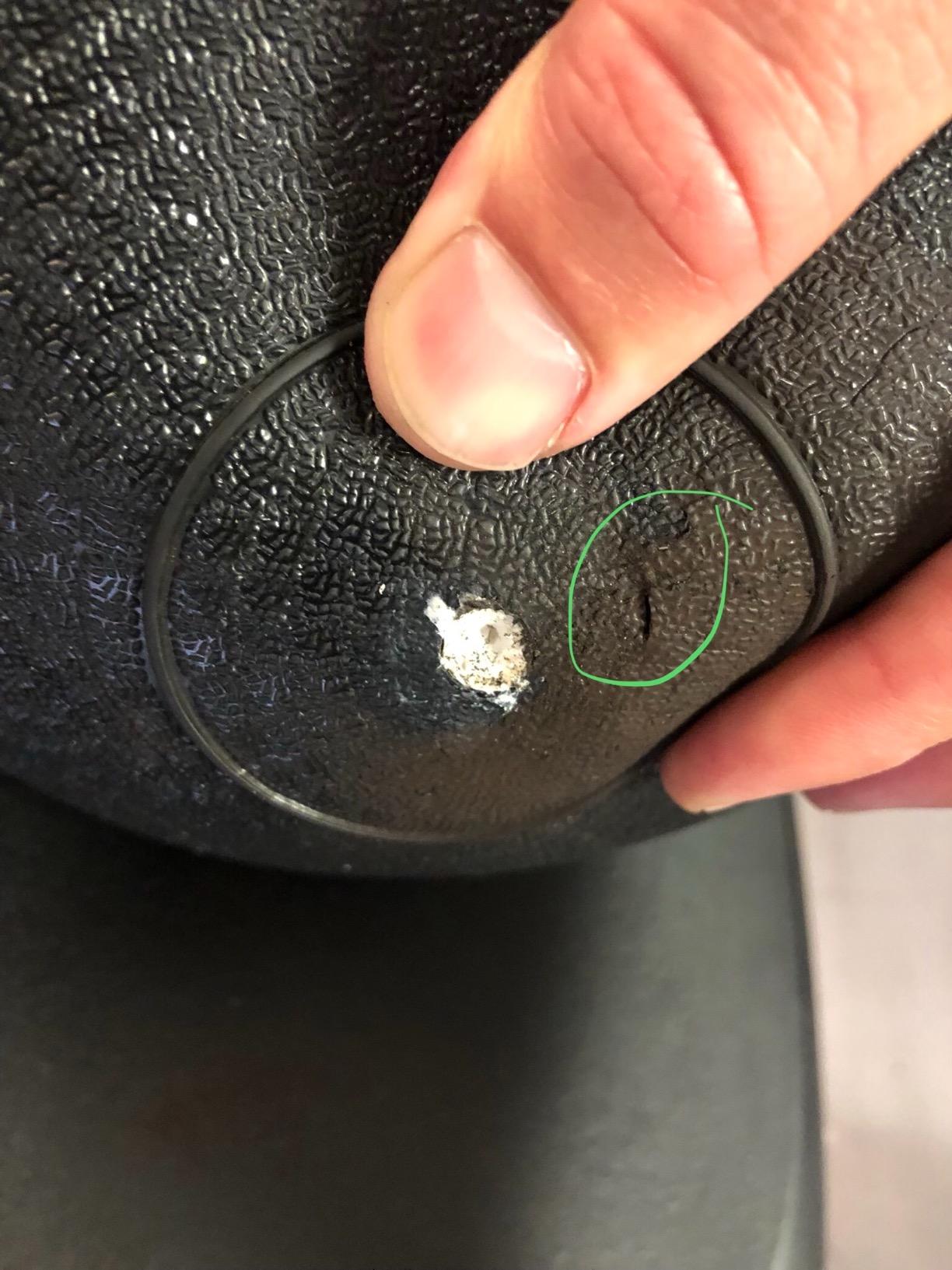
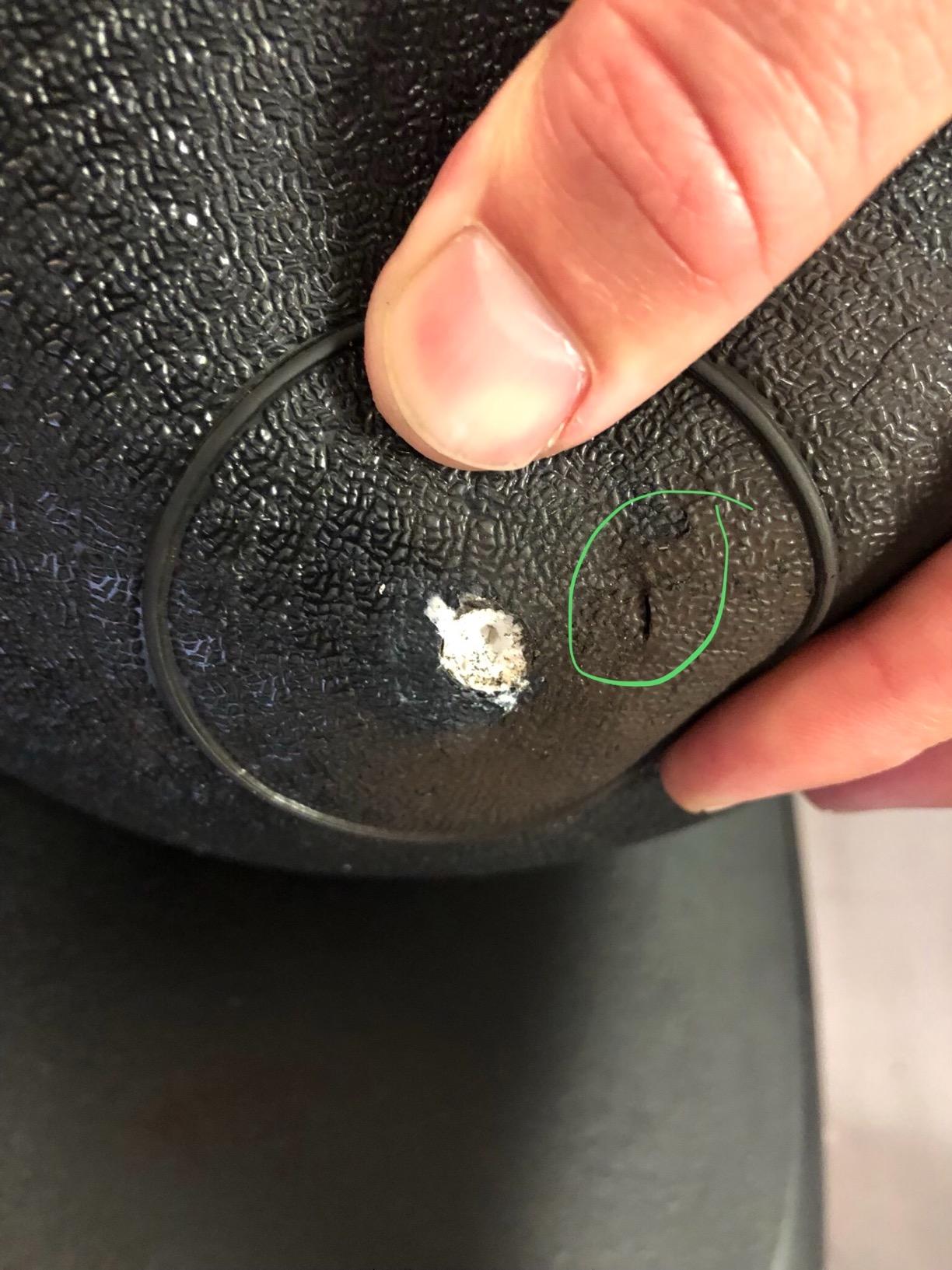
The caveat is garage-specific. Buyers in climate-controlled gyms report excellent texture and a reliable non-bounce feel, but owners in unheated garages report the outer rubber stiffening in cold and becoming prone to cracking on impact.
There is also a note about occasional slight rebound on very hard slams. It is minor, but if a ball that rolls is a deal-breaker, the harder PVC options such as the Yes4All or the JFIT hold position more consistently.
At 4.5 stars with 274 reviews it has the smallest sample here. The features are unremarkable in the best sense: nothing flashy, just a wide range and a grip that works.
Who the REP ball suits best
It suits anyone planning a long arc, from a 5 lb beginner ball to a 70 lb heavyweight, without changing equipment. That also makes it practical for a household where two people at different levels train in the same garage.
The soft rubber shell is the other reason to like it. If long high-rep sets make your hands the weak link, a soft surface that still holds when sweaty beats the harder PVC options.
Where it falls short
Cold weather is the clear one. In an unheated garage the rubber stiffens and can crack on impact, so store it indoors between sessions in severe winters. A heated space removes the concern entirely.
The slight rebound on very hard slams is worth testing in your space, since a ball that rolls toward a car is exactly the failure users complain about. And at 9 inches it is compact, which limits partner work and heavy carries.
How to Choose a Slam Ball for a Garage Gym
Choose for a dead bounce first. A dead bounce means the ball absorbs the impact rather than rebounding, so it lands and stays. Every ball in this roundup is sand or iron sand filled, which is what produces that behaviour, but they are not equally dead: the soft vinyl Rhino ProMax has real give and some rebound, while the hard PVC and rubber options are the strictest. Buy the hardest shell you can tolerate if the ball wandering across your floor is your main worry.
Pick your weight by where you are, not by what is available. The recurring forum advice is to start lighter than you think. Users gravitate to 20 to 30 lb as the general home sweet spot, and manufacturers themselves recommend beginners start at 10 to 15 lb. A ball too heavy to control overhead will be thrown awkwardly rather than slammed, which defeats the exercise.
Decide hard shell against soft shell. Hard PVC and rubber shells are denser, quieter, flatter on impact and hold their shape, and they are easier on your garage floor. Soft vinyl shells feel better in the hands, are more forgiving to catch and take more care of your palms, but they deform, bounce more and are louder. In a detached garage with a concrete slab, hard shell is the more sensible default.
Use diameter to pick your exercises. Small balls around 8 to 9 inches are compact, easy to store, and give you a firmer surface for core work and heavy throws. Large balls at 14 to 15 inches are easier to catch, better for wall slams and partner work, and take noticeably more floor and rack space. If you share a garage with a vehicle, a 9 inch ball stores far more easily.
Protect the slab and the ball. The usual question on home gym forums is whether a slam ball damages a concrete floor, and the answer is that the ball is usually less of a risk than the surprise. A rubber mat under your throw zone cuts noise, reduces hand abrasion, protects a sealed slab, and keeps grit off the ball. Reviewers on the Rage Fitness ball specifically note it does not scratch laminate or hardwood flooring.
Check your headroom. An overhead slam needs vertical clearance. A 9 inch ball thrown from chest height needs about eight feet of clear ceiling with nothing hanging; a 14 inch ball needs more. Garage door tracks, rafters and pull-down lights are the usual culprits, so measure first.
Plan for noise if you are not detached. This is the question roundups skip and apartment dwellers ask constantly. A hard shell on a mat is markedly quieter than vinyl on bare concrete, and the Champion Sports Rhino ProMax is the loudest ball in this group.
Factor in storage and one ball versus two. One 50 lb ball occupies a surprising amount of corner space, which is why compact diameters win in small garages. Buy one ball at the weight matching your current training, and add a lighter second ball six to twelve months later. A matched pair is only worth it with a partner.
Treat the warranty as burst insurance. Cheap balls bursting at the seam is the most common complaint here, and owners of entry-level balls report them giving out within a couple of weeks. A one-year warranty is the bare minimum, two years is decent, and a limited lifetime warranty is the strongest signal in this roundup.
For context on how these fit alongside the rest of a home setup, our best trap bars for home and garage gyms guide covers the strength side of a garage, and hockey training mirror walls cover the layout side.
What Weight Slam Ball Should I Buy?
Start 10 to 20 lb lighter than you think you need. A slam ball is more demanding than a same-weight medicine ball because you generate force into the ground, so the correct first weight is the heaviest one you can still slam cleanly for 10 reps without your grip failing or your lower back rounding. For most home lifters that lands between 20 and 30 lb.
Beginner or returning after a layoff: 8 to 15 lb. Learn the overhead slam and squat throw patterns before adding load.
Intermediate with a few months of consistent training: 20 to 30 lb. This is the range home gym users report enjoying most, and it covers power, conditioning and core work in one tool.
Advanced or strong overhead pressing numbers: 40 lb and up. Pick a ball with a large diameter or the hardest shell you can hold, since compact 9 inch frames get uncomfortable at heavy loads.
Heaviest options in this category: the REP ball runs to 70 lb and the JFIT runs to 50 lb, so there is a genuine heavyweight path for a home gym.
Progressing over time: step up in 5 to 10 lb increments rather than jumping, and expect the sand-filled balls to feel heavier than a soft medicine ball of the same marking because the fill shifts under load.
Slam Ball vs Medicine Ball: Which One Do You Need?
The two products are genuinely different, and the confusion between them is the most common question here. A medicine ball is a hollow shell filled with air, gel or plastic pellets, meant to be thrown, caught and bounced. A slam ball is a dense shell filled with sand or iron sand, designed not to rebound so it can be driven into the floor. If you slam it, you want the second one.
Owning both is not redundant, it is just a space decision. A soft medicine ball earns its keep for chest passes, partner throws, wall ball work and anything where catching matters. A slam ball earns its keep for dead-weight power, overhead slams, rotational throws and high-rep conditioning. In a small garage, one ball that does the slam job is usually the better first purchase.
What to Do With a Slam Ball in a Garage Gym
Five movements cover nearly everything, and all work in a garage with about eight feet of headroom. Keep the sets short and the rest short, because the implement is conditioning as much as strength.
Overhead slam: 4 sets of 10 to 12 reps, full rest between sets. Stand with feet hip-width, lift to the chest, then drive overhead and into the floor.
Squat throw: 4 sets of 8 to 10 reps. Sit into a squat, explode up, and release the ball at the top without bending your knees to catch it.
Woodchopper throw: 3 sets of 10 per side. Rotational throw from the hip, alternating sides, targeting the obliques and the whole posterior chain.
Slam ball burpee: 3 sets of 8 to 10 reps. The most demanding of the five, so keep the weight light and scale the reps down if your conditioning is not there yet.
Plank on ball or Russian twist: 3 sets of 12 to 20 reps. Slow, controlled core work that balances out all the heavy hitting above.
A simple 20 minute session is two rounds of the overhead slam, squat throw and woodchopper with a 60 second rest between movements. That is enough to justify the corner of the garage it occupies, and it is the routine most regular users end up running.
Frequently Asked Questions
What is the best weight for a slam ball?
Most home lifters do best between 20 and 30 lb, and beginners should start at 10 to 15 lb. Choose the heaviest weight you can still slam cleanly for 10 reps without your grip failing or your lower back rounding. A slam ball feels heavier than a same-weight medicine ball because the sand fill shifts under load.
Are slam balls effective?
Yes, for power, conditioning and core work. The sand or iron sand fill absorbs the impact instead of rebounding, so you can generate maximal force overhead and drive it into the ground while training the posterior chain, shoulders and core. In a garage gym one ball gives you high-intensity work from very little floor space.
Which is better, slam ball or medicine ball?
A slam ball wins if you slam, throw downward or train dead weight. A medicine ball wins if you need bounce, chest passes or partner throws you can catch. A soft medicine ball is hollow and filled with air or pellets; a slam ball has a dense sand or iron sand core and stays where it lands.
What is the heaviest slam ball?
In this roundup the heaviest options are the REP ball, which runs up to 70 lb, and the JFIT, which goes to 50 lb. At those loads a larger diameter is easier on your hands, so a heavy ball is usually paired with a bigger frame rather than a compact one.
Are slam balls worth it?
For most home lifters, yes, because one ball covers overhead slams, squat throws, woodchops, burpees and core work from a single corner of floor space. If you only train twice a week, a battle rope or a kettlebell offers more variety per purchase. If you train four or more times, the range of movements justifies one ball.
The Best Slam Ball for a Typical Garage Gym
For a typical single-car garage, the best slam balls for garage gyms in 2026 come down to the Yes4All sand-filled model. Its threaded build holds its shape, its textured surface survives sweaty overhead sets, and its review history is deep enough that you are not gambling on a small sample. The ProsourceFit is the pick if you want the widest weight ladder and a lifetime warranty, and the JFIT is the one to buy if you slam straight onto bare concrete and want something that will not split.
Skip the soft vinyl route unless you share walls or catch a lot of passes, and put a rubber mat under your throw zone regardless of which ball you choose. If you are still comparing against the rest of your setup, our bowling ball reviews cover the other piece of equipment that quietly eats garage floor space.