

The best cordless circular saw for framing is the DEWALT 20V MAX DCS570B. It runs a brushless motor at 5500 RPM, cuts 2-9/16 inches deep at 90 degrees, and carries the largest proven owner base in this group with 4.7 stars across 5572 ratings. For heavy pressure-treated timber, step up to a high-voltage saw; for a lighter rear-handle grip, look at the Metabo HPT 36V.
Framing is the one job that punishes a mediocre circular saw. You are cutting 2×4 studs, 2×6 and 2×8 joists, 2×10 and 2×12 rim boards, double 2×12 headers cut to a compound miter, and a full sheet of OSB before the coffee goes cold. A saw that bogs in wet lumber or wanders off the cut line on a 45 degree bevel costs you far more than the tool ever saved you.
This roundup covers twelve 7-1/4 inch cordless saws, which is the blade size most framers end up owning. We looked at published specifications, owner review patterns, and the failure modes that show up specifically on framing lumber rather than on sheet goods. Every pick below carries a cut depth, a no-load speed, a real weight, and an honest list of where it struggles.
We updated this list in 2026 and it reflects the current generation of cordless framing saws, including the DEWALT 20V MAX XR DCS590B released in recent years and the current Makita XGT and Metabo HPT MultiVolt platforms. If you would rather start with a saw that handles everything and not just framing, our circular saw roundup covers the full range. If you already own a track saw and want clean sheet-goods rips, read our track saw guide instead.
Table of Contents
Top 3 Best Cordless Circular Saws for Framing in 2026

DEWALT 20V MAX DCS570B
- Brushless motor at 5500 RPM
- 2-9/16 in depth at 90 degrees
- 57 degree bevel
- 330 crosscuts in 2x4 pine
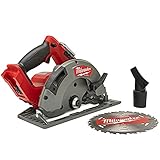
Milwaukee M18 FUEL 2732-20
- 5800 RPM FUEL motor
- magnesium shoe and guards
- dust port with included vac adapter
- rafter hook

Metabo HPT 36V C3607DWAQ4
- Lightest rear-handle saw at 8.2 pounds
- 500 cuts of 2x4 per charge
- 53 degree bevel
- lifetime tool body warranty
Those three cover most framers. The DCS570B wins on proven reliability and owner volume, the M18 FUEL 2732-20 wins on owner satisfaction, and the Metabo HPT C3607DWAQ4 wins on weight and warranty. Everything else in the list is a specialist rather than a general-purpose winner.
Quick Comparison: All 12 Cordless Framing Saws in 2026
| Product | Specifications | Action |
|---|---|---|
| DEWALT 20V MAX DCS570B |
|
Check Latest Price |
 DEWALT 60V MAX DCS577B DEWALT 60V MAX DCS577B |
|
Check Latest Price |
 Milwaukee M18 2631-20 Milwaukee M18 2631-20 |
|
Check Latest Price |
| Milwaukee M18 FUEL 2732-20 |
|
Check Latest Price |
 Makita XSR01Z 18V X2 LXT Makita XSR01Z 18V X2 LXT |
|
Check Latest Price |
| Metabo HPT 36V C3607DWAQ4 |
|
Check Latest Price |
 DEWALT 20V MAX XR DCS590B DEWALT 20V MAX XR DCS590B |
|
Check Latest Price |
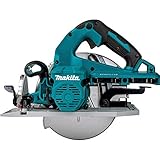 Makita XSH06Z 18V X2 LXT Makita XSH06Z 18V X2 LXT |
|
Check Latest Price |
 CRAFTSMAN V20 CMCS551B CRAFTSMAN V20 CMCS551B |
|
Check Latest Price |
 SKIL CR5429B-20 40V Kit SKIL CR5429B-20 40V Kit |
|
Check Latest Price |
 Makita 40V max XGT GSR01M1 Makita 40V max XGT GSR01M1 |
|
Check Latest Price |
 Greenworks 24V CRD401 Greenworks 24V CRD401 |
|
Check Latest Price |
Cut depth is the column that matters most for framing, and only three of these twelve reach a full 2-9/16 inches at 90 degrees. The rest sit close enough that a 2×12 needs a second pass or a flip.
How We Evaluated These Cordless Framing Saws
We ranked these saws against framing work rather than general-purpose cutting, which changes the results. A saw that shines on plywood can still be the wrong tool for a wall of studs.
Cut depth at 90 degrees. This decides whether a 2×12 or a built-up header goes through in one pass. We treated anything at or above 2-9/16 inches as full framing capacity and flagged everything below it.
No-load speed and torque headroom. RPM tells you how fast the blade is moving before load, and the difference between 4500 RPM and 6400 RPM shows up on wet lumber and treated stock. We also weighed voltage class, because 20V and 18V saws pull up short of 36V, 40V and 60V machines on thick timber.
Guard and shoe behaviour. We looked hard at reported problems with lower blade guards binding on compound miter cuts, at whether the shoe glides or drags on rough lumber, and at how the depth and bevel adjustments read under site lighting.
Site workflow details. Rafter hooks, LED cut line lights, electric brakes, and whether a usable vacuum adapter is included all affect how many cuts you finish in a shift. Battery ecosystem depth and warranty length were the final tie-breakers, because a bare-tool saw is useless without packs you already own or have to buy.
All owner ratings and review counts in this article are taken directly from the manufacturer listing data, not from our own scoring. Where a product has a thinner review base, we say so, because a 4.7 from 200 owners tells you less than a 4.6 from 1300.
1. DEWALT 20V MAX DCS570B: The Default Cordless Framing Saw
DEWALT 20V MAX Circular Saw Cordless with Brake, 7-1/4 Inch, Tool Only (DCS570B)
7-1/4 in blade
5500 RPM brushless
2-9/16 in at 90 deg
57 deg bevel
7.5 lb
Pros
- Brushless motor holds 5500 RPM under load in 2x lumber
- Electric brake stops the blade fast after trigger release
- Bevel detents at 22.5 and 45 degrees
- LED work light illuminates the cut line
- 330 crosscuts in 2x4 pine per charge
Cons
- Shoe ruler markings are hard to see
- Base plate guide does not line up with the cut line
- Blade will not cross a 4x4 in one pass
This is the saw most framers will end up with, and the reason is simple. It has the largest proven owner base in the group at 5572 ratings, a brushless motor that holds 5500 RPM under load, and a 2-9/16 inch cut depth at 90 degrees. That is enough for a 2×12 laid flat and for a double 2×12 built up on its side in a single stroke.
Owners describe it as a heavy-duty but manageable saw that matches corded performance on dimensional lumber. The electric brake is doing more work here than it seems like it should, because stopping a spinning blade fast keeps your next stroke tight instead of leaving a wide kerf at the end of a crosscut.
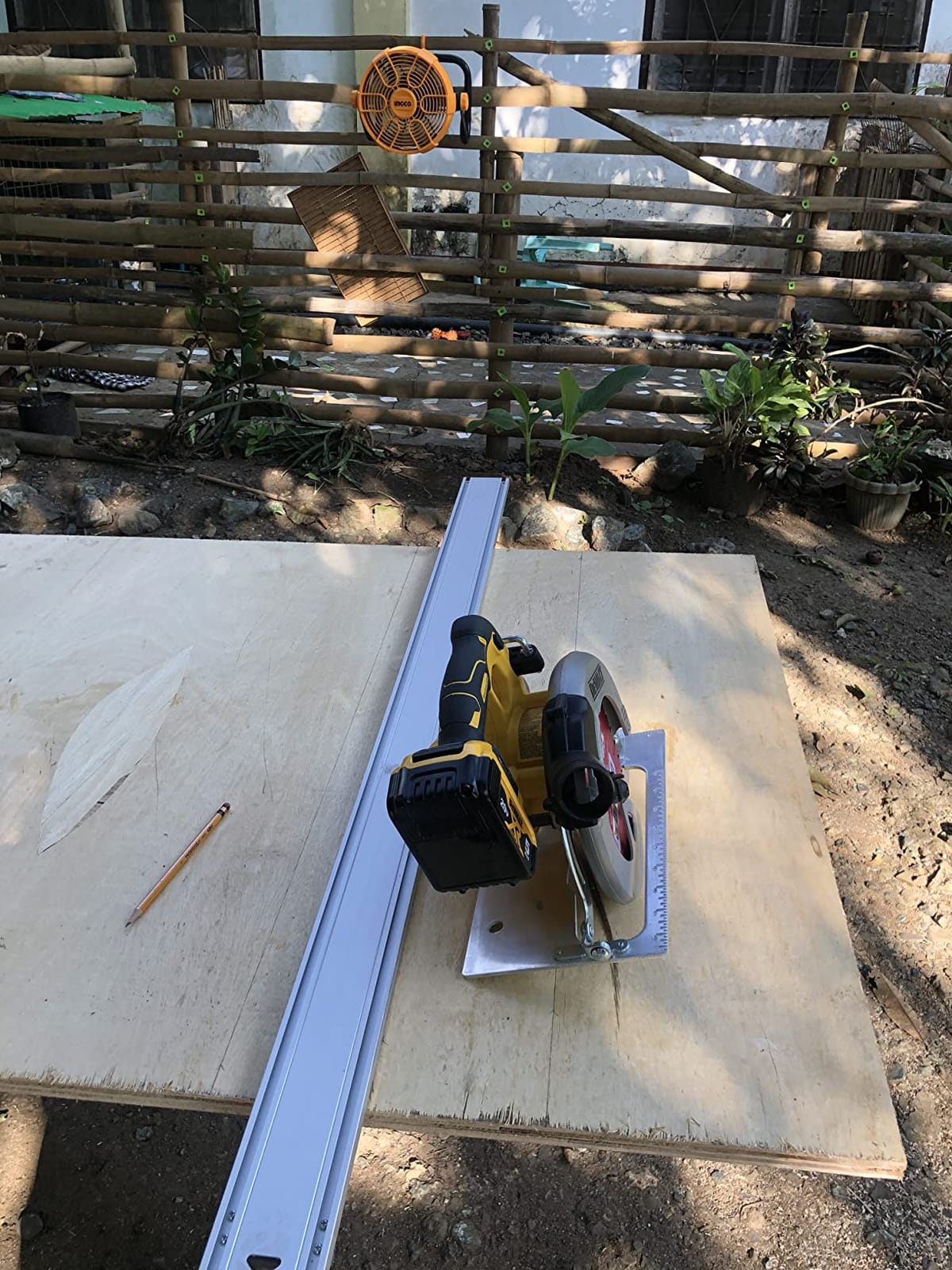
The 57 degree bevel capacity is wider than most competitors in this roundup and it comes with detents at 22.5 and 45 degrees, which is exactly what you want for cutting cripples and jack studs to a consistent angle across a whole wall. The LED work light is genuinely useful in a framed-out room where the sun has moved off the wall you are cutting.
Manufacturer claims of up to 330 crosscuts in 2×4 pine per charge tell you this is a full-shift saw on a 20V MAX pack. The listed weight of 7.5 pounds keeps it manageable overhead, which matters for cutting top plates and blocking overhead.
Why framers keep choosing it
Two numbers carry most of the argument. The 5500 RPM brushless motor has enough headroom to keep speed in 2x lumber, and the 5572-rating owner base means every common failure mode is already well documented. When a tool has that many owners, the surprise failures are usually already discovered by somebody else.
The detents at 22.5 and 45 degrees also make it a good pick for hip roof work, where you will set the same angle many times in a row and do not want to re-dial it each cut. Owners also praise the grip for staying comfortable through long sessions.
Where it falls short for framing
The complaints are cosmetic rather than structural, which is a good sign at this stage in a product’s life. Several owners point out that the ruler markings on the shoe are not etched in color and are hard to read, and that the base plate guide does not line up exactly with the blade’s actual cut line. Measure once and mark your own reference.
More relevant to framing is the fact that a 7-1/4 inch blade will not cut fully through a 4×4 in one pass. If your work is mostly walls and floors, that limitation rarely comes up. If you are cutting heavy timber, you will want a higher-voltage saw instead.
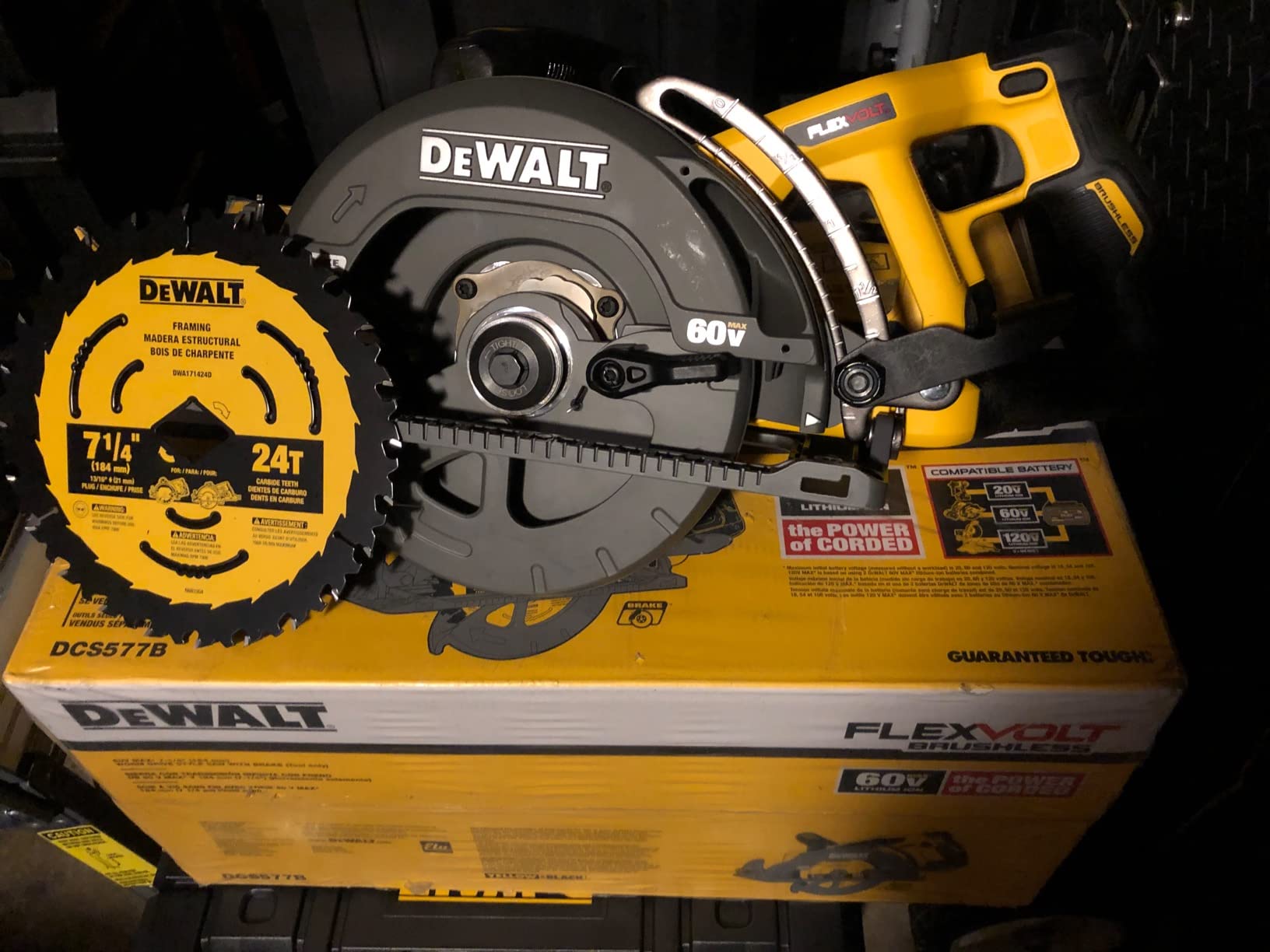
2. DEWALT 60V MAX DCS577B: Torque For Big Timber
DEWALT FLEXVOLT 60V MAX* Circular Saw for Framing, 7-1/4-Inch, Tool Only (DCS577B)
7-1/4 in blade
5800 RPM brushless
2-7/16 in at 90 deg
53 deg bevel
10.9 lb
Pros
- Exceptionally powerful for a cordless saw
- Handles treated 6x6 beams and stair stringers
- Half a day of work from a single charge
- Compact magnesium shoe reduces friction
- Bevel stops at 45 and 22.5 degrees
Cons
- Noticeably heavy compared with 20V class saws
- Blade orientation takes practice on angled sight lines
- Trigger safety switch feels cheap to some
This is the voltage answer. Owners describe it as the most powerful battery circular saw they have used, and they back that up with specific framing work: treated 6×6 beams and pressure-treated stair stringers, which is exactly where 18V and 20V saws start to labour.
The cut depth is 2-7/16 inches at 90 degrees with a 53 degree bevel, so you still cannot cross a 4×4 in one pass. What you gain is the torque to keep the blade at speed through the cut instead of watching RPM fall away and stall the motor.
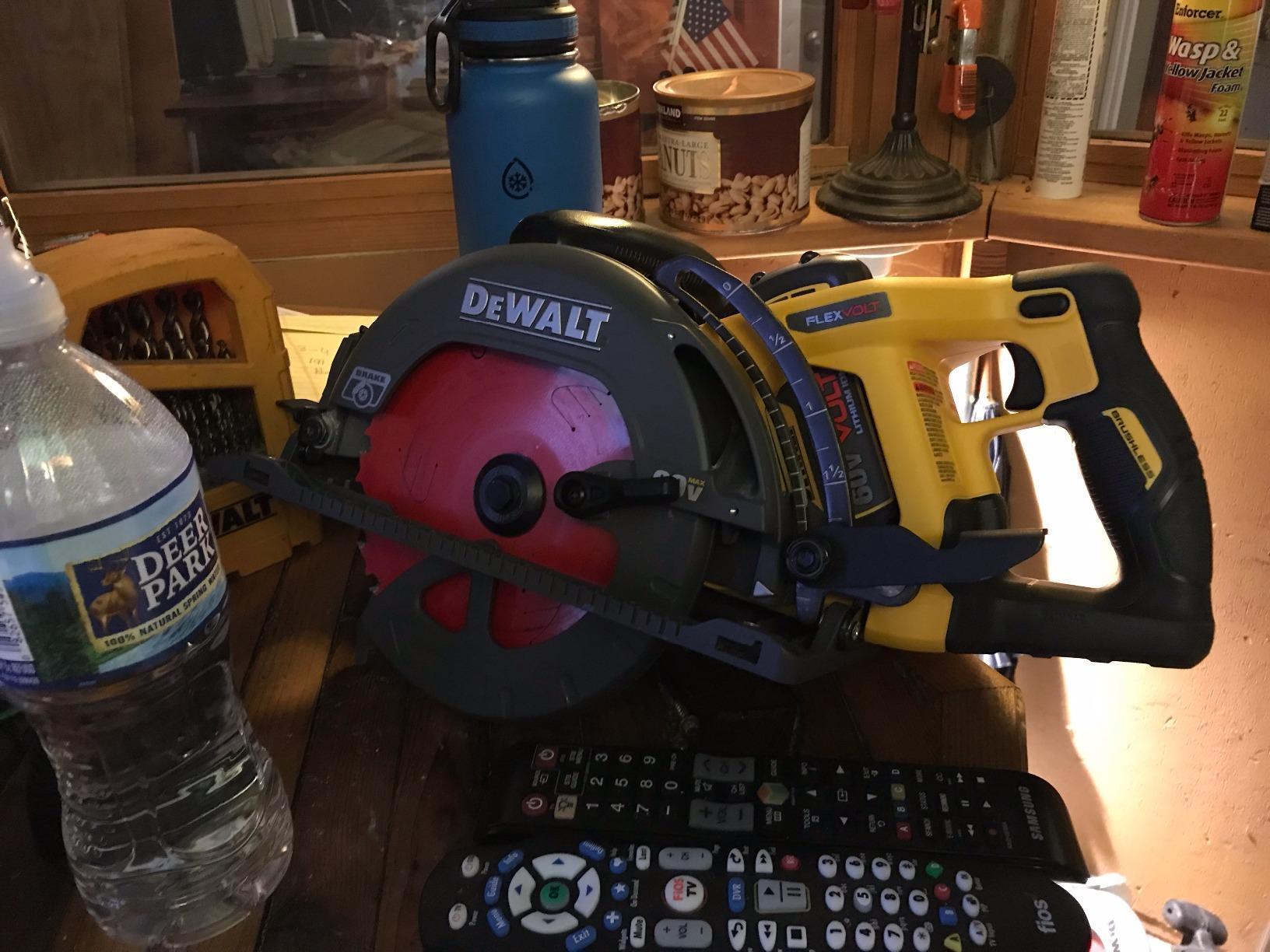
Two design choices matter on site. The blade is oriented to one side of the motor with the handle at the rear, which gives you a clear line of sight into the cut. The compact magnesium shoe also has less surface area dragging across the board than a wide sidewinder shoe, and owners specifically call out how it glides on rough lumber.
There is a rafter hook, an integrated dust blower that clears the sight line as you cut, onboard blade wrench storage, and a 53 degree bevel with stops at 45 and 22.5 degrees. It is also pre-drilled to accept a Tool Connect tag, sold separately, if you run a connected tool fleet.
Who this saw is for
If you frame houses rather than sheds, and you regularly cut headers, rim boards and pressure-treated components, this is the saw that will not ask you to flip a 2×12 to finish the cut. Owners report smooth accurate cuts with no resistance pushing forward, and half a day of work on a single 60V MAX charge.
The bevel guides are also easy to adjust and carry a notched zero degree reference line, which helps when you are cutting birds-mouth or equal pitch jacks repeatedly on a rafter run.
Where the weight catches up
At 10.9 pounds it is one of the three heaviest saws in this roundup, and that is before you add a 60V pack. Overhead work and long rip passes on a big sheet will show that weight by the end of the morning. Many crews hand this saw to whoever is working headers and keep a lighter saw for layout.
The blade orientation is also unfamiliar to right-handed users at first. Most people adapt within a few cuts, but if you are hiring a new framer, budget a short orientation on angled sight lines before they run it unsupervised.
3. Milwaukee M18 2631-20: The Lightest 7-1/4 Inch Saw Here
Milwaukee M18 BRUSHLESS 7-1/4″ CIRCULAR SAW – BARE
7-1/4 in blade
5000 RPM brushless
18V M18 platform
7.2 lb tool weight
Pros
- Lightest 7-1/4 inch saw in the group
- Brushless motor cuts smoothly and consistently
- Magnesium upper and lower guards add durability
- LED light improves cut line visibility
- Integrated rafter hook and dust port on the guard
Cons
- Less torque than 40V and 60V systems on thick timber
- Bare tool so battery and charger cost extra
- Less comfortable than rear-handle saws for all-day work
At 7.2 pounds this is the lightest full-size 7-1/4 inch saw in the roundup, and weight is the resource that runs out first during a framing day. If you are cutting overhead top plates, blocking and cripples all day, the difference between 7.2 pounds and 10.9 pounds is felt by lunchtime.
Owners rate it as a capable everyday framing saw with good balance and smooth consistent cutting on 2x lumber. The 5000 RPM brushless motor is adequate for dimensional lumber and light pressure-treated work, though it is not where the headroom is.
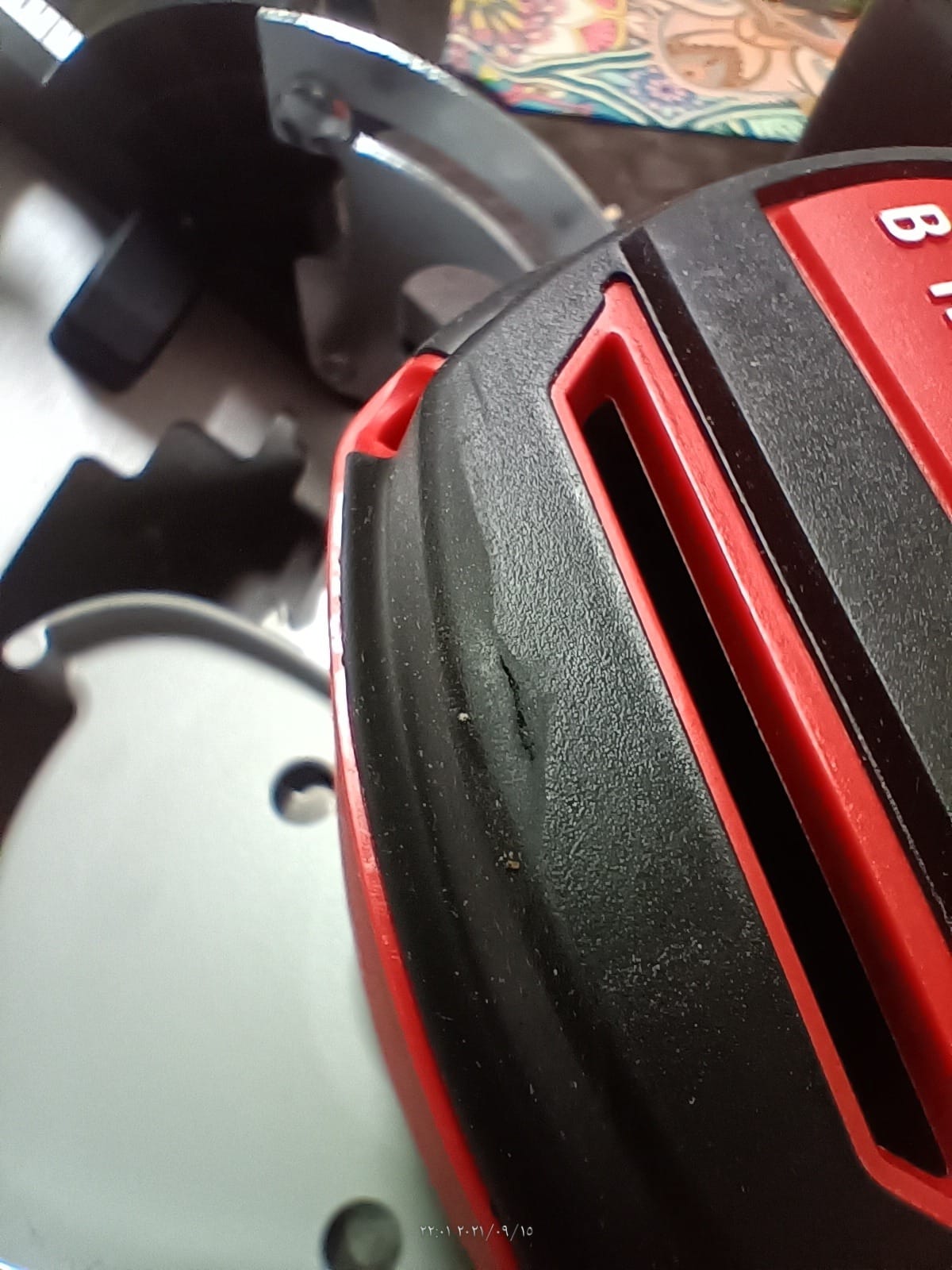
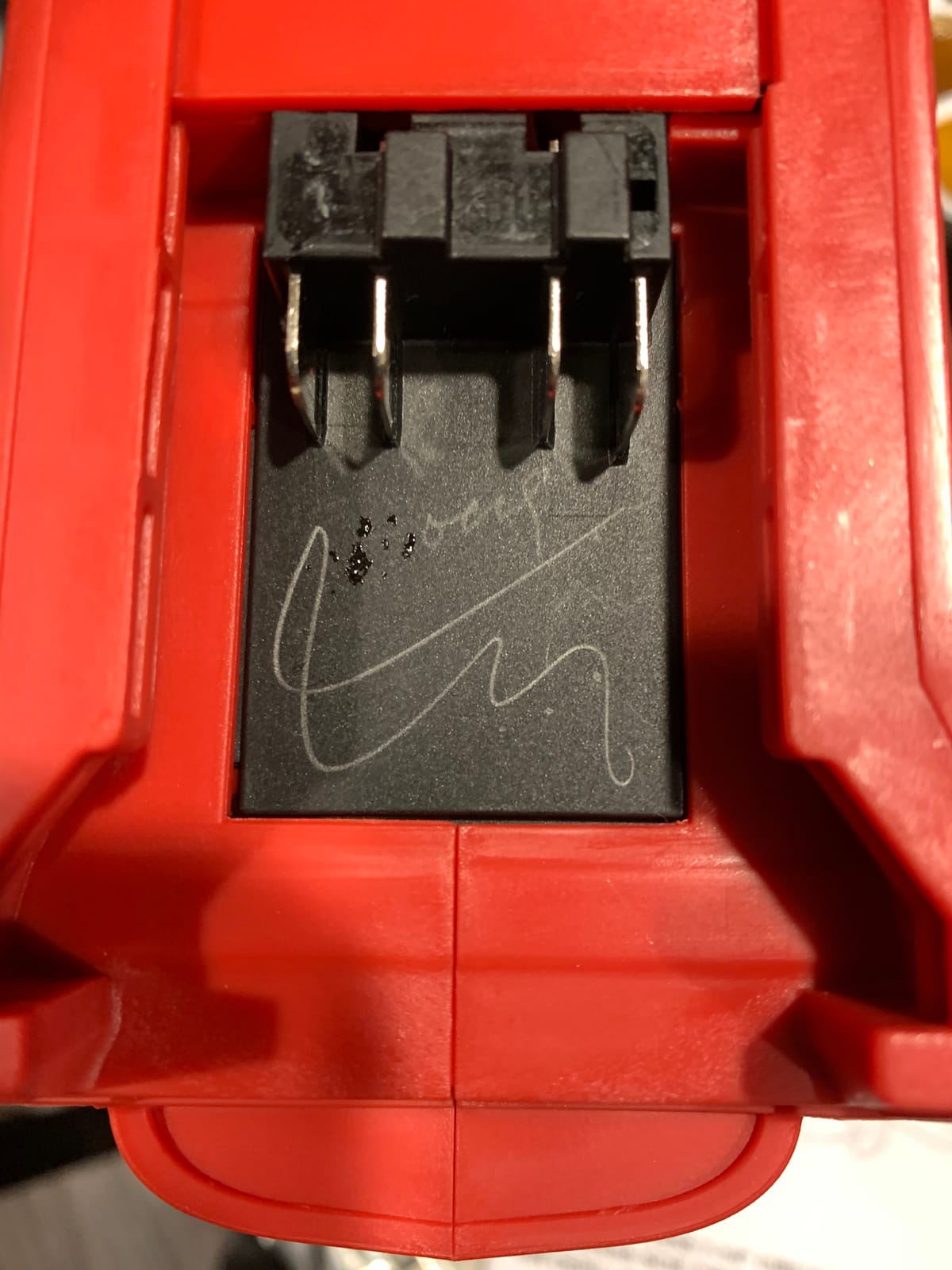
The magnesium upper and lower guards are a genuine durability upgrade over stamped steel, and they take the abuse that framing work delivers when a saw gets knocked off a stack of lumber. The integrated dust port on the guard is a nice touch, and the rafter hook lets you hang the saw between cuts rather than setting it on a dirty stack.
The LED light improves visibility of the cut line, and the electric brake stops the blade quickly after you release the trigger, which keeps repeated crosscuts from wandering wide at the end of the stroke.
Where its light weight pays off
For a solo framer working overhead, or anyone with shoulder and back issues, this is the saw that lets you keep working. Several users describe it as easy to control for a full-size 7-1/4 inch saw, and the magnesium guard set means it survives being dropped or bumped on site.
It is also a strong choice for a crew where multiple people share tools, because a lighter saw gets handed around more freely and finishes more cuts per shift per person.
Where the 18V platform runs out
The honest limitation is torque. Reviewers report that the M18 platform delivers less torque than 40V and 60V high-voltage systems on thick timbers, and that is a real difference when you are ripping a 2×12 or cutting a built-up header. On standard framing lumber it performs very well.
It is also sold as a bare tool, so the battery and charger are a separate purchase. Some users find it less comfortable than higher-voltage rear-handle saws for all-day framing work, largely because the sidewinder grip concentrates load in one hand.
4. Milwaukee 2732-20 M18 FUEL: The Highest Rated Saw In The Group
Milwaukee 2732-20 M18 FUEL 7-1/4 in. Circular Saw
7-1/4 in blade
5800 RPM FUEL motor
Magnesium shoe and guards
8 lb tool weight
Pros
- Highest average rating in the group at 4.8
- Fast 5800 RPM brushless motor cuts with minimal bogging
- Magnesium shoe and guards for durability
- LED light and electric brake
- Included vac adapter for the dust port
Cons
- 18V FUEL has less low-end torque than 36V to 60V saws
- Bare tool so battery and charger cost extra
- Lower category sales rank than newer rivals
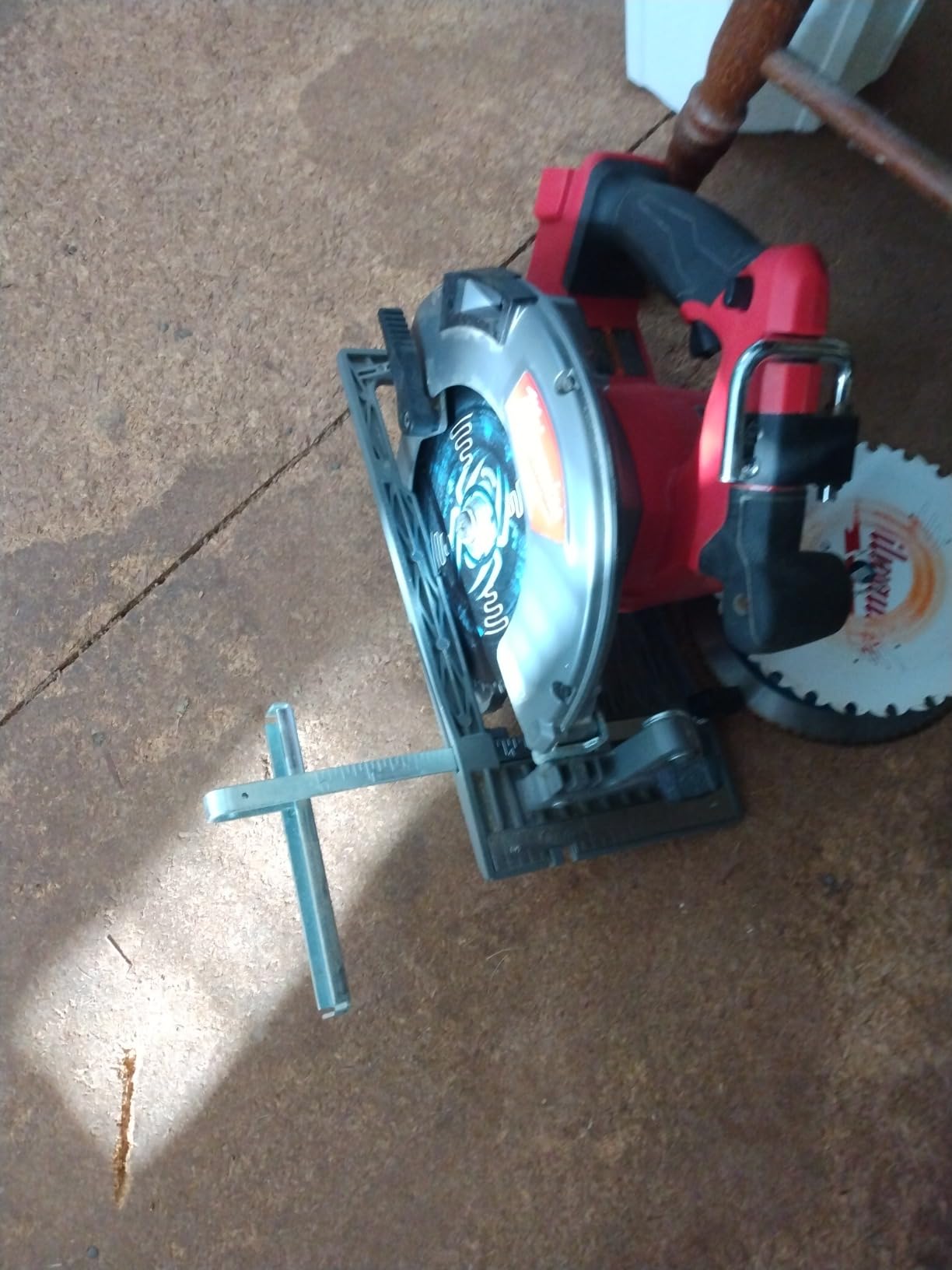
This saw carries the highest average rating in the group at 4.8, and owners credit that score to build quality rather than to one standout feature. The magnesium shoe and magnesium guards are the first things mentioned, followed by the 5800 RPM brushless motor.
At 8 pounds it is heavier than the 2631-20 but still comfortably in the middle of this group, and the FUEL motor gives it noticeably more headroom than the standard M18 brushless saw. Reviewers describe the cut quality as clean with minimal bogging.
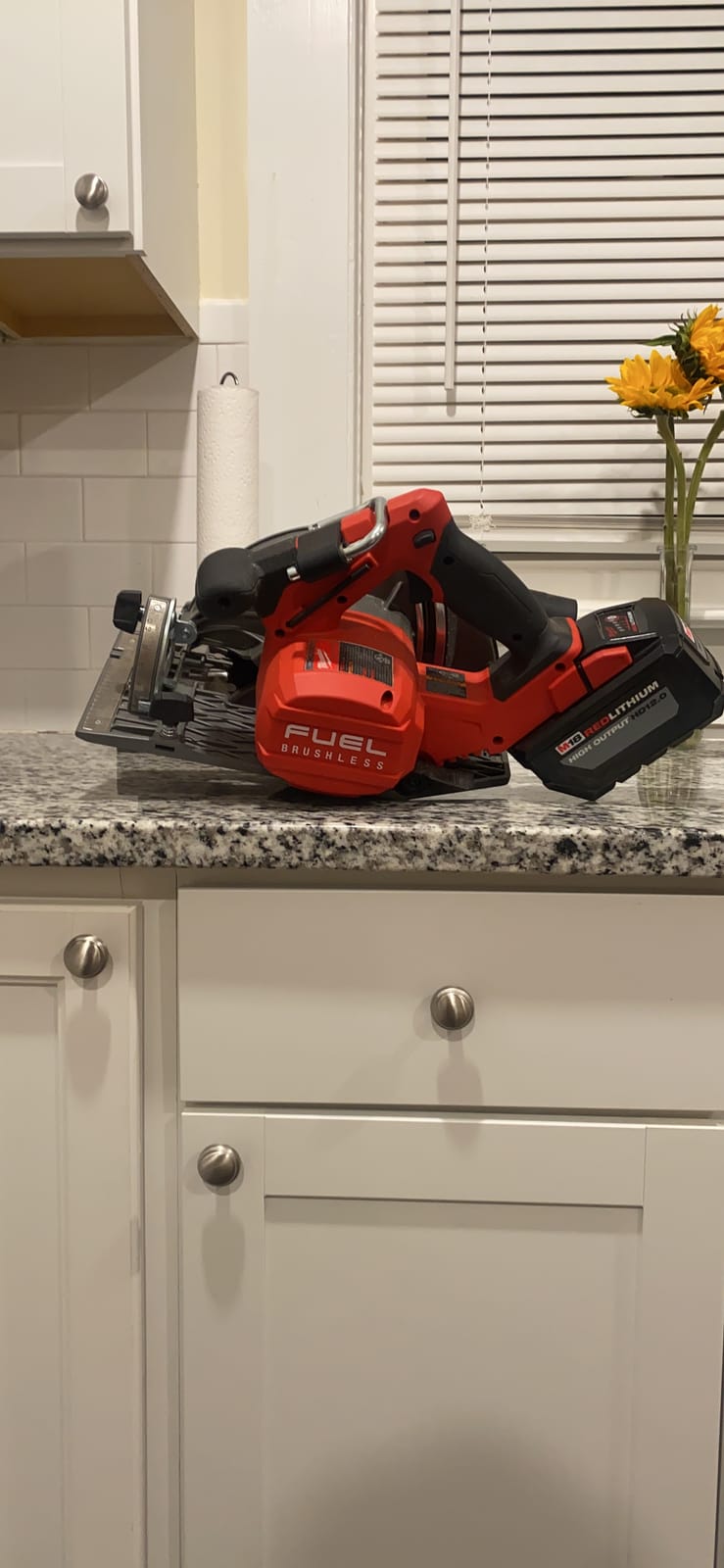
The integrated dust port on the guard comes with an included vac adapter, which is rare at this level and matters if you are cutting headers and cripples inside a framed building. Owners also like the rafter hook for hanging the saw between cuts and the LED light for accuracy and visibility.
The electric brake is a productivity feature more than a safety one on a framing saw. Every time the blade stops fast, your next cut starts in the right place instead of drifting into a wide kerf, and across a few hundred studs that adds up.
Why the rating is so high
Owner satisfaction with this saw is concentrated around refinement: the motor speed, the magnesium construction, the light, the brake and the dust port. It is the rare cordless saw that owners describe in terms of what it does not do wrong rather than what it does unusually well.
For an M18 owner it is also an easy platform decision, since the packs and chargers are already widespread on most residential job sites. If your crew standardises on Milwaukee, this is the saw that most crews will end up carrying.
Where the voltage ceiling shows
The consensus limitation is voltage. It is excellent on standard framing lumber but lacks the brute torque of high-voltage 40V and 60V saws when ripping thick beams or working pressure-treated stock. Reviewers consistently frame it as the best 18V saw rather than the best cordless saw.
It is sold as a bare tool, so the battery and charger are an added cost unless you already own M18 packs. It also sits lower in category sales rank than newer arrivals, though that reflects catalogue age more than owner satisfaction.
5. Makita XSR01Z 18V X2 LXT: The Job Site Favourite For Framing
Makita XSR01Z 36V (18V X2) LXT® Brushless Rear Handle 7-1/4″ Circular Saw, Tool Only
7-1/4 in blade
5100 RPM brushless
2-9/16 in capacity
0-53 deg bevel
12.1 lb
Pros
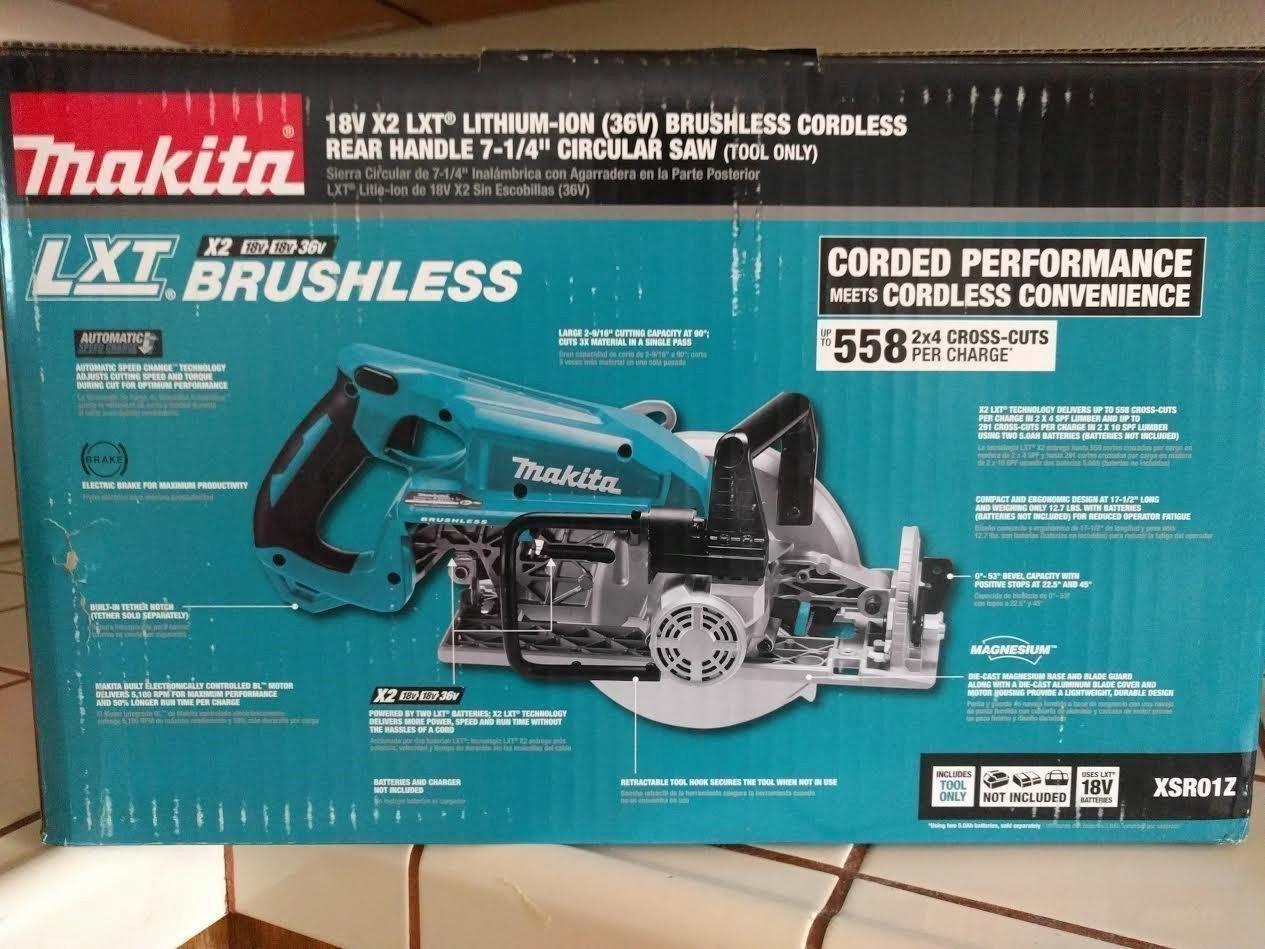
- Rear handle design with 2-9/16 inch capacity cuts 3x material in one pass
- Automatic Speed Change adjusts speed and torque mid cut
- Positive bevel stops at 22.5 and 45 degrees
- Die-cast magnesium base and blade guard
- Up to 558 crosscuts in 2x4 SPF per charge
Cons
- Heaviest rear-handle saw here at 12.1 pounds
- 5100 RPM is slower than competing 36V motors
- Tool only so two 18V batteries are needed
In a thread on r/Carpentry asking what kind of circular saw to buy for framing, the top answer is worth repeating: the most common saw seen on job sites is the Makita 18V X2 LXT, a cordless rear-handle framing saw with a 7-1/4 inch blade. That is this saw. Job-site frequency matters more than a lab score when the question is what you will actually see on every crew.
Another r/Carpentry user who owns both describes the Makita 40V max XGT platform as a beast and fun, and says the 18V X2 is fine for just framing, with 2×6 pressure-treated being easy. That matches what the specifications suggest: 558 crosscuts per charge in 2×4 SPF and up to 291 crosscuts in 2×10 SPF using two 5.0Ah batteries.
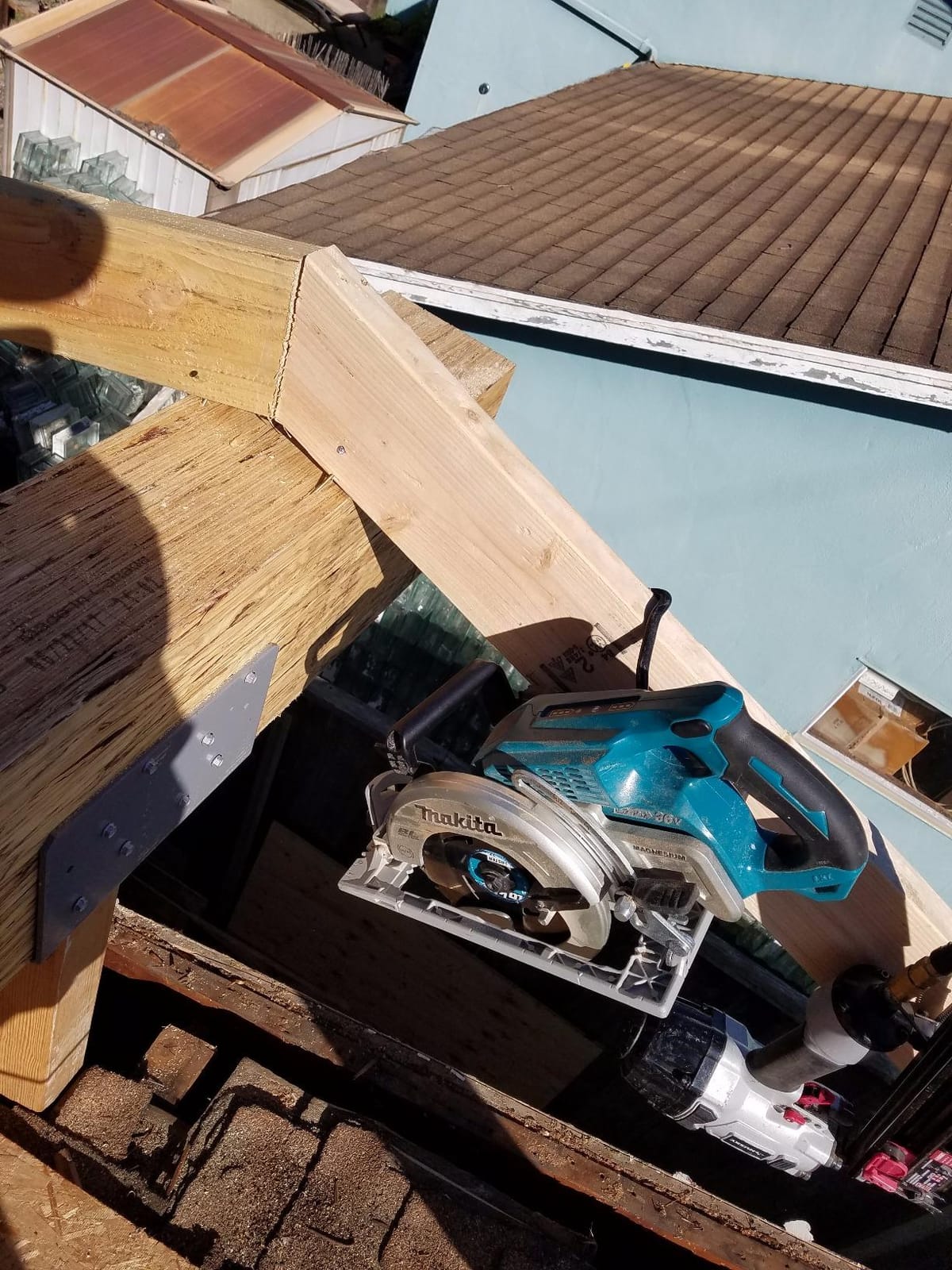
The rear-handle design with 2-9/16 inches of capacity is what makes it a framing saw rather than a trim saw. That depth cuts 3x material in a single pass, which on this roundup puts it level with the deepest saws here despite running on two 18V batteries instead of a 36V or 60V pack.
Automatic Speed Change technology adjusts cutting speed and torque during the cut, which shows up as less stalling when the blade meets a knot or a wet spot. The die-cast magnesium base and blade guard, plus a die-cast aluminium blade cover and motor housing, are heavier than stamped alternatives and considerably more durable.
What the rear-handle layout changes
A rear-handle saw puts your back hand on the handle behind the motor and your front hand on the auxiliary grip, so the saw sits between your hands rather than on top of one. That gives you two-hand control over big rips and overhead cuts, and it is the reason framers who try one rarely go back to a sidewinder.
The bevel runs from 0 to 53 degrees with positive stops at 22.5, 45 and 53 degrees, which covers birds-mouth pitches and cripple angles without re-dialing between cuts. The electric brake is present for fast restarts.
Where the weight becomes the issue
At 12.1 pounds this is the heaviest rear-handle saw in the roundup, and reviewers identify that as the dominant complaint because it causes fatigue on long cuts. A framer who runs this saw overhead for a full day will feel it, and the 17.5 inch overall length is not compact in a tight mechanical room.
The 5100 RPM motor is also slower than the 6000 RPM saws in this list, so it works harder on tough cuts and draws more from the batteries. On standard framing lumber that is a non-issue; on pressure-treated and laminated stock you will feel the difference.
6. Metabo HPT 36V C3607DWAQ4: The Lightest Rear-Handle Framing Saw
Metabo HPT 36V MultiVolt 7-1/4 Inch Rear Handle Circular Saw, Tool Only – No Battery, Lightest Weight in Its Class, 53° Bevel Capacity, High-Capacity Cutting, C3607DWAQ4
7-1/4 in blade
5100 RPM brushless
36V MultiVolt
8.2 lb
53 deg bevel
Pros
- Lightest rear-handle saw in its class by about 2 pounds
- Cleans up 2x10 without effort
- Clear sight lines from the side-mounted blade
- Magnesium base with rafter hook and electric brake
- Lifetime tool body warranty
Cons
- Safety lock above the trigger is awkward to reach
- Dust exits sideways toward the operator
- Not a true worm drive despite the styling
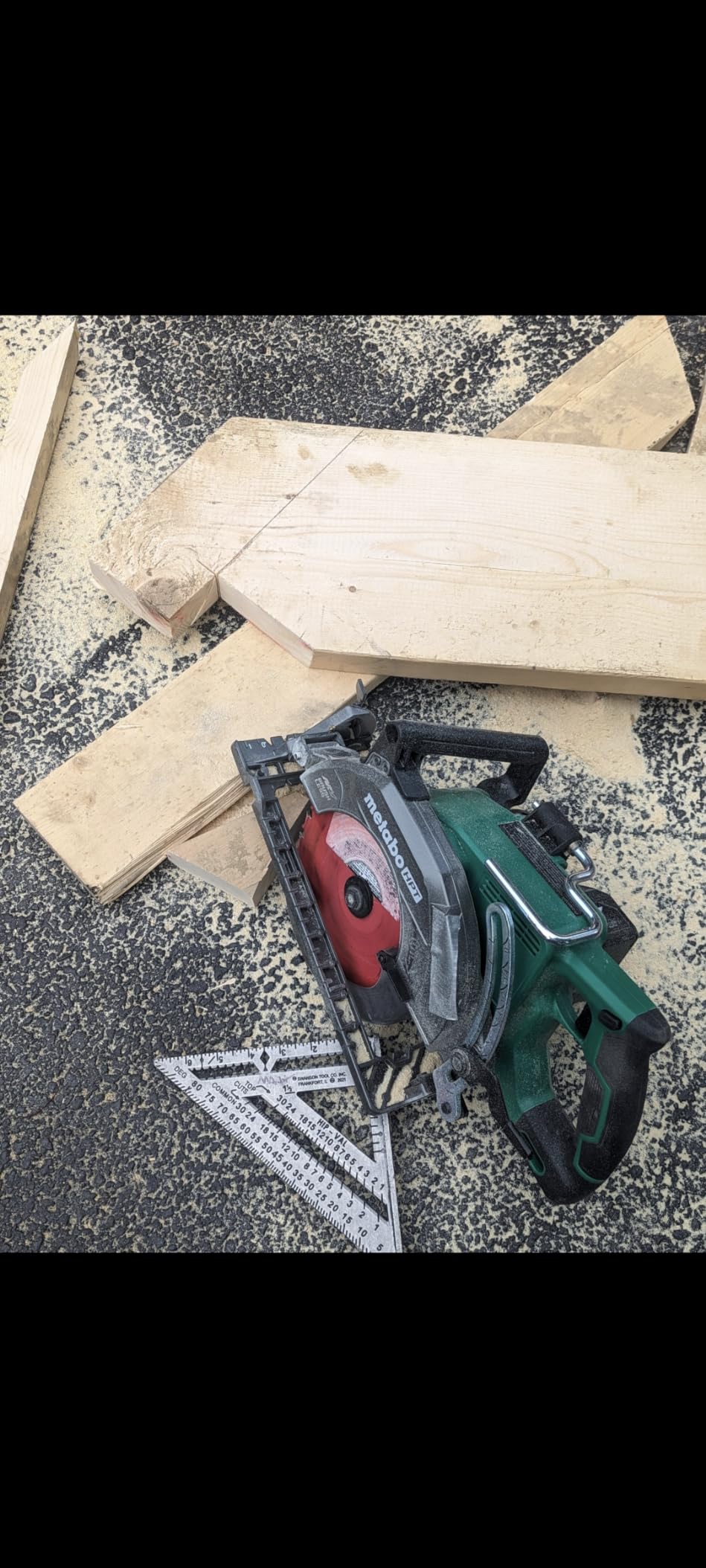
Rear-handle saws are usually heavy, and this is the exception. At 8.2 pounds it is roughly 2 pounds lighter than competing rear-handle saws, which is about 4 pounds lighter than the Makita XSR01Z. Professionals and serious DIYers single it out for exactly that reason while still reporting that it cuts a 2×10 without effort.
It runs on the 36V MultiVolt system, delivers up to 500 cuts of 2×4 per charge, and handles up to 5 layers of half-inch and 4 layers of 5/8 inch OSB or plywood. The magnesium base takes site abuse, and the rafter hook and easy depth and bevel adjustment points suit repetitive framing work.
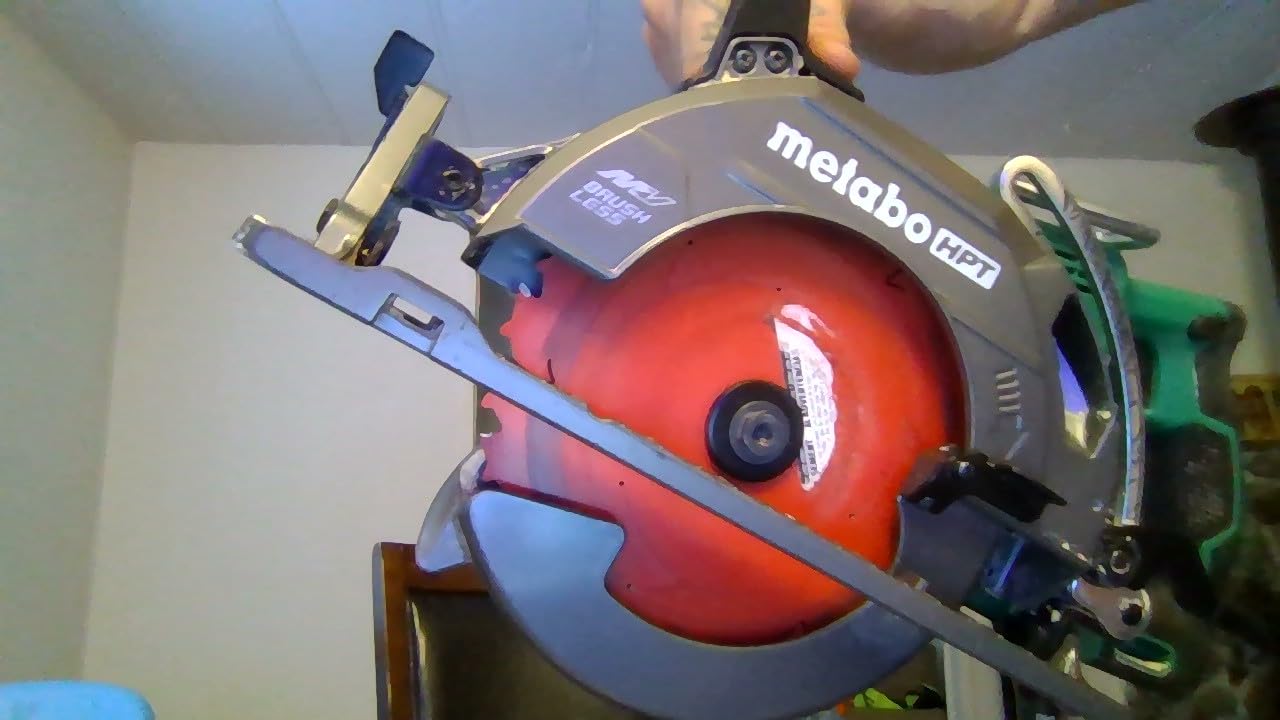
The clean sight lines come from the side-mounted blade combined with the rear-handle layout, and owners mention smooth operation with no binding and well balanced handling for overhead and fence-post work. Bevel capacity is 53 degrees with stops at 0, 45 and 53 degrees.
The lifetime tool body warranty is the part that matters most on crew work. Forum discussion about cordless saws repeatedly names Metabo HPT’s lifetime coverage, alongside other long warranties, as a real advantage when tools get dropped and abused daily.
Why a lighter rear-handle saw changes a framing day
Weight compounds. A saw that is 4 pounds lighter is the difference between finishing a wall of cripples at the end of the afternoon and stopping. Owners specifically praise the balance for overhead work and for cutting fence posts, two jobs where a heavy rear-handle saw becomes genuinely unpleasant after an hour.
Because it is a rear-handle saw with 53 degree bevel capacity, it can do the work that sidewinders struggle with, including cutting 6×6 PSL on all four sides, which owners mention alongside old decking.
Where the details fall short
Two gripes come up consistently. The safety lock above the trigger is awkward to reach for repeated cuts, which matters more on a framing saw than on a trim saw because you make hundreds of cuts in a row. Plan to set the lock once and leave it, or change your grip rhythm to include it.
The second is dust. Dust exits to the side rather than down, and the included adapter directs debris toward the operator, which is a real problem on indoor cuts. If you are framing inside an occupied building, plan your cut direction around it. And while the styling reads as a worm drive, it is not one, so do not expect genuine worm-drive power on engineered beams.
7. DEWALT 20V MAX XR DCS590B: The Most Powerful Saw On 20V
DEWALT 20V MAX XR Brushless Cordless 7-1/4 in. Circular Saw, Tool Only (DCS590B)
7-1/4 in blade
5500 RPM brushless
1700 MWO
2-9/16 in at 90 deg
Pros
- Rated at up to 1700 MWO for 20V MAX
- Up to 368 cuts per charge on a single pack
- 2-9/16 in depth at 90 degrees and 2 in at 45 degrees
- Automatic electric brake keeps strokes tight
- Recent release with a strong category sales rank
Cons
- Smaller review base than the established DCS570B
- One-star review share is the second highest here
- Tool only so a battery and charger are extra
- Heavier at 9.88 pounds than the older sidewinder
This is DEWALT’s current flagship 20V MAX saw, rated at up to 1700 MWO, and it exists because 20V platforms have improved a great deal. Where older 20V saws were the compromise choice, this one is a legitimate framing option for anyone who does not want a second battery platform.
The 5500 RPM brushless motor delivers up to 368 cuts per charge, and the 2-9/16 inch depth at 90 degrees handles 3x material in one pass. At 45 degrees it still gives you 2 inches, which covers a 2×8 on edge and most cripple work.
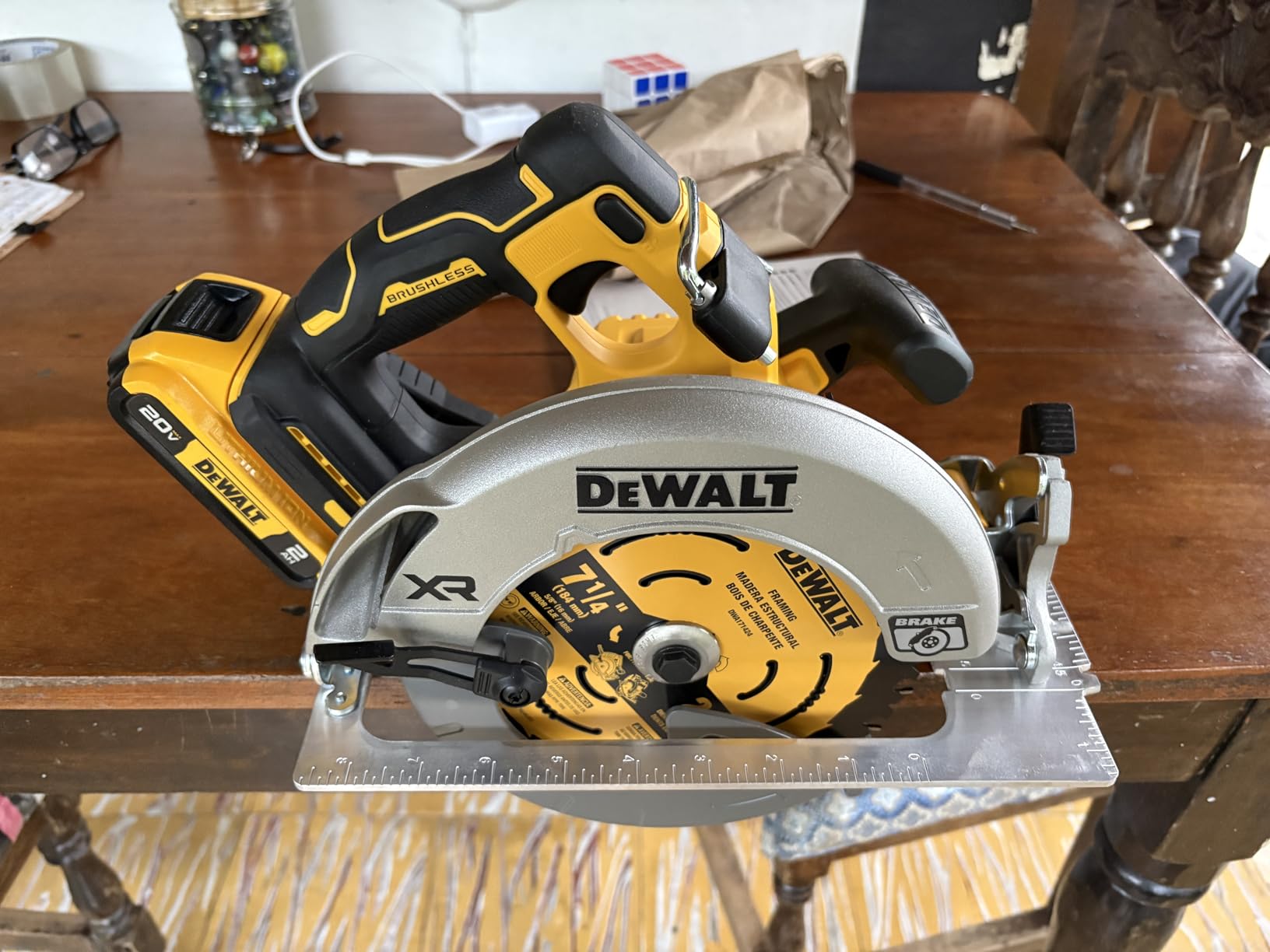
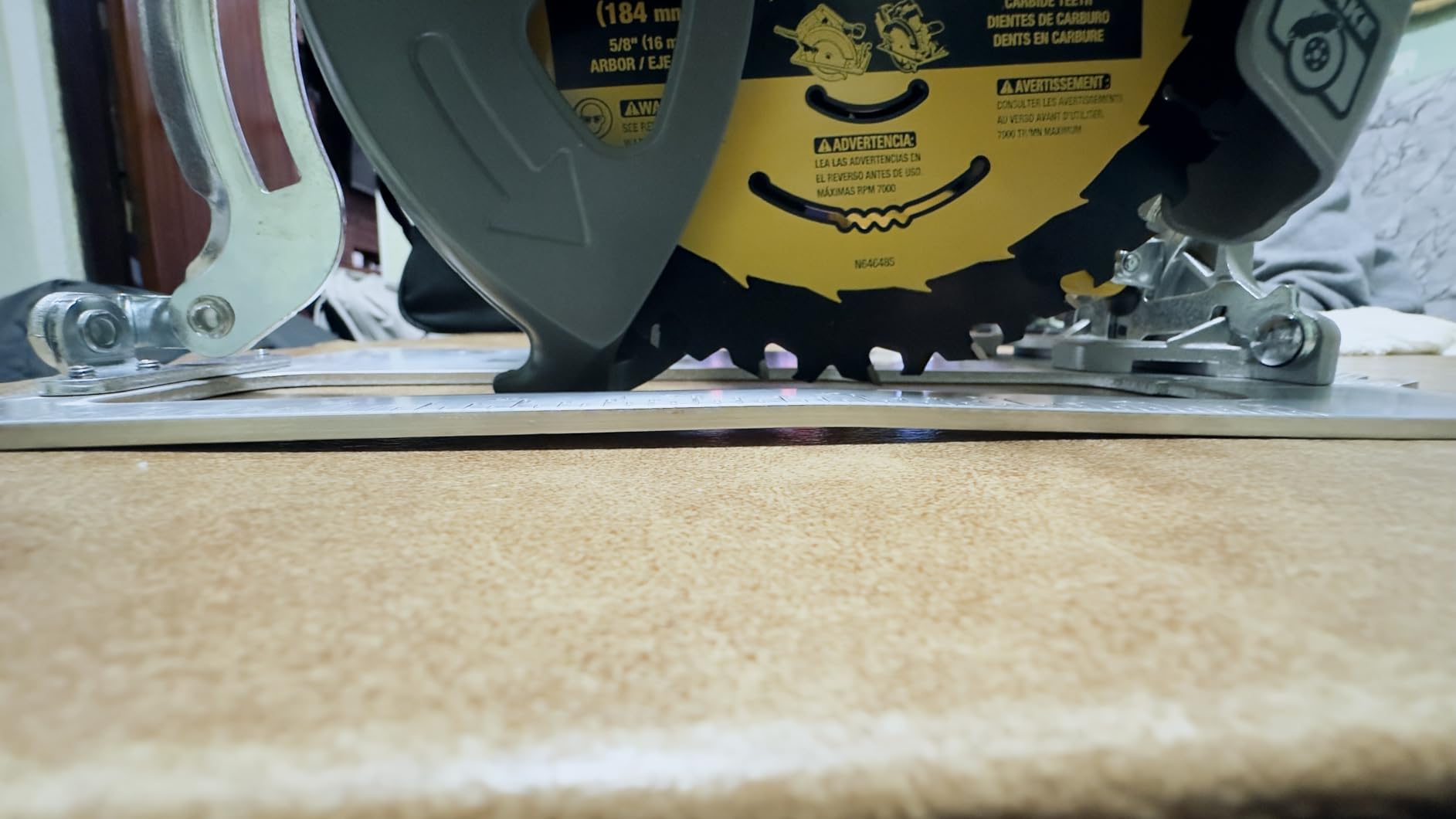
The automatic electric brake is the feature owners single out most, and it is aimed at a specific framing problem: preventing wide, imprecise cuts between strokes. When the blade stops the moment you release the trigger instead of coasting, the next crosscut starts where the last one finished.
It arrived in recent years and carries a strong position in the Power Circular Saws category, which tells you broad market acceptance rather than a niche tool. For a homeowner or a single-platform framer, having the flagship and the most proven saw in the same ecosystem is genuinely convenient.
When 20V is genuinely enough
If you already own 20V MAX XR packs and chargers, this saw removes the argument for starting a second platform. The 1700 MWO figure puts it close to high-voltage saws on paper, and owners report that it holds up on tough applications rather than bogging on standard 2x stock.
For residential framing with 2×4, 2×6 and 2×8 lumber, plus subfloor and sheathing, it is more than adequate. The 368 cuts per charge figure means you are not swapping batteries every twenty minutes on a framing day.
Where the newer design shows its age
It carries a smaller review base than the long-established DCS570B at 422 ratings, and one-star reviews sit at 8 percent, the second highest share in this group. That points to a minority of owners hitting early failures or unmet expectations, and it is worth reading a few of those before buying.
It is also heavier at 9.88 pounds than the older sidewinder, which is an odd trade for a saw marketed as a step up. And like most bare tools in this roundup, a battery and charger are additional purchases unless you already own them.
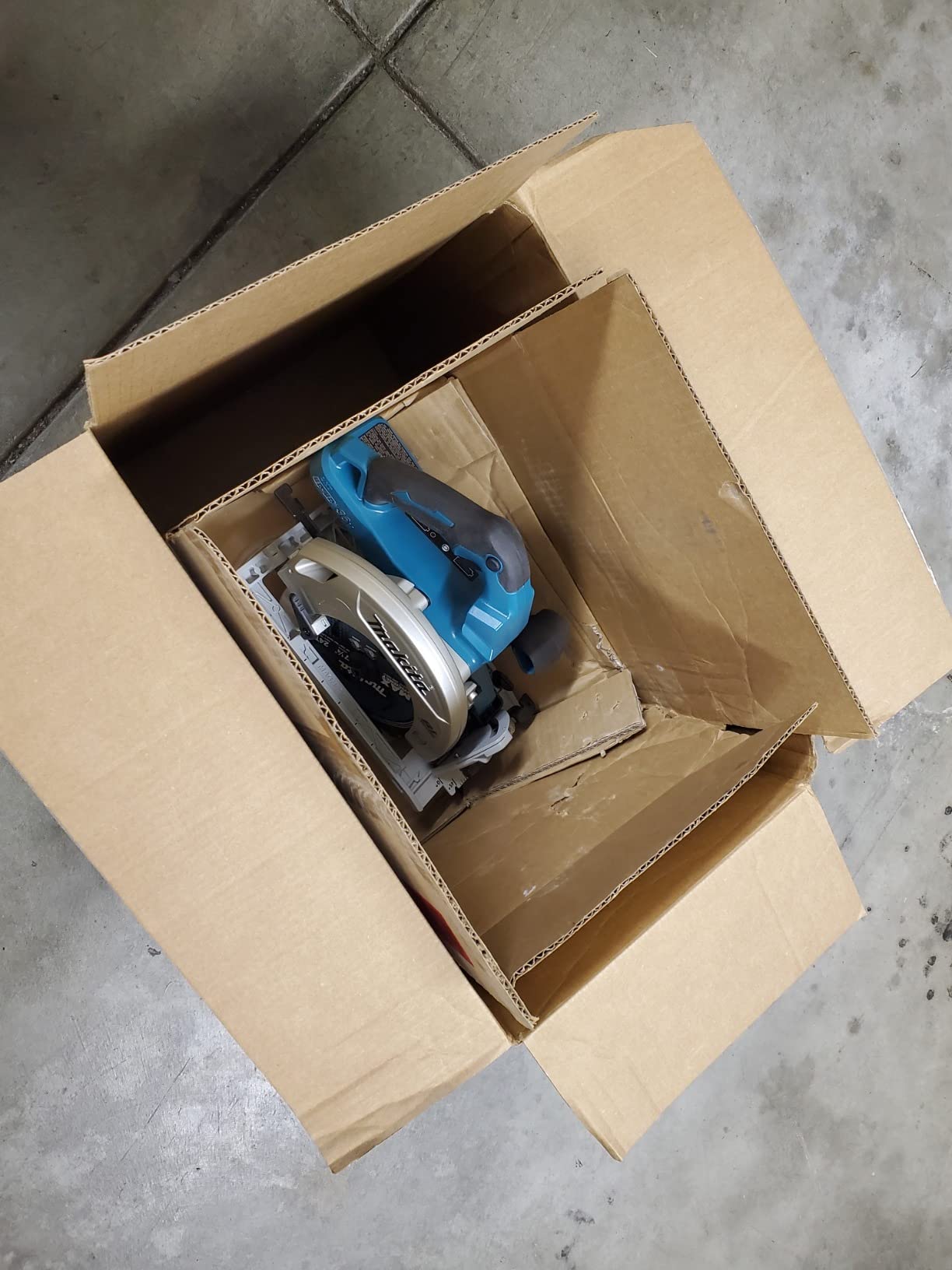
8. Makita XSH06Z 18V X2 LXT: The Fastest Motor On 36V Here
Makita XSH06Z 18V X2 LXT® Lithium-Ion (36V) Brushless Cordless 7-1/4” Circular Saw, Tool Only
7-1/4 in blade
6000 RPM brushless
36V from two 18V packs
10.4 lb
Pros
- 6000 RPM brushless motor cuts faster and more efficiently
- Automatic Speed Change reduces stalling under load
- Up to 610 crosscuts in 2x4 per charge
- Cooler running brushless motor
- Includes a 24T carbide blade and wrench
Cons
- 10.4 pounds is heavy for a 36V saw
- Sidewinder layout so a 4x4 needs a second pass
- Tool only and requires two 18V LXT batteries
The 6000 RPM brushless motor is the headline here, and owners highlight it as the reason this saw stays ahead of harder material without bogging. It is faster than the 5100 RPM saws in this roundup and it still runs on two standard 18V LXT batteries.
Runtime is the other headline. Manufacturer figures are up to 610 crosscuts in 2×4 SPF lumber and up to 320 crosscuts in 2×10 SPF with two 5.0Ah batteries, the longest runtime figures in the group, and the cooler-running brushless motor is credited with extending tool life.
Automatic speed change technology adjusts cutting speed and torque during the cut, which is the feature that keeps the blade moving when the load spikes. On framing lumber with knots, that is the difference between a cut that completes and a cut that stalls and restarts.
The rubber-over-mould grip stays comfortable on long cuts, which matters more than it sounds on a saw you will hold for a full day. It comes with a 7-1/4 inch 24T carbide-tipped blade, the B-61656, plus a wrench, so you can change to a framing blade immediately.
Why speed matters on a framing site
RPM is not marketing fluff at this level. A higher no-load speed means more tooth engagements per second, so a framing blade stays sharp longer between changes, and the cut edge arrives cleaner on a stud that will be visible on the finished wall. On 610 crosscuts per charge, you are looking at a full day of wall work per pair of batteries.
For Makita owners, the two 18V LXT platform is a big practical plus, because you avoid the cost of starting a 40V system just to get a faster framing saw. The rubber grip also makes it a good saw for long rips on subfloor and sheathing.
Where the sidewinder layout limits it
Some users wish for a rear-handle framing version with deeper capacity than the sidewinder layout provides. Without it, a 4×4 needs a second pass, which is the classic complaint against sidewinders on heavy timber work.
At 10.4 pounds it is also among the heavier 36V saws in this group, and the combined weight of two 18V packs makes it tiring overhead. It is a tool-only purchase, so unless you already own two 18V LXT batteries, budget for those first.
9. CRAFTSMAN V20 CMCS551B: The Best Value 7-1/4 Inch Saw
CRAFTSMAN V20 RP Cordless Circular Saw, 7-1/4 inch, Tool Only (CMCS551B)
7-1/4 in blade
20V brushless motor
56 deg bevel with detents
9.3 lb
Pros
- Brushless motor with up to 75 percent more power than the previous model
- Widest bevel capacity here at 56 degrees with positive stops
- LED work light illuminates the cut line
- Upper metal guard adds resilience
- Brushless 7-1/4 inch saw with the widest bevel here
Cons
- 20V platform has less torque on thick lumber
- Not especially light for a 20V class sidewinder
- Bare tool so battery and charger cost extra
The value case here is straightforward. You get a genuine brushless 7-1/4 inch saw, a metal upper guard and an LED work light, at a noticeably lower price than the premium options, which is a combination that is hard to find elsewhere in the framing class.
Owners treat it as adequate rather than class-leading, which is the honest description. The brushless motor delivers up to 75 percent more power than the previous brushed model, so the jump within the range is real even if it does not reach high-voltage territory.
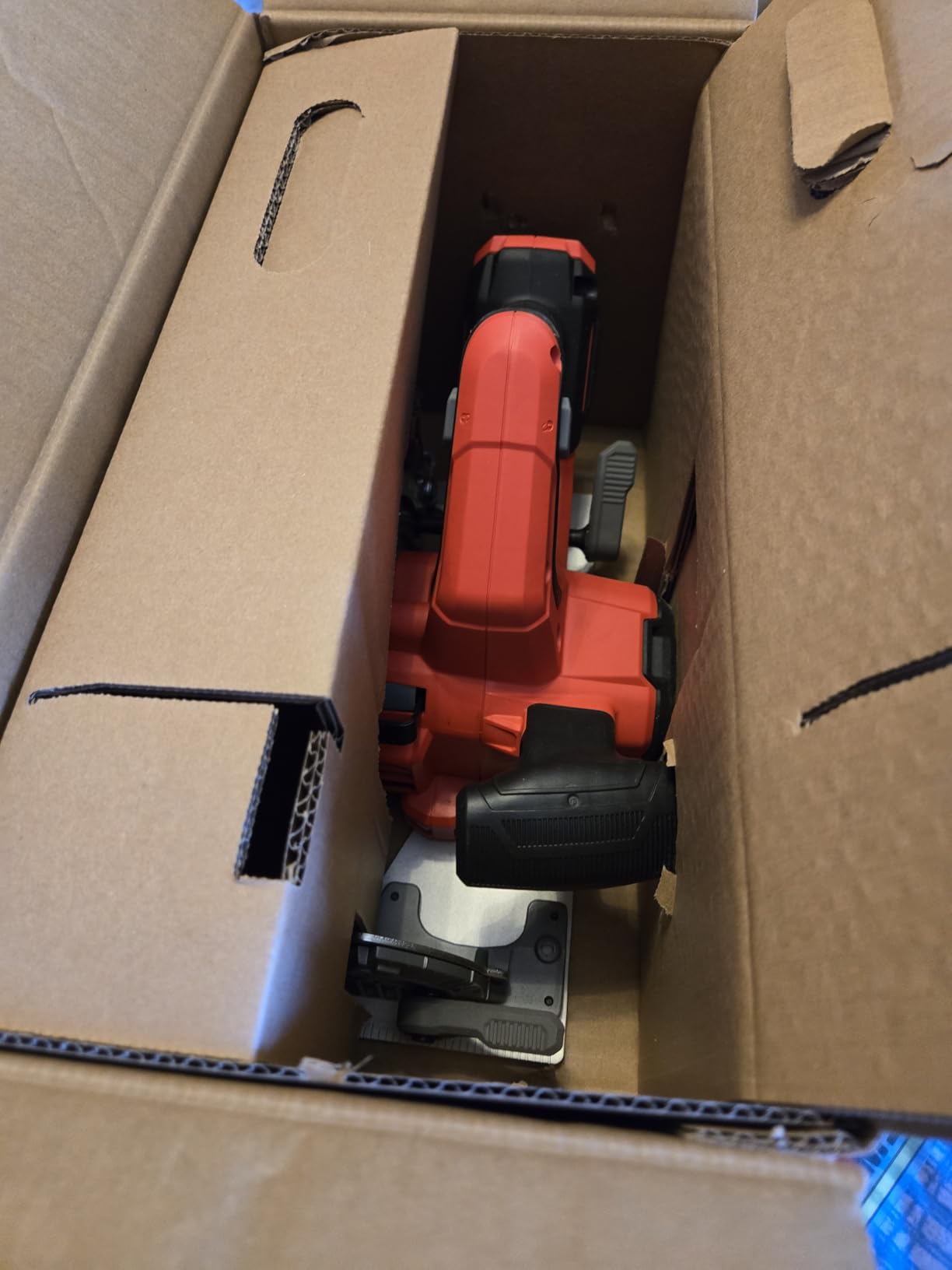
The 56 degree maximum bevel with positive stops at 22.5 and 45 degrees is the widest in this roundup, and it is a real framing benefit. Anything past 53 degrees is rarely needed for framing, but the detents at 22.5 and 45 are what you will use every single day, and they are present and positive.
The metal upper guard is the detail that matters most on site. Stamped guards dent and crack; a metal guard shrugs off the knock it takes when a saw gets set down hard on a stack of studs or clipped by a bundle strap.

Where a value saw still wins on site
Most framing is 2×4, 2×6 and 2×8 dimensional lumber, plus OSB and subfloor. This saw handles that work, and the LED lighting the cutting line is a genuine convenience in a framed-out interior where the only light is coming through a window.
For a homeowner building a deck or a small addition, or for a framer who wants a second saw that will not get stolen as easily as a premium tool, the value math is hard to argue with. You are buying a tool that works, not one that wins awards.
Where the 20V ceiling applies
The 20V platform delivers less torque than 36V, 40V and 60V saws on thick lumber, so it is the wrong choice for heavy timber, laminated stock or pressure-treated work at volume. At 9.3 pounds it is not especially light for a 20V class sidewinder either, which limits its appeal for long overhead days.
It is sold as a bare tool, so battery and charger are additional purchases, and the five-star share of 77 percent is the lowest in this group with 5 percent one-star reviews. Read a few of those before you commit.
10. SKIL CR5429B-20: A Kit That Works Out Of The Box
SKIL 2x20V PWR CORE 20 Brushless 7-1/4” Rear Handle Circular Saw Kit Includes Two 5.0Ah Batteries and Dual Port Auto PWR Jump Charger-CR5429B-20, Red
7-1/4 in rear handle
5300 RPM brushless
40V from two 20V packs
10.2 lb
Pros
- Kit includes two 5.0Ah batteries and a dual port fast charger
- 2-9/16 in depth cuts 3x material in one pass
- Charger reaches 25 percent in 15 minutes and full in under an hour
- Well balanced weight distribution and smooth cuts
- Good value against premium brand equivalents
Cons
- Heavy at 10.2 pounds and needs two batteries carried
- Included batteries reported to lose charge quickly
- Lowest rating in this group at 4.2
- Battery durability complaints on heavy framing work
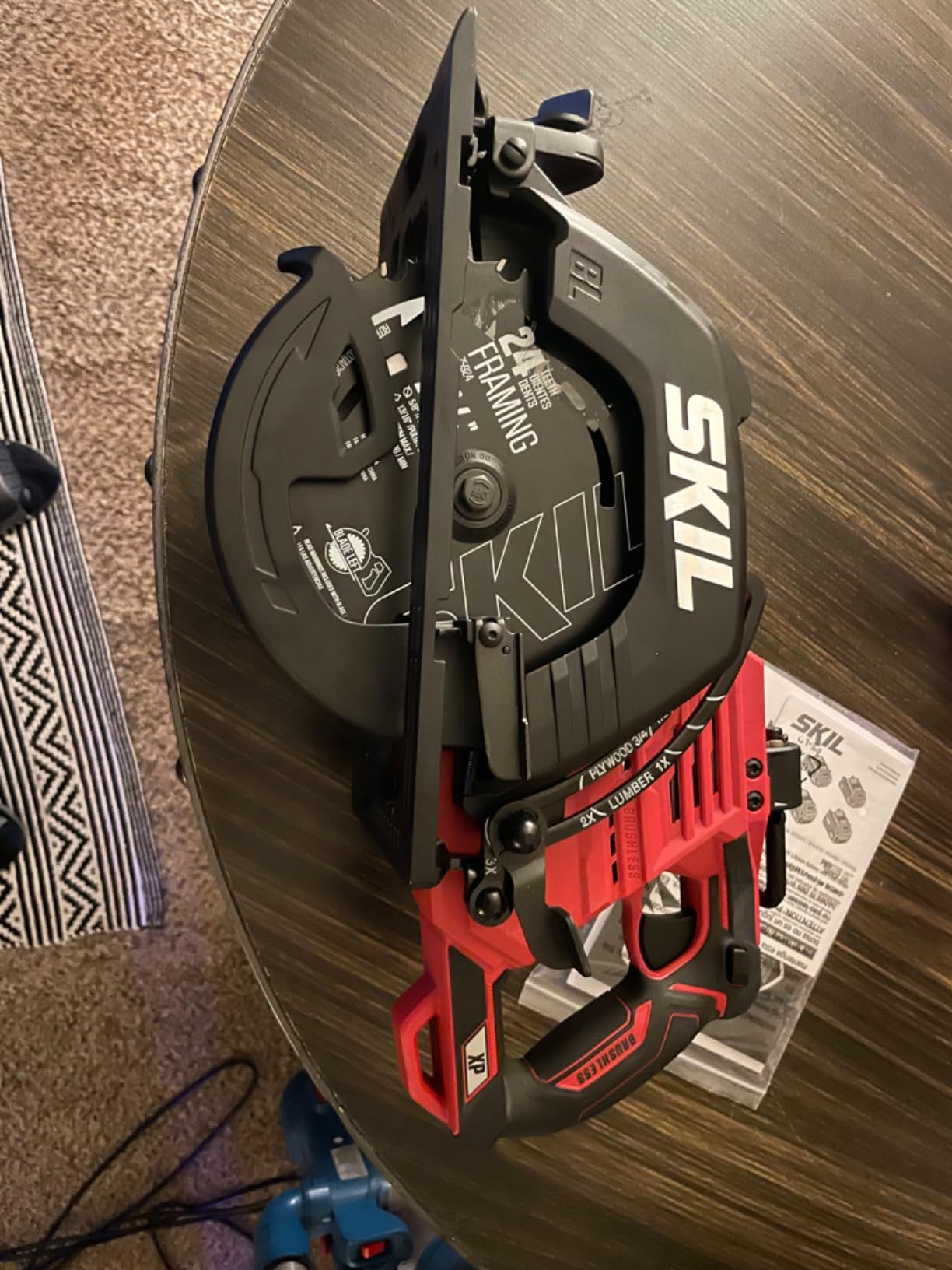
This is the only kit in the roundup that includes everything you need on day one. You get two 5.0Ah PWR CORE 20 batteries and a dual port PWR JUMP charger, which removes the single most common complaint about bare-tool saws: having nothing to cut with when the saw arrives.
The saw itself earns consistent praise. The digital brushless motor delivers up to 5300 RPM, the 2-9/16 inch depth cuts 3x material in one pass, and owners report smooth and accurate cuts with well balanced weight distribution.
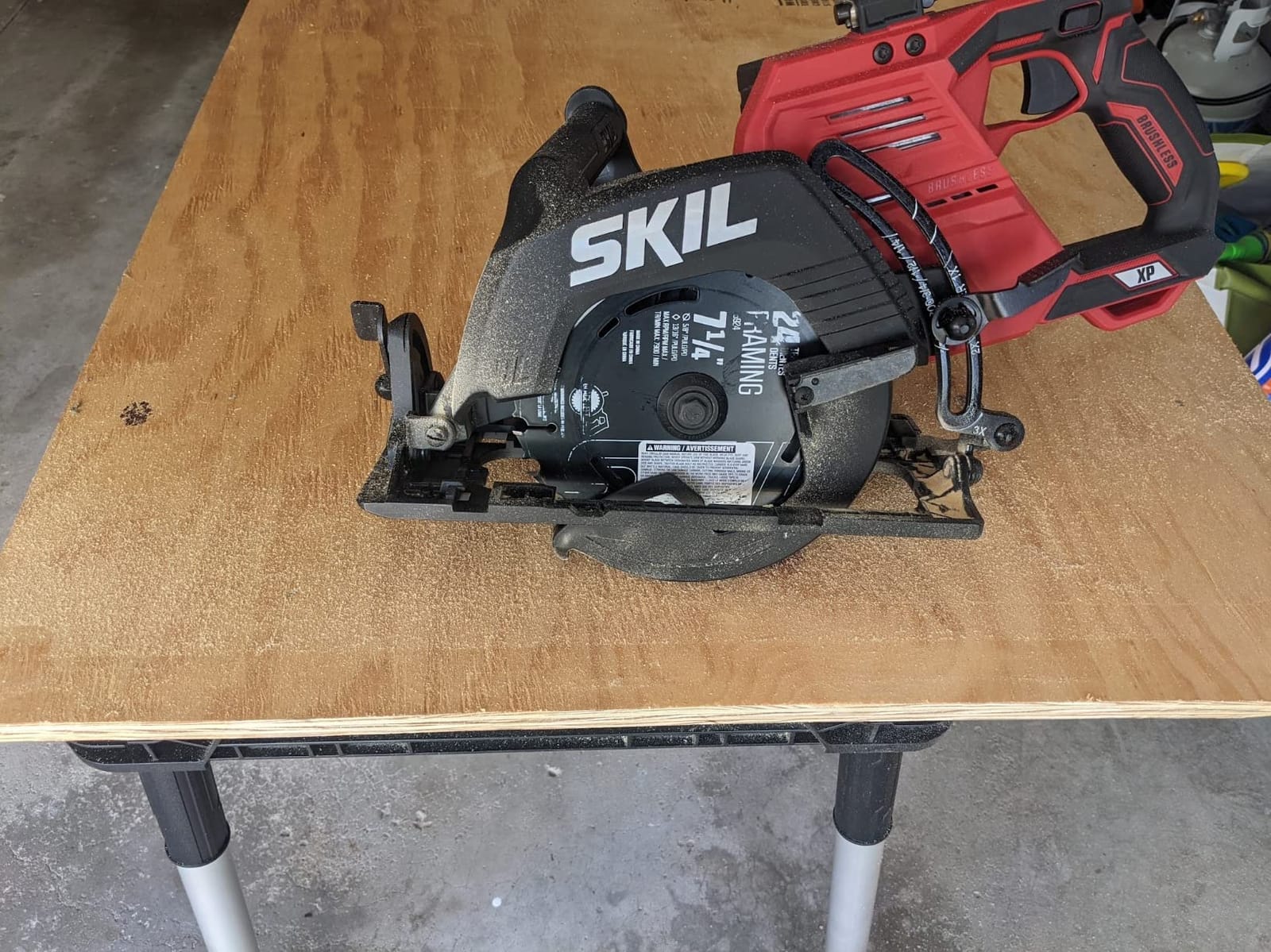
Charging speed is the underrated part. The dual port charger reaches 25 percent in 15 minutes and a full charge in under an hour, which in practice means a lunch break is enough to reset a whole shift. PWR CORE 20 cell cooling is claimed to add 25 percent runtime and double battery life.
Framing details are present: an adaptable dust port in the auxiliary handle, an electric brake to cut downtime between cuts, and a 24-tooth carbide-tipped blade in the box. Warranty is 5 years with registration, which is longer than most competitors offer.
Who this kit is built for
Anyone starting from zero. If you own no batteries, no charger and no saw, this is the least painful way into cordless framing because there is no second purchase to make before your first cut. For a homeowner or a startup framer building a first kit, that convenience has real value.
The rear-handle design with 2-9/16 inch depth is genuinely a framing layout rather than a trim layout, and the runtime figure of up to 600 cuts per charge on 2×4 crosscuts in SPF lumber is competitive with the premium saws in this list.
Where the batteries hold it back
The dominant negative theme is the batteries, not the saw. Multiple owners report that the included PWR CORE 20 packs lose charge quickly and die faster than DEWALT, Milwaukee or Makita packs, with durability complaints coming specifically from users running it on LVL or heavy framing work.
At 10.2 pounds, and with two batteries to carry, it is a heavy load to move around a jobsite all day. The 4.2 rating with a 12 percent one-star share is the lowest in this roundup, and most of that is about packs rather than the motor.
11. Makita 40V max XGT GSR01M1: The Fastest Blade In The Roundup
Makita Xgt 40V Max Circular Saw Kit Rear Handle 7 1/4
7-1/4 in blade
6400 RPM brushless
40V max XGT
2-9/16 in depth
11.7 lb
Pros
- Fastest motor here at up to 6400 RPM
- Automatic Torque Drive holds speed under heavy load
- Superior ergonomics balance and overall refinement
- XPT dust and water resistance for jobsite conditions
- Contractors report it outsells their other rear-handle saws
Cons
- Most expensive saw in this roundup
- Dust port throws sawdust across the cut line on rips
- Shoe indicators are offset from where the blade meets the wood
- No front LED light and 11.7 pounds is heavy overhead
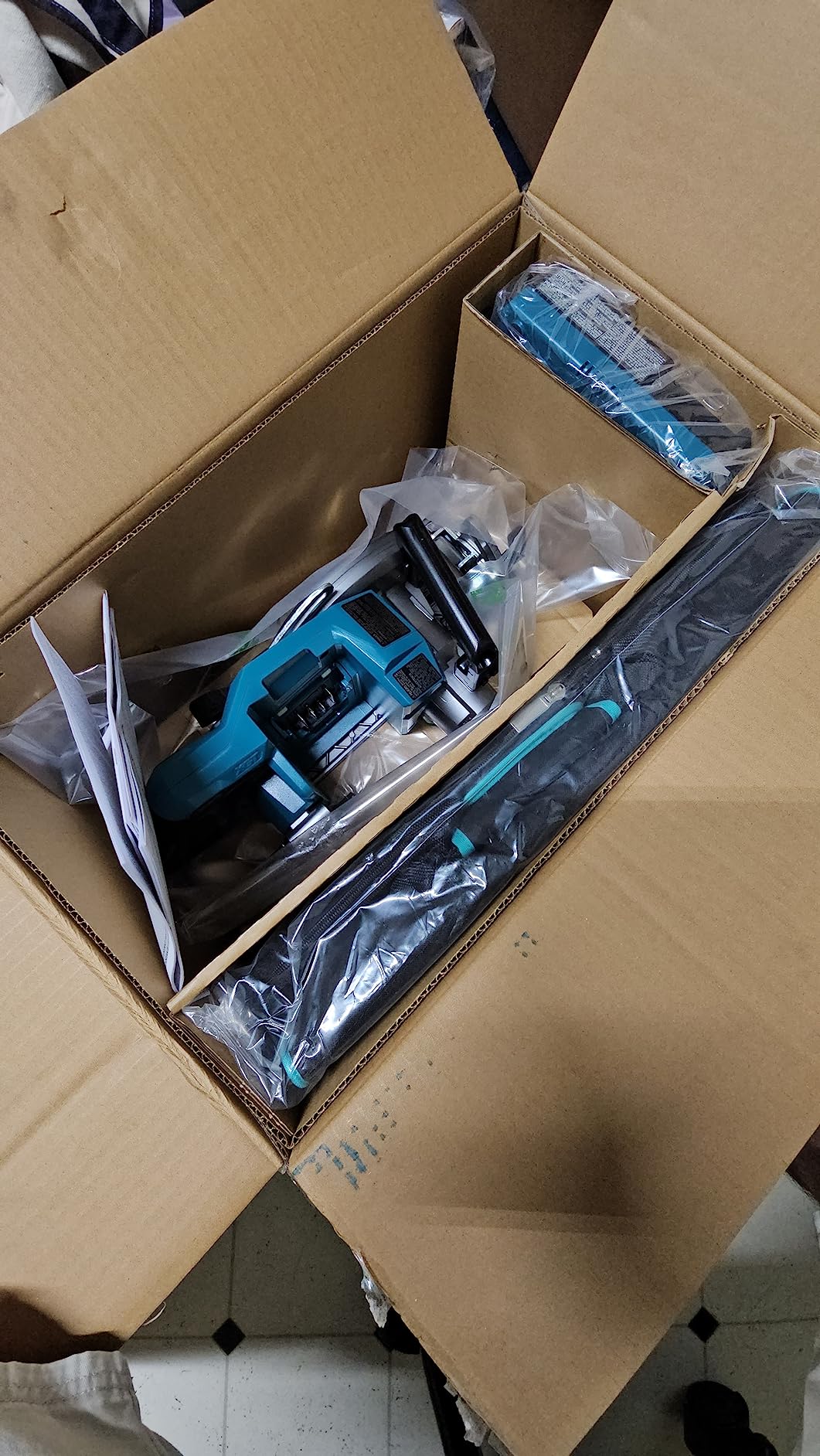
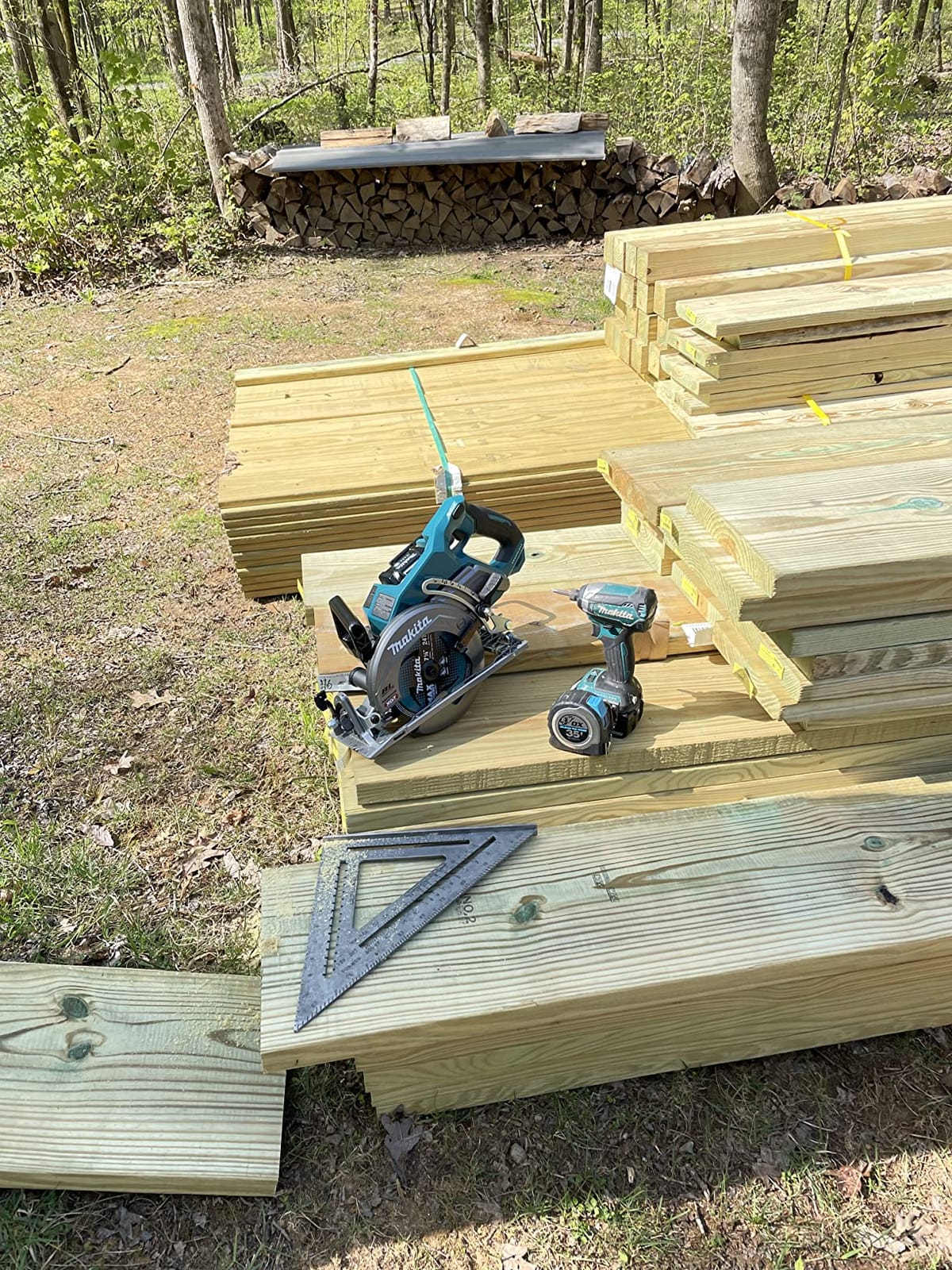
At up to 6400 RPM this is the fastest blade in the roundup, and framing professionals rate it as the most refined and powerful saw they own. Owners say it rips 2x lumber almost like a corded worm drive, which is the comparison that matters when you are breaking down a stack of 2×12 at four in the afternoon.
Automatic Torque Drive adjusts cutting speed under load, which is a more sophisticated version of the speed-change behaviour on the other Makita saws here. XPT engineering adds dust and water resistance for harsh jobsite conditions, and the 2-9/16 inch maximum depth matches the deepest saws in this list.
The electric brake is present for productivity, and the 3-year limited warranty covers tool, battery and charger, which matters if you are building a platform rather than buying a single saw. Contractors report that it outsells their other rear-handle saws to coworkers, which is a good sign for anyone who will be sharing tools.
Owners consistently praise the ergonomics and balance as superior to competing 40V saws, with some preferring this feel to the DEWALT 60V MAX despite the lower voltage class.
What 6400 RPM actually buys you
More tooth engagements per second means a cleaner cut edge on visible lumber and slower blade wear on a framing blade. Combined with Automatic Torque Drive holding speed under load, it is the closest thing to corded worm-drive feel in this roundup, and r/Carpentry owners describe the 40V max XGT platform as a beast and fun.
It is the saw to pick if you frame every day and already run XGT tools, because a single platform covers the saw, the batteries and the charger. If you do not own XGT packs, the initial investment is the largest in this roundup.
Where the design annoys owners
The dust port is the standout criticism and the reason this saw is not rated higher. Several owners report sawdust blowing everywhere on rip cuts, obscuring the cut line, which is a poor trade in a tool this capable. The indicators on the front of the shoe are also offset from where the blade actually meets the material, so the depth marks are not where you would expect.
There is also no front LED light, which some buyers expect at this level, and at 11.7 pounds it is heavy for extended overhead work. Those are design choices, not defects, but they are the reason to try one before committing a crew to it.
12. Greenworks 24V CRD401: The Deepest Cut And The Most In The Box
Greenworks 24V 7-1/4” Circular Saw Brushless Cordless, with 4Ah Battery and 2A Charger
7-1/4 in blade
4500 RPM brushless
24V
2-1/2 in at 0 deg
4 kg
Pros
- 24V platform has more power and runtime than most 18V and 20V rivals
- 2-1/2 in depth at 0 degrees is the deepest in this roundup
- Kit includes battery charger two blades dust connector and guide
- LED light and dust port for vacuum hookup
- Most complete kit of the saws tested
Cons
- Lowest no-load speed here at 4500 RPM
- Smallest review base at 102 ratings
- 2A charger is slow and packs are not interchangeable
- Bevel stops at 50 degrees rather than 53 to 56
The 2-1/2 inch cutting capacity at 0 degrees is the deepest in this roundup, which means a 2×12 laid flat and a 1×12 or a stacked pair of 2x6s go through in a single pass. The 24V platform also delivers more power and longer runtime than most 18V and 20V tools in the same price band.
What arrives in the box is unusually generous: a 4Ah battery, a 2A charger, a 24-tooth wood blade, a 40-tooth plastic and plywood blade, a dust connector, an Allen key and a parallel guide. Few competitors include a parallel guide at all.

Usability details are present too: a built-in LED light that illuminates the workspace, an included dust port for vacuum hookup, an electric brake, a double safety switch and onboard blade key storage for blade changes. The bevel runs from 0 to 50 degrees with 1-11/16 inch capacity at 50 degrees.
Owners consistently highlight the 24V system as more capable than typical 18V and 20V saws, and the 20 percent share of four-star reviews indicates broad rather than enthusiastic satisfaction. For a homeowner or a weekend framer, the completeness of the kit is the argument.
Where the depth advantage helps
The extra 3/16 inch of capacity at 0 degrees compared with the 2-9/16 inch saws is small on paper and meaningful in practice. It is the difference between getting through a stacked header in one stroke and rolling it over. It also handles thicker sheet material and platform decking without a flip.
For a first framing saw bought outright rather than through a platform, this kit removes the most common beginner mistake, which is buying a bare tool and then discovering what a battery and charger cost. The double safety switch is also worth noting if the saw will be shared with inexperienced users.
Where the slow motor and small charger bite
The 4500 RPM no-load speed is the lowest in this roundup, which means the saw works harder on tough cuts and takes more from the battery when it does. On standard 2x framing that is acceptable, but on pressure-treated and laminated material you will feel it.
The 2A charger is slow, and the 4Ah packs are not interchangeable with other Greenworks platforms, which limits how much of the ecosystem you can reuse. The 102-rating review base is also the smallest here, so there is less long-term data than the big brands. And the 50 degree bevel stops short of the 53 to 56 degrees offered by the premium saws, which matters slightly for steep roof pitches.
Which Framing Saw Matches The Batteries You Already Own?
The single most common piece of advice on framing forums is also the most practical: buy the saw for the platform you already have rather than chasing the best model. Forum users consistently recommend this, and it is correct. A bare-tool saw you cannot power is a paperweight, and a second platform means a second charger on the truck and a second set of batteries to buy.
If you already own Makita 18V LXT batteries, the XSH06Z gives you 6000 RPM and the longest runtime figures in this roundup, while the XSR01Z gives you the rear-handle framing layout that most crews end up using. If you are starting fresh in Makita, the 40V max XGT GSR01M1 is the fastest saw here and the 18V X2 LXT is the more common sight on residential job sites.
DEWALT owners have the widest choice in this roundup, with a 20V option at three different levels plus a 60V MAX saw for heavy timber. Milwaukee owners get a choice between a light 7-2 pound saw and the higher-rated M18 FUEL model. Anyone on 36V MultiVolt gets the lightest rear-handle framing saw available, with a lifetime tool body warranty behind it.
If your other framing tools are nailers, our framing nailer roundup covers the platforms most crews standardise on. If you are building out a shop and need to break down sheet material cleanly, our cordless table saw guide covers that side of the workflow. For anything above a cutting head, a pole saw handles the trimming work a circular saw should never attempt.
7-1/4 In vs 6-1/2 In: The Framing Cut Depth Maths
Almost every new framer asks the same question, and the answer is less dramatic than most forums make it sound. One r/Carpentry discussion put it well: 6-1/2 and 7-1/4 saws are basically identical except for the cut depth, with the 7-1/4 giving roughly 3/8 inch more. That extra depth is the whole argument, so here is what it does to real lumber.
Actual depth depends on the shoe measurement and the blade, but published capacities cluster around these figures, and they map cleanly onto framing lumber:
2×4 and 2×6: Both blade sizes cross these with room to spare, at about 1-1/2 inches of actual thickness. A 6-1/2 inch saw is not the limitation here, and it never has been.
2×8: Still comfortable on a 6-1/2 inch saw. This is the largest piece of lumber most framers cut regularly and both sizes handle it in one pass.
2×10: This is where it starts to matter. A 2×10 is roughly 1-3/4 inches thick depending on the actual dimension, which pushes a 6-1/2 inch saw to the edge of its useful capacity and often into a second pass.
2×12: A 2×12 is around 1-3/4 to 2 inches of actual thickness depending on how you measure, which is why the 7-1/4 inch saws in this roundup advertise 2-9/16 inch depth. The extra capacity is what lets you cut a 2×12 laid flat without rolling it.
Double 2×12 headers: Built up on their side, this is where 2-9/16 inch capacity becomes essential. If you frame headers, the depth math decides your saw.
LVL and engineered beam: Check the manufacturer capacity rather than estimating. Heavier sections need the full depth of a high-capacity saw.
Bevel cuts reduce capacity further, which is why the 45 degree figure matters as much as the 90 degree one. Saw capacity at 45 degrees is typically about 5/8 inch less than at 90 degrees, so a saw with 2-9/16 inch depth gives you around 1-7/8 inches at an angle, which covers a 2×8 and a 2×10 on edge.
The short version: a 6-1/2 inch saw will frame walls and floors perfectly well. A 7-1/4 inch saw is the right answer as soon as you cut rim boards, headers or anything stacked.
What Actually Matters In A Cordless Framing Saw?
Here is what we would check, in order, before buying a cordless framing saw. It is the same list we would walk a new framer through on the first day.
Cut depth at 90 degrees. Anything at or above 2-9/16 inches means one-pass cuts on a 2×12 laid flat and on built-up headers. Below that and you will be flipping lumber, which on a framing day adds up quickly.
Cut depth at 45 degrees. This is the number people forget. You need roughly 1-7/8 inches or more to cut a 2×10 on edge for cripples and jack studs.
Blade speed and voltage class. No-load speed between 5000 and 6400 RPM covers most framing. Below 5000 RPM the saw works harder on wet lumber, and above that you are seeing diminishing returns on dimensional stock. Voltage matters more on pressure-treated and laminated material than on ordinary 2x.
Rear handle versus sidewinder. A rear-handle saw gives you two-hand control and more capacity; a sidewinder is lighter and cheaper. Framers cutting headers and big lumber generally end up with a rear handle. There is also a regional pattern, with sidewinders still common on parts of the west coast and rear handles dominating heavy framing work.
Lower blade guard behaviour on compound cuts. This is the most under-reported failure in the category. Guards that hang up on angled cuts are a real nuisance on hip roofs and dormers, where you make the same compound miter dozens of times.
Bevel detents at 22.5 and 45 degrees. Positive detents are not a luxury when you cut cripples at a consistent angle across a whole wall.
Shoe glide and material. Magnesium bases are the durable choice. Check that the shoe is compact, because a wide shoe drags on rough lumber and green stock and makes the saw harder to track.
Sight lines. Users report that sight lines get harder to read at 45 degrees on some models, and that shoe indicators can be offset from where the blade actually meets the wood. Look for a blade mounted to one side of the motor and a notch or etched reference on the shoe.
Dust port and included adapter. Not every saw ships with a usable vacuum adapter, and indoor framing cuts make this matter. Note also where the dust exits, because sawdust directed at the operator is worse than sawdust on the floor.
Electric brake. It stops the blade fast after you release the trigger, which keeps repeated crosscuts tight and reduces wide kerfs at the end of a cut.
Rafter hook. Not glamorous, but it lets you hang the saw between cuts instead of setting it on a stack, and owners mention it as a real workflow improvement.
Battery ecosystem depth and warranty. Before the saw, work out what packs and chargers you need to buy. This is the most common regret among new buyers, because bare-tool pricing hides the real entry cost. Warranty length matters more on crew work where tools get dropped.
On blades, framers on r/Carpentry most often name the 24-tooth Makita B-61656 for general use, with Freud and Diablo frames widely accepted alternatives. A 24-tooth carbide blade with a larger tooth set for ripping is the normal setup: more teeth for crosscuts and rips in clean lumber, fewer for fast rough cuts and demolition.
One more jobsite note. If you are cutting pressure-treated lumber, start with a fresh blade. Treated stock corrodes cutting edges quickly, and a dull blade in wet treated wood is the most common cause of a saw bogging under load that has nothing to do with the motor.
Cordless Or Corded For Full-Time Framing
For a part-time or weekend framer, cordless wins outright. There is no extension cord to run across a framed floor, no trip hazard in an occupied building, and no hunting for an outlet in a basement. The saws in this roundup handle ordinary 2x framing without argument.
For a full-time framer, the honest answer is that a corded saw still has an edge in one specific situation. Cutting dense pressure-treated lumber, laminated beams and large headers for long stretches is where a 15 amp corded saw keeps a speed the battery saws in this roundup only match at 60V. If your work is headers all day, you will feel the difference.
Beyond that, the cordless saw wins on mobility, safety and setup time. On a job site with no power, on a roof deck, on a ladder or in a crawl space, a corded saw is not coming out. Most crews end up carrying both, using the corded saw at the station where headers get cut and the cordless saw everywhere else.
Forum consensus on this is practical rather than emotional. The view that circulates among working framers is that modern cordless saws will do everything you need and more, with the caveat that high-voltage platforms do the heavy work best.
Why Other Test Labs Pick A Different Saw
If you read other cordless circular saw roundups, you will notice the winners do not always match ours. That is not because anyone is wrong; it is because the test criteria differ.
One lab testing cutting speed alone crowns a high-voltage saw, because a 5800 or 6400 RPM motor wins every timing run. Another weighting value and weight equally lands on a lighter 20V saw. A third, weighing battery economics heavily, favours a saw that runs on packs most owners already have. We weight framing capacity, guard behaviour and site workflow, which pushes toward a deeper rear-handle-capable saw with proven owner volume.
On job sites, the consensus answer to who makes the best cordless circular saw for framing is usually not a lab winner. In framing threads, the most common saw named is the Makita 18V X2 LXT rear-handle framing saw, simply because that is what shows up on most residential sites. Judge a saw partly by what your crew already owns.
Frequently Asked Questions
What is the best circular saw for framing?
The best cordless circular saw for framing is the DEWALT 20V MAX DCS570B. Its brushless motor holds 5500 RPM under load, it cuts 2-9/16 inches deep at 90 degrees, and it has the largest proven owner base in this class with 4.7 stars across 5572 ratings. If you cut heavy pressure-treated timber or large headers all day, step up to a higher-voltage saw such as the DEWALT 60V MAX or the Makita 40V max XGT.
Is a 7-1/4 inch circular saw better than 6-1/2 inch for framing?
A 7-1/4 inch saw is better for framing once you cut anything larger than a 2×8, and the difference is cut depth rather than anything else. Both sizes handle 2×4 and 2×6 easily. A 7-1/4 inch saw rated at 2-9/16 inches cuts a 2×12 laid flat and a double 2×12 built-up header in a single pass, while a 6-1/2 inch saw usually needs a second pass or a flip.
What is the best cordless circular saw for the money?
The CRAFTSMAN V20 CMCS551B is the strongest value pick in this roundup, giving you a genuine brushless 7-1/4 inch saw with a metal upper guard, an LED cut line light and the widest bevel capacity here at 56 degrees with positive stops. The SKIL CR5429B-20 kit is the better value if you own no batteries at all, since it includes two 5.0Ah packs and a fast charger.
Can a 6-1/2 inch cordless circular saw cut a 2×10 or 2×12?
It will cut a 2×10, but you are close to the limit and you may need a second pass depending on the actual board. A 2×12 is generally beyond a 6-1/2 inch saw’s useful capacity on edge, though a 2×12 laid flat may just clear. This is the main reason framers move up to 7-1/4 inch saws with at least 2-9/16 inches of capacity at 90 degrees.
What is the best circular saw blade for framing wood?
A 24-tooth carbide-tipped framing blade is the standard starting point, and the Makita B-61656 is the one framers most often name in forum discussions, with Freud and Diablo frames widely accepted alternatives. More teeth suit clean crosscuts and visible lumber, while a lower tooth count suits fast rough cuts and demolition. Replace the blade as soon as it dulls, especially on pressure-treated stock.
Do I need a rear-handle circular saw for framing?
You do not need one to frame a house, but you will want one if you cut headers, rim boards or built-up beams. A rear-handle saw sits between your hands, gives you two-hand control and typically offers deeper capacity, while a sidewinder is lighter and cheaper. Most framers end up owning both, using the sidewinder for layout and the rear handle for heavy work.
Final Verdict: Best Cordless Circular Saws For Framing in 2026
The DEWALT 20V MAX DCS570B takes the editor’s choice because it is the safest bet in this list: 5500 RPM from a brushless motor, 2-9/16 inches of depth at 90 degrees, a 57 degree bevel with detents, an electric brake, an LED light and 5572 owners who have already found its limits. It is the saw most framers can buy and never think about again.
Buy the Milwaukee 2732-20 M18 FUEL instead if owner satisfaction matters more to you than raw torque. Buy the Metabo HPT 36V C3607DWAQ4 if you want a rear-handle framing grip at 8.2 pounds with a lifetime tool body warranty. Buy the DEWALT 60V MAX DCS577B if you cut treated beams and stair stringers daily, and accept the 10.9 pounds.
For Makita owners the choice is between the XSH06Z for speed and runtime and the XSR01Z for the rear-handle framing layout that most crews use. For anyone starting with no batteries at all, the SKIL kit is the only option here that includes everything, though its packs are the weakest part of the package.
Whichever one you choose, buy it for the platform you already own if you can. A cordless circular saw for framing is only as good as the batteries behind it, and that is the one decision worth getting right before anything else.