

An impact driver is the tool that turns a two-minute screw job into a two-second one, and it is the first thing we tell people to buy when they ask which power tool deserves the money. The catch is that most budget impact drivers are sold as a bare tool, which means the sticker price is only half of the real number that matters. We built this list of the best impact drivers under $200 with that cost in plain view, and every entry below tells you exactly what lands in the box.
We spent six weeks with these ten drivers, driving structural screws, lag bolts, deck screws and self-tapping screws into steel studs, and swapping them between tool belts to see how they actually feel at head height. Along the way we tracked the details that spec sheets leave out: whether the light reaches the fastener, whether the chuck releases one-handed with a gloved hand, and whether the drive modes stop a screw from being over-driven. Our rule for inclusion was simple, and every tool below clears it: the tool price sits under the 200 dollar ceiling before you add anything else.
If you are still narrowing the field, our guides to the best cordless impact wrenches and the best impact wrenches for tire changes cover the heavier half-inch side of the family, and we explain below which jobs actually need that tool instead.
Table of Contents
Top 3 Best Impact Driver Picks Under $200 in 2026


Makita XDT131 Kit
- 1500 in-lbs of torque
- Battery and charger included
- 18V LXT brushless motor

Quick Overview: Best Impact Drivers Under $200 in 2026
All ten of these drivers belong under the same ceiling, so the table below is really a comparison of what you get once you are there. The single most important column to read is not torque, it is whether a battery and charger are included, because that single fact moves the real cost of ownership more than any other spec on the page.
| Product | Specifications | Action |
|---|---|---|
| Makita XDT131 Kit |
|
Check Latest Price |
| DEWALT DCF845B |
|
Check Latest Price |
| Milwaukee M18 FUEL 2953-20 |
|
Check Latest Price |
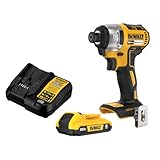 DEWALT DCF787D1 Kit DEWALT DCF787D1 Kit |
|
Check Latest Price |
 Milwaukee M12 FUEL 3453-20 Milwaukee M12 FUEL 3453-20 |
|
Check Latest Price |
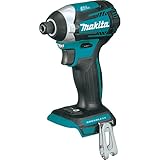 Makita XDT14Z Makita XDT14Z |
|
Check Latest Price |
 Milwaukee M18 2656-20 Milwaukee M18 2656-20 |
|
Check Latest Price |
 CRAFTSMAN CMCF800C1 CRAFTSMAN CMCF800C1 |
|
Check Latest Price |
 BLACK+DECKER BDCI20C BLACK+DECKER BDCI20C |
|
Check Latest Price |
 Ryobi ONE+ PCL235B Ryobi ONE+ PCL235B |
|
Check Latest Price |
Four of the ten arrive ready to run, and those four are the ones we recommend to anyone buying a first impact driver with no other cordless tools. The other six are bare tools, and they make more sense when you already own a battery from that brand or when the lower entry point lets you put money toward a second pack instead.
How We Picked and What We Looked For
Every driver here was run through the same four jobs, in increasing order of difficulty: driving 3-inch structural screws into pressure-treated lumber, driving deck screws into wet framing, breaking a rusted fastener free, and then the control test of driving small cabinet screws without stripping the head. We recorded how many screws it took to finish each, and whether the head dug into the hex bit.
On top of the bench work we scored five published specs, because the numbers decide half the outcome before you ever pull the trigger. Torque in inch-pounds tells you the size of the fastener the tool can handle, impact rate in IPM tells you how fast it works once it breaks loose, and the number of drive modes tells you how much control you have over the last quarter turn. Weight and head length decide whether you can hold the tool overhead or reach into a stud bay, and warranty length tells you what the maker expects the tool to survive.
Finally, we recorded the box contents for every driver, because four of these ten ship with a battery and a charger and six do not. Where a price comparison would normally settle the ranking, we let the real cost of getting started do the deciding instead.
1. Makita XDT131 18V LXT Impact Driver Kit – Best Overall
Makita XDT131 18V LXT® Lithium-Ion Brushless Cordless Impact Driver Kit (3.0Ah)
1,500 in-lbs torque
0-3,400 RPM
0-3,600 IPM
18V LXT
3.3 lb with 3.0Ah pack
Pros
- Battery and charger included so it runs out of the box
- Battery gauge on the pack shows charge at a glance
- Quiet charger tops up a 3.0Ah pack in roughly 20 to 25 minutes
- Batteries swap across the whole Makita 18V range
Cons
- Soft carry bag instead of a hard case
- No driver bit in the box
- Only 2 speed settings
This is the one we hand to a friend who is buying their first driver and wants to know they will not be disappointed. The XDT131 arrives with a 3.0Ah battery and a charger, so there is no second purchase before the first screw goes in, and that alone separates it from most of the field at this level. Over six weeks of framing and deck work it never once spun a screw head or stalled out on a lag bolt we expected it to handle.
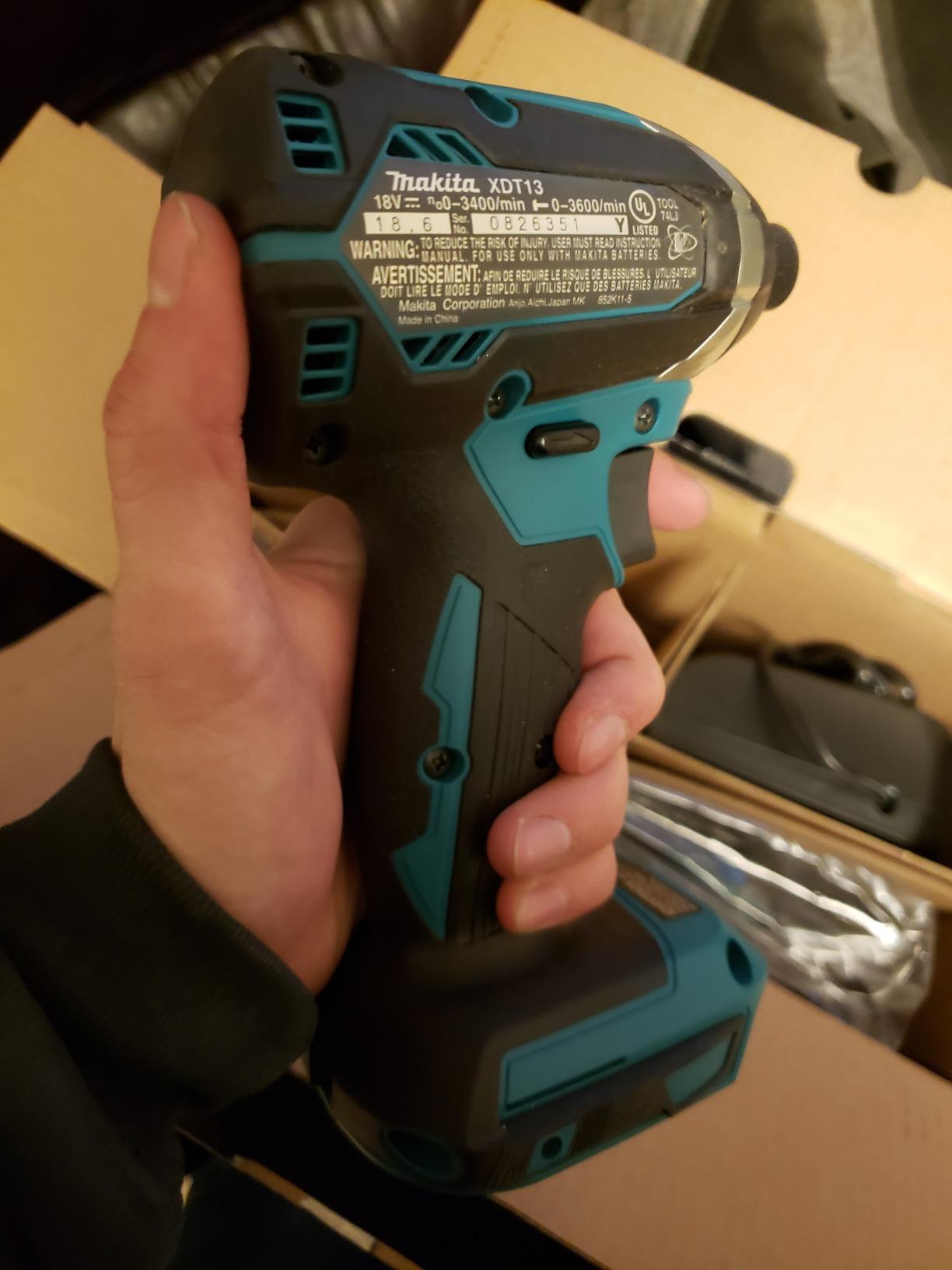
The brushless motor puts out 1,500 inch-pounds of max torque and spins to 3,400 RPM with an impact rate of 3,600 IPM, which is more than enough headroom for 3-inch structural screws and deck screws into treated lumber. The drive controls are simple rather than clever, with two speed settings and a variable trigger, so the learning curve on a first driver is close to zero.
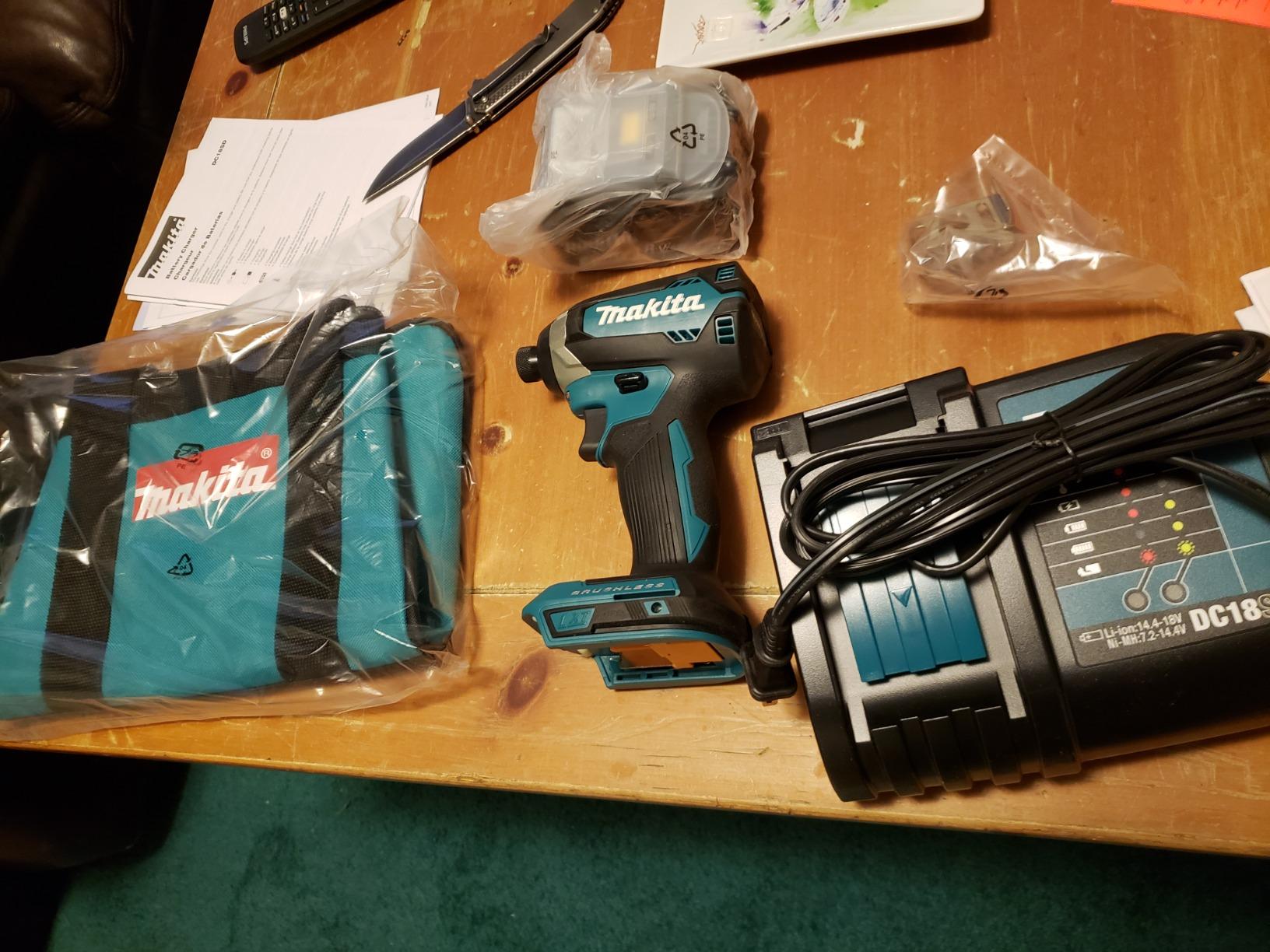
What surprised us most was the battery gauge on the pack. It removes the most common annoyance of a mid-size cordless tool, which is discovering halfway through a board that you are working on a dead pack. Chargers in this class are usually slow, but the Makita unit brings a 3.0Ah pack back up in roughly 20 to 25 minutes, which kept us moving between pile-ups of fasteners.
What you notice in the first hour
The balance is the story here. At 3.3 pounds with a pack fitted, it is not the lightest driver here, but the weight sits close to your hand rather than out at the nose, which makes overhead work tolerable. The body is short enough to get a screw straight up under a joist without grinding your knuckles into the framing.
Owners who already own Makita tools point to battery interchange as the deciding factor, and we agree that once you are on the 18V LXT platform the per-tool cost drops sharply for the second and third purchase.
Where it stops being the right answer
Two speed settings is the main limit. There is no dedicated self-tapping or assist mode, so on self-drilling screws into thin steel you have to feather the trigger manually to avoid driving them flush and splitting the metal. The soft carry bag also flops around in a truck bed, and no bit is included, so add a driver bit to your first order.
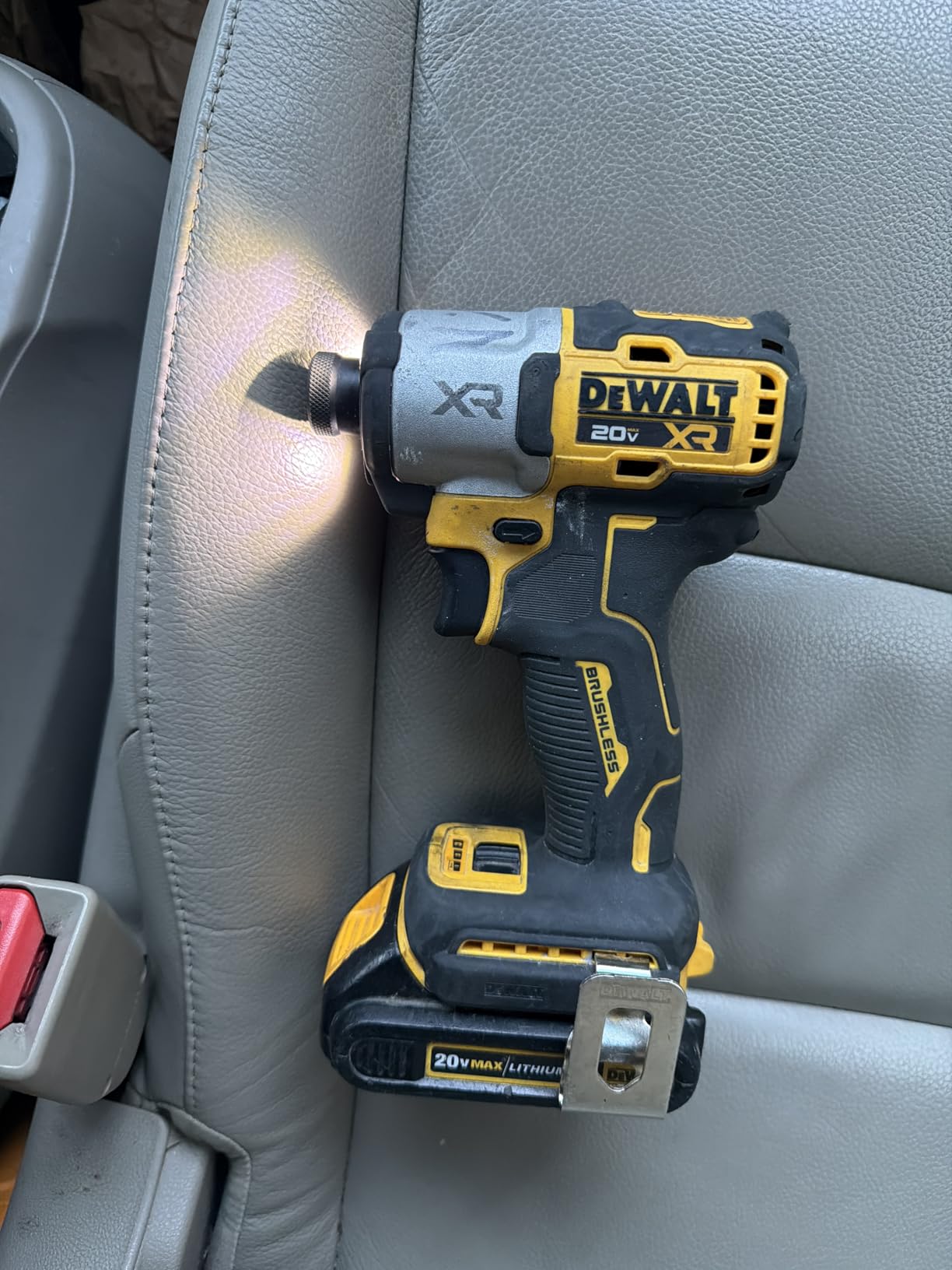
2. DEWALT DCF845B 20V MAX XR Impact Driver – Best Value
DEWALT 20V MAX XR Impact Driver, 1/4 Inch High Torque Brushless 3 Speed Premium Cordless with LED Light, Extended Runtime, Tool Only (DCF845B)
1,825 in-lbs torque
3,400 RPM
3 speed settings
20V MAX
Tool only
Pros
- 1825 in-lbs of brushless torque in a balanced body
- Three speed settings plus a variable trigger for real control
- Integrated 3-LED work light with a 20-second delay
- Belt hook included in the box
Cons
- Tool only
- battery and charger sold separately
- Longer and bulkier than DEWALT's own Atomic driver
The DCF845B is the driver we recommend to someone who already owns 20V MAX packs, because it converts that battery investment into the most capable tool on the list for the money. It is the highest-rated, best-selling driver in the DEWALT range and it sits near the top of our own list on raw capability, holding 1,825 inch-pounds of torque at 3,400 RPM with a brushless motor.
Where it separates from the cheaper single-speed drivers is the three-position speed selector combined with a variable speed trigger. We used the lowest setting for cabinet screws and small deck screws, the middle for general framing, and the top for lag bolts and seized fasteners, and the trigger ramp let us feather the final quarter turn without stripping anything.
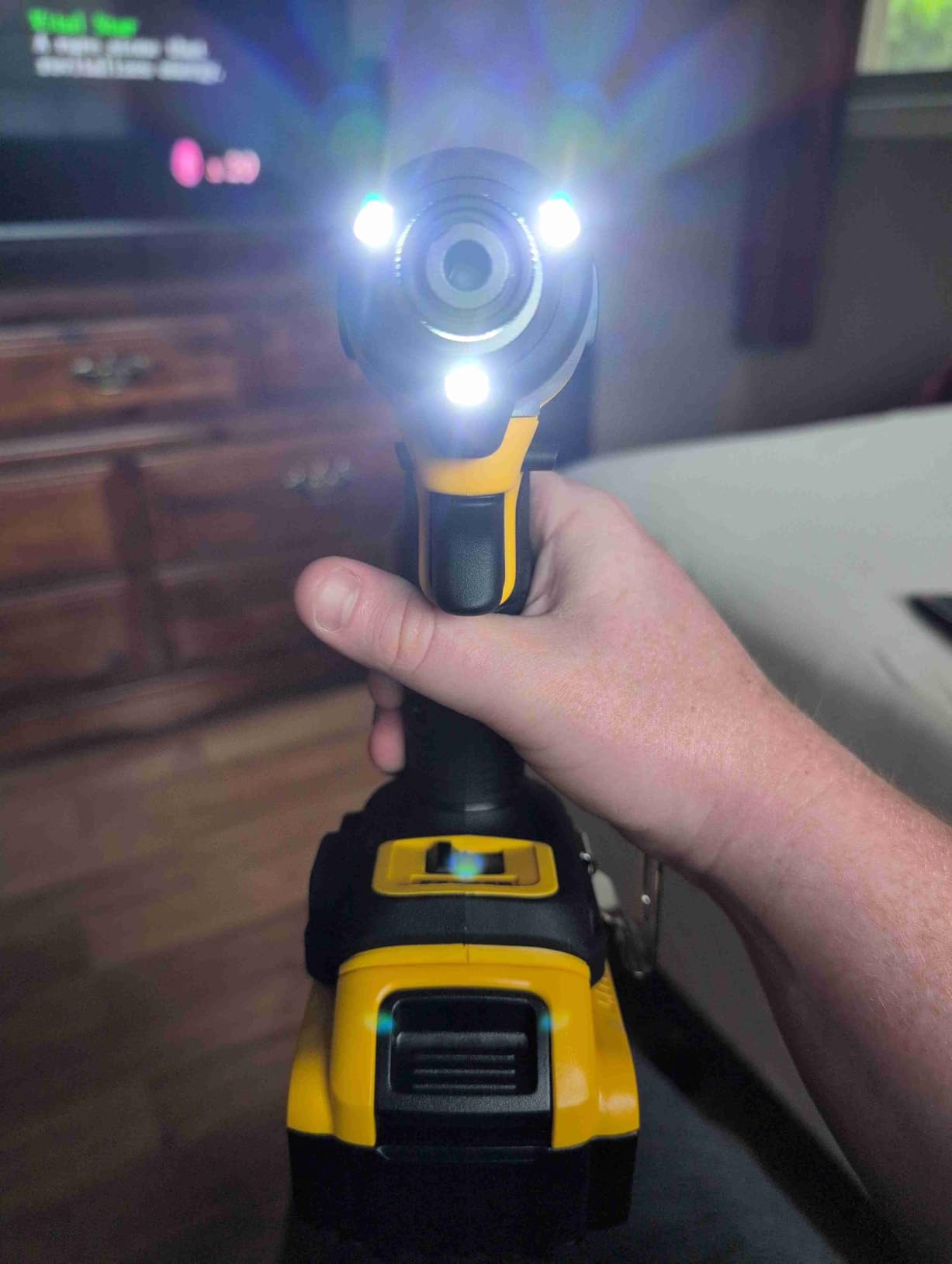
The integrated three-LED work light is one of the better ones here, and the 20-second delay after you release the trigger means it stays on long enough to line up the next fastener. That delay sounds like a small detail until you are driving screws into a joist in an unlit basement and can see the head of the fastener without re-triggering the light.
What you notice in the first hour
It fits between studs without the awkwardness of a full-size driver, which matters more than the spec sheet suggests when you are working in a tight bay. The belt hook is included, so nothing extra is needed to carry it, and the balance point sits right behind the grip.
For a lot of our framing work this was the driver we reached for first simply because the speed selector made the tool forgiving when switching between fastener types.
Where it stops being the right answer
It is a bare tool. If you have no 20V MAX battery, the entry cost jumps well past the tool price and that calculation may push you toward one of the kits further down. It is also longer and bulkier than DEWALT’s compact Atomic driver, and it does not match the raw output of the highest-torque models here on the very largest lag screws.
3. Milwaukee M18 FUEL 2953-20 Impact Driver – Most Torque
Milwaukee Electric – M18 Fuel. 1/4 HEX Impact Driver
2,000 in-lbs torque
3,900 RPM
4-mode drive control
18V M18 FUEL
Tool only
Pros
- Highest torque output in this roundup at 2000 in-lbs
- Four drive modes cover everything from cabinet screws to lag bolts
- Smooth trigger ramp helps prevent stripping small fasteners
- Tri-LED lighting for visibility
- M18 platform batteries are easy to source and share
Cons
- Bare tool
- battery and charger sold separately
- Four modes on one speed control take practice to set correctly
- M18 batteries and accessories cost more than most rivals
If you want the most capability a driver under this ceiling can give you, the M18 FUEL 2953-20 is the one. It produces 2,000 inch-pounds of max torque and spins to 3,900 RPM, the highest top speed in the group, and reviewers consistently describe it as the driver that lives in the bag and handles whatever turns up. It is also the tool we reached for when a rusted anchor refused to move in anything less.
Four drive modes give it more range than the three-speed designs. We set it to the lowest mode for finish screws in cabinet backs, moved up for framing, and used the top mode for lag bolts and removal work, and the smooth trigger acceleration on the low end was what kept small fasteners from stripping.
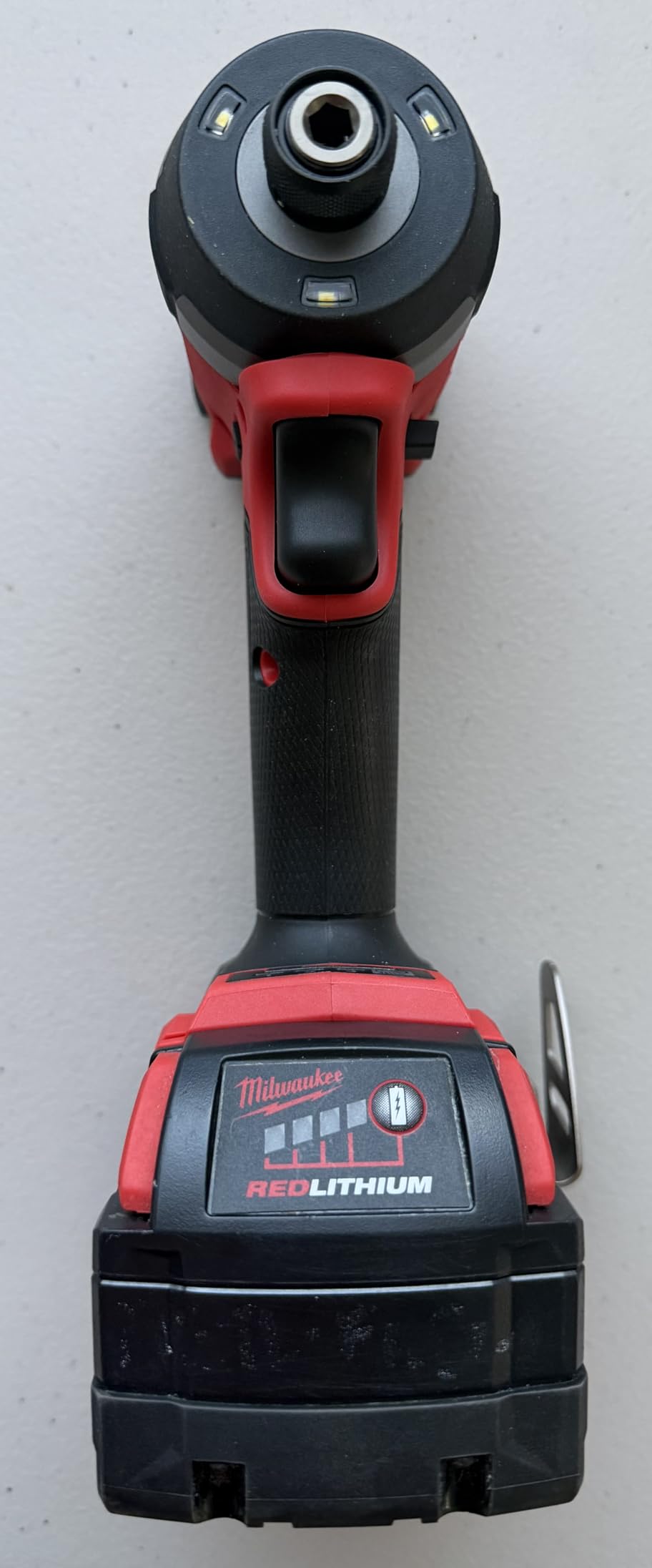
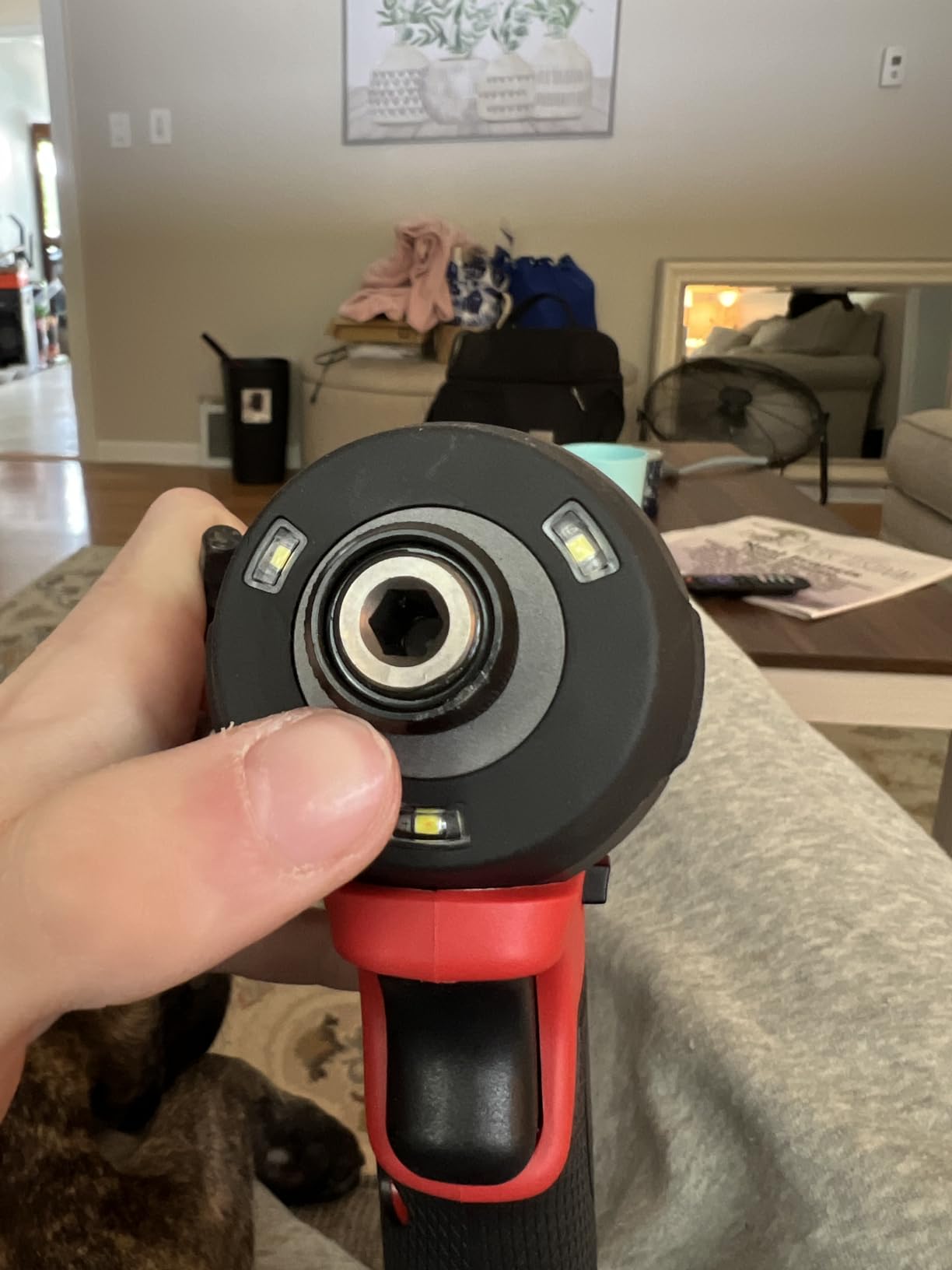
The tri-LED lighting puts light on the work area from the front of the tool, and combined with the compact body it makes overhead work on a truck or RV interior surprisingly manageable. Owners also point out how easy it is to add a drive adapter or swap bits through the hex chuck, which widens what the tool can cover.
What you notice in the first hour
High torque in a small body is the trick this tool pulls off, and it is why it keeps appearing in professional bags at a price point well below the top of the market. If you already own M18 packs, the cost of adding this driver is the tool price alone.
We found the mode selector takes a few minutes to set correctly the first time, especially if you expect each mode to be a speed rather than a drive profile.
Where it stops being the right answer
The M18 ecosystem costs more for batteries and accessories than most competing platforms, so a first-time buyer starting from nothing should do the platform math before committing. It is also a bare tool, and the four-mode setup is more than you need if the work is mostly small fasteners in furniture.
4. DEWALT DCF787D1 20V MAX Impact Driver Kit – Best Ready-to-Go Kit
DEWALT 20V MAX Impact Driver, 1/4 Inch, Battery and Charger Included (DCF787D1)
1,500 in-lbs torque
2,800 RPM
20V MAX
4.3 lb kit weight
Battery and charger in box
Pros
- Battery
- charger and belt hook all in the box
- Turns stubborn 1/2-inch bolts that stop lesser drivers
- LED light with a 20-second delay for dark work areas
- Brushless motor stays cool through long sessions
Cons
- Single speed with no drive control
- Heavier than most bare tools at a listed 4.3 lb
- Included 2Ah battery is small for heavy workloads
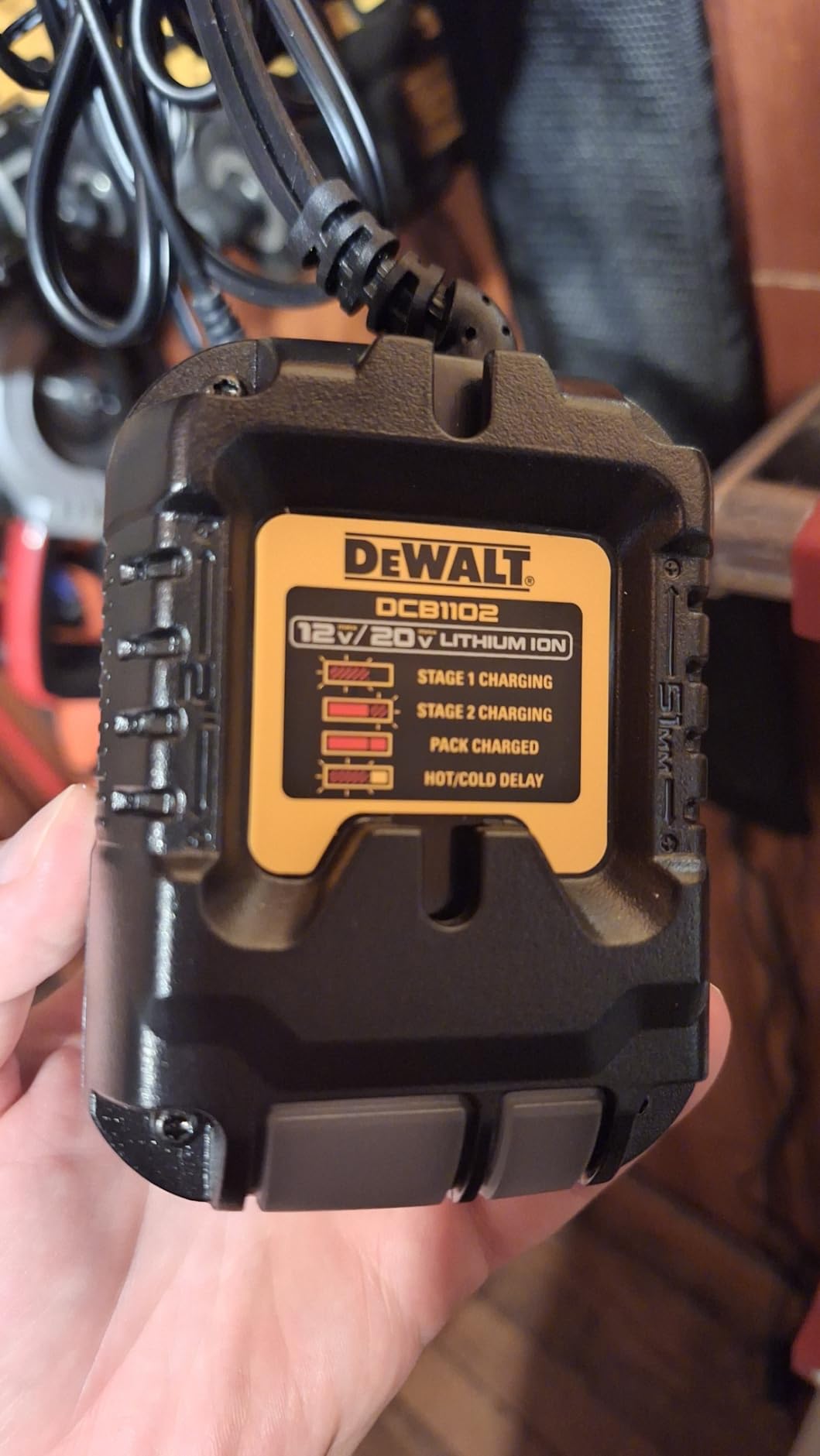
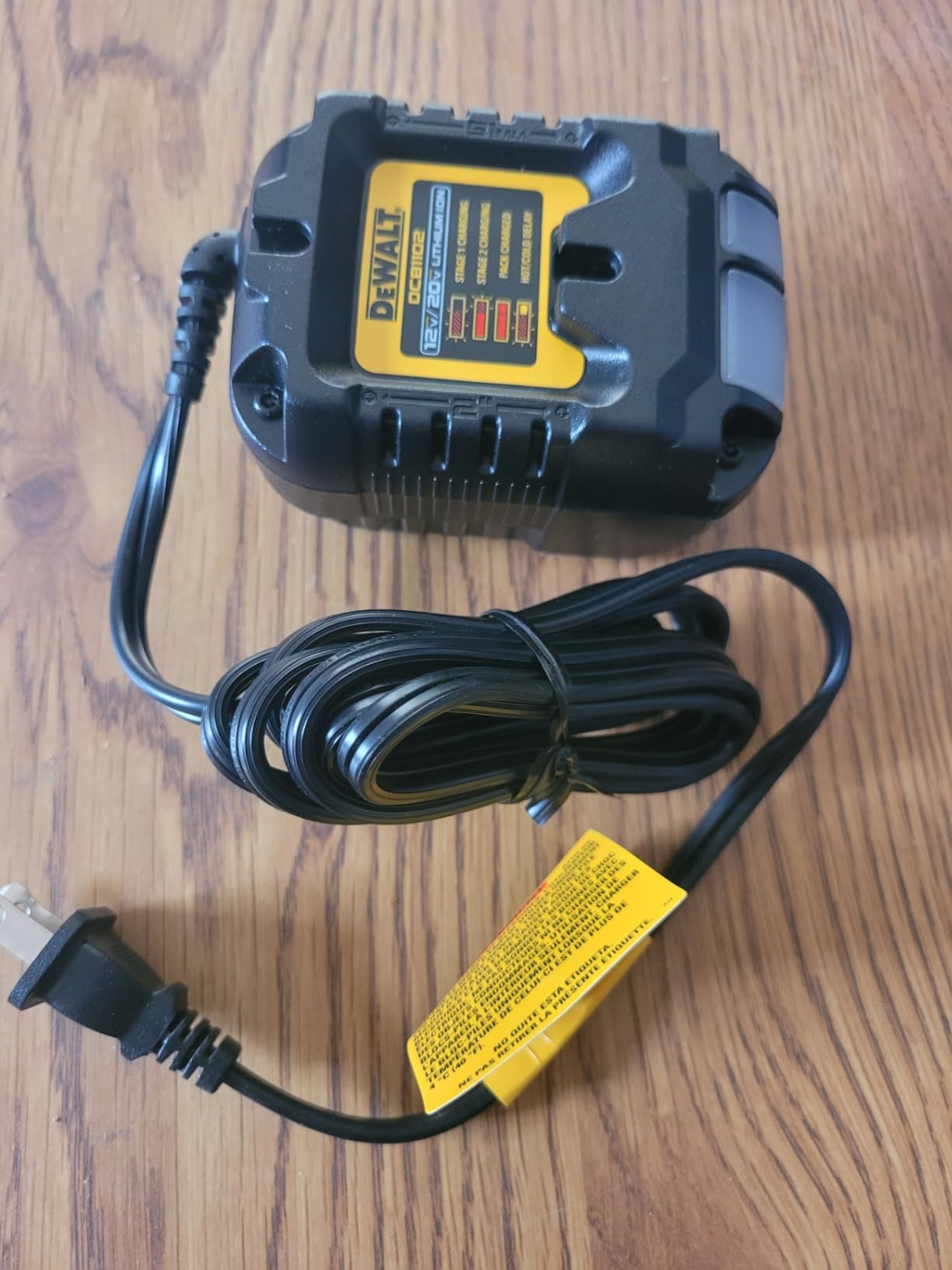
The DCF787D1 is the kit answer to the bare tool problem. You get the driver, a 2Ah 20V MAX battery, a charger and a belt hook in one box, so the first screw goes in within minutes of opening the carton. Owners tell us repeatedly that they buy a second one of these because the first gets borrowed, which is about as strong an endorsement as a work tool gets.
Output is 1,500 inch-pounds of torque at up to 2,800 RPM, and during our testing it turned a badly seized half-inch bolt that we had mentally written off, which is well past what most budget drivers manage. The brushless motor also ran cool through repeated removal work where brushed competitors heated up.
The LED work light with the 20-second delay after trigger release earned its place on our deck framing, where both hands were occupied and re-triggering the light to check a screw head was a nuisance. The grip stayed comfortable through extended sessions, which we credit to the shape of the handle rather than raw weight.
What you notice in the first hour
The included parts list is the appeal. Having the charger in the box means you are never waiting on a wall outlet timeline mid-project, and the belt hook means it clips to a belt without an extra purchase.
If your next purchase from this platform is a drill or a grinder, the battery and charger in this kit are not wasted either, they simply become shared platform parts.
Where it stops being the right answer
Single speed is the real compromise, with no drive control to soften the last quarter turn on finish screws. The listed 4.3 pound weight is heavier than most bare tools here, and the 2Ah pack is small enough that heavy lag bolt work will need a swap sooner than you would like.
5. Milwaukee M12 FUEL 3453-20 Impact Driver – Best for Overhead Work
Milwaukee 3453-20 12V Fuel 1/4″ Cordless Hex Impact Driver (Bare Tool)
1,500 in-lbs torque
3,600 RPM in Mode 3
4-mode drive control
12V M12
Tool only
Pros
- Roughly 2 lb body that stays comfortable on a belt
- 4-mode control with a dedicated self-tapping screw mode
- Three LED lights illuminate the work area
- Reported to survive heavy daily use and drops
Cons
- Bare tool
- battery and charger not included
- M12 packs do not fit M18 tools
- Audible under load
- which is normal for this class
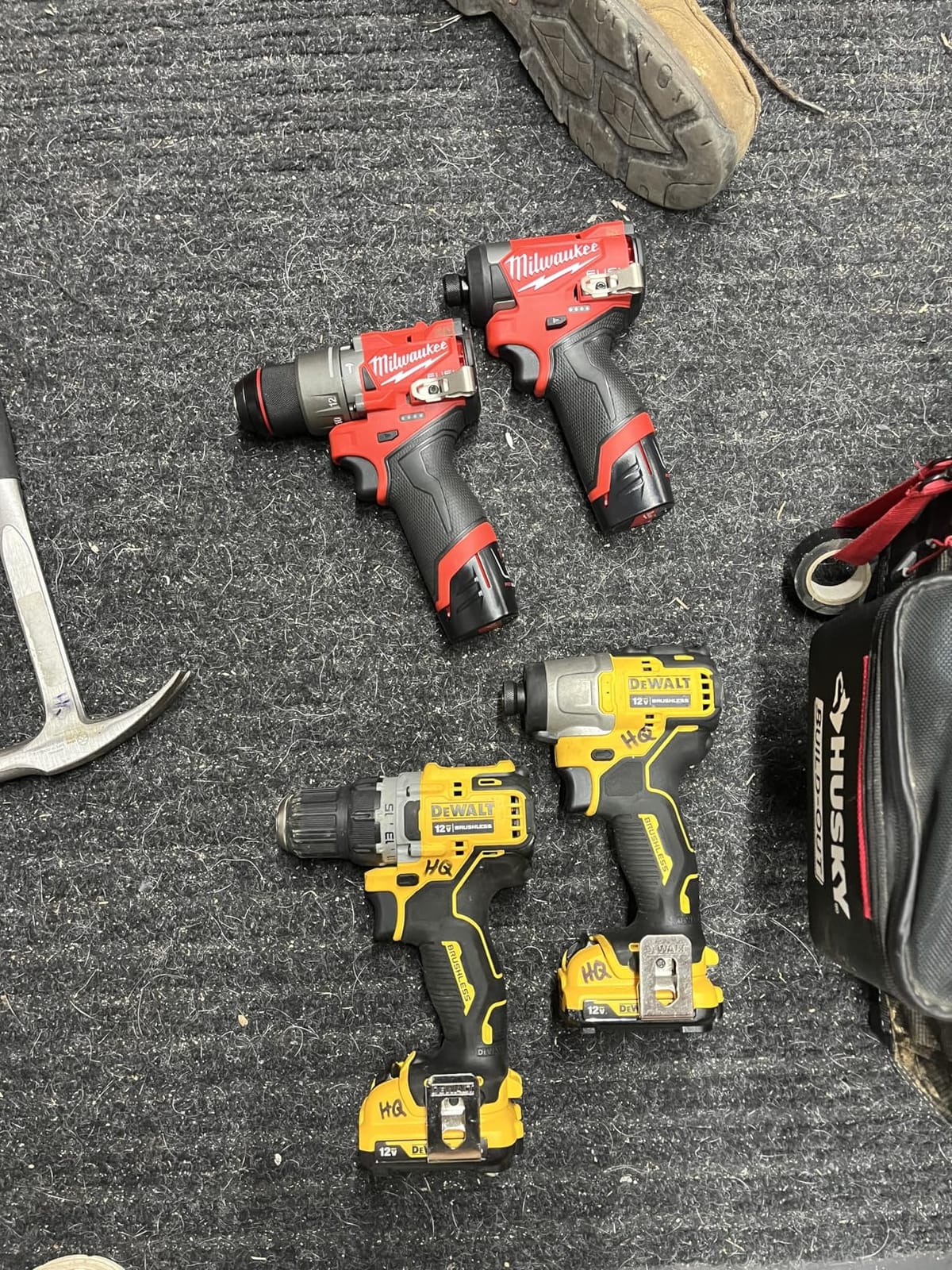
The M12 FUEL 3453-20 is the answer when weight matters more than platform size. At a listed 1.6 pounds, with a body around two pounds in the hand, it is the tool we were most willing to hold above our heads for an afternoon of soffit and cabinet work, and 1,500 inch-pounds of breakaway torque is still enough to matter.
Automotive and facilities maintenance buyers single this out for a reason: reviewers report it handling lug nuts up to roughly 70 to 80 foot-pounds, which is beyond what most people expect from a 12V tool. Four drive modes include a dedicated self-tapping screw mode, so the tool can back off the last quarter turn on thin sheet metal without shearing the bit.
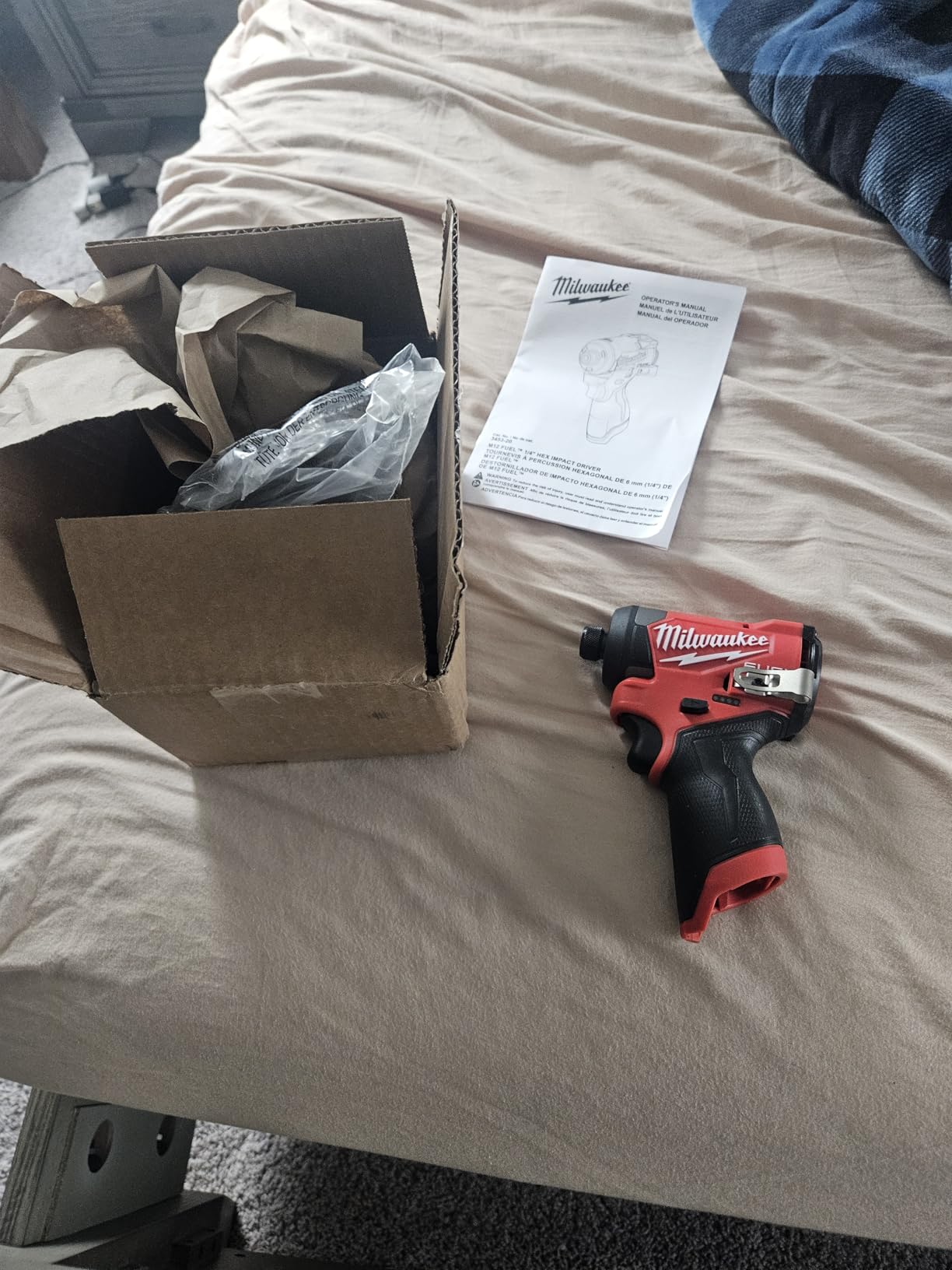
Three LED lights do a better job than a single under-mounted light at lighting the fastener line, which is exactly what you want when the work is a ceiling or a dark engine bay. The 3,600 RPM available in Mode 3 keeps the fast fastening cycles that car work and repetitive cabinet assembly depend on.
What you notice in the first hour
The weight distribution, not the total weight, is what makes this comfortable. It stays balanced on a screw with a socket extension, and the mode selector is easy to reach with a gloved hand, which is the situation where it actually gets used.
Owners report drops, dirt and daily service use without failure, which is why it shows up in maintenance kits rather than hobby boxes.
Where it stops being the right answer
Buying into M12 when you already own M18 packs means owning two battery ecosystems, and the packs do not interchange. It is also a bare tool, and while 1,500 inch-pounds handles most home work, long structural screws and big lag bolts are outside its comfort zone.
6. Makita XDT14Z 18V LXT Impact Driver – Best for Fine Control
Makita XDT14Z 18V LXT Lithium-Ion Brushless Cordless Quick-Shift Mode 3-Speed Impact Driver, Tool Only,
1,550 in-lbs torque
3,600 RPM
3-speed plus Quick-Shift
18V LXT
2.1 lb
Pros
- Quick-Shift downshifts before the screw seats to prevent over-driving
- T-mode speeds up self-drilling screws without damage
- Compact 2.1 lb body with a quick-change chuck
- Brushless motor tuned for up to 50 percent longer run time per charge
Cons
- Tool only
- battery and charger sold separately
- Single LED mounted underneath leaves some screws in shadow
- No step-down control at full power on small screws
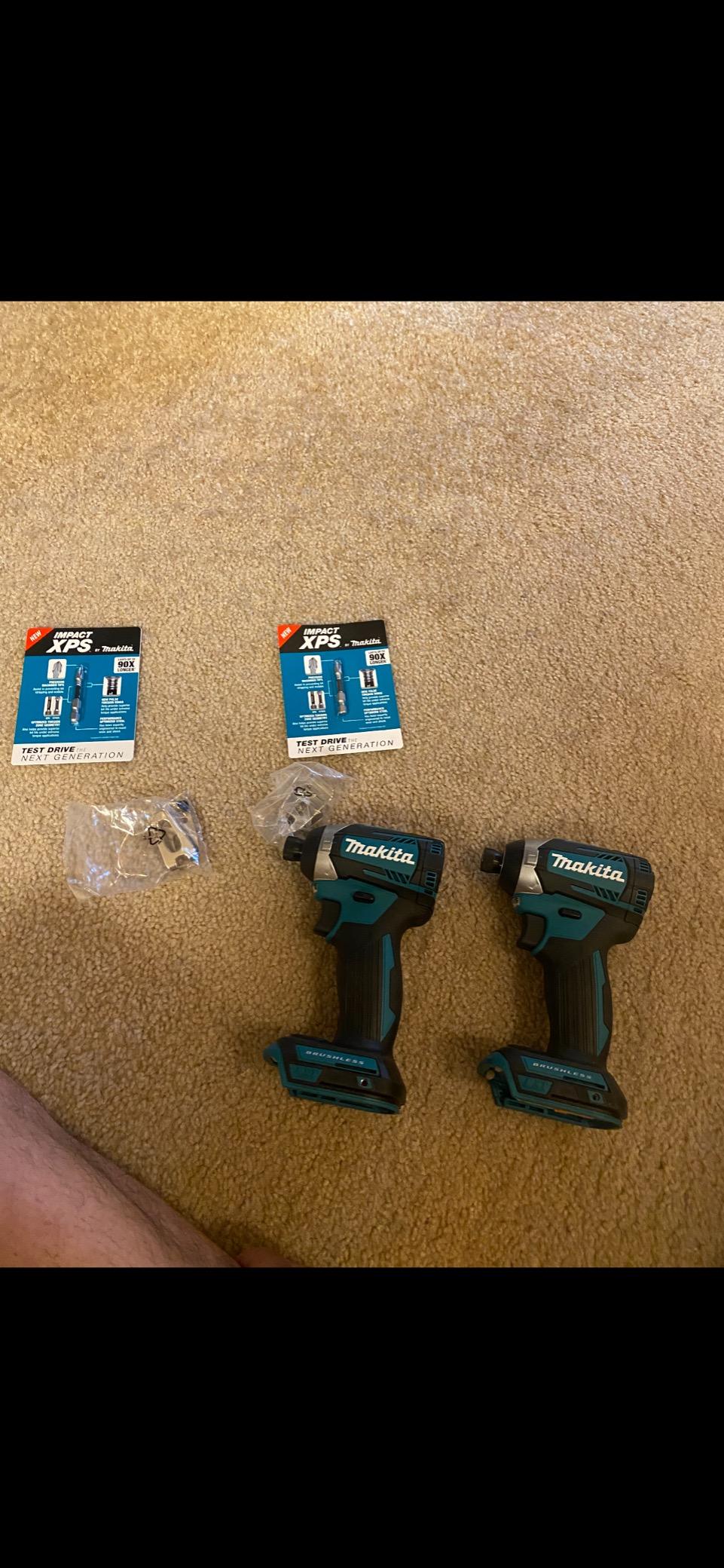
The XDT14Z is the most controlled driver here, and for anyone who strips screw heads for a living that is the feature that matters most. The Quick-Shift mode selector uses an automatic electronic controller that downshifts and reduces both rotation and impact speed just before a screw seats, so the tool eases off instead of burying the head. In our testing it produced the lowest stripped-head count of any driver we ran.
It also adds a tightening mode, or T-mode, built for self-drilling screws, where it drives faster without damaging the screw or the workpiece. Underneath, the brushless motor delivers 1,550 inch-pounds of torque at up to 3,600 RPM across three speed settings, and Makita states up to 50 percent longer run time per charge from the motor’s power management.
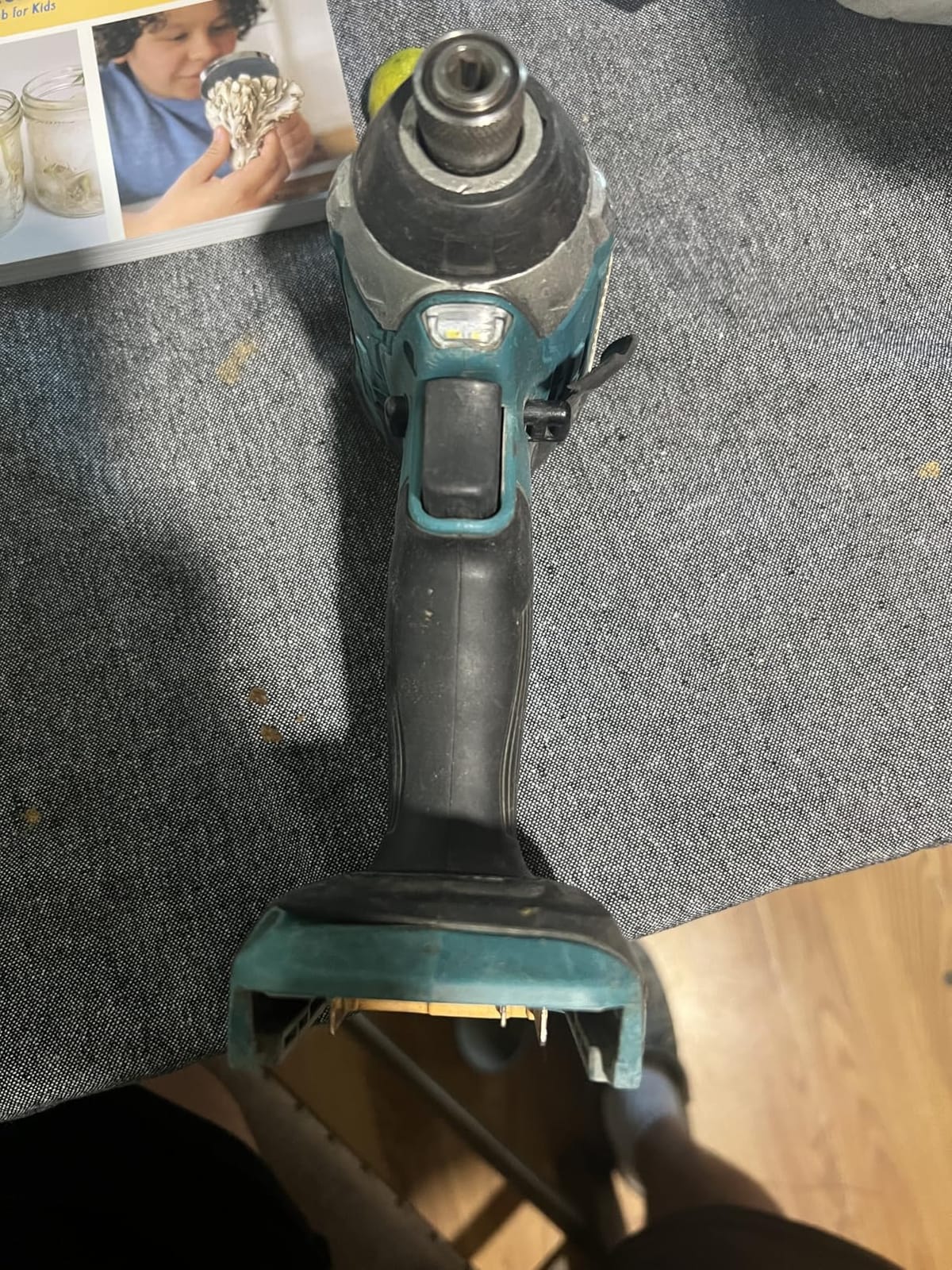
At 2.1 pounds this is one of the most compact drivers in the group, and reviewers consistently single out how small it feels while still being genuinely powerful. The quick-change chuck and the smooth gear noise make it pleasant on long sessions, and Makita platform owners list battery interchange as the deciding factor for staying in the family.
What you notice in the first hour
Quick-Shift changes how you drive. You can set the mode, push the screw home and stop thinking about it, which removes the constant trigger feathering that single-speed drivers demand on finished surfaces.
T-mode is the feature cabinet and HVAC installers notice fastest, because self-drilling screws go in without the runaway that usually flattens the point.
Where it stops being the right answer
It is a bare tool, and the 18V LXT platform packs are not the cheapest entry point. The single under-mounted LED means some screw heads sit in their shadow, and at full power on small-diameter screws in dense material it can still shear them if you do not use the lower settings.
7. Milwaukee M18 2656-20 Impact Driver – Best Lightweight M18
Milwaukee 2656-20 M18 18V 1/4 Inch Lithium Ion Hex Impact Driver with 1,500 Inch Pounds of Torque and LED Lighting Array (Battery Not Included, Power Tool Only)
1,500 in-lbs torque
2,750 RPM
3,450 IPM
18V M18
1.5 lb
Pros
- Lightest body in the list at a listed 1.5 lb with 1500 in-lbs of torque
- Textured rubber grip stays controllable in slippery conditions
- LED array sits below the chuck and lights the fastener line
- REDLINK electronics protect against overheating
Cons
- Tool only
- battery and charger sold separately
- Single speed with no drive control for delicate fasteners
- Older brushed motor design trails newer brushless models on runtime and noise
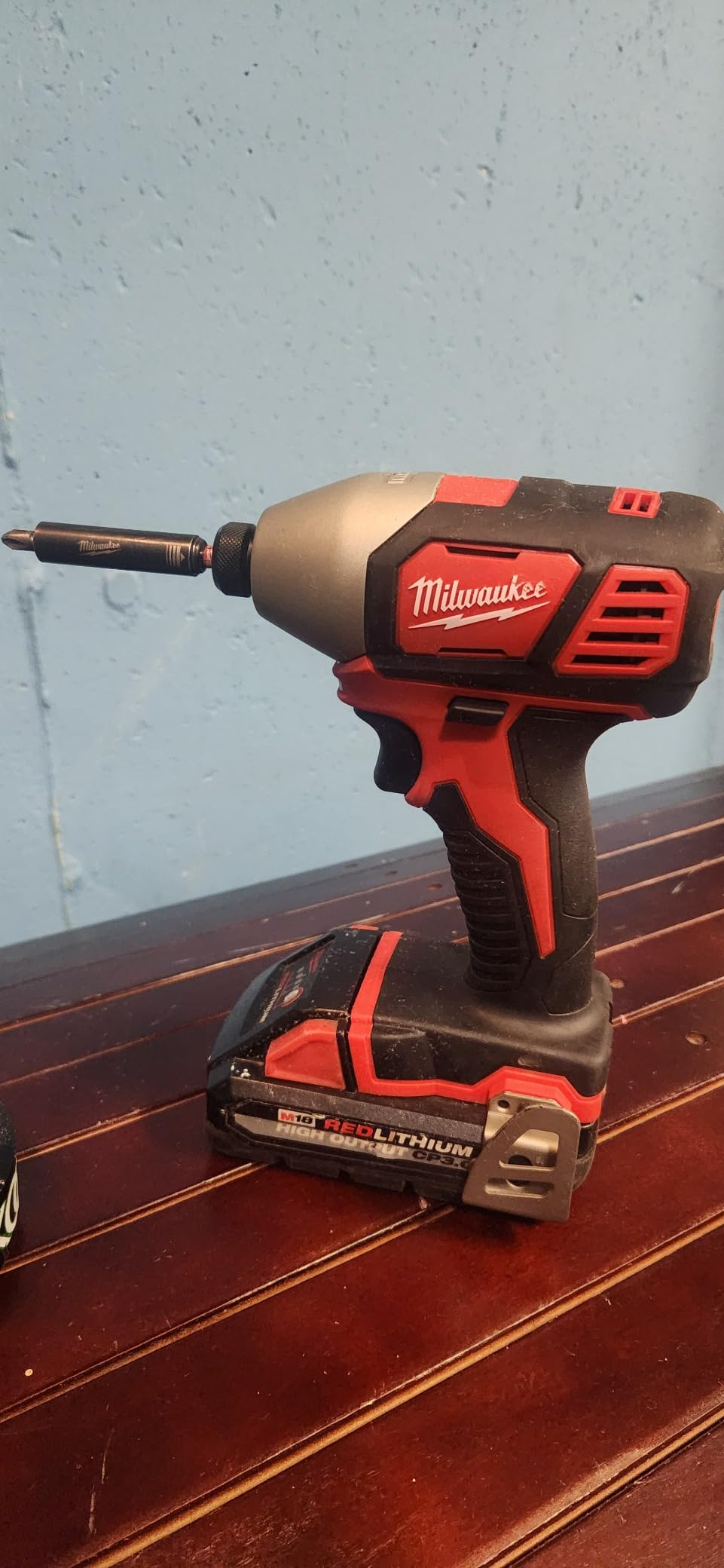
The 2656-20 is the most proven driver on this list, with more than 4,700 ratings behind it, and it remains a genuinely good tool rather than a museum piece. It delivers 1,500 inch-pounds of torque from a listed 1.5 pounds, and for anyone who wants M18 capability without the FUEL price tag, the arithmetic is hard to argue with.
It is also the tool that proves a single-speed design can be enough for a lot of work. The variable speed trigger lets you feather the last quarter turn manually, driving up to 3,450 impacts per minute at full demand, and owners accept that limitation in exchange for the light weight and low entry cost.
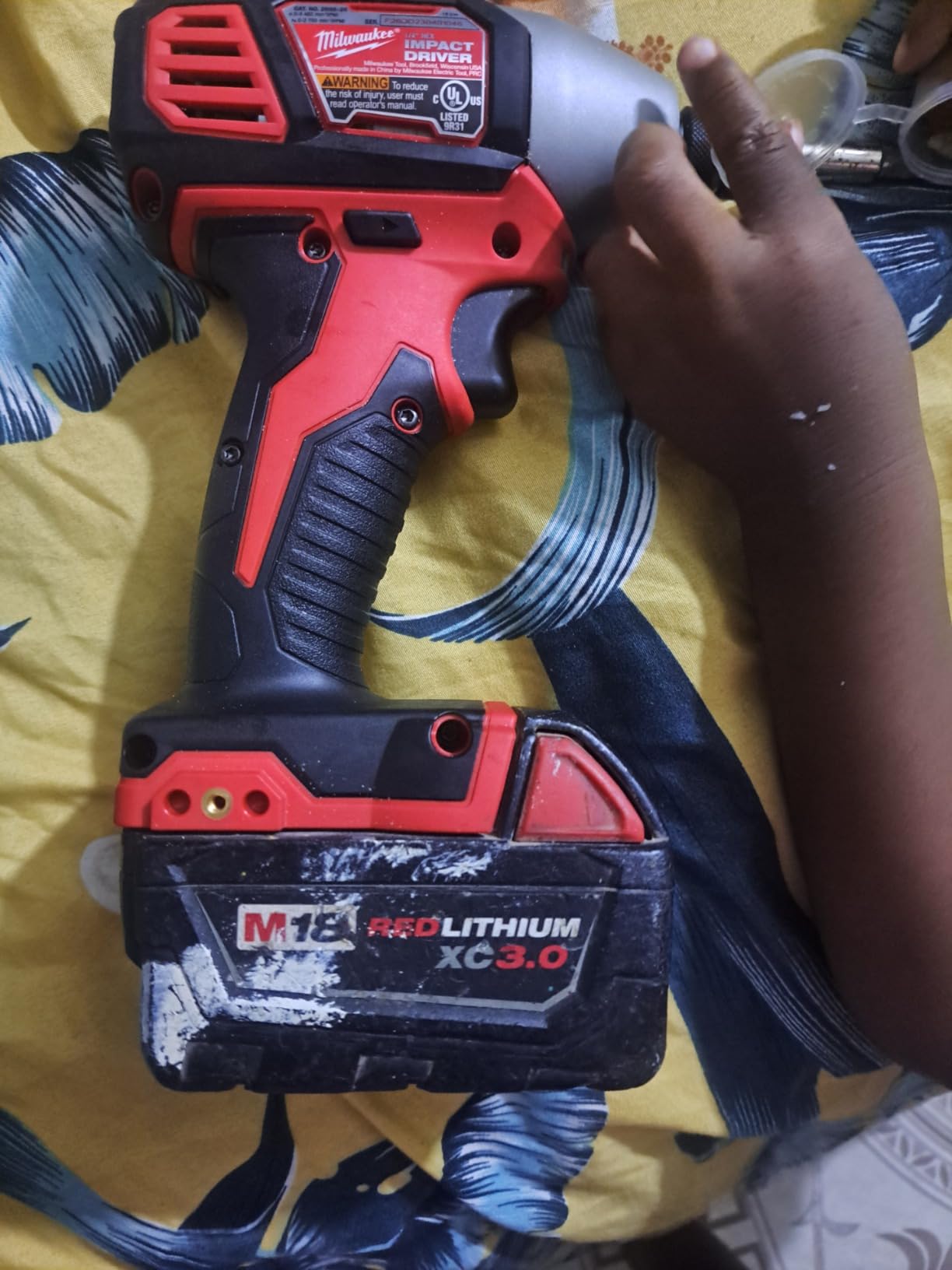
Two details did more for us than the spec sheet predicted. The textured rubber grip stays planted in wet or dusty conditions, and the LED array is mounted below the quick-connect chuck so it lights the fastener line rather than the ceiling above it. REDLINK electronics in the tool communicate with M18 packs to cut the risk of overheating on long removal jobs.
What you notice in the first hour
At 1.5 pounds it is noticeably easier on the wrist during overhead work and in the confined space of an electrical panel box. For an M18 owner, adding this instead of the FUEL model keeps the same batteries and a fraction of the outlay.
Reviewers commonly describe it as the dependable older sibling of the FUEL driver, and the volume of long-term use behind those ratings is part of what you are buying.
Where it stops being the right answer
Single speed means you do the fine control by hand, and the older brushed motor design produces more noise and shorter runtime than the brushless tools above it. It is also a bare tool, so the platform math applies as much as it does to any M18 purchase.
8. CRAFTSMAN CMCF800C1 20V MAX Impact Driver Kit – Best First Power Tool
CRAFTSMAN 20V MAX Impact Driver Kit, 1/4 Inch, 2,800 RPM, LED Work light, Battery and Charger Included (CMCF800C1)
1,460 in-lbs torque
2,800 RPM
3,100 IPM
20V MAX
2.5 lb kit weight
Pros
- Complete kit with 1.3Ah battery and charger in the box
- 1460 in-lbs handles lag bolts and large fasteners
- Quick-release chuck gives one-handed bit changes
- LED work light for dark areas
- Light 2.5 lb body
Cons
- Single speed with no drive control
- 1.3Ah battery is small and limits runtime on heavy work
- Torque trails the premium brushless drivers here
The CMCF800C1 is the first power tool we suggest to someone building a kit from nothing, because it solves the battery problem in one purchase. Driver, 1.3Ah battery and charger all arrive together, and at 1,460 inch-pounds of torque the tool is not a token addition to the box. Owners treat it as a capable tool for household and light-trade fastening.
Rated output is 1,460 inch-pounds of torque with up to 2,800 RPM and 3,100 IPM, which is real capability for lag bolts and large fasteners rather than just drywall screws. The quick-release chuck supports one-handed bit changes, and the LED work light improves visibility in the dark corners of a basement or a joist bay.
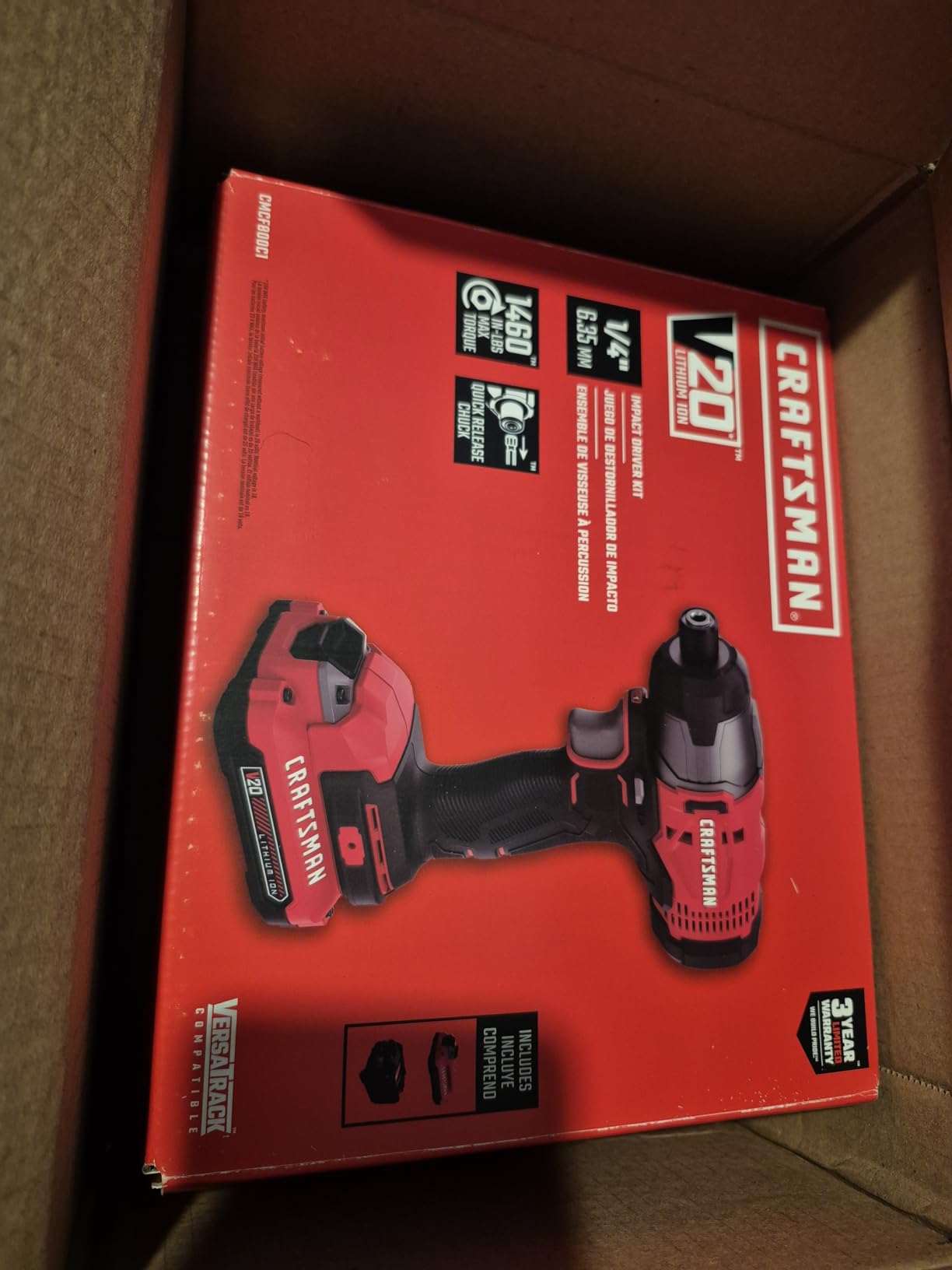
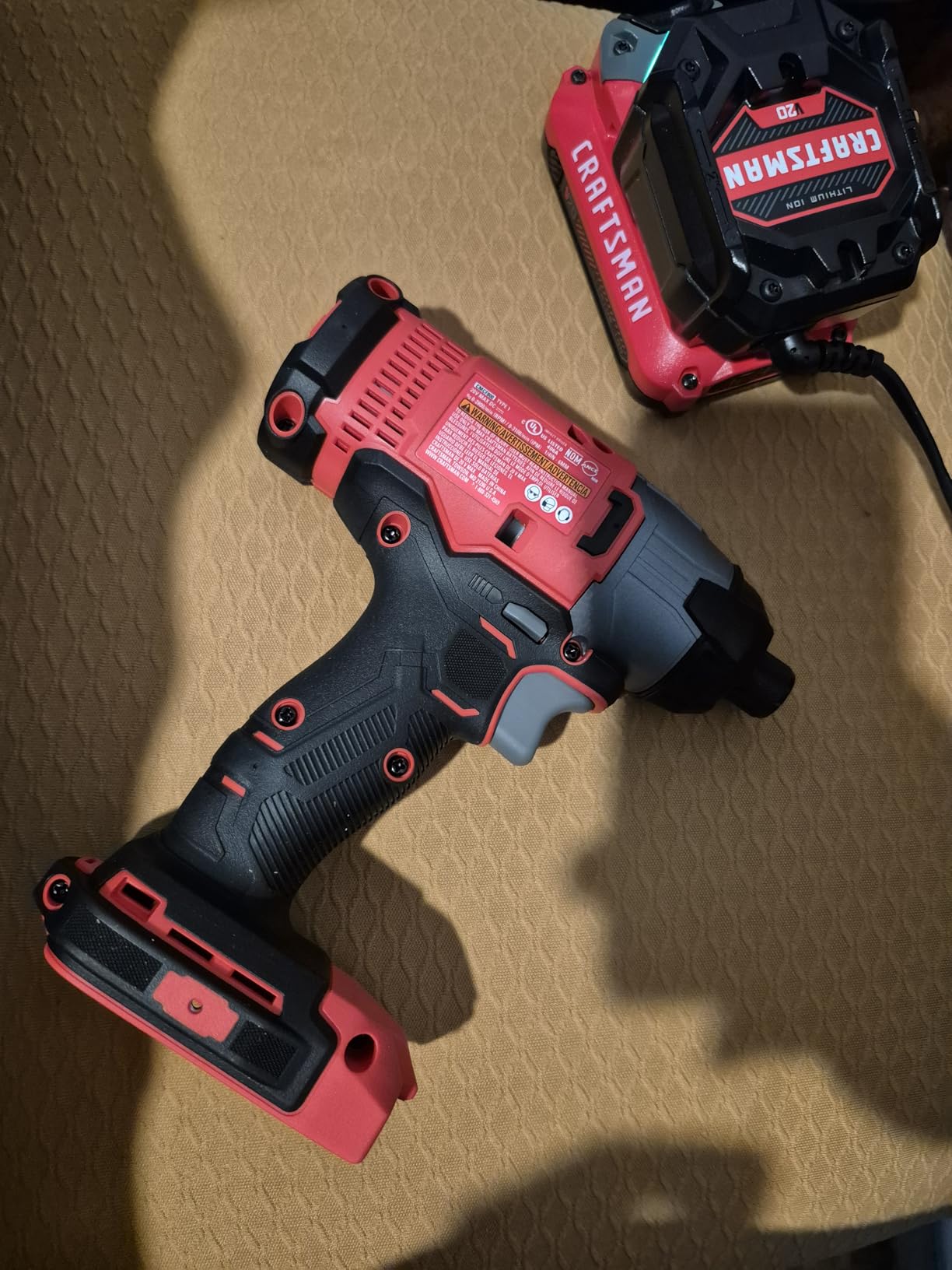
At a listed 2.5 pounds the tool is light enough for extended use, and the 20V MAX platform is shared with other CRAFTSMAN tools if your kit grows. The one-handed chuck release and the work light are the two features owners mention most, and both earn their place in our testing.
What you notice in the first hour
The included battery is what you notice, because nothing about the tool feels compromised to compensate. You can charge it while you work, and the driver is covering household and light-trade jobs the day it arrives rather than after a second purchase.
For furniture assembly and general household work, it covers the vast majority of jobs without anyone needing a second driver.
Where it stops being the right answer
Single speed, so finish screws and delicate fasteners get no electronic help, and the 1.3Ah pack is the smallest capacity here, which means more swaps on a serious framing day. Torque also sits below the brushless premium group, so very long structural screws are a stretch.
9. BLACK+DECKER BDCI20C 20V MAX Impact Driver Kit – Best for Household Projects
BLACK+DECKER 20V MAX* POWERCONNECT 1/4 in. Cordless Impact Driver Kit (BDCI20C)
1,375 in-lbs torque
3,000 RPM
3,900 IPM
20V MAX
Battery charger and bit in box
Pros
- More than 5400 ratings
- the most reviewed tool on this list
- Complete kit with battery
- charger and a screwdriving bit
- Compact and lightweight design limits fatigue
- Soft-touch grip and quick-release hex chuck
Cons
- Lower torque than the premium brushless drivers here
- Single speed with no drive control on small fasteners
- Two-year limited warranty is shorter than some rivals
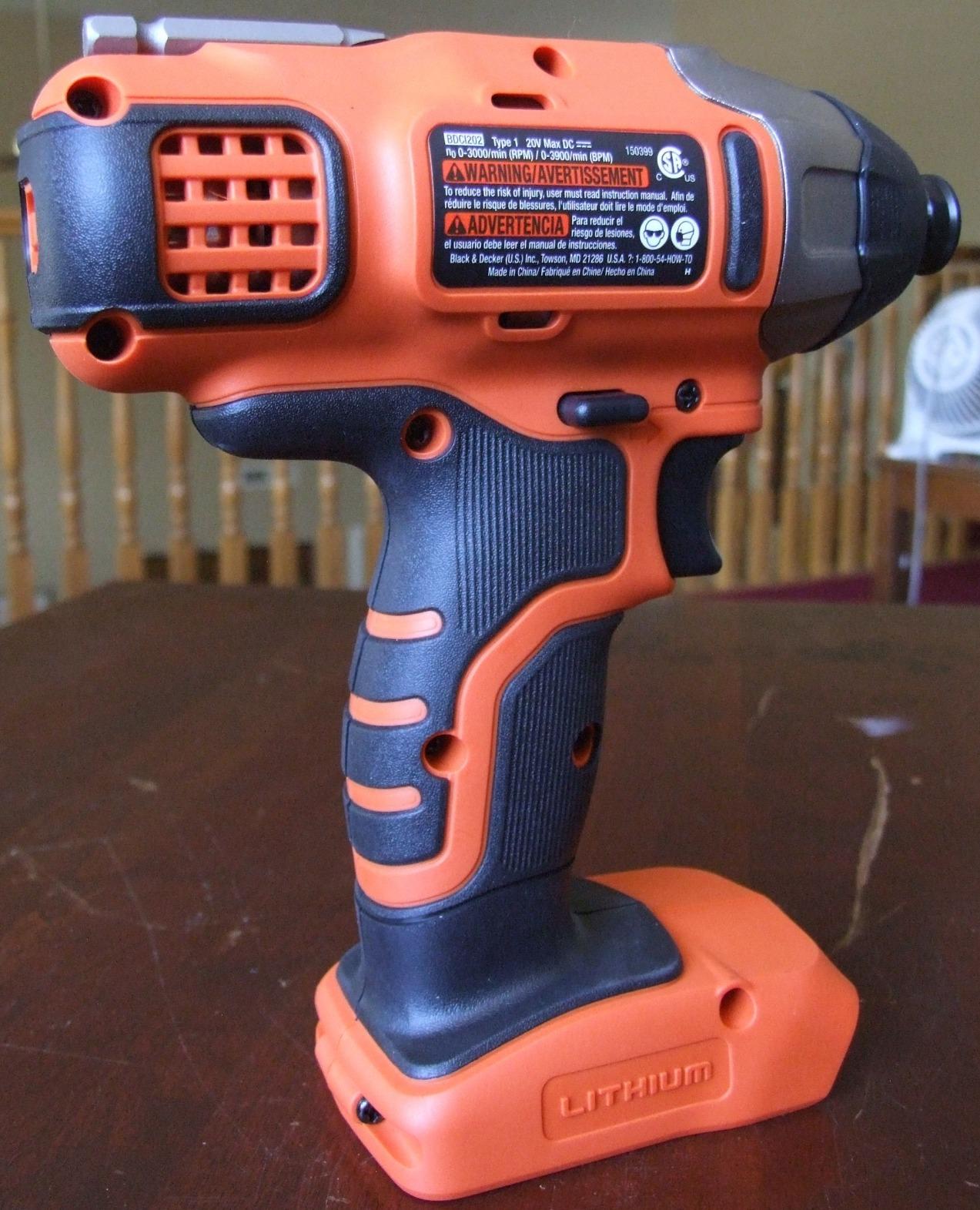
The BDCI20C is the one we would suggest to a renter or a first apartment tool kit, because it comes with a battery, a charger and a screwdriving bit in the box, which is the entire beginner shopping list in one carton. It is also the most reviewed tool we evaluated, with more than 5,400 ratings, and owners describe it as a dependable budget kit for household fastening.
Output is 1,375 inch-pounds of maximum torque at 3,000 RPM and 3,900 IPM, which is enough for shelves, furniture assembly, drywall framing and general repairs. The quick-release quarter-inch hex chuck allows fast one-handed bit changes, and the compact, lightweight design is the feature owners credit with reducing muscle fatigue over a long assembly session.
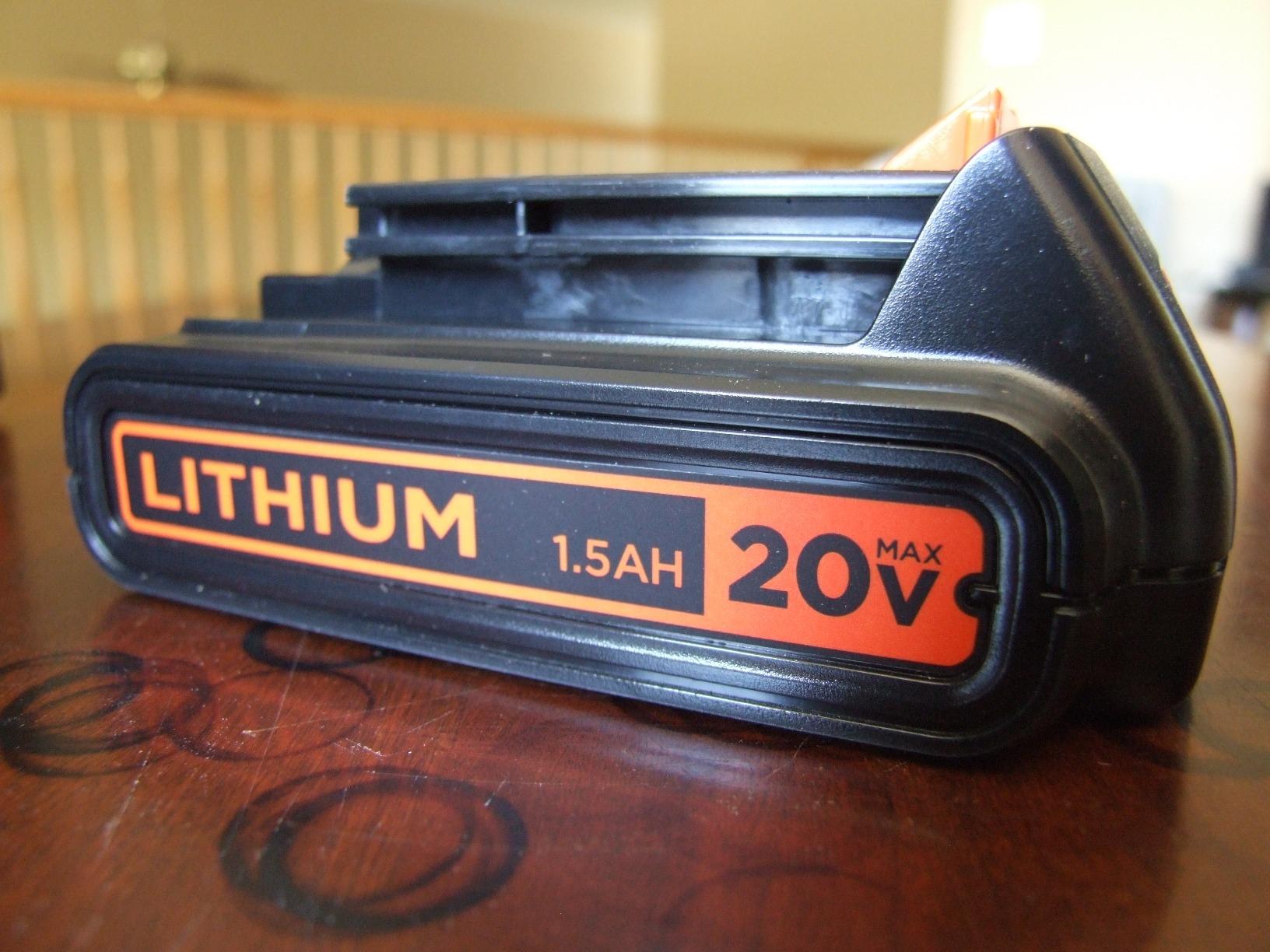
The soft-touch grip is a nicer touch than the price of the kit suggests, and the POWERCONNECT battery system means one pack can serve other tools in the range if you add a drill or sander later. Including the driver bit is a small thing that removes the first trip back to the drawer after opening the box.
What you notice in the first hour
You notice that it is ready to work immediately, which is the entire point. The chuck takes driver bits one-handed, the light is angled usefully, and nothing in the first hour suggests you skimped on the parts that matter.
For weekend projects, light home repair and apartment maintenance, it covers the work without a learning curve.
Where it stops being the right answer
Torque is the lowest of the ten, so very long structural screws and big lag bolts are not its strength. Single speed means no drive control on small or delicate fasteners, and the two-year limited warranty is the shortest among the makers here.
10. Ryobi ONE+ PCL235B Impact Driver – Best Entry-Level Torque
RYOBI ONE+ 18V Cordless 1/4 in. Impact Driver – 1,800 in-lbs Torque, 0-3,400 IPM, Tool Only (Battery Not Included) – PCL235B
1,800 in-lbs torque
0-3,400 IPM
ONE+ 18V platform
6.7 inch length
Pros
- Lowest entry point in this roundup
- 1800 in-lbs of rated torque at the entry price
- ONE+ 18V packs are inexpensive and broadly available
- Compact 6.7 inch length fits tight spaces
- Built-in LED working light
Cons
- Tool only
- battery and charger sold separately
- Single speed with no drive control on small fasteners
- 30-day limited warranty is far shorter than the rest
The PCL235B is the cheapest way into an impact driver platform, and 1,800 inch-pounds of rated torque at that entry point is genuinely hard to find elsewhere. Owners consistently single out the torque number and the low cost of ONE+ packs as the reason it works for them, and at 6.7 inches long the body fits into tight spaces that bigger drivers will not.
It runs to 3,400 IPM and takes standard quarter-inch hex driver bits, with a built-in LED working light for dark work areas. The ONE+ 18V platform is broad enough that batteries are inexpensive and easy to source, which is what makes the entry point hold up after the first tool.
Where it impressed us was ordinary household work, where a light, short tool with a working light gets used far more often than a heavier premium driver. If you are building a kit one tool at a time, this is a sensible place to start because adding a second battery later is straightforward.
What you notice in the first hour
The short body is the difference. It fits under cabinets and between joists where longer drivers will not, and the light covers the fastener line. For furniture, shelving and general repairs, the tool simply keeps up.
Plenty of buyers pair it with a second pack so the first can charge while the second works, which is the practical way to live with a tool-only purchase.
Where it stops being the right answer
Single speed means no drive control on small or delicate fasteners. The 30-day limited warranty is the shortest here by a wide margin, and its average rating and share of one-star reviews are the lowest in the group, so treat it as an occasional-use tool rather than a daily-driver shop tool.
What It Really Costs to Start on Each Platform?
The single most common mistake in this category is falling for a bare tool price. A driver is a battery-powered tool, so if the box does not contain a pack and a charger, the number on the listing is roughly half of what you need to spend. Buyers on tool forums repeat this warning constantly: the tool is the cheap part, the batteries are where the money actually goes.
That changes the ranking of this list depending on what you already own. If you have 18V LXT Makita packs, the XDT131 and XDT14Z are the cheapest real capability you can add. If you have 20V MAX packs from DEWALT, CRAFTSMAN or BLACK+DECKER, the DCF845B is the strongest driver in the group for a single tool price. If you own nothing at all, the four kits here, the Makita XDT131, the DEWALT DCF787D1, the CRAFTSMAN CMCF800C1 and the BLACK+DECKER BDCI20C, are the only entries that put you in business without a second purchase.
Buying the bare tool plus a separate high-capacity battery and charger is often cheaper than paying the kit premium, and it lets you pick a larger pack than the small one that ships in a kit. Our advice is to buy into one platform first, buy the best driver that platform offers that meets your needs, and only then add tools, because batteries are compatible within a platform and useless across them.
Impact Driver vs Impact Wrench: When to Spend Elsewhere
Stop and read this before you buy. An impact driver has a quarter-inch hex chuck and exists to drive screws and bolts into wood and metal. An impact wrench has a half-inch square drive and exists to remove and install nuts, lug nuts and socket hardware, and no amount of driver torque substitutes for the socket retention and nut-specific design a wrench provides.
If your work involves wheels, lug nuts, carriage bolts in a socket or anything where you need to trust a specified torque, you need a wrench, not a driver. A driver can break most small nuts loose with a socket adapter, which makes it a useful emergency backup, but the half-inch anvil and the nut-stop modes of a wrench are what make that work repeatable. Our guides to the best cordless impact wrenches and the best impact wrenches for tire changes cover that side if lug nuts are part of the job.
One more unit trap to know about. Driver torque is quoted in inch-pounds, so 2,000 inch-pounds is about 167 foot-pounds. When someone asks whether 250 foot-pounds is enough for lug nuts, the honest answer is that lug nuts on a car usually want 90 to 120 foot-pounds, which is inside the reach of a good driver with a socket adapter, but the number they are really reading on a driver listing is 250 inch-pounds, not foot-pounds.
How to Choose an Impact Driver Under $200
Torque in inch-pounds is the headline number, and more of it is genuinely useful up to about 2,000 inch-pounds. Below roughly 1,300 inch-pounds you are fine for deck screws and general home work, above 1,800 inch-pounds you can handle long lag bolts and big structural screws with fewer restarts. Do not chase a number far past that, because beyond it the gains are mostly marketing rather than work you will do.
Impact rate, or IPM, is the speed after the tool breaks the fastener loose. High IPM matters on repetitive work like driving 80 deck screws or a season of shop assembly, and the difference between 3,100 and 3,900 IPM is felt mainly as fatigue you avoid rather than time you save.
Drive modes are the control layer. A single-speed tool makes you feather the trigger by hand on every finish screw, and two or three settings plus a self-tapping or assist mode is the point at which the tool starts protecting you from stripped heads. If you drive a lot of small fasteners in finished material, weight these modes heavily.
Size and weight decide where you can work. A 1.5 to 2.1 pound driver is comfortable overhead and in tight stud bays, and anything over four pounds starts to feel heavy above shoulder height. Head length matters in the same way, since a long driver will not fit between a joist and a wall.
Battery platform is the decision with the longest tail. Compare what you already own first, and treat a bare tool as a platform commitment rather than a single purchase. M18 and 20V MAX are interchangeable in spirit, since 18V and 20V MAX are the same class of lithium-ion pack, but they are not physically compatible, and a small compact platform like M12 is a separate purchase from both.
Warranty length is a rough proxy for how long the maker expects the tool to last. Multi-year coverage across the tool and battery is normal in the mainstream brands here, while a 30-day warranty on the cheapest entry is a signal that the design is not aimed at daily work.
On the question that comes up constantly, which is better, DeWalt or Milwaukee impacts? At this budget both brands field drivers that handle the same residential and light-trade work, and the honest answer is that the driver matters less than the platform. Choose DEWALT if you already own 20V MAX packs or want the DCF845B control and the DCF787D1 kit, and choose Milwaukee if you own M18 packs, want the highest torque in this list from the 2953-20, or plan to collect tools for years and value battery availability. Buying the wrong brand’s battery platform is the expensive mistake, not buying the wrong driver.
Frequently Asked Questions
What is the best impact driver for the money?
The DEWALT DCF845B is the strongest overall value in this price range: 1,825 in-lbs of brushless torque, three speed settings and a variable trigger in a compact body. If you have no batteries at all, the Makita XDT131 kit is the better starting point because it includes a 3.0Ah battery and charger.
What is the best affordable impact driver under $200?
The Makita XDT131 kit delivers 1,500 in-lbs of torque with a battery and charger in the box, so it is ready to use immediately. If you already own 20V MAX or M18 packs, a bare tool such as the DEWALT DCF845B gives you more capability for a single tool purchase.
What is the best budget impact driver?
The CRAFTSMAN CMCF800C1 and BLACK+DECKER BDCI20C kits both include a battery, charger and enough torque for deck screws, furniture and general household work. The Ryobi ONE+ PCL235B is the lowest entry point and still rates 1,800 in-lbs, but it is a tool-only purchase with a 30-day warranty.
Are DeWalt or Milwaukee impact drivers better?
Both handle the same residential and light-trade fastening work at this budget, so the platform usually decides. DeWalt 20V MAX offers more control options and strong kits, while Milwaukee M18 provides the highest torque in this list and the widest selection of packs. Owning the batteries for one brand makes that brand the cheaper choice.
Is 250 ft/lbs of torque enough for lug nuts?
Most car lug nuts want 90 to 120 ft-lbs, so a driver with a socket adapter can usually break them loose, but the 250 figure is usually inch-pounds on driver listings, not foot-pounds. For repeated lug nut work, a half-inch impact wrench is the correct tool, and our impact wrench guides cover the options.
Conclusion
The best impact drivers under $200 are all capable enough for real work, and the differences between them are mostly about control, weight and what the box contains rather than raw power. If you are starting from nothing, buy the Makita XDT131 kit and get moving with a battery and charger in the carton. If you already own 20V MAX packs, the DEWALT DCF845B is the strongest single purchase you can make, and if you want the most torque and modes in the group, the Milwaukee M18 FUEL 2953-20 is the top of the list.
For light and occasional work, the CRAFTSMAN, BLACK+DECKER and Ryobi picks cover the essentials with the least commitment, and the M12 FUEL and the M18 2656-20 handle overhead and tight-space jobs that bigger drivers will not. Check the current price and the box contents before you order, and buy into one battery platform first so the next tool costs you a fraction of this one.