
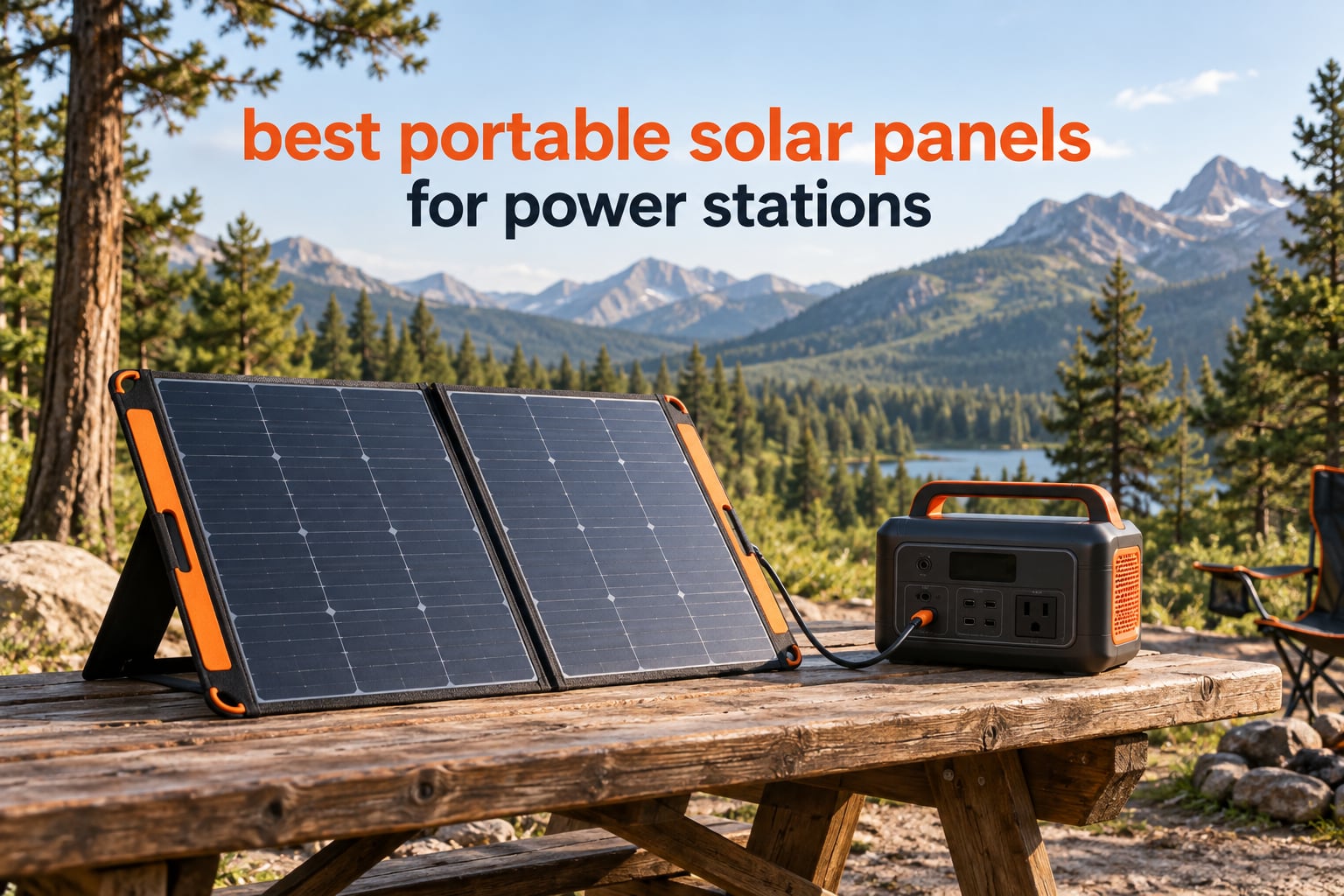
The best portable solar panels for power stations in 2026 are the ones that electrically match the station you already own, not simply the ones with the biggest number on the box. Our top pick is the BLUETTI 200W foldable panel: it carries a 23.4 percent monocrystalline cell efficiency, an ETFE surface, adjustable kickstands, and the largest buyer base of any panel we looked at, with 1,206 reviews averaging 4.5 stars.
Here is the part most roundups skip. A portable power station is a battery with a charge controller attached, and that controller has a hard ceiling on the voltage it will accept from a panel. Plug a panel in whose open-circuit voltage sits above that ceiling, and nothing happens at all. Plug in one with a matching voltage but the wrong plug, and the same thing. Both failure modes look identical from the outside: a cable that fits, and a battery that never moves.
So this roundup is built around compatibility first and wattage second. We picked ten panels, read every spec sheet for output voltage, connector type and ingress rating, and sorted them by the power stations they will actually charge. For each one we tell you what it pairs with, what it costs you to carry, and where its claims and its reported output diverge.
One disclosure before we start. We did not put these panels on our own bench and log wattage. Every output figure in this article comes either from the manufacturer’s published specification or from what buyers report in their reviews, and we label which is which. Where a brand’s headline number and the buyer-reported range disagree, we show you both rather than picking the flattering one.
Table of Contents
Top 3 Picks for Best Portable Solar Panels in 2026

BLUETTI 200W Solar Panel
- 23.4% monocrystalline efficiency
- ETFE scratch-resistant surface
- Adjustable kickstands
- 16.1 lb

Renogy 200W Portable Solar Panel
- 16BB N-Type cells at 25% efficiency
- 45W USB-C PD plus two USB-A
- MC4 output
- 13.9 lb

ZOUPW 100W Portable Solar Panel
- 5-in-1 connector cable
- USB-C PD and two USB-A ports
- IP67 ETFE laminate
- 9.5 lb
Those three cover the range most buyers actually need. The BLUETTI 200W is the one to buy if you own a mid-sized station and want a single panel that refills it in a day. The Renogy 200W adds USB-C device charging on top of MC4 station charging, which matters if your trip involves laptops. The ZOUPW 100W is the one to buy if your loads are electronics rather than appliances, or if you are pairing panels to get there.
All Ten Picks at a Glance in 2026
| Product | Specifications | Action |
|---|---|---|
| BLUETTI 200W Solar Panel |
|
Check Latest Price |
| Renogy 200W Portable Solar Panel |
|
Check Latest Price |
| ZOUPW 100W Portable Solar Panel |
|
Check Latest Price |
 HQST 200W Portable Solar Panel HQST 200W Portable Solar Panel |
|
Check Latest Price |
 GRECELL 200W Portable Solar Panel GRECELL 200W Portable Solar Panel |
|
Check Latest Price |
 EBL 200W Portable Solar Panel EBL 200W Portable Solar Panel |
|
Check Latest Price |
 SOKIOVOLA 200W Portable Solar Panel SOKIOVOLA 200W Portable Solar Panel |
|
Check Latest Price |
 TWELSEAVAN 200W Portable Solar Panel TWELSEAVAN 200W Portable Solar Panel |
|
Check Latest Price |
 MHPOWOS 220W Portable Solar Panel MHPOWOS 220W Portable Solar Panel |
|
Check Latest Price |
 Renogy 100W Portable Solar Panel Renogy 100W Portable Solar Panel |
|
Check Latest Price |
Two things jump out of that list. Output voltage ranges from 12V on the GRECELL to 48V on the MHPOWOS, and that single number decides whether a panel works with your station or does nothing. And weight ranges from 8.9 lb to 18 lb, which decides whether you carry it on your back or leave it at basecamp.
1. BLUETTI 200W Solar Panel – Best Overall for Power Stations
BLUETTI 200W Solar Panel for Solar Generator EB3A AC2A AC50B AC70 AC180 AC200L Elite 200 V2 AC300 AC500 B300K, Foldable Solar Charger with Adjustable Kickstands for RV, Camping, Blackout
200W output
23.4% mono efficiency
26.1V max voltage
16.1 lb
89.2 x 23.2 x 1.99 in
Pros
- 23.4% monocrystalline cell efficiency
- ETFE coating resists scratches and splashes
- Adjustable kickstands hold position
- Works with BLUETTI stations and other solar generators
Cons
- Among the heavier builds in the 200W foldable class at 16 to 17 lb
- A 12-month warranty is among the shortest offered here
- No USB ports for direct device charging
Three quarters of the reviews on this panel give it five stars, and they describe the same two things: it holds its shape when the wind picks up, and it drops into a BLUETTI station without anyone going looking for an adapter. That second point is the reason it takes the top slot. The 200W rating pairs naturally with the mid-size BLUETTI line, and the 26.1V maximum voltage sits comfortably inside the input window of most stations in that class.
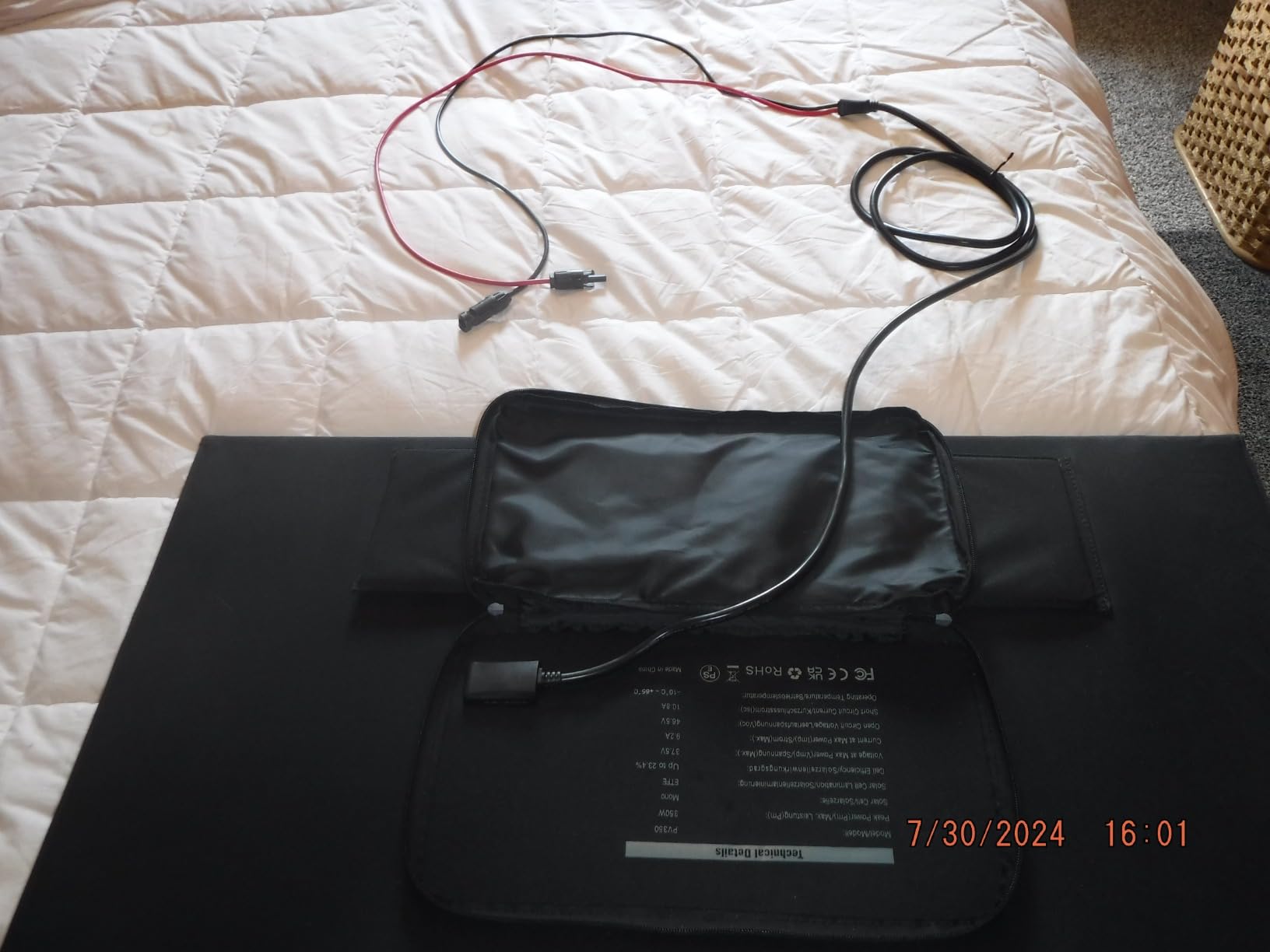
The build is a genuine suitcase: 89.2 inches long unfolded, folding down to 22.5 by 23.6 by 2.9 inches. The spec sheet lists a 12-month manufacturer warranty, and the panel uses monocrystalline silicon with an ETFE surface rated up to 23.4 percent conversion efficiency. Adjustable kickstands come in the box, so you can set the angle without hunting for flat ground.
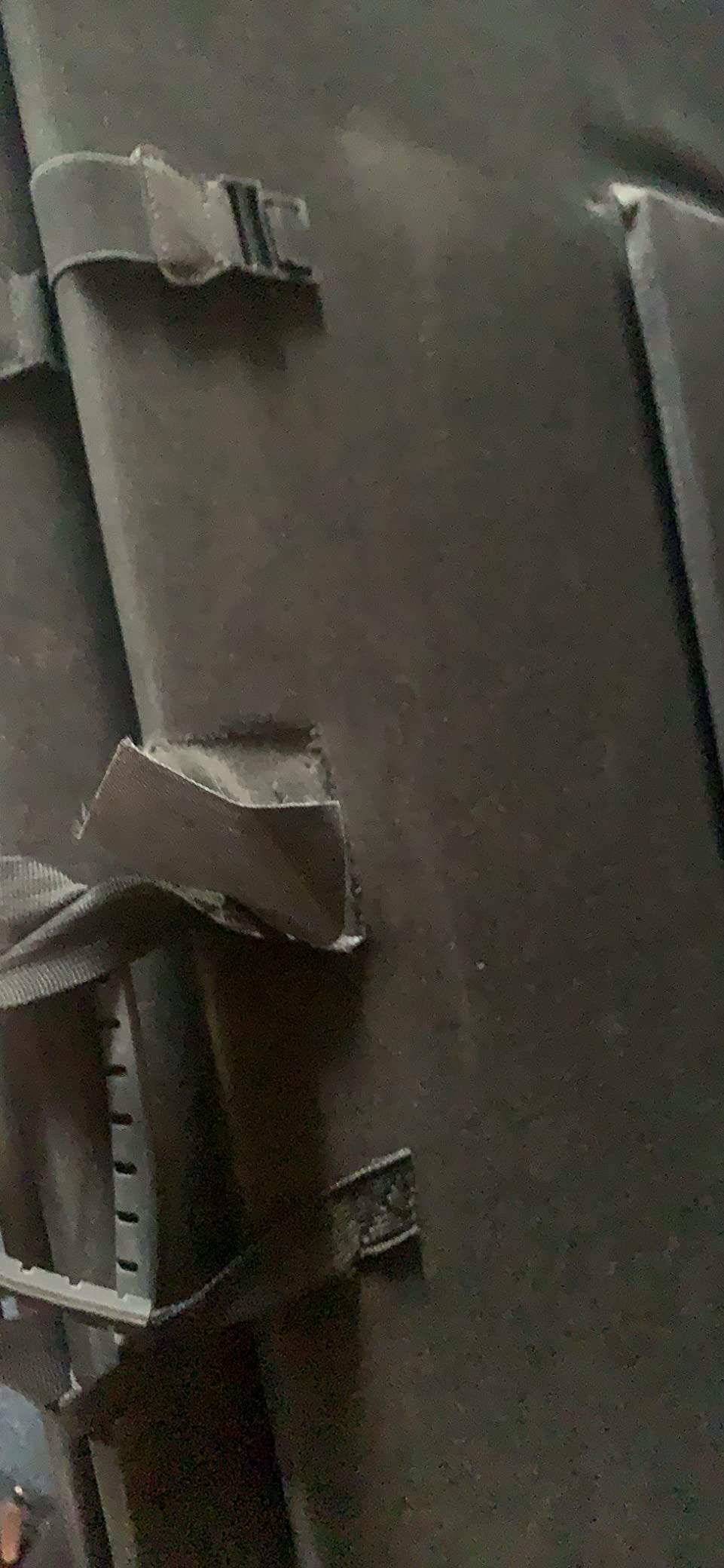
Buyers report that the weight is the recurring gripe, and we would put it plainly: at 16.1 lb this is not a panel you want on a long backpacking trail. It is a car-camping, van-life, and basecamping panel. Someone carrying it to a backcountry site will find the 10.1 lb GRECELL or the 8.9 lb Renogy 100W a far more sensible load.
On durability, reviews describe scratches, splashes and a season of folding with no complaints about the laminate crazing. There is also no IP67 or IP68 claim in the listing, which is a fair reason to shelter it during heavy rain rather than leaving it out. The connector is a solar connector rather than a bare MC4, so confirm your station takes that before ordering.
What the 200W rating actually buys you
Wattage on a panel is a maximum, and the number you get on a clear day at low elevation falls short of it. What matters as much is whether your station can absorb 200W in the first place. Many stations cap solar input at 100W or 140W, and past that cap the extra panel wattage goes nowhere.
Used on a station that accepts the full 200W, this panel is a straightforward one-panel solution for refilling a battery away from an outlet. Used on a smaller station, it still works, you just leave headroom unused. BLUETTI is named in the compatibility list on the panel itself, but the solar connector is a fairly common standard, so third-party stations generally pair up too.
Where it disappoints
The clearest limit is the 12-month warranty, among the shortest in this group. When a panel lives a hard life with repeated folding, a torn cable or a bent connector pin is the part that fails first, and short coverage on that part costs you.
If your station is a 1000Wh unit and you want a single panel that will refill it in one good day, this is the one. If you are packing weight or you need to charge a laptop without draining the battery, keep reading.
2. Renogy 200W Portable Solar Panel – N-Type Cells and USB-C Output
Renogy 200W Portable Solar Panel for Power Stations, 25% Efficiency
200W output
25% N-Type efficiency
21.6V max voltage
45W USB-C PD
MC4 plus USB-A
Pros
- 16BB N-Type cells rated at 25% efficiency
- 45W USB-C PD and two USB-A ports charge devices directly
- Magnetic closure instead of Velcro
- UL 61730 plus CE RoHS FCC CA65 certified
- Four kickstands with 40/50/60 degree adjustment
Cons
- Costs more than most 200W foldable panels
- MC4 and USB ports mean you have to pick the right cable
- Ground studs sold separately
The 45W USB-C PD output is the reason reviewers single this one out, and for anyone whose trip involves a working laptop rather than a weekend of lights and a phone, it removes a real bottleneck. The 200W output still goes to the power station through the MC4 port, so one panel covers both jobs.
The cells are 16BB N-Type rated at 25 percent efficiency, which is a step up from the 9BB and 11BB monocrystalline panels that defined this category. Maximum voltage is 21.6V, low enough to pair with a wide range of stations without hunting for a high-voltage input. It folds to 23.72 by 22.99 by 1.97 inches and weighs 13.9 lb.

Buyers mention the magnetic handle and the angle adjustment on the four kickstands more than almost anything else. Setup is a matter of unfolding and setting the legs, and reviewers who have used both this and cloth panels call the frame noticeably stiffer. The certification list is also longer than any other here: UL 61730, CE, RoHS, FCC and CA65.
Renogy ships a 2-year material and workmanship warranty, which is longer than most in this group but not the longest. One practical note from the reviews: with MC4 and proprietary USB ports on the same panel, you have to pick the right cable, so confirm the connector type before you leave the house.

Why the 25% N-Type number matters
Conversion efficiency describes how much of the sunlight striking the panel becomes electricity. At 25 percent, this panel squeezes more out of a given square inch than the 23.4 and 23.5 percent panels in this roundup. In practical terms that means a smaller panel can deliver the same wattage, or the same panel produces more in the same footprint.
It also reduces a deficit in partial shade. N-Type cells carry a lower degradation rate than older cell formats, so a panel that has been folded and unfolded for a few seasons holds its output better.
Where it disappoints
Price is the first thing reviewers complain about, and it is fair: this panel sits above most of the 200W field. The second is that having two output types creates a decision to make in the field. Choose the USB-C port when the goal is a laptop or a battery pack, and the MC4 port when the goal is the station.
Anyone already on the Renogy ecosystem, or anyone who wants one panel to serve both a station and a laptop, will be happy with this. If you only ever charge a station and you want the lowest cost per watt, the HQST 200W does the same job for less.
3. ZOUPW 100W Portable Solar Panel – Best Entry-Level Pick
ZOUPW 100W Portable Solar Panel for Power Station,23.5% Efficiency Mono Foldable Solar Charger for Jackery 300/Ecoflow River/Anker/Bluetti,IP67 Waterproof for Camping RV Off-Grid Emergency Power
100W output
23.5% mono cells
24.3V max voltage
9.5 lb
IP67 ETFE laminate
Pros
- 5-in-1 cable covers DC8020 XT60 Anderson DC7909 and DC5521
- Built-in hub with USB-C PD 15V/3A and two USB-A ports
- IP67 waterproof ETFE laminate
- 9.5 lb with a magnetic carry handle
Cons
- 100W caps output well below a 200W panel
- Charging speed is limited by your station's own input ceiling
- Only two kickstands and a single 10 ft cable
At 4.6 stars across 711 reviews, this carries the highest average rating of the ten panels we looked at, and the reason is straightforward: the 5-in-1 connector cable. It covers DC8020, XT60, Anderson, DC7909 and DC5521 in one lead, which means it will physically reach almost any power station on the market without a separate purchase.
The panel itself is 100W of 23.5 percent monocrystalline silicon with a 24.3V maximum voltage and 4.96A of current. It folds to 24.13 by 21.06 by 1.77 inches and weighs 9.5 lb, which is light for a panel that can charge a station. The ETFE laminate carries an IP67 rating, and a zippered pocket keeps the controller and cables off the ground.

There is also a built-in charging hub with USB-C PD at 15V and 3A plus two USB-A ports including QC3.0. That is enough to top up a phone, a camera battery, or a small power bank directly from the panel, which is the fastest way to use 100W when your station is already full.
The limitation is arithmetic, not quality. A 100W panel cannot outrun a 200W panel on a big station, and if your power station has a 60W maximum solar input, it will only ever draw 60W from this panel no matter how good the sun is. Buyers note exactly this and still consider it the best value per watt in the group.

When 100W is genuinely the right number
Plenty of loads do not need 200W. A phone, a laptop, a couple of lanterns, a WiFi hotspot and a camera or two together draw well under 100W. If that is your week, a 100W panel plus a small 300 to 500Wh station will run indefinitely in good sun, and you will carry half the weight of a 200W setup.
There is a second use: pairing. Two 100W panels in parallel will feed many stations at close to double the input a single panel delivers, as long as the station supports parallel wiring and you have a suitable connector. The same trick with two 200W panels pushes a 1000Wh station into a full charge in a single day, which a single 200W panel will not manage before sunset.
Where it disappoints
The obvious one is that 100W is a ceiling you cannot raise. If your station is a 2000Wh unit meant to run a fridge or a CPAP machine, this panel will refill a tenth of it across a full day of sun. The two kickstands are also fewer than the four on most 200W panels here, so expect more adjustment and fiddling to get a stable angle.
Buy this one if your loads are electronics, if you are building a two-panel array, or if you want a panel that reaches any station without an adapter. Skip it if you are sizing for appliances.
4. HQST 200W Portable Solar Panel – Best for Easy Setup and Rain
HQST 200W Portable Solar Panel, N-Type, 25% Efficiency, IP67 Waterproof
200W output
25% N-Type efficiency
11.82 lb
IP67 PVDF laminate
Folds to 1.97 in thick
Pros
- 16BB N-Type cells rated up to 25% efficiency
- 11.82 lb makes it about a third lighter than typical 200W portables
- IP67 waterproof with a fully laminated seam-free body
- 3-in-1 adapter cable covers Jackery EcoFlow BLUETTI Goal Zero and Anker
Cons
- 3-in-1 cable covers fewer connectors than the 4-in-1 and 5-in-1 rivals
- Only two kickstands rather than four
- 12-month warranty and a newer listing with less field history
The headline number here is 11.82 lb for 200W. That is roughly a third lighter than a typical 200W foldable, and buyers repeatedly single out the weight-to-output ratio as the reason the panel feels larger than it is. For a 200W rating in this roundup, that ratio is unusual.
Construction is a fully laminated seam-free body with a PVDF coating and an IP67 waterproof rating. Sixteen N-Type cells give a 25 percent efficiency figure, and the panel folds to about 1.97 inches thick. Two adjustable kickstands hold between 40 and 60 degrees, which covers most of the useful range for a mid-latitude campsite.
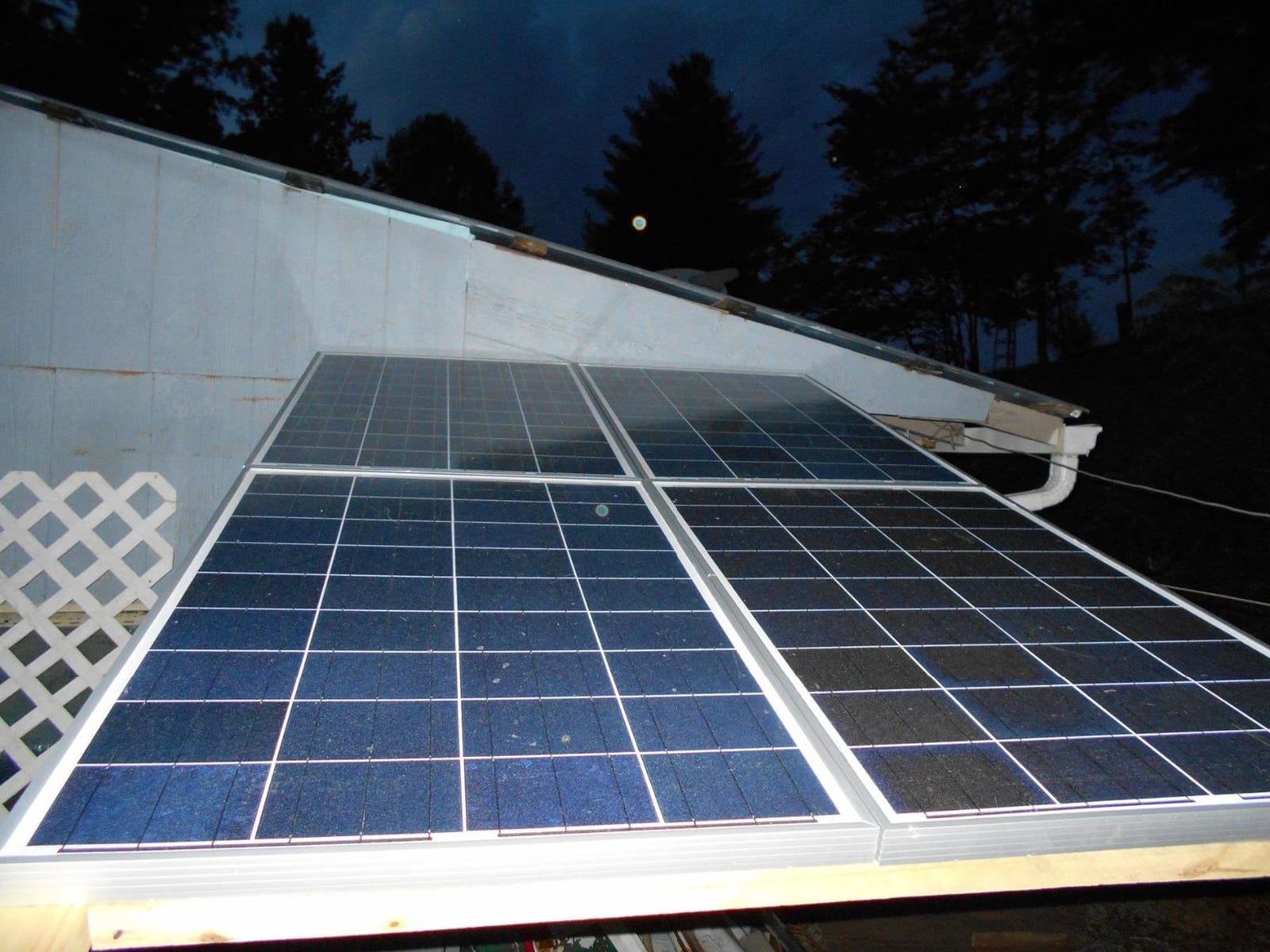
What reviewers like most is the combination of quick setup and rain tolerance. The seam-free laminate has no stitched edges for water to wick into, and that is the failure mode that undermines cloth-panel competitors after a season of use. Buyers in wet climates report the laminate holding up through rain without absorbing it.
The 3-in-1 adapter cable is the trade-off. It covers the common stations including Jackery, EcoFlow, BLUETTI, Goal Zero and Anker, but a minority of reviews report needing an extra cable for less common ports. If your station uses an unusual connector, buy the 4-in-1 or 5-in-1 version of this weight class instead.
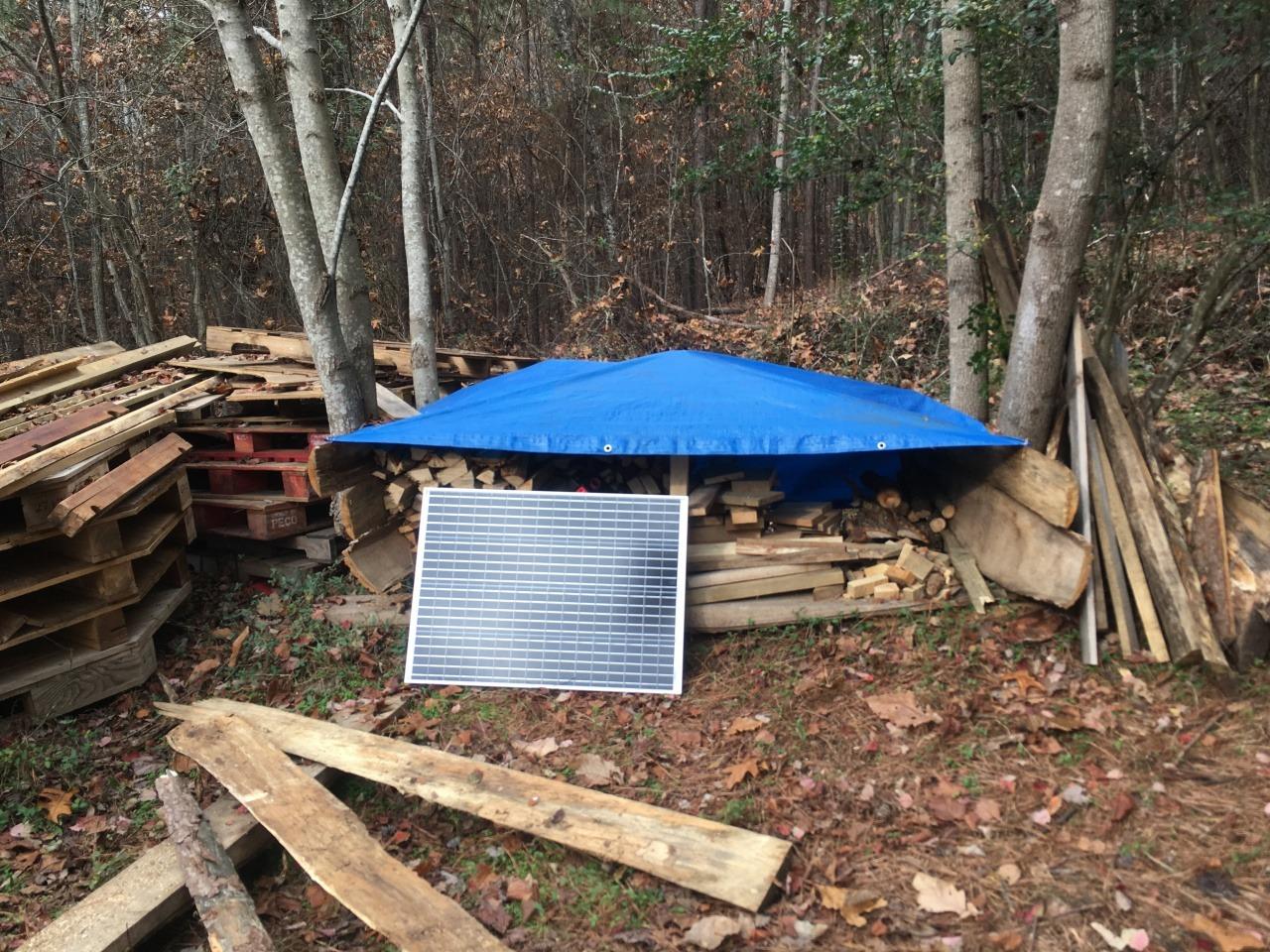
How it handles weather and weight
IP67 means dust-tight and protected against temporary immersion, and on a fully laminated body that rating holds up better than the IP65 panels elsewhere in this list. That matters for anyone who camps late in the season, who runs an RV awning through a shower, or who simply does not want to tear down a panel every time a cloud opens up.
Weight is the other half of the pitch. At 11.82 lb, this is one of the few 200W panels light enough to carry from a car to a site more than a few hundred yards. Combined with the two-leg setup, it is a panel you will actually use rather than one that stays folded in the trunk.
Where it disappoints
The warranty is 12 months, among the shortest in this group, and the listing is newer, so there is less long-term field history behind it than behind the BLUETTI or the Renogy. A minority of reviews also mention needing a separate adapter for less standard ports, which is a small cost but a real one when you are at a trailhead.
This is the pick for anyone who wants 200W without 16 lb of panel, and for anyone whose weather does not cooperate. It is a strong value option that gives up a little connector breadth and a little warranty coverage to do it.
5. GRECELL 200W Portable Solar Panel – Best Connector Coverage
200W Portable Solar Panel for Power Station Generator, 12V/24V Flexible Foldable Solar Panel Kit Lightweight High-Efficiency Solar Charger Power Backup for Outdoor Van Camper Boat Caravan Off-Grid
200W output
23.5% efficiency
10.1 lb
IP65 ETFE surface
Four connectors included
Pros
- Lightest 200W design in the roundup at 10.1 lb
- 4-in-1 cable covering DC7909 XT60 Aviation and Anderson
- MPPT reconnection and series/parallel support
- Zippered cable pouch with magnetic clasps
Cons
- Buyers report real output landing between 138W and 180W rather than 200W
- Soft flexible build is less rigid than framed rivals
- Charge controller and alligator clips are not included
At 10.1 lb this is the lightest 200W design in the roundup, and it is thin enough to slide behind a car seat or stand upright in a pack. The spec sheet lists 23.5 percent efficiency, a 21.46 by 22.95 by 1.77 inch folded size, and a listed 12V maximum voltage, which is the low end of the range here and friendly to smaller stations.
The connector story is the reason to buy it. The 4-in-1 charge cable in the box covers XT60, 30A Anderson, DC7909 and M16 aviation connectors, so the odds of it not matching your station are low. It also folds with a self-contained zippered cable pouch that closes with magnetic clasps, which stops the loose-cable tangle that ruins most panels in a bag.
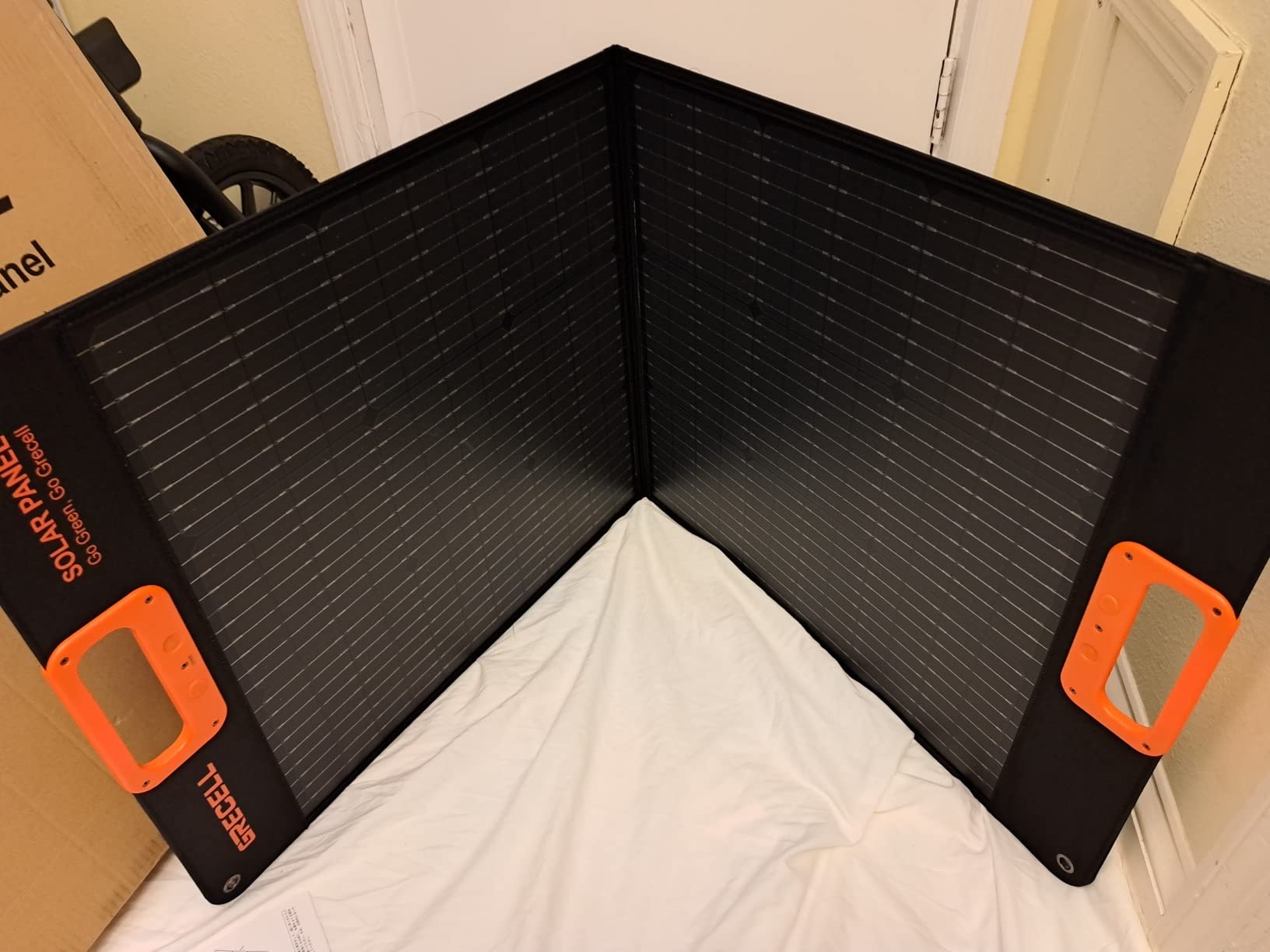
Reported output is where the disappointment lives. Buyers describe real-world harvest landing somewhere between 138W and 180W rather than the rated 200W, which is a gap of 10 to 30 percent. That is normal for any panel in variable light, but the soft flexible build gives a little more back than a rigid frame would.
Several reviewers also call out GRECELL customer service directly, describing no-hassle replacements. That matters more than it sounds: replacement cables and panels are consumables over the years, and a responsive seller shortens the pain of a torn laminate or a snapped connector pin.
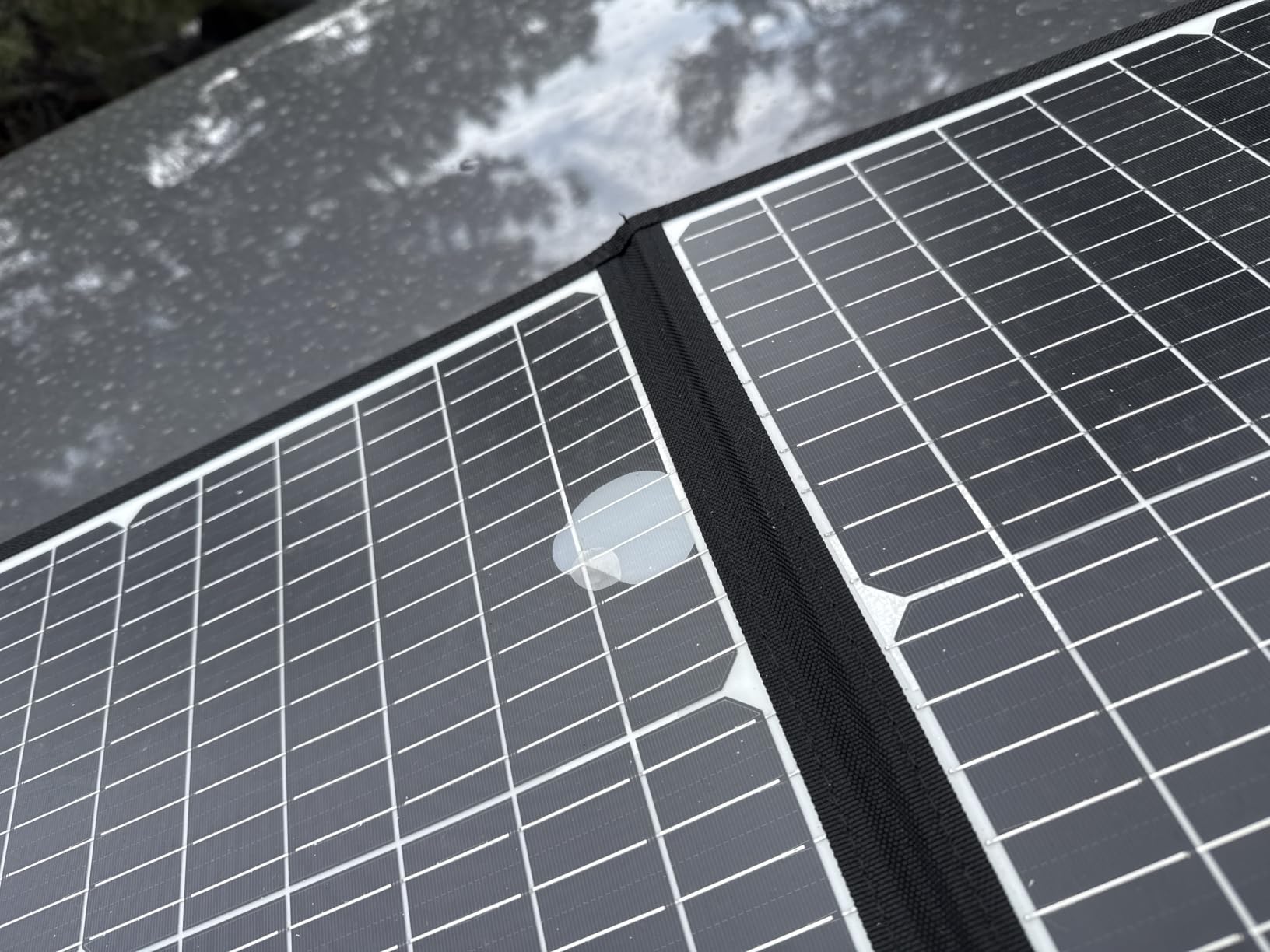
Why the low voltage helps more people than it hurts
A 12V listed maximum voltage falls inside the input window of a very large share of portable power stations, including most of the smaller and mid-size units. Panels rated at 30V and above start to exclude stations, and this one does not. If you are buying a panel before you know which station you will end up with, a low voltage is the safe side of the line.
The panel also supports series and parallel wiring with automatic MPPT reconnection, so two of them can feed a single station input if the station allows parallel charging. A zippered pouch that swallows the cables means the second panel is not a tangled mess when you unpack it at the site.
Where it disappoints
The 138 to 180W reported range is the honest headline, and if you are sizing a panel to refill a large station in one day, factor it down. The soft body also flops more than a framed panel, which is fine in still air and annoying in a breeze unless you stake it or put something against the lower edge.
And the charge controller and alligator clips are not in the box. For a power station that is irrelevant, since the station has its own controller. For charging a 12V battery directly from the vehicle, plan to buy those separately.
6. EBL 200W Portable Solar Panel – Best Rigid Frame Build
EBL 200W Portable Solar Panel for Power Station, Foldable IP65 Waterproof
200W output
23.5% efficiency
35V maximum voltage
18 lb
Rigid frame, 4 kickstands
Pros
- Rigid frame holds its tilt without sagging
- Buyers report real output of 148W to 191W
- MC4 to 4-in-1 cable covering XT60 Anderson DC7909 and aviation
- PET lamination with an 840D Oxford cloth exterior
Cons
- Heaviest 200W design here at 18 lb
- A 1-year warranty
- Moisture resistant rather than fully waterproof
Buyers who set this up in strong wind describe the framed design as the reason it is still producing at full tilt an hour after they unfold it, without going back to prop it up.
Output is rated at 200W with up to 23.5 percent efficiency on monocrystalline silicon. Buyers report real-world harvest between 148W and 191W, a range that sits closer to the rated number than several other 200W panels in this roundup. The panel carries FCC, RoHS and EMC certification with short-circuit and surge protection on the output.
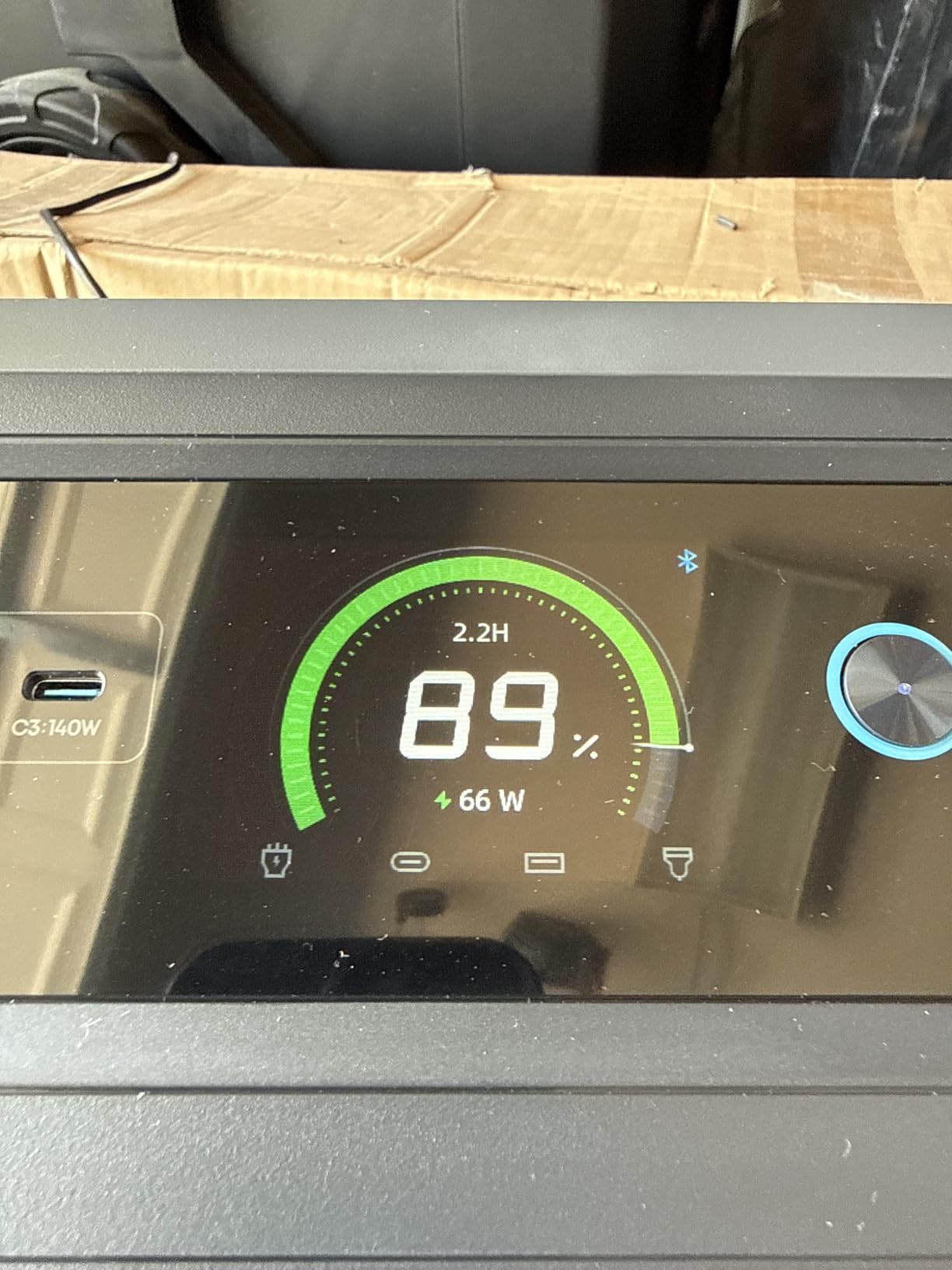
The lamination is upgraded PET with an 840D Oxford cloth exterior, which handles abrasion better than bare fabric. Cable-wise you get an MC4 lead into a 4-in-1 adapter covering XT60, Anderson, DC7909 and aviation connectors, which covers most stations without another purchase.
Two things to plan for. The maximum voltage is listed at 35V, which is higher than the 21.6V panels here and rules out a number of smaller stations. And at 18 lb it is the heaviest 200W design in the roundup, so this is a vehicle-and-campsite panel rather than a hiking one.
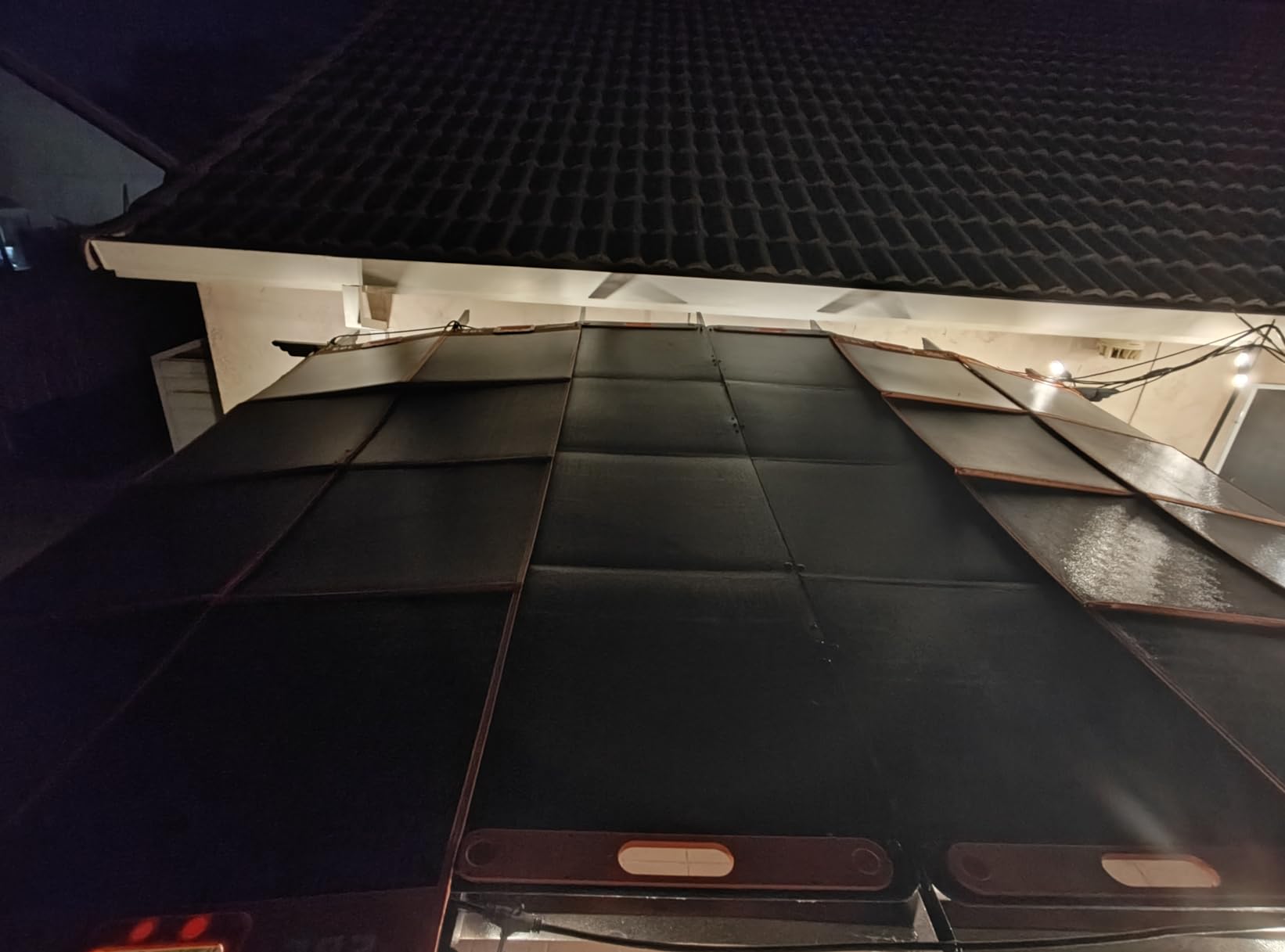
Why rigidity matters in wind
A soft panel is only as stable as whatever you prop it against. A framed one sets a tilt and stays there, which means the sun tracking you would otherwise do by hand happens on its own.
Rigidity also keeps the laminate flat in heat. A framed panel holds a consistent surface angle as the day warms, and buyers who set this panel up on a hot still day report output sitting closer to its rated figure than they get from the soft designs under the same conditions.
Where it disappoints
The 35V maximum voltage is the significant one. Stations with a 24V or 30V solar input ceiling will not accept it, and no adapter fixes that, because the problem is electrical rather than physical. Check your station’s stated maximum solar input before buying this for anything other than a high-voltage unit.
The 1-year warranty is also among the shortest here, and the moisture resistance is real but not the same as an IP67 or IP68 rating. One detailed review flagged the difference directly. Shelter it in sustained rain and it will be fine; leave it exposed in a storm all season and you are testing the laminate.
7. SOKIOVOLA 200W Portable Solar Panel – Highest Water Rating
SOKIOVOLA N-Type 16BB 200W Portable Solar Panel for EF/Jackery/Bluetti/Anker Power Station Foldable Solar Panel 25% High Efficiency IP68 Waterproof for Outdoor Trip RV Camping Blackout Off Grid
200W output
25% N-Type efficiency
IP68 rated
16.3 lb
Folds to 21 x 23 in
Pros
- IP68 waterproof and dustproof ETFE coating
- 16BB N-Type A+ grade cells at 25% efficiency
- 10.49 ft 5-in-1 cable covering XT60 DC5521 DC7909 DC8020 and Anderson
- Roomy carry bag included with magnetic handle
Cons
- Included MC4 pigtail leads are short at about 4 inches
- 16.3 lb is heavy for a hiking panel
- One long-term owner reported output falling from about 190W to about 100W
IP68 is the number that separates this one. No other panel in this roundup carries an IP68 rating, and most of them stop at IP67, which already means dust-tight and protected against temporary immersion. IP68 adds dustproofing and a deeper water tolerance, which for a panel mounted permanently on an RV roof or an awning is the difference between a warranty claim and a puddle.
The cells are 16BB N-Type A+ grade monocrystalline rated up to 25 percent efficiency, and buyers report real output in the 170 to 180W range. The 5-in-1 MC4 cable is 10.49 ft long and covers XT60, DC5521, DC7909, DC8020 and Anderson, one of the broadest bundles here. A carry bag, four RV attachment holes and a magnetic handle come along with it.
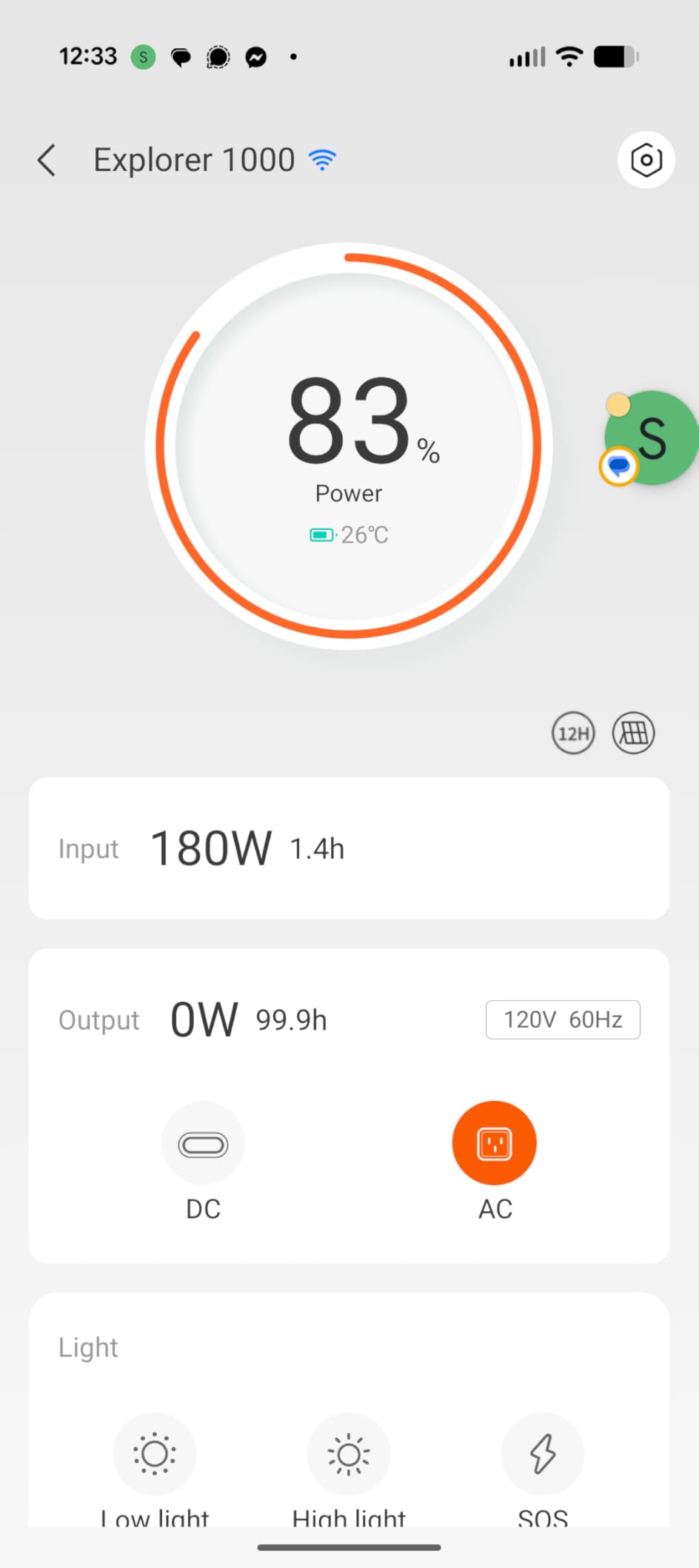
The snap-type legs hold firm according to multiple reviewers, and the panel is otherwise well made. Warranty is 12 months with a 30-day refund and a stated 12-hour support response commitment, which is a better written commitment than most in this group offer.
The complaints cluster around the cable and the weight. The MC4 pigtails at the panel end are roughly 4 inches, so you are relying on the adapter lead for all your reach, and if you are mounting this on a roof rather than a picnic table that short run is the part that will annoy you. At 16.3 lb it is not a long-trail panel.
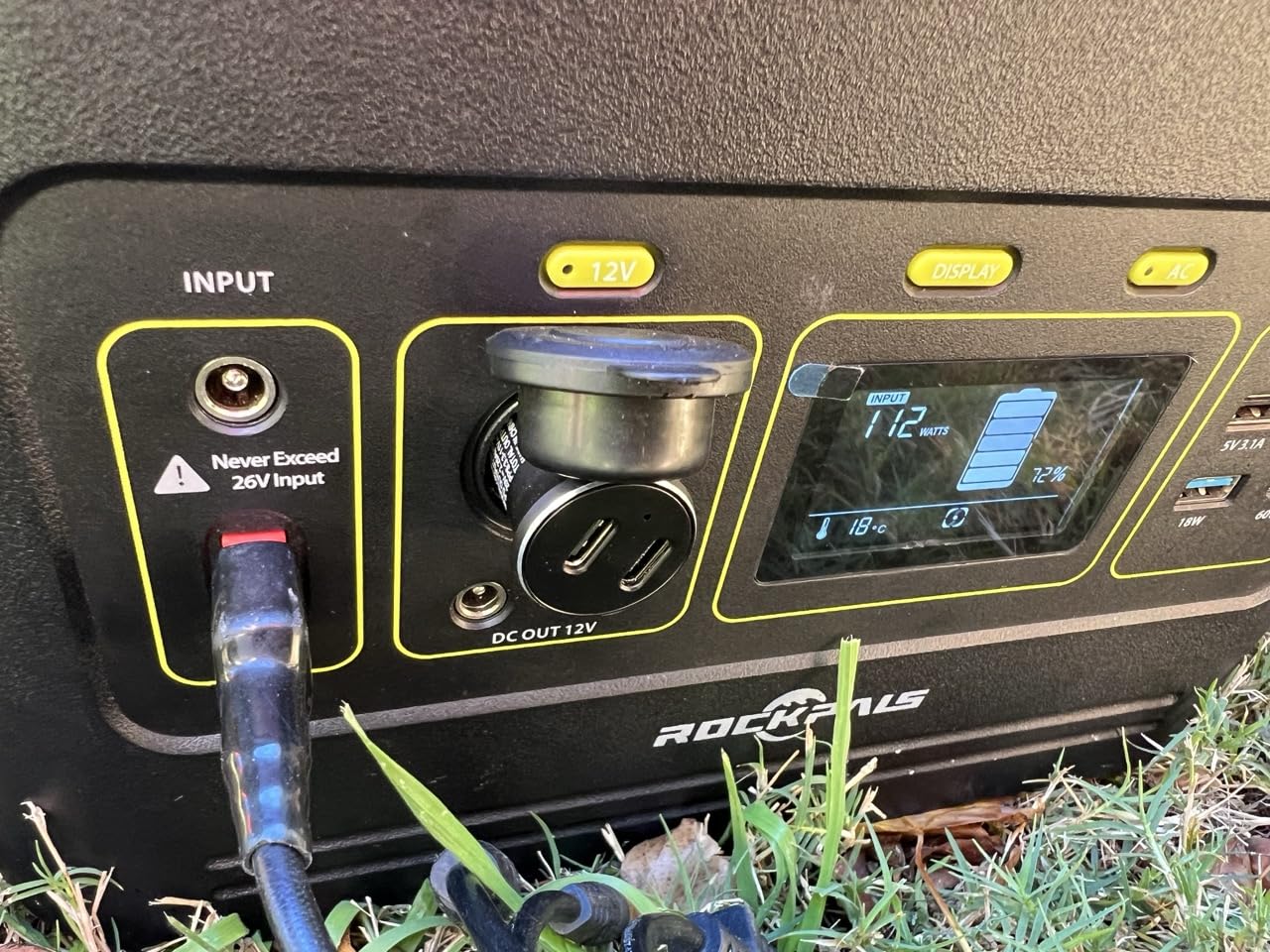
When IP68 earns its place
Fixed or semi-fixed installation is where an IP68 rating stops being a spec-sheet nicety. A panel bolted or VHB-mounted to a van roof, an RV rail, or a fixed basecamp spot will sit through weather you would never leave a folding panel in. Higher ingress protection also tends to come with better sealing around the junction box, which is where water actually gets in.
The 5-in-1 cable is the other practical argument. Five connector families in one lead means you can move between stations across a trip without owning a bag of adapters, and if you ever sell one panel and buy another, the cable you already have still works.
Where it disappoints
One long-term owner reported output dropping from roughly 190W to roughly 100W over six months, along with failing rivets on the back panels. One report is not a pattern, and the rest of the reviews describe solid build, but if you are mounting this permanently, keep an eye on output over the first season.
Poor performance in low light and rain is also noted by a minority of buyers, which is worth knowing if your climate is grey rather than bright. For a van, a boat, or an RV, this is the pick. For a backcountry site you reach on foot, look at the lighter options.
8. TWELSEAVAN 200W Portable Solar Panel – Best for Laptop Charging
200W Portable Solar Panel for Power Station, 24% High Efficiency ETFE Foldable Solar Panel Charger, QC3.0, Type-C 60W, MC4 Output, IP65 Waterproof, for Outdoor Camping, RV, Emergency Power Supply
200W output
24% efficiency
USB-C PD 60W
19.8V max voltage
15.7 lb
IP65 ETFE
Pros
- USB-C PD 60W charges a laptop directly from the panel
- 9.8 ft MC4 cable plus three DC adapters
- 24-month warranty is longer than most competitors
- QC3.0 18W and 5V/3A USB ports alongside the USB-C
Cons
- Heavier than the lightest 200W panels
- 24 percent efficiency sits below the 25 percent N-Type designs
- Far fewer customer reviews than the established sellers
The 60W USB-C PD port is the headline. Most 200W panels in this roundup put out 15W or 18W over USB-A, which is fine for a phone and useless for a 65W laptop. This one will charge a modern ultrabook directly, without a power station in the loop, which makes it a genuinely different tool for working trips.
Underneath that, the panel is 200W of 24 percent A+ grade monocrystalline silicon with an ETFE laminate rated above 95 percent light transmission. Maximum voltage is listed at 19.8V, which is among the more permissive figures here and pairs with a wide range of stations. Weight is 15.7 lb and the fold is 23 by 22 by 1.9 inches.
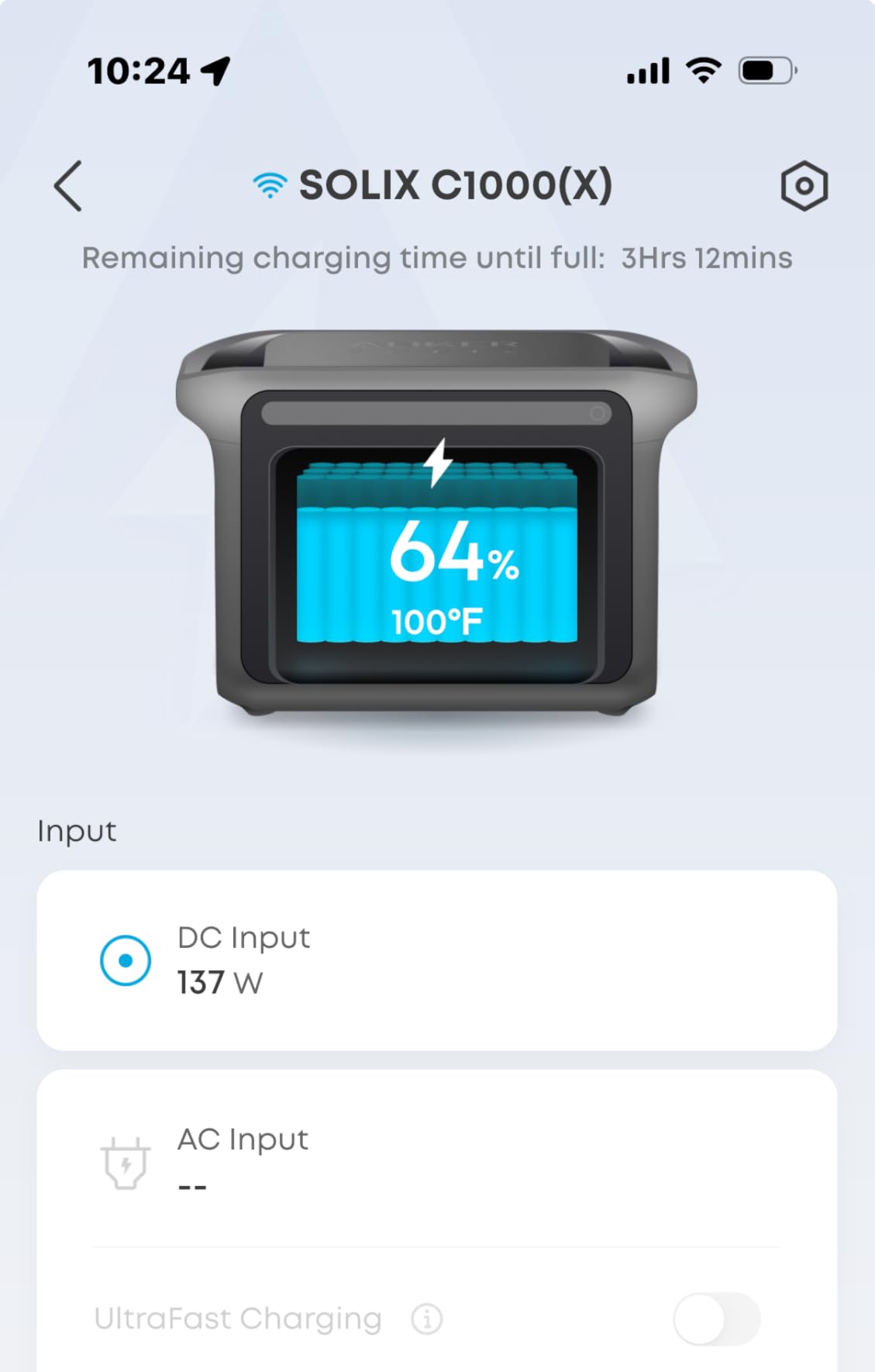
The cable bundle is generous: 9.8 ft of MC4 plus three DC adapters covering Anderson, XT60, 8020, 7909 and 5521, which gives you real reach for putting the panel on a picnic table while the station sits in the shade of the van. A magnetic handle and four adjustable kickstands handle the rest.
Buyers highlight the 60W port first and the warranty second. At 24 months, the TWELSEAVAN warranty is longer than most here, and the listing adds a 30-day money-back guarantee. Buyers do note that real output generally lands a little under the 200W rating in ordinary conditions.
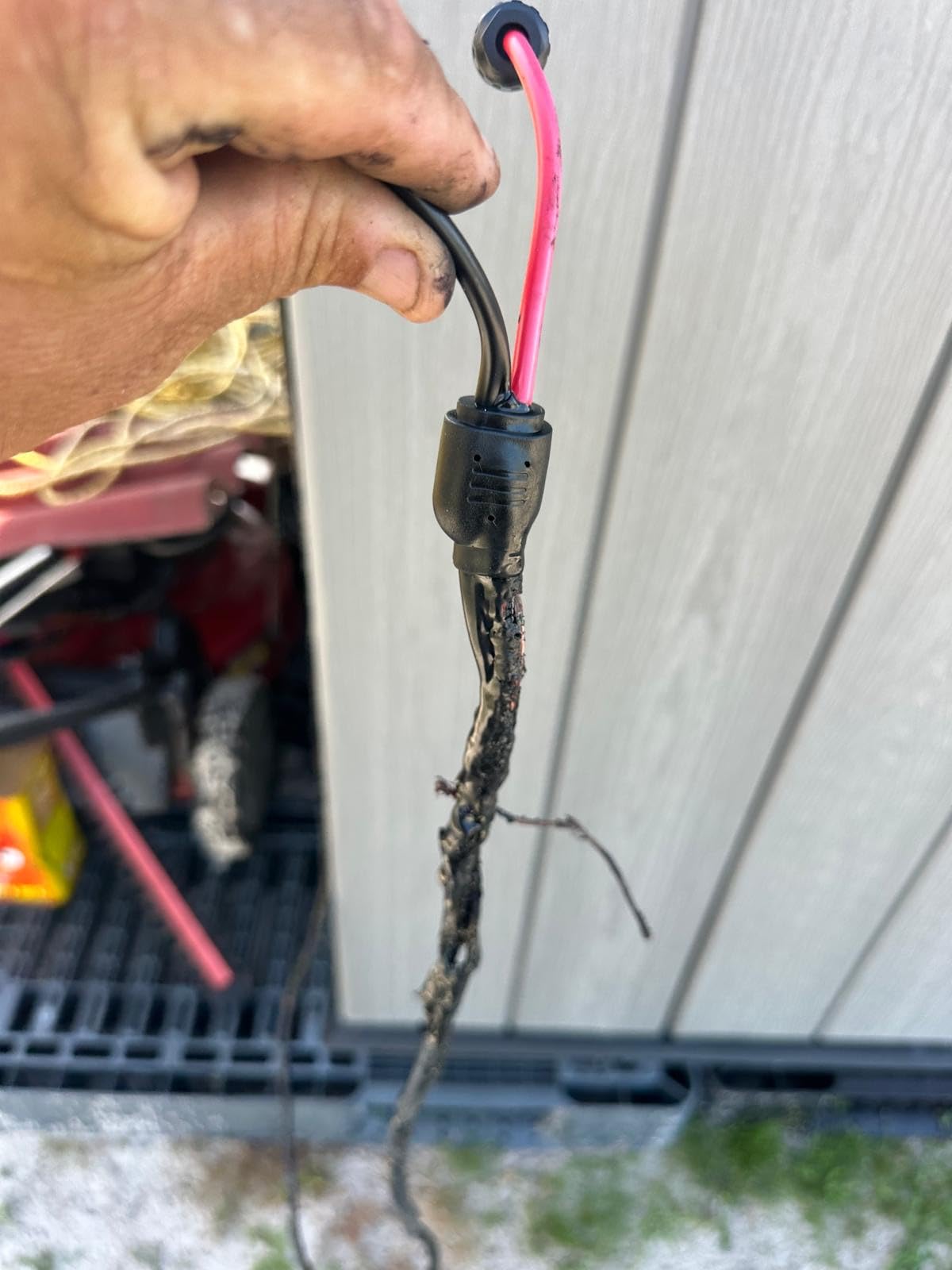
Do you actually need 60W of USB-C?
If you are charging a phone, a camera battery, or a small power bank, 60W buys you nothing. Those devices draw between 10W and 20W, and every panel in this roundup with a USB-C port will handle them. The 60W figure only starts to matter when the device on the other end draws 45W or more, which in practice means a thin-and-light laptop.
There is a second use for the high-wattage USB port: charging a power bank, and then running your devices from the power bank overnight. That is the pattern that works better than charging devices straight off a panel, because a phone will drop its connection when a cloud passes and often will not renegotiate it until you unplug it.
Where it disappoints
Two honest caveats. The brand is far less established than Renogy or BLUETTI, and the listing carries a generic model number and manufacturer name, which usually means replacement parts and support will be less smooth. The review base is also much thinner than the leaders here, at 269 reviews against more than a thousand for the top two.
At 15.7 lb it is also not among the lighter 200W designs, and the 24 percent efficiency figure is a step behind the 25 percent N-Type panels. Pick this one for the USB-C output and the long cable. Pick the Renogy 200W if brand support matters more to you than 15W of extra USB-C headroom.
9. MHPOWOS 220W Portable Solar Panel – The 220W Option
MHPOWOS 220W Portable Solar Panel 40V Folding Solar Panel for Power Station
220W output
23.5% efficiency
40V output voltage
7-in-1 solar connector
IP67 rated
Pros
- 220W output
- the highest wattage figure in the roundup
- 7-in-1 solar connector is the broadest connector set here
- IP67 waterproof and dustproof monocrystalline build
- Top-10 best-seller rank in Solar Panels
- Four kickstands with angle adjustment
Cons
- 40V output exceeds the input limit of many smaller power stations
- One of the two heaviest designs here at 17.8 lb
- Your station's max input wattage caps real harvest well below 220W
At 220W this is the highest wattage figure in the roundup, and the 7-in-1 solar connector is the broadest connector set we found. It sits at number 9 in the Solar Panels best-seller list, and the 4.5-star average comes from 261 reviews with 78 percent five-star scores.
Now the warning, which is not a small one. The output voltage is 40V, with a listed maximum of 48V. That is high-voltage output, and it is exactly the figure that stops smaller power stations from accepting this panel at all. Buy it for a station that advertises a high-voltage solar input, and skip it for anything else.
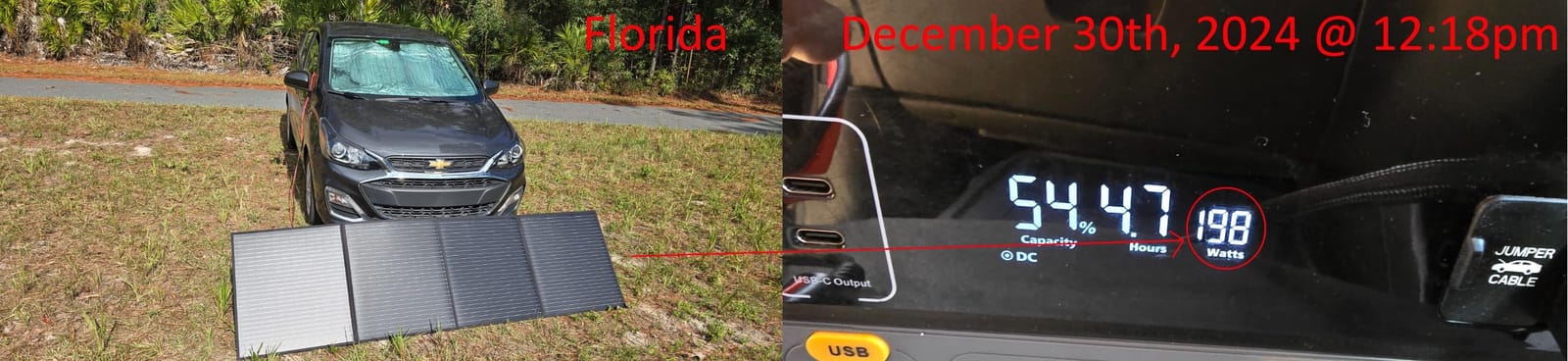
Where it does fit, the value story is good. You get a higher wattage figure than any other panel here, an IP67 waterproof and dustproof build, four angle-adjustable kickstands, and thickened carry handles for the 17.8 lb weight. Monocrystalline silicon at 23.5 percent efficiency keeps the cell count sensible for the size.
Even on a station that accepts it, the second warning applies. If your power station caps solar input at 200W, you will harvest 200W at most, not 220W, and the extra 20W of rating is marketing. Buyers mention this cap repeatedly and are still satisfied, which suggests most people understand the ceiling once they see it.
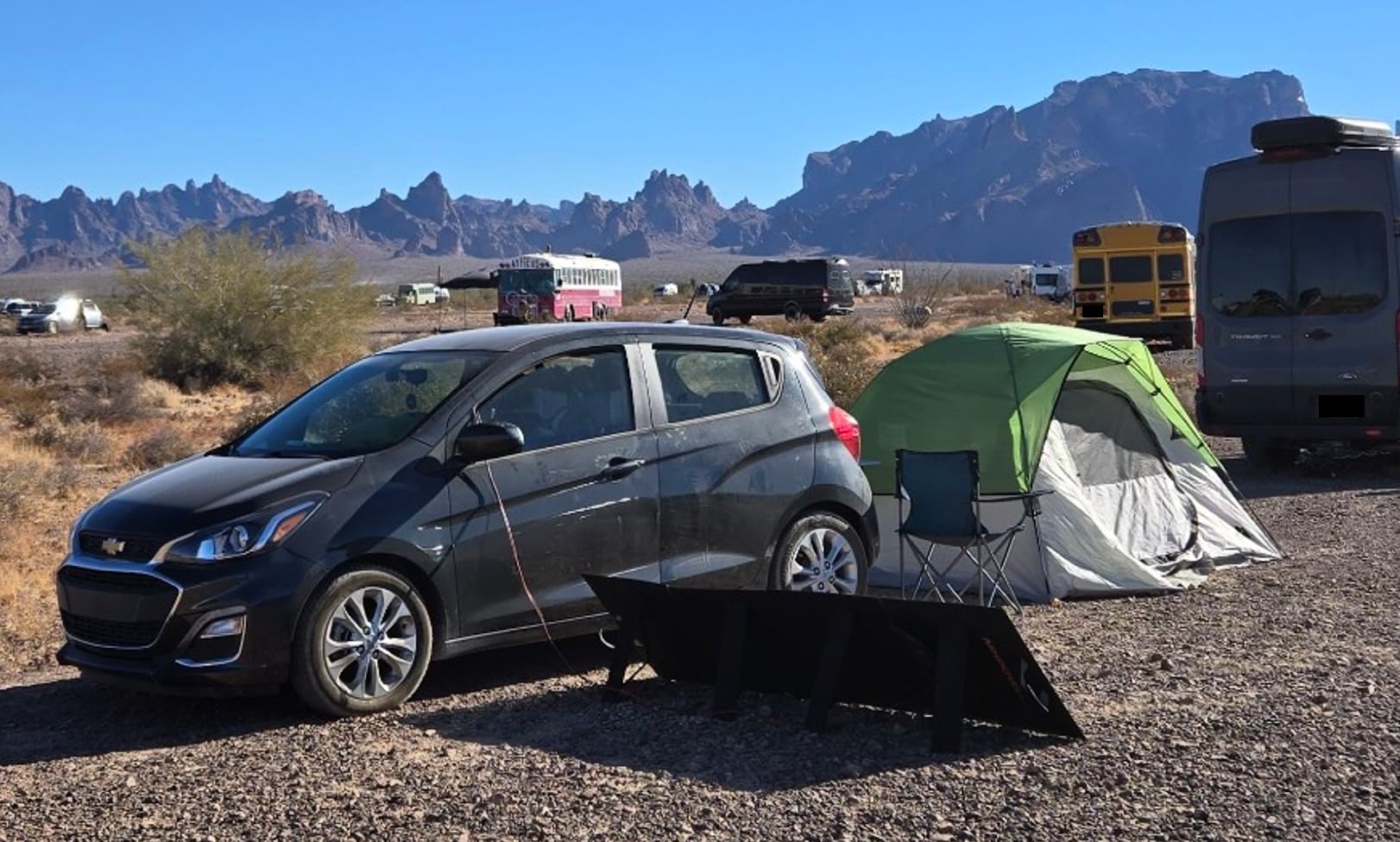
When a high-voltage panel is the right call
Higher wattage exists because a given rating at higher voltage means lower current, and lower current means thinner cable runs and less loss over distance. For a fixed installation on an RV or a van roof with panels a few metres from the station, that is a genuine engineering advantage rather than a spec-sheet trick.
It also changes the pairing maths. If your station accepts only 24V or 30V solar input, a 40V panel is not merely a poor match: it will refuse to charge at all. That is a compatibility failure, not a speed one, and no adapter corrects it.
Where it disappoints
The voltage is the whole story, and it cuts both ways. A meaningful share of owners report a panel that simply will not charge their station, which is a hard stop rather than a slow trickle. The 17.8 lb weight is among the heaviest designs here, and the extra wattage does not compensate for carrying it further.
This is the pick only for a high-voltage station. For anything else in this roundup, a 21.6V or 24.3V panel is the safer buy, and you lose very little in practice once your station caps the input anyway.
10. Renogy 100W Portable Solar Panel – Longest Warranty
Renogy 100W Portable Solar Panel, 25% High Efficiency for Power Stations
100W output
25% N-Type cells
8.9 lb framed suitcase
IP67 and hail resistant
3-year warranty
Pros
- 3-year output and material warranty is the longest coverage in the roundup
- 8.9 lb framed suitcase with tempered glass and aluminum
- IP67 waterproof and hail resistant from -40F to 185F
- Parallel wiring tolerates partial shading from trees
Cons
- Only 41 reviews
- the thinnest feedback base here
- Priced above most 100W competitors
- One isolated report of hot spots developing in direct sun
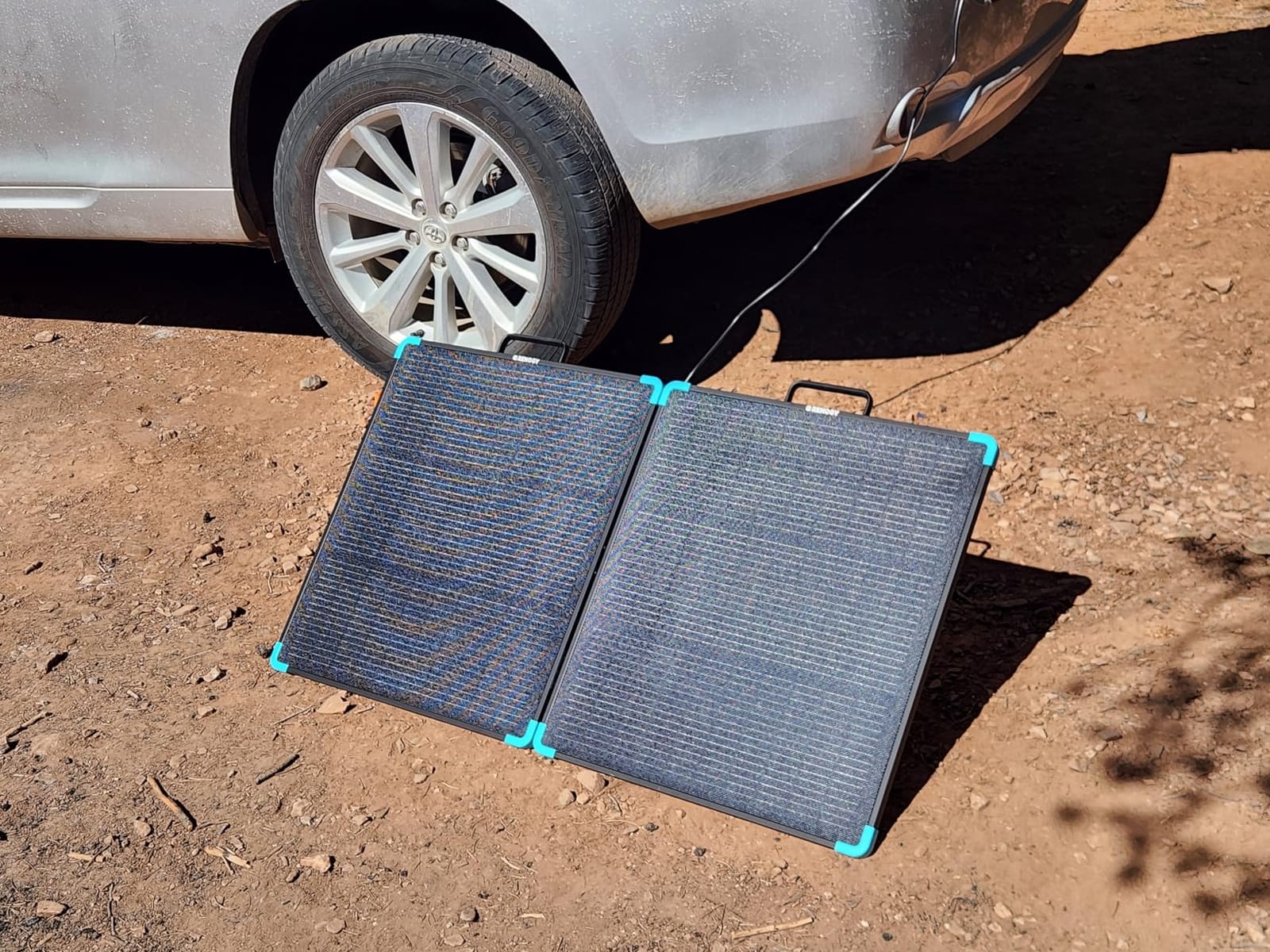
At 8.9 lb this is the lightest panel in the entire roundup, and it is the only one built as a true framed suitcase with tempered glass and an aluminum chassis. Buyers who have used a framed and a cloth panel describe the framed build as the obvious difference the first time you pick it up.
The cells are 16BB N-Type at 25 percent efficiency with a listed maximum voltage of 21.6V, which pairs with a wide range of stations. Buyers report 80 to 102W of real output through an MPPT controller, which is close enough to the 100W rating to plan around.
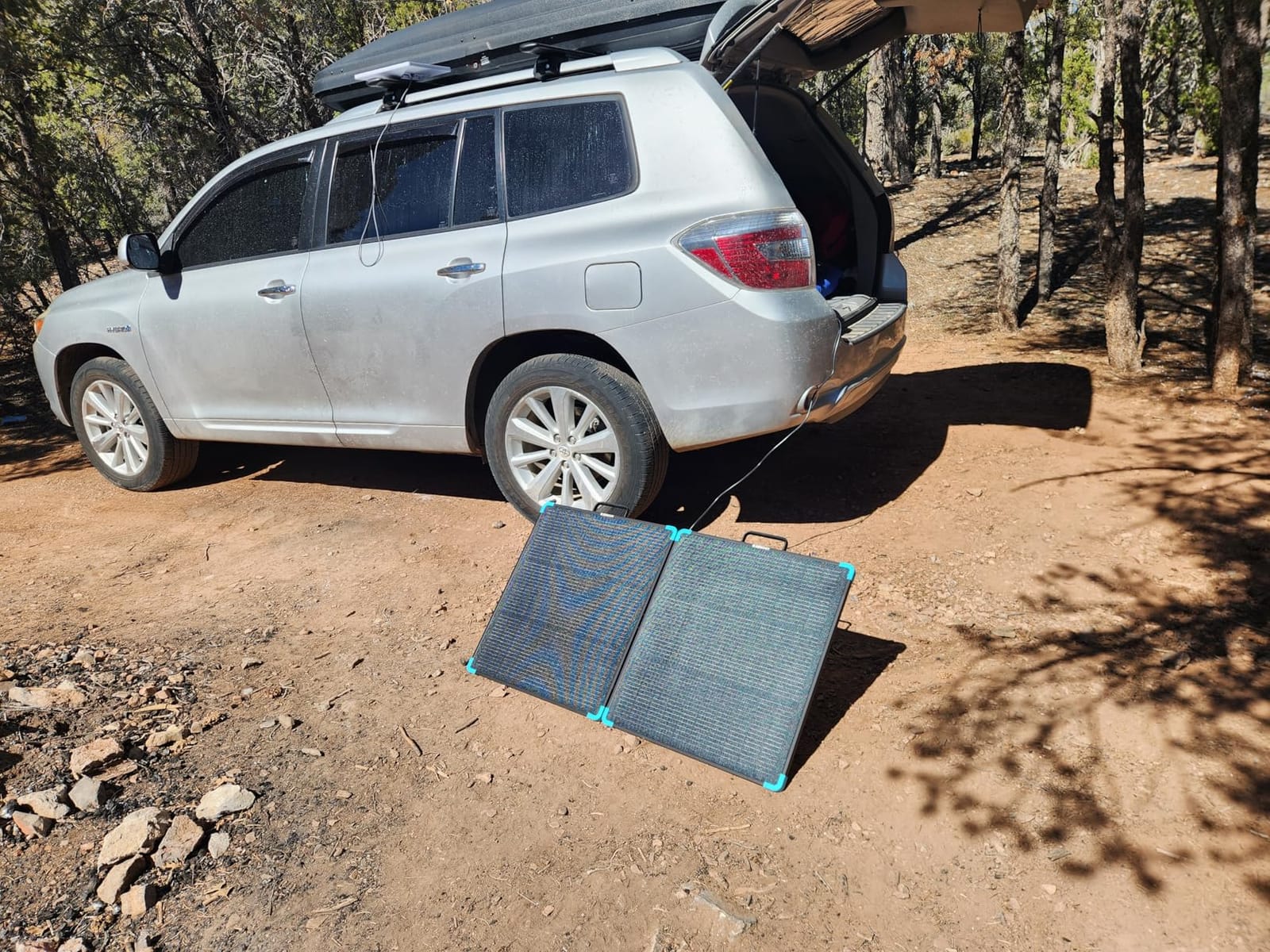
Two design points set this panel apart. The wiring is parallel, so a branch of cloud or a tree shadow across one panel section does not knock out the whole output the way a series-wired panel would. And the rated range runs from -40F to 185F with an IP67 rating and hail resistance, which covers full winter boondocking.
The warranty is the headline: 3 years on output, materials and workmanship. Nobody else in this roundup offers more than 24 months, and on a panel you might leave mounted for years that coverage is worth real money if something fails.
What the parallel wiring buys you
Solar cells are wired in series or in parallel, and the difference shows up the moment conditions are uneven. In a series string, a shadow across one cell reduces the output of the whole string, which is why a single cloud passing over a cloth panel can drop it dramatically. A parallel panel divides the current between independent paths, so partial shade costs you proportionally less.
That matters more in practice than it sounds, because a campsite at midday often has a tree line or a vehicle casting a shadow across part of the panel. A series-wired panel in that spot may fall well below its rating. A parallel one keeps closer to it.
Where it disappoints
Only 100W, so if your station accepts 200W of solar input you are leaving half of it unused. And the review base is thin, at 41 reviews, which is the smallest feedback base in this roundup. One isolated report describes hot spots developing and the laminate melting in direct sun, which is not a pattern across 41 reviews but is a failure mode worth understanding.
There is also the price. It sits above most 100W competitors, and at 100W that premium is harder to justify purely on cost per watt. The justification is the three-year warranty, the framed build and the parallel wiring. Buy it for a fixed winter site or a van. For a carried panel, the 9.5 lb ZOUPW 100W reaches more station connectors for less.
Why Your Solar Panel Plug Fits but Nothing Charges
This is the failure that generates the most forum threads in this category, and it is worth walking through in detail because the check takes about a minute and the mistake is entirely avoidable before you buy.
Open-circuit voltage, or Voc, is the voltage a panel produces with nothing connected to it. That is the highest voltage it can ever push into a circuit. Your power station’s solar input has a maximum voltage above which its charge controller will refuse to accept power at all, and sometimes will not even acknowledge that a panel is connected.
The panels in this roundup list maximum voltages from 12V on the GRECELL 200W, through 19.8V and 21.6V on the TWELSEAVAN and Renogy 200W, up to 24.3V on the ZOUPW 100W, 26.1V on the BLUETTI, 35V on the EBL, and 40 to 48V on the MHPOWOS 220W. Stations in the small and mid-size class typically advertise a solar input ceiling in the 30V range, and the higher-voltage panels will not work with them.
Connectors are the second gate. MC4 is the near-universal standard on portable panels, and most power stations have an MC4 or MC4-compatible solar input. But Jackery uses a proprietary 8mm DC plug, EcoFlow uses a DC7909 connector on some models, BLUETTI uses its own solar connector, and smaller stations use DC5521 or Anderson plugs.
The fix is usually a cable rather than a new panel. A 3-in-1, 4-in-1, 5-in-1 or 7-in-1 adapter lead converts one panel connector into several station connectors, and most panels in this roundup include one in the box. GRECELL covers four connector families, SOKIOVOLA and ZOUPW cover five, and the MHPOWOS 220W covers seven.
Before you buy anything, run this check. Find the maximum solar input voltage printed on your power station’s spec sheet or input label, then find the maximum voltage listed for the panel. If the panel’s figure is above the station’s ceiling, do not buy the panel for that station, because no adapter will change that. Next, confirm the connector families match, or that an adapter lead exists. Finally, check the station’s maximum solar input wattage, because a 200W panel on a 100W input is simply a 100W panel.
Our broader guides to portable power stations for camping and solar panels for camping power stations cover the station side of this pairing in more detail.
How Long Does a 200W Solar Panel Take to Charge a Power Station?
Here is the arithmetic most roundups skip. A 200W panel delivering its full rated output for 5 hours of peak sun puts 1,000 watt-hours into the station. A 1000Wh station that starts empty is then close to full on paper, in practice about 6 to 7 hours once you allow for conversion losses and the fact that output tapers as the battery fills.
The figures below assume ideal conditions, which means direct sun, correct tilt and a panel that is actually reaching its rating. Multiply each number by 1.5 for a typical partly cloudy day.
For a 500Wh station: a 100W panel takes about 5.5 hours, a 200W panel about 2.75 hours, and a 220W panel about 2.5 hours. For a 1000Wh station: about 11 hours, 5.5 hours and 5 hours respectively. For a 2000Wh station: about 22 hours, 11 hours and 10 hours.
Those are ideal-sun figures for a battery starting at empty, and the useful one is the 200W row. A 200W panel refills a 1000Wh station in roughly a day of good sun, which is the number most buyers are actually planning around.
Two corrections matter more than the arithmetic. The first is the station’s input wattage cap. If your station accepts 100W of solar input, a 200W panel does not halve those times, because it is still limited to 100W. Check the cap before you plan around any number.
The second is reported output. Buyers across this roundup describe real harvests between 138W and 191W depending on the panel and the light. If you build your plan on the rated figure, add roughly 25 percent to every time above. Users on camping and van-life forums consistently describe overestimating their available sun, and that adjustment is the correction for it.
For a load-planning view of the same numbers, a 12V fridge draws roughly 40 to 60W while its compressor runs, a CPAP machine draws 30 to 60W, a laptop draws 45 to 65W, and a phone draws 10 to 20W. A 200W panel covers a fridge plus a CPAP with margin, which is why higher-wattage panels exist for people running both continuously.
How to Choose a Portable Solar Panel for Your Power Station
Start with the station, not the panel. Write down the maximum solar input voltage and the maximum solar input wattage from its spec sheet before you look at any panel, and you have just eliminated most of the catalogue. If the station accepts 100W, buying a 220W panel means paying for capacity that never gets used.
Next, size the panel to the load. For phones, laptops, lanterns and a WiFi hotspot, 100W is generous. For a 12V fridge, a CPAP, or a power tool, aim for 200W as a minimum and consider two panels in parallel. The relationship between wattage and device draw is the one number that decides how many good sun hours you need.
Then look at cell technology, because it explains the efficiency numbers. Monocrystalline silicon is what every panel in this roundup uses and what you should buy. Polycrystalline and thin-film designs cost less per watt but produce less power per square inch, and at these sizes the difference shows up as extra panels to carry.
Bifacial panels collect light from the back as well as the front and can add to output in reflective conditions, but they need an open gap behind them, so they do not suit a foldable panel lying on the ground. Treat bifacial claims sceptically for this category unless the panel is specifically designed for mounting with airflow.
The laminate matters more than the marketing suggests. ETFE is the tougher option, resisting scratches and staying clear after a season of abrasion. PET is softer and will haze in a way that permanently reduces transmission. Five panels here use ETFE, and the SOKIOVOLA pairs it with the highest ingress rating in the roundup.
On water ratings, treat IPX4 as no rating at all, meaning splash resistant and nothing more. IP65 resists dust and spray. IP67 is dust-tight and handles immersion. IP68 is dustproof with deeper water tolerance, and only the SOKIOVOLA carries it here. If the panel lives on a roof or awning, IP68 is worth paying for.
Weight is the constraint nobody budgets for. A 200W panel in this roundup runs from 11.82 lb to 18 lb, and every extra pound is a pound on a backcountry trail or in a small vehicle. Choose a 100W panel, or the HQST 200W, if you will carry it more than a hundred yards from a car.
Connectors deserve a decision of their own. Owning one panel that ships a 5-in-1 or 7-in-1 cable is worth more than owning two panels with a single connector each, because adapters are cheap and lost or bent pins are the common failure. The ZOUPW, SOKIOVOLA, GRECELL and MHPOWOS cover five or more connector families from one lead.
On warranty, note that the shortest here is 12 months and the longest is 3 years. That spread matters most for a permanently mounted panel. For a panel you carry, the practical question is whether replacement cables are available, since the cable is the part that fails first.
Finally, set expectations for bad weather. A portable solar panel on an overcast day typically produces a fraction of its rated output, and forum users regularly describe this as their biggest disappointment. Treat a panel as a daytime supplement and keep a power bank or vehicle charging as the fallback. And charge the power bank rather than your phone directly, because phones and laptops will drop the connection when a cloud passes and often will not restart without a manual unplug.
On multi-panel setups: two panels in parallel will roughly double what a station draws, provided the station supports parallel solar input and the two panels are matched. Two panels in series raises the voltage, which is how you reach a high-voltage input on a station that wants one. Do not mix panel models in a string, and check the station’s stated solar input wattage before assuming it will take both. The GRECELL 200W lists series and parallel support with automatic MPPT reconnection, which makes it the natural candidate for a two-panel build here.
For cold-weather use, the physics work against you and the hardware has to compensate. Our guides to portable power stations for winter and lithium power stations for winter expeditions cover the battery side, while a framed or IP67 panel like the Renogy 100W is the safer choice than a soft laminate when the temperature is near freezing.
Frequently Asked Questions
Can you use any solar panel with any power station?
Not any panel, and the reason is electrical before it is physical. A power station’s charge controller has a maximum solar input voltage, and a panel whose open-circuit voltage sits above that ceiling will not charge it at all. You also need a physical match, usually an MC4 connector on the panel against an MC4, DC7909, DC5521, Anderson or proprietary 8mm input on the station. An adapter cable solves the connector problem but never the voltage problem.
What type of solar panel is best for charging a power station?
A foldable monocrystalline panel in the 100W to 200W range with an MC4 or multi-connector lead. Folding monocrystalline silicon panels in this roundup carry 23.4 to 25 percent conversion efficiency, which gives more power per pound than older polycrystalline designs. The panel must also stay under your station’s maximum solar input voltage. For most mid-size stations a 200W panel is the practical ceiling before you move to two panels.
What are the best solar panels for portable power stations?
The BLUETTI 200W is the best overall pick, with 23.4 percent monocrystalline efficiency, adjustable kickstands and the broadest review base in this roundup at 1,206 reviews averaging 4.5 stars. The Renogy 200W adds 45W USB-C PD output for direct laptop charging. The ZOUPW 100W is the best value pick, with a 5-in-1 connector cable, USB-A and USB-C ports, and the highest average rating in the group at 4.6 stars.
How many watts of solar panel do I need for a 1000Wh power station?
A 200W panel is the practical answer, and it takes about 5.5 to 7 hours of good sun to refill a 1000Wh station from empty. A 100W panel works but needs roughly twice that, and it will usually exceed what you can carry in one day of sun. Remember that your station’s own maximum solar input wattage caps the panel, so a 200W panel on a 100W input behaves like a 100W panel.
Do portable solar panels work on cloudy days?
They produce power, but far less than the rated wattage, and buyers describe that gap as their most common disappointment. Expect a large fraction of rated output under thin cloud, and a near-useless trickle in heavy overcast or rain. Plan around the rated figure for good sun and treat bad-weather output as a bonus rather than a budget. A panel moves you closer to a full battery across a day; it does not replace one.
Why is my solar panel portable charger not working with my power station?
Check four things in order. First, compare the panel’s listed maximum voltage against your station’s maximum solar input voltage, since a panel above that ceiling will refuse to charge. Second, confirm the connector matches or that you have the right adapter lead. Third, look for reversed polarity in an adapter cable. Fourth, check for partial shade or a dirty surface, and confirm the station is not already full. Most cases are one of the first two.
The Bottom Line on Portable Solar Panels for Power Stations
The BLUETTI 200W is our pick for the best portable solar panels for power stations in 2026, and it wins on evidence rather than on a spec sheet. Twenty-three point four percent monocrystalline efficiency, an ETFE surface that survives a season of folding, adjustable kickstands, and 1,206 reviews averaging 4.5 stars make it the panel we would put on our own station first.
Three companions fill out the list. The Renogy 200W earns its place for 25 percent N-Type cells and 45W USB-C PD output, so one panel serves both a station and a laptop. The HQST 200W gives you 200W at 11.82 lb with an IP67 seam-free laminate, which is the value answer if weight is your problem. The ZOUPW 100W is the one to buy for electronics-only loads or a two-panel array, with a 5-in-1 connector cable that reaches nearly any station.
The rule that matters more than any of them: check your power station’s maximum solar input voltage and maximum solar input wattage before you choose a panel. A panel that is too high in voltage will not charge your station, and a panel that is too high in wattage is money you spent on capacity the station will not use. Get those two numbers first, then pick the panel that fits under both of them.
Compatibility decides whether a panel works at all. Wattage only decides how fast.