
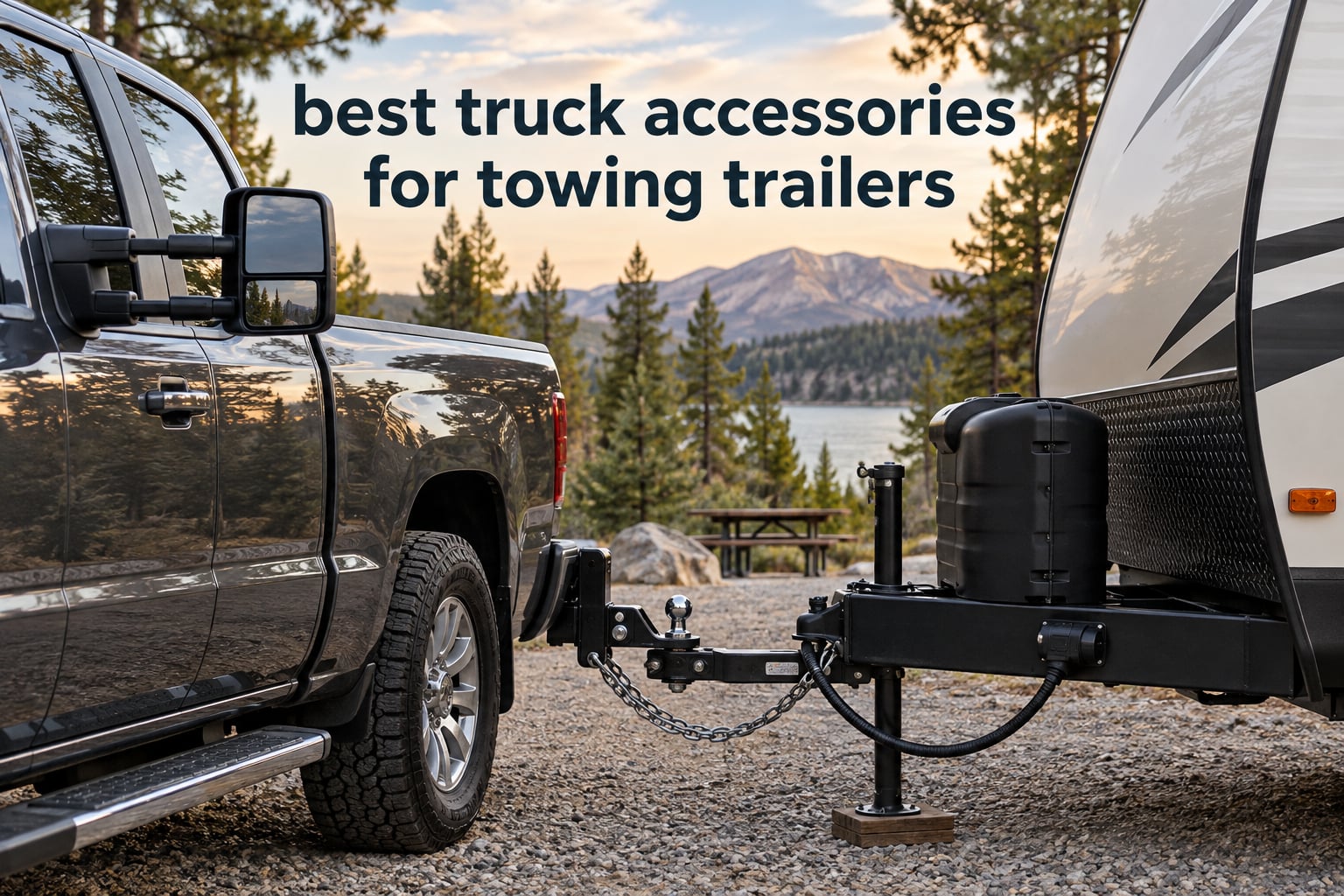
The best truck accessories for towing trailers fall into five groups: a solid ball mount and receiver hardware, a 7-way connector and brake controller for the electrics, weight control for the rear axle, extended tow mirrors for sightlines, and the small safety and security pieces people forget. Everything below is picked from real owner feedback, with capacity numbers stated so you can match them to your trailer.
Towing is not a factory capability so much as a set of stressed components. The trailer’s loaded weight lands partly on the rear axle, its electric brakes generate heat the stock brakes were never sized for, and the driveline works harder than the transmission cooler can handle on a long grade. Behind a 20 to 30 foot trailer your side mirrors show you nothing useful at all.
Owners on towing forums keep raising the same handful of problems. Receiver wobble tops the list, and people are often surprised to learn that a little play in the shank is normal and not a defect. Trailer sway in a crosswind, coupler and ball corrosion, and wiring faults at the campground are the other recurring complaints, so I weighted the picks below toward the gear that fixes those specific failure points.
We spent weeks matching each accessory to the job it actually solves rather than listing whatever was newest. Nothing here needs a professional shop unless you already own one, and I have noted which items are genuinely tool-free.
Table of Contents
Top 3 Best Truck Towing Accessories in 2026

CURT 45036 Loaded Ball Mount
- 7500 lb gross trailer weight rating
- 750 lb tongue weight
- Pre-attached chrome ball and hitch pin

Camco Eaz-Lift Elite Kit
- 1000 lb tongue weight
- 12000 lb gross trailer weight
- Manually adjustable sway control

MICTUNING 7-Way Cord
- 8 ft heavy duty cord
- Color marked 7 pole junction box
- 100% copper blades
The 14 Best Truck Accessories for Towing Trailers in 2026
| Product | Specifications | Action |
|---|---|---|
| CURT 45036 Loaded Ball Mount |
|
Check Latest Price |
| MICTUNING 7-Way Trailer Cord |
|
Check Latest Price |
 K SOURCE Snap and Zap Towing Mirrors K SOURCE Snap and Zap Towing Mirrors |
|
Check Latest Price |
 CURT 51170 Spectrum Brake Controller CURT 51170 Spectrum Brake Controller |
|
Check Latest Price |
 ORCISH Tri-Ball Hitch Mount ORCISH Tri-Ball Hitch Mount |
|
Check Latest Price |
 GR Innovations HitchBoss Organizer GR Innovations HitchBoss Organizer |
|
Check Latest Price |
| Camco Eaz-Lift Elite Weight Distribution Kit |
|
Check Latest Price |
 Eapele Hitch Step Eapele Hitch Step |
|
Check Latest Price |
 CURT 45820 Sway Tab Ball Mount CURT 45820 Sway Tab Ball Mount |
|
Check Latest Price |
 REDARC Tow-Pro Liberty Brake Controller REDARC Tow-Pro Liberty Brake Controller |
|
Check Latest Price |
 CheeMuii 7 Way Wiring Harness Kit CheeMuii 7 Way Wiring Harness Kit |
|
Check Latest Price |
 DEEAGLE Hitch Tightener DEEAGLE Hitch Tightener |
|
Check Latest Price |
 JOUNJIP Magnetic Alignment Kit JOUNJIP Magnetic Alignment Kit |
|
Check Latest Price |
 JUSTTOP Locking Hitch Pin JUSTTOP Locking Hitch Pin |
|
Check Latest Price |
1. CURT 45036 Loaded Ball Mount – 7,500 Pound Workhorse
CURT 45036 Loaded Ball Mount, 7,500 lb, 2″ Drop
7,500 lb gross trailer weight
750 lb tongue weight
2 inch drop
4.6 pounds
Pros
- Handles 7500 lb GTW and 750 lb tongue weight
- Pre-attached chrome ball plus hitch pin
- Powder coat resists corrosion
- Installs in standard 2 inch receivers
Cons
- Fixed 2 inch drop
- Fixed ball size
- Some buyers saw the washer sit off-square
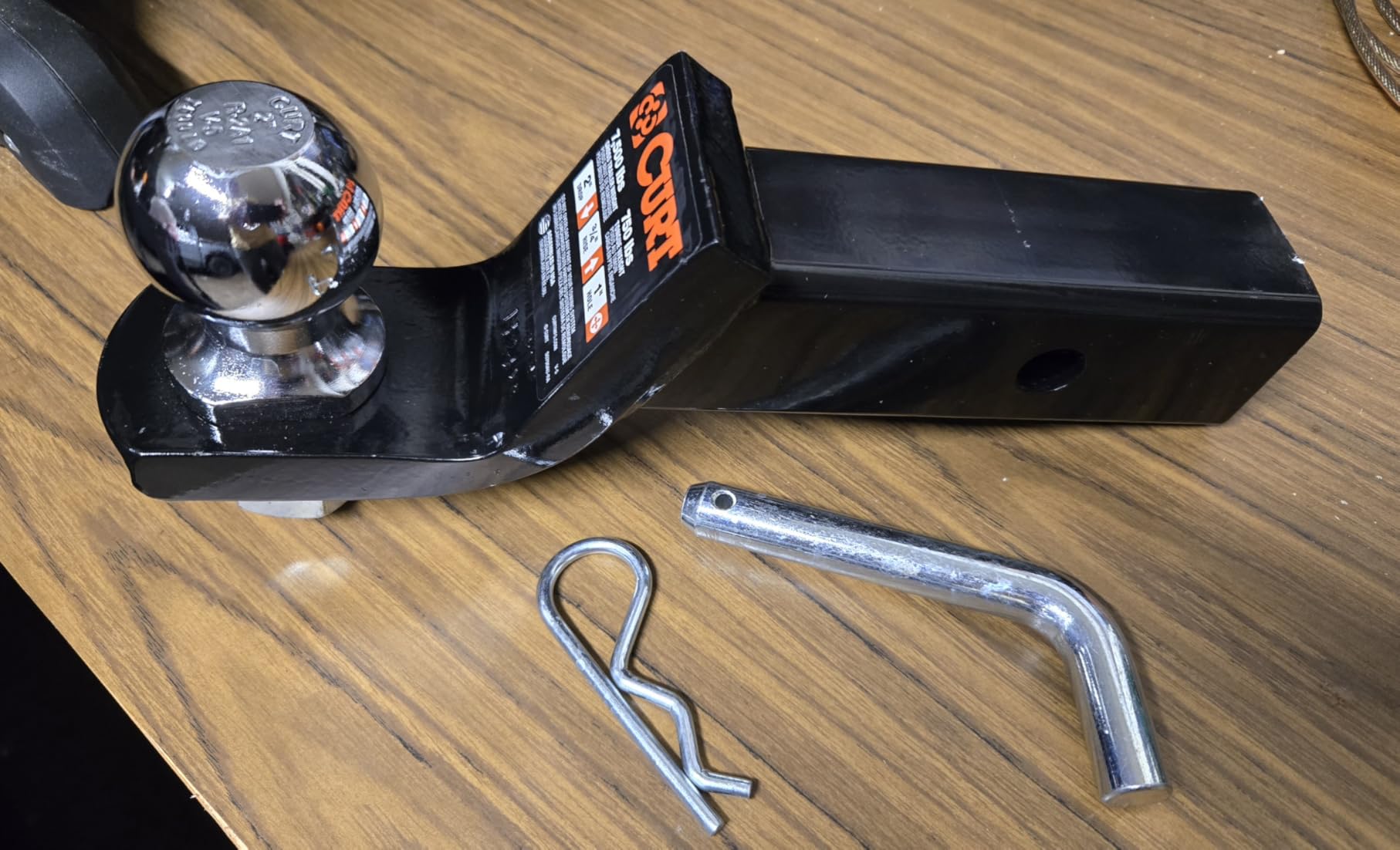
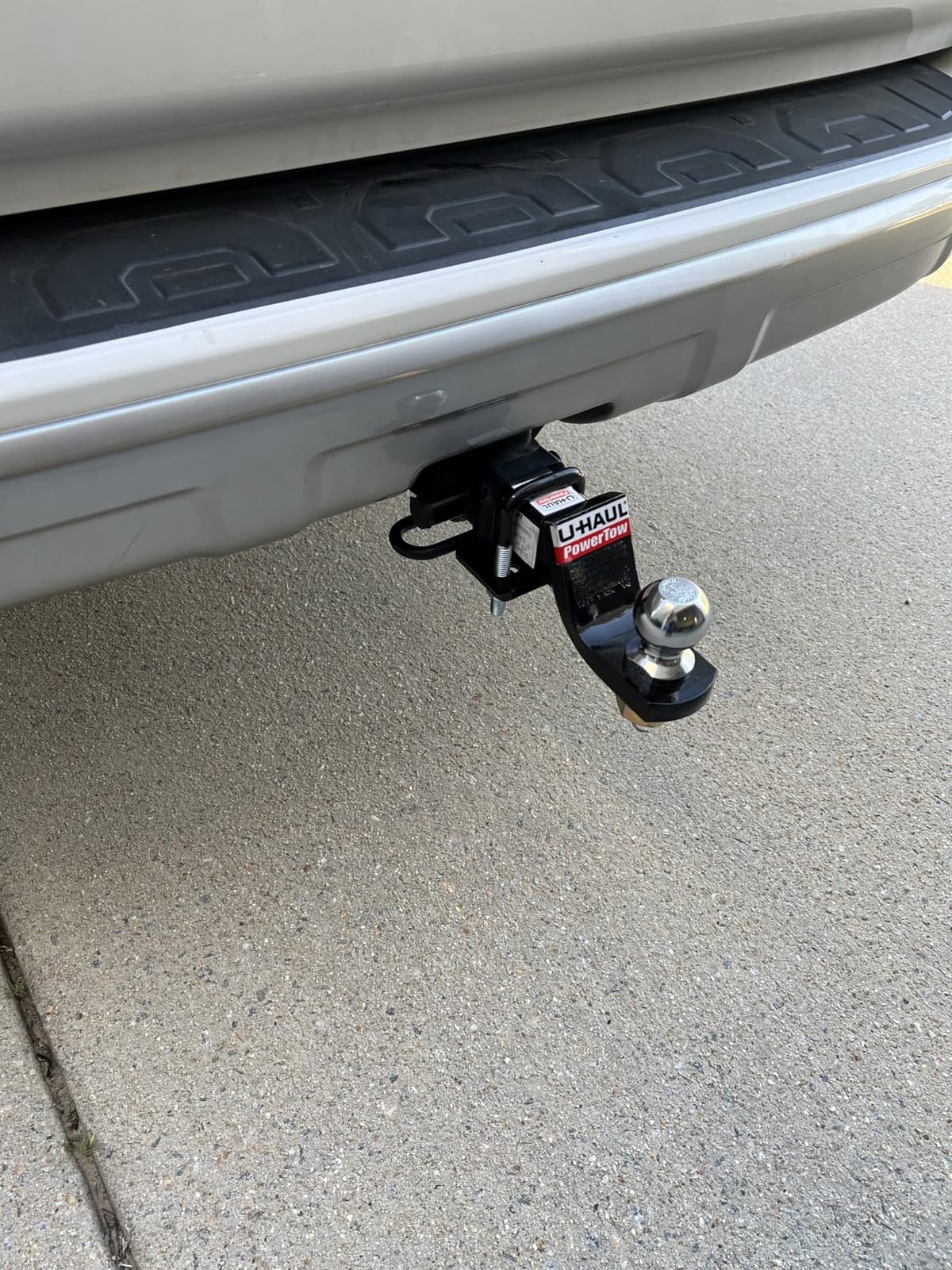
This is the ball mount I would put on a truck first, before anything else on this list. It arrives with the chrome ball already torqued to the shank and a hitch pin in the box, so there is nothing to assemble. Ten thousand owners have run it on boats, campers and rental trailers without a failure story worth repeating.
The 7,500 pound gross trailer weight and 750 pound tongue weight ratings line up neatly with a mid-size camper or a boat on a tandem trailer. It fits any standard 2 inch receiver shank, which covers the overwhelming majority of half-ton and three-quarter-ton trucks.
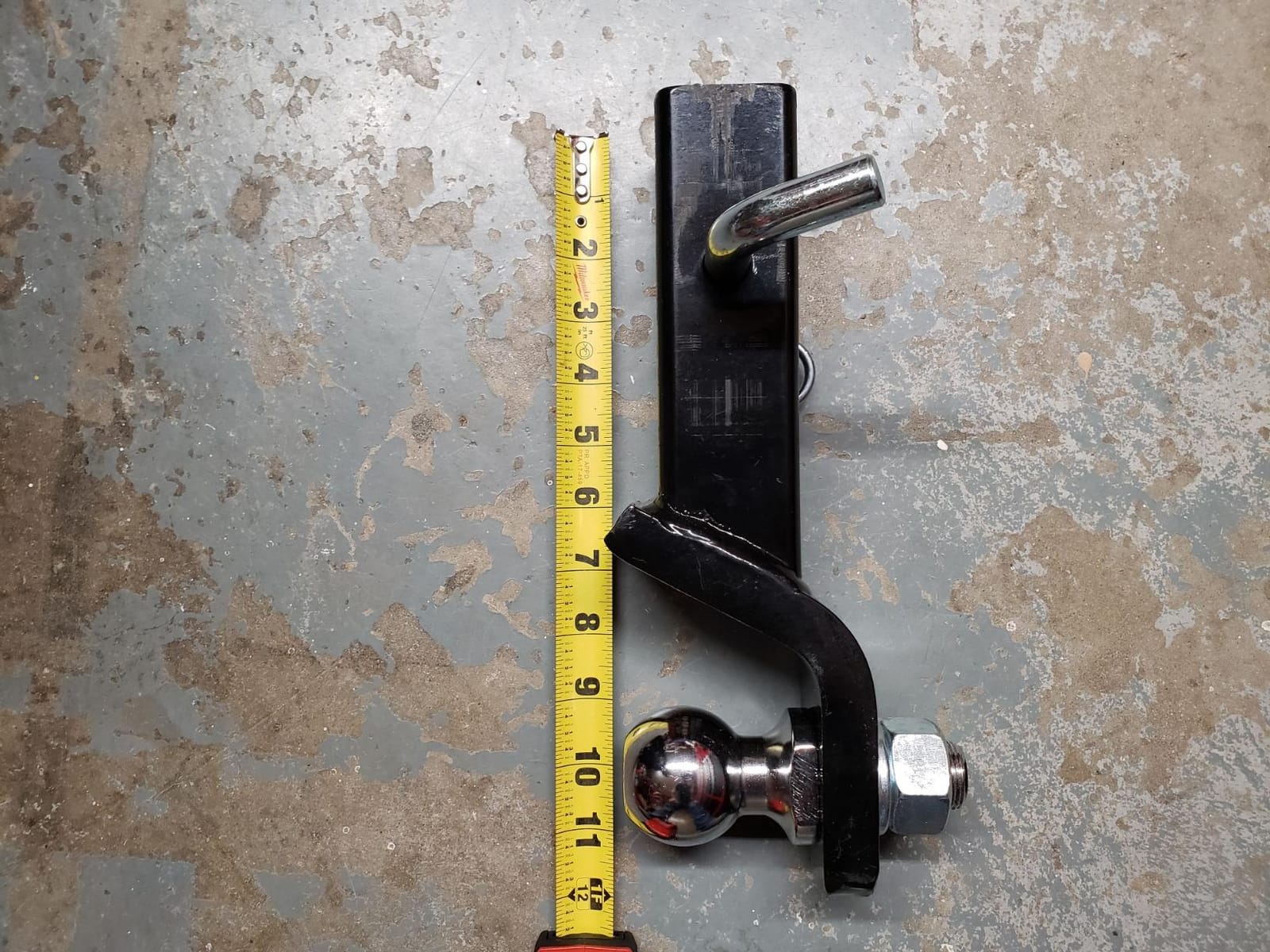
Owners consistently describe the carbon steel as thick and cleanly welded, and the black powder coat as holding up through salt and winter road film. Several report it sliding straight into a factory hitch on vehicles that are not trucks at all, which tells you how standard the pattern is.
Installation is a drop-in swap. Pull the pin, drop the new shank through the receiver, reinsert the pin, and you are towing again. No drilling, no fabrication, no shop time.
Why this ball mount earns top billing
It hits the sweet spot between capacity and simplicity. Most trailers under 7,500 pounds never stress it, and the fixed geometry means there is nothing to adjust or accidentally mistune on a dark campsite.
For a first ball mount, or a replacement that has seized or rusted through, this is the one I would buy.
When you need something else
The 2 inch drop is fixed, so a truck with a lift kit or a trailer with a high coupler may not sit level. If you tow multiple trailer heights, the tri-ball mount below covers more ground.
It also cannot grow past 7,500 pounds, so heavy equipment trailers are outside its envelope.
2. MICTUNING 8 Foot 7-Way Trailer Cord with Junction Box
MICTUNING 7-Way Trailer Cord 8FT with Junction Box Heavy Duty, Waterproof
8 ft cord
Male to female 7 pin
Junction box included
3 pounds
Pros
- Copper blades molded into a heavy duty plug
- Color marked 7 pole junction box
- Longer than typical 4 ft or 6 ft cords
- Open and close grommets seal unused ports
Cons
- Included plug cap is not watertight
- Color code is US RV standard
- Post dividers need a deep socket
Trailer wiring is the single most common roadside failure, and a fresh 7-Way cord fixes a surprising share of it. This one is a heavily reviewed harness in its category, and owners tend to buy it for one of two reasons: replacing a cracked plug, or converting a 4-wire utility trailer to full 7-pin.
The copper blades are molded directly into the plug body rather than crimped onto thin pins, which is why several owners report four years and tens of thousands of miles with no corrosion inside the box. The junction box is flameproof ABS with clearly marked terminals for turn signals, brake lamps, reverse and tail lights.
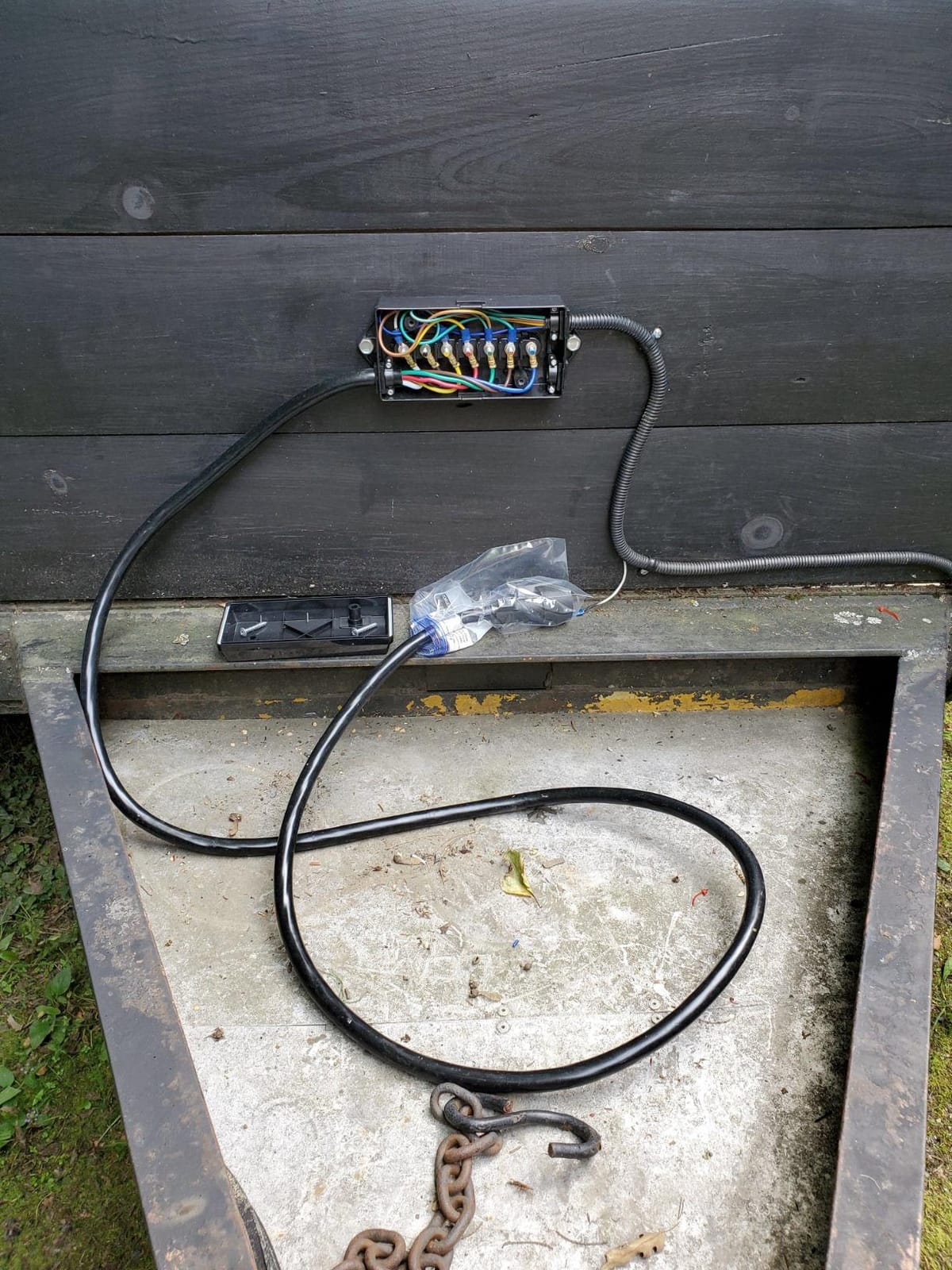
At 96 inches the cord is longer than most, which is what you want when the truck bed is short and the trailer coupler sits well forward. The included grommets let you seal unused ports so water and dust stay out of the box.
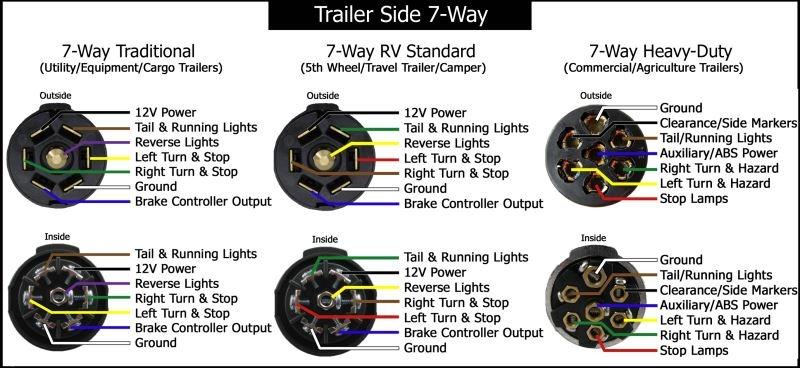
Wiring it is straightforward if you follow the color chart rather than assuming. Owners with decades of trailer experience call it the easiest install they have done.
What this cord gets right
The 8 foot length is the detail that separates it from cheaper 4 foot and 6 foot cords. On a short bed with a forward coupler, a short cord forces you to stretch the harness or route it awkwardly around the trailer tongue.
It is also the fastest way to add brakes and lights to an older utility trailer that only has four wires.
Where it falls short
The plastic plug cover is not watertight, and it is the most repeated complaint. Water gets in, freezes, and pushes the blades apart. Several owners work around it with caulk or a short length of defrost hose over the cap.
The color scheme follows US RV conventions, so it will not match a European or non-standard trailer without checking the diagram.
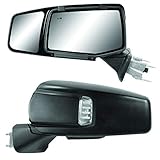
3. K SOURCE Snap and Zap Custom Fit Towing Mirrors for 2019-2024 Silverado and Sierra 1500
K SOURCE Snap & Zap 80930 Custom Fit Towing Mirror for 2019-2024 Silverado 1500, Sierra 1500, Patented
Vehicle specific fit
Driver and passenger extensions
8.5 x 6 x 3.5 inches
3 pounds
Pros
- Tool-free clip on installation
- Molded to factory mirror housings
- Does not block OE mirror glass
- Factory mirrors still fold
Cons
- Only fits 2019-2024 Silverado and Sierra 1500
- Flat lens shows less than a convex mirror
- Only a 90 day warranty
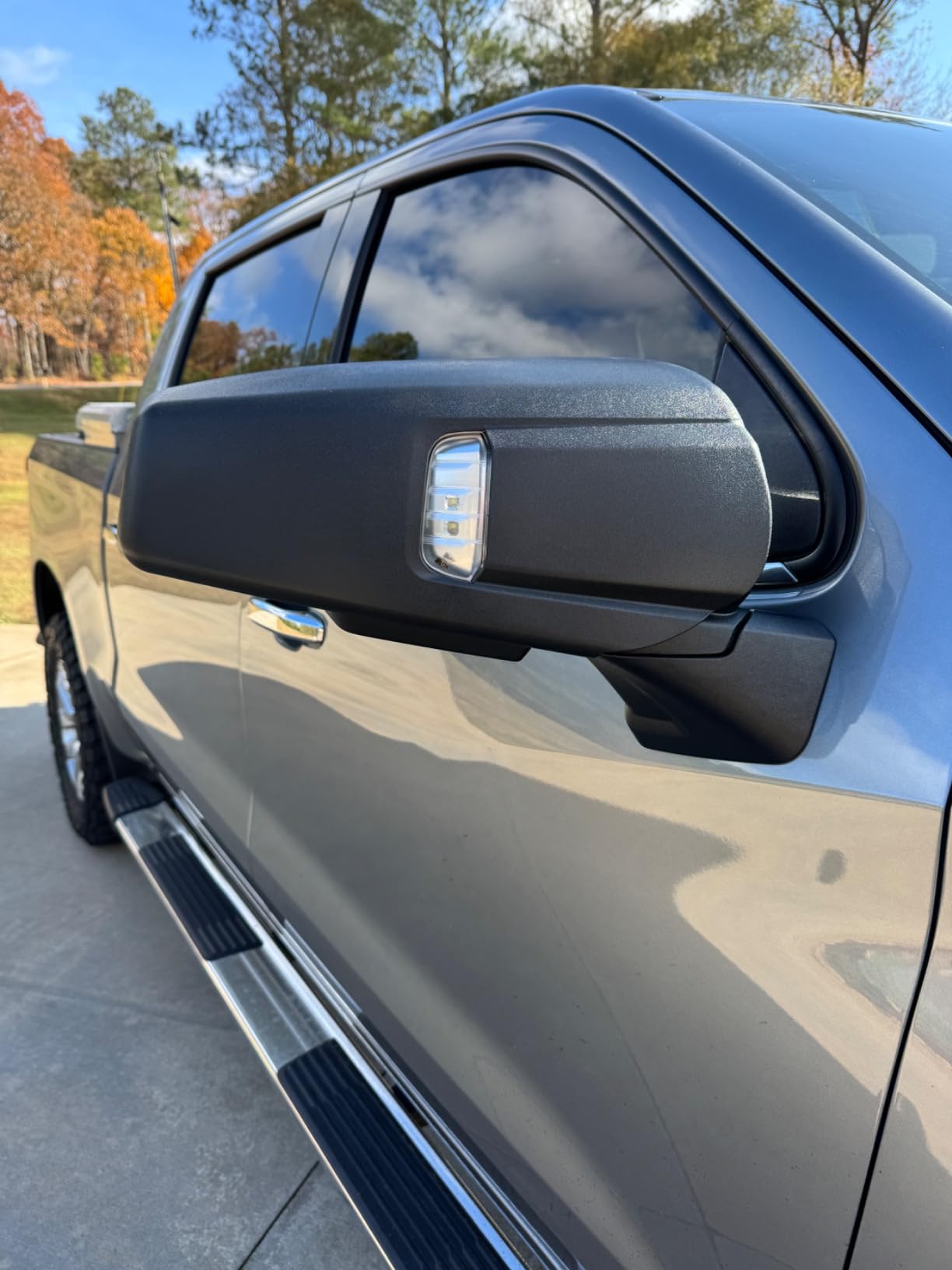
A travel trailer roughly 25 feet long sits directly in the blind spot of a factory truck mirror, and that is where most lane-change drama comes from. These extensions clip over the factory housings on 2019 through 2024 Silverado and Sierra 1500 models and give you the rear quarter view you actually need.
The install is genuinely no-tool. Each extension snaps onto the housing, sits proud of the OE glass without covering it, and the mirrors still fold normally for tight parking. That foldability detail matters more than it sounds, because a fixed extension turns every garage entry into a negotiation.
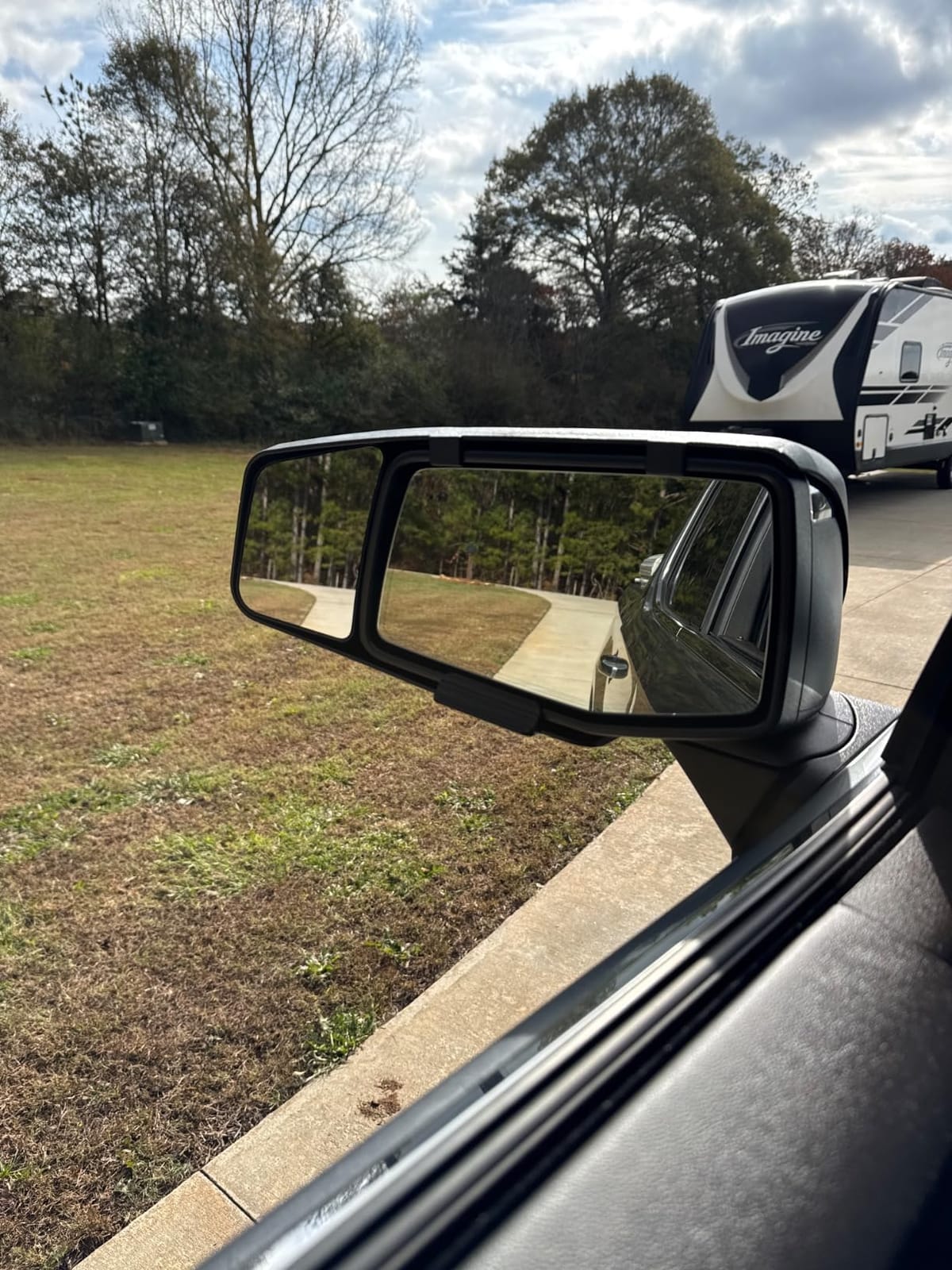
Ratings cluster strongly positive on the fit and on the fact that nothing rattles at highway speed. Owners with larger campers say the wide rectangular pane shows the lane beside the trailer rather than just the trailer flank, which is what actually reduces merge risk.
They are molded glass and plastic, so they survive a wash cycle and road salt without hazing the way cheaper acrylic lenses can.
Who should buy these mirrors
If you tow a camper or travel trailer over about 20 feet and you want to change lanes without leaning out the window, this is the fix. Silverado and Sierra owners in the 2019 to 2024 window get a molded fit rather than a universal strap-on.
The clip-on design also means you can remove them in about a minute for an unhitched week at home.
Who should pass
Fitment is narrow by design. It will not work on a F-150, a RAM, a Tacoma, or a Silverado outside those model years, and it is not a universal solution.
The flat lens curvature gives you a truer view but a narrower field than a large convex towing mirror, so some drivers end up adding a lower-mounted wide mirror anyway.
4. CURT 51170 Spectrum Proportional Trailer Brake Controller
CURT 51170 Spectrum Proportional Trailer Brake Controller, Dash-Mount Knob
Proportional braking
Controls 1-4 axles and 2-8 brakes
Limited lifetime warranty
10.4 ounces
Pros
- Clean dash mounted knob with 10 LEDs
- Motion sensing accelerometer
- Main module mounts out of sight
- Manual override button within reach
Cons
- Harness sold separately
- No OEM display integration
- LEDs sometimes stay lit unexpectedly
Trailer brakes are the single biggest safety upgrade on this list for anyone towing a braked trailer. A proportional controller applies brake pressure in step with how hard you slow down, instead of pushing a fixed amount every time you touch the pedal. On a downhill grade with a loaded trailer, that difference is the whole game.
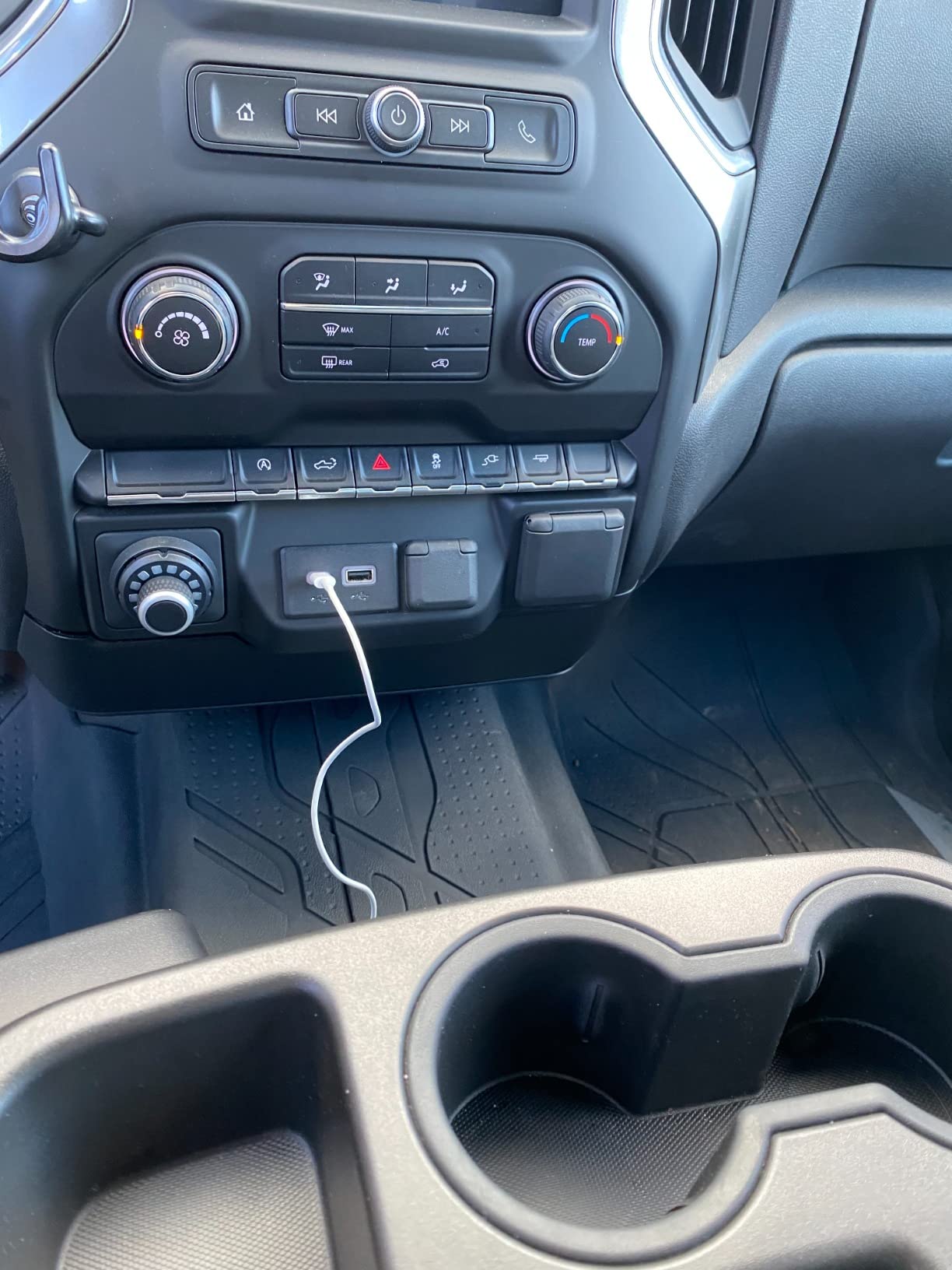
Curt’s Spectrum uses a triple-axis motion sensor to read your deceleration and match the trailer to it. The dash unit is a single knob with tri-color status LEDs, and the main module tucks under the dash or in a wheel well where you will never see it again.
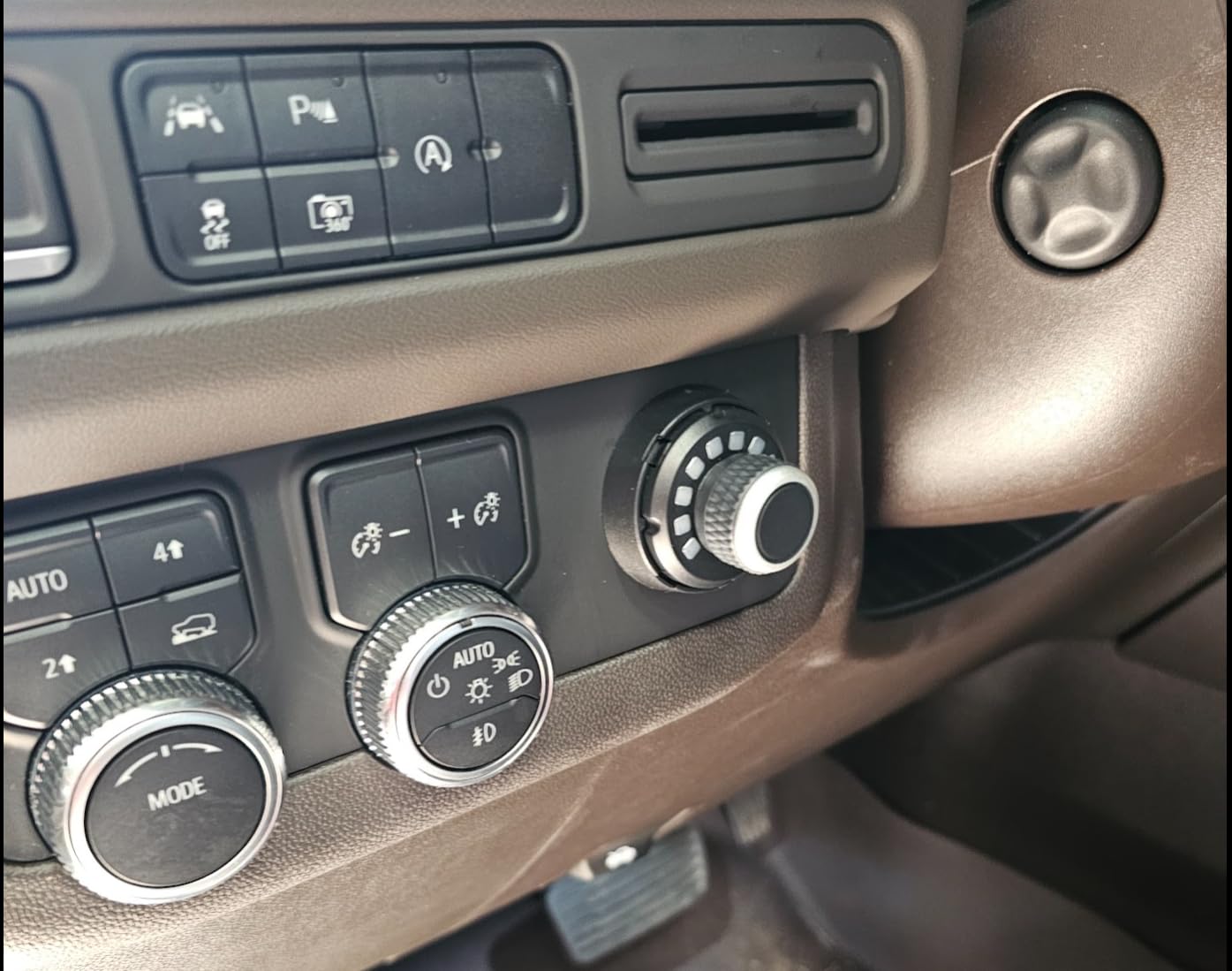
Owners with a vehicle-specific adapter typically get it installed in around forty minutes, and several describe setting the gain once and never touching it. The manual override button is right there if you ever need the trailer brakes on their own.
One unit covering one to four axles and two to eight brakes means it will not be obsolete when you move up to a bigger trailer. The limited lifetime manufacturer warranty is a genuine plus in a category where most competitors offer far less.
Who benefits from this controller
Anyone towing a trailer with electric brakes and a factory seven-way connector. If your trailer weighs more than a few thousand pounds, the added stopping control is worth far more than the cost of the unit.
It is also the cleaner choice if legroom matters to you, since the dash footprint is small.
Watch out for these limits
The quick-plug wiring harness is not included. You need a vehicle-specific or universal harness, and on some trucks you also need a brake light switch insert, which is an extra step in the install.
It does not talk to a Ford or other OEM center display, so your truck menus will show no trailer information. A small number of owners also report LED indicators that stay lit when nothing is wrong, which the manufacturer treats as normal behavior.
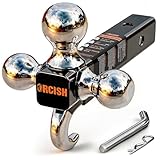
5. ORCISH Tri-Ball Hitch Mount with 10,000 Pound Tow Hook
ORCISH Tri-Ball Trailer Hitch Mount with Tow Hook & Pin for 2″ Receiver
Three ball sizes
10,000 lb tow hook
Fits Class III and IV receivers
12 pounds
Pros
- One mount replaces three ball sizes
- 10000 lb chrome tow hook included
- Extra 5/8 inch hitch pin included
- Rotates between sizes quickly
Cons
- 2 inch receivers only
- Not height adjustable
- Included pin is not lockable
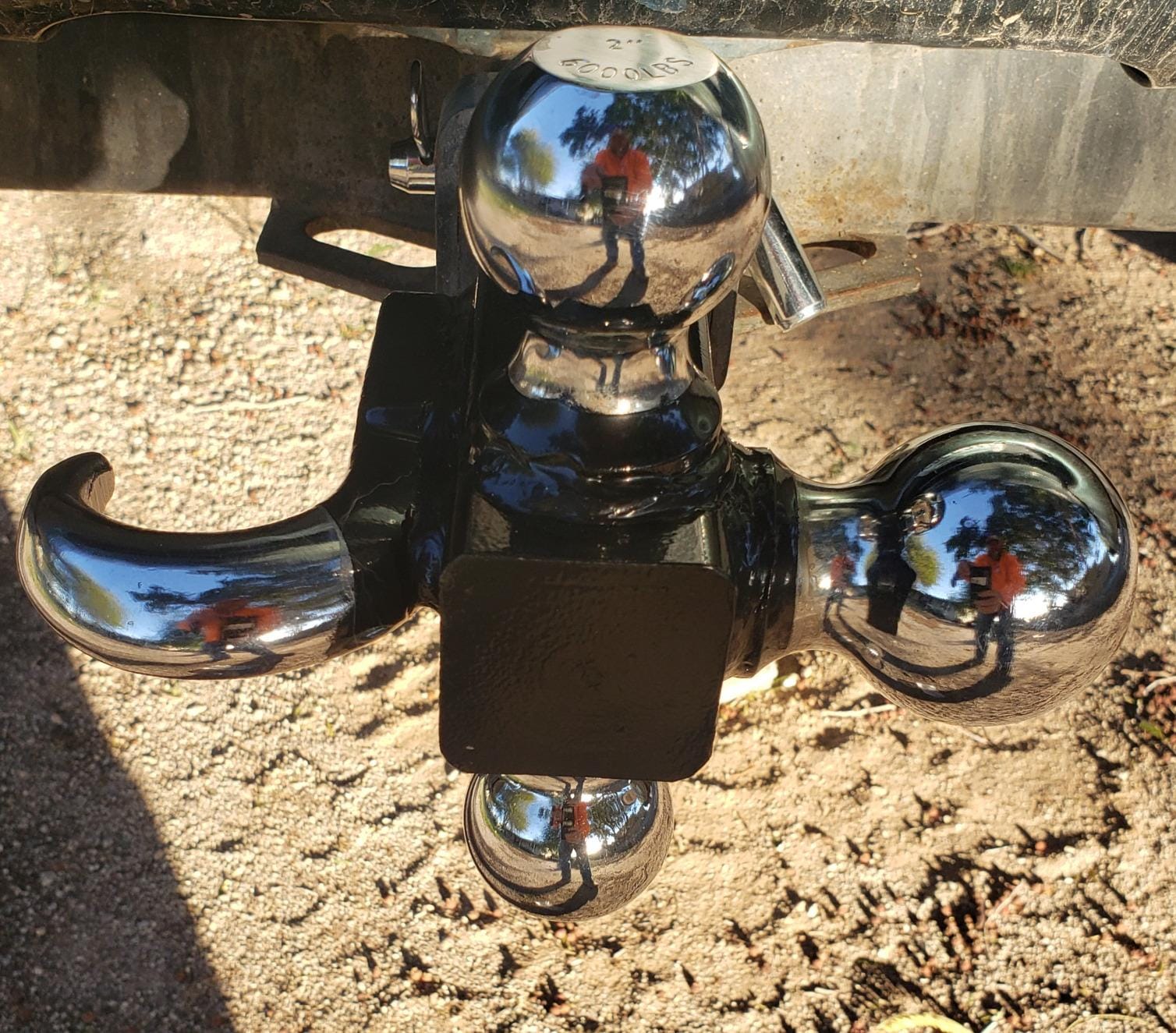
Most households tow more than one thing. A boat on a single-axle trailer wants a 1-7/8 inch ball, a utility trailer wants 2 inch, and a camper wants 2-5/16 inch. This mount carries all three on one shank, so you flip it instead of owning a drawer full of ball mounts.
Ratings sit at 4.8 across nearly a thousand reviews, and the recurring line is that swapping ball sizes on one mount replaces several cheaper mounts you would otherwise have to store and keep clean.
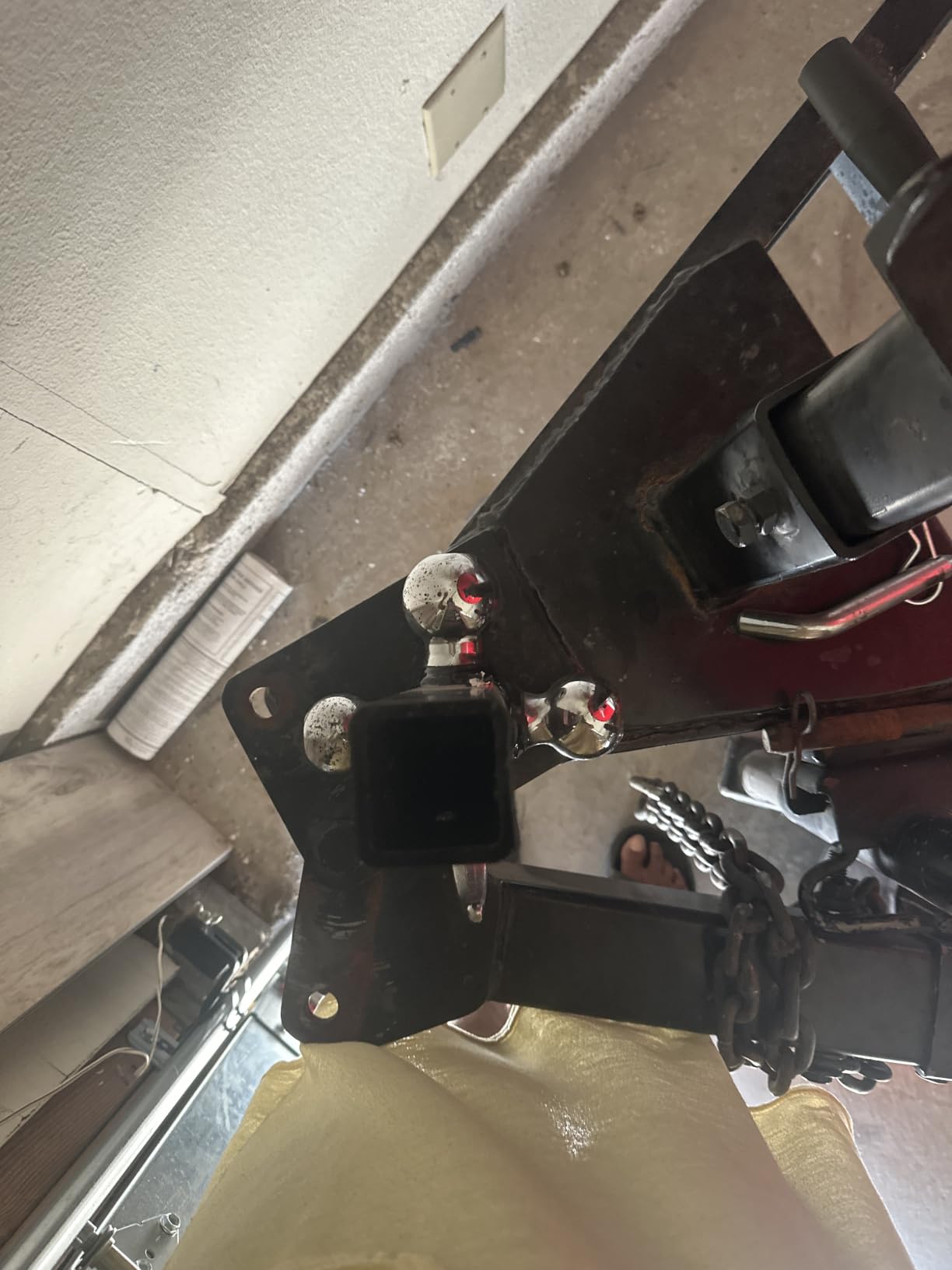
The integrated chrome tow hook is rated to 10,000 pounds, which makes it useful for strap pulls and light recoveries as well as hitching. It fits Class III and IV 2 inch square receiver tubes, which covers most half-ton and three-quarter-ton trucks.
Owners running Tacoma and other half-ton platforms report a clean, snug install, and reviews cover flatbeds, boats and general cargo without any stability complaints.
Why owners like the multi-ball design
Trailer coupler standards genuinely differ, and guessing wrong means a trailer that will not connect. Having all three sizes on one frame removes the guesswork when you borrow a trailer or switch boats.
The tow hook adds recovery capability without another piece of gear to buy.
Where it will not work
It is for 2 inch receivers only, so a truck with a 2.5 inch or 3 inch receiver is out. It is also not height adjustable, so a lifted truck paired with a high coupler may need a separate riser.
The included pin is not lockable, which is worth knowing if you leave the trailer hooked up in public.
6. GR Innovations HitchBoss 7-Way Towing Organizer
GR Innovations HitchBoss 7-Way – Towing Organizer for Manual/Electric 2” & 2 ¼” Trailer Hitch – Easy Install RV Accessories – Side Hooks, Cable & Harness Holder – Made in USA
Fits 2 inch and 2-1/4 inch jacks
Side hooks and cable holder
7-way harness clip
Made in USA
Pros
- Keeps chains and breakaway cable off the ground
- Integrated 7-way harness holder
- Installs with a standard screwdriver
- Made in the USA with steel hardware
Cons
- Organizes cables but carries no weight
- 7-way version will not hold a 4-way plug
- Clip can be tight on some jack shafts
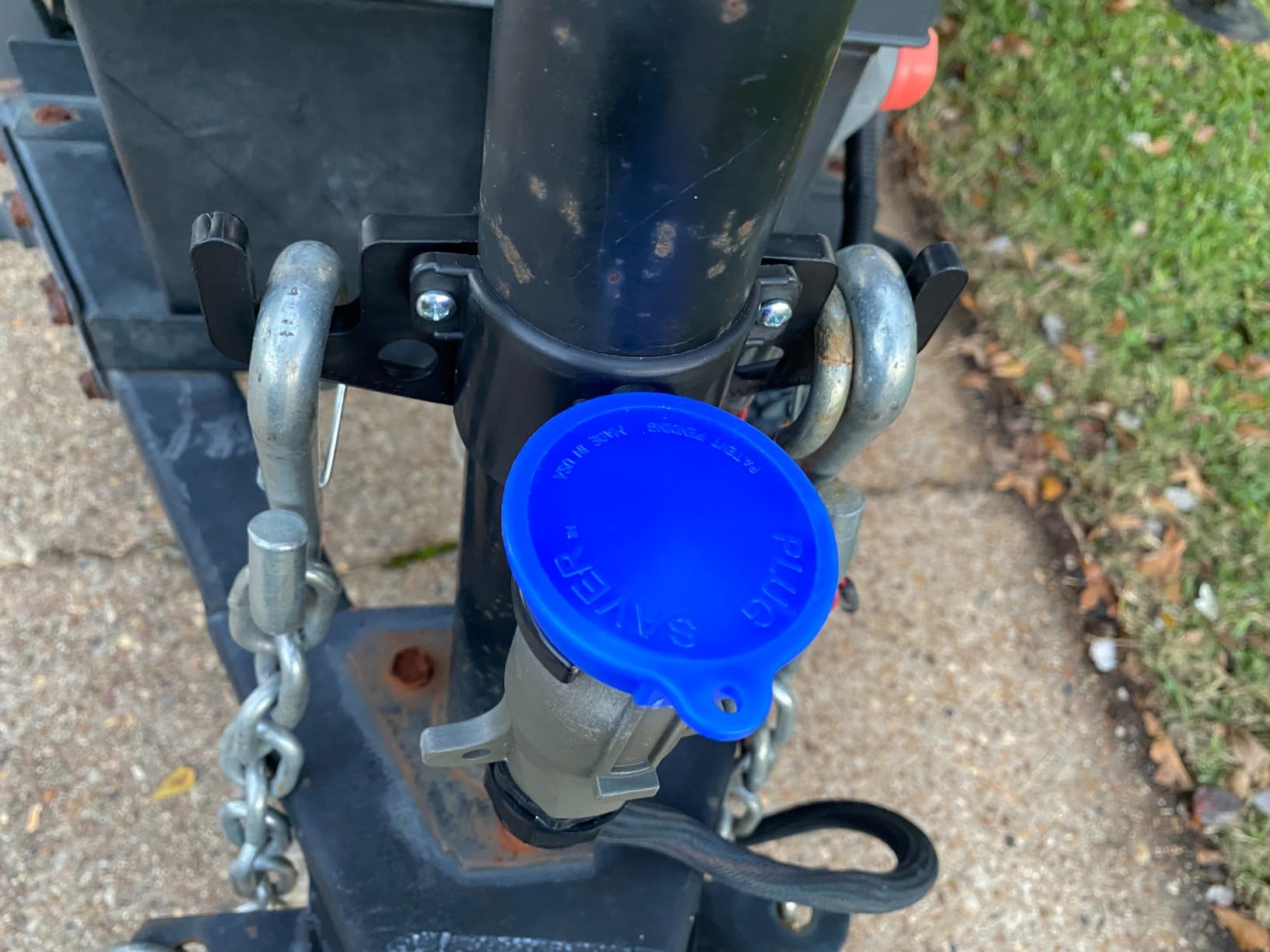
Safety chains dragging on pavement is the most common complaint on camper forums, and it wears out both the chains and the road surface. This organizer clips onto the trailer jack, holds the chains up, and gives the electric brake cable and 7-way plug a home so they stop swinging.
It fits both manual and electric jacks at 2 inch and 2-1/4 inch, which covers the large majority of travel trailer and camper hardware. A standard screwdriver is the only tool you need.
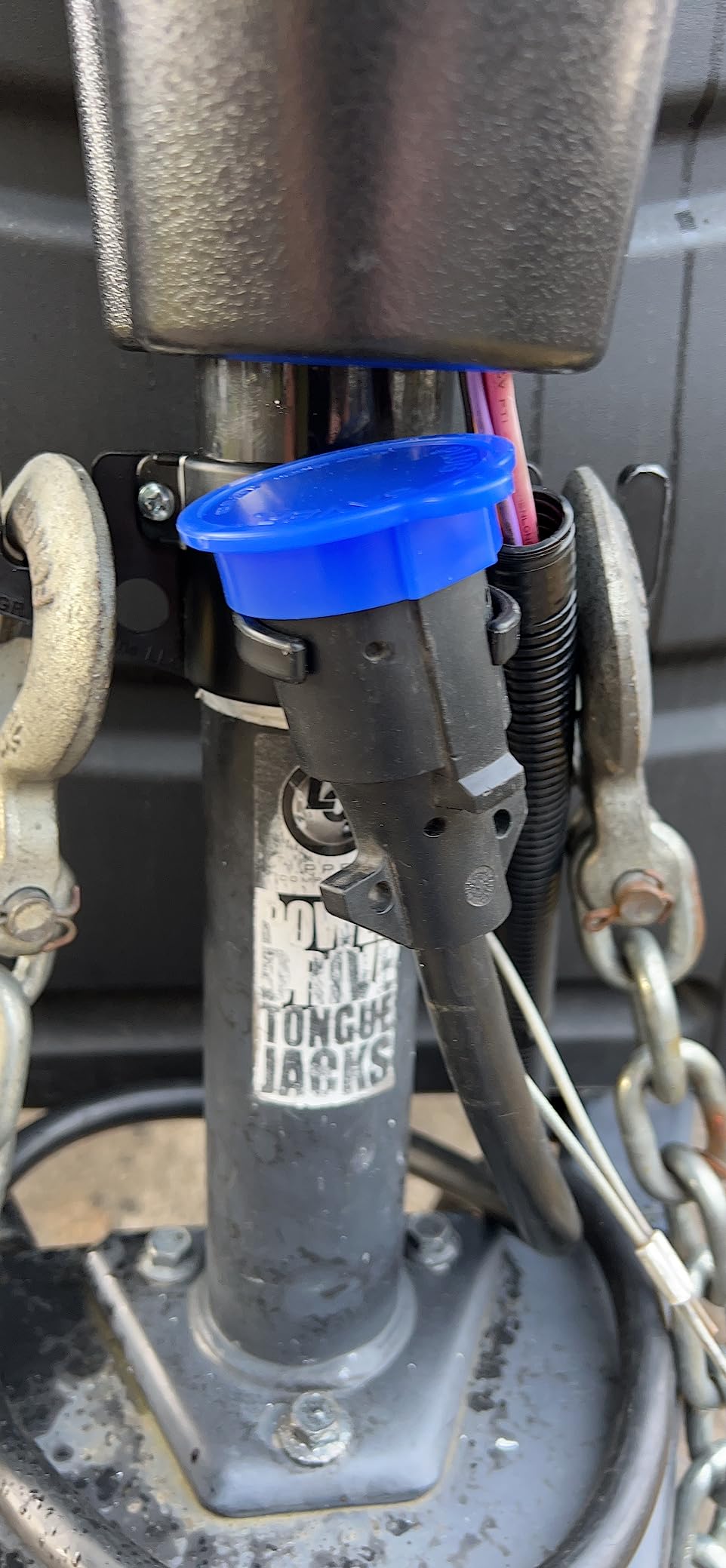
The 7-way harness clip is the part people notice most. Rather than fishing a plug out of a tangle at a dark campground, it lifts straight off the holder. Owners with older trailers and a battery of their own say it turns hookup into a quick three-motion job.
The body is American-made polypropylene with steel bolts and nuts, which is more than most organizers in this category offer.
Who should pick this up
If you tow a camper or travel trailer, this is one of the highest value items on the list for very little money. Chains stop dragging, the breakaway cable stays clear of the road, and your connector lives somewhere findable.
It pairs naturally with the wiring and brake controller gear above.
What it does not do
It organizes, it does not support. The polypropylene body is not load-bearing, so do not hang anything heavy from the side hooks.
Buy the correct variant. The 7-way version will not accept a 4-way flat plug, and the clip can feel snug on unusual electric jack shaft shapes.
7. Camco Eaz-Lift Elite 1,000 Pound Weight Distribution Hitch Kit
Camco Eaz-Lift Elite 1,000lb Weight Distribution Hitch Kit with Manually Adjusted Sway Control – Ready-to-Tow with Pre-Installed Hitch Ball, Sway Control Ball, U-Bolts, & Chain Package (48058)
1,000 lb tongue weight
12,000 lb gross trailer weight
Pre-installed hitch ball
Manual sway control
Pros
- Spreads tongue weight across both axles
- Manual clamp adjustment for sway control
- Arrives pre-torqued and complete
- Interchangeable spring bars mount either side
Cons
- Sway bar is loud in tight turns
- Instructions are thin
- Needs a torque wrench for installation
Weight distribution is what stops a loaded travel trailer from pushing the rear axle past its rating and squatting the truck onto its bumper. This kit moves part of the tongue weight forward onto the truck’s front axle, so the rear axle carries a fair share and the truck sits at its design ride height.
Rated at 1,000 pounds of tongue weight and 12,000 pounds gross trailer weight, it covers a solid range of mid-size and large travel trailers. Owners report measurable results, including one who watched his rear fender height go from 37.5 inches back to 39.5 inches once loaded.
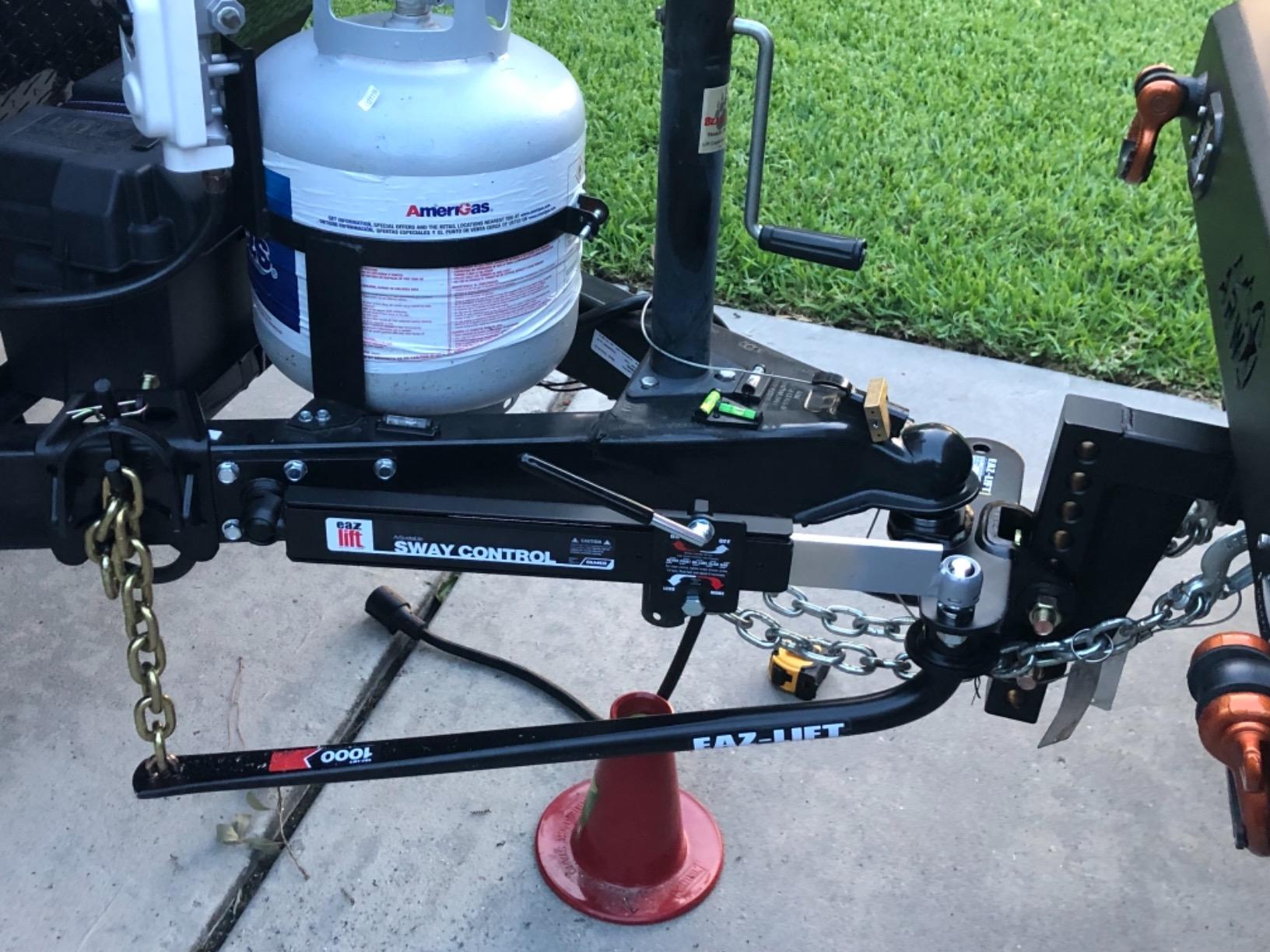
The kit arrives with the 2-5/16 inch hitch ball and sway control ball pre-installed and torqued, plus U-bolts and the chain package. Interchangeable spring bars mount on either side of the hitch head, which makes the whole thing far less fussy than a bare weight distribution setup.
Several owners note improved behavior in strong crosswinds and passing big rigs, which is the exact problem weight distribution is meant to solve. Grease fittings on the spring bars simplify upkeep.
When a weight distribution hitch is the right call
If your loaded trailer pushes you over the rear axle rating, no amount of hitch hardware fixes it. You either move weight forward with a distribution hitch or add capacity, and this is the more economical of the two for most half-ton owners.
It also buys meaningful sway resistance, which matters most for tall boxy trailers that catch a passing semi.
Reasons to skip it
The sway control bar is genuinely loud. Owners describe groaning and growling on slow turns and speed turns, and several disconnect it for town driving. If noise bothers you, budget for that.
Installation wants a torque wrench rated around 260 ft-lbs and a 1-1/8 inch socket, and the documentation is thin enough that many owners learned the procedure from videos. The included rise shank is also too short for some truck and trailer height combinations.
8. Eapele Hitch Step for 2 Inch Receiver
Eapele Hitch Step for 2 Inch Receiver, Universal Anti Slip Bumper Guard, 600lbs Maximum Load, for Trailer Tow Truck Pickup SUV Pickup Van RV
600 lb maximum load
8 gauge powder coated steel
15.3 x 10.5 x 2.5 inches
Hitch pin included
Pros
- Turns the receiver into a step
- 8 gauge powder coated steel
- Non-slip ridged plastic cover
- Pin and clip included
Cons
- Fits 2 inch receivers only
- May sit loose and rattle in some receivers
- Load rating is for a person not cargo
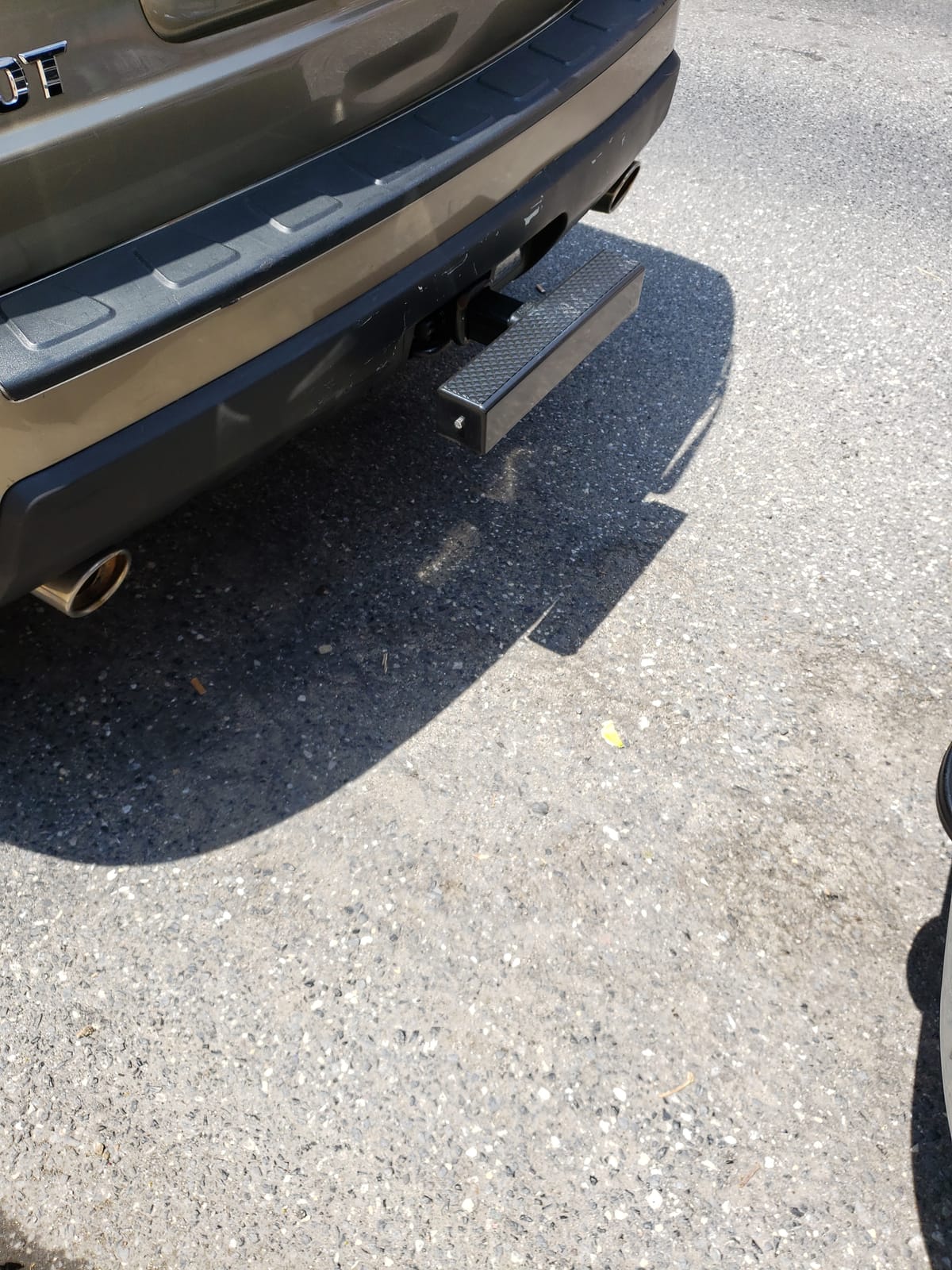
Climbing into a truck bed with a hitch installed is the unglamorous problem this solves. The step replaces the receiver opening with a wide platform, and owners say it makes getting into the bed noticeably easier, especially with a ladder in the bed or a tall dog along for the ride.
The frame is 8 gauge powder coated solid steel rated to 600 pounds, which is a person-sized load rather than a cargo rating. A ridged plastic cover gives traction without scratching the vehicle’s paint.
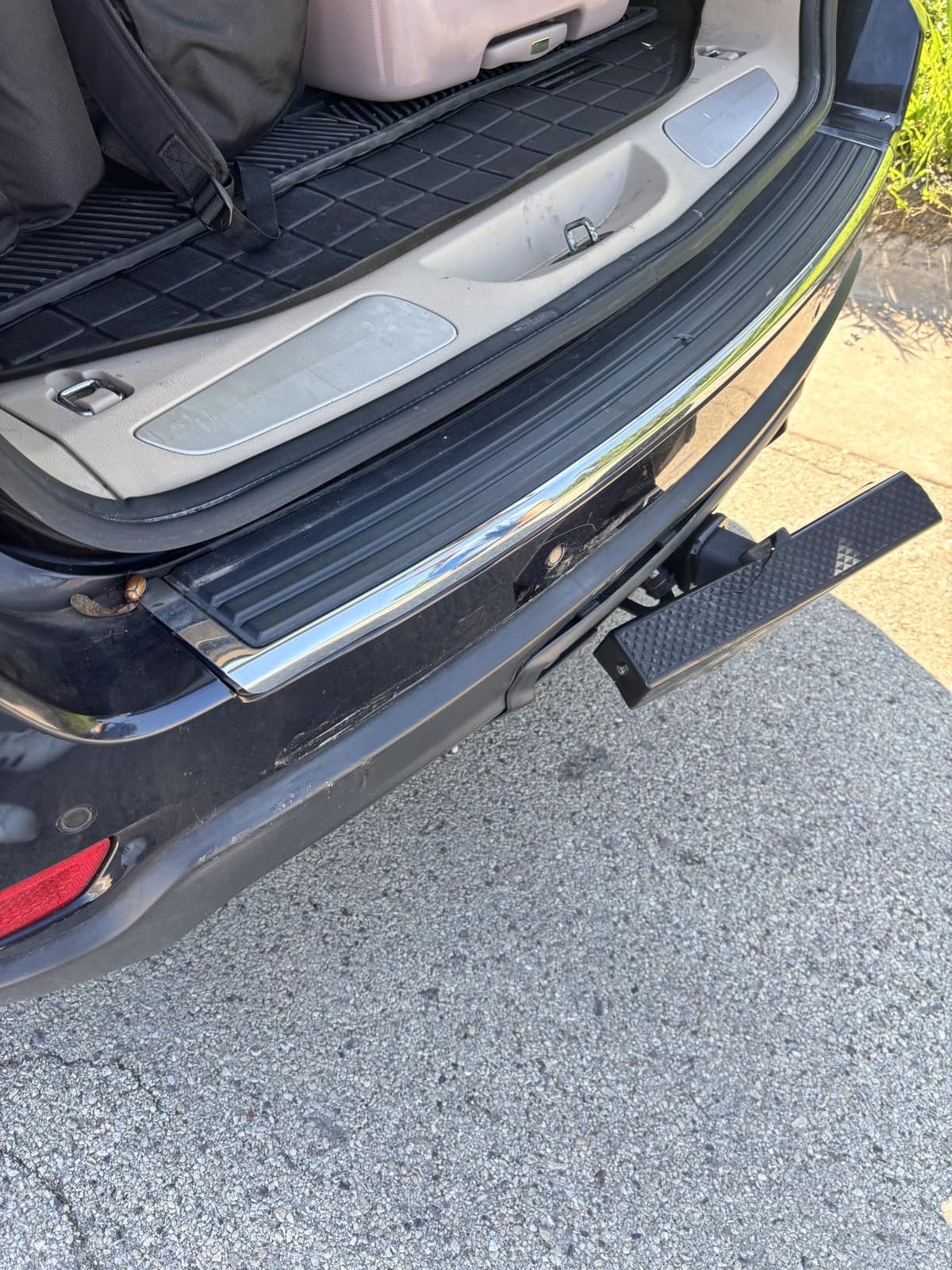
It fits standard 2 inch square receivers and measures 15.3 by 10.5 by 2.5 inches, which is a genuinely usable foothold rather than a decorative perch. The hitch pin and clip are included, so the install is a two-minute job.
Owners consistently like the width of the tread and the fact that the steel feels substantial for what is essentially an accessory.
Who will actually use this
Anyone who loads gear into the bed with a hitch installed. If you carry bikes, boards, camping totes or a toolbox in the bed, the step turns an awkward climb into a normal one.
It also pairs well with a truck toolbox setup, which is worth a look if gear storage is your problem.
Where it falls down
Fit varies by receiver. Owners report it is snug on some receiver brands and slightly loose on others, producing a bit of rattle that the manufacturer says can be solved with rubber padding or tape.
It fits 2 inch receivers only, and do not mistake the 600 pound figure for a cargo rating.
9. CURT 45820 Sway Tab Ball Mount
Curt Manufacturing 45820 Sway Tab Ball Mount
Factory welded sway control tab
1 inch and 5/8 inch ball holes
2 inch drop or 3/4 inch rise
5 pounds
Pros
- Provides a spot for a friction sway control ball
- Fits standard 2 inch receivers
- Available in rise or drop geometry
- Saves welding a tab onto a custom mount
Cons
- Sway control ball sold separately
- Top welds are not ground flat
- One year limited warranty
A friction-style anti-sway bar needs a ball to push against, and that ball has to sit somewhere rigid on the hitch. This ball mount has a factory welded tab for exactly that purpose, so you do not pay a welder to add one to an existing mount.
It fits standard 2 inch by 2 inch receiver tubes and carries both 1 inch and 5/8 inch ball holes, which covers the two common shank diameters. Owners running a friction sway bar rate it very highly for holding a 3,300 pound camper steady over long distances once torqued to spec.
Why it earns a place here
A friction sway bar is cheaper and lighter than a full weight distribution system, and for many mid-size trailers it is enough. The hard part is always mounting it correctly, and the welded tab solves that.
If you are building a custom setup with separate rise or drop options, having both choices available helps with leveling.
Know the limitations first
No ball is included. You have to buy the sway control ball separately, which means the quoted rating only means something once that part is on the frame.
Two practical cautions recur: the top welds are not ground flat, so a large-base ball can sit crooked, and the tab will not work with Curt’s own Rockerball because the drop curve sits too close to the ball hole. The warranty is one year limited.
10. REDARC Tow-Pro Liberty Electric Trailer Brake Controller
REDARC Tow-Pro Liberty Electric Trailer Brake Controller, Universal Fit for 1 to 2 Axle Cars, Trucks, SUVs, Proportional Braking, 12V Compatible to Tow RV, Camper, Trailer, Boat
Proportional braking
Supports 1-2 axles
6.7 x 6.3 x 2.2 inches
8.8 ounces
Pros
- Smooth set-and-forget proportional braking
- Very compact dash footprint
- Main module hides under the dash
- Two year limited warranty
Cons
- Harness and switch inserts sold separately
- No dedicated harness for some newer trucks
- Remote head is about 1.5 inches deep
The classic complaint about aftermarket brake controllers is the bulky dash unit that eats legroom and looks borrowed. This one fixes that with a slim remote head and a small dial, plus a main module small enough to hide anywhere under the dash.
Its proportional mode uses active calibration to read how the truck and trailer are actually moving and apply brake force in proportion, which is why owners upgrading from old time-based controllers describe it as a set-and-forget device. One reported a 425 mile road test with a fully loaded 9,100 pound trailer without a single gain adjustment.
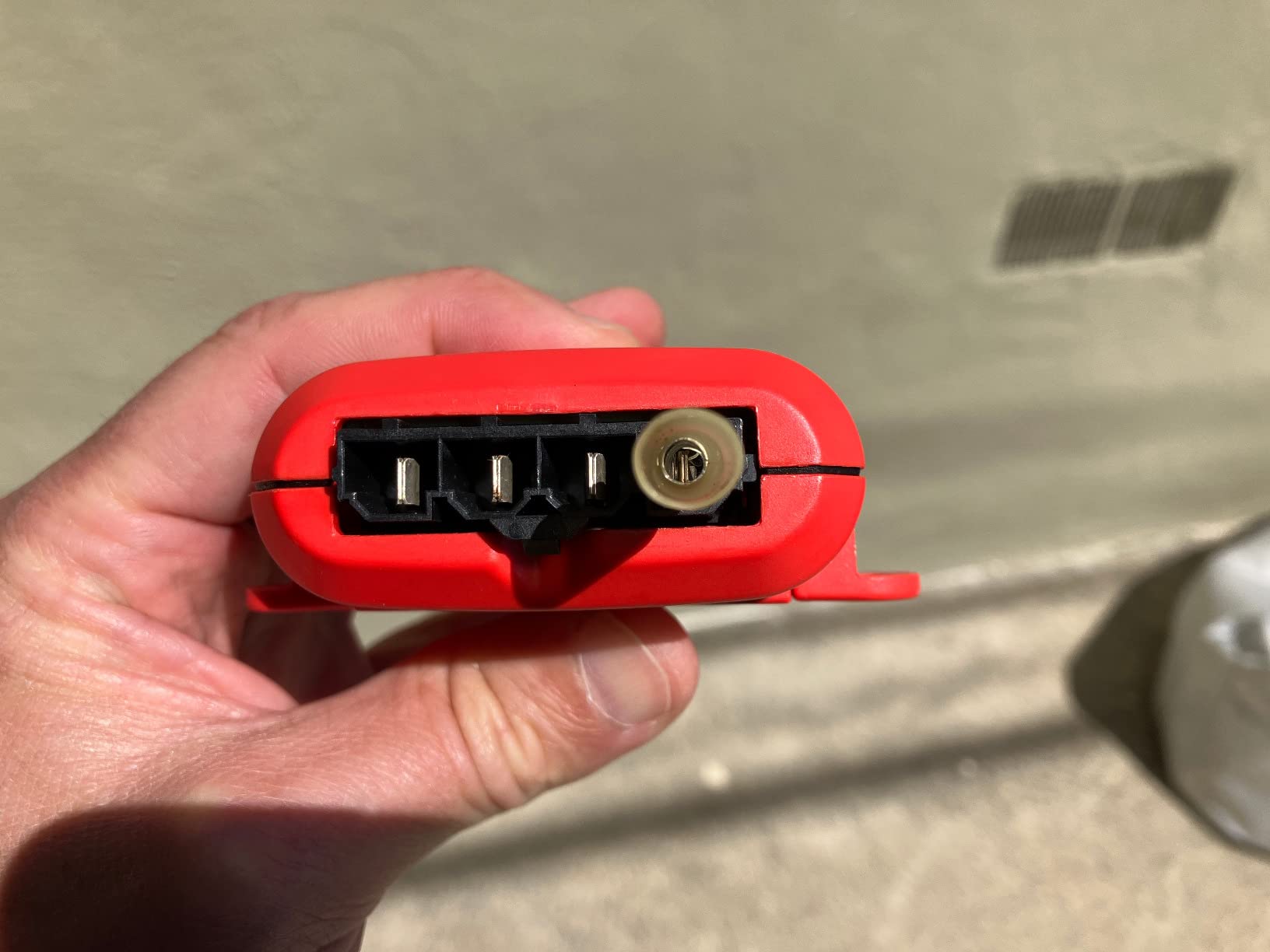
Installation is roughly half an hour if you already have the wiring. The RJ45-style remote cable is easy to route and simple to replace, and the whole thing carries a two year limited warranty.
It supports one to two axles, so it covers most boats, campers and small travel trailers without paying for a unit built for eight brakes.
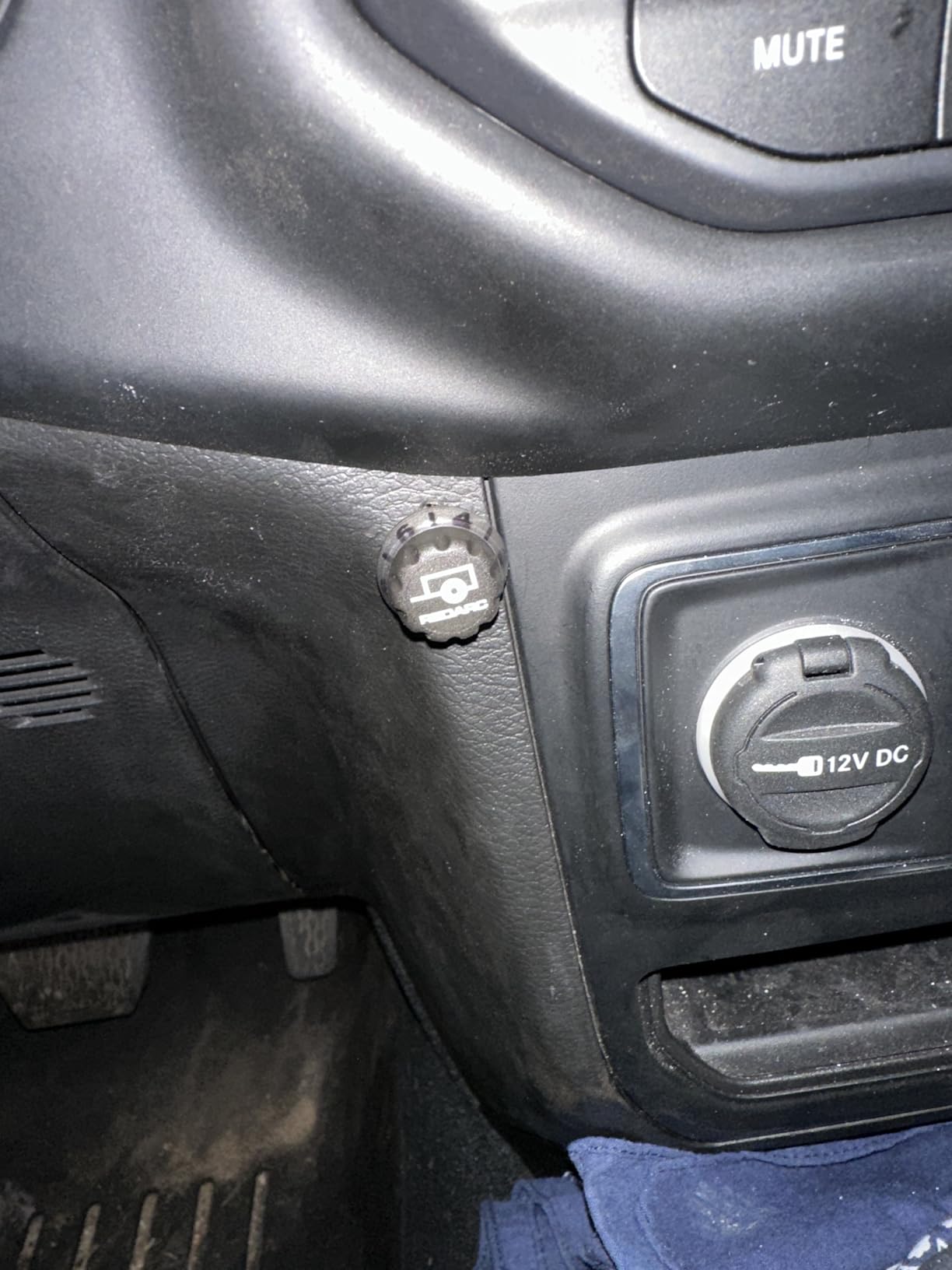
Why owners like this controller
It looks factory rather than add-on, it never hits your knee, and the braking feels smooth rather than abrupt. For anyone who spends real time towing, the absence of constant re-tuning is the feature that matters most.
The active calibration also contributes to sway control, which is a quiet bonus on a tall trailer.
Plan around the extra pieces
The wiring harness and vehicle switch inserts are separate purchases, and a few owners marked it down a star for that. REDARC also does not publish a dedicated harness for some newer trucks, including certain 2019-and-up Silverado configurations.
The remote head is about 1.5 inches deep, so check your dash clearance in thin-trim vehicles before you commit.
11. CheeMuii 8 Foot 7 Way Trailer Wiring Harness Kit
CheeMuii 8 FT 7 Way Trailer Wiring Harness Kit Junction Box 7 Trailer Cord
Double prong 7 pin plug
Seven color coded terminals
8 ft cord
Junction box included
Pros
- Double prong plug outlasts single prong designs
- Thick well insulated cable
- Water resistant junction box
- Clear color coded terminals
Cons
- Included mounting hardware is thin
- Color codes differ between manufacturers
- Junction box is water resistant not submersible
This is the wiring kit to reach for when a trailer plug is cracked, pins are green, or you want to convert a basic 4-wire utility trailer into a fully wired one with brakes and lights. Owners with long careers in trailer wiring describe the install as close to effortless.
The main engineering difference from cheaper cords is the double prong plug. Single prong designs bend and break at the pin, and this one carries a weatherproof outer wrap with seven color coded terminals on a junction box that mounts cleanly to the trailer A-frame.
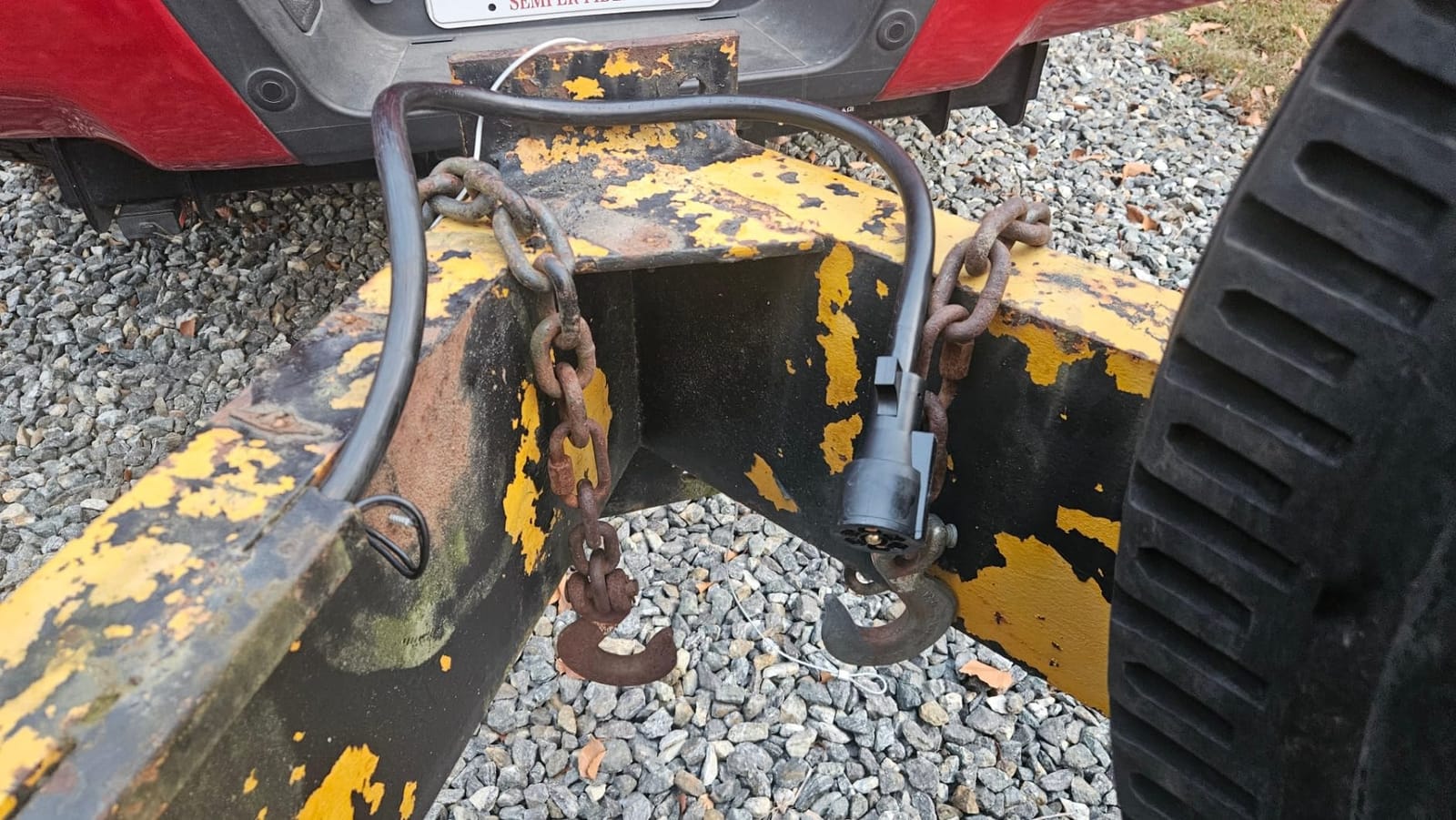
Ratings show a strong 82 percent five-star share, and reviewers like the professional-looking result. The updated color coded instruction sheet covers most RV trailer wiring standards, which is where most mistakes actually happen.
It suits trailers, RVs, campers, caravans and food vans, so it is not limited to one trailer type.
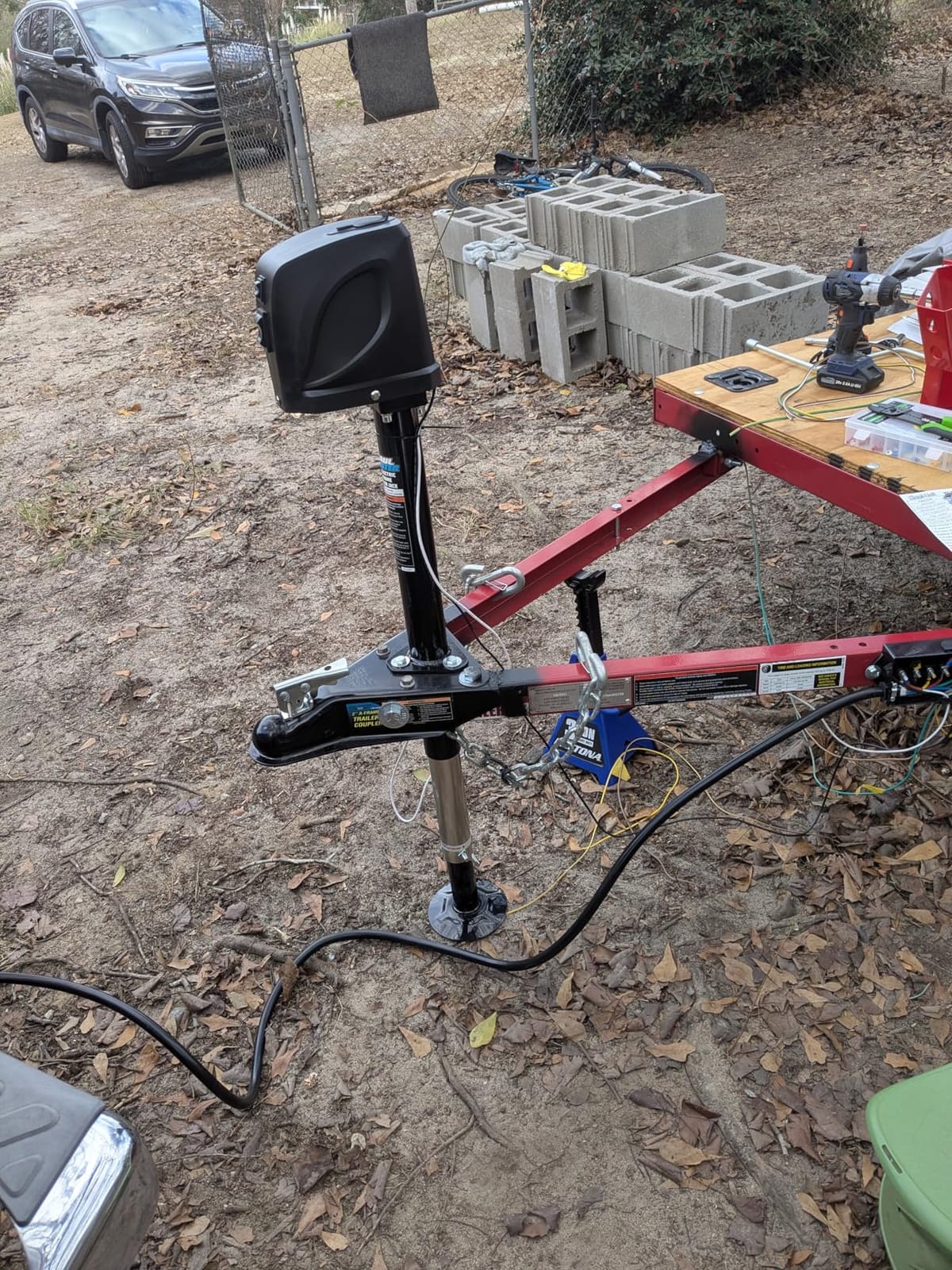
When to choose this over the other harness
Pick this kit when you are doing a full wiring rebuild or a 4-wire to 7-wire conversion. The double prong plug is the more durable choice for a trailer that sits outside in all weather.
Owners converting an old utility trailer report ending up with wiring that looks factory-installed.
Things to check before you buy
The included mounting hardware is thin, and a few owners substituted their own fasteners for the junction box mount. Color coding follows common RV standards but does vary between trailer manufacturers, so read the diagram rather than guessing.
The junction box is water resistant rather than fully submersible, and the warranty runs six months.
12. DEEAGLE Hitch Tightener Anti Rattle Stabilizer
DEEAGLE Hitch Tightener Anti Rattle Stabilizer for 1.25″ to 2″ Hitch
Fits 1.25 inch and 2 inch receivers
0.28 inch coated plate
Rubber coated U-bolt
One year warranty
Pros
- Removes play between mount and receiver
- Works with Class I through IV hitches
- Simple three-step install
- Can be fitted from below on low hitches
Cons
- Easy to install in the wrong orientation
- Not sized for 2.5 inch receivers
- Adds a bolt to loosen for swaps
Rattle from a hitch accessory is the most complained-about towing annoyance there is, and a tightener is the cheapest possible fix. This one clamps the shank to the receiver with a rubber-coated U-bolt and a 0.28 inch powder coated steel plate, taking out the play that makes a cargo carrier or rack bang over bumps.
It handles Class I through IV hitches at both 1.25 inch and 2 inch sizes, so it covers nearly every accessory shank on the market. Owners report a noticeably quieter, tighter tow within minutes of fitting it.
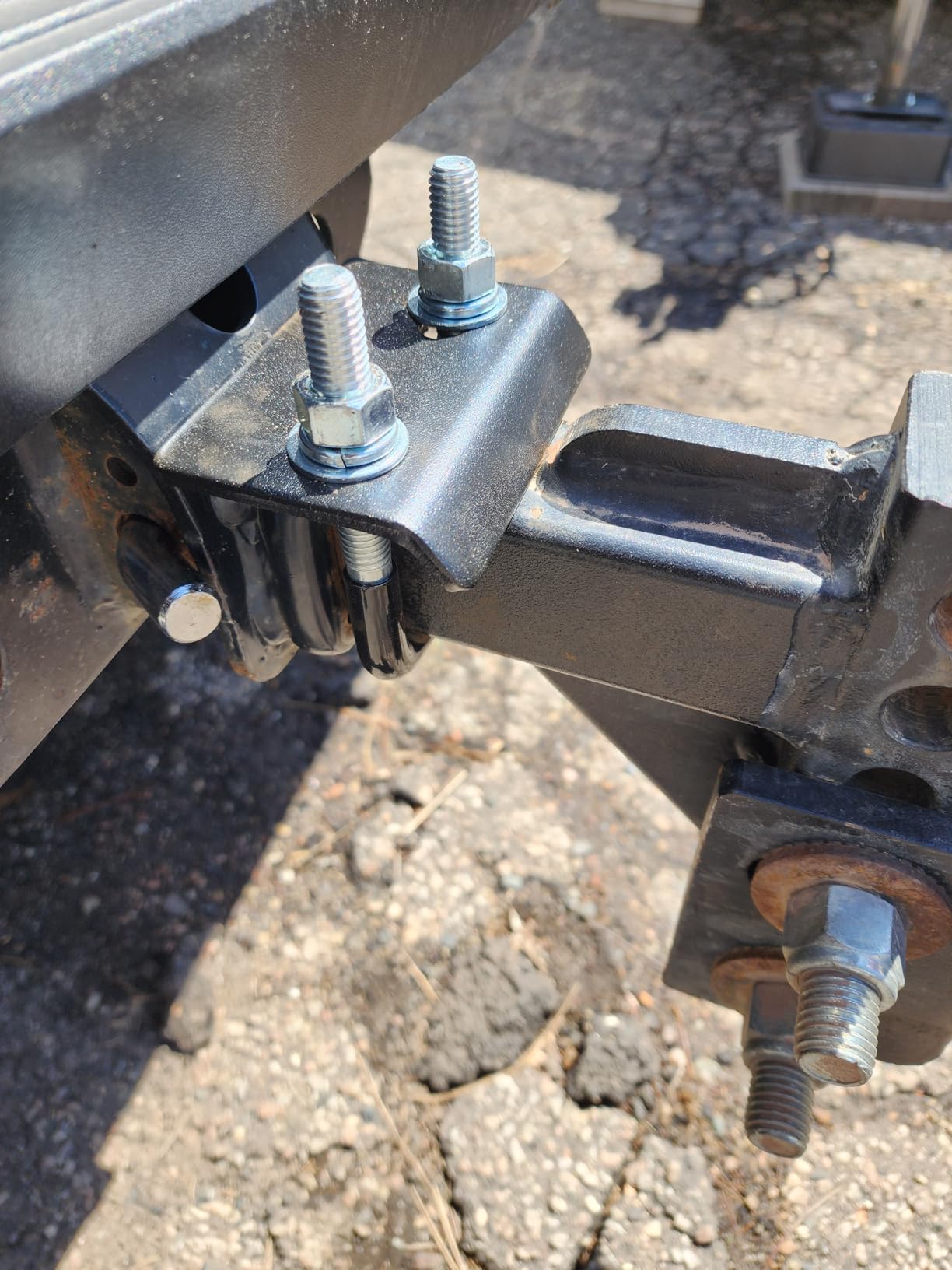
The kit includes the plate, two flat washers, two spring washers and two nuts, so there is no parts hunt. Ratings show 85 percent five-star, and the install is genuinely three steps: slide the tube in, drop the U-bolt through, tighten.
There is a useful detail for low-hanging hitches. You can fit the U-bolt from underneath so it does not drag on the ground, which is a recurring tip in owner reviews.
When a tightener helps most
It is for hitch accessories rather than ball mounts, so think cargo carriers, hitch racks and hitch-mounted cargo. Anything that chatters over rough pavement will go quiet once the shank is clamped.
The rubber coating matters, because a bare steel U-bolt wears the receiver edges over time.
Know when to leave it off
If you swap hitch accessories frequently, the tightener becomes an obstacle. Towing forum regulars report abandoning anti-rattle clamps for exactly that reason, since every swap means loosening another bolt.
It does not fit 2.5 inch receivers, and it can be fitted the wrong way round on a low hitch.
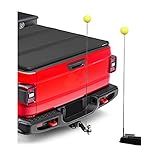
13. JOUNJIP 52 Inch Magnetic Trailer Hitch Alignment Kit
JOUNJIP 52” Magnetic Trailer Hitch Alignment Kit & Ball Hitch Guide Poles
Telescoping rods extend to 52 inches
Neodymium magnetic bases
Chrome plated steel
2 poles included
Pros
- Poles rise above tall truck beds
- Telescopes to nearly any hitch height
- Turns a two person job into one
- Chrome plating resists rust
Cons
- Strong magnets can pinch fingers
- May not hold on heavy rust
- Confirms fore-aft alignment only
Backing a trailer is the part most people dislike most, and it gets harder fast on a lifted truck with a tall trailer. These magnetic guide poles put a bright target 52 inches tall, rising above the bed and trailer, so you can reverse straight to the ball instead of hunting for a spotter.
Setup is three steps: set the ball height on the poles, attach the neodymium magnetic bases to the hitch ball area, then reverse until the neon balls touch. Users describe it as turning a two person hitch job into a solo one.
Why this earns its spot
Visibility is the whole point, and 52 inches is tall enough to clear an oversized truck bed in daylight and at night. The telescoping design adjusts to nearly any trailer or hitch height combination.
For solo owners without a second driver available, the time saved is the entire value of the kit.
Where it is imperfect
Strong neodymium magnets pinch fingers and snap onto hitch metal aggressively, so watch your hands when the poles meet. They also grip less reliably on a heavily rusted or vertical steel hitch.
Two poles verify fore-aft alignment only, not side-to-side. Chrome plating scuffs and shows wear with time, and the rods are alloy steel, so check them before a long trip.
14. JUSTTOP Locking Trailer Hitch Receiver Pin with Rubber O-Rings
JUSTTOP Trailer Hitch Receiver Pin Lock,5/8″ Dia 3-1/2″ Long Pin Trailer Lock for Class III IV 2″ and 2-1/2″ Receiver,Tow Hitch Pin Lock with 4 Anti-Rattle Rubber O-Rings,for Trailer Truck Car Boat
5/8 inch diameter pin
3-1/2 inch effective length
Fits Class III and IV receivers
Two keys included
Pros
- Locks the trailer to the truck
- Four rubber O-rings absorb vibration
- Fits 2 inch and 2-1/2 inch receivers
- Electrophoretic coated carbon steel resists bending
Cons
- Fixed length can be too long on some receivers
- You must unlock it to drop the trailer
- Does not fit 1-1/4 inch Class II receivers
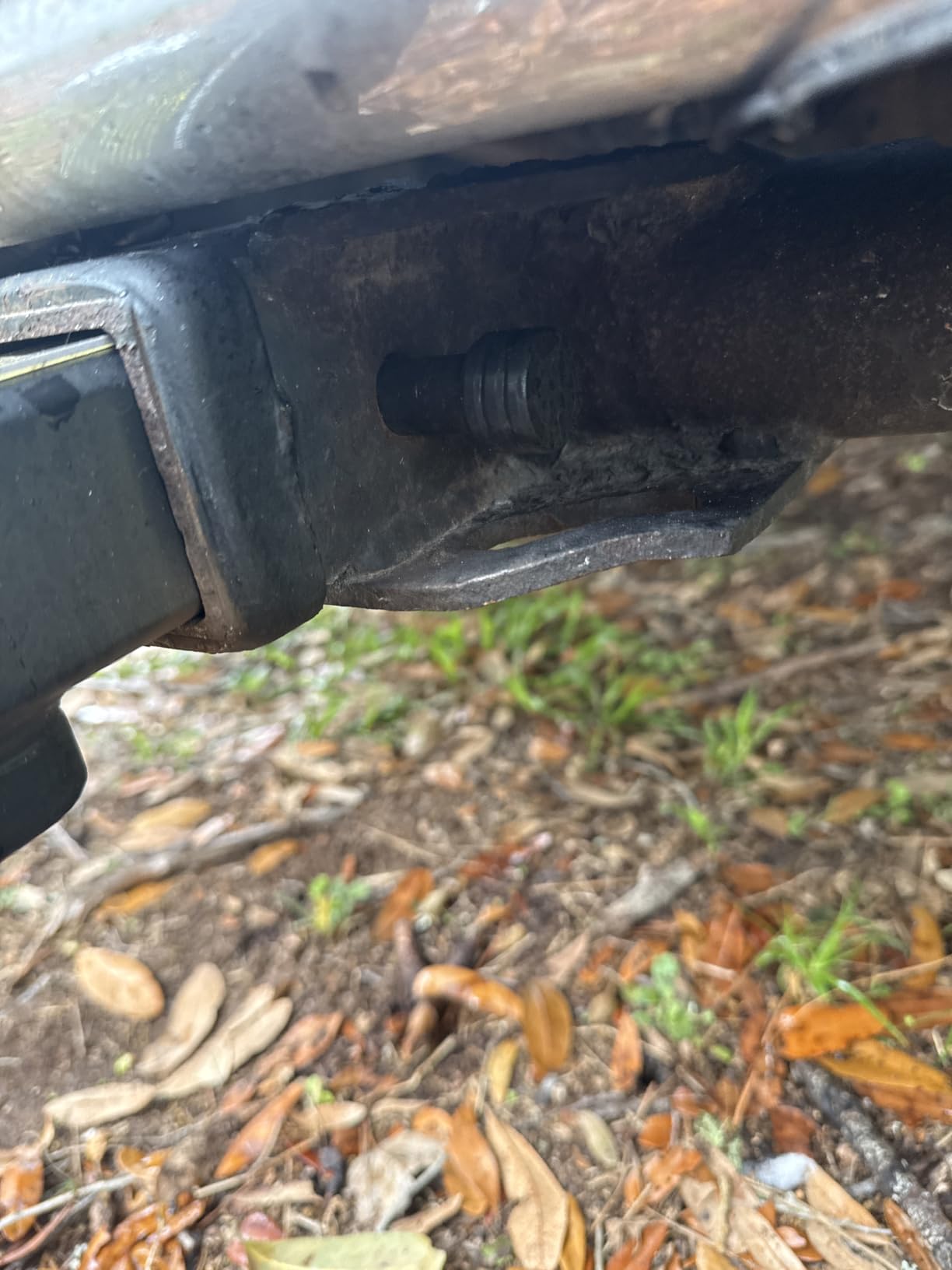
Most hitch theft is opportunistic, and a plain clip pin is all that stands between you and it. This replacement pin locks with a tubular key and a zinc-alloy cylinder, so the trailer and hitch accessory are physically secured to the receiver rather than held by friction.
It solves a second problem at the same time. Four integrated rubber O-rings absorb vibration at the pin, which noticeably quiets a hitch that rattles over rough pavement. Buyers frequently mention both benefits in the same review.
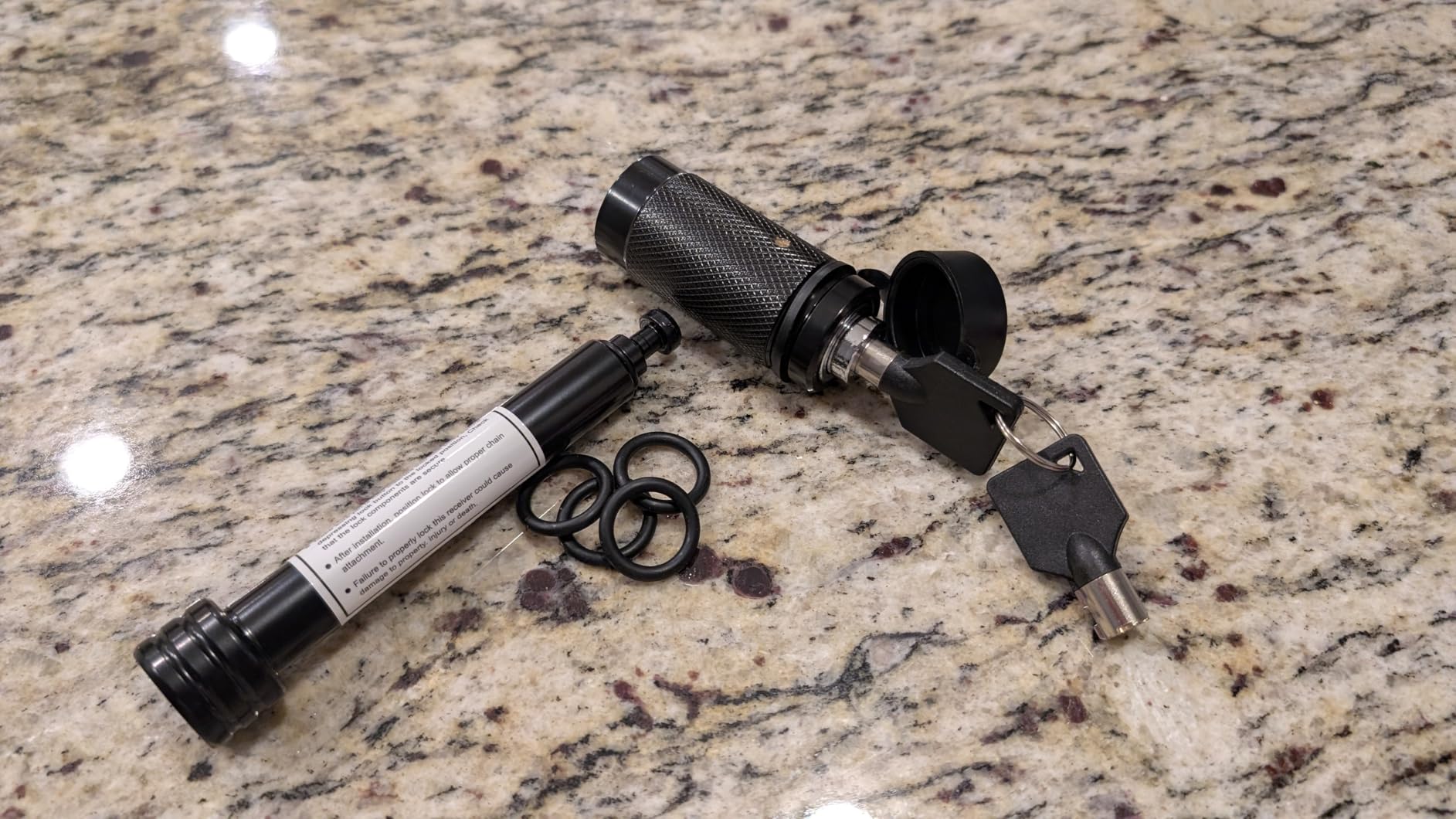
The pin is 5/8 inch diameter with 3-1/2 inch of effective length, fitting Class III and IV receivers at 2 inch and 2-1/2 inch. Two keys are included and the round key style is easy to work with gloved hands.
The electrophoretic-coated carbon steel is built to resist bending under load, which matters more than it sounds when a loaded trailer is leaning on the pin.
Why this is an upgrade worth making
It replaces a plain clip with real security and quieter towing. If your trailer lives outside, hooked to the truck or sitting on a jack, that is a good trade.
The O-ring design is also the anti-rattle fix that works when a clamp will not, because it stays put when you swap accessories.
Check your receiver depth first
Length is fixed, and owners report the 3-1/2 inch pin bottoming out before the lock catches on newer trucks with deeper receivers. Measure before you order if your truck is recent.
You also have to unlock it before dropping the trailer, and it does not fit 1-1/4 inch Class II receivers. Note that it secures the pin only, not a lockable ball coupler.
How to Choose Truck Towing Accessories: Class, Capacity and the 80/20 Rule
Start with your trailer, not the accessories. A bumper-pull trailer with a 2 inch or 2-5/16 inch coupler needs a receiver hitch with enough tongue weight capacity to hold the front of the trailer down. A gooseneck or fifth wheel needs a bed-mounted setup instead, and an equipment trailer rarely needs a brake controller.
Match the trailer’s gross weight to your truck’s tow rating and your hitch’s rating, then check the tongue weight separately. Tongue weight is the one number people skip, and it is the number that overloads a rear axle.
What is the 80/20 rule for towing a trailer?
The 80/20 rule is the short version of tongue weight math. For a bumper-pull trailer, keep the loaded tongue weight between 10 and 20 percent of the total loaded trailer weight, with 15 percent as the common target. So a 5,000 pound loaded trailer wants roughly 500 to 1,000 pounds on the ball, and about 750 pounds is the middle.
What is the 60/40 rule for trailers?
The 60/40 rule describes how braking force should be split under a light stop. About 60 percent of the total stopping force comes from the tow vehicle’s brakes and about 40 percent from the trailer’s electric brakes, when the trailer brakes are adjusted correctly. When a trailer brakes too hard or not hard enough, the truck nose-dives or the trailer jackknifes, and that split is what tells you which way to adjust gain.
Hitch classes and receiver sizes: what actually fits your truck
Hitch classes run from I to V, and each step roughly doubles what it can carry. Class III and IV cover most half-ton and three-quarter-ton work, with Class V reserved for heavy equipment and gooseneck applications. Check the class stamped on your truck’s receiver before buying anything that clamps into it.
Receiver size matters just as much. Most pickups use a 2 inch receiver, some light-duty trucks use 1.25 inch, and heavy-duty and fifth-wheel applications move to 2.5 inch or 3 inch. Several products here are 2 inch only, so measure the opening with a caliper before you order.
Ball size follows the coupler. A 1-7/8 inch ball suits small utility trailers, 2 inch suits mid-size boats and cargo trailers, and 2-5/16 inch suits campers and travel trailers. Buying the wrong size means the coupler simply will not seat.
Why some hitch play is normal and when it is not
Receiver shanks are deliberately manufactured slightly undersized. A perfect zero-clearance fit would make the accessory almost impossible to slide in or remove, so a small amount of play in a new hitch is expected rather than a defect.
Normal play is a few millimeters of movement at the top of the shank with no visible side-to-side slop. Not normal is a shank that visibly rocks, a receiver that is deformed, or pin holes that are oval from being forced. Check the hitch pin holes before tightening anything.
Over-the-top and high-rise ball mounts get criticized on forums for twisting under acceleration and braking. The geometry puts real leverage on the shank, and owners report failures concentrated on light trucks. Stay with a conventional rise or drop mount unless you have a specific reason.
Hitch ball and coupler care: what to use instead of WD-40
Do not put WD-40 on a hitch ball. It is a water displacer and light lubricant, so it leaves a film that attracts grit and can make a coupler slip under load rather than grip. Use a proper slick stick or moly-type ball grease, and keep the ball and coupler socket clean with a rag and a wire brush.
If a ball seizes inside the coupler, do not spray anything into it and try again. That usually locks the damage in. Soak it with penetrating oil, work the coupler back and forth gently, and replace the ball if it still will not release.
Anti-rattle clamps are a mixed bag. They do quiet a hitch, but owners on towing forums frequently abandon them because swapping accessories gets in the way. A locking pin with vibration-damping rings, plus correctly greased ball hardware, addresses the same complaint without the constant loosening.
Air bags, helper springs or a weight distribution hitch?
Air bags add adjustable load capacity without changing ride characteristics, and they are the right answer when you tow within your truck’s rating but the rear end still sags. Helper springs are cheaper and stiffer, and they work well for steady, repetitive loads but ride hard when empty. Weight distribution is the correct answer when the loaded tongue weight pushes you past the rear axle rating.
If you are not sure where you sit, check your payload sticker and your axle ratings before adding springs. Adding load support to a truck that is already overloaded makes handling worse, not better. Our guide to rear air spring helper bags for towing covers the suspension side in more depth.
One last gap to close before you pull out: the truck needs a 7-way connector, a brake controller if the trailer has brakes, working safety chains, a breakaway cable on any braked trailer, and tires at the pressure rated for the load. Wiring faults are the most common cause of a tow that ends early.
Frequently Asked Questions
What is the 80/20 rule for towing a trailer?
The 80/20 rule says that for a bumper-pull trailer, loaded tongue weight should be 10 to 20 percent of the total loaded trailer weight. Most tow guides target 15 percent, so a 5,000 pound loaded trailer wants about 750 pounds on the ball. Staying in that range keeps the trailer stable and stops the rear axle from being pushed past its rating.
What is the 60/40 rule for trailers?
The 60/40 rule describes the braking force split under a light stop. About 60 percent of the total stopping force should come from the tow vehicle brakes and about 40 percent from the trailer electric brakes. If your truck nose-dives, the trailer brakes are applying too hard, and if the trailer pushes the truck, they are applying too little.
What are the common problems with tow hitch receivers?
The most common issues are a non-locking hitch pin, side-to-side play in the shank, worn or deformed receiver walls, and rust inside the receiver opening. A small amount of play is normal because shanks are built slightly undersized so accessories can still slide in and out. Visible rocking or an oval pin hole means the receiver needs replacing.
Can you spray WD-40 on a hitch ball?
No. WD-40 is a water displacer and light lubricant, so it leaves a film that attracts grit and can let the coupler slide instead of grip. Use a proper slick stick or moly-type ball grease instead, and clean the ball and coupler socket with a rag and a wire brush. If a ball has seized inside a coupler, penetrating oil works better than any spray lubricant.
What is the 80 percent rule for towing?
There is no separate 80 percent rule. The phrase is a common misquote of the 80/20 tongue weight rule, which deals with how much of the loaded trailer weight sits on the hitch ball, not with a percentage of your truck capacity. If you saw it used to mean something else, check your truck payload sticker and your hitch rating for the numbers that actually apply to you.
Final Word on the Best Truck Accessories for Towing Trailers in 2026
If you are starting from nothing, buy in this order. Start with the CURT 45036 ball mount as the physical connection, then a fresh 7-way cord so the electrics actually work, then a brake controller if your trailer has brakes. Those three cover the failures that stop a tow early.
After that, address what your specific trailer demands. Sway and rear-end sag point to the Camco weight distribution kit. Narrow sightlines point to extended tow mirrors. Rattle and chain dragging point to a locking pin and a hitch organizer.
Whichever route you take, check the numbers before the parts: gross trailer weight, tongue weight, receiver size and ball size. Our guides to utility trailers and truck toolboxes cover the two things most owners tow and most often store badly.
Updated for 2026. Every rating and review count on this page comes from verified buyer feedback, and capacity figures are the manufacturer’s published numbers, not estimates.