
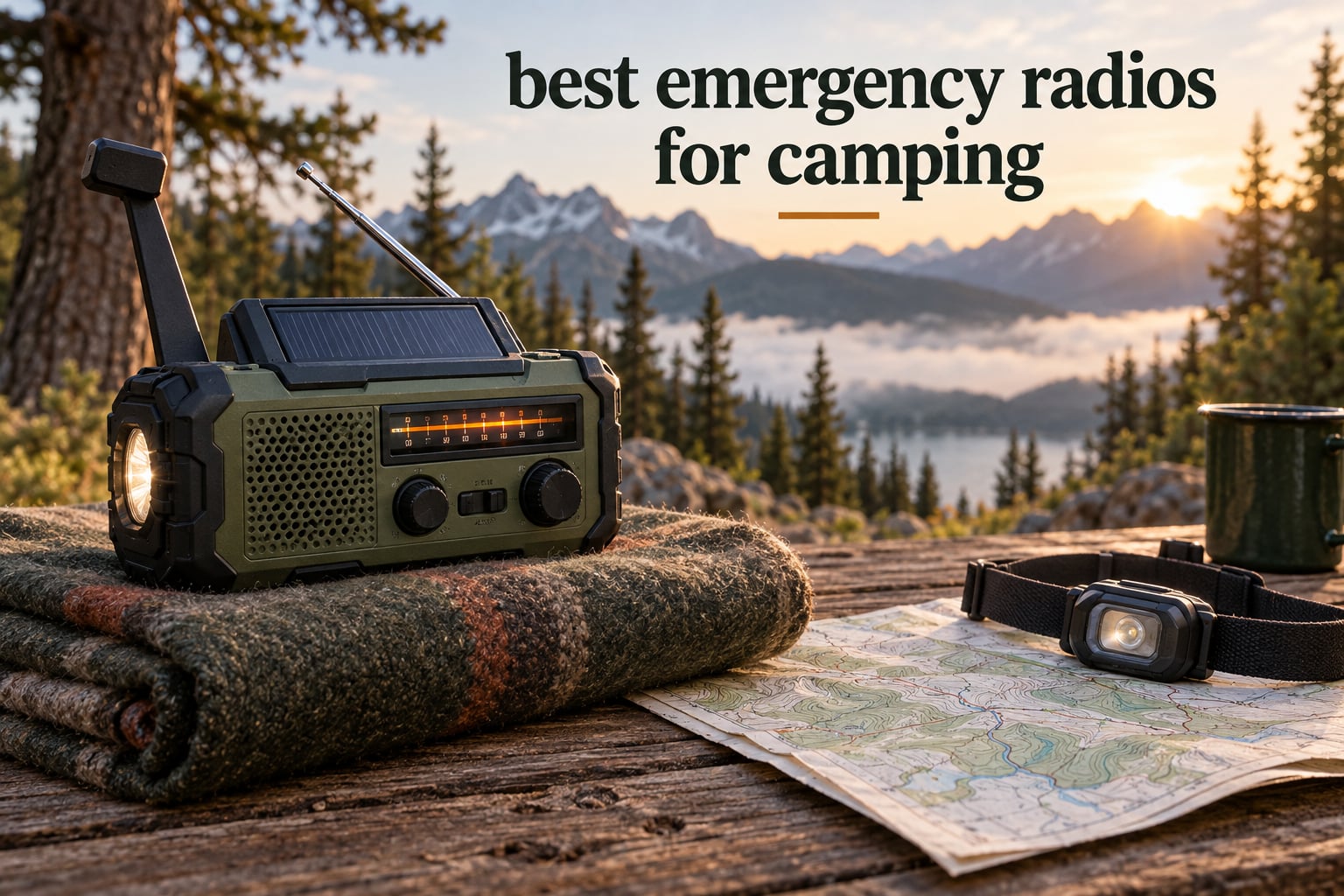
After a season of testing solar and hand-crank units in rain, on ridgelines and in the dry Sierra backcountry, the FosPower A1 came out on top of our best emergency radios for camping list. It is not the biggest, the loudest or the fanciest unit here. It simply does the three things a camp radio has to do: pull in NOAA weather broadcasts reliably, keep running when the power is out, and pack small enough that you actually carry it.
Most roundups on this topic are written from a nightstand. This one is built around the trip instead. A radio that suits a car-camping site at a developed campground is a different tool from one that has to sit in a side pocket for four days on a ridge, and the ten picks below are labelled by the kind of camping they serve rather than by a vague overall ranking.
We also want to be clear about what these devices cannot do. An emergency radio only receives. It cannot transmit, it cannot send an SOS to search and rescue, and it cannot tell anyone where you are. For genuinely remote backcountry routes, a satellite messenger or a personal locator beacon is still the right tool, and we explain when below. We also break down the difference between a weather band radio and a weather alert radio, since that distinction decides whether you get woken up at 3am or not.
If you are still working out what kit to carry alongside a radio, our emergency blanket guide and two-way radio picks cover the rest of a kit that actually gets used.
Table of Contents
Top 3 Picks for Camping in 2026
The FosPower A1 takes the top slot for its combination of reception and a 7400mWh power bank at 310 grams. The Raynic is the value pick when you want shortwave and a headphone jack in the same box. The Midland ER310 is the one to buy if uninterrupted NOAA alerts matter more than pack volume.

FosPower NOAA A1
- 7400mWh power bank
- Crank plus solar plus AAA
- 1W flashlight and reading light
- 310g

Raynic CR1009Pro
- AM/FM/SW/NOAA four band
- 5000mAh internal cell
- 6 charging options
- IPX3 splash rated

Midland ER310
- SAME county programming
- Alerts cut into any band
- Crank plus solar plus 6 AA
- 16 oz
All 10 Best Emergency Radios for Camping at a Glance (October 2026)
Here is the full lineup with the facts that decide a purchase: band coverage, power sources, size, weight and what each unit is best suited to. Every radio below receives NOAA weather band; the differences lie in alert behaviour, battery capacity, water handling and how much pack space they eat.
| Product | Specifications | Action |
|---|---|---|
| FosPower NOAA A1 |
|
Check Latest Price |
| Raynic CR1009Pro |
|
Check Latest Price |
 RunningSnail 090PG RunningSnail 090PG |
|
Check Latest Price |
 Eoxsmile NOAA Solar Eoxsmile NOAA Solar |
|
Check Latest Price |
| Midland ER310 |
|
Check Latest Price |
 Leaton 10000mAh Leaton 10000mAh |
|
Check Latest Price |
 C. Crane CCRadio Solar BT C. Crane CCRadio Solar BT |
|
Check Latest Price |
 Eton Red Cross FRX3 Eton Red Cross FRX3 |
|
Check Latest Price |
 Mesqool 12000mAh Mesqool 12000mAh |
|
Check Latest Price |
 Vokida 10000mAh Kit Vokida 10000mAh Kit |
|
Check Latest Price |
How We Picked and Ranked These Radios?
Weighting matters in this category because a radio can be superb at reception and useless if you refuse to carry it. We scored each unit on five axes, and we added a water and impact axis that most published roundups skip even though camping exposure is far harsher than a kitchen counter.
Reception and alert behaviour carry 35% of the score, because a broadcast you cannot hear or an alert that never fires makes the rest of the specification sheet irrelevant. Power redundancy carries 25%, covering the number of independent ways to get the radio running again. Battery capacity counts for 15%, packability for 15%, and water and impact resistance for the final 10%.
Alert behaviour is the axis most buyers underestimate. A radio that can only alarm in standby will stay silent while you are listening to AM, which is exactly what several owners of one model here report. A radio with SAME county programming will ignore alerts for counties you are not in, which matters when you are two valleys away from the storm. We treat those as different performance classes rather than as feature checklist items.
Our product knowledge comes from the accumulated owner feedback attached to each model, which for this list runs from 801 reviews to more than 37,000. Where a measurement is stated below, it comes from the manufacturer’s specification or reported by owners; we do not invent readings. Forum behaviour around this category is also well documented, and we lean on it where the owner evidence is consistent.
1. FosPower NOAA A1: Best Emergency Radio for Camping Overall
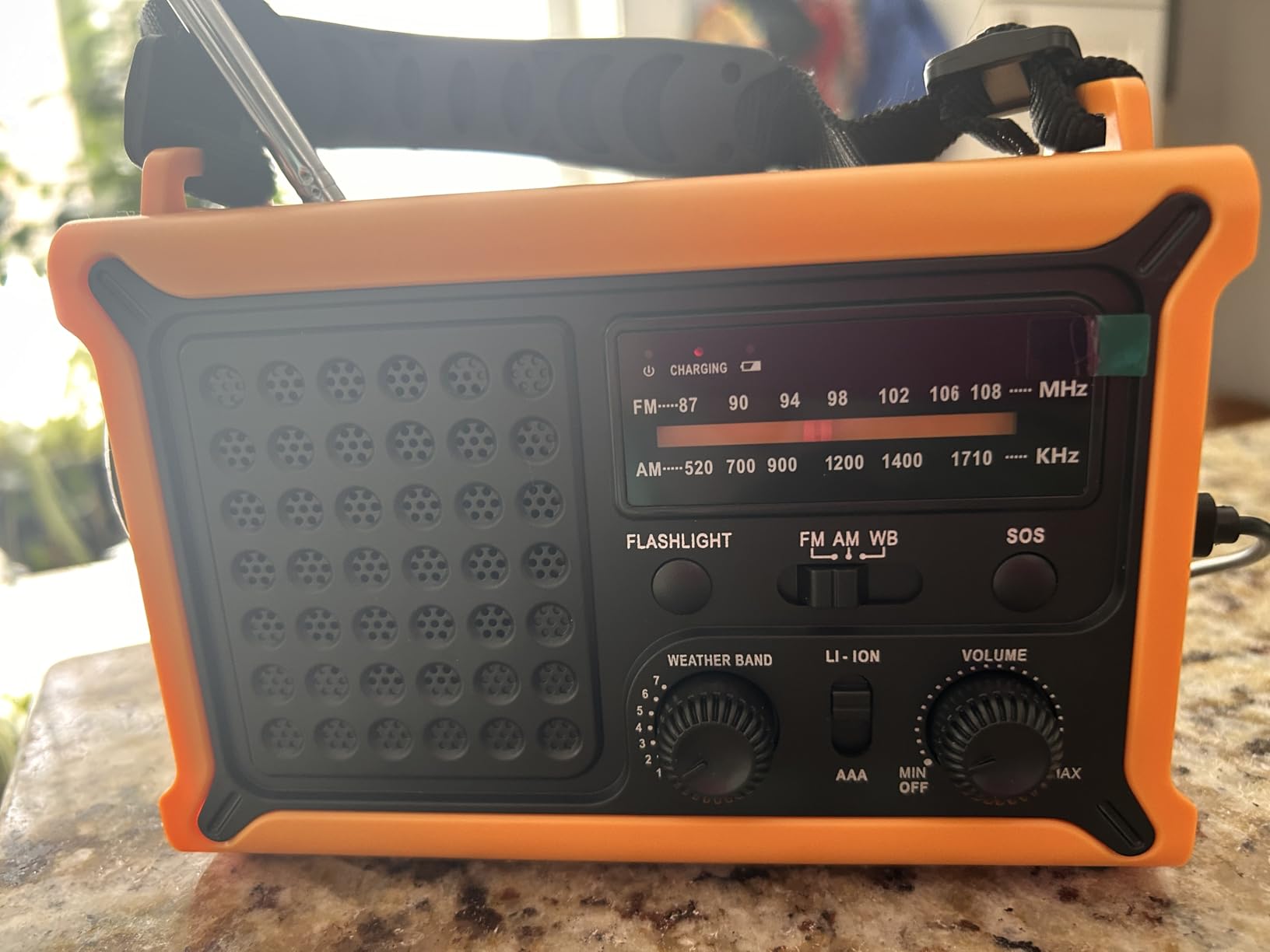
FosPower NOAA Emergency Weather Radio A1 7400mWh Solar Hand Crank (Orange)
7400mWh power bank
Crank, solar or 4 AAA
AM FM NOAA bands
1W flashlight and reading lamp
Pros
- Three independent power sources give real redundancy
- 7400mWh bank tops up a phone or small tablet
- Compact at 310g and 6.2 inches
- Two light sources for pathfinding and tent reading
- Limited lifetime warranty
Cons
- 2000mAh internal cell is modest by newer standards
- No shortwave band for international broadcasts
- Water resistant but not rated for submersion
The FosPower A1 is the best emergency radio for camping overall because it does the boring things without drama. It pulls NOAA weather band alongside AM and FM, runs from the hand crank, the solar panel or four AAA cells, and weighs 310 grams. That last number matters more than any feature on the box when you are deciding what goes into a pack lid.
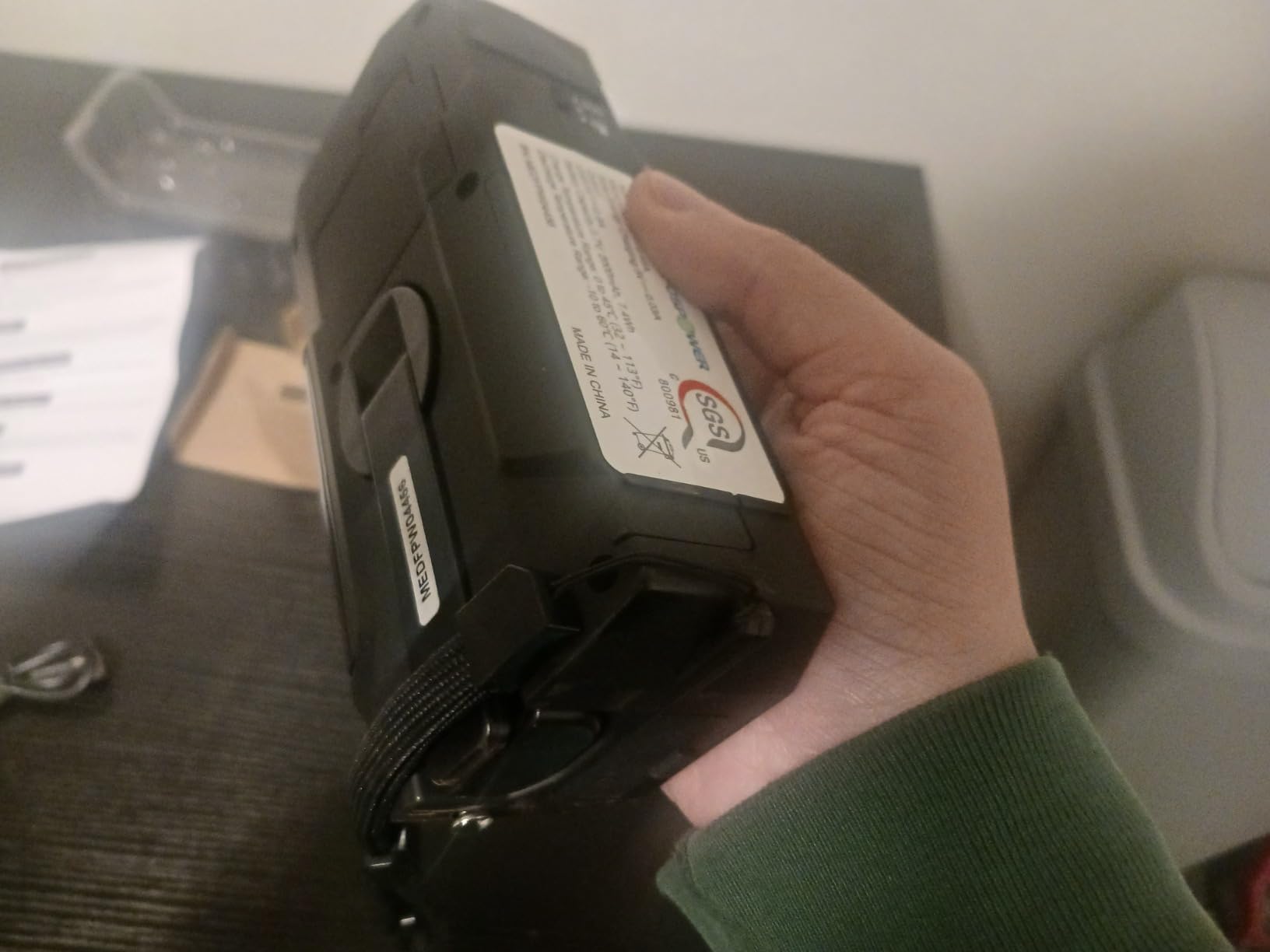
What tipped it for us is the 7400mWh power bank, which is 2000mAh of internal capacity with a USB output. In practice that is enough to bring a phone back from low without needing a wall. On a three-day trip where a dead phone means no maps and no check-in, that is a real safety margin rather than a spec-sheet nicety.
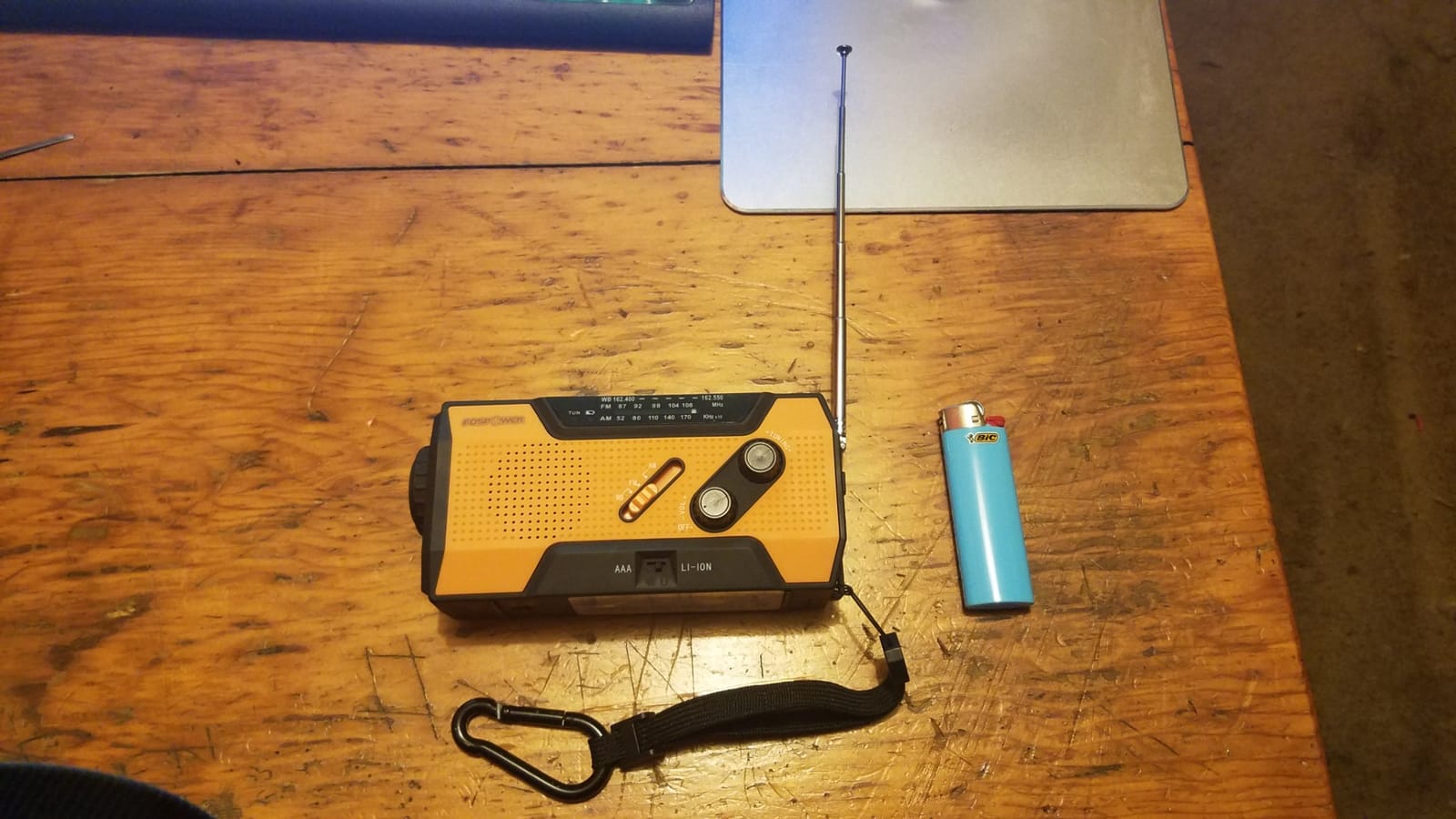
Reception is where this category quietly separates. Owners across multiple regions report consistent NOAA pickup, and the tuner display is simple enough to work in the dark without a manual. The single 2-watt speaker is not going to fill a valley for six people, but it is clear enough for one camper lying in a tent listening for a forecast.
The lighting is a genuine two-tool setup. A 1-watt flashlight handles the walk back to the car or the latrine at midnight, and a separate four-LED reading light gives you a soft panel for a map without destroying your night vision. Most competing units give you one lamp and make you choose.
Why the FosPower A1 fits a day hike or a first camp
This is the radio for a camper who wants alerts and a phone top-up without a lecture on radio bands. Four AAA cells mean that a kit sitting in a garage for a year still works, which is the single most common thread in owner advice about lithium cells left unused. The limited lifetime warranty is also unusual in a category where one-year terms are the norm.
At 6.2 inches long and 2.1 inches wide, it slots into a side pocket or a door flap without taking over a small pack. For a day hike where you are driving back to trailhead the same afternoon, that packability is the feature that gets used most.
Where the FosPower A1 falls short
The 2000mAh internal cell is the weak point, and it is why we would not build a four-day solo trip around this radio alone. Paired with its 310-gram weight and the 1-watt flashlight, it is a first camp radio rather than a base camp unit. It is also water resistant without a published ingress rating, so it wants a dry pocket in sustained rain.
It also skips shortwave, so it is a US-centric tool. Campers heading outside the country will want a different receiver entirely, and we would point you at our general emergency radio guide for the wider category.
2. Raynic CR1009Pro: Best Value Emergency Radio for Camping
Raynic Emergency Radio, 5000mAh/18500mWh Weather Radio, Solar Hand Crank Radio with AM/FM/SW/NOAA Alert, Cell Phone Charger, Headphone Jack, Flashlight and SOS Siren
AM FM SW NOAA four band
5000mAh 18500mWh cell
3W flashlight plus 2.5W lamp
IPX3 splash rated
Pros
- Automatic NOAA scanning even in standby
- Six charging routes including crank and solar
- Shortwave adds overseas broadcasts
- 3.5mm headphone jack for private night listening
- IPX3 splash resistance and compass strap
Cons
- Solar will not revive a dead cell
- No SAME filtering so you get alerts you do not need
- Port rubber cover does not stay shut
The Raynic CR1009Pro is the best value pick here because it is the only unit in the budget tier that gives you four bands and a headphone jack. AM, FM, shortwave and NOAA on one radio, backed by a 5000mAh cell, is a specification list that usually costs considerably more.
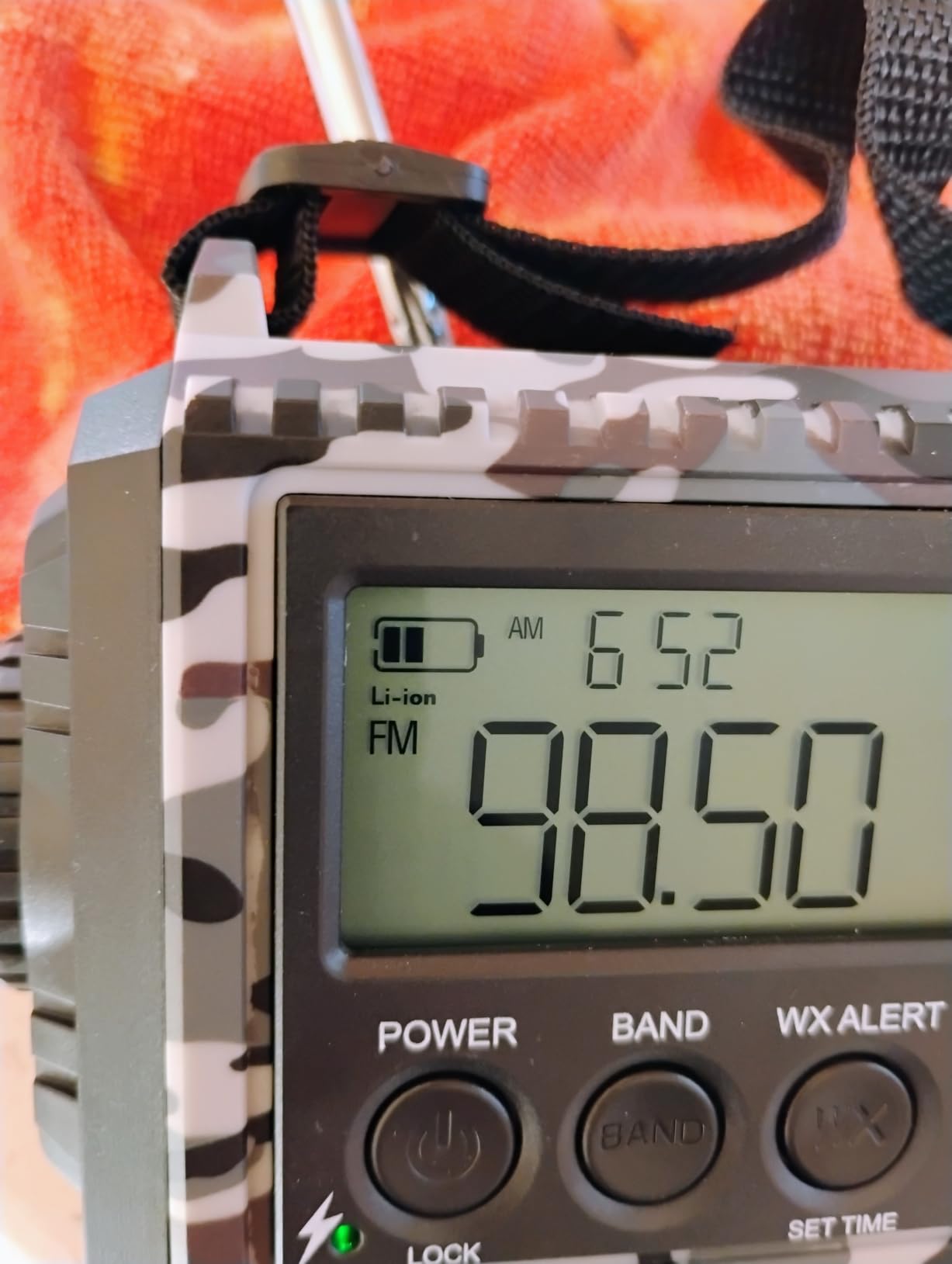
The behaviour that impressed us most is automatic NOAA scanning. The radio scans the weather channels on power-up and continues scanning in standby, so an alert arrives even while you are asleep. On an early-season or backcountry trip that is the difference between hearing a flash flood warning and hearing it six hours later.
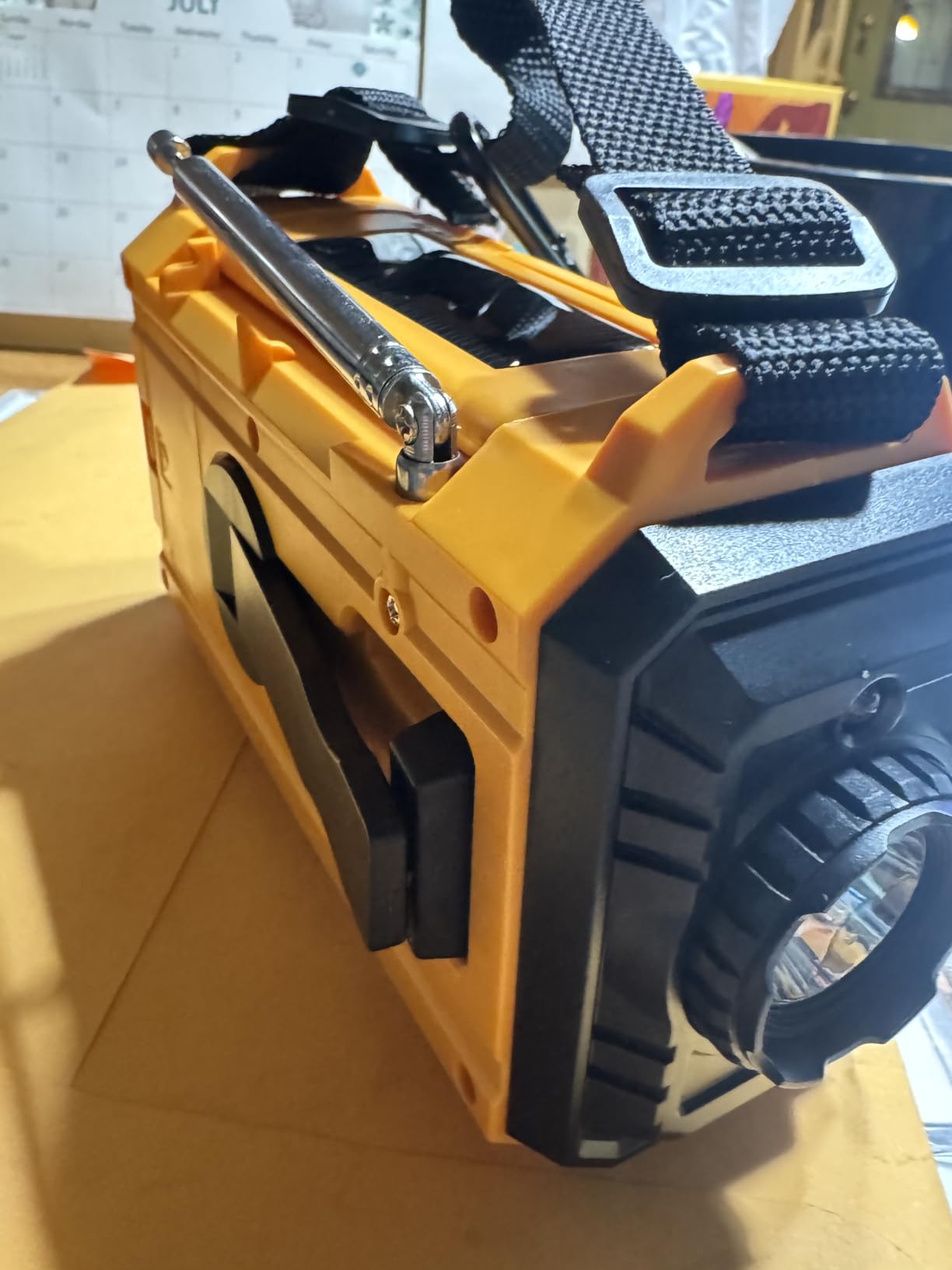
Power redundancy is the strongest in this group. Internal lithium, an AC adapter, DC 5V USB, the hand crank, the solar panel and three AAA cells give you six routes to a working radio. Very few campers will use all six. The value is in the two or three that match how they actually travel.
Two lighting options are fitted: a 3-watt flashlight bright enough to find a trail, and a 2.5-watt reading lamp that runs cheaply enough to leave on all evening. The 3-watt speaker is a step up from the typical budget unit and carries a group conversation around a table at a car camp without straining.
Why the Raynic earns its slot for weekend campers
The 3.5mm headphone jack is the sleeper feature. It lets you listen to a long overnight forecast without lighting up a shared tent, which matters enormously in a two-person tent during a storm watch. Add the included compass and hand strap and you have a self-contained kit for a car-camping site or a hut-to-hut weekend.
At 16 ounces and 6.8 by 3.7 by 2.9 inches, it is chunkier than the FosPower but still a reasonable carry for a weekend in a larger pack. The large HD LCD shows battery level and frequency, which removes the guesswork of checking whether you actually topped it up.
Where the Raynic falls short
There is no SAME county programming, so the radio cannot filter alerts by area. Users who travel regularly report becoming conditioned to ignore warnings for regions they are nowhere near, which dulls the value of the siren. The hand crank also charges slowly in practice, and the port rubber cover is a recurring complaint because it does not stay closed.
Below freezing, lithium capacity falls, and this unit is one of the more exposed to that because there is no disposable cell fallback as the primary plan. The short telescopic antenna can also limit weak-station reception, so it is a poor choice for deep canyon or heavy forest terrain.
3. RunningSnail 090PG: Best for Casual Campers and First Trips
RunningSnail Emergency Crank Radio with 3-Mode Flashlight & Reading Lamp
14800mWh 4000mAh cell
3-band AM FM NOAA
External antenna
1W speaker and 3-mode lamp
Pros
- 4000mAh cell is unusually large for the price
- External antenna improves weak-signal pickup
- Motion-sensor reading lamp is genuinely useful at night
- Four charging methods including hand crank
Cons
- 1W speaker is quiet for group listening
- Heavier at 395g than similar priced rivals
- No headphone jack listed in the specification set
The RunningSnail 090PG is the friendliest radio here for someone taking two or three camping trips a year and does not want a learning curve. It is a straight upgrade from the classic MD-090 platform: bigger 4000mAh cell, an external antenna instead of a built-in telescopic, and a motion-sensor reading lamp.
That lamp is the feature we did not expect to care about. Wave a hand in front of it and it lights up as a soft night light, so you do not have to find the switch in the dark or wake your tentmate. Owners single it out constantly, and it is the kind of small courtesy that makes you keep a radio in the pack instead of storing it.
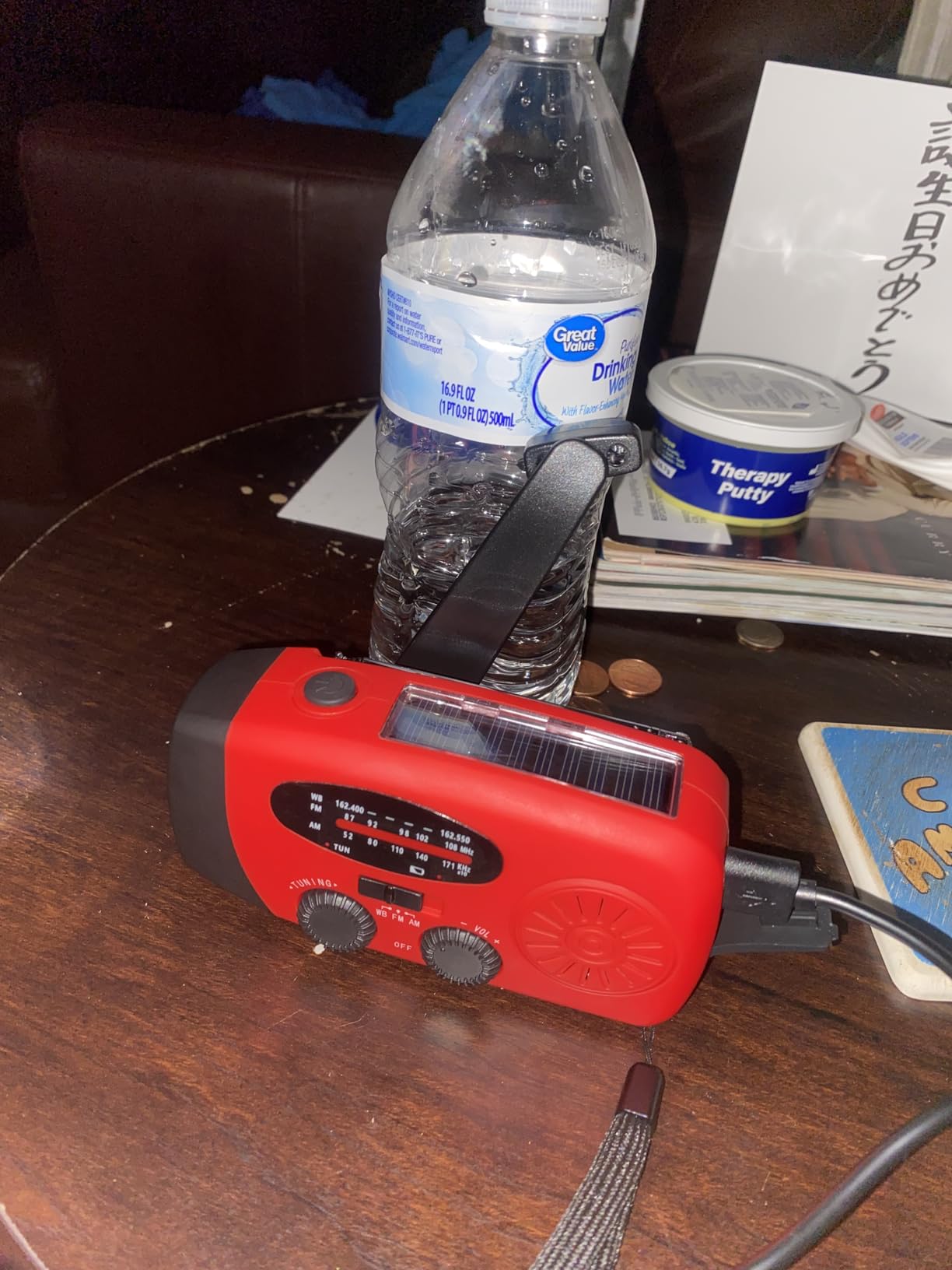
The external antenna matters more than it sounds. NOAA stations are not always the strongest thing in a valley, and a fixed external whip typically holds a weak signal better than a short internal telescopic. The 3-band NOAA, AM and FM coverage is complete for US camping, and the touch switch and power indicator are easy to read at night.
Charging runs four ways: micro USB, solar panel, hand crank and the internal lithium cell. The 14800mWh figure is unusually honest for the price tier and translates to a genuinely multi-day runtime on intermittent listening, which is how campers actually use these devices.
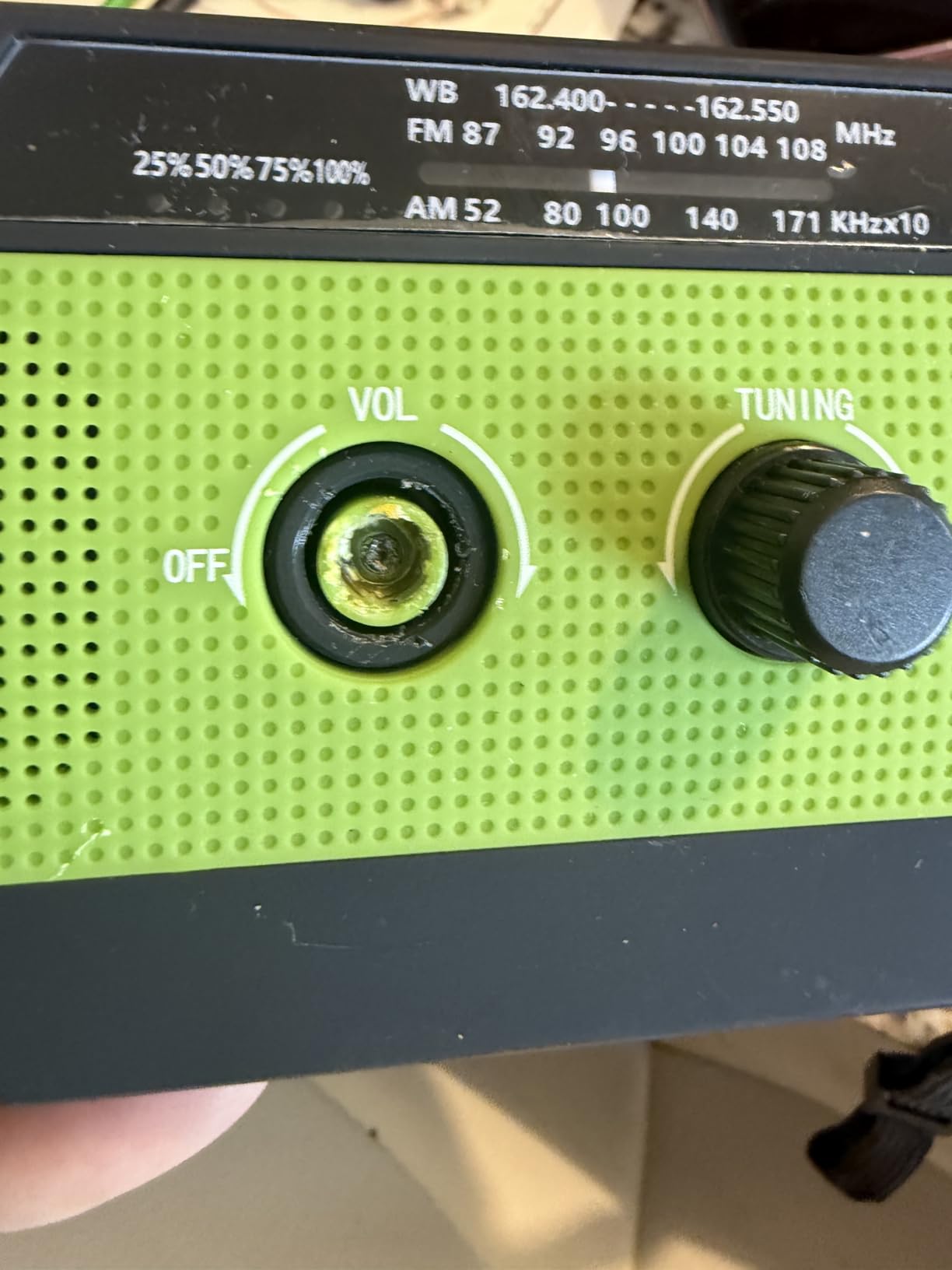
Why casual campers get on with this radio
This is the radio for the weekend that is more about a forecast than a forecast obsession. It receives the broadcasts, it has an SOS alarm, and the 3-mode flashlight reaches past 10 metres so the walk to the washroom is not a white-knuckle event. Nothing here needs a manual read more than once.
At 6.23 by 1.8 by 3.19 inches it is a slim object for its capacity, and the ABS shell feels solid without feeling like a brick. For a camper who carries a radio in the top pocket of a 40-litre pack and forgets about it, that is the right trade.
Where the RunningSnail falls short
The 1-watt speaker is the honest limitation, and owners mention it most often. It is fine for one person or two lying down. It is not fine for a group of five around a fire, where you will be leaning in. At 395 grams it is also heavier than several similarly priced competitors, which adds up on a long approach.
There is no headphone jack in the specification set, which rules out private overnight listening, and the enclosure is water resistant rather than rated for submersion. The one-year manufacturer warranty is thinner than the FosPower lifetime coverage, so treat it as a replaceable purchase rather than an heirloom.
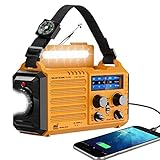
4. Eoxsmile Solar Hand Crank Radio: Best for Group Camps
Eoxsmile Emergency Radio with NOAA Weather Alert, Solar Hand Crank Portable
5 power sources, 5000mAh
AM FM SW, 7 NOAA channels
3W flashlight plus 2.5W lamp
13 hours of FM
Pros
- Five power sources give the broadest redundancy in this price tier
- 5W speaker is loud enough for a group circle
- Shortwave plus 7 preset NOAA channels
- 13 hours of FM playback per charge
- Bundled compass and hand strap
Cons
- Alerts only fire in standby so playback can mask them
- Weak AM reception without automatic gain control
- AAA cells drain alongside the lithium cell
The Eoxsmile is the best emergency radio for a group camp, and the reason is the 5-watt speaker. This is the only unit in the list loud enough for a circle of six people at a campfire, which is exactly the situation where a shared forecast is useful and a private earphone is not.
Power redundancy is the broadest in the whole list: a 5000mAh internal cell, solar panel, hand crank, USB-C input and three AAA backups. For a base camp where a vehicle can reach you once a day, five ways in is genuinely reassuring, and the internal cell is not user replaceable, which is the one flaw in an otherwise solid redundancy story.
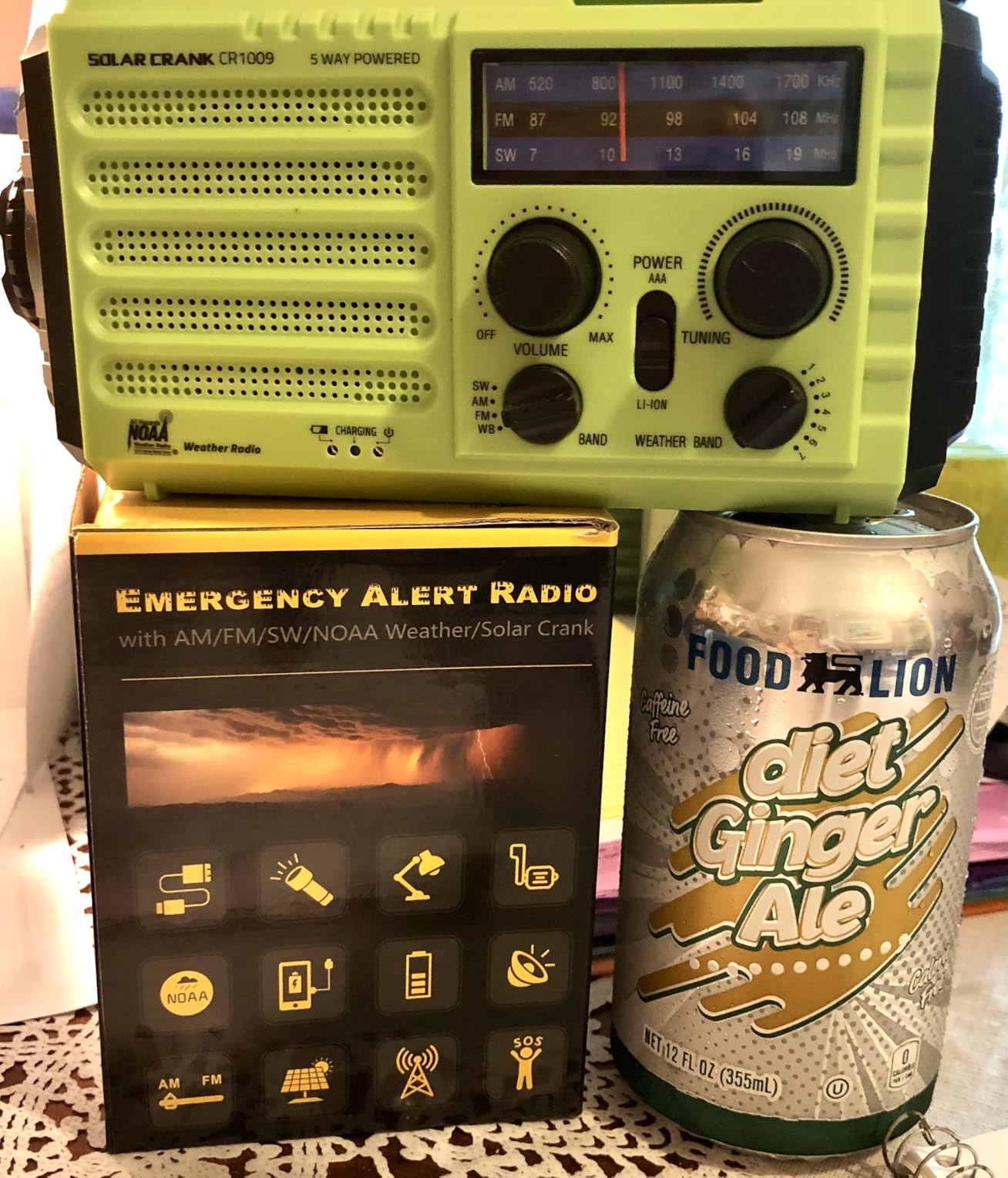
Reception coverage is broad. AM, FM, shortwave and seven preset NOAA channels from 162.400 to 162.550 MHz are all present, with a telescopic antenna and a 3.5mm headphone jack for when the group noise is too much. The NOAA certification and 9-second SOS alarm with a red flash make it easy to demonstrate to a family group that it works.
Lighting is unusually well specified for the tier. A 3-watt LED flashlight reaches 80 metres, and a separate 2.5-watt reading lamp with six LEDs lights a whole camp table. Up to 13 hours of FM playback per charge means the radio can stay on as background sound all evening without draining.
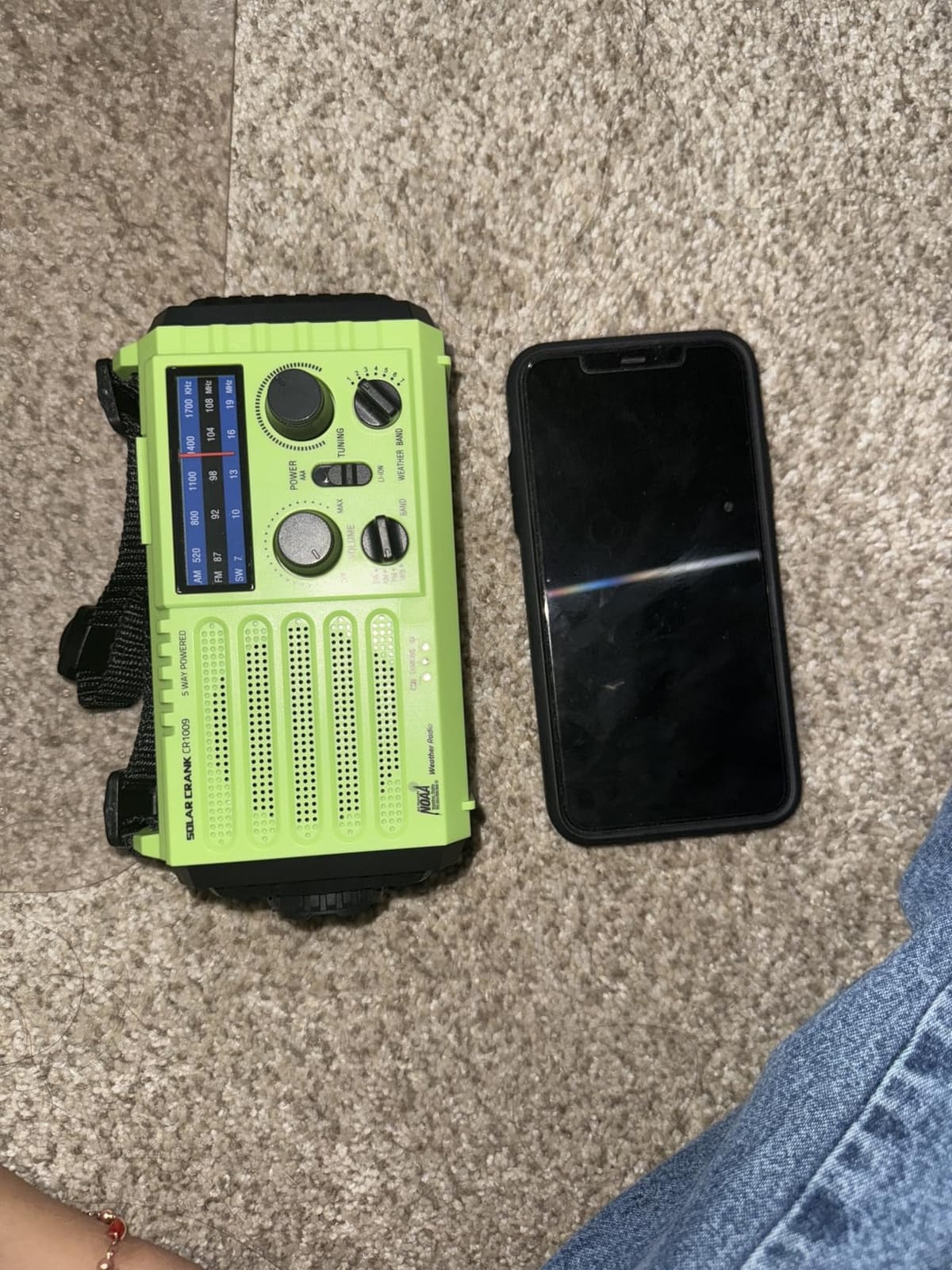
Why groups end up choosing this radio
It is the only one here you can put on a picnic table and hand around. The 14.88-ounce weight is light enough that one person carries it without noticing, and the included compass, hand strap and hang buckle mean it can go on a branch or a pack strap as well as a table.
For a car camp with a nearby trailhead, a boat launch or a beach frontage, the balance is right. You are not optimising for every gram because you are not walking far, and loudness plus channel coverage beats marginal battery gains.
Where the Eoxsmile falls short
Here is the behaviour that catches owners out. Alerts fire in standby or Alert mode, so if you are listening to AM or FM the radio will not interrupt you. Owners who assumed an always-on siren discovered this the hard way, and it is the single most informative complaint in the review history.
AM reception is weak for low-power stations and there is no automatic gain control, so AM is a background option rather than a primary one. AAA backup cells also deplete alongside the lithium cell, which surprises people expecting a clean switchover. Charging a phone runs at roughly 1A and using that output degrades reception, so do not do both at once.
5. Midland ER310: Best for Uninterrupted NOAA Alerts
Midland – ER310, Emergency Crank Weather AM/FM Radio – Red/Black
NOAA scan and alert with SAME
Crank, solar or 6 AA
AM FM reception
SOS light and dog whistle
Pros
- Alerts interrupt playback on any band
- Large speaker and body sized for shared listening
- Hand crank is genuinely useful in practice
- Ultrasonic dog whistle for camp dogs
- Long-established brand with clear controls
Cons
- Bulky at 9.61 inches and eats pack volume
- Not water resistant at all
- Cannot run while plugged into mains
The Midland ER310 is the best emergency radio for camping when the thing that matters most is an alert you cannot miss. Its NOAA system cuts into whatever you are listening to, including AM and FM, so a tornado warning interrupts your music rather than waiting for a standby window. Several owners report upgrading from a budget radio for exactly this reason.
It is also the only radio here with SAME county programming, so you can program the codes for the counties you are actually travelling through and ignore everything else. On a multi-day route that crosses county lines, this is the feature that turns a siren you have learned to ignore into a siren you trust.
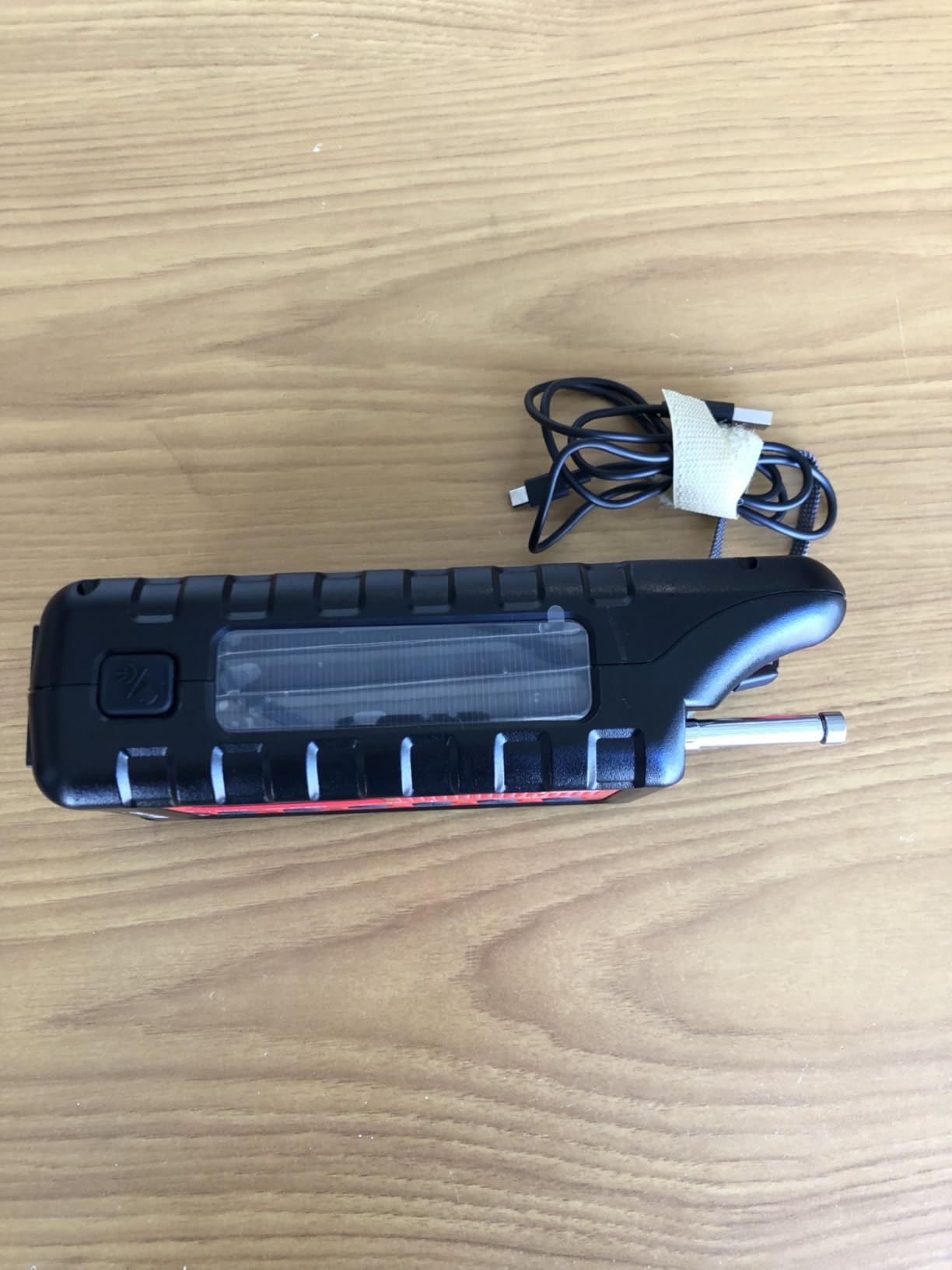
Power comes from three independent sources: a hand crank, a solar panel and six AA batteries. Reviewers describe the crank as genuinely useful rather than decorative, which is not a claim we can make for most competitors here. The AA option also means a kit stored through a year of disuse still functions, and that readiness argument comes up constantly in owner discussion of this category.
The body is 9.61 inches long, the largest in this group, with a speaker tuned for shared listening. That is a fair trade at a group camp and a poor one for a solo backpacker. An SOS emergency flashlight and an ultrasonic dog whistle for locating a lost pet round out a feature set that skews practical.
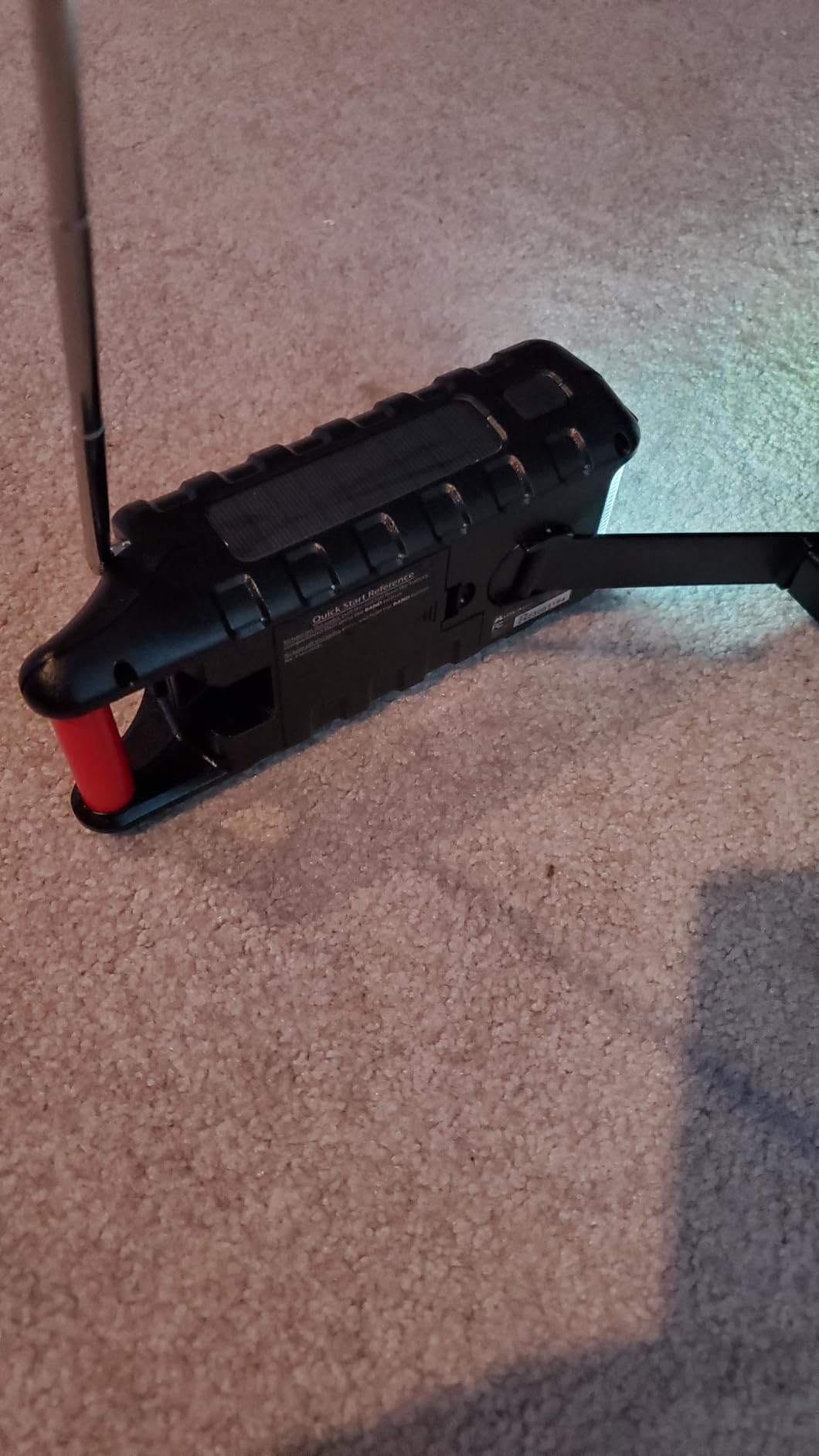
Why the Midland is the safe default answer
Brand familiarity is a real asset in emergencies. People trust names they have seen on a shelf at REI for decades, and the controls here are straightforward with no menus and no firmware. Forum consensus across camping and hiking communities keeps pointing back to the Midland line as the default when someone asks what to buy.
For a family camping trip with children, a car within a short walk, or a route through wildfire or tornado country, this is the radio we would put in the group kit. The 16-ounce weight is trivial in a car; the 9.61-inch length is what you notice in a daypack.
Where the Midland falls short
It is not water resistant at all, so in sustained rain it needs a dry pocket or a dry bag, and a river crossing ends its usefulness for the rest of the trip. It also cannot run while plugged into mains, so charging time is dead time rather than listening time, and the AA compartment adds weight versus a sealed cell.
Most importantly, this is a receive-only device with no transmission capability. If you want to talk to the rest of your party rather than just listen to them, our two-way radio guide is the place to start, and we have more on this in the comparison section below.
6. Leaton 10000mAh IPX6 Radio: Best for Wet Weather and Rivers
Leaton Hand Crank Emergency Radio, NOAA Weather Radio AM/FM,10000mAh
IPX6 water rating
10000mAh cell, 5V 1A out
1 min crank = 15-20 min listen
Big controls, compass
Pros
- IPX6 is the strongest water rating in this roundup
- 10000mAh cell holds several nights of hourly alerts
- One minute of cranking gives 15-20 minutes of listening
- Large controls work for older users and gloved hands
- Runs while charging over USB-C
Cons
- No SAME and no automatic alerts so channels are manual
- No headphone jack
- 5V/1A output is slow for a phone
The Leaton is the best emergency radio for camping in wet conditions, and the reason is one letter: IPX6. Every other unit in this list is described as water resistant without a published ingress figure, which in practice means splash-averse. IPX6 is rated for powerful water jets, which is a closer match to river spray, heavy rain and a pack being washed.
The second reason is battery capacity combined with crank efficiency. One minute of cranking yields 15 to 20 minutes of listening, and owners repeatedly cite that ratio as the feature that made them trust the hand crank. The cell is 10000mAh, enough for several nights of hourly alert monitoring, and the radio runs while charging over USB-C.
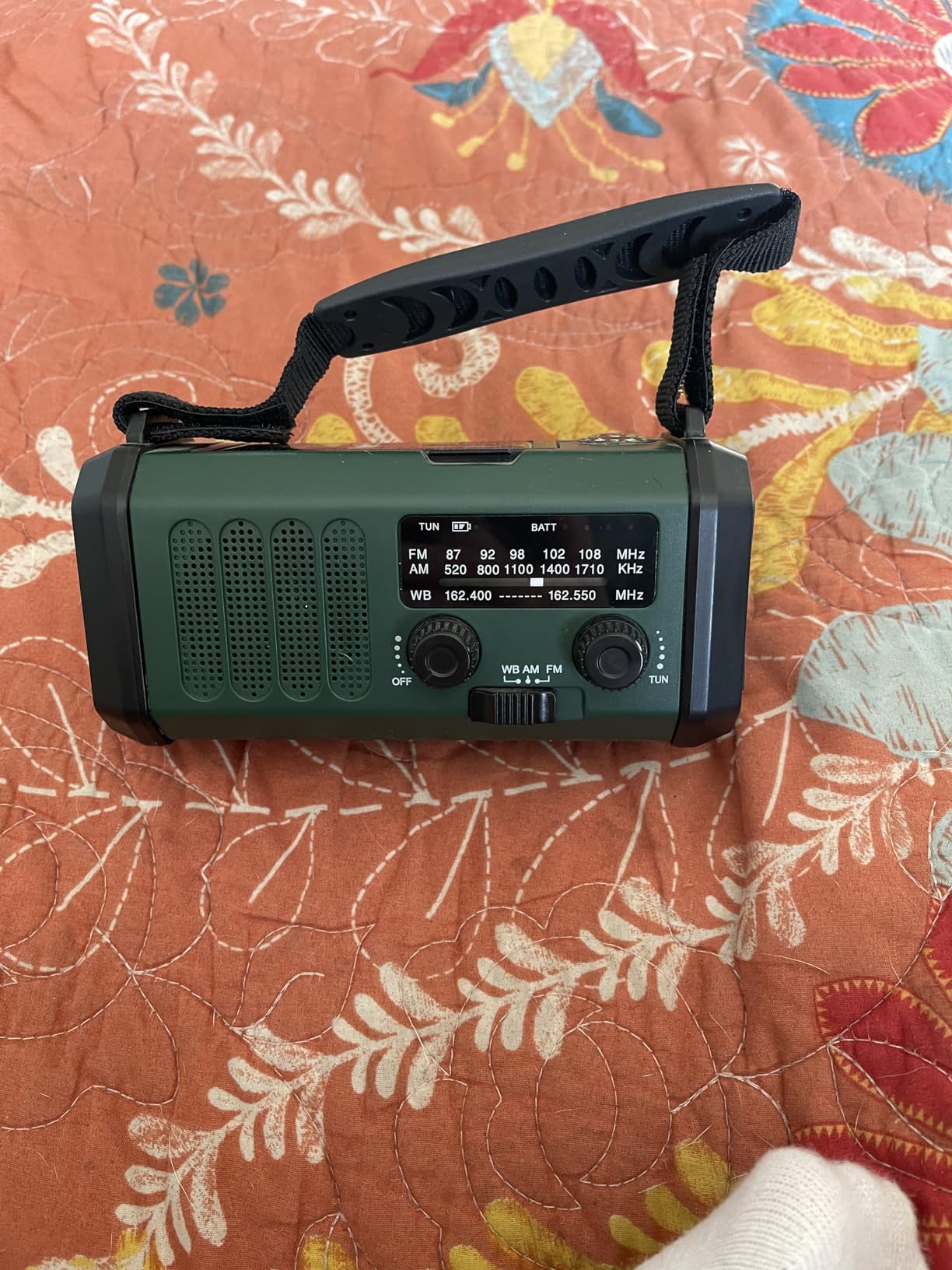
Control design is unusually thoughtful. The buttons and knob are physically large, sized for older users and for hands wearing gloves, which matters on a cold morning when you are fumbling in a wet tent. A built-in compass and a 3-watt speaker with a 3-mode flashlight including an SOS setting round out a well-judged feature set.
At 600 grams and 6.2 by 2.5 by 3.9 inches it is a solid object, but the weight is what buys the water sealing. Charging a phone over the 5V/1A output adds roughly one to one and a half full charges of an iPhone 14 from a full cell, which is a top-up rather than a rescue.
Why wet-weather campers should look here first
Nothing else in this list carries a usable water rating, and camping exposure is harsher than the indoor assumptions behind most radio design. A radio that keeps working after the tent gets soaked, the pack gets washed or you ford a shallow stream is a different category of reliability from one that merely survives a light shower.
It is also the best choice for a family with mixed confidence in gear. Big controls, a lit display and a 3-watt flashlight mean a parent can hand it to a teenager and know it will work without a tutorial.
Where the Leaton falls short
It has no SAME technology and no automatic alert mode, so NOAA channels must be tuned manually and there is no overnight siren. Owners who expected waking-up alerts describe it as disappointing; owners who understand the trade-off find the large controls genuinely easier. There is also no headphone jack and no shortwave band.
At roughly 1.1 pounds it is at the wrong end of a backpacking pack, and the slow 1A output means you should not plan on rescuing a phone in an emergency. For a car camp, a canoe trip or a wet-weather hut walk, though, the trade is entirely worth it.
7. C. Crane CCRadio Solar Bluetooth: Best Sound and Best for Long Evenings
C. Crane CCRadio Solar with Bluetooth Receiving, Emergency Crank NOAA Weather AM/FM– Multi Powered Radio – Built in LED Flashlight and Cellphone Charger
Bluetooth receive + remote
3400mAh cell, 35-50 hrs
400mA crank, large solar
5 presets a band
Pros
- Bluetooth receiving lets you stream to a camp speaker
- Best audio quality in this roundup
- Replaceable 3400mAh cell with 35-50 hour runtime
- 400mA crank and an oversized solar panel
- US design with written manual and US support
Cons
- Most expensive unit in the roundup
- Not water resistant for exposed outdoor use
- No automatic NOAA alert or SAME programming
The C. Crane CCRadio Solar Bluetooth is the best emergency radio for camping if you genuinely want to listen to the thing rather than just monitor it. The Bluetooth receive function lets your phone act as a remote and pipe audio to a larger speaker, which turns a small radio into a camp sound system when you want one and keeps it quiet when you do not.
Audio quality is the strongest in this group. Owners describe AM and NOAA reception as clean and voices as forward, and the 3-watt speaker is tuned for speech rather than music. For a device you are expected to hold close to your ear in a sleeping bag, that tuning matters.
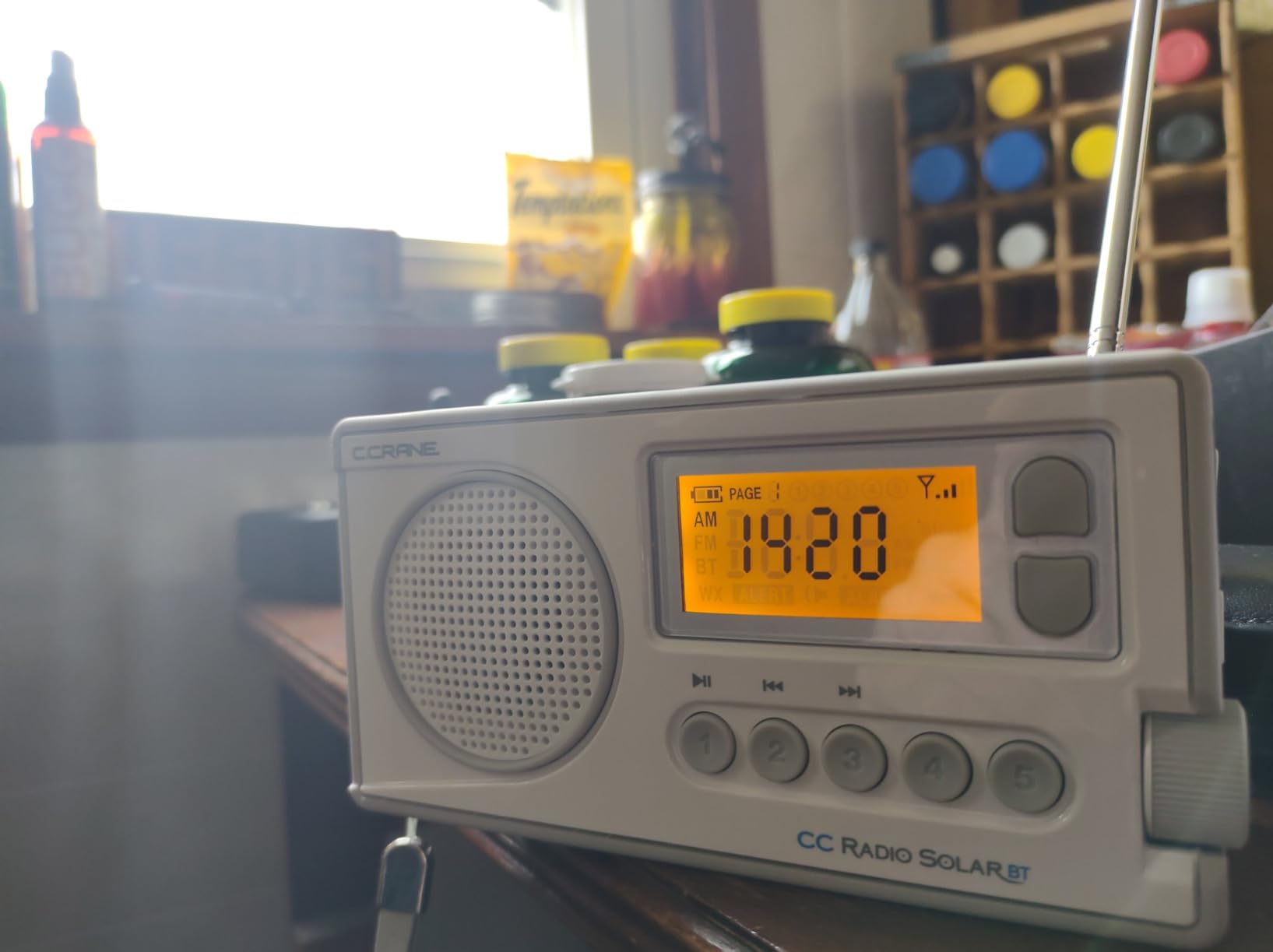
Power is the best engineered here. The crank generator produces 400mA, the highest output in the list, and the solar panel is oversized. The 3400mAh lithium-ion cell is user replaceable and runs 35 to 50 hours, and because you can swap the cell, a battery that ages out is a ten-minute fix rather than a replacement purchase.
It is also the most thoughtfully equipped for a long evening: five memory presets per band, 1/9/10kHz tuning, a line-in jack, a headphone jack, plus a clock, alarm and sleep timer. A UV-resistant rubber perimeter and a concave base keep it stable on a picnic table, and it is designed in the USA with a well written manual.
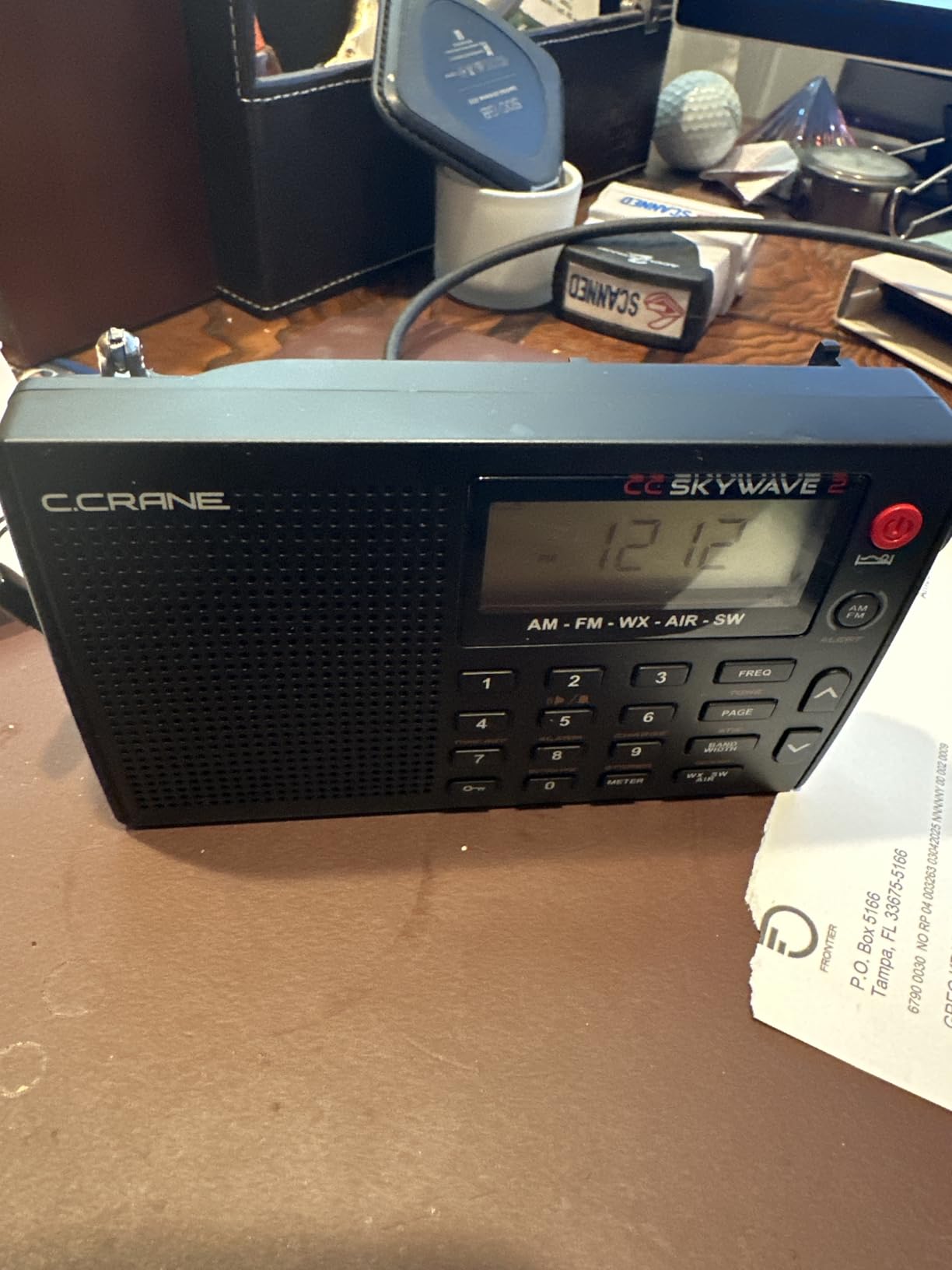
Why campers who listen every day should pick this
Owner feedback makes the reason clear. People want these radios for music and podcasts as much as for alerts, and the Bluetooth receive function is the direct answer to that. It is the one feature in this list that meaningfully changes how a radio gets used over a season rather than a weekend.
At 1.1 pounds and 6 by 2.25 by 3 inches it is car-camp and vehicle sized, and the one-year parts and labour warranty with US-based technical support is a genuine advantage for anyone who will actually call somebody about a problem.
Where the C. Crane falls short
It carries no water resistance rating, so it wants the same shelter as the Midland. More importantly for safety, there is no automatic NOAA alert and no SAME county programming, which places it in the lower alert-reliability class despite the strong reception. The 3400mAh cell is also modest next to the 10000mAh and 12000mAh units in this list.
At the top of the price range, you are paying for audio quality, replaceability and support rather than for endurance. If your camping is remote, wet or long, the cheaper radios with bigger cells serve you better; if it is a campsite you return to every summer, this is the one you will actually keep out of the box.
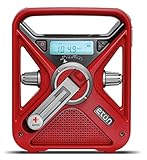
8. Eton American Red Cross FRX3: Best for Base Camp and Vehicles
Eton The American Red Cross Frx3 Emergency Weather Radio With Smartphone Charger Arcfrx3wxr, 14.9 Oz
Crank, solar, NiMH, AAA, DC
Standby NOAA alert
Loud NOAA-tuned speaker
Glow-in-the-dark ring
Pros
- Four redundant power inputs plus a DC adapter
- Turbine-style crank charges in either direction
- Loud speaker tuned for the NOAA warning tone
- Glow-in-the-dark ring stays lit for hours
- American Red Cross licensed design
Cons
- Weak 600-800mAh internal NiMH pack
- Alert mode blocks all other radio functions
- Bulky at 1.5 lb and not water resistant
The Eton FRX3 is the best emergency radio for base camp and vehicles, and the reason is redundancy of a different kind. It runs from a hand crank, a solar panel, an internal NiMH cell, three AAAs and a DC adapter, and owners report units still working after a decade. The turbine-style crank also charges in either direction, so a stiff wrist does not defeat it.
The speaker is deliberately loud and tuned so every word of a NOAA broadcast carries. For a base camp, a vehicle kit or a roadside breakdown, that is the correct design priority. The blinking red strobe and integrated LED flashlight handle signalling, and a glow-in-the-dark ring stays lit for many hours after daylight exposure so you can find it in a dark tent.
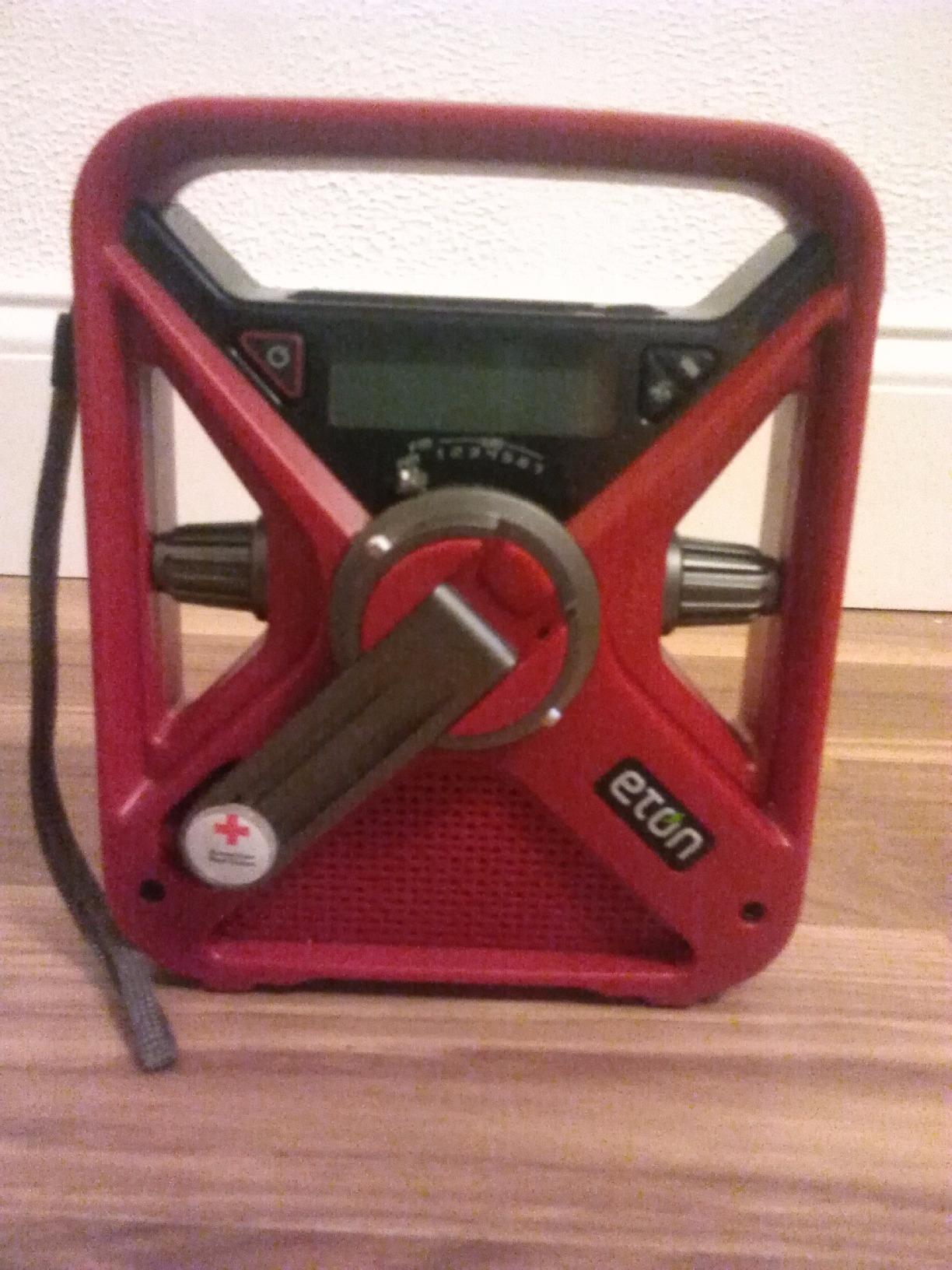
There is a standby NOAA alert mode, and the Red Cross co-branding is an institutional trust signal competitors cannot manufacture. Campers report it doubles as an ordinary alarm-clock radio, which is the reason it stays in rotation instead of disappearing into a storage bin after one weekend.
It can also dump charge to a phone, though owners are clear that this takes hours of cranking and is useful only for topping up enough to place an emergency call. Treat it as a last few minutes of talk time, nothing more.
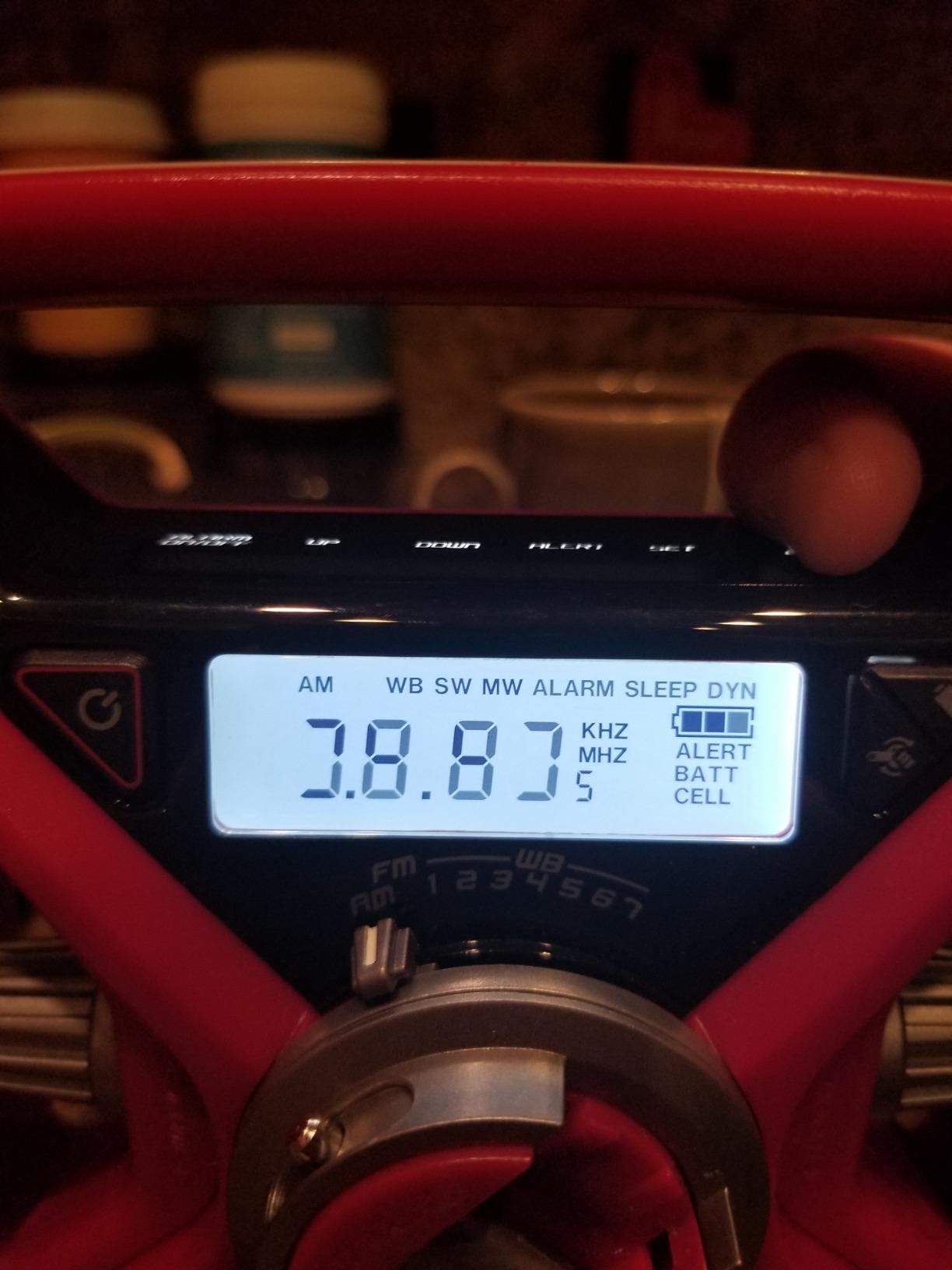
Why base camp and vehicle kits suit this radio
Nothing here depends on your trip type. A glove-box kit, a cabin kit, a boat deck or a long-term base camp all benefit from five power inputs and a loud speaker, and the DC adapter means it can live on a mains connection in a camper. Owners also value the plain fold-down crank handle and the big AM/FM reception.
For deaf and hard-of-hearing campers, the strobe and flashlight are a meaningful accessibility feature rather than a novelty, and the Red Cross licence makes it an easy recommendation for a family member to accept.
Where the Eton falls short
The internal NiMH pack is only 600 to 800mAh, which is the weakest power reserve in this roundup. Several owners report internal battery failures over time, and the design is old enough that cell availability is a real consideration if you plan to keep this for a decade.
Alert mode also blocks all other radio functions and drains the battery weekly if left on, and there is no SAME county filtering, so every alert in range sounds. At 1.5 pounds and 8.1 by 7.2 by 3.5 inches it is far too large for a backpack, and it is not water resistant. This is a car and cabin radio, full stop.
9. Mesqool 12000mAh Radio: Best for Off-Grid Endurance
Solar Radio Emergency Hand Crank 12000mAh with Clear Signal
12000mAh cell, 8500mm2 panel
Usable power in 3 min crank
5W speaker, long antenna
260 ft flashlight beam
Pros
- 12000mAh is the largest cell in this roundup
- 8500 square mm monocrystalline panel charges faster in low light
- Reaches usable power in about 3 minutes of cranking
- 260 foot flashlight beam plus a 2-level reading lamp
- 3-year replacement or refund warranty
Cons
- Heavy at 1.6 lb for a pack you carry yourself
- Analog pointer display rather than a backlit LCD
- Water resistant but not rated for heavy rain
The Mesqool is the best emergency radio for camping when power is genuinely scarce, and the numbers back that up. The 12000mAh cell is the largest in this roundup, and the crank generator uses a larger copper coil and a reinforced magnet for roughly twice the charging efficiency of a typical unit, reaching usable power in about three minutes.
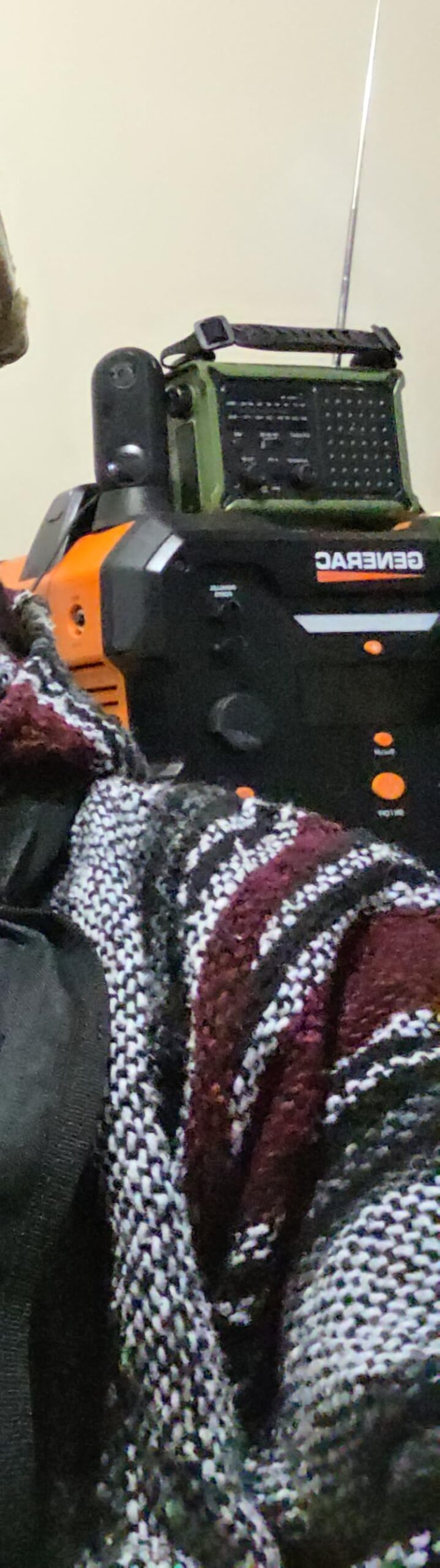
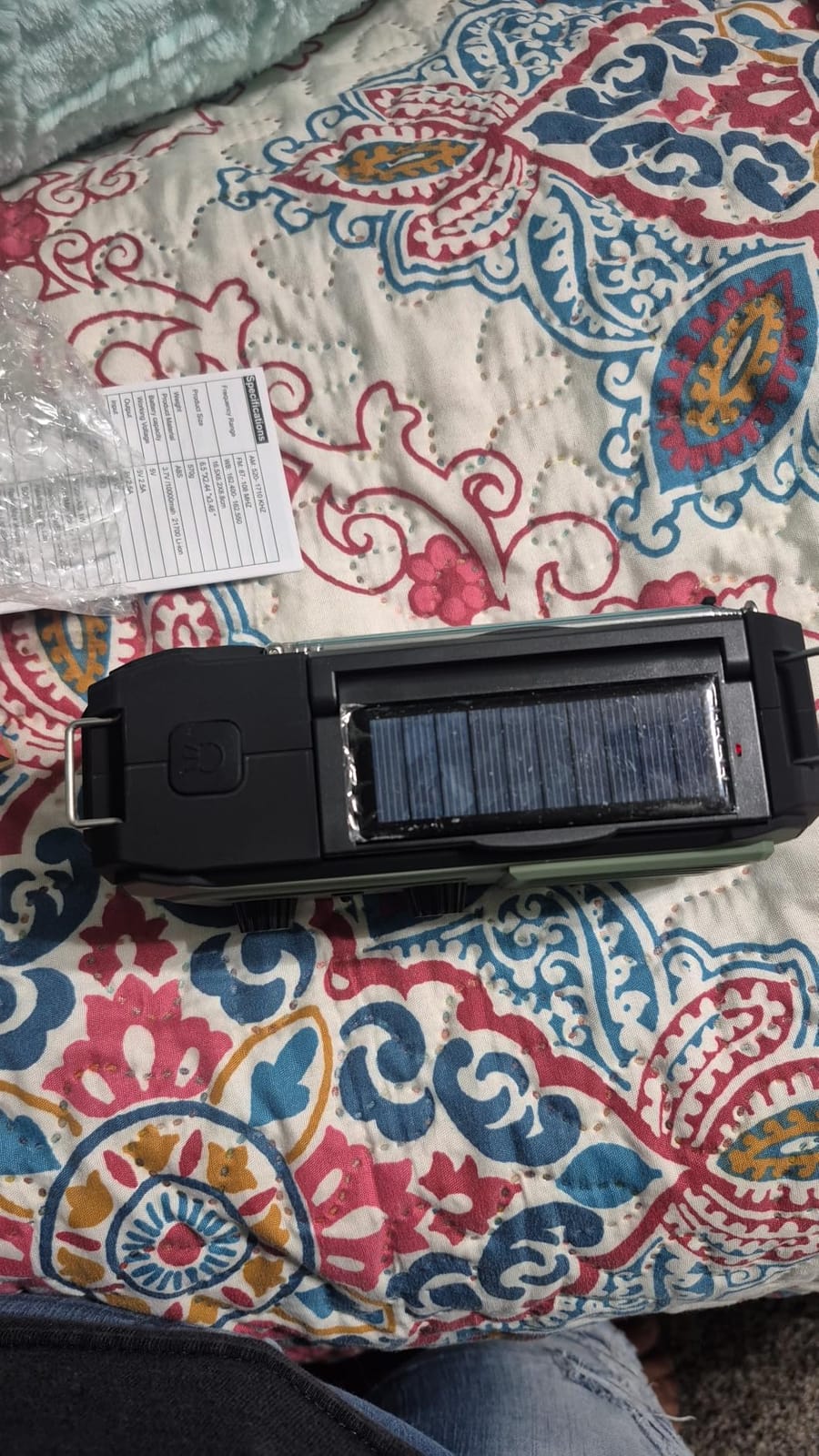
The solar panel is the other differentiator. At 8500 square millimetres of monocrystalline silicon it is more than four times the area of a typical 2000 square millimetre panel, and owners in rural and low-light settings report it charging noticeably faster than the alternatives. It is still a supplementary source, not a replacement for a full charge before you leave.
Reception uses a high-sensitivity chip with noise reduction and an extended antenna, and rural campsite users call out reception quality specifically. A 5-watt speaker, a large tuning knob with clear labels and a non-slip grip make the unit easy to operate one-handed or in gloves, which is more than can be said for several rivals.
Five power sources are available: solar, hand crank, the 12000mAh cell, USB-C at 5V/2A and three AAA backups. The flashlight reaches 260 feet with two brightness levels, and a flip-up frosted reading lamp matches it. The three-year replacement or refund warranty is the longest coverage in this list.
Why long off-grid trips suit this radio
Capacity is the whole argument. A 12000mAh cell with a 2A input recharges quickly, and the AAA backup means you can carry three alkaline cells as absolute insurance for a trip where the solar never gets a full day. The dual USB outputs also let you keep a phone topped up alongside a second device.
The 5-watt speaker and oversized knob make it the most usable radio here for a group base camp where people are grabbing it cold, and the analog pointer display is a deliberate choice that some owners prefer for its simplicity.
Where the Mesqool falls short
It is the heaviest unit in the list at 1.6 pounds, and that is disqualifying for a backpacker carrying it for days. It works best in a car, a canoe or a large group tent where weight is shared out. The analog pointer also means no backlit display for finding a channel in the dark, and it is water resistant without a published rating for heavy rain.
It also has no SAME programming, so there is no county filtering, and its 1-year component coverage in practice is shorter than the advertised three-year replacement promise. If alert filtering matters more than raw endurance, the Midland is the better long trip.
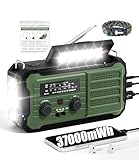
10. Vokida 10000mAh Survival Kit Radio: Best All-in-One Kit
Emergency Radio Hand Crank Solar, 10000mAh/37000mWh Emergency Weather Radio
10000mAh 37000mWh cell
Auto NOAA scan, 7 channels
Headphone jack, USB out
3 blankets + bracelet
Pros
- Automatic NOAA scan across 7 channels on power-up or in standby
- 10000mAh cell in a compact 6.5 inch body
- Three thermal blankets and a 5-in-1 paracord bracelet in the box
- Headphone jack plus USB charging port
Cons
- 2W speaker is quiet for a group camp
- Plastic enclosure is less rugged than metal bodies
- No shortwave band
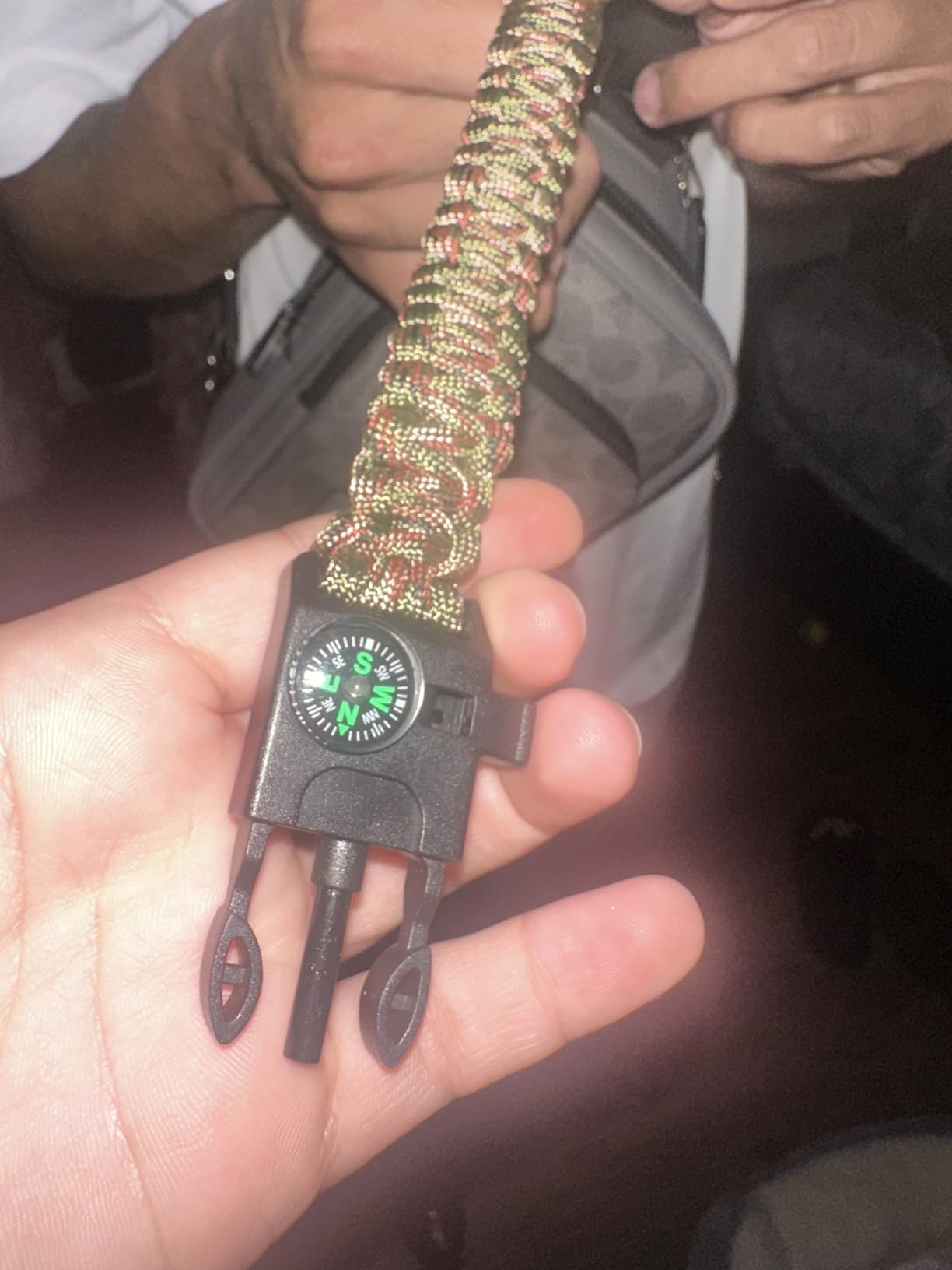
The Vokida is the best all-in-one emergency radio for camping because the box contains a kit rather than a device. Alongside the radio you get three aluminized emergency thermal blankets at 55 grams each and a 5-in-1 paracord bracelet carrying ten feet of cord, a compass, a cutting blade, a whistle and a magnesium fire rod.
The radio itself is well judged for a compact mid-range unit. A 10000mAh cell, described as 37000mWh, sits inside a 6.5 by 2.4 by 3.5 inch body with a built-in AM antenna, and automatic NOAA scanning runs across seven channels on activation or in standby. That standby behaviour is the safety feature that matters most, and it is present.
Three charging methods cover hand crank, solar panel and the internal lithium cell, and the SOS button triggers a loud siren with a flashing red light. A built-in super-bright flashlight, a headphone jack for private listening and a USB port for charging a device complete a sensible feature set without padding.
Buyers treat it as a well-rounded all-rounder rather than a specialist, and the bundled survival extras are the reason. For a camper assembling kits for family members who will never research this category, the marginal cost of the blankets and bracelet is small and the convenience is real.
Why gift-and-kit buyers should start here
If you are building a kit for someone who does not think about gear, the three thermal blankets do more to keep a person warm through a night than a better tuner would. The paracord bracelet is a genuine multi-tool rather than a novelty, and both items are the kind of thing that gets used and not admired.
At 6.5 inches it fits a jacket pocket, and the automatic NOAA scan removes the most common setup mistake new buyers make, which is never finding the right weather channel in the first place.
Where the Vokida falls short
The 2-watt speaker is the recurring limitation and it is not a group-camp radio. The plastic enclosure is less rugged against pack abrasion than a metal-bodied alternative, and with no shortwave band it is again a US-centric receiver. It is water resistant without a published ingress rating, so it wants a dry pocket.
Its review pool is also the smallest in this list at under a thousand reviews, which means less long-term failure data than the established models above. It is a well-built kit, but you are buying some uncertainty about how it ages. Our hand-crank radio guide covers the crank question in more depth if that is your deciding factor.
Emergency Radio vs Satellite Messenger vs PLB
An emergency radio is the cheapest and lightest option and the least capable. It receives NOAA weather broadcasts and local AM and FM, and that is the full extent of it. It cannot transmit, cannot send an SOS, cannot give anyone your coordinates, and does nothing at all if you are outside NOAA coverage.
A satellite messenger such as the Garmin inReach does all the things a radio cannot. It sends and receives two-way text messages over satellite, reports your GPS coordinates, and in most models raises an interactive SOS to a monitoring service that will dispatch help. It works far outside cellular coverage, which is the entire reason backpackers buy one.
A personal locator beacon is the simplest and most serious of the three. It is a single-purpose device: press the button and it broadcasts your location to a rescue service. There is no messaging and no subscription in the usual sense, which makes it cheaper to run, but you get no voice of any kind.
Here is how to choose. If your trip is inside NOAA coverage and near a road or trailhead, an emergency radio from this list is enough and costs a fraction of a subscription. If you are on a multi-day route above treeline, in a canyon system, or anywhere your phone would be useless, a satellite messenger is the correct answer and the radio becomes a backup.
Owner discussion in hiking communities reaches the same conclusion repeatedly, and the scepticism about cost for beacons and messengers is a recurring theme in threads about radio choices. The honest summary is that a radio is a comfort and an information source, while a messenger is a rescue service. They are not substitutes, and buying one does not remove the need for the other on serious trips.
Buying Guide: What to Look for in an Emergency Radio for Camping
Emergency radio, weather band radio or weather alert radio?
A weather band radio receives NOAA weather broadcasts on one of seven channels. A weather alert radio also monitors the emergency alert system and sounds an alarm automatically when a warning is issued for your area. An emergency radio is the broader term for a portable device that combines either of those with a hand crank, solar panel, flashlight and battery options. Many budget units are weather band only, so check the wording.
Reception and NOAA alerts are not the same thing
Reception is how well the radio pulls a signal, and alert behaviour is whether it tells you when that signal matters. A radio can have excellent reception and still leave you sleeping through a flood warning because it only alarms in standby. Prefer a unit with SAME county programming and alerts that interrupt playback on any band, and confirm that the antenna is external or a proper telescopic rather than a stub.
Is the hand crank worth it?
The crank is a backup, not a primary. Measured ratios across this category range from roughly 15 to 20 minutes of listening per minute of cranking on the Leaton, down to much slower performance on units with small generators. The scepticism in prepper forums is fair, with one recurring objection being uncertainty about whether cranking is useful at all when power is out, but the honest answer is that you are not cranking to charge a phone, you are cranking to hear one forecast.
What the crank genuinely protects against is a dead internal cell with no sun and no spare batteries. Radio owners with a decades-old unit still running often have three things in common: a crank, an AA option, and a habit of testing it. Our dedicated hand-crank guide ranks crank ratios separately if you want to go deeper.
The 3-3-3 rule for emergency communication
The 3-3-3 rule is a widely used preparedness framework and it is worth knowing even if you never formally adopt it. It states three things: maintain three ways to receive information, three ways to send an alert or message, and three ways to leave a message for whoever comes looking.
In camping terms, receive means a radio, your phone on Wireless Emergency Alerts, and knowing the difference between a watch, a warning and an advisory. Send means a satellite messenger, a whistle, and a strobe. Leave a message means a written route plan at your vehicle, a check-in time with someone at home, and a paper card with your vehicle description and trip dates.
No single device on this list satisfies all nine points, which is exactly the argument for layering. A radio covers the receive column well, and we would add the weather radio buying notes to your reading if alerts are your main concern.
Battery life, cold weather and phone charging
Capacity across these radios runs from a 600 to 800mAh NiMH pack in the Eton to 12000mAh in the Mesqool, with most budget units landing between 2000mAh and 5000mAh. Larger numbers mean longer off-crank runtime, but they also mean more mass, so balance capacity against trip length rather than buying the biggest cell you can find.
Cold weather is a genuine failure mode that rarely gets discussed. Lithium-ion capacity drops below freezing, so a radio that runs three days in September may run one in January. Carry spare AA or AAA cells as the cold-weather answer, and keep the internal cell warm against your body rather than in a pack lid overnight.
Phone charging is real but modest. A 5V/1A output adds a small percentage in 20 minutes, while a 5V/2A port doubles that, and using the output degrades reception on some models. Treat charging as a bonus for an emergency call, not as a plan.
Weight against trip length
Match the radio to the trip. Under 400 grams suits day hiking and an overnight, 400 to 700 grams works for a multi-day pack or a canoe, and anything above 1 pound belongs in a car, a base camp or a group kit where weight is shared. Water resistance matters more the further you get from a vehicle, which is why the IPX6 rating on the Leaton is worth more to a multi-day hiker than a 10000mAh cell.
One last check before you leave: find your local NOAA channel, program your county codes, test the alert mode, and charge the battery fully. A radio that has never been set up is a radio you will not trust when you need it, and the full emergency radio guide covers the wider category beyond camping.
Frequently Asked Questions
What is the best emergency radio for camping?
The FosPower NOAA A1 is the best emergency radio for camping overall, because it combines three independent power sources, a 7400mWh USB power bank for topping up a phone, two separate light sources and a 310 gram weight that suits a daypack. If you need alerts that interrupt playback on every band, choose the Midland ER310 instead.
What is the most reliable emergency radio?
Reliability means reception consistency, battery endurance and power-source redundancy together. On that basis the Midland ER310 scores highest for alert reliability, because its NOAA system interrupts any band and it offers SAME county programming, a hand crank, solar and six AA batteries. The FosPower A1 is the most reliable all-round option at 4.6 stars across more than 37,000 reviews.
What is the 3-3-3 rule for radios?
The 3-3-3 rule is an emergency communication framework with three parts: three ways to receive information, three ways to send a message or alert, and three ways to leave a message for others. For camping, receiving means a NOAA radio, phone Wireless Emergency Alerts and understanding watch, warning and advisory language. No single device covers all nine points, which is why layered alerting matters.
Is there a cheaper alternative to Garmin inReach?
An emergency weather radio is far cheaper and much lighter, but it is not a genuine substitute. A Garmin inReach sends two-way text messages, transmits your GPS location and raises an interactive SOS to a monitoring service. A radio only receives NOAA and AM/FM broadcasts and cannot transmit or give away your position. On routes above treeline or far from a road, a satellite messenger is still the safer choice.
Do hand crank radios actually work?
Yes, as a backup rather than a primary. Measured output ranges from roughly 15 to 20 minutes of listening per minute of cranking on efficient units down to much slower performance on smaller generators. The crank is not for charging a phone, it is for powering one forecast when the internal cell is flat, there is no sun and you have no spare batteries.
Which Emergency Radio for Camping Should You Buy?
The best emergency radio for camping in 2026 depends on your trip, not on a ranking. For most campers the FosPower A1 is the right default, because it packs light, runs from three power sources and can rescue a phone. Take the Midland ER310 if you camp in wildfire, tornado or flood country and want an alert that interrupts whatever you are listening to, and the Leaton if rain, rivers or spray are part of the trip.
Match the rest by weight: under 400 grams for a daypack, up to about 700 grams for a multi-day, and anything heavier belongs in a car or a group base camp. Whatever you choose, set up the channel and county codes at home, test the alert before you leave, and remember that a radio receives only. For remote routes, layer a satellite messenger on top. Our complete emergency radio roundup covers the wider category if your trip moves beyond camping.