
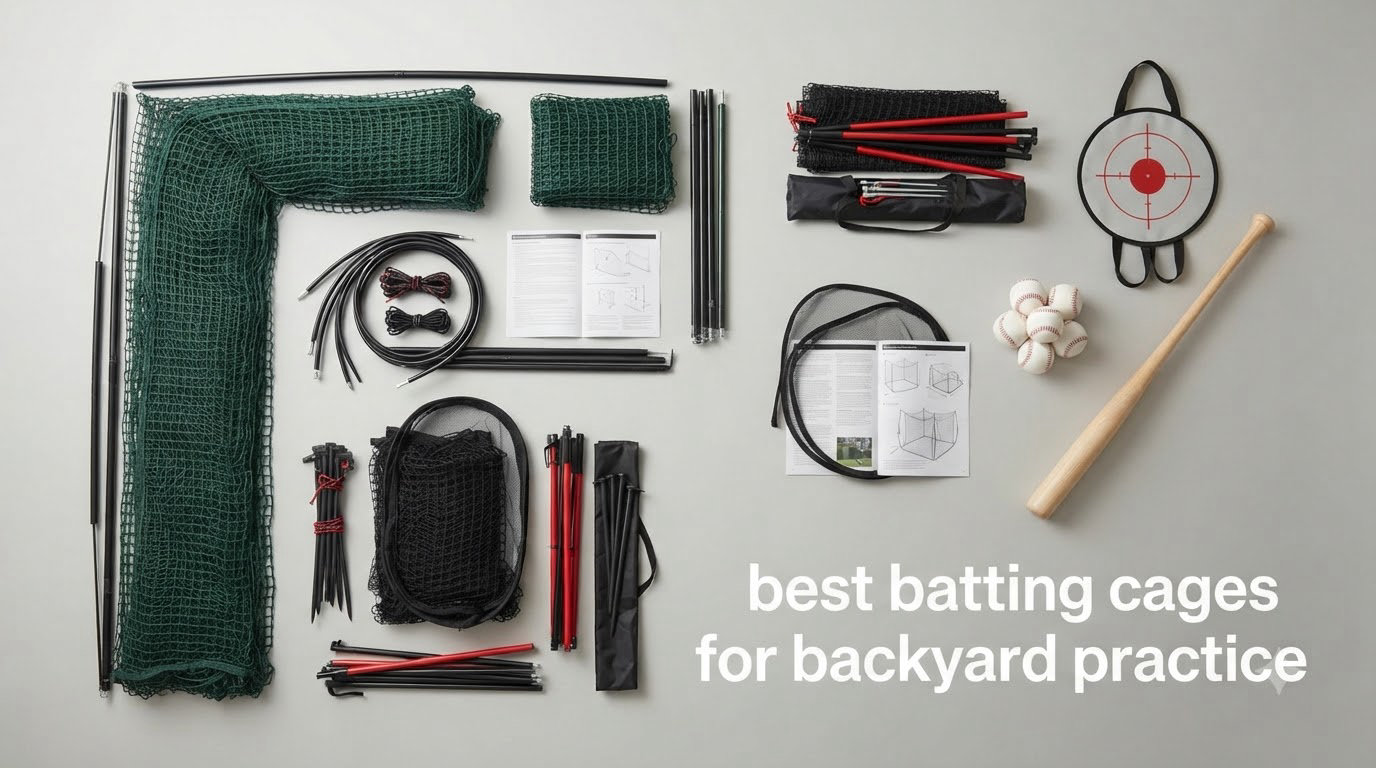
If you are searching for the best batting cages for backyard practice, the deciding variables are yard length, how far you pitch from, and what the net is made of. Most families land between a small square box for tee work and soft toss, and a 30 ft to 40 ft tunnel for live machine pitching. Nearly every cage in this roundup is a portable fiberglass or steel frame with polyester or nylon netting.
A backyard batting cage is a frame-and-net enclosure that stops line drives so a player can take unlimited swings at home. Repetition is the biggest driver of hitting improvement, and a home cage removes travel time, wait time, and per-pitch cost. We compared the twelve enclosures below on frame construction, net ply, mesh opening, anchoring hardware, and reported durability, then read the owner reviews rather than trusting the spec sheet.
Updated October 2026. For longer setup notes, start with our backyard batting cage reviews, then use the picks below to narrow by size. Every entry here is a full frame-and-net kit, so none of them is a net-only upgrade path.
Table of Contents
Top 3 Picks for Backyard Batting Practice (October 2026)
The three below cover the widest range of yards. The Heater PowerAlley is the most proven and the most reviewed. The ORIENGEAR gives you the most room inside an enclosure. The Arikit is the fastest to raise and lower once two people are on the job.

Heater PowerAlley 22x12x8
- 22 ft x 12 ft x 8 ft
- 1 inch nylon netting
- 1/2 inch fiberglass rods
- Machine harness

ORIENGEAR 30 ft Enclosed
- 30 ft x 13 ft x 9 ft
- 1.25 inch polyester mesh
- 14mm fiberglass poles
- Spare poles included

The 12 Best Batting Cages for Backyard Practice in 2026
Every entry is a complete kit. Sizes are listed length by width by height, and the mesh figure is the width of each opening, so a smaller number means a tighter net that holds balls more reliably.
| Product | Specifications | Action |
|---|---|---|
| Heater PowerAlley 22x12x8 |
|
Check Latest Price |
| ORIENGEAR 30 ft Enclosed |
|
Check Latest Price |
| Arikit 30 ft Backstop |
|
Check Latest Price |
 Vertura 22 ft Blue Net Vertura 22 ft Blue Net |
|
Check Latest Price |
 Apex Sports 22x12x8 Apex Sports 22x12x8 |
|
Check Latest Price |
 VEVOR 40 ft Cage VEVOR 40 ft Cage |
|
Check Latest Price |
 ZivPlay 30x12x8 Pop-Up ZivPlay 30x12x8 Pop-Up |
|
Check Latest Price |
 NaxKizo 22 ft 5-Ply NaxKizo 22 ft 5-Ply |
|
Check Latest Price |
 RIIFRILY 20 ft Steel Frame RIIFRILY 20 ft Steel Frame |
|
Check Latest Price |
 Heater 12x12x10 Square Heater 12x12x10 Square |
|
Check Latest Price |
 DHUAFDD 30x10x10 Tall DHUAFDD 30x10x10 Tall |
|
Check Latest Price |
 Shopsource 22x12x8 Shopsource 22x12x8 |
|
Check Latest Price |
1. Heater Sports PowerAlley – the Most Proven Backyard Cage
HEATER Sports PowerAlley Baseball & Softball Batting Cage Net & Frame – Heavy-Duty Net with Built-in Pitching Machine Harness for Safety (Machine Not Included) | Ideal for Batting Practice & Training
22 ft x 12 ft x 8 ft
1 inch nylon netting
1/2 inch fiberglass rods
29 lb frame
Pros
- Spacious 22 ft practice area
- Quick pop-up setup and teardown
- Machine harness keeps the operator outside
- Works for ages 4 through adult
Cons
- Mixed long-term durability reports on netting and frame joints
- Fiberglass poles can be damaged by direct hits
This is the cage we have the most owner history on. At 22 ft by 12 ft by 8 ft it gives a pitcher or a machine room to work from the far end while the batter has space to load up, and it carries more reviews than anything else on this list. The failure patterns are documented rather than anecdotal.
Setup is the standout. The half-inch fiberglass rods feed through net sleeves and the frame pops up without tools, which matters if you plan to take the cage down before winter. A built-in harness lets a machine sit outside the net line.
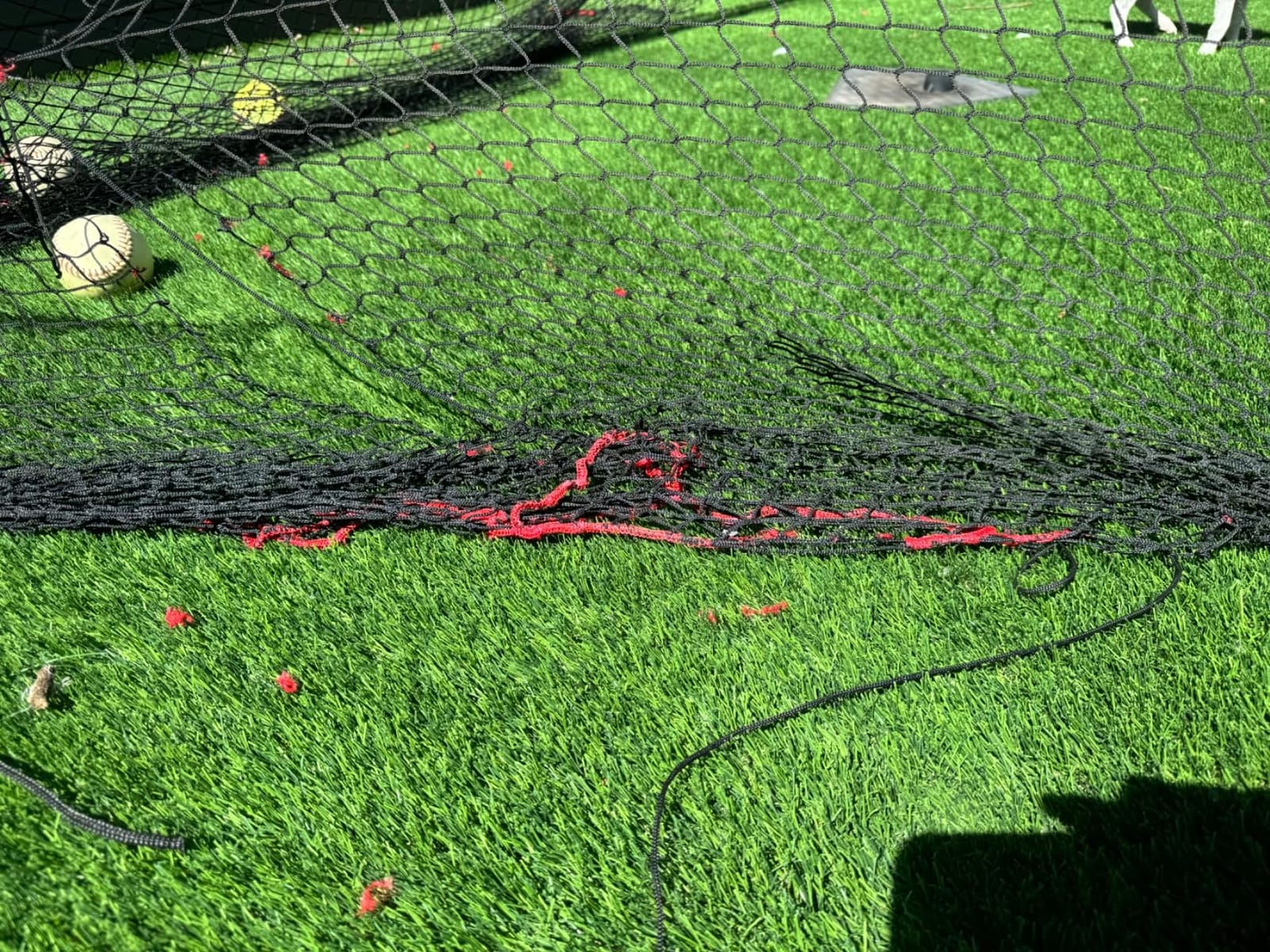
The netting is one inch nylon, finer than the 1.25 inch mesh most competitors in this group use, and it stops hard-hit balls cleanly. Owners report mixed results on long-term durability at the pole joints, and the fiberglass will not forgive a direct hit. Expect a crack rather than a bend.
Who this cage suits
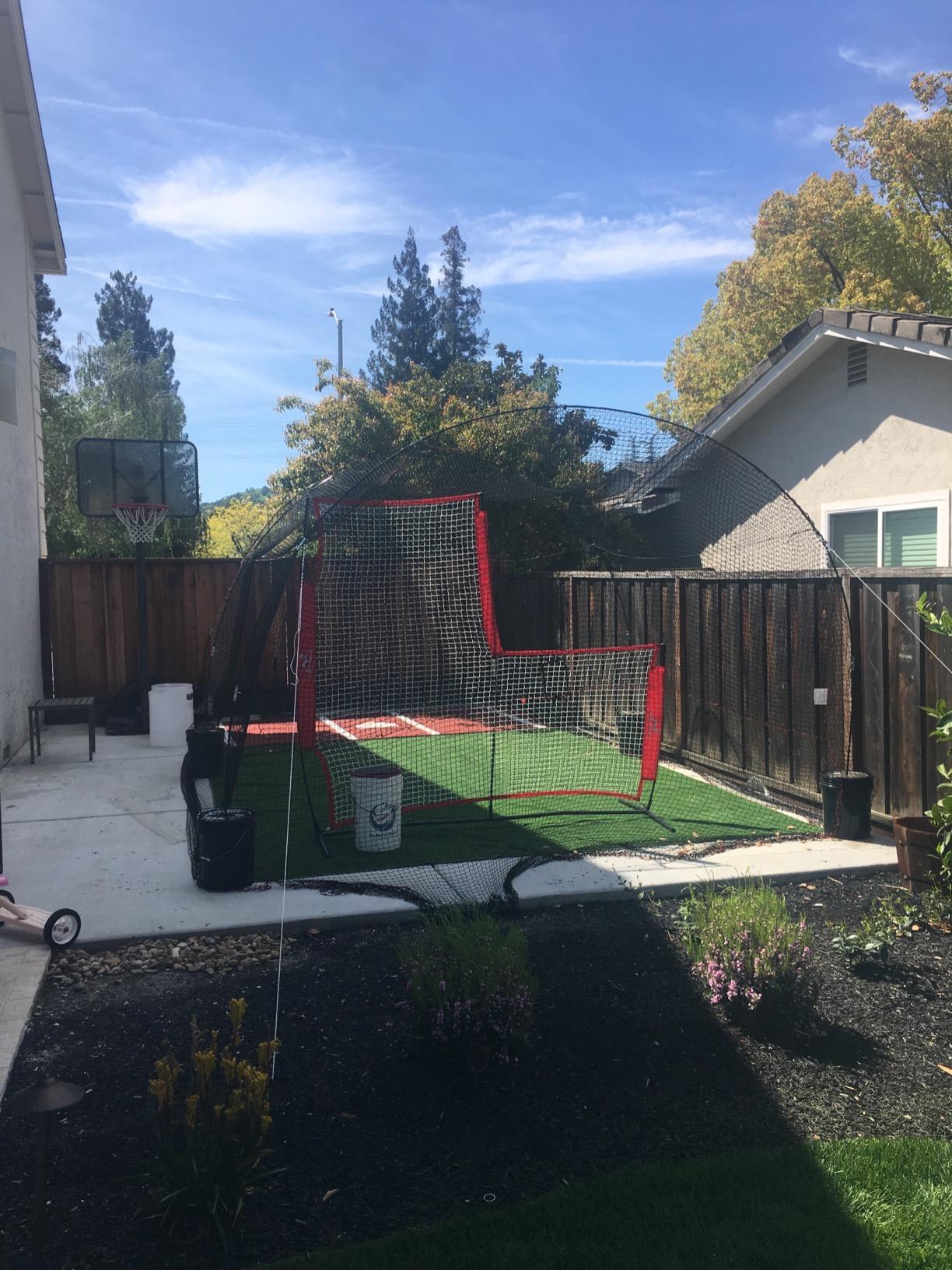
Ages four through adult, which is unusual for a backyard cage. A parent can hit fungoes to a Little League kid, and a single hitter can work on launch angle in a 22 ft tunnel. The 12 ft width fits a rebounder inside without blocking the swing path.
Where it falls short
It is not a full-length pitching-distance cage. If you want 60 ft of separation between mound and plate, this box ends well before that and you pitch from inside the net. Heavy hitters who punish frames should look at a steel option.
2. ORIENGEAR 30 ft Fully Enclosed Cage – Best for Big Yards
ORIENGEAR Baseball Batting Cage 30FT for Backyard, Training Equipment Cages for Hitting and Pitching Practice, Softball Baseball Nets for Batting with Frame and Net
30 ft x 13 ft x 9 ft
1.25 inch polyester mesh
14mm fiberglass poles
40.8 lb
Pros
- Most interior space among 30 ft cages
- Netting has held up through months of bad weather
- Spare poles included for repairs
- Size options from 13 ft to 30 ft
Cons
- Setup needs two or three people
- Yellow plastic ground stakes break easily
- Bottom cross straps wear out
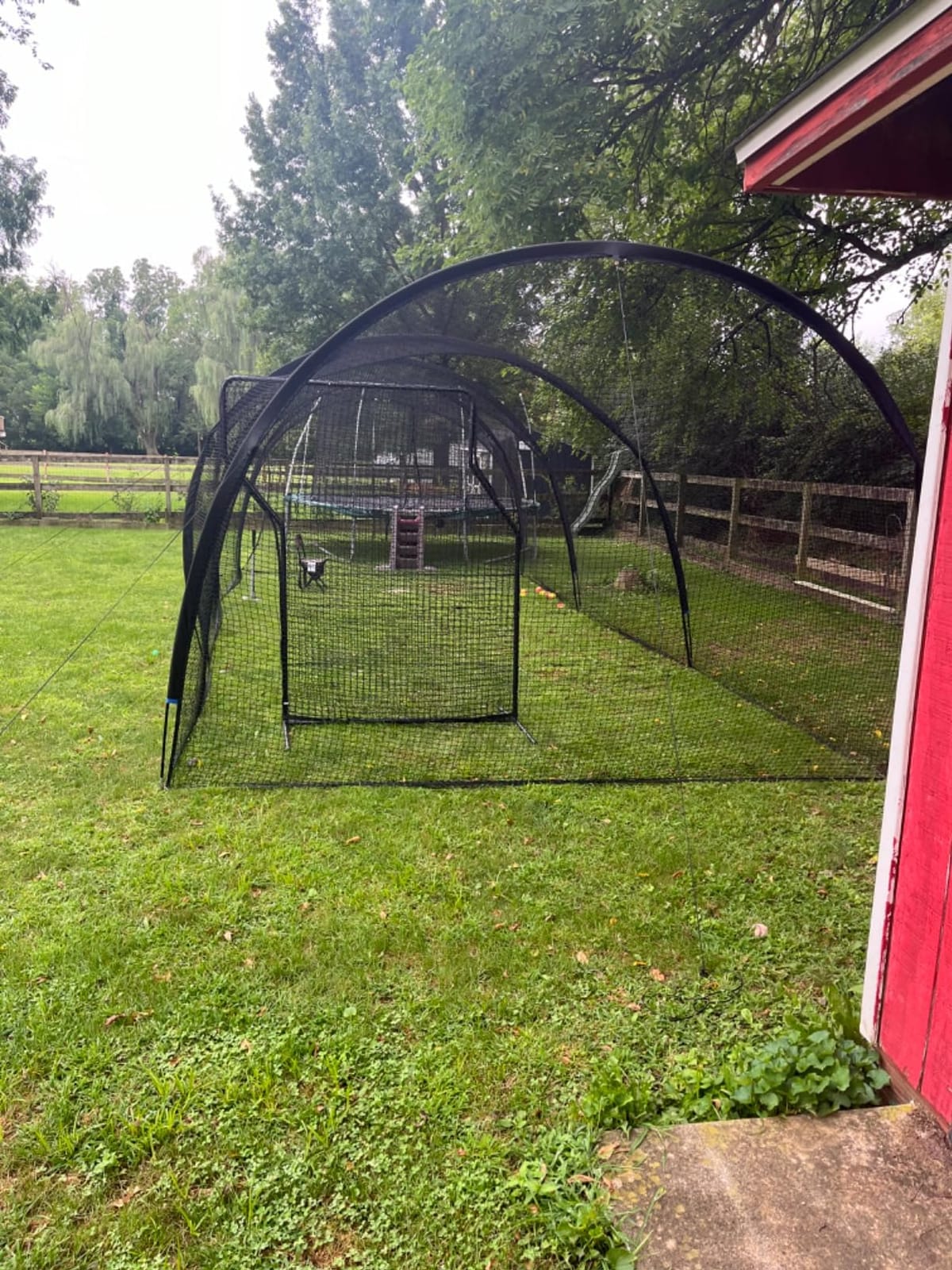
At 30 ft by 13 ft by 9 ft this is the roomiest 30 ft enclosure in the roundup, and the interior works as a training room rather than a batting tunnel. Owners fit a lacrosse goal and a rebounder inside it, which tells you how much floor space there really is.
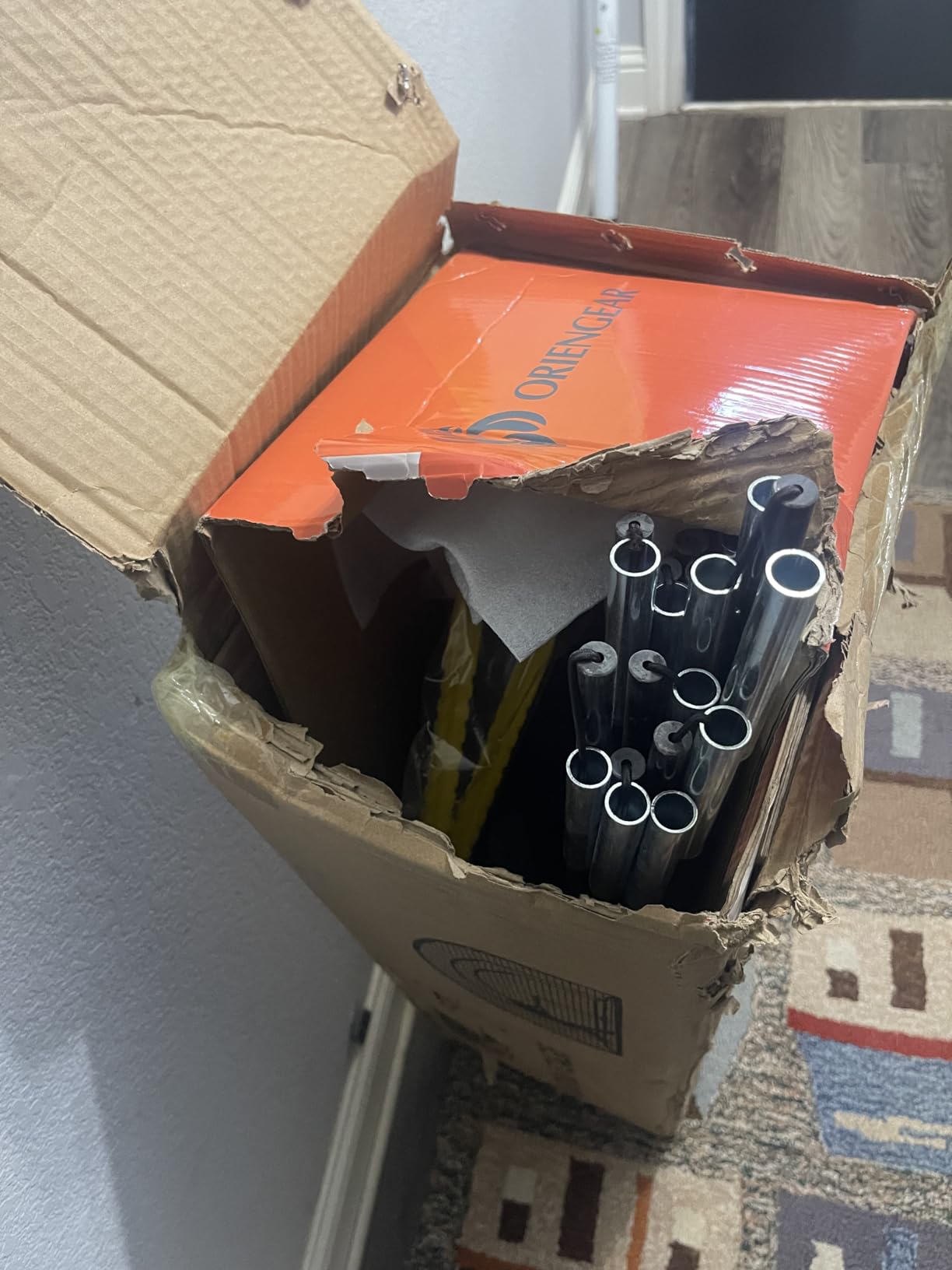
The frame mixes fiberglass and iron poles at 14mm, and spare poles are in the kit. When a section cracks at a joint after a hard swing or a gust of wind, you replace a part instead of a cage.
Weather performance surprised us. Owners report the polyester net and oxford cloth seams holding up through months of rain, snow, and thousands of reps, and the button-closure door keeps balls contained for live bullpen work.
The weak points are hardware. The yellow plastic ground stakes break easily, the bottom cross straps wear out and can be replaced with carabiners and cord, and two or three people are needed to raise the frame.
Who this cage suits
Anyone with a real run of lawn who wants a backstop at both ends plus a practice partner inside. It handles baseball and softball, works for a team clinic, and serves a whole neighborhood. Give it at least 45 ft of usable run.
Where it falls short
At 40.8 lb it is not a one-person move, and unanchored fiberglass poles can snap in strong wind, so proper metal ground stakes matter from day one. Two or three people are required for setup.
3. Arikit 30 ft Cage with Pitching Backstop – Best for Quick Setup
Upgrade 30FT Baseball and Softball Batting Cage Net and Frame, Large Batting Cages Net with Steel Frame for Home – Backyard Batting Cage with Pitching Backstop and Carry Bag
30 ft x 13 ft x 9 ft
1/2 inch fiberglass poles
3-ply square mesh
45 lb
Pros
- Removable gate keeps balls off the neighbor's property
- Two people raise it in about 15 minutes
- Carry bag and free target included
- Oxford cloth seams
Cons
- 45 lb frame is awkward for one person
- Elasticated joints loosen after wind
The elasticated one-piece pole design is why this cage exists. Instead of threading separate sections together, the frame arrives in long flexible spans, and two people can have it standing in roughly 15 minutes. Owners who raise a cage every weekend care about that number more than any other spec.
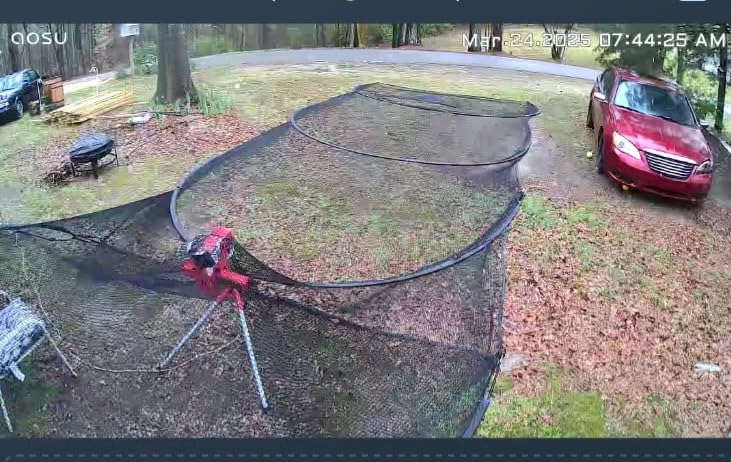
It also has the highest average rating among the 30 ft cages here, at 4.1, with a heavy five-star skew. Reviewers single out the removable gate, and that makes sense. A cage that leaks balls into the yard is a cage that loses you a neighbor.
The floor is 30 ft by 13 ft by 9 ft using half-inch high-strength fiberglass poles with three-ply polyester square mesh, plus an included pitching backstop and a free target accessory for accuracy work.
Two practical warnings. The 45 lb frame is genuinely awkward to move alone, and the elasticated joints can loosen after a windy week, which means a quick re-seat pass before setup rather than a repair.
Who this cage suits
Players aged four through adult who want a full 30 ft of tunnel and can recruit one helper. The carry bag and bundled target make it easy to move between a backyard and a park for a team session.
Where it falls short
It is not the sturdiest frame for a hitter who sprays foul balls into the poles, and re-seating joints is a recurring chore after wind. The 133-review base is real but much thinner than the two cages above it.
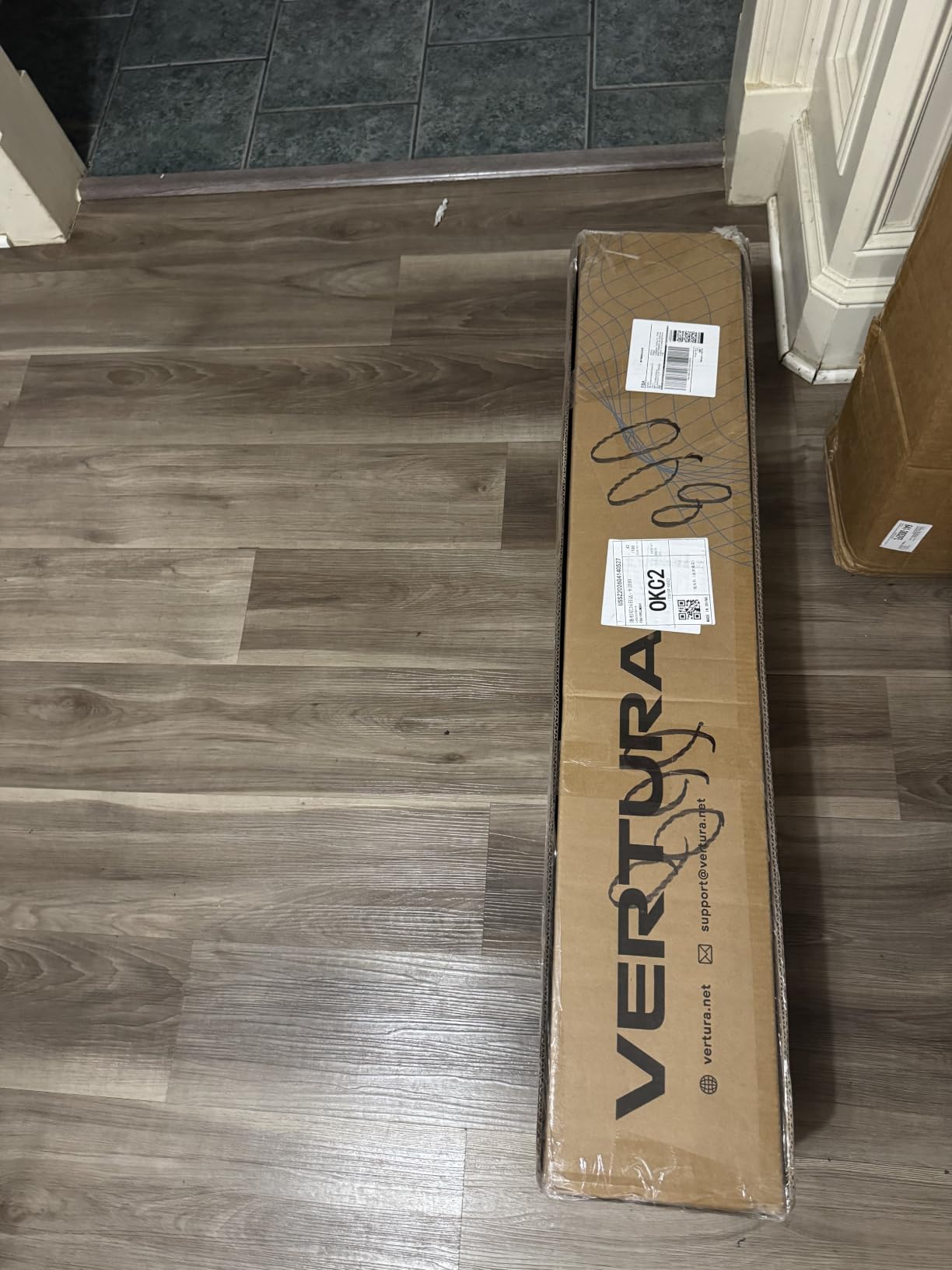
4. Vertura 22 ft Blue Net Cage – Best for Multi-Sport Use
Portable 22ft x 12ft x 8ft Baseball & Softball Batting Cage – Easy to Install Hitting Cage with Pitching Machine Hole, 3-Ply Blue Netting, 14mm Fiberglass Poles, Secure Steel Frame & Carry Bag Include
22 ft x 12 ft x 8 ft
3-ply blue Oxford net
14mm fiberglass poles
28 lb
Pros
- Blue netting improves ball visibility
- 14mm poles with 16-strand braided ropes
- Large 3.3 ft by 1.6 ft machine opening
- Carry bag included
- Also suits cricket and tennis
Cons
- Wind ropes can break
- Pitching window has no cover net
- Setup needs two to three people
This one carries the highest star rating in the roundup, and the reason is visible immediately. The netting is bright blue rather than black, and a white ball against a dark net disappears at the top of a swing. Against blue it stays trackable through the whole flight path.
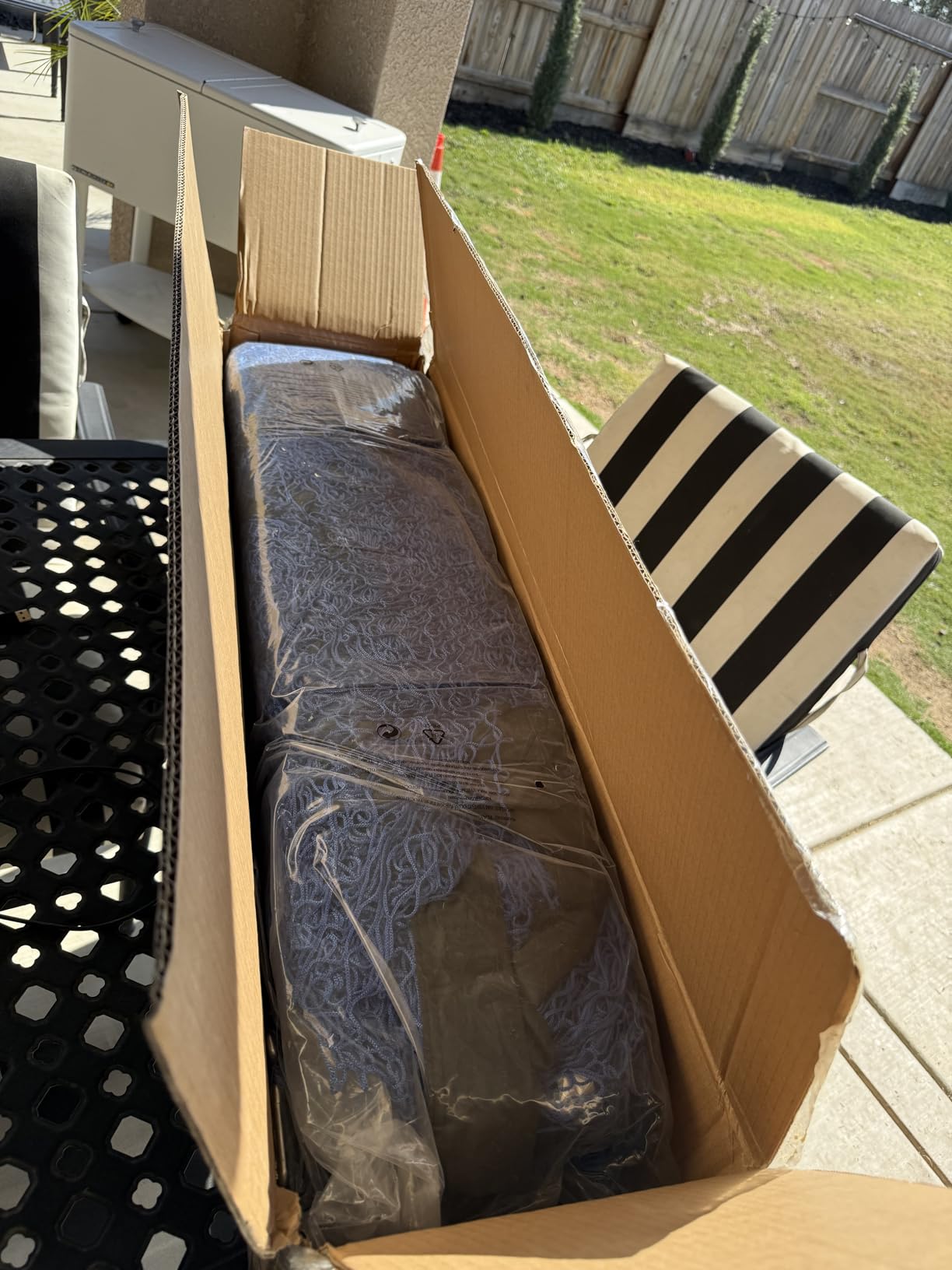
Anchoring is the most serious of the portable options here. Rather than thin plastic pegs, you get 16-strand braided ground ropes and metal anchors. The 3.3 ft by 1.6 ft pitching opening is also the largest among the 22 ft cages in this roundup, so it swallows most two-wheel machines.
The interior works for baseball, softball, cricket, and tennis drills, which makes it shared equipment for a household with more than one sport in play. The whole kit packs into a carry bag for transport to a park.
Two gaps to know about. Some owners ran through the supplied wind ropes quickly, and the pitching window has no cover net, so a well-struck ball can find that edge. A few zip ties close most of it.
Who this cage suits
Hitters from t-ball through college who care about seeing the ball. The wide opening, detachable door, and solid anchoring suit a player who takes full swings in the middle of the cage without worrying about the frame.
Where it falls short
At 37 reviews the long-term record is thin, so treat the hardware praise as recent. Assembly takes about an hour with two or three people, and the kit costs more than the entry-level boxes.
5. Apex Sports 22x12x8 – Best for Soft Ball Rebound
Apex Sports Portable Batting Cage 22x12x8 Ft, Baseball & Softball Net Cage
22 x 12 x 8 ft
3-ply 1.25 inch polyester net
12.7mm fiberglass poles
15.31 kg
Pros
- Netting softens ball rebound
- 3-ply net holds up to hard hits
- Carry bag and stakes included
- Works with a machine or a pitching screen
Cons
- Plastic stakes pull out of soft ground
- Setup takes two people and patience
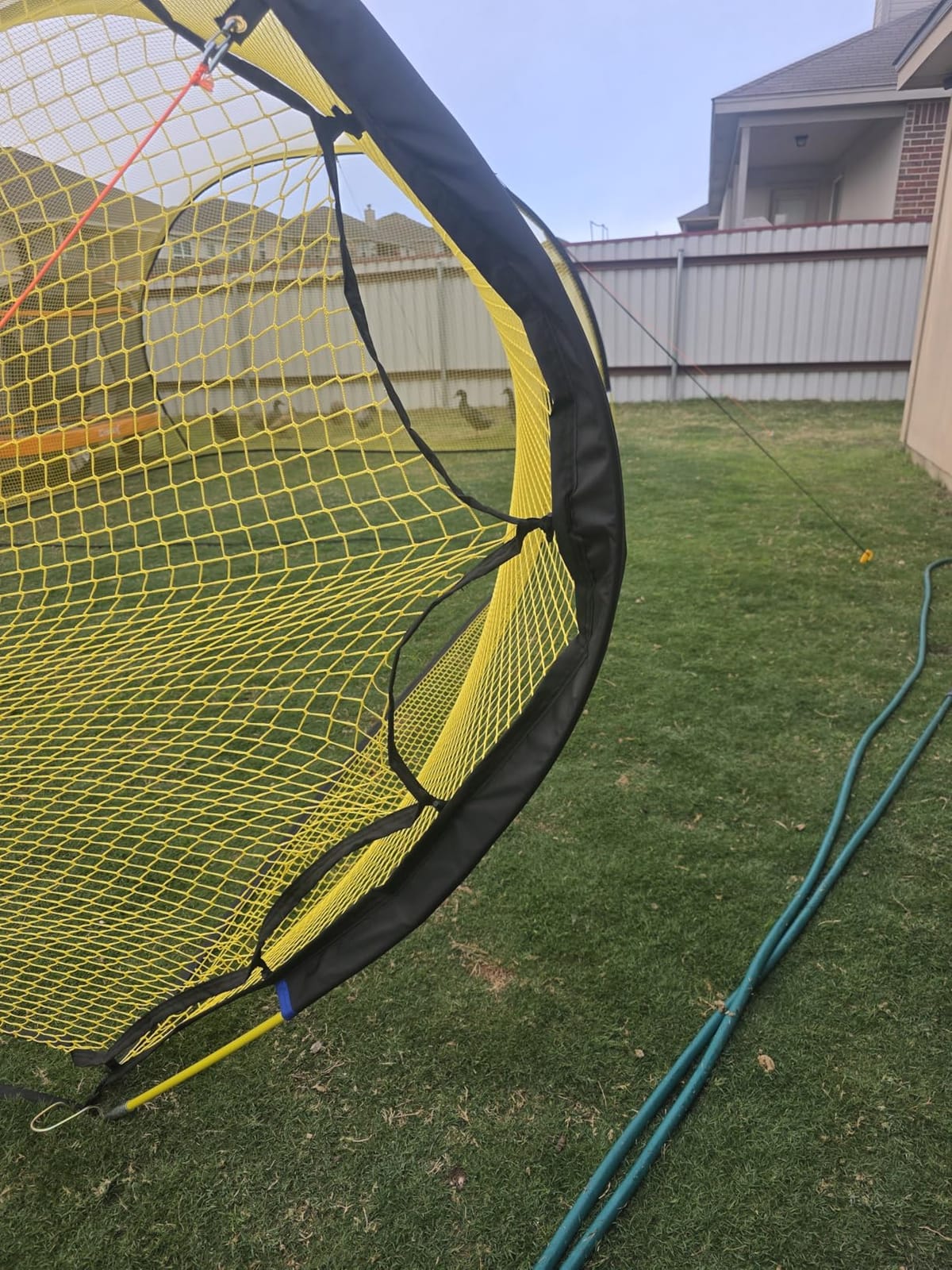
The defining feature is how the cage treats the ball after contact. Three-ply stretchable polyester at 1.25 inch rebounds softly rather than snapping back, and reviewers describe the difference on hard-hit line drives. A ball that comes back slow stays in front of the batter.
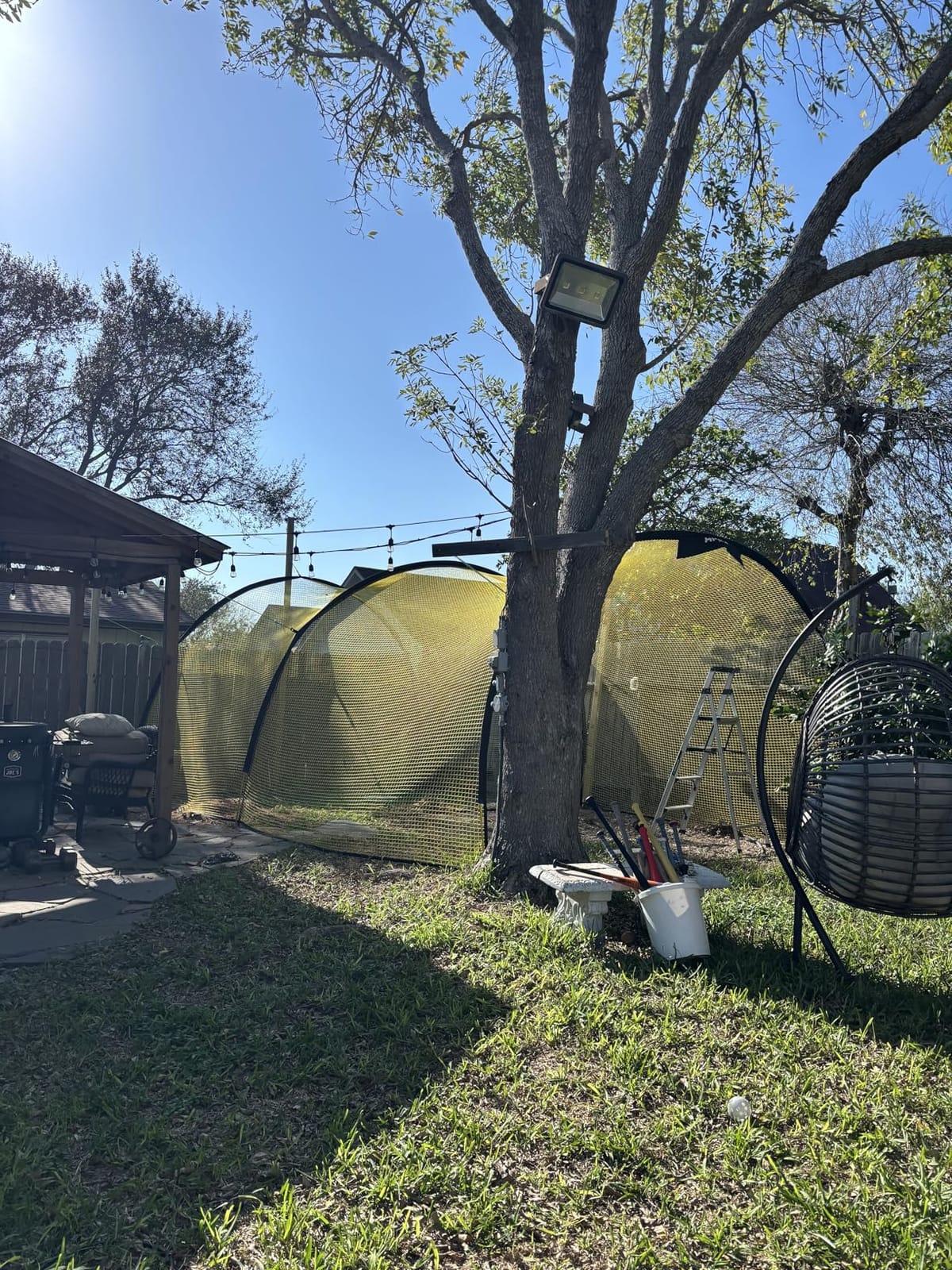
It is a consistent top-ten seller in the category with 190 reviews, a decent sample. The 3.5 ft by 2 ft pitching hole and 12.7mm fiberglass poles cover the mainstream machine and pitching screen setup, so it works for solo or live bullpen work.
Everything needed is in the box: eight plastic stakes, supporting nets, and a carry bag, which means you can move the whole cage to a park for a team session. The only real work is patience with the pole sleeves on the first build.
The one complaint worth planning for is the stakes. They are light plastic and pull out of soft ground after rain, which turns a windy day into a folding cage. Replace them with metal ground stakes.
Who this cage suits
Anyone practicing alone with a machine or a screen who wants a forgiving rebound and a package that travels. At 22 ft it fits a normal suburban lot, and the range spans tee work through adult hitting.
Where it falls short
Twenty-two feet is a short-range box, so the machine pitch comes from inside the net rather than a game distance. Two people are needed for the first setup, and the plastic stakes should be replaced on day one.
6. VEVOR 40 ft Cage – Best for Maximum Throwing Distance
VEVOR Baseball Batting Cage,Fiberglass Portable Batting Cage
40 x 12.1 x 10 ft
4-ply mesh with 600D edges
Carbon steel and fiberglass
56.9 lb
Pros
- Longest run in the roundup
- 4-ply mesh with reinforced 600D edge fabric
- Repair module and extra stakes included
- Storage bag included
Cons
- Heaviest assembled unit here at nearly 57 lb
- Lowest average rating here at 3.6
- Manufacturer advises against year-round outdoor use
Forty feet is the length that finally lets a youth or high school hitter work from a realistic pitching distance instead of a compressed box. The 10 ft ceiling gives lofted swings somewhere to go, and no other cage on this list gives a teenager more separation between pitcher and plate.
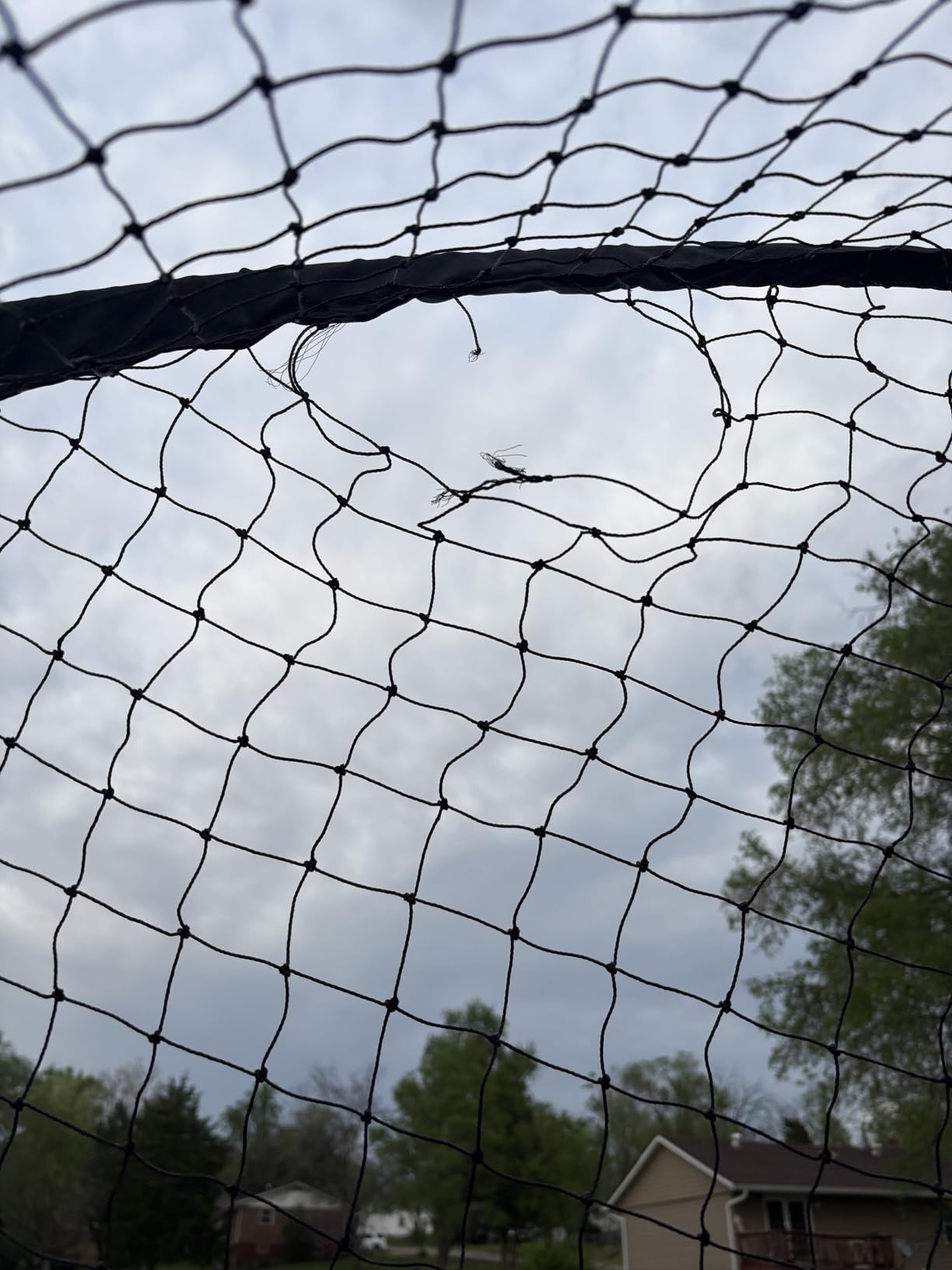
The accessory package is unusually generous. Four-ply reinforced mesh with 600D nylon edge fabric and reinforced corners, plus a repair module, 22 ground stakes, 20 tie ropes, a waterproof storage bag, and electrical tape for patching. Very few kits include enough hardware to fix themselves in the field.
The frame pairs high-heat cured fiberglass rods with carbon steel, and there is a removable door plus an external pitching machine opening. Two people can assemble it and the storage bag handles the off-season.
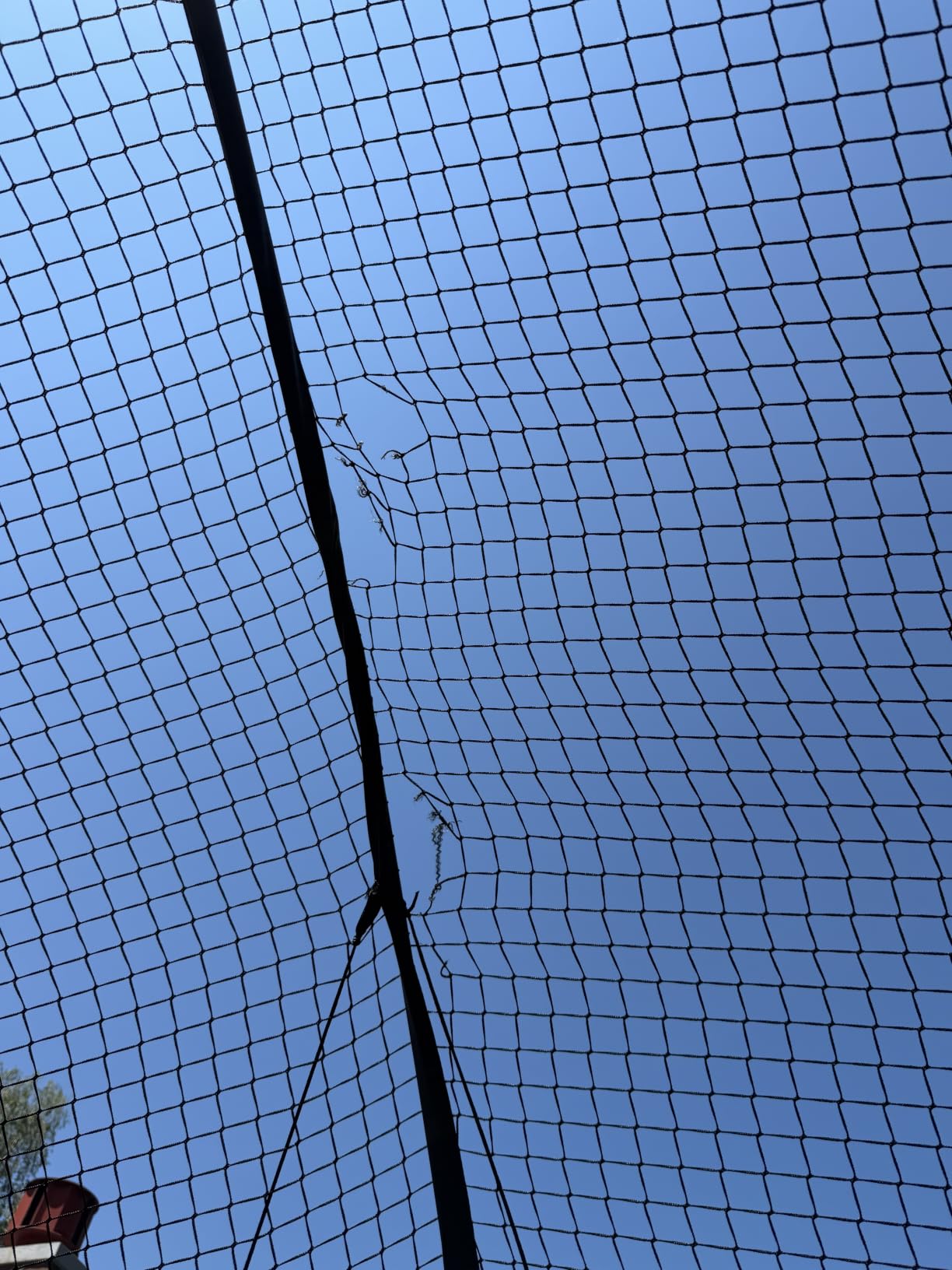
Be realistic about two things. At 56.9 lb it is the heaviest assembled unit here, and it carries the lowest average rating at 3.6 with a meaningful share of one-star reviews. The manufacturer also advises against leaving it outdoors long term, so a takedown plan is not optional.
Who this cage suits
A player working toward full pitching distance who has the yard length and a second adult to help with setup. It suits a travel-ball or high school hitter who wants to read the flight of the ball at a believable distance.
Where it falls short
Fifty-seven pounds means you are not moving it alone, and the weak star rating points to finish quality issues rather than a design flaw. A cage this long also needs a properly measured run of lawn.
7. ZivPlay 30x12x8 Pop-Up Cage – Best for Machine or Live Pitcher
Baseball Batting Cage Net for Backyard Softball Portable Pop Up Cage
30 x 12 x 8 ft
3-ply stretchable polyester net
12.7mm fiberglass poles
Tool-free setup
Pros
- Machine hole plus detachable door for live bullpen
- Net rebounds softly and poles survive hits
- Generous 30 ft footprint
- Tool-free setup in under 30 minutes
Cons
- Two-person job with poles separating through sleeves
- Supplied plastic pegs break in wind
- Net wears through in swing zones
This cage is built around one decision: whether you pitch from a machine or from a person. The 20 inch by 40 inch pitching hole handles a two-wheel machine, and the detachable door lets a live pitcher step in with nothing in the way. Most cages force you to pick one.
At 30 ft by 12 ft by 8 ft it gives you more room than the 22 ft boxes without the 40 ft weight problem. The 12.7mm poles are thicker than the 10mm frames common in this class, and reviewers report they have survived repeated direct hits.
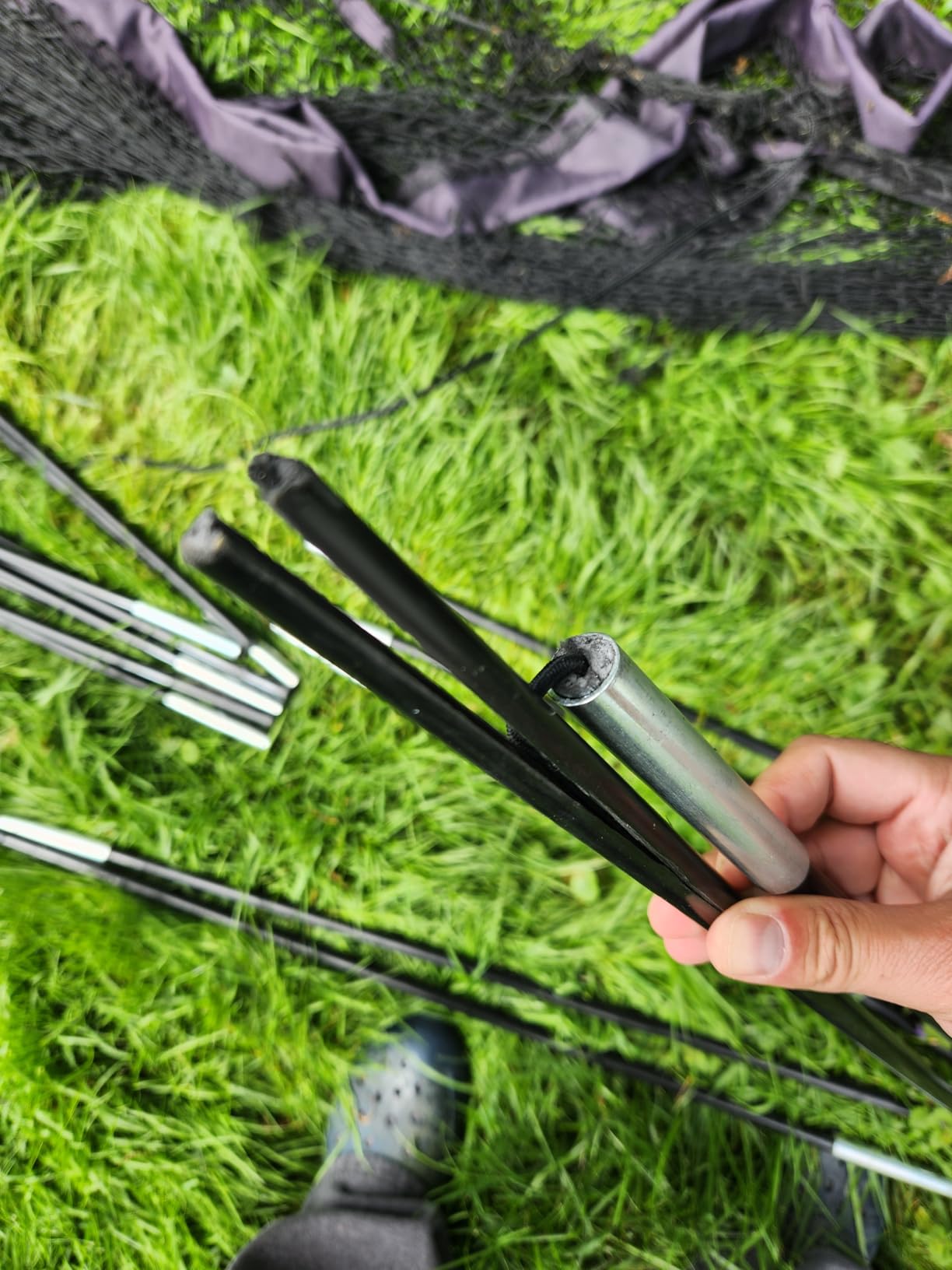
Setup is tool-free once you have done it once, and the manufacturer claims under 30 minutes. Eight supporting ropes with ground pegs tension the net against sway, and the 3-ply polyester rebounds softly rather than kicking the ball back at the batter.
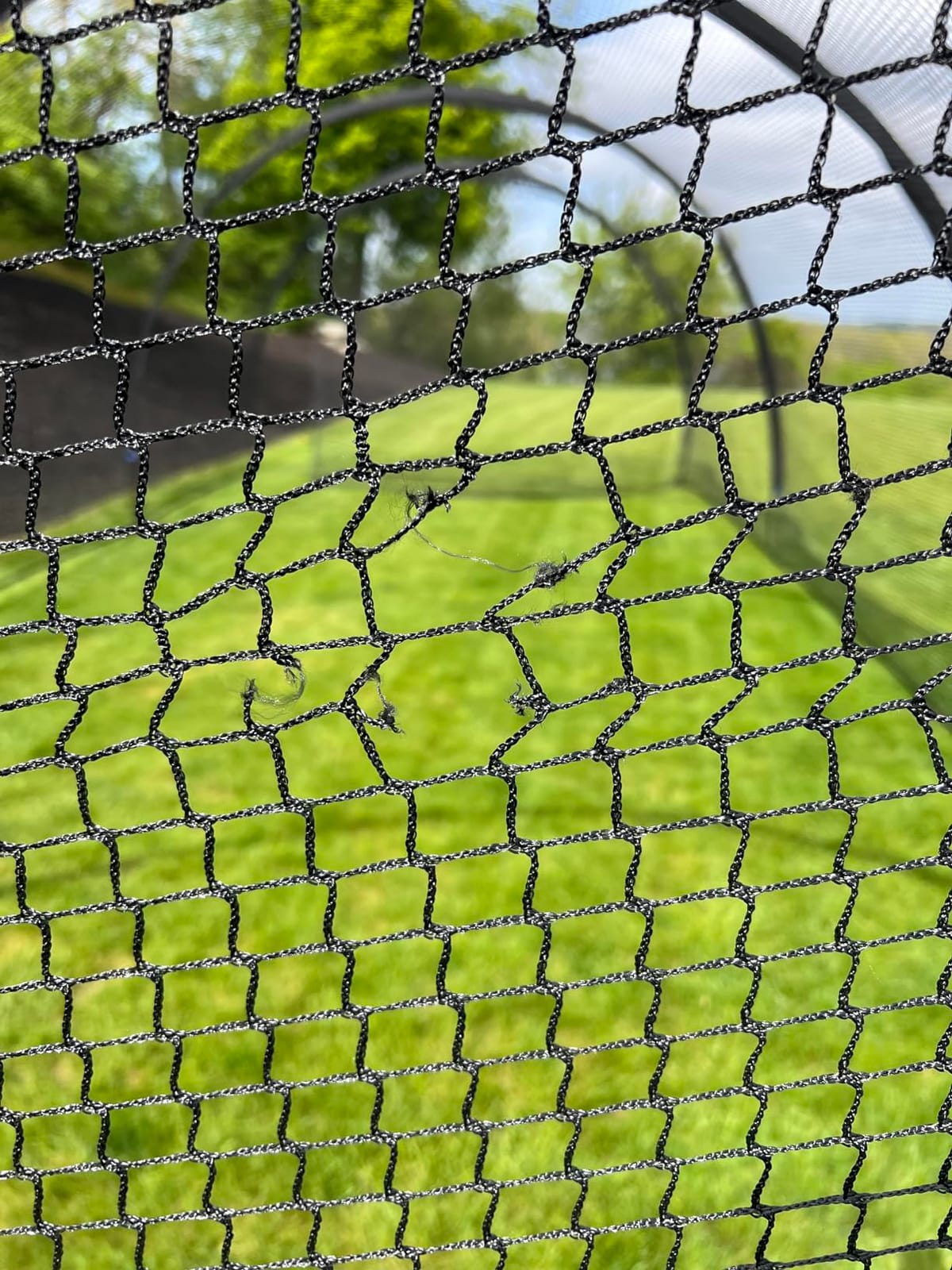
Two honest complaints. Poles can separate while you feed them through the net sleeves, so plan on a two-person job. And the net develops holes in the high-traffic swing zone over a season or two, which is normal wear worth knowing before you buy.
Who this cage suits
A family that uses a machine on weekdays and a neighbor or coach throwing on weekends. The 30 ft length handles youth pitching distances with room behind the plate, and the detachable door makes live bullpen simple.
Where it falls short
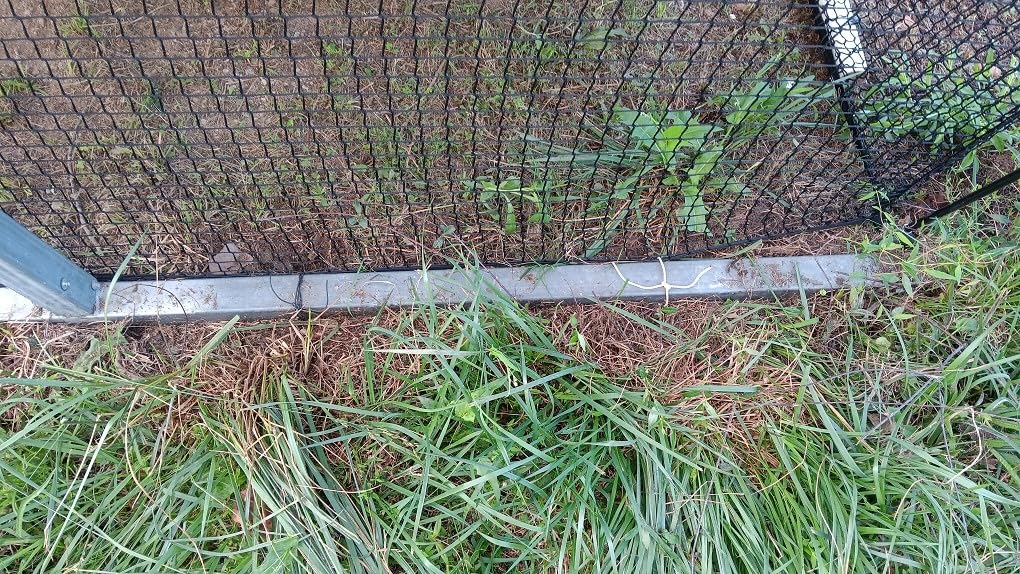
The yellow plastic pegs supplied break in wind and need replacing with metal stakes. Balls can also escape at the edge of the machine opening without a few zip ties, and the first assembly is a two-person job.
8. NaxKizo 22 ft 5-Ply Cage – Best for Thicker Netting
NaxKizo Upgraded 22ft x 12ft x 8ft Baseball & Softball Batting Cage Net with Pitching Machine Hole, 5ply 1.25” Anti-Tear Netting, 13.4MM Fibreglass Poles, Portable Carry Bag
22 x 12 x 8 ft
5-ply 1.25 inch net
13.4mm fiberglass poles
22.3 lb
Pros
- 5-ply net is thicker than typical 2 or 3 ply
- 13.4mm fiberglass poles
- Zippered pitching hole and zippered door
- 10 ground stakes and carry bag included
Cons
- Reports of broken poles on arrival
- Missing stakes and ropes in some shipments
- Ropes may not hold the net tight in wind
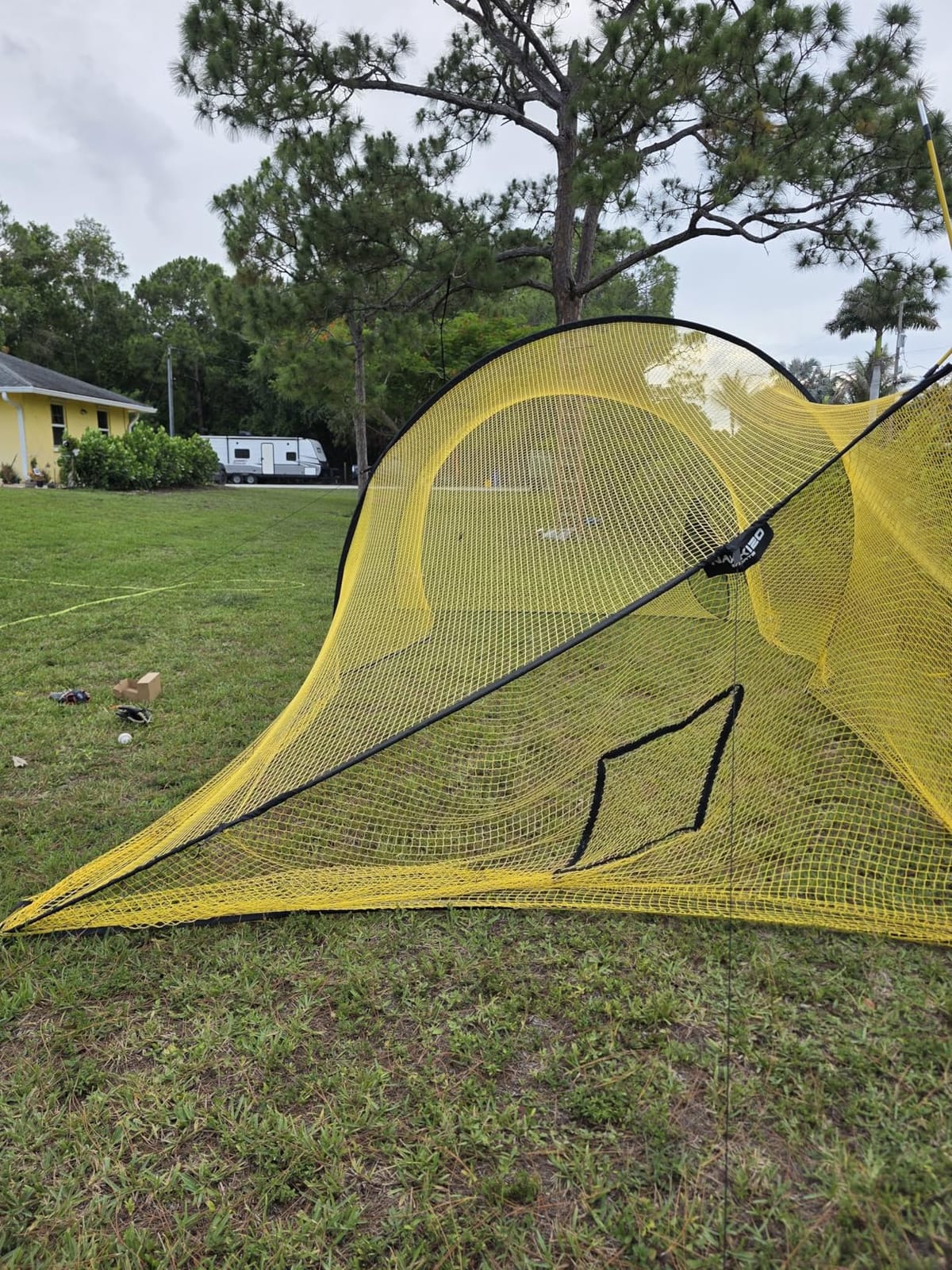
Most portable cages in this class use two-ply or three-ply netting. This one uses five-ply stretchable polyester at 1.25 inch, and the difference shows up where it counts: on hard softball contact and on seam edges that chew through thinner net.
Pole diameter matters too. The 13.4mm fiberglass poles sit at the thick end of what the portable 22 ft cages use, and the kit includes 10 ground stakes with windproof ropes, six pins, and a storage bag.
The pitch window is a 31 inch by 31 inch zippered opening, and the backing door is zipped as well. That is a better seal than the button or hook closures used elsewhere, and it closes the most common leak point in the category.
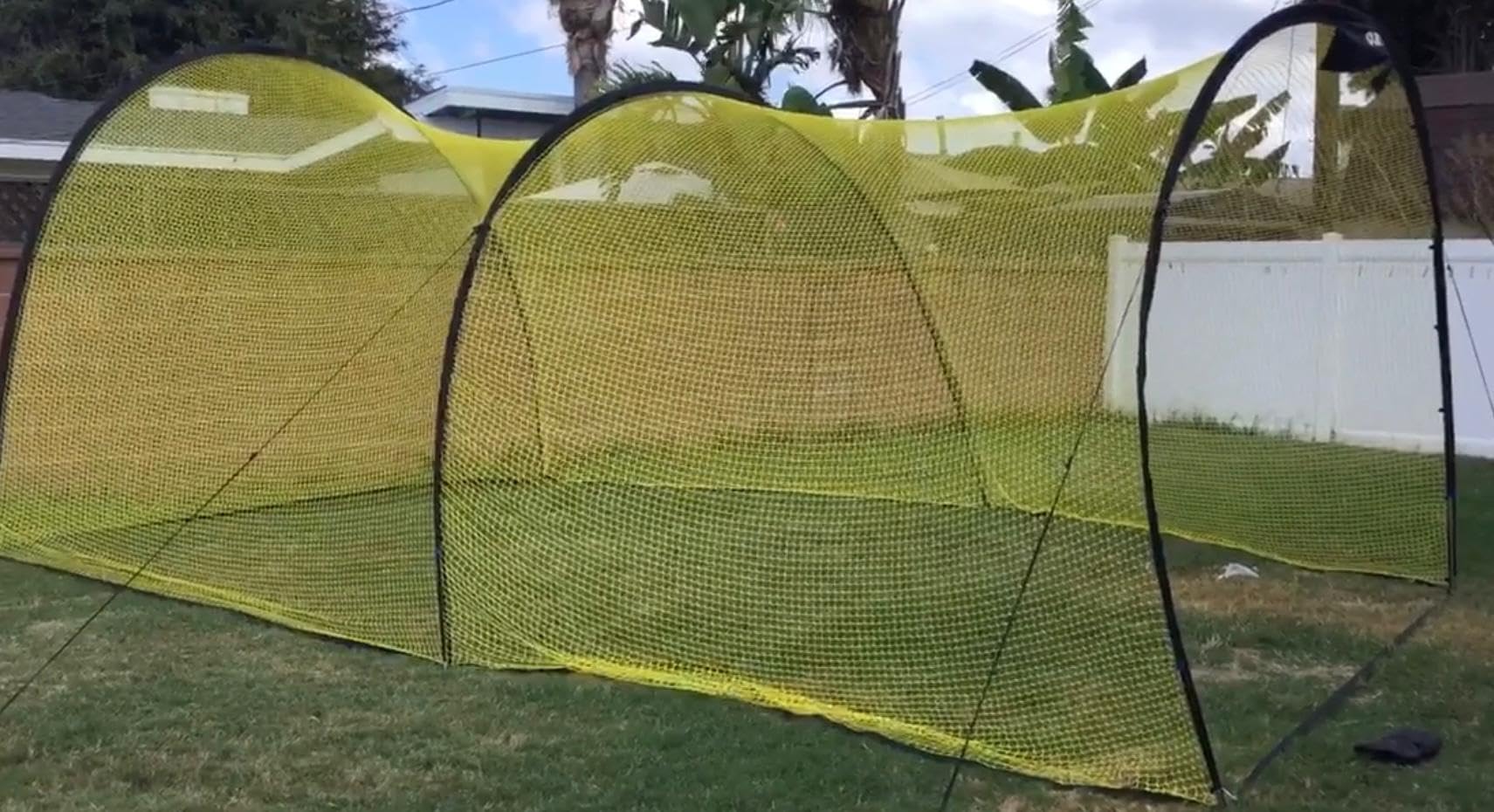
Quality control is the weak point. Owners report broken poles arriving and missing stakes or ropes in some shipments, and the ropes may not keep the net taut in gusty conditions. Inspect the box before assembly.
Who this cage suits
Softball hitters and anyone who hits hard enough to worry about net life. At 22 ft by 12 ft by 8 ft and 22.3 lb it is a manageable two-person setup with a one-year warranty behind it.
Where it falls short
Arrival damage and missing hardware are the consistent complaints, so factor in a quick inspection before assembly. Some users still doubt the net for hard softball contact, and the ropes need metal stakes in wind.
9. RIIFRILY 20 ft Steel Frame – Best for Steel Construction
RIIFRILY Portable Baseball Batting Cage Net with Sturdy Steel Frame
20 x 12 x 8 ft
Powder-coated steel tubing
HDPE netting
Two year warranty
Pros
- Steel tubing feels sturdier than typical fiberglass
- Spring-buckle frame speeds setup and takedown
- 20 ft and 30 ft options with a two year warranty
- HDPE net reduces ball rebound
Cons
- Instructions are vague and first setup is confusing
- Steel joints rust when left up outdoors
- Stability is marginal for larger hitters
Nearly every other cage in this roundup bends or snaps at the pole. This one uses powder-coated heavy-duty steel tubing, and owners report that it feels like a different class of product. The two-year warranty is also the longest stated here.
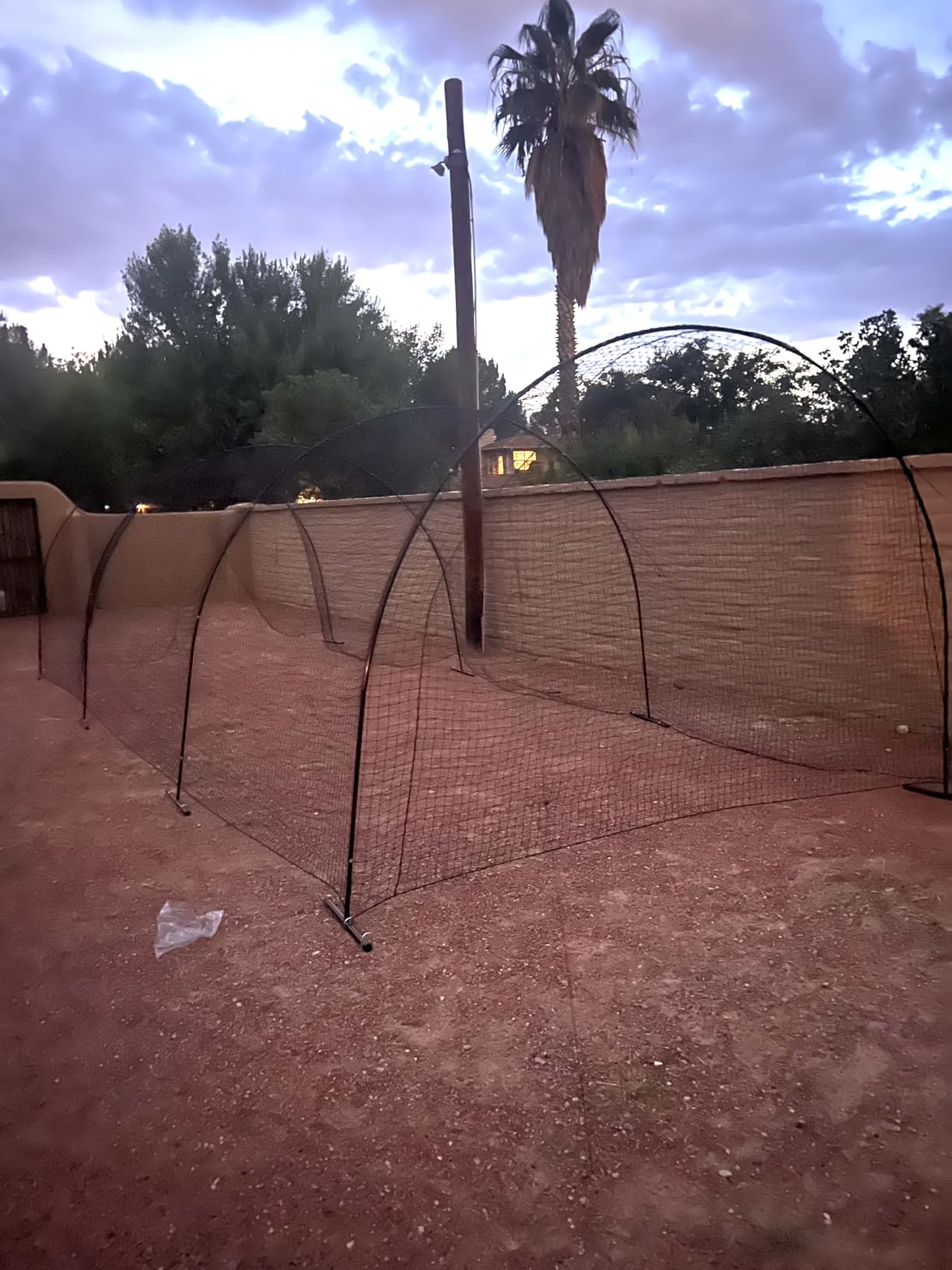
The frame is a T-shaped bottom tube joined with spring buckles. Once you understand the sequence, setup and takedown are quick and there is no sleeve-feeding to fight. Netting is HDPE polyethylene with high wear resistance, chosen partly because it reduces rebound toward the batter.
Sizes come in a 20 ft and a 30 ft version, so the design scales if you outgrow the shorter box. The 20 ft by 12 ft by 8 ft footprint is the most compact full-length option here.
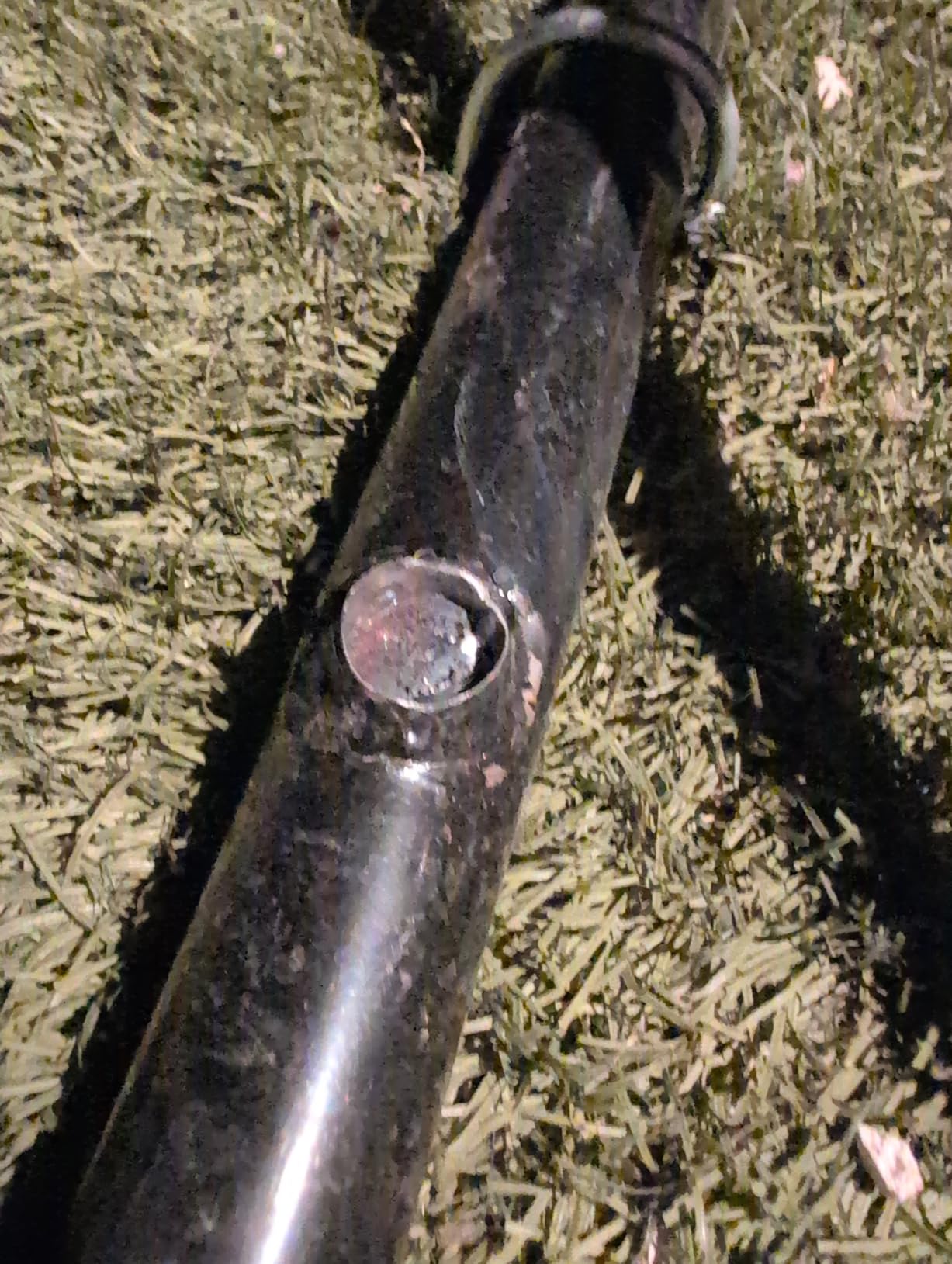
Rust is the recurring complaint. Powder coating slows it but does not stop it, and joints that stay wet between seasons corrode fastest. Wipe the joints down and treat them before winter if the cage stays up.
Who this cage suits
Younger and mid-level hitters in a small yard who want a frame that will not crack. It suits families keeping a cage up for more than one season who value a two-year warranty over a thicker net.
Where it falls short
Stability is only adequate below a certain swing weight, the first assembly is confusing because the directions are thin, and any steel frame left outdoors needs rust maintenance between seasons.
10. Heater Sports 12x12x10 Square Cage – Best for Small Yards
Heater Sports 12′ x 12′ x 10′ Home Run Baseball & Softball Batting Cage – Portable Net with Durable Frame, Built-in Machine Square (Machine Not Included) | Batting Trainer for All Ages
12 x 12 x 10 ft practice area
Tubular steel legs with rubber tips
Built-in machine square
21 lb
Pros
- Compact square footprint suits small yards
- Steel legs with rubber tips for footing
- Machine square plus dual speed controls
- Adjustable pitch height
Cons
- Fiberglass frame pieces break under repeated use
- Instructions draw complaints from first-time builders
Not every yard can hold a tunnel. This 12 ft by 12 ft by 10 ft square fits where nothing else will, and the 10 ft height is taller than most cages in its footprint class, so a lofted swing still has somewhere to go.
The feature set is oriented toward a pitching machine. A built-in machine square holds the unit at the right distance, dual speed controls let you work curve balls and fastballs, and pitch height adjusts for different hitters. At 21 lb it is one of the lighter frames here.
Tubular steel legs with rubber tips give better footing than bare plastic feet on a lawn where the cage is not going anywhere. With 210 reviews, the long-term picture is documented rather than guesswork.
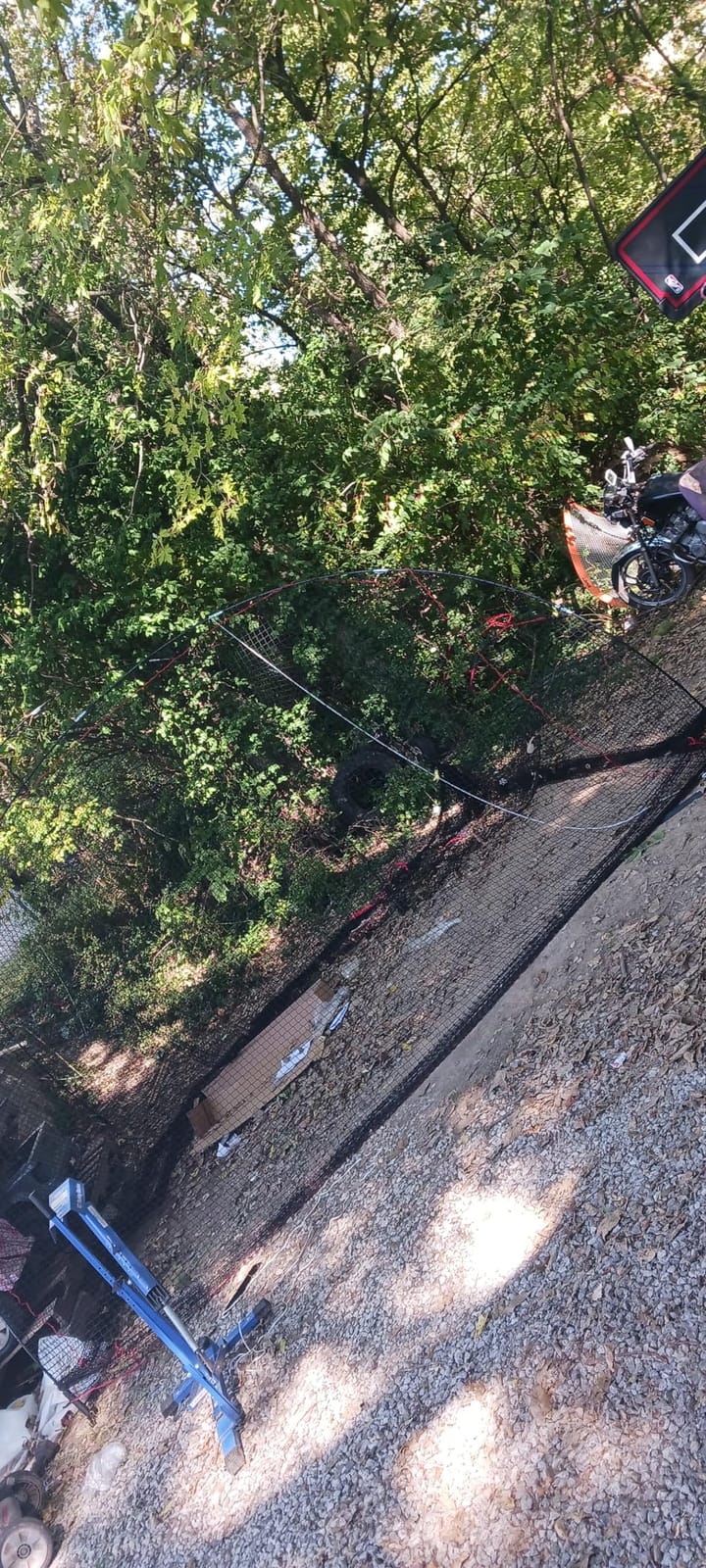
Even so, the fiberglass frame pieces are the first thing to break under repeated use, and the instructions draw complaints from people building it for the first time. Read the manual before you start.
Who this cage suits
Small yards and townhouses where a 30 ft tunnel is impossible. The square footprint is efficient for tee work, soft toss, and short-range machine pitching, and the machine square makes close-range live BP straightforward.
Where it falls short
Twelve feet of length means the machine pitch comes from close range, so it cannot simulate game distance. The fiberglass sections need replacing after heavy use, and the setup guidance is the weakest part of an otherwise simple build.
11. DHUAFDD 30x10x10 Tall Cage – Best for a High Ceiling
DHUAFDD Batting Cages for Backyard, 30FT Reinforced 4-Layer Netting
30 x 10 x 10 ft
4-ply polyester net
12.7mm fiberglass poles
One-year warranty
Pros
- Tall 10 ft ceiling captures high and low pitches
- 4-ply net tested with 2000+ impacts
- 13 ground stakes and 13 windbreak ropes
- Four repair patches and carry bag included
Cons
- 25 percent one-star reviews point to inconsistency
- 7 inch by 7 inch pitching port fits fewer machines
- Only one size variant available
The reason to choose this cage is the ceiling. At 30 ft by 10 ft by 10 ft, the ten-foot height means fly balls and high fastballs are captured rather than sailing over the top. If your hitter works lofted swings, that vertical capture is worth more than extra length.
Netting is four-ply polyester with 12.7mm fiberglass poles, and the manufacturer states it was tested with more than 2,000 impacts. The hardware count is unusually generous: 13 ground stakes, 13 windbreak ropes, nine U-shaped stakes, four repair patches, and a carry bag.
A double-sided zipper door measuring 5.2 ft tall allows access from either side, which helps when moving a pitching screen in and out. The kit also includes four pole sets and a spare individual pole, so a break does not end your season.
The catch is consistency. A quarter of the reviews are one-star, which points to build or arrival variation. The 7 inch by 7 inch pitching port is small and will not accept every machine without an adapter, and there is one size only.
Who this cage suits
A power hitter on a long yard who wants overhead coverage and a full accessory kit in one box. It suits families who want repair patches and spare poles on hand from day one rather than ordering replacements mid-season.
Where it falls short
The small pitching port limits which machines you can use, the single size removes flexibility, and the one-star share is high enough that you should inspect the frame and net on arrival.
12. Shopsource 22x12x8 – Best for the Densest Mesh
Shopsource Batting Cage, 22x12x8 Feet Baseball & Softball Hitting cage
22 x 12 x 8 ft
1 inch polyester mesh
Elastic guy rope
One-year warranty
Pros
- 1 inch mesh is denser than the common 1.25 inch
- Elastic rope adds wind resilience
- Large pitching machine opening
- Removable door and carry bag included
Cons
- Only 19 reviews
- so limited long-term data
- Weight not listed by the manufacturer
- Pole diameter not stated
Mesh size is the quiet differentiator in this list. At one inch, this is among the tightest netting of the twelve, against the 1.25 inch most competitors use. A smaller opening means fewer hard-hit balls find a seam, which means fewer trips outside to collect them and a longer net life on the swing side.
The rest is a competent 22 ft by 12 ft by 8 ft package: sturdy supporting rods, ground nails and anchors, elastic rope for wind resilience, a removable door, and a spacious pitching opening that takes most two-wheel machines. A carry bag is included.
Its 4.1 rating is strong, but the sample behind it is 19 reviews. We list it because the mesh specification is among the best here, not because the long-term record is established.
Two details to confirm first. The manufacturer does not state a pole diameter, so you cannot compare frame strength against the 13mm and 14mm options above. Weight is also unlisted, which makes single-person handling a question mark.
Who this cage suits
A hitter who loses a lot of balls through a wider net and wants the tightest weave available at this size. It also suits anyone practicing indoors or at a park, since the carry bag moves the cage as one unit.
Where it falls short
Nineteen reviews is a small base, and the missing pole diameter and weight specifications make it harder to compare against the rest of this list. A 22 ft length also caps you at short-range pitching.
How to Choose a Backyard Batting Cage
What Size Batting Cage Do You Need?
A 20 ft to 22 ft cage covers tee work, soft toss, and short-range machine pitching. A 30 ft cage reaches Little League pitching distances and gives a live pitcher room behind the plate. A 40 ft cage is the shortest size that approximates real pitching distance for an older player.
Measure the run, not the width. You need the cage length plus roughly 10 ft of clearance behind it for the pitcher or machine, and a few feet in front for the hitter to finish a swing. One backyard owner ordered a 70 ft kit and had to cut the last set of poles to fit a 65 ft space, which a tape measure prevents.
Netting, Mesh, and Twine Size
Polyester and nylon nets stretch and absorb, which is why nearly every portable cage here uses one of them. HDPE, as on the RIIFRILY cage, is a polyethylene net that also reduces rebound. Ply count decides survival: two-ply is the softest and shortest-lived, three-ply is the common middle, and five-ply handles hard softball contact.
Mesh opening is the number buyers skip. The common listing is 1.25 inch, and anything at 1 inch or below holds balls more reliably at the cost of weight. On commercial cages, twine size runs on an inverted scale so a lower number is thinner twine, but that numbering does not apply to these polyester kits. Match mesh and ply figures instead.
Frame Material and Anchoring
Nearly every portable cage in this roundup uses fiberglass poles, so the differences come down to thickness and anchoring. Thicker poles are the ones that survive foul balls, so read the diameter in the technical section rather than judging by the title. Steel tubing, as on the RIIFRILY cage, resists impact and rusts instead.
Anchoring has four levels. Ground stakes are the lightest and are what most kits include. Ground sleeves let you pull the whole cage up and reuse the same holes next season. Anchor plates spread the load on the surface. Concrete footers are permanent. In practice the supplied plastic stakes are a starting point only, and metal ground stakes are the single most useful upgrade you can make.
Permits, HOA Rules, and Ball Safety
Check your HOA covenants and city zoning rules before you buy. Cage height, pole-mounted structures, and anything close to a property line are exactly what associations regulate, and a cage that goes up without approval may have to come down. Neighbors are the second question, and a cage that leaks balls across a property line is how a practice spot becomes a complaint.
Hang the net inside the frame, not outside it, so anything that gets past the net hits the ground rather than flying back at a person. Add an L-screen behind the hitter, use a batting mat to protect the lawn, and zip-tie the machine opening since that port edge is the most common leak point in the category. For conditioning work alongside hitting, our practice cone picks cover that side of a home setup.
Pairing a Cage With a Pitching Machine
Match the machine to the cage length rather than the other way around. A 20 ft to 22 ft box works with two-wheel machines and close-range soft toss. A 30 ft cage supports a full-size three-wheel machine and gives a youth hitter a believable distance. A 40 ft cage is the first size that supports a teenager working on game-speed perception.
Check the port before you buy the machine. Ports in this roundup range from 7 inch by 7 inch up to 3.3 ft by 1.6 ft, and the smallest will not accept a three-wheel machine without an adapter. If you pitch live, budget for a screen, softballs, and a ball feeder.
Frequently Asked Questions
What is the best outdoor batting cage for my backyard?
The best outdoor batting cage is the one whose length matches your yard and whose net sits inside an anchorable frame. For tee work and soft toss in a tight yard, 20 ft to 22 ft is enough. For machine pitching at a realistic distance, choose 30 ft, and 40 ft for a teenager working from game distance. Here, the Heater Sports PowerAlley is the most proven, the ORIENGEAR is the roomiest 30 ft enclosure, and the VEVOR 40 ft offers the longest run.
What is a good size batting cage for a backyard?
A good size is 20 ft to 22 ft for tee work, soft toss, and short-range machine pitching, 30 ft for Little League and youth pitching distances, and 40 ft for older players who need real separation between pitcher and plate. Measure the usable run of your yard, then add roughly 10 ft of clearance behind the cage for the pitcher or machine.
How much would it cost to put a batting cage in my backyard?
Backyard batting cages fall into three tiers. Entry-level 12 ft to 22 ft fiberglass kits sit at the low end, mid-range 22 ft to 30 ft polyester and steel frames with multi-ply netting sit in the middle, and 40 ft enclosures with four-ply reinforced mesh and full anchor kits sit at the top. Budget extra for metal ground stakes, an L-screen, and a batting mat.
Is owning a batting cage profitable?
A backyard batting cage pays for itself when you compare it with per-pitch commercial cage costs. A serious player taking 100 pitches three times a week spends well over the cost of several cages a year before travel and wait time. A home cage turns that into unlimited swings, though the savings only work if you actually use it.
Do I need a permit to build a batting cage in my backyard?
It depends on your HOA covenants and your city zoning rules. Structures with vertical poles, anything near a property line, and anything above a set height are commonly regulated, and a cage installed without approval can be required to come down. Ask your association in writing before you order, and confirm with the city if the cage sits close to a property line.
What is the difference between 1 inch and 1.25 inch batting cage netting?
Mesh size is the width of each opening in the net. At 1 inch the net is tighter, so hard-hit balls find fewer seams, fewer balls leave the cage, and the net lasts longer on the swing side. At 1.25 inch, which most portable cages use, the net is lighter and easier to see through but leaks more balls and wears faster. Tighter mesh also adds weight and cost.
Conclusion
The best batting cages for backyard practice come down to two questions: how much lawn do you have, and how far do you need to pitch from. Short yard means a short box, and the Heater Sports PowerAlley is the most proven choice, with the 12x12x10 square cage for lots where nothing else fits. Long yard means more room, and the ORIENGEAR 30 ft is the most spacious while the VEVOR 40 ft is the only one here that reaches a realistic pitching distance.
Whichever you pick, upgrade the ground stakes to metal, keep the net inside the frame, and plan a takedown before winter. Measure the run first, and 2026 is a good year to stop paying per pitch.