
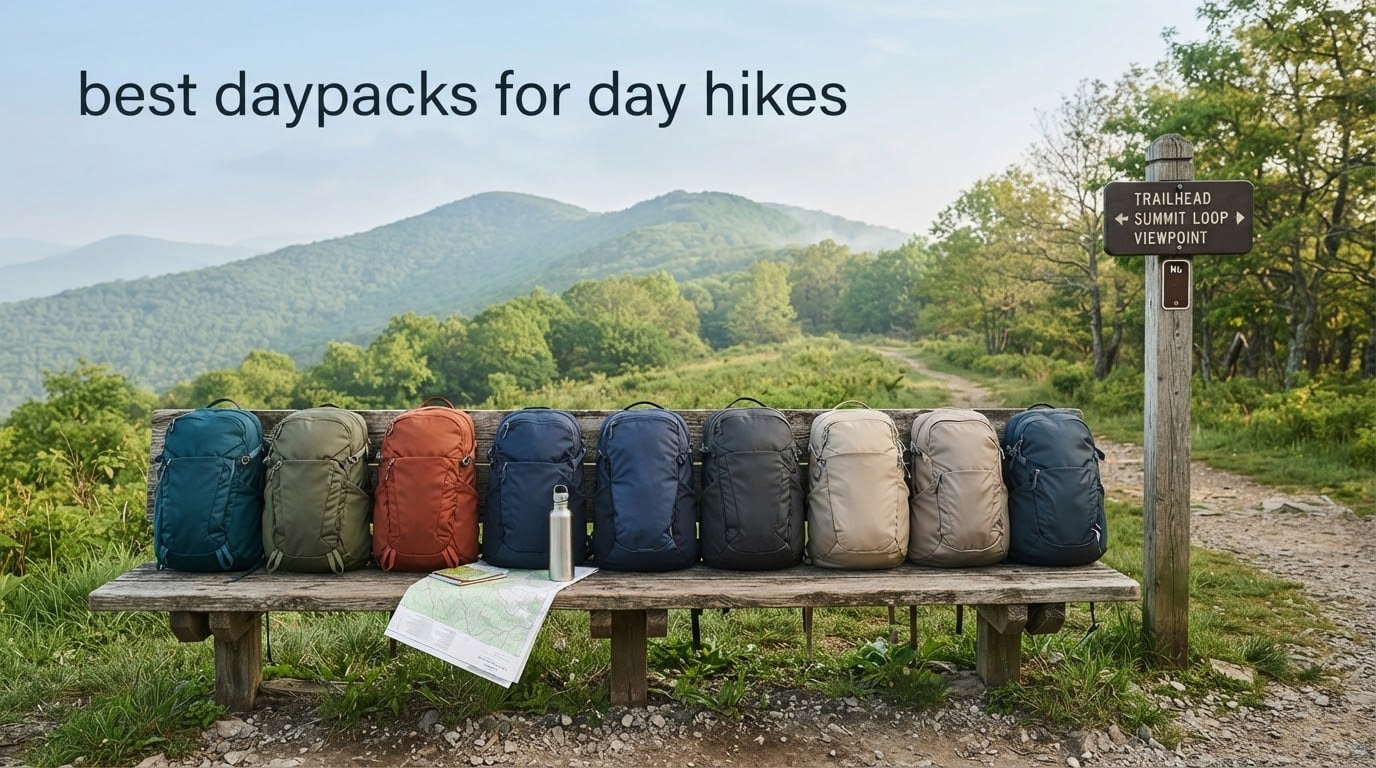
The short answer on size: for most full-day hikes on a maintained trail, a 20L to 28L daypack is the right size. Go smaller for a two-hour loop with snacks and a layer, and larger when you are carrying winter kit, trekking poles, a dog bowl, or camera gear.
That is the entire trick to buying well. Most disappointing packs are not bad packs, they are simply the wrong capacity for the trip, so they end up carrying the extra water bottle you did not need. We put twelve day hiking backpacks through loaded carry, checked their fit against different torso lengths, and matched each one to the kind of day hike it is actually good at.
If you want the wider picture first, our [12 best hiking daypacks](https://www.pwice.com/best-hiking-daypacks/) covers the category end to end, and [10 best day hiking backpacks](https://www.pwice.com/best-day-hiking-backpacks/) breaks it down by terrain. This guide is narrower: it stays on packs sized for a single day and tells you what fits in each one.
Table of Contents
Top 3 Daypacks for Day Hikes in 2026
SKYSPER 20L Hiking Daypack
- 20L capacity
- 1.1 lb weight
- 10 pockets
- Water-resistant 600D polyester

sunhiker 20-25L Daypack
- 20-25L capacity
- 12.3 oz weight
- Laptop sleeve
- Waterproof-coated nylon

TETON Oasis 18L Hydration Pack
- 18L capacity
- 2L bladder included
- Insulated bladder pocket
- Sewn-in rain cover
Those three cover the most common cases: a well-equipped everyday pack, the lowest-priced option with the largest review base, and a hydration pack that works the moment you unzip it. The nine that follow each fill a specific gap, from 40L room for bulky winter kit down to a 12 oz pack that lives in a suitcase.
Best Daypacks for Day Hikes (October 2026)
| Product | Specifications | Action |
|---|---|---|
| SKYSPER 20L Hiking Daypack |
|
Check Latest Price |
| sunhiker 20-25L Daypack |
|
Check Latest Price |
| TETON Oasis 18L Hydration Pack |
|
Check Latest Price |
 FENGDONG 40L Daypack FENGDONG 40L Daypack |
|
Check Latest Price |
 MIYCOO 35L Packable MIYCOO 35L Packable |
|
Check Latest Price |
 WATERFLY 30L Packable WATERFLY 30L Packable |
|
Check Latest Price |
 Osprey Daylite Cinch Osprey Daylite Cinch |
|
Check Latest Price |
 N NEVO RHINO 20L N NEVO RHINO 20L |
|
Check Latest Price |
 Salomon Trailblazer 30 Salomon Trailblazer 30 |
|
Check Latest Price |
 Osprey Talon 22L Osprey Talon 22L |
|
Check Latest Price |
 Osprey Sportlite 30L Osprey Sportlite 30L |
|
Check Latest Price |
 Deuter Trail 30L Deuter Trail 30L |
|
Check Latest Price |
Capacity, empty weight, pocket count and frame style are the four numbers worth memorizing from that table. Everything else in this guide explains how those numbers behave once the pack is full and on your shoulders.
1. SKYSPER 20L Hiking Daypack – Best Overall for Day Hikes
SKYSPER Small Hiking Backpack, 20L Lightweight Travel Backpacks Hiking Daypack Rucksack Women Men for Trekking Backpacking Outdoor Sports
20L capacity
1.1 lb empty
10 pockets
600D polyester and 210D nylon plaid
Pros
- Ten pockets at 20L is rare
- Light 1.1 lb empty build
- Reflective detailing plus an included whistle
- Detachable straps with trekking pole fixtures
- Fits most airline personal item limits
Cons
- Water-resistant only
- single interior bladder strap lets a reservoir sag
- Bladder pocket is not insulated
- Strap count is excessive for simple walks
This is the pack I reach for when I want one bag that covers a 10-mile day with a layer, lunch and two liters of water, and that still fits under a seat. At 1.1 lb empty it costs almost nothing on your shoulders before you have even added gear.
What separates it from the rest of the 20L field is the pocket count. Ten pockets in a pack this size sounds like marketing until you load it: a phone in the front slash pocket, a bottle in each side pocket, a snack in the top pocket, and the lid area for the rest.
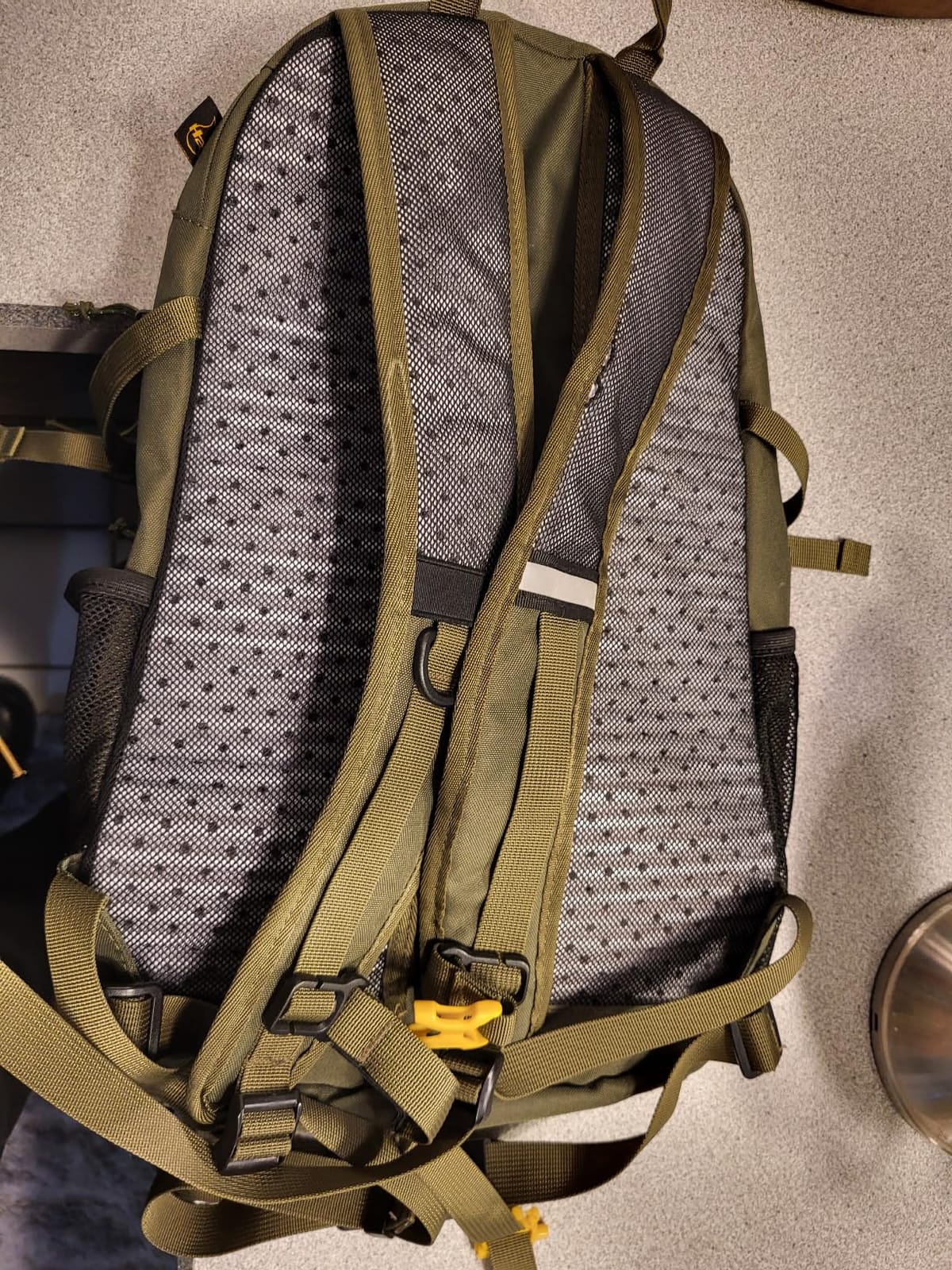
The build is 600D polyester with 210D nylon in a plaid weave, which is a sensible weight for a pack that will rub against rock and brush. Inspect the strap anchors every season or two, and the reported longevity across thousands of owners is good for the class.
Reflective detailing runs across the front and shoulder area, and there is a safety whistle included in the kit. On early starts in the dark that is worth more than another interior zip pocket.
Who the SKYSPER 20L suits
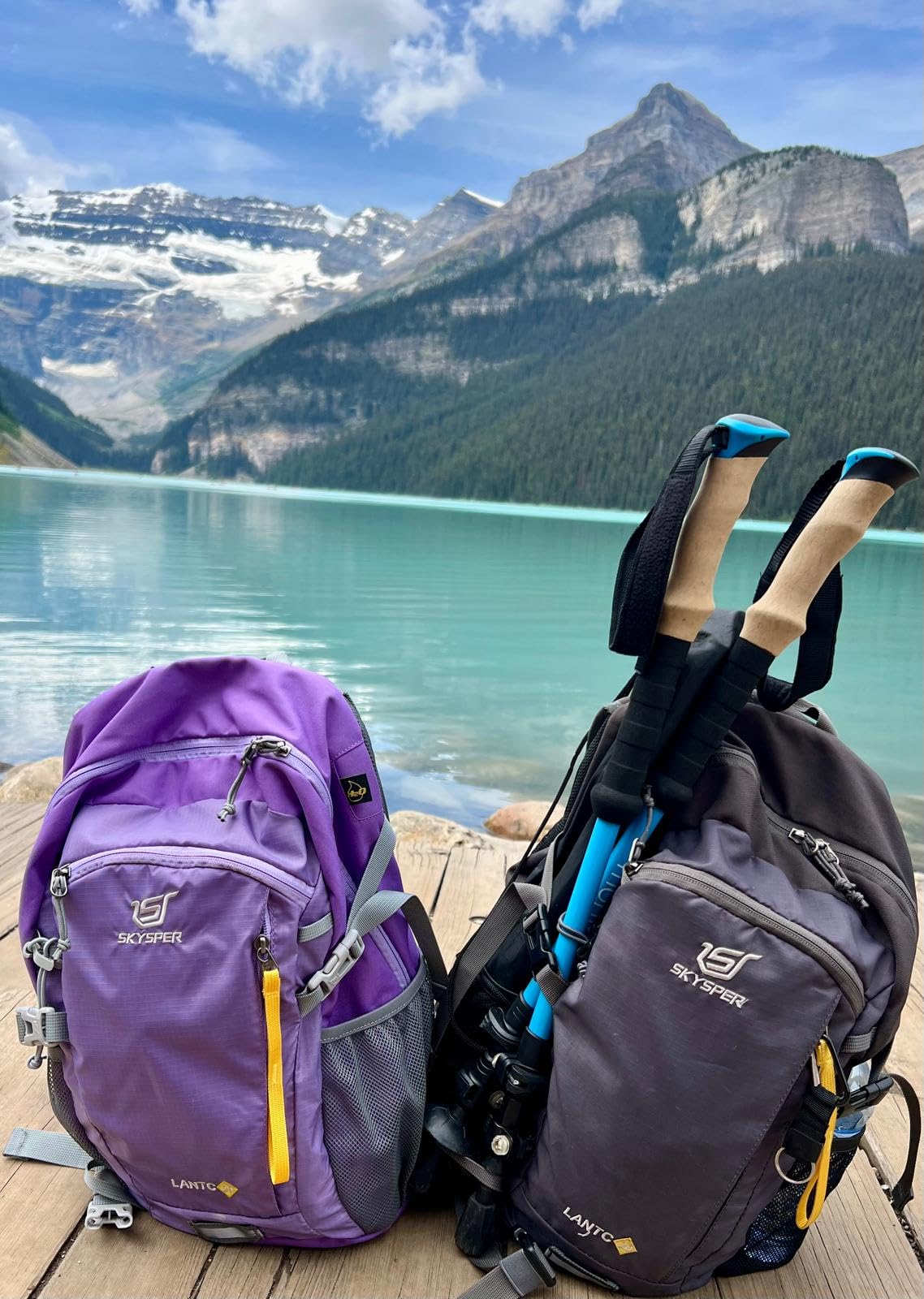
It suits the hiker who carries a normal day: 2 liters of water, a wind shell, a lunch, a first aid kit and a phone. The maximum recommended load is 7 kg, which covers a camera body with two lenses plus water.
It also suits anyone who flies to the trailhead. The stated dimensions fit airline personal item limits on most routes, so it never gets gate-checked and never slows you down at security.
Who should pass on it
Skip it for anything wet. Reviewers report contents soaked through in moderate rain, and there is no rain cover in the kit, so wet-weather days need a dry bag inside.
Skip it if you plan to run a reservoir for a full day. The interior has a single Velcro strap, so a 3L bladder will sag away from your back as it empties.
2. sunhiker 20-25L Daypack – Best Value
sunhiker Small Hiking Backpack Women Men 20L Lightweight Travel Backpack Daypack Casual Backpack For Cycling Outdoor Camping
20-25L capacity
12.3 oz empty
3 compartments
Laptop sleeve
Pros
- Roomy for its size
- Very light at 12.3 oz
- Coated nylon with abrasion resistance
- Laptop compartment plus two side mesh pockets
- Adjustable chest and waist straps
Cons
- Waist strap too short to be functional
- Inner slip pockets narrow and shallow
- Fabric not built for heavy loads
- Runs small on taller adults
Long-term owners keep coming back to this one, and the review base here is the largest of any pack in the test. The reason is simple: at 12.3 oz it is one of the lightest full-size designs here, and it still holds a laptop, a change of clothes and a full day of water.
Three compartments, including a dedicated laptop sleeve, mean it doubles as a work bag. That crossover is the reason it shows up on so many trailheads and in so many carry-ons.
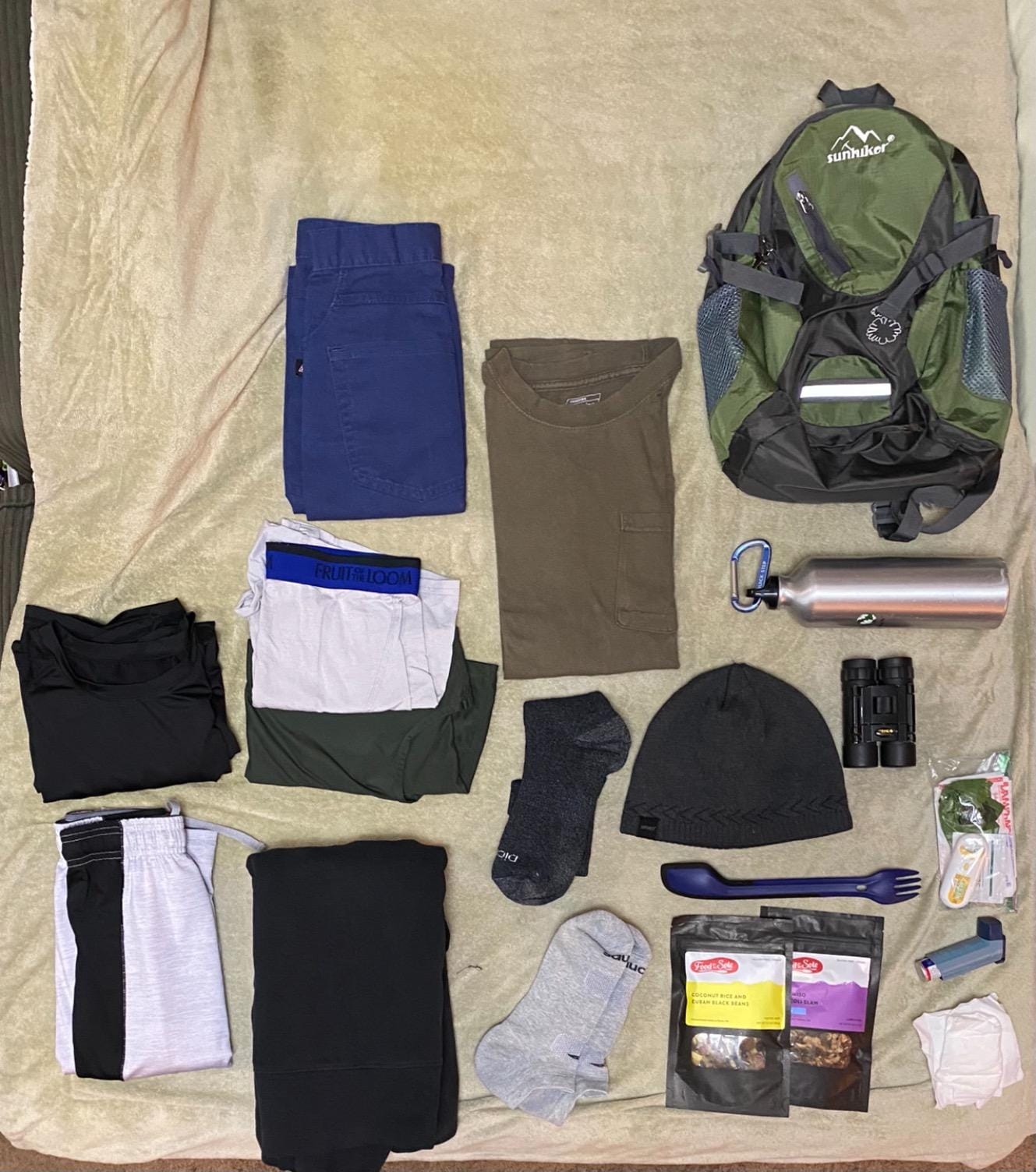
Comfort comes from wide mesh padding across the shoulder straps and back panel. There is no frame and no stiff back structure, so on a long climb with a heavy load the pack deforms and part of the weight creeps onto your shoulders.
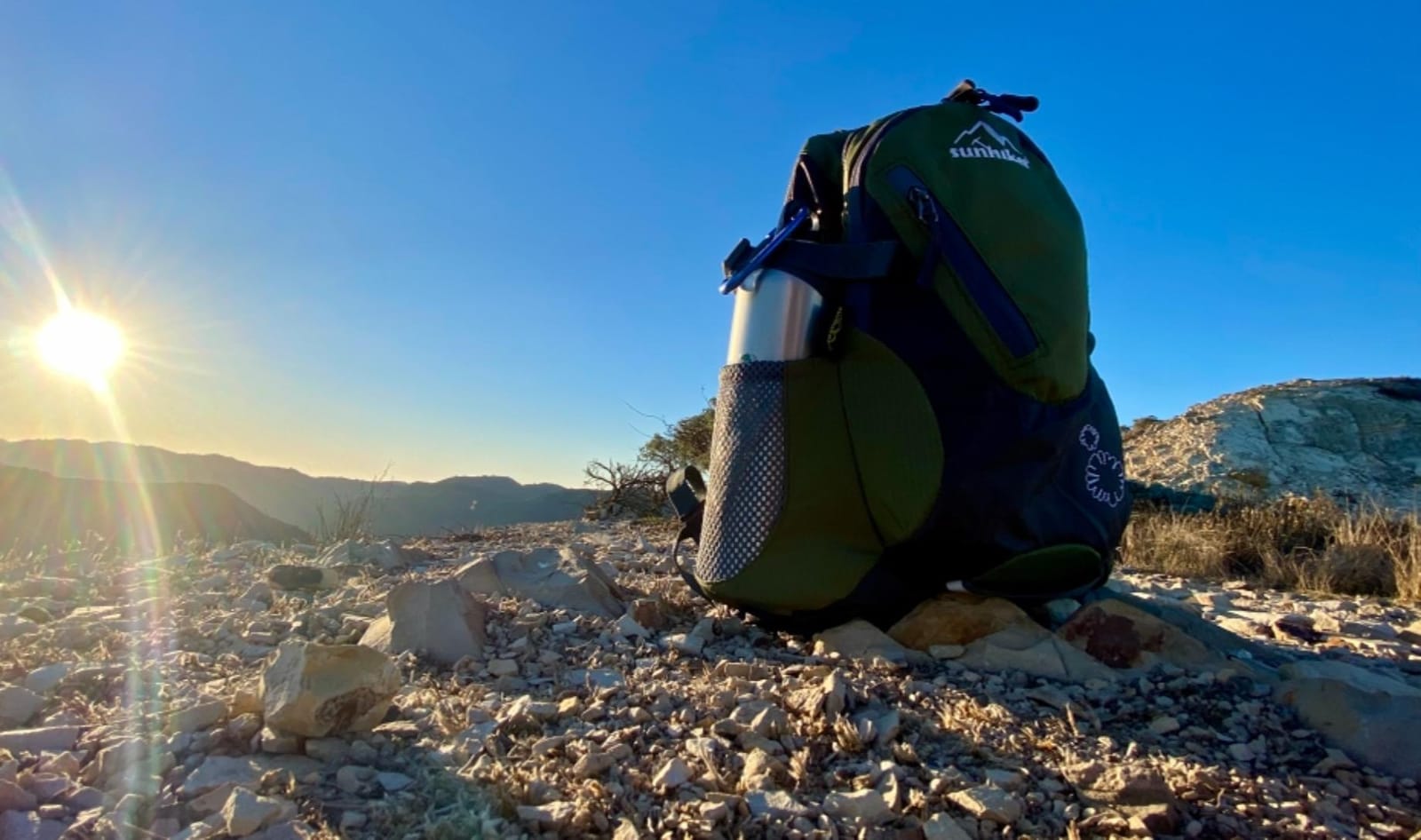
Two secure side mesh pockets keep bottles from bouncing, and the coated nylon outer has enough abrasion resistance for brush and talus without adding much weight.
The material is listed as waterproof-coated nylon, which is a coating rather than a sealed fabric. In light rain that behaves well, but it is not the same as a roll-top closure or a liner.
Who the sunhiker suits
It suits budget-first hikers, travelers, and anyone who wants one bag for a workday and a Saturday trail. Owners also report using it with children aged three and up on family walks.
Anyone whose day is layers, snacks and water will find 20L generous and 25L roomy. Just keep an eye on the height first, because the small frame is the pack’s one real compromise.
Who should pass on it
Pass if you are tall. Reviewers repeatedly note the small fit on taller adults, and the waist strap is reported as too short to do anything useful on most adults.
Pass for heavy loads or long multi-day trips. The fabric is lightweight by design and is not intended to carry dense gear or absorb a strap load week after week.
3. TETON Oasis 18L – Best Hydration Daypack With a Bladder Included
Teton Oasis Hydration Backpack – Lightweight Water Pack with Bladder for Hiking, Running, Cycling, Biking – 18L/22L Sizes – Sewn-in Rain Cover – Fits Men and Women
18L capacity
2 lb empty
2L bladder included
Sewn-in rain cover
Pros
- Bladder included and ready to use
- Insulated bladder pocket keeps water cold
- Weather-guarded zippers plus sewn-in rain cover
- High-density foam straps with mesh
- Also offered in a 22L size
Cons
- Hose routing awkward for running and cycling
- Buckle-heavy design adds weight for non-hydration use
- Runs large for some users
Most hydration daypacks ship as a bag with an empty sleeve. This one arrives with a 2L kink-free bladder and a push-lock bite valve already fitted, which is the difference between carrying water and actually drinking it on a hot climb.
The insulated bladder pocket is the detail that earns its keep. Owners note water stays cold for hours, and on a summer day above a lake that is worth more than another ten liters of capacity.
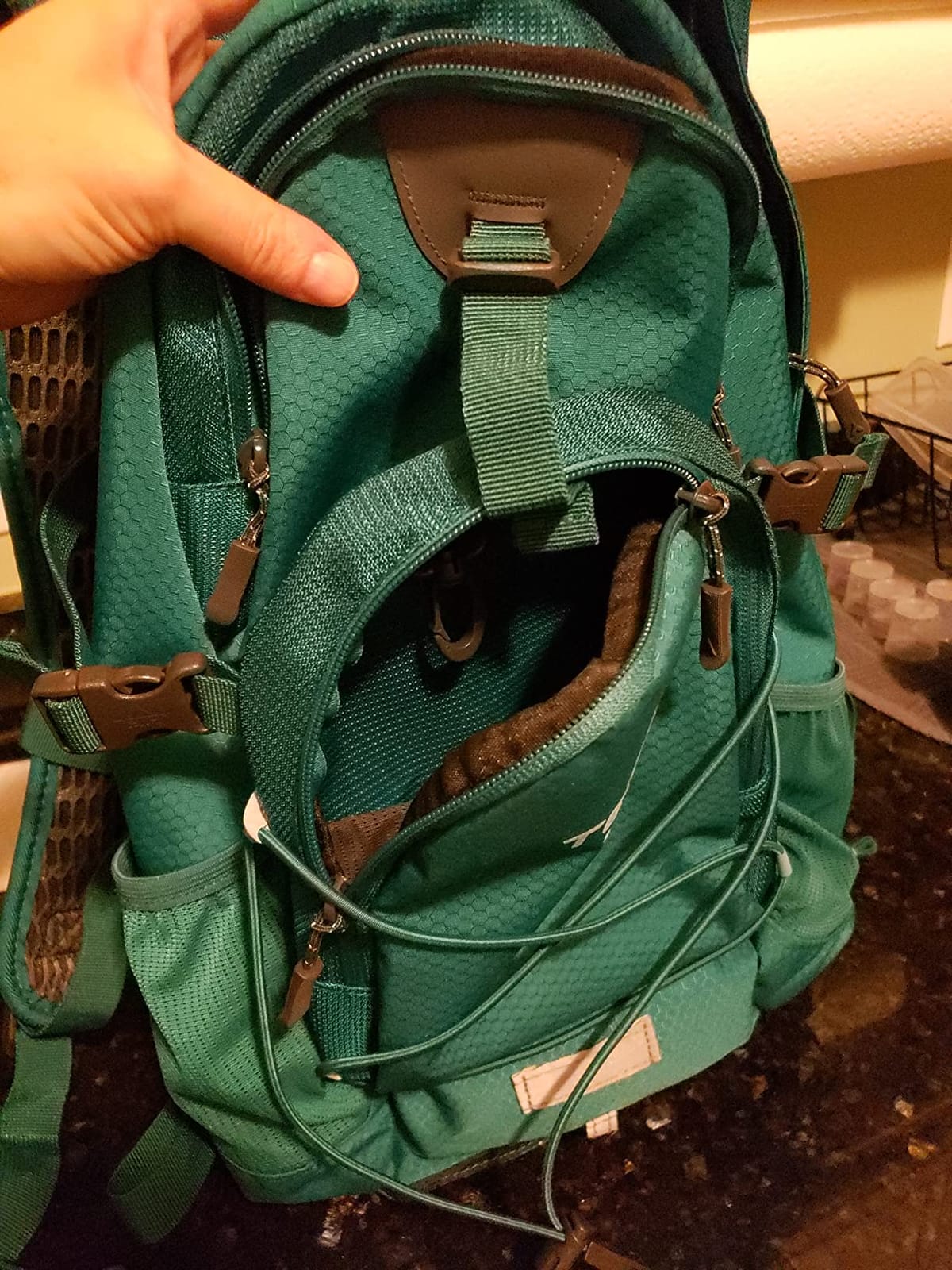
Weather protection is genuinely good for a hydration pack. Zippers are weather-guarded, and the rain cover is sewn into the pack rather than sold as a separate sleeve you will forget in a drawer.
A bungee cord on the front gives you somewhere to strap a helmet or a wet jacket, and the butterfly-style opening lets you reach the main compartment without pulling the whole bag over your shoulders.
Who the TETON Oasis suits
It suits hot-weather hikers, cyclists, and parents who want a small pack that a child can carry with a bladder already in it. It also works as a light overnight bag for a hut-to-hut stay.
If you hike in summer or above tree line, the insulated pocket removes the main argument against carrying a reservoir. Buy the 22L version if you also carry a layer and lunch.
Who should pass on it
Pass if you run or ride fast. Reviewers report the hose routing is awkward for running and cycling, where a high hose line and a bouncing bladder both become problems.
Pass if you want a light hiking pack rather than a hydration pack. At 2 lb with a buckle-heavy layout, it is heavier than the plain daypacks on this list once the bladder is filled.
4. FENGDONG 40L Daypack – Best Big Loads on a Small Budget
FENGDONG 40L Waterproof Lightweight Outdoor Daypack Hiking,Camping,Travel Backpack for Men Women Blue
40L capacity
1.9 lb empty
5 pockets
Folds into its own pocket
Pros
- 40L capacity in a lightweight 1.9 lb shell
- Folds into its own pocket for compact storage
- Multiple compartments with an internal separator
- Bar-tacked stress points for longevity
Cons
- No frame or stay
- so it collapses when set down
- Water resistance fades after about a year
- Second front pocket zipper is stiff
- Fabric near straps can wear through with daily heavy use
Most hikers never need 40 liters on a day hike, but a few always do. Winter routes with traction devices, multi-layer trips, and anyone hauling a camera body, a tripod and lunch need the volume, and this pack delivers it at 1.9 lb.
The internal separator in the main chamber is what keeps it usable. Big packs without a divider become a single junk drawer, and you end up repacking the whole thing to find one item.
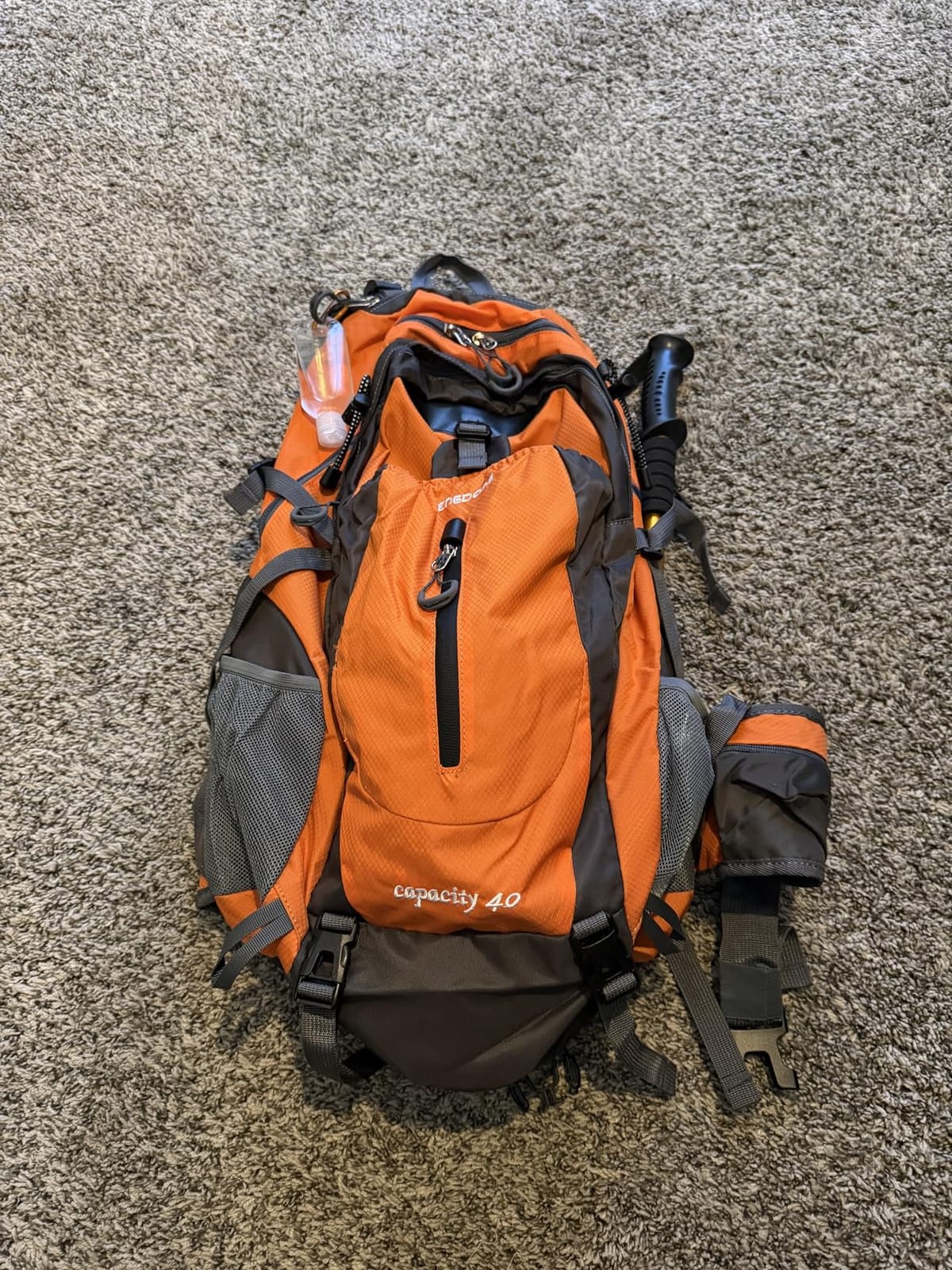
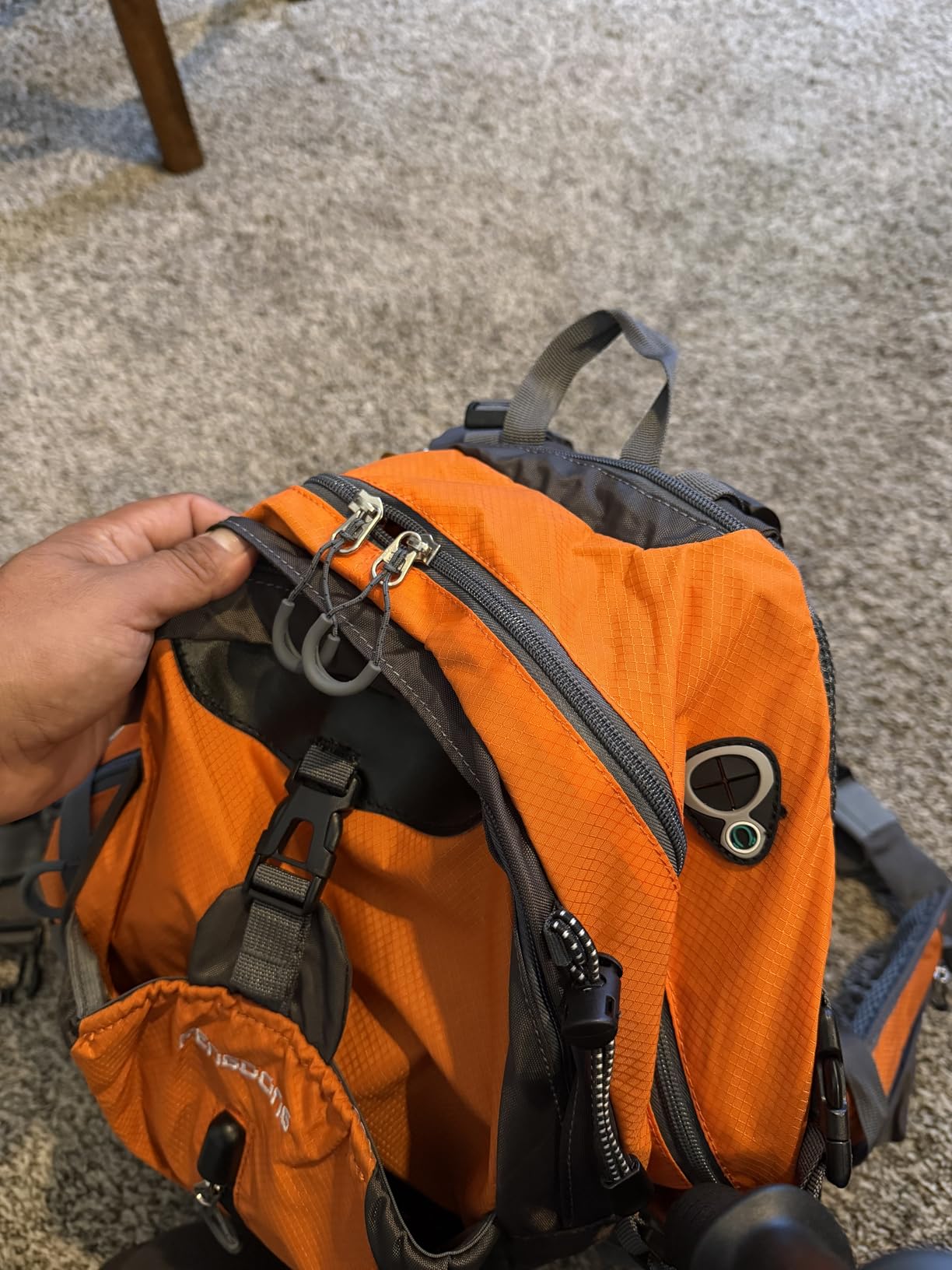
It folds into its own pocket, so the storage cost when you are not hiking is close to nothing. Owners report it holding up for years of travel, and the bar-tacked stress points are visible at the strap anchors and base.
The outer is water-resistant high-density polyester with a nylon lining. That is enough for drizzle and splash, which is why it sits comfortably among ten colour options at this size without the weight climbing.
Who the FENGDONG 40L suits
It suits winter and cold-weather hikers, families carrying extra layers, and photographers with more than one lens. If your day is 10 to 15 miles with bulky gear, this is the volume you need.
It also suits anyone whose current pack is too small. Growing into a bigger bag is cheaper than repeating the same frustrating hike twice, and the folding design means the old one never has to live in a closet.
Who should pass on it
Pass if you want a pack that stands up when you set it down. There is no ridged frame or stay, so it folds flat, and getting gear in or out near the bottom gets awkward.
Pass for multi-year wet-weather use. Owners report water resistance degrading after roughly a year, and fabric near the straps showing wear with daily heavy use.
5. MIYCOO 35L Packable – Best Packable Overnight Pack
MIYCOO Ultralight Packable Backpack, 35L Water-Resistant Hiking Daypack
35L capacity
12.8 oz empty
IPX4 fabric
Folds to 4.5 x 3.9 x 7.8 in
Pros
- Roomy 35L across three compartments
- IPX4 fabric with heavy-duty zippers
- Separate wet compartment
- Five pockets including two mesh sides
Cons
- Front compartment stitching can detach at the seams
- Colours fade with prolonged sun
- No frame or back structure at all
- Some buyers question the stated capacity
A 35L pack that folds to 4.5 by 3.9 by 7.8 inches and weighs 12.8 oz empty solves a specific problem: you want a real daypack volume without carrying it every day. Tuck it in a suitcase, a locker or the top of a bigger pack.
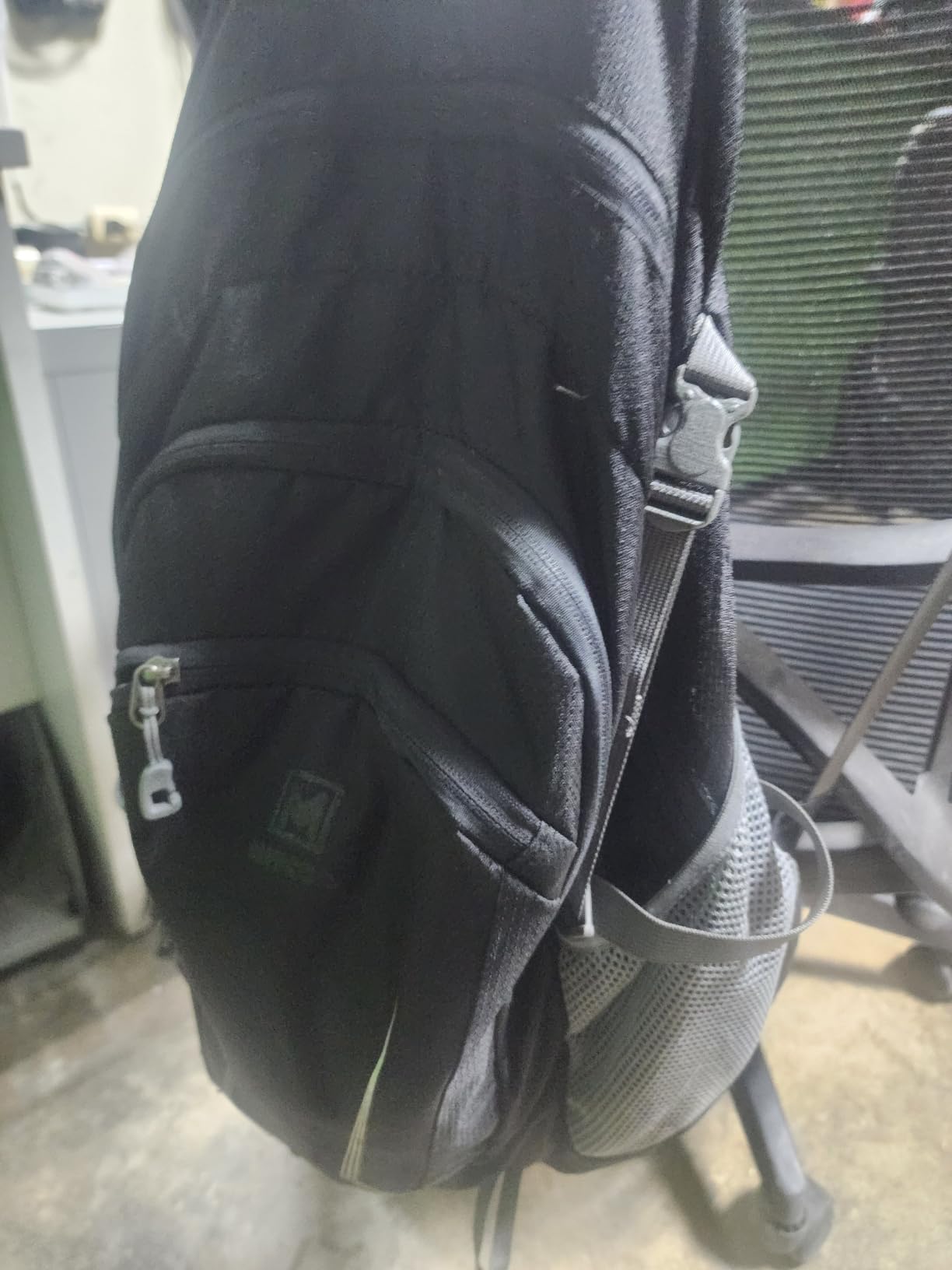
Three main compartments including a separate wet compartment make it the better-organized packable here. The wet pocket takes a damp shell, a towel, or a rope without touching your food or electronics.
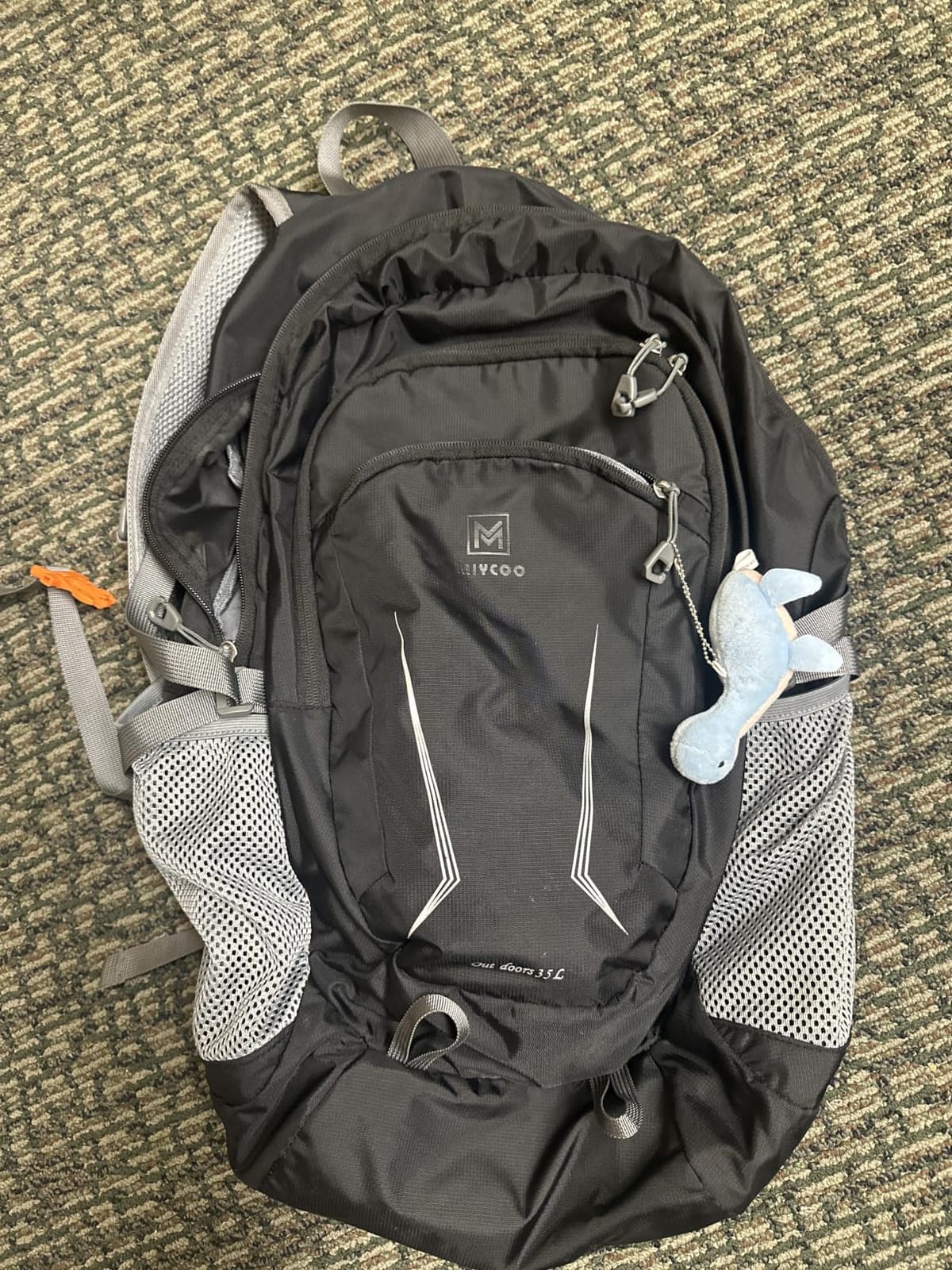
The fabric is rated IPX4, which is a splash rating rather than a full waterproof rating. In practice that means it shrugs off rain and trail spray, but it is not a pack for sustained downpour.
Anti-theft zipper clips and a survival whistle on the shoulder strap are small additions that cost nothing at this weight. Five pockets, including two mesh side pockets, cover the usual day-hike carry.
Who the MIYCOO 35L suits
It suits hikers who travel to their trails, runners who want a bag that lives in a locker, and anyone adding a lightweight overnight layer to a larger trip. It is also a good summit-bag stash for multi-day routes.
If you already own a framed daypack, this is a different tool rather than a replacement. It has no back structure at all, so comfort depends on careful packing and a light load.
Who should pass on it
Pass for heavy loads. With no frame and no back structure, a full pack of dense gear presses directly into your spine, and comfort drops off once the load gets serious.
Pass if you want long-term durability in rough use. Owners report front compartment stitching detaching at the seams and colours fading with prolonged sun exposure.
6. WATERFLY 30L Packable – Best Packable for Travel
WATERFLY Lightweight Packable Hiking Backpack, 30L Day Pack
30L capacity
420 g empty
Waterproof wet pocket
Folds to 7.5 x 7.9 x 1.97 in
Pros
- Folds to about the size of a sandwich
- Only 420 g empty
- Waterproof wet pocket inside the main compartment
- Cable hole and internal pocket for a power bank
- Side buckles rated for low temperatures
Cons
- Unpadded shoulder straps feel flimsy when loaded
- No laptop padding
- Side pockets too shallow for larger bottles
- Back panel and airflow system constrict the main compartment
At 420 g empty, this is among the lightest full-size packs here, and it still opens up to 30 liters. That weight-to-volume ratio is what makes it the travel pick: it disappears into a bag and then works like a real hiking pack when you arrive.
The waterproof wet pocket sits inside the main compartment with rear zipper access. It is a genuinely useful place for wet swimwear, a damp shell, or a first aid kit you do not want contaminated.
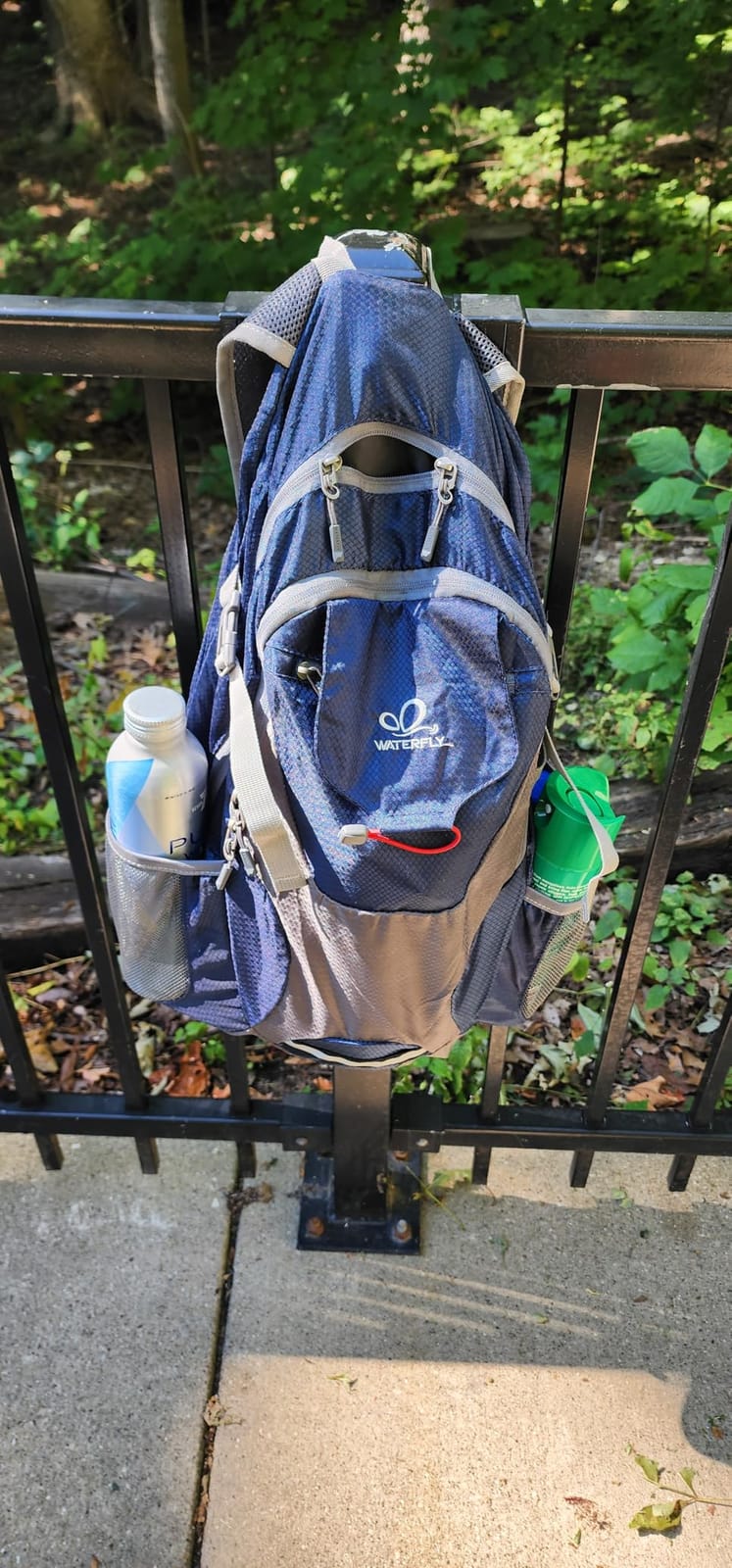
Storage is unusually thoughtful for a packable. There is a hidden pouch, a zipped front pocket, the main compartment, and two side pockets, plus a cable hole and an internal pocket sized for a power bank.
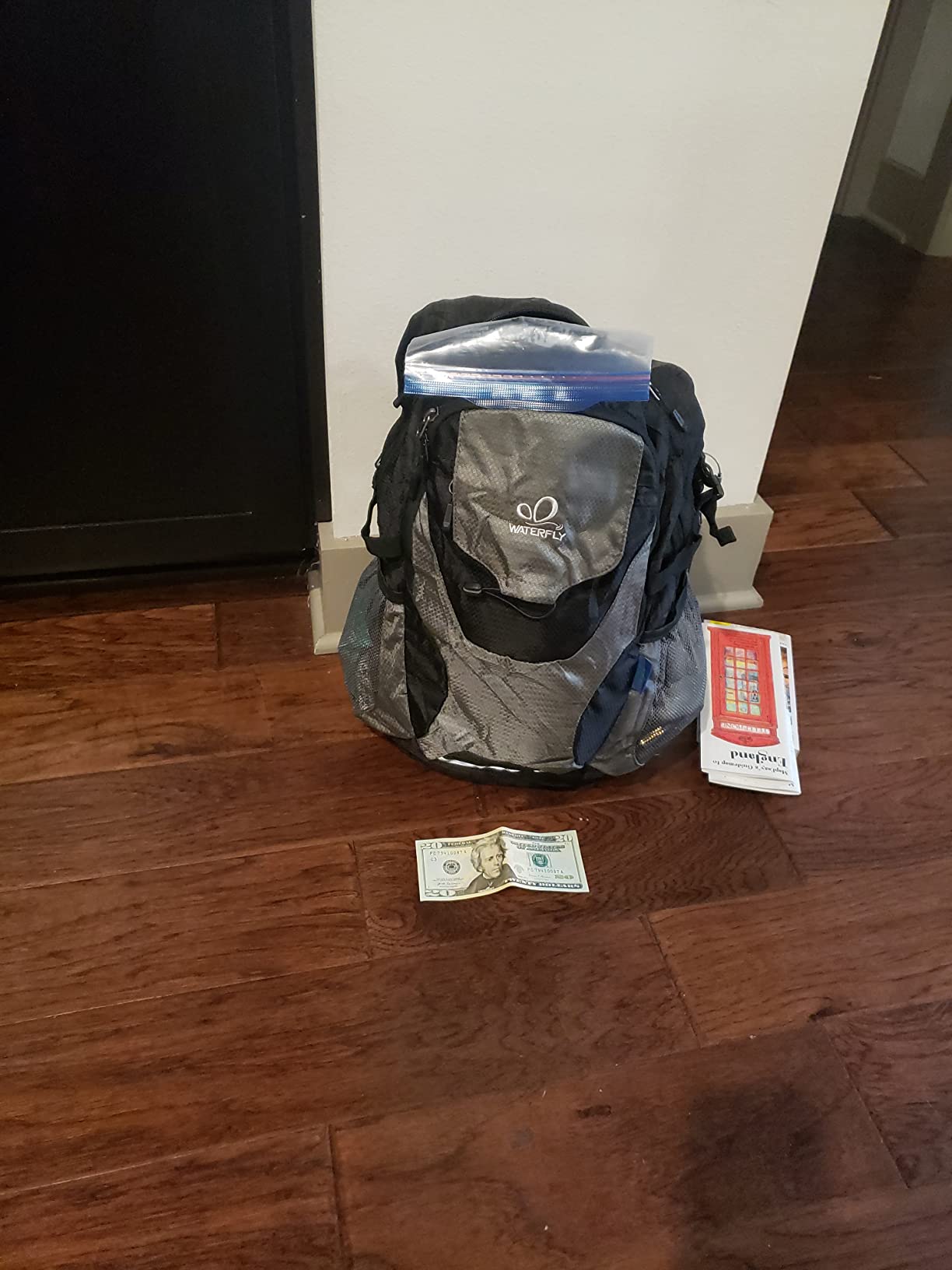
Durable SBS zippers with reinforced stress points and side buckles rated for low temperatures make it a four-season travel bag. Reviewers also report it survives a washing machine, which matters more than it sounds for a bag that lives in a car trunk.
Who the WATERFLY 30L suits
It suits hikers who fly into a new trailhead every month, or anyone who needs a spare day bag for a hut, a camper van or a work trip. Thirty liters is a full day plus a light overnight.
It also suits hikers who want to spend money on the trip rather than the pack. Nothing in the design needs a second purchase to be useful on day one.
Who should pass on it
Pass if you carry electronics. There is no laptop padding, so a tablet or a camera goes into a sleeve or a separate bag first.
Pass for heavy loads or big bottles. Reviewers report the unpadded shoulder straps feel flimsy under weight, side pockets are too shallow for larger bottles, and the back panel system narrows the main compartment.
7. Osprey Daylite Cinch – Best for Flight Days and Light Loads
Osprey Daylite Cinch Backpack, Green OS
Compact daypack
12 oz empty
Cinch top-loading closure
Internal reservoir sleeve
Pros
- Extremely light at 12 oz
- Top-loading cinch closure adds compression
- Dual daisy chain loops
- Grab handle doubles as a luggage pass-thru
- Bluesign approved recycled 300D polyester with PFAS-free DWR
Cons
- Small capacity limits it to essentials
- Unstructured cinch closure offers less security than a zip main compartment
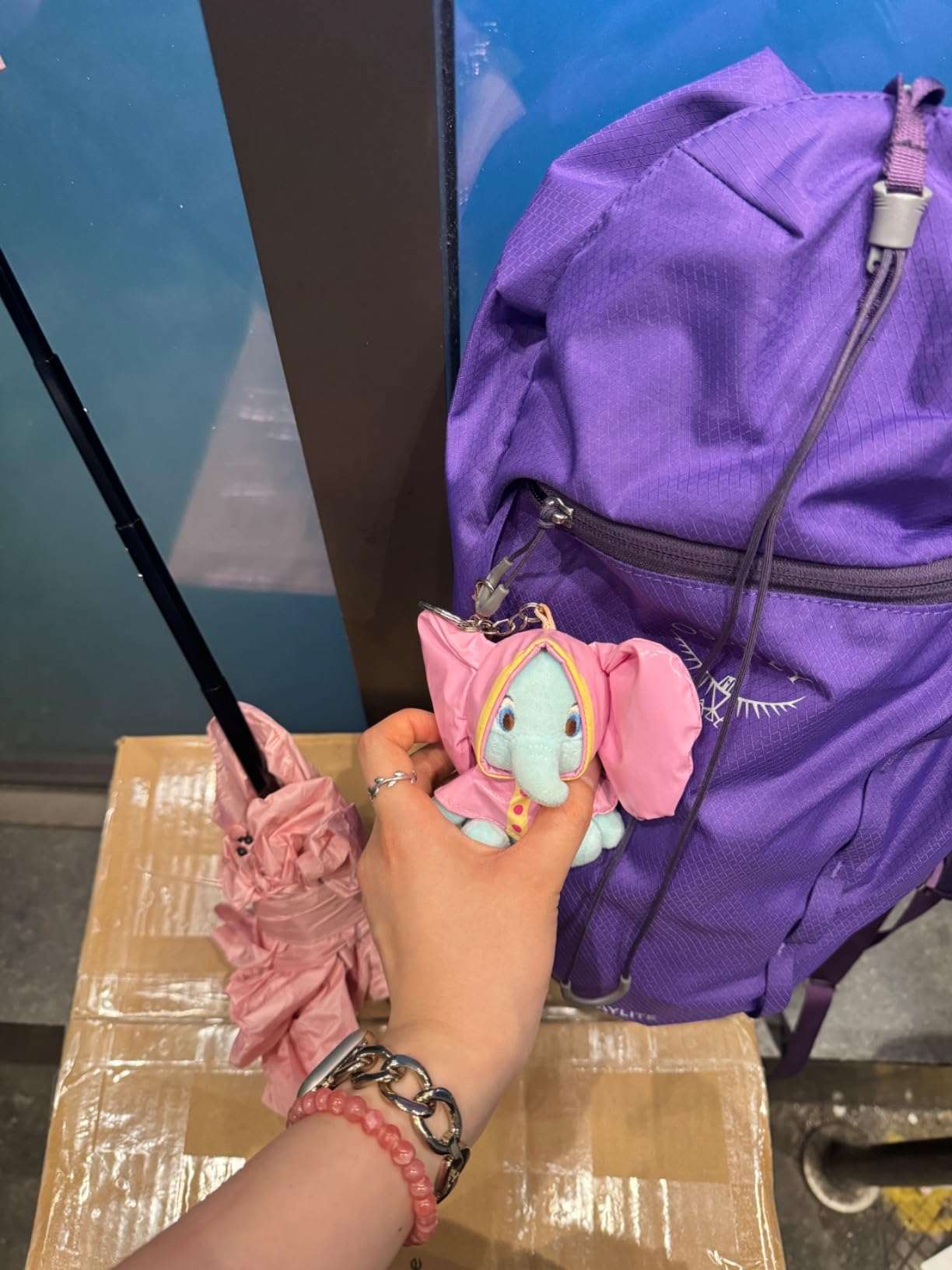
This is the lightest pack in the test at 12 oz, and the design is built around one idea: pack it smaller when you are not using it. The cinch closure pulls the top down and compresses whatever you put inside.
It measures 16.1 by 9.4 by 7.5 inches, which is compact enough for most personal item limits. There is also an internal reservoir sleeve, so it can carry a small bladder for short summer walks.
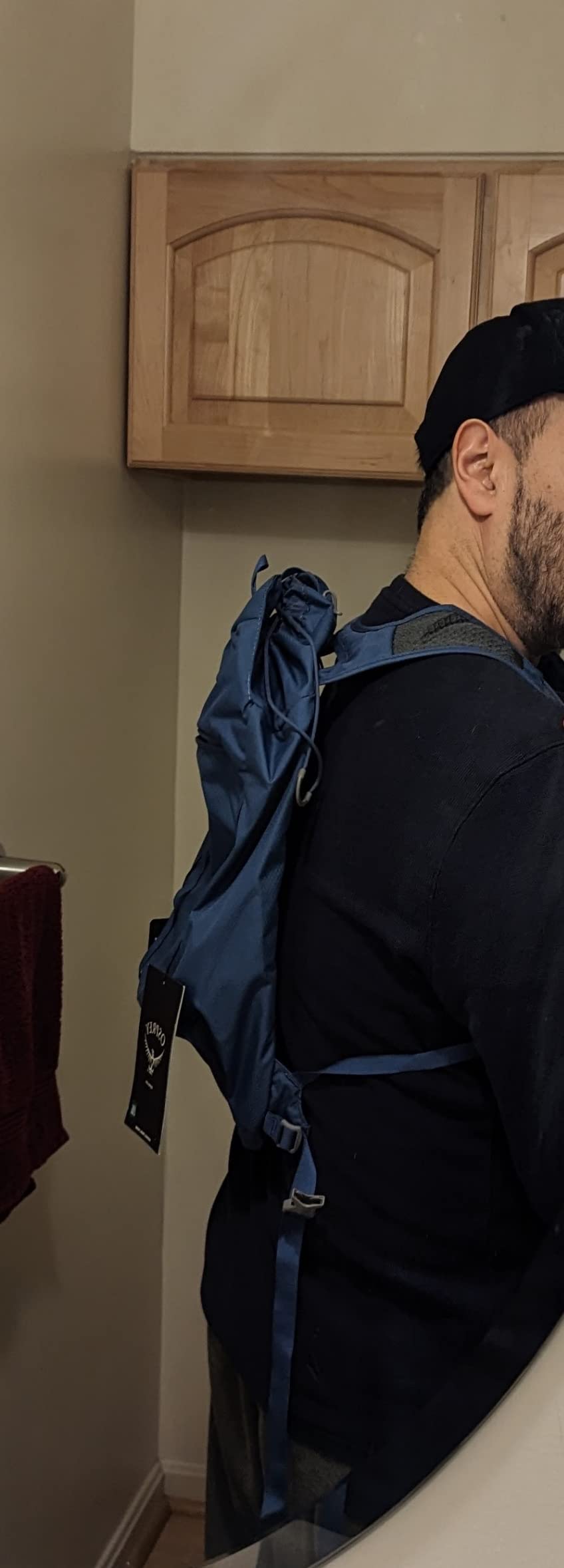
The shell is bluesign approved 300D recycled polyester with a PFAS-free DWR finish, which matters if you care about what the fabric does after you take the pack off.
Dual daisy chain loops on the front give you tie-out points, and the front panel zippered slash pocket is the right size for a phone or a passport. The grab handle doubles as a luggage pass-thru.
Who the Osprey Daylite Cinch suits
It suits travelers, commuters and hikers on short local loops who want something that packs flat. It works well as the personal item that carries your valuables while a larger bag goes in the hold.
With colourways ranging from plain solids to prints, it is also the one people tend to leave in the car or clip to a belt. Keep it near the door and it will get used.
Who should pass on it
Pass if you need to carry layers. The capacity is limited to essentials and short outings, and once you add a winter shell you are at the limit of what the cinch will close over.
Pass if security matters. The unstructured cinch closure offers far less theft protection than a zippered main compartment, which matters in crowded areas and at trailheads.
8. N NEVO RHINO 20L – Best for Rainy Trails
N NEVO RHINO 20L Hiking Backpack Water Resistant Outdoor Day Pack
20L capacity
0.66 kg empty
210D waterproof fabric
Rain cover in base pocket
Pros
- 210D waterproof fabric with bar-tacked stress points
- Rain cover stored free in the bottom pocket
- Four zippered sections in a 20L shell
- Hydration sleeve with hose port and fixing strap
- Reflective signage and a whistle buckle
Cons
- Basic zipper quality for the money
- Hydration sleeve and hose port add complexity
- Light padding limits comfort with very heavy loads
Wet-weather hikers get two layers of protection here. The 210D tear-proof fabric is described as waterproof, and a rain cover is stored free in the bottom pocket rather than sold separately, so it is there the first time you need it.
Five compartments, four of them zippered, is unusual at 20 liters. That layout lets you keep wet gear, food and electronics separated instead of mixing them in one cavity.
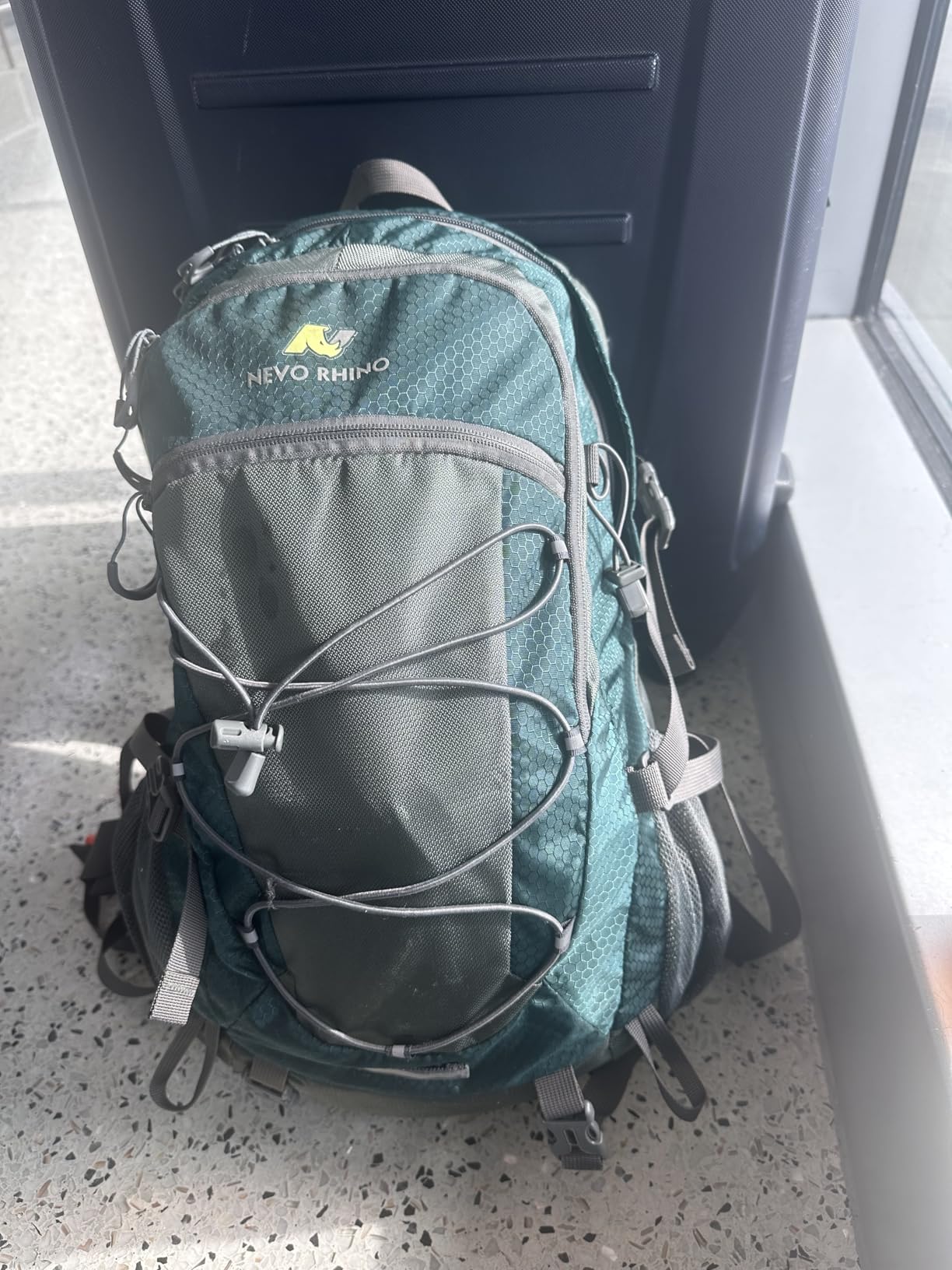
There is a hydration bladder sleeve with a hose port and a Velcro fixing strap, so the hose stays where you route it instead of swinging across your chest. Trekking pole elastic fasteners sit on the front for the same reason.
Ventilated mesh padding covers the shoulder straps and back panel, and reflective signage plus a chest buckle that doubles as a whistle handle low-light starts and group emergencies.
Who the N NEVO RHINO 20L suits
It suits hikers who hike in rain, in coastal mist, or on wet forest trails where everything you own ends up damp within an hour. It also suits long-distance walkers who use trekking poles daily.
Anyone who wants water storage without buying a separate pack will find the sleeve and hose port useful, and the rain cover means the pack works in a downpour rather than only in drizzle.
Who should pass on it
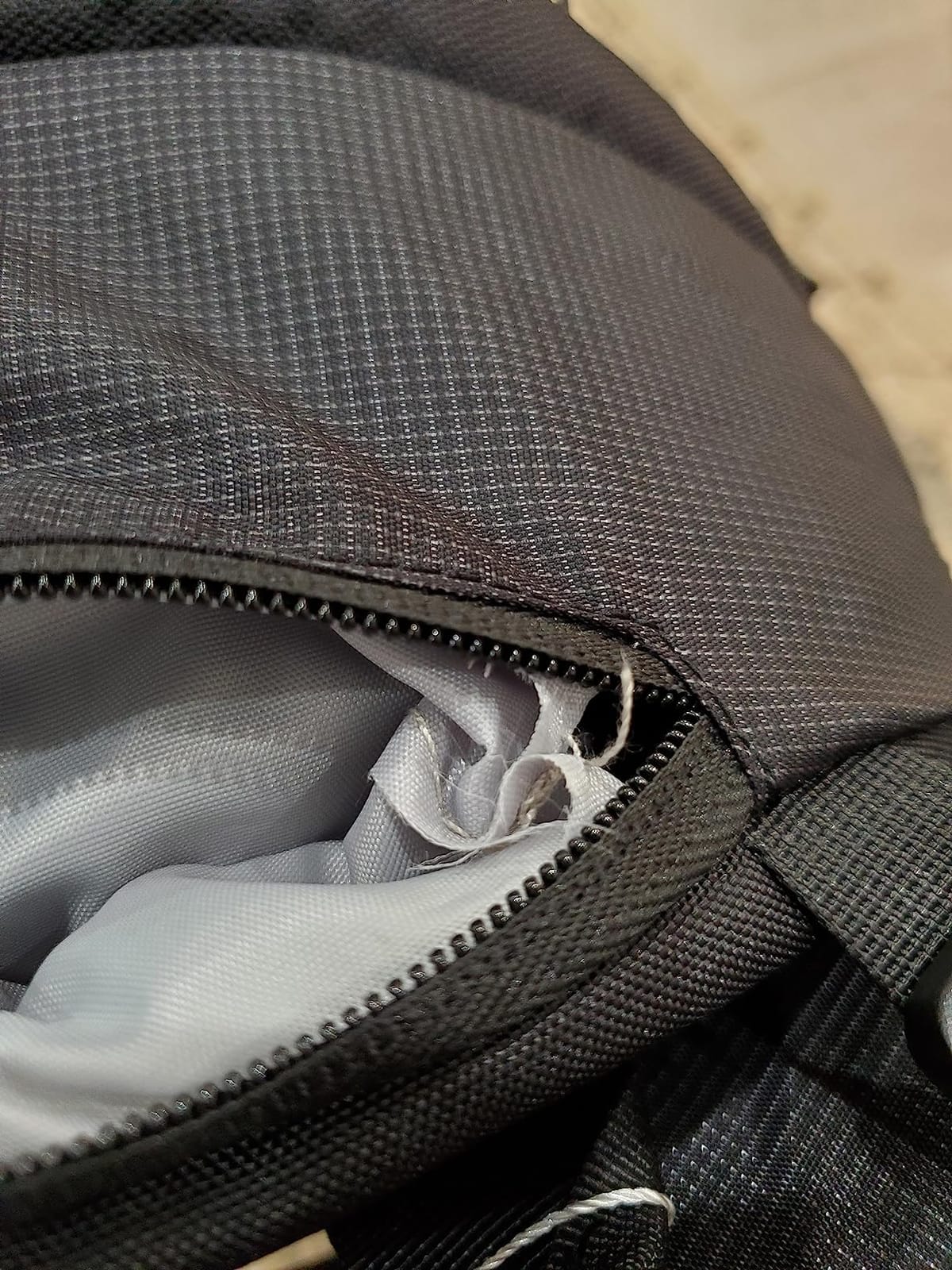
Pass if zipper feel matters to you. Owners rate the zipper quality as basic for the price, and a zipper that grabs is the failure point that usually ends a pack early.
Pass for casual use without hydration. The hose port and sleeve add complexity that is dead weight if you plan to carry bottles, and light padding limits comfort with very heavy loads.
9. Salomon Trailblazer 30 – Best for Hot Weather Hikes
Salomon Unisex Trailblazer 30, Hiking & Trekking Backpack, 30-Liter – BLACK/ALLOY – NS
30L capacity
19.4 oz empty
3D perforated back foam
Load lifter straps
Pros
- 3D padded back system with perforated foam for airflow
- 3D belt with EVA foam and breathable mesh
- Load lifter straps move weight to the hips
- Belt pockets plus reservoir sleeve and pole holder
- YKK zippers and PFC-free polyamide shell
Cons
- Hydration bladder not included
- Open layout feels less organized to some
- Rating sits below the Osprey and Deuter options
Heat is the deciding factor here. The 3D padded back system uses perforated foam, and reviewers describe airflow as the standout feature on hot climbs, which is exactly where a flat foam panel usually leaves you soaked through.
Load lifter straps pull the top of the pack toward your shoulders, transferring the upper part of the load down into the hip belt. At 19.4 oz with a padded 3D belt, that is a lot of harness for the weight.
Storage covers the usual day-hike list: belt pockets, a top pocket, an internal reservoir sleeve and a trekking pole holder. A computer hanging sleeve is a small extra that helps if you use the pack for travel.
The shell is PFC-free polyamide with YKK zippers, and the 3D light harness shoulder straps are narrow enough to stay out of the way when you are moving fast. The 30L capacity gives room for a full water carry and a change of layer on top of that.
Who the Salomon Trailblazer 30 suits
It suits hikers in hot and humid climates, at altitude, or on long hot-weather days where back sweat is the thing that ends your hike early. Thirty liters also gives room for a large water carry plus a change of layer.
It suits hikers moving quickly, because the load lifter straps and narrow harness keep the pack close on descents and through loose ground.
Who should pass on it
Pass if you want maximum organization. Reviews describe the layout as straightforward, and people who need to find a specific item without unpacking often prefer more distinct compartments.
Pass if you want a reservoir included. There is a sleeve for one, but the bladder is a separate purchase, and this list has options that arrive ready to drink from.
10. Osprey Talon 22L – Best for Technical Days and Scrambles
Osprey Talon 22L Men’s Lightweight Hiking Backpack, Gray OS
22L capacity
2.38 lb empty
AirScape back panel
Stow-on-the-go pole carry
Pros
- AirScape back panel spreads heavy loads to the hips
- Adjustable sliding yoke dials in a precise fit
- Stow-on-the-go trekking pole attachment
- LidLock helmet mount and tuck-away ice axe attachment
- Dual zippered hipbelt pockets and stretch sides
Cons
- Heavier than ultralight daypacks at 2.38 lb
- Waist and chest straps are lightly padded
- AirScape mesh ventilates less than the marketing implies
- Reservoir sleeve moved inside on newer versions
This is the one to take when the trail involves hands on rock, scree, or a summit block that needs gear on the outside. The stow-on-the-go trekking pole attachment lets you stow poles without removing the pack, and the tuck-away ice axe attachment keeps a tool out of the way.
The AirScape back panel spreads load across the hips rather than the shoulders, and the sliding yoke lets you set torso length rather than accepting whatever the factory shipped. Owners report carrying heavy loads on 20-mile days comfortably because of the hipbelt.
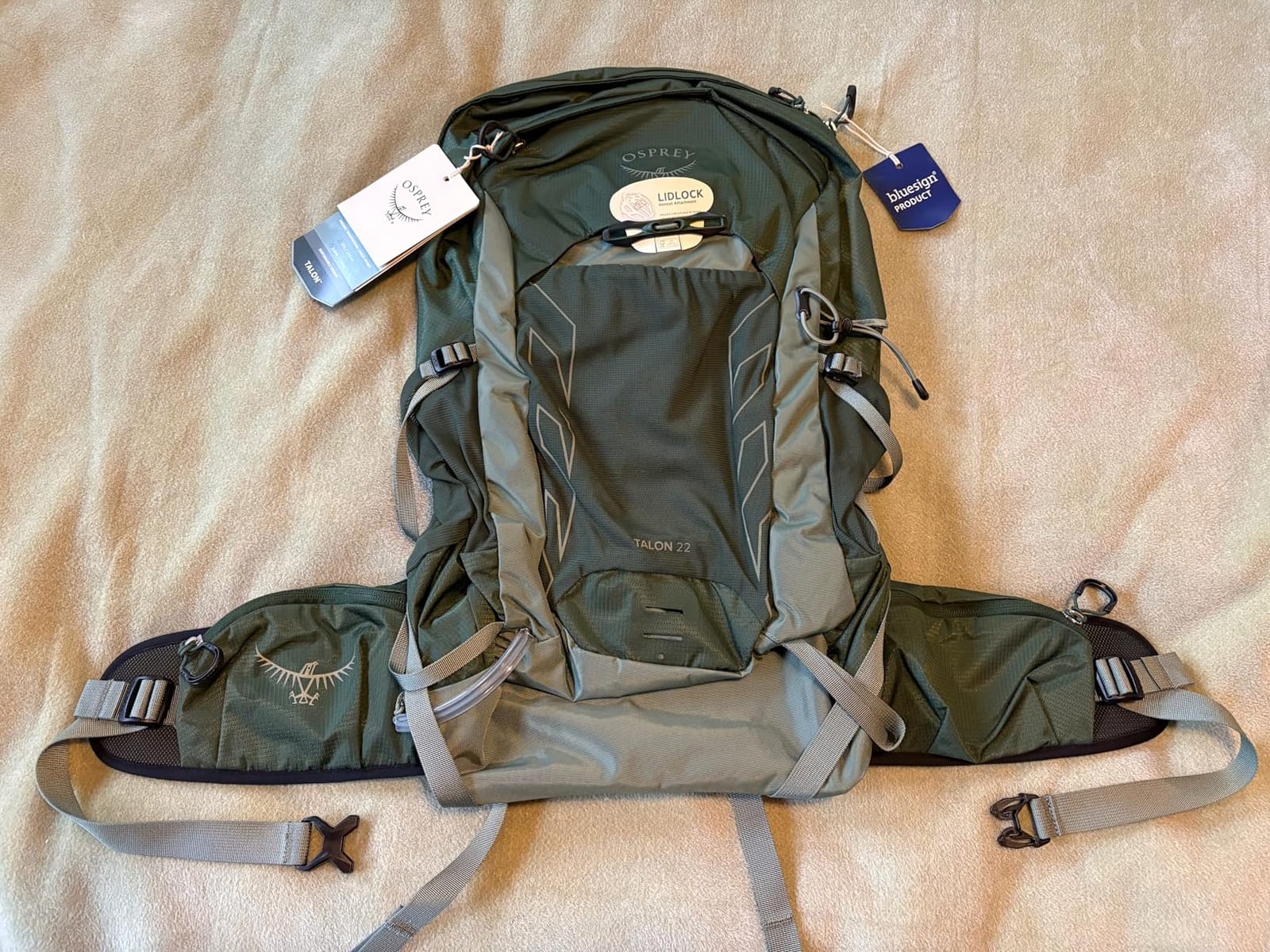
Dual zippered hipbelt pockets are the detail you will notice most on a long day. Phone, keys and snacks stay reachable without taking the pack off, which is the single biggest difference between a good day and an annoying one.
The shell is bluesign approved 100D recycled high-tenacity nylon with a PFAS-free DWR finish. Light fabric keeps the weight down and the pack quiet, which matters on alpine ground where rustling carries.
Who the Osprey Talon 22L suits
It suits scramblers, peak baggers and hikers carrying camera or climbing gear on longer routes. Twenty-two liters is exactly right for a technical day where gear hangs outside and the bag holds only personal items.
It also suits anyone who wants their load carried on their hips. The hipbelt, yoke and back panel work together, and that is why it stays comfortable where frameless packs fall apart.
Who should pass on it
Pass if you are counting grams. At 2.38 lb it carries the most weight per liter of any pack here, and fast hikers will feel it on a long climb.
Pass if heat is the main concern. Owners report the AirScape mesh offers less ventilation than expected, and the waist and chest straps are lightly padded relative to the build quality.
11. Osprey Sportlite 30L – Best Lightweight Framed Pack
Osprey Sportlite 30L Lightweight Hiking Backpack for Men and Women, Dark Charcoal Grey, S/M
30L capacity
1.69 lb empty
Framed design
6 pockets
S/M torso fit
Pros
- Lightweight for a 30L framed pack
- Comfortable hipbelt and shoulder straps with airflow
- Top lid plus front stretch pockets
- Works for day hikes and one or two overnights
- Covered by the All Mighty Guarantee
Cons
- No rain cover included
- No external straps for a sleeping pad or bag
- Access to the main compartment takes practice
- Some buyers want an internal pocket for cards and pens
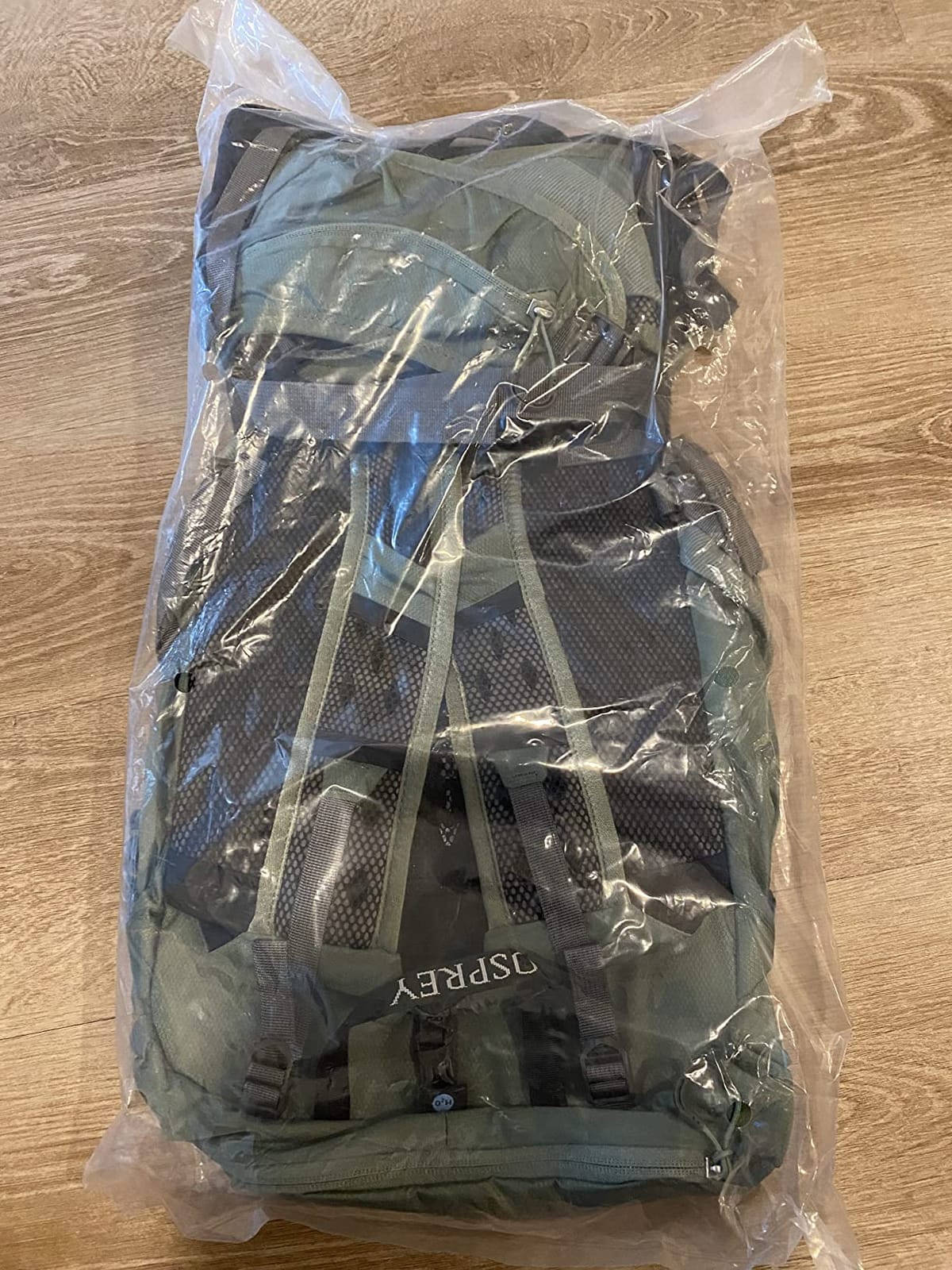
A 30L framed pack at 1.69 lb is the balance point of this whole list. You get an internal frame, a padded hipbelt and a proper back panel, and you still carry less empty weight than many 22L packs with the same class of harness.
Owners describe it as the pack that handles both jobs: a full day hike, or a light one or two night trip with a shelter and sleep system. That flexibility is why it appears on our shortlist alongside the much smaller packs.
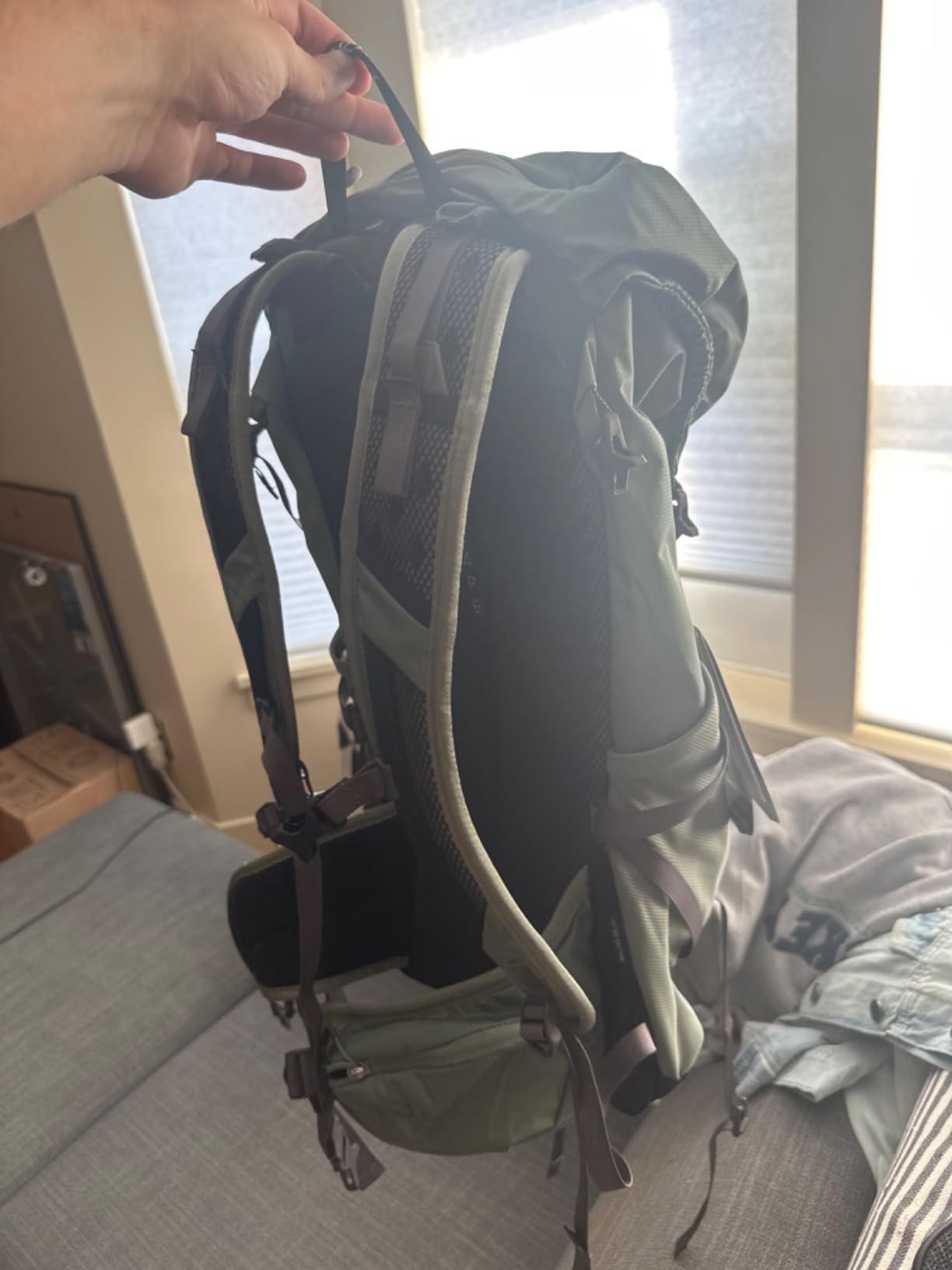
The pocket layout is generous for the size, at six pockets including a top lid and front stretch pockets. The hipbelt itself has a zippered pocket and a stretch mesh pocket, so small items do not migrate.
A bottle holder and hydration bladder holder are both built in, and the fit is offered in S/M and M/L torso sizes, which is one of the few ways to dial in fit on a pack this size.
Who the Osprey Sportlite 30L suits
It suits hikers who want one pack for day hikes and light overnights, and who still want a real frame and hipbelt. Thirty liters holds a full winter layer set without pushing the volume into large-pack territory.
It also suits hikers carrying water in both bottles and a reservoir, and anyone who wants the All Mighty Guarantee behind the build rather than a limited warranty.
Who should pass on it
Pass if you hike in sustained rain without a plan. There is no included rain cover and no rain cover pocket, so wet weather needs a liner or a cover you already own.
Pass if you plan to strap gear outside. There are no sleeping pad or sleeping bag straps, and access to the large main compartment takes some practice with the lid-forward layout.
12. Deuter Trail 30L – Best for Heavy Loads
Deuter Trail 30L Backpack for Biking, Hiking & Trekking with Narrow Fit, U-Frame & Superior Breathability – Black-Shale
30L capacity
2.47 lb empty
Delrin U-frame
Recommended load 8.8-18 lb
Pros
- Airstripes back system with large ventilation channels
- Stable Delrin U-frame transfers load to the hips
- Detachable lid and detachable rain cover
- Recycled abrasion-resistant materials
- Helmet loops and ice axe attachment
Cons
- Heavier than minimalist alternatives
- Recommended load assumes a 17-20 in back length
- Narrow fit may not suit larger torsos
- Drinking system sold separately
This is the pack to buy when you intend to carry real weight for a long time. Deuter rates the recommended load at 8.82 to 18 lb on a 17 to 20 inch back length, and the Delrin U-frame is what makes that number believable rather than aspirational.
The Airstripes back system with a WideAirMesh cover runs large ventilation channels up the spine. Reviewers single out the ventilation as the standout feature, and that matters most on the heavy days this pack is built for.
Storage is unusually well thought out for a hiking-focused bag: a wet compartment, a valuables pocket, a trekking pole holder and front zip access. The detachable lid turns the pack into a shorter, simpler bag when you do not need top access, and the detachable rain cover covers the main body without adding a permanent layer of fabric.
The materials are 600D recycled polyester with 210D recycled polyamide, ClimatePartner certified, which is why the pack holds up to abrasion on rocky trails. Helmet holder attachment loops and an ice axe attachment are there for bike-and-hike days and alpine routes.
Who the Deuter Trail 30L suits
It suits hikers carrying camera gear, climbing equipment, a large water load, or a full winter kit on a long day. It also suits anyone moving from a daypack into a light overnight load.
If your day includes a bike ride to the trail, the helmet loops make it one of the more useful packs on this list for mixed-use days.
Who should pass on it
Pass if you are a large-framed hiker. The narrow fit is the most common criticism, and the rated back length tops out at 20 inches, which excludes some taller bodies.
Pass if you want a light pack or want hydration included. It is the heaviest option here at 2.47 lb, and the drinking system is a separate purchase.
How We Tested These Daypacks
We loaded every pack to the weight it is meant to carry, not to an empty spec sheet, and walked with it on repeated loop hikes in dry, wet and hot conditions. Comfort was judged on the shoulder, hip and lower back, and we noted where the load actually ended up.
Each pack was also checked for the things that decide whether it is a hiking daypack or a lifestyle bag with a hiking label: does the hipbelt wrap the hips, does the back panel create an air gap, does the main compartment open without emptying the bag.
We did not accept a brand reputation as a substitute for testing. Manufacturer claims on water resistance were compared against reviewer reports, because rating sheets describe a fabric, not a sealed seam. We earn a commission if you buy through our links, and no brand paid for placement or ranking.
What Size Daypack Do You Need for a Day Hike?
For most full-day hikes, a 20L to 28L daypack is right. Go below 20L for short local loops and snacks, and above 30L when you carry winter layers, traction devices, poles or camera gear. Here is the ladder:
10L to 15L – water, a wind shell, a phone and snacks. Trail snacks and layer carriers, not full-day bags.
18L to 22L – the sweet spot for most 8 to 12 mile day hikes. Water, lunch, a warm layer, first aid and electronics.
25L to 30L – longer ridge days, an extra layer, poles, or a day that turns into an overnight.
35L to 40L – winter kit, traction devices, camera gear, families, or anything bulky.
The recurring complaint we see from hikers is overpacking, not underpacking. People buy a 30L bag, fill it “because there is room,” and end up carrying a second water bottle and a jacket you never wore.
Set your kit out on the floor first, measure how much space it takes, then pick a pack a size above that. A pack that is just slightly fuller than your gear is the one you will actually carry comfortably.
For winter and hut-to-hut trips, add capacity for bulk. Insulated layers compress badly, boots and traction devices add up fast, and a wet pack that will not close is worse than a roomy one.
How to Choose a Daypack for Day Hikes
Suspension: framesheet, internal frame or frameless
A framesheet is a flat sheet that keeps the bag from folding onto your spine. An internal frame, like the Delrin U-frame on our heavy-load pick, adds a perimeter wire that shapes the load and lets the hipbelt do real work. A frameless pack has neither, and is the lightest option.
Under about 5 kg of carried weight, the difference between these is small and frameless is fine. Above 7 kg, a frame stops feeling like a luxury. If you carry a camera, a full water load or winter kit, buy framed.
Back panel and ventilation in real heat
A back panel with a channel, or a suspended mesh design that holds the pack away from your spine, is what separates a pack that works in August from one that soaks you through. Foam-only panels that sit flat against the back are the most common cause of the sweaty-back complaints hikers post about.
Perforated 3D foam, as on the hot-weather pick, is the middle ground: it channels some air while staying lighter and simpler than suspended mesh.
Fit, torso length and hipbelt coverage
Measure your torso length from the top of your iliac crest, at the base of your spine, to the base of your neck. That number, against the manufacturer’s sizing chart, matters more than the size label printed on the pack.
The hipbelt should wrap your hip bones, not your waist, and it should be padded and load-bearing. Webbing-only hipbelts are the single most reported cause of shoulder and neck soreness on long hikes.
If you are between sizes or carry a fuller figure, look for extended or plus-size variants with a wider hipbelt rather than stretching a narrow one.
Pockets that you can actually reach
Count the pockets, then check where they are. A zippered hipbelt pocket and side water bottle pockets are reachable without removing the pack. An interior pocket on the bottom of a 40L bag is not.
A shove-it front stash panel is worth a lot for a wet shell or a map. Stretch side pockets that wear out within months are a common review complaint, so check whether reinforcement is reported before you lean on them.
Hydration compatibility and hose routing
Most packs have a sleeve and no bladder. If you plan to carry water on your back, buy the reservoir with the pack or as a planned extra, and check that the sleeve is wide enough for a 3L reservoir rather than a 1L soft flask.
Hose routing decides whether you will drink. Owners of hydration packs complain most when the hose crosses the chest or swings with movement. A hose port and fixing strap, as on the rainy-trail pick, solves it.
Water resistance, liners and rain covers
Water-resistant fabric is not waterproof, and IPX ratings describe a fabric test, not a sealed pack. Reviewers report moderate rain soaking through packs marketed as water-resistant, so treat ratings as a hint, not a promise.
A pack liner in a dry bag handles sustained rain cheaply. An included rain cover is easier to remember, and three packs here ship with one. A roll-top closure keeps water out better than a zipper.
Weight versus features
Every pocket, buckle and frame has a weight cost, and on a day hike you carry that weight for hours. The lightest packs here weigh around 12 oz and give up some structure and padding; the heaviest weigh over 2 lb and buy that structure back with a heavier carry.
Work out your typical load, subtract the weight of the water you plan to carry, and check the pack is rated for what remains. If a pack lists a recommended load, take it seriously.
For heavier multi-day kit, our guide to the [best liter backpacks for multi-day trips](https://www.pwice.com/best-liter-backpacks-top-for-multi-day-trips/) covers the next step up. If your day hikes turn into winter overnights, the [winter daypacks with ice axe loops](https://www.pwice.com/best-winter-daypacks-with-ice-axe-loops/) roundup goes deeper on tool carry.
What to Pack in a Day Hiking Backpack
Ten items cover almost every day hike: navigation, a headlamp, sun protection, first aid, a knife or repair tape, extra food, extra water, an emergency layer, a fire source, and a phone with power. Everything else is optional.
Here is how that translates into capacity:
10L to 15L – water, snacks, phone, a wind shell, keys.
18L to 22L – the ten essentials, a real lunch, and one warm layer.
25L to 30L – all of that plus trekking poles, an extra insulation layer, and camera gear.
35L to 40L – winter kit, boots, traction devices, a first aid kit that matters, and a divider for organization.
Two habits make the difference. Keep a dry bag for electronics and a spare layer, and keep your first aid kit in a pocket you can reach without unpacking the whole bag.
If you are hiking with a dog or with children, add a leash attachment point or a dedicated compartment. It changes the capacity calculation more than most people expect, because a 3L dog bowl and a full change of layers do not fit a 20L shell.
Which Daypack for Which Trail Conditions?
Hot desert and high heat: choose maximum ventilation and capacity for water. Perforated 3D back foam and lightweight fabric beat extra pockets every time, because airflow decides whether you enjoy the walk.
Wet weather and monsoon: choose a waterproof-coated fabric plus an included rain cover, and add a pack liner. Water resistance ratings on their own are not enough.
Alpine scrambling and peak bagging: choose pole carry, an ice tool attachment and a helmet mount, with a 20L to 22L shell so gear stays outside where you can reach it.
Long high-mileage days: choose a framed pack with a padded, load-bearing hipbelt and torso adjustment. Above 7 kg carried, the frame is what keeps the hike off your shoulders.
Dog walking and family days: choose 30L or more with a reinforced bottom and side attachment points. Bulk is the requirement here, not suspension.
Travel and carry-on: choose a packable model between 20L and 30L that folds into a side pocket, and check that it fits your airline’s personal item dimensions before you book.
If your trips run to multi-day, the [best coolers for multi-day camping](https://www.pwice.com/best-coolers-for-multi-day-camping/) and our [liter backpack guide](https://www.pwice.com/best-liter-backpacks-top-for-multi-day-trips/) cover the gear that goes with the larger load.
Frequently Asked Questions
How big should a daypack be for hiking?
For most full-day hikes, 20L to 28L is the right size. Use 10L to 15L for short local loops and snacks, 25L to 30L for longer days with an extra layer or poles, and 35L to 40L for winter kit or bulky gear.
Is a 20L daypack enough for a day hike?
Yes, for most full-day hikes on maintained trails. A 20L pack holds two liters of water, a packed lunch, a warm layer, a first aid kit, a phone and a few snacks. Add a rain shell and a second layer and you are near the limit.
Is a 30L backpack too big for day hikes?
It is only too big if you fill it. A 30L pack is ideal for long days, winter layers or camera gear, but most hikers report carrying extra gear simply because the space was there. Lay your kit out first and size the pack to the load.
What is the difference between a daypack and a hiking backpack?
A daypack is sized for a single day, usually 15L to 30L, with a hipbelt, suspension and pockets for water, food and layers. A hiking backpack is built for multiple days, so it carries a shelter, a sleep system and a cooking kit in 55L to 65L or more, with a framed suspension and external attachment points.
Do I need a hydration pack for a day hike?
Not usually. A day hike fits in 20L to 28L with bottles in the side pockets and a soft flask in the shoulder strap. A hydration pack earns its place on hot routes, long high-mileage days or any hike where stopping to drink is difficult.
What should I look for in a hiking daypack?
Check eight things: a padded load-bearing hipbelt, an internal frame or framesheet for loads over 7 kg, a ventilated back panel with an air gap, a fit that matches your torso length, pockets you can reach without removing the pack, hydration compatibility, water-resistant fabric with a liner or rain cover option, and a weight that suits your typical load.
Final Verdict on the Best Daypacks for Day Hikes in 2026
Buy the SKYSPER 20L if you want one pack that covers a normal day hike with room for layers, ten pockets to keep it organized, and dimensions that survive a flight. On the tightest budget, the sunhiker 20-25L gives you more capacity for less weight, provided you are not tall.
Buy the TETON Oasis 18L if you are hiking in heat and want water in a reservoir from the first step. Buy the Deuter Trail 30L or the Osprey Sportlite 30L when you carry real weight, and the Osprey Talon 22L when gear goes outside on scrambles.
Everything else on this list is a specialist: packable bags for travel, a 40L for bulky winter loads, and a rain-ready 20L for wet trails. If you still cannot decide, measure your kit, pick a size just above it, and test the fit with a full pack loaded before you commit.