
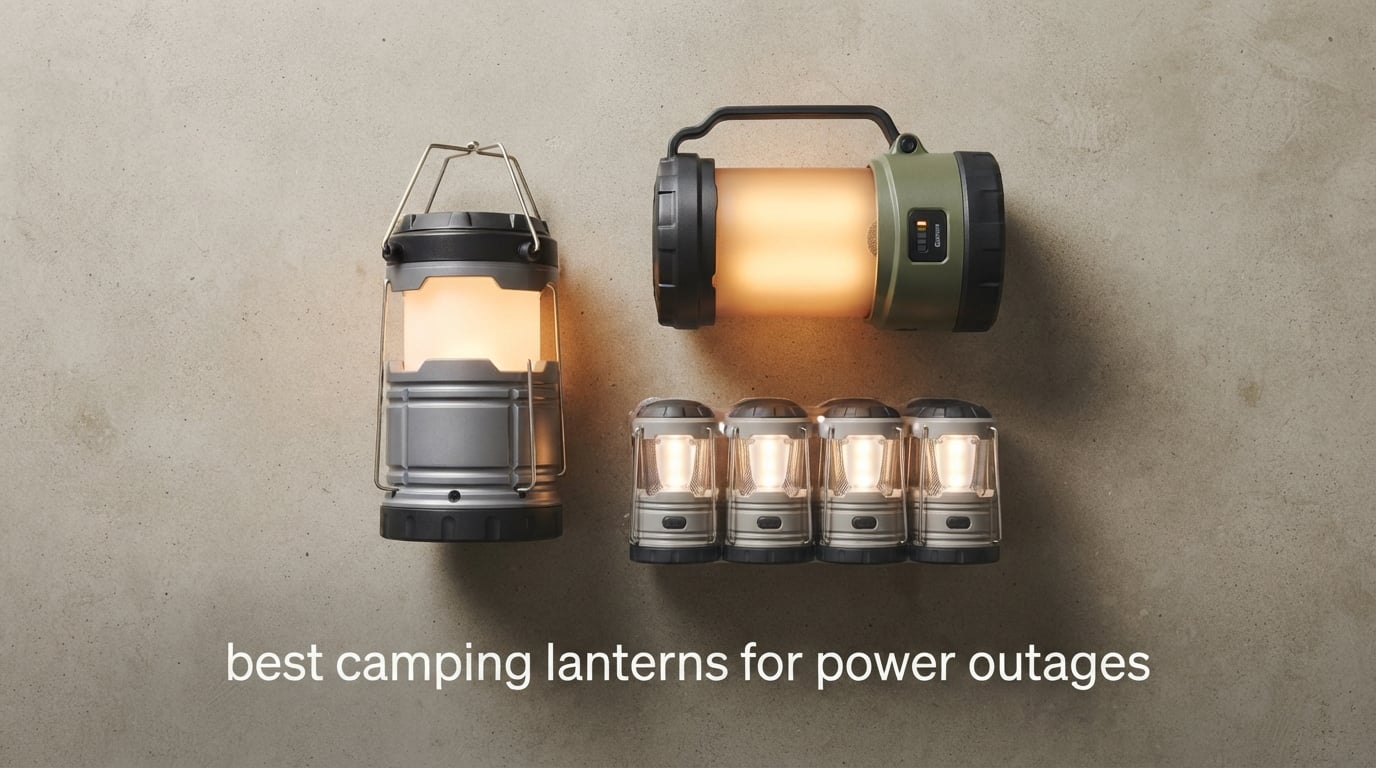
The best camping lanterns for power outages are the ones that keep producing usable light on a low setting for days, recharge without the grid, and run on cells you can replace when everything else is dead. Headline lumen counts matter far less than you would think.
Most outage kits fail for the same boring reason: the light runs at full brightness because that is the first mode people touch, the battery empties in an hour or two, and the household ends up in the dark with no way to recharge until the utility crew arrives. A lantern rated at 3000 lumens that dies in 90 minutes is less useful than a 350-lumen unit that runs all night on three AA cells.
We reviewed the ten lanterns below for 2026, ranking them on low-mode runtime first, off-grid recharge options second, brightness third, and durability last. Ten lanterns is also the number we recommend for a home, because light spread across rooms beats one bright lantern in the kitchen. If you want broader coverage first, our honest reviews of the best camping lanterns covers the general category, and our rechargeable lantern picks go deeper on battery options.
Table of Contents
Top 3 Picks for Power Outages in 2026

Etekcity 2-Pack 154-Lumen Lantern
- 50 hours on AA cells
- Batteries included
- Collapses to phone size

The Etekcity pair wins on proven longevity: 50k+ reviews at 4.7 stars, batteries in the box, and 50 hours per set of AA cells. The EZORKAS pair takes the highest rating in the group at 4.8 and the only rechargeable-plus-fallback combination here. The Lepro rechargeable is the pick when you want USB charging and phone output instead of replaceable cells.
Best Camping Lanterns for Power Outages in 2026
| Product | Specifications | Action |
|---|---|---|
| Etekcity LED Camping Lantern 2-Pack |
|
Check Latest Price |
 Lepro 1000LM Battery Powered Lantern Lepro 1000LM Battery Powered Lantern |
|
Check Latest Price |
| Lepro Rechargeable 4400mAh Lantern |
|
Check Latest Price |
 LE Rechargeable 1000LM Lantern Flashlight LE Rechargeable 1000LM Lantern Flashlight |
|
Check Latest Price |
 EZORKAS 2-Pack Dual-Power Lantern EZORKAS 2-Pack Dual-Power Lantern |
|
Check Latest Price |
 XTAUTO Solar USB 4-Pack XTAUTO Solar USB 4-Pack |
|
Check Latest Price |
 Lichamp 4-Pack 350-Lumen Lantern Lichamp 4-Pack 350-Lumen Lantern |
|
Check Latest Price |
 GearLight 2-Pack 600-Lumen Lantern GearLight 2-Pack 600-Lumen Lantern |
|
Check Latest Price |
 Energizer WeatheReady PRO-360 Energizer WeatheReady PRO-360 |
|
Check Latest Price |
 AYL Rechargeable 1800-Lumen Lantern AYL Rechargeable 1800-Lumen Lantern |
|
Check Latest Price |
1. Etekcity LED Camping Lantern 2-Pack — Best Overall for Outages
Etekcity LED Camping Lanterns, Battery Operated, 2 Pack
154 lumens
50 hours on 3 AA cells
Batteries included
Collapses to phone size
Pros
- 50k+ reviews at 4.7 stars
- Batteries included in the box
- Collapses to phone size
- Two lanterns spread light across rooms
Cons
- Modest 154-lumen output
- Disposable batteries only
- No dimming control beyond collapsing
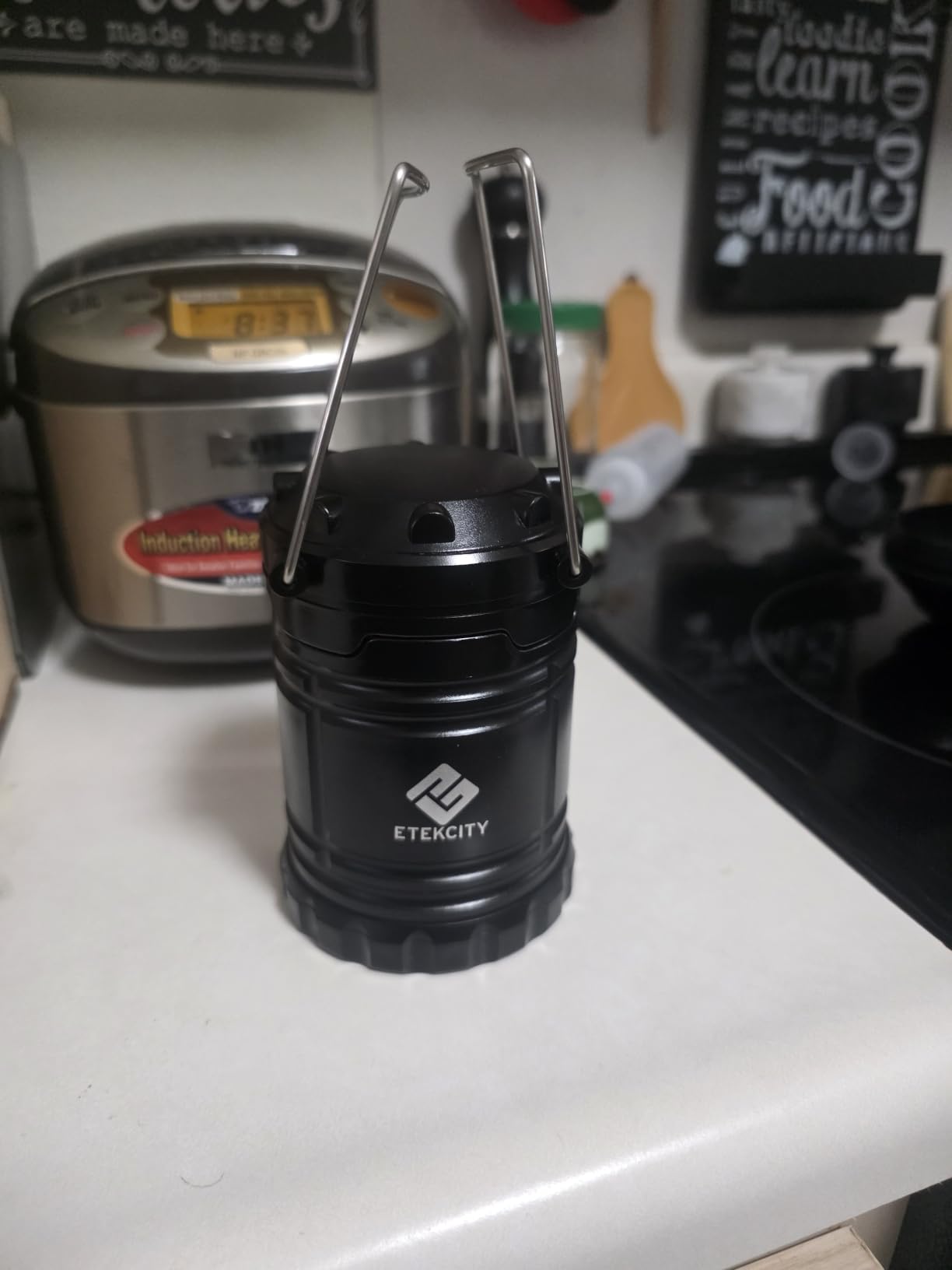
I keep these two in the hallway closet and one in the car. Over 50k reviews averaging 4.7 stars, this is the most proven battery lantern in the lineup, and the reason is unglamorous: it does not need a charger, a cable, or a working outlet to work.
Each lantern takes three AA cells and runs up to 50 hours on them. Thirty LED bulbs produce 154 lumens across a 360 degree spread, which is enough to fill a tent, light a hallway, or find your way to the fuse box. That is the whole trick of outage lighting. You want enough light to move around safely for many hours, not enough light to work on a car at night.
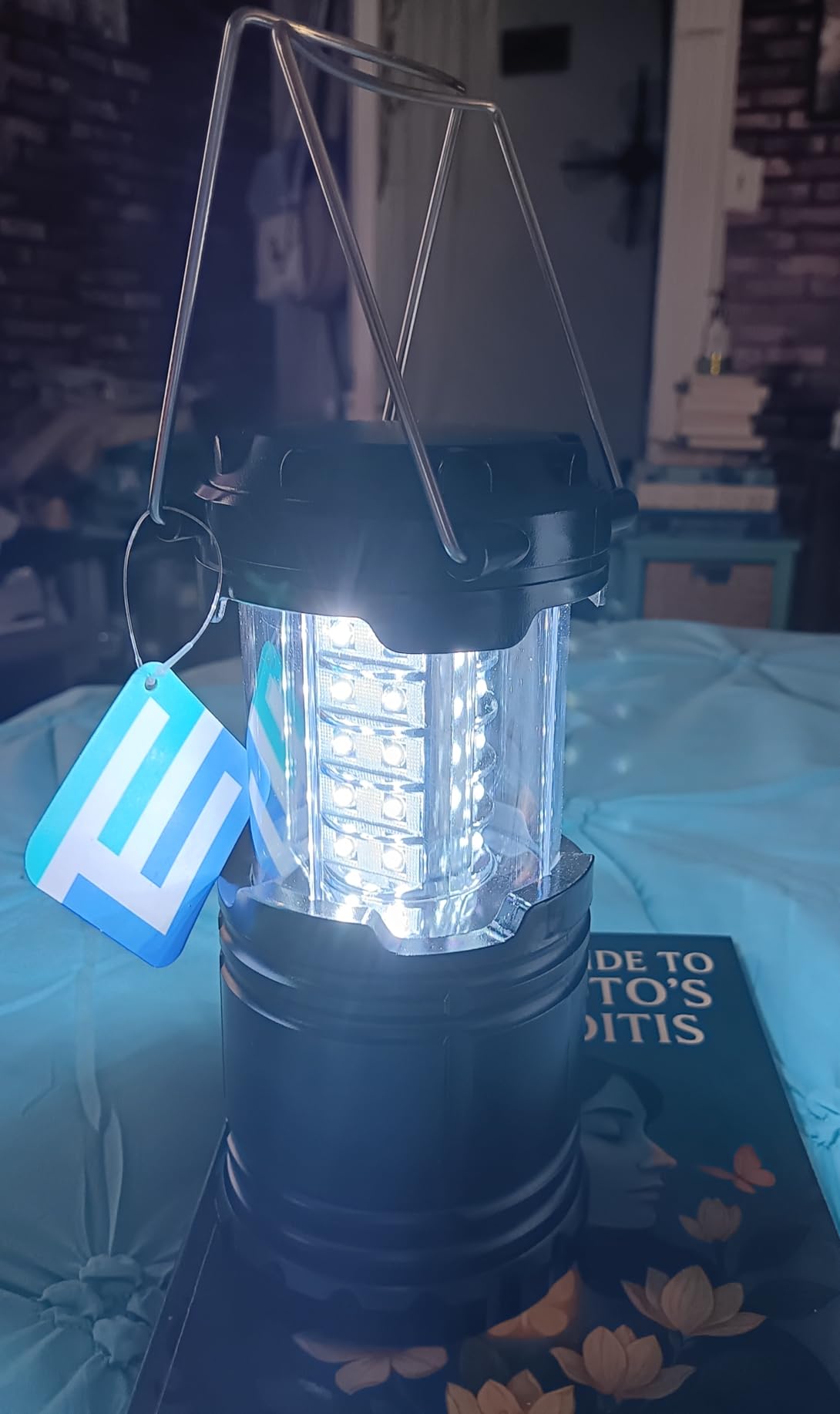
The collapsible design is genuinely useful. Squash it flat and it packs at about smartphone size, so the pair fits in a drawer, a go-bag, or a glovebox. Expanding or collapsing the body is also how you switch it on and dim it, which means there is no small button to find with numb fingers in the dark.
The body is ABS, rated water resistant, and holds up to drops and moisture. There is a small top compartment for keys, loose change, or spare cells. Six AA batteries come in the box, so both lanterns work the moment you unwrap them.
Why low-mode runtime decides the winner
Reviewers consistently praise the runtime figure and complain about almost everything else. The brightness ceiling is real: 154 lumens will not light a yard or a workshop. For indoor outage lighting, a kitchen, a stairwell, or a campsite table, it is more than enough.
Because AA cells are interchangeable, this lantern keeps working when your USB charger, power bank, and car are all dead. That resilience is why it takes the top spot for anyone building a kit they hope never touches. If you also need warmth during a winter outage, our kerosene heater picks for power outages cover the other half of the problem.
Where it falls short
There is no recharge path at all, so you need a supply of AA cells on hand for any outage longer than a day. There is also no separate dimming control: brightness is tied to how far you extend the body, which is clever but imprecise.
The top storage compartment is small, and the whole point of this unit is modest output. If you want one lantern to do double duty as a camping light, our best camping lanterns for tents roundup covers higher-output units.
2. Lepro 1000LM Battery Powered Camping Lantern — Brightest Disposable-Cell Option
Lepro 1000LM Battery Powered LED Camping Lantern with 4 Light Modes, Green
1000 lumens
12 hours on 3 D cells
Four modes
IPX4
Pros
- Genuinely bright for a battery lantern
- Long-press dimming with four modes
- D cells outlast AA rivals
- Hangs from hook or handle
Cons
- Batteries not included
- Battery compartment alignment is finicky
- Blinking green locator LED
- D cells are heavy
If you want real brightness without a rechargeable battery, this is the one I reach for. Reviewers repeatedly confirm the 1000-lumen claim, especially with the diffuser removed, and report running three to four hours a day for two weeks on one set of D cells.
Long-pressing the button dims or raises output continuously, which is the control most budget lanterns lack. Short presses cycle four modes: daylight white, warm white, full brightness, and flashing. That warm white setting is the one people end up running at 3am, because it is easier on sleep than the 6000K daylight mode.
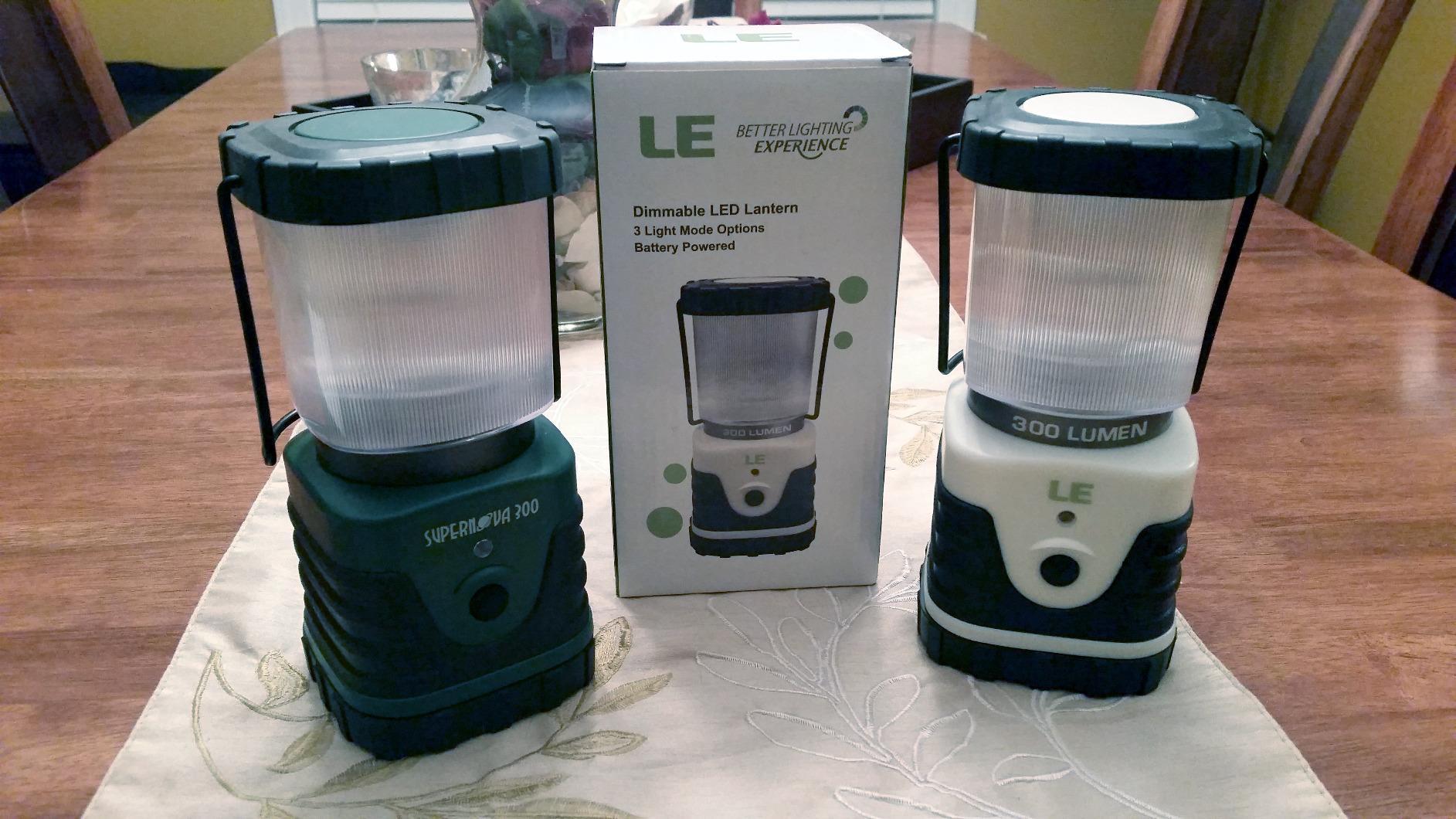
It runs about 12 hours on high from three D alkaline batteries. D cells hold far more energy than AA, so this is one of the few disposable-cell lanterns here where the runtime figure is honest at the brightness people actually use. IPX4 rating covers splashing rain or snow from any angle.
Mounting is flexible: a bottom hook plus a top metal handle let you hang it right-side-up or inverted, stand it on a table, or carry it. At 400 g it is a car-camping and home-outage lantern, not a backpacking one.
Good for rooms you need to work in
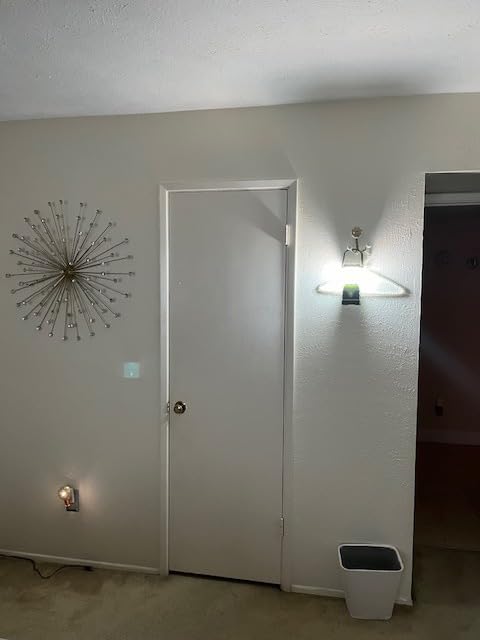
1000 lumens fills a room properly. In a kitchen where you are heating food, or a laundry room where you are dealing with water, that headroom matters. Reviewers describe it as the brightest emergency light they own, and for a one-night grid failure with no charging access, brightness plus D-cell endurance is a fair trade.
The four modes also let you drop to a low warm setting overnight and hold the same battery through the next evening. That flexibility is what separates this from the smaller collapsible models.
What buyers complain about
The most common gripe is mechanical, not electrical: the twist-lock battery compartment sometimes needs the cells jiggled and re-seated before the lamp lights. Batteries are not included, so budget for a fresh set before first use.
Some users dislike the always-on blinking green locator LED, and there is no battery level indicator to tell you when to change cells. The 7.24-inch body is also bulky if you are carrying it far.
3. Lepro Rechargeable 1000-Lumen Lantern — Best Rechargeable All-Rounder
Lepro 1000LM LED Camping Lantern Rechargeable, 4400mAh, 4 Light Modes
1000 lumens
4400mAh rechargeable
12 hours warm white
Power bank
Pros
- Rechargeable 4400mAh cell
- Dimmable with warm and cool modes
- Dual top and base hooks
- Real power bank output
Cons
- 550 g is heavy for backpacking
- Charging adapter not included
- Runs only 6.5 hours at full output
- Bulky cylindrical body
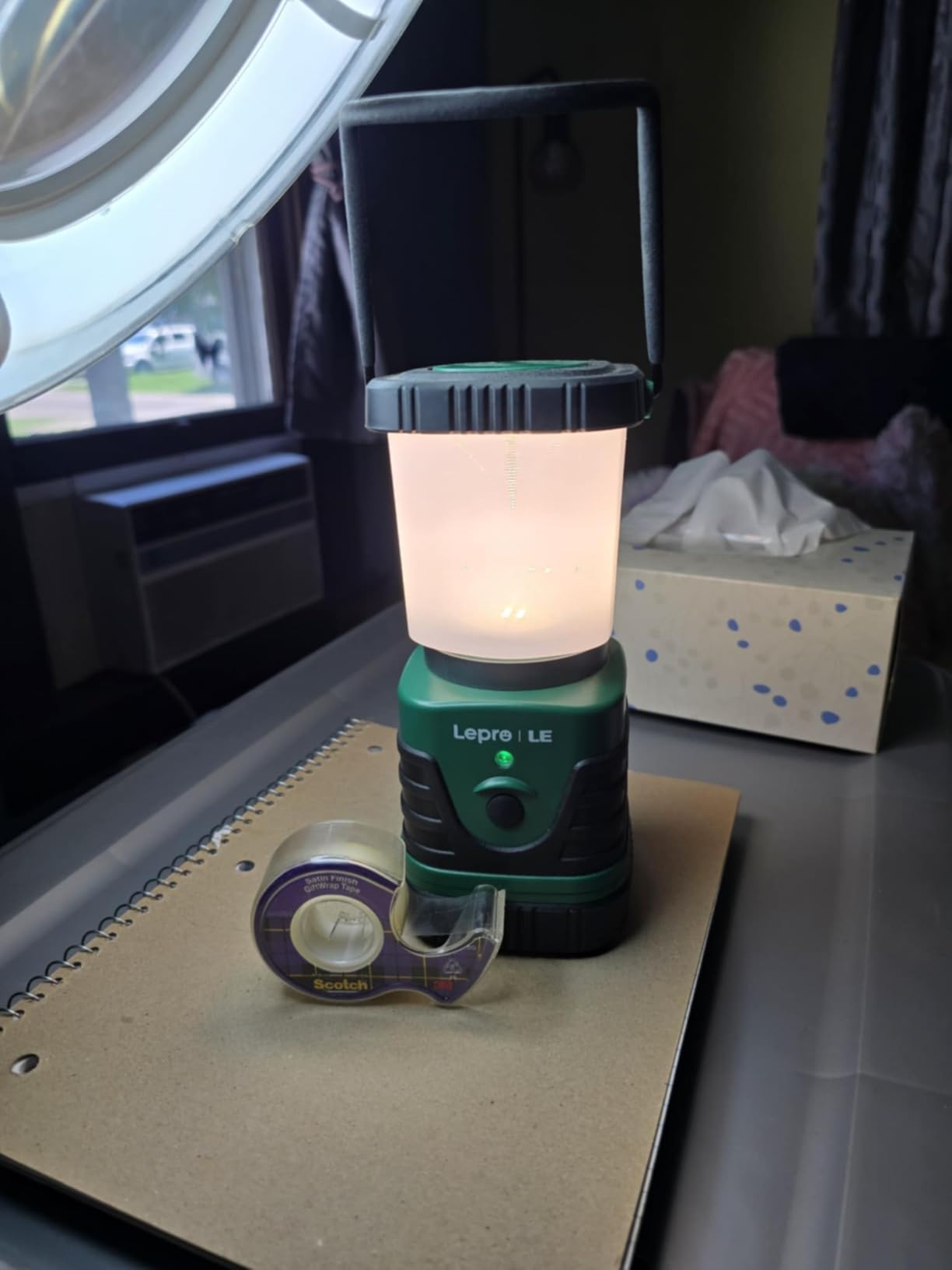
This is the rechargeable lantern I would put in a kit for a household that still has power to charge from most of the time. Over 33k reviews at 4.6 stars, the 4400mAh cell is the feature owners point to first, because it removes the recurring battery cost entirely.
Runtime breaks down by mode: 12 hours on warm white at 300 lumens, 8 hours on daylight at 700 lumens, and 6.5 hours on combined at 1000 lumens. Those numbers are far more useful than a single headline figure, and the warm-white setting is what you would actually run overnight.
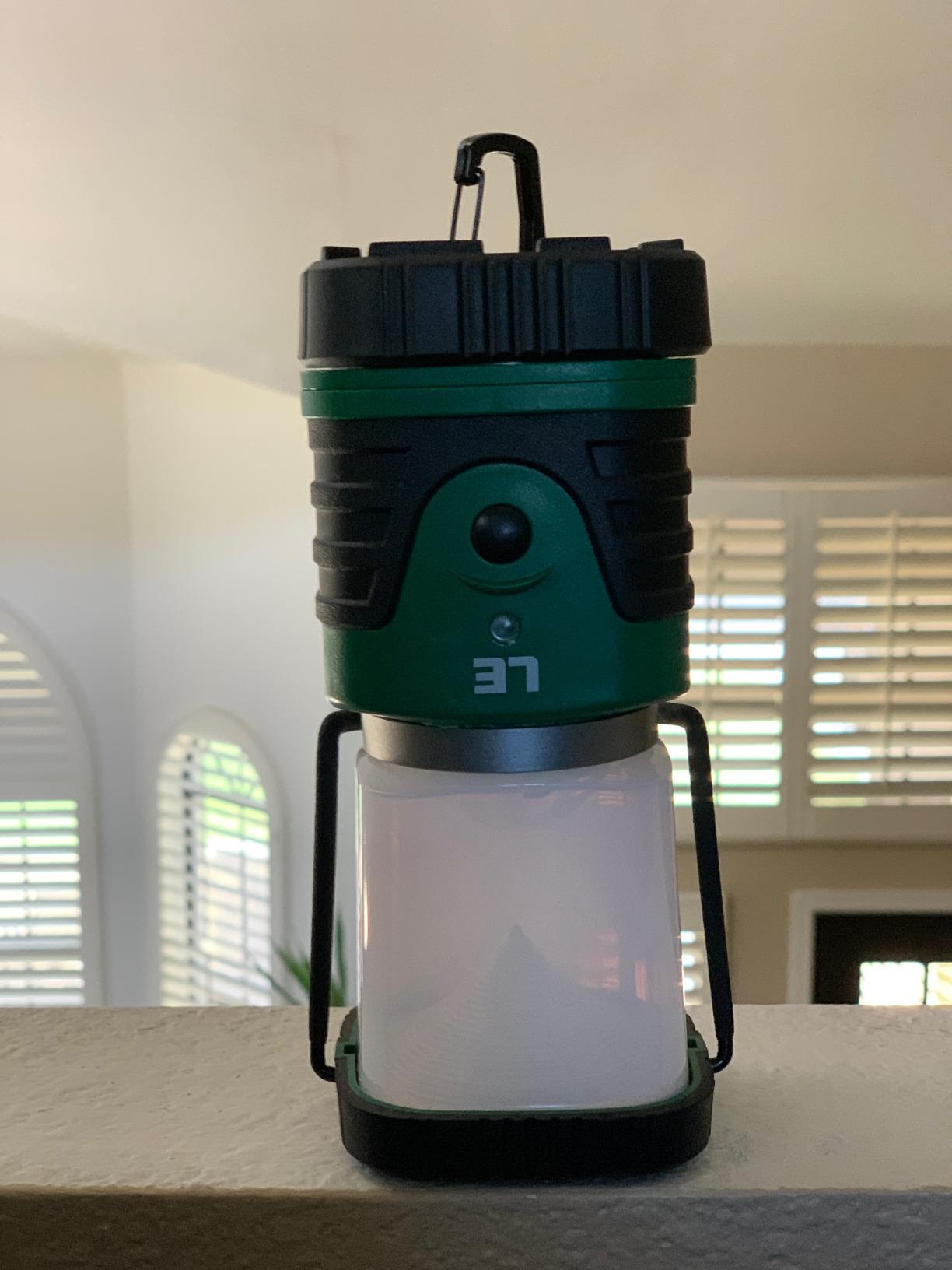
Short press switches between 6000K white, 3100K warm, combined, and flash; long press dims brightness continuously. The 3100K warm mode gets specific praise for reading, which matters when a blackout lands in the evening and the kids are awake.
It also doubles as a power bank for phones over the included Type-C cable, and the top hook plus base hook let you hang it right-side-up or inverted for tent-ceiling light. IPX4 water resistance handles rain and spilled drinks.
Why the power bank matters during a blackout
A dead phone is an emergency communication problem before it is a convenience problem. Reviewers single out the power bank function as a genuine bonus during an outage, and it works from the same 4400mAh cell that powers the lamp. A Type-C cable is included; the 5V DC adapter is not.
Because it recharges over USB, it is also the natural companion to a solar generator for winter power outages, which handles the bigger loads this lantern cannot.
Limitations worth knowing
At 550 g with a 7.8-inch body, this is a home and car-camping lantern. It is one of the heavier lanterns in this roundup, and the cylindrical shape takes real space in a pack.
If you leave it unused for months, note that a lithium-ion cell sitting at partial charge for long stretches is worth topping up every few months. The manufacturer guidance for comparable built-in cells is a recharge every three to six months, which is also why keeping a battery-only lantern alongside it is not a bad idea.
4. LE Rechargeable Lantern Flashlight — Best for Searching Outside
LE Rechargeable LED Lantern, Camping Essentials, 1000LM, 5 Light Modes, IPX4 Waterproof, 3600mAh, Lantern Flashlight for Hurricane Emergency, Hiking, Home and More, USB Cable Included
1000-lumen flashlight head
Red flashing sidelight
3600mAh cell
500 m throw
Pros
- Flashlight and lantern in one body
- Red flash mode for night vision and signalling
- Power bank with battery level indicators
- Shoulder strap for carrying
Cons
- Only 2.2 hours at full 1000 lumens on the head
- Bulky at 0.72 kg
- Bulkier than a plain lantern
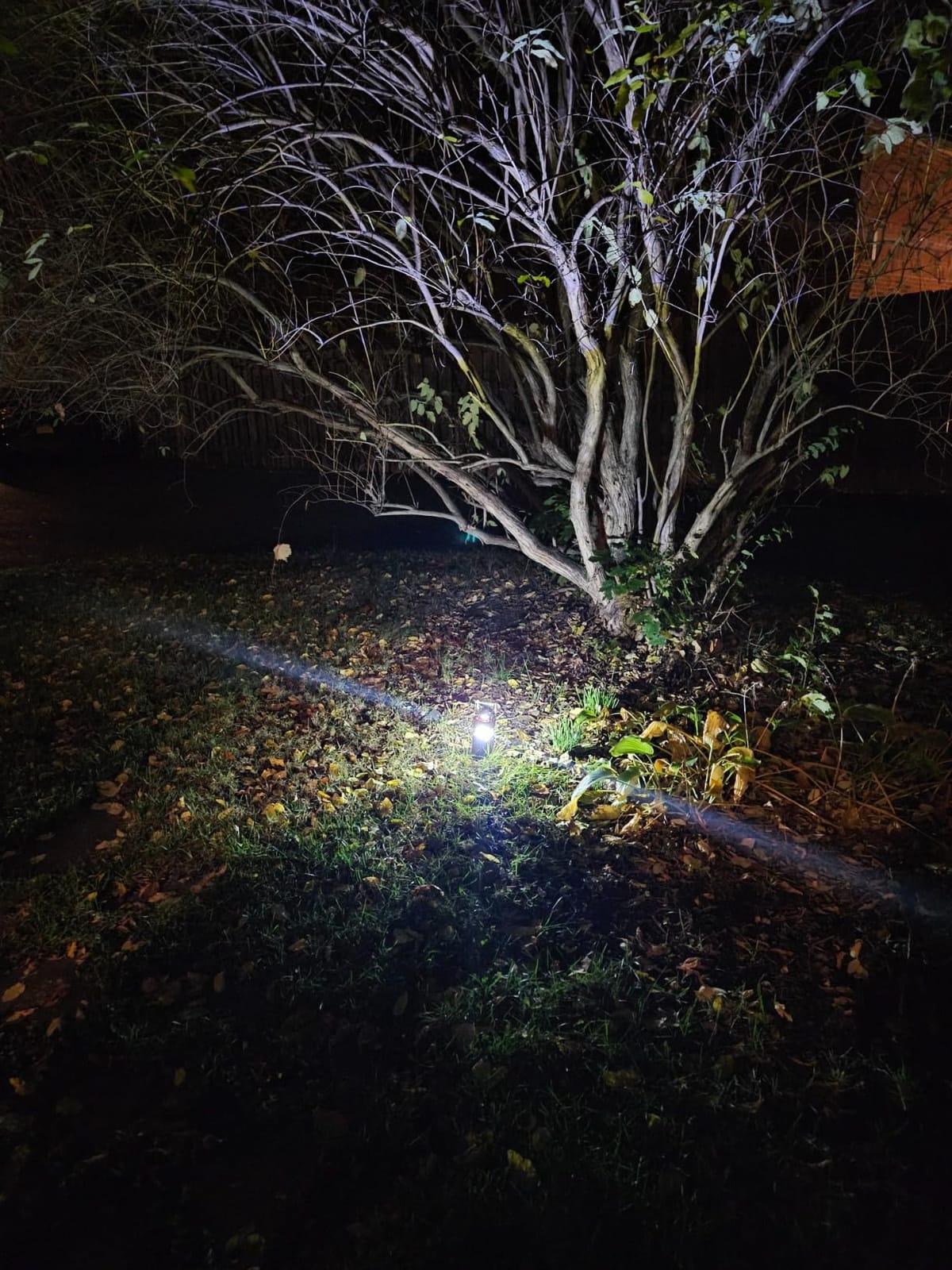
Two-in-one designs usually mean compromise. This one does not, and it is the only unit here that throws light 500 meters. The Cree XML LED head hits 1000 lumens, and the side lantern panel handles everything closer to home.
Owners value it for exactly the reason an outage is stressful: when the power goes out, you need to find the breaker, check the sump pump, or walk to a neighbour’s house in the rain. A throwable flashlight answers that; a dome lantern does not.
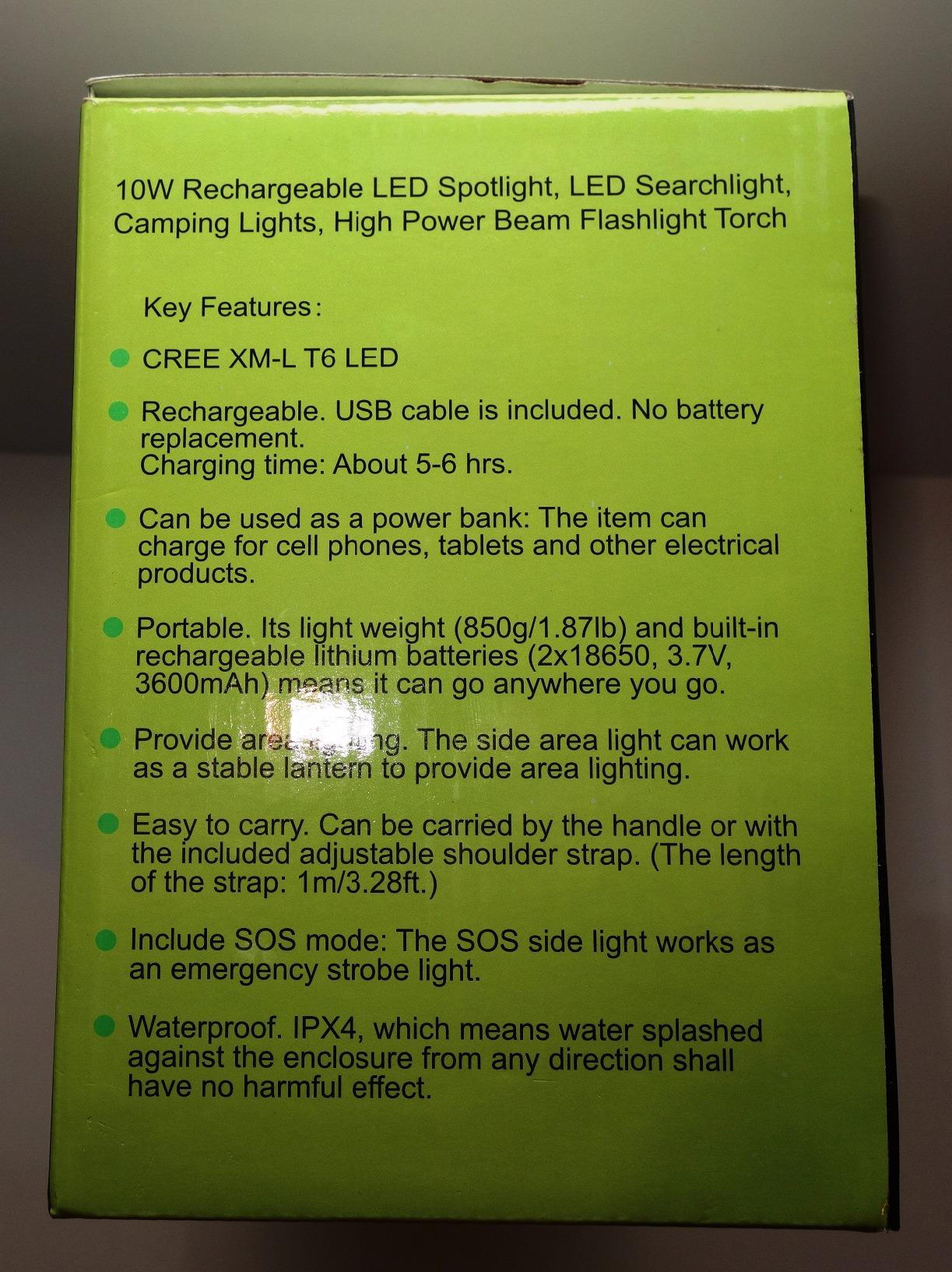
The runtime split is worth reading carefully. Headlight mode gives 1000 lumens for 2.2 hours or 280 lumens for 4.6 hours. The side lantern gives 150 lumens for 6.3 hours, 70 lumens for 12.7 hours, or a red flashing mode. The red setting preserves night vision and doubles as an emergency beacon visible from a distance.
The 3600mAh rechargeable cell charges over the included USB cable and outputs power to a phone, with blue base indicators showing remaining level. That indicator is more useful than it sounds, because it is how you know whether to conserve or top up.
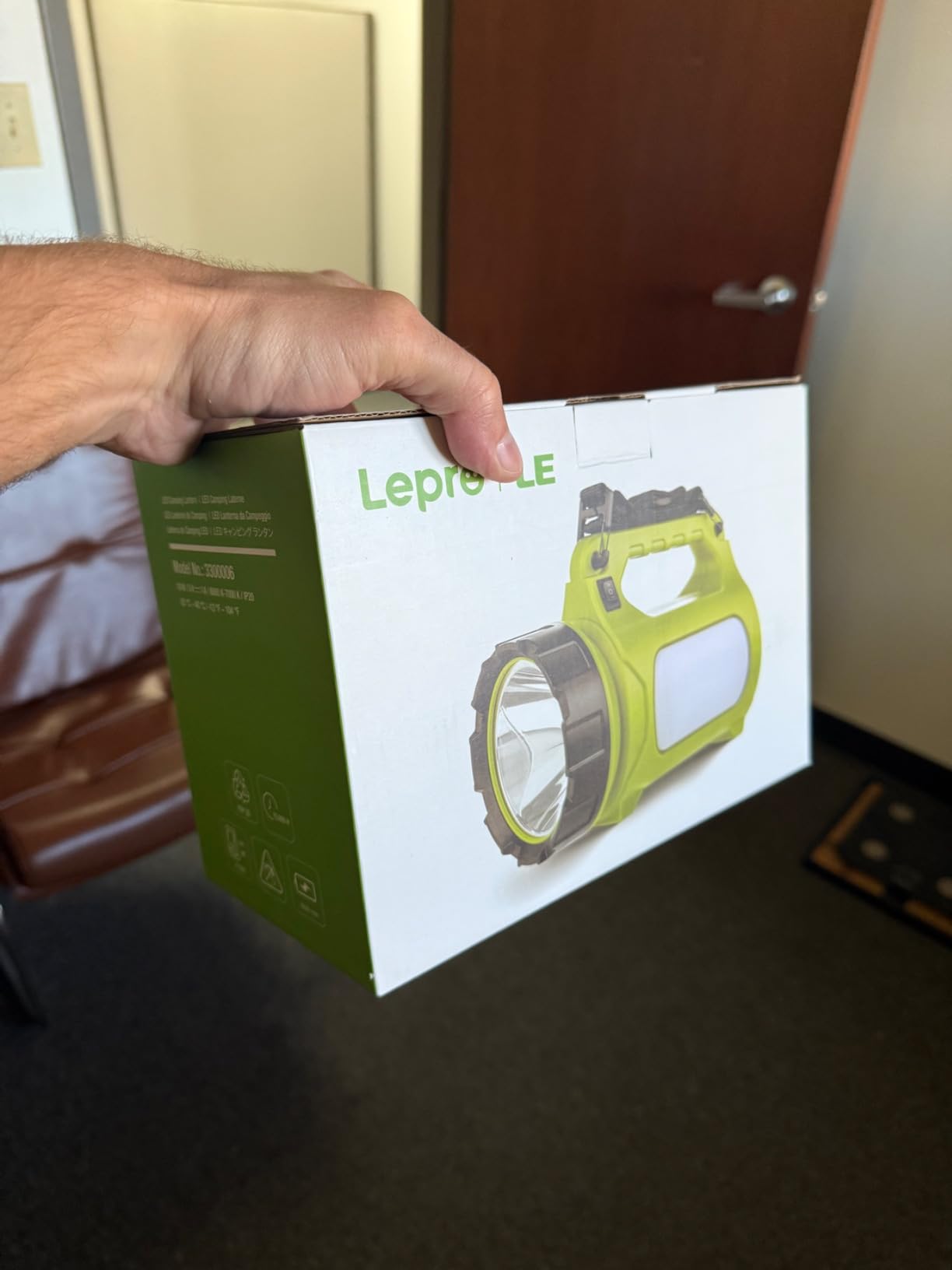
Where a flashlight head changes the game
During a multi-day outage, most of your lighting is task lighting: a hallway, a stairwell, a basement, a car trunk. The side lantern handles all of that for up to 12.7 hours on low. The head is for the ten minutes when you need to see past the property line.
The adjustable shoulder strap and large handle make it easy to carry over long distances, which is also why it doubles as a car-camping light. IPX4 water resistance covers the weather side of an outage.
Where the trade-offs show
At 0.72 kg it is one of the heavier units in this roundup. If you are moving it between floors of a house several times a night, you will notice the weight.
The 2.2-hour full-output runtime on the head is the real limit. Nobody runs a flashlight head at 1000 lumens for hours, but the spec is worth knowing so you are not surprised. It is also bulkier than a plain lantern, so less convenient for a small tent.
5. EZORKAS 2-Pack Dual-Power Lantern — Top Rated, Rechargeable and Battery Backed
2 Pack Camping Lanterns Camping Essentials Tent Lights Camping Accessories
Dual power
USB rechargeable plus 3 AA backup
Magnetic base
Red SOS
Pros
- Highest rating in the group at 4.8
- Rechargeable and AA backup in one
- Magnetic base for hands-free use
- Red strobe and SOS signalling
Cons
- AA spares not included for the backup path
- Lower output than 1000-lumen models
- Water resistant but not submersible
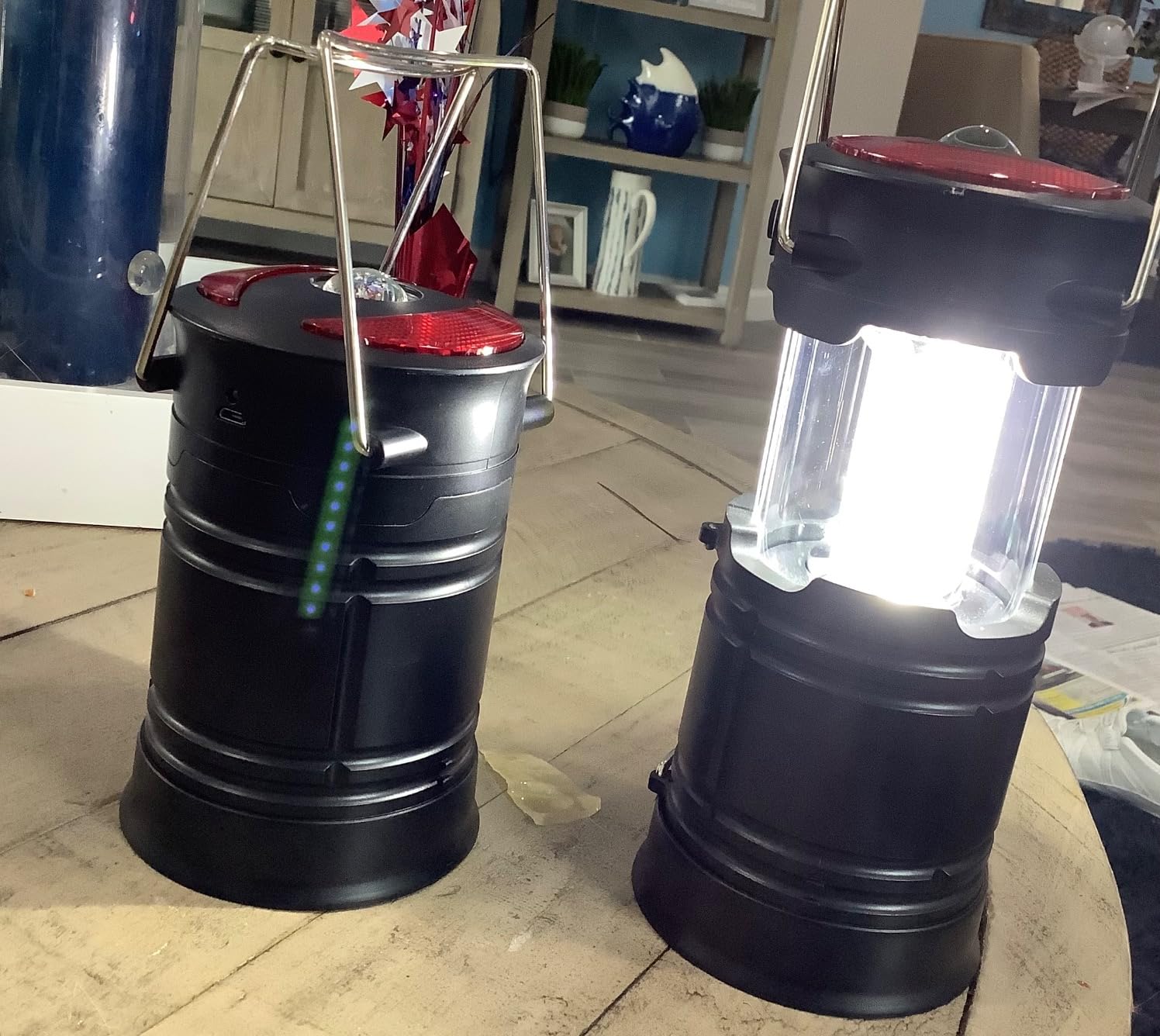
The highest rating in the group at 4.8, this is also the only lantern here that solves the pass-through problem properly: it runs off a built-in rechargeable cell, or off three AA batteries when USB is unavailable.
That dual-power design is the answer to the most common complaint forum owners raise about rechargeable lanterns. Most of them are useless during the first hours of an outage because they need a charger that is itself dead. This one does not care.
COB bulbs give 360 degree coverage across four lighting modes, and the collapsible handle doubles as the on/off switch. Three strong magnets on the base stick to a car hood or a toolbox, which is genuinely useful when both hands are busy during a repair.
The red warning light runs a strobe and an SOS pattern, so it can signal for help or mark a road at night. The ABS body is water resistant for hurricane and rainstorm conditions. Two lanterns and two USB cables are in the box, with 24-month support behind them.
Why dual power changes the sizing math
Owners highlight the combination of a rechargeable cell plus a three-AA fallback as the decisive feature. It means one recharge buys you a full night, and a fresh set of cells buys you many more. A seven-day outage stops being a battery budgeting problem.
Output is lower than the 1000-lumen rechargeable models here, which is the honest trade. For room and campsite light at moderate settings, that difference matters less than the resilience.
What to know before buying
AA batteries are not included for the backup path, so keep a supply of your own. Reviewers note the output sits below the big rechargeable units, so it is not the choice for lighting a yard.
It is water resistant, not submersible. And while the magnetic base is excellent, the fold-out handle is the switch, so do not set it swinging from a magnet in a strong gust and expect it to stay on.
6. XTAUTO Solar USB 4-Pack — Best for Solar Charging
Collapsible Portable LED Camping Lantern XTAUTO Lightweight Waterproof Solar USB Rechargeable LED Flashlight Survival Kits for Indoor Outdoor Home Emergency Light Power Outages Hiking Hurricane 4-Pack
Solar and USB charging
1600mAh per lantern
25 hours claimed
4-pack
Pros
- Solar plus USB means no disposables needed
- Four lanterns for staging room by room
- Collapses to phone size
- Folding handle for hanging
Cons
- Build feels cheap and delicate
- No battery level indicator
- Bulky as a handheld flashlight
- Some lanterns arrive dead
This is the only solar-charging option in the roundup, and the four-pack format is the more interesting feature. Buyers in hurricane-prone areas stage one lantern in each room before an event, which is exactly the strategy that keeps a household from moving through the dark.
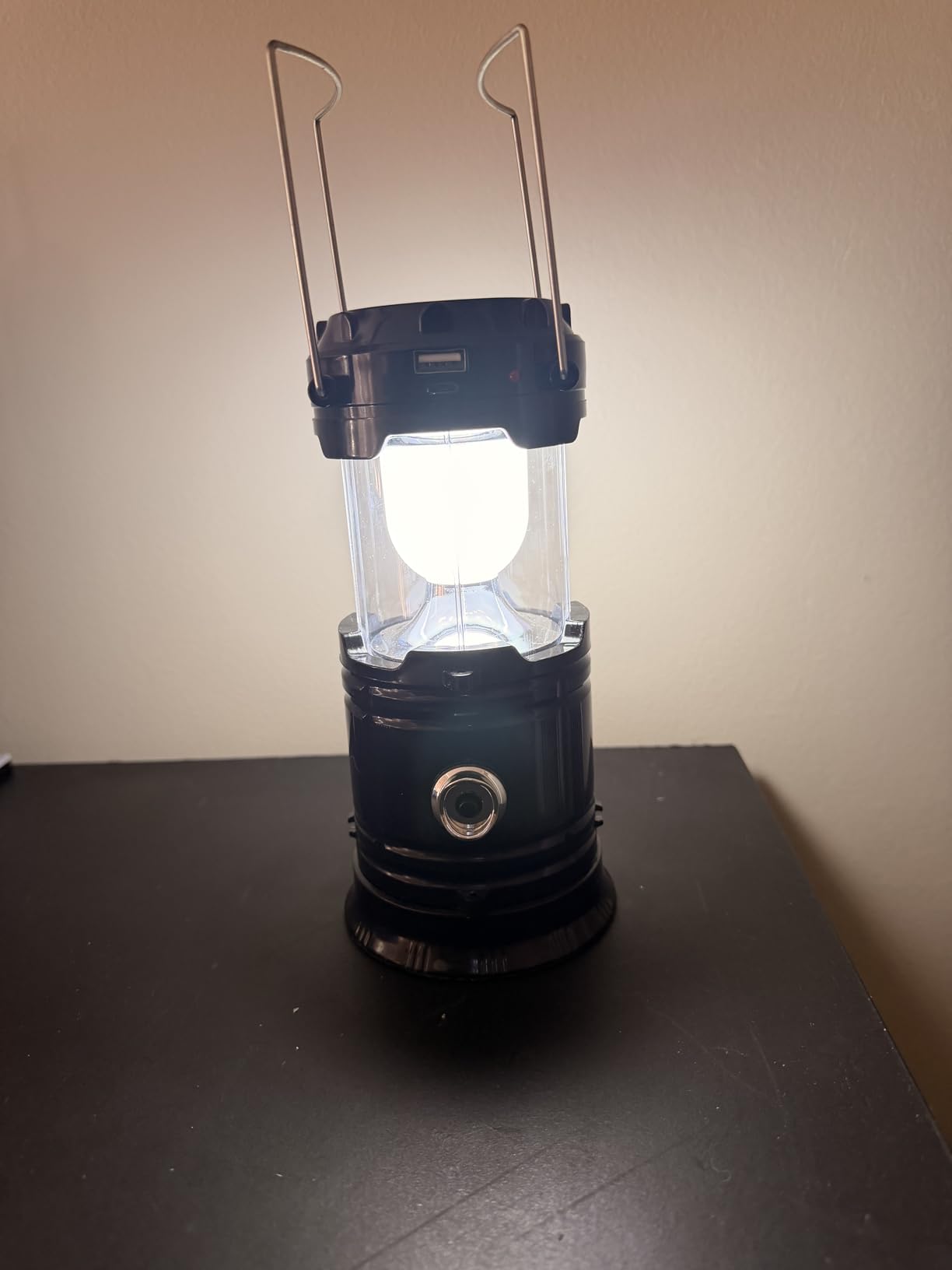
Each unit has a 1600mAh battery that charges by solar panel or USB with overcharge protection, and the listing claims over 25 hours of light on a full charge. Six plus one LED chips give 360 degree visibility, with brightness set by how far you extend the body.
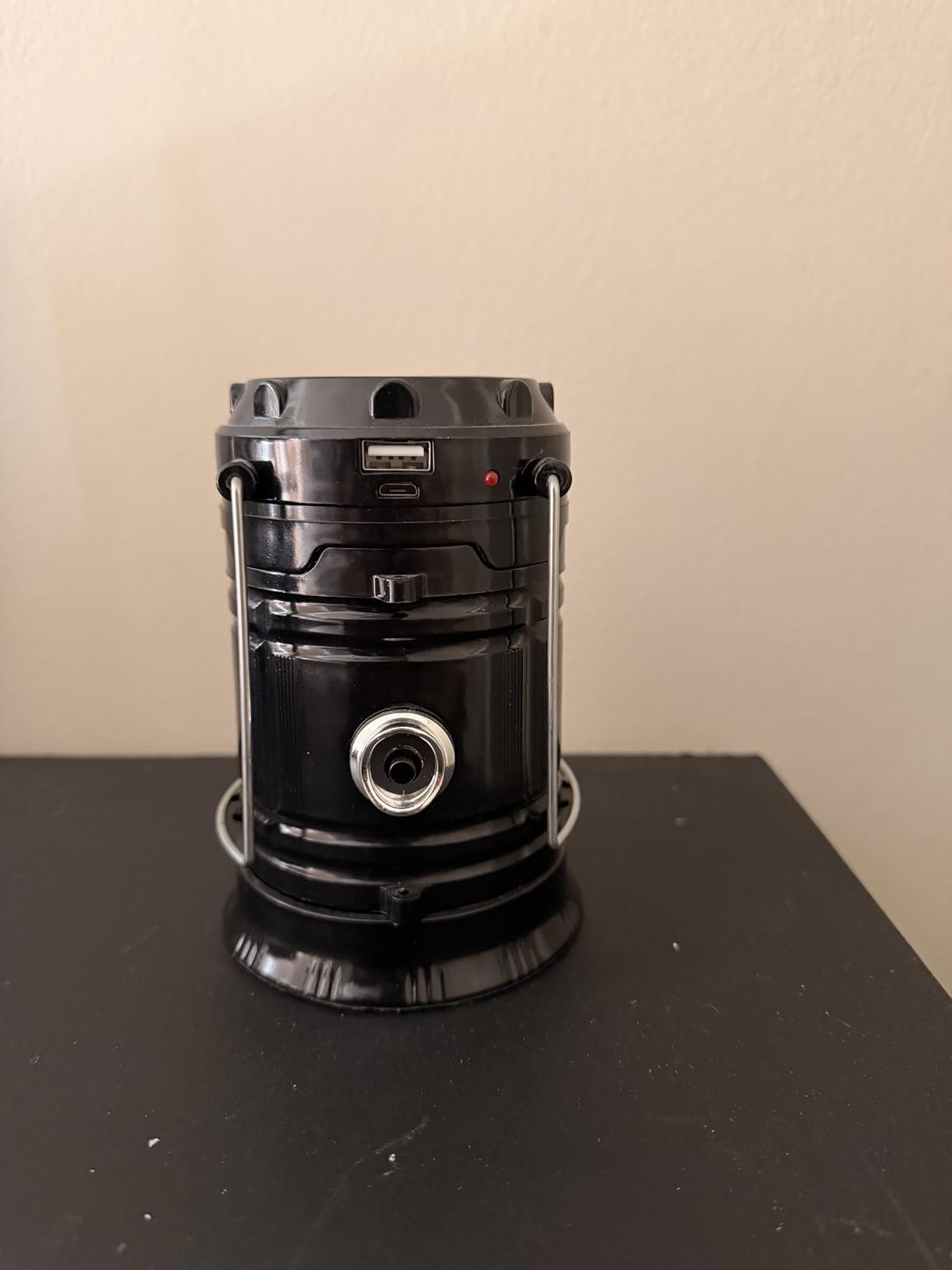
The body collapses to phone size with a folding hanging handle, so it works as a lantern or a flashlight. Reviewers mention one unit lighting an entire 10-person tent, and the ABS shell is described as water, heat, and freeze resistant. At 12500+ reviews and 4.5 stars, this is among the lowest-rated products here, and the gap tells you something.
Real-world runtime lands closer to one or two hours at full output than the headline figure, which is the pattern across almost every lantern in this category.
What solar charging does and does not do
Forum owners ask this constantly, and the honest answer is that solar input is a trickle, not a plan. The panel tops up a lantern over days of daylight and helps you get through a second night. It will not rescue you the morning after a storm with heavy cloud cover, which is exactly when you need it.
Treat solar as a supplement to USB charging from a car or battery pack, never as the primary path. If you want serious off-grid power, a solar generator for winter power outages handles the loads a lantern never could.
Where this pack disappoints
Several buyers warn against drops and rough handling because the build feels cheap and delicate. There is no battery level indicator, so you are guessing when it needs a charge, and occasional units arrive dead or fail to hold a charge.
Output reads closer to a bright nightlight than a hurricane lantern at the top end, and the body is bulky in the hand with no side grip. At 1.09 kg for the four-pack, it is a home kit rather than a pack-weight choice.
7. Lichamp 4-Pack 350-Lumen Lantern — Best Multi-Room Starter Pack
Lichamp LED Camping Lantern, 4 Pack Battery Powered Flashlight for Power Outages, Portable Collapsible Hanging Light Essential for Home, Outdoor, Emergency Lamp Survival Kit Gear for Hurricane, Gray
350 lumens COB
30 hours on 3 AA cells
Four per pack
Pull-handle switch
Pros
- Four lanterns spread across a home
- COB light is softer on the eyes
- Collapses flat for storage
- Switchless pull-to-dim control
Cons
- 350 lumens is modest
- AA batteries not included
- Battery only with no recharge option
- 9.56-inch body is bulky
This four-pack is the most direct way to fix the problem that matters most in a blackout: one dark room. Nearly 11000 reviews at 4.7 stars, and buyers describe treating it as household infrastructure rather than camping gear, placing one lantern per room before they need them.
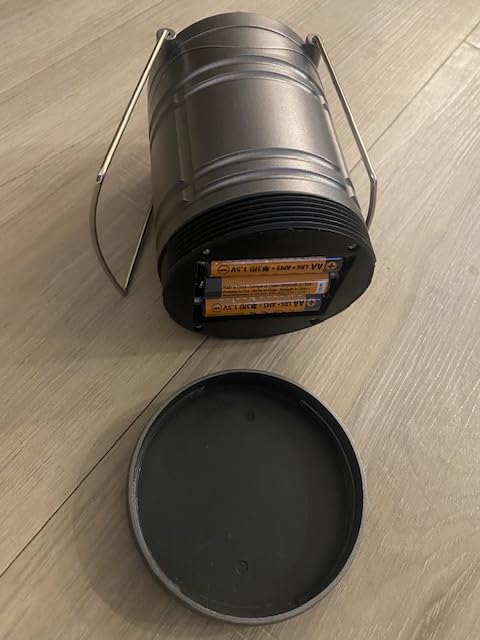
Thirty LEDs with COB technology produce 350 lumens across a 360 degree spread covering roughly 97 square feet. That COB panel is the reason the light reads as softer and easier on the eyes than a bare LED strip, which matters for anyone trying to sleep through the rest of the outage.
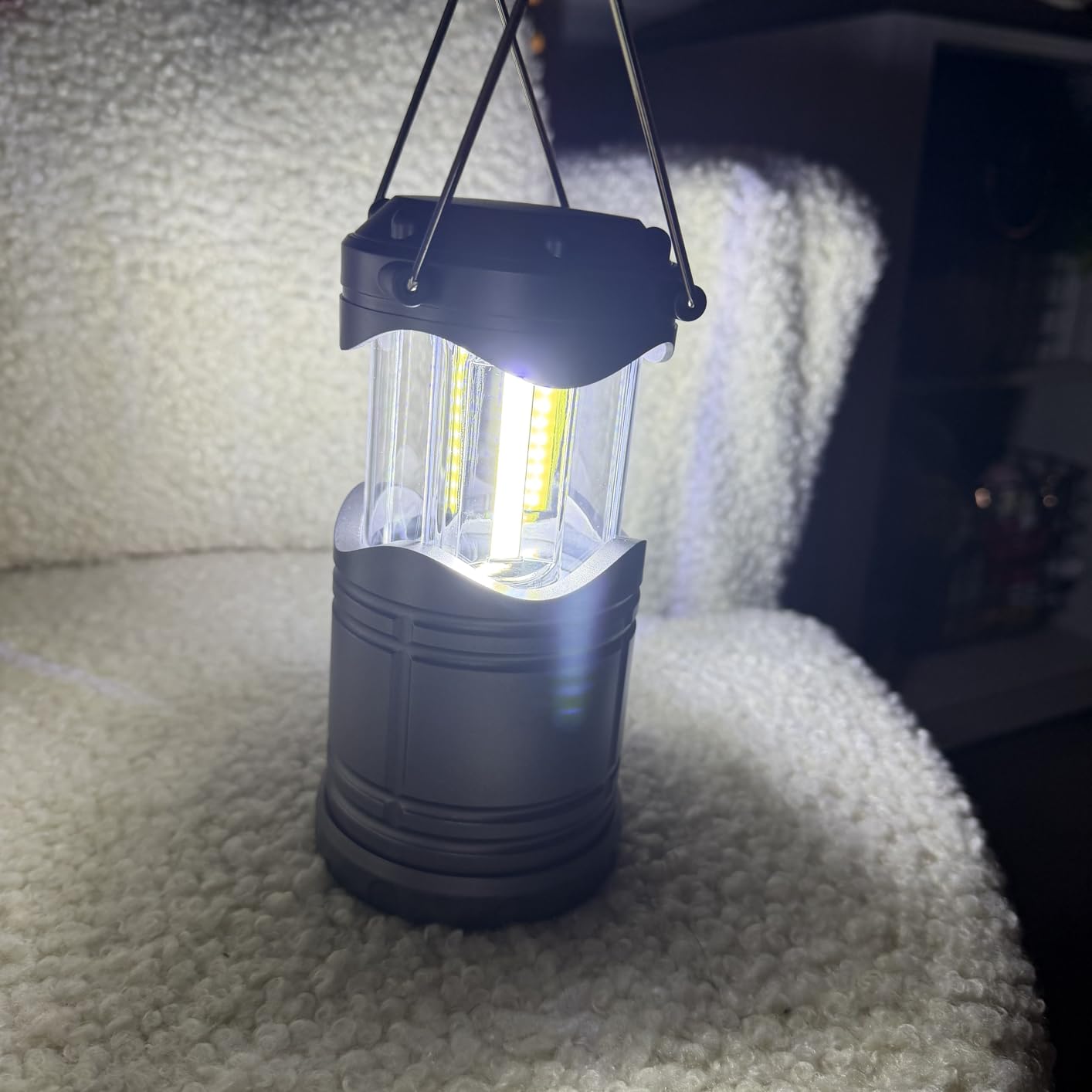
Each lantern runs about 30 hours on three AA cells, and the low-temperature fixture is safe to touch even when it has been burning all night. The body is military-grade water-resistant plastic that resists shock, and the foldaway handles let you hang or carry it.
There is no separate switch. Pulling the handle up turns it on and controls brightness, which removes the single most common failure point in the dark: hunting for a recessed button. Each unit collapses flat for a closet, garage, or car.
Why four mediocre lights beat one great light
People who have lived through a multi-day outage tend to say the same thing in forum threads: a household needs multiple lights spread across rooms, and two mid-tier lanterns beat one premium one every time. The reason is that you can see the shape of a doorway from the hall without moving.
At 350 lumens, one of these fills a bedroom, hallway, or kitchen table. It will not light a yard or a workshop, and reviewers are clear about that ceiling.
What the trade-off costs
Nine AA batteries are needed for the full set and none are included. There is no recharge path and no power bank output, so this pack relies entirely on having cells on hand.
The 9.56-inch body is the tallest non-rechargeable model here and will not fit a small backpack. If you want the multi-room strategy with USB charging, our rechargeable camping lantern picks cover that pairing.
8. GearLight 2-Pack 600-Lumen Lantern — Best for Hands-Free Work
GearLight Camping Lantern – 2 Portable LED Battery Powered Lantern with Magnetic Base and Foldable Hook for Emergency Use or Campsites, Essential Hurricane Survival Kit with Batteries – Black
600 lumens COB
Magnetic base
6 AA batteries included
Slide-open switch
Pros
- Batteries included so it works on arrival
- Magnetic base plus foldable hook
- Switchless slide-open design
- Owners report lighting an open-plan room
Cons
- Partial collapse does not reduce power draw
- No dimming option
- Larger rooms need more than the pair
- Included batteries wear out
COB LEDs give full 360 degree illumination up to 600 lumens, which puts this pair between the small collapsible models and the 1000-lumen rechargeable units. At 7800+ reviews and 4.7 stars, repeat buyers describe it as their third or fourth set, bought for parents as well as themselves.
Six AA batteries come in the box, so these lanterns work the moment they arrive with no extra purchases. That detail matters more in an emergency than any spec on the listing.
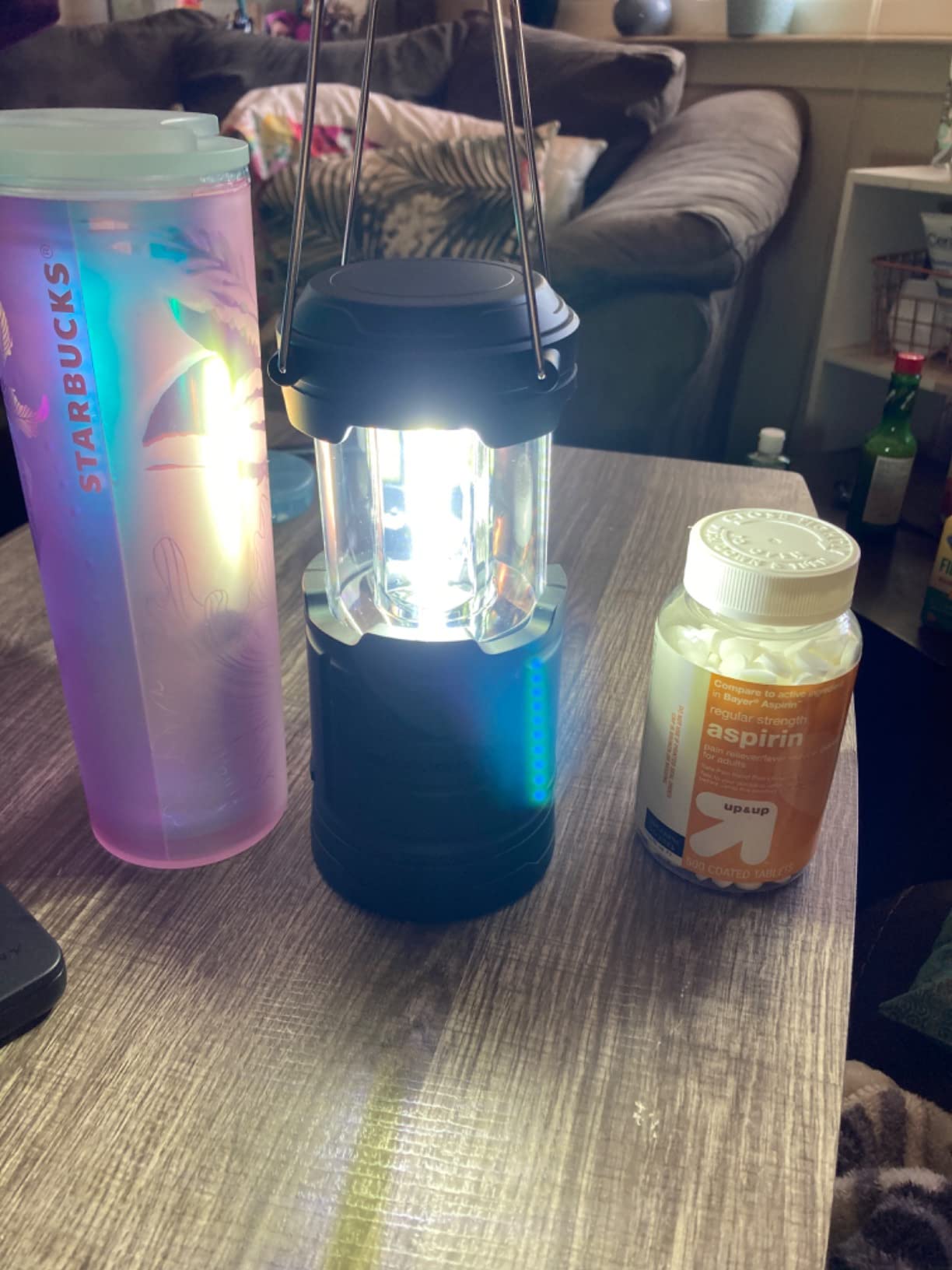
The magnetic base attaches to fridges, car hoods, and tool cabinets, giving you a light source you do not have to hold. Owners report one lantern lighting an open-plan living room and kitchen, which is a bigger claim than the 600-lumen figure suggests for ambient tasks.
The slide-open design means there is no switch to find in the dark, and a foldable hook adds a third mounting option. The body collapses and is rated water resistant for rain and snow.
Best for repairs and workbench tasks
The magnetic base is the deciding feature. During an outage you are often doing something with one hand occupied: a stuck sump pump, a dropped tool in a dark garage, a jump-start. Magnets on a steel surface solve that cleanly and free up both hands.
For a garage or basement where you want directional light rather than room-filling light, this pair is efficient with batteries.
Design quirks to plan around
The most common design gripe is that partly collapsing the lantern does not reduce power draw, so the full LED array stays lit. You get full brightness or off, with no dimming in between.
Two lanterns cover a room, but a large area needs more than the pair. And the included batteries wear out, so keep spares, particularly for a long event.
9. Energizer WeatheReady PRO-360 — Longest Runtime
Energizer WeatheReady PRO-360 LED Camping Lantern, Tent Light
500 lumens
Up to 150 hours
Glow-in-the-dark switch
3 D or 3 AA cells
Pros
- Up to 150 hours of runtime on high
- 500 lumens fills a large room
- Glow-in-the-dark switch finds controls in the dark
- IPX4 and 1 meter impact resistant
- Accepts D or AA cells
Cons
- Not rechargeable and needs batteries on hand
- Widest rating spread with a 6 percent one-star share
- 9.45-inch body is bulky
- No USB charging or power bank
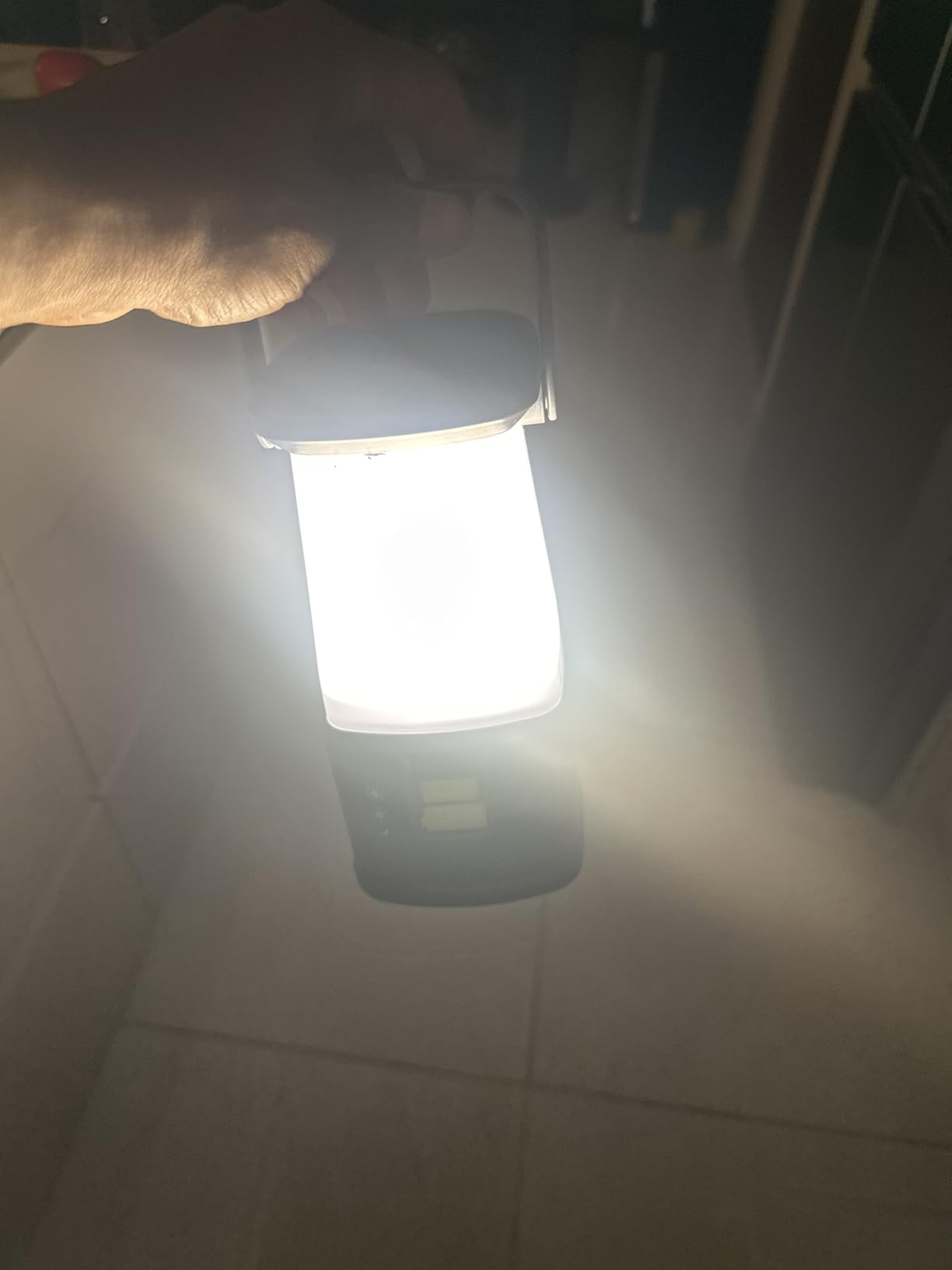
The runtime figure is the headline here: up to 150 hours. Nothing else in this roundup approaches it, and for a household without any way to recharge, that number is worth more than 1800 lumens.
500 lumens of all-around area illumination is bright enough to fill large rooms, and the advanced LED technology is rated up to 10x brighter than standard LEDs. It accepts three D or three AA batteries, so you can use whatever cells you actually have rather than a single format.
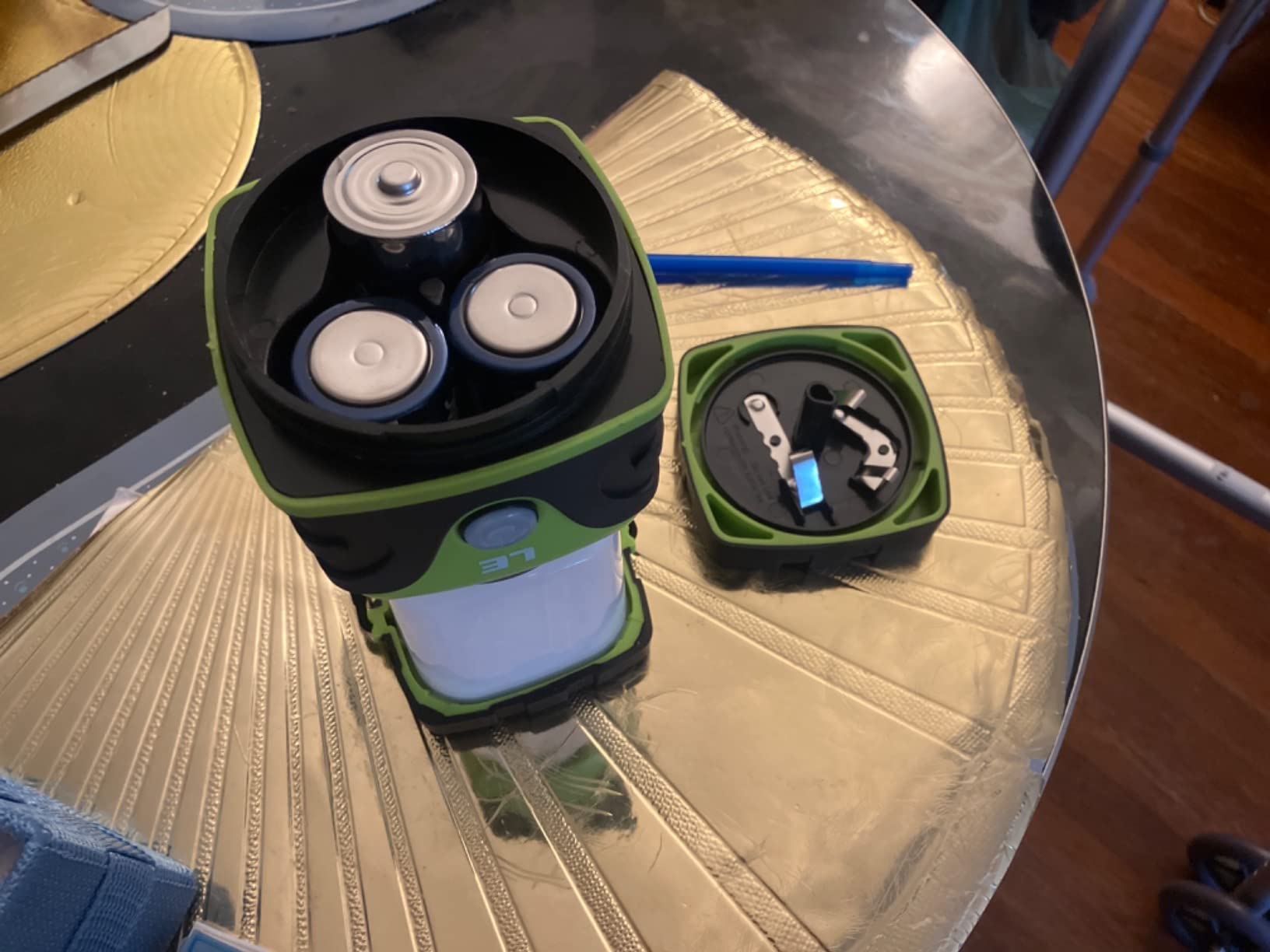
The glow-in-the-dark switch stays locatable in total darkness, which is a small design decision that solves a real problem. Finding the control on a black plastic lantern at 3am with no power takes genuine effort otherwise.
IPX4 water resistance and impact resistance to one meter handle rough handling. Reviewers emphasise the exceptional runtime, the room-filling output, and the switch as exactly what you want when the power is out.
Best for a long outage with no charging options
A 150-hour lantern on high changes the planning conversation. At three hours of light per evening, one set of cells covers weeks. That is the difference between a light you use for one night and a light you forget to check because you know it will be there.
For a hurricane kit, a winter storm kit, or an emergency box in a basement, that endurance is the whole value proposition. It is also why the D-cell format, despite being bulky, is a feature.
Reliability and size are the caveats
This unit has the widest rating spread in the group: 4.5 average, 76 percent five-star, and 6 percent one-star. That one-star share reflects a smaller but real group of reliability complaints, so buy a spare.
It is not rechargeable, so you need a supply of cells ready for a long event. At 9.45 inches tall it is bulky for backpacking, and there is no USB input or power bank output.
10. AYL Rechargeable 1800-Lumen Lantern — Best Raw Brightness
LED Camping Lantern Rechargeable, 1800LM, 4 Light Modes, 4400mAh Power Bank, IP44 Waterproof, Perfect Lantern Flashlight for Hurricane, Emergency, Power Outages, Home and More, USB Cable Included
1800 lumens
4400mAh rechargeable
Power bank
Four dimmable modes
Pros
- Brightest lantern in the roundup at 1800 lumens
- Rechargeable 4400mAh plus power bank output
- Four dimmable modes including warm
- Glare-reducing cover for close work
Cons
- Tallest body here at 10.25 inches
- Runtime well short of 12 hours at full output
- Built-in battery not user-replaceable
- Some buyers expect longer runtimes
Forty-six LED bulbs deliver up to 1800 lumens, more than any other lantern here. If you need to light a patio, a yard, or the interior of a car in a storm, this is one of the few here that does it from a single unit.
The built-in 4400mAh rechargeable battery gives up to 12 hours of light, and the lantern functions as a power bank for smartphones and tablets. Four dimmable modes cover daylight, warm, both, and flash, adjusted through the on/off switch.
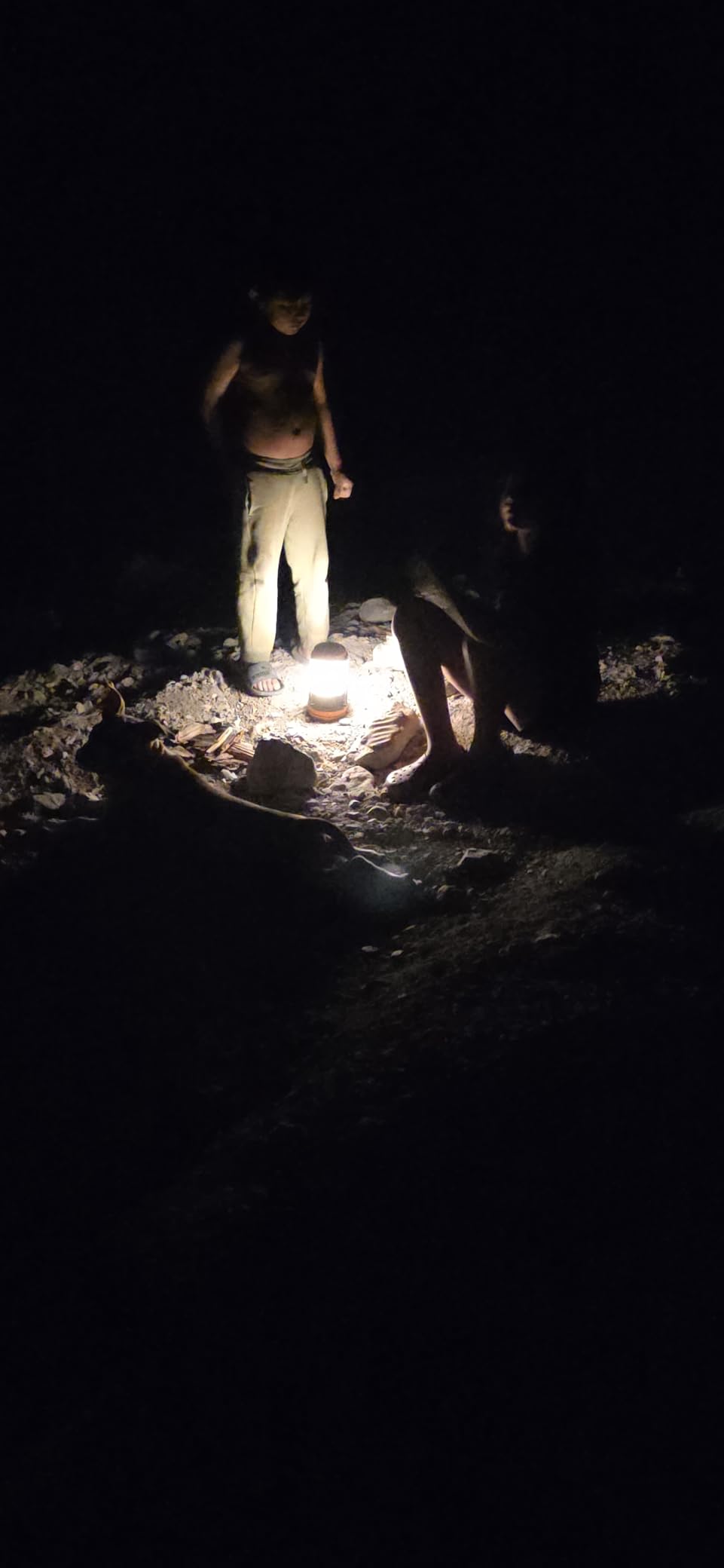
The glare-reducing cover softens the light for close-up tasks, which matters because 1800 lumens at arm length is genuinely uncomfortable without diffusion. The slip-proof handle supports hanging and hands-free use, and the IP44 body covers wet weather.
At 6100+ reviews and 4.7 stars, reviewers single out the brightness advantage and the combination of rechargeable battery with power bank, which covers a phone during a long outage. Manufacturer guidance is to recharge every three to six months when not in regular use.
When maximum brightness is the right call
Brightness wins in a small number of situations: clearing a downed line, checking a crawlspace, working in a garage with no other light, or finding a vehicle on a dark road. In those moments, no amount of runtime matters if you cannot see.
The warm mode also makes this a reasonable indoor lantern for a living room, and the power bank output is the same class as the Lepro rechargeable above.
Where the spec sheet overpromises
Runtime falls well short of 12 hours when run at full 1800 lumens, and reviewers say so plainly. Treat 12 hours as a low-mode figure, which is how these numbers are always meant to be read.
At 10.25 inches tall it is the largest body here and awkward to pack. The built-in battery cannot be replaced by the user, so once the cell ages out, the lantern is finished. That is the strongest argument for pairing it with a battery-only unit rather than trusting it alone through a week-long outage.
How to Choose a Camping Lantern for a Power Outage
Size the runtime to the length of the outage
Most runtime claims are quoted on the lowest setting, which is dimmer than the light you would actually choose at 3am. The honest way to compare is to assume three to four hours of use per evening and work backwards.
For a one-night grid flicker, almost anything works. For a three-day event you want roughly 12 hours of light per day, so a 25-hour rated unit at low mode is adequate and a 50-hour unit is comfortable. For a seven-day outage, treat rechargeable cells carefully: a single lithium cell will not carry you if the outage outlasts the charge. Stage at least two battery lanterns, or a mix of both types plus a way to recharge from a car or battery pack.
Solar, USB, or battery cells
USB charging is the most reliable path as long as you still have power or a battery pack. Solar is a trickle that helps across several days of daylight but does nothing under storm cover, so rank it as a supplement. Hand-crank lanterns produce far too little power to charge a phone, which is a widely held misconception, and the crank on most models exists to trickle a dim LED rather than to restore a battery.
Battery cells look old-fashioned but they win in the specific scenario where everything else fails. A lithium-ion cell stored for months in a garage will age, while alkaline cells keep their charge on a shelf for years. Many owners in outage forums keep one rechargeable lantern and two battery-only lanterns as a hedge.
How many lumens a room actually needs
A hallway or bedroom needs 100 to 200 lumens of soft, warm light. A kitchen or living room wants 350 to 600. Lighting a yard, a garage, or the interior of a car needs 1000 lumens or more, which is where runtime collapses. Choose the lowest brightness that lets you move safely, then dim to it.
Buy two mid-range lanterns, not one premium one
This is the most consistent piece of owner advice we found across outage discussions. Light spread across rooms beats concentrated brightness in a single room, because you can navigate without moving. Two four-packs staged around a house will handle a week better than one superb lantern in the kitchen.
What to avoid
Be skeptical of marketplace listings advertising 3000 to 4500 lumens with no stated runtime on a named setting. Those figures are usually quoted at maximum and useless for planning. Look for the low-mode number and the name of the setting it was measured on.
Also watch for rechargeable lanterns with no pass-through charging, since they go dark the moment the outage begins, and for built-in cells with no replacement path. Both are common in the category and both are silent failures at exactly the wrong moment.
Frequently Asked Questions
Which rechargeable lantern is best for power outages?
For most households, a rechargeable lantern with a battery fallback is the best choice, because it works whether or not you have power to charge it. Among the rechargeable options we reviewed, the Lepro 4400mAh model offers 12 hours of warm-white light and phone-charging output, while the EZORKAS pair adds a three-AA backup path to USB charging.
How long do rechargeable lanterns last on a charge?
It depends entirely on the mode you use. A 4400mAh cell in our top rechargeable pick runs about 12 hours on warm white at 300 lumens, 8 hours at 700 lumens, and 6.5 hours at the full 1000 lumens. Always check the runtime for a named setting rather than a headline figure.
Can a rechargeable lantern charge a phone?
Several can. The Lepro rechargeable 4400mAh, the AYL 1800-lumen model, and the LE lantern flashlight all output power to a phone from the same internal cell that powers the light. Expect partial charges rather than a full one, and treat it as an emergency reserve rather than a daily power source.
Should I get a solar, USB, or hand-crank lantern?
USB is the most dependable option while you still have power or a battery pack. Solar only trickles a charge over days of clear daylight and does very little under storm cover. Hand cranks generate too little power to charge a phone and are best treated as an emergency trickle for a dim LED rather than a way to restore a battery.
How many lumens should I get for a camping lantern?
Around 100 to 200 lumens is enough for a bedroom or hallway, 350 to 600 lumens suits a kitchen or living room, and 1000 lumens or more is needed for a yard, garage, or car interior. Higher brightness shortens runtime sharply, so pick the lowest level that lets you move safely.
How many lanterns should a household keep for an outage?
At least two, spread across separate rooms, according to owners who have lived through multi-day events. Many recommend four for larger homes. Light in the hallway lets you navigate without moving through the dark, which matters more during the first hours than brightness in a single room.
Conclusion: Which Camping Lanterns to Buy for Power Outages
The Etekcity 2-Pack is our pick for the best camping lanterns for power outages, because over 50k reviews, included batteries, and 50 hours of runtime per lantern make it the one most likely to still work on day four. For the highest rating and the only rechargeable-plus-AA fallback combination, the EZORKAS pair is hard to beat. For a home with working power most of the time, the Lepro rechargeable 4400mAh lantern adds warm-white comfort and phone charging.
Whichever you choose, buy more than one, stage them in separate rooms now, and keep a supply of spare AA cells in the same closet. That preparation costs far less than discovering on night three which mode drains your battery fastest. Check our full camping lantern reviews for how these compare on camping performance alone.