
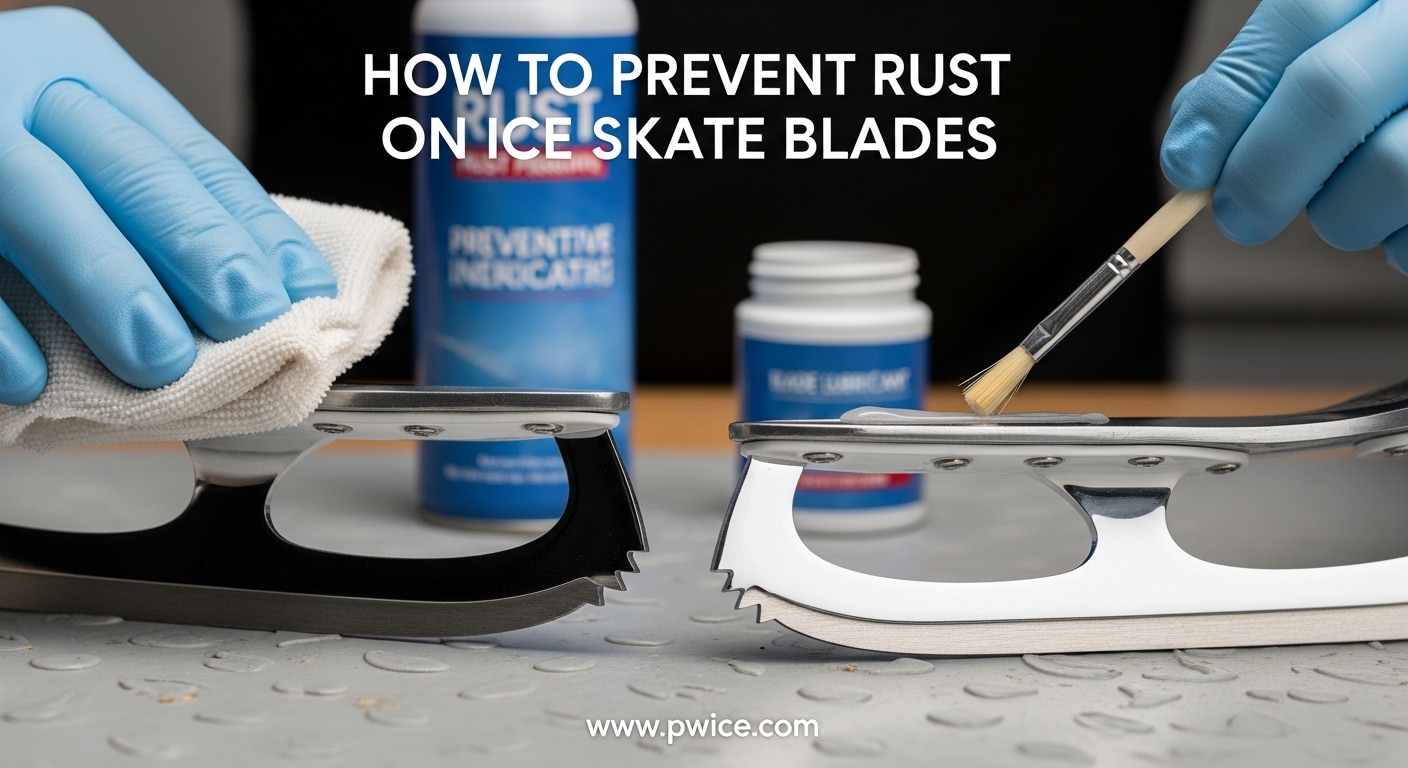
I learned about rust the hard way. After my first month of ice skating, I pulled my skates out of the bag to find the blades covered in orange spots. I had wiped them down after skating. I thought I did everything right. That rust cost me $85 for new blades plus another $40 for mounting and sharpening.
Preventing rust on ice skate blades is simple once you understand why it happens. Most skaters make the same mistakes I did. They wipe the blades and think the job is done. The truth is more complex. Rust can form while you are still on the ice, during the car ride home, or even hours after you put your skates away.
In this guide, I will show you exactly how to prevent rust on ice skate blades. You will learn the science behind blade corrosion, a step-by-step daily routine that actually works, and what to do if rust has already started forming. By the end, you will have a maintenance system that protects your investment and keeps your blades performance-ready for years.
Table of Contents
Why Ice Skate Blades Rust (The Science)
Ice skate blades are made from high-carbon steel. This material holds an edge exceptionally well for precise skating movements. The trade-off is that carbon steel rusts easily when exposed to moisture and oxygen.
Rust forms through a simple electrochemical reaction. When steel meets water and oxygen, oxidation occurs. This creates iron oxide, the reddish-brown compound we call rust. The process speeds up with salt exposure and temperature changes.
Thermal Cycling Creates Hidden Moisture
Here is what most guides do not explain. Blades actually collect moisture while you are skating. Your blades run at approximately 26°F, the temperature of the ice surface. When warm air from the rink hits these cold blades, condensation forms instantly. This is thermal cycling in action.
The condensation does not just sit on the surface. It seeps into microscopic imperfections in the steel. When you step off the ice, the temperature differential increases. More condensation forms. This is why simply wiping blades once is often not enough.
Why Your Blades Rusted Despite Wiping Them
Many skaters on Reddit report the same frustration. They wiped their blades thoroughly after skating. They still found rust the next day. The culprit is usually one of three things.
First, the blades were not allowed to reach room temperature before final storage. Cold metal in a warm bag creates a humid microclimate. Second, hard guards were left on during storage, trapping moisture against the steel. Third, the skates went into an enclosed bag immediately after wiping, preventing proper air circulation.
Step-by-Step Daily Rust Prevention Routine
This routine takes about five minutes total. The key is doing it in the right sequence with the right timing. I developed this system after talking to professional skate sharpeners and testing methods over three months of regular skating.
How to keep ice skate blades from rusting requires consistent action at three specific times: immediately after skating, during transport, and once you are home.
Step 1: Wipe Immediately at the Rink (0 minutes)
As soon as you step off the ice, grab a clean microfiber cloth or an old cotton T-shirt. Wipe each blade from toe to heel with firm pressure. Do not forget the sides of the blade and the mounting hardware. This removes the bulk of surface moisture.
Use a separate cloth or a fresh section for the second blade. A saturated cloth just moves water around. Keep a dedicated blade towel in your skate bag. Do not use it for drying your hands or face.
Step 2: Put on Hard Guards for Walking (1 minute)
Never walk on bare blades. Hard plastic skate guards protect your edges from concrete, rubber flooring, and debris. These guards are for walking only. They are not for storage.
Make sure the guards are dry inside before putting them on. Wet guards introduce moisture. Snap them securely over both blades. Check that they cover the entire blade length.
Step 3: Transport Home Properly (During Transit)
Place your skates in a ventilated skate bag. Avoid completely sealed compartments. If your bag has a separate blade section, use it. Position the skates so blades are not pressing against the boot material.
Do not leave skates in a hot car trunk. Temperature swings accelerate condensation. If you must transport them in a vehicle, bring them inside at your destination promptly.
Step 4: Remove Guards at Home and Let Blades Warm Up (10-15 minutes)
This step is where most skaters fail. When you get home, remove the hard guards immediately. Do not skip this. The guards trap any remaining moisture against the blade surface.
Place your skates in a dry area at room temperature. Allow 10 to 15 minutes for the blades to warm up completely. During this time, the metal releases trapped condensation. You will often see a light film of moisture form on the blade surface. This is normal. It is exactly what you want to happen before the final wipe.
Step 5: Wipe Again After Warm-Up (1 minute)
After the warm-up period, grab a fresh, dry cloth. Wipe each blade again thoroughly. This second wipe removes the condensation that released during the warm-up phase.
Pay special attention to the blade edges and the hollow groove between them. These areas hold moisture that the first wipe missed. If your cloth comes away damp, you know the warm-up step was necessary.
Step 6: Put on Soft Soakers for Storage (1 minute)
Now the blades are truly dry. It is time for soft soakers. These are absorbent fabric covers that wick away any microscopic moisture and protect blades from accidental bumps.
Slide the soakers over each blade. Make sure they cover the full length from toe pick to heel. Store your skates in an open, ventilated area. Never store them in an enclosed bag with soakers on.
Hard Guards vs Soft Soakers: Critical Distinction
This is the number one source of confusion among skaters. I see it constantly in forum posts. People store their skates with hard guards on and wonder why rust appears. Understanding the difference will save your blades.
| Feature | Hard Guards | Soft Soakers |
|---|---|---|
| Primary Purpose | Walking protection | Storage protection |
| Material | Hard plastic | Absorbent fabric (terrycloth/microfiber) |
| Moisture Handling | Traps moisture against blade | Wicks moisture away from blade |
| When to Use | Only when walking off-ice | After blades are completely dry |
| Rust Risk | High if left on for storage | Low (designed for storage) |
| Edge Protection | Prevents damage from walking | Prevents accidental nicks and bumps |
Hard guards create a sealed environment around the blade. Any moisture trapped inside has nowhere to go. It sits against the steel for hours. This is a guaranteed rust formula. I learned this the expensive way.
Soft soakers are breathable. They absorb residual moisture and allow air circulation. This is what you want for storage. Some advanced soakers even contain VCI (Vapor Corrosion Inhibitor) technology that actively prevents oxidation.
Proper Storage Techniques
Where and how you store your skates matters as much as how you clean them. The storage environment directly affects condensation levels and rust formation.
Remove From Bag Immediately
When you get home, take your skates out of the bag right away. A closed skate bag creates a humid microclimate. Moisture from the boot liners and any residual blade moisture gets trapped. This humidity attacks the blades continuously.
Think of it like a greenhouse for rust. The bag traps air, body heat from the liners creates warmth, and the cold blades create condensation points. It is the perfect rust environment.
Ideal Storage Environment
Store skates in a cool, dry place with good air circulation. A closet shelf or boot rack works well. Avoid basements, garages, and areas near heating vents. These locations have temperature swings or high humidity that promote rust.
If you live in a humid climate, consider placing moisture-absorbing packets near your skate storage area. These inexpensive silica gel packs reduce ambient humidity.
Ventilated Skate Bag Importance
Your skate bag should have mesh panels or ventilation holes. Enclosed bags with solid panels trap moisture. If your current bag is fully enclosed, leave it unzipped when storing skates between sessions. Better yet, store skates outside the bag entirely.
After skating, leave your empty bag open to dry. Boot liners release moisture for hours after use. A closed bag with damp liners becomes a breeding ground for odor and humidity.
Long-Term Storage (Off-Season) Protection
Storing skates for weeks or months requires additional protection. The standard daily routine is not enough for extended idle periods. Blades can develop rust even in dry environments over time.
Deep Clean Before Storage
Before putting skates away for the season, give the blades a thorough cleaning. Use a slightly damp cloth to remove any built-up residue. Dry completely with a fresh cloth. Apply a rust removal step if any surface spots have formed.
Clean the boot area too. Remove laces and insoles. Let everything air out completely. Any dirt or moisture left on the boot can migrate to the blade mounting area.
Apply Protective Coating
Coat the blades with a thin layer of acid-free oil or petroleum jelly. These substances create a barrier between the steel and ambient moisture. They prevent oxidation during idle periods.
Apply the coating with a clean cloth. Cover all blade surfaces including the sides and edges. Do not forget the mounting hardware area. Wipe off excess to avoid attracting dust.
VCI Technology for Maximum Protection
VCI (Vapor Corrosion Inhibitor) soakers provide the best long-term protection. These specialized covers release corrosion-inhibiting vapors that form an invisible protective layer on the metal surface. They work for up to five years according to manufacturer specifications.
Standard terrycloth soakers are fine for daily use. For off-season storage, VCI technology offers superior protection. The Zerust brand is widely used by competitive skaters for this purpose.
Periodic Checks During Storage
Even with protection, check your blades every few weeks during off-season storage. Look for any signs of rust formation. If you spot early oxidation, address it immediately before it spreads.
This proactive approach prevents small problems from becoming blade-ruining issues. Five minutes of inspection can save you hundreds in replacement costs.
What To Do If Rust Appears (Removal Methods)
Rust happens to the best of us. Maybe you forgot your skates in the trunk overnight. Maybe you stored them with guards on by mistake. Whatever the cause, rust is not always a death sentence for your blades. The key is matching the removal method to the severity level.
Rust Severity Levels
| Severity | Appearance | DIY Removal | Professional Help |
|---|---|---|---|
| Surface | Light orange discoloration, wipes off easily | Yes – cloth wipe | Not needed |
| Light | Visible spots, slightly rough texture | Yes – steel wool/fine sandpaper | Optional |
| Moderate | Defined patches, gritty surface, some pitting | Yes – chemical methods | Recommended |
| Severe | Deep pitting, structural damage, flaking metal | No | Required |
Surface rust is cosmetic. Light rust affects appearance but not function. Moderate rust may affect performance. Severe rust compromises blade integrity and safety.
Method 1: Microfiber Cloth (Surface Rust)
For fresh, surface-level rust, a clean microfiber cloth may be all you need. Wipe firmly along the blade length. The rust should transfer to the cloth. If it removes easily, you caught it early.
Follow with a clean cloth and apply a light oil coating. Store properly with soakers. Check again in 24 hours to ensure no return.
Method 2: Steel Wool or Fine Grit Sandpaper (Light Rust)
For light rust that does not wipe away, use fine steel wool (0000 grade) or 400-grit sandpaper. Work in the direction of the blade length, not across it. Use light pressure and make several passes.
The goal is to remove oxidation without scratching the blade surface. Go slowly. Check your progress frequently. When the rust is gone, wipe clean and oil the blade.
Method 3: WD-40 or Bar Keepers Friend (Moderate Rust)
For more established rust, chemical assistance helps. WD-40 is a popular choice in the skating community. Spray a small amount on the blade. Let it sit for five minutes. Wipe with fine steel wool in circular motions. The rust should lift away.
Bar Keepers Friend is another favorite. Make a paste with the powder and a little water. Apply to the rusted area with a cloth. Rub gently for several minutes. Rinse thoroughly and dry immediately.
Method 4: DIY Home Remedies
White vinegar works as a mild acid to dissolve rust. Soak a cloth in vinegar and wrap it around the blade for 30 minutes. Remove and scrub with steel wool. Rinse and dry thoroughly.
Baking soda paste (three parts soda to one part water) can also lift rust. Apply the paste, let it sit for two hours, then scrub with a brush or steel wool. This method is gentler than vinegar.
When to Seek Professional Sharpening
Take your skates to a professional if rust has caused pitting, if the edges feel significantly damaged, or if DIY methods fail to remove the rust completely. A professional sharpener can assess whether the blades are salvageable.
Deep rust removal requires aggressive sharpening. This removes metal and can shorten blade life. A professional can determine if the blades can be saved or need replacement.
Quick Reference Checklist
Print this checklist and keep it in your skate bag. Run through it after every session until the routine becomes automatic.
After Every Skating Session:
- Wipe blades immediately at rink with dry cloth
- Put on hard guards for walking only
- Transport in ventilated bag
- Remove guards at home immediately
- Let blades warm up 10-15 minutes
- Wipe again with fresh dry cloth
- Put on soft soakers
- Store skates outside of bag in dry area
Weekly Maintenance:
- Inspect blades for early rust signs
- Clean soakers if dirty
- Check hard guards for cracks or moisture inside
- Wipe down boot exterior
Off-Season Storage:
- Deep clean blades thoroughly
- Apply acid-free oil or petroleum jelly coating
- Put on VCI soakers
- Store in cool, dry place with air circulation
- Check monthly for rust formation
Frequently Asked Questions
How to keep ice skate blades from rusting?
Wipe blades immediately after skating with a dry cloth, let them warm up for 10-15 minutes at home, wipe again to remove condensation, then store with soft soakers in a ventilated area. Never store skates in hard guards or enclosed bags.
Can you get rust off ice skate blades?
Yes, surface and light rust can be removed at home using a microfiber cloth, fine steel wool, or products like WD-40 or Bar Keepers Friend. For moderate to severe rust with pitting, professional sharpening or blade replacement may be necessary.
Is it normal for ice skates to rust?
Some surface rust is common, especially for beginners learning proper maintenance. Carbon steel blades rust easily when exposed to moisture. However, with proper drying and storage routines, rust should be minimal and easily managed.
Is it okay to skate with rusty blades?
Light surface rust does not affect skating performance significantly. However, moderate to severe rust with pitting creates an uneven edge that compromises control and safety. Deep rust can also weaken the blade structurally.
Can you remove rust from ice skate blades?
Surface rust wipes off with a cloth. Light rust removes with steel wool or fine sandpaper. Moderate rust responds to WD-40 or Bar Keepers Friend. Severe rust with deep pitting usually requires professional sharpening or blade replacement.
Can rusted ice skates be sharpened?
Yes, rusted blades can be sharpened if the rust is superficial. However, deep rust requires aggressive grinding that removes significant metal. A professional sharpener can assess whether the blades have enough material left for safe sharpening.
Conclusion
Learning how to prevent rust on ice skate blades is a skill every skater needs. The routine is simple once you make it a habit. Wipe at the rink, guard for walking, warm up at home, wipe again, and store with soakers. These five minutes after each session protect blades worth hundreds of dollars.
The science behind rust formation explains why partial measures fail. Thermal cycling creates condensation even after wiping. Hard guards trap moisture. Enclosed bags create humid microclimates. Understanding these mechanisms helps you avoid the mistakes that ruin blades.
If rust does appear, assess the severity first. Most surface rust removes easily with basic tools. Deep rust requires professional attention. The key is catching problems early before they compromise blade integrity.
Start implementing this routine today. Your blades will stay sharper longer, perform better on the ice, and last for years instead of months. The small time investment pays off in money saved, performance maintained, and frustration avoided.