
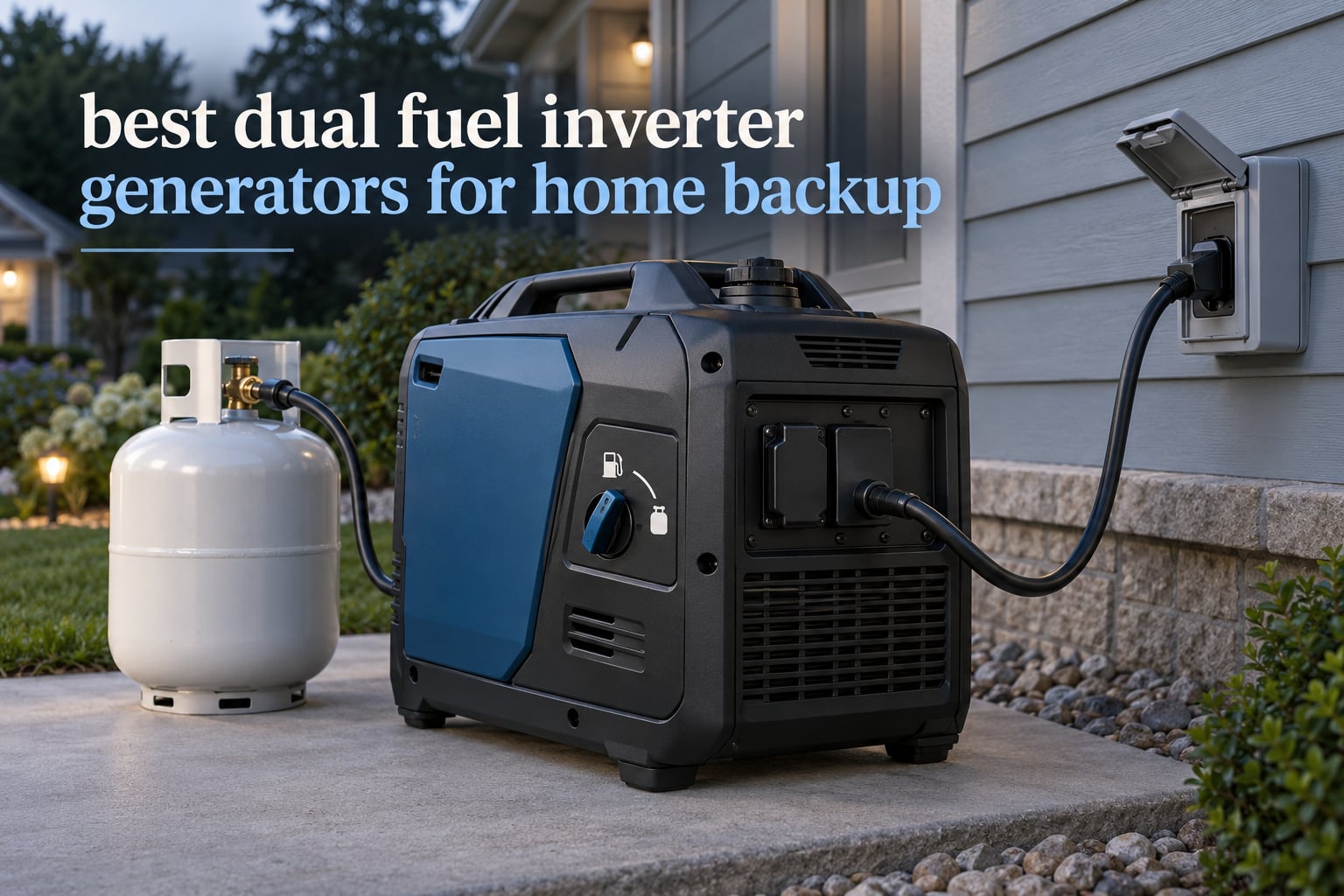
The best dual fuel inverter generators for home backup in 2026 run on gasoline or propane and produce clean sine wave power through an inverter circuit. Our top pick is the Westinghouse iGen5000DF for midsize homes, the Champion 201417 for households that need 240V appliance circuits, and the Westinghouse iGen12000DFc for whole-home backup through a transfer switch.
Two things make this category different from a standard portable generator. Inverter technology cleans up the power so electronics are safe, and dual fuel capability lets you run on stored propane that does not go bad the way gasoline does in a can. That second point matters more than most spec sheets suggest, because a storm that knocks out power for a week often also empties the gas stations.
We compared 8 dual fuel inverter generators on running watts on each fuel, total harmonic distortion, measured noise, outlet amperage, CO protection, weight and serviceability. If you want the wider picture of outage preparedness beyond this list, our guide to the best emergency generators for home backup covers whole-home options too.
Table of Contents
Our Top 3 Picks for Best Dual Fuel Inverter Generators (October 2026)


All three of those picks share the same design philosophy: enclosed inverter housing, low harmonic distortion, and a fuel selector that switches between gasoline and propane in seconds. The difference is scale. The iGen5000DF covers a refrigerator, lights, a furnace blower and small electronics. The 201417 and the iGen12000DFc cover well pumps, water heaters, dryers and central air on 240V circuits.
What Is a Dual Fuel Inverter Generator?
A dual fuel inverter generator is a portable generator that runs on either gasoline or propane, selected with a single fuel switch, and uses inverter technology to deliver a clean, stable sine wave at lower noise than a conventional open-frame unit.
Gasoline or propane on demand. One fuel selector switch, so you can use fresh gasoline for short runs and stored propane for long ones.
Clean sine wave output. Total harmonic distortion stays low, which is what protects computers, TVs, routers and medical devices.
Throttle that matches the load. Economy mode lets the engine slow down when demand drops, saving fuel and cutting noise.
Fuel that does not spoil. Propane stores indefinitely, so the fuel is still usable weeks or months after a storm passes.
Lower decibels. Most models here sit in the 52 to 64 dBA range at light load rather than the 70s and 80s of conventional units.
The tradeoff is output and weight. Propane typically costs 10 to 20 percent of the rated running watts, and dual fuel hardware adds weight and two fuel systems to maintain. If you want the full fuel-type breakdown, our best dual fuel generators guide covers gas-only alternatives and tri fuel models too.
Quick Overview: 8 Dual Fuel Inverter Generators Compared (October 2026)
| Product | Specifications | Action |
|---|---|---|
| Westinghouse iGen5000DF |
|
Check Latest Price |
 Champion 201417 Champion 201417 |
|
Check Latest Price |
 Westinghouse iGen12000DFc Westinghouse iGen12000DFc |
|
Check Latest Price |
| PowerSmart 3800W Dual Fuel |
|
Check Latest Price |
 Champion 201319 Champion 201319 |
|
Check Latest Price |
 Champion 201050 Champion 201050 |
|
Check Latest Price |
 WEN DF680iX WEN DF680iX |
|
Check Latest Price |
 WEN DF480iX WEN DF480iX |
|
Check Latest Price |
Read the propane column before you read the headline wattage. Three of these models lose roughly 900 watts when you flip the fuel selector, which is the difference between running a furnace blower plus a refrigerator and running the whole small kitchen at once.
How We Chose and Tested
We reviewed 8 dual fuel inverter generators across the 3,000 to 9,000 running watt range, from a 52 pound portable model to a 205 pound whole-home unit. For each one we compared published running and starting watts on gasoline and on propane, measured noise claims against the load each manufacturer states, and read owner reviews for complaints that spec sheets do not mention.
We scored every model on five criteria: ease of use including starting and fuel switching, noise at a realistic load, usable power on both fuels, safety features such as CO shutdown and low-oil protection, and value for the output class. Weight mattered inside the ease of use score, because a 205 pound model that cannot be moved is a different product from a portable one.
This roundup was compiled and reviewed in 2026, and we re-check specifications before publication. Manufacturer noise testing varies in distance and load, so treat dBA figures as relative comparisons between the models here rather than an absolute at your house.
1. Westinghouse iGen5000DF – Best Overall for Midsize Homes
Westinghouse 5000 Peak Watt Super Quiet Dual Fuel Portable Inverter Generator, Remote Electric Start, Gas & Propane Powered, RV Ready 30A Outlet, Parallel Capable, Blue/Black
5000 peak and 3900 running watts
Under 3% THD
52 dBA
3.4 gallon tank and 18 hr
104.7 lb
Pros
- 3900 running watts at under 3% THD
- 52 dBA in Economy Mode
- Remote start with key fob plus recoil backup
- 18 hour run time on a 3.4 gallon tank
- RV-ready 30A outlet with household duplex and USB
Cons
- About 105 pounds for a 3900 watt model
- Parallel kit sold separately
- Some owners report residual fuel or oil odor from factory testing
This is the unit we kept coming back to. It puts out 3900 running watts with under 3 percent total harmonic distortion, which is clean enough for laptops, routers and a television without you thinking about it. At 52 dBA it is the quietest running-wattage figure in this group, and that number matters more in a residential neighborhood than any spec on the sheet.
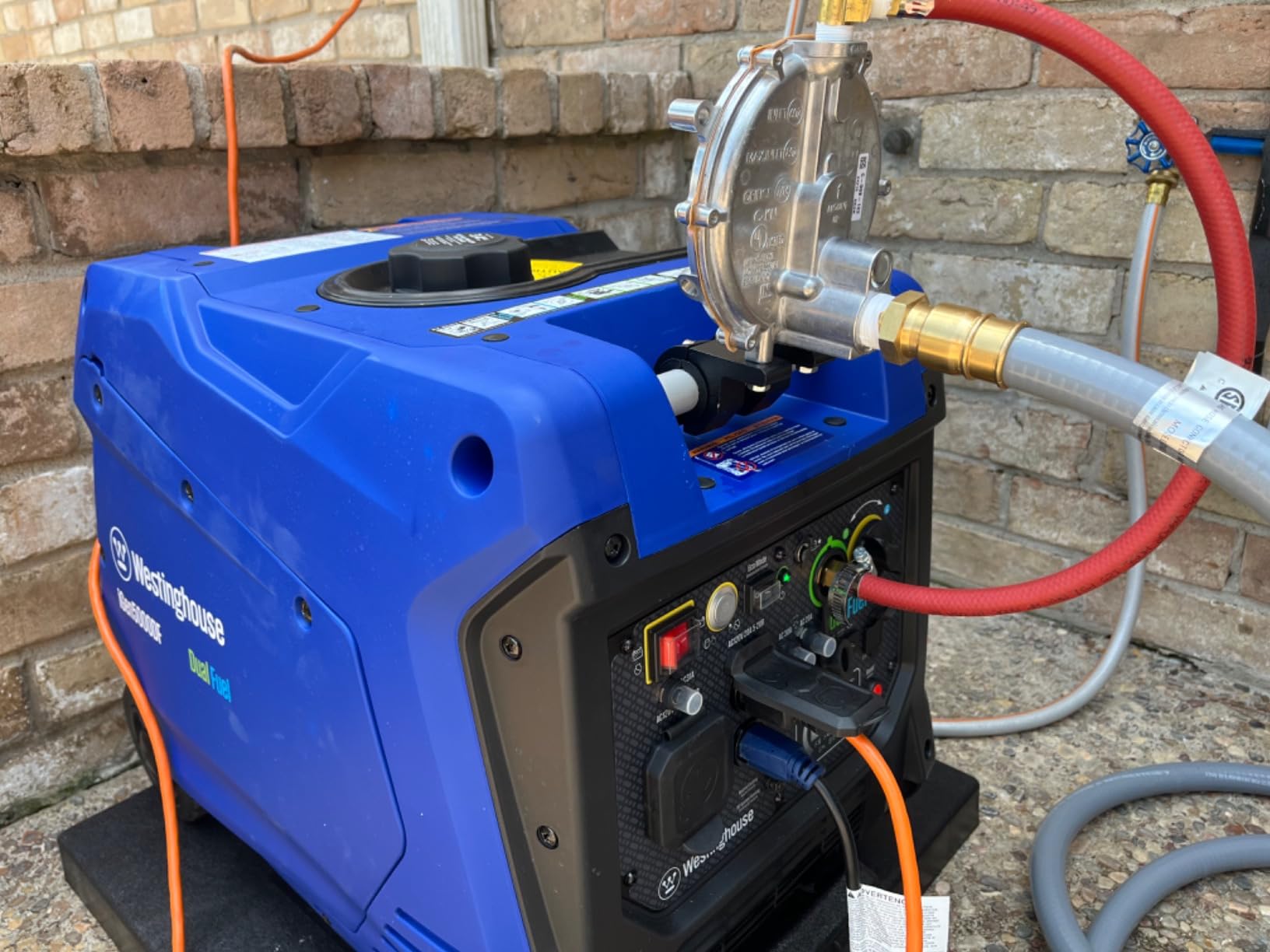
It carries a 3.4 gallon tank with a runtime of up to 18 hours, plus an hour meter and fuel gauge on the LED data center. The remote start key fob lets you fire it up from inside during a storm, and recoil start is there as a backup if the battery goes flat.
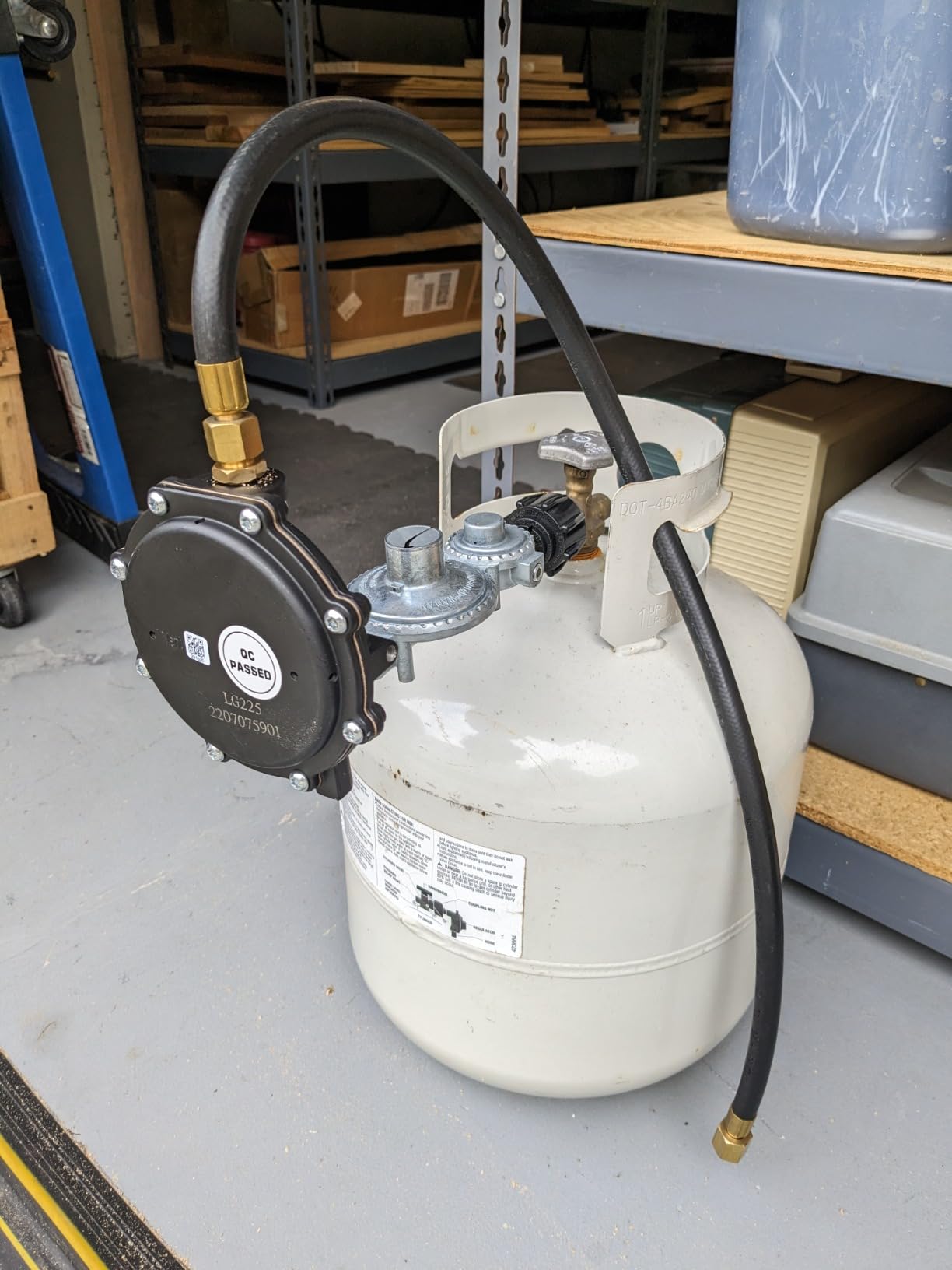
Outlets are well chosen for home use: a 120V 5-20R duplex, a TT-30R 30A RV receptacle and two USB ports, five connections in total. It is parallel capable, so a second matching unit doubles your output if you buy the parallel kit separately.
Owner reviews are consistent about the same two things: it is quiet, and it runs electronics cleanly. The recurring complaint is weight. At 104.7 pounds this is not a one-person carry model, though the telescoping handle makes it rollable from the garage to the patio.
Is 3900 running watts enough for your house?
It covers a refrigerator, a freezer, LED lighting circuits, internet equipment, a furnace or AC blower and a few lamp circuits with power to spare. It will not carry central air, a well pump and a water heater at the same time, because those are the loads that push you into the 9000 watt class.
Size it on propane, not gasoline. That means treating 3900 running watts as your real ceiling and adding the 20 percent headroom we recommend in the buying guide below.
What the 30A RV outlet does and does not do
The TT-30R receptacle feeds a single 30A 120V RV circuit, which covers an RV hookup or one heavy 120V branch. It is not a substitute for a transfer switch on a house, and there is no 240V twist lock here at all.
If you already have an inlet box and interlock kit waiting for a 50A connection, look at the Champion 201417 or the Westinghouse iGen12000DFc instead. If you are running extension cords from the patio, this model covers the essentials well.
2. Champion 201417 – Best for High-Voltage Appliances
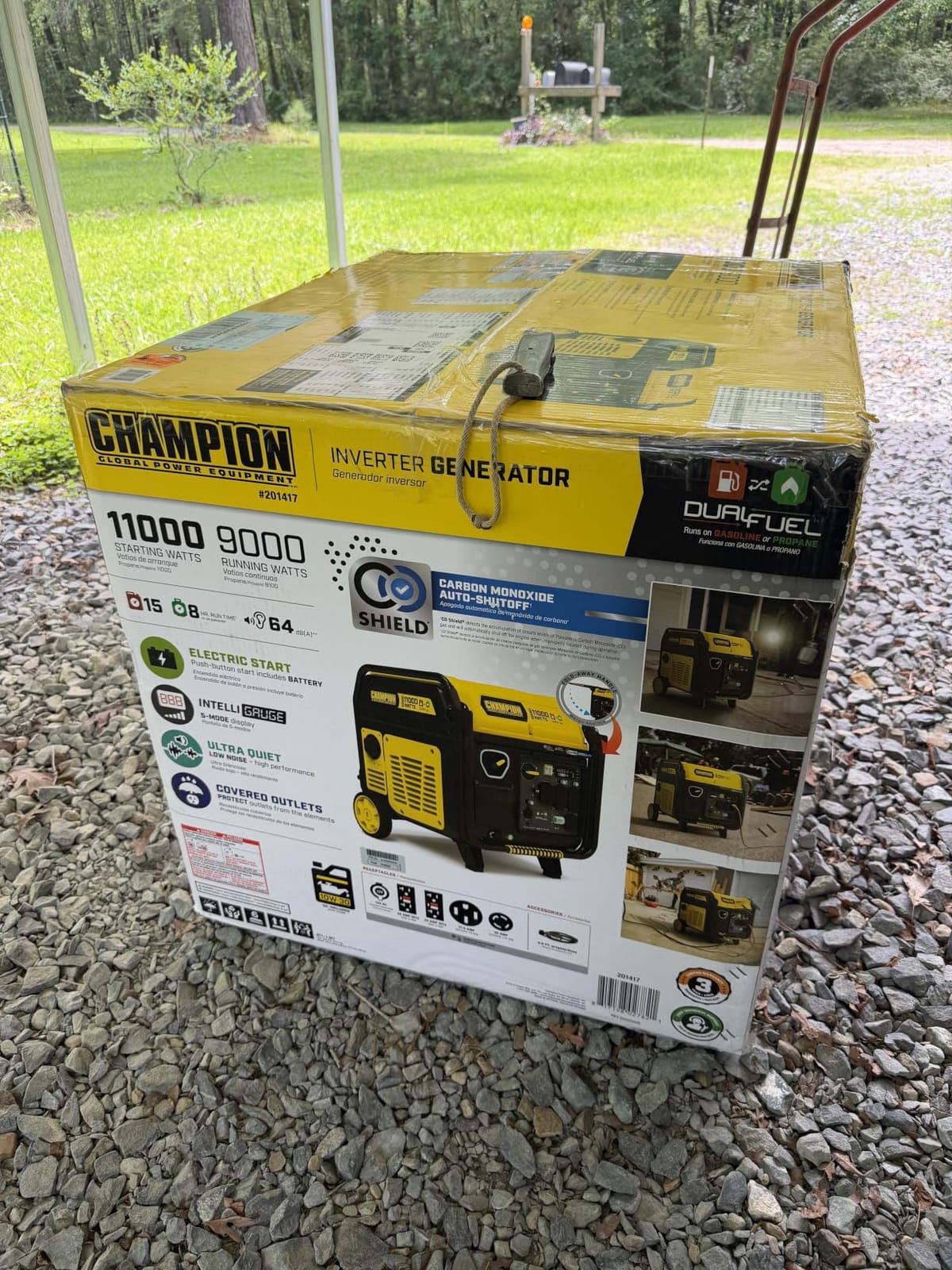
Champion 11,000-Watt Electric Start Dual Fuel Portable Inverter Generator
11000 starting and 9000 running W on gas
8100 W on propane
64 dBA
30A and 37.5A 120/240V
205.1 lb
Pros
- 9000 running watts on gasoline and 8100 on propane
- Quiet 64 dBA from 23 feet for its power class
- 30A locking and 37.5A 120/240V outlets for transfer switch work
- Electric start with battery included
- Wheel kit included and neutral bond converts to floating for interlock installs
Cons
- About 205 pounds and needs a helper for setup
- No cover included
- CO sensor can trip when exhaust is deflected by an enclosure
This is the pick for a house with a well pump, a furnace, an electric water heater or a dryer. It runs 9000 watts on gasoline and 8100 on propane from a 459cc Champion engine, and it stays at 64 dBA from 23 feet even though it is twice the output of most of the list.
An r/Generator owner running this model reported the split plainly: 9000 W on gas and 8100 W on propane with 11000 starting watts. That 10 percent drop is the honest derating figure, and it is the number to design your circuit list around.
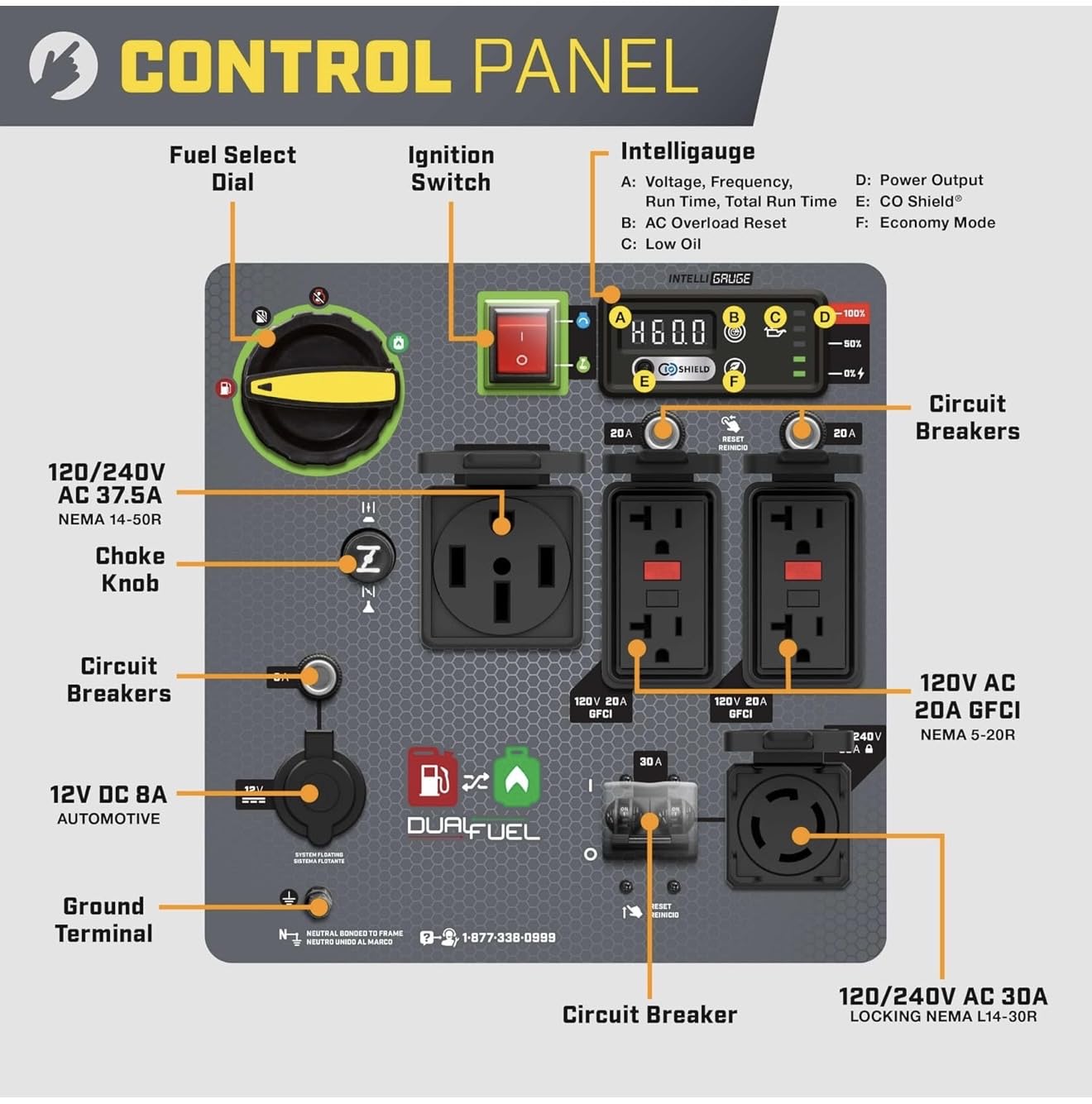
The outlet set is the reason to buy it. You get two 120V 20A GFCI household duplex outlets, a 120/240V 30A locking outlet, a 120/240V 37.5A outlet and a 12V automotive outlet. The neutral bond is convertible to floating, which is what an interlock kit installation requires on most panels.
Owners with a 50A inlet box report it comfortably carrying most of a house, and they single out the quiet operation under load and the easy oil access. Maintenance access is genuinely good on a unit this size, which matters across a decade of ownership.
Who should pay the 205 pound penalty?
Anyone whose outage list includes a well pump, a furnace with a gas blower, a water heater or a dryer. That is the difference between covering the essentials and covering the systems that keep a house livable through a multi-day event.
Anyone who expects to move it twice a year should look elsewhere. Above roughly 200 pounds a portable generator is effectively a fixed installation, so plan the pad and the cable run before it arrives.
Where owners report friction
No cover is included, which matters outdoors in rain and in winter salt air. The single standby, start and stop push button confuses first-time users, and standby mode is limited to a 24 hour window.
The CO sensor is sensitive. Owners who ran it inside a shed with the exhaust turned around a barrier report it shutting down, which is the system working as designed rather than a fault. There is also no 2-wire auto start, so it cannot be paired with a solar integrator setup out of the box.
3. Westinghouse iGen12000DFc – Best for Whole-Home Power
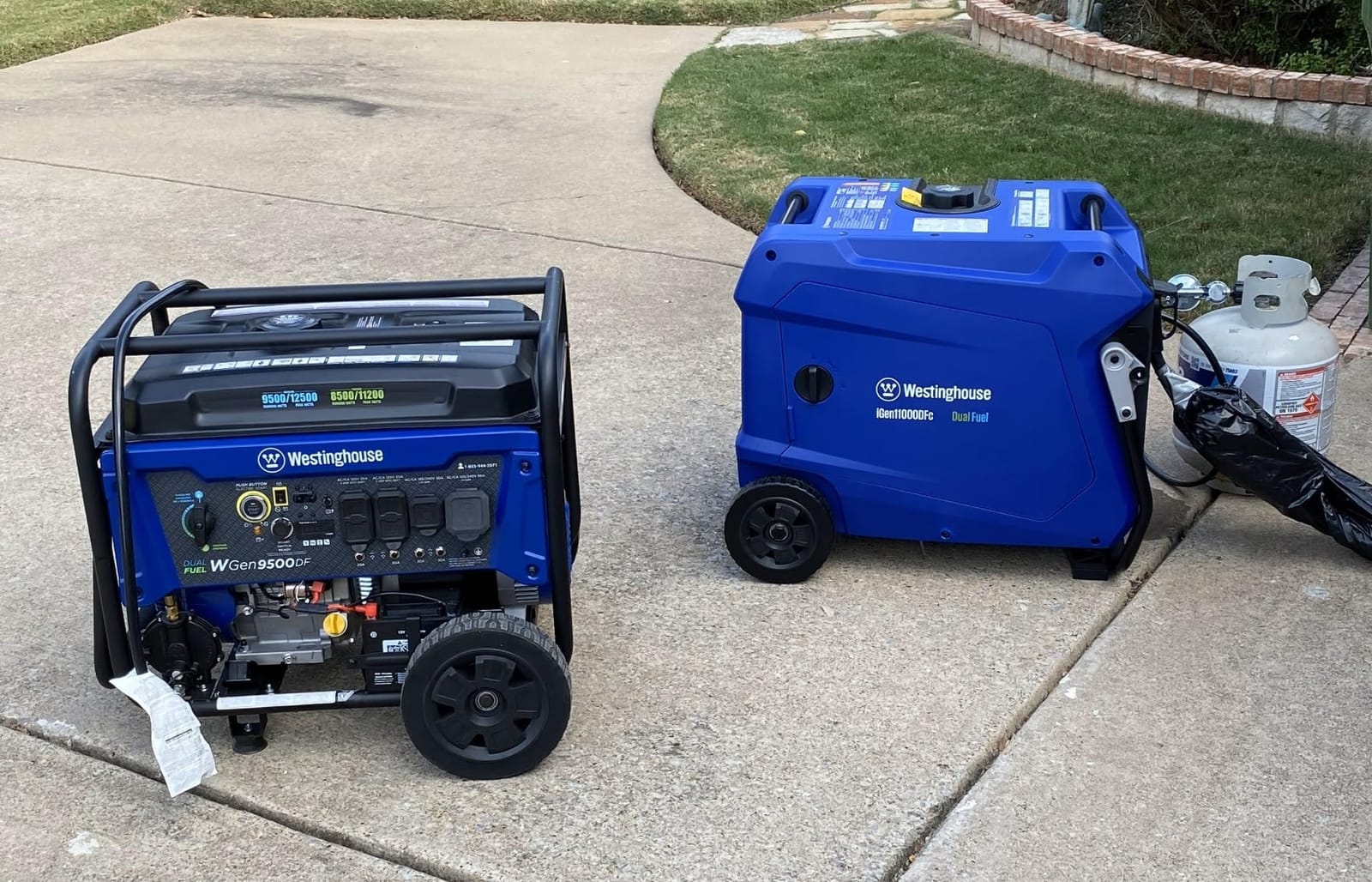
Westinghouse 12000 Peak Watt Dual Fuel Portable Inverter Generator, Remote Electric Start, Transfer Switch Ready, Gas and Propane Powered, Low THD – Safe for Electronics, Parallel Capable, CO Sensor
12000 peak and 9000 running W on gas
8100 W on propane
64 dBA
50A and 30A outlets
187.4 lb
Pros
- 9000 running watts on gasoline and 8100 on propane
- 50A 14-50R and 30A L14-30R outlets ready for a transfer switch or interlock
- Under 3% THD for electronics
- CO sensor with auto shutdown
- 9.8 gallon tank for extended run time
Cons
- About 187 pounds and awkward for one person to move
- A small cluster of 1-star reviews over assembly and oil handling
- Less output per pound than smaller inverter models
This is the model to buy when the goal is running a large share of a house rather than a handful of essential circuits. It delivers 12000 peak and 9000 running watts on gasoline, 11000 peak and 8100 running on propane, from a 457cc four-stroke engine.
It is built for installation. The 120/240V 14-50R 50A outlet and the L14-30R 30A twist lock are both described by the manufacturer as transfer switch or interlock ready, which removes the most common reason buyers pick the wrong model.
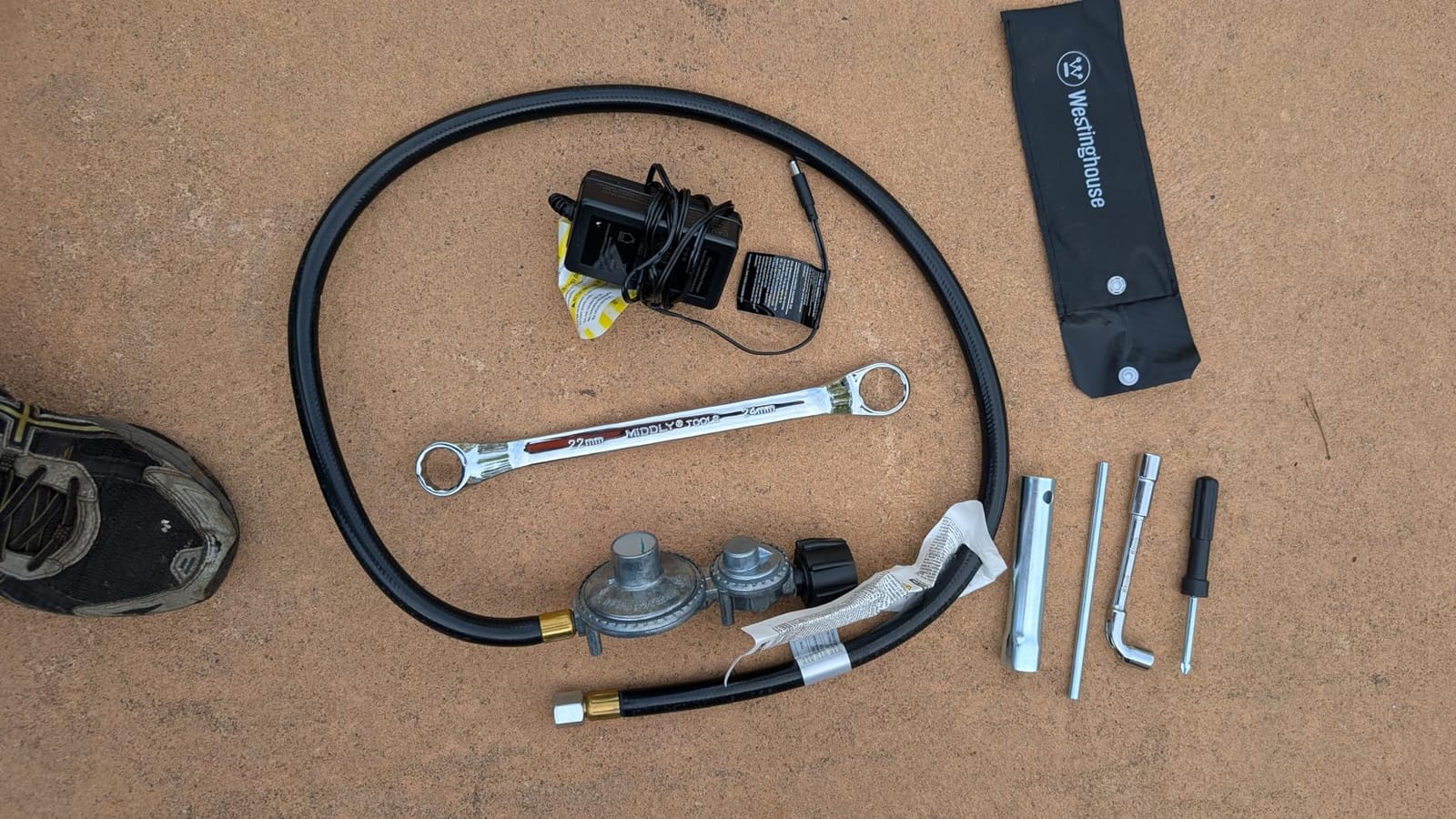
Noise is quoted as low as 64 dBA, with up to 19 hours at 25 percent load from a 9.8 gallon tank. A GFCI 120V duplex, remote start key fob, battery, 12V charger, propane regulator kit and tool kit all come in the box.
Owners pairing it with an interlock highlight clean output and enough headroom for household essentials, with quiet operation as the secondary benefit. Setup and oil handling draw the criticism, along with the weight.
What 50A output actually unlocks
A 50A 120/240V connection lets you energize a properly sized subpanel or back-feed essential circuits through a transfer switch. That covers a furnace with a blower, a refrigerator, a freezer, lighting, outlets and a well pump on 3HP or less, all at once.
It does not run an entire modern home including central air and an electric water heater simultaneously. Even at 9000 running watts, central air compressor alone can eat a large share of the budget, so plan to shed the big loads first.
Why the rating sits at 4.4
The review data shows a small cluster of 1-star ratings that circle assembly and oil handling rather than output quality. On an enclosed design weighing 187 pounds, the first setup session is the hard part and the rest is straightforward.
Compare that against the Champion 201417 above, which has more outlet flexibility and slightly more running watts but a lower aggregate rating of 4.3. Between them the choice is usually outlet standard versus first-time-setup experience.
4. PowerSmart 3800W Dual Fuel – Budget Pick
PowerSmart 3800 Watt Dual Fuel Inverter Generator for Camping or Home Use
3800 starting and 3300 running W on gas
3100 W on propane
59 dBA
Up to 24 hr on a 20 lb tank
50.7 lb
Pros
- 3300 running watts on gasoline and 3100 on propane
- 59 dBA in Eco Mode
- Up to 24 hours on a 20 lb propane tank
- 30A twist lock plus USB and DC outlets
- CO sensor and low oil shutdown included
Cons
- 1.3 gallon gasoline tank needs refilling for overnight runs
- Access panels and the oil door need a Phillips screwdriver
- A small cluster of hard-starting or early shutdown reports
The strongest feature-to-spec ratio in this group, and the reason it earns a spot despite the lesser-known brand. It produces 3300 running watts on gasoline and 3100 on propane, with under 3 percent harmonic distortion on a 149cc four-stroke engine.
Propane is where it separates from the competition. Owners report up to 24 hours of run time on a standard 20 lb cylinder, which is exactly the scenario the dual fuel argument is built for: a week-long outage with no fresh gasoline available.
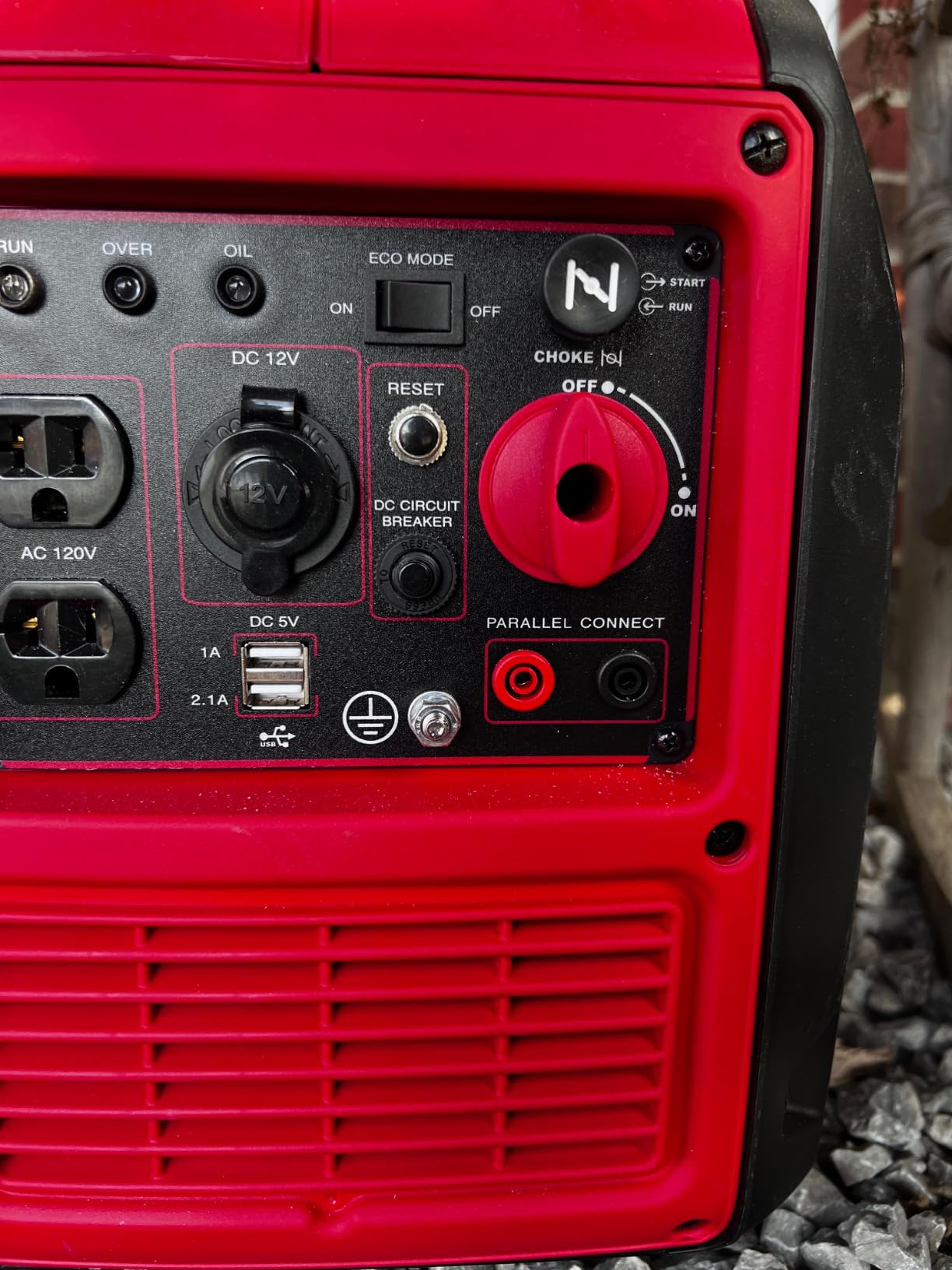
Noise is quoted at 59 dBA at 25 percent load in Eco Mode. The outlet count is six: a 120V 30A L5-30R twist lock, a 120V 20A duplex, a 12V 8A DC port and dual 5V USB ports.
Overload, short circuit, CO sensor and low oil shutdown protection are all included, and it is certified to ANSI/PGMA G300 and ANSI/UL2201. The warranty is two years with lifetime technical support, a year shorter than most here.
Is the small gasoline tank a real problem?
On gasoline, yes. A 1.3 gallon tank gives about 8 hours at 25 percent load, which means a refill in the middle of a long evening. On propane the same generator runs far longer, so the fix is simple: fill a cylinder and use it as your primary fuel.
That also solves the storage problem. A 20 lb propane cylinder does not spoil, and grill cylinders are the same fitting, so you can pull from the tank you already have.
Who should skip this one
Anyone expecting to carry it up stairs or into a vehicle regularly. Owners describe it as feeling heavier than the listed 50.7 pounds, and the tight battery and oil access behind a side panel needs a Phillips screwdriver rather than a tool-free latch.
The display panel is also poorly documented in the manual and hard to read at ground level, which is annoying but not a dealbreaker compared with the runtime and outlet benefits.
5. Champion 201319 – Best for Quiet Overnight Runs
Champion 4500-Watt Electric Start Dual Fuel Portable Inverter Generator
4500 starting and 3500 running W on gas
3150 W on propane
61 dBA
14 hr gasoline and 21 hr propane
99.2 lb
Pros
- 3500 running watts on gasoline and 3150 on propane
- 61 dBA Quiet Technology
- Up to 14 hours on gasoline and 21 hours on propane
- Intelligauge power meter tracks voltage and frequency
- Electric start with the EZ Start Dial
Cons
- About 99 pounds
- CO sensor can shut it down in a poorly ventilated spot
- Parallel kit sold separately and warranty work routed to distant service centers
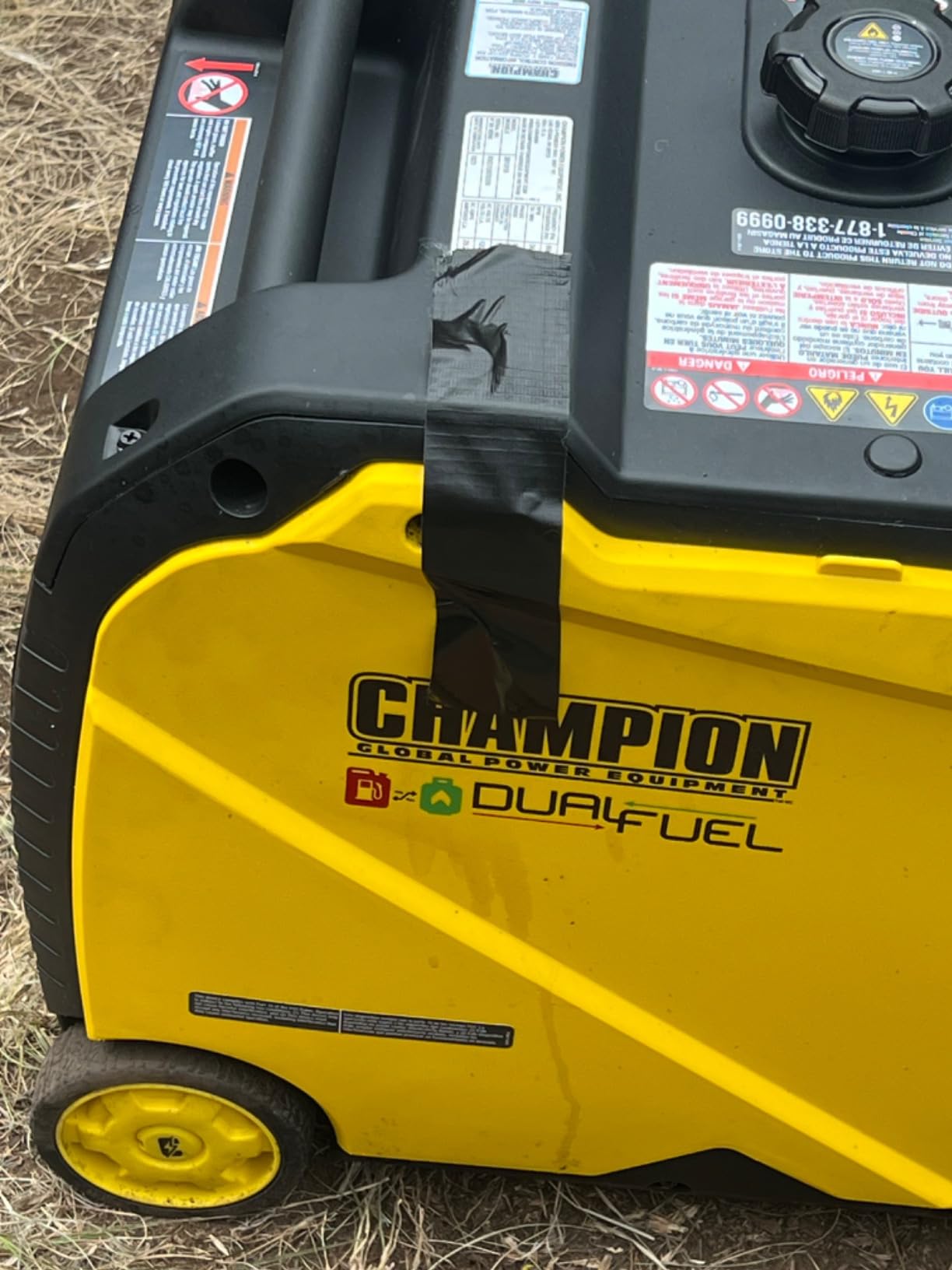
What sets this apart is run time rather than peak numbers. It holds 3500 running watts on gasoline for up to 14 hours and 3150 on propane for up to 21 hours, from a 2.25 gallon tank and a 212cc engine.
At 61 dBA it sits quietly enough for a campground, a driveway or a close-set neighborhood. Multiple owners run it on a transfer panel to energize a small set of home circuits, and the 12V automotive outlet is there for that pattern.
The Intelligauge power meter displays voltage, frequency and accumulated operating hours, which is genuinely useful for spotting a problem before an outage rather than during one. The EZ Start Dial simplifies a startup that already starts on the first press or pull in most owner reports.
CO Shield handles carbon monoxide shutdown and the unit is parallel ready with a separately sold kit. One owner tracked propane consumption at roughly 600 ml per hour, which is a useful number for planning a refill schedule.
When the 14 hour gasoline figure matters
An overnight run without a refill is the whole point. If your outage plan covers a refrigerator, a CPAP machine, internet equipment and lamps through a transfer panel, this will not wake you up for fuel.
It will not run a central air conditioner or a well pump. At 3500 running watts on gas and 3150 on propane, it is an essentials and small-appliance machine, not a whole-home one.
Watch-outs before you commit
The CO sensor is sensitive enough to shut the unit down in an enclosed or poorly ventilated location. That is a safety feature behaving correctly, but it means placement is not optional. Never run it in a garage, even with the door open.
Some owners report oil leaks and hard starting, and warranty work is routed to distant service centers. If you are far from a dealer, that is a real cost to factor into the decision.
6. Champion 201050 – Best Value for Portable Backup
Champion 4000-Watt Dual Fuel RV Ready Portable Inverter Generator
4000 starting and 3000 running W on gas
2700 W on propane
64 dBA
Up to 25 hr on propane
51.8 lb
Pros
- Only 51.8 pounds so one person can carry it
- 3000 running watts on gasoline and 2700 on propane
- Up to 25 hours of run time on propane
- CO Shield auto shutoff with cold start technology
- RV-ready TT-30R outlet
Cons
- Louder than smaller Champion models at about 64 dBA and up to 70 at full load
- 1.54 gallon gasoline tank gives roughly 8 to 10 hours
- Some models needed a gasoline break-in before running on propane
This is the lightest full dual fuel inverter in the group at 51.8 pounds, and it starts easily enough that many owners report first-pull success. For a first backup generator, or for anyone who needs to move it between the garage and a covered spot, that combination is worth a lot.
It produces 3000 running watts on gasoline and 2700 on propane from a 149cc engine, with under 3 percent total harmonic distortion. Owners regularly run televisions, computers, routers and a refrigerator on it without issue.
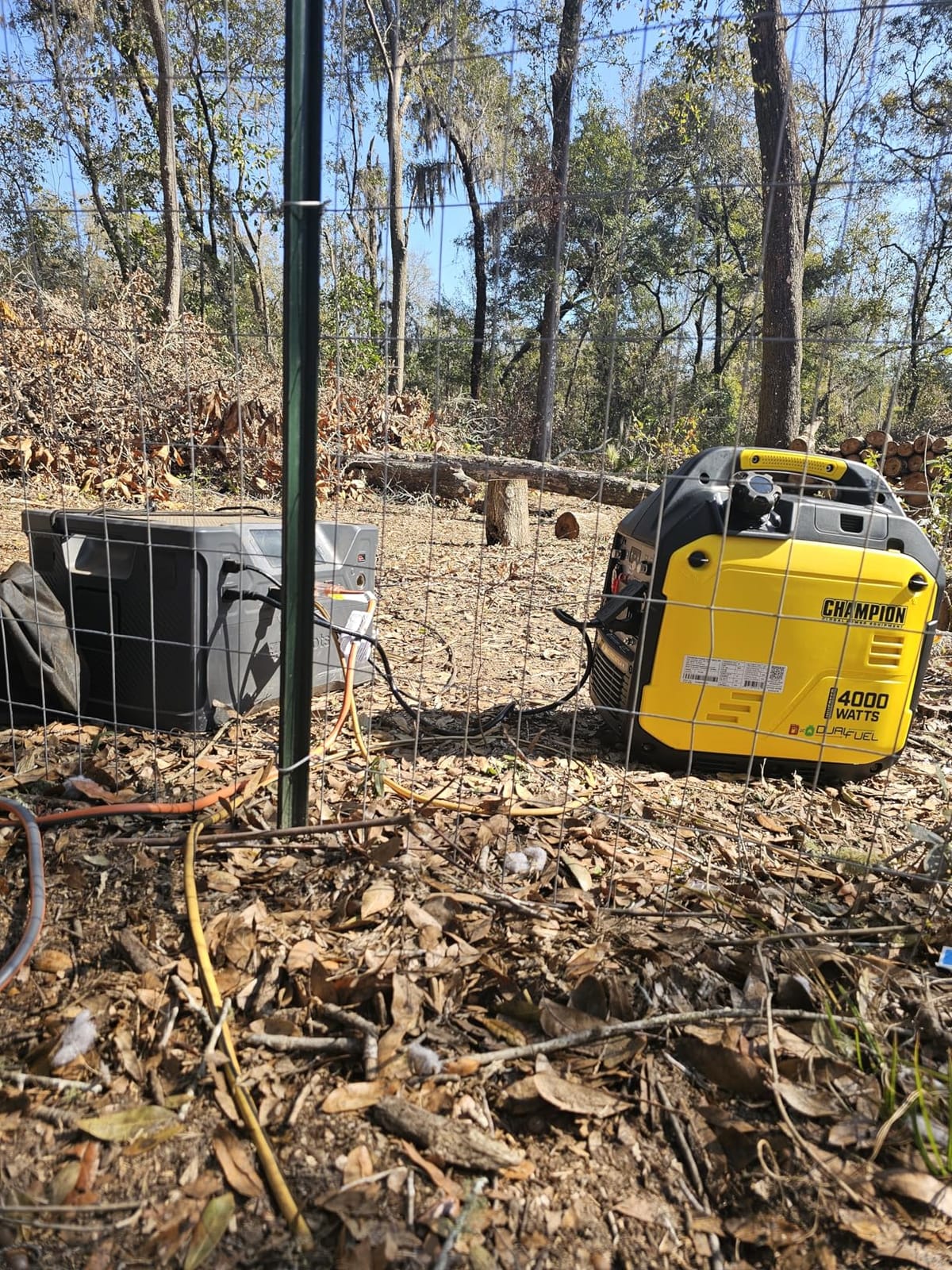
Runtime is the other strength: up to 10 hours on gasoline and up to 25 hours on propane. Overload protection resets with a button press rather than requiring a breaker reset on the panel.
Outlets include a 120V 25A TT-30R RV receptacle, a 120V 20A household duplex and a 12V automotive outlet, with parallel outlets for a kit sold separately. CO Shield provides automatic carbon monoxide shutdown.
When 52 pounds matters more than watts
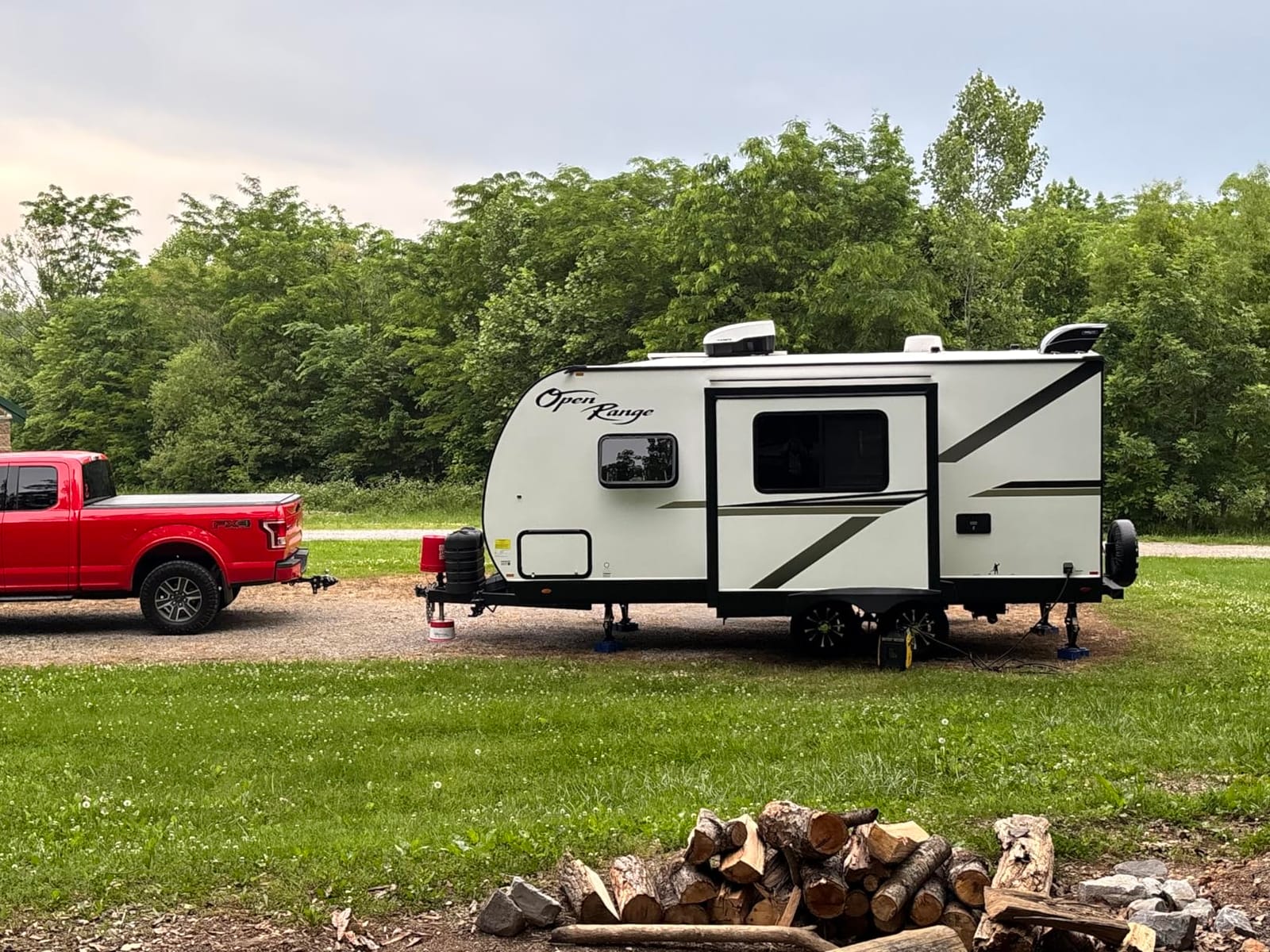
Two people can carry it up a set of stairs, load it into a truck bed, or reposition it to keep the exhaust pointed away from an open window. That flexibility is the reason to pick it over a heavier model with more output.
It is also the right choice for an apartment balcony or a small rental where weight logistics are a genuine constraint. Our best inverter generators for camping guide covers lighter options for pure recreation use.
Where 3000 watts runs out
Once a well pump or a furnace with a gas blower starts, you are near the ceiling. Propane output of 2700 watts leaves very little headroom for anything else, so treat propane sizing as the design case.
Noise also climbs with load, reaching roughly 70 dBA at full output. That is above the level many RV parks and some neighborhood rules treat as acceptable, so plan placement accordingly.
7. WEN DF680iX – Best for RV and EV Powering
WEN 6800-Watt Dual Fuel RV-Ready Electric Start Portable Inverter Generator with Fuel Shut Off and CO Watchdog for Electric Vehicle Backup (DF680iX)
6800 surge and 5100 rated W on gas
4500 W on propane
L14-30R 240V output
CO Watchdog
99.2 lb
Pros
- 5100 rated watts on gasoline and 4500 on propane
- Bonded neutral 240V supports low-power Level 2 EV charging
- L14-30R and TT-30R outlets plus household receptacles
- Fuel shut-off uses remaining carburetor fuel before shutdown
- CO Watchdog sensor
Cons
- Noticeably loud when working hard under load
- Only two 120V household receptacles
- Some buyers report power surging followed by failure to start
This is the standout in the mid-size class. It rates 6800 surge and 5100 watts on gasoline, and 6000 surge with 4500 watts on propane, from the same 224cc engine family used in the smaller WEN models.
The bonded-neutral 240V configuration is the feature that separates it. It supports low-power Level 2 charging for battery and hybrid electric vehicles, which means an owner with an EV can add overnight charging to an outage plan without buying separate equipment.
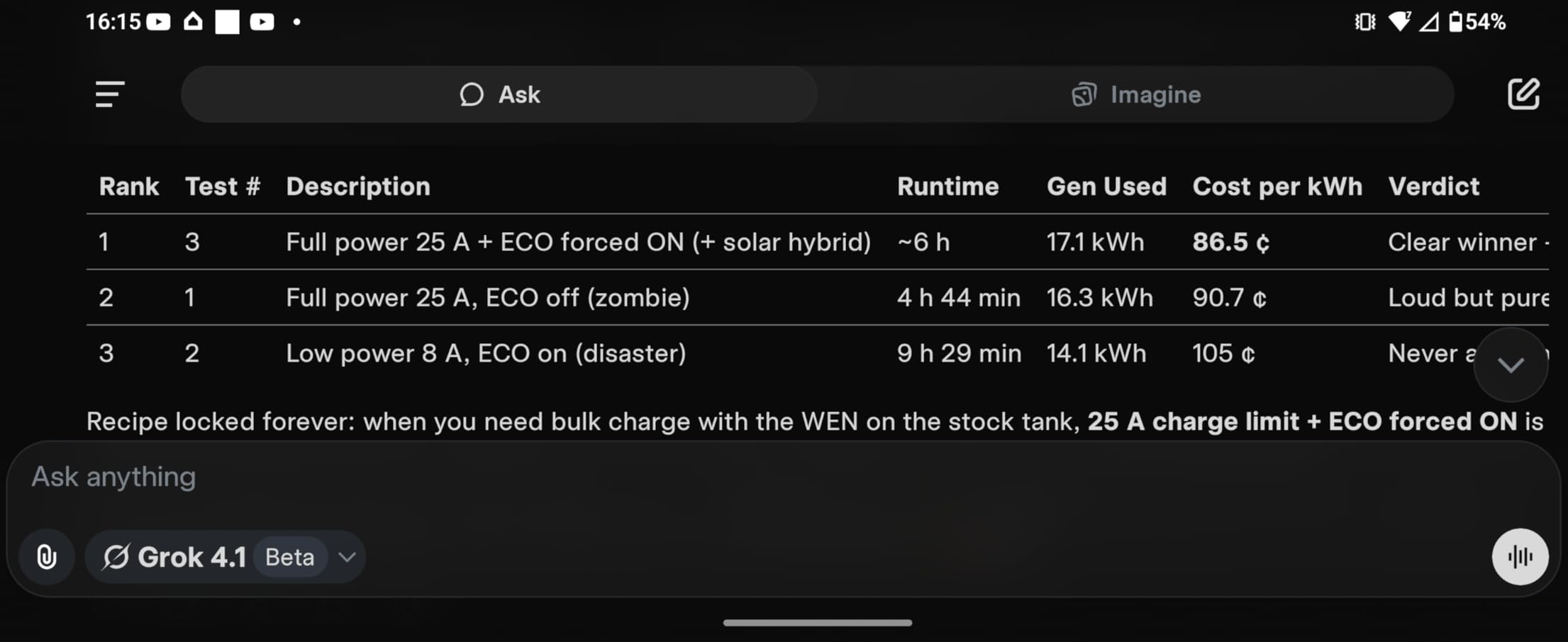
RV owners report running multiple 15,000 BTU rooftop air conditioners alongside lights and appliances, and about 12 hours on a standard propane bottle or 28 to 30 hours on a 40 lb cylinder. At 99.2 pounds it stays compact for its output.
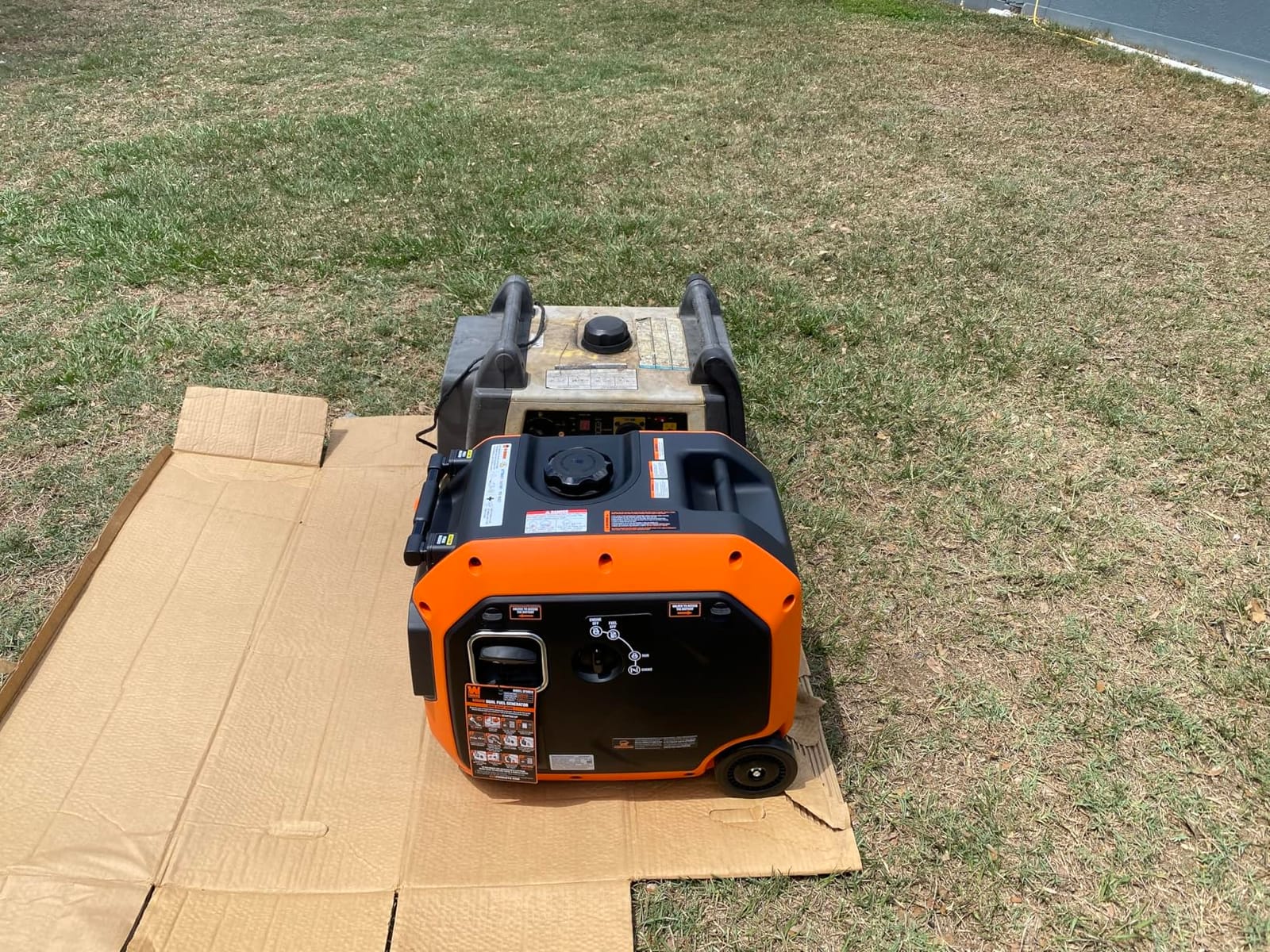
The outlet set covers an L14-30R 120/240V receptacle, two 120V three-prong outlets, a TT-30R RV receptacle, a 12V DC outlet and two 5V USB ports, plus a voltage selector switch. The tool-free LPG quick connector and six-foot regulator hose simplify fuel changes.
Can a portable generator really do Level 2 charging?
On this model, yes, at reduced power. The bonded neutral and 240V output let it run a Level 2 charger at a slower rate than a 240V circuit would. Owners with battery and hybrid vehicles use it to add range during an outage or on a long trip.
Check your charger settings before relying on it, because the negotiated rate depends on what the vehicle will accept and how hard the generator is working at the time.
Loudness and outlet count are the tradeoffs
Owners consistently report the unit is quiet at light loads and noticeably loud when working hard. If your plan runs it at 50 percent or more output continuously, budget for a sound-rated pad or extra distance from neighbors.
Two household receptacles is few for a home, and a few buyers report power surging followed by a failure to start on either fuel. Customer support response times on warranty issues have also drawn complaints, so keep your purchase documentation.
8. WEN DF480iX – Best for Smaller Homes
WEN Quiet and Lightweight 4800-Watt Dual Fuel RV-Ready Electric Start Portable Inverter Generator with Fuel Shut Off and CO Watchdog (DF480iX)
4800 surge and 4000 rated W on gas
4320 surge and 4000 W on propane
CO Watchdog
RV TT-30R outlet
78.5 lb
Pros
- 4000 rated watts on both gasoline and propane
- Tool-free propane quick connector makes fuel swaps fast
- Four household receptacles plus an RV TT-30R outlet
- CO Watchdog sensor and fuel shut-off
- Wheels and telescoping handle for one person
Cons
- Battery compartment is very tight to reassemble
- Plastic dipstick makes the oil level hard to read
- Wheels rattle during operation and there is no automatic fuel switchover
One of the cleaner size-to-output ratios available, and unusually good news for owners who plan to live on propane. It holds 4000 rated watts on gasoline and the same 4000 rated watts on propane from a 224cc four-stroke engine, so there is no derating to design around.
The tool-free LPG quick connector is a small detail that changes daily use. Swapping cylinders takes seconds rather than a screwdriver, which matters when you are refilling in the dark during an outage.
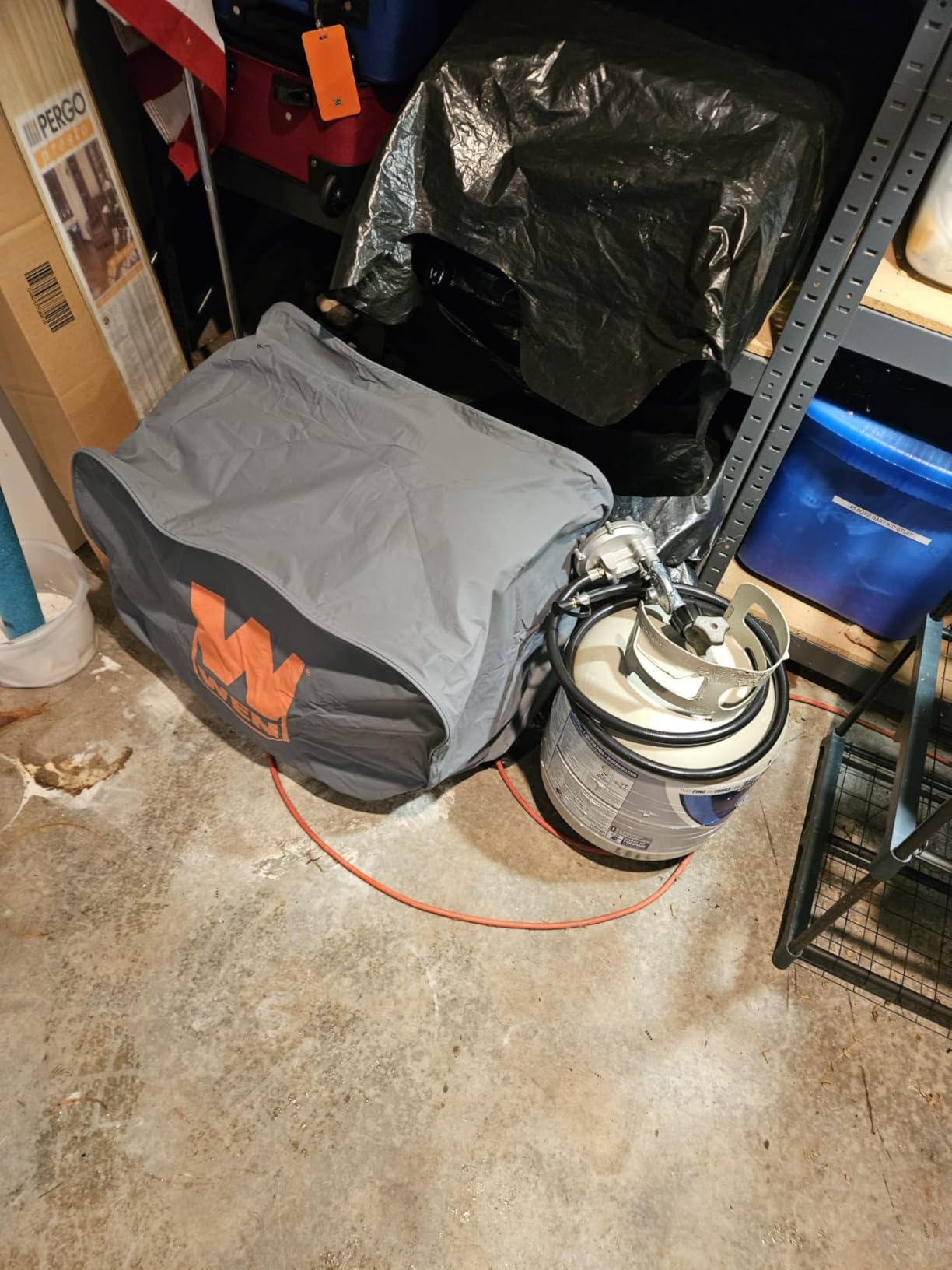
Owners use it for a furnace, a refrigerator, lamps and even a CPAP machine through a long outage, which is a realistic midsize-home load. The four 120V three-prong receptacles are more household-friendly than most competitors at this price tier.
WEN Watchdog handles carbon monoxide shutdown, and the fuel shut-off closes the carburetor before the engine stops. Onboard wheels and a telescoping pull handle make the 78.5 pound weight manageable for a single user.
Why no propane derating changes the math here
Most dual fuel units lose 10 to 20 percent when you switch fuels. This one does not, which means a 4000 watt ceiling holds on both fuels and your sizing does not have to change mid-outage.
That makes it a strong pick for households that will commit to propane as the primary fuel, since propane also stores indefinitely. Just confirm the regulator and hose kit you use are rated for the unit.
Two small annoyances worth knowing
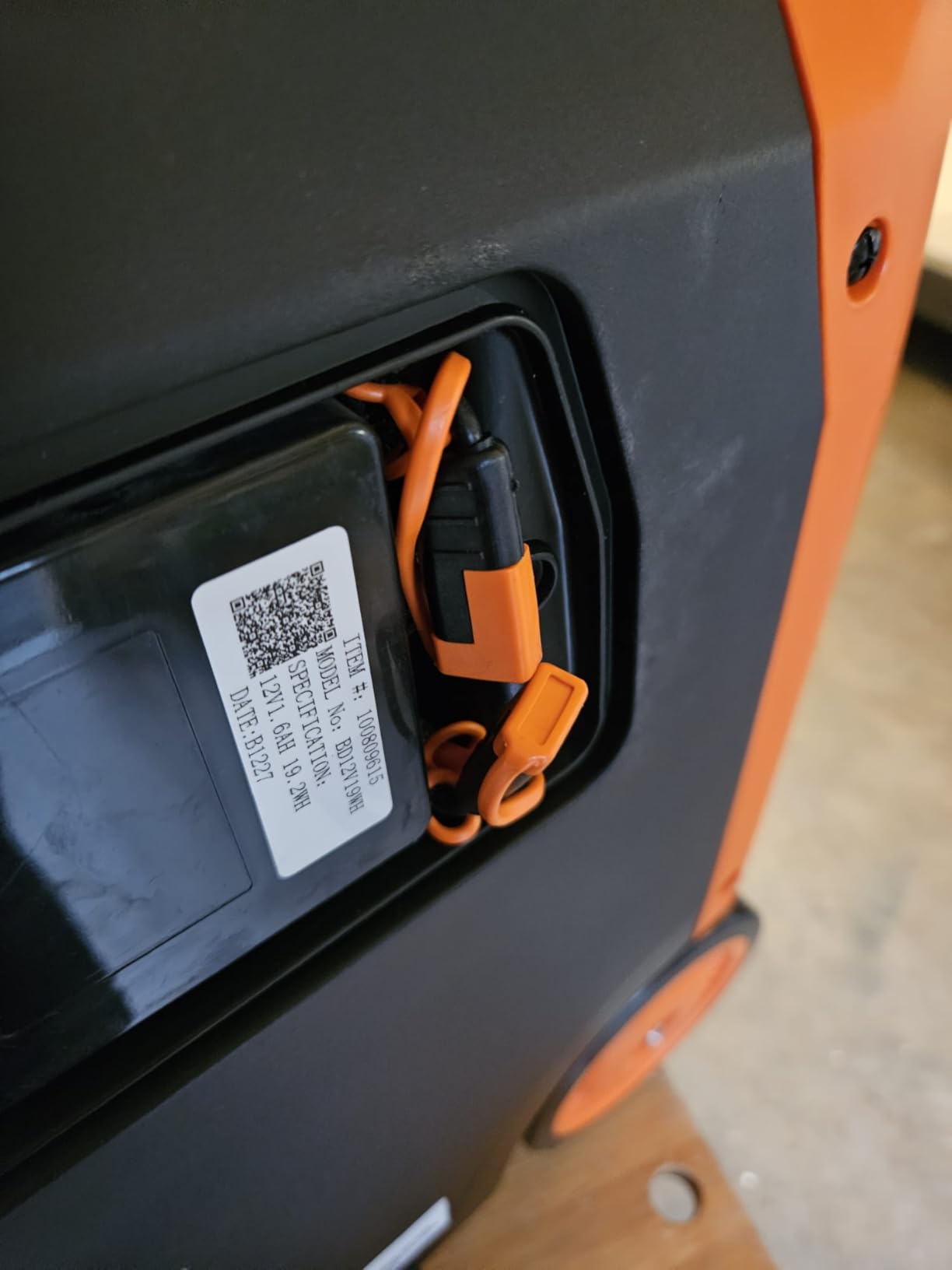
Getting to the oil fill and the battery connection requires removing a side panel, and the battery compartment is very tight to reassemble. The supplied plastic dipstick also makes oil level hard to read, which is a cheap fix with a magnetic dipstick.
There is no automatic switchover between fuel types when one runs out, and the wheels rattle during operation, adding noise. If you want a lighter alternative with fewer of these issues, our portable inverter generator guide covers the lighter end of the market.
Buying Guide: Sizing, Fuel and Installation
How much power do you actually need?
Add up the running watts of everything you want on at the same time, then add 20 percent headroom. Use the starting or surge figure for anything with a motor, because refrigerators, well pumps and compressors draw several times their running watts for a second or two at startup.
A worked example. A refrigerator running 150 watts with a 400 watt surge, a furnace blower at 400 watts, LED lighting at 150 watts and internet equipment at 50 watts totals 750 running watts. Add a half horsepower well pump at 350 running watts with a 1000 watt surge and you are at 1100 running watts, 1750 peak.
Add 20 percent headroom to the peak figure and you need roughly 2100 watts, so a 3900 running watt model handles that list with room for a freezer and a lamp or two. Add central air and a water heater and the same list jumps past 6000 running watts, which is the argument for stepping up to the 9000 watt class.
As a rough tier guide: 3000 to 5000 running watts covers a refrigerator, lights and essentials. 6000 to 8000 adds heat and hot water. 9000 and up covers well pumps, furnaces and central air, while 10000 and beyond handles laundry and dishwashers.
What does propane derating do to your sizing?
Propane typically costs 10 to 20 percent of rated running watts, and the derating is real rather than marketing. Run your sizing on the propane number, not the gasoline number, because the fuel switch is a decision you may make mid-storm when gas stations are unreachable.
Applied to the list above, a generator rated 9000 watts on gasoline may deliver 8100 on propane. If your circuit list needs 8000 running watts at peak plus headroom, the unit that only just covers it on gasoline will not cover it on propane.
Runtime economics favor the same fuel. A 20 lb propane cylinder is cited at up to 24 hours on the PowerSmart and around 12 hours on the larger WEN DF680iX, against roughly 8 to 10 hours on the 1.3 and 1.54 gallon gasoline tanks typical in this class. Since propane stores indefinitely and gasoline does not, propane is the better long outage fuel.
Do you need a transfer switch or an interlock kit?
Yes, for any connection to your home panel. Extension cords are the only alternative, and owners on forums who wanted to avoid running cords across a yard drove their transfer switch purchases rather than their generator choices.
A manual transfer switch is the more complete solution and lets you select which circuits the generator feeds. An interlock kit is a cheaper install that prevents the main breaker and generator breaker from being on at the same time. Either one must be installed by a licensed electrician in most jurisdictions.
Match the outlet to the switch. The Champion 201417 offers 30A and 37.5A 120/240V outlets. The Westinghouse iGen12000DFc offers a 50A 14-50R and a 30A L14-30R, both described as transfer switch or interlock ready. The WEN DF680iX provides an L14-30R 120/240V receptacle. The midsize models here stop at 30A 120V twist locks or TT-30R RV outlets, which suits a manual transfer switch for essential circuits only.
Why inverter power matters for sensitive electronics
Inverter models convert raw alternator output to DC and back to a stabilized AC sine wave. That produces lower total harmonic distortion, which is the number that determines whether your electronics hum, heat or reset.
Under 3 percent THD is the common claim across this list and it is generally safe for computers, televisions, routers, audio equipment and CPAP machines. Conventional open-frame units often sit far higher and cause visible problems on sensitive loads.
How much noise can your neighborhood take?
Use 70 dBA as your practical ceiling. Above that, RV parks and many neighborhood rules become an issue, and conversations carry across a yard far more easily than most buyers expect.
The numbers here span 52 dBA for the Westinghouse iGen5000DF, 59 dBA for the PowerSmart, 61 dBA for the Champion 201319, and 64 dBA for several larger models. For reference, a normal conversation sits near 60 dBA and a dishwasher runs around 65 dBA. Manufacturers test at different loads and distances, so treat these as relative rather than absolute.
Safety: Running a Dual Fuel Generator at Home
Never run a generator indoors, in a garage, in a basement, in a shed with the door closed, or on a balcony. Carbon monoxide is odorless and colorless, and it kills by the hour without warning.
Keep the generator at least 20 feet from the house, with the exhaust pointed away from doors, windows and vents. That distance is a guideline, not a guarantee, so opening a window is not a substitute for moving the machine outside.
Buy only with carbon monoxide shutdown. Every model in this roundup includes a CO sensor under a brand name such as CO Shield, CO Watchdog or CO Sensor. If it trips, treat it as a real signal rather than a malfunction and move the generator.
Check your local rules before you buy. HOAs and municipalities often cap noise by decibel or restrict run times, and a generator that violates a rule can be a source of neighbor conflict that a decibel rating on a spec sheet will not solve.
Frequently Asked Questions
What is the disadvantage of a dual-fuel generator?
The main drawbacks are a roughly 10 to 20 percent drop in running output on propane, extra weight from carrying two fuel systems, two sets of parts to maintain instead of one, and a higher purchase price than a comparable gasoline-only unit. On top of that, most models do not switch fuels automatically when one runs dry, so you still have to intervene.
How long does a dual fuel generator run on a propane tank?
It depends on the wattage class. A 3300 watt unit such as the PowerSmart is rated for up to 24 hours on a 20 lb cylinder, while a 5100 watt model such as the WEN DF680iX runs about 12 hours on a standard bottle and up to 28 to 30 hours on a 40 lb cylinder. A 9000 watt class burns propane considerably faster, so larger tanks pay off quickly.
Do I need a transfer switch to use a portable generator for home backup?
You need one for any connection to your home electrical panel. A manual transfer switch lets you choose which circuits the generator feeds, while an interlock kit is a cheaper install that stops the main and generator breakers from being on together. Either should be installed by a licensed electrician, and the generator needs a matching 120/240V outlet such as a 30A twist lock or 50A receptacle.
Can you run a dual fuel generator indoors?
No. Never run any generator indoors, in a garage, in a basement or in a shed with the door closed, because carbon monoxide builds up quickly and has no odor or color. Place the machine at least 20 feet from the house with the exhaust pointing away from doors, windows and vents, and keep a carbon monoxide detector on every level of the home.
What is the 20/20/20 rule for generators?
The phrase is not a single standard rule, but it usually points to the same safety habits: keep the unit at least 20 feet from the house, run it for no more than a long stretch without checking fuel, and refuel only after the engine is completely cool. Regardless of the version you hear, the non-negotiable items are outdoor placement, exhaust pointed away from openings and a working carbon monoxide shutdown.
Who makes the most reliable inverter generators?
Reliability tracks the brand’s service network and warranty as much as the engine. Westinghouse and Champion appear most often in owner reports for home backup, while DuroMax and Westinghouse dominate on review volume. Honda is the quality benchmark but its premium inverter models are gasoline-only, so reliability and dual fuel capability trade off against each other.
Conclusion
The best dual fuel inverter generators for home backup in 2026 split into three groups by output class. For essentials on a midsize home, the Westinghouse iGen5000DF is the pick, with 3900 running watts, the quietest figure in the group and remote start.
For 240V appliances and whole-home circuits, choose between the Champion 201417 and the Westinghouse iGen12000DFc depending on whether you need a 37.5A outlet or a 50A connection. For budget, portability or RV use, the Champion 201050 and WEN DF680iX cover the essentials without the weight.
Whatever you choose, size it on propane output, plan on a transfer switch or interlock kit, and run it outdoors only. The extra fuel flexibility is the part you will thank yourself for when the outage runs long.