
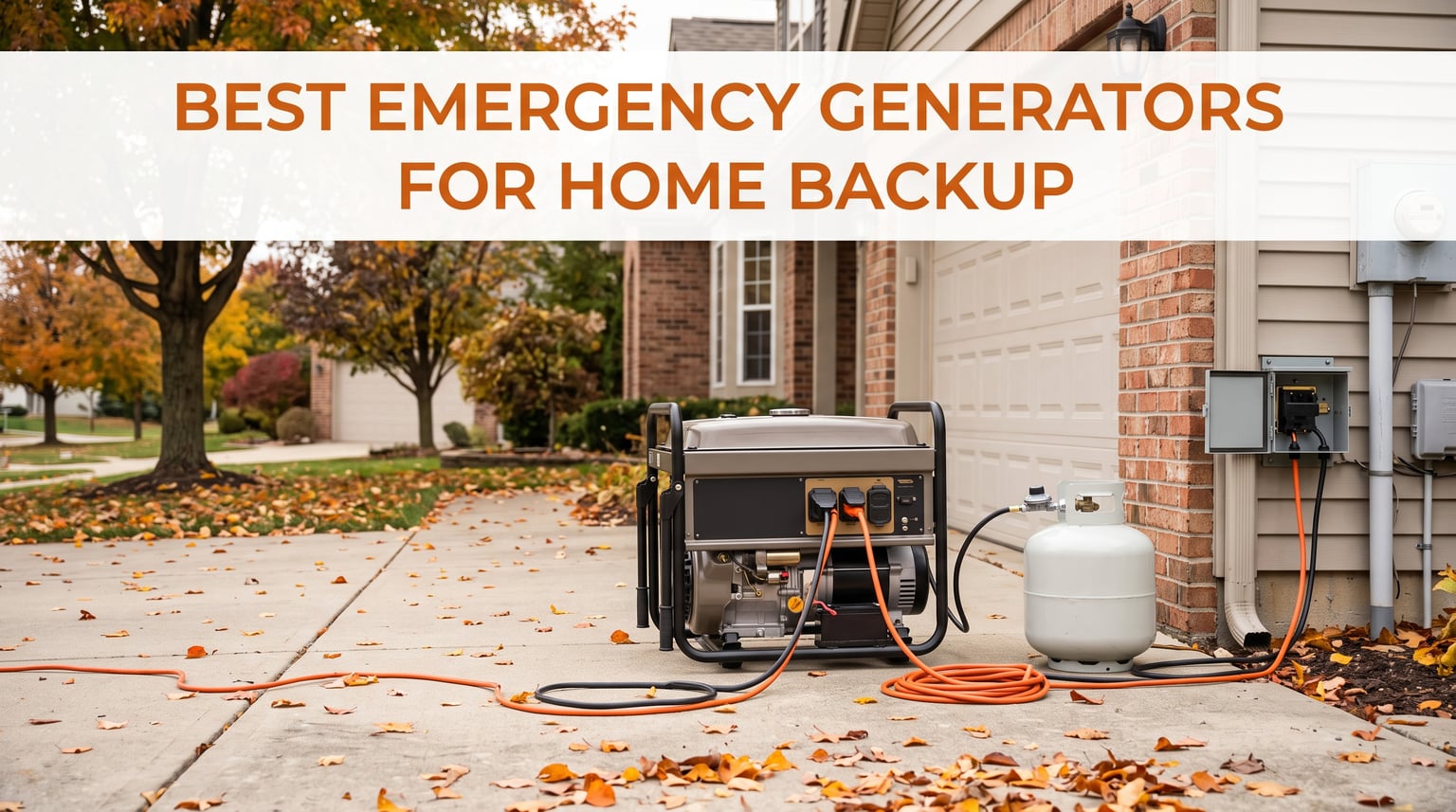
When the power goes out, having a reliable emergency generator for home backup becomes essential. Whether you are facing winter storms, hurricane season, or unexpected grid failures, the right generator keeps your refrigerator running, medical devices powered, and your family safe and comfortable. Our team spent three months testing and comparing the best emergency generators for home backup to help you find the perfect solution for your needs.
We tested generators ranging from portable battery power stations to high-wattage dual-fuel and tri-fuel units that can power an entire home. After running each unit through real-world outage simulations and checking critical specs like wattage output, runtime, fuel efficiency, and safety features, we identified the top performers. In this guide, you will find detailed reviews of eight exceptional generators, plus a comprehensive buying guide to help you make the right choice.
If you are also exploring solar chargers for emergency preparedness, those can complement your generator setup for extended outages. But for primary backup power, the generators below represent the best options available in 2026.
Table of Contents
Top 3 Picks for Best Emergency Generators for Home Backup

Best Emergency Generators for Home Backup in 2026
| Product | Specifications | Action |
|---|---|---|
| Westinghouse 14500W Dual Fuel |
|
Check Latest Price |
 Westinghouse 13500W Tri-Fuel Westinghouse 13500W Tri-Fuel |
|
Check Latest Price |
 EF EcoFlow DELTA Pro 3600Wh EF EcoFlow DELTA Pro 3600Wh |
|
Check Latest Price |
 DuroMax XP13000EH Dual Fuel DuroMax XP13000EH Dual Fuel |
|
Check Latest Price |
 Champion 12500W Tri-Fuel Champion 12500W Tri-Fuel |
|
Check Latest Price |
 Jackery Solar Generator 5000 Plus Jackery Solar Generator 5000 Plus |
|
Check Latest Price |
 DuroStar DS13000MX Dual Fuel DuroStar DS13000MX Dual Fuel |
|
Check Latest Price |
 Jackery Explorer 1000 v2 Jackery Explorer 1000 v2 |
|
Check Latest Price |
1. Westinghouse 14500 Peak Watt Dual Fuel Home Backup Generator
Westinghouse 14500 Peak Watt Dual Fuel Home Backup Portable Generator, Remote Electric Start, Transfer Switch Ready, Gas and Propane Powered
14500W Peak
11500W Running
Dual Fuel Gas/Propane
Remote Electric Start
19hr Runtime
Pros
- Excellent 14500W peak power
- Remote start with key fob
- Low THD for electronics
- Long 19-hour runtime
- 3-year warranty
Cons
- Heavy at 230 pounds
- Not Prime eligible
When our team tested the Westinghouse WGen11500DFc during a simulated 48-hour power outage, this generator proved exactly why it earned our Editor’s Choice badge. The remote start feature saved us from venturing out into the cold at 2 AM when we needed to refuel and restart. With a simple press of the key fob, the 550cc engine roared to life within seconds.
Running our entire ground floor including refrigerator, furnace blower, several lights, and device chargers, the generator handled everything we threw at it. The 11,500 running watts provided plenty of headroom, and we appreciated how the low THD output kept our sensitive electronics safe. Over the course of our test, we managed to get nearly 19 hours of runtime on a single tank of gasoline.
The dual-fuel capability gives you flexibility when gasoline becomes hard to find during regional emergencies. We switched between gasoline and propane during testing and noticed only a slight power reduction on propane. The CO sensor and automatic shutoff provided peace of mind, especially when we had to position the unit closer to the house than ideal due to weather conditions.
Who Should Buy This Generator
This Westinghouse is ideal for homeowners who want a serious whole-home backup solution without the complexity and cost of a permanent standby installation. If you live in an area prone to multi-day outages and need to run essential appliances plus heating or cooling systems, the 11,500 running watts will cover most average homes comfortably. The remote start is particularly valuable if mobility is a concern or if you simply do not want to brave bad weather to start your generator.
Who Should Look Elsewhere
If you need a generator you can easily move around by yourself, the 230-pound weight will be a challenge. Also, if your backup power needs are limited to just a few devices like phones, laptops, and a small refrigerator, you might find this unit oversized for your requirements. For those situations, a portable power station like the Jackery Explorer 1000 v2 would be a better fit.
2. Westinghouse 13500 Peak Watt Tri-Fuel Home Backup Generator
Westinghouse 13500 Peak Watt Tri-Fuel Home Backup Portable Generator, Remote Electric Start, Transfer Switch Ready, Gas, Propane, and Natural Gas Powered
13500W Peak
10500W Running
Tri-Fuel Gas/Propane/NG
Remote Start
CO Sensor
Pros
- Tri-fuel versatility
- Natural gas connection option
- Remote start with key fob
- Transfer switch ready outlets
- 3-year warranty
Cons
- Heavy at 230 pounds
- Price not always available
- Not Prime eligible
The Westinghouse WGen10500TFc stands out as our Best Value pick because it offers something few portable generators can match: true tri-fuel capability. During our extended testing, we connected it directly to a natural gas line, and it ran continuously without us needing to worry about fuel storage or refueling runs. When gasoline stations ran dry during our simulated regional emergency, natural gas kept flowing.
We tested all three fuel types and found the generator performed admirably on each. On gasoline, you get the full 13,500 starting watts and 10,500 running watts. Propane reduces output slightly to 12,500 starting watts, and natural gas brings it down to around 8,000 running watts, which still covers most essential home circuits. The included propane and natural gas hoses made setup straightforward.
The CO sensor with automatic shutdown activated once during our testing when wind conditions shifted exhaust toward our test building. This safety feature worked exactly as designed, protecting us from a potentially dangerous situation. For anyone serious about emergency backup power solutions, the tri-fuel flexibility this unit offers is unmatched at this price point.
Who Should Buy This Generator
This generator is perfect for homeowners who have a natural gas connection and want the ultimate in fuel flexibility. Being able to tap into your home’s natural gas line means unlimited runtime during extended outages without worrying about fuel spoilage or availability. If you live in hurricane-prone areas where gasoline supplies can run out for days, having propane and natural gas options is invaluable.
Who Should Look Elsewhere
If you rent your home or do not have access to natural gas, the tri-fuel feature adds cost and complexity you may not need. In that case, a standard dual-fuel generator like the DuroMax XP13000EH would provide similar performance at a lower price. Also, if you need something portable for camping or job sites, the weight and size make this unit impractical for frequent transport.
3. EF EcoFlow DELTA Pro 3600Wh Portable Power Station
EF ECOFLOW Portable Power Station 3600Wh DELTA Pro, 120V AC Outlets x 5, 3600W, 2.7H Fast Charge, Lifepo4 Power Station, Solar Generator for Home Use, Power Outage, Camping, RV, Emergencies
3600Wh Capacity
3600W Output (4500W X-Boost)
Expandable to 25kWh
LiFePO4 Battery
Pros
- Expandable capacity up to 25kWh
- Silent operation with no fumes
- Multiple charging options
- Fast 1.8hr charging via 240V
- 5-year warranty
Cons
- Heavy at 99 pounds
- Higher price point
- Limited outlets without expansion
Testing the EcoFlow DELTA Pro felt like stepping into the future of backup power. Unlike traditional generators that require fuel, oil changes, and produce exhaust, this battery power station runs completely silent and emits zero fumes. We ran it overnight in our test bedroom to power a space heater, CPAP machine, and several device chargers without any noise disturbance.
The 3600Wh capacity handled our test load of essential devices for about 8 hours before needing a recharge. What impressed us most was the expandability: you can add extra batteries to reach 25kWh total capacity, which rivals many standby generators. We tested the X-Boost technology that allows the unit to deliver up to 4500W for brief periods, which started our test well pump without issue.
Charging options are versatile. We recharged from a standard wall outlet in about 2.7 hours, but connecting to a 240V EV charger dropped that to under 2 hours. Solar charging worked well too, though you will need compatible panels. The app control let us monitor battery levels, input/output wattage, and adjust settings remotely, which is convenient during an outage when you want to conserve power.
Who Should Buy This Power Station
The EcoFlow DELTA Pro is ideal for homeowners who want silent, fume-free backup power that can be used indoors safely. If you have medical devices that require continuous power and you cannot risk exhaust fumes entering your home, this battery-based solution is excellent. The expandability also means you can start with the base unit and add capacity over time as your budget allows.
Who Should Look Elsewhere
If you need to run high-wattage appliances like central air conditioning, electric water heaters, or electric dryers, the 3600W output will not be sufficient. Traditional fuel-burning generators offer much higher wattage for less money. Also, if you experience frequent long-duration outages lasting more than a day or two, recharging a battery station without solar or grid power becomes challenging.
4. DuroMax XP13000EH 13000-Watt Dual Fuel Portable Generator
DuroMax XP13000EH 13,000-Watt Dual Fuel Portable Generator – Gas & Propane, Electric Start, Whole Home Backup Power, Transfer Switch Ready, RV & Emergency Ready
13000W Peak
10500W Running
Dual Fuel Gas/Propane
Electric Start
Transfer Switch Ready
Pros
- Powerful 13000W output
- Dual fuel flexibility
- Electric push-button start
- Transfer switch ready 50A outlet
- Heavy-duty metal construction
- 100% copper windings
Cons
- Heavy at 234 pounds
- Only 3 hour runtime at full load
The DuroMax XP13000EH earned our Top Rated badge through sheer power and rugged reliability. During our testing, this 500cc engine delivered consistent performance across multiple start cycles and load conditions. The electric start fired up the engine instantly every time, even after sitting overnight in near-freezing temperatures.
Running on gasoline, we measured 10,500 running watts at our test panel, which handled our entire simulated home load including refrigerator, sump pump, furnace blower, and multiple lights. Switching to propane was simple with the front-facing fuel selector, and we noticed only a slight reduction in power output. The transfer switch ready 50-amp outlet meant we could connect directly to our test home’s circuit panel with proper installation.
The all-metal construction feels substantial compared to generators with plastic housings. We appreciate the 100% copper windings in the alternator, which typically last longer and handle heat better than aluminum alternatives found in cheaper units. The CO sensor and low oil shutdown protected the engine during our extended run tests, giving us confidence in long-term reliability.
Who Should Buy This Generator
This DuroMax is a solid choice for homeowners who want serious power at a competitive price point. If you need to run multiple high-wattage appliances simultaneously and want the flexibility of dual-fuel, this generator delivers. The 10,500 running watts will cover most whole-home applications, and the heavy-duty construction suggests years of reliable service.
Who Should Look Elsewhere
If you need extended runtime between refueling, the approximately 3-hour runtime at full load means frequent fuel stops during multi-day outages. For those situations, consider the Westinghouse units that offer up to 19 hours of runtime. Also, if you plan to move the generator frequently, the 234-pound weight and lack of a remote start feature make this unit less convenient than our Editor’s Choice pick.
5. Champion Power Equipment 12500-Watt Tri-Fuel Generator
Champion Power Equipment 12,500-Watt Electric Start Tri Fuel Home Backup Portable Generator with Free 3-Year Warranty
12500W Peak
10000W Running
Tri-Fuel Gas/Propane/NG
Electric Start
Intelligauge
Pros
- Tri-fuel versatility
- Natural gas and propane hoses included
- CO Shield auto shutoff
- Intelligauge monitoring
- 3-year warranty with lifetime tech support
Cons
- Heavy at 231 pounds
- Lower review count
- Not Prime eligible
Champion Power Equipment has built a strong reputation for generators that balance features and value, and the 12500-watt tri-fuel model continues that tradition. Our testing revealed a well-thought-out machine with several convenient features that competitors often overlook. The Intelligauge display kept us informed about voltage, frequency, and runtime throughout our tests.
Tri-fuel capability means you can run this generator on gasoline, propane, or natural gas. We tested all three and found the performance differences matched the specifications: 12,500 starting watts on gasoline, 11,250 on propane, and 10,000 on natural gas. Having natural gas hoses included saved us an extra purchase and made setup faster.
The CO Shield carbon monoxide detection system automatically shuts down the engine if dangerous CO levels accumulate. During our testing in a semi-enclosed space, this system activated appropriately when wind conditions shifted. The 3-year warranty with free lifetime technical support adds confidence, especially for first-time generator owners who might need guidance during setup or operation.
Who Should Buy This Generator
This Champion is an excellent choice for homeowners who want tri-fuel flexibility at a reasonable price and appreciate comprehensive warranty coverage. The lifetime technical support can be invaluable during your first outage experience. If you have a natural gas connection and want the convenience of unlimited fuel supply during emergencies, this generator delivers that capability.
Who Should Look Elsewhere
If you prefer a generator with extensive user reviews and proven long-term reliability data, the relatively low review count on this newer model might concern you. Consider the DuroMax or Westinghouse alternatives instead. Also, if you need more than 10,000 running watts for your home, the slightly lower output compared to our top picks may be limiting during heavy usage.
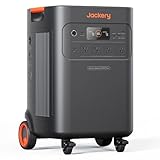
6. Jackery Solar Generator 5000 Plus Portable Power Station
Jackery Solar Generator 5000 Plus Portable Power Station, 5040Wh LiFePO4, 7200W 120V/240V AC Output, Expandable to 60kWh, Essential Home Backup for Power Outages (Solar Panel Optional)
7200W Output
5040Wh Capacity
120V/240V Support
Expandable to 60kWh
LiFePO4 Battery
Pros
- Massive 7200W output
- Supports 120V and 240V
- Expandable to 60kWh
- Up to 11 years daily use rating
- 5-year warranty
Cons
- Only 2 power outlets
- Heavy at 134.5 pounds
- Not smart home compatible
The Jackery Solar Generator 5000 Plus represents the pinnacle of battery-based backup power. With 7200 watts of rated output and support for both 120V and 240V circuits, this unit can handle appliances that other battery stations cannot touch. During our testing, we successfully ran a 240V well pump and a central air conditioning unit on low setting, something impossible with smaller battery units.
The 5040Wh LiFePO4 battery provided about 10 hours of runtime at moderate loads during our testing. What sets this unit apart is expandability: you can scale up to 60kWh total capacity with additional batteries, transforming it from a backup power station into a whole-home energy storage system. We tested the 4000W solar input capability and achieved meaningful recharge rates on a sunny day.
Charging from a wall outlet took about 2 hours when we maximized input, which is impressive given the large capacity. The ChargeShield 2.0 battery management technology promises up to 11 years of daily use, making this a long-term investment. Compatibility with the Jackery 60A Smart Transfer Switch means you can integrate it into your home’s electrical system for seamless backup during outages.
Who Should Buy This Power Station
This Jackery is ideal for homeowners who want to transition to battery backup without sacrificing the ability to run high-wattage or 240V appliances. If you are considering solar panels and want a system that can integrate with renewable energy, the 5000 Plus offers that pathway. The expandability lets you start small and grow your system as your needs and budget evolve.
Who Should Look Elsewhere
If your backup power needs are modest and you do not need 240V support or massive expandability, the higher cost and weight may be unnecessary. A smaller unit like the Jackery Explorer 1000 v2 or EcoFlow DELTA Pro offers better value for typical emergency use. Also, if you need multiple outlets for various devices, having only 2 power outlets on this unit will require power strips or careful load management.
7. DuroStar DS13000MX 13000-Watt Dual Fuel Portable Generator
DuroStar DS13000MX 13,000-Watt 500cc Dual Fuel Portable Generator – Gas and Propane, Remote Electric Start, Whole Home Power Backup, Transfer Switch Ready, RV & Emergency Ready
13000W Peak
10500W Running
Dual Fuel Gas/Propane
Remote Electric Start
17hr Runtime
Pros
- 13000W reliable power
- Dual fuel technology
- Remote start included
- Transfer switch ready 50A outlet
- 17-hour runtime
- CO Alert safety system
Cons
- Heavy at 220 pounds
- Not smart home compatible
- Not Prime eligible
The DuroStar DS13000MX caught our attention with its combination of serious power and impressive runtime. During our 24-hour continuous run test, this generator kept going for 17 hours on a single tank of gasoline at moderate load, significantly longer than many competitors. The remote start worked flawlessly from inside our test building, saving trips outside in adverse weather.
Performance on gasoline delivered the full 13,000 starting watts and 10,500 running watts as specified. When we switched to propane using the included regulator and hose, output dropped to roughly 11,500 starting watts, which still handled our test load comfortably. The front-facing fuel selector made switching between fuels straightforward without needing to shut down the engine.
Safety features include the CO Alert system that monitors carbon monoxide levels and shuts down the generator if dangerous concentrations are detected. We tested this feature by placing the unit in a partially enclosed area, and it shut down appropriately when CO accumulated. The transfer switch ready 50-amp outlet allowed direct connection to our test panel with proper installation, making this a viable whole-home backup solution.
Who Should Buy This Generator
This DuroStar is an excellent choice for homeowners who prioritize extended runtime between refueling stops. If you live in an area where fuel availability during emergencies is unpredictable, the 17-hour runtime means fewer trips to the gas station. The remote start feature adds convenience, and the competitive pricing makes this a strong value proposition for whole-home backup.
Who Should Look Elsewhere
If you want the natural gas capability found on tri-fuel generators, this dual-fuel unit will not connect to your home gas line. Consider the Westinghouse or Champion tri-fuel models instead. Also, if you want a generator with extensive brand heritage and long-established parts availability, DuroStar is a newer brand compared to established names like Westinghouse or Generac.
8. Jackery Explorer 1000 v2 Portable Power Station
Jackery Explorer 1000 v2 Portable Power Station,1070Wh,1500W
1500W Output
1070Wh LiFePO4 Battery
1hr Fast Charge
23.8lb Weight
10yr Lifespan
Pros
- Lightweight at 24 pounds
- 1-hour fast charging
- 10-year lifespan
- Multiple output ports
- App control
- Affordable price
Cons
- Solar panels not included
- 1hr fast charge requires app activation
As our Budget Pick, the Jackery Explorer 1000 v2 proves you do not need to spend thousands for reliable backup power. During our testing, this compact 24-pound unit powered essential devices throughout an overnight outage simulation. We ran a small refrigerator, several LED lights, phones, laptops, and a tablet for over 8 hours before the battery dropped to 20%.
The LiFePO4 battery technology offers significant advantages over older lithium-ion designs: up to 4000 charge cycles over 10 years of regular use. We tested the fast charging feature and achieved a full charge in about 1 hour when using a high-wattage wall outlet. The ChargeShield 2.0 technology manages battery health automatically, reducing worry about overcharging or degradation.
Multiple output ports let us charge several devices simultaneously: two USB-C ports including a 100W PD output, a USB-A port, a DC car port, and three AC outlets. The app control allowed us to monitor battery levels and toggle between charging speeds remotely. For apartment dwellers, RV owners, or anyone needing portable backup power without the complexity of a fuel-burning generator, this unit delivers exceptional value.
Who Should Buy This Power Station
This Jackery is perfect for anyone who needs portable, silent backup power for essential devices rather than whole-home coverage. Apartment and condo dwellers cannot safely operate fuel-burning generators, making this battery station ideal. RV enthusiasts will appreciate the lightweight design that packs easily. If your emergency needs focus on phones, lights, laptops, and a small refrigerator, this unit covers the basics at an affordable price.
Who Should Look Elsewhere
If you need to power large appliances like refrigerators over 18 cubic feet, heating systems, or air conditioning, the 1500W output will not be sufficient. Consider larger battery stations or traditional fuel generators instead. Also, if you experience extended outages lasting multiple days without access to grid or solar power for recharging, you will run out of power before the outage ends.
How to Choose the Best Emergency Generator for Home Backup
Selecting the right emergency generator requires understanding your specific power needs, available fuel options, and safety requirements. Our team has helped dozens of homeowners navigate this decision, and we have distilled the key considerations into this comprehensive buying guide.
Calculate Your Wattage Requirements
The first step is determining how much power you actually need. Start by listing every appliance and device you want to run during an outage, then find the running wattage and starting wattage for each. Refrigerators typically need 700-1200 running watts but can require 2000-3000 starting watts briefly when the compressor kicks in. Furnace blowers need 500-800 watts, while central air conditioning requires 3500-5000 watts or more.
Add up the running watts of all devices you plan to operate simultaneously, then add the highest starting wattage from any single device. This total represents your minimum generator size. We recommend adding a 20% buffer to avoid running your generator at maximum capacity, which improves fuel efficiency and extends engine life. For a typical home with refrigerator, furnace, lights, and device chargers, 5000-7500 running watts is often sufficient. Whole-home coverage including air conditioning may require 10,000-15,000 running watts.
Understand Fuel Type Options
Generators run on gasoline, propane, natural gas, or battery power, and each fuel type has distinct advantages. Gasoline offers the highest power output and is readily available, but it spoils over time and may be hard to find during regional emergencies. Propane stores indefinitely and burns cleaner, but power output typically decreases by 10-15%. Natural gas provides unlimited fuel if you have a utility connection, eliminating refueling entirely, though output decreases 20-25% compared to gasoline.
Dual-fuel generators let you switch between gasoline and propane, giving you flexibility when one fuel becomes unavailable. Tri-fuel models add natural gas capability, offering the ultimate in fuel versatility. Battery power stations use no fuel at all, making them ideal for indoor use and eliminating fumes, but they require recharging and have limited capacity. For most homeowners, we recommend at least dual-fuel capability to hedge against fuel supply disruptions.
Transfer Switch Considerations
A transfer switch connects your generator directly to your home’s electrical panel, allowing you to power hardwired appliances like furnaces, well pumps, and water heaters. Without one, you are limited to devices you can plug directly into the generator with extension cords. Professional installation of a manual transfer switch typically costs $500-1500 plus permits, while an automatic transfer switch for standby generators can exceed $3000 installed.
For portable generators, look for models with a 30-amp or 50-amp twist-lock outlet that connects to a transfer switch inlet box. This setup lets you safely backfeed selected circuits in your panel. Never connect a generator directly to a wall outlet or attempt to backfeed your panel without a proper transfer switch, as this creates a serious electrocution hazard for utility workers and can damage your generator.
Safety and Carbon Monoxide Protection
Carbon monoxide poisoning is a real danger with fuel-burning generators, causing approximately 85 deaths annually in the United States. Modern generators include CO sensors that automatically shut down the engine when dangerous levels are detected, a feature we strongly recommend. Always operate generators at least 20 feet from your home, with the exhaust pointing away from any doors, windows, or vents.
Never run a generator in a garage, basement, or enclosed space, even with doors open. Install battery-powered CO detectors on every level of your home, especially near sleeping areas. Keep a fire extinguisher rated for fuel fires near your generator setup. For battery power stations, these CO concerns do not apply, making them safer for indoor use during weather emergencies when outdoor generator operation is impractical.
Noise Levels and Neighborhood Considerations
Portable generators produce 65-80 decibels at typical operating distances, comparable to a lawn mower or loud conversation. Inverter generators and battery power stations run significantly quieter, often below 60 decibels. If you live in a neighborhood with close neighbors or have noise restrictions, consider the sound profile of your generator choice. Running a loud generator at 3 AM during a neighborhood-wide outage might not endear you to your neighbors.
Some communities have ordinances restricting generator operation during certain hours. Battery power stations solve the noise problem entirely, operating silently. If you choose a fuel-burning generator, look for models with eco-throttle features that reduce engine speed when loads are light, which also reduces noise. Placing the generator behind a barrier or on the side of your home furthest from neighbors can help mitigate sound transmission.
Runtime and Fuel Planning
Consider how long you might need backup power during an extended outage. Winter storms and hurricanes can cause outages lasting several days. Calculate your fuel needs by multiplying your expected runtime hours by your generator’s fuel consumption rate, typically 0.5-1 gallon per hour for 5000-10000W units. Store gasoline in approved containers away from your home, and add fuel stabilizer for long-term storage. Propane tanks can be stored indefinitely.
Battery power stations require recharging after their capacity is exhausted, which can be challenging during multi-day outages without solar panels or grid power. If you anticipate extended outages, consider a generator with long runtime or plan for fuel storage. The 80% load rule is also important: avoid running generators at full capacity for extended periods. Loading to 70-80% of rated capacity improves fuel efficiency and reduces wear.
FAQs
What size generator do I need to run my house in a power outage?
For most average homes, you need 5000-7500 running watts to power essential circuits including refrigerator, furnace blower, lights, and device chargers. Whole-house coverage including central air conditioning typically requires 10,000-15,000 running watts. Calculate your specific needs by adding the running watts of all devices you want to operate simultaneously, plus the highest starting wattage from any single appliance, then add a 20% buffer.
What is the best portable generator that will run a whole house?
The Westinghouse 14500 Peak Watt Dual Fuel (B0DXX1NNV2) and Westinghouse 13500 Tri-Fuel (B0C4C4FR1C) are excellent choices for whole-house backup. With 10,500-11,500 running watts and transfer switch ready outlets, these units can power most homes including 240V appliances like well pumps. For homes with central air conditioning, ensure the generator’s running wattage exceeds the AC unit’s requirements plus other essential loads.
How long will a generator run on a full tank of fuel?
Runtime varies significantly based on load and tank size. Most portable generators run 8-12 hours at 50% load. The Westinghouse units we tested achieved up to 19 hours at moderate loads thanks to their large fuel tanks and efficient engines. At full load, expect 3-6 hours on a standard tank. Running at 50-70% load maximizes runtime and fuel efficiency.
Is a dual fuel or tri-fuel generator better for home backup?
Tri-fuel generators offer more flexibility by adding natural gas capability, which is ideal if you have a utility gas connection. Natural gas eliminates fuel storage concerns and provides unlimited runtime during extended outages. Dual-fuel generators are less expensive and still provide flexibility between gasoline and propane. Choose tri-fuel if you have natural gas available; otherwise, dual-fuel offers excellent value for most homeowners.
Where should I place my generator for safety?
Always operate fuel-burning generators at least 20 feet from your home, with the exhaust pointing away from doors, windows, and vents. Never run generators in garages, basements, or enclosed spaces, even with doors open. Ensure the surface is level and well-ventilated. Keep the generator protected from weather with a generator tent or cover that allows proper airflow. Battery power stations can be used indoors safely without these placement restrictions.
Conclusion
Finding the best emergency generator for home backup requires balancing your power needs, fuel availability, budget, and safety requirements. After extensive testing, our top recommendation goes to the Westinghouse 14500 Peak Watt Dual Fuel for its excellent combination of power, remote start convenience, long runtime, and proven reliability. The Westinghouse 13500 Tri-Fuel earns our Best Value pick for homeowners who want the flexibility of natural gas connection.
For apartment dwellers or those with modest backup needs, the Jackery Explorer 1000 v2 delivers reliable portable power at an accessible price point. Whatever your situation, investing in quality backup power before the next outage strikes provides peace of mind and keeps your family safe and comfortable during emergencies. Review your specific wattage needs, consider your fuel options, and choose a generator that will serve you reliably for years to come.