
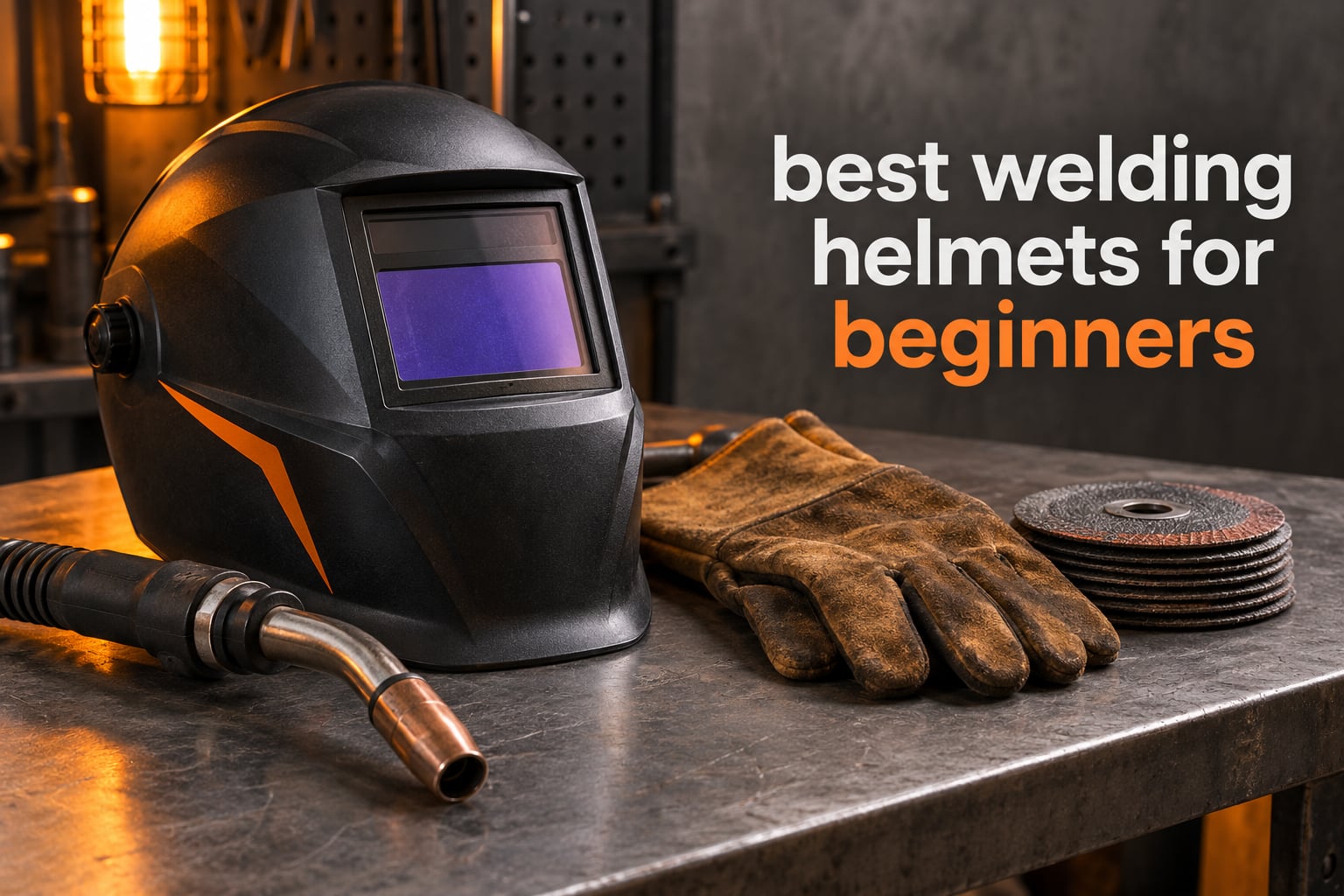
The best welding helmets for beginners in 2026 are the ones that darken before you notice the arc, stay clear enough to see the puddle, and do not make your neck ache after two hours in a garage. Our top pick, the YESWELDER LYG-L600A, manages that for a very small outlay and carries enough owner history to prove it holds up. It is the rare budget hood that earns a top spot on optics rather than on price alone.
A welding helmet is the one piece of safety gear you cannot improvise around. The arc throws off ultraviolet and infrared radiation that burns exposed skin, and the visible flash can cause arc eye, a painful corneal burn nicknamed welder’s flash that arrives hours after a session, not during it. Beginners are more exposed than experienced welders because they watch the puddle instead of their surroundings, and because they tend to work closer to the arc while learning.
The switch from a passive hood to an auto-darkening one is the biggest quality jump available to a beginner. A passive helmet has a fixed dark filter you flip down before striking an arc and flip back up to check your work, which means you learn to work blind in two-second intervals. An auto-darkening welding helmet uses arc sensors to trigger a liquid crystal filter that goes dark in milliseconds, then clears when the arc stops, so you keep the helmet down and keep looking at the weld.
How we picked: we compared the specs that actually change how a beginner welds, then weighed them against the volume of real owner feedback behind each model. Sensor count, optical clarity class, switch speed, shade range, viewing area, weight, headgear quality, battery replaceability and warranty length did most of the work. Where owners repeatedly report the same failure mode, we called it out rather than repeating the spec sheet.
One thing worth saying up front: beginners do not wear a helmet for eight hours a shift. Most people in a home garage log five to twenty hours a week, and that changes the math. A lightweight shell with simple external controls beats a heavier premium hood with features you will never touch, and spending heavily now is not automatically smart when you may change processes in a year.
Table of Contents
Quick Picks: The Best Welding Helmets for Beginners in 2026
Each of these ten earned a place for a different reason. Every label below is exclusive, so there is a clear answer for a tight budget, for TIG work, for pipe, for low-light garages and for anyone who simply wants the best all-rounder they can buy.
Best Overall: YESWELDER LYG-L600A – 1/1/1/1 true color optical clarity, 1/30000 second switching, solar powered with a replaceable CR2450 battery, and the largest owner base of any hood we tested.
Best Premium Clarity: Lincoln Electric Viking 3350 – 4C lens technology at 1/1/1/1, an extra large 12.5 square inch viewing area, four arc sensors and a five year warranty with five year spare part availability.
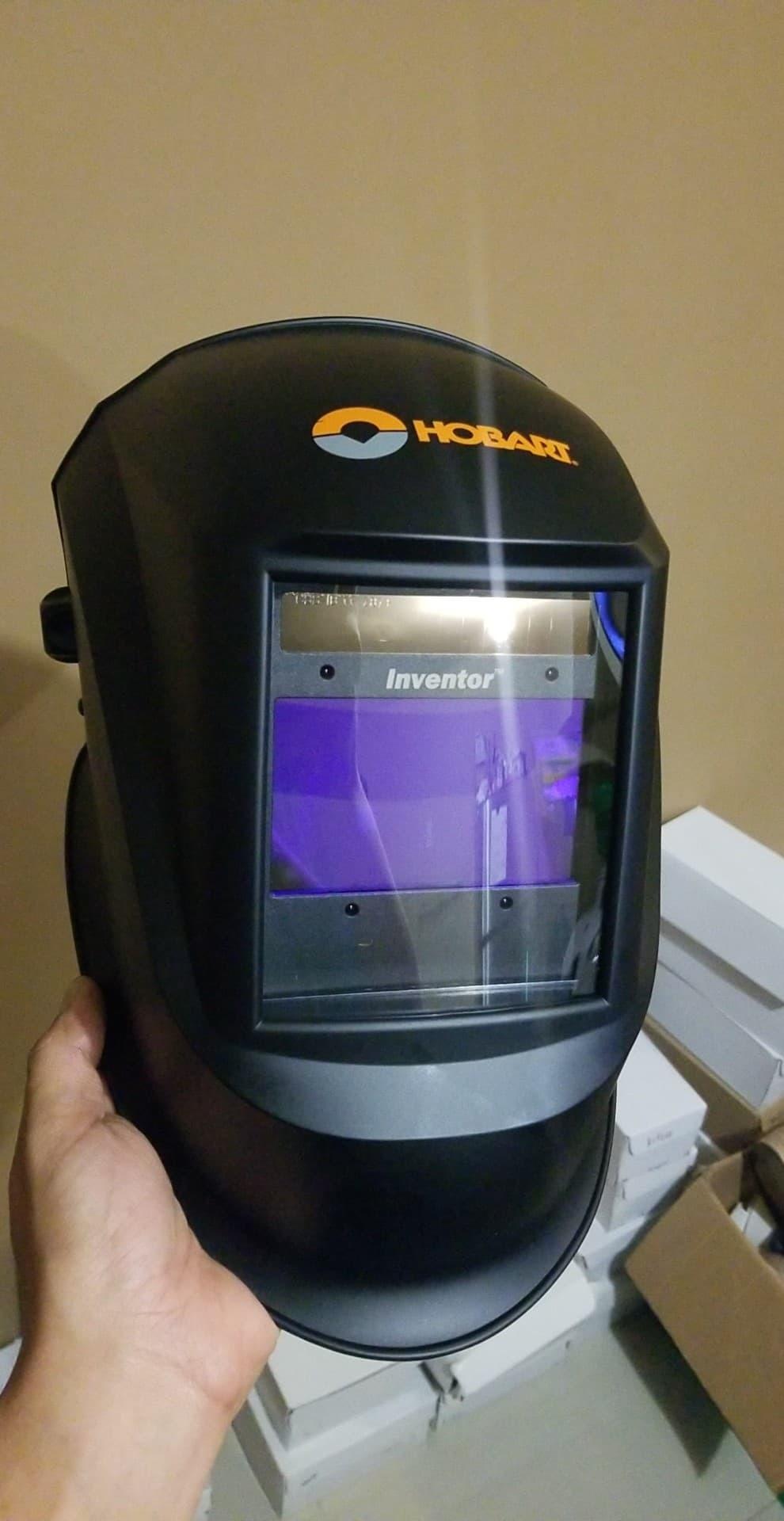
Best Value: Hobart 770890 – PureColor lens technology across a 9.3 inch widescreen viewing area, four independent arc sensors, seamless weld to grind switching and a 1.25 lb shell from a major brand.
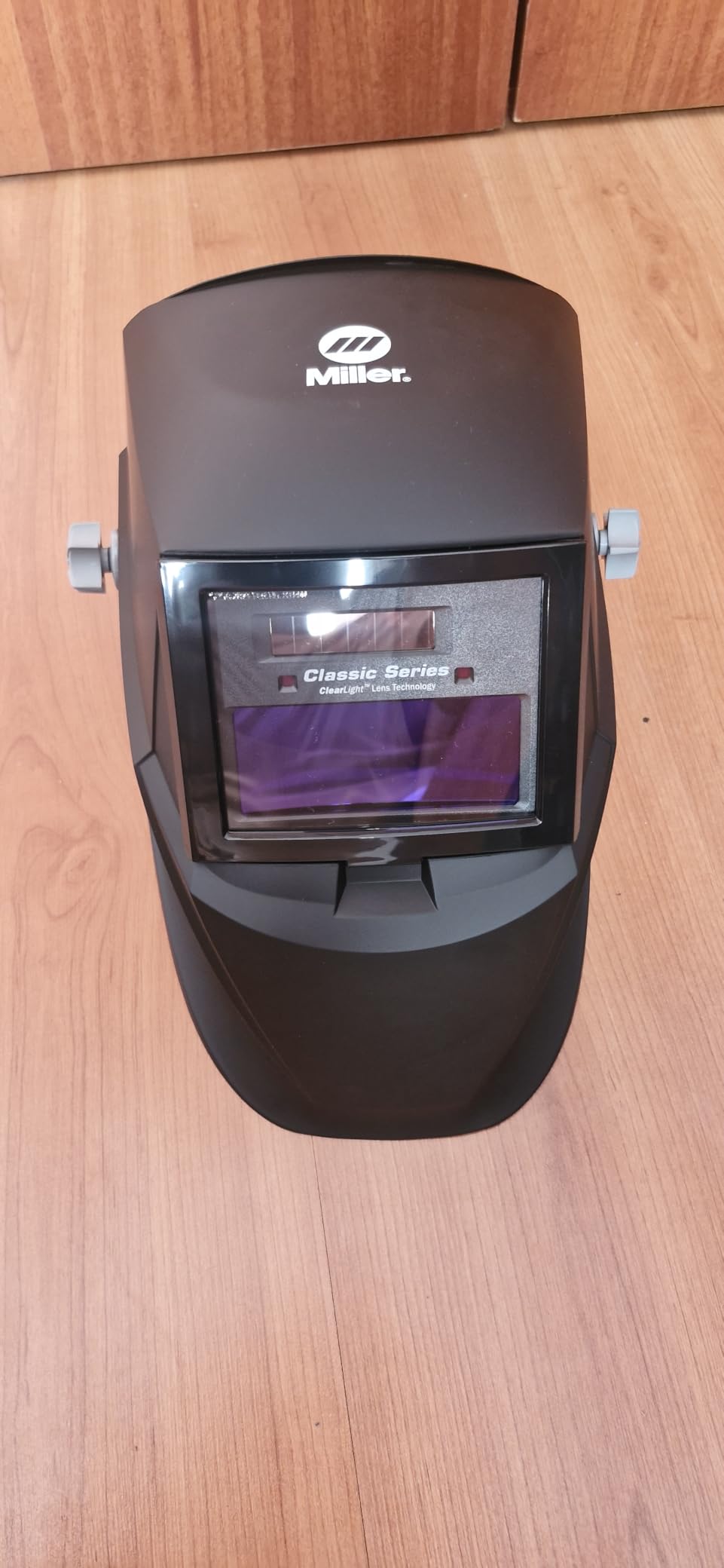
Best for TIG: Miller Classic Series – variable weld shades 8-13, cut shades 5-8, grind shade 3, 1/23000 second switching and a 3.0 light state that lets you keep the hood down between welds.
Best Budget with Four Sensors: ARCCAPTAIN HSH-S800 – four arc sensors at 1/25000 second switching, 1/1/1/1 true color clarity, a 1 lb shell and three replacement lenses in the box.
Best for Long Lightweight Sessions: TOOLIOM TL-E600A-B – a 1.14 lb shell, an external grind mode knob you can turn with gloves on, a low battery indicator and a user replaceable battery compartment.
Best for Visibility on a Budget: YESWELDER LYG-M800H – a 3.93 x 3.66 inch viewing area, 1/1/1/1 true color optics, four arc sensors and all controls on the outside of the shell.
Best for Pipe and Tight Spaces: Jackson Safety Insight – a 6 ounce HLX shell, a 3.94 x 2.36 inch viewing area, variable shades 9-13 and the patented 370 Speed Dial ratcheting headgear.
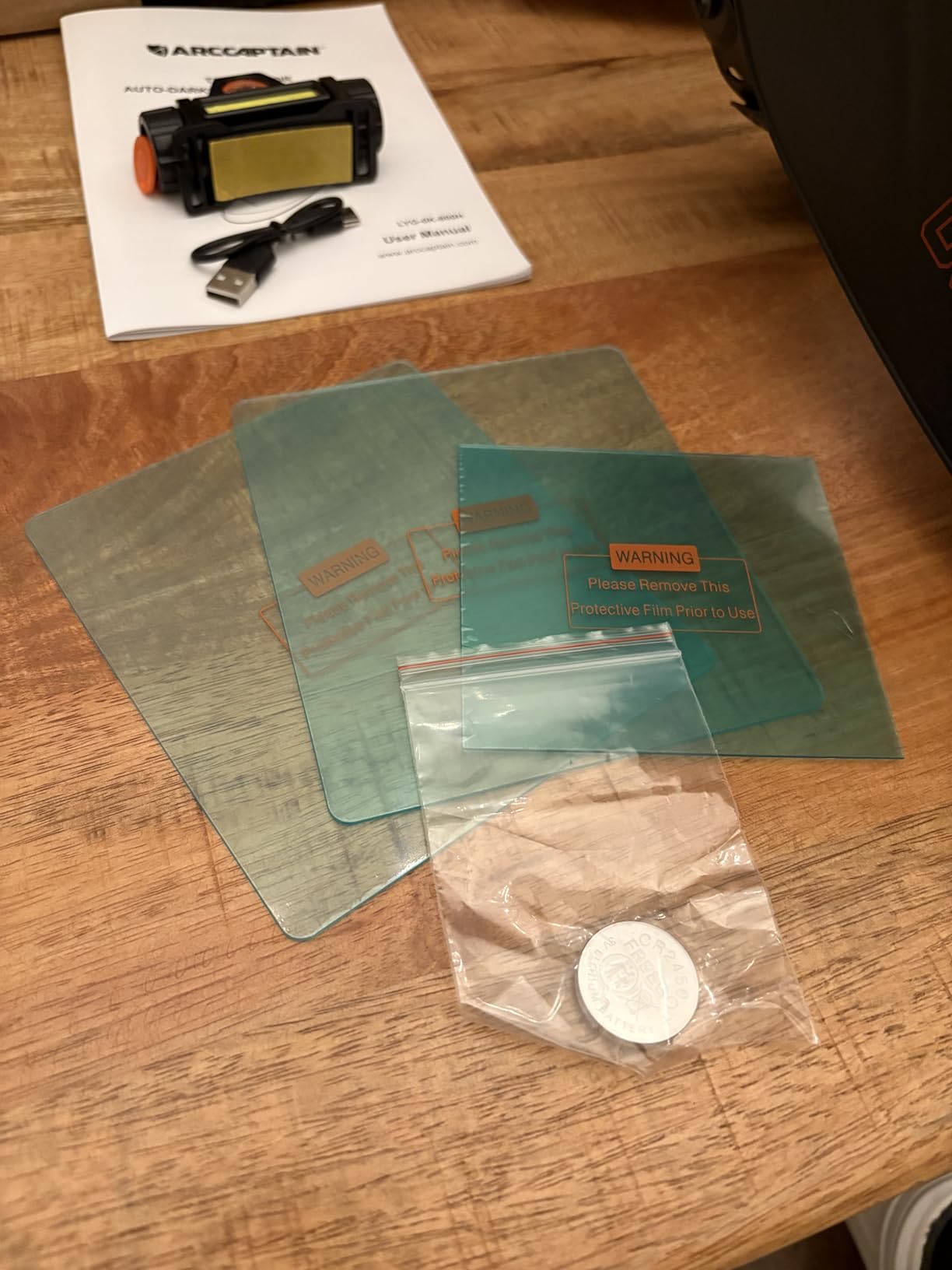
Best for Low-Light Garages: ARCCAPTAIN XK-LY800H – a USB powered LED welding light with two brightness levels, a 3.94 x 3.66 inch screen and dual solar panels with a CR2450 backup.
Best for a First-Time Learner: TRQWH KTS-JD03 – 1/1/1/2 true color clarity, 1/20000 second switching, a USB rechargeable top LED light and thickened sponge forehead padding.
Top 3 Picks for the Best Welding Helmets for Beginners (October 2026)

All 10 Helmets Compared Side by Side in 2026
Every product in this roundup appears below with the specifications that change the welding experience. The table is the fastest way to narrow ten options down to two or three worth reading in full.
| Product | Specifications | Action |
|---|---|---|
| YESWELDER LYG-L600A |
|
Check Latest Price |
 Lincoln Electric Viking 3350 Lincoln Electric Viking 3350 |
|
Check Latest Price |
 Hobart 770890 Hobart 770890 |
|
Check Latest Price |
 Miller Classic Series Miller Classic Series |
|
Check Latest Price |
 ARCCAPTAIN HSH-S800 ARCCAPTAIN HSH-S800 |
|
Check Latest Price |
 TOOLIOM TL-E600A-B TOOLIOM TL-E600A-B |
|
Check Latest Price |
 YESWELDER LYG-M800H YESWELDER LYG-M800H |
|
Check Latest Price |
 Jackson Safety Insight Jackson Safety Insight |
|
Check Latest Price |
 ARCCAPTAIN XK-LY800H ARCCAPTAIN XK-LY800H |
|
Check Latest Price |
 TRQWH KTS-JD03 TRQWH KTS-JD03 |
|
Check Latest Price |
1. YESWELDER LYG-L600A True Color Helmet – Best Overall for Beginners
YESWELDER Auto Darkening Welding Helmet 1/1/1/1 True Color, LYG-L600A
True color 1/1/1/1 lens
3.64 x 1.67 inch view
1/30000s switch
ANSI Z87.1
Pros
- 1/1/1/1 true color optics for the lowest outlay in the roundup
- Fast 1/30000 second switching with adjustable sensitivity and delay
- Extra battery plus replacement inner and outer lenses included
- Adjustable pivot headgear works for long sessions
- ANSI Z87.1 and CSA Z94.3 certified
Cons
- Small viewing area compared with panoramic styles
- Shell and headgear feel lighter duty than professional hoods
- Included button battery arrived dead and was installed incorrectly
This is the helmet I recommend to someone striking their first arc. The 1/1/1/1 optical clarity rating is the highest grade under the EN 379 scale, and on a true color lens it means the puddle looks like the puddle rather than a green-grey smear. At 1/30000 second switching it is the fastest sensor response in this roundup, and on a 16 ounce shell it is one of the lightest.
What sold me was the box contents. You get a CR2450 battery, one inner replacement lens, two outer replacement lenses, a storage bag and a manual, which means the consumables that normally cost you money in month two are already on the bench. The solar panel handles routine charging and the CR2450 covers you when the panel is starved of light.
The shade range of 3/7-13 covers TIG, MIG, MMA and grind, and the lens accepts a magnifier insert if you need one for close bead work. The blue light blocking outer lens is a small touch that matters more than most people expect at the end of a long evening.
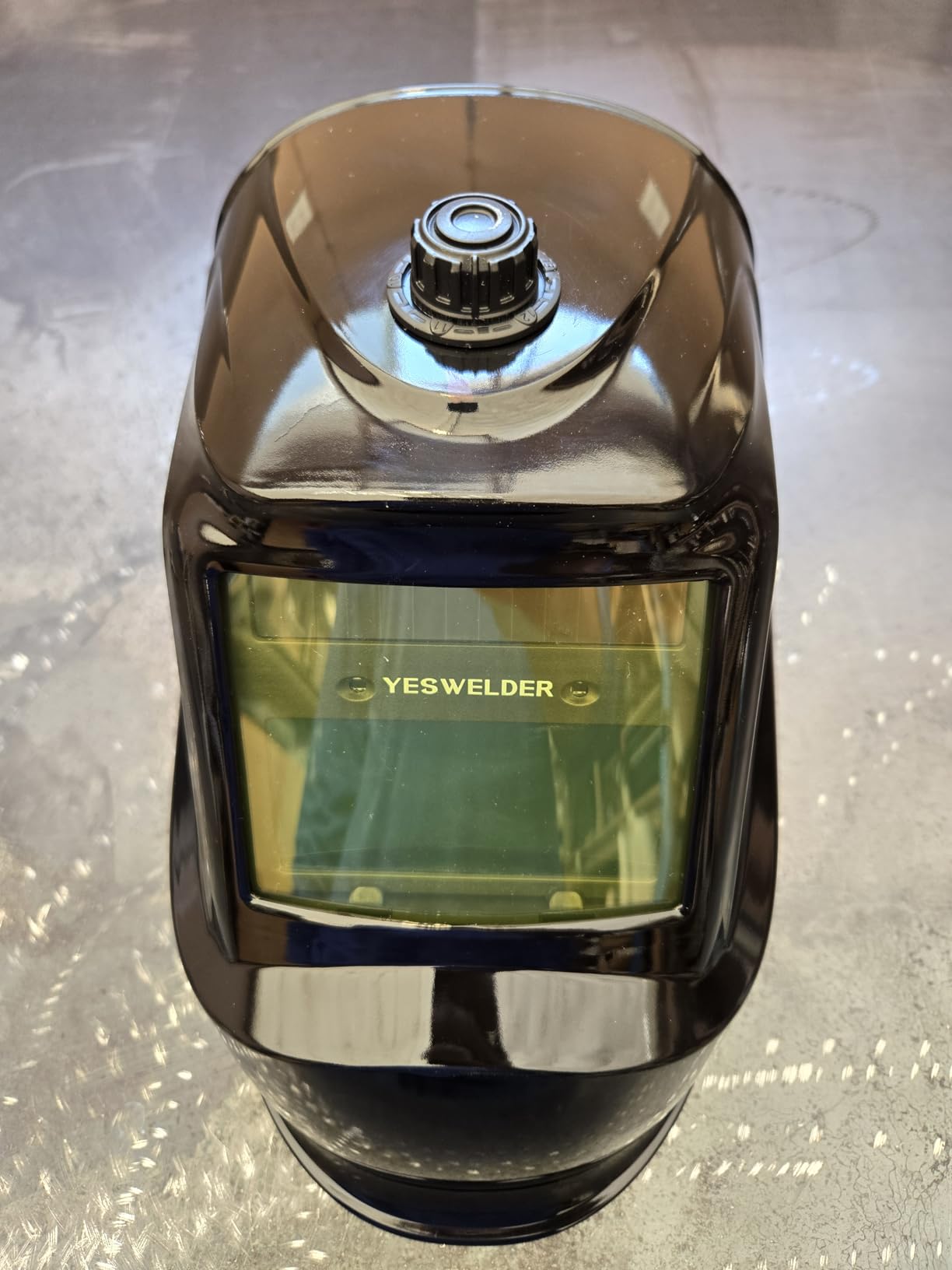
The honest weakness is the viewing area. At 3.64 by 1.67 inches you see the joint and the puddle, and that is genuinely enough, but you do not get the peripheral awareness that a 12.5 square inch premium lens gives you when you are tacking a bracket at an angle. Owners also point out that the shell and headgear feel thin compared with a professional hood, and the pivot tension takes a few adjustments to get right.
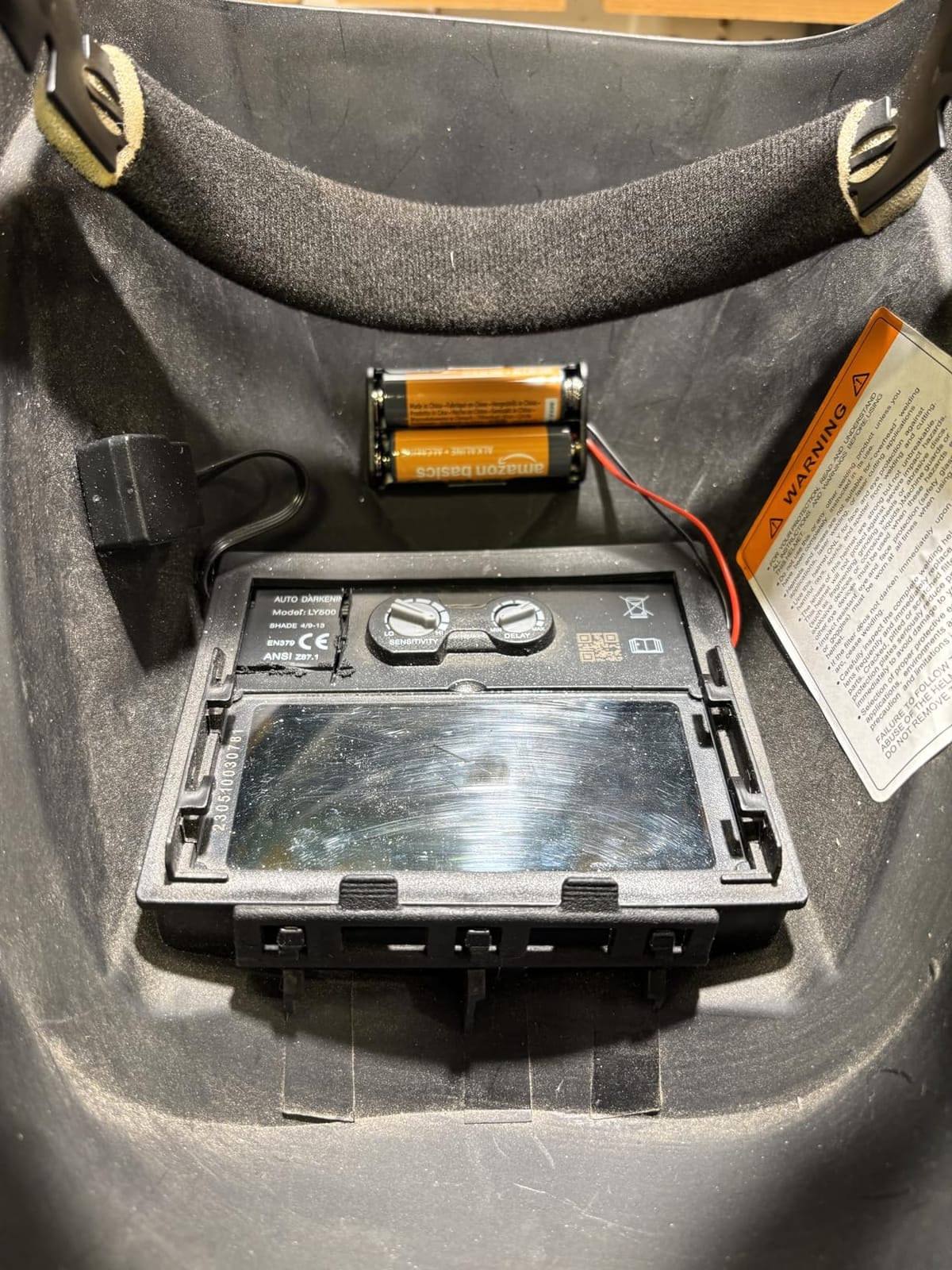
One recurring complaint in owner feedback is worth flagging so it does not surprise you: some units arrive with the included button battery dead or installed backwards. It is a two-minute fix and the solar panel picks up the slack once the cell is seated correctly, but check it on day one rather than the day of your first weld.
Across more than thirteen thousand reviews the pattern is consistent. People buy this after a bad experience with an even cheaper hood, see an immediate difference in bead visibility, and report dependable results across MIG, stick and TIG work over months of shop use. For a first purchase that is exactly the outcome you want.
Is the small viewing area a problem for TIG work?
For general TIG and stick work at normal amperage, no. The 1/30000 second response and the 7-13 shade range mean the lens keeps up with a normal arc strike without lag. The narrower view matters more for out-of-position work and for tack welding where you need to see around the joint, and it is the single most common reason owners step up to a panoramic model later.
Low-amperage TIG is where this type of hood earns its keep on a budget. The two arc sensors respond quickly to a clean, stable arc, which is the most common beginner TIG scenario. If you plan to do a lot of very low current work on thin stainless or on pipe, the four sensor models in this list give you more margin.
Who should skip this helmet?
Skip it if you work in tight spaces routinely, weld overhead or under vehicles often, or wear prescription glasses that need the full width of a large viewport. If you already know you will be doing pipe or stainless production work, a lighter shell with a bigger view serves you better even if it costs more. If you also work at height, head protection is a separate problem from eye protection, and our guide to the best climbing helmets explains what those ratings actually guarantee.
Also skip it if you want a brand name you can say out loud. There is nothing wrong with this helmet, but owner loyalty in this category tends to attach to Miller, Lincoln and Hobart names, and that loyalty matters when you are still learning what a good weld looks like. If the name matters to you, the Hobart 770890 is the honest alternative.
2. Lincoln Electric Viking 3350 – Premium Clarity With 4C Lens Technology
Lincoln Electric K3034-4 VIKING 3350 Auto Darkening Welding Helmet with 4C Lens Technology, Matte Black, extra large
4C 1/1/1/1 clarity
12.5 sq in view
X6 headgear
5 year warranty
Pros
- Best-in-class visibility with a clearly larger view of the puddle
- Four sensors that do not flicker on low amperage TIG
- X6 headgear balances the hood across the head
- Standard cover lenses rather than expensive proprietary parts
- 5 year warranty with 5 year spare part availability
Cons
- Occasionally slow to react right as the arc strikes
- Premium price puts it beyond typical entry budgets
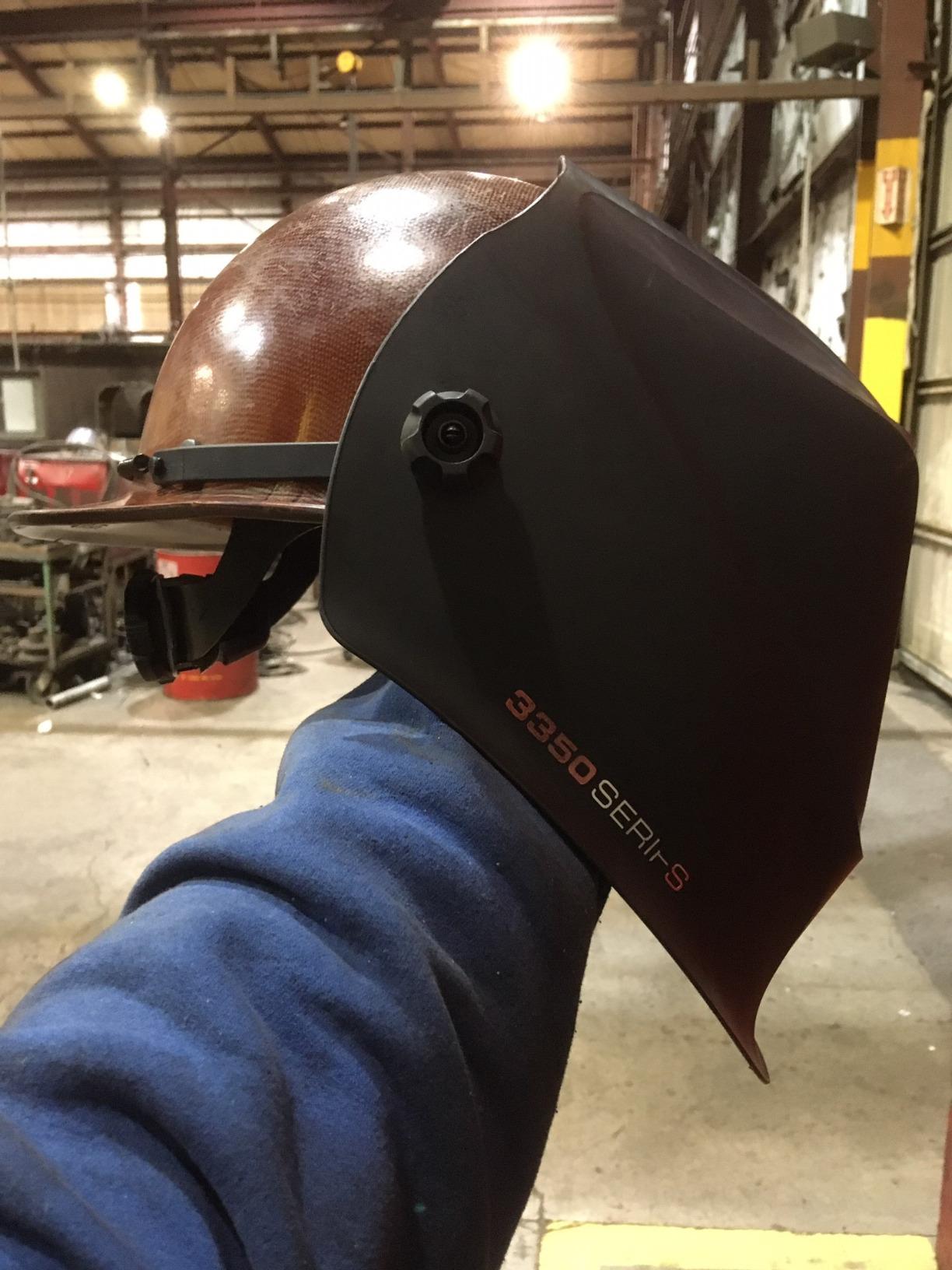
This is the hood to buy if you have decided that seeing well is the thing you care about most. The 4C lens technology delivers 1/1/1/1 optical clarity across a 12.5 square inch viewing area, and that combination is the reason owners describe it as the best visibility they have ever used. Clarity matters more than most spec sheets suggest, because a beginner who can see the puddle placement immediately corrects bad habits instead of welding blind.
It also solves a problem specific to beginners: arc flicker on low amperage work. Four arc sensors and a 1/25,000 second switching speed keep the lens stable on TIG and on thin material where a two sensor budget hood tends to stutter. The X6 headgear distributes weight across the head and balances the hood, which on a 1.4 pound shell makes a noticeable difference over a long session.
The ratcheting head size adjustment fits hat sizes from 6.5 to 8, which covers nearly everyone, and the fit is one of the more universally liked headgear systems in the category. Owners repeatedly single out headgear as the deciding factor between otherwise similar hoods, and this one is usually the one they point to.
The warranty is the other reason it lands on this list. A five year manufacturer warranty paired with five year spare part availability is a real commitment, and it matters more than people expect when the failure mode on any helmet is a broken headgear knob or a lost pivot screw two years in. Service parts availability was raised repeatedly as a buying criterion by experienced owners, and the Viking answers it directly.
It also does not require expensive proprietary cover lenses, which is a quieter but significant ongoing saving. The box includes a helmet bag, a bandana, five outside cover lenses and two inside cover lenses, so the first year of consumables is handled.
The two criticisms that come up are consistent and worth weighing. Some owners report a slow initial reaction right as the arc strikes even at high sensitivity, and the price sits well beyond a typical entry budget. Neither is a dealbreaker for someone who plans to keep this hood for years, but both are real.
Is the Viking 3350 worth the jump in price for a beginner?
It is worth it if you have already welded a few times and know that poor visibility is what is holding you back, and if you intend to keep the hood for years. It is not the right first purchase for someone who bought a machine last week and has not struck an arc yet. At this stage the money is better spent on a mid tier hood, a decent ground clamp and a proper welding jacket.
Think of it as a long term purchase rather than an entry purchase. The warranty, the parts availability and the standard lens sizing mean the real cost per year of ownership is lower than the headline price suggests, provided you actually keep it.
How does it feel in tight quarters and overhead?
The 12.5 square inch lens is large, but the shell is not tiny, so inside a frame, under a vehicle or in a pipe you will feel the size of the hood more than the size of the view. For a beginner working on a bench in an open garage that is irrelevant. For someone who spends their day in confined spaces, the Jackson Insight in this roundup is a more practical shape.
Weight is 1.4 pounds, which is heavier than the budget picks and similar to the Hobart. On a short beginner session that is fine, and the X6 balance does most of the work in keeping the load off your neck.
3. Hobart 770890 PureColor Helmet – Best Value From a Major Brand
Hobart 770890 Auto-Darkening Welding Helmet, Large, Black
PureColor 9.3 inch view
4 arc sensors
Weld to grind
1.25 lb shell
Pros
- Large widescreen view with an accurate PureColor look at the weld
- Four independent sensors for dependable arc detection
- Simple analog knobs that are genuinely easy to learn
- Seamless weld to grind switching without removing the helmet
- Continuous UV and IR protection with auto on and off
Cons
- Larger shell can feel bulky in tight working positions
If you want a name brand you can say out loud without paying premium tier money, this is the pick. Hobart is a Lincoln Electric brand, which means the service parts and warranty infrastructure behind it is the kind you can rely on, and the hood itself is priced for a hobbyist rather than a professional buyer.
PureColor lens technology across a 9.3 inch widescreen viewing area gives you most of the visual benefit of a much larger premium viewport at a fraction of the size. Four independent arc sensors make detection reliable, which matters more for a beginner than the number sounds like, because a sensor that misses your arc strike means an instant hit of arc eye.
The control scheme is analog rather than digital, and that is a feature rather than a compromise for most beginners. A shade knob, a sensitivity knob and a delay knob do exactly one thing each, with no mode menus. The auto on and off function triggers at arc strike, so you can wear the hood down between welds and let it manage power itself.
The weld to grind mode switching is the detail that owners mention most and competitors often bury. You can drop into grinding without taking the helmet off or hunting through a button sequence, which is the difference between grinding a bead flush and leaving a proud crown. It is also safer, because you are not flipping a hood up and down repeatedly with a hot workpiece nearby.
Continuous UV and IR protection means the shield is working whether or not the lens is currently dark. A CR2 lithium battery is included, and the shell is polyamide nylon at 1.25 pounds, which is a reasonable weight for a hood with this much viewing area.
Owner feedback is overwhelmingly positive with very few reported drawbacks. The recurring note is that the larger shell can feel bulky in tight working positions, which is a fair trade for a bigger, more color accurate view in open space.
How does it handle low amperage TIG compared with the Miller?
Four independent sensors give it more margin on low amperage arcs than the two sensor Miller Classic in this list, so it is the safer bet if TIG is your main process. The tradeoff is that its shade controls are analog rather than digital, so you set shade with a knob instead of stepping through a menu in half shade increments. For most beginners that difference matters less than reliable detection.
Both are competent TIG hoods at the hobby level. The Hobart detects more reliably; the Miller gives you a lighter state between welds and is tuned for very low current work.
Is it worth buying Hobart over a budget brand for the same money?
Yes, and the reasons are boring but decisive. A known brand means the shell material and the headgear will still be there in five years, spare parts exist when a knob breaks, and the warranty is real. Budget brands at the same price often use thin plastic and a pivot harness that loosens within months, which is exactly the failure owners complain about when they move up.
It also carries a limited two year warranty, which is shorter than the Lincoln Viking 3350 and the Miller Classic. Check the terms before you buy, and note that a protective lens kit is included.
4. Miller Classic Series ClearLight Helmet – Best for TIG and Low Current Work
Miller Classic Series Welding Helmet, ClearLight™, Shade 8-13, Black
ClearLight lens
Shades 8-13, cut 5-8
1/23000s
3 year warranty
Pros
- ClearLight high definition optics
- Auto on power activates at arc strike
- Digital controls for shade
- delay and sensitivity
- Ratchet headgear holds a secure fit
- Suited to TIG work at five amps and below
Cons
- Two arc sensors are fewer than premium helmets offer
The Miller Classic is built around a specific idea, which is that most of your welding happens in short passes. The variable weld shades run 8 to 13, cut shades run 5 to 8 and grind sits at shade 3, so the lens can go lighter for cutting than it does for welding, which is a real improvement when you are cleaning up a joint between passes.
ClearLight lens technology gives sharp high definition optics, and reviewers position this as a value minded step up from generic hoods rather than a budget compromise. The 3.0 light state is the quiet hero: it is bright enough to let you keep the hood down between welds without squinting, which cuts the constant up and down flipping that wears out cheap headgear and irritates beginners.
Switching speed is 1/23000 second across two arc sensors, and the ratchet headgear with adjustable digital shade, delay and sensitivity controls holds a secure fit over long sessions. It meets ANSI Z87.1+, CSA and CE standards with a three year warranty, and the 989 g shell sits in the middle of this roundup on weight.
Two sensors is the honest limitation. On a clean, stable arc at normal amperage that is entirely adequate, and owners regularly use it down to five amps on TIG. But four sensors give you margin when a sensor is blocked by your own hand, a pipe wall or a tight joint, and that is where a two sensor hood can let arc light through.
That is why this sits fourth rather than higher. It is a very good hood for the process it was tuned for, and it is a slightly compromised hood for everything else. The six square inch viewing area is also the smallest among the name brand models here, so you are trading peripheral view for a better light state and lighter shell.
Owner sentiment is overwhelmingly positive with little criticism beyond the sensor count, and it is frequently named as a strong first serious helmet for TIG and low amperage work. That framing is accurate.
Is a 6 square inch viewing area too small to learn on?
It is small, and on a bench with a big clean workpiece you will be fine. What you lose is peripheral context, which starts to matter when you are fitting a piece into a tight frame, welding inside a bracket or working on something you cannot rotate. If your project list is mostly flat plate and open frames, the Miller view is adequate and the light state is a genuine bonus.
Beginners often underestimate how much they rely on seeing the edges of the joint rather than just the puddle. If you are unsure, test both this and the Hobart side by side on your own bench for twenty minutes. The difference is obvious within the first weld pass.
Miller or Lincoln: which one for a beginner?
Both are safe choices and the answer comes down to which process you are doing. The Miller Classic gives you a brighter light state between welds and a very usable light shade for cutting, which suits TIG and mixed shop work. The Lincoln Viking 3350 gives you a much larger viewing area, four sensors and a longer warranty, which suits MIG, production and anyone who will keep the hood for years.
On headgear specifically, owner feedback tends to favour Lincoln for fit and comfort, while the Miller ratchet system is well liked for its secure hold. On service parts, the Lincoln five year spare part commitment is the stronger promise.
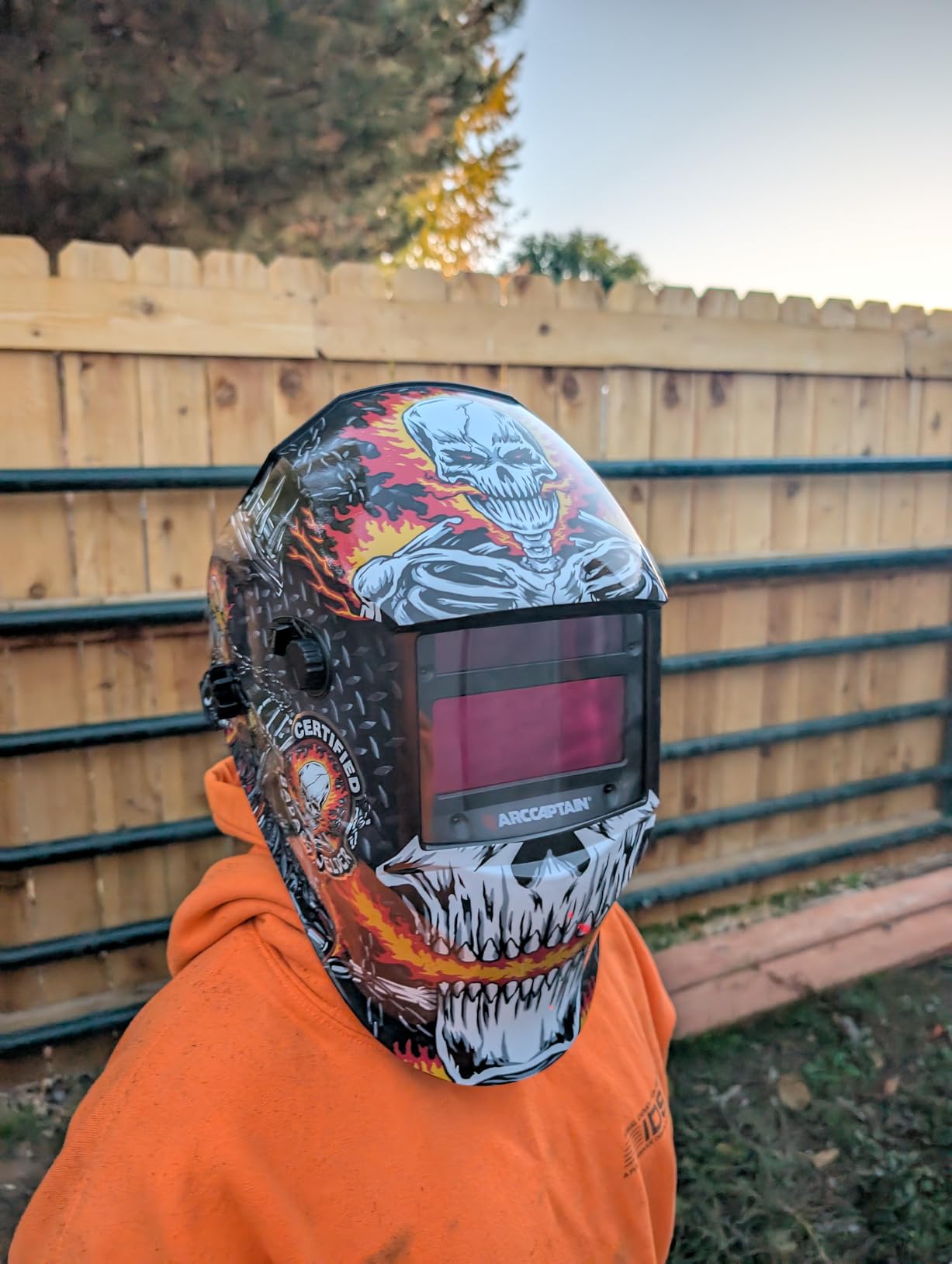
5. ARCCAPTAIN HSH-S800 – Best Budget Pick With Four Arc Sensors
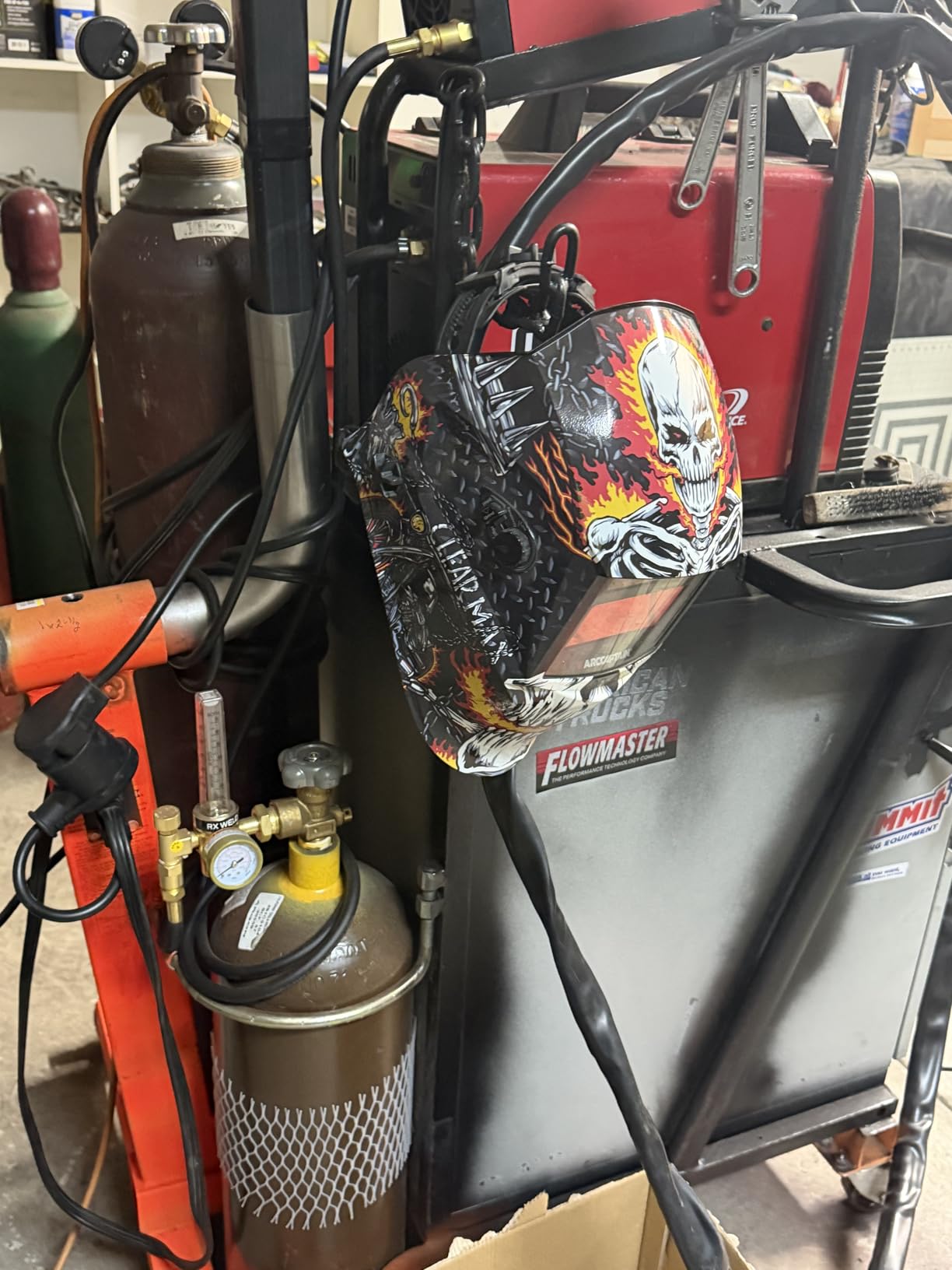
ARCCAPTAIN Welding Helmet Auto Darkening, 1/25000s Response, Shade 4/9-13
4 arc sensors
1/25000s switch
1/1/1/1 clarity
1 lb shell
Pros
- Genuinely clear blue tinted true color optics for the price
- Four sensors switching in 1/25000 second
- Comfortable adjustable padded headband at 1 lb
- Handles MIG
- stick and TIG with effective grind mode
- Three replacement lenses included in the box
Cons
- Some units report slow sensor response that lets arc light through
- A few buyers report the lens powering off mid weld and declining over time
Four arc sensors on a budget hood is unusual, and that single specification is the reason this model beats its own price class. Most entry auto-darkening helmets use two sensors, which is where detection fails in tight positions or when a sensor is shadowed. Four gives you redundancy, and redundancy is exactly what a beginner welding a first joint in an unfamiliar corner needs.
Optically it delivers 1/1/1/1 true color clarity across a 3.86 by 1.69 inch viewing area, and owners routinely comment on being surprised by the clarity at this price. Several report comparing it favorably to far more expensive hoods, and a number have bought a second one as a backup. Switching is 1/25000 second, and the 12-in-1 smart filter adds automatic DIN 16 UV and IR protection.
At about 1 pound with an adjustable padded headband, it is light enough for long beginner sessions, and the box includes three replacement lenses. Power comes from solar cells plus a replaceable CR2450 lithium battery, which is the right arrangement for a hood you may keep in a garage with poor light.
The dark state levels are 4 and 9-13, covering MIG, stick, TIG and grinding, and the lens accepts a cheater or magnifying insert. The shell is PA material, the viewing size is generous for the class, and it carries ANSI Z87.1, EN 175, EN 379 and CSA Z94.3 certification, which is a stronger standards list than most products at this level claim.
Two issues appear in owner feedback and both relate to individual units rather than the design. Some buyers report slow sensor response that lets the initial arc light through, and a few report the lens powering off mid weld and declining in performance after early use. With a 180 day warranty, the practical response is to test the hood on a scrap piece of scrap metal during the first week and get ahead of any problem.
That is a small amount of work, and it is worth doing with any auto-darkening hood. Set the sensitivity to its fastest setting, strike an arc on a piece of scrap and check that the lens darkens immediately and holds through the pass. It takes ninety seconds and it is the fastest way to know your gear is working before you put it on a real project.
Can a budget hood really match a name brand on optics?
On a static comparison of lens quality, often yes. A 1/1/1/1 rating means the filter passes the same light in every direction, and that rating is a measurable standard rather than a marketing claim. The gap between this and a premium hood is not what the lens transmits, it is everything around it: the shell, the headgear, the sensor consistency, the warranty and the availability of parts.
Budget hoods are also less consistent between units. The same model can have a good sensor and a poor one, which is why testing your specific hood matters more here than with a name brand model where the variance is tighter.
When should I move past this tier?
Move up when the failure you hit is physical rather than electronic. A binding headgear knob, a cracked shell or a pivot that will not hold position is the signal that a budget hood has reached the end of its useful life, and replacing those parts on a cheap shell often costs more than the shell itself. If your issue is instead slow detection, first raise the sensitivity setting before you buy anything new.
Many beginners keep one of these as a permanent spare. A second hood means a cracked cover lens or a dead battery never stops you working, and at this end of the price range a spare costs very little.
6. TOOLIOM TL-E600A-B – Best Lightweight Helmet for Long Sessions
TOOLIOM Auto Darkening Solar Powered Welding Helmet for TIG MIG ARC
1.14 lb shell
External grind knob
1/25000s
Low battery indicator
Pros
- Reliable auto darkening that has held up for years of home shop use
- 1.14 lb weight reduces neck strain in out of position work
- Clear 1/1/1/1 true color view of the arc and puddle
- External grind knob usable while wearing gloves
- Replaceable CR2450 with a low battery indicator
Cons
- Arc reaction can be slow and a blocked solar cell can drop the lens to clear
- Thin plastic shell feels light for heavy professional use
Neck strain is the quiet problem in this category. You look down at the puddle for the length of every pass, and a heavy shell turns a two hour evening into an ache that follows you to bed. At 1.14 pounds this is one of the lighter shells in the roundup, and the adjustable headgear with a breathable sweatband is designed for exactly that kind of long wear.
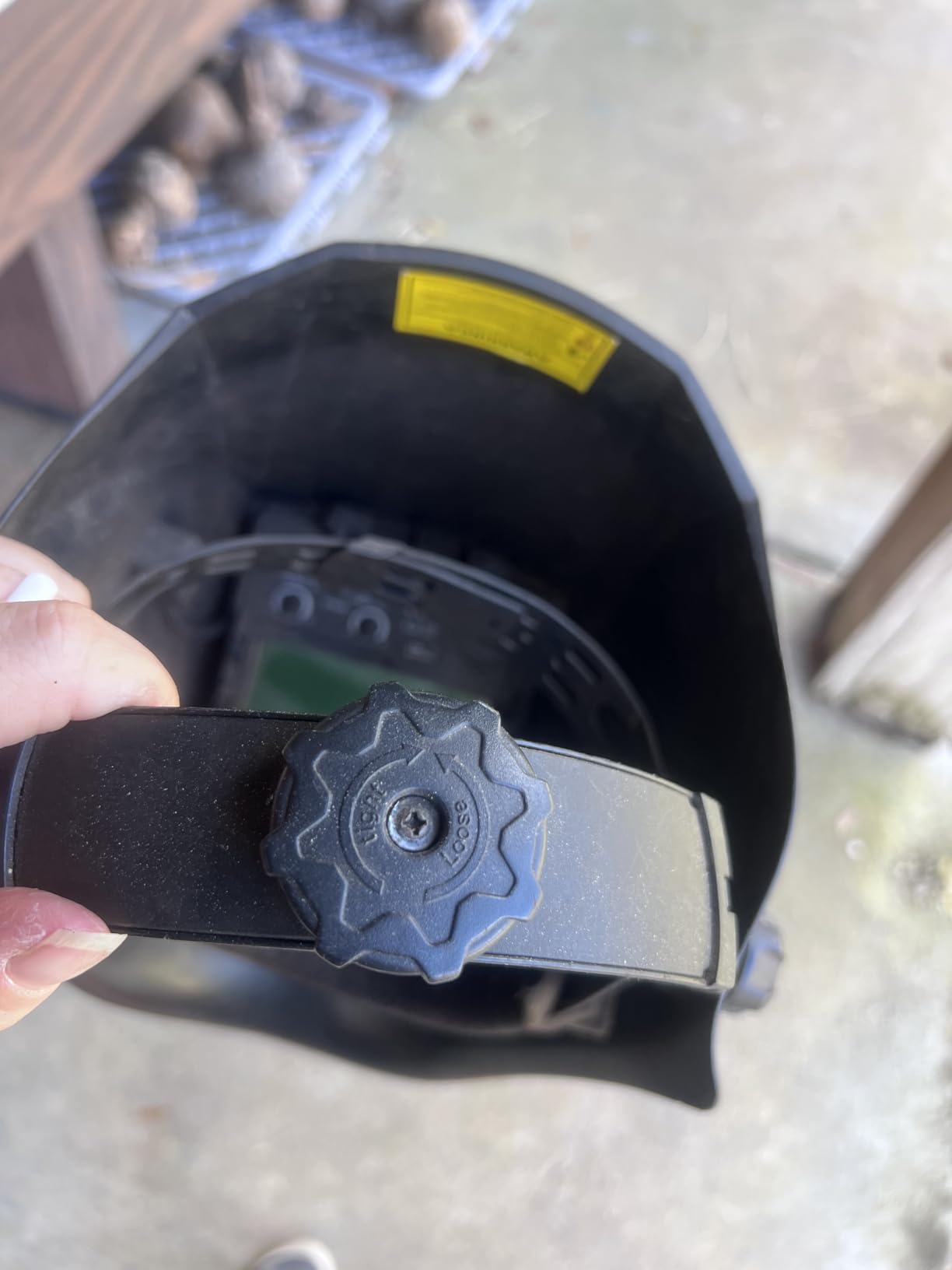
The control layout is the practical standout. The external grind mode knob is on the outside of the shell, which means you can switch into grinding mode with your gloves on instead of pulling the hood up and hunting for a button on the inside. There are also external arc detection, sensitivity and delay controls, and a built in low battery indicator with a user replaceable battery compartment.
Optically it is 1/1/1/1 true color clarity across a 3.64 by 1.67 inch viewing area with a blue light blocking outer lens, and switching is 1/25000 second. The shade range is DIN 3.5 and 9-13. The box includes a replaceable battery, three replacement lenses and the helmet.
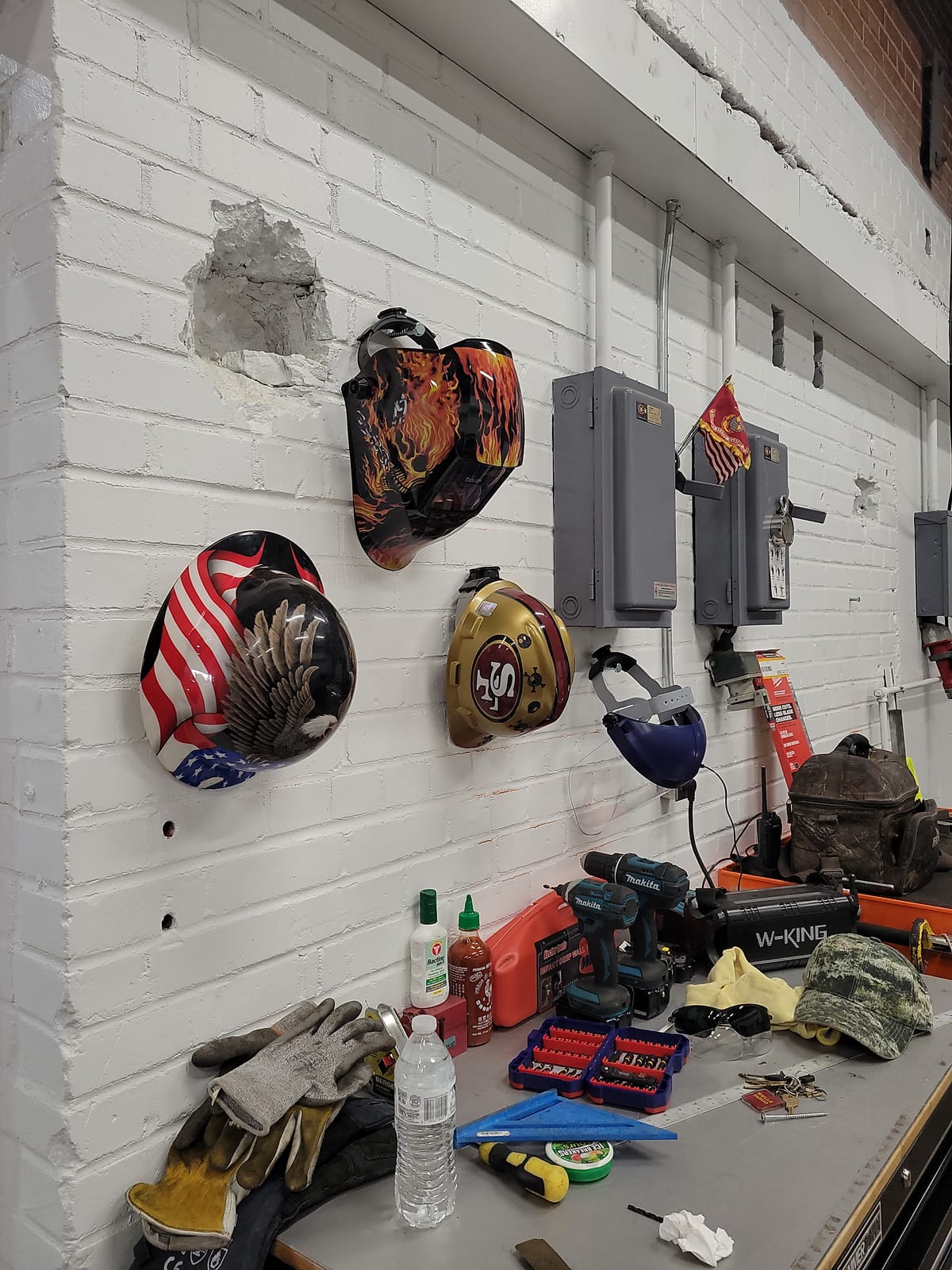
Owners describe this as a solid starter or classroom helmet that holds up for casual home welding over many years. The blue light blocking lens, the light weight and the simple external controls draw the most praise, and it is frequently described as well suited to open workshop work rather than tight enclosed spaces.
Two limitations are worth knowing. Arc reaction can be slow on some units, and owners note that obstruction of the solar cell can drop the lens back to clear unexpectedly, which is why the replaceable battery matters. The plastic shell also feels thin for heavy professional use, so if you are welding full time this is not the model to build a career around.
One specification note, because it is unusual: this model is listed as meeting ANSI Z89.1 rather than Z87.1. If you are buying for a commercial shop with PPE requirements, verify the certification you need with your employer before you commit, since Z87.1 and Z89.1 cover different things.
How much does shell weight actually matter?
More than people expect at the point of purchase and less than people expect after a month. A difference of a few hundred grams is imperceptible for a ten minute weld and obvious across a full evening of out of position work. If you are buying for a garage where you will occasionally weld for three or four hours, light weight is a better use of your attention than premium optics.
It is also why this model suits beginners specifically. A sore neck makes you stop early, and stopping early is the main reason beginners give up. Comfort is not a luxury feature at this stage of the learning curve.
Is it right for a student or a welding school?
It is a good fit for a student, and owner feedback specifically mentions classroom use. The controls are simple enough to learn in one session, the shell is light enough to wear for a full lab period, and the replaceable battery means a student does not have to worry about arriving with a dead hood on day one.
The caution is the same one that applies to every budget model. If your program specifies a certification standard, check the certification label before you buy rather than after.
7. YESWELDER LYG-M800H – Best Visibility on a Budget
YESWELDER Auto Darkening Welding Helmet, Large View, LYG-M800H
3.93 x 3.66 inch view
1/1/1/1 clarity
4 sensors
1/30000s
Pros
- Exceptionally large viewing area showing the joint and its surroundings
- Excellent 1/1/1/1 true color optics beginners notice immediately
- All controls on the outside and usable with gloves on
- 1/30000 second switching across four arc sensors
- Lightweight at about 1.32 lb with a reinforced hinge
Cons
- Lightweight plastic shroud and headgear knobs feel thin and can break
- Pivot headgear tension is finicky to set and may slip forward
- Awkward battery compartment and hard to grip internal lens
At 3.93 by 3.66 inches, this is the largest viewing area in the roundup that does not carry a premium price. That matters more than any other specification for a beginner, because a wide view lets you see the joint, both edges of the bead and the fit of the pieces before you run a pass, instead of looking at a small window and guessing.
The optics are 1/1/1/1 true color with four arc sensors and 1/30000 second switching, so on paper it out-specifies most of the field. All controls sit on the outside of the shell, usable with gloves on, and the shade settings cover DIN 3, 5-9 and 9-13 across WELD, CUT and GRIND. The lens accepts a cheater insert and the box includes a replacement battery, a storage bag, two outer lenses and one inner lens.
The most common reaction in owner feedback is a dramatic improvement in bead visibility. Beginners report their weld quality jumped once they could actually see the puddle and the joint, which is the single clearest signal that a wide, clear viewport is worth paying for even on a tight budget.
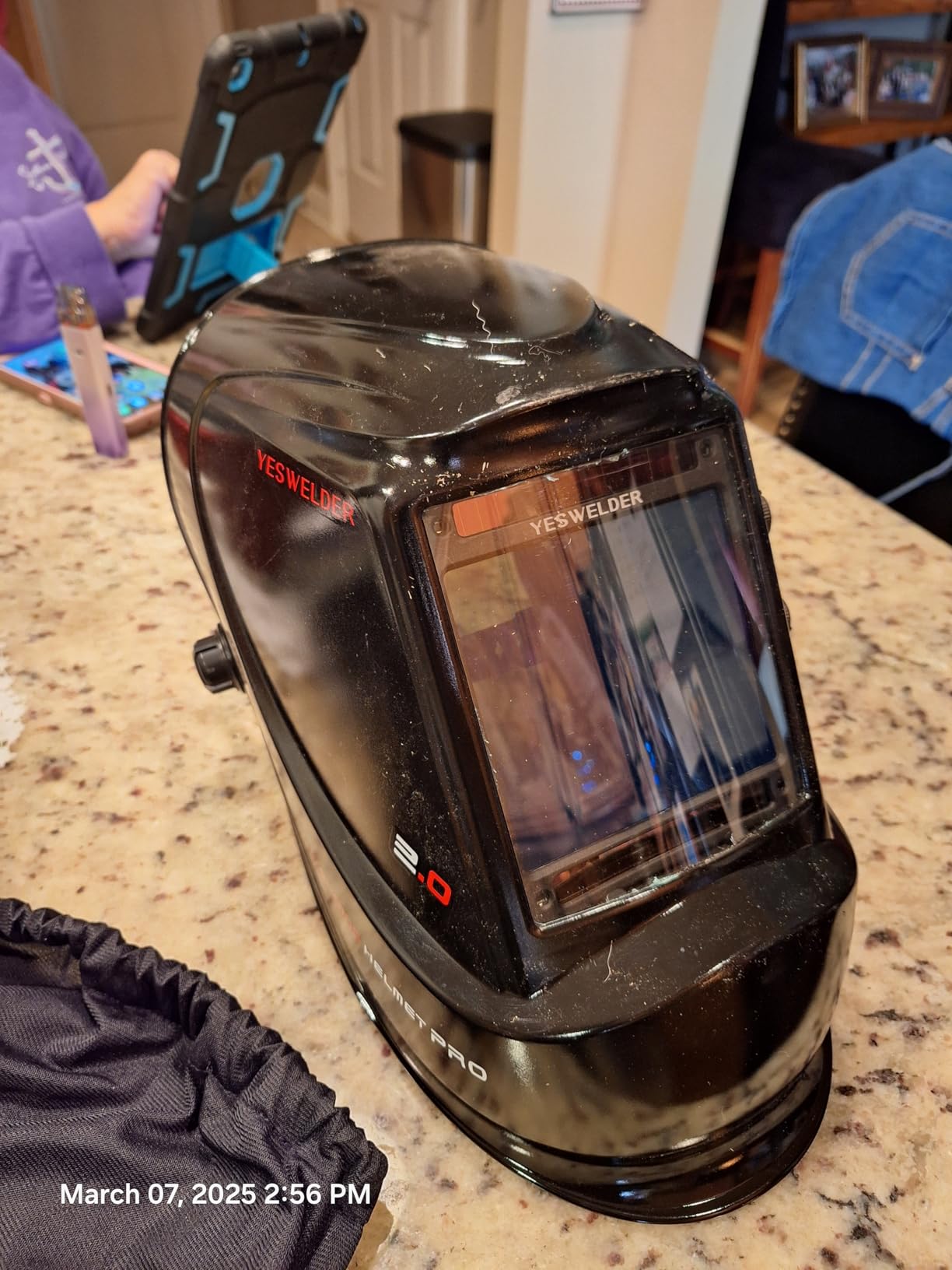
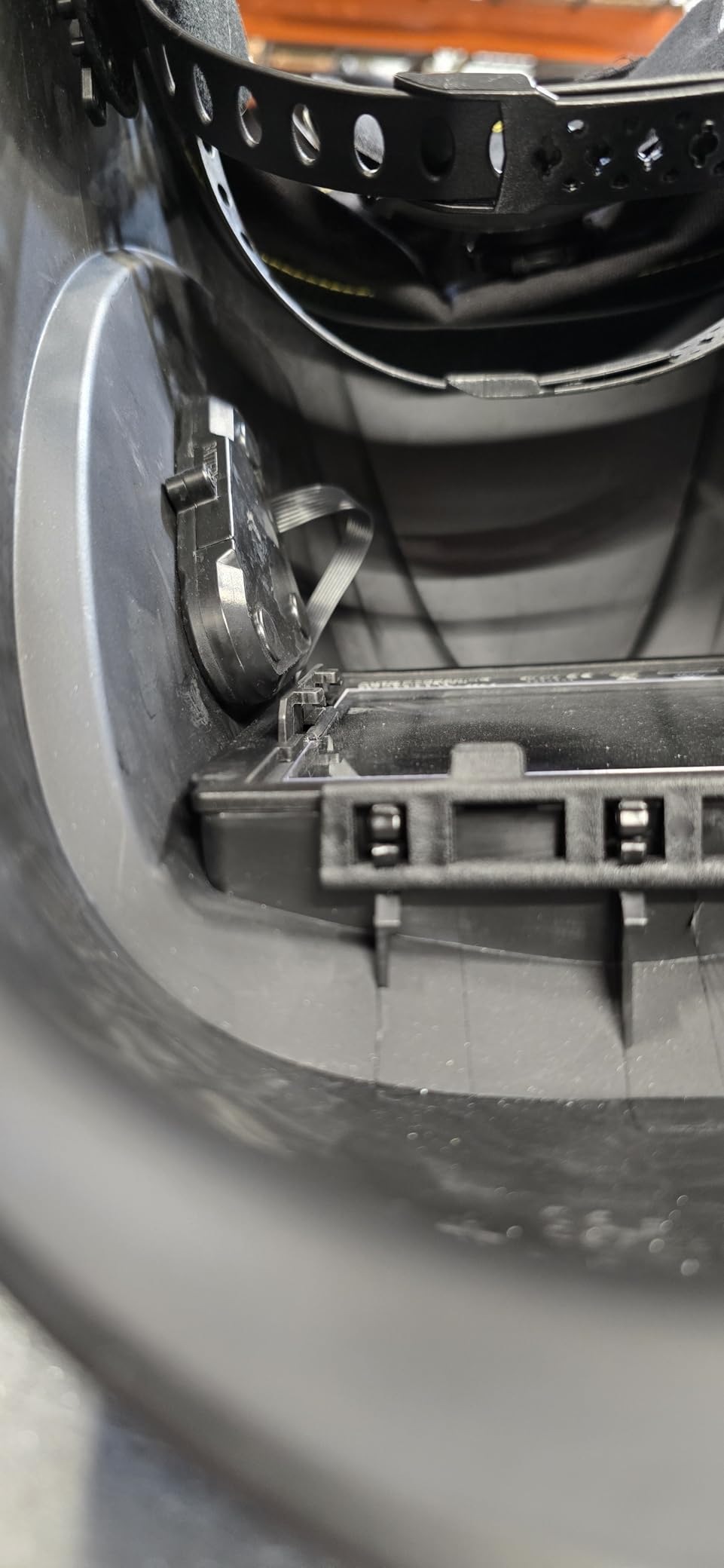
The rating sits a notch below the brand’s smaller view model for a consistent set of reasons. The lightweight plastic shroud and the headgear knobs feel thin and can slip or break, the pivot style headgear tension is finicky to set and can creep forward over a long session, the battery compartment is awkward to open, and the internal lens is difficult to grip when you need to change it.
None of those are dealbreakers. They are all maintainability issues, and they are the reason a lot of experienced owners keep a spare headband harness from another brand on hand. If the headgear is going to be the weak point on a hood you own for years, it is worth knowing that before you buy rather than after.
The reinforced hinge and roughly 1.32 lb weight are the structural positives, and at about 2.2 pounds the shipped weight figure is worth factoring in if you are sensitive to shell mass. Overall, owners treat this as the best budget step up from a very cheap hood, and the large view is why it holds that position.
Is a large viewing area worth more than four arc sensors?
For a beginner on MIG and stick, yes. Wide visibility improves placement and therefore improves the bead, and you will spend far more time on MIG and stick than on low amperage TIG during your first year. For someone who has already decided TIG is their process, reverse the priority and prioritize sensor count and detection speed over view size.
This model happens to have both, four sensors and a large view, so it is a reasonable default for a beginner who has not picked a process yet. That ambiguity is exactly why it is worth having in this roundup.
How long do the plastics and the headgear last?
The shell holds up fine for home shop use, but the headgear hardware is where failures concentrate. Owners across budget brands report the same pattern: the knob or the pivot tension fails first, the hood starts slipping forward on the head, and the fix is a replacement harness rather than a new helmet.
That is worth planning for. If you buy this, keep the model name and check what a compatible headgear costs before you need it. A replacement harness turns a failed hood into a fifteen minute repair instead of a full replacement.
8. Jackson Safety Insight HLX Helmet – Best for Pipe and Tight Spaces
Jackson Safety Insight Auto Darkening Welding Helmet, ADF Hood – ANSI Z87.1
6 oz HLX shell
3.94 x 2.36 inch view
Shades 9-13
370 Speed Dial
Pros
- Exceptionally light and low profile for tight spaces and pipe work
- Clear True Color view at 1/1/1/1 optical clarity
- Four well placed sensors switch reliably on inverter machines
- 370 Speed Dial ratcheting headgear holds position firmly
- Tight cover lens seal keeps smoke and spatter off the shade
Cons
- Light state could be slightly lighter for general shop work
- Sensitivity can be set too high and darken on shop lights
- Less rugged than premium Lincoln and Miller hoods
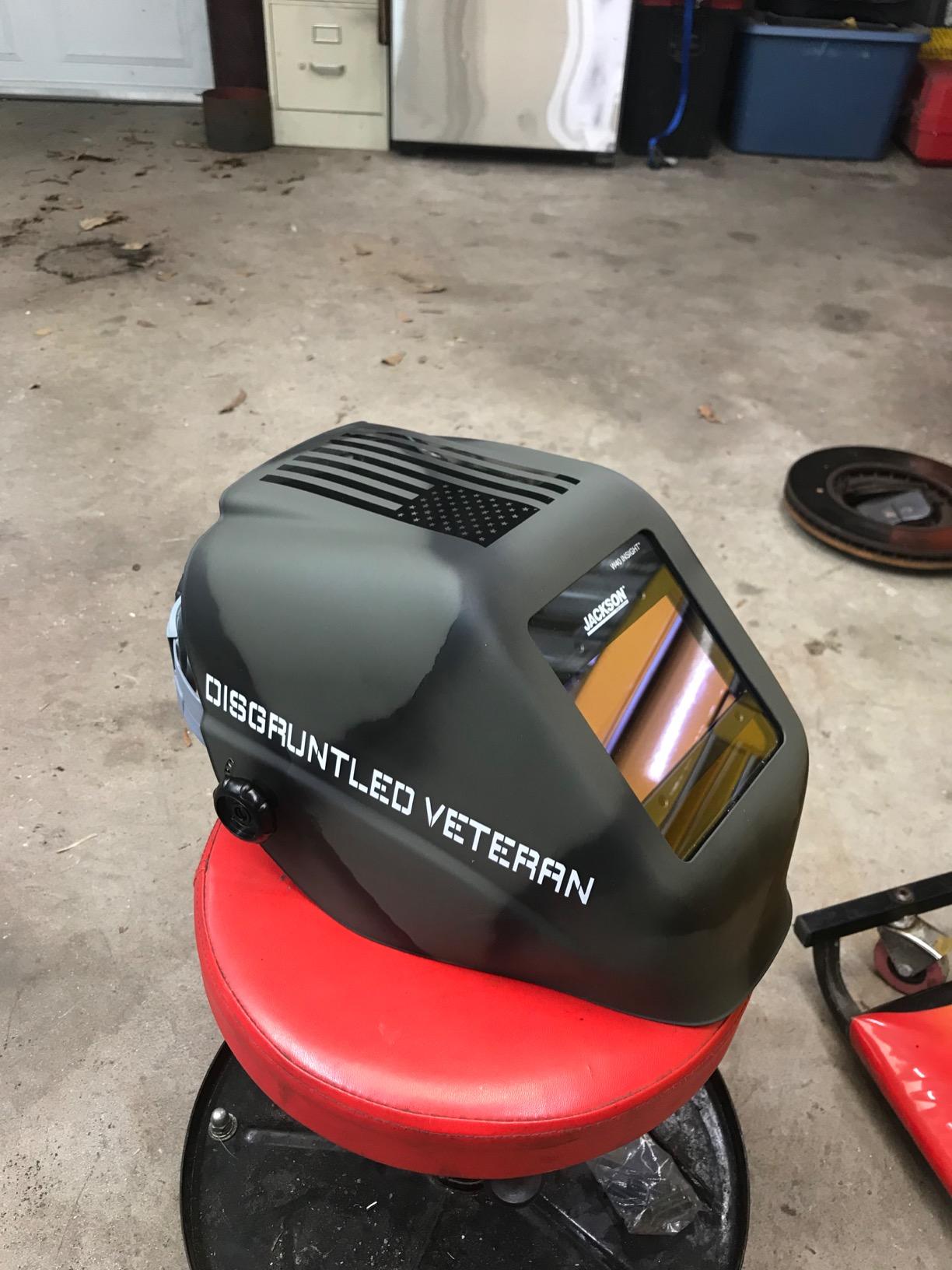
This is the shape you want when your head has to fit somewhere. The HLX shell weighs 6 ounces and sits low and close to the head, which makes it the practical choice for pipe work, inside a frame, under a vehicle or anywhere you would otherwise be levering a bulky hood into position with your neck.
Optically it is True Color technology at 1/1/1/1 with variable shades 9 to 13, across a 3.94 by 2.36 inch viewing area. Four arc sensors switch reliably even on inverter machines, which is a meaningful detail because inverter welders produce a faster, more concentrated flash that trips a marginal sensor.
The headgear is the reason owners stay with it. The patented 370 Speed Dial ratcheting headgear holds position firmly, works with an up detent so the hood stays where you put it, and the Qwik-Fit rear swivel headband with the Easy Grip-Easy Turn adjuster makes crown adjustment quick. Digital controls cover sensitivity and delay with Weld, Torch and Grind modes.
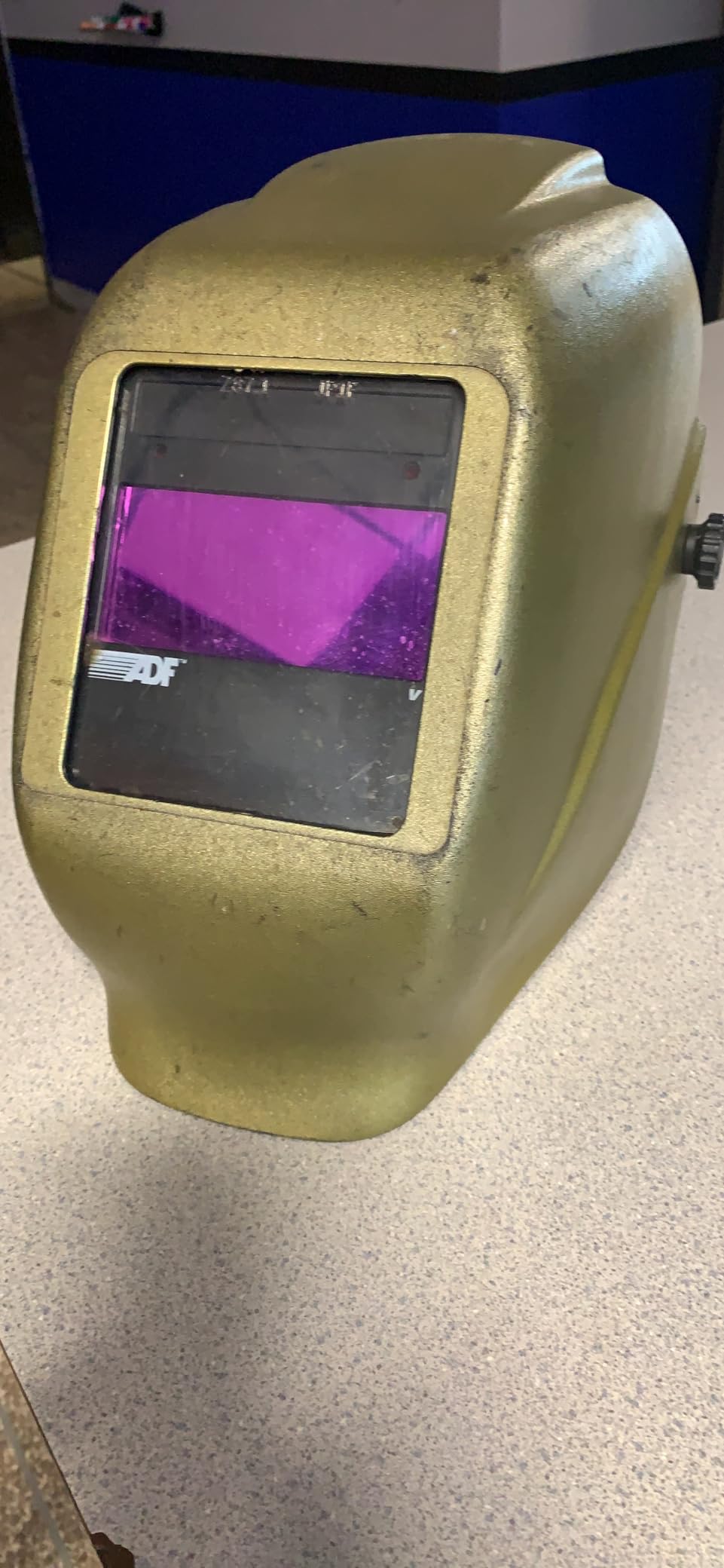
Long term owners report years of reliable service and single out the headgear as the standout feature. The light, flexible shell is repeatedly praised for pipe work and tight spots, and many compare it favorably to pricier competitors on weight alone. The tight cover lens seal keeps smoke and spatter off the shade lens, which means fewer lens changes.
The main criticism is the light state. Some owners find it slightly dark for general shop work, so if you are doing a lot of layout, measuring and fit-up with the hood down, that is a real adjustment. The second issue is sensitivity, which can be set too high and cause the lens to darken under shop lights. Set the sensitivity one step back from maximum and the problem mostly disappears.
It meets ANSI Z87.1 and CSA Z94.3 standards, and it is less rugged than the premium Lincoln and Miller hoods in this list. For a hobbyist doing occasional pipe or repair work, that is a trade most people will happily make.
Why does headgear quality matter so much?
Because it is the part that fails and the part you touch every time you put the helmet on. Headgear complaints appear in nearly every review of every brand, and they are the most common reason owners end up replacing a functionally perfect helmet. A ratchet that holds, an up detent that stays put, and a crown adjustment you can reach with one hand eliminate most of the complaints we saw.
The 370 headband system in particular is popular enough that owners use it as an upgrade part on other budget hoods when the original harness fails. If you already own a cheap helmet and like everything except the headgear, that is a much cheaper fix than a new hood.
Is it too light and flimsy for daily work?
It is light and flexible rather than flimsy, but there is a difference. For daily professional use the shell will not be the first thing to fail, but it is not in the same class as a nylon professional shell. For weekend pipe work, repair jobs and the kind of awkward access work a hobbyist runs into, the shape advantage outweighs the ruggedness gap.
Welders who need both traits often end up with two helmets, using a light hood for access work and a rugged one for production. That is a reasonable pattern for anyone who does a lot of pipe or out of position work.
9. ARCCAPTAIN XK-LY800H – Best for Low-Light Garage Work
ARCCAPTAIN Auto Darkening Welding Helmet with Light, 3.94″X3.66″ Large View
USB LED light
3.94 x 3.66 inch view
4 sensors
Dual solar panels
Pros
- Large 3.94 x 3.66 inch true color viewing area at a mid budget price
- Built in LED welding light with two brightness levels
- 1/25000 second switching across four arc sensors
- Light 1 lb shell with ergonomic padded headgear
- Dual solar panels plus a CR2450 battery extend working hours
Cons
- LED welding light ships uninstalled and must be attached during setup
- Plastic shell is flexible and less durable than professional hoods
The built in LED welding light is what sets this apart. A USB powered light mounted on top of the shell with two brightness levels throws light onto the joint from the same angle as your arc, which solves a problem every garage welder hits: working in a dim corner where the arc is the only light source and you cannot see the joint before you strike.
It is not a gimmick. Owners single out the combination of a very large viewing screen and the LED light as unusually useful for garage and low-light work, and the darkening speed and padded fit are well regarded. The 3.94 by 3.66 inch screen gives 1/1/1/1 true color clarity, and four sensors switch in 1/25000 second with dark state levels of 4, 5-8 and 9-13.
Power is dual solar panels plus a CR2450 lithium battery, and the specification notes a minimum five amp current, so low current TIG sensing is supported. The 12-in-1 smart filter adds automatic DIN 16 UV and IR protection, and the certification list covers ANSI Z89.1, CSA Z94.3 and DIN EN 379.
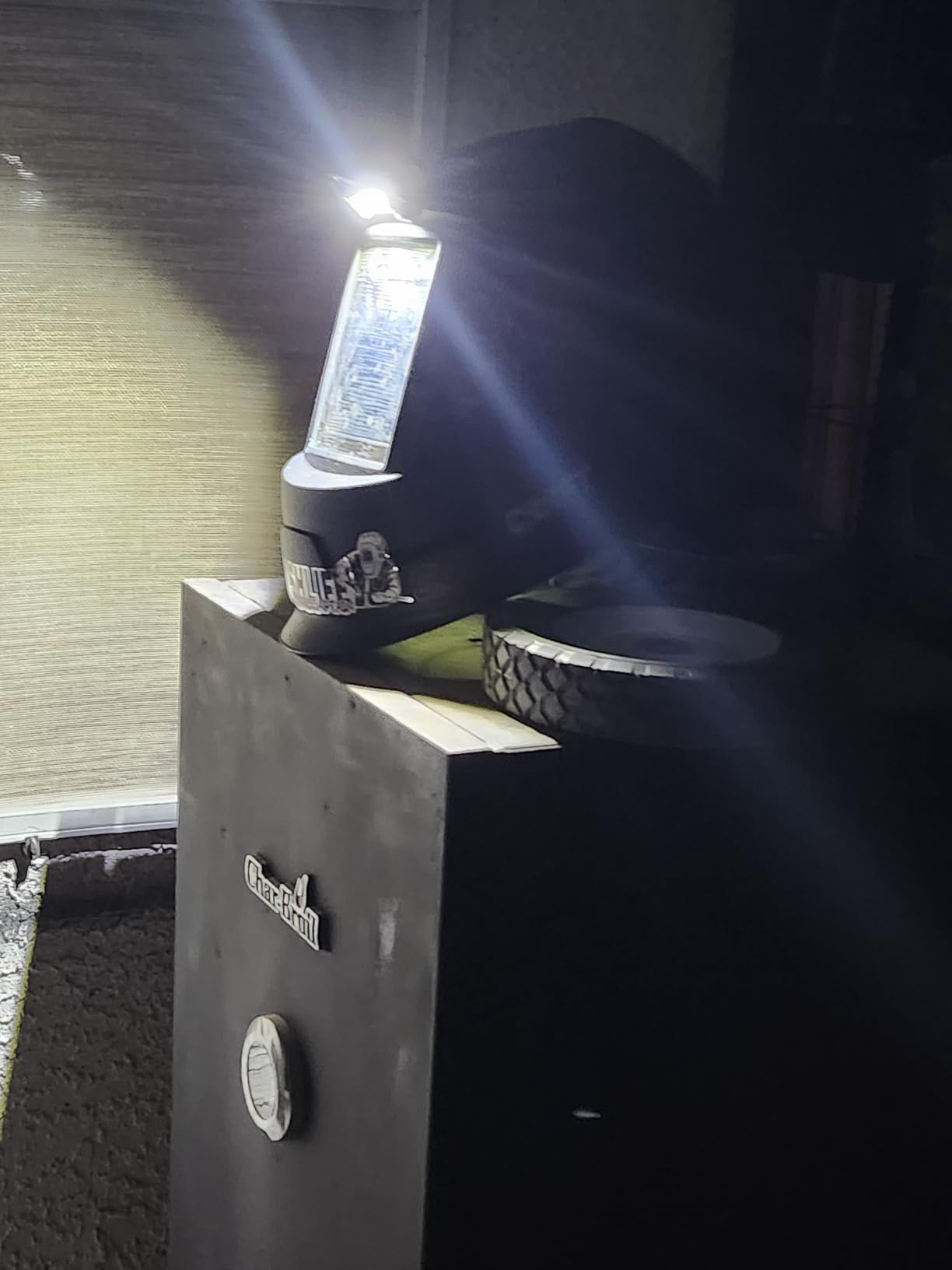
Two practical notes before you commit. The LED welding light ships uninstalled and has to be attached during setup, so budget ten minutes for that on day one. The plastic shell is flexible, and owners who compare it to the smaller ARCCAPTAIN model in this roundup often cite that flexibility as the reason their feedback is more mixed. At 1 lb with ergonomic adjustable padded headgear, the fit itself is well liked.
Overall this is a strong option if your workspace is dim, a basement, a garage with poor lighting or an outdoor setup at dusk. If you are welding in a well-lit shop, the LED is a nice extra rather than the reason to buy, and the flexible shell is a reason to consider a different model.
The rating reflects that split. View size, darkening speed, padded fit and the true color view are all considered strong for the price, while the flexible plastic construction keeps it from ranking higher.
Do welding hood LED lights actually help?
They help specifically, which is more than can be said for most added features. Because the light sits on top of the shell and points down at the work, it lights the joint from roughly the same direction as the arc, which is what your eyes are adapted to. It removes the guesswork of striking an arc into an unlit joint and then trying to find the puddle.
It does not replace arc light. Once you are welding, the arc is brighter than any LED, and the useful moment is the one before and after, during fit-up, layout and inspection.
Is the flexible shell a real problem?
For weekend and hobby work, it is a minor concern. For a helmet that gets thrown in a truck bed, leaned against a workbench or knocked around in a shared shop, flexible plastic develops creases and eventually cracks around the pivot points. That is why this model ranks below the more rigid shells in the same price bracket on longevity.
If you are rough on gear, spend a little more on a stiffer shell. If you store your gear carefully and weld a few times a month, the flexibility is unlikely to matter within the life of the hood.
10. TRQWH KTS-JD03 – A Comfortable First Helmet With a Built-In Light
TRQWH Welding Hood Auto Darkening Welding Helmet with Light True Color
1/1/1/2 true color
1/20000s switching
USB LED light
External controls
Pros
- Clear 1/1/1/2 true color view suited to fine TIG and detailed work
- USB rechargeable top LED light for dim workspaces
- External sensitivity and delay knobs plus an external grind button
- Dual power solar plus a replaceable lithium battery
- Thickened sponge forehead padding for long first sessions
Cons
- Plastic shell is brittle and can crack if knocked around
- Adjustable head strap tends to loosen during use
- LED light and battery are only moderately bright
For someone who has never worn a welding helmet, comfort during the first few sessions matters more than any specification. The thickened sponge forehead padding and the rear tightness knob make this one of the more forgiving hoods to wear for a long first evening, and several owners bought it specifically as a first helmet for school or a new hobby.
Optically it is 1/1/1/2 true color technology with a wide view, which is the one class below the 1/1/1/1 standard and shows up as a slightly less even pass at the edge of the viewport. In practice reviewers find the clarity convincing for the price, and it performs well on fine and detailed work including light TIG.
Switching is 1/20000 second, which is fast though not the fastest here, and the double liquid crystal layer with optical coating filter resists 99% of harmful light. The light state is DIN 4 and the dark to bright delay runs from 0.2 to 1.0 seconds. External sensitivity and delay knobs plus an external grind button mean you never have to reach inside the hood with a gloved hand.
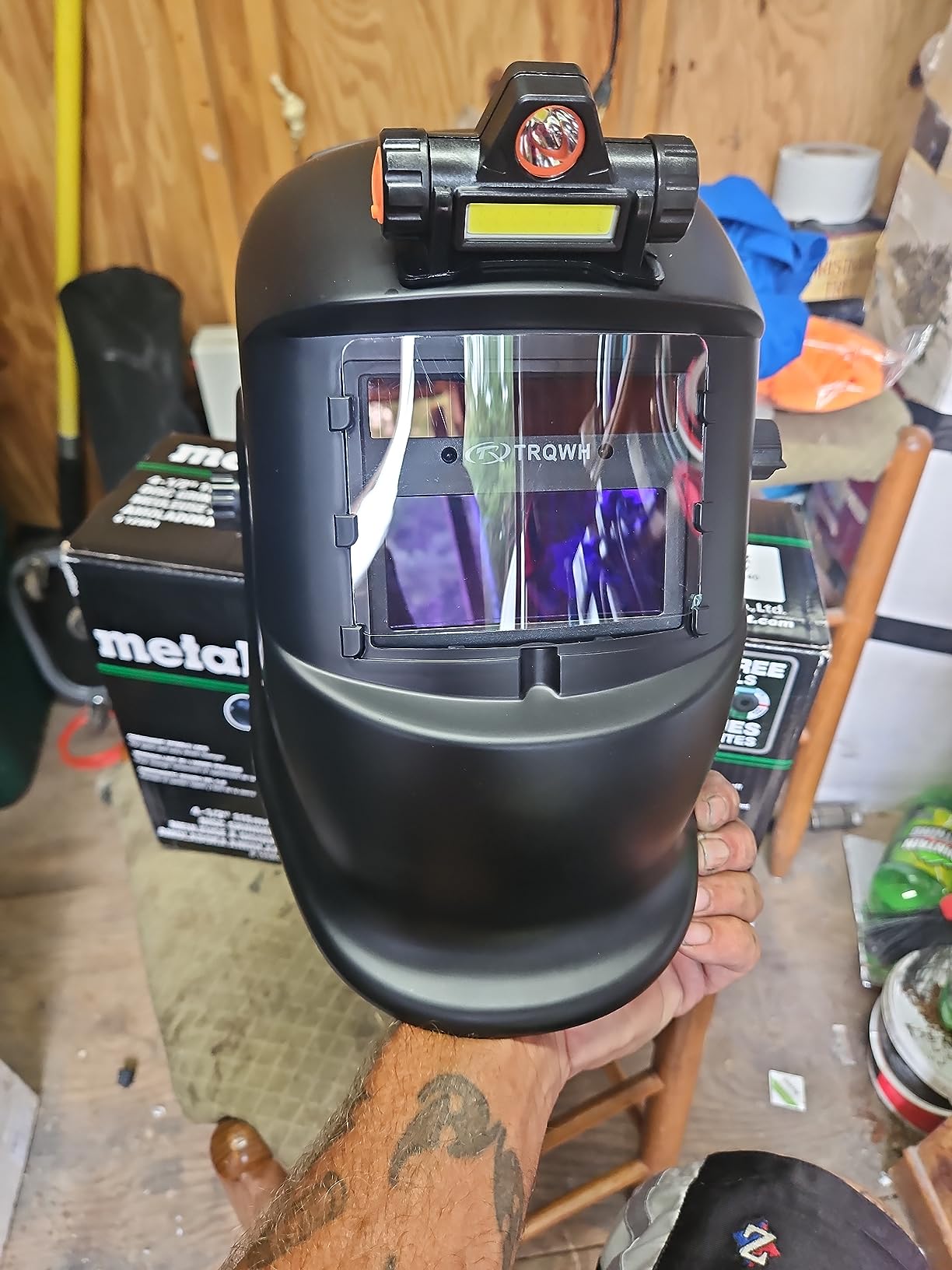
The USB rechargeable top LED light is useful in a dim workspace, and the dual power arrangement of solar plus a replaceable lithium battery means you are not dependent on ambient light. It meets ANSI Z87.1, EN 379 CE and CSA Z94.3 standards, which is a solid certification list for the class.
The criticisms are consistent. The plastic shell is brittle and can crack if knocked around, the adjustable head strap tends to loosen during use, and the LED light and battery are only moderately bright. The strap loosening is the one that matters most in practice, so tighten the rear knob and check it every few sessions until the shell settles into its shape.
Reviewers also frequently appreciate the included gloves as a bonus, and the general verdict is that the true color clarity and quick darkening are convincing for the price and good enough for daily use. As a first helmet, that is a fair description.
Is 1/1/1/2 optical clarity close enough to 1/1/1/1?
Close for most purposes, and the difference is almost impossible to see on a single pass. The four numbers describe how evenly light passes through the filter at different viewing angles and states, and a 2 in the fourth position means the most demanding measurement falls short of the top grade. Practically, you notice it most when you move your head quickly to check a joint off to the side.
Since all the 1/1/1/1 helmets in this roundup cost about the same as a mid tier name brand model, if clarity is your top priority and you can afford that tier, buy the higher grade. If this hood is comfortably within your budget and you want a first helmet now, 1/1/1/2 with true color technology is a perfectly reasonable place to start.
Should I buy a first helmet this cheap or spend more?
Spend more if you already know you will be welding regularly and want a hood you will not replace in a year. Buy this if you are at the very start, want to learn whether welding suits you, and want something comfortable enough to wear while you find out. That is a completely reasonable way to buy a first helmet, and plenty of beginners start here and step up later.
Whatever you choose, test it on scrap metal in the first week. Strike an arc, check that the lens darkens immediately, check the grind mode, and check that the hood holds its position when you flip it up. Five minutes now saves a trip to an eye doctor later.
Which Welding Helmet Is Right For You?
Almost every helmet question reduces to three things: which process you will use most, how often you will weld, and what you can comfortably spend. Answer those three honestly and the choice narrows to two or three models from this list within a minute.
Which welding process will you use most? MIG and flux core are the easiest entry points and the least demanding on a helmet, because the arc is bright, stable and easy for sensors to detect. Stick welding is similar. TIG is the demanding one, particularly at low amperage, because a small unstable arc is harder for a two sensor helmet to detect than a large MIG arc.
For MIG, flux core and stick, any auto-darkening helmet in this roundup will work, and the deciding factors become view size, weight and headgear comfort. For TIG, prioritize four arc sensors, a fast switching speed and a low shade setting, which points you toward the Hobart, the Jackson Insight or the ARCCAPTAIN models rather than the two sensor Miller Classic, even though the Miller handles low current well.
For grinding, cutting and plasma work, look for a dedicated grind mode and a light shade range. The Hobart and the YESWELDER M800H cover weld, cut and grind shade ranges in one control, and the TOOLIOM and TRQWH put the grind control on the outside where you can reach it with gloves on. If you use a plasma cutter regularly, a true color lens with a wide shade range is worth more than anything else on the list.
Are you welding all day or a few evenings a week? A hobbyist logging five to twenty hours a week should optimize for comfort, weight and getting a clear view, because those are what determine whether you keep welding. A tradesperson welding eight hours a day should optimize for sensor reliability, battery replaceability, warranty and service parts, because those are what determine whether the hood survives.
That distinction is why the Lincoln Viking 3350 sits where it does. It is a superb hood, but a beginner with a Saturday welding habit would be better served by the lighter, cheaper options, and would probably have more money left for a ground clamp and a proper jacket. If you want a similar category of protection on clothing, our guide to the best heated welding jackets covers the same beginner budget thinking.
Do you have a budget in mind? Spend enough to get four arc sensors, a 1/1/1/1 or 1/1/1/2 optical class, a solar panel with a replaceable battery and adjustable external controls. Below that line you give up either sensor count or shell quality, and neither is a good place to be stuck.
The cheapest tier in this roundup, the three models in the budget bracket, all clear that bar. The middle tier adds a name brand, more rigid shells, better headgear and real warranties. The top tier adds viewing area, sensor count and long parts support. Most beginners should shop the middle tier or the top of the budget tier, and buy the premium tier only if the process demands it.
What to Look For in a Beginner Welding Helmet?
A beginner welding helmet has to do four jobs: block ultraviolet and infrared radiation completely, darken fast enough that you never catch the flash, stay clear enough to see what you are doing, and stay comfortable for as long as you are wearing it. Everything below is a way of measuring how well a given hood does one of those four things.
Arc sensors, and why four matter. Arc sensors detect the flash from your arc and trigger the liquid crystal filter to darken. A two sensor helmet works perfectly well on an open bench with MIG, because the arc is bright and both sensors see it. The problem appears when one sensor is blocked, by your own hand, a pipe wall, a workpiece edge or a tight joint. With two sensors you have no margin. With four, losing one still leaves three. This is the mechanism behind almost every DC TIG sensing complaint, and it is the single most important sensor-related spec for a beginner who might weld in awkward positions.
Optical clarity, and what 1/1/1/1 means. The EN 379 standard rates a filter on four measures of how evenly it passes light. A rating of 1/1/1/1 is the highest grade in all four, and a 1/1/1/2 is one step below on the most demanding measure. In practice, the difference shows up as colour accuracy, edge distortion and how the lens behaves when you move your head. True color, 4C and ClearLight branded lens technologies all exist to push this grade as high as possible, and every hood in this roundup except one carries a 1/1/1/1 rating.
Switch speed, and why 1/25000 second matters. Switch speed is how fast the filter goes from clear to dark. The range across this roundup is 1/20000 to 1/30000 second, and honestly the difference between those numbers is small. What matters more is the low end, because a cheap hood that only reaches 1/10000 second will let the initial flash through and you will feel it. If a listing does not state a switch speed at all, assume it is at the slow end.
Shade range, and variable versus fixed. Shade is the darkness of the filter, and beginners should want variable shade across roughly 9 to 13 for welding. Shade 10 or 11 both work for most MIG and stick work. Shade 11 is the safer choice for heavy spatter, stainless and thicker material, while shade 10 is easier on the eyes for thin material and for long sessions spent staring at a puddle. A variable range lets you choose instead of guessing, and every auto-darkening helmet in this list gives you that.
Cut shades and grind shades sit below the welding range, typically 5 to 8 for cutting and 3 to 4 for grinding, and having them in the same control saves you from swapping filters. If you grind a lot, a hood with a proper grind mode rather than a shade switch is worth the small premium, because it takes seconds off every changeover.
Viewing area, in square inches. The viewing area is the size of the lens window, and it is the spec that most changes your actual welding. Small windows of around 6 square inches show you the puddle and little else. Mid-size windows around 9 to 10 square inches show the joint and its edges. Large windows above 12 square inches give you peripheral awareness that makes fitting pieces and running stringers noticeably easier. A wide, clear viewport is the change beginners notice first and regret losing most.
Power, and replaceable batteries. Solar powered helmets recharge from the arc itself, which is elegant, but a helmet that lives in a dark garage and gets used twice a month will not have a charged solar cell. Every model here pairs solar with a replaceable lithium or CR2450 cell for exactly that reason, and a low battery indicator is a small feature that saves real frustration.
Battery replaceability deserves more attention than it gets. When the batteries are sealed inside the shell, a dead cell means a lens replacement or a new helmet. When they are user replaceable, it means a coin cell. This is the single most-cited ownership complaint in owner feedback, and it is worth checking before you buy rather than after. It is also why many experienced owners buy a spare battery at the same time as the helmet.
Headgear, weight and fit. Headgear determines how long you can wear the hood, and headgear complaints appear in nearly every review of every brand. Look for a ratcheting or geared adjustment rather than a friction band, a detent that holds the hood in the raised position, crown adjustment, and a sweatband for hot work. The Jackson 370 Speed Dial system in this roundup is widely regarded as the best of the group, and the Lincoln X6 system is a close second on balance.
Weight matters in the 1 to 1.5 pound range more than most buyers expect, because you hold your head down for the length of every pass. For glasses wearers, check the distance from your eyes to the lens. Prescription glasses need enough room without the frame touching the lens, and if your frames are wide, a large-viewport hood with a deep shell is easier to wear than a small one. If a hood sits awkwardly on the bridge of your nose, no amount of optical quality will fix it, so if you can, try before you commit. The same long-wear logic applies to any helmet you keep on for hours, which is why fit dominates our picks for the best bike helmets for exactly the same reason.
Safety standards. Look for ANSI Z87.1 in the United States, which is the welding and cutting standard, and EN 379 in Europe. Some budget models list Z89.1 instead, which is a different specification covering industrial safety eyewear, so check the label if you are buying for a commercial shop with PPE requirements. CSA Z94.3 covers the Canadian equivalent. A model that lists EN 175 and EN 379 alongside ANSI Z87.1 has usually been tested to a wider range of conditions than one that lists ANSI alone.
Service parts and warranty. Check whether lens covers, inner lenses, headgear and filters are available separately for the exact model. A moderator on a welding forum raised this as a buying criterion and the advice is sound: you do not want to wait weeks for a lens cover when the outer lens is scratched and your light state is compromised. A long warranty with a stated spare parts period, like the five years on the Lincoln Viking 3350, is the strongest version of this answer.
Cost of ownership over five years. A helmet is not a single purchase. You will go through outer cover lenses as they get scratched by spatter, inner lenses as they cloud, batteries as they die, and headgear eventually as a knob or pivot fails. Budget helmets use thin plastics, so the shell and headgear are the parts most likely to need replacing rather than repairing.
The five year consumables list for any auto-darkening helmet is: replacement batteries, typically one to three CR2450 or CR2 cells, outer cover lenses, one or two per year depending on spatter, inner lenses, one roughly every one to two years, and headgear on cheap models. On a name brand hood with a three to five year warranty, batteries and lenses are the realistic five year cost. On a budget hood, add a headgear harness to that list.
The cheapest way to extend lens life is a passive shade filter insert. Inserting a passive filter of your preferred shade in front of the auto-darkening lens lets you set the auto lens to a lower shade and reduce the exposure of the inner lens to the arc, which is a two minute change that roughly doubles inner lens life on a budget hood.
Getting the Most From Your First Helmet
A helmet protects your eyes, but it is not the only thing protecting you. Galvanised steel, mill scale and slag from coated or painted stock throw off fumes that a helmet filter does nothing about, and the fume is the bigger long term risk for anyone who welds regularly.
Gloves by process. MIG and flux core work calls for thin leather gloves, because you need to hold a gun and feed wire with your fingertips. Stick welding and grinding call for heavier leather gauntlets, because heat and spatter are the risk. TIG needs the lightest glove you can stand, usually a goat or sheepskin liner, because you are holding a tungsten and a filler rod with bare fingertips.
Body protection and breathing. Wear flame resistant clothing and FR gloves as a set, because ordinary clothing catches fire quickly at welding temperatures. Keep safety glasses or a respirator on underneath the hood, because the hood protects your eyes from radiation but does nothing about particulates. If you are welding galvanised or coated material, a properly fitted particulate respirator is the difference between a hobby and a health problem.
Fogging, false triggers and DC TIG sensing. Three problems come up constantly and all three have a workaround. Fogging inside the hood is caused by breath and sweat and is worsened by setting the delay too long, so shorten the delay setting so the lens clears faster after you finish a pass. Some owners also crack the hood open between welds or keep a second lighter helmet for grinding and layout.
False triggers under shop lights happen when the sensitivity is set to maximum, so turn sensitivity back one step from the fastest setting and lengthen the delay slightly. That combination fixes most of it. LED lighting is a common trigger because some ballasts produce a flicker the sensors read as an arc.
DC TIG sensing failure is the one that catches beginners out. A low current TIG arc is dim and unstable, and a helmet with two sensors and low sensitivity may not darken, which means you are welding with the lens in its light state. This is dangerous. The fix is to test it: set the helmet to the lowest shade, turn sensitivity to maximum, take a piece of scrap, run a short test bead on thin material and confirm the lens darkens before you rely on the hood for TIG. If it does not darken reliably, the hood is a MIG and stick helmet, not a TIG helmet.
Upgrading from a very cheap hood. Most beginners do not buy one helmet, they buy two. They start with the cheapest auto-darkening hood that does the job, learn on it, and upgrade once they know what frustrates them. That is not a mistake, it is the normal arc of learning, and buying a very cheap hood as a learning tool or permanent spare is a reasonable plan.
The signal that it is time to move up is a physical failure rather than an electronic one. A binding knob, a cracked shell, a pivot that will not hold, a head strap that will not tighten: those are the moments when a budget shell has given you everything it has. Replacing the headgear on a cheap shell sometimes costs more than a new mid tier hood, so at that point the economics change quickly.
For comparison, our picks for the best motorcycle helmets follow the same rule we apply here. Buy to the use and the duration, not to the spec sheet.
Frequently Asked Questions
What is the best welding helmet for a beginner?
For a beginner, the best welding helmets prioritise four arc sensors, variable shade 9-13, a 1/1/1/1 optical clarity rating and a comfortable padded headgear. Our top pick is the YESWELDER LYG-L600A, which delivers 1/1/1/1 true color optics and 1/30000 second switching on a light 16 ounce shell. If you want a name brand with more headroom, the Hobart 770890 adds four independent sensors and a widescreen view.
Which brand of welding helmet is considered the best?
Miller, Lincoln Electric and Hobart are the names that come up most often in owner feedback, largely because spare parts, headgear and warranty support are easy to find. Lincoln is strongest on viewing area and headgear comfort, Miller on the light state between welds and digital controls, and Hobart on value for money. ESAB is respected for optical clarity. At the budget end, YESWELDER and ARCCAPTAIN are the most proven.
What is the best welding helmet for value for money?
The Hobart 770890 is the strongest value name-brand pick in this roundup, combining PureColor optics, a 9.3 inch widescreen view, four independent arc sensors and weld to grind switching from a major manufacturer. For the cheapest acceptable option, the ARCCAPTAIN HSH-S800 gives you four sensors and 1/1/1/1 true color clarity, which is rare in its class. Both clear the four sensor and optical class bar we recommend.
Which welding helmet is better, the Miller or the Lincoln?
It depends on your process. The Miller Classic Series gives you a bright 3.0 light state so the hood can stay down between welds, plus digital shade, delay and sensitivity controls and cut shades from 5 to 8, which suits TIG and mixed shop work. The Lincoln Viking 3350 gives you a much larger 12.5 square inch view, four sensors, X6 balanced headgear and a five year warranty with five year spare part availability.
Is the Harbor Freight welding helmet any good?
It is acceptable for occasional MIG hobby work as a beater or spare hood, but owners report it mis-firing, being too slow for TIG and reacting to shop lighting. A first auto-darkening hood with four arc sensors and a replaceable battery is a step up in reliability, and the cost difference over a few months is small. Treat the cheapest hood as a learning tool or backup rather than the hood you rely on.
Is shade 10 or 11 better for welding?
Both work for most MIG and stick welding. Shade 11 is the safer choice for heavy spatter, stainless and thicker material, while shade 10 is easier on the eyes for thin material and beginners who spend long sessions looking at the puddle. Rather than choosing one, look for a variable shade range of 9-13 so you can set the shade per job and change it between a heavier pass and cleanup work.
Final Verdict: The Best Welding Helmet for Your First Arc
After working through all ten, the best welding helmets for beginners come down to a short list. The YESWELDER LYG-L600A is our top pick because it pairs 1/1/1/1 true color optics and 1/30000 second switching with a 16 ounce shell, a replaceable battery and spare lenses in the box, and its owner base is large enough that the weak points are known rather than mysterious.
Buy the Hobart 770890 if you want a name brand and a bigger view. Buy the Lincoln Viking 3350 if you have already decided to keep this hood for years. Buy the Jackson Safety Insight if your work happens in tight spaces or on pipe. And buy a budget model if you are still finding out whether welding suits you, because a cheap helmet you actually use beats an expensive one sitting on a shelf.
Whatever you pick, test it on scrap metal in the first week, and set the sensitivity one step back from maximum if shop lights trigger it. That five minute check is the difference between a good first purchase and a trip to an eye doctor.