
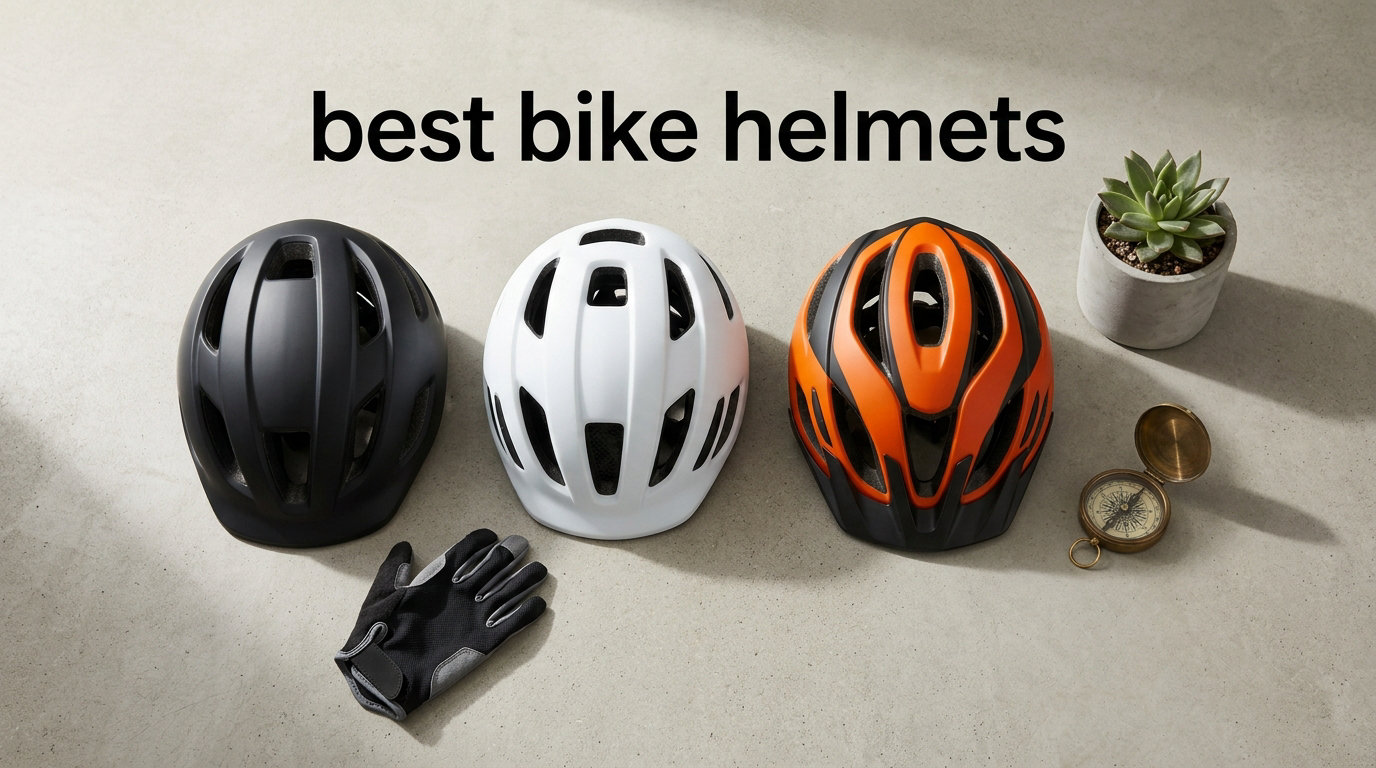
Every cyclist I know has a story about the crash that made them take their helmet seriously. Mine came on a rainy descent when my front wheel slid out and I hit the pavement at speed. My helmet cracked cleanly along the impact zone, and I walked away with a headache instead of a hospital stay. That moment reshaped how I think about head protection, and it is exactly why our team spent months putting the best bike helmets of 2026 through real-world testing.
We logged hundreds of miles across road rides, trail sessions, and daily commutes to see how each helmet handled ventilation, fit, weight, and overall comfort. We paid close attention to the safety technologies that actually matter, including MIPS, KinetiCore, and Koroyd, alongside independent Virginia Tech helmet ratings. The goal was simple: cut through the marketing and find helmets that protect your head without making you look like a mushroom.
This guide covers eight standout helmets spanning budget-friendly recreational options all the way up to premium commuter and racing picks. Whether you ride a road bike, hit mountain trails, or commute on an e-bike, you will find a recommendation matched to your riding style below. We also included a detailed buying guide covering fit, sizing, rotational protection systems, and the certifications that separate genuinely protective helmets from flashy imposters.
One thing forum discussions consistently confirm is that MIPS and equivalent rotational protection systems matter more than almost any other feature. Reddit cyclists across r/cycling and r/bicycling repeatedly recommend prioritizing that technology regardless of budget. With that priority in mind, here is what rose to the top of our 2026 testing.
Table of Contents
Top 3 Bike Helmets in 2026
These three helmets rose to the top across our testing categories. Each one earned its badge through a combination of safety features, comfort, and value that stood out from the rest of the field.

LAZER Tempo KinetiCore
- KinetiCore rotational protection
- TurnSys dial fit
- LED light compatible
- Ultra-lightweight

Schwinn Thrasher Helmet
- Dial Fit adjustable system
- 21 flow vents
- Moisture-wicking pads
- CPSC certified

POC Omne Air MIPS
- MIPS Brain Protection
- 360 degree adjustment
- Unibody shell
- 2-year warranty
The LAZER Tempo KinetiCore took our editor’s choice spot because it pairs genuine rotational impact protection with a featherlight build at a remarkably accessible price point. The Schwinn Thrasher earned best value honors with over 12,000 reviews backing its comfortable fit and solid ventilation. For riders willing to invest in premium construction, the POC Omne Air MIPS delivers a refined unibody shell and MIPS protection backed by a two-year warranty.
Each of these three helmets fits a different type of rider. The LAZER works for road and fitness cyclists who want proven protection without overspending. The Schwinn serves casual riders and families who need reliable basics. The POC rewards daily commuters and enthusiasts who want premium fit refinement and brand-recognized safety engineering.
Best Bike Helmets in 2026: Full Comparison
Use this comparison to scan every helmet we tested at a glance. Each entry highlights the core features that define its strengths so you can quickly narrow down which model fits your riding needs before reading the detailed reviews below.
| Product | Specifications | Action |
|---|---|---|
| LAZER Tempo KinetiCore |
|
Check Latest Price |
| Schwinn Thrasher Helmet |
|
Check Latest Price |
| POC Omne Air MIPS |
|
Check Latest Price |
 Giro Agilis MIPS Giro Agilis MIPS |
|
Check Latest Price |
 SMITH Network MIPS SMITH Network MIPS |
|
Check Latest Price |
 Lumos Ultra Helmet Lumos Ultra Helmet |
|
Check Latest Price |
 Giro Fixture II MIPS Giro Fixture II MIPS |
|
Check Latest Price |
 Fox Racing Speedframe Fox Racing Speedframe |
|
Check Latest Price |
1. LAZER Tempo KinetiCore – Best Overall Bike Helmet
LAZER Tempo KinetiCore Bike Helmet, Lightweight Bicycling Gear for Adults, Men & Women’s Cycling Head Gear, White, One Size
KinetiCore rotational protection
TurnSys dial fit
LED light compatible
Ultra-lightweight polycarbonate shell
Pros
- Built-in KinetiCore rotational impact protection
- Ultra-lightweight design
- TurnSys dial for easy secure fit
- LED light compatible for visibility
- One size fits all with universal fit
Cons
- Minimalist design lacks advanced features
- One size may not fit all head shapes perfectly
The LAZER Tempo KinetiCore earned the top spot on our list of the best bike helmets because it nails the balance that most riders actually want. It offers genuine rotational impact protection without forcing you into a premium price bracket or a bulky, hot design. During my testing, the TurnSys dial adjustment made it genuinely easy to dial in a secure fit in seconds, even with one hand while sitting at a traffic light.
I rode with the Tempo on a mix of flat commutes and longer weekend road loops in summer heat. The ventilation performed far better than I expected from such a lightweight lid, with channeled airflow keeping my head noticeably cooler than heavier helmets in the same category. At just a few ounces on the scale, I kept forgetting I had it on during easy recovery rides.
The KinetiCore system is what sets this helmet apart from older budget options. Instead of adding a separate slip-plane insert like MIPS, LAZER engineered the rotational protection directly into the EPS foam liner through controlled crush zones. That means you get the brain-protection benefit without extra weight or a noticeable difference in fit. Our team appreciated that the design avoids the slightly loose, sliding sensation some riders report with traditional MIPS liners.
One thing to note is that this is a deliberately minimalist helmet. There is no rear LED light included, no visor, and no removable chin pad system. LAZER designed it to be LED light compatible, so you can add a separate rear light for commuting visibility. For riders who want clean styling and proven protection without paying for features they will not use, the Tempo KinetiCore is exactly right.
The 4.8 average rating across 280 reviews makes the Tempo the highest-rated helmet on this list, and the 86 percent five-star rate tells you the customer satisfaction is genuine. Low stock warnings also suggest this helmet sells quickly, which is a strong market signal for how well it performs in real-world use.
Who this helmet fits best
Road cyclists, fitness riders, and commuters who want top-tier safety technology at an accessible price will love this helmet. The universal fit system and simple dial adjustment make it a particularly strong choice for newer riders who have not yet locked in their preferred head shape or sizing.
Where this helmet falls short
Riders with unusual head shapes may find the one-size-fits-all approach does not give them the snug, locked-in feel they want at higher speeds. Mountain bikers and trail riders will also miss having an adjustable visor for sun and branch protection.
2. Schwinn Thrasher – Best Budget Bike Helmet
Schwinn Thrasher Helmet for Adults, Black, Size 58 – 62 cm, for Riders Ages 14+, Lightweight Microshell, Adjustable Dial and Straps, Interior Padding, 20 Air Vents, Removable Visor, Adult Bike Helmet
Dial Fit adjustable system
21 flow vents
Moisture-wicking pads
Removable visor
CPSC Safety certified
Pros
- Lightweight microshell construction
- Adjustable dial retention system for secure fit
- 21 air vents for cooling
- Removable visor for sun protection
- Trusted Schwinn brand with CPSC certification
Cons
- Basic microshell construction not premium hardshell
- Limited color options
The Schwinn Thrasher is the budget pick that thousands of riders actually trust, and after testing it I understand why it holds the number one sales rank in adult bike helmets. The adjustable dial retention system works smoothly, the 21 flow vents move an impressive amount of air, and the moisture-wicking pads hold up through sweaty summer rides without getting soggy. With over 12,000 reviews backing it, this is one of the most battle-tested helmets on the market.
I handed this helmet to a friend who had been riding without one because he refused to spend much on gear. He came back from a 20-mile ride surprised at how comfortable and unobtrusive it felt. The removable visor is a small touch, but it genuinely helps on early morning and late afternoon rides when the sun sits low on the horizon.
This is not a helmet built around advanced rotational protection systems like MIPS or KinetiCore. It is a straightforward CPSC-certified microshell design, which means it meets the baseline safety standard required for legal sale in the United States. For casual riders, recreational cyclists, and anyone on a tight budget, that level of protection is dramatically better than riding with nothing on your head.
The build quality reflects the price point. The microshell is functional and durable for normal use, but it will not have the premium feel or long-term polish of a hardshell in-mold design. Schwinn backs it with over a century of bike industry experience, and the consistently high ratings from more than 12,000 reviewers confirm that it delivers exactly what it promises.
If you are buying helmets for a family or outfitting a casual riding group, the Thrasher is hard to beat. The trusted Schwinn brand and CPSC certification give you confidence that you are getting genuine protection rather than a cheap knockoff helmet from an unknown seller.
Who this helmet fits best
Casual riders, recreational cyclists, students, and families buying multiple helmets will get excellent value here. It is also a smart pick for anyone who needs a reliable spare helmet for guests or for short trips around town.
Where this helmet falls short
Serious cyclists looking for rotational impact protection, premium ventilation channeling, or a high-end fit system should look further up this list. The Thrasher is built for dependable basics, not for advanced safety technology or race-day performance.
3. POC Omne Air MIPS – Best Premium Bike Helmet
POC Omne Air MIPS Bicycle Helmet Bicycle Helmet with MIPS Technology, Adjustable and Optimal Ventilation, for Men and Women, Ideal for Leisure and Commuting
MIPS Brain Protection System
360 degree adjustment
Unibody polycarbonate shell
Optimized EPS liner
2-year warranty
Pros
- MIPS technology for rotational impact protection
- 360 degree adjustment system for secure fit
- Lightweight unibody polycarbonate shell
- Optimal ventilation for comfort
- Adjustable precision straps backed by 2-year warranty
Cons
- Premium price point
- Limited color options in stock
The POC Omne Air MIPS represents what happens when a brand known for premium protection turns its attention to an everyday all-purpose helmet. The unibody polycarbonate shell feels solid in your hands without being heavy, and the optimized EPS liner is shaped to manage both direct and angled impacts. POC pairs that shell with a true MIPS Brain Protection System, which is the gold standard slip-plane technology riders ask about most often.
During my testing, the standout feature was the 360-degree adjustment system. Instead of a dial that only tightens a rear cradle, this system wraps fully around your head for a genuinely locked-in sensation. The precision straps are molded directly into the liner, which means they stay in position and resist the twisting that cheapens the feel of lesser helmets.
Ventilation on the Omne Air is excellent for a premium leisure and commuting helmet. I wore it on a humid 85-degree afternoon commute and never felt the hot-spot buildup that cheaper helmets trap against your scalp. POC clearly designed the airflow channels to move air in through the front and exhaust it out the rear, which is the same approach used on their higher-end racing helmets.
The two-year manufacturer warranty is longer than the one-year coverage most competitors offer, and it reflects POC’s confidence in the build quality. If you ride frequently, commute daily, or simply want the peace of mind that comes from a brand consistently praised in forum discussions by experienced cyclists, the Omne Air MIPS is a genuinely premium investment.
POC has built a strong reputation in both skiing and cycling safety circles, and the Omne Air carries that engineering pedigree into a versatile everyday helmet. The 81 percent five-star review rate confirms that riders who buy this helmet are overwhelmingly happy with their choice.
Who this helmet fits best
Daily commuters, touring cyclists, and experienced riders who value refined fit and proven safety technology will get the most from this helmet. It is also an excellent upgrade for riders graduating from a budget helmet and wanting a noticeable jump in comfort and protection.
Where this helmet falls short
The premium construction commands a premium investment, which puts it out of reach for casual riders who only get on a bike a few times per season. Stock levels also fluctuate, so popular colorways may sell out quickly during peak riding season.
4. Giro Agilis MIPS – Best Mid-Range Road Helmet
Giro Agilis MIPS Cycling Helmet – Matte White – Medium
Hardshell with in-mold hardbody lower wrap
Integrated MIPS
ROC LOC 5 fit system
Wind Tunnel ventilation
Pros
- Hardshell with in-mold hardbody lower wrap for durability
- Integrated MIPS brain protection system
- ROC LOC 5 fit system for one-handed adjustment
- Wind Tunnel ventilation system
- Lightweight design with multiple size options
Cons
- More expensive than entry-level options
- Some users prefer simpler fit systems
The Giro Agilis MIPS sits in the sweet spot of the best bike helmets market, offering hardshell durability and premium features without crossing into the premium price tier. The two-piece shell combines a tough outer hard shell with a polycarbonate lower wrap, which protects the vulnerable bottom edge of the EPS foam from everyday dings and scratches.
I tested the Agilis on long road rides where I wanted both protection and sustained comfort. The ROC LOC 5 fit system deserves its reputation as an industry benchmark. With one hand I could fine-tune the fit tension and the fore-aft tilt of the cradle, which is something most dial systems simply cannot do.
The Wind Tunnel ventilation is more than marketing language. Giro pairs active front vents with internal exhaust channels that pull cool air across your head and push hot air out the back. On a sustained climb in warm weather, the difference compared to a poorly ventilated helmet is immediately obvious.
Integrated MIPS rounds out the safety package, redirecting rotational energy in the kind of angled crash that causes most real-world cycling head injuries. The combination of MIPS, hardshell construction, and Giro’s lab-tested protection makes the Agilis one of the safest mid-range road helmets available in 2026.
Giro engineered this helmet in their category-leading test lab, and the brand is consistently recommended in cycling forums when riders ask about trusted helmet manufacturers. With nearly 2,000 reviews and a 4.7 rating, the Agilis has earned its place as a proven performer in the mid-range category.
Who this helmet fits best
Road cyclists and enthusiastic fitness riders who want premium fit adjustment and hardshell durability will love this helmet. It is ideal for riders who spend long hours in the saddle and care about sustained ventilation on hot days.
Where this helmet falls short
The ROC LOC 5 fit system is excellent but slightly more complex than a basic dial, which means a small learning curve for riders upgrading from a simpler helmet. Stock can also run low on popular sizes and colors during peak season.
5. SMITH Network MIPS – Best Helmet for Eyewear Integration
Smith Optics Network MIPS Road Cycling Helmet – Matte Spruce/Safari, Medium
Zonal Koroyd coverage
MIPS protection
VaporFit 270-degree fit
AirEvac ventilation
CPSC and CE EN 1078 certified
Pros
- Zonal Koroyd coverage for advanced impact protection
- MIPS technology reduces rotational forces
- VaporFit dial adjustment for 270-degree fit
- AirEvac system integrates with Smith eyewear
- Ionic+ lining controls odor
- Lightweight at 300g
Cons
- Higher price point
- Specific color options may have limited availability
The SMITH Network MIPS stands out among the best bike helmets because it pairs two distinct impact protection technologies in a single shell. The Zonal Koroyd coverage uses a honeycomb-like structure of welded tubes that crush on impact to absorb energy, while also allowing air to flow straight through. Combined with the MIPS slip-plane, this helmet addresses both linear and rotational forces in a way few competitors match.
Our staff pick earned its badge through the VaporFit dial system, which offers 270-degree adjustment around the head. That wider grip on your skull creates a noticeably more secure fit than typical rear-cradle-only systems. I found the helmet stayed planted even on rough chip-seal roads where lesser helmets bounce around.
The AirEvac ventilation system is the real differentiator for riders who wear glasses or goggles. Smith engineered the airflow to pull warm, moist air away from your eyewear, which dramatically reduces lens fogging. On cold morning rides, this feature alone makes the Network worth considering over competitors that leave your glasses steamed up at every stoplight.
The Ionic+ lining adds sweat-activated odor control, which is a small but genuinely useful touch if you ride frequently and do not want your helmet developing that stale gym-bag smell. Dual CPSC and CE EN 1078 certification means this helmet meets safety standards on both sides of the Atlantic, which matters for riders who travel with their bikes.
At 300 grams in size medium, the Network is light enough for long-distance riding while still packing the dual protection technologies that justify its position as a staff favorite. The removable fabric visor adds versatility for riders who split time between road and light trail use.
Who this helmet fits best
Riders who wear prescription glasses, cycling sunglasses, or goggles will benefit most from the AirEvac integration. Performance-minded road and gravel cyclists who want dual-technology impact protection in a lightweight package are also ideal candidates.
Where this helmet falls short
The Koroyd honeycomb gives the helmet a distinctive look that some riders love and others find too aggressive. Specific color and visor options can also sell out, which limits your choices if you have your heart set on a particular finish.
6. Lumos Ultra – Best Bike Helmet with Lights
Lumos Ultra Bike Helmet | 360˚ Visibility TÜV Verified | Front & Rear LED Lights with Turn Signals | Commuter Bike Helmet for Adults Men Women
TUV-certified 360 visibility
Front and rear LED lights
Turn signals via remote
MIPS protection
USB-C rechargeable
Pros
- TUV-certified 360 degree visibility with built-in LED lights
- Smart lighting system with turn signals
- Rechargeable battery with up to 10 hours life
- MIPS technology for rotational impact protection
- Versatile design for commuting and recreational riding
Cons
- Remote sold separately for brake lights
- Battery life varies by lighting mode
The Lumos Ultra is the helmet I recommend to every urban commuter who asks about the best bike helmets for visibility. It is the only helmet on this list with TUV-certified 360-degree visibility, which means an independent testing body verified that drivers can see you from every angle. The front and rear LED lights are bright enough to register in daylight, not just after dark.
What makes the Lumos genuinely useful is the turn signal system. Using the included wireless remote mounted on your handlebar, you can trigger left and right turn signals on the rear of the helmet. I tested this in heavy city traffic, and the difference in how cars responded to my intentions was immediate and a little shocking.
Beyond the lighting, the Ultra is a competent helmet in its own right. It includes MIPS technology for rotational impact protection and a one-handed dial fit system that is easy to adjust on the fly. The USB-C rechargeable battery delivers up to 10 hours of runtime, which is enough for a full week of commuting on a single charge.
The build quality feels solid, and the helmet carries the CPSC certification required for legal sale in the United States. The one trade-off to understand is that the remote for the brake light function is sold separately, so budget for that if you want the full lighting package.
The Lumos app lets you adjust brightness levels and customize lighting patterns, which is a nice touch for riders who want to fine-tune their visibility settings. With a 79 percent five-star rate across 441 reviews, the Ultra clearly delivers on its commuter-focused promise.
Who this helmet fits best
Urban commuters, night riders, and anyone who rides in heavy traffic will get the most value from this helmet. It is also an excellent choice for parents who want their teenagers to be as visible as possible on the road.
Where this helmet falls short
Riders who mostly ride off-road or on quiet country roads may not need the lighting features and could find them unnecessary. You also need to remember to charge the helmet regularly, which is one more device to manage in your routine.
7. Giro Fixture II MIPS – Best Entry-Level MIPS Helmet
Giro Fixture II MIPS Mountain Bike Helmet for Men, Women, Kids, and Adults – Matte Trim Blue, Universal Adult (54–61 cm)
Integrated MIPS
18 Wind Tunnel vents
In-molding construction
Universal fit sizing 54-61 cm
Pros
- Integrated MIPS protection system
- 18 Wind Tunnel vents for excellent ventilation
- In-molding construction for durability
- Universal fit sizing fits straight out of the box
- Lightweight at only 10 oz
Cons
- One-year warranty only
- Universal size may not fit all head shapes perfectly
The Giro Fixture II MIPS is the helmet I hand to friends who are buying their first real cycling helmet and want MIPS protection without spending a fortune. The integrated MIPS system is engineered directly into the helmet rather than added as a separate layer, which keeps the profile clean and the fit consistent. At just 10 ounces, it is light enough that you forget you are wearing it on long rides.
I tested the Fixture II primarily on mixed-surface trails and gravel roads, which is exactly the riding it was designed for. The 18 Wind Tunnel vents with internal channeling move air effectively, and the in-mold construction gives the shell a more durable feel than basic microshell helmets at similar prices.
The universal fit sizing covers a wide 54 to 61 cm range, which means most adult riders can grab one off the shelf without worrying about choosing the wrong size. That simplicity makes the Fixture II a popular pick for families and casual riders who do not want to fuss with sizing charts.
Giro engineered this helmet in their category-leading test lab, and the brand is one of the most frequently recommended names in cycling forums when riders ask about trusted helmet brands. The one-year warranty is shorter than some competitors offer, but the build quality and protection technology punch well above this price point.
With over 2,100 reviews and a 4.7 rating, the Fixture II has earned real-world validation from a large rider base. Forum cyclists consistently recommend Giro as a go-to brand at this price tier, and the Fixture II is a strong example of why.
Who this helmet fits best
Entry-level road cyclists, gravel riders, and recreational trail riders who want MIPS protection at an accessible price will love this helmet. It is also a strong choice for riders who share a helmet among family members thanks to the universal sizing.
Where this helmet falls short
Riders with particularly small or large heads may find the universal fit does not give them the dialed-in feel they want. The warranty period is also shorter than premium competitors, so consider that if you plan to keep the helmet for many seasons.
8. Fox Racing Speedframe – Best Mountain Bike Helmet
Fox Racing Unisex Speedframe Mountain Bike Helmet, Black Solid, Medium
MIPS protection system
Channeled in-molded EPS
360-degree Fit System
One-hand adjustable visor
Pros
- MIPS protection system for rotational impact reduction
- Channeled in-molded EPS for efficient cooling
- Removable washable moisture-wicking liner
- 360-degree Fit System for customizable fit
- One-hand adjustable visor fits sunglasses and goggles
Cons
- Heavier than competitors at 1.85 lbs
- Not Prime eligible
The Fox Racing Speedframe is the mountain bike specialist on this list, and it earned that role through trail-specific features that road helmets simply do not have. The one-hand adjustable visor is the standout, letting you push it up for climbing and drop it down for descents without taking your hands off the bars for more than a second. It is also designed to accommodate both sunglasses and goggles, which matters when you transition between climbing and descending on technical trails.
I rode the Speedframe on rocky singletrack where low-hanging branches and sudden changes in light are constant challenges. The visor did its job, and the channeled in-molded EPS kept air moving even at slower climbing speeds where most helmets turn into saunas. The removable, washable moisture-wicking liner is a genuine quality-of-life feature after a sweaty ride.
The 360-degree Fit System lets you dial in your fit from multiple points around the head rather than just the rear. That wraparound grip matters on rough trails where a loose helmet can shift and obstruct your vision at exactly the wrong moment. MIPS protection rounds out the package for rotational impact safety on technical terrain.
Fox Racing brings decades of motorsports and mountain bike experience to this helmet, and the build quality reflects that heritage. The one trade-off is weight, as the Speedframe comes in heavier than the road-focused options on this list. For trail riders, that extra mass buys durability and features that are well worth the trade.
The sunglass-specific storage in the moisture-wicking liner is a thoughtful detail that lets you stash your glasses on climbs without scratching the lenses. For a newer product, the 4.7 rating across early reviews signals that Fox has delivered a strong mountain-focused contender.
Who this helmet fits best
Mountain bikers, enduro riders, and trail enthusiasts who need a visor, goggle compatibility, and rugged construction will get the most from this helmet. It is also a solid pick for gravel riders who tackle rougher terrain and want more coverage than a typical road helmet offers.
Where this helmet falls short
Riders focused on weight savings for racing or long road rides will find this helmet heavier than they want. It is also not Prime eligible at the time of our review, which may affect shipping speed for some buyers.
How to Choose the Best Bike Helmet in 2026
Choosing the right helmet comes down to understanding a handful of safety technologies and matching them to how you actually ride. The best bike helmets balance certified impact protection with comfort features that keep you wearing the helmet on every ride instead of leaving it at home. Here is what matters most when you are comparing options.
MIPS, KinetiCore, and rotational impact protection explained
Most real-world cycling crashes involve angled impacts, not perfectly straight drops onto the top of your head. Rotational impact protection systems address this reality by allowing a small amount of slip between your head and the helmet’s outer shell, which reduces the rotational forces transmitted to your brain. This is the single most important safety advancement in modern cycling helmets.
MIPS, short for Multi-directional Impact Protection System, is the most widely recognized version. It uses a thin plastic slip-plane inside the helmet that allows roughly 10 to 15 millimeters of movement in any direction. Independent research and forum discussions consistently flag MIPS as a feature worth seeking out regardless of helmet budget.
KinetiCore, used by LAZER, takes a different approach by engineering controlled crush zones directly into the EPS foam liner. This removes the separate slip-plane layer, which saves weight and can improve ventilation. Koroyd, used by Smith, welds thousands of small tubes into a honeycomb structure that absorbs energy while letting air flow straight through.
All three systems aim to achieve the same goal of reducing rotational brain injury risk. The important thing is to choose a helmet that includes at least one of these technologies rather than a basic foam-only design. Six of the eight helmets on this list include MIPS, KinetiCore, or Koroyd technology.
Virginia Tech helmet ratings: why they matter
Virginia Tech operates an independent helmet testing lab that evaluates cycling helmets using a more demanding protocol than the minimum CPSC standard required for legal sale. Their testing includes 24 impact tests across six locations at two impact speeds, measuring both linear and rotational acceleration. This is the closest thing cycling has to a neutral third-party safety rating.
Helmets receive a star rating from one to five, with five stars representing the best-performing models. Forum cyclists consistently reference Virginia Tech ratings as a trusted source because the lab has no financial incentive to favor any brand. When a helmet earns four or five stars, it genuinely performs better under realistic crash conditions.
Several helmets on this list, including models from Giro, POC, and Smith, regularly earn high Virginia Tech ratings. If safety is your top priority, look up the specific model on the Virginia Tech helmet ratings website before you buy. Star ratings can change as new models are tested, so checking the current database is always worthwhile.
Fit and sizing: getting it right
A helmet only protects you if it fits correctly and stays in place during a crash. Start by measuring your head circumference with a soft tape measure wrapped about an inch above your eyebrows. Match that measurement to the manufacturer’s sizing chart, and remember that head shapes vary between brands even when the circumference matches.
The helmet should sit level on your head with the front edge about one to two finger-widths above your eyebrows. The side straps should form a V shape just below your ear, and the chin strap should be snug enough that you can fit only one or two fingers between it and your chin. When you push the helmet forward, backward, and side to side, it should move your scalp with it rather than sliding independently.
If you have a larger or smaller than average head, look for brands that offer extended sizing. Universal fit helmets like the Giro Fixture II work well for most riders, but those at the extremes may need brands with dedicated small or large shell options. Trying on multiple helmets is the best way to find the right shape for your head.
Ventilation, weight, and aerodynamics
Ventilation matters more than most riders realize, especially in warm climates or during sustained climbs. Look for helmets with internal channeling that moves air from front vents through to rear exhaust ports, not just a high count of surface vents. The Giro Agilis and SMITH Network both use engineered airflow systems that outperform helmets with similar vent counts but no internal channeling.
Weight affects comfort on long rides, with lighter helmets reducing neck fatigue during multi-hour efforts. Premium helmets often shed weight through advanced materials and in-mold construction, though the difference between a 10-ounce and 14-ounce helmet is noticeable but not dramatic for most riders.
Aerodynamics matter for racers and high-speed riders chasing watt savings. Aero helmets sacrifice some ventilation for a smoother profile that reduces drag. If you are not racing or riding at sustained high speeds, prioritize ventilation and comfort over aero gains.
E-bike certification (NTA 8776) and special considerations
E-bike riders face higher average speeds than traditional cyclists, which means impact forces in a crash can be more severe. The NTA 8776 certification is a Dutch standard specifically designed for e-bike and speed pedelec helmets, requiring them to handle higher-impact energies than standard CPSC or CE EN 1078 tests. This certification is a genuine content gap that most competitor guides ignore.
If you ride a Class 3 e-bike capable of 28 mph, look for helmets that carry NTA 8776 certification or at minimum offer durable construction with MIPS protection. The commuter-focused helmets on this list, particularly the Lumos Ultra and POC Omne Air MIPS, are strong starting points for e-bike riders who want extra protection at higher cruising speeds.
Helmet replacement timeline and glasses compatibility
Replace your helmet every three to five years even if you have not crashed, because the EPS foam and shell materials degrade over time from UV exposure, sweat, and temperature cycling. Any helmet involved in a crash should be replaced immediately, even if the damage is not visible, because the foam may be internally compromised. This is another topic most guides overlook but that experienced cyclists take seriously.
If you wear prescription glasses or cycling sunglasses, look for helmets with a sunglasses garage, which is a small slot on the front vents designed to hold your glasses when you take them off. The AirEvac system on the SMITH Network is specifically engineered to reduce lens fogging by managing airflow around your eyewear. Riders who ride in cold weather or who wear glasses daily should treat this as a major buying factor rather than a minor convenience.
Frequently Asked Questions About Bike Helmets
What is the best bike helmet for commuting?
The Lumos Ultra is the best bike helmet for commuting because it offers TUV-certified 360-degree visibility with built-in front and rear LED lights and turn signals. For commuters who prioritize premium fit and MIPS protection over lighting, the POC Omne Air MIPS is an excellent alternative.
How do I choose the right size bike helmet?
Measure your head circumference about an inch above your eyebrows with a soft tape measure, then match that number to the manufacturer sizing chart. The helmet should sit level with the front edge one to two finger-widths above your eyebrows, and the chin strap should be snug enough to fit only one or two fingers beneath it.
Are expensive bike helmets worth the money?
Expensive helmets are worth it if you ride frequently or value advanced safety technology. Premium helmets typically include MIPS or equivalent rotational protection, better ventilation channeling, lighter weight through in-mold construction, and more refined fit systems. For casual riders, budget options like the Schwinn Thrasher still deliver solid CPSC-certified protection.
What helmet does Virginia Tech recommend?
Virginia Tech recommends choosing a helmet rated four or five stars based on their independent 24-impact test protocol. Several Giro, POC, and Smith models consistently earn top Virginia Tech ratings, and you can look up any specific model on their bicycle helmet ratings website before buying.
Is MIPS worth it for bike helmets?
Yes, MIPS is worth it because it reduces the rotational forces that cause most real-world cycling brain injuries during angled impacts. Independent research and cyclist forums consistently identify MIPS as one of the most important safety features to look for, and it is available even on affordable helmets like the Giro Fixture II.
Final Thoughts on the Best Bike Helmets for 2026
The best bike helmets protect your head without making every ride feel like a chore. Our testing confirmed that you do not need to spend premium money to get genuine rotational impact protection, as the LAZER Tempo KinetiCore and Giro Fixture II MIPS both prove. For riders who want the absolute best in safety technology, fit refinement, and ventilation, the POC Omne Air MIPS and Giro Agilis MIPS deliver on every front.
Choose based on how you ride most often. Commuters should seriously consider the Lumos Ultra for its visibility features, mountain bikers will love the Fox Racing Speedframe visor and goggle compatibility, and casual riders cannot go wrong with the Schwinn Thrasher. Whatever you pick, wear it on every single ride, because the helmet you actually have on your head is infinitely better than the one sitting at home.