
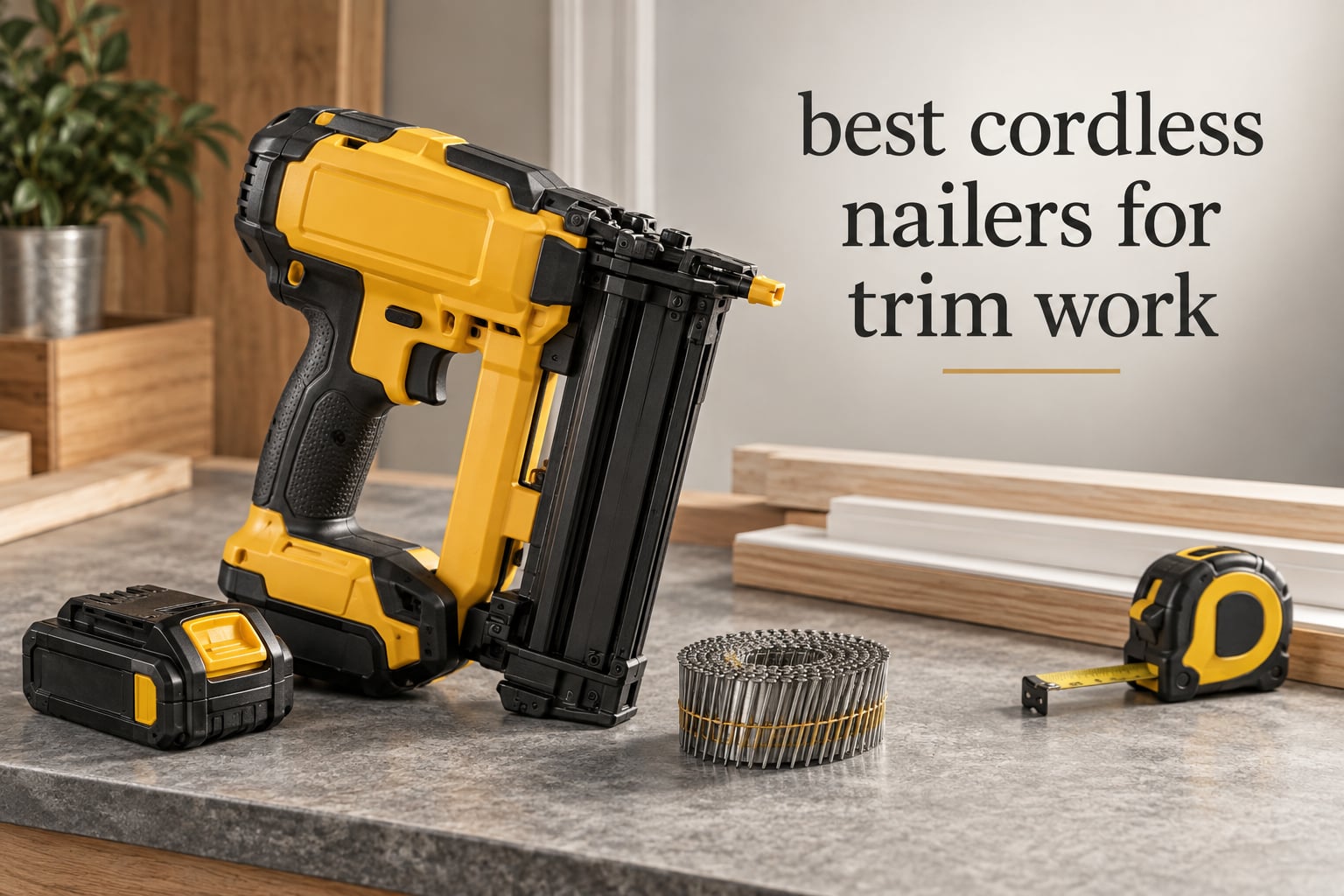
The best cordless nailer for trim work is the DEWALT DCN680B 18 gauge brad nailer, because an 18 gauge brad is the default fastener for baseboards, door and window casing, shoe molding and quarter round, which is most of what a trim carpenter nails in a week. When the trim gets heavier, step up the gauge rather than the muscle. A 16 gauge angled finish nailer handles thick hardwood casing and poplar crown, a 15 gauge angled nailer is the answer for interior door jambs, and a 23 gauge pin nailer is what you want on stain-grade molding where the hole size would show.
That gauge ladder is the whole decision, and everything else on this list sits underneath it. We compared ten cordless nailers across those four gauges for this 2026 guide, weighing the specs that change how a tool feels on a belt all day: weight, magazine capacity, nail length range, sight line, drive depth adjustment, and whether a jam clears with a lever or a wrench. The table below holds all ten, and the reviews that follow explain why each one earned its place.
One note before we start. Cordless nailers have closed most of the gap with pneumatic drivers on trim work. If you also nail off walls, our framing nailer roundup covers the heavy side, and the brad nailer guide goes wider on gauges across the cordless and pneumatic divide. This list stays on cordless trim tools only.
Table of Contents
Top 3 Best Cordless Nailers for Trim Work in 2026

DeWalt DCN680B 18 Gauge Brad
- Brushless motor
- Micro nose sight line
- Tool-free jam release
- 6.2 lb

Metabo HPT NT1850DG 18 Gauge Brad
- 5.5 lb
- 700 nails per charge
- No ramp-up time
- Battery and charger included

Craftsman CMCN618C1 18 Gauge Brad
- Battery and charger included
- Brushless motor
- Tool-free adjustments
- Belt hook
The DCN680B wins on the combination of rating, review volume and a micro nose that keeps the driver visible. The Metabo HPT kit is the one to buy when weight on a belt is the deciding factor, and the CRAFTSMAN kit is the pick for anyone who wants a complete 18 gauge setup without buying a battery and charger separately.
Every Cordless Trim Nailer in This Roundup at a Glance (October 2026)
| Product | Specifications | Action |
|---|---|---|
| DeWalt DCN680B 18 Gauge Brad Nailer |
|
Check Latest Price |
| Craftsman CMCN618C1 18 Gauge Brad Nailer |
|
Check Latest Price |
 DeWalt DCN660B 16 Gauge Angled Finish Nailer DeWalt DCN660B 16 Gauge Angled Finish Nailer |
|
Check Latest Price |
 DeWalt DCN623B 23 Gauge Pin Nailer DeWalt DCN623B 23 Gauge Pin Nailer |
|
Check Latest Price |
| Metabo HPT NT1850DG 18 Gauge Brad Nailer |
|
Check Latest Price |
 Makita XNB02Z 16 Gauge Straight Finish Nailer Makita XNB02Z 16 Gauge Straight Finish Nailer |
|
Check Latest Price |
 DeWalt DCN650B 15 Gauge Angled Finish Nailer DeWalt DCN650B 15 Gauge Angled Finish Nailer |
|
Check Latest Price |
 Milwaukee M18 FUEL 18 Gauge Brad Nailer Milwaukee M18 FUEL 18 Gauge Brad Nailer |
|
Check Latest Price |
 Worx WX842L 20V 18 Gauge Brad Nailer Worx WX842L 20V 18 Gauge Brad Nailer |
|
Check Latest Price |
 Craftsman CMCN616C1 16 Gauge Finish Nailer Kit Craftsman CMCN616C1 16 Gauge Finish Nailer Kit |
|
Check Latest Price |
Which Nail Gauge Do You Need for Trim Work?
Gauge is the trim decision, and everything else is a preference. A lower gauge number means a thicker nail, a bigger hole and more holding power. Work down this list from the thinnest trim you will ever hang, and stop at the first line that covers your heaviest job.
Baseboard and shoe molding: 18 gauge brads, 1-1/2 to 2 in long, driven into studs. This is the default trim application and the reason an 18 gauge brad nailer is the first tool most people buy.
Crown molding: 15 or 16 gauge angled finish nails for painted poplar crown that has to hold its shape over a long run. An 18 gauge brad works on small or prefinished crown where the hole size is more visible than the holding power.
Door and window casing: 18 gauge at 1-1/4 to 2 in for standard casing over drywall. Move to 16 gauge when the casing is thick hardwood or the wall is out of plumb and you need the extra bite.
Quarter round and small trim: 23 gauge pins from 5/8 to 1-1/2 in, or 18 gauge brads if the piece is thicker than a pencil line.
Interior door jambs and thick hardwood trim: 15 gauge angled finish nails, the highest holding power of any common trim gauge.
Stain-grade and fragile trim: 23 gauge pins, which leave a hole small enough to fill without a visible dot across a painted or stained surface.
Nail gauge also sets the length you can run. The 23 gauge pinner on this list stops at 1-1/2 in, which is why it never replaces a 15 or 16 gauge tool on structural trim.
1. DeWalt DCN680B 18 Gauge Brad Nailer – Best Overall for Trim
DEWALT DCN680B 20V MAX* XR® 18 GA Cordless Brad Nailer (Tool Only)
6.2 lb tool weight
18 gauge brad nails
Brushless motor
Tool-free jam release
Pros
- Brushless motor for runtime and durability
- Micro nose keeps the sight line clear
- Tool-free depth jam and stall release
- Low nail lockout stops dry firing
- Belt hook fits either hand
Cons
- Tool-only listing so a battery and charger are added separately
- 18 gauge nails give up holding power versus 15 and 16 gauge
This is the tool we keep coming back to. At 6.2 pounds it is light enough for a full day of baseboard and casing without the arm fatigue that heavier finish nailers bring, and the brushless motor is the reason owners describe it as durable rather than merely powerful. The rating of 4.8 across 3736 reviews is the highest combined score in this group, and it is not close.
The micro nose is the detail that matters most for trim. On a straight finish nailer the driver sits behind the magazine, so you are sighting down a channel; here the nose is cut back far enough to see the nail head and the molding edge at the same time. On r/Carpentry, owners describe the DCN680 as one of the more jam-free cordless brads for daily work, which matches what the review record shows.
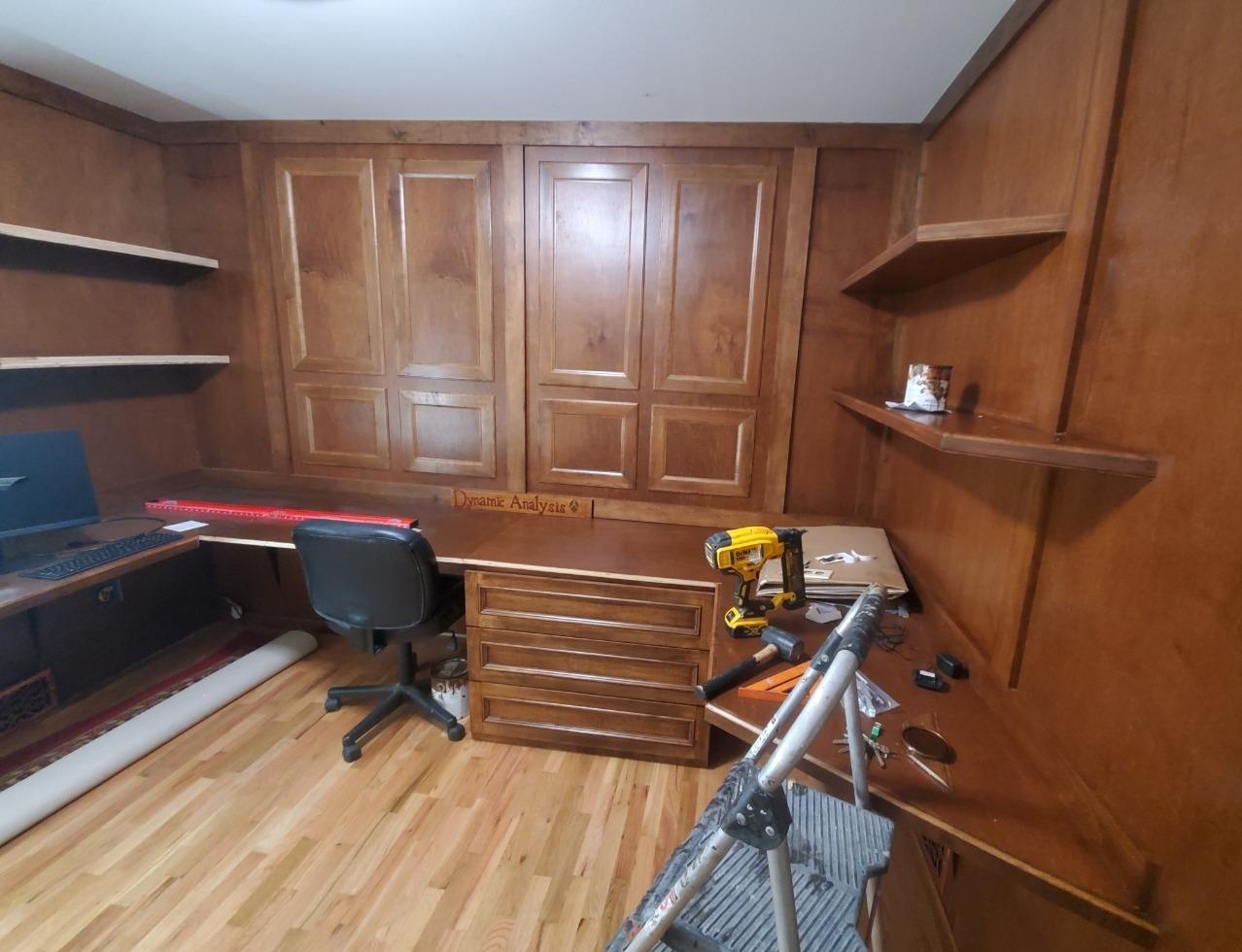
Everything on it is tool-free. Depth adjustment, jam release and the stall release lever all work without a hex key, and the trigger switches between sequential and contact actuation at the same time. The multi-functional LED lights do double duty as workspace lighting and as a diagnostic readout, and the low nail lockout stops the tool firing blanks into a finished floor.
It runs on the DEWALT 20V MAX platform, so if you own any 20V MAX battery the tool is usable immediately. The listing here is tool only, which is the normal way to buy into a platform you already own and a real cost if you do not.
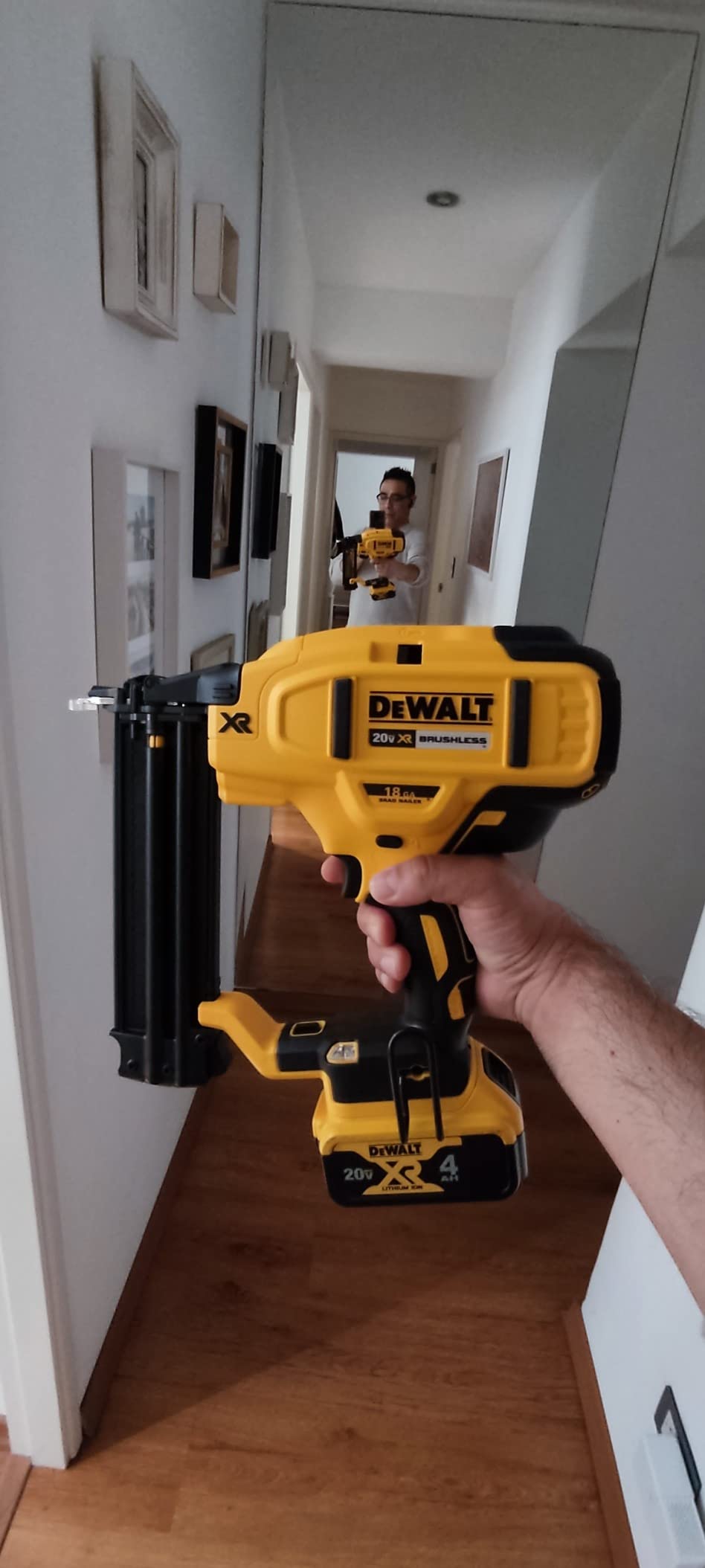
What this nailer is best used for
Baseboards, shoe molding, door and window casing, quarter round and cedar trim are all within its comfort zone. Pair 1-1/2 to 2 in 18 gauge brads with a couple of fasteners per stud and it holds trim between 1/2 and 3/4 in thick without a fuss, which covers the large majority of residential interior work.
Where it falls short against the field
It is an 18 gauge tool, so when the trim turns to thick hardwood casing or a poplar crown run, you are changing tools rather than adjusting. The second DEWALT on this list, the DCN660B, covers that job with a 16 gauge angled magazine on the same battery.
2. Metabo HPT NT1850DG 18 Gauge Brad Nailer – Best for Tight Spaces and Low Weight
Metabo HPT Brad Nailer, 18 Gauge Cordless, 18V Kit, NT1850DG
5.5 lb with battery
18 gauge brads 5/8 in to 2 in
About 700 nails per charge
Mechanical spring drive
Pros
- Lightest full-size brad here at 5.5 lb
- Low center height fits into tight spaces
- No ramp-up time between nails
- Battery charger and no-mar nose caps included
- Bright LED work light
Cons
- 18V platform is not interchangeable with 20V MAX or M18 packs
- 2.0Ah battery gives roughly 700 nails per charge
At 5.5 pounds with a low center height, this is the one for overhead work and for the awkward gap between a wall and a return where a taller tool will not fit. The mechanical spring drive delivers power to drive brads up to 2 in, and the 4.7 rating across 932 reviews reflects a tool that does the simple job without drama.
The kit is unusually complete for this class. You get a 2.0Ah 18V battery, a charger, no-mar nose caps, a hook and safety glasses, which means the tool is usable on day one without a second purchase. For trim work the no-mar caps matter more than they look like they should, because they are what keeps a finished floor or a painted casing face clean while you set the head.
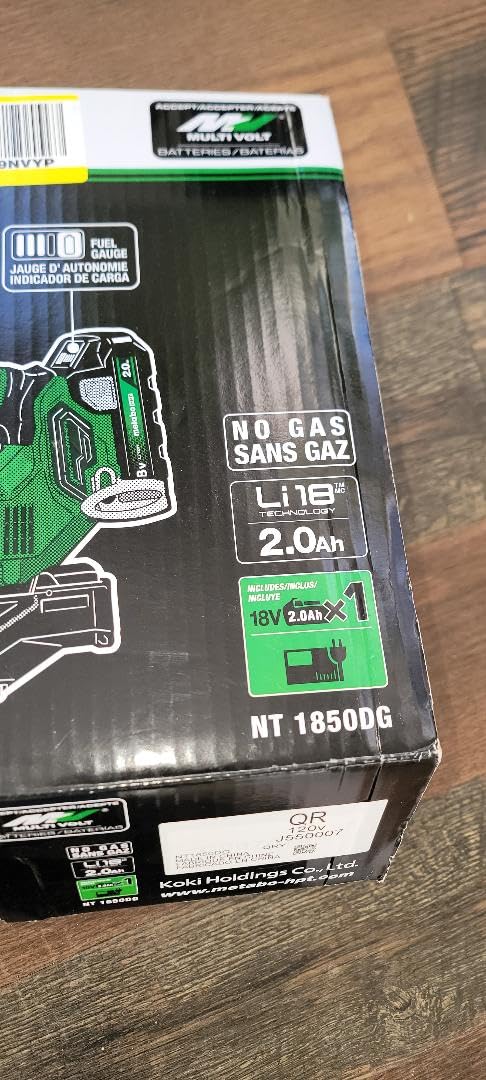
Two specs stand out in daily use. There is no ramp-up time between nails, so bump firing along a straight run of baseboard keeps a steady pace, and the tool-less depth of drive adjustment is quick enough to re-set between a 1/2 in shoe molding and a 3/4 in baseboard without leaving the job. The LED work light is bright enough to work under a sink cabinet.
Owners who move up from a heavier finish nailer notice the difference within a day. The compromise is the 2.0Ah battery, which gives roughly 700 nails per charge, and the 18V platform, which is not interchangeable with 20V MAX or M18 packs.
What this nailer is best used for
Crown installation where your off hand is above your head, tight corners behind returns, and any trim job where the working weight matters more than absolute holding power. The included no-mar caps make it a good fit for finished surfaces you cannot afford to mark.
Where it falls short against the field
Reviewers report that Metabo HPT nailers can struggle to set nails as consistently in hardwood as the Milwaukee on this list, so for thick hardwood casing or a hard maple baseboard, the 16 and 15 gauge options below are the safer bet.
3. CRAFTSMAN V20 CMCN618C1 18 Gauge Brad Nailer – Best Value Complete Kit
CRAFTSMAN V20 Cordless Brad Nailer, 18 Gauge Nail Gun, with Battery and Charger (CMCN618C1)
7.6 lb tool weight
18 gauge brad nails
Brushless motor
Battery and charger included
Pros
- Battery and charger in the box
- Brushless motor holds power across materials
- Tool-free depth jam and stall settings
- Balanced center of gravity
- Contoured over-molded handle
Cons
- 18 gauge brads hold less than 15 and 16 gauge nails
- Heavier than the DeWalt and Metabo brads here
The reason this one shows up on a trim list is the box contents. A battery and a charger are included, so the cost of getting into 18 gauge cordless nailing is one purchase rather than three. With a 4.6 rating across 3142 reviews, it is also the second most proven tool in the group.
Owners consistently single out the balance. CRAFTSMAN designed the center of gravity to sit low in the hand, and combined with the contoured over-molded handle it stays comfortable through a long baseboard run. The brushless motor is rated by the manufacturer to hold consistent firing power across different materials and climate conditions, which matters in an unfinished house in winter.
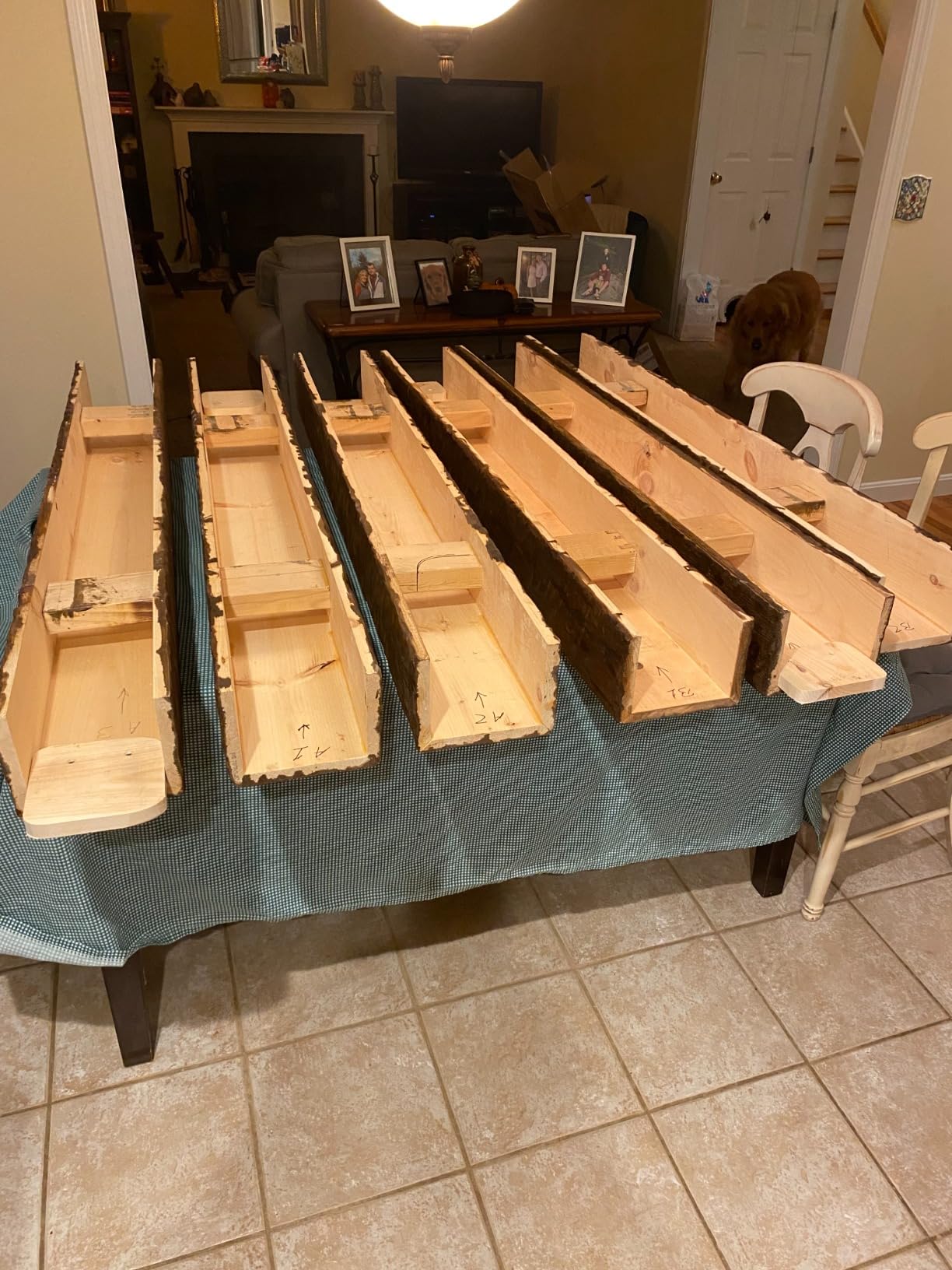
Mechanically it is straightforward and well organised. Tool-free depth settings, tool-free jam release and tool-free stall release cover the three adjustments a trim carpenter actually makes, and a 2 in round high-speed steel driver blade sits behind a belt hook that keeps the tool on your hip. The listed dimensions of 12.5 by 4.2 by 11.56 in make it one of the more compact bodies here.
If you already own a battery platform, check compatibility before buying, because this kit ships with its own pack and charger rather than adapting to an existing system.

What this nailer is best used for
Baseboard, casing and shoe molding on a single room or a small addition, and any job where buying a battery and charger separately would be a meaningful part of the budget. The included battery makes it a clean first nailer purchase.
Where it falls short against the field
At 7.6 pounds it is the second heaviest brad on this list, which tells on overhead crown work. It is also strictly an 18 gauge tool, so thick hardwood trim is out of its range.
4. DeWalt DCN660B 16 Gauge Angled Finish Nailer – Best for Thick Hardwood Trim
DEWALT 20V MAX* Finish Nailer, Angled, 16GA, Tool Only (DCN660B)
16 gauge angled finish nailer
Inline angled magazine
Brushless motor
Tool-free depth adjustment
Pros
- 16 gauge angled magazine takes full-size trim nails
- Inline magazine works in tight spaces and multiple orientations
- Brushless motor for runtime and durability
- Tool-free depth jam and stall release with selectable trigger
- Works with any DEWALT 20V MAX battery
Cons
- Tool-only listing so battery and charger are added separately
- Published item weight of 16 oz is far below the real tool weight
This is the companion to the DCN680B for anyone whose trim is not thin. A 16 gauge angled nailer is the standard answer to thick hardwood casing, prefinished baseboard and poplar crown, and the angled magazine gets the driver out of the way so you can still work in a corner with the body close to the wall.
The inline magazine is the spec to pay attention to. It sits in line with the driver rather than behind it, so the tool can be held in more than one orientation in a tight space, which is exactly the situation on a return wall or inside a closet. The brushless motor, tool-free depth adjustment, tool-free jam release and stall release lever match the feature list of the DCN680B, so nothing is downgraded as the gauge goes up.
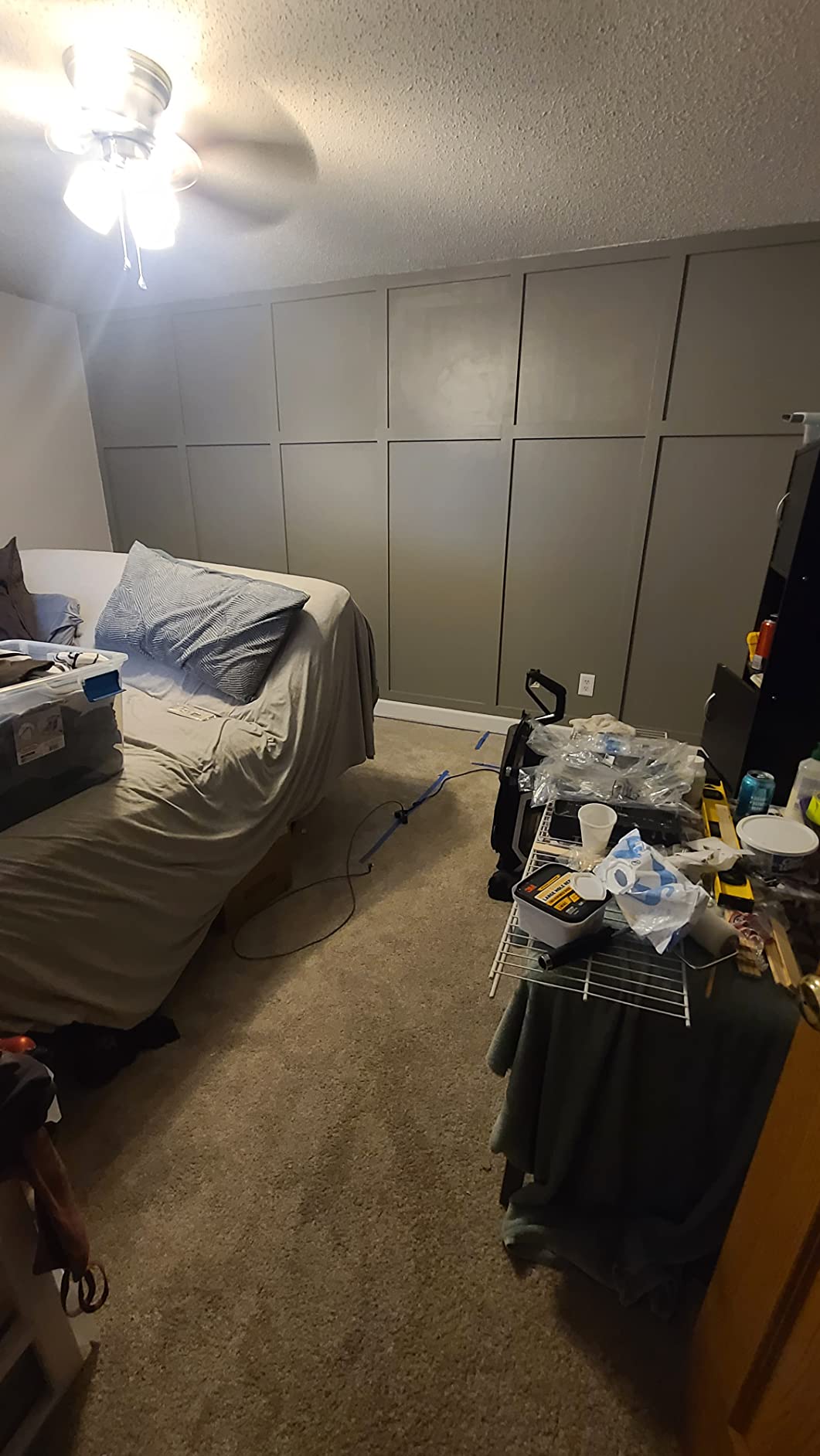
A note on the specifications, because they will confuse you. The published item weight of 16 ounces is not the real weight of this tool; treat it as bad data rather than a selling point. The rating of 4.6 across 1912 reviews is the meaningful number, and 84% of those reviews are five star.
It is a tool-only listing, so plan on adding a 20V MAX battery and charger. The trade-off for the heavier gauge is the nail hole: 16 gauge leaves a visibly larger hole than an 18 gauge brad, which is why it belongs on thicker stock and not on stain-grade surfaces.
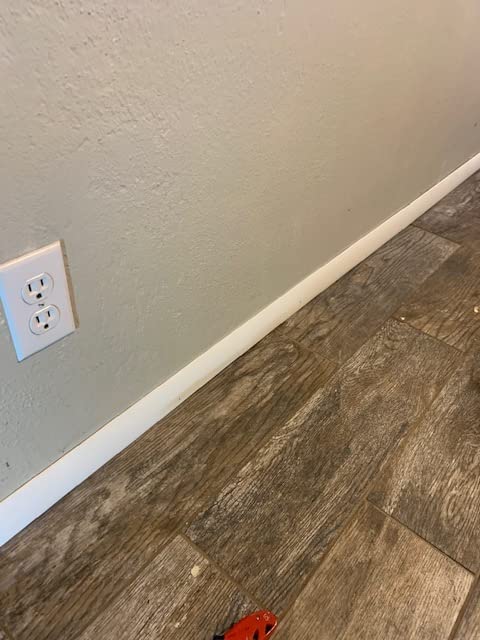
What this nailer is best used for
Thick hardwood casing, prefinished or engineered baseboard, and crown runs where you want the nail to hold through seasonal movement. It is also the natural second tool for anyone already running DEWALT 20V MAX packs.
Where it falls short against the field
It leaves a bigger hole than an 18 gauge brad, so it is the wrong tool for painted or stained trim where the fill would show. On straight magazine models of this size, the Makita below is the one worth comparing for runtime.
5. DeWalt DCN623B 23 Gauge Pin Nailer – Best for Delicate and Stain-Grade Trim
PIN NAILER CMPCT 20V 23G
4.45 lb tool weight
23 gauge pins 5/8 in to 1-1/2 in
About 2000 nails per charge
Tool-free jam release
Pros
- Lightest nailer here at 4.45 lb
- About 2000 nails per charge from the high-output brushless motor
- Tool-free jam release and depth adjust
- Low nail lockout with LED indicator
- Compact body for small trim
Cons
- Pin nails stop at 1-1/2 in so it is not for heavy trim
- Battery and charger not included
- Smallest magazine capacity of the finish nailers here
When the molding is delicate enough that a filled nail hole would read as a dot, a pin nailer is the only correct answer. The DCN623B drives 23 gauge pins from 5/8 in to 1-1/2 in, and at 4.45 pounds it is the lightest tool on this list, which makes it easy to work overhead on small trim.
Runtime is the standout figure. The high-output brushless motor puts out about 2000 nails per charge, so for the small, precise work this tool is built for, a single battery usually covers a room of delicate trim. Owners rate it 4.7 across 928 reviews, with 88% of those ratings at five stars.

Two details keep it out of trouble on fine work. The low nail lockout has an LED indicator that tells you when to reload, so you are not discovering an empty magazine on the last piece of a stained run, and the tool-free jam release and depth adjust let you correct a set nail without breaking your rhythm. Body dimensions of 10.2 by 3.75 by 9.6 in make it the smallest package here.
Forum trim carpenters reach for 23 gauge specifically when the piece is small or fragile, and the pin length ceiling is the reason it never replaces a brad or finish nailer. The battery and charger are not included.
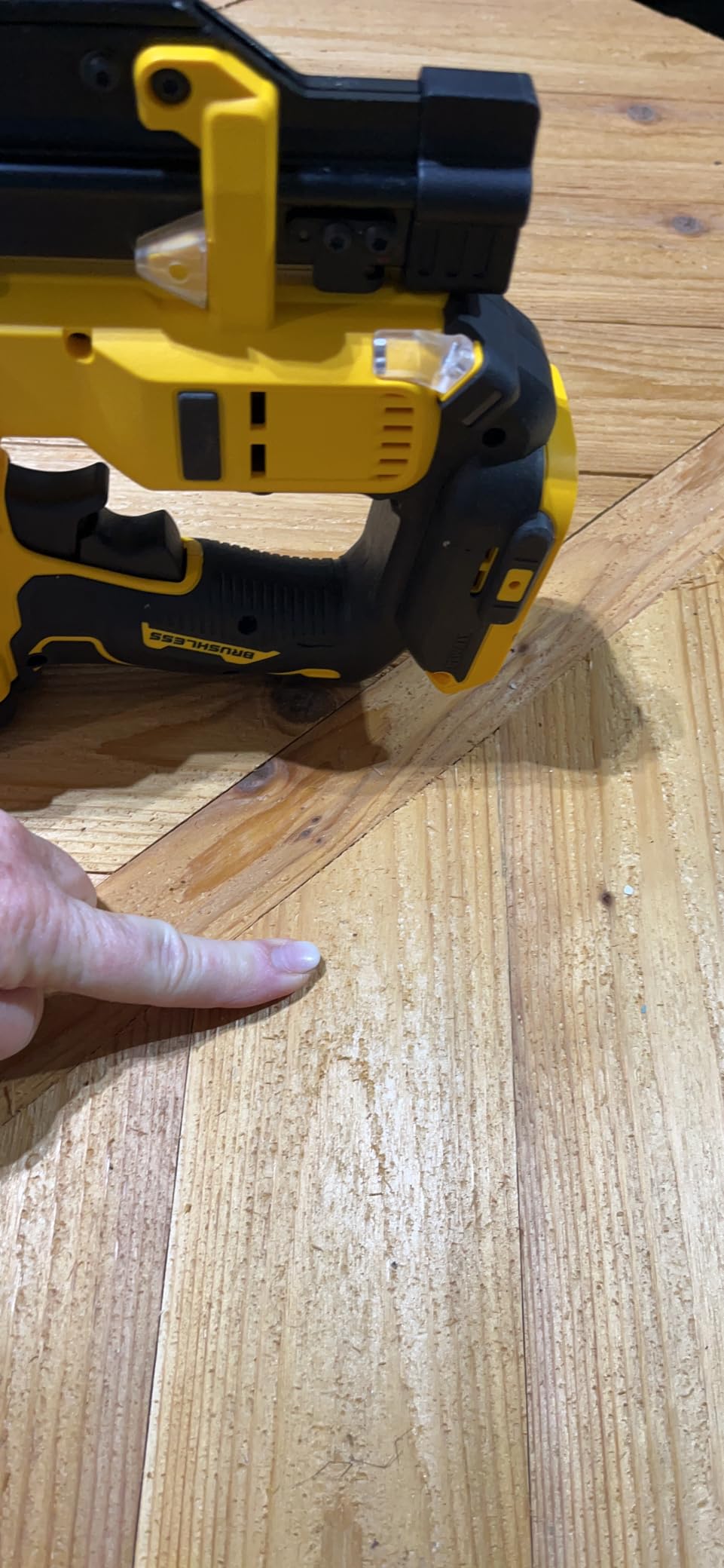
What this nailer is best used for
Stain-grade molding, small profile trim, cabinet work and shop jigs where the fastener has to disappear. It is also a good second tool for a DEWALT 20V MAX owner who does a lot of punch-list work on fine trim.
Where it falls short against the field
Pin nails top out at 1-1/2 in, so structural trim and any thick hardwood profile is out of reach. If you only install trim, this is a specialist purchase rather than a first nailer.
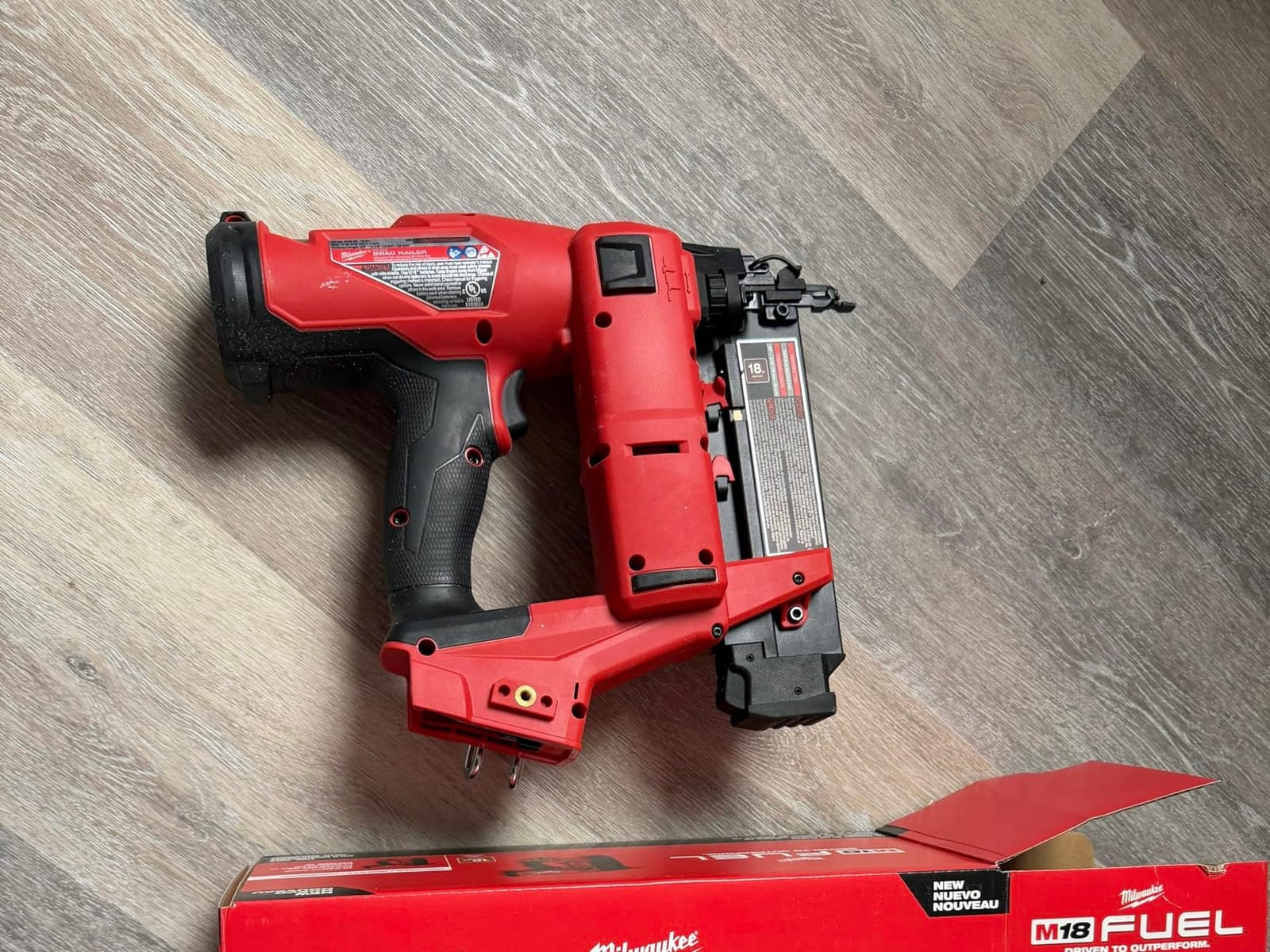
6. Milwaukee M18 FUEL 18 Gauge Brad Nailer – Best for Consistent Nail Depth
Milwaukee Electric – M18 Fuel 18 Gauge Brad Nailer
6.5 lb tool weight
18 gauge brads up to 2 in
Nitrogen air spring drive
Zero ramp-up time
Pros
- Nitrogen air spring sets depth consistently in hard and soft wood
- Brushless motor with zero ramp-up time for the fastest fire rate
- Tool-free drive depth adjustment
- Sequential and contact actuation modes
- No gas cartridge required
Cons
- Tool-only so battery and charger are added separately
- Slightly larger body than the compact 18 gauge options
The Milwaukee makes its case on depth control rather than weight or price. Its nitrogen air spring mechanism is designed to sink nails to a consistent depth in both hard and soft wood while leaving a clean hole that matches the nail head, and that consistency is what you notice on stained trim where every hole is filled and examined.
Speed is the other argument. The POWERSTATE brushless motor with REDLINK PLUS intelligence delivers zero ramp-up time, so the tool fires at its full rate from the first nail, and reviews repeatedly mention no misfires or misfeeds. Firing modes cover both sequential and contact actuation, and tool-free drive depth adjustment means you can dial in a countersink without tools.
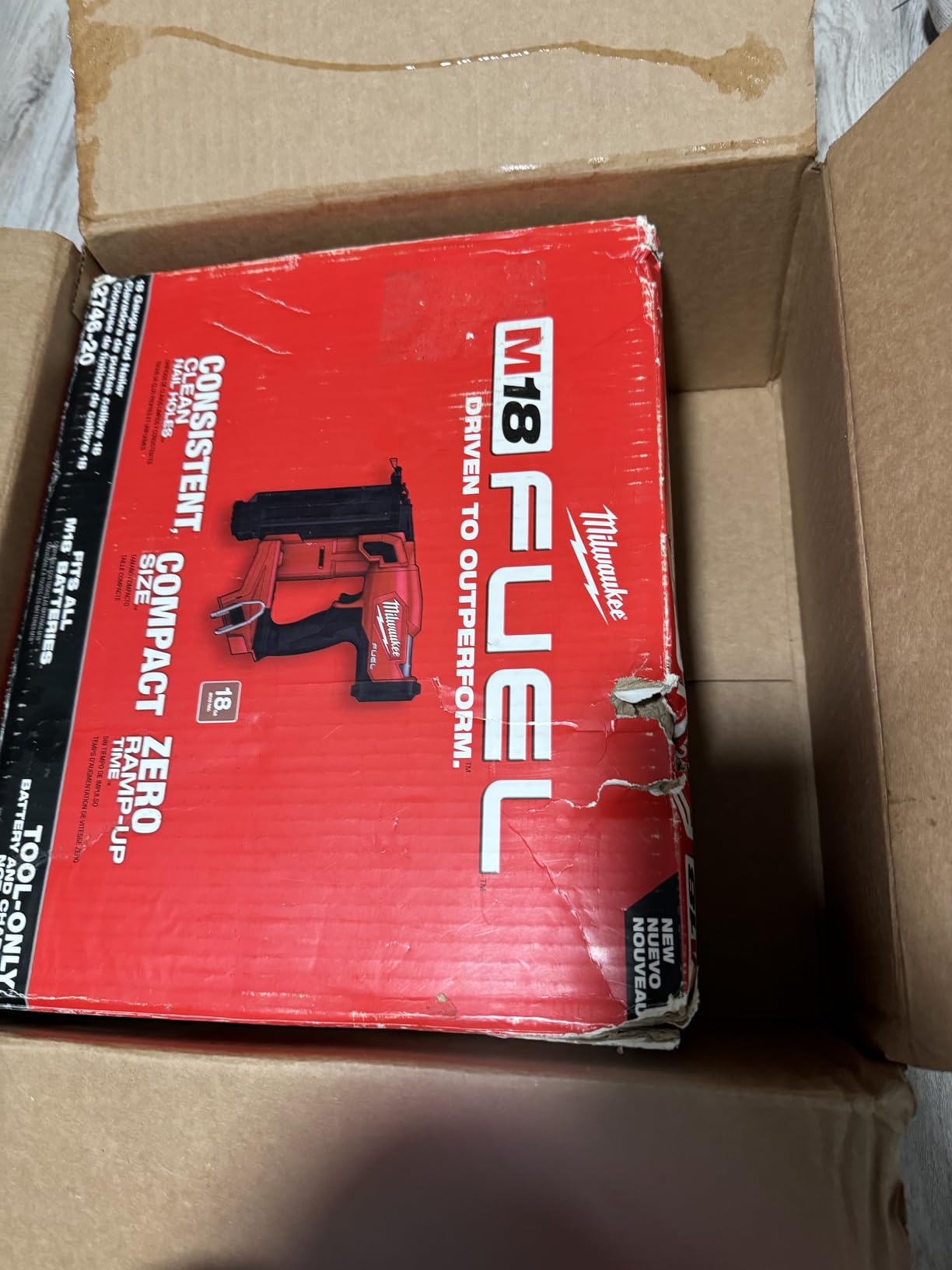
At 6.5 pounds it sits in the middle of this group on weight, and it needs no gas cartridge, so there is no consumable and no exhaust smell. That last point comes up constantly in trade forums, where fuel-cell nailers get passed over for exactly that reason.
The one long-term concern owners raise for this drive style is maintenance over years. Forum users report that nitrogen-driven Milwaukee nailers can lose power with age and in cold weather, and that the cell has to be serviced and refilled when that happens, so factor that into a purchase you expect to keep for a decade.
What this nailer is best used for
Any job where a consistent, flush nail head matters more than minimal weight: stained casing, prefinished trim and hardwood baseboard. It is also a natural fit if you already run M18 FUEL packs.
Where it falls short against the field
It is tool only, and the body is a little larger than the compact 18 gauge options, which costs you something in the tightest corners. If you are starting from zero batteries, the cost of entry is higher than the kit options on this list.
7. Makita XNB02Z 16 Gauge Straight Finish Nailer – Best for Runtime at 16 Gauge
Makita XNB02Z 18V LXT Straight Finish Nailer, 16 Gauge, 2-1/2″
8.12 lb tool weight
16 gauge nails 1 in to 2-1/2 in
Up to 1000 nails per charge
3-year limited warranty
Pros
- Drives full 2-1/2 in 16 gauge finish nails
- Up to 1000 nails per charge on a 5.0Ah 18V LXT battery
- Compact center height for viewing around the nose
- Anti-dry fire protects the work surface
- No-mar tip and safety glasses included
Cons
- Heaviest finish nailer here at 8.12 lb
- Lowest rating in the group at 4.3
- Tool-only so the battery is added separately
This is the runtime pick of the roundup. On a 5.0Ah 18V LXT battery it drives up to 1000 finish nails, which is the highest figure any tool here publishes, and it takes nails from 1 in to 2-1/2 in, the full range of a 16 gauge straight collation. For a long crown run on one charge, that matters.
The compact center height is the trim-specific feature. It is what lets you see around the nose tip in a tight spot, which is the difference between placing a nail accurately and placing it near where you wanted it. An anti-dry fire mechanism is built in to stop blanks being driven into a finished surface, and a no-mar tip, belt clip and safety glasses are included.
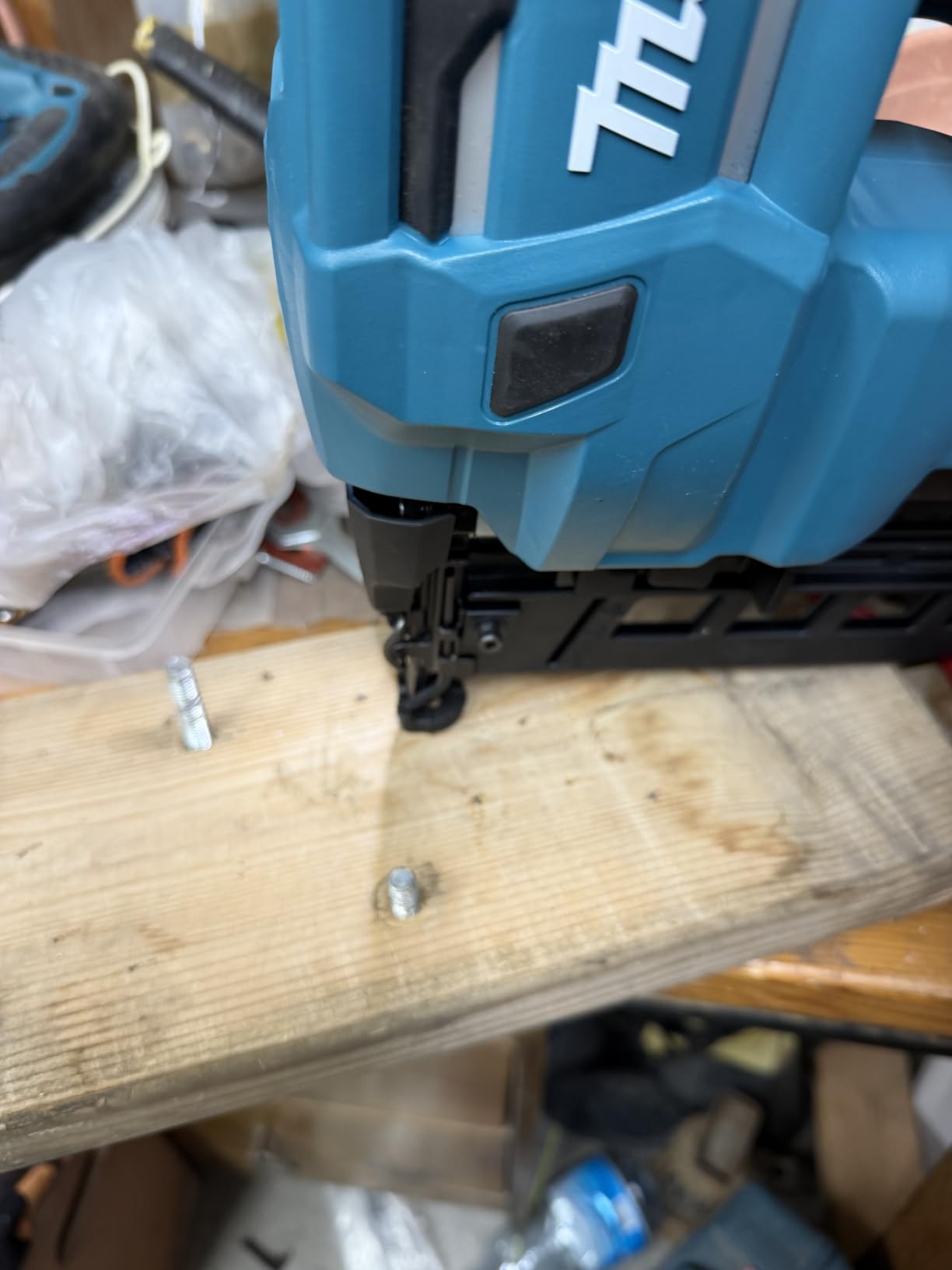
It is also the only tool here with a stated warranty length: a 3-year limited warranty, which is worth noting when the two DEWALT and CRAFTSMAN options on this list do not state one. For a straight finish nailer driven into hardwood, that coverage has real value.
The honest drawback is weight. At 8.12 pounds it is the heaviest finish nailer in the group, and its 4.3 rating with 11% one-star reviews is the lowest here. Forum trim carpenters rate Makita nailers for driving power but report jam complaints across the brand’s cordless line, and a straight magazine is less maneuverable than an angled one in corners.
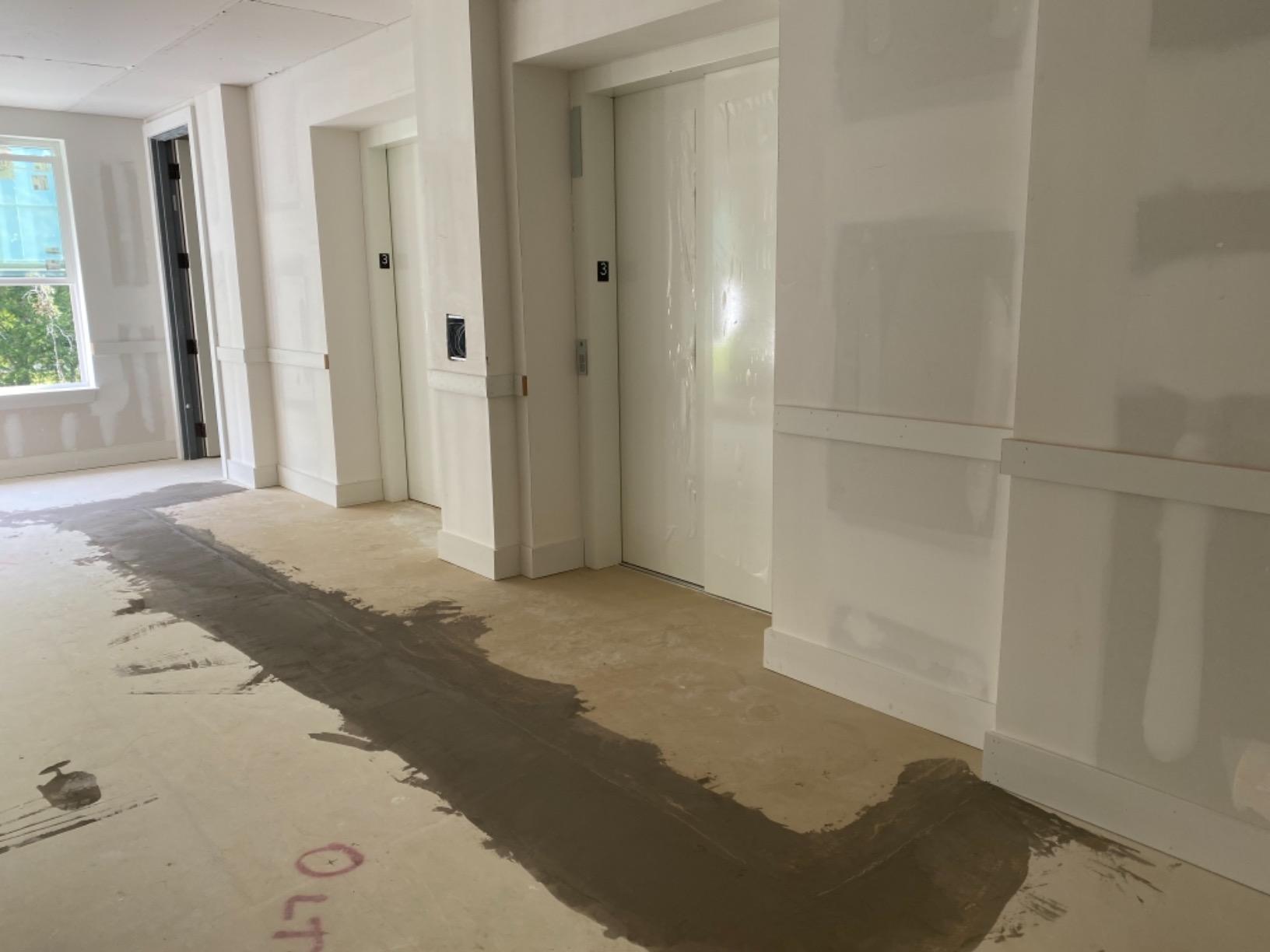
What this nailer is best used for
Long crown runs, thick hardwood casing and stair work where you want maximum nails per charge and full 2-1/2 in nail capacity. It suits an existing 18V LXT battery owner best.
Where it falls short against the field
The 8.12 pound weight tells on overhead work and on a full belt day, and the straight magazine makes tight corners harder than the DEWALT DCN660B. The rating gap is the widest of any pick here.
8. DeWalt DCN650B 15 Gauge Angled Finish Nailer – Best for Door Jambs and Heavy Trim
20V MAX XR Lithium-Ion Cordless 15-Gauge Angled Finish Nailer (Tool Only)
6.6 lb tool weight
15 gauge angled magazine
Brushless motor
Micro nose sight line
Pros
- Heaviest-duty gauge in the roundup for jambs and thick hardwood
- Angled 15 gauge magazine for crown casing and baseboard
- Micro nose for accurate nail placement
- Brushless motor with tool-free depth jam and stall release
- Inline angled magazine works in tight orientations
Cons
- Tool-only so a 20V MAX battery and charger are added separately
- 7% one-star ratings among reviews
- 15 gauge nails cost more and need more magazine capacity
A 15 gauge angled nailer is the tool you buy when the trim has to hold. Interior door jambs, thick hardwood casing and hardwood floor installation are the jobs listed for this gun, and they are the jobs where a 16 or 18 gauge nail stops being enough.
Everything else mirrors the other DEWALT nailers here. The brushless motor, micro nose for sight line, tool-free depth adjustment, tool-free jam release and stall release lever are all standard, and the inline angled magazine keeps the tool usable in tight spots and at more than one orientation. At 6.6 pounds it is not the heaviest finish nailer on the list despite doing the heaviest fastening.
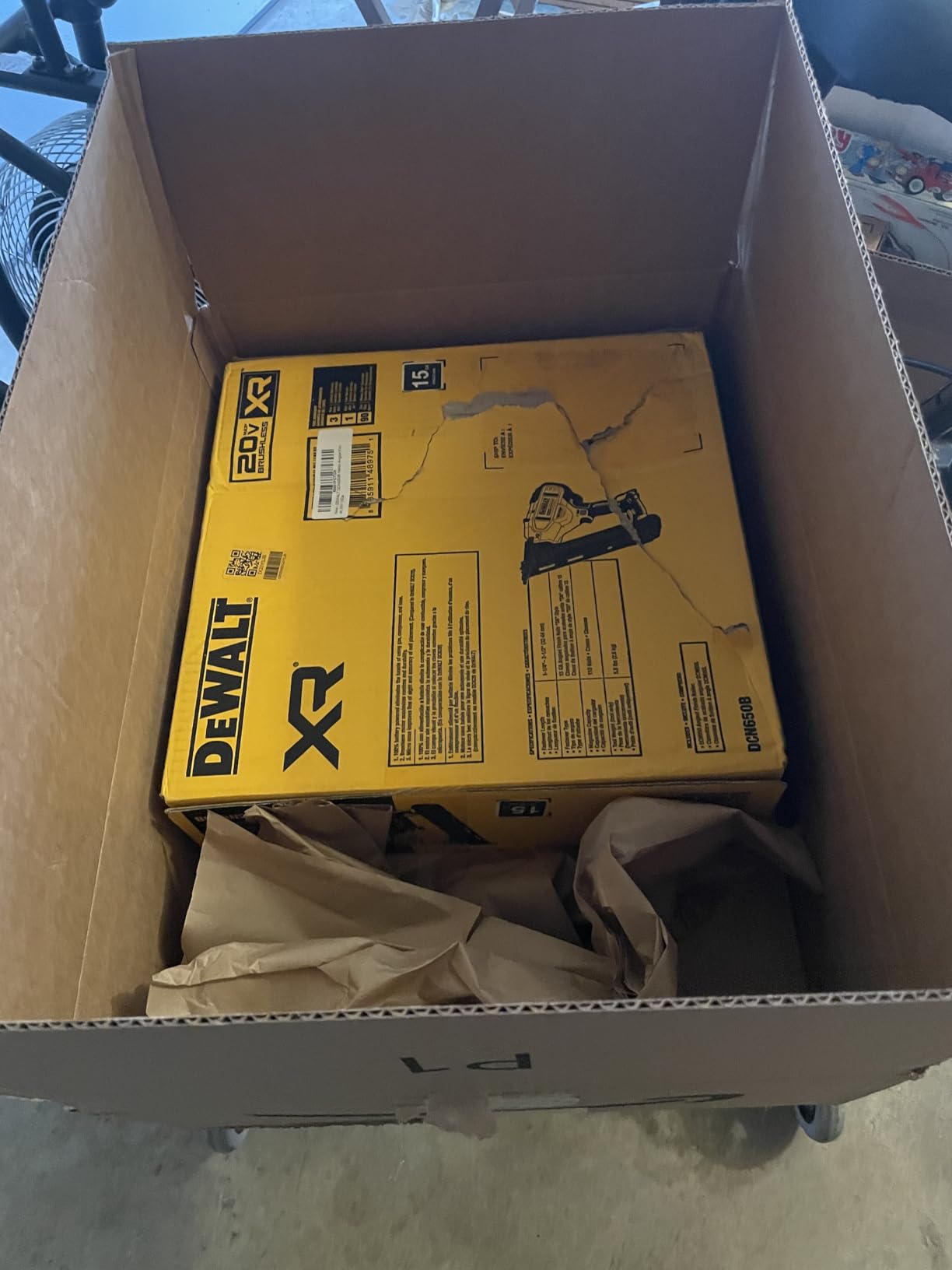
Be clear-eyed about what 15 gauge costs you. The nail hole is the largest of any gauge here, the nails are more expensive per stick, and you need more magazine capacity to cover the same run of trim. It is a tool for specific jobs rather than a general trim nailer.
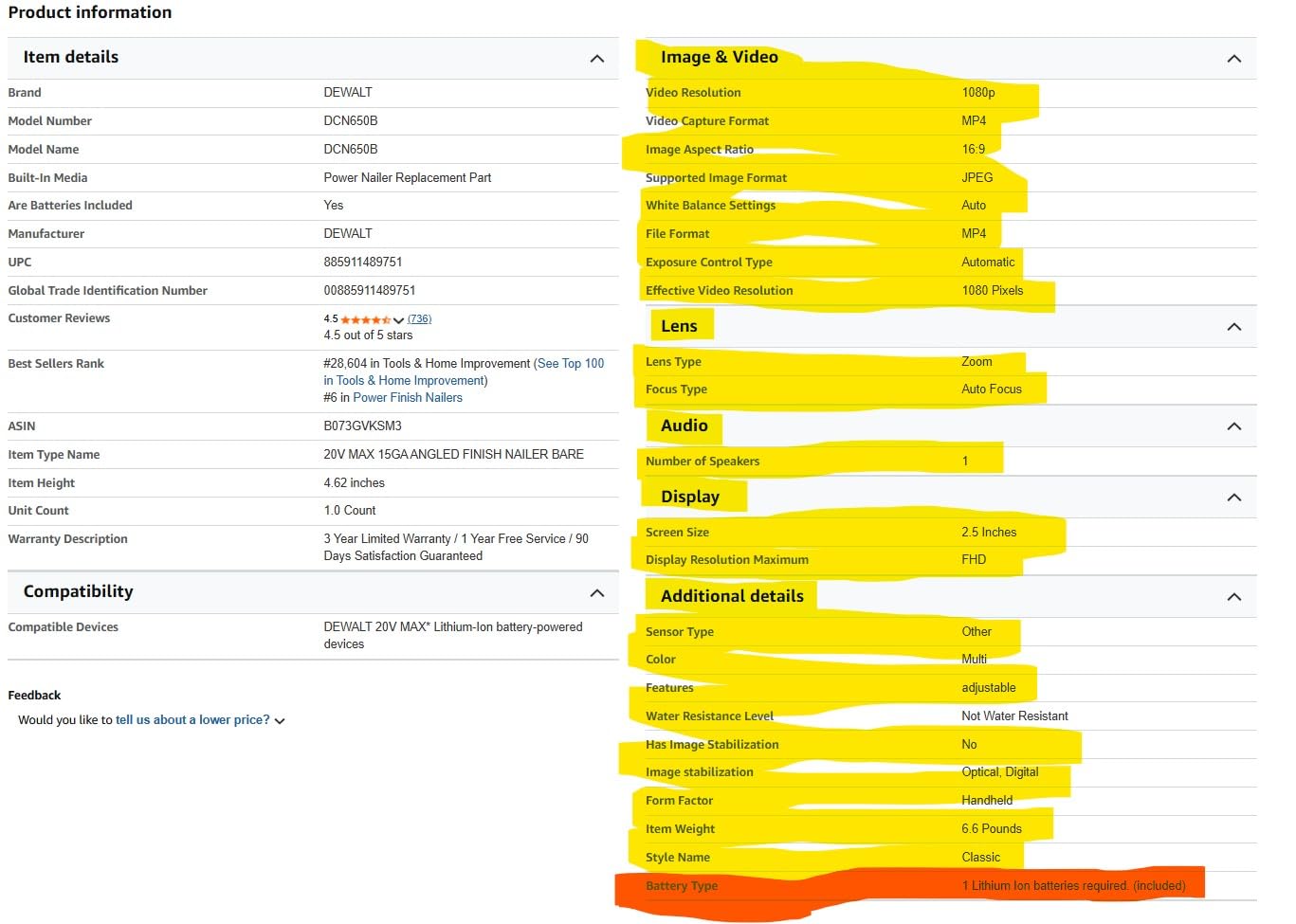
Reviewers rate it 4.5 across 853 reviews, with 7% one-star ratings, which is the second-highest complaint rate in this group. The listing is tool only, so a 20V MAX battery and charger go on top if you do not have them.
What this nailer is best used for
Interior door jambs that get kicked, thick hardwood casing, and hardwood floor trim where holding power outweighs appearance. Anyone running DEWALT 20V MAX packs gets the whole platform in one battery.
Where it falls short against the field
It is the wrong tool for most trim. The hole is too large for painted or stained surfaces, and on a normal baseboard job you are paying for capability you will not use.
9. WORX WX842L 20V 18 Gauge Brad Nailer – Best Budget Pick
WORX Cordless Brad Nailer, 20V 18GA Nail Gun, WX842L
7.06 lb tool weight
18 gauge brads up to 2 in
Up to 80 nails per minute
Power Share battery included
Pros
- Lowest entry cost of any nailer in this roundup
- Drives 2 in brads into hardwood with NailForce Air Impact Technology
- Power Share batteries also run 140 plus tools
- Tool-free jam release with anti-ejection magazine
- LED illumination
Cons
- 80 nails per minute is slower than the Milwaukee FUEL
- 18 gauge brads limit it to lighter trim
- Batteries do not fit DEWALT Makita Milwaukee or CRAFTSMAN packs
The budget entry point, and a more capable tool than the price suggests. NailForce Air Impact Technology drives 18 gauge brads up to 2 in into hardwood, which covers panel molding, window trim and small baseboard, and the 4.5 rating across 733 reviews puts it ahead of several tools that cost considerably more.
The battery situation is the real argument. Power Share packs run more than 140 tools and outdoor power equipment, so if you are buying into the WORX platform for yard work as well as trim, this nailer slots into an ecosystem you are already building. A battery is included.
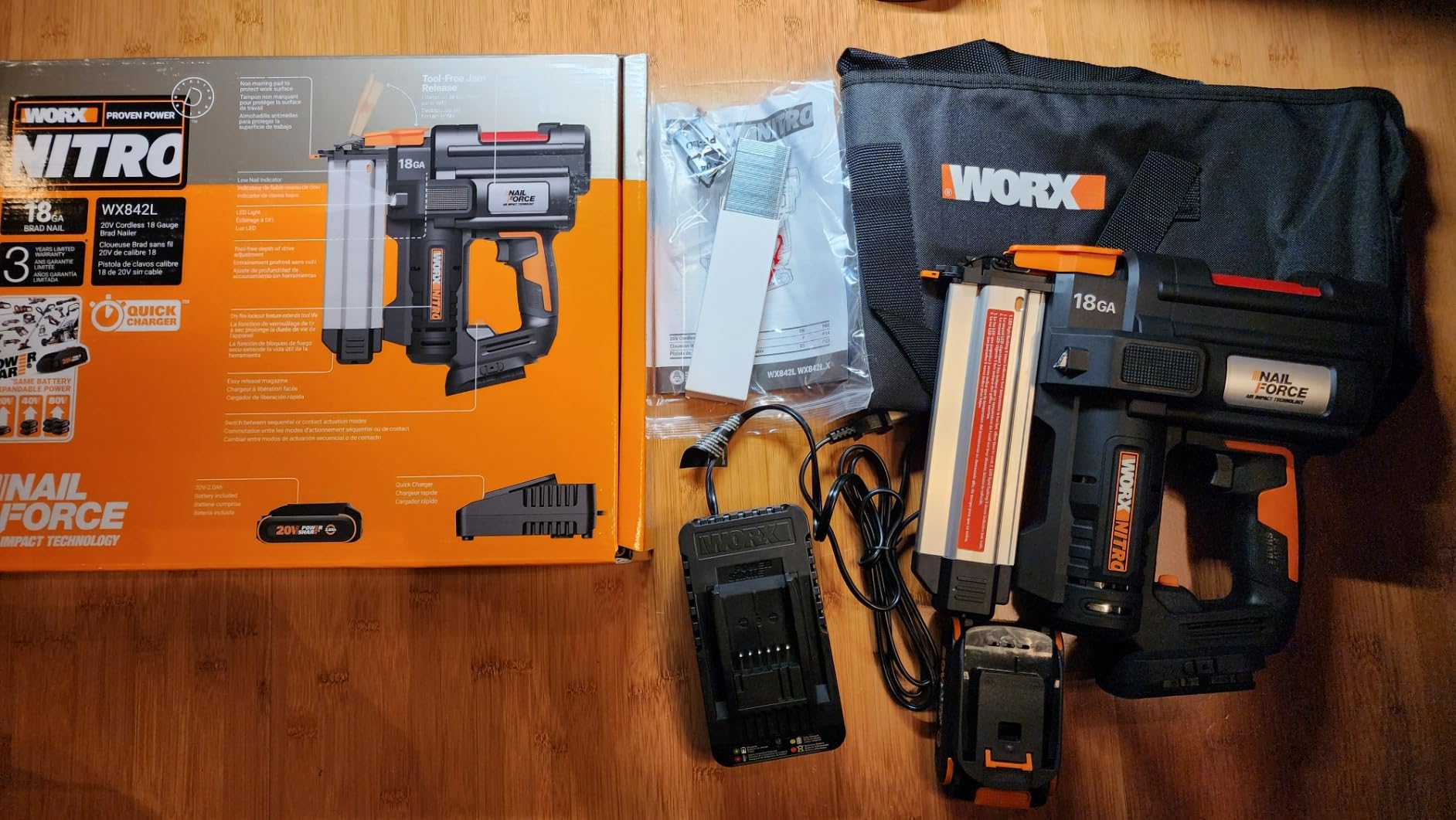
Two design choices are worth crediting. The tool-free jam release means a misfire does not end your run, and the anti-ejection design keeps nails from flying when you open the magazine or clear a jam, which matters a lot when you are working overhead on a ladder.
The limitation is pace and platform. Eighty nails per minute is the slowest firing rate here, and the batteries are brand-unique, so they will not fit DEWALT, Makita, Milwaukee or CRAFTSMAN packs.
What this nailer is best used for
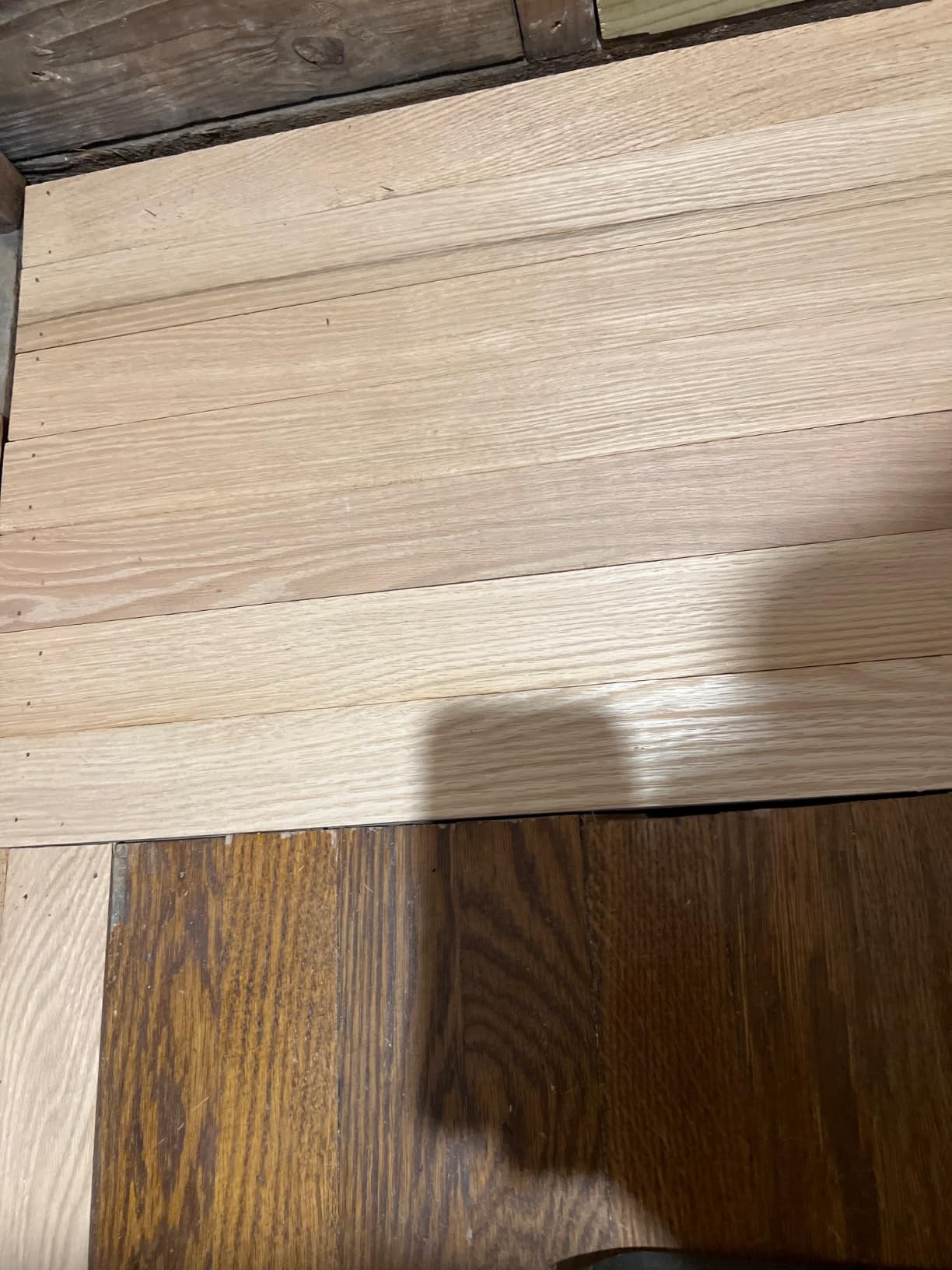
Panel molding, window trim and small baseboard on a first cordless nailer purchase, or as an addition to an existing Power Share battery set. It is a strong choice for shop jigs and temporary assembly too.
Where it falls short against the field
18 gauge nails are the thinnest option here, so holding power is limited on thick trim, and the slower fire rate is noticeable on a long straight run compared with the Milwaukee.
10. CRAFTSMAN V20 CMCN616C1 16 Gauge Finish Nailer Kit – Best Complete 16 Gauge Kit
CRAFTSMAN V20 Cordless Finish Nailer Kit, Nail Gun, 16GA, 2-1/2 Nails, Battery and Charger Included (CMCN616C1)
9.1 lb tool weight
16 gauge finish nails
Battery charger and 200 nails
Built-in safety lock
Pros
- Bundle includes a battery
- a charger and 200 finish nails
- Drives 2-1/2 in nails into hardwood and stair treads
- Reviewers report it does not jam
- Tool-free depth jam and stall release
- Quiet operation with no compressor in the house
Cons
- Heaviest nailer here at 9.1 lb and described as bulky
- Slight lag between strikes compared with a pneumatic driver
- Bottom-loading magazine is awkward to load
It is the only kit here that includes nails as well as a battery and a charger, with 100 nails at 2 in and 100 at 2-1/2 in in the box. For someone setting up a 16 gauge finish nailer from scratch, that is the shortest path to a working tool.
Owners rate reliability highly, and several report that it does not jam at all. The tool-free depth, jam and stall release settings match the rest of the CRAFTSMAN line, and a built-in safety lock adds a layer of protection when the tool is on the belt. Running it inside a finished house with no compressor audible is a genuine advantage on service work.
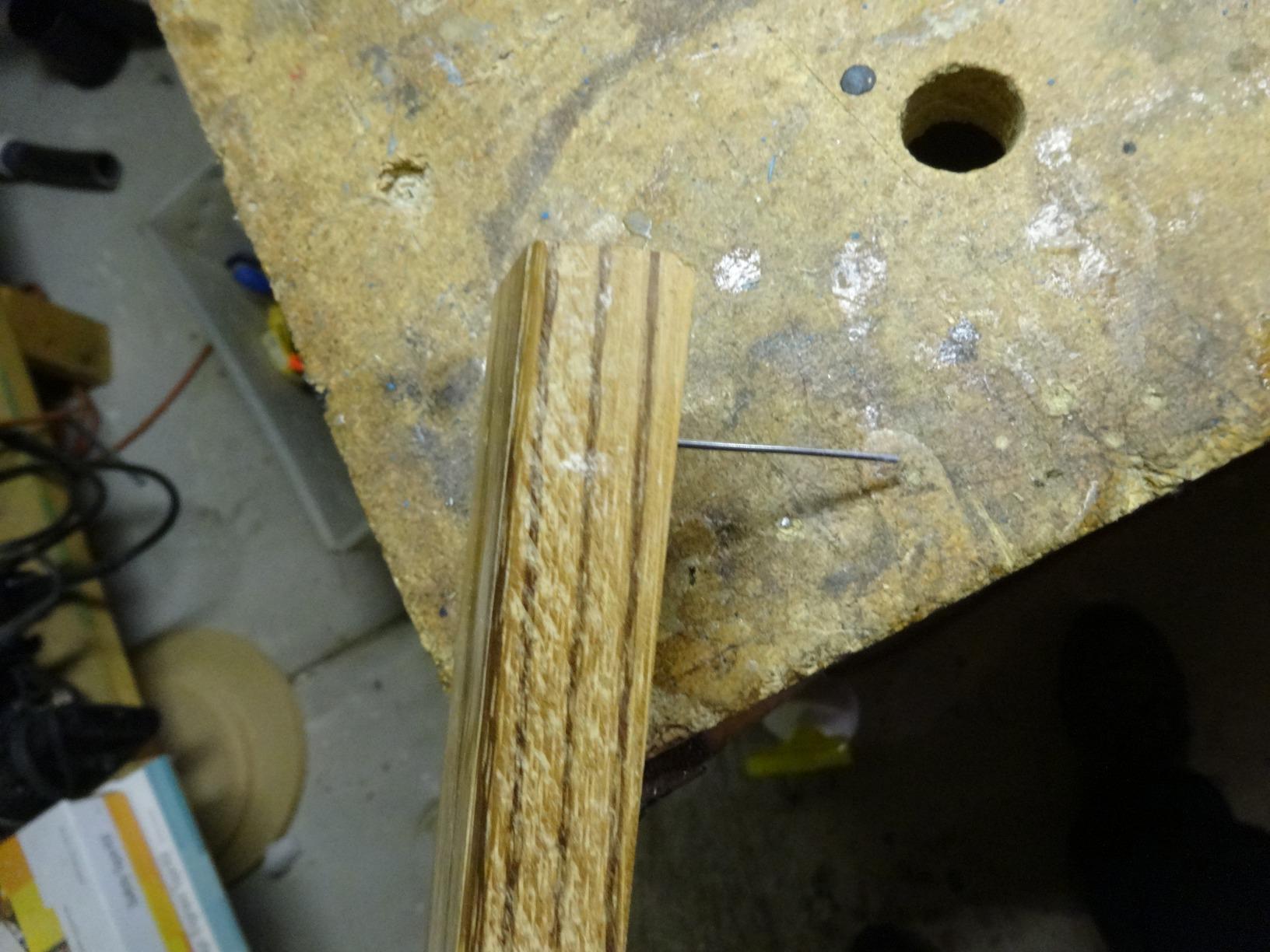
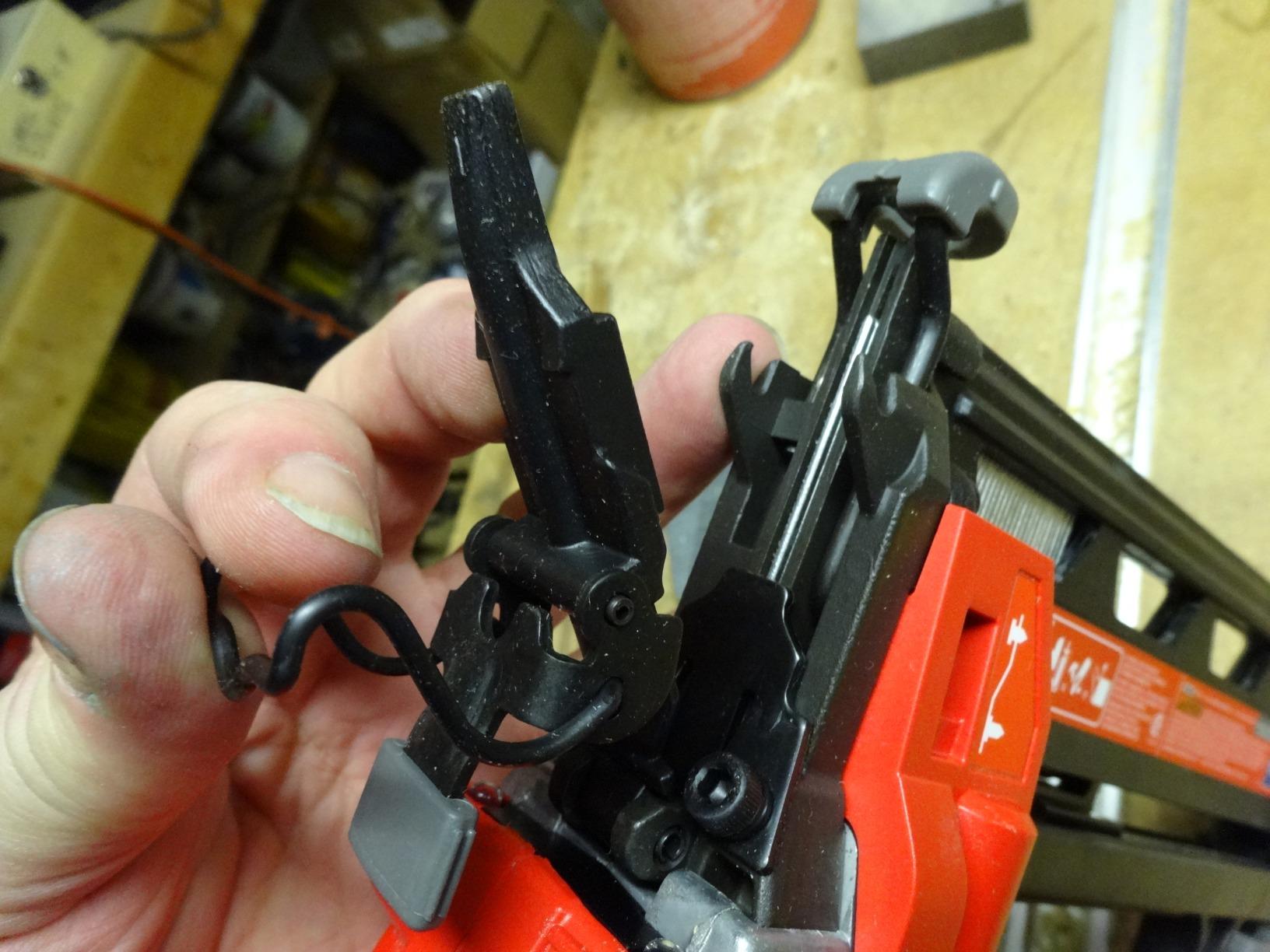
Weight is the issue. At 9.1 pounds it is the heaviest nailer in this roundup, and owners describe the body as bulky, which together make it a poor overhead tool on a long crown run. The bottom-loading magazine with its slide lever is also awkward to refill in position.
There is a slight lag between strikes compared with a pneumatic driver, so it does not feel as responsive when you are bump nailing a long board. It is a straight magazine, which makes corners tighter than an angled model.
What this nailer is best used for
Interior stair treads, thick hardwood trim and jobs where you want nails in the box on day one. The included 2-1/2 in nails cover hardwood work immediately.
Where it falls short against the field
At 9.1 pounds it is the wrong weight for overhead trim and all-day belt work, and the straight magazine limits you in tight corners. The DEWALT DCN660B is lighter and more maneuverable at the same gauge.
Cordless vs Pneumatic Nailers: When to Use Which
Most full-time trim carpenters do not switch, and the forums are clear about why. The honest answer is that a pneumatic setup is still better for continuous belt work, and cordless wins in a specific set of situations that come up constantly.
Reach for cordless when you are doing punch-list items, small jobs, stairs where a compressor is impractical, shop jigs and temporary assembly, or working on a site with no power. These are the jobs where hauling a compressor and hose costs more time than the nailing does. Every tool on this list also removes the noise of a compressor running inside an occupied house.
Stay with pneumatic when you are hanging trim for a full day straight. Air tools are lighter per shot, they have no battery plateau, and the consistency of depth across hundreds of nails in hardwood is hard to argue with. Forum trim carpenters generally describe keeping both, which is the same conclusion we reached.
Buying a cordless nailer does not mean getting rid of the air compressor. It means you stop carrying it for half the work.
How to Choose a Cordless Trim Nailer
Start with the battery platform you already own
Platform first, gauge second, weight third. That is the order trim carpenters use in practice, and it is the fastest way to narrow ten tools to two. Most nailers on this list are sold as bare tools, and the kits that include a battery are the exception rather than the rule. A 20V MAX pack, an 18V LXT pack and an 18V pack are three separate systems that do not interchange, and starting outside your platform is the most expensive mistake in this category.
Pick the gauge from your thinnest trim to your thickest
Do not buy a 15 gauge nailer because it holds best. Buy the lightest gauge that covers your heaviest job. An 18 gauge brad handles the large majority of residential trim, and you can step up to 16 or 15 later for hardwood and jambs rather than carrying a bigger hole on every baseboard.
Compare weight on the belt, not in the hand
Weights on this list run from 4.45 pounds to 9.1 pounds, and that spread is felt over a full day rather than in the first five minutes. For overhead crown work, anything under about 6 pounds is the range most trim carpenters are happy carrying. The published weight on the DEWALT DCN660B listing is wrong, so check dimensions and reviews rather than trusting the spec.
Look at the nose and the magazine geometry
A micro nose or a low center height gives you a sight line to the nail head, and a low center height is what lets you work inside a cabinet or a return. Inline and angled magazines are more useful than they sound, because they allow the tool to be held in more than one orientation in a corner. On the 15 and 16 gauge tools, an angled magazine is the standard for crown and casing.
Understand the drive technology before you buy
There are four ways a cordless nailer makes driving force, and they differ more in maintenance than in performance. A mechanical spring drive, as on the Metabo HPT, is simple and has no consumable. A nitrogen air spring, as on the Milwaukee, needs no gas but can need servicing after years of use and loses performance in cold weather. A motor-compressed air cylinder and a fuel cell each store energy that has to be replenished or refilled, and a fuel cell adds a consumable cost and an exhaust smell.
Check jam clearing and dry-fire protection
Tool-free jam release and an integrated stall release lever are worth real money on a job site, and every tool on this list offers at least one of the two. Low nail lockout prevents the tool from firing blanks into a finished surface, which matters on anything you can see. Sequential and contact actuation modes let you control the rate on careful work versus continuous runs.
Frequently Asked Questions
What gauge nailer is best for trim work?
An 18 gauge brad nailer is the best default for trim work, covering baseboard, door and window casing, shoe molding and quarter round. Step up to 16 gauge for thick hardwood casing and painted crown, 15 gauge for interior door jambs and maximum holding power, and 23 gauge pins for stain-grade or delicate trim where the hole size would show.
What are some good cordless nail guns for baseboards?
The DEWALT DCN680B is the strongest all-round baseboard choice at 6.2 lb with a micro nose for placement. The Metabo HPT NT1850DG is the lightest at 5.5 lb and includes no-mar nose caps for finished surfaces. The WORX WX842L is the lowest-cost option and drives 2 in brads into hardwood. The CRAFTSMAN CMCN618C1 kit is best if you want a battery and charger in the box.
Should I use a 16 or 18 gauge nailer for trim?
Use 18 gauge for trim between 1/2 and 3/4 in thick driven with 1-1/2 to 2 in nails, because it leaves a smaller hole that is easier to fill. Move to 16 gauge when you are driving into thick hardwood trim or a wall that is out of plumb and you need extra holding power. The trade is hole size against grip.
What kind of nail gun do I need to install baseboards?
An 18 gauge brad nailer is the standard tool for baseboards, driving 1-1/2 to 2 in nails into studs. Move to 16 gauge for thick hardwood or engineered baseboard where more holding power is needed. The same nailer usually covers shoe molding and quarter round on the same run, so one 18 gauge tool handles most of a baseboard job.
Is a compressor-powered or cordless nailer better for trim work?
Pneumatic is lighter and more consistent for all-day belt work and long runs in hardwood. Cordless wins for punch-list items, small jobs, stairs, shop jigs and sites with no power, and it removes compressor noise from occupied houses. Many full-time trim carpenters carry both rather than choosing one.
Which cordless nailer jams the least?
Tool-free jam release and an integrated stall release lever make the biggest difference, and every nailer in this roundup has at least one. Brushless motors with sealed or mechanical drive, such as the DEWALT DCN680B and the Metabo HPT NT1850DG, tend to feed consistently. The CRAFTSMAN CMCN616C1 also draws reports of never jamming.
The Best Cordless Nailer for Trim Work in 2026: Final Verdict
The DEWALT DCN680B is the best cordless nailer for trim work, and the reason is unglamorous: it is light, it has the clearest sight line on this list, every adjustment is tool-free, and it carries the strongest rating and review record in the group. If you already own 20V MAX packs, it is the shortest path to productive trim work.
Fill the gaps around it rather than replacing it. The DCN660B 16 gauge angled nailer covers thick hardwood casing and crown. The DCN650B 15 gauge angled nailer is for door jambs and anything that has to hold. The DCN623B 23 gauge pinner handles stain-grade and delicate trim. If weight on the belt is your problem, the Metabo HPT NT1850DG at 5.5 lb is the one that solves it, and the CRAFTSMAN and WORX kits are the sensible starting points when you need a battery and charger in the same purchase.
Keep the compressor for the days you hang trim from start to finish, and reach for the cordless tool for everything else. That is how the professionals using these tools actually work.