

There are two very different buyers searching for the best belt sanders for wood floors, and they need different machines. A homeowner with one 200 square foot room wants a handheld that fits in a closet and strips old varnish in an afternoon. A contractor sanding a whole house stands upright on a wide-belt drum machine that covers a third of the room in one pass. The two are not comparable on paper, so this guide separates them deliberately.
What ties them together is a simple truth that most roundups leave out: a belt sander never finishes a floor on its own. It strips the field fast, but it cannot reach a wall, it leaves a visible edge line, and it needs an edger and a finishing sander behind it. Every pick below is judged on the only criteria that matter indoors, which are flatness, how close the platen gets to a wall, gouge risk, dust volume and how long you can kneel on a hard floor.
Before any machine touches your boards, confirm what you have. Lift a threshold or a baseboard shoe and look at the board edge. A solid board shows layers of grain all the way through; engineered flooring shows a thin veneer over a thin backing layer, often with a paper or fibreboard core. If the wear layer is thin, one aggressive pass with a wide belt can punch through it permanently. If you are not sure, measure the board width before you start, because wide boards over about 3.25 inches are almost always solid.
Table of Contents
Top 3 Best Belt Sanders for Wood Floors in 2026

Makita 9403 4 x 24 Belt Sander
- 4 inch belt at 1640 ft per min
- 11 amp motor
- 84 dB operation
- flush-to-wall nose and side
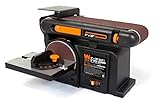
WEN 6502T Benchtop Belt and Disc Sander
- 4 x 36 inch belt plus 6 inch disc
- cast iron base
- belt tilts 0 to 90 degrees

SKIL 6 Amp 3 x 18 Belt Sander
- Flush edge design sands to the wall
- auto belt tracking
- 5.5 pounds
- vacuum ready
Belt Sanders for Wood Floors Compared in 2026
| Product | Specifications | Action |
|---|---|---|
| Makita 9403 4 x 24 Belt Sander |
|
Check Latest Price |
| WEN 6502T Benchtop Belt and Disc Sander |
|
Check Latest Price |
| SKIL 6 Amp 3 x 18 Belt Sander |
|
Check Latest Price |
 WEN 6321 7 Amp 3 x 21 Belt Sander WEN 6321 7 Amp 3 x 21 Belt Sander |
|
Check Latest Price |
 CRAFTSMAN CMEW213 Belt Sander CRAFTSMAN CMEW213 Belt Sander |
|
Check Latest Price |
 DEWALT 20V MAX Belt Sander DEWALT 20V MAX Belt Sander |
|
Check Latest Price |
 Jellas 7 Amp 3 x 21 Belt Sander Jellas 7 Amp 3 x 21 Belt Sander |
|
Check Latest Price |
 Metabo HPT SB8V2 Belt Sander Metabo HPT SB8V2 Belt Sander |
|
Check Latest Price |
 Woodskil 4 x 36 Belt Disc Combo Woodskil 4 x 36 Belt Disc Combo |
|
Check Latest Price |
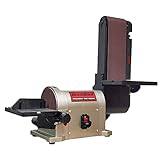 BUCKTOOL 4 x 36 Belt Disc Sander BUCKTOOL 4 x 36 Belt Disc Sander |
|
Check Latest Price |
Can I use a belt sander on hardwood floors?
Yes, but slowly, and never alone. A belt sander removes decades of finish across the open field of a floor far faster than an orbital or palm machine, but the platen stops about an eighth of an inch short of a wall, so you will still need an edger and a finishing sander to blend the edge. Confirm the floor is solid wood before you start.
That last point is where most DIY jobs go wrong. Engineered flooring has a thin veneer that a wide belt can cut through in a single pass, and the repair is not a weekend project. Spend five minutes checking before you spend a weekend sanding.
1. Makita 9403 4 x 24 Belt Sander – Best Belt Sander for Wood Floors Overall
Makita 9403 4″ x 24″ Belt Sander, Teal, Corded Electric
4 inch belt
1640 ft per min
11 amp corded
84 dB
13 pounds
Pros
- Highest rated in this group at 4.7 stars
- 11 amp motor and 1640 ft per min belt speed
- Tracks accurately with and against the grain
- Quiet at 84 dB for indoor work
- Sands flush with the nose and side
Cons
- 13 pounds is heavy on vertical surfaces
- Lock-on trigger with high power moves fast if you are not braced
- Plastic swivel dust nozzle can crack
Best for: anyone sanding a real floor field who wants the flattest result with the least noise.
Of every machine in this guide, the Makita 9403 is the one built for the actual floor. The 4 inch belt is wide enough that a 3.25 inch hardwood board is covered in a single pass, which is the whole game on a plank floor. At 1,640 feet per minute with an 11 amp motor, it strips cured varnish and old wax without the belt bogging down.
Owners report that the belt tracks accurately and holds its line both with and against the grain, needing almost no adjustment mid-pass. That matters more on a floor than in a shop, because a wandering belt on a long run gouges a strip you cannot sand out without dropping a grit. Several long-term owners also say it is the only belt sander they have owned that did not rip belts.
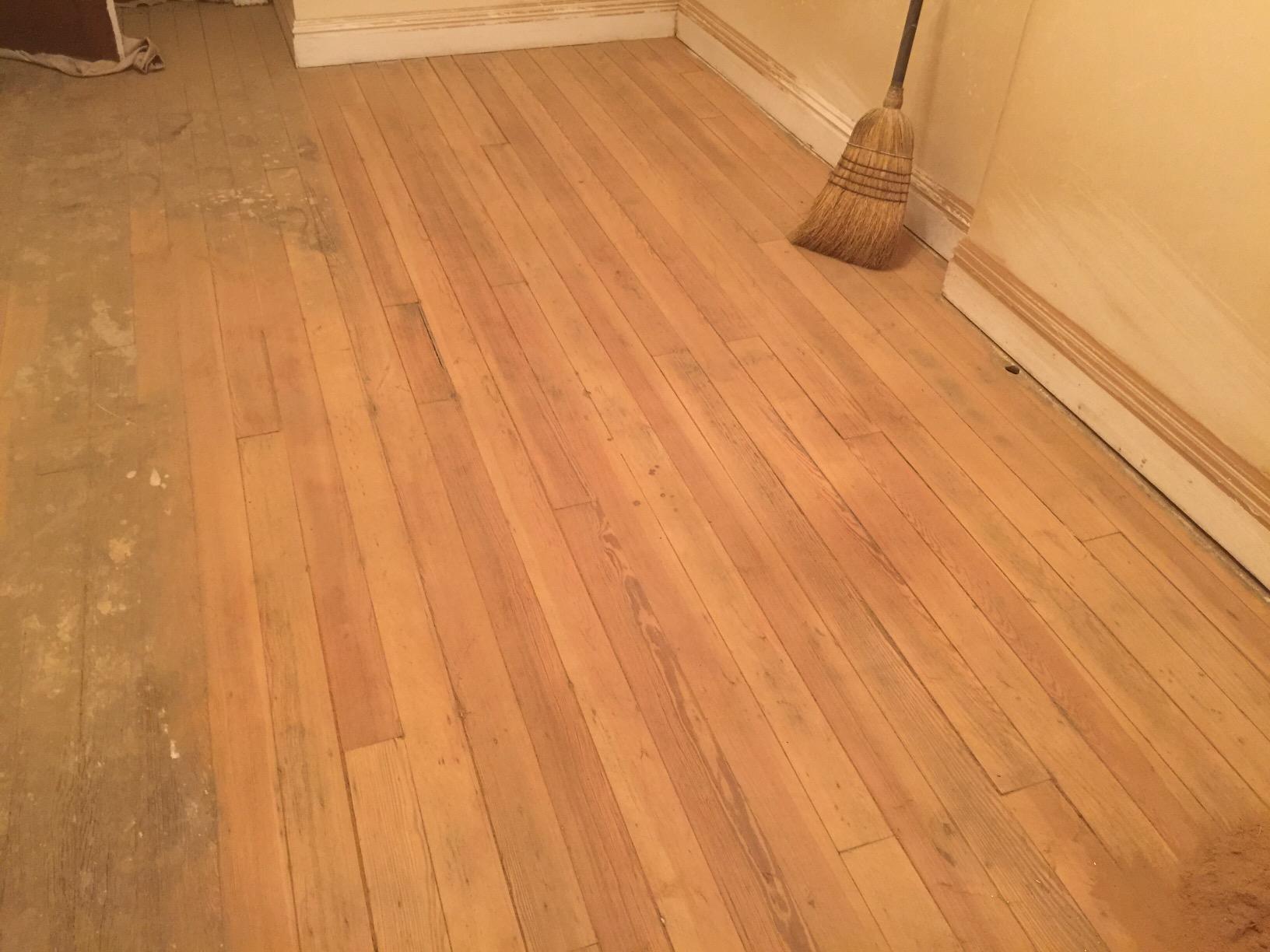
Two numbers make this the indoor machine to beat. The first is 84 dB, which is quiet for an 11 amp belt sander and matters when you are kneeling between passes in a closed house. The second is the labyrinth-sealed motor and bearings, a dust-exclusion design that is why the machine holds up on dirty floor work where cheaper machines clog and seize.
The 13 pound weight is the honest drawback. It is heavy for a vertical surface or a stair riser, and hot exhaust near the front handle is uncomfortable for long left-handed sessions. The service fasteners are also M4 Phillips heads, which strip more easily than Torx once the machine has been in a dusty room for years.
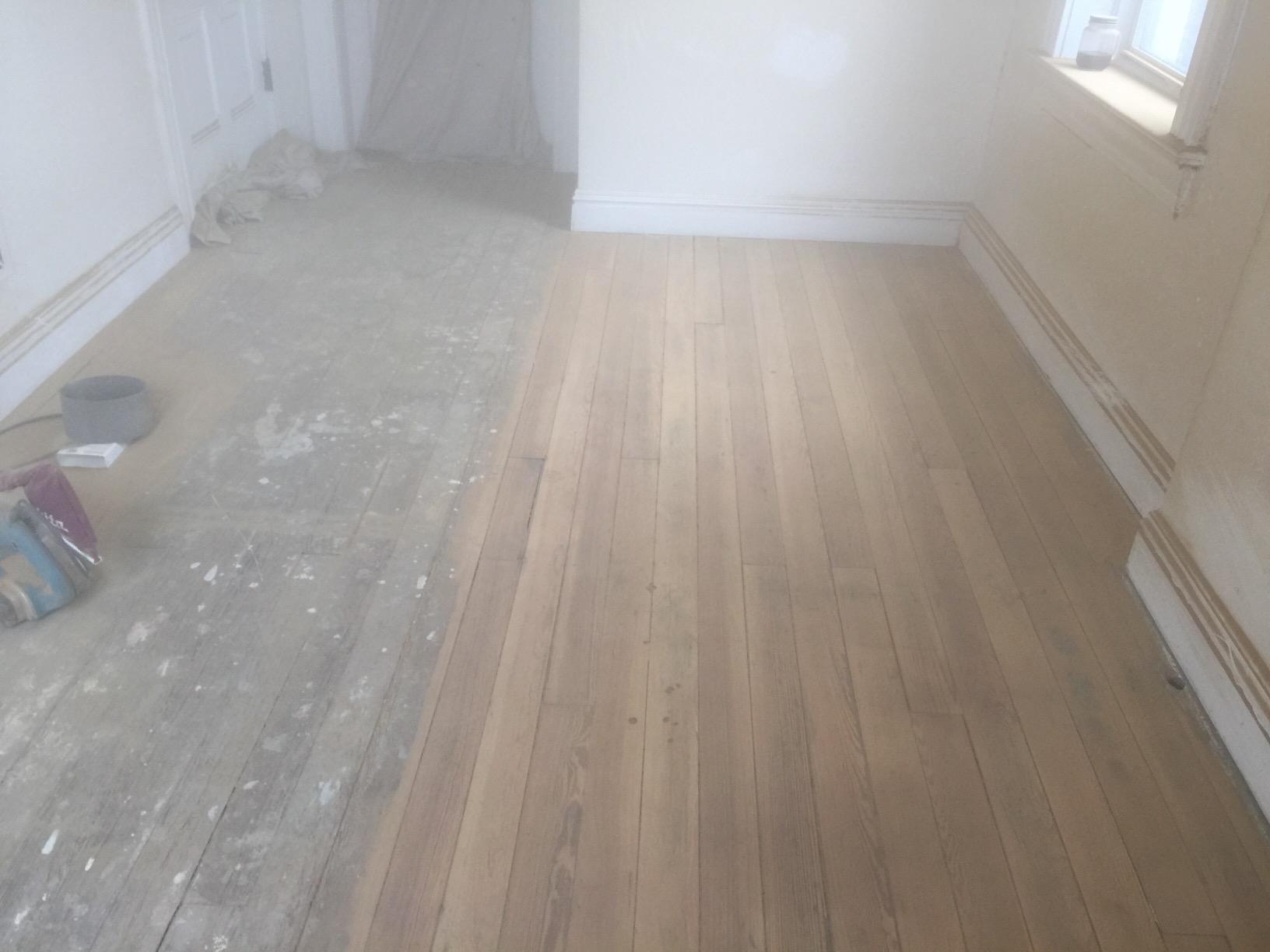
Why it wins on flatness
The platen is the reason floors come out level, and the 9403 has a notably stiff, rigid platen for a handheld. You mostly guide this machine rather than press it down, which is the correct technique on a floor. Pressing a belt sander into a cupped board cuts a hollow that you will find only after the stain goes down.
Where it will let you down
If your floor is soft pine, or you are sanding a deck with a lot of knots, a wide 4 inch belt at that speed can burn through faster than you can react. Reviewers report the machine can move quickly if the lock-on trigger is engaged and you are not braced against it. Take passes with the grain, keep moving, and lift at the end of every run.
2. WEN 6502T Benchtop Belt and Disc Sander – Best Wide Belt for Board Work
WEN Benchtop Belt and Disc Sander with 4 x 36 in. Belt, 6 in. Disc and Cast Iron Base (6502T)
4 x 36 inch belt
6 inch disc
4.3 amps
3600 rpm
cast iron base
Pros
- 4 x 36 inch belt covers far more area per pass
- Cast iron base stops the machine walking
- Belt tilts from 0 to 90 degrees
- Tool-free tension release for grit changes
- Quiet relative to similar combos
Cons
- Fence sits high and limits workpiece length
- Disc table has a single adjustment screw
- Dust port is shared between belt and disc
Best for: taking individual boards off a floor, and for a shop that wants one machine to do flat, angled and vertical work.
The 6502T is not a floor machine, and pretending otherwise would be the wrong call. It is a benchtop machine with a 4 x 36 inch belt, which is nearly three times the coverage width of a handheld, and that width is exactly what you want when you are pulling up boards one at a time or flattening a glued panel.
Because the base is cast iron and weighs far more than a handheld, it stays put. A walking sander is the number one reason wide-belt sanding produces ripples, and this one does not move. The belt tilts from 0 to 90 degrees, so the same machine handles a flat board, an angled edge and a vertical face without a second tool.
The tool-free tension release lever makes grit changes fast, which matters more than it sounds when you are stepping through 36, 60 and 100 grit. Nothing to unscrew, nothing to misalign. Several owners note the chassis is shared across several brands with different trim, and treat it as the value option rather than a premium one, which is fair.
Its limits are real. The fence sits higher on the bed than ideal, so long boards run out of support before the end. The disc table uses a single mount and angle screw and drifts out of alignment, and the dust port is shared between the belt and disc, so extraction weakens in flatbed use. If dust control indoors is your top priority, run a shop vacuum and accept the extra hose weight.
Where it beats every handheld here
On a 4 x 36 inch belt, a 100 square foot patch takes roughly a fifth of the passes it would on a 3 x 21 machine. For someone restoring a floor by lifting damaged boards, or for a woodworker who needs flatness on a panel, that pass-count difference is the whole purchase argument. It is also far less tiring because you never kneel.
Why it is not your floor machine
The 4.3 amp motor does not have the material removal rate to strip a floor in one pass, and a 36 inch belt is wider than most board runs, so you end up pivoting constantly. Several reviewers also report bearing noise developing over time that needs lubrication and cleaning. Use it on boards and panels, and let a handheld or a rented drum handle the floor field.
3. SKIL 6 Amp 3 x 18 Belt Sander – Best Belt Sander for Floor Edges
SKIL 6 Amp 3″x18″ Belt Sander with Pressure Control – 7510-01
3 x 18 inch belt
6 amps
5.5 pounds
auto belt tracking
vacuum ready
Pros
- Flush edge design sands right to the wall
- Auto belt tracking keeps the belt centred
- Lightest machine here at 5.5 pounds for long passes
- Fits standard 1-1/4 inch vacuum hoses
- Micro-filtration catches fine dust
Cons
- Dust canister fills quickly on heavy work
- Pressure warning triggers easily and cutting continues
- Canister can crack if pulled at an angle
- Runs warm under sustained load
Best for: the perimeter of a room, the last two inches against baseboard, and anyone who cannot kneel for hours.
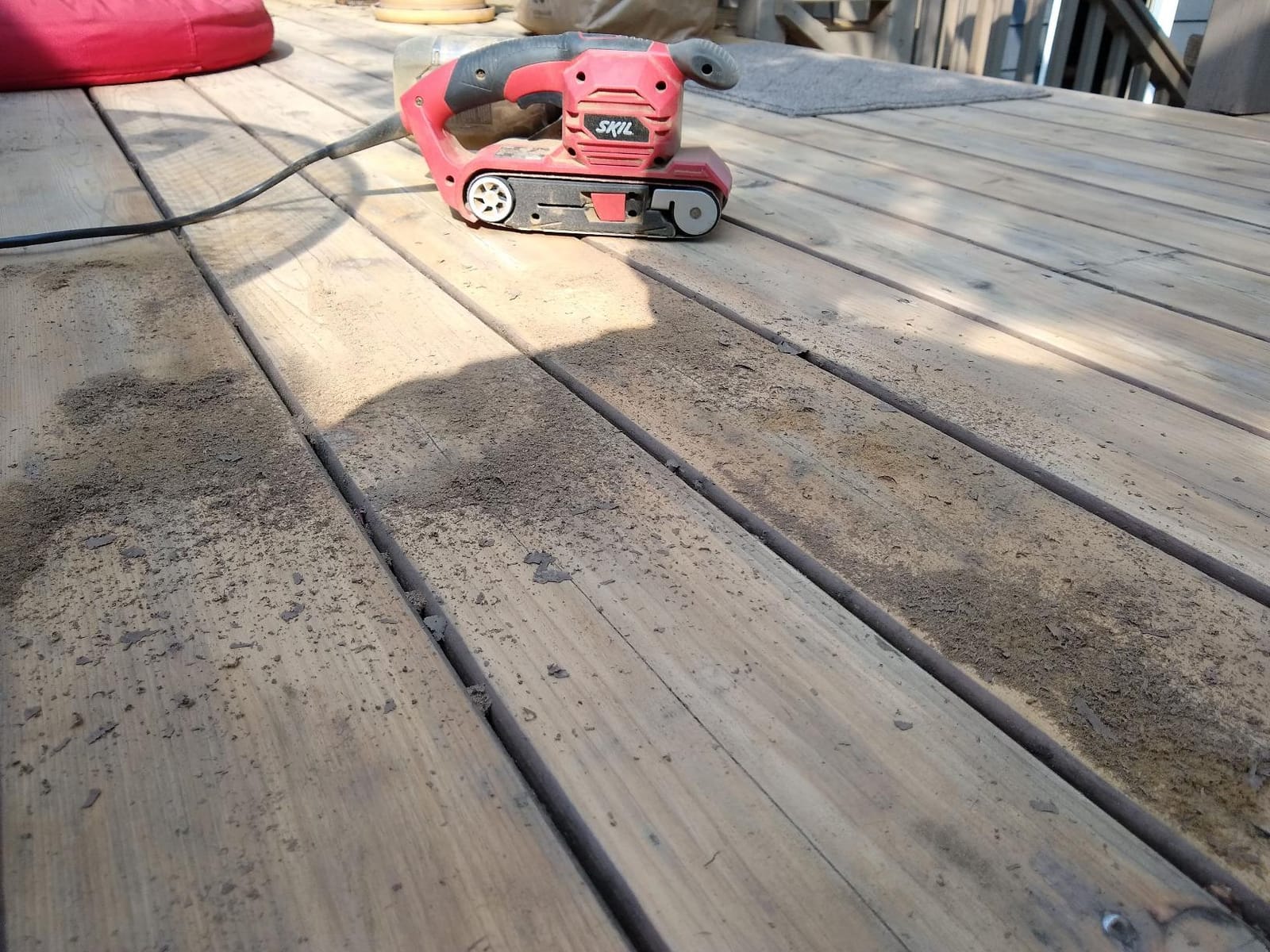
The 3 x 18 format looks like a compromise on paper, and in the field of a floor it is. In a perimeter role it wins, because the flush edge design is built to sand right up to an adjoining surface. That is precisely the job a 4 x 24 machine cannot do well, and precisely the job that decides whether your finished floor looks professional.
At 5.5 pounds it is the lightest machine in this guide, and reviewers consistently praise how it handles baseboard scribing, stair work and deck boards. Auto belt tracking keeps the belt centred at different angles, which on a vertical or angled pass is the difference between a smooth surface and a belt that walks off the roller and folds.
Dust is where the compromises show. The micro-filtration canister catches most fine dust on furniture and trim work, but it fills quickly on a floor job, and many owners switch to a shop vacuum through the standard 1-1/4 inch hose fitting. The pressure control warning also fires easily, and the sander keeps cutting regardless, so treat the light as advice rather than a limiter.
Reviewers also note the motor runs warm under sustained load, so give it cooling breaks during a long edging session. This is a handyman and furniture-maker class machine, not a whole-house floor tool. Used as the edge partner to a rented drum machine, though, it is close to ideal.
Why the narrow belt helps at a wall
A narrower belt is not always a weakness. Against a baseboard, the nose reaches further into the corner than a wider machine will, and the lighter weight means less arm fatigue across fifty or sixty feet of perimeter. For edges and corners this is the machine we would reach for first.
Where it is the wrong choice
On an open floor field a 3 x 18 belt means many more passes, and a 6 amp motor has less reserve when the finish is cured varnish rather than bare wood. Multiple reviewers describe it as a stair, deck and small-project tool. If your floor is a full room, budget the time or buy a wider machine.
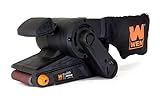
4. WEN 6321 7 Amp 3 x 21 Belt Sander – Best Budget 3 x 21 Belt Sander
WEN 6321 7-Amp 3 in. x 21 in. Corded Belt Sander with Dust Bag , Black
3 x 21 inch belt
7 amps
over 13 ft per second
6.2 pounds
two year warranty
Pros
- 7 amp motor drives the belt over 13 ft per second
- Only 6.2 pounds for long passes
- Lock-in trigger allows continuous sanding
- Detachable dust bag for clean-up
- Two year warranty
Cons
- Dust bag is small and no substitute for a shop vacuum
- 3 x 21 belt is narrower than 4 x 24 models
- Bare tool package
- Entry level build quality
Best for: a first floor job, a tight budget, and anyone who wants a proven 3 x 21 format without paying for a premium name.
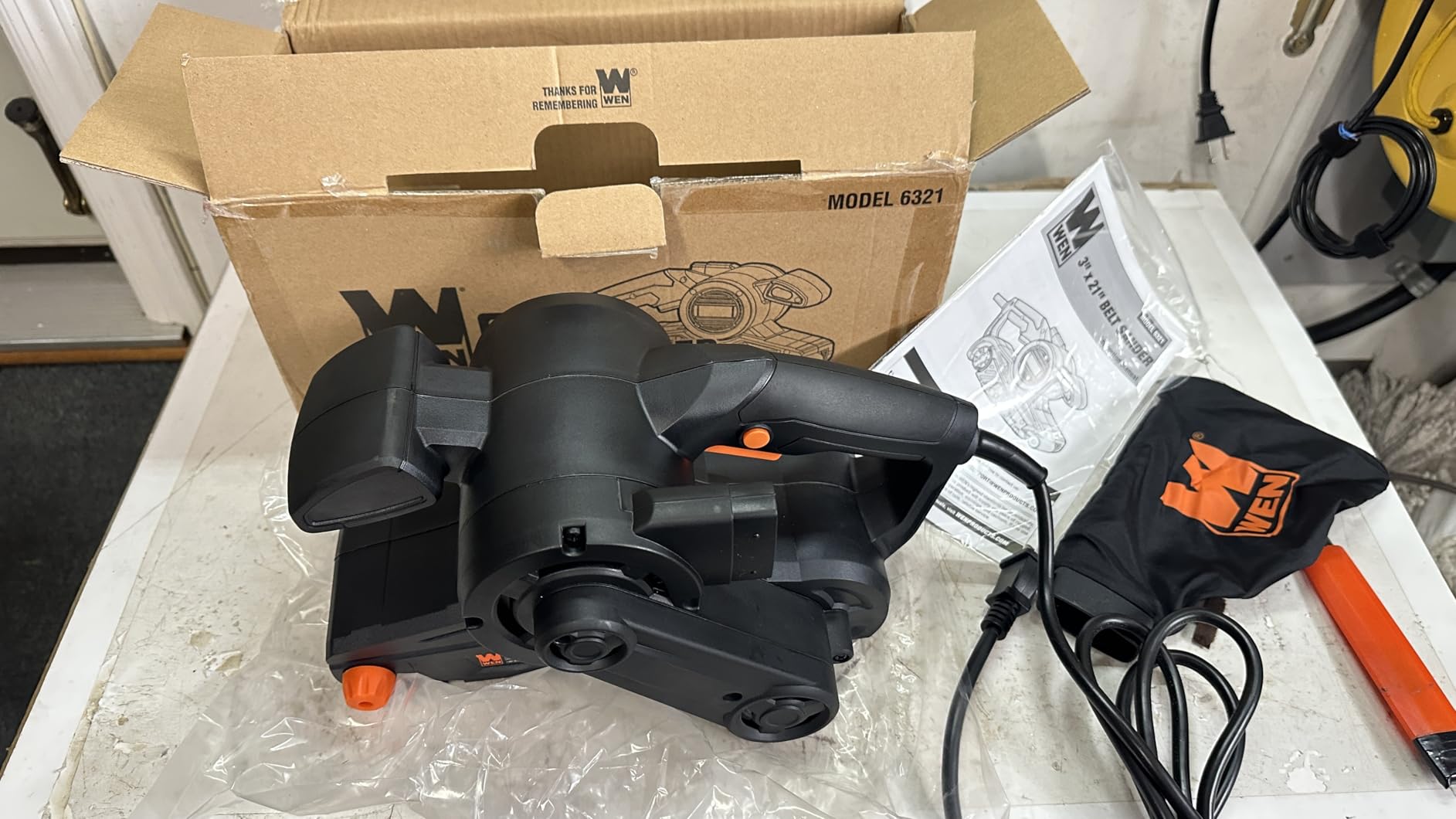
The 3 x 21 is the format you will see most often in shops and on job sites, and the 6321 is a plain example of it done without frills. A 7 amp motor driving the belt past 13 feet per second gives real stock removal for the money, and at 6.2 pounds it is light enough that a whole room of edging passes stays manageable.
The lock-in trigger is the feature owners mention most. On a floor you are making long overlapping runs, and holding a trigger down for forty minutes is exactly how hand and forearm injuries happen on this kind of job. Set it once, keep both hands on the machine, and move steadily.

Reviewers describe the trade-offs plainly. The dust bag is small, and on a floor job most owners run a shop vacuum or accept a serious cleanup afterwards. The 3 x 21 belt is narrower than the 4 x 24 machines, so a 3.25 inch board takes two passes rather than one, and that is a real time cost on a large area.
It is also a bare tool package, so accessories are extra, and the build quality is entry level compared with the Makita or DEWALT. What you get is a two year warranty and a nationwide service network, which is more support than most tools in this class offer.
How it compares to the 3 x 18
The wider belt means fewer passes on the field, and the 7 amp motor has more reserve when you hit old finish. If your floor is solid oak or maple with varnish on it, take the 3 x 21. If your project is mostly perimeter and trim work with a shop vacuum already running, the lighter 3 x 18 is the better tool.
Where it falls short of the pick above
Compared with the Makita 9403, the gap is not power, it is refinement. No labyrinth-sealed motor, a smaller dust system, and a narrower platen, so more passes and more opportunity to cross a pass line. For a first attempt on a single room, that difference is affordable.
5. CRAFTSMAN CMEW213 Belt Sander – Best Angled Nose for Tight Corners
CRAFTSMAN Electric 7 Amp Belt Sander, 3-in. x 21-in., Corded (CMEW213)
3 x 21 inch belt
7 amps
800 fpm
6.6 pounds
angled belt design
Pros
- Angled belt design sands closer to adjoining surfaces
- Tool-free belt release for quick grit changes
- 7 amp motor with 800 fpm belt speed
- Three position over-moulded handle
- Front knob corrects belt tracking
Cons
- Dust bag cord captures little dust
- Belt tracking can drift and chew the housing
- Dust port will not take a standard hose
- Front roller reported to break
Best for: corners, stair stringers, and anywhere the machine has to turn tight on a floor.
The angled belt is the reason to pick this machine. It lets the front of the sander swing closer to an adjoining surface than a square-nosed design, and on a floor that means less of the last inch along the wall is left for the edger to handle alone. On stairs and against a projecting wall, that angle earns its keep.
The 7 amp motor at 800 feet per minute is adequate for varnish and pet stains on a small area, and the tool-free belt release makes stepping grits quick. A front adjustment knob lets you correct side-to-side tracking rather than sending the machine back to the bench.
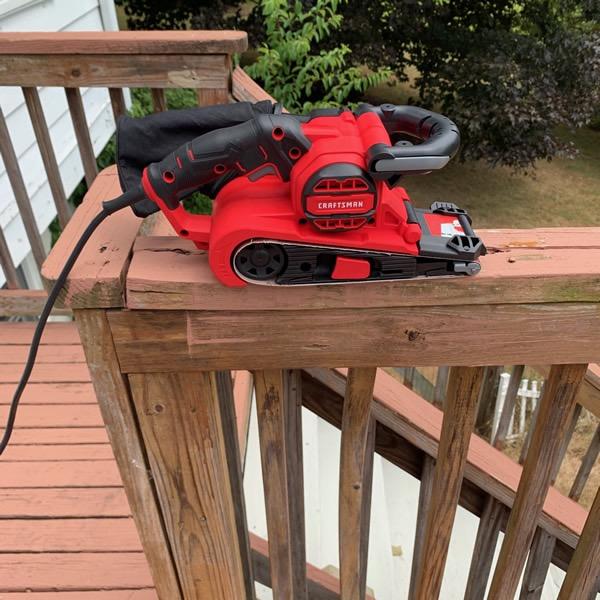
The consistent complaint in the reviews is dust. The on-board bag attaches by a short cord and captures very little, so the work area stays dusty, which is a serious problem in an occupied house. The rectangular port also will not accept a standard vacuum hose without an adapter, and you should buy that adapter before you start rather than after the first room is covered in fines.
Second, belt tracking can drift, and a misaligned belt can chew into the plastic housing, which is a repair rather than an adjustment. Several owners also report the small black plastic front roller breaking. One detailed review specifically advises against this machine for floor sanding, and while it is a capable tool, that warning is fair for a whole-floor job.
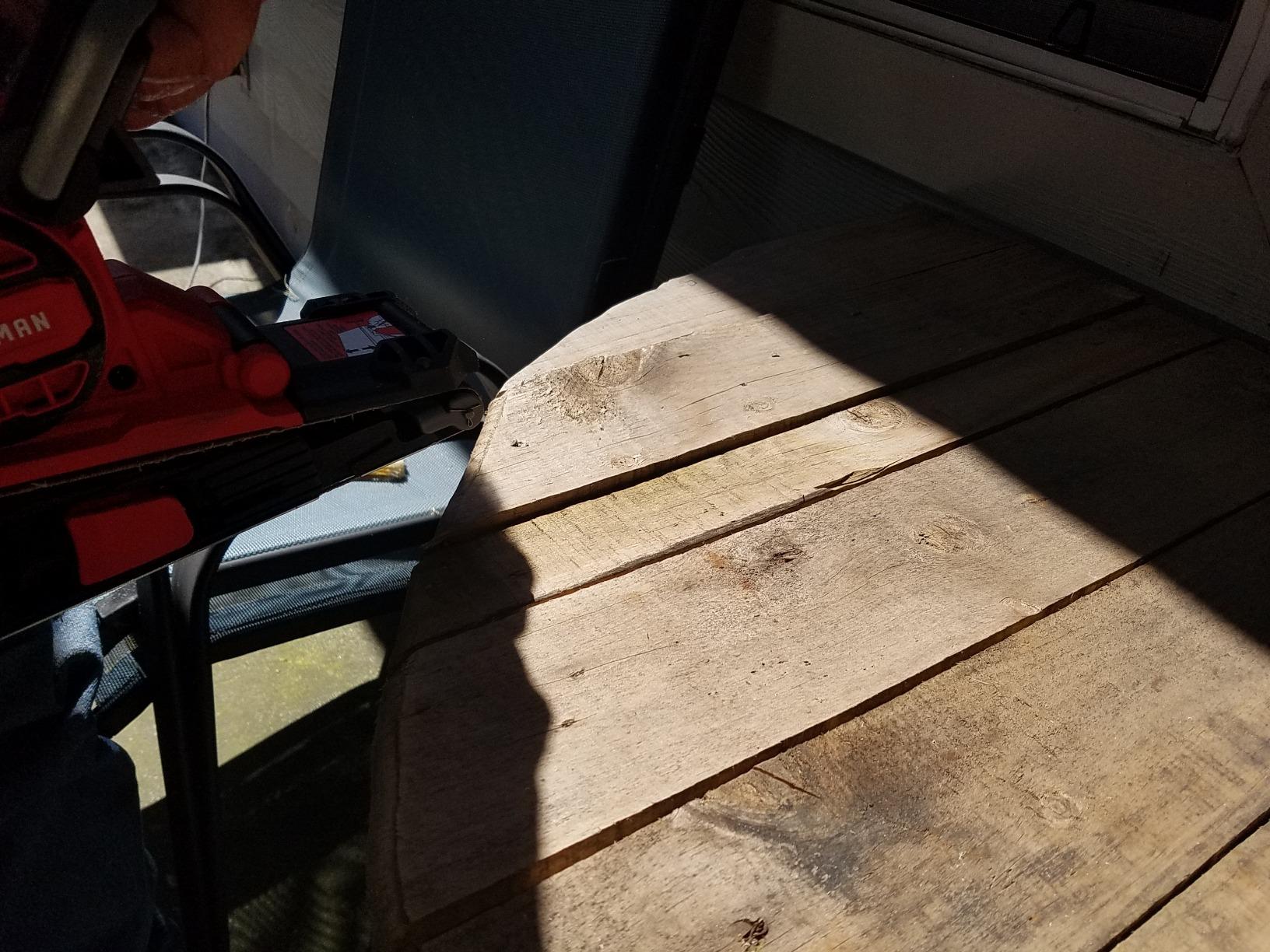
Angle versus the flush designs
The SKIL gets closer to a wall because its whole nose is flush, while the CMEW213 gets close by angling the belt path toward the surface. In practice the angled approach needs more steering, but it tolerates a rougher approach and forgives a less perfect line, which is why we like it around corners and stair geometry.
Where we would skip it
Skip it for a large open field. The 3 x 21 belt, the modest 800 fpm speed and the small dust system all work against you on floor-scale work. This is a detail and perimeter machine, and the moment you ask it to cover a whole room, the build quality starts to show.
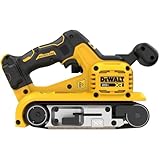
6. DEWALT 20V MAX Belt Sander – Best Cordless Belt Sander for Floor Edges
DEWALT 20V MAX* Belt Sander, Cordless, Brushless, Tool Only (DCW220B)
20 volt brushless
25 speed settings
quick-release belts
tool only
about 9.3 pounds
Pros
- Brushless motor handles corded class work
- No cord drag on stairs and floor edges
- 25 speed settings control burn-through
- Quick-release tool-free belt changes
- Up to 95 percent dust capture with an extractor
Cons
- Consumes batteries fast so spares are required
- About 9.3 pounds feels heavy at odd angles
- Runs away if the trigger is pulled without bracing
- Battery and charger sold separately
Best for: stairs, scribing, and any edge work where a cord across a doorway is a trip hazard.
On a floor job the cord is a genuine liability. It catches on trim, it drags across wet finish, and it limits where you can kneel. The DEWALT 20V MAX removes that problem entirely, and the brushless motor delivers enough power to complete work most people reserve for corded machines.
The 25 speed settings matter more than they first appear. Slower speeds on soft or figured wood let you set the material removal rate to match the board, and on a floor that is the difference between flattening a high spot and cutting a hollow. Owners also praise the quick-release tool-free belt changes and the overmoulded auxiliary handle for two-handed control.
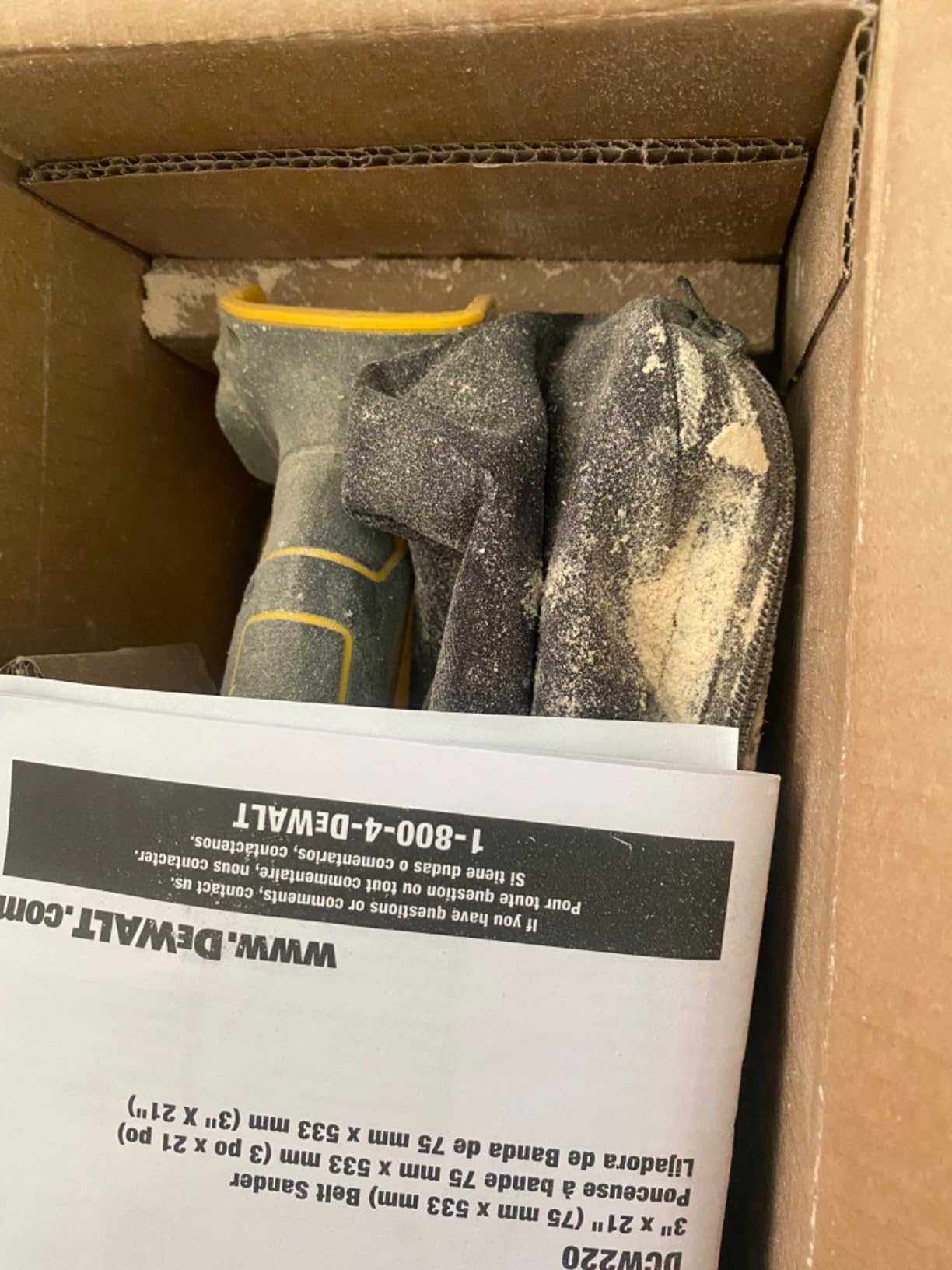
Runtime is the honest limitation, and reviewers are consistent about it. Multiple owners recommend 6 Ah packs or carrying spares because the tool consumes batteries quickly, especially on coarse grit. Forum users sanding large deck surfaces report the battery dying within hours, and the same applies to a long floor run at aggressive grit.
Weight is the other one. At about 9.3 pounds it feels heavy for a battery machine, particularly on a vertical face or at an angle. One reviewer also reported overheating and an intermittent failure to start on a 5 Ah pack. Plan on two or more batteries, and treat the machine as a perimeter and detail tool rather than a field tool.
Dust control and wireless control
Up to 95 percent collection efficiency with a DEWALT extractor is the best dust number in this group, and indoors that is worth more than raw removal speed. The wireless tool control can pair with compatible vacuums so the extractor starts and stops with the trigger, which removes the last excuse to work without suction.
Where it is the wrong buy
If your floor is a full room and you do not already own 20V MAX packs, the battery maths turns this from a smart purchase into an expensive one. You are buying a platform as much as a sander. If you are already in that ecosystem it is a strong choice; if you are not, the corded options here deliver more work per dollar.
7. Jellas 7 Amp 3 x 21 Belt Sander – Best for First-Time DIYers
Jellas 7Amp Handheld Belt Sander, 3 21 Inch with Dust Bag for Woodworking
3 x 21 inch belt
7 amps
six speed settings
120 to 400 rpm
10 foot cord
Pros
- Ten sanding belts in five grits included
- Clamps convert it to a benchtop sander
- Six setting speed control matches the task
- Adapter fits 32mm and 35mm shop vac hoses
- Lock-on button reduces trigger fatigue
Cons
- Speed dial does not hold a set speed
- Included sanding belts are thin
- Reported as large and heavy one-handed
- Basic dust bag
Best for: buying one machine to learn on without a second purchase, and for clamping down when you need a free hand.
Most first-time buyers underestimate the number of belts a floor consumes. A 200 square foot room at three grit steps can eat a dozen belts, and this one ships with ten aluminium oxide belts across 40, 60, 80, 120 and 180 grit, so you can start on the floor today instead of on a hardware store run.
The two included metal C clamps are the feature owners single out most. They let you invert the machine and clamp it to a bench, which turns a handheld into a stationary sander for a long edge, a stair tread or a final flattening pass on a glued joint. For a beginner, that is two tools in one box.
The variable speed knob is the flaw. Several reviewers say it does not hold a set speed and that the sander can accelerate unexpectedly, which on a floor is not a nuisance but a gouge. Treat the lowest setting as your working speed and keep a firm grip. The included belts are also considered thin, and many owners buy their own abrasive before starting.
Owners rate the build quality as comparable to a Porter-Cable at a much lower cost, and the 2-in-1 vacuum adapter that takes common 32mm and 35mm hoses is a genuinely useful inclusion. The 10 foot cord reaches most work areas without an extension, which is a small mercy in a room full of baseboard to trim around.
Why the included consumables matter
Arbor wear accelerates fast on a floor because finish residue and old wax load up the grit far sooner than it does on furniture. Having matching spares in the box means you can keep working instead of pausing mid-room to find the right grit, and it also teaches you which belt size and grit your machine actually wants.
Where we would upgrade instead
If you have never used a belt sander, the skill you need is control, not features. Learn on this machine with a shop vacuum, on scrap floorboard rather than the living room. Once you know how much the machine removes in a two second pass, the step up to a wider, more powerful model is easy.
8. Metabo HPT SB8V2 Belt Sander – Best Warranty in the 3 x 21 Class
Metabo HPT Belt Sander | 3 x 21 Inch | For Woodworking | Variable Speed | 9.0 Amp Motor | Soft Grip | 5-Year Warranty | SB8V2
3 x 21 inch belt
9 amp motor
variable speed dial
9.5 pounds
5 year warranty
Pros
- 9 amp 1020 watt motor for tough material removal
- Clear front cover for visibility near walls
- Dust bag mounted on one side for corner work
- Variable speed dial within reach mid-pass
- Five year professional warranty
Cons
- Lowest rating in this group at 4.1 stars
- 9.5 pounds is heavy for a 3 x 21 machine
- Bulky 12 by 12 inch footprint
- Less consistent belt tracking than the leaders
Best for: owners who want a long warranty and a powerful motor in a compact handheld format.
This is the machine that shows the most divided owner feedback in the group, and we would rather explain that than skip past it. The 12 percent one-star share is the widest spread here. People who like it point to the 9 amp, 1,020 watt motor and the five year warranty. People who do not point to tracking consistency and the weight.
The design choices are genuinely smart for corners. A clear front cover lets you see what you are doing when the machine is up against a wall or cabinet, and mounting the dust bag on one side rather than the back improves corner work and cuts airborne particles. The variable speed dial sits at the base of the handle, so you can change it without letting go.
The flush body design allows quick and even sanding, which is the behavior you want on a floor. Soft grip handles help on extended sessions. And on the durability question, a five year professional warranty is the longest in this group, which matters if you intend to own the machine for the next decade of floor projects.
Against that, 9.5 pounds is genuinely heavy for a 3 x 21 handheld, and the listed dimensions are unusually wide for a machine this size, which makes it awkward in a tight space or against a wall. Reviewers also report less consistent belt tracking and build quality than the Makita or DEWALT, and note the machine is not optimized for large-area floor work despite the motor.
What the split ratings actually mean
When a machine has a 60 percent five-star share and a 12 percent one-star share, the cause is usually a single variable. Here it is tracking: a belt that holds its line produces a great floor, and a belt that does not produces a visible strip. If you buy it, check tracking on scrap board first.
Who should skip it
If you are sanding a large floor field, skip it. The weight and the bulk work against you over hours of kneeling, and the narrower 3 x 21 belt means more passes on every board. It is a strong choice for trim, stairs, and small-area flattening work where the warranty justifies the purchase.
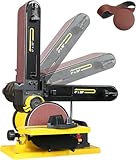
9. Woodskil 4 x 36 Belt and Disc Combo – Best for Long Boards and Shop Space
Woodskil 4.3A Belt Disc Sander Combo for Woodworking,4×36″ Belt,6″ Disc
4 x 36 inch belt
6 inch disc
3570 rpm
1732 fpm
25 pounds
Pros
- 4 x 36 inch belt covers far more area per pass
- Belt tilts 0 to 90 degrees with a 0 to 45 degree table
- 3570 rpm and 1732 fpm belt speed
- Dual dust ports for belt and disc
- Multi-wedge belt drive extends belt life
Cons
- Disc table has a single fixing screw
- Third party 4 x 36 belts may not track
- No clearly listed factory belt part numbers
- 110 volt specification only
Best for: small shops with limited bench space who need a wide belt and a disc in one footprint.
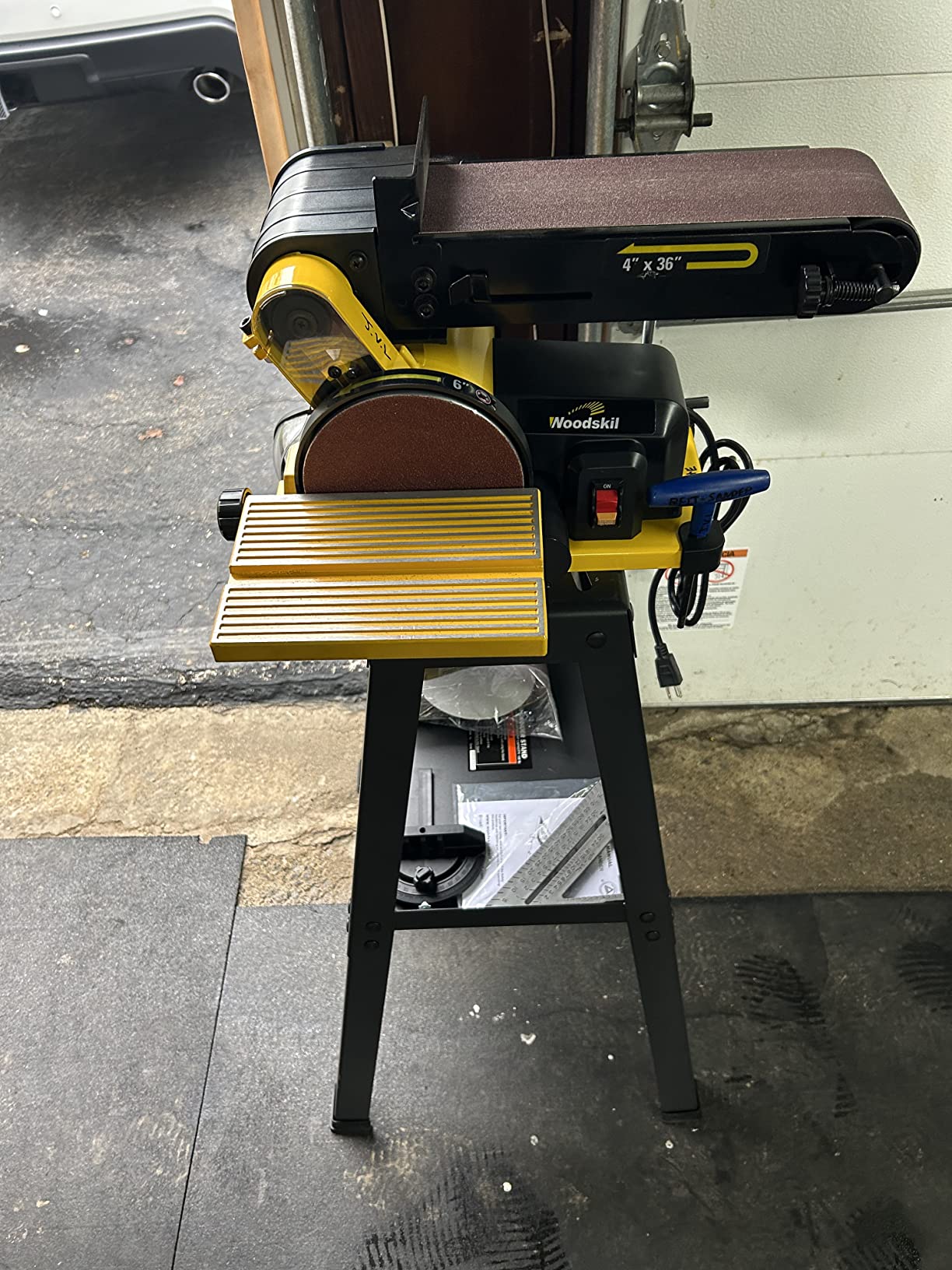
The 4 x 36 belt is one of the widest in this guide, and the 1732 fpm belt speed from a 3/4 HP motor is the highest belt speed figure any machine here produces. That combination is what makes this the fastest way to level a stack of boards or a wide panel in a compact shop.
Dual dust exhaust ports are a thoughtful detail that costs nothing: one port for the belt and one for the disc, so extraction stays strong when you are running the belt. The multi-wedge belt drive extends belt life, and the transparent guard lets you check belt condition without opening anything up.
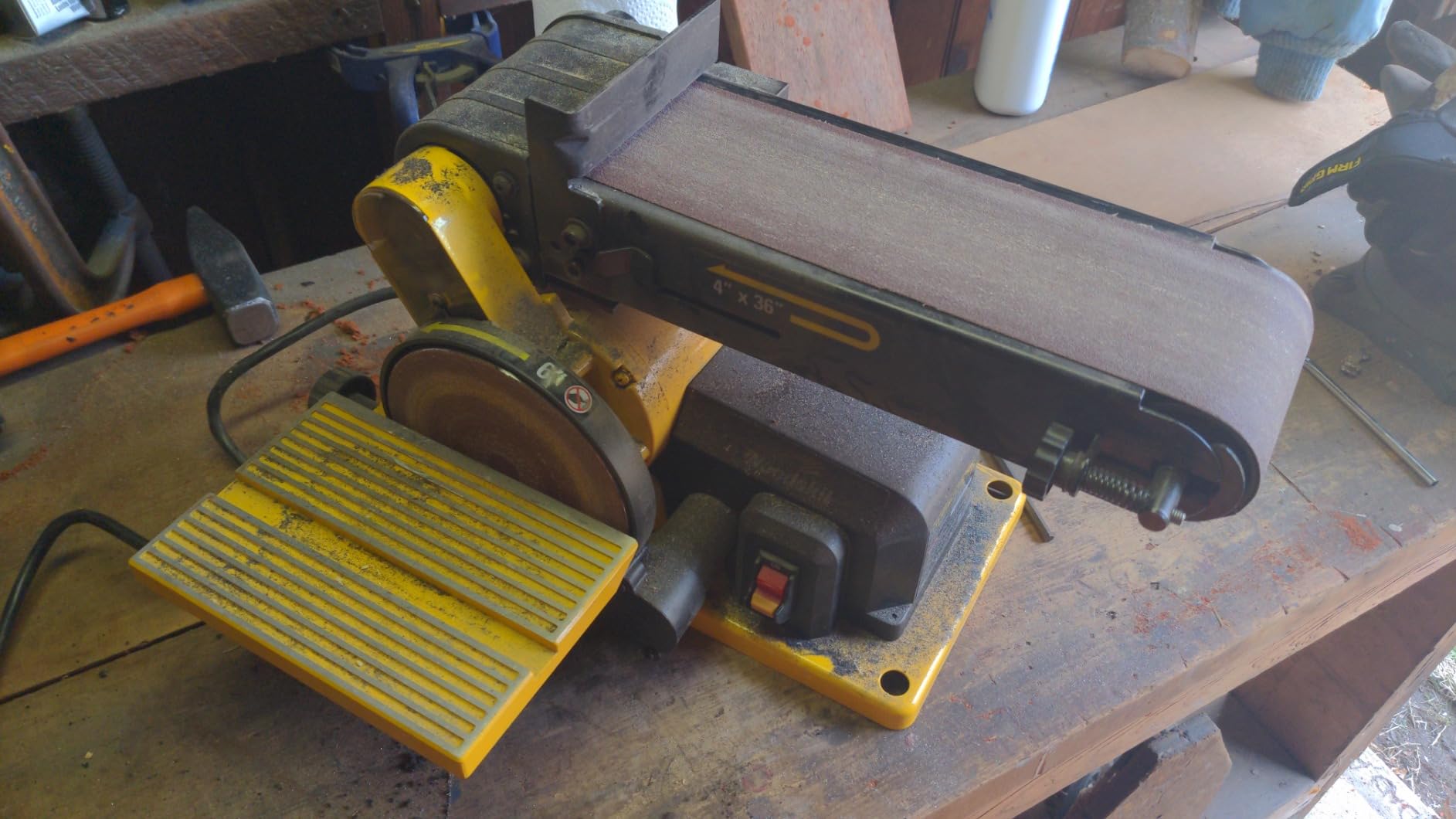
Owners who are machinists or commercial woodworkers rate it as a capable hobby and light shop machine rather than a production tool, and the value is the reason it scores well. The 0 to 90 degree belt tilt plus a 0 to 45 degree adjustable work table covers flat, angled and vertical work from one machine.
The specific complaint worth knowing: aftermarket 4 x 36 inch belts often do not track or hold tension, and the manufacturer does not clearly list factory part numbers for that size. Buy original belts or verify fit before you rely on a replacement. The disc table also uses a single fixing screw and feels less solid than it should.
Wide belt plus a disc in one machine
The 6 inch disc handles inside corners, end grain and small parts that a 4 x 36 belt physically cannot reach. For a woodworker restoring trim and boards from the same floor project, that combination removes the need for a separate disc sander entirely, and the dual dust ports keep extraction usable on both.
Where it stops short
At 25 pounds it needs two people to reposition and it will not sit on a lap. Its 110 volt-only specification limits international use, and for a floor project the fixed 36 inch belt is wider than a single board, so you pivot constantly. This is a bench machine, not a kneeling one.
10. BUCKTOOL 4 x 36 Belt Disc Sander – Best Direct Drive Design
BUCKTOOL Bench Belt Disc Sander for Woodworking,4×36″ Belt,6″ Disc,5A
4 x 36 inch belt
6 inch disc
5 amps
3200 rpm
direct drive induction motor
Pros
- Direct drive removes belt tension maintenance
- Claimed 25 percent more efficient drive system
- Quiet enclosed induction motor
- Cast aluminium tables feel solid
- Belt tilts 0 to 90 degrees with driven drum
Cons
- Motor or shaft failure takes the whole drive down
- Heaviest unit here at roughly 35 pounds
- Large bench footprint
- A Y fitting hose is not included
Best for: buyers who want the quietest wide-belt combo and do not want to maintain a drive belt.
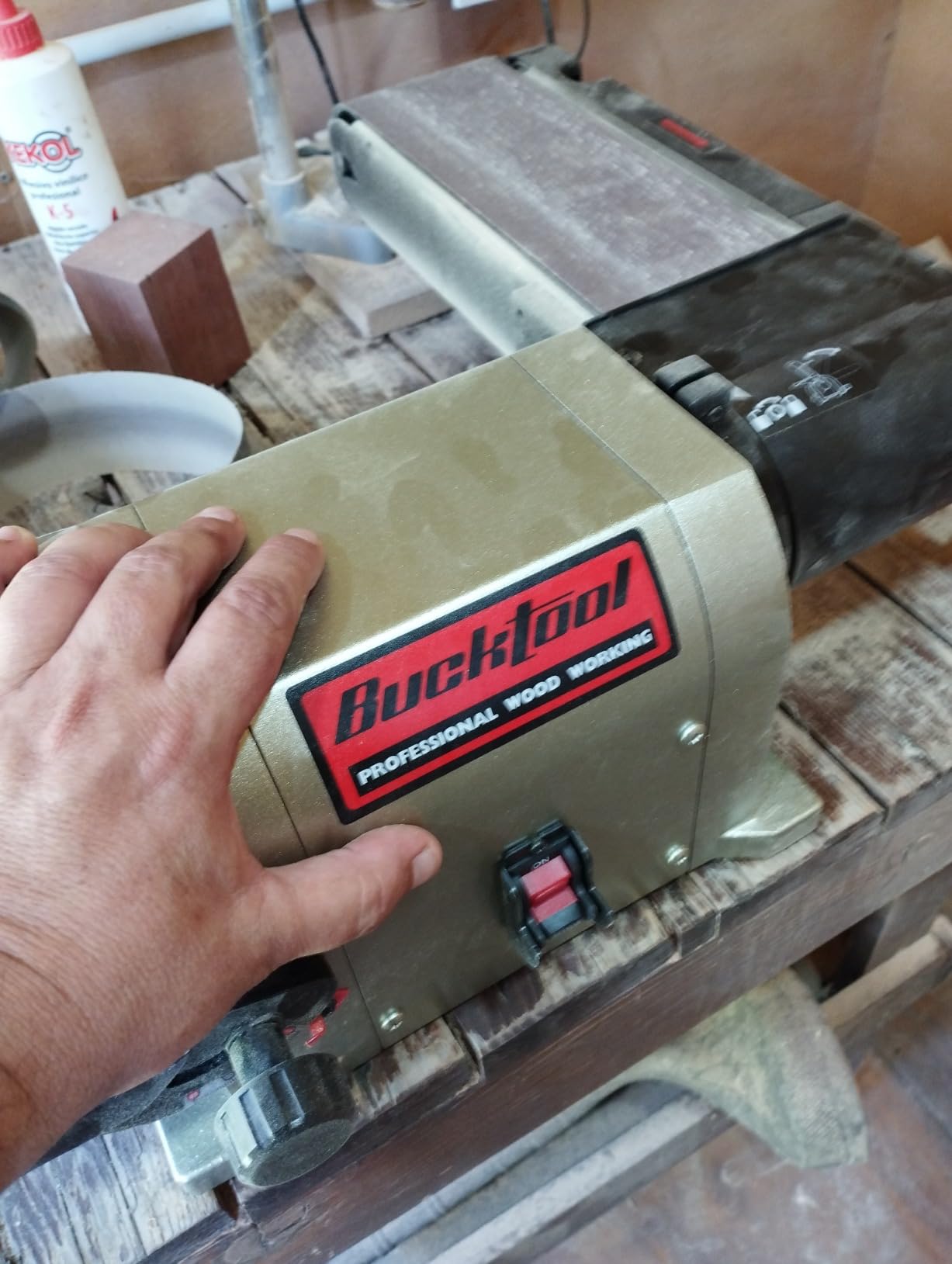
Almost every belt sander in this guide uses a rubber drive belt to transfer motor power to the sanding belt, and that drive belt is a maintenance item that stretches, slips and eventually breaks. This one drives the sanding belt directly from the motor shaft, so there is no drive belt to tension or replace, and the maker claims the direct path is around 25 percent more efficient.
Owners specifically value that architecture, and they describe the machine as quiet and powerful for its class. The fully enclosed induction motor is the reason it runs so much quieter than the other wide-belt combos here, and on a 4 x 36 inch belt that is a real difference when you are in a small shop for an afternoon.
The two cast aluminium worktables and the cast aluminium base with rubber feet feel considerably more solid than the pressed steel tables on cheaper combos, and the rubber feet dampen vibration. The belt tilts 0 to 90 degrees and the driven drum handles curved workpieces, so it covers flat, angled, vertical and shaped work.
There is a trade-off in the maintenance-free claim. With a direct drive, a motor or shaft failure takes the whole drive system down rather than being fixed by swapping a cheap belt. At roughly 35 pounds it is the heaviest machine here, the footprint is large, and a Y fitting hose is recommended for dust extraction but not included.
Why the cast aluminium tables matter
Worktable rigidity decides whether a wide belt leaves a flat surface. Pressed steel tables flex, and a flexing table under a 4 x 36 inch belt produces a surface that is flat only in one spot. Cast aluminium tables hold geometry across the whole width, which is exactly what wide-belt work demands.
Where we would look elsewhere
If you already own a wide-belt combo, the argument for switching is thin. For a first bench machine in a quiet shop, however, the direct drive and the aluminium tables are the two features that will still be working in five years, and that long-term view is worth more than a small saving elsewhere.
Belt Sander vs Drum Sander vs Orbital Sander for Wood Floors
Belts, drums and orbitals all remove finish. They differ in how much they remove, how fast, and how forgiving they are when you make a mistake. Understanding that difference is what stops a first-timer from renting the most aggressive machine available and cutting a wave into the boards.
A drum sander wraps its abrasive around a rotating cylinder and is operated standing up. It covers the most square footage per hour and removes material fastest, and it is also the least forgiving, because one hesitation in one spot leaves a hollow that only another pass at the same grit will fix. A belt floor machine uses the same endless loop as a handheld but is ridden standing and controlled by a handlebar, so it is more stable and slightly less aggressive.
An orbital or random orbital sander is the opposite trade. It removes the least material per pass, which is exactly why it is the safest machine for a first-timer, but it takes several times as long on a full floor. Reviewers on our sister site comparing sanders in detail make the same point about orbital machines: they are gentle, and gentleness costs you hours.
An edge sander is not a substitute for any of them. It has a large disc offset to one side and is designed for the perimeter, where the belt platen cannot reach. Our picks here can handle some edge work, and a flush or angled nose gets you most of the way, but a dedicated edger is faster on a full room perimeter. Many buyers also keep a random orbital sander on hand for the final blend and for the corners a disc cannot fit into.
The forum consensus on both r/HardWoodFloors and r/HomeImprovement follows one pattern: rent the drum machine for the field, buy a handheld belt sander for the edges. It is the fastest route to a good result, and it is what we would do. The exception is the very experienced operator, who can handle a rented drum machine for the whole job.
How to Sand a Wood Floor with a Belt Sander
The workflow matters more than the machine. A floor is three operations, not one: strip and level the field with the belt, take down the perimeter with an edger, then blend the two with a finishing sander. Skip the third step and the edge line tells the story the moment stain and finish go down.
Prep and verify. Confirm solid wood, nail down or pull loose boards, remove every staple and nail head, and seal the room off from the rest of the house.
Start at 35 grit to strip old varnish and paint, then move to 60 to level and 100 to smooth. Skipping a step locks deep scratches into the wood where nothing short of a full re-sand will reach them.
Belt the field with the grain, working from the far end of the room toward the door, overlapping each pass by two to three inches. Lift the machine at the end of every run rather than turning in place.
Edge the perimeter with an edger, or with a flush or angled handheld belt, working along each wall at a consistent offset so the belt marks form one clean line rather than a wandering one.
Blend the belt marks and the edge line with a finishing sander or an orbital, feathered at the transition.
Vacuum twice, once immediately and again after about 24 hours as the last of the grit settles, then stain and finish.
Change belts more often than you think you need to. A belt that has lost its bite is how a 60 grit pass quietly becomes an 80 grit pass and leaves scratch telegraphing under finish. Keep a spare of each grit on hand.
On dust control indoors, run a shop vacuum from the first pass rather than the third. A belt sander produces a surprising volume of fine dust, and once you cannot see your pencil lines you start making decisions blind. Empty the bag or canister mid-grit as well as at the end. Wear a respirator, eye protection and hearing protection, and remember that one 13 pound machine at 84 dB is quieter than most but not quiet.
How to Choose a Belt Sander for Wood Floors
Belt width is the first decision. Anything under 4 inches means two passes on a standard 3.25 inch board, which doubles your time on the field. A 4 inch belt covers a board in one pass. If you are lifting boards individually rather than sanding a whole floor, a 4 x 36 benchtop machine covers three at once and you will never kneel again.
Motor power tells you the job class. A 6 amp machine handles trim, stairs and small areas. A 9 amp or 11 amp machine has the reserve to strip cured varnish without bogging, and the reserve is what separates a smooth floor from a scratchy one. Cordless brushless machines deliver corded-class power, but check how many battery packs you already own before you commit.
Variable speed is worth paying for. Matching belt speed to material is how you avoid burning through softwood and how you control finish build-up on a second pass. A machine with a 25 step dial or a six position knob gives you that control; a single speed machine gives you one behavior on every board.
Dust collection decides whether you can work indoors. A dust bag is a cleanup tool, not a control system. If the machine takes a standard shop vacuum hose or has a swivel port, use a vacuum from the first pass. The SKIL takes a standard hose, the Jellas ships a two-size adapter, and the DEWALT reaches the highest capture figure in this group when paired with an extractor.
Wall clearance is the limit nobody advertises. On most handhelds the platen stops about an eighth of an inch short of an adjoining surface, no matter what the marketing says about the front roller. Flush-side and angled-nose designs get closer, which is why we rate them higher for edge work, but none of them is flush. Plan on an edger or on turning the machine sideways for the last inch.
Buy or rent. Renting makes sense for one floor, one project. Buying makes sense if you expect more than two floors in the next few years, or if a rented machine is not in your area, because delivery and pickup cost real time. The widely repeated advice on r/DIY and r/HomeImprovement is to rent the wide drum machine for the field and own a handheld belt sander for everything else, and it is the cheapest reliable route to a good floor.
One last piece of workshop advice. If you are also planning to do any ripping, jointing or surfacing around the same time, a dedicated wood planer handles stock preparation that a belt sander should never be asked to do.
Once the floor is done, care for it properly so you never have to sand again. Our guide to steam mops for hardwood floors covers which cleaning method is safe on a freshly finished surface.
Frequently Asked Questions
Can I use a belt sander on hardwood floors?
Yes, but slowly, and never alone. A belt sander strips old finish fast across the open field of a floor, but the platen stops about an eighth of an inch short of a wall, so you still need an edger and a finishing sander to blend the edge. Confirm the floor is solid wood, not engineered veneer, before you start.
What type of sander is best for hardwood floors?
Professionals pair a drum-belt floor machine with an edge sander and a finishing sander. DIYers usually rent the drum machine and buy a handheld belt sander for edges. Orbital machines are the gentlest and safest for a first-timer but the slowest. Whichever you use, the belt, edger and blend steps are all mandatory.
What is the best belt sander for sanding floors?
For a handheld, the Makita 9403 4 x 24 leads on flatness, tracking accuracy and a 1,640 ft per min belt speed at 84 dB. For floor edges, the SKIL 3 x 18 flush design reaches closest to a wall at only 5.5 pounds. For board work, the WEN 6502T 4 x 36 combo covers the most area per pass.
Should I use a drum or orbital sander on hardwood floors?
A drum sander removes material fastest and covers the most area, but it is unforgiving, and one hesitation leaves a dip. An orbital machine is far easier to control and is the safer first choice, but it is much slower. Most DIYers do a hybrid: rent the drum for the field and buy a belt sander for the edges.
What are the downsides of using a belt sander?
A belt pulls in one direction and needs practice to control. It cannot sand flush to a wall, it leaves a visible edge line until blended, it will gouge or dip a soft or cupped floor if you dwell, it is heavy on your knees, and it produces a large volume of fine dust indoors. It is a stripping tool, never a finishing tool.
What grit sander should I use for sanding floorboards?
Start at 35 grit to strip old varnish, step to 60 to level the boards, then finish at 100 to smooth. Skipping a grit locks deep scratches into the wood. Always sand with the grain and overlap each pass by two to three inches.
Final Verdict on Belt Sanders for Wood Floors
The best belt sanders for wood floors depend on which job you are describing, and pretending otherwise is how people end up renting the wrong machine. For the field of a real floor, the Makita 9403 4 x 24 is the one we would own: the widest handheld here, a platen stiff enough that you guide it rather than press it, a motor rated at a low 84 dB, and a belt that holds its line without adjustment. For the perimeter and the last inch against the wall, the SKIL 6 Amp 3 x 18 gets closer than anything else and weighs 5.5 pounds while doing it.
For bench work on boards and panels, the WEN 6502T 4 x 36 combo covers far more material per pass and never leaves your knees. Whatever you buy, remember the honest framing: a belt sander strips a floor, it does not finish one. Belt the field, edge the perimeter, blend the line, vacuum twice, and then stain. Get that sequence right in 2026 and even a mid-range machine produces a floor you will be happy to live on.